Top things to see in Al-Ain, the other side of Abu Dhabi
In a previous post I shared my ideas about the top things to do in Abu Dhabi if you find yourself in the capital of the UAE for a couple of days.
Now, in addition to being a city, Abu Dhabi is also an emirate. In fact, it is, by far, the largest of the seven emirates that make the UAE. A big chunk of its territory, however, is desert and is totally uninhabited. And, as we saw in the aforementioned post, you don’t need to venture far from the coast to come across a sea of dunes.
There is, however, an exception, and this is the oasis town of Al Ain, some 150km to the west of Abu Dhabi city towards the East, and an interesting weekend trip if you have seen already much of the capital.
Like other parts of the UAE, and despite being quite far inland, Al Ain has experienced huge demographic and economic growth in the last few decades. From a population of a few thousand half a century ago, to a sprawling city of more than 600,000 today.
Al Ain, however, has quite a few interesting spots which, despite all its dull and somehow chaotic modern urbanism, make it worth a visit.
First, it is located right on the border with the Sultanate of Oman and, in fact, there is a border fence that cuts right through some of its urban areas. This makes it also quite interesting for those of us interested in borders. But there’s more to it! Al Ain is also home to several interesting historical sites including a lush irrigated palm grove which has obtained UNESCO World heritage Site status.
In the following passages I am trying to lay out some of the top things to do in Al Ain.
Visiting the Oasis of Al Ain
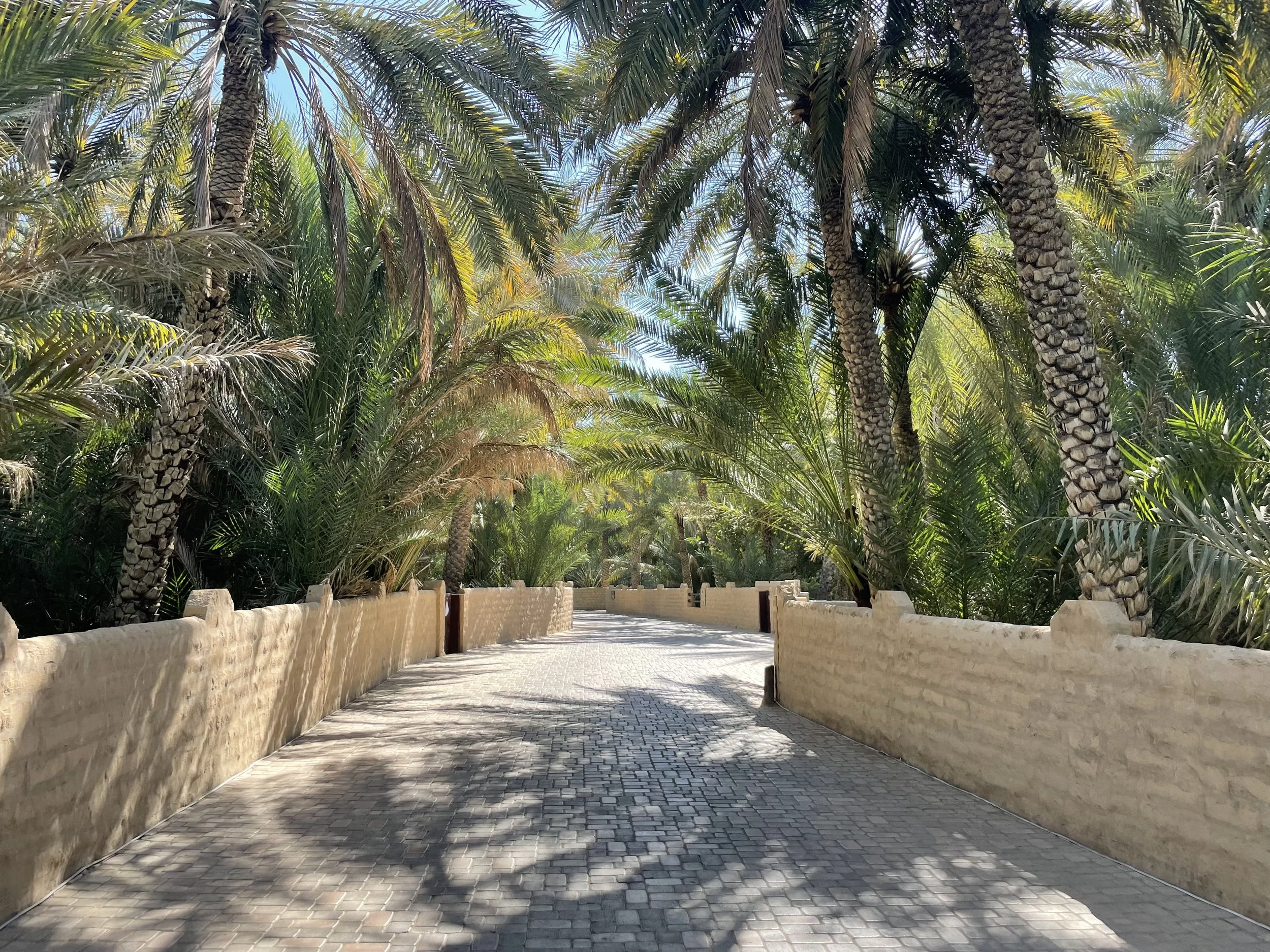
There are actually several oasis in and around Al Ain which have been given protected status by UNESCO. This is in great part because of the unique way in which people in this area have been moulding the landscape over thousands of years through the “Falaj” system. This is, essentially, an intricate network of canalizations and irrigation systems, which, using water from natural underground sources, have made it possible for islands of greenery to emerge in the middle of the desert.
The largest and most visited of these oasis, covering 1,200 hectares (nearly 3,000 acres or about twice the size of New York’s Central Park) , is located, actually, right in the middle of Al Ain.
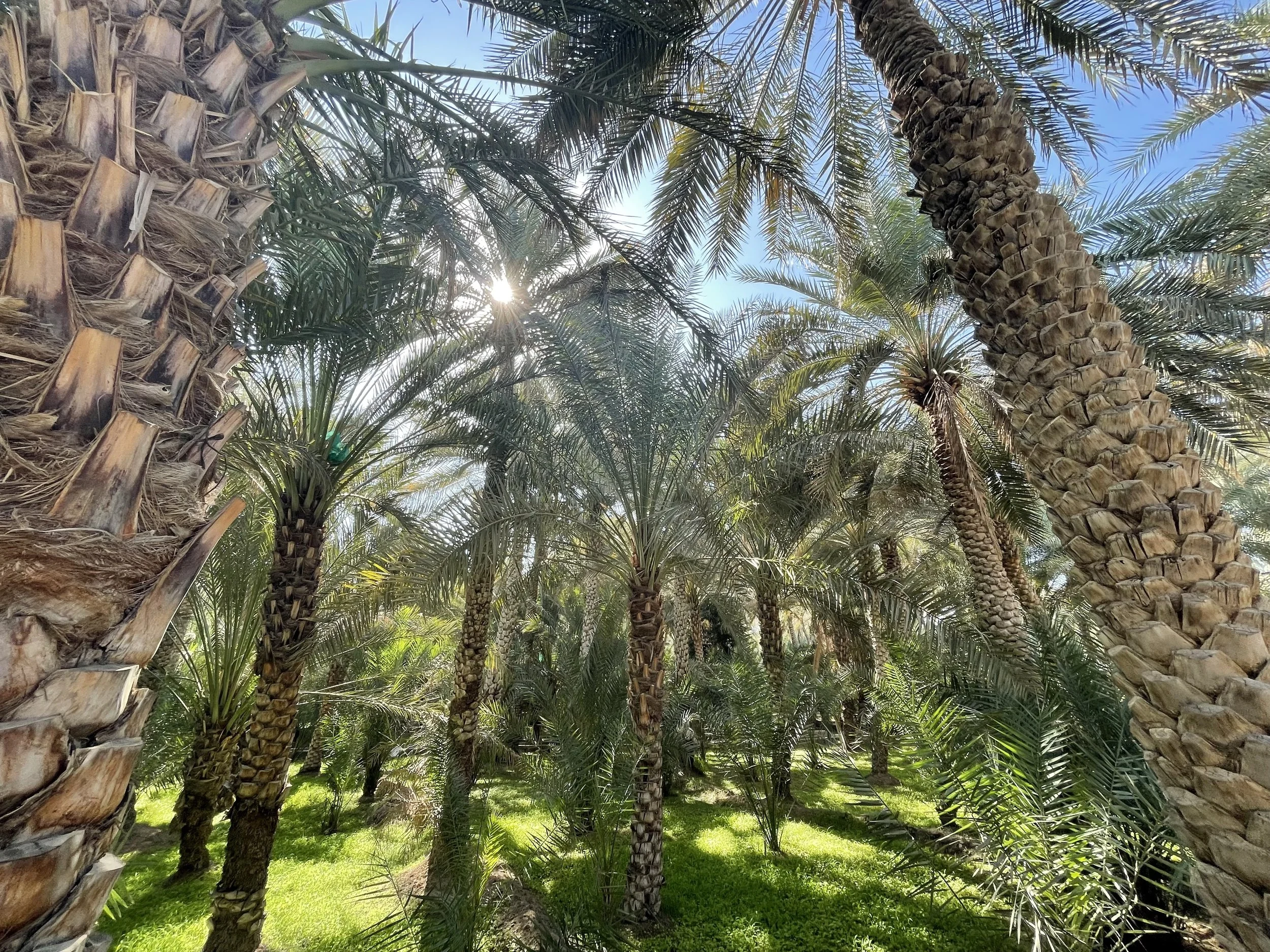
The oasis is essentially a large urban park with paths running through the palm groves, which contain nearly 150,000 trees of up to 100 different varieties.
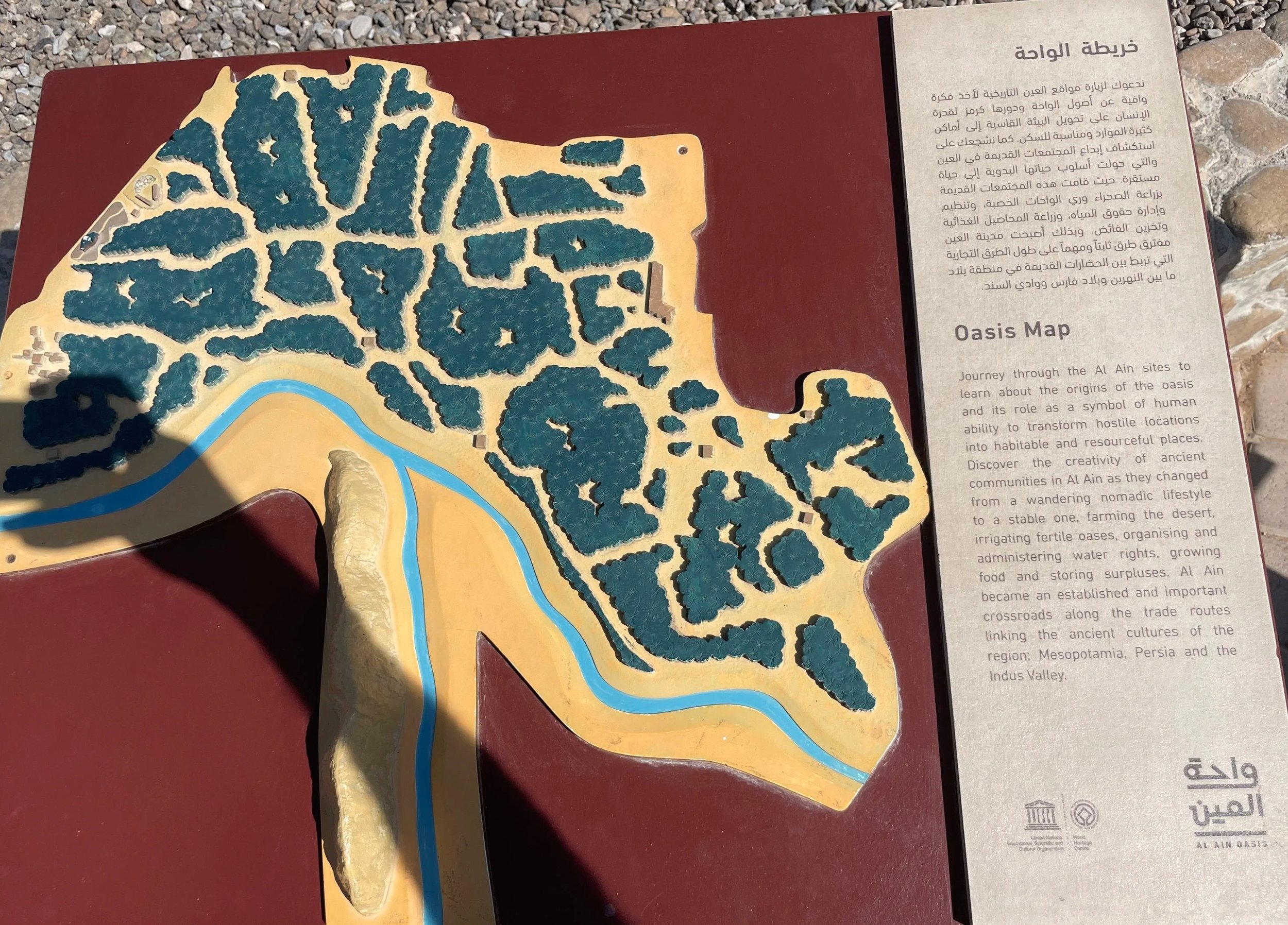
It is fenced and there are different access points, each with some adjacent service buildings and shops.
The palm groves provide some shadow and there is water running around, so, it is possible to wander around on foot, even if we are technically in the middle of the desert (Note: I visited in winter, not sure how is it like in the summer). I would say it takes around one hour or so to complete a tour of the grounds.
The Al Ain camel market
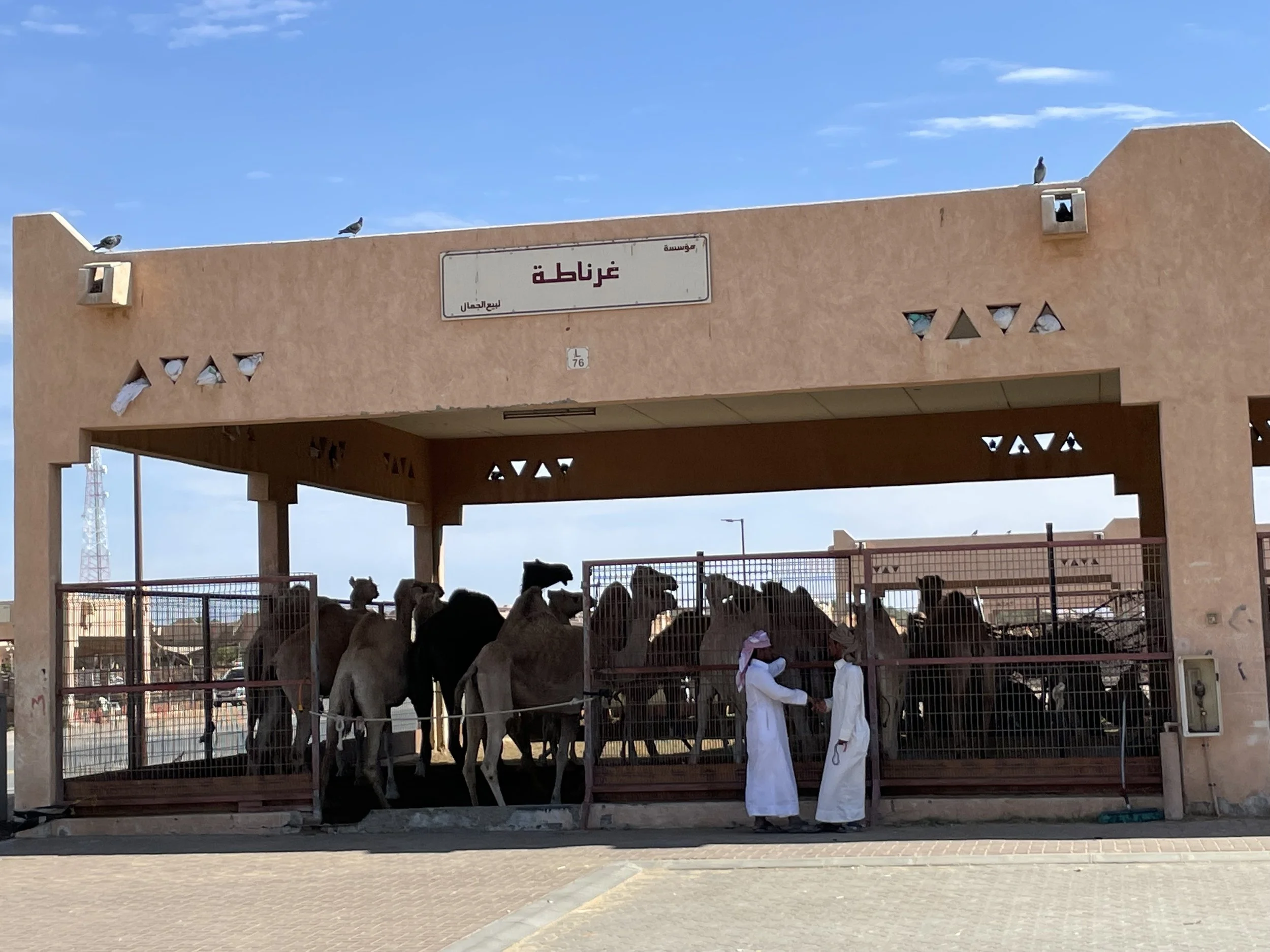
This is another must-visit spot in Al Ain, at least if you don’t care about the odour that thousands of camels can produce when gathered at one spot!
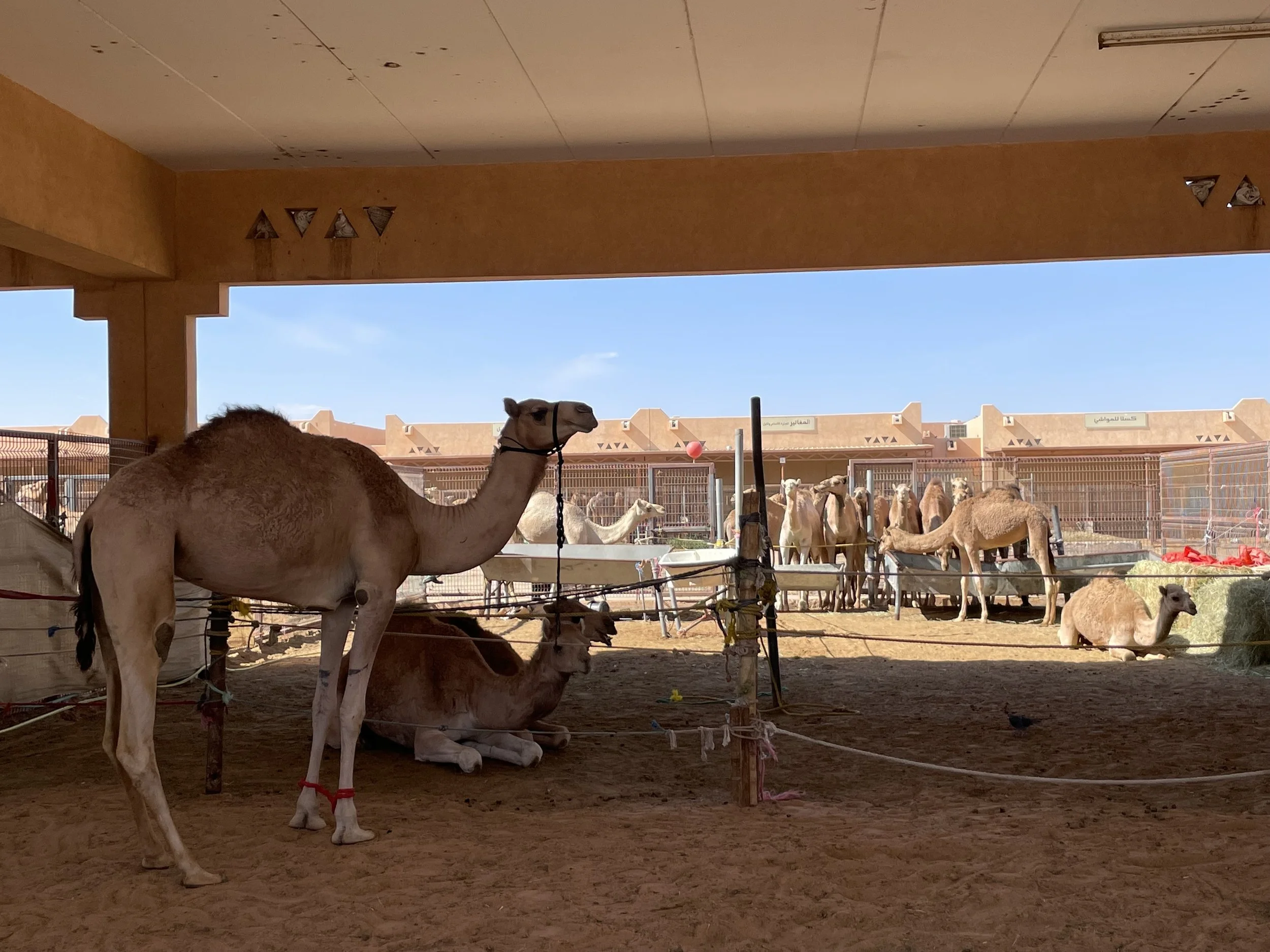
Al Ain is home to a huge camel market, which is exactly that. This is not some form of atrezzo for tourists. It is a real marketplace, where camels from all over the region are brought in to be traded.
The place is on a large open space in the outskirts of the city, next to a commercial-industrial area with an IKEA and several other big box retailers. Entrance is free and there is some parking space next to the main entrance.
All guides recommend visit early in the morning, between 6-9am, when the trading activity is at its peak. We visited mid-morning, however, and while it is true that it was rather quiet, it was still possible to see quite a lot.
The animals are in large pens, which are arranged along the streets. You can get really close to them and, in fact, some of the local traders, most of them in traditional robes, may offer you to take pictures close to the camels (in exchange for a tip).
This is quite an interesting sight, which is miles away, in all senses, of the sanitized modern urban environment you find in the coastal cities of the UAE!
Qasr Al Muwaiji (Al Ain Al Muwaiji Fort)
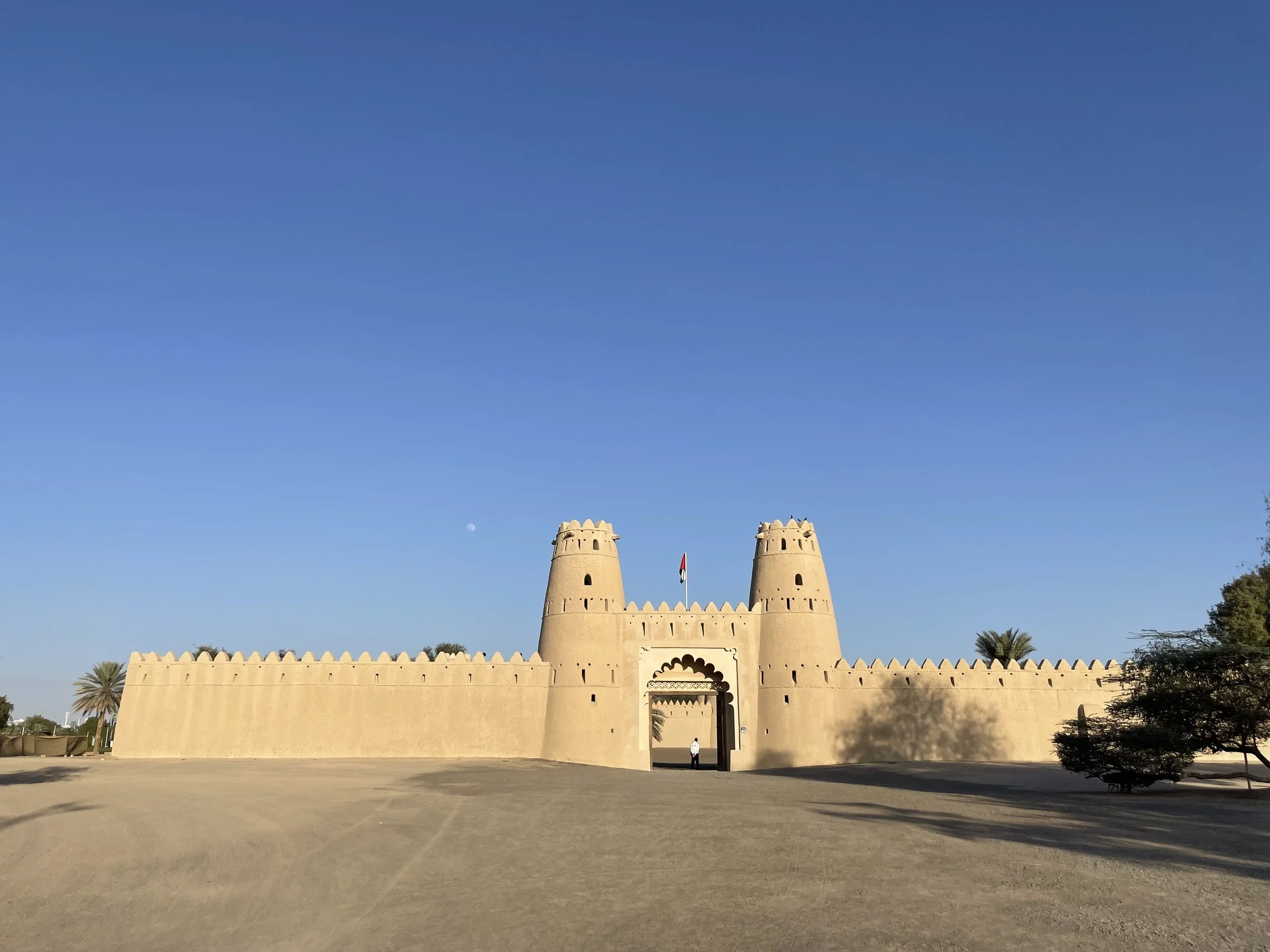
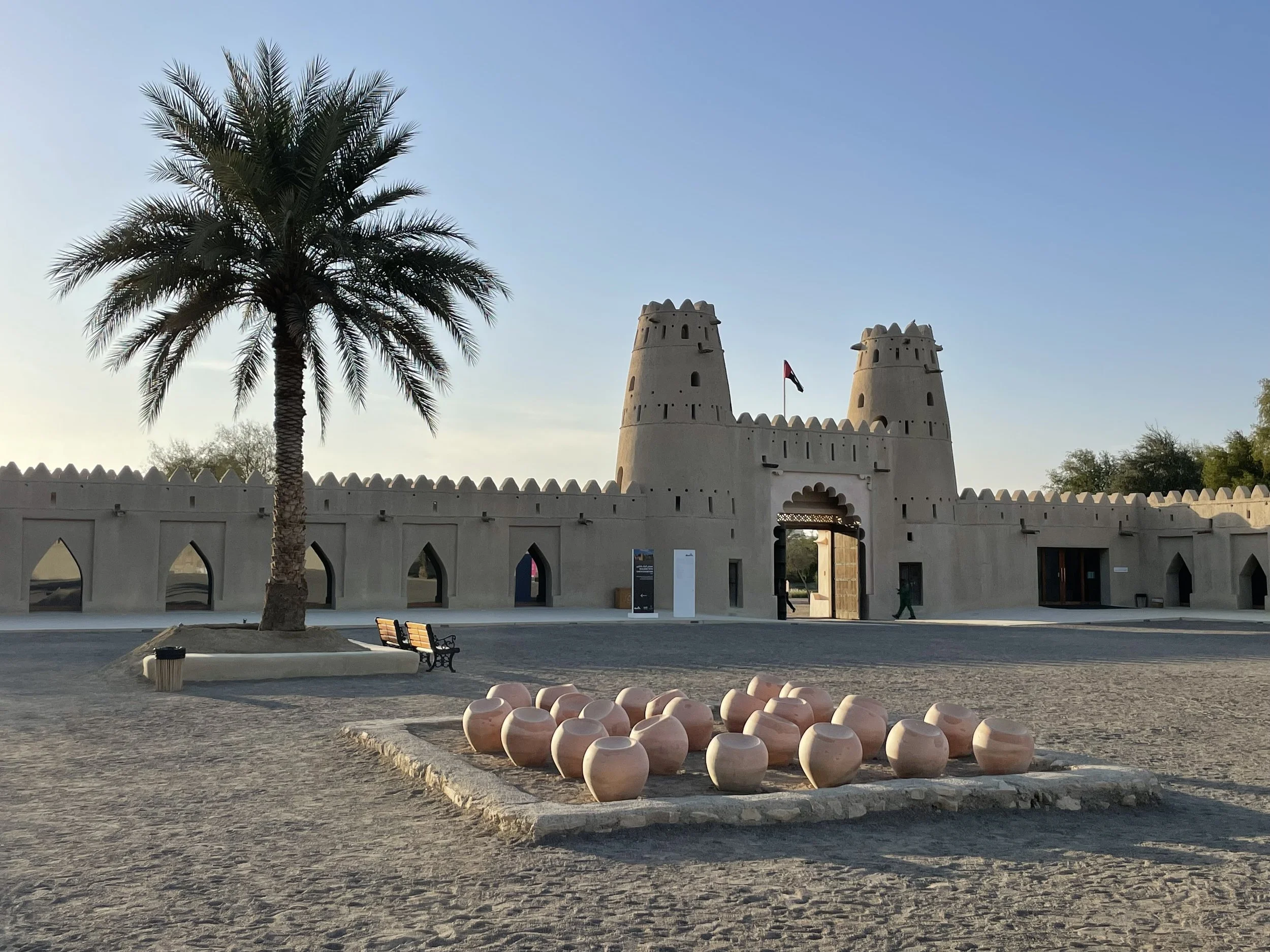
This fort, built in traditional mudbrick style, is the ancestral home of the Zayed dinasty, the rulers of Abu Dhabi. The late Sheikh Khalifa bin Zayed Al Nahyan, previous ruler of Abu Dhabi was actually born there.
Although it looks like it could be rather ancient, the fort dates back to the early 20th Century. Nowadays is an art and culture center.
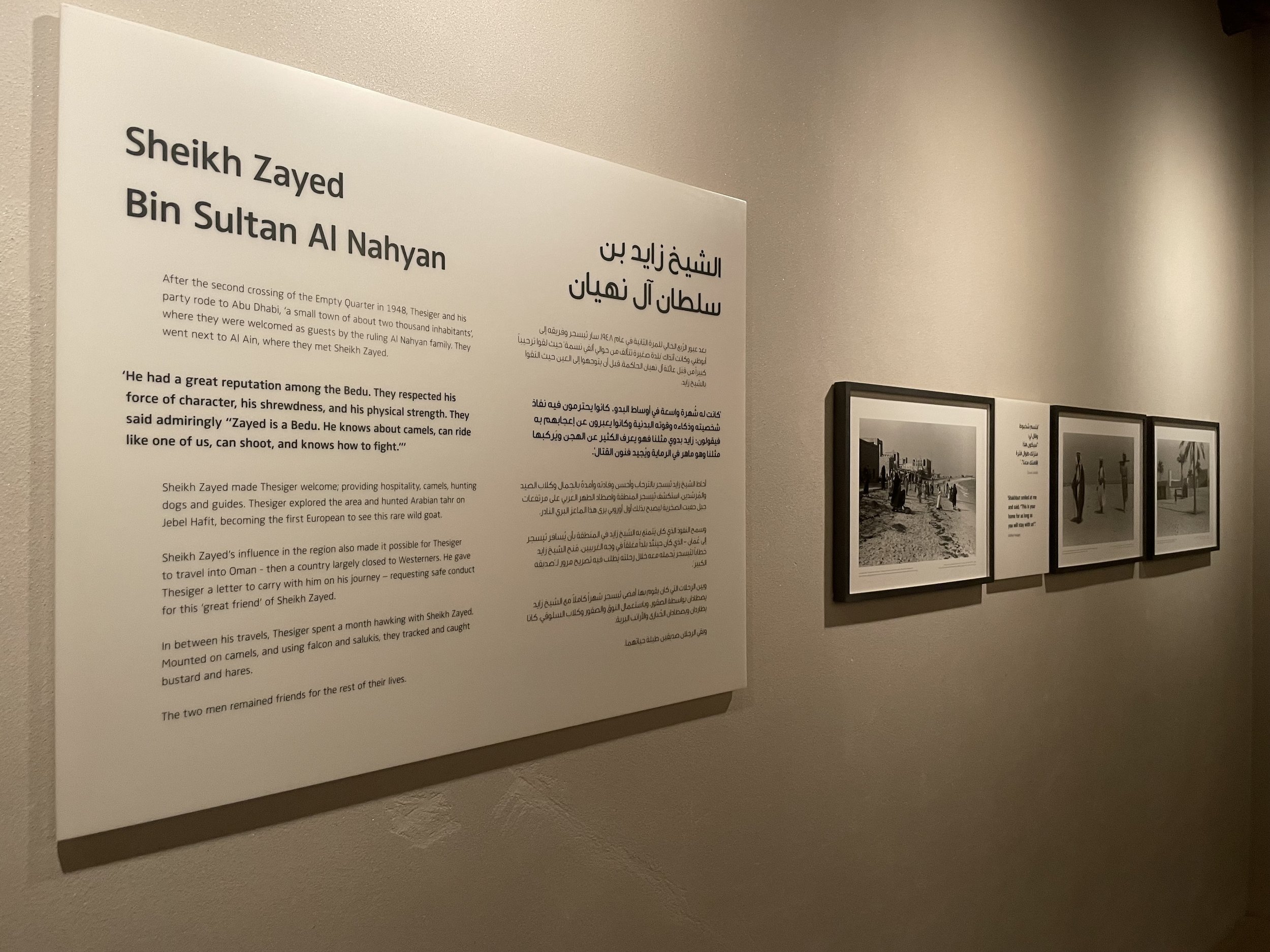
It is possible to visit its premises, climb the towers and the walls for the views, and also to visit the exhibitions contained within its walls and around the main courtyard. At the time of our visit there was, actually, quite an interesting photo exhibit (I ignore if it is permanent or temporary) depicting the history of Abu Dhabi and the lands of what would later become the UAE.
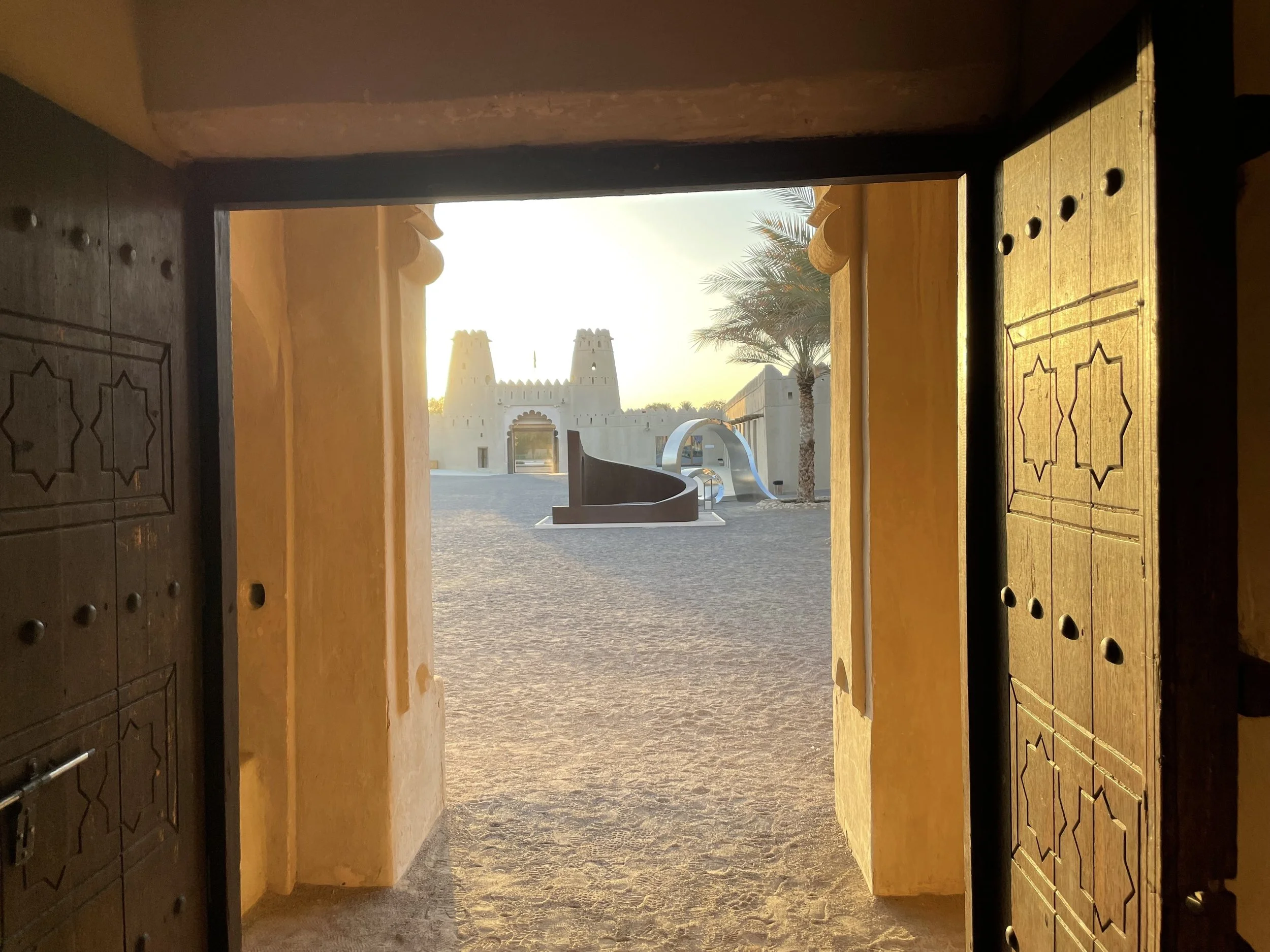
The whole monumental ensemble is, actually, perfectly restored, giving the place a rather suggestive ambiance, sort of how many would imagine the setting of the “1001 Nights” while having, at the same time, some very obvious touches of the modernity that currently characterizes the UAE.
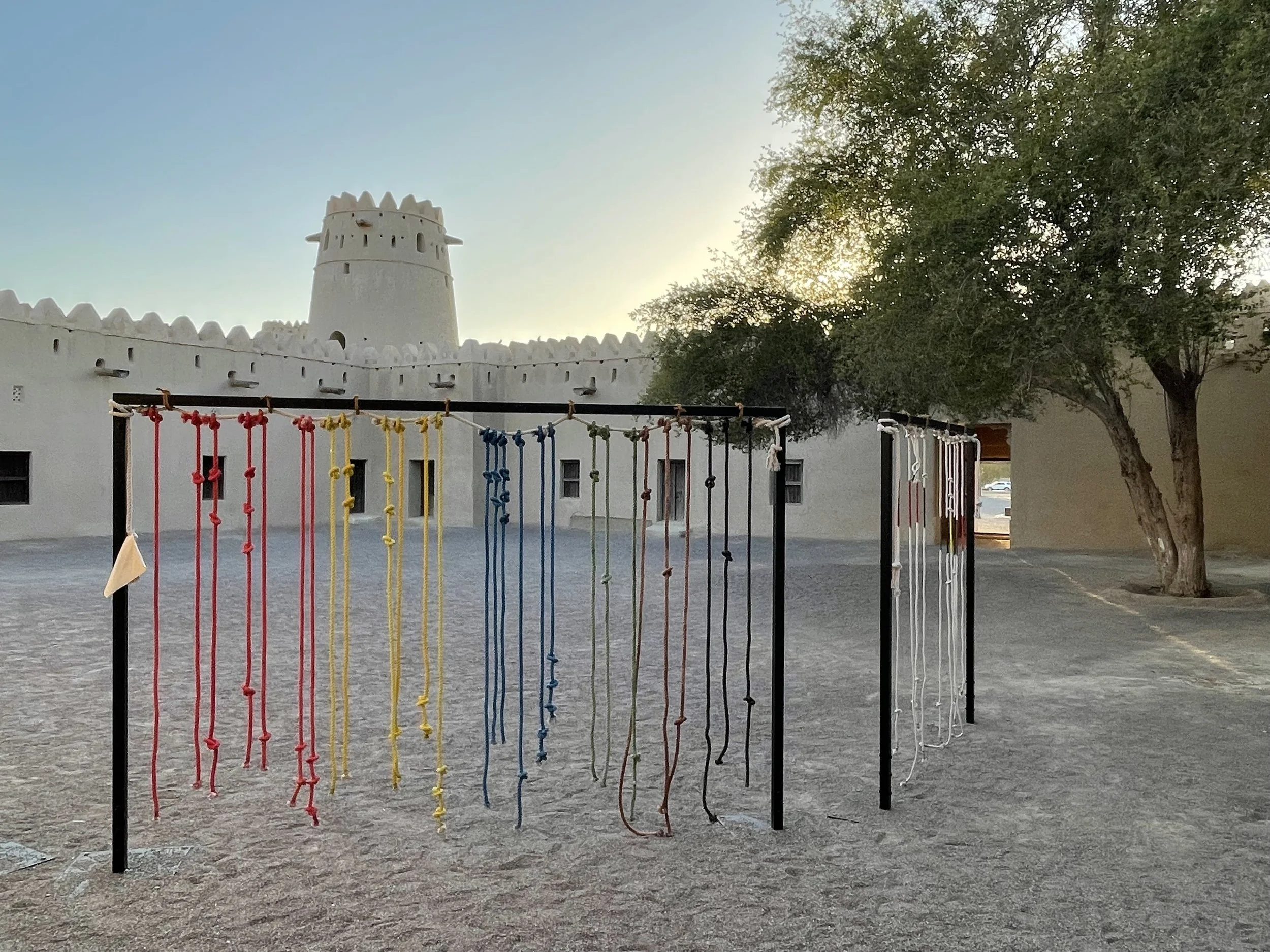
I must say that Qasr Al Muwaiji really surpassed my initial expectations and I would recommend adding it to your Al Ain program. Btw, we visited in the late afternoon, just a couple of hours before they close at dusk, which I think it is perhaps the best time, not just temperature-wise, but also because of the light.
Where to stay in Al Ain
Radisson Blu Hotel & Resort Al Ain
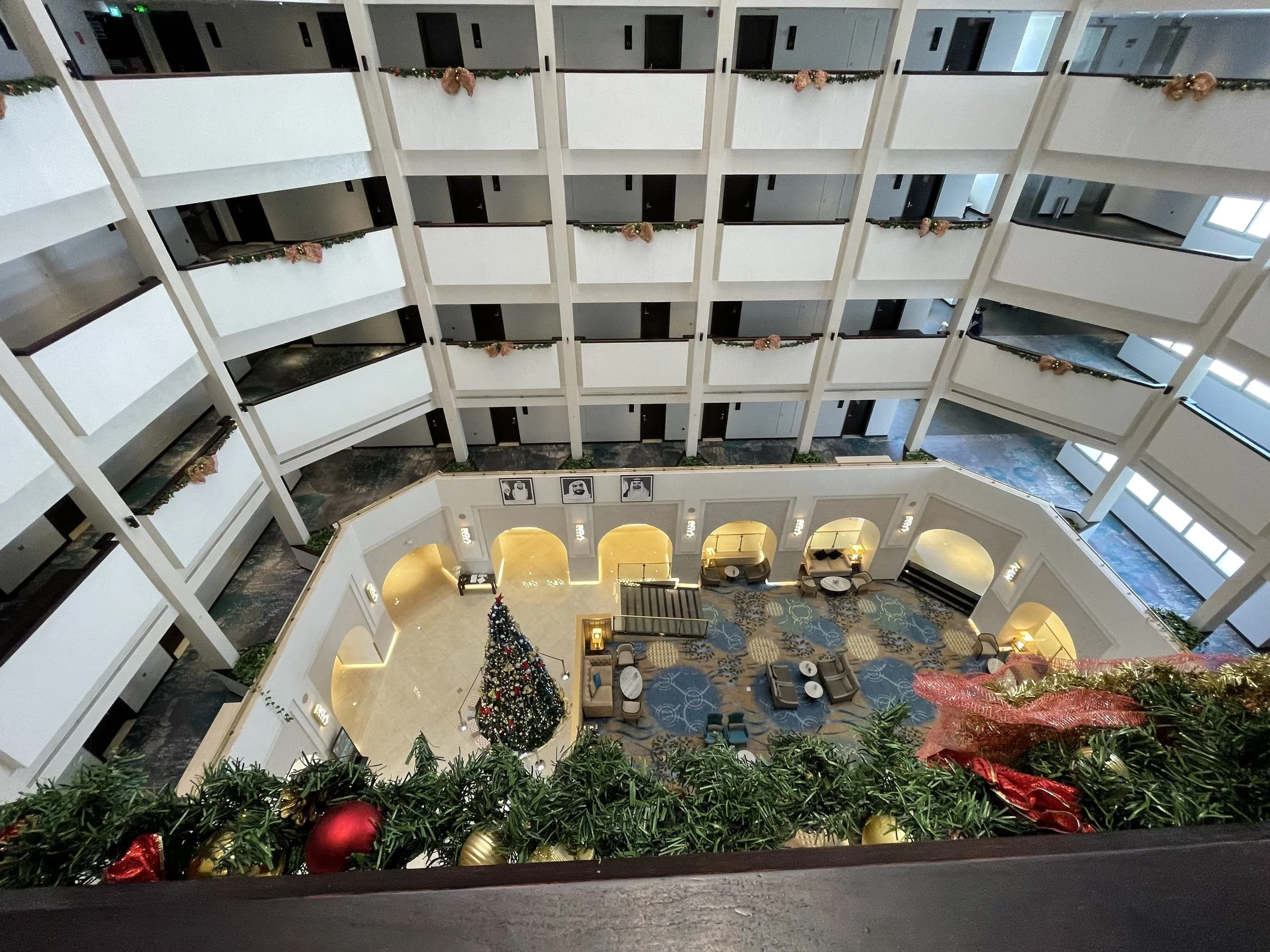
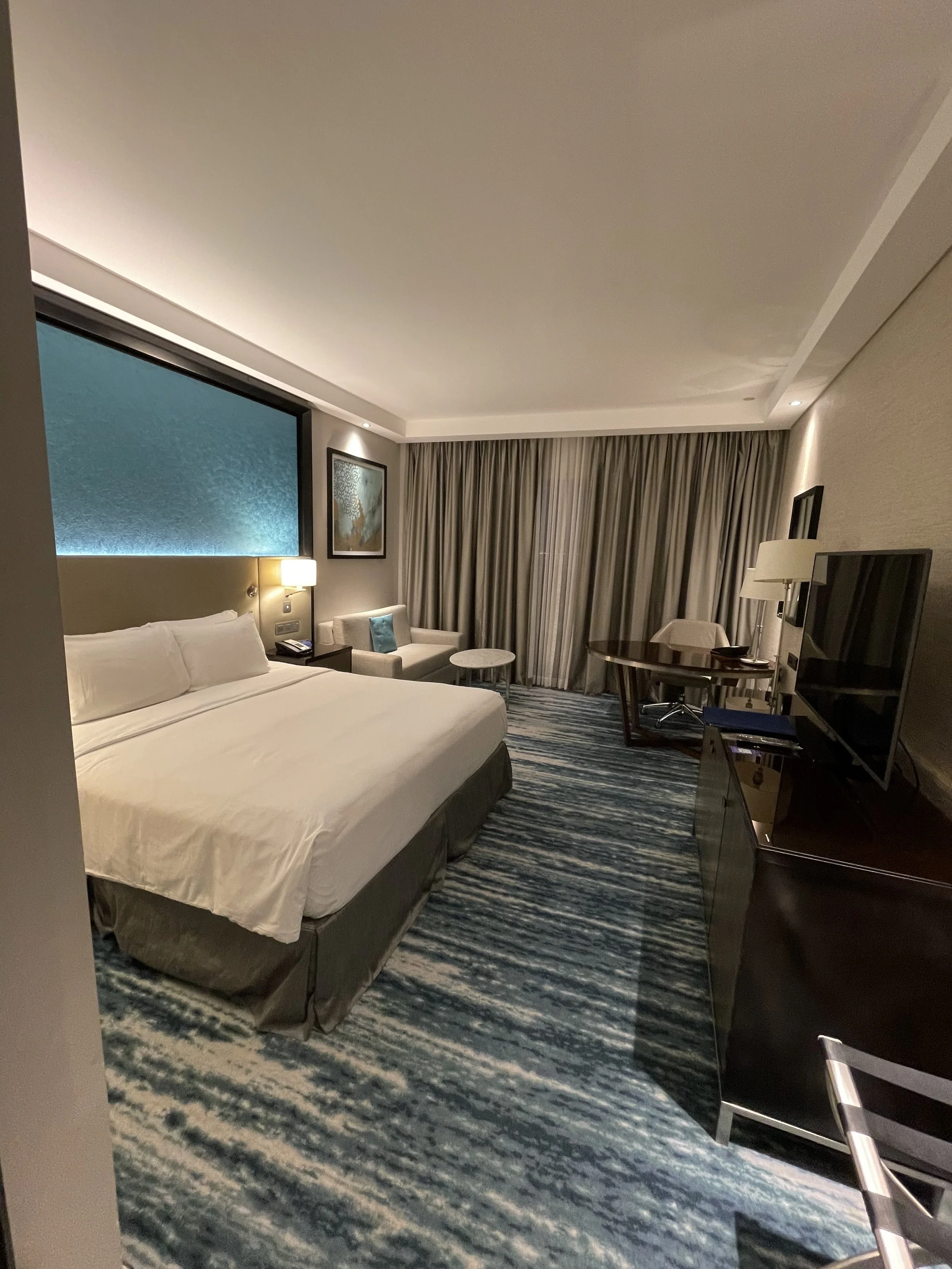
You can’t generally go wrong with Radisson Blu and their Al Ain establishment was no exception. This hotel occupies a rather large bloc in a quite central location, close to the Al Ain Oasis (although “central” and “close” are relative concepts in Al Ain, since the city is so spread out you would need a car anyway).
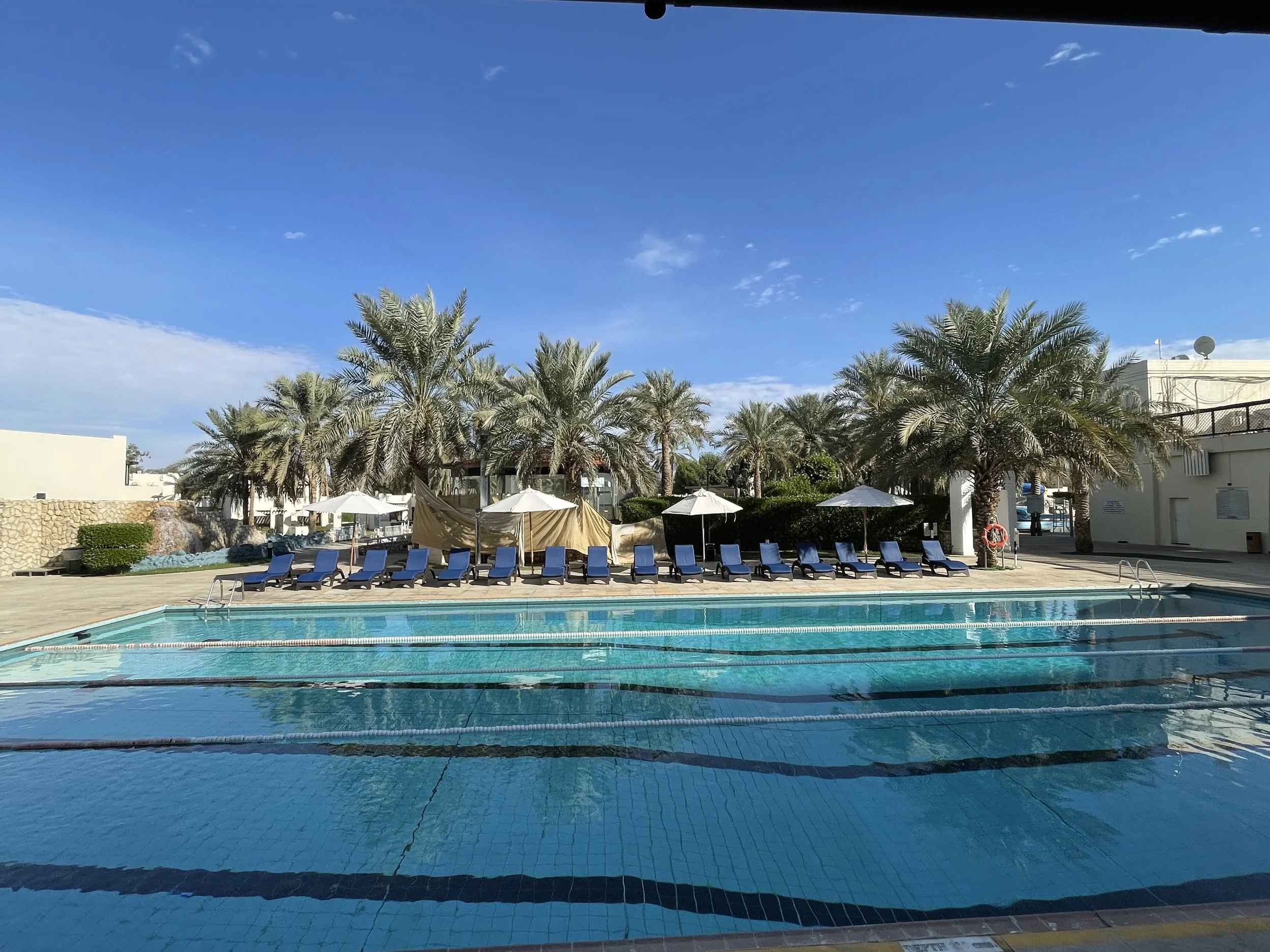
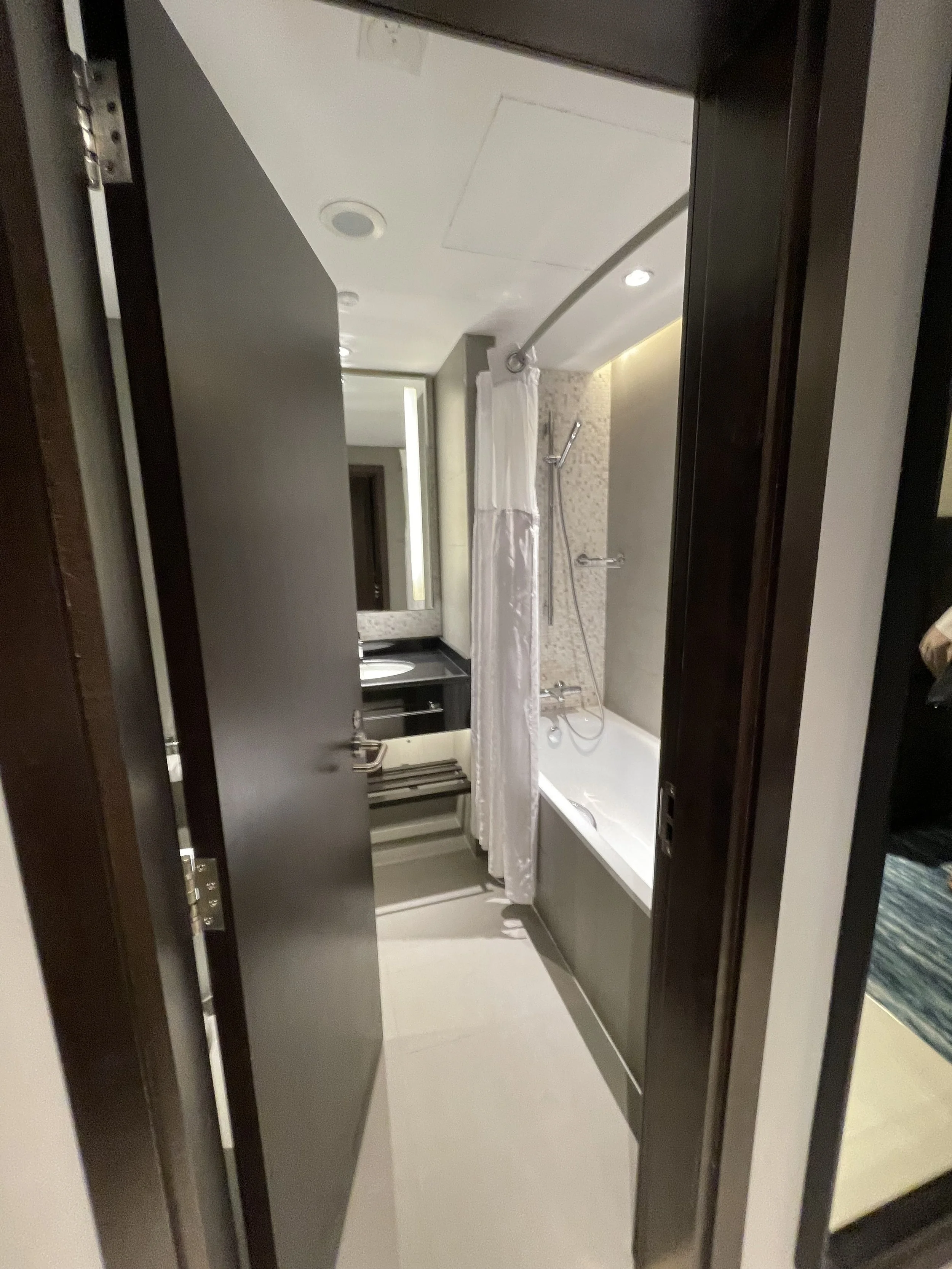
The hotel is modern and has all the facilities you would expect, including an outdoor pool, a nice restaurant and parking.