One day in Marrakech, what to see and what to do
Marrakech is a top tourist destination and for good reason. The fact that Morocco has a visa-free policy for most countries and that it is part of the European single skies area (making it attractive and accessible to all European low cost carriers) makes it also a very attractive destination barely a couple of hours’ flight away from many European capitals.
There is, indeed, much to see in Marrakech, and Morocco in general, but what if you are somehow time-constrained, as it was, in fact, my case, as I was attending a conference in the city?
The good news is that most of Marrakech's highlights are within easy reach of each other, meaning an efficient day tripper can cover a surprising amount of ground. That said, a couple of extra days are well worth it to fully absorb the sensory experience that is Marrakech.
In any case, I have compiled here a list of the top things to do and to see in Marrakech in a day (and on a budget!).
Some of you may notice some omissions, like the iconic Villa Majorelle. I actually tried to fit it in my itinerary, but, alas! it was already fully booked during the time slots in which I may have been able to visit. So, the only advice I can give regarding this site is: if you are planning to visit, book in advance!
And, now, without further ado, let’s start our quick, but intense, tour of Marrakech!
In this post we will see:
Jemaa el-Fna, the beating heart of old Marrakech
A walk through Marrakech Medina and its different souks
Best rooftop view in Marrakech
The Ben Youssef Madrasa
Bahia Palace
Koutoubia minaret and gardens
Hotel La Mamounia
Recommended places to stay in Marrakech
Moving around Marrakech: practical tips
Modern Marakech
Menara Gardens
This post may contain affiliate links. If you book or buy something through them, I earn a small commission, at no extra cost to you. It's one of the ways I keep Places of Charm going. Thank you for your support.
What to see and what to do when visiting the Medina of Marrakech
Jemaa el-Fna - The main square of Marrakech
I decided to start with Jemaa el-Fna because this wide open square is not just the best known spot in Marrakech, but also the heart (not in a literal geographical sense though) of the Marrakech Medina.
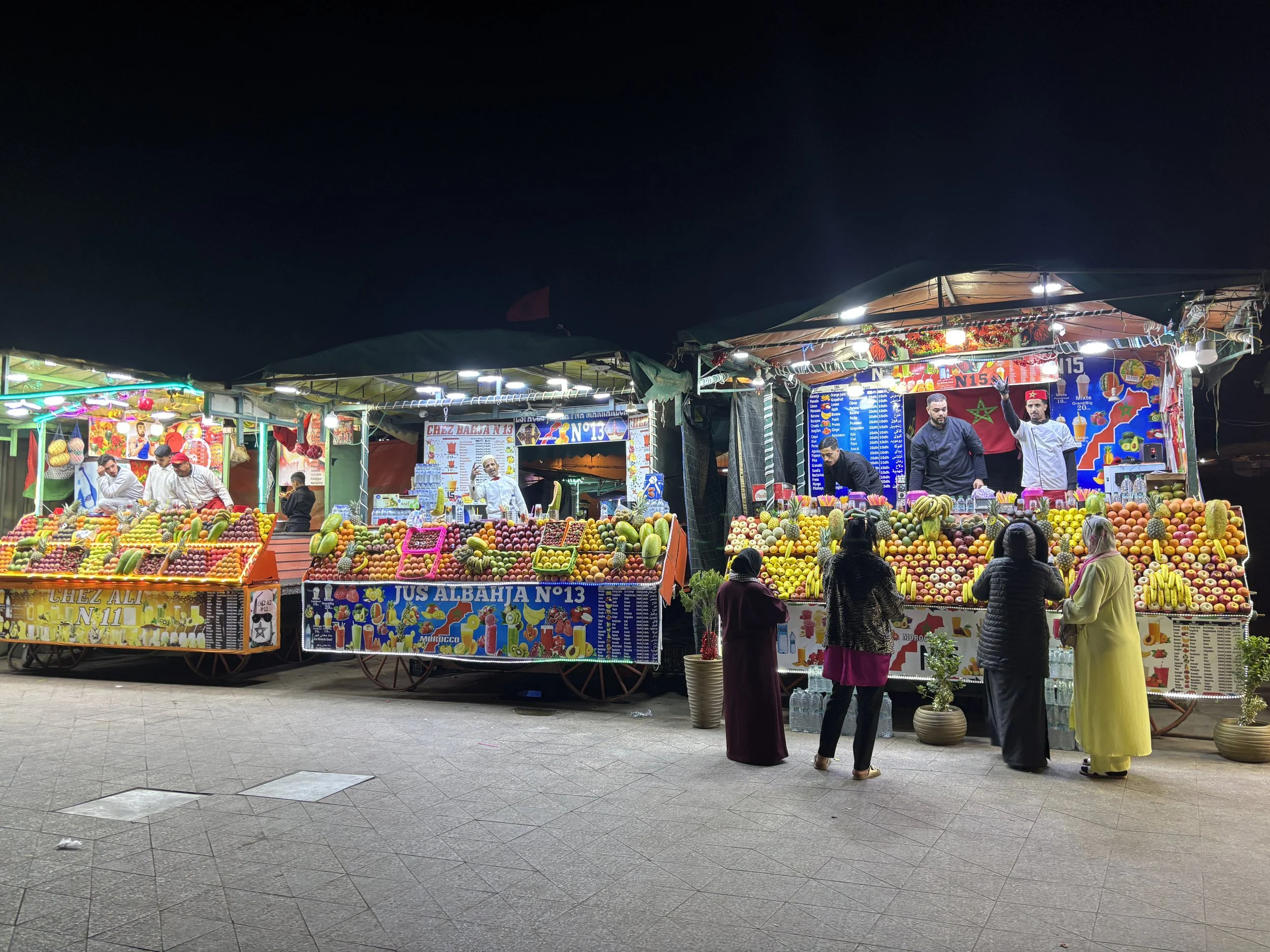
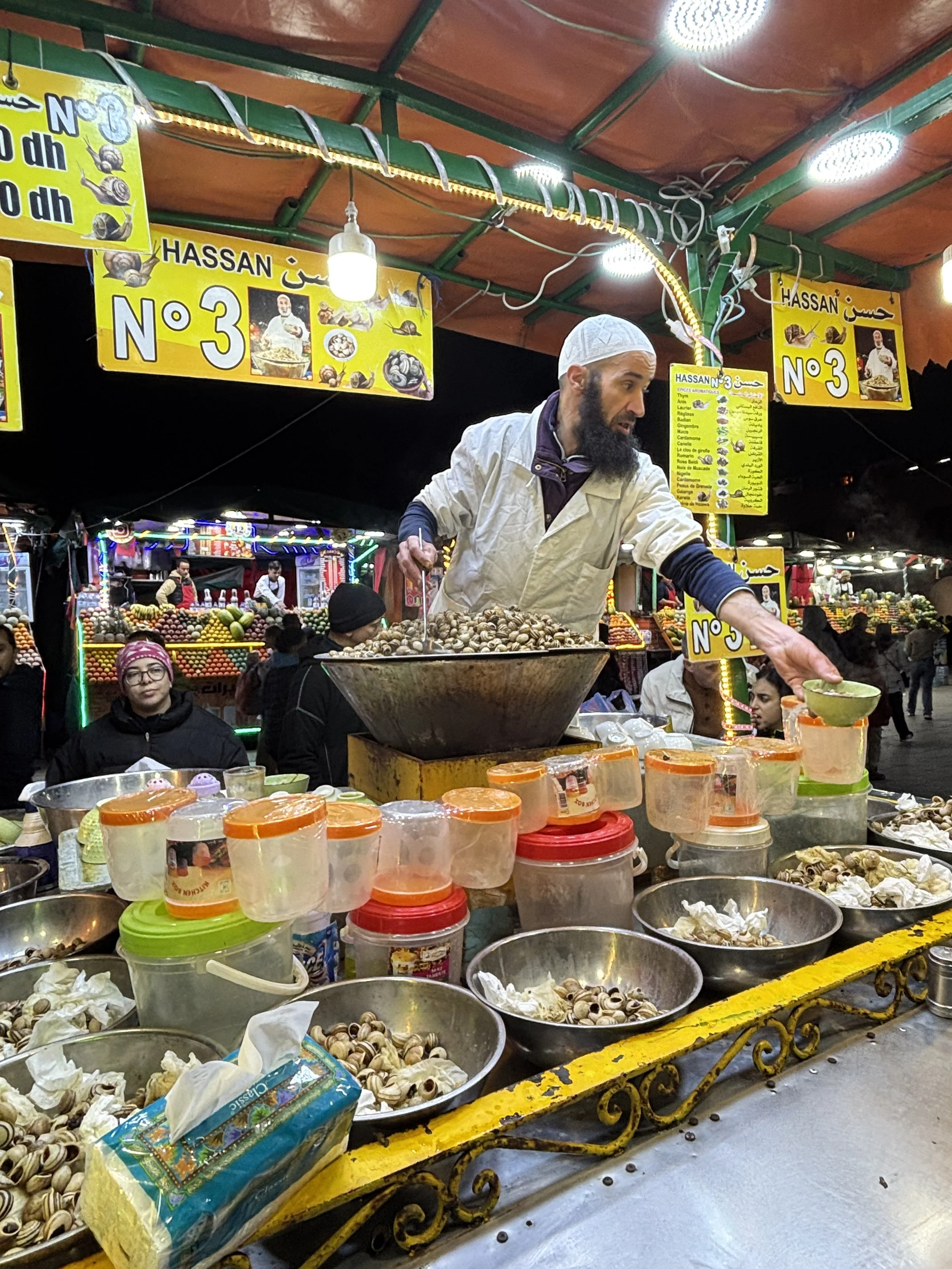
Jemaa el-Fna is buzzing with activity throughout the day and evening. It is here where you can get the first taste of, let’s say, the exotic side of Marrakech. The large esplanade is full of street musicians, snake charmers and other sorts of stalls, each peddling their own merchandise or trade. There is also a whole section that is take by food stalls, forming a sort of open air, food court.
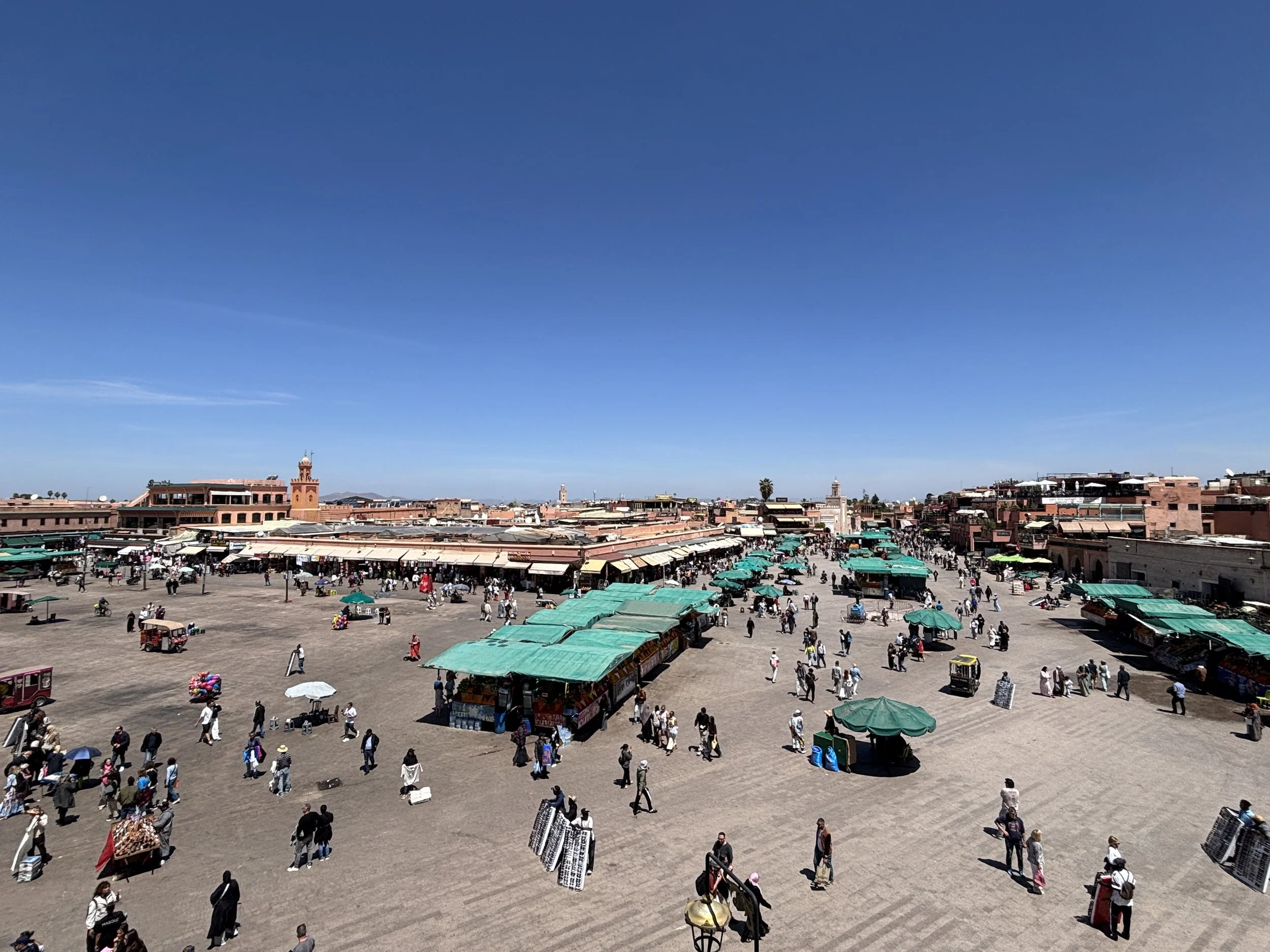
Jemaa el-Fna acts also as a nexus with the modern part of town, so if you are coming by taxi, for example, it is likely to be your gateway into the Medina. It is also on the main axis leading to the Koutoubia minaret and gardens and La Mamounia Hotel, which will explain in more detail further down this post.
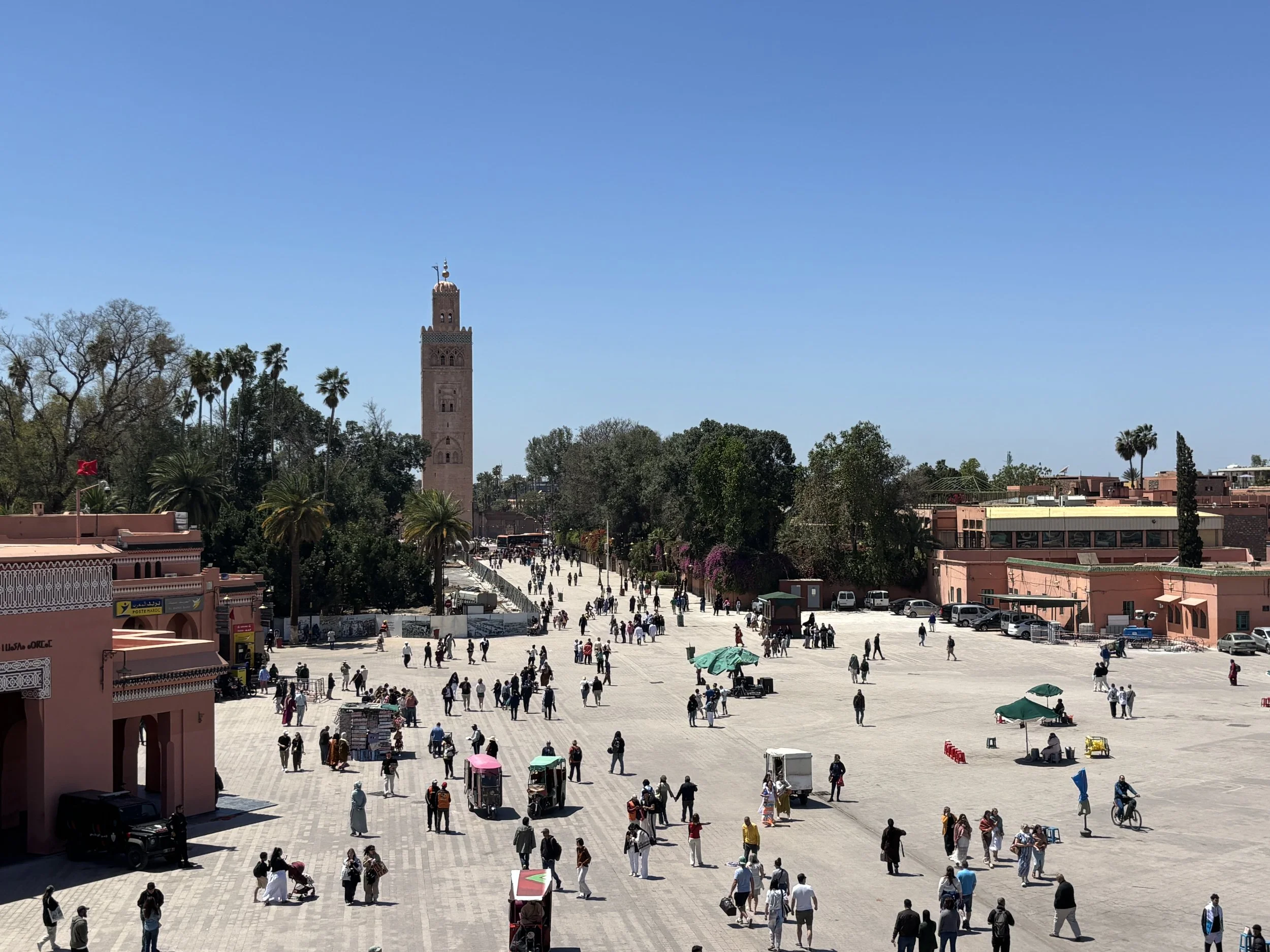
Best view of Jemaa el-Fna? The rooftop terrace of Café Glacier
While a walk through Jemaa el-Fna is a must of any Marrakech visit, I also recommend getting the general perspective by visiting the rooftop terrace at Café Glacier (“Le Grand Balcon Café Glacier”). This is a traditional café which has views towards the main section of the square (it is the point from where the above pictures were taken).
The café is nothing luxurious, but it has a sort of old-school charm. There is a ground floor area as well (see the pic below), but I would definitely recommend going upstairs (just one note: there is little in the way of shadow, so it can be quite hot when the Sun is shinning!).
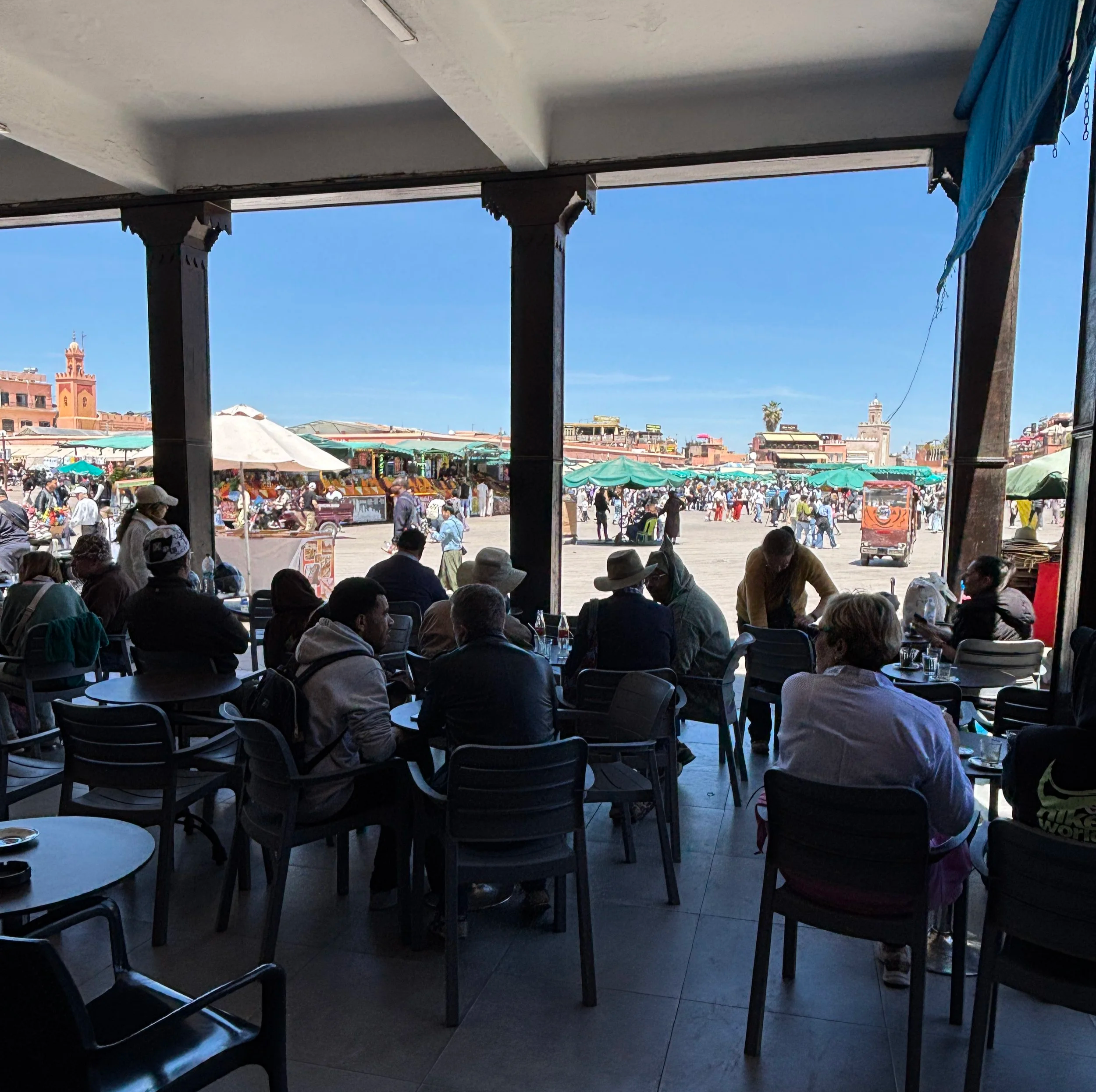
Visiting Jemaa el-Fna in the evening
Regardless of what is your itinerary throughout the day, make sure you allocate at least some time for an evening visit to Jemaa el-Fna. This is actually when the square is the most lively.
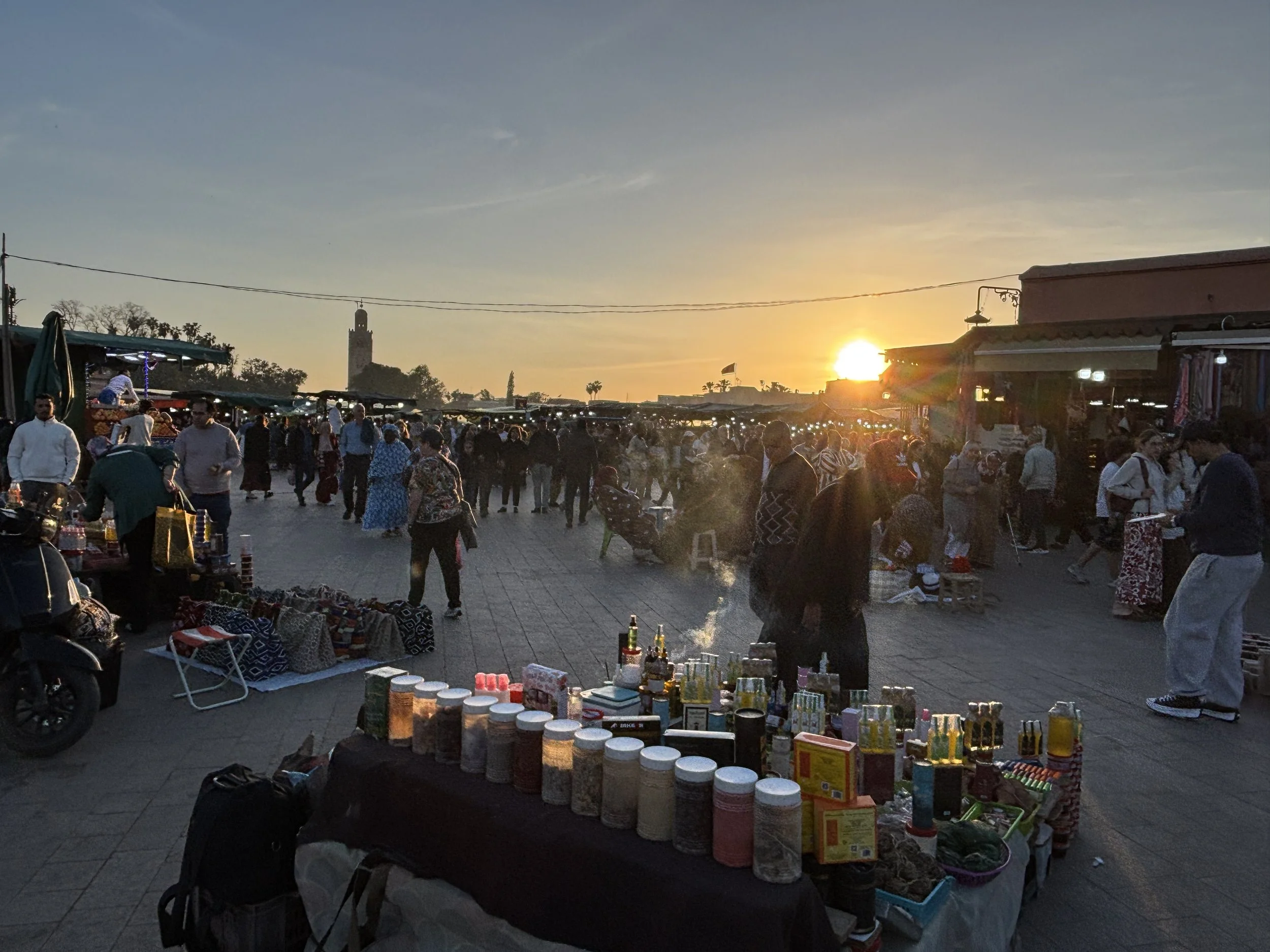
As the sun goes down (and outdoor activity becomes more pleasant in the balmy weather), activity picks up, with traders, musicians, performers and the like taking over Jemaa el-Fna.
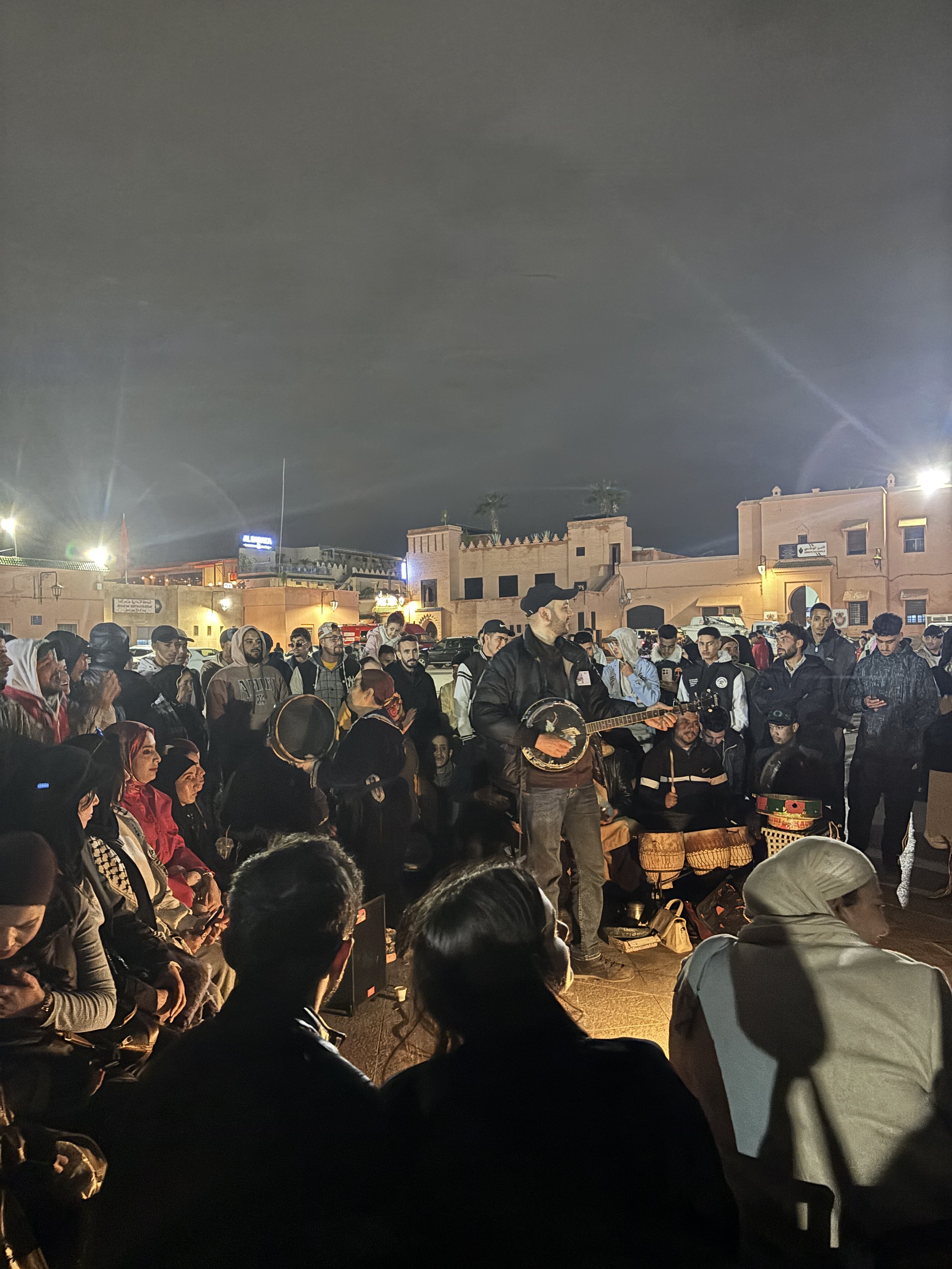
The buzz goes on until quite late at night, with the numerous food stalls catering to a crowd of both locals and tourists. Be prepared for many of the vendors trying to get your attention as you walk by!
A walk through the Marrakech Medina
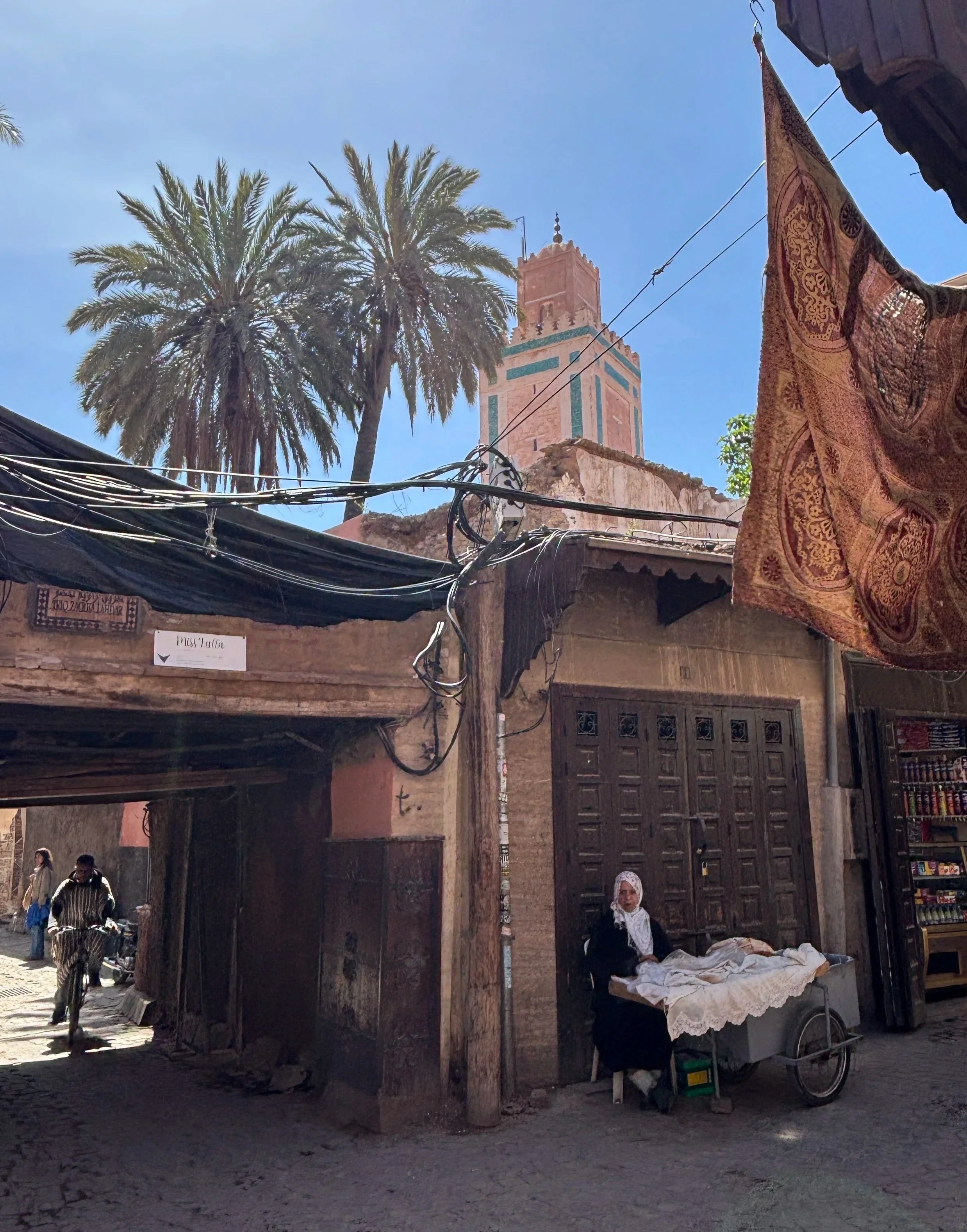
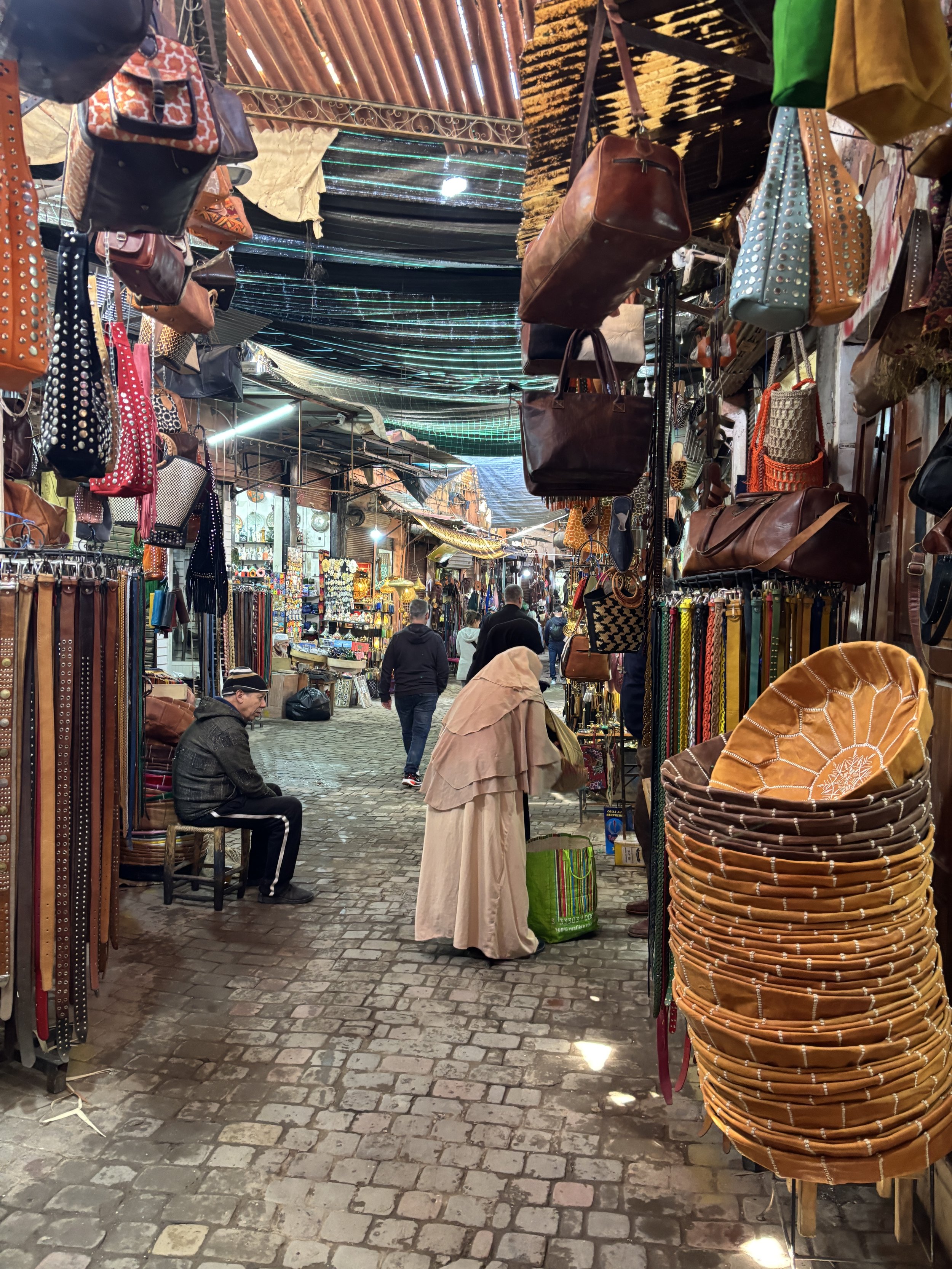
Whether you are into shopping or not, a walk through the Medina is going to take most of your time while in Marrakech. The place is simply huge! In fact, the whole historical town of Marrakech is like a giant souk, with seemingly endless streets and alleys fully lined up with shops and stalls.
The Medina of Marrakech is actually a UNESCO World Heritage site. When the French took over Morocco, in the early 20th C., they brought with them European-style urban planning, which is now visible in parts of modern Marrakech, but left the medina untouched. So, the city has preserved pretty much its entire walled ensemble.
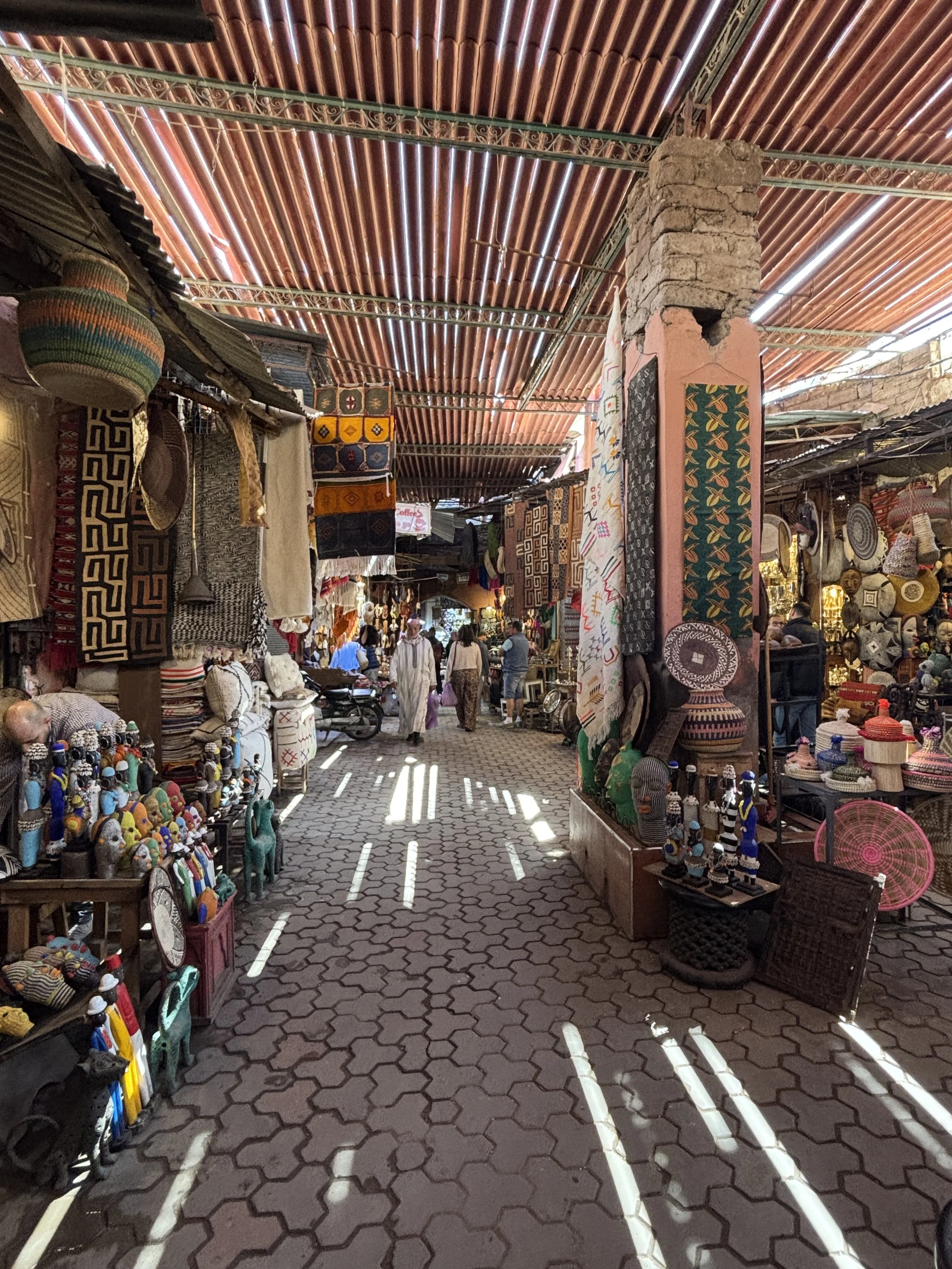
When it comes to walking through the Medina, I don’t have a specific itinerary to recommend. In fact, the best plan is possibly to visit with no plan at all, just walk around randomly and you likely won’t be disappointed, since there is something new around every corner.
Nowadays the streets of the Medina are obviously quite tourist-oriented, although you can still see some scenes that look like from the old days, like people riding carts pulled by mules and the like.
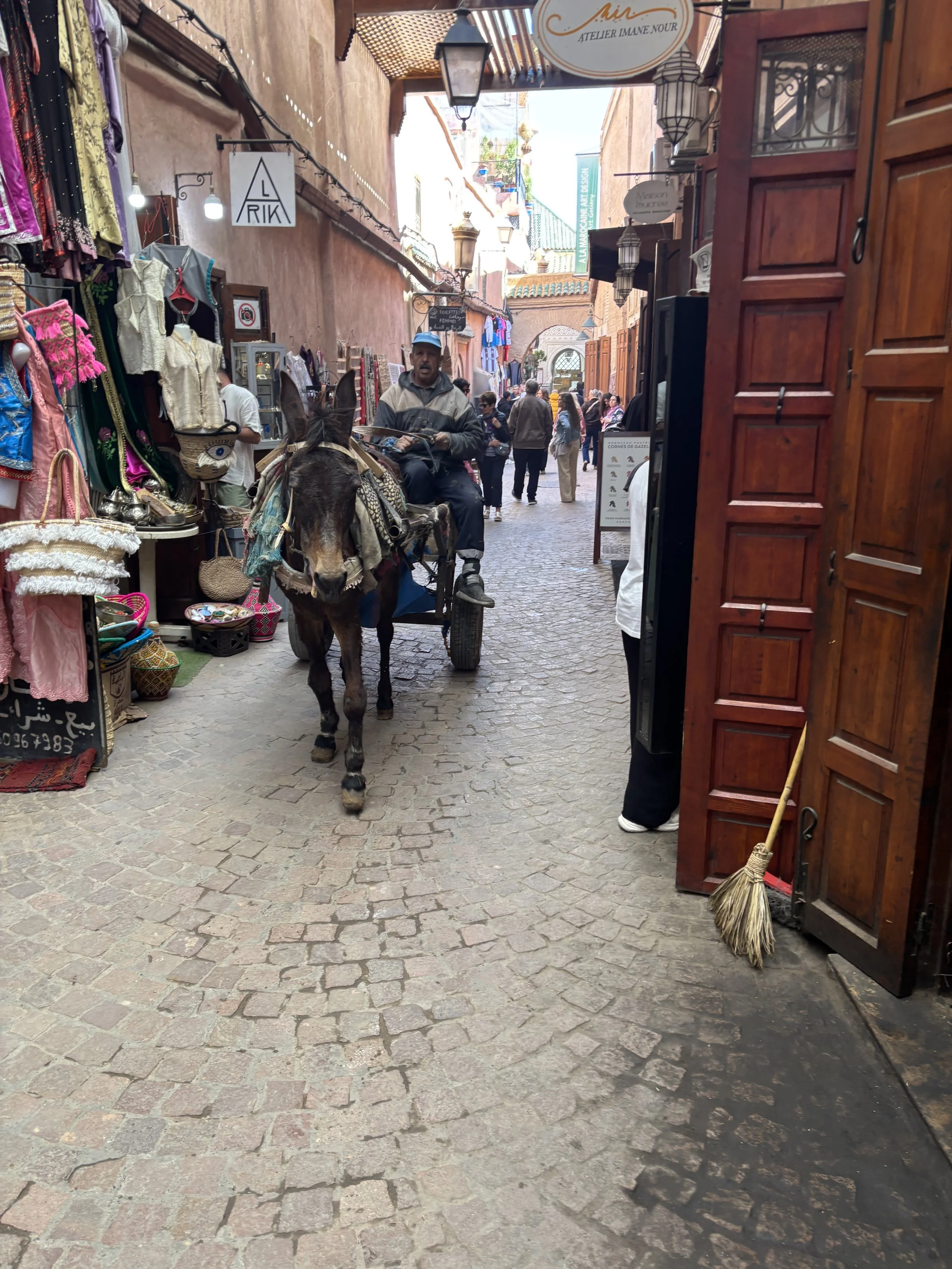
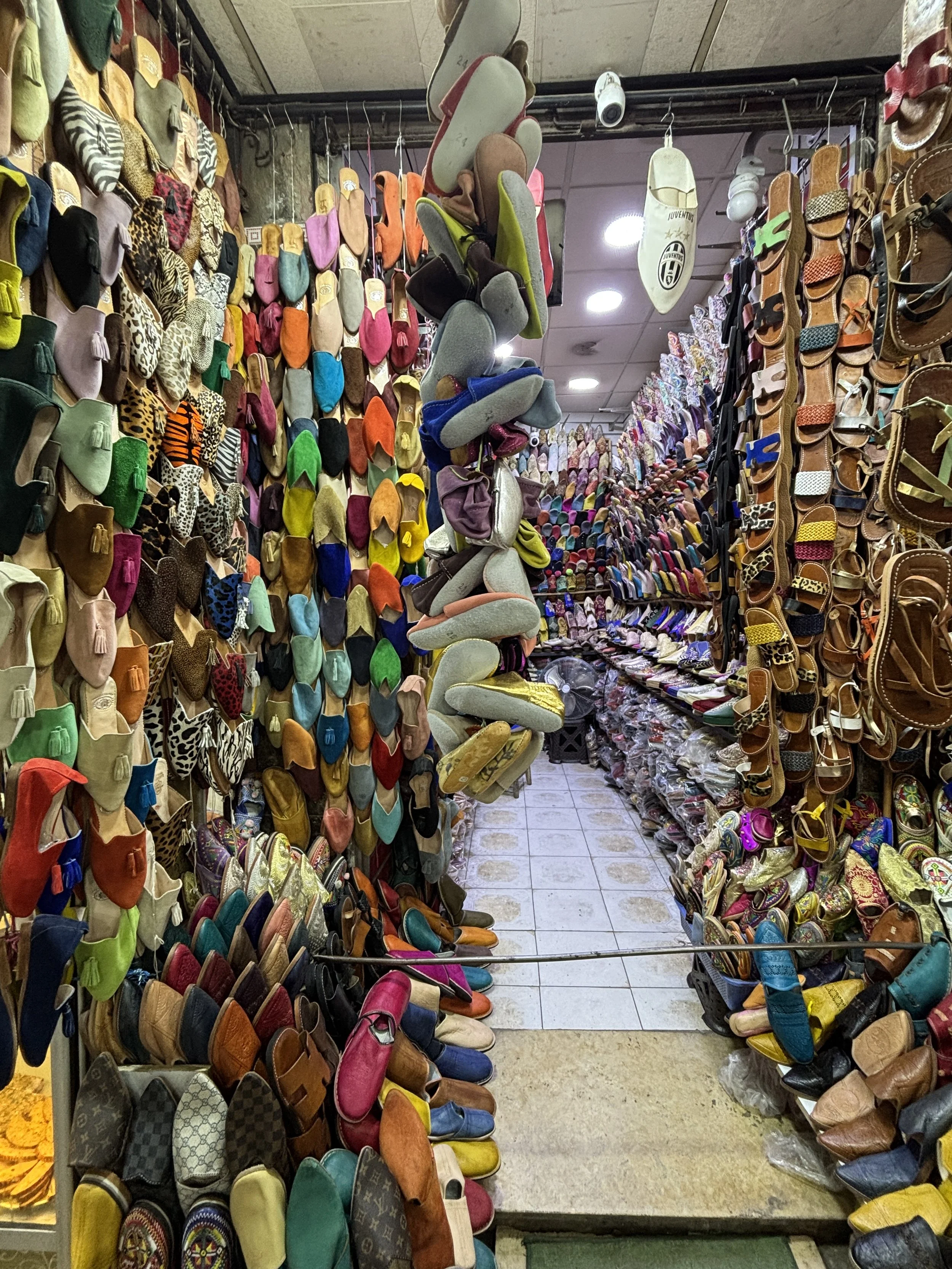
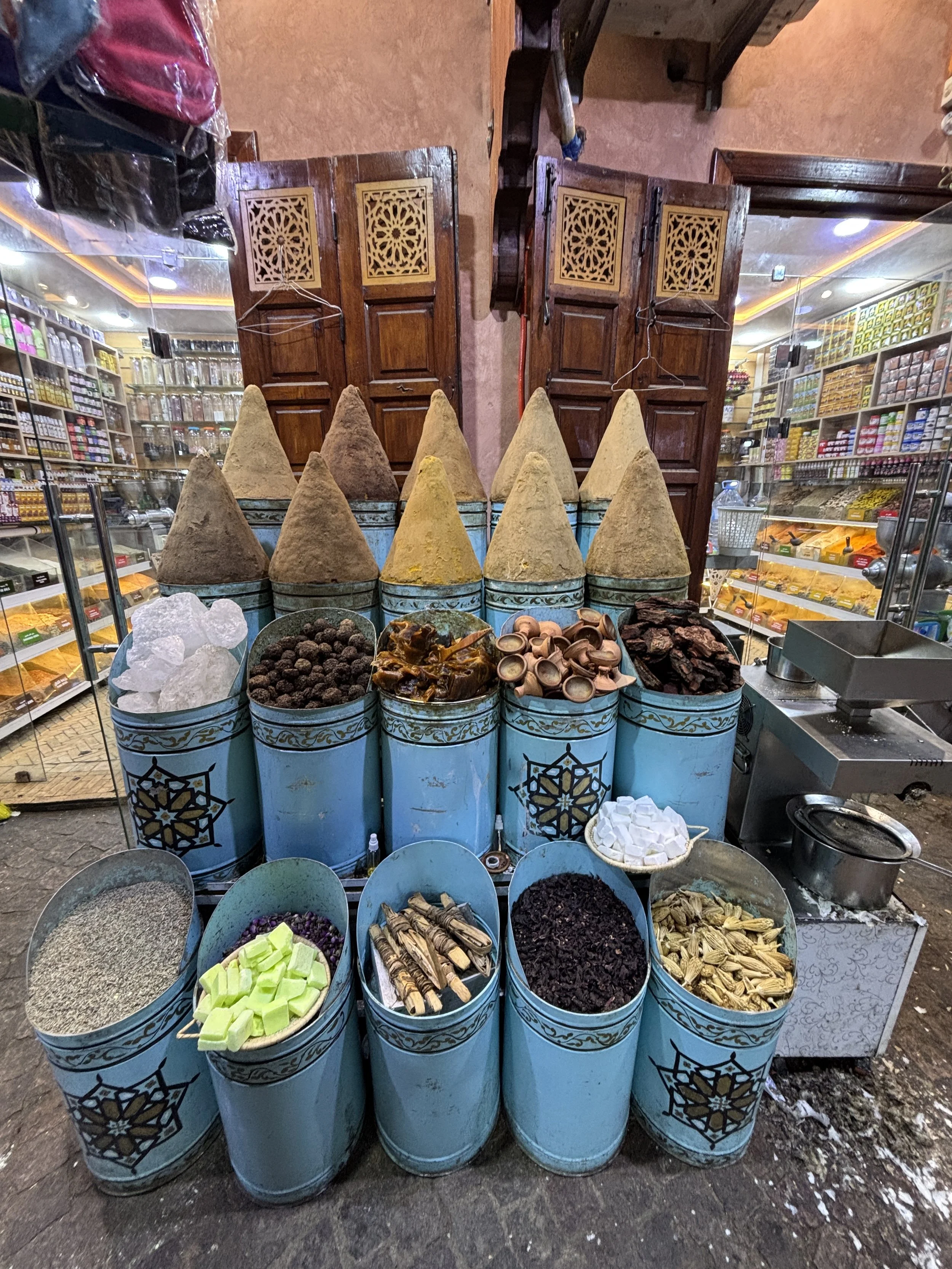
The Medina contains, actually, a number of different “souks”, each dedicated to a different trade. The limits between them, however, are not very evident to the visitor, since they exist in a continuum.
Below are some of the souks, in practice you may walk from one to the next without even noticing:
Souk des Babouches for sandals and footwear
Souk des Caftan for traditional robes and garments
Souk Lghzel, a wool market
Souk des Tanneurs and Souk Cherratine , for leather goods
Souk Haddadine, for metal work
Souk des Menuisiers (Souk Chouari) for woodwork and carpentry
Souk des Teinturiers, or the dyers' souk.
Don’t expect, however, the sort of open, colourful dye vats that are found, for example, further north in Morocco, in the city of Fez. These, apparently, exist in Marrakech at small scale in the backyard of the establishments and some are open for visits upon request (and possibly a fee), but I didn’t, so I don’t have pics or specific advice about this.
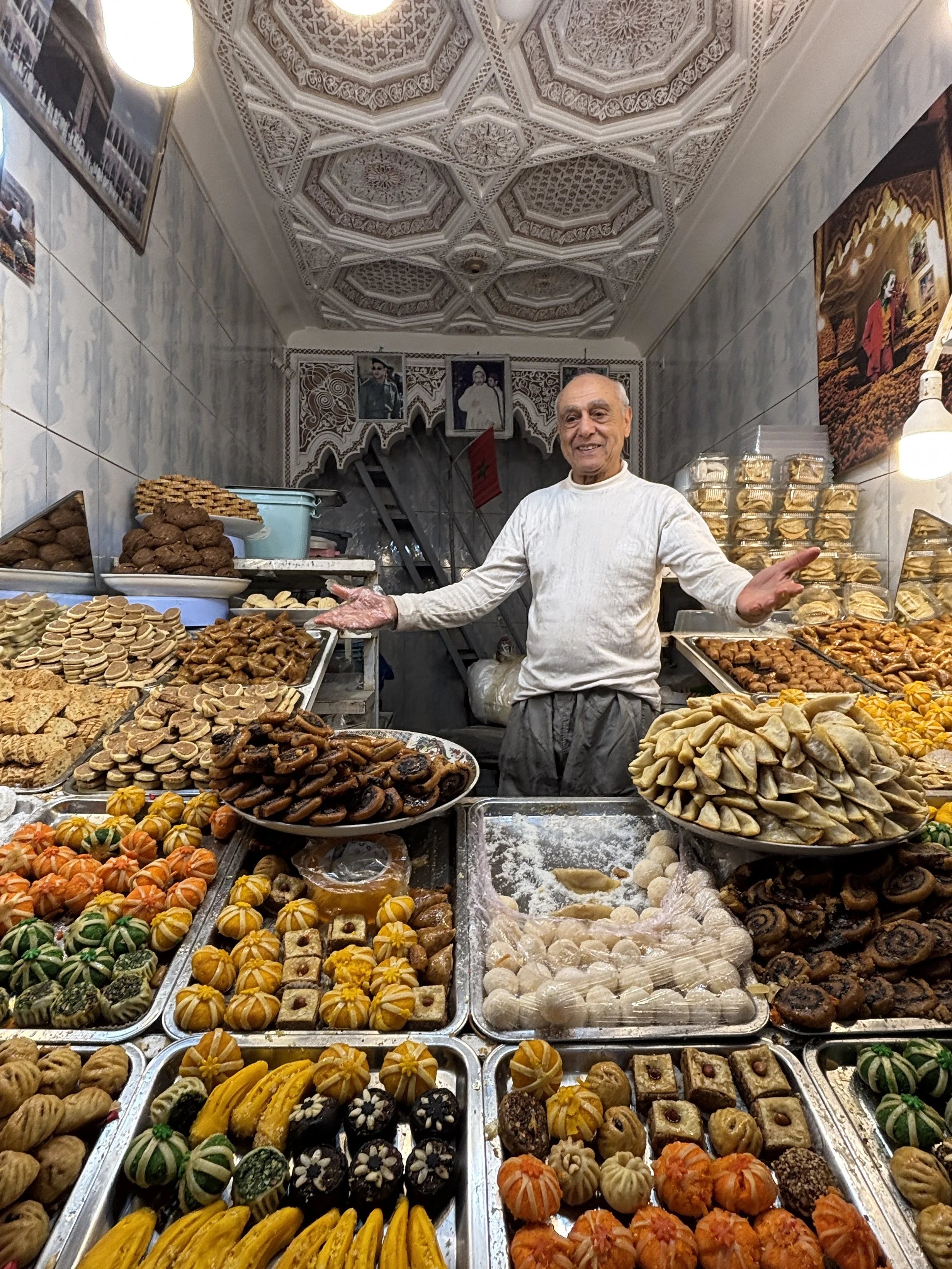
If you have a sweet tooth, you can’t miss the stalls selling traditional Moroccan desserts and sweets!
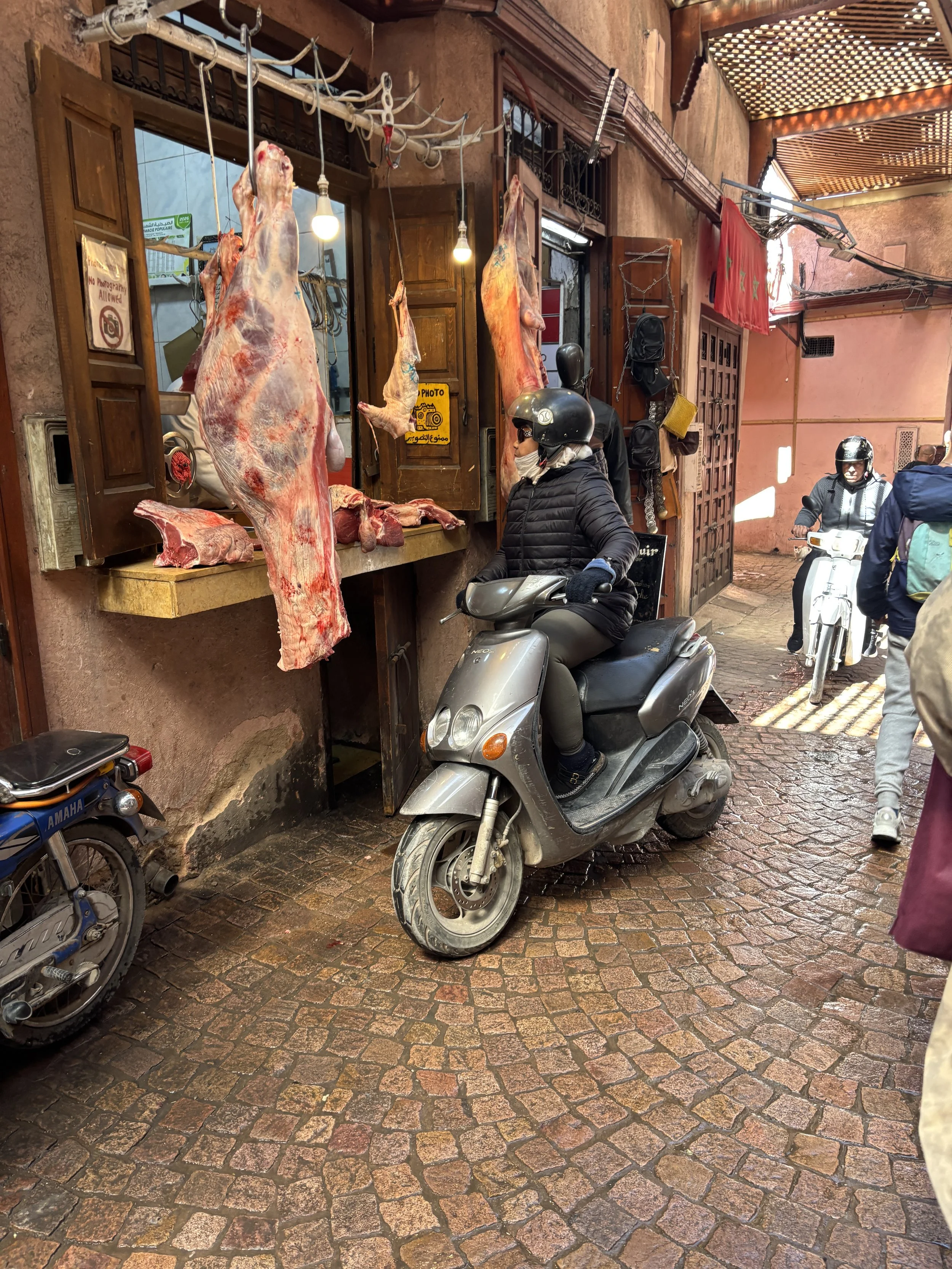
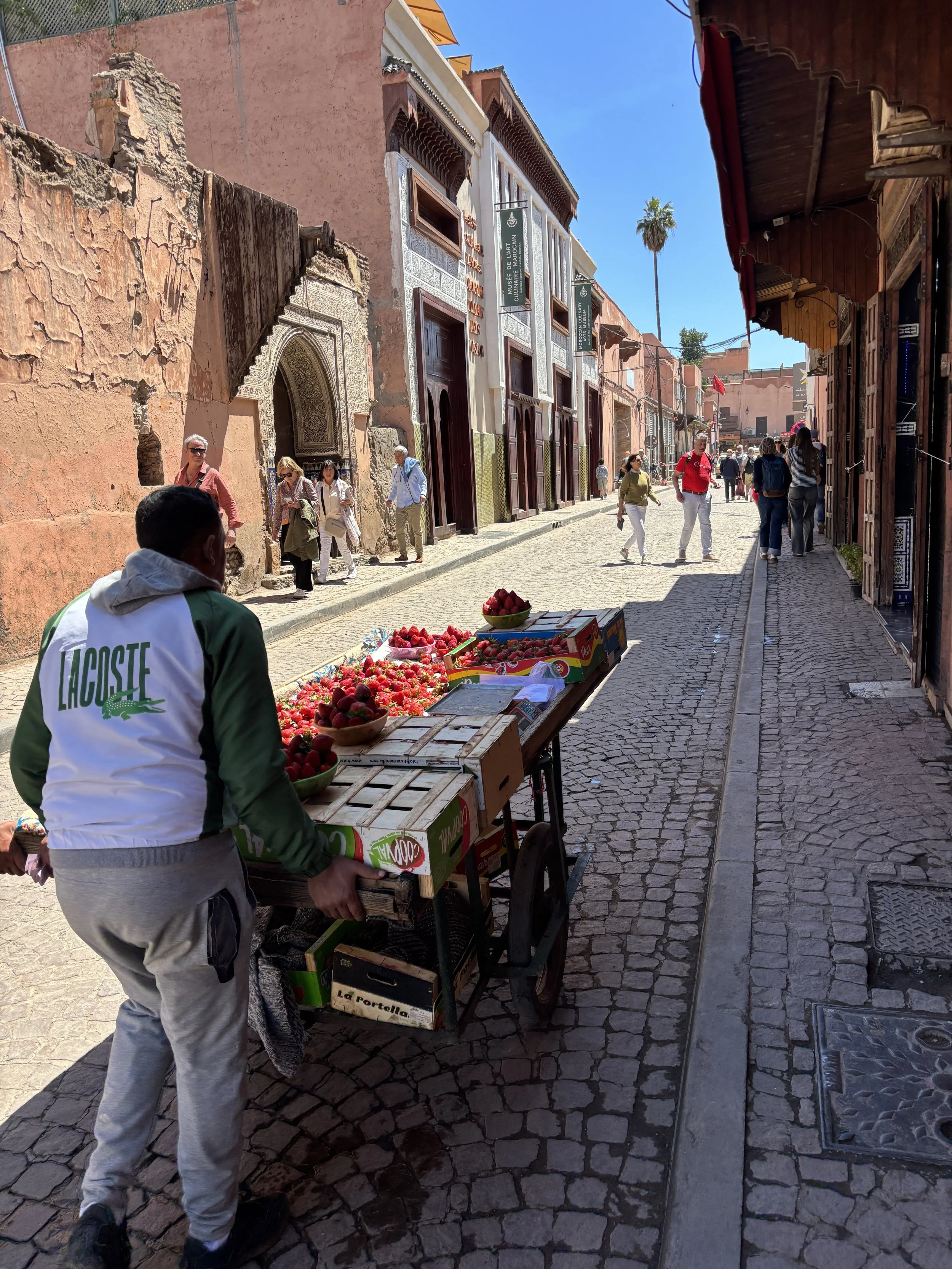
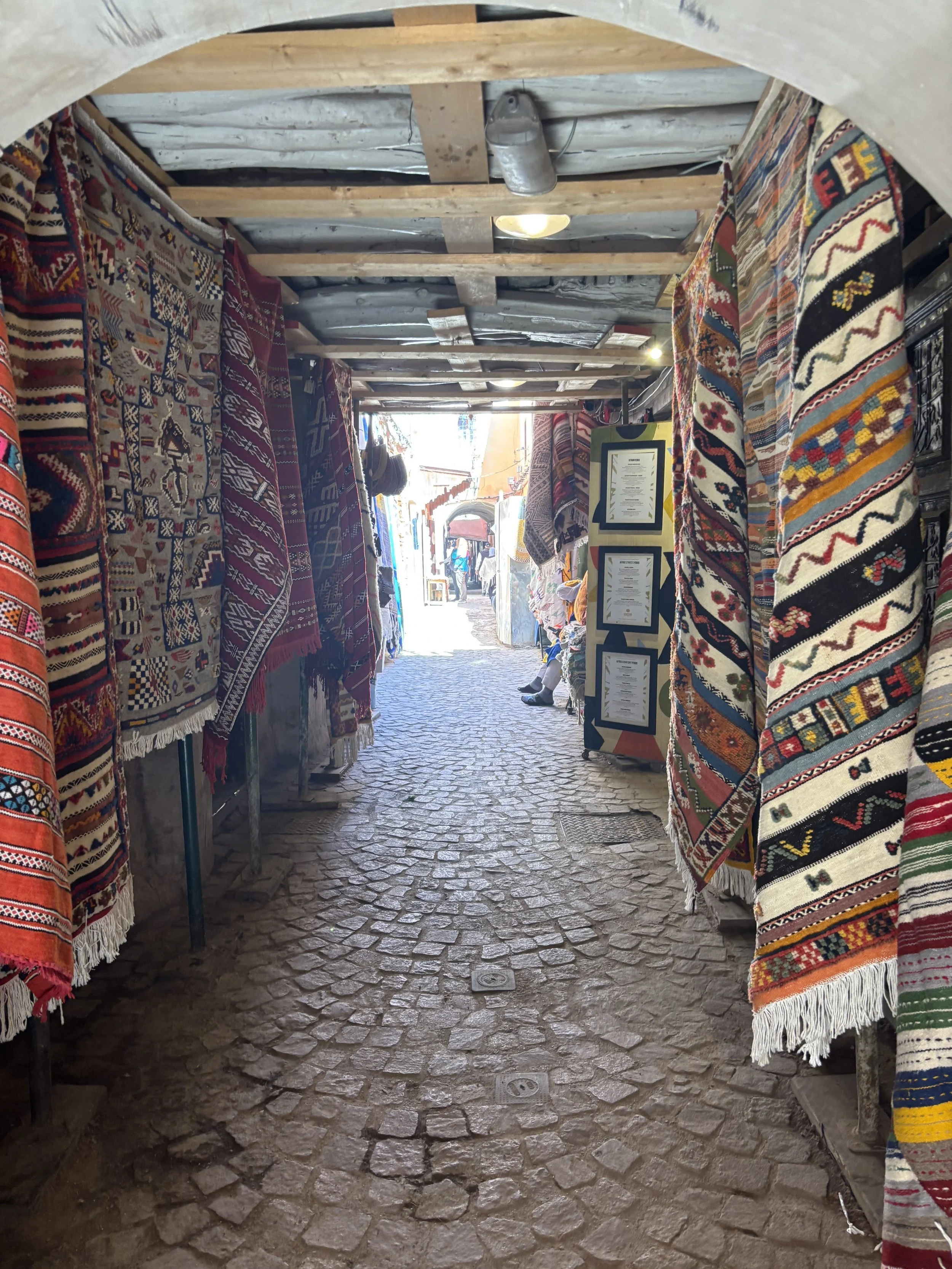
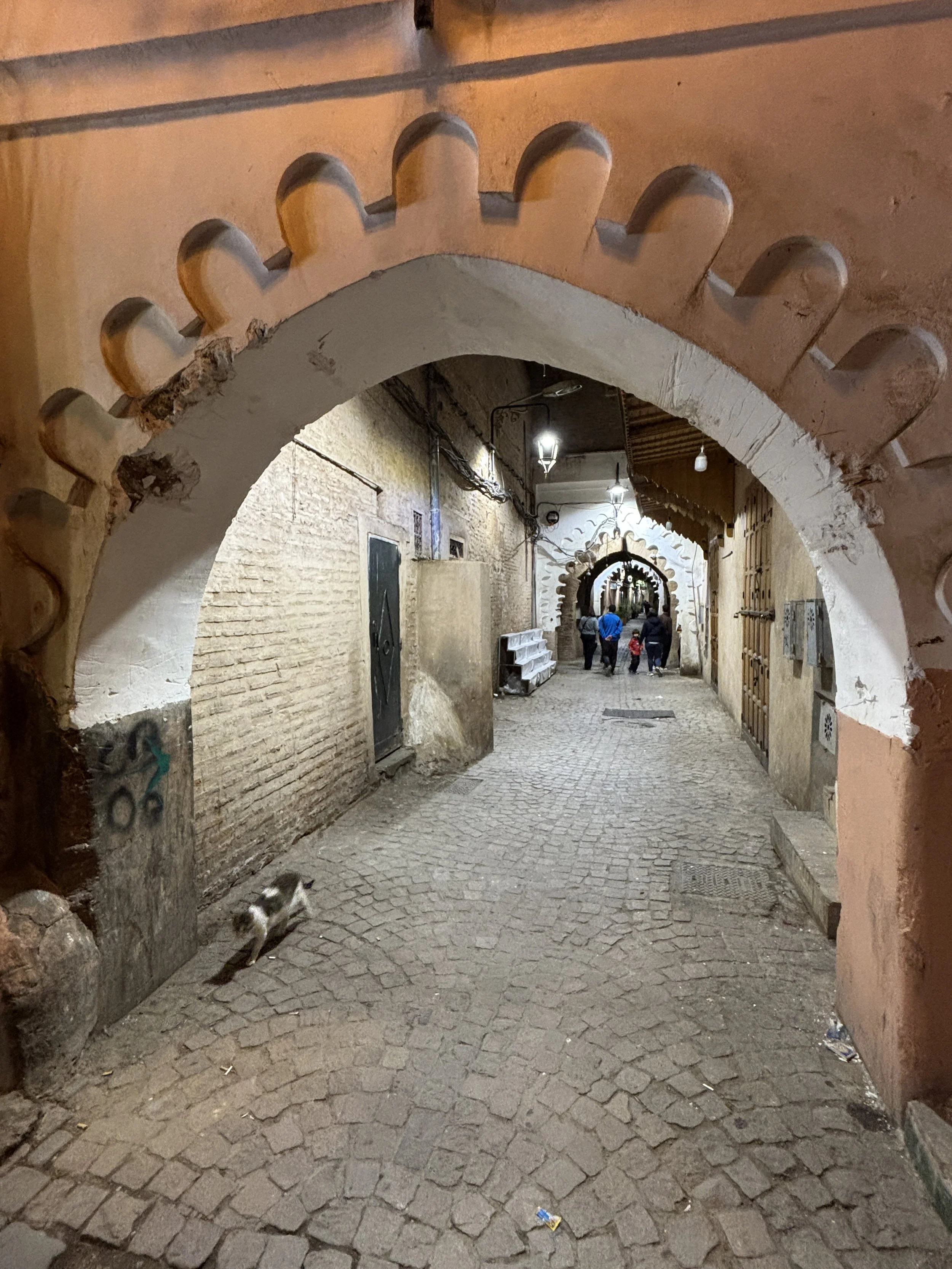
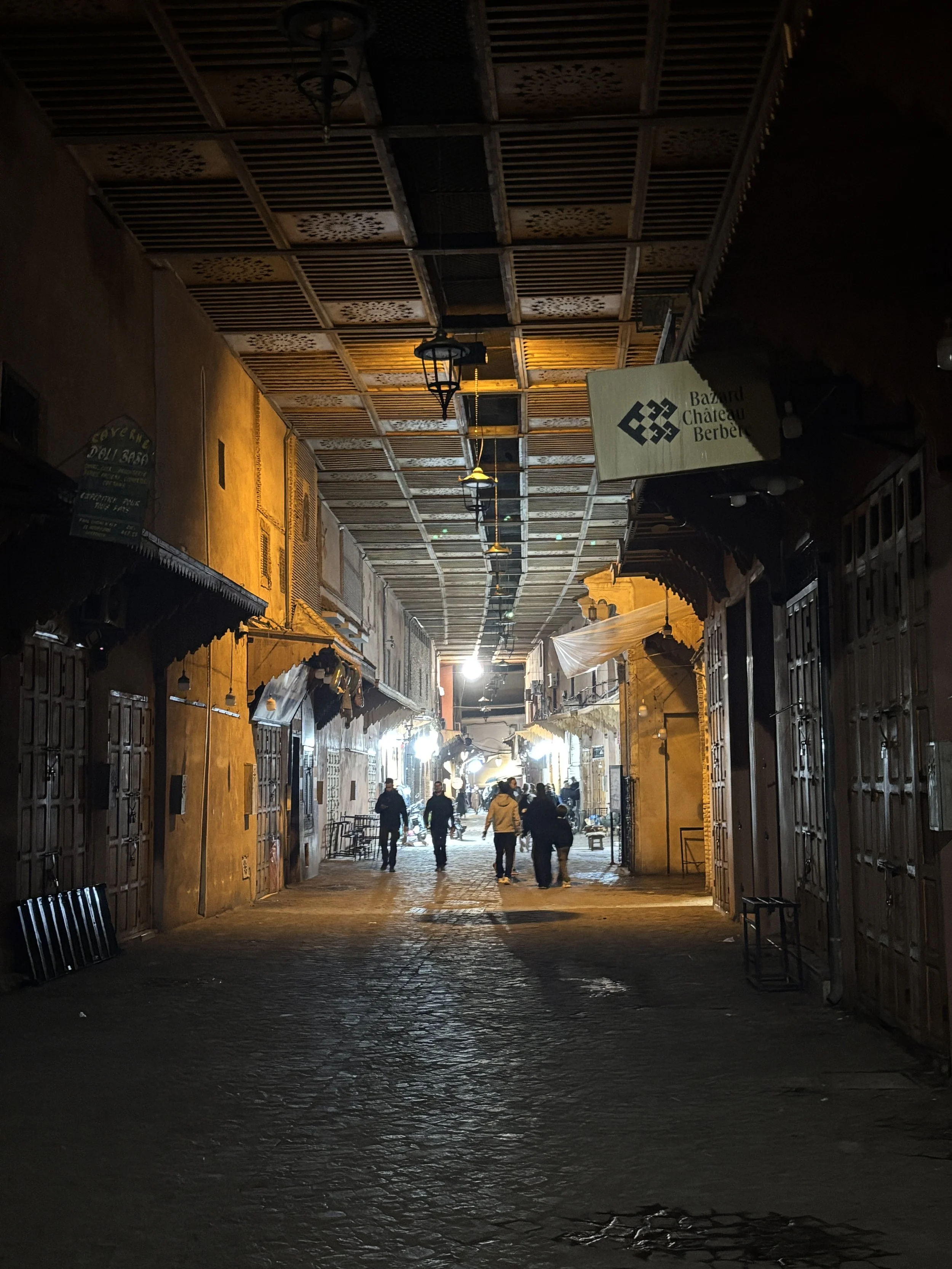
The Medina is also interesting at night, when most of the shops have closed.
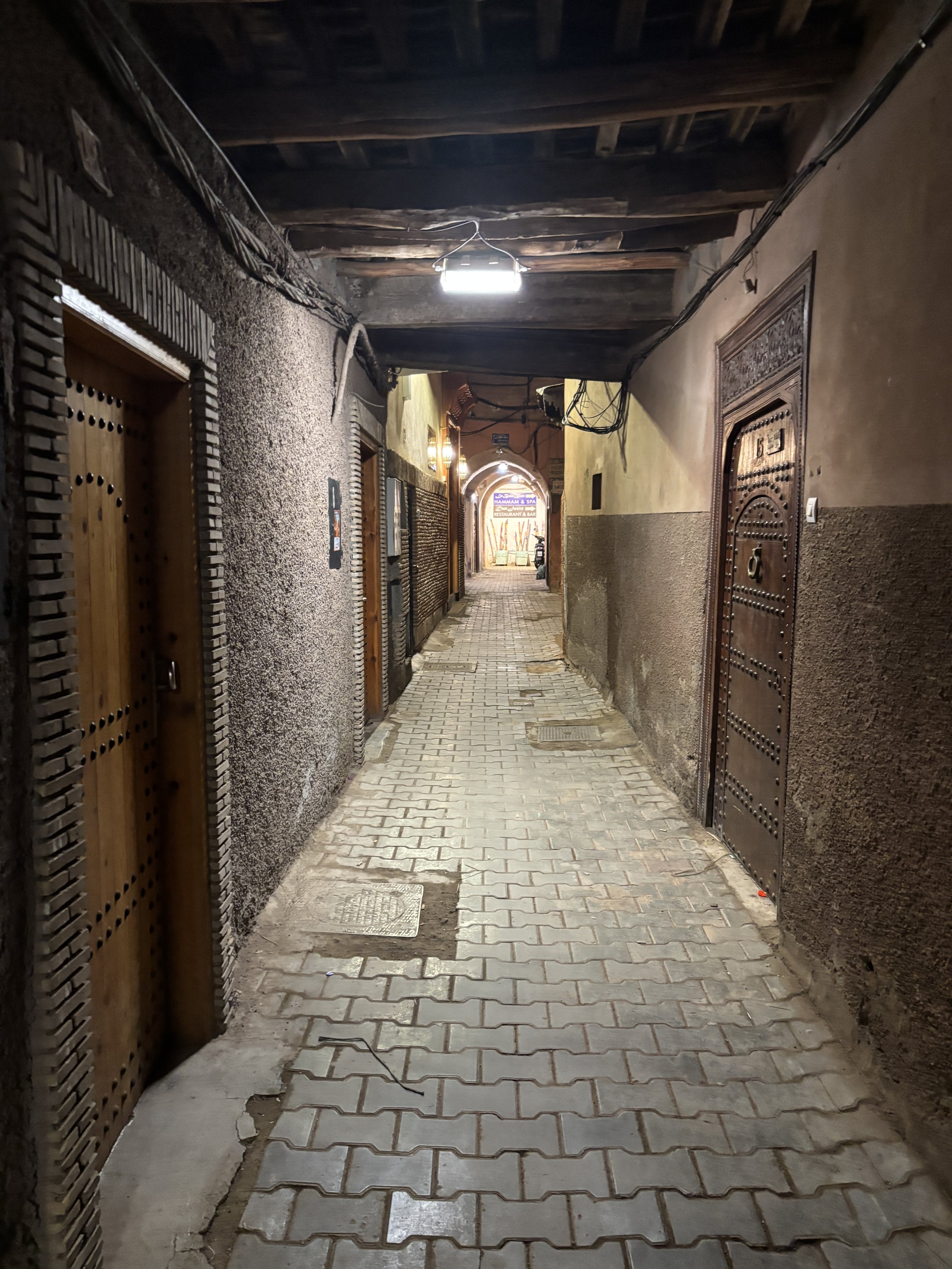
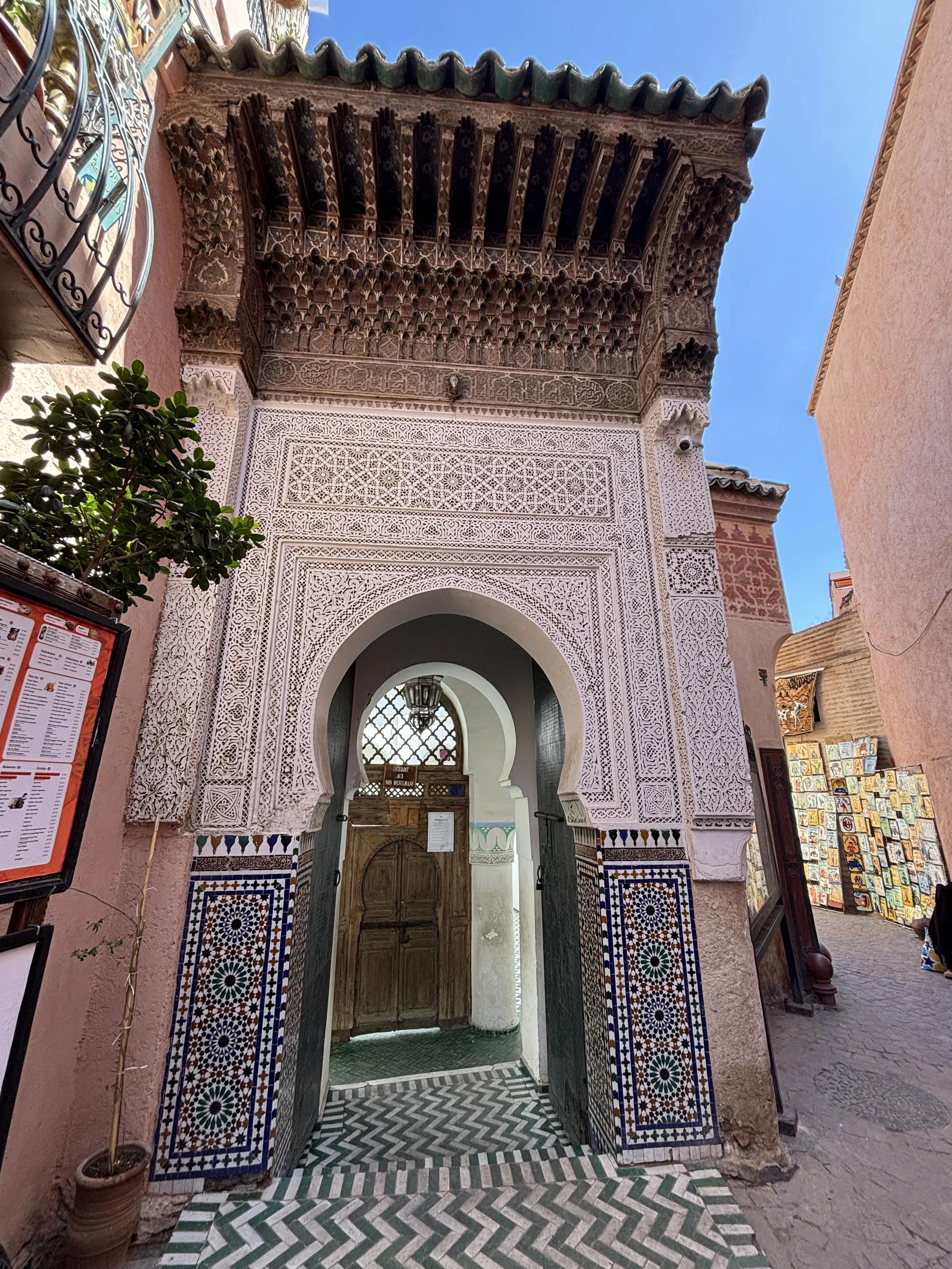
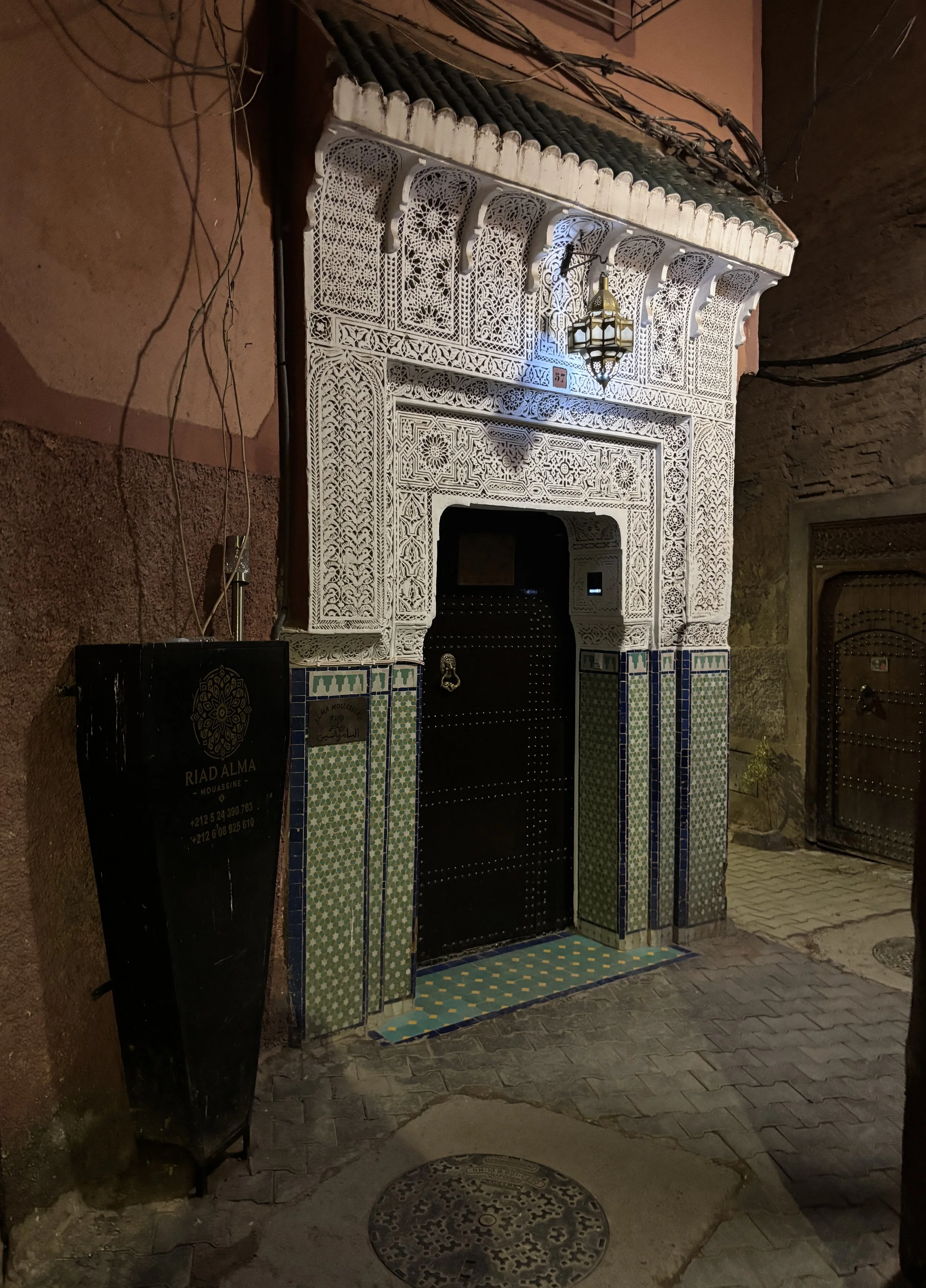
In the middle of the intricate street pattern of the Marrakech medina you will also find quite a few spots of interest, such as these ornate doors. You will also notice that most streets are actually covered.
There are also quite a few riads (traditional Moroccan guest houses) tucked into the old town (like the one I describe further down this post)
Top things to visit in the Marrakech Medina
Besides the random walk through the Medina, there are a couple of actual landmarks in the old town of Marrakech which are worth a visit. These are:
The Ben Youssef Madrasa
Bahia Palace
Visiting the Ben Youssef Madrasa
The Ben Youssef Madrasa is located next to a mosque and a square of the same name (which is one of the few open spaces in the old town). It also provides one of the key points of reference for orientation within the Medina (the other being Jemaa el-Fna at the opposite (south) edge of the old town.
This is quite a popular tourist spot and there was a constant stream of people walking through, although no queues at any time. Entrance fee is 50 Dirhams (around €5/$5).
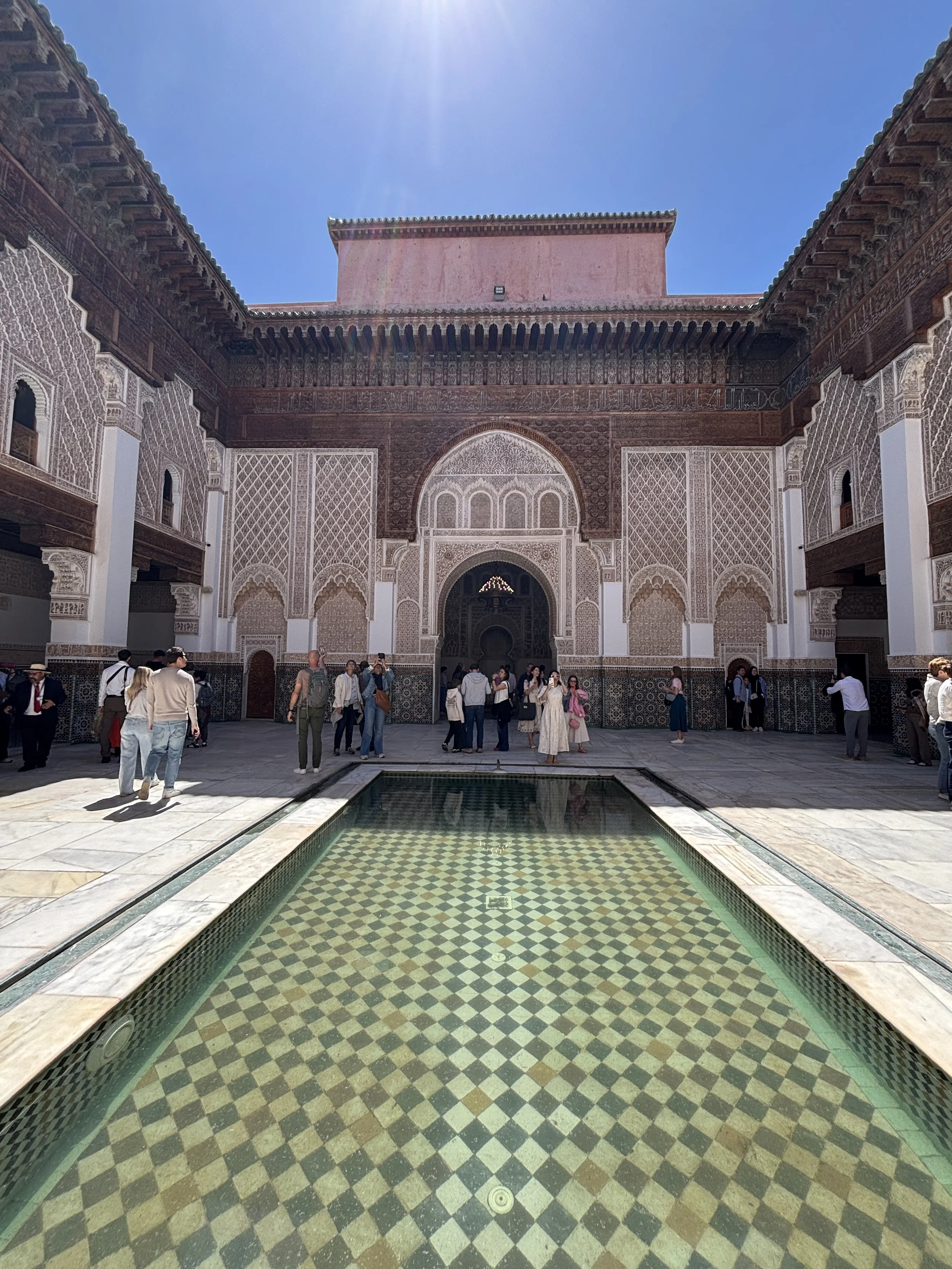
The current building of the Ben Youssef Madrasa was built in the 16th C. (although the actual educational establishment is older). In its heyday, hundreds of students from across the Islamic world lived here while they were studying religious doctrine and law.
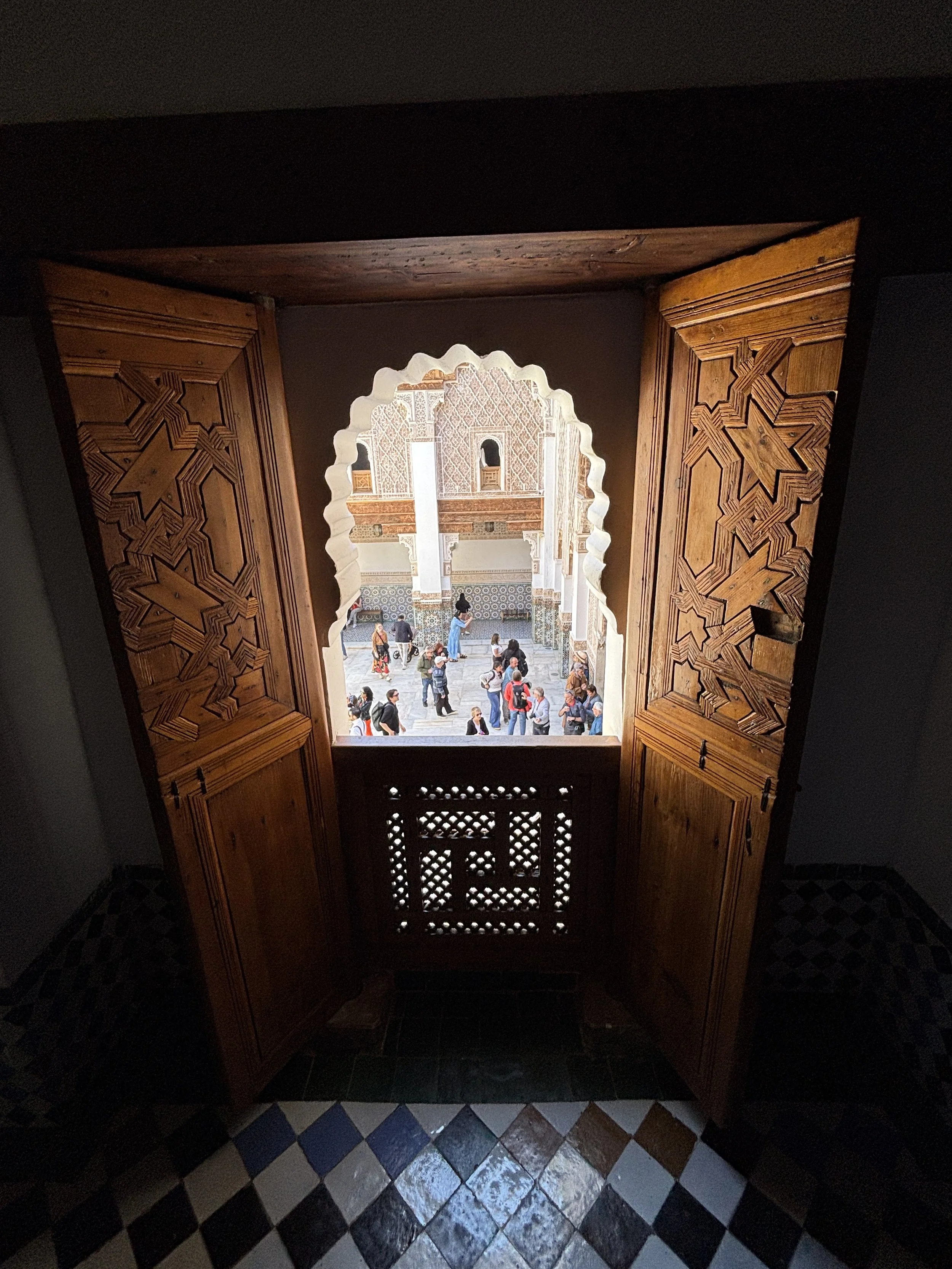
The madrasa is structured around a beautiful central courtyard with a shallow pool at its center. The upper floors contain a myriad of small tiled rooms which is where the students lived.
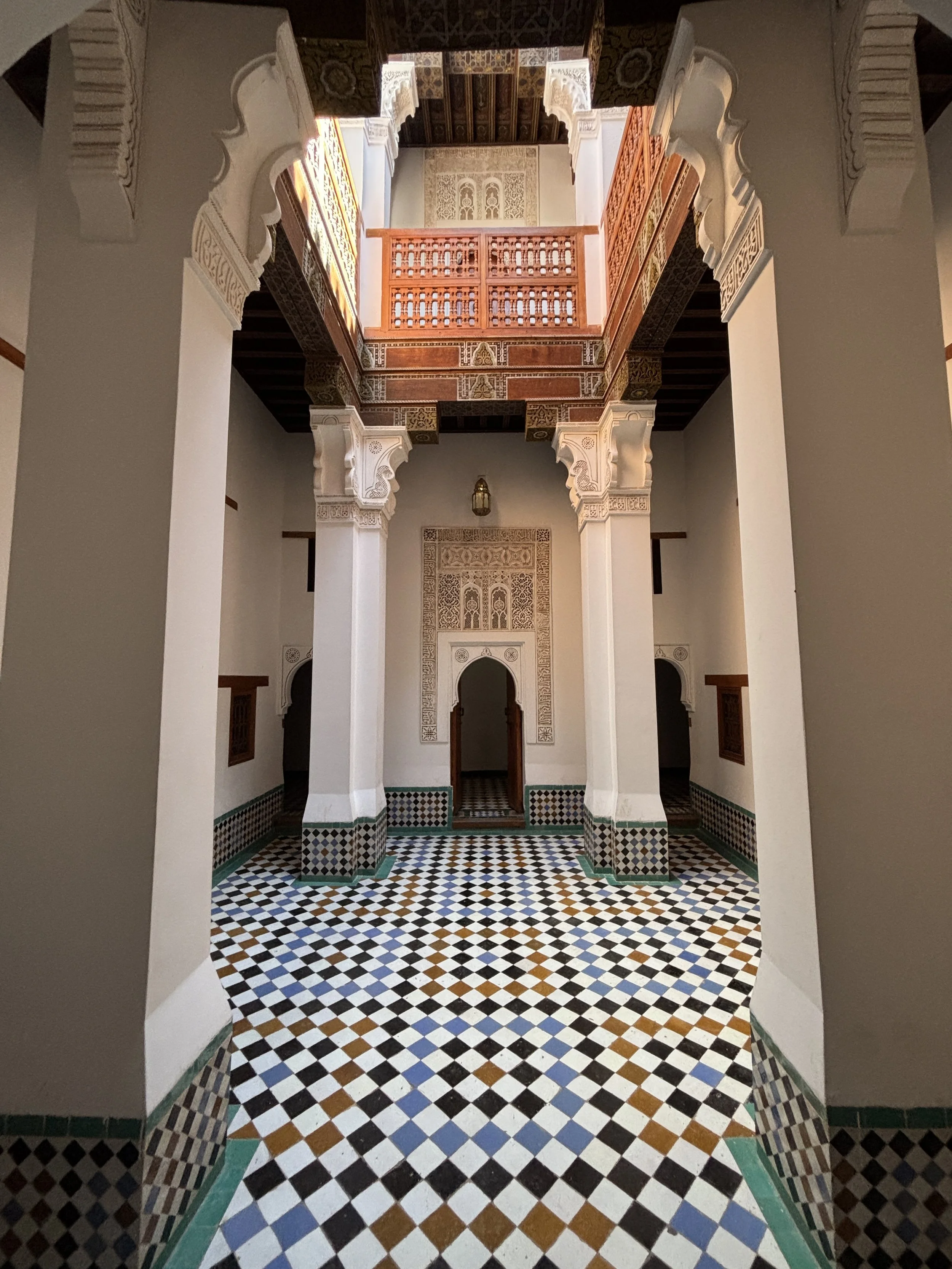
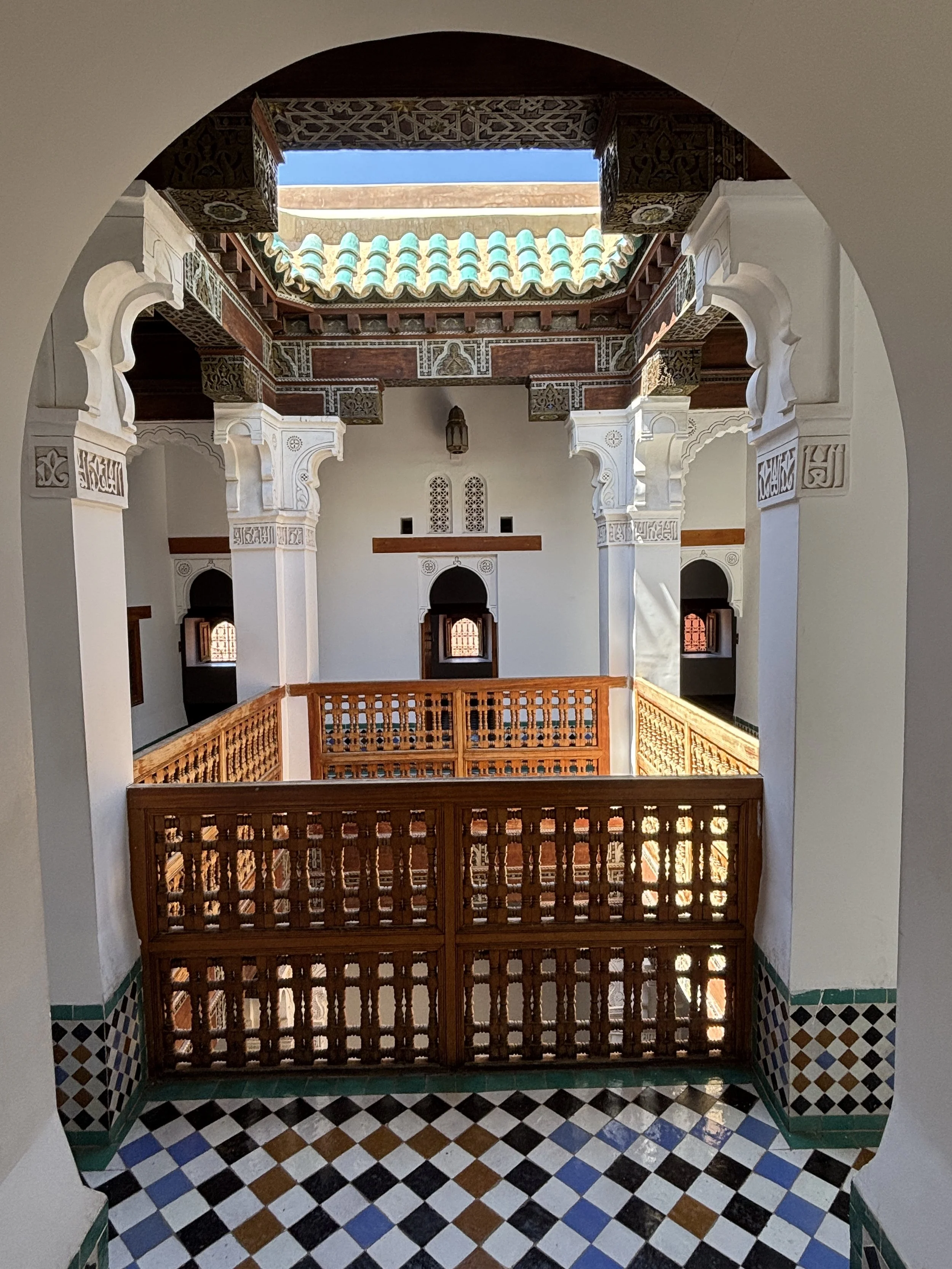
The Ben Youssef Madrasa was painstakingly restored to the smallest detail in the 1980s
Visiting Bahia Palace
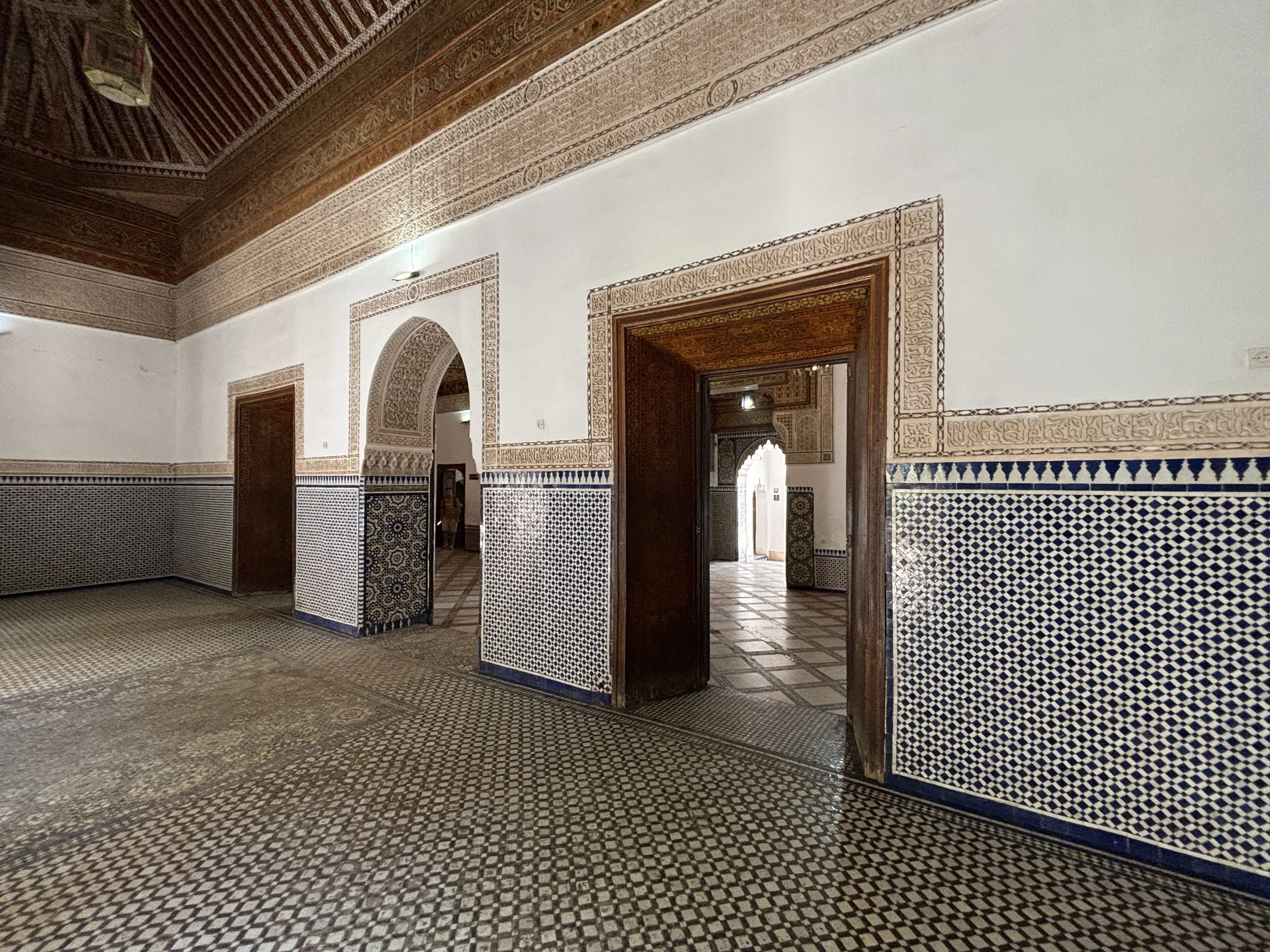
This is another beautiful place to visit in the old town of Marrakech, although it sits at its southeastern edge rather than in its core. The Bahia Palace was built by a grand vizier (sort of a prime minister) of the Sultan at the turn of the 20th C. It was later used by the French resident-general (the governor, in fact), Louis-Hubert Lyautey, as his official residence.
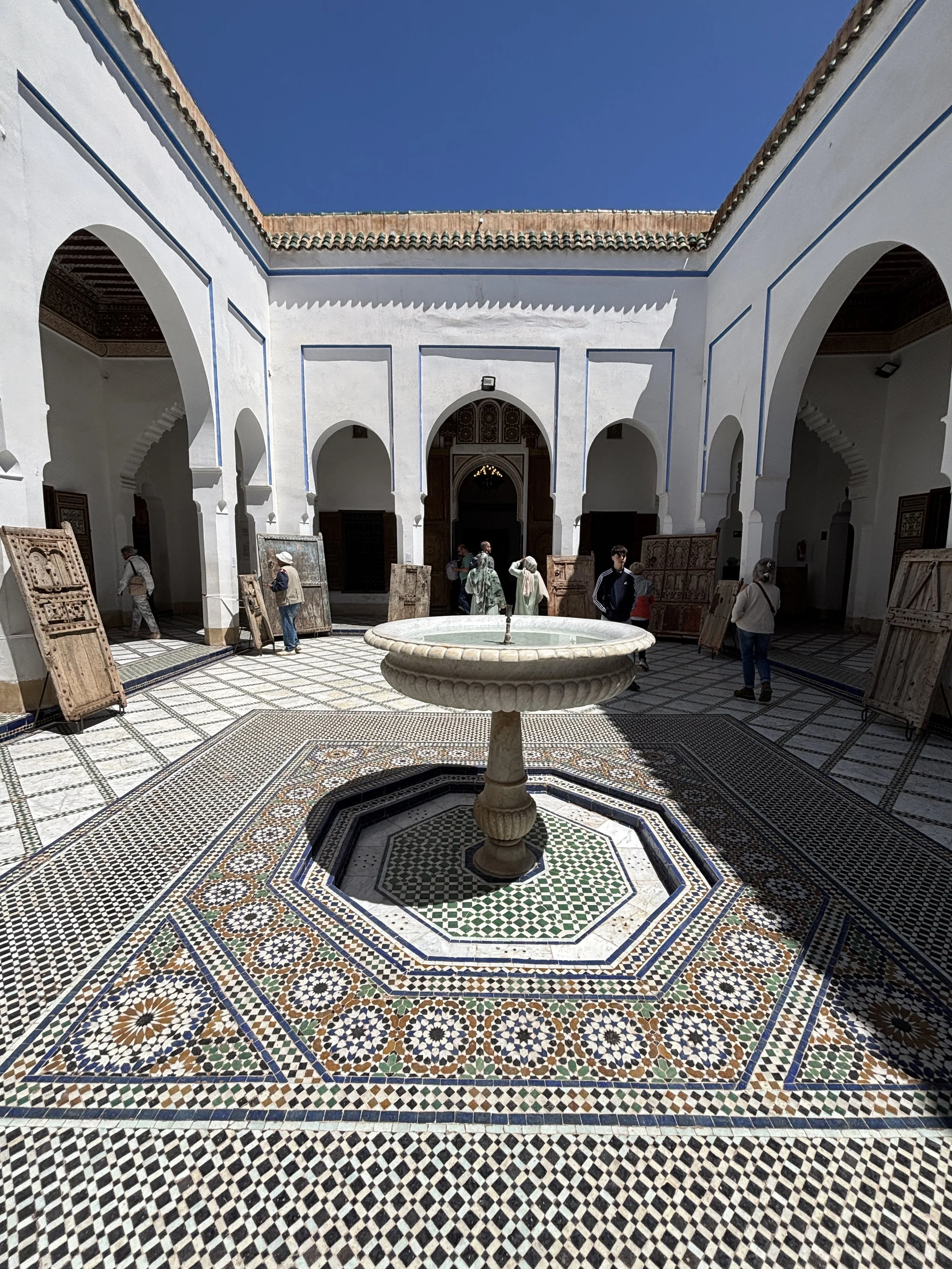
The palace has plenty of ornamental details throughout, several courtyards and some rather large gardens. In fact, only part of it is currently open to visitors and the visit itself doesn’t take much time.
There were quite a few visitors, but it was much less crowded than the Ben Youssef Madrasa.
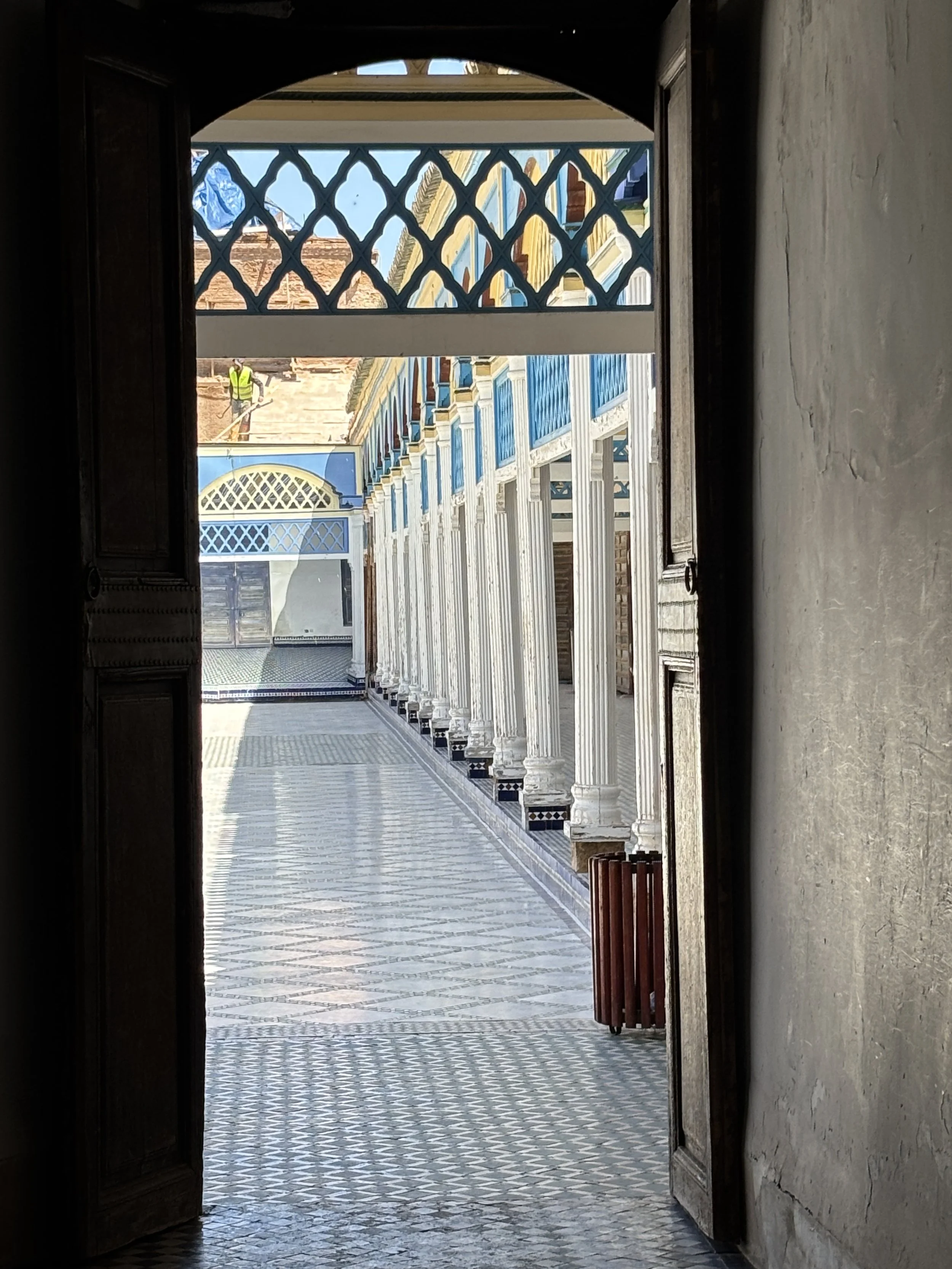
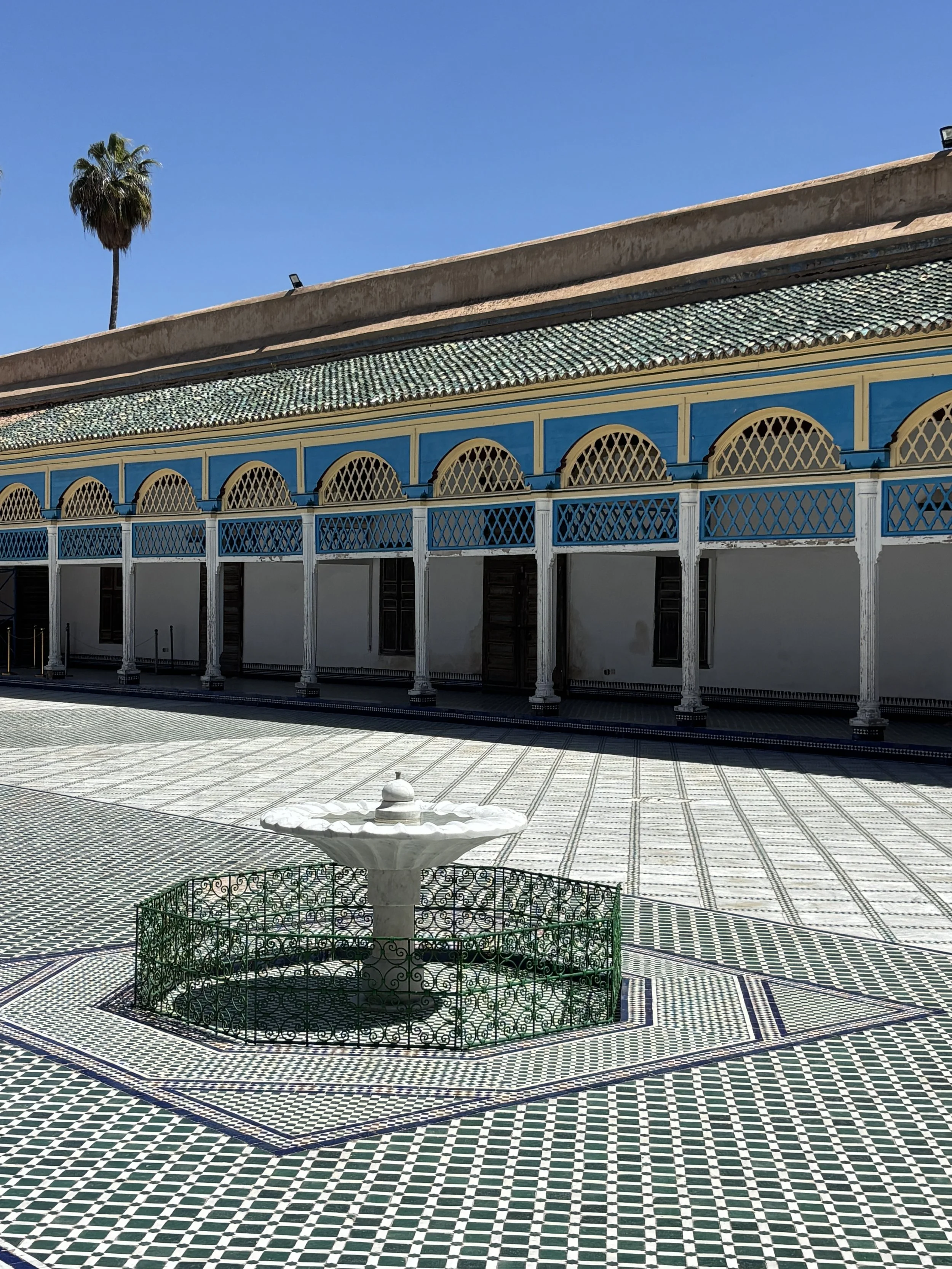
Perhaps is best let images speak for themselves…
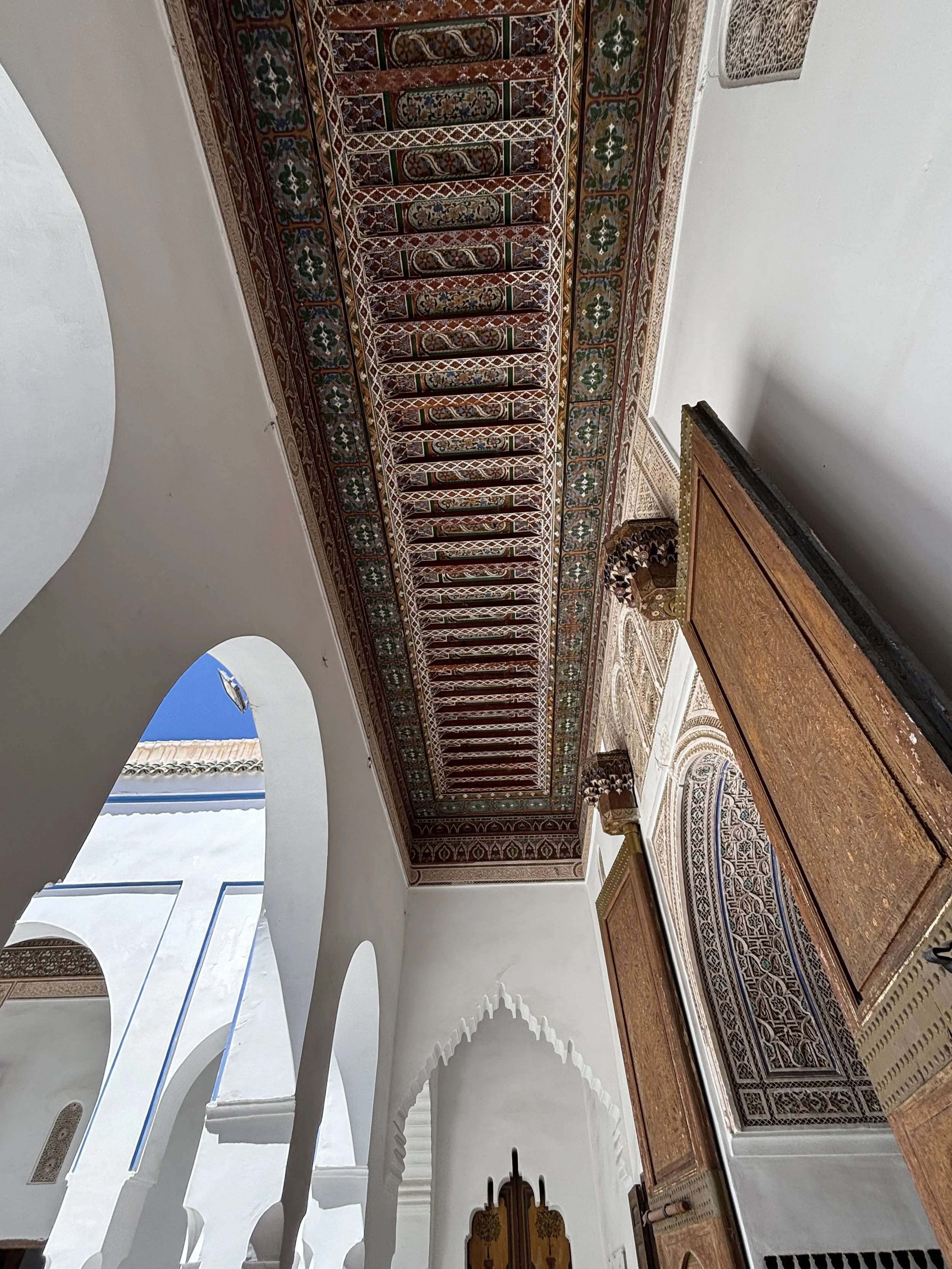
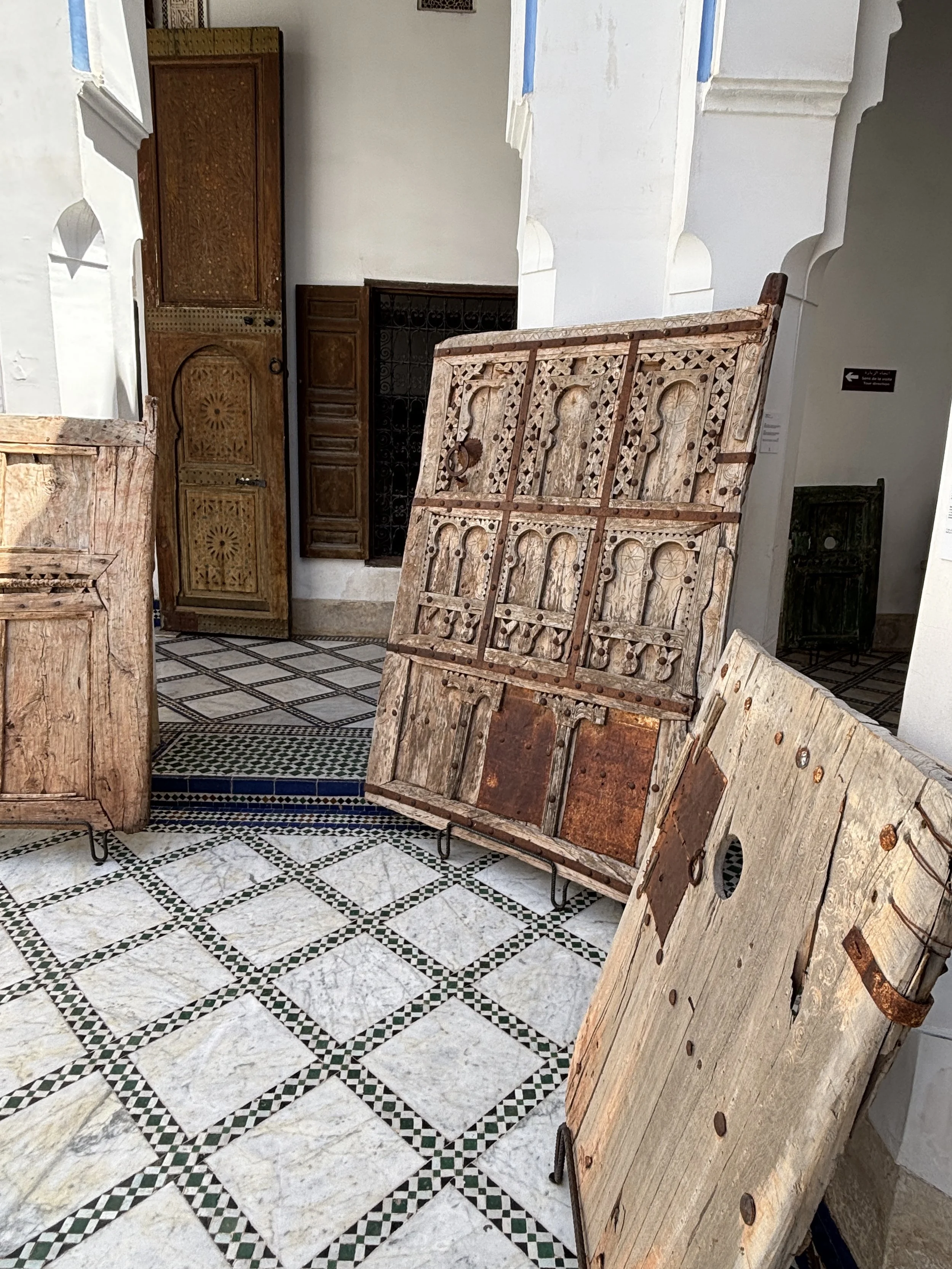
At the time of my visit there was also an exhibition of traditional Moroccan doors, although I don’t know if this was a temporary or permanent exhibit.
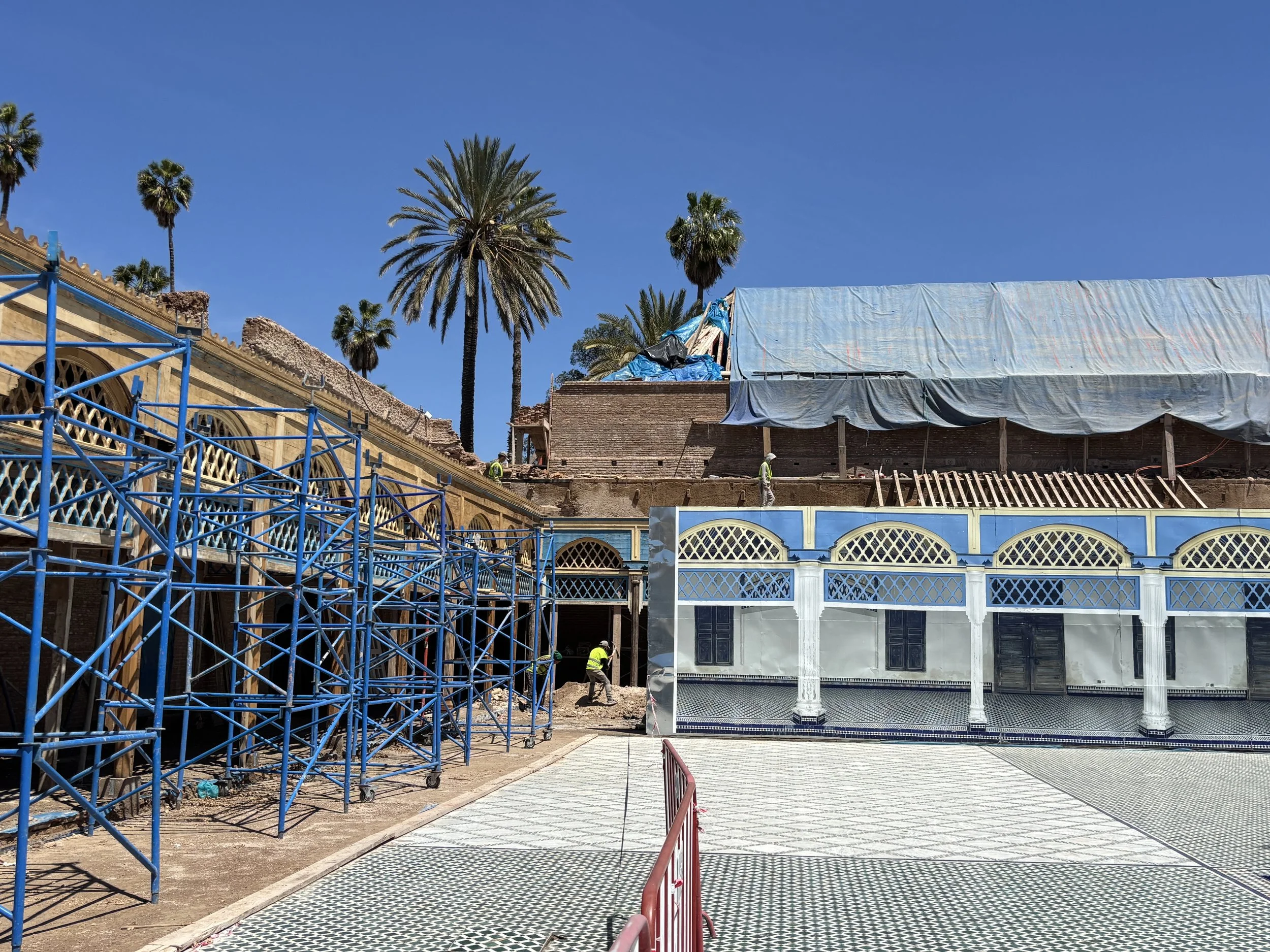
At the time of my visit there was also quite intense renovation work going on. For example, a whole wing of the palace’s beautiful blue courtyard was being fully restored.
By the way, I didn’t mention it, but there is an entrance fee of 100 Dirhams (around €10/$10), which is a bit pricey, but definitely worth it.
Other things to see near the Marrakech Medina: the Koutoubia minaret and gardens
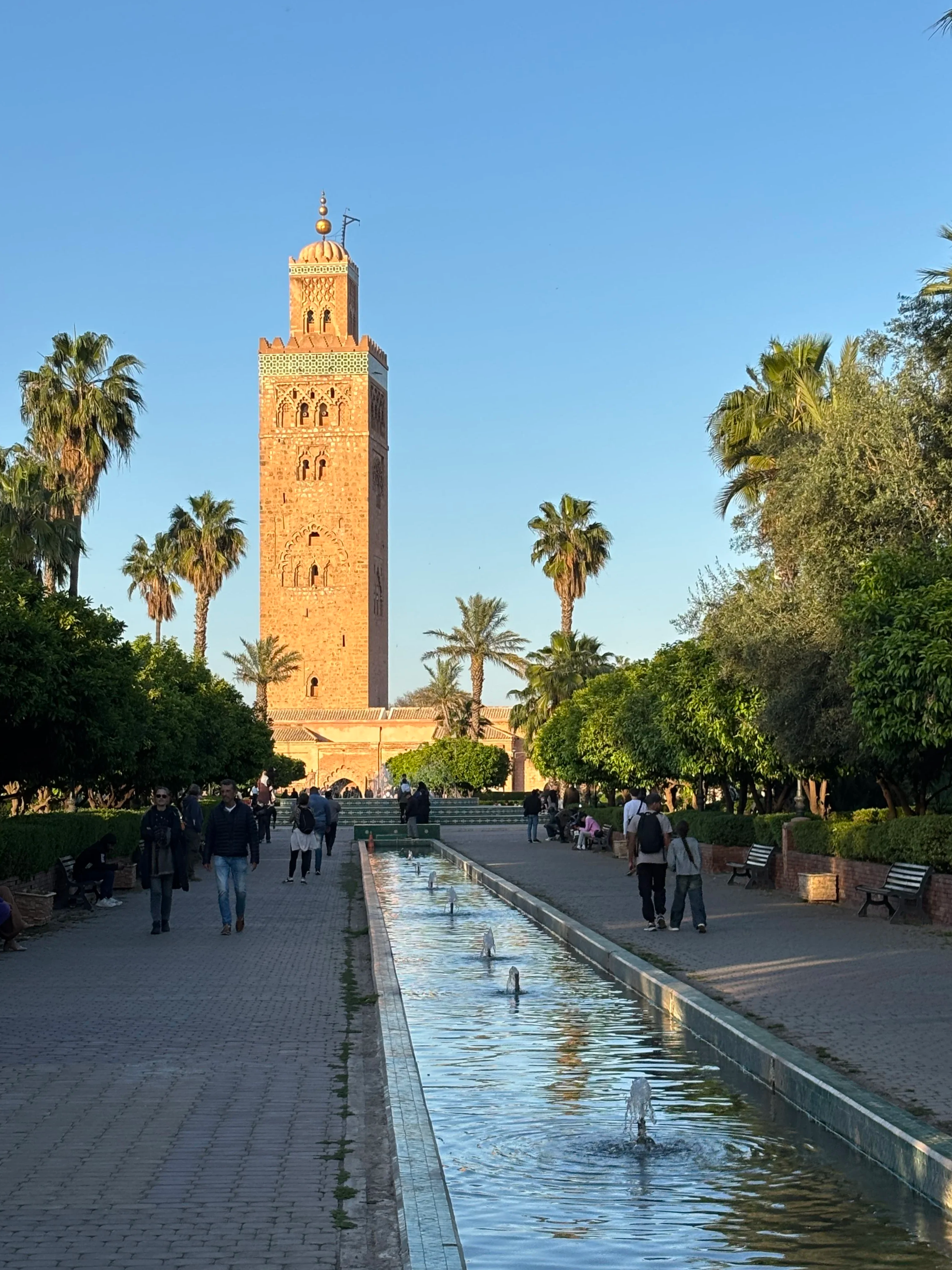
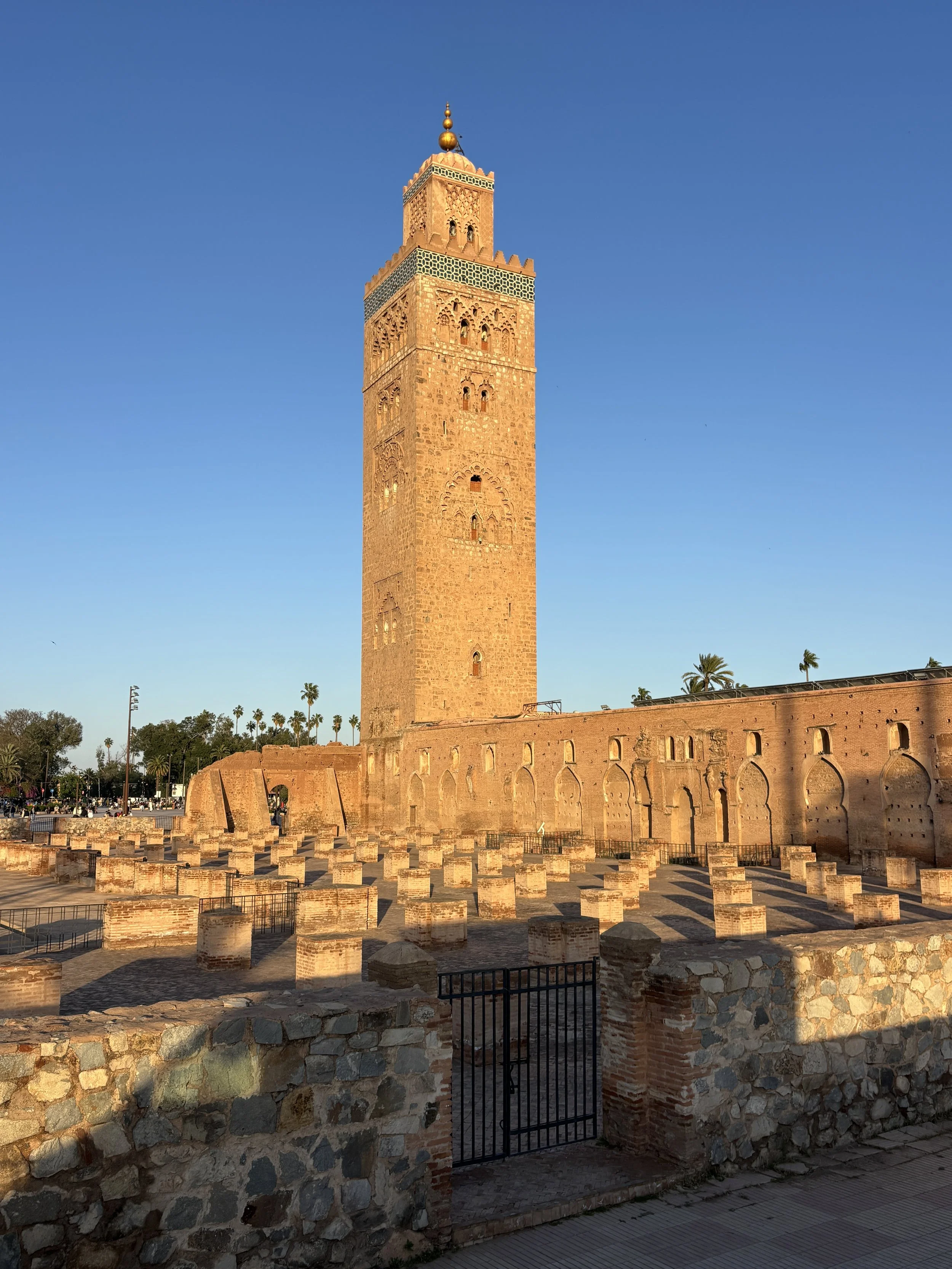
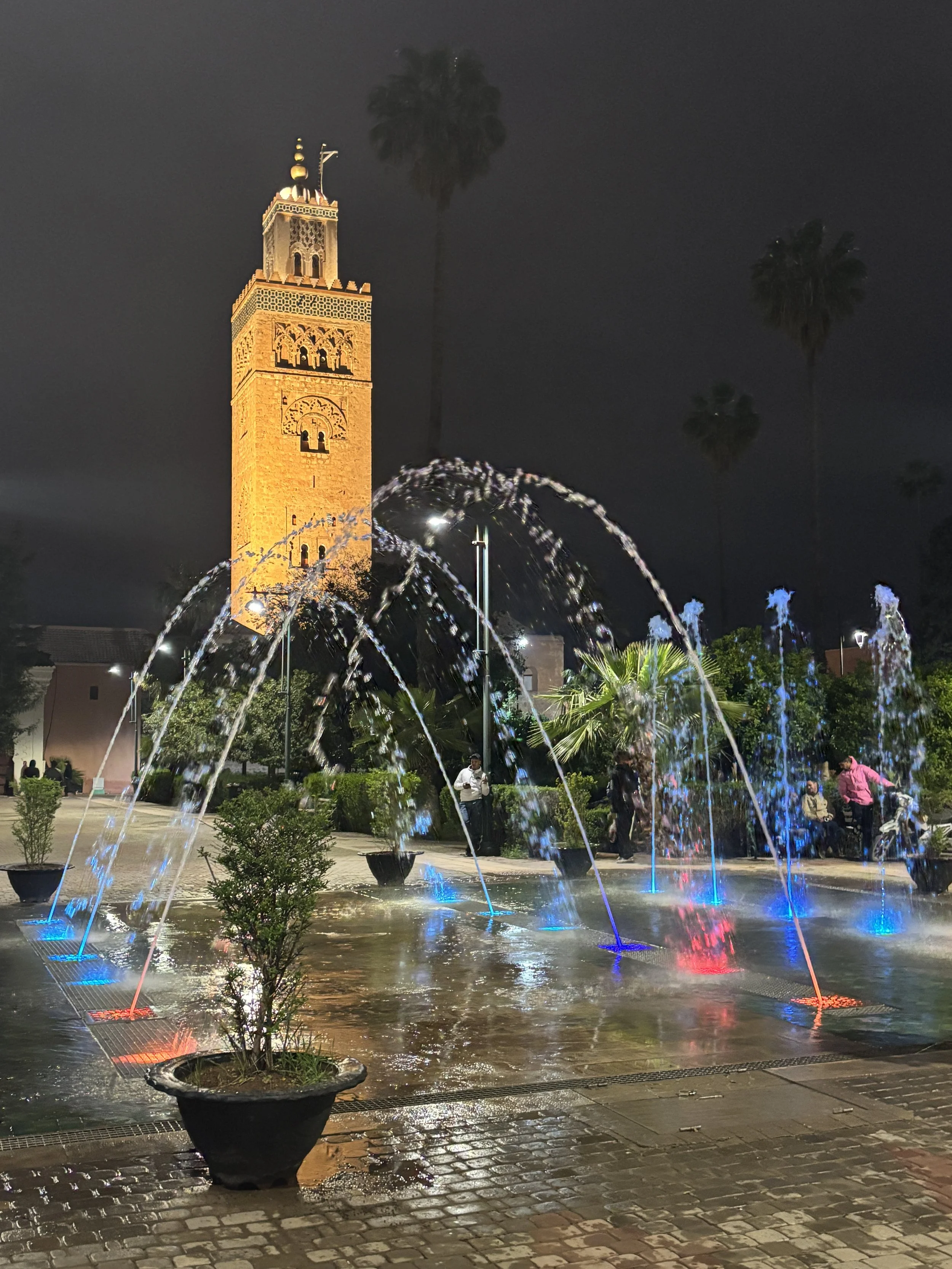
The 69-meter tall Koutoubia minaret is one of the most recognizable views of Marrakech and it defines the skyline of the city. It was built in the 12th C. and it is adjacent to two mosques.
If its outlines looks familiar it is perhaps because the Marrakech Koutoubia minaret inspired also the famous Giralda of Seville (as well as the Hassan Tower in Rabat).
Its location next to the Jemaa el-Fna means that you can’t miss it. There are some lovely gardens next to it, as well!
Visiting a legendary grand hotel: La Mamounia
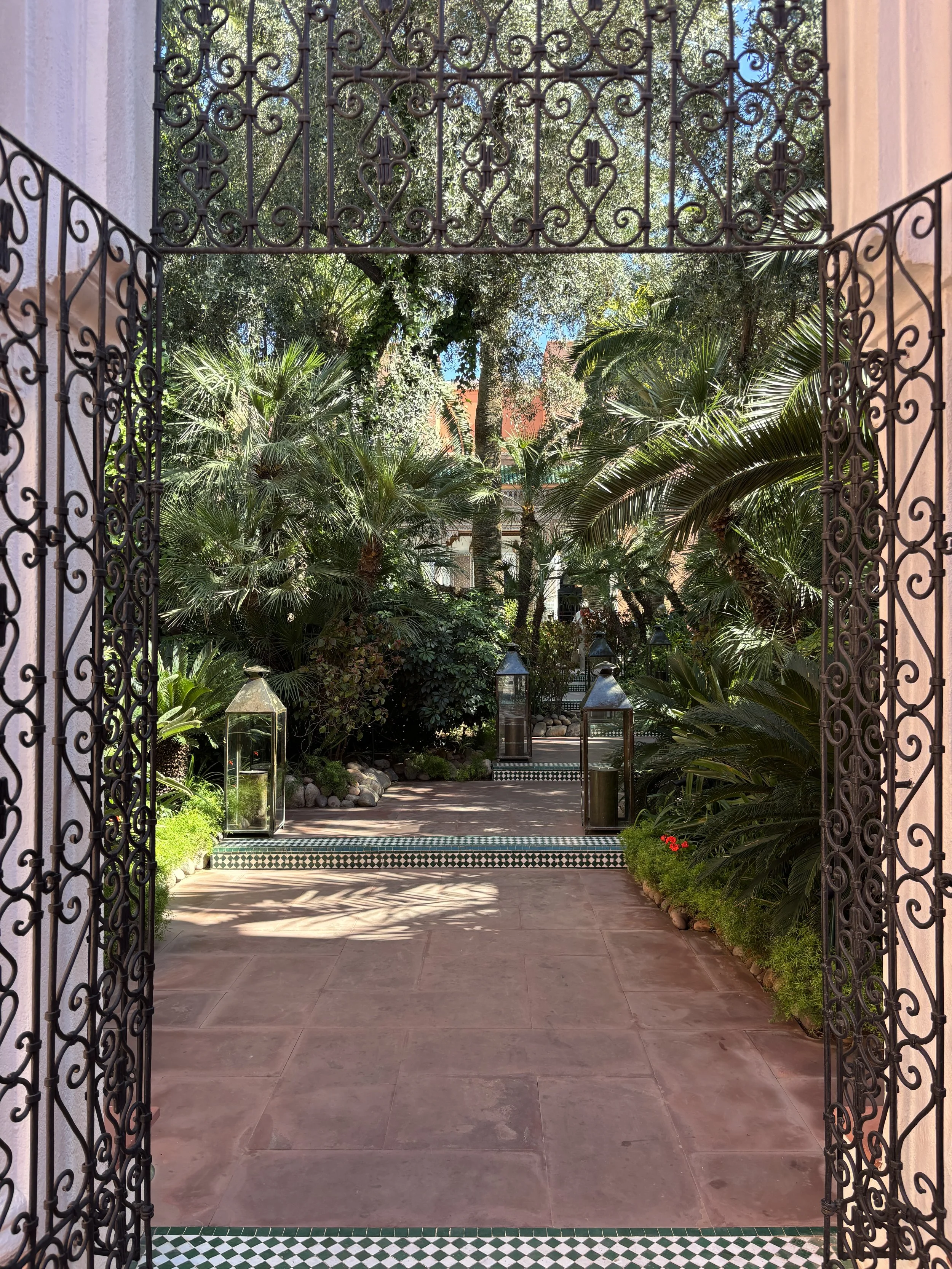
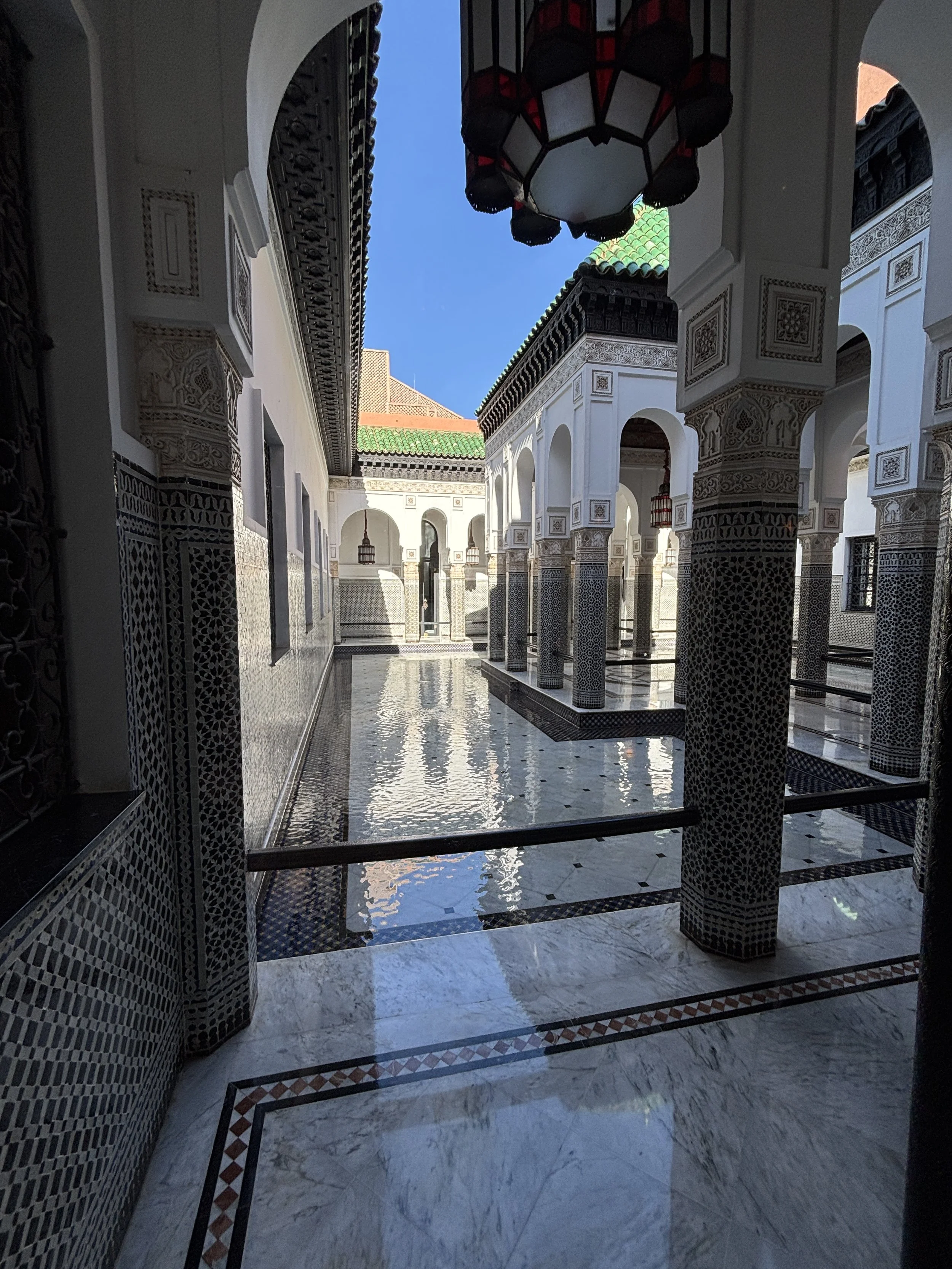
La Mamounia is one of the world’s most iconic grand hotels and it is located just a short walk away from the Koutoubia and Jemaa el-Fna.
It was built in the 1920s by French architects who mixed art-déco elements with traditional Moroccan architecture. Over the following decades La Mamounia hosted many world leaders and celebrities, but perhaps the guest which has been most closely associated with La Mamounia is Sir. Winston Churchill, who had the place in great esteem and sojourned here several times, including during the war, in 1943, right after the Casablanca Conference.
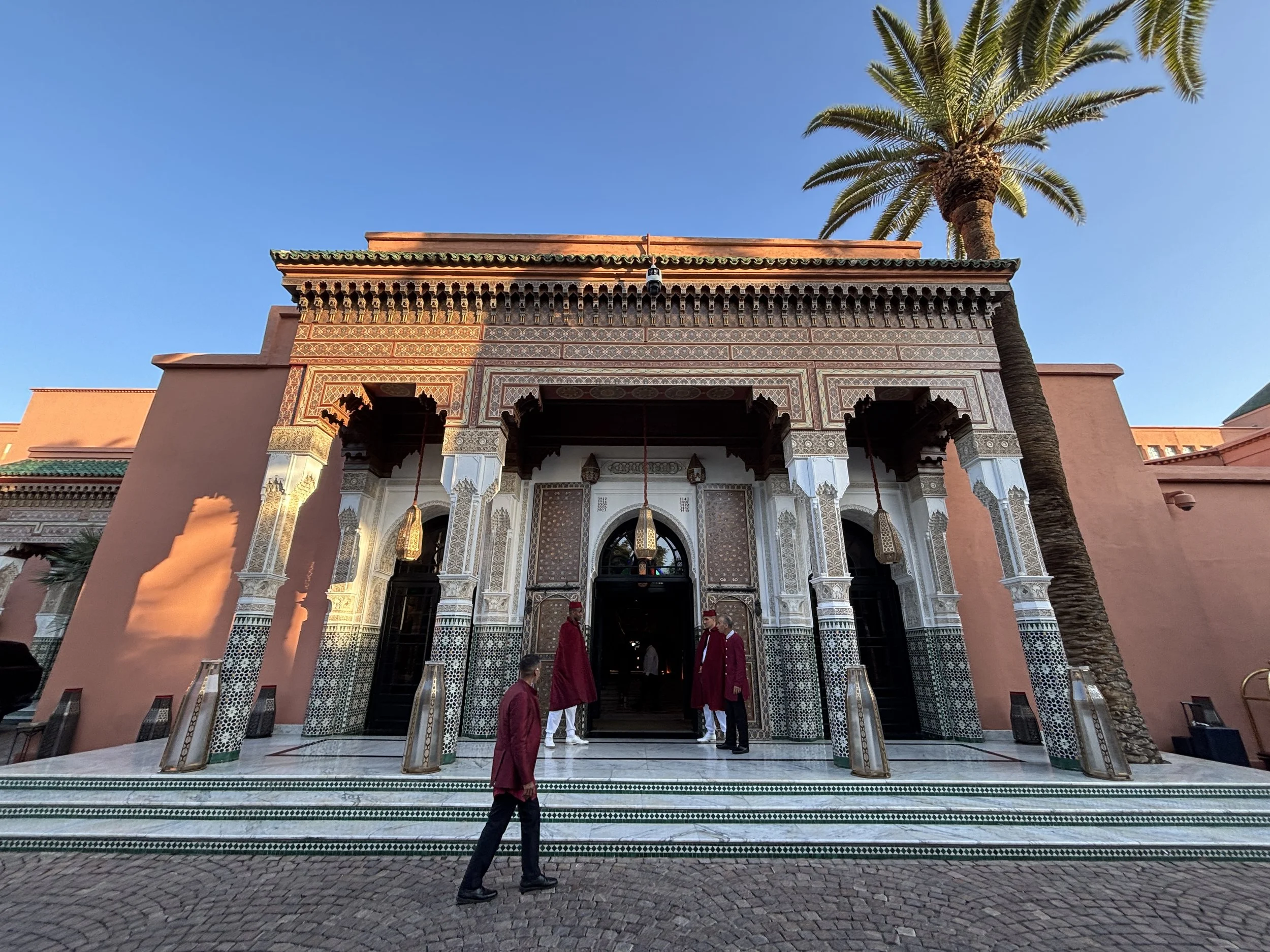
Even if a stay at La Mamounia is beyond your budget, you may be able to visit its grounds to enjoy a drink (or two) at its bar or terrace. Bear in mind, though, that this is a rather exclusive, private venue, so at times, for example if events are taking place, external visitors may not be let through.
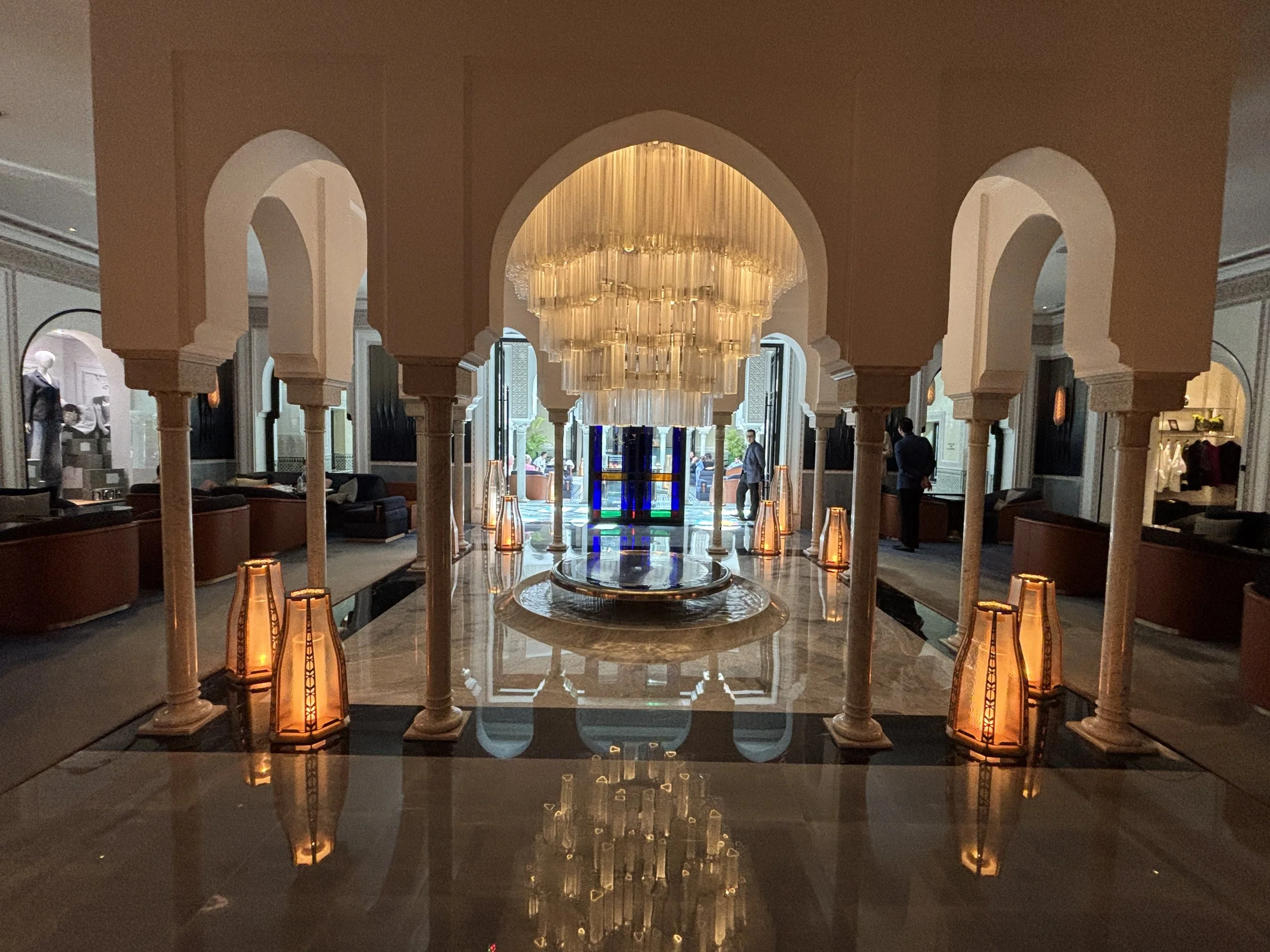
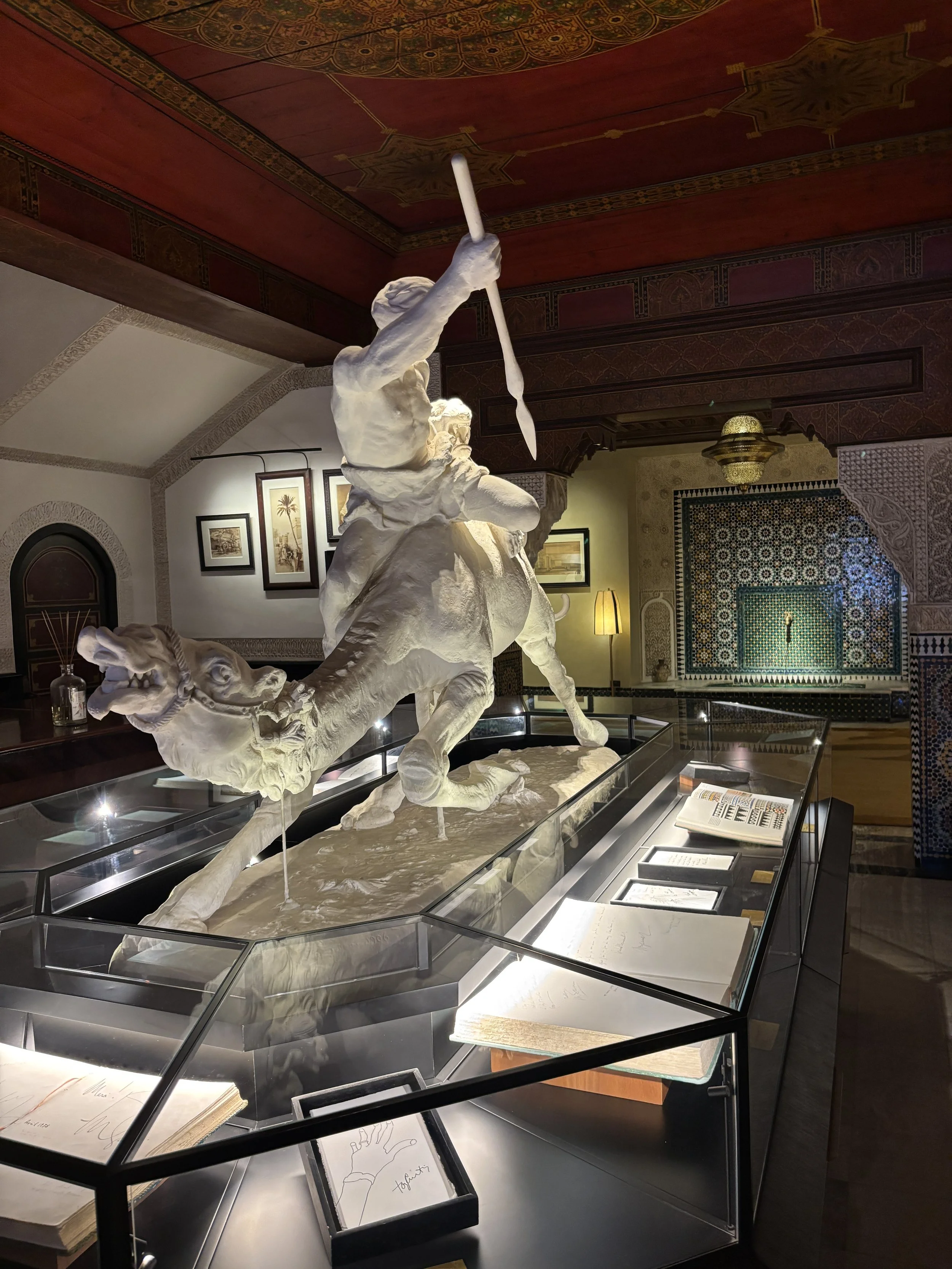
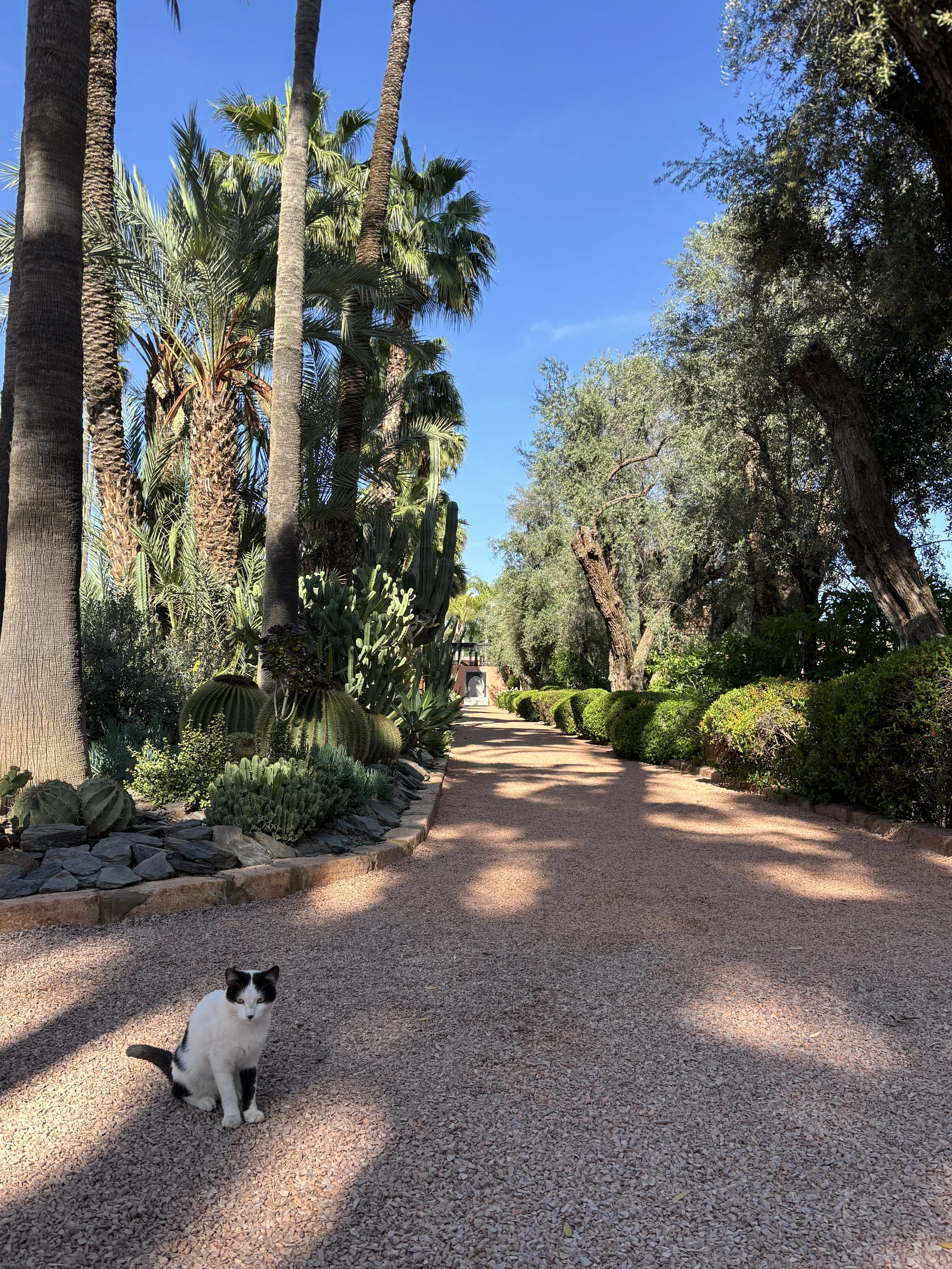
Besides its sumptuous lobby area, La Mamounia hosts also several luxury shops (making it, in practice, a mini-luxury mall) as well as some exhibition space displaying elements connected to the history of the hotel. Worth noting also that La Mamounia has a huge garden!
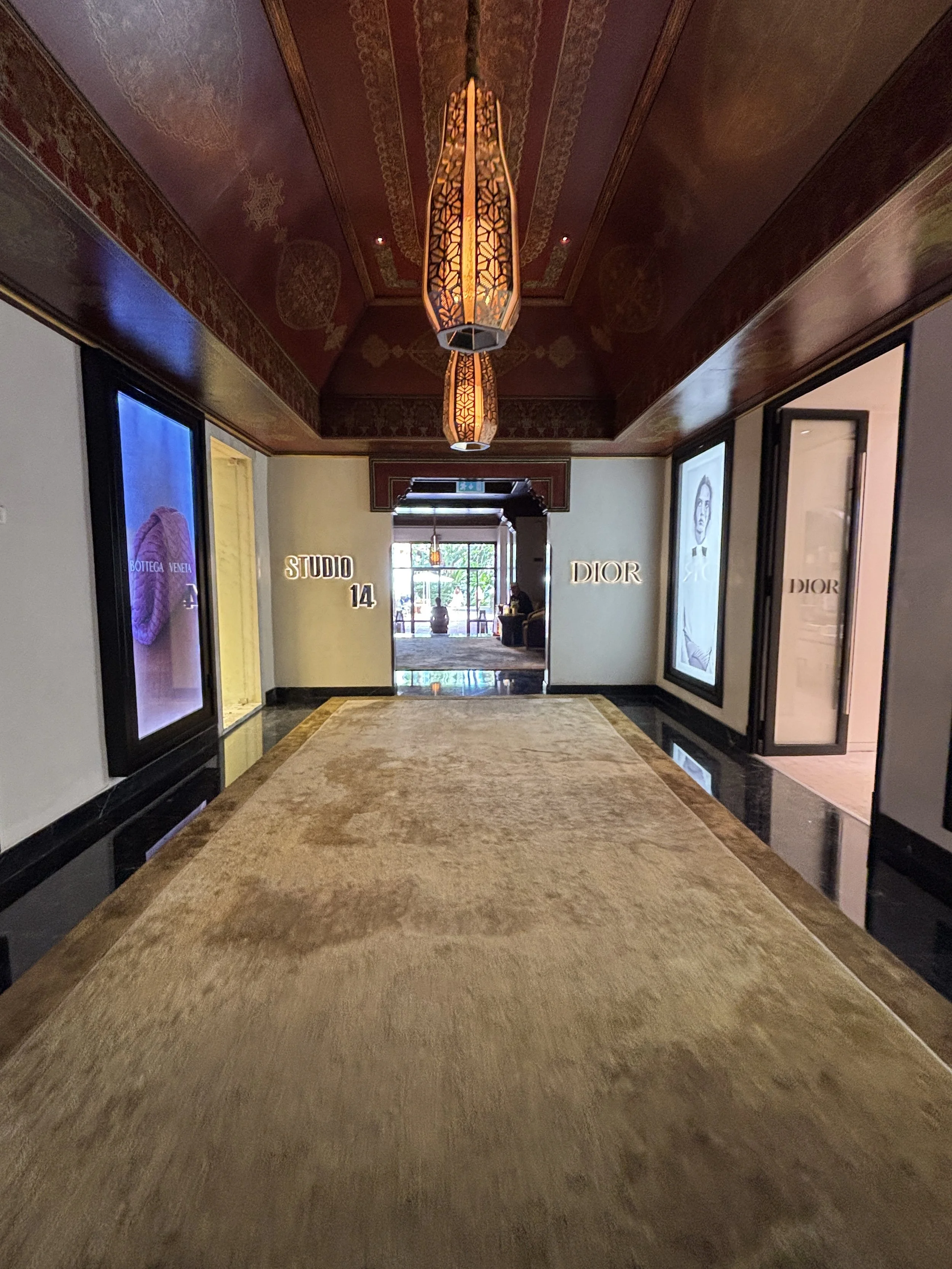
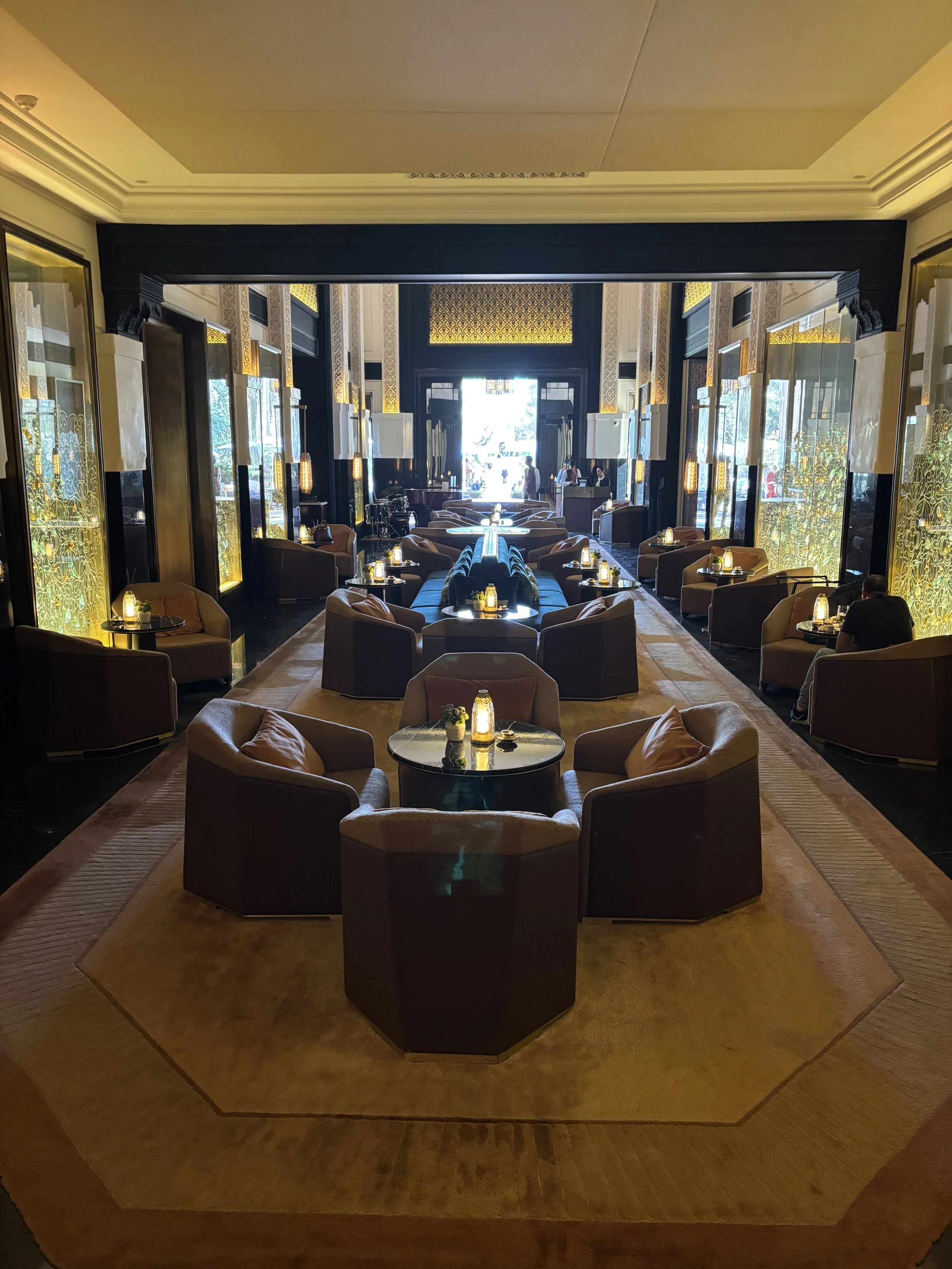
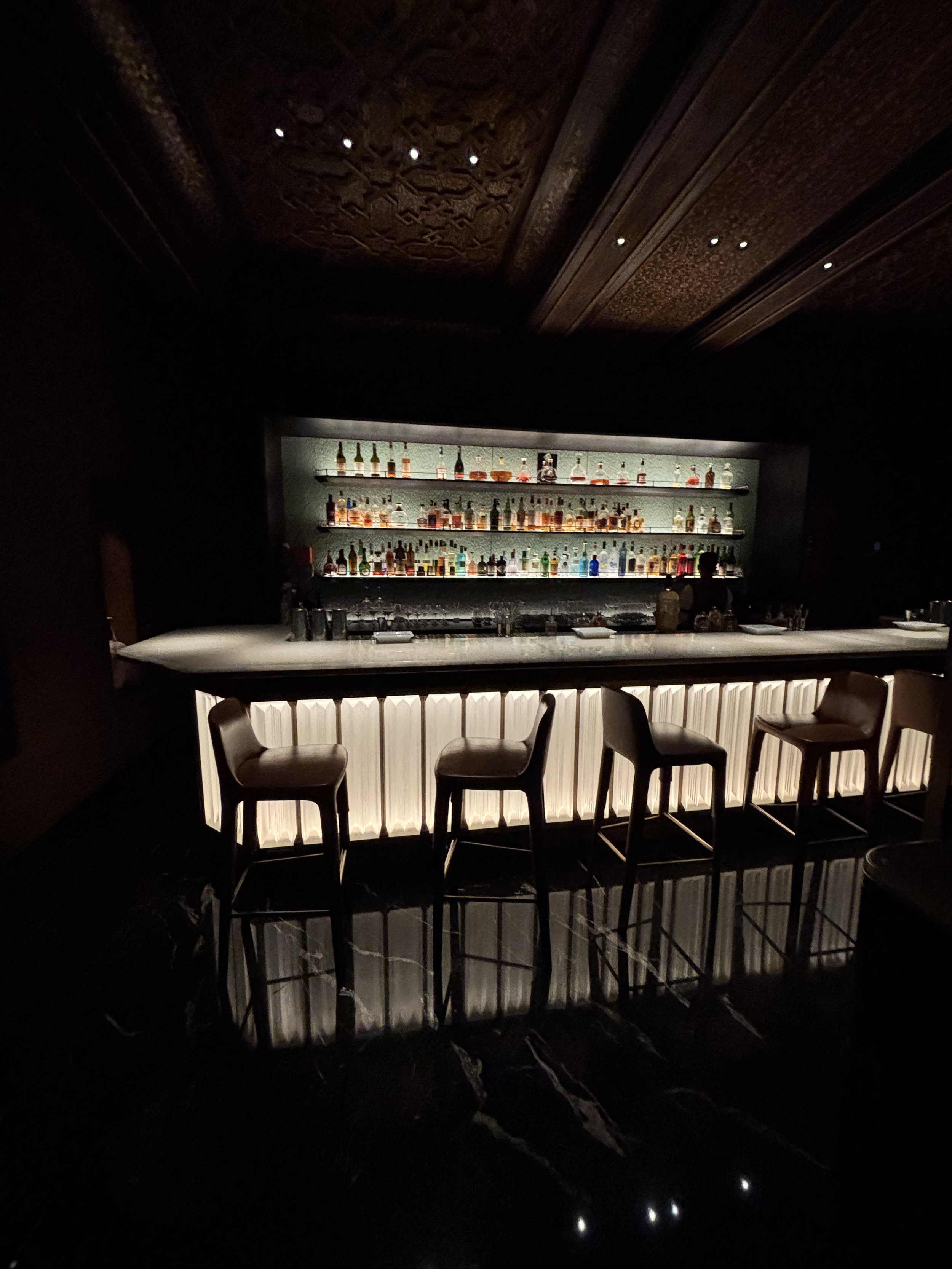
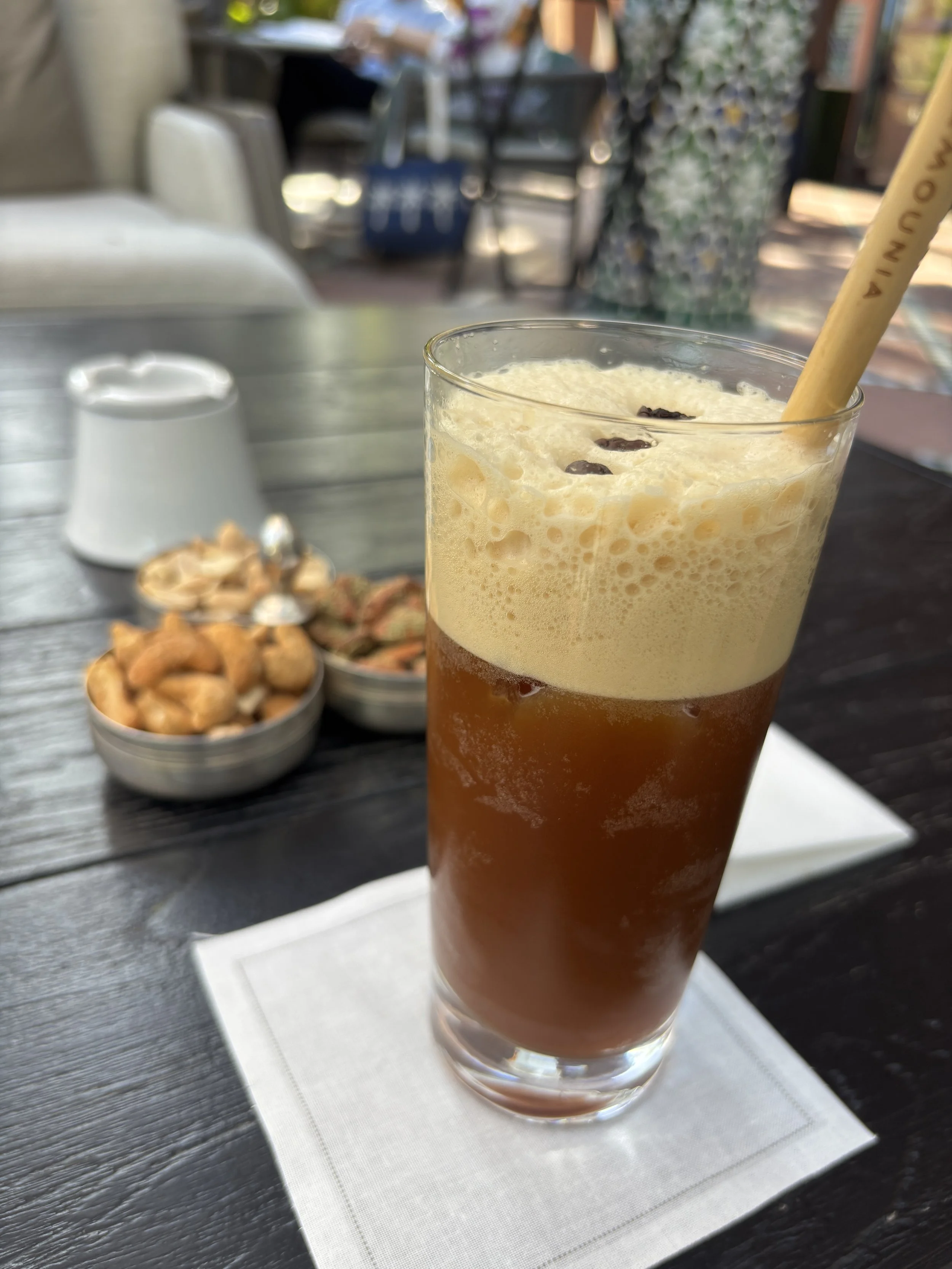
The bar at La Mamounia was one of Churchill’s favourites (it has since been obviously modernized) and it extends into the outdoor area. A coffee at the terrace at La Mamounia would cost you around 80 Dirhams (€8/$8), but, believe me, it is good value, all things considered.
This is a perfect oasis to recover some energy in the hottest time of the day, after a few hours walking nonstop through the souks. From here it is also quite easy to return to the Medina to check the evening atmosphere at Jemaa el-Fna.
Where to stay in Marrakech
Marrakech is a city of riads, that is the traditional Moroccan guest houses. Many of these have been modernized to cater to the standards of the modern sophisticated traveler, but keeping as much as possible of their authenticity.
Riad Maison D’Hôte Abdel & Jamila
25 Rue Mouassine, Marrakesh 40000
This is a recently renovated riad and at around €75 per night offers great value right in the heart of the Medina, as well as very nice service throughout.
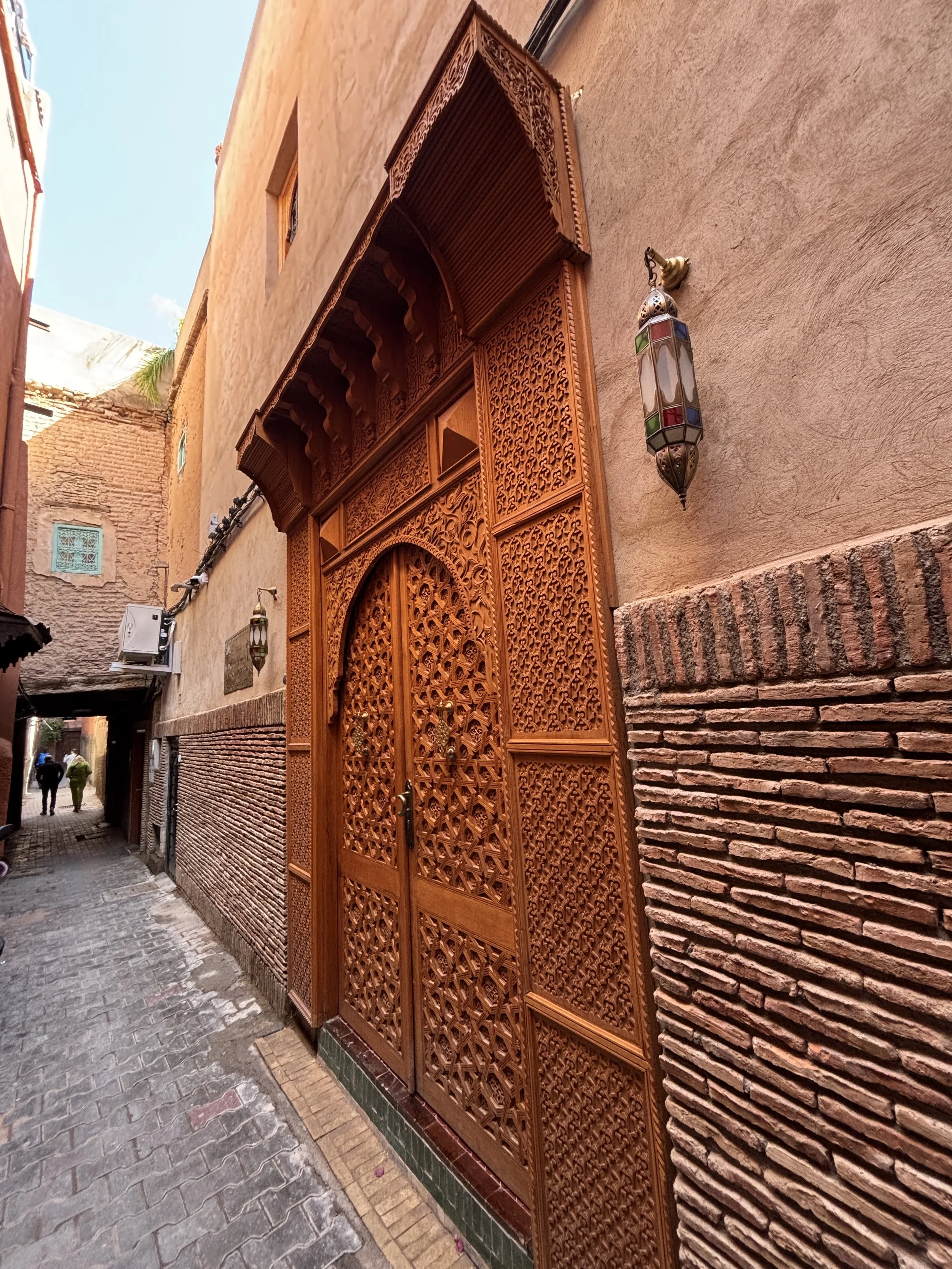
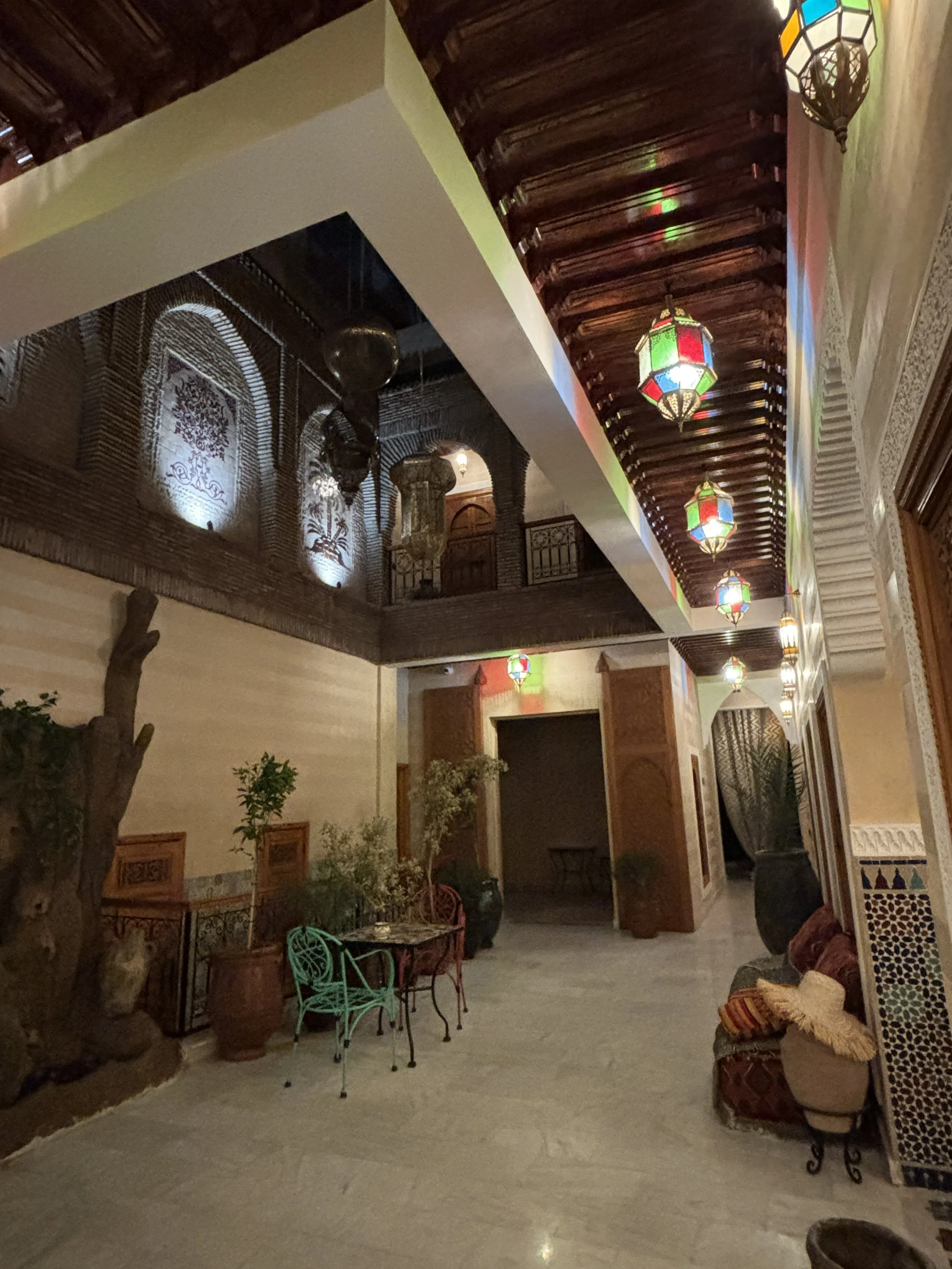
Part of the experience is actually getting to the hotel, since you will need to navigate the maze of small narrow alleys to the side of one of the main souks.
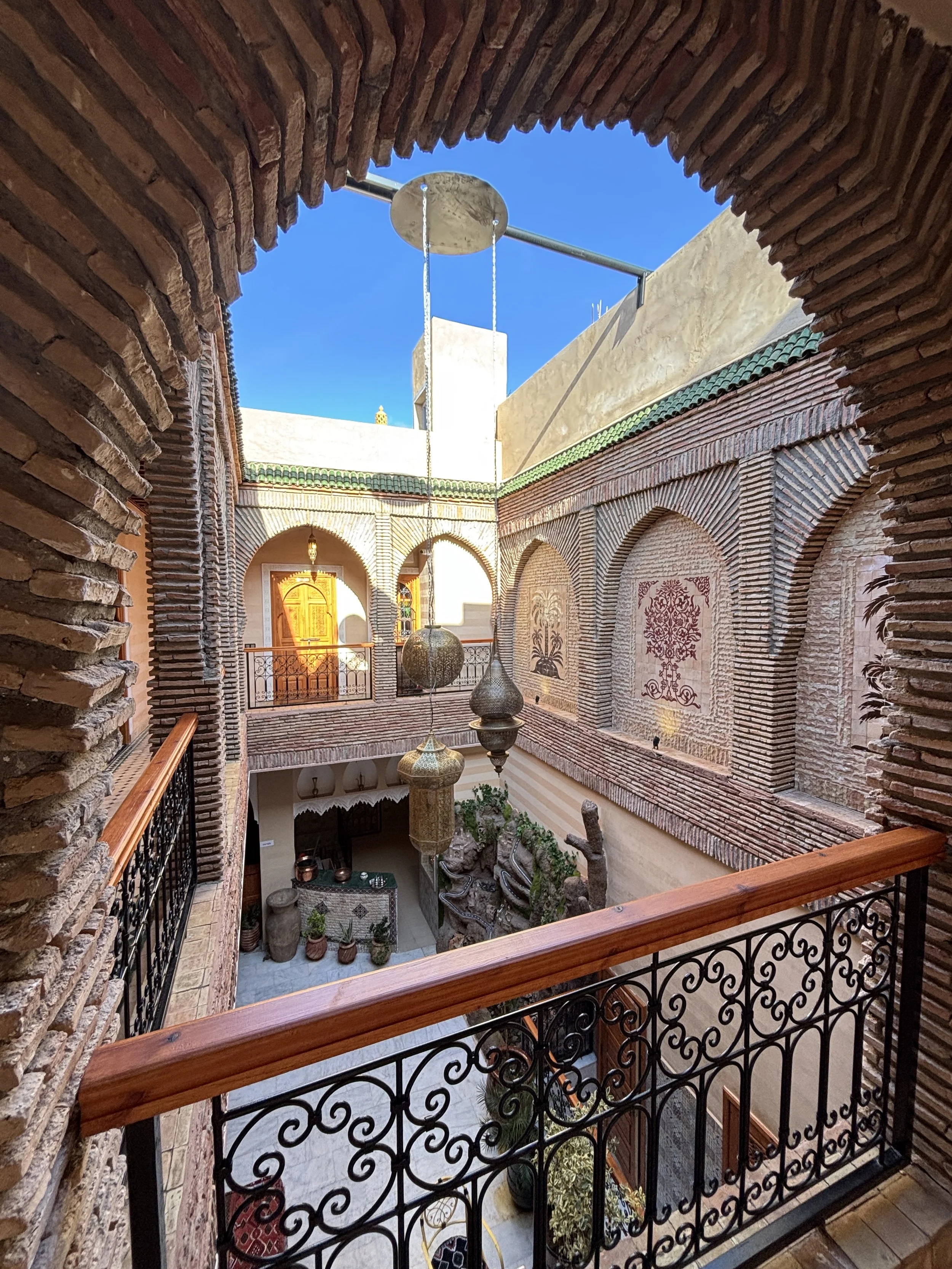
It is a pretty small scale establishment structured around a central open air courtyard which is acts also as its lobby (so to speak) and brekafast area.
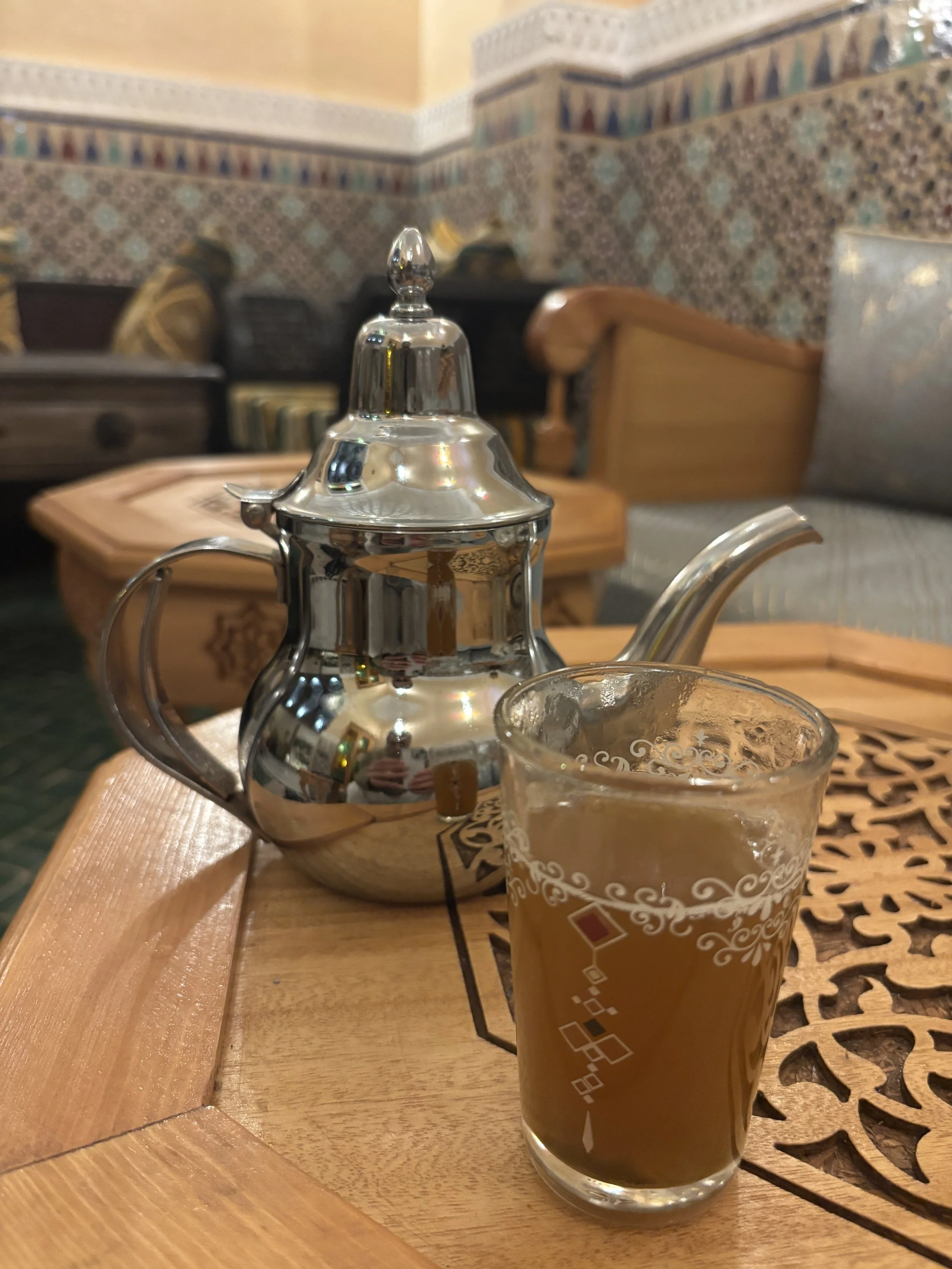
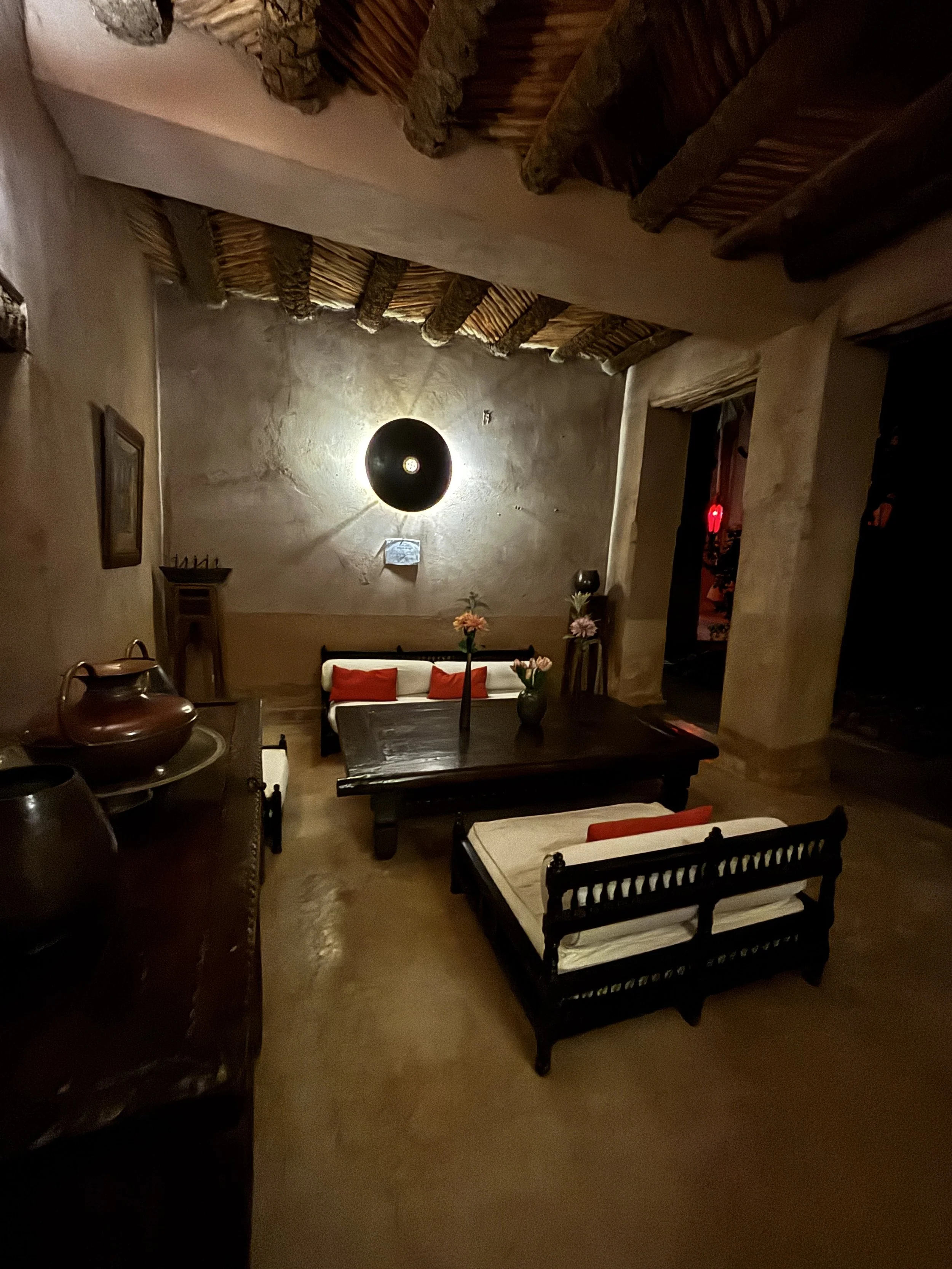
Upon arrival there appeared to be a small glitch with my booking.com reservation, although the wait allowed me to enjoy a traditional Moroccan tea in this very scenic room (pictured below).
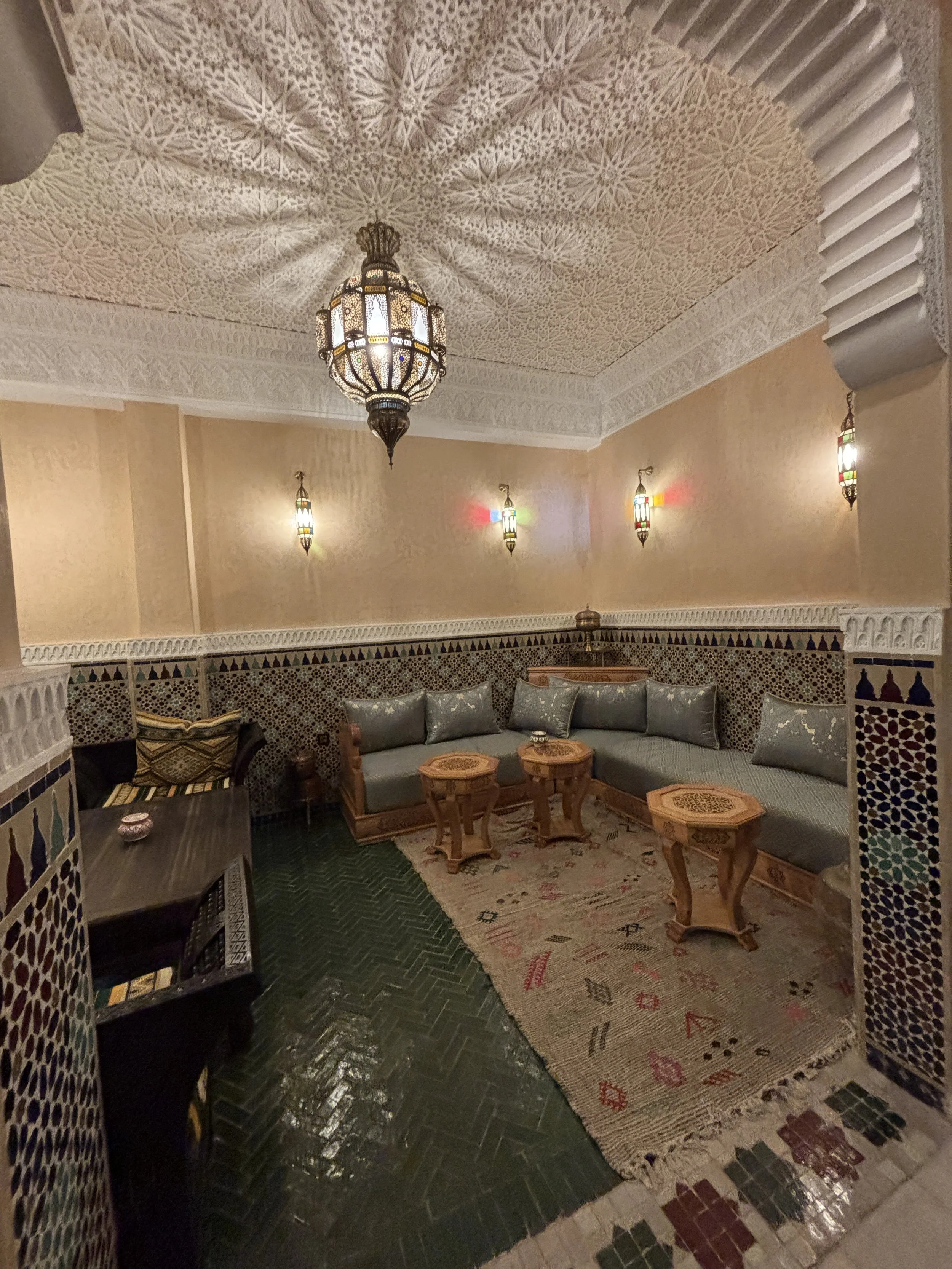
My room was on the ground floor, which meant that the windows were directly next to the common area of the riad, which made me worry a bit about it getting noisy early in the morning.
However, this concern appeared to be rather unfounded, as this is a small scale, boutique hotel and, while there were people around in the morning, it was all very quiet.
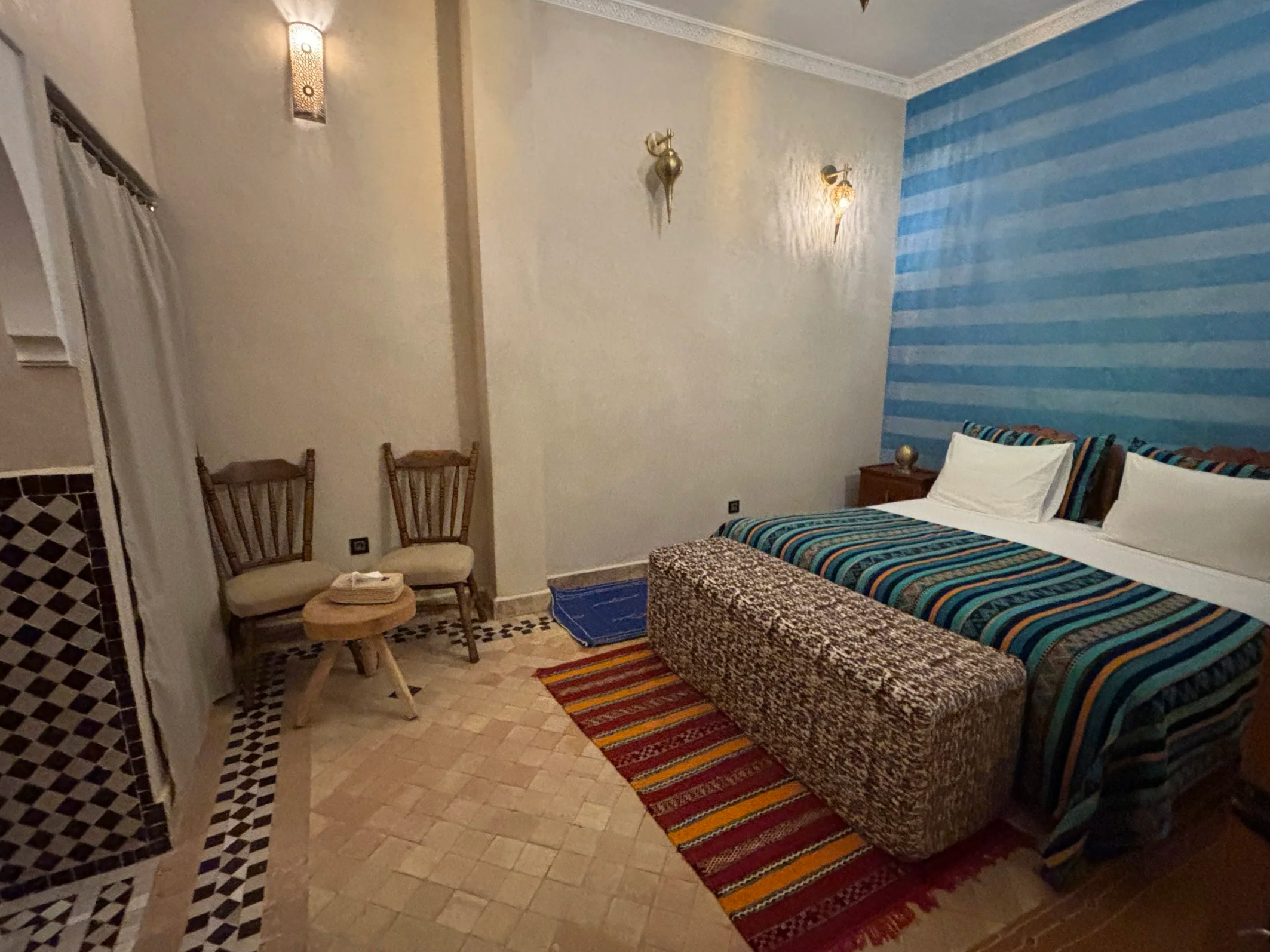
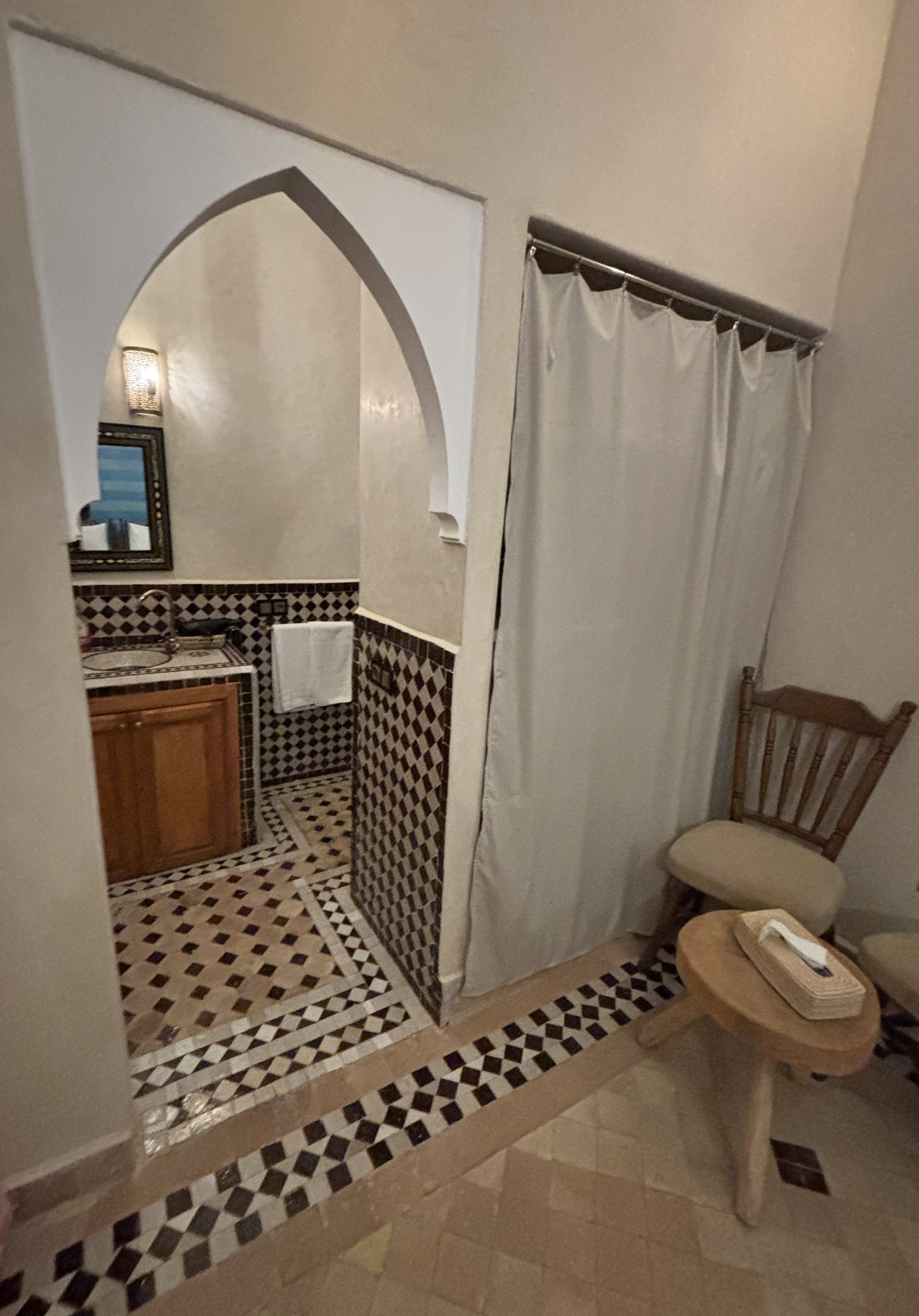
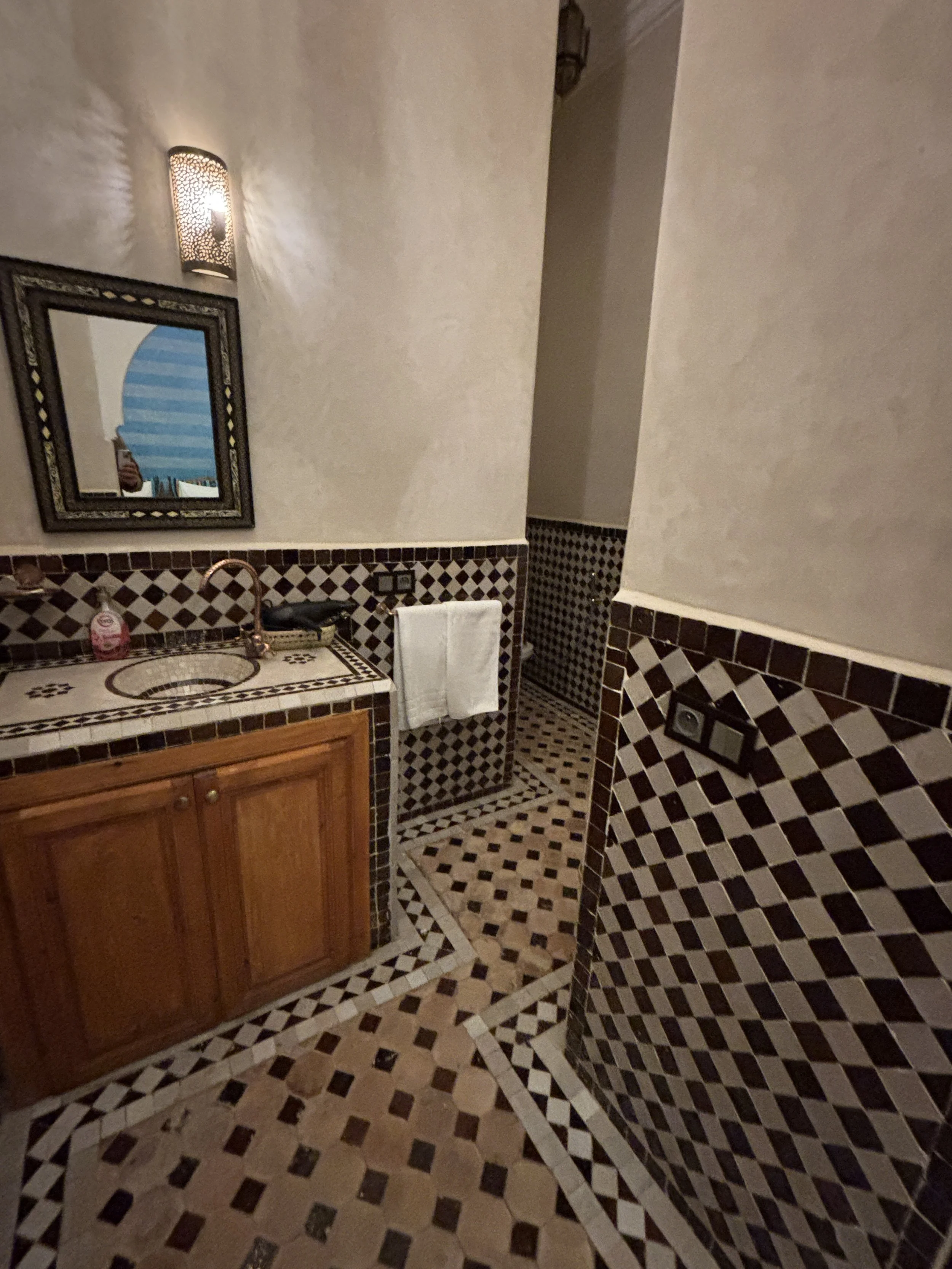
Perhaps the most interesting aspect of the room was the bathroom, tiled, open to the bedroom, yet laid out in a way that still confers a degree of privacy.
The whole experience feels refreshingly analogue: a physical key, which closes an actual lock, and light switches that took a moment to locate, one of them turned out to be tucked behind a bedside table. Little to do with your traditional corporate hotel, but I guess that's the point!
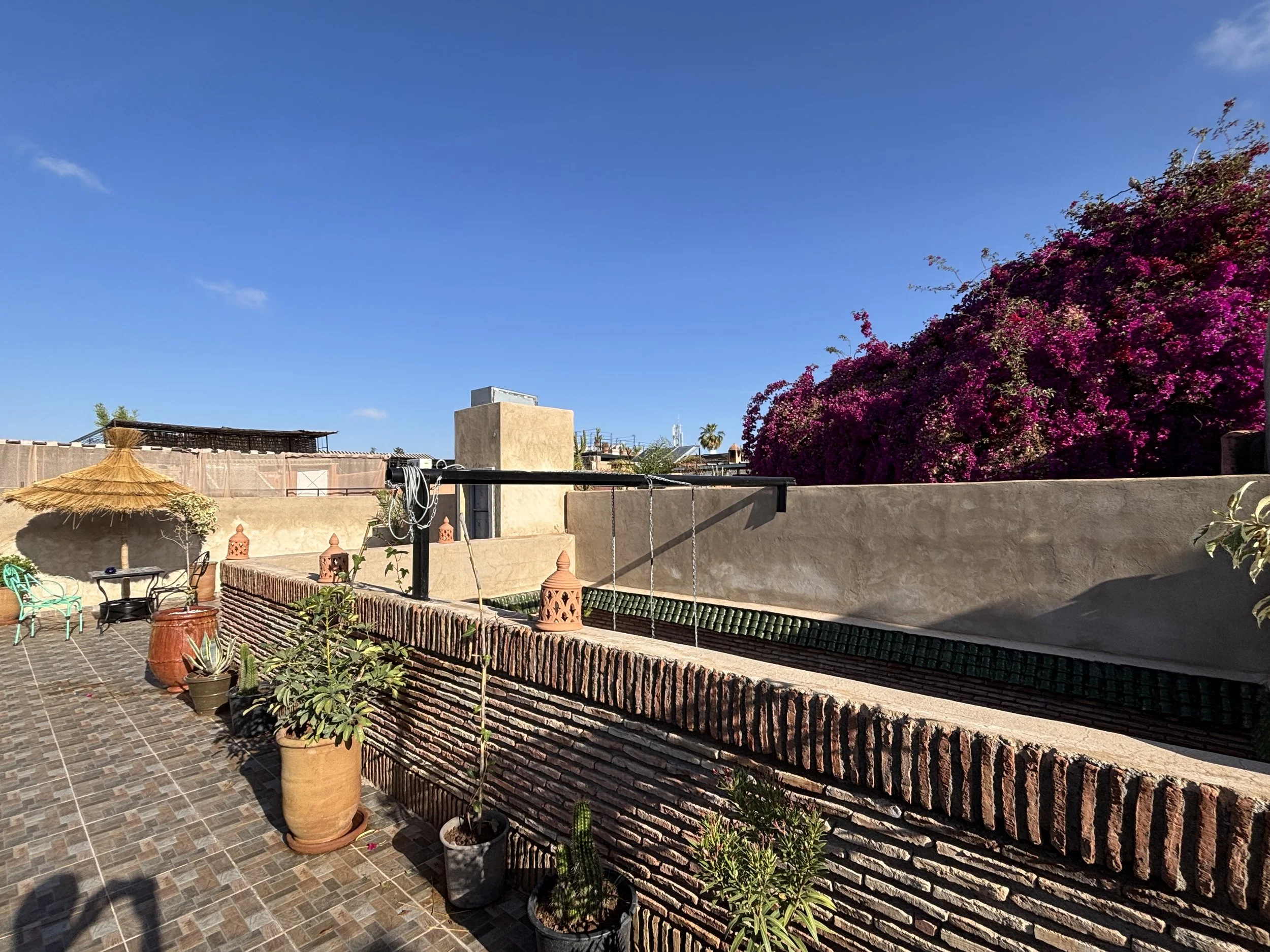
The riad has also a rooftop terrace. There are no outside views to speak of (the inside view is quite a thing, though) but it is a nice spot to catch the rays of the sun (and you can have your breakfast there as well).
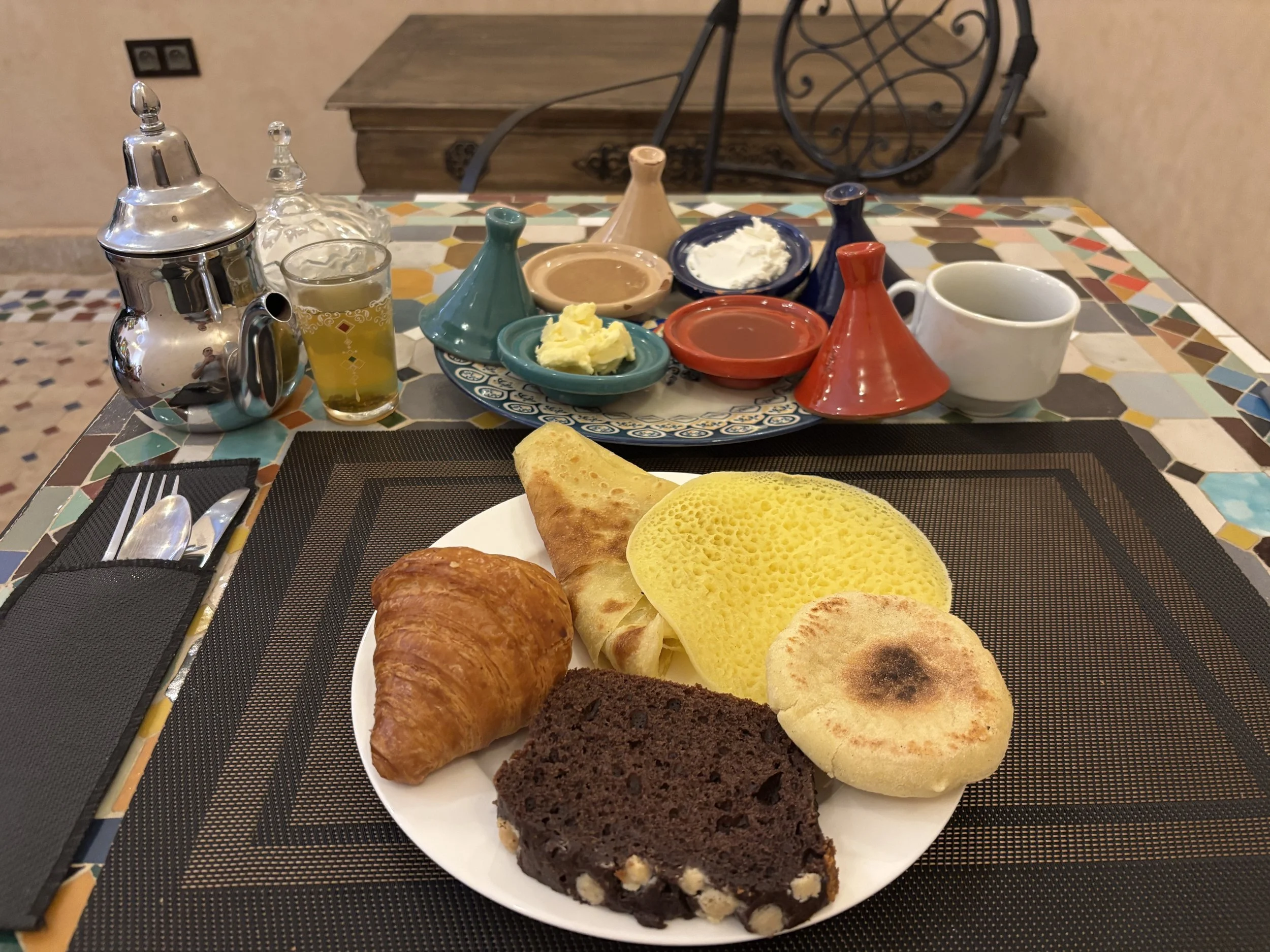
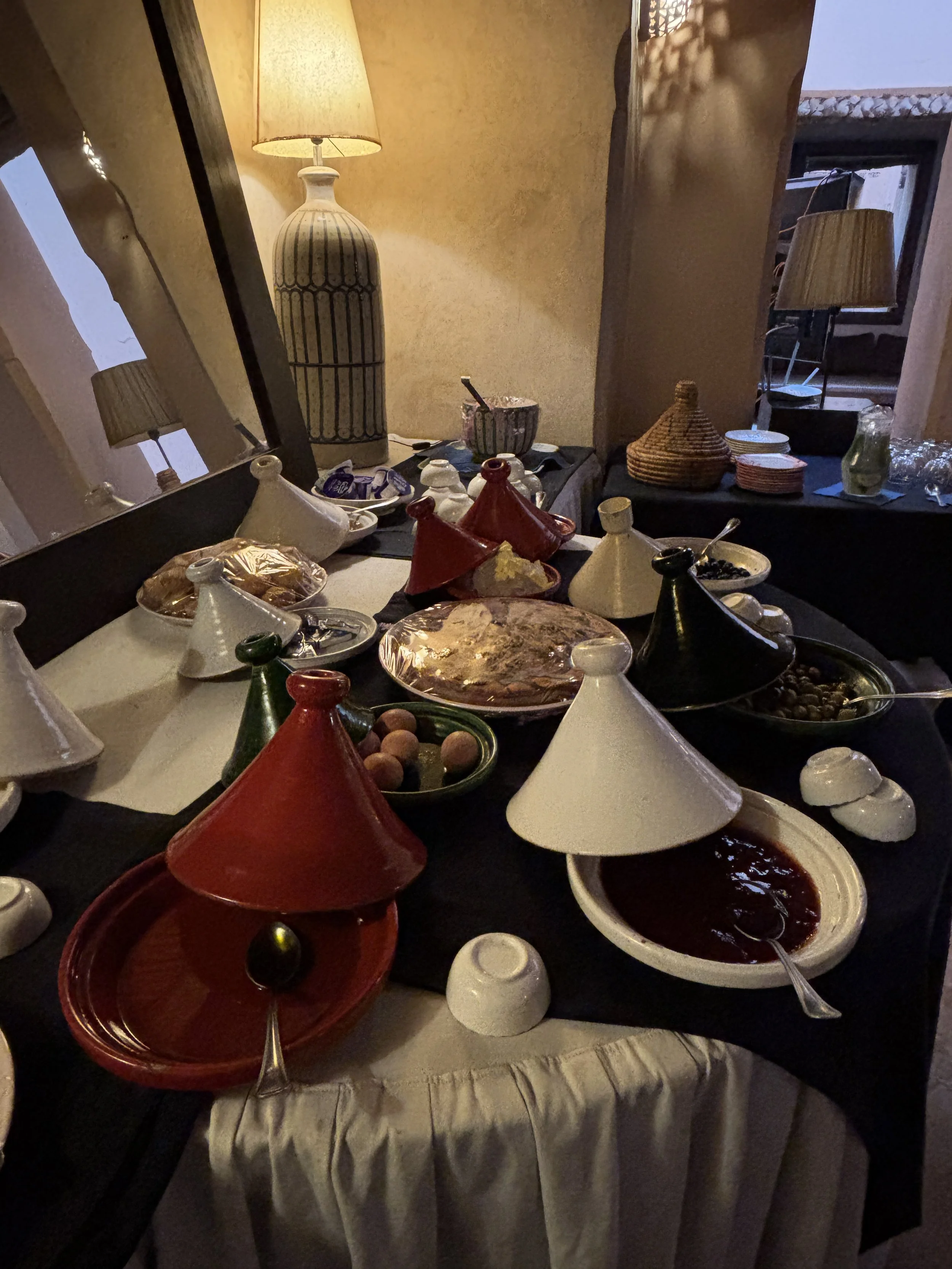
The breakfast was really good and substantious. It is served to the table, rather than being buffet-style. You have to wait a bit until it’s ready (breakfast service starts at 9am) but which gives kind of a premium feeling.
Another option to stay just outside Marrakech city center:
Caravan Serai Hotel
264 Ouled, Ben Rahmoune 40000, Marrakech
If you are looking for something a bit different and outside the buzz of the Medina, here is another rather unique hotel to check.
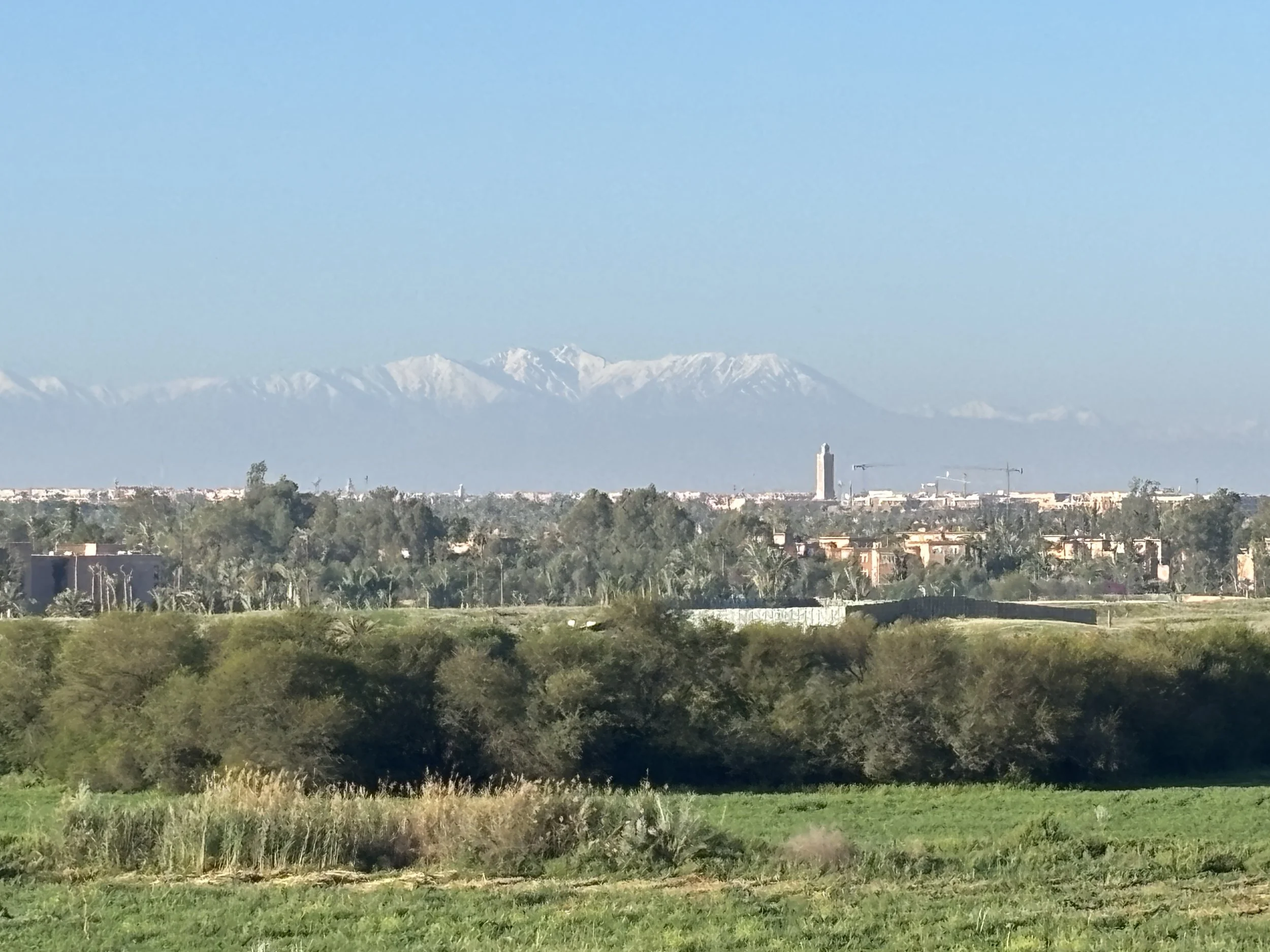
The hotel Caravan Serai is located in Marrakech’s northern outskirts, a few kilometers from the city center . It is located on the edge of a small hill overlooking the plains and offering views of the nearby Atlas mountains, as well as of the Marrakech Medina (you can even make out the siluete of the Koutoubia from there).
Bear in mind, though, that this location means you would need to take a taxi to go to and from the center, each way costing 150-200 Dirhams (€15-20/$15-20). When arriving for the first time it is a bit difficult to locate since it is in the outskirts of a little village literally on a narrow dirt track and there is only a little sign at the door which may be difficult to spot in the dark.
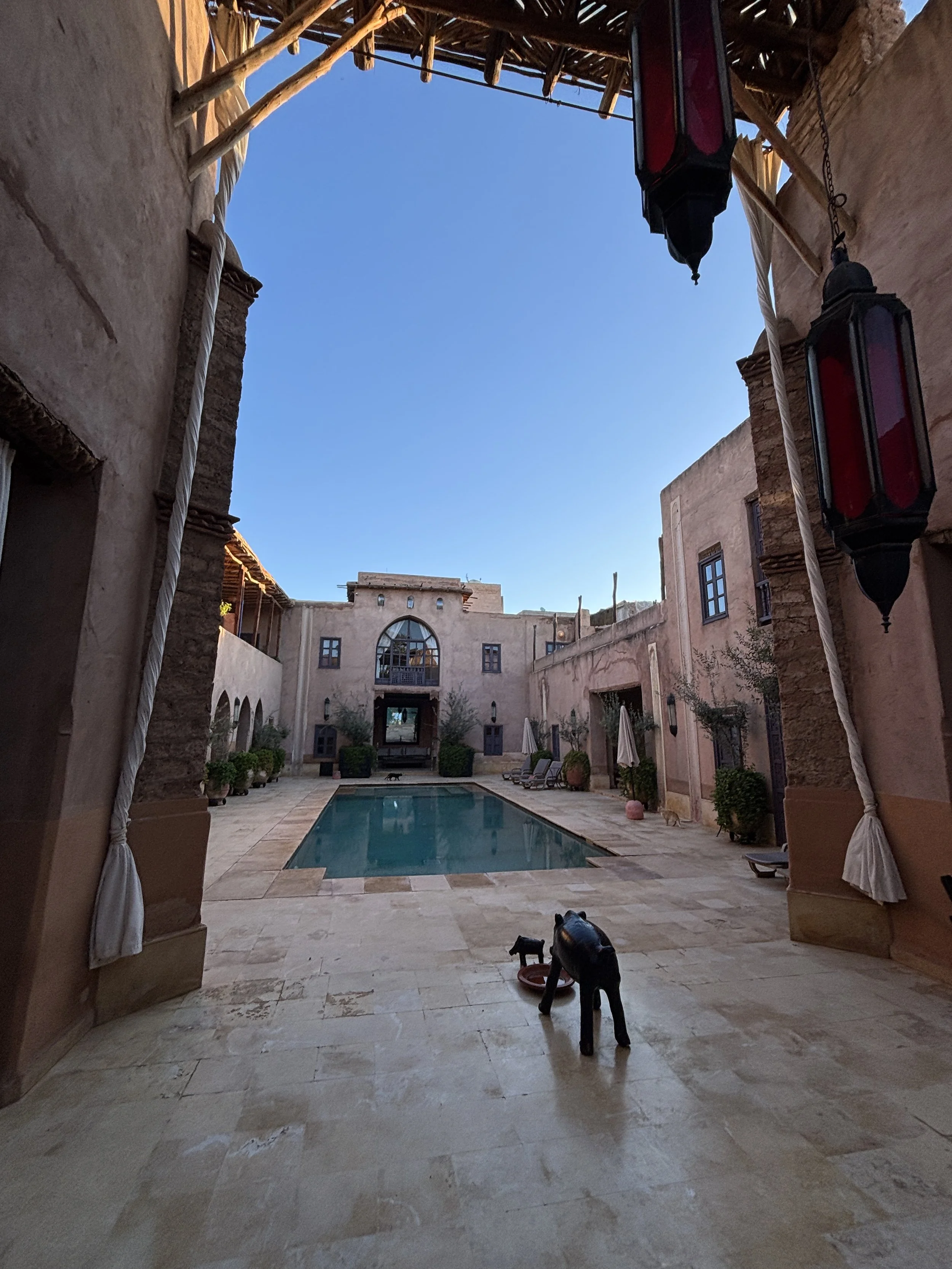
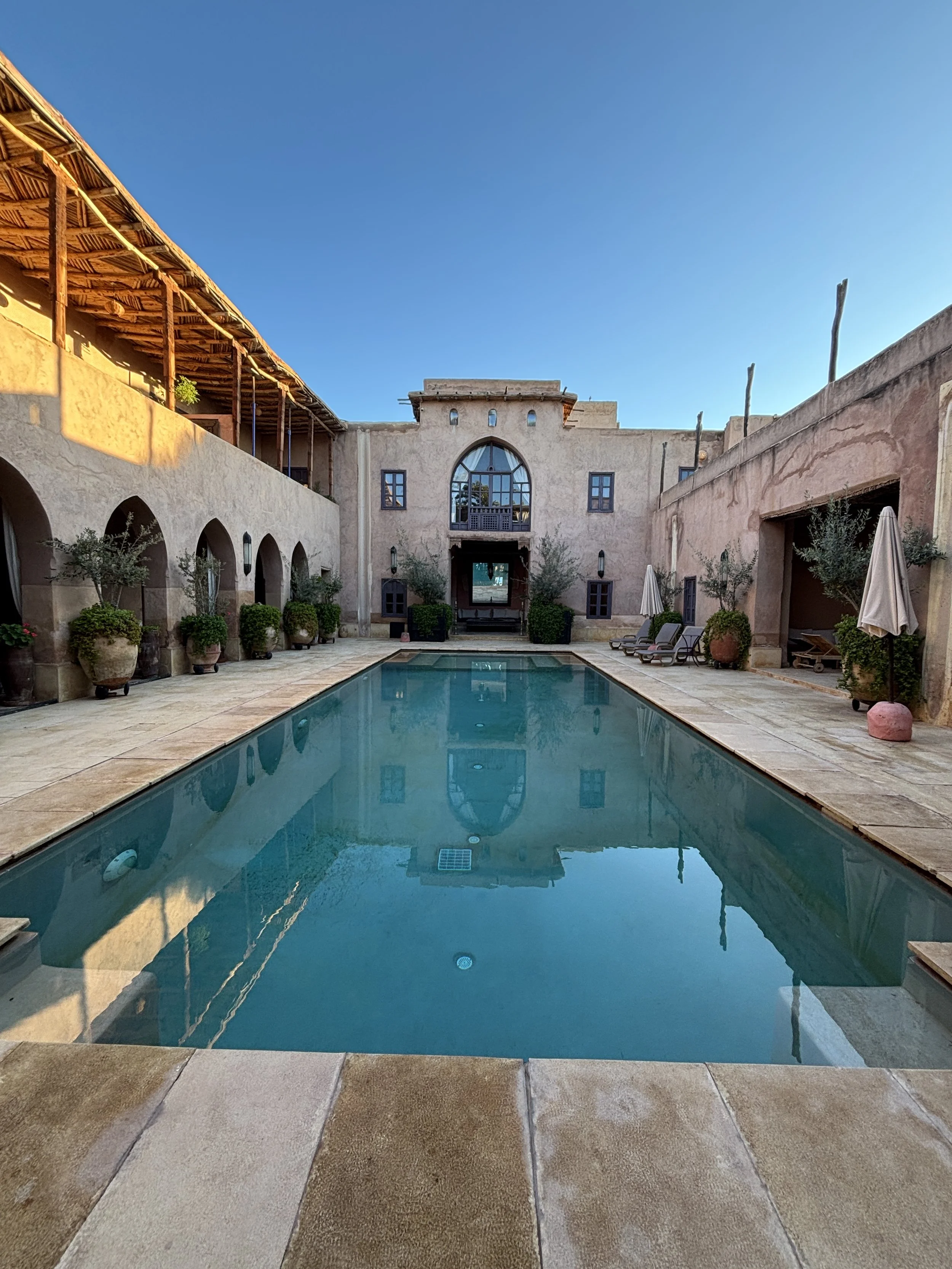
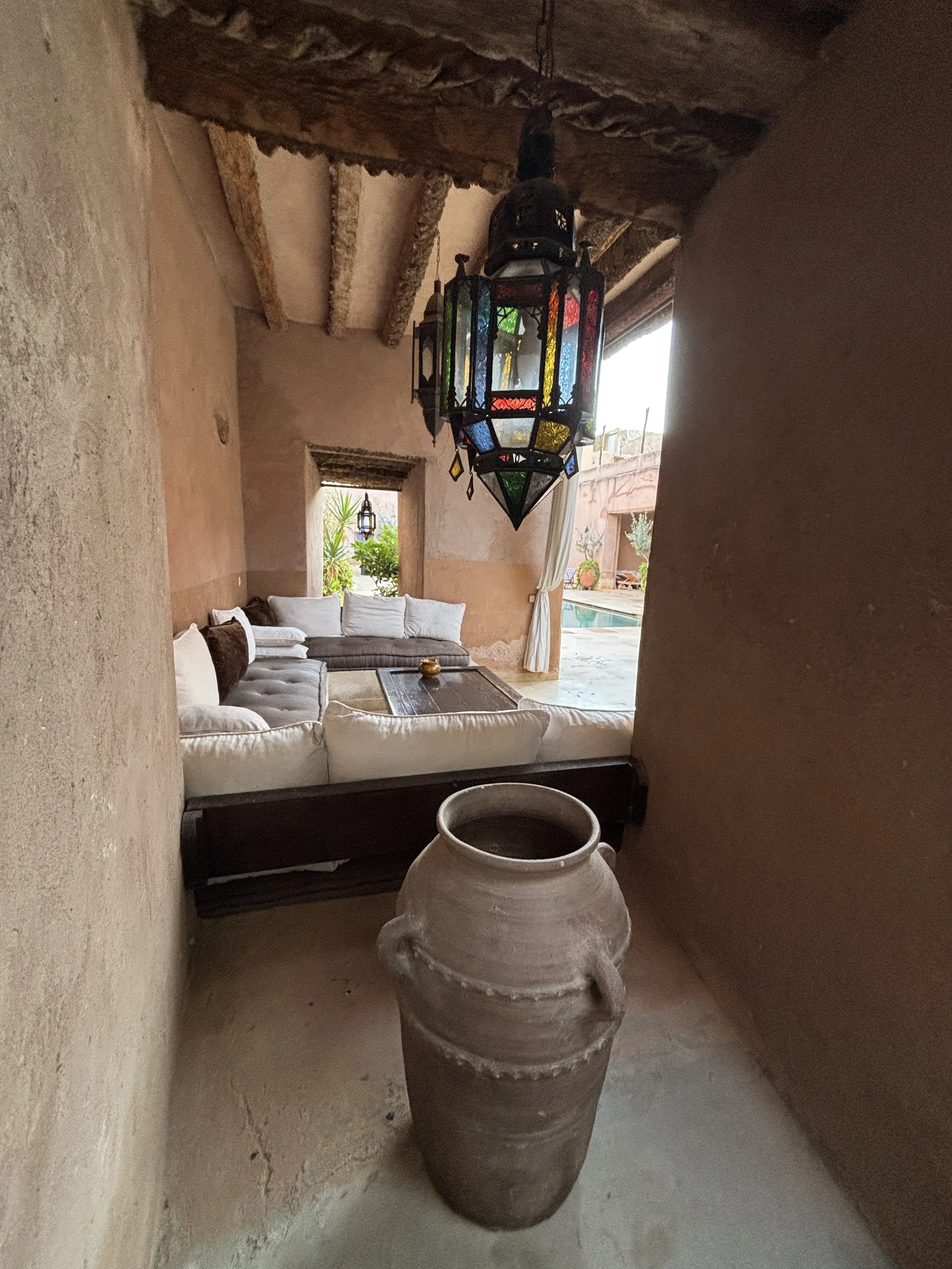
Once you step inside it is like an oasis of peace, very neat and quiet and with a truly unique character. I was told that the hotel opened some 20 years ago, after the owners fully restored a pre-existent structure according to traditional architectural standards.
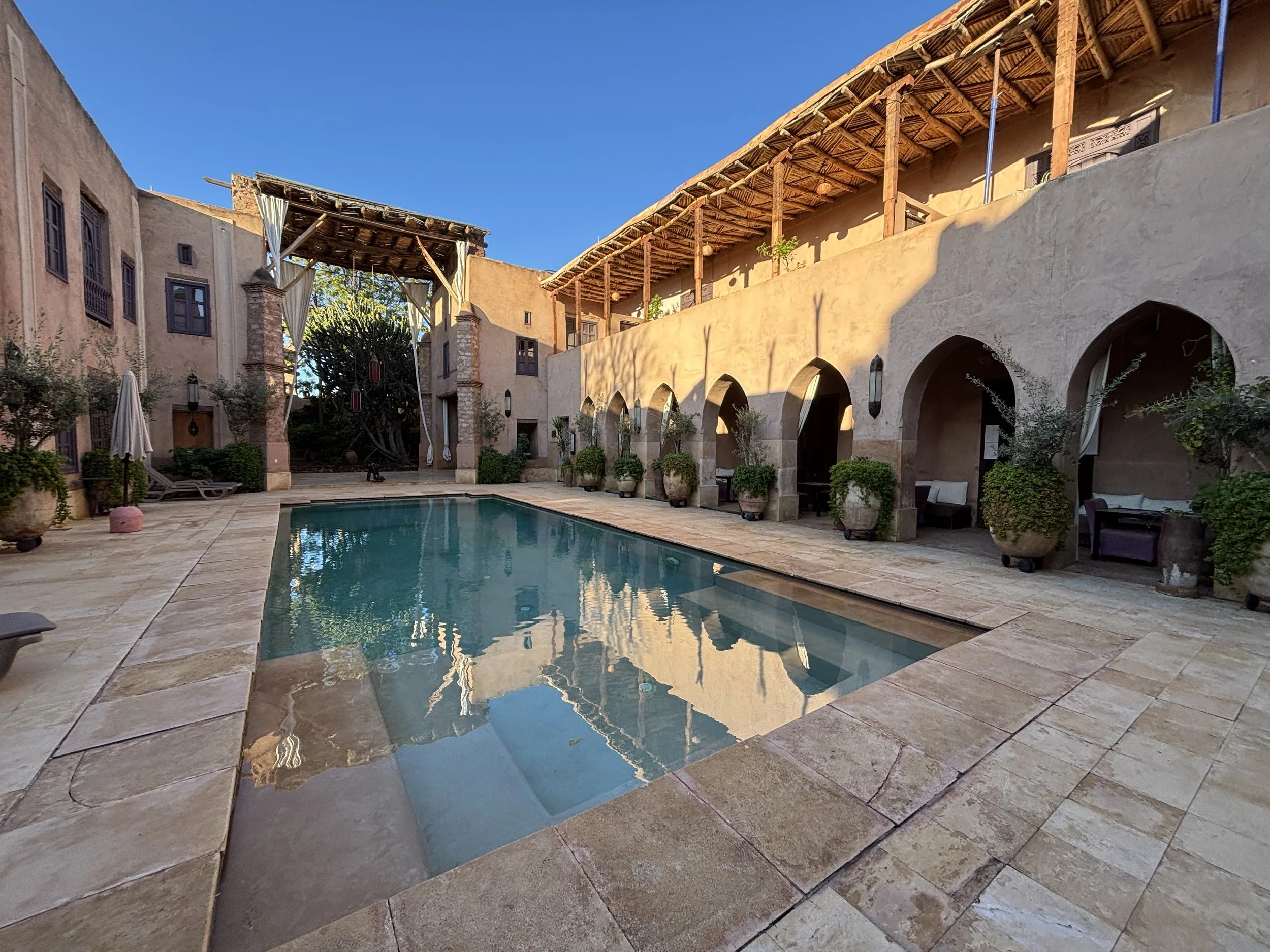
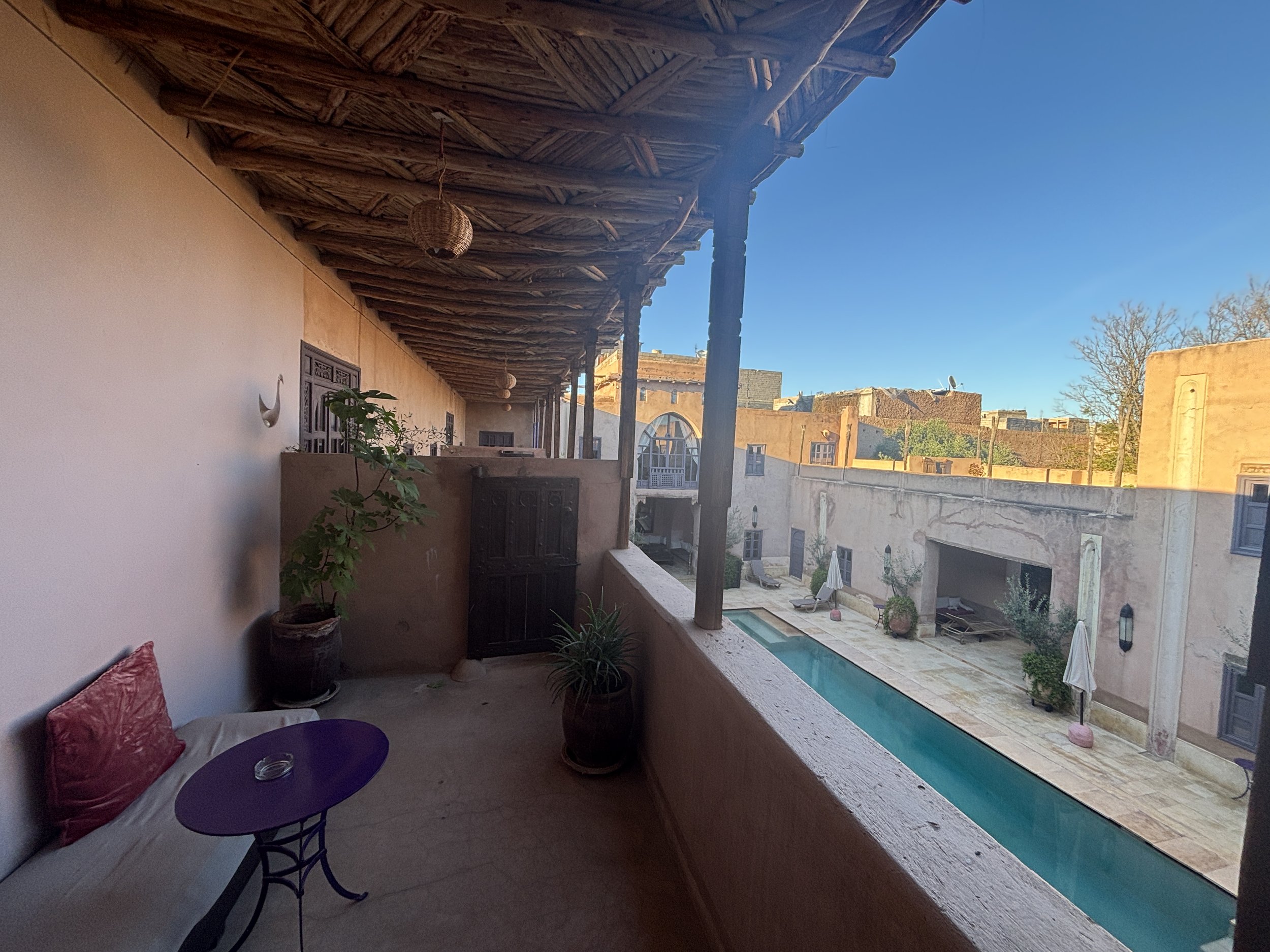
The Caravan Serai hotel has a large courtyard with a pool, with the rooms, which are rather large and in traditional style, as well (see the pictures below) located all around.
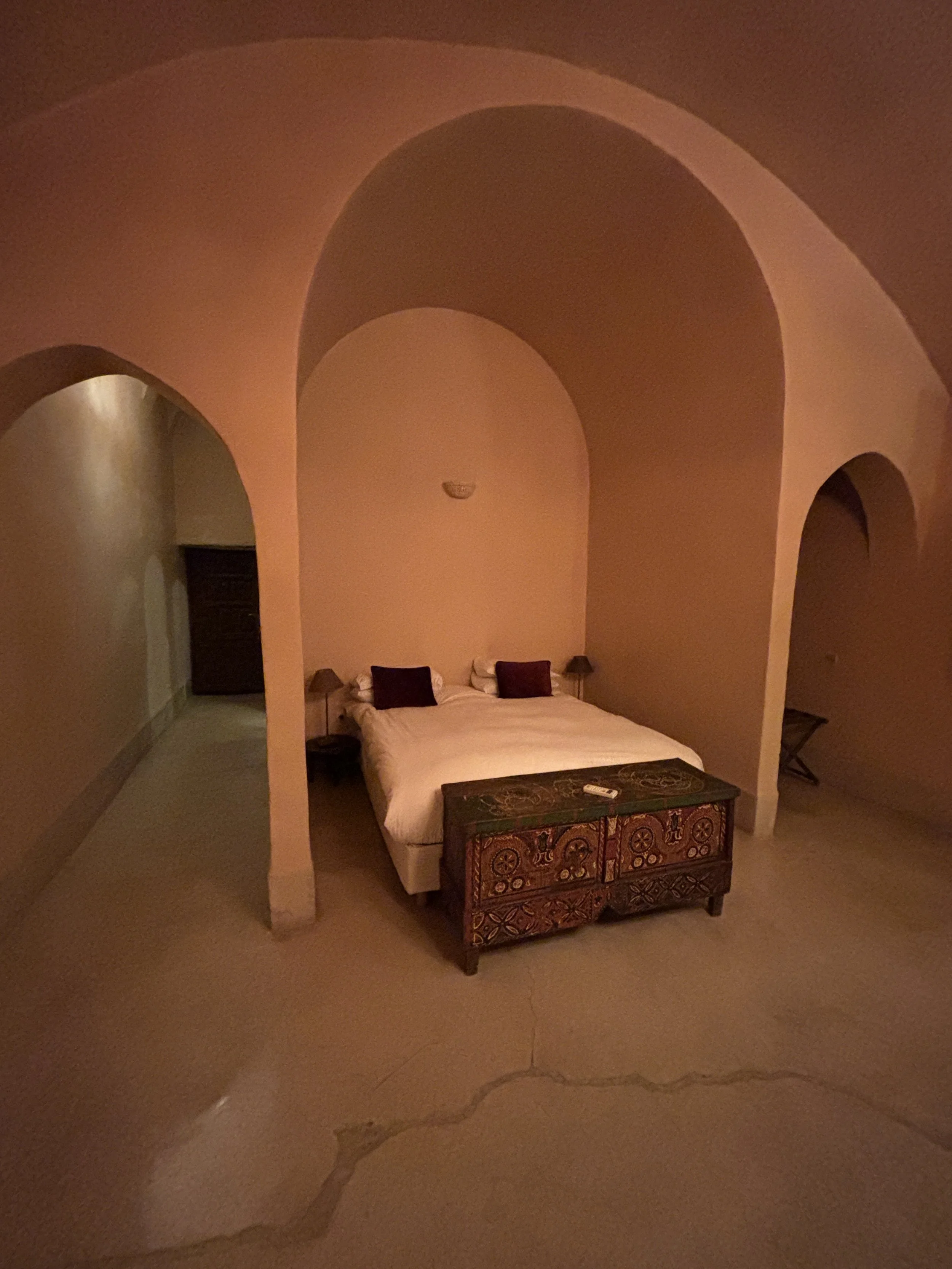
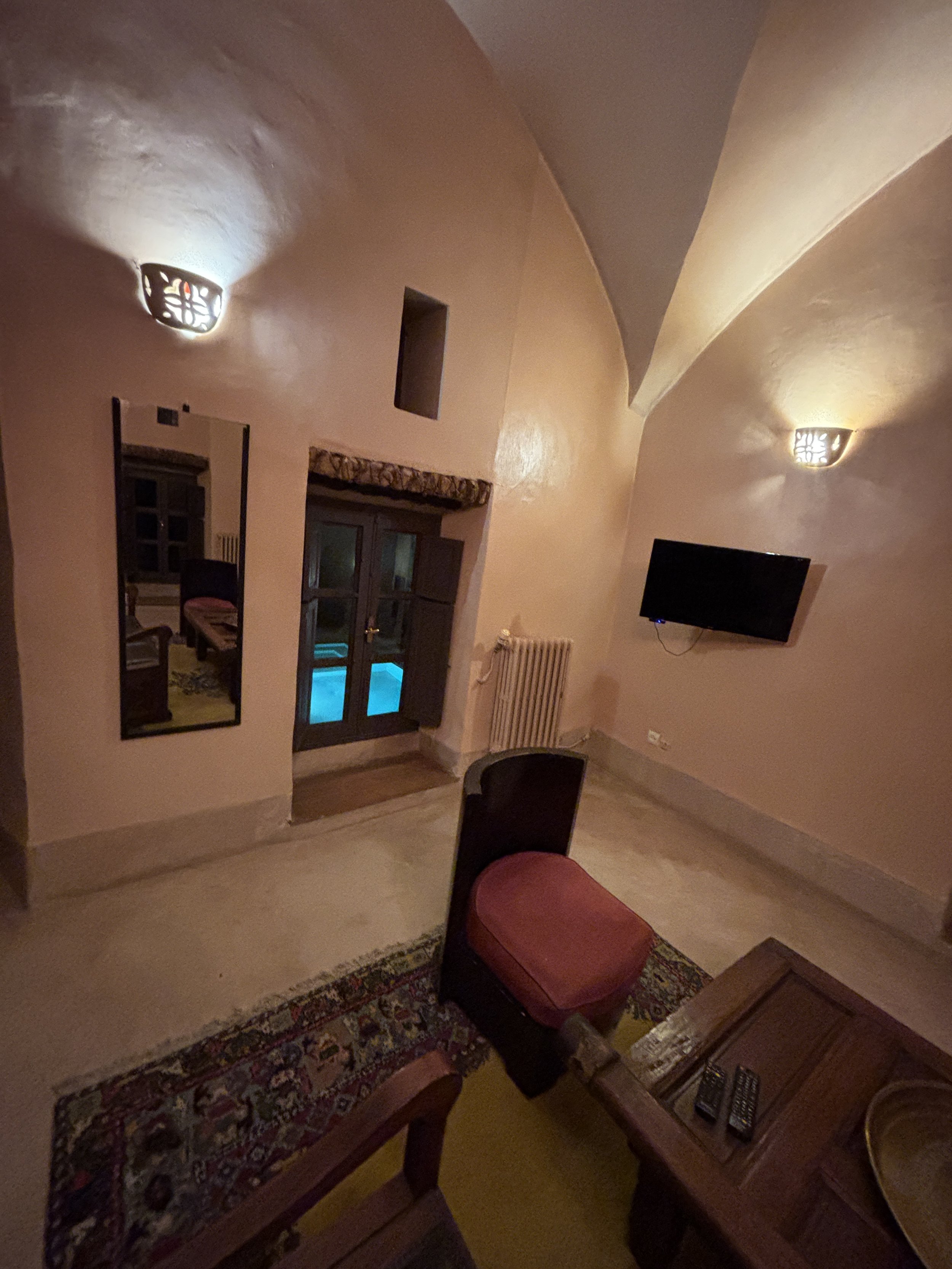
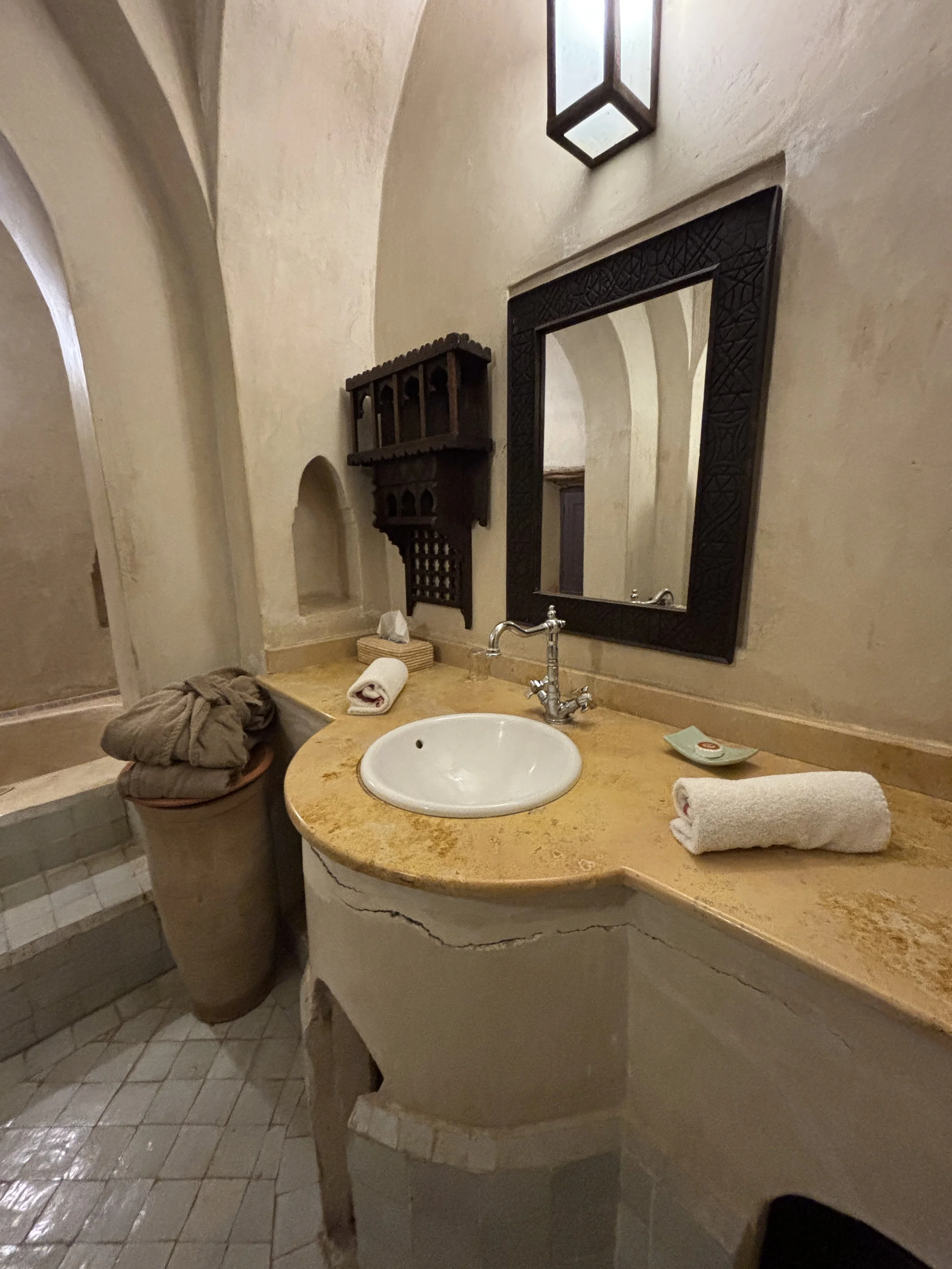
The bathroom is quite something! And there is also a spa in the property, although I didn’t have the chance to check it out!
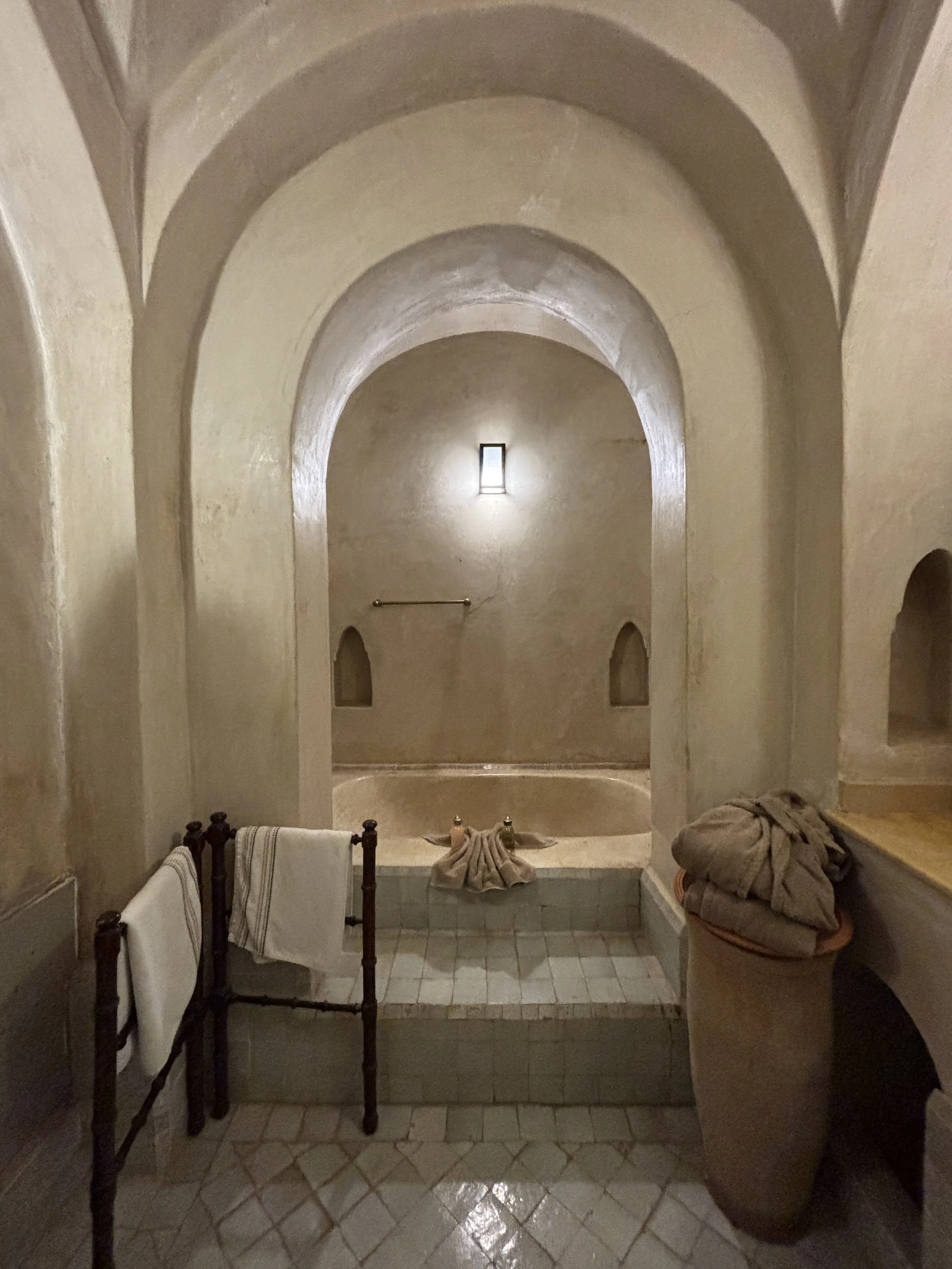
Each of the rooms have a terrace. As you can see, mine had a direct view of the pool and the courtyard.
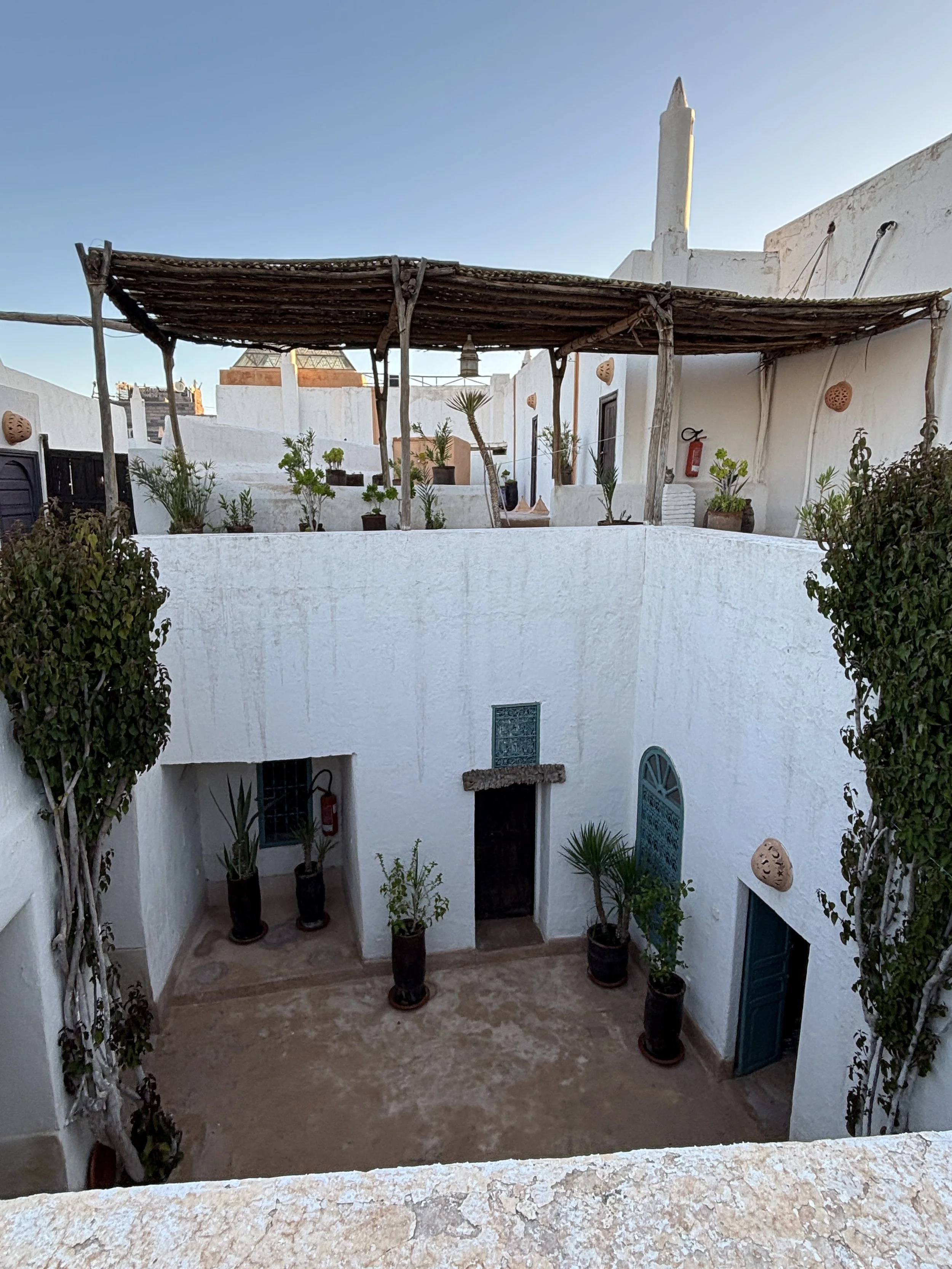
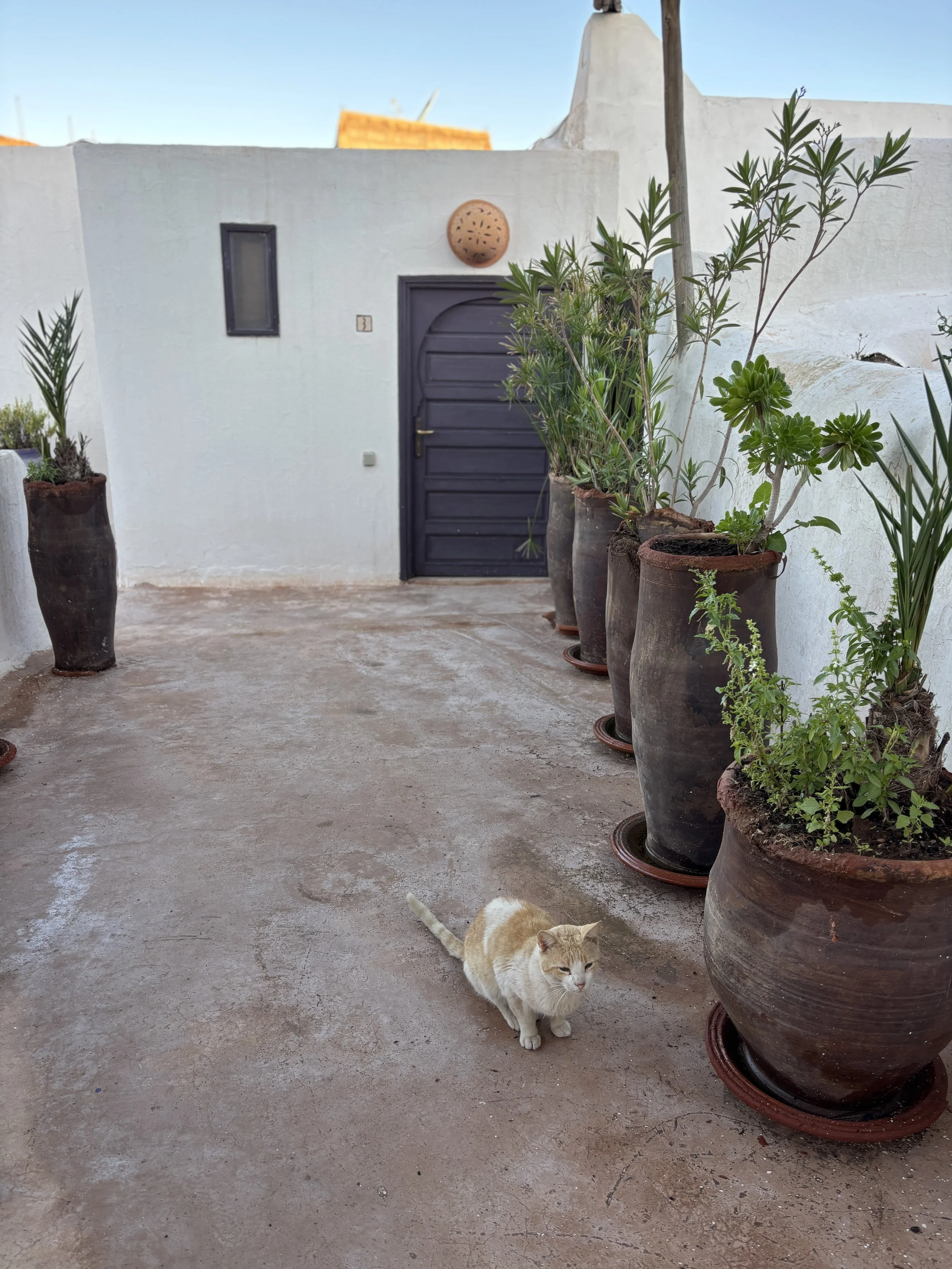
The whole set up is quite interesting, with access to some of the rooms through a sort of rooftop terrace which you get to after climbing a narrow set of stairs in a tunnel-like set up.
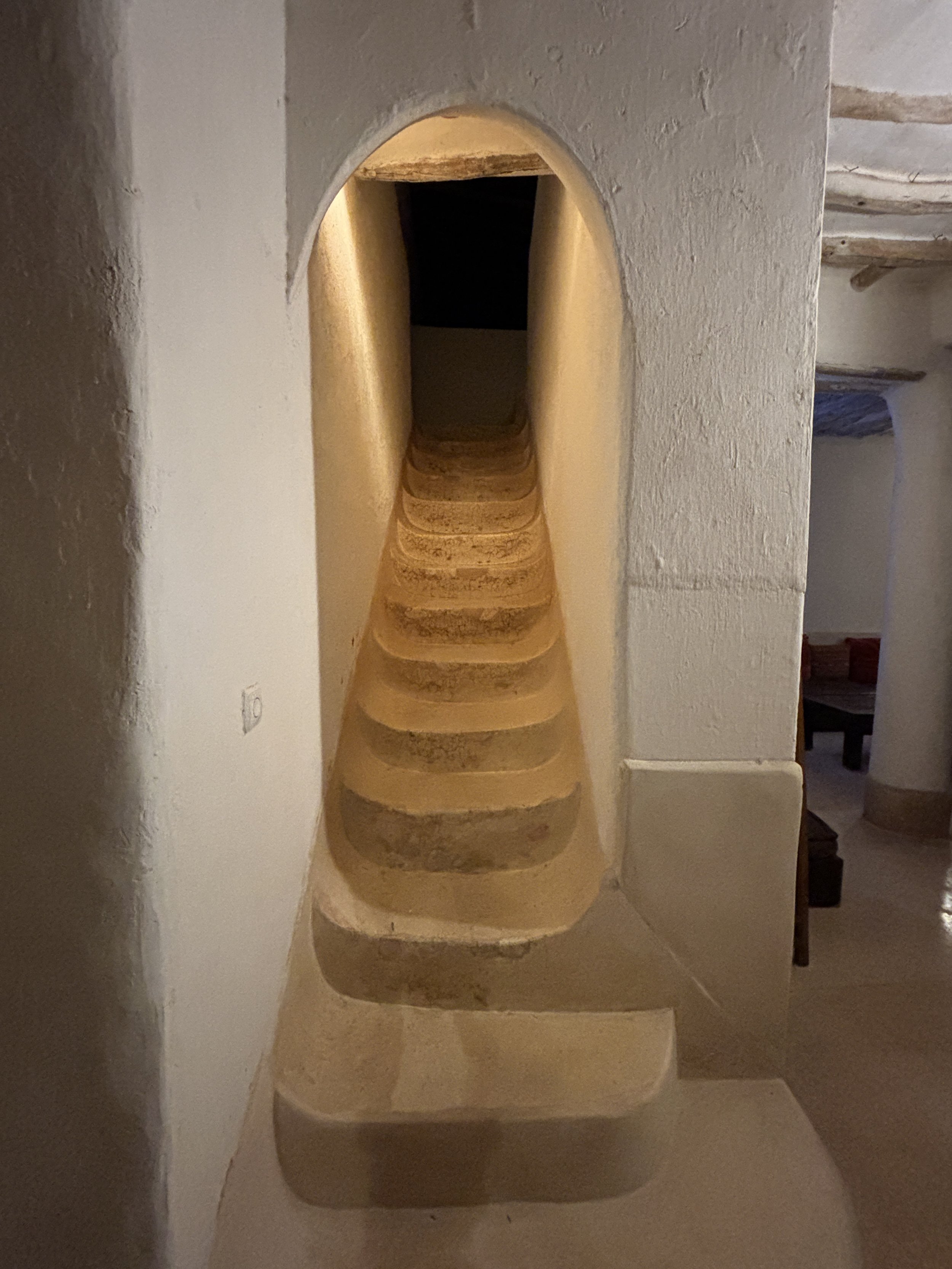
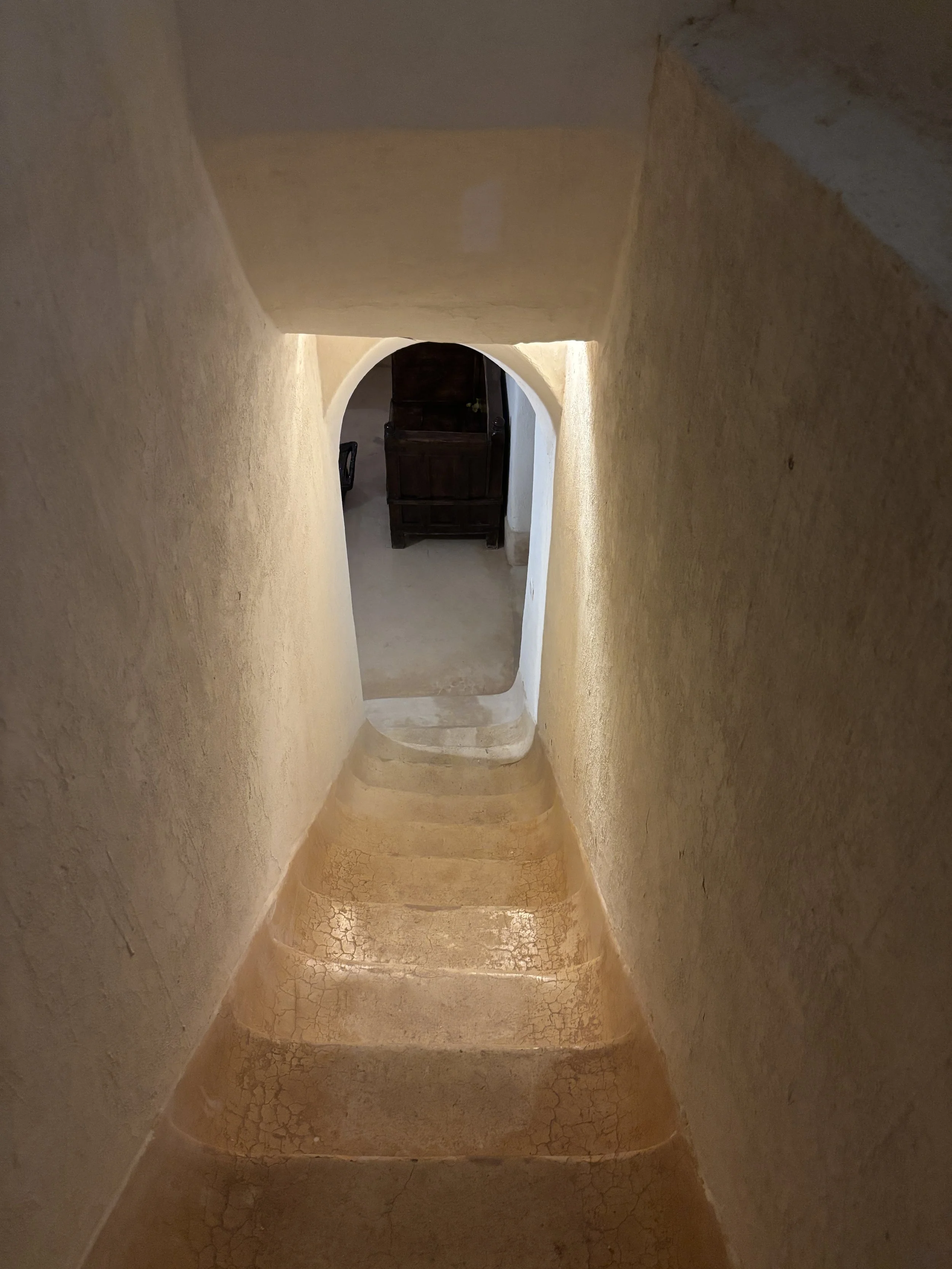
By the way, if you are a cat person, you will be happy to know there are quite a few felines living in the property and roaming freely through all its common areas.
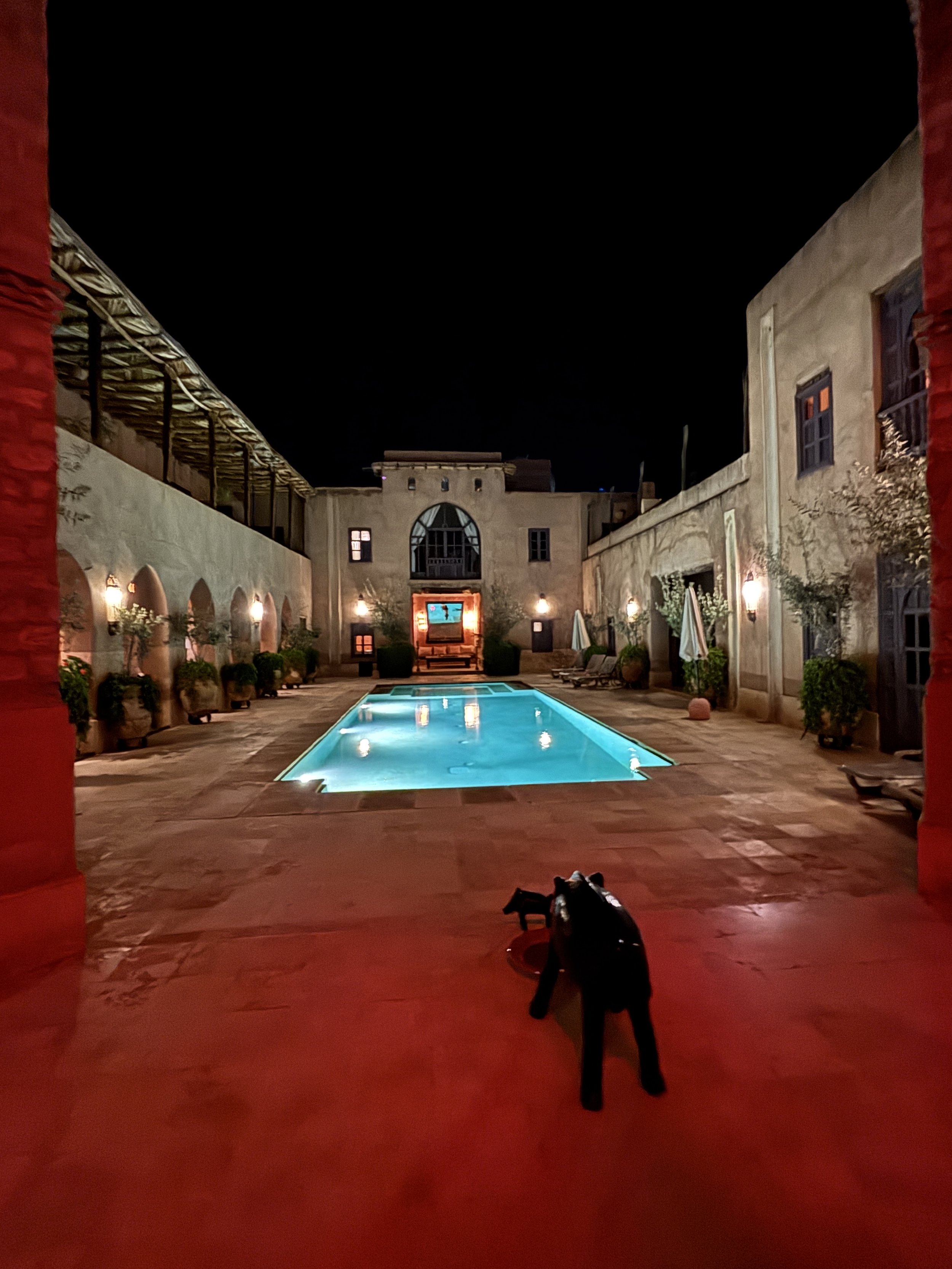
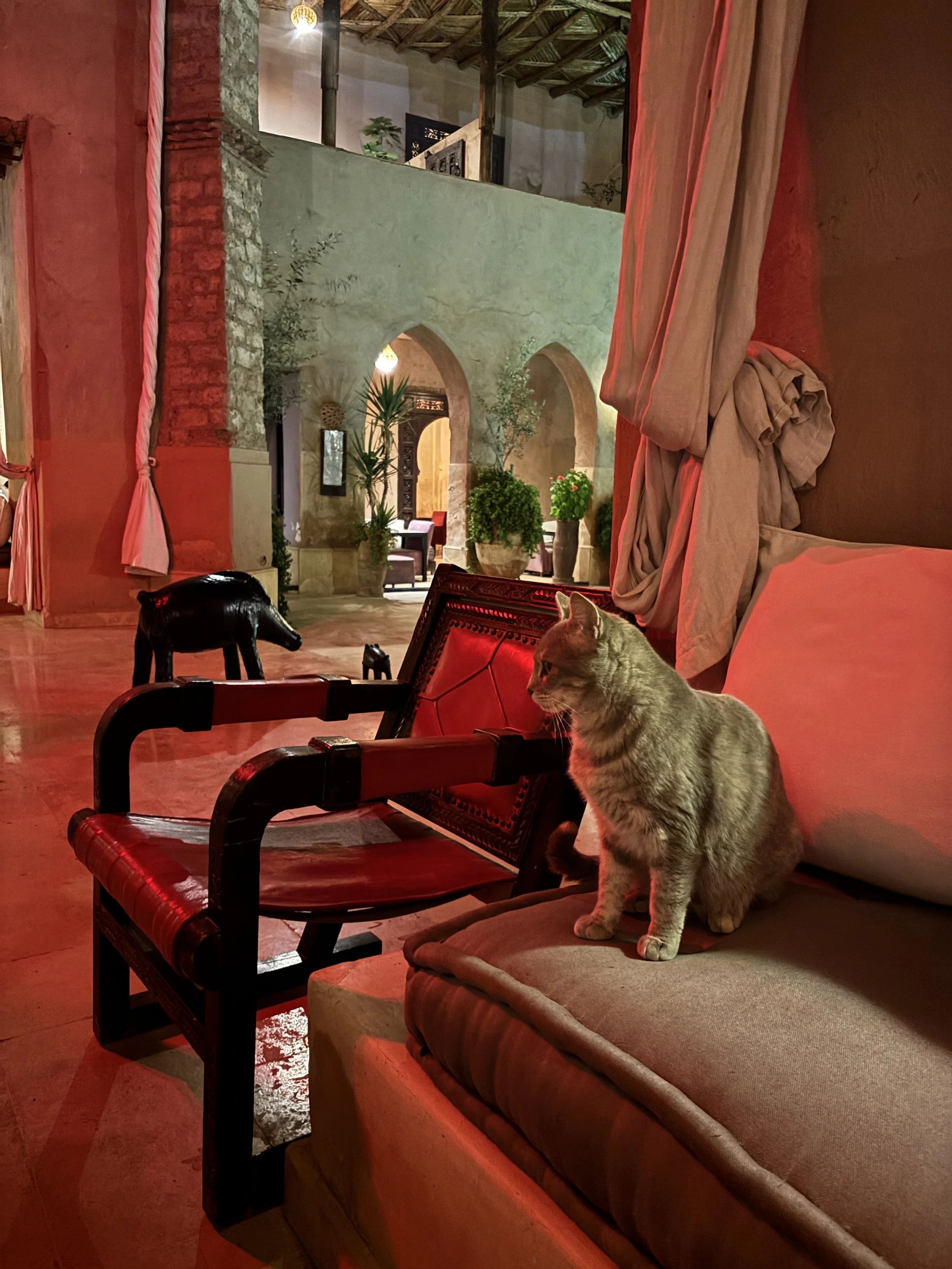
The hotel Caravan Serai has also a pool side restaurant area, which is where breakfast is served. Breakfast consists of a small buffet. It is not extravagant in terms of choices, although it covers the basics (and the staff can prepare some rather tasty pancakes on the spot and upon demand).
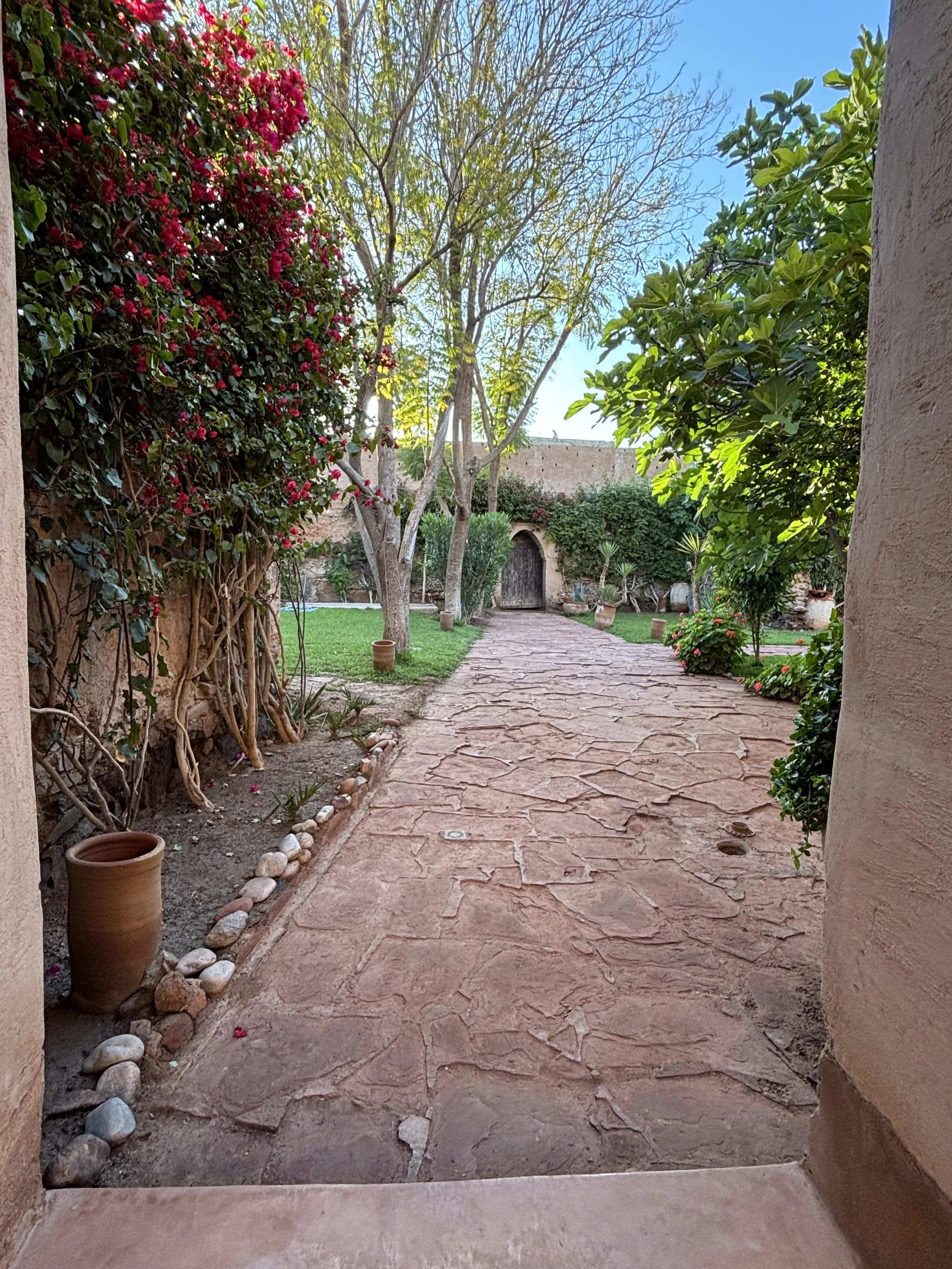
The hotel has also a nice garden, which I guess makes for a nice venue for weddings and other similar events.
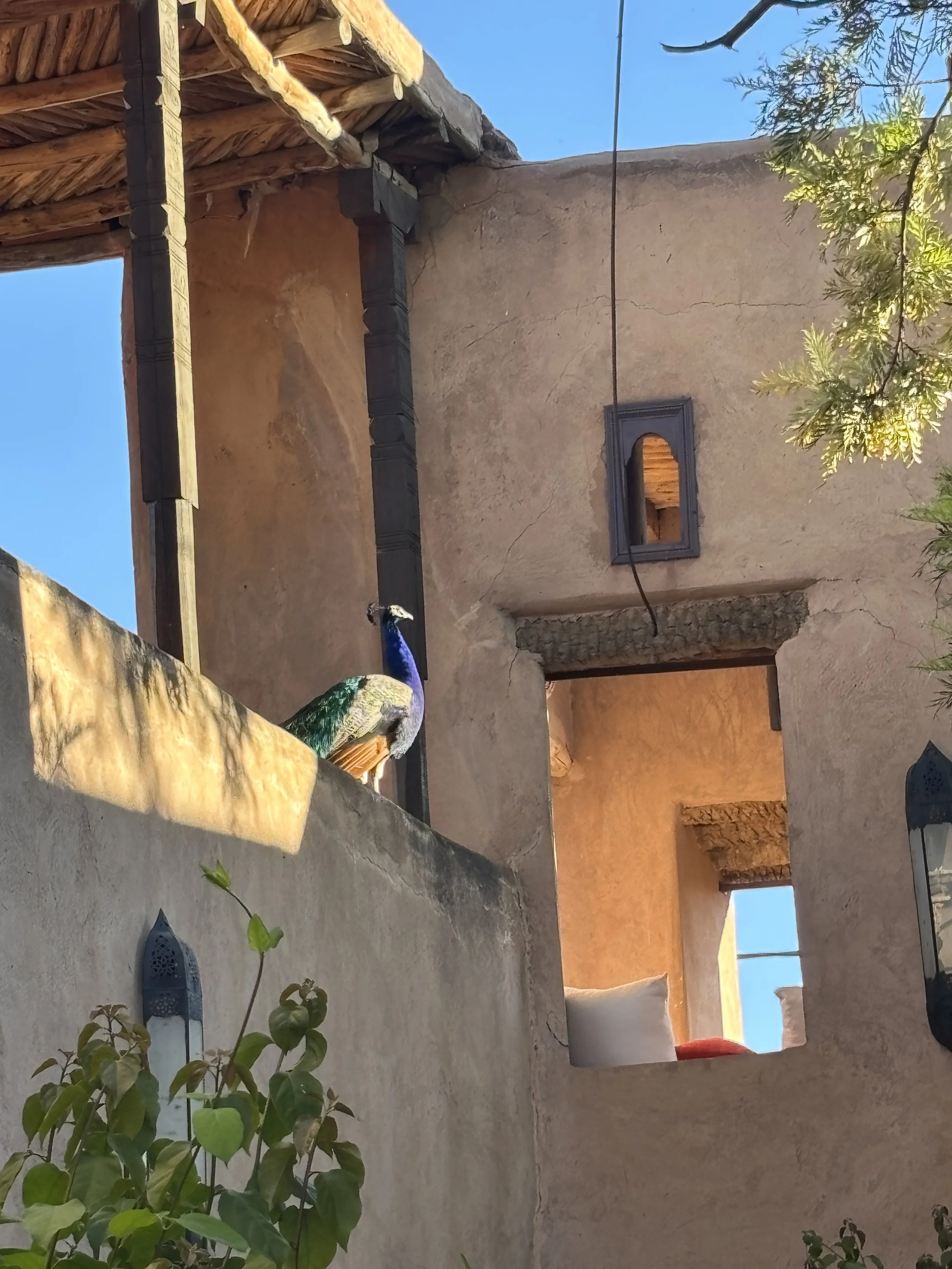
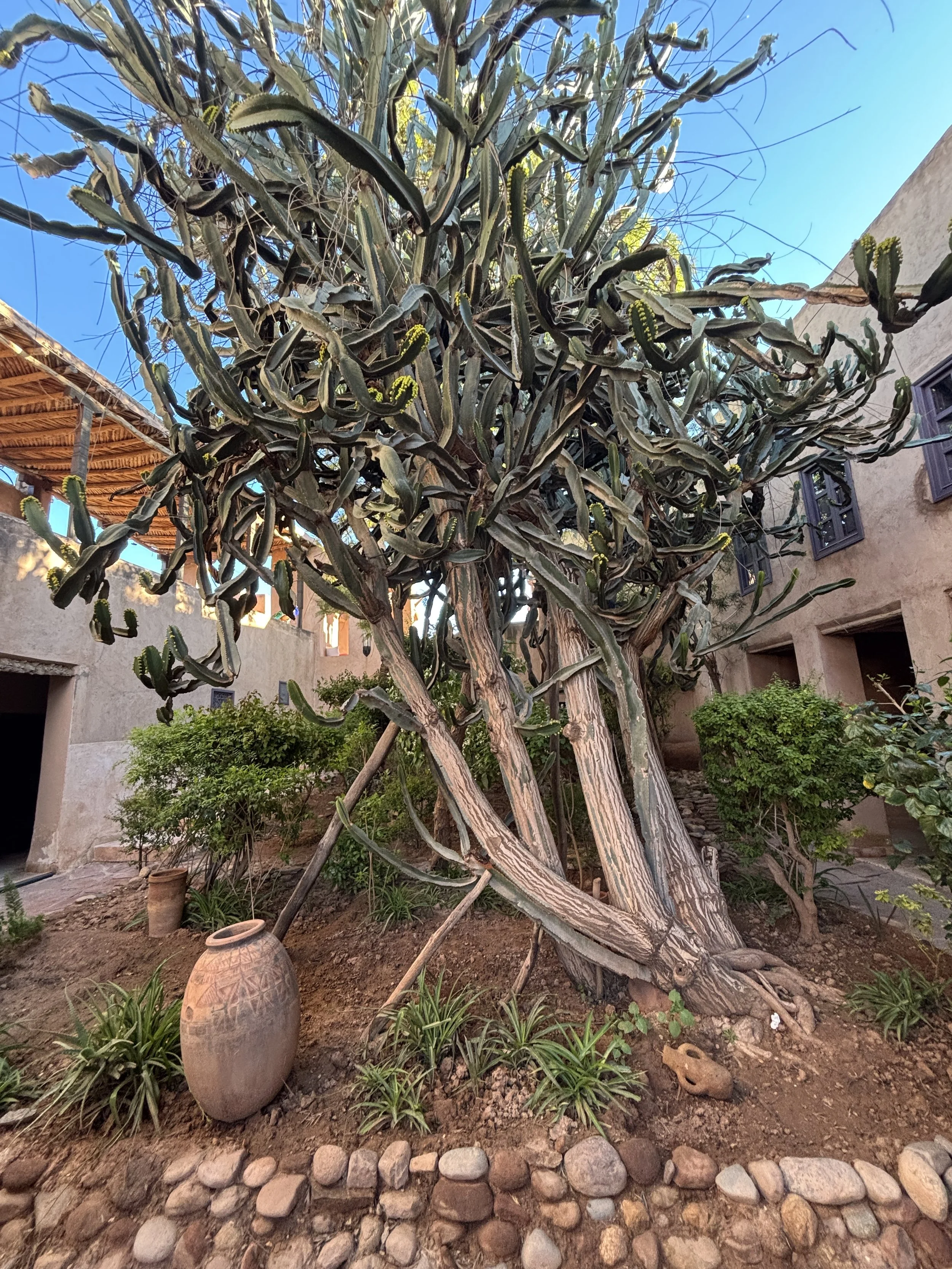
By the way, cats are not the only animals roaming free through the hotel grounds: there is also a peacock! Also, note the monumental cactus that welcomes guests to the pool area!
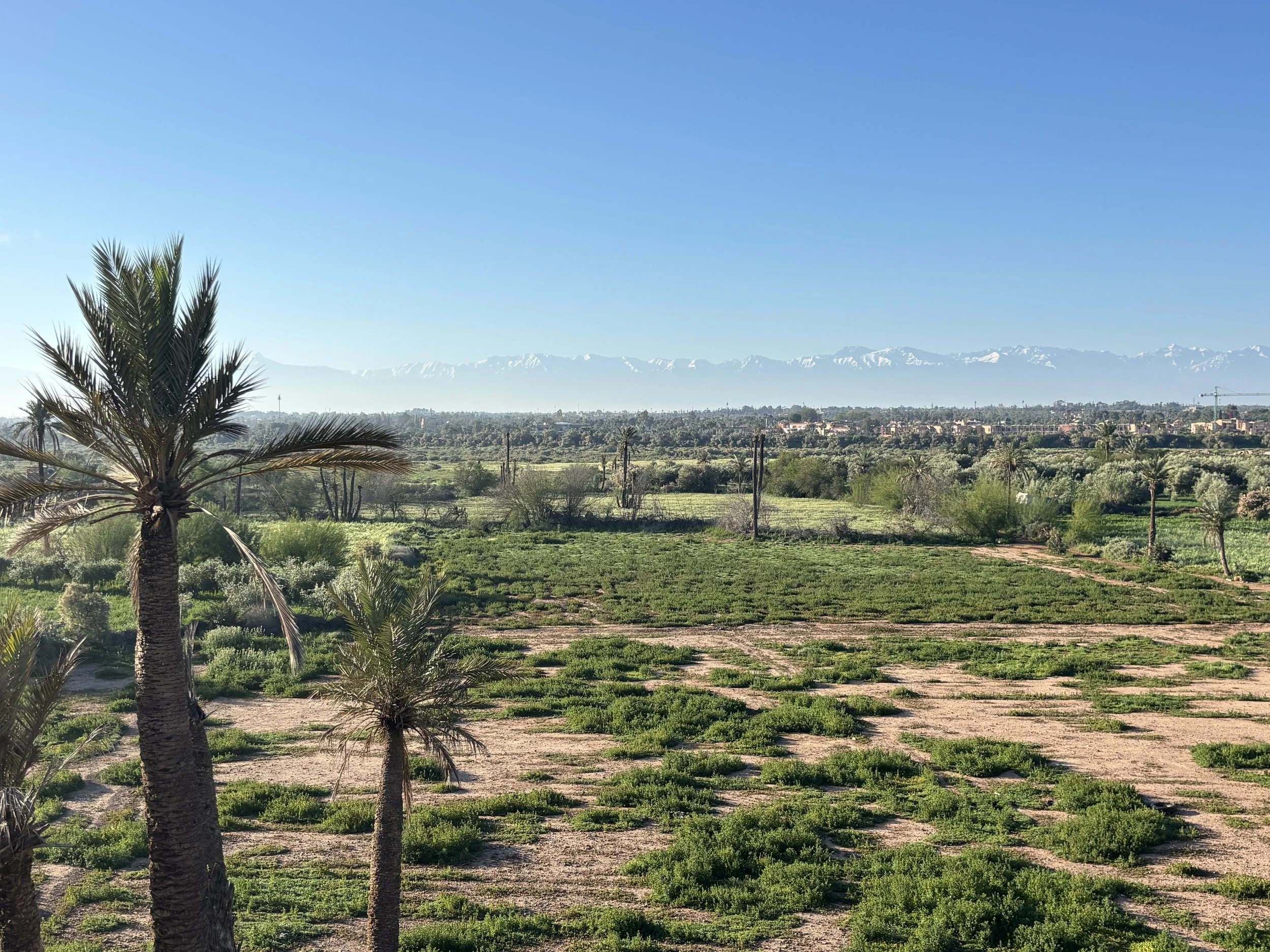
As mentioned a bit further up, another plus of this hotel are the stunning views of the Atlas mountains contrasting with the that lush landscapes of the plain of Marrakech and its palm and olive groves. This view is particularly remarkable when there is still snow in the Atlas!
Moving around modern Marrakech: some practical tips
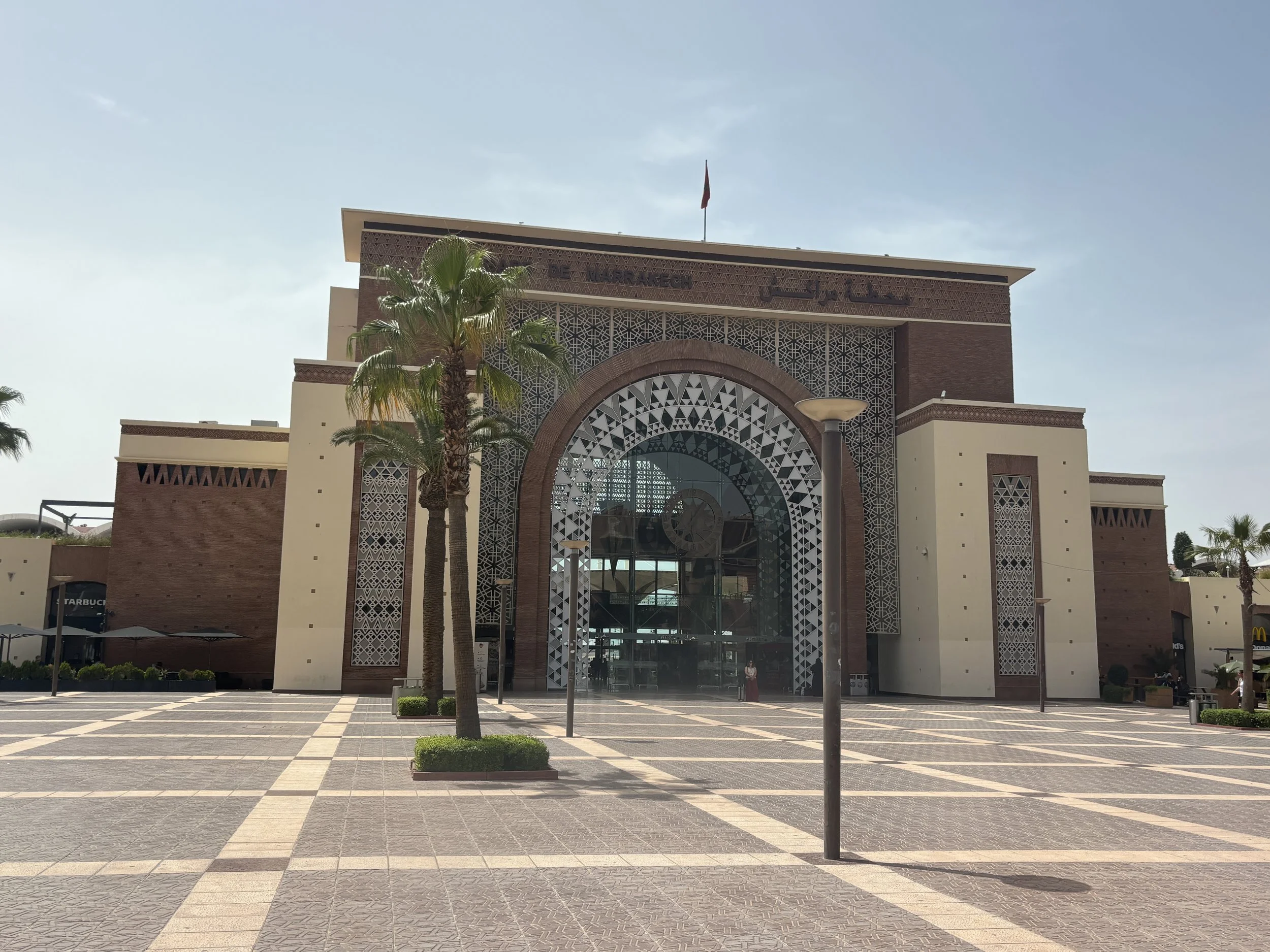
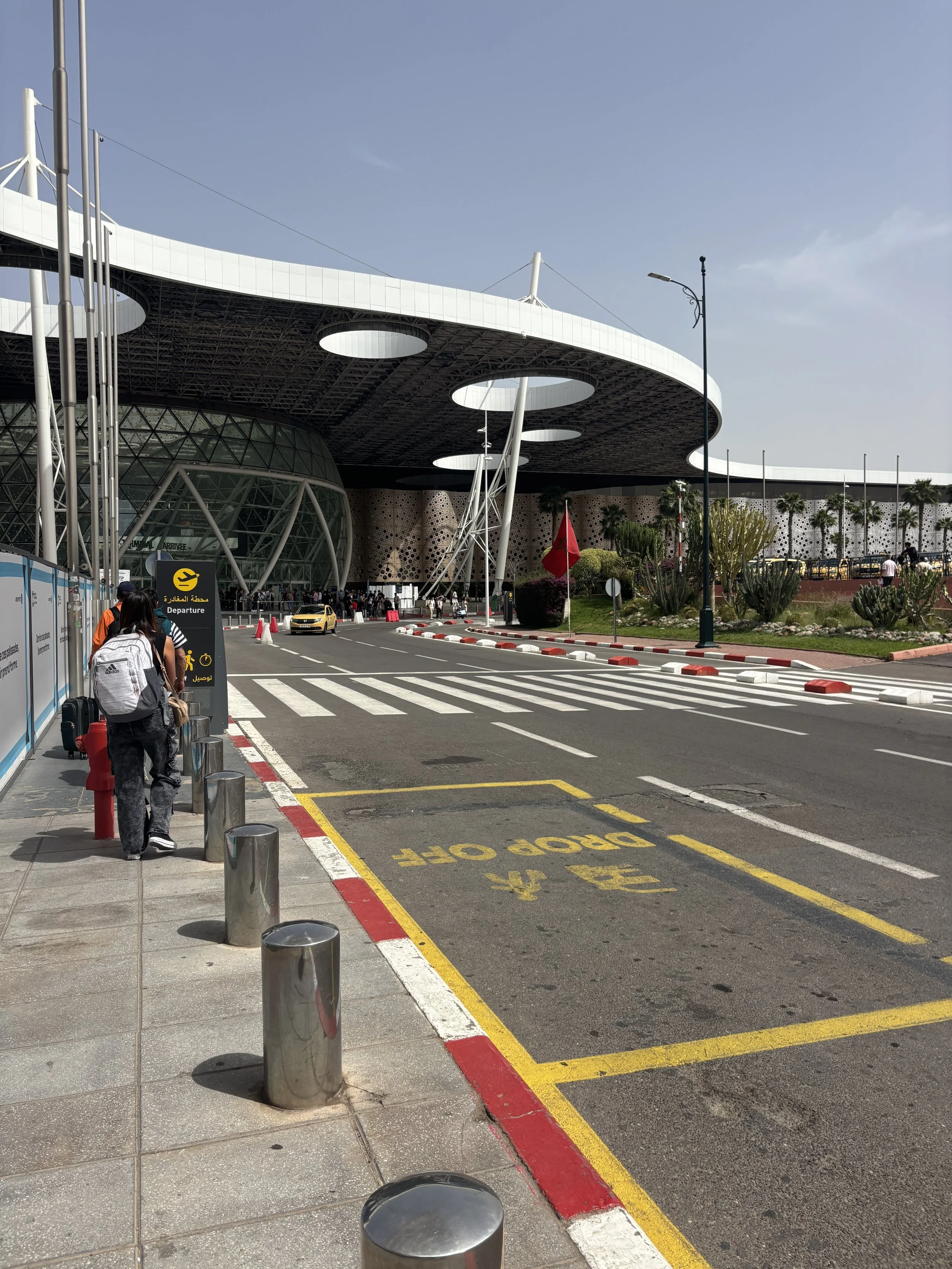
Let me start this section by saying that infrastructure to get to and from Marrakech is pretty good. Both the train station (left picture above) and the airport (right picture above) are state-of-the art and aesthetically beautiful.
Now, moving within the city is another matter, although you possibly won’t need to move around much if you stay close to the Medina, since the city center is pretty compact and you can get pretty much everywhere on foot.
Now, a couple of pieces of advice:
Get local currency in cash: while cards are accepted in most places, this is still a place that runs on cash. Also, I noticed that long queues form at the currency exchange and ATMs near Jemaa el Fna and the main tourist spots. However, if you look around a bit, you will see that there are some currency exchange shops which are much less crowded in adjacent areas, just avoid the main central spots and you will be fine.
Safety: I got the feeling that the Medina and central Marrakech are, in general, pretty safe. Also lots of tourists, including many families walking around pretty unconcerned. The usual precautions apply, of course, and bear in mind that some areas of the Medina get pretty crowded at peak times. As long as you are careful not to leave your wallet too exposed, should be fine. Also, while there is some hawking, mostly around Jemaa el-Fna, it is much less than I was anticipating.
Taxis: most taxis don’t take cards and are not particularly cheap. A ride to and from the airport, which is pretty close to the airport, can cost 150-200 Dirhams (€15-20/$15-20), which is quite pricey for the distance and local price levels.
Uber does operate in Marrakech, but it tends to be considerably more expensive. Other ride-hailing apps like Careem and Bolt operate in Morocco, but not in Marrakech at the time of writing these lines (only in Casablanca, Rabat and some other cities).
Languages: since Marrakech is a very touristy city, many locals, particularly those working in the tourist areas, know at least some basic English, which they usually use straightaway when seeing a foreigner. French is otherwise the lingua franca (in addition to the local Arabic and Amazigh). Quite a few people in Morocco appear to know some Spanish too.
The taxi app you may want to have when traveling to Marrakech is Roby, which is a Moroccan app. However, it is match-making app only. It connects you to an available taxi, but it does not process any payments. All payments on rides booked on Roby must be settled in cash. The app gives you the approximate amount, but it is advisable to confirm it with the driver before the ride to avoid any surprises later on.
I read there is another app called inDrive that works in a similar way and it is also available in Marrakech, but I don’t have direct experience using it.
Modern Marrakech
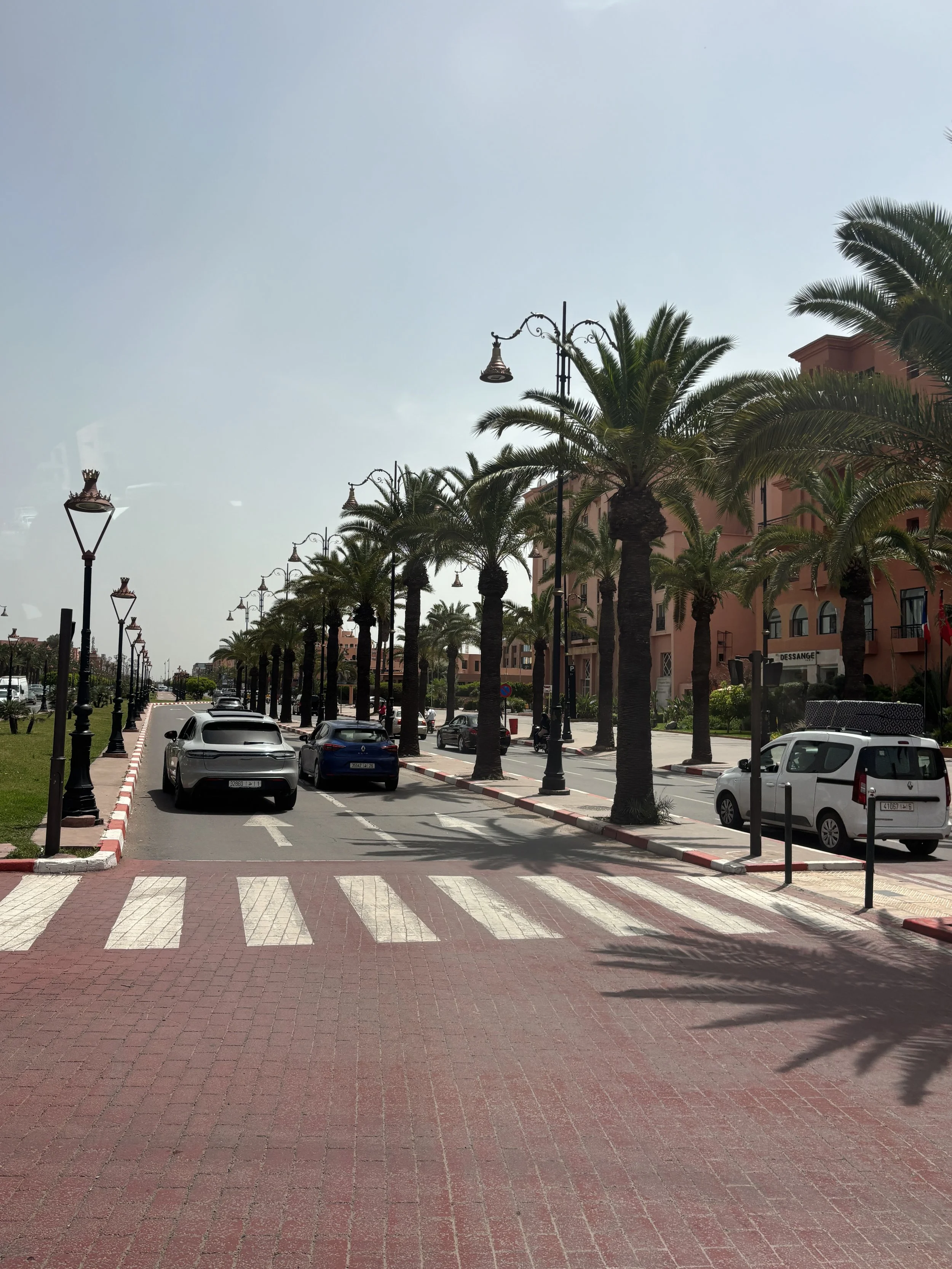
The modern city of Marrakech, starts just outside the walls of the Medina. The modern downtown is made of broad, palm-lined avenues.
The area around Gueliz, in particular, is pretty well maintained and its streets are quite walkable and lined with shops and restaurants (including the typical international chains).
It offers quite a contrast with the maze of narrow streets of the Medina.
A place to eat in the modern part of Marrakech
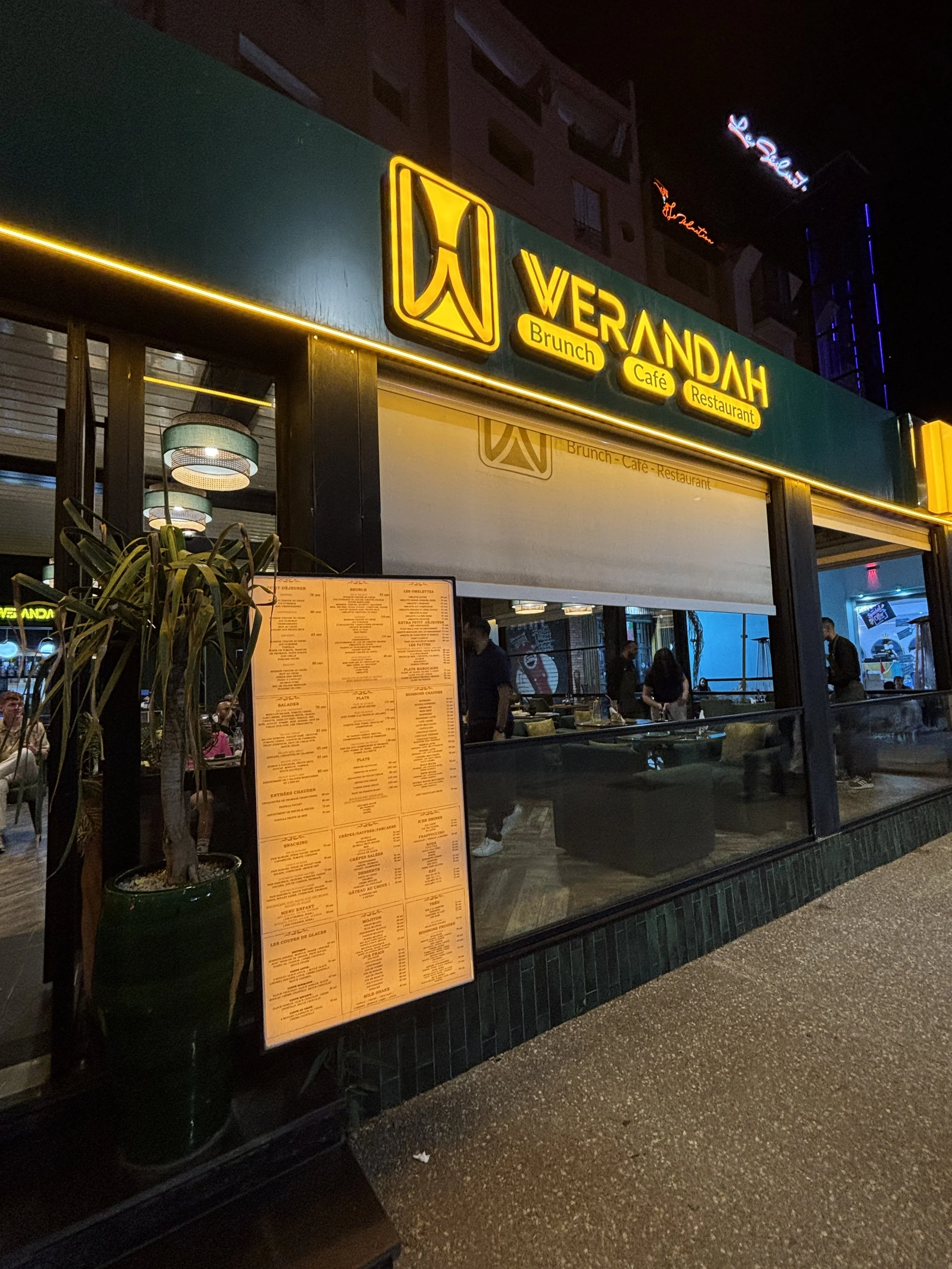
Verandah
232 Av. Mohammed V, Marrakech 40000
https://www.werandahmarrakech.com
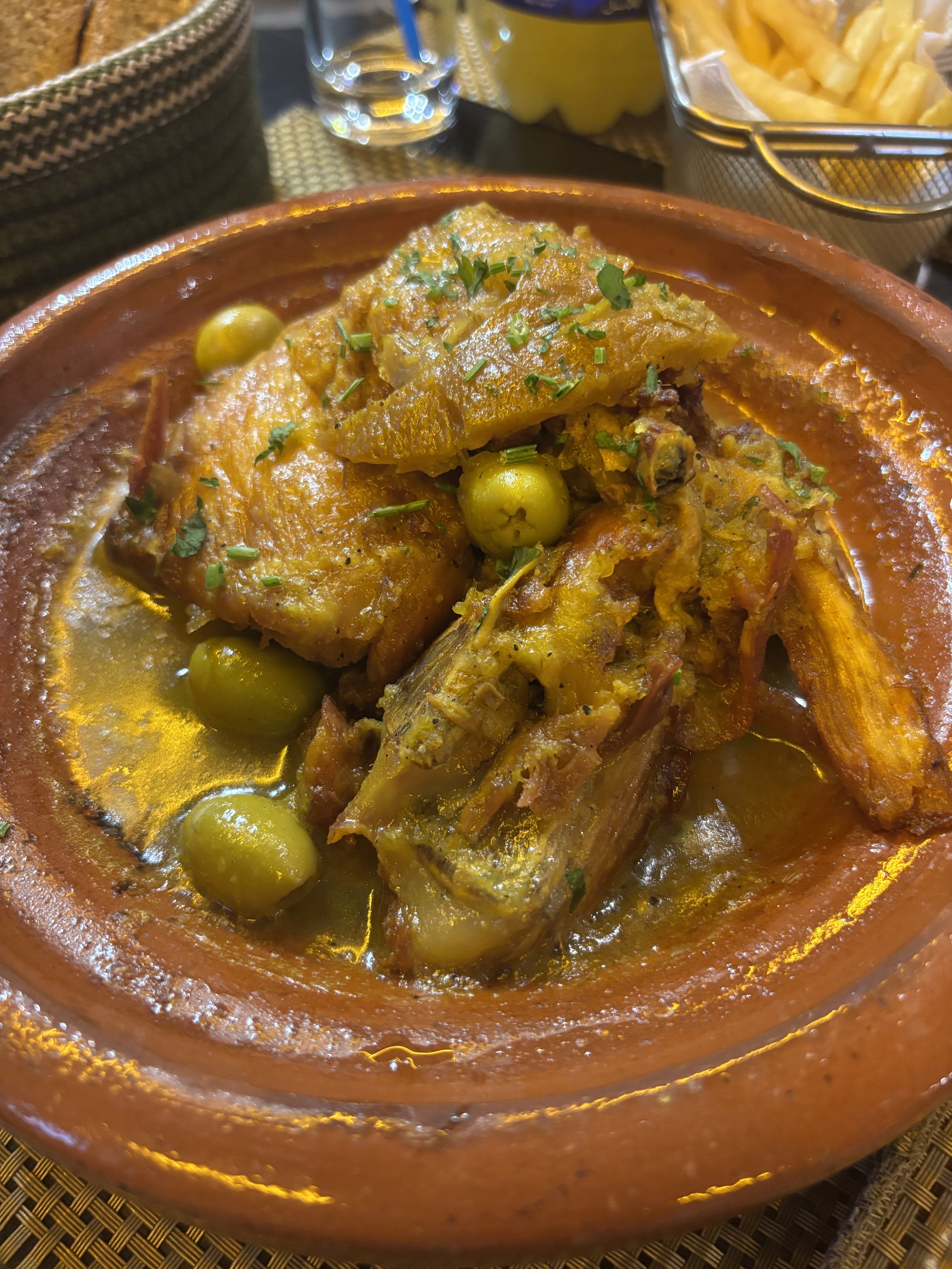
So, continuing with the topic of modern Marrakech. If you are looking for a modern place to rest a bit from the frenetic activity of the Medina, here is a place that, while not claiming to be traditional or “authentic” in the exotic sense of the word, offers a comfortable alternative just outside the city walls.
It offers mostly international cuisine, although it has also some Moroccan specialities in the menu, such as the chicken tagine depicted below.
Bonus Tip: Menara Gardens
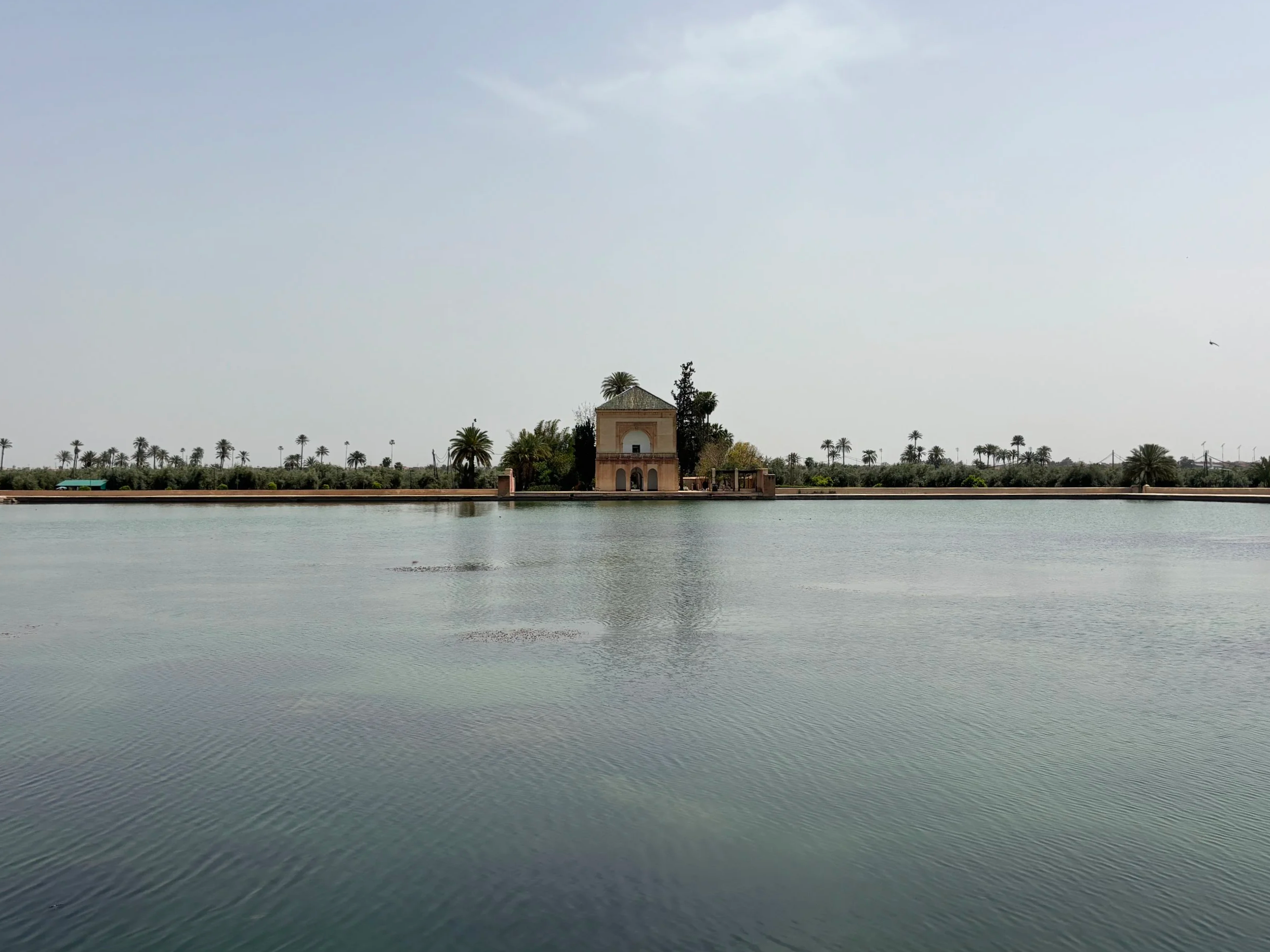
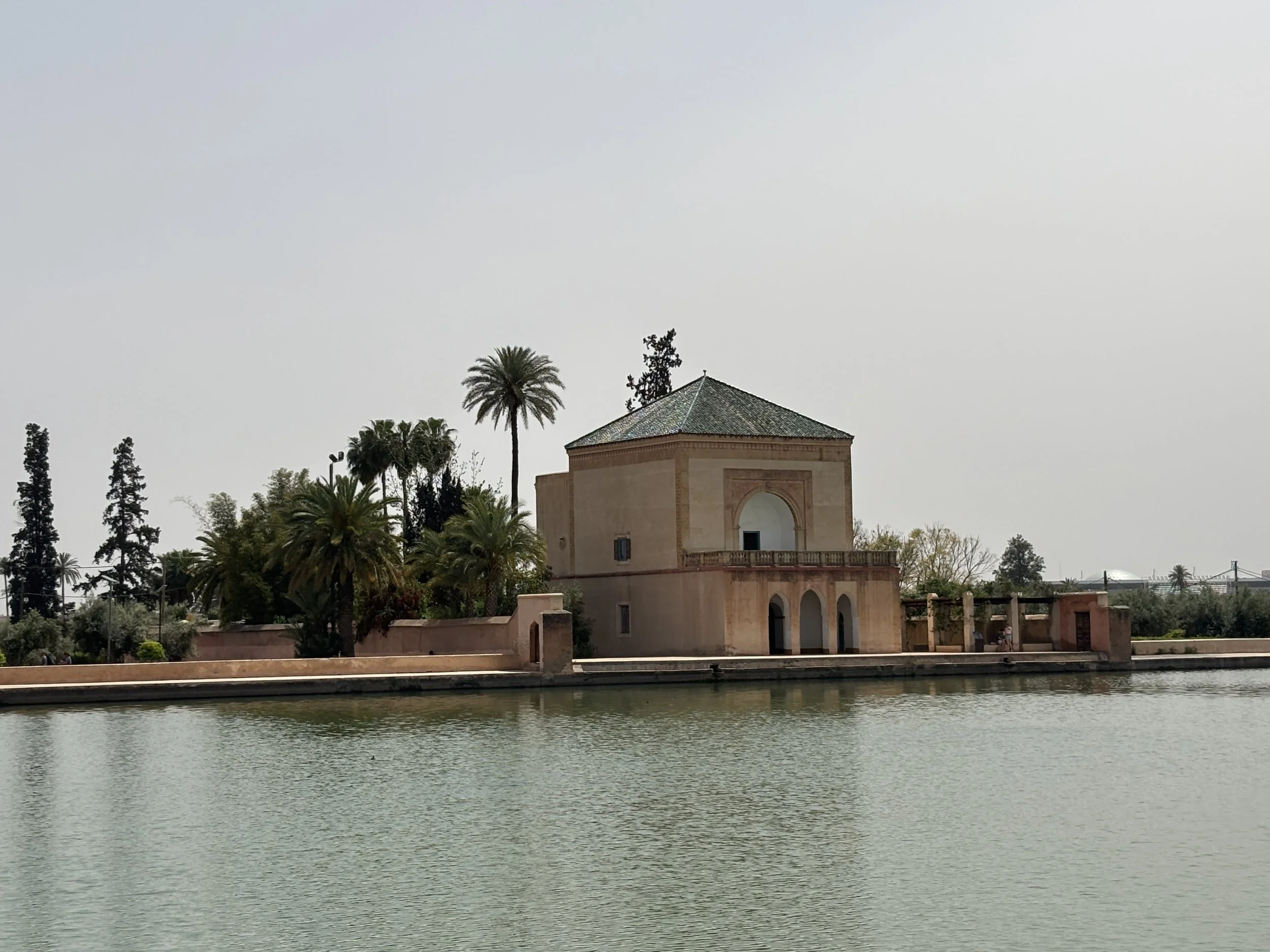
This Marrakech landmark offers one of the city’s most iconic views, with a water-side pavilion silhouetted against the backdrop of the Atlas mountains.
I had big expectations about this place, so I decided to stop by on my way to the airport, since it is located nearby. To be honest, after having been to all the other places I described earlier in this post, I found the Menara Gardens quite underwhelming.
First of all, I have no doubts that the view must be amazing when visibility is good but this was, sadly not the case when I visited. So, no views at all, although I was not too concerned about this, because I had enjoyed quite amazing views, perhaps even better, from the Caravan Seari hotel, as detailed earlier.
But also, the whole ensemble appeared to be quite run down in general and in this it contrasted with some of the other sites I had visited. I have read that there is an entry fee to enter the pavilion, but I didn’t even check since I had come primarily for the views.
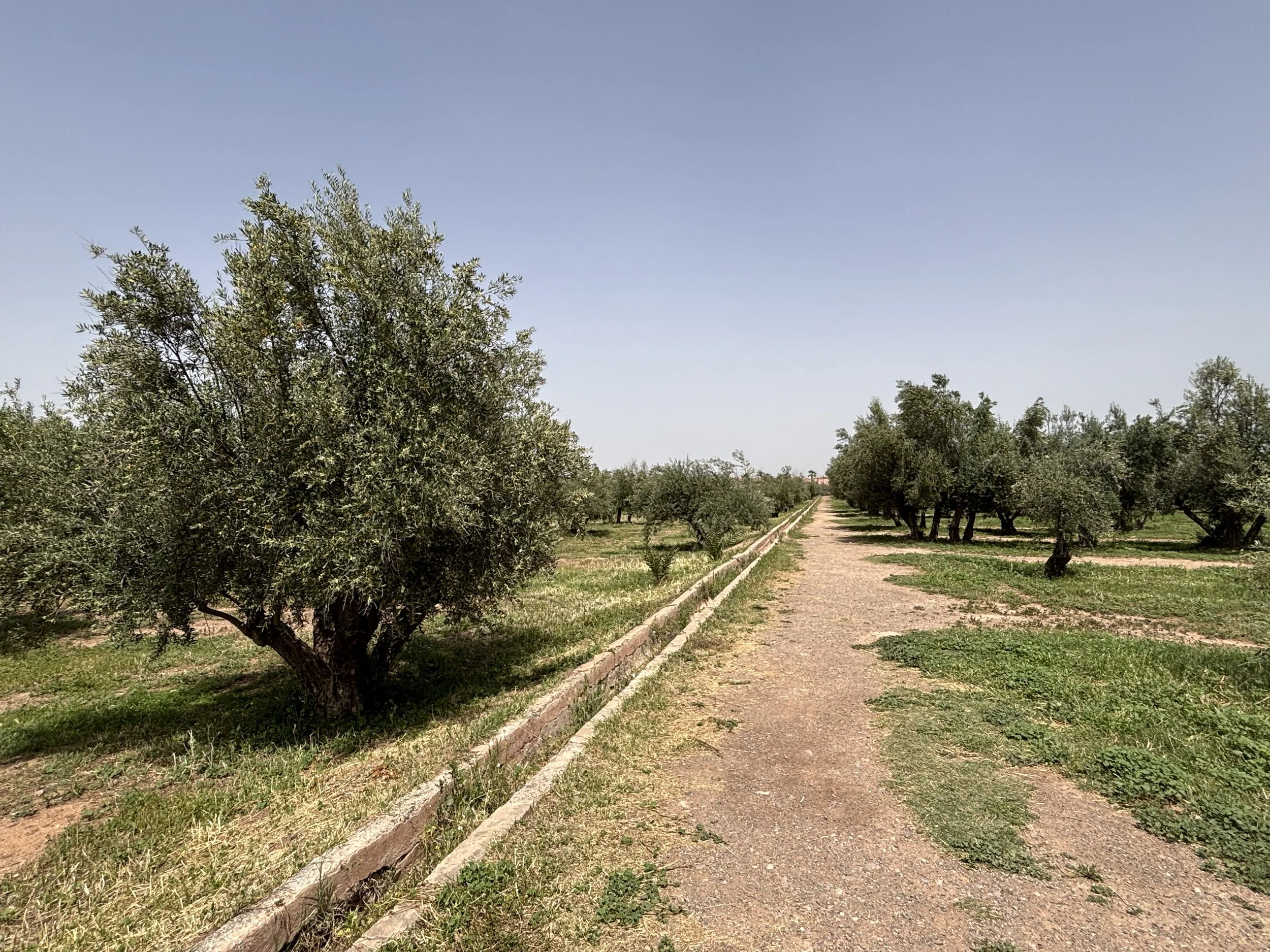
The pavilion and the basin are in the middle of a large olive grove which is also a public park. By the way, one of the positives is that entrance is free (perhaps this explains the less than optimal preservation state). There are a couple of kiosks and little more in terms of infrastructure.
I also visited at a not very optimal time, in the early afternoon, when it is hottest, I guess it is much more pleasant around the evening. Nevertheless there were a few locals having picnics among the olive groves.
The Menara Gardens are some three kilometres in a straight line from Jemaa el-Fna and the Koutoubia, so, it is technically walkable, although it is a large avenue with quite a lot of traffic and little shadow, so may be better to take a taxi. It is also quite close to the airport, almost adjacent to it, actually, but the taxi would still charge the customary 150 Dirhams.
So, in short, feel free to visit if circumstances permit and you think that you will get the views, but don’t lose sleep over it if it’s not possible for whatever reason!