48 hours in Avignon and Nîmes: what to see, what to do
The south of France is so rich in sights and history that at, if you find yourself driving around the area on a sunny day, it is easy to feel overwhelmed by the amount of choices that present themselves.
There are, however, some sites that really stand out (and have even been recognized as such by UNESCO, which has granted them World Heritage Site status) and fortunately, several of them are relatively close to each other, so it is perfectly possible to visit quite a handful of them in a couple of days if you have access to a car.
So, what to see and what to do if you if you are traveling in the area roughly delimited between Nîmes to the west, Avignon to the east, Châteauneuf-du-Pape to the north and Aiguesmortes and the Camargue to the south? We’ll see it now!
In this post I am going to try do just that: describe an itinerary that includes, I think, some of the most impressive and interesting places to visit in the lower Rhône Valley and the region where Provence meets Occitanie. These are representative of a diverse range of historical eras and have some varied landscapes, as well.
This post may contain affiliate links. If you book or buy something through them, I earn a small commission, at no extra cost to you. It's one of the ways I keep Places of Charm going. Thank you for your support.
Visiting the Palais des Papes in Avignon
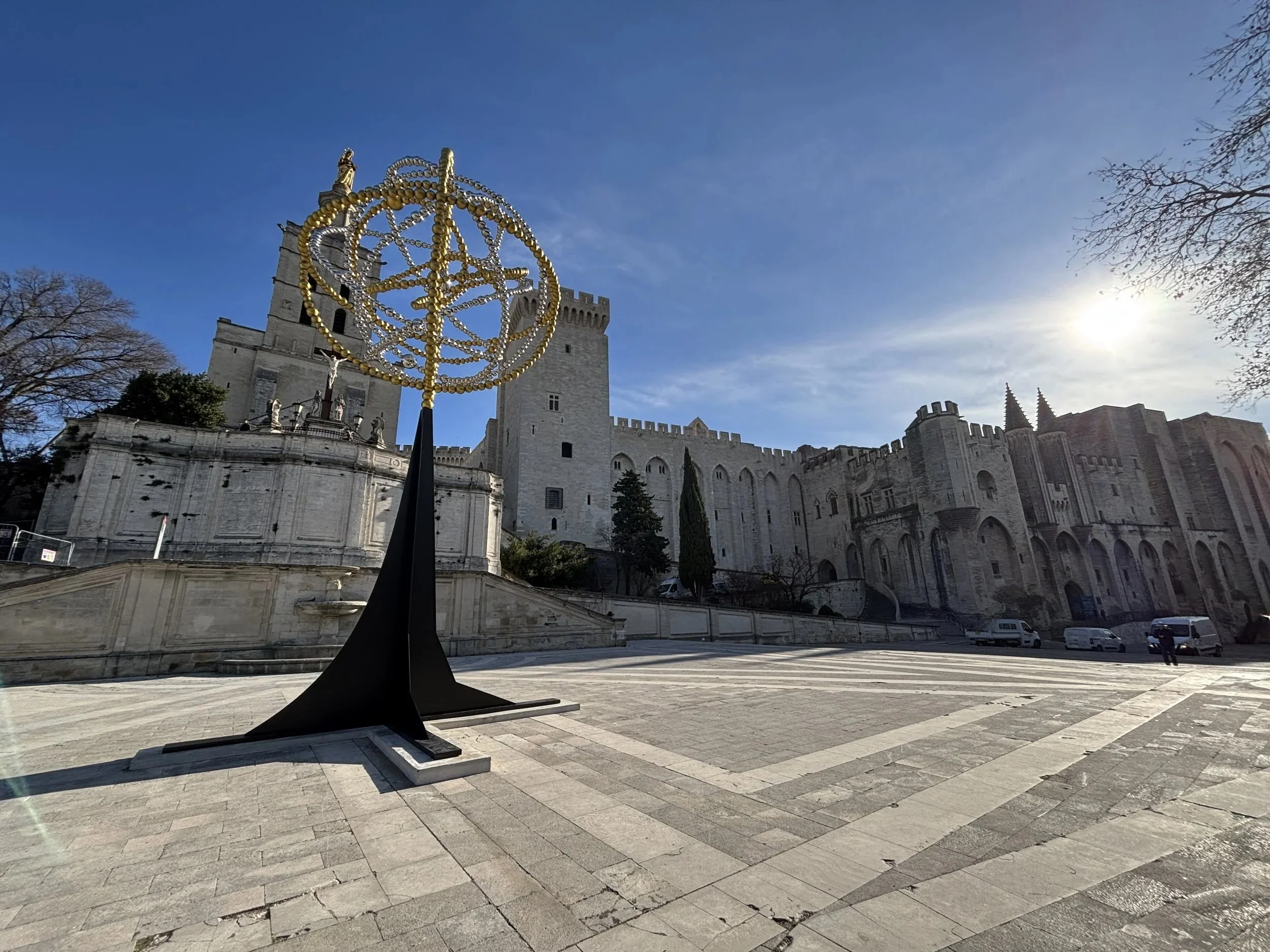
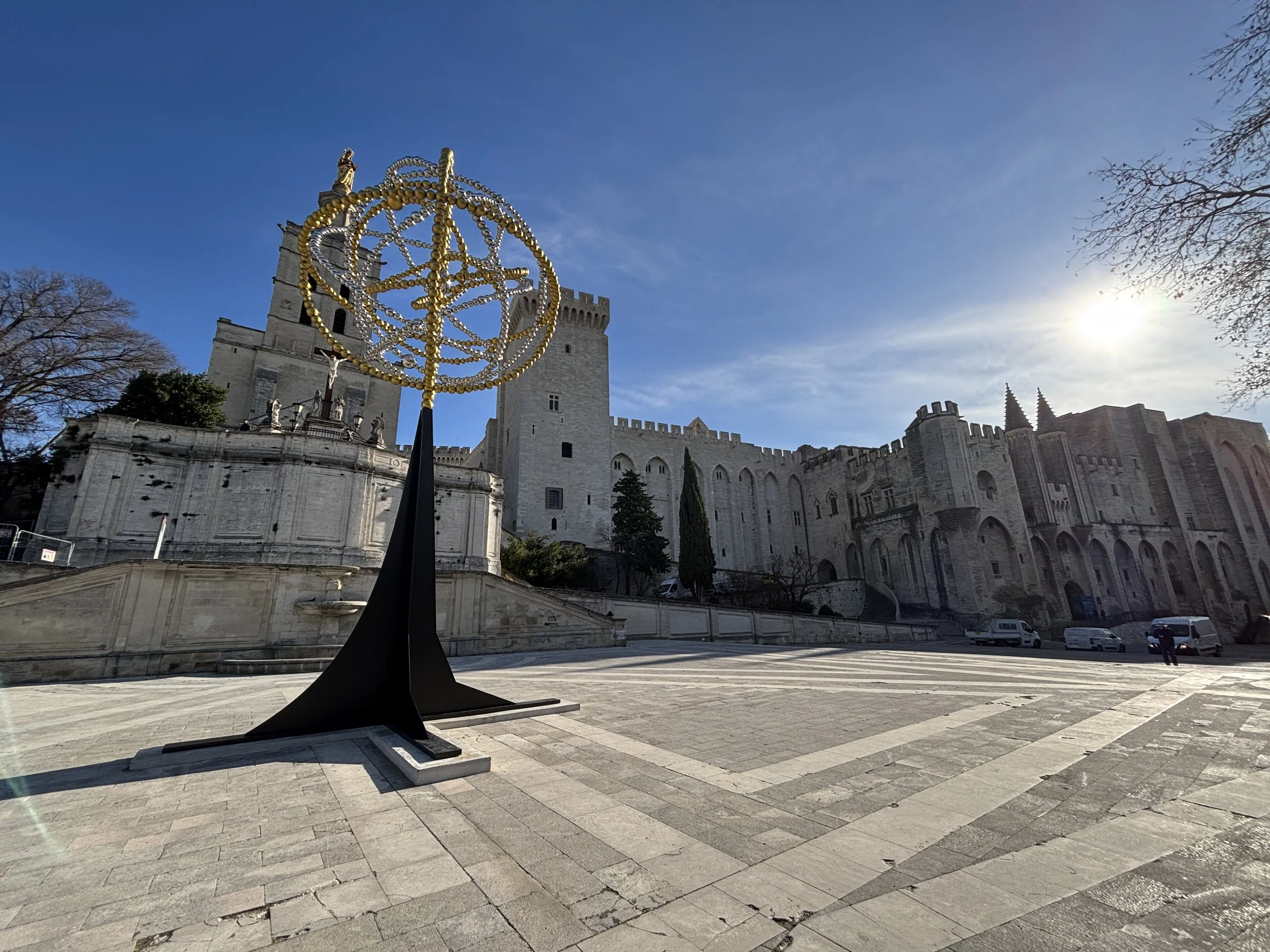
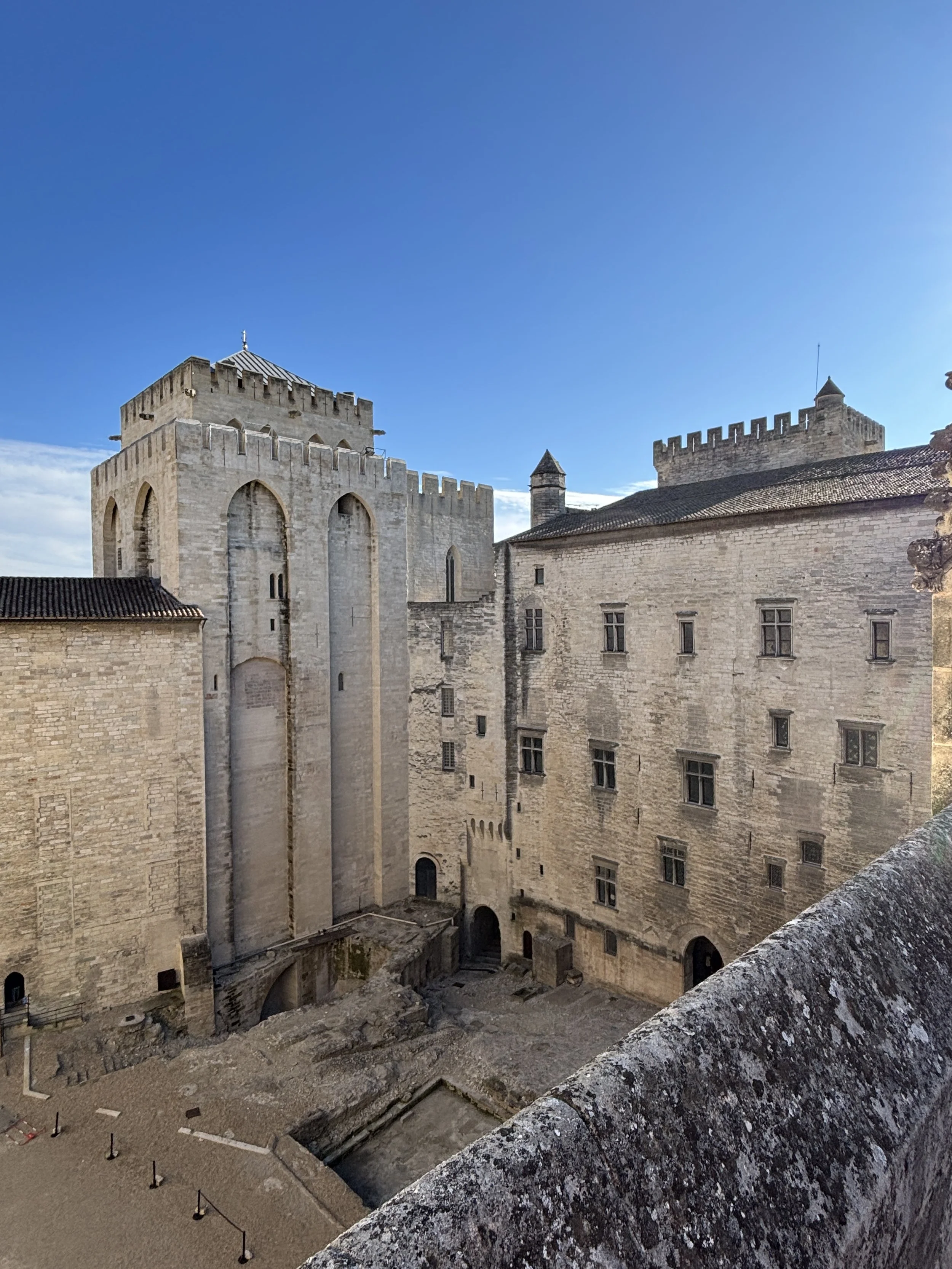
Our itinerary starts in front of the imposing ramparts of the Palais des Papes, the old papal fortress in Avignon. This small provençal town was for quite a few decades in the 14th C., the residence of a number of Popes, which made it, de facto, the centre of the Catholic world.
Pope Clement V, who was French, relocated to Avignon from Rome in 1309. Apparently in an attempt to be closer to the French court. After him, successive popes stayed in Avignon and kept enlarging their residence and making ever more majestic.
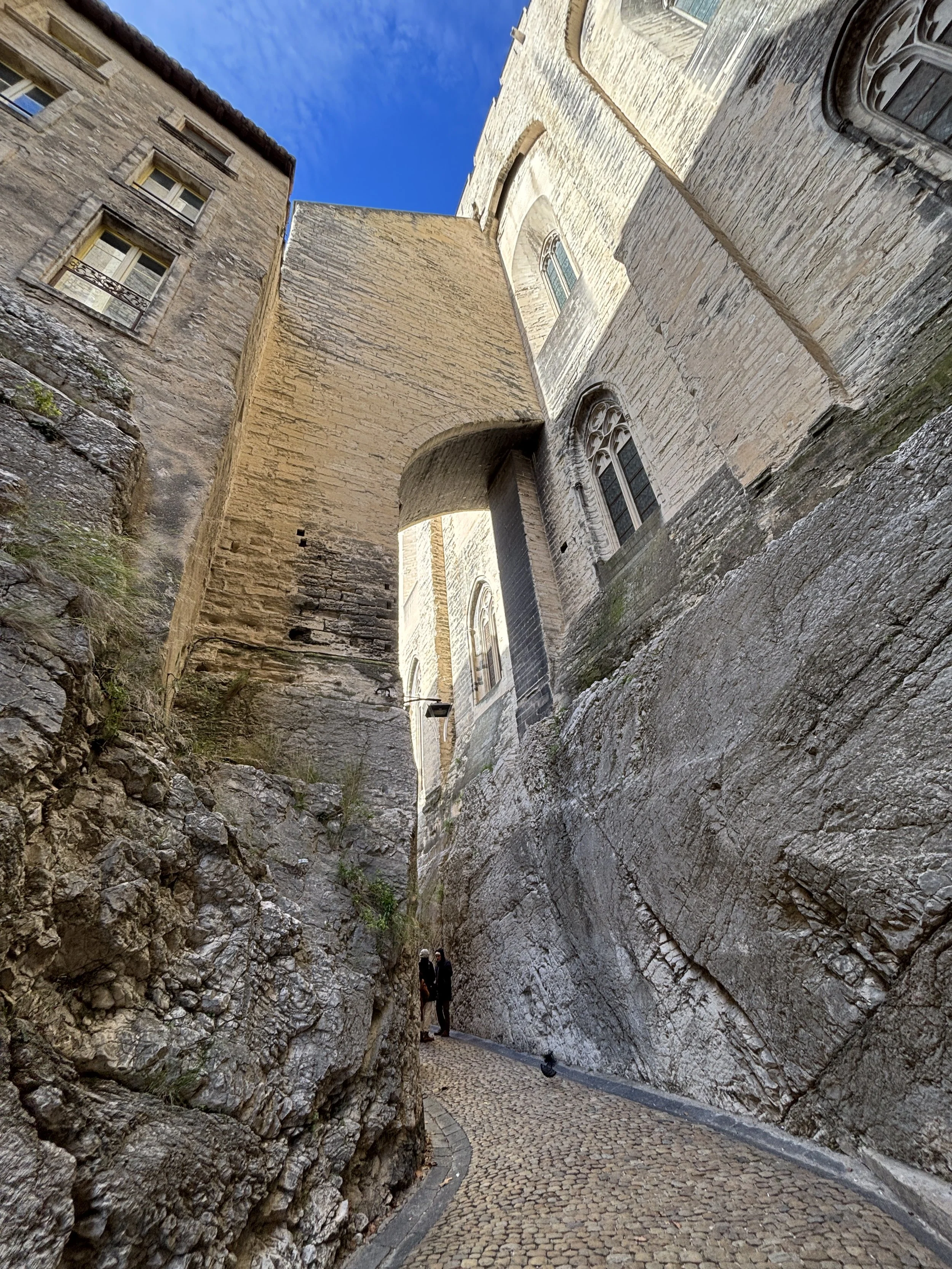
The Papal Palace in Avignon thus, evolved into one of Europe’s largest medieval fortresses, made even more impressive by the fact that parts of it are built on top of naked rock (see the picture below).
The Pope returned to Rome in 1377, although Avignon remained part of the Papal estates and, in fact, it didn’t, join France until after the French Revolution in 1791!
It is advisable to buy the entry ticket in advance online, since there is a slot system for visits. To be fair, we booked quite at the last minute didn’t have any issue finding available slots, but I can not guarantee this is always the case, particularly during busy holiday periods!
It is also possible to buy a ticket that combines several of the town’s historical sites, such as the palace, its gardens (which we were closed at the time of our visit and, therefore, not included here) and the bridge over the Rhône (the famous “Pont d’Avignon”). Prices range between €12 and €17 approximately depending on the option you take.
If arriving by car, the best option is to leave the car at one of the several underground paid parkings near the Palace. The closest one is just underneath the palace’s rock and it is very aptly called “Parking du Palais des Papes”. If you spend half a day touring the castle and walking around the old town you would possibly pay something on the order of €10 or so, but it saves a lot of hassle.
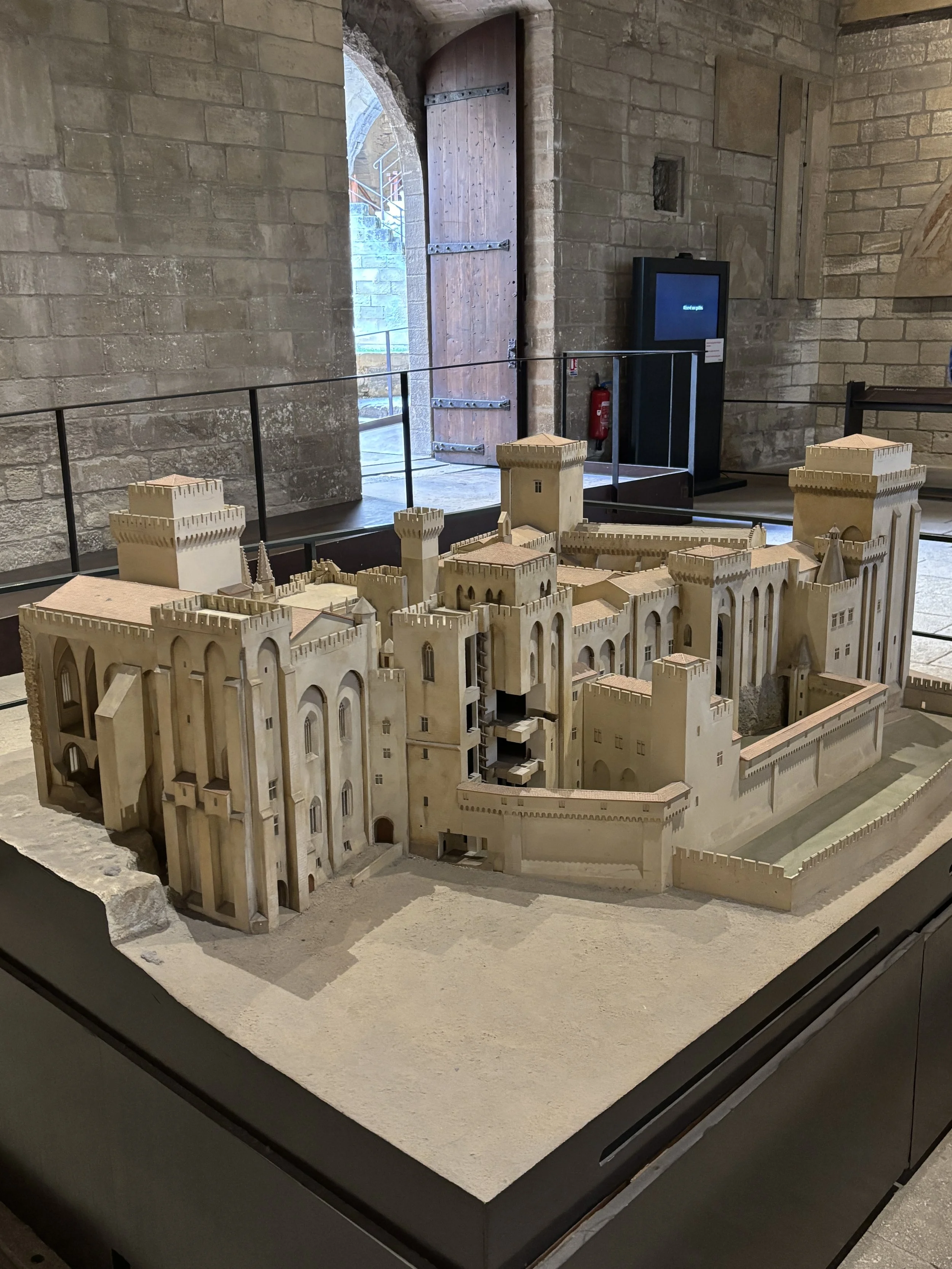
Allocate at least a couple of hours to the Palais des Papes, because the place is huge.
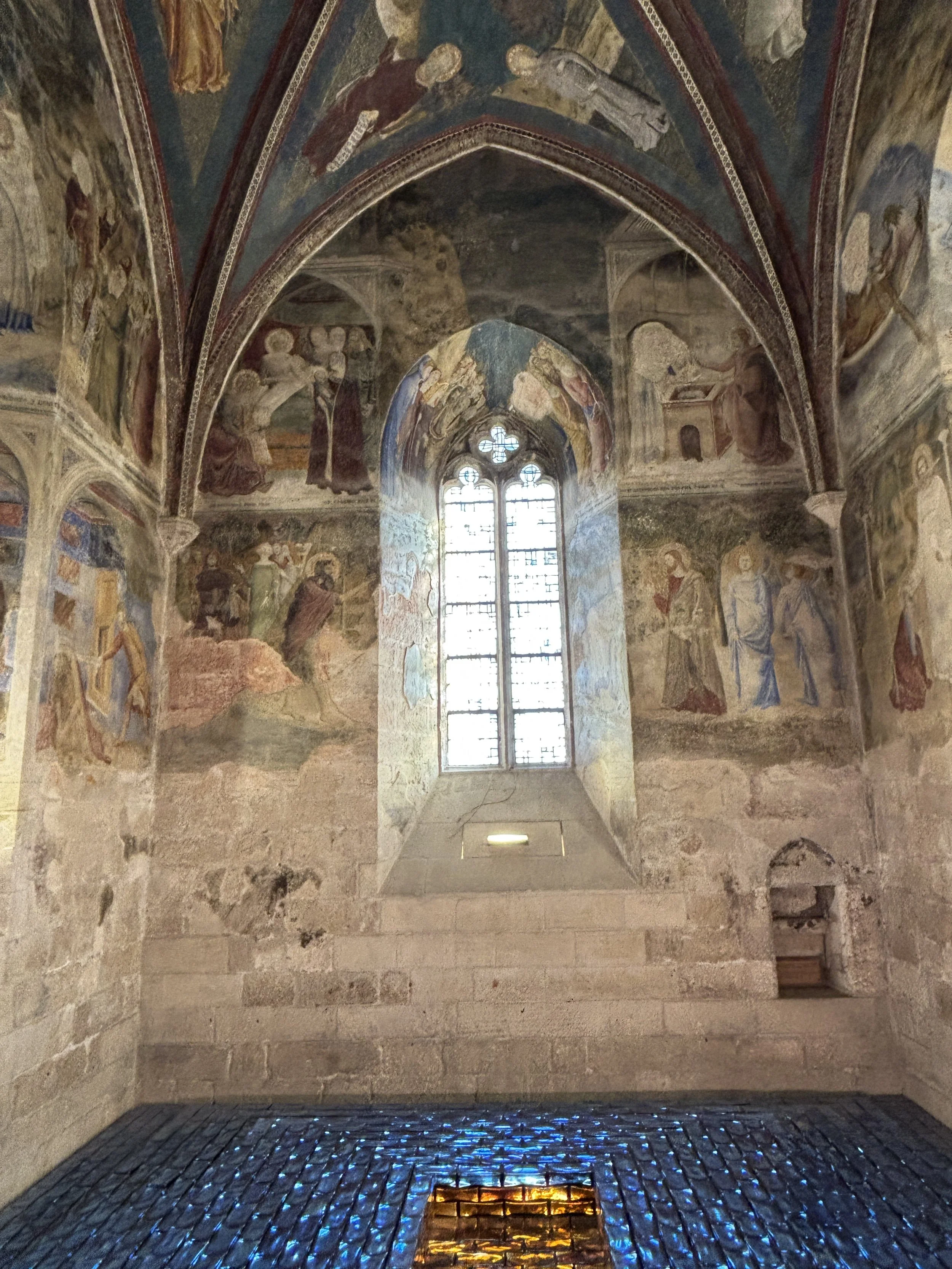
I recommend taking the audioguide since, in addition to having nice and comprehensive explanations, it comes in the form of a tablet with augmented reality effects. It allows you to see how the different parts of the palace-fortress would have looked like in its heyday by pointing out at specific locations.
The visit, by the way, combines indoor and outdoor spaces and it is even possible to climb to one of the fortress towers for a view of the town.
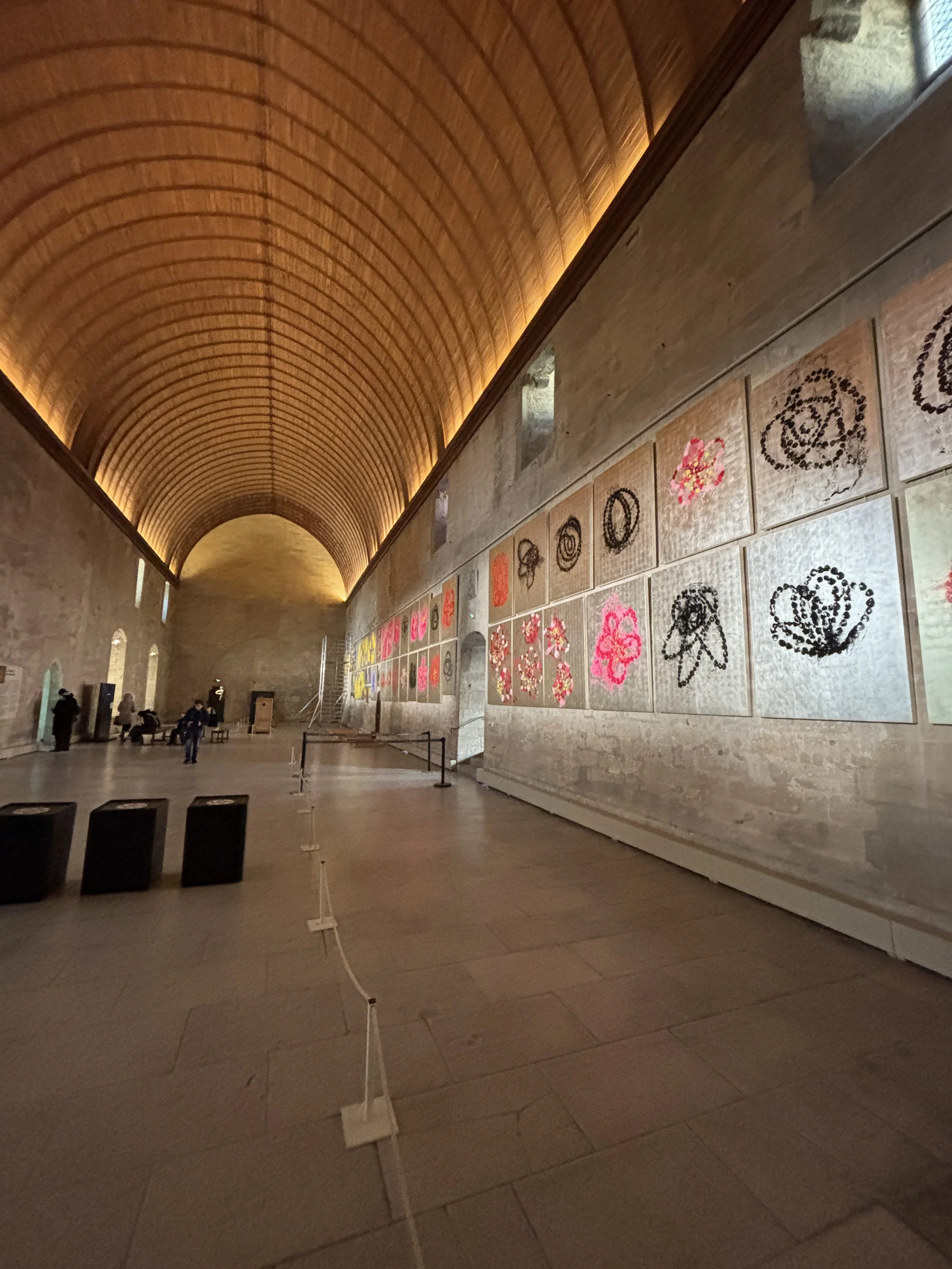
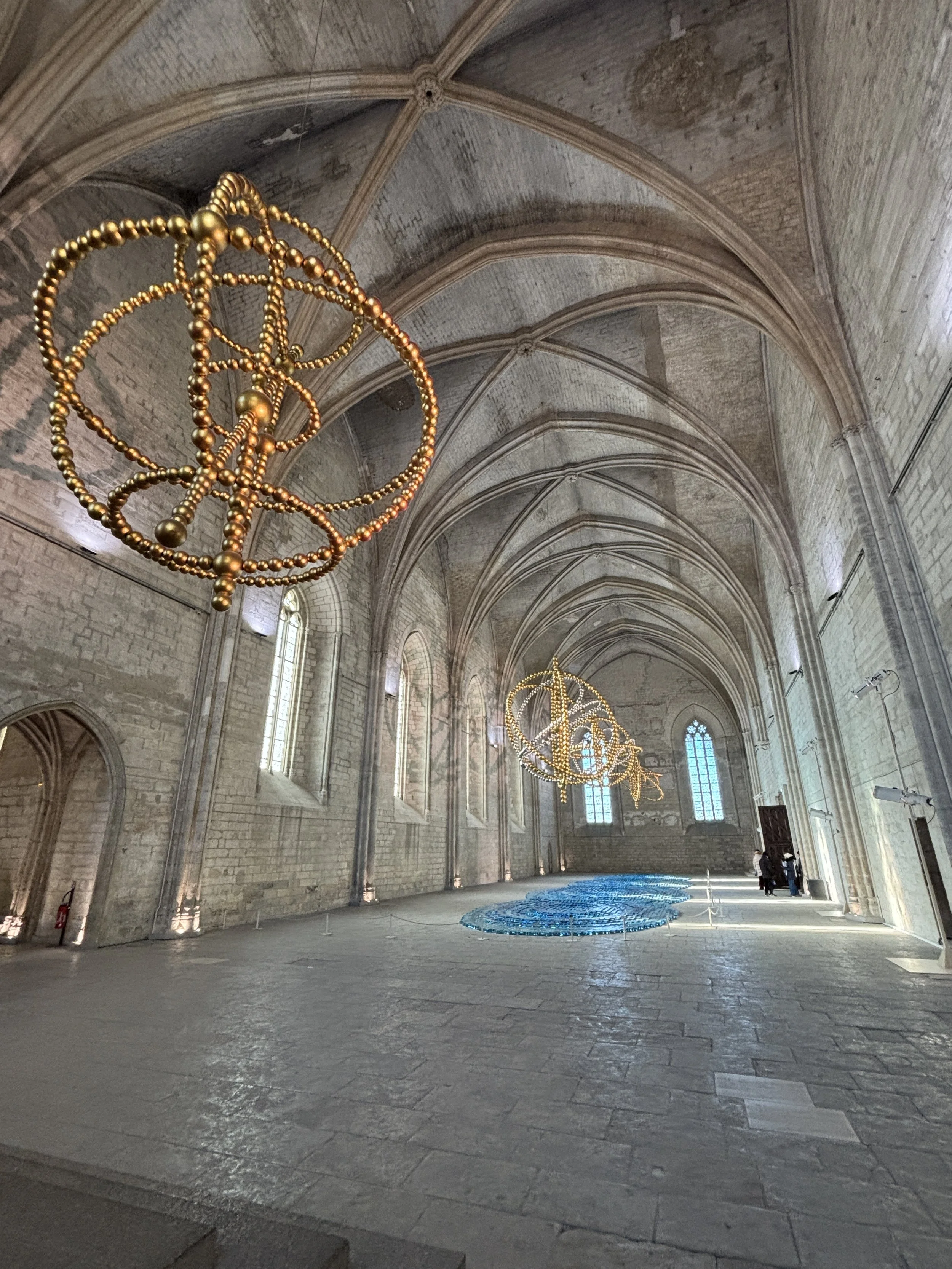
Sometimes there are also some temporary art exhibits throughout the palace (like is the case of these giant suspended crowns in the picture below).
“Sur le Pont d’Avignon”
A visit to Avignon wouldn’ be complete without visiting the bridge over the river Rhône, the “Pont d’Avignon” that gives its title to the famous folk song.
The “Pont d’Avignon” is a real thing and it was built during the Middle Ages. Besides its function connecting the two banks of the Rhône, it also acted as a checkpoint to tax goods and trade and move upstream from the Mediterranean and downstream from Bourgogne and northern France.
The bridge only makes it half way across the river nowadays, since part of it was destroyed by a flood. This was apparently a regular occurence, but for some reason they stopped rebuilding it at some point.
There is a small museum at the head of the bridge which explains not just the history of the bridge and the importance of the Rhône as a major trading artery in the past, but also sheds some light into Medieval bridge-building techniques.
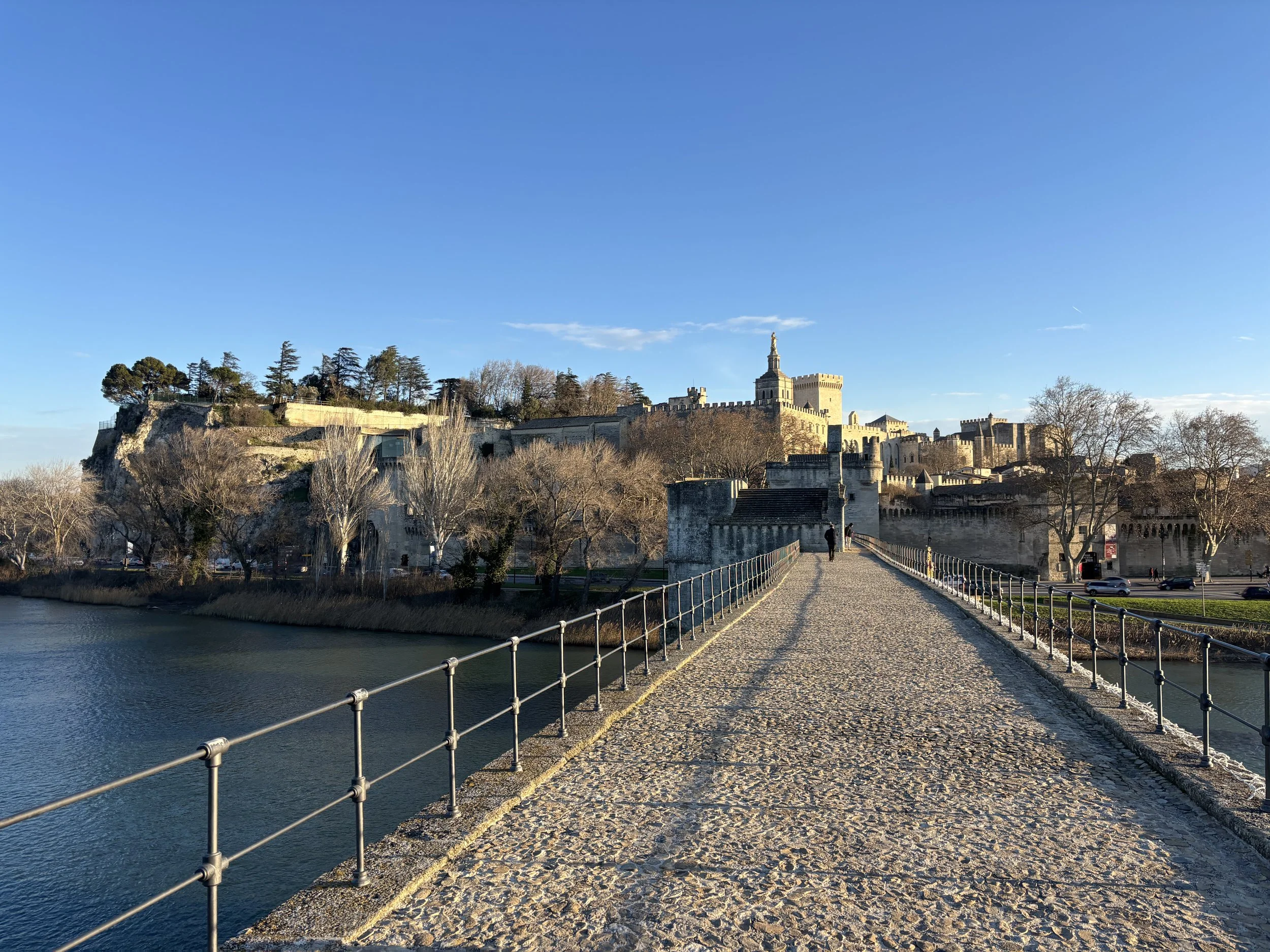
It is also possible to walk over the bridge and, in fact, it is from the far end of the bridge that you can get what are, possibly, the best panoramic views of the monumental ensemble of the Palais des Papes. so, make sure you include this in your visit as well!
Wine tasting in Chateaunêuf-du-Pape
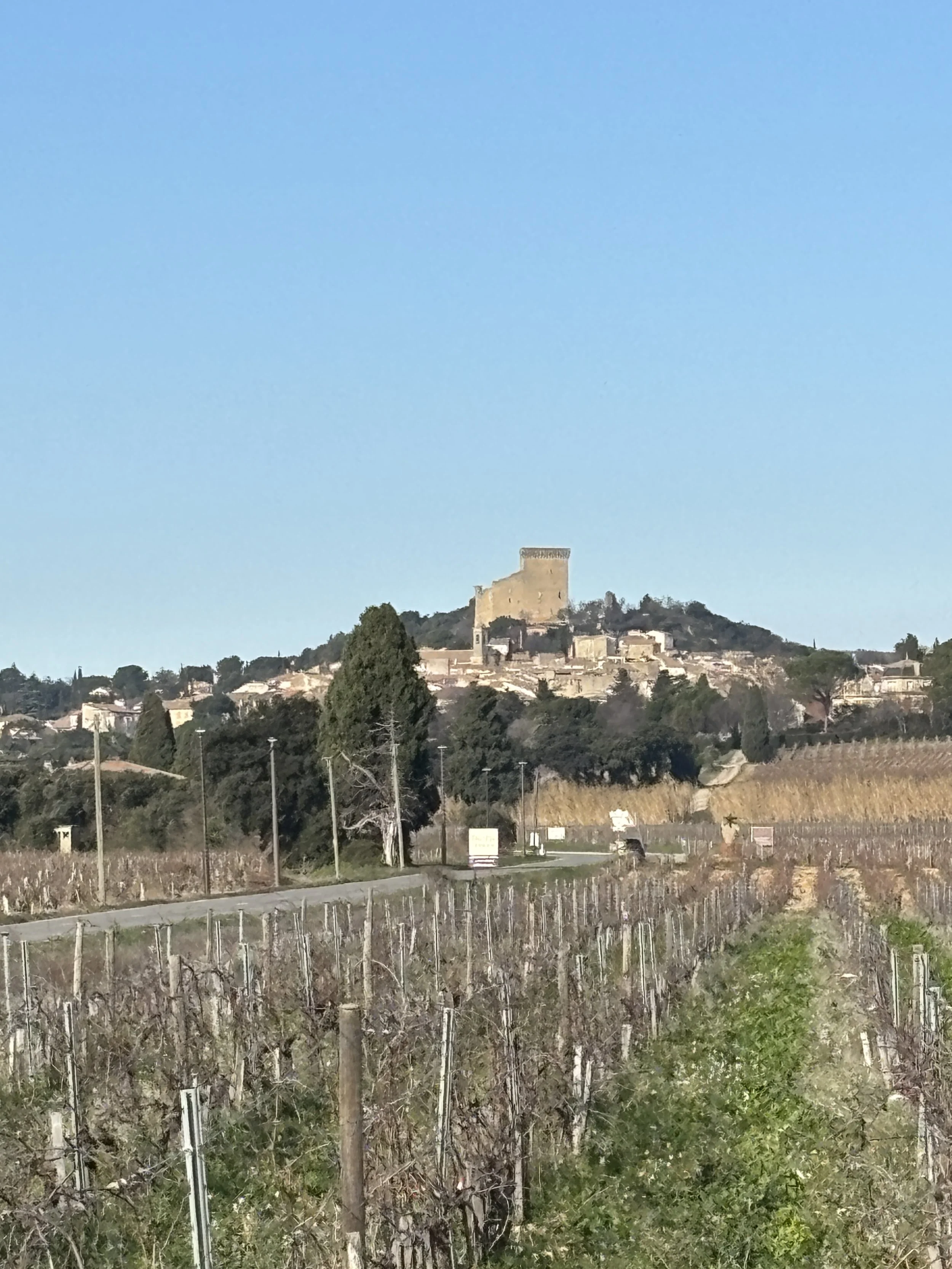
The village of Châteauneuf-du-Pape (which is named like this because the Popes had a summer residence there during the period they resided in Avignon) is home to one of France’s most prestigious wine “terroirs”.
Châteauneuf-du-Pape is an AOC (Appellation d'Origine Contrôlée) within the French and European system of geographical designations for origin for wine (and other types of produce) and a particularly renowned one, covering both red and white wines.
According to oenologists, the quality of Châteauneuf-du-Pape wines has a lot to do with the combination of sunny southern climate, the strong winds that often blow down the orographical funnel that is the Rhône valley and the soil of the area, which is peppered by a type of rounded rocks that were, once upon a time, underneath a large glacier that covered this region.
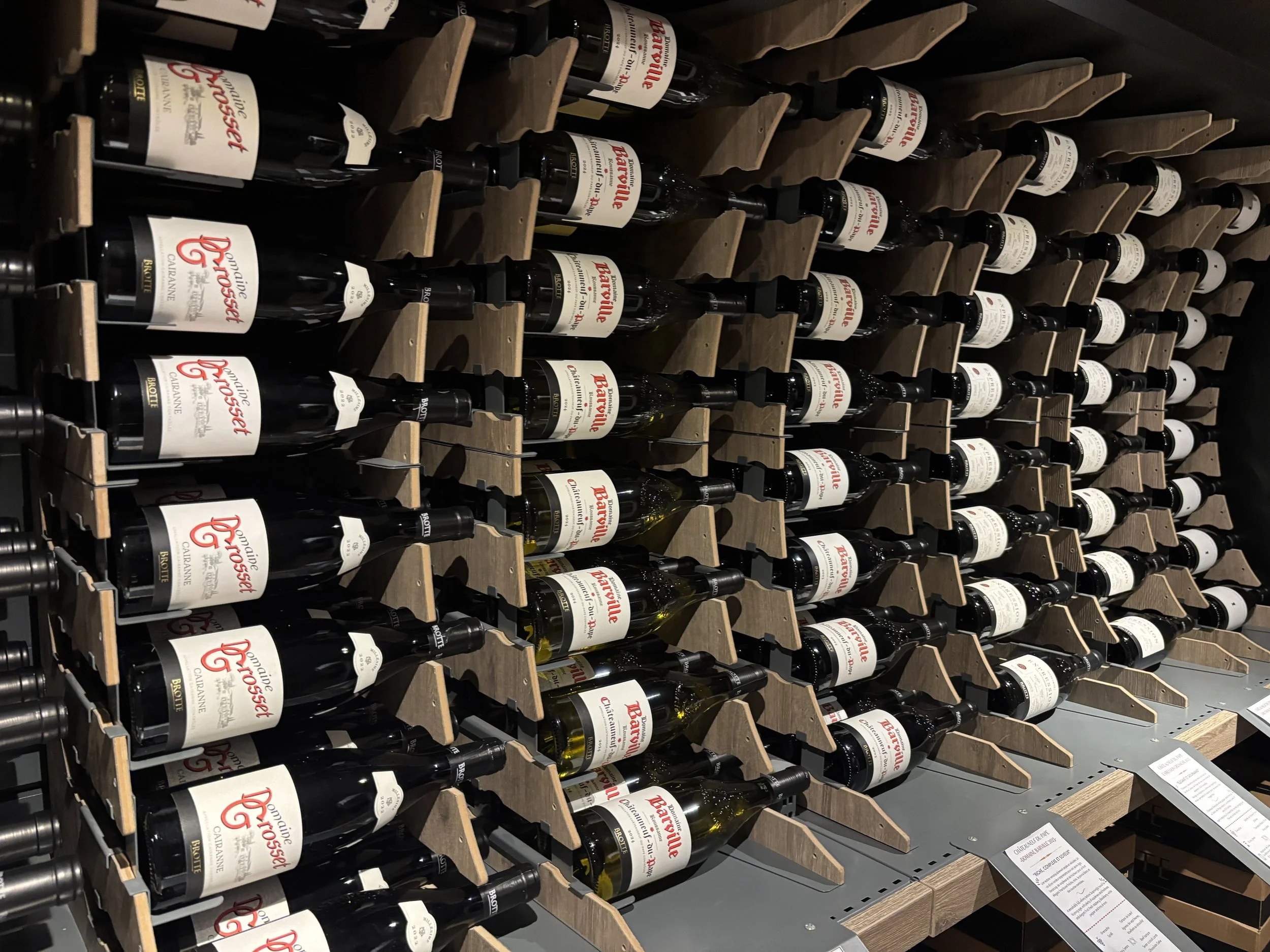
Now, I am sure a dedicated wine conoisseurs could spend a whole week in Châteauneuf-du-Pape from one cellar to the next, tasting all the different labels. We certainly didn’t have this luxury (neither do I claim to be a wine expert) and I guess that this is also the case of most of our readers (even if possibly many of you may appreciate a nice glass of wine from time to time), so we selected just one winery for a quick glimpse into the world of Châteauneuf-du-Pape wines.
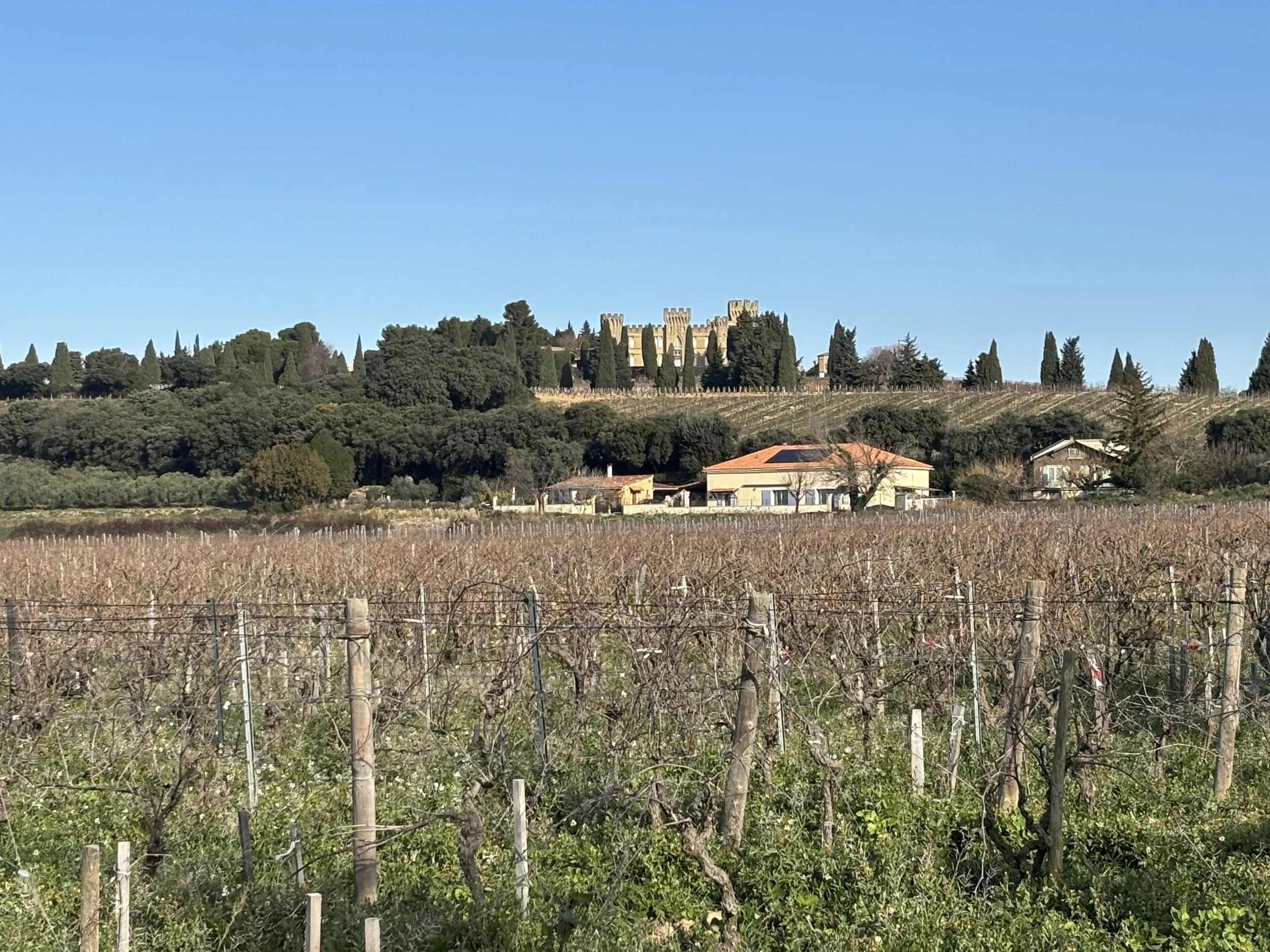

Visiting Maison Brotte in Châteauneuf-du-Pape
Avenue Pierre de Luxembourg, 84230 Châteauneuf-du-Pape
You can check it out here.
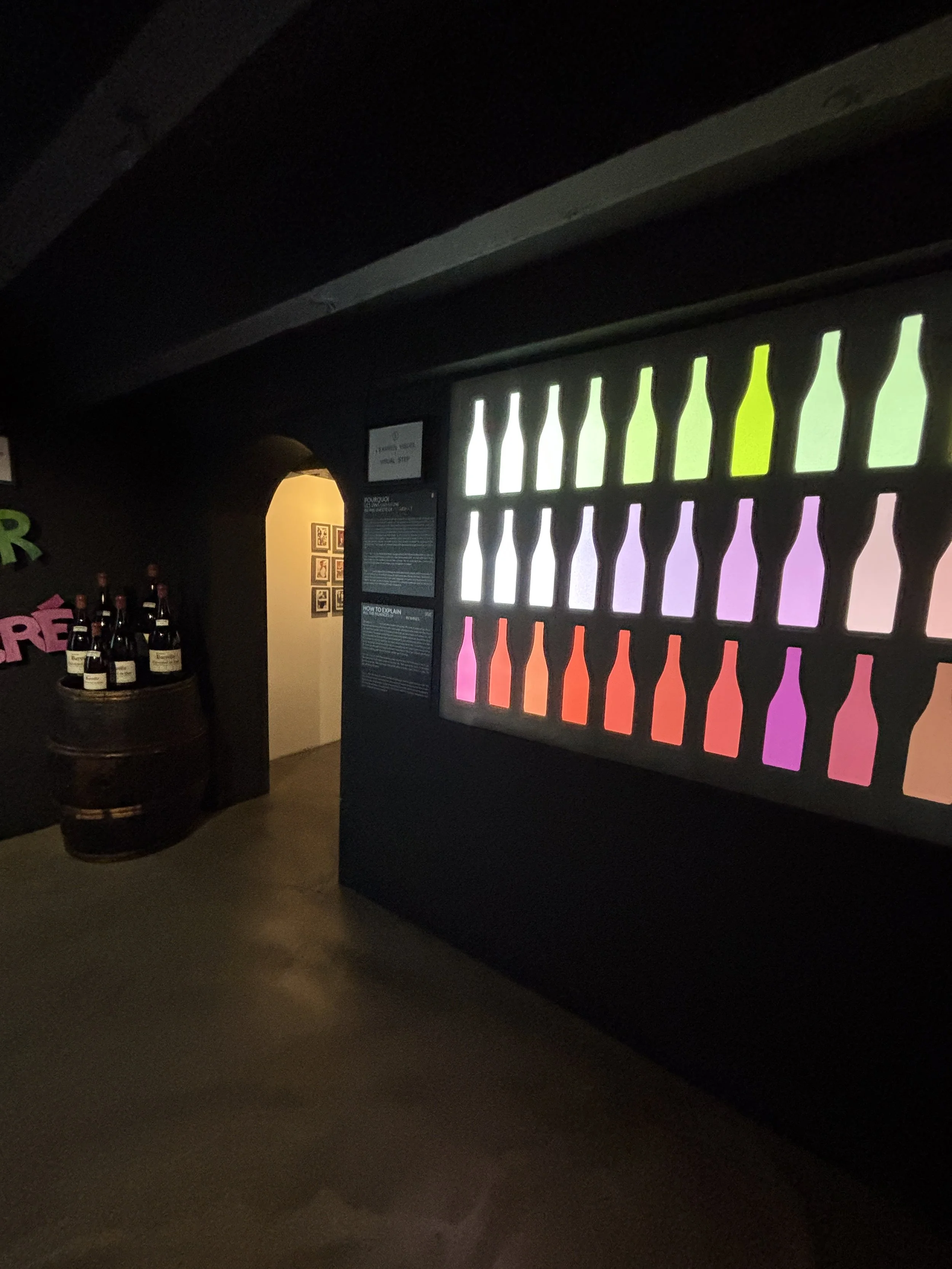
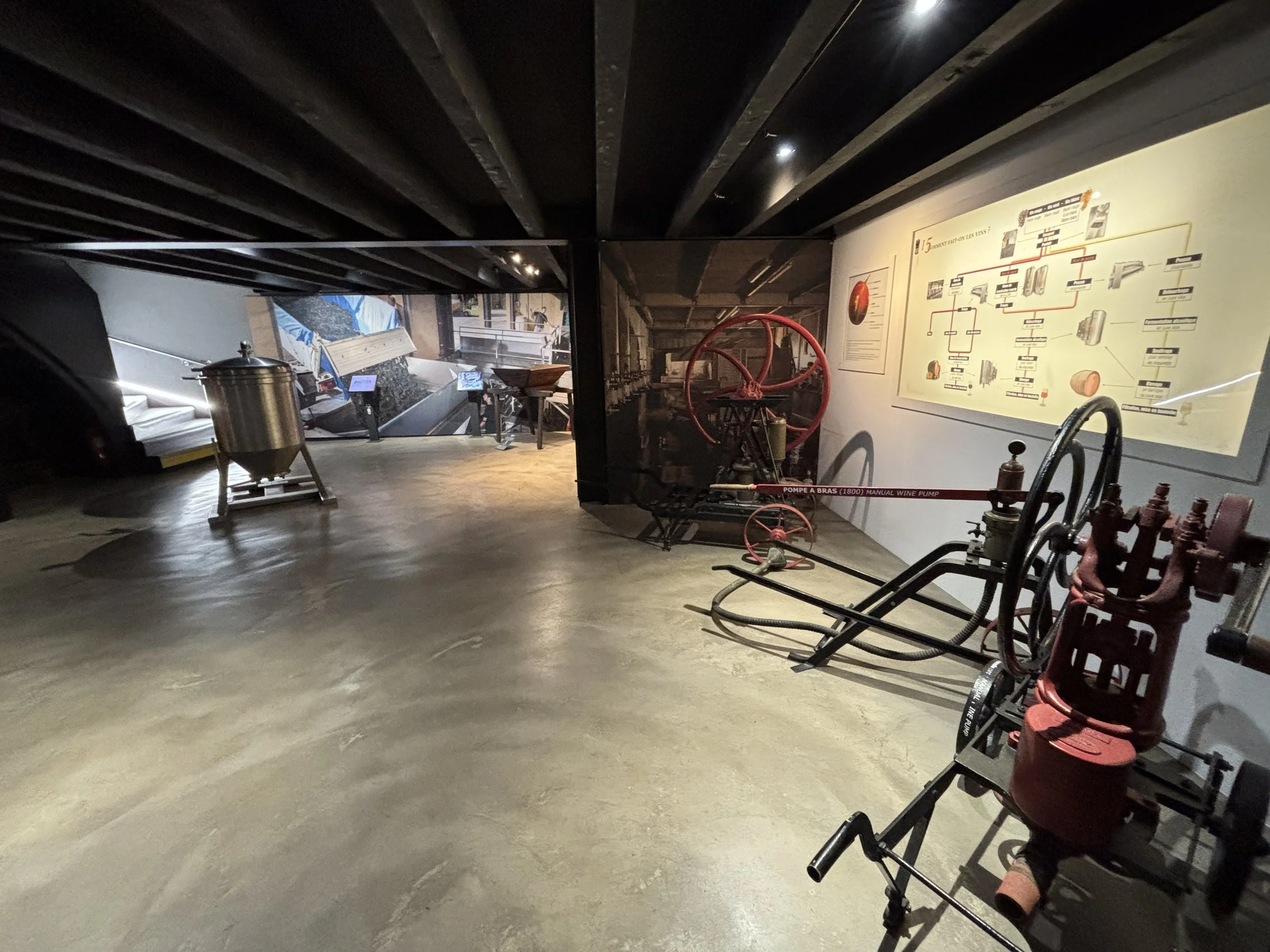
This is one of the largest wineries in Châteauneuf-du-Pape and it runs a small museum dedicated to wine-making in the region as well as the history of the Appellation d'Origine Contrôlée and its natural environment. The visit includes a rather comprehensive audioguide itinerary and ends with a tasting of half a dozen local wines.
It is advised to book online in advance. The ticket costs something like €10 per person, give or take, and includes the tasting.
From Avignon to Châteauneuf-du-Pape is about 15km or so, about 20 minutes by car. Maison Brotte is right on the main road leading into the village and it has its own parking space for visitors. So, if you have the time, definitely worth a go.
Visiting the Pont du Gard
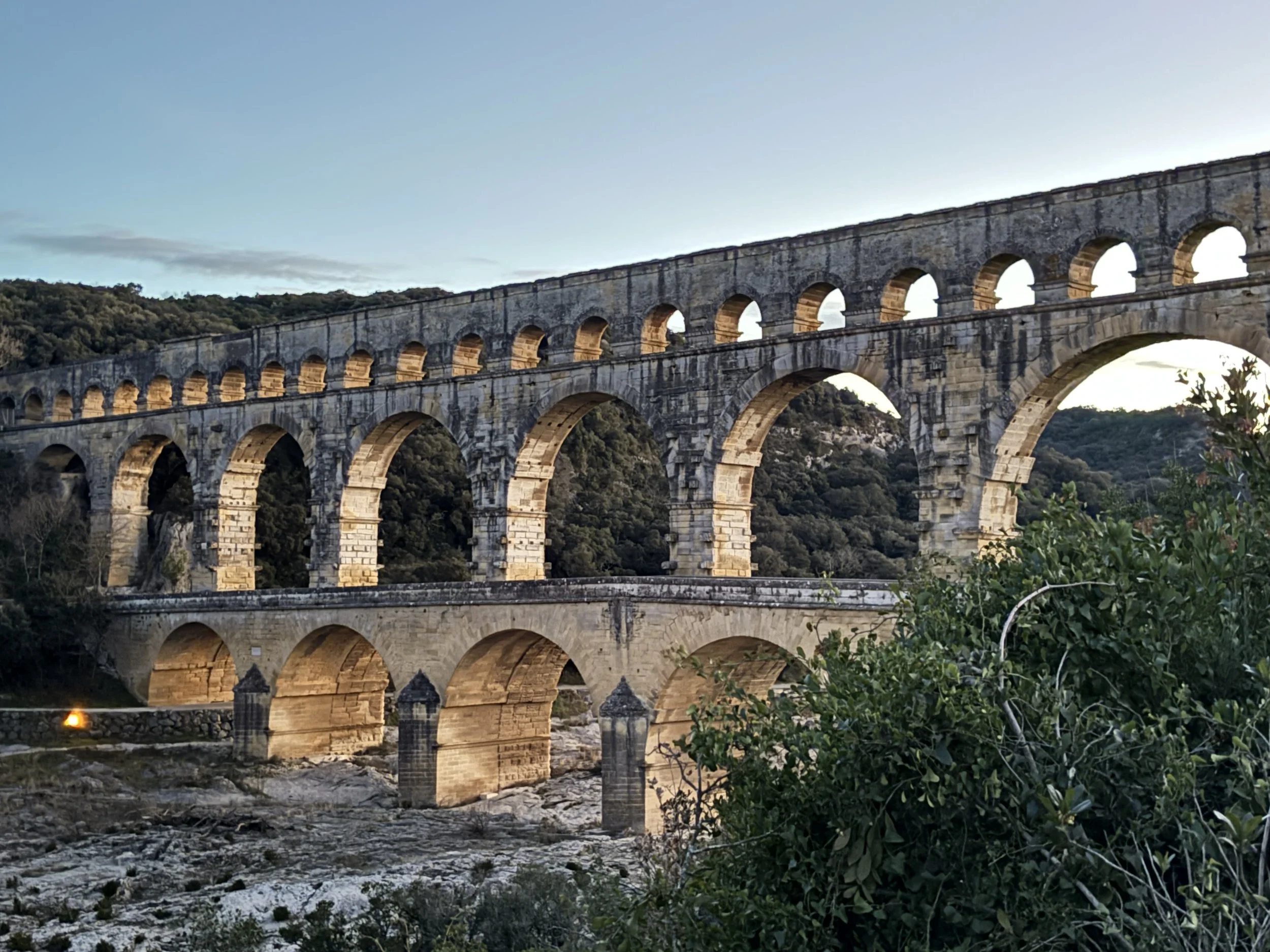
An itinerary between Avignon and Nîmes must include, of course, a detour to visit the famous Pont du Gard, one of the most impressive and best preserved Roman aqueducts to be found anywhere in the world.
This UNESCO World Heritage Site can be accessed from both banks of the river Gard. In either case, the car will only get you to about a kilometre or so from the actual aqueduct.
We approached it from the north side and there is a very large parking there and an interpretation center. Entry to the monument grounds is €8. I guess this is all the same on the south side.
A network of footpaths take you all the way to the aqueduct. You can even walk on it.
This is a very spectacular piece of Roman architecture by any consideration. We also got there at dusk when there was hardly anyone around, which made the visit even more impressive!
What to do in Nîmes
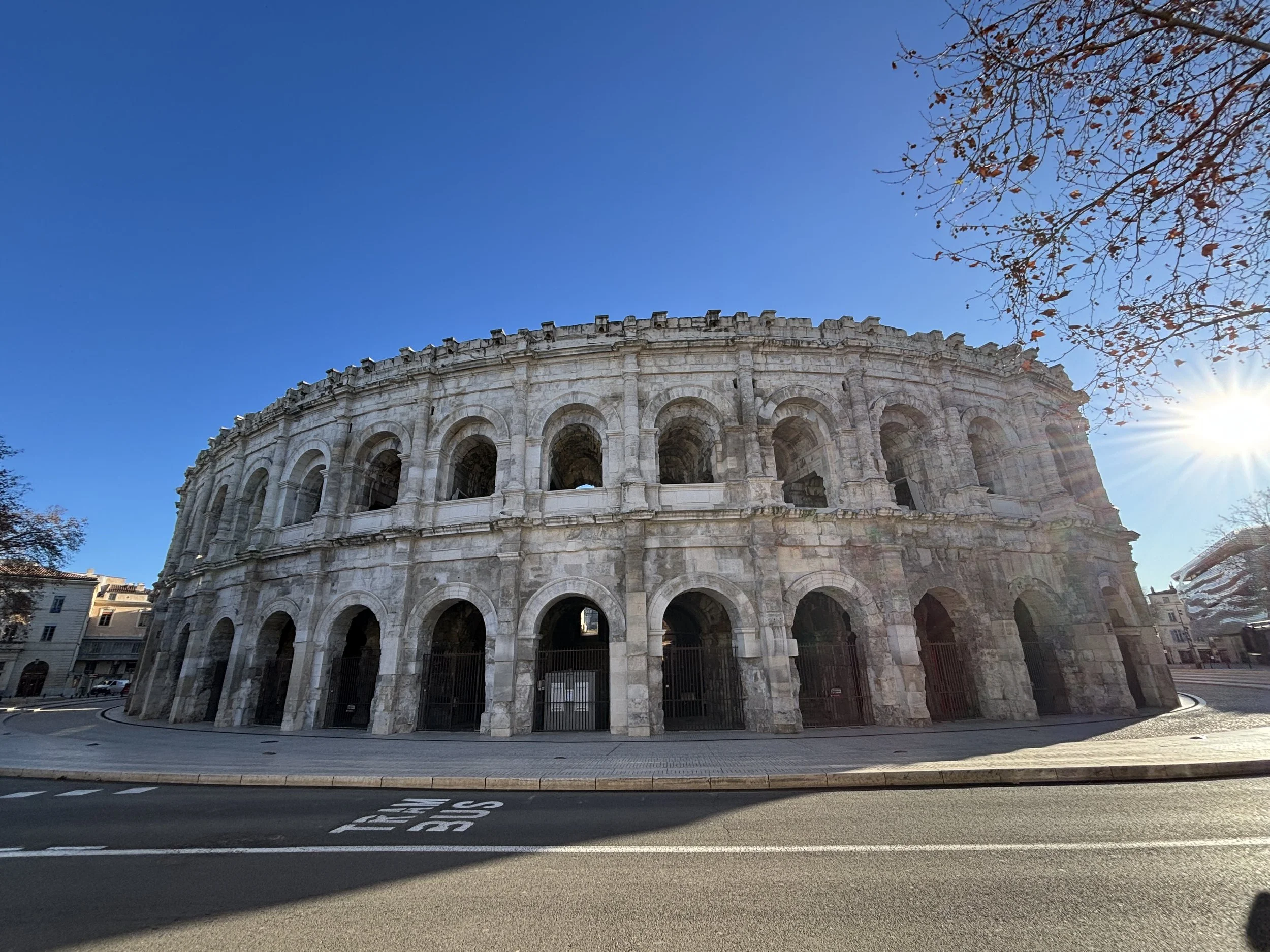
Next stop in our itinerary and our base for the night was Nîmes.
This is a very pleasant French provincial city which surprised me positively. I had heard, of course, about its Roman heritage (the city was called Nemausus in Roman times and the Pont du Gard was actually built it to keep it supplied with water), but Nîmes also has a beautiful and very walkable centre with some interesting architecture.
It is also a convenient place for an overnight stop, since, as we shall soon see, it has some great value options to eat and sleep and it is also quite easy to move around.
Visit the Arena of Nîmes
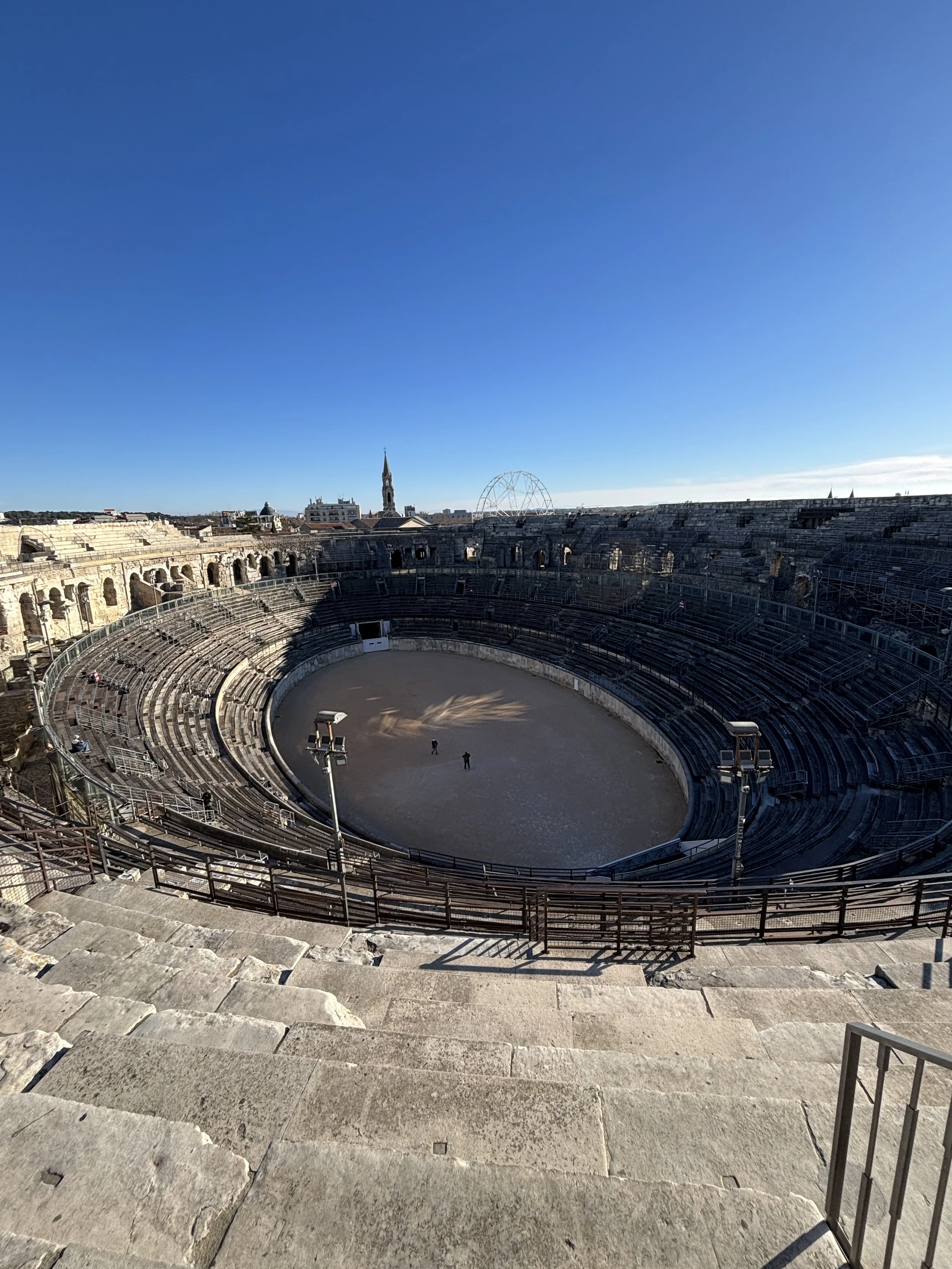
The roman amphitheatre (“Arènes de Nîmes”) is the jewel of the crown here. It is one of the best preserved (perhapsh THE best preserved) Roman arenas in the world, to the point that it is still used regularly nowadays for all sorts of spectacles. It is also super centrally located, so you can’t miss it!
Now, if you have visited other similar buildings in other parts of the former Roman Empire, you know what it is about. Nevertheless, it makes for an interesting visit, because most of the original structure is still standing you can roam through most parts of it, including the top rows, which good views of both the inside of the Arena and the city around.
The audioguide is also included with the ticket, by the way.
Visiting Roman Nîmes and the Maison Carrée
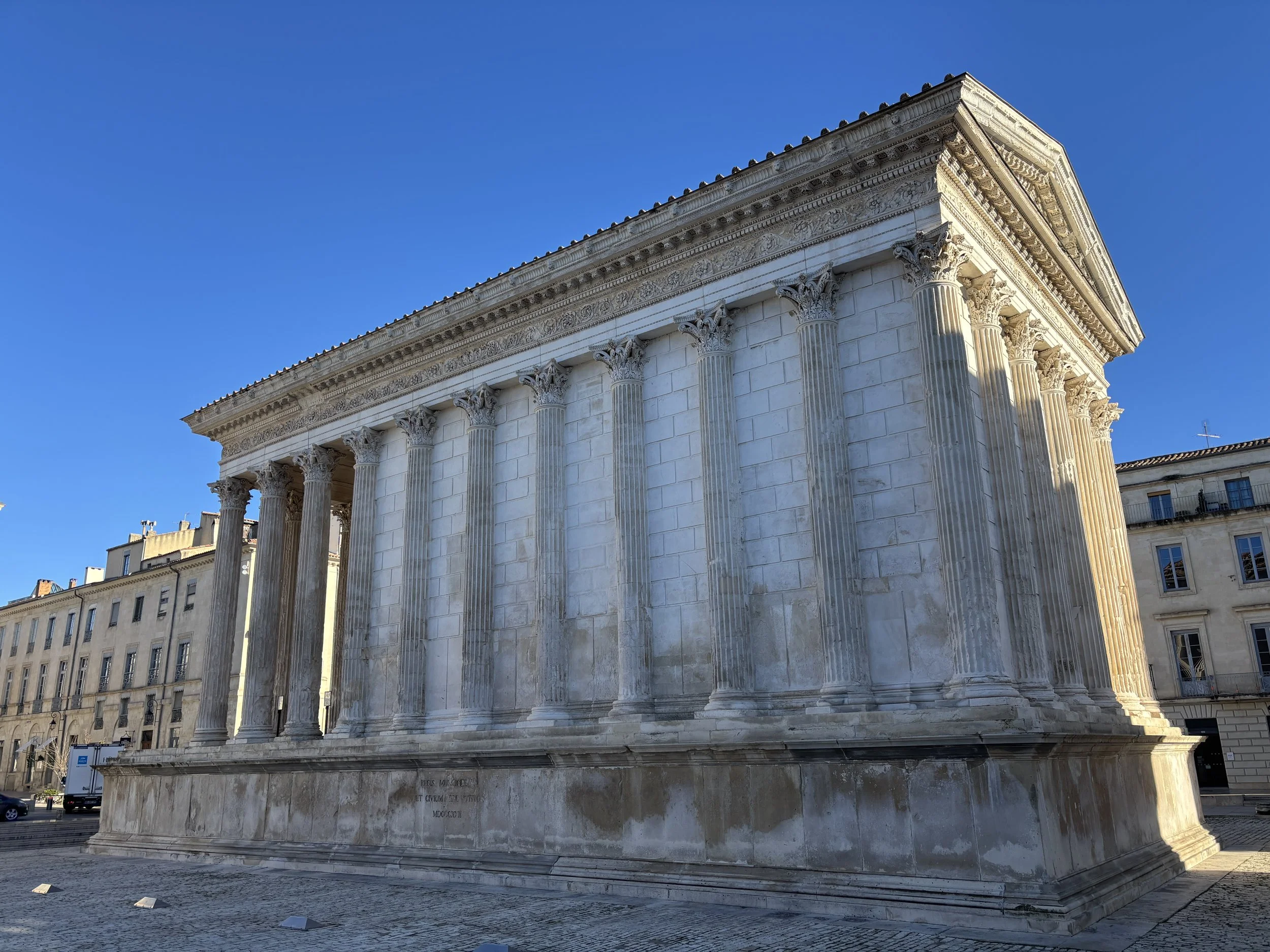
Nîmes is also home to another exceptionally preserved Roman structure, the temple known as “La Maisón Carrée”, which is also right in the middle of the old town. Besides the beauty of its proportions and the postcard-perfect look, it also has a small museum inside.
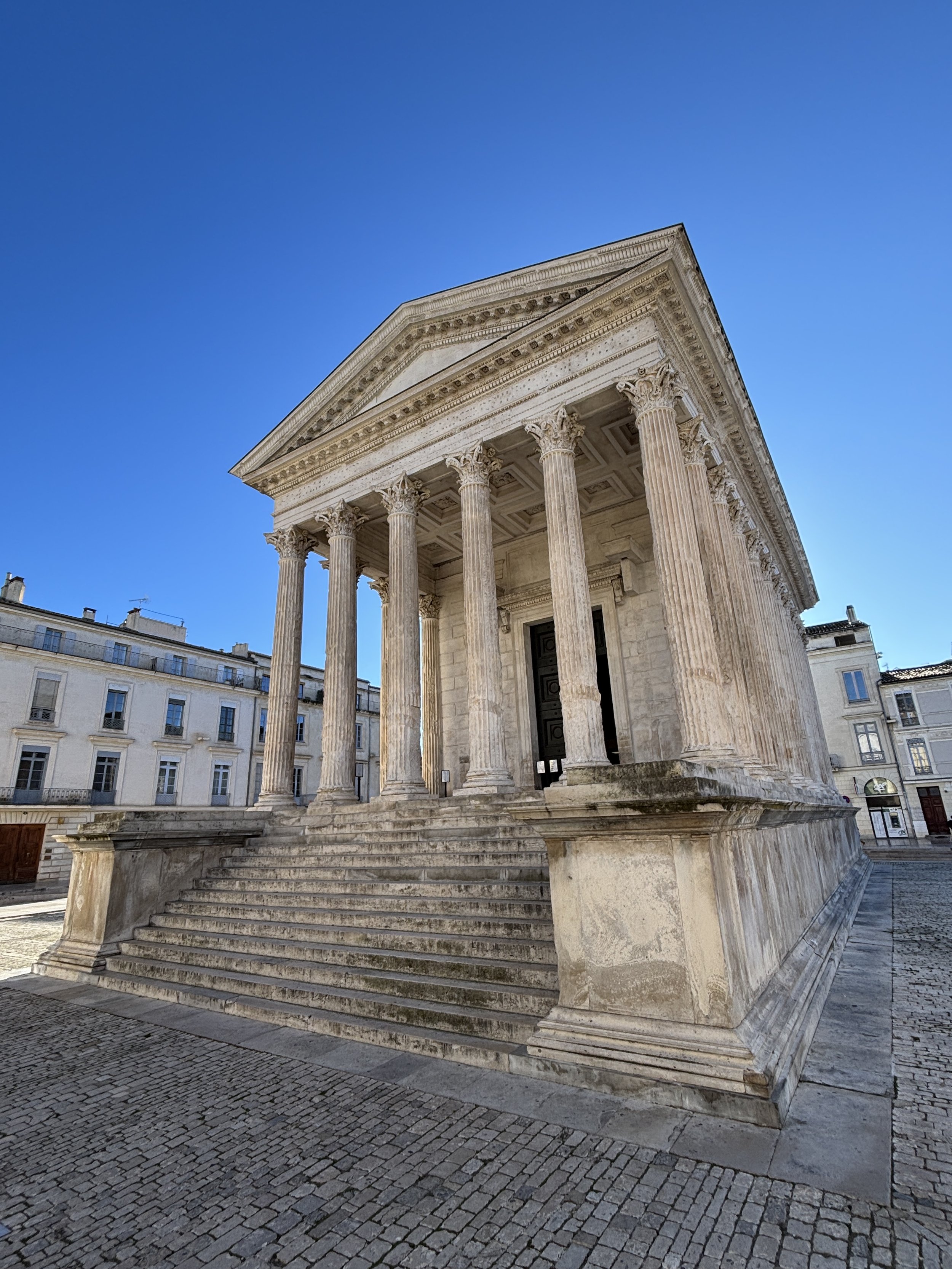
In fact there are quite a few Roman monuments in Nîmes in addition to the two presented here.
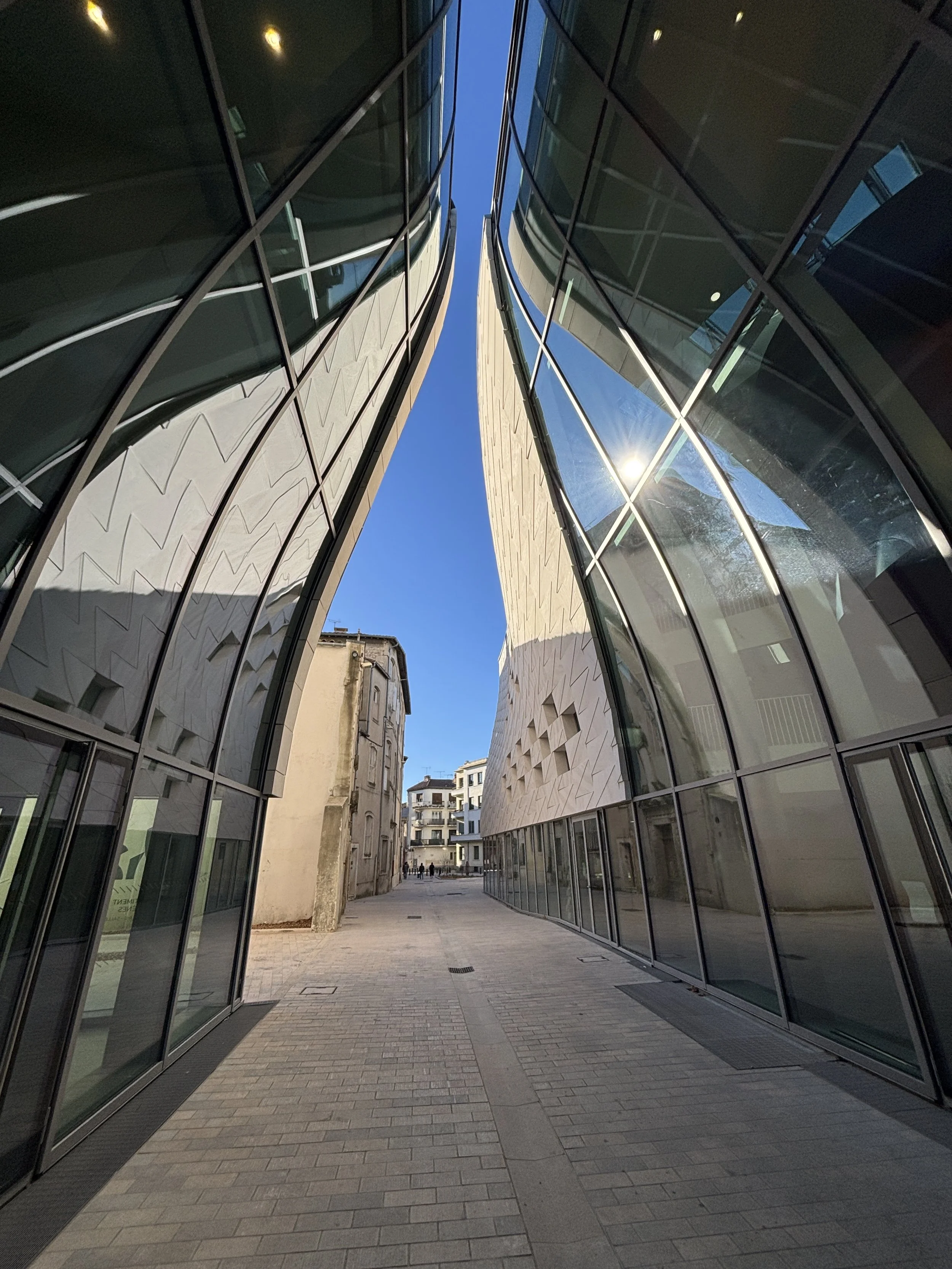
For example, there is also an old Roman defensive tower (the “Tour Magne”) at the northern edge of the city center, as well as a large archaeological museum located next to the Arena. The latter, known as “Musée de la Romanité” is housed in a contemporary landmark building next to the Amphitheatre. We didn’t have time to visit it, but read very good reviews.
It is possible to purchase a combined ticket which lets you visit all the sites for an advantageous price (although it is also possible to buy individual tickets, as well, if you don’t plan to visit them all).
Walking in Nîmes historical center
But besides the Roman monuments, Nîmes has also a rather beautiful, even grand, downtown.
Parts of it had the typical French “Republican” civic architecture. Large majestic buildings in neoclassical style and large open space are found in the area adjacent to the Arena (including a rather impressive Great War memorial with thousands of names on it).
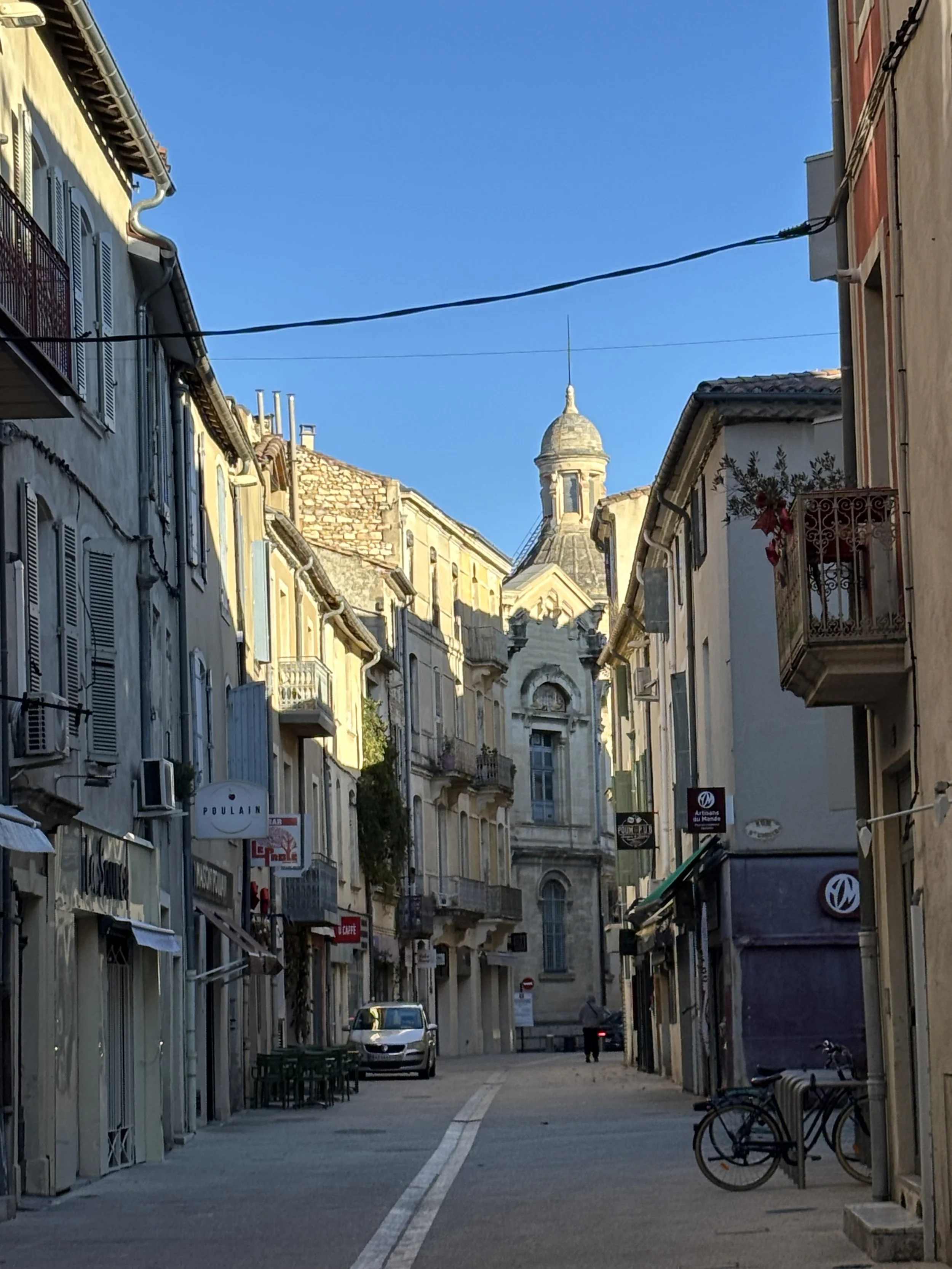
The old town has a more intricate maze of small streets, with plenty of shops, cafés and small hotels.
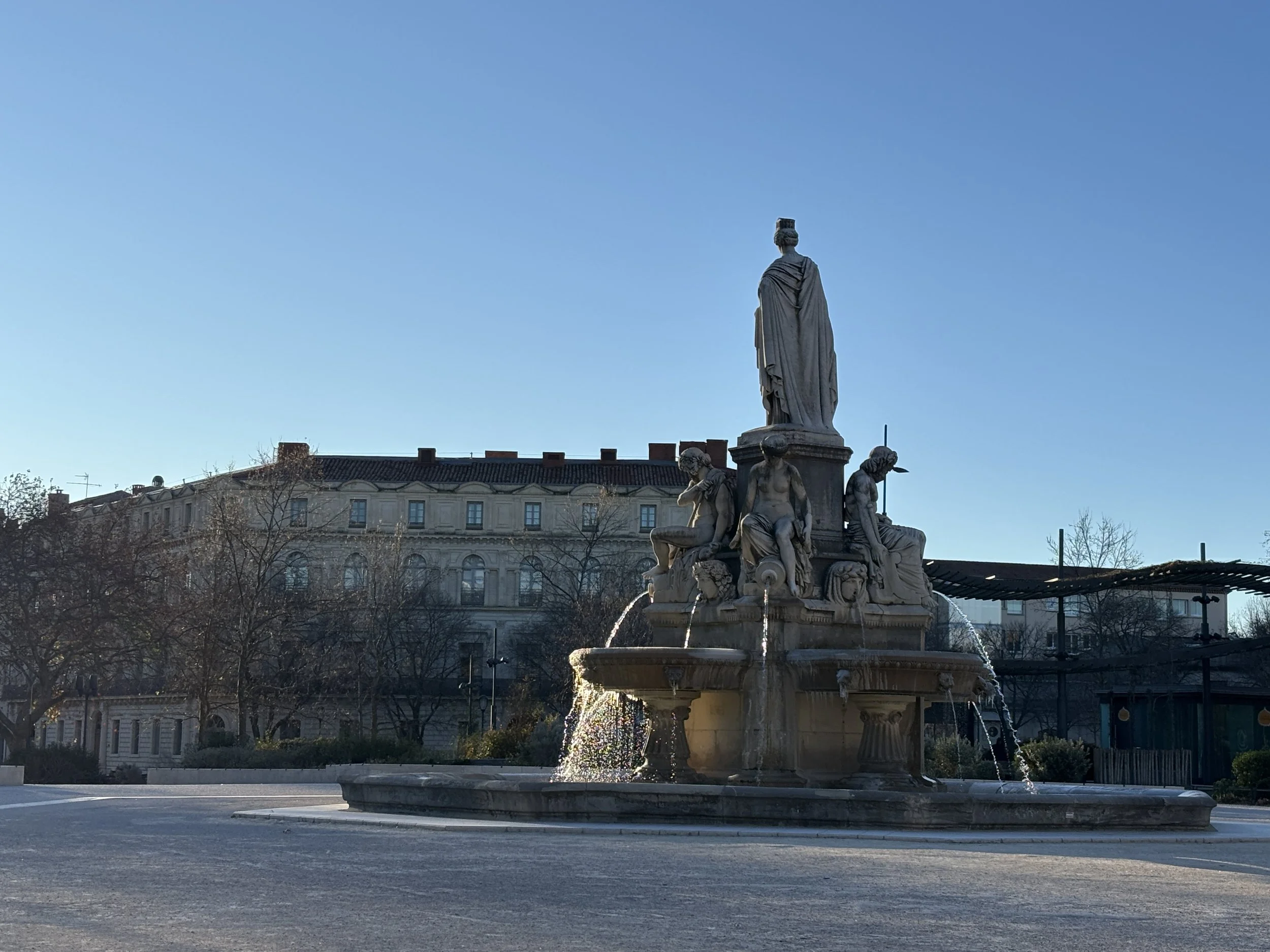
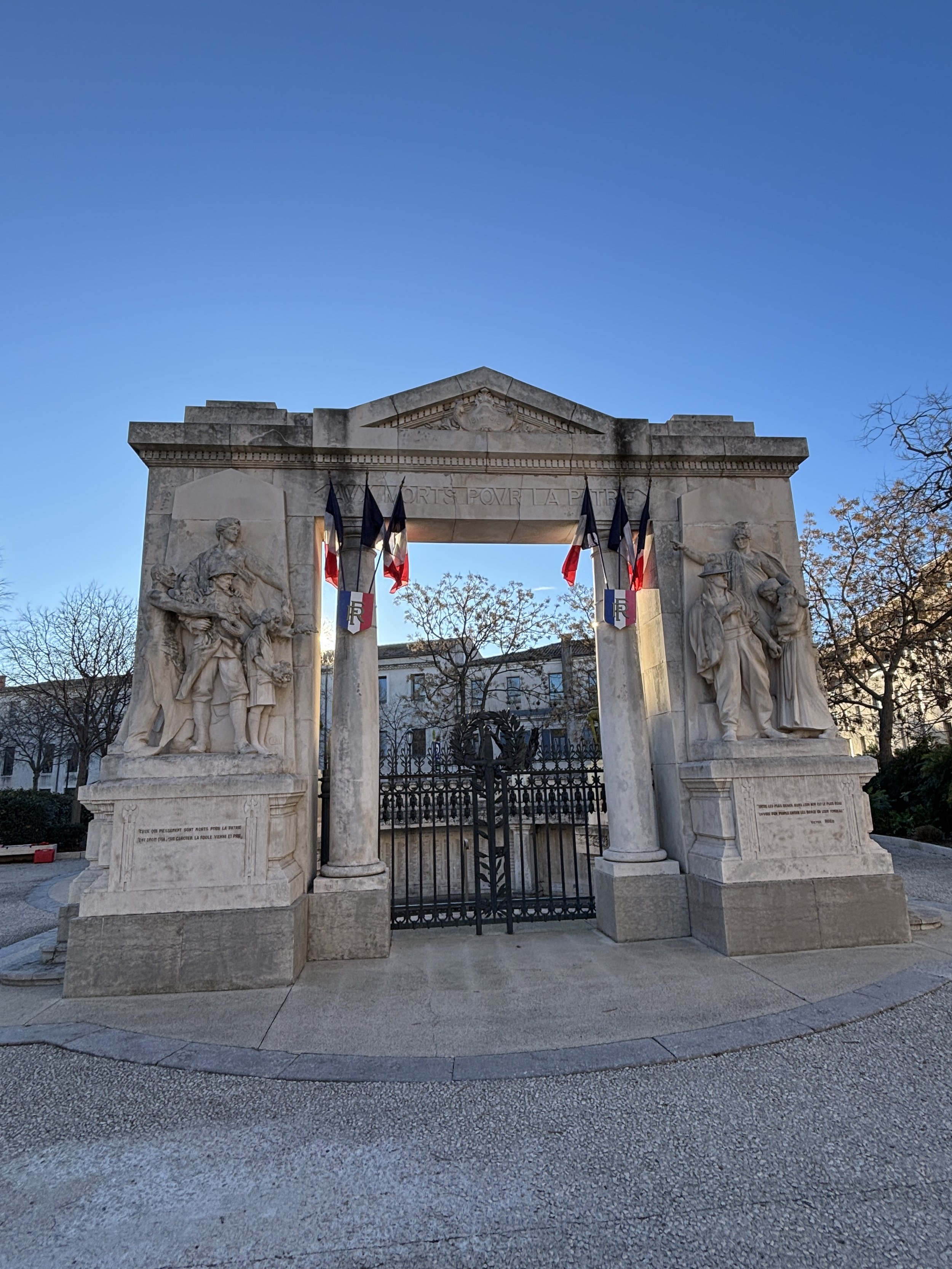
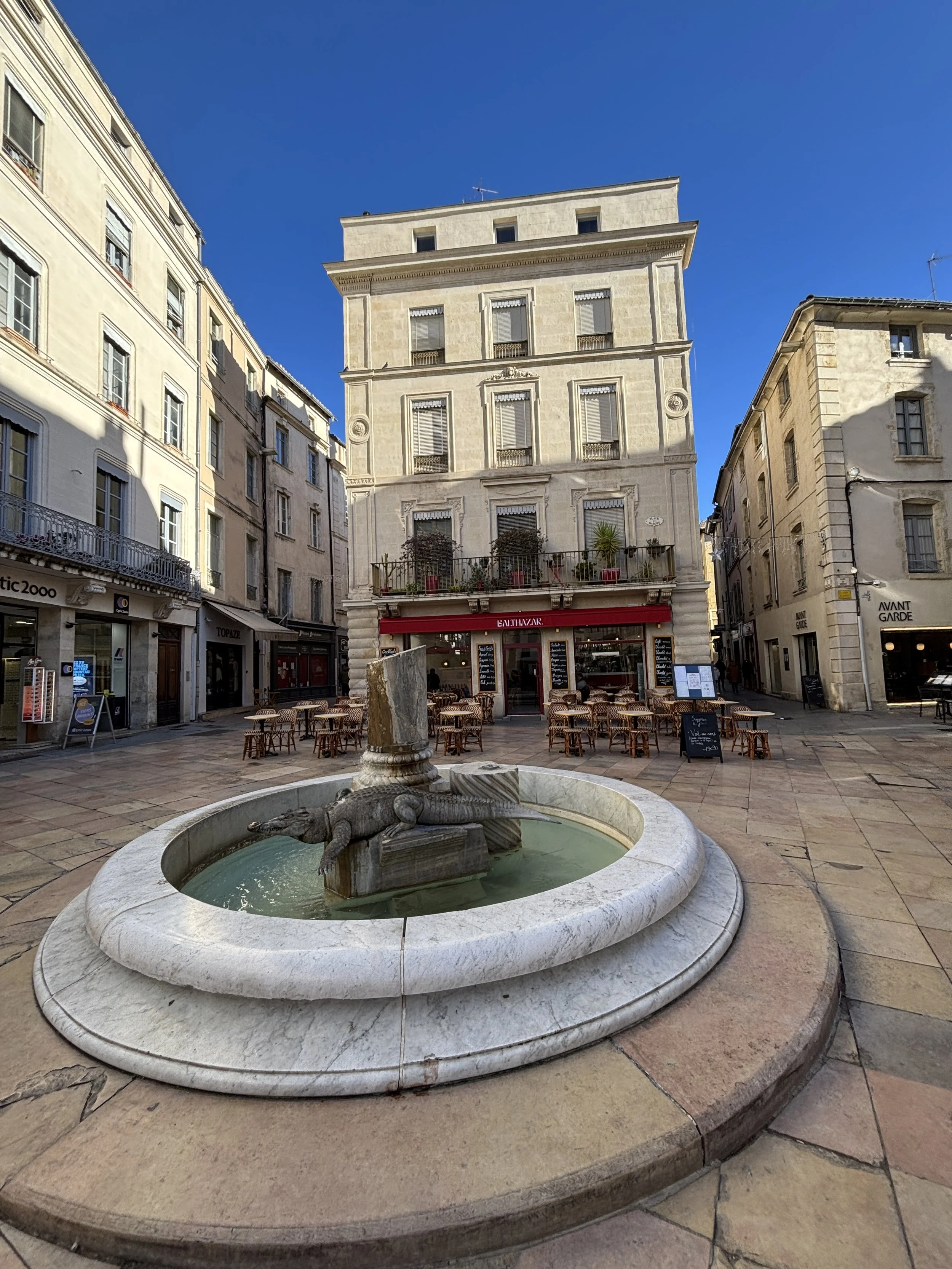
Here are quite a few details from the morning walk through downtown Nîmes, from the crocodile that adorns one of the fountains in the old town, to some touches of contemporary architecture that mix with the more traditional harmony of the old town.
Where to eat in Nîmes
Wine Bar Restaurant Cheval Blanc
1 Pl. des Arènes, 30000 Nîmes, France
https://www.winebar-lechevalblanc.com
This is a cozy French restaurant located right in front of the Roman amphitheatre.
It features an artsy-bohemian decor with lots of motifs related to bullfighting, which is an activity which has a long tradition in Nîmes.
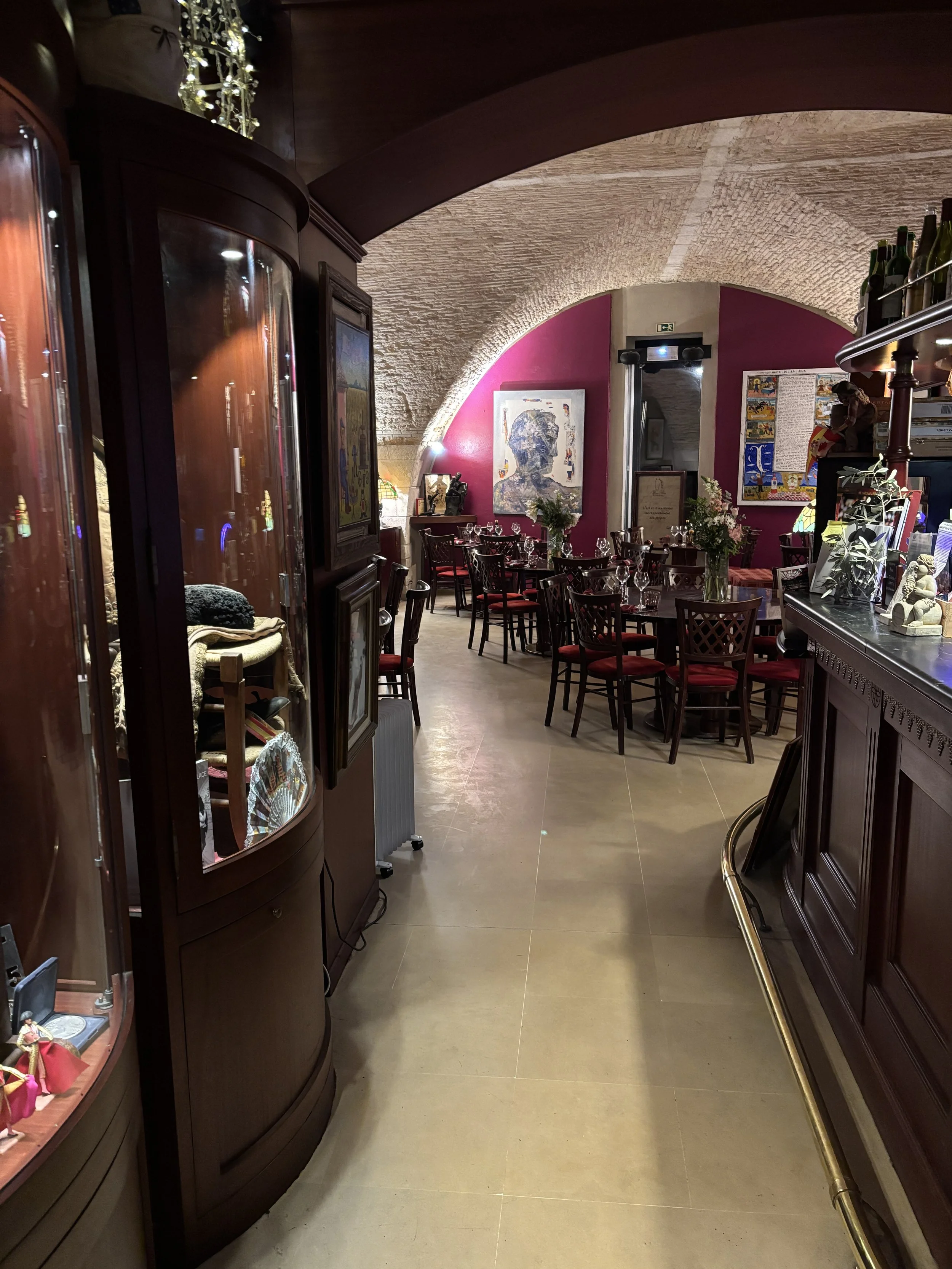
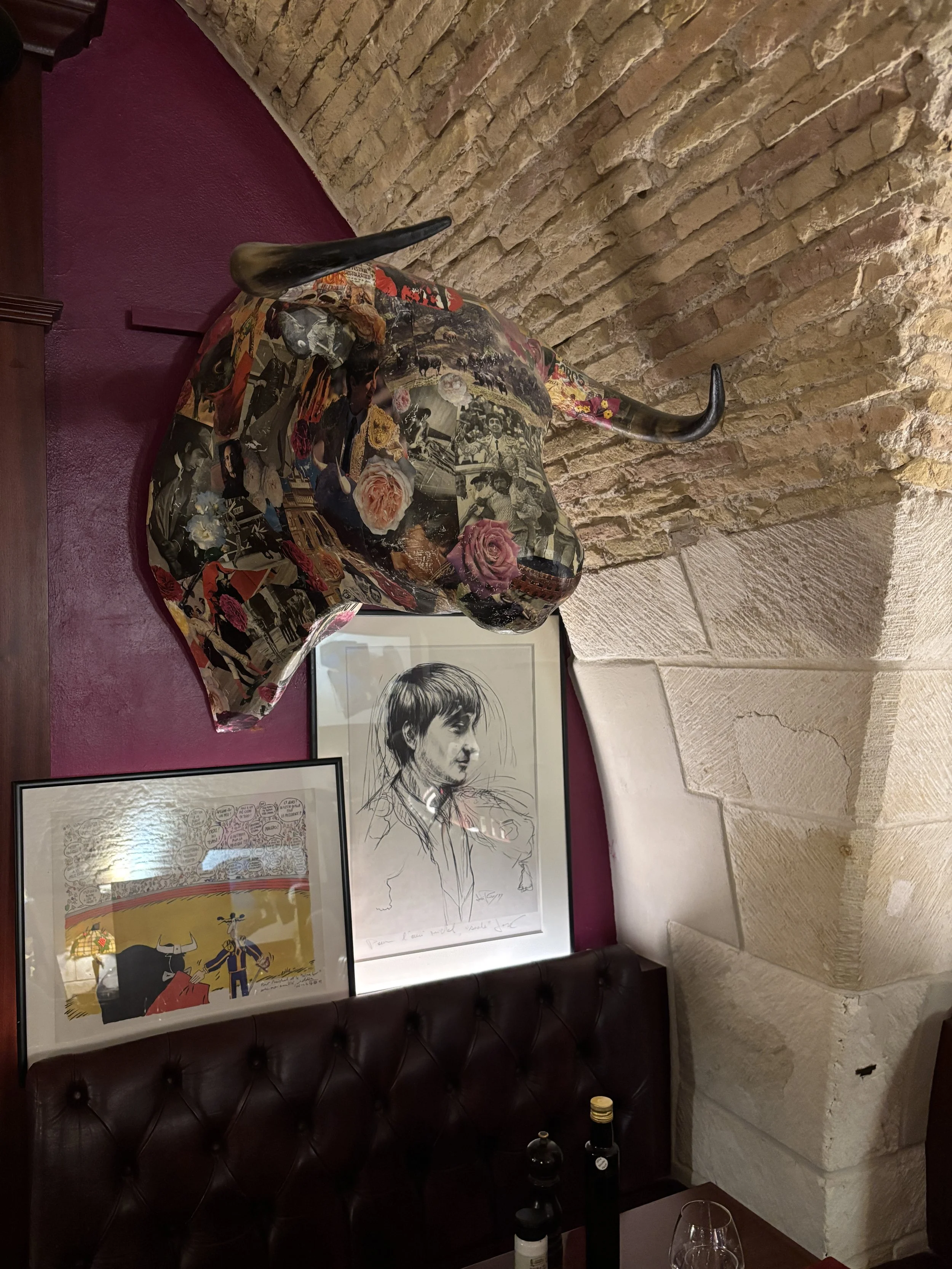

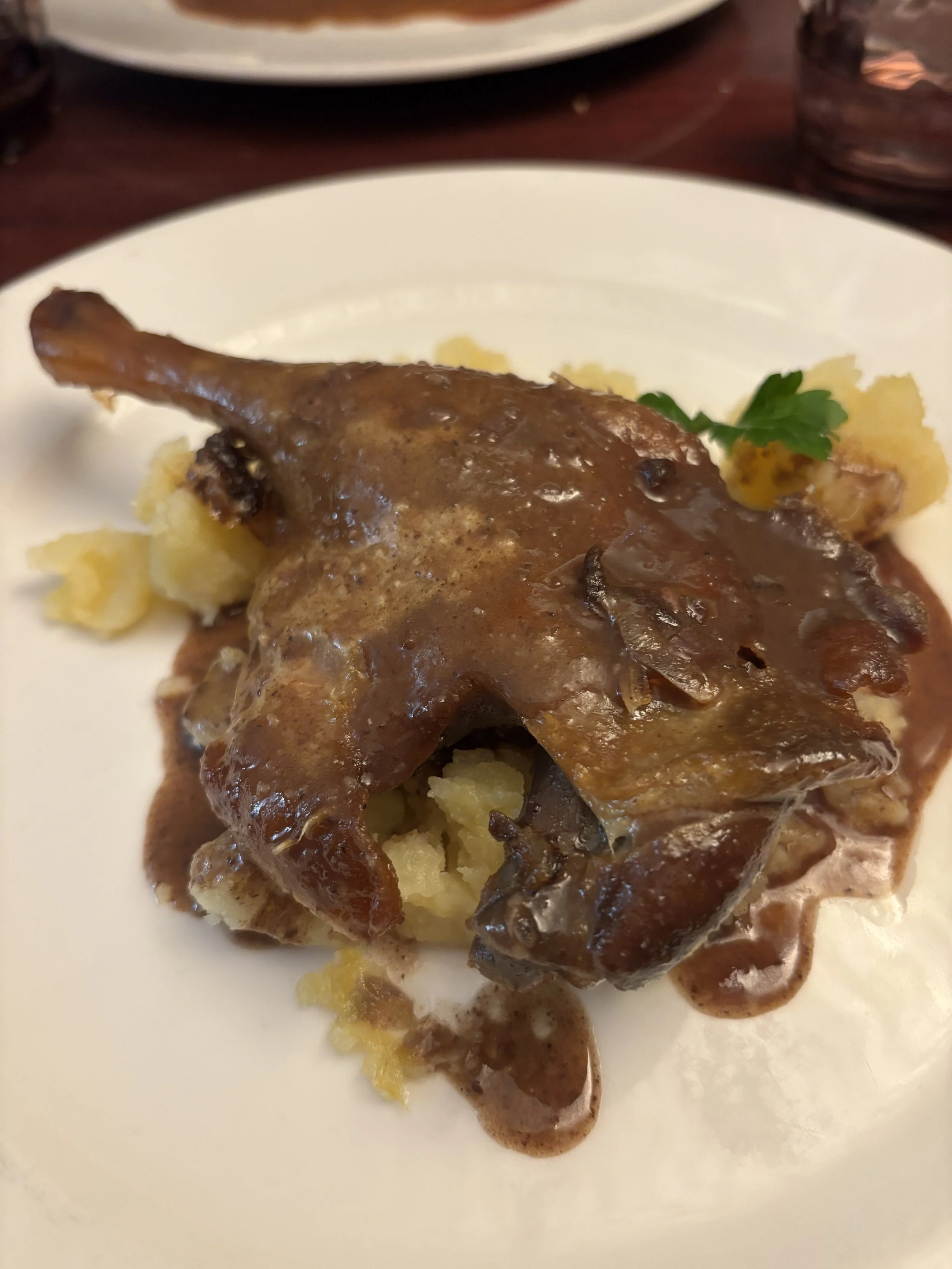
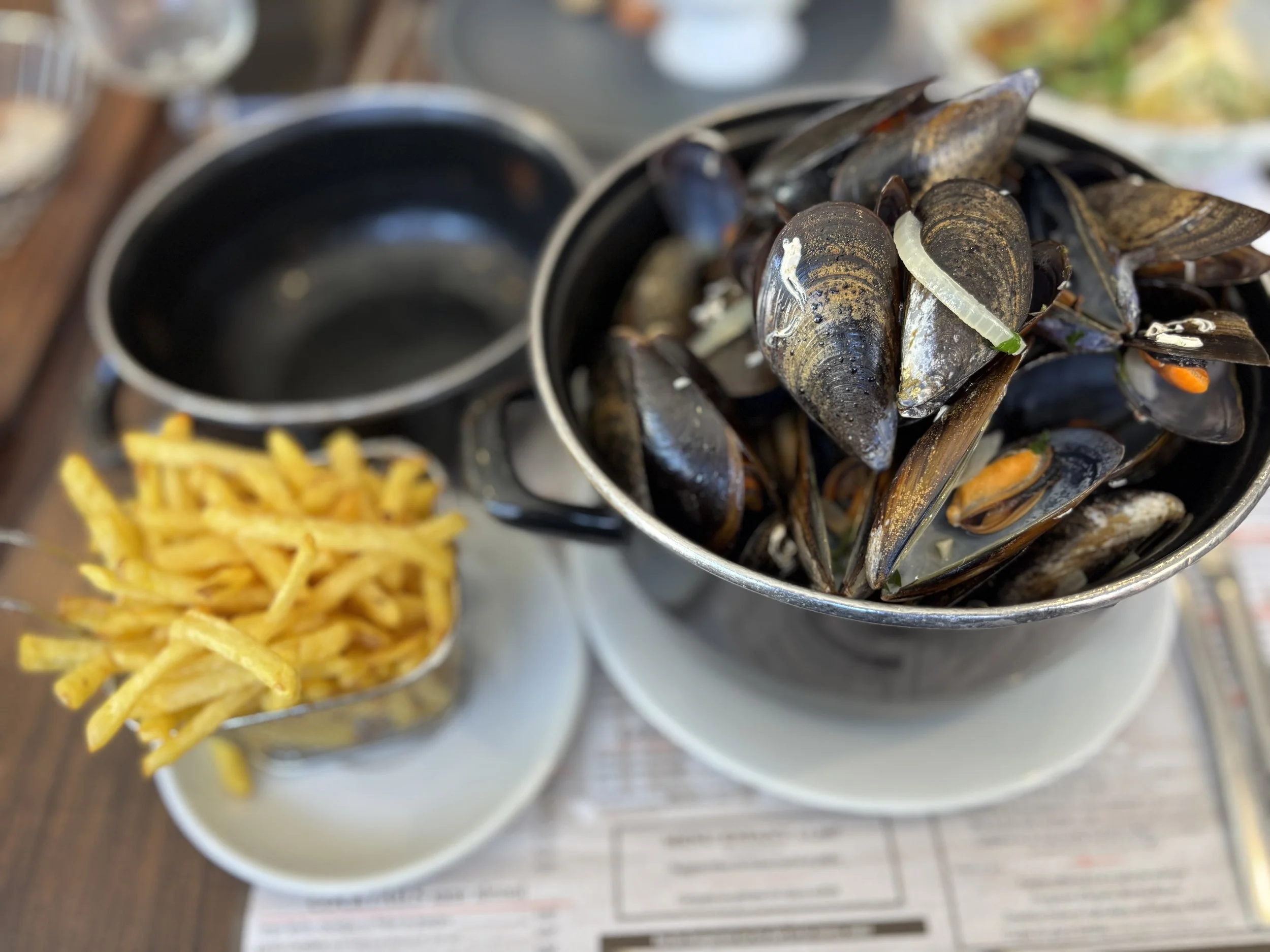
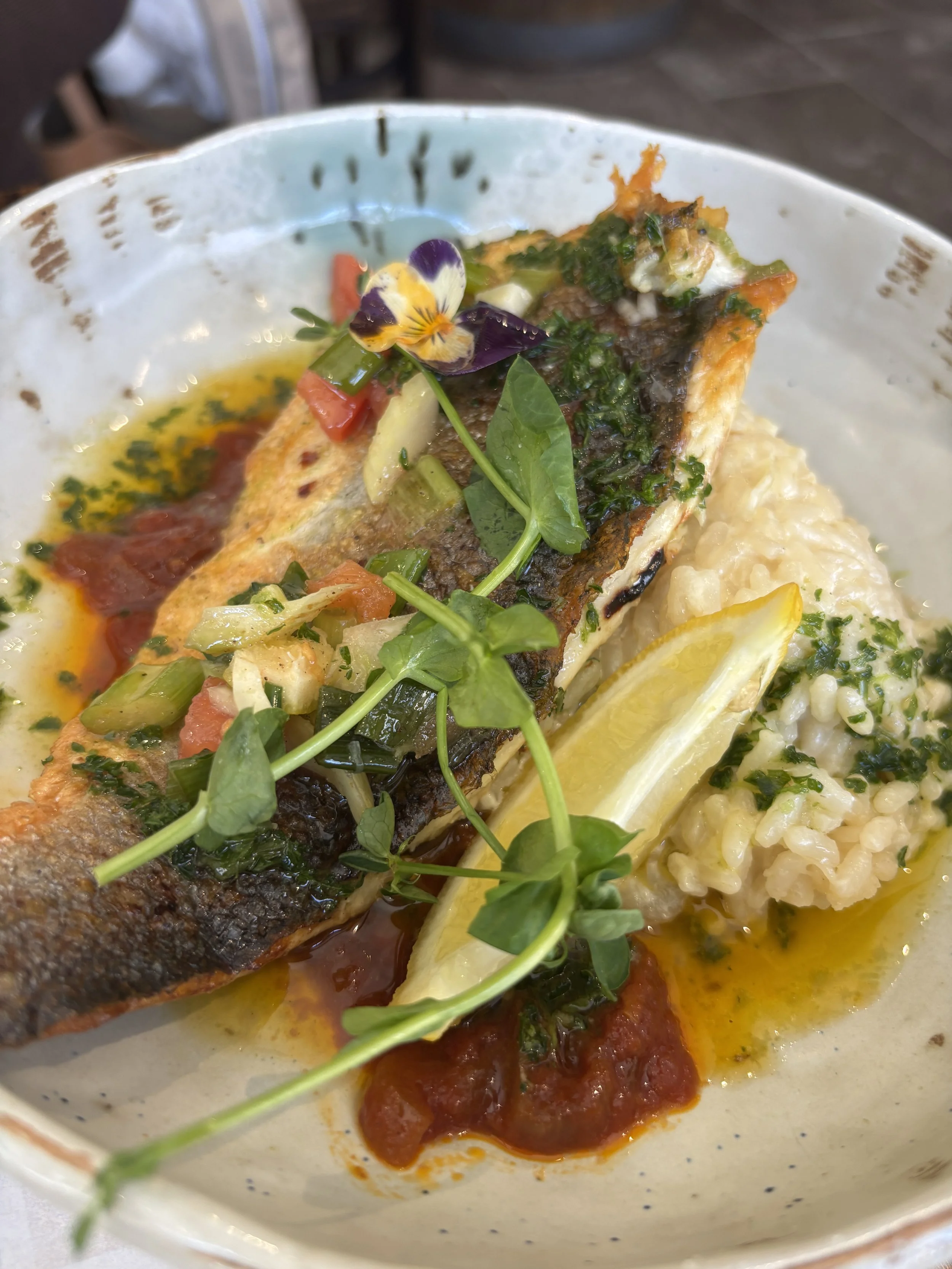
At Cheval Blanc you will find, essentially, French cuisine specialities. The food was rather good overall, it didn’t disappoint, it was exactly what we were looking for. You can see our choices here.
Service was a bit slow and at times the staff appeared a bit inexperienced, although to be fair they strived to make up for this by being extra nice and they were very diligent whenever we had some query or request.
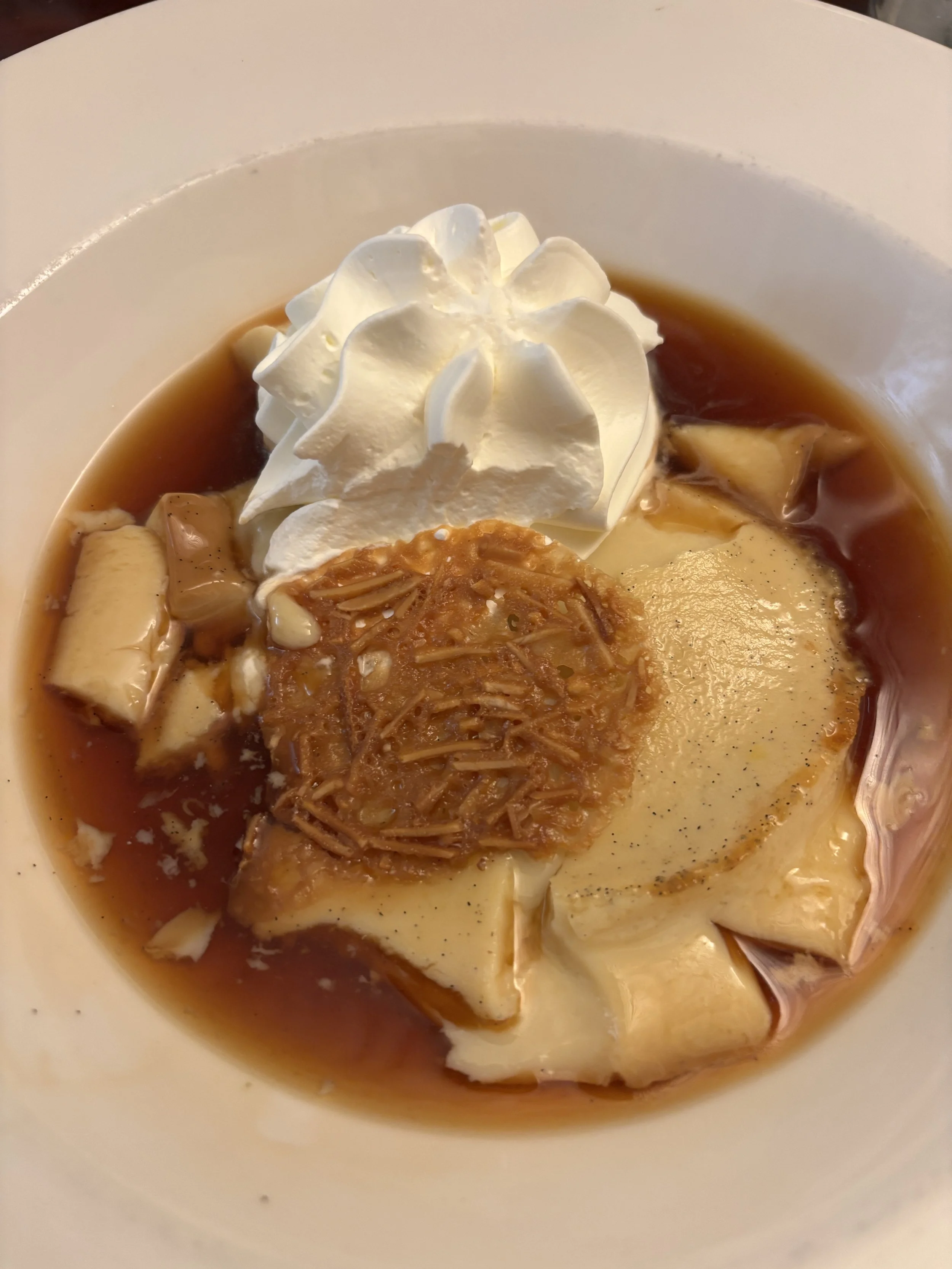
Extra points for the desserts, which were amazing!

Where to stay in Nîmes
Appart'City Collection Nîmes Arènes
1 Bd de Bruxelles, 30000 Nîmes, France
This is an amazingly good value option to stay in Nîmes. It is as centrally located as it gets: just opposite the Roman Arena. and right next to the city’s main post office.
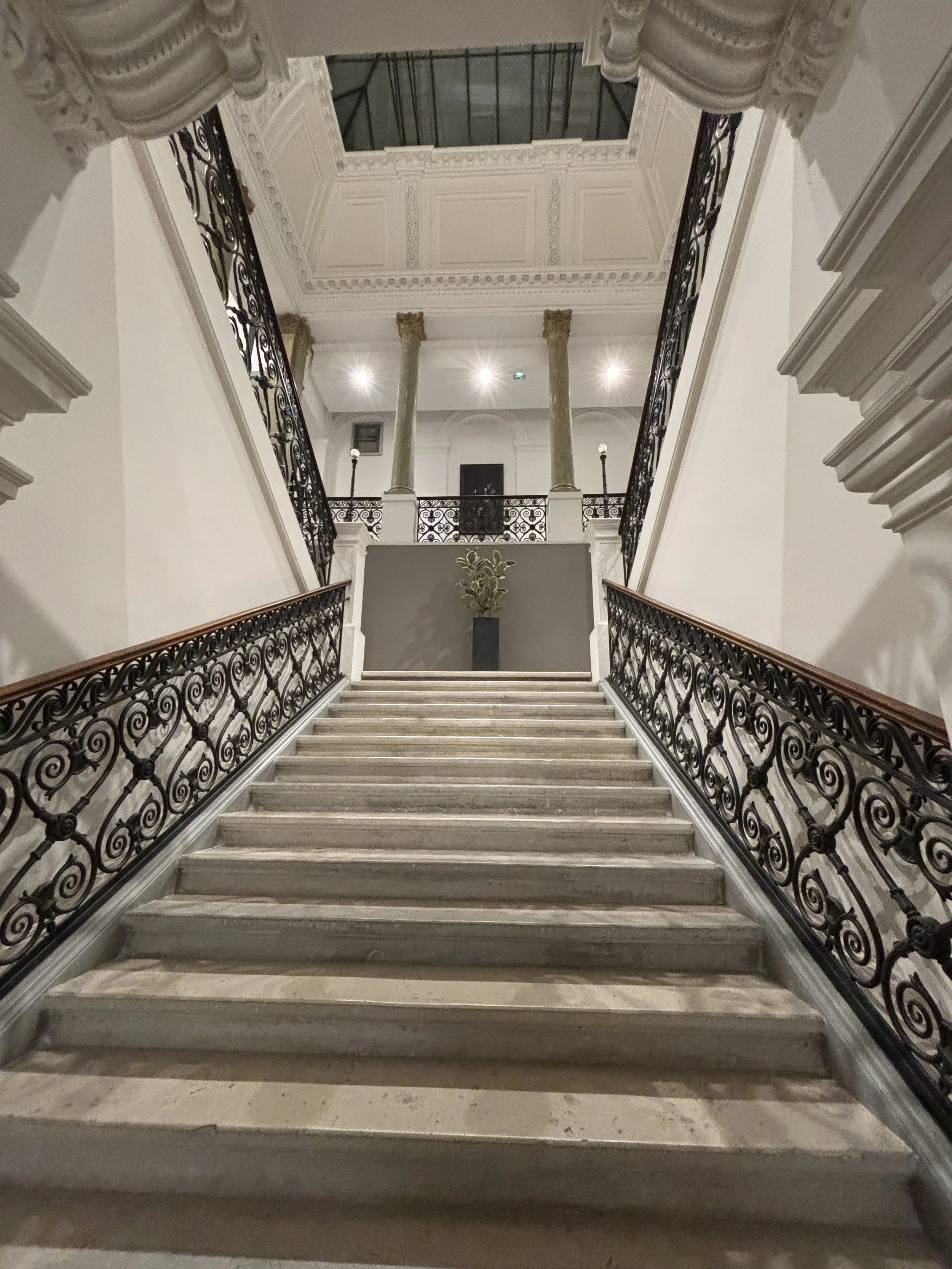
These serviced apartments (a hotel in all but name), occupies a grand, almost palatial, building which may have been a bank or something like this in the past, or at least it looks the part.
Staff at the reception were also quite nice in giving us very good advice for our visit downtown. It is also possible to park for free evenings and weekends on the nearby streets (there is a large paid car park under the adjacent square).
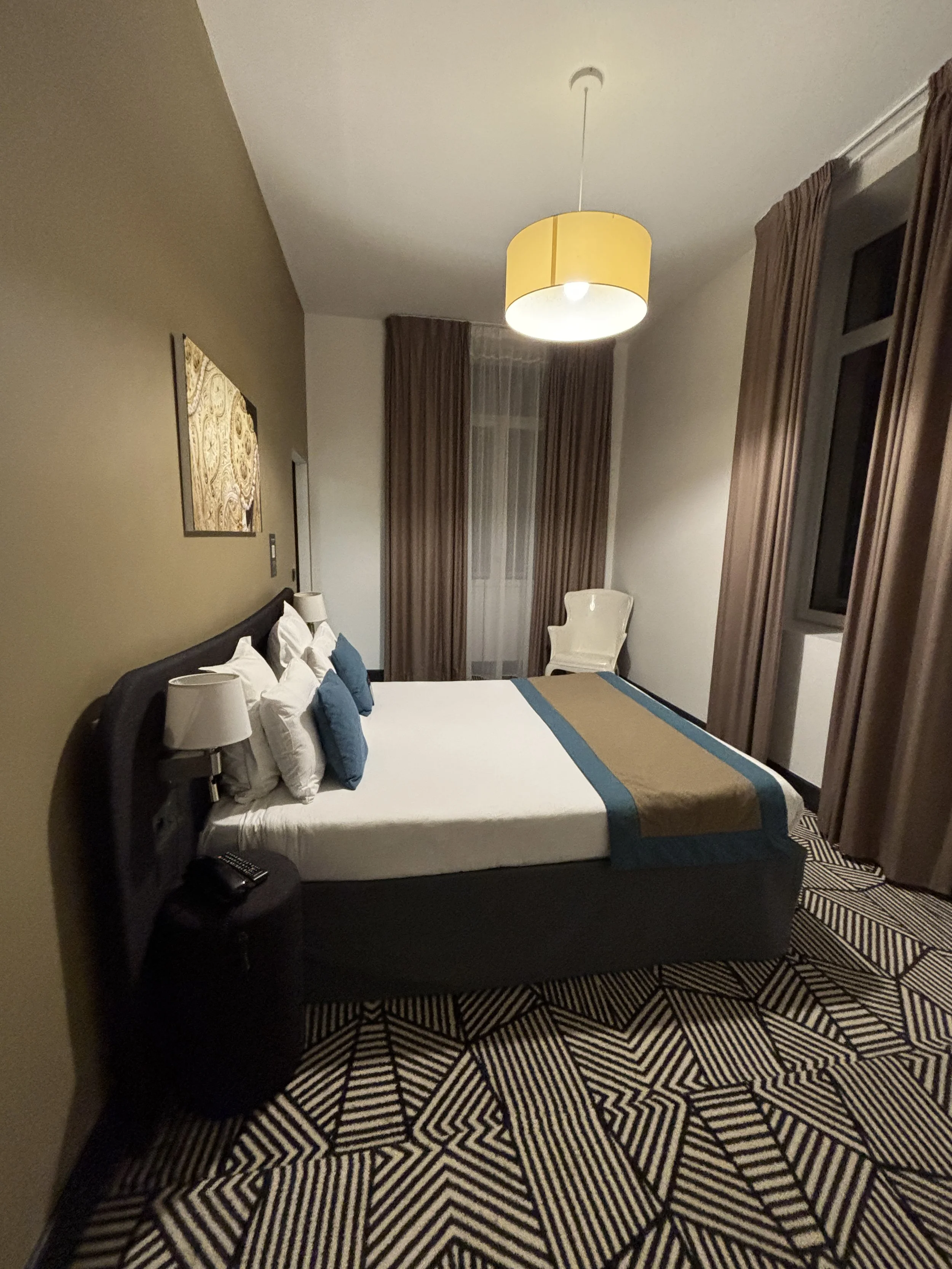
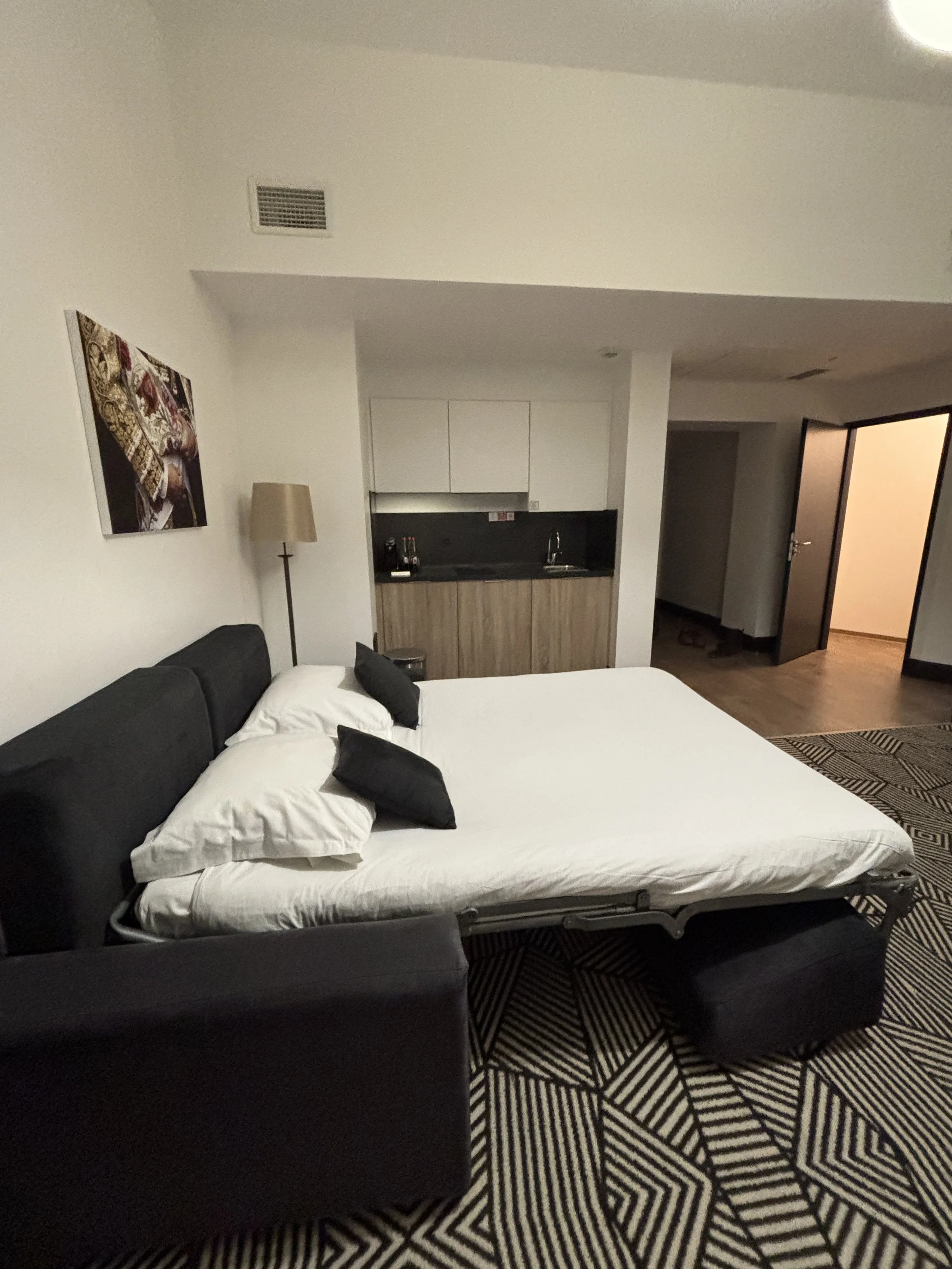
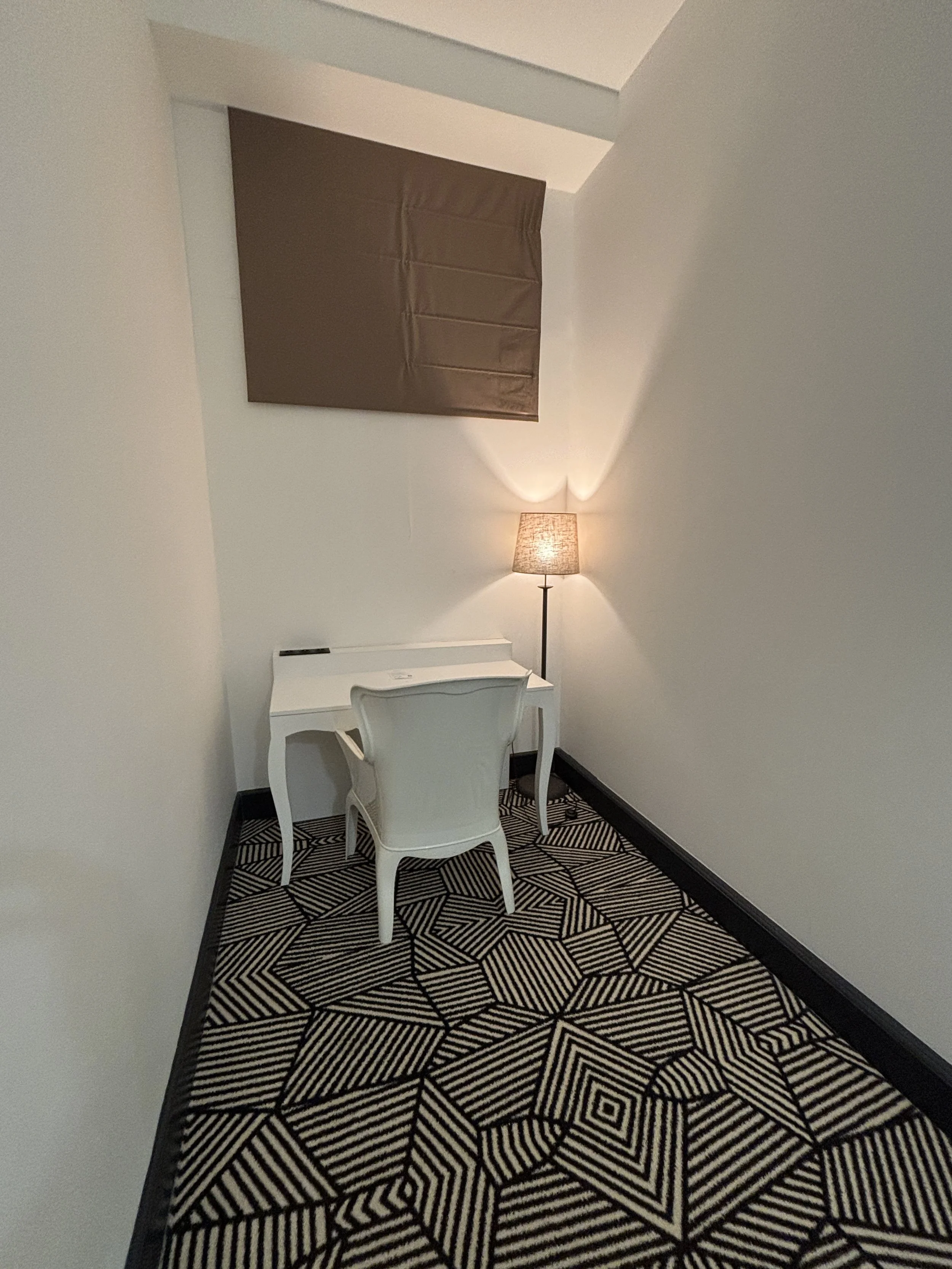
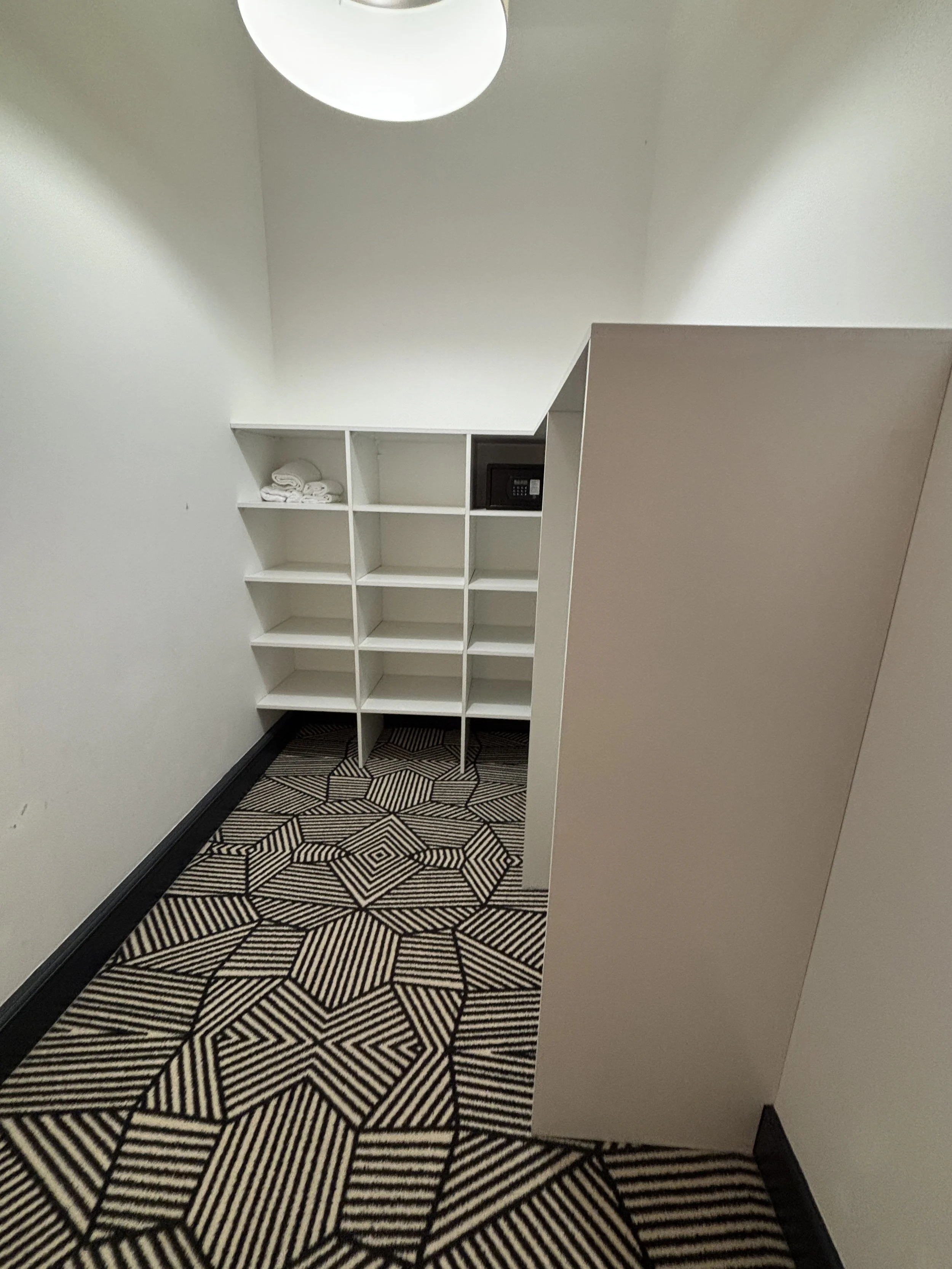
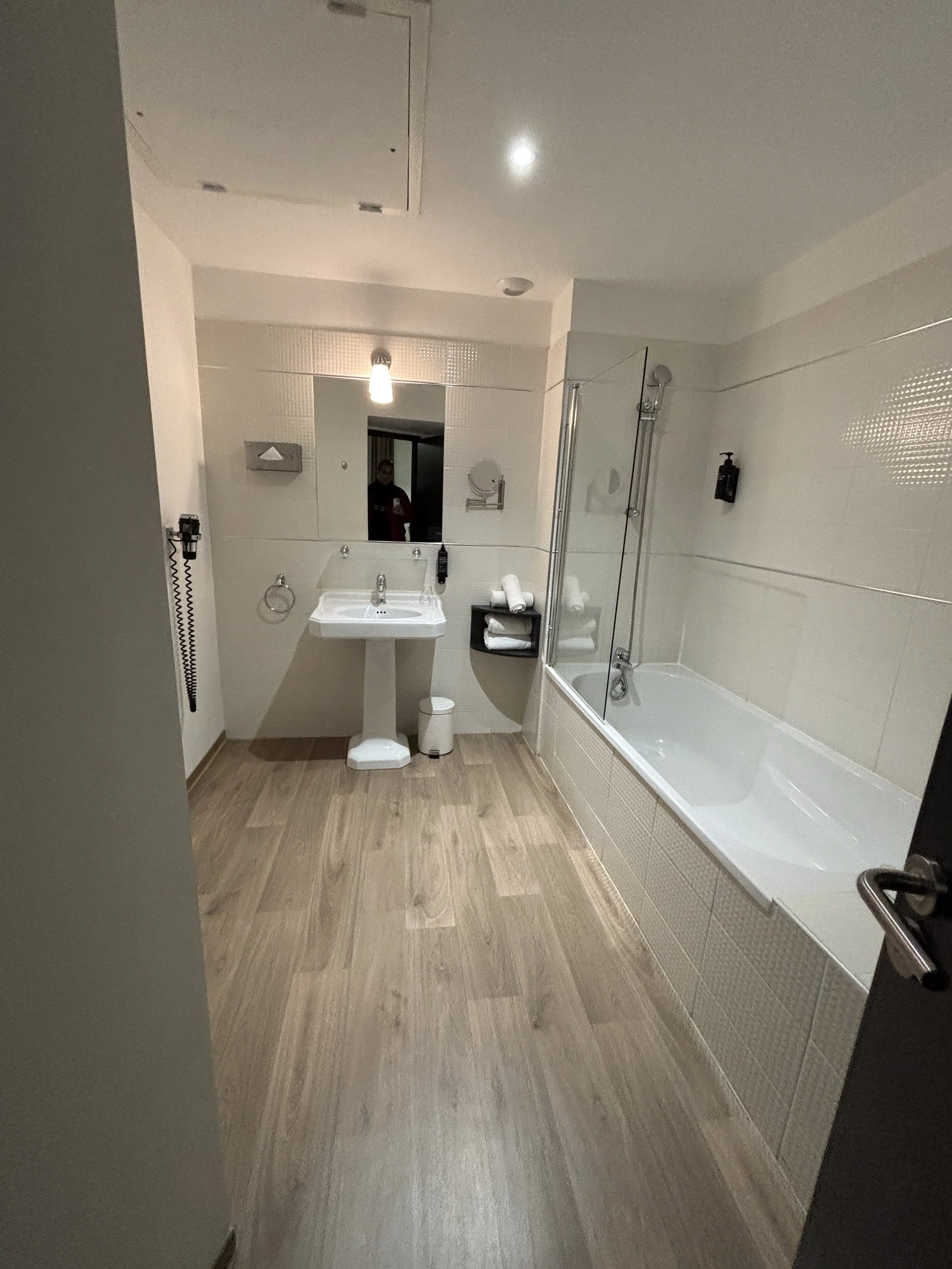
The room was huge! In fact it was more like a proper apartment with several differentiated areas: bedroom, living room-kitchen, with a large sofa that can be turned into a king size bed, bathroom and a sort of elongated studio and storage area as annex of the main bedroom.
I don’t know if all the rooms are that large, but it was truly spacious! And all of this cost around €100.

What to see in Aigues-Mortes
So, if you are in Nîmes and have a car, you may want to drive down to the Camargue, the marshy area at the mouth of the river Rhône.
The Camargue is, in fact, quite a large region that occupies most of the coastline between Montpellier and Marseille. To properly experience it, you would need to spend several days there, but, if you are short of time, you can make a quick stop at the walled medieval town of Aigues-Mortes, some 40 kilometres south of Nîmes.
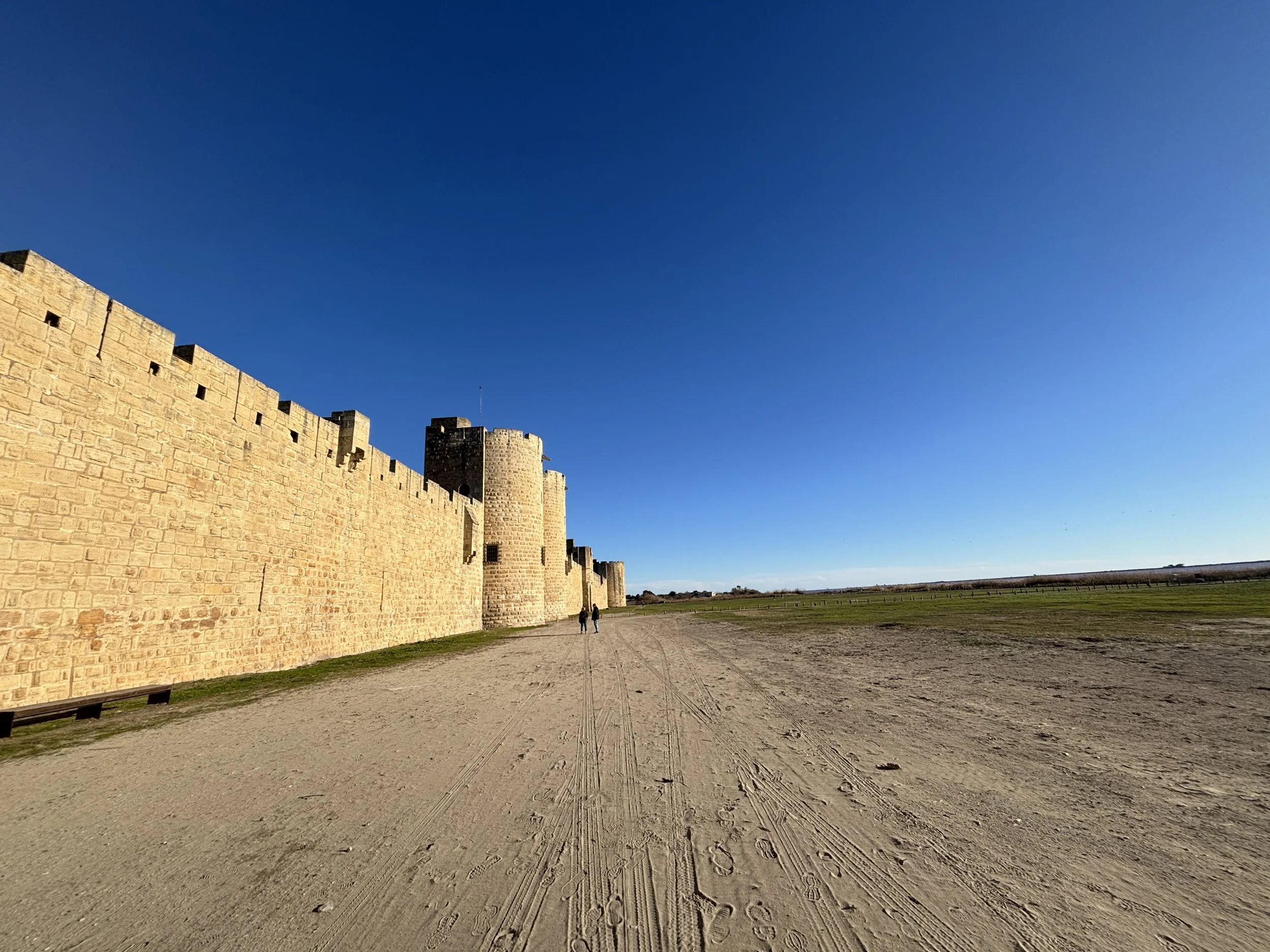
Aigues-Mortes was a departure port for the Crusades in the 13th C. You can see, from the size of its walls that this was a place of quite some importance in the Middle Ages. In fact, Aigues-Mortes has managed to preserve, to a large extent, its medieval characters, being still to this day completely enclosed by the very impressive medieval walls.
As its name implies (“Dead Waters” in Occitan language), Aigues-Mortes is surrounded by water and swamps pretty much on all sides. It is also pretty close to, but not directly on the sea shore. There is a canal on one side of the old town and a lagoon and salt pans on the other one.
This lagoon turns pink at certain times of the year (not at the time of our visit), making for some amazing photo opportunities, although, to get the best angles I think you need to get to quite some distance from the ramparts!
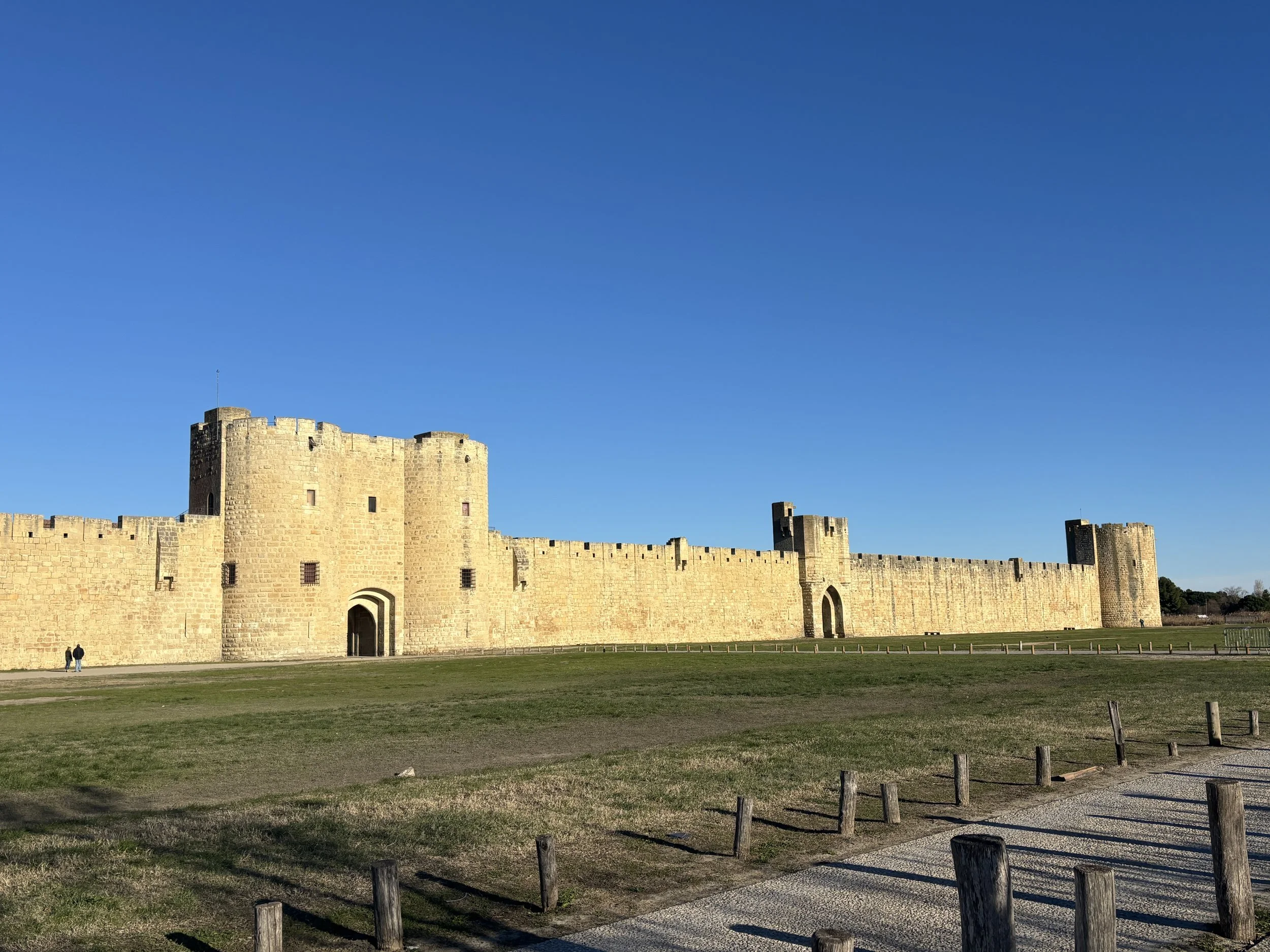
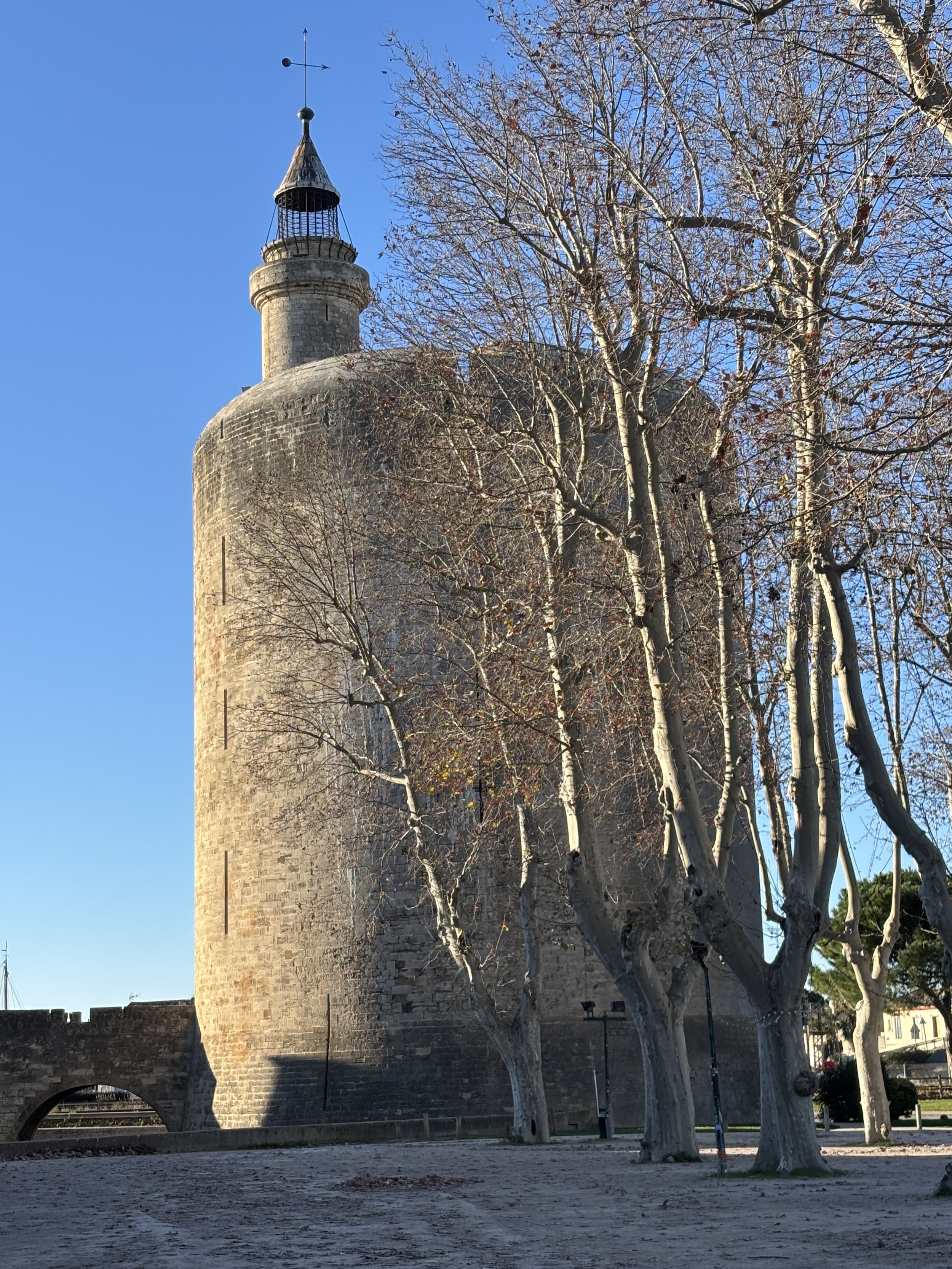
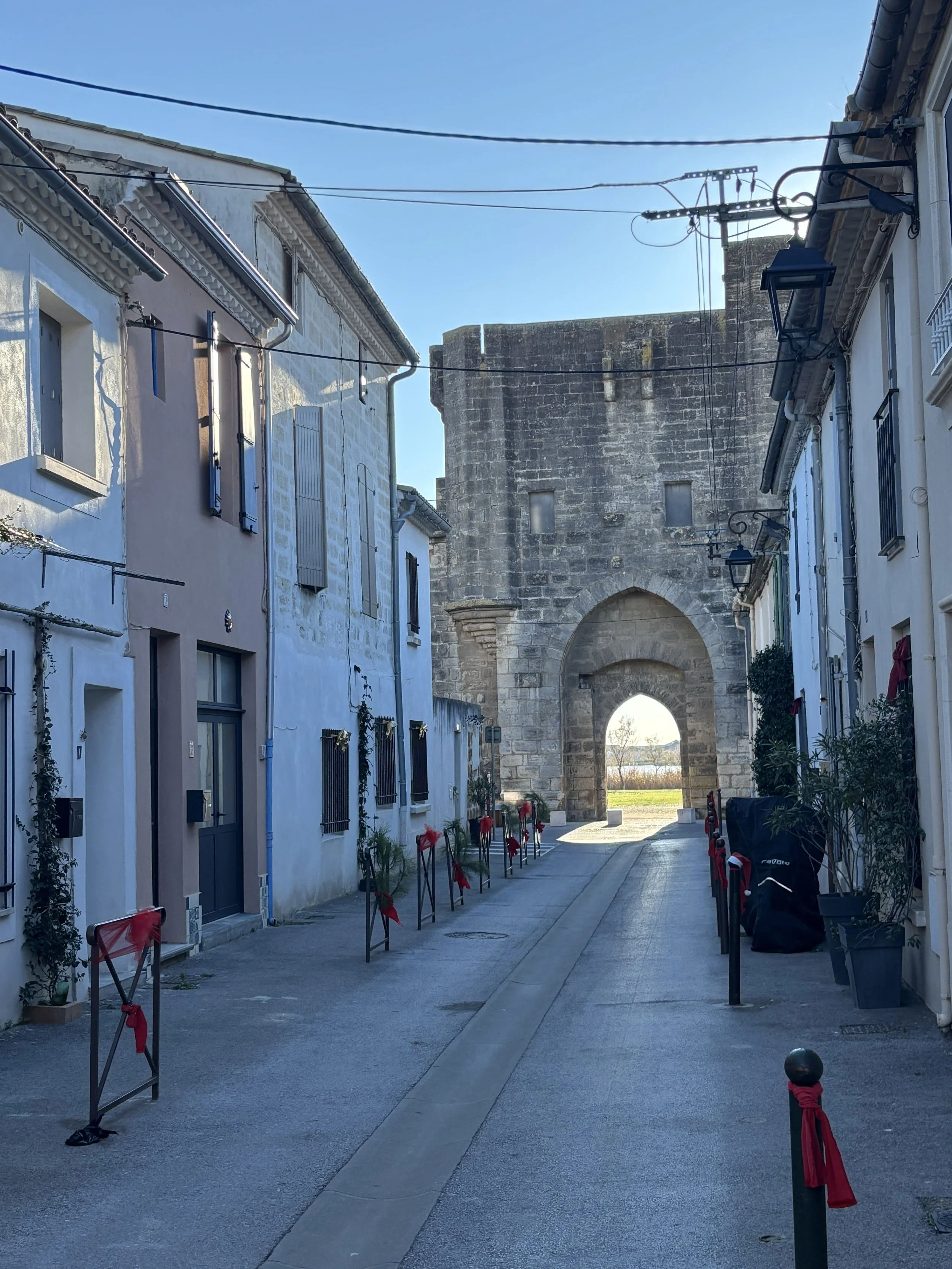
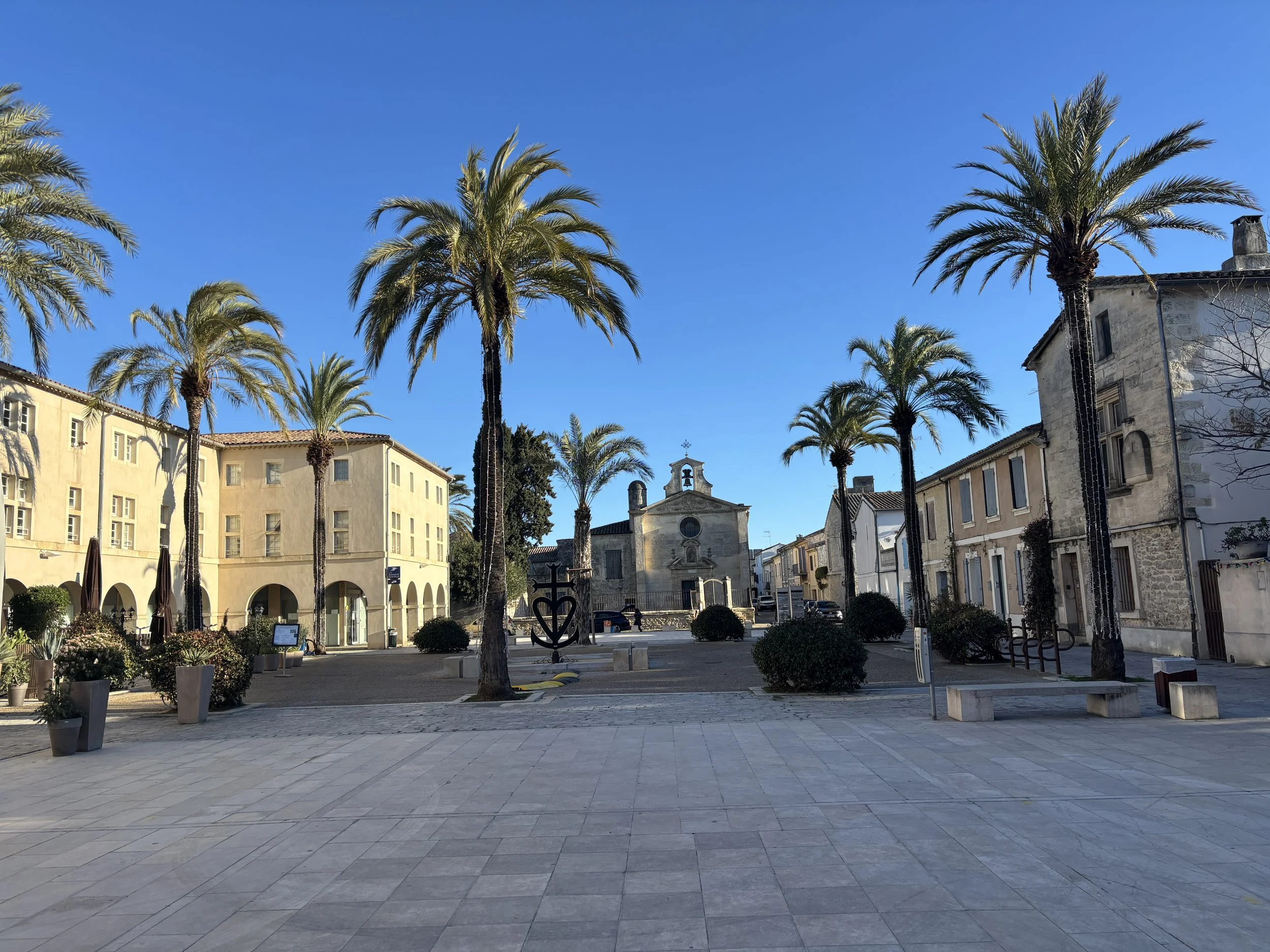
As you would expect in such a heritage-rich city, its centre is all pretty much pedestrianized (there are paid car park right outside the city gates), and while there are not major landmarks standing out within the walls, the beauty of the place is the harmony of the ensemble.
Where to eat in Aiguesmortes
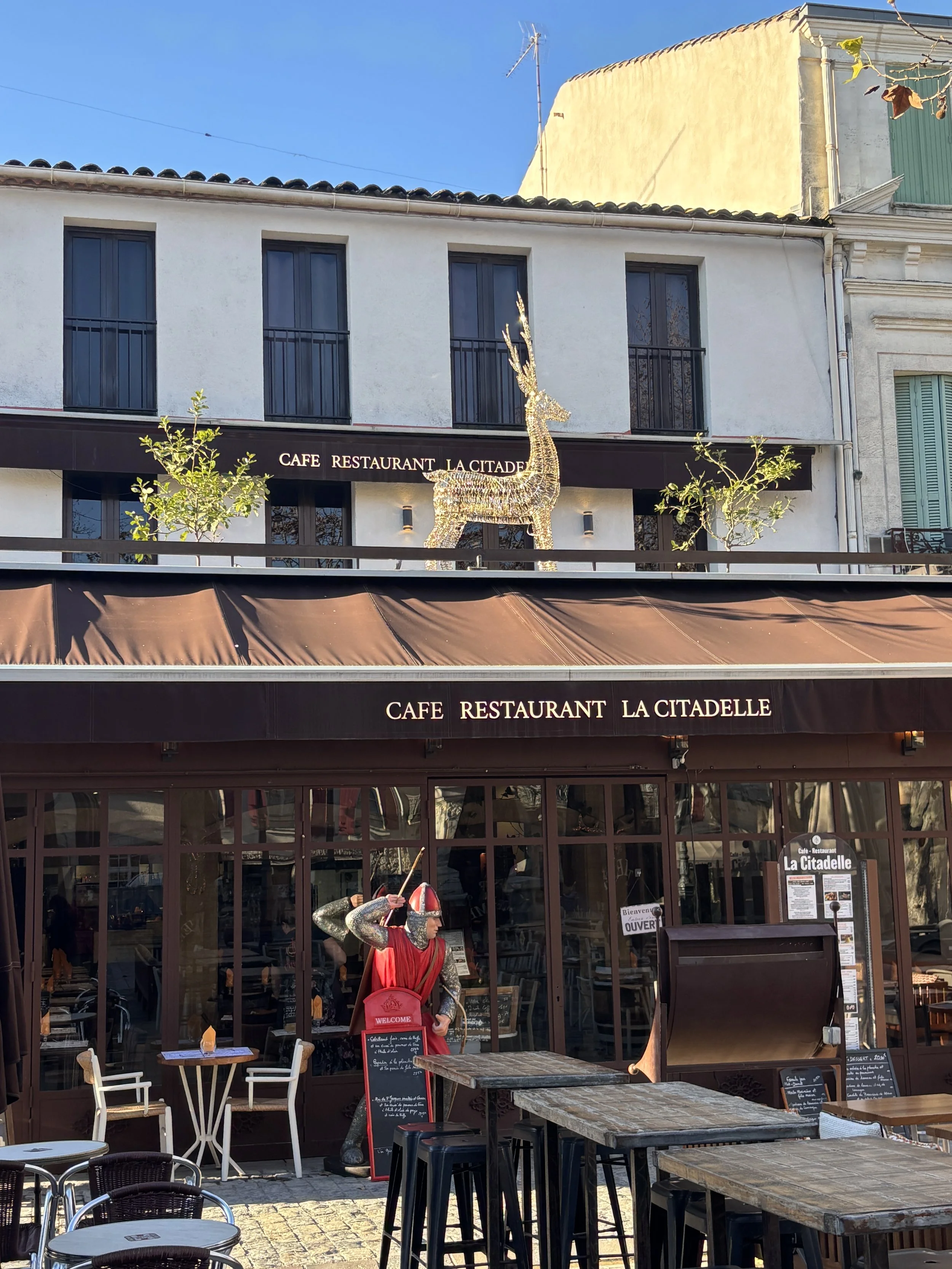
Restaurant La Citadelle
10 Pl. Saint-Louis, 30220 Aigues-Mortes
https://restaurantlacitadelle.shop
This restaurant is located on the main square of Aiguesmortes (Place Saint Louis).
We picked this place up a bit randomly (it was one of the few places that were open at the time of our visit) and it turned out to be quite a find!
It has two areas, a large spacious hall inside and a terrace (it is also a café) which I am sure it is rather nice when the weather is warm and sunny.
It is a rather unpretentious place overall, but here you can enjoy some local specialities, excellent seafood and great service.