
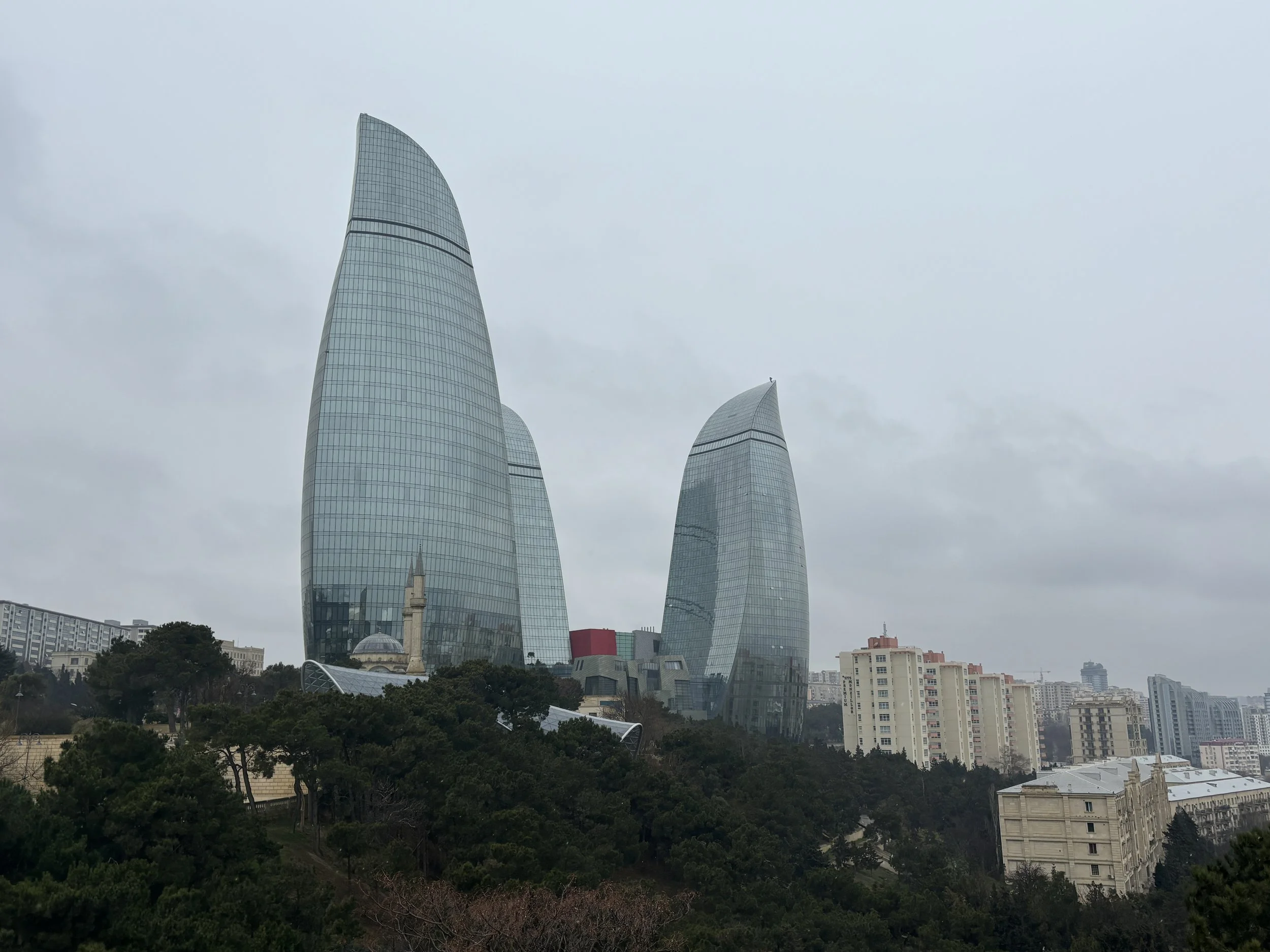
What to do and what to see in Baku and around
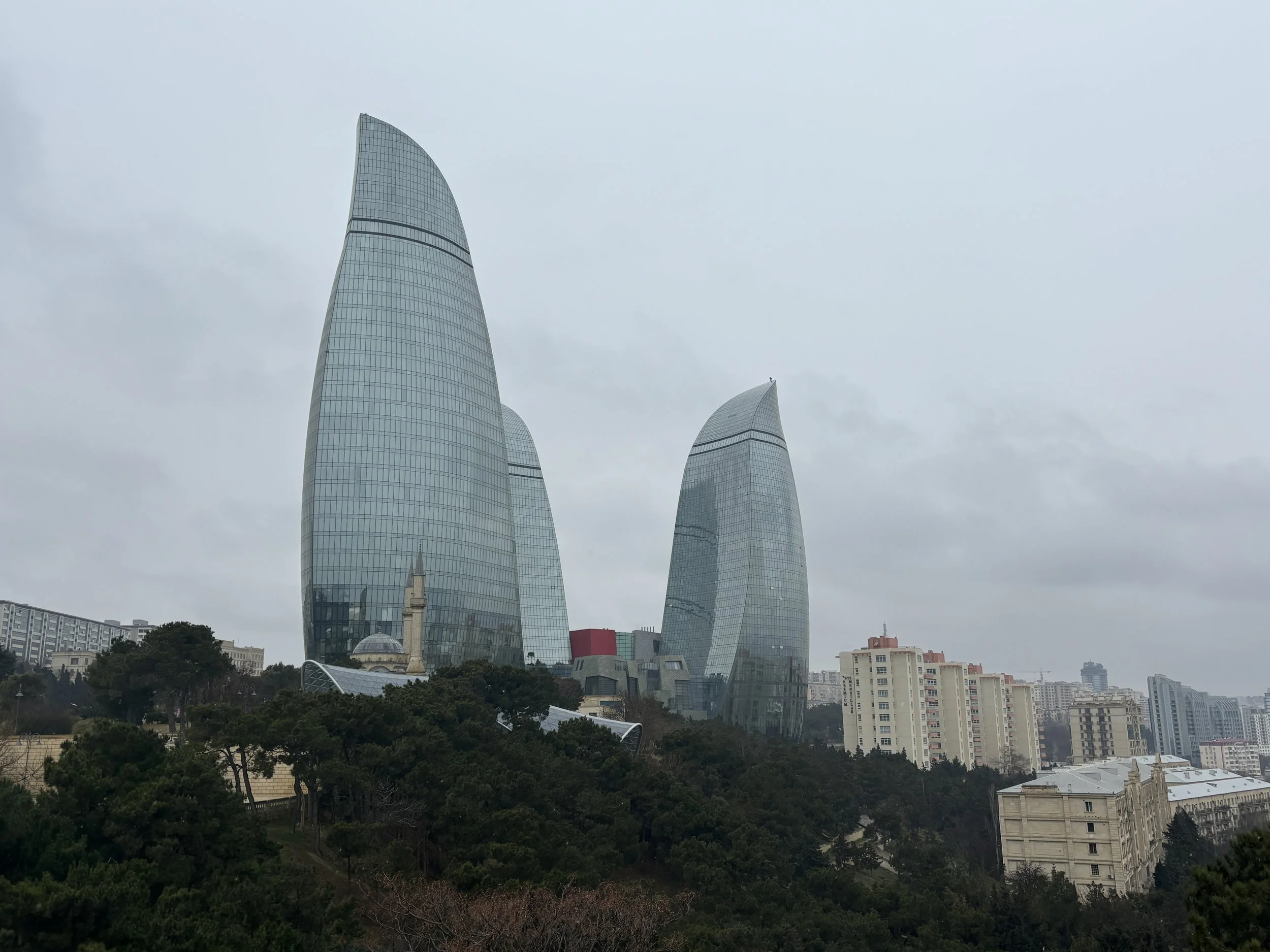
For many years, Azerbaijan barely registered on most travellers' minds, but not anymore.
Oil and gas wealth is undoubtedly behind this transformation. The energy resources that turned Baku into one of the largest cities in the Russian Empire, first, and the Soviet Union later, have also underpinned a rather comprehensive urban transformation programme in the last decade.
The skyline of futuristic towers and meticulously restored medieval streets are its most visible sign, but so is a newly found confidence and pride in the country’s ancestral Azeri culture.
Not unlike the Gulf monarchies further south, Azerbaijan has also backed up these public investment programmes with the organization of big-ticket international events such as the Formula 1 championship, COP29 in 2024 and many other international conferences.
And the strategy appears to be working. During this trip to Azerbaijan I came across a fair number of tourists from both east and west that have come to explore the so-called “Land of Fire”.
Not only is Baku no longer an exotic destination for adventurous travellers, its immediate hinterland, which includes a diversity of landscapes ranging from snowy mountain ranges to deserts dotted with natural and archaeological wonders, is starting to get more attention too.
However, and this is also part of the attractive, tourism in Azerbaijan is still far from being a massive affair and you can still get the sense of exploring a truly off the radar destination.
In this post I will try to summarize my experience traveling in Azerbaijan and visiting also a couple of other sites that are within a reasonable driving distance of Baku:
Old and new Baku
The ski resort of Shahdag, in the Caucasus Mountains
The Ancient petroglyphs of Gobustan, a UNESCO World Heritage Site.
I am aware that there is another major site of interest just outside Baku: the mud volcanoes, which are clustered around two different sites, one to the north of the city, the other to the south, near the Gobustan archaeological park, actually.
Due to logistics and schedules, it was not possible for me to visit them this time and include them in this itinerary, but if you have the chance I would definitely encourage you to check them out. I have them in my Baku to-do list for my next visit.
So, now let’s dive into what is to do and to see in Baku and its broader vicinity!
This post may contain affiliate links. If you book or buy something through them, I earn a small commission, at no extra cost to you. It's one of the ways I keep Places of Charm going. Thank you for your support.
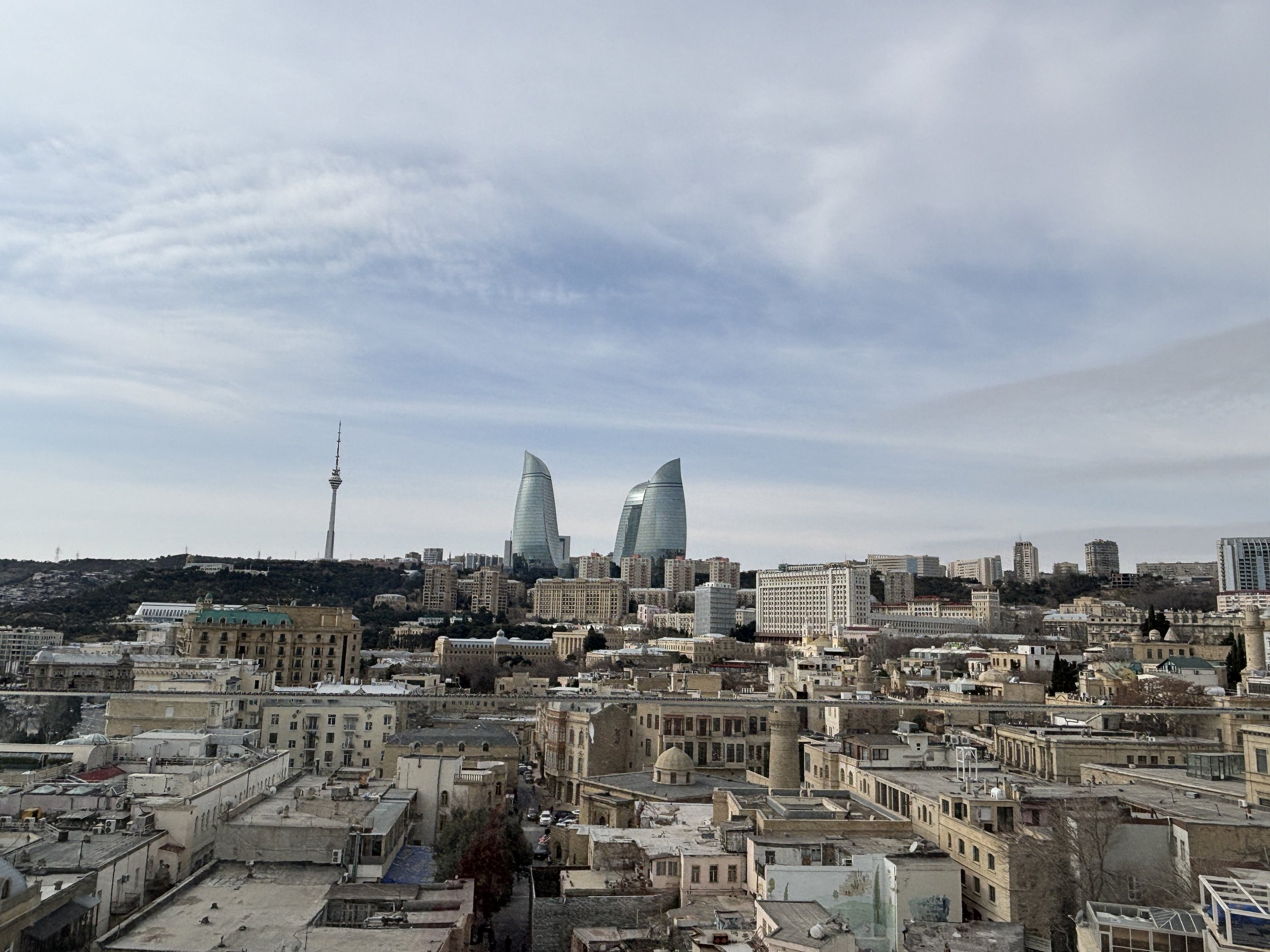
The Flame Towers and Baku viewpoint
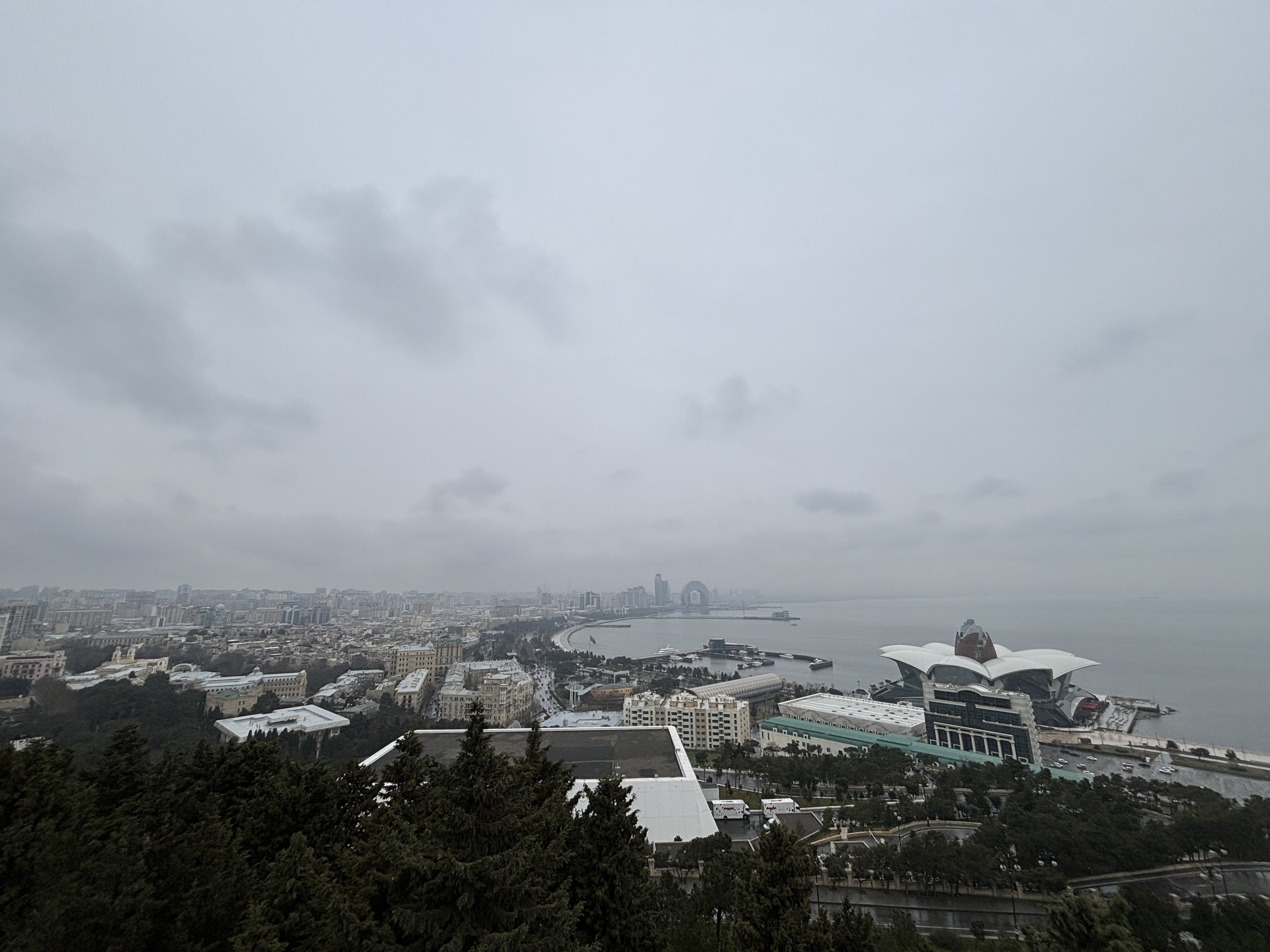
It was a bit rainy when I visited, but still a pretty view!
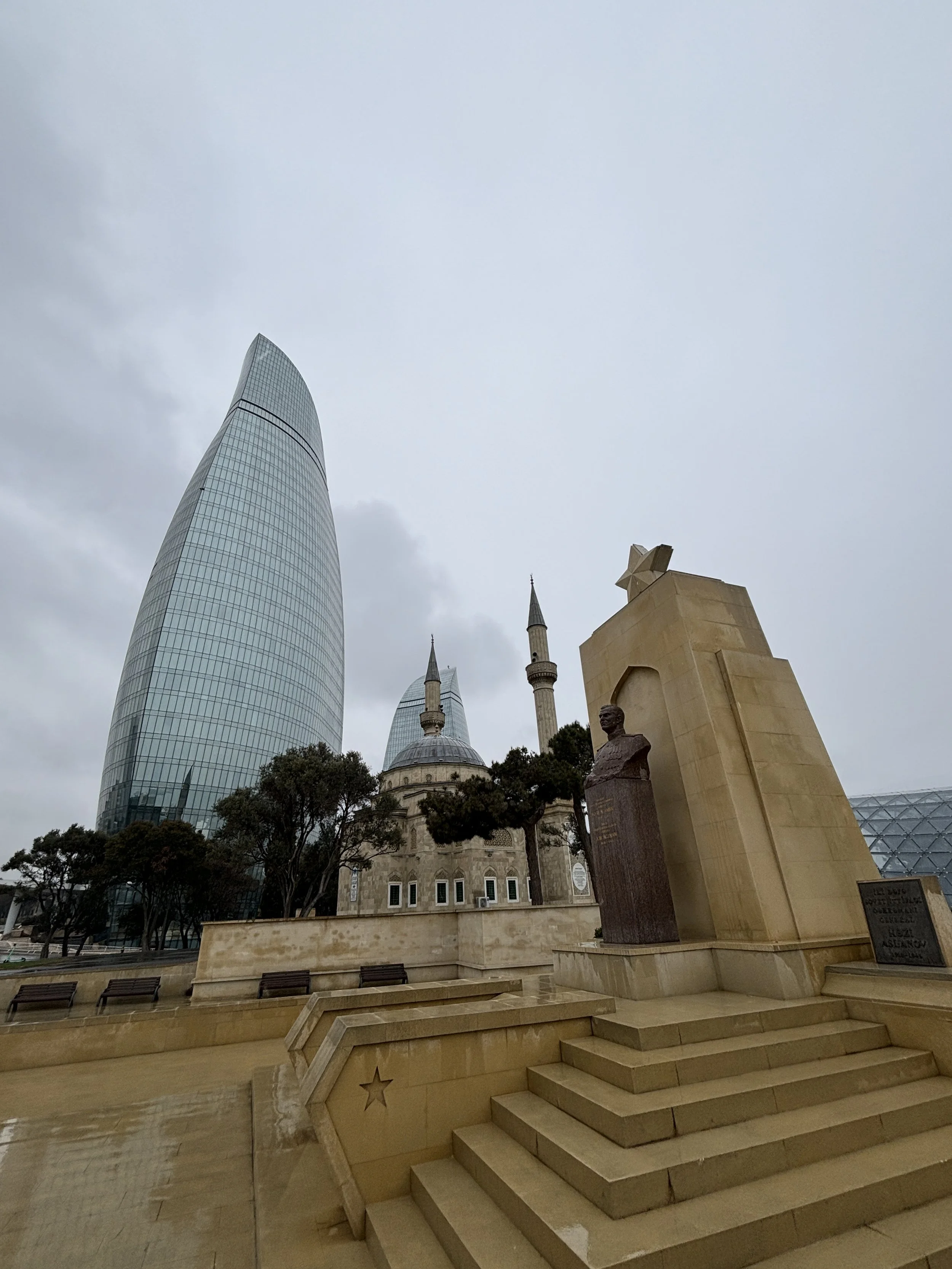
The Flame Towers have become the symbol of modern Baku since they were completed in 2012.
These three curvy skyscrapers are certainly beautiful and original in their looks. It’s hard to miss them from wherever you are in the city, because they occupy a privileged position on top of a hill overlooking the sea.
However, they are mostly about the “continent” rather than the content. In fact, there is little inside them for the regular visitor, since they contain offices, luxury apartments and the Fairmont five-star hotel.
I think it is still worth going to see them from up close, though, not just because of the architecture, but also because the park next to them, the aptly named “Highland Park” offers some really nice views of the city.
The park has also has several interesting monuments within its grounds.
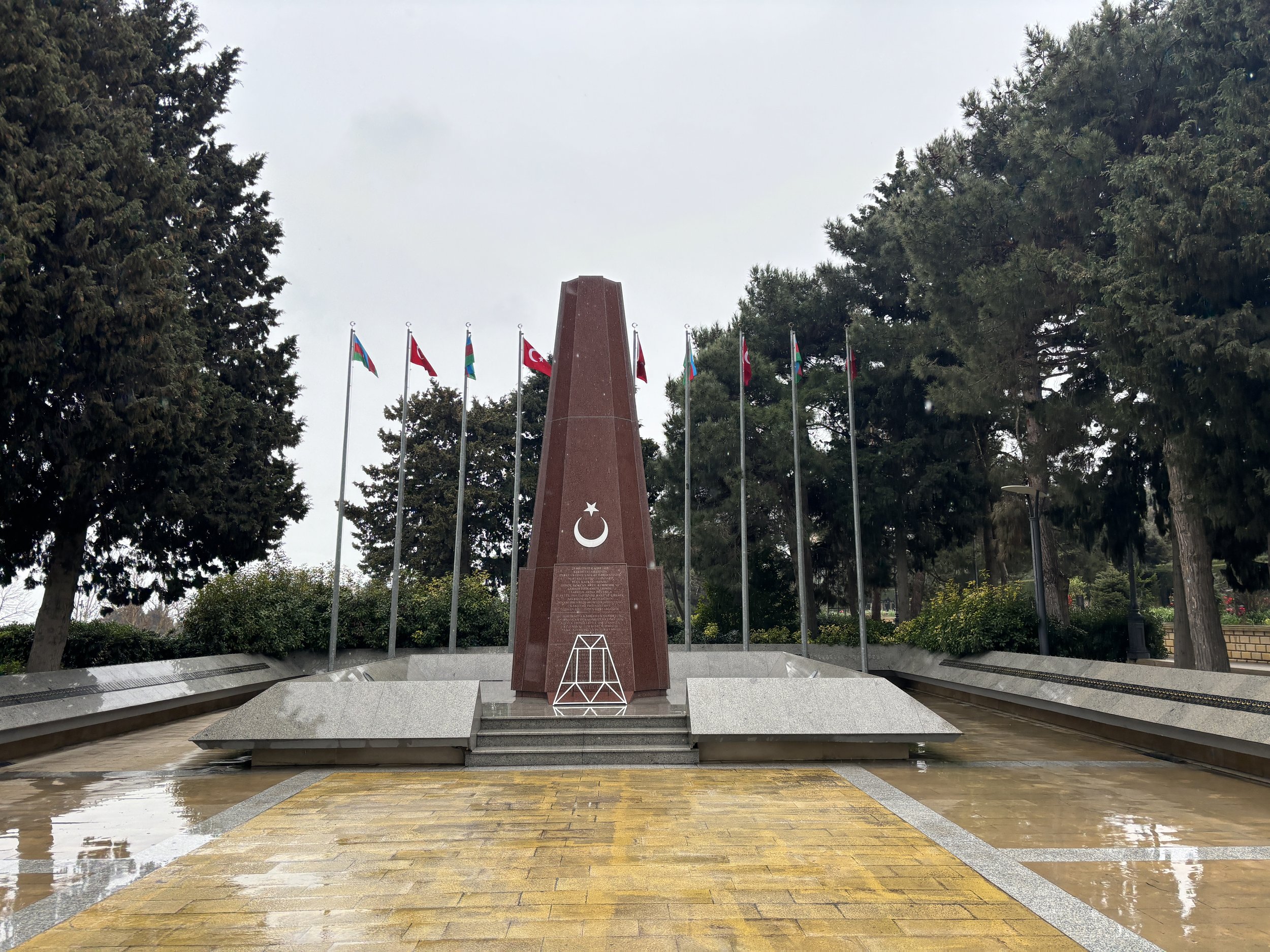
These are of a patriotic nature, such as the “Martyr’s Lane”, which is a memorial to those that died during the last turbulent months of Soviet rule as well as during the long-going conflict with Armenia (which is still not yet fully resolved at the time of writing these lines, even if Azeri forces managed to get control of the disputed Nagorno-Karabakh area in 2023). The park has also monuments dedicated to the Turkish-Azeri friendship (picture below) and to the British troops that were posted in Baku after WW1.
Baku Central Park and Taza Pir Mosque
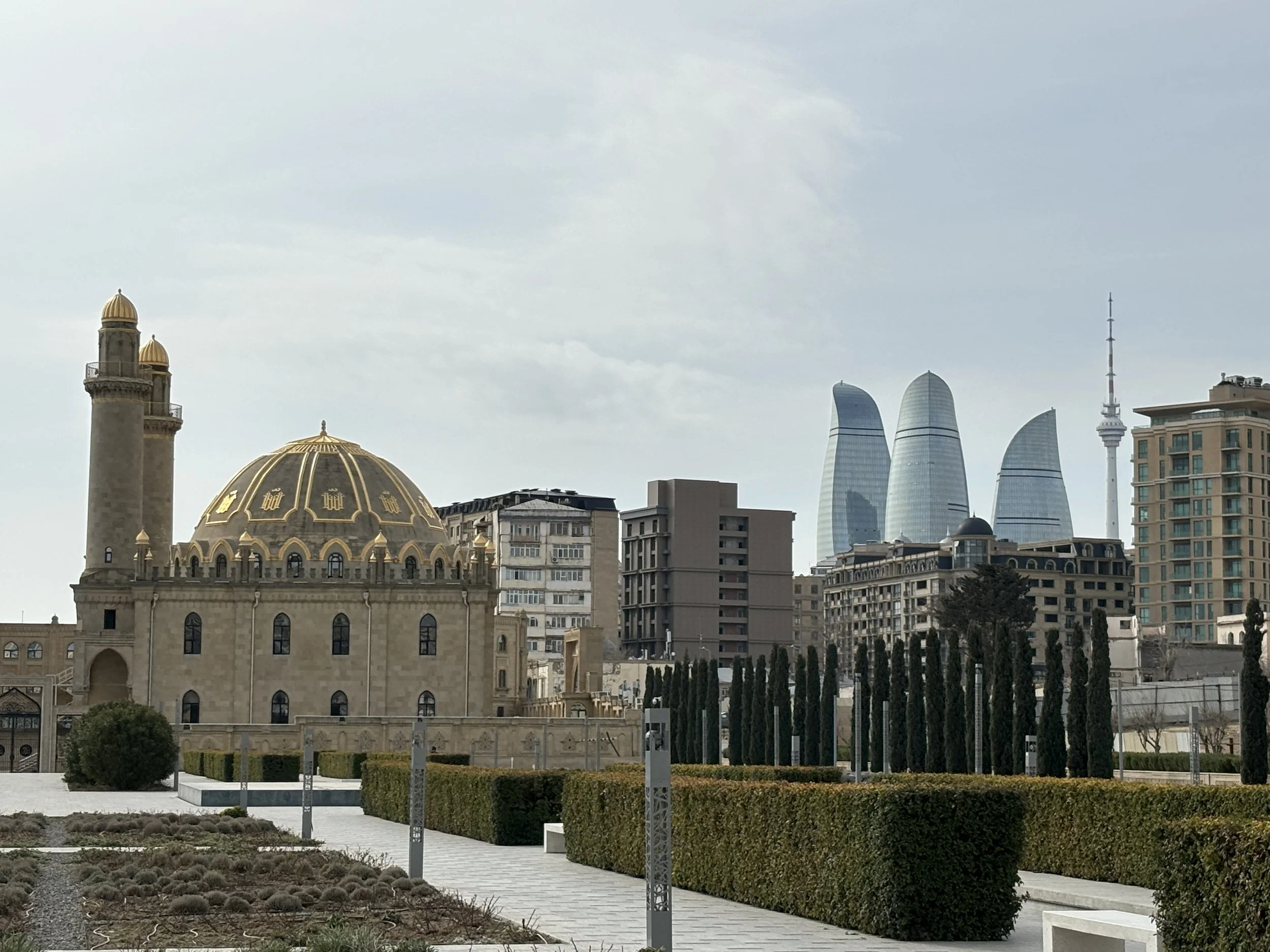
Right to the northwest of the Old Town is the Central Park and within it is the Taza Pir Mosque (“Təzəpir məscidi”), which is the main muslim religious center in Baku. The mosque was built in the early 20th C. and was restored in the early 2000s. The park itself is quiet a large open space with a bit of incline which has been solved by having several subtly layered terraces.
You have some nice views of the Flame Towers from here and the outer wall of the old town is within walking distance, all downhill. To get there you pass several streets that, unlike the old town, have not (yet) been renovated, so you can get an idea of how things may have looked like just a few decades back in time.
A tour of the Old Town of Baku
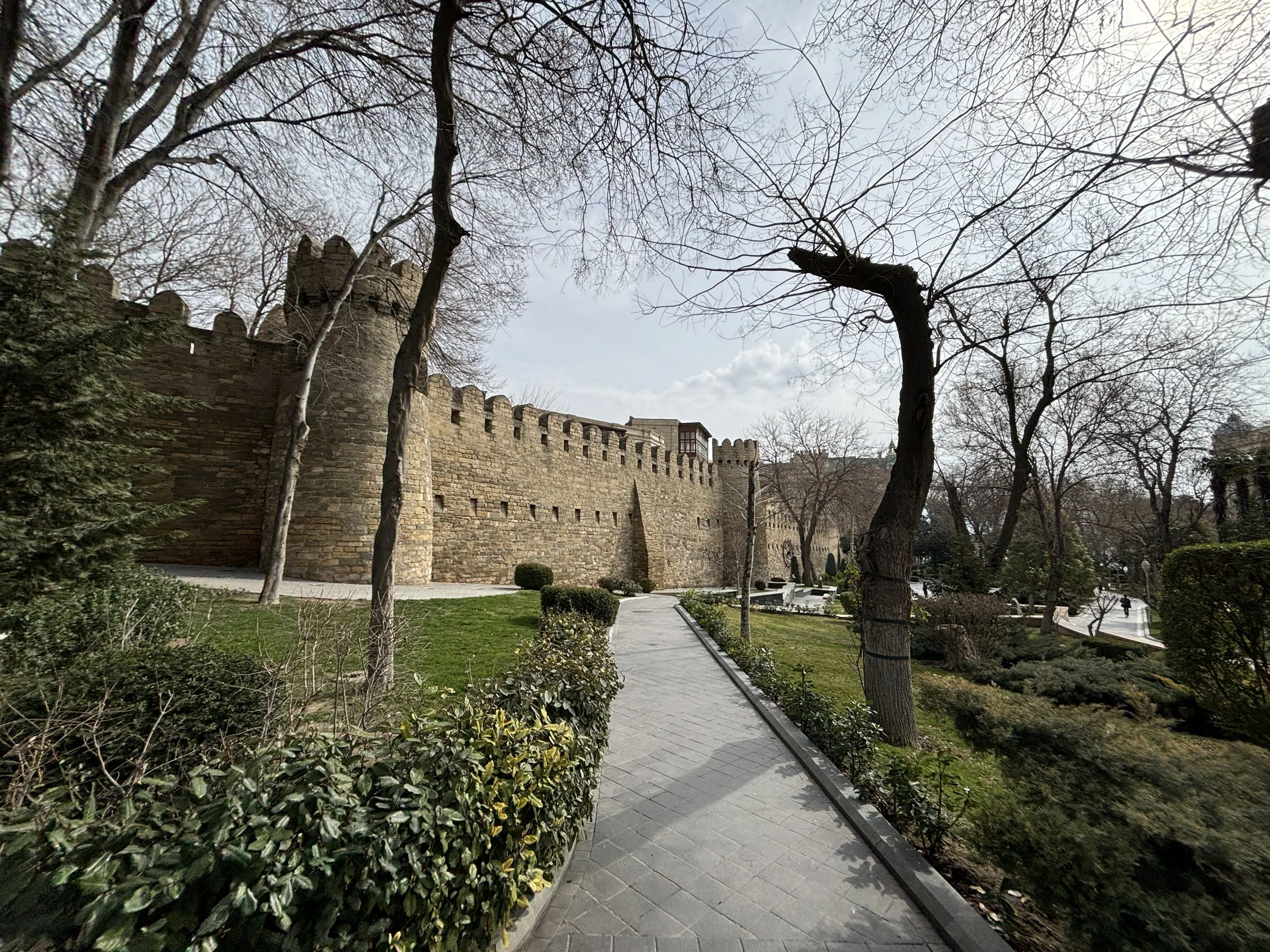
The access to the old town of Baku near the "Icherisheher metro station
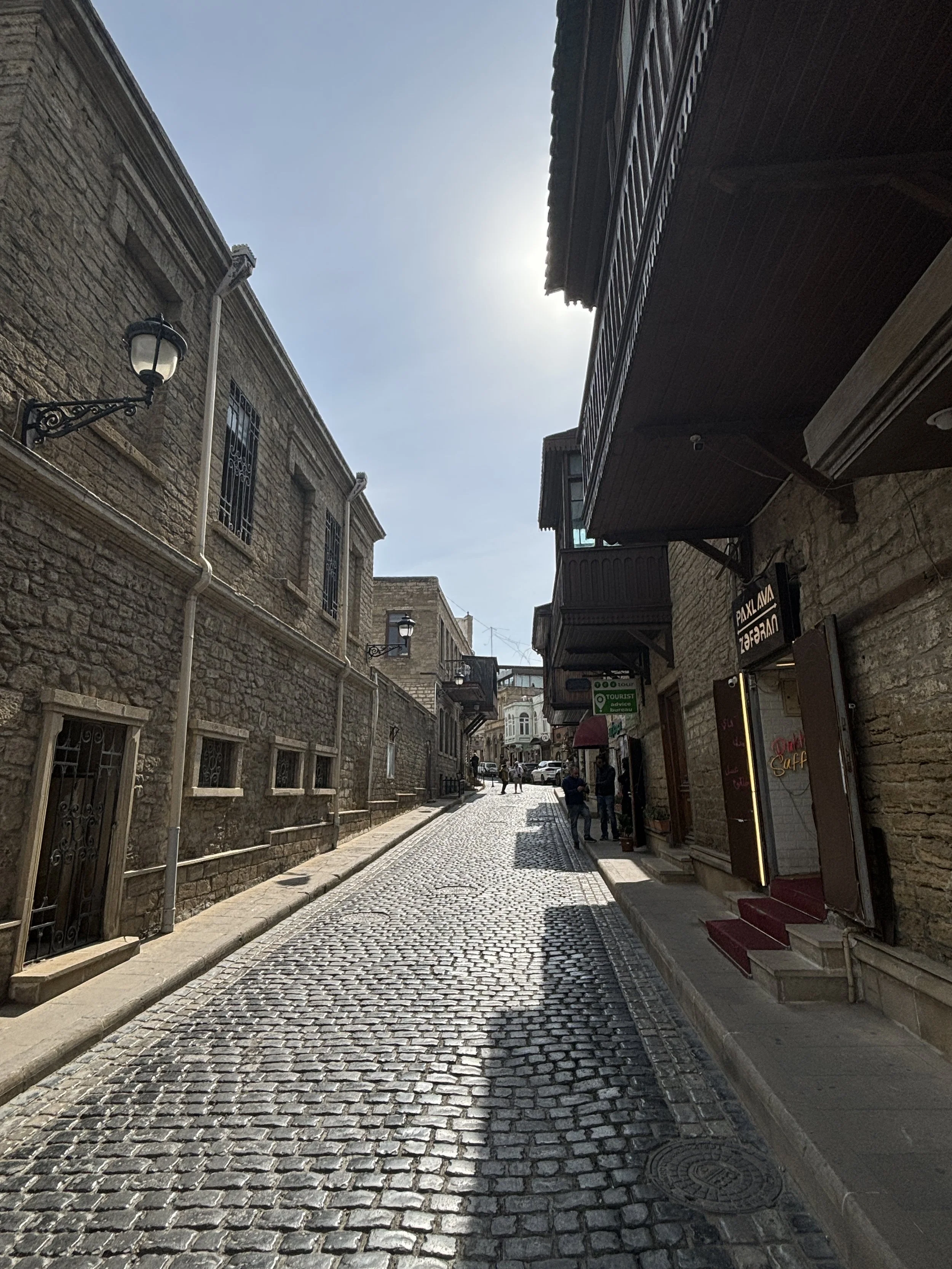
A must in any trip to Baku is a walk throught the old town or “Icherisheher” (İçərişəhər) in Azeri.
The old town of Baku is a UNESCO World Heritage site and its origins are very ancient (the place was inhabited already in prehistoric times). Its walls and architectural ensemble appear to be in a great preservation state, although you can tell it has also been object of rather extensive restoration project (a little bit like is the case of Al Balad, in Jeddah, Saudi Arabia, which we described on this post, as well).
The result is a very neat and orderly neighbourhood (perhaps even a bit too aseptic at times!), which makes for quite a relaxed walk around.
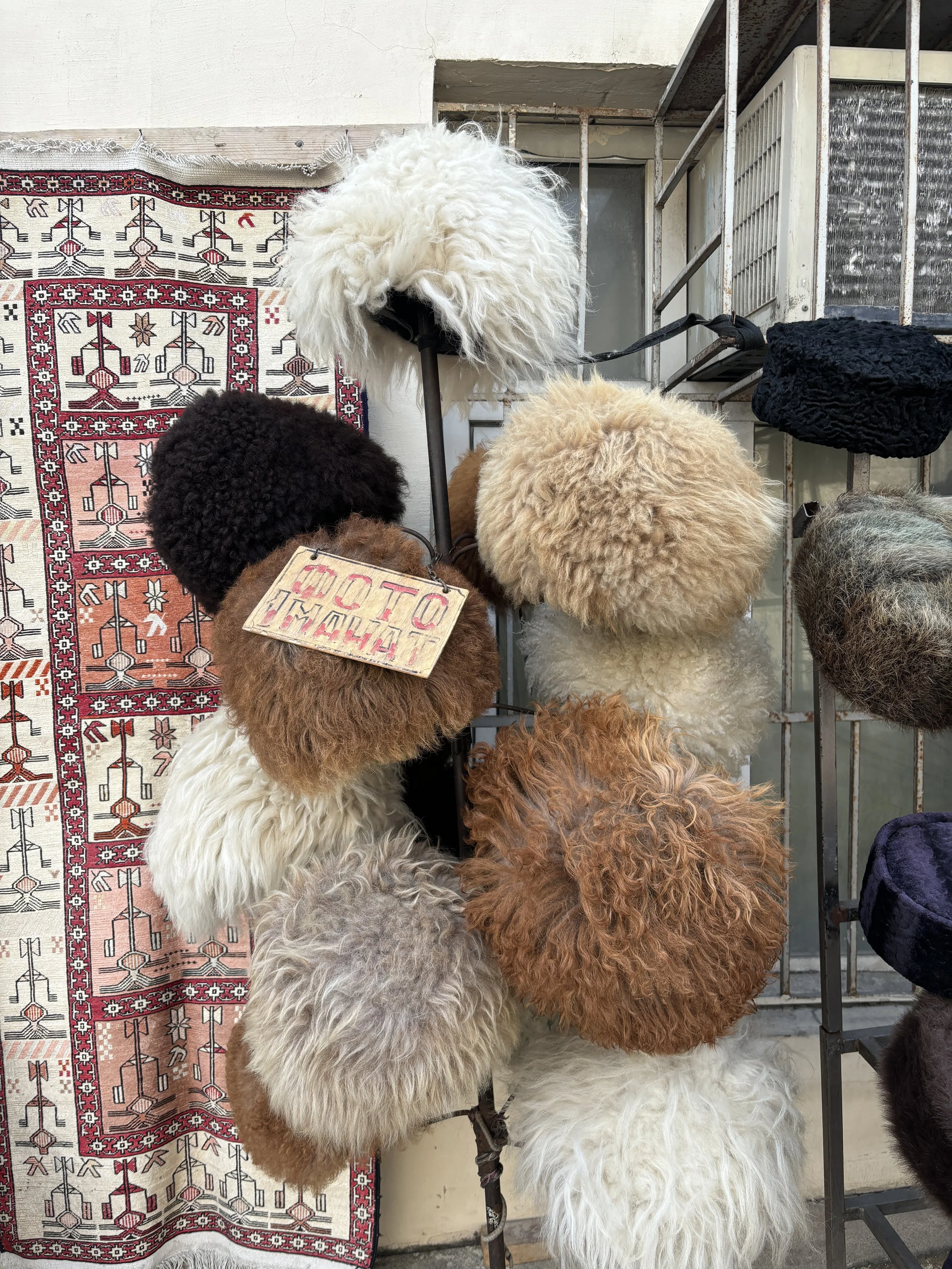
I don’t know if we picked up a particularly quiet day, but the place was pretty quiet when we visited it. Nevertheless, it’s refreshing to visit a major historical city center that is not overrun by tourists nowadays! There are also quite a few souvenir shops but you don’t get the feel of overcommercialization you see in other capitals.
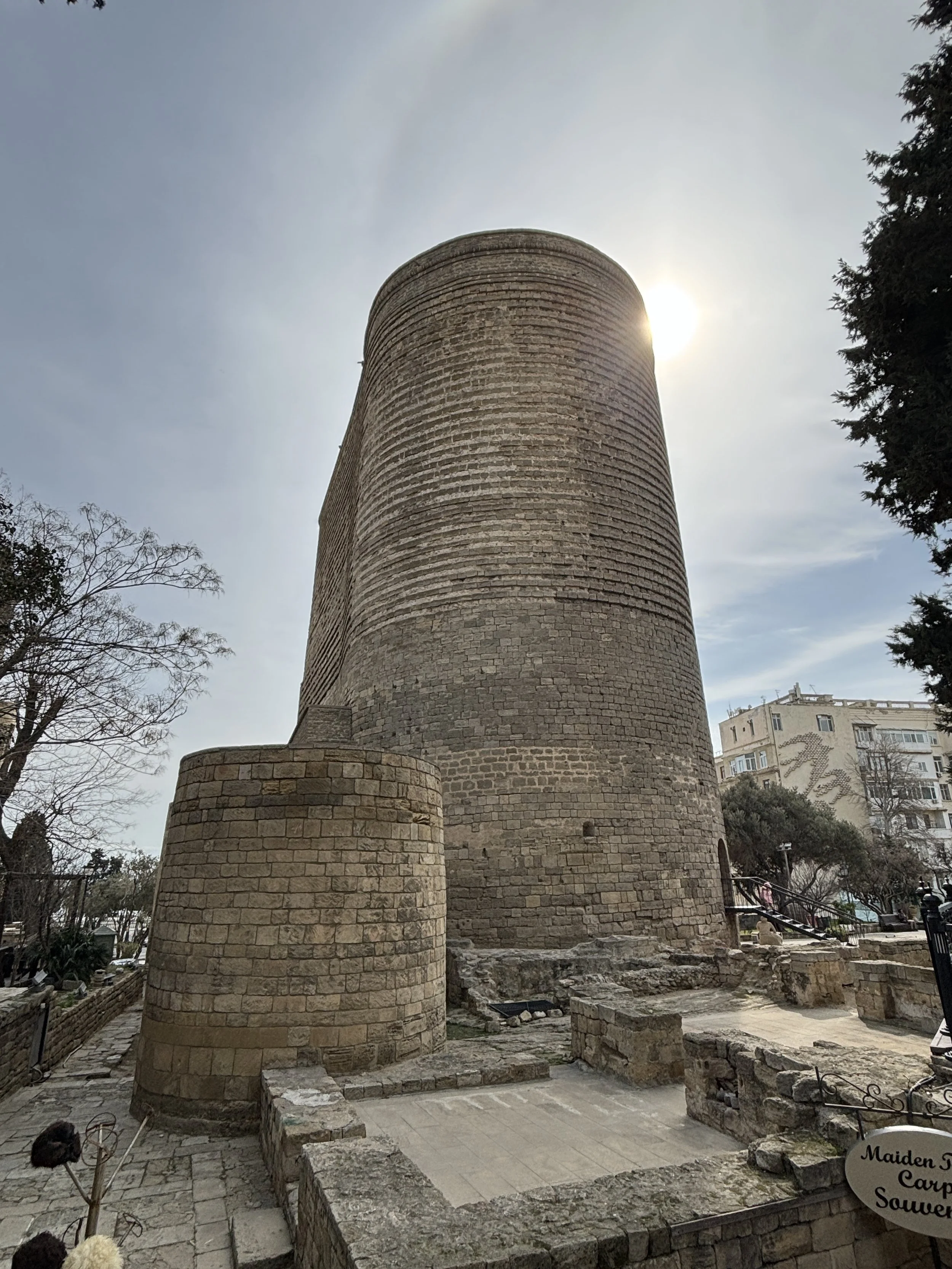
One of the highlights of Baku’s old town is the Maiden Tower (Qız Qalası), a round 29-meter tall stone tower with a view point at the top. The current construction is medieval, but it looks like there has been some sort of tower at this spot for thousands of years and archaeologists can not agree as to the original purpose, whether it was religious or military.
All of this is explained as you climb up the tower (warning: it is done through a rather narrow staircase), as each floor is arranged a bit like a little museum hall, each explaining different aspects of the tower’s and city’s history.
But the big prize is climbing all the way to the top to enjoy the 360º views of the city!
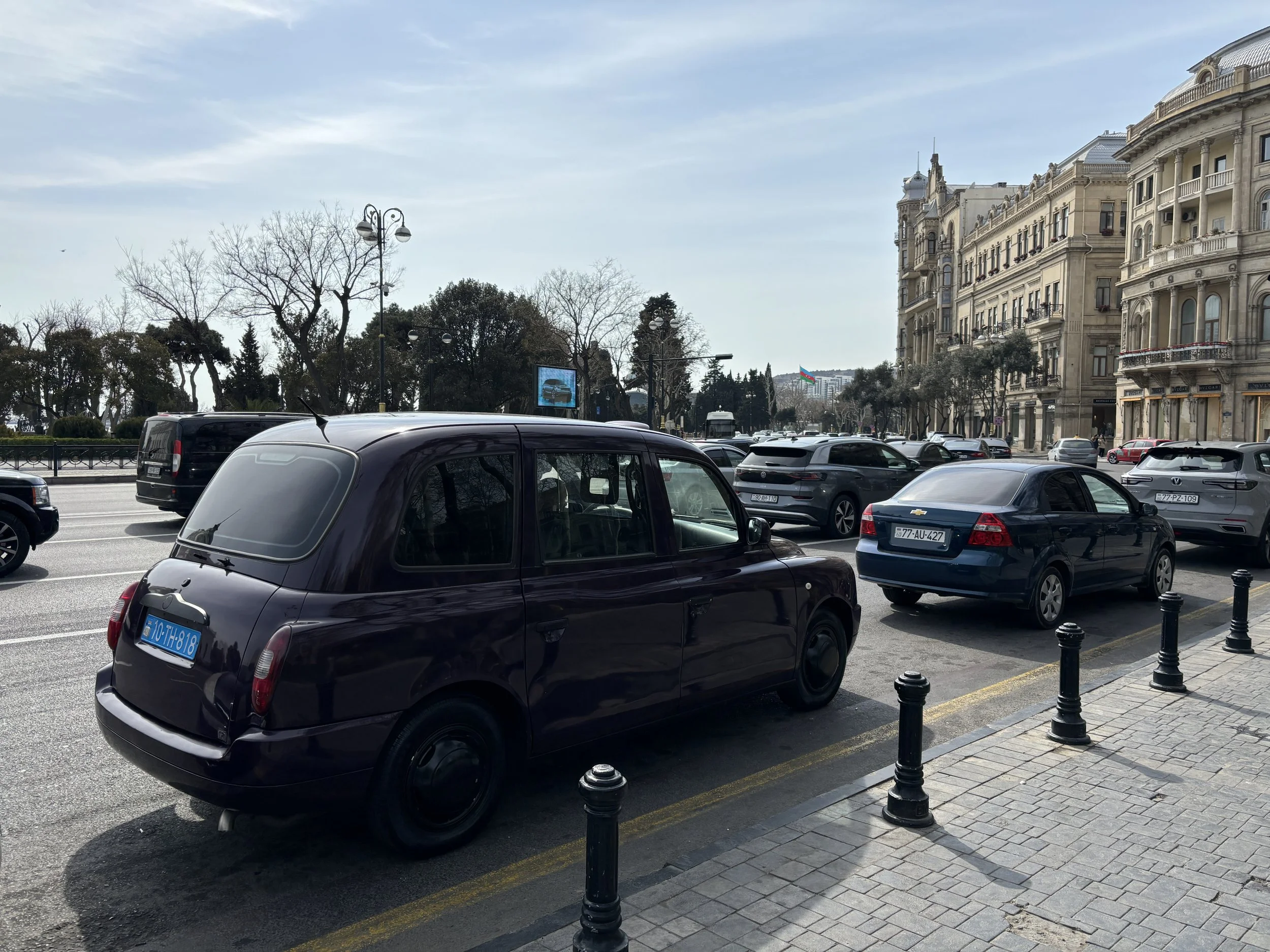
A curious fact about Baku is that it has a fleet of London-style black cabs. They were, in fact, imported from England around 2011! (although the Bolt ride-hailing service is also available in Baku)
The taxis are not apparently the only bout of anglophilia in the streets of Baku, since I managed to spot at least one red British-style phone booth!
If you are looking something with a bit more of a local flavour, don’t worry, you will find plenty of these too!
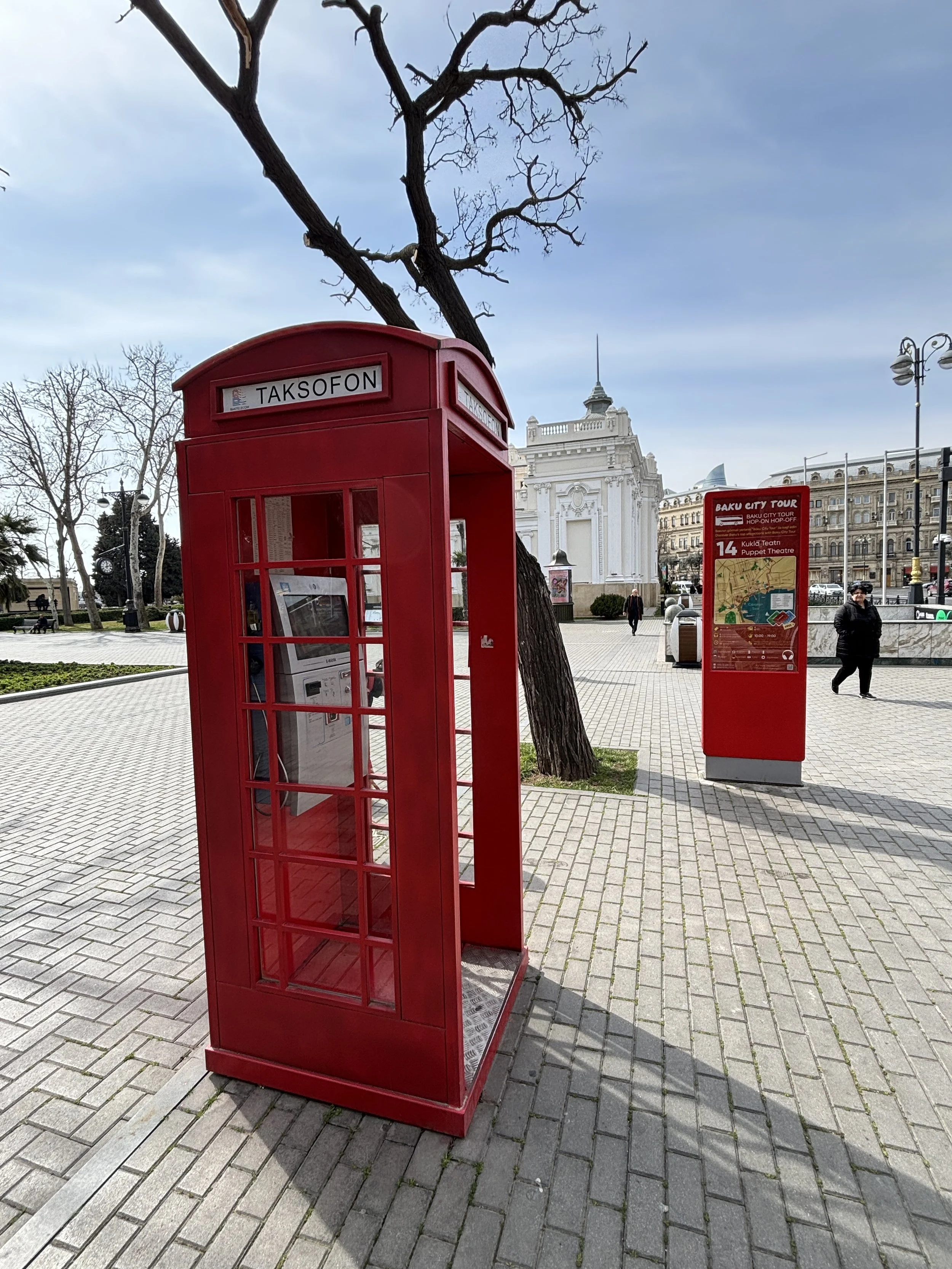
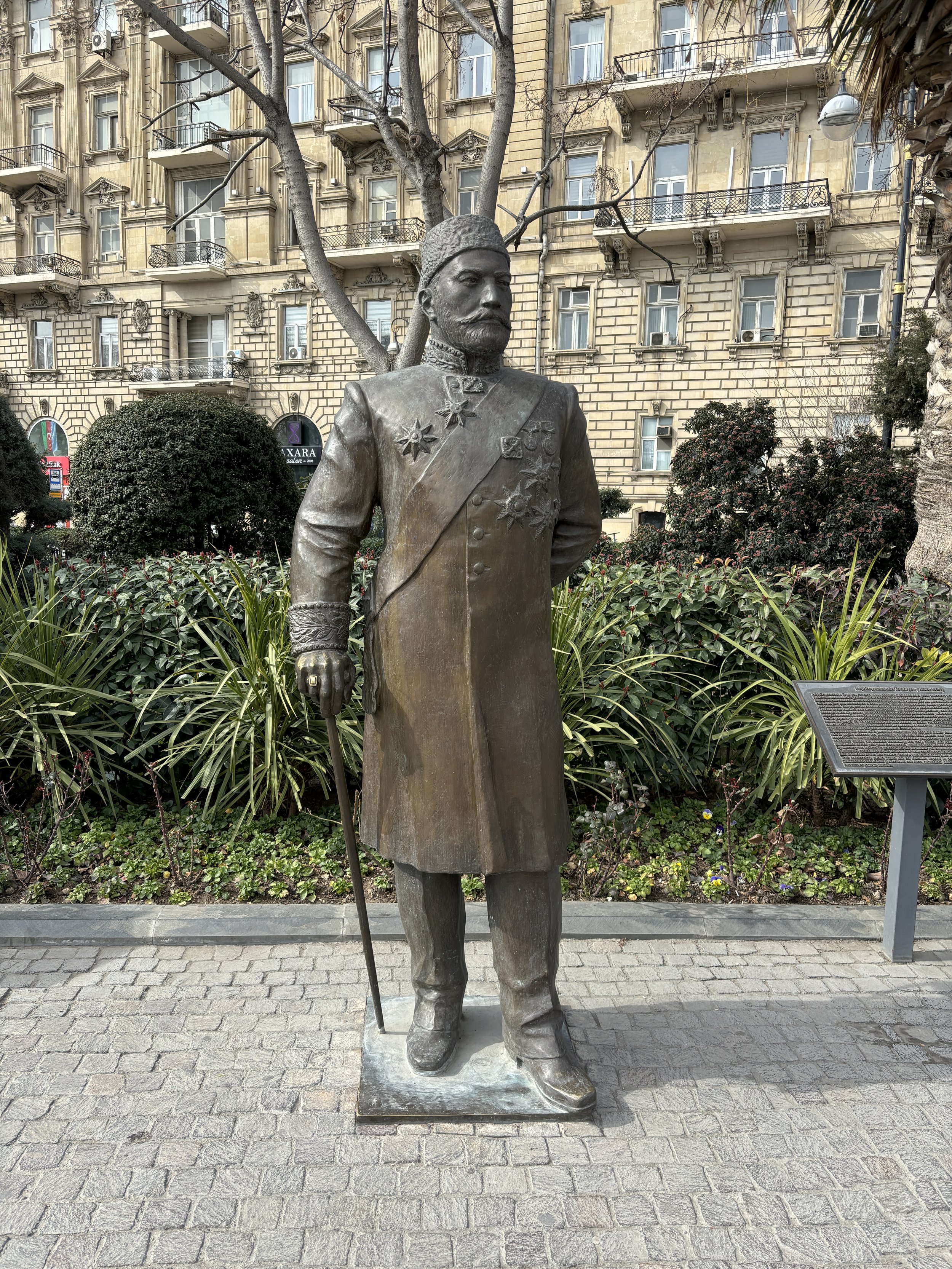
Besides the medieval part of the city, Baku is also endowed with a modern downtown which is legacy from its time as an oil boomtown in the early 20th C.
The oil business made of Baku one of the top three cities in the whole Russian Empire and this shows in the grand architecture of parts of its centre.
This part of the city has majestic buildings in the European style, with broad straight avenues and tree-lined boulevards with shops and cafés.
There are also quite a few broad squares which act as public recreational areas and there is, of course, no shortage of statues and fountains.
The public spaces in this part of the city are also kept meticulously clean and orderly.
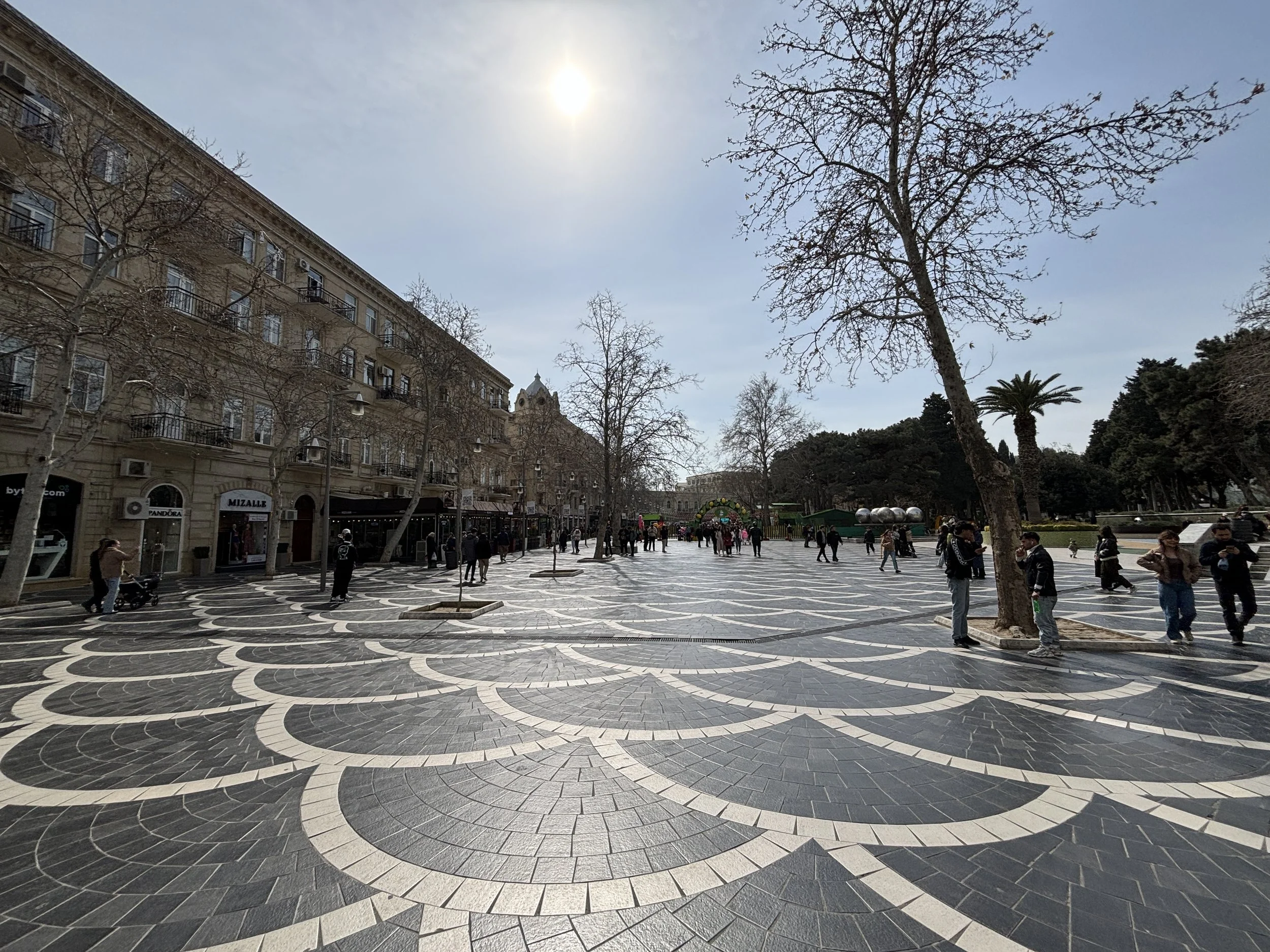
The Caspian sea promenade
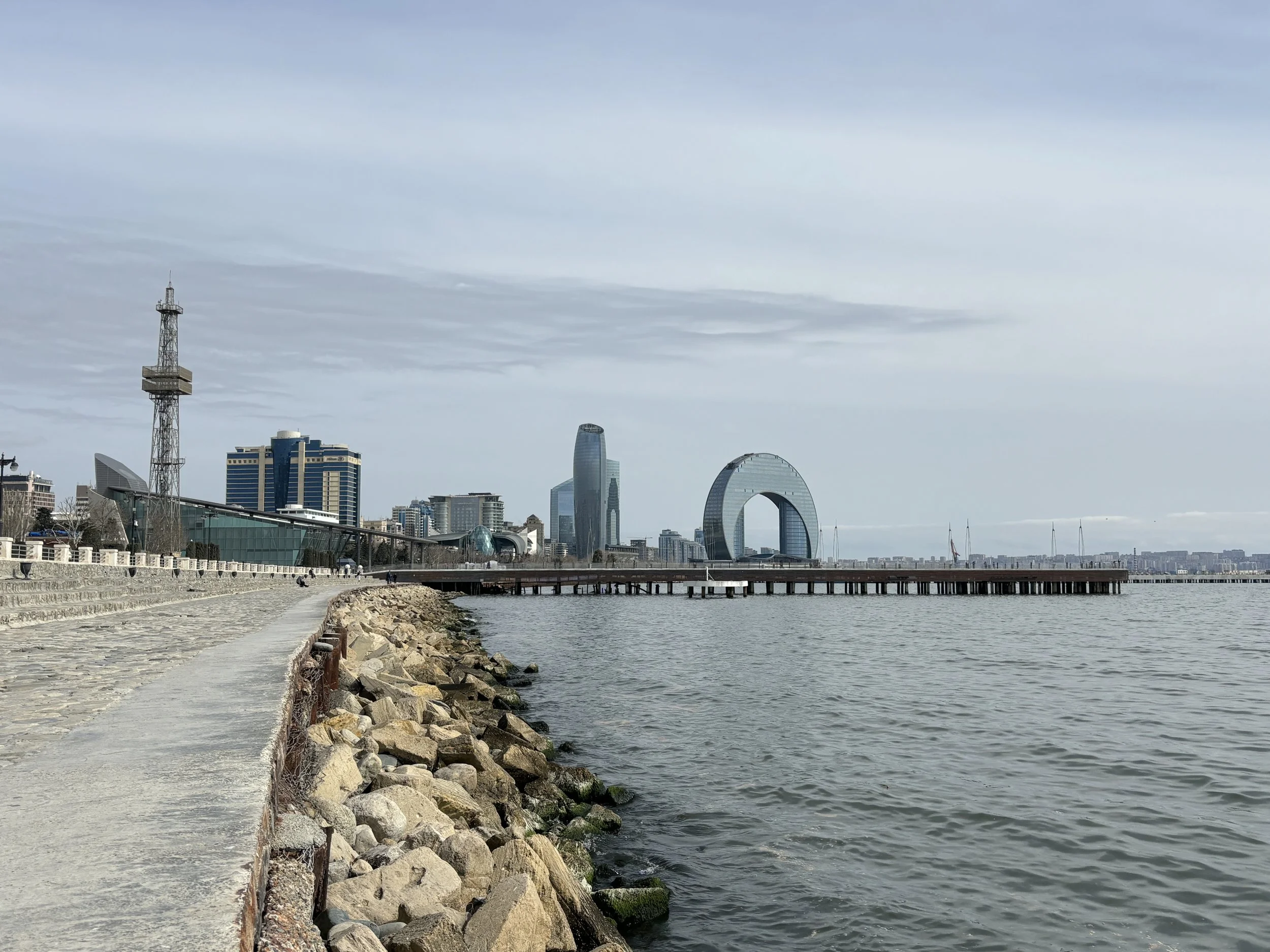
Baku is a seaside city, even if the Caspian could be technically considered a lake, since it is fully enclosed. In practical terms it doesn’t matter, because the city has a long seaside promenade, complete with a number of piers and several contemporary architectural landmarks.
The latter include the Crescent Hotel, which is the doughnut-shaped building visible in the picture above (part of a larger Korean-designed development that includes also a mall), and the National Carpet Museum, depicted below (I didn’t visit it partly because of time constraints, partly because I am not really into carpets, but this is one of the traditional crafts of Azerbaijan, so maybe worth visiting if it is your thing!).
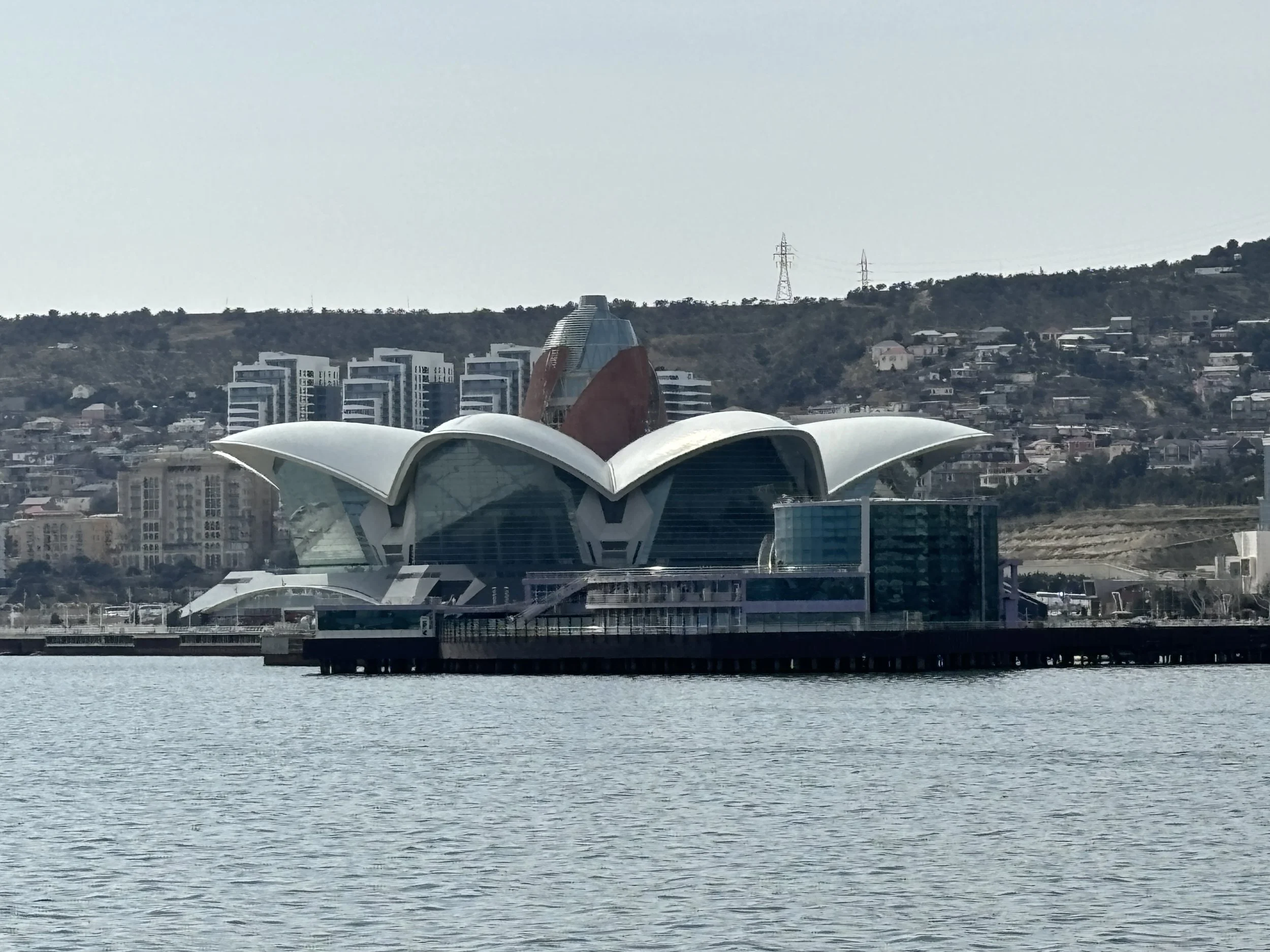
I must say that, despite being right by the water, Baku doesn’t seem to be a “beach city” in the way that, let’s say, Barcelona or Nice are.
The Caspian waters right by the promenade didn’t, actually, look very inviting and, I guess the proximity of oil extraction areas, both onshore and offshore but not far from the coast, has something to do with it. However, we were told by locals that there are some good areas for bathing in the peninsula right to the east and north of the city.
In any case, a walk onto the pier is totally recomended as it will give you an additional view of the city skyline from the water and allow you to enjoy the sea breeze.
Visiting the Heydar Aliyev Center
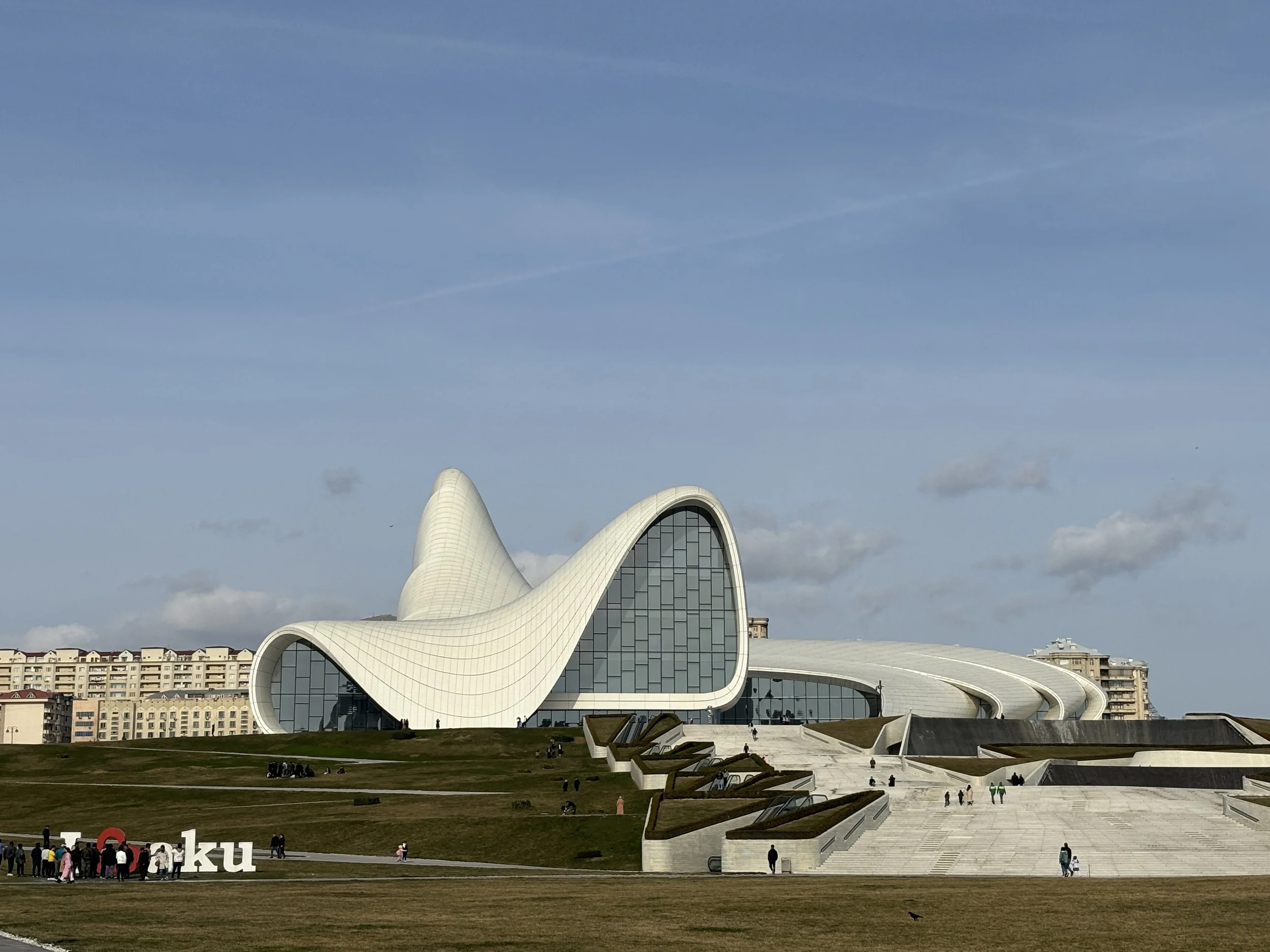
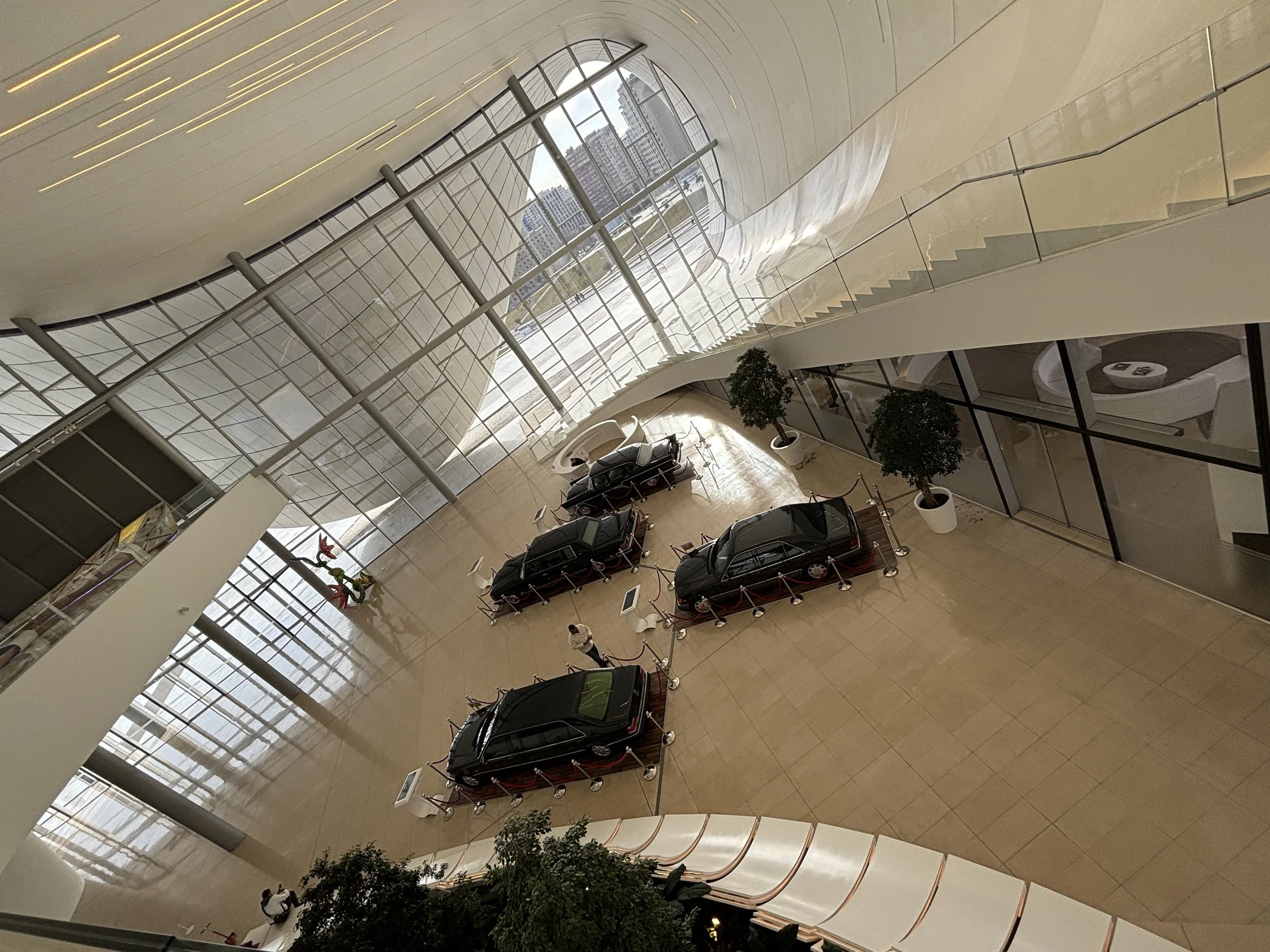
The Heydar Aliyev Center is the other must-visit architectural landmark in Baku.
This iconic building, the work of the late renowned architect Zaha Hadid, is part museum, part cultural centre, part conference venue. It was designed to become a symbol of the city and to represent the modernity of independent Azerbaijan, with an instantly recognizable tangible symbol.
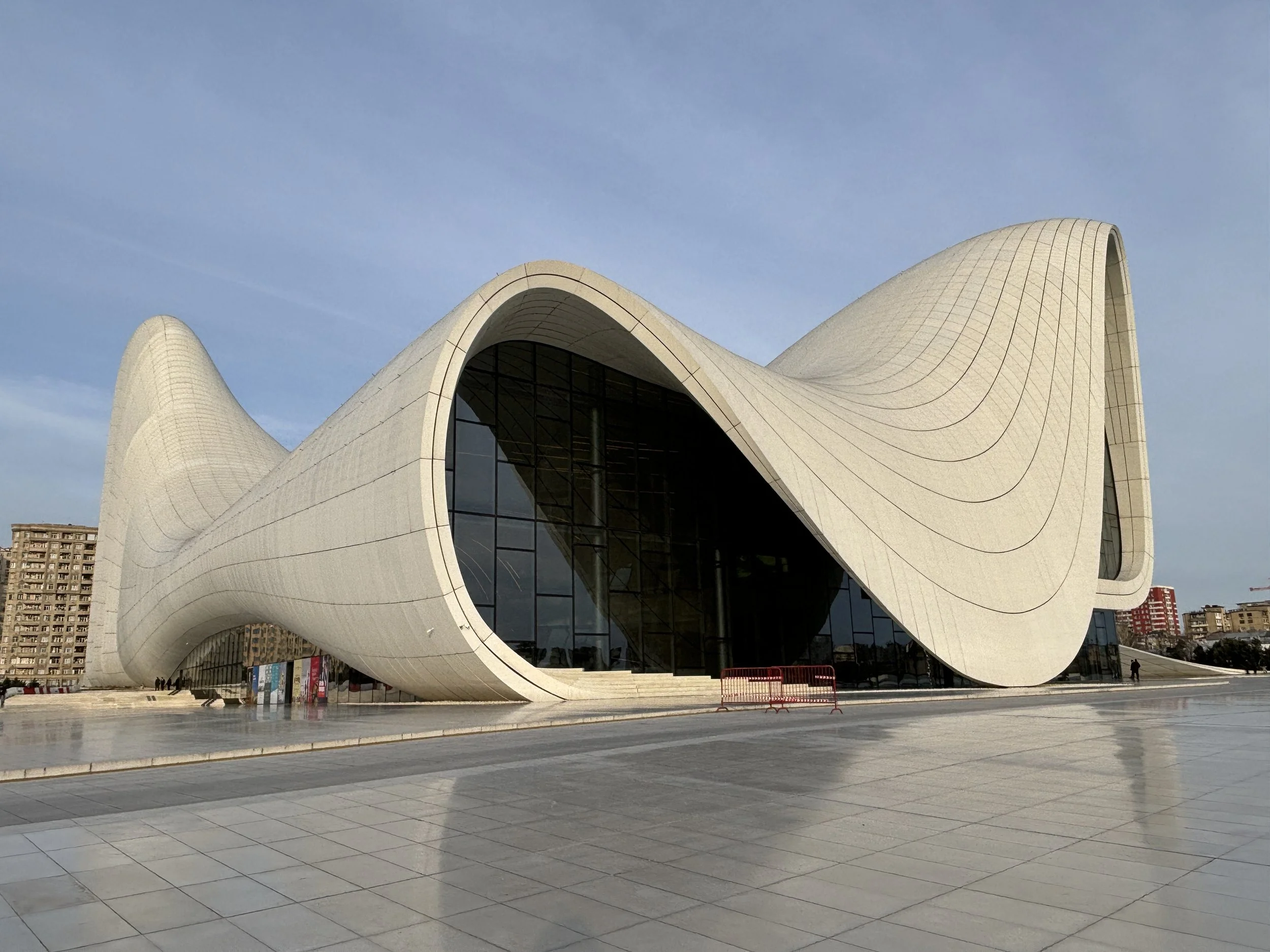
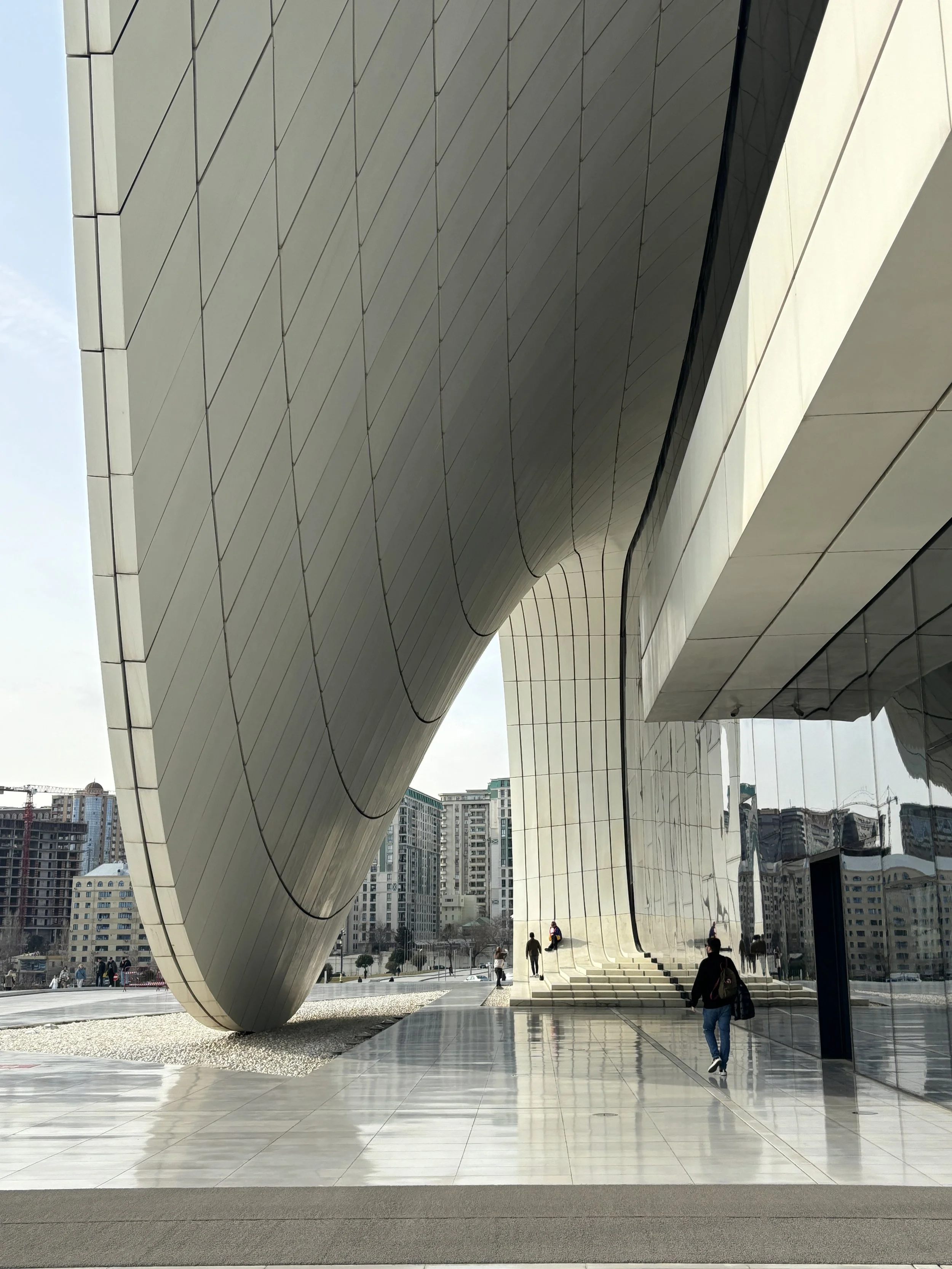
One of the defining characteristics of the Heydar Aliyev Center is the fact that it does not have a single straight line. This gives it an appearance of dynamism and weightlessness despite being a really massive building! It is also located on top of a small hill with wide open spaces on all sides, which makes it easier to appreciate its uniqueness and the genius of its design.
While its outer appearance makes the Heydar Aliyev Center already worth the visit, its inside is also quite interesting.
First there is the architectural part, as well, with the internal spaces organized in a rather unconventional way. But the center houses also several collections and exhibits, ranging from art to the history of Azerbaijan and the life and works of the person that the center is named after, Heydar Aliyev, who ruled Azerbaijan both during the Soviet period and after independence and founded the dinasty that still rules the country).
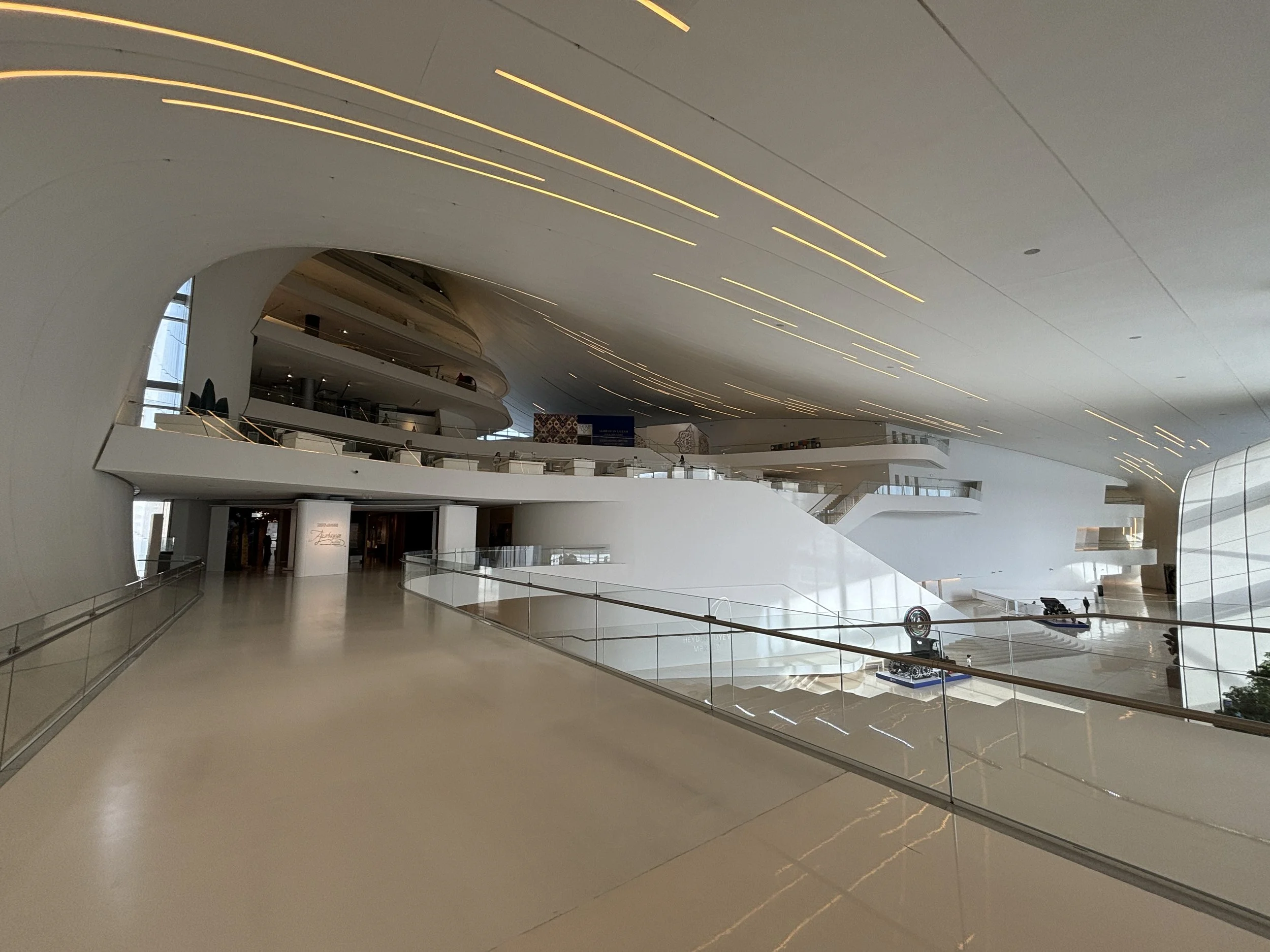
The collections are quite well presented, even if the topics can be quite eclectic. You may wanna put aside a couple of hours to see them all.
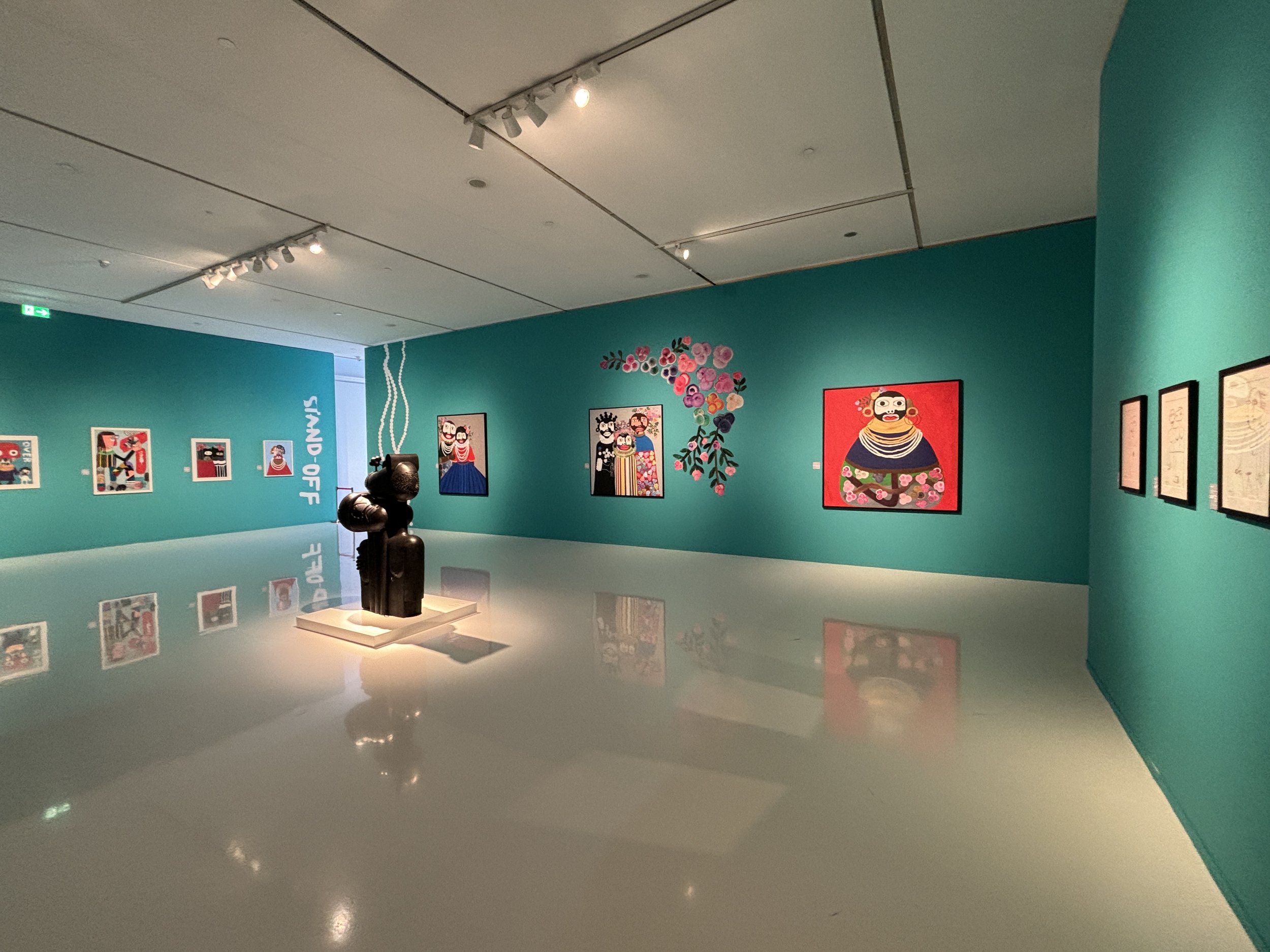
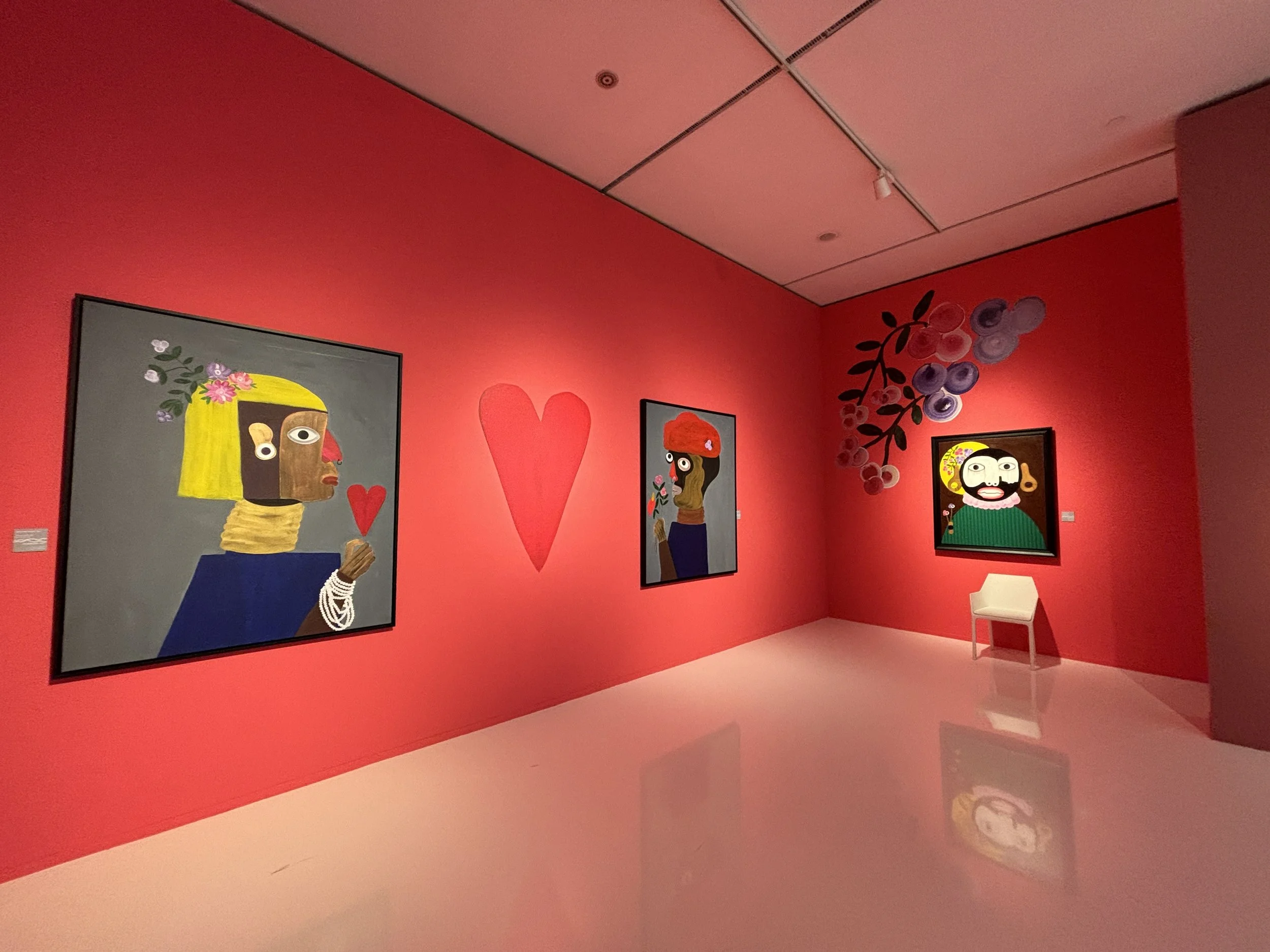
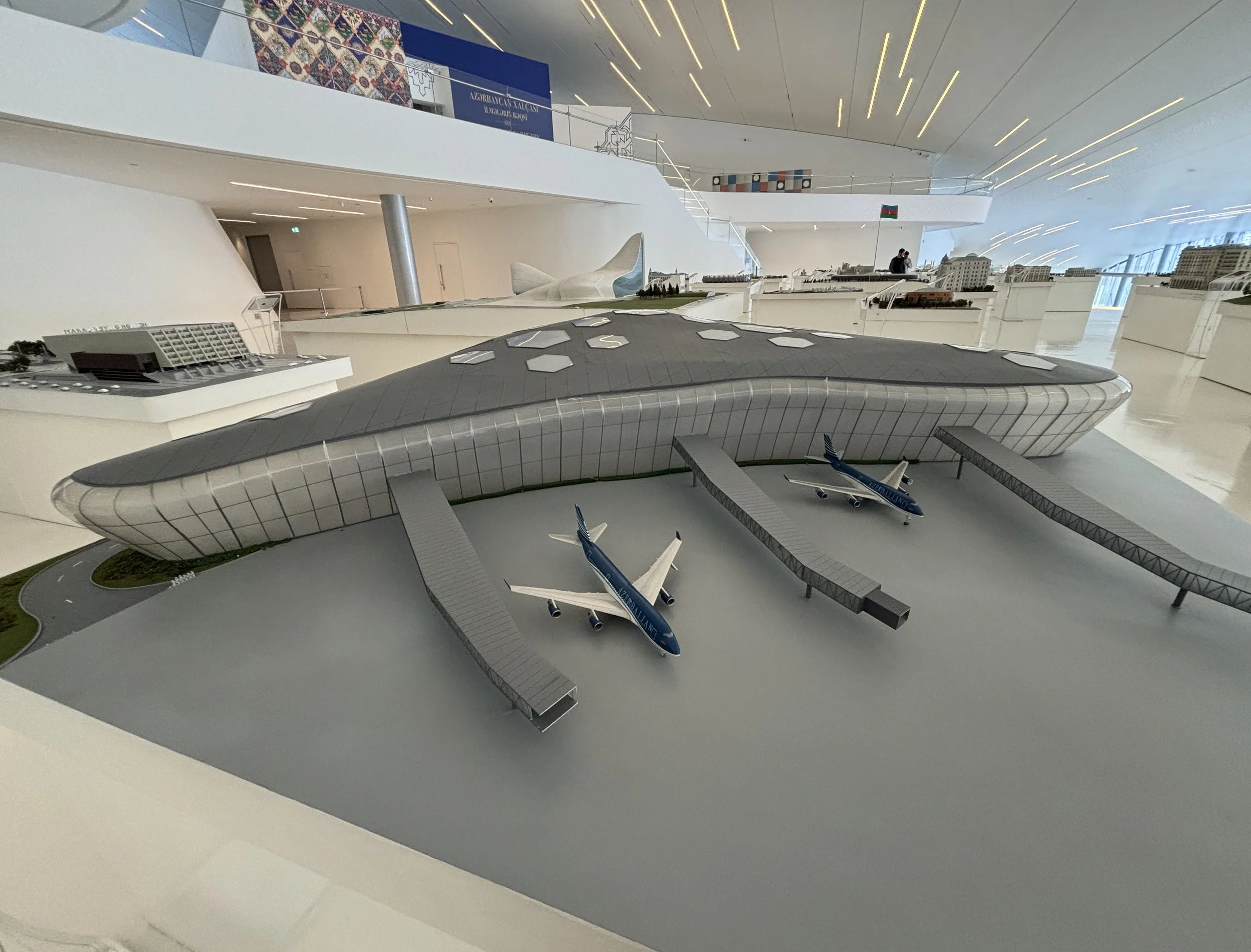
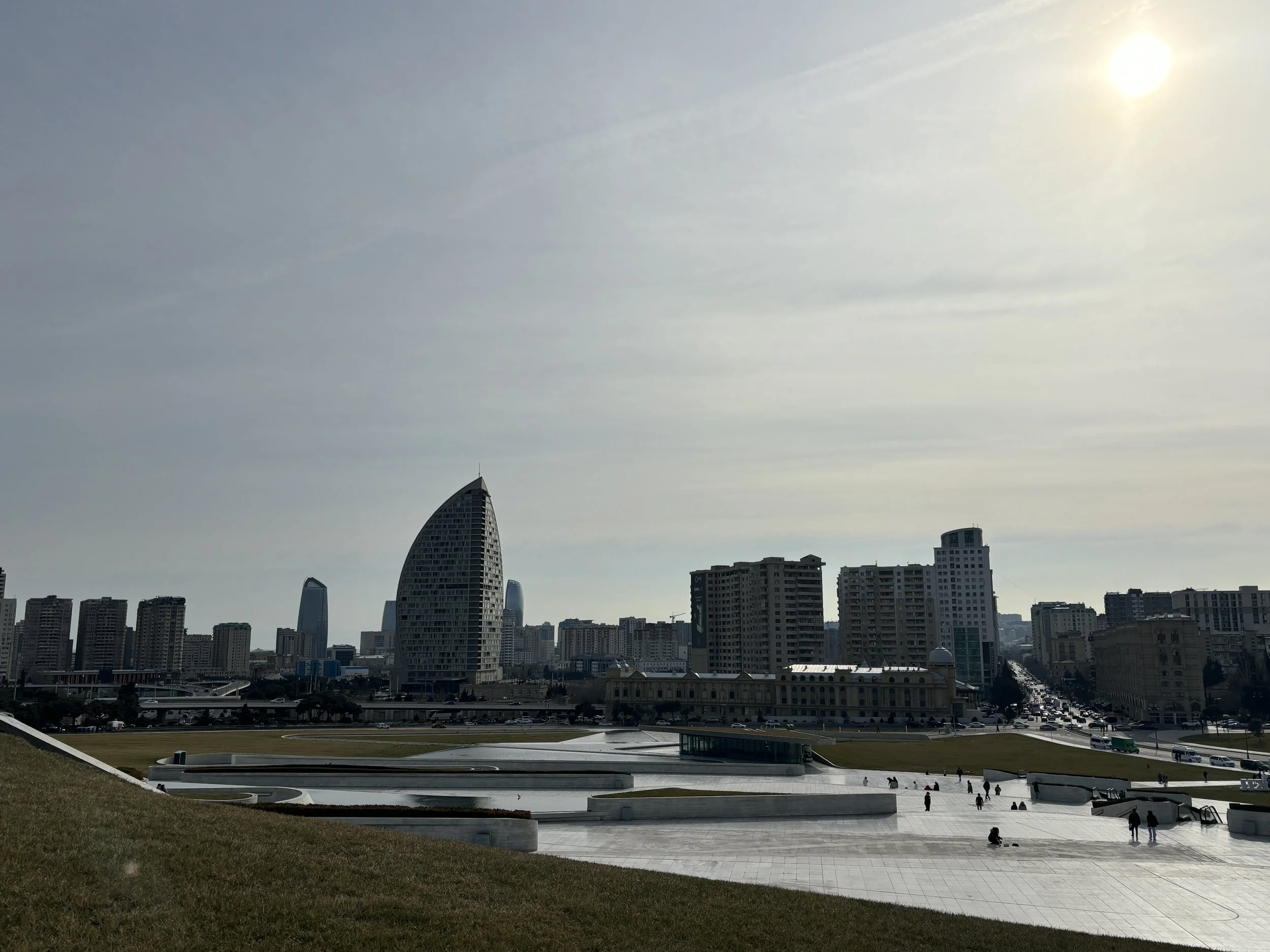
From the Heydar Aliyev Center you can get yet another view of Central Baku.
Where to eat traditional Azeri food in Baku
Qaynana Restaurant
Kichik Qala, Baku
This is a restaurant of Azeri cuisine that is located at the edge of the old town, next to one of the old city gates. If you are looking to sample traditional Azeri food, this is a great choice!
It offers great ambience and large portions of tasty traditional food at reasonable prices.
Don’t be surprised if there is queue to get in, though. It is best to try to book in advance, because this place is popular and has high turnout!
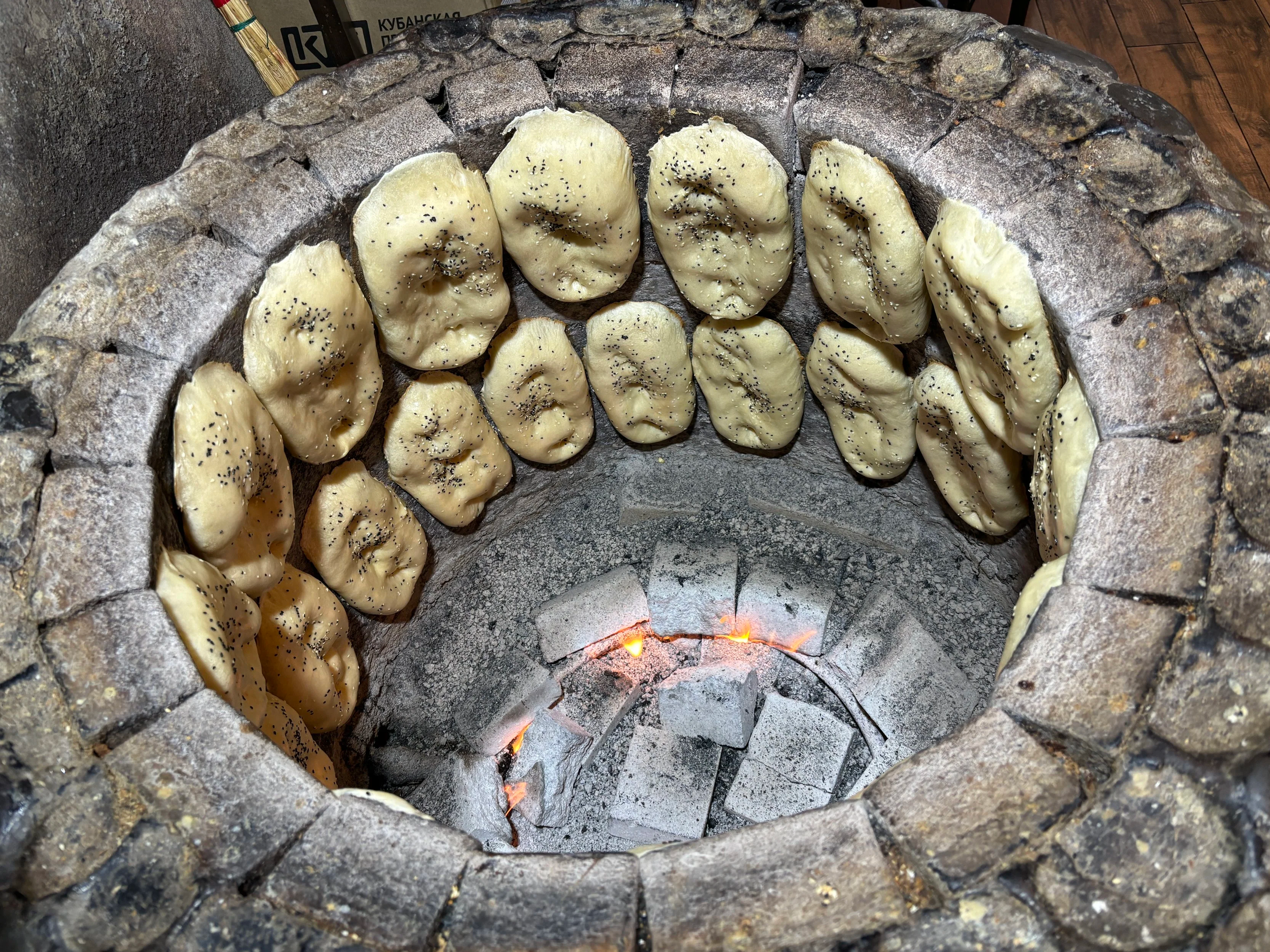
One of the specialities of this place is the freshly baked bread called çörək, baked on the spot in a traditional tandoor clay oven.
You can actually watch the whole process, from the moment they shape the dough to its baking in the tandoor and, then, the moment when it comes out of the oven and is brought straight to the tables, warm and ready to eat.
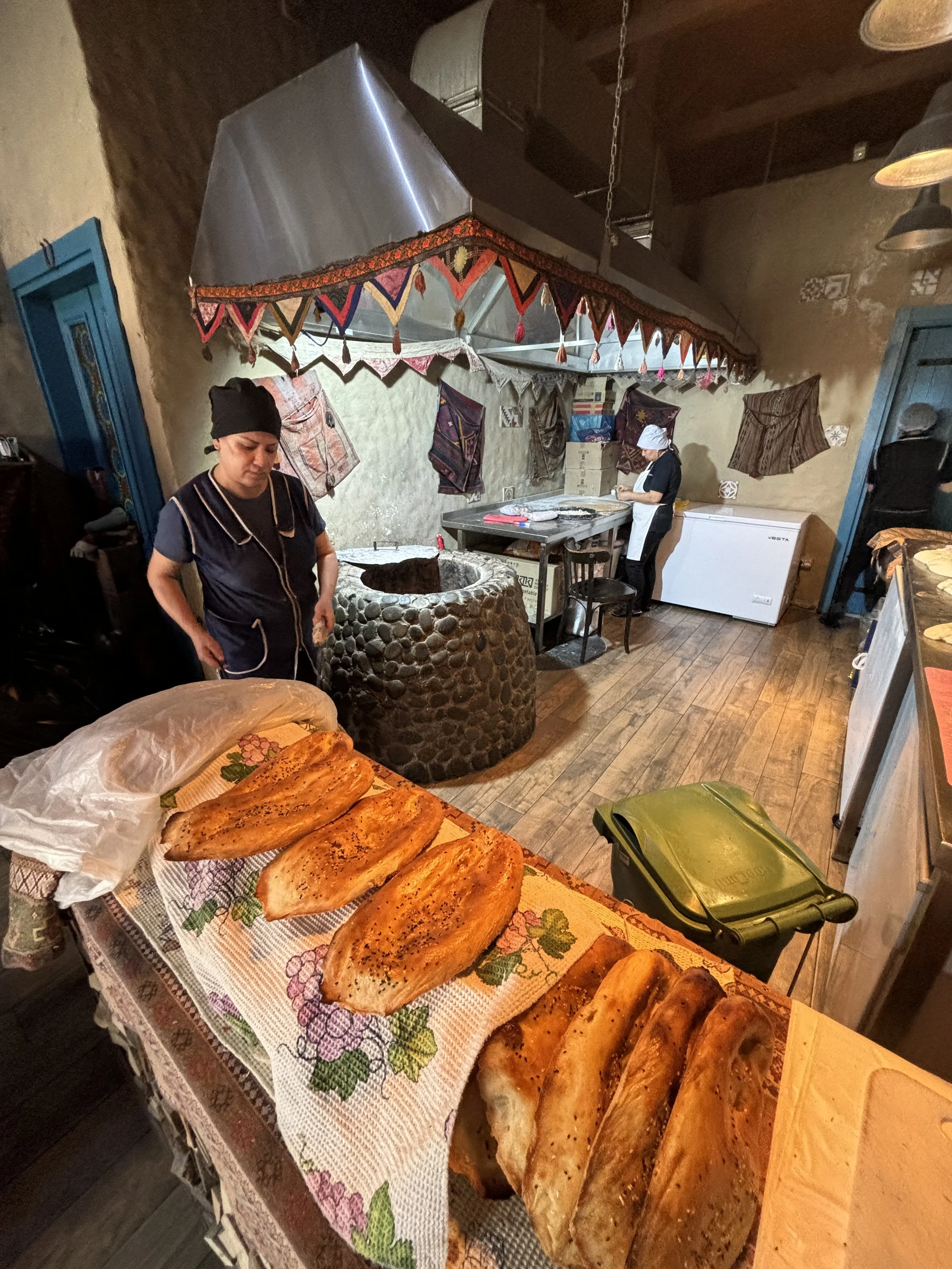
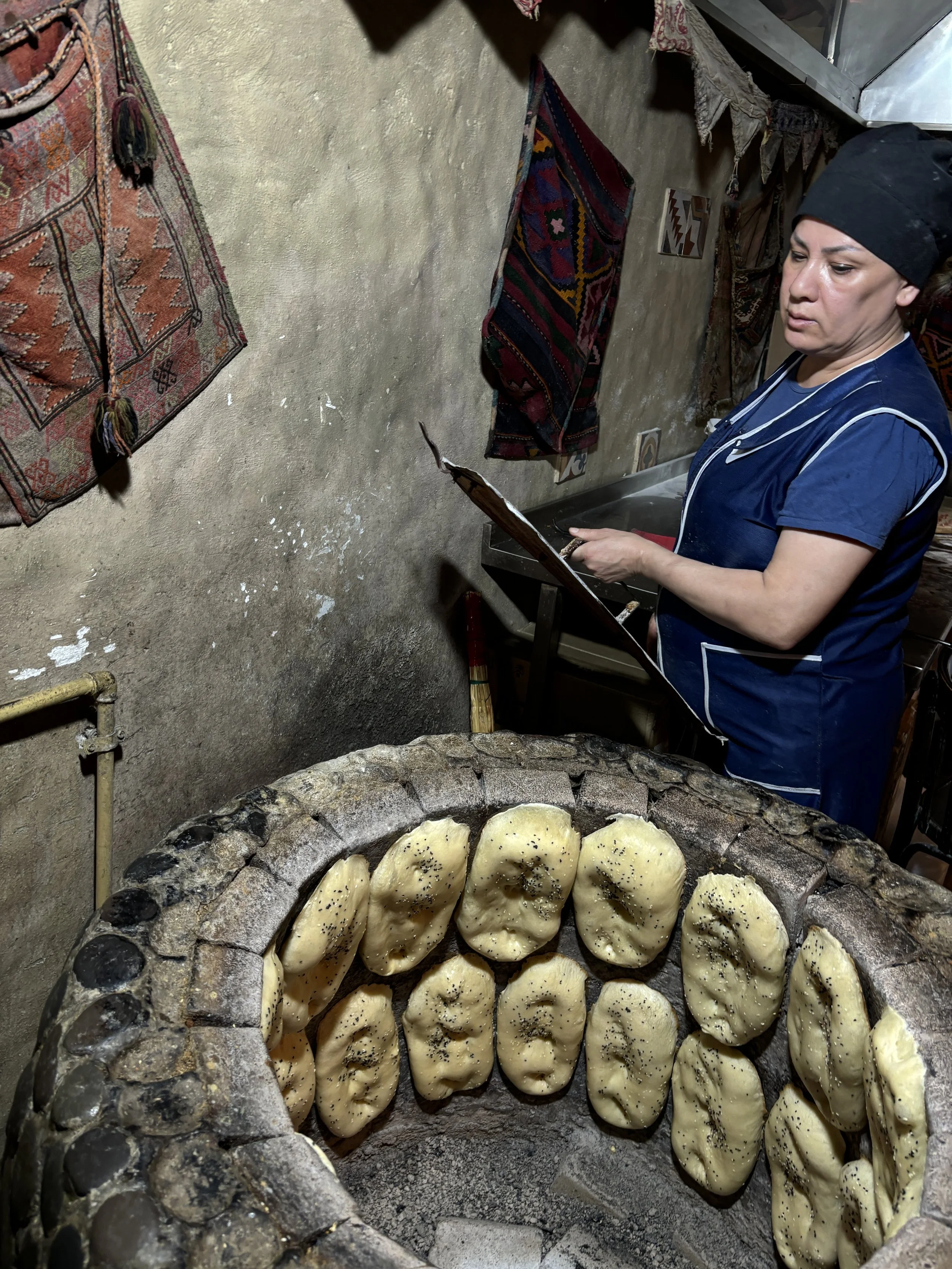
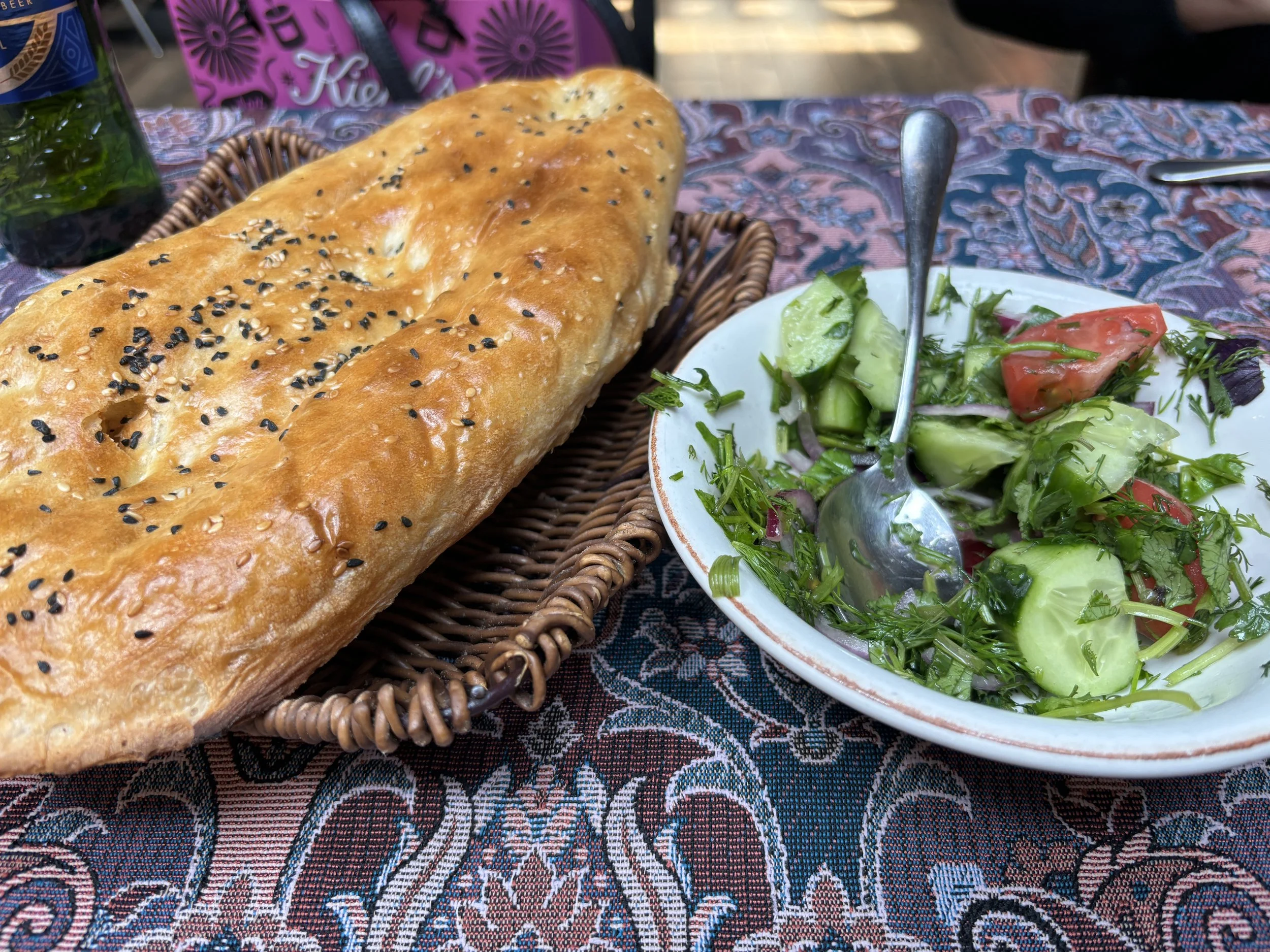
Here below you can see the final results, it is an amazingly tasty bread, but take it easy, because it is tempting to eat lots of it without even noticing. I would recommend leaving some space for the other specialities the restaurant has to offer.
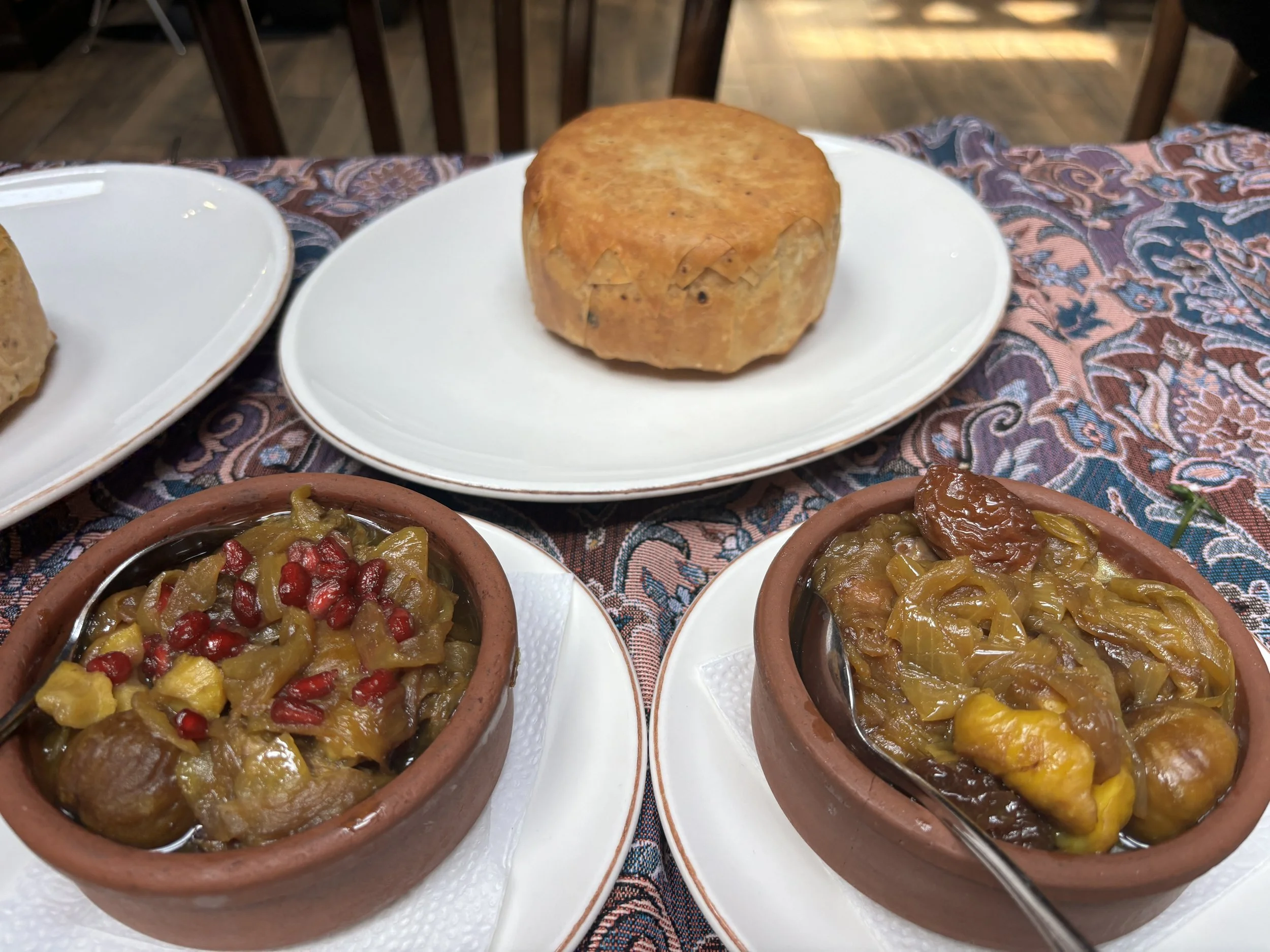
The signature dish I recommend tasting is Shah Plov, which consists of rice cooked inside this type of dough cake you can see depicted below, which is called kazmag, accompanied by lamb and dried fruit stew (chestnuts or plums with pomegranate). But this is not all…
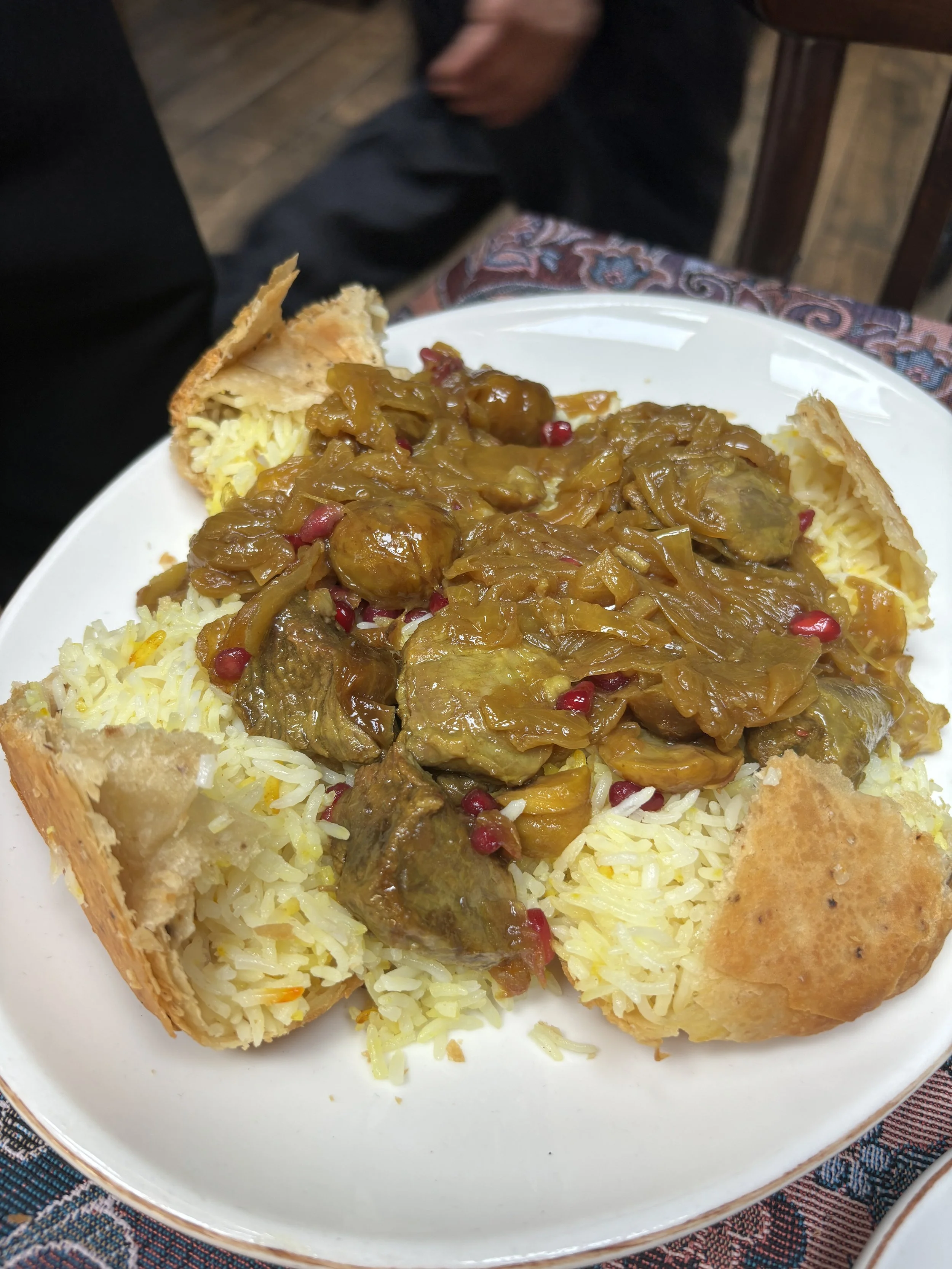
…because of the highlights of a meal at Qaynana is the moment the waiter brings the Shah Plov to the table and cuts the kazmag open with a knife. Its sides fall perfectly in different directions, leaving the warm rice exposed and ready to be mixed with the stew.
It’s a really substantious and filling dish, you have been warned!
Where to stay in Baku
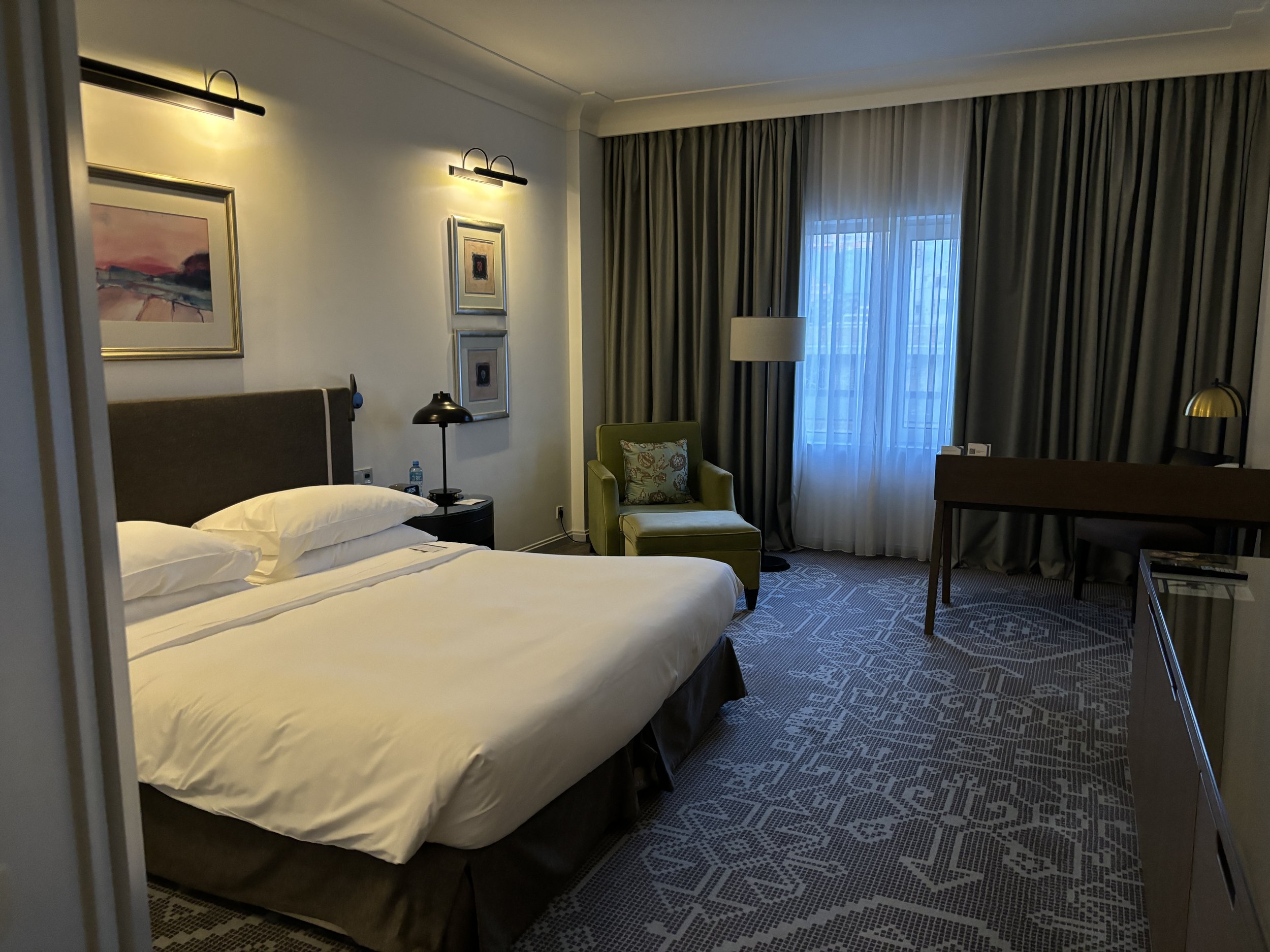
Hyatt Regency Baku
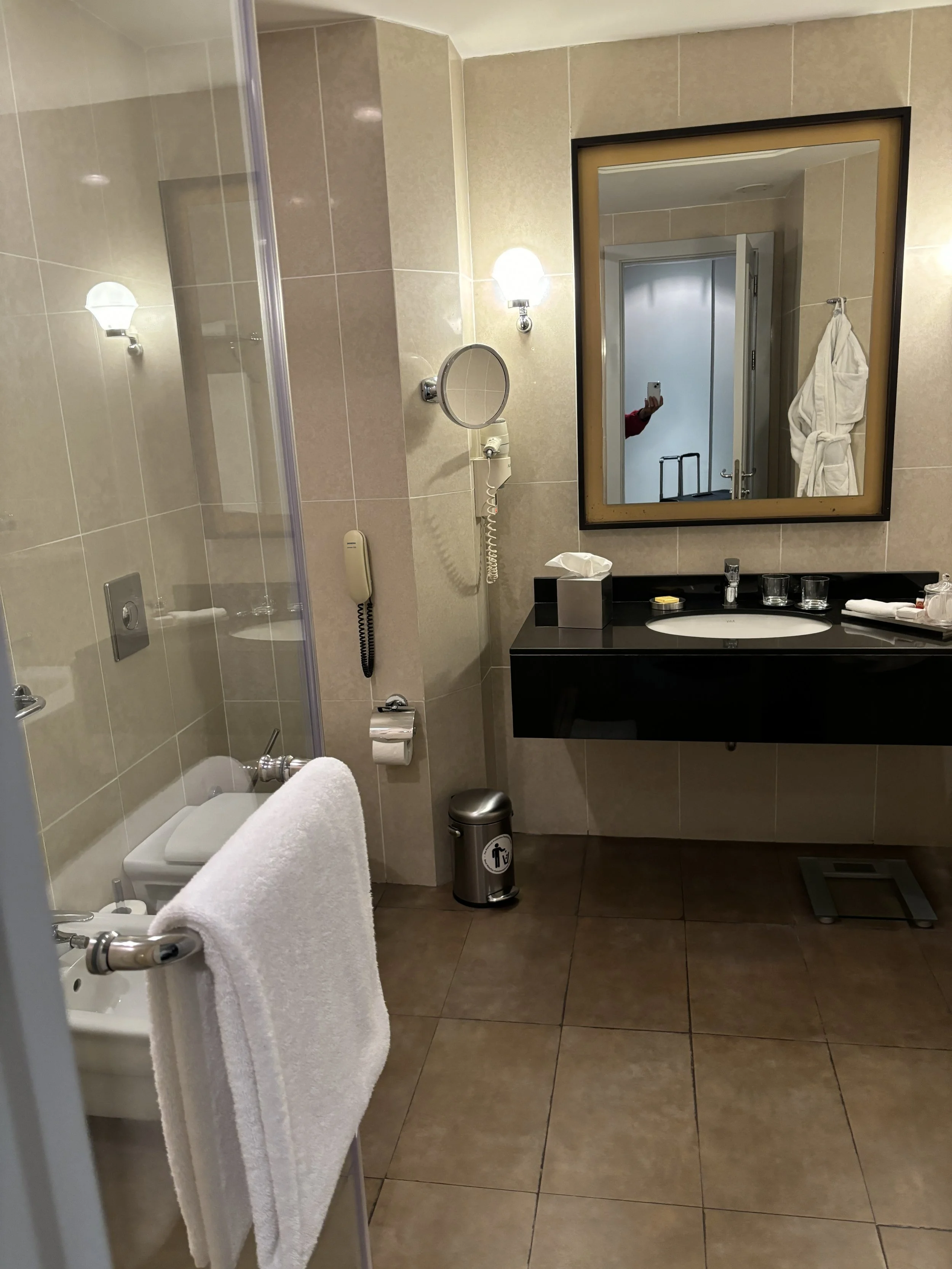
You can go wrong with this hotel. It is solid, modern hotel located in one of the city’s main avenues (not exactly next to the old town, but just a short Bolt ride away or a 25min walk if you feel like it).
The rooms are big (and the bathroom as well), staff were very helpful throughout and breakfast was really amazing, with lots of different local specialities.
Perhaps just a seasonal thing, but you can get really good rates for five-star hotels like this one in Baku!
Excursions around Baku
So, now that we have checked the key hotspots in Baku, it is time to see a bit of the Azeri countryside!
On this trip I describe two such excursions:
To the ski resort of Shahdag (some 2.5-3h from Baku by car to the northwest)
A visit to the rock art of Gobustan (1h by car towards the south)
Shahdag, to be fair, is a bit far for a one day trip, so I recommend spending one or several nights there, and will provide some recommendations in this regard. The excursion to the Gobustan Rock Art can be done as a day or even half a day trip from Baku.
To both places I travelled with a local driver that we hired in Baku through recommendations of locals, but you can find tours and excursions online to these places as well.
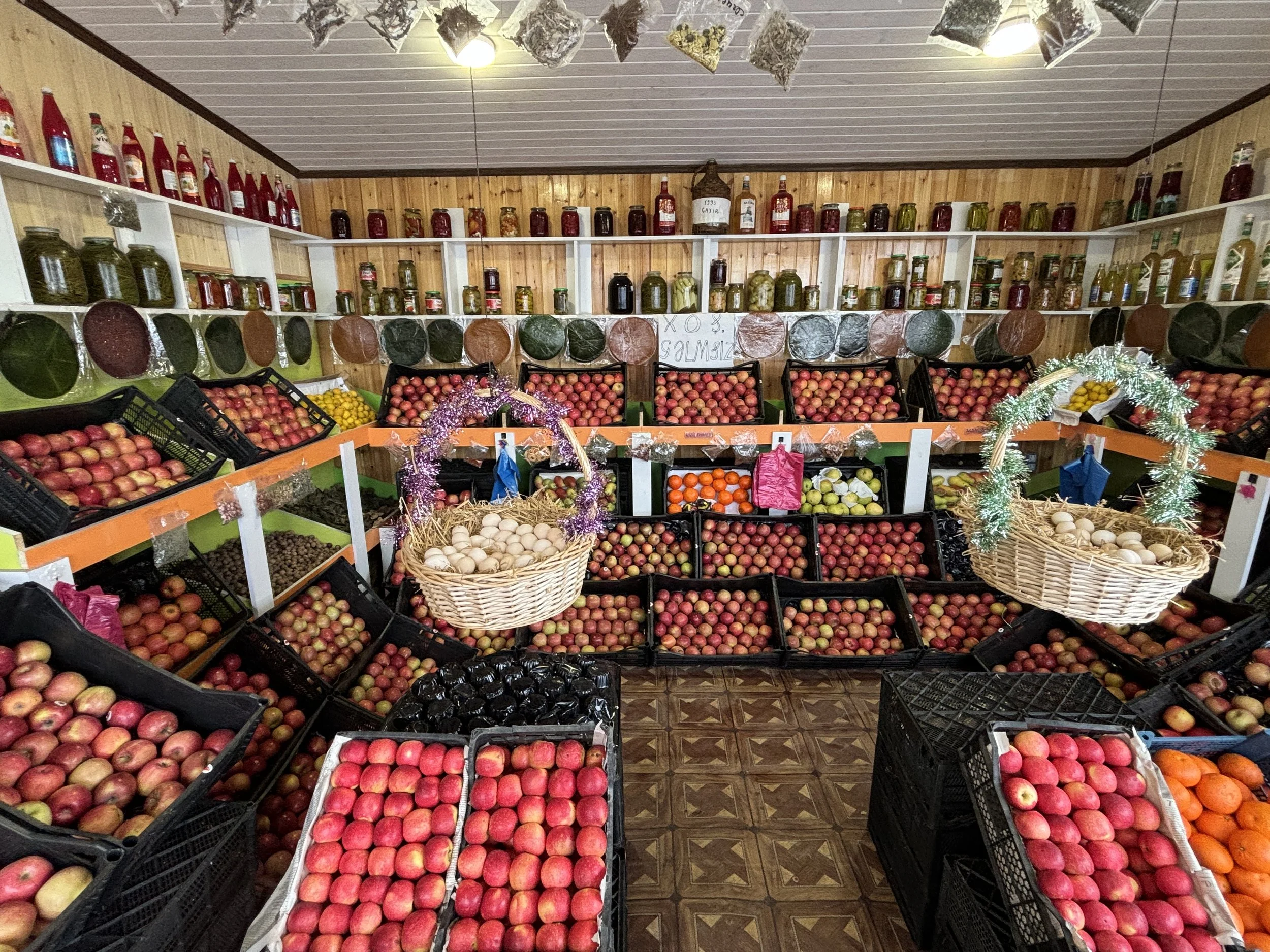
Before getting to destination, though, if you have the chance I suggest stopping at any of the many roadside produce shops that you find throughout Azerbaijan.
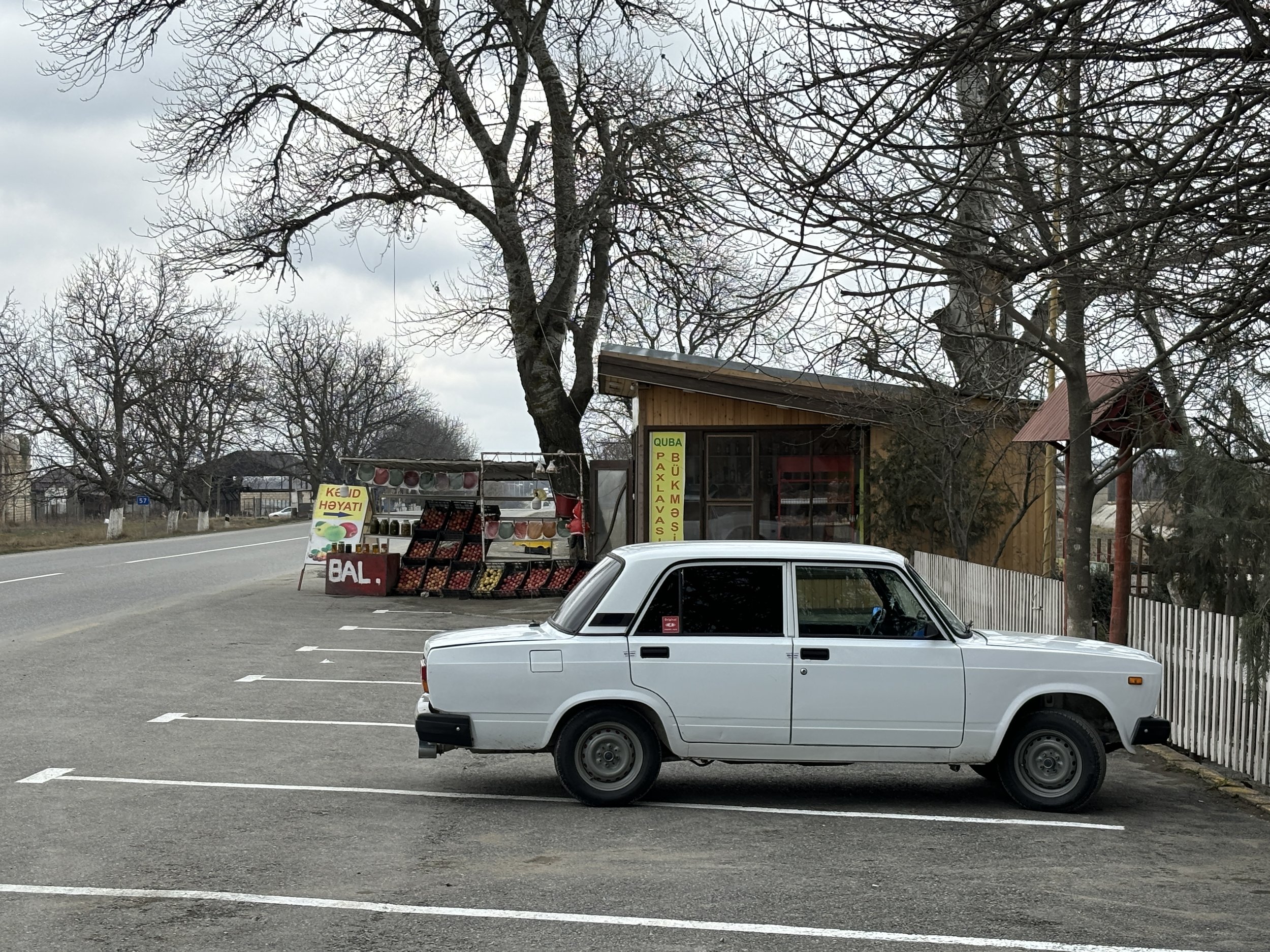
This particular shop, on the road between Baku and Shahdag was all about apples (btw, if you are into apples, do not miss this post about Mooma, the “apple paradise” in Catalonia!)
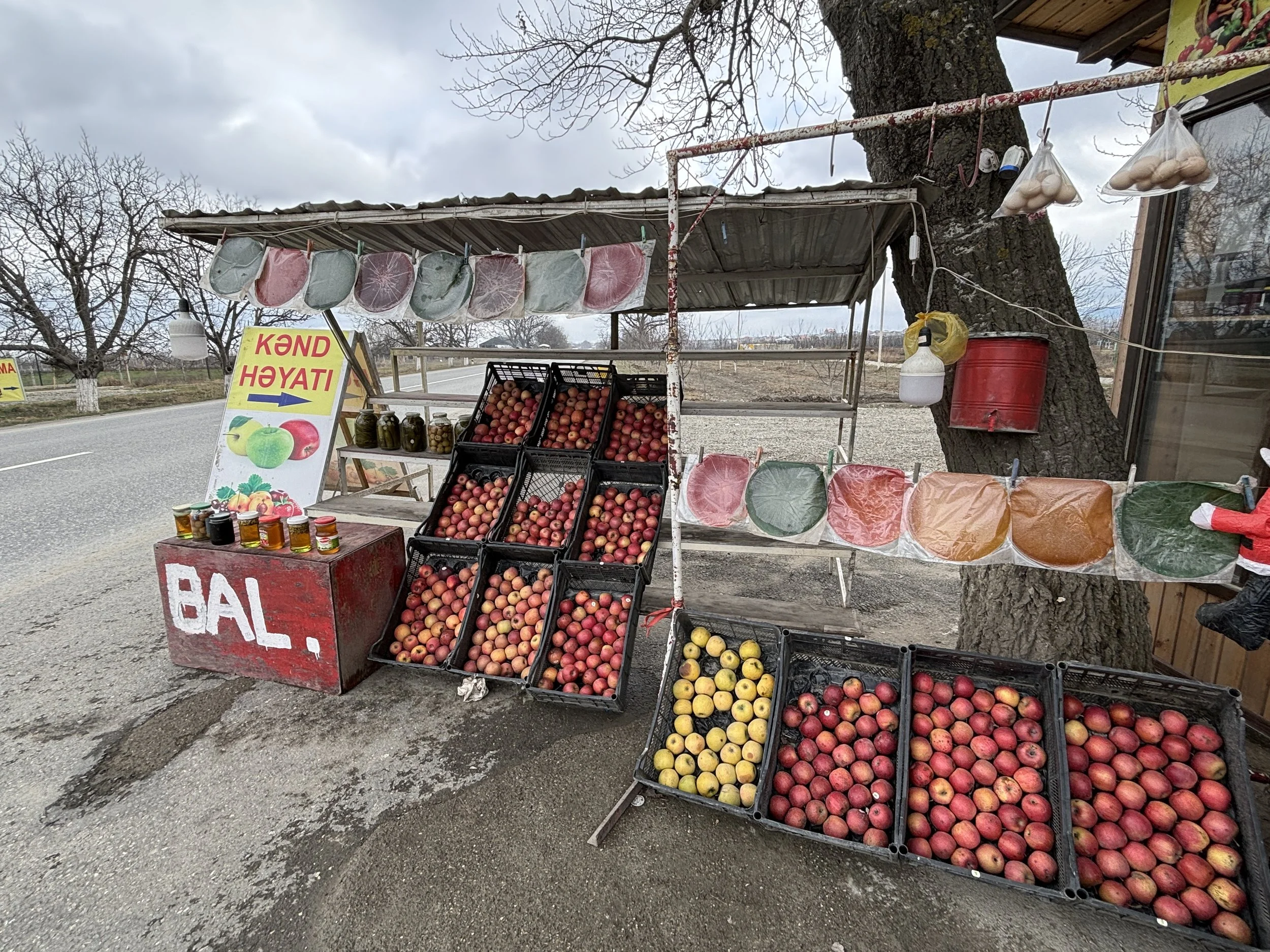
There are apples of all colours and shapes, as well as derivative products. The one that I found it particularly interesting, since I have not seen it anywhere else outside of Azerbaijan are these circles of different colours (red, brown, green) that you can see in the pictures above and below.
These are “lavashana”, a traditional Azerbaijani (and broader South Caucasus) which are round panes made of dried plum or apple paste. They are eaten as dried fruit snacks. You literally snatch little portions of the circle with your fingers as you eat it.
Skiing in Azerbaijan: the Shahdag ski resort
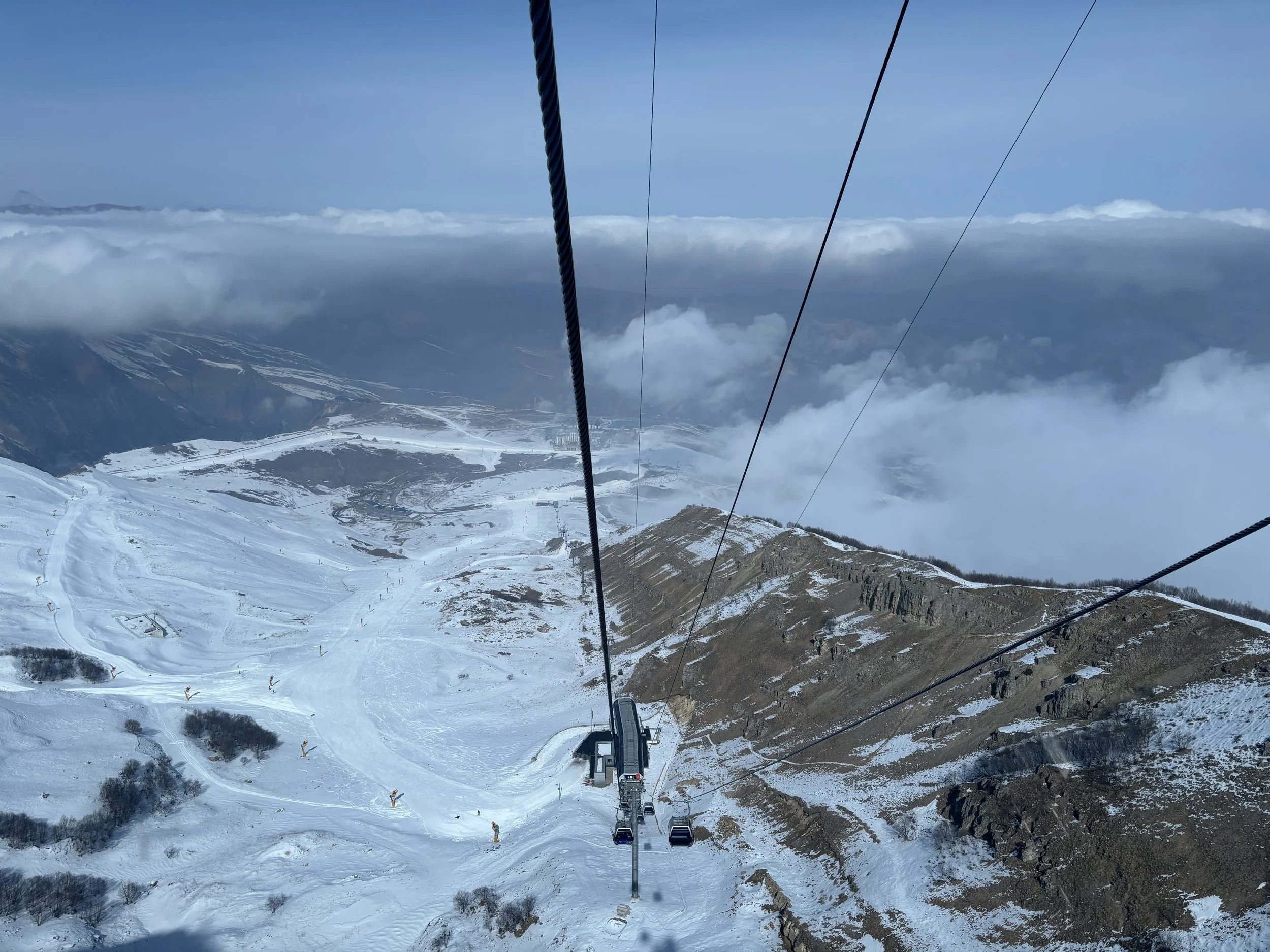
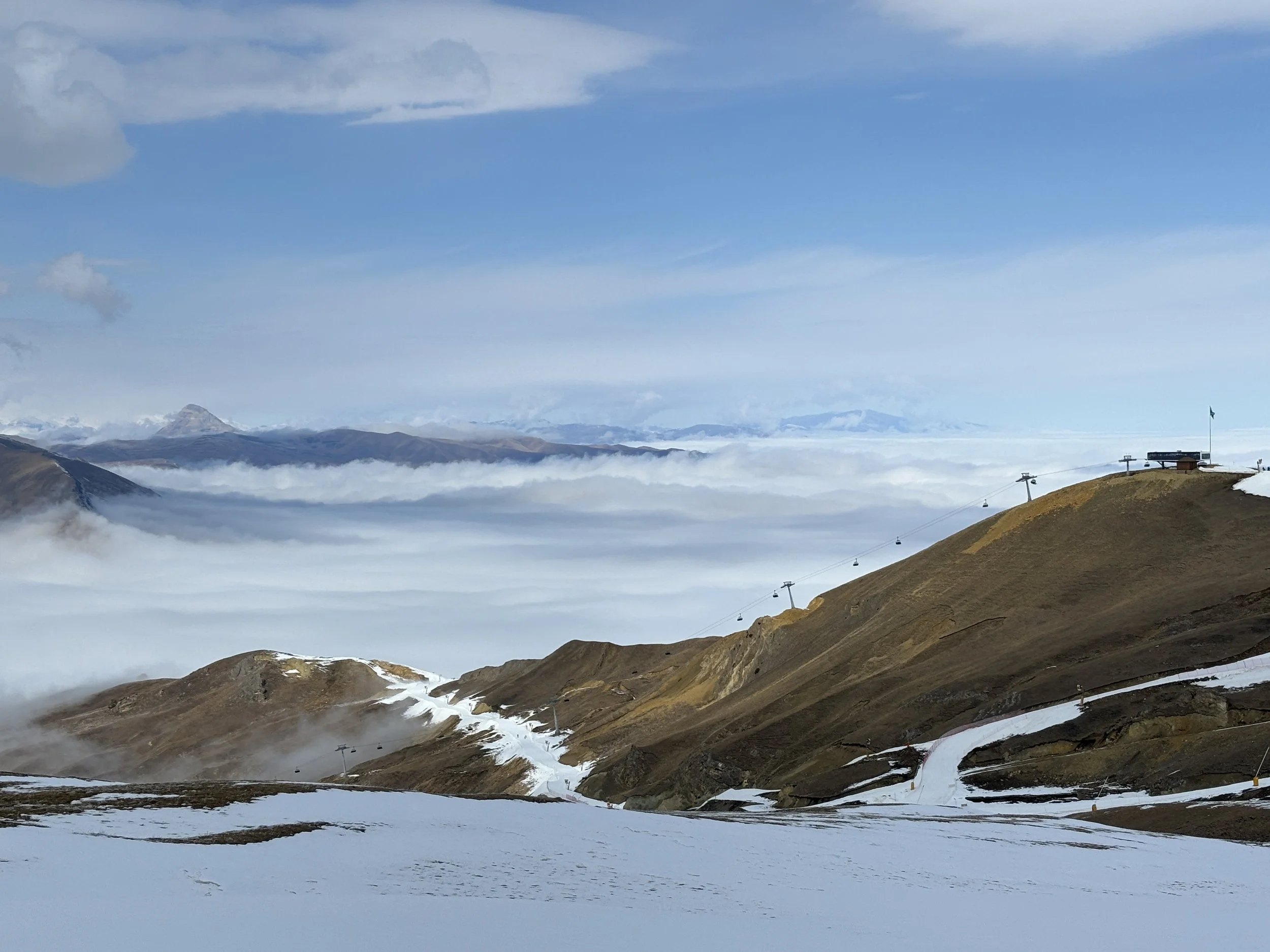
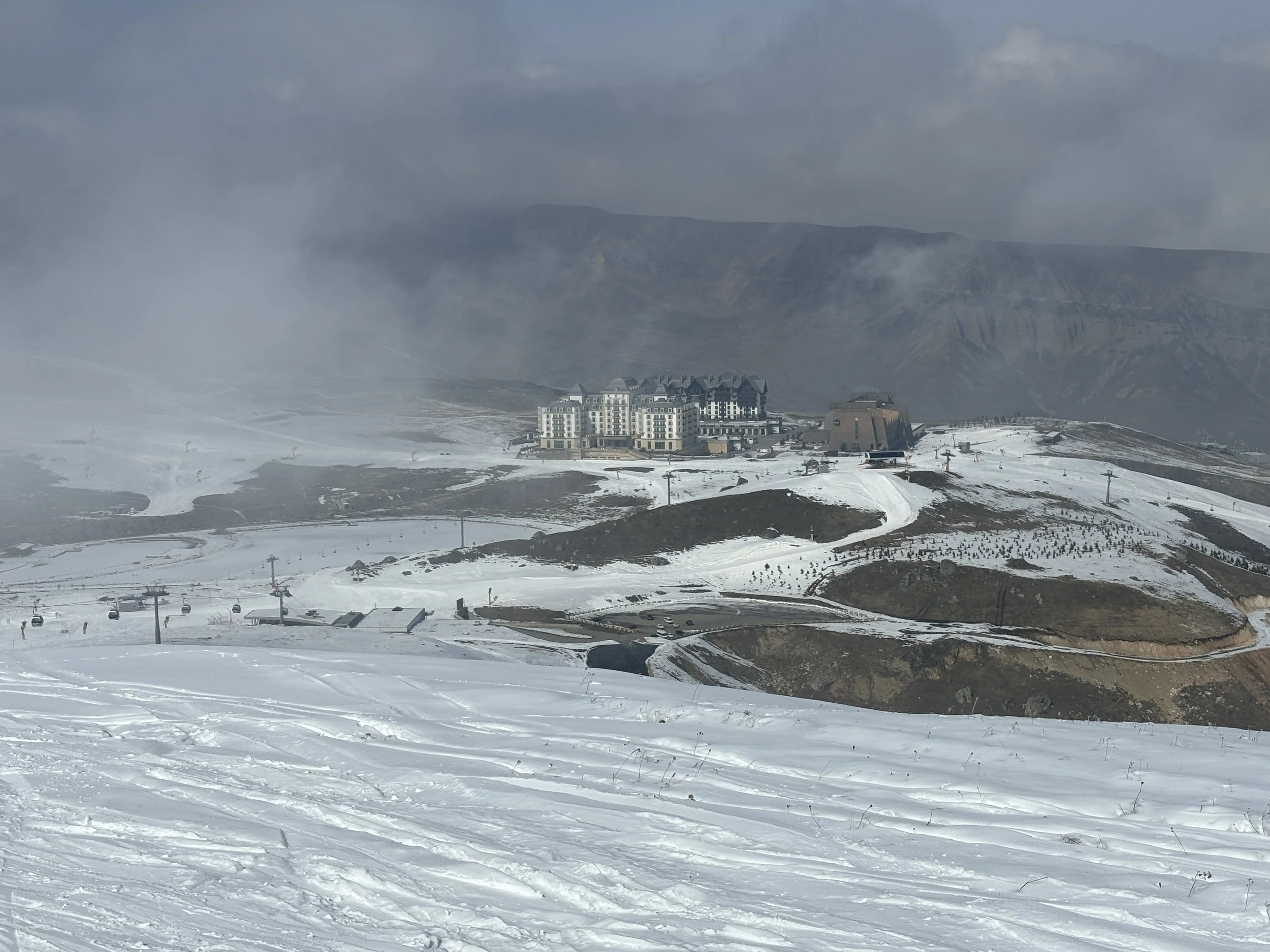
The Shahdag ski resort turned out to be an amazing find. It is located to the northwest of Baku, very close to the Russian border (you can actually see Russia from the top of the slopes).
The skiing domain has some 37 slopes ranging from 1,435 to 2,552 metres of altitude and even at the end of the season, as it was the case of our visit, you can expect really good quality snow here.
Shahdag has several things going for it:
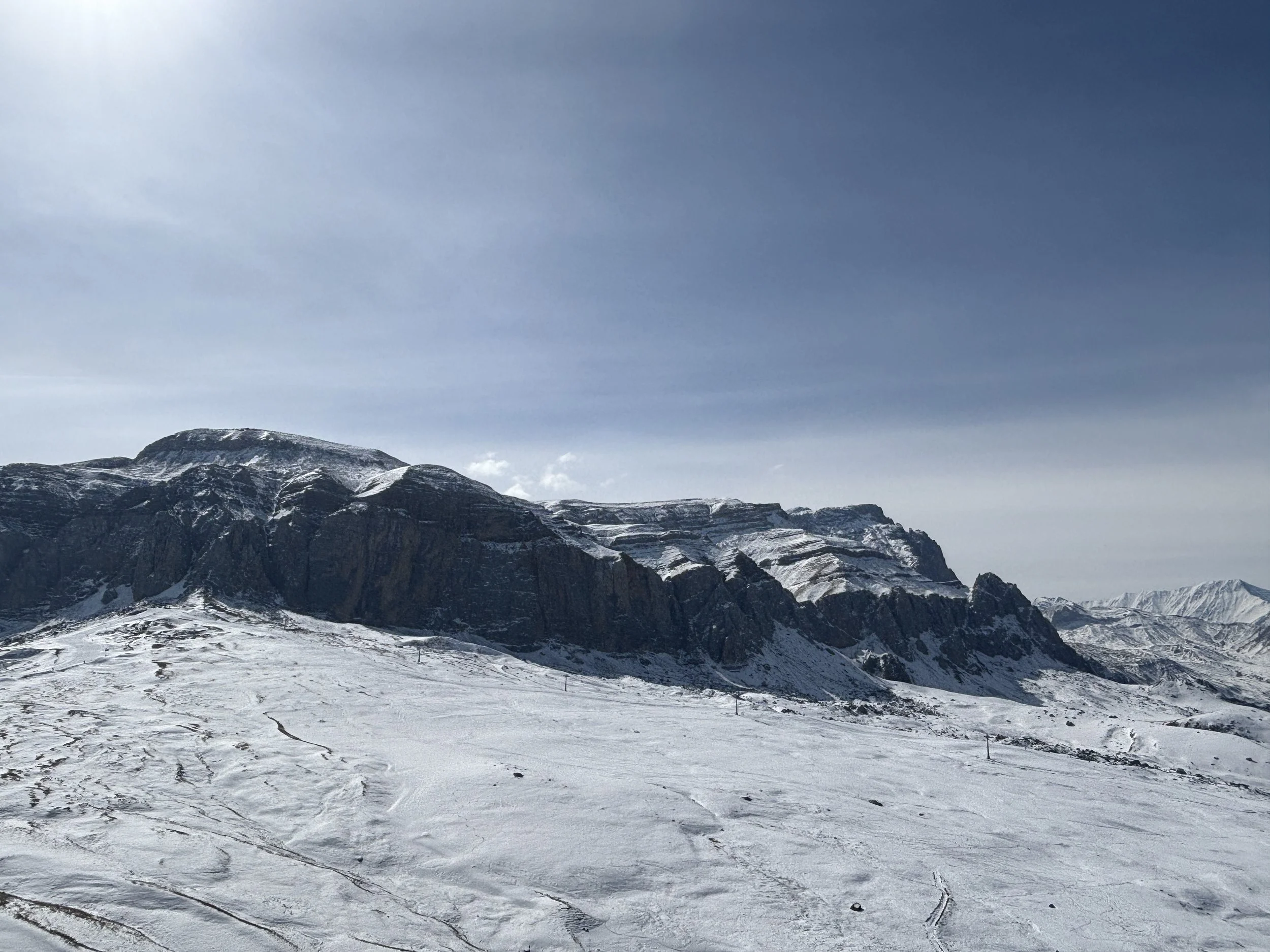
The natural setting, which is truly magnificent.
The skiing area is quite compact, with pretty much all the slopes converging at the hotel area.
There are hardly any crowds
Prices, from the forfaits and materiel rentals to the hotels, even the most upmarket ones, have pretty reasonable prices if you compare them with what the equivalents would cost in Europe!
It is also worth noting that Shahdag is quite a young resort, which only opened in 2012.
It is also a sort of flagship project for the Azerbaijan tourism industry, in fact the country’s president, President Ilham Aliyev laid out the first stone of the project back in 2009.
You can tell a huge amount of investment has gone into its development because the equipment and infrastructure is all pretty new. Shahdag is, in fact, an ongoing project with plans to continue expanding it.
Shahdag is also a greenfield project. The centerpiece of the resort and, pretty much its only infrastructure, is the hotel cluster, which is located right at the bottom of the slopes. There is practically nothing else around.
This makes it really convenient if you are staying at one of the hotels (more on this below), but means you are virtually in an island in the middle of the mountains.
Where to stay in Shadagh
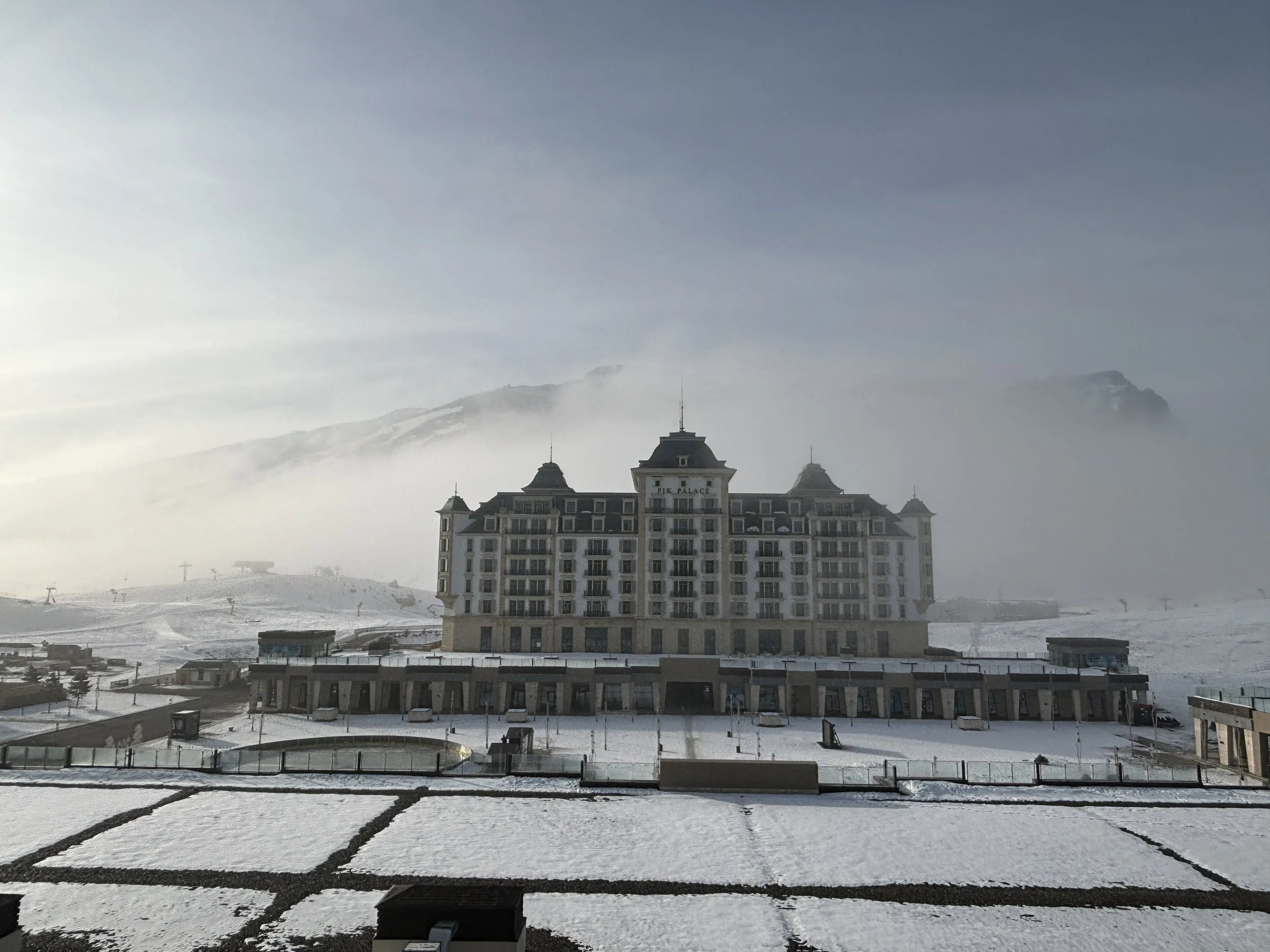
Park Chalet, Shahdag, Autograph Collection
This is one of two five-star hotels in Shahdag (there are four hotels and one apartment block in total in the resort as of 2026), both Marriott franchises and quite similar in style.
The picture above depicts the “Pik Palace, Shahdag, Autograph Collection”, as seen from the “Park Chalet, Shahdag, Autograph Collection”, where we stayed. Perhaps the Pik Palace, Shahdag, Autograph Collection is a bit more upmarket, but the differences are marginal, I think.
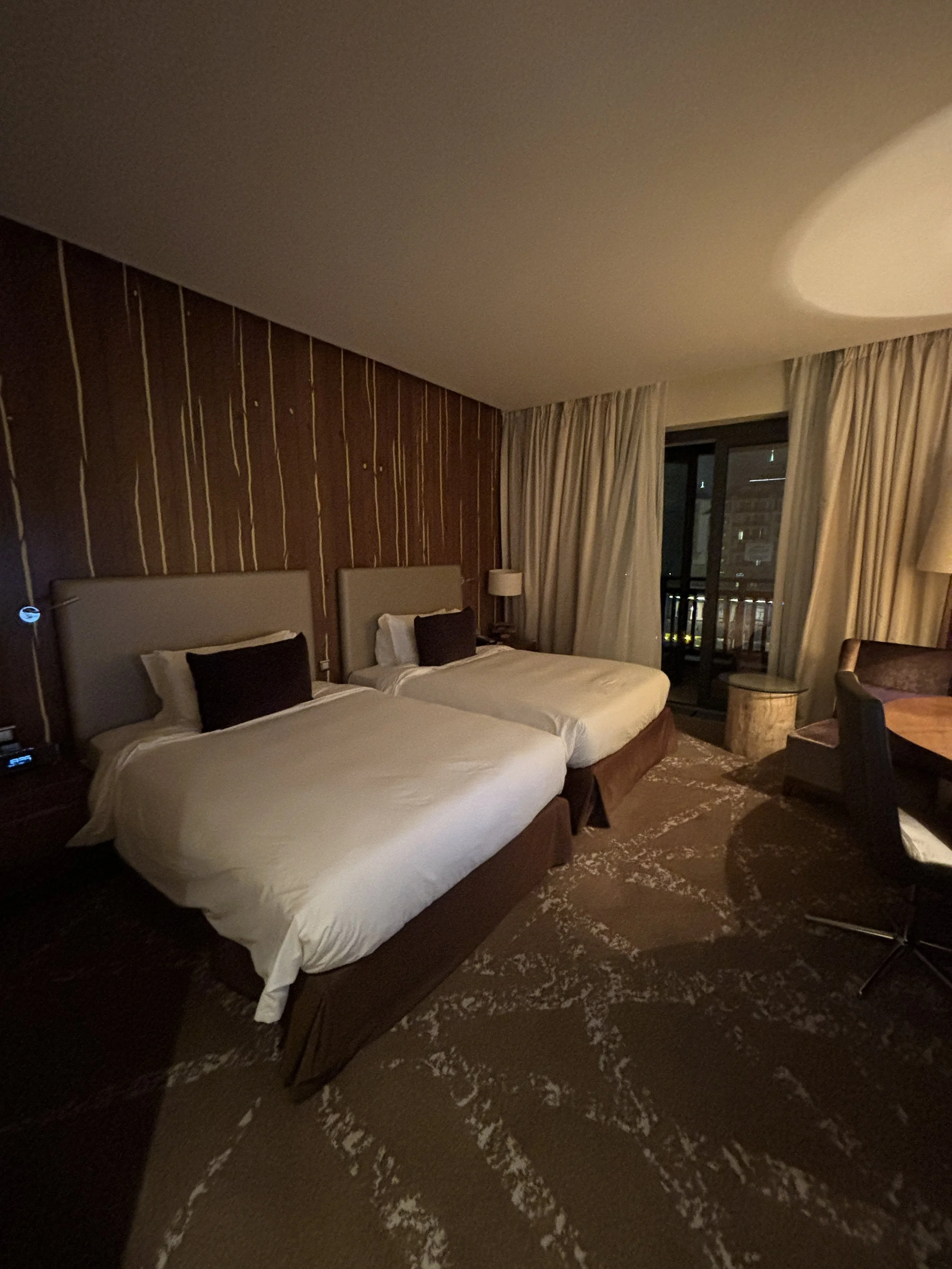
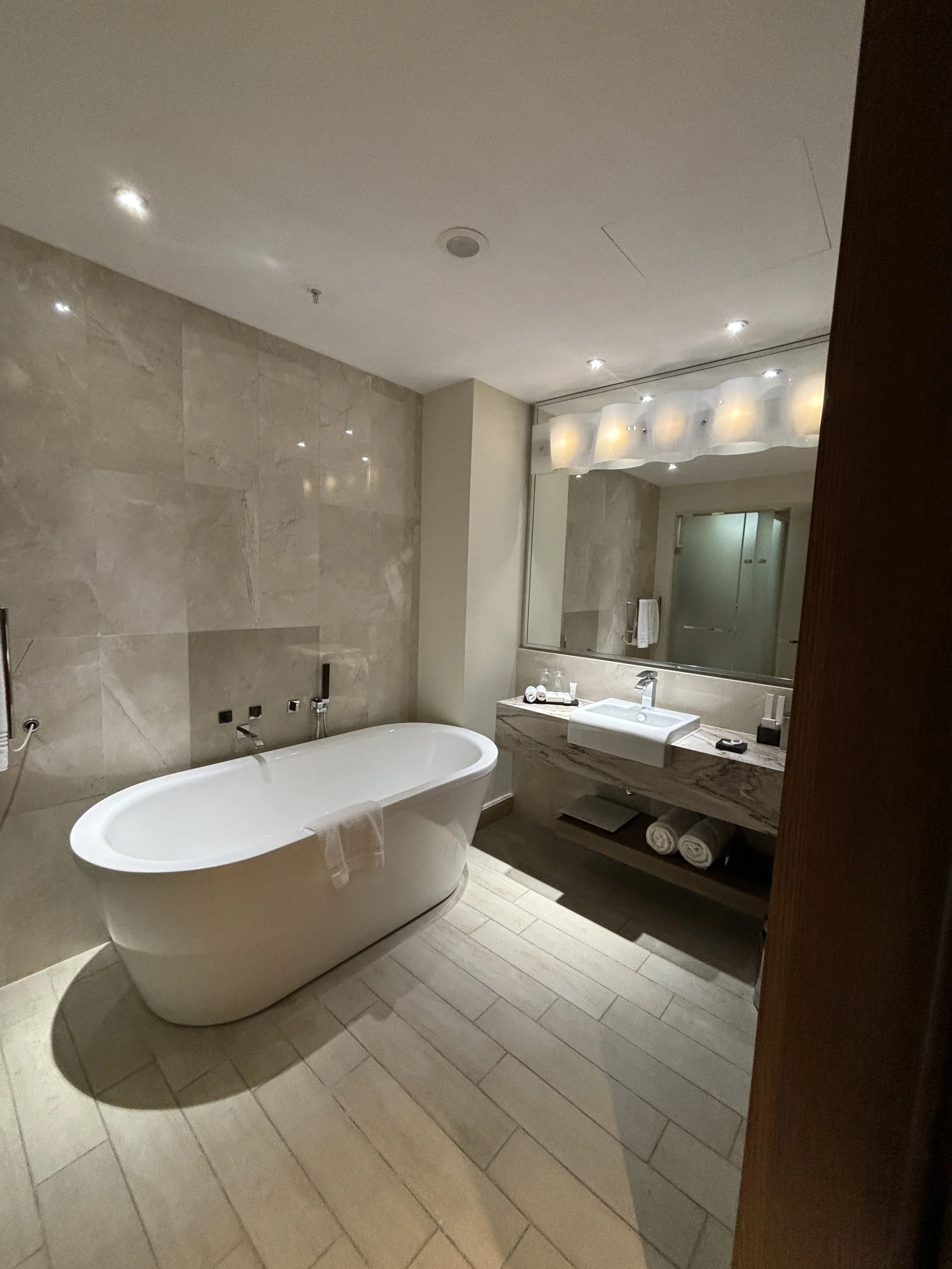
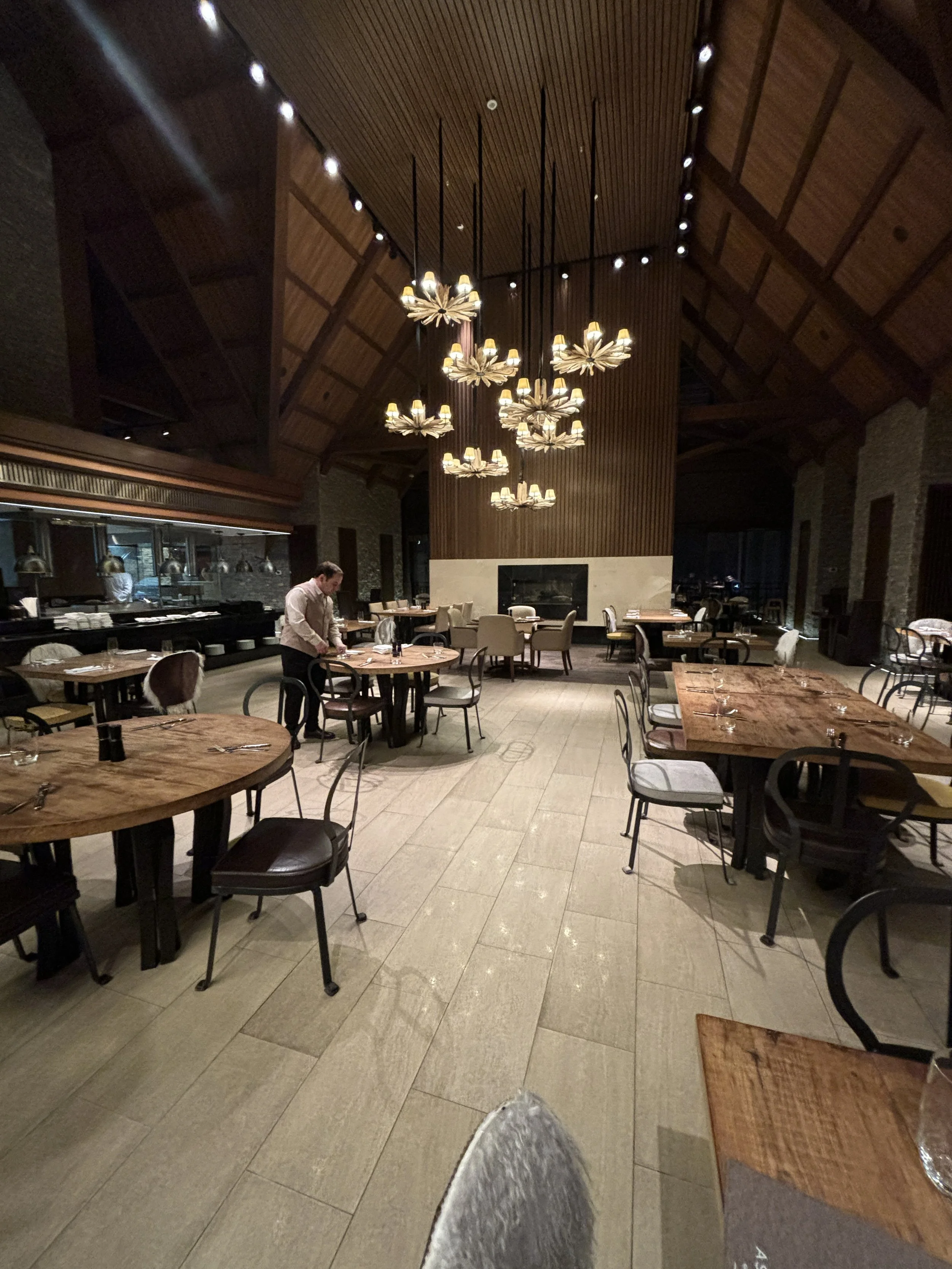
Park Palace, Shahdag, Autograph Collection is a rather stylish hotel, a modern take on the traditional Alpine aesthetics. You can get an idea of how the rooms look like in the pictures below.
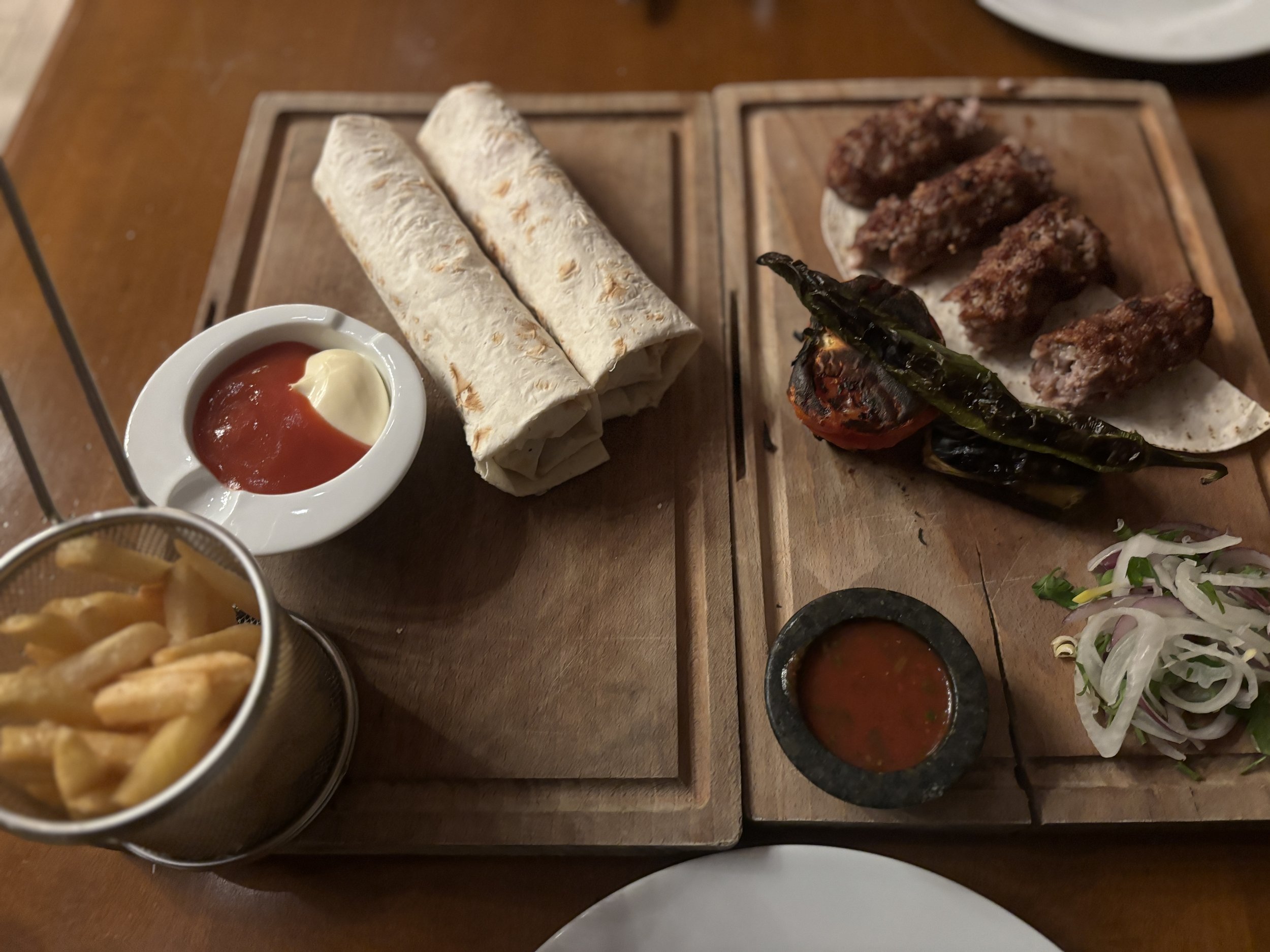
When it comes to food, the good news is that each of the two Marriott hotels has a pretty good restaurant. The food is fresh and tasty. It is perfect if you like grilled meats, because they cook them on a proper charcoal barbecue in plain sight.
The bad news is that there is very little else around. There are a couple more restaurants in the resort’s small commercial area and that’s it. There are no supermarkets or produce shops, nothing. And the restaurants can be a bit pricey, so if you spend a few days at the resort it starts to add up.
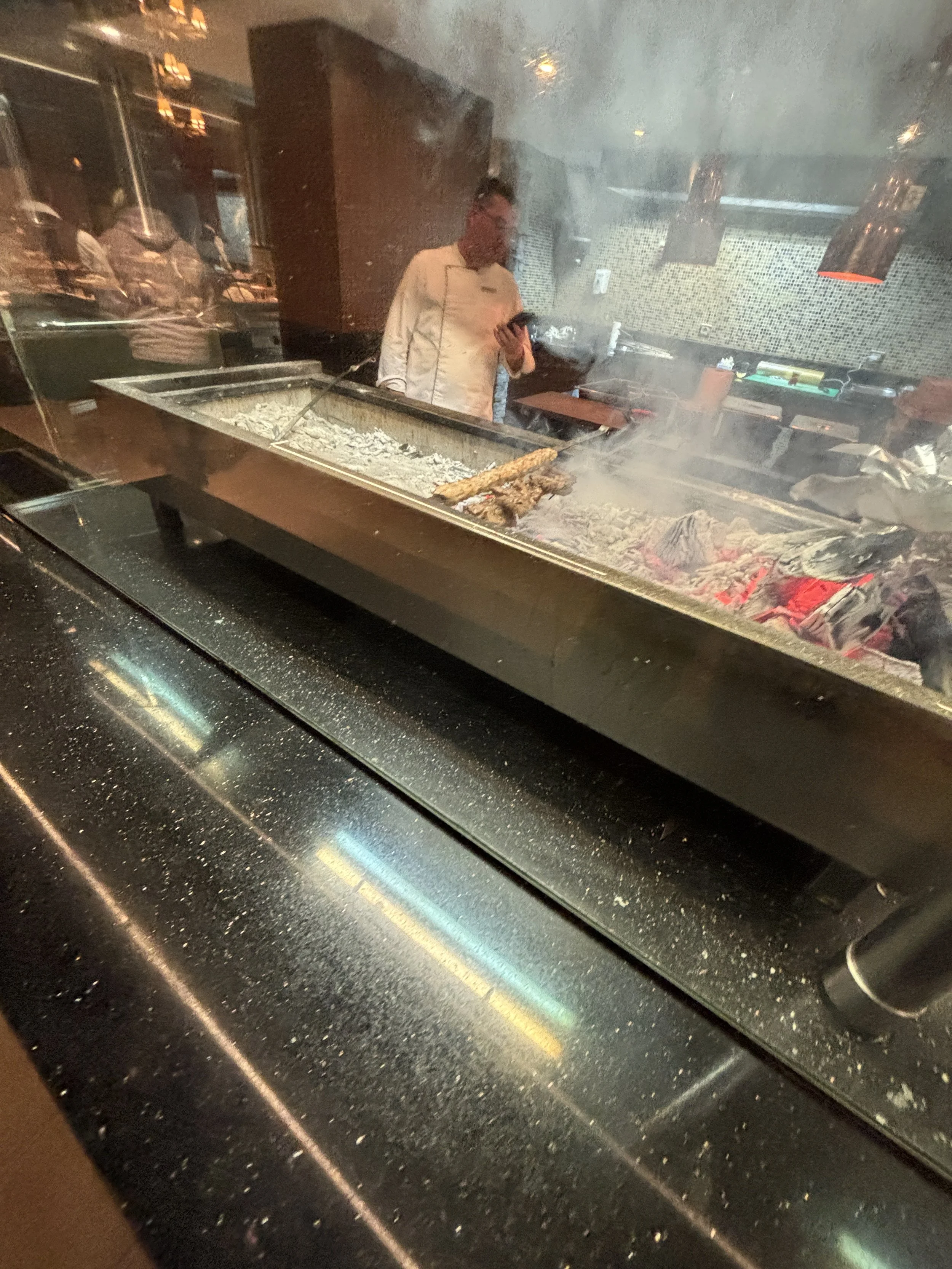
As mentioned earlier, this being the Caucasus, grilled meats (“shashlik”), served with the corresponding sides, are the signature speciality.
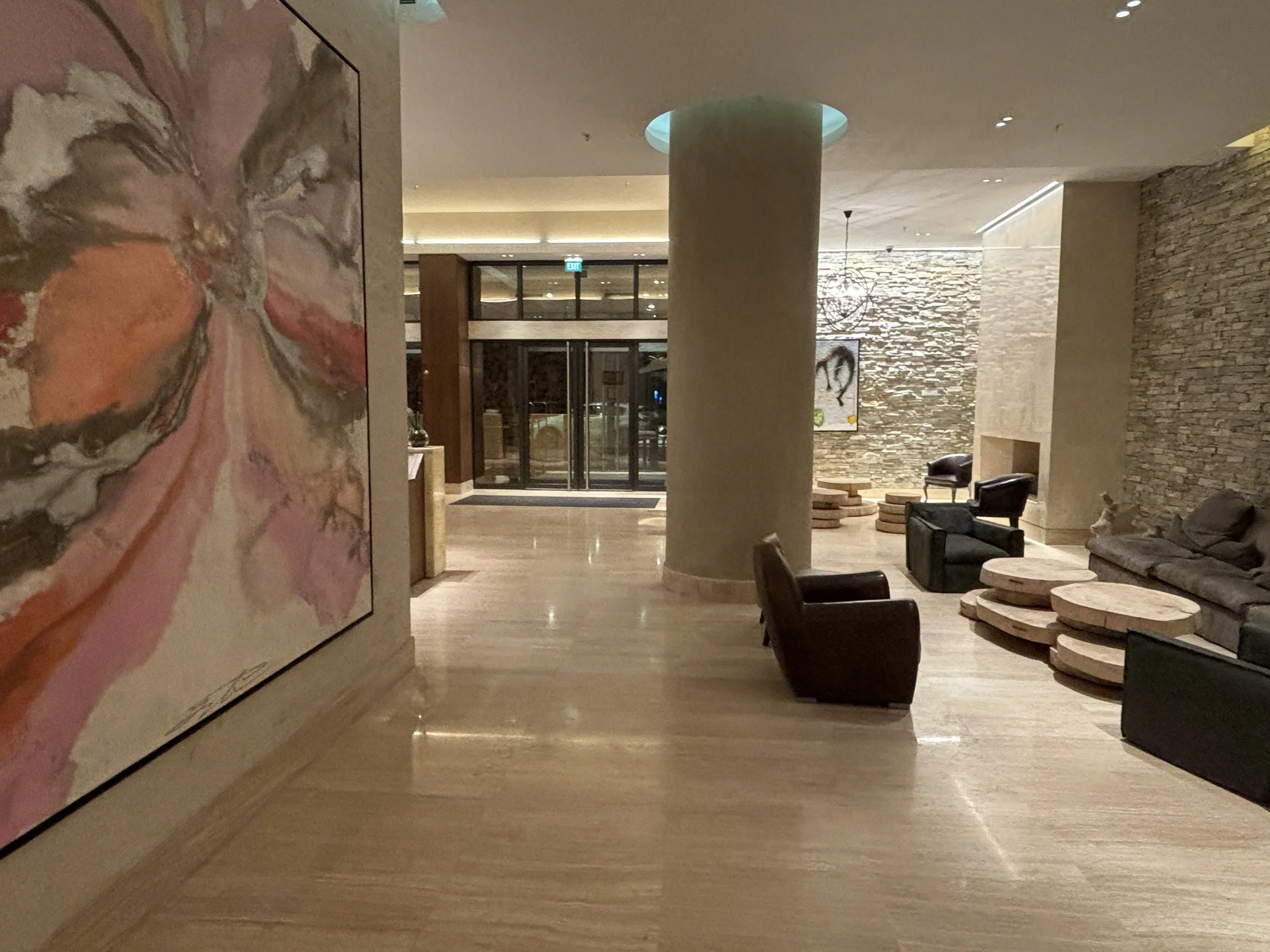
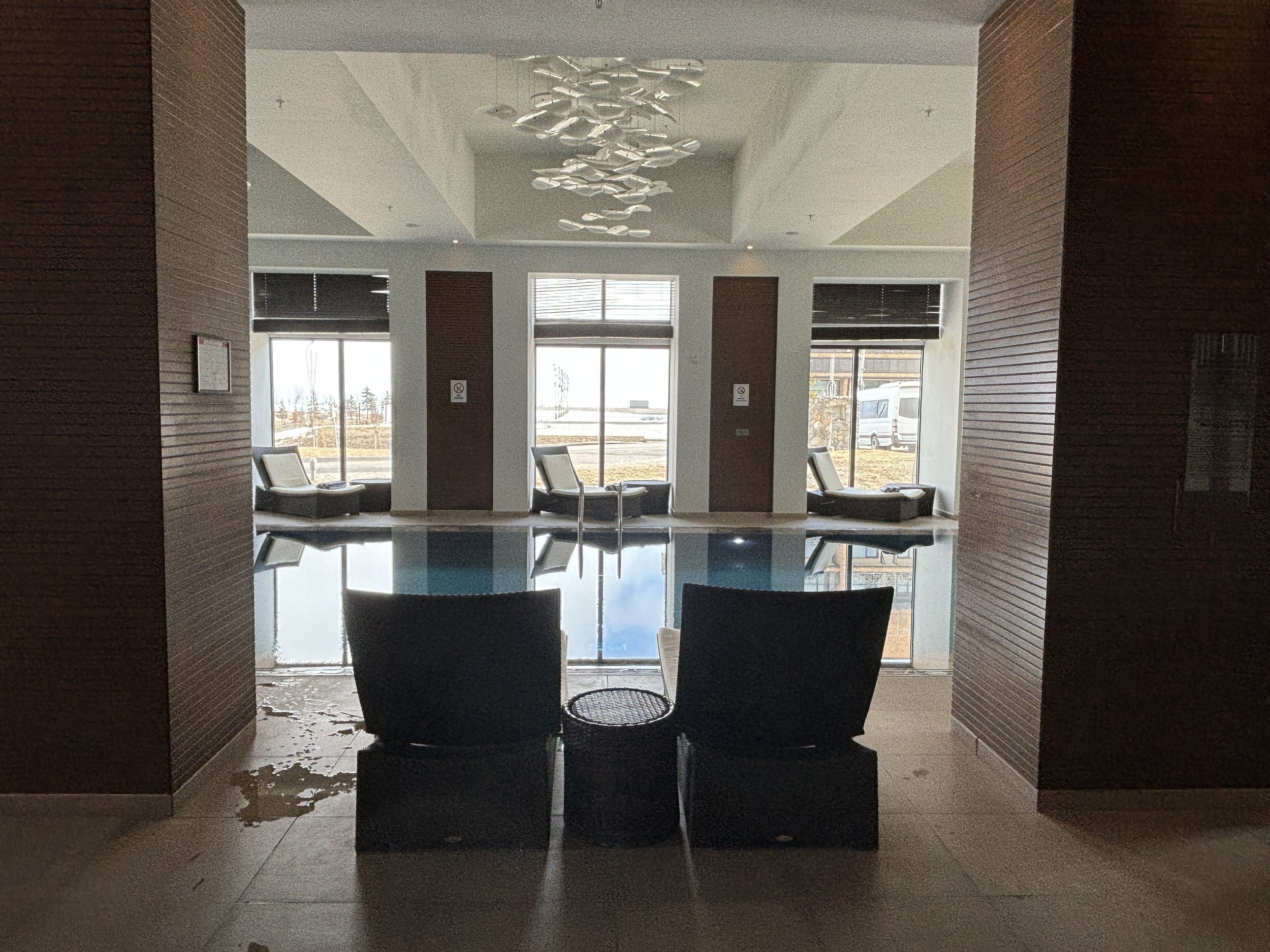
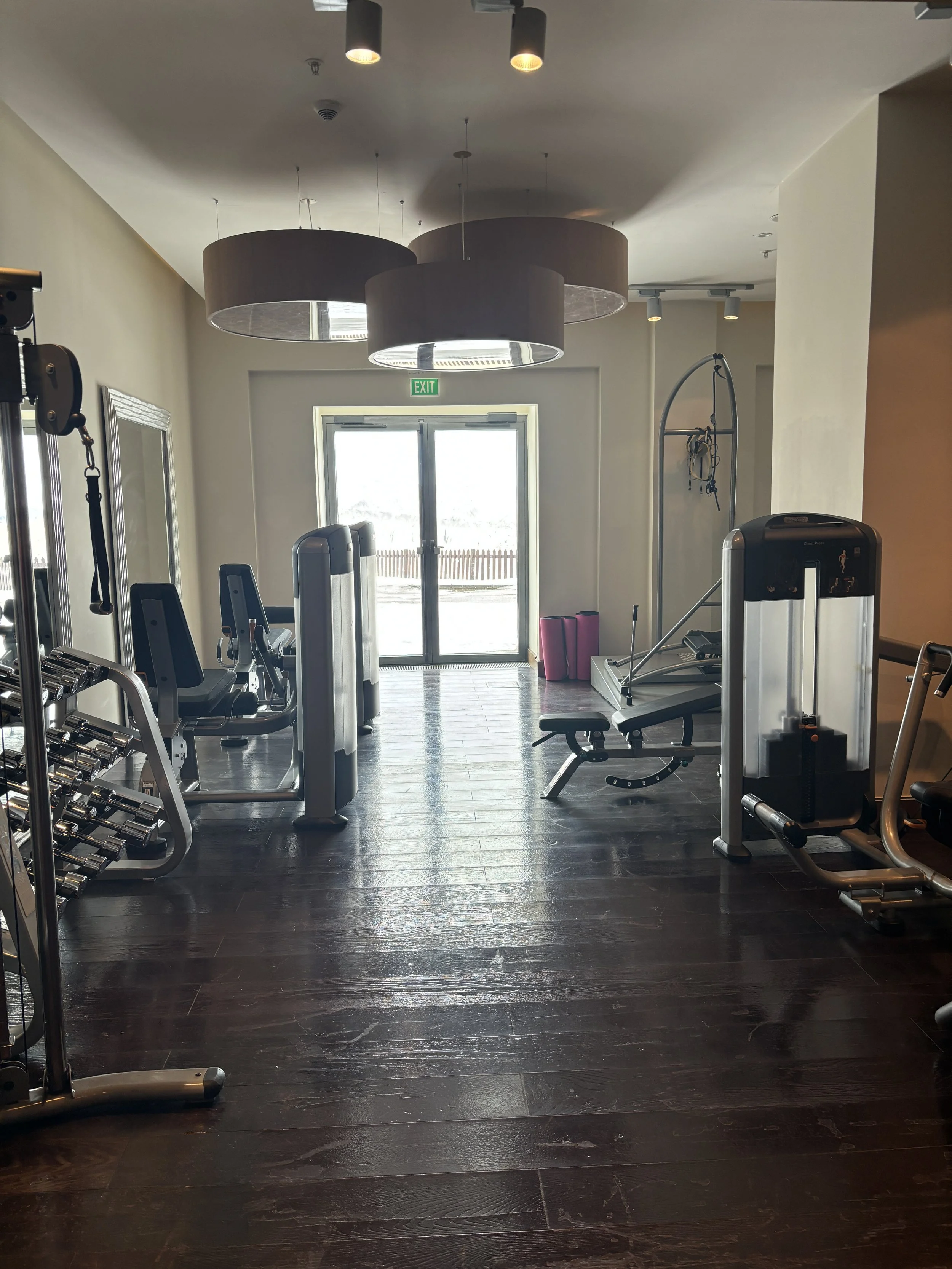
The hotel has also a well-equipped spa area with an indoor swimming pool and a gym.
Another nice feature of the hotel is that it is located right in front of the starting point of most of the ski lifts and gondolas going up the mountain, so you can just walk from your room to the slopes in a matter of minutes!
Visiting the Gobustan Rock Art Cultural Landscape
And from the mountains to the desert! Because the other outdoor area I visited near in Azerbaijan is the Gobustan Rock Art Cultural Landscape, which is also a UNESCO World Heritage Site.
The contrast with the mountains of Shadagh is sharp, the Gobustan rock art area is located in a very arid region some 60km south of Baku, where the flatlands are punctuated by a series of hills.
There are some mud volcanoes nearby but they were closed at the time of our visit, so I am not commenting on them in this post, but if you have the chance, it may be a good idea to include them in the itinerary!
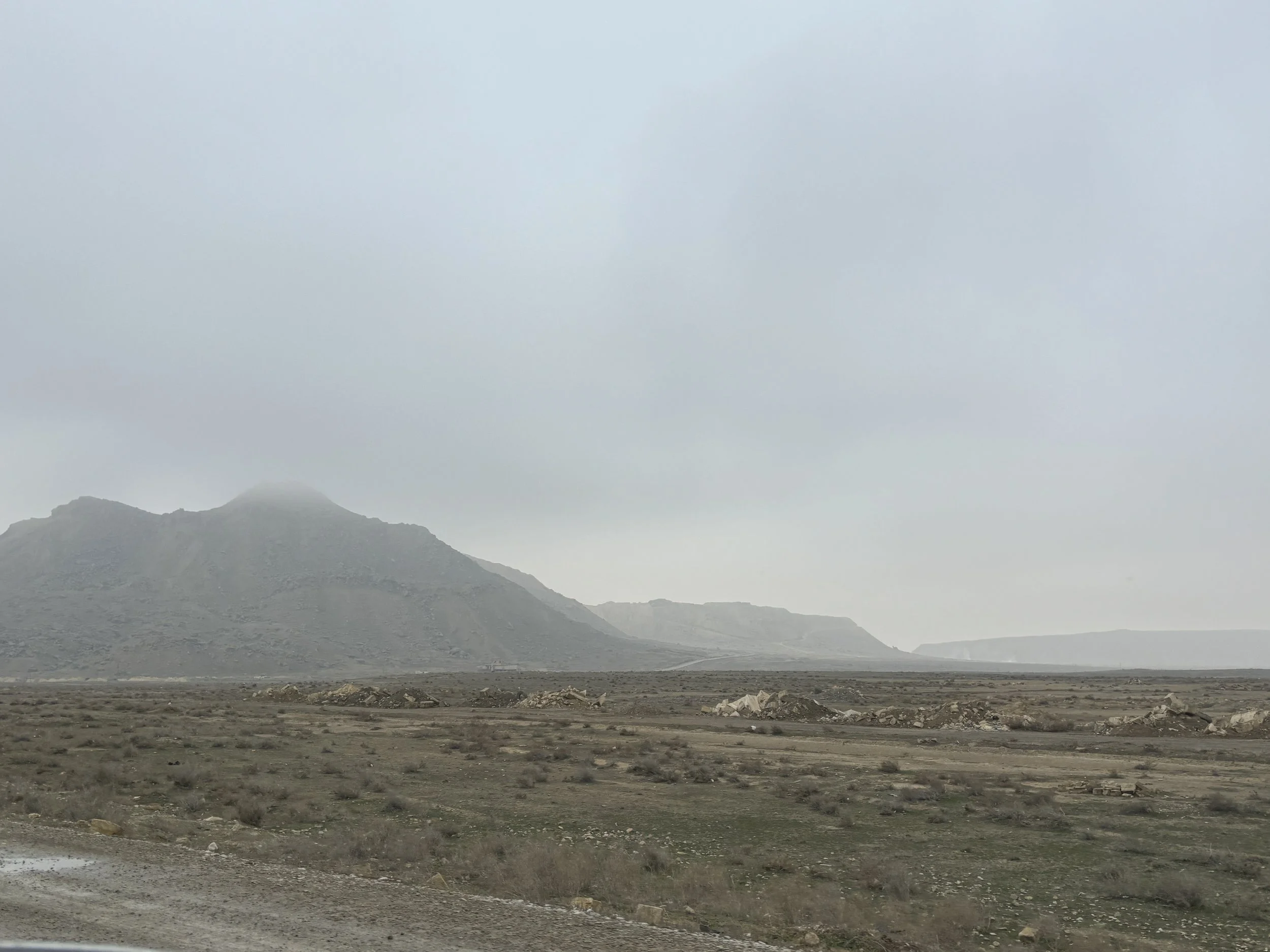
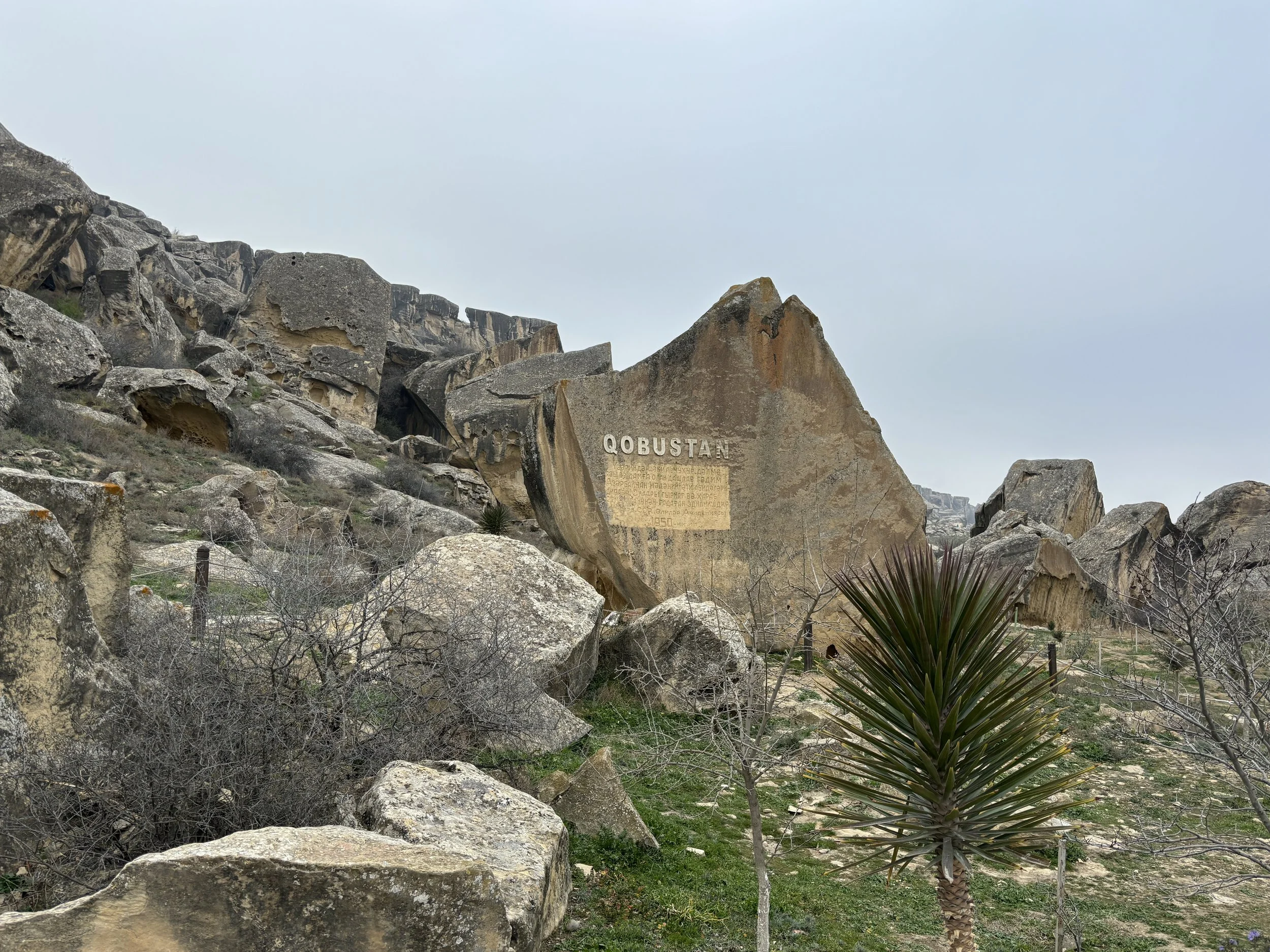
It is on these ridges where the rock art is found. In fact, it is spread over a rather large area, but for regular visitors the core is Boyukdash Mountain, which is where some of the most impressive rock carvings and the museum and visitor center are located.
The Gobustan National Historical-Artistic Preserve Museum is quite modern (you spot the trend here!). It was inaugurated in 2011 and acts also as a visitor’s center for the main cluster of petroglyphs.
It does a good job explaining, through a rather immersive experience, the history of the area and the different rock carvings found, which stretch all the way back to the Paleolithic era 40,000 years ago, although some are as “recent” as the Middle Ages.
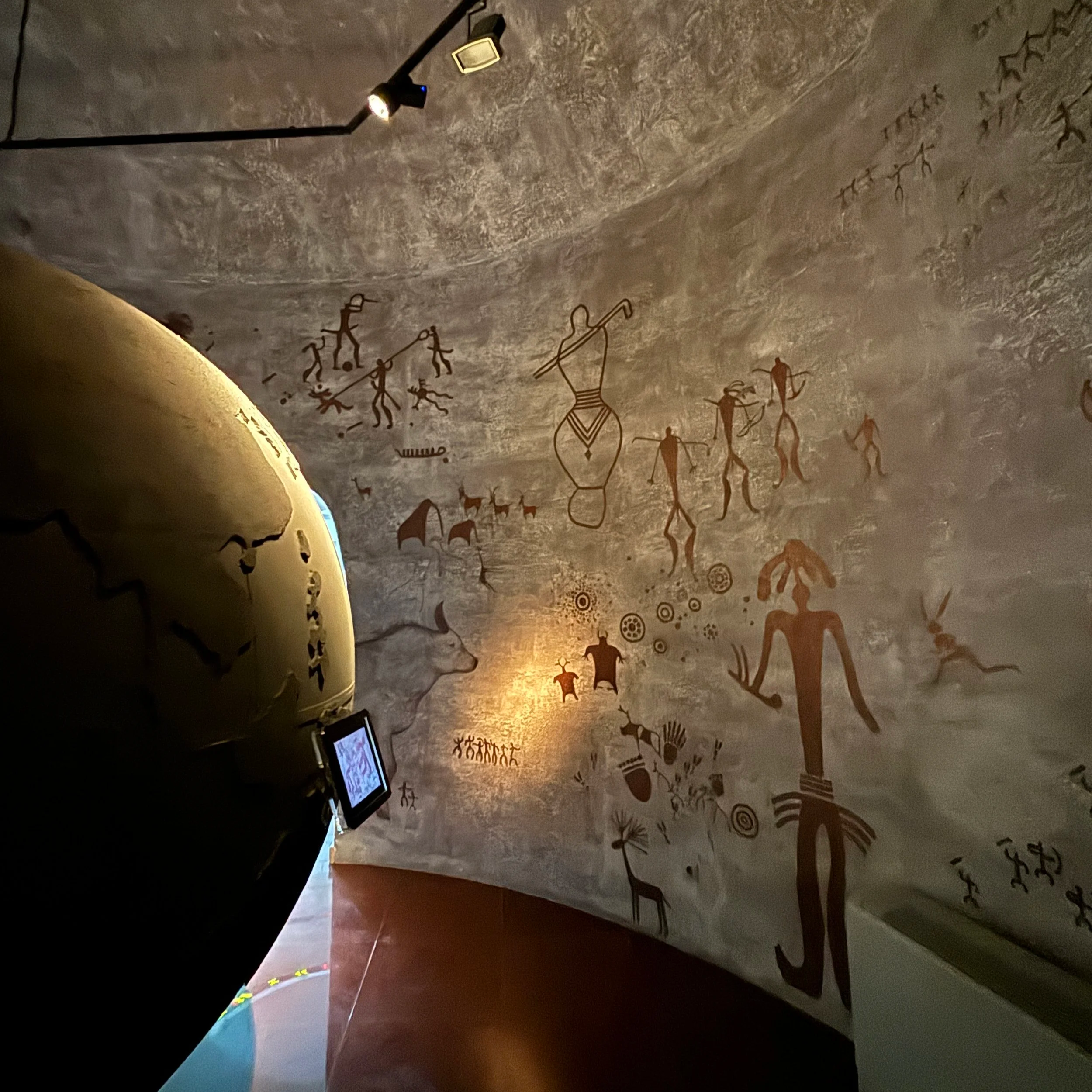
The visit then continues outside to see the rock art first hand. It is very accessible and you don’t need to be a specialist to see it, because it is all over the place. The petroglyphs are really diverse in their shapes and topics and depict humans, animals and things, like boats, for example (several thousand years ago, the Gobustan area was much closer to the Caspian sea and much greener).
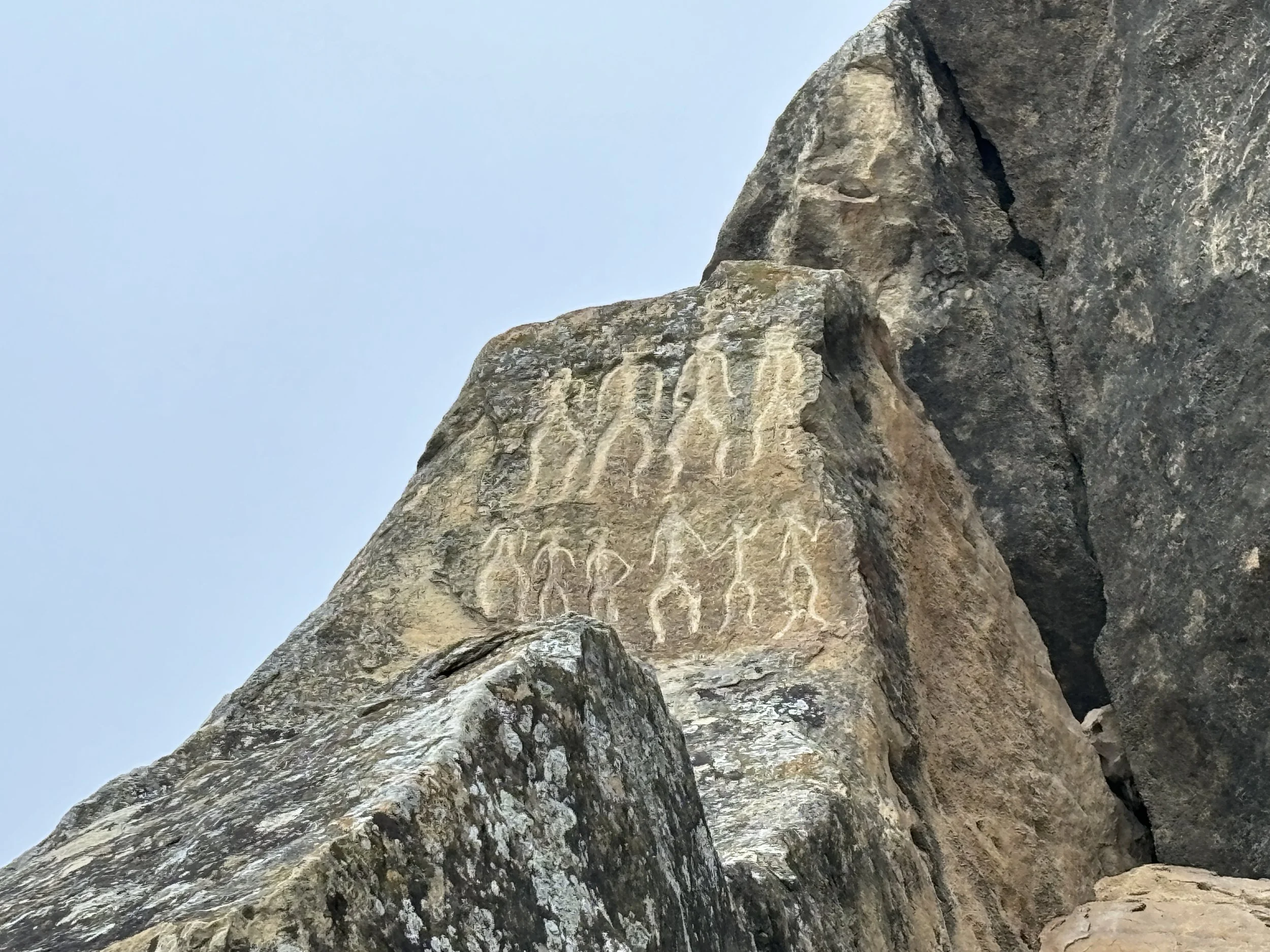
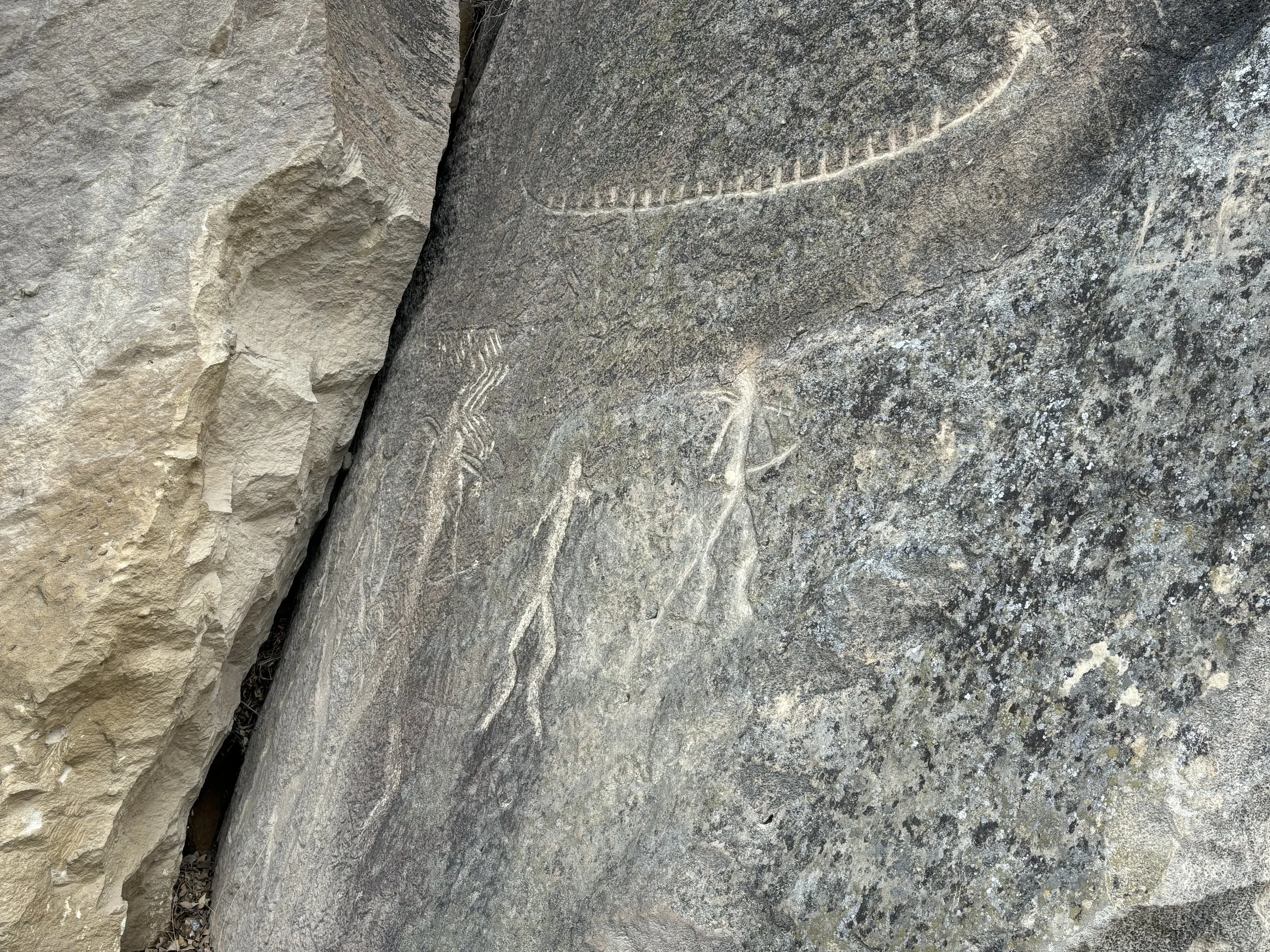
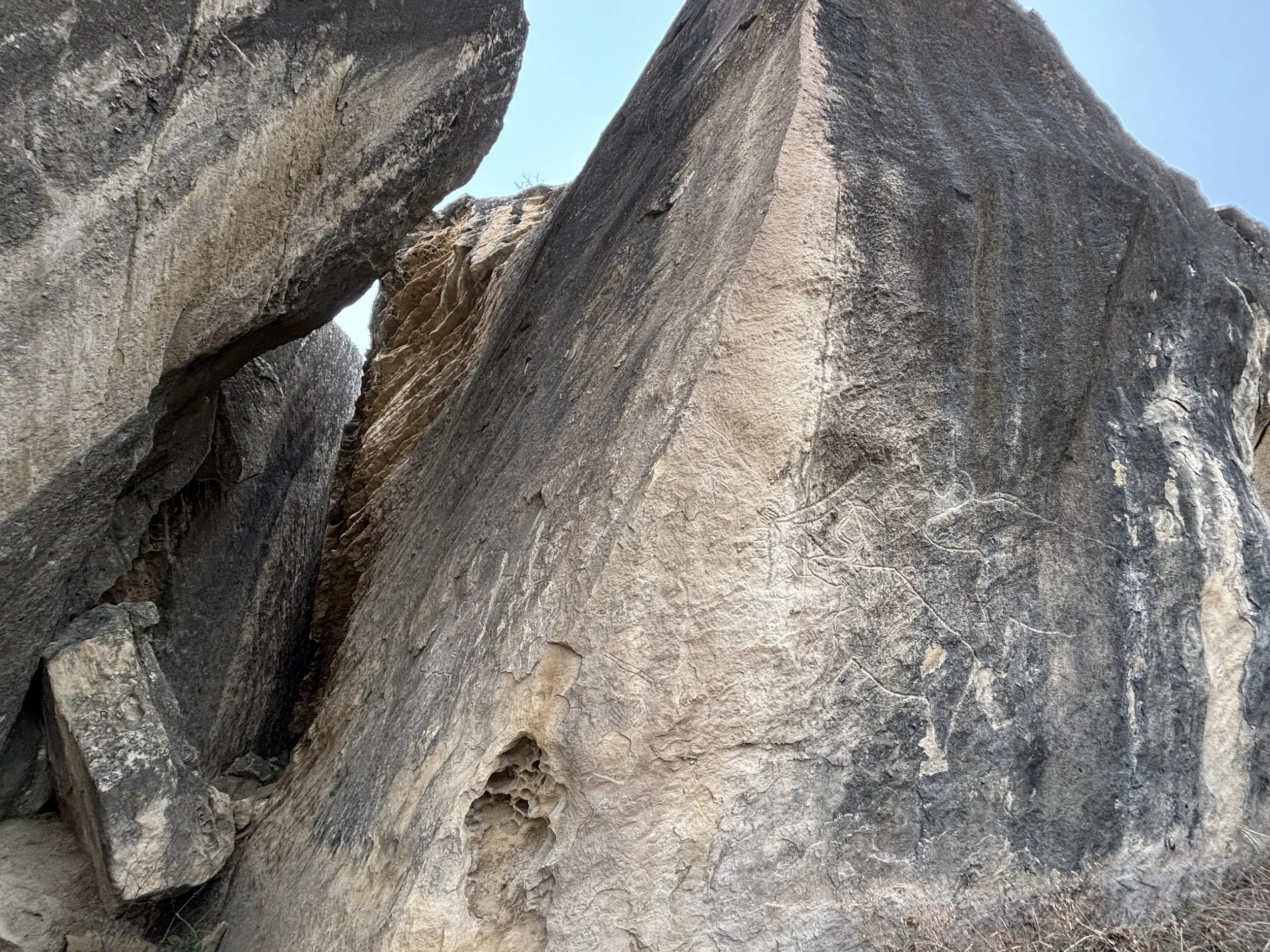
The natural setting is also quite impressive from the point of view of the landscape. The hills where the carvings are located look a bit like a sort of gigantic disassembled lego set, with huge rocks and boulders laying out on top of each other in a rather chaotic manner.
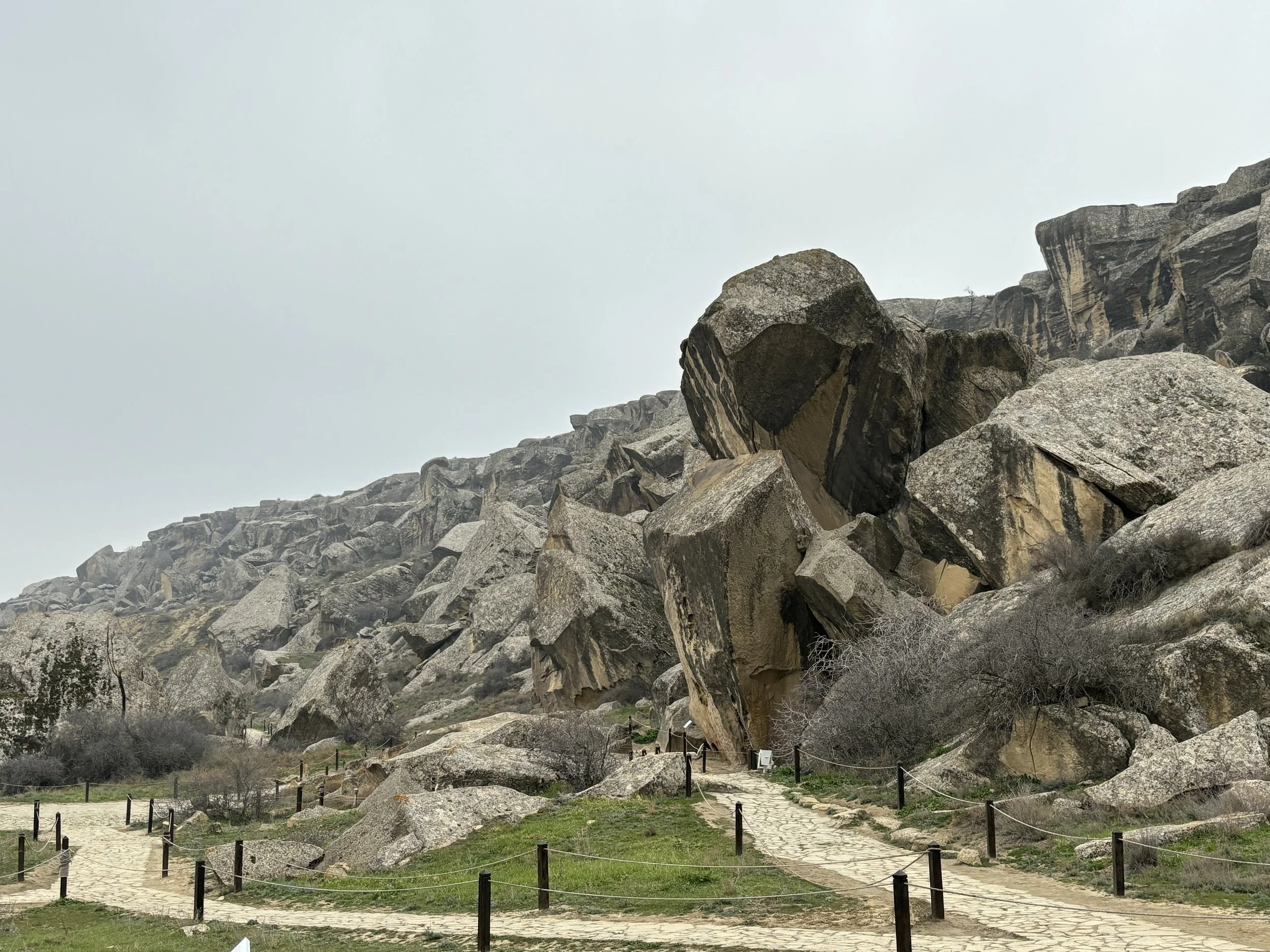
So, even if you only have half a day free after visiting central Baku this can be quite an interesting excursion to do!
Getting to and from Azerbaijan and some practical tips
Finally a word about getting to Azerbaijan plus the usual practicalities to take into account.
It’s visa free for most countries (or e-visa on arrival to be more accurate), including the EU, the US and the UK.
By the way, the following is possibly only relevant to a very small subset of travellers, but, at the time of my visit and I think it is still the case well into 2026, it was only possible to enter Azerbaijan by air, its land borders having been closed since the Covid pandemic!
In any case, Baku airport is getting increasingly well connected with many points in Europe and the Middle East and it has become quite an accessible destination.
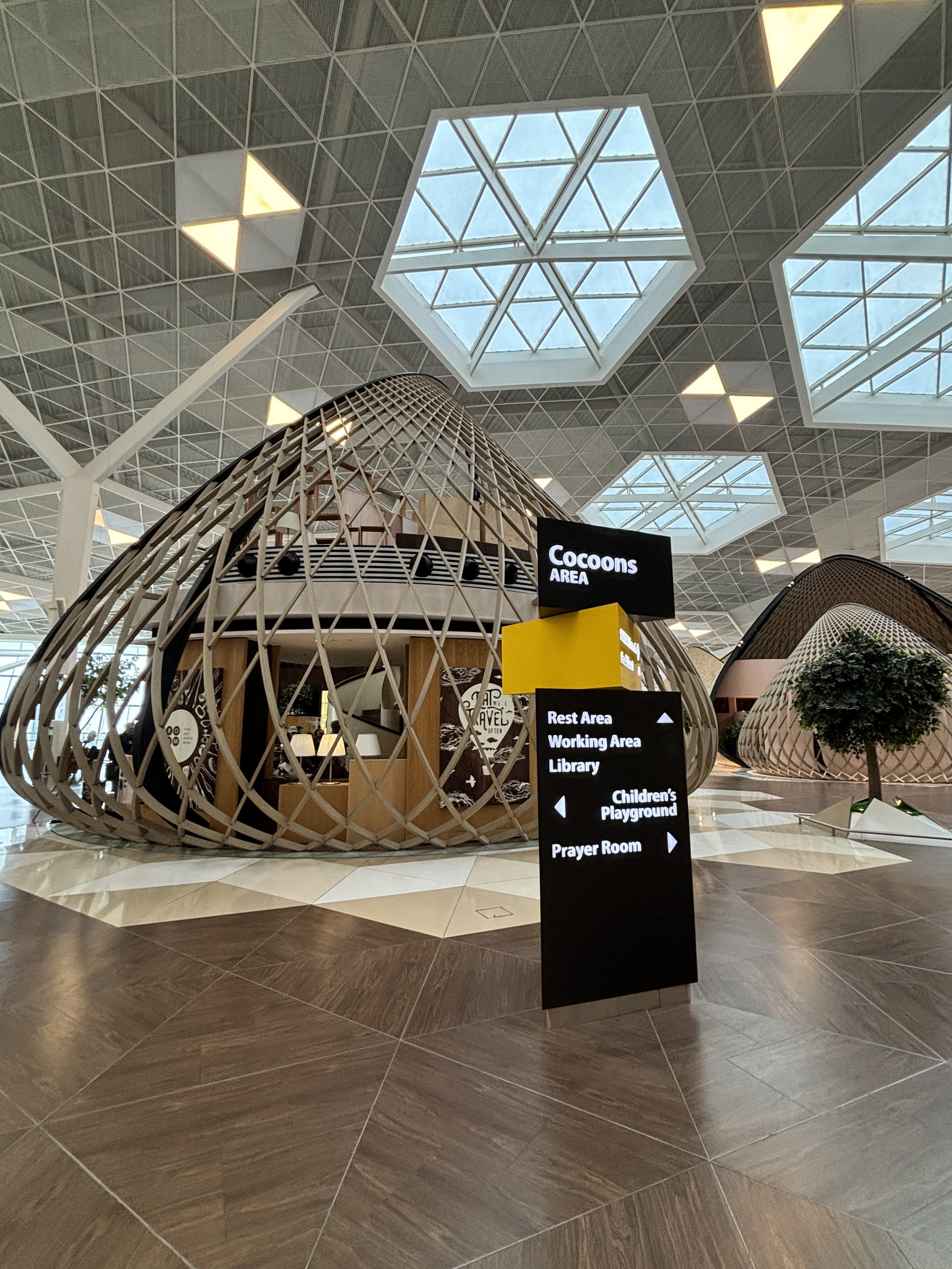
Again, the wonders of oil-funded investment in state-of-the-infrastructure become visible at the airport, which is a really modern and convenient facility (although there is still a small Soviet-era terminal in service, which is used by a small number of flights).
By the way, the best way to get to and from the airport, and to move around more generally, is to get an e-sim that works locally and use Bolt, which is the top Western ride-hailing app in Azerbaijan. Prices can be very competitive, a ride from the airport into downtown costs the equivalent of €7 (US$8) and within Baku’s downtown it can be just a couple of euros (or dollars).
By the way, Russian is still the main foreign language for most Azeris, although the younger generation tends to know at least some basic English.
It’s also a good idea to change a bit of cash upon arrival too, even if credit cards are accepted in most places.