
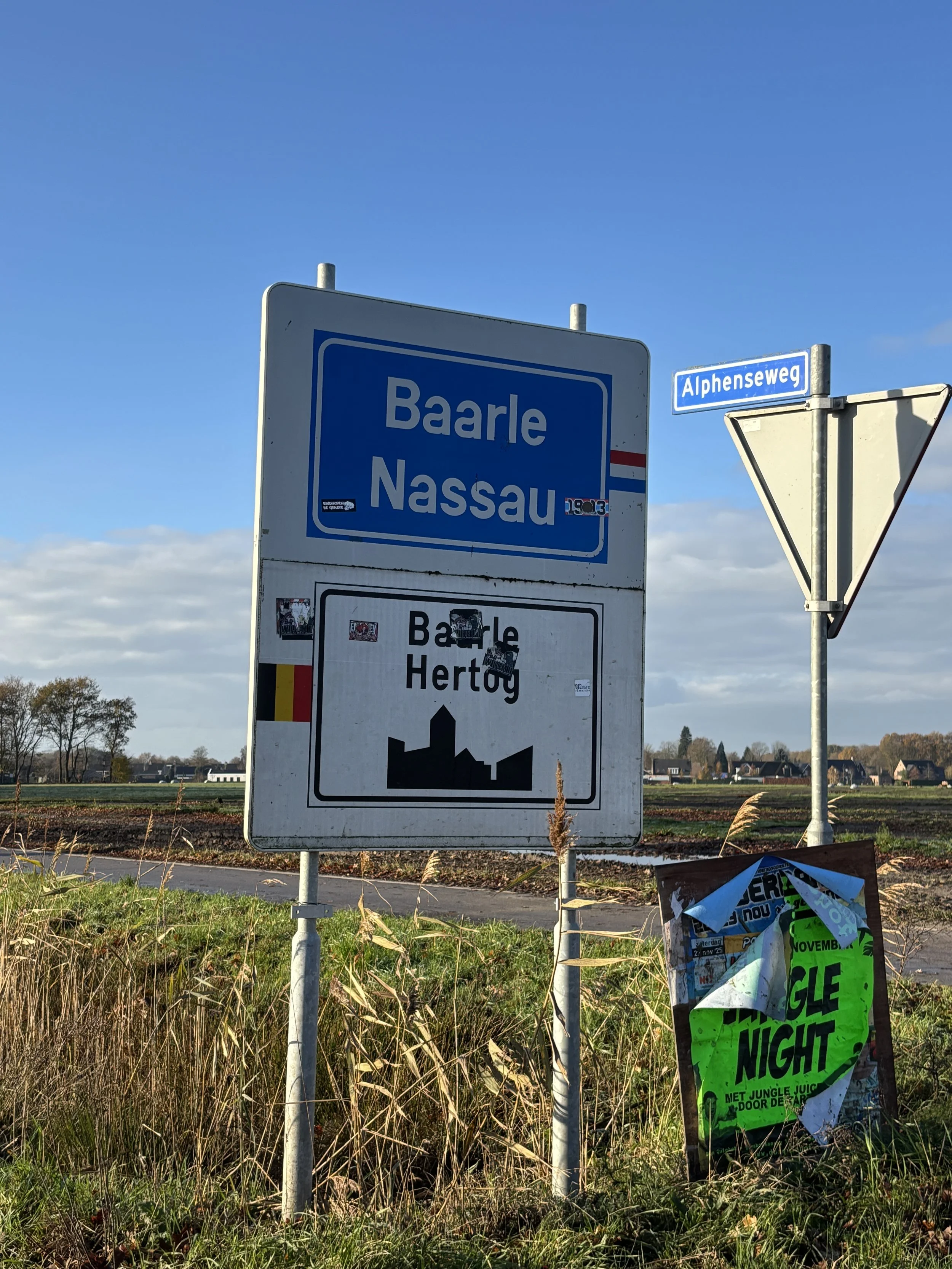
How to visit Europe’s weirdest border town: Baarle
Regular readers of this site possibly know by know that I am fascinated by the topic of borders. It is not for nothing that we have a dedicated “Borders” section here. And this is a topic which I have also explored on CNN on several occasions, whether in Europe or elsewhere.
But when it comes to borders, there is no other place like Baarle. Well, there kind of used to be one, the enclaves of Cooch Behar on the border between India and Bangladesh, but the two countries decided to straighten the border back in 2015, so that border line got greatly simplified.
Feudal land divisions and the messy divorce between Belgium and The Netherlands shortly after the creation of the former in the early 19th C. led to the formation of what is most likely Europe’s weirdest border arrangement.
Fortunately, though, the fact that both Belgium and The Netherlands are part of the EU and the Schengen Area facilitates enormously not just the lives of its inhabitants but also of the many visitors that come here on purpose to check out this border curiosity of the first order.
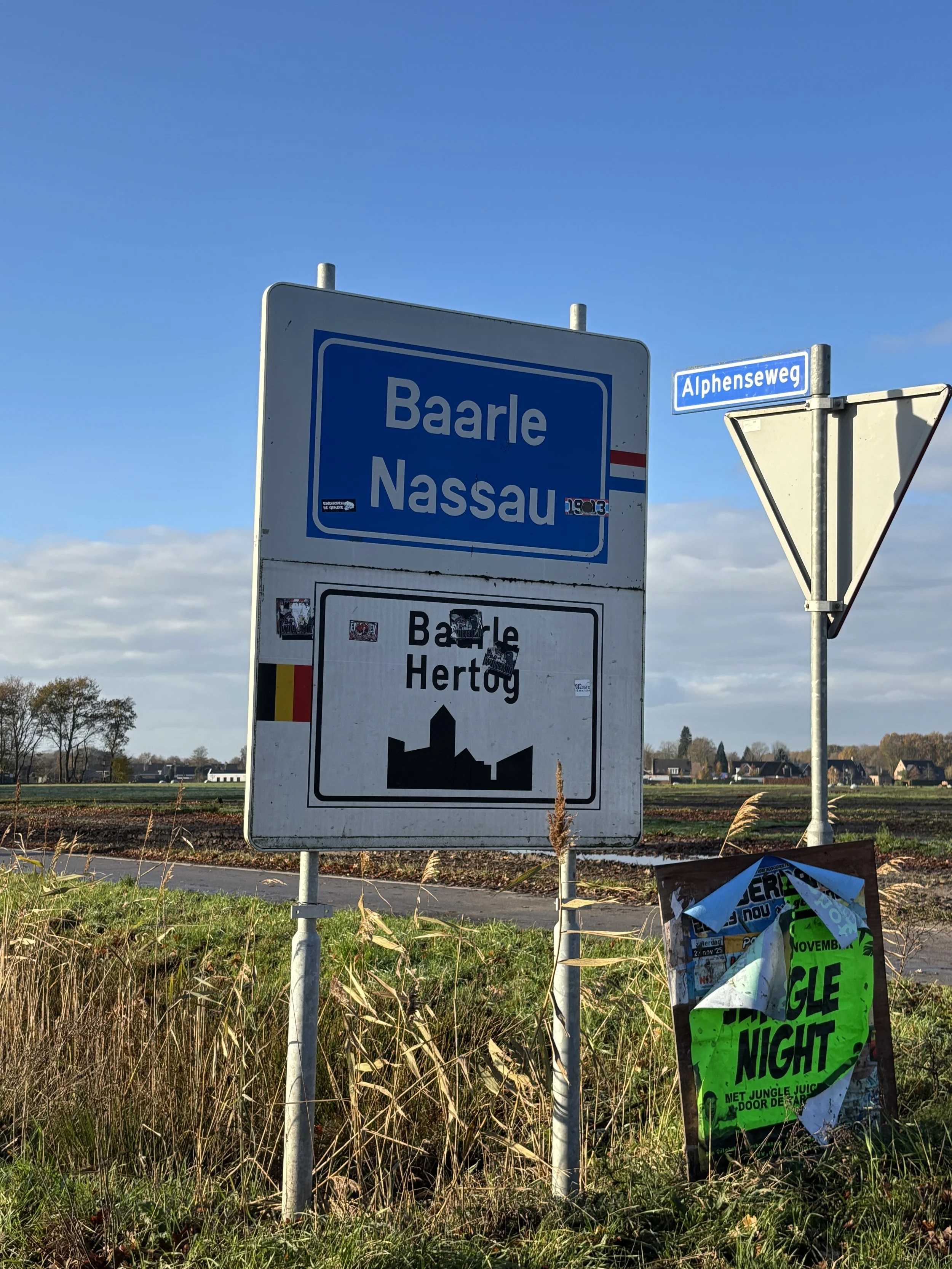
By the way, in order to keep it simple, throughout this post I am going to refer to the town simply as “Baarle”, since there are technically two towns in one: Baarle-Nassau if you refer to its Dutch portion, Baarle-Hertog when it comes to its Belgian municipality, which has also part of its territory on the Belgian “mainland”.
And I use the word “portion” very purposefully here, and not “side” which is often used when talking about borders, because it is frankly difficult to define “sides” in this corner of Europe.
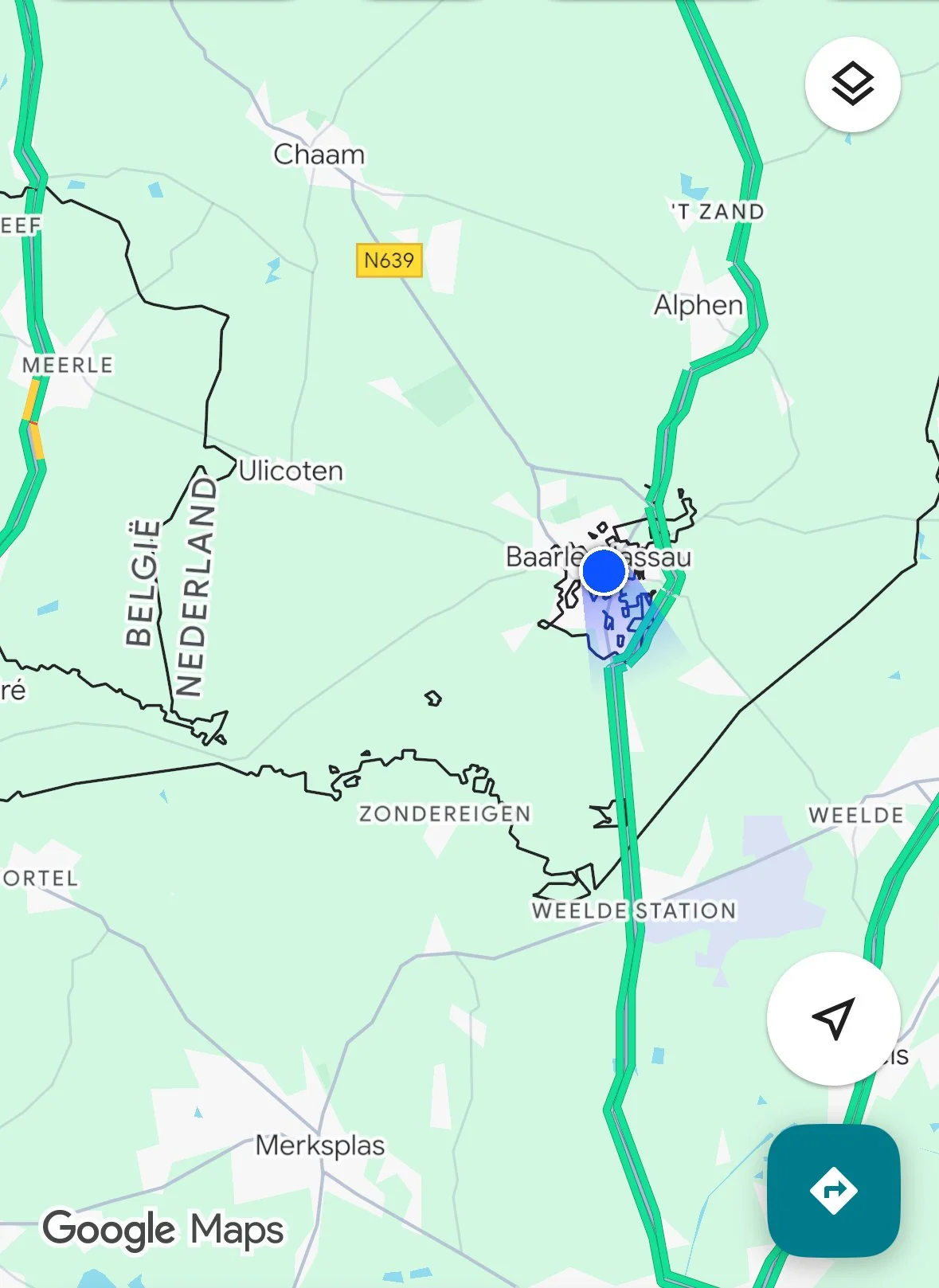
There is, of course, the main border line between Belgium (and Flanders) and The Netherlands, and then there is the enclave of Baarle-Hertog, a piece of Belgium north of it, but if you zoom in, a more complex panorama appears, since the Belgian enclave is, in fact a patchwork of 22 smaller enclaves which have another eight Dutch meta-enclaves (or counter-enclaves) in them. There are also a few smaller Belgian enclaves on Dutch soil outside the urban centre, but we’ll leave those aside for the purposes of this post.
In the images below you can see how all these enclaves look like on the map:

This post may contain affiliate links. If you book or buy something through them, I earn a small commission, at no extra cost to you. It's a way to keep Places of Charm going. Thank you for your support.
Main points of interest in Baarle
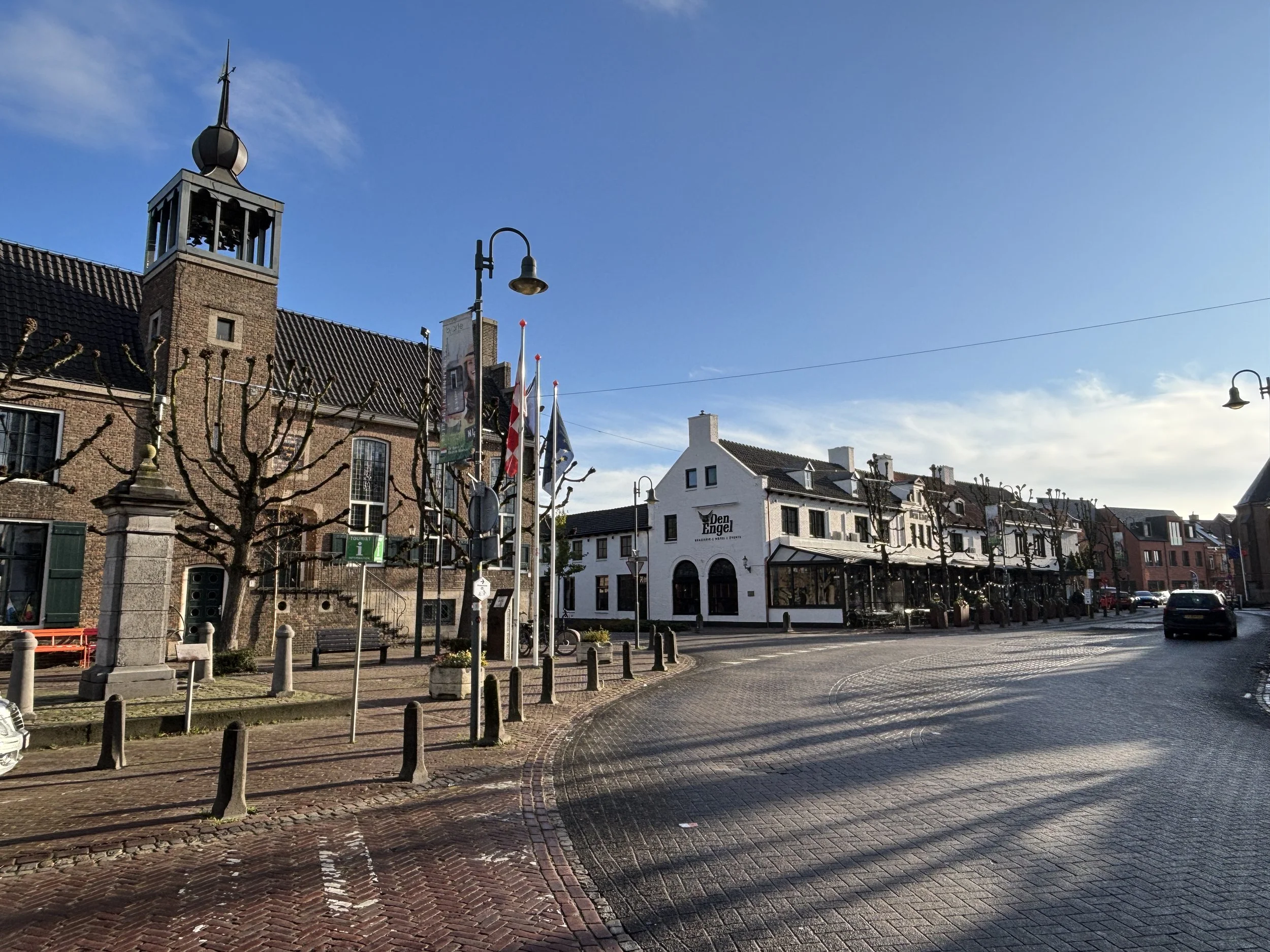
Baarle is not large and most of its commercial activity happens along what could be considered the town’s neuralgic center, the Singel. It is here that you find the tourist information center, the church and what is possibly its café of reference.
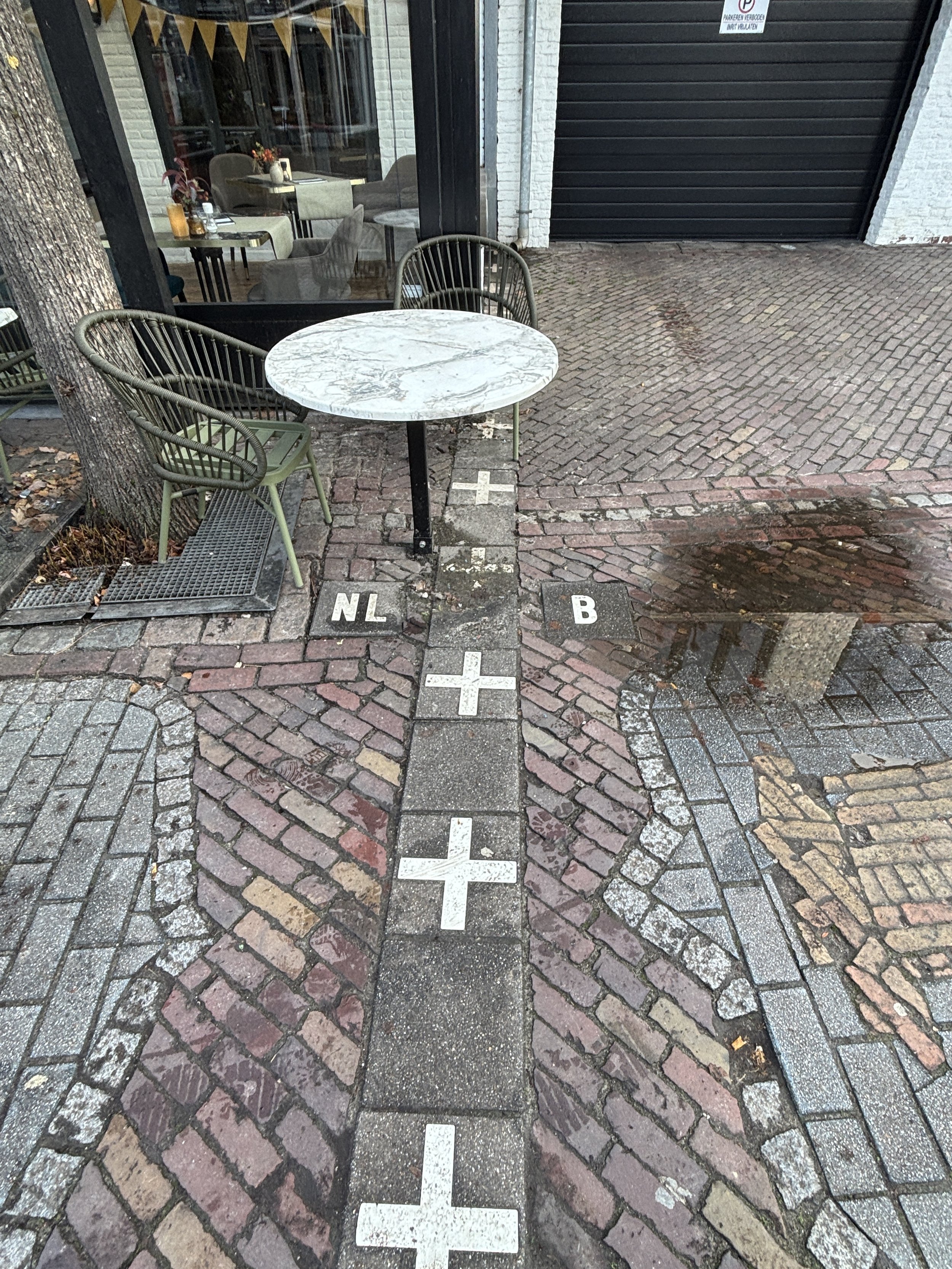
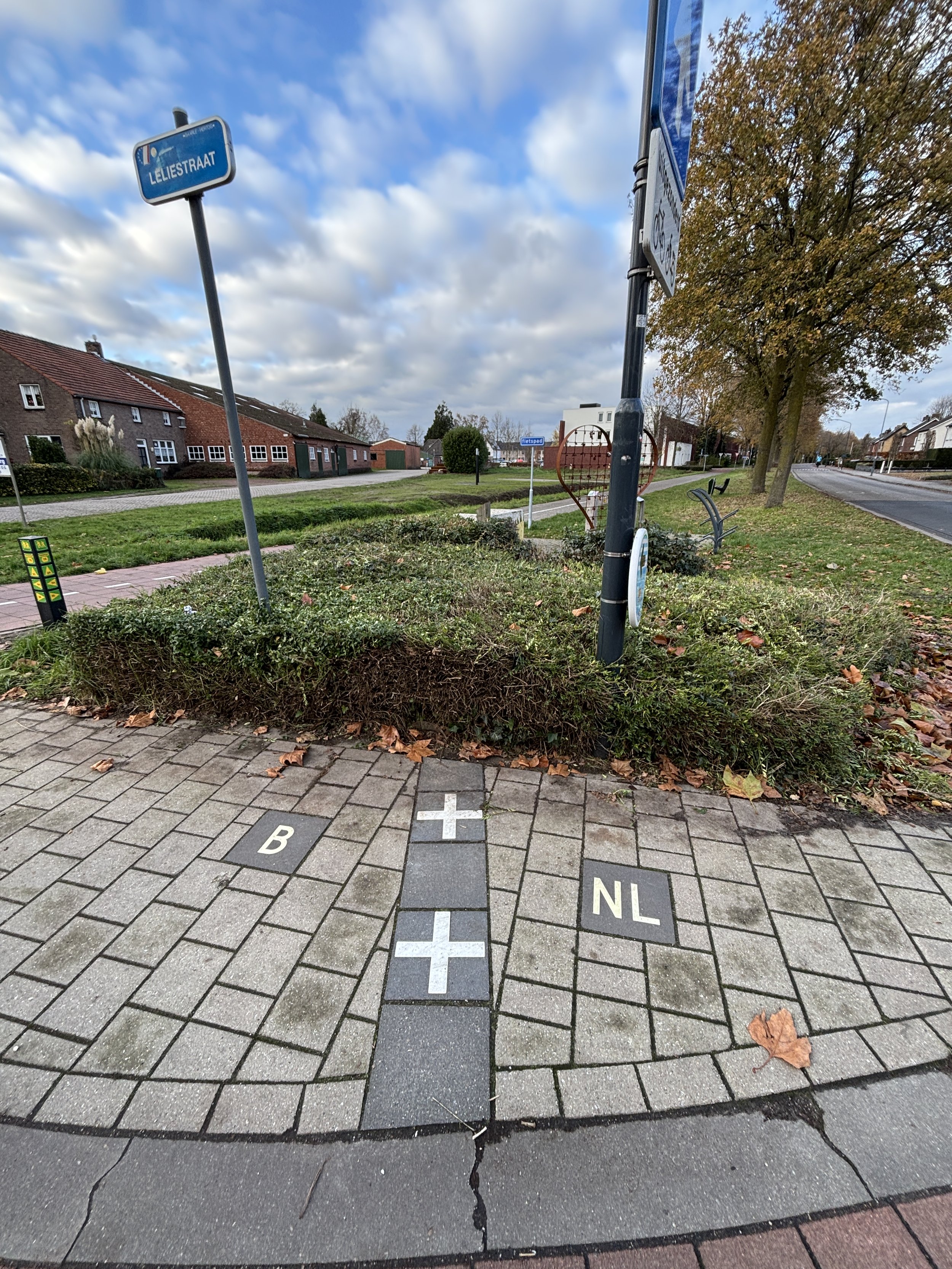
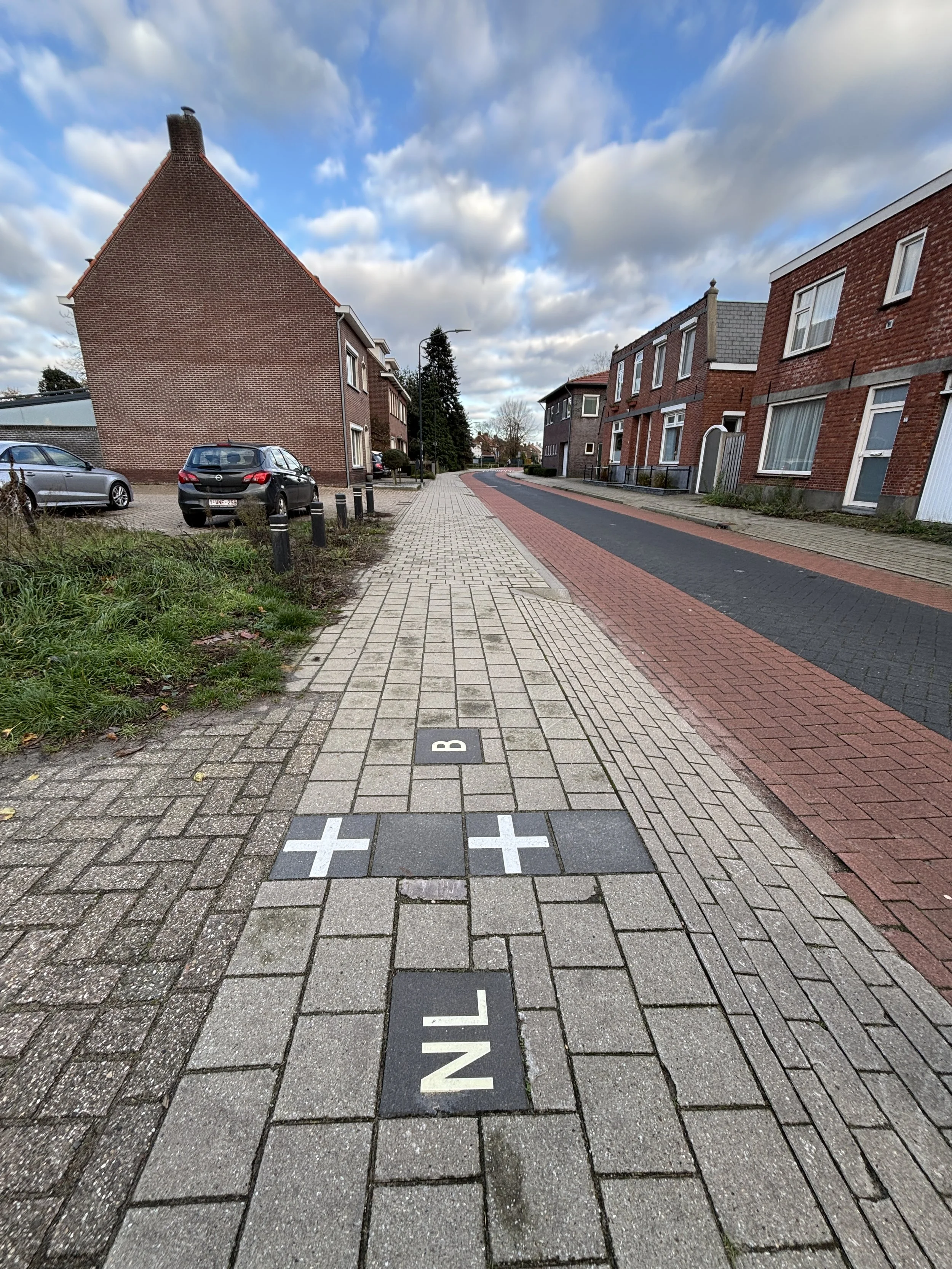
It is really helpful that the local authorities have taken the care of painting the border line on the pavements, with the letters “B” and “NL” to indicate in which country you are at any time.
Café Den Engel
Singel 3, 5111 CD Baarle-Nassau
If you don’t know where to start your route through the streets of Baarle, this is a good starting point.
It is here also that you will find the Café Den Engel (“The Angel”), which is also a hotel (you can check the prices here) and has a bi-national terrace in which it is possible to sit down at a table that is bissected by the border.
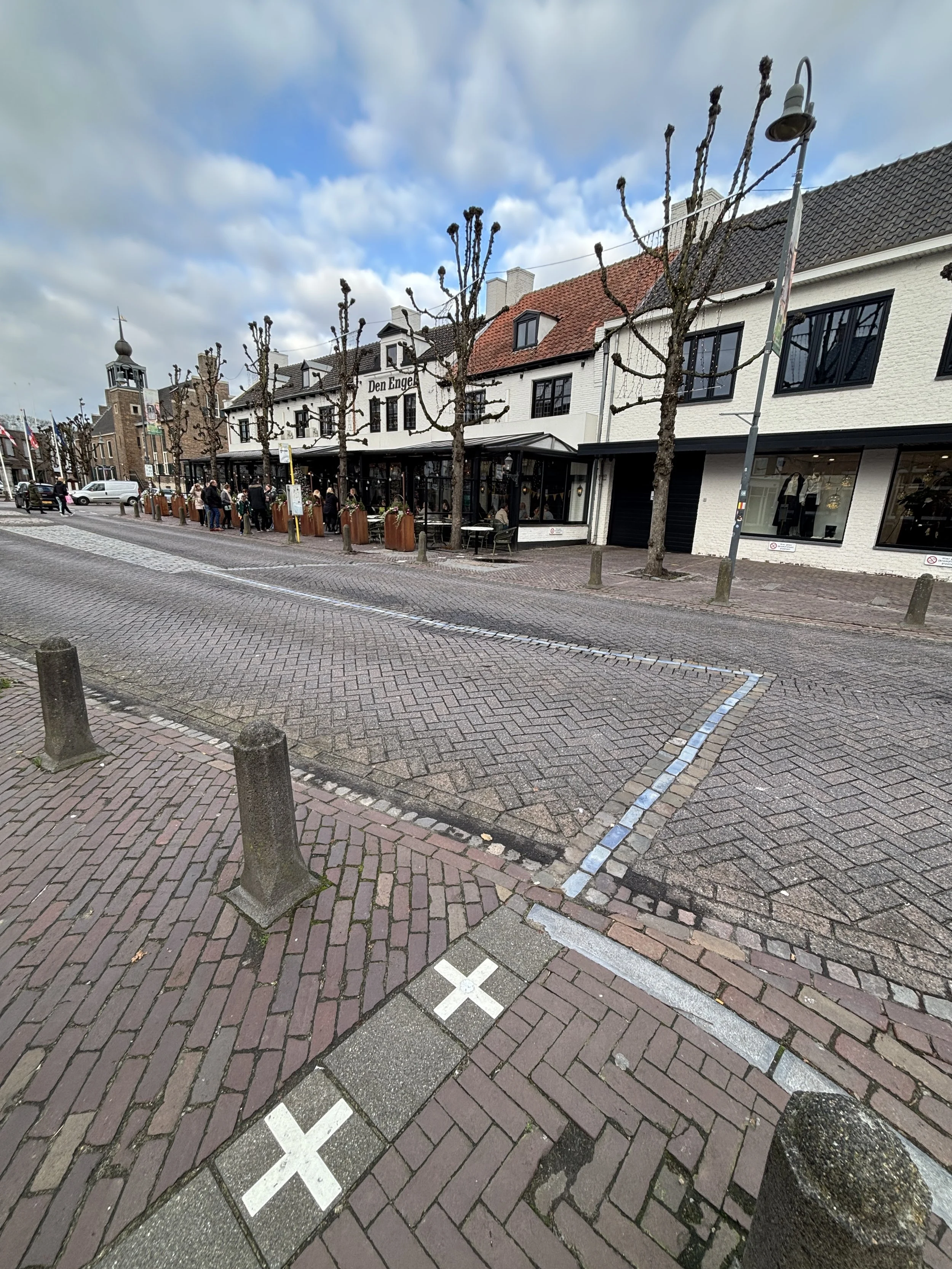
Note also, in the picture below, which zooms out from the outside of the café, how the border does not necessarily follow straight lines. At this point the border does a sort of zig-zag, making to straight angles in the middle of the road which leave Den Engel fully within Dutch territory.
Baarle Tourist Information Office & Museum
If you think border tourism is weird, just go to the Baarle tourist office and you won’t feel alone anymore, because the facility is dedicated to serve the constant stream of visitors that come to check “The Line”.
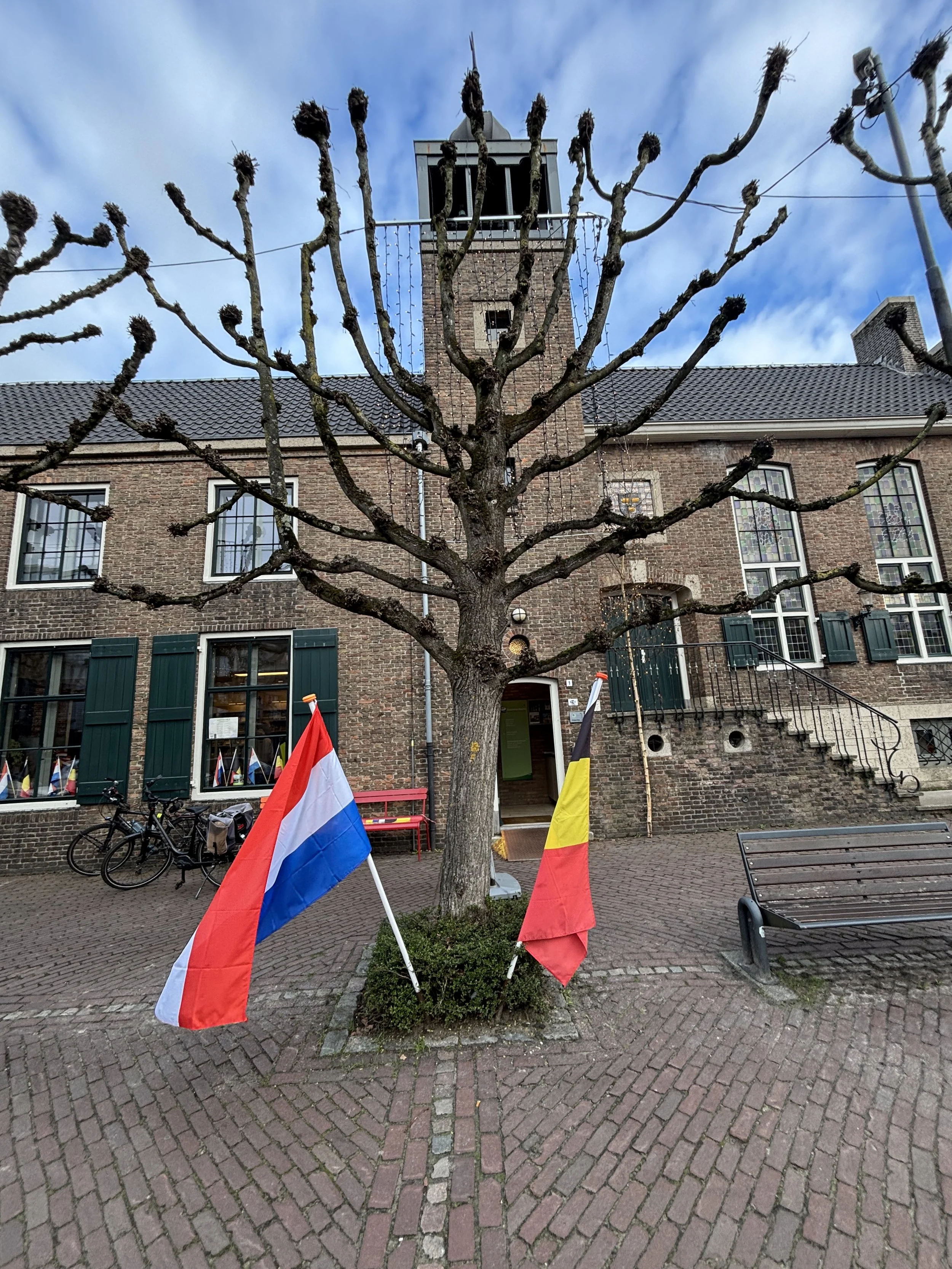
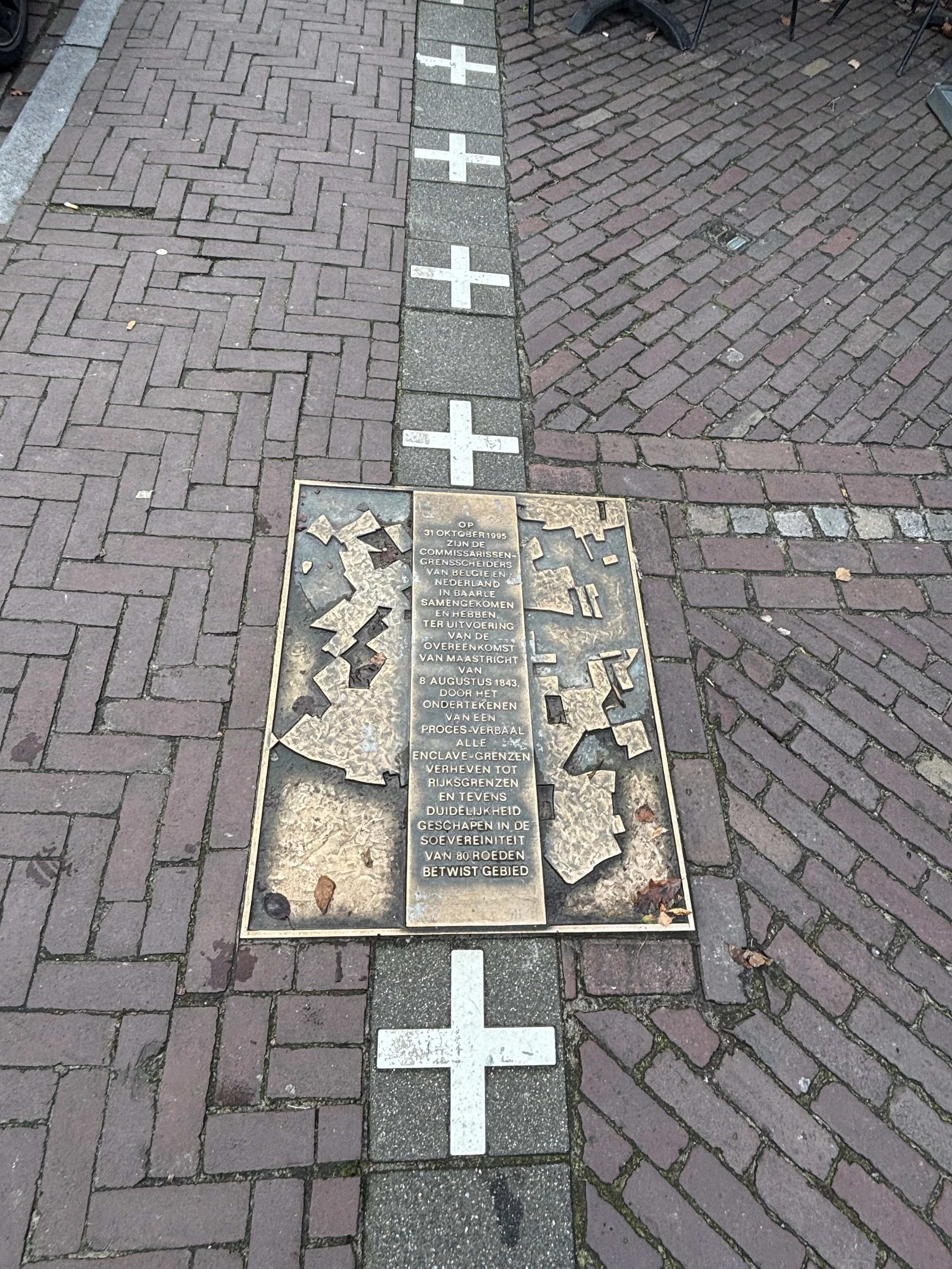
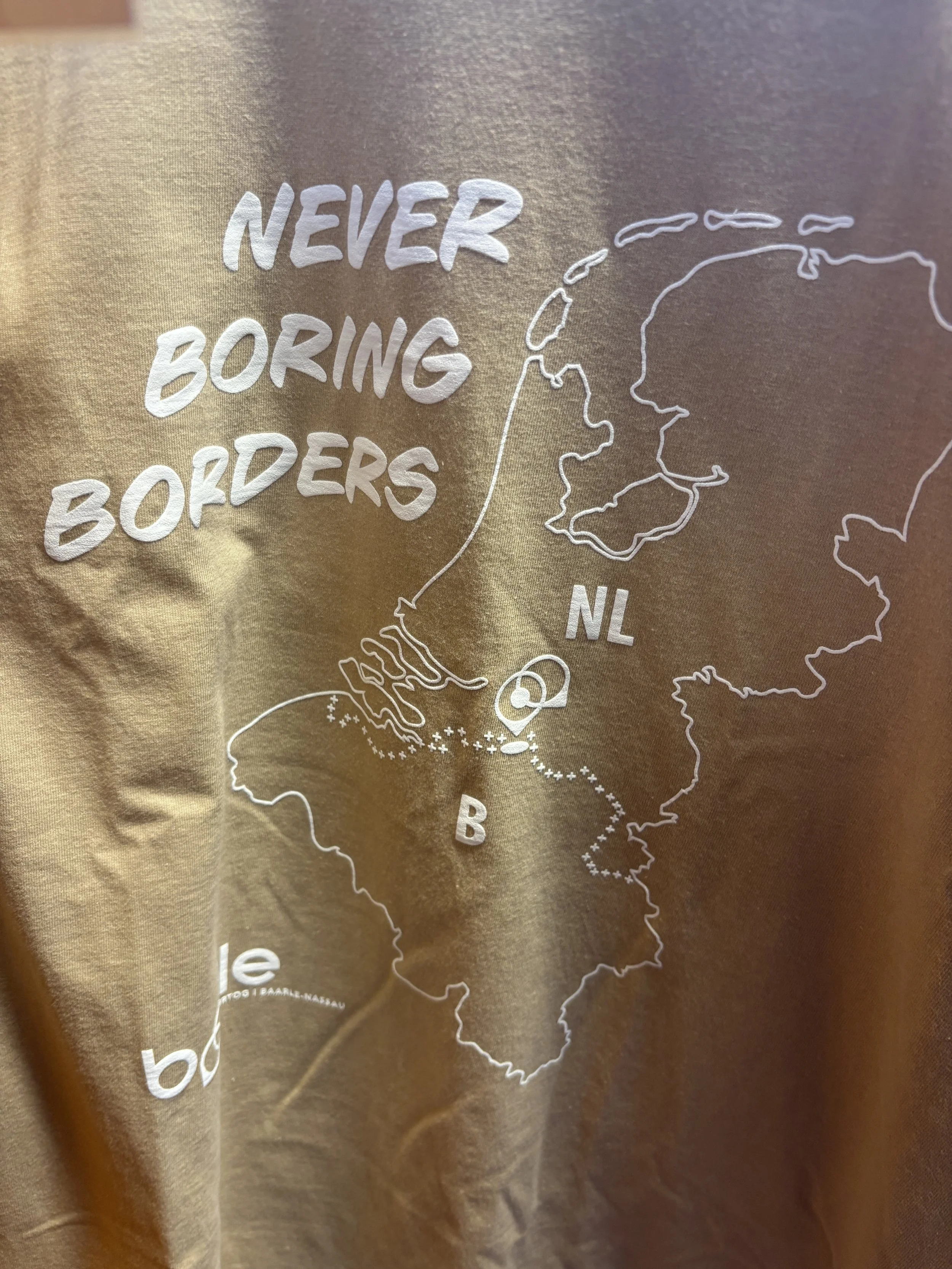
So, Baarle’s tourist office, which is also located on the Singel, is well stocked with all sorts of maps and other reading materials about the border. Here you can also get suggestions and advice about the best walking routes routes to see the most picturesque border points in and around town. By the way, here you can also buy some border-themed merchandise!
There is also a small museum in the basement. It is just one room, but it has some interesting stories, pictures and other border-related items. It’s worth checking.
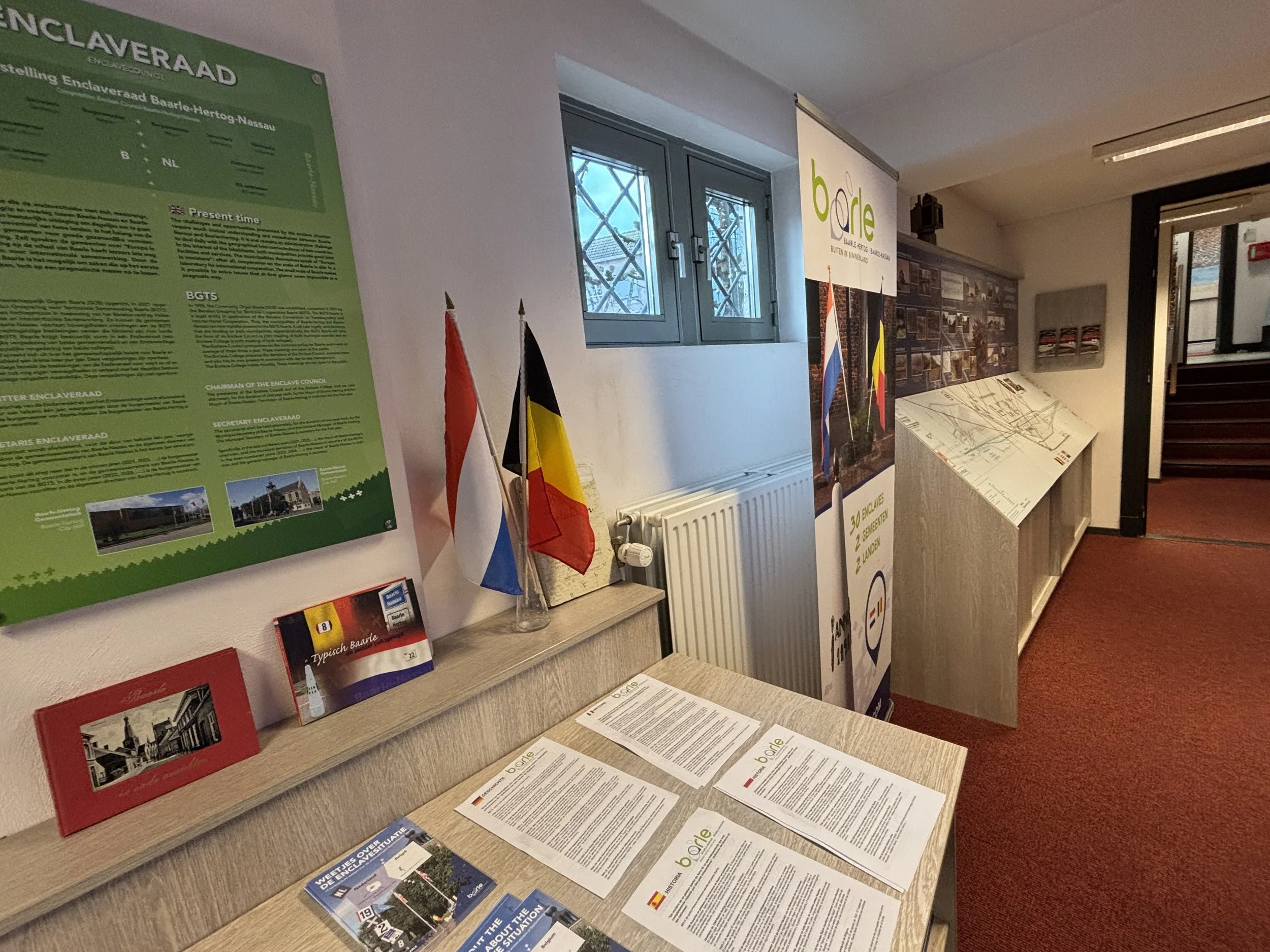
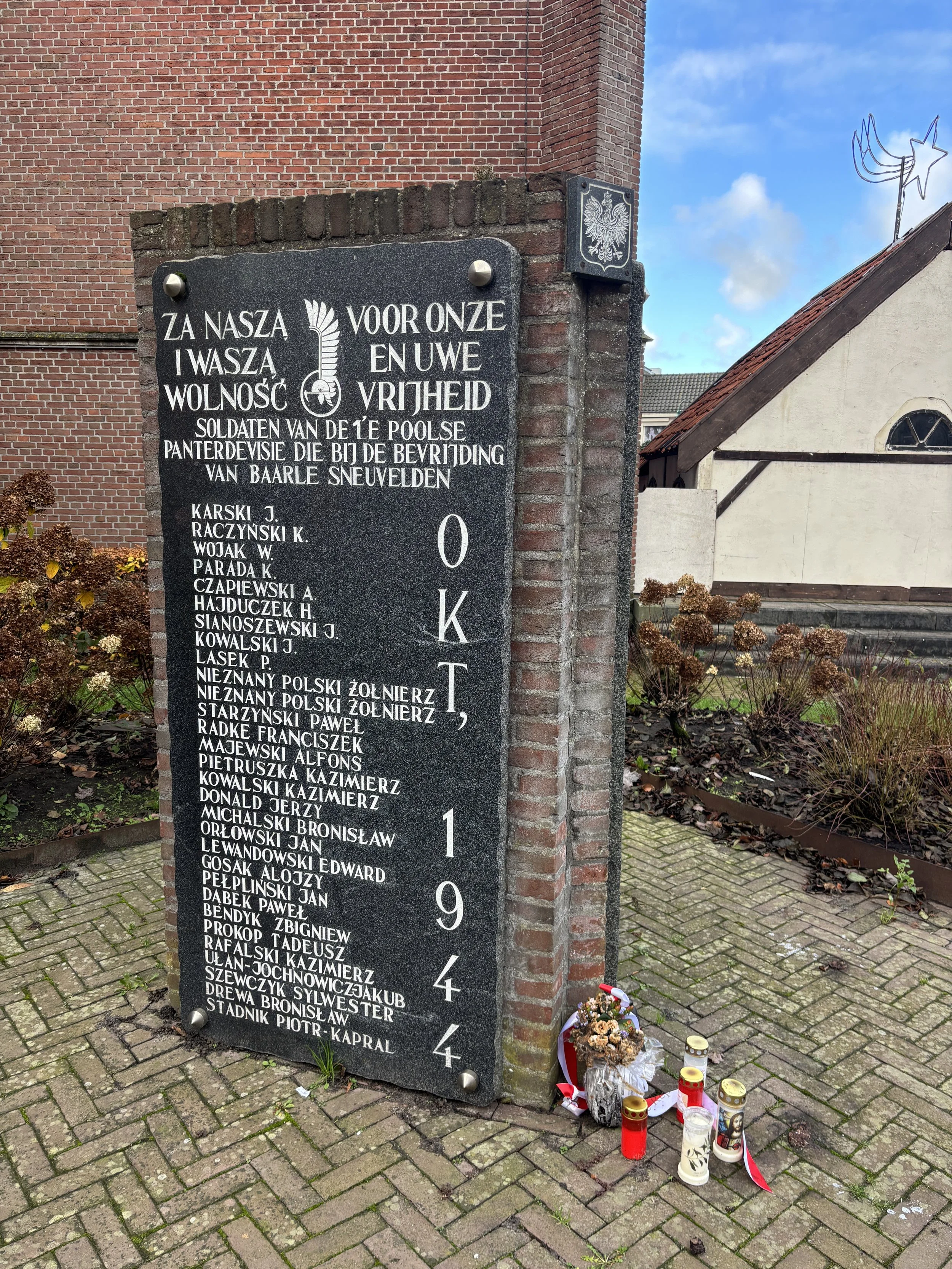
By the way, not everything in Baarle is about the border.
There is also a WW2 memorial, which is located in front of the church. It is dedicated to Free Polish troops which liberated the town of Baarle and the surrounding region in October 1944.
The rather long list of names in it gives you an idea of how fierce the fighting was in this area, with many young Poles losing their lives in the combat for this borderland.
This episode of WW2, in which the 1st Polish Armoured Division under general Maczek went on to liberate much of the region of Brabant, in the southern Netherlands, was also remembered by a 34km remembrance walk organized by organised by WIEGO, a Dutch walking association, and the Maczek Memorial.
The walk took place on September 21, 2024, between Baarle and Breda to mark the 80th anniversary of the liberation of the city by Polish troops.

De Biergrens, a bi-national beer & liquor store
Molenstraat 98, 5111 CE Baarle-Hertog
This is another interesting spot to visit, first because the short walk to get there is a perfect excuse to check a few more of the border “crossings”, as the two countries intersect several times along the way.
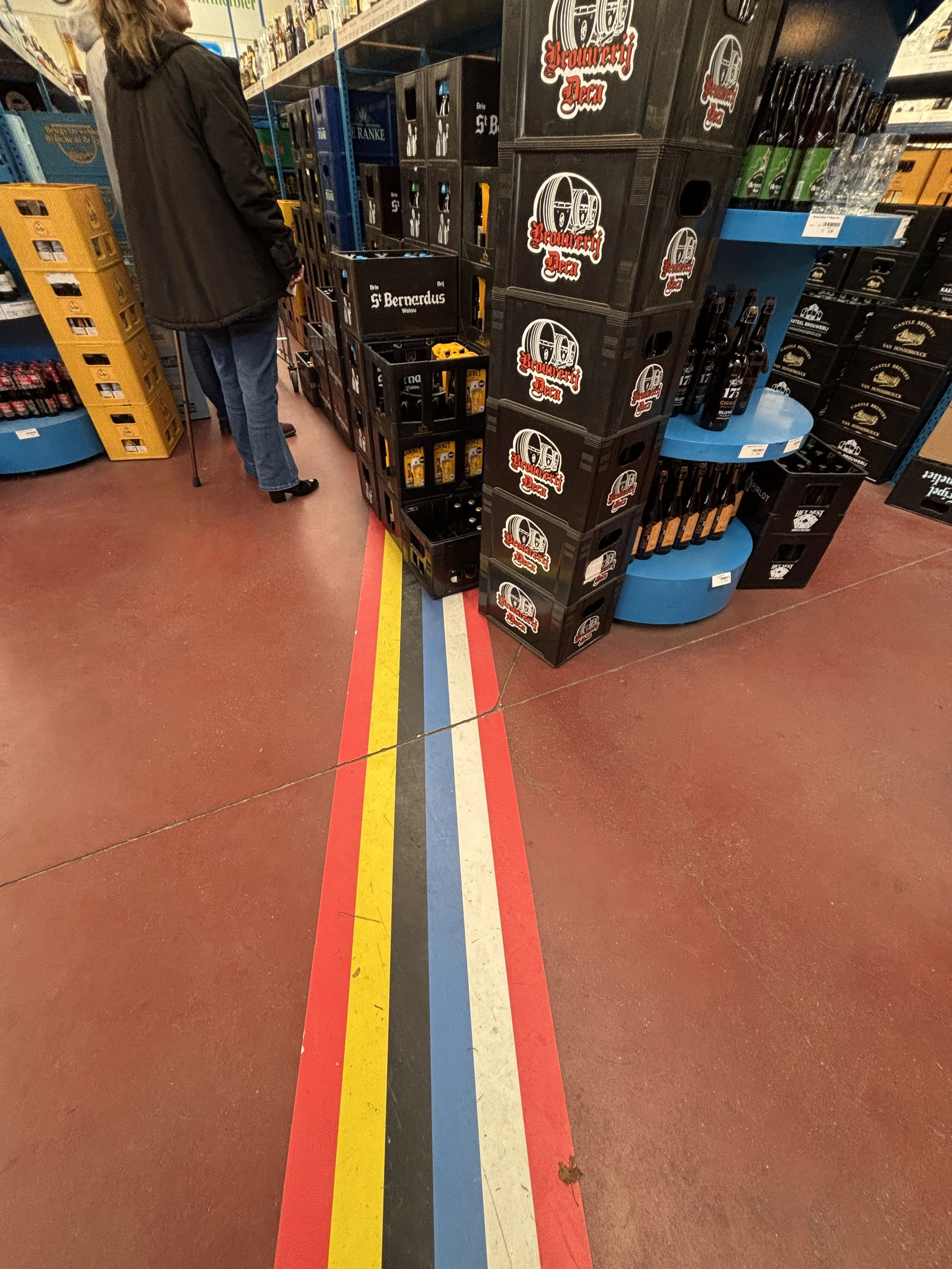
But, also because this store, De Biergrens (which could be translated as “The Beer Border” or “Beer at the Border”) has the particularity of sitting right on the border line. And it does so, because part of the building is actually within one of the Dutch counter-enclaves, the smallest of them all, actually!
The fact that the sale alcohol is usually subject to a whole set of taxes and regulations depending on the country you are in, only makes the place more interesting.
The store owners are well aware of this and have actually laid out a line with the flags of the two countries to demarcate the border inside the store.
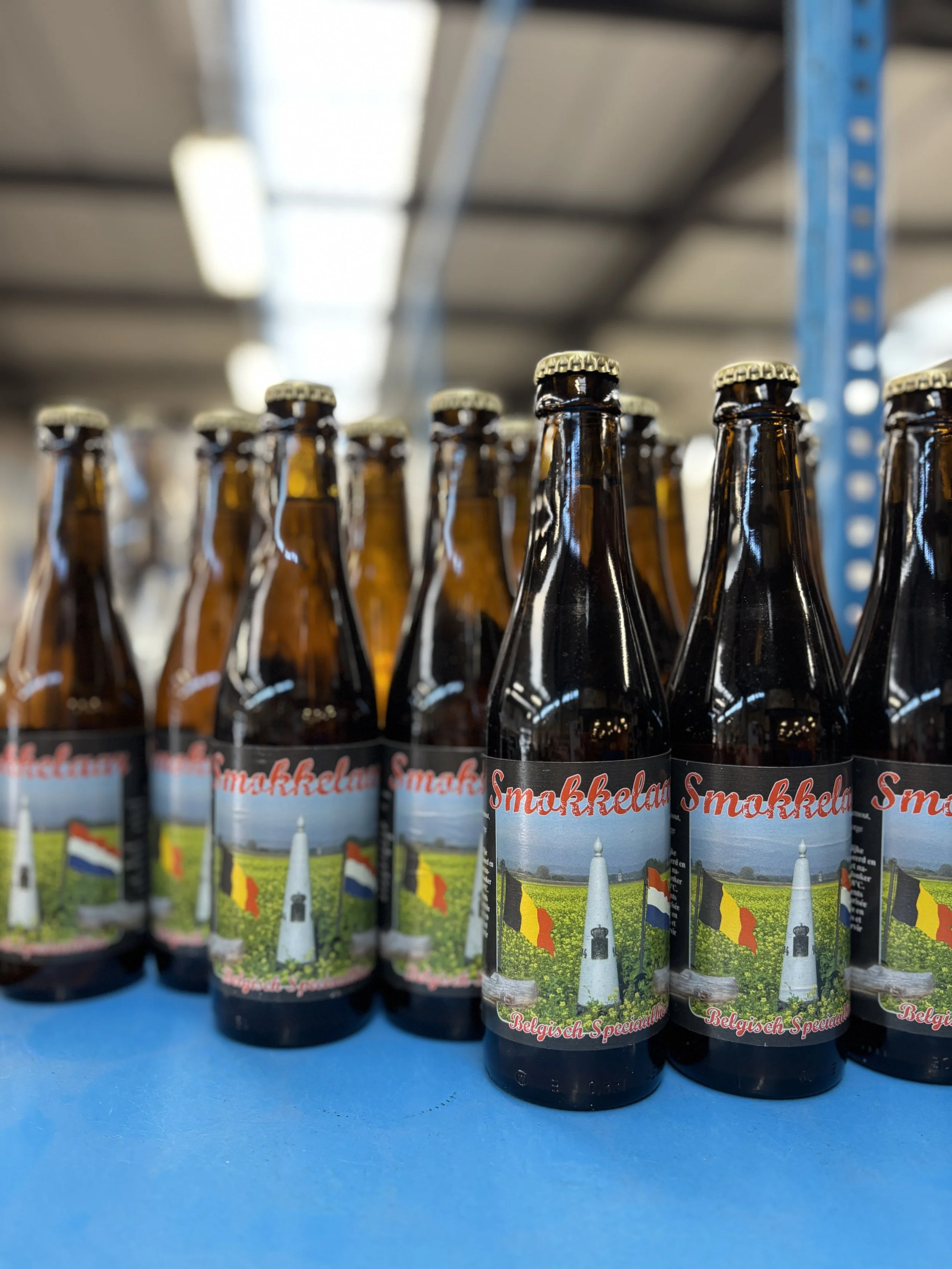
Here you can also buy the local, border-themed beer, called “Smokkelar” (“the sumggler”).
Baarle’s bi-national apparel store
Zeeman
Stationsstraat 1A, 5111 CK Baarle-Nassau
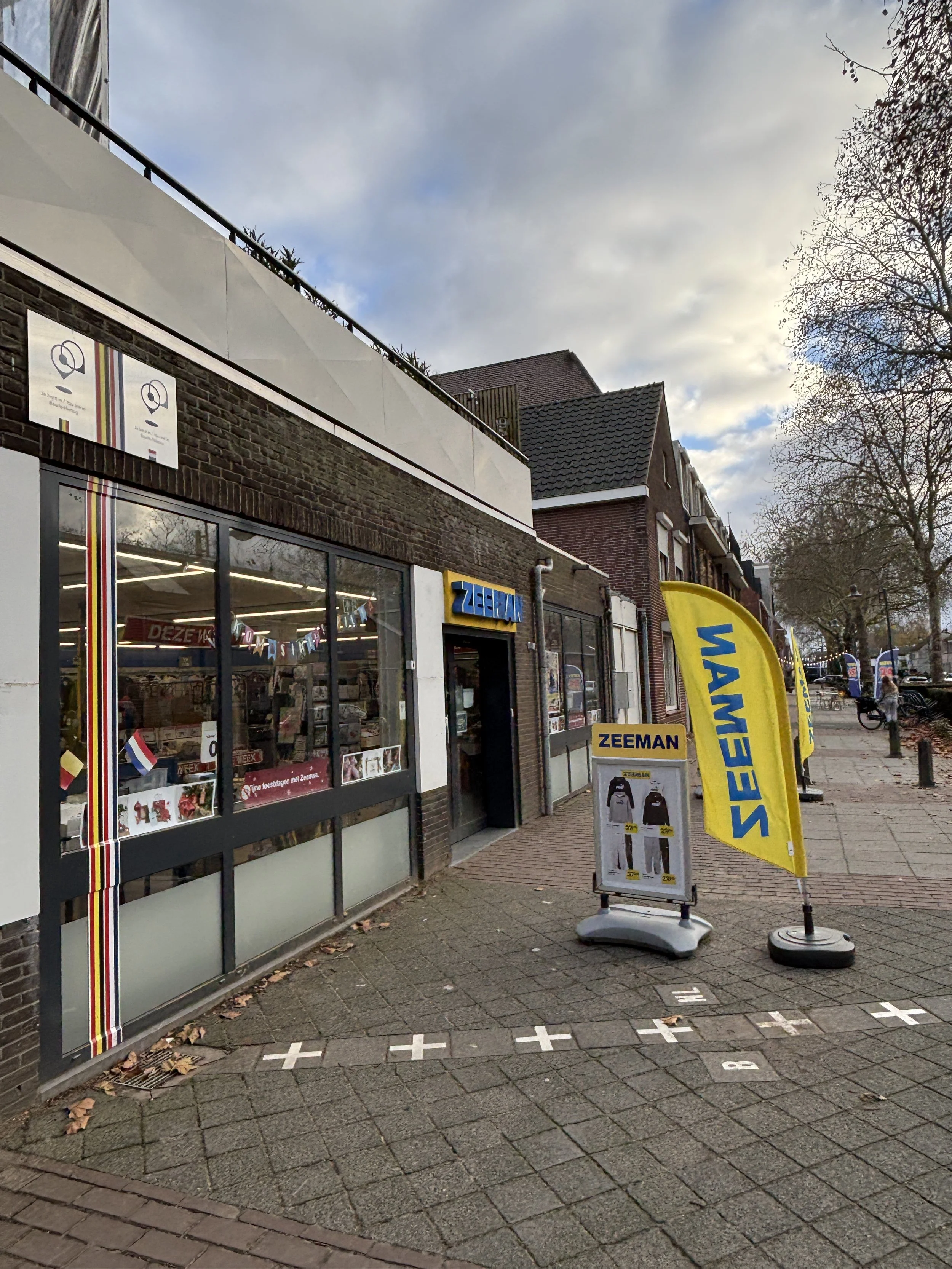
If you are not into beer, here is another bi-national store you can check, this one is a Zeeman apparel store.
It is located next to Baarle’s main commercial street, at a spot where the border makes an angle.
Like at De Biergrens, here the border line has been demarcated with a line showing the two flags which runs all through the store’s floor. I assume, though, that the administrative complications of selling apparel and household items across border lines are not nearly as great of those of selling alcohol.
Baarle’s WW1 Radio Station
This is actually a spot in Baarle which has quite an interesting story.
During WW1, the Germans occupied almost all of Belgium, except for a tiny pocket in the westernmost side of the country and, of course, the Belgian enclaves in Baarle, since they protected by a narrow slice of neutral Dutch land.
This meant that Belgian authorities could continue to operate freely within their own territory in Baarle, so a radio station was smuggled in through Dutch territory to operate as both a listening and a broadcasting post.
Zendstation MN7 had a 40-meter tall mast, a replica of which was erected again, just few years ago, at its original location on one of the Belgian enclaves. Unfortunately, the mast appeared to have been taken down, perhaps for maintenance, at the time of this visit. However, it was possible to read about this fascinating story on several information panels at or near the spot where the original mast was located, at the corner of Leliestraat and Sint Janstraat.
Even if the mast was no longer there, the walk to get there offered the chance to see some more bi-national streets.
The bi-national house
We have seen a number of commercial establishments that sit right at the border, but there are also private homes where this happens.
This is the case of the house in the picture, located partly on one of the Belgian enclaves, which has the distinction of being the smallest enclave in the World, actually.
In addition to featuring two flags, this house has also two addresses, Loveren 2, Baarle-Hertog (Belgium) and Loveren 19, Baarle-Nassau (The Netherlands), because the border goes literally through the door.
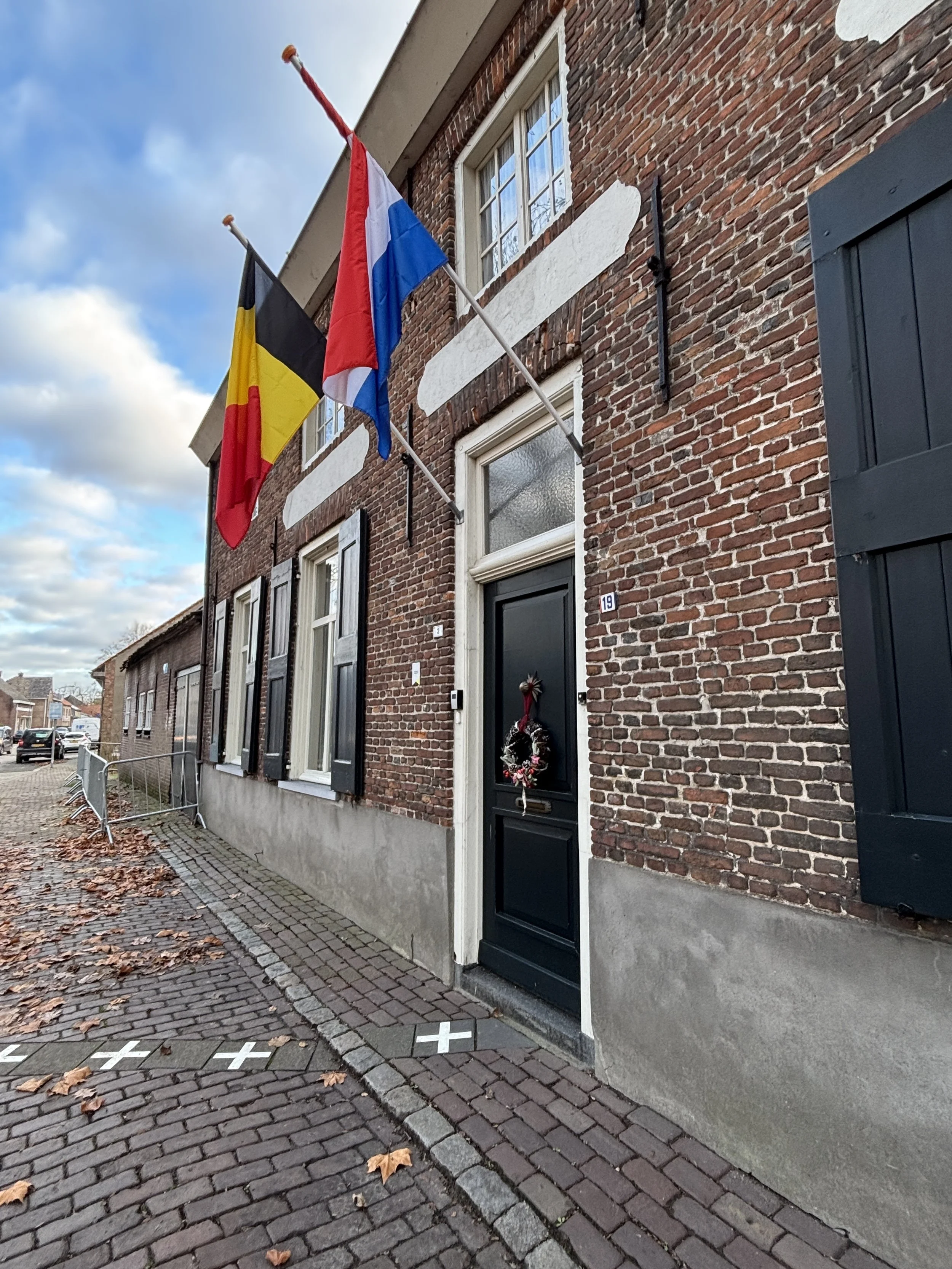
This is not as unusual as it might sound, for example, check this story I wrote for CNN about the Franco-Swiss hotel which sits right at the border between France and Switzerland, with the border running through the middle of some rooms and even beds.
It is worth noting that in Baarle through which the location of the front door which determines the address and to whom do you pay taxes. So, there have been recorded cases of people that have physically modified their own houses to “move” to their preferred jurisdiction.
Recommended place to eat in Baarle
Eetcafé De Lantaern
Molenstraat 42, 2387 Baarle-Hertog, Belgium
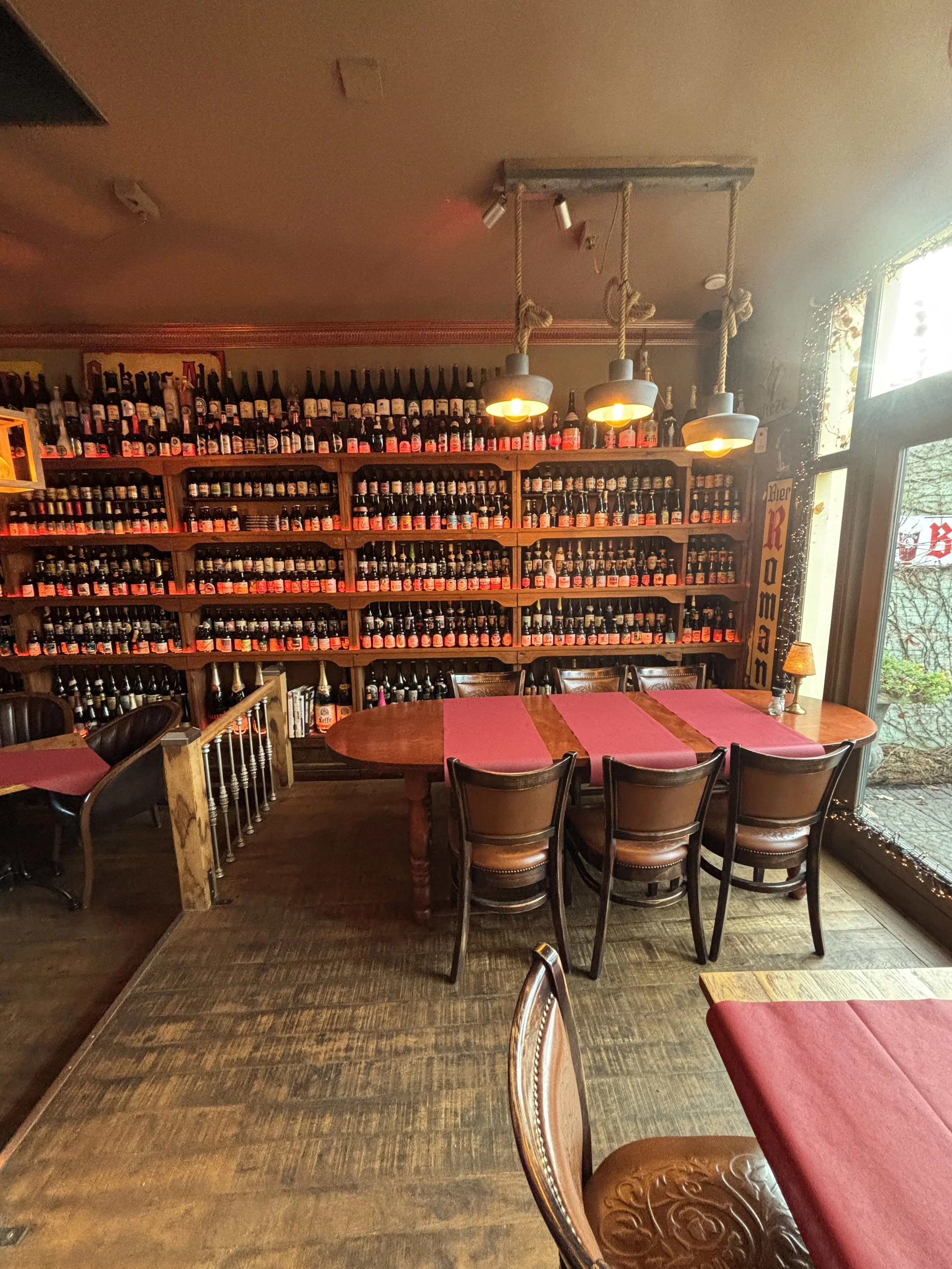
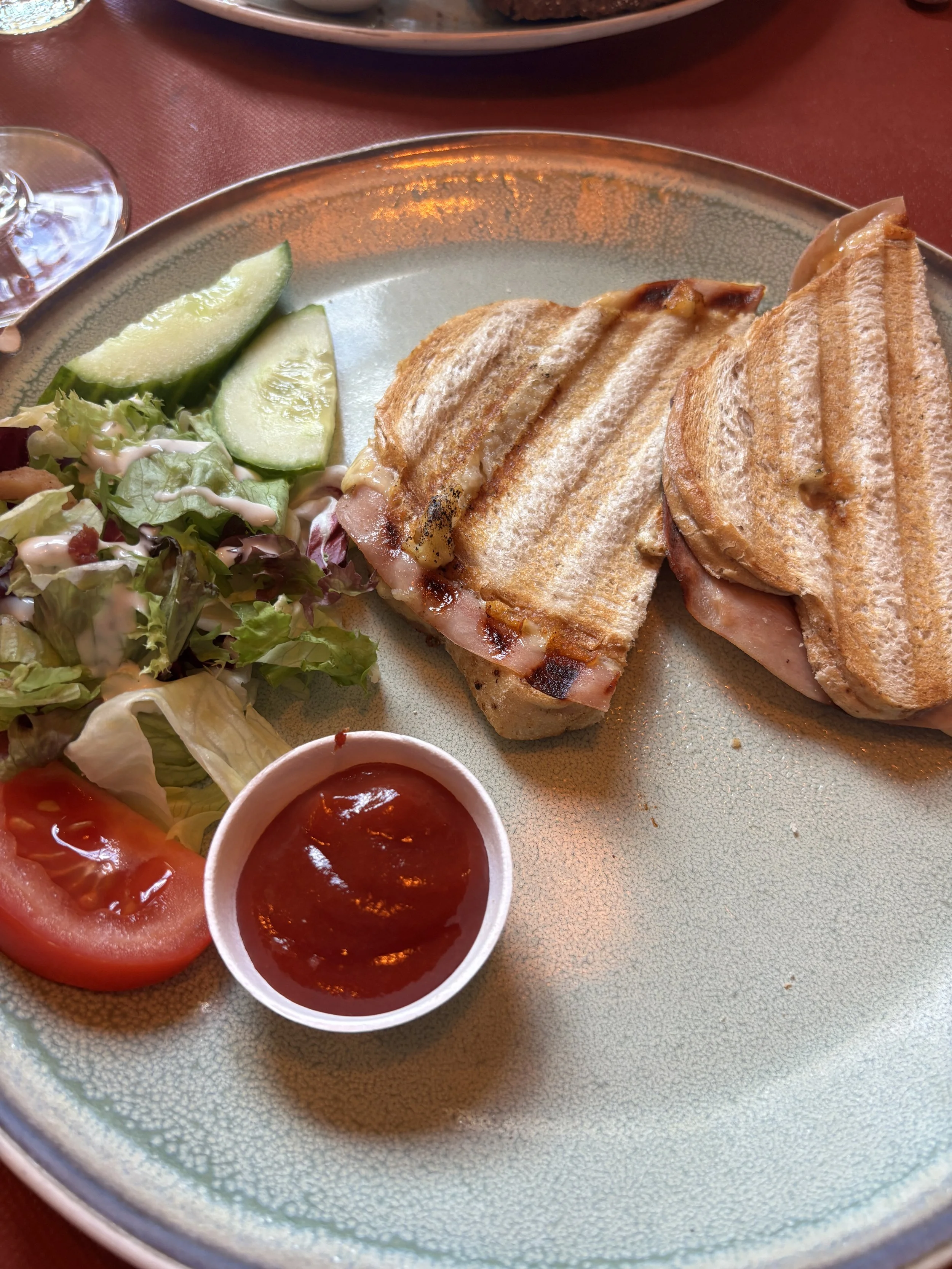
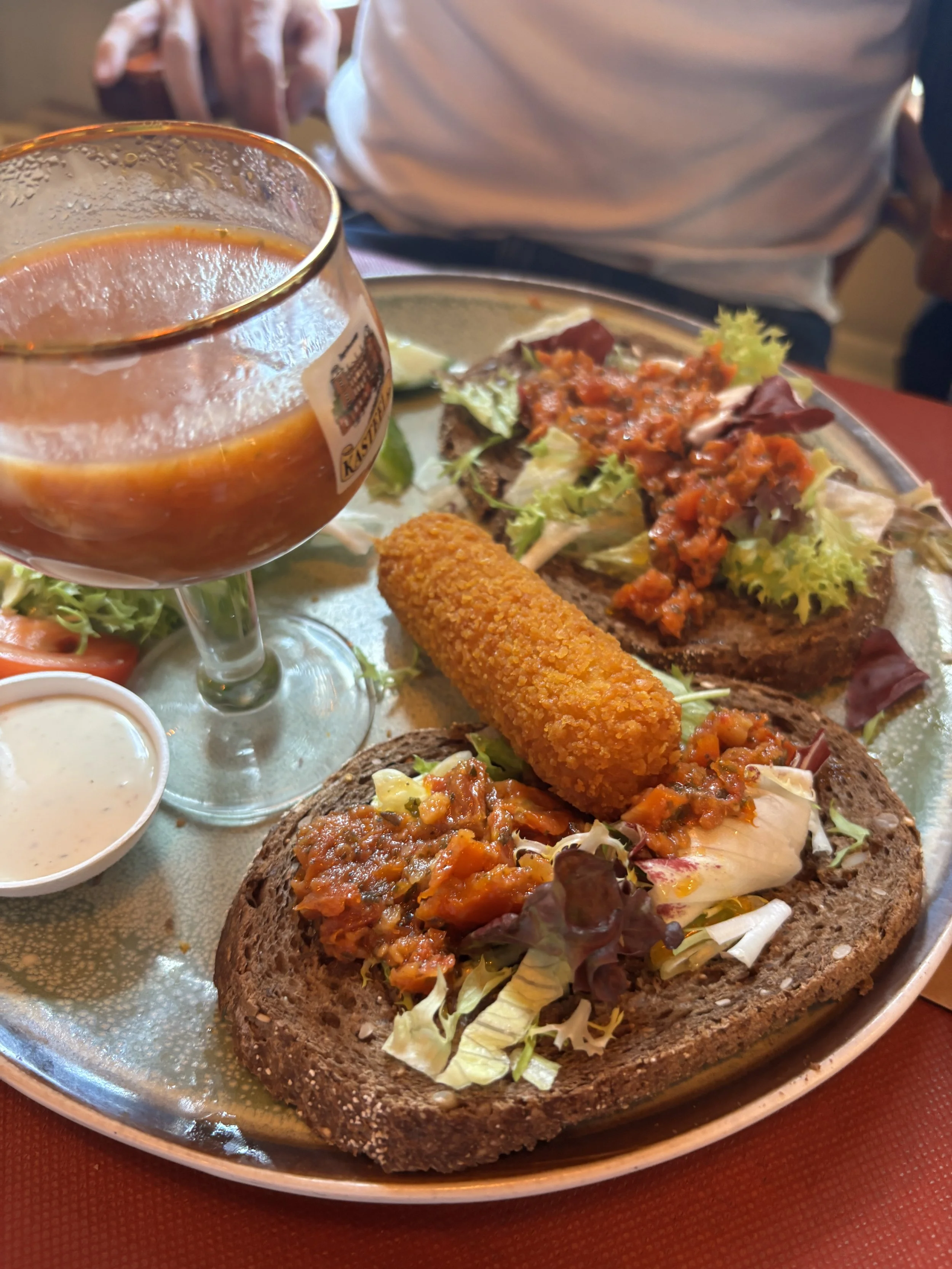
This restaurant, which is located entirely within one of the Belgian enclaves, is a nice option to eat in Baarle. To be honest, the food choices are not huge, also don’t expect super-sophisticated cuisine, but it offes good value, in my opinion.
The portions are reasonably good, the desserts in particular, and they also have a very large selection of Belgian beers.
But, the best of this place is the atmosphere, which is pretty nice and cozy inside. It also has a courtyard, which I guess it is a plus when the weather is nice.

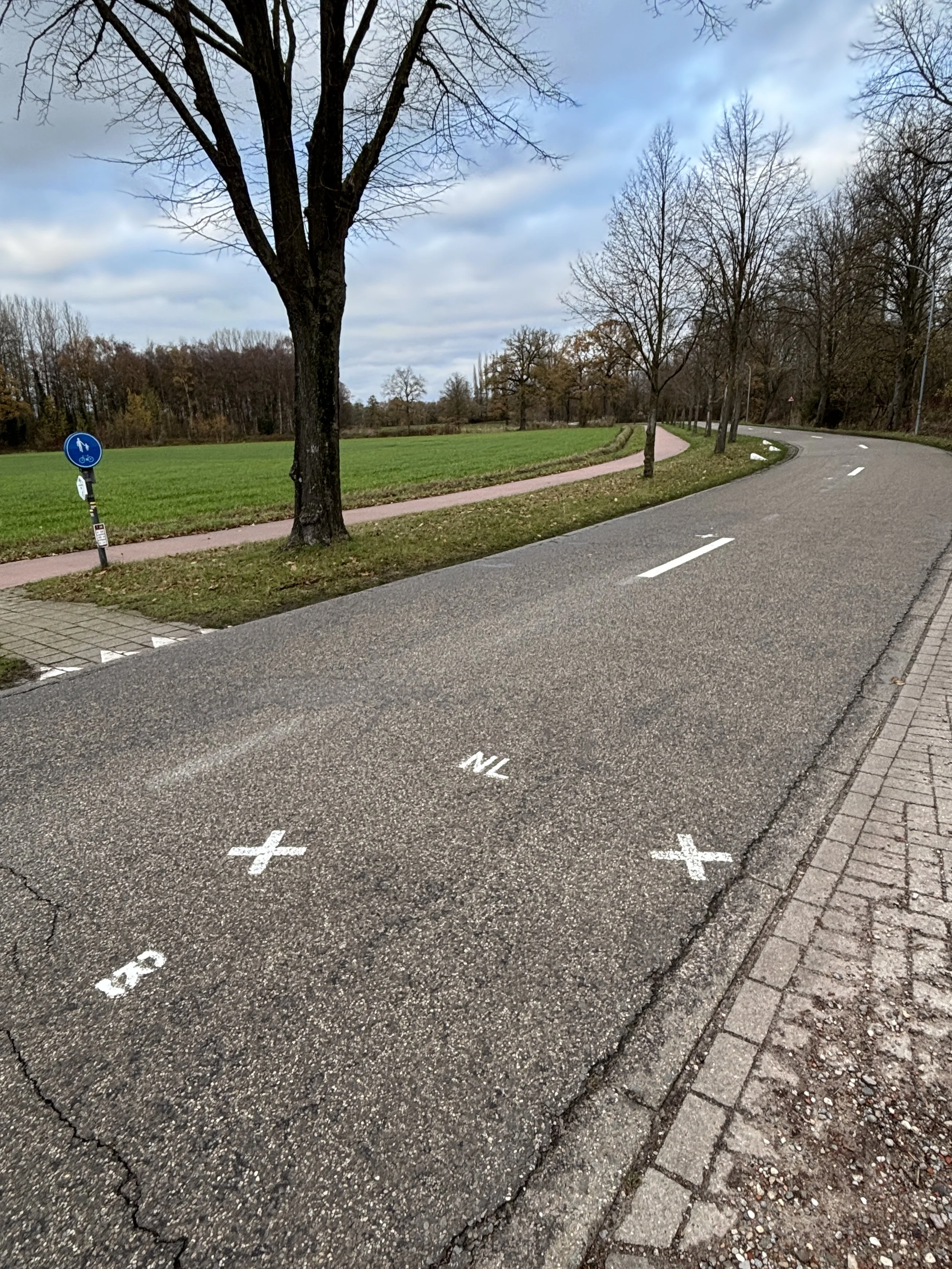
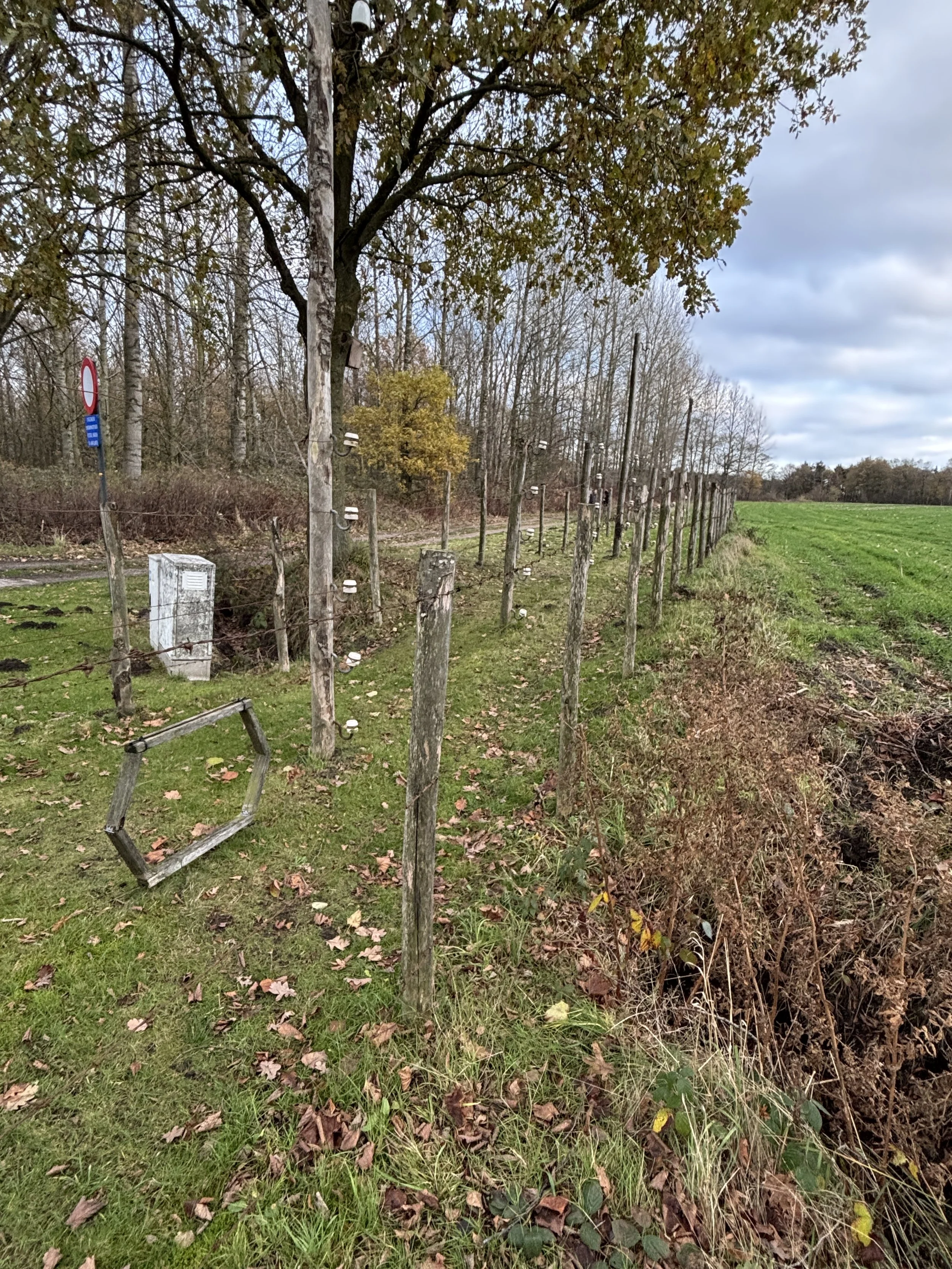
The main B-NL border and the WW1 fence
Here is another point which would be of interest on its own right, but there is part of history that makes it even more interesting.
During WW1, Imperial Germany decided to seal off occupied Belgium from The Netherlands, which were neutral. However, since there are no natural borders in this part of Europe and people on both sides of the border speak the same language and have also many links, this was very difficult to do without an extreme level of coertion.
So they built the “Dodendraad” (“the Wire of Death”) an electrified fence which would kill anyone touching it while trying to cross it. It is estimated that while it was in place this fence killed between 2,000 ad 3,000 civilians trying to cross it!
Today, a reconstruction of that fence stands at the exact spot where it used to be, as a memorial. This is a poignant reminder that borders are not always a safe or friendly place!
There is a little parking next to it, so you can stop your car here and walk along the border if you feel inclined to do so.
Also, note that, at this spot, the border does not run in a straight line across the road, but it makes a 90º angle at about one third of the width of the road. The quirks of the border in this part of Europe are almost endless!

Additional resources:
If you wish to know more about Baarle and how this weird border layout came to be and, more generally, about borders, here are some additional sites and resources you can check:
The great and comprehensive post about Baarle on the Frontera’s Blog (in Spanish)