
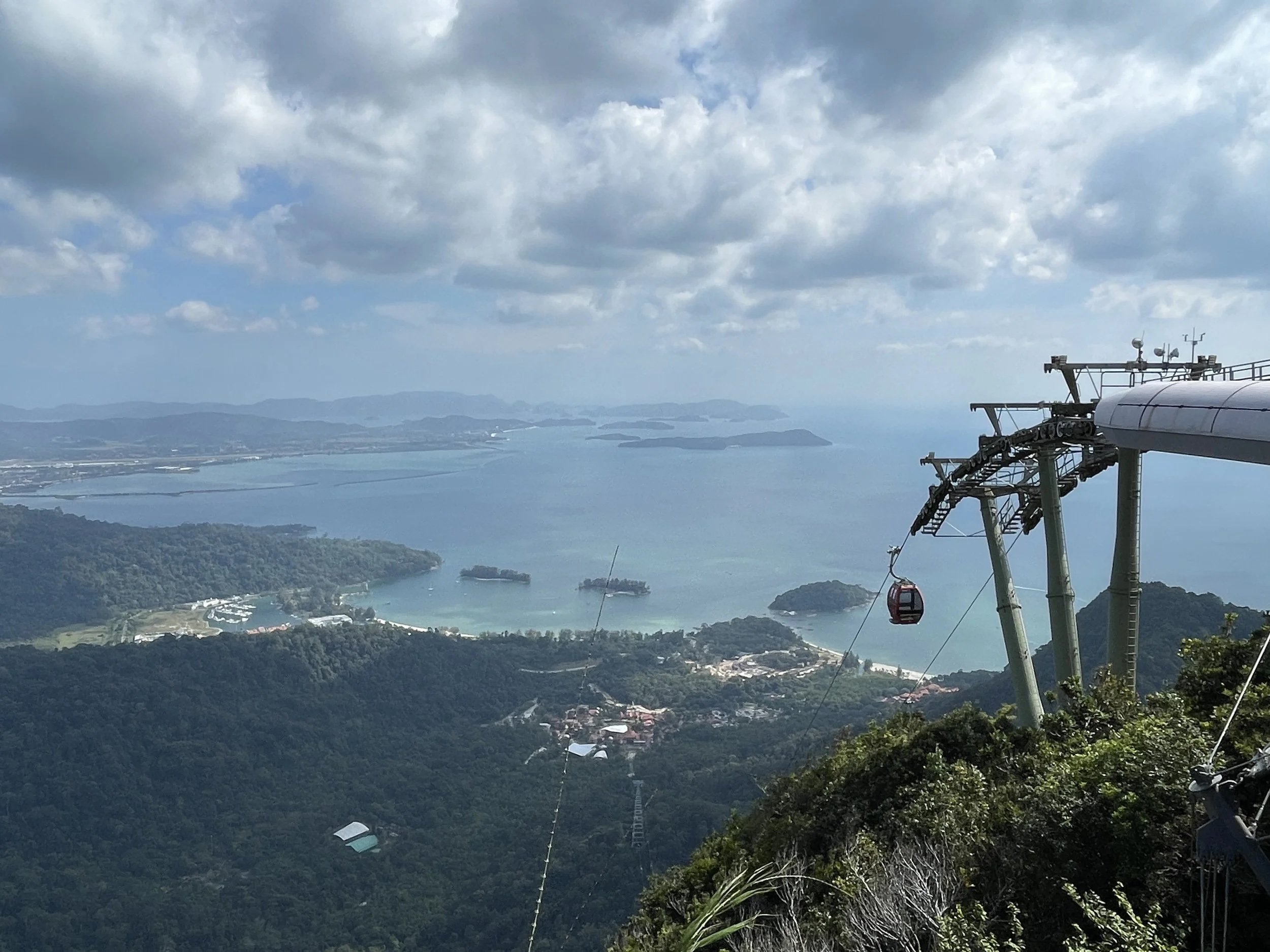
The Top Three Things to do in Langkawi
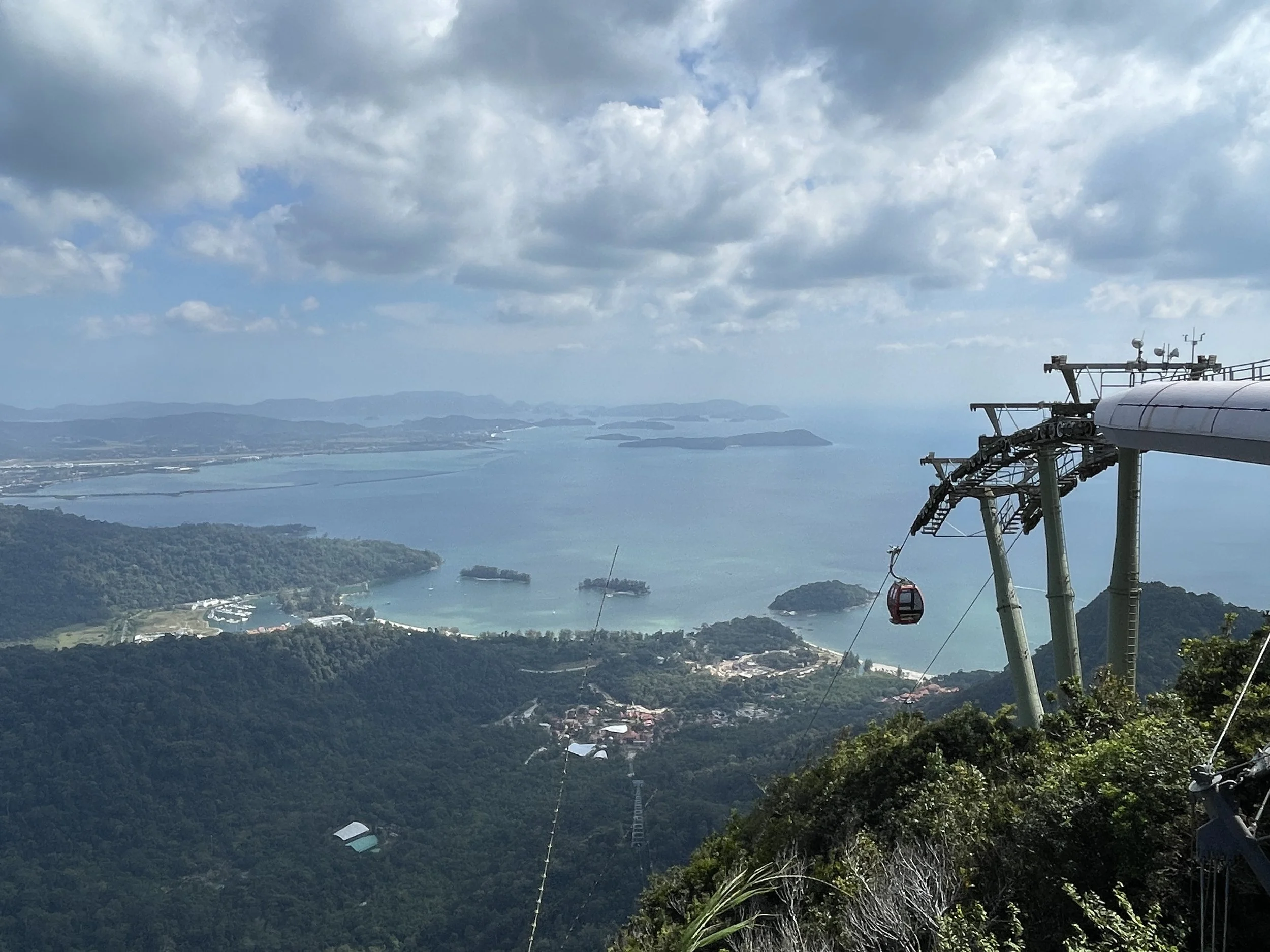
It may not be as globally famous as Bali or Pukhet, but Malaysia has also its own island paradise.
Located just a few miles off the northwestern corner of Malaysia, right on the Thai border, Langkawi is a bit more than a tropical beach resort. The island has been designated a UNESCO Global Geopark. This is not quite the same as a UNESCO World Heritage Site, but it is, nevertheless, a recognition of its natural singularity.
In fact, UNESCO defines this category of site as "a single, unified geographical area where sites and landscapes of international geological significance are managed with a holistic concept of protection, education and sustainable development.” Interestingly, this designation also involves explicitly the pursuit of some specific sustainable economic development goals to the benefit of local communities.
By the way, although I will be referring to Langkawi as “an island” throughout the text, Langkawi is, in reality, an archipelago with dozens of small islands and islets. However, many of the smaller ones are not inhabited and practically all population, resorts and infrastructure is on the main island, which is where I stayed (I am not even which of the smaller islands are open to visitors, since quite a few of them are officially categorized as nature reserves).
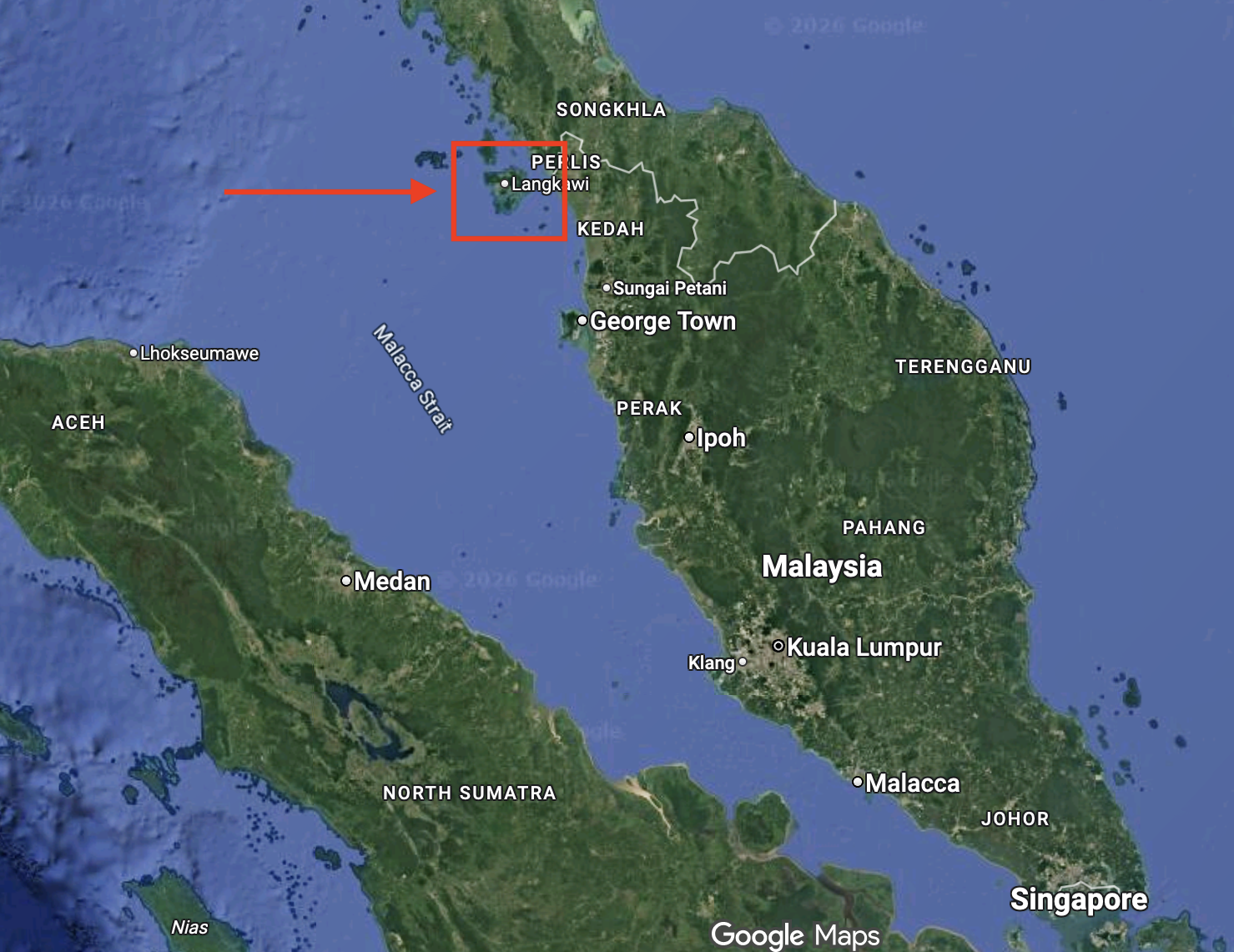
How to get to Langkawi?
The easiest way is to fly. Langkawi has an international airport which is connected multiple times a day to Kuala Lumpur (around 1h flight away) by several airlines. I found, for example, that Air Asia offers extremely cheap flights on this route, as well as a nonstop short connection from Langkawi to Penang, which comes in handy if you wish to see a bit more of the country outside the capital (Penang is another interesting Malaysian island that I will cover in another post soon!). Some major international airlines, such as flydubai, Etihad and Air Astana have also started serving Langkawi too, providing some interesting connectivity options with the rest of the world.
The airport even hosts its own airshow every other year, the Langkawi International Maritime and Aerospace Exhibition, but this is material for specialized aviation sites, like Allplane, rather than this one!
By the way, Malaysia is quite an open country when it comes to visitors, and citizens of many countries, including the EU, UK and UK do not need a visa to enter (just fill in the Malaysia Digital Arrival Card (MDAC) within three days of your arrival). Transport infrastructure is generally good.
How to move around Langkawi?
My answer to this is rather straightforward: just take cabs and don’t bother with renting cars or motorbikes. I don’t do the latter, so won’t comment on it. As per renting a car, I did it in Penang and I am happy to report that driving in Malaysia is generally fine when it comes to infrastructure and general civility of the traffic and as long as you have no issue with driving on the left (a legacy of the time under British rule!).
However, the distances involved in Langkawi, an island that is no more than 20 miles across, combined with cost of local cabs and their ubiquity, makes this the best option, in my opinion. Now, I would recommend you download and open an account with Grab, the Malaysian ride-hailing app, since it is the one that works best in Langkawi (as in the rest of Malaysia).
This post may contain affiliate links. If you book or buy something through them, I earn a small commission, at no extra cost to you. It's a way to keep Places of Charm going. Thank you for your support.
Top things to do in Langkawi: 1) the Langkawi SkyCab
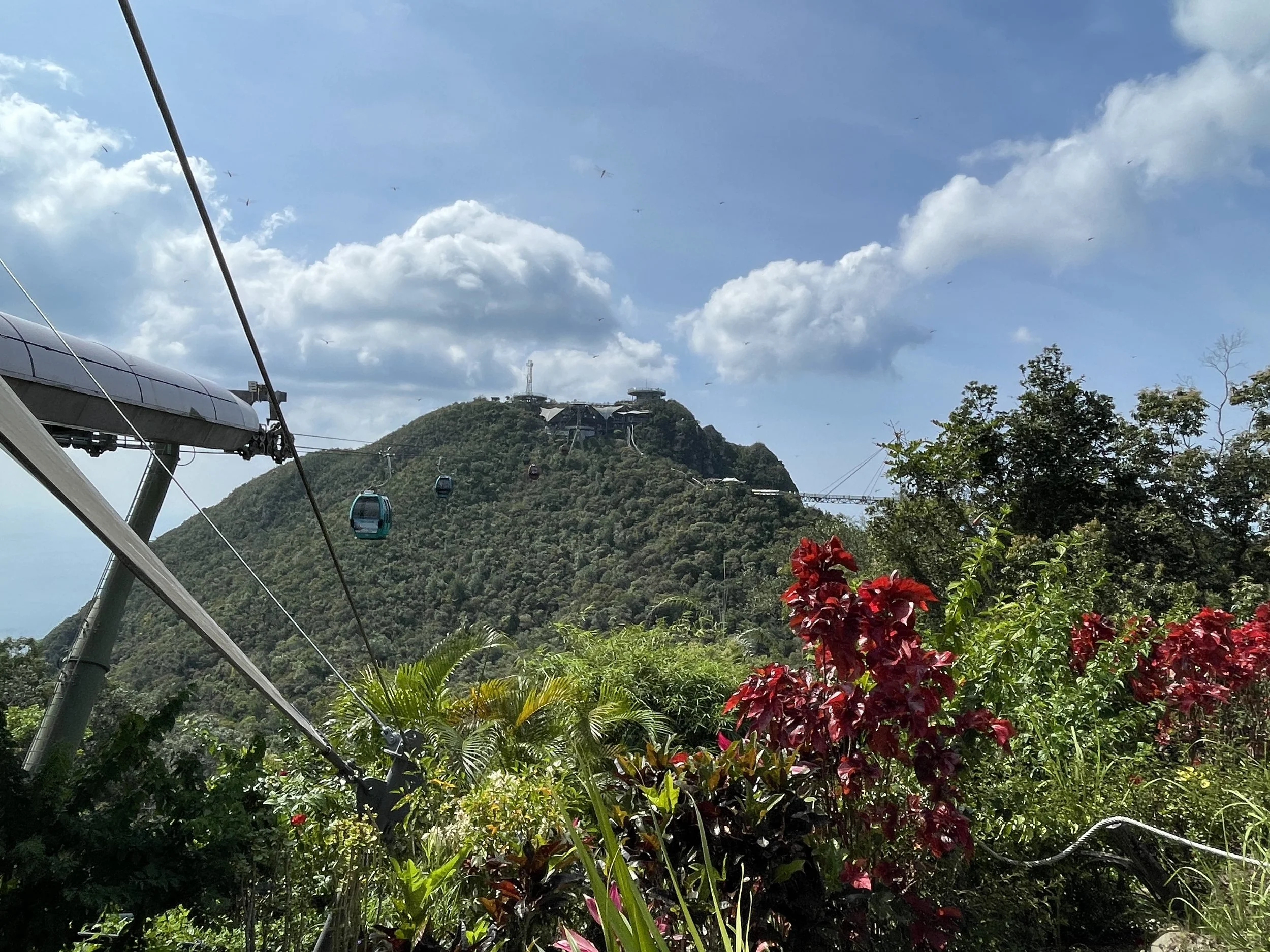
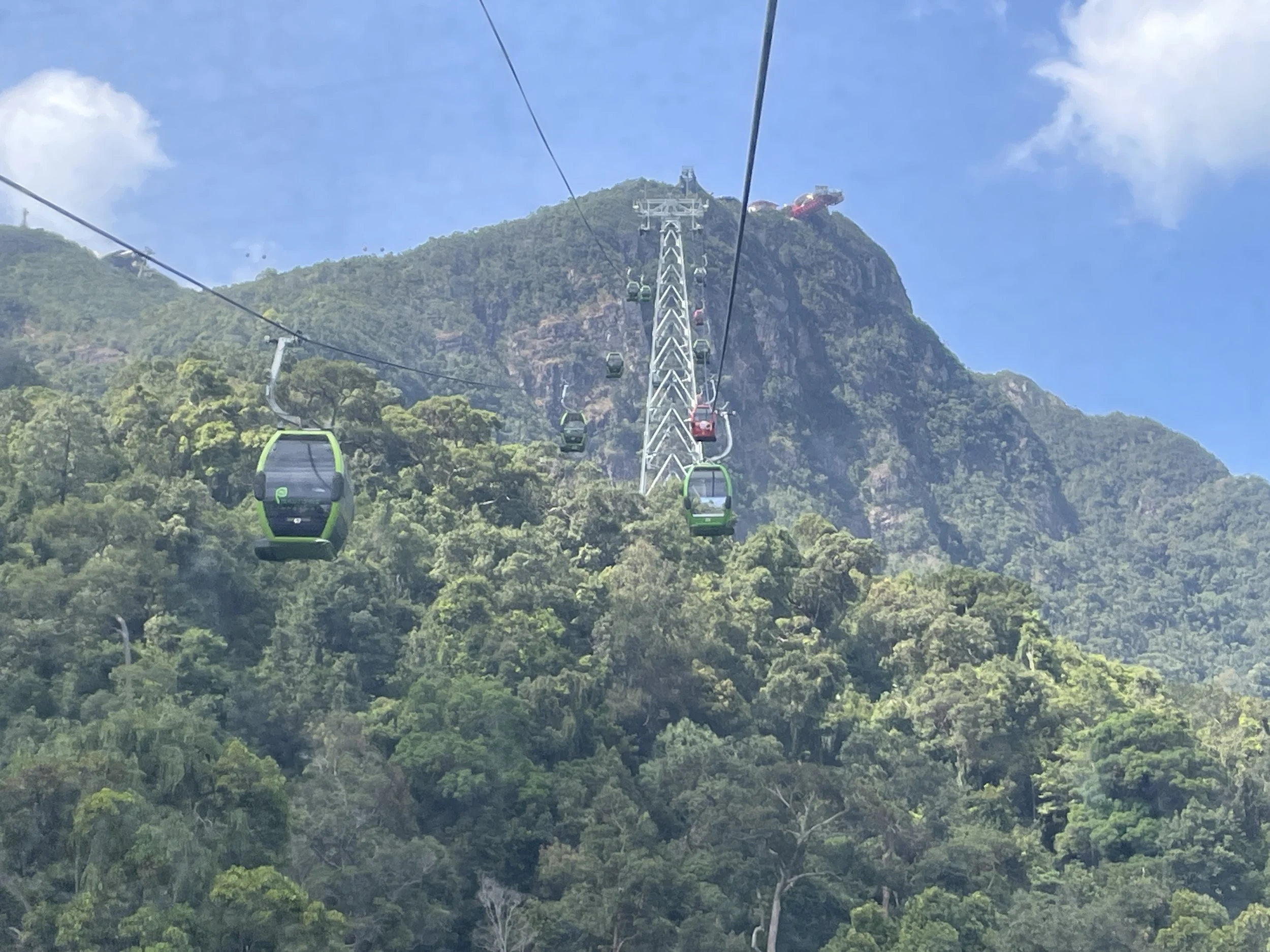
The Langkawi SkyCab is one of the must-dos in Langkawi.
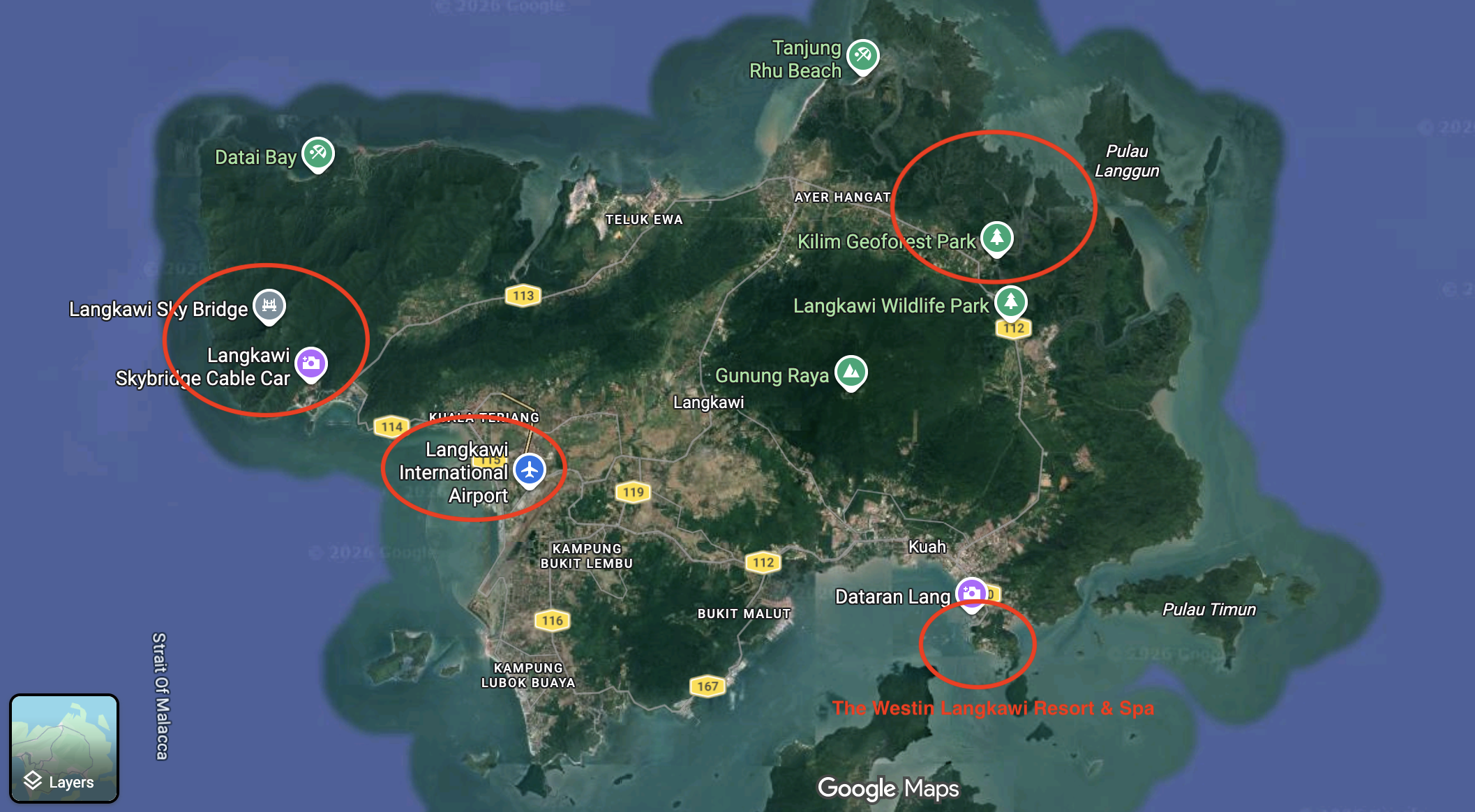
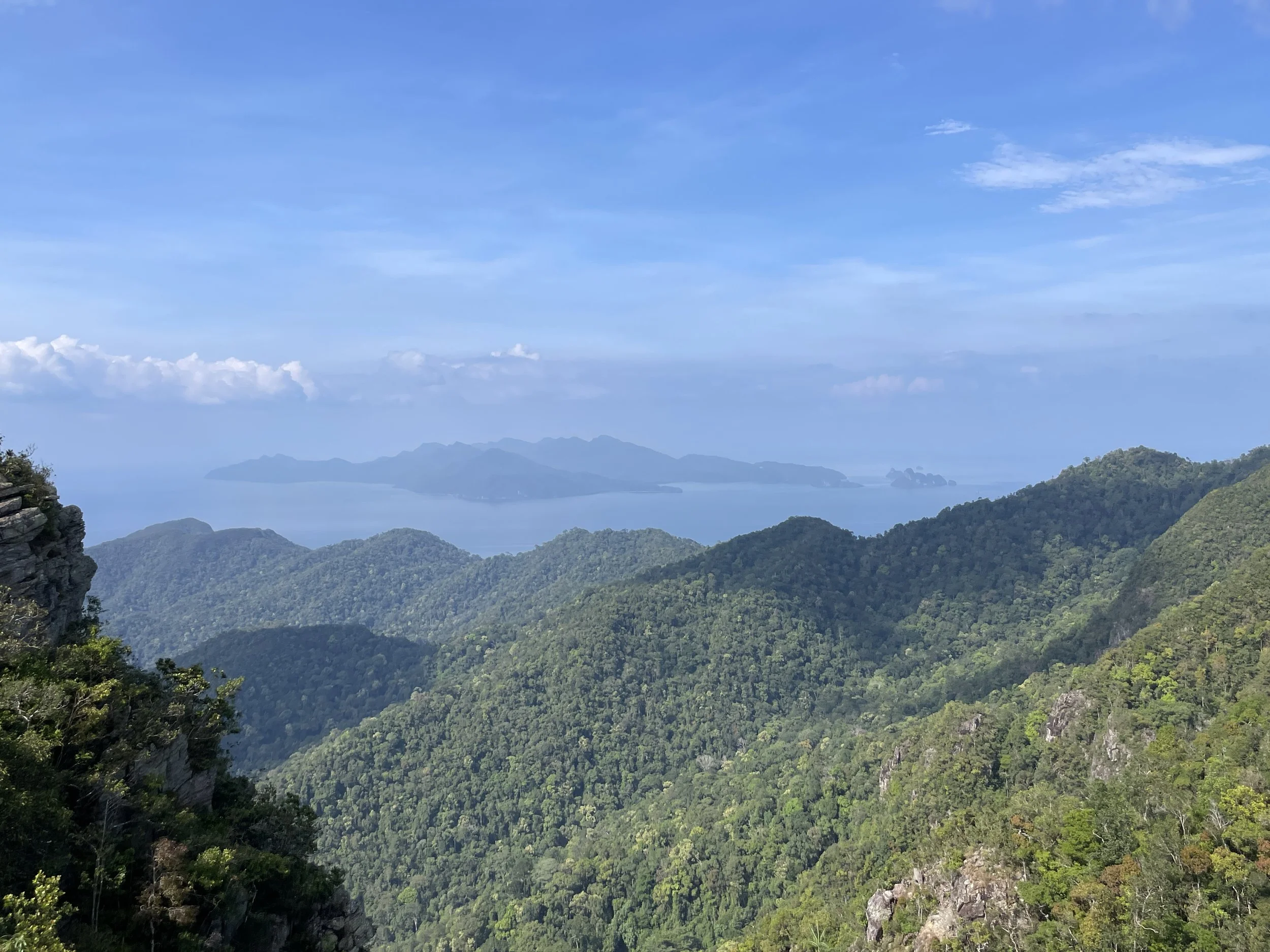
Located at the western end of Langkawi, this cable car which will take you to the highest point in the island (708 meters) from where you will be able to enjoy a broad panorama covering many miles around.
I said “a cable car” but this is not entirely accurate, because, just as with the island, there is not just one. In fact, there are two stages. The first and longest one takes you to an intermediate station at an altitude of 650 meters. From there you can take yet another gondola which takes you to the top.
The path is really steep (42º) and goes over a heavily forested area.
In fact, these hills that the cable car climbs to are among the oldest on Earth, dating back 550 million years and the surrounding rainforests are also very Ancient. This is one of the reasons, though not the only one, Langkawi is considered a “Global Geopark”.
The cable car ride itself takes around 15 minutes, although you are likely to spend some more time up the hill if you walk the Skybridge and take your time to take photos and so on.
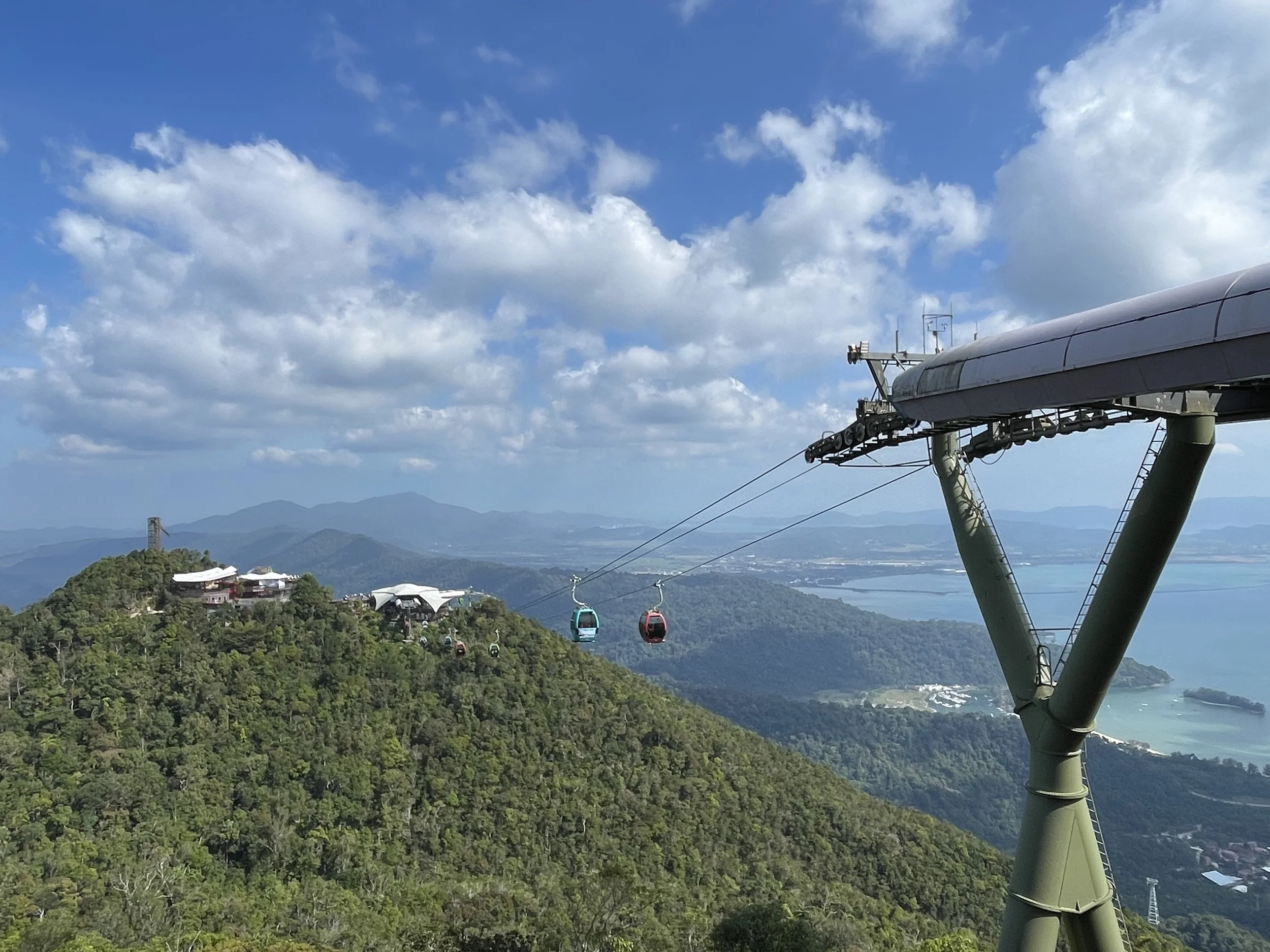
I would recommend booking in advance because the SkyCab is a genuinely popular attraction. The ticket gives you access to the SkyBridge, as well, which is a suspended footbridge which allows you to walk between different points in the ridge. It has even some patches with a glass floor for extra excitement (beware if you are afraid of heights, though!)
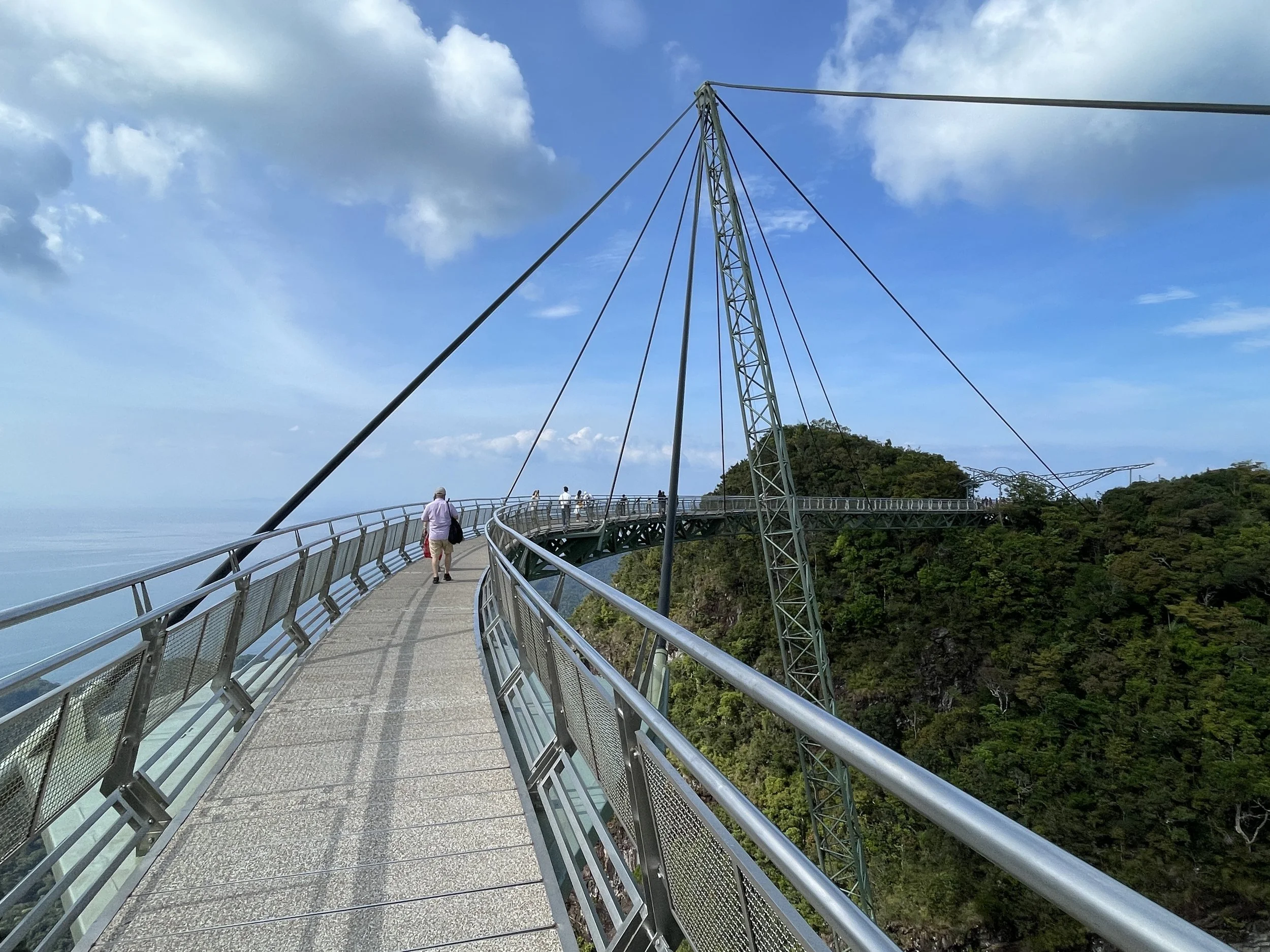
In addition to the regular shared SkyCab gondola, it is possible to book several more premium options, such as a private one or one with a glass bottom. To be honest, I think the regular one provides a nice enough experience and, if you want to feel the thrill of the heights, you can get that at the SkyBridge!
Last but not least, a word about the SkyCab base station, which is nothing short of a recreation park. There are lots of shops, different types of entertainment venues for kids and catering establishments. We didn’t spend much time there, but you can easily spend a whole morning there if you are into this type of thing.
2) Rest at a beach resort
That’s the other thing that people come to Langkawi for. And the island is well endowed with resorts for all tastes and budgets, including those from top-end international chains such as Four Seasons and St. Regis. So, while this site usually champions an active approach to traveling, sometimes is just a good idea to get a spot by the pool and enjoy a good rest. Why not?
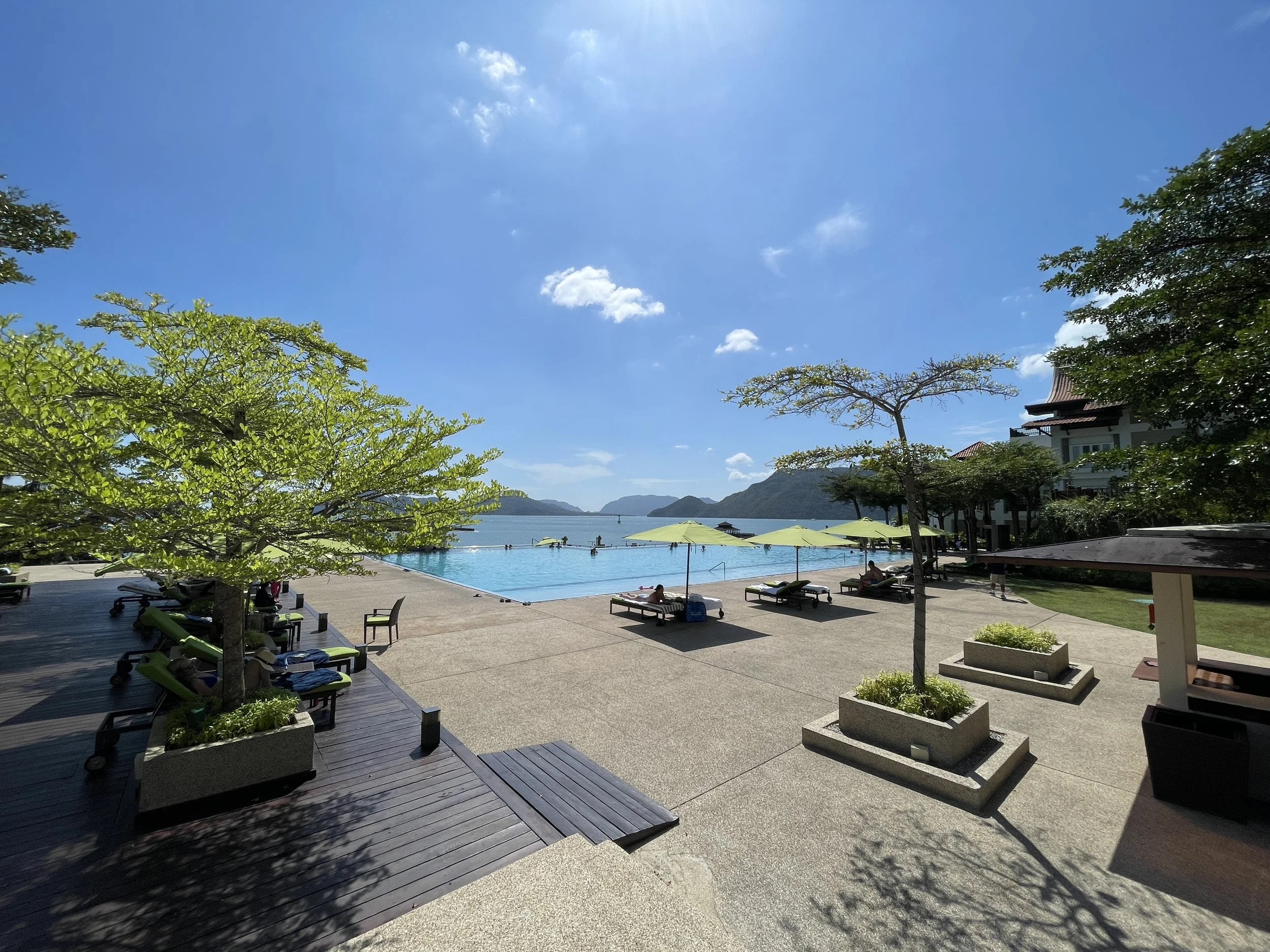
A great resort to stay at in Langkawi: The Westin Langkawi Resort & Spa
This beach-side resort is located on the southeastern corner of Langkawi, half an hour ride from the airport and on a small peninsula which it shares with the St. Regis resort next door.
The grounds of the The Westin Langkawi Resort & Spa face south, towards the narrow strait that separates Langkawi from several of its smaller adjacent islands.
It’s got a large infinity pool, which you can see here below, as well as direct access to the beach.
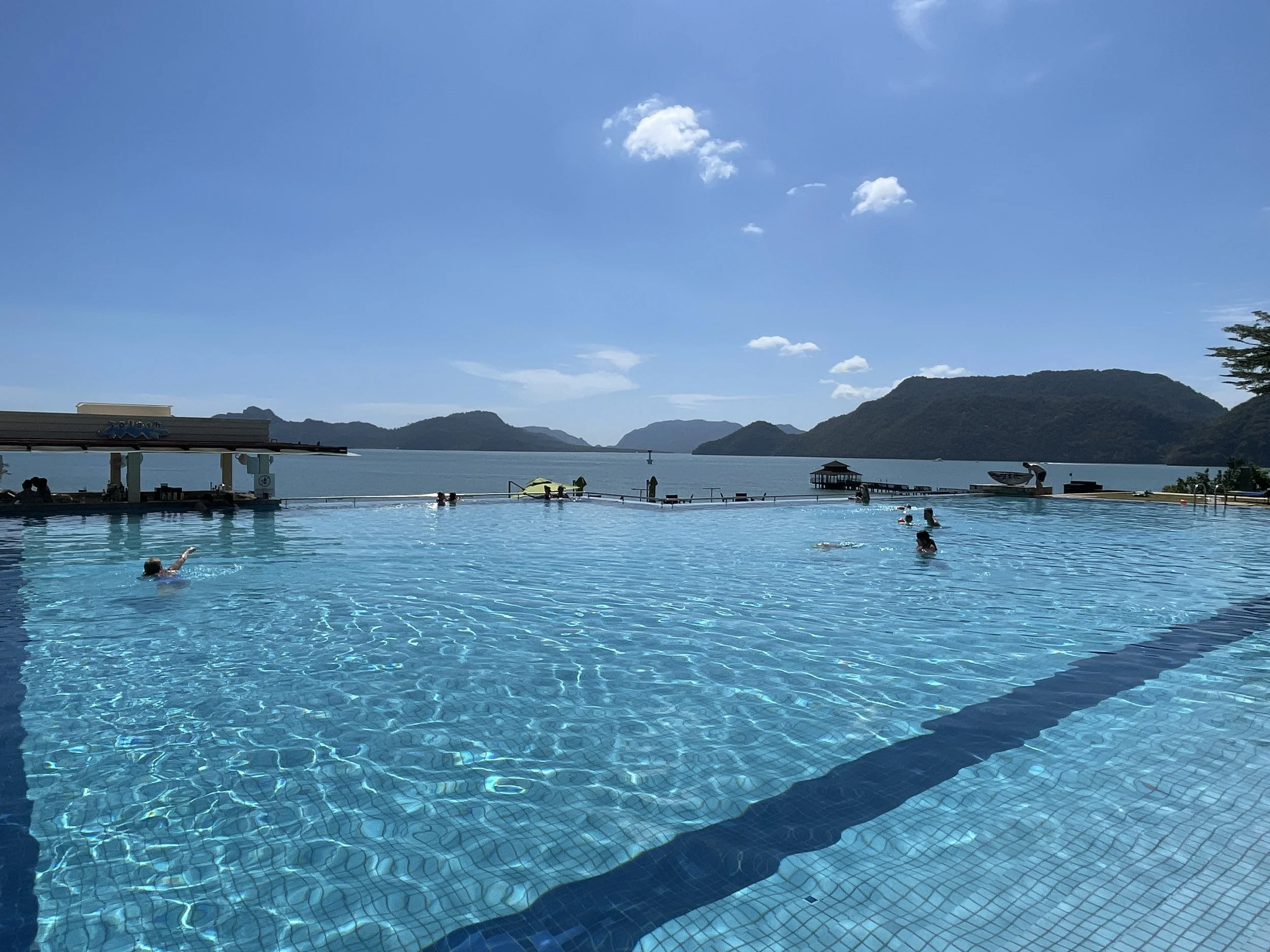
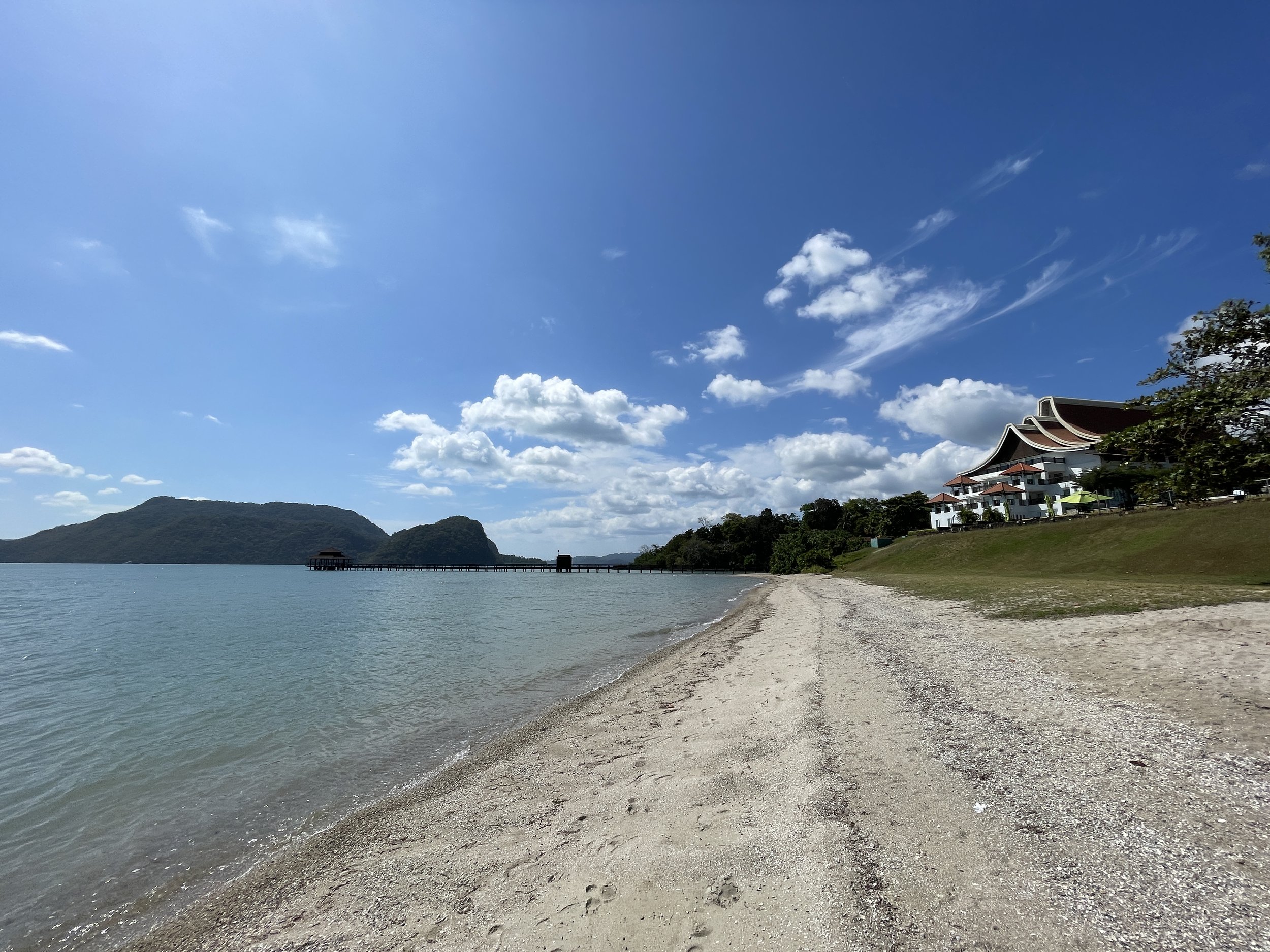
To be clear, the beach is not private and exclusive to the hotel, although due to its location, it is unlikely you will see random bystanders passing by.
I must add, as well, that the beach, at least on this side of Langkawi, is not the main allure of the resort. In fact, I saw few guests actually using it, most just stay at the pool. There are several reasons for this:
First, the tides are strong and depending on the time of the day you would need to walk quite a bit in muddy sandy soil to get to the water. And when the tide is up, it is quite shallow, so you can’t really swim in the strict sense of the word.
Also, although clean, the water is not the turquoise, crystalline type you get in, let’s say, the Maldives.
Having said that, I did go to the beach, spend some time in it and swam in it, so if you are a salt-water person, definitely, don’t forgo it!
Most of the rooms (the resort has bungalows too) are located on the main corpus of the resort. Since the hotel has been built adapting to a terrain that is somehow sloping towards the sea, some of the upper floors do get actually a small patio.
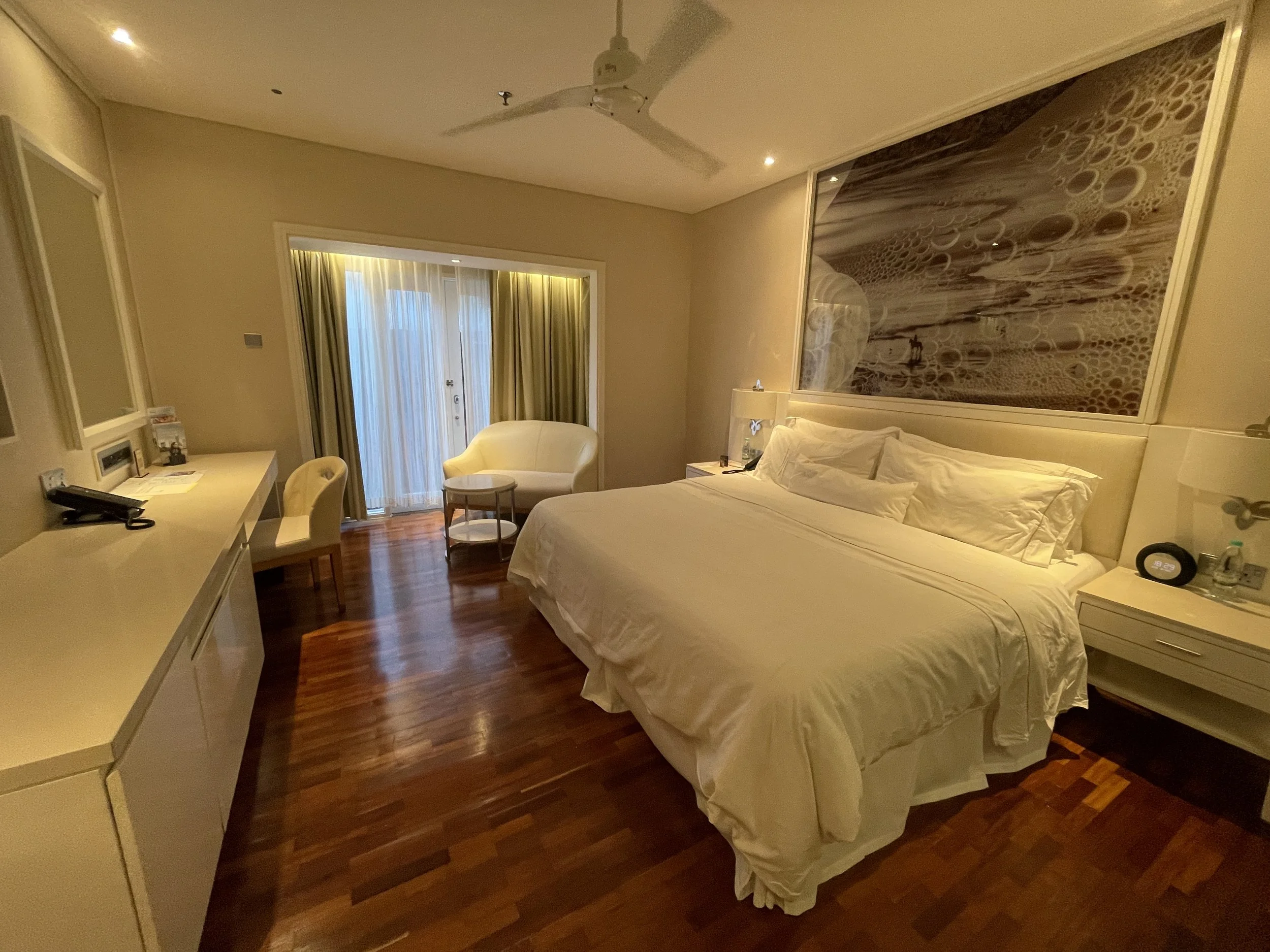
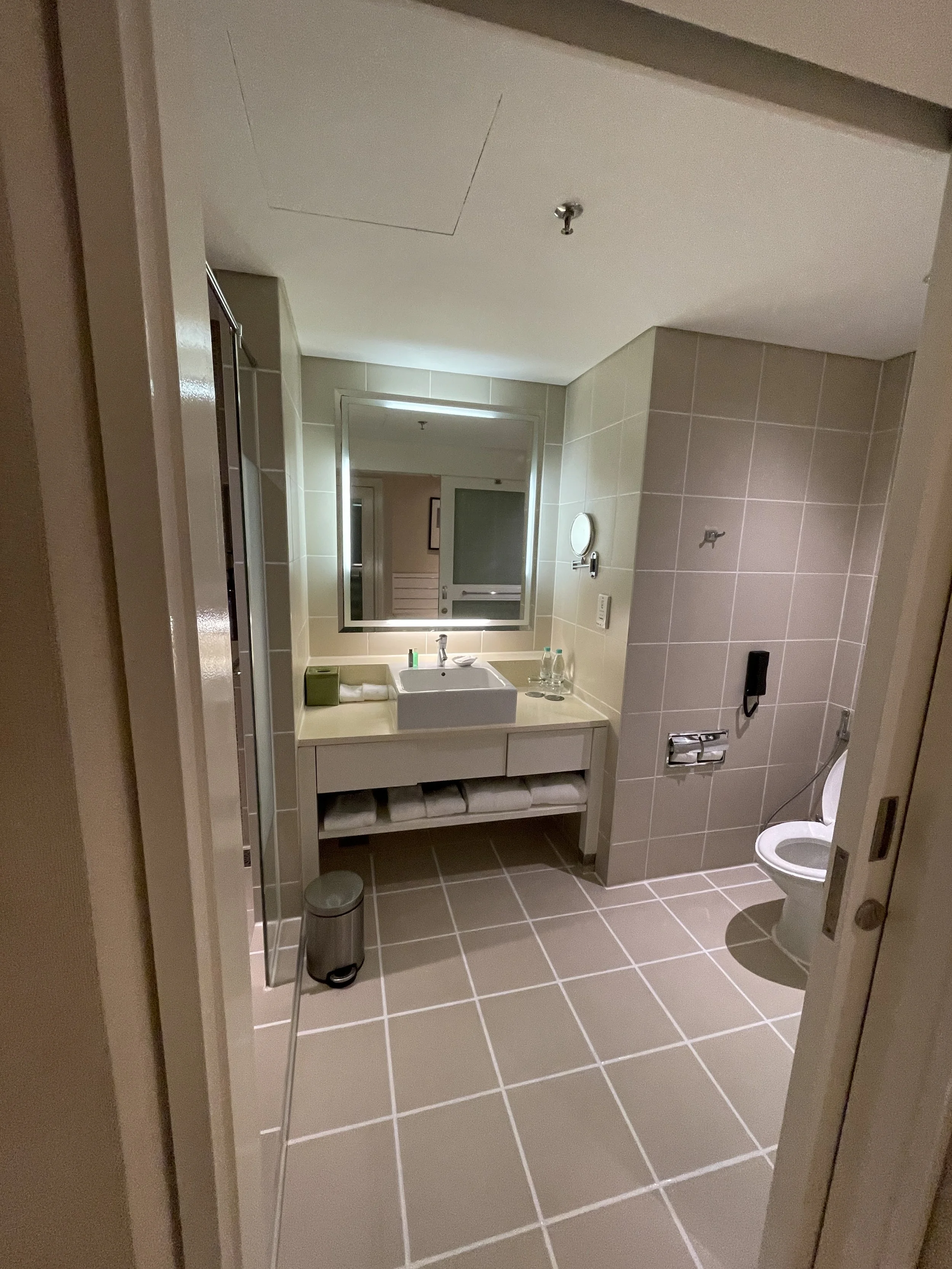
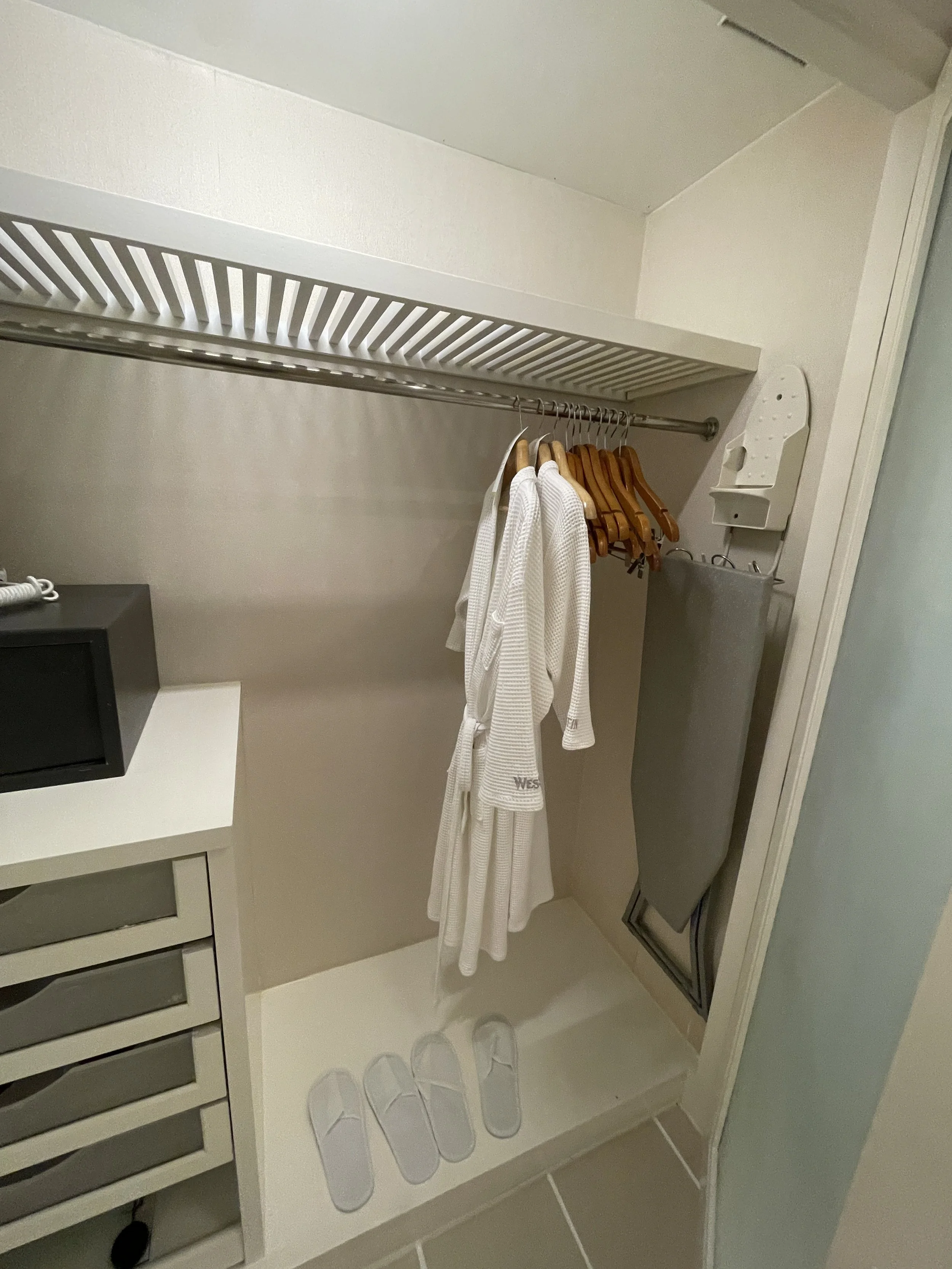
The rooms are modern and furnished in contemporary style. The bathrooms, likewise are large and modern. Bathrobes are provided for the spa (the pool area has also its own towel service). There is also generous space to leave baggage.
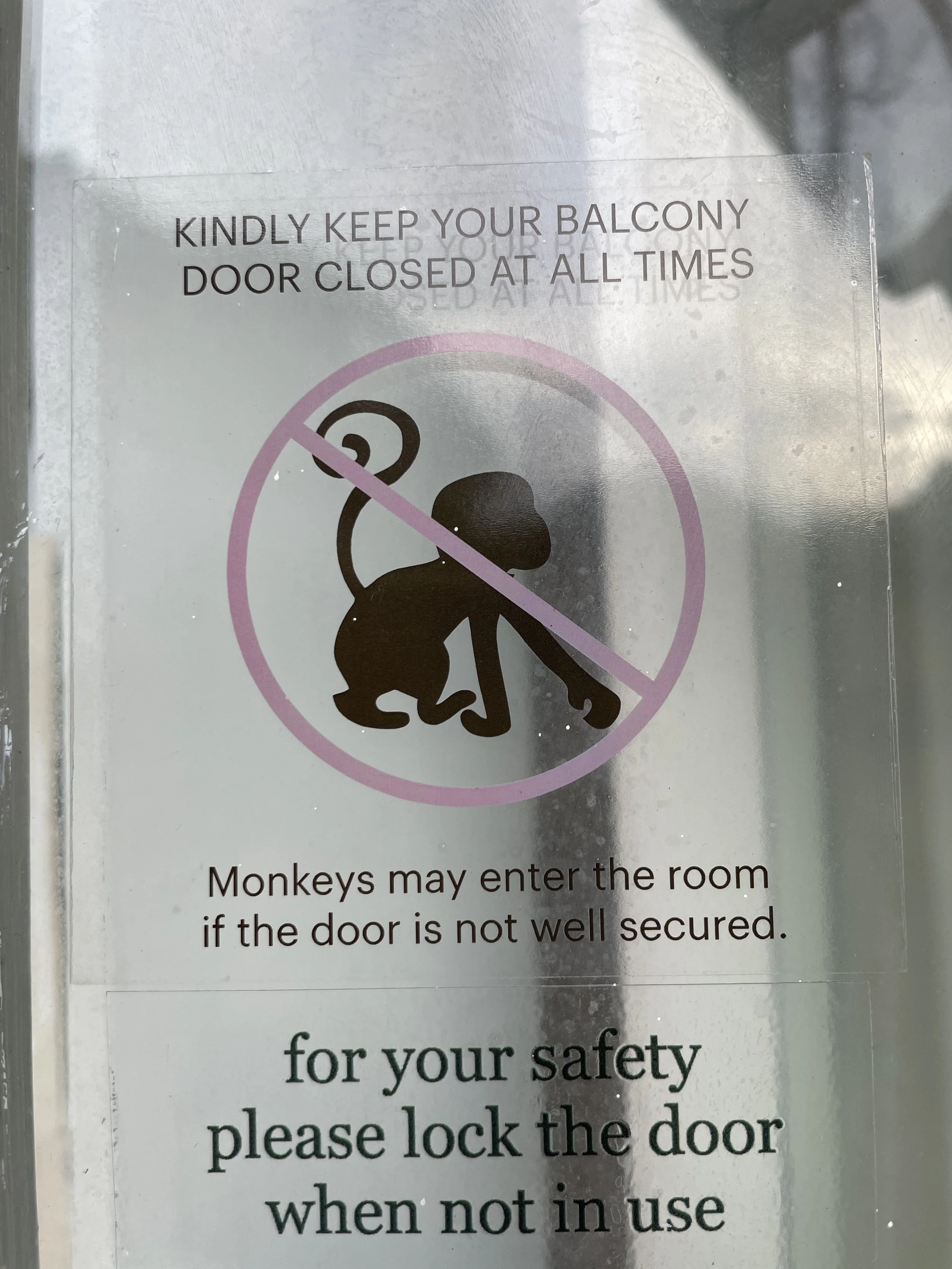
One thing to bear in mind, and which you are constantly reminded of, is that there are wild monkeys living in the resort grounds. It is easy to see them, as they often come close to the buildings are not afraid of people at all. This adds a touch of exoticism, imo!

The Westin Langkawi Resort & Spa has several restaurants and bars, including one with a sea-view terrace. The food was great, although the service at the restaurant was a bit more irregular. We also tried the room delivery, which was a good option since we had the little patio in our room.
Breakfast was abundant and varied, with plenty of tropical fruit in the buffet.
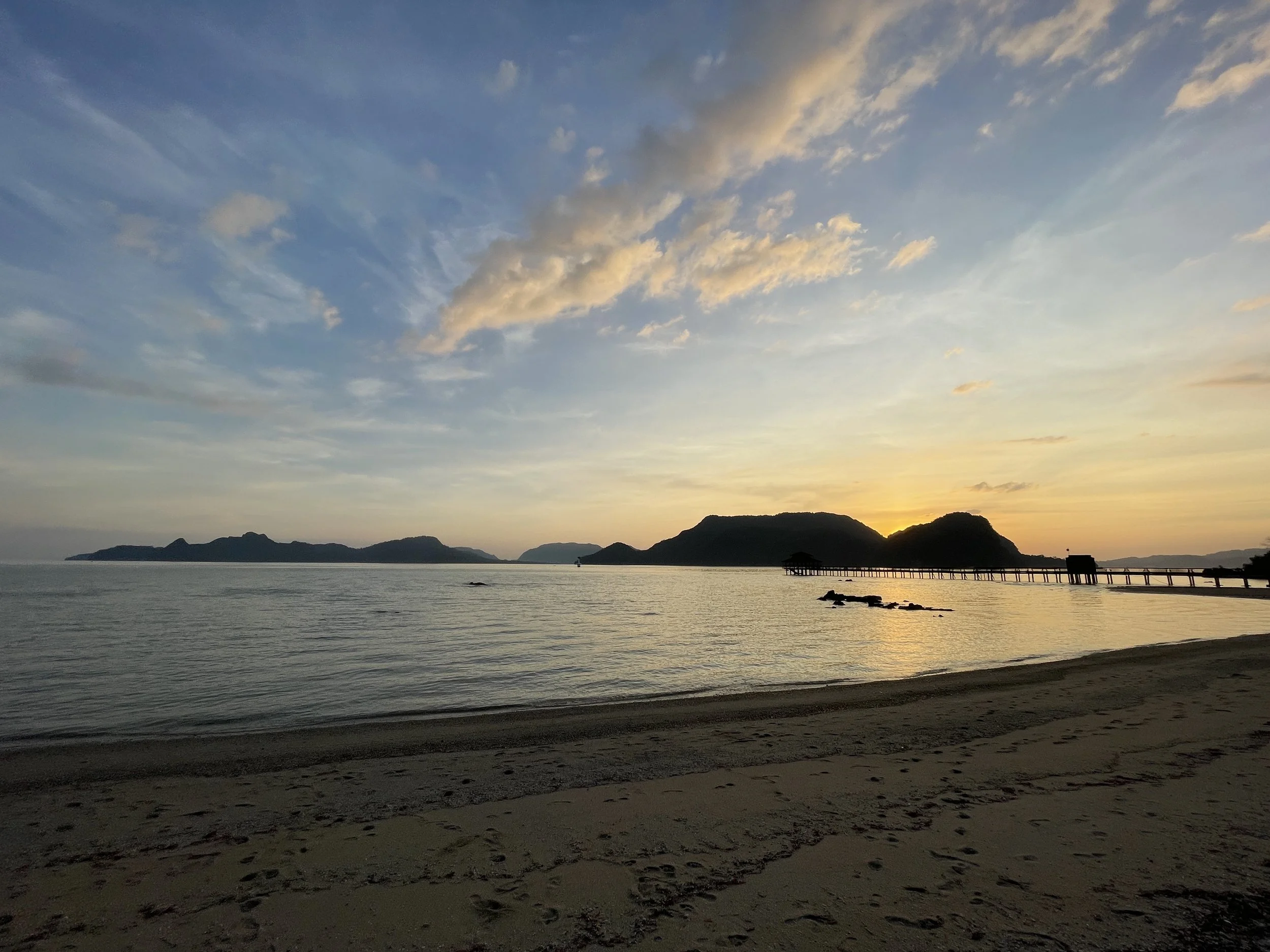
3. Take a boat tour of the mangroves at the Kilim Geoforest Park
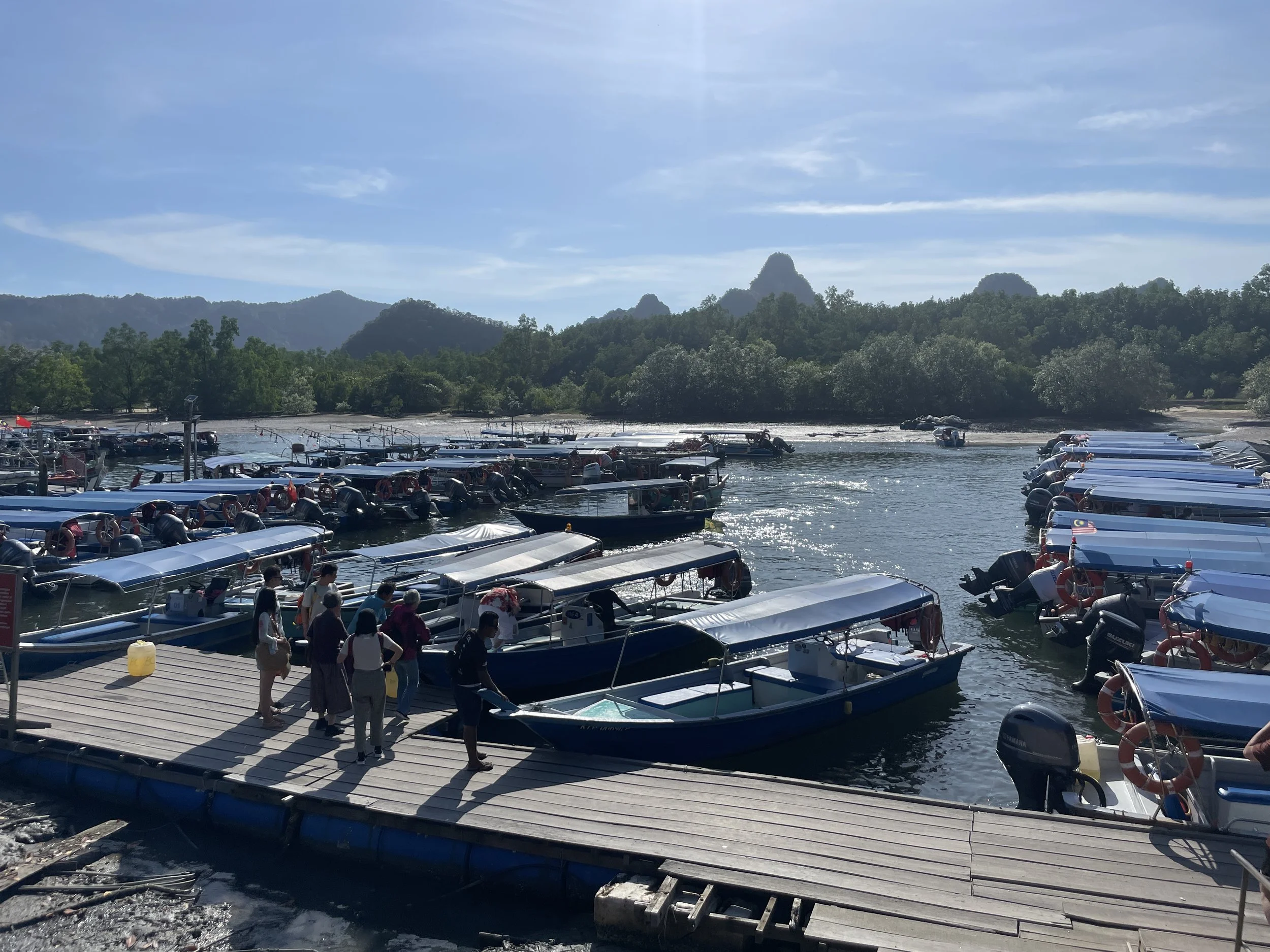
This is the other outdoors experience that I would recommend on Langkawi. You would need a guide for this one or to join one of the many organized tours that run throughout the day.
The Kilim Geoforest Park, on the northeastern corner of the island, is best seen from a boat (in fact, I am not sure whether is it possible to visit it any other way), since this is a natural area that combines the coastal karst formations with riverine landscapes covered by mangroves and the open sea.
It is a truly immersive experience which starts at a river station where are little armada of tour boats of different types and sizes assemble for the excursions. From there, the boats take the visitors through the different waterways that cross the natural reserve.
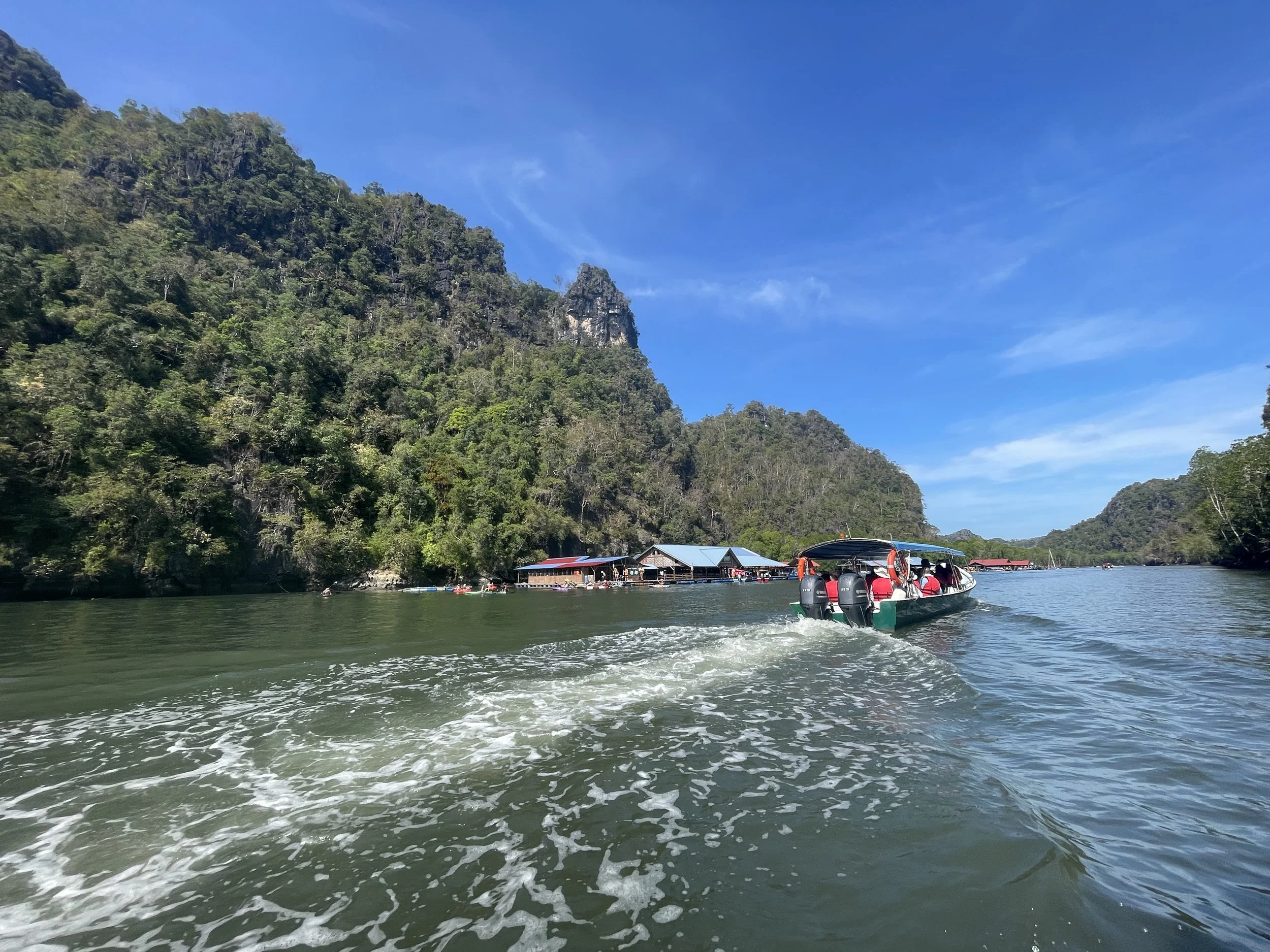
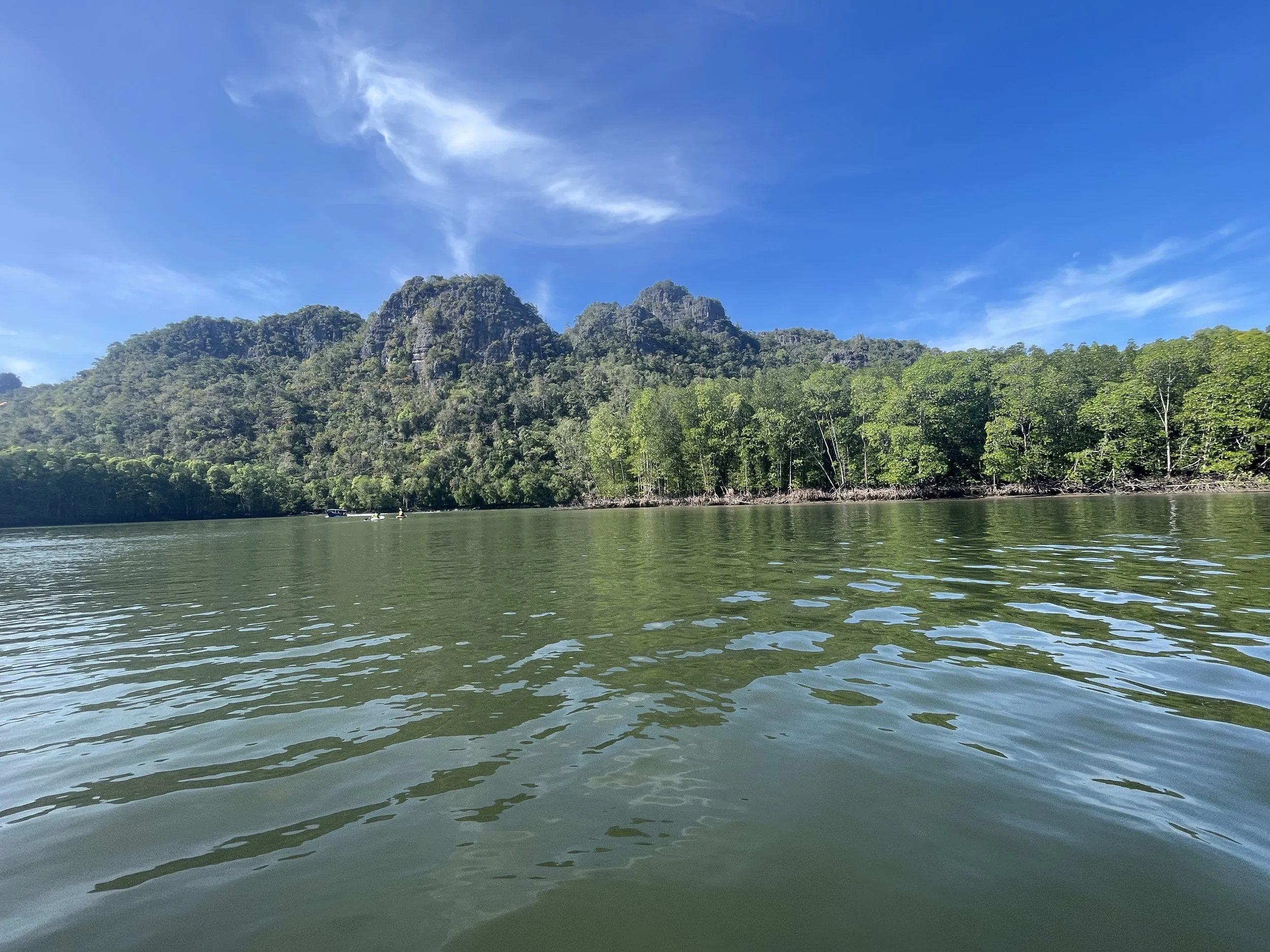
The boats stop at several spots along the way. One of them is this cave, where lots of bats live. There are also plenty of monkeys all over the place and you can see them as the boat gets close to the mangroves, which are the dominant form of vegetation in all this area.
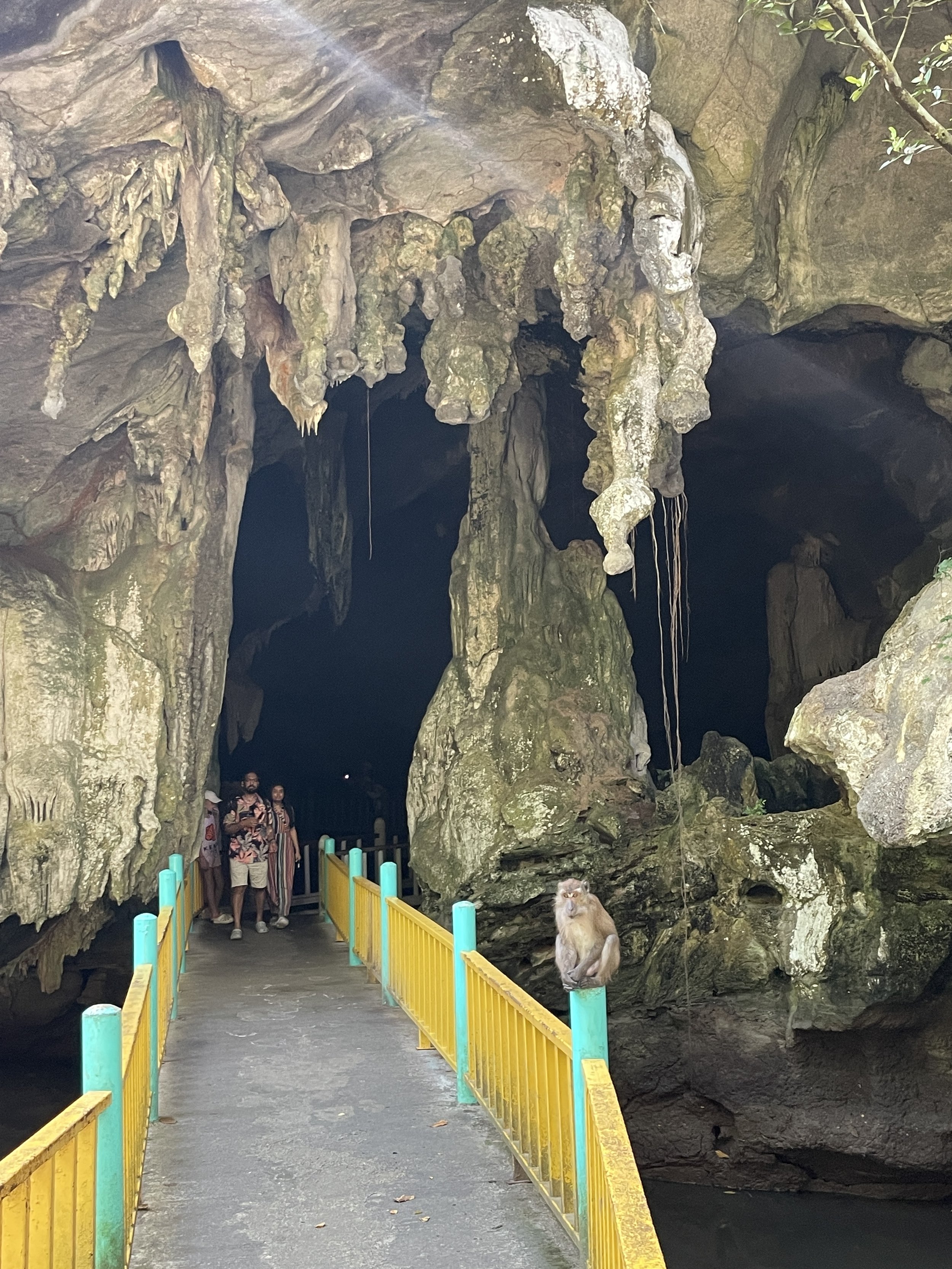
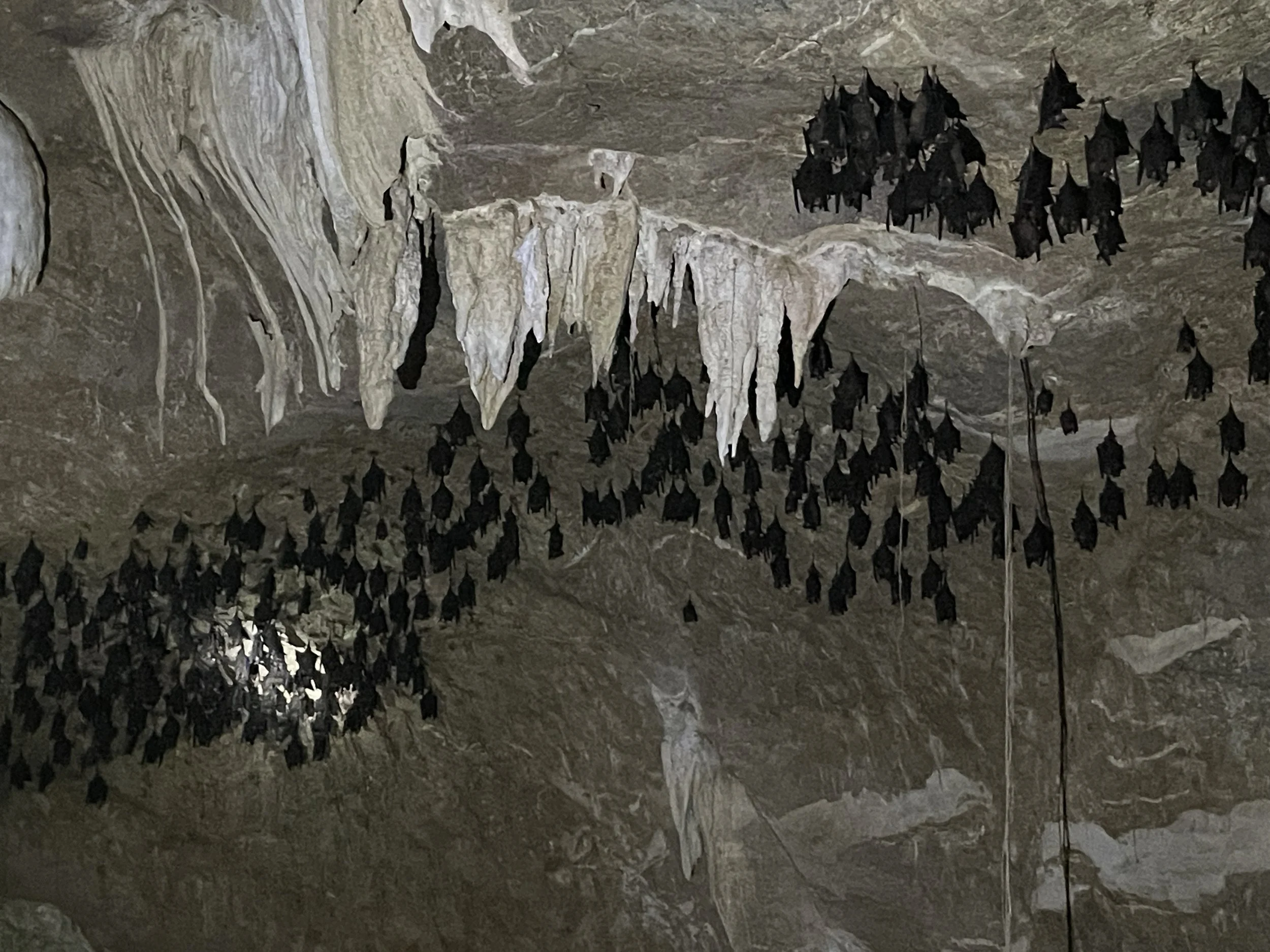
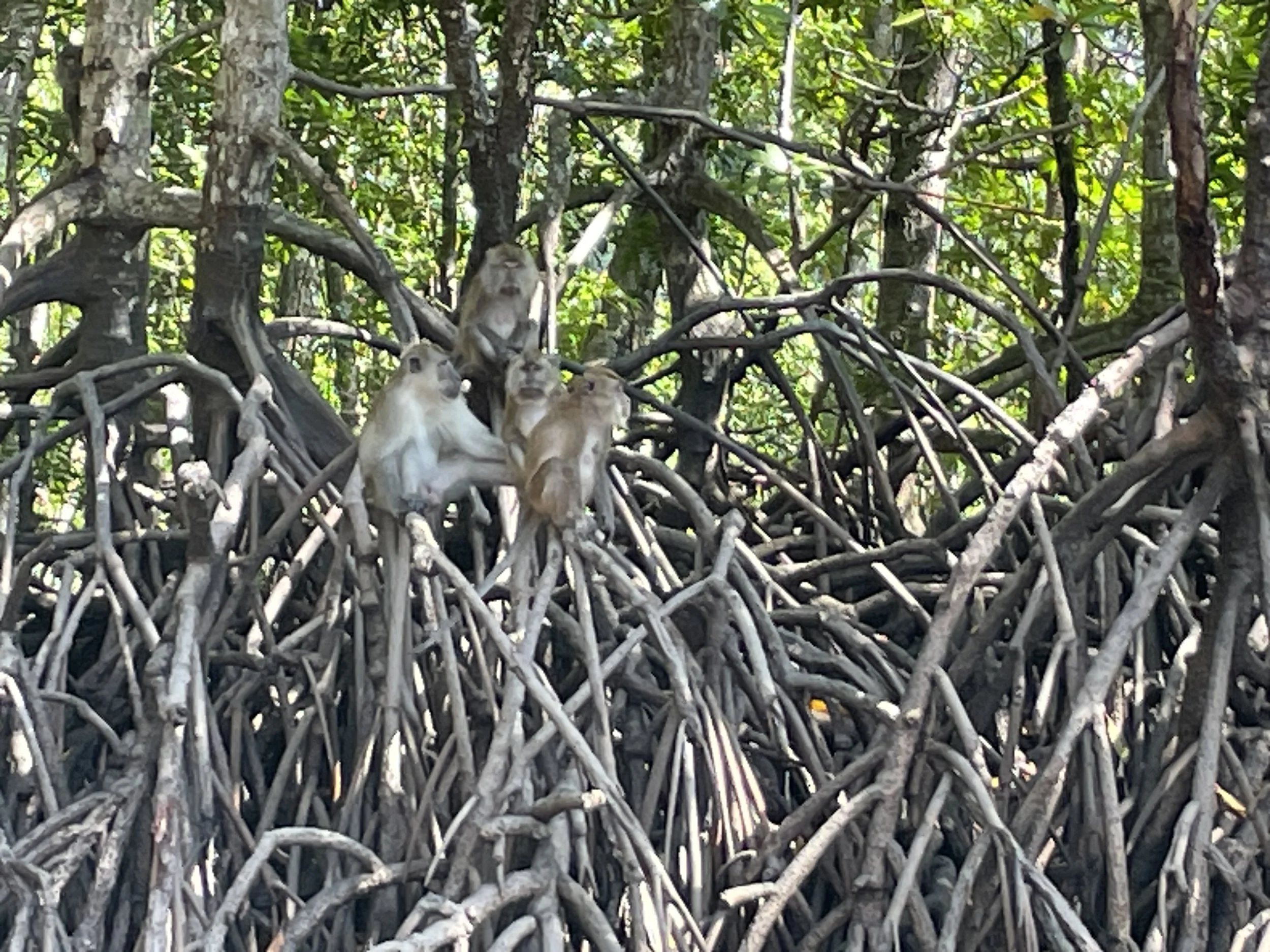
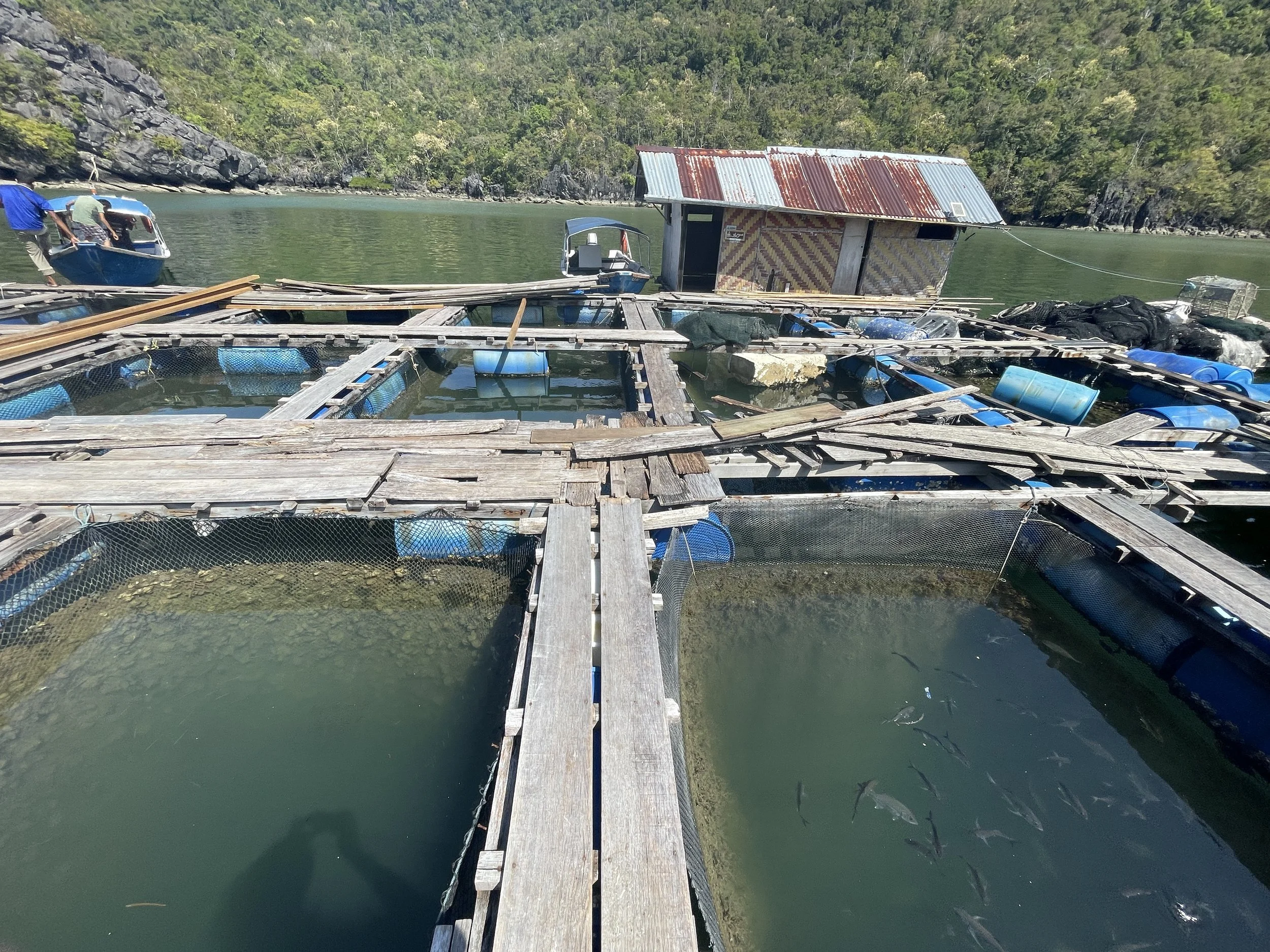
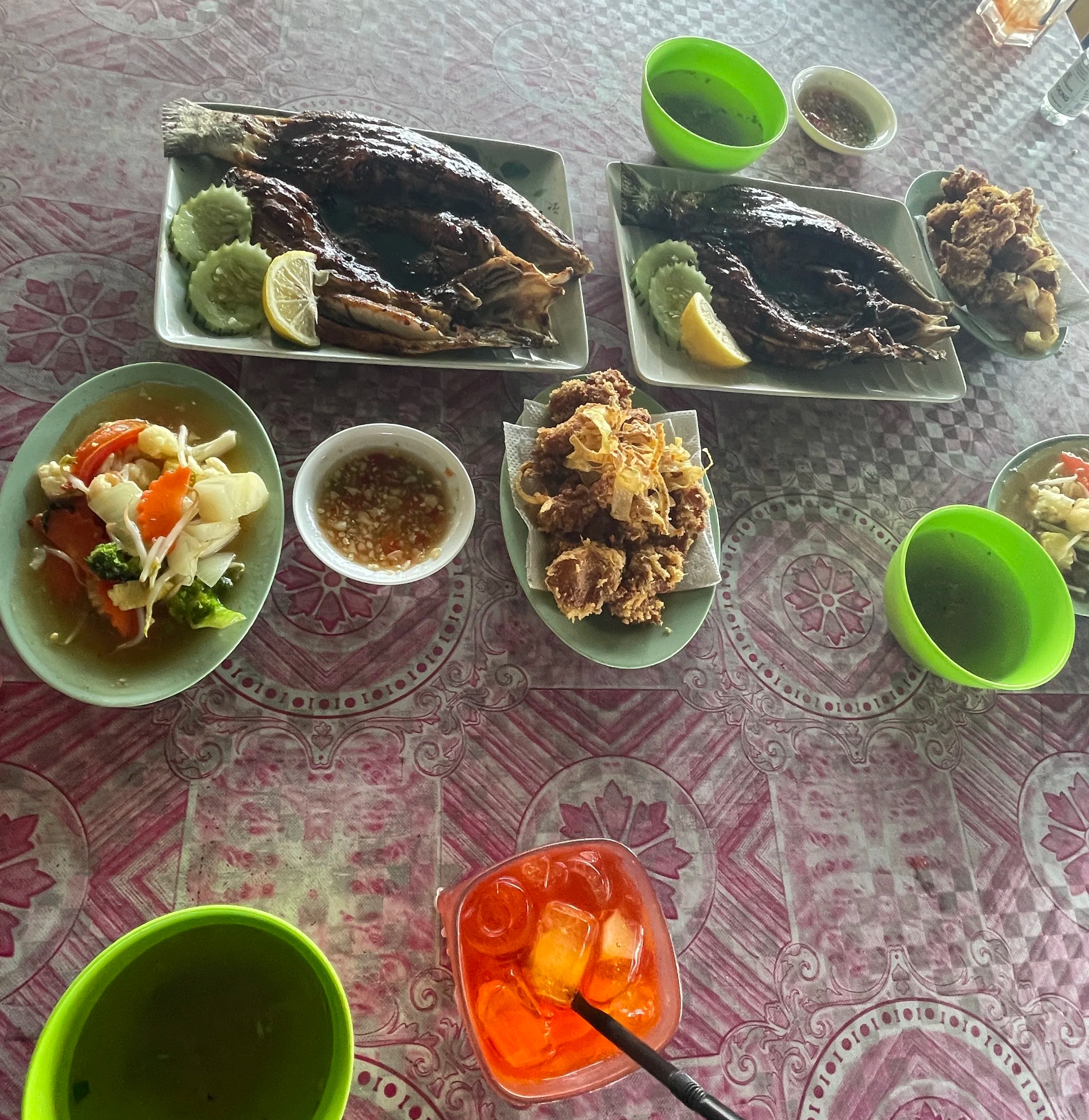
The whole excursion takes 3-4h and ends at one of the several fish farms which dot the waters of the Kilim Geoforest Park. At one, in particular, you can walk around the cages holding different spices of fish. The farm has a restaurant adjacent to it, with a terrace overlooking the river. It is pretty simple, street-food-style, but the food looked of good quality and with honest portions. Here you can try several dishes prepared with local seafood and fish.
So, these are, I think, the top three things to do in Langkawi. I know I may have missed some interesting places and stuff, but overall I think they encapsulate what this island has to offer: not necessarily the best beaches, but some interesting sights, relaxed atmosphere and closeness to nature.
This post will have a follow up featuring other interesting places to see and things to do in Malaysia outside Kuala Lumpur. Stay tuned!