
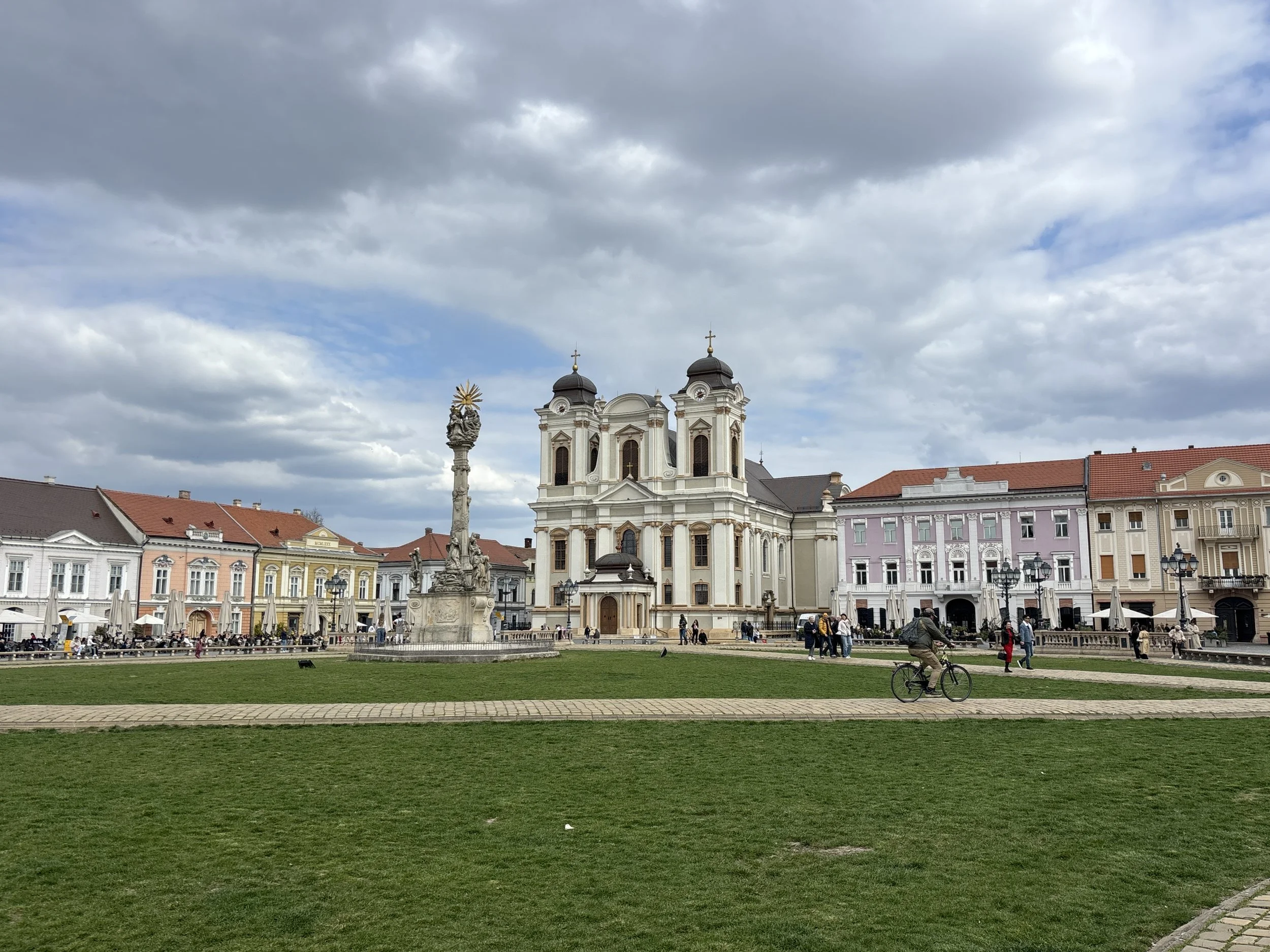
Two days in Timisoara: what to do and what to see
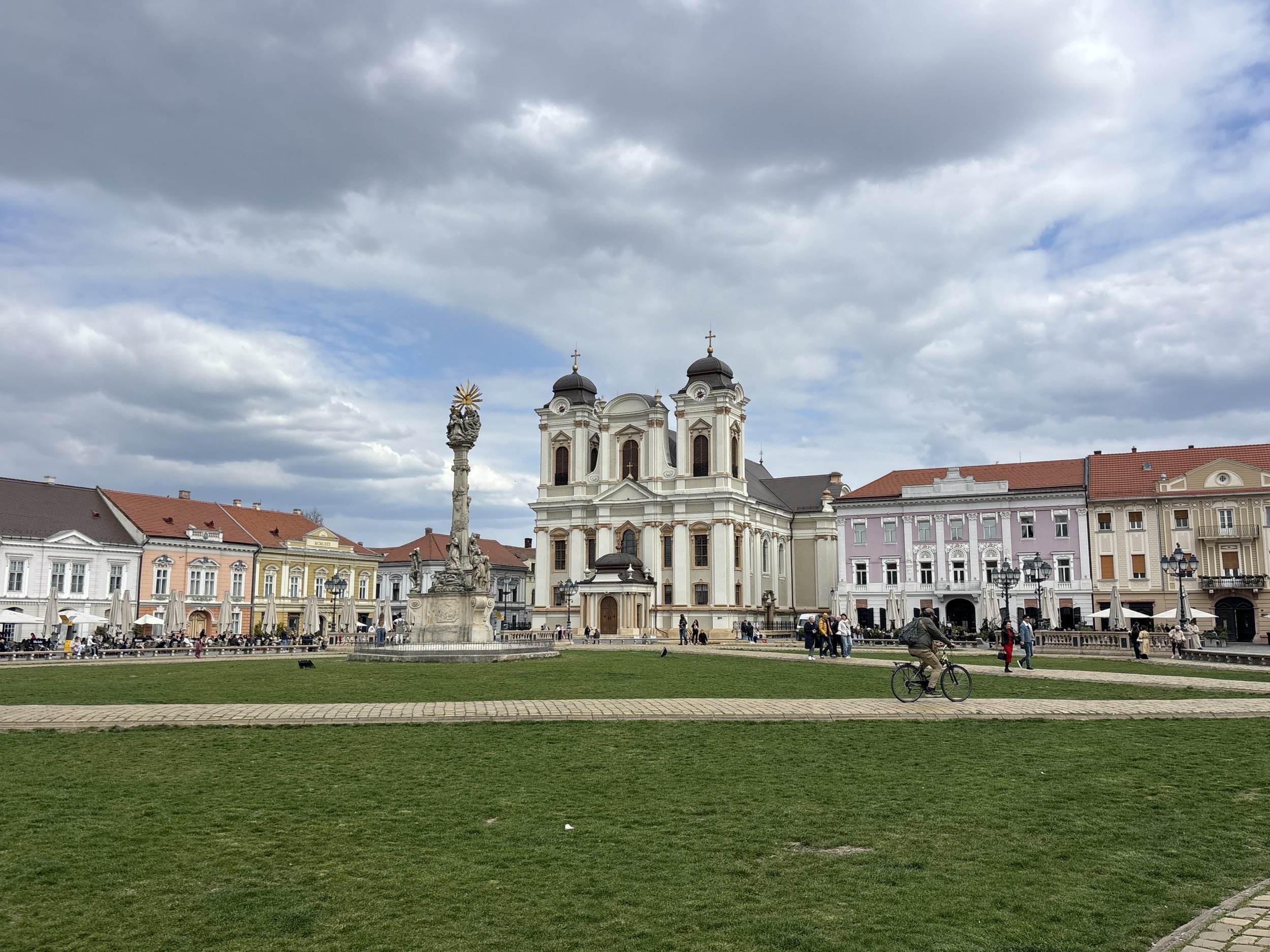
Timisoara is the capital of the Banat, a historical region of Western Romania with a rather rich and interesting history.
Perhaps no other factor has contributed more to shaping the city than its location atop one of Europe’s civilizational fault lines.
The Ottomans conquered the city in 1522 and ruled it for nearly two centuries. During that time, Timisoara was one of the westernmost cities of their Empire. In 1716, the tables turned and it was the Austrians that took the city, transformed it from the ground up and made it one of their easternmost fortresses.
Later came the modern state of Romania and, of course, the Communist period under Ceaucescu, in the downfall of which Timisoara was to play a star role.
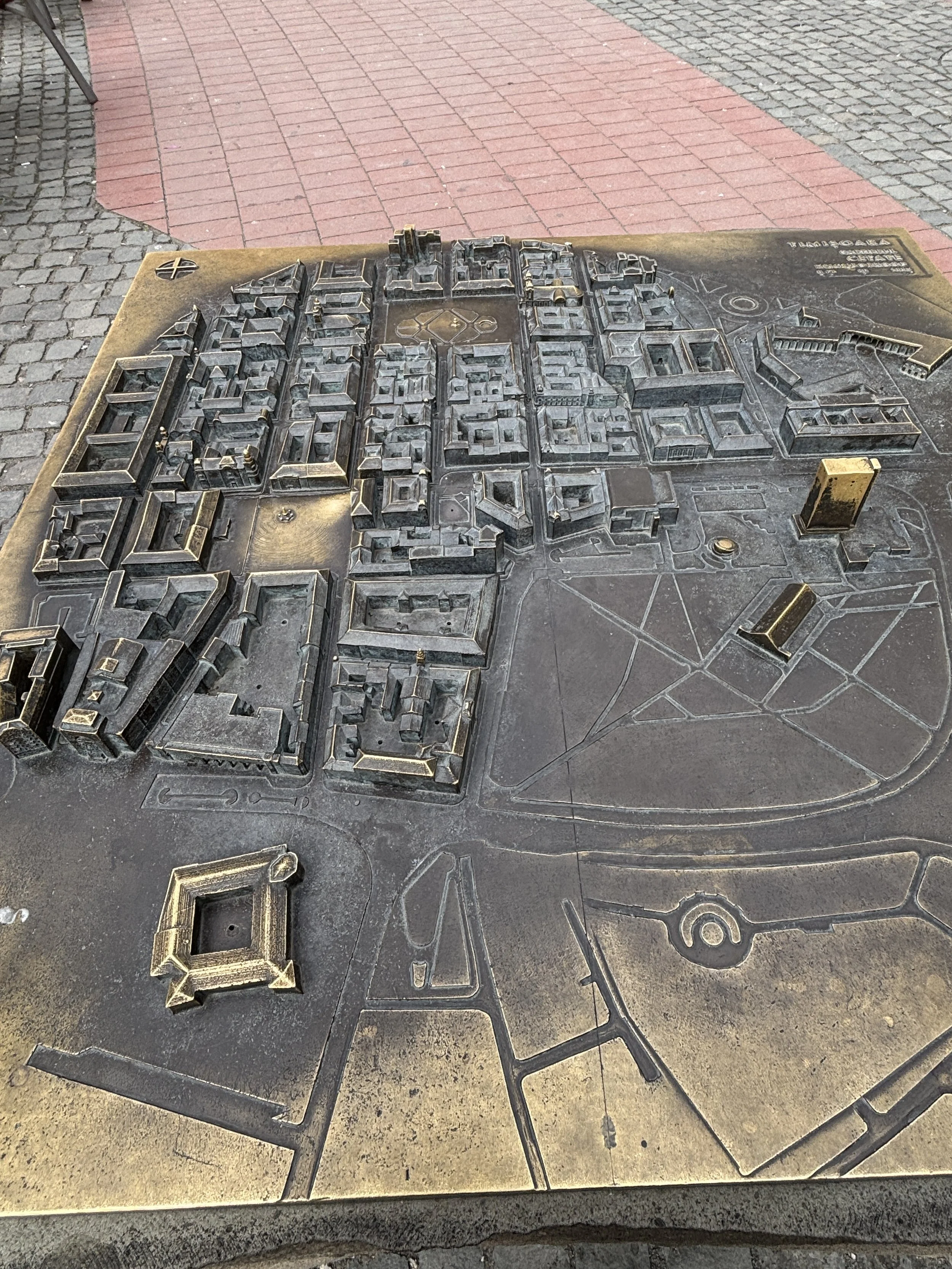
The city that most visitors see today, though, is the product of the Habsburg era. When the Austrians, led by the famous military commander Eugene de Savoy, took over the city, they soon started an ambitious program of engineering works.
In fact, to call it a “transformation” would be an understatement, because the Habsburgs basically built a new city over the foundations of the Ottoman-era one. The marshes around the old city were drained and a new urban grid was overlaid on the existing one, making way for the broad avenues and squares and Baroque buildings that make Timisoara such an architectural gem today. The city was also enclosed by star-shaped fortified enceinte containing multiple bastions.
Like many other cities in this part of Europe, Timisoara became also a cultural melting pot, with a population that, in addition to Romanians, has historically included also substantial numbers of Hungarians, Germans, Serbians and Jews. This shows in the fact that there are no less than three different cathedrals (Romanian and Serbian Orthodox and Catholic) in the historical centre of Timisoara, as well as a synagogue.
In this post I list the main points of interest in the old town plus some other things to do if visiting Timisoara, mostly connected with the role that the city played in the start of the Romanian Revolution of 1989, which ended up with the downfall of Ceaucescu’s regime and the democratization of Romania and its ultimate entry into the EU a few years later.
So what to see when visiting central Timisoara?
A walk through the Old town: from Piata Unirii to Piata Victoriei
Romanian Orthodox Cathedral
Banks of the Bega River
Maria-Theresa Bastion
Memorial of the Revolution
Museum of the Communist Consumer
This post may contain affiliate links. If you book or buy something through them, I earn a small commission, at no extra cost to you. It's one of the ways I keep Places of Charm going. Thank you for your support.
Top things to see in Timisoara’s historical centre
The historical centre of Timisoara is small, orderly and compact. It is structured along a number of large monumental squares linked by an orthogonal grid of cobblestone-paved pedestrian streets.
To be fair, the area of historical interest is not large and you can see most of it in a morning even if walking at a leisurely pace. If you allocate some time as well to visit the museums and enjoying the many cafés and restaurants in town, the two days that we I used as a reference to build this itinerary turn out to be quite optimal.
Piata Libertatii
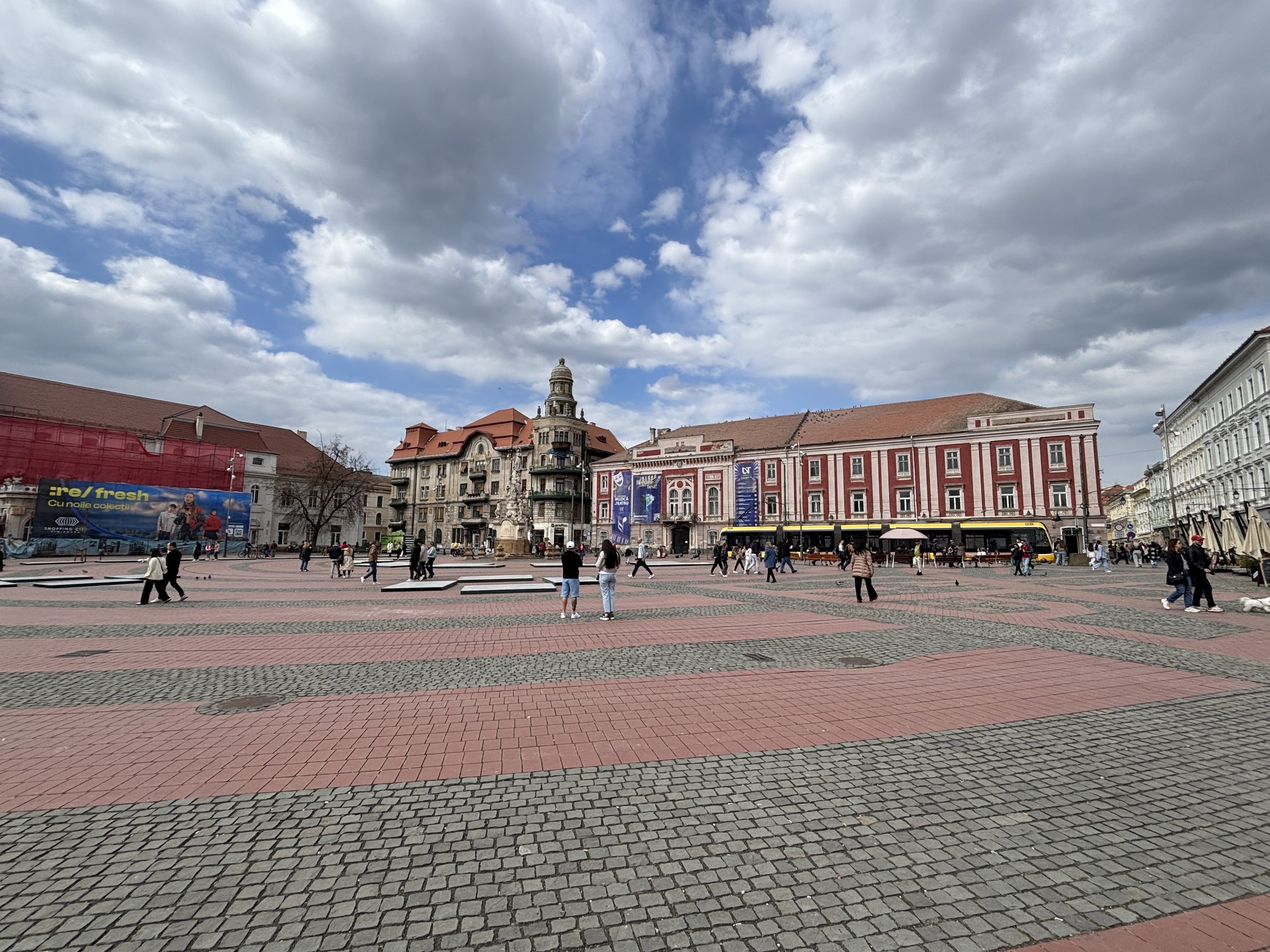
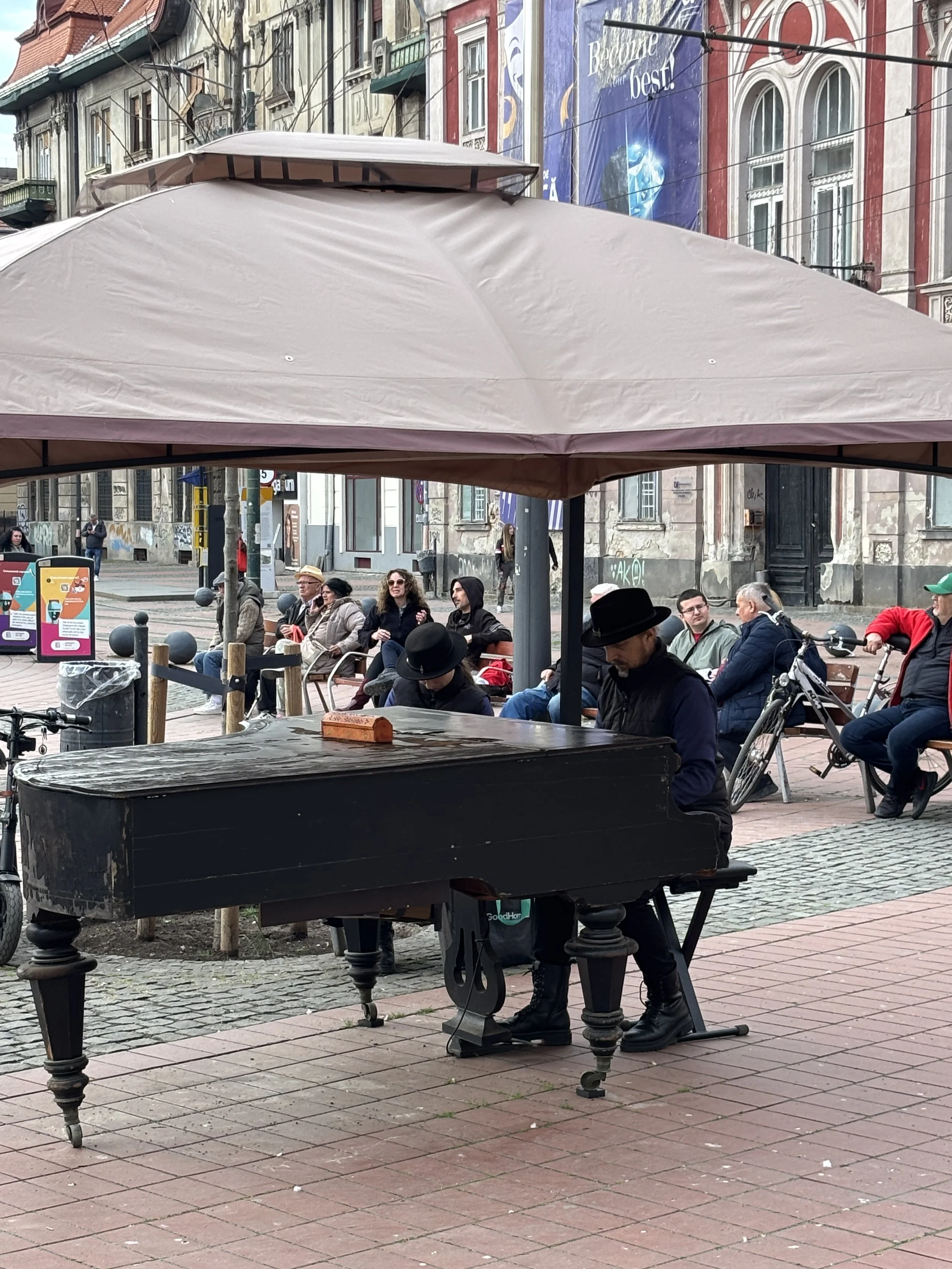
This is one of the main squares in Timisoara. Piata Libertatii (“Freedom Square”) and, while it lacks the grand splendour of the nearby Piata Unirii (there are in fact, several buildings that are undergoing renovation), it is a lively square and a major crossroads where there is always movement of people.
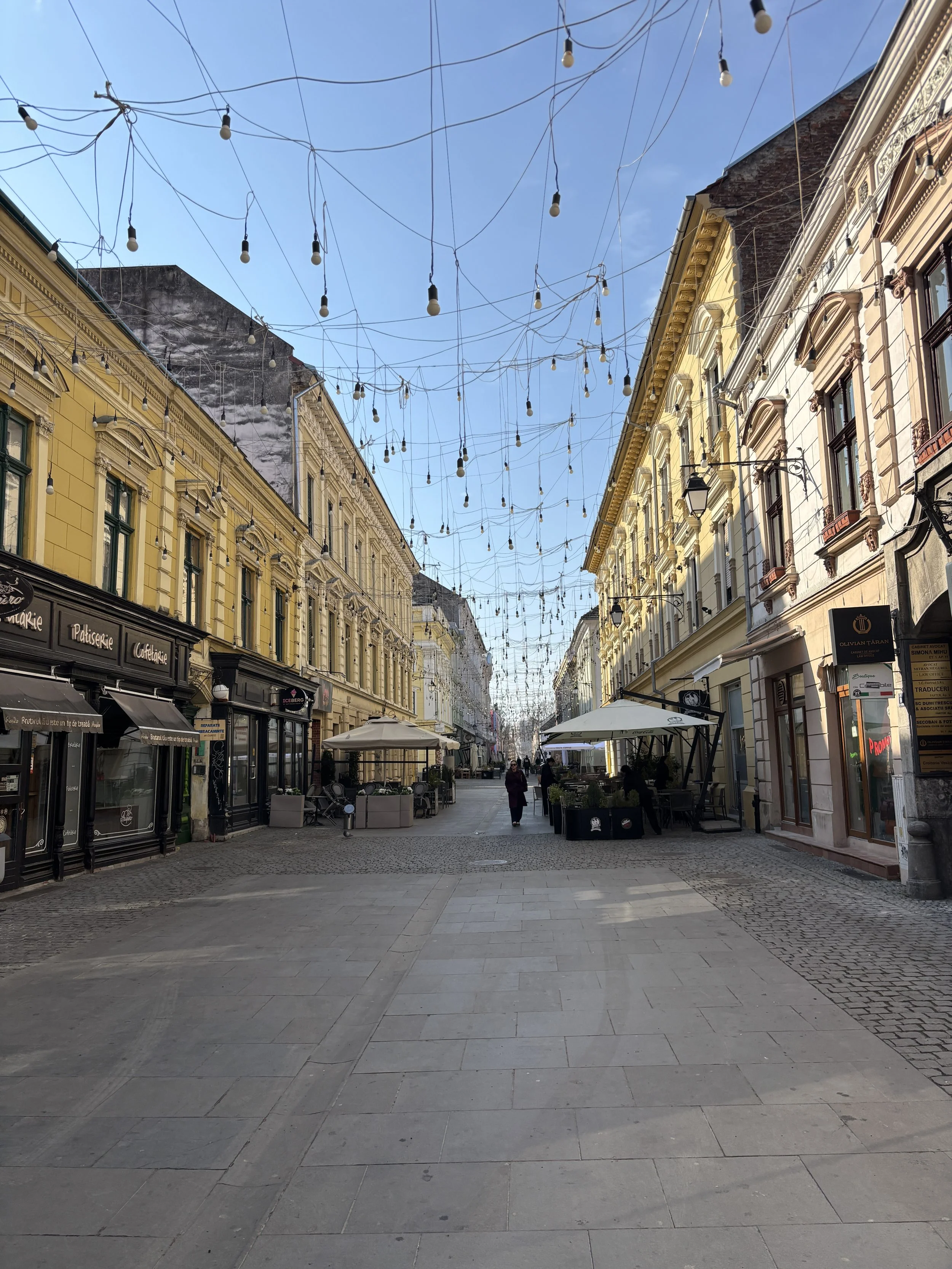
It is also at one end of the Vasile Alecsandri avenue (depicted below right) the main commercial axis in the old town of Timisoara.
Piata Unirii
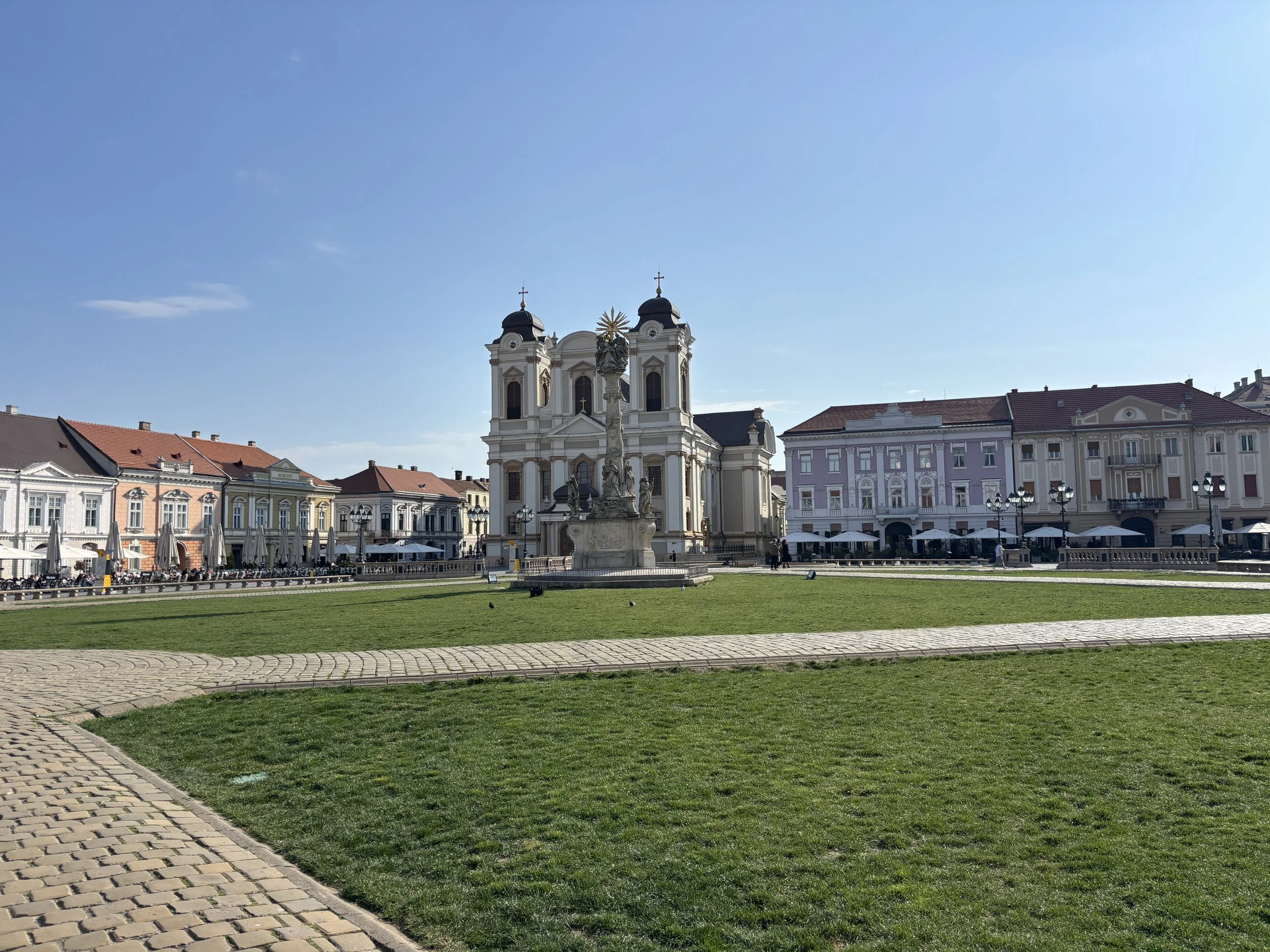
Piata Unirii (“Union Square”) is the main landmark in Timisoara’s old town: a large, open square which, in addition to the Austrian-built Catholic cathedral, contains also the city’s art museum as well as several beautiful and colourful historical buildings which line all its sides.
When the sun shines it offers an absolutely glorious panorama.
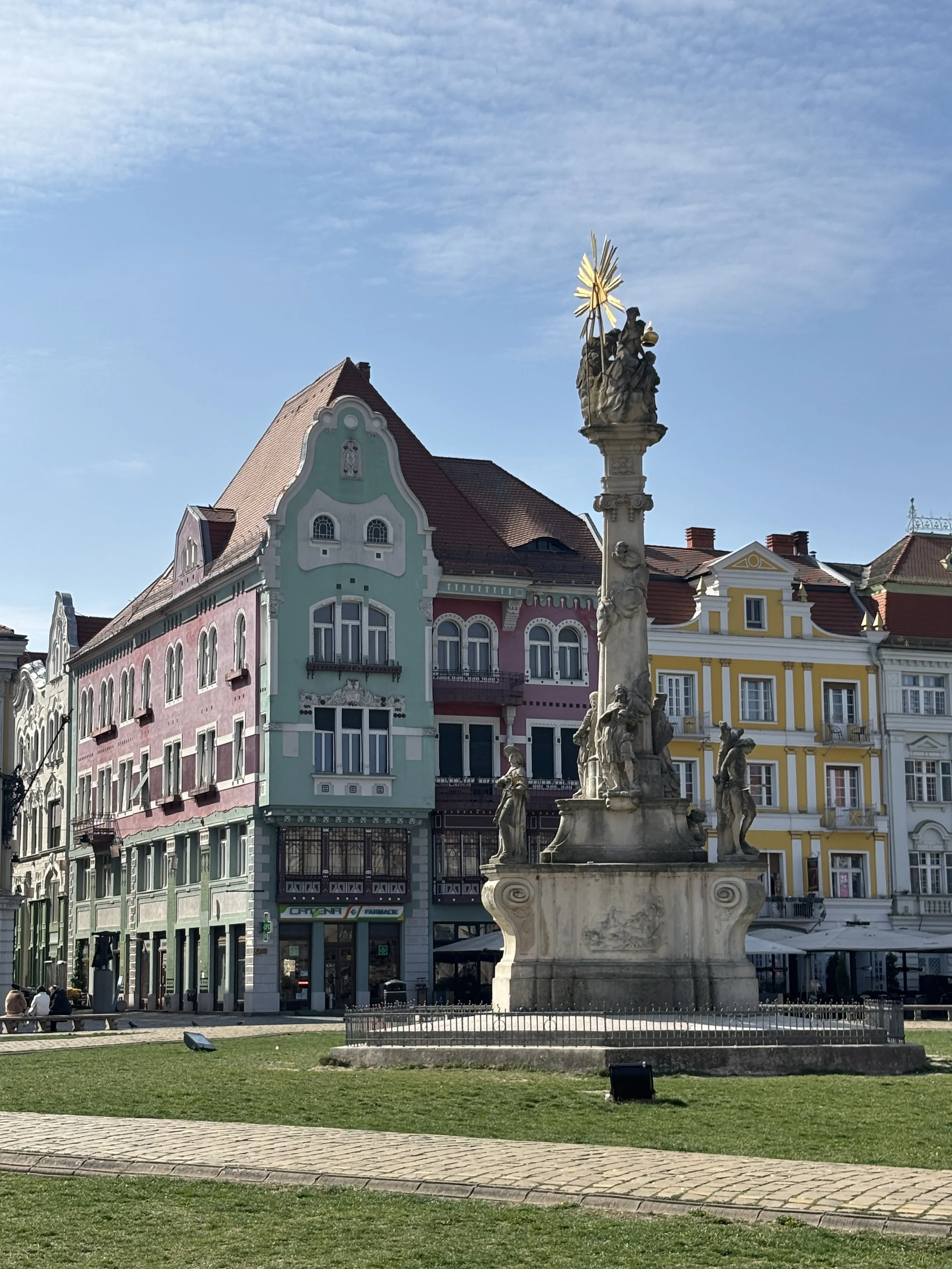
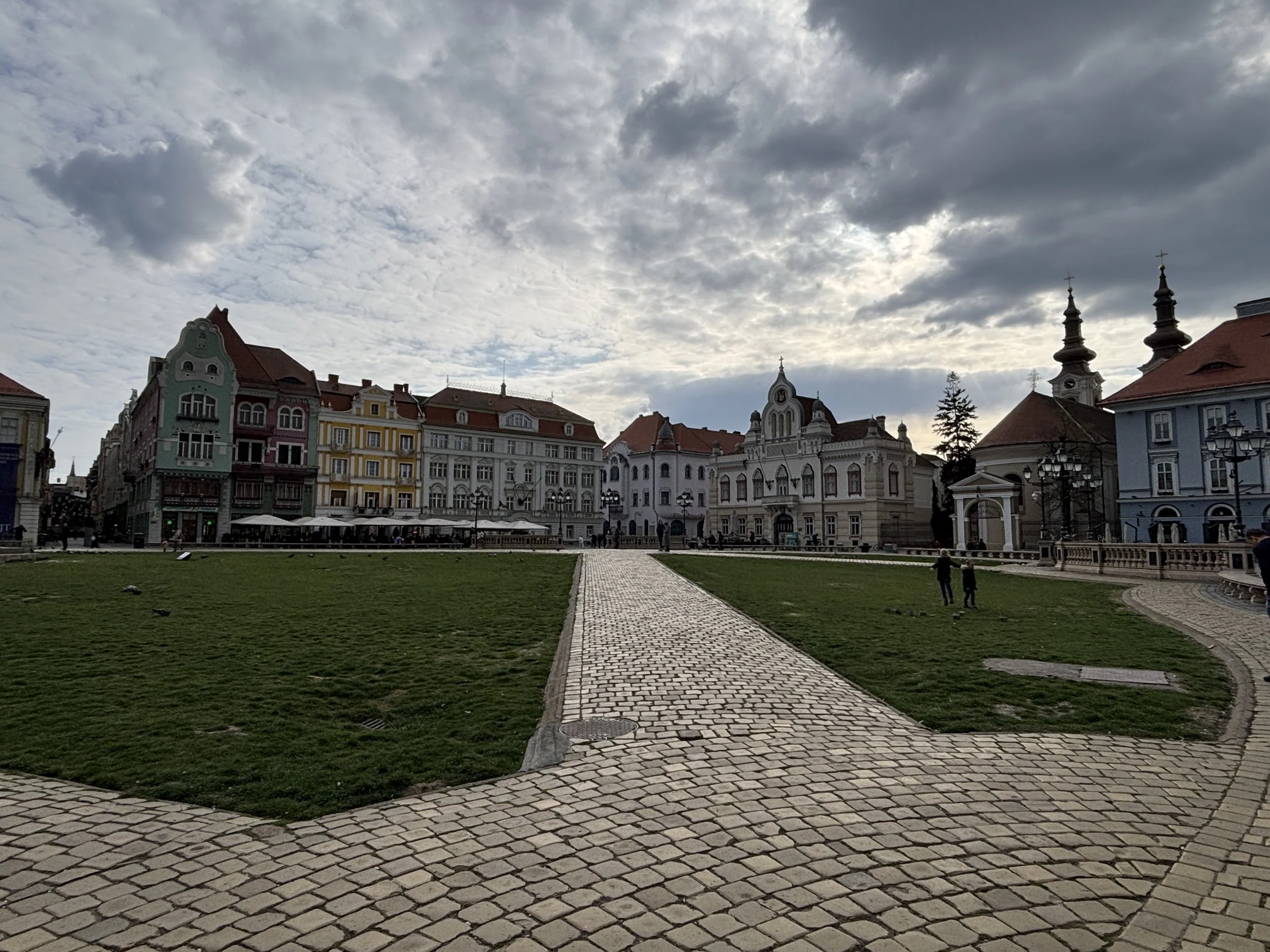
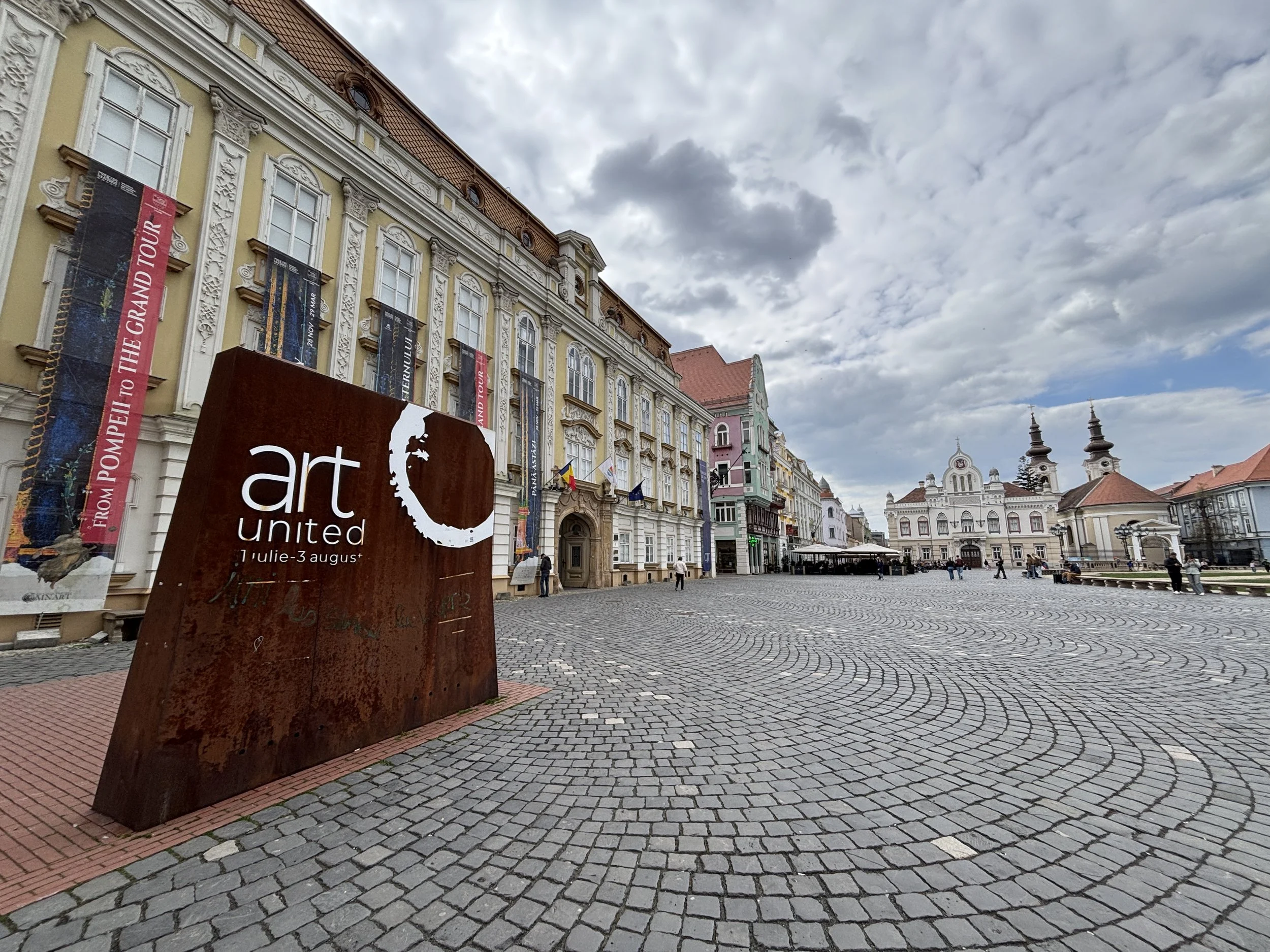
When walking through the city you can see that the historical centre has been painstakingly restored and, indeed, some buildings (including the one I stayed in, more on this further below in this post) are still undergoing a thorough renovation.
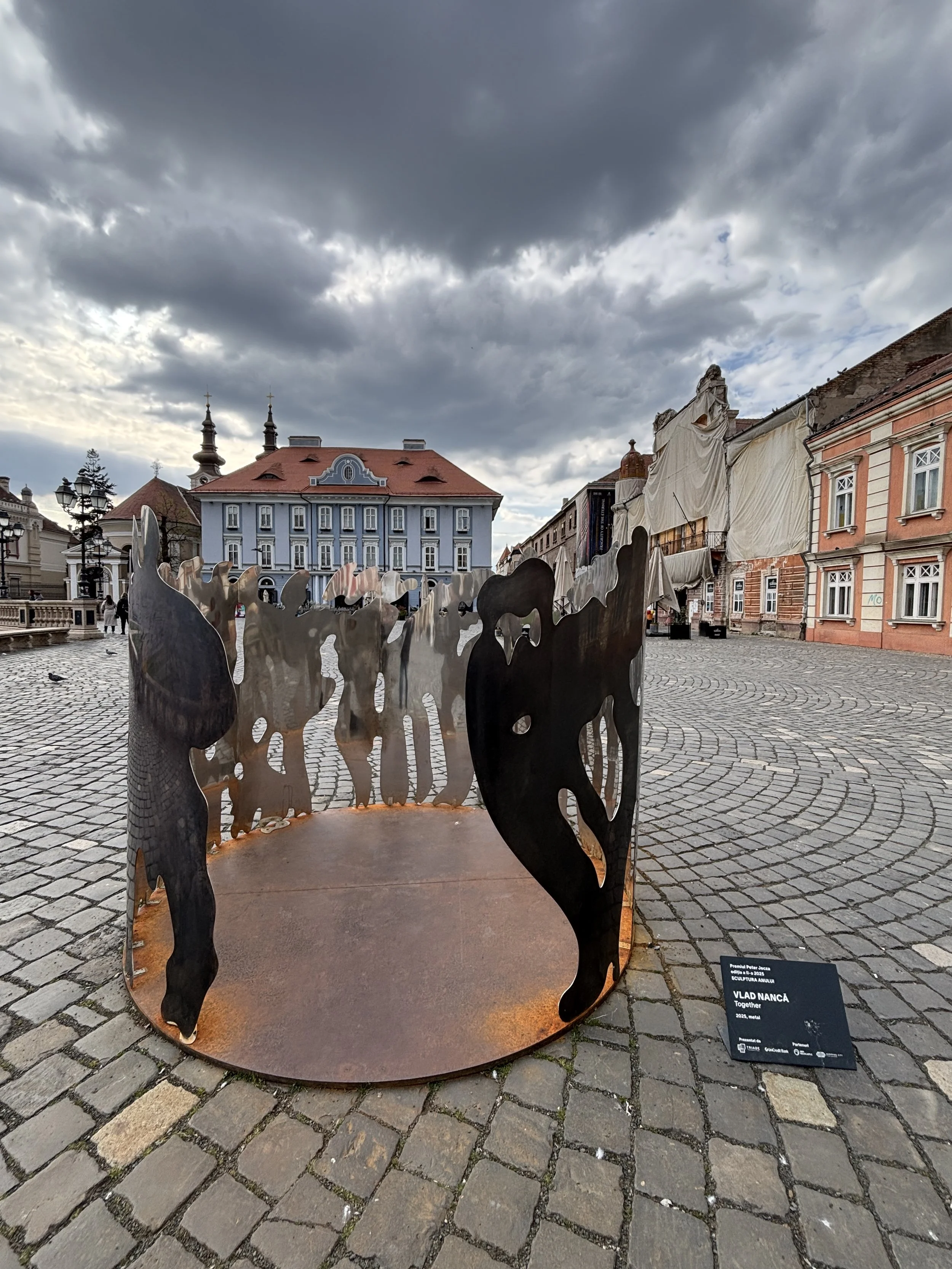
The public space has also been fitted with quite a few pieces of urban art and contemporary sculptures, as well as informational panels in both Romanian and English. There is also a QR code you can scan to get more in-depth info on your mobile phone, although, sadly there was some technical glitch that prevented the page from opening when I tried it on mine.
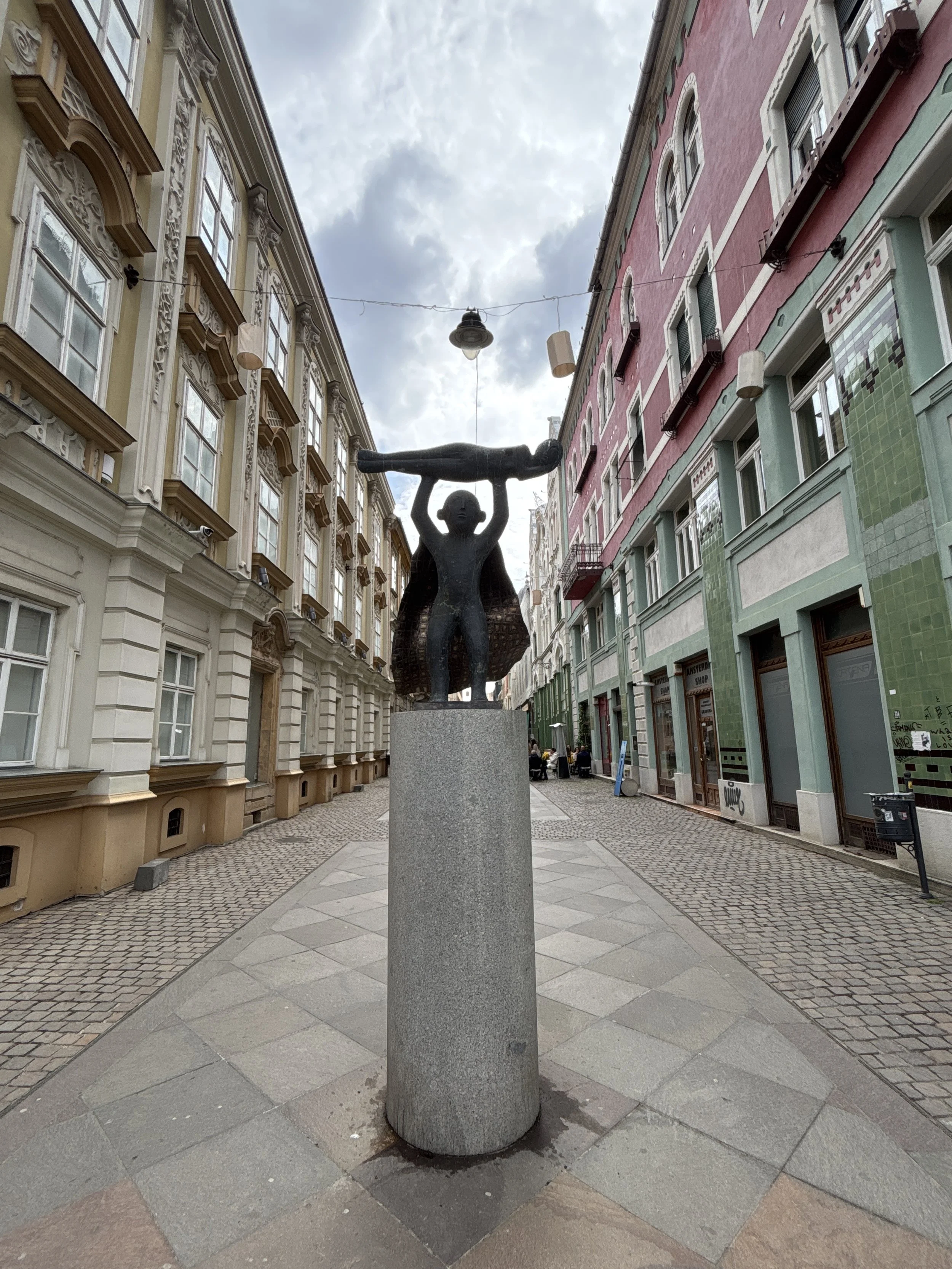
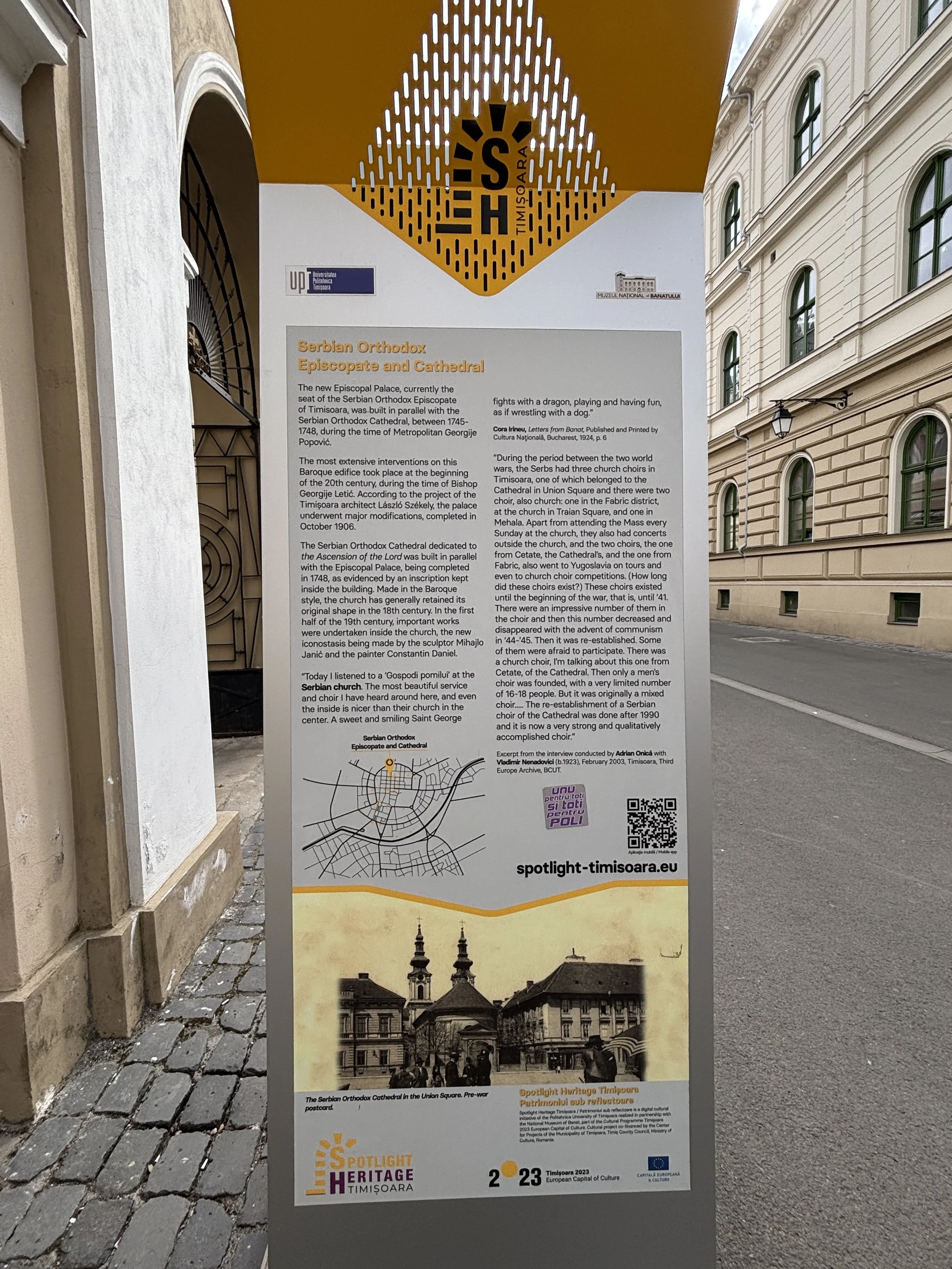
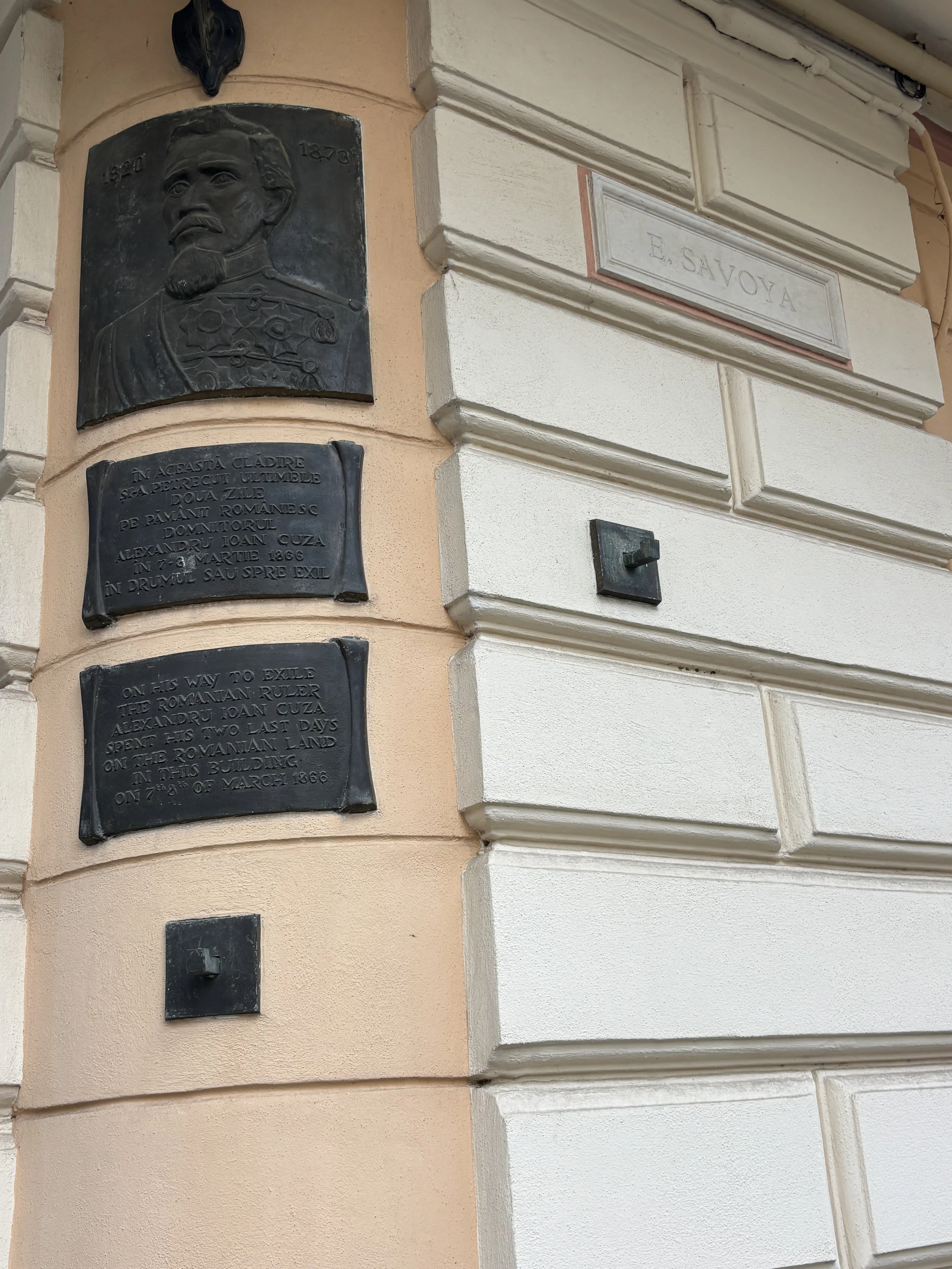
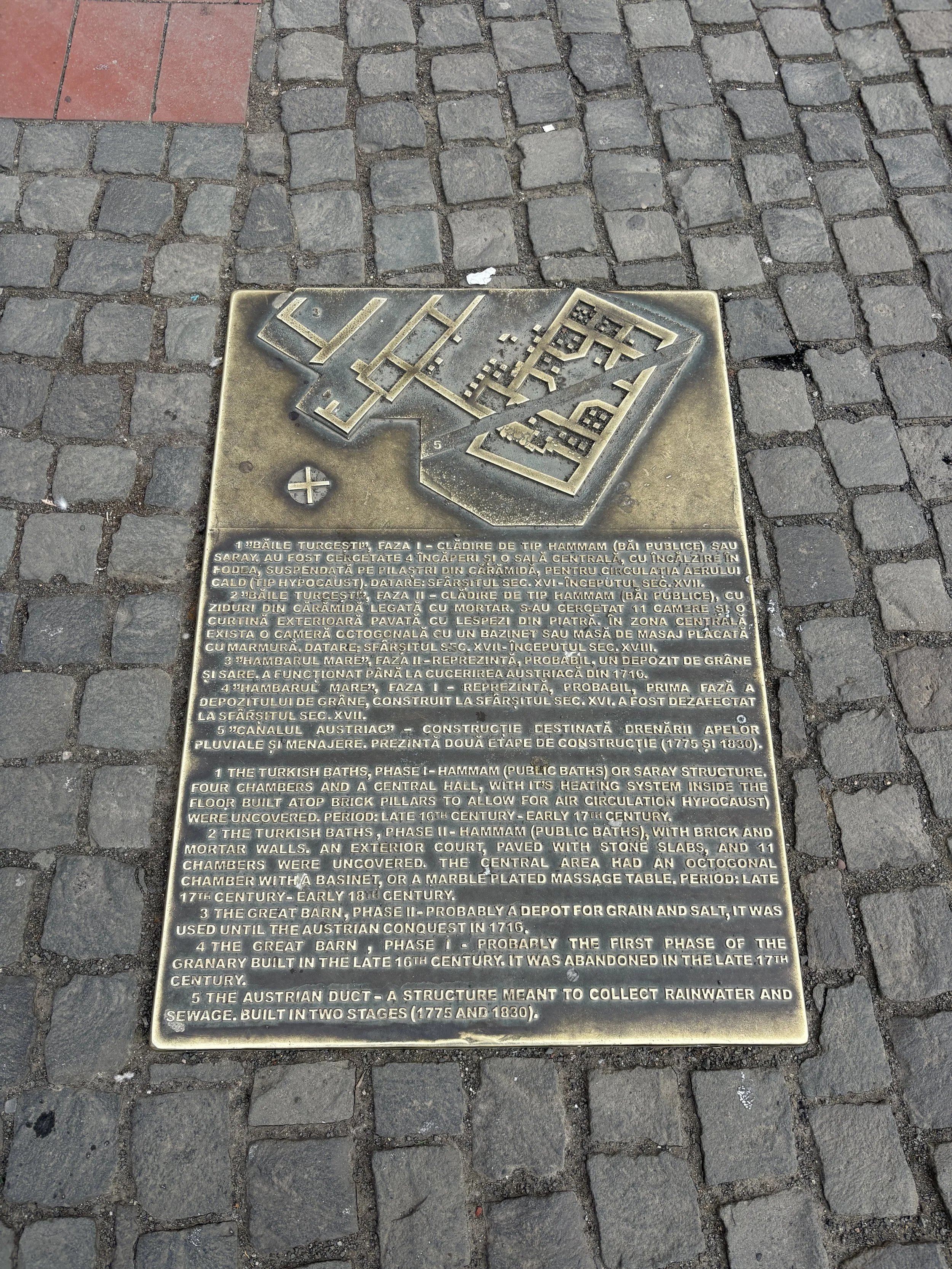
Timisoara seems to be a city well aware of its past, and it is also possible to find quite a few plates and signs marking important historical spots, whether its Romanian statesman Ioan Cuza or Eugene of Savoy, or the emplacements of buildings that are long gone, like the Ottoman hammam (roughly where present day Piata Libertatii now stands).
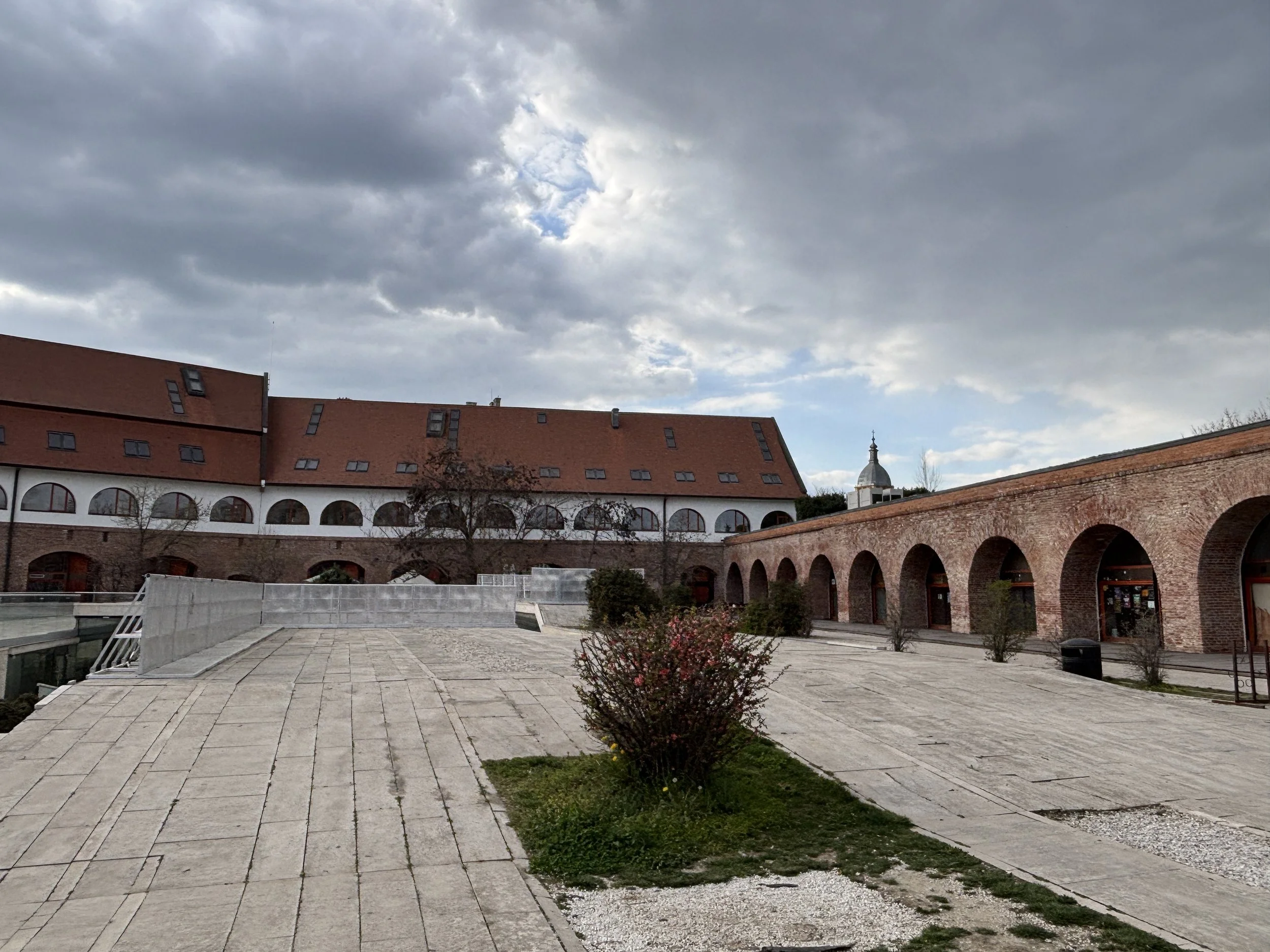
Another piece of relatively well preserved (and now restored) historical Timisoara is the Maria-Theresa Bastion, which was part of the Austrian fortifications, and is just a couple of minutes on foot from Piata Unirii. This is now the home of the National Museum of the Banat, but it was closed at the time of my visit.
Piata Victoriei and around
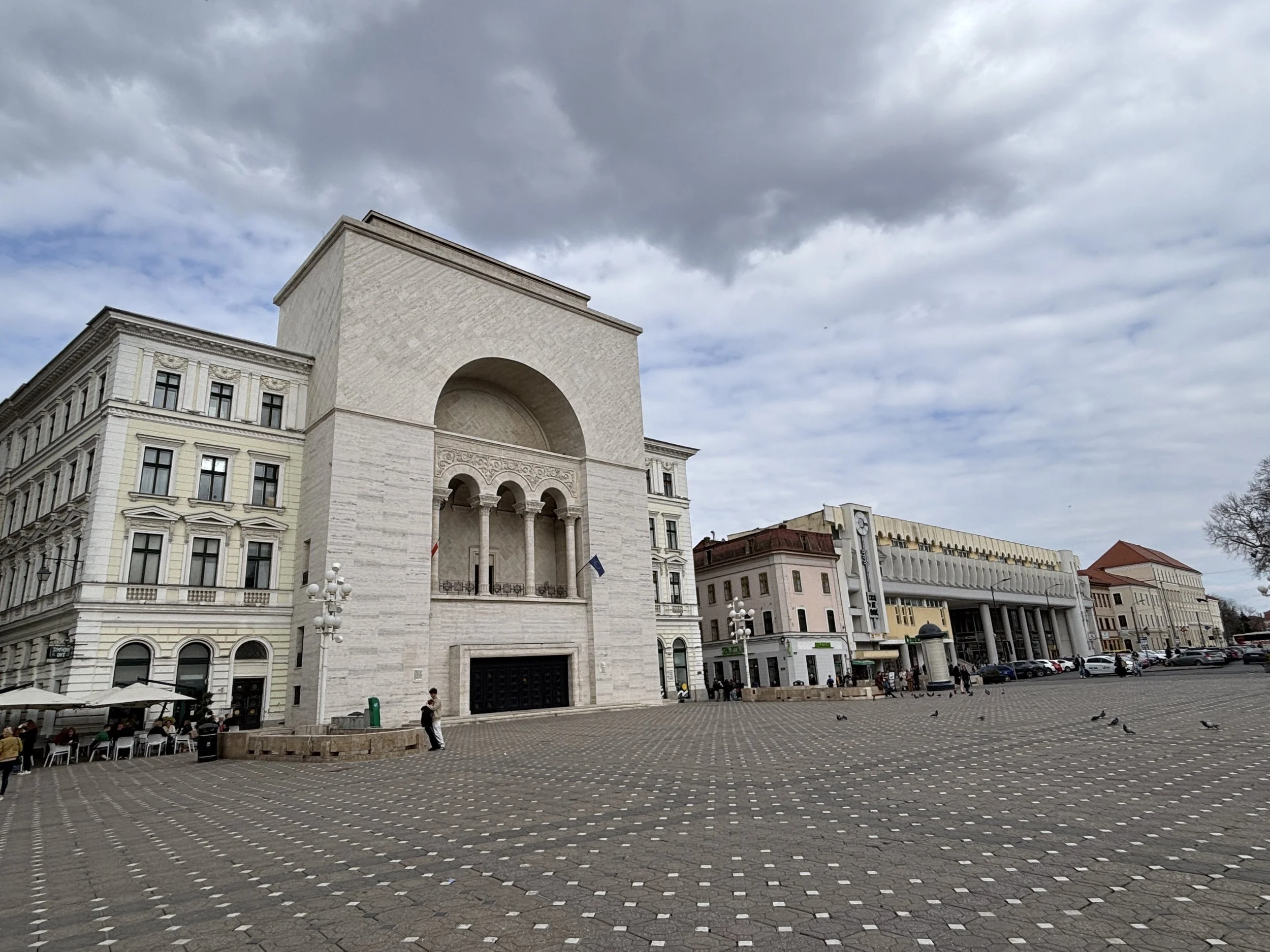
Piata Victoriei (“Victory Square”) is the third major square that gives shape and character to downtown Timisoara. Unlike the other two, this one has a more modern flair.
In fact, it is more than a square, because it transitions into an elongated gardened boulevard that ends in front of the Orthodox Metropolitan Cathedral.
At the opposite end of the boluevard from the cathedral is the National Opera House, a very distinctive building the façade of which is adorned by a large arch and a colonnade.
Piata Victoriei was a major scenario of the 1989 Romanian Revolution, with the balcony of the National Opera House acting as an impromptu gathering place for the revolutionaries. In fact, the imprint of those days is kept well alive to this day.
In addition to the musem and memorials that remembers that moment (more on this further below), it is possible to find reminders of those epic moments throughout the city, like the grafitti alluding to the 35th anniversary of those events, to the entire text of the “Proclamation of Timisoara” being proudly exhibited in Piata Victoriei.
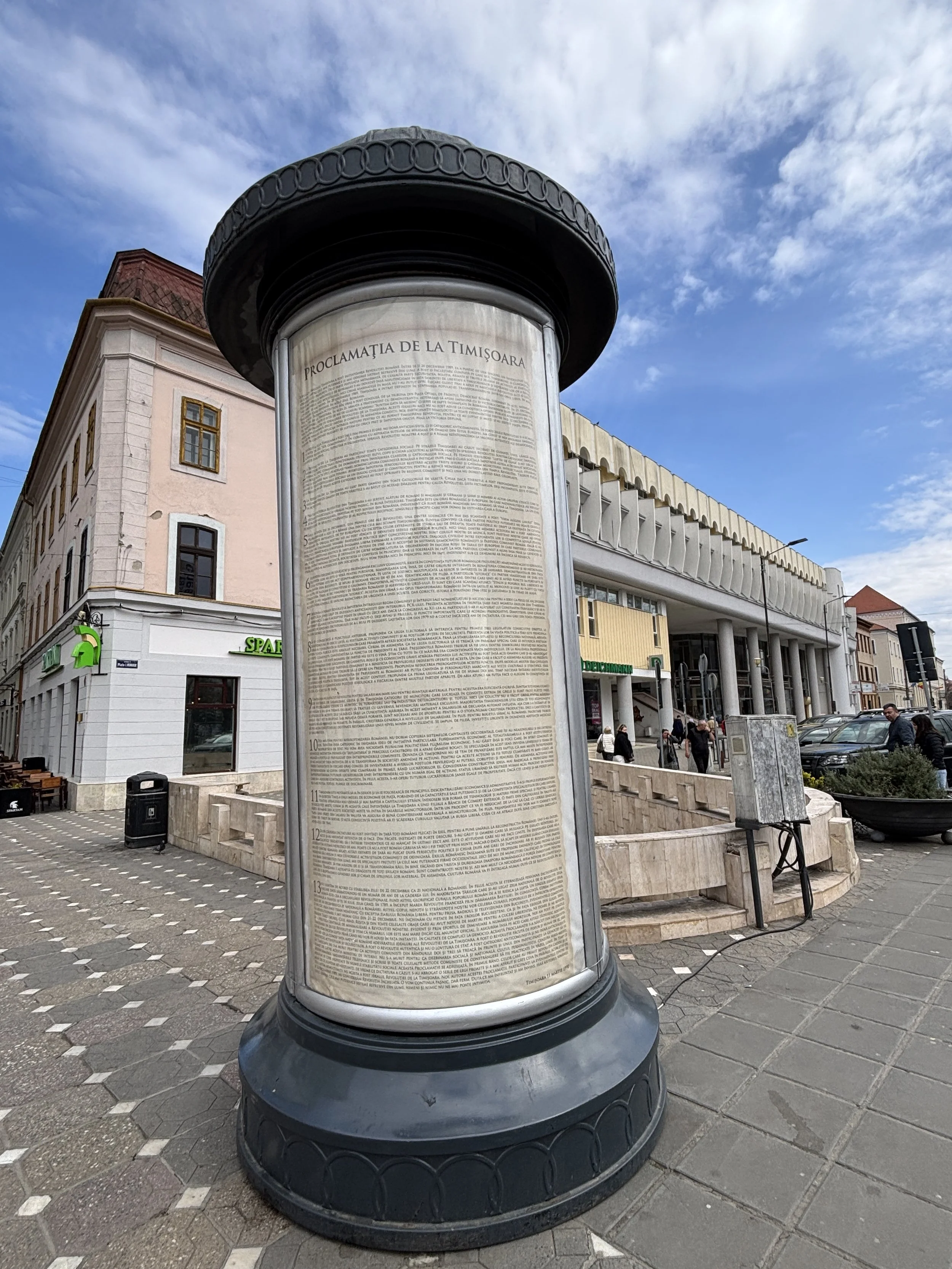
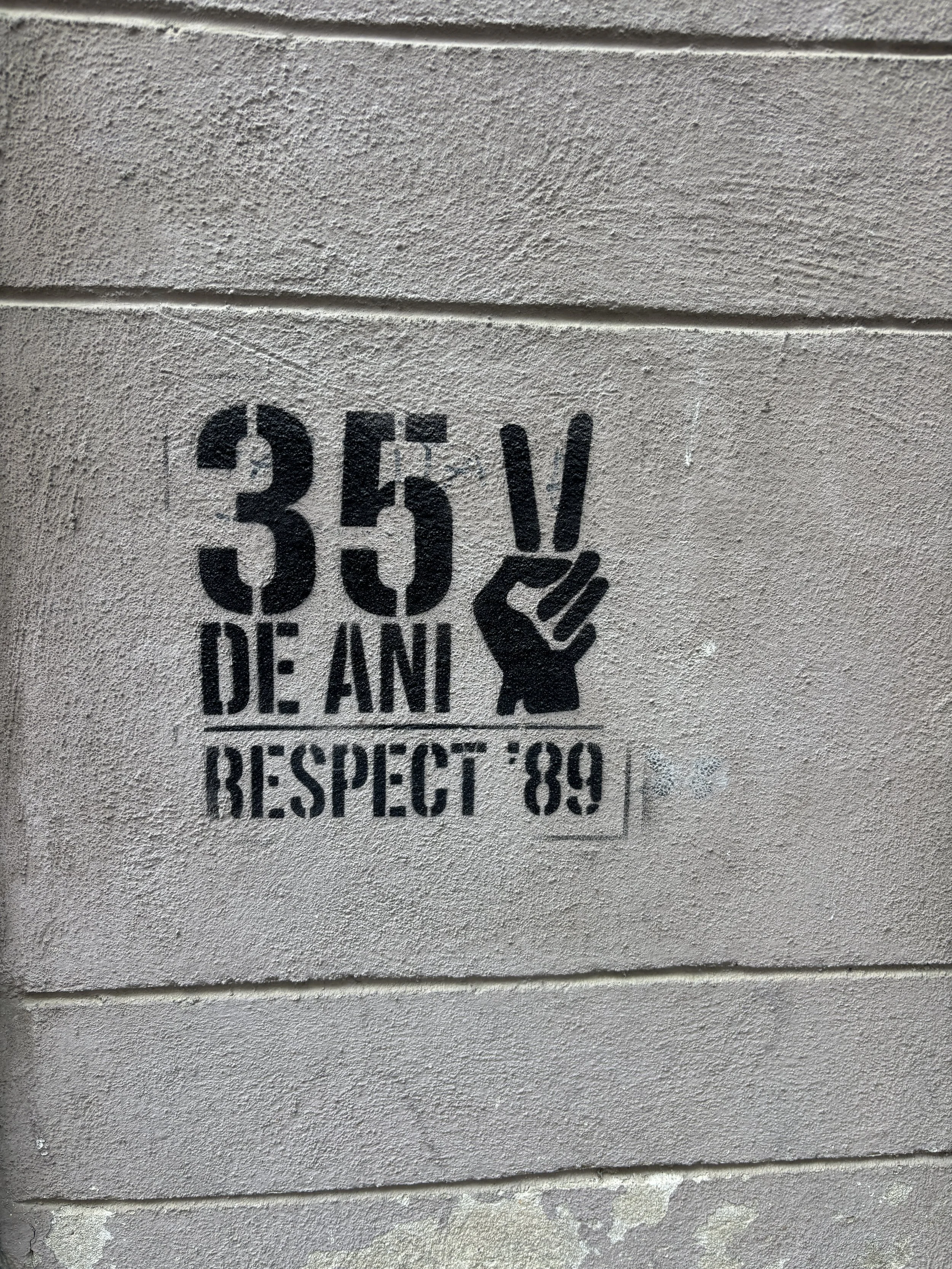
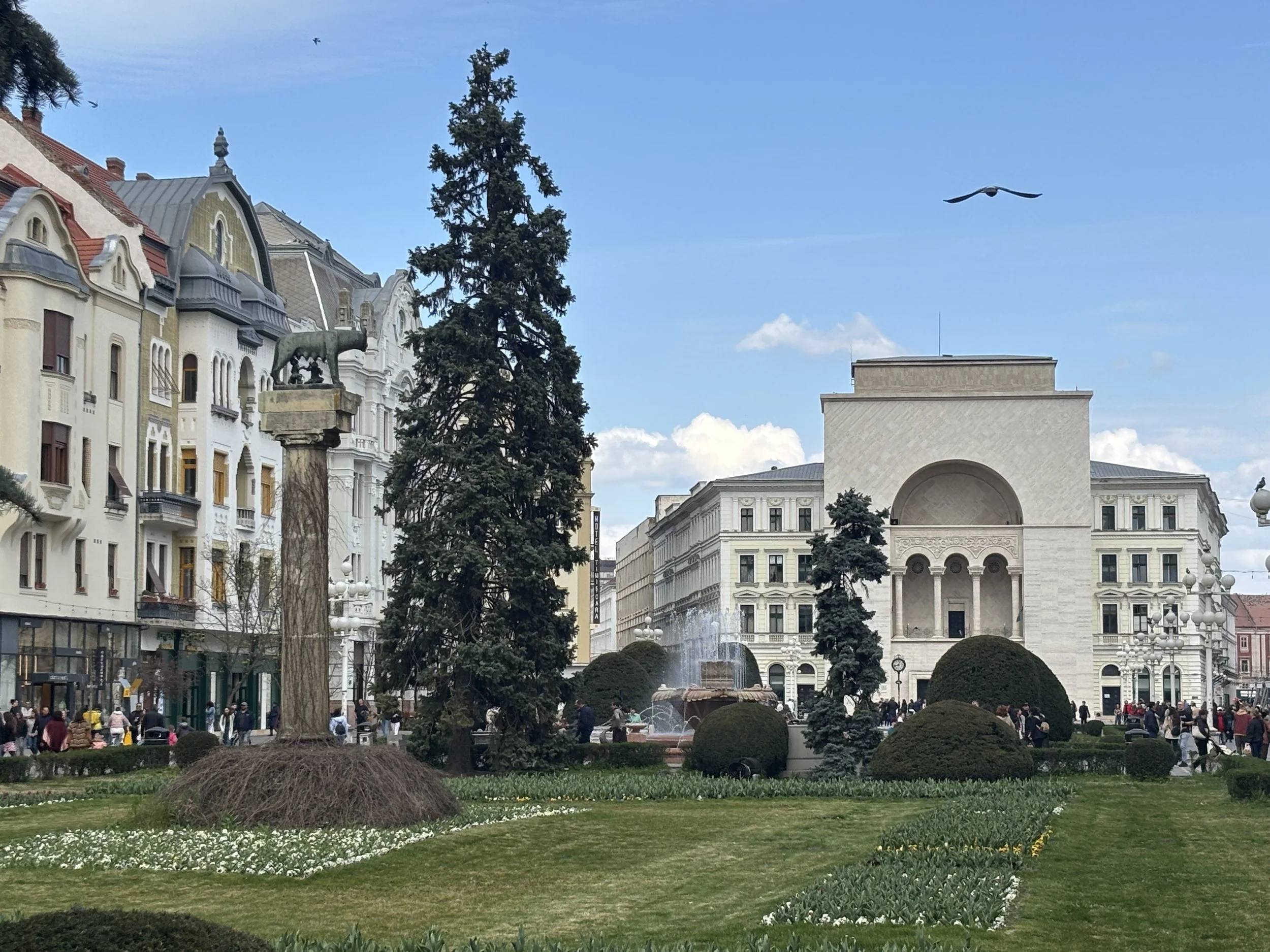
As in Cluj-Napoca, the she-wolf statue acts as a reminder of Romania’s links to Ancient Rome
The Romanian Orthodox Metropolitan Cathedral of Timisoara is another landmark of interest in this part of the city, with a very distinctive architectural style which mixes Byzantine and local influences.
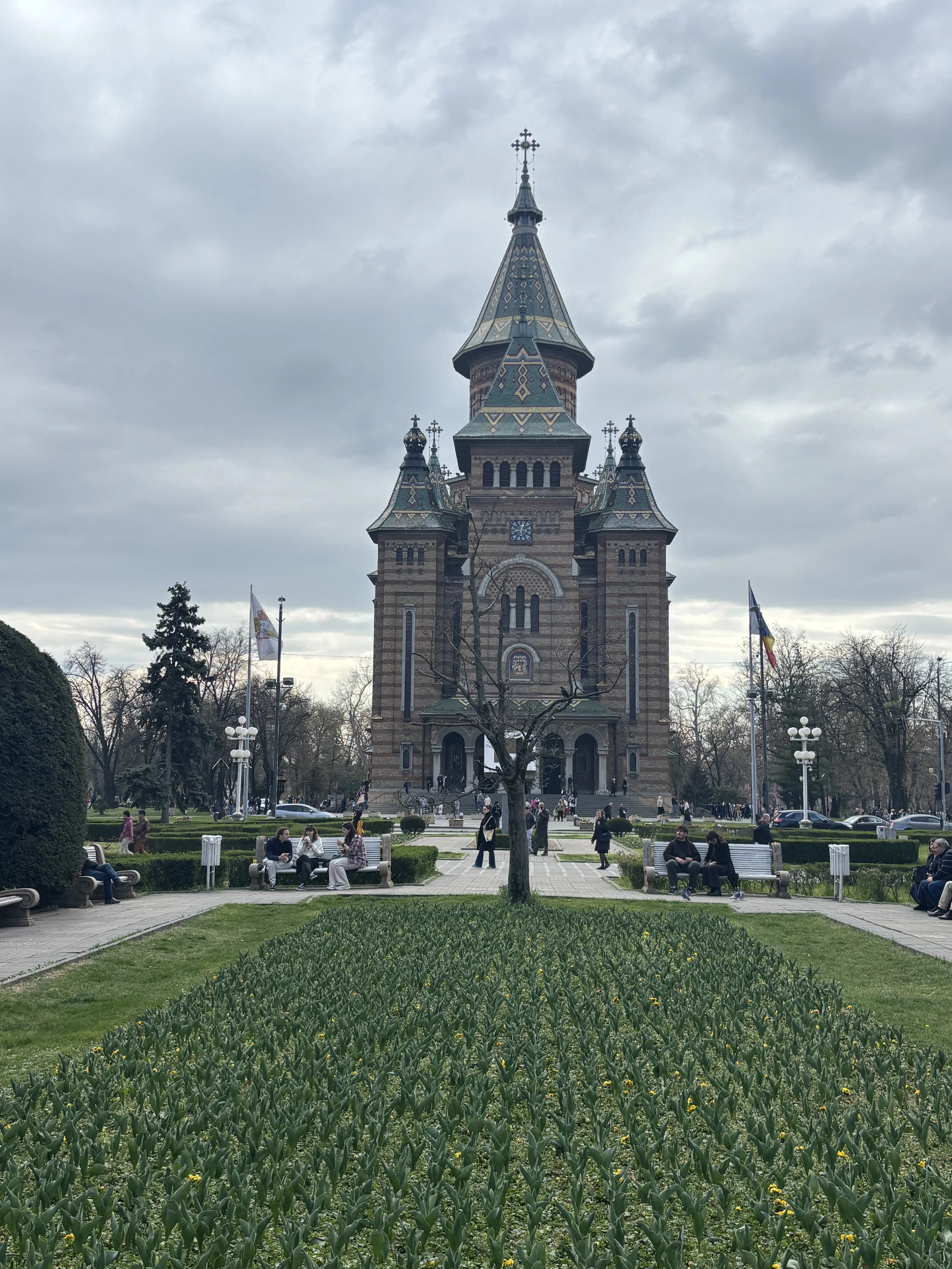
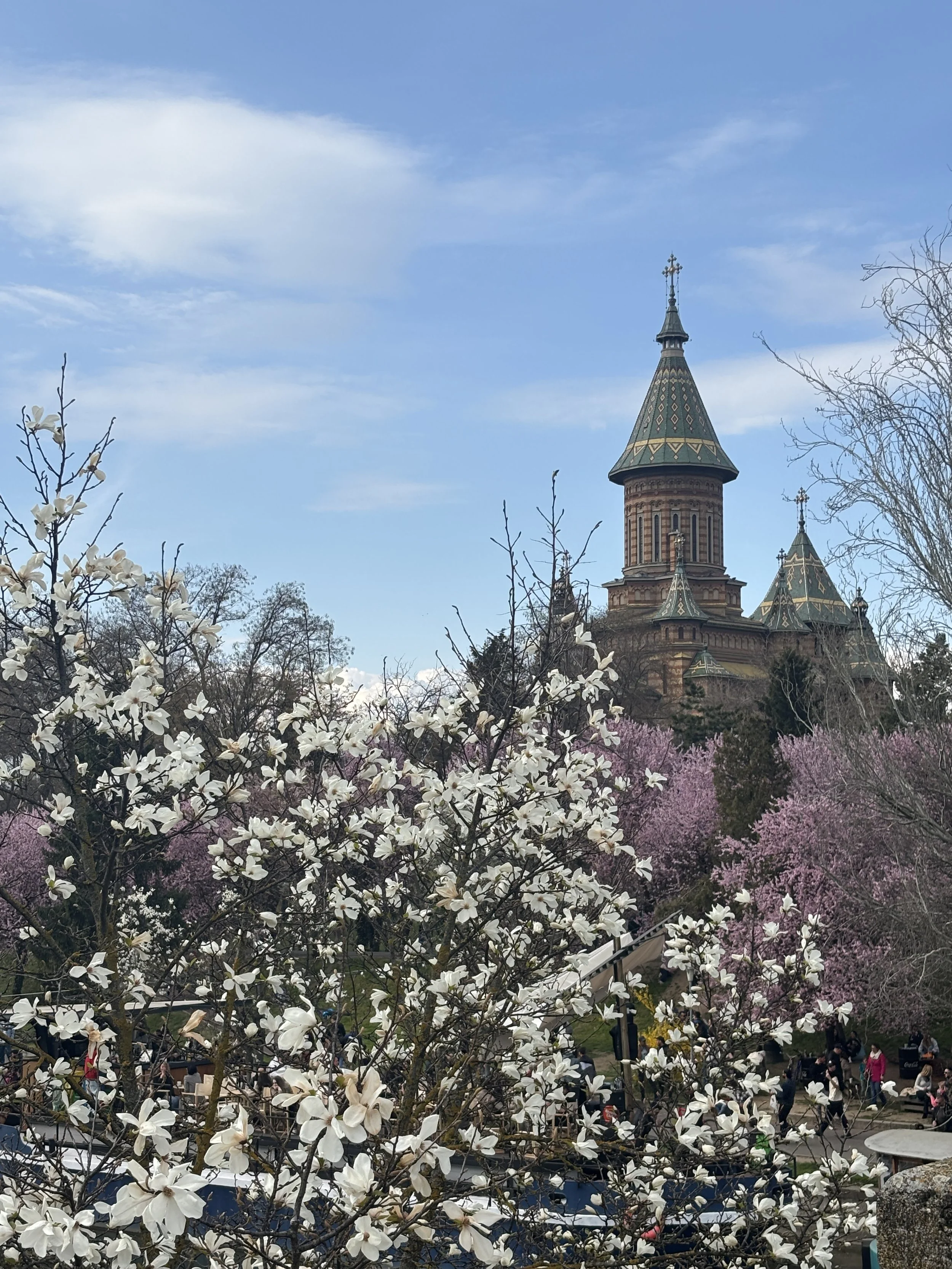
The cathedral stands at the edge of the historical town. Right next to it starts a series of gardens which run all along the banks of the Bega river and act as a nexus with the modern part of the town.
These ring of parks cover the area where the city’s outer defensive bastions used to stand. If the weather is nice, you can expect them to be packed with families strolling around or with young people having parties in the terraces and boat-restaurants.
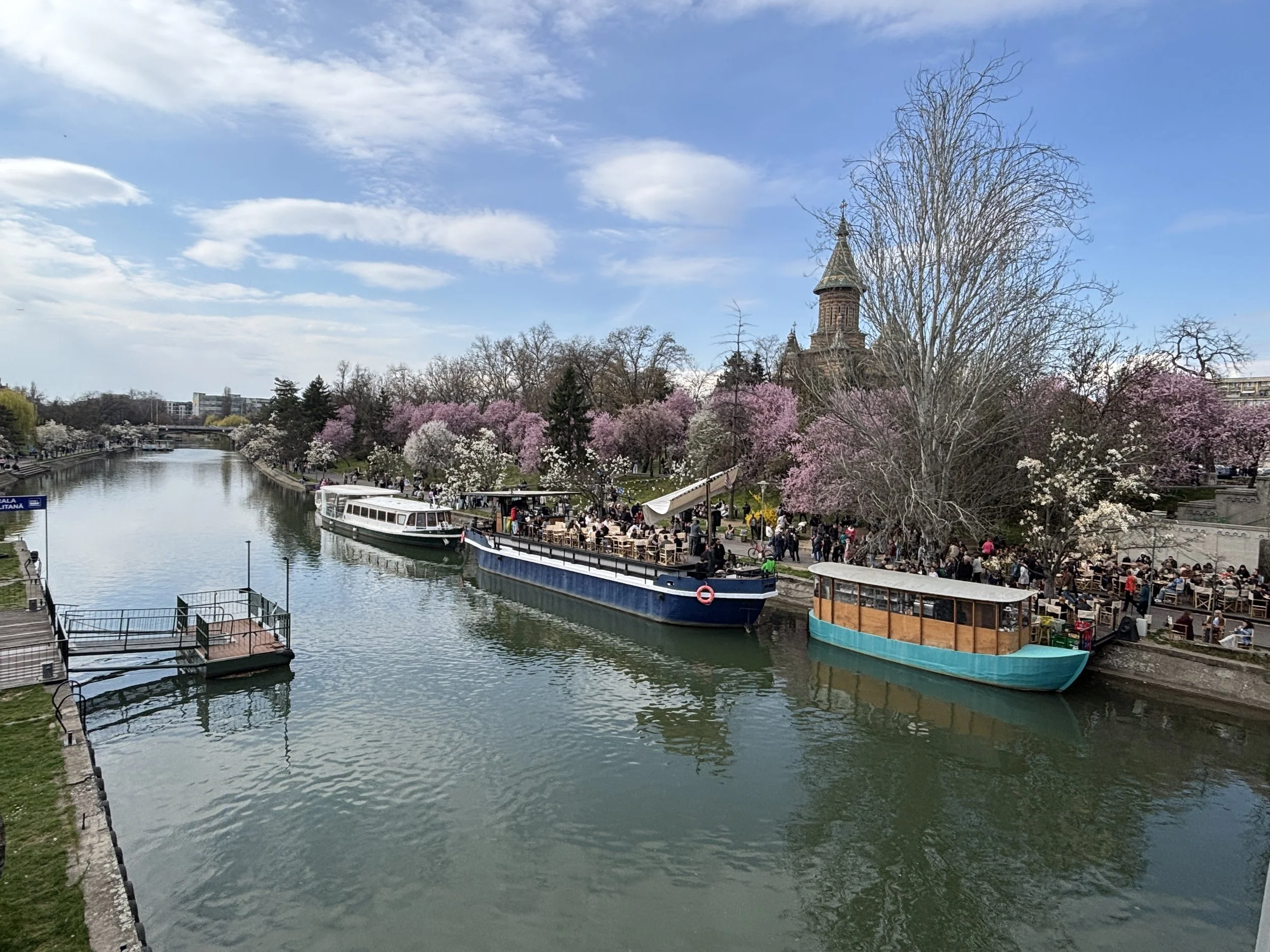
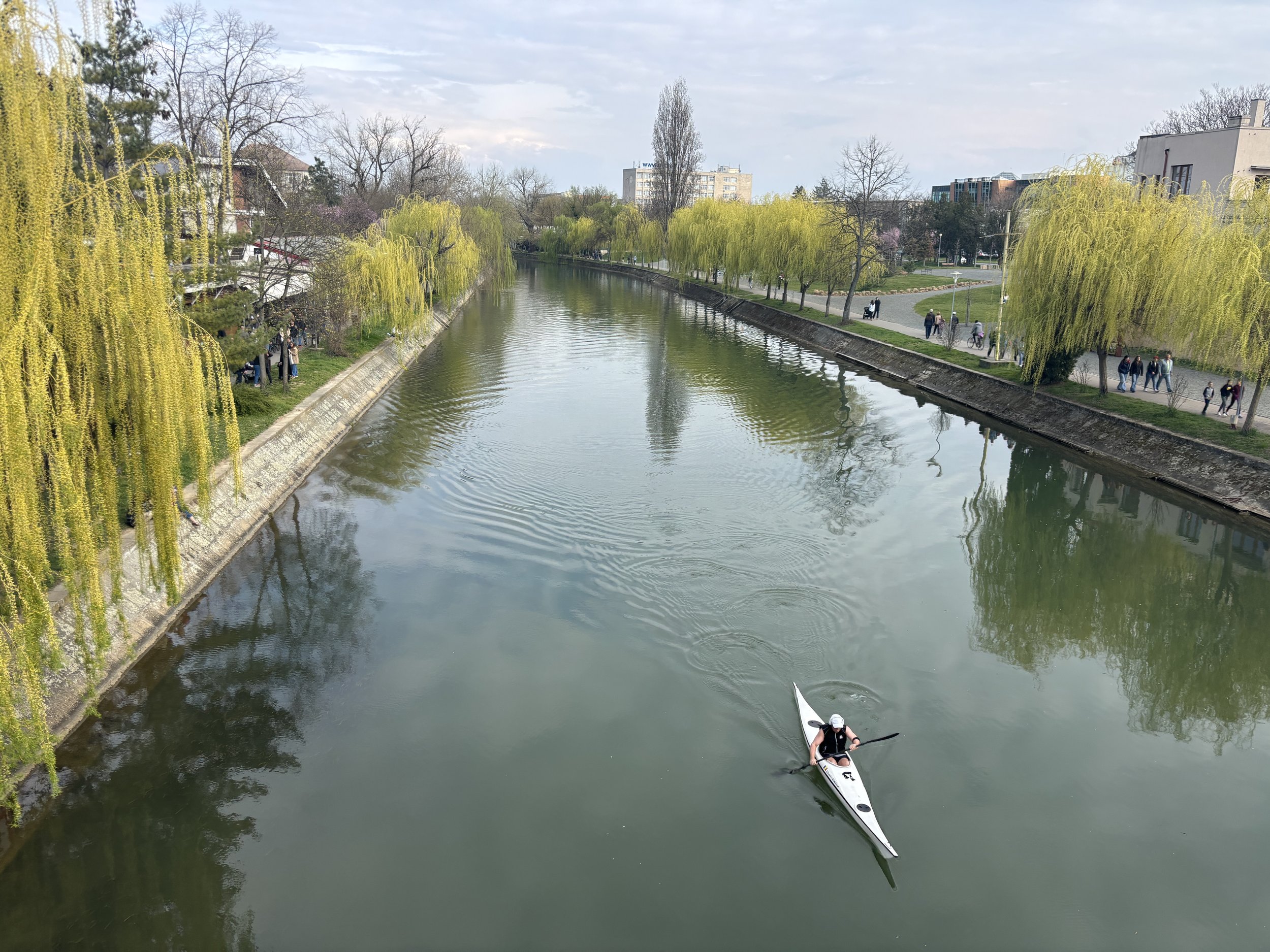
While most of Timisoara’s modern parts are rather unremarkable from the point of view of architecture (several decades of Communist dictatorship left its urban mark), the area immediately to the south of the Bega river has some avenues that are not without interest.
Here you can see how in the early years of the 20th C. Timisoara was a growing city that expanded well beyond its original kernel.
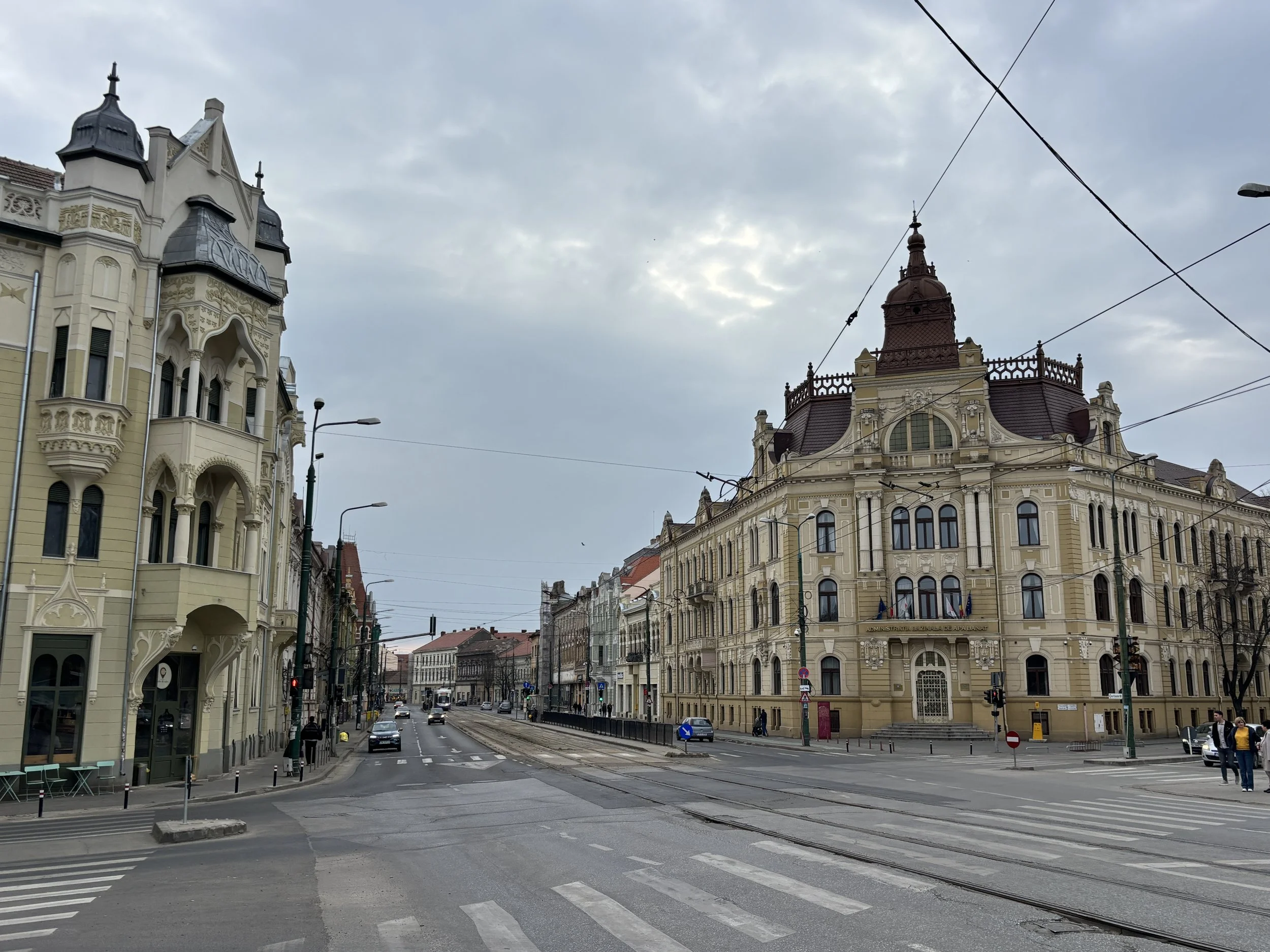
Timisoara must have been a really thriving city in the late 19th and early 20th C. as shown by the fact that it was one of the first in Europe to introduce a number of public services that were truly pioneering at the time.
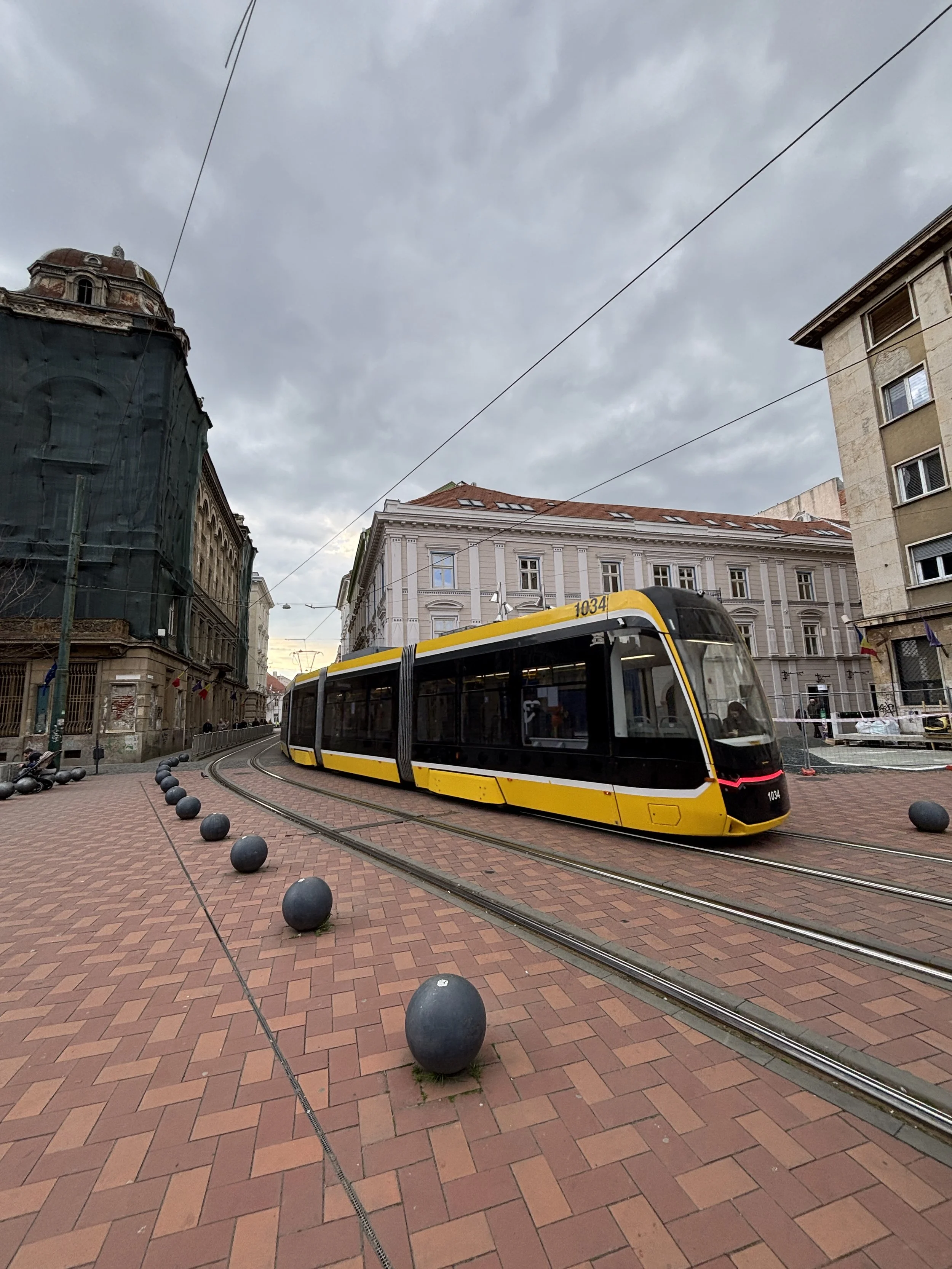
It was one of the first cities in Europe to have a horse-drawn tram network in 1867 (their electrically-powered successors still plod its streets, as you can see in the picture below) and the very first city to introduce electric street lamps in 1884!
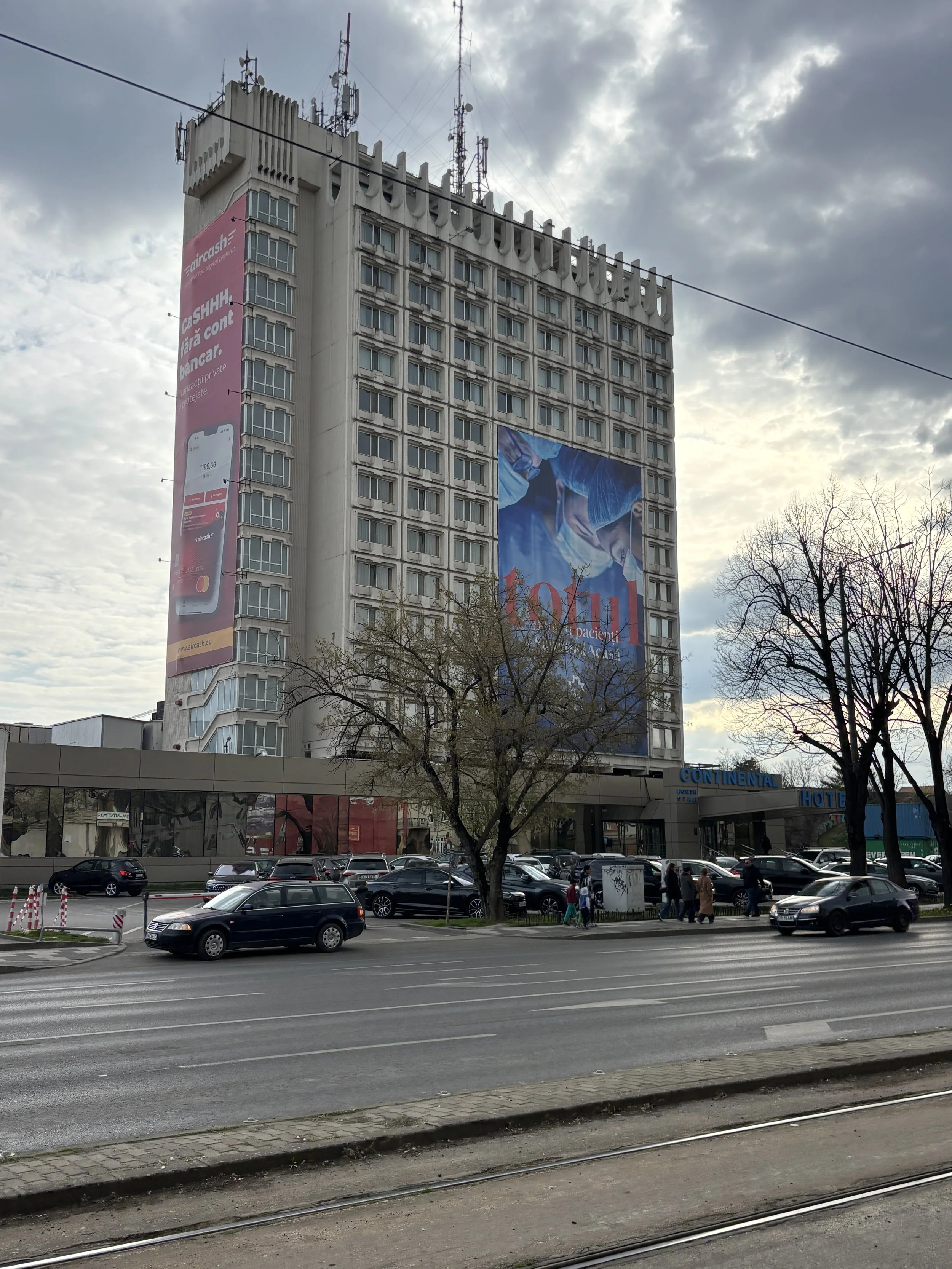
The post-war Communist regime also tried to introduce its own version of “modernity” but with far less pleasing aesthetical results. Fortunately the historical perimeter of Timisoara was relatively untouched by this branch of “architecture”.
The Revolution Memorial
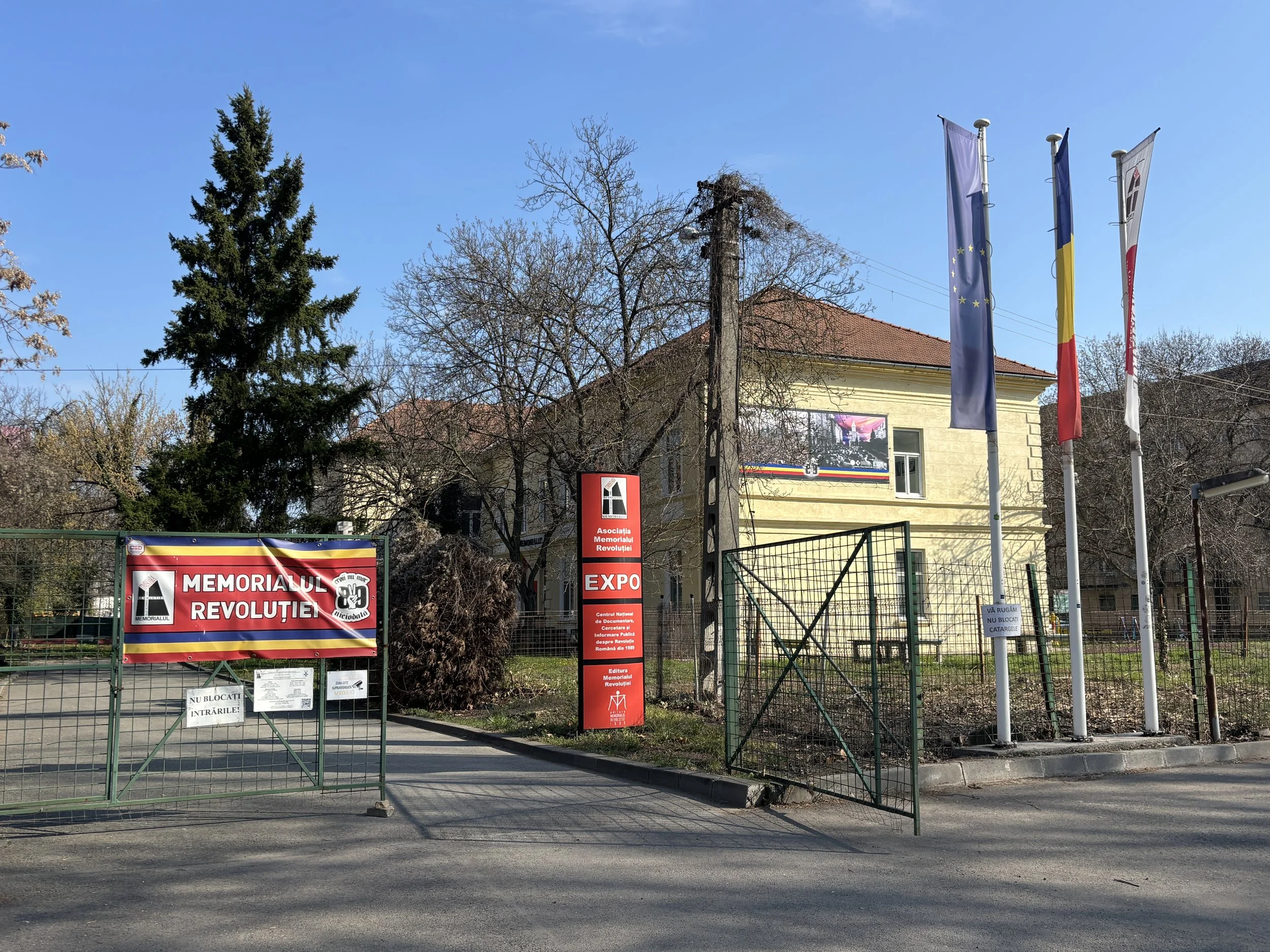
This is a must-visit in Timisoara, and a nice way to get a peek into the history of the city during the Cold War years, when Romania was under the totalitarian rule of Communist dictator Nicolae Ceaucescu.
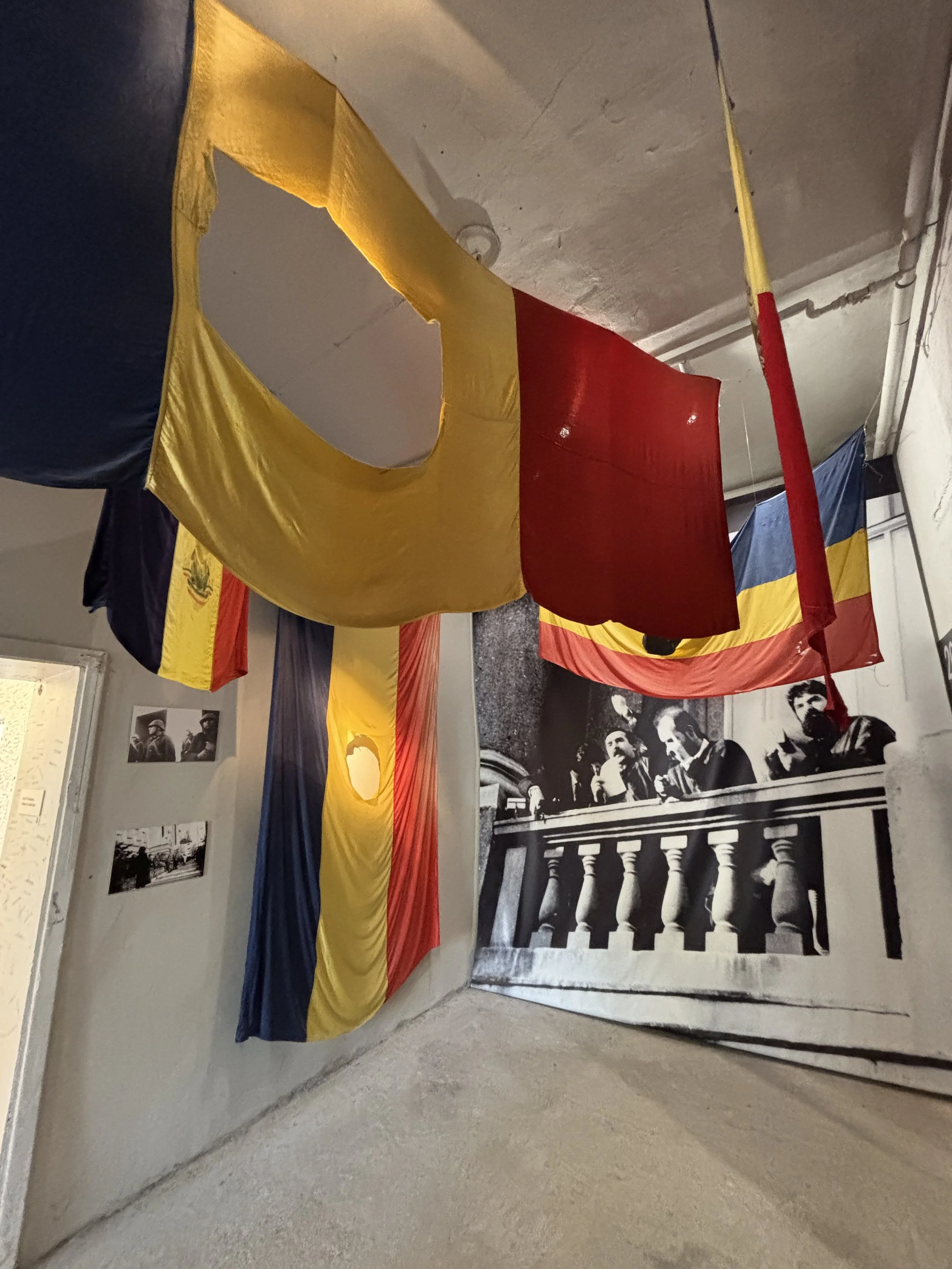
The museum is, I think, run by non-profit, and the facilities are somehow basic (if quite centrally located just north of Piata Unirii) but it does a good job of conveying what life was like at that time and the sequence of events which, starting in Timisoara, led to the downfall of Ceaucescu’s regime in December 1989.
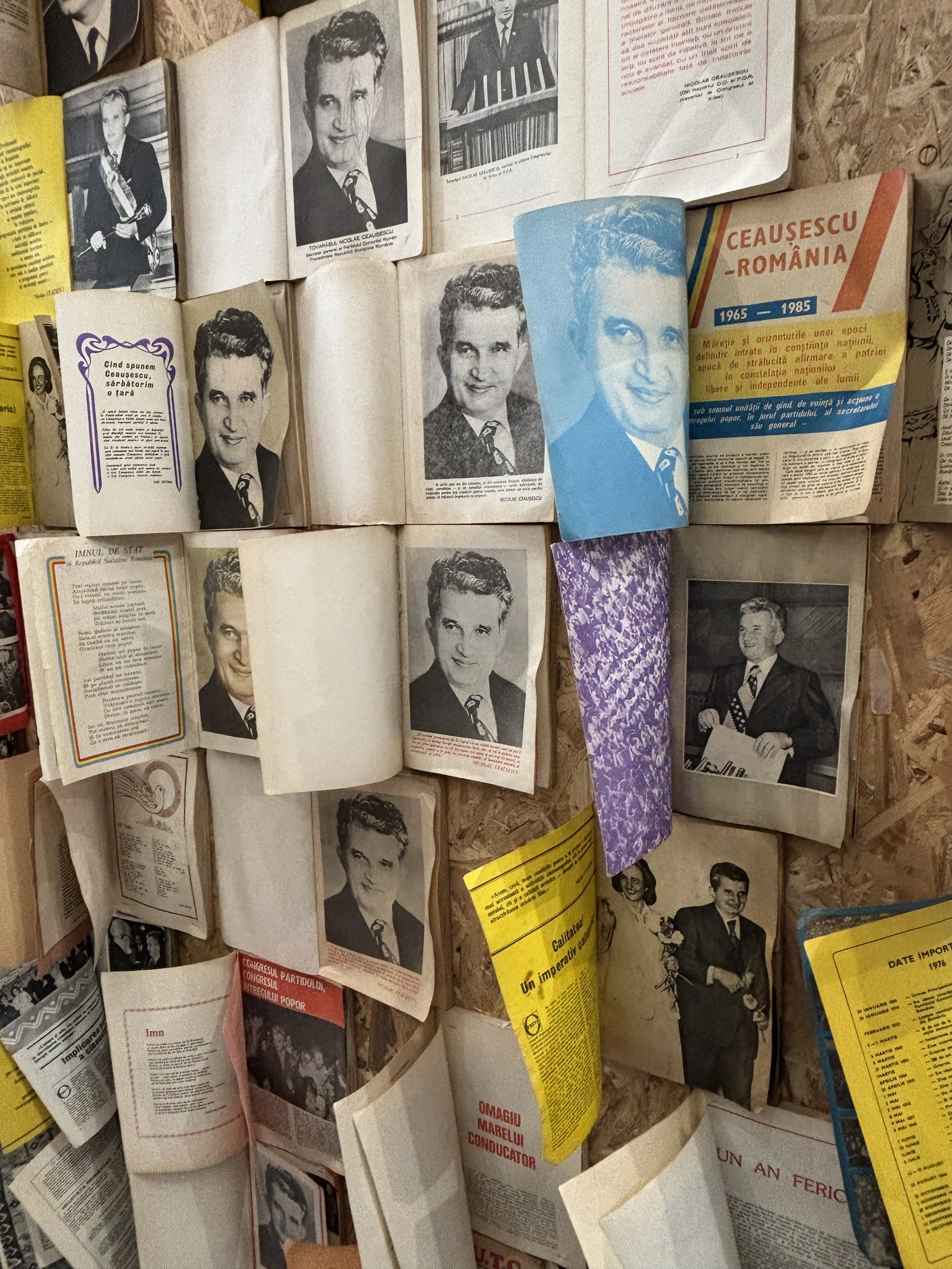
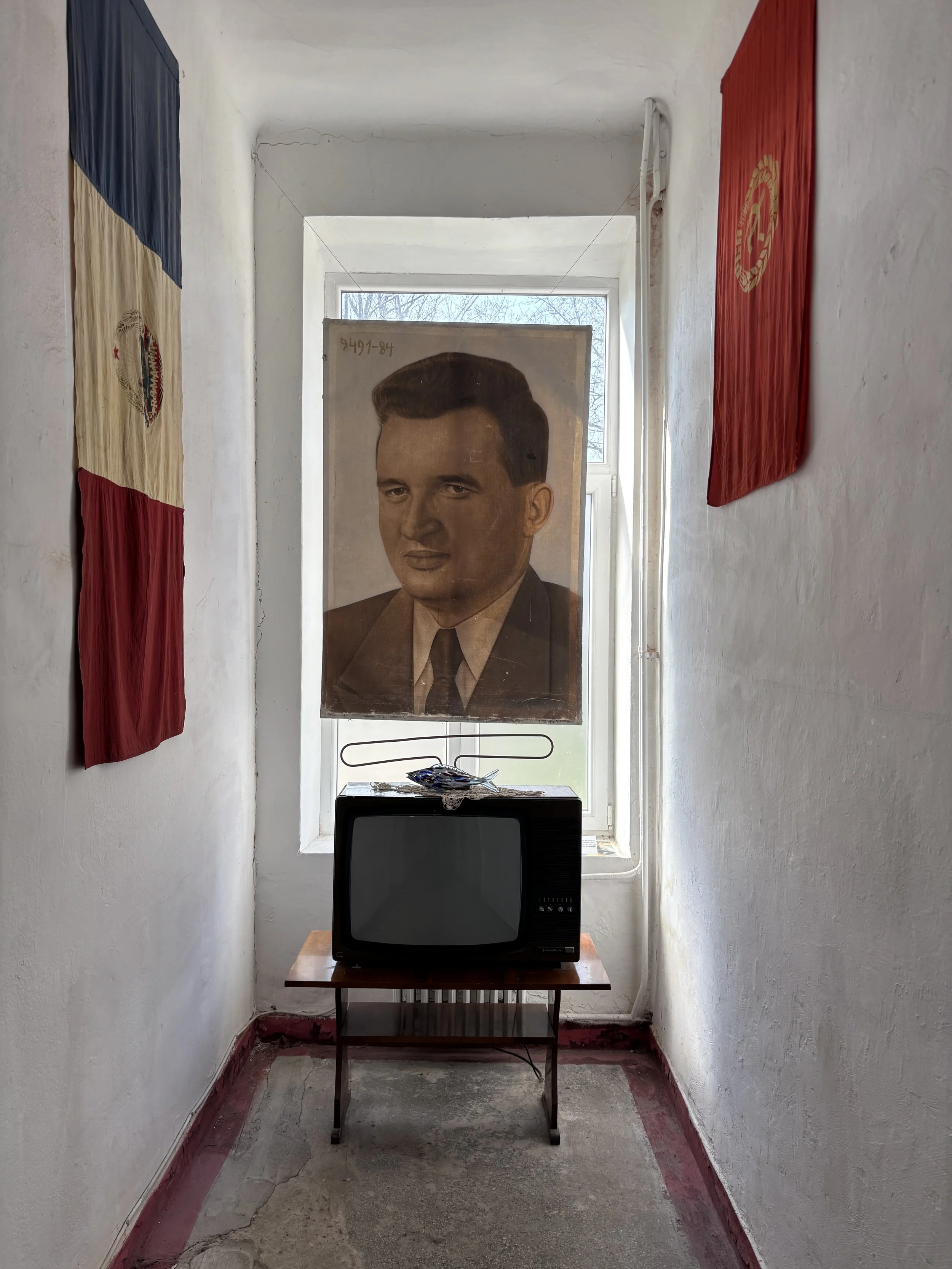
The Romanian flag with the Communist coat of arms cut off from its middle became the emblem of the 1989 Revolution. Unlike in other countries of the Eastern Bloc, the ousting of the Communist regime was a rather bloody affair, first due to government repression and later on due to the ensuing chaos.
This is a historical episode, by the way, which I covered also in my post about Bucharest, where some of the key developments of this story took place. Timisoara, however, is where everything started and today the city takes just pride in this fact!
Museum of Communist Consumers
If you didn’t have enough of Cold War Romania during the visit to the Memorial of the Revolution, you can also take a stroll to the Museum of Communist Consumers (“Muzeul Consumatorului Comunist“).
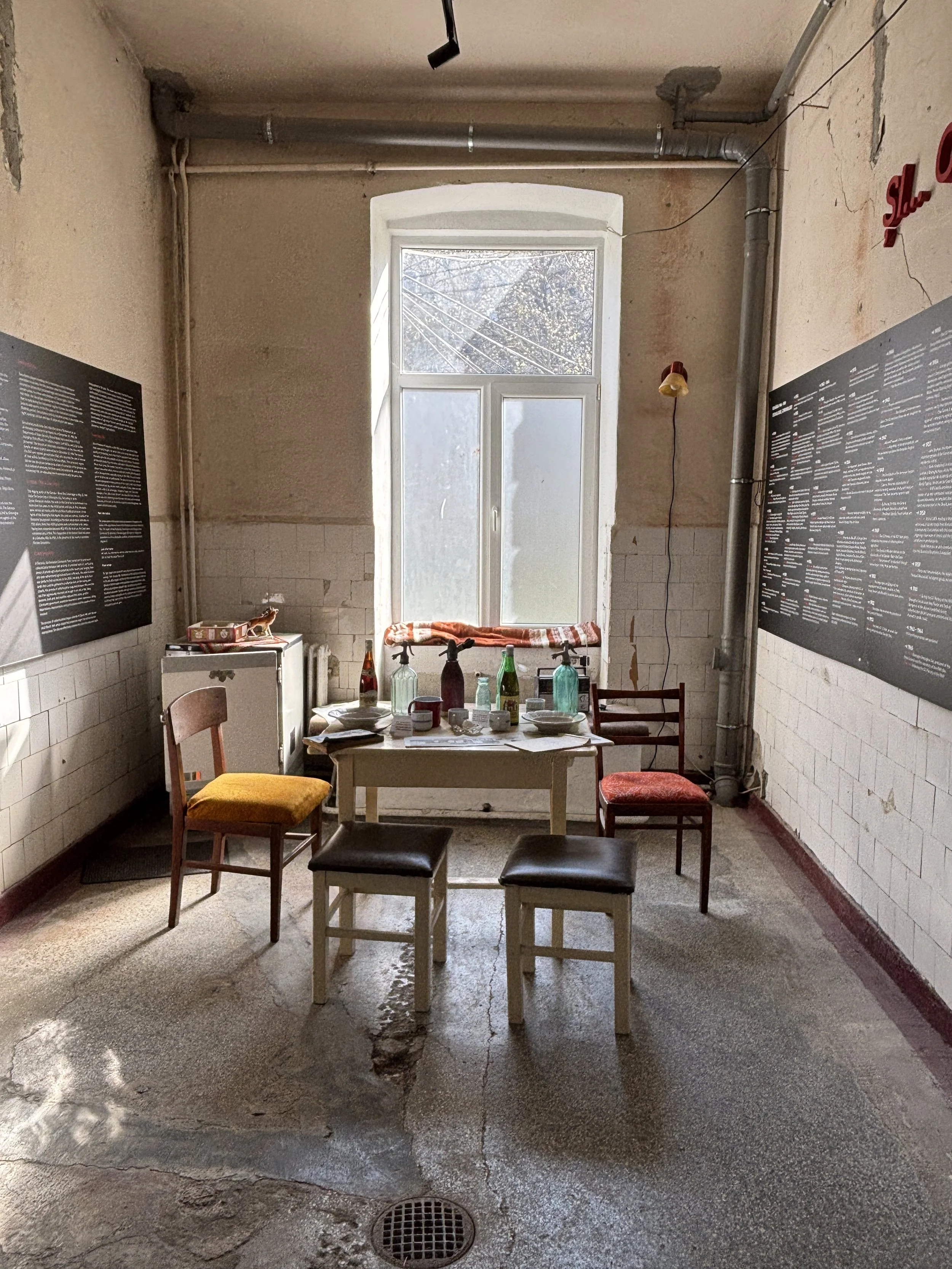
In fact, to call it a “museum” is a bit of a stretch, since it is essentially a bar which, in a rather ingenious marketing ploy, has transformed its basement into a makeshift repository filled with ordinary objects and memorabilia from the Communist period.
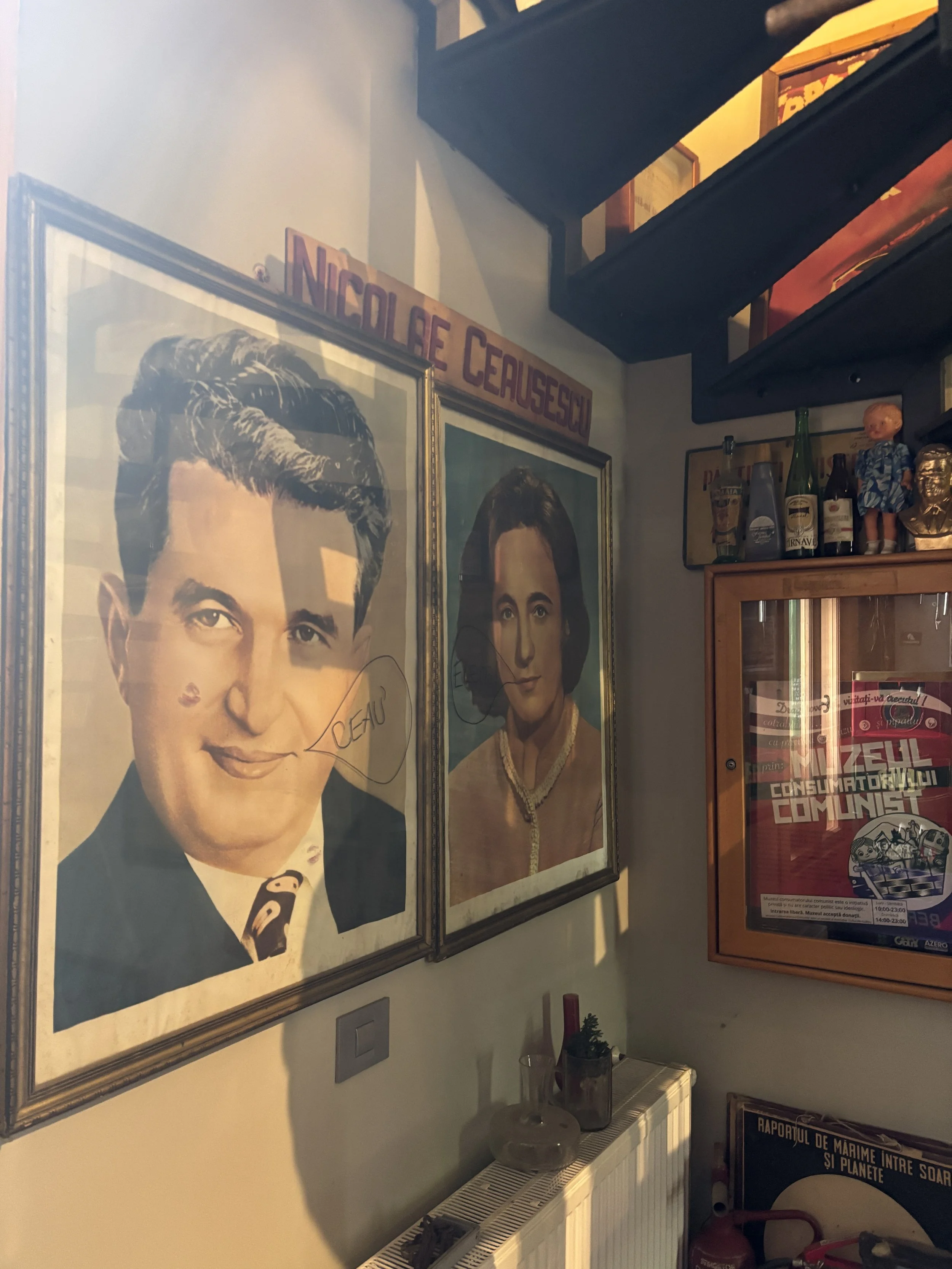
To be fair, there is not entrance fee, you just walk down the stairs and are free to roam the rooms (you may have to look for the electric switch as you walk into the next room, just as you would in a normal house). As mentioned, this is not an ordinary museum, so don’t expect any signage or audioguide.
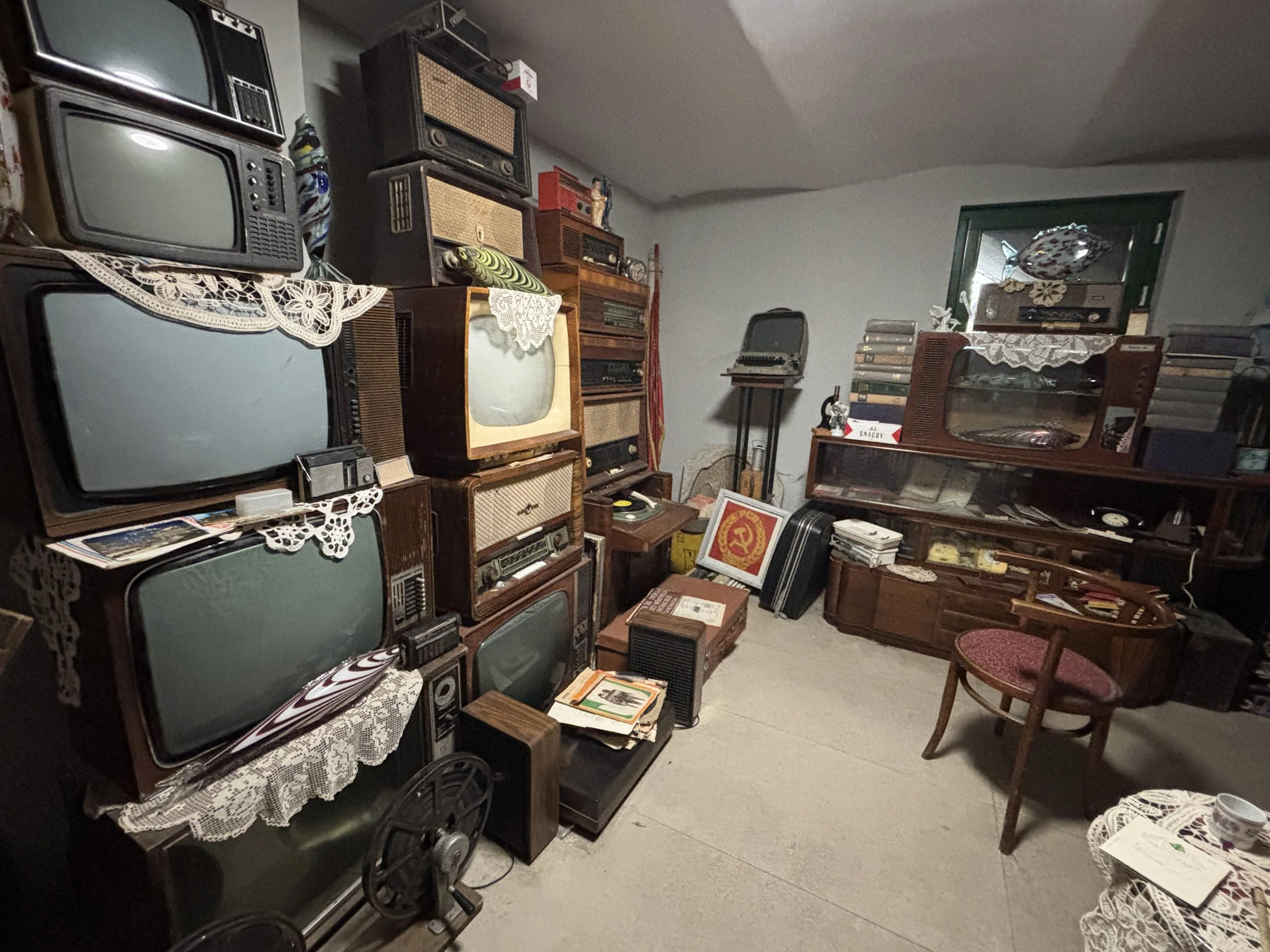
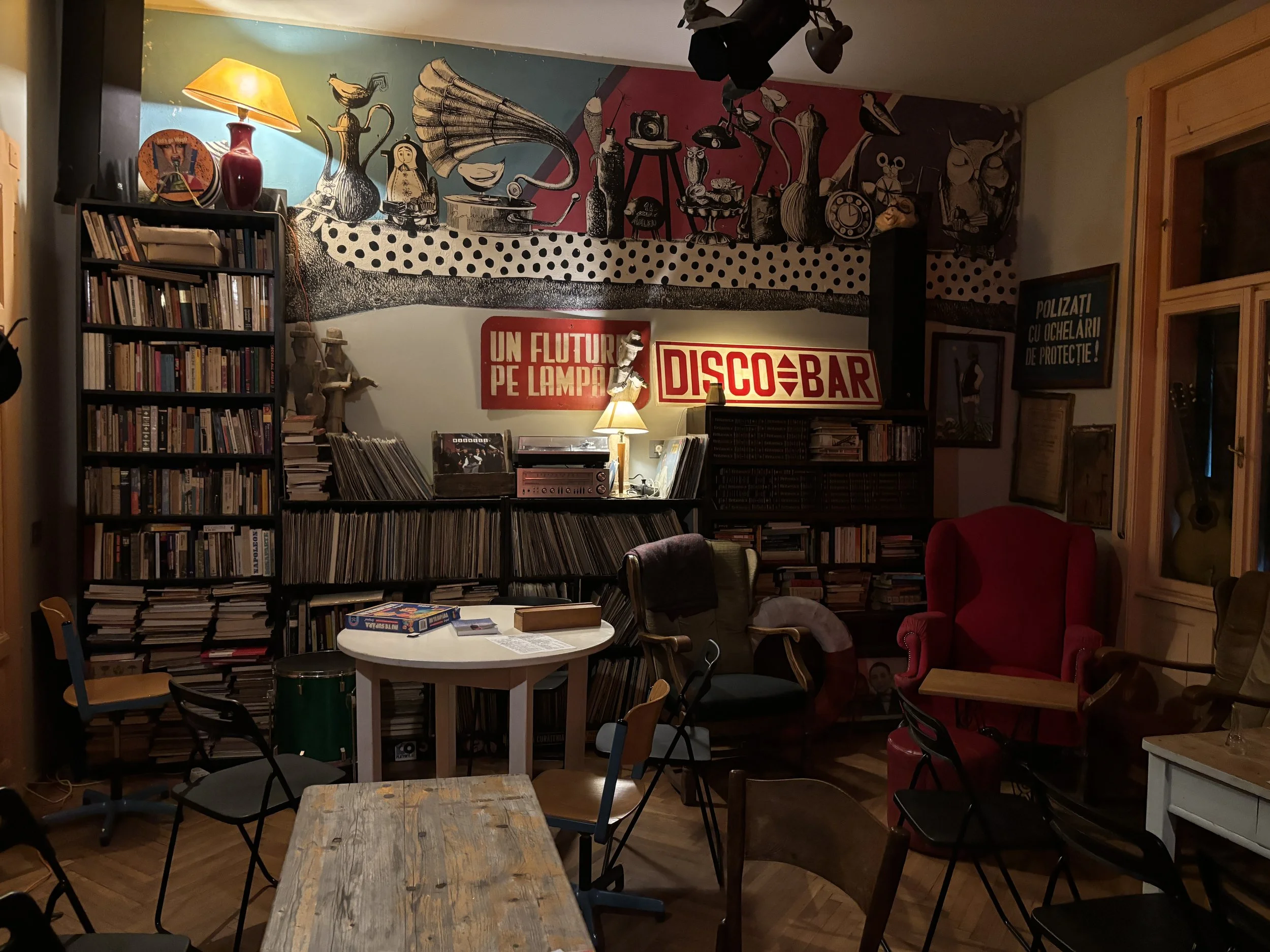
If you are interested in that era, it is not without interest, if only because of the very original way to present the “collections”. If you were born before the 90s some of the items in the collection may not look entirely unfamiliar either!
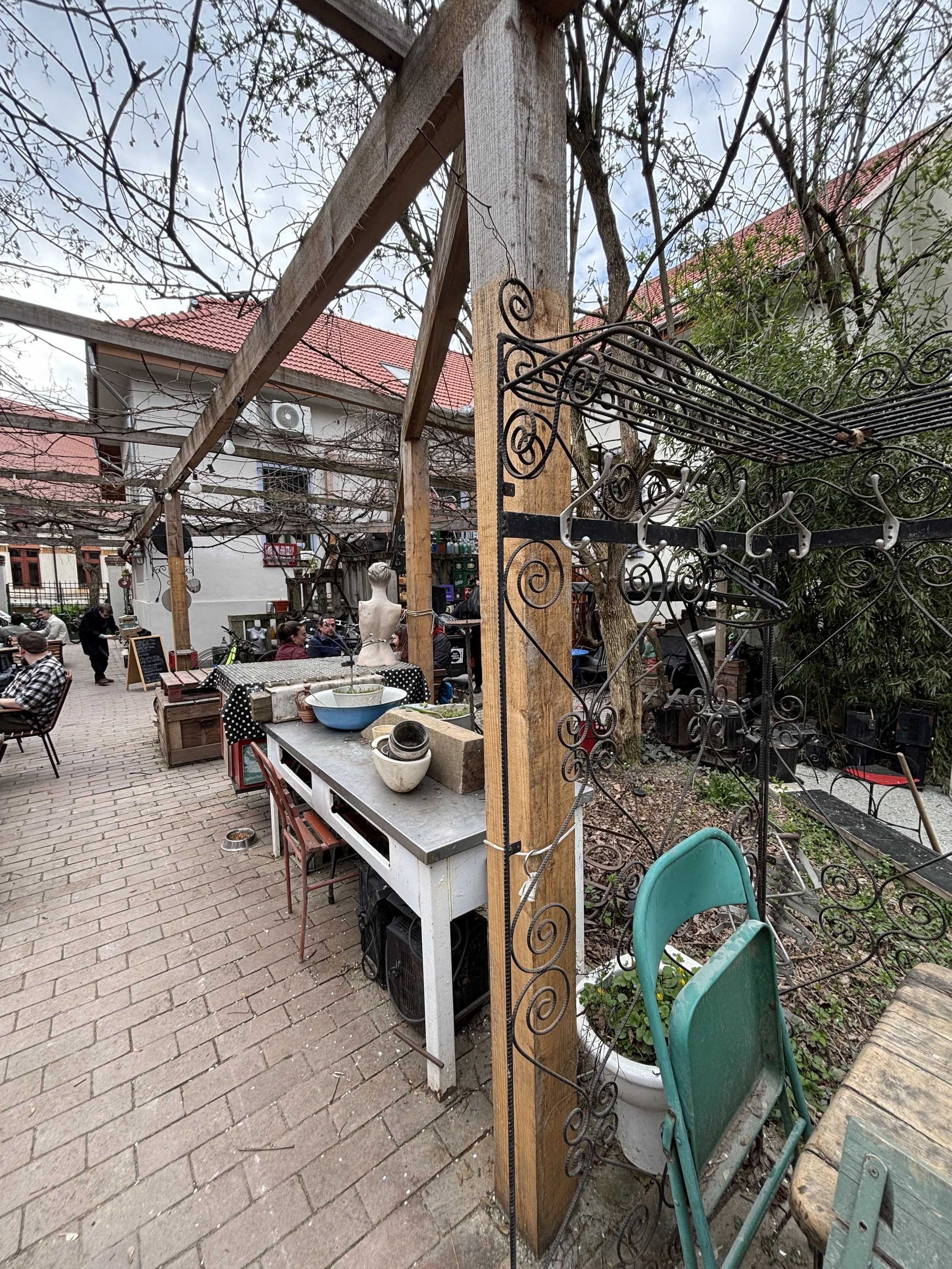
In any case, since the bar-museum is located some 15 minutes walk south of the Bega river, it is a nice excuse to get out of the old town, as well. It’s a nice walk if the weather is nice and the bar has a terrace where you can sit down to replenish energies before continuing the sightseeing.
Where to eat in Timisoara
When arriving in Timisoara, one of my goals was to try some local Banat specialities and, I must say, that proved quite more challenging than I expected. There is no shortage of Italian and Asian restaurants and burger joints in Timisoara, but not really that many Banat or Romanian cuisine restaurants! In fact, I think I didn’t fully succeed at finding them, although I present here a couple of options which may be reasonably close and provide, I think, good value.
Paso Local Cuisine
Strada Eugeniu de Savoya 6B, Timișoara
https://www.pasorestaurant.com
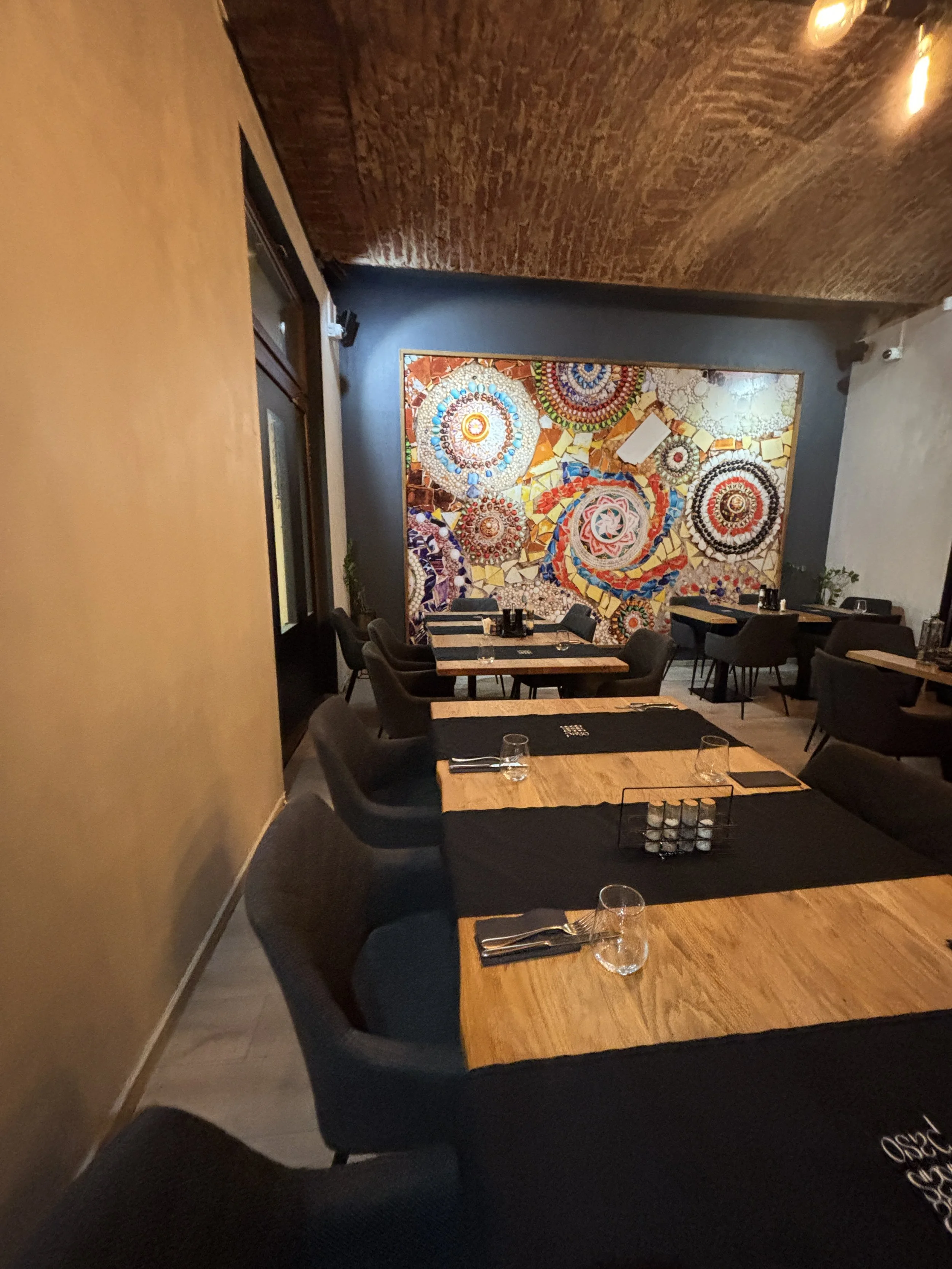
This is a small restaurant located at the heart of the old town, providing good service and value for money in addition to a somehow lively atmosphere.
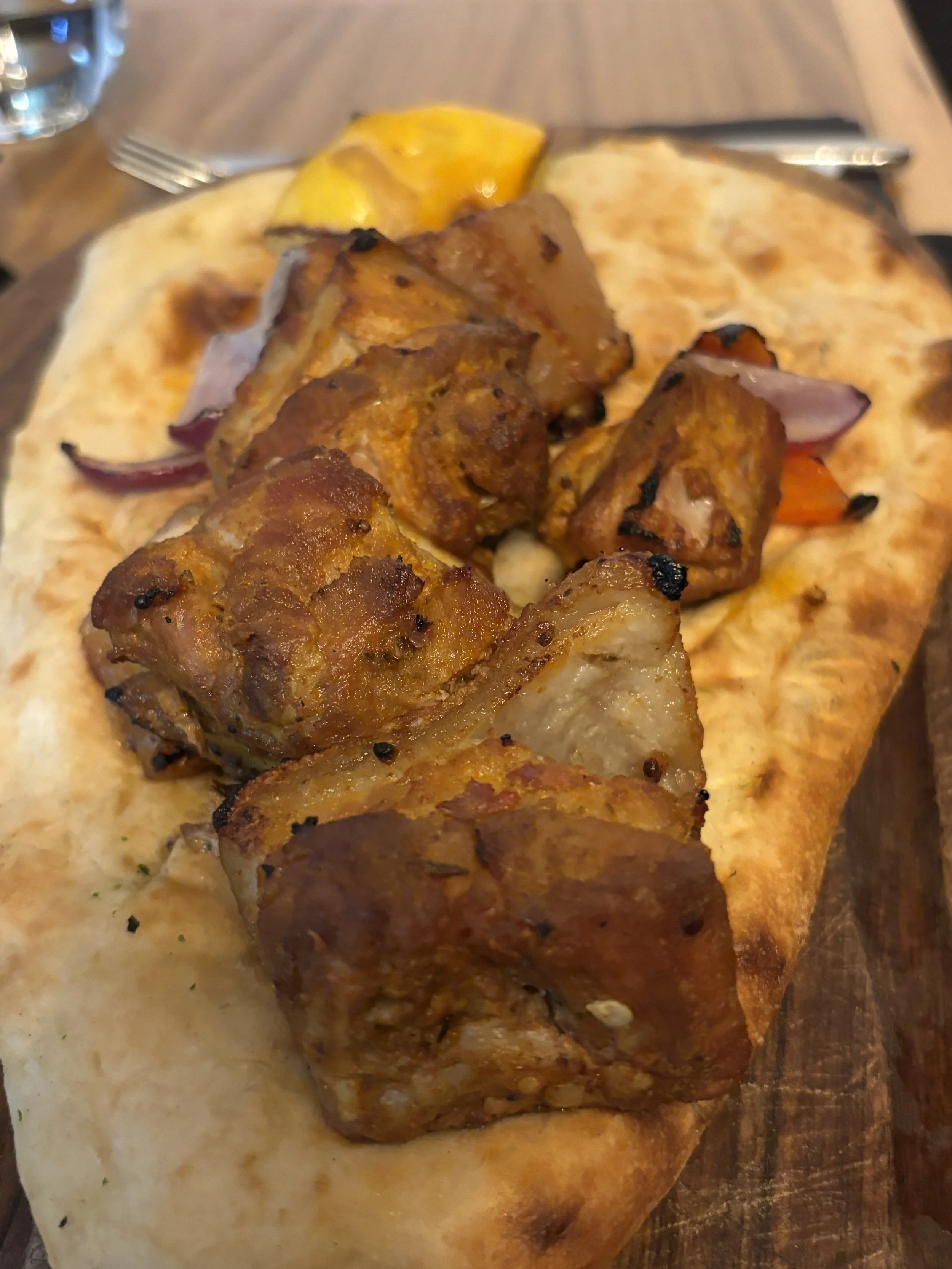
The speciality here are the meat dishes (although they do have some fish too) and, in particular, the roasted meat dishes that are so typical of the Balkans and southeastern Europe.
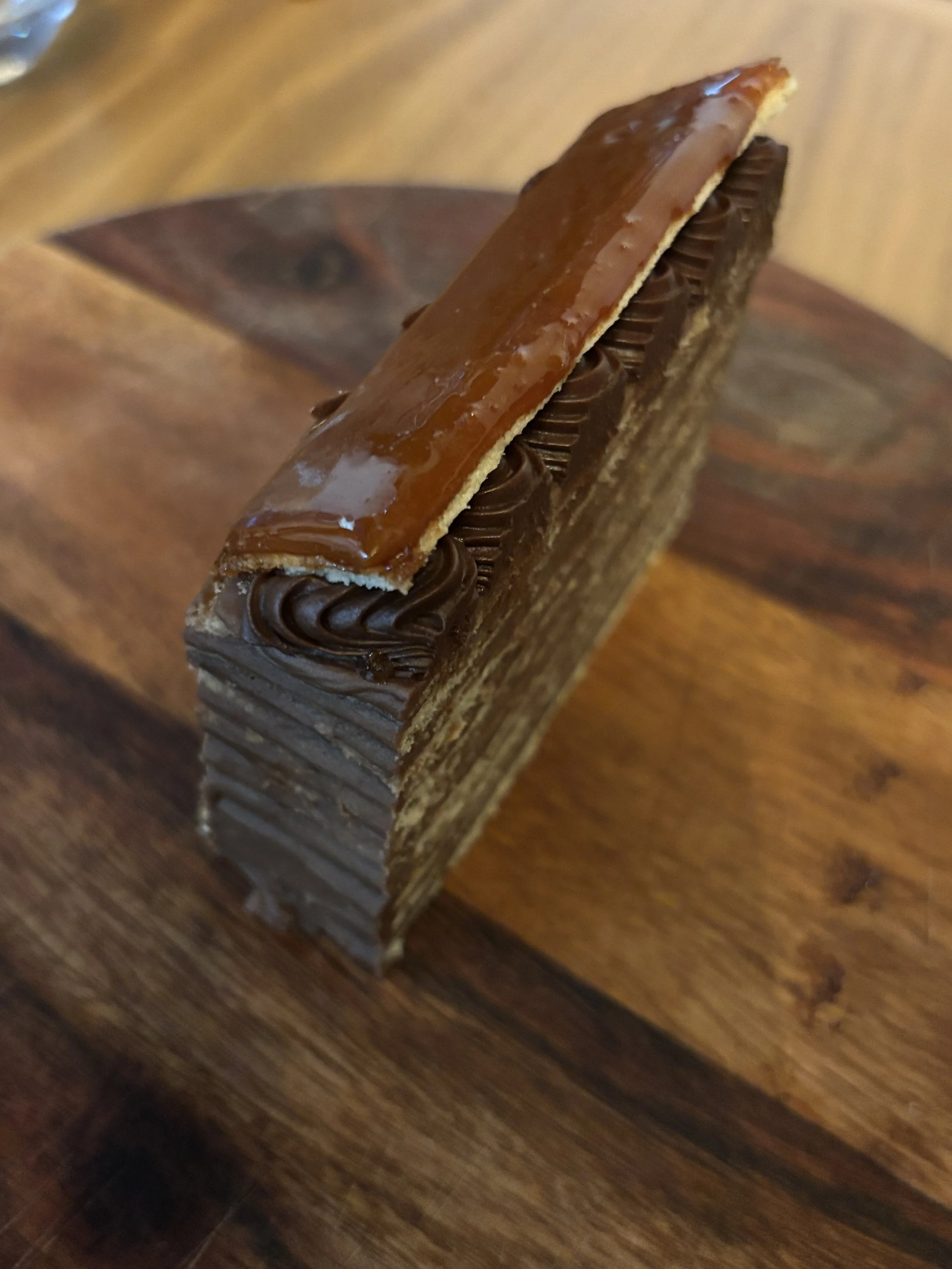
They only had one dessert choice, but it was pretty tasty.
Restaurant Tinecz
Calea Aradului 51, 300254 Timișoara
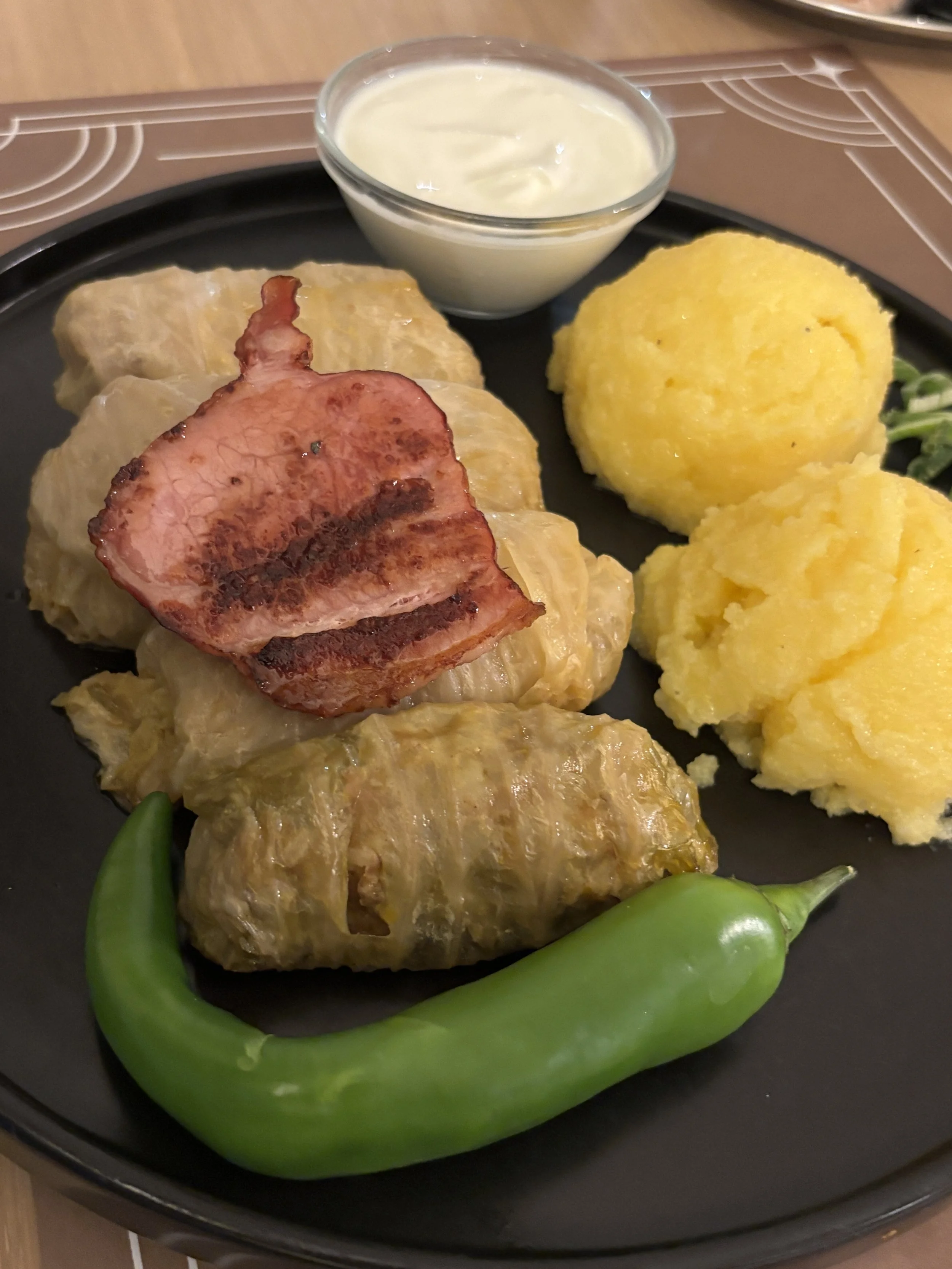
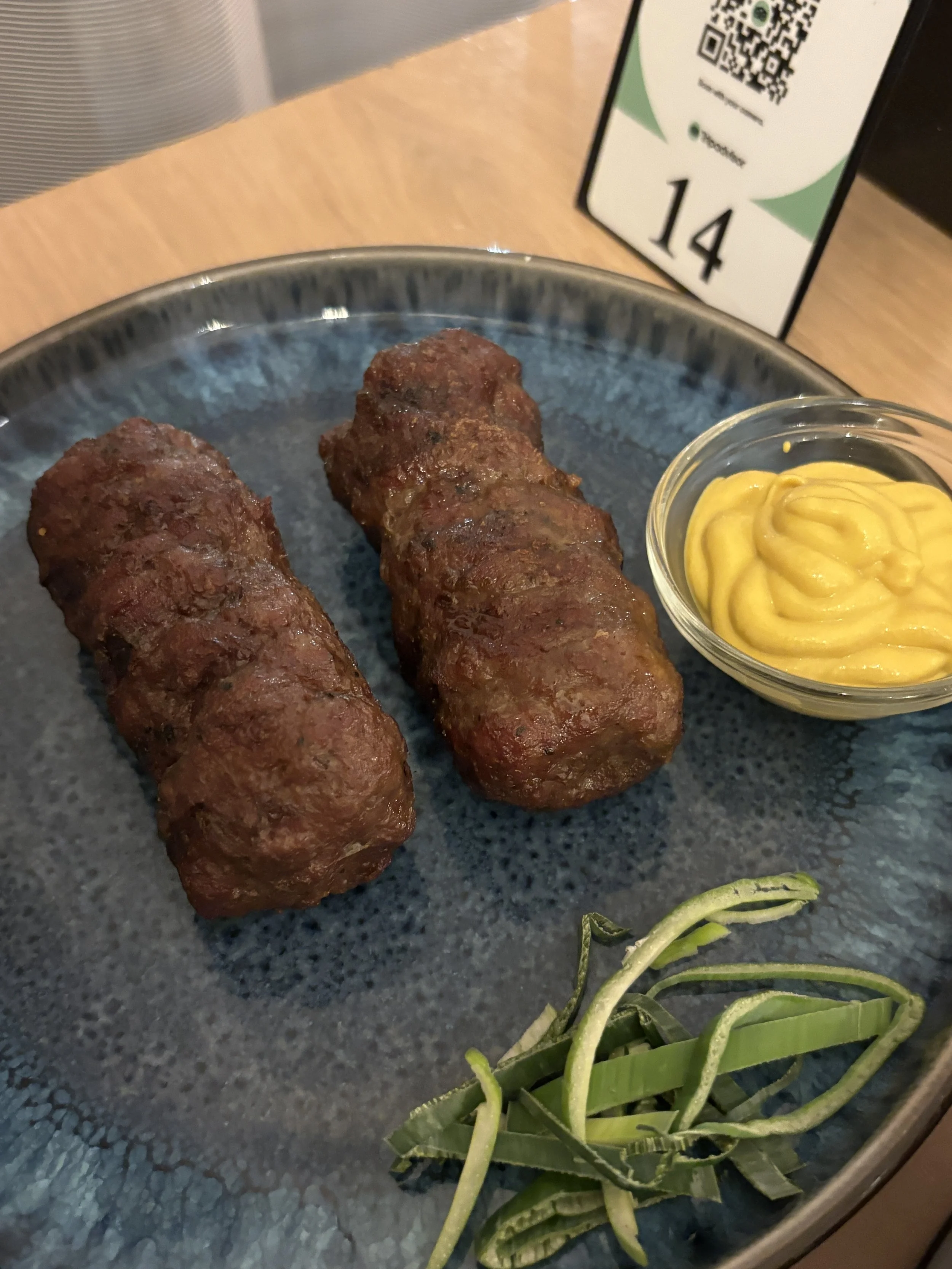
This restaurant is a bit further from the historical centre, so ideally you would need to take a cab (the Bolt ride from the Piata Unirii costs something like €3). I went to try it since I saw it had good reviews and a semblance of local cuisine.
This is, in fact, the case, although it combines some dishes with a local flavour, like the “sarmale” (below), which were excellent and pretty substantious, with more, let’s say, international cuisine.
The service was pretty good throughout, as well.
Coffee and pastries in Timisoara’s historical centre
If there is one thing I liked on the culinary front, though, it is the pastries. Here below are three places that I tried. All three are within 20 meters of each other on Vasile Alecsandri street next to Piata Unirii.
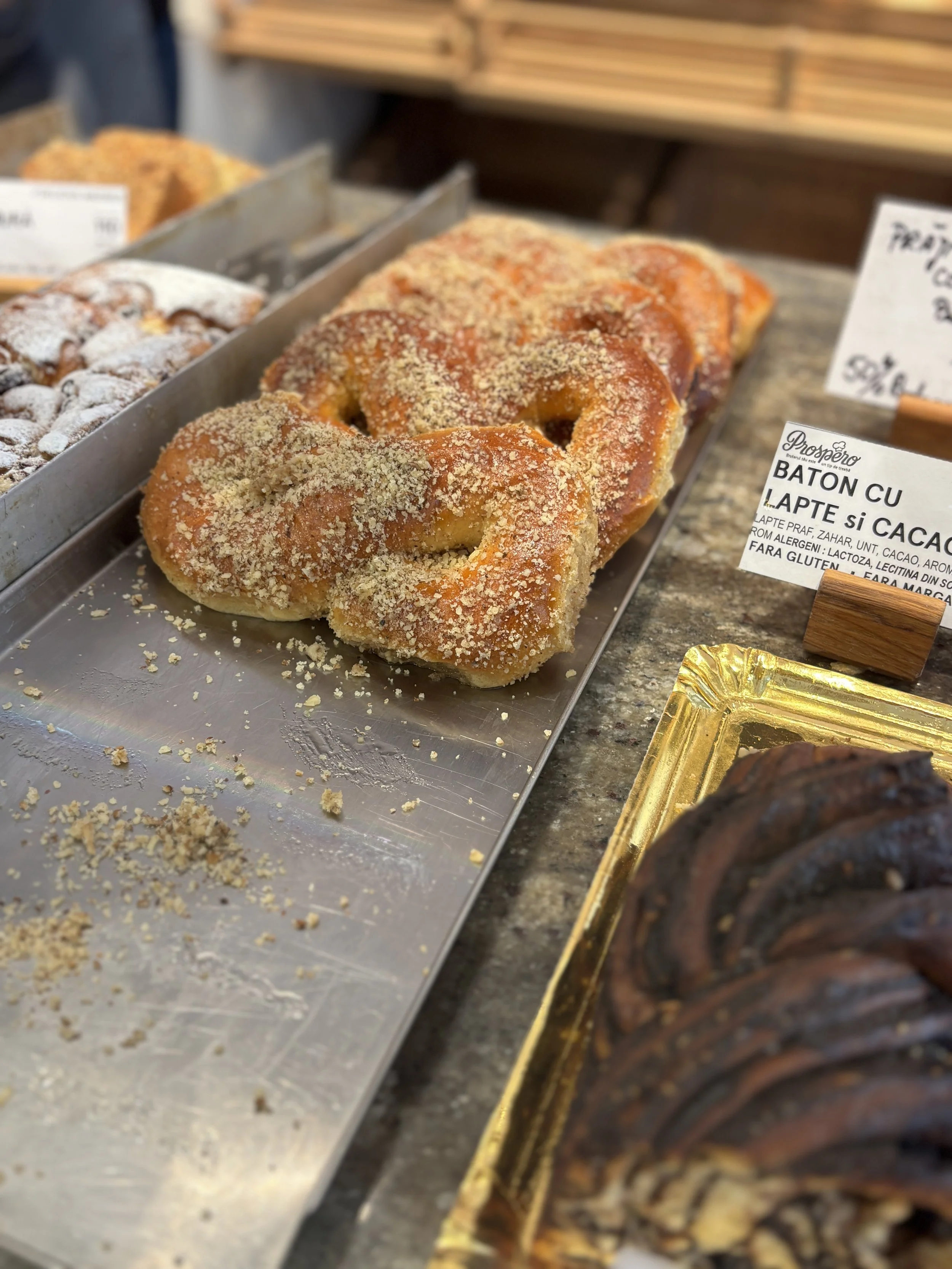
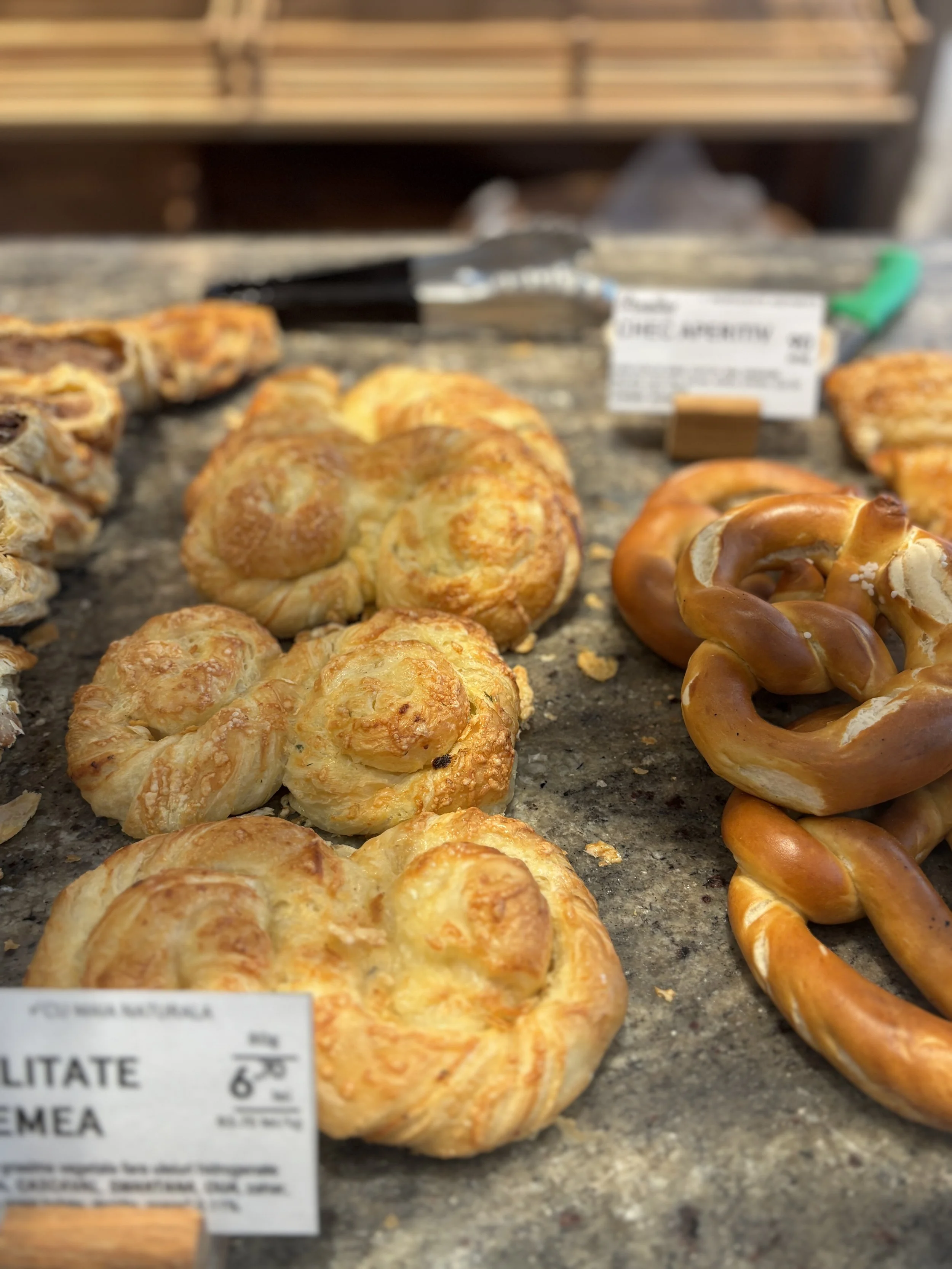
Patisserie-Cafetarie Prospero
This is, apparently, a local chain with three or four brances around town. It offers a nice range of sweet and savoury pastries and good coffee.
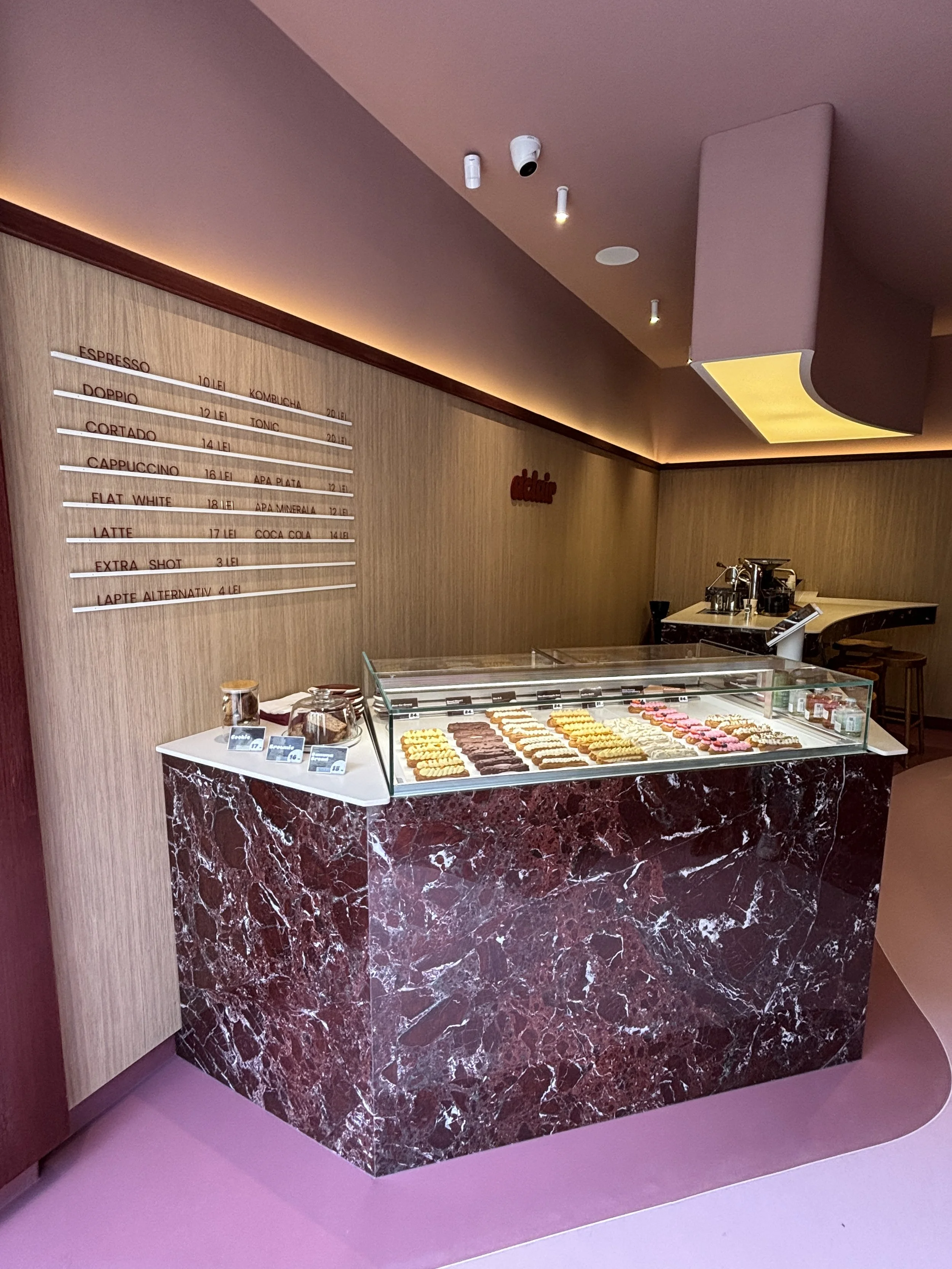
A’Clair by Alma Dulce
This place represents a totally different approach to coffee and bakery.
In fact it is more like a high-end patisserie offering some coffee as well.
The flagship product here is a sort of elongated sweet cake filled in the middle with cream of different flavours.
While there is not place to sit in the fancy, but rather small, interior, it does have sitting outside, on the street.
In line with the type of stylish experience it aims to offer, coffee here is served in some very original designer terracotta cups.
Service was great throughout.
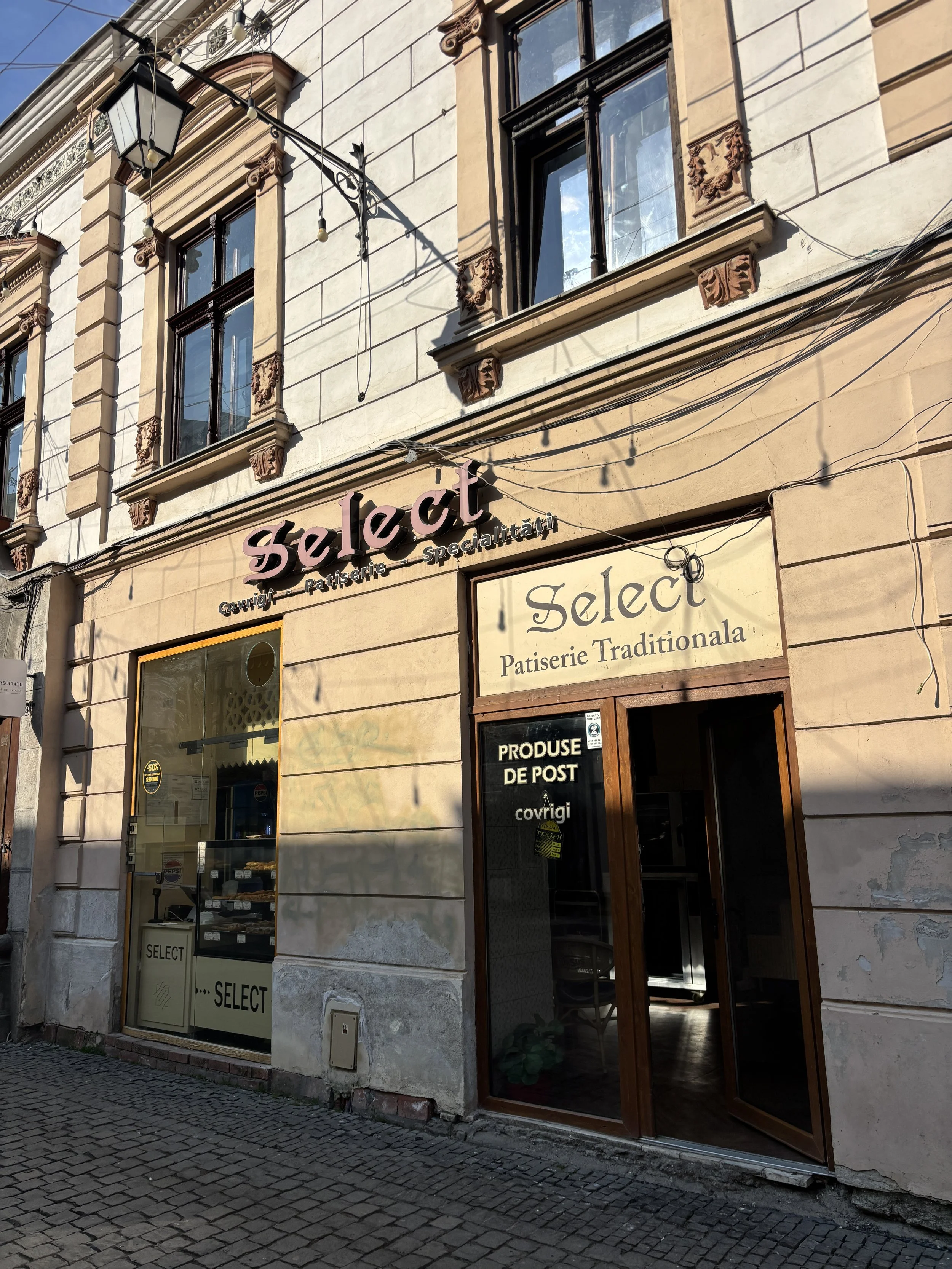
Select Bakery
This is just opposite the aforementioned “Prospero” and it offers a similar selection of pastries. You can order to take away right from a little window on the side of the shop.
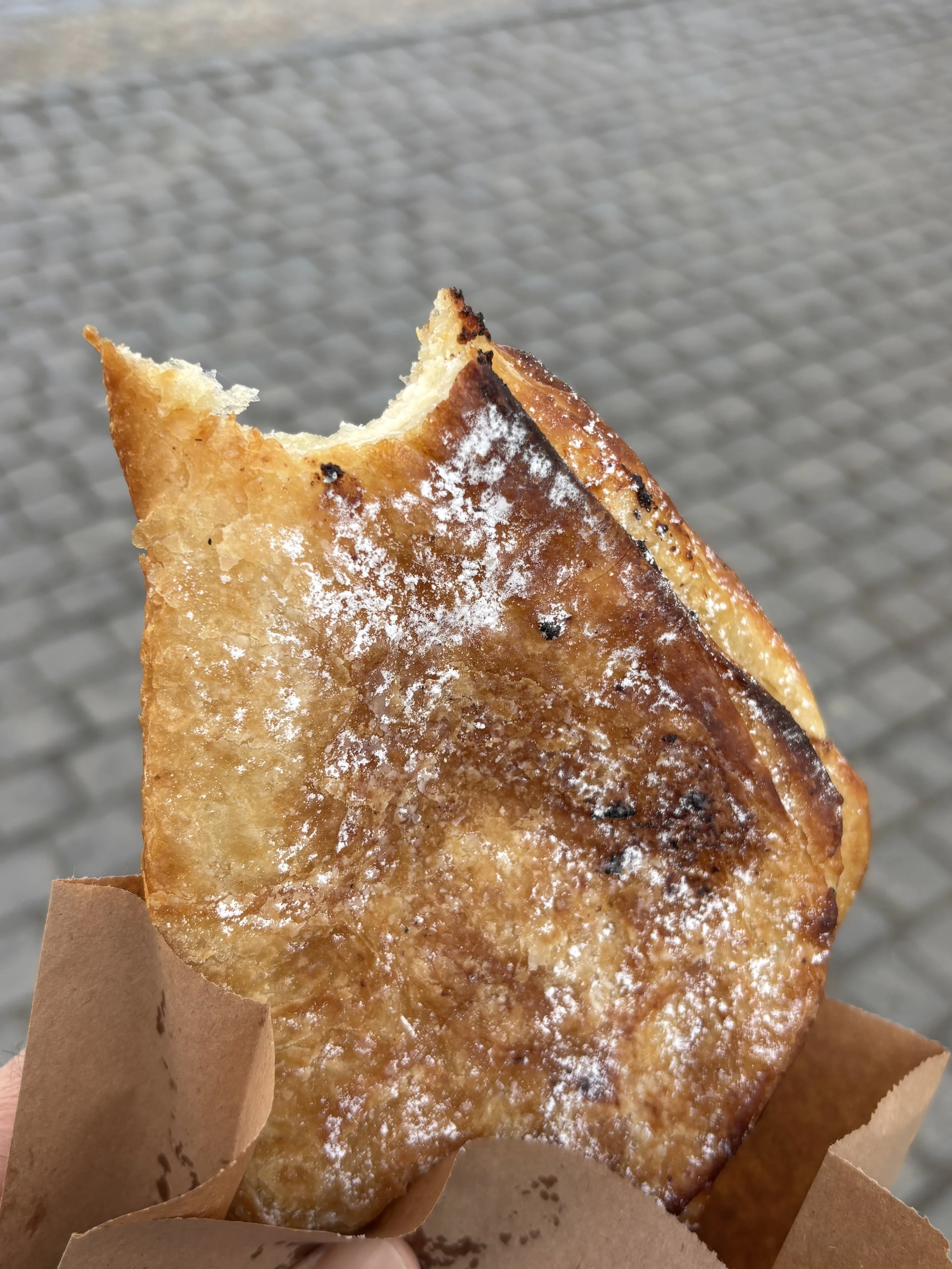
I particularly enjoyed this sort of triangular pastry, which is filled with a sort of cottage cheese and served warm. In fact, I liked it so much that I went back there for more the next day, and would have done the same if I had remained in town for longer!
Where to stay in Timisoara
City Park Apartments
Strada Carol Telbisz 4, Timișoara
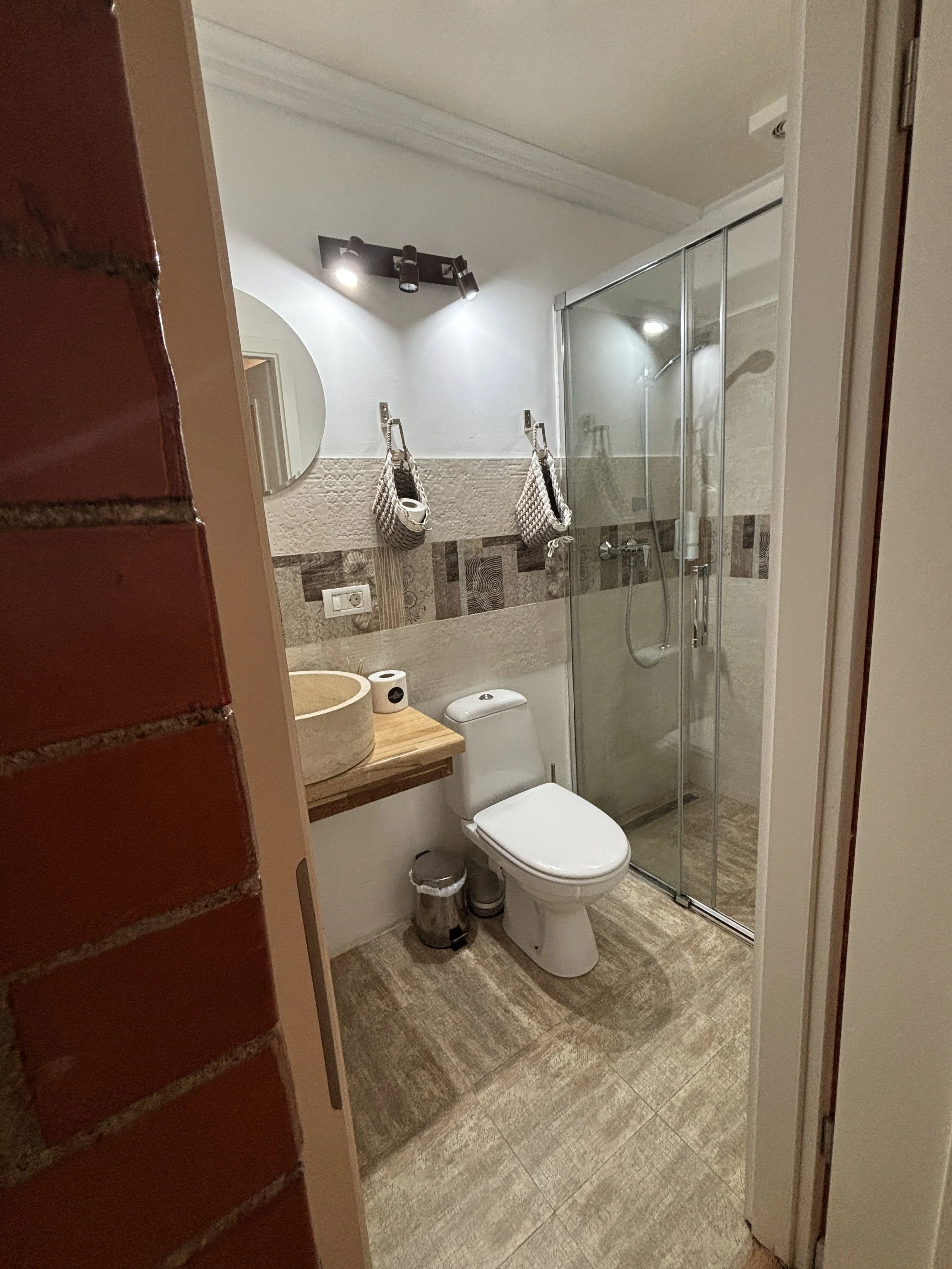
This place was great value and in absolutely convenient location. It is located in one of the large old blocks next to Piata Libertatii. The place looks completely dilapidated on the outside, but the apartments inside are modern and renovated.
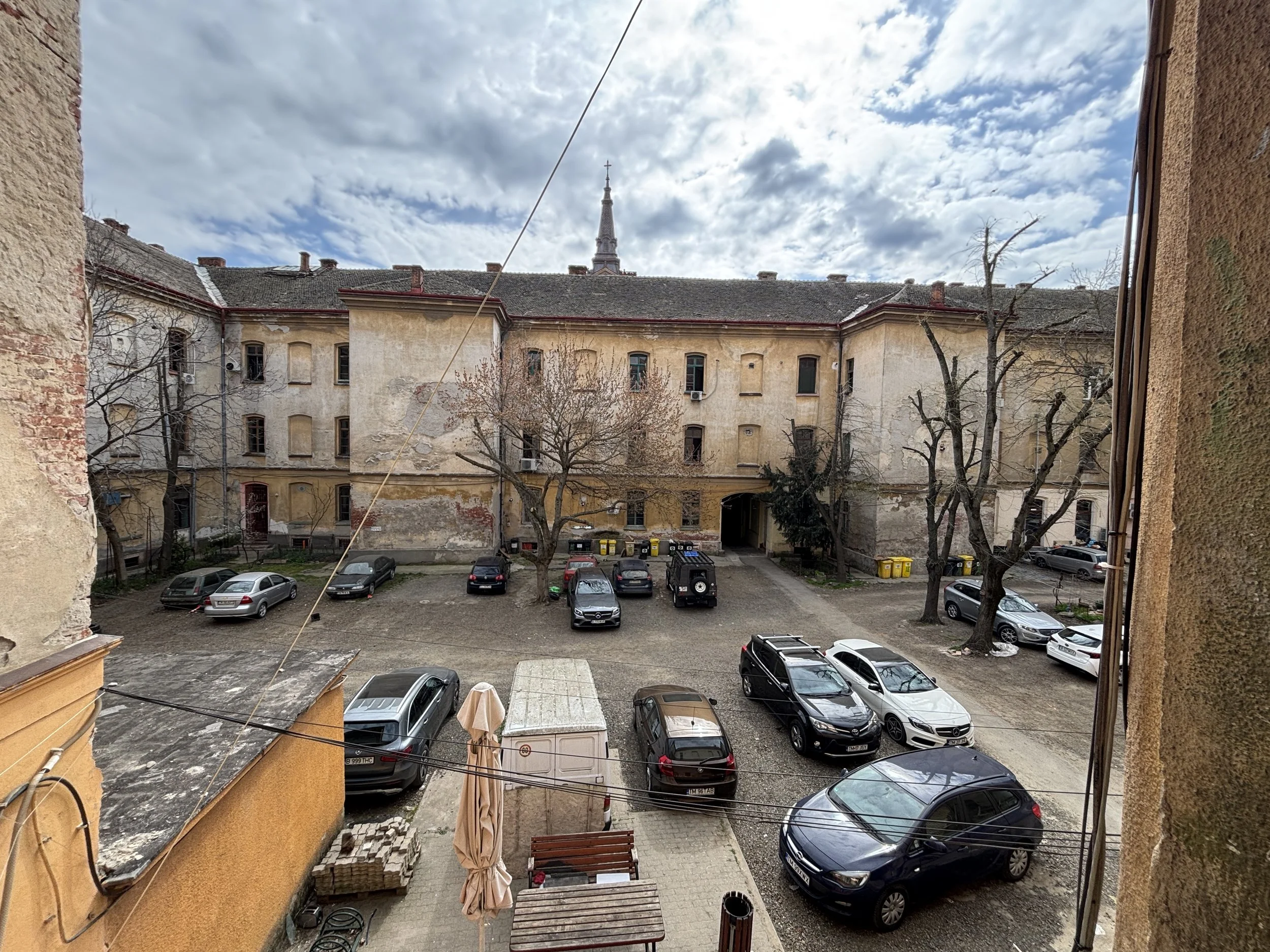
The place consists of a number of renovated apartments located in one of the wings of what I think must have been some old military barracks or something like that.
At the time of my arrival the place was pretty much a construction site. I guess the place will look completely different in a relatively short period of time, on account of its really prime location, since it is literally a two minute walk away from the main commercial axis in the historical centre.
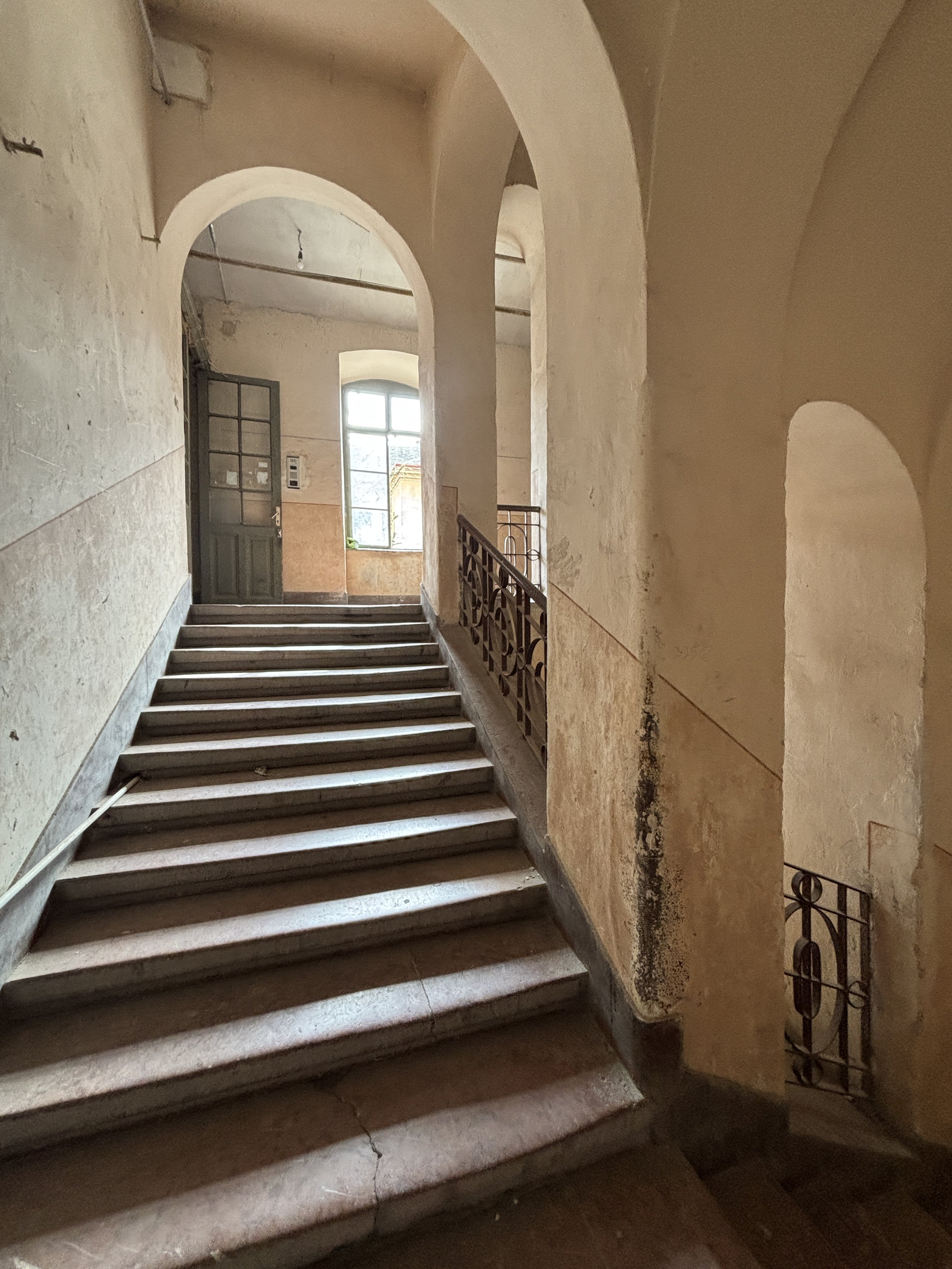
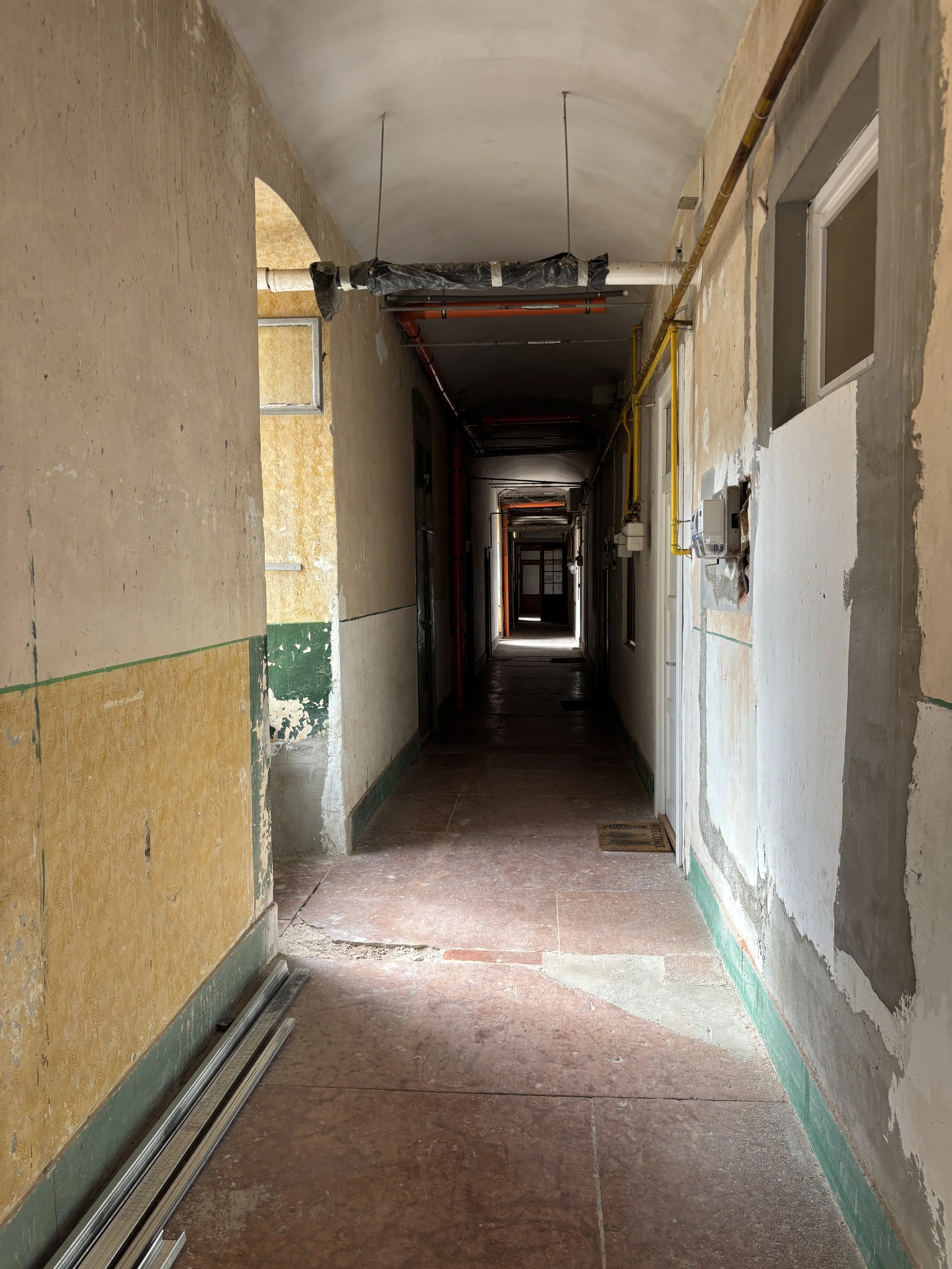
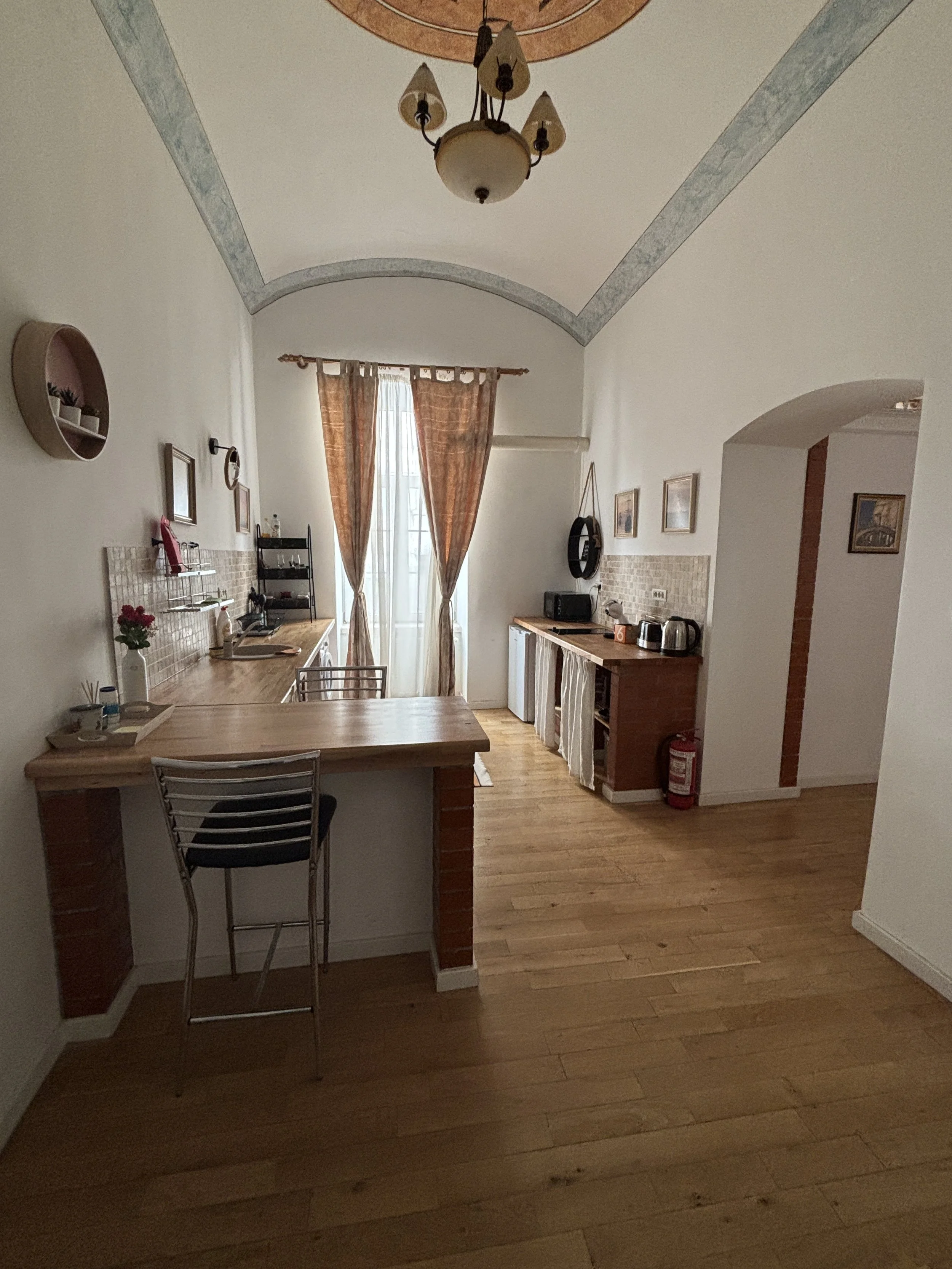
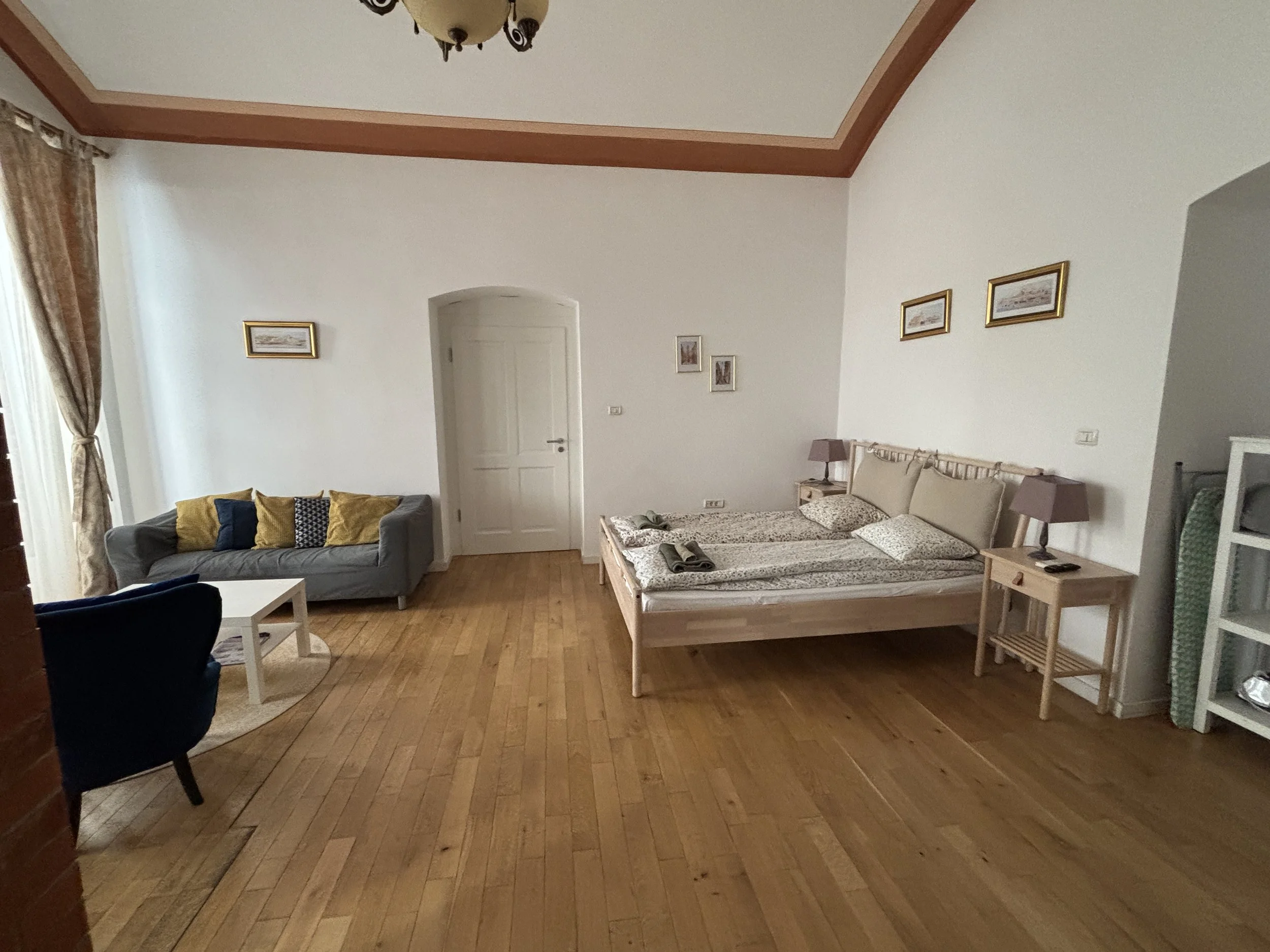
So, don’t be fooled by first impressions when you come in (the check in process is fully automated, with the property sending you the codes to access the different parts of the building), the apartments inside are in good state, renovated and are very spacious. There is also a small, equipped kitchen, and some household supplies in an antechamber. There is also an espresso machine with some available capsules.
When I arrived there was no warm water, but this was fixed in a matter of minutes when I emailed the property and they sent me instructions about how to reset the heater, which was in an adjacent room.
There is high speed wifi as well.
Getting to and from Timisoara
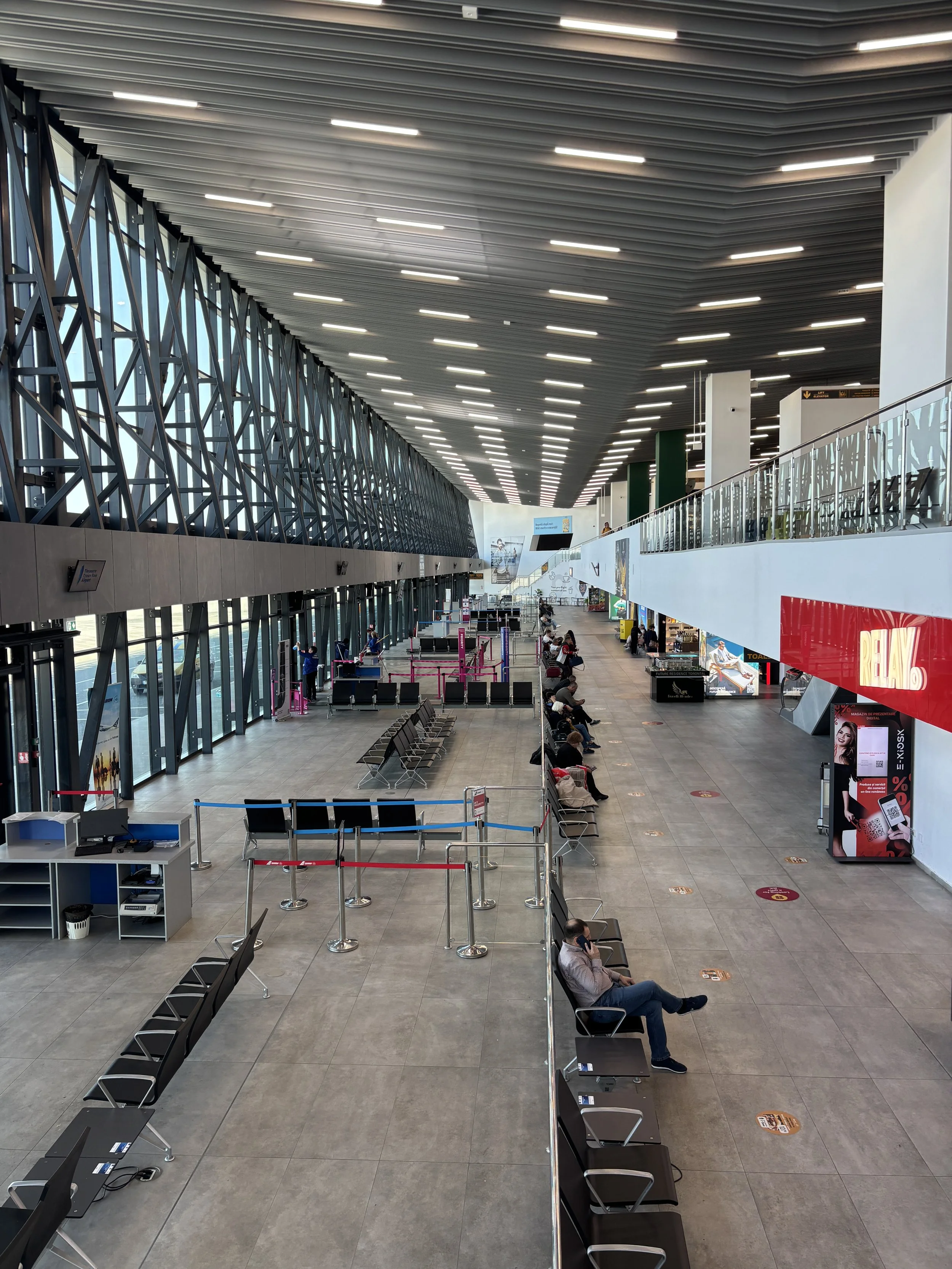
Finally, before departing, a word about logistics and how to get to and from Timisoara.
The fact is that with low-cost airlines like Wizz Air flying to Timisoara from many points in Europe, never has been so easy to explore this beautiful city.
The airport is small but very modern and functional and it costs less than €10 to get there from the center with Bolt.
This ride hailing app is possibly the best way to move around if you don’t want to get messed up with public transport schedules and the like, and it is also not very expensive. In fact, if you stay near the old town you possibly won’t need transportation within the city at all.
If you are traveling from other parts of Romania, like Bucharest or Cluj-Napoca, you may look also at the train or the bus. In such case I suggest you check this website for schedules and bookings.