Charyn Canyon and Kolsai Lakes, a great day trip from Almaty
If you are a regular reader of this site, you may have figured out already that I have a soft spot for Kazakhstan, a country which I have covered multiple times.
Yet, most of what I have seen so far (aside from a short outing to Shymbulak ski resort next to Almaty) was its urban landscape (see my posts about what to do in Astana and Almaty, btw!). It was about time I explored a bit of the countryside, as well.
Fortunately, while Kazakhstan is huge (if overlaid over the map of Europe, it would stretch all the way from the west coast of Ireland to the Russo-Ukrainian border!), many of its top natural wonders are located within driving distance of Almaty.
What’s more, these offer to the visitor a stunning diversity of landscapes and ecosystems, from the Alpine environment and peaks of Kolsai Lakes National Park to the sandstone cliffs of Charyn Canyon, often called “the Kazakh Grand Canyon”, and the broad steppes in between!
Covered in this piece:
Is it possible to visit the Kolsai Lakes and Charyn Canyon in one day?
Visiting Lower Kolsai Lake
Infrastructure at Lower Kolsai Lake
Where to eat at Lower Kolsai Lake
Charyn Canyon National Park
Infrastucture at Charyn Canyon
Trails to visit Charyn Canyon
This post may contain affiliate links. If you book or buy something through them, I earn a small commission, at no extra cost to you. It's one of the ways I keep Places of Charm going. Thank you for your support!
This post was made possible thanks to the support of Almaty Tourism Bureau and Air Astana. All opinions are my own.
Kolsai Lake and Charyn Canyon in one day? Long but doable
The itinerary of this excursion was as follows: leave downtown Almaty early in the morning, head straight for Lower Kolsai Lake (the only one of the three Kolsai Lakes that is easily accessible by car), retrace the road back towards Almaty and stop at Charyn Canyon National Park on the way. Finally, head back to Almaty in the evening.
If you look at the map, you will see that all these spots look relatively close to Almaty. And *relatively” is the key word, because this itinerary, while doable, is still a rather long drive for European (and even for US) standards!
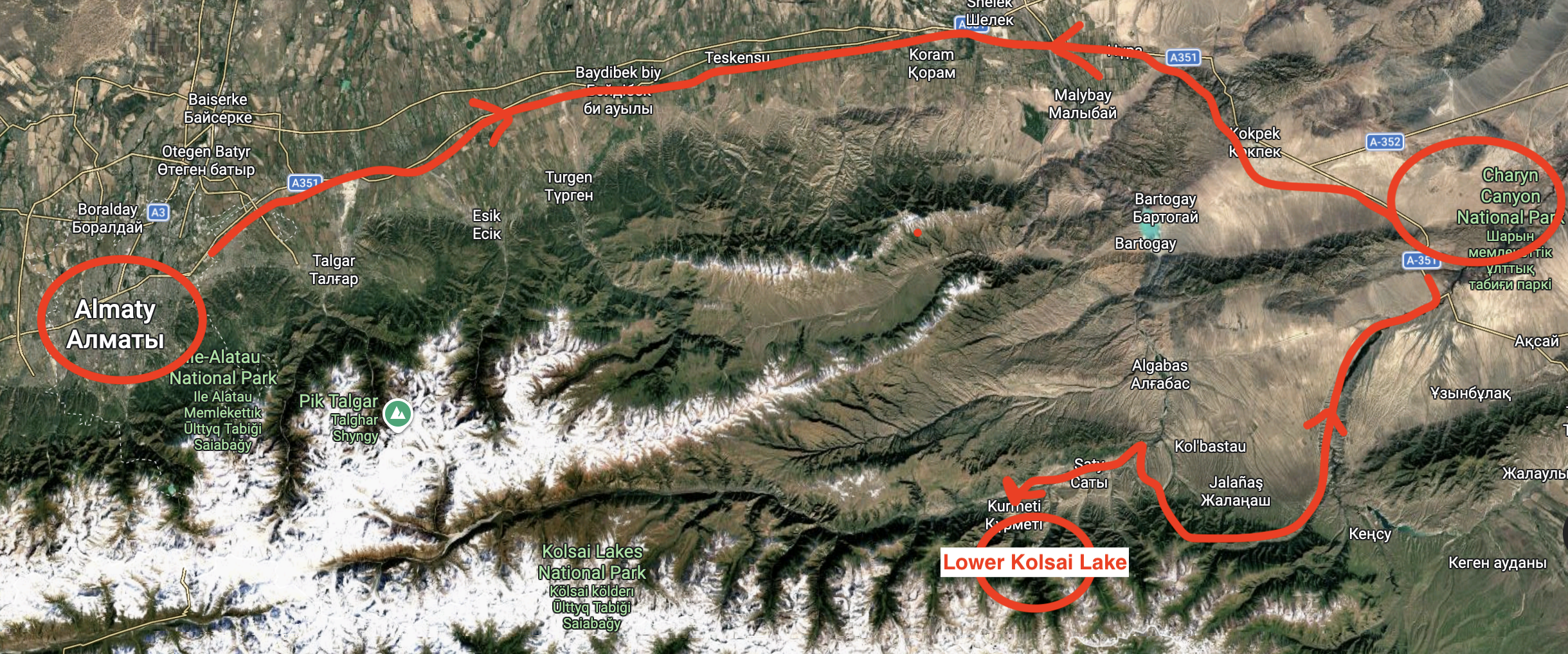
The good news is that the roads are pretty good in general, including several stretches of multi-lane motorway, so you can complete this whole itinerary on a regular car.
For reference: we left Almaty at around 6.15am. The drive to Lower Kolsai Lake took us around four hours. Charyn Canyon is located roughly along the same route (it just required a detour of a few kilometers on the way back to Almaty).
From Kolsai Lake to Charyn Canyon it was around 1h 30 min. We arrived at Charyn Canyon at around 15.00 and left for Almaty at 16.30. So, it was a rather lightning visit, but enough to see the main highlights.
If you have the luxury of time, it wouldn’t hurt to look for a hotel in the area (as we shall soon see, there are quite a few unconventional accommodation options in the area, including yurts (the traditional Kazakh nomadic tent) and “capsule” bungalows) and visit these places as a more leisurely pace. For example, by accessing the upper Kolsai lakes or walking Charyn Canyon’s lower trail.
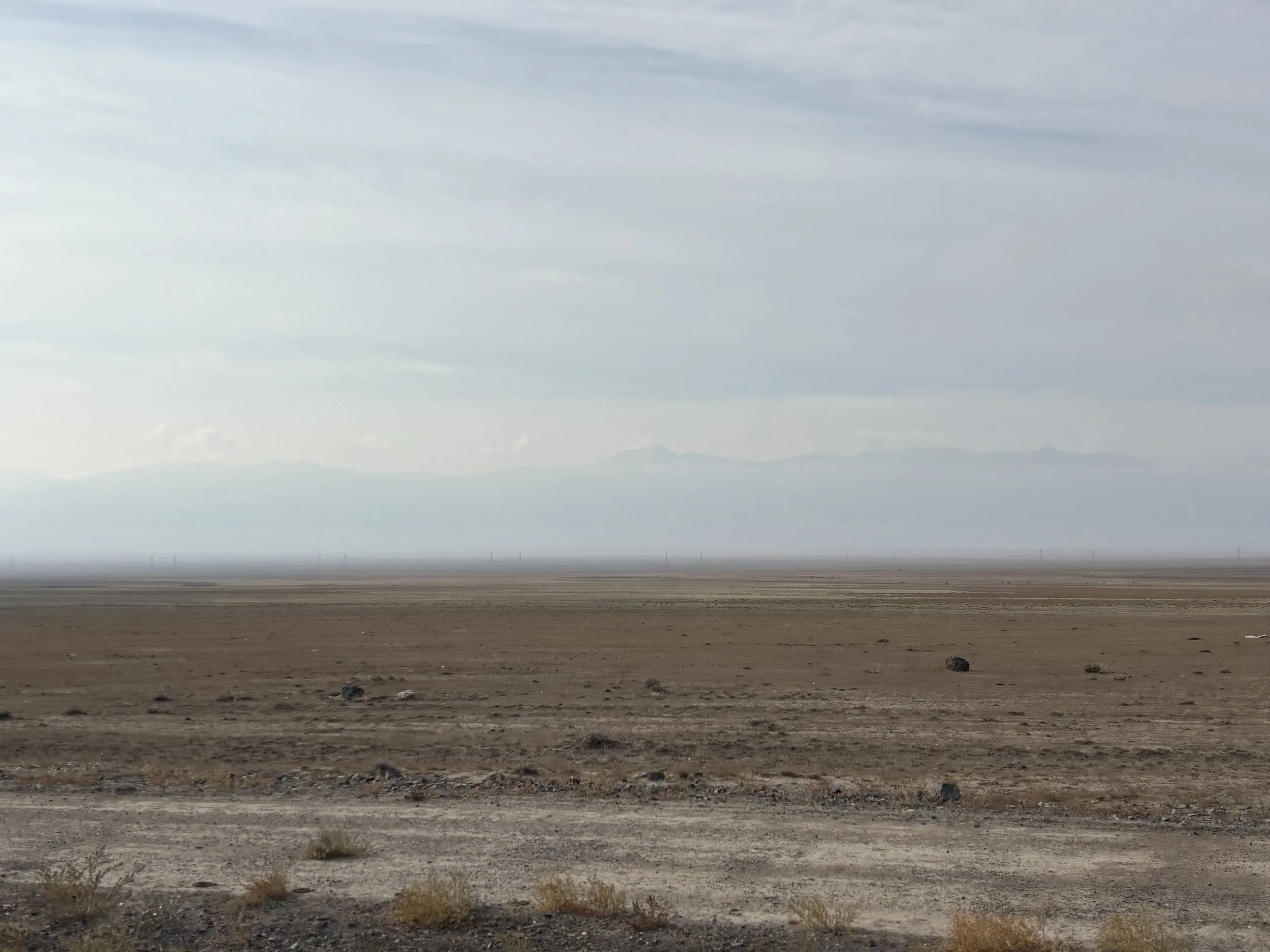
Another plus of this itinerary is the chance to take in the sheer scale of the Kazakh steppe, which meets the Tian Shan mountains here.
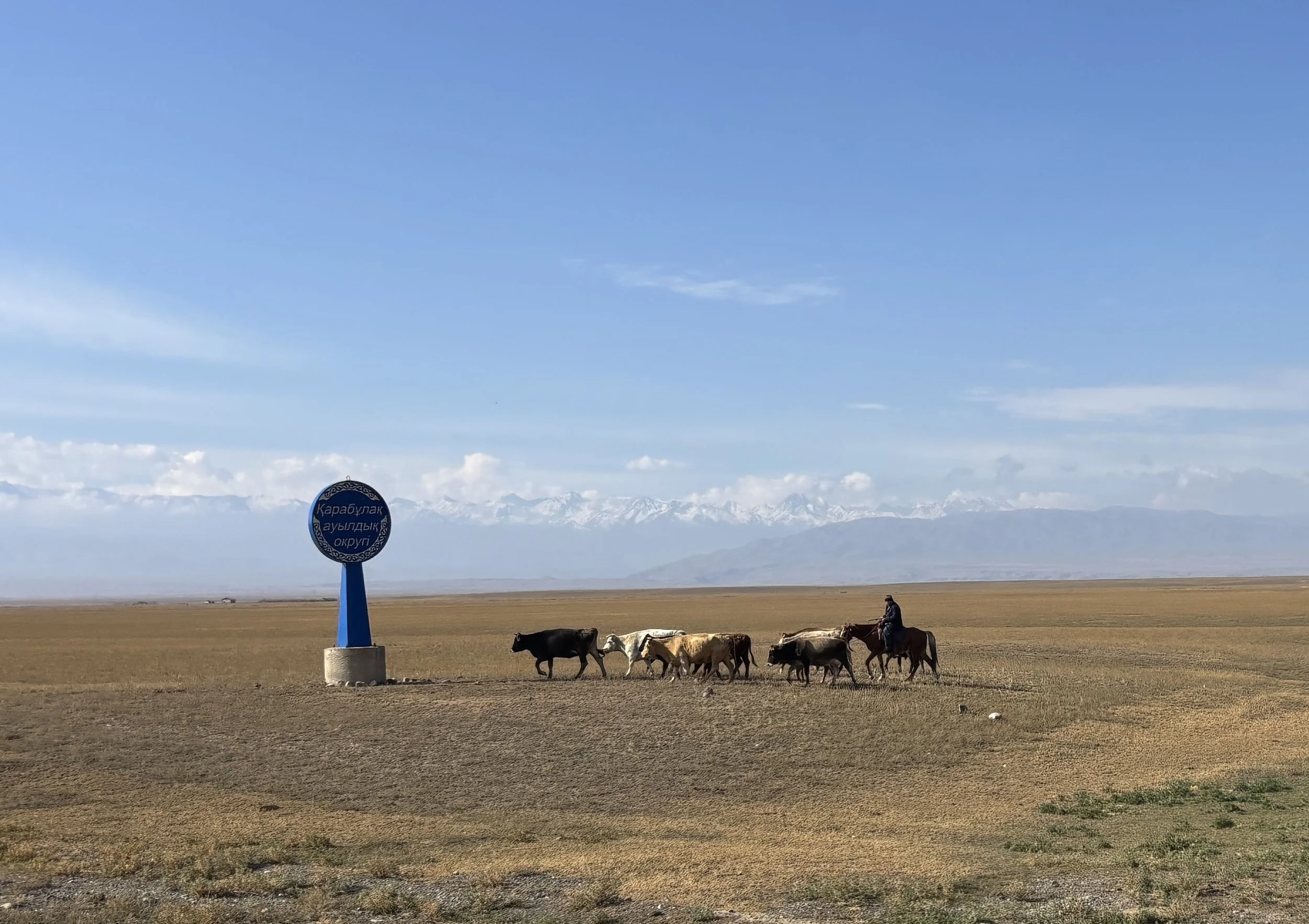
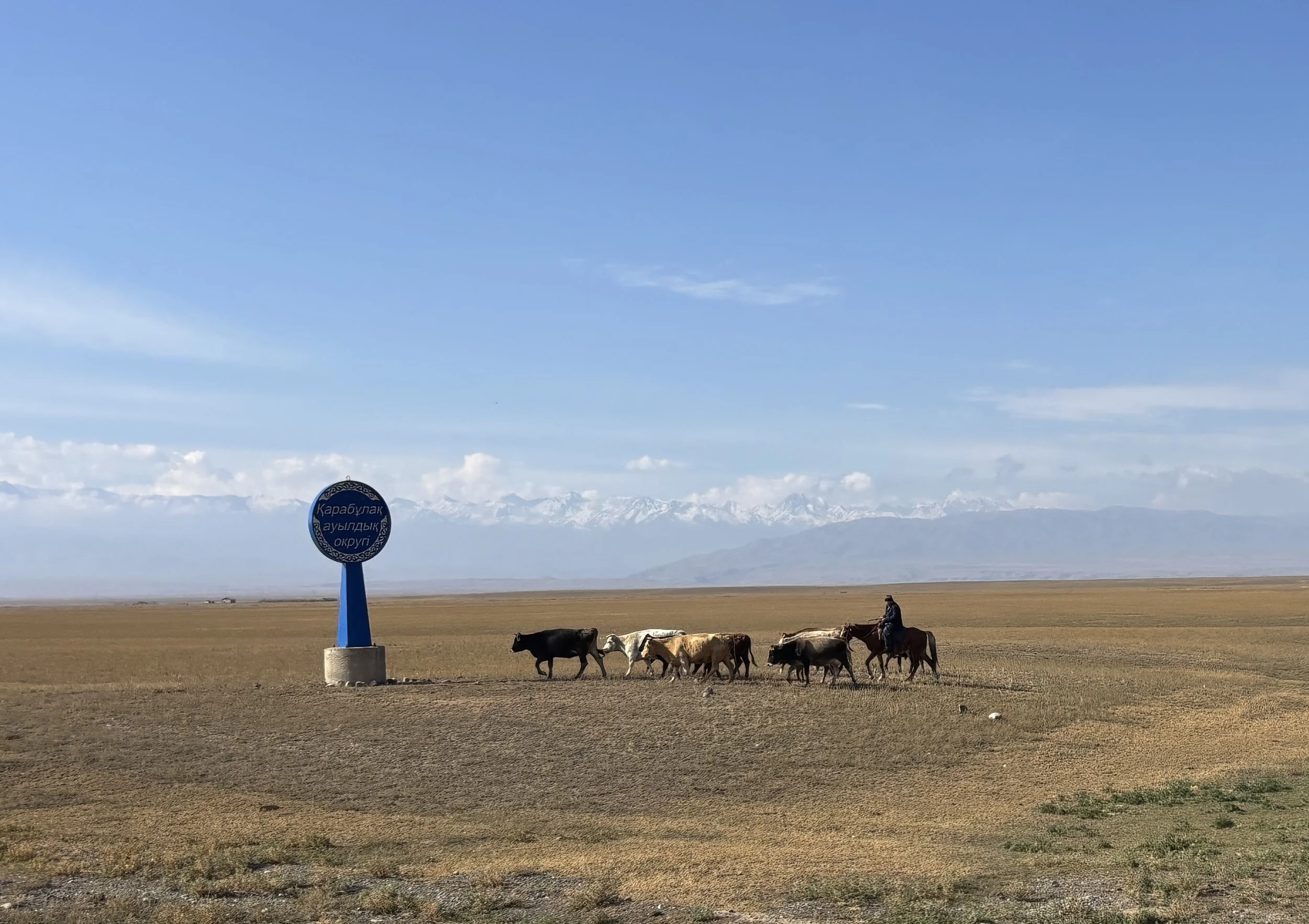
From this point, the arid plain stretches northwest for thousands of kilometres. In this region, though, it is far from featureless: ravines cut across it, and rocky outcrops rise from the grass. You may also spot Kazakh horsemen driving herds of cattle across it, a scene that would have been familiar to the nomadic peoples who have roamed this land for millennia.
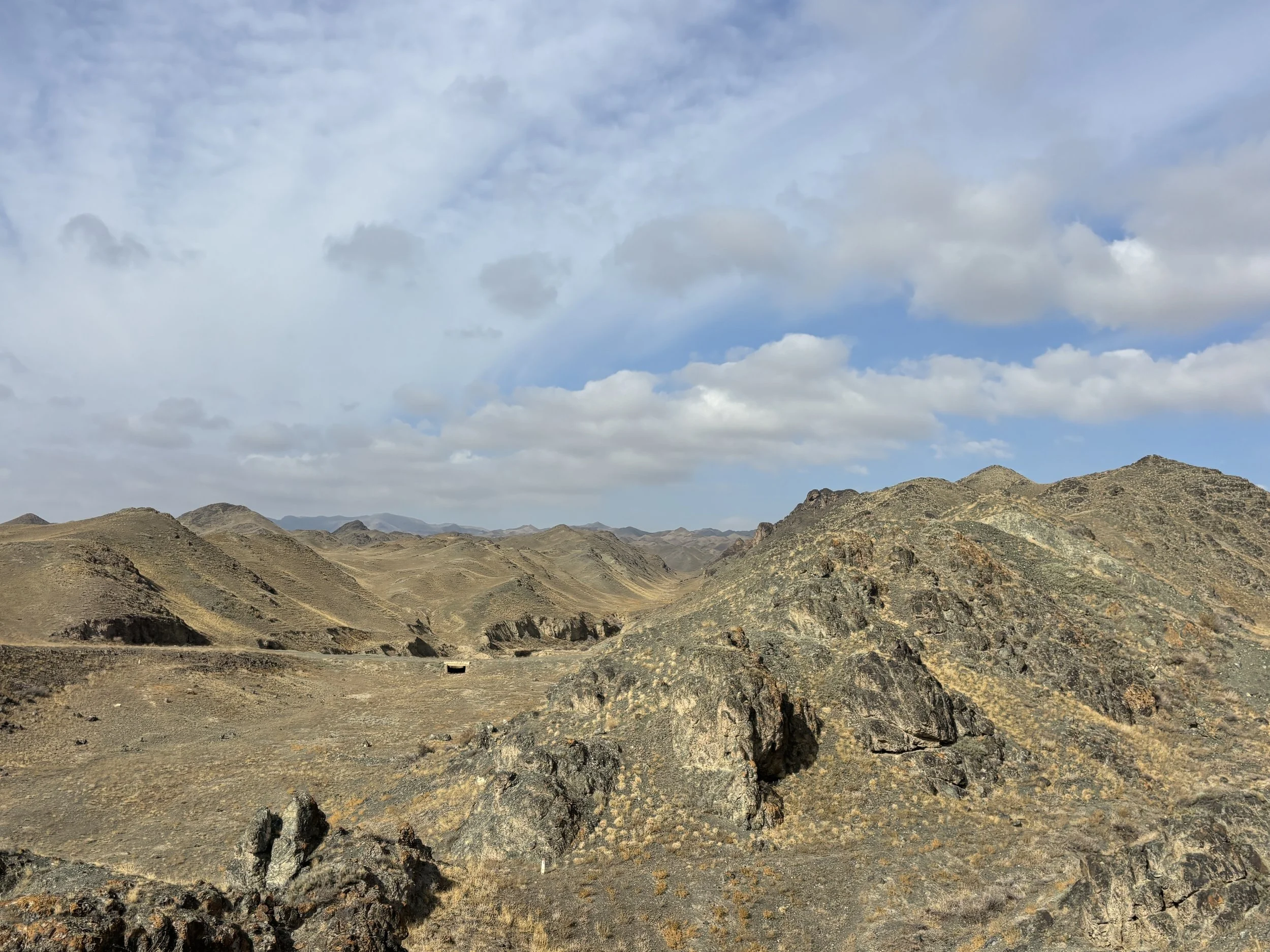
After several hours heading east, the road turns south toward the foothills of the Tian Shan. The landscape change is abrupt. One moment you could be in the Arizona desert, the next, you may well think you are in Switzerland.
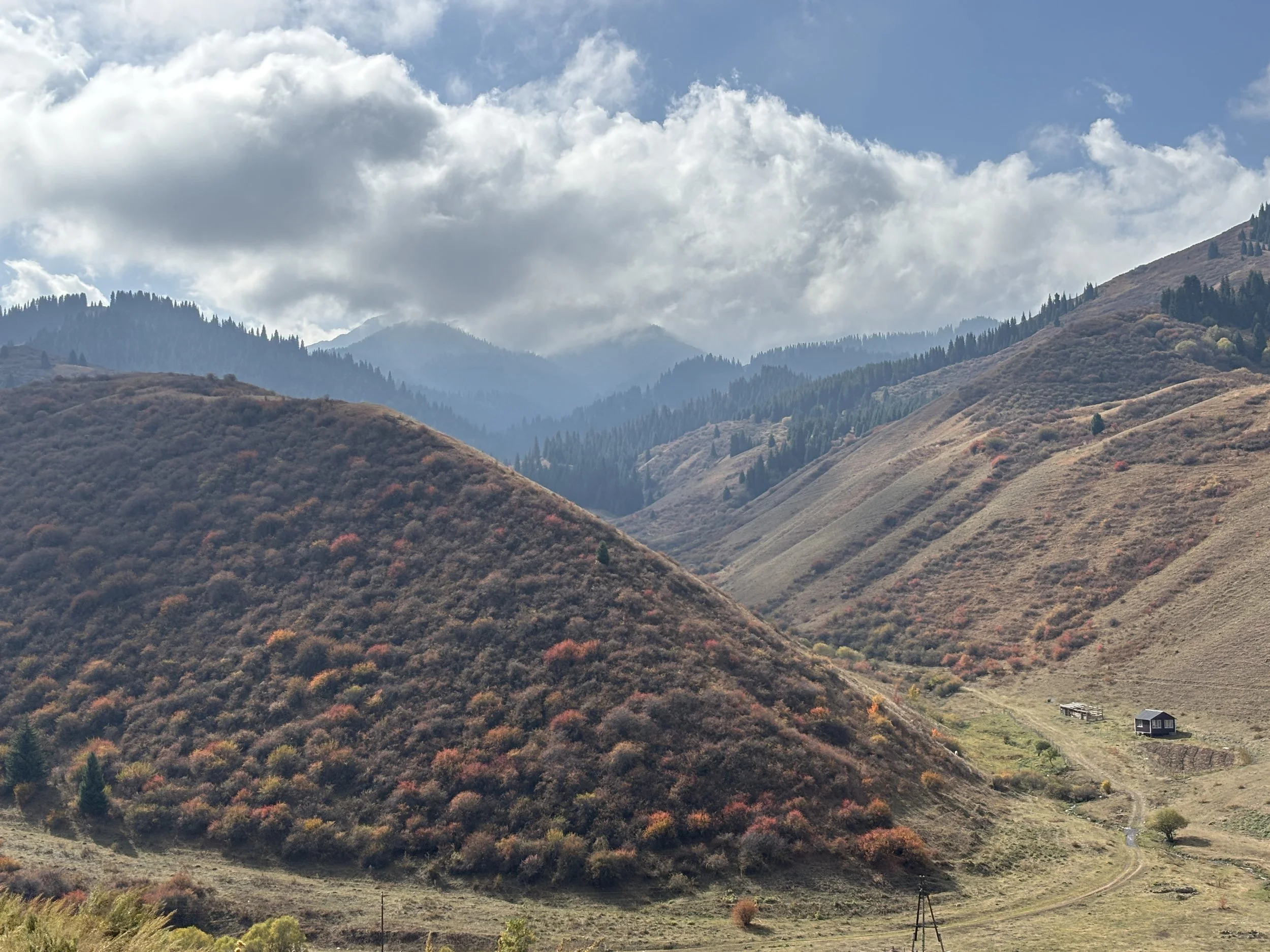
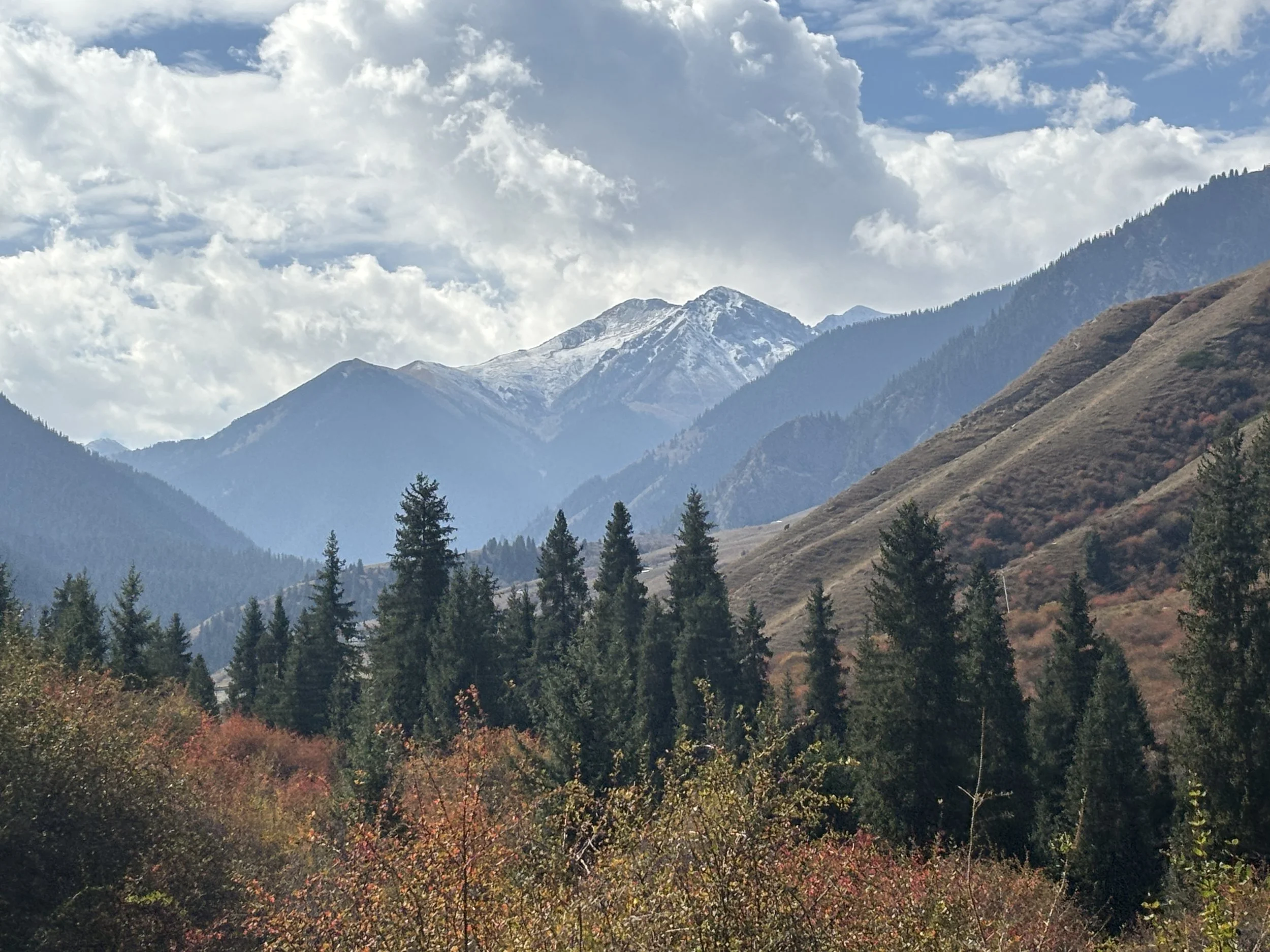
Visiting Lower Kolsai Lake
The Kolsai Lakes National Park has a three-lake system, with the Lower, Middle and Upper Kolsai Lakes.
The only one that is (almost) accessible by private car is the Lower Kolsai Lake. The middle one, which is famous for its underwater forest, can be accessed through a service of mini-vans (the sturdy, Soviet-designed “Bukhankas”) and the upper lake requires some serious hiking.
By the way, there is an access fee to enter the National Park, which is paid at the entrance (I can’t provide an exact fee indication since the fee is indexed to something called “Kazakhstan’s monthly calculation index”, which sets the exact amount, but I would say shouldn’t be more than $10/€10).
I only cover the Lower Kolsai Lake here, since it was necessary to prioritize in order to be able to also see Charyn Canyon on the same day.
Infrastructure at Lower Kolsai Lake
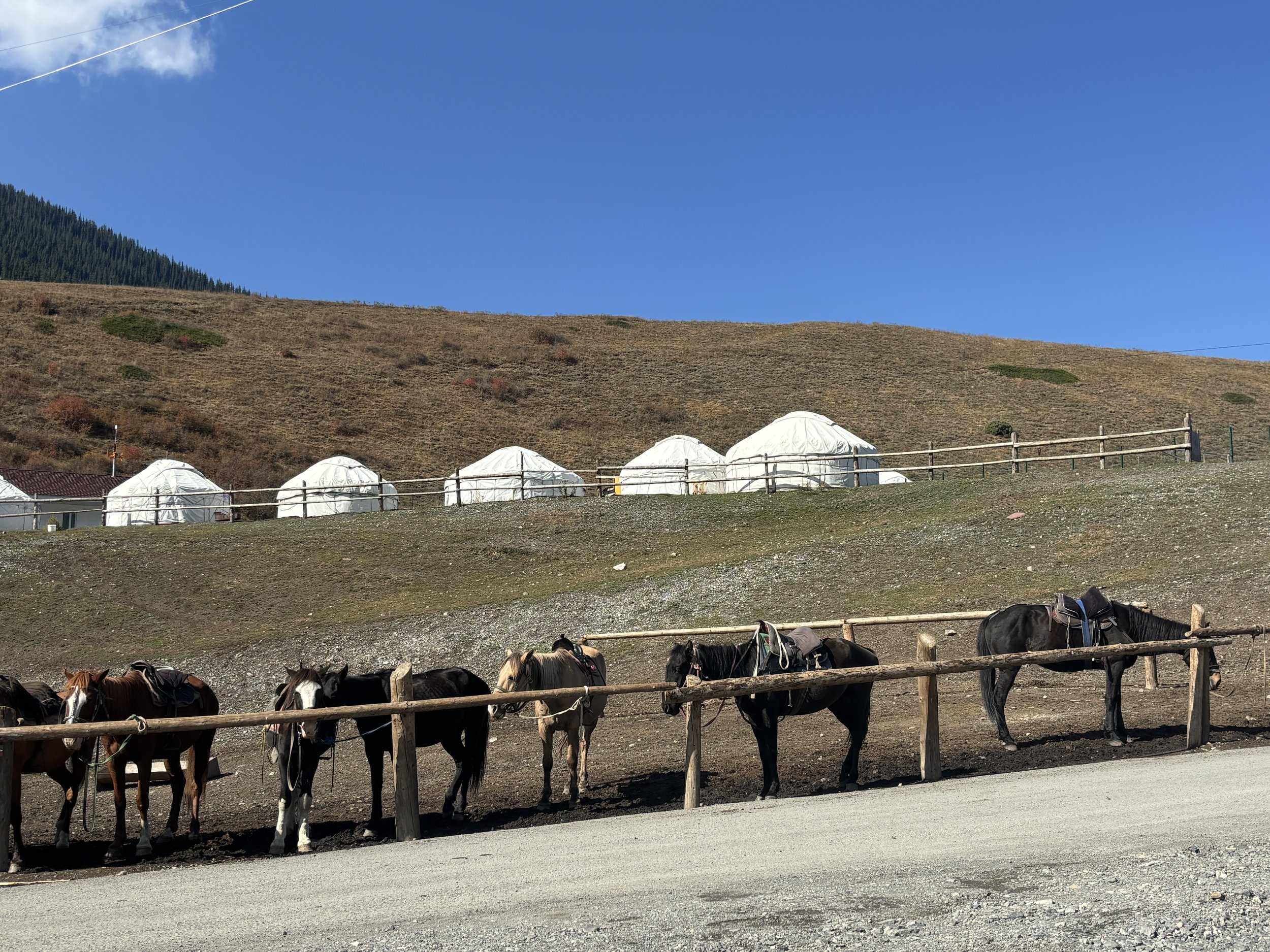
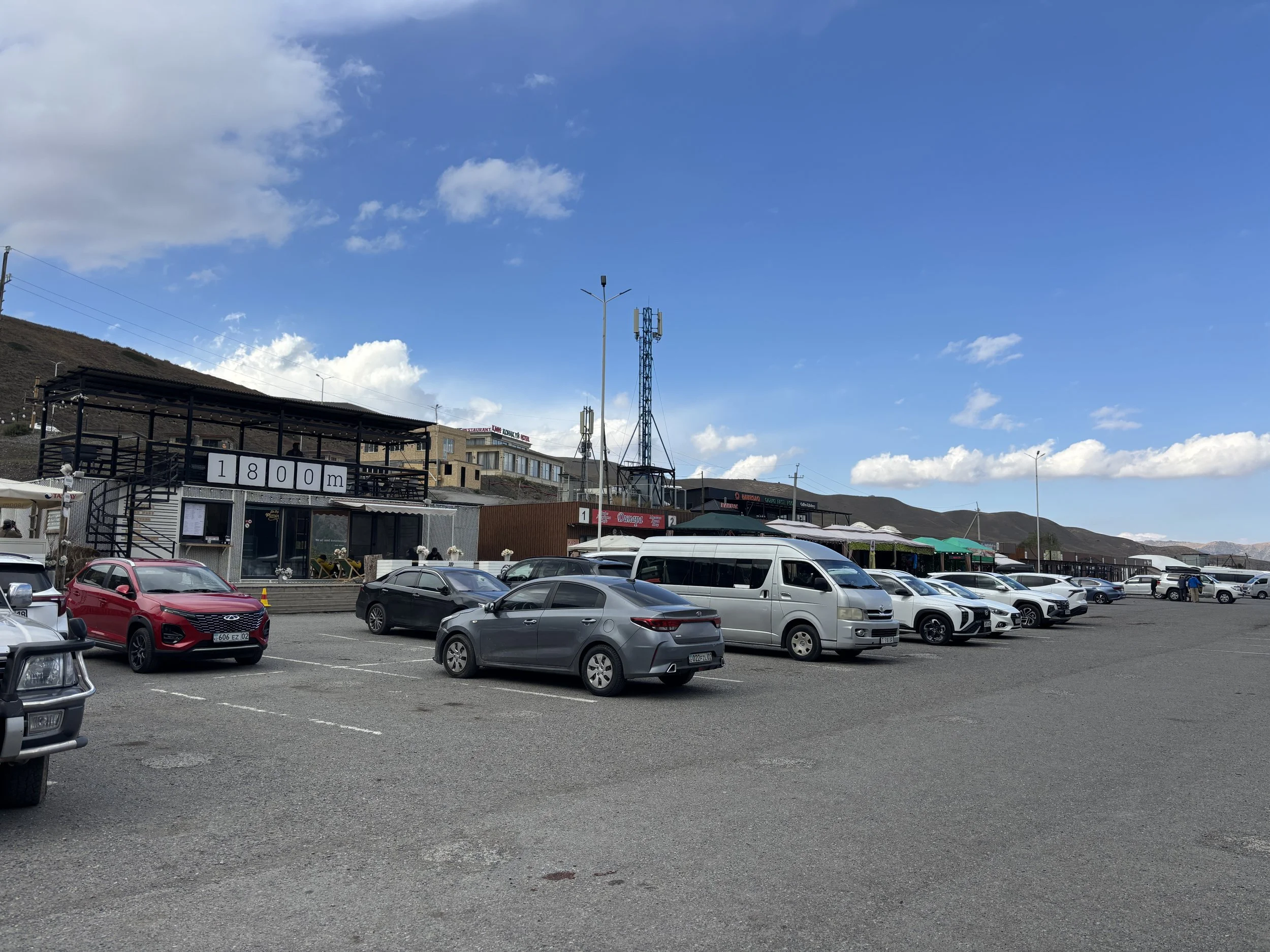
The road ends around 1 km from the Lower Kolsai Lake. It is here, a this terminus located at an altitude of 1,800m, where you find most of the infrastructure to service the visitors who come to visit the lakes.
There are a number of bars, cafés, restaurants and (paid) toilets, as well as the typical souvenir shops, as well as some companies that offer horse rides and other experiences, such as the drive in a special vehicle to the Middle Kolsai Lake. There is also plenty of parking space.
I didn’t get the impression that there is a lot of hospitality infrastructure at the moment (Oct.’26), but this is an industry that seems to be developing fast. In fact, when driving to the lakes you can see quite a few camping/hotel sites and the “/” is intentional, because I am not sure to which category of accommodation they belong since they tend to be either yurts (although I guess a modern reinterpretation of the traditional concept) as well as capsule-like bungalows.
I guess “glamping” is the best way to define these modalities of accommodation that appear to be popular in the vicinity of Kolsai Lakes National Park. Maybe something to find out next time!
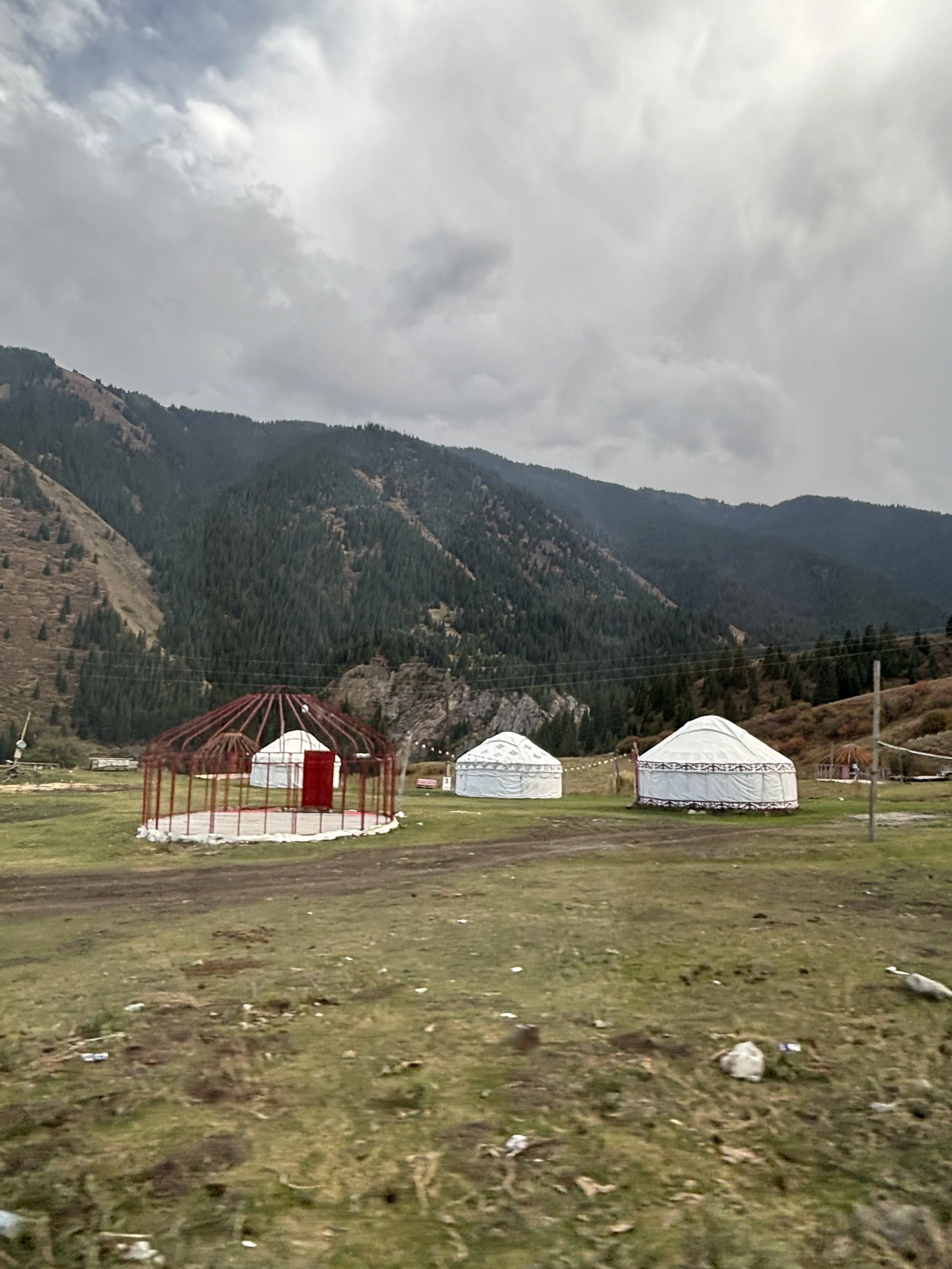
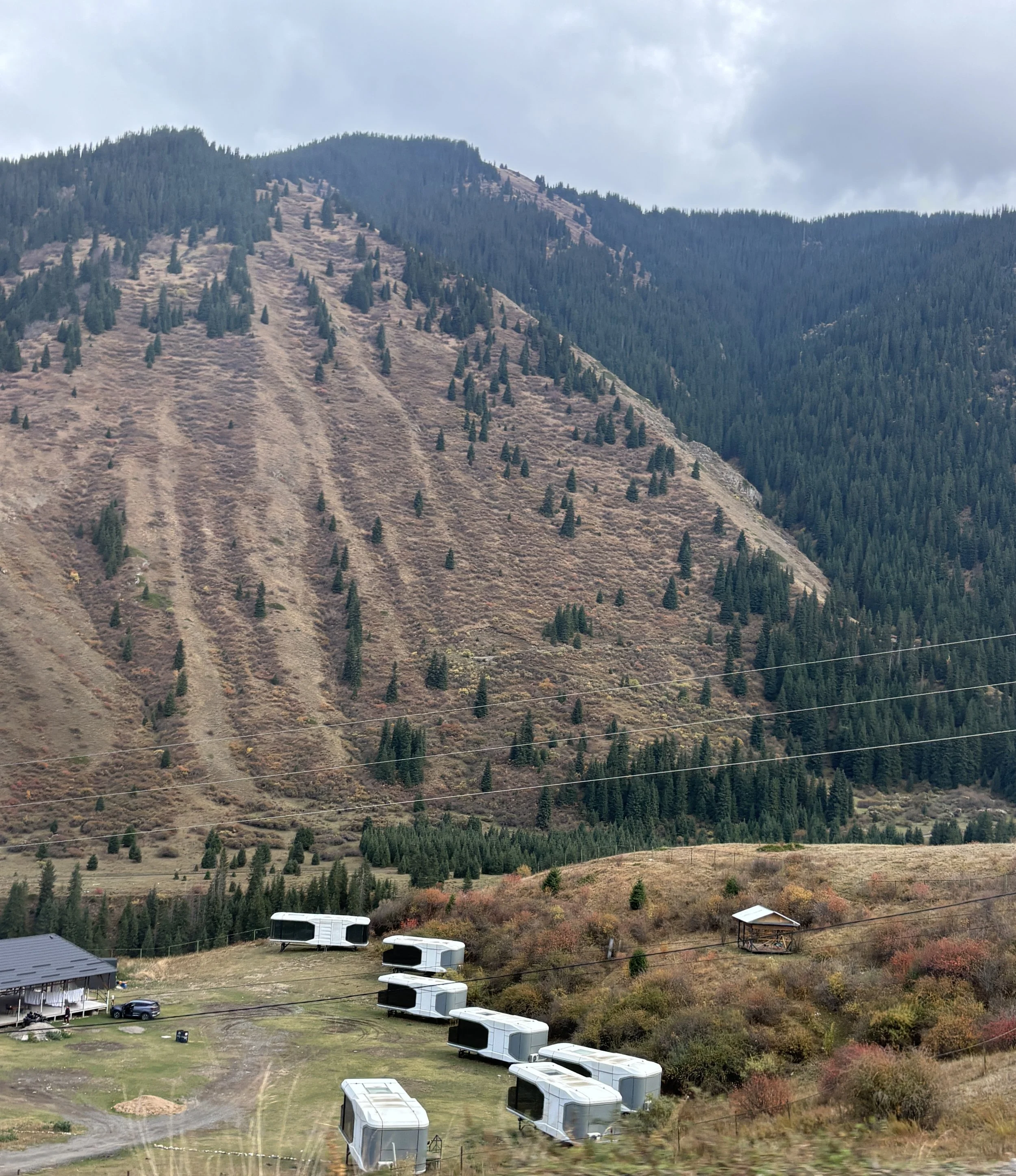
From the road terminus and services base it’s a 15 min walk to the Lower Kolsai Lake. It is a rather pleasant walk with no particular technical difficulty. The trail is perfectly demarcated and maintained.
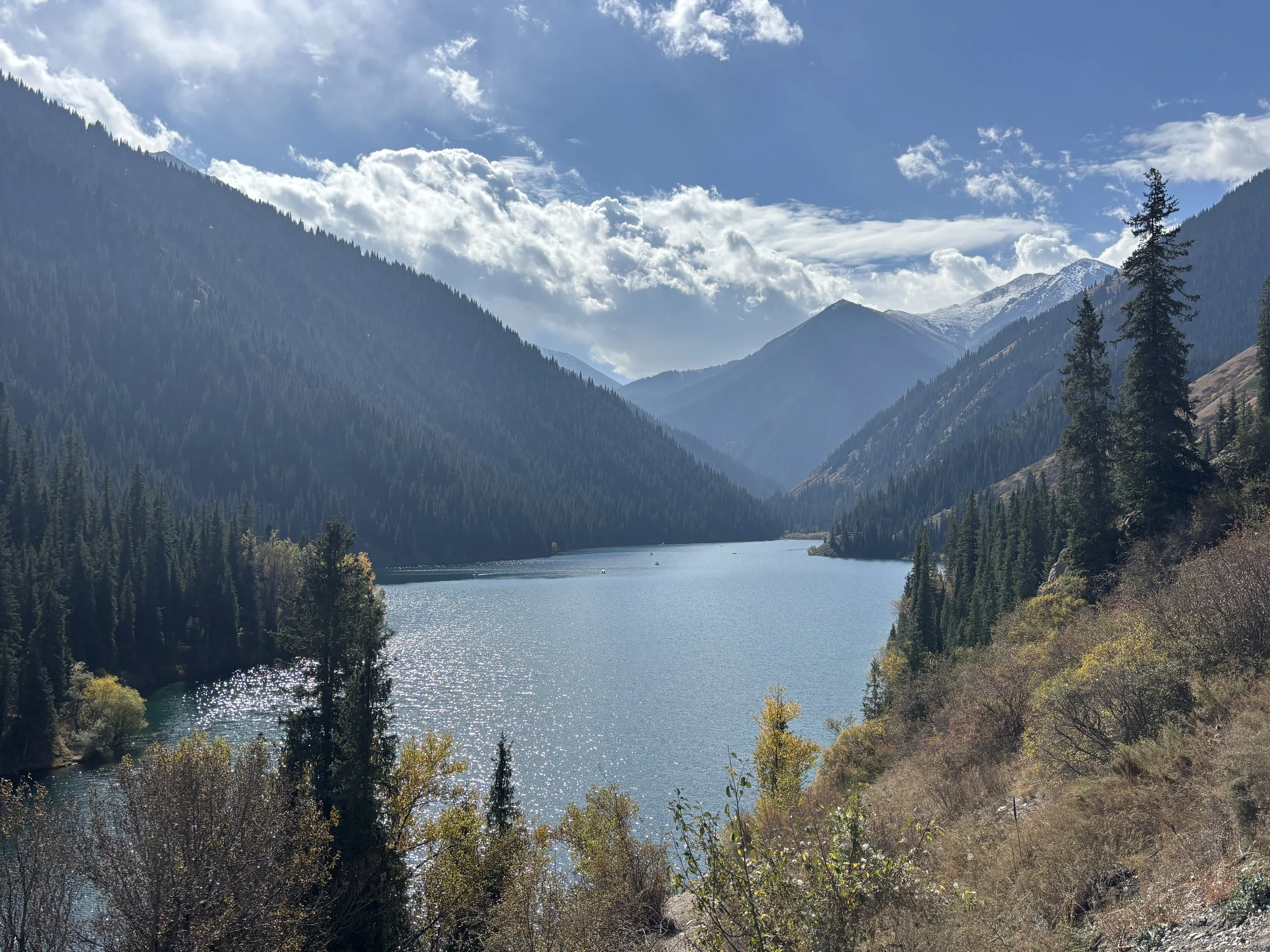
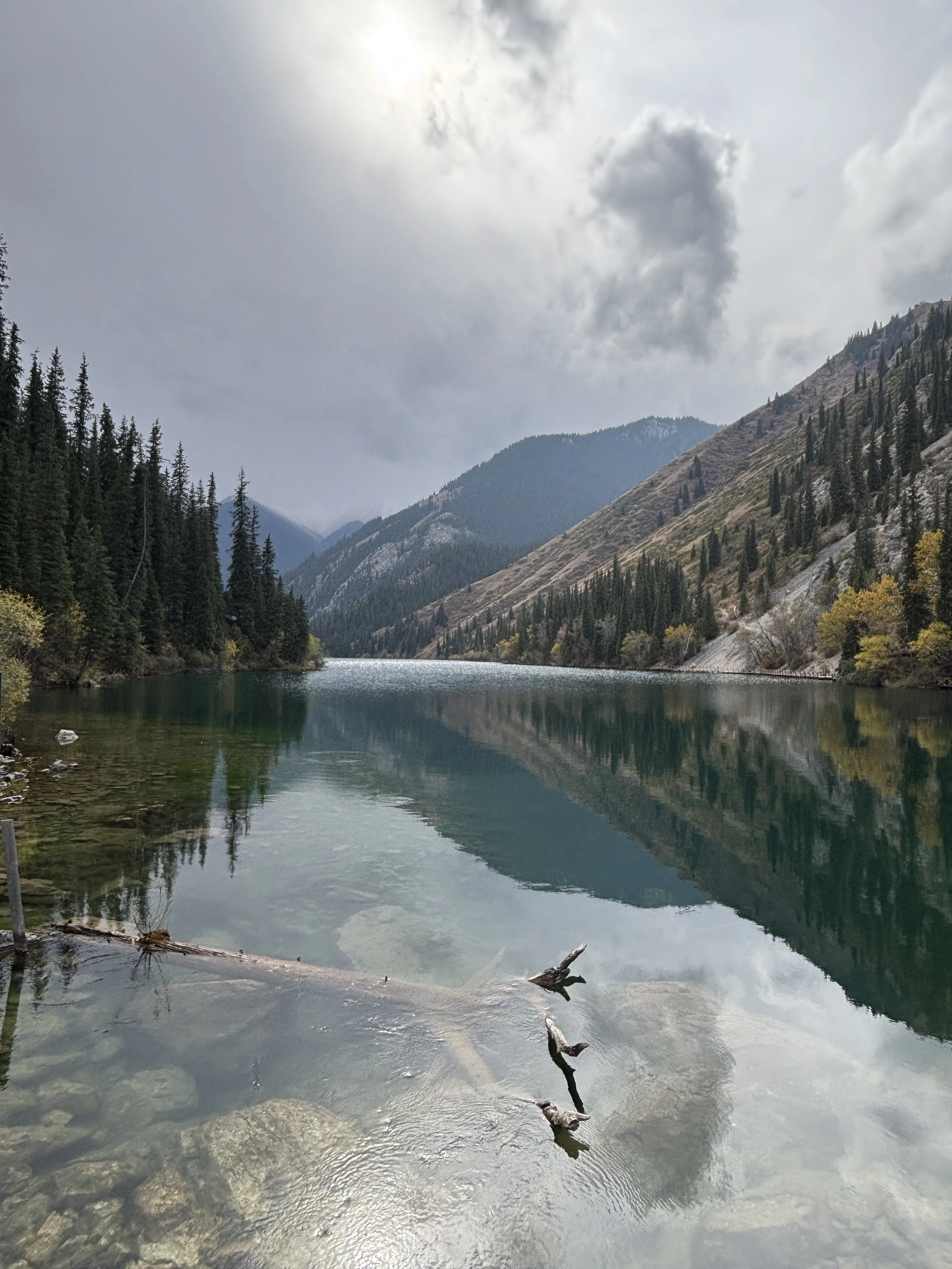
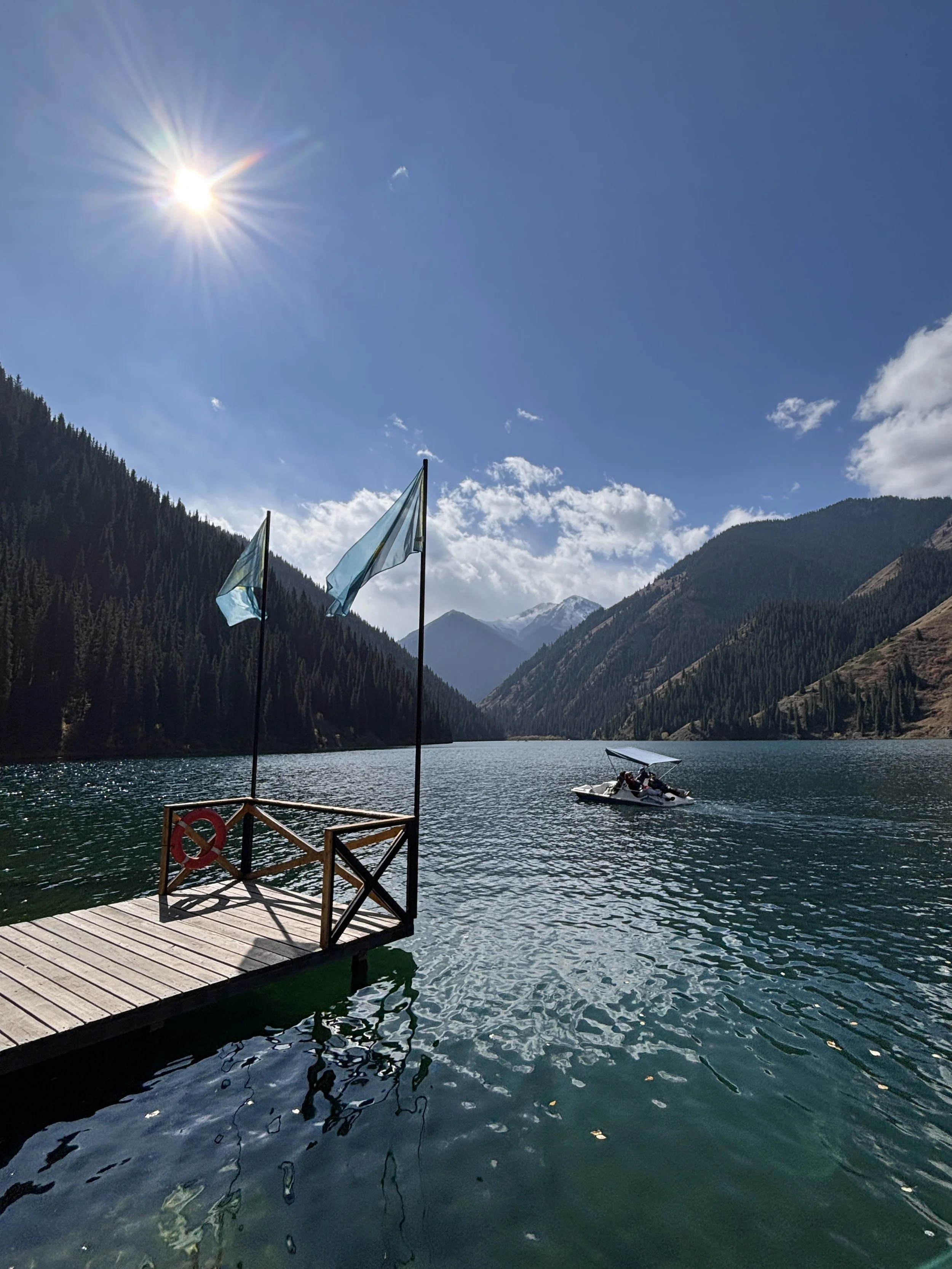
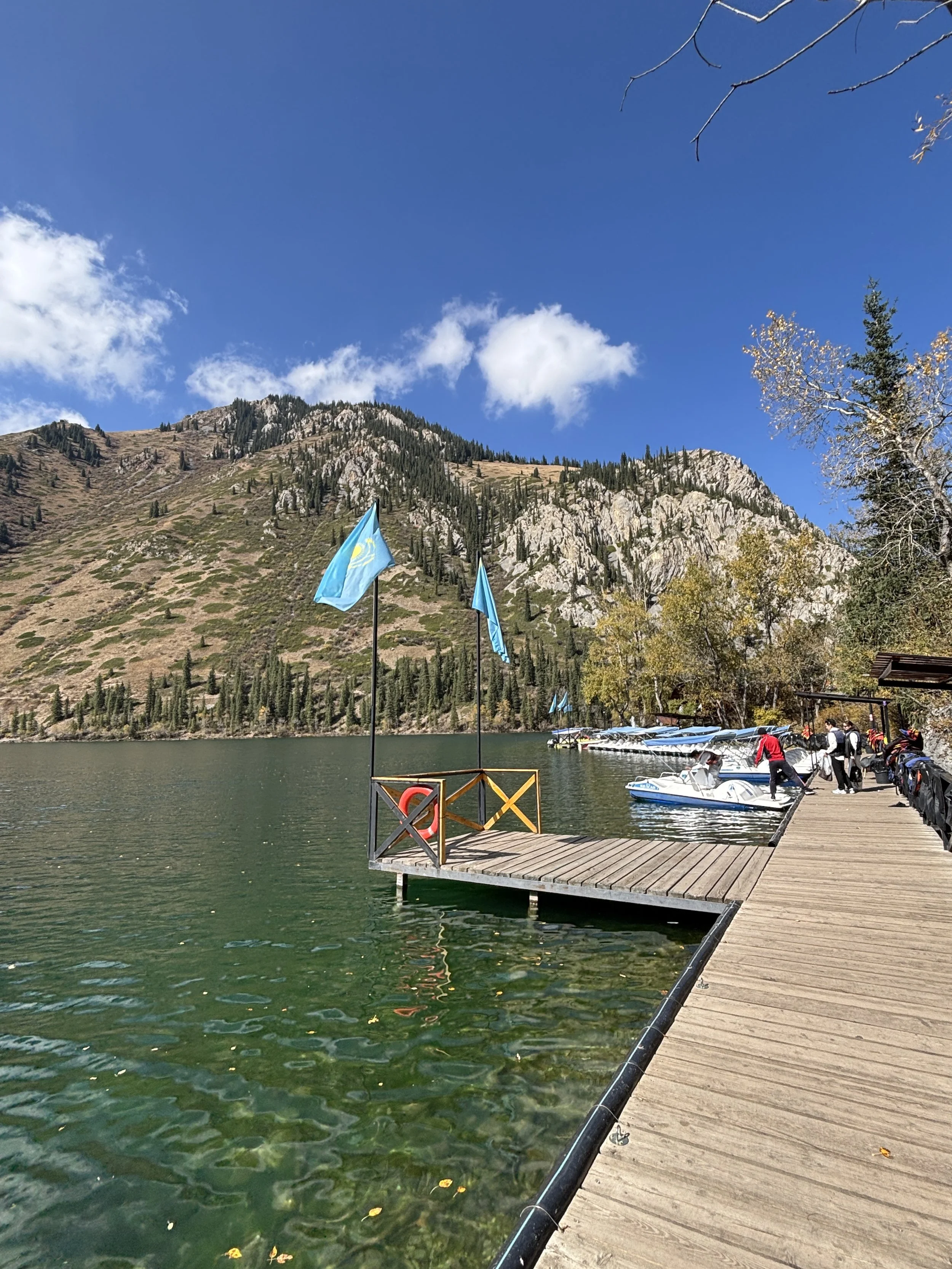
At the end of the trail you find a little dock and a water sports base where it is possible to rent rowing and pedal boats.
Top place to eat at Lower Kolsai Lake
Tary Café (by Sandyk Group)
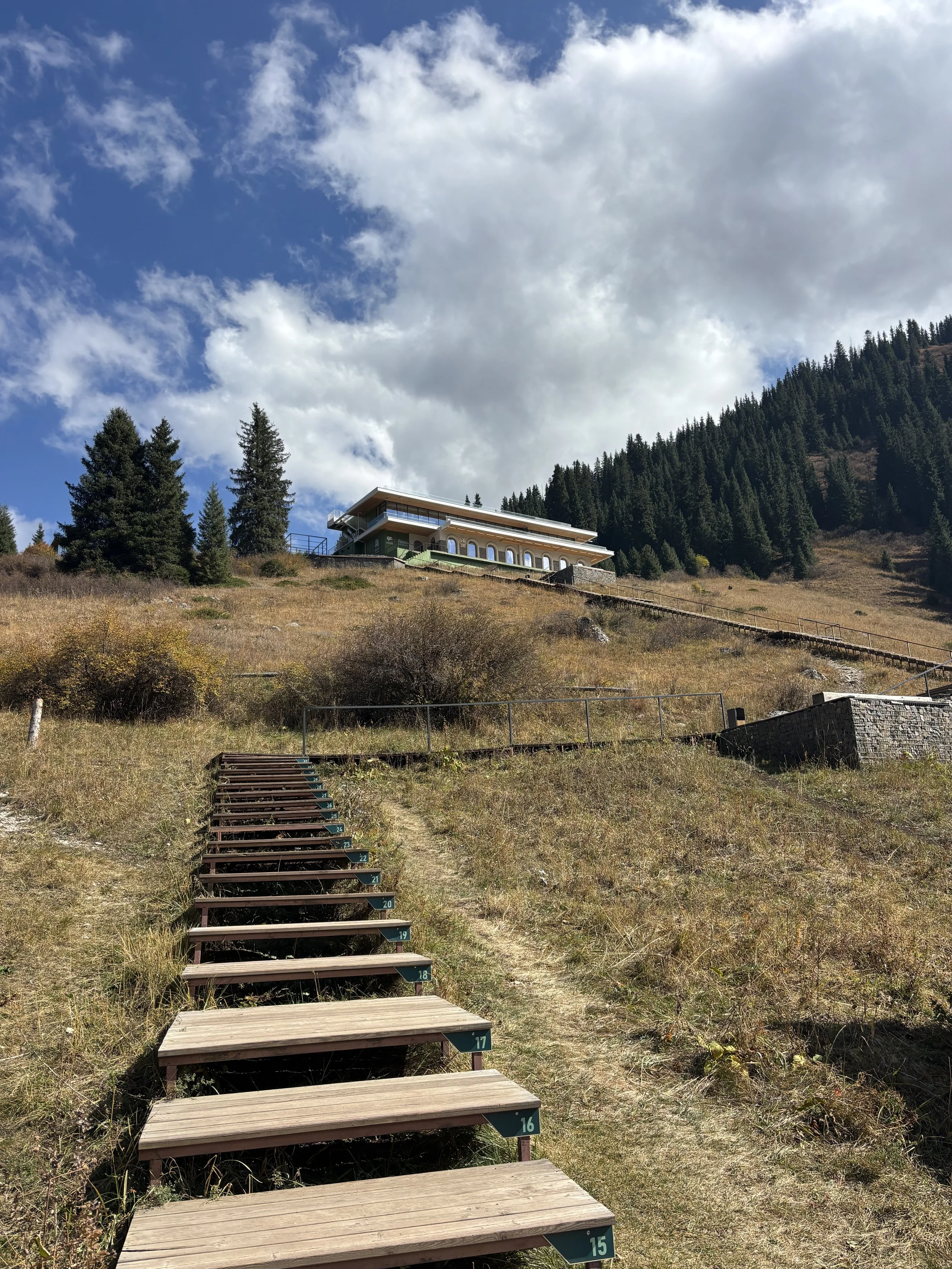
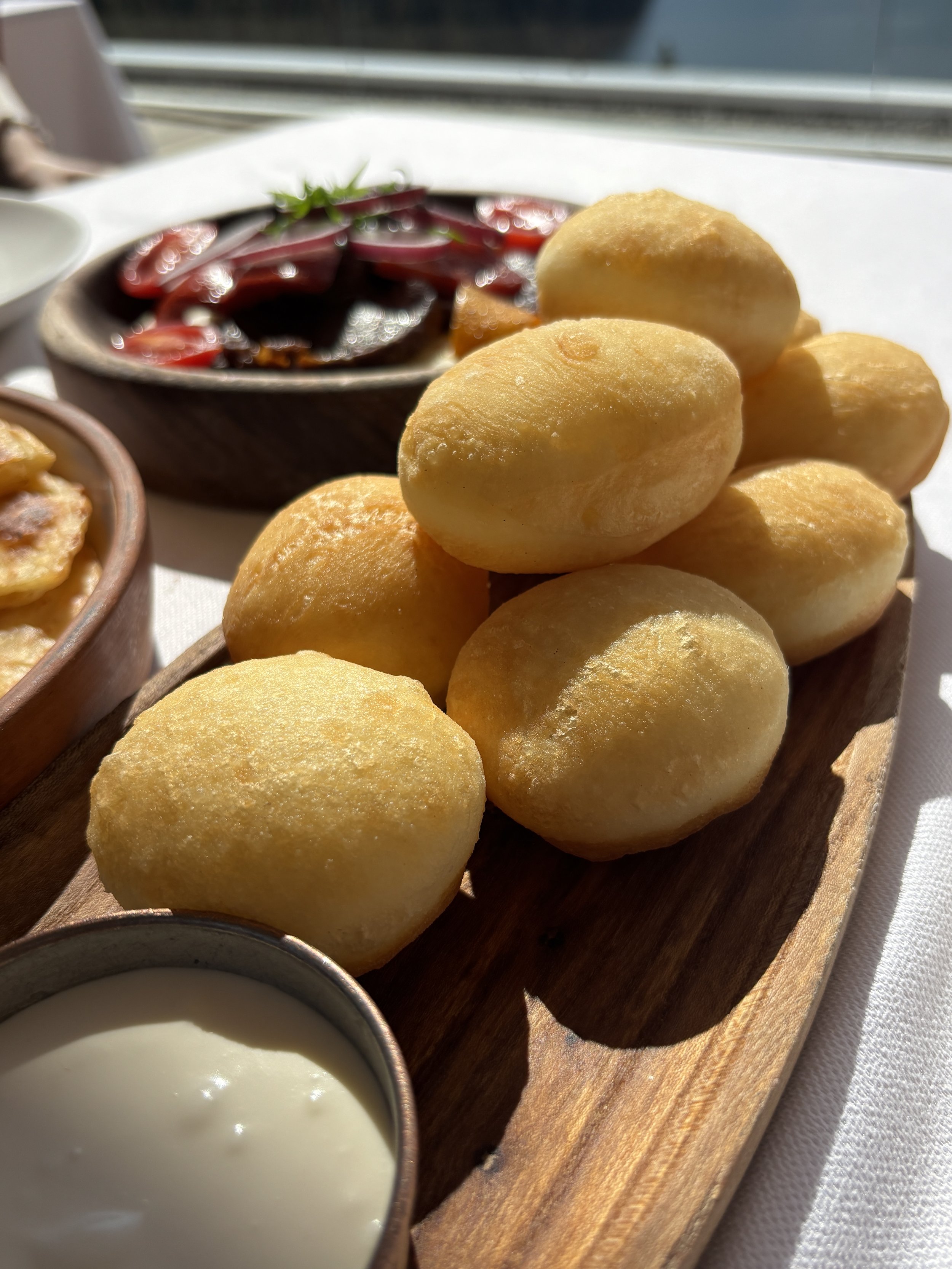
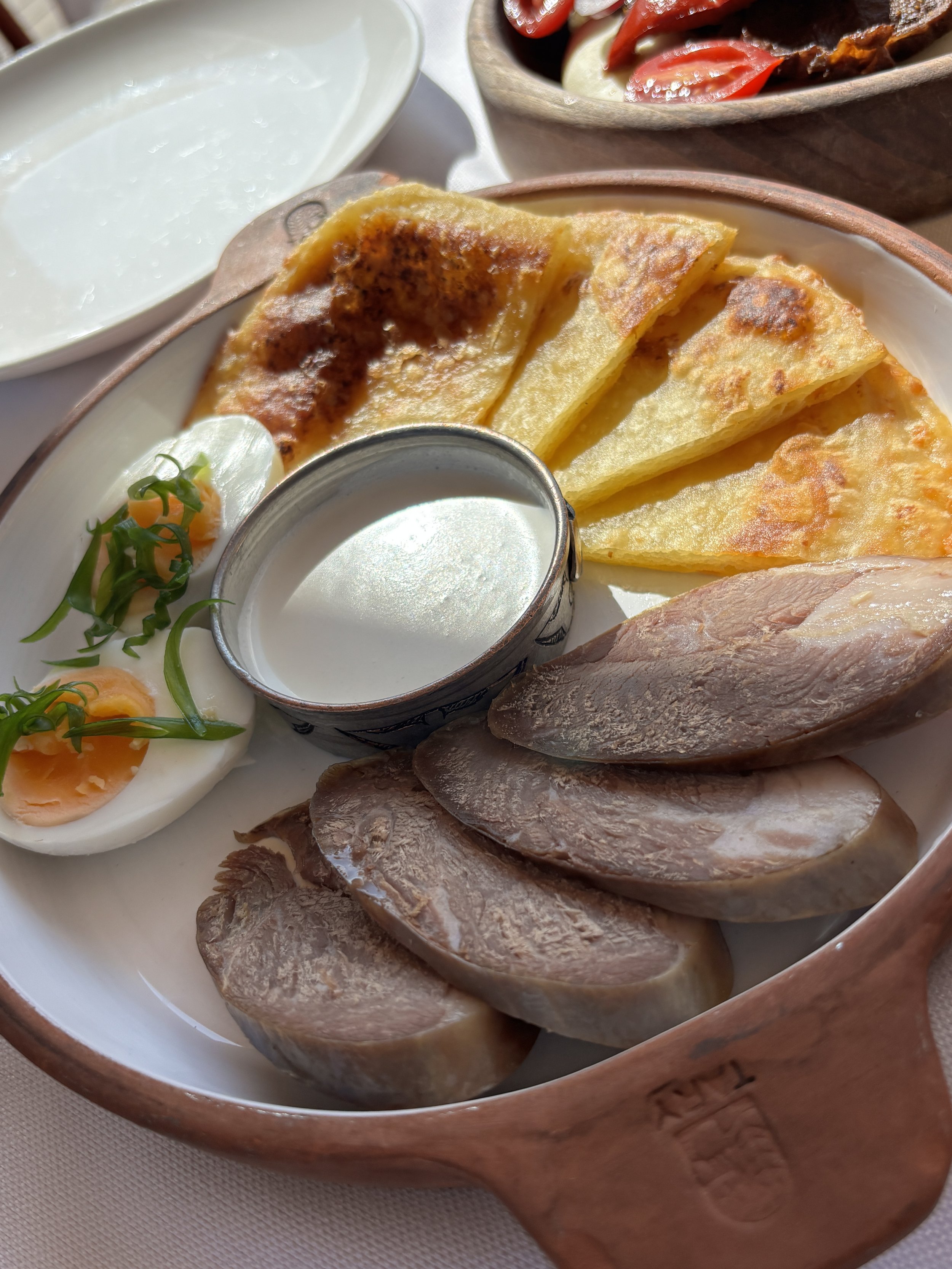
Also at the edge of the lake, but some 100 meters uphill is the most upmarket establishment in the area: the Tary Café and restaurant, which has also a panoramic terrace and a souvenir shop.
This place is part of the Sandyk Group, which runs also a Kazakh cuisine restaurant which I featured in my Astana story, and has a partnership with Air Astana to supply the airline’s business class inflight meals.
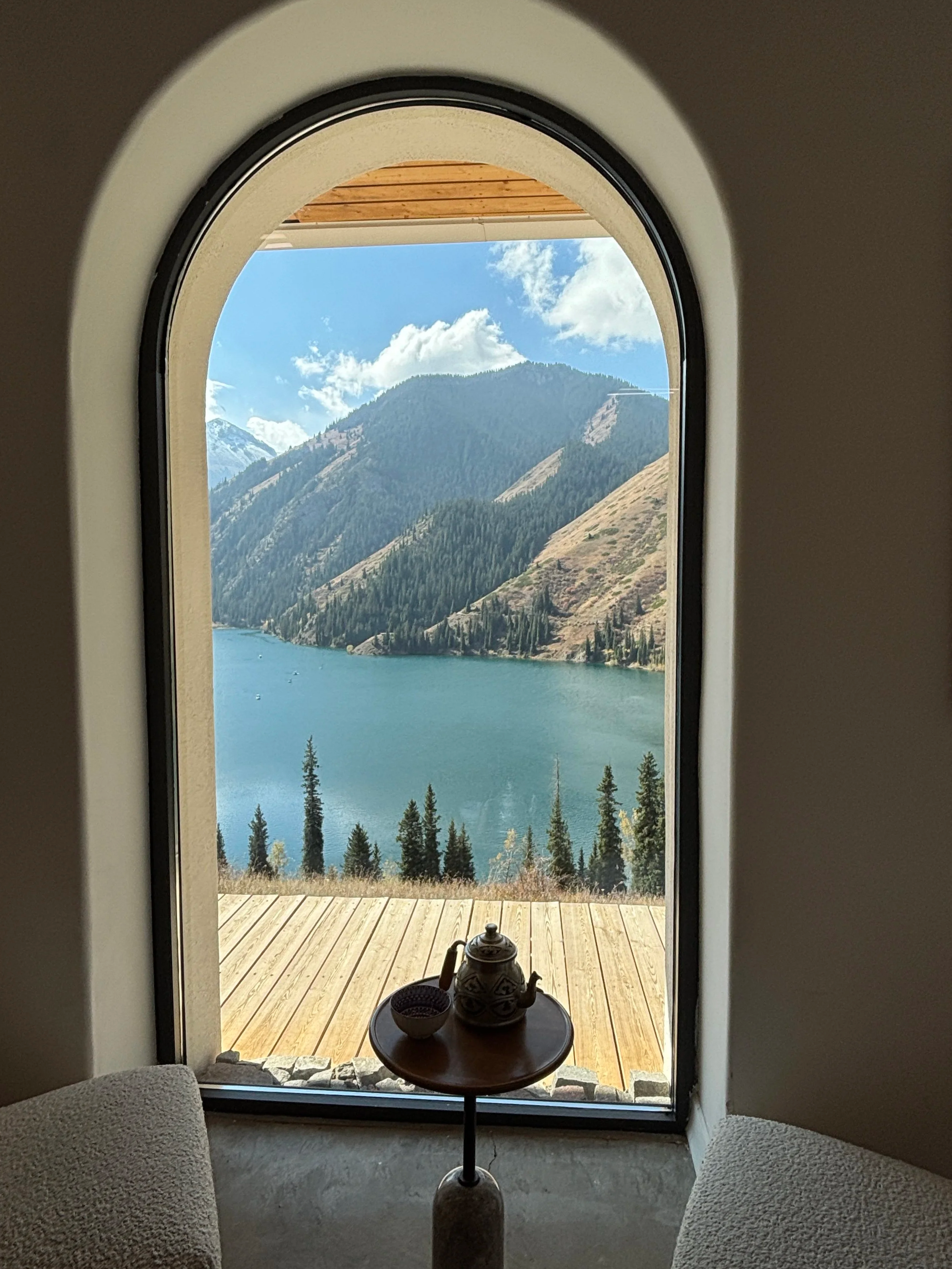
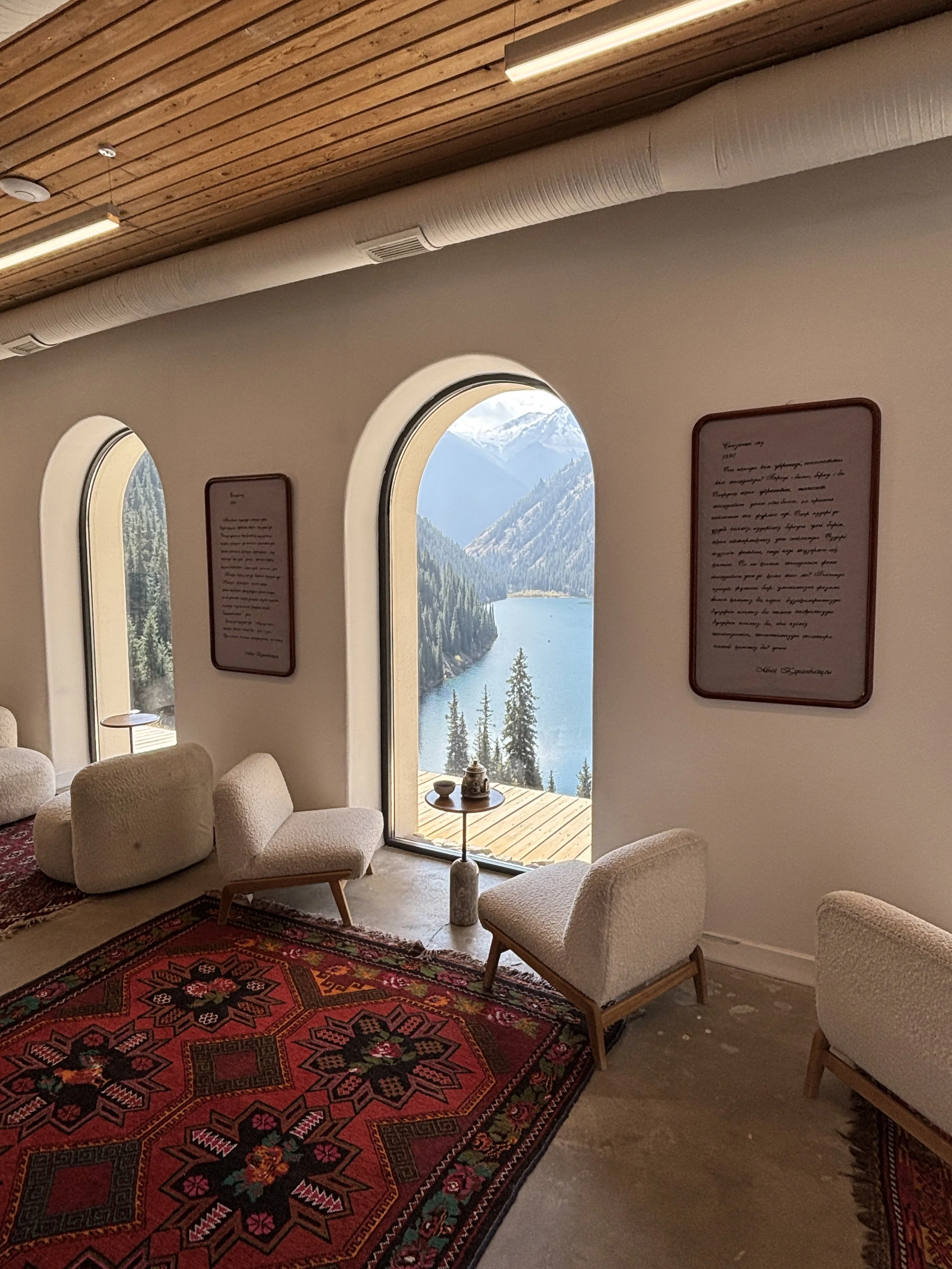
The walk up to Tary Café is well worth it, since it is an ideal spot to rest a bit after the long drive from Almaty and replenish energies by tasting some Kazakh specialities, all while enjoying some privileged views of the lake.
The place is tastefully decorated, arranging traditional Kazakh motifs in a rather subtle minimalist way, and, at the same time, underlining the beauty of the surrounding landscape.
Charyn Canyon National Park
We shall soon see what’s in Charyn Canyon, one of the great natural attractions of Kazakhstan, but first I would like to highlight that Charyn is not the only canyon in this part of the world.
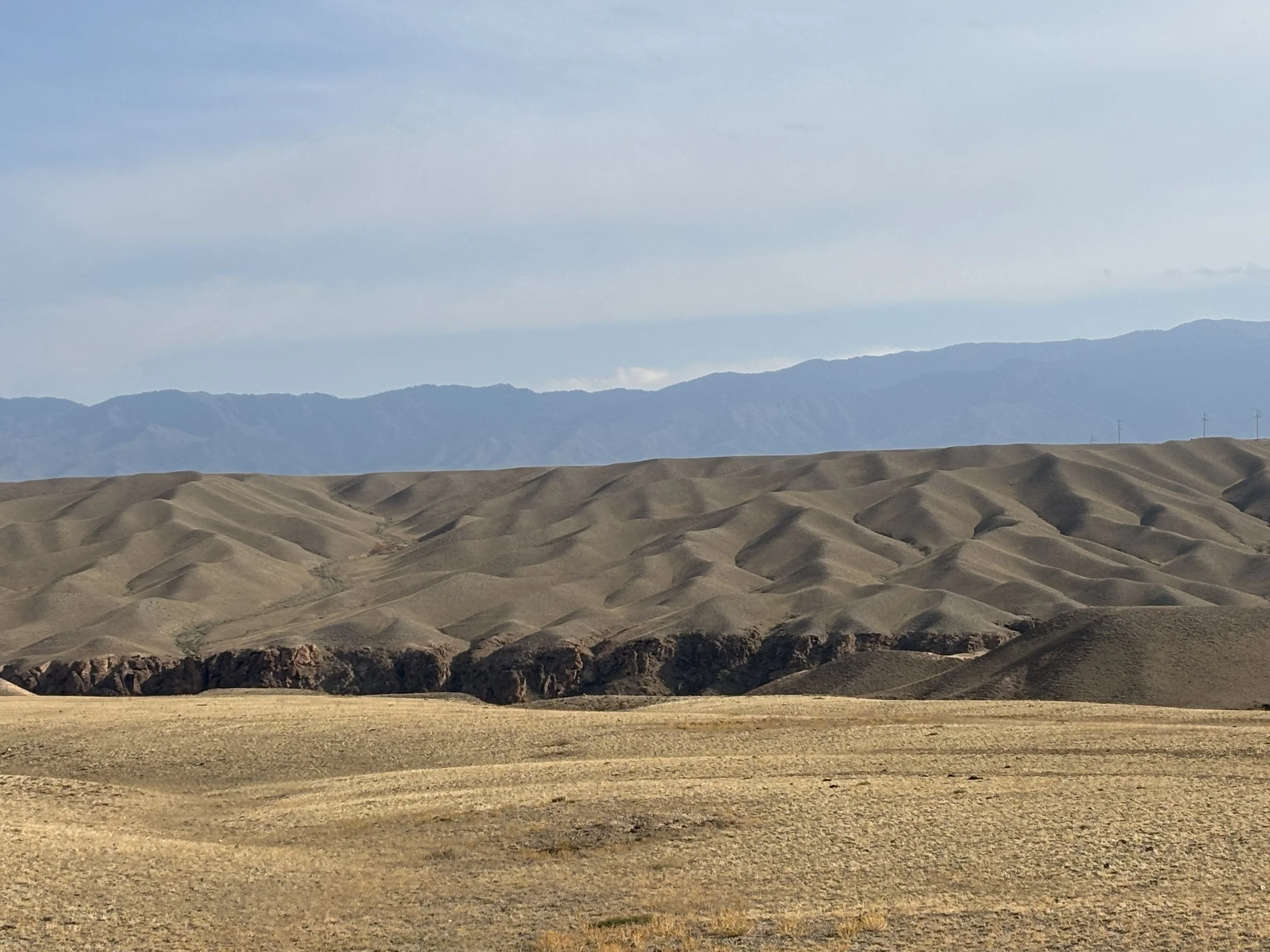
When driving between the Kolsai Lakes and Charyn, you pass by the “Black Canyon”, which is slightly smaller than Charyn and made of darker rocks (hence its name). Interestingly, a glass bridge is being built over the Black Canyon!
I didn’t stop due to time constraints, but even the drive by provided some really stunning views, which you can see in the picture below.
Arriving at Charyn Canyon - Infrastructure
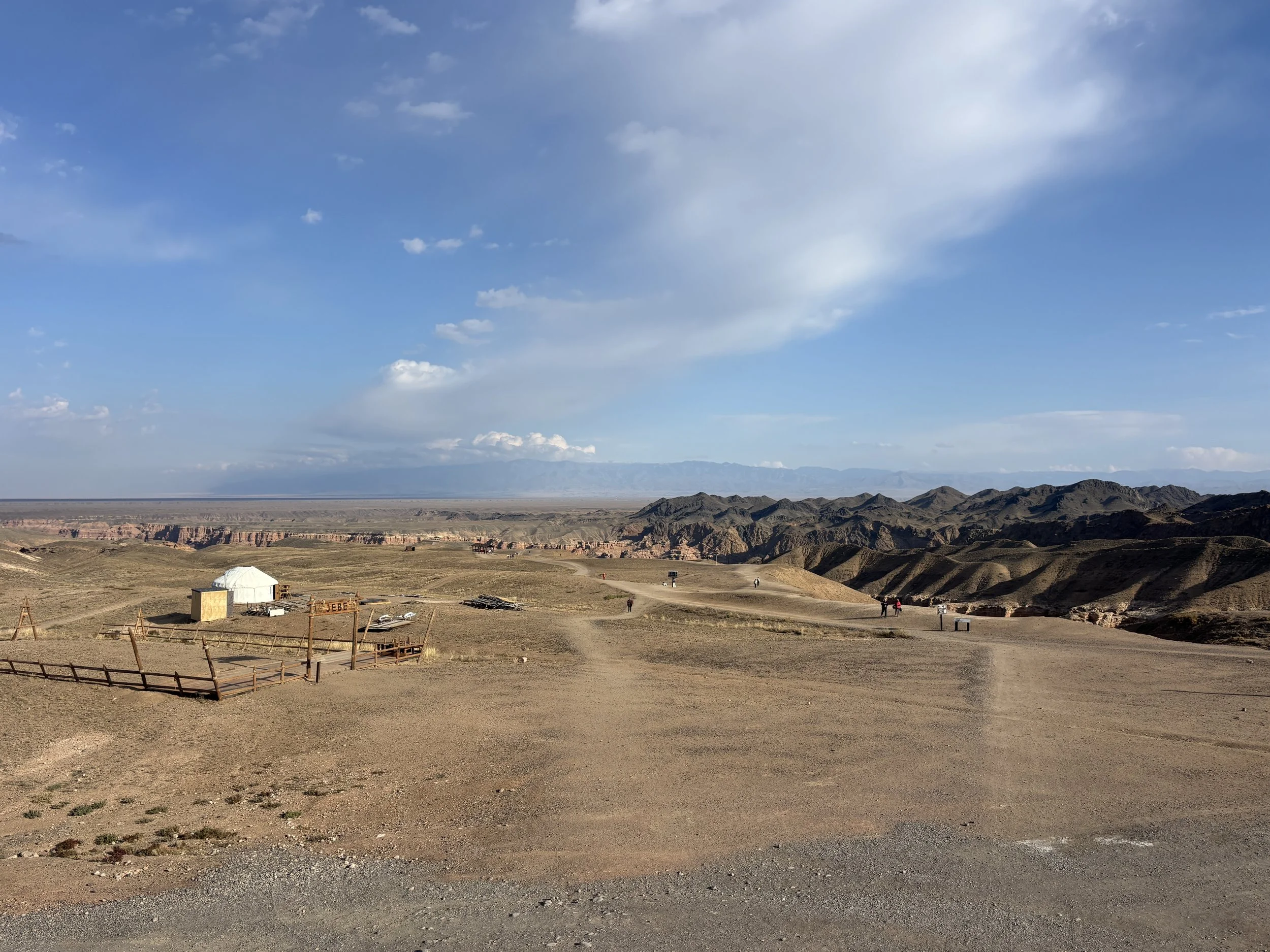
Charyn Canyon is located in a totally different environment from Kolsai Lake. Here the landscape is desert as far as the eye can see, which is the Tian Shan range, on the border with China.
Access to the canyon is through a branch of the main road, which takes you to the visitors’ center car park, itself barely a couple of hundred meters from the edge of the canyon. By the way, just like at Kolsai Lake, there is also an entrance fee to access the national park.
The visitors’ center is quite a modern building (it opened in 2023) which blends quite well with the landscape. There is a small exhibit area, an ever smaller souvenir shop, toilets and a branch of Tary Café (the same that we have already seen at Kolsai Lake!).
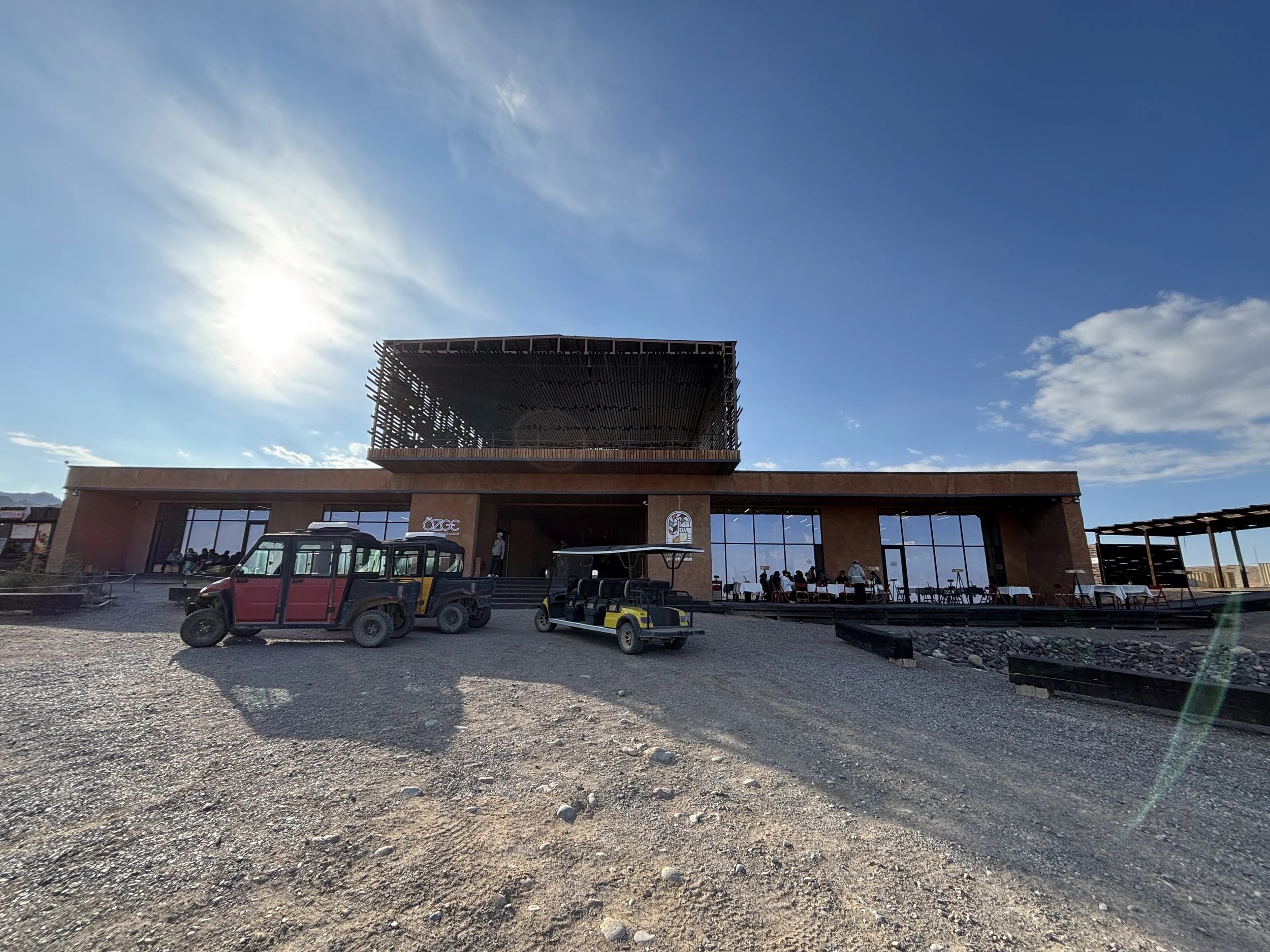
Next to the visitors’ center there are also a number of structures painted in earthy colours. That is the Pana Unique Charyn, a glamping resort, also of recent construction.
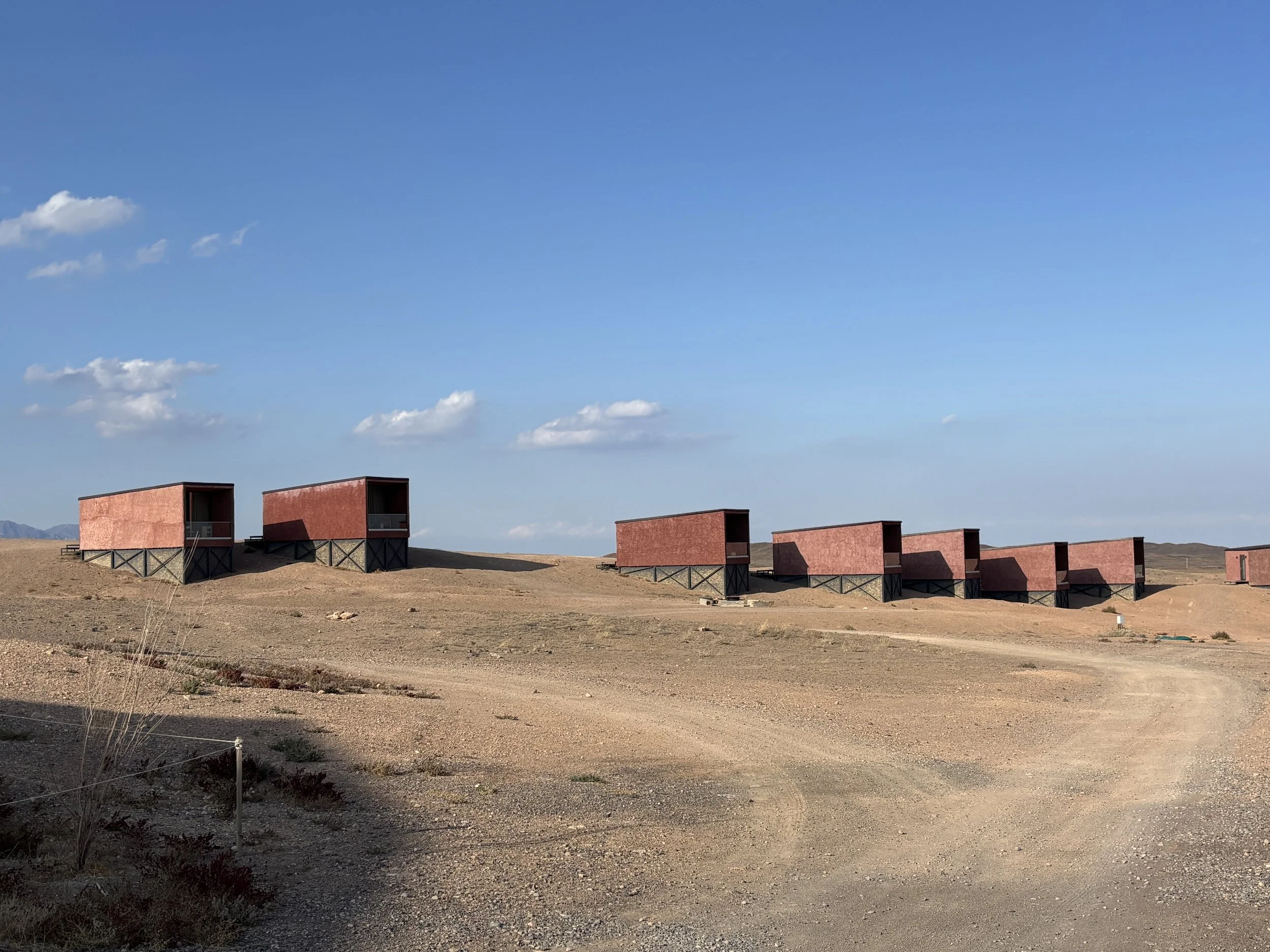
Trails to visit Charyn Canyon
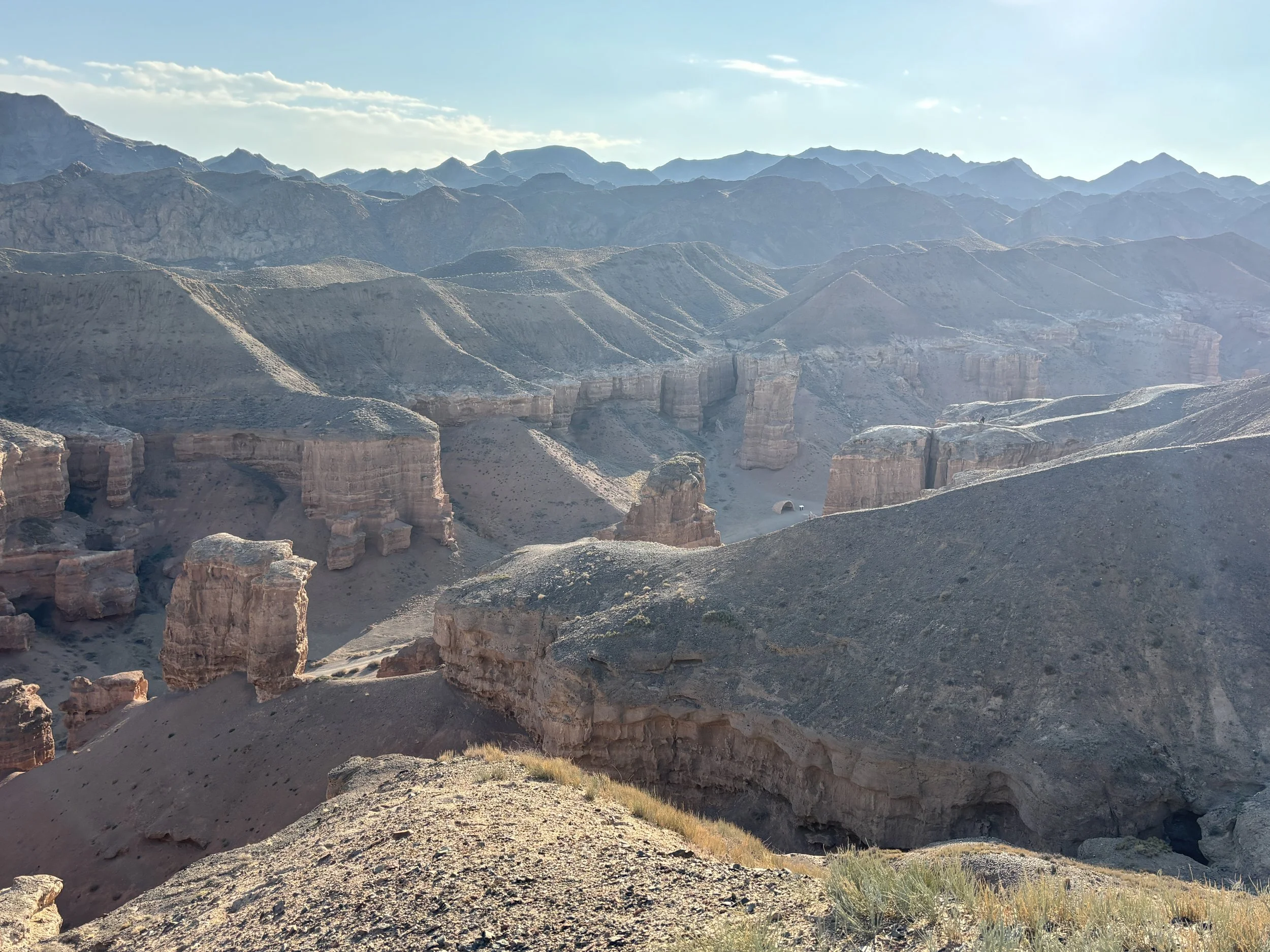
The section of the canyon that most visitors see, called “Valley of the Castles” is only a small part, a couple of kilometres long, of a whole geological system that stretches for over 150 km).
There are two main ways to visit it: through the upper or the lower part. Since there was time for one, opted for the easiest and fastest: the upper one. This upper trail has also the benefit of offering broad panoramic views.
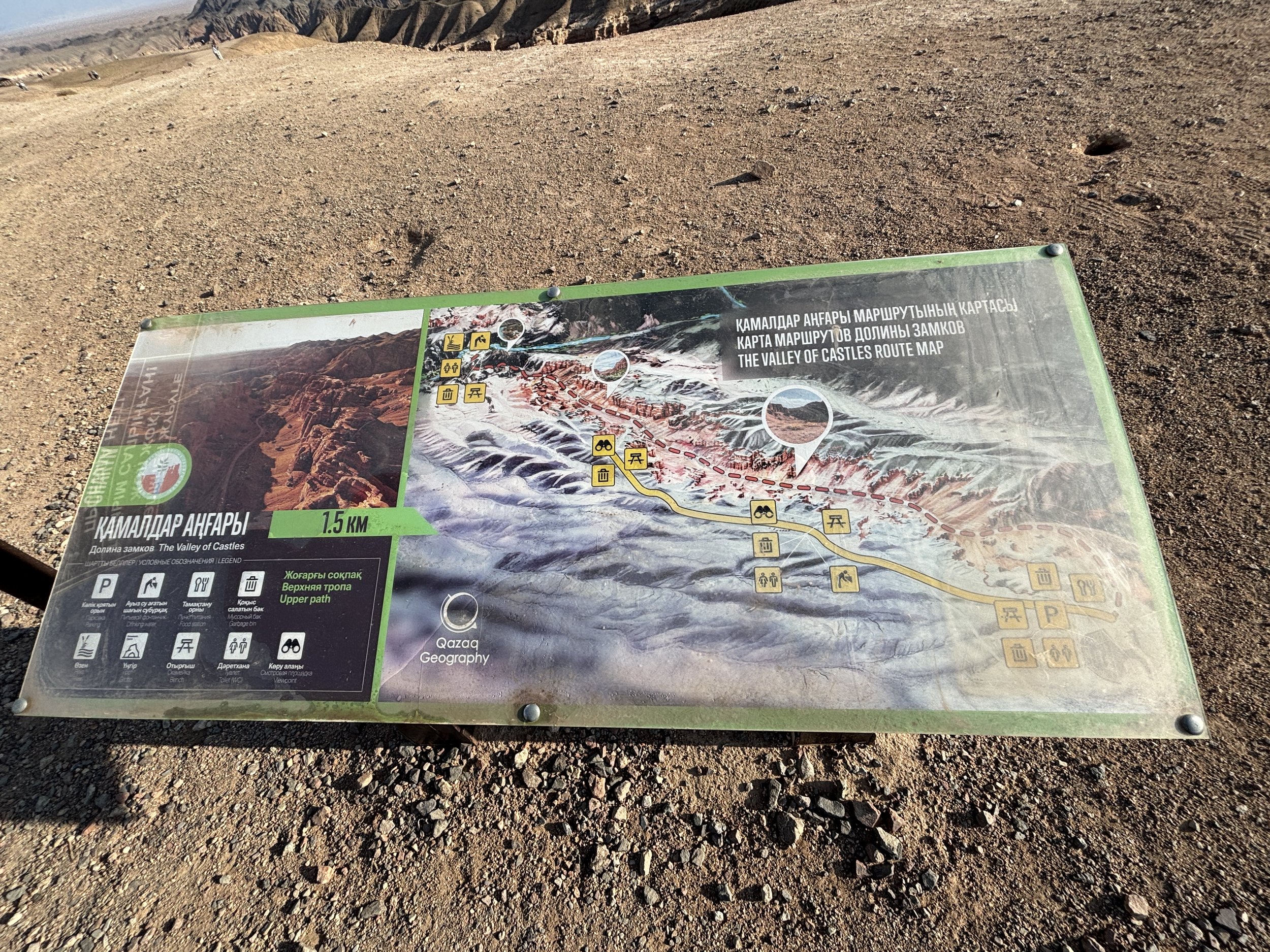
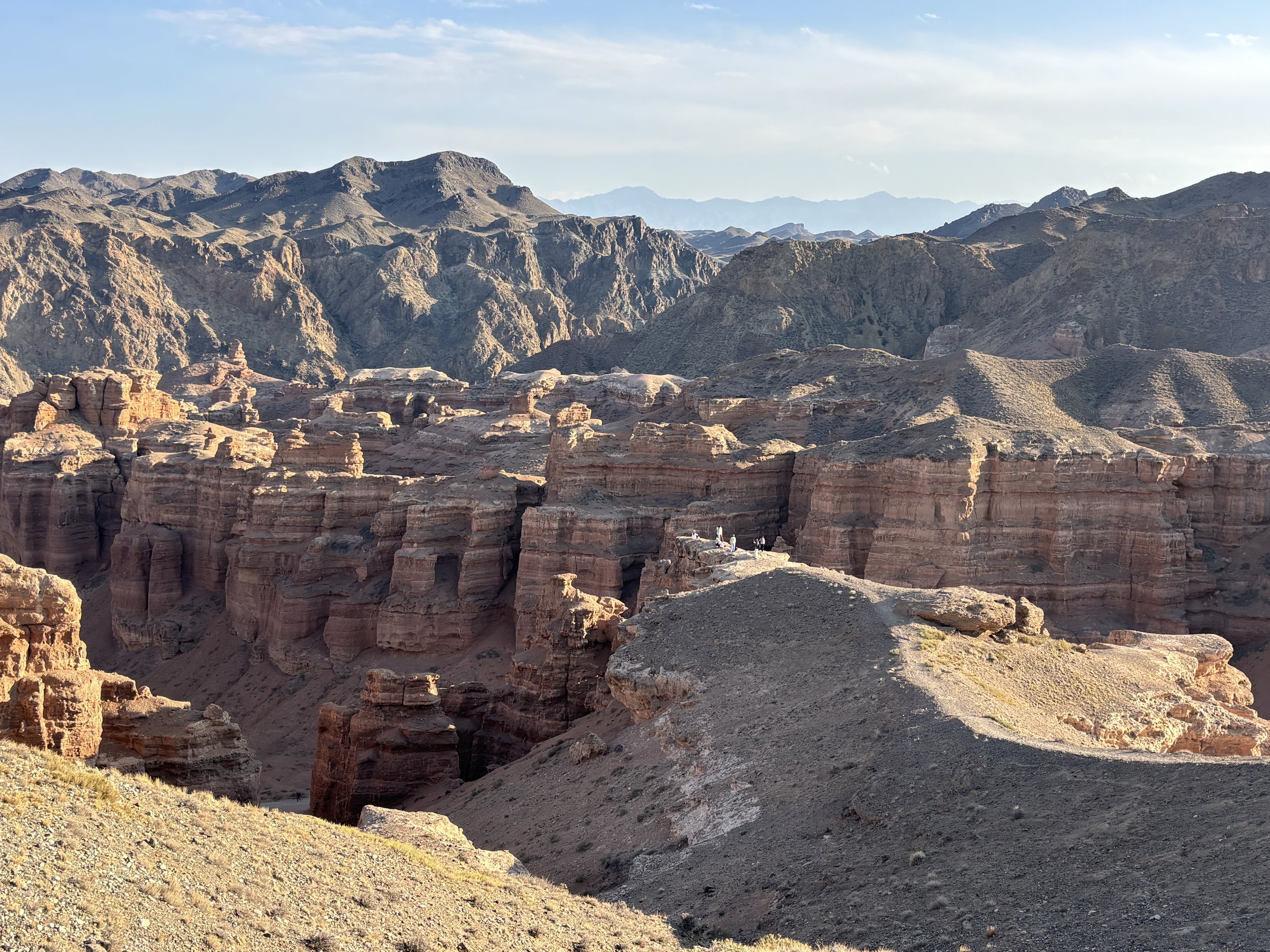
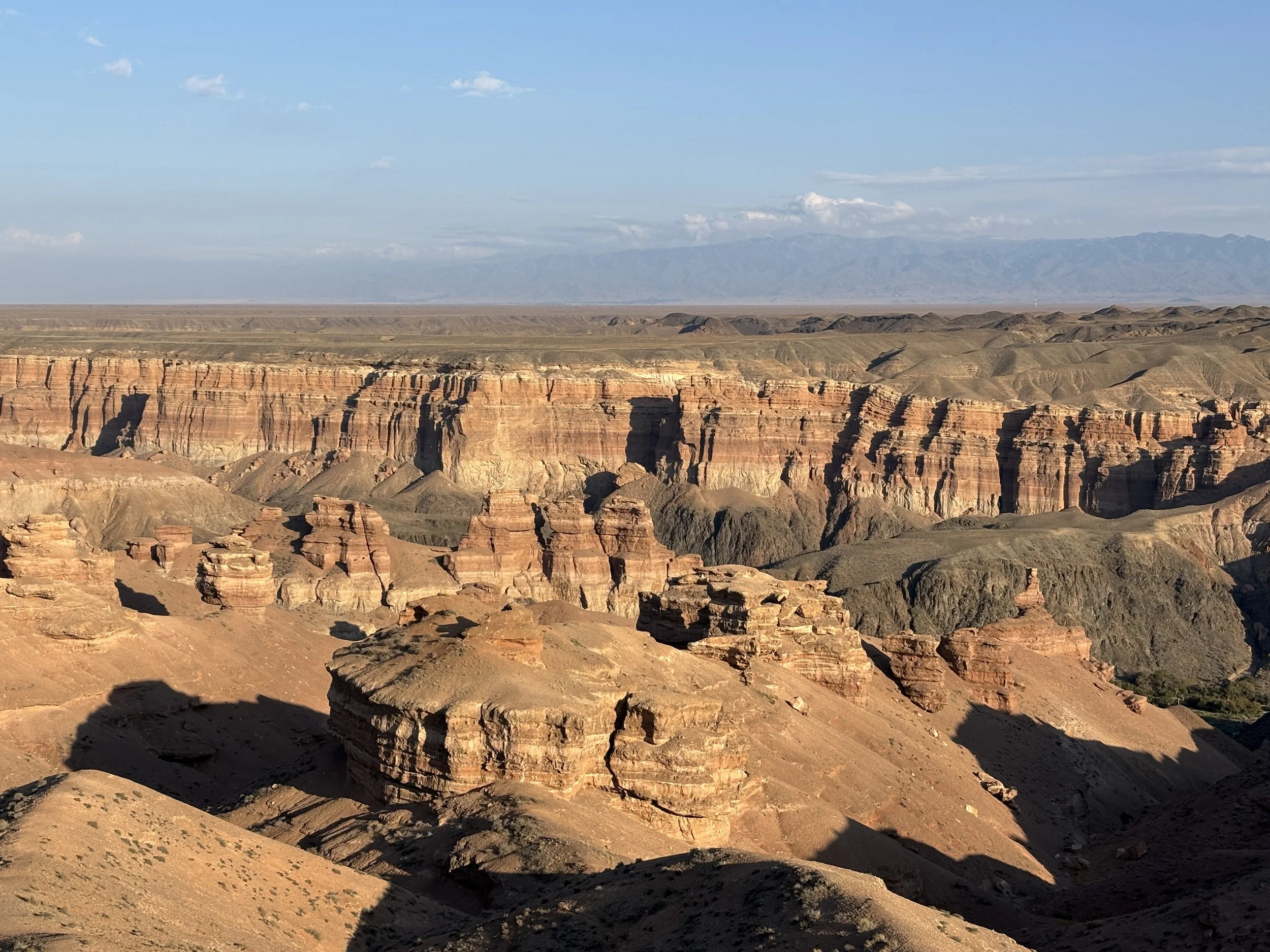
The title of “little brother of the Grand Canyon of Colorado” is well deserved. Charyn Canyon is much smaller than its US counterpart but the overall setup is quite reminiscent of it and also very impressive, reaching a depth of 300m at some points (although the depth is closer to 150m along the most commonly visited area).
It was formed as the Charyn river (from which it takes its name) made its way from the nearby Tian Shan mountains, where it has its source, through sandstone and other soft rocks. In the picture below you can see the start of the upper trails, which follows the edge of the cliffs along the Valley of Castles.
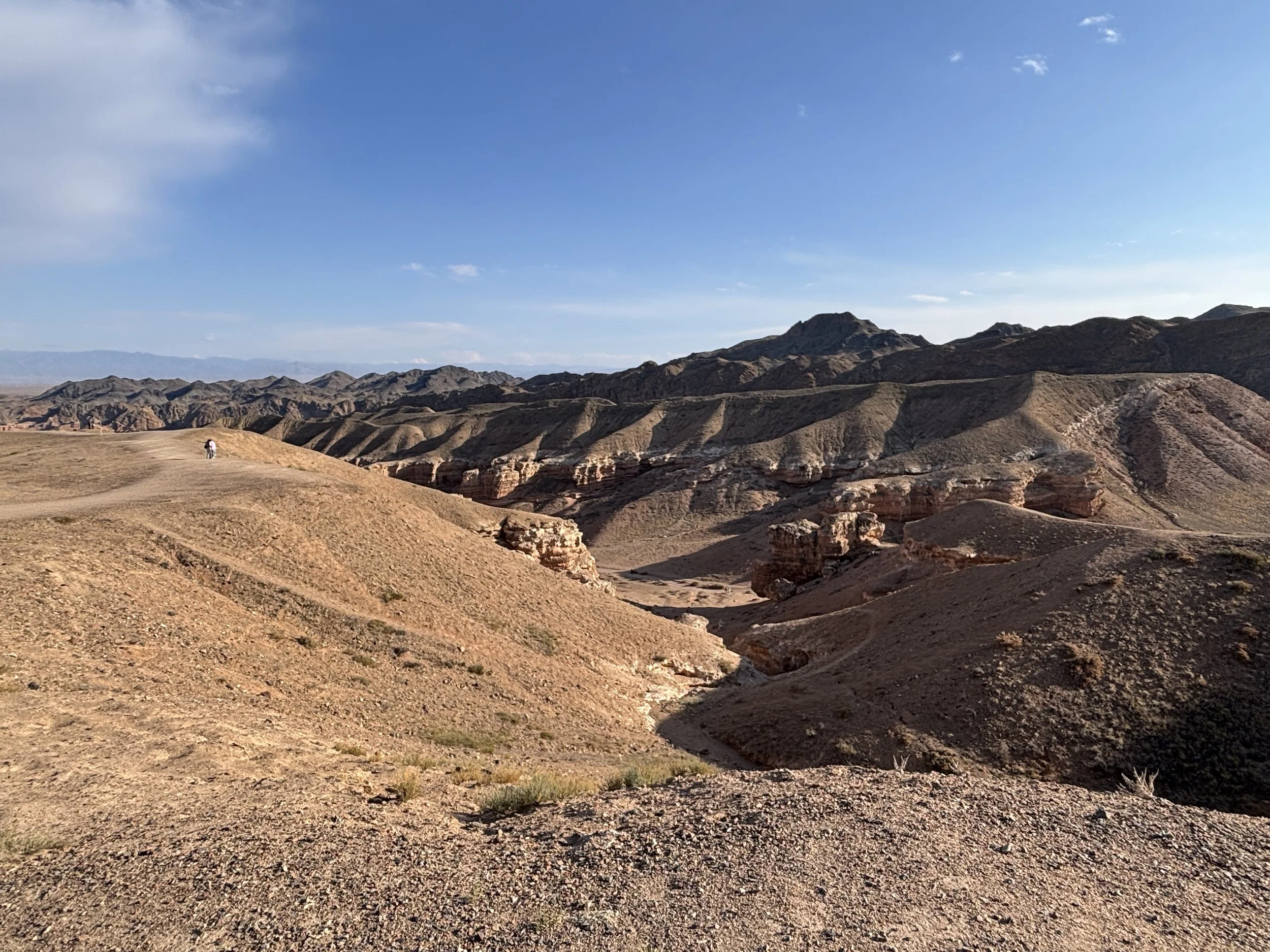
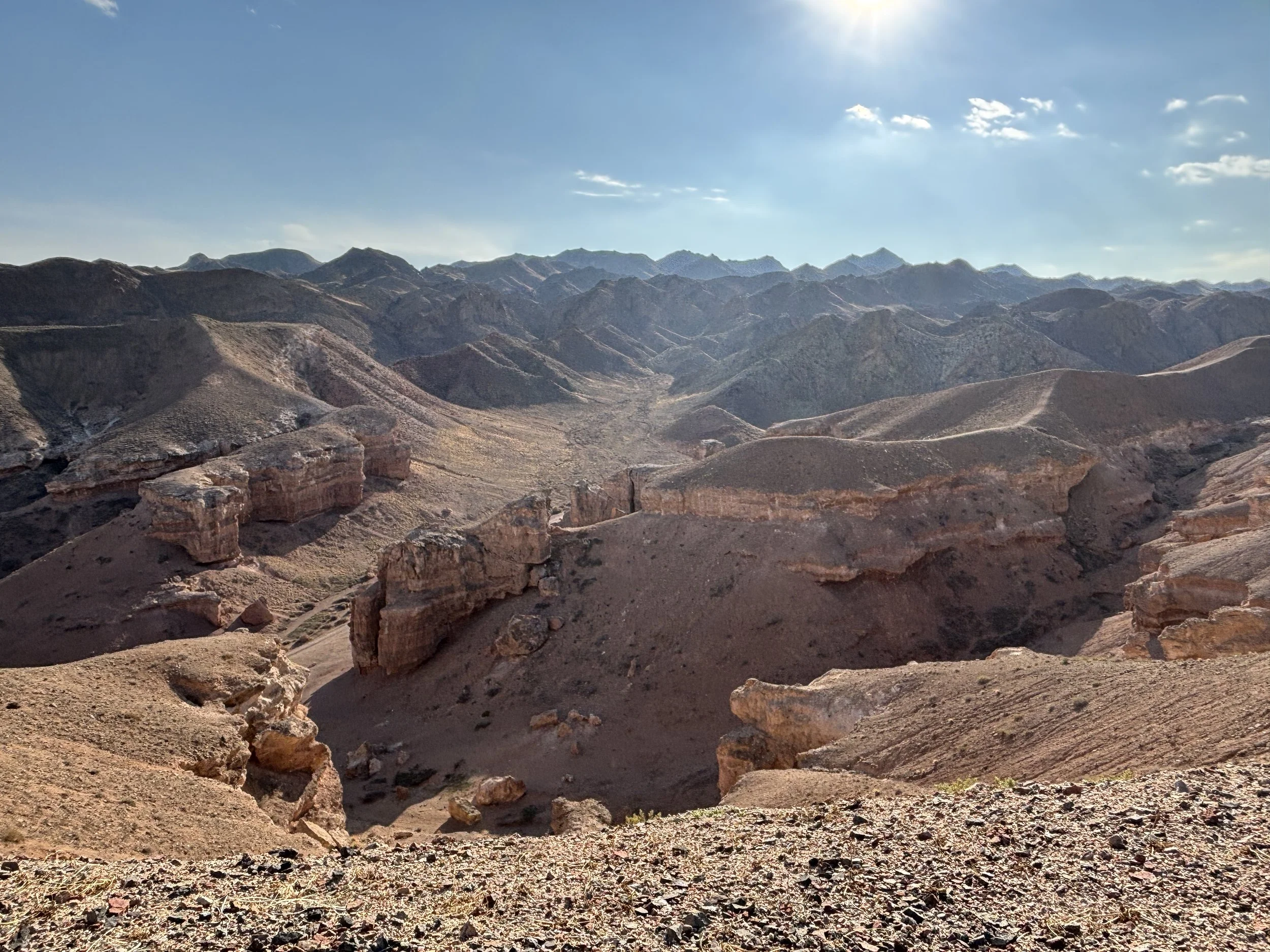
The upper trail presents no technical difficulty, since it is rather flat. Every few meters there are salients that, like a terrace, offer a closer view of the valley below (through which the lower trail passes).
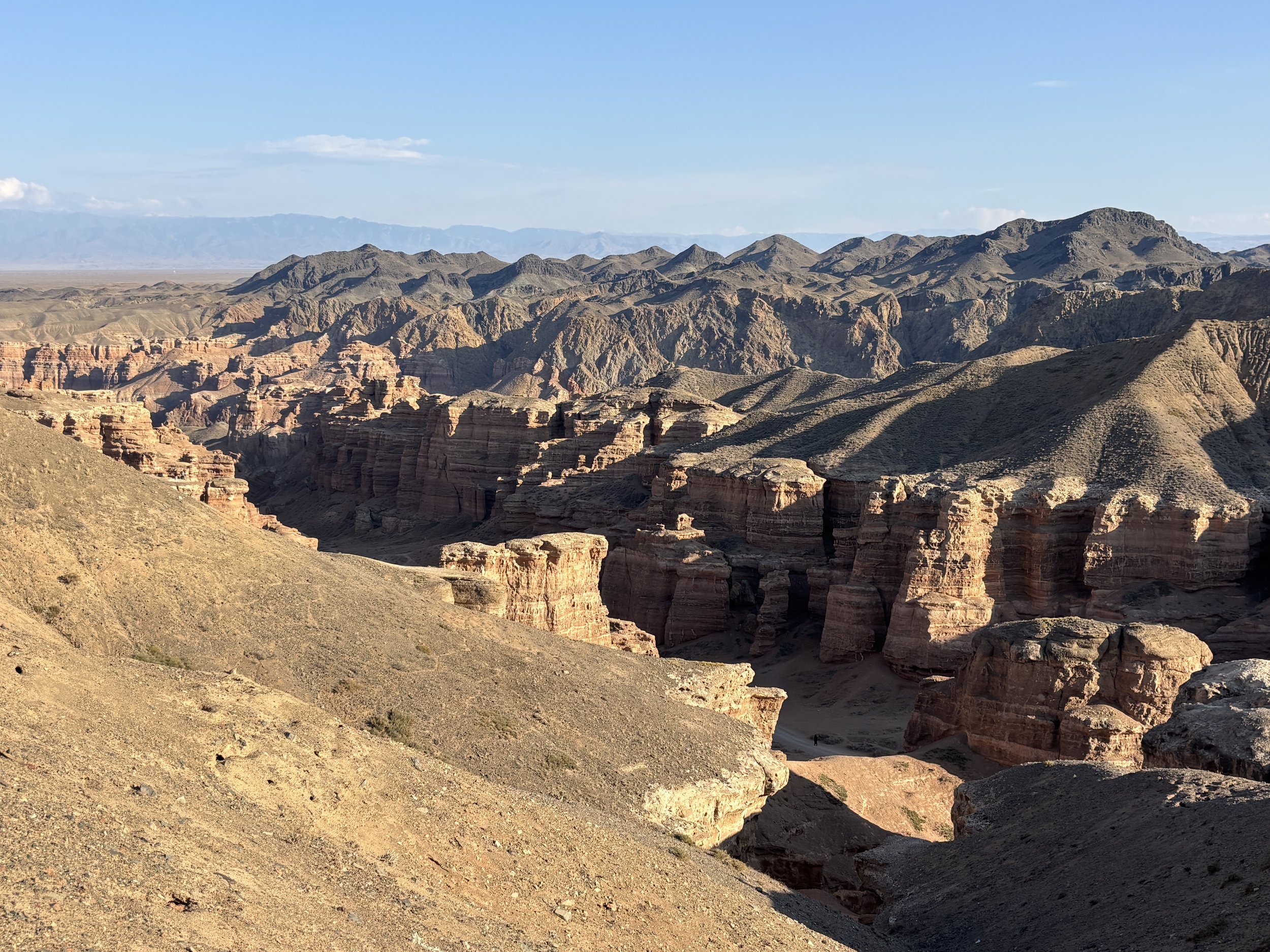
Wildlife at Charyn Canyon
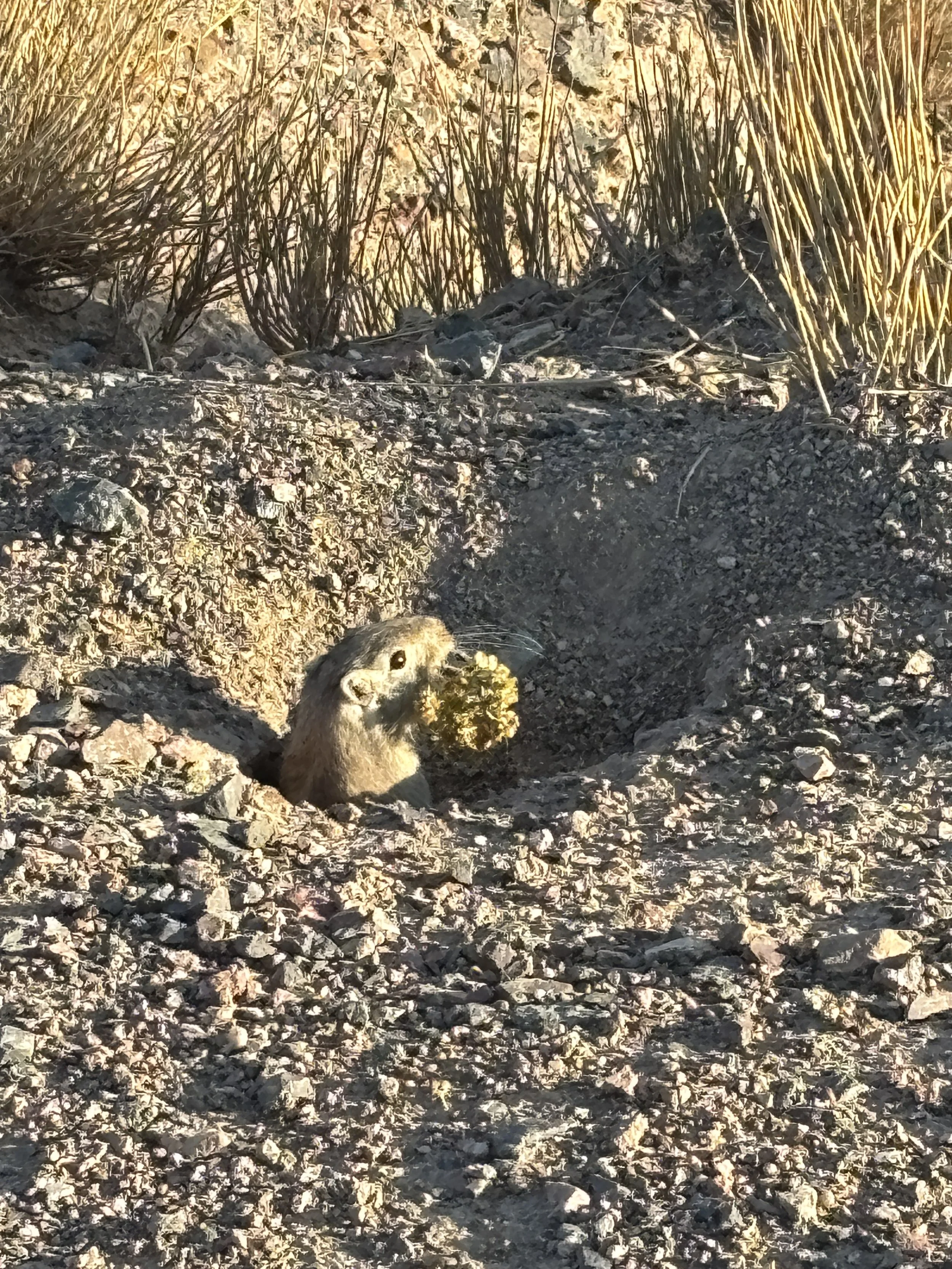
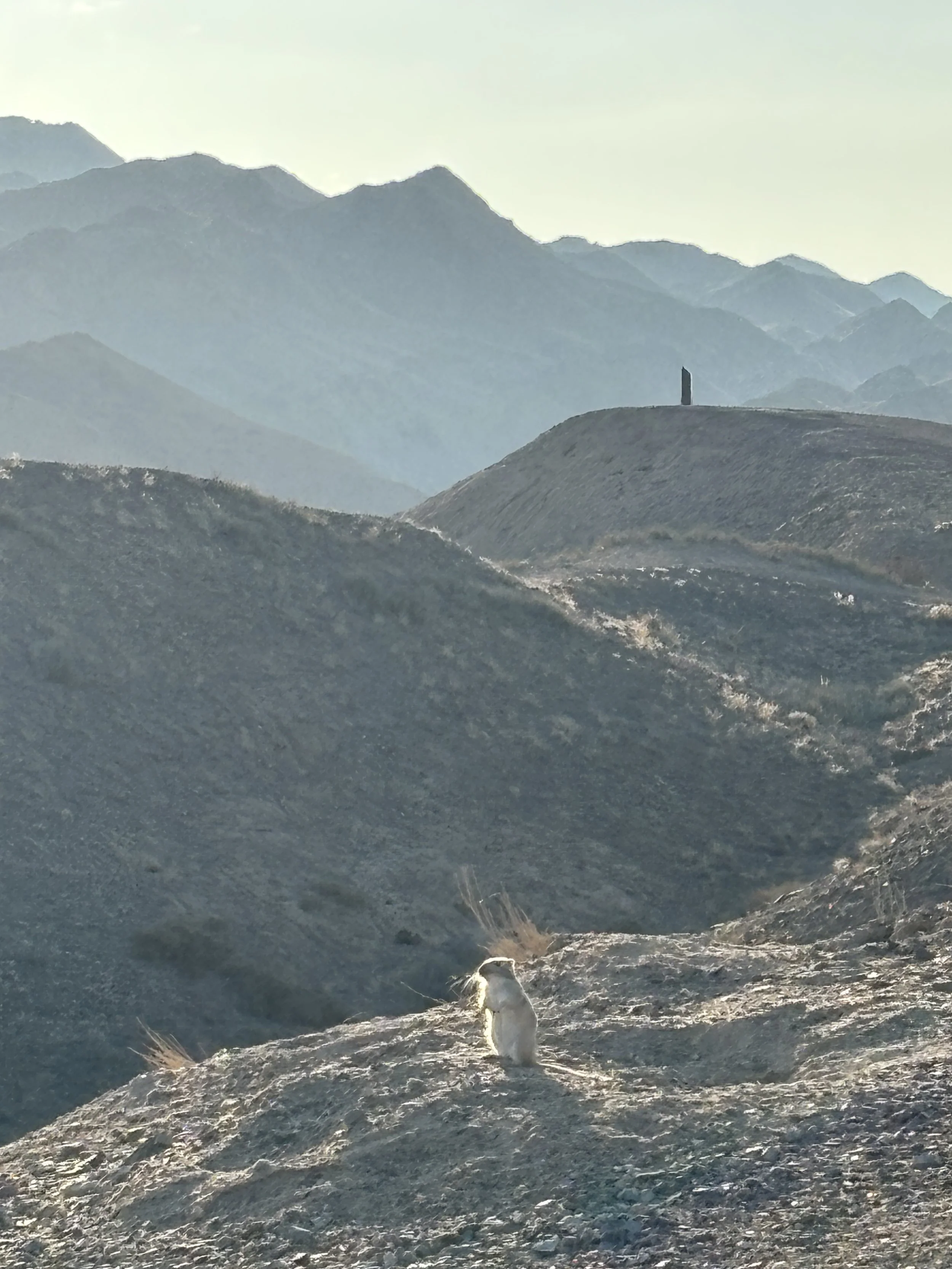
While walking along the canyon you will come across large numbers of great gerbils. These little rodents are a constant presence during your walk as they constantly pop in and out of their little burrows and you can see them quarreling with each other or carrying materials for their “homes”.
I added the next couple of pictures to give you a sense of the scale of the scenery here. Zoom in and you will see a few people standing on rocky ledges along the rim of the canyon!
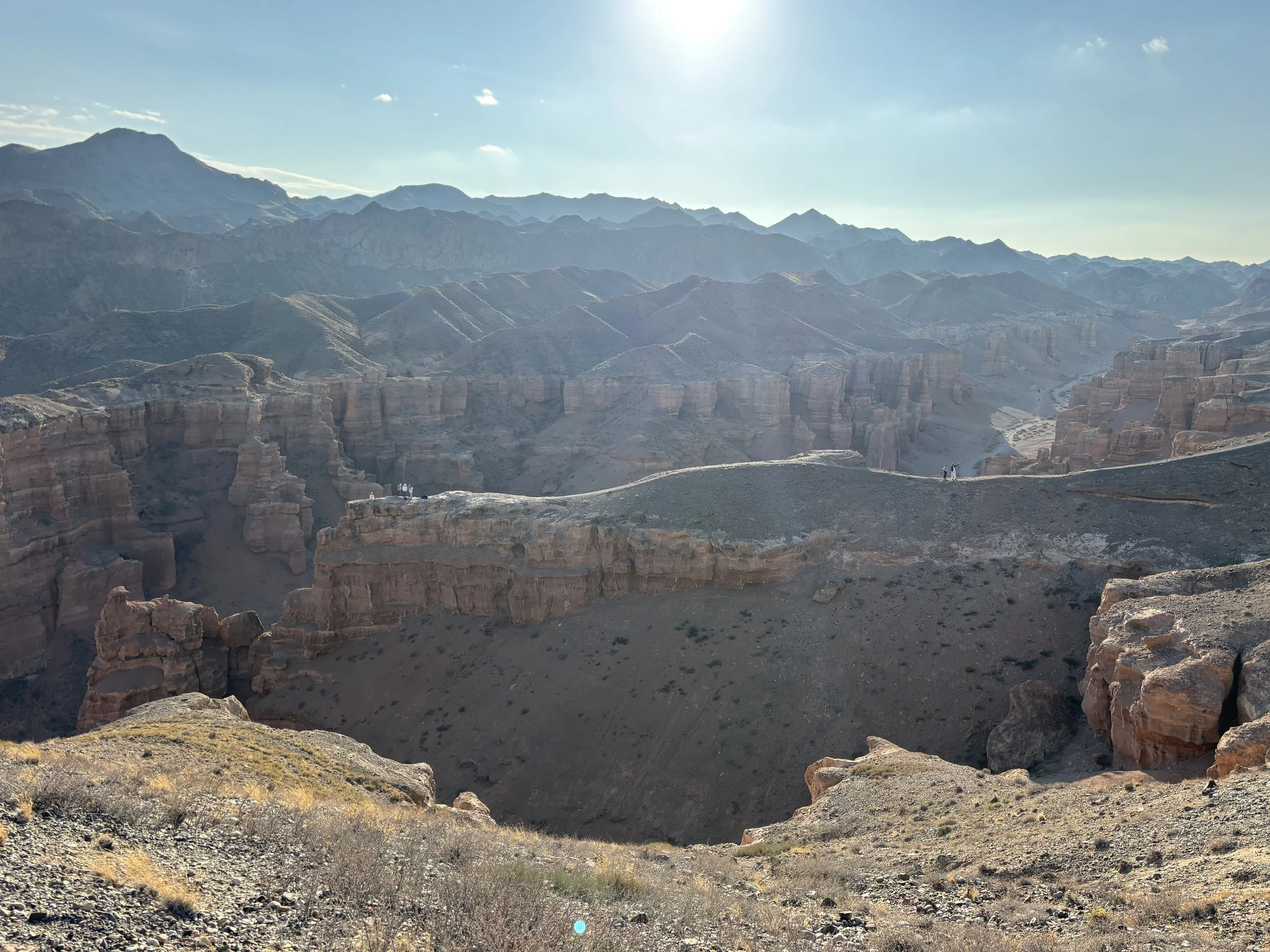
With these views, and little time to spare, this intense one-day excursion from Almaty came to an end. More than three hours of driving lay ahead, though fortunately much of it on motorways.
However, and before you go, let me recommend the following pieces, which you may find of interest if you are planning a trip to Kazakhstan in the near future:
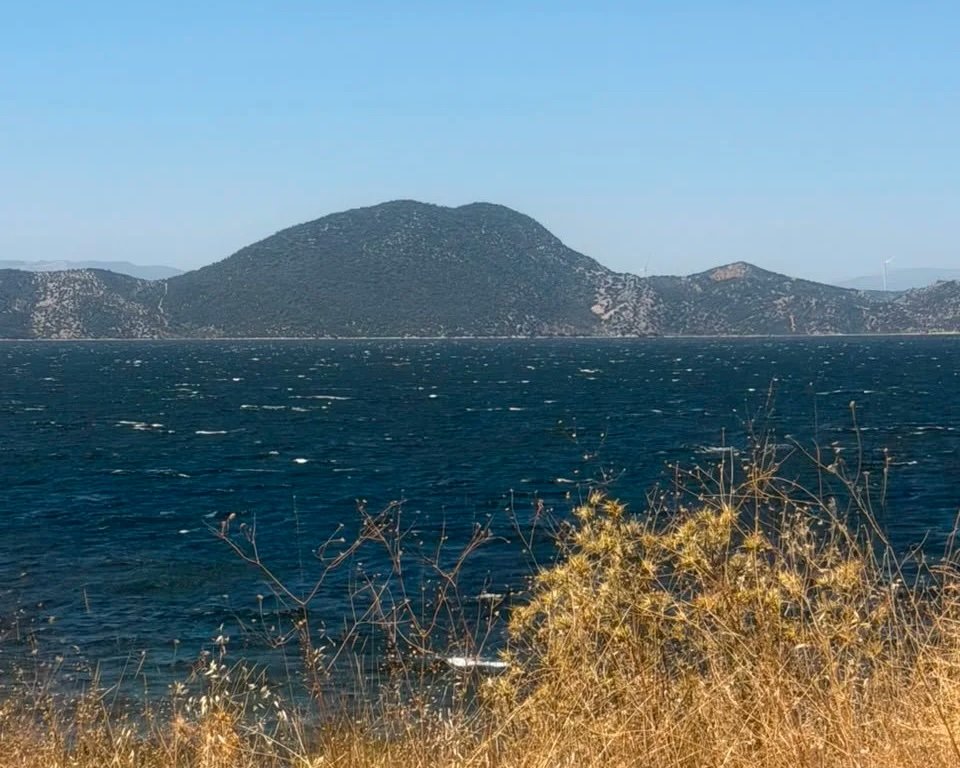
Turkey's Forgotten Inland Sea: Bafa Lake and Herakleia under Latmos
Many travellers head for Turkey’s Aegean coast every summer (and can’t really blame them for that!), but far, far fewer venture a few miles inland to explore what may be one of Western Anatolia’s best kept secrets: Bafa Lake (“Bafa Gölü” in Turkish) and the Ancient city of Herakleia under Latmos, a little known Ancient city which lies under the modern day village of Kapıkırı, roughly half way between Izmir and Bodrum. In fact this is a great thing to do if you are driving along the Turkish Riviera between these two cities.
If you were wondering why a major city flourished here, in Ancient times, in the arid hills of Western Anatolia, the answer is that, Heracleia was, at its height, a port city, since Bafa Lake was connected to the Aegean sea.
Sediments from the Büyük Menderes river ended up cutting Heracleia off from the sea in a process similar to that which led, as well, to the ruin of other prominent urban centers of Antiquity in this part of the Aegean, such as Ephesus and Miletus, which are now effectively inland.
In this case, Herakleia didn’t lose access to water, but what was a large sea bay, became, instead a lake of brackish waters.
How to get to Lake Bafa?
As mentioned earlier, Lake Bafa sits roughly halfway between Bodrum and Izmir and not far from the famous Ancient site of Ephesus.
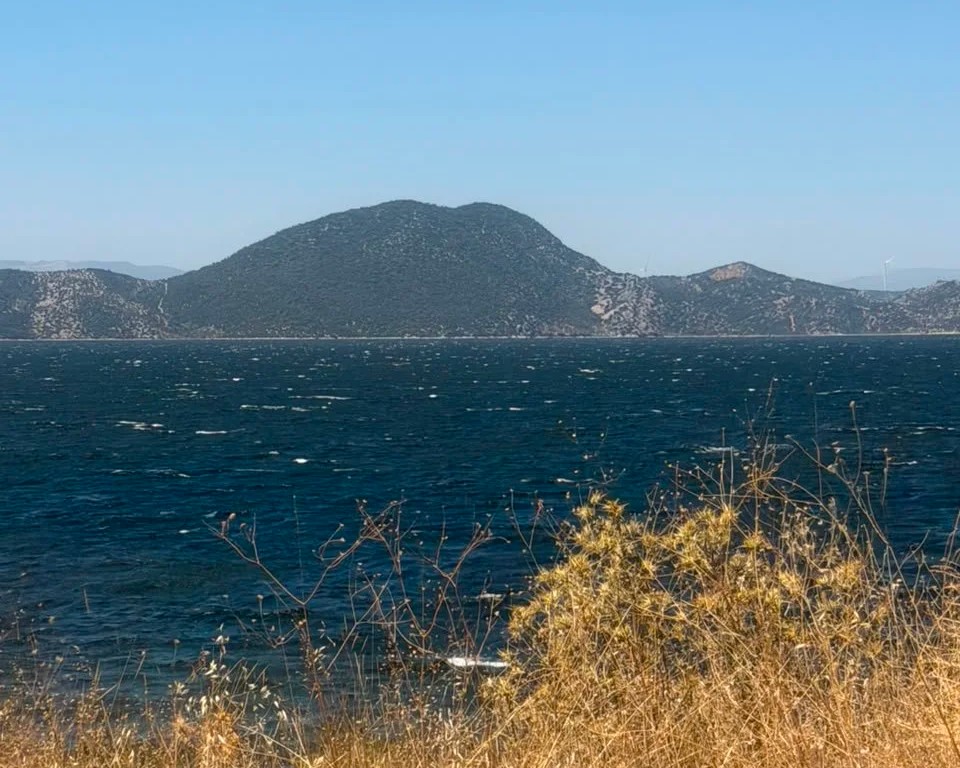
And while the D525 motorway runs along much of the lake’s southern shore (offering some rather impressive views, as shown in the pic above), the main point of interest is the vilage of Kapıkırı, on its northeastern side.
To get there you will need a car, since this is really a rural area without much any meaningful public transportation options to speak of. The good news is that Kapıkırı is just 9 km off the D525 motorway and there is a decent, if rather local, paved road to get there.
The unique landscape of Mount Latmos
One of the main draws of Bafa Lake is that this is not just a place to see Ancient ruins, but a whole ensemble which combines nature and history.
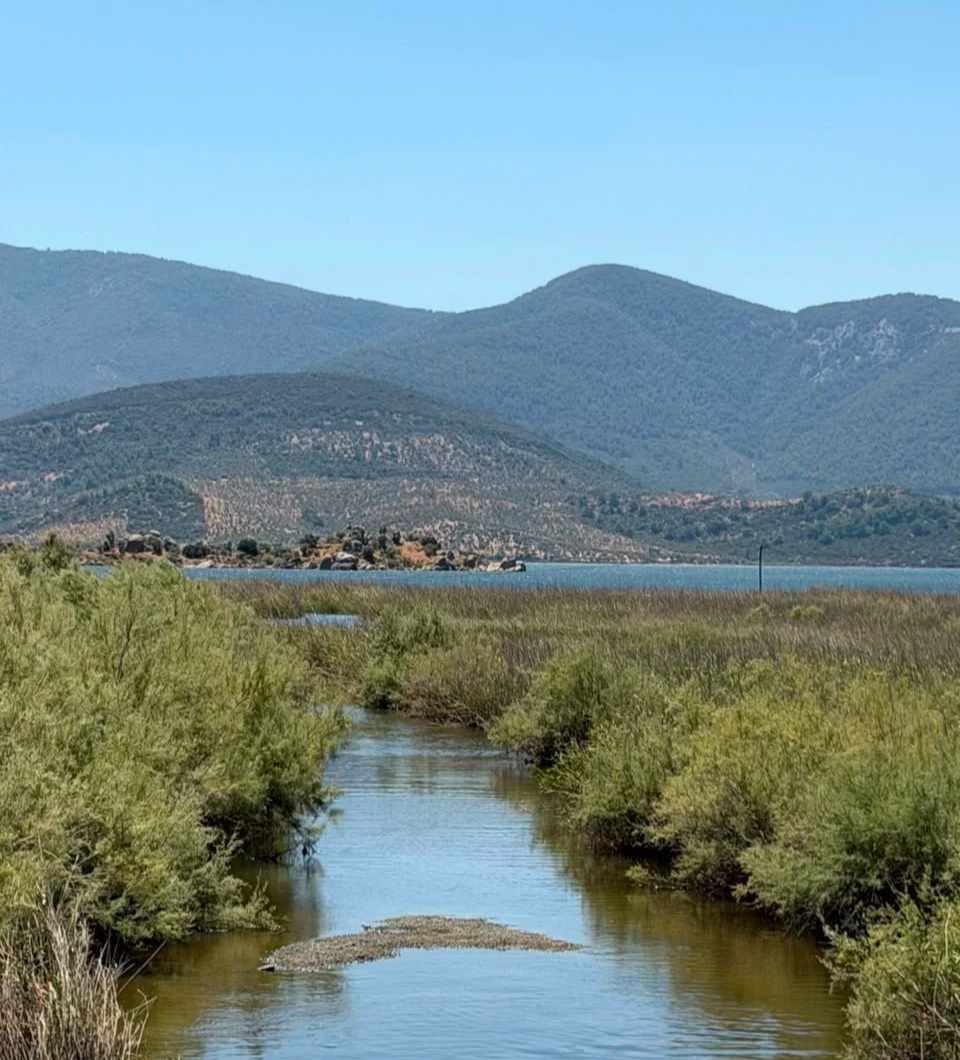
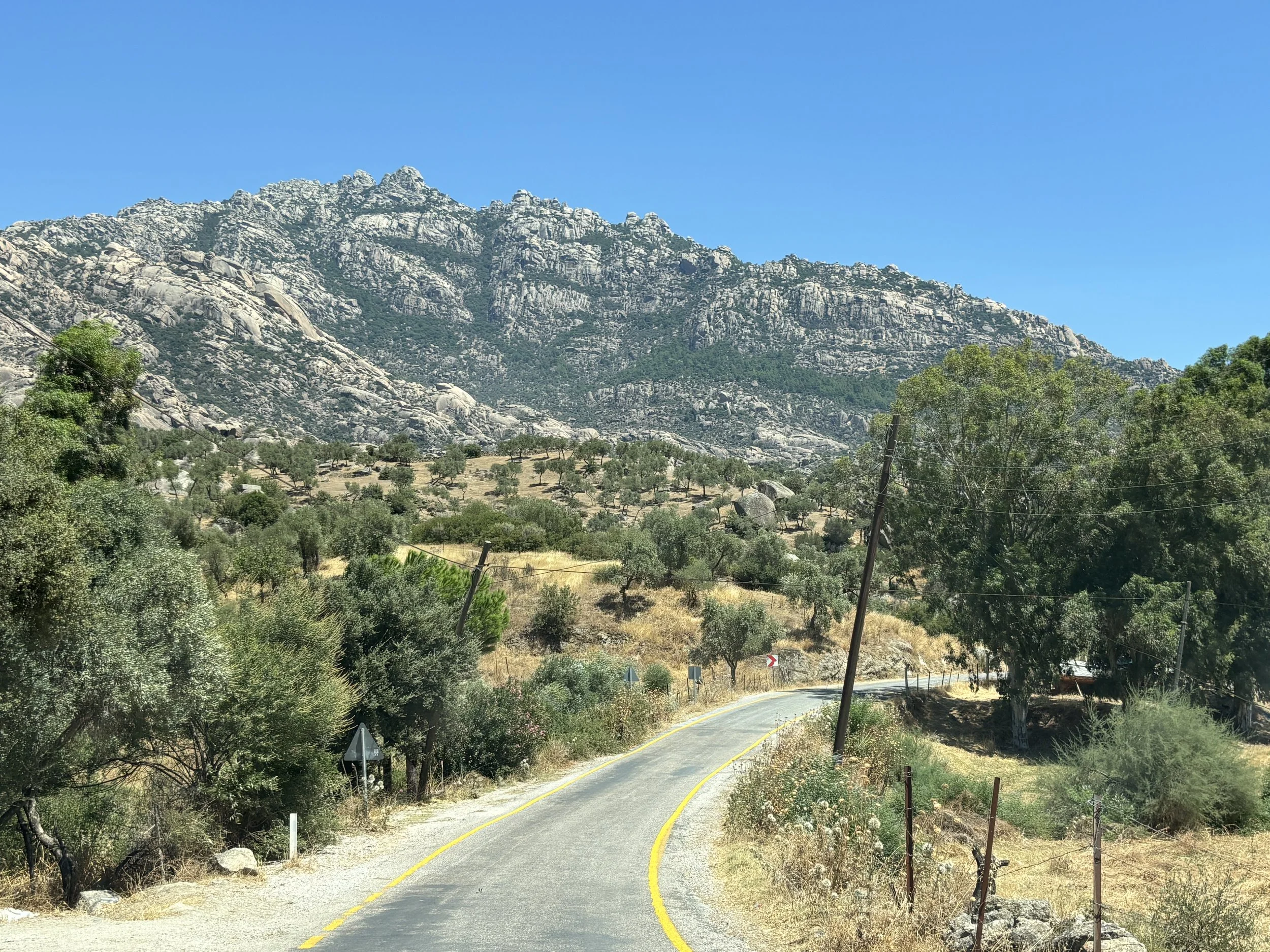
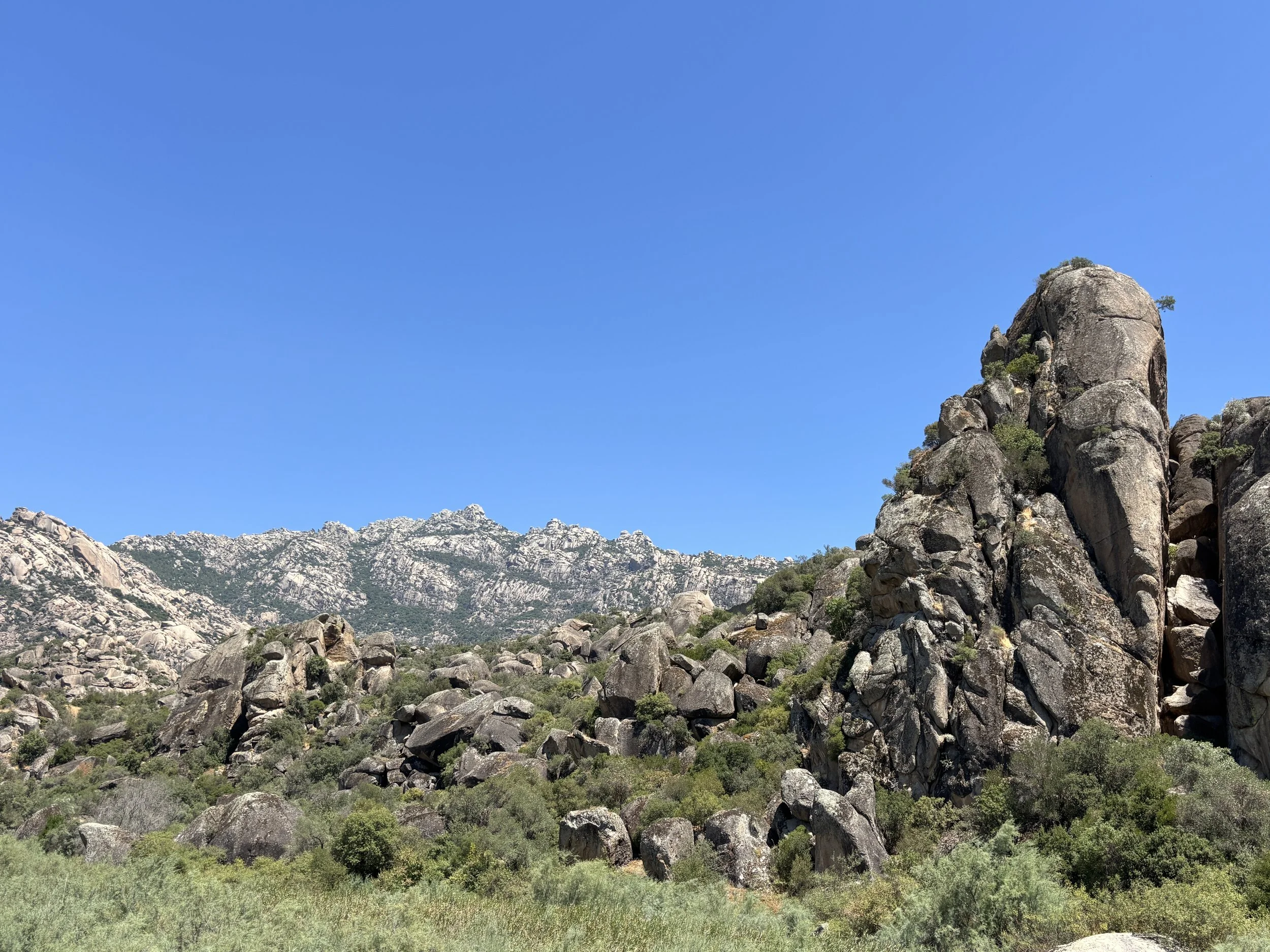
There is the lake and its water landscapes, of course, but what is on dry land is also worth mentioning, because the Latmos mountains which run along the eastern and northern sides of Bafa Lake are quite spectacular, as well.
This is an area which reminded me of Montserrat, near Barcelona, with rather unusual rock formations and large boulders of many shapes scattered all over the place.
The olive groves you pass on the way to Kapıkırı are a constant reminder that this land has been cultivated literally since the dawn of civilization (some 10,000-year-old rock paintings have actually been found in the area).
The lost city of Herakleia under Latmos
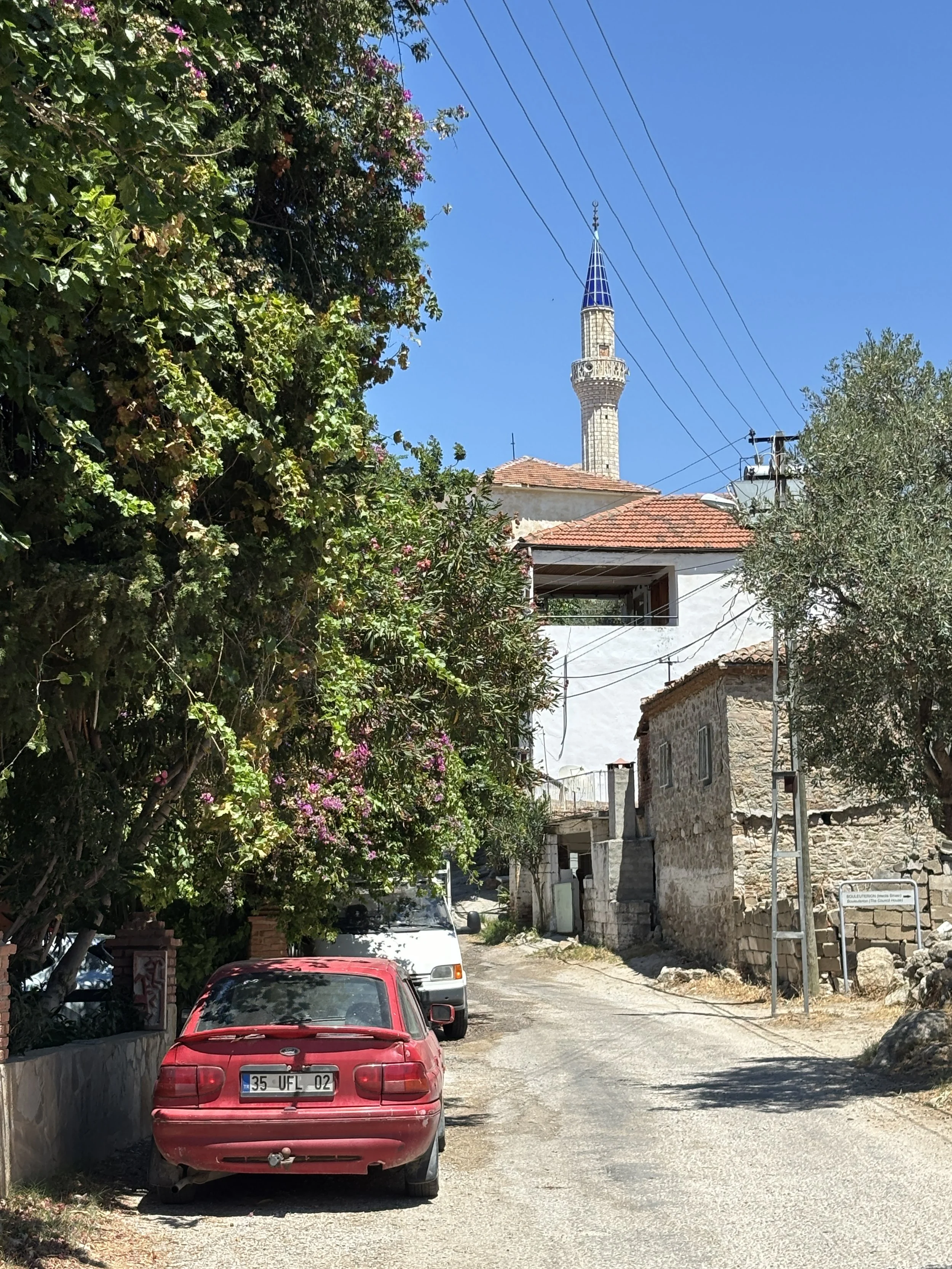
Kapıkırı is a small, quiet hamlet overlooking Lake Bafa with little in it to suggest it sits atop the ruins of a major Hellenistic city.
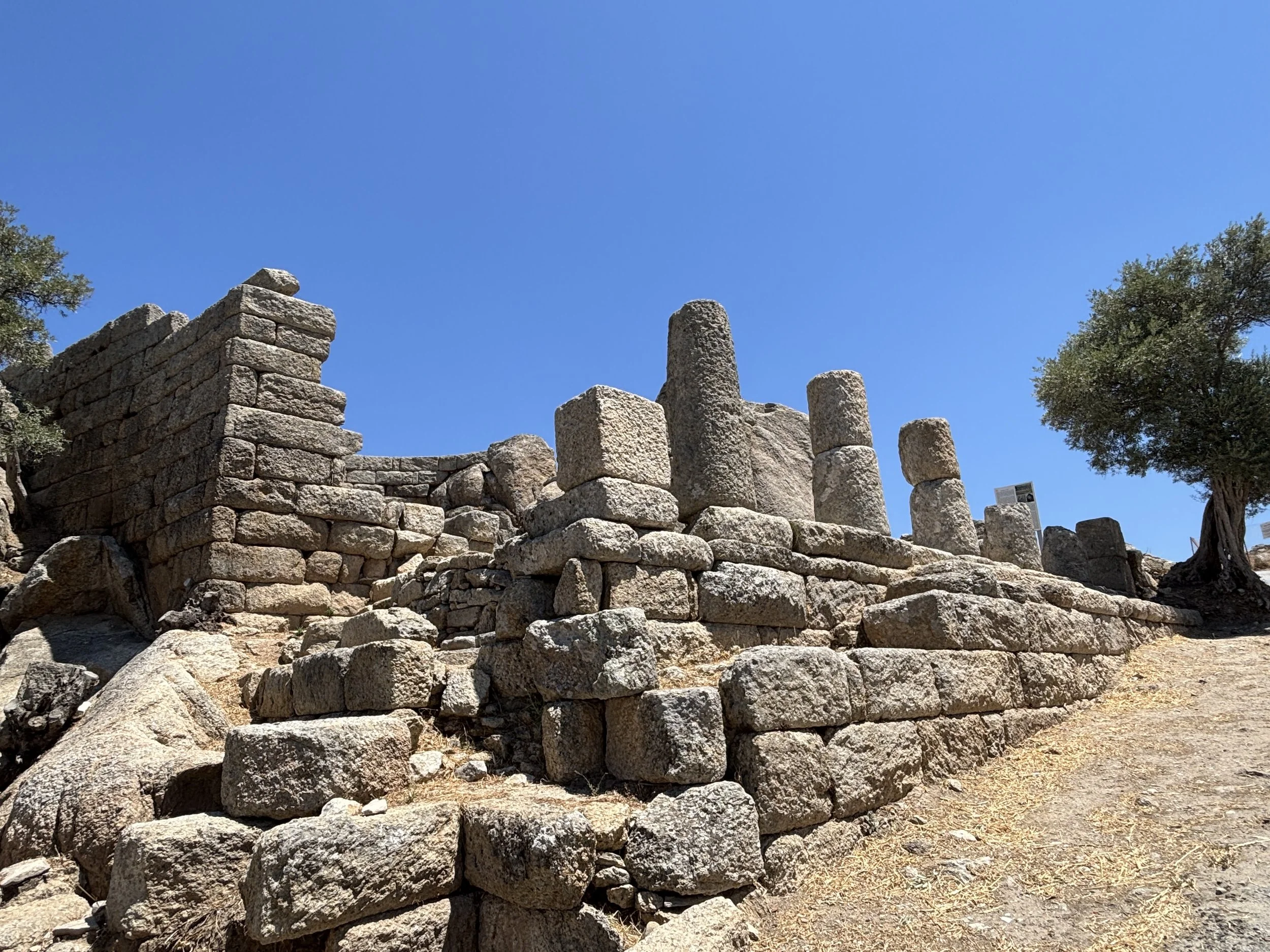
Herakleia under Latmos was settled at least as early as the 8th C. BC, however, it reached its apogee a few centuries later, during the Hellenistic period (around 4th C. BC), when king Mausolus of Halicarnassus (modern day Bodrum) made it one of its major urban centres and gave it the name of Herakleia (since there were multiple cities with this name across the Ancient greek world, this one was known as “-under Latmos”, in a reference to the neighbouring mountains).
Mausolus also fortified the city of Herakleia, building an enceinter which run for more than 6 kilometres around its perimeter.
Part of these walls are still visible today, as are the ruins of several buildings, although not much is left over ground of the old city.
It seems that the decadence of Herakleia under Latmos started already in Antiquity as its access to the sea started to become silted up and it lost its function as a port and place of trade. It appears that the city was not abandoned outright, though, and with the advent of Christianity it became a monastic center until the arrival of the Turks in the middle ages.
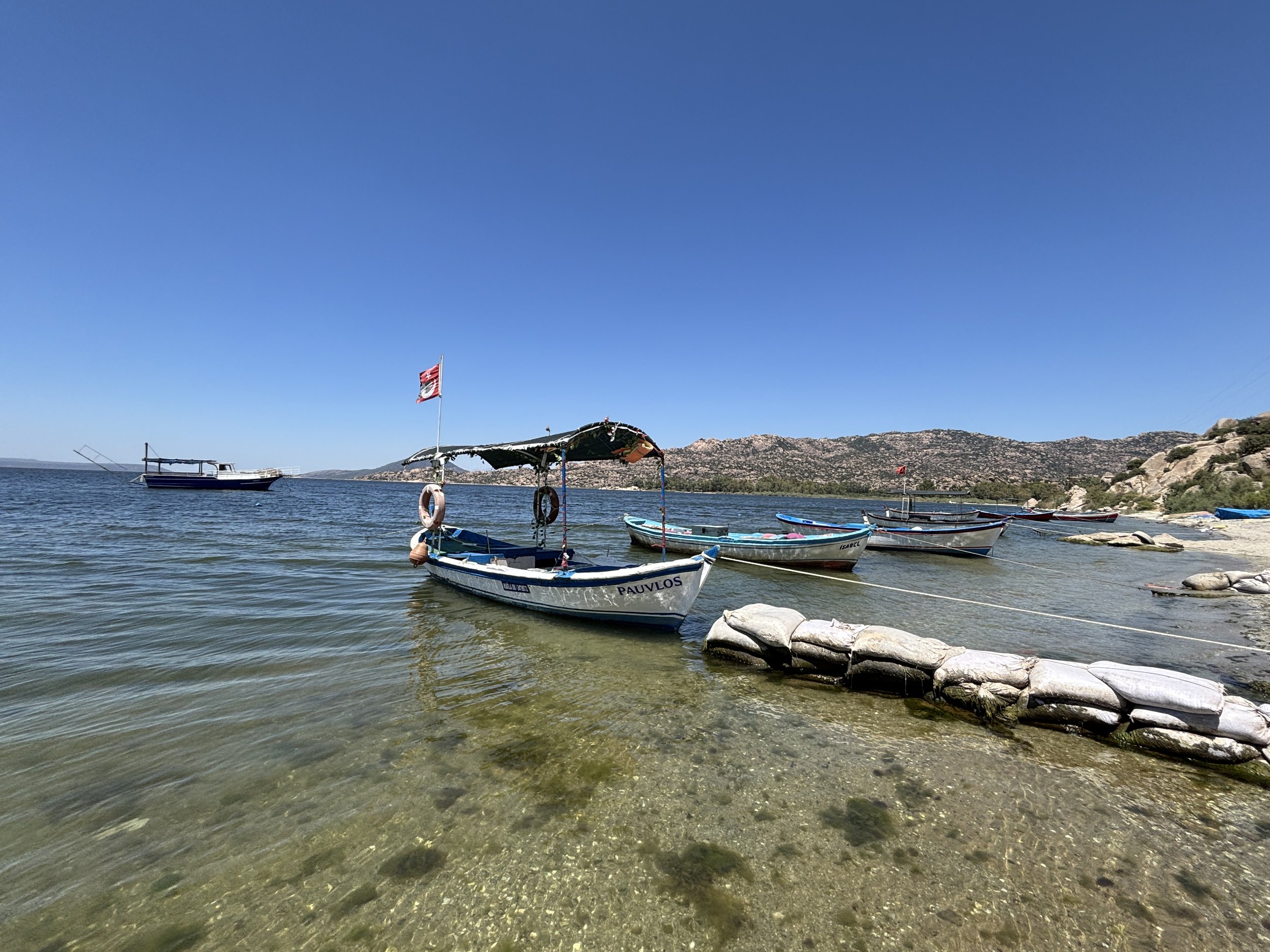
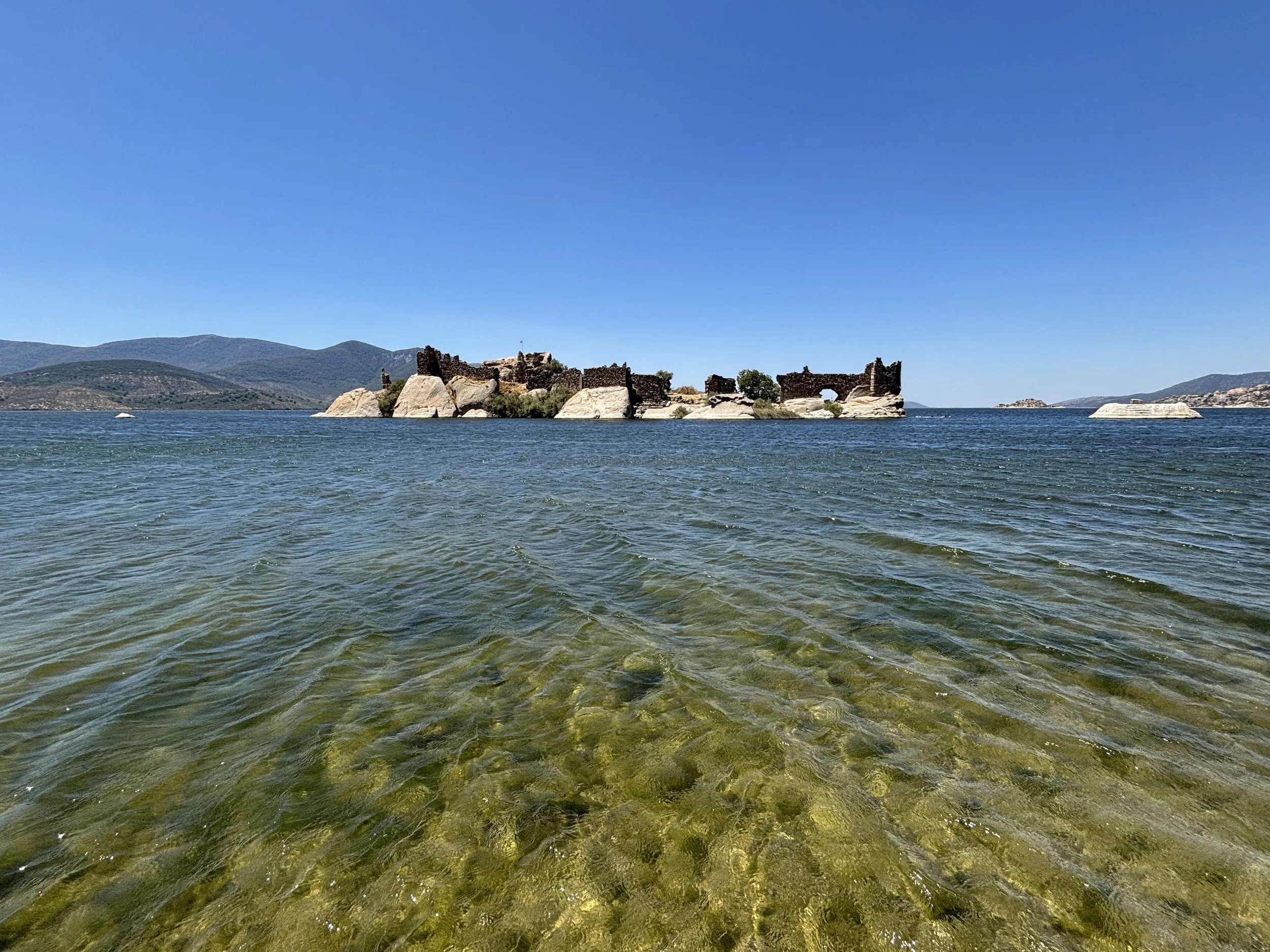
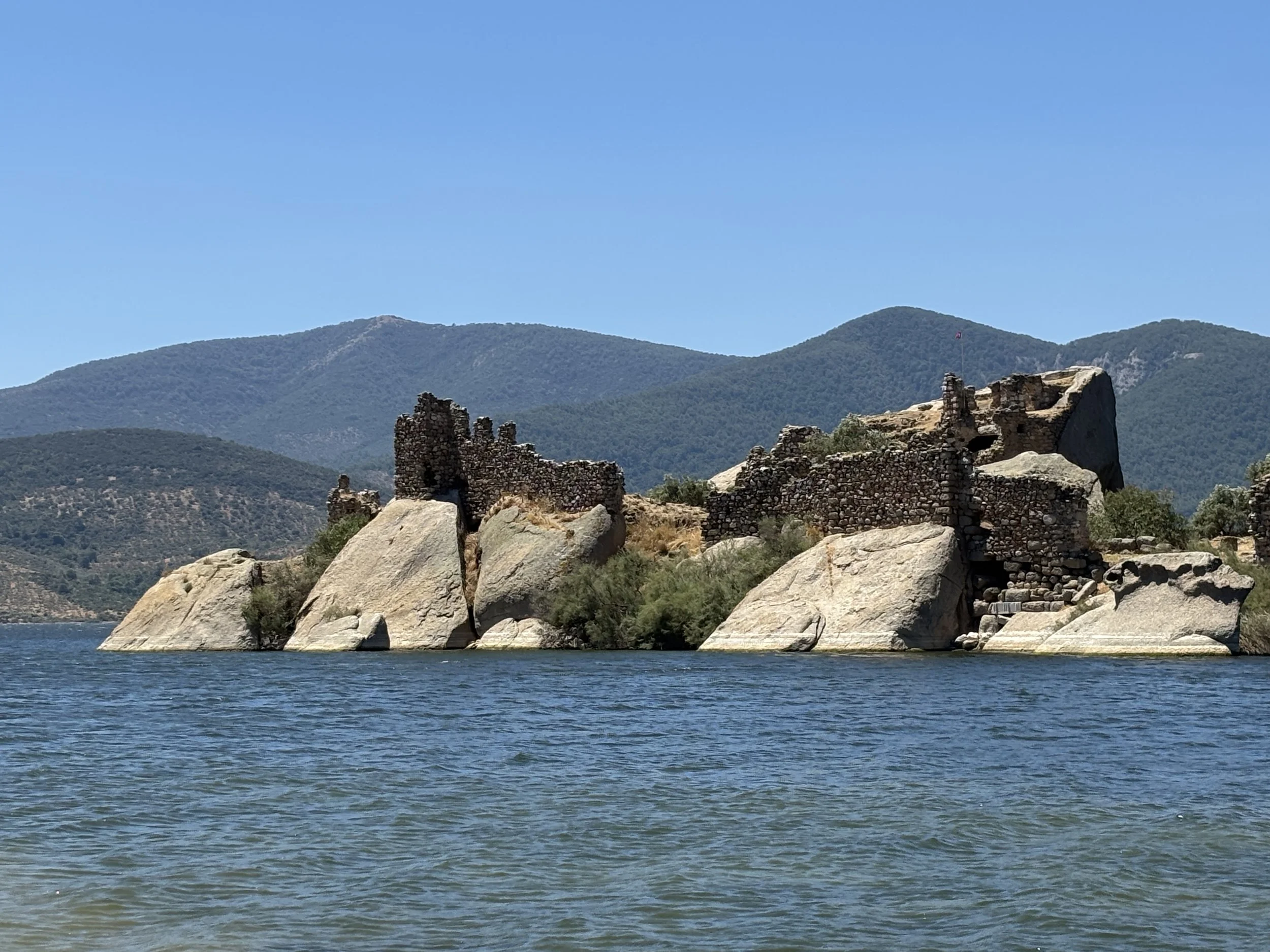
Another point of interest is Kapıkırı Island (below), right in front of the village of the same name. The island still has its Hellenistic walls as well as the ruins of a Byzantine monastery and two smaller churches. It is located so close to the shore that it is actually possible to swim to it (I didn’t, but there were some bathers that were doing just that when I visited).
Lake Bafa’s firefighting plane
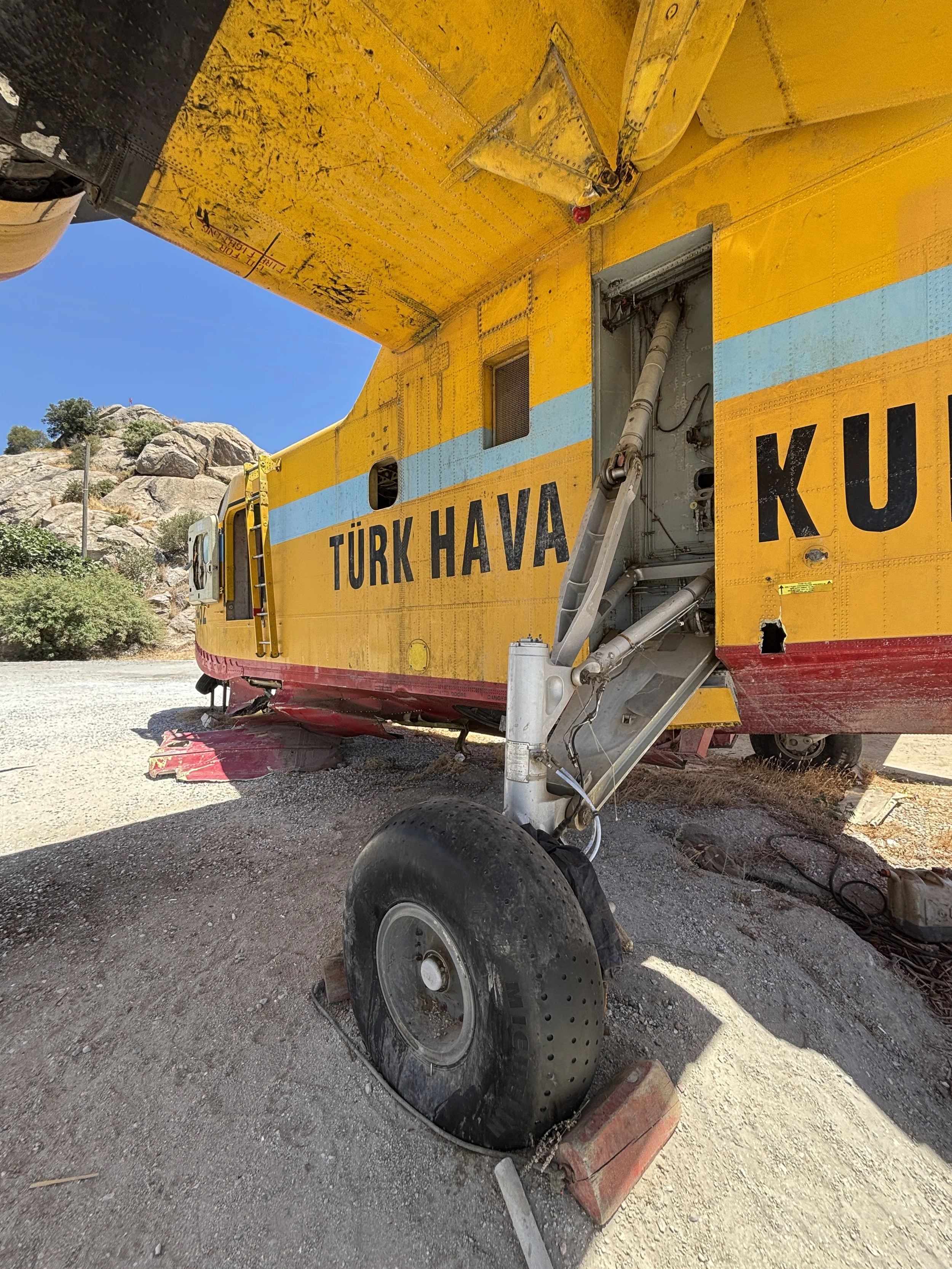
Adding to the scenery is an item from a much more recent time: a Canadair CL-215 amphibious firefighting aircraft is on permanent display by the shore of the lake.
The aircraft is painted in the colours of the Turkish Aeronautical Association (Türk Hava Kurumu, “THK”), which operates a fleet of Canadair firefighting seaplanes on behalf of the Turkish General Directorate of Forestry.
So, how did this aircraft end up there?
In June 2024, this aircraft was scooping water on Lake Bafa in order to fight a forest fire in a nearby area when it suffered an accident due to adverse winds and waves and it ended up with its forward fuselage submerged. No one was injured and the three crew members were rescued, but the aircraft was written off and left by the beach in Kapıkırı.
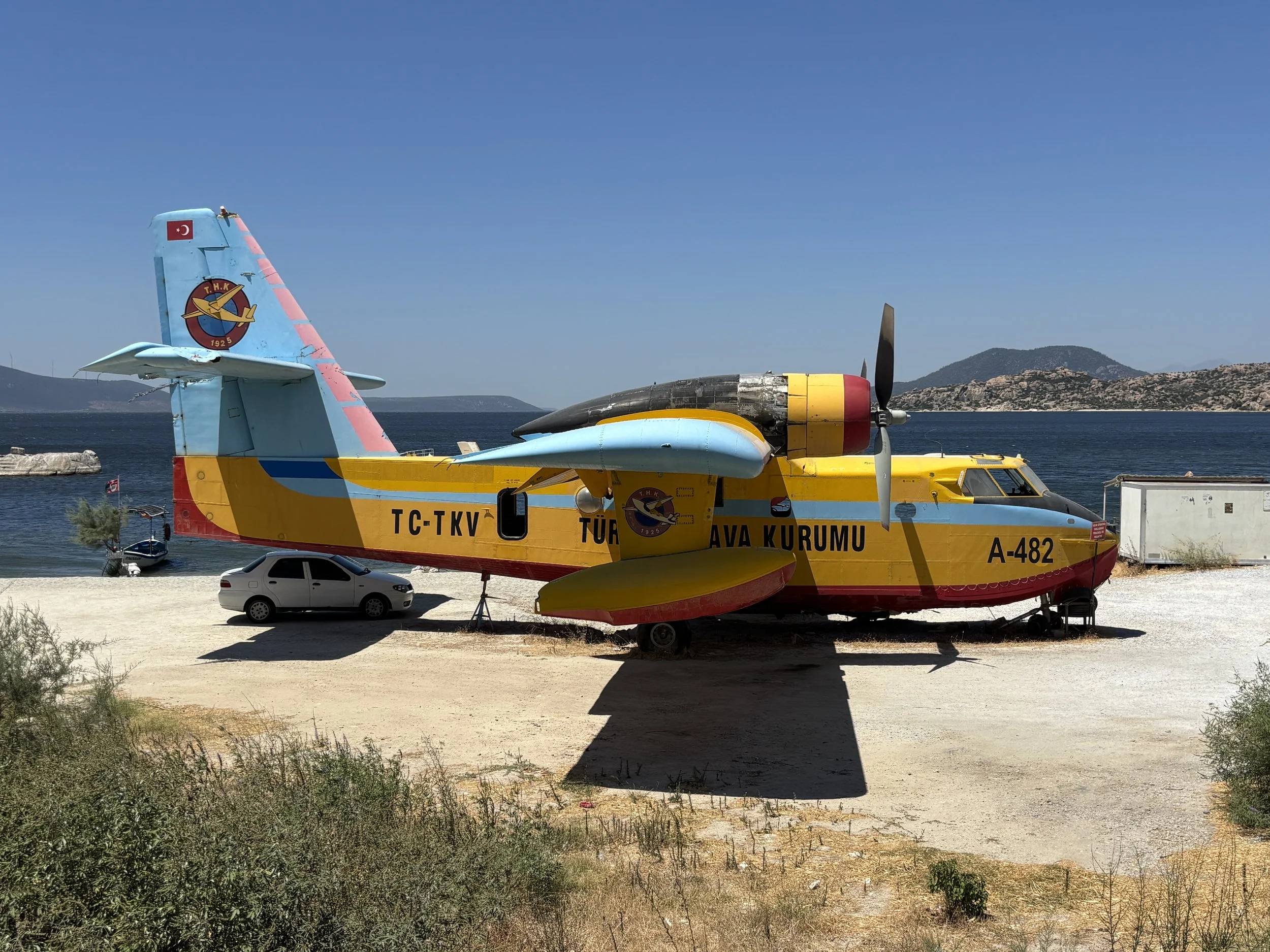
Besides being a very interesting sight by itself, the aircraft provides quite an interesting counterpoint to the historical and natural appeal of the place.
Where to eat by Lake Bafa: Agora Pansiyon
If you are visiting Lake Bafa, tasting the lake’s hot smoked eels is a must.
This is a true local speciality and, to try it, I would recommend heading to Agora Pansiyon, a restaurant in “downtown” Kapıkırı which boasts several Michelin guide mentions.
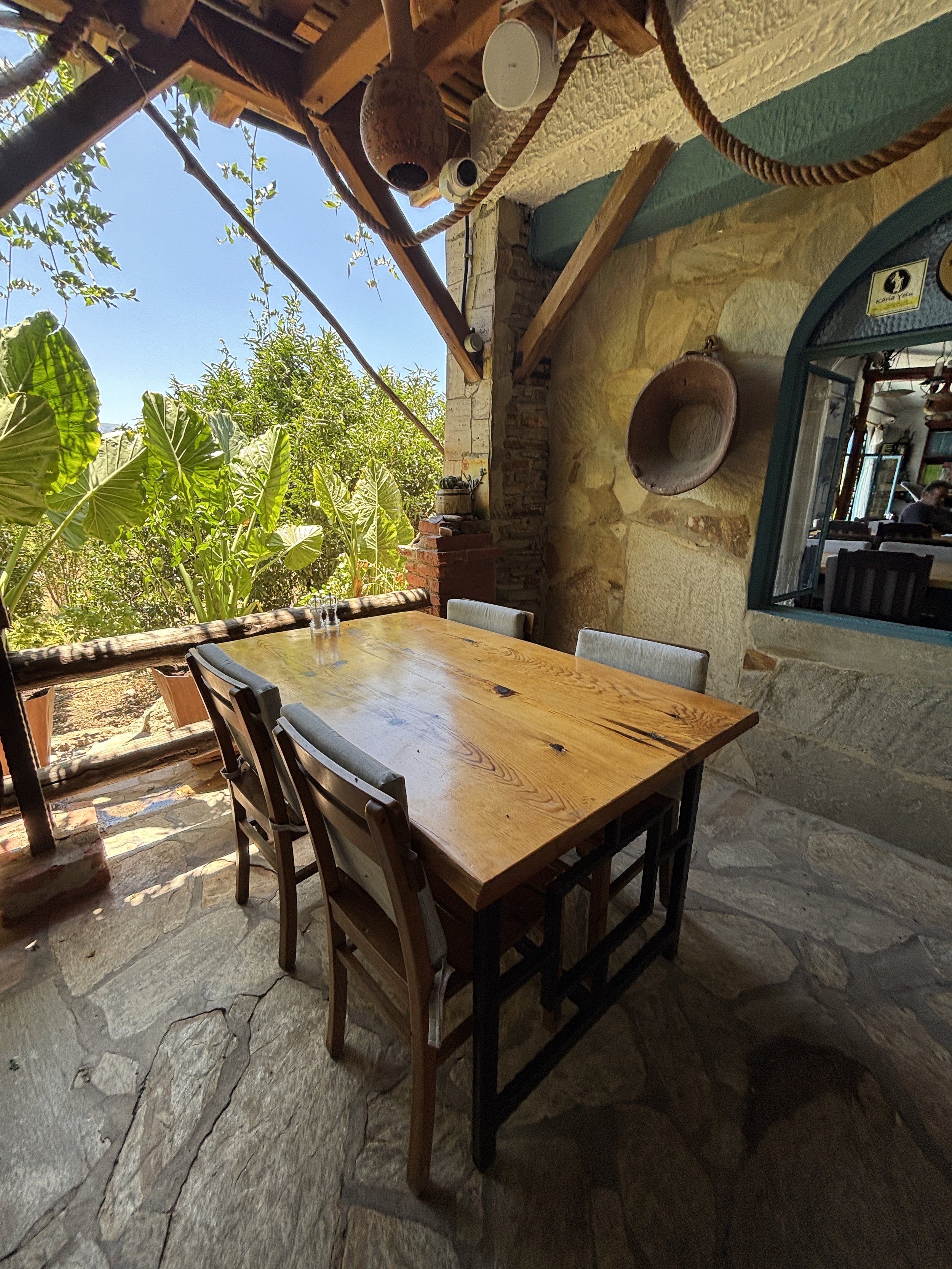
This is a nice family-owned establishment, which works both as a restaurant and hotel. It has its own parking space, which is relevant since I guess almost every visitor arrives to Kapıkırı by car. The restaurant has a nice outdoor, covered terrace which is rather pleasant.
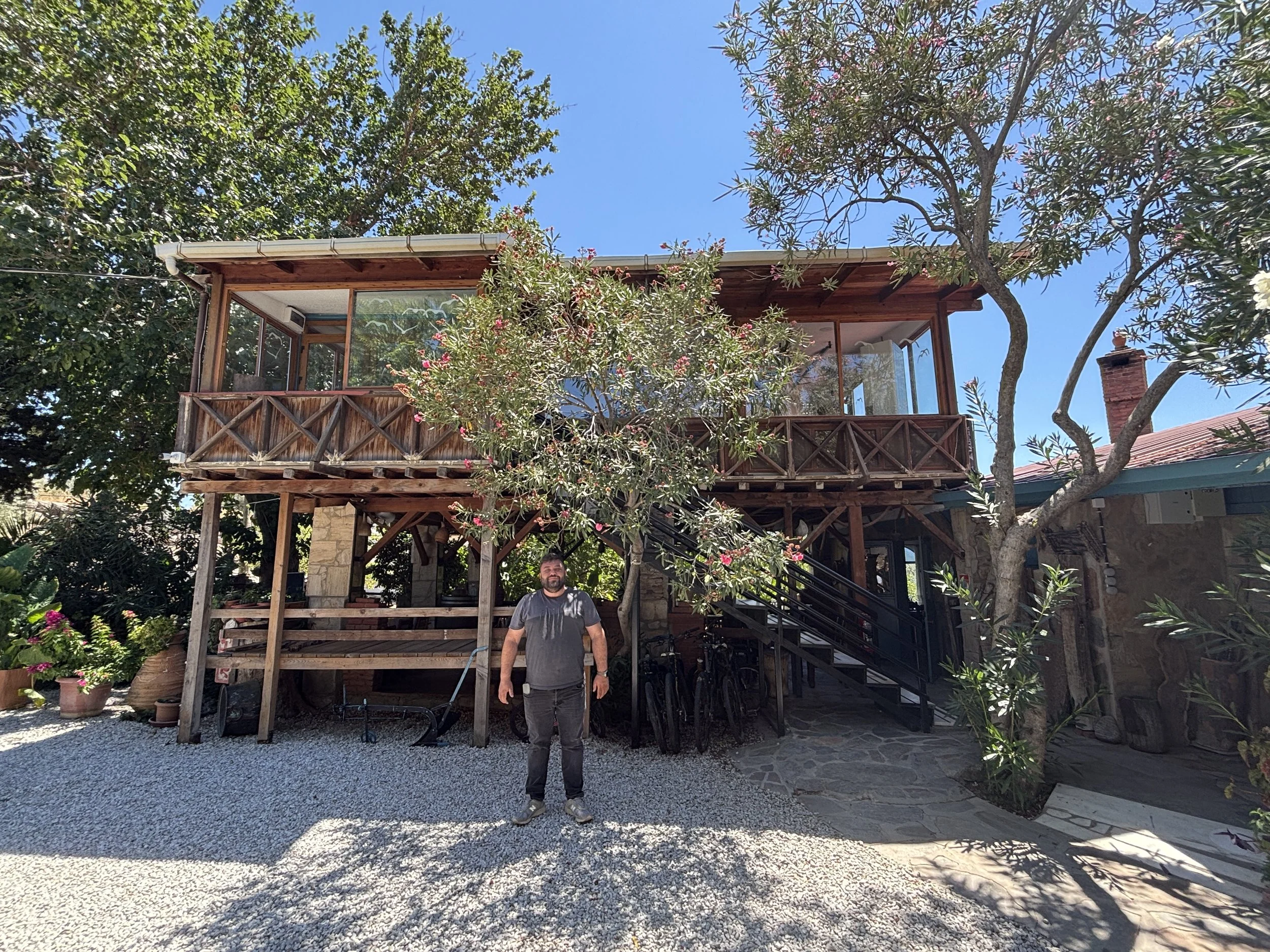
It’s owner, Mithat, is fluent in English (which, surprinsingly is not that common in Turkey’s hospitality sector) and besides being also a talented amateur photographer (you can see some of his work on Instagram) he also works as a tourist guide, taking groups on tours all over this region, so he is very well versed on the unique history and geography of this region.
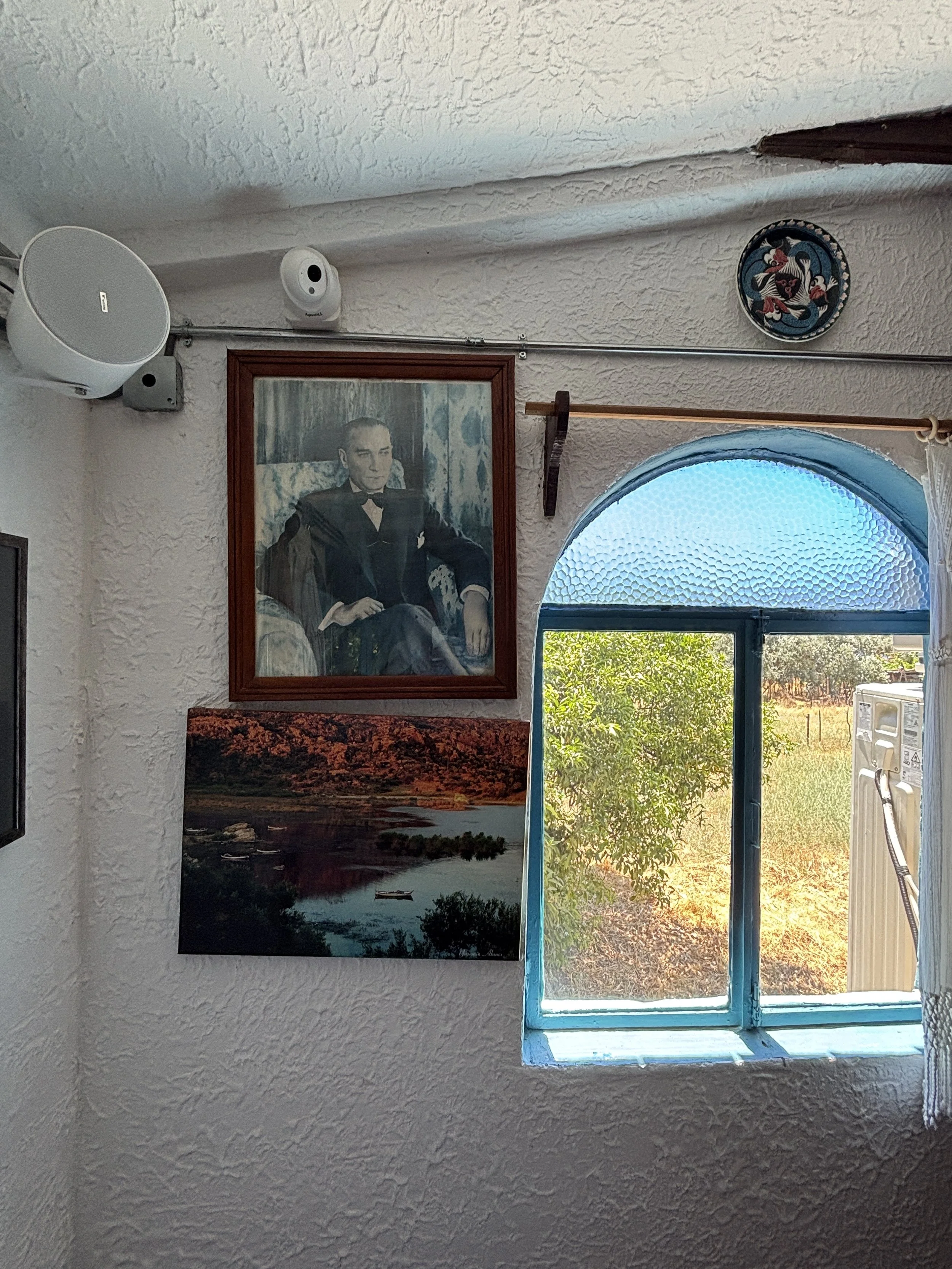
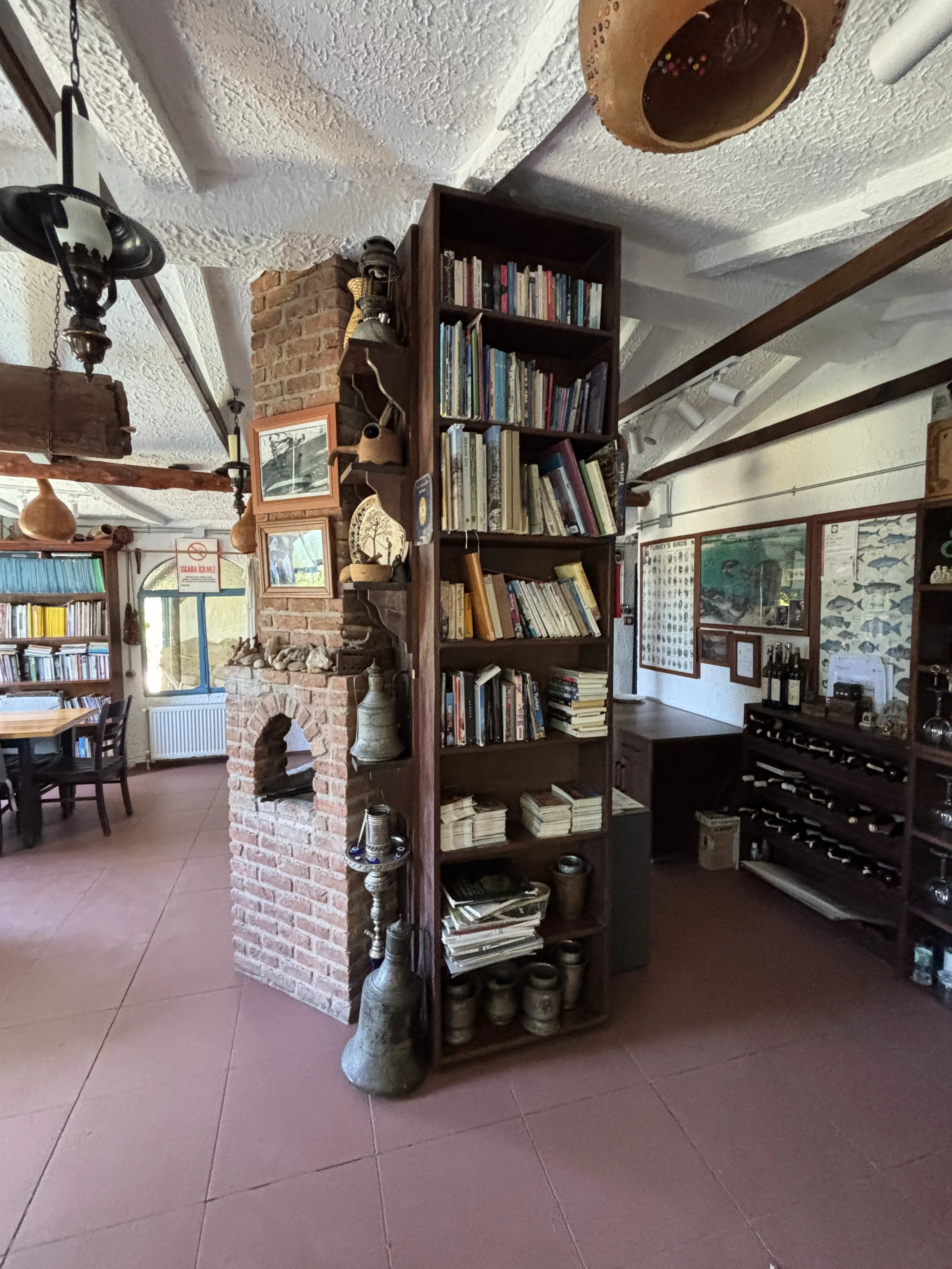
Agora Pansiyon is also a great place to try the local specialities, starting by the olives of the locally-harvested olives of the Memecik variety (they are recognized by the Milas Table Olives Protected Designation of Origin, btw), which are also used to make extra virgin olive oil.
Another surprising detail worth mentioning: our host, Mithat, told us that the bread they serve at Agora Pansiyon is also a piece of local heritage. Following an old Anatolian tradition, the sourdough starter used to make the restaurant’s bread comes from a living culture brought into the family generations ago as part of a bride's dowry.
The yeast has been fed and kept alive ever since, rather than made fresh. Apparently, in Turkish tradition this surdough starter is believed to carry a kind of omen for the household's fortune.
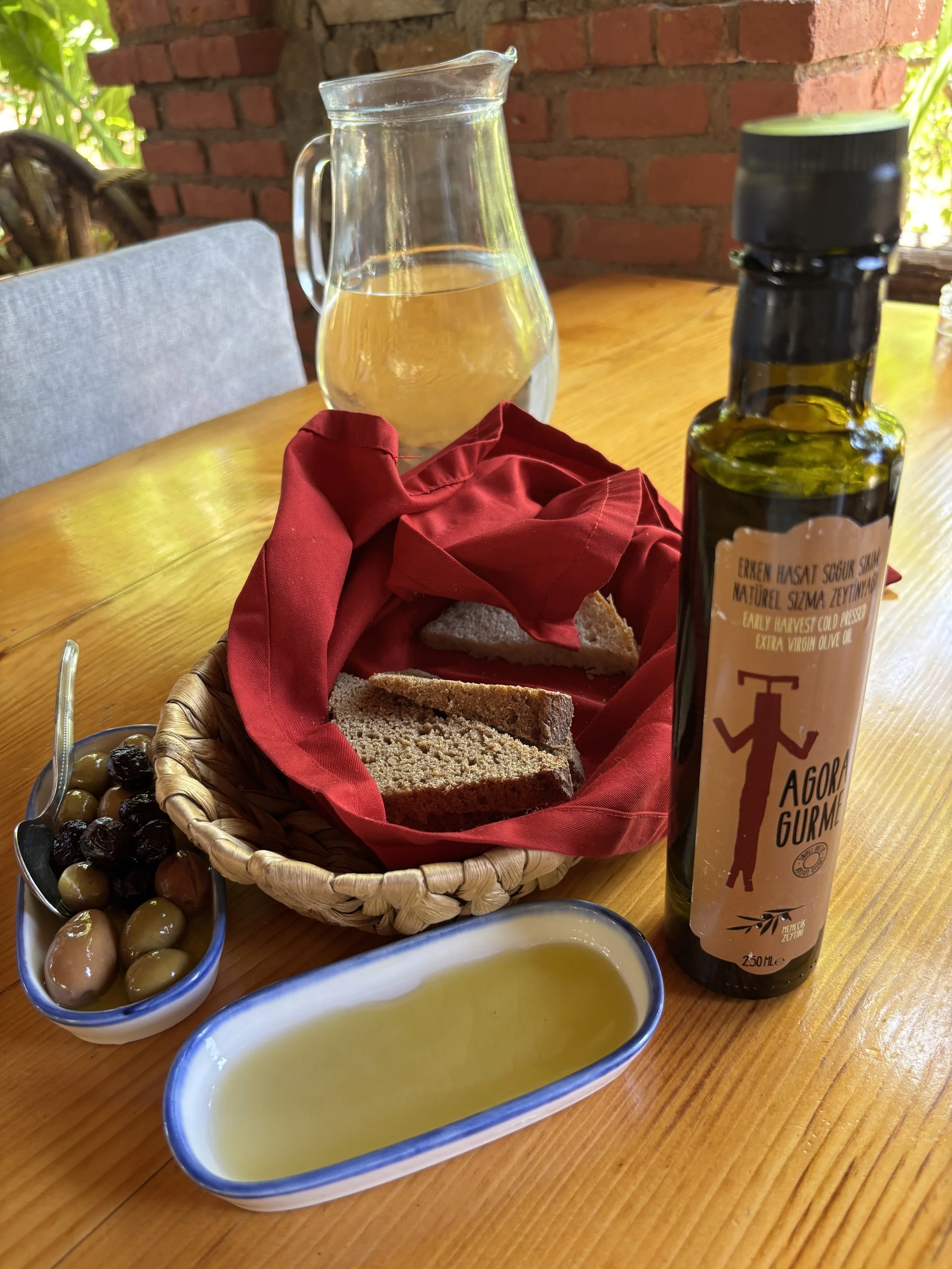
You can taste some other local foods at Agora Pansiyon, such as Milas Vekilharç, which is a sort of cylindrical dumpling which is open at the edges, and Milas Ekşili Köfte, which are meatballs simmered with tomato, pepper, and pomegranate molasses.
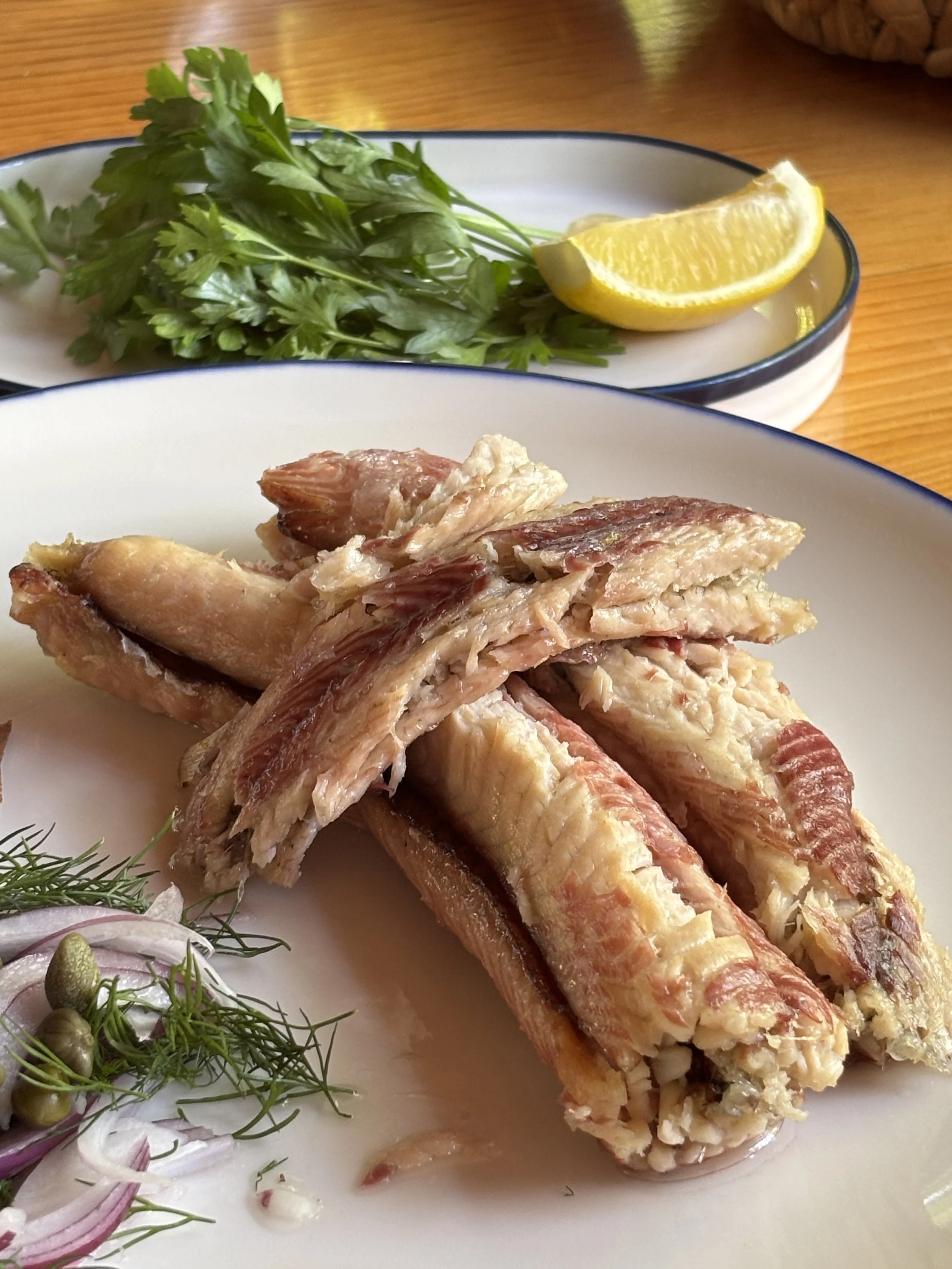
But what I would really recommend tasting is the hot smoked eels from Bafa Lake. Eels thrive in the brackish waters of Lake Bafa, but I was astonished to learn they actually spawn in the Gulf of Mexico and then migrate all the way to Lake Bafa, which is not entirely sealed off from the sea, since the Büyük Menderes river and adjacent marshy areas act as a conduit.
In any case, this was my first time trying eels and they didn’t disappoint!
Agora Pansiyon does the smoking in-house and they also offer them grilled. They are then presented to the waiting guests under a glass cloche which has retained the smoke and heat. Eels are suprinsingly meaty and tasy, a great discovery!
So, this is all for this time. To be honest, this was a rather quick stopover while traveling by road from Bodrum to Izmir to catch a plane, so it was really time constrained.
I left Bafa Lake with the feeling that there was still so much more to explore around this area and that a full day or two are not off the mark if you wish to experience the Turkish countryside in a different way.
Btw, if you are travelling in Western Anatolia and the broader Turkish Aegean region, you may want to check also the following stories:
Some of the top things to do and to see around Bodrum (2026 UPDATE)
Kaş to Kastellorizo: where Turkey's Lycian Way meets the most distant Greek island
What to do in Penang & Malaysia’s Cameron Highlands
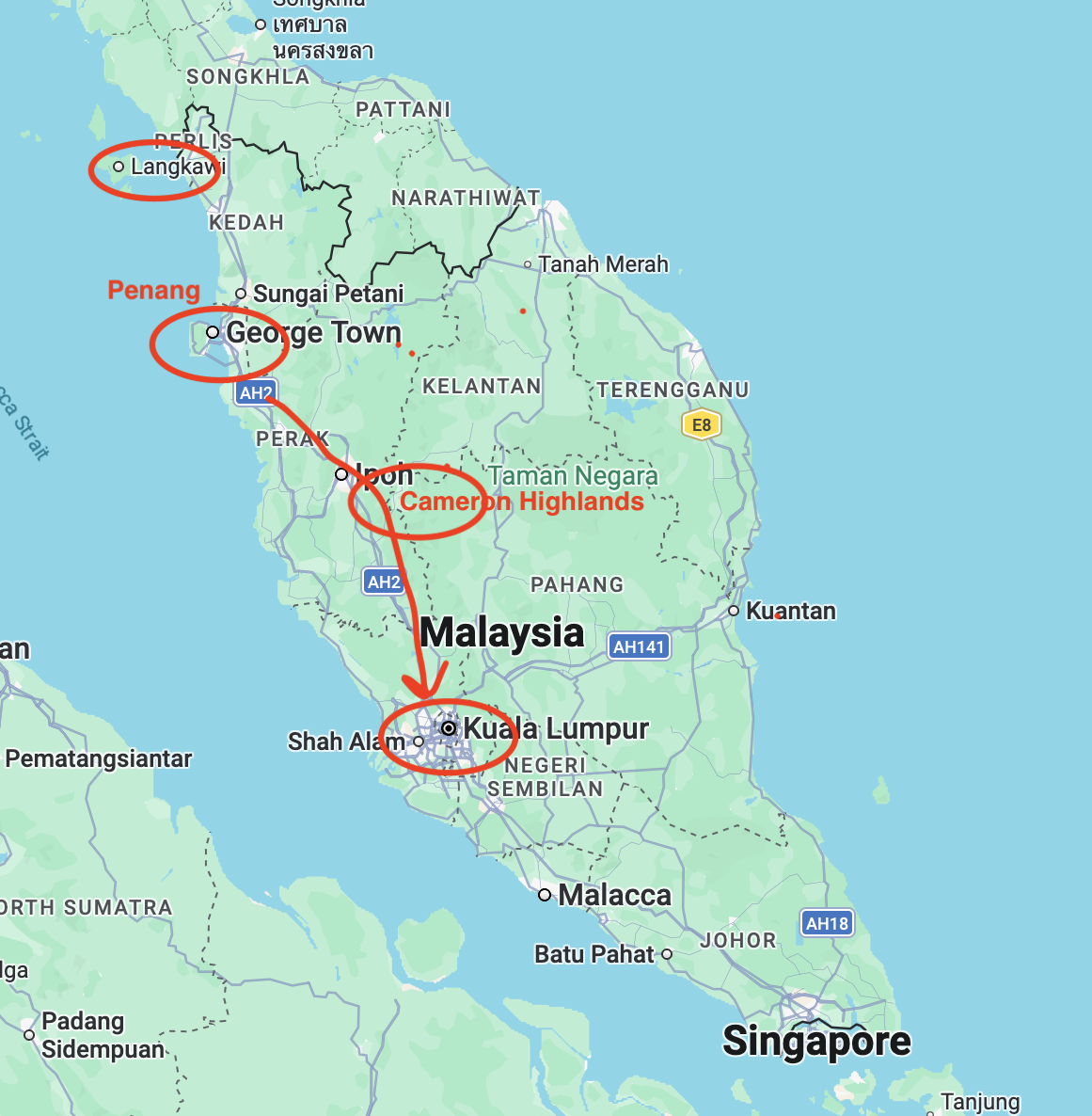
This is the second post about things to do and to see in Malaysia outside Kuala Lumpur.
If in the first instalment we travelled to the resort island of Langkawi to check its beaches and nature reserves, on this one we are going to explore another island, Penang, as well as the Cameron Highlands of Central Malaysian, a surprising lush cool mountain area covered by rainforest and tea plantations.
Our itinerary concludes in Kuala Lumpur, and although the capital of Malaysia is a bit out of scope for this post, since the city l is usually the gateway to many itineraries within the country, I have included a recommendation of what is, in my opinion a great value quality hotel in KL.
This post may contain affiliate links. If you book or buy something through them, I earn a small commission, at no extra cost to you. It's a way to keep Places of Charm going. Thank you for your support.
What to see and what to do in Penang: walk around Georgetown
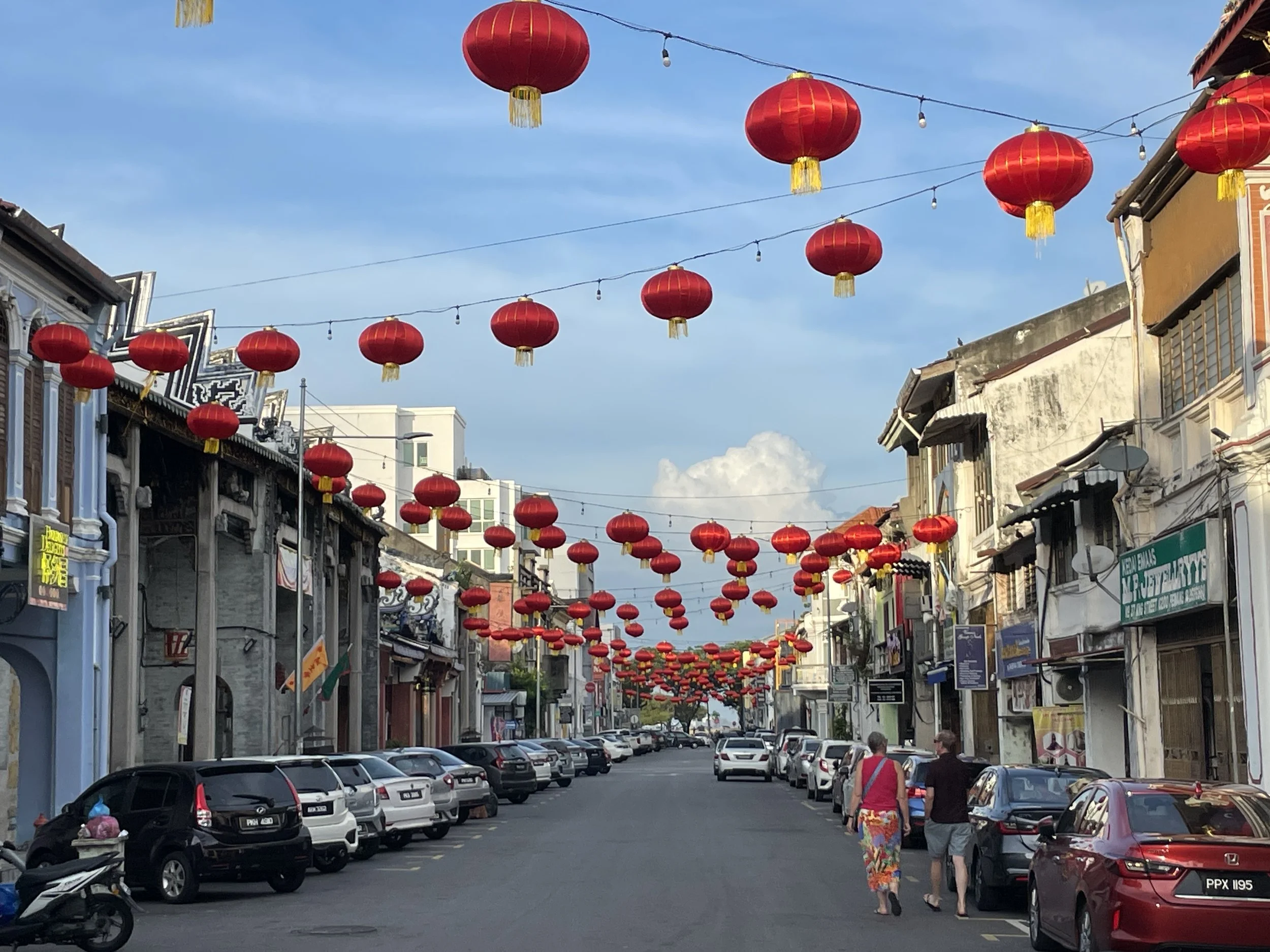
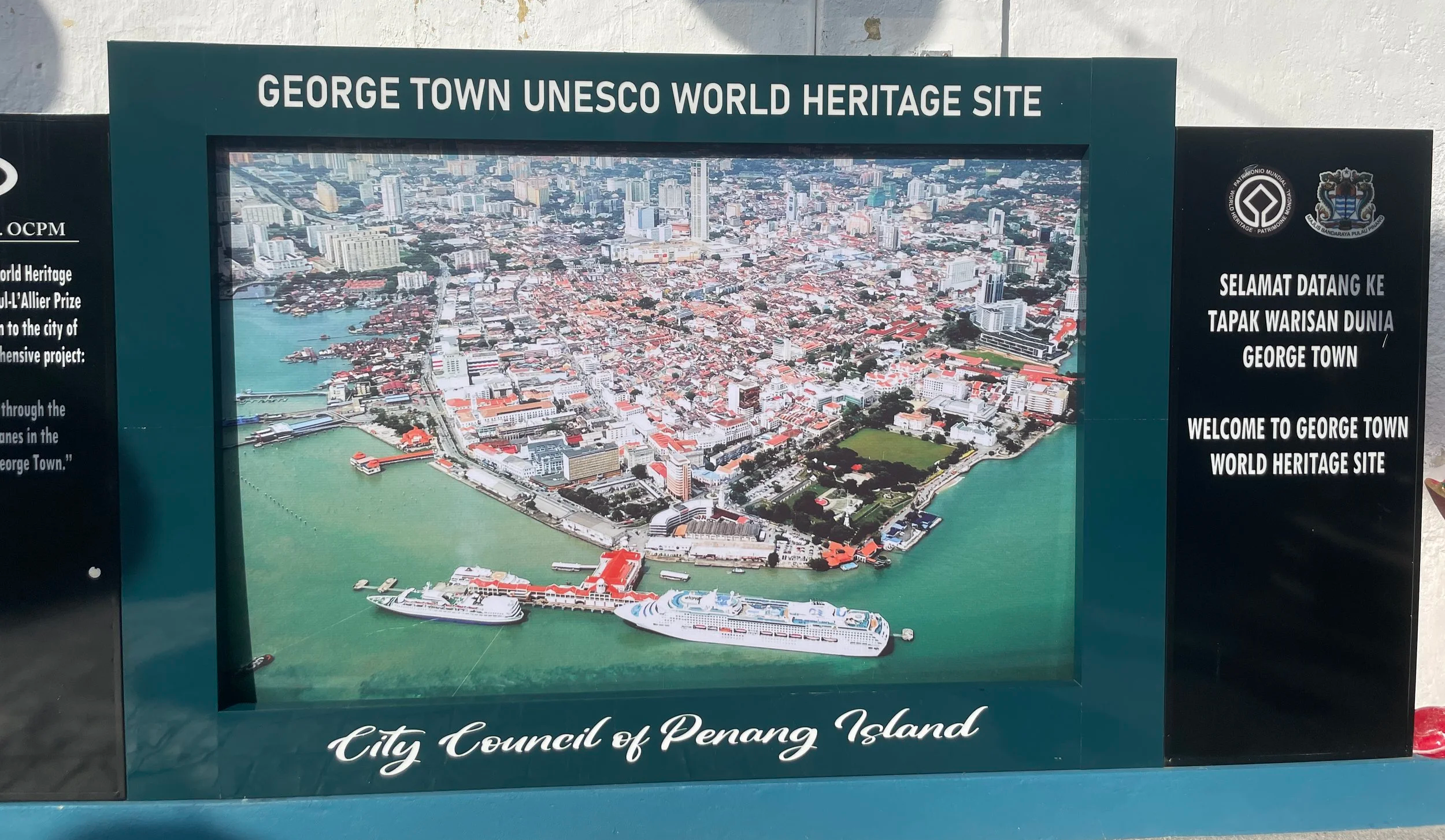
The historical city of Georgetown, capital of the island of Penang, is a UNESCO World Heritage Site. This designation recognizes the different cultural layers which over centuries have made of this traditional trading entrepôt such an interesting place to visit.
Located at the northeast of the island, Georgetown has, in fact, one of the best preserved historical centers in south-east Asia.
Like most other “Georgetowns” in the world, the city was named after a British sovereign (George III).
In fact, the arrival of the British in 1786 was the turning point in the history of Penang, since it turned the island into a sort of early version of what Singapore is today: a commercial hub which, under British protection, soon started attracting people and mercantiles communities from all over Asia and beyond (there is even an Armenian quarter).
This created a melting pot of Malay, Chinese, Indian, European, Indonesian, Arabic, Armenian and other peoples, with which is still reflected today in the varied architecture, religious practices and the local cuisine.
How to get to Penang
The easiest way to get to Penang is by air, with its international airport located on the south side of the island.
In fact, the island is currently connected to the mainland by two bridges, at its northern and southern ends, so you can also travel by land if driving through Malaysia, as was our case.
Penang is approximately 24 km long by 15 km wide (a similar size to Singapore, and, as we have seen, not the only thing that the two places have in common!) so, if you intend to see a bit of the island outside Georgetown the best way to move around it to rent a car (which is what we did).
Roads are ok, particularly in the area around Georgetown, but the island is very mountainous, particularly in its central part, so depending on where you go to you may encounter narrow roads or traffic jams (again, around Georgetown).
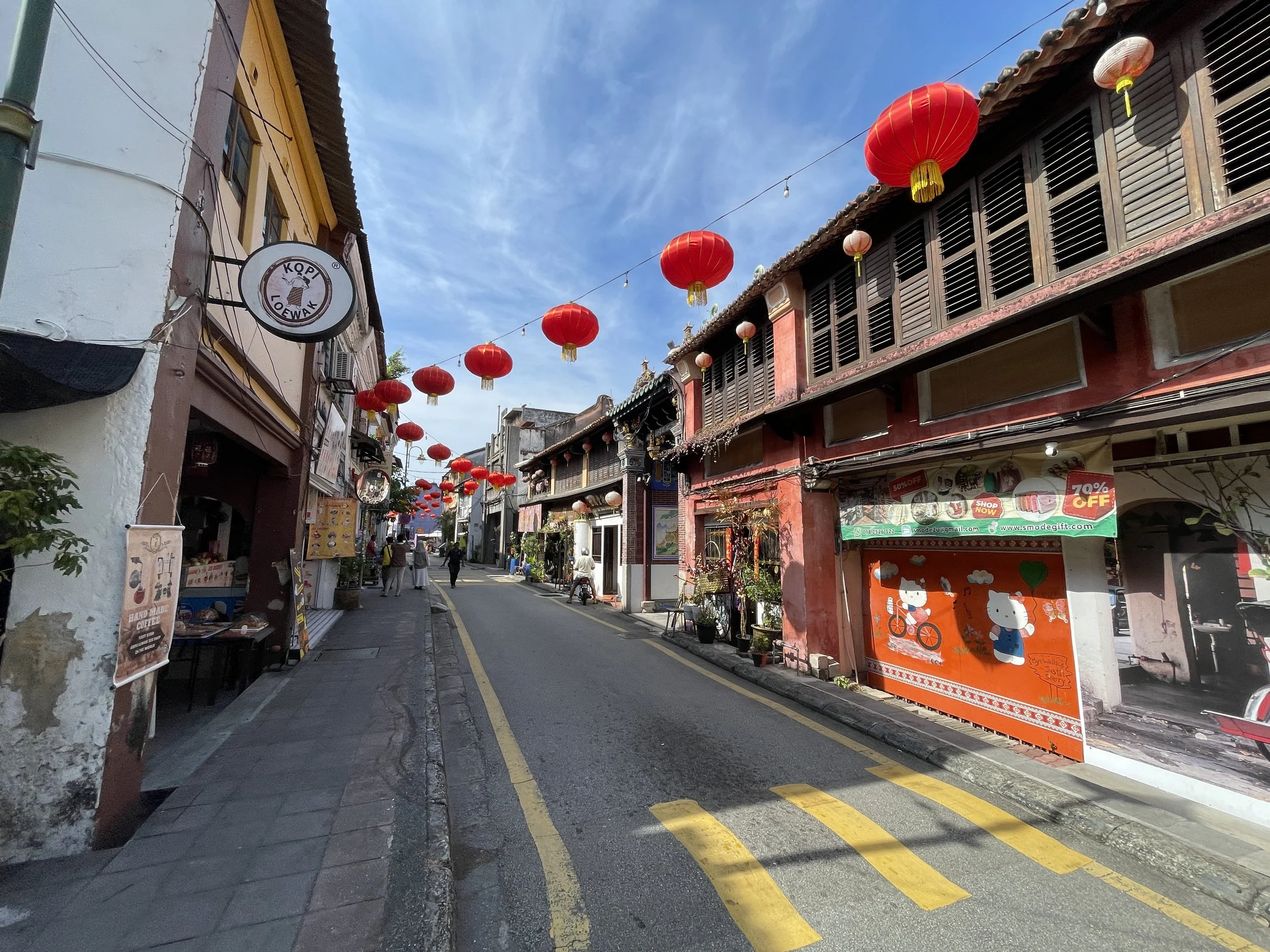
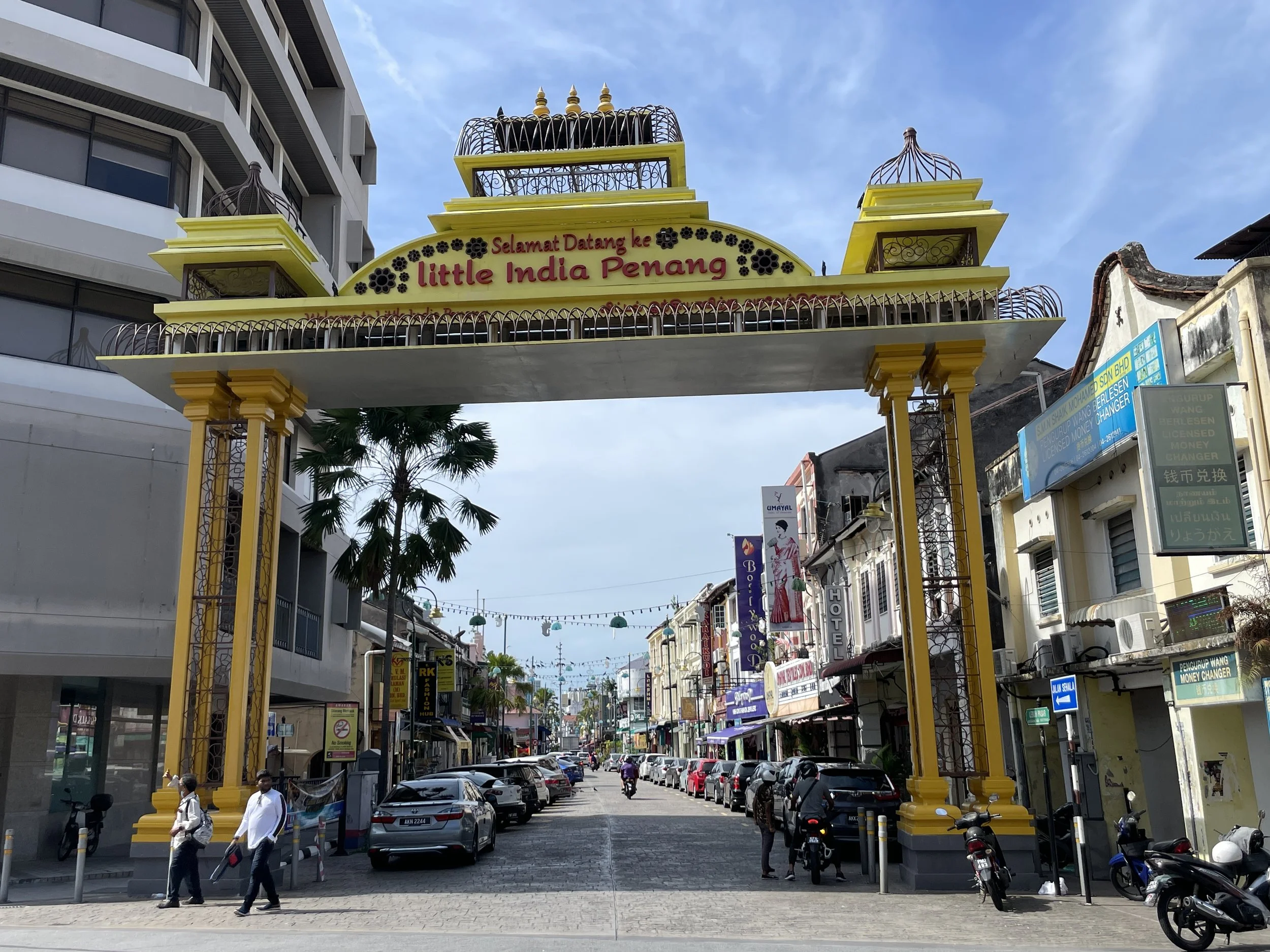
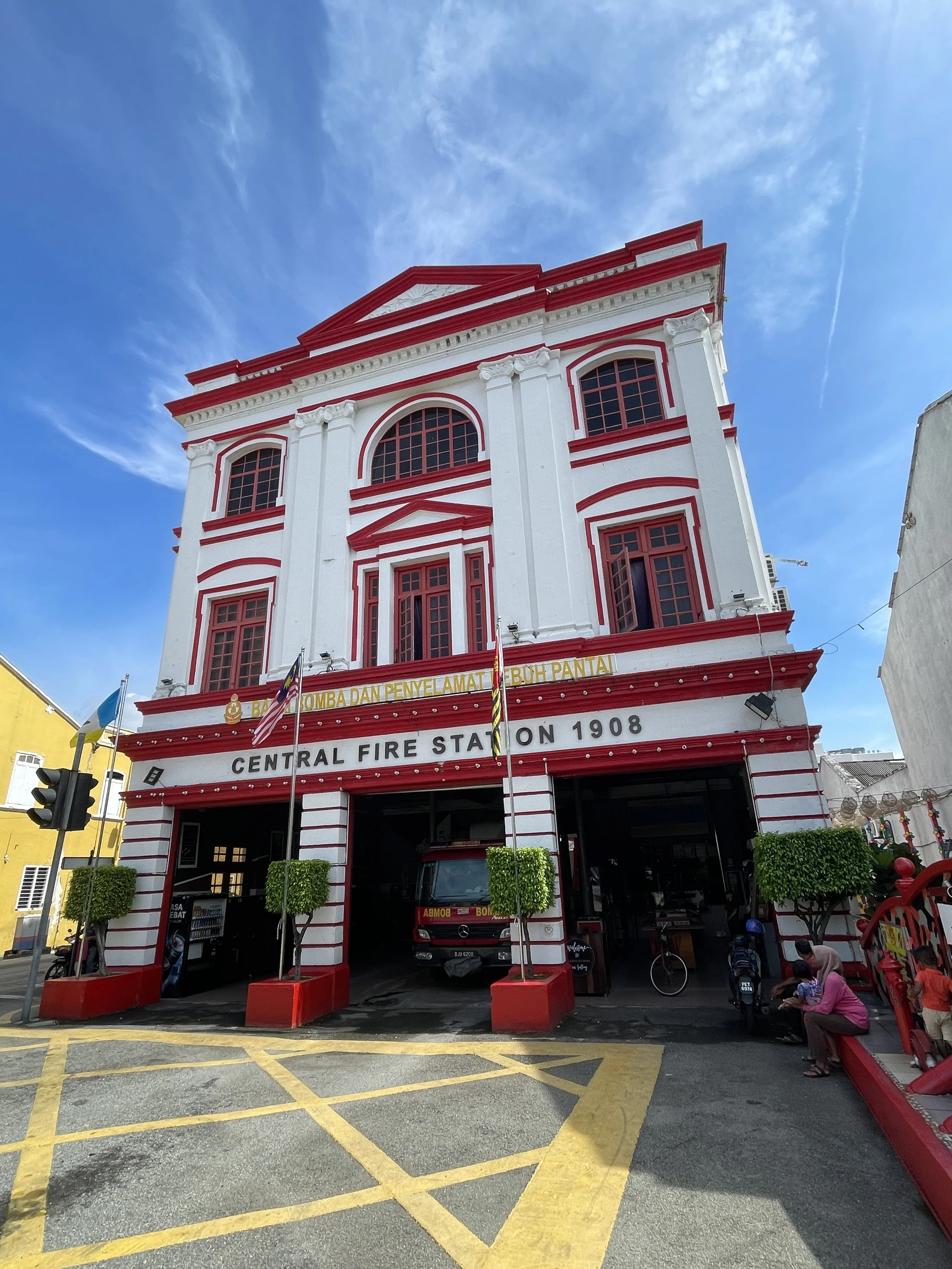
While I wouldn’t say Georgetown is harmonious or coherent in the sense in which historical towns may be, for example, in parts of Europe, its appeal is the different types of styles and contrasts you may find in and around its historical centre.
The centre is quite walkable and, in fact, it is what you would recommend doing in Georgetown first and foremost. You quickly pass from one of the historical “ethnic” neigbourhoods to the next. There is “Little India”, an Armenian quarter, then an area with Chinese clan houses (called “kongsi”) and so on…
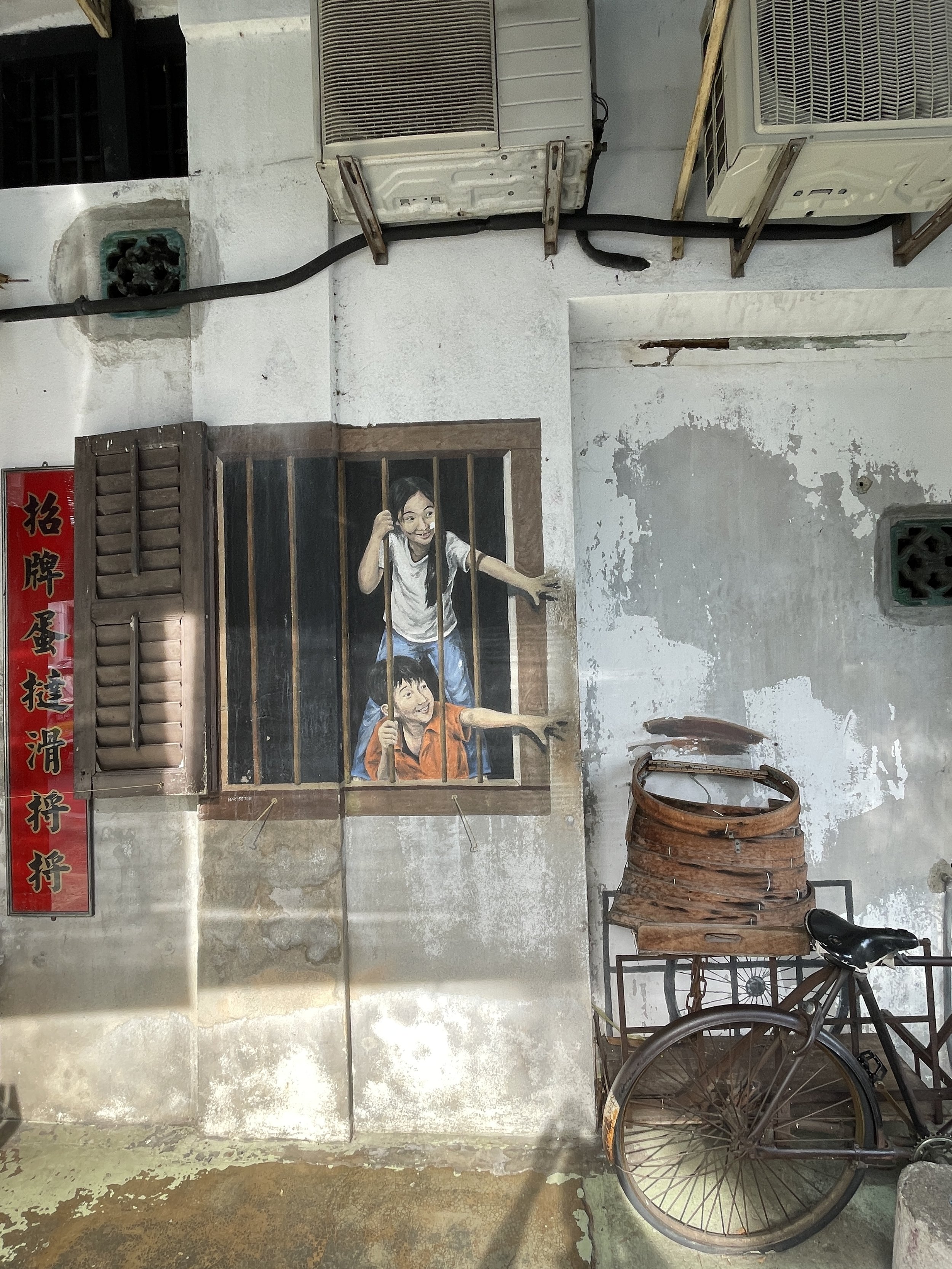
Also worth mentioning that here is also a considerable amount of street art which keeps popping up around every other corner, making the ensemble more lively.
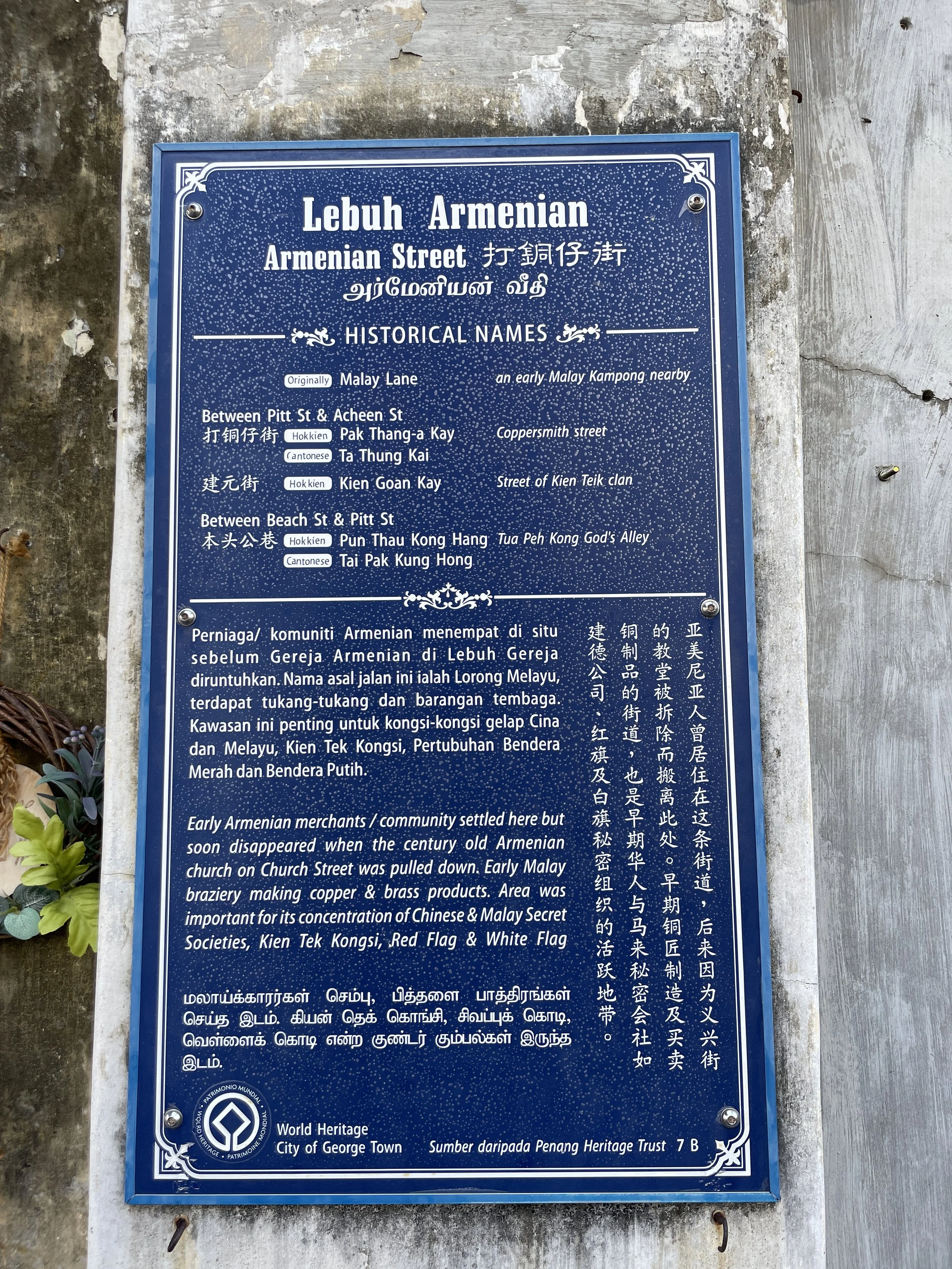
The “Kongsi” or clan houses of Penang
One of the top things to see in Georgetown’s historical center are the Kongsi, or Chinese clan houses.
Their origin is in the arrival of Chinese immigrants from the late 18th C. and all the way through the early 20th C. Those migrants usually clustered around a specific clan or extended family with which they tended to share a surname.
These Kongsi were built in a very distinctive Chinese style and were a bit like a mix between a palace, a warehouse and a temple which acted as a base for a specific clan or group.
I recommend you visit at least one to get a good idea of this concept and how this type of societies work in Colonial Penang.
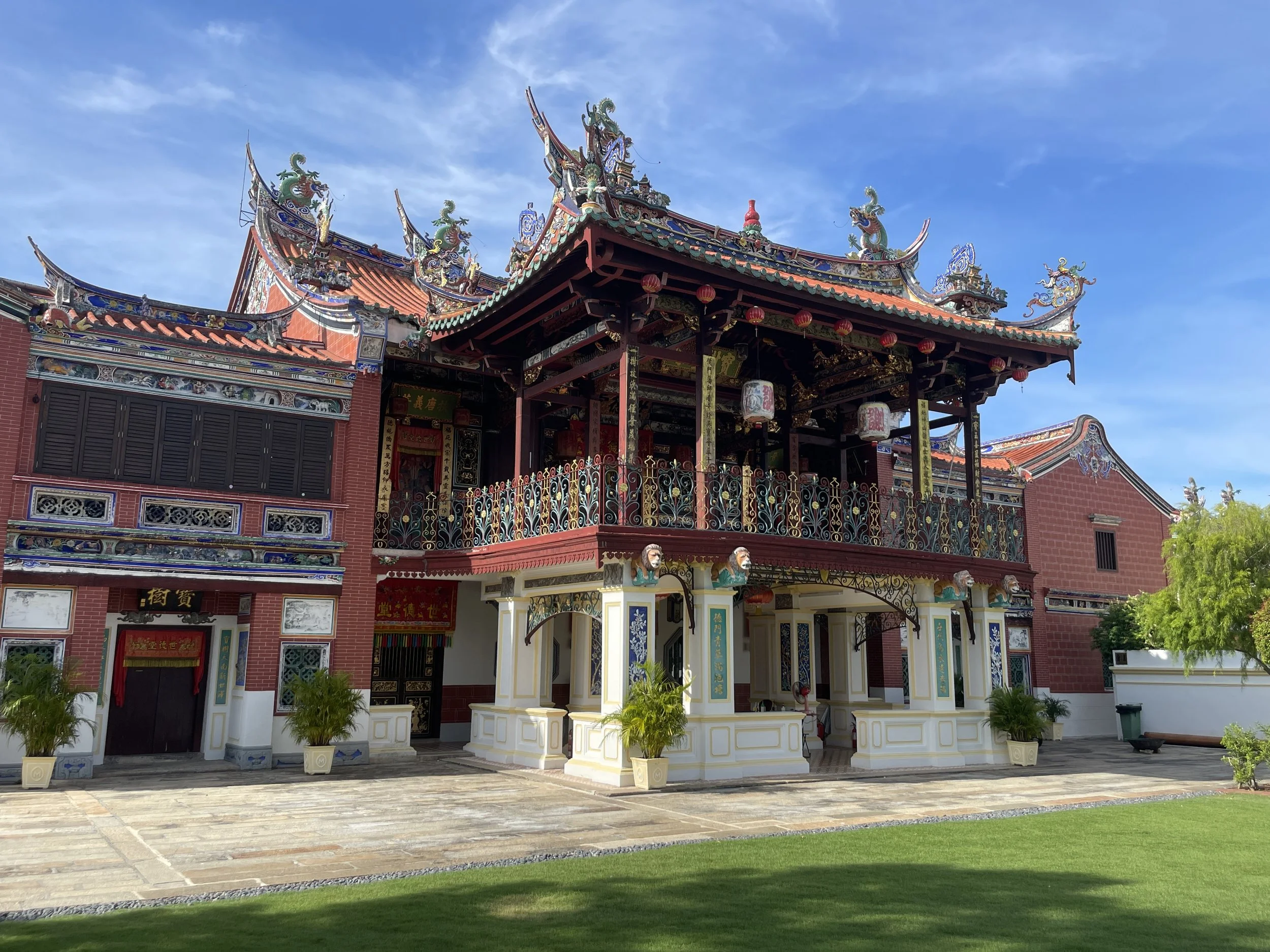
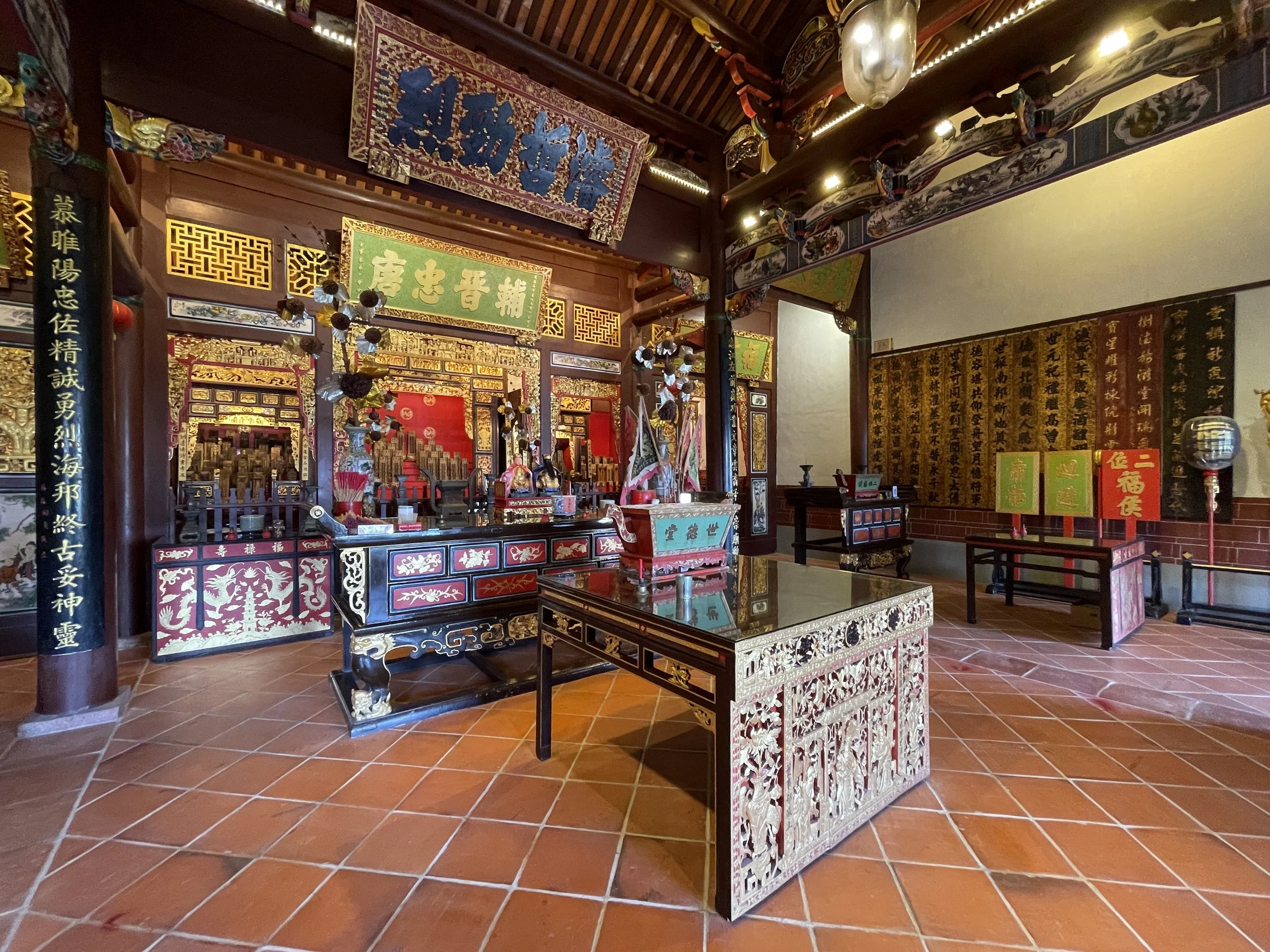
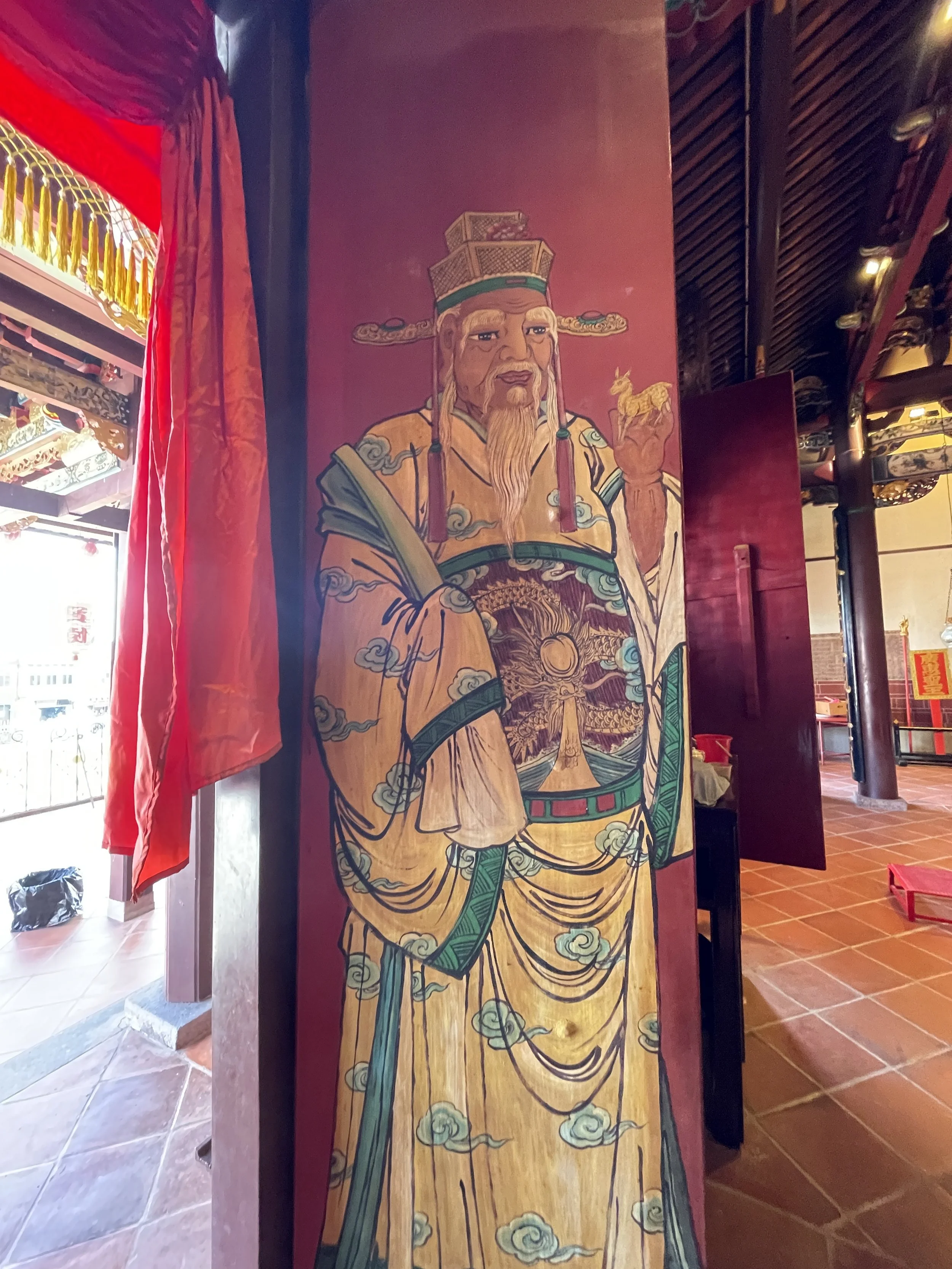
There are several Kongsi which have been turned into museums and can be visited nowadays in Penang, like the Cheah Kongsi, which you can see in these pictures above and right.
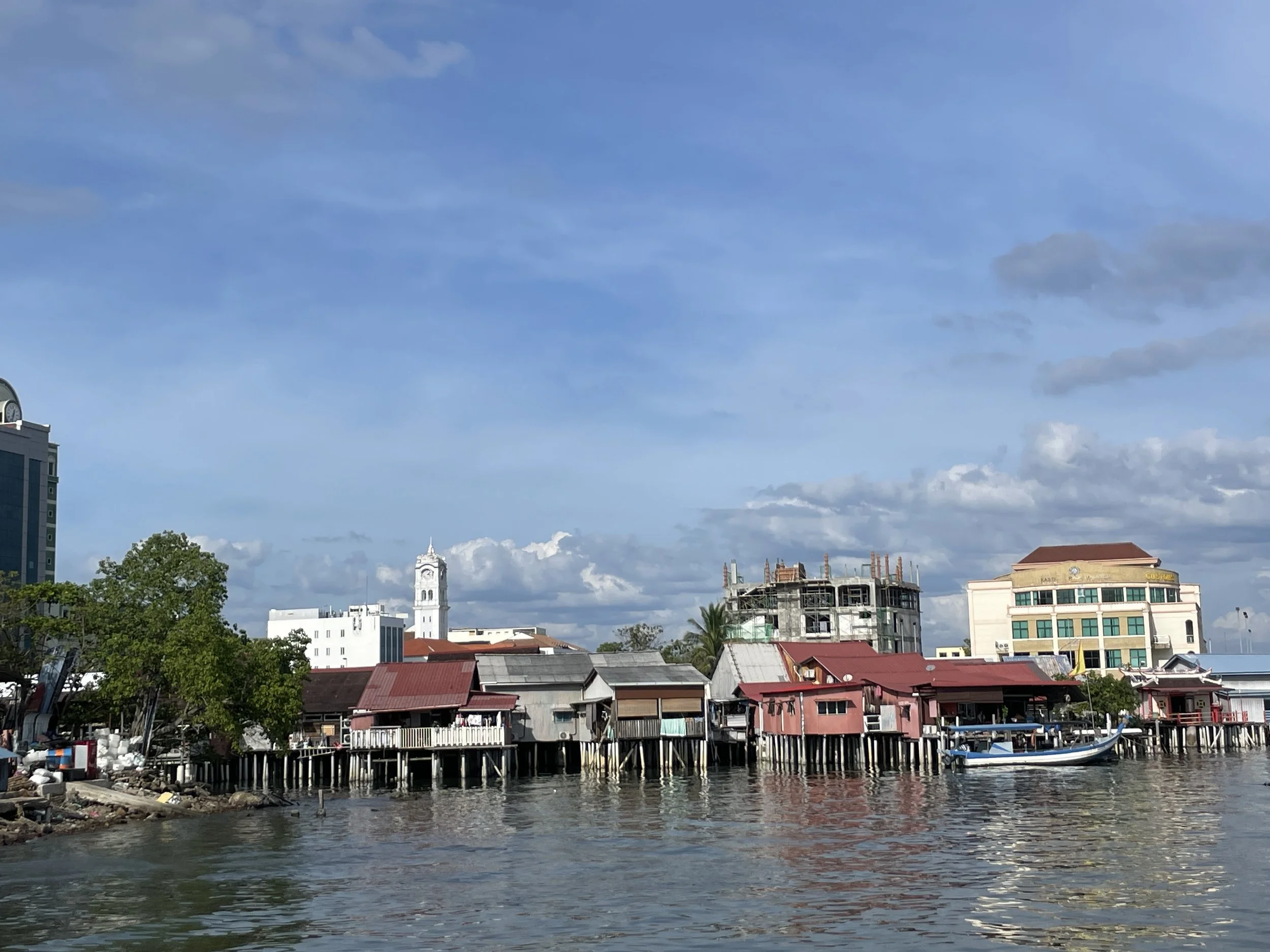
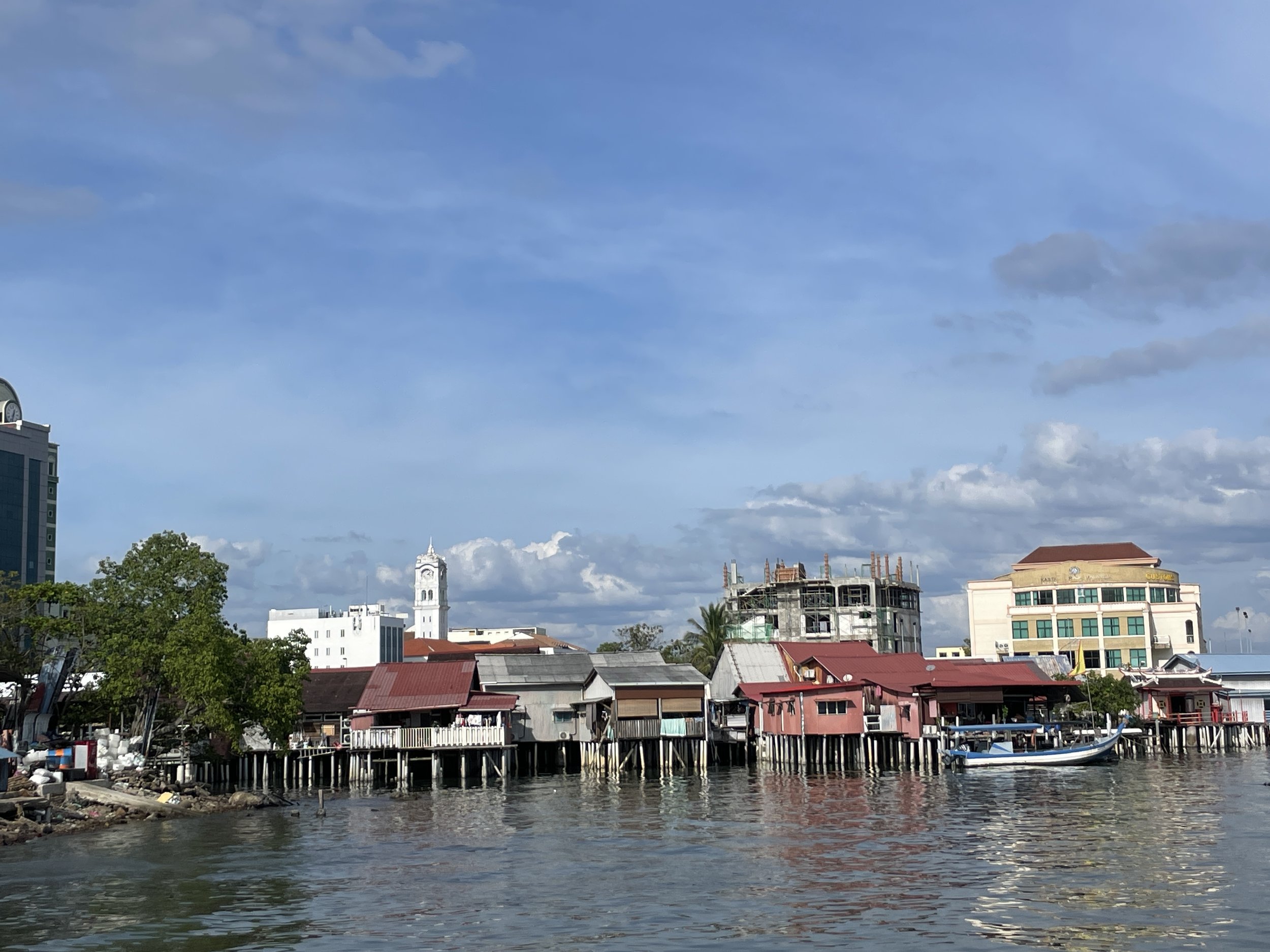
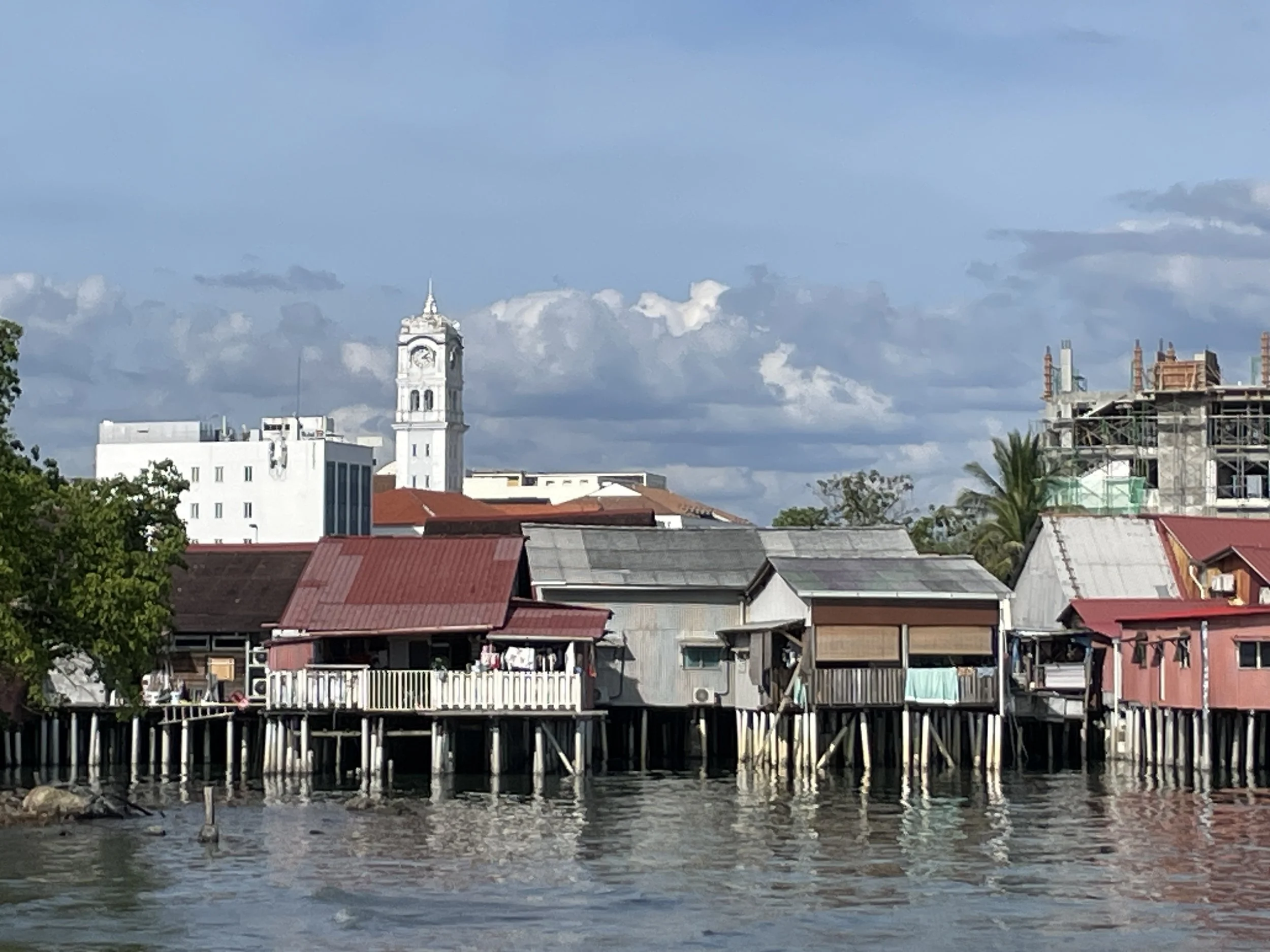
By the way, another area that was “divided” along clan lines is the jetties by the seaside. Penang was a busy port and the jetties were a key gateway for all this trade with each of them controlled by one of the clans.
The jetty area, by the way, can be visited today. These wooden platforms protruding into the sea are no longer used for bulk merchandise trade, but they have significant commercial activity in the form of restaurants, bars and the like.
Georgetown’s Blue Mansion
This is another interesting piece of heritage you can visit in Georgetown, which brings you back to the times when the city was one of the top commercial entrepôts of South East Asia.
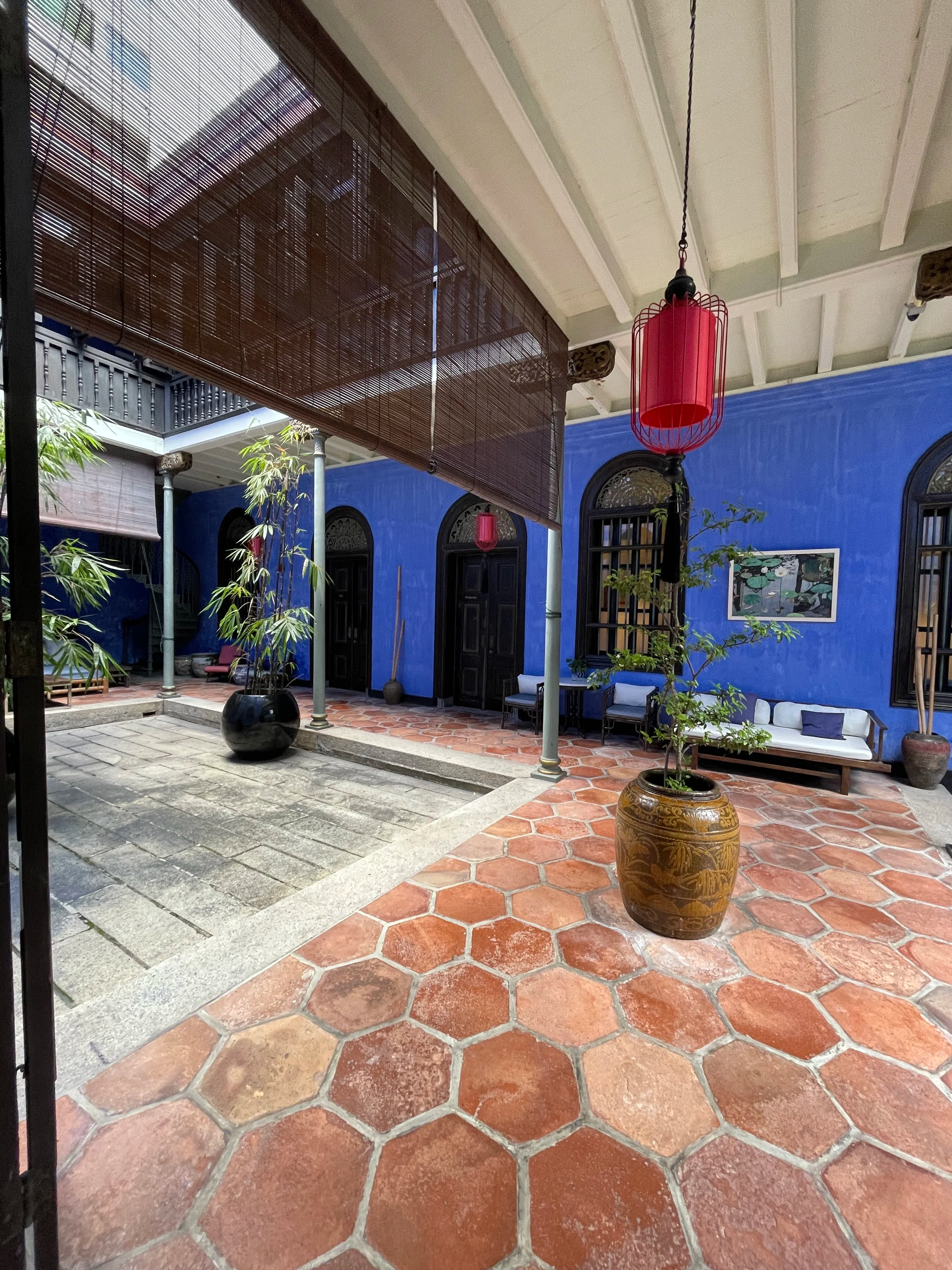

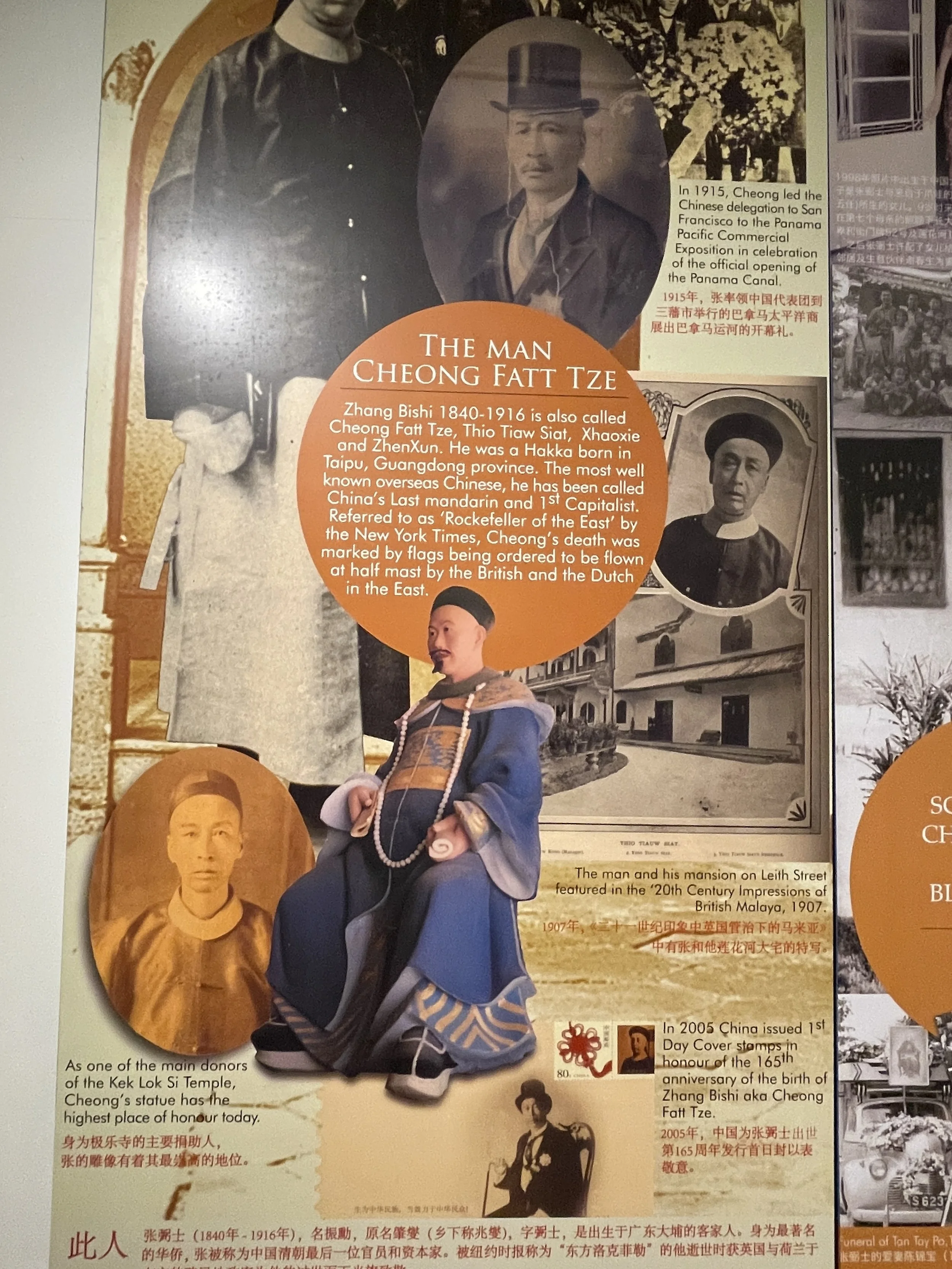
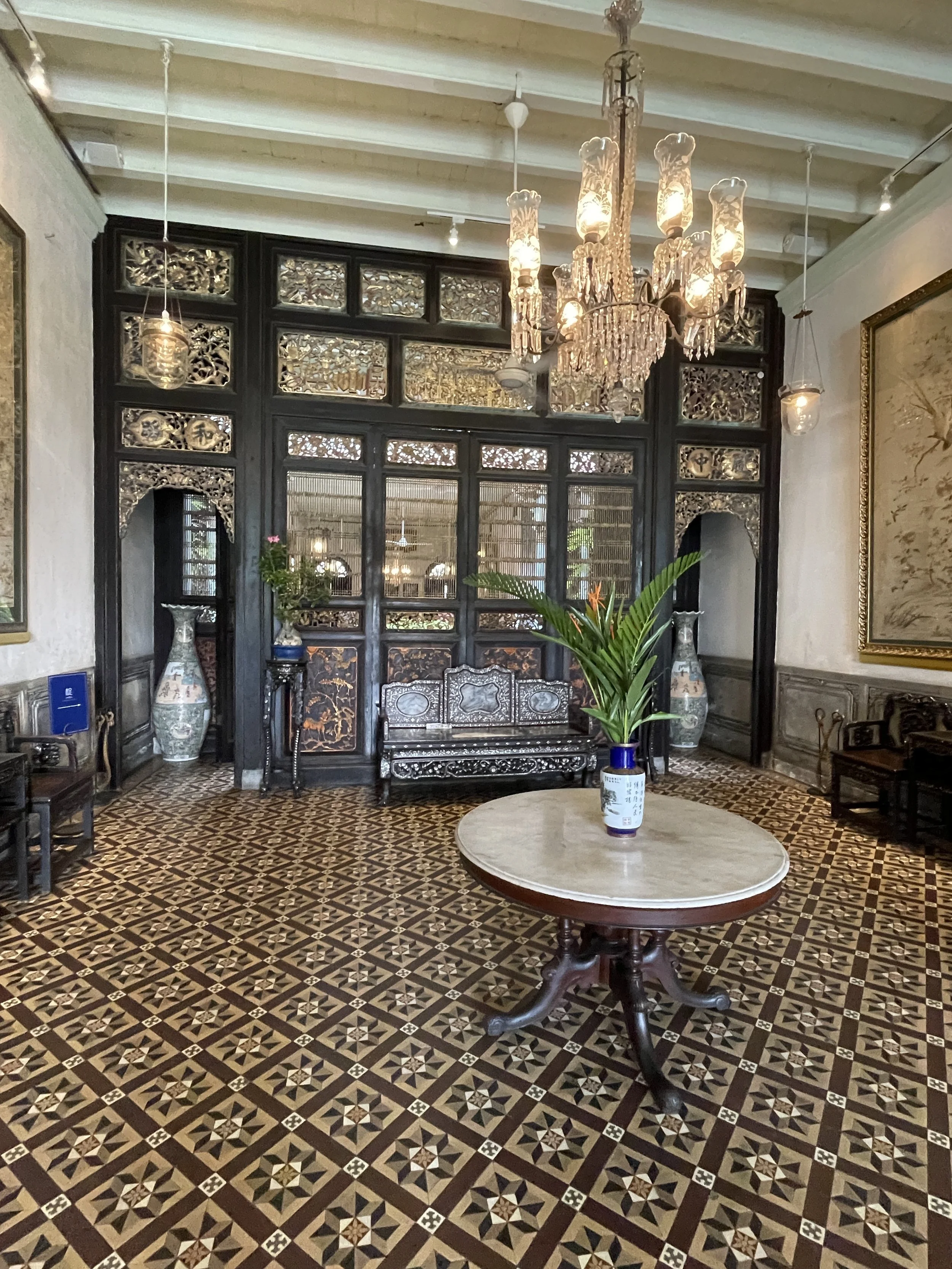
The Blue Mansion, which gets its name from the intense indigo colour it is painted on, is a palatial house associated to the figure of Cheong Fatt Tze, a Chinese entrepreneur and self-made millionaire, which used its as one of his residences (apparently he had eight different mansions through southeast Asia for as many wives).
Born to a poor family in Guangdong (Guangzhou), in the Pearl River Delta area, in 1840, Cheong Fatt Tze emigrated as a young man to the then Dutch East Indies (now Indonesia) and managed to make an immense fortune by engaging in different sorts of trade. He was so rich that, at some point at the turn of the 20th C. he became known as the “Rockefeller of Asia”.
After the death of Cheong Fatt Tze, and I guess, the decline of Penang as the commercial hub of reference in the region, the building became progressively neglected, to the point that it required a thorough restauration in the 1990s to recover its former splendour.
Today, Penang’s Blue Mansion is a boutique hotel, but parts of the building are also open to visitors, offering a glimpse into that Golden Era of Penang.
Exploring the colourful streets of Georgetown
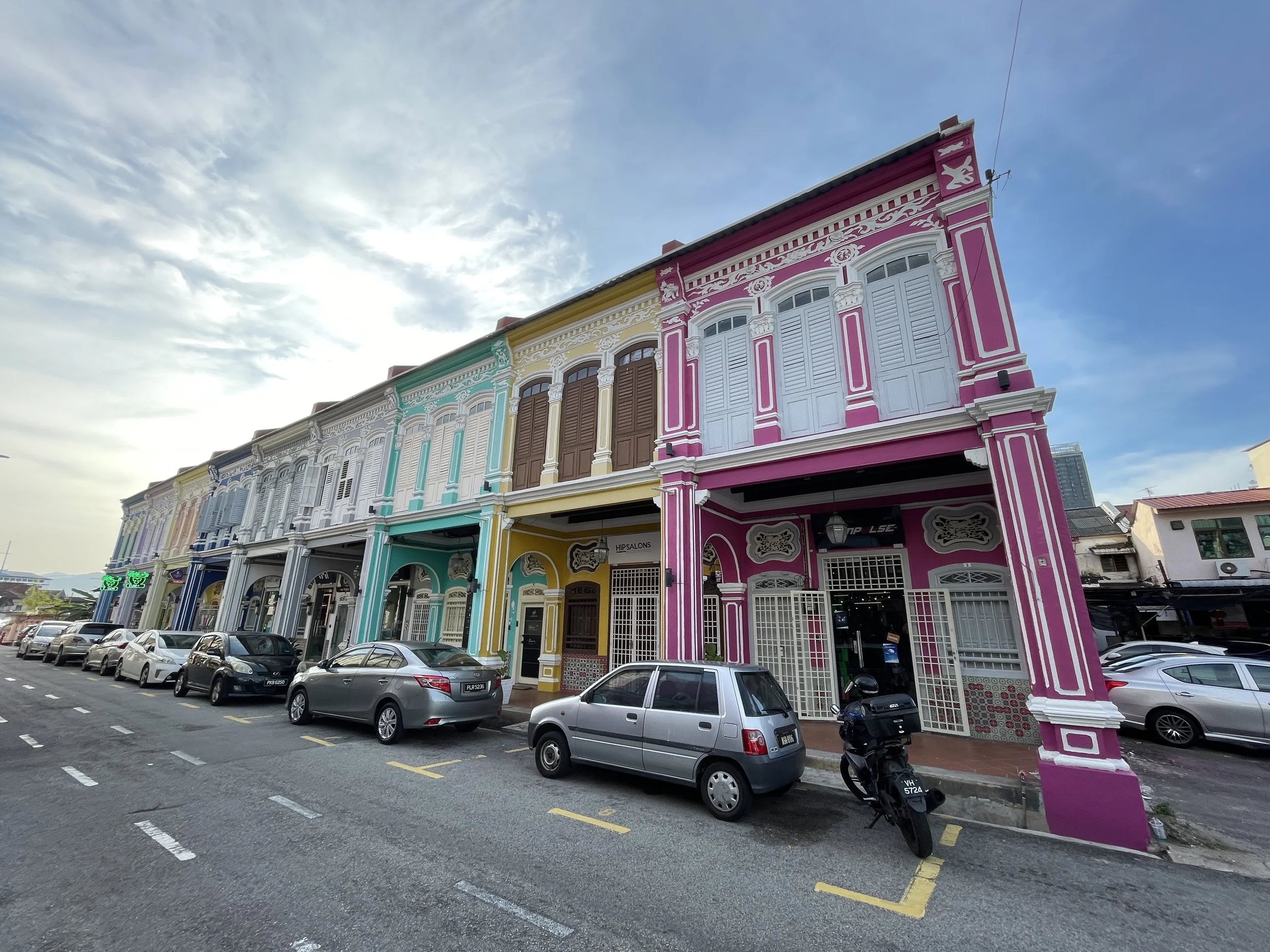
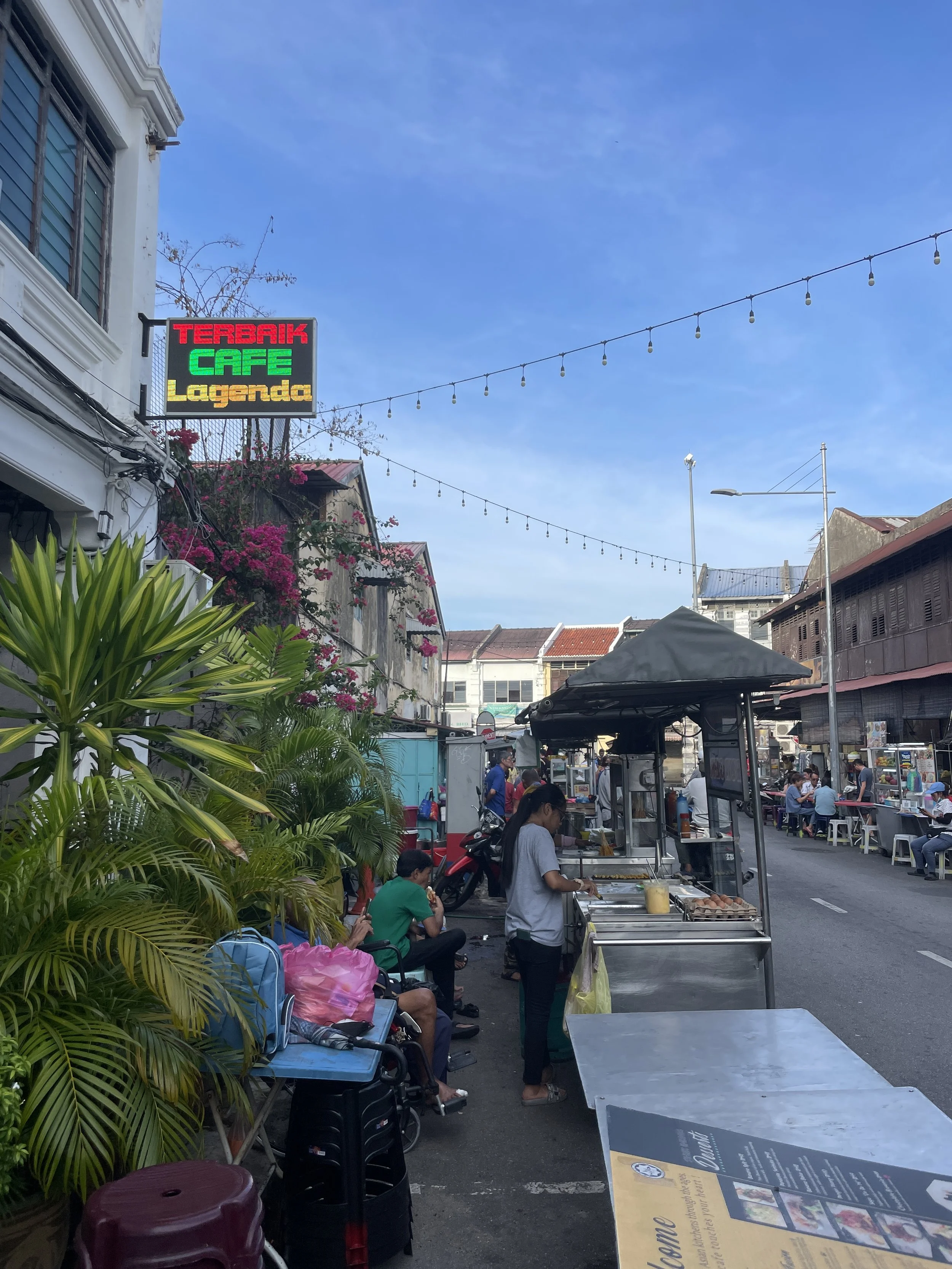
As mentioned earlier, one of the good things about Georgetown is that it has a relatively compact and walkable town centre.
Another of the top attractions you can find there, this one a bit outside of the inner core of the old town, but still reachable on foot, is Jalan Kek Chuan street. There you will find a row of beautiful painted houses with original front porticos.
Now, while these period houses are certainly cute, I think some Penang guides may be overselling them a bit. I even read somewhere that it was considered one of the most beautiful streets in the world, which I think is quite an exaggeration!
There are quite a few streets in central Georgetown where you can find plenty of street food. The picture on the right, for example, is from Lebuh Carnarvon street, which is a top area for hawker food stalls.
Kek Lok Si Temple
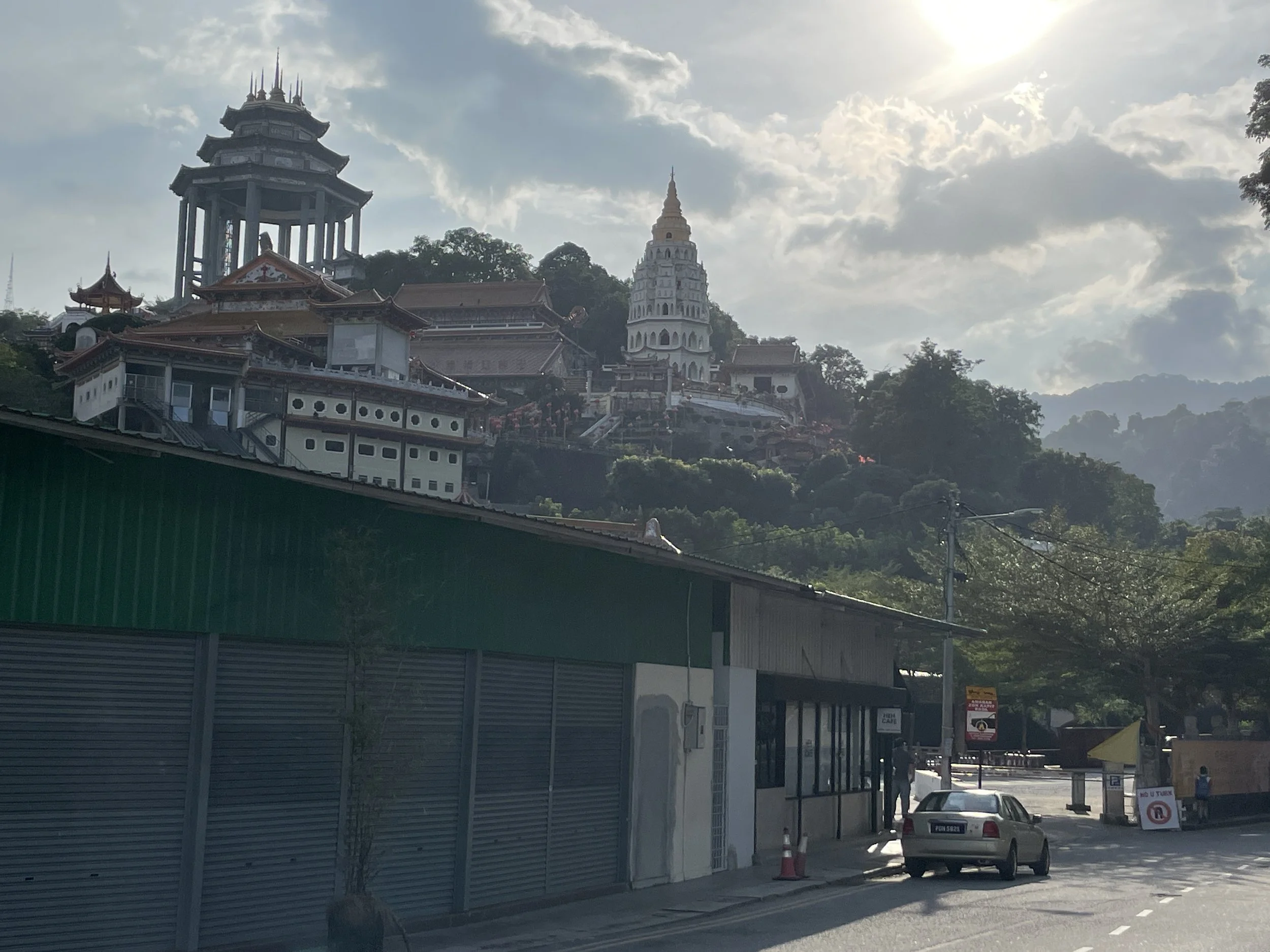
Kek Lok Si Temple is the largest Buddhist temple in Malaysia. It is located on a hill some kilometres southwest from central Georgetown. To be honest, I did not get inside, but the views from the street of this monumental religious complex are really impressive.
Where to stay in Penang
PARKROYAL Penang Resort
Batu Ferringhi Beach, 11100 Penang
Penang is not just about urban exploration, the island has its fair share of beach resorts (and even a national park!).
In fact, if you have a car with you, the beach resorts may be an excellent option to use as a base for your intra-island trips, coming back to relax in the afternoon/evening to the seaside.
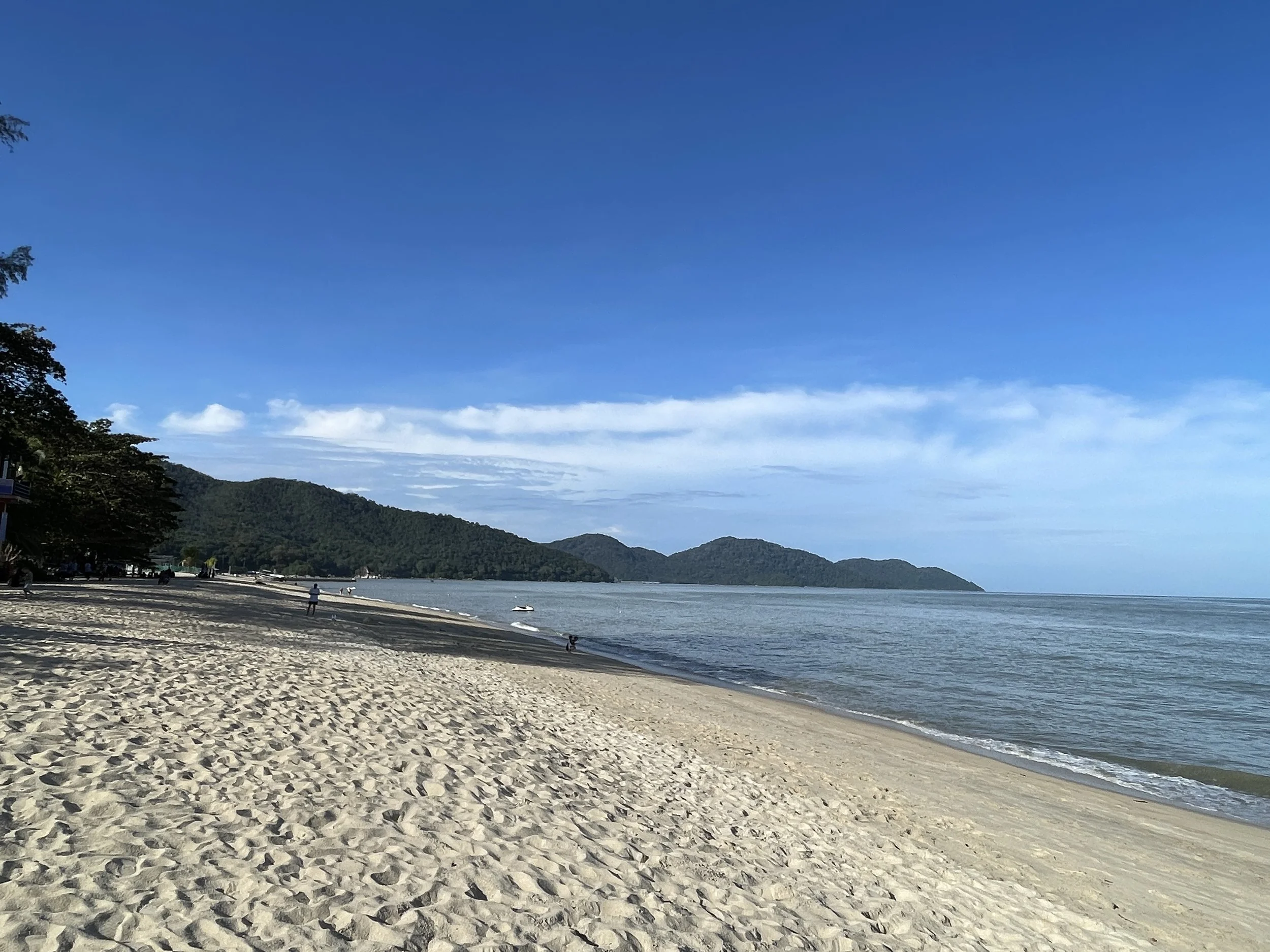
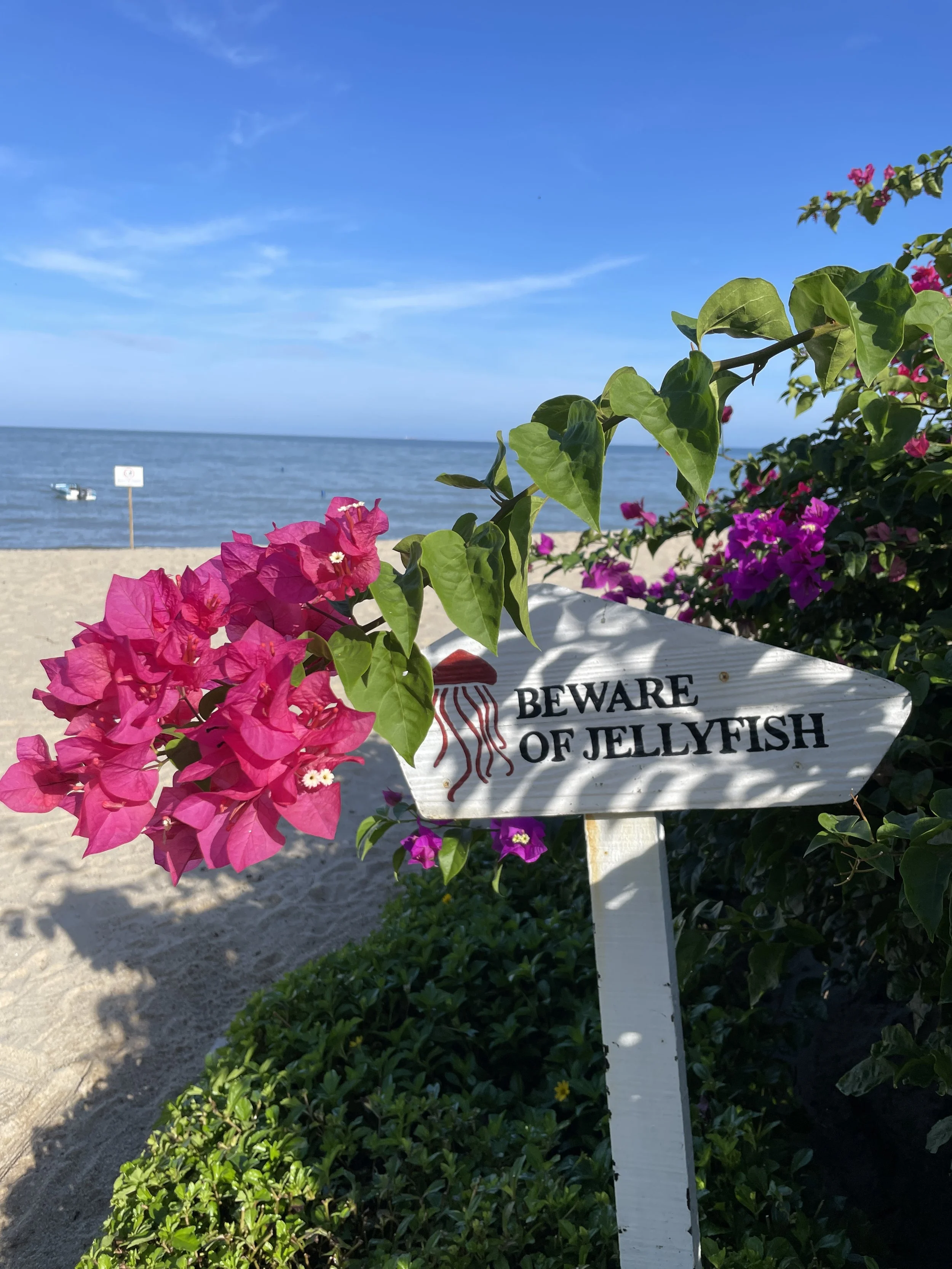
Many of these resorts, as is the case of the PARKROYAL Penang Resort, are on the north coast of the island, just west from Georgetown. Remember that this is a relatively small island, so, if there is no traffic, you can be in Georgetown in half an hour drive or so.
Like in the case of Langkawi, I wouldn’t say the beaches are super amazing (don’t expect turquoise, crystalline waters), but the whole package, which includes a modern resort with its gardens, direct beach access, several swimming pools, parking, etc. can provide pretty good value.
Now, I am aware that many readers from the US, Europe or elsewhere outside the Asia-Pacific region may not be familiar with the PARKROYAL brand.
It is an upmarket brand of the Singapore-based Pan Pacific Hotels Group and it has properties all over South East Asia.
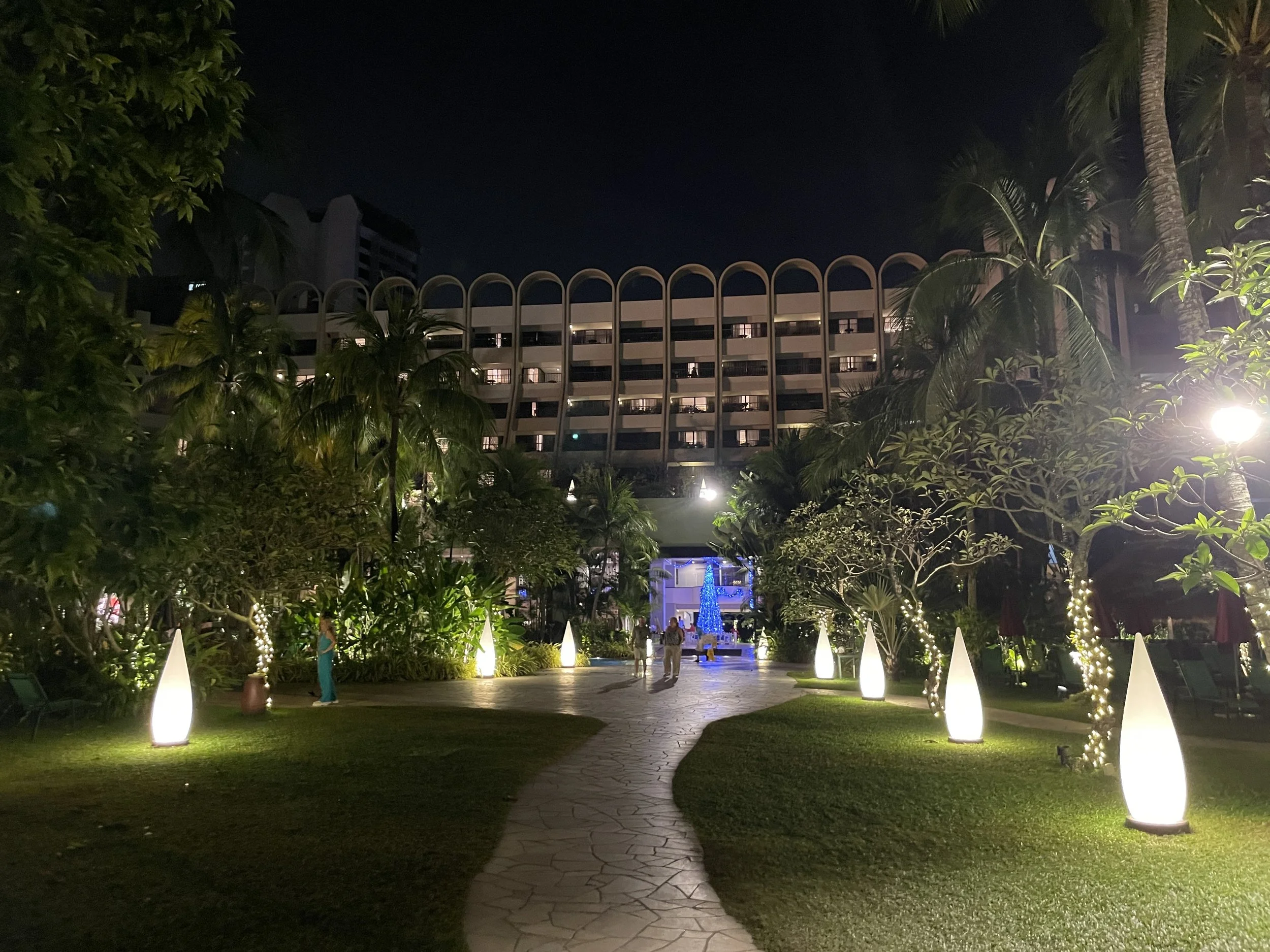
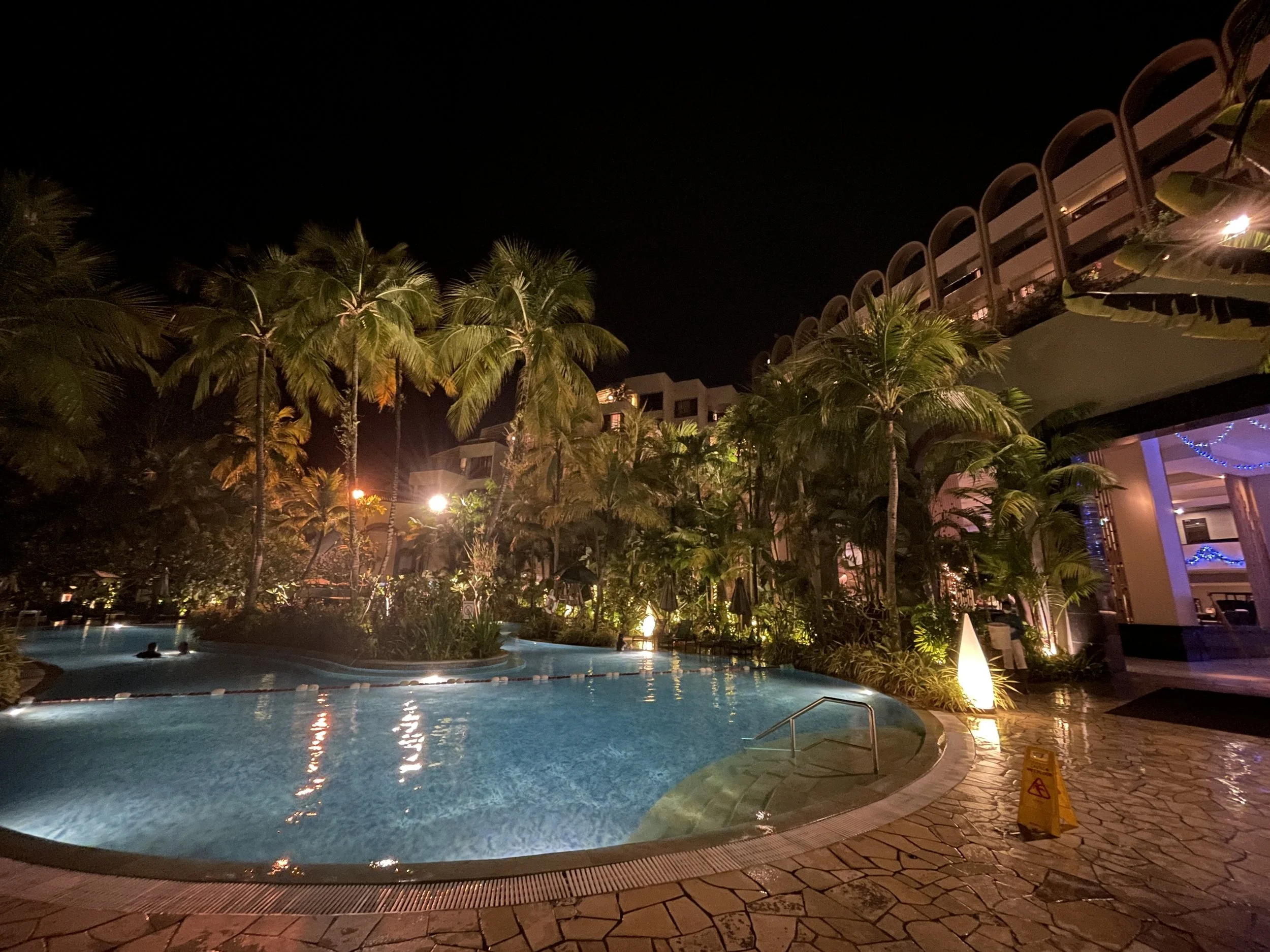
In the following pictures you can get an idea of the feel and look of the PARKROYAL Penang Resort. It is a rather large resort, tucked between the beach and the road that runs all along the northern shore of the island, in an area in which most of Penang’s upmarket hotels and resorts are located.
The hotel, however, is isolated from the buzz on the town-side, since most of its facilities are oriented towards the seaside and the surrounding gardens.
In addition to direct beach access (with some activities like parasailing, being offered for an extra fee), there is also a large pool area, with several water-side bars and a sort of mini-amusement aquatic park for children with slides and the like.
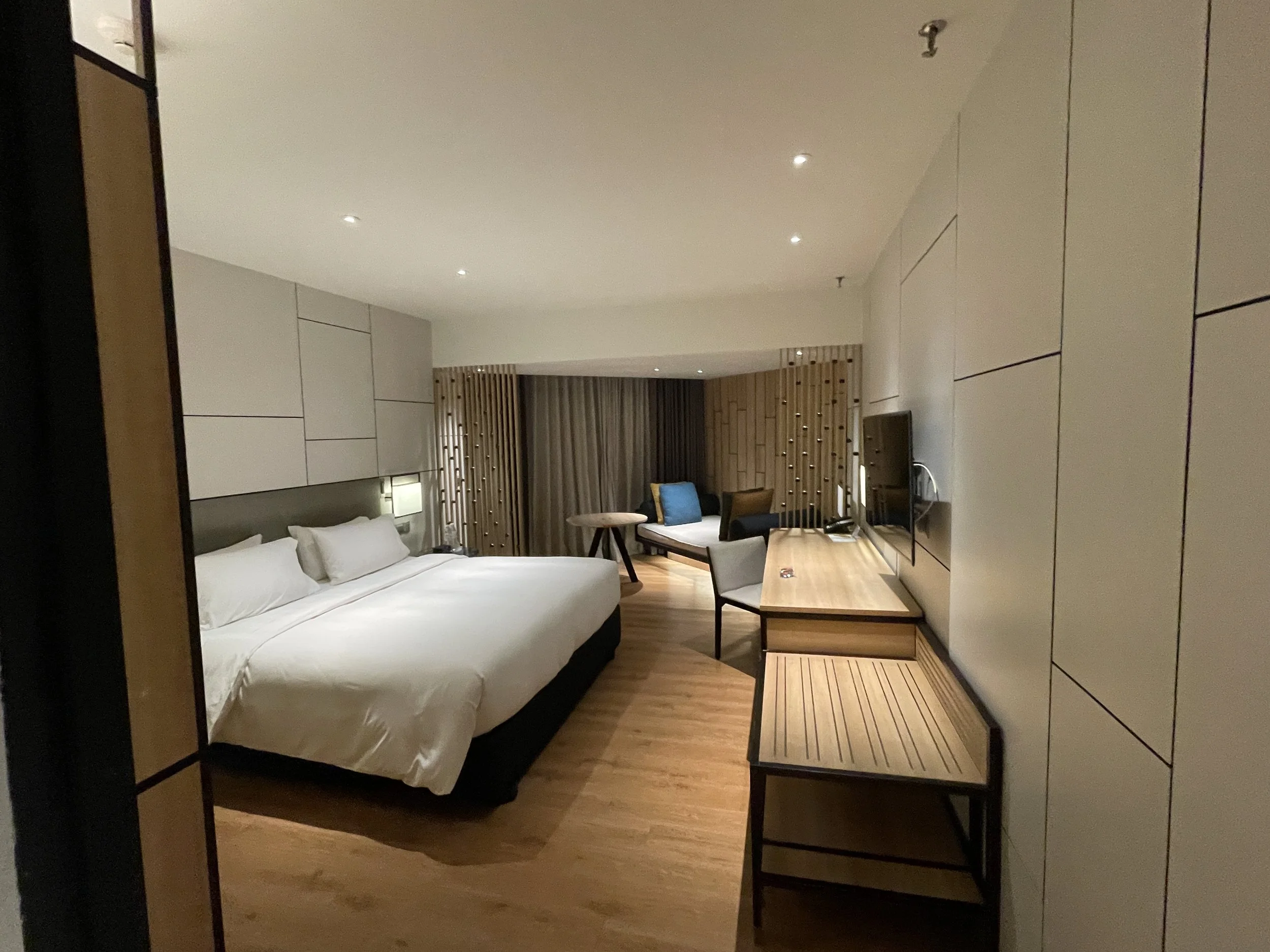
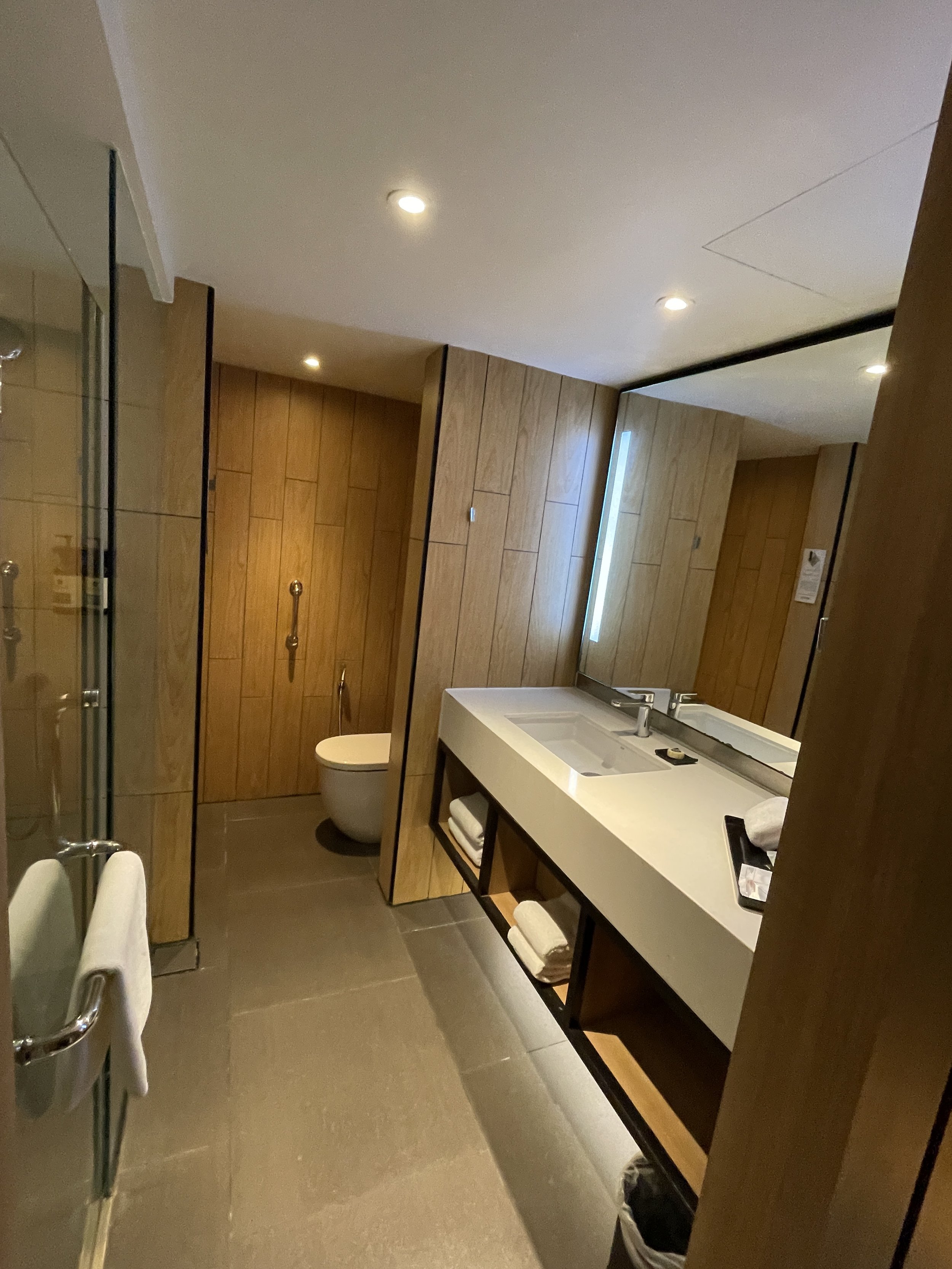
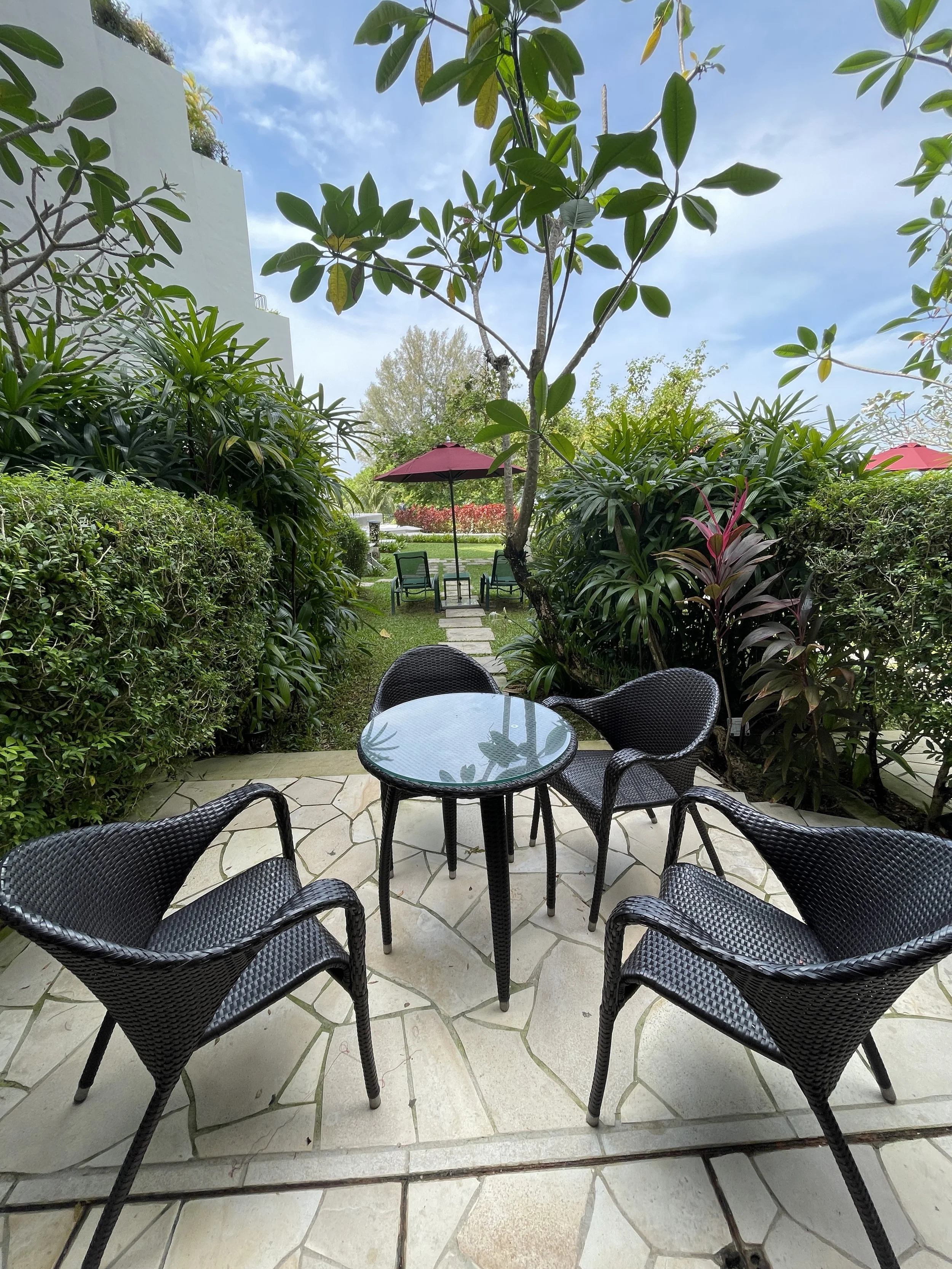
The rooms are modern and rather large. Some of the rooms have also a terrace and direct access to the gardens.
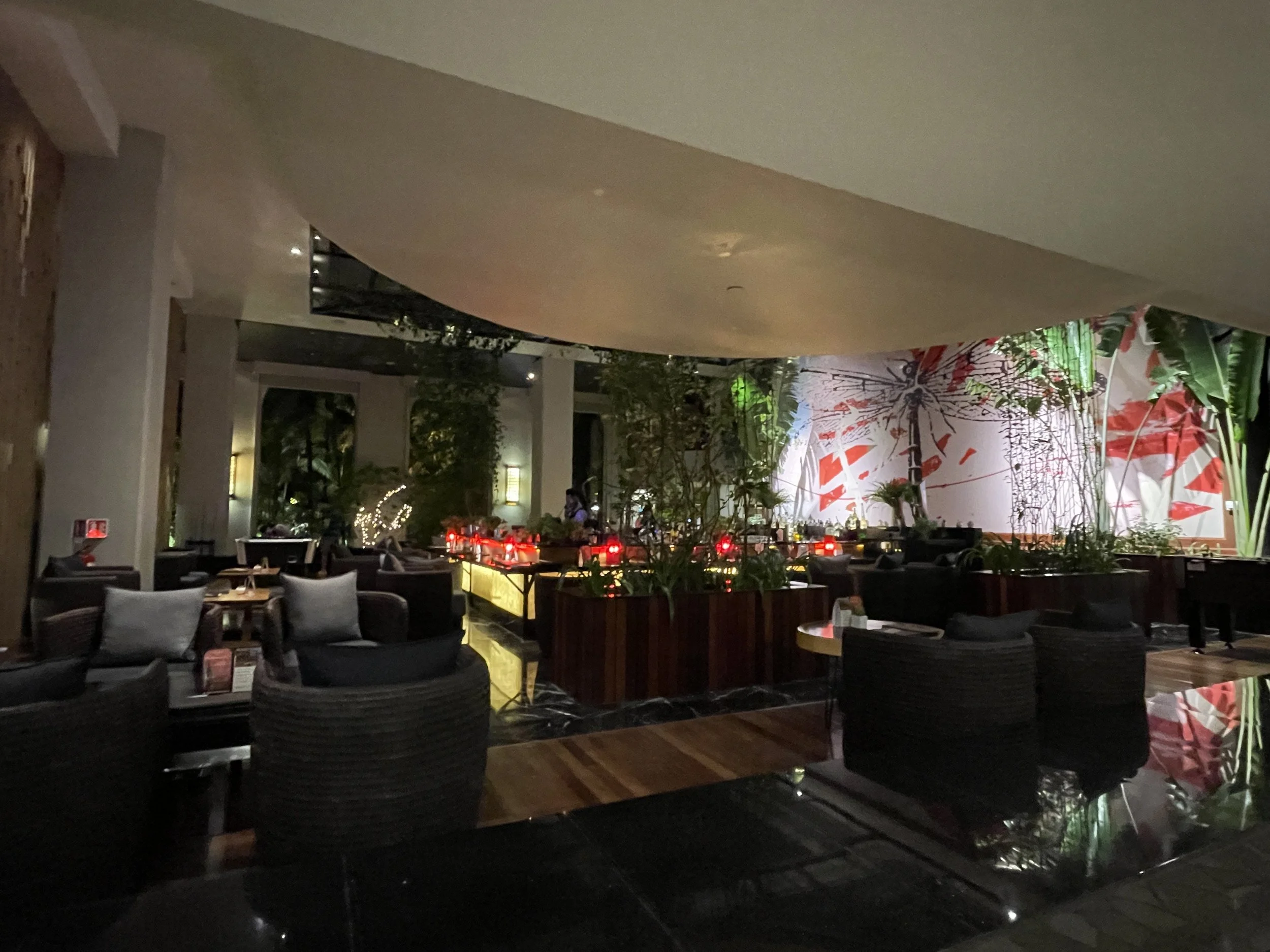
The PARKROYAL Penang Resort has also a rather elegant classy bar by the lobby, as well as several restaurants.
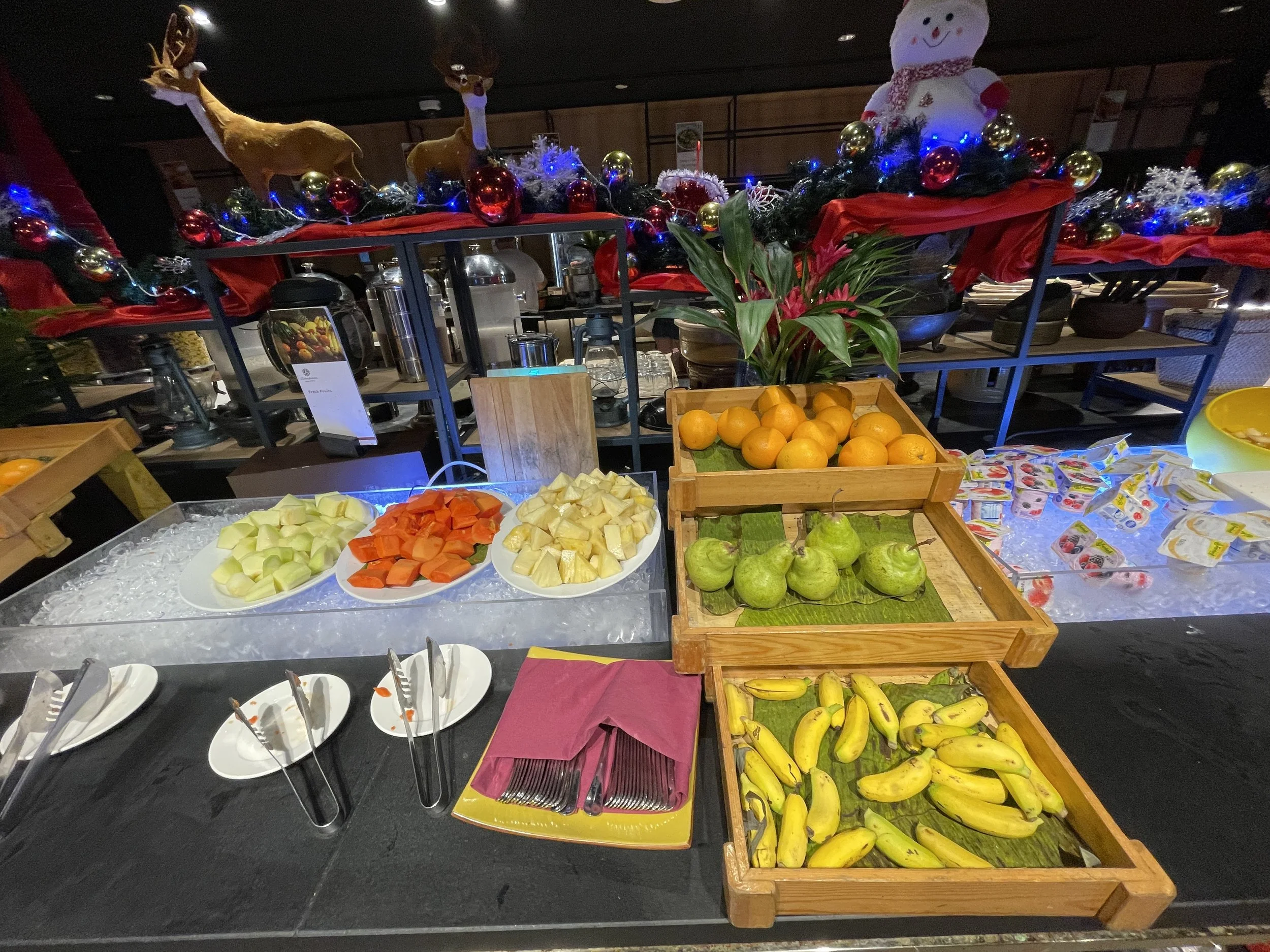
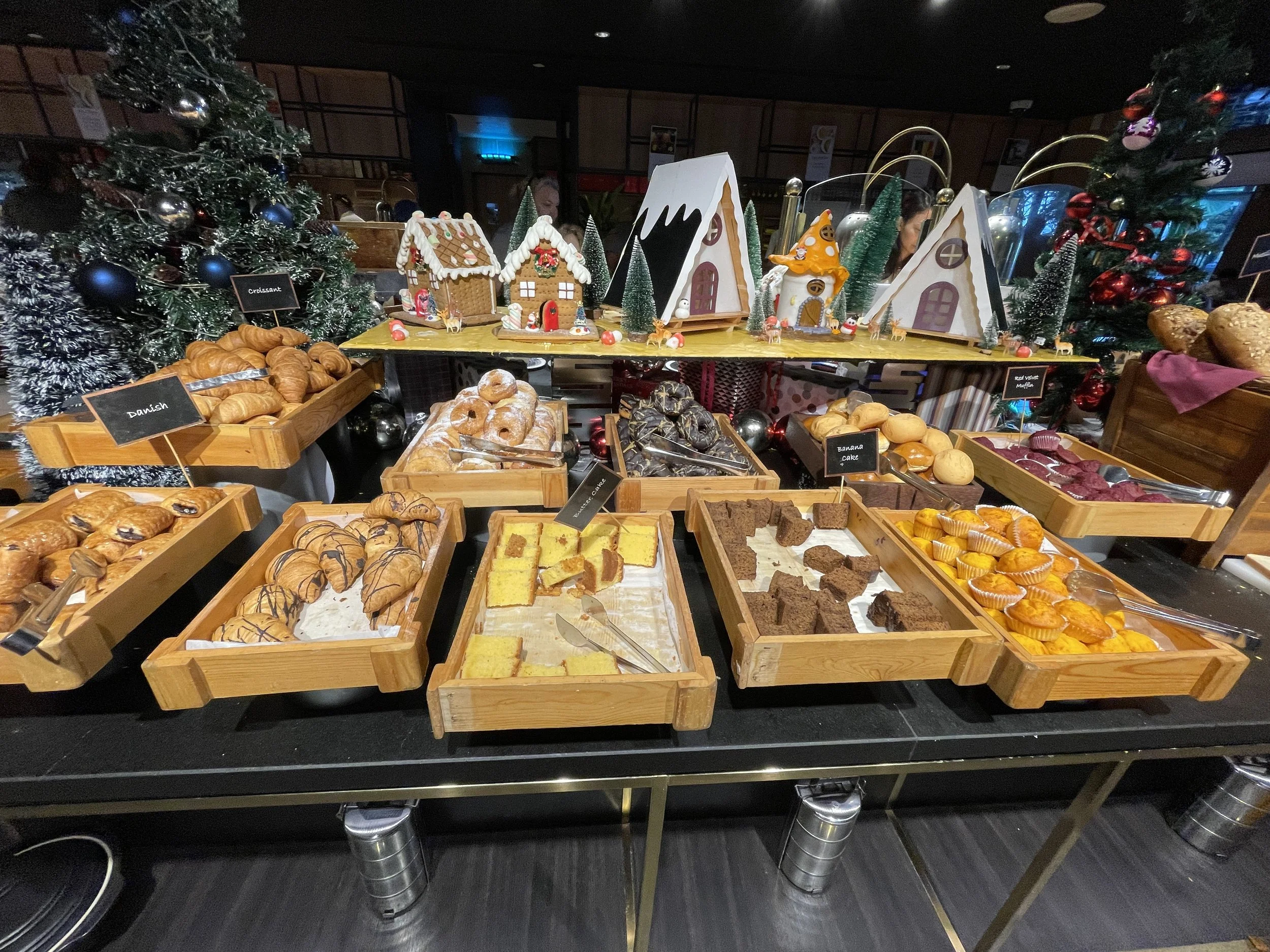
In case you were wondering, breakfast is really good, as well! So, all together, I would say this hotel is a great value option to stay at in Penang.
Driving from Penang to Kuala Lumpur
First Stop: Penang Bird Park
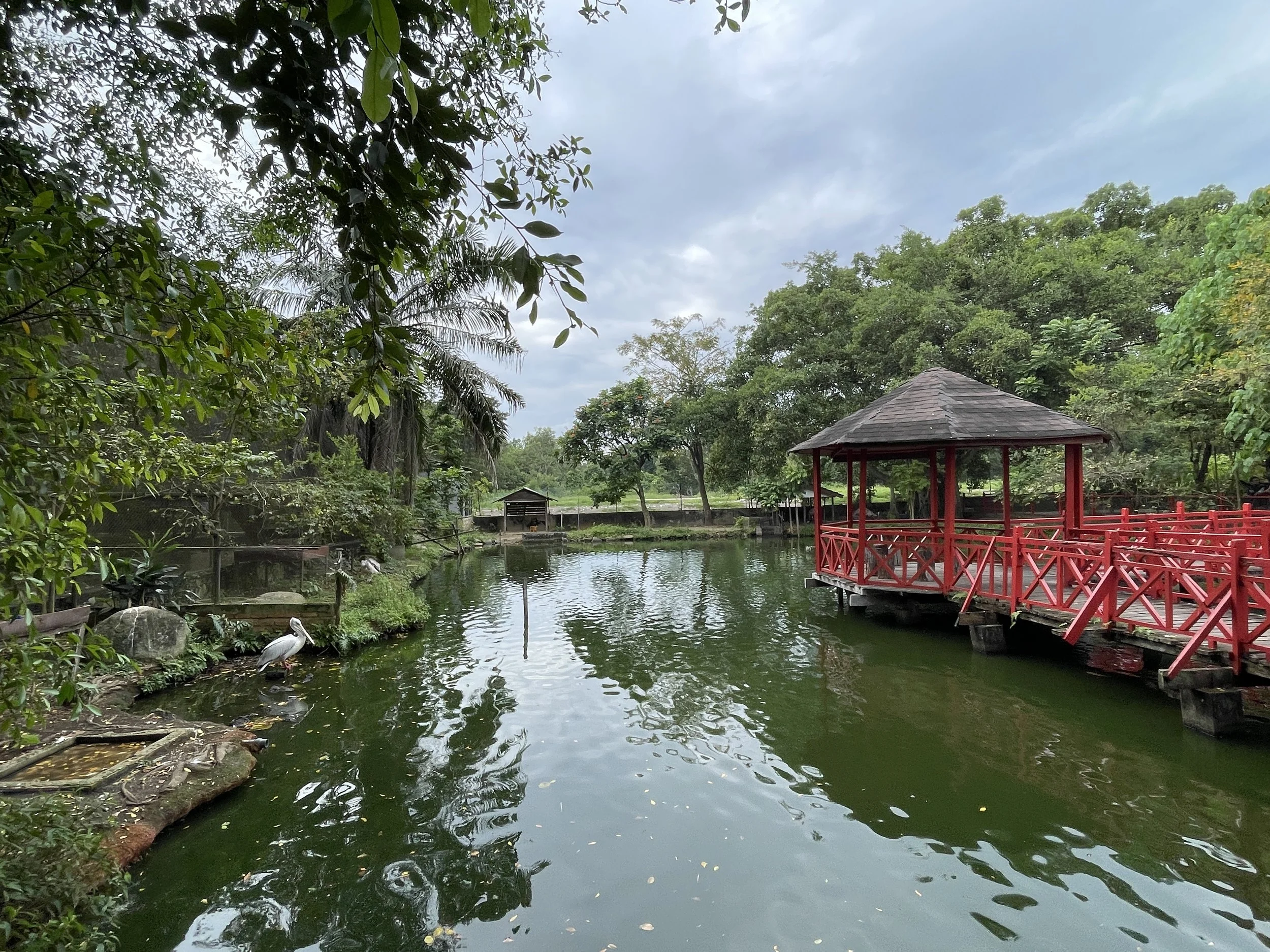
The Penang Bird Park is a zoo which is located on the mainland, very close to the northern bridge going into Penang Island. As the name implies, it is mostly about birds, although there are quite a few other animals, as well.
Now, I am not super big fan of zoos, but had read this one was quite interesting, not just because of the impressive collection, but also when it comes to the sort of setting, with plenty of vegetation and ponds. And on this account, it certainly delivers.
The Park is a rather low key attraction, there were just a few people, mostly locals. Also worth noting that it is a small island of greenery in what is, otherwise, a very industrial, and quite ugly, area. It made sense for use to make a quick stop, since it was pretty much on our way south, but wouldn’t have done the trek on purpose from Penang Island.
Driving through the Cameron Highlands: Malaysia’s tea country
Here is a truly different destination in the very heart of continental Malaysia. The Cameron Highlands, named after the British surveyor that mapped the area in 1885, are a series of mountain ranges located roughly half-way between Penang and Kuala Lumpur.
Because of their elevation, between 1,300 and 1,800 meters above sea level, they have a climate that is cooler than on the coasts. In fact it can even be a bit chilly in the evening. This is the one of the reasons that the British set up here one of the so-called “hill stations”, that is places where the colonial administrators and their dependants could spend the hottest months of the year in relative coolness.
The other thing that draw the British to the Cameron Highlands is that it has the right conditions to grow tea (particularly Assam-type black tea) and to this day tea plantations are the defining element in the Cameron Highlands landscape and the main reason they draw many visitors every year.
By the way, tea-growing has its complement in another cash crop: strawberries, which are now grown also in greenhouses all over the Cameron Highlands.
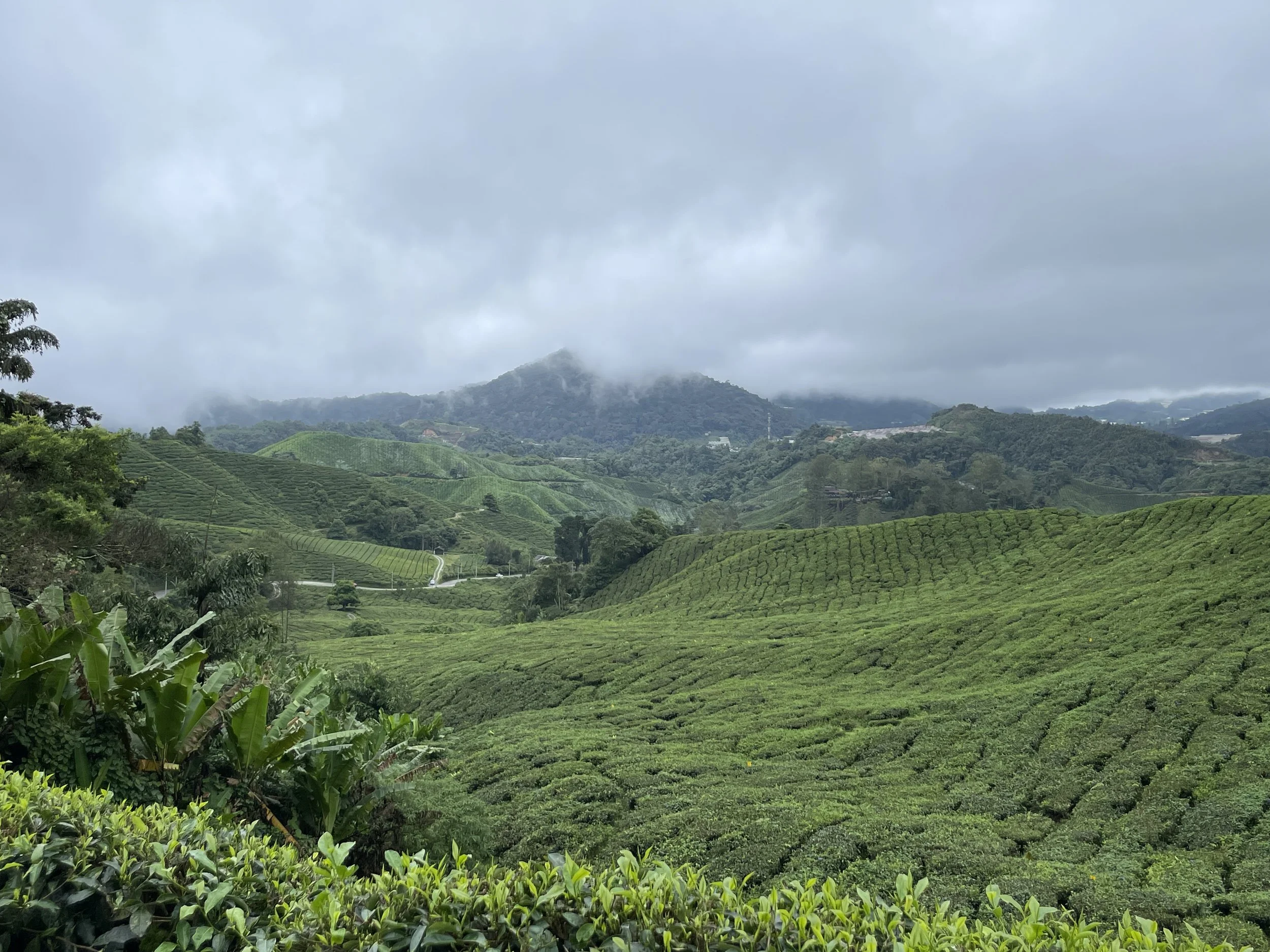
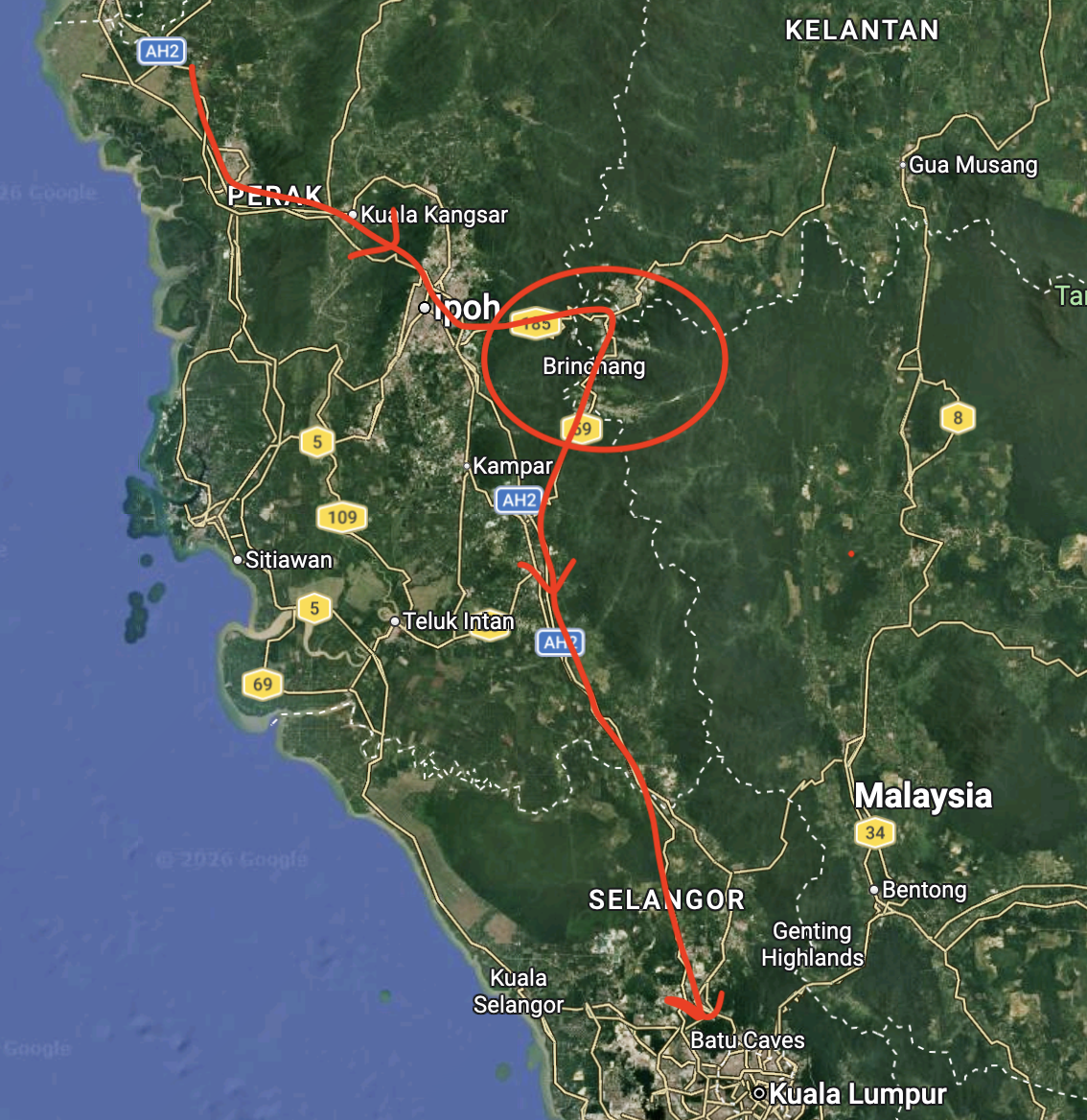
The Cameron Highlands cover a whole district, but one of the main settlements is in the area around Brinchang and Tanah Rata. It is here that you find most of the tourist infrastructure, in addition to a relatively large commercial area (including a McDonald’s!). It is also a central base from where to explore the nearby tea plantations.
To reach the core of the Cameron Highlands, you leave the motorway at Ipoh, the closest large city, and take Route 185, which is a winding mountain road with a fair amount of curves. It is a two-lane road, although in good state throughout.
If driving from Kuala Lumpur, you can leave the motorway further south, near Tapah, and take Route 59, which runs uphill through a deep narrow valley. This road offers some really great views of the tea terraces in its upper reaches.
We did both, arrived from the north, crossing the highlands and exiting them through the south.
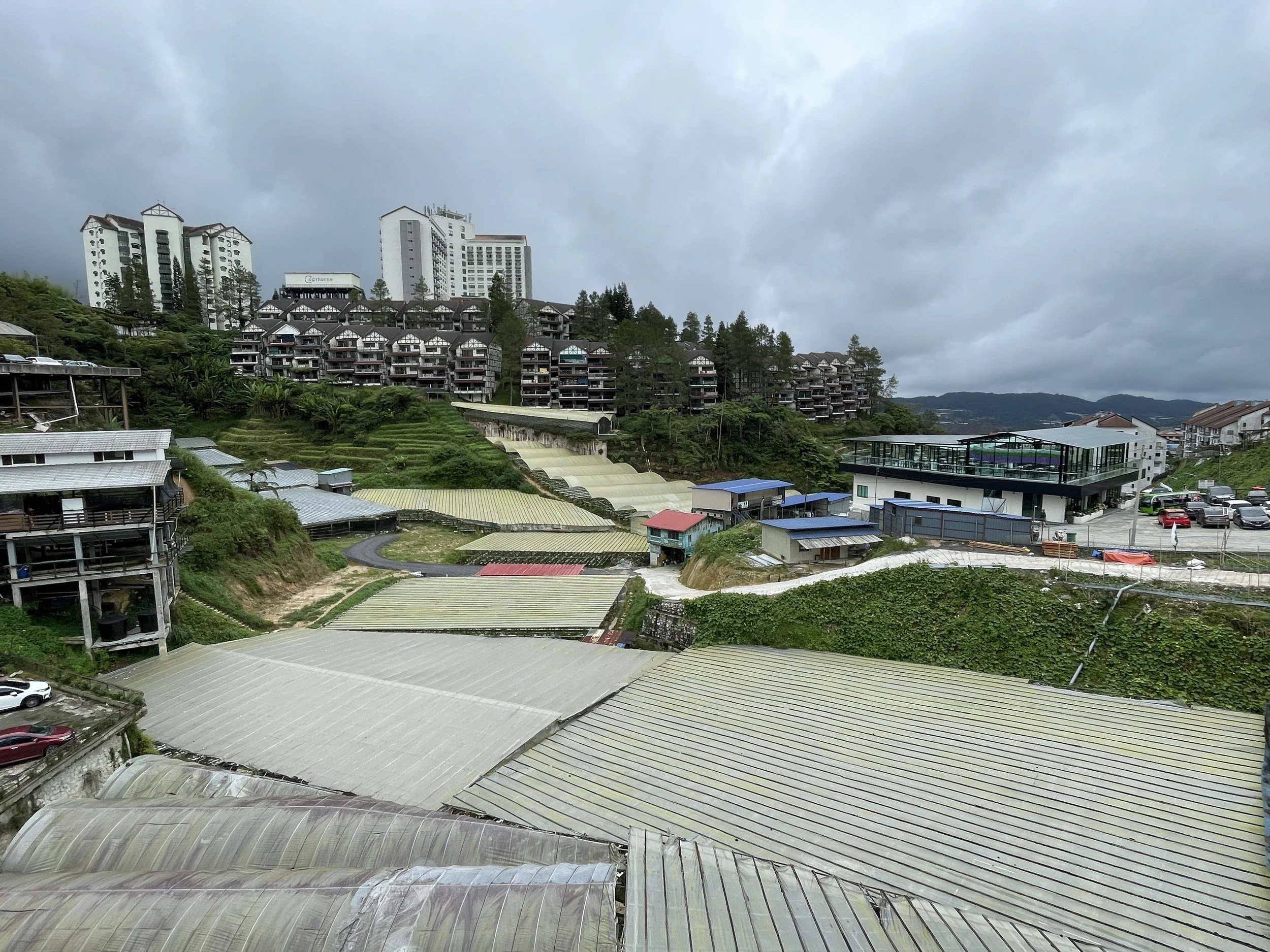
To be fair, the urban part of Brinchang is not very beautiful. It is basically a main road that crosses the town and a rather chaotic sprawl around it.
The whole area is very hilly, so constructions of different styles and heights pile up in the few flat areas around the road. This is also the town where you will find most services and places to eat, although we just had our meals at the hotel (more on this below).
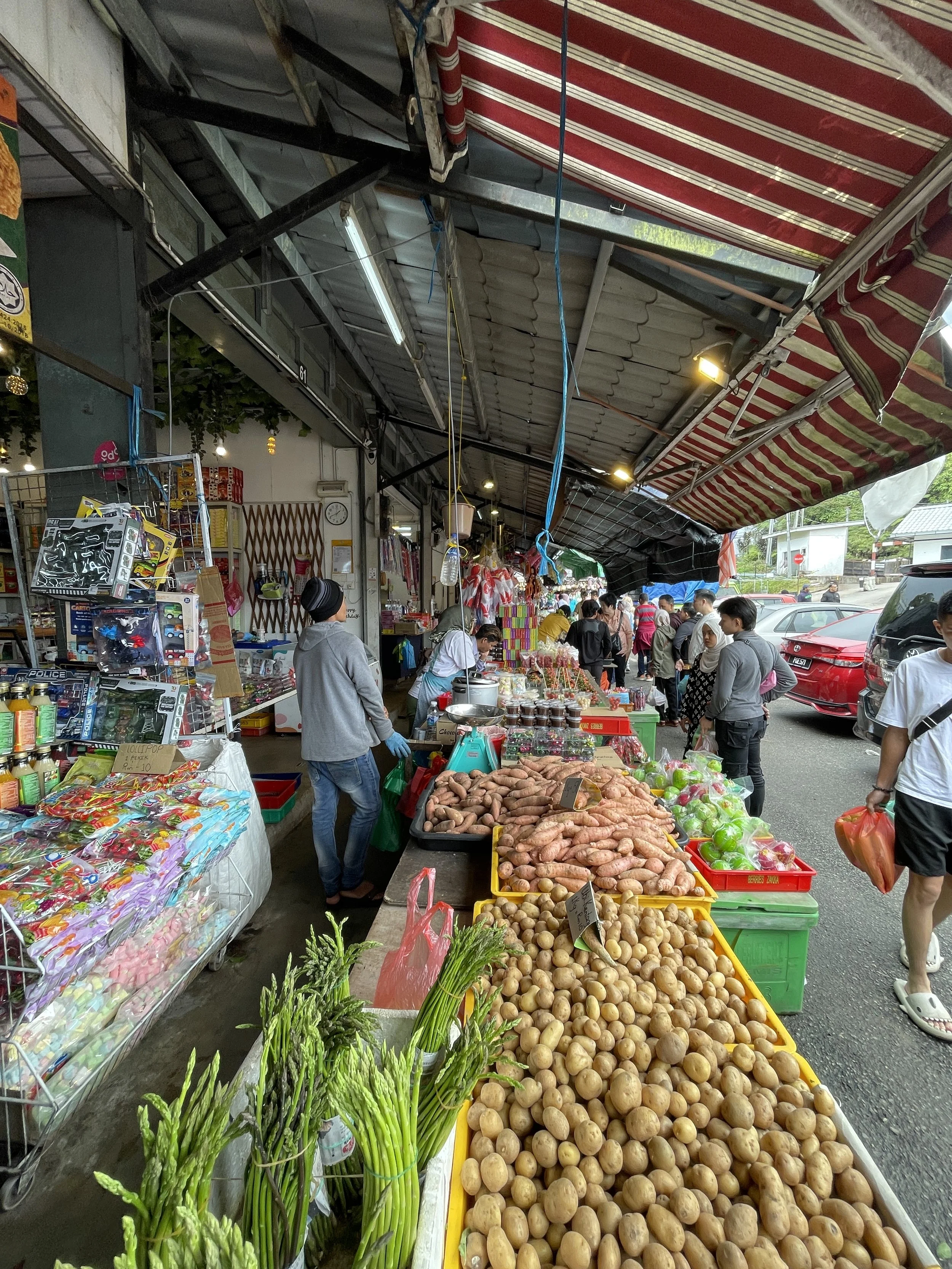
Brinchang Central Market is, perhaps, the one spot that deserves a brief stop, if only to check the buzz all around, with many shops and stalls selling all types of produce, including, of course, the local strawberries and tea!
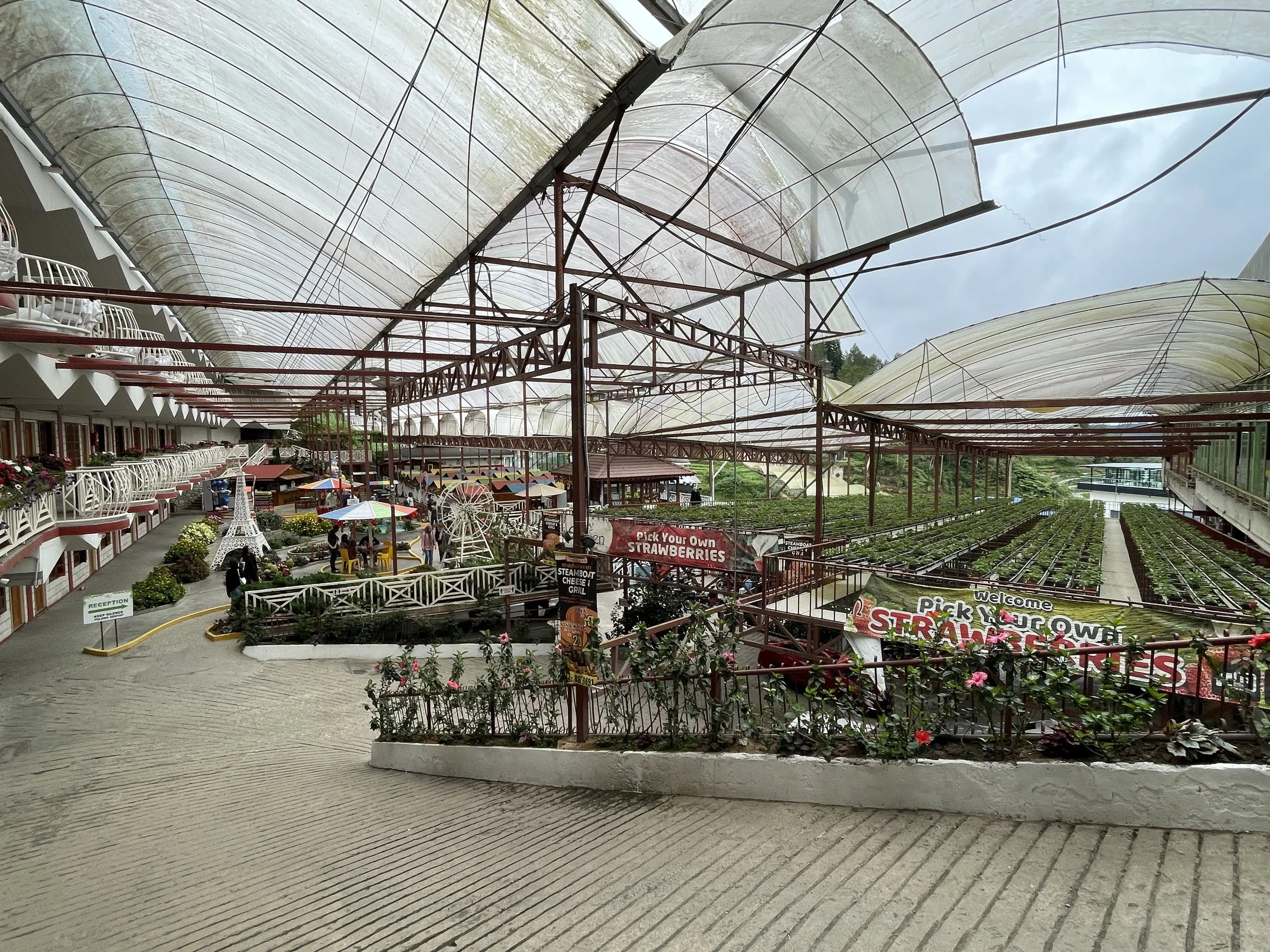
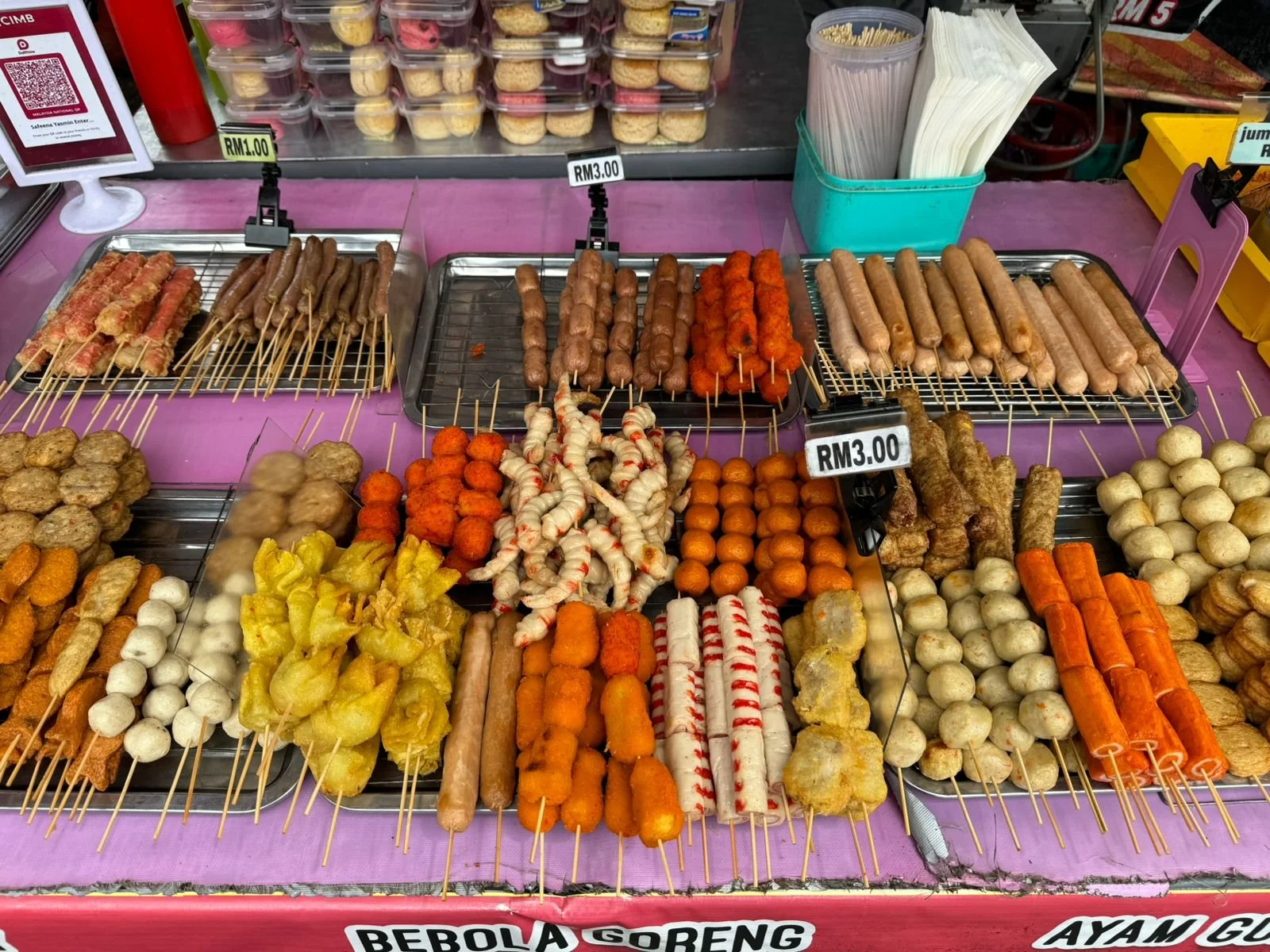
Where to stay while in the Cameron Highlands
Cameron Highlands Resort - Small Luxury Hotels of the World
This is the hotel of reference in the whole Cameron Highlands area.
As you will see in the pictures below, it is a classic, upmarket hotel in colonial style.
It is located right on the main north-south road, which makes it a convenient base to reach the Boh Tea Plantation (more on this soon). It is also adjacent to the Cameron Highlands Golf Club.
It is part of the Small Luxury Hotels of the World network.
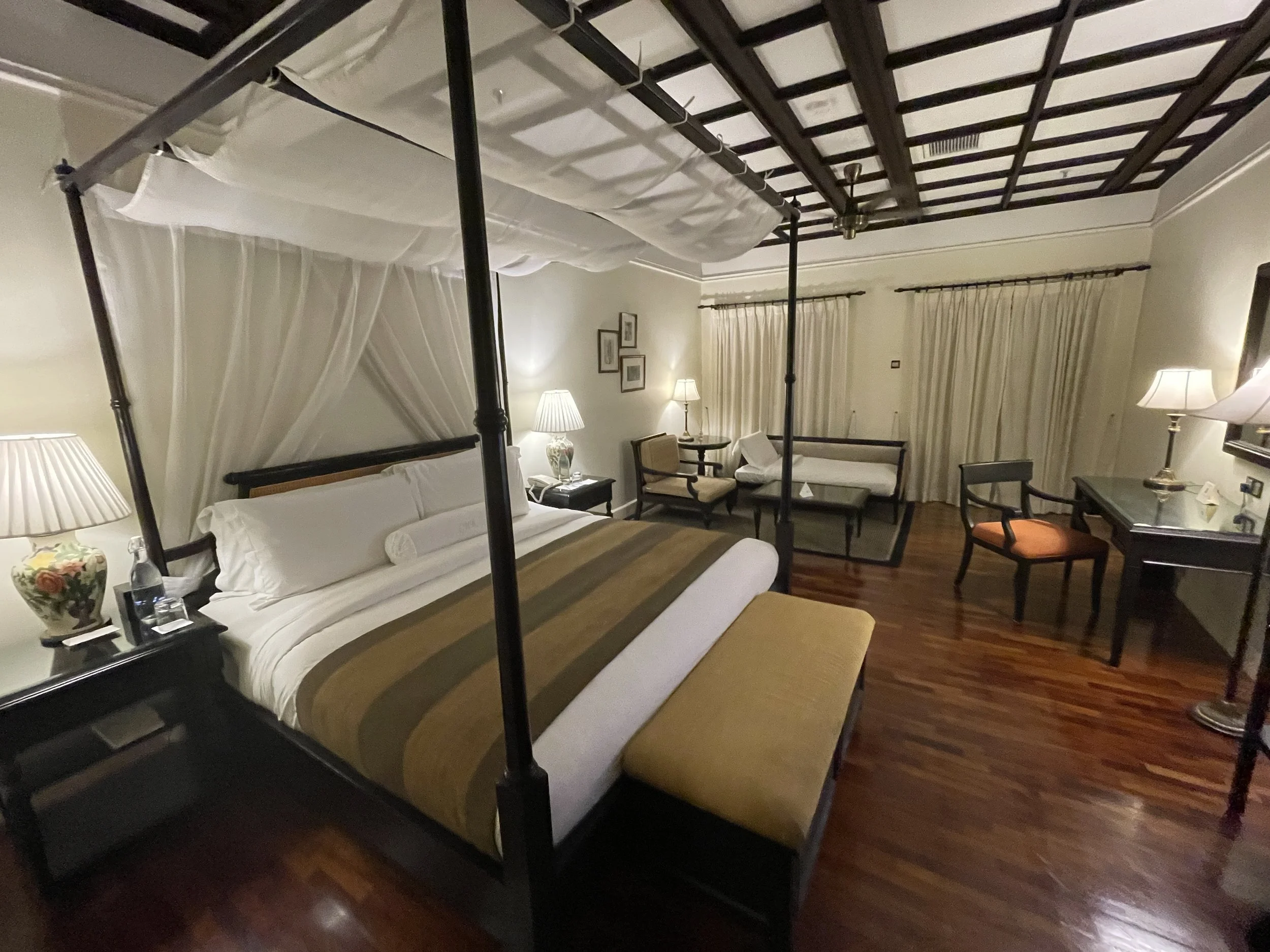
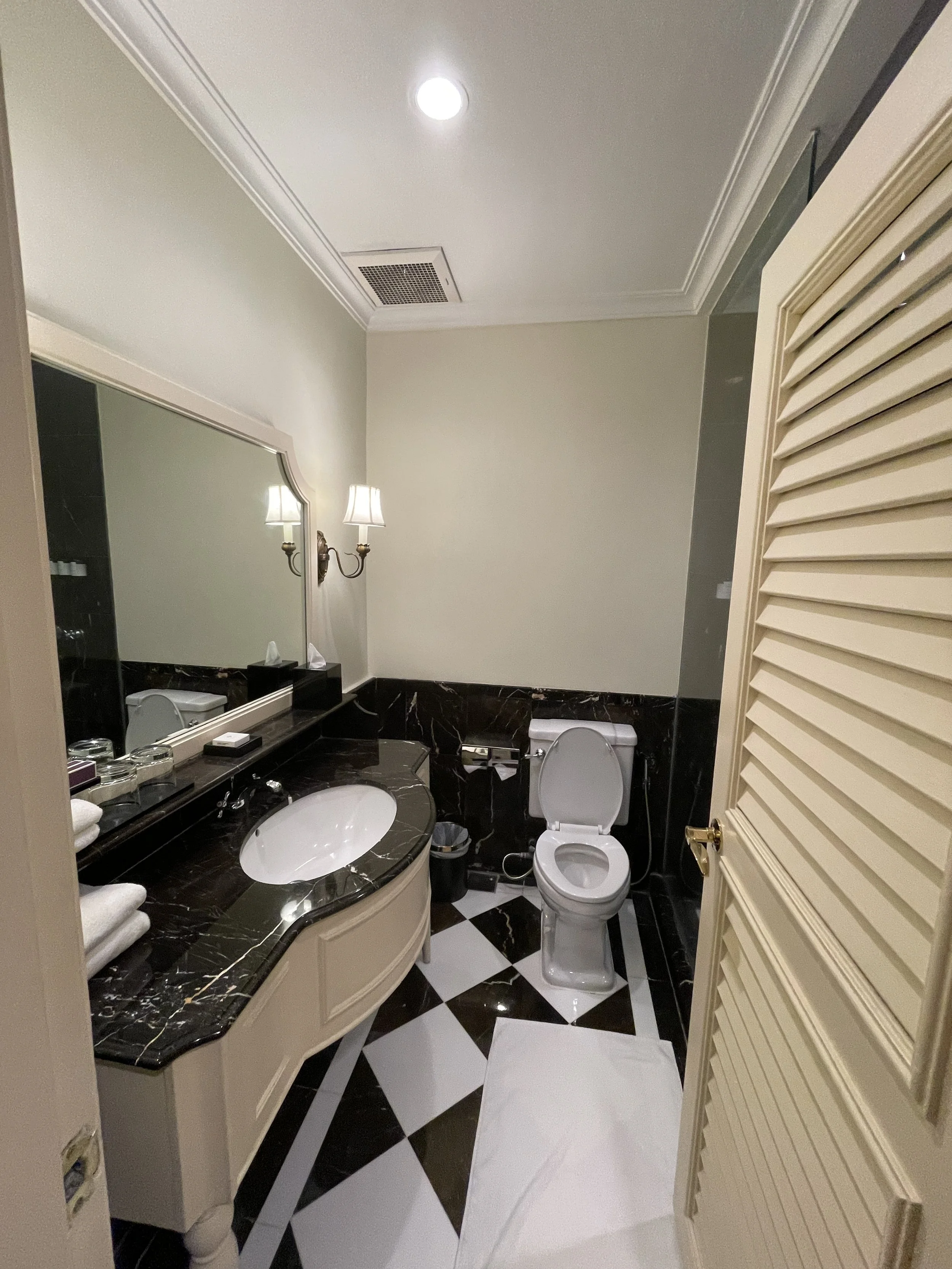
You can get an idea here of the look and feel of the rooms, which is very different from the beach resort that we have seen earlier in Penang and also, as you will soon see, of our recommended high-rise hotel in Kuala Lumpur, the Sheraton Imperial Kuala Lumpur.
The hotel has also a very nice restaurant and it is, actually, a very good option to have your meals (we didn’t find the options in town that convincing). Service was also excellent throughout!
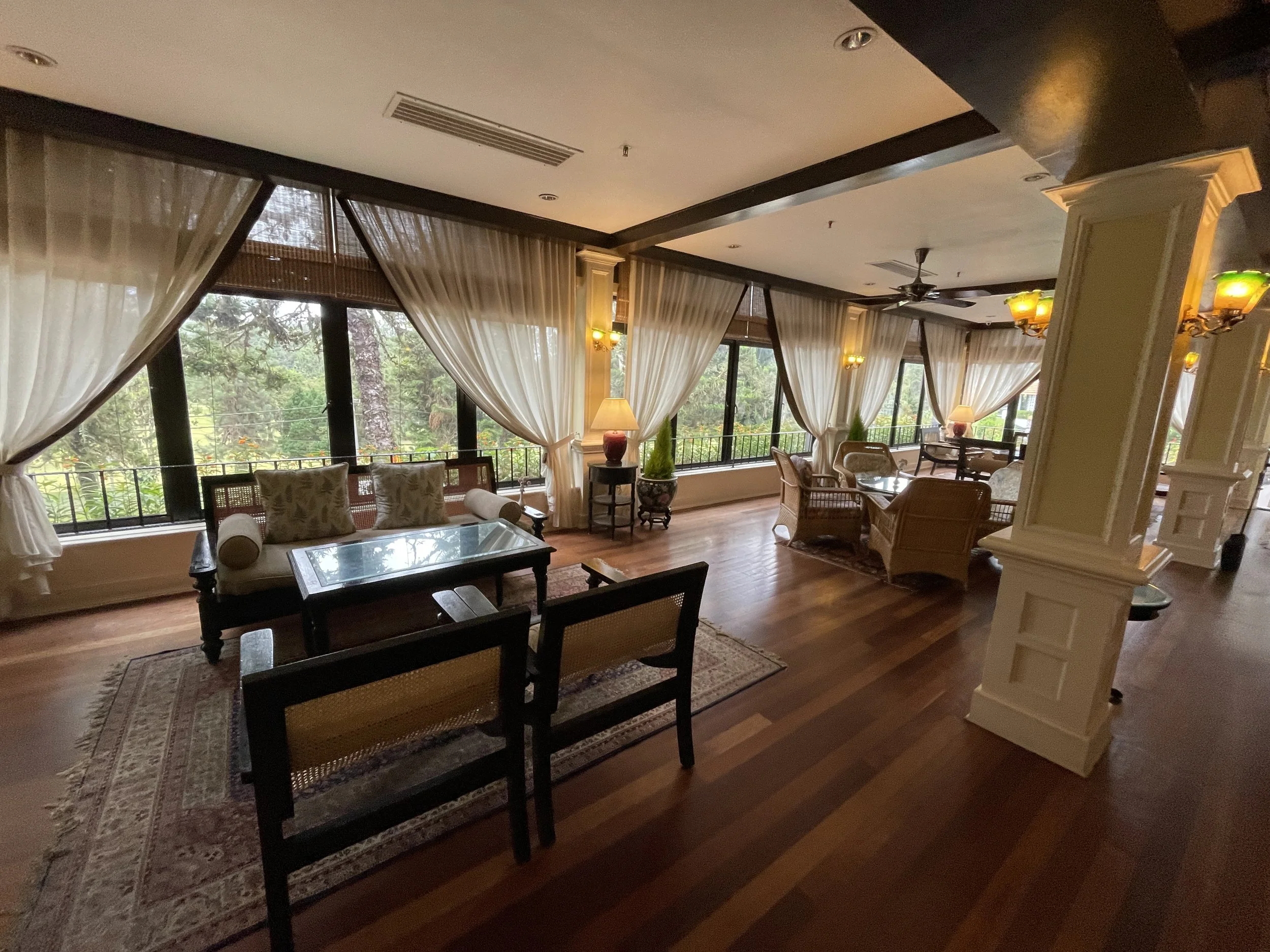
In line with the “colonial hill station” theme, you can have afternoon tea English style at the hotel.
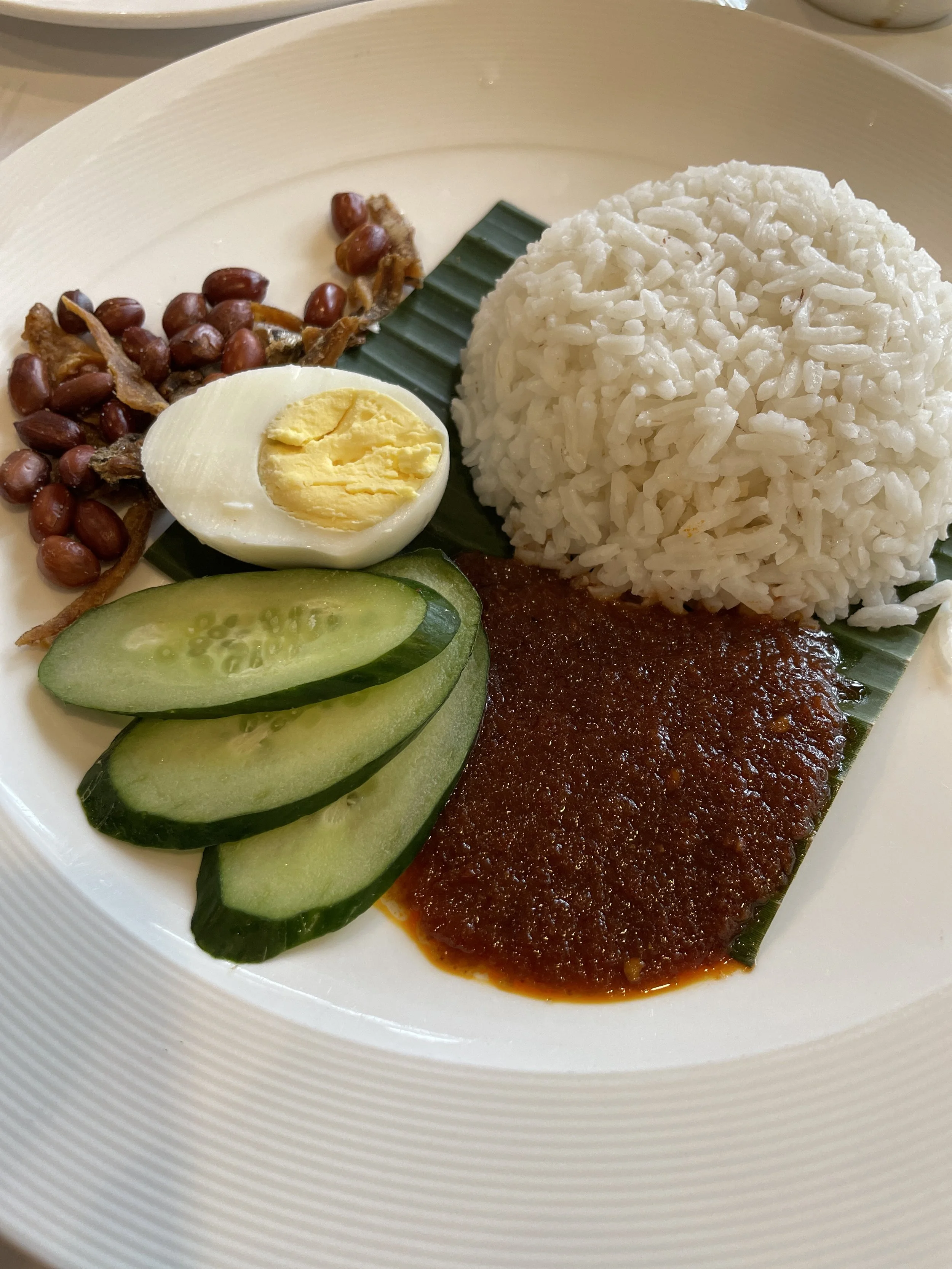
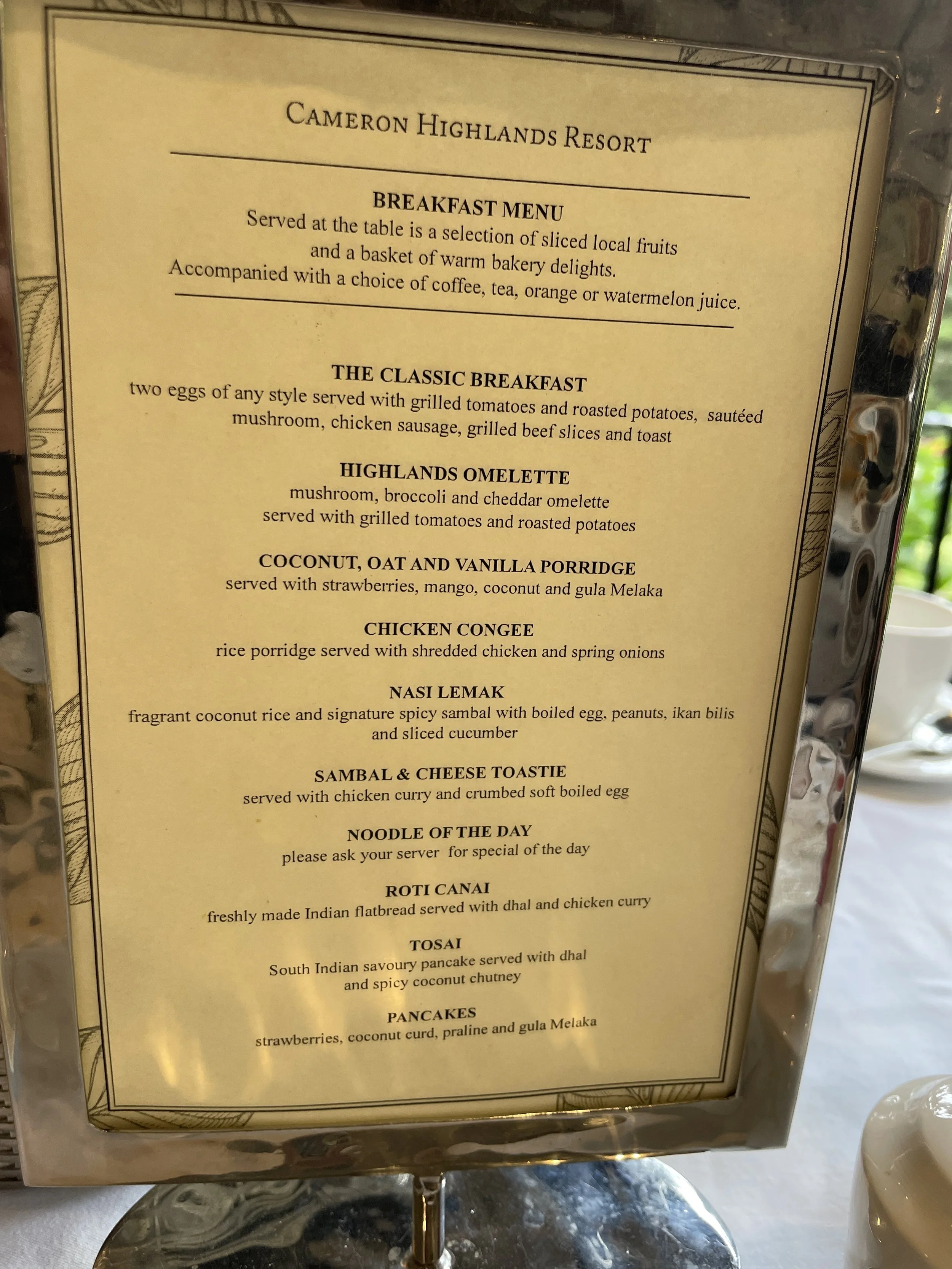
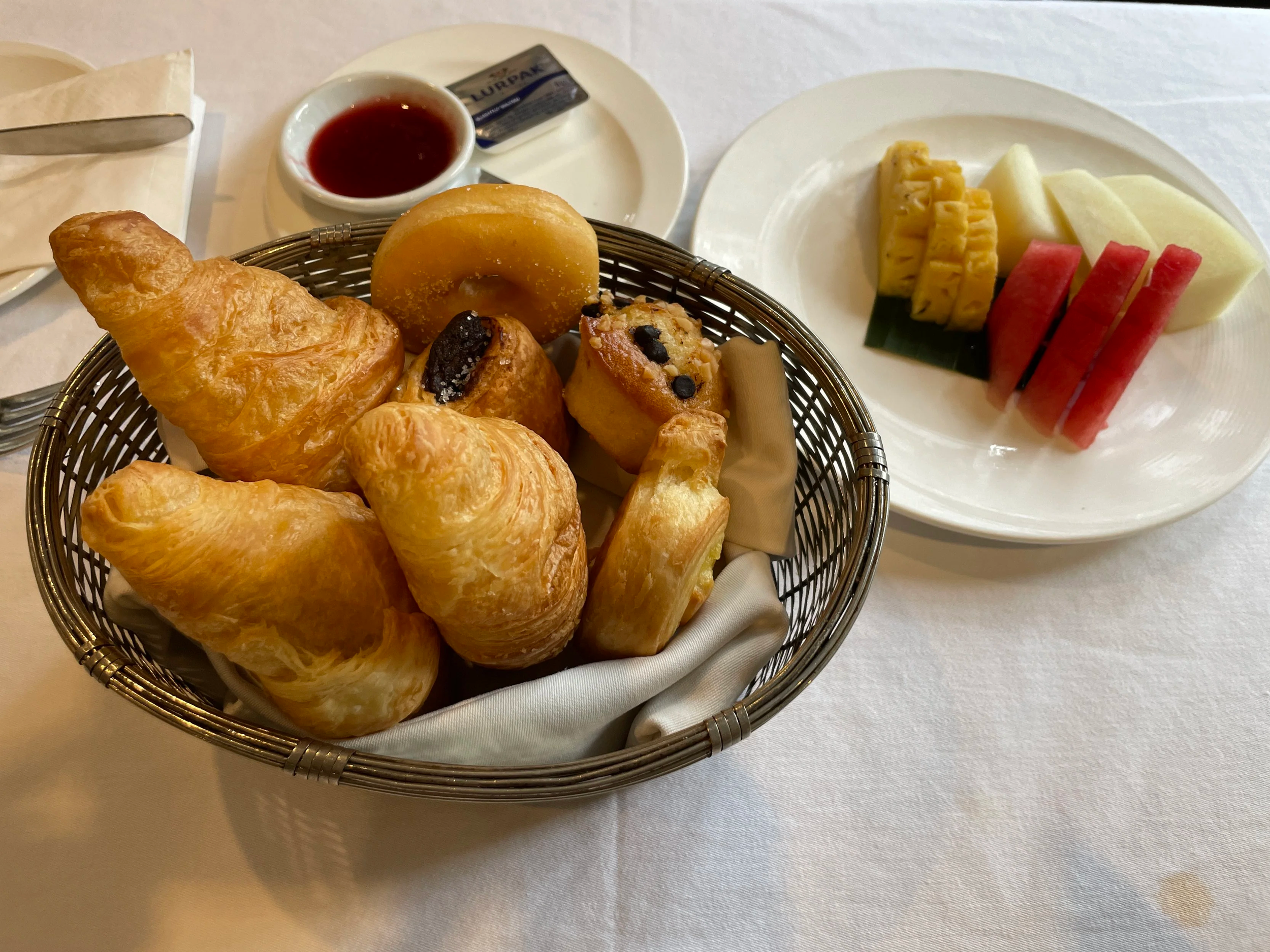
As per the breakfast, unlike so many other modern hotels, here, at the Cameron Highlands Resort, it is not a buffet, but more of an à-la-carte experience, although with ample choices for all tastes.
Visiting the Boh Tea Plantation
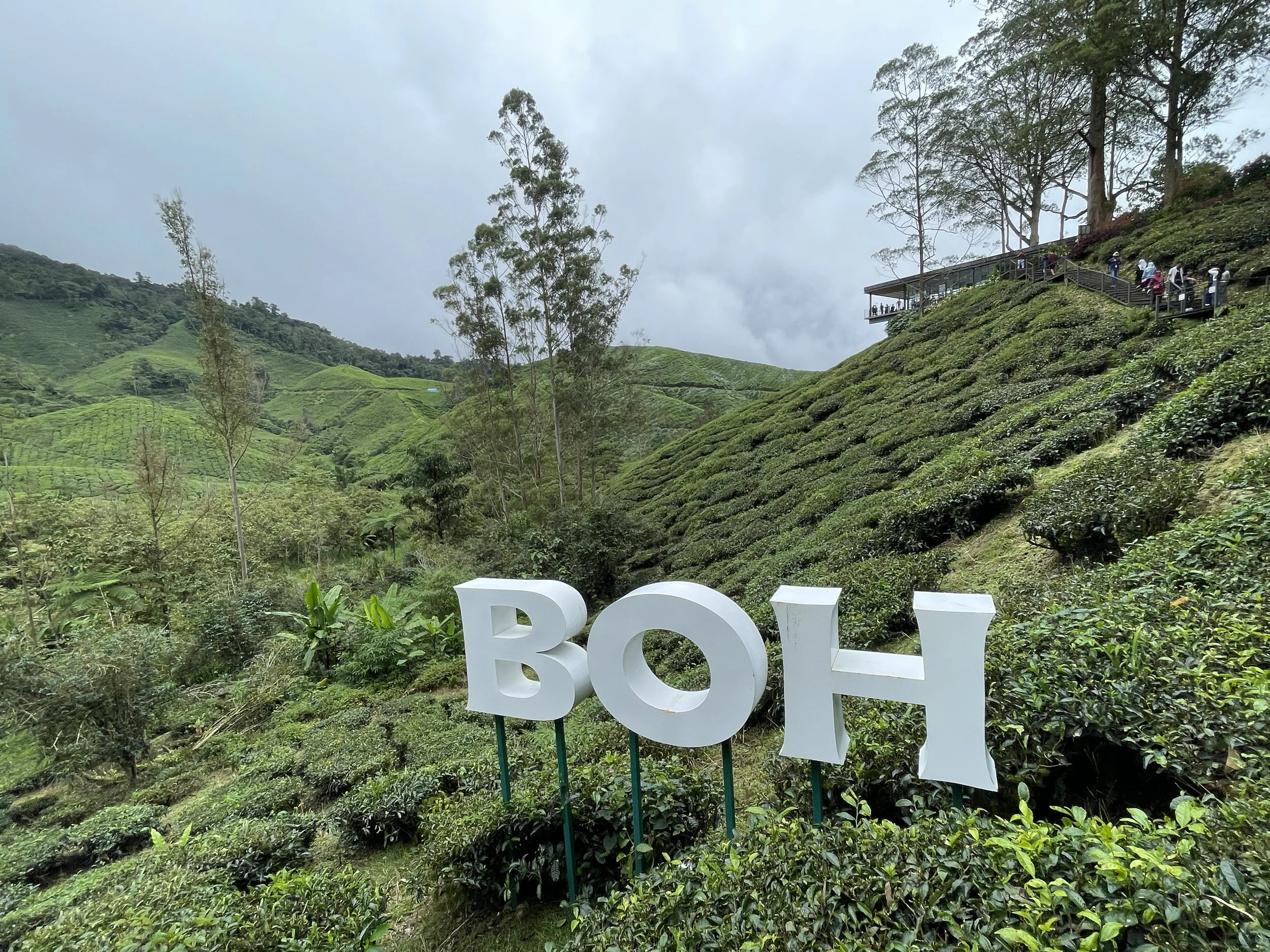
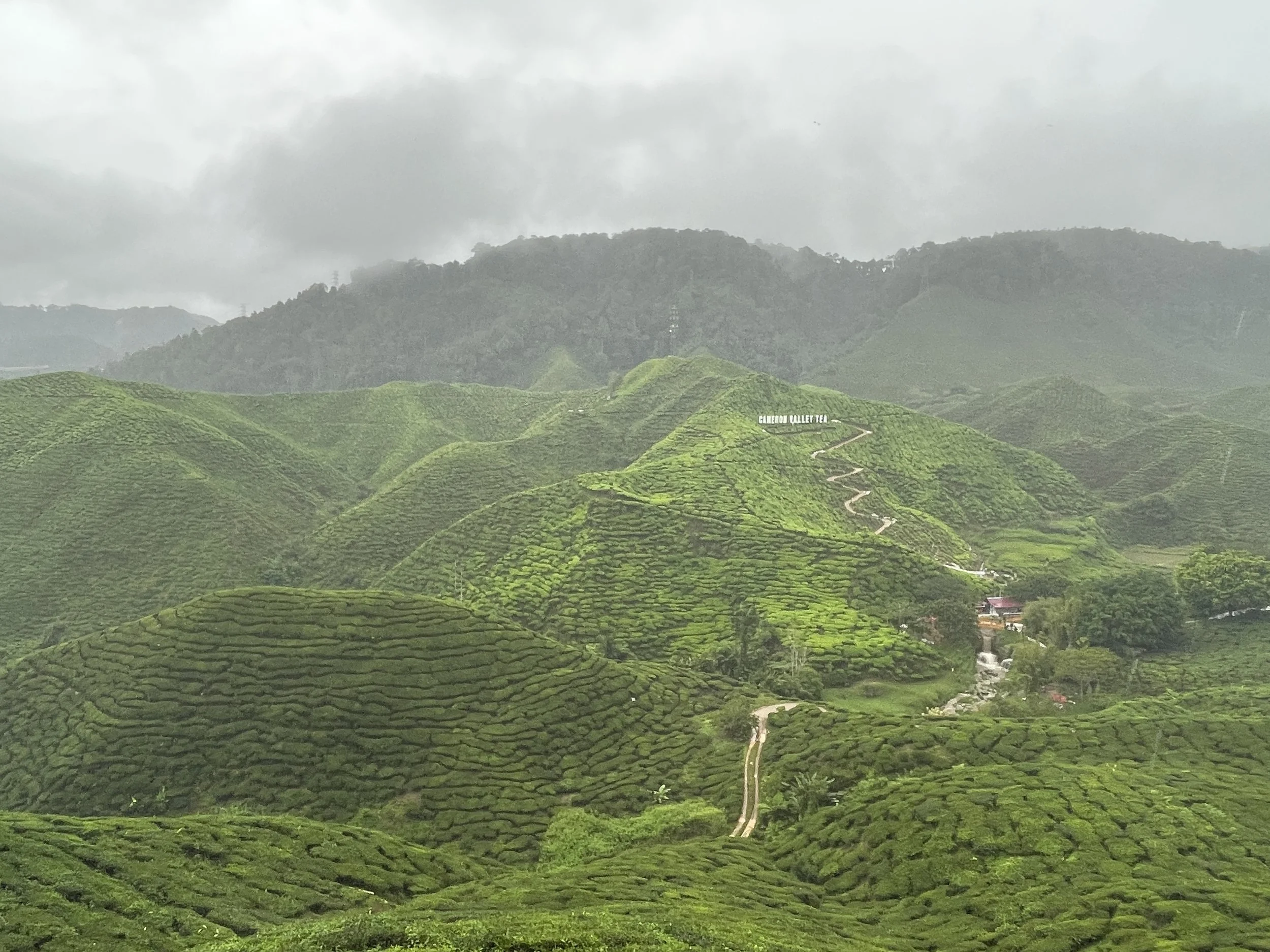
The top thing to do in the Cameron Highlands is, of course, visit a tea plantation. Actually, strictly speaking, you don’t need to get into any single plantation to enjoy the green, lush, undulating tea landscapes, since they pretty much everywhere around you in this area. But if you have the time and inclination to do so, I recommend visiting the BohTea Centre (“Sungei Palas Garden”).
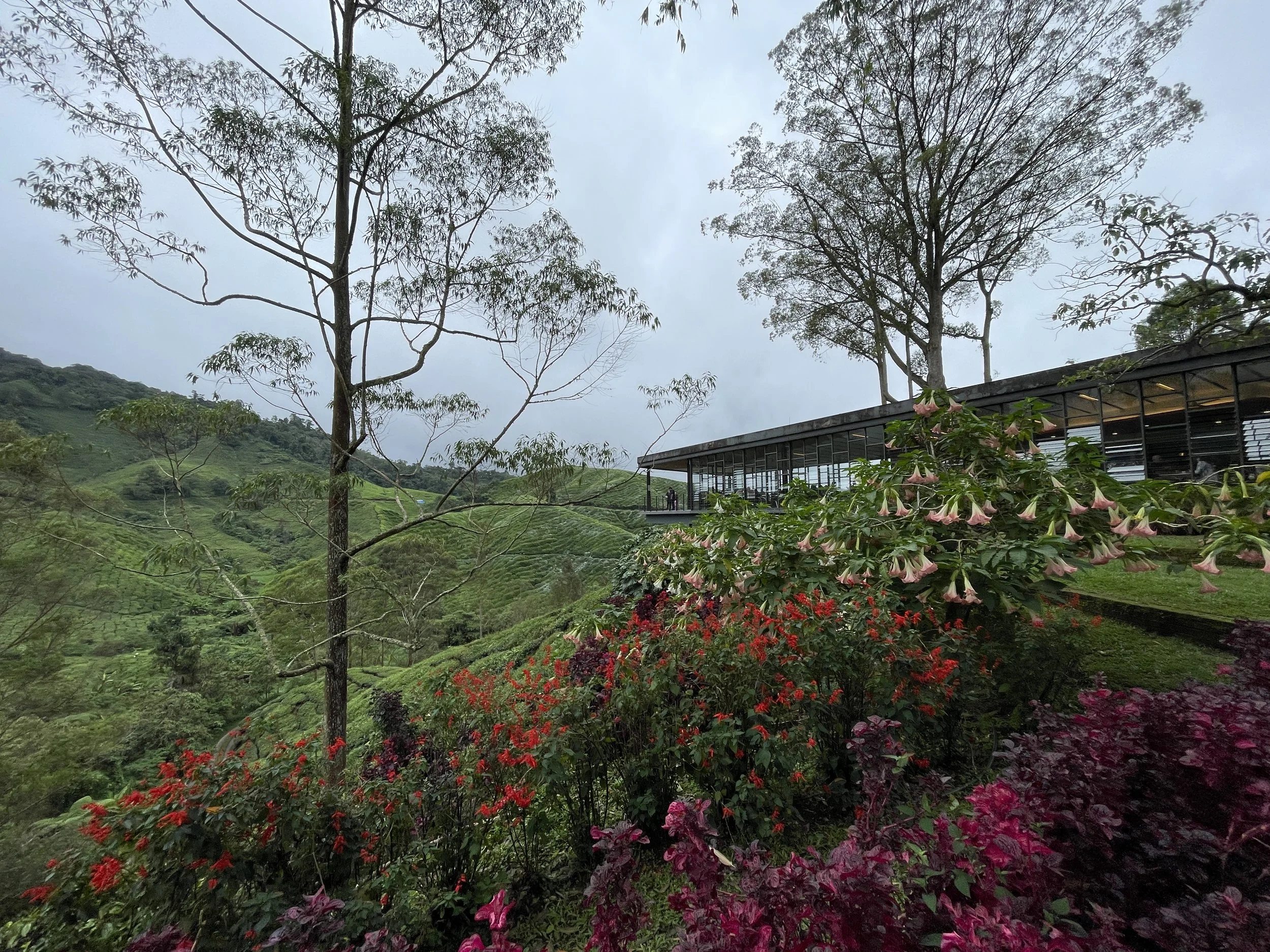

The Boh Tea Centre is at the heart of a tea-growing valley, which completely covered in terraced plantations.
The Centre is run by Boh, which is one of the main producers in the area and in Malaysia.
Boh has built a large and modern hilltop visitor’s center where you can learn about tea growing in this region, enjoy the views from the café and, of course, buy many different varieties of tea at the visitors’ center shop.
Besides the actual center, the drive there is worth the excursion, since you pass through some stunning incredibly green landscapes.
There is a large car park at the bottom of the valley and from there you walk uphill to the center, enjoying the views along the way.
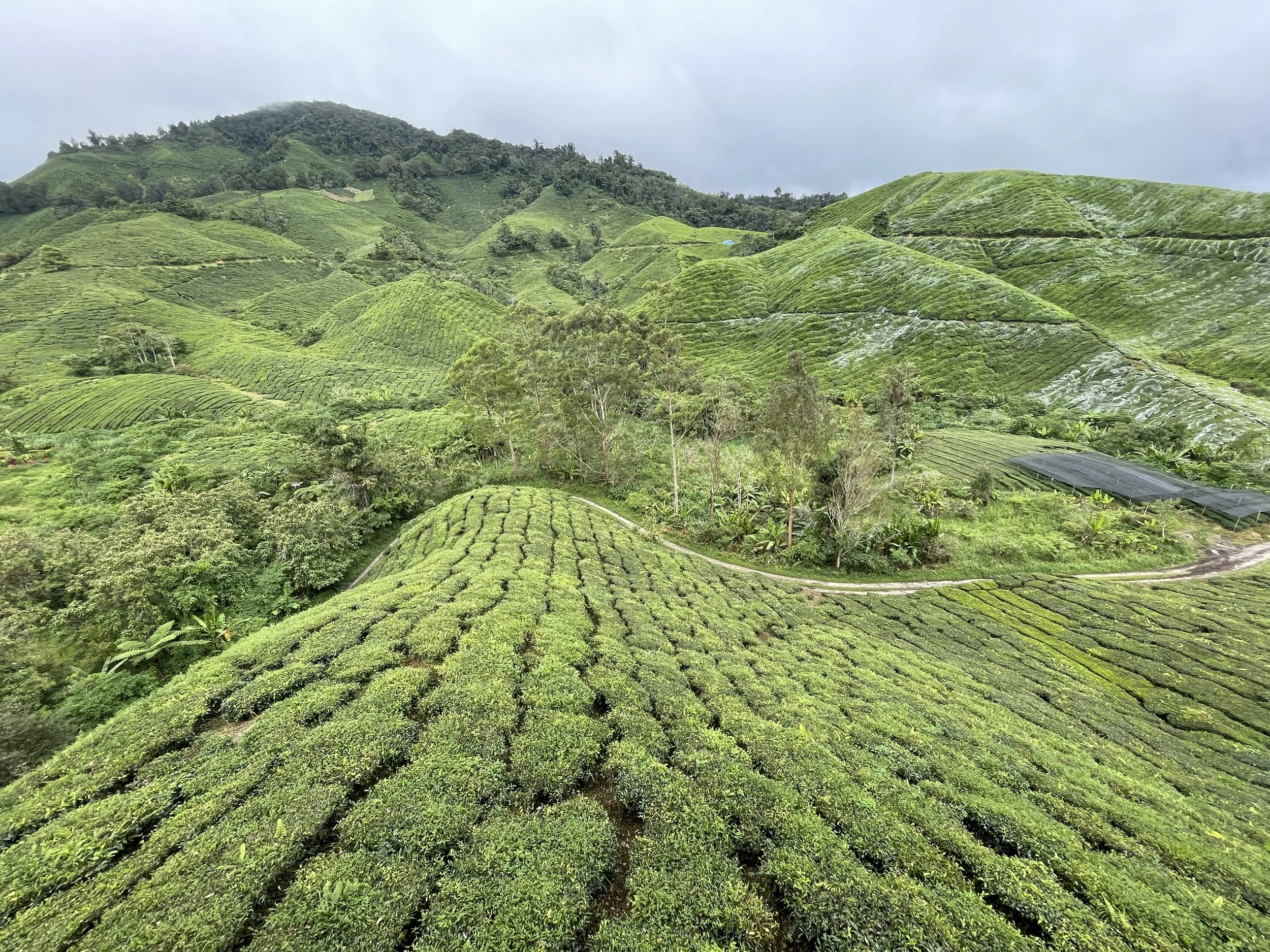
There are also some other great views when driving along Route 59 (as you can see in the picture below). In fact there are several viewpoints where there are some roadside bars and restaurants with panoramic terraces.
A great place to stay in Kuala Lumpur
And this is how, a few hours after leaving the cool air of the Cameron Highlands, arrived in back in Kuala Lumpur.
So, since this most trips to Malaysia start or end in the capital city, I thought this post wouldn’t be complete without a brief mention to my recommended place to stay in Kuala Lumpur.
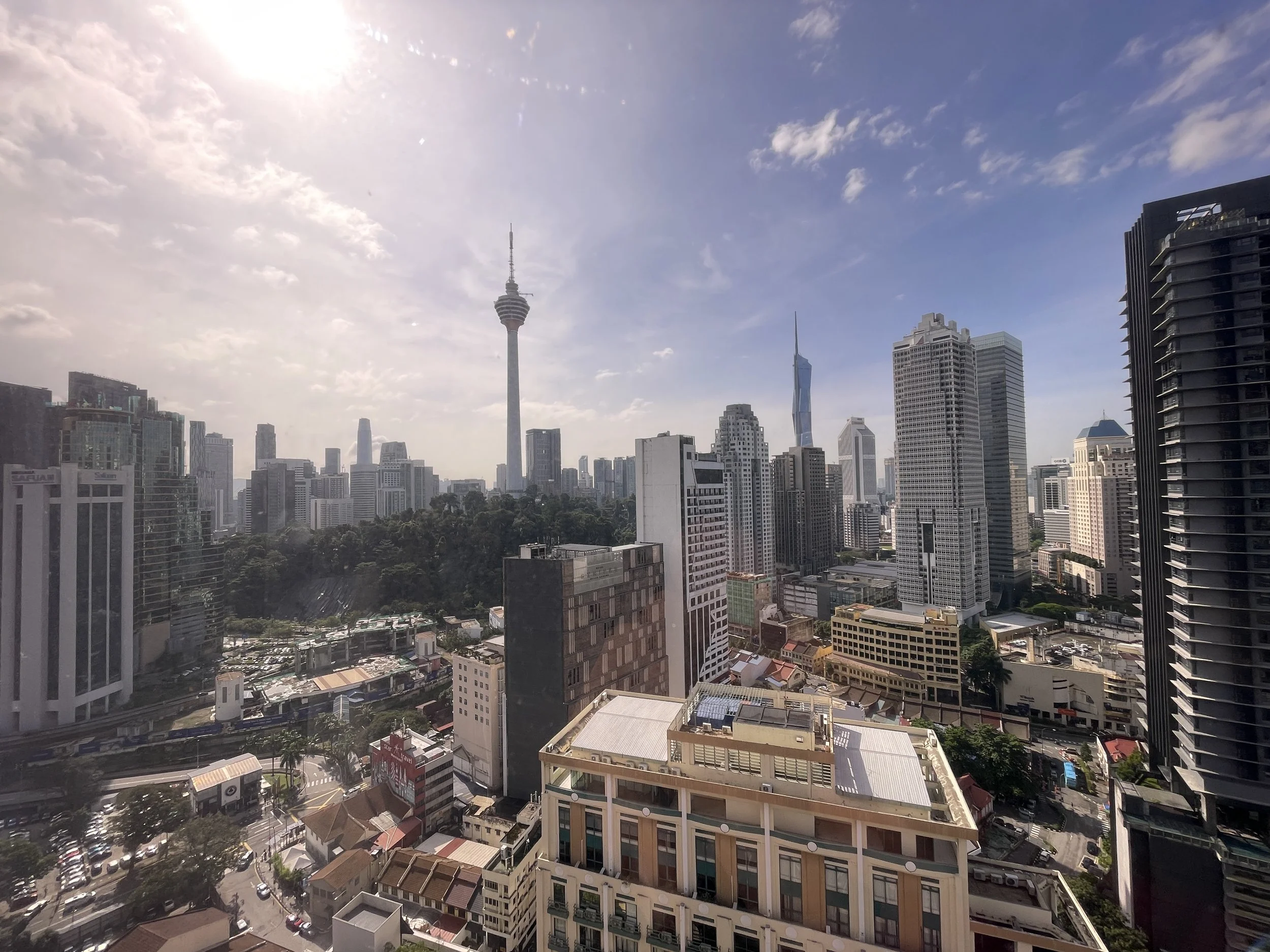
Sheraton Imperial Kuala Lumpur Hotel
Jln Sultan Ismail, Chow Kit, 50250 Kuala Lumpur
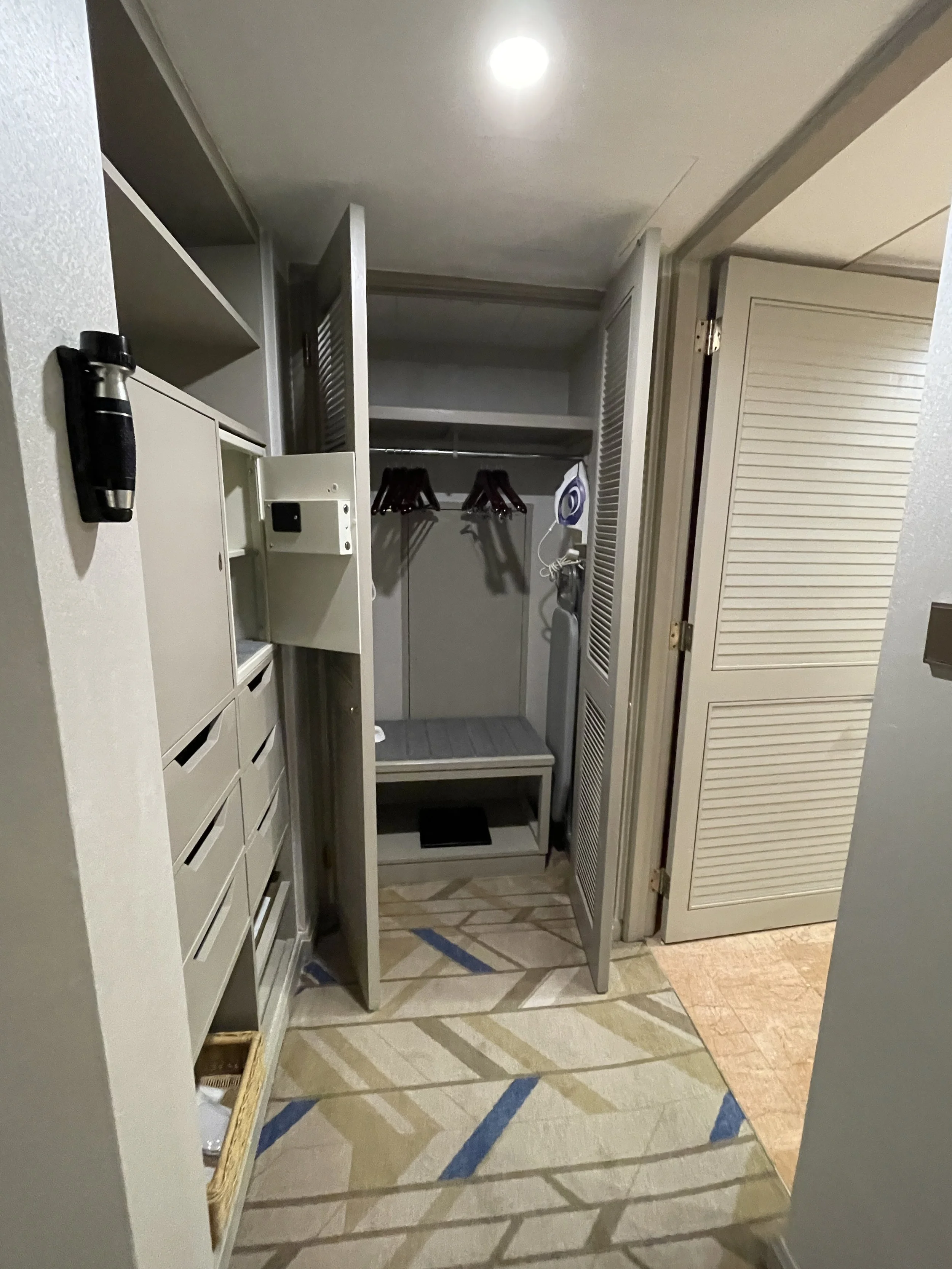
This is a rather central five star hotel which offers some pretty good rates, great food and amazing views. As you can see below, it has pretty large rooms as well. And I can also add that service was excellent throughout our stay.
The hotel offers parking for an extra, rather reasonable fee, but it is also located next to a metro station, and in front of a commercial centre, so pretty well served in terms of services.
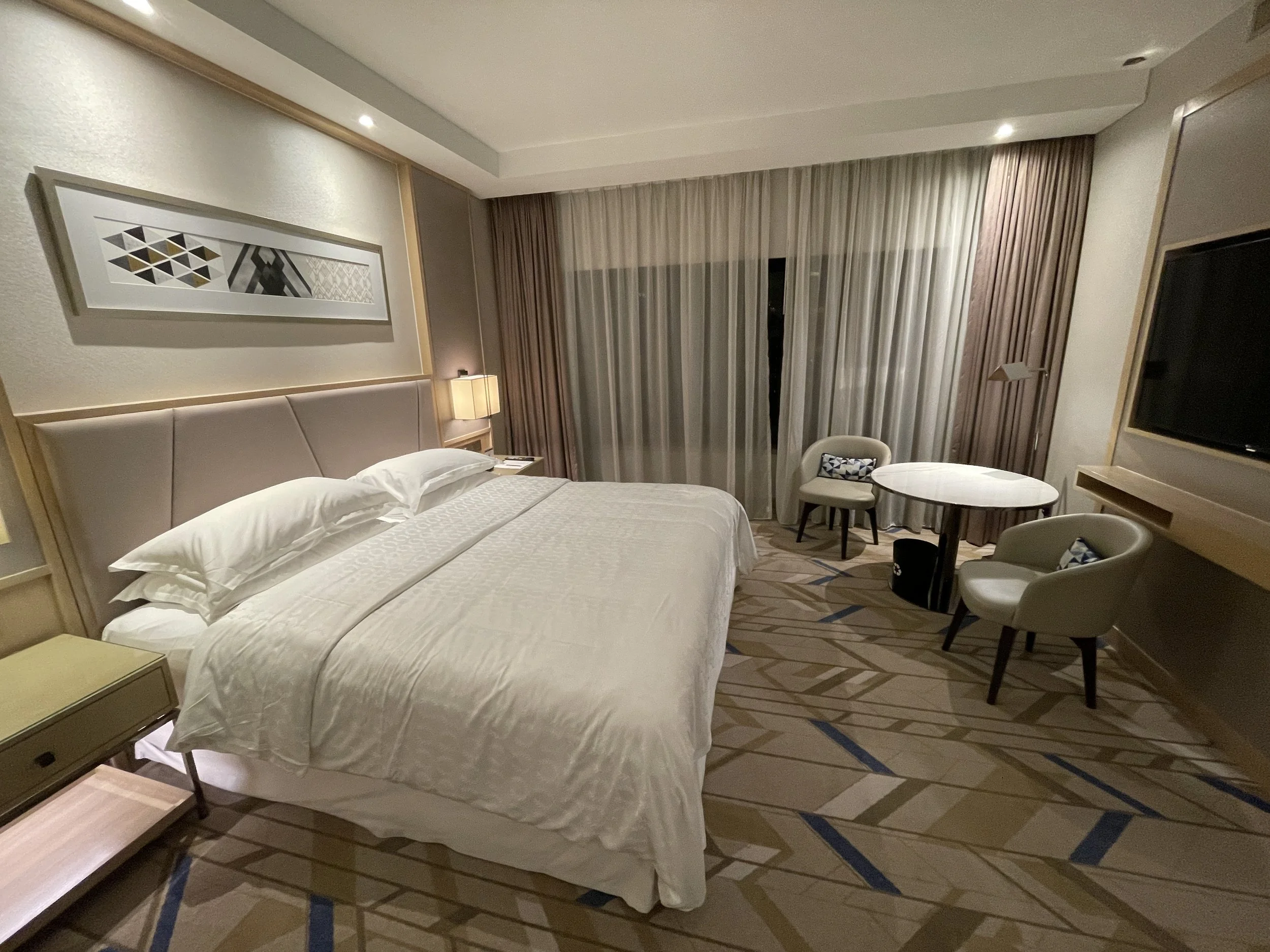
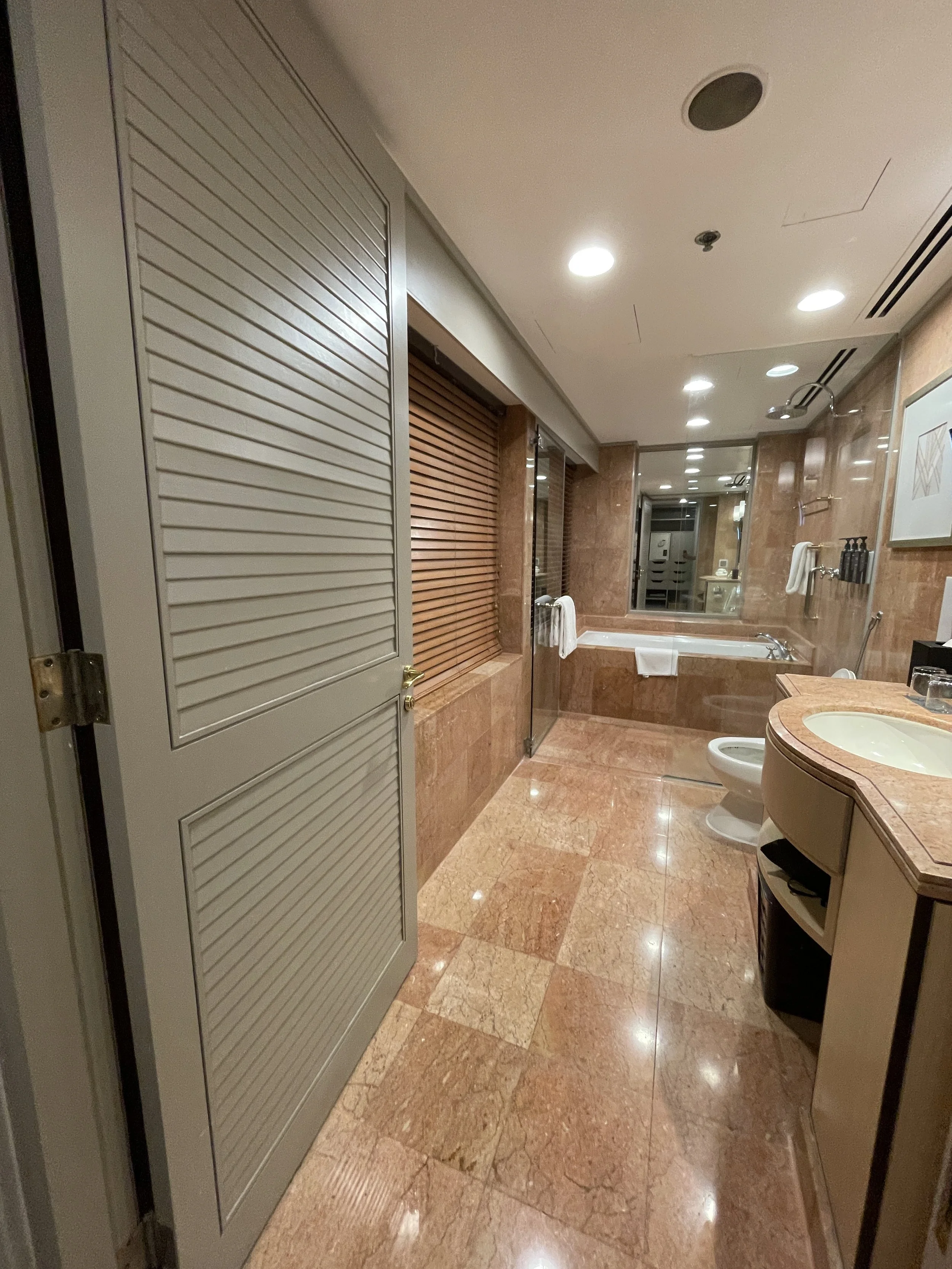
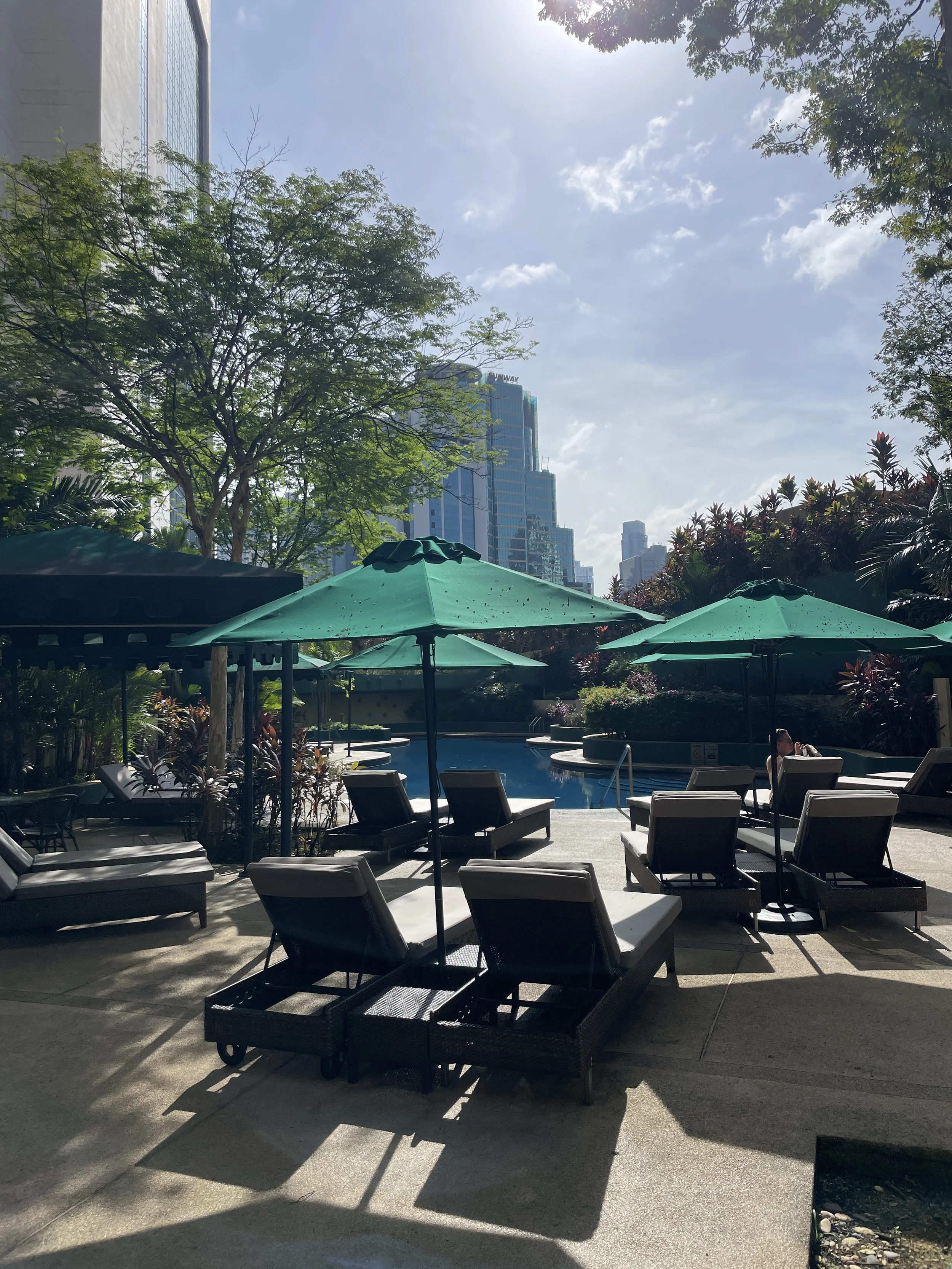
Last but not least, a couple more points about the Sheraton Imperial Kuala Lumpur: it has also a small rooftop pool and, while I don’t have pictures to share, I can also tell you it has one of the best breakfast buffets I have seen in quite a long time!
The Top Three Things to do in Langkawi
It may not be as globally famous as Bali or Pukhet, but Malaysia has also its own island paradise.
Located just a few miles off the northwestern corner of Malaysia, right on the Thai border, Langkawi is a bit more than a tropical beach resort. The island has been designated a UNESCO Global Geopark. This is not quite the same as a UNESCO World Heritage Site, but it is, nevertheless, a recognition of its natural singularity.
In fact, UNESCO defines this category of site as "a single, unified geographical area where sites and landscapes of international geological significance are managed with a holistic concept of protection, education and sustainable development.” Interestingly, this designation also involves explicitly the pursuit of some specific sustainable economic development goals to the benefit of local communities.
By the way, although I will be referring to Langkawi as “an island” throughout the text, Langkawi is, in reality, an archipelago with dozens of small islands and islets. However, many of the smaller ones are not inhabited and practically all population, resorts and infrastructure is on the main island, which is where I stayed (I am not even which of the smaller islands are open to visitors, since quite a few of them are officially categorized as nature reserves).
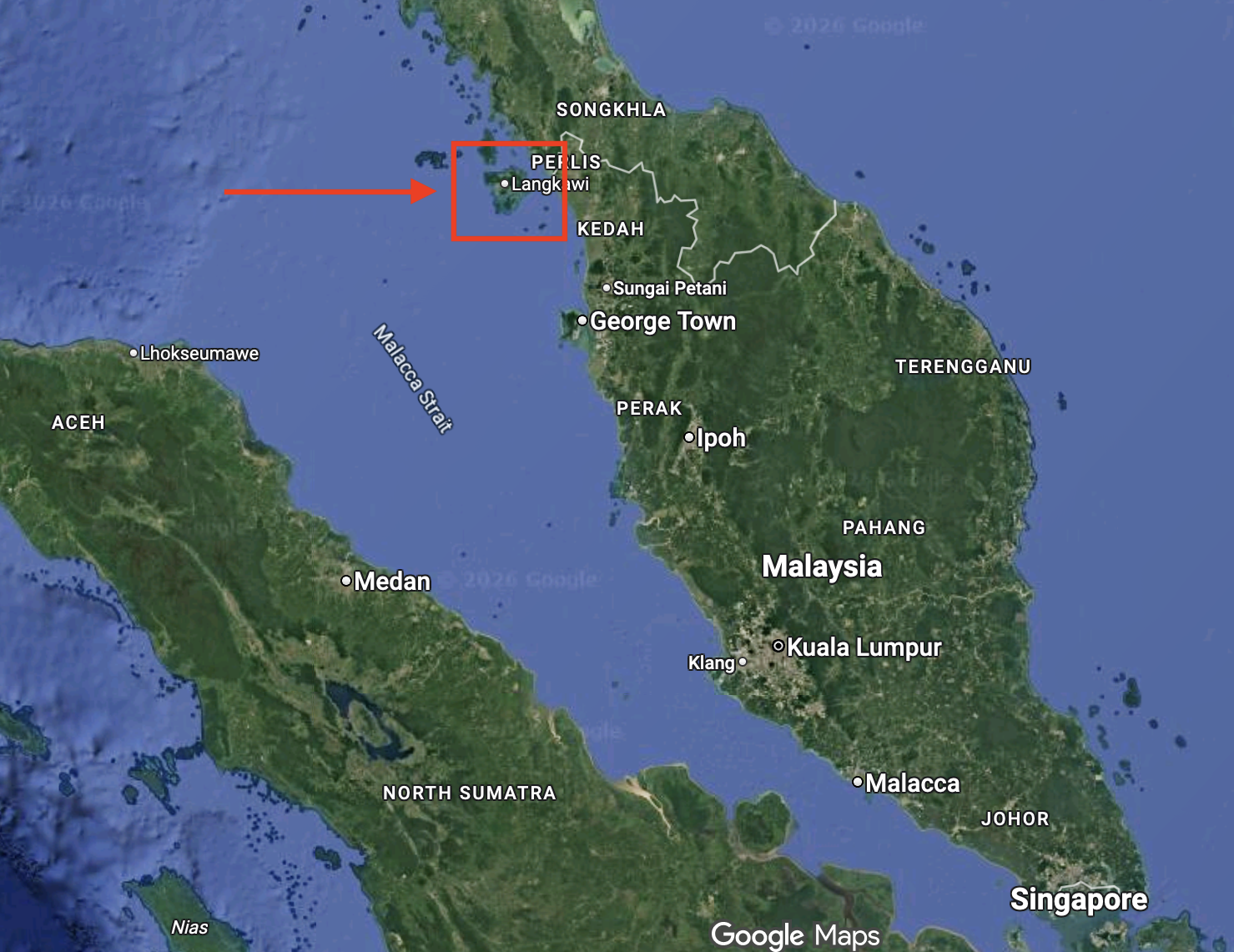
How to get to Langkawi?
The easiest way is to fly. Langkawi has an international airport which is connected multiple times a day to Kuala Lumpur (around 1h flight away) by several airlines. I found, for example, that Air Asia offers extremely cheap flights on this route, as well as a nonstop short connection from Langkawi to Penang, which comes in handy if you wish to see a bit more of the country outside the capital (Penang is another interesting Malaysian island that I will cover in another post soon!). Some major international airlines, such as flydubai, Etihad and Air Astana have also started serving Langkawi too, providing some interesting connectivity options with the rest of the world.
The airport even hosts its own airshow every other year, the Langkawi International Maritime and Aerospace Exhibition, but this is material for specialized aviation sites, like Allplane, rather than this one!
By the way, Malaysia is quite an open country when it comes to visitors, and citizens of many countries, including the EU, UK and UK do not need a visa to enter (just fill in the Malaysia Digital Arrival Card (MDAC) within three days of your arrival). Transport infrastructure is generally good.
How to move around Langkawi?
My answer to this is rather straightforward: just take cabs and don’t bother with renting cars or motorbikes. I don’t do the latter, so won’t comment on it. As per renting a car, I did it in Penang and I am happy to report that driving in Malaysia is generally fine when it comes to infrastructure and general civility of the traffic and as long as you have no issue with driving on the left (a legacy of the time under British rule!).
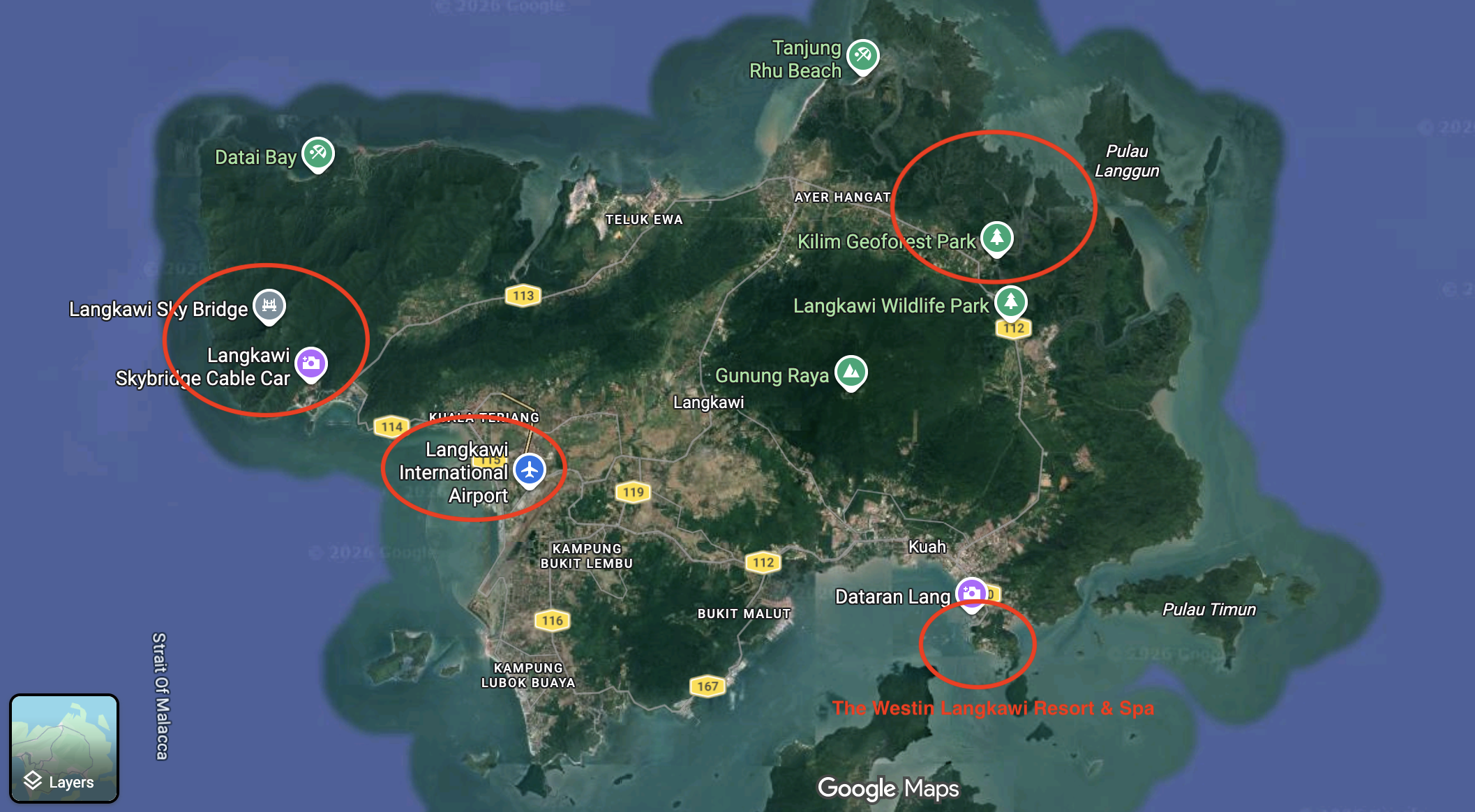
However, the distances involved in Langkawi, an island that is no more than 20 miles across, combined with cost of local cabs and their ubiquity, makes this the best option, in my opinion. Now, I would recommend you download and open an account with Grab, the Malaysian ride-hailing app, since it is the one that works best in Langkawi (as in the rest of Malaysia).
This post may contain affiliate links. If you book or buy something through them, I earn a small commission, at no extra cost to you. It's a way to keep Places of Charm going. Thank you for your support.
Top things to do in Langkawi: 1) the Langkawi SkyCab
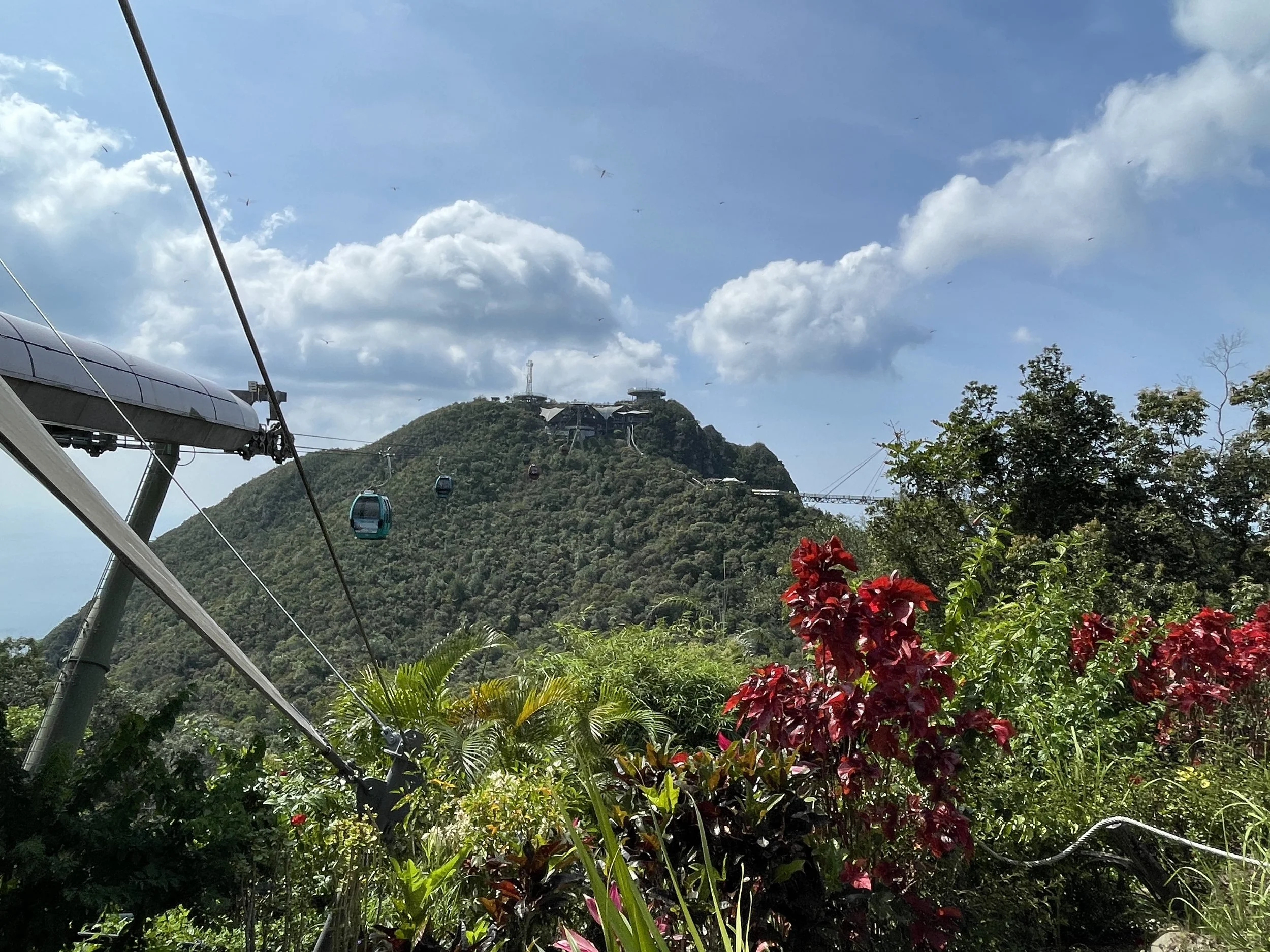
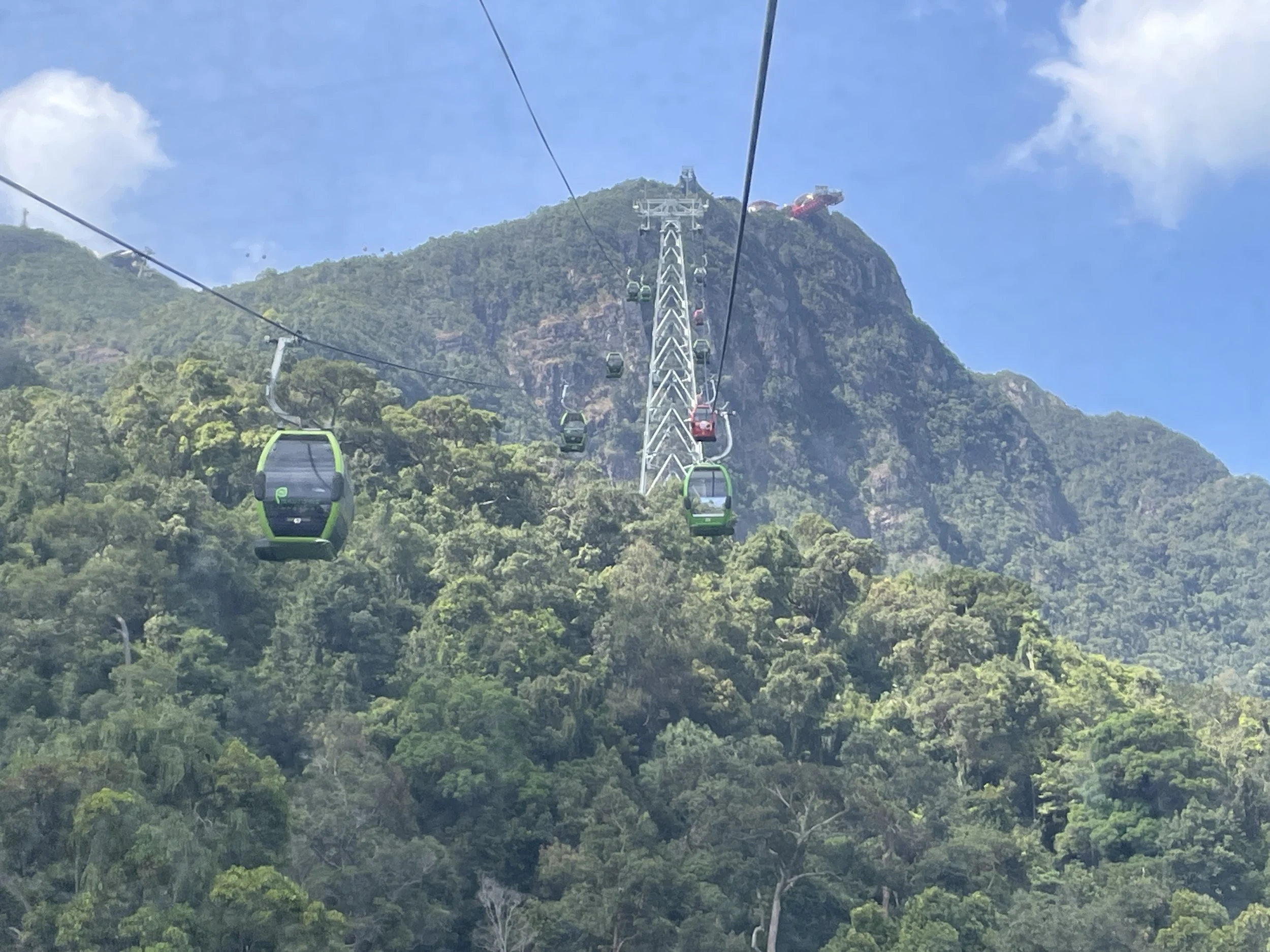
The Langkawi SkyCab is one of the must-dos in Langkawi.
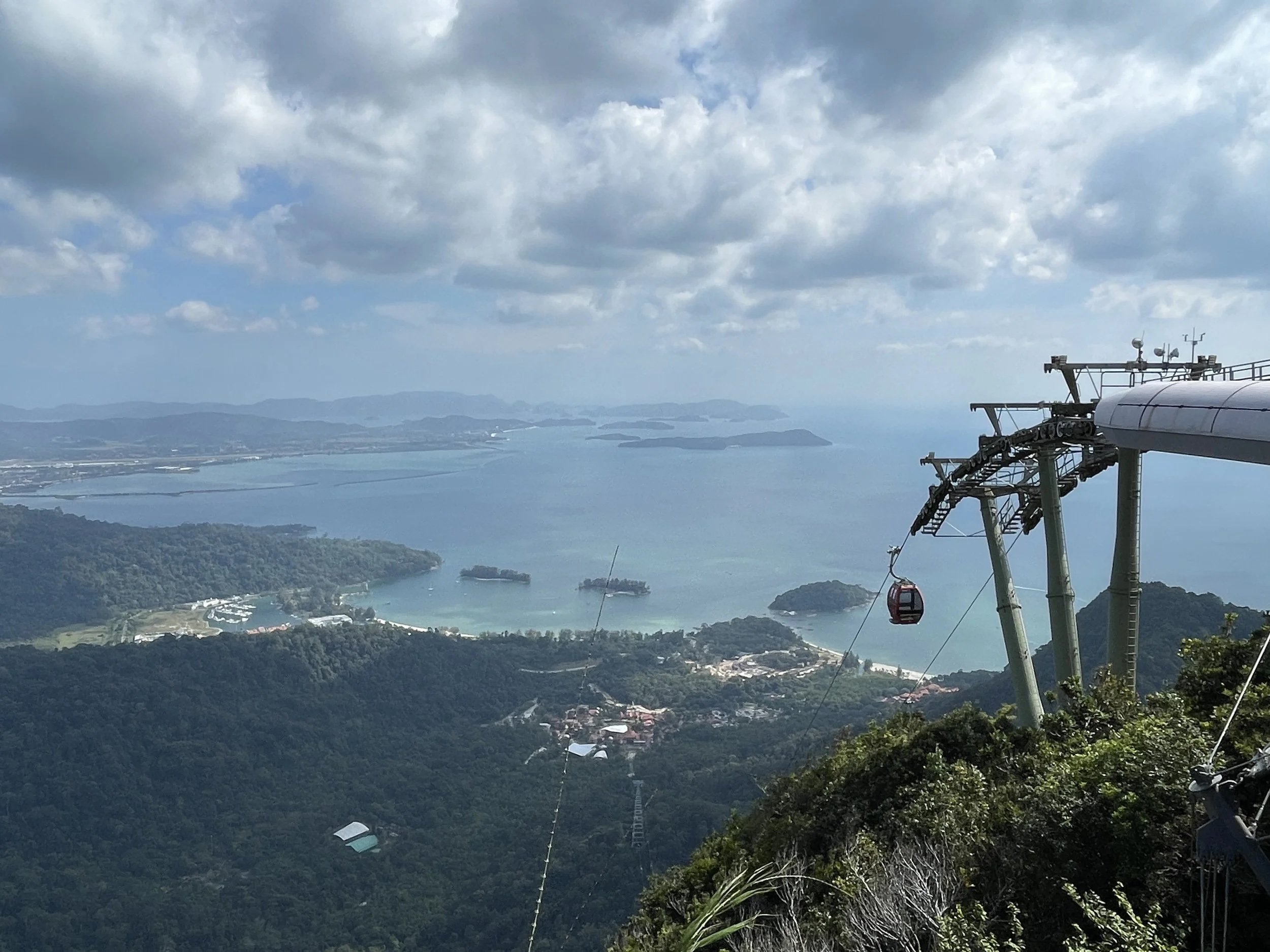
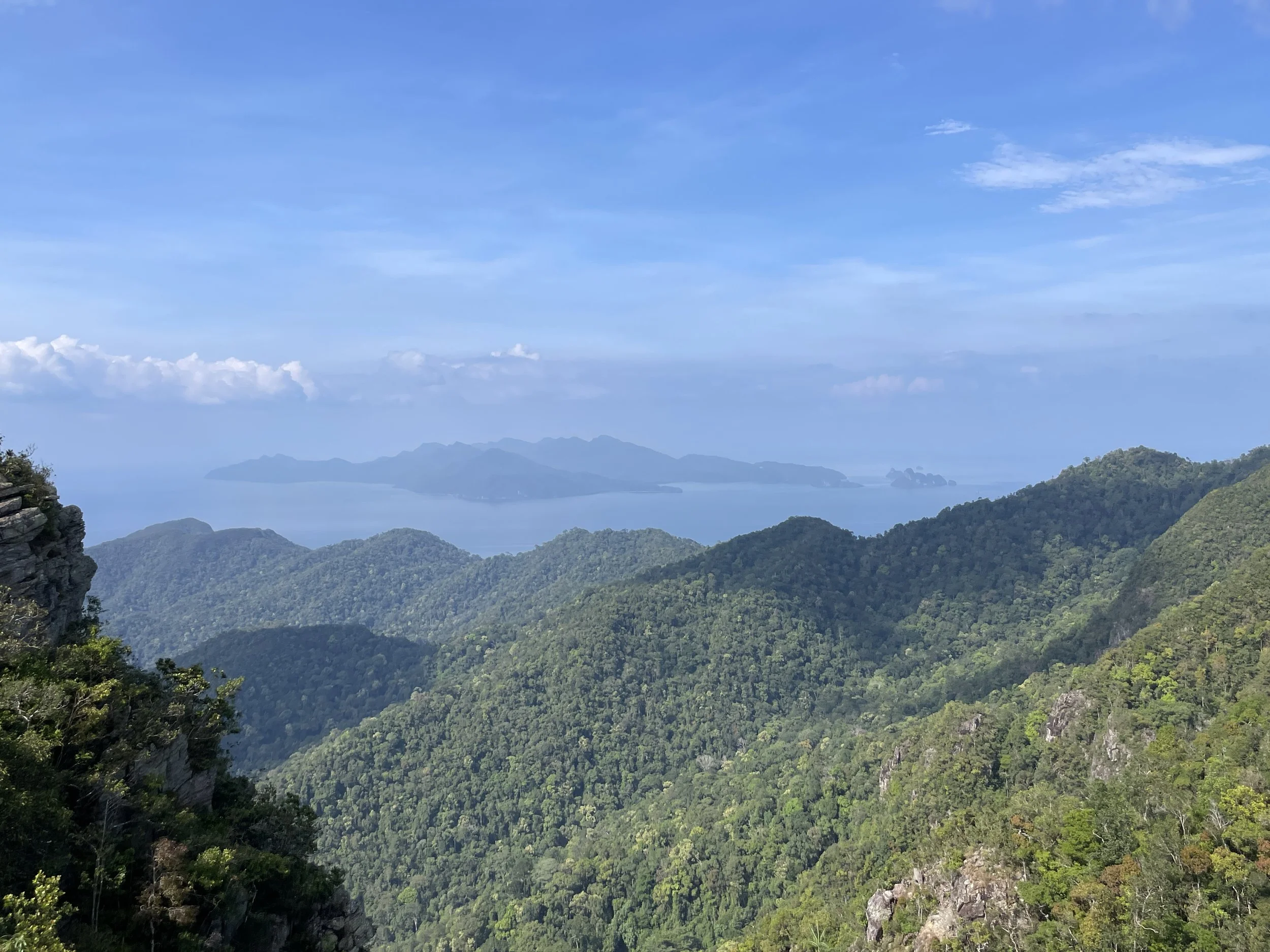
Located at the western end of Langkawi, this cable car which will take you to the highest point in the island (708 meters) from where you will be able to enjoy a broad panorama covering many miles around.
I said “a cable car” but this is not entirely accurate, because, just as with the island, there is not just one. In fact, there are two stages. The first and longest one takes you to an intermediate station at an altitude of 650 meters. From there you can take yet another gondola which takes you to the top.
The path is really steep (42º) and goes over a heavily forested area.
In fact, these hills that the cable car climbs to are among the oldest on Earth, dating back 550 million years and the surrounding rainforests are also very Ancient. This is one of the reasons, though not the only one, Langkawi is considered a “Global Geopark”.
The cable car ride itself takes around 15 minutes, although you are likely to spend some more time up the hill if you walk the Skybridge and take your time to take photos and so on.
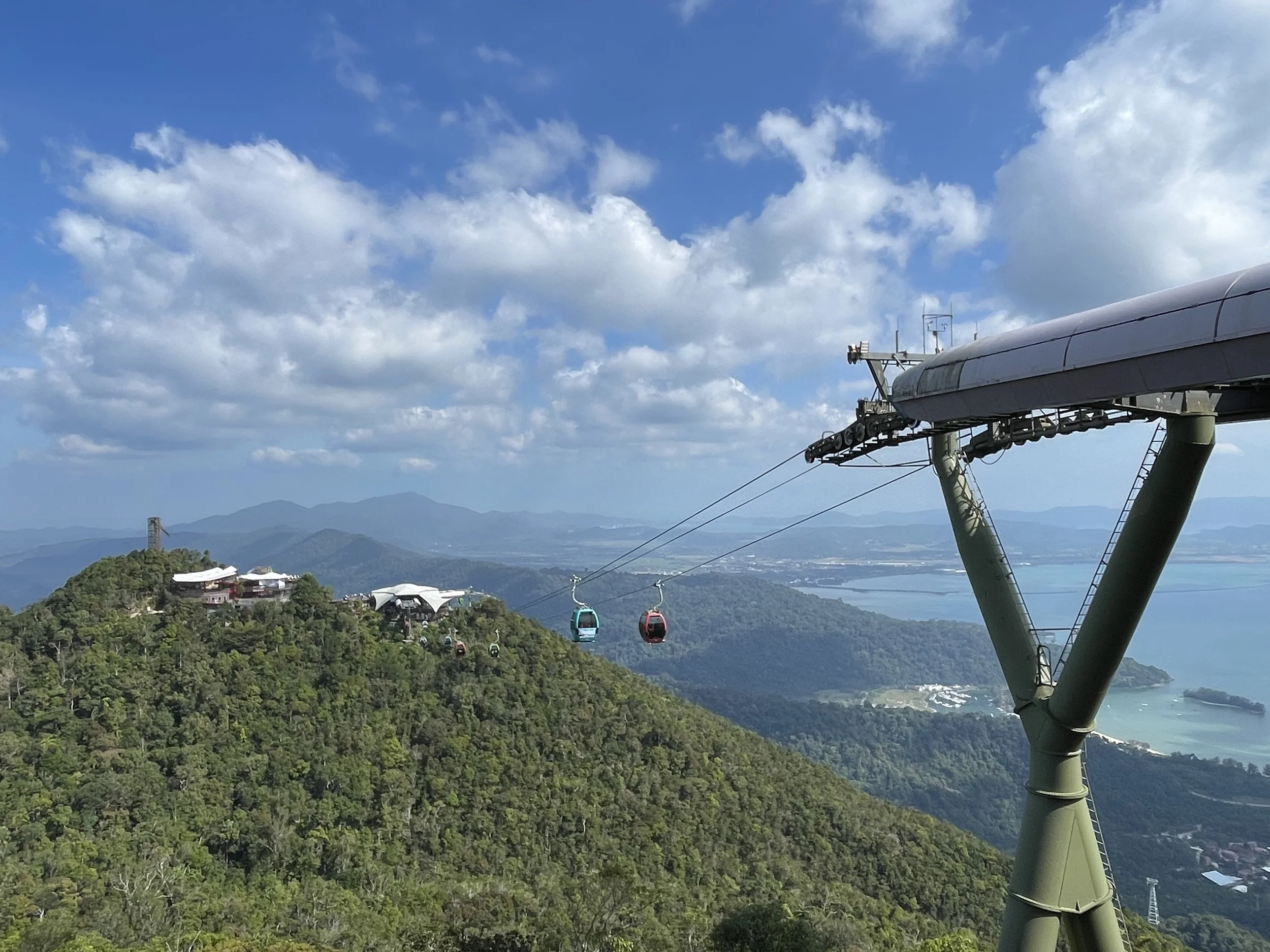
I would recommend booking in advance because the SkyCab is a genuinely popular attraction. The ticket gives you access to the SkyBridge, as well, which is a suspended footbridge which allows you to walk between different points in the ridge. It has even some patches with a glass floor for extra excitement (beware if you are afraid of heights, though!)
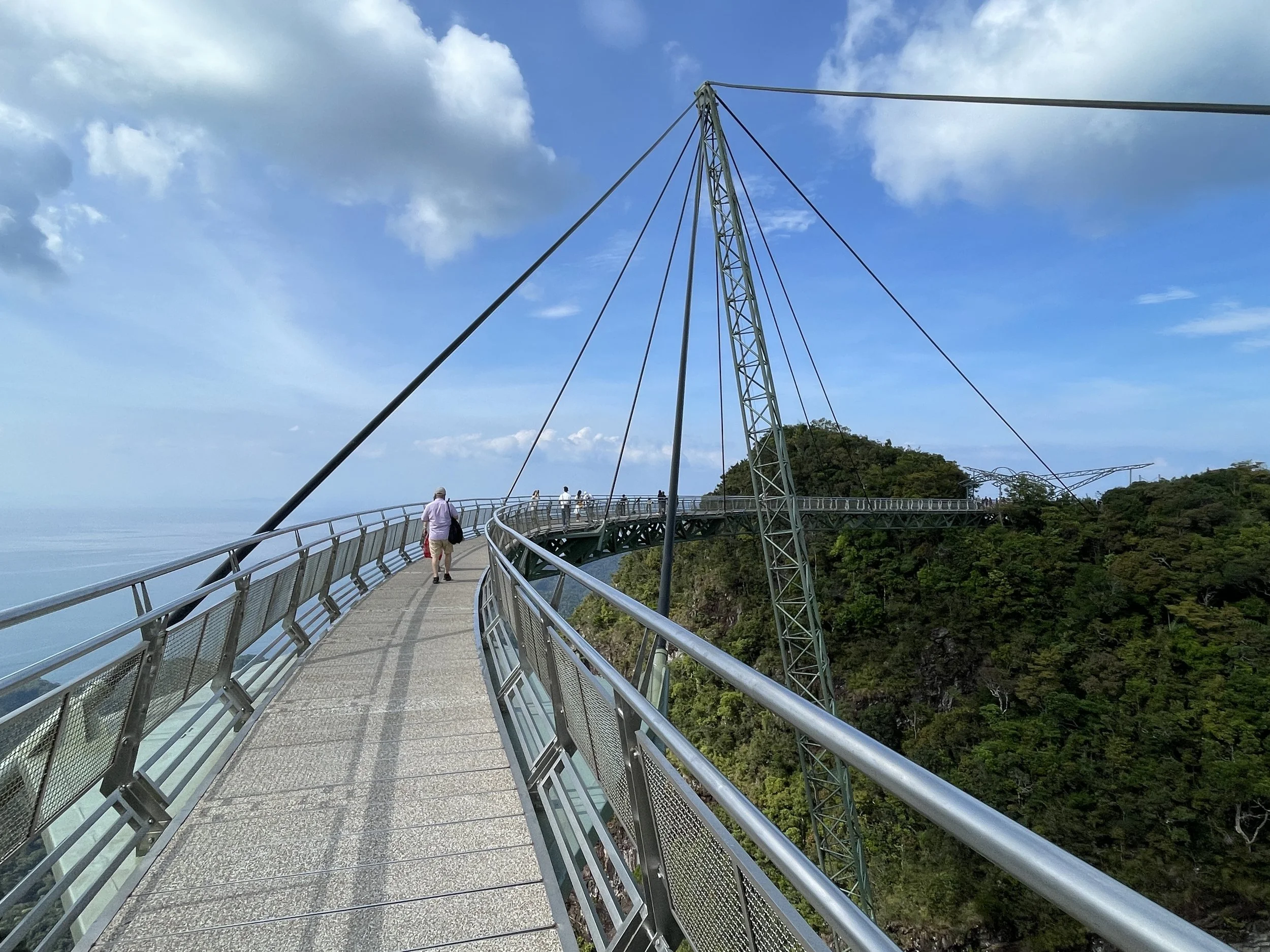
In addition to the regular shared SkyCab gondola, it is possible to book several more premium options, such as a private one or one with a glass bottom. To be honest, I think the regular one provides a nice enough experience and, if you want to feel the thrill of the heights, you can get that at the SkyBridge!
Last but not least, a word about the SkyCab base station, which is nothing short of a recreation park. There are lots of shops, different types of entertainment venues for kids and catering establishments. We didn’t spend much time there, but you can easily spend a whole morning there if you are into this type of thing.
2) Rest at a beach resort
That’s the other thing that people come to Langkawi for. And the island is well endowed with resorts for all tastes and budgets, including those from top-end international chains such as Four Seasons and St. Regis. So, while this site usually champions an active approach to traveling, sometimes is just a good idea to get a spot by the pool and enjoy a good rest. Why not?
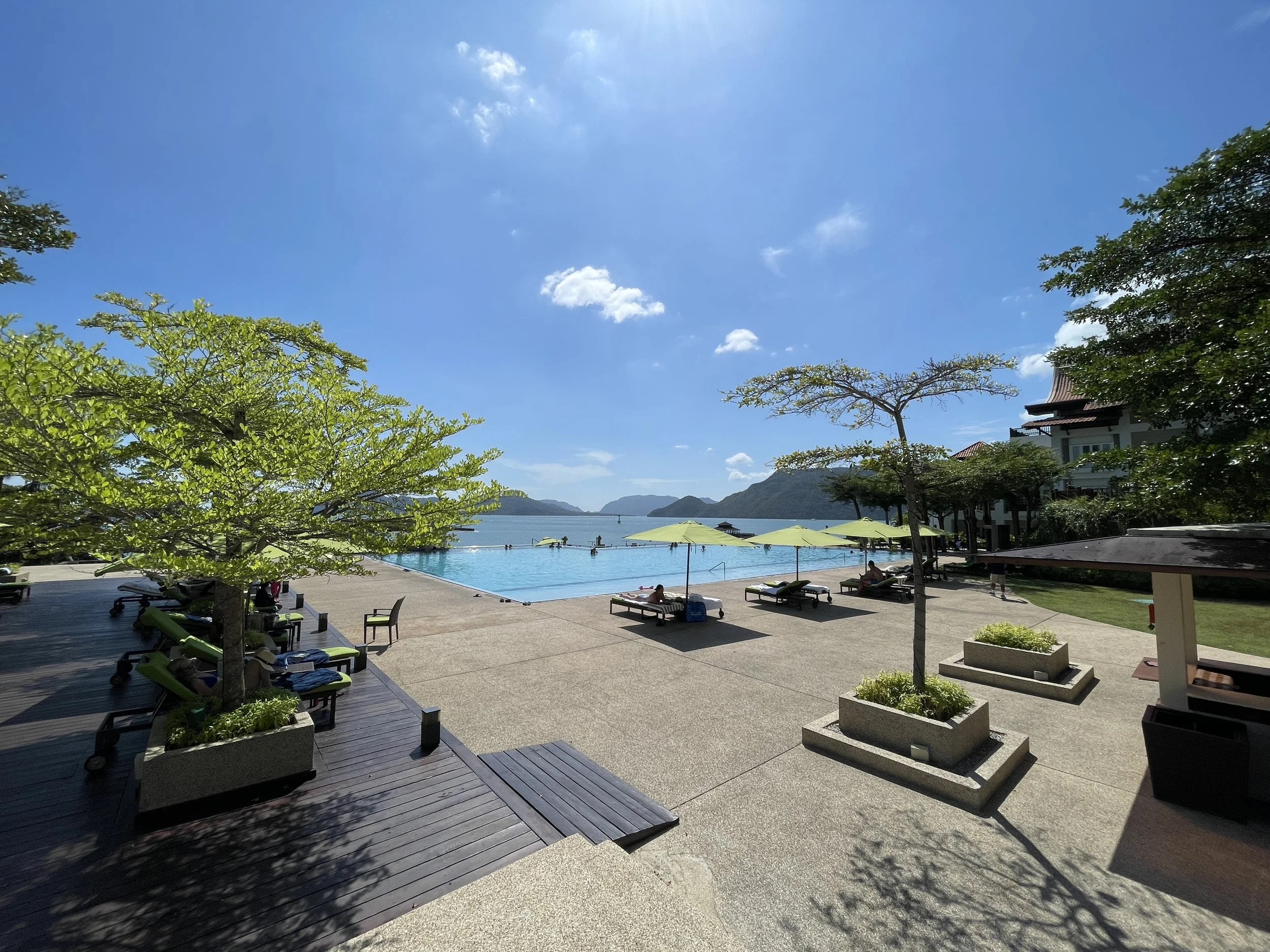
A great resort to stay at in Langkawi: The Westin Langkawi Resort & Spa
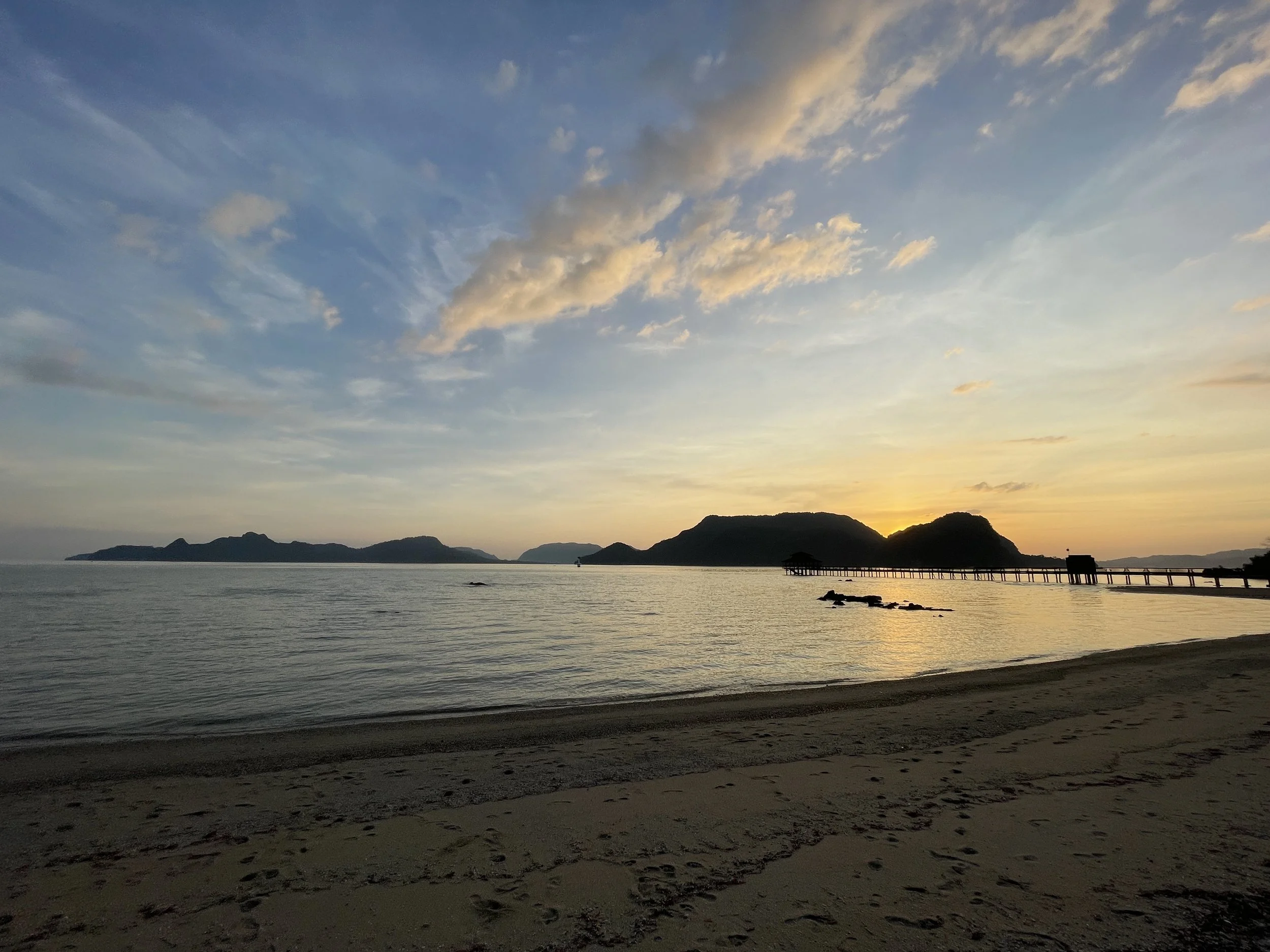
This beach-side resort is located on the southeastern corner of Langkawi, half an hour ride from the airport and on a small peninsula which it shares with the St. Regis resort next door.
The grounds of the The Westin Langkawi Resort & Spa face south, towards the narrow strait that separates Langkawi from several of its smaller adjacent islands.
It’s got a large infinity pool, which you can see here below, as well as direct access to the beach.
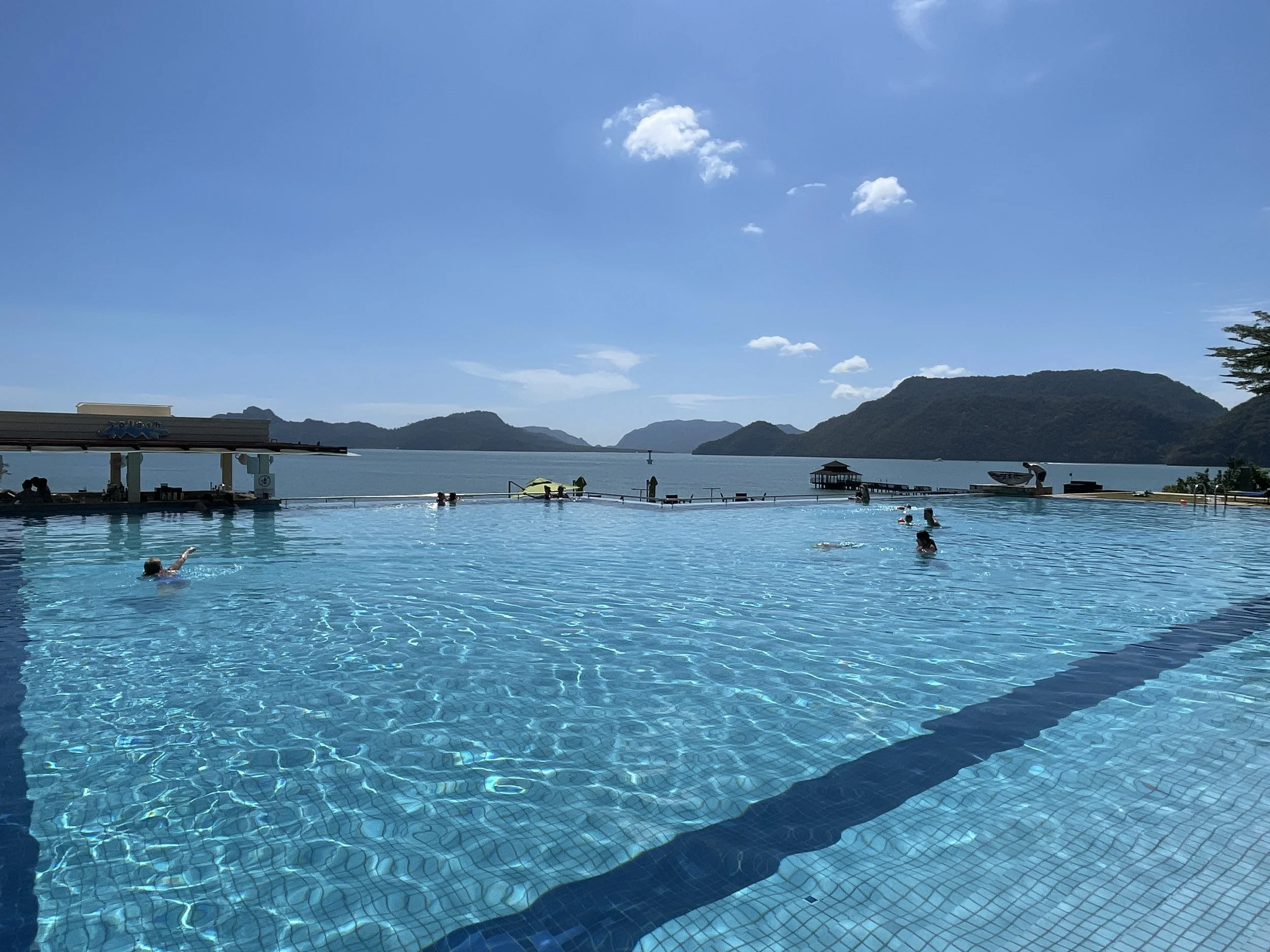
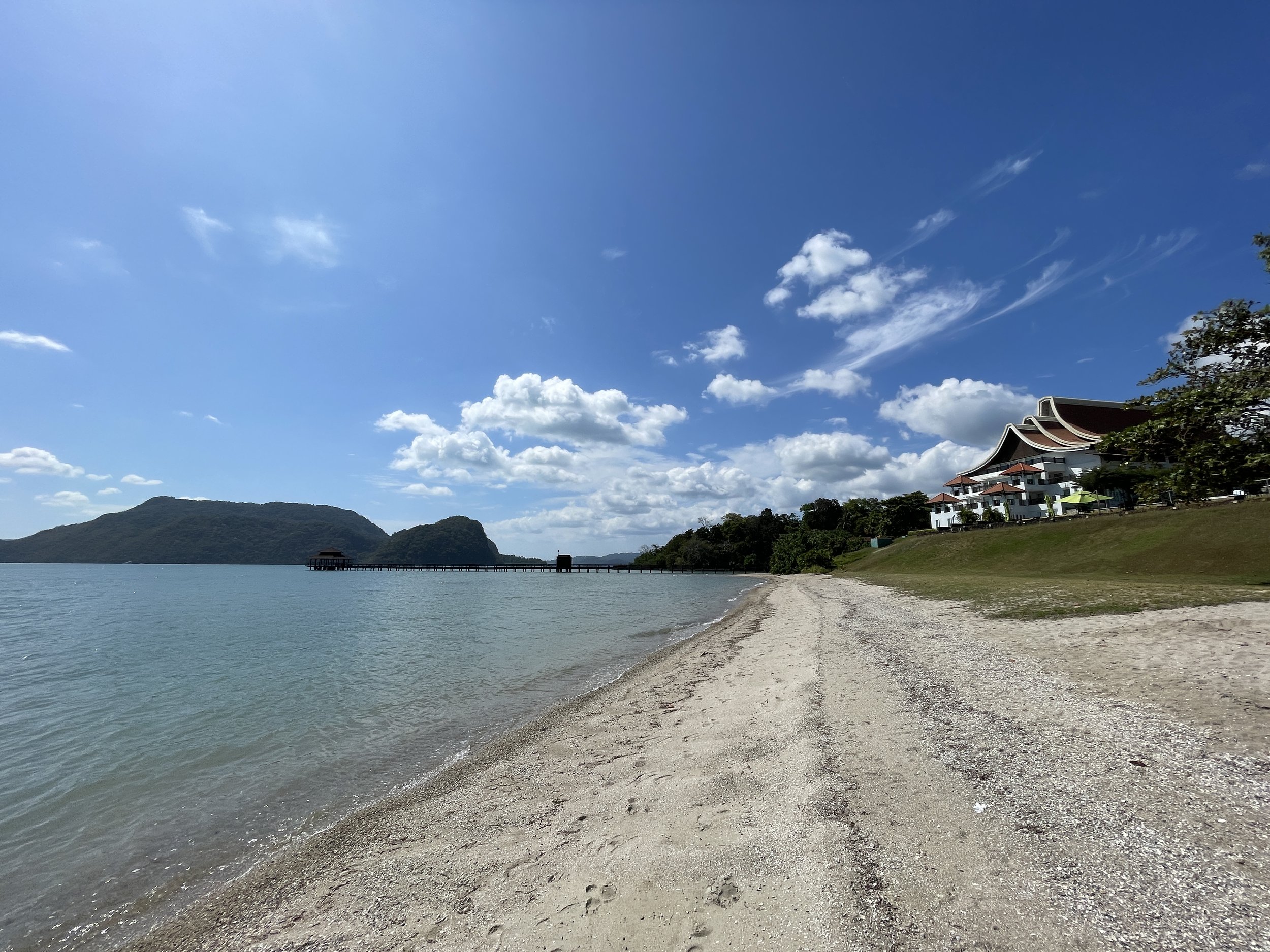
To be clear, the beach is not private and exclusive to the hotel, although due to its location, it is unlikely you will see random bystanders passing by.
I must add, as well, that the beach, at least on this side of Langkawi, is not the main allure of the resort. In fact, I saw few guests actually using it, most just stay at the pool. There are several reasons for this:
First, the tides are strong and depending on the time of the day you would need to walk quite a bit in muddy sandy soil to get to the water. And when the tide is up, it is quite shallow, so you can’t really swim in the strict sense of the word.
Also, although clean, the water is not the turquoise, crystalline type you get in, let’s say, the Maldives.
Having said that, I did go to the beach, spend some time in it and swam in it, so if you are a salt-water person, definitely, don’t forgo it!
Most of the rooms (the resort has bungalows too) are located on the main corpus of the resort. Since the hotel has been built adapting to a terrain that is somehow sloping towards the sea, some of the upper floors do get actually a small patio.
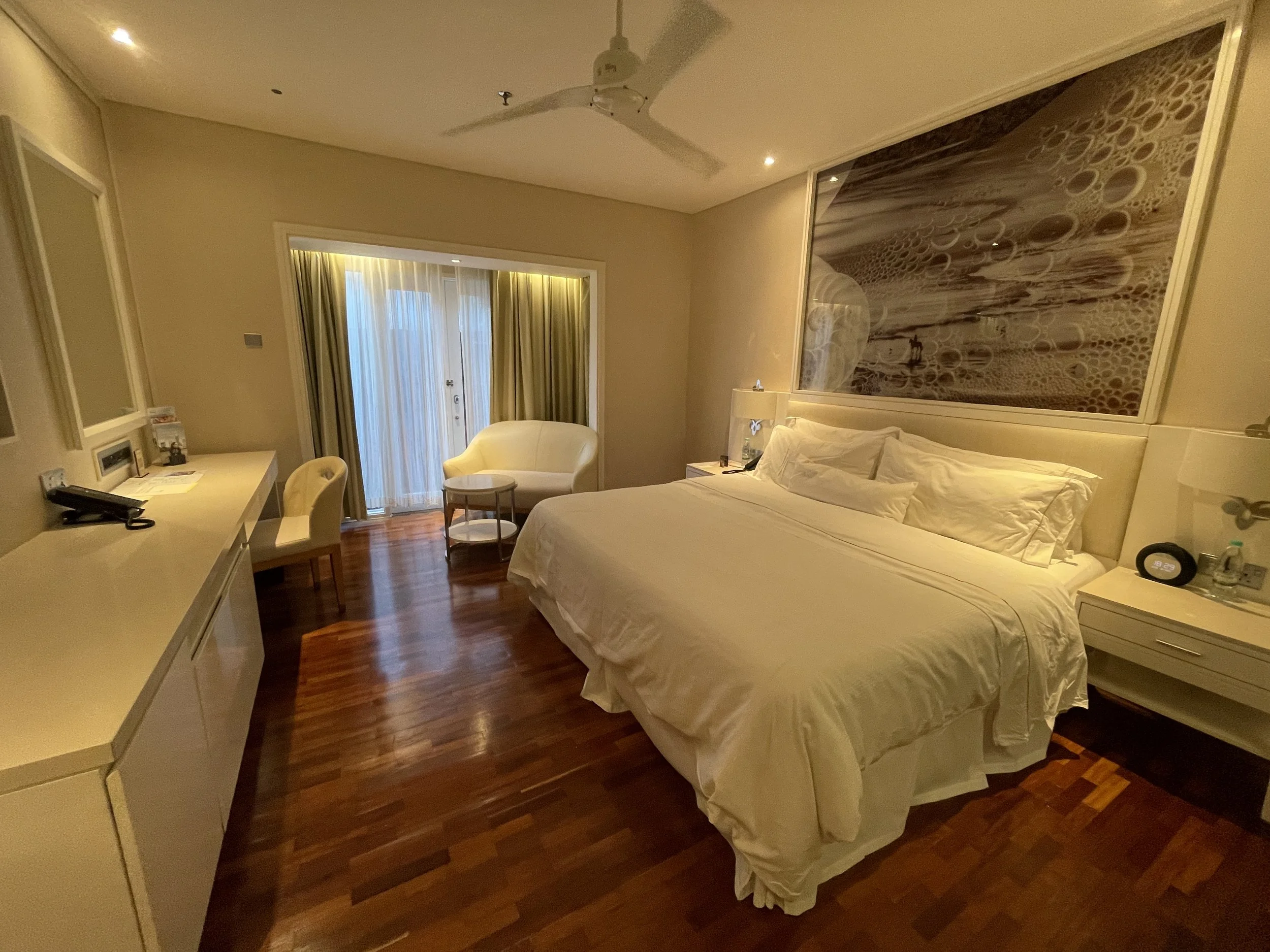
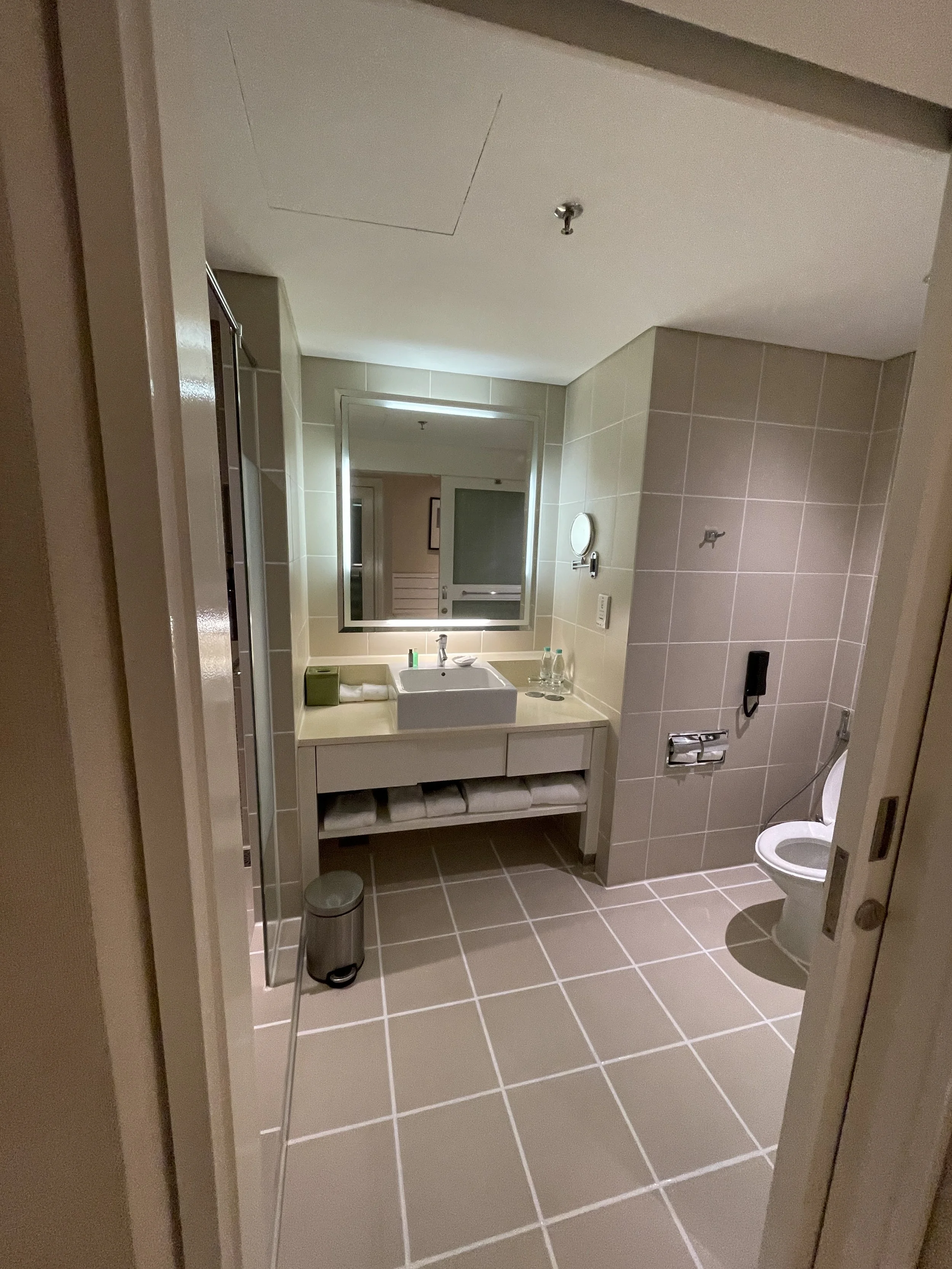
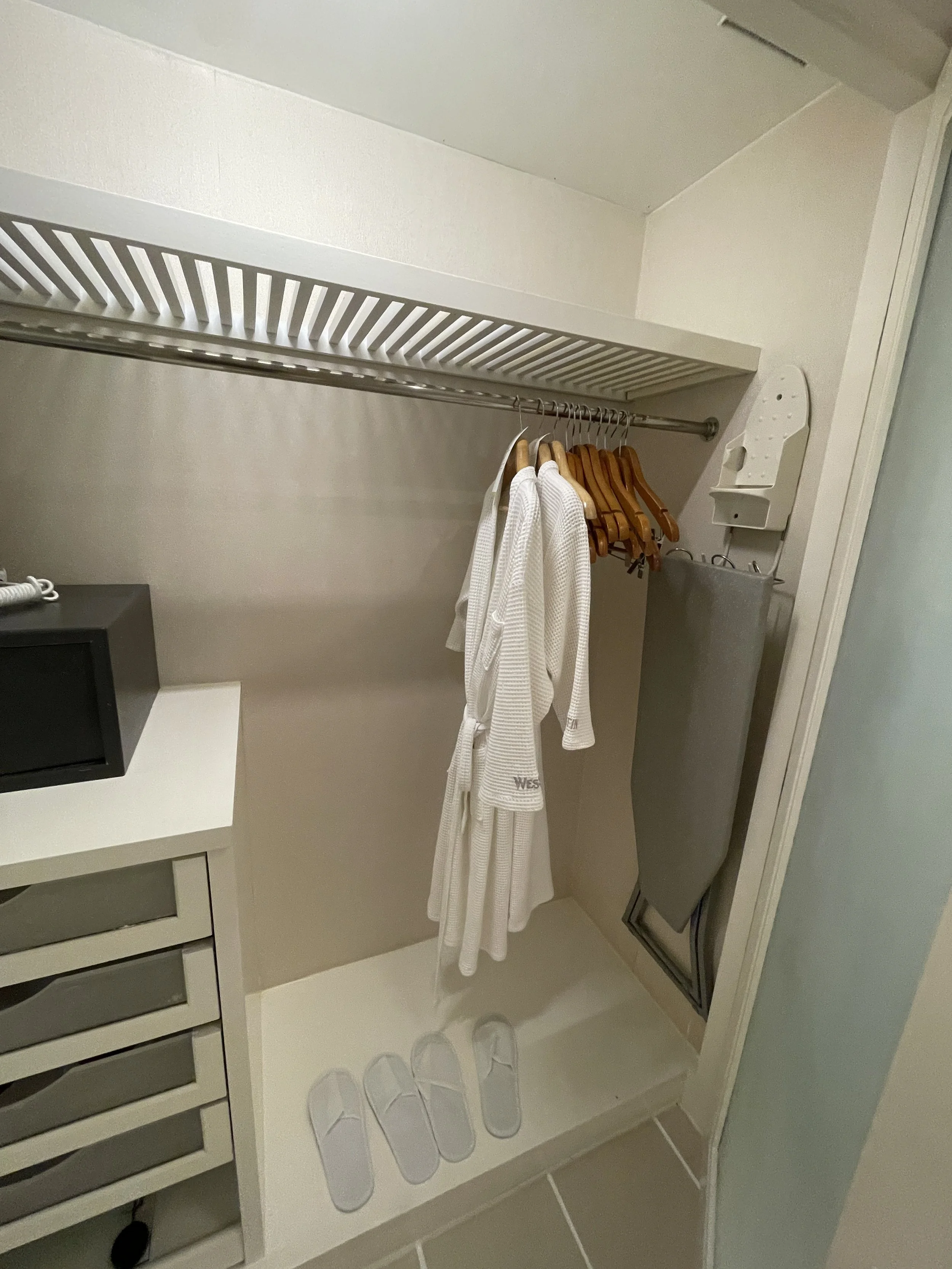
The rooms are modern and furnished in contemporary style. The bathrooms, likewise are large and modern. Bathrobes are provided for the spa (the pool area has also its own towel service). There is also generous space to leave baggage.
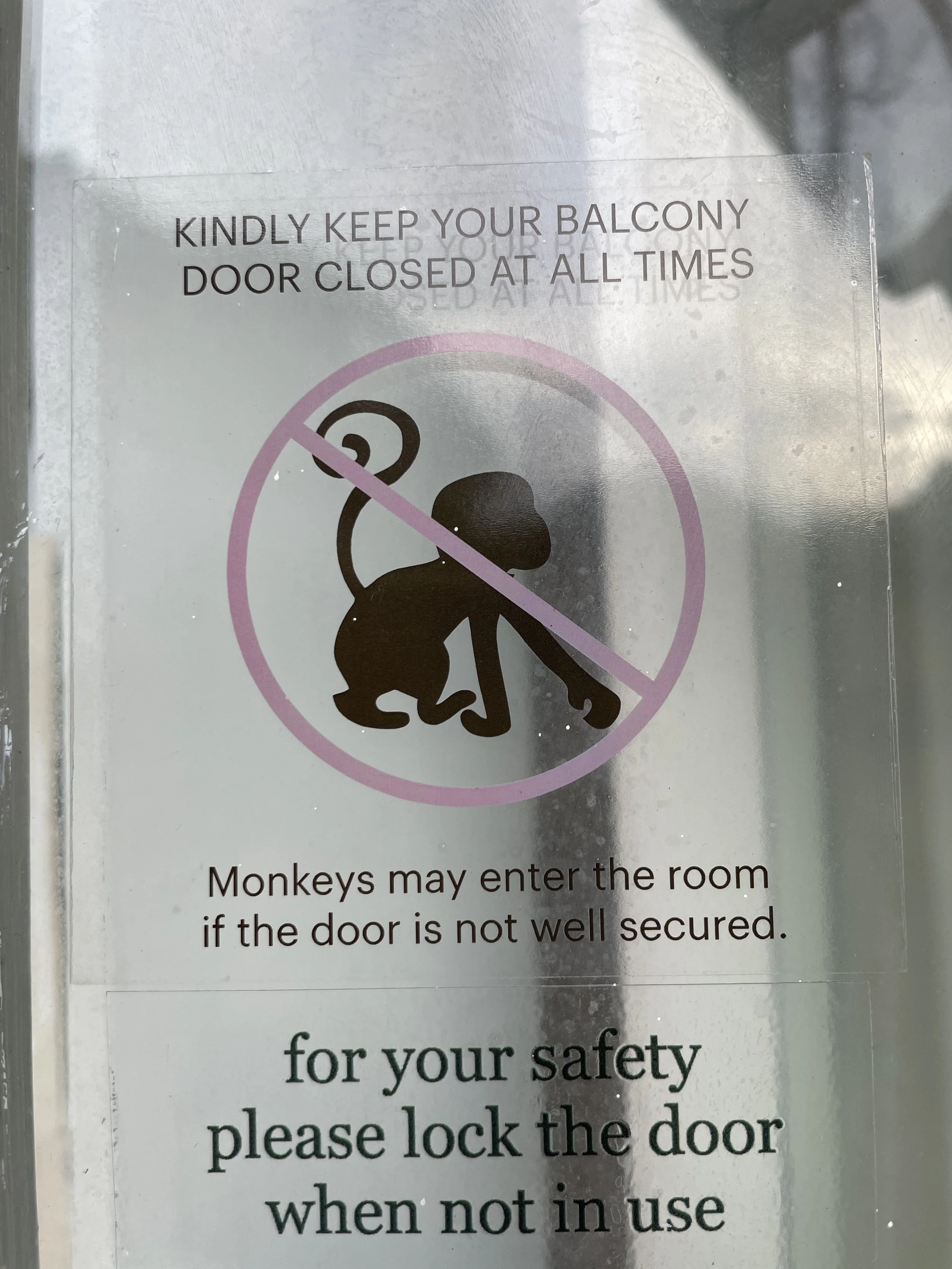
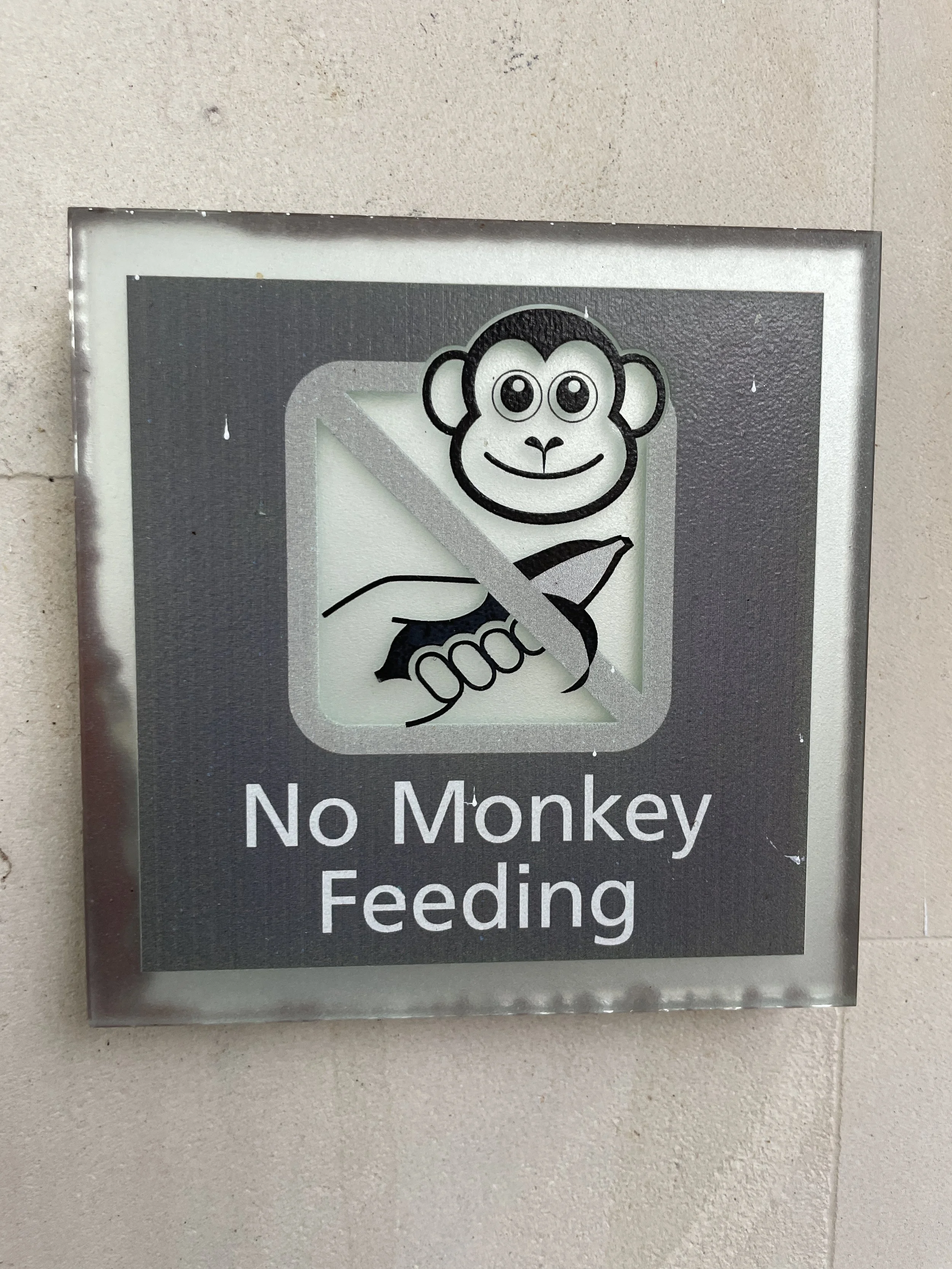
One thing to bear in mind, and which you are constantly reminded of, is that there are wild monkeys living in the resort grounds. It is easy to see them, as they often come close to the buildings are not afraid of people at all. This adds a touch of exoticism, imo!
The Westin Langkawi Resort & Spa has several restaurants and bars, including one with a sea-view terrace. The food was great, although the service at the restaurant was a bit more irregular. We also tried the room delivery, which was a good option since we had the little patio in our room.
Breakfast was abundant and varied, with plenty of tropical fruit in the buffet.
3. Take a boat tour of the mangroves at the Kilim Geoforest Park
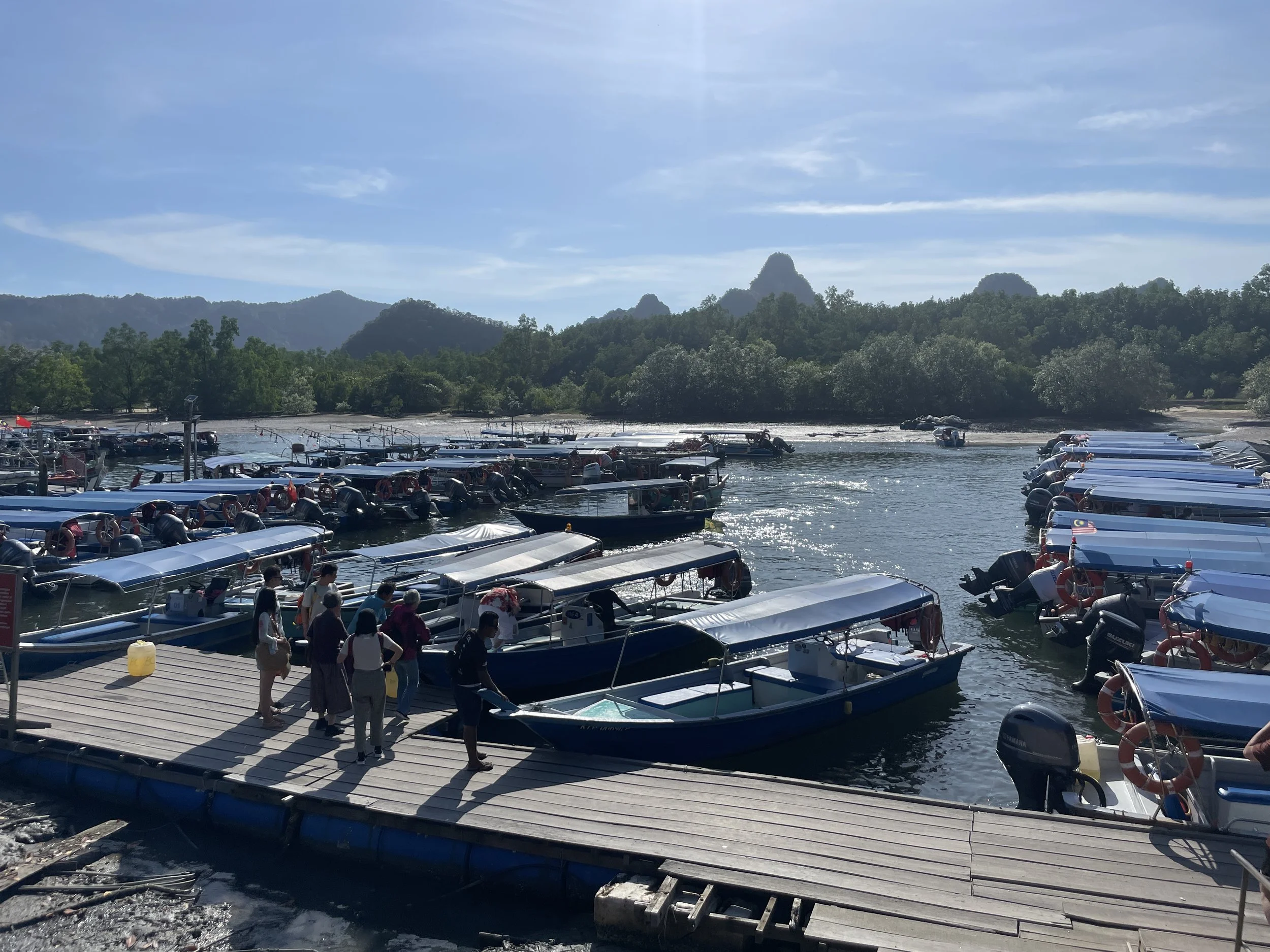
This is the other outdoors experience that I would recommend on Langkawi. You would need a guide for this one or to join one of the many organized tours that run throughout the day.
The Kilim Geoforest Park, on the northeastern corner of the island, is best seen from a boat (in fact, I am not sure whether is it possible to visit it any other way), since this is a natural area that combines the coastal karst formations with riverine landscapes covered by mangroves and the open sea.
It is a truly immersive experience which starts at a river station where are little armada of tour boats of different types and sizes assemble for the excursions. From there, the boats take the visitors through the different waterways that cross the natural reserve.
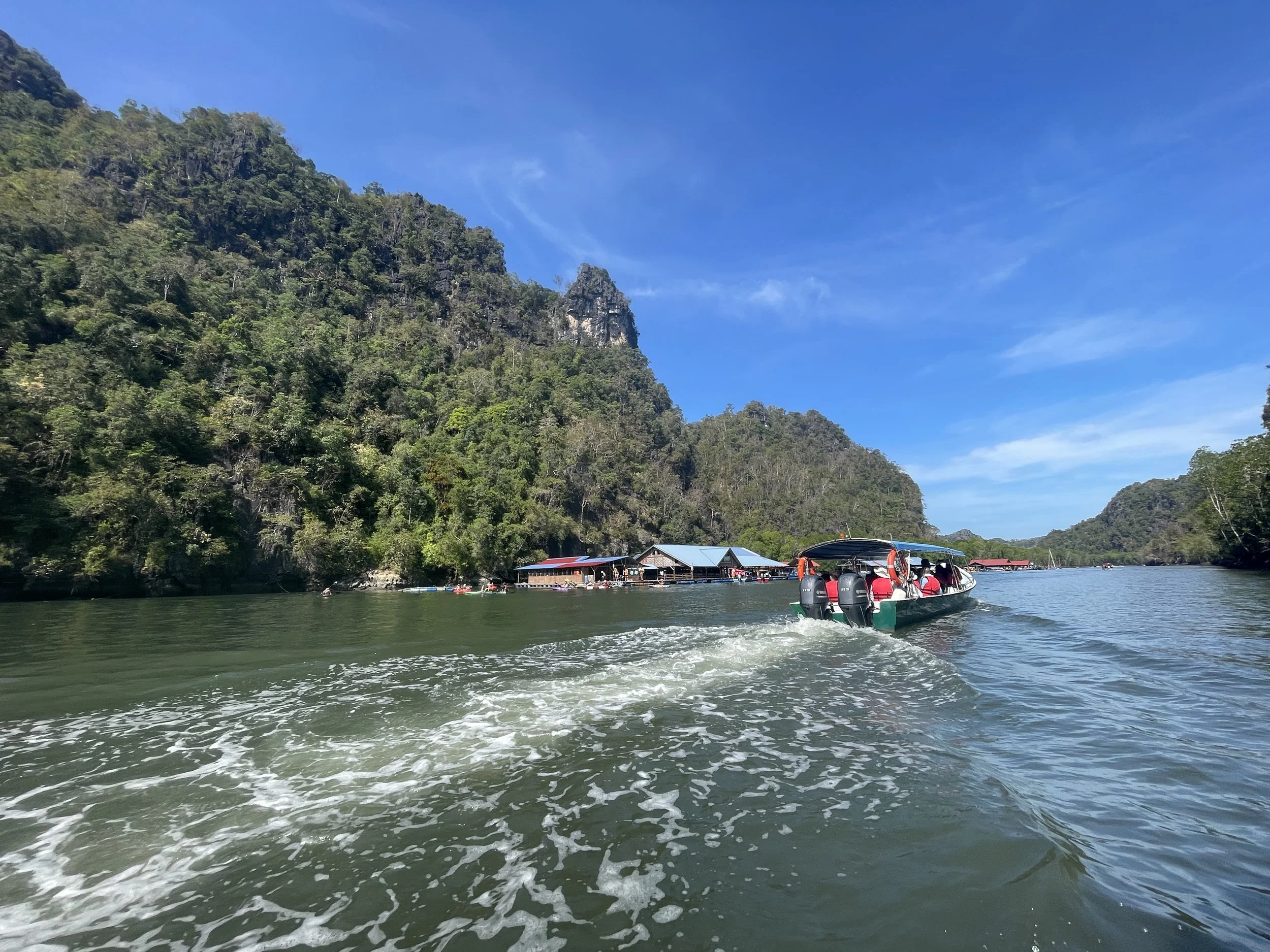
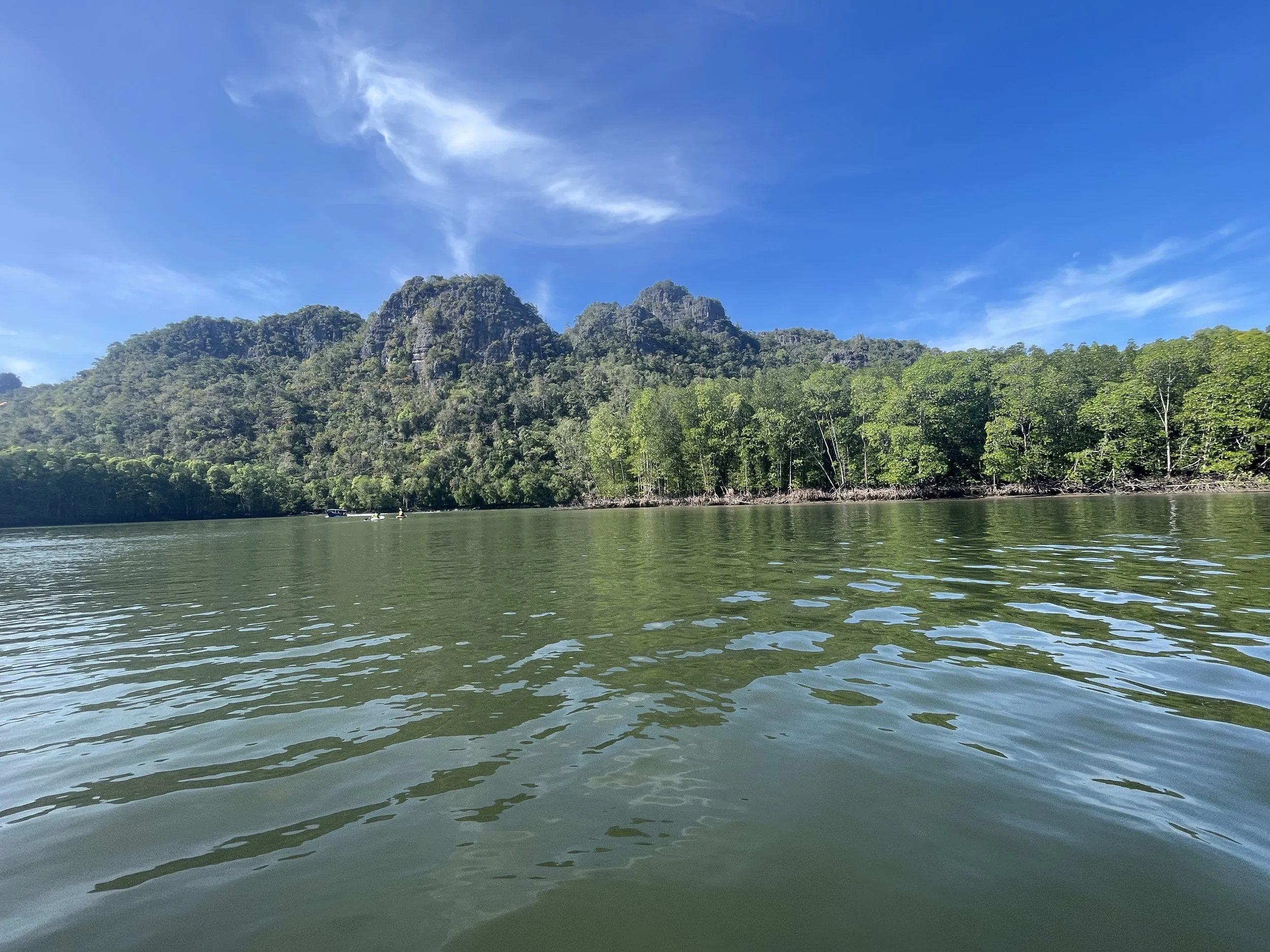
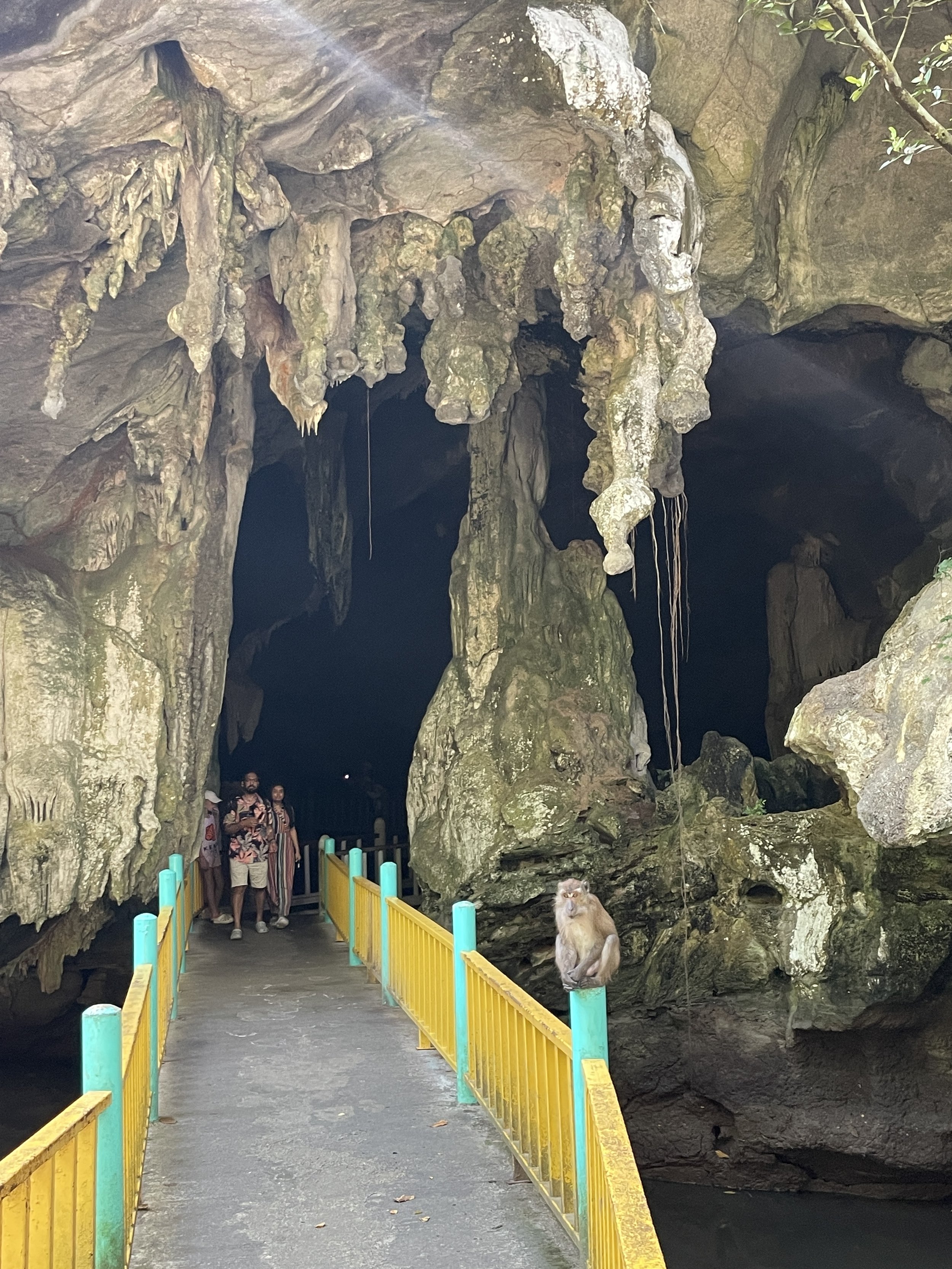
The boats stop at several spots along the way. One of them is this cave, where lots of bats live. There are also plenty of monkeys all over the place and you can see them as the boat gets close to the mangroves, which are the dominant form of vegetation in all this area.
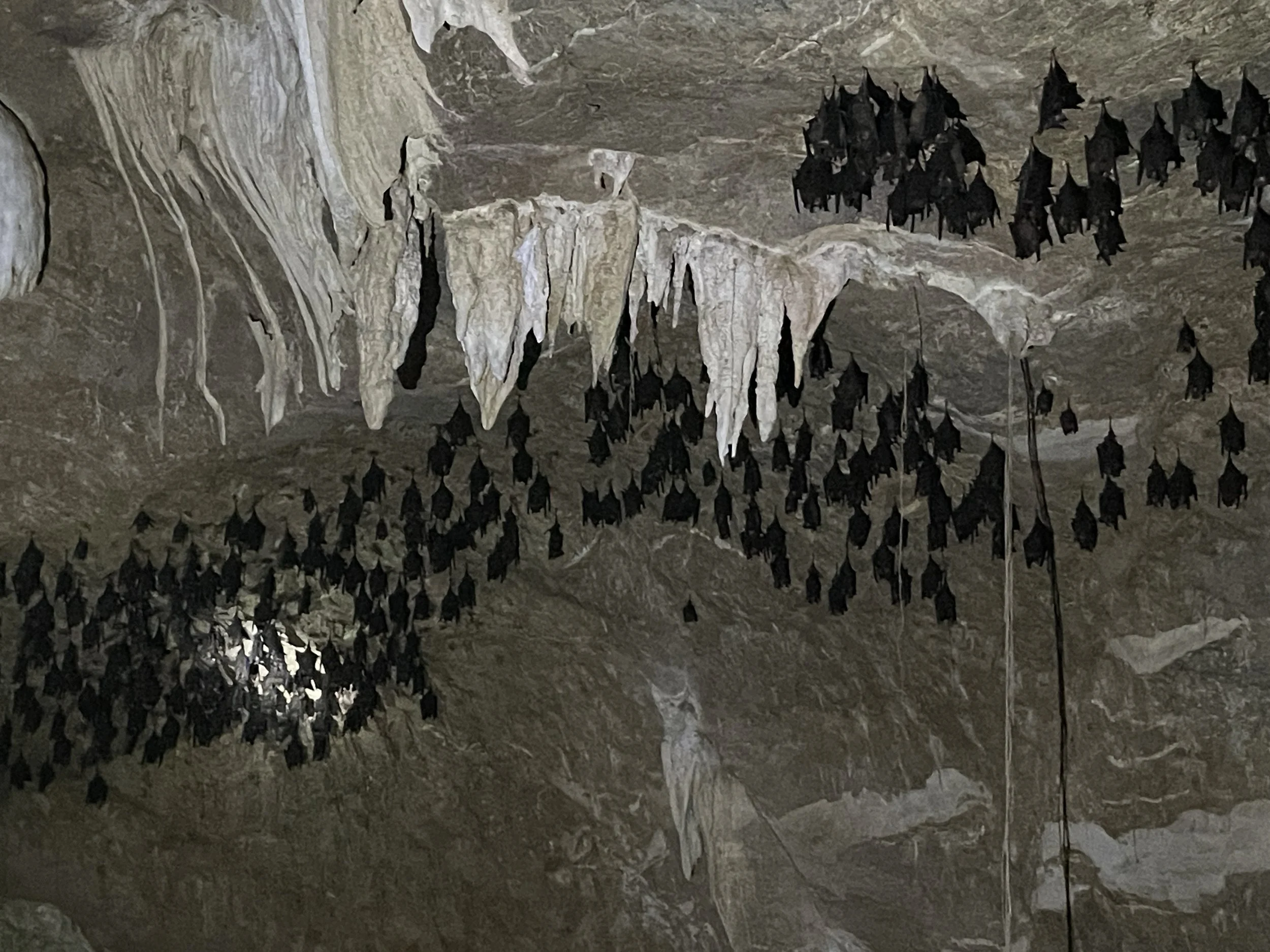
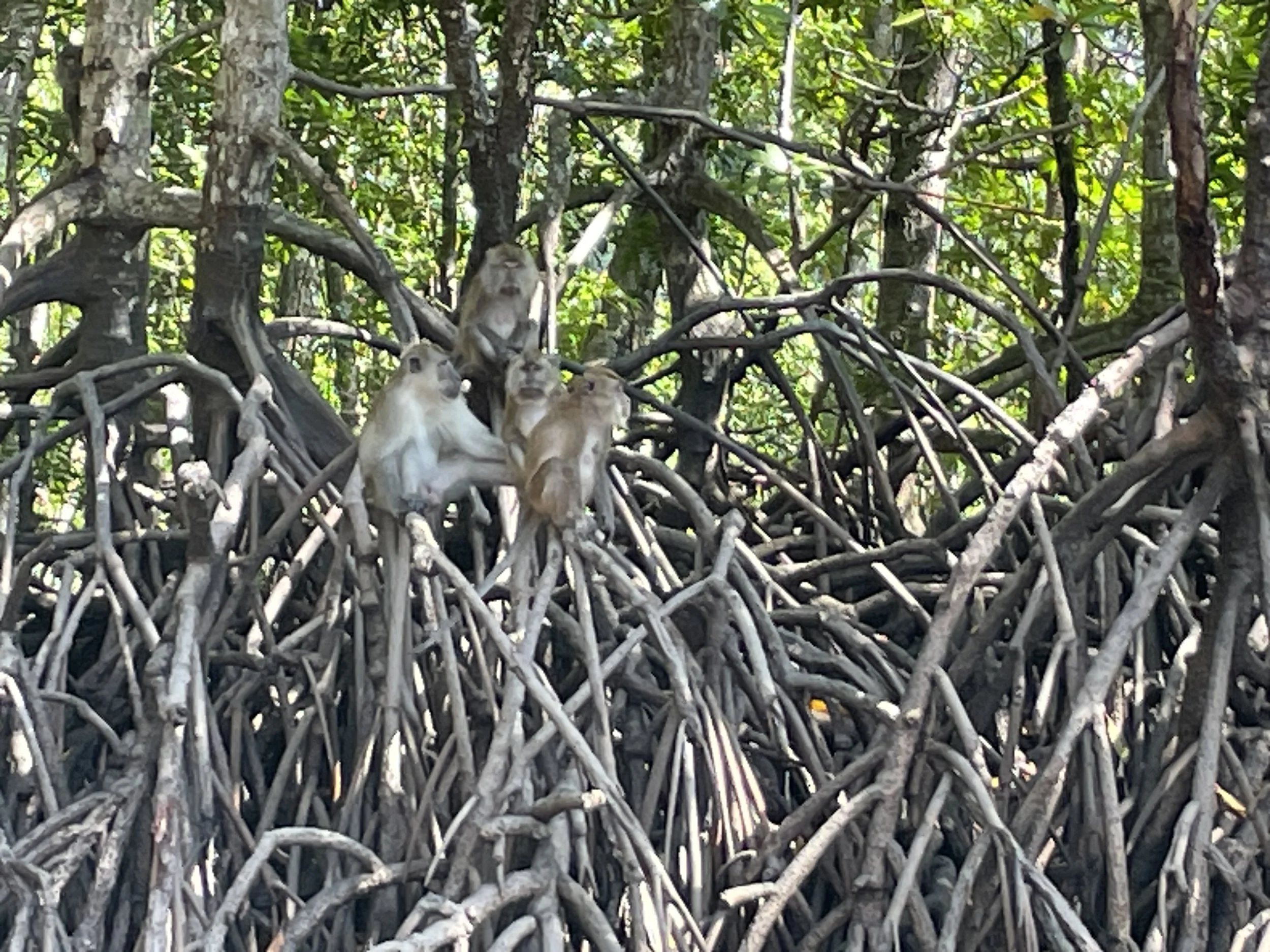
The whole excursion takes 3-4h and ends at one of the several fish farms which dot the waters of the Kilim Geoforest Park. At one, in particular, you can walk around the cages holding different spices of fish. The farm has a restaurant adjacent to it, with a terrace overlooking the river. It is pretty simple, street-food-style, but the food looked of good quality and with honest portions. Here you can try several dishes prepared with local seafood and fish.
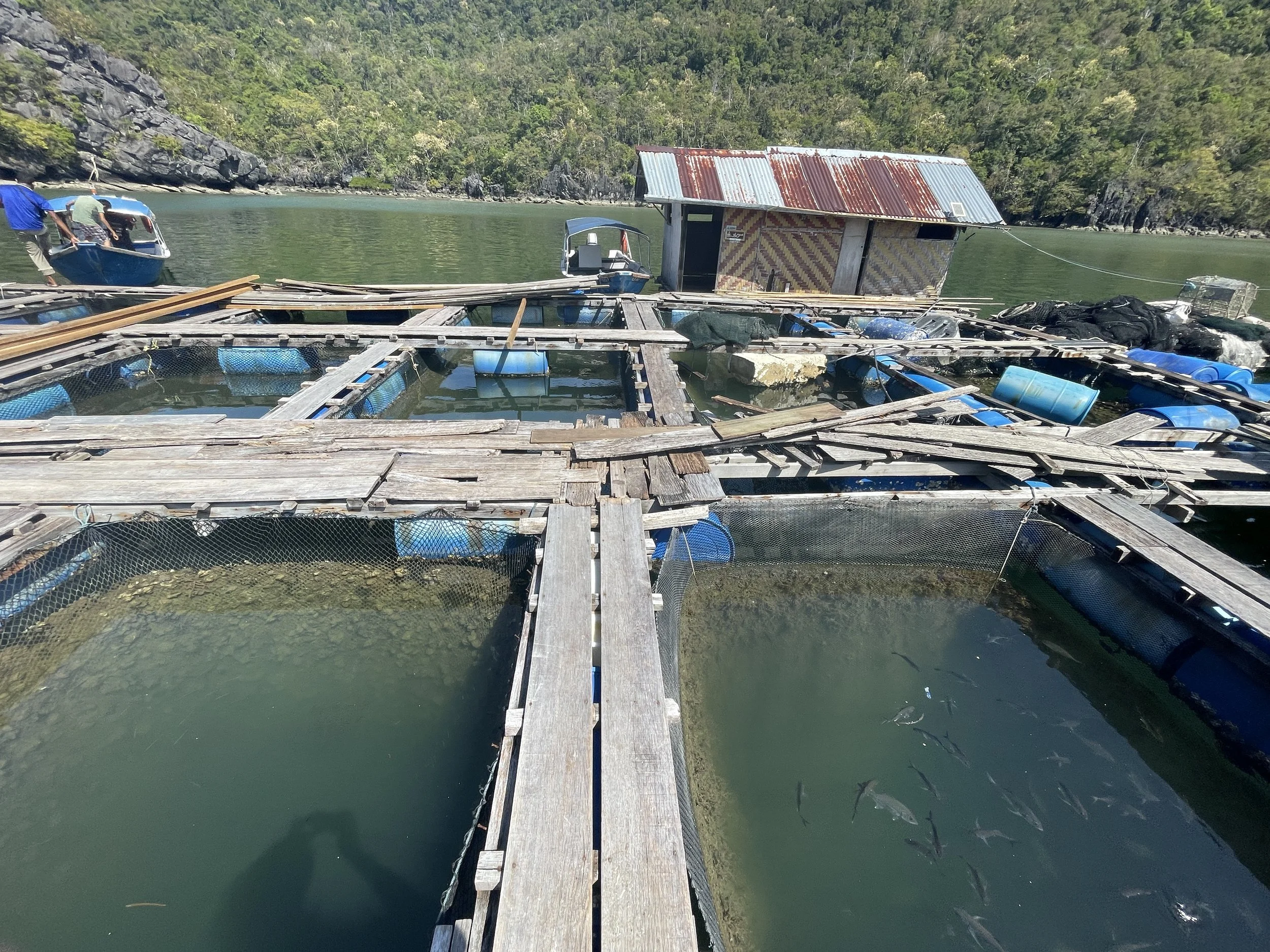
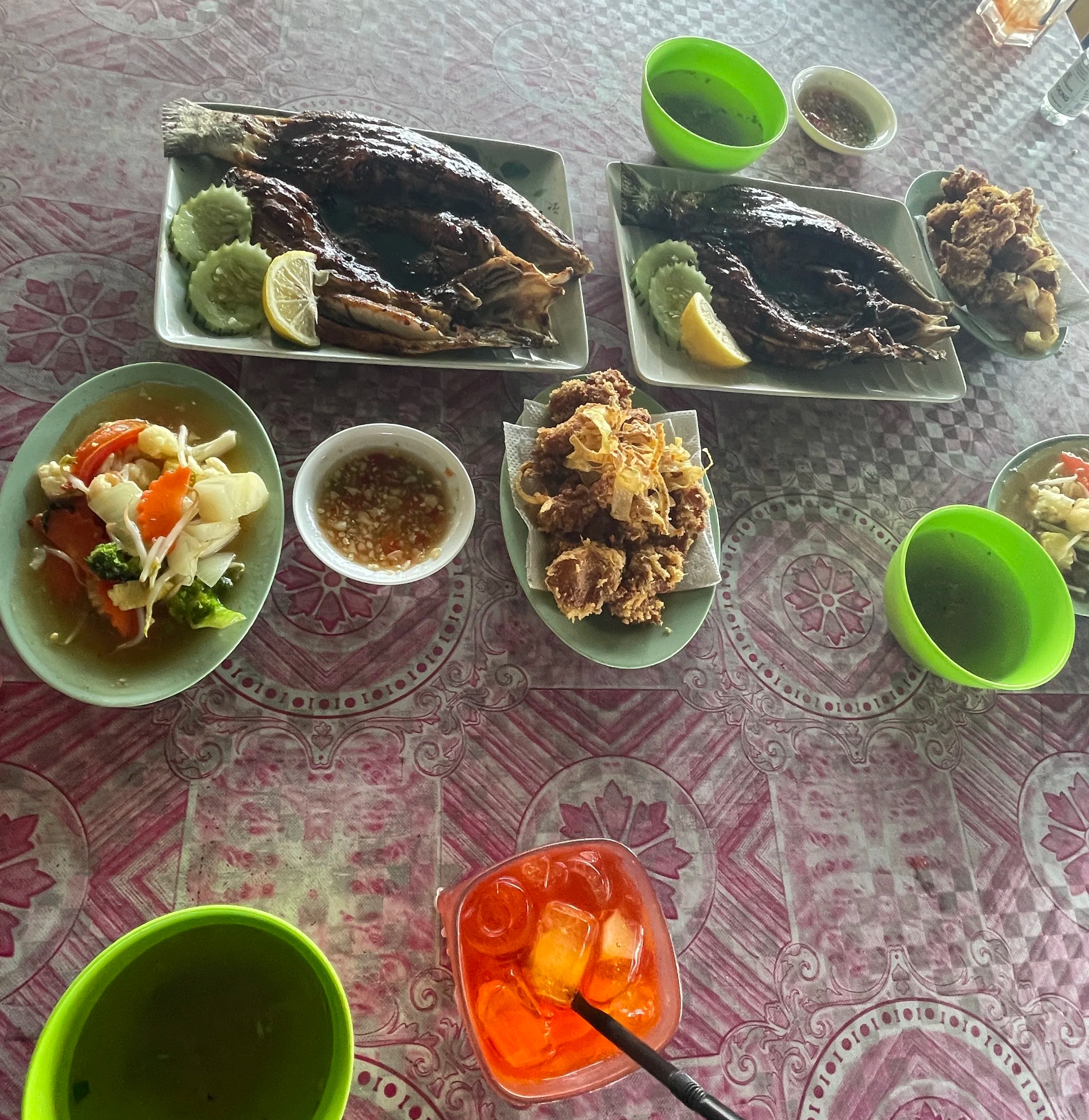
So, these are, I think, the top three things to do in Langkawi. I know I may have missed some interesting places and stuff, but overall I think they encapsulate what this island has to offer: not necessarily the best beaches, but some interesting sights, relaxed atmosphere and closeness to nature.
This post will have a follow up featuring other interesting places to see and things to do in Malaysia outside Kuala Lumpur. Stay tuned!
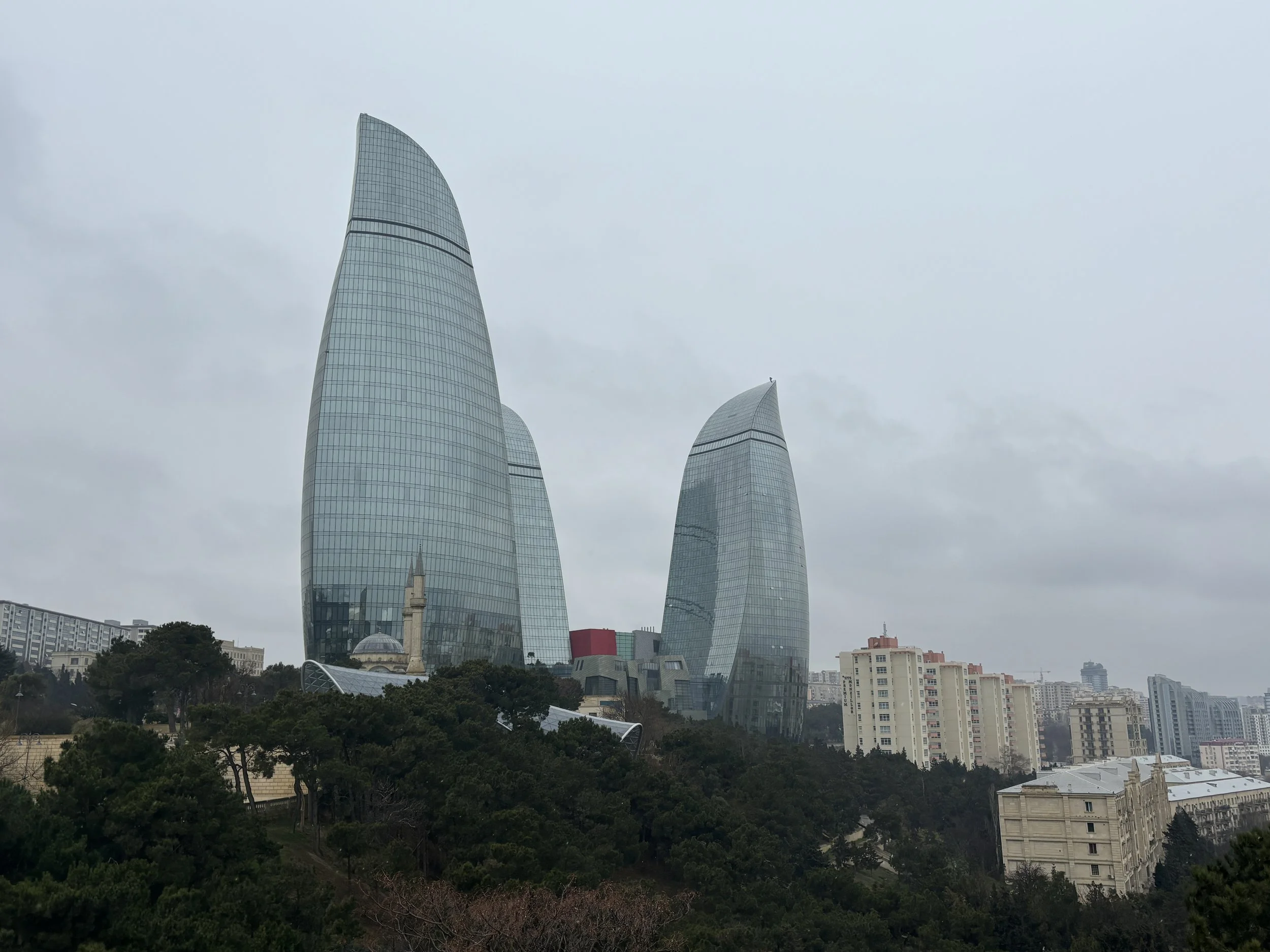
What to do and what to see in Baku and around
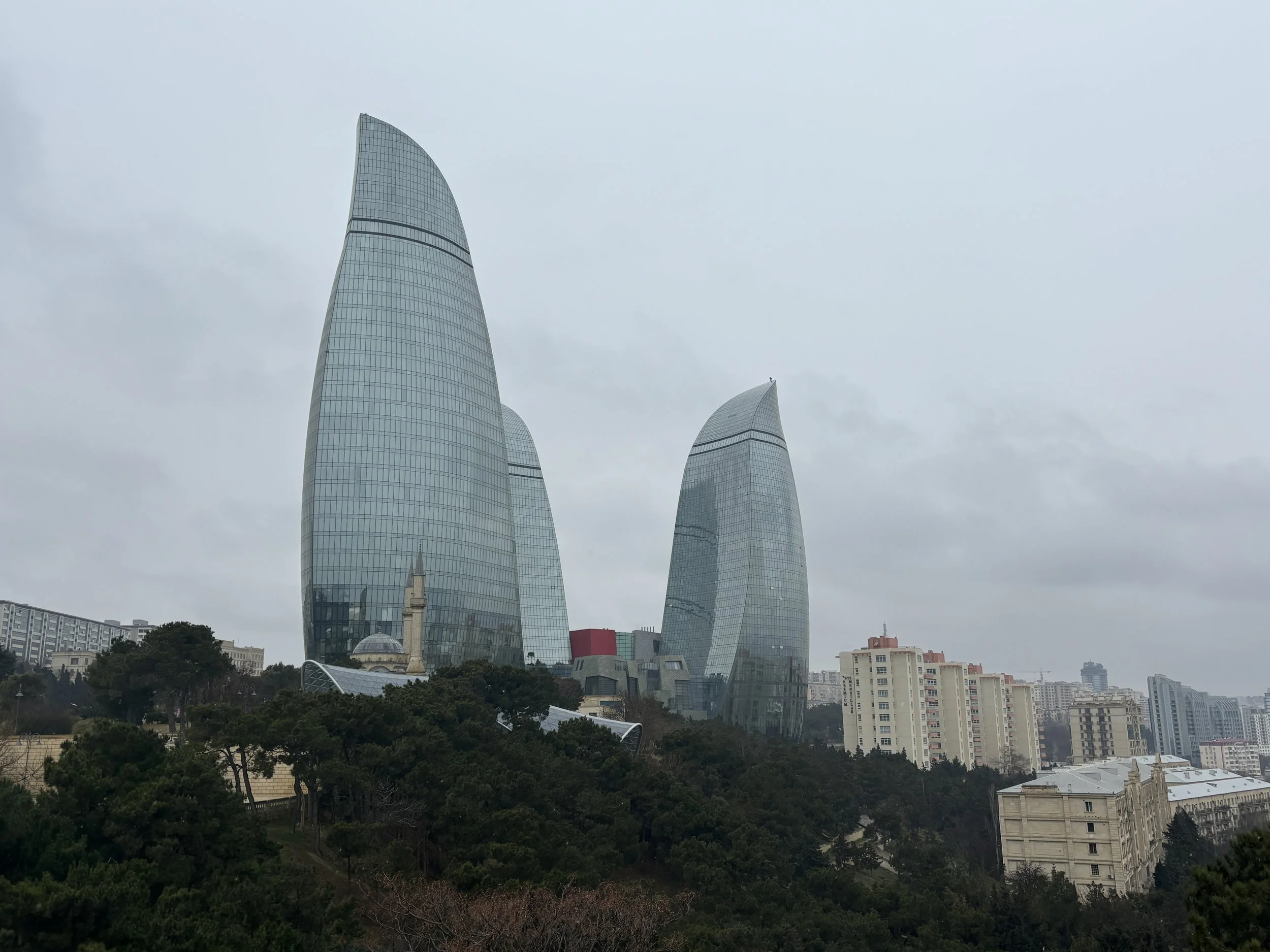
For many years, Azerbaijan barely registered on most travellers' minds, but not anymore.
Oil and gas wealth is undoubtedly behind this transformation. The energy resources that turned Baku into one of the largest cities in the Russian Empire, first, and the Soviet Union later, have also underpinned a rather comprehensive urban transformation programme in the last decade.
The skyline of futuristic towers and meticulously restored medieval streets are its most visible sign, but so is a newly found confidence and pride in the country’s ancestral Azeri culture.
Not unlike the Gulf monarchies further south, Azerbaijan has also backed up these public investment programmes with the organization of big-ticket international events such as the Formula 1 championship, COP29 in 2024 and many other international conferences.
And the strategy appears to be working. During this trip to Azerbaijan I came across a fair number of tourists from both east and west that have come to explore the so-called “Land of Fire”.
Not only is Baku no longer an exotic destination for adventurous travellers, its immediate hinterland, which includes a diversity of landscapes ranging from snowy mountain ranges to deserts dotted with natural and archaeological wonders, is starting to get more attention too.
However, and this is also part of the attractive, tourism in Azerbaijan is still far from being a massive affair and you can still get the sense of exploring a truly off the radar destination.
In this post I will try to summarize my experience traveling in Azerbaijan and visiting also a couple of other sites that are within a reasonable driving distance of Baku:
Old and new Baku
The ski resort of Shahdag, in the Caucasus Mountains
The Ancient petroglyphs of Gobustan, a UNESCO World Heritage Site.
I am aware that there is another major site of interest just outside Baku: the mud volcanoes, which are clustered around two different sites, one to the north of the city, the other to the south, near the Gobustan archaeological park, actually.
Due to logistics and schedules, it was not possible for me to visit them this time and include them in this itinerary, but if you have the chance I would definitely encourage you to check them out. I have them in my Baku to-do list for my next visit.
So, now let’s dive into what is to do and to see in Baku and its broader vicinity!
This post may contain affiliate links. If you book or buy something through them, I earn a small commission, at no extra cost to you. It's one of the ways I keep Places of Charm going. Thank you for your support.
The Flame Towers and Baku viewpoint
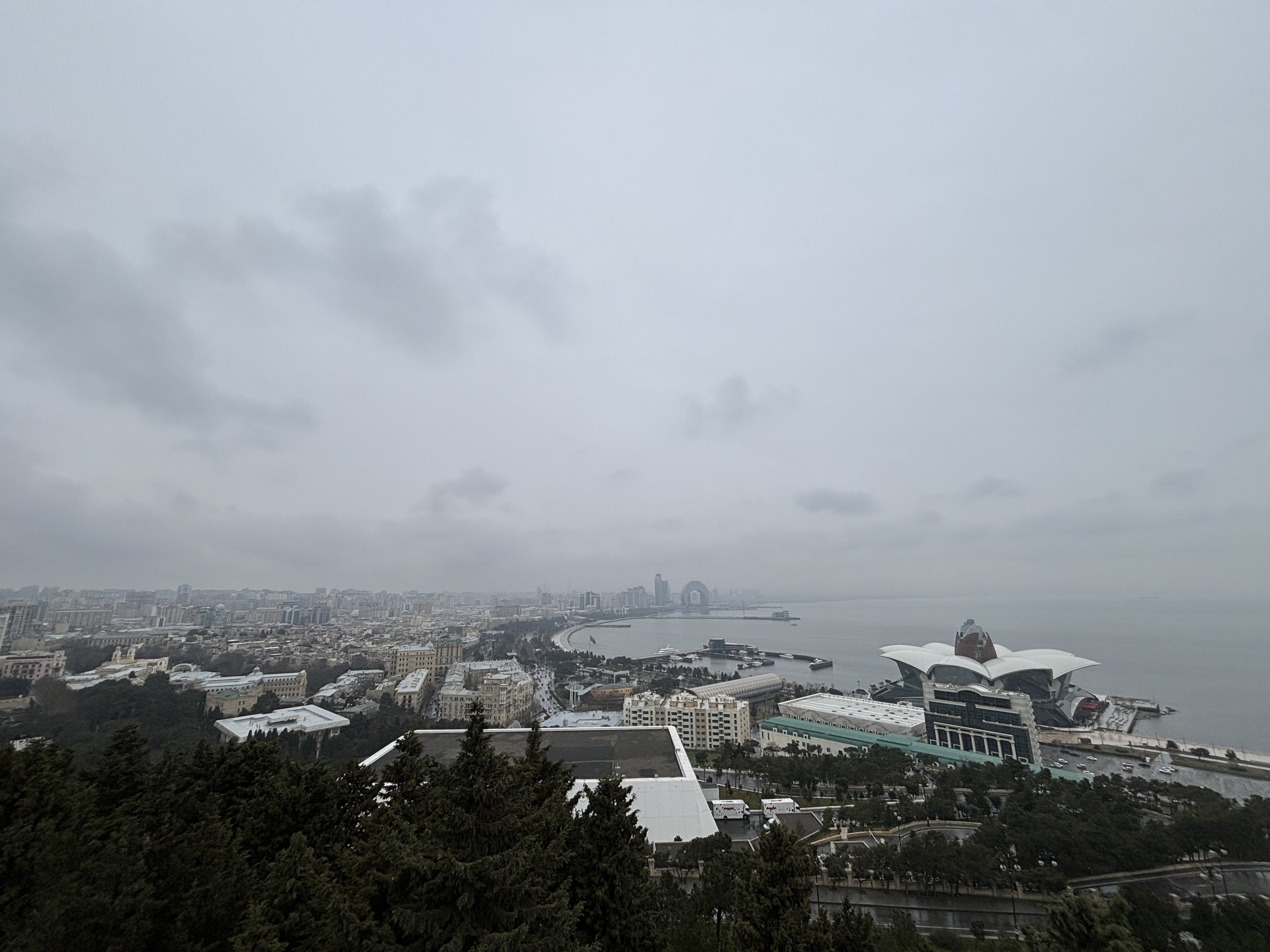
It was a bit rainy when I visited, but still a pretty view!
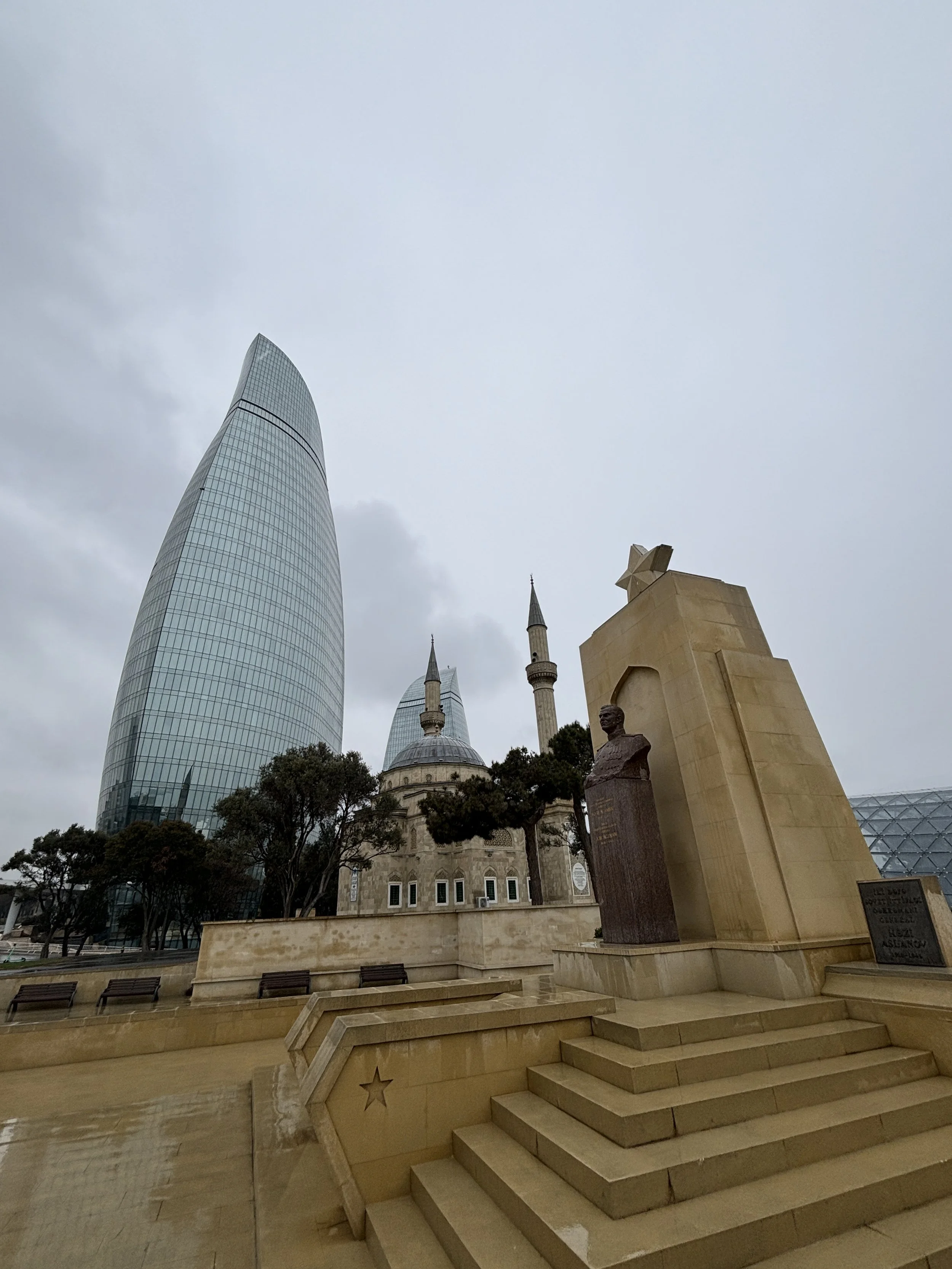
The Flame Towers have become the symbol of modern Baku since they were completed in 2012.
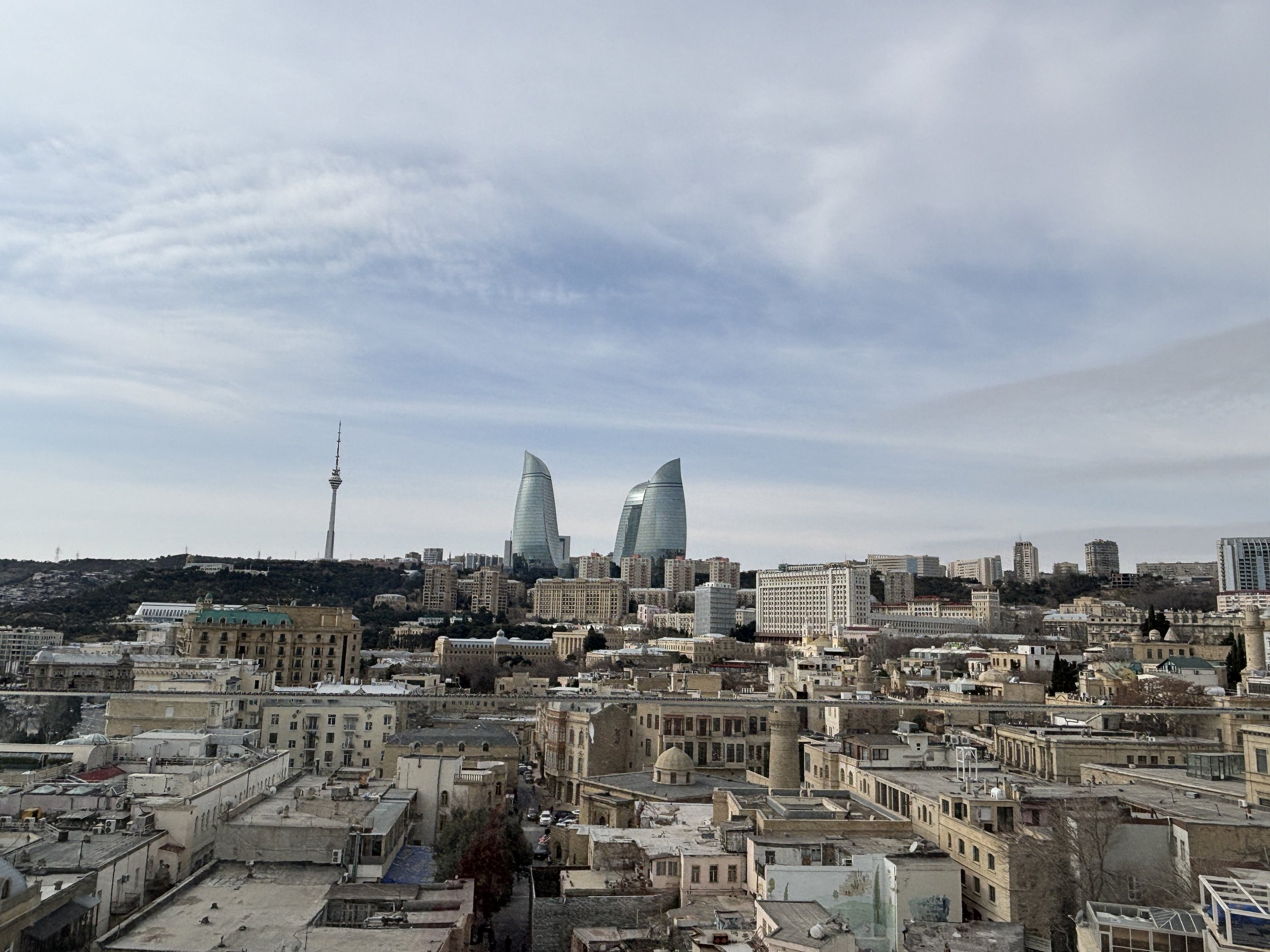
These three curvy skyscrapers are certainly beautiful and original in their looks. It’s hard to miss them from wherever you are in the city, because they occupy a privileged position on top of a hill overlooking the sea.
However, they are mostly about the “continent” rather than the content. In fact, there is little inside them for the regular visitor, since they contain offices, luxury apartments and the Fairmont five-star hotel.
I think it is still worth going to see them from up close, though, not just because of the architecture, but also because the park next to them, the aptly named “Highland Park” offers some really nice views of the city.
The park has also has several interesting monuments within its grounds.
These are of a patriotic nature, such as the “Martyr’s Lane”, which is a memorial to those that died during the last turbulent months of Soviet rule as well as during the long-going conflict with Armenia (which is still not yet fully resolved at the time of writing these lines, even if Azeri forces managed to get control of the disputed Nagorno-Karabakh area in 2023). The park has also monuments dedicated to the Turkish-Azeri friendship (picture below) and to the British troops that were posted in Baku after WW1.
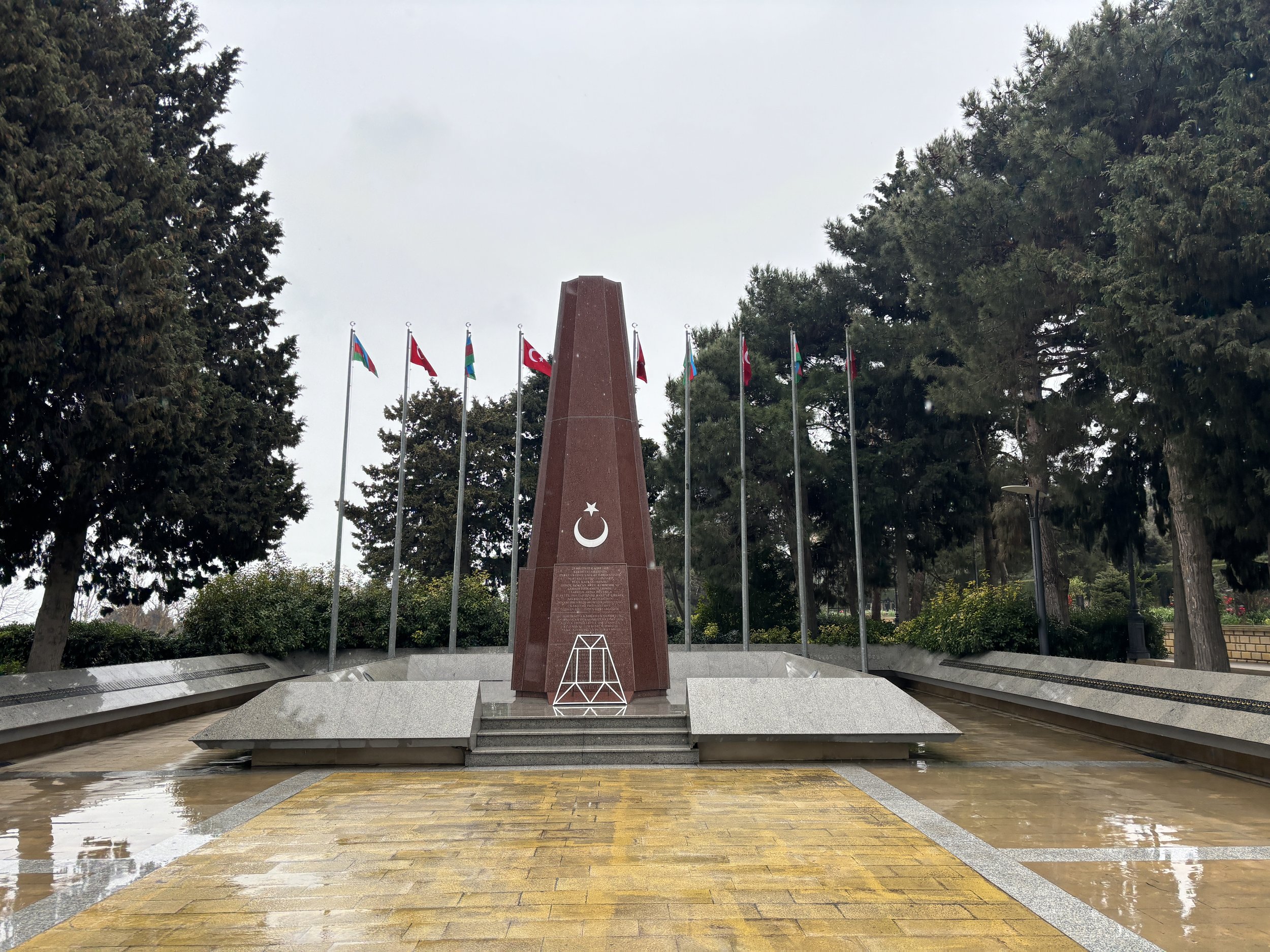
Baku Central Park and Taza Pir Mosque
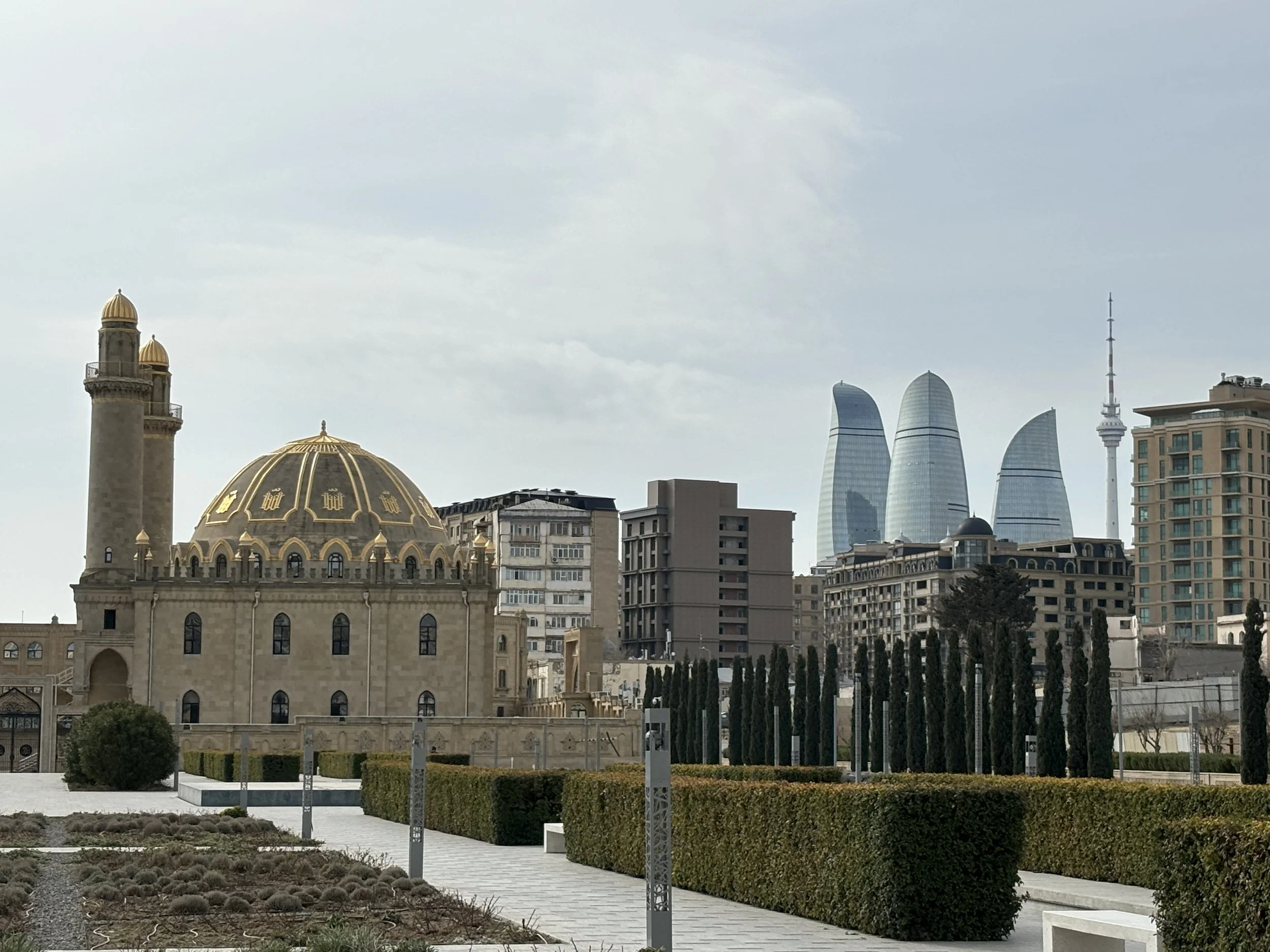
Right to the northwest of the Old Town is the Central Park and within it is the Taza Pir Mosque (“Təzəpir məscidi”), which is the main muslim religious center in Baku. The mosque was built in the early 20th C. and was restored in the early 2000s. The park itself is quiet a large open space with a bit of incline which has been solved by having several subtly layered terraces.
You have some nice views of the Flame Towers from here and the outer wall of the old town is within walking distance, all downhill. To get there you pass several streets that, unlike the old town, have not (yet) been renovated, so you can get an idea of how things may have looked like just a few decades back in time.
A tour of the Old Town of Baku
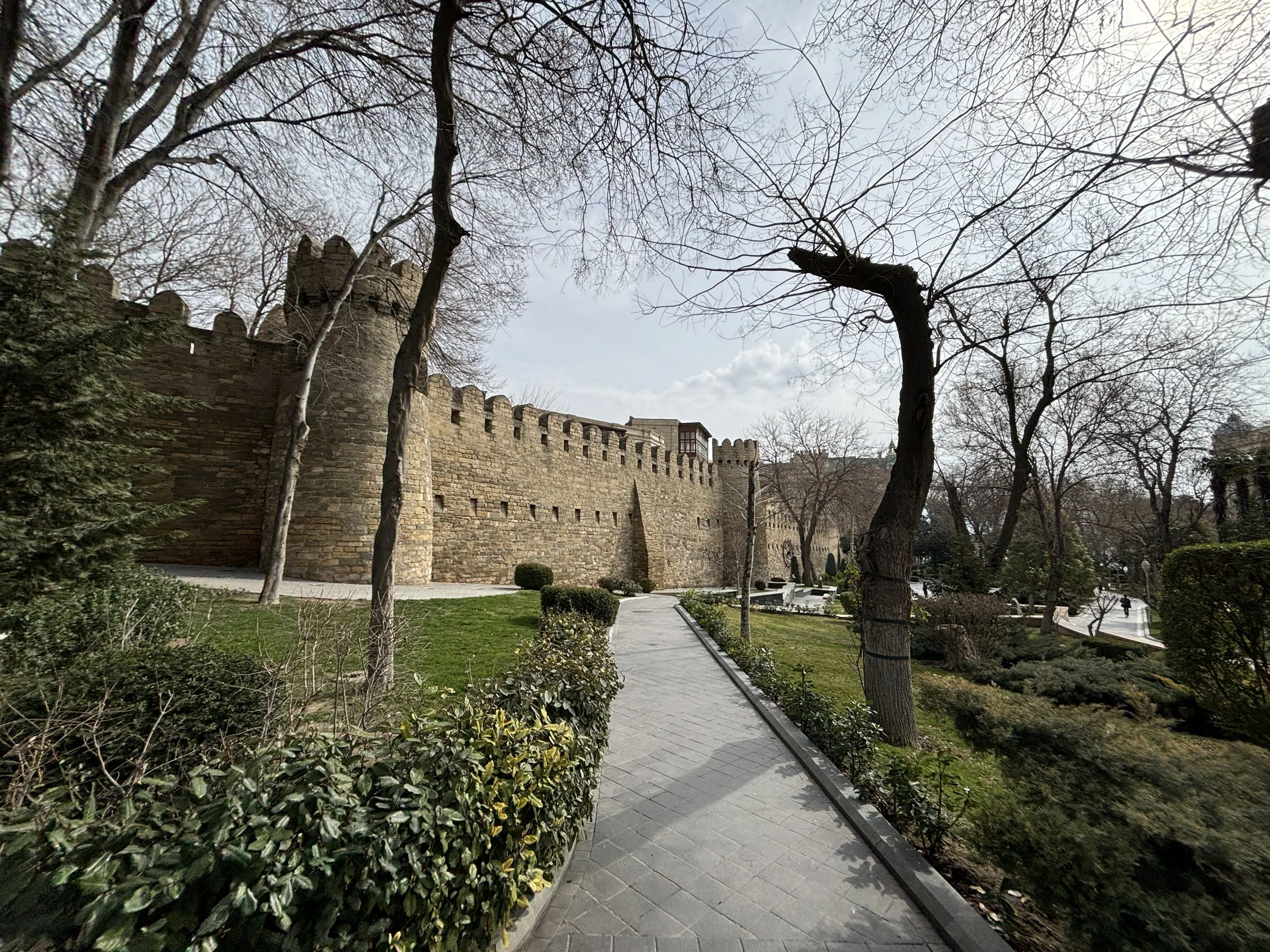
The access to the old town of Baku near the "Icherisheher metro station
A must in any trip to Baku is a walk throught the old town or “Icherisheher” (İçərişəhər) in Azeri.
The old town of Baku is a UNESCO World Heritage site and its origins are very ancient (the place was inhabited already in prehistoric times). Its walls and architectural ensemble appear to be in a great preservation state, although you can tell it has also been object of rather extensive restoration project (a little bit like is the case of Al Balad, in Jeddah, Saudi Arabia, which we described on this post, as well).
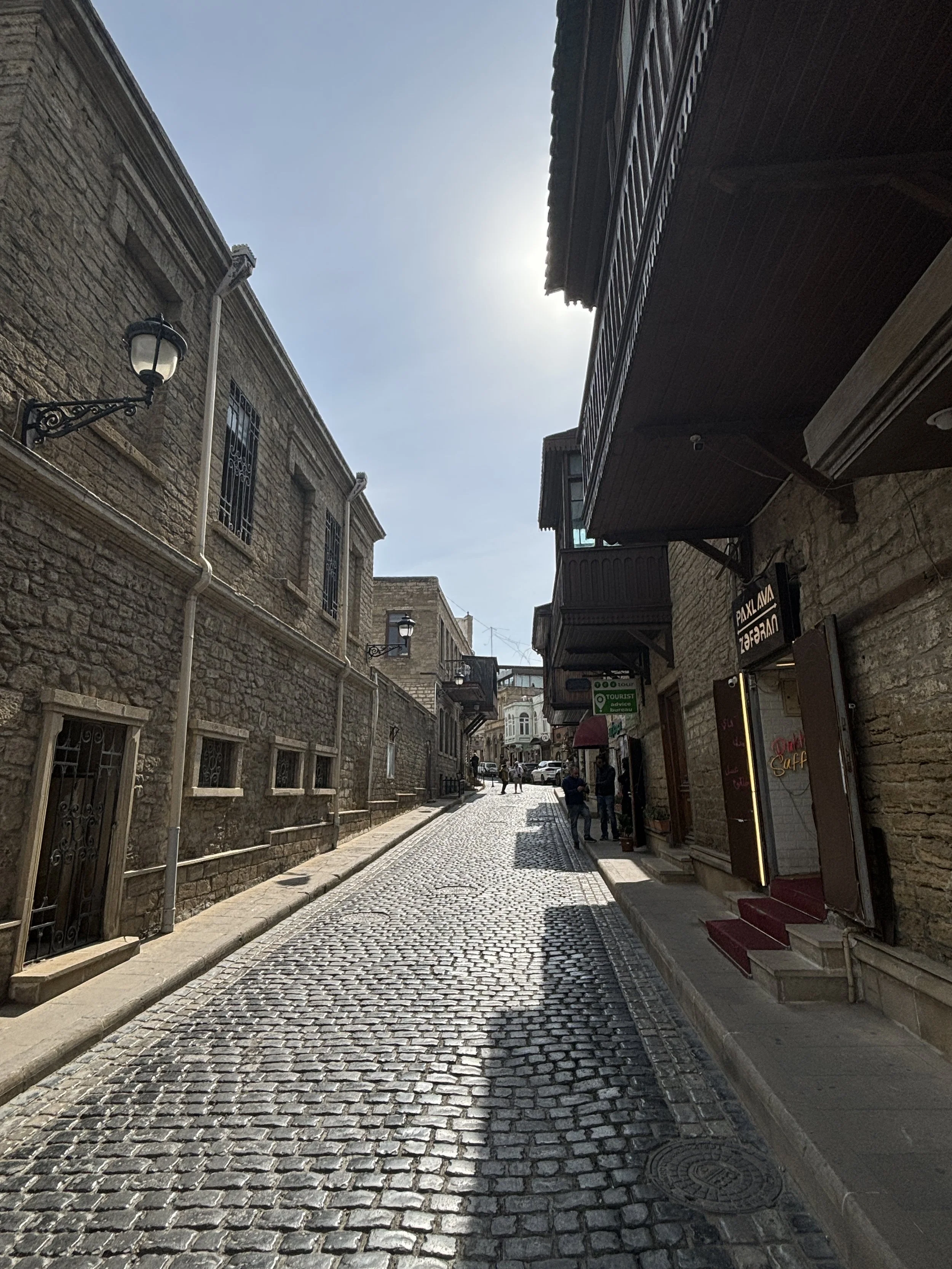
The result is a very neat and orderly neighbourhood (perhaps even a bit too aseptic at times!), which makes for quite a relaxed walk around.
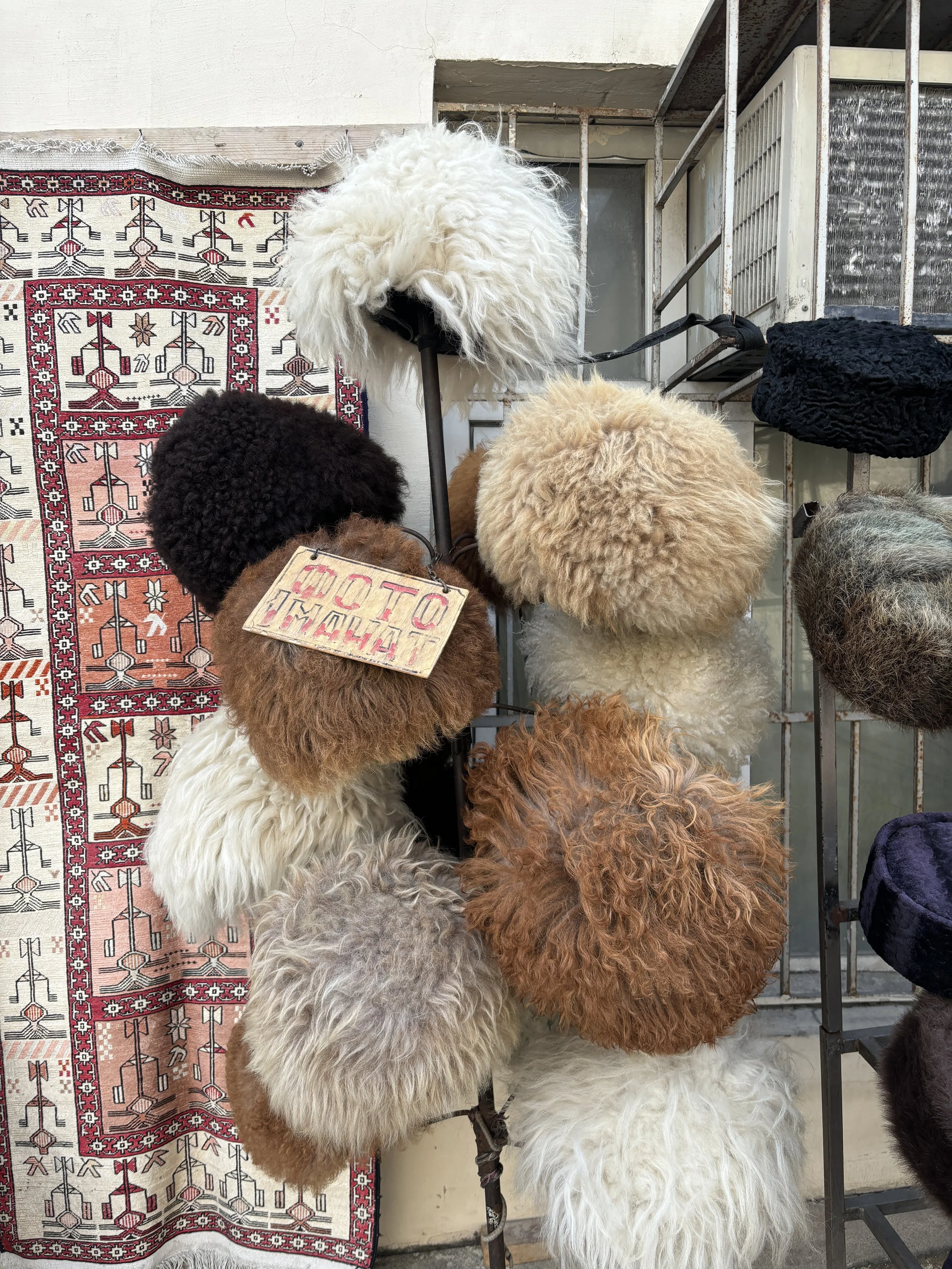
I don’t know if we picked up a particularly quiet day, but the place was pretty quiet when we visited it. Nevertheless, it’s refreshing to visit a major historical city center that is not overrun by tourists nowadays! There are also quite a few souvenir shops but you don’t get the feel of overcommercialization you see in other capitals.
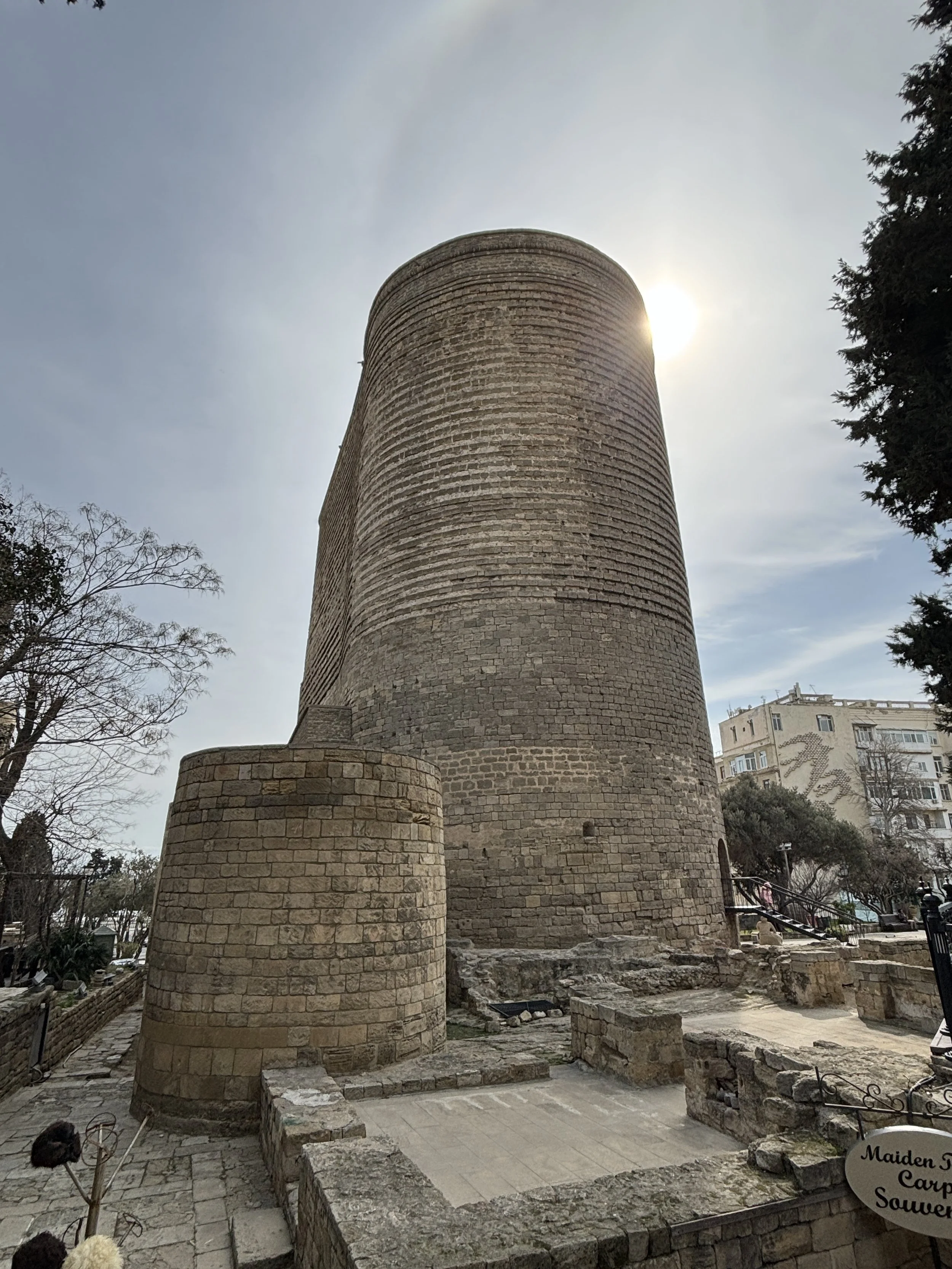
One of the highlights of Baku’s old town is the Maiden Tower (Qız Qalası), a round 29-meter tall stone tower with a view point at the top. The current construction is medieval, but it looks like there has been some sort of tower at this spot for thousands of years and archaeologists can not agree as to the original purpose, whether it was religious or military.
All of this is explained as you climb up the tower (warning: it is done through a rather narrow staircase), as each floor is arranged a bit like a little museum hall, each explaining different aspects of the tower’s and city’s history.
But the big prize is climbing all the way to the top to enjoy the 360º views of the city!
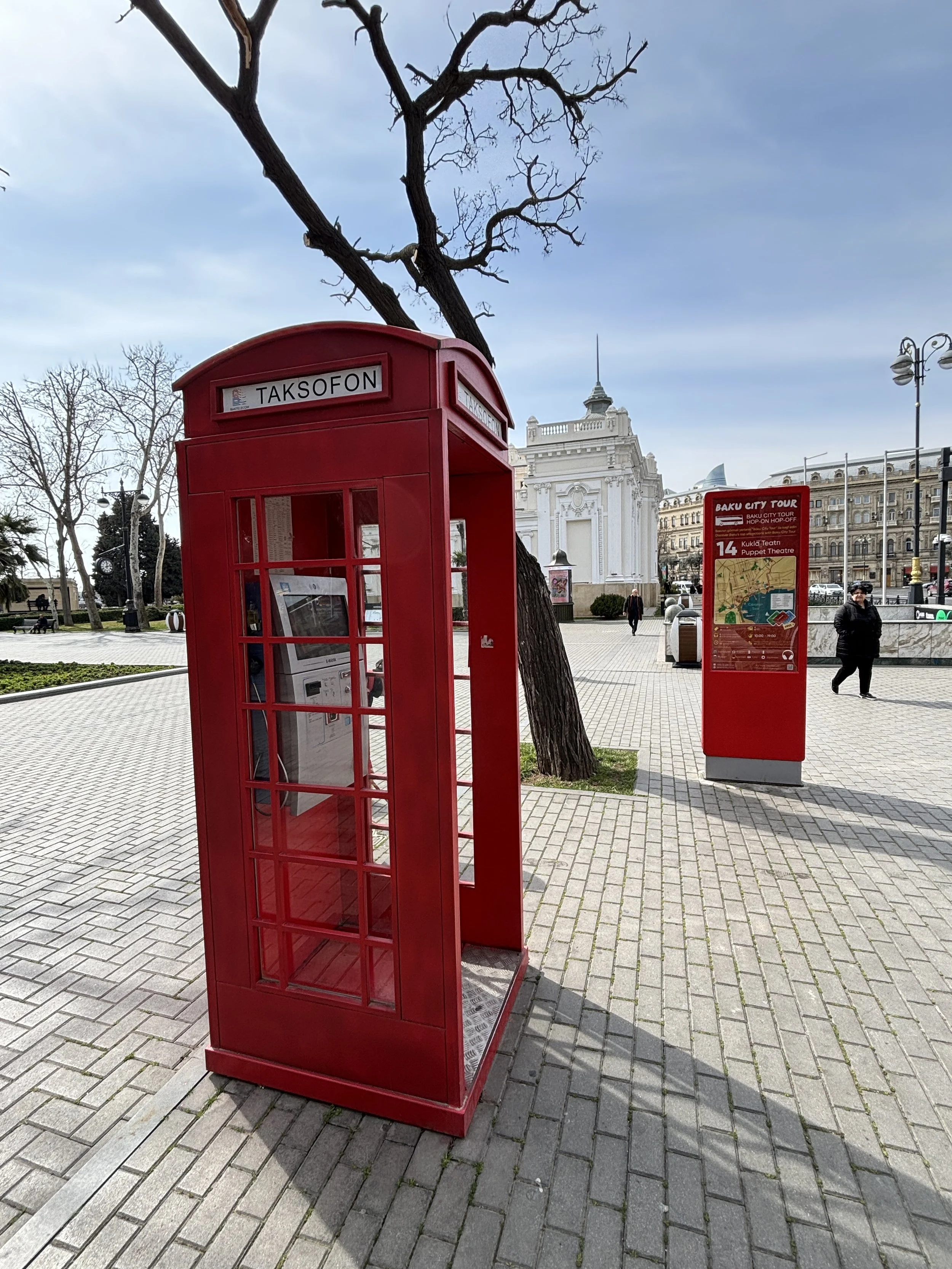
A curious fact about Baku is that it has a fleet of London-style black cabs. They were, in fact, imported from England around 2011! (although the Bolt ride-hailing service is also available in Baku)

The taxis are not apparently the only bout of anglophilia in the streets of Baku, since I managed to spot at least one red British-style phone booth!
If you are looking something with a bit more of a local flavour, don’t worry, you will find plenty of these too!
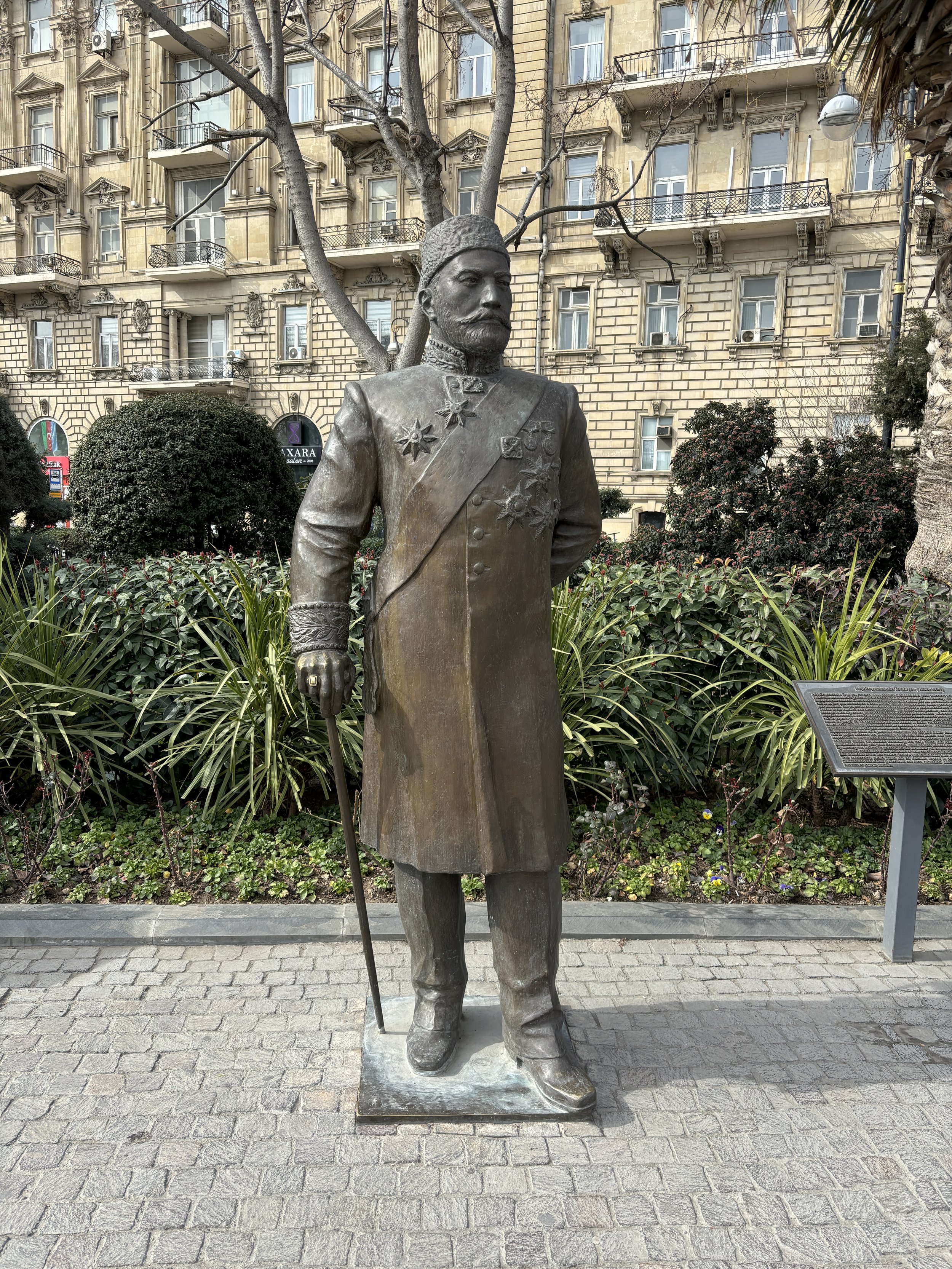
Besides the medieval part of the city, Baku is also endowed with a modern downtown which is legacy from its time as an oil boomtown in the early 20th C.
The oil business made of Baku one of the top three cities in the whole Russian Empire and this shows in the grand architecture of parts of its centre.
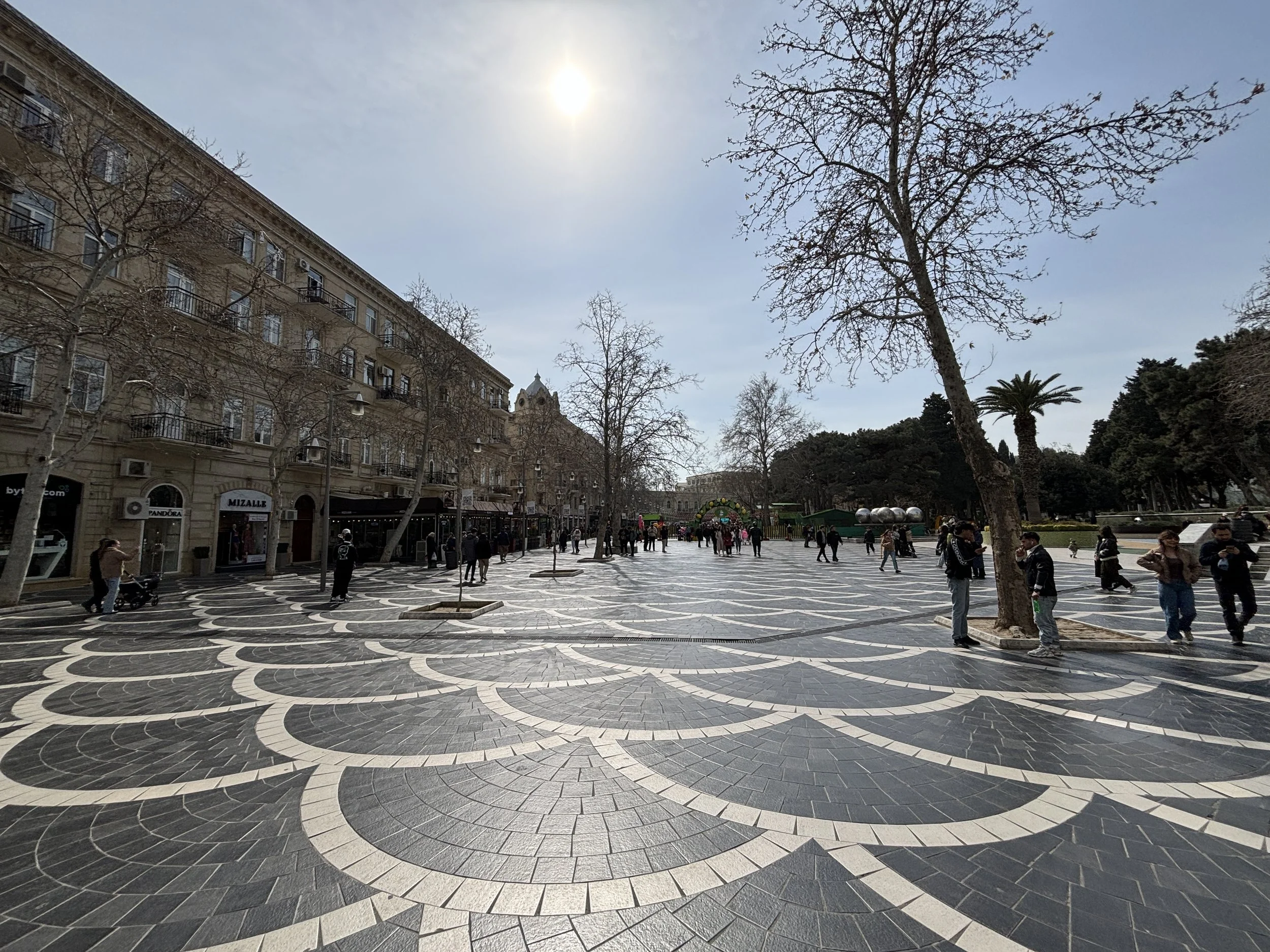
This part of the city has majestic buildings in the European style, with broad straight avenues and tree-lined boulevards with shops and cafés.
There are also quite a few broad squares which act as public recreational areas and there is, of course, no shortage of statues and fountains.
The public spaces in this part of the city are also kept meticulously clean and orderly.
The Caspian sea promenade
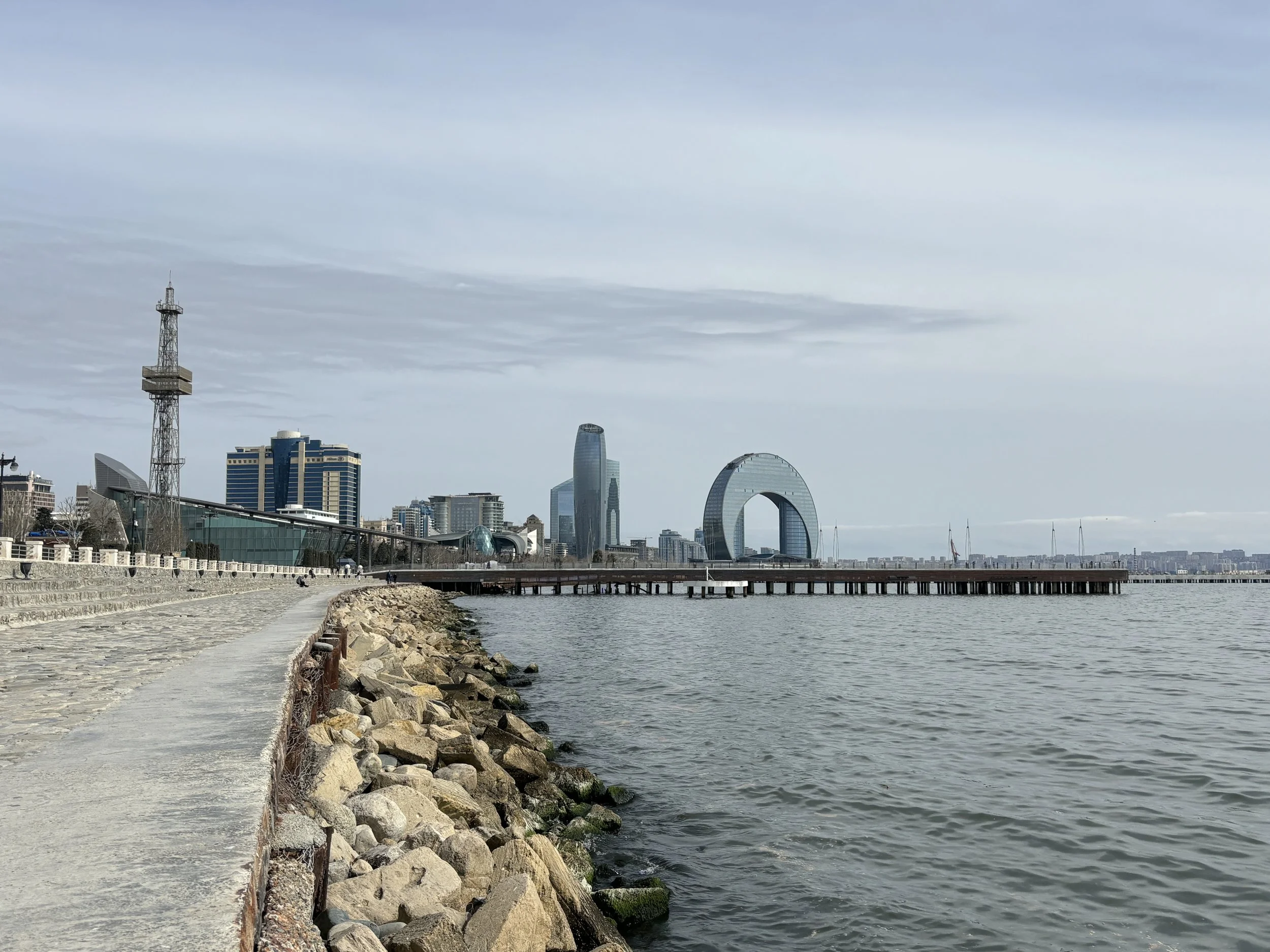
Baku is a seaside city, even if the Caspian could be technically considered a lake, since it is fully enclosed. In practical terms it doesn’t matter, because the city has a long seaside promenade, complete with a number of piers and several contemporary architectural landmarks.
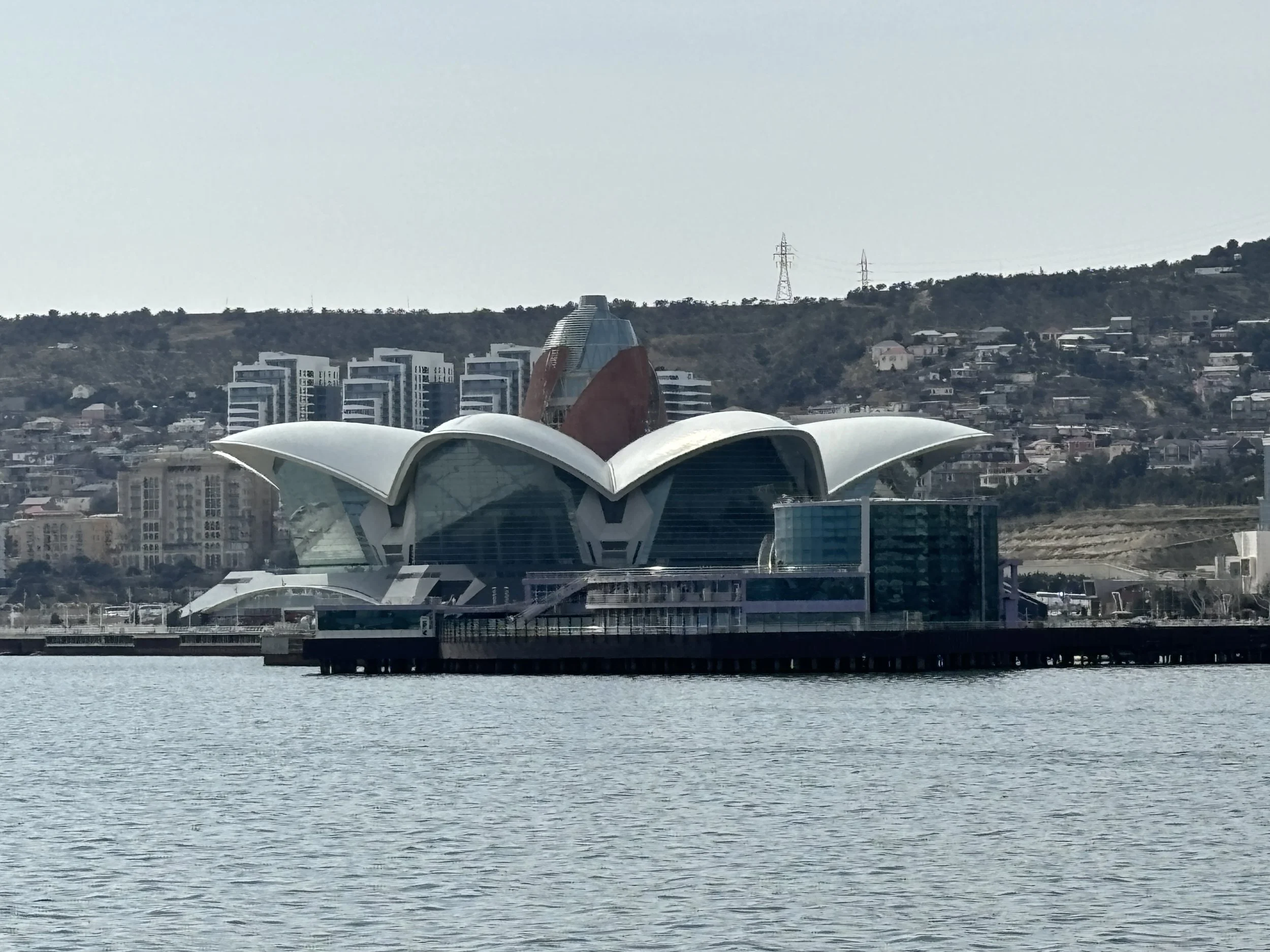
The latter include the Crescent Hotel, which is the doughnut-shaped building visible in the picture above (part of a larger Korean-designed development that includes also a mall), and the National Carpet Museum, depicted below (I didn’t visit it partly because of time constraints, partly because I am not really into carpets, but this is one of the traditional crafts of Azerbaijan, so maybe worth visiting if it is your thing!).
I must say that, despite being right by the water, Baku doesn’t seem to be a “beach city” in the way that, let’s say, Barcelona or Nice are.
The Caspian waters right by the promenade didn’t, actually, look very inviting and, I guess the proximity of oil extraction areas, both onshore and offshore but not far from the coast, has something to do with it. However, we were told by locals that there are some good areas for bathing in the peninsula right to the east and north of the city.
In any case, a walk onto the pier is totally recomended as it will give you an additional view of the city skyline from the water and allow you to enjoy the sea breeze.
Visiting the Heydar Aliyev Center
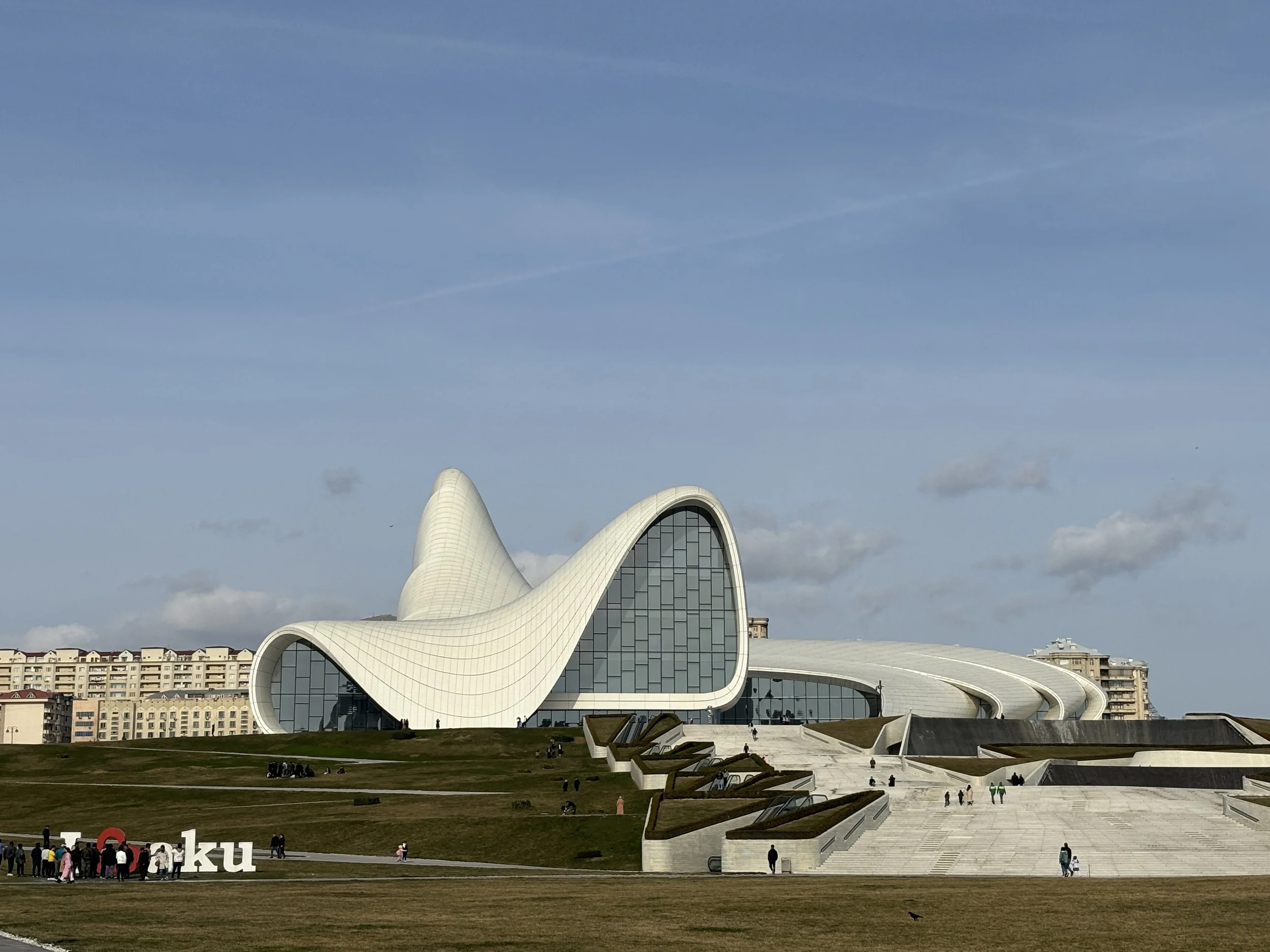
The Heydar Aliyev Center is the other must-visit architectural landmark in Baku.
This iconic building, the work of the late renowned architect Zaha Hadid, is part museum, part cultural centre, part conference venue. It was designed to become a symbol of the city and to represent the modernity of independent Azerbaijan, with an instantly recognizable tangible symbol.
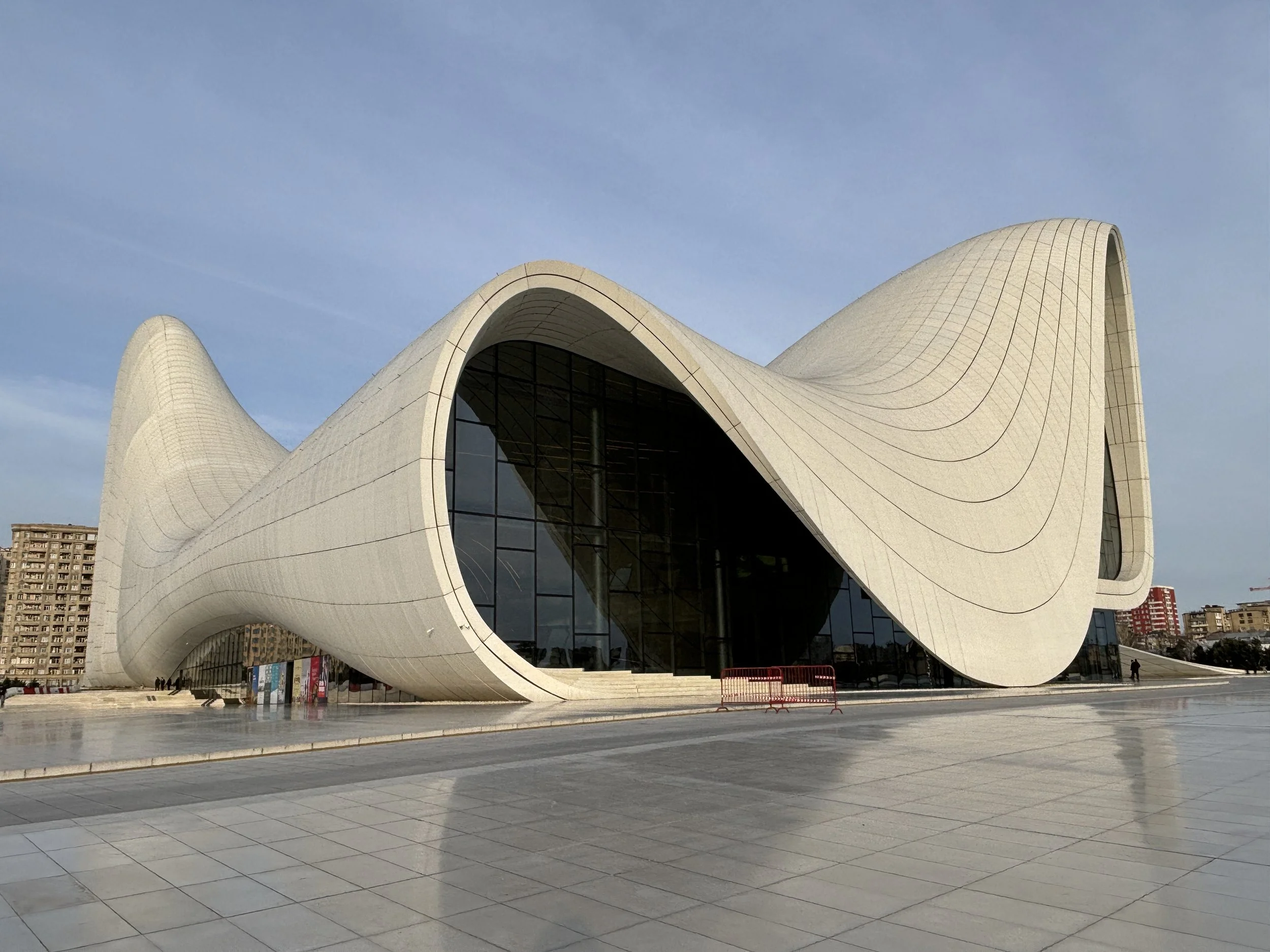
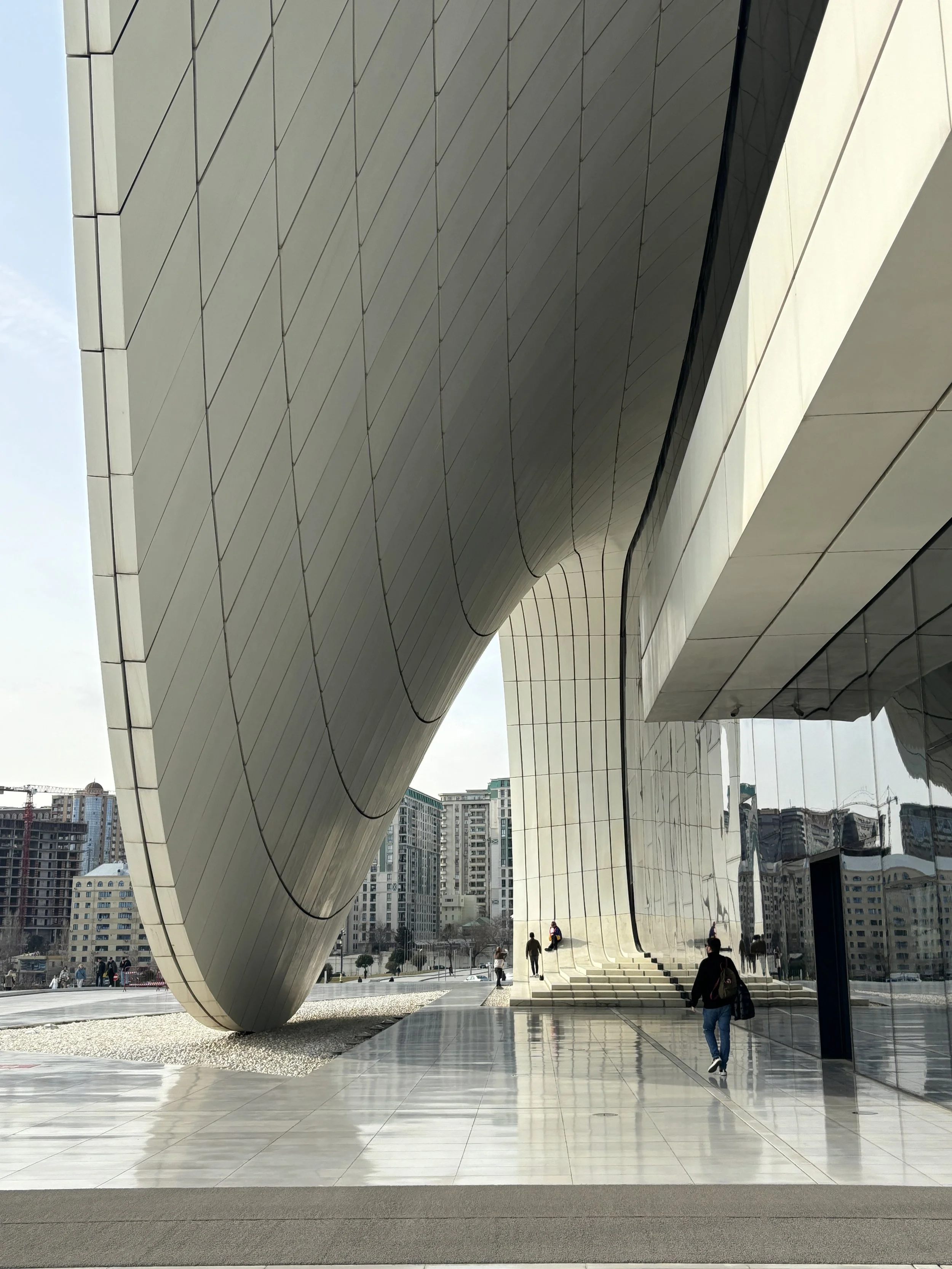
One of the defining characteristics of the Heydar Aliyev Center is the fact that it does not have a single straight line. This gives it an appearance of dynamism and weightlessness despite being a really massive building! It is also located on top of a small hill with wide open spaces on all sides, which makes it easier to appreciate its uniqueness and the genius of its design.
While its outer appearance makes the Heydar Aliyev Center already worth the visit, its inside is also quite interesting.
First there is the architectural part, as well, with the internal spaces organized in a rather unconventional way. But the center houses also several collections and exhibits, ranging from art to the history of Azerbaijan and the life and works of the person that the center is named after, Heydar Aliyev, who ruled Azerbaijan both during the Soviet period and after independence and founded the dinasty that still rules the country).
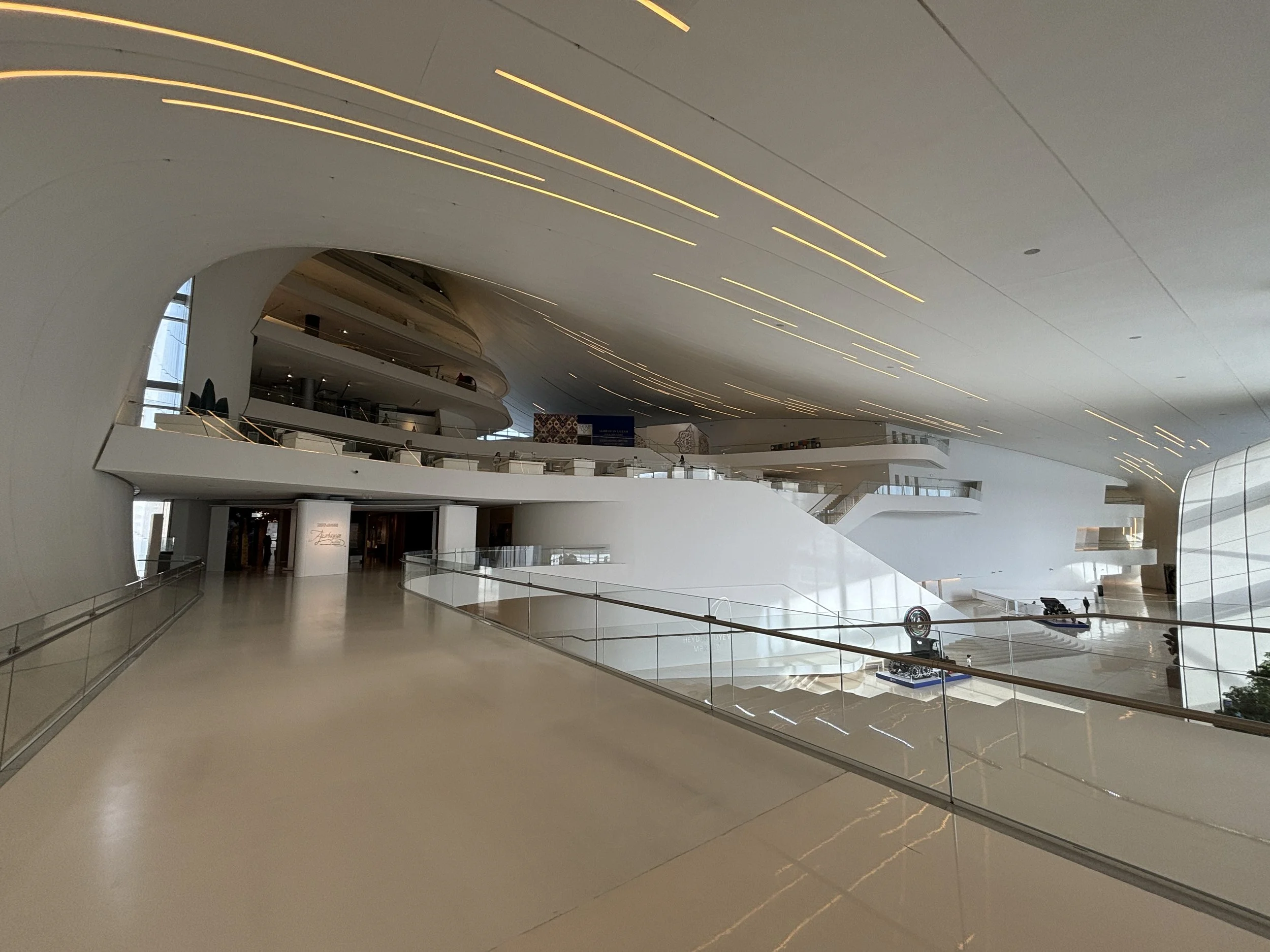
The collections are quite well presented, even if the topics can be quite eclectic. You may wanna put aside a couple of hours to see them all.
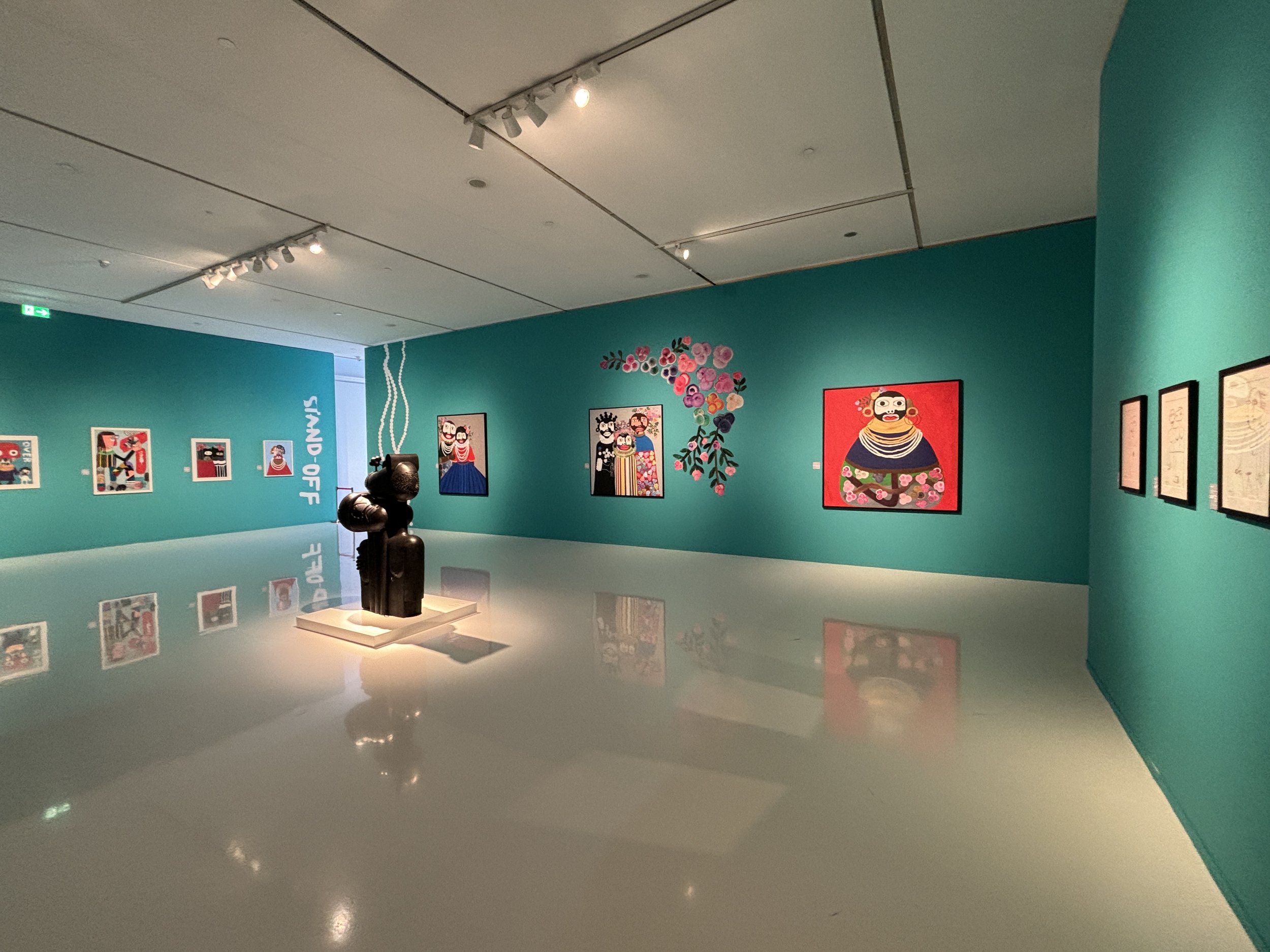
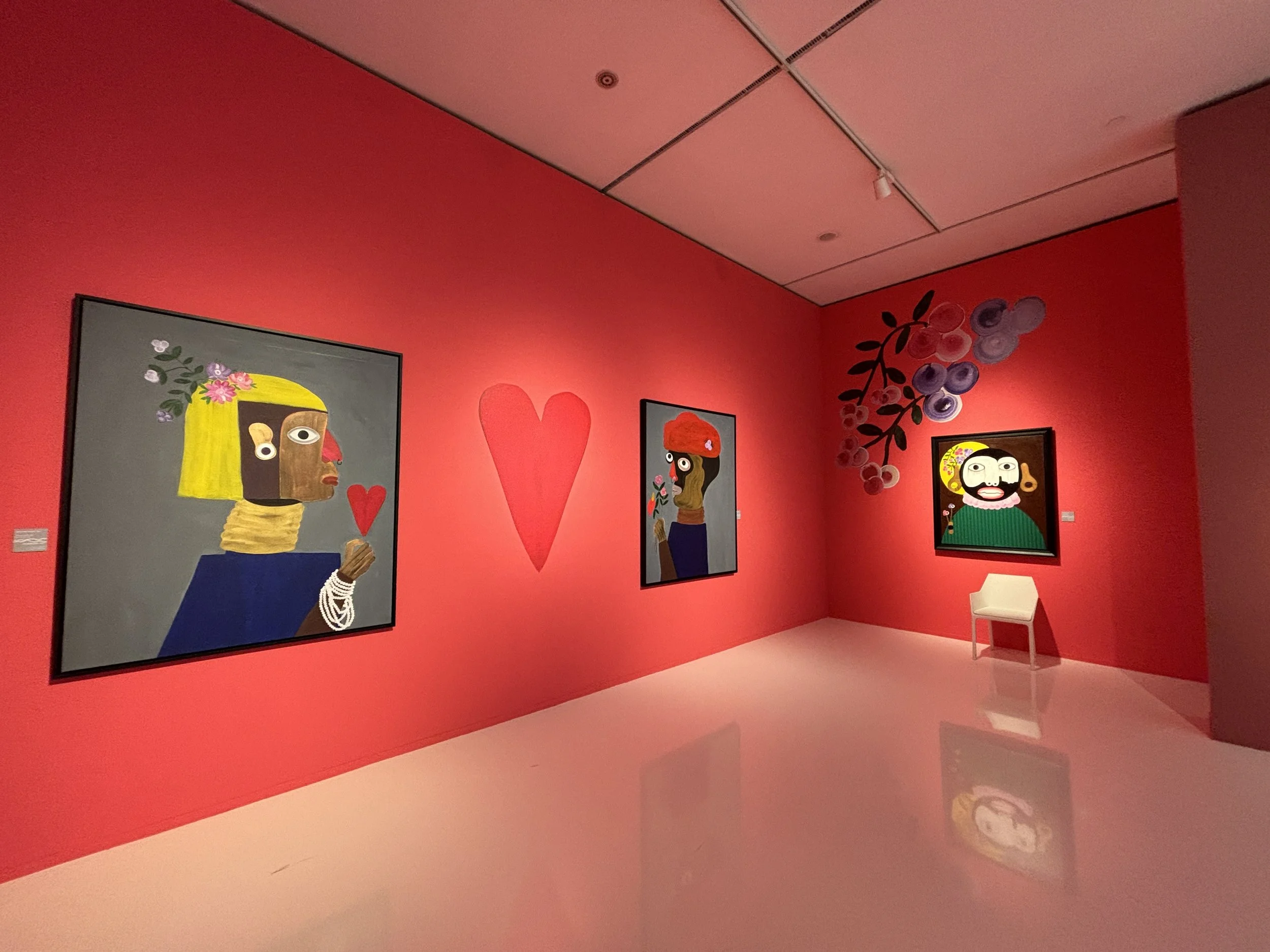
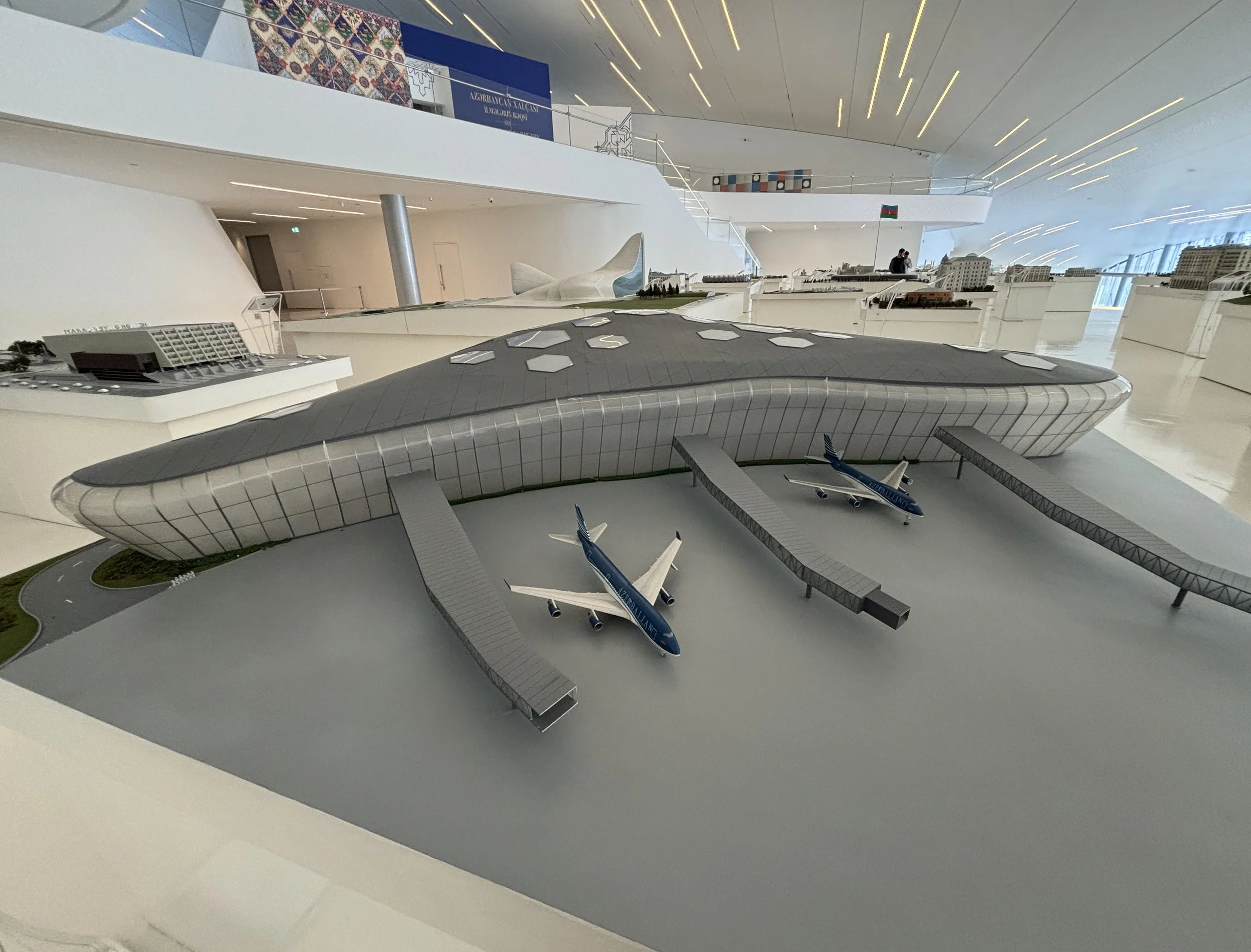
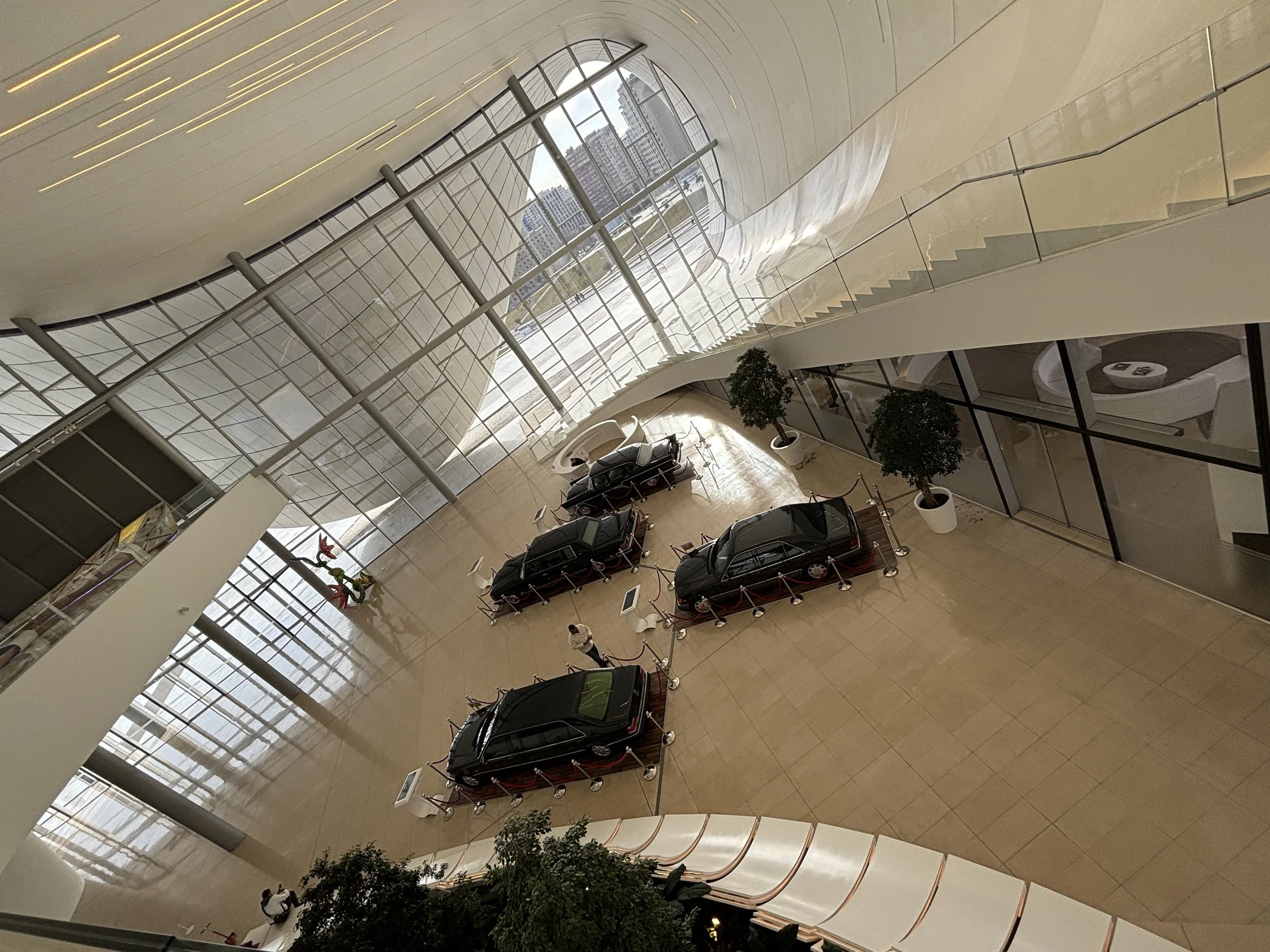
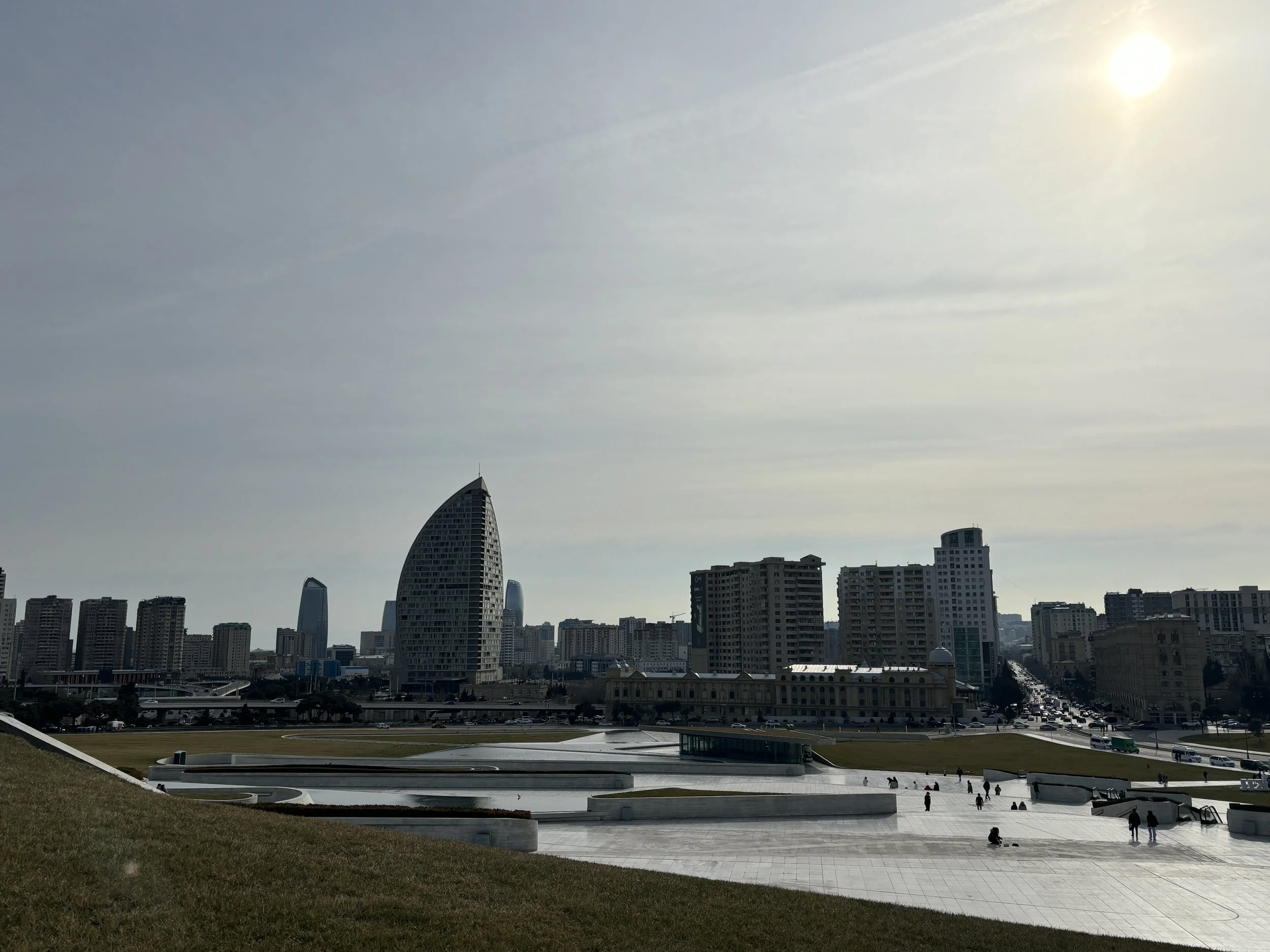
From the Heydar Aliyev Center you can get yet another view of Central Baku.
Where to eat traditional Azeri food in Baku
Qaynana Restaurant
Kichik Qala, Baku
This is a restaurant of Azeri cuisine that is located at the edge of the old town, next to one of the old city gates. If you are looking to sample traditional Azeri food, this is a great choice!
It offers great ambience and large portions of tasty traditional food at reasonable prices.
Don’t be surprised if there is queue to get in, though. It is best to try to book in advance, because this place is popular and has high turnout!
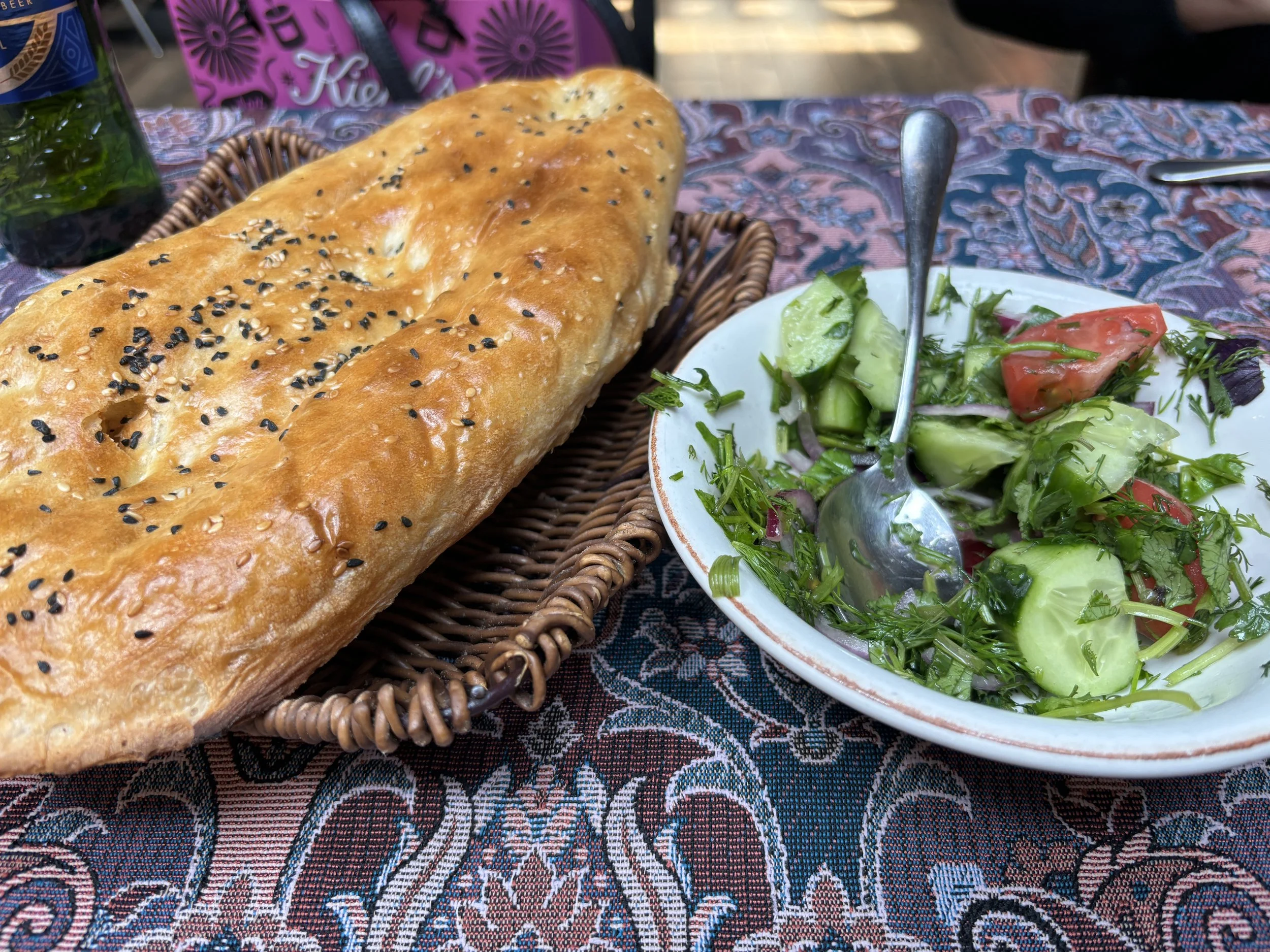
One of the specialities of this place is the freshly baked bread called çörək, baked on the spot in a traditional tandoor clay oven.
You can actually watch the whole process, from the moment they shape the dough to its baking in the tandoor and, then, the moment when it comes out of the oven and is brought straight to the tables, warm and ready to eat.
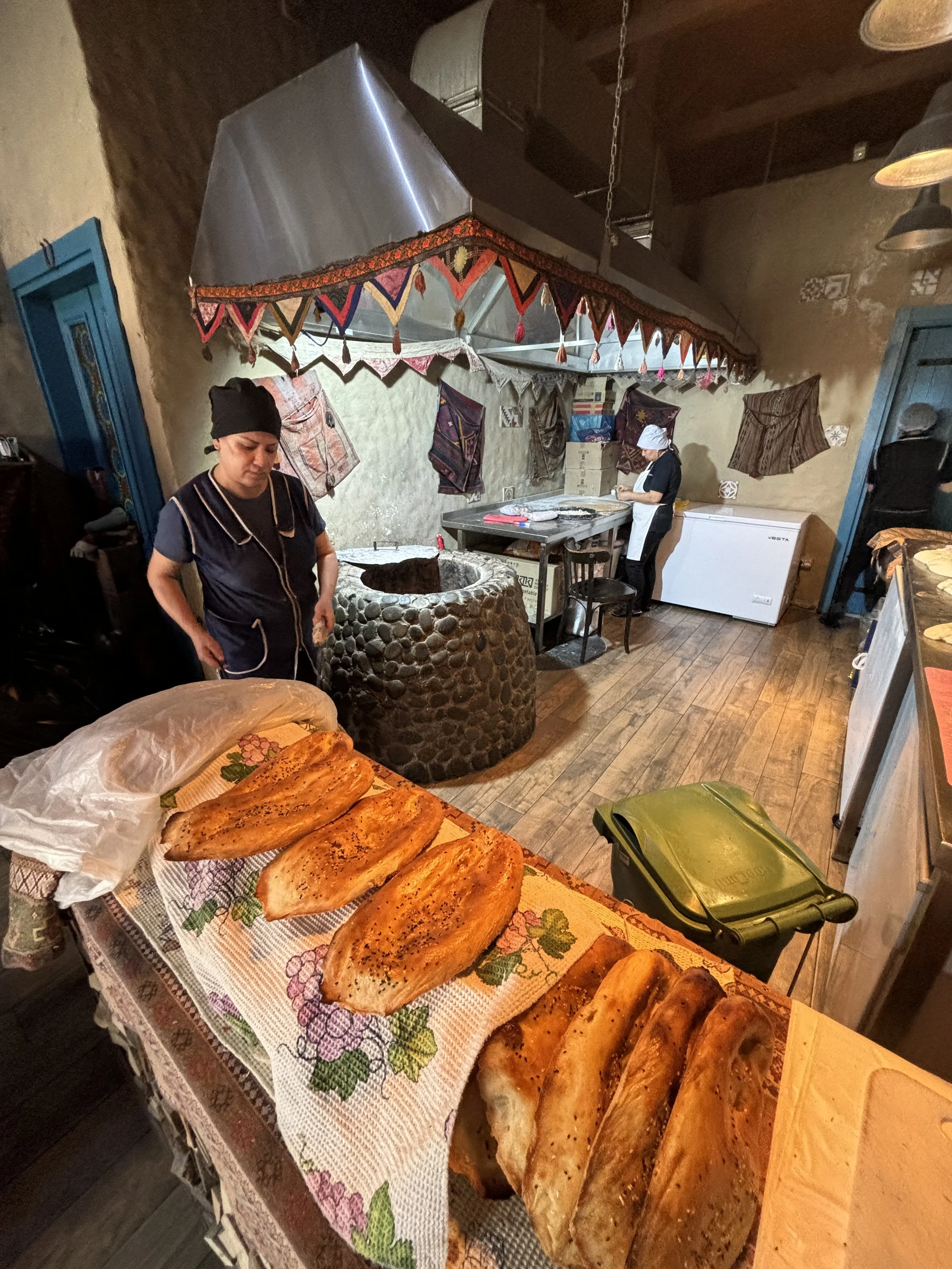
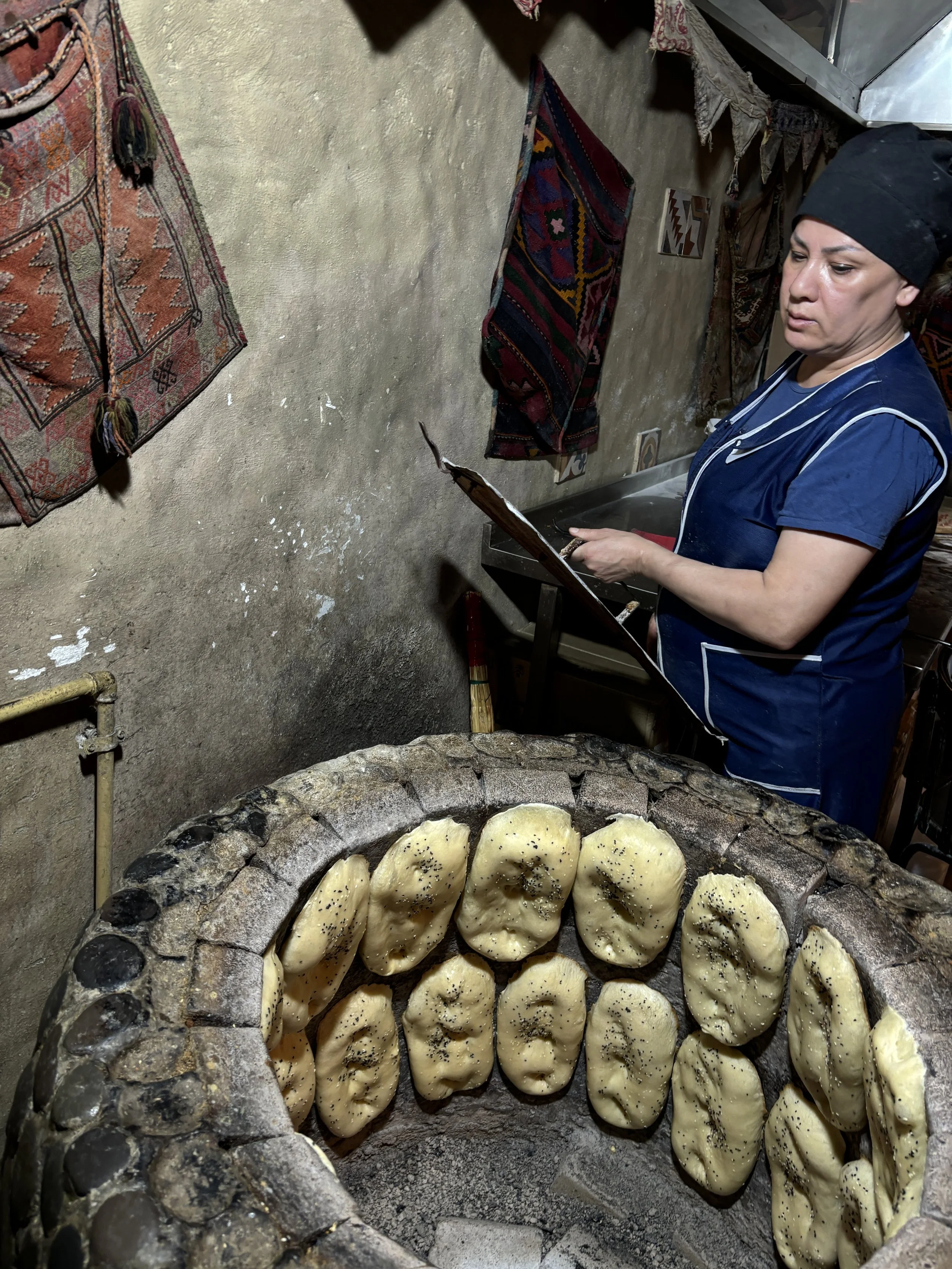
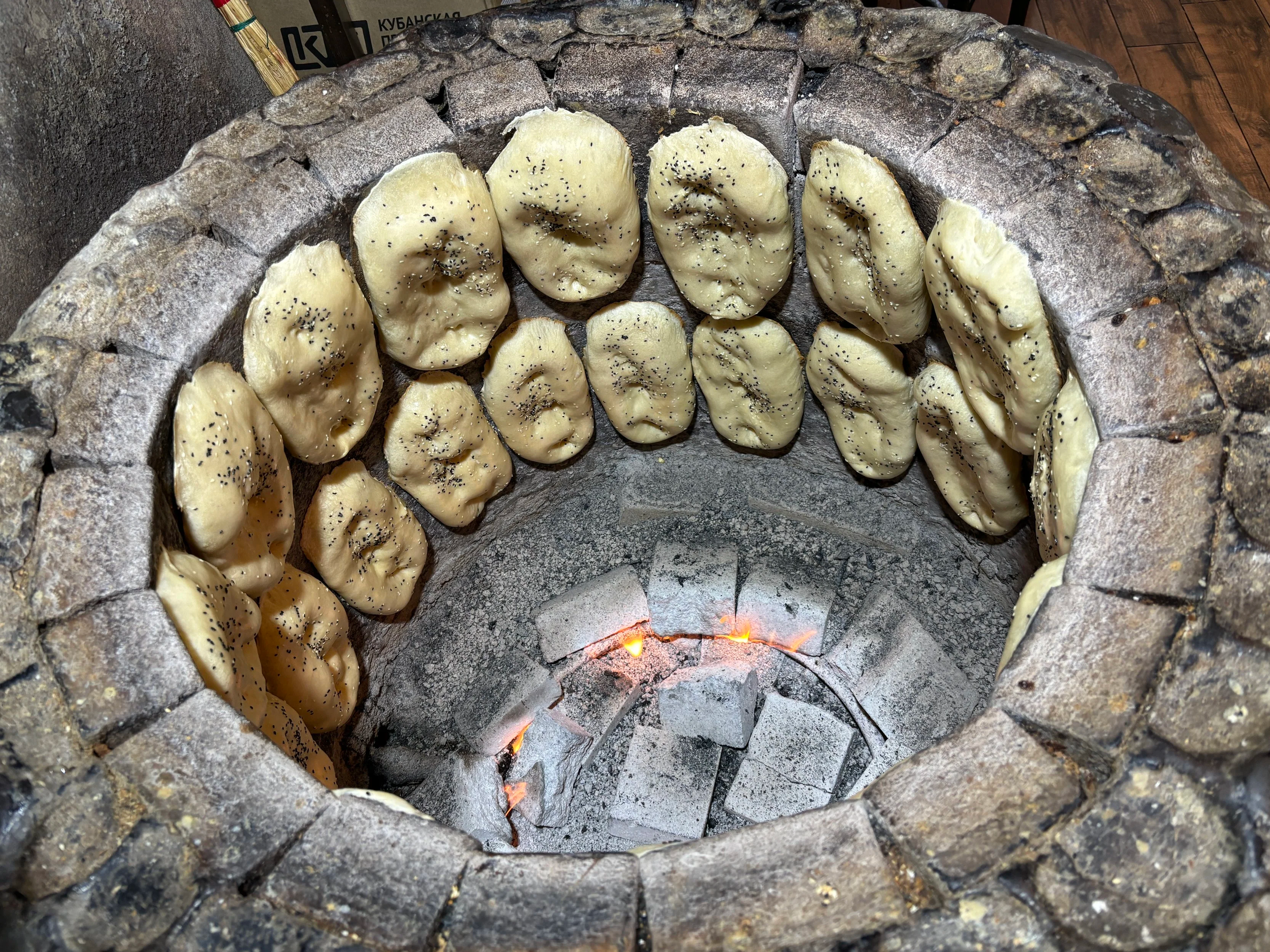
Here below you can see the final results, it is an amazingly tasty bread, but take it easy, because it is tempting to eat lots of it without even noticing. I would recommend leaving some space for the other specialities the restaurant has to offer.
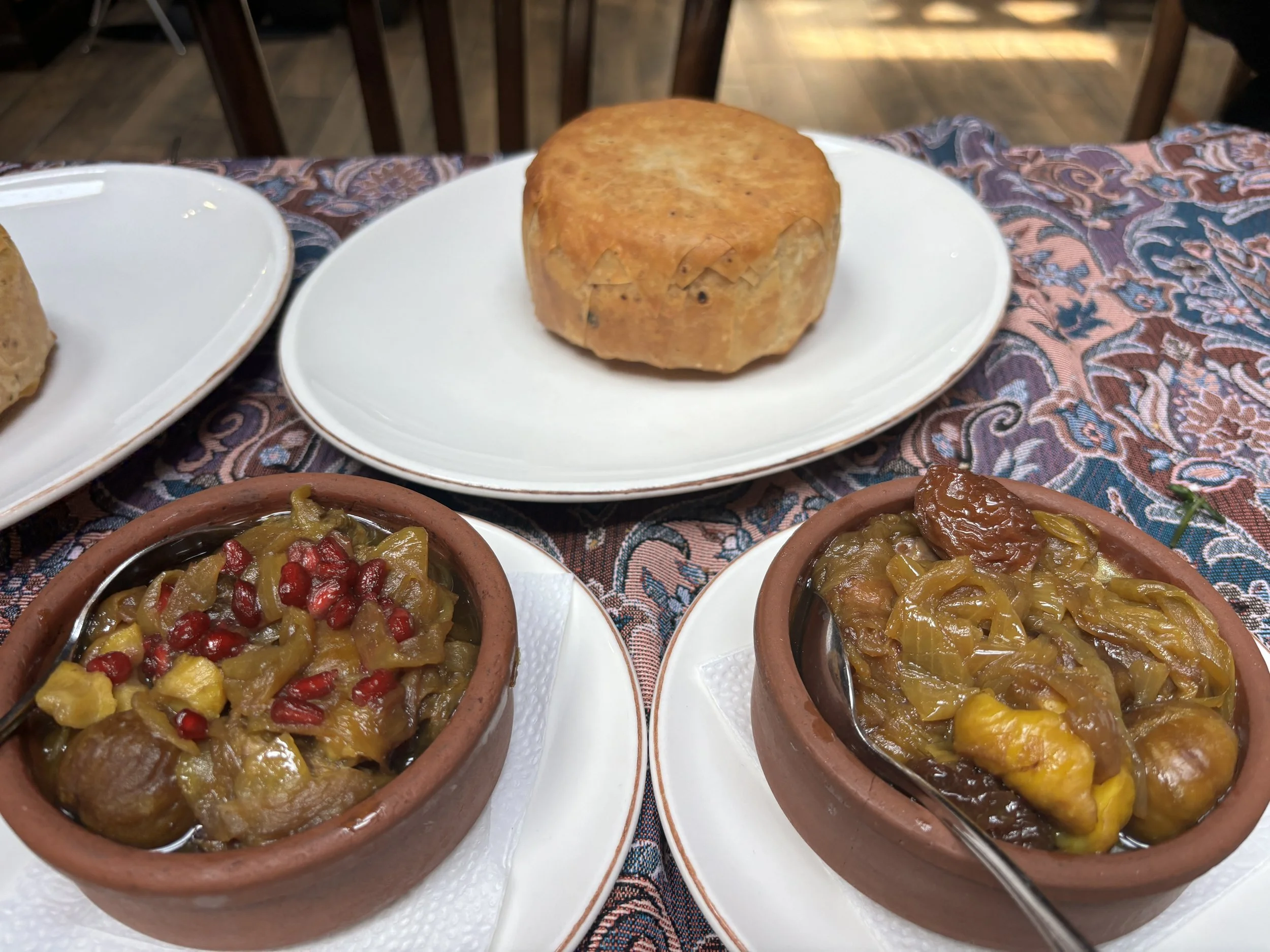
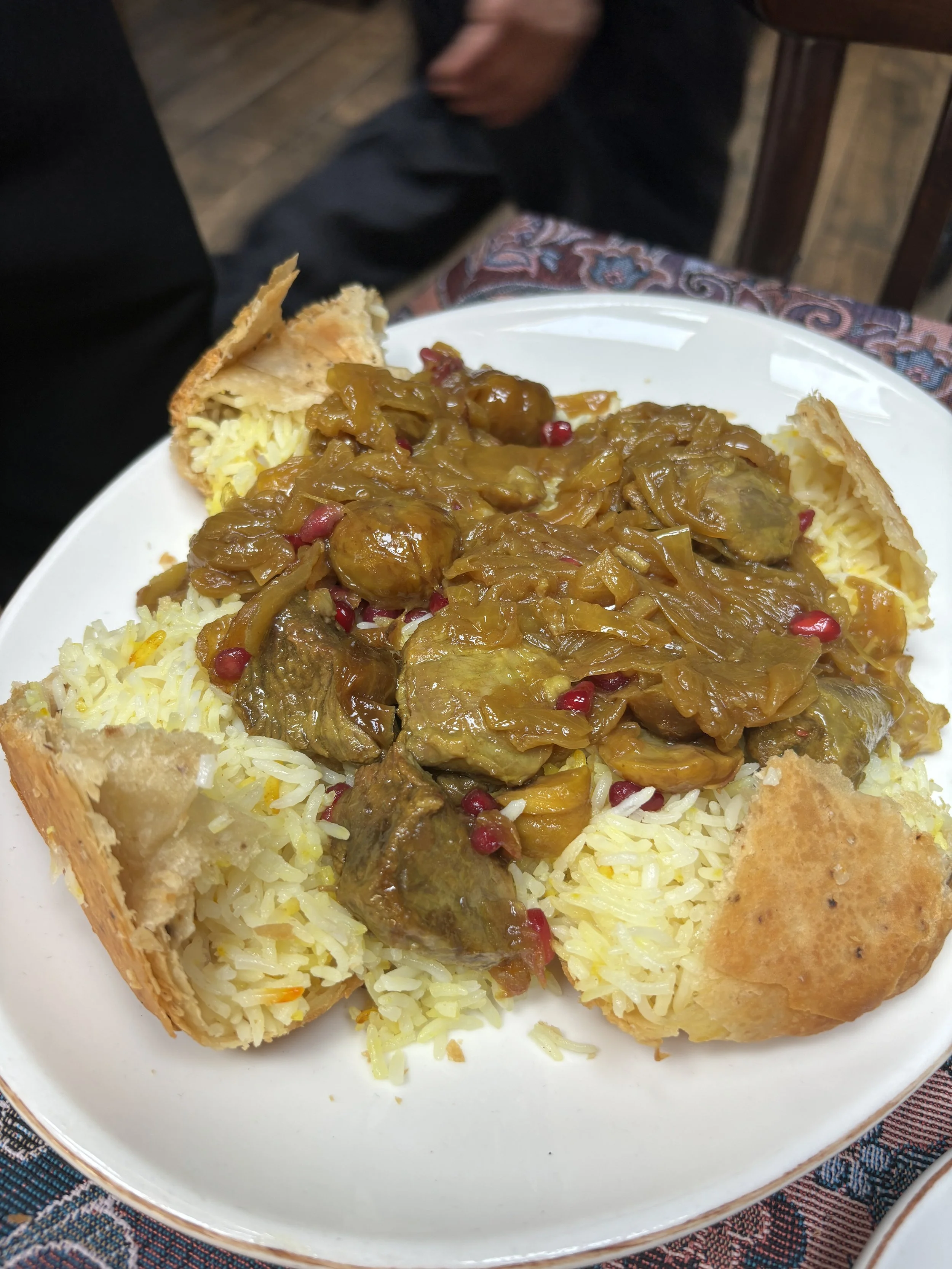
The signature dish I recommend tasting is Shah Plov, which consists of rice cooked inside this type of dough cake you can see depicted below, which is called kazmag, accompanied by lamb and dried fruit stew (chestnuts or plums with pomegranate). But this is not all…
…because of the highlights of a meal at Qaynana is the moment the waiter brings the Shah Plov to the table and cuts the kazmag open with a knife. Its sides fall perfectly in different directions, leaving the warm rice exposed and ready to be mixed with the stew.
It’s a really substantious and filling dish, you have been warned!
Where to stay in Baku
Hyatt Regency Baku
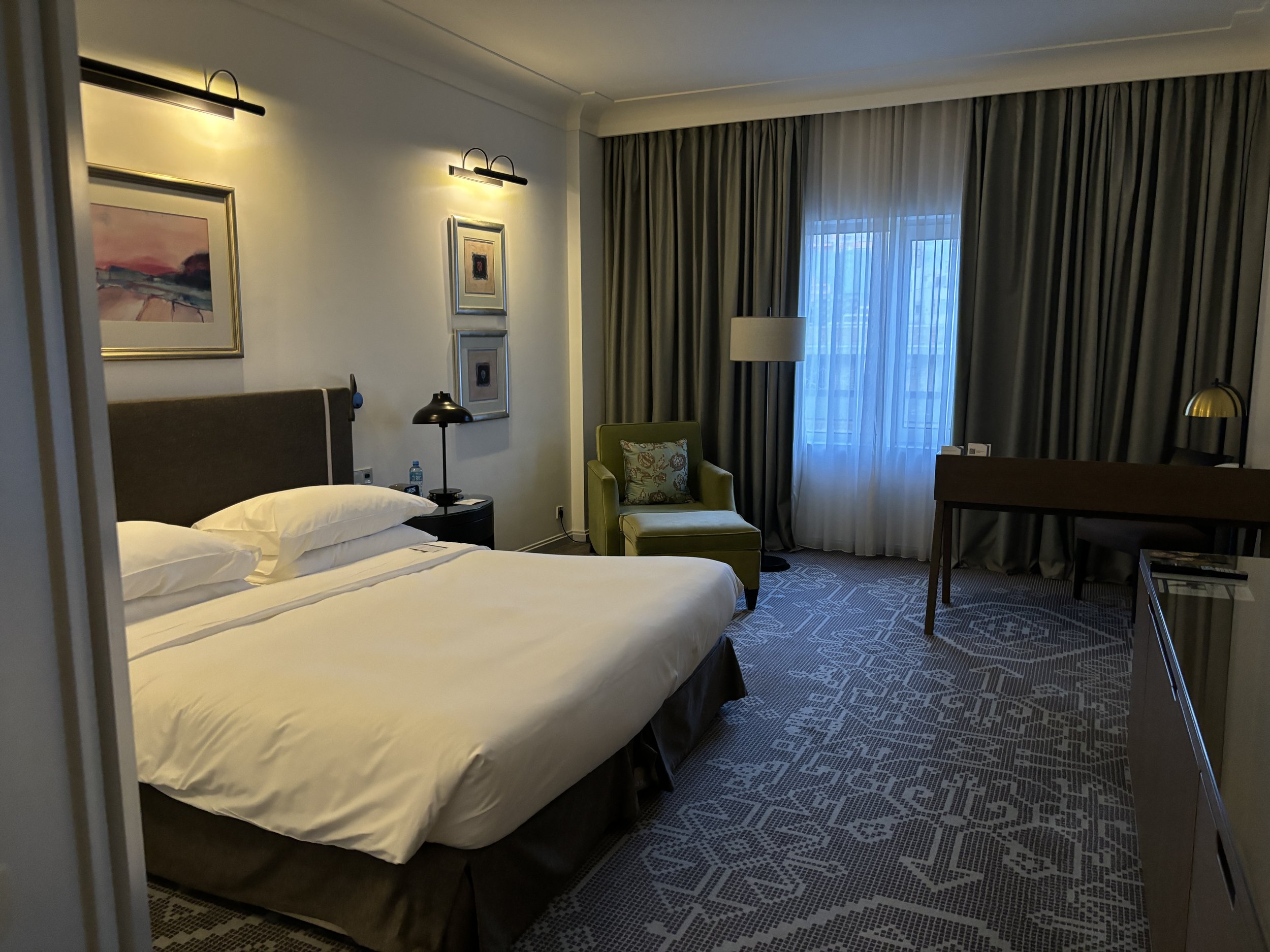
You can go wrong with this hotel. It is solid, modern hotel located in one of the city’s main avenues (not exactly next to the old town, but just a short Bolt ride away or a 25min walk if you feel like it).
The rooms are big (and the bathroom as well), staff were very helpful throughout and breakfast was really amazing, with lots of different local specialities.
Perhaps just a seasonal thing, but you can get really good rates for five-star hotels like this one in Baku!
Excursions around Baku
So, now that we have checked the key hotspots in Baku, it is time to see a bit of the Azeri countryside!
On this trip I describe two such excursions:
To the ski resort of Shahdag (some 2.5-3h from Baku by car to the northwest)
A visit to the rock art of Gobustan (1h by car towards the south)
Shahdag, to be fair, is a bit far for a one day trip, so I recommend spending one or several nights there, and will provide some recommendations in this regard. The excursion to the Gobustan Rock Art can be done as a day or even half a day trip from Baku.
To both places I travelled with a local driver that we hired in Baku through recommendations of locals, but you can find tours and excursions online to these places as well.
Before getting to destination, though, if you have the chance I suggest stopping at any of the many roadside produce shops that you find throughout Azerbaijan.
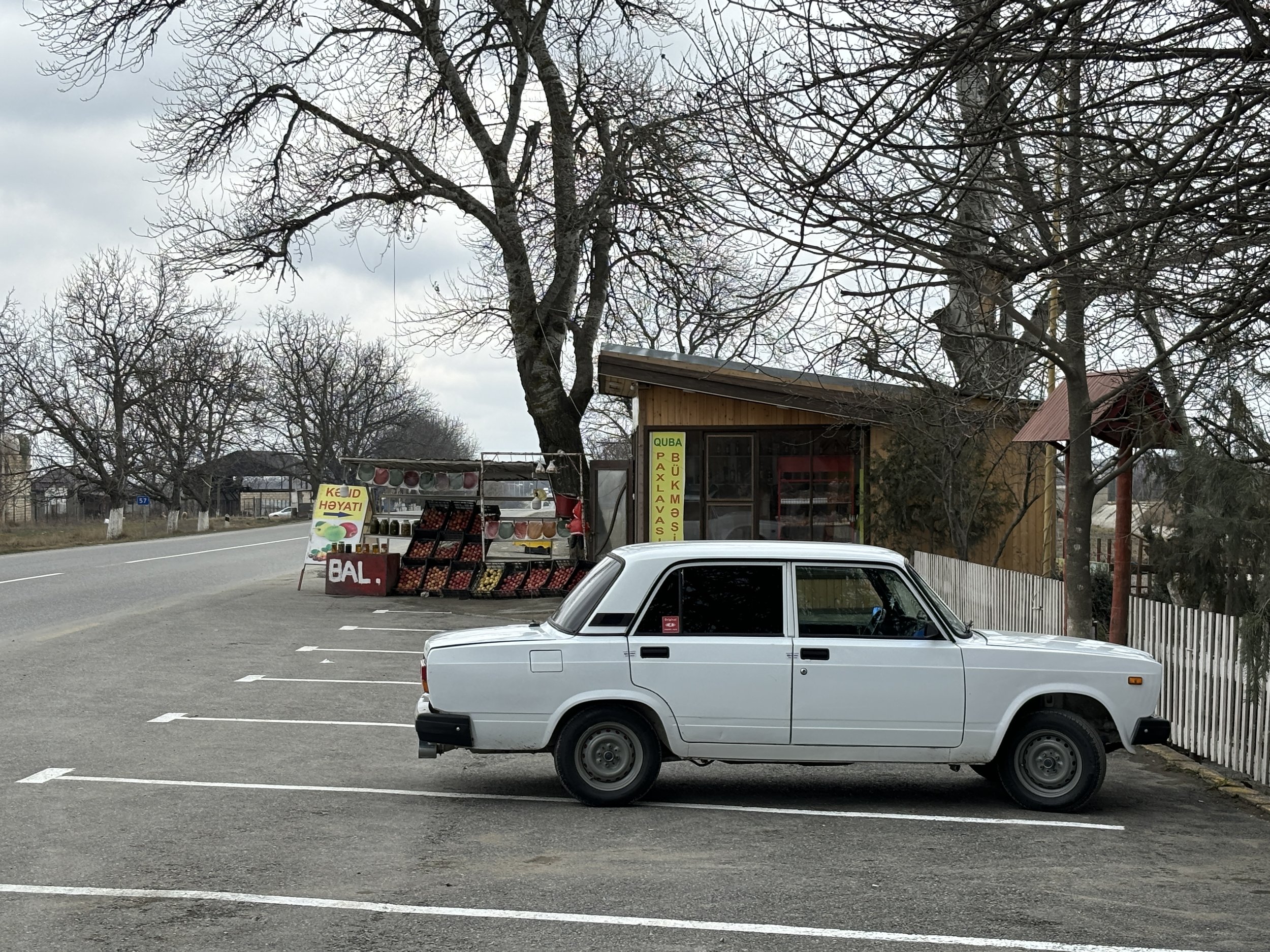
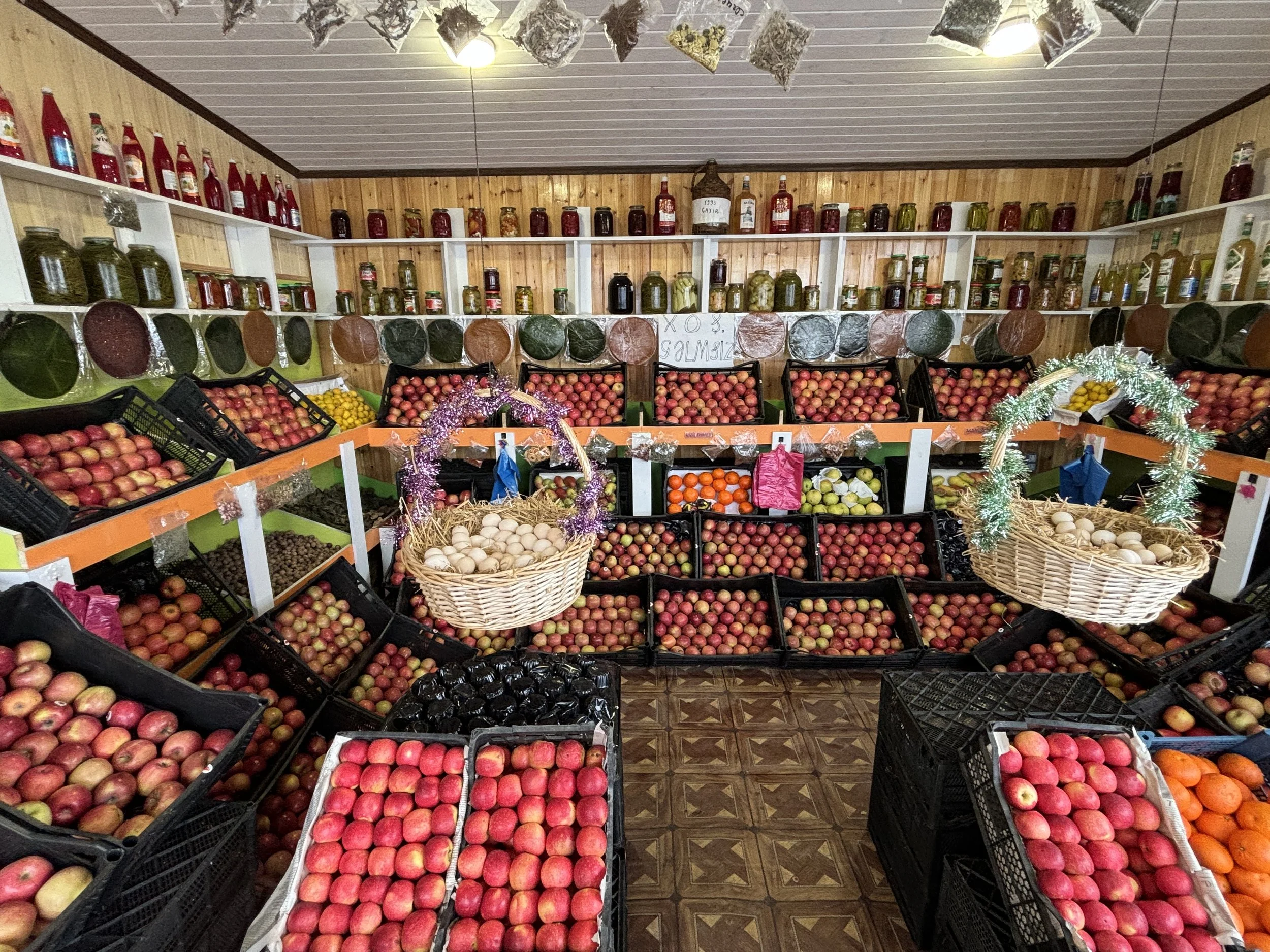
This particular shop, on the road between Baku and Shahdag was all about apples (btw, if you are into apples, do not miss this post about Mooma, the “apple paradise” in Catalonia!)
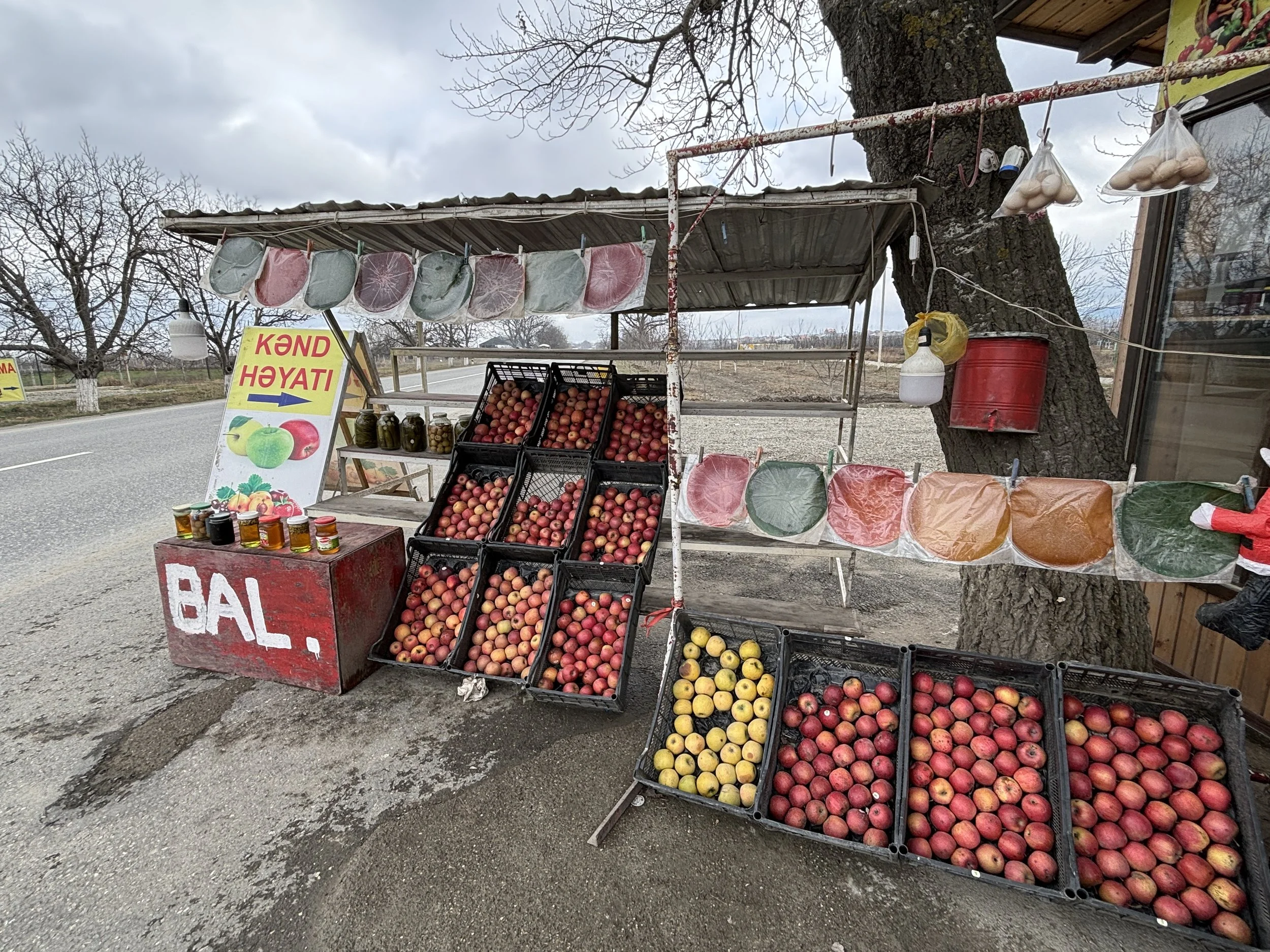
There are apples of all colours and shapes, as well as derivative products. The one that I found it particularly interesting, since I have not seen it anywhere else outside of Azerbaijan are these circles of different colours (red, brown, green) that you can see in the pictures above and below.
These are “lavashana”, a traditional Azerbaijani (and broader South Caucasus) which are round panes made of dried plum or apple paste. They are eaten as dried fruit snacks. You literally snatch little portions of the circle with your fingers as you eat it.
Skiing in Azerbaijan: the Shahdag ski resort
The Shahdag ski resort turned out to be an amazing find. It is located to the northwest of Baku, very close to the Russian border (you can actually see Russia from the top of the slopes).
The skiing domain has some 37 slopes ranging from 1,435 to 2,552 metres of altitude and even at the end of the season, as it was the case of our visit, you can expect really good quality snow here.
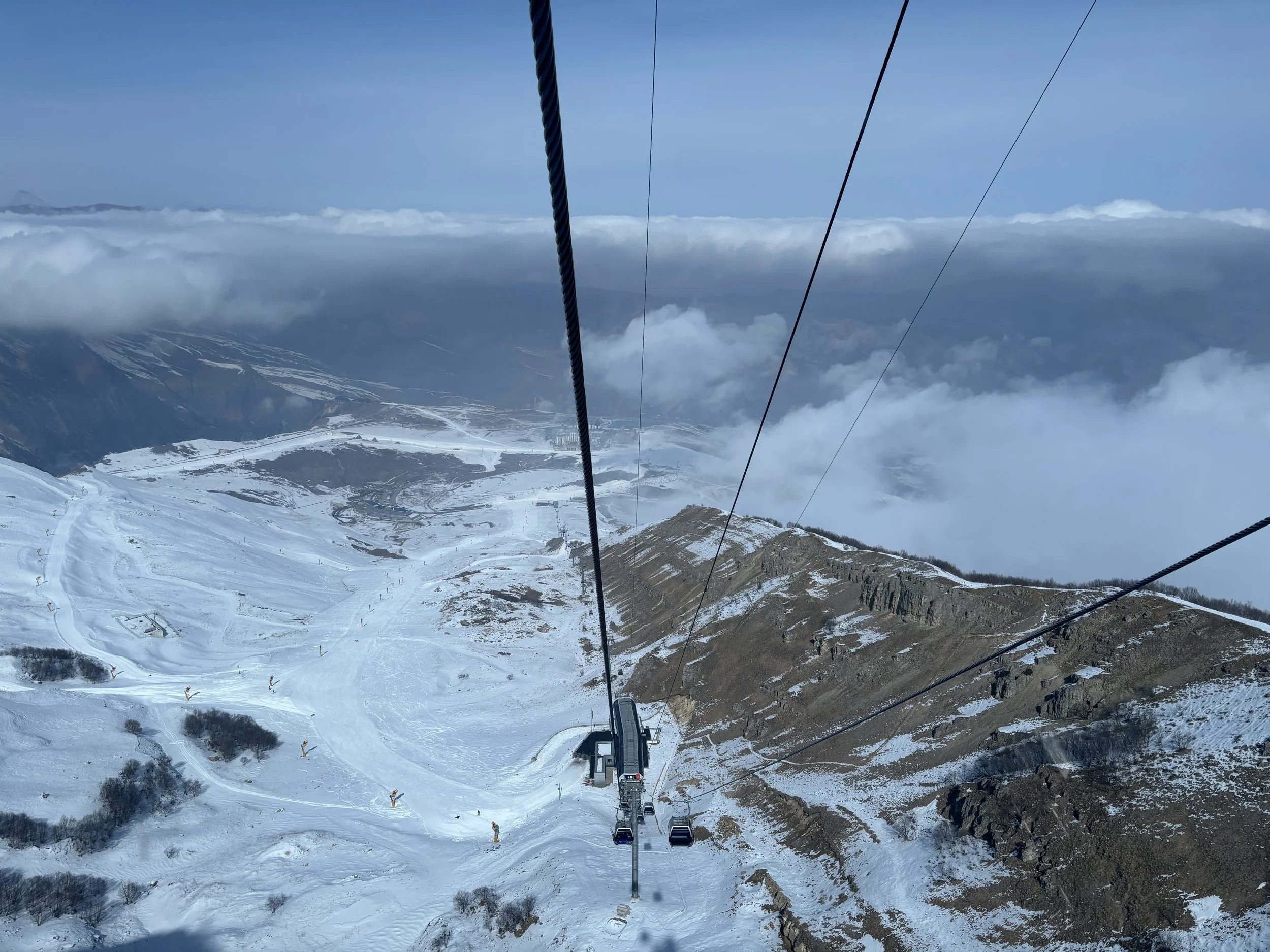
Shahdag has several things going for it:
The natural setting, which is truly magnificent.
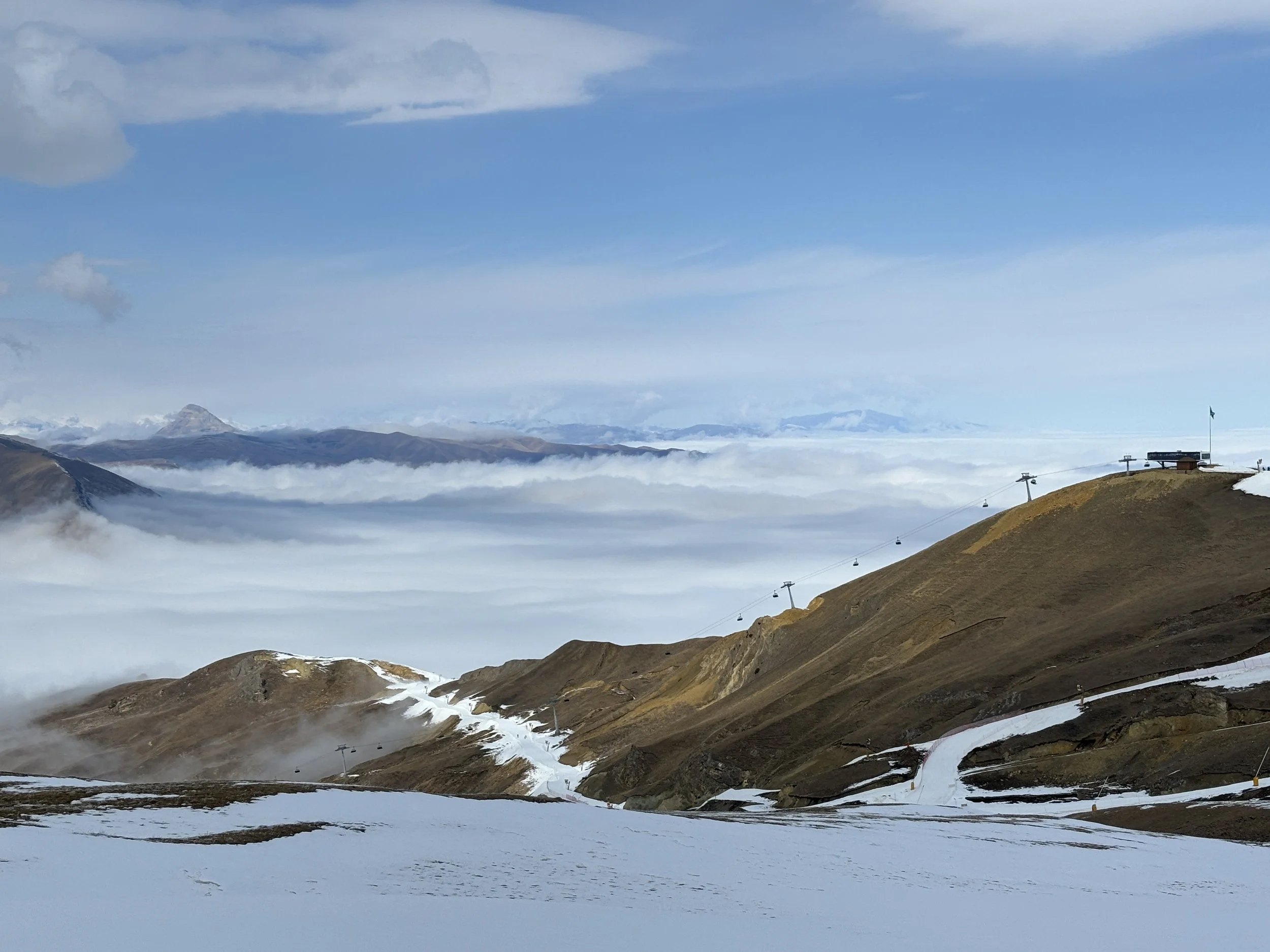
The skiing area is quite compact, with pretty much all the slopes converging at the hotel area.
There are hardly any crowds
Prices, from the forfaits and materiel rentals to the hotels, even the most upmarket ones, have pretty reasonable prices if you compare them with what the equivalents would cost in Europe!
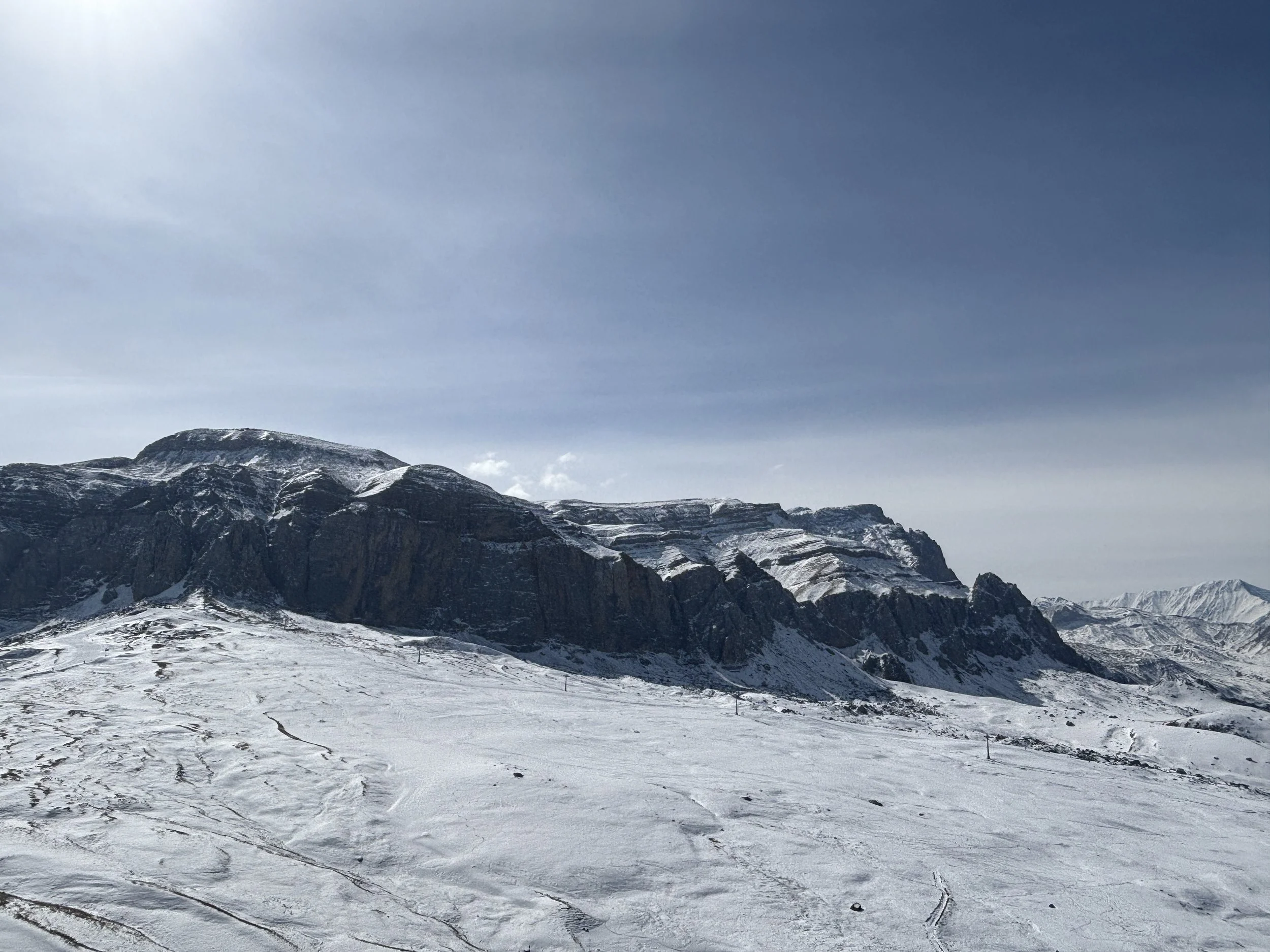
It is also worth noting that Shahdag is quite a young resort, which only opened in 2012.
It is also a sort of flagship project for the Azerbaijan tourism industry, in fact the country’s president, President Ilham Aliyev laid out the first stone of the project back in 2009.
You can tell a huge amount of investment has gone into its development because the equipment and infrastructure is all pretty new. Shahdag is, in fact, an ongoing project with plans to continue expanding it.
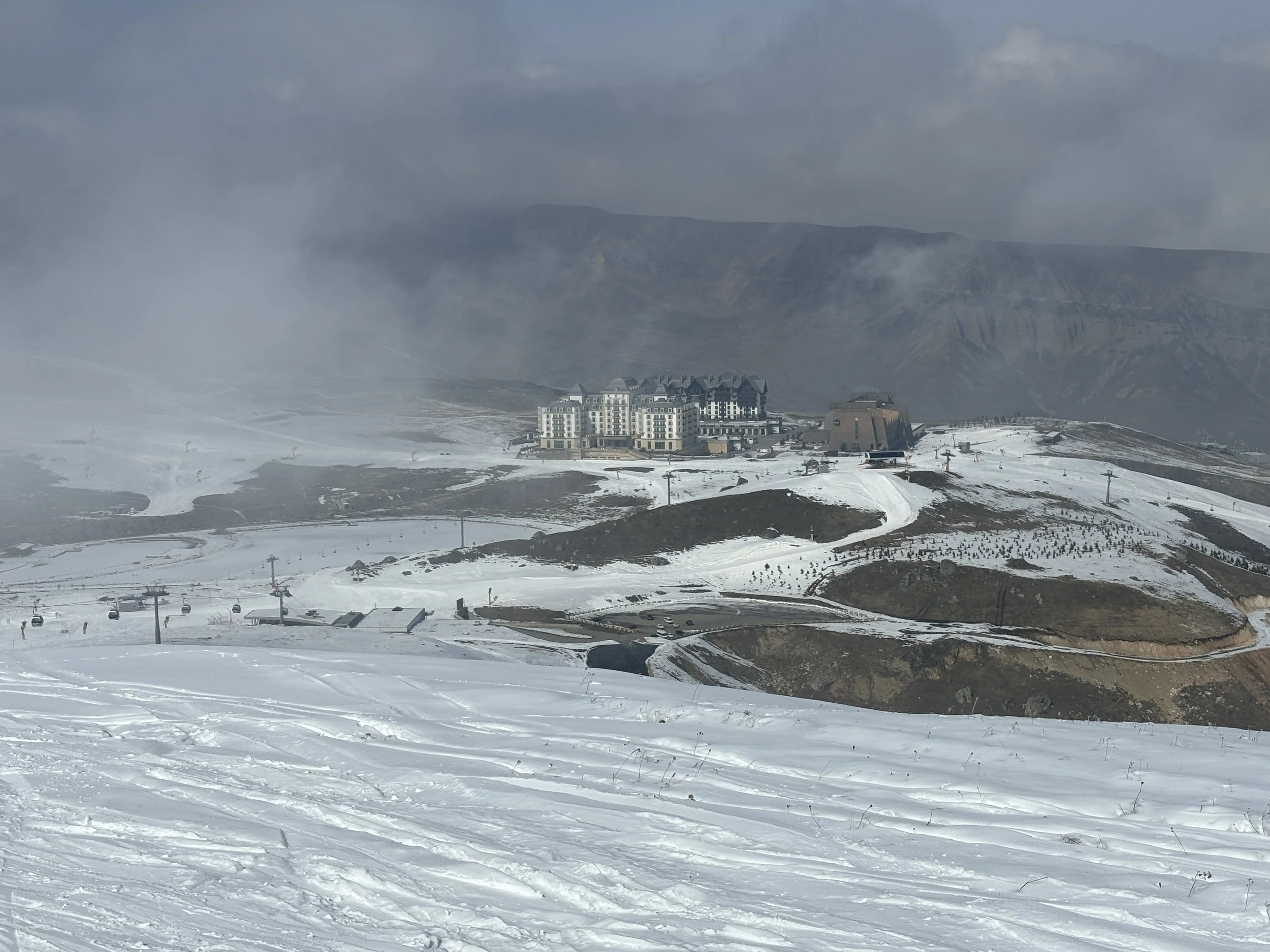
Shahdag is also a greenfield project. The centerpiece of the resort and, pretty much its only infrastructure, is the hotel cluster, which is located right at the bottom of the slopes. There is practically nothing else around.
This makes it really convenient if you are staying at one of the hotels (more on this below), but means you are virtually in an island in the middle of the mountains.
Where to stay in Shadagh
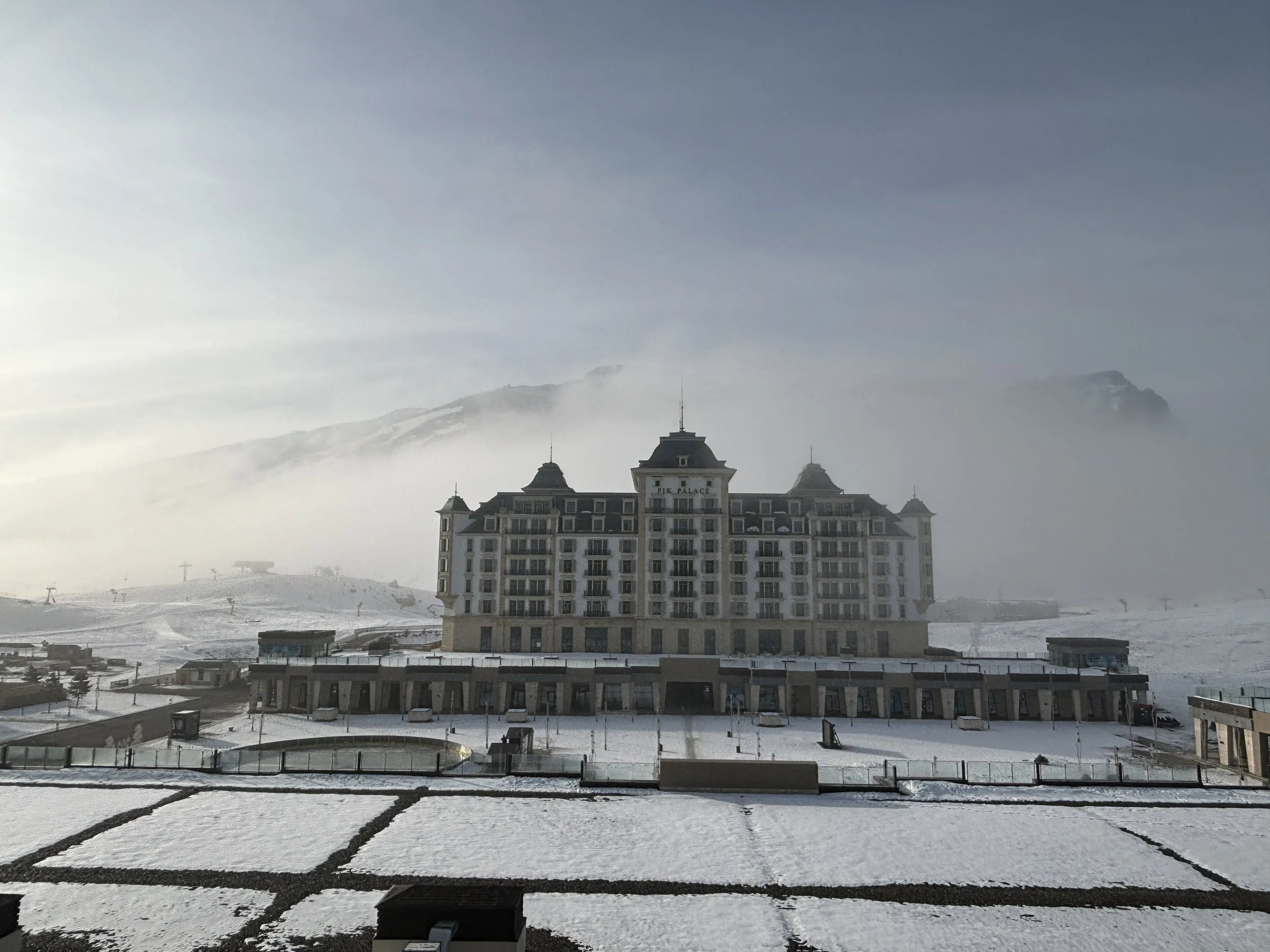
Park Chalet, Shahdag, Autograph Collection
This is one of two five-star hotels in Shahdag (there are four hotels and one apartment block in total in the resort as of 2026), both Marriott franchises and quite similar in style.
The picture above depicts the “Pik Palace, Shahdag, Autograph Collection”, as seen from the “Park Chalet, Shahdag, Autograph Collection”, where we stayed. Perhaps the Pik Palace, Shahdag, Autograph Collection is a bit more upmarket, but the differences are marginal, I think.
Park Palace, Shahdag, Autograph Collection is a rather stylish hotel, a modern take on the traditional Alpine aesthetics. You can get an idea of how the rooms look like in the pictures below.
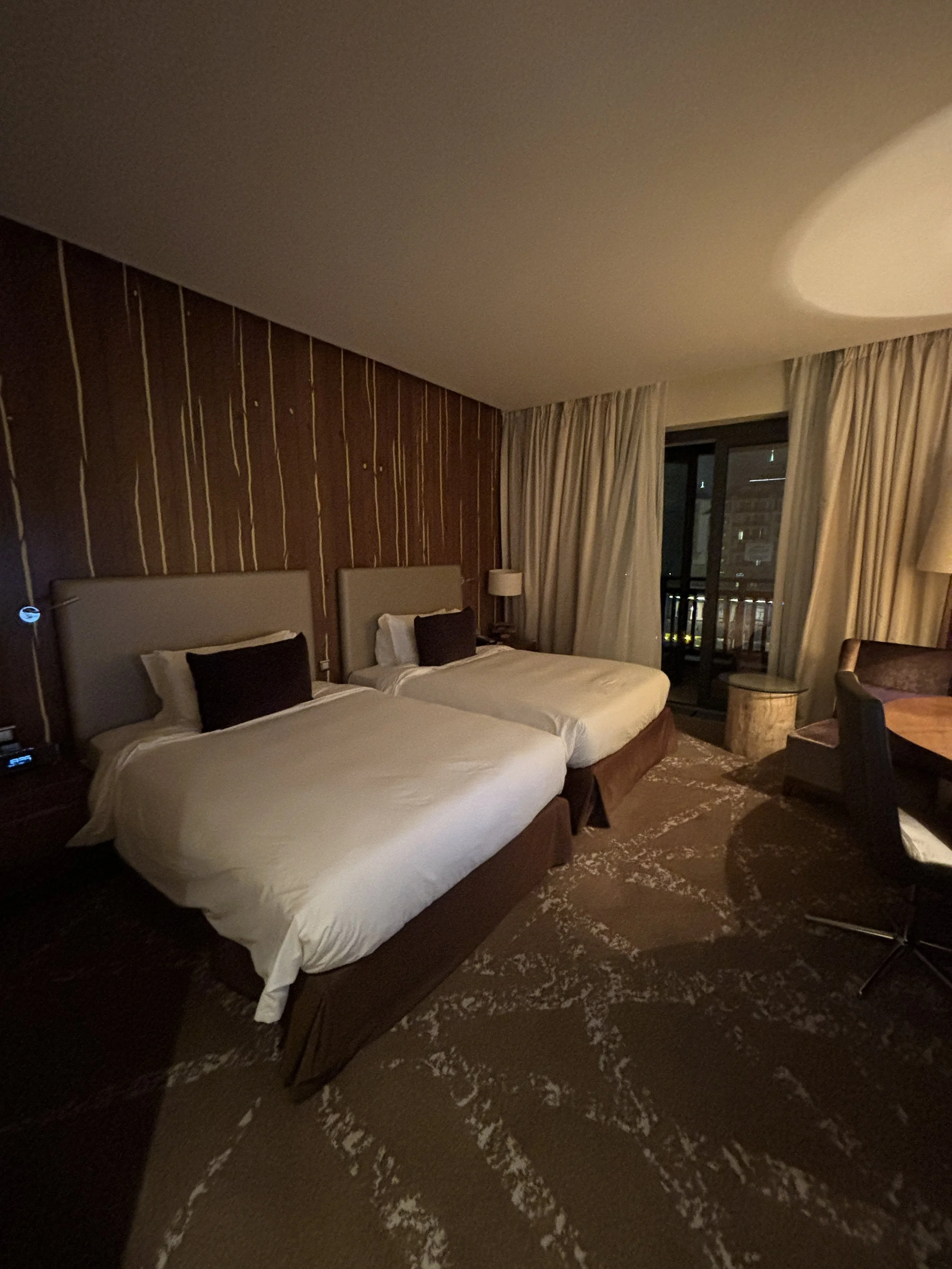
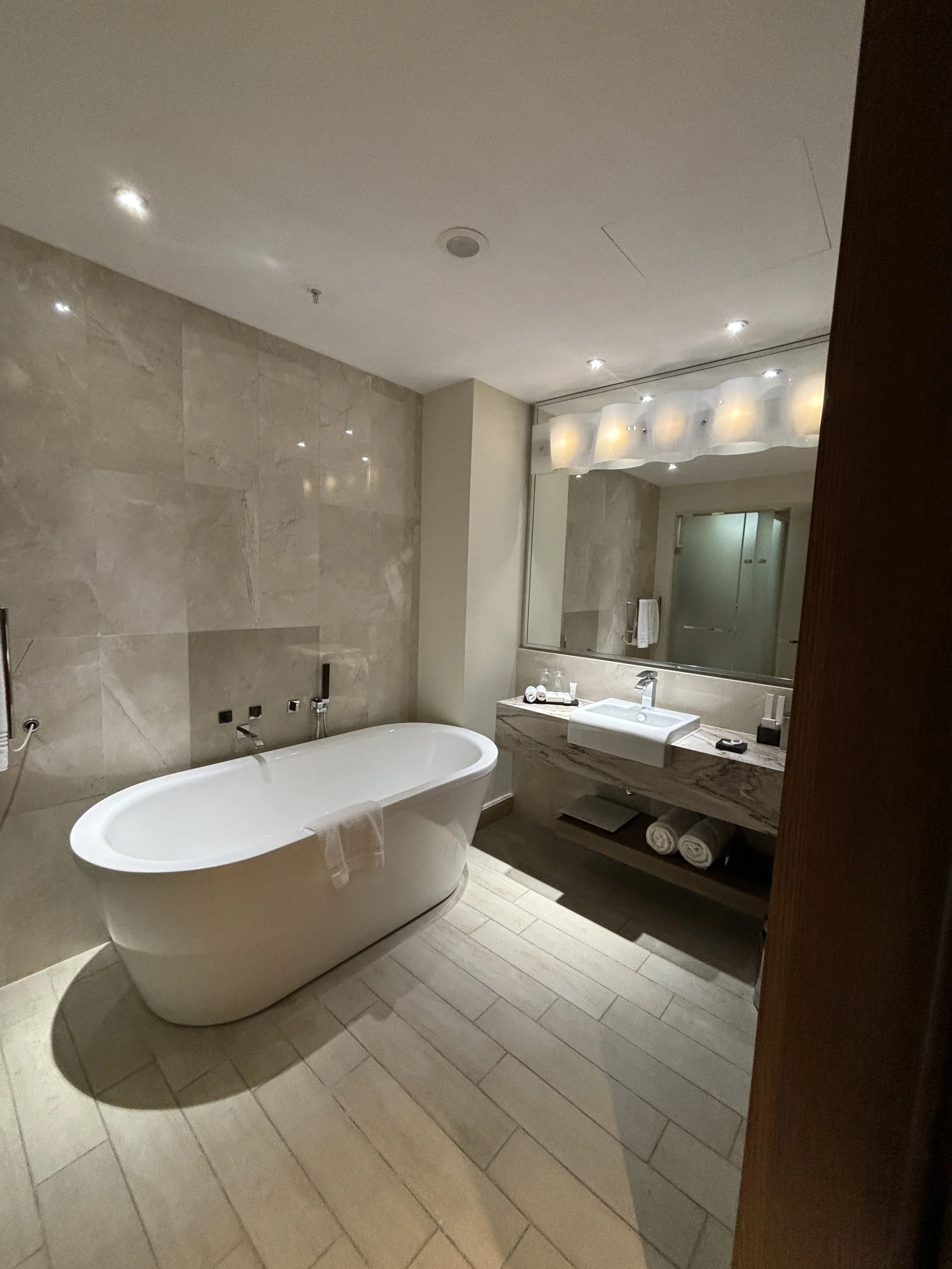
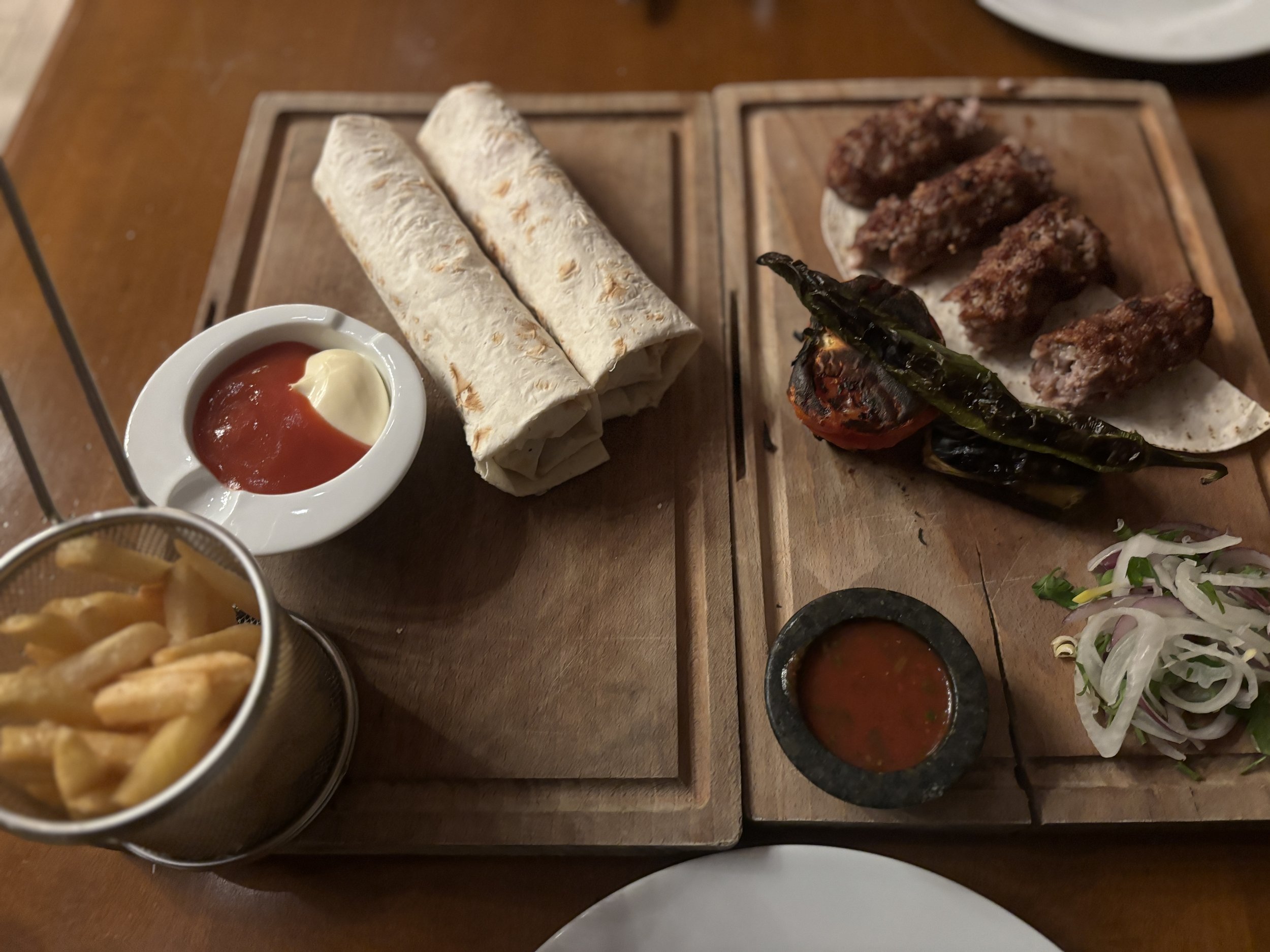
When it comes to food, the good news is that each of the two Marriott hotels has a pretty good restaurant. The food is fresh and tasty. It is perfect if you like grilled meats, because they cook them on a proper charcoal barbecue in plain sight.
The bad news is that there is very little else around. There are a couple more restaurants in the resort’s small commercial area and that’s it. There are no supermarkets or produce shops, nothing. And the restaurants can be a bit pricey, so if you spend a few days at the resort it starts to add up.
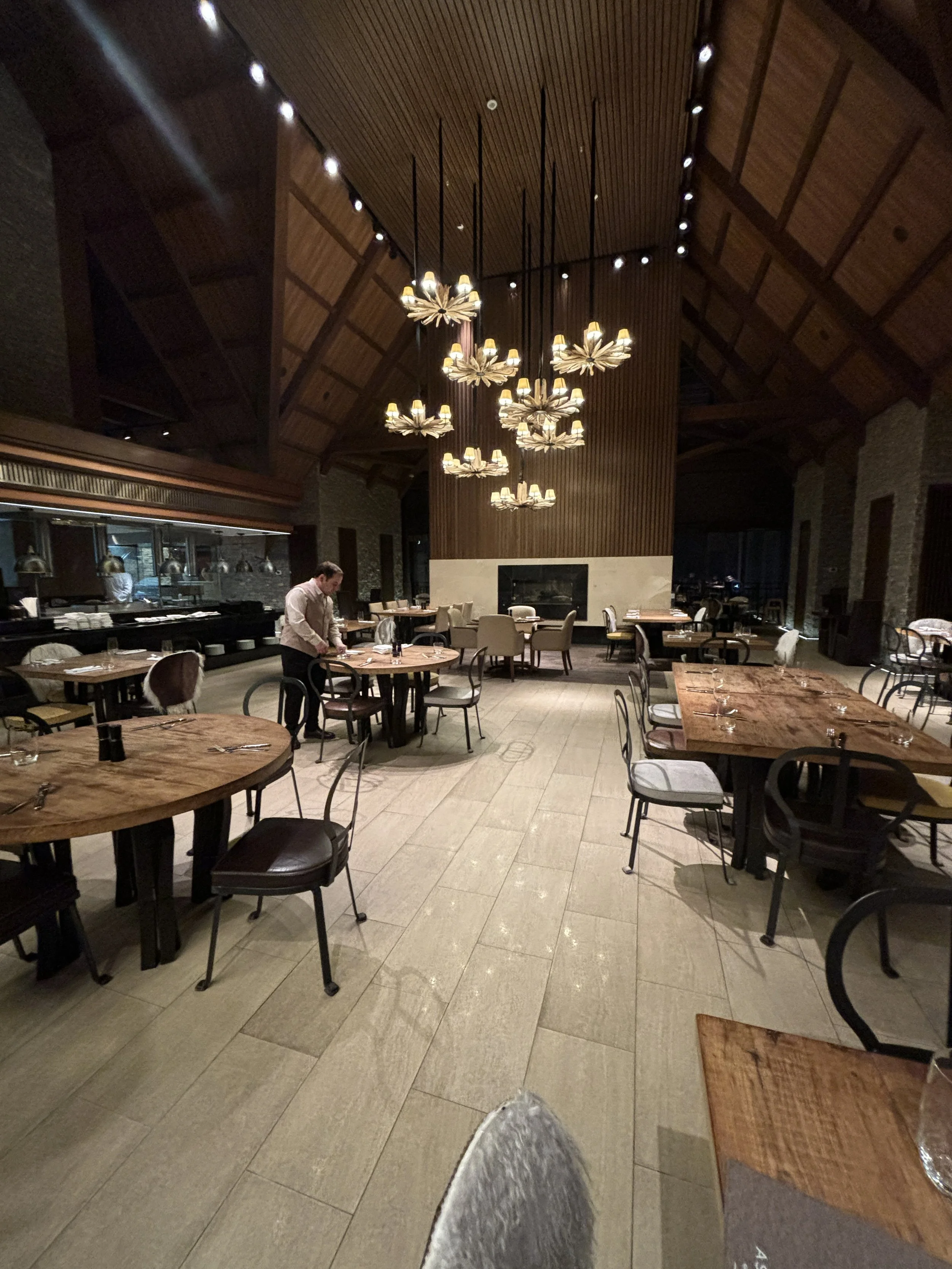
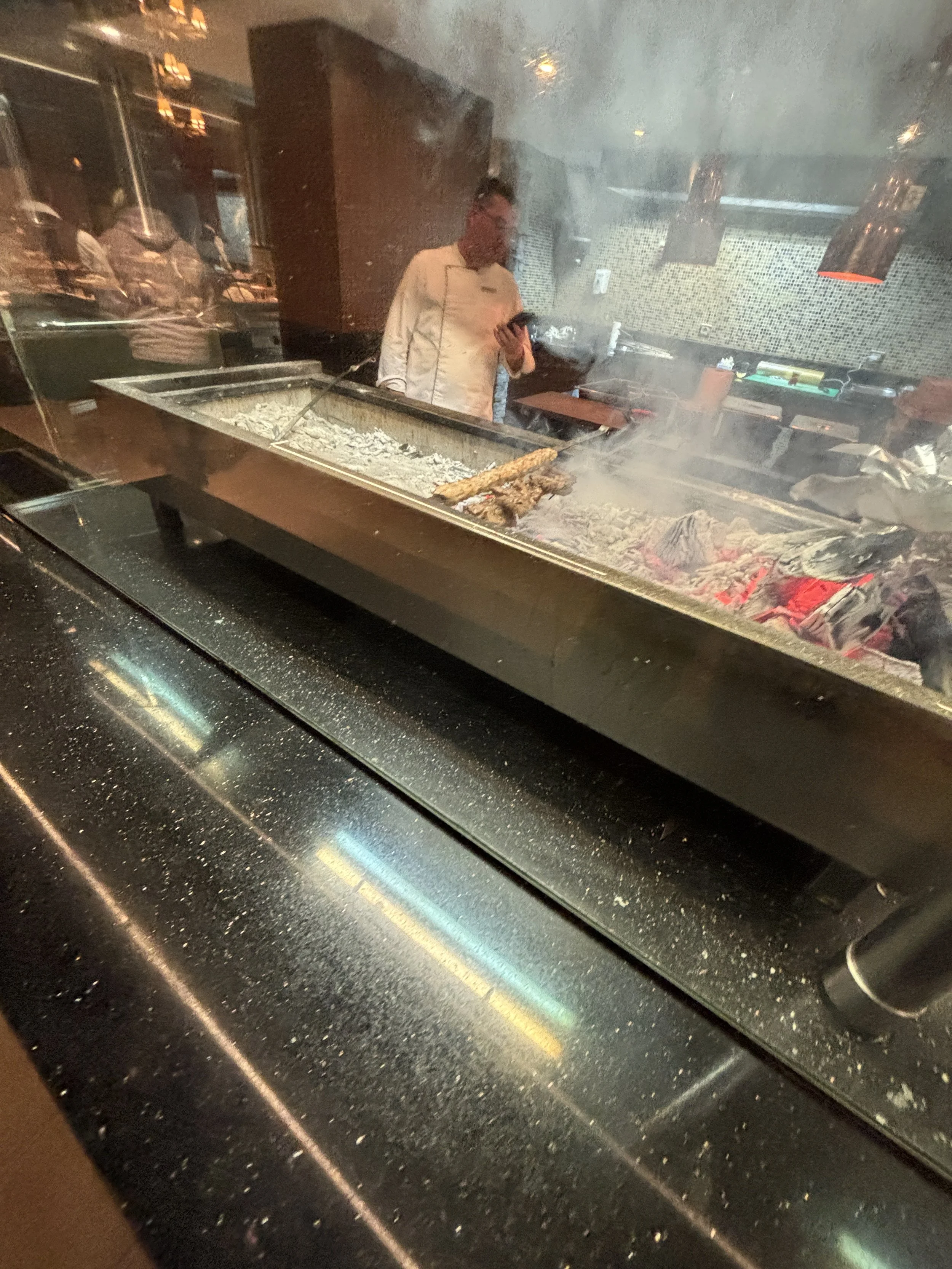
As mentioned earlier, this being the Caucasus, grilled meats (“shashlik”), served with the corresponding sides, are the signature speciality.
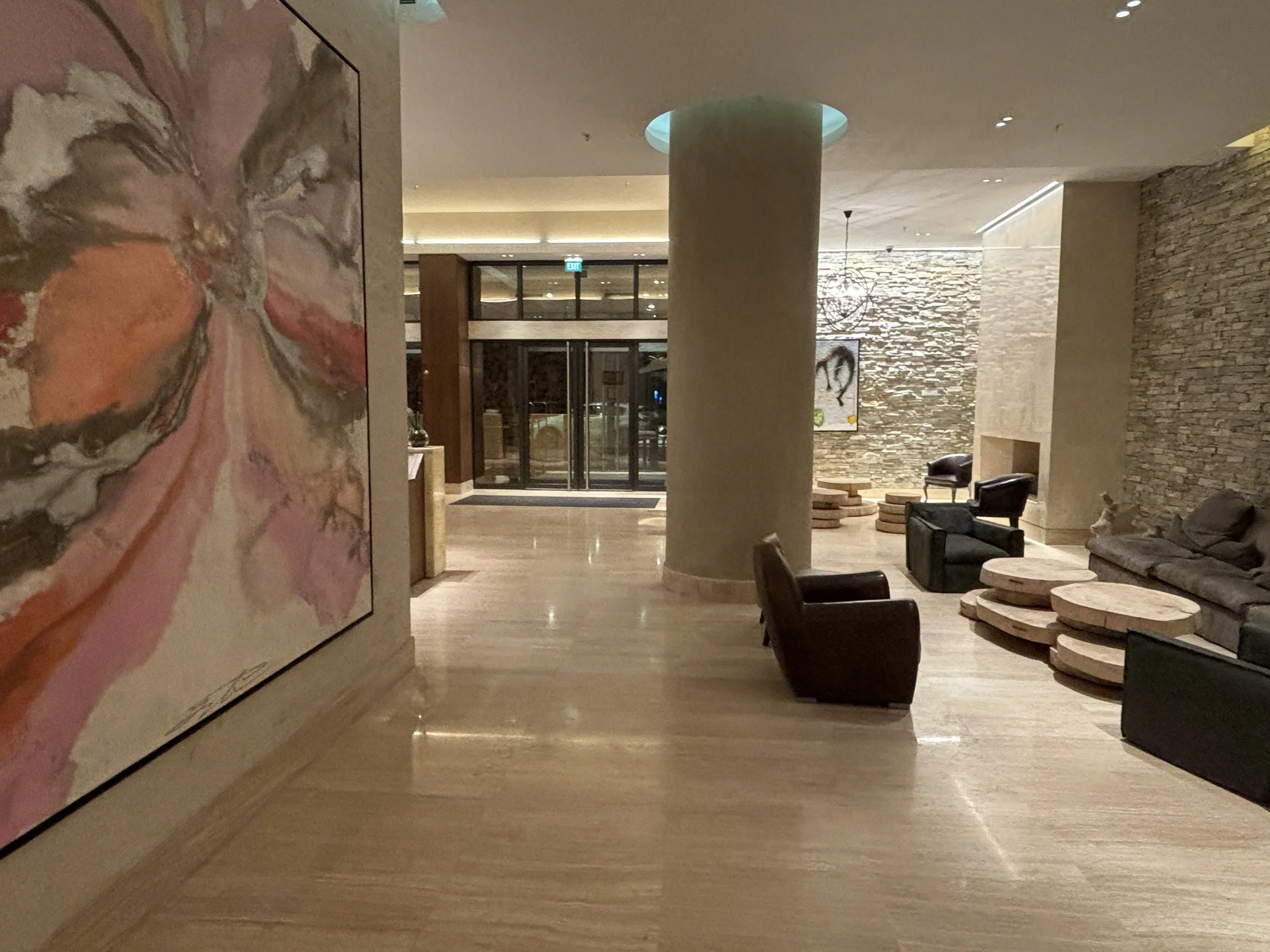
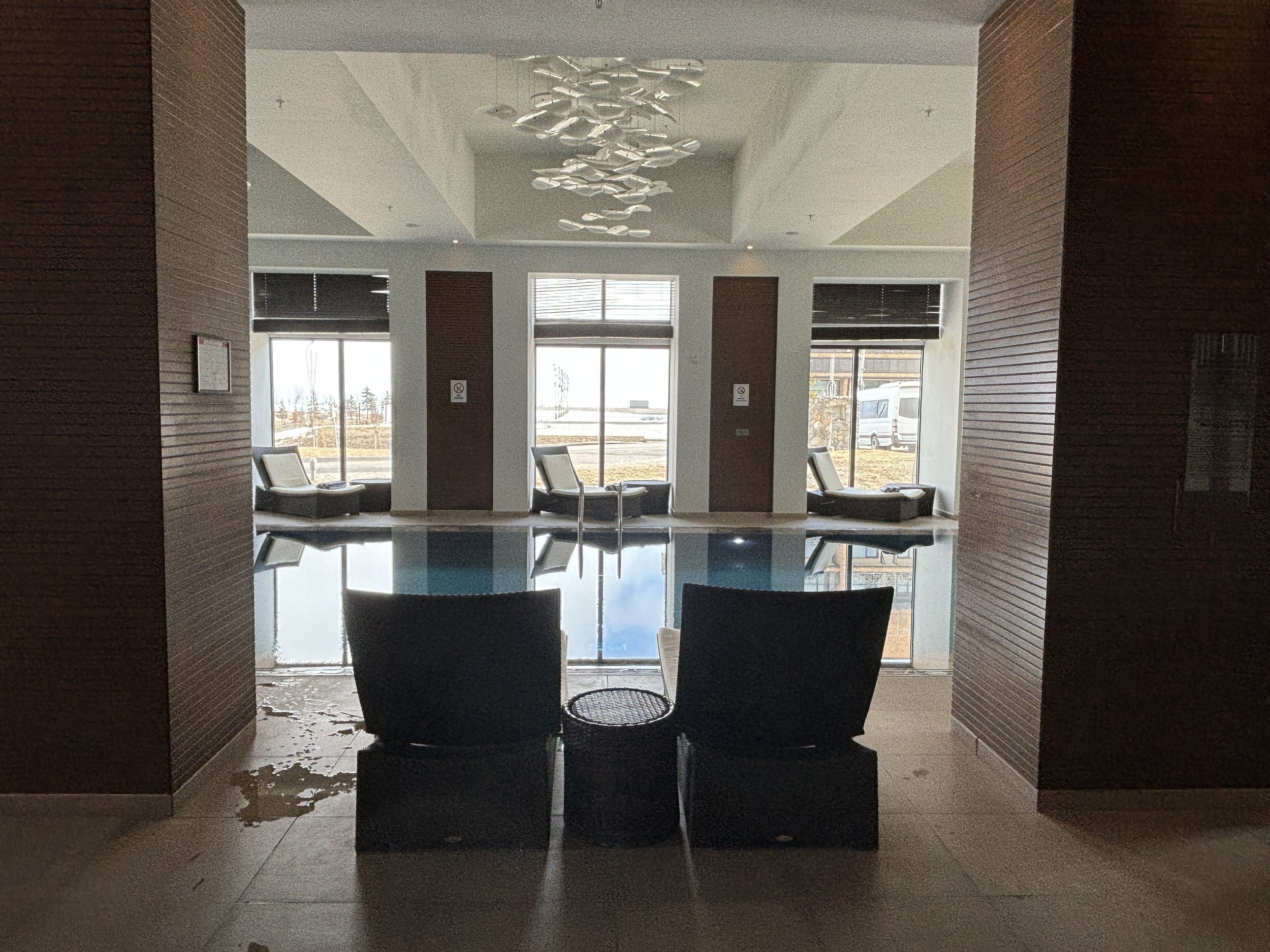
The hotel has also a well-equipped spa area with an indoor swimming pool and a gym.
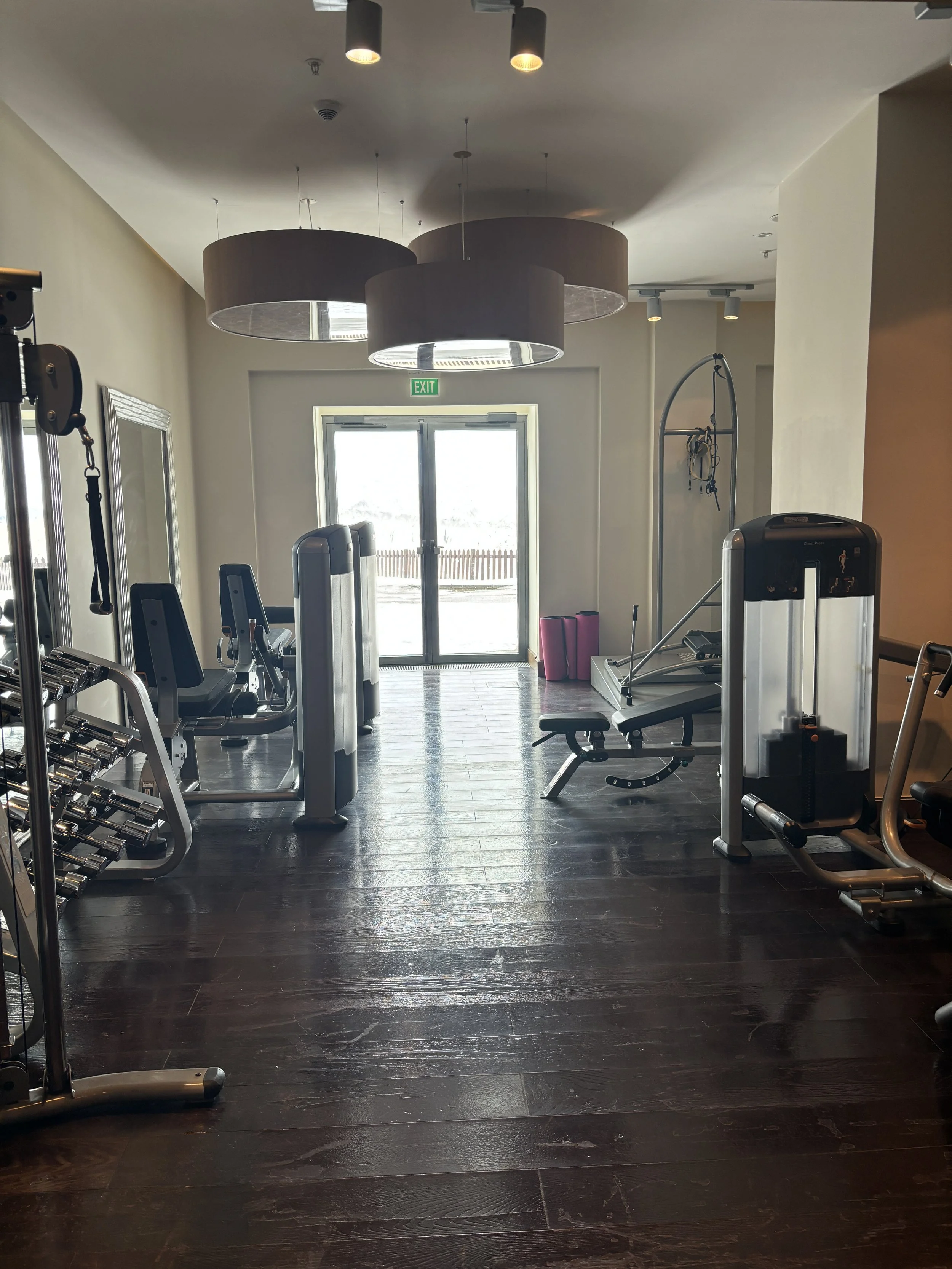
Another nice feature of the hotel is that it is located right in front of the starting point of most of the ski lifts and gondolas going up the mountain, so you can just walk from your room to the slopes in a matter of minutes!
Visiting the Gobustan Rock Art Cultural Landscape
And from the mountains to the desert! Because the other outdoor area I visited near in Azerbaijan is the Gobustan Rock Art Cultural Landscape, which is also a UNESCO World Heritage Site.
The contrast with the mountains of Shadagh is sharp, the Gobustan rock art area is located in a very arid region some 60km south of Baku, where the flatlands are punctuated by a series of hills.
There are some mud volcanoes nearby but they were closed at the time of our visit, so I am not commenting on them in this post, but if you have the chance, it may be a good idea to include them in the itinerary!
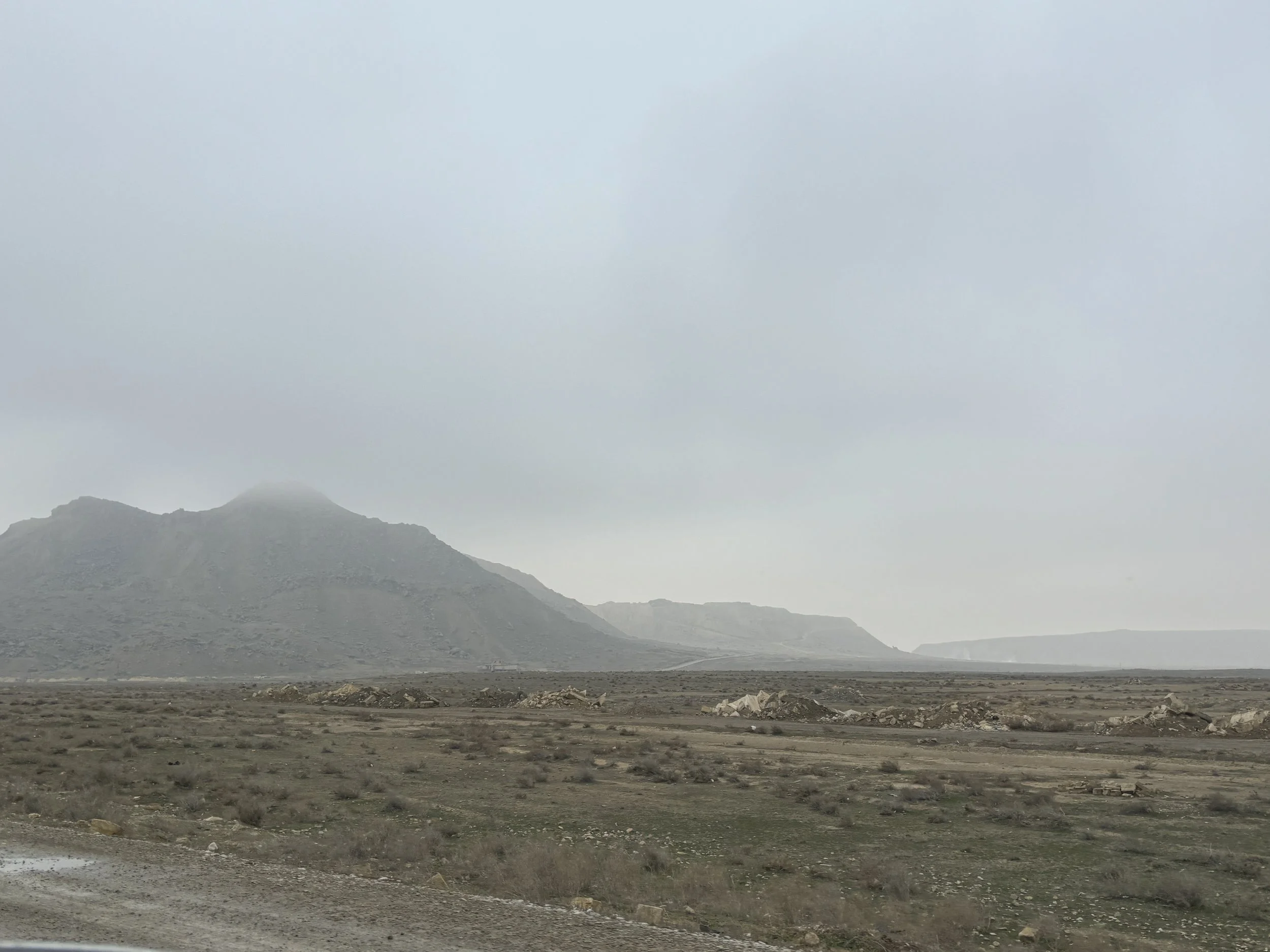
It is on these ridges where the rock art is found. In fact, it is spread over a rather large area, but for regular visitors the core is Boyukdash Mountain, which is where some of the most impressive rock carvings and the museum and visitor center are located.
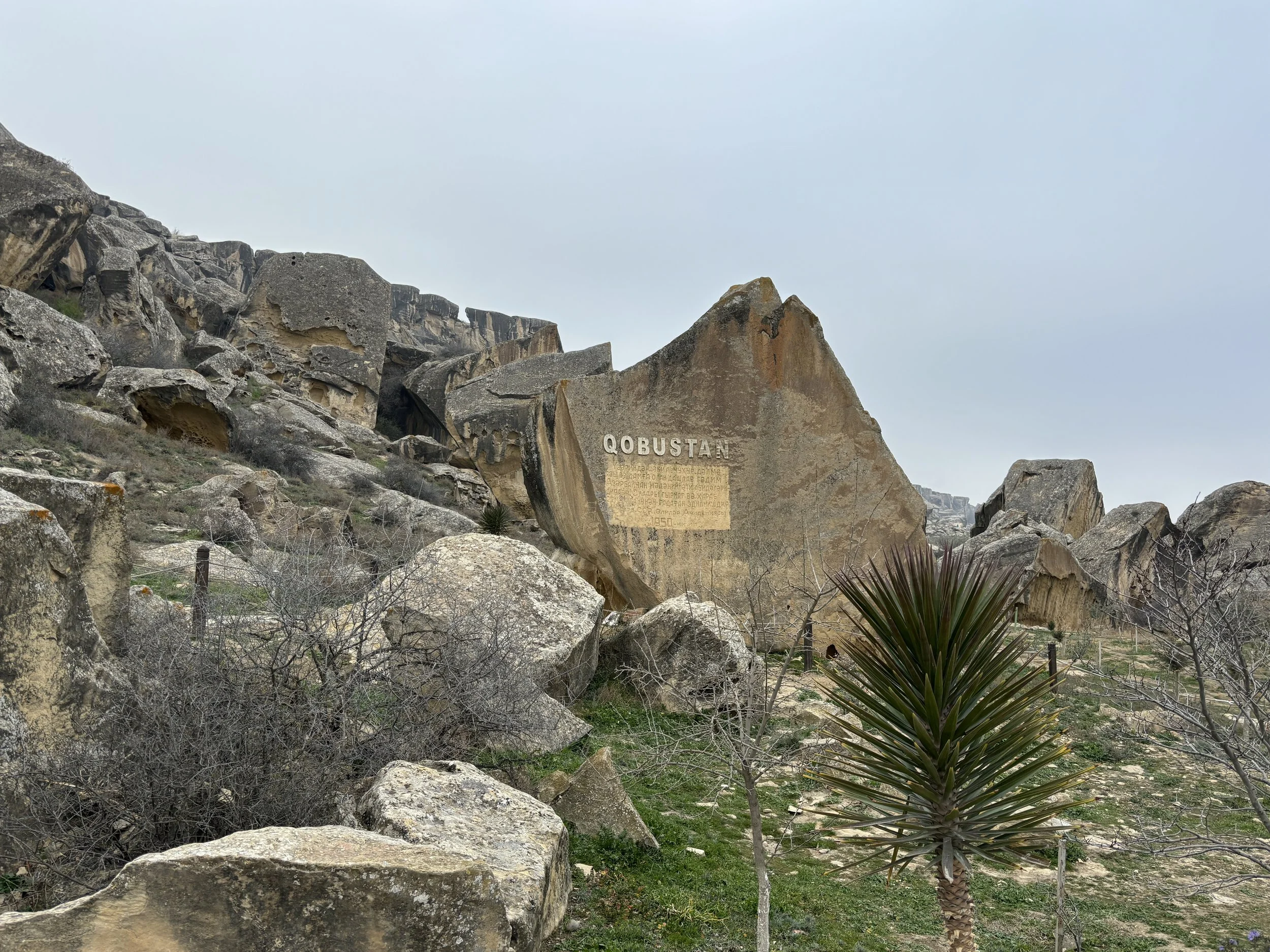
The Gobustan National Historical-Artistic Preserve Museum is quite modern (you spot the trend here!). It was inaugurated in 2011 and acts also as a visitor’s center for the main cluster of petroglyphs.
It does a good job explaining, through a rather immersive experience, the history of the area and the different rock carvings found, which stretch all the way back to the Paleolithic era 40,000 years ago, although some are as “recent” as the Middle Ages.
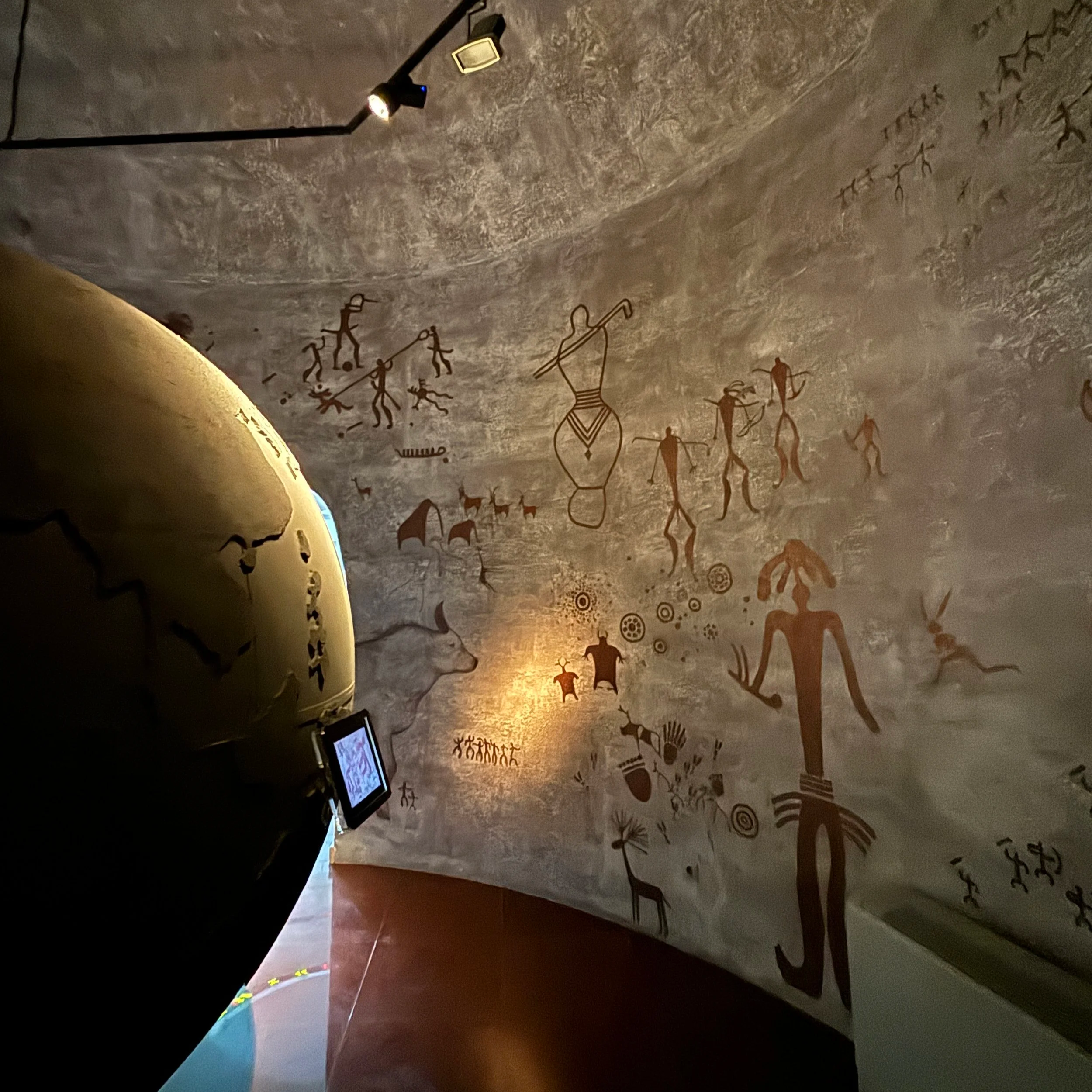
The visit then continues outside to see the rock art first hand. It is very accessible and you don’t need to be a specialist to see it, because it is all over the place. The petroglyphs are really diverse in their shapes and topics and depict humans, animals and things, like boats, for example (several thousand years ago, the Gobustan area was much closer to the Caspian sea and much greener).
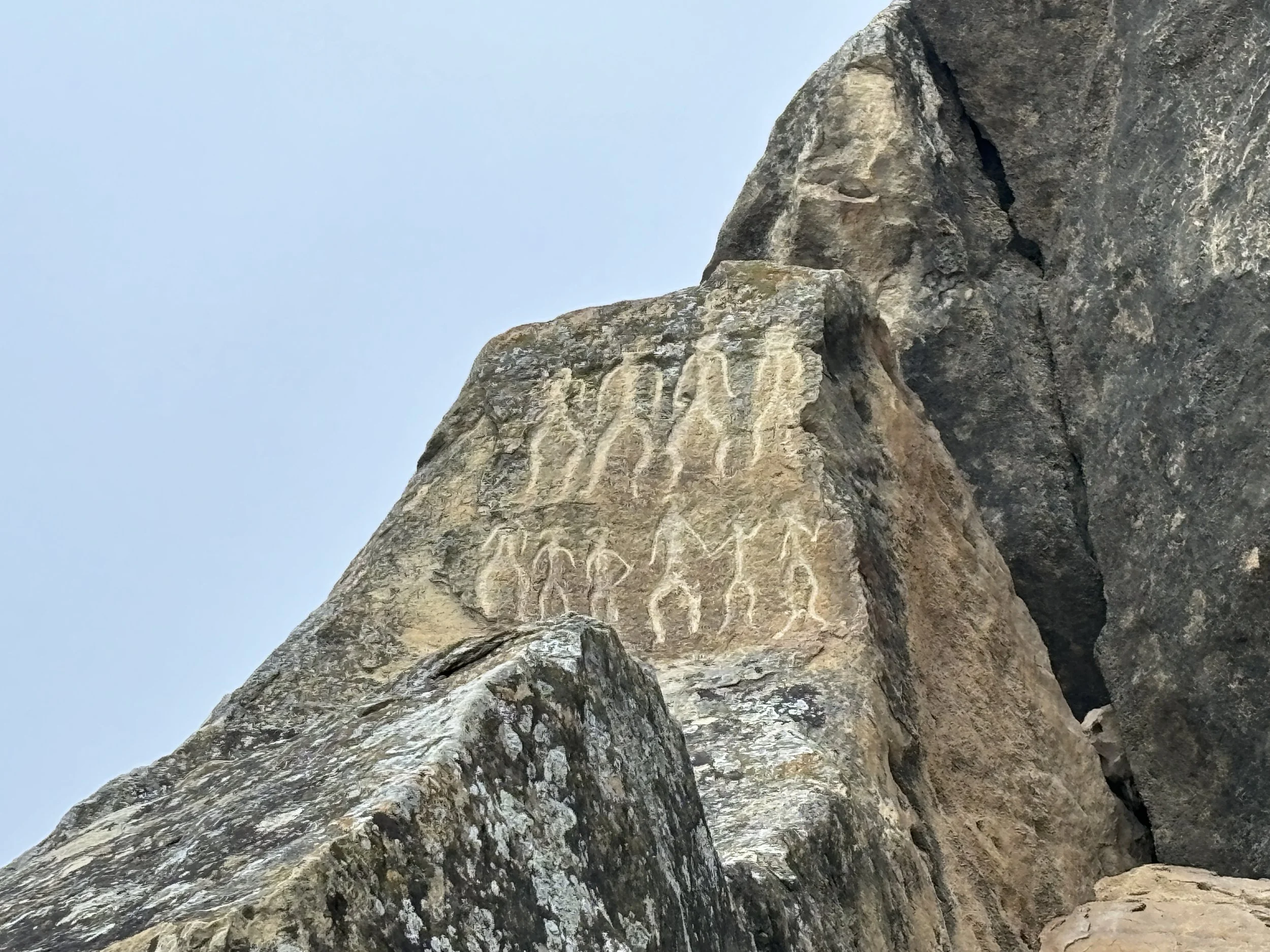
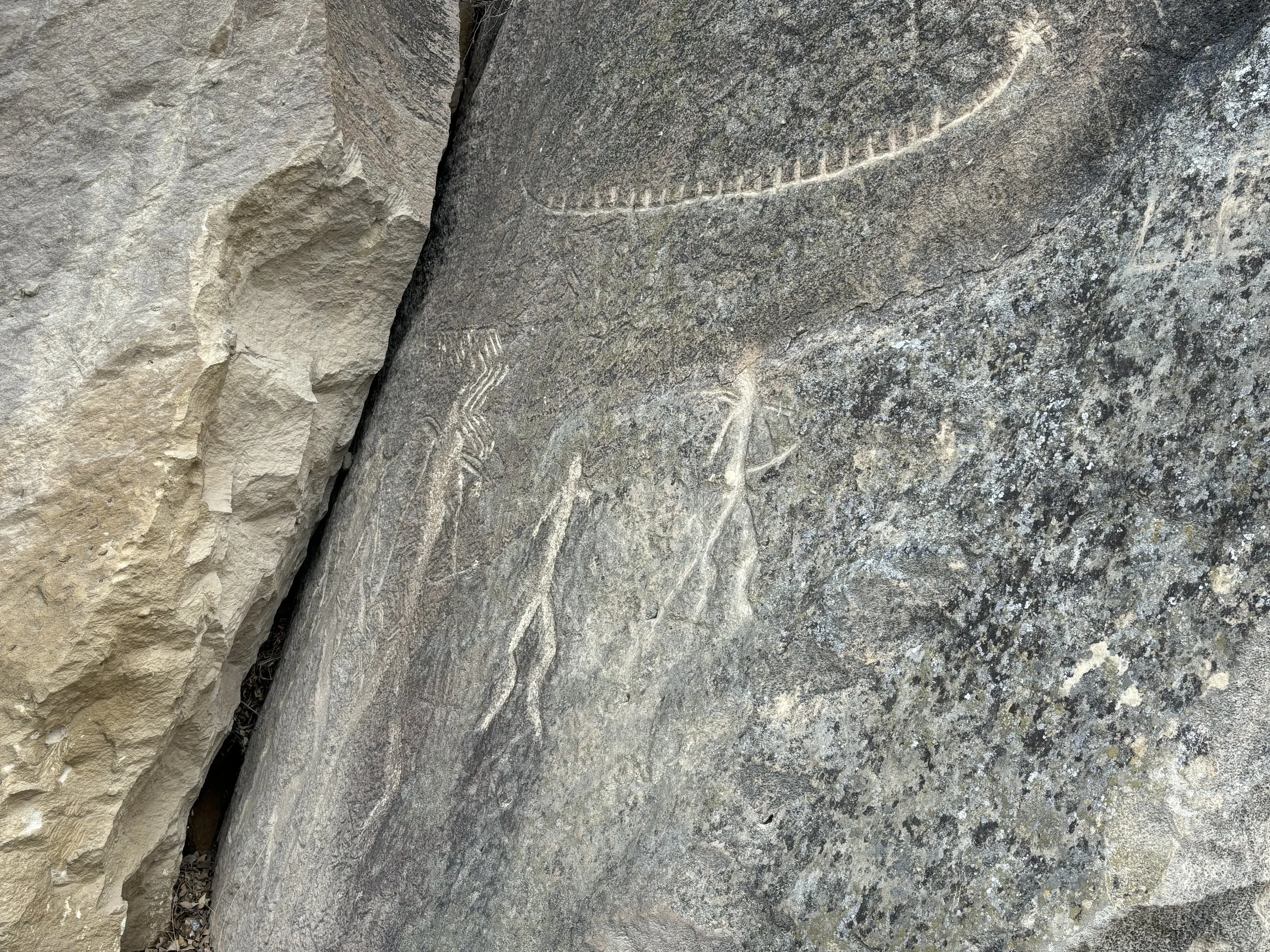
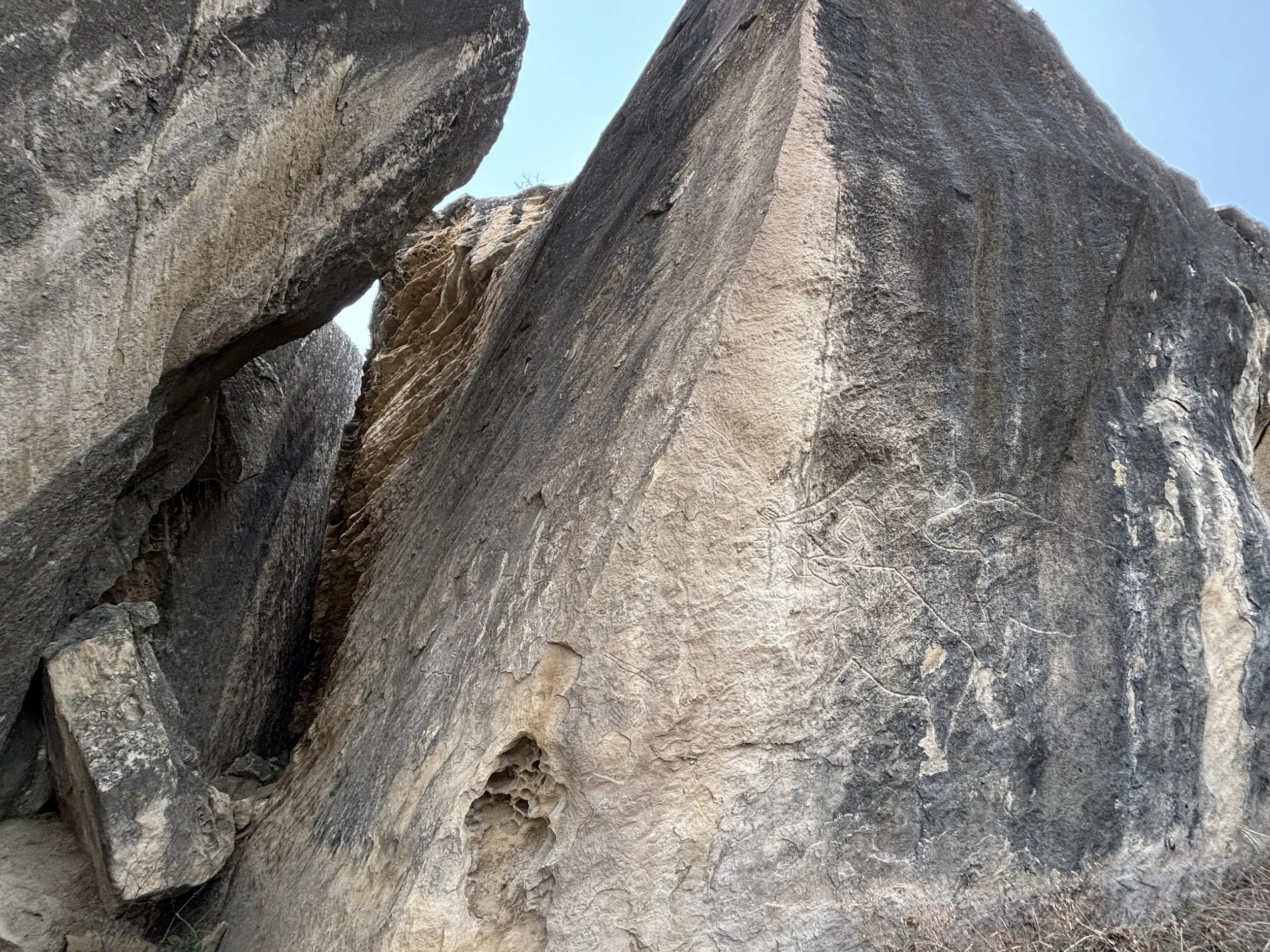
The natural setting is also quite impressive from the point of view of the landscape. The hills where the carvings are located look a bit like a sort of gigantic disassembled lego set, with huge rocks and boulders laying out on top of each other in a rather chaotic manner.
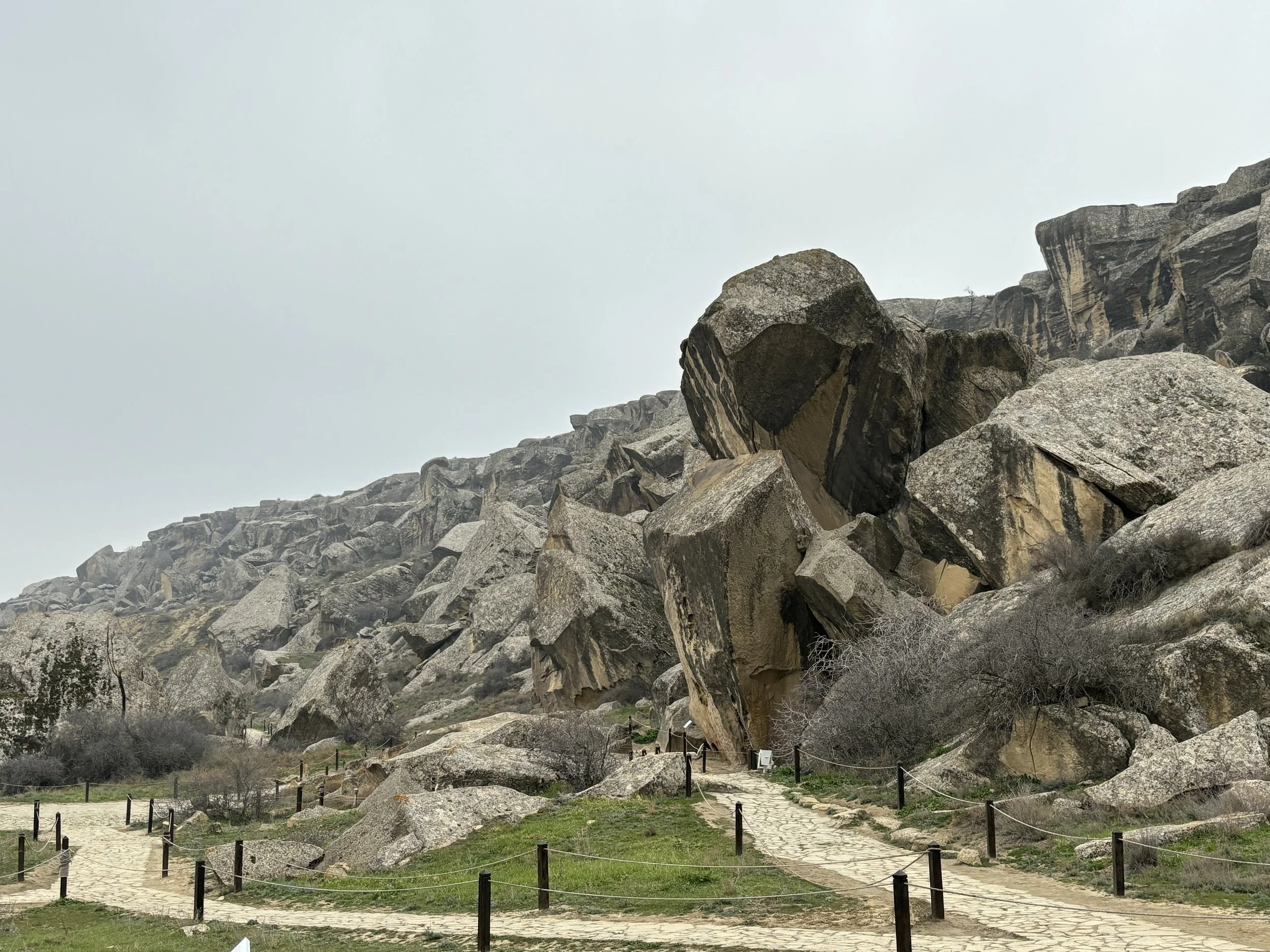
So, even if you only have half a day free after visiting central Baku this can be quite an interesting excursion to do!
Getting to and from Azerbaijan and some practical tips
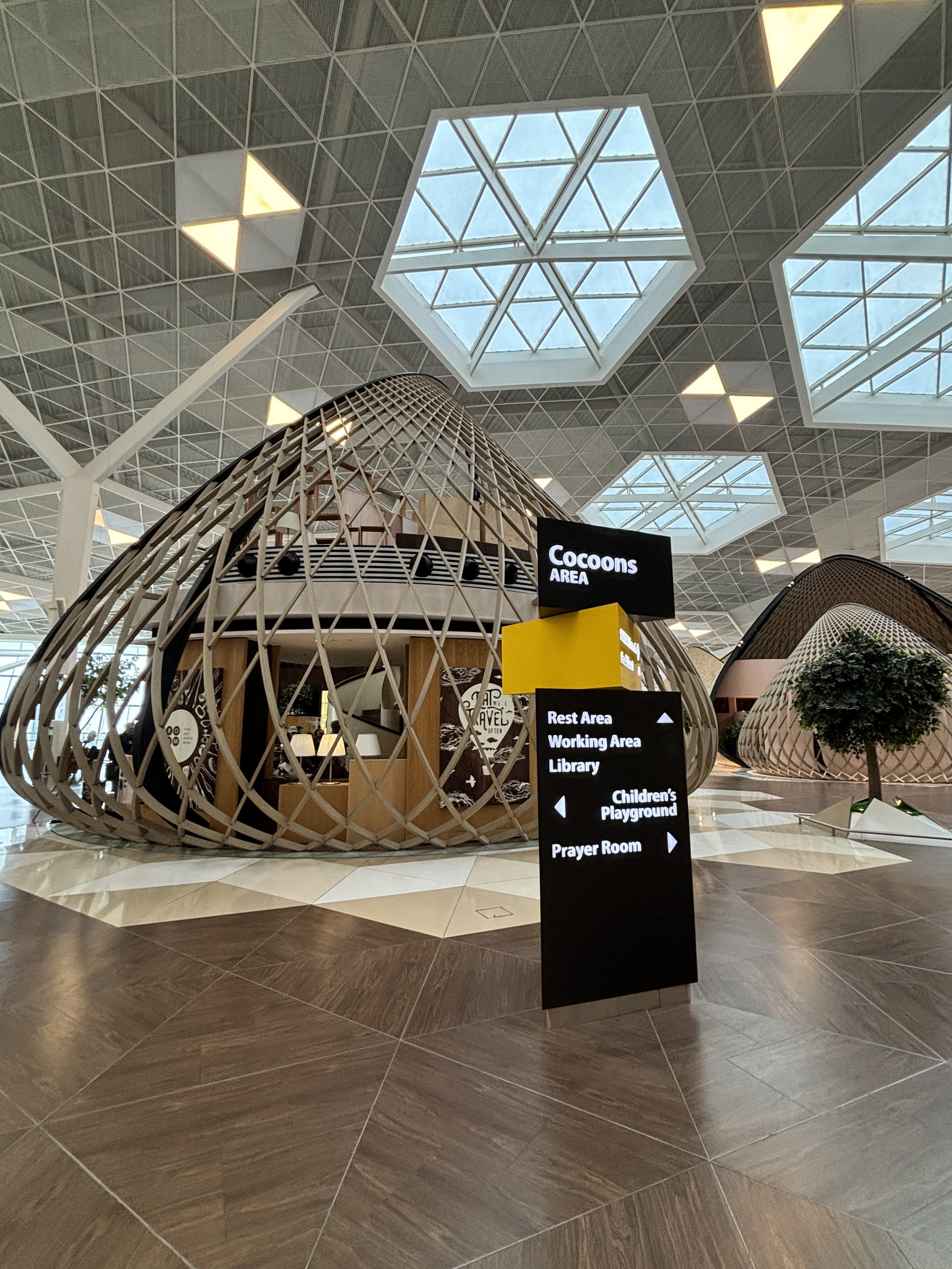
Finally a word about getting to Azerbaijan plus the usual practicalities to take into account.
It’s visa free for most countries (or e-visa on arrival to be more accurate), including the EU, the US and the UK.
By the way, the following is possibly only relevant to a very small subset of travellers, but, at the time of my visit and I think it is still the case well into 2026, it was only possible to enter Azerbaijan by air, its land borders having been closed since the Covid pandemic!
In any case, Baku airport is getting increasingly well connected with many points in Europe and the Middle East and it has become quite an accessible destination.
Again, the wonders of oil-funded investment in state-of-the-infrastructure become visible at the airport, which is a really modern and convenient facility (although there is still a small Soviet-era terminal in service, which is used by a small number of flights).
By the way, the best way to get to and from the airport, and to move around more generally, is to get an e-sim that works locally and use Bolt, which is the top Western ride-hailing app in Azerbaijan. Prices can be very competitive, a ride from the airport into downtown costs the equivalent of €7 (US$8) and within Baku’s downtown it can be just a couple of euros (or dollars).
By the way, Russian is still the main foreign language for most Azeris, although the younger generation tends to know at least some basic English.
It’s also a good idea to change a bit of cash upon arrival too, even if credit cards are accepted in most places.
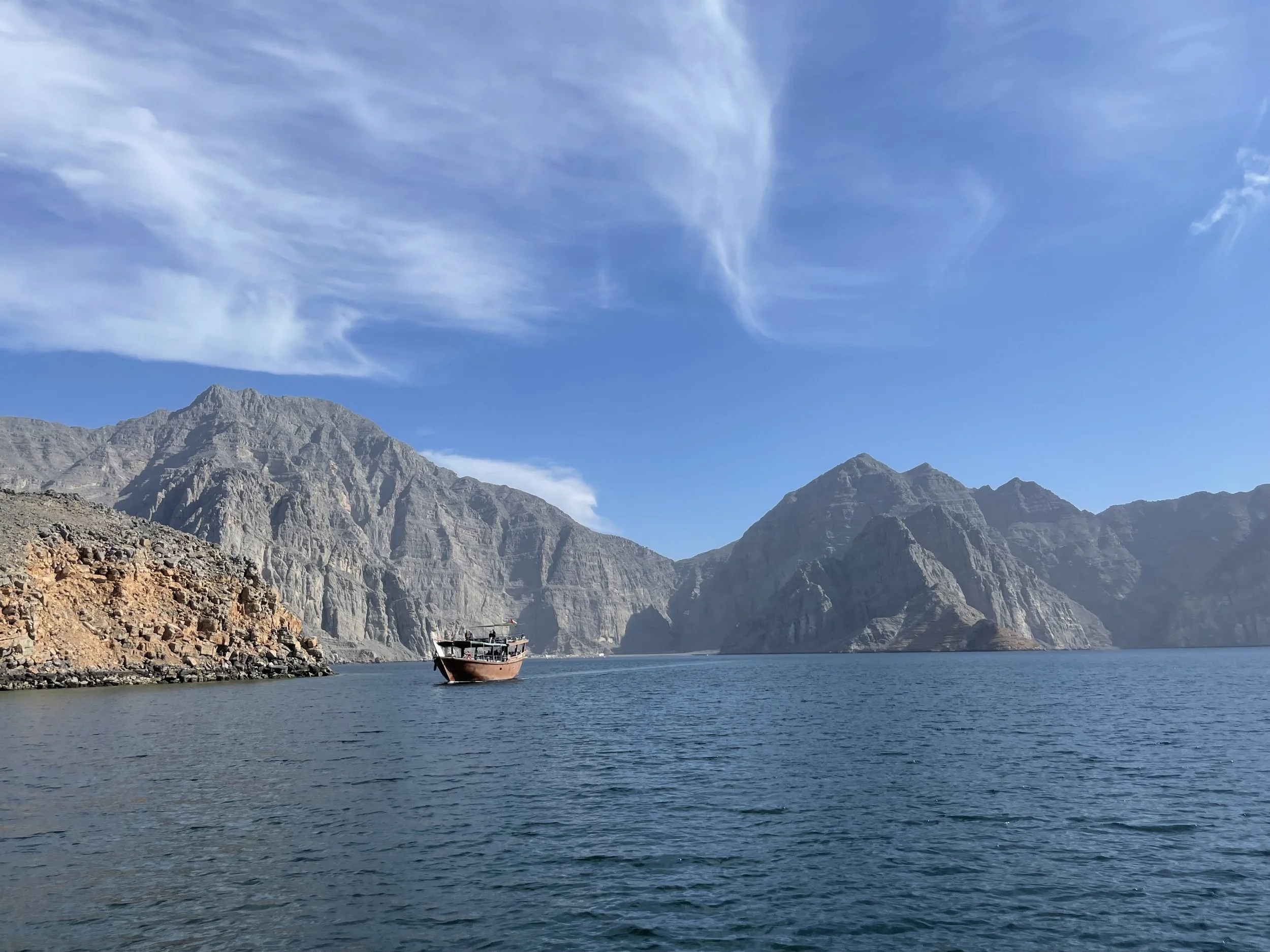
Two hours from Dubai, a World away: visiting Musandam on the Strait of Hormuz
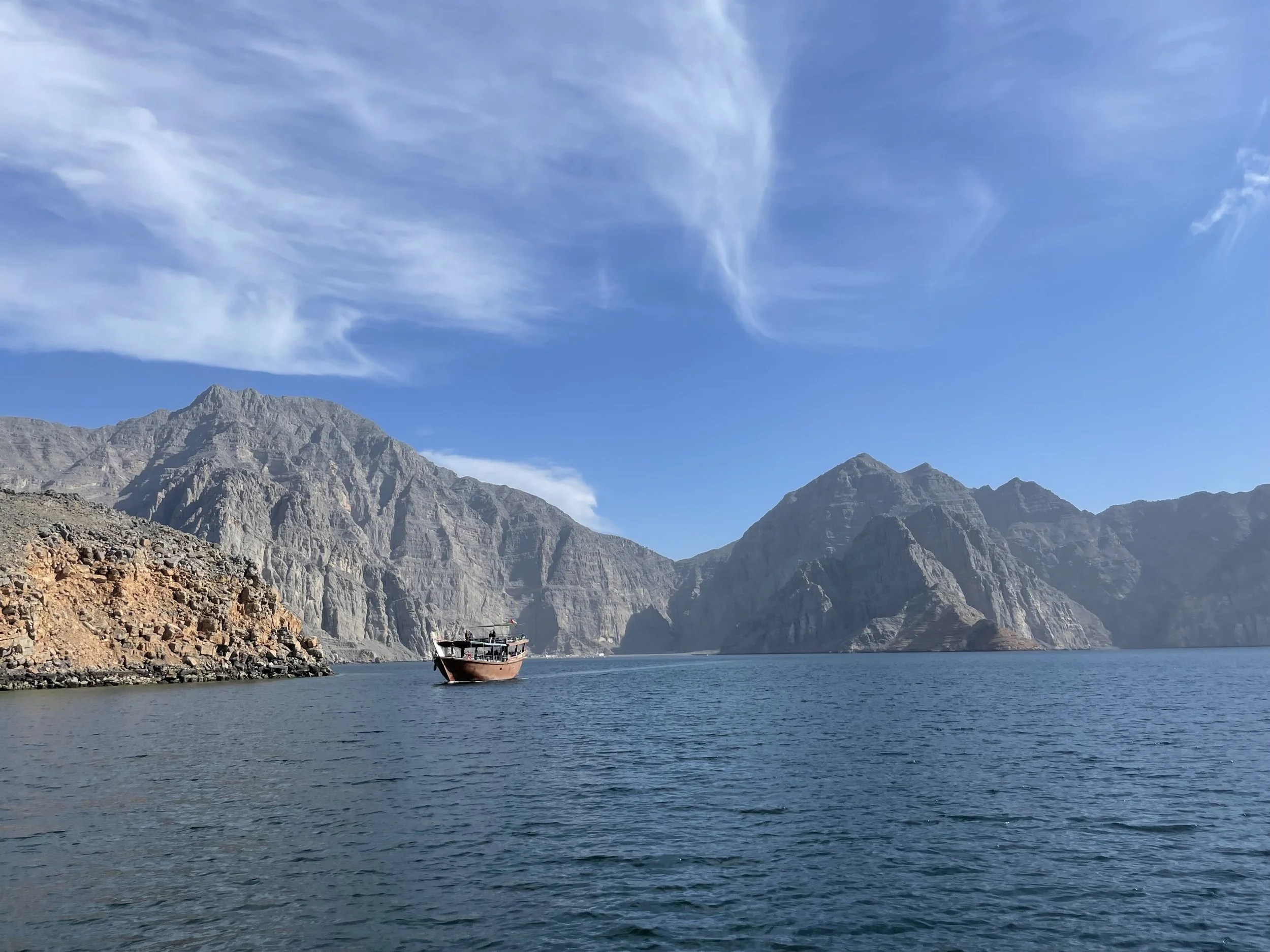
Now that the Strait of Hormuz is the centre of the global attention for all the wrong reasons, it is perhaps a good time to remember that its southern side is one of the most truly amazing destinations you can visit anywhere in the Middle East.
The Musandam Peninsula, an Omani exclave which protrudes into the sea giving the Strait of Hormuz its curvy, contorted shape, is a land of majestic desert fjords and dramatic vertical cliffs laid out in an extremely intricate pattern.
It is hard to believe that this area, with almost no flat land or roads of any type and populated only by some fishermen which move around only by sea, is located just a couple of hours drive from the buzz of Dubai.
If you are based in Dubai, the Musandam Peninsula is perhaps the top thing to do if you are looking for places to spend a weekend somewhere out of the city. In fact, traveling to Musandam from Dubai is like stepping into a whole other world entirely!
Now, what I am going to explain here refers to a visit made before the military conflict that flared up in the Gulf in early 2026. So, a word of caution here, since I have no idea how the war may have affected the Musandam Peninsula and whether it is advisable or even possible to visit during times of conflict.
In any case, the natural attractive of this area is there to stay, so hopefully these lines about how to visit the Musandam Peninsula and what to do there will remain relevant regardless of when the fighting ends.
This post may contain affiliate links. If you book or buy something through them, I earn a small commission, at no extra cost to you. It's one of the ways I keep Places of Charm going. Thank you for your support.
In an article I wrote about the area in 2023, was titled “The Norway of Arabia” and while this comparison helps frame the type of landscapes and environment Musandam offers, I think it is worth elaborating a bit more on this label and sharing some more details of this amazing and yet relatively unknown gem of a destination.
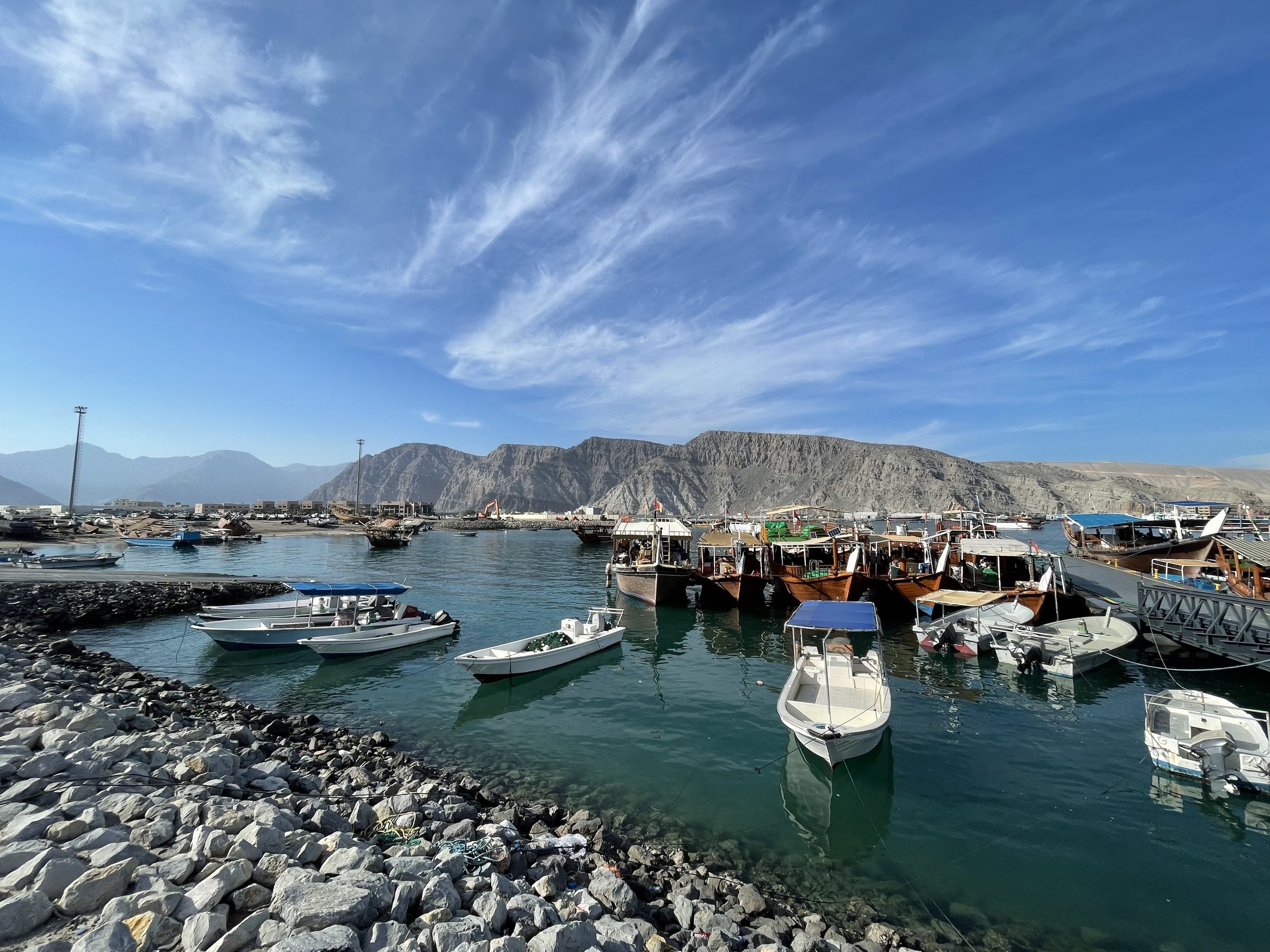
Khasab, the gateway to the Musandam Peninsula
How to get to the Musandam Peninsula
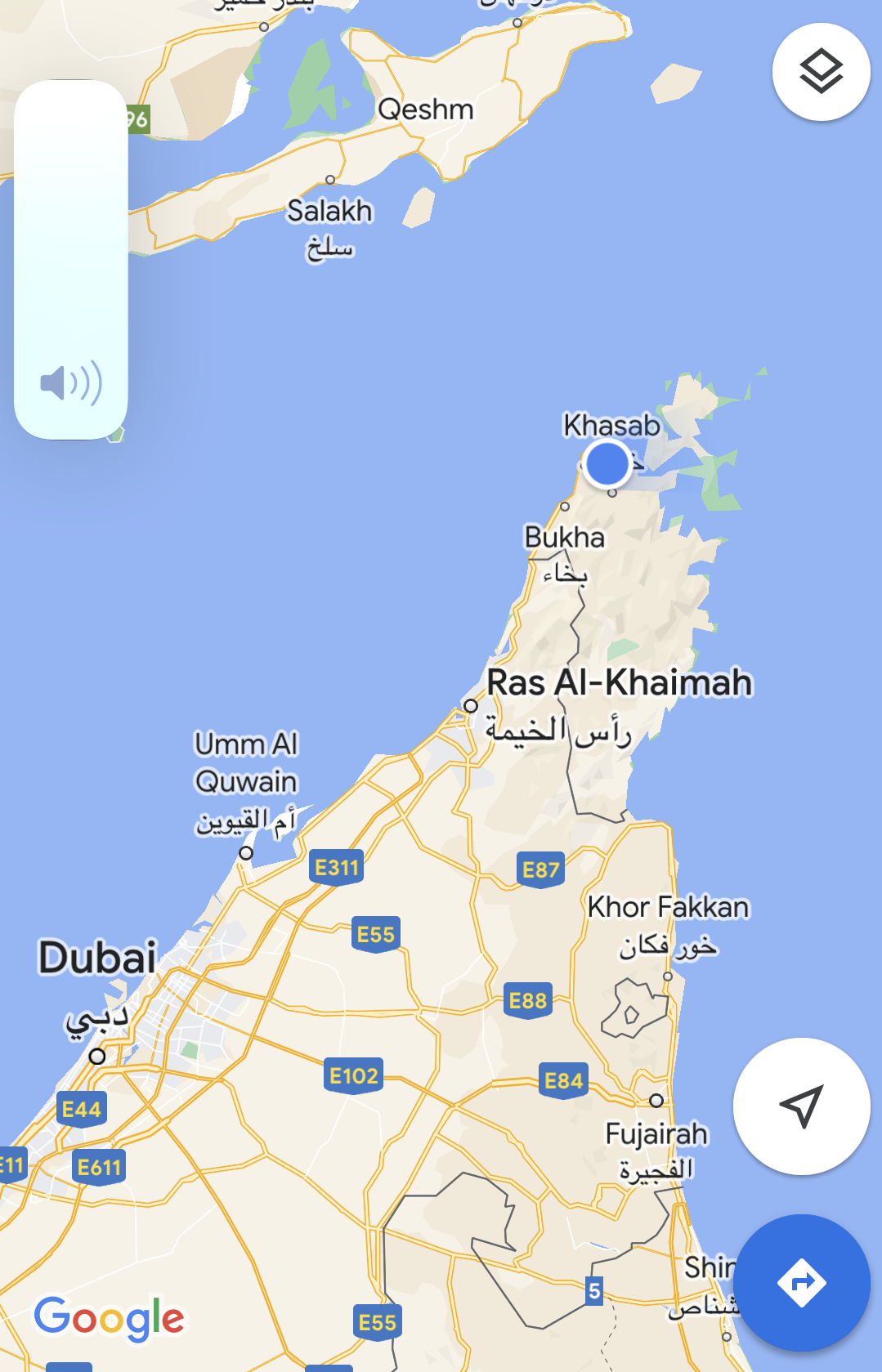
First of all some important logistic considerations:
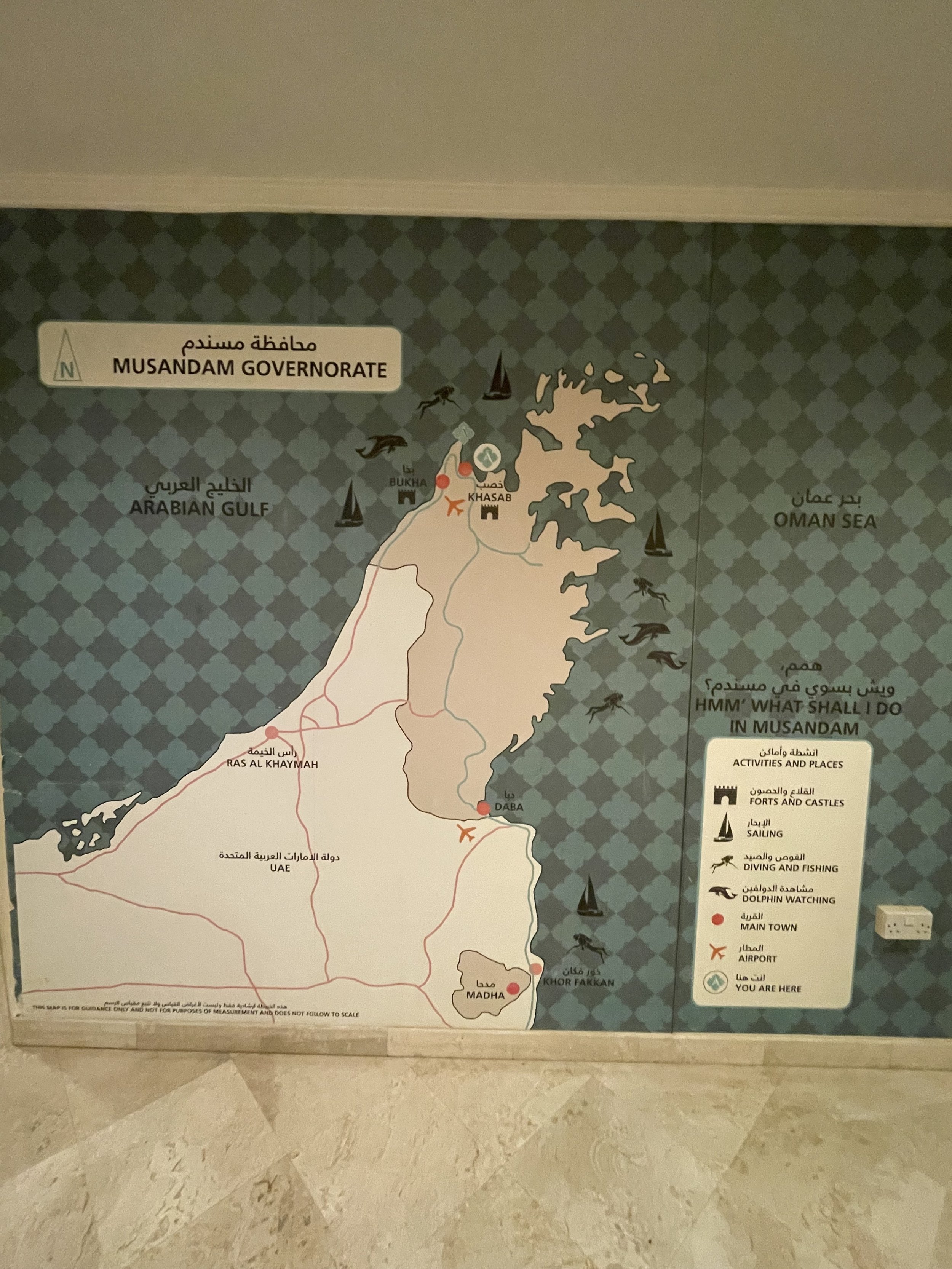
Musandam is an Omani exclave, that is one piece of the territory of the Sultanate of Oman which is detached from the mainland and wedged between the UAE and the Strait of Hormuz. Therefore, if you travel there by land, you will have to clear Omani customs and immigration.
Now, the good news is, Oman is a relatively open country and citizens of many countries (including the EU, UK and US) can simply get a visa at the border, a process that involves just filing a form and paying a small fee.
However, it is still an international border and entry conditions may change, so check in advance on the websites of the Omani government and the travel advisory section of the embassy or consulate of your own country!
Another important consideration:
If you are traveling on a car rented in the UAE (as was our case), you need to make sure the terms and conditions of your rental allow for entry into Oman. Many car rental companies in Dubai or Abu Dhabi will do that for an extra fee. So, check it is possible before the booking and then ask for it again when picking up the vehicle.
Also, in addition to obtaining permission from the car rental company to take the car out of the UAE, you also need to take into account that Oman requires all vehicles entering its territory to have an insurance policy that covers Omani territory. Some car rental companies based in the UAE offer this, but, in such case, make sure you get all the papers and print them out, because they are going to be checked at the border and they are pretty strict with this.
The alternative is to contract an ad-hoc insurance policy for the duration of your Musandam journey right at the border. An Omani insurance company has a booth right by the border post just for this purpose. The process takes like 5min and it requires filing up a form and paying the insurance fee (at the time it was something like $60 for a 2-3 day period, but this may be subject to change).
In our case, while we had contracted the international insurance upon picking up the car in the UAE, there was, apparently, a mistake in the way it had been processed, so the border guards wouldn’t let the car in unless a new insurance policy was contracted at the local booth, which we did (we later cleared that out and got refunded by the car rental firm since it had been them messing up the paperwork).
The distance from downtown Dubai to the Oman border crossing is about 150km (90 miles) and to Khasab is about 200km (120 miles). It is nearly all through motorway, except for a short stretch between Ras Al Khaimah and the border in which it switches to a two lane road which crosses and industrial area. So, it takes a couple of hours to the border, and to that you should add another 30-40 minutes already inside Omani territory to Khasab.
You must also factor in some time for the border crossing, because it is necessary to stop, get off the car and clear immigration at the customs house. The time requirement depends on the amount of people and the “complexity” of your paperwork. On the way in we spend nearly an hour, but this is because we arrived just after several buses full of tourists (there are also some organized tours from the UAE going to Musandam) and we had to sort out the car insurance paperwork. On the way out it took us less than 10 minutes.
Roads are good. On the UAE side, you are almost all the time on a well-maintained, multi-lane motorway. On the Omani side it is a two-lane road, but it is also well-built, well-maintained and quite broad. So, as long as you take care of the border formalities, Musandam is pretty accessible.
You can also travel to Musandam by air, since there is also a small local airport. However, as far as I am aware of, it only has a few domestic flights to the Omani capital, Muscat.
Spending the night in Khasab
Fjord cruise departures are usually at 10am, so, while you could technically make it in one go from Dubai if waking up very early in the morning, I would highly recommend spending the night before the fjord tour in Khasab.
Where to stay in Khasab
Now, when it comes to choices, Khasab is nothing like the apparently almost endless supply you find across the border in the UAE. And this is a great part of what confers to Musandam such a sense of uniqueness and, without being luxurious in the material sense, of exclusivity, as well!
There are basically two major modern establishments in Khasab and both are managed by the same company, Omani hotel group Atana, the Atana Khasab Hotel, which is located in a small hill overlooking the bay of Khasab, and the Atana Musandam Resort, which is located in downtown by the port.
The latter markets itself as somehow more upmarket (perhaps on account of its slightly more central location), but, from the descriptions I have seen I think they are both pretty similar, in the four-star range. We stayed at the Atana Khasab Hotel and had a very good experience!
This, was at least, the situation when it comes to accommodation in Khasab at the time of my visit. Since things change really fast in this region, it is very possible, that some new hotels have opened since. In fact, and unless there is a deliberate policy of limiting visitor numbers, I wouldn’t be surprised if this is what ends up happening, since the appeal of the place is undeniable and it is only a matter of time until the word spreads out. I hope, if this ends up being the case, that Musandam is able to preserve its charm!
Atana Khasab Hotel
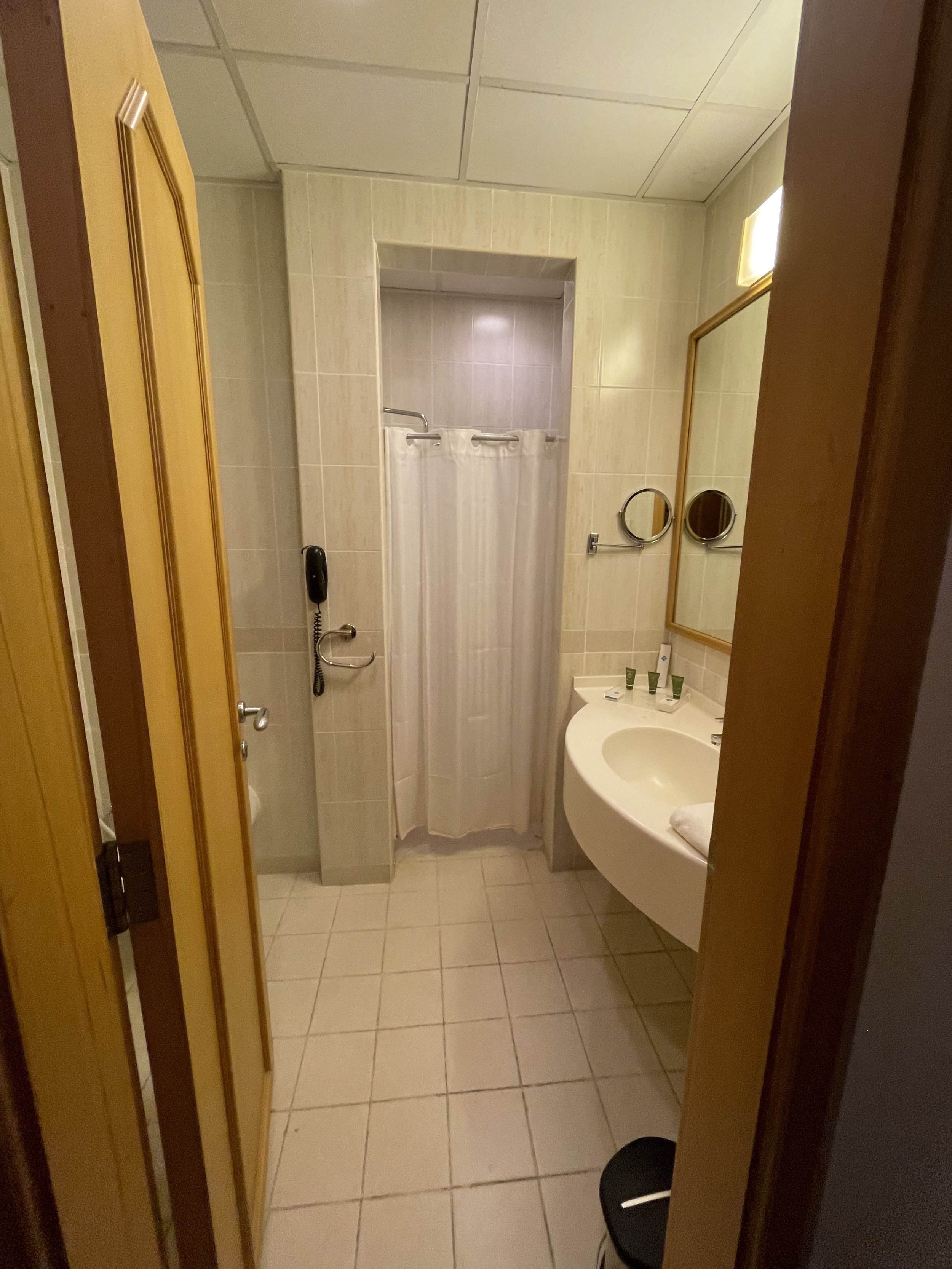
This modern hotel is located right on the main and only road leading from the UAE border into Khasab. It is located a couple of kilometres from the port and it has some very nice pool-side views of the bay of Khasab and the waters around the Musandam Peninsula. it has plenty of space to park your car, btw.
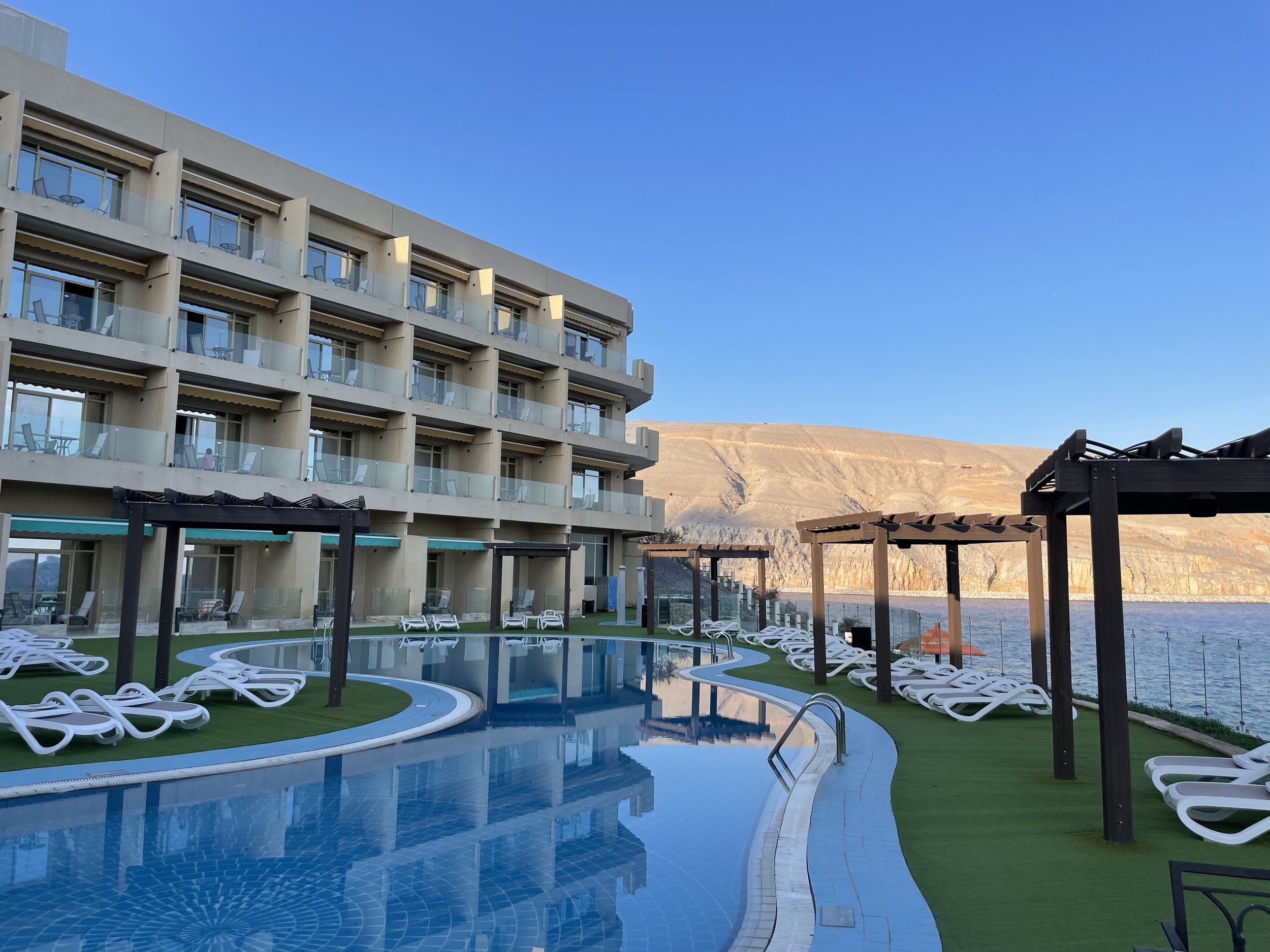
The facilities are quite modern and spacious and some rooms have direct access to the terrace.
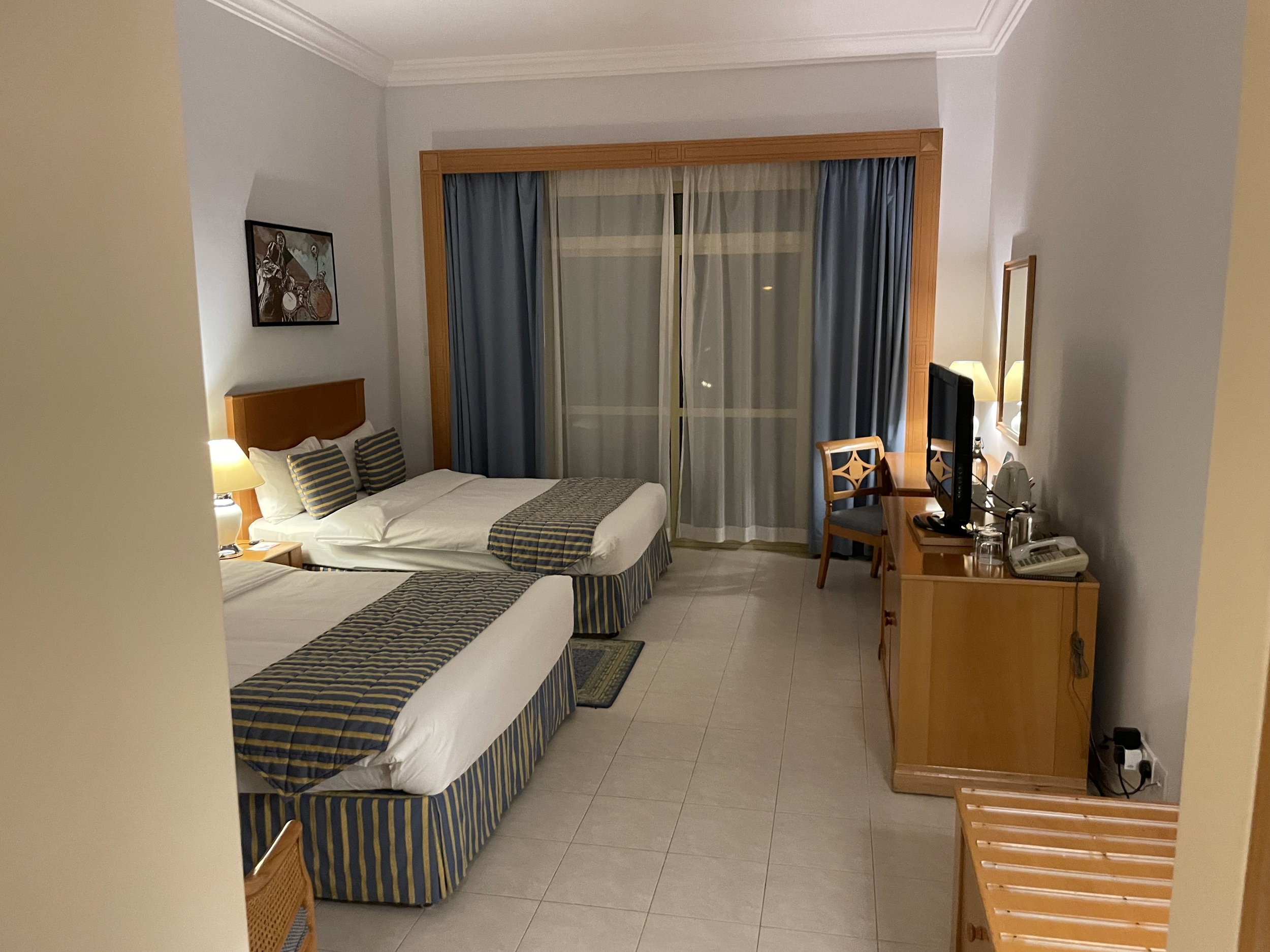
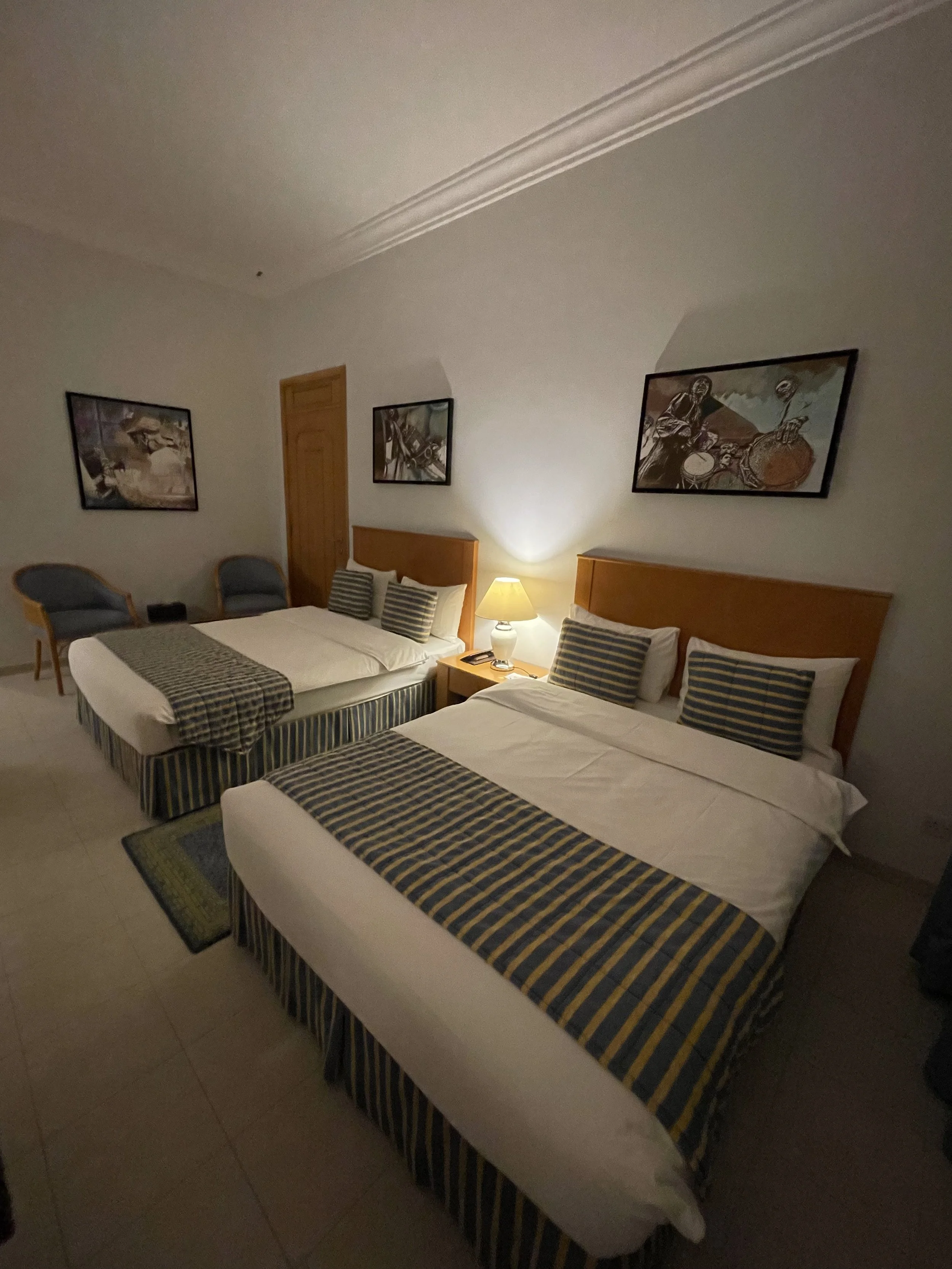
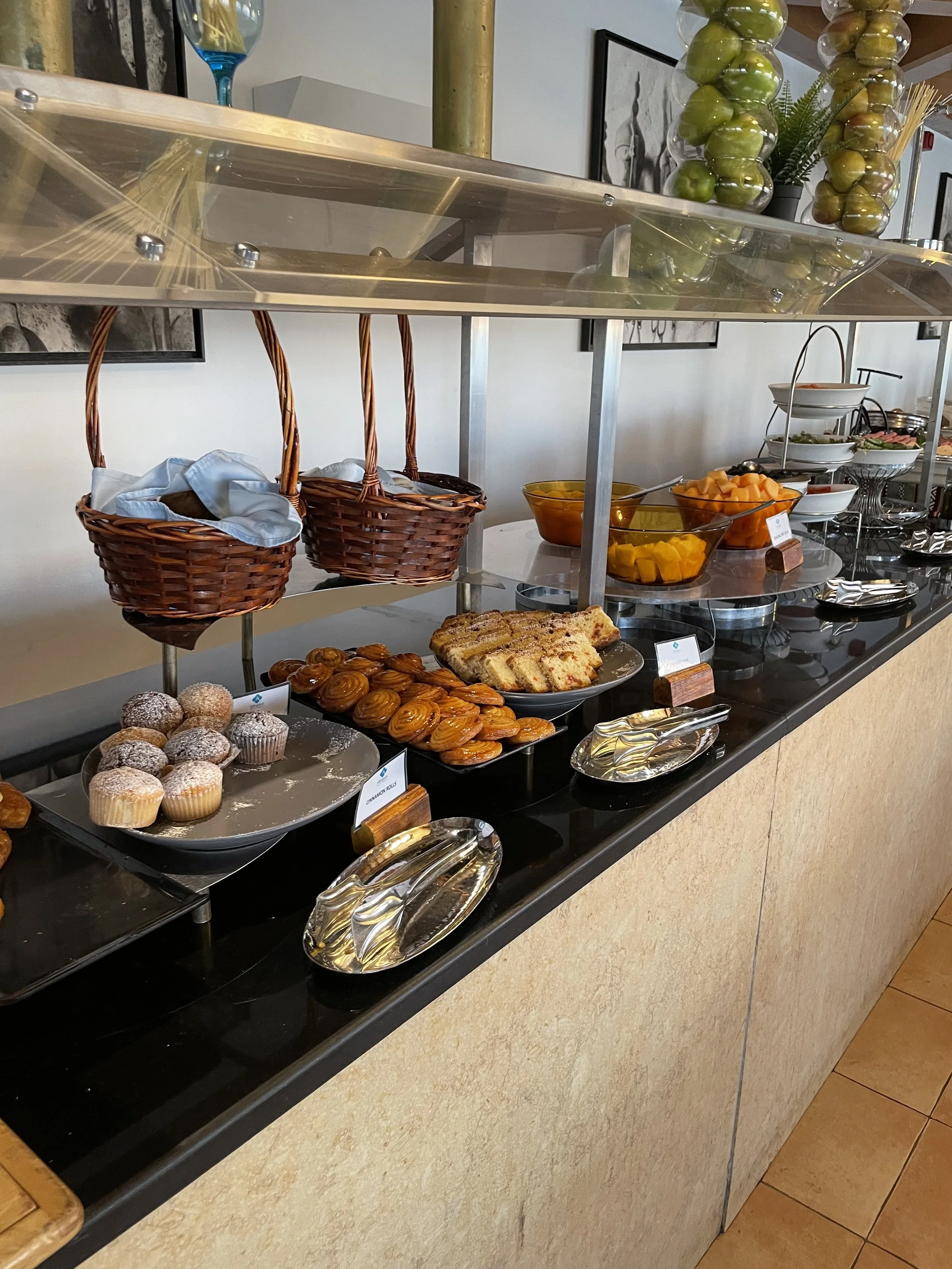
We had dinner and breakfast at the terrace of the Atana Khasab Hotel and it was pretty good overall. The menu contains also quite a few local specialities, which is a nice touch (the um ali and mahalabia they serve for dessert are particularly tasty!)
The hotel has also quite a few outdoor spaces, including part of the dining area, which is quite nice considering that the weather in this part of the world is quite balmy in the mornings and evenings.
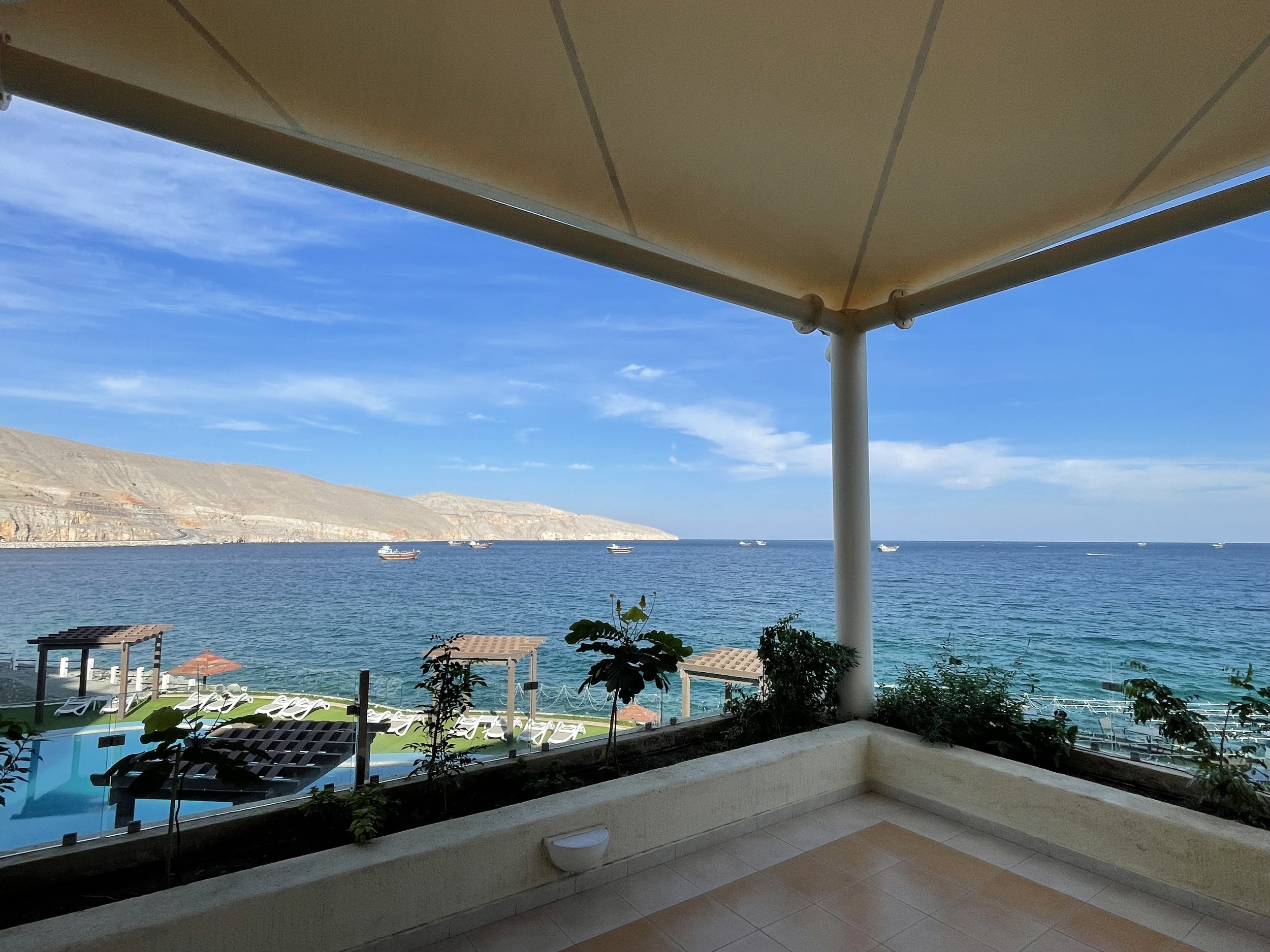
My description of the Atana Khasab Hotel wouldn’t be complete without a word of recognition for its staff, and particularly for Rasheed, the hotel’s restaurant manager, who went above and beyond to return us an item of great personal value that we inadvertently left behind at the hotel. Rasheed not only took care of finding it, but even drove several hundred kilometers into the UAE to deliver it in person to the resort where we were staying it at the time!
“This is Omani hospitality”, he simply said.
So, I am taking this opportunity to express again my huge gratitude for this very kind act!
What to do in Musandam?
While the base for any Musandam Peninsula excursion is Khasab, which is the main town in the exclave, there is little to see in the town itself, aside from a 16thC. Portuguese fort (Portugal controlled the area around the Strait of Hormuz for quite some time in the 16th-17th C.).
The rest of the town is pretty unremarkable. In fact, it is quite a small place. There is a sort of “downtown” with some shops and wholesale outlets near the port, but the population is pretty scattered otherwise.
The main thing to do in Musandam and, basically, the whole point of coming here is to enjoy a cruise along the fjords of the peninsula.
To do so, it is necessary to book one of the many day cruises that leave Khasab port in the morning. You can find quite a few options on Viator or Getyourguide.
We booked this tour of the Musandam fjords, which costs around $50 (€45) per person and the experience was great! I will describe it in more detail right below.
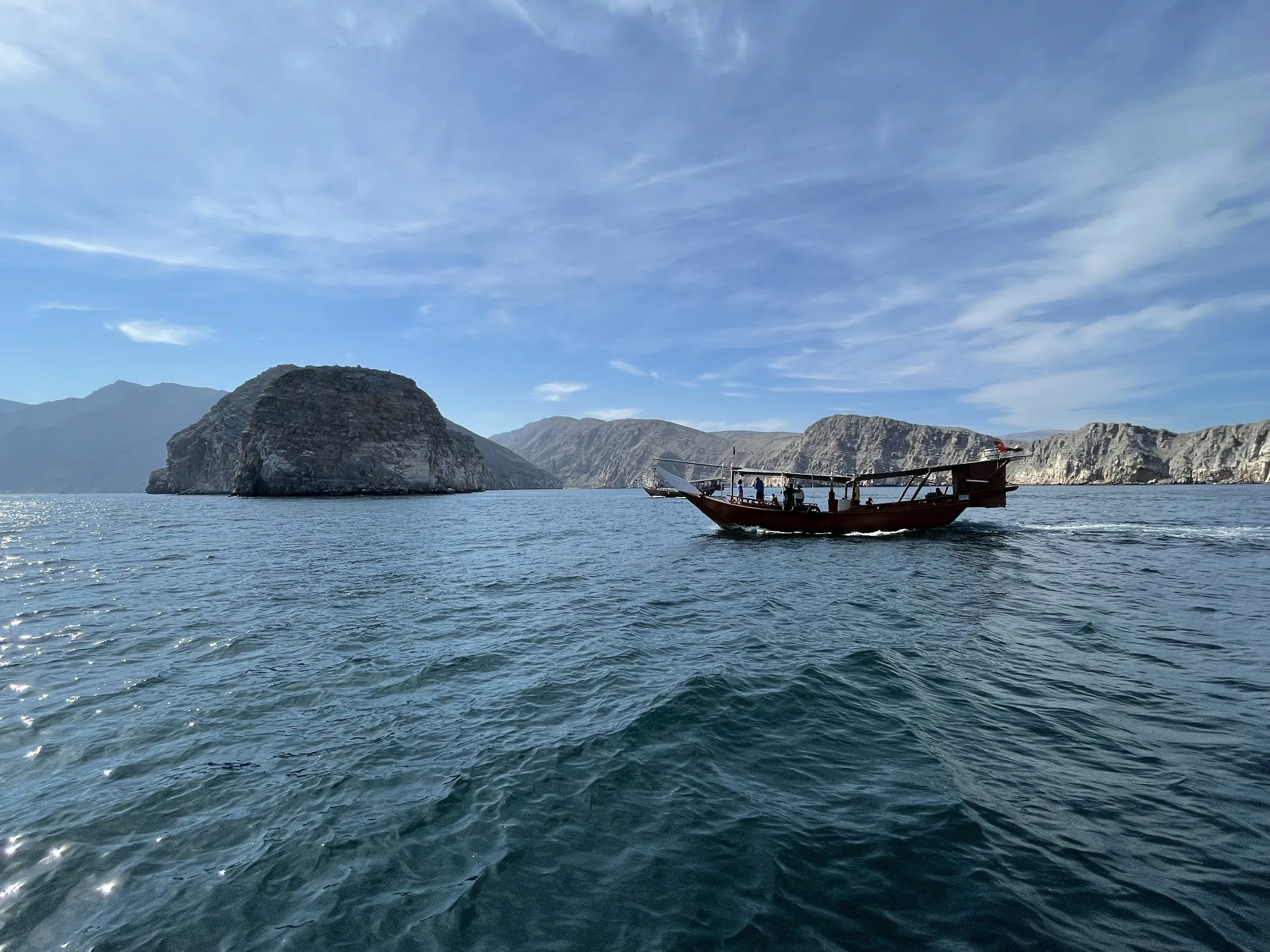
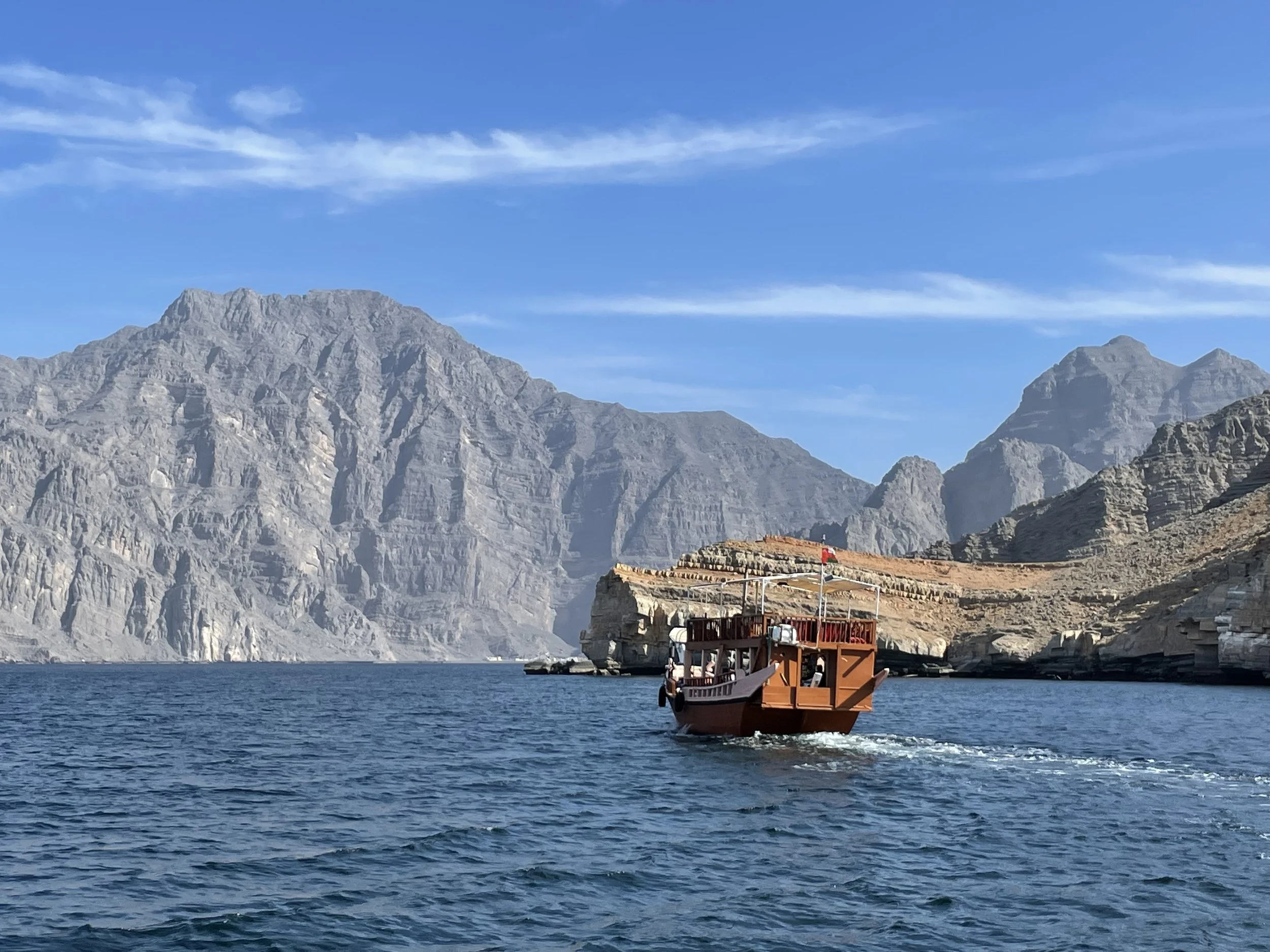
My impression is that most tours offer a pretty similar service, though: pick up in the morning at your hotel, drive to the port for a 10am departure. Then you spend around 6 hours at sea, returning in the afternoon at around 4pm or so.
The boats are of the traditional dhow type, although they are somehow modernized. They have a broad open deck where you spend most of the time. There is a protective canvas that is rolled out over it to protect from the sun as well as a cabin by the stern. The boat is also fitted with toilets, btw.
These boats are large enough to carry perhaps a couple dozen people onboard, but it is rare to see them full. In our case it was just around ten people and there was plenty of space to move around. It all felt like going on a private yacht.
The crew were also very nice. They took good care of us throughout the trip and you could see how they even strived to get us were the dolphins were!
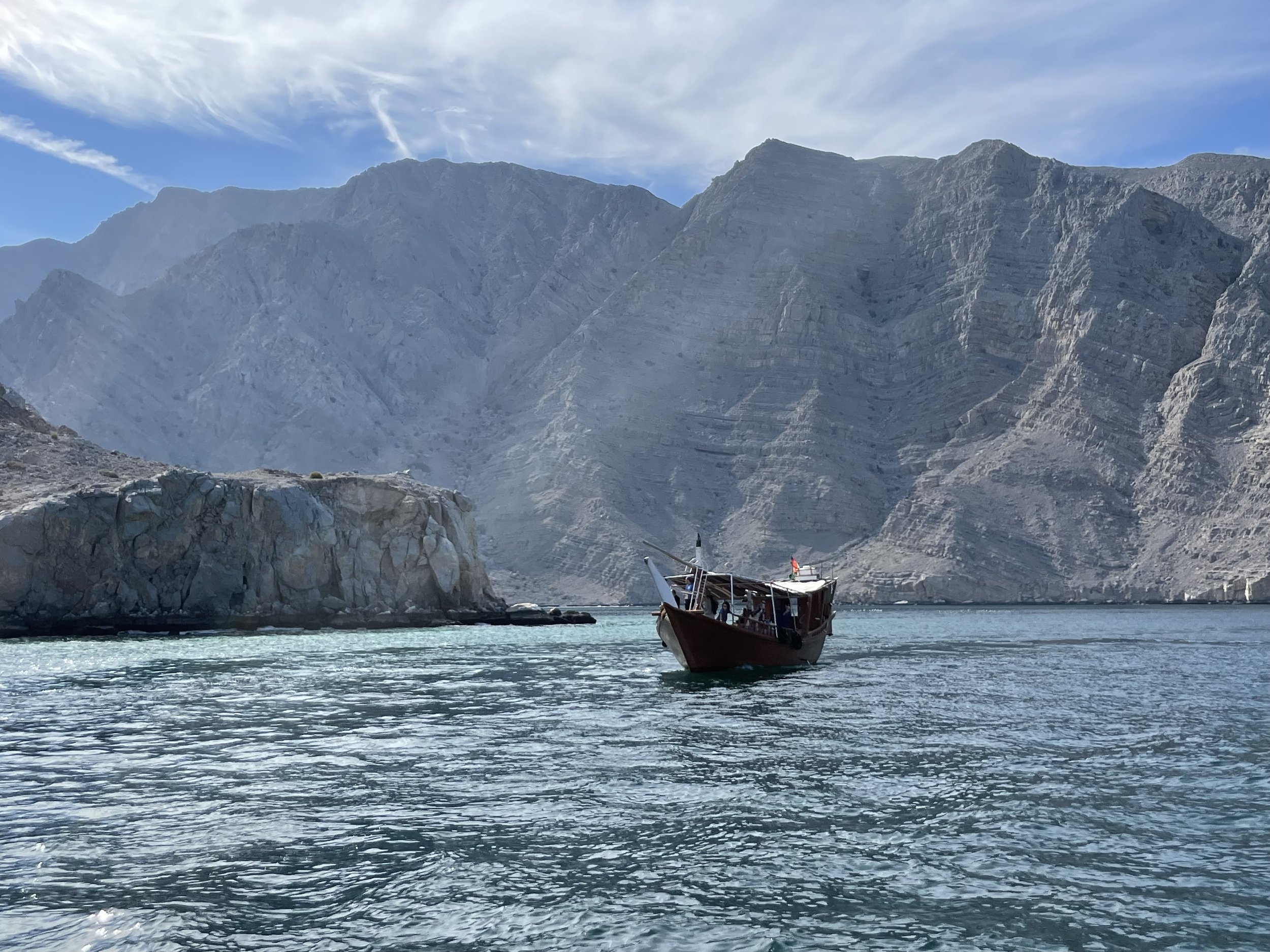
Our route took us on a loop around the Musandam’s main fjord, which is located just to the west of Khasab. We started on the south side, getting past Telegraph Island (a little rocky outcrop which once housed a rely post of the British telegraph linking London to India) to the very bottom of the fjord and then back along its north side.
We did a couple of stops, each lasting about an hour or so, during which the crew anchors the boat next to shore and it is possible to swim. The crew also lends you googles and fins to do some snorkelling, which is quite an experience in these waters. There are coral reefs, plenty of fish and some interesting creatures, such as sea cucumbers and huge sea urchins!
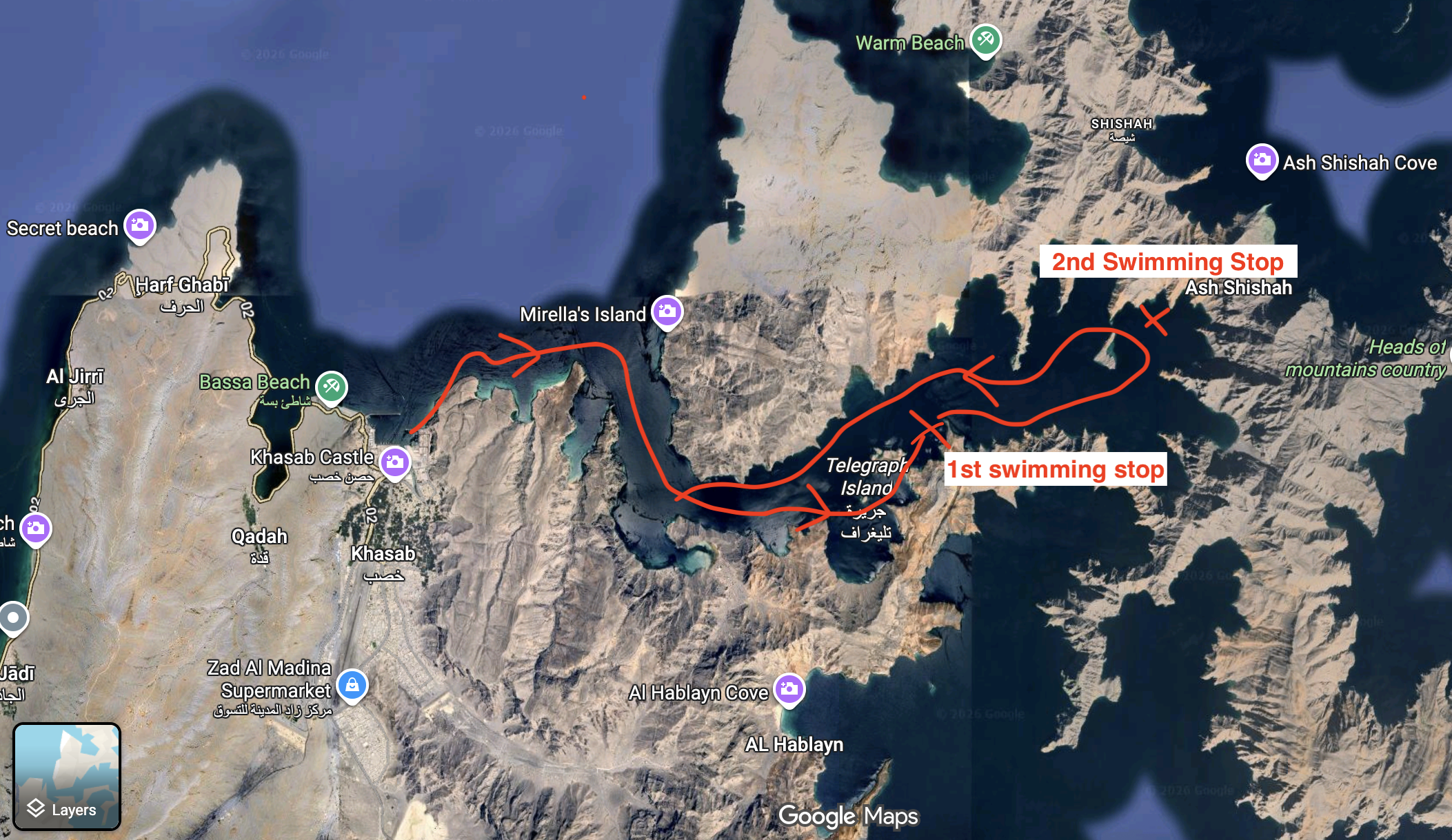
Lunch is included in the experience and it is served on deck. It consisted of Arabian and Indian-style food, different types of roasted meat and vegetables with rice and different types of accompanying sauces and condiments plus flat bread. It was pretty tasty and abundant. It is self-service. The crew lays out the different foods and you take as much as you want. Drinks are also served.
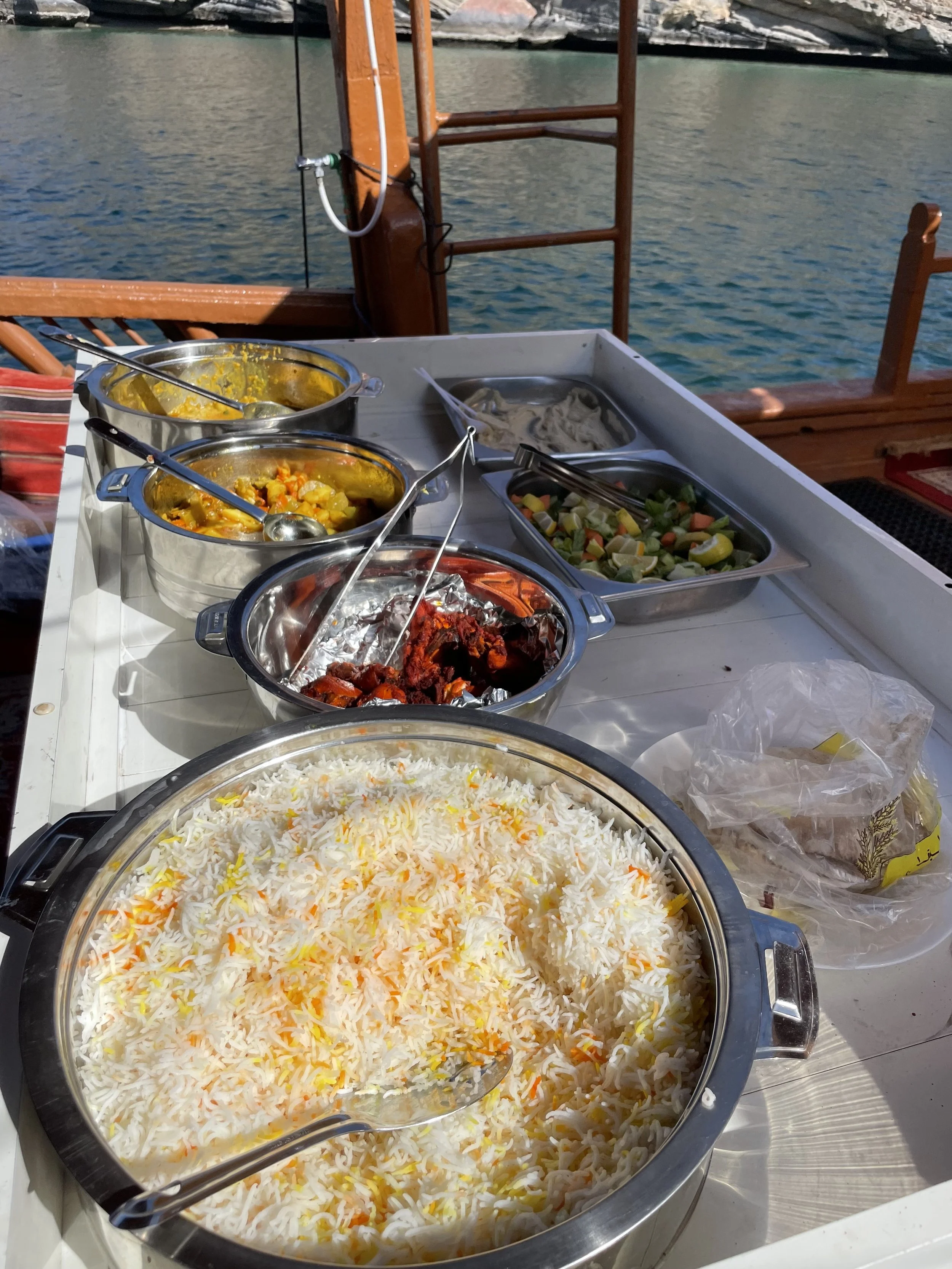
During the trip you see several other dhows following roughly the same itinerary, but the distances are so big that it never feels crowded or “touristy”, even if it is obviously a touristy, packaged activity.
In fact, one of the most awesome things of this experience is the feeling of smallness in this rock and water landscape (there is not a single tree or even a little speck of greenery on sight!).
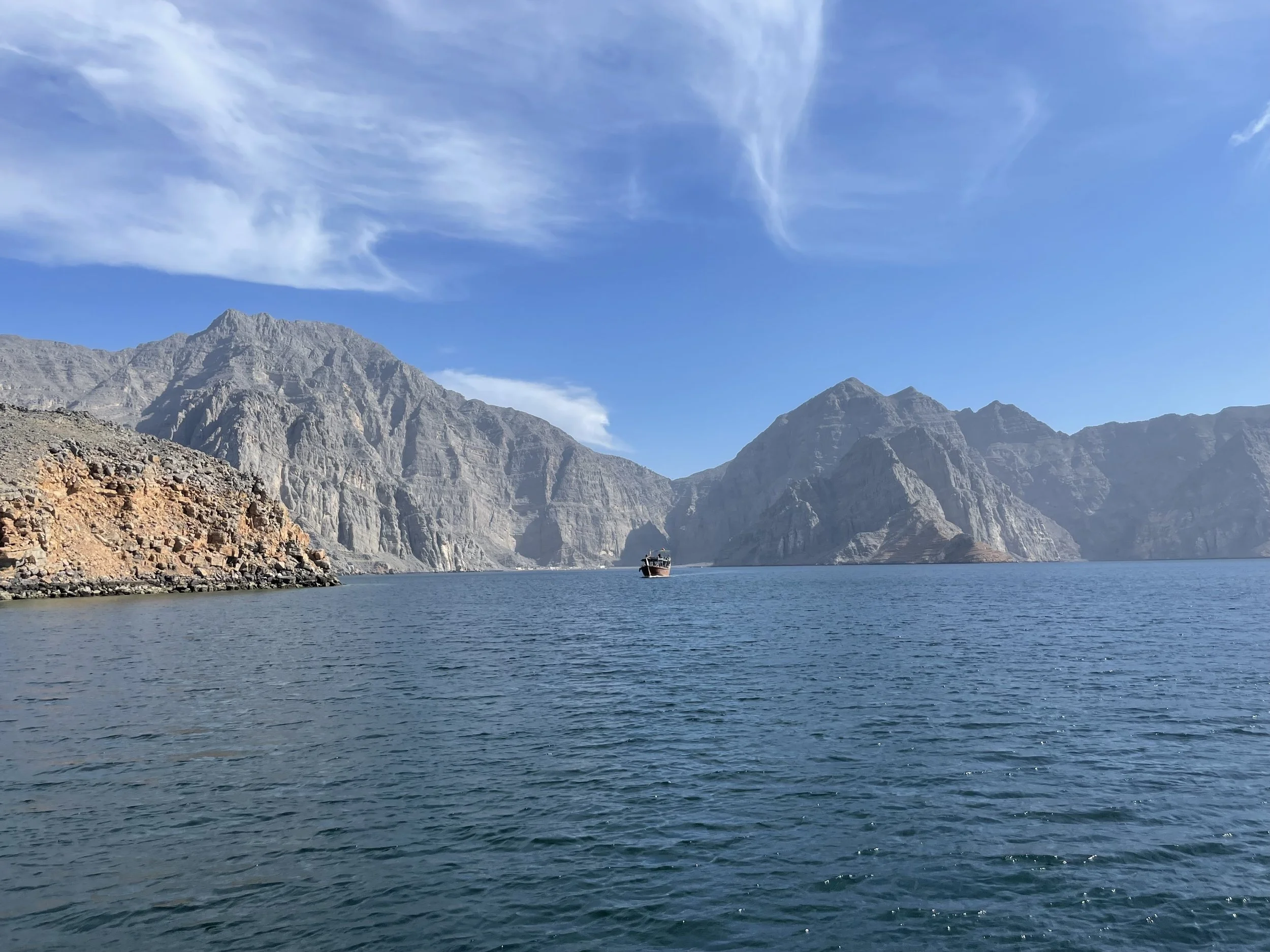
We also sailed past some settlements which can only be reached by sea. It is incredible to think this place is just a couple of hours drive from the Dubai Mall. It feels like a different planet!
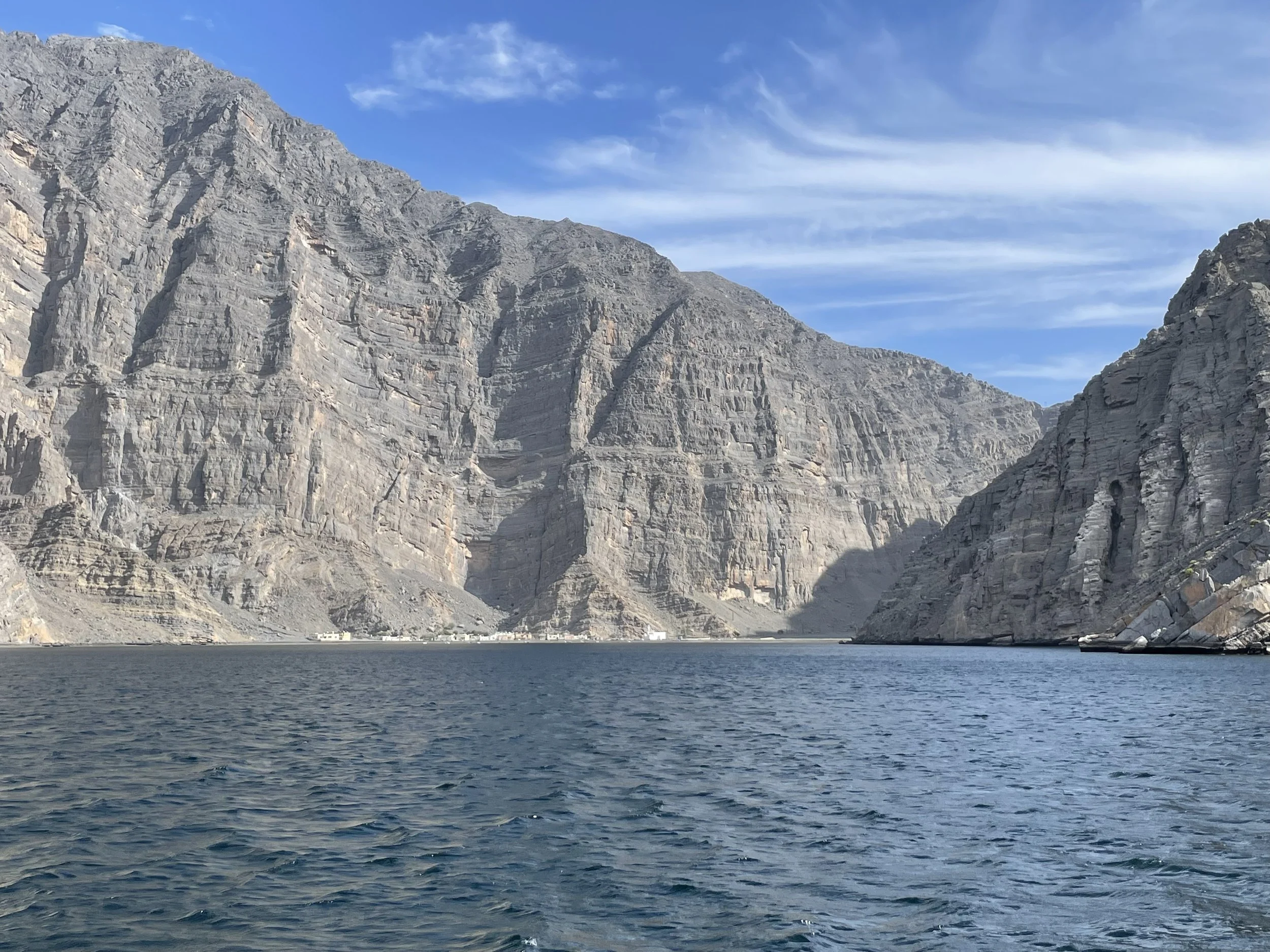
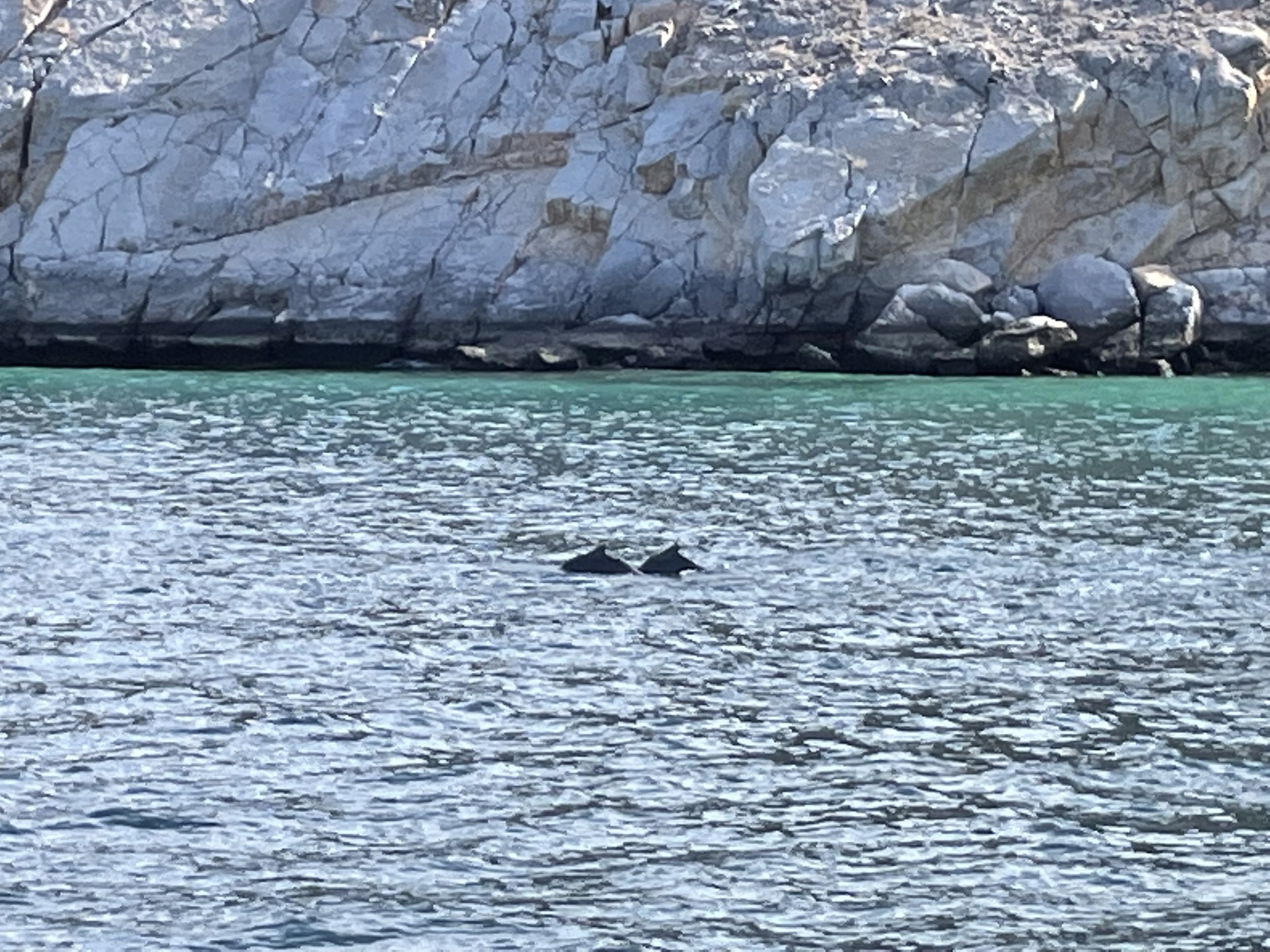
One of the highlights of the tour is the dolphin spotting. At the start of the cruise I was giving a very low chance to this happening, but, actually we saw the first dolphins barely 15 minutes into the trip and then we spotted many more at different points during our journey!
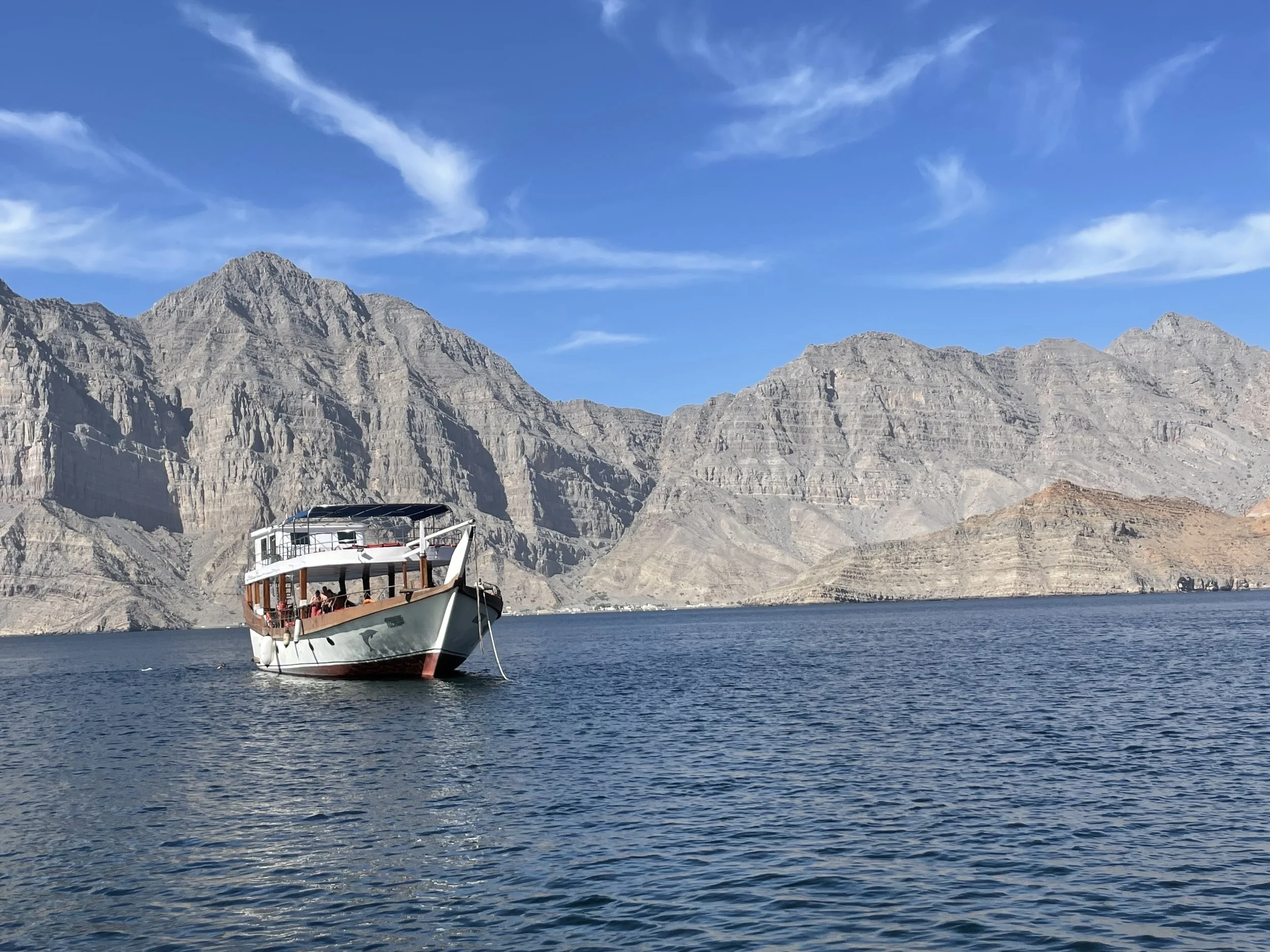
Here are some more pictures of the secluded, mineral world that is the Musandam Peninsula.
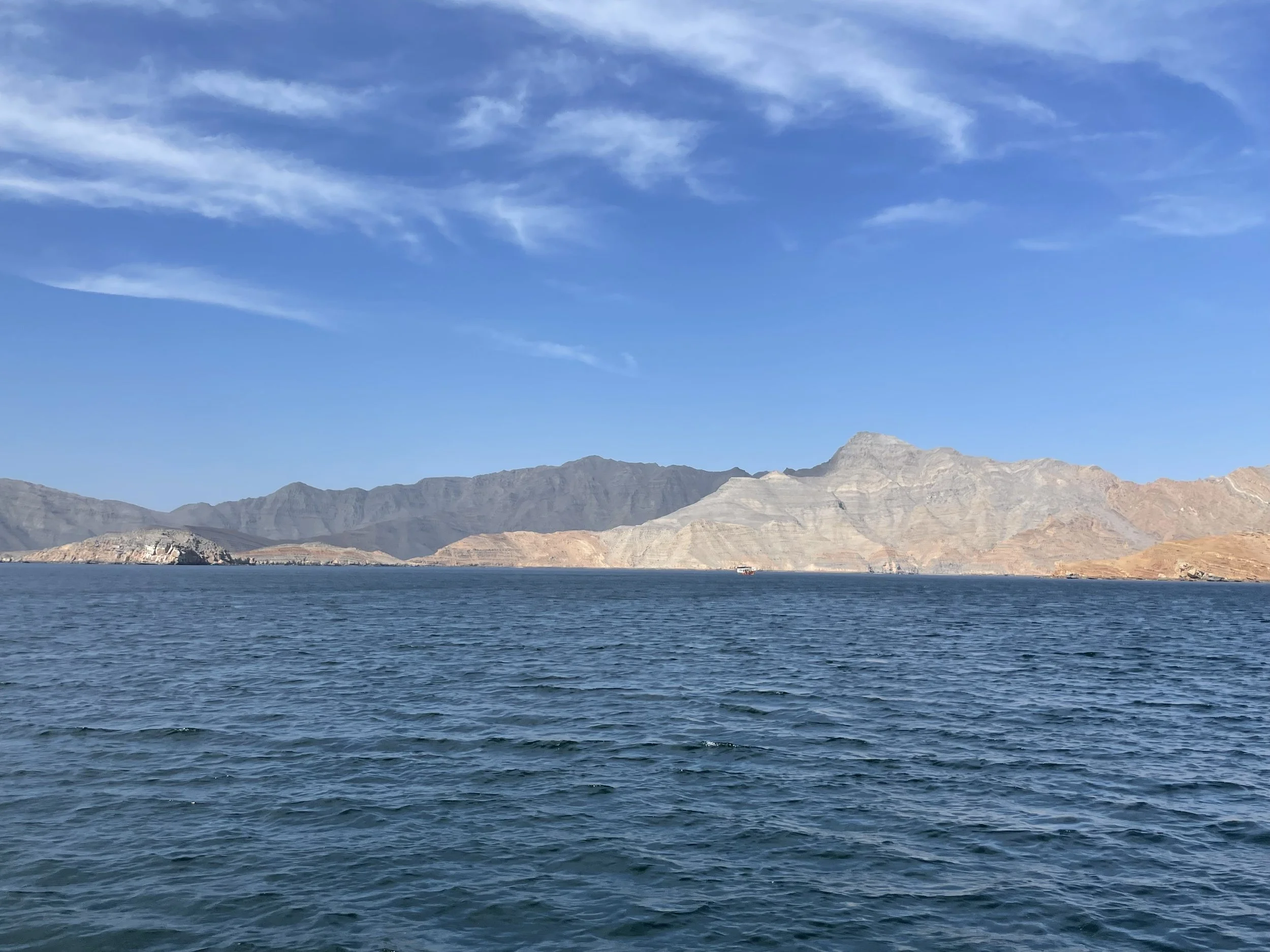
This is a really rugged area, with some peaks towering nearly 800 meters directly over the water!
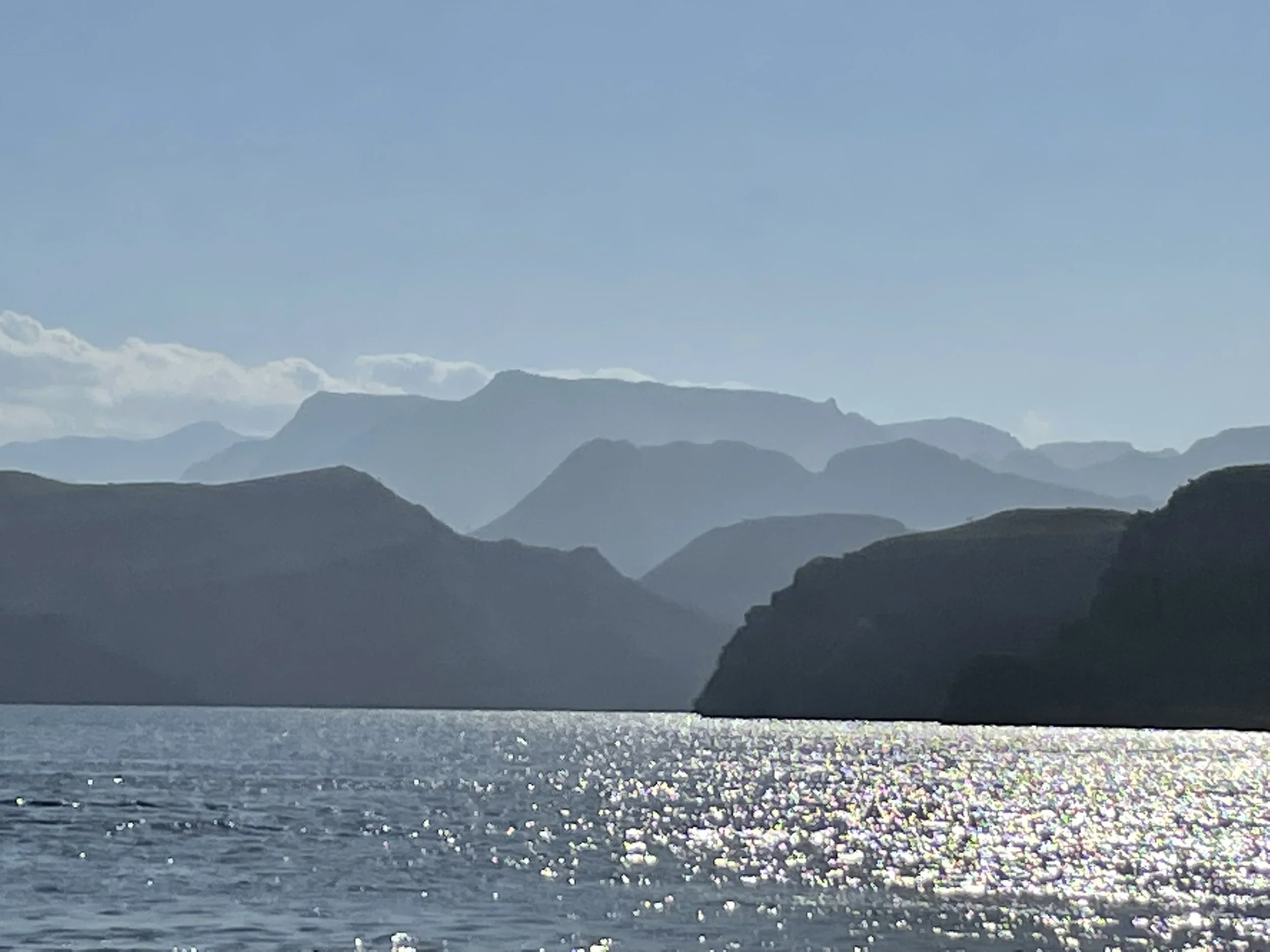
So, after returning to port, we just left Musandam for the UAE again, but you may want to consider staying for one or two more days to get more rest or simply to explore a bit more of the Musandam Governorate.
You can take the world’s longest zipline (1,800 metres), which has one of its ends right next to the Atana Khasab Hotel, or you can try to explore a bit of the interior of the exclave, which has some really high mountains reaching above 2,000 meters, although I don’t know how accessible those tracks are.
In any case, a day sailing through the waters of the Musandam Peninsula is an amazing, unforgettable experience and one I would recommend to anyone visiting this part of the world!
Further reading
If you are traveling in the area of planning to, you may want to check also my posts about:
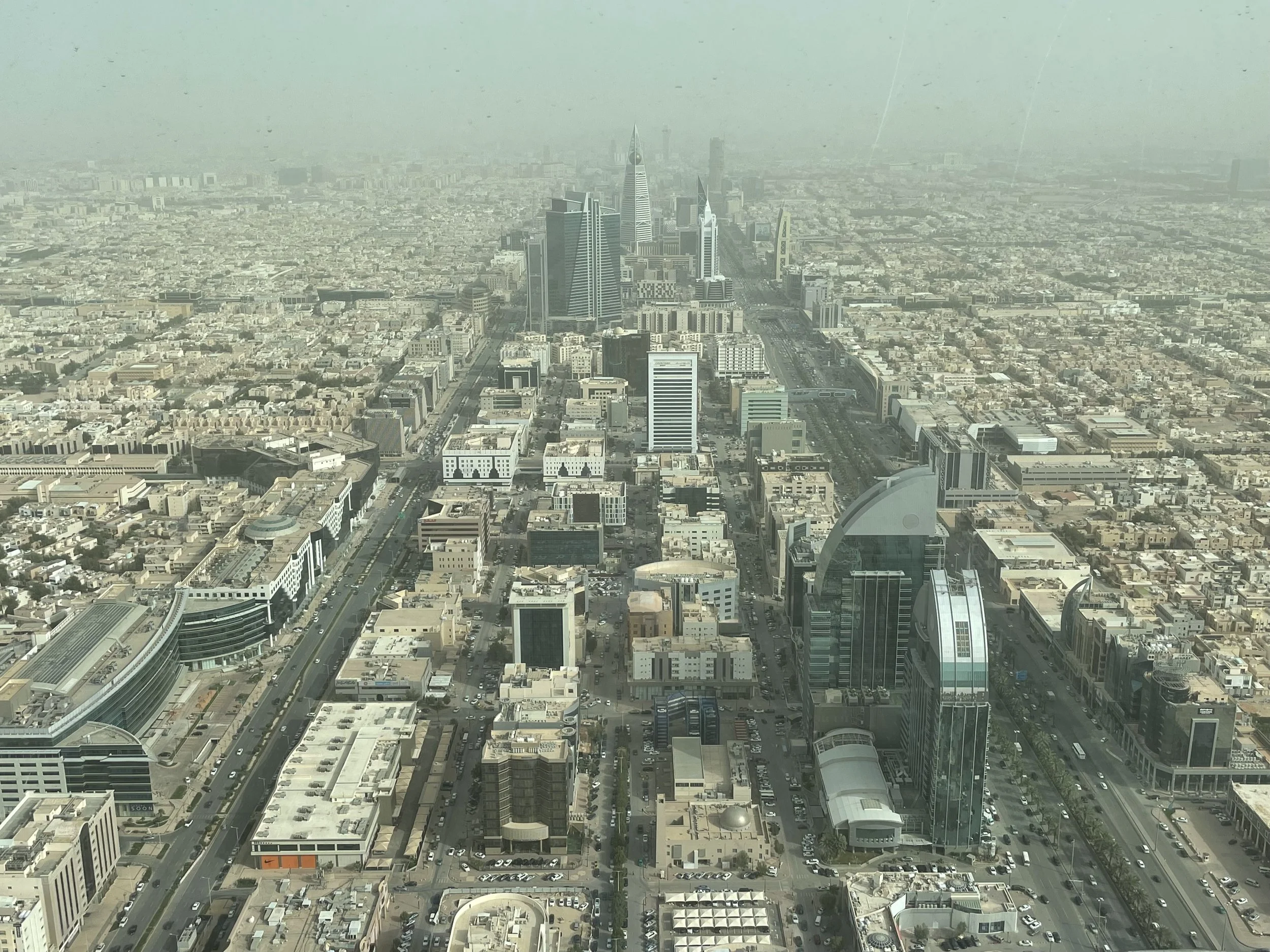
48 hours in Riyadh: what to do and what to see (Updated)
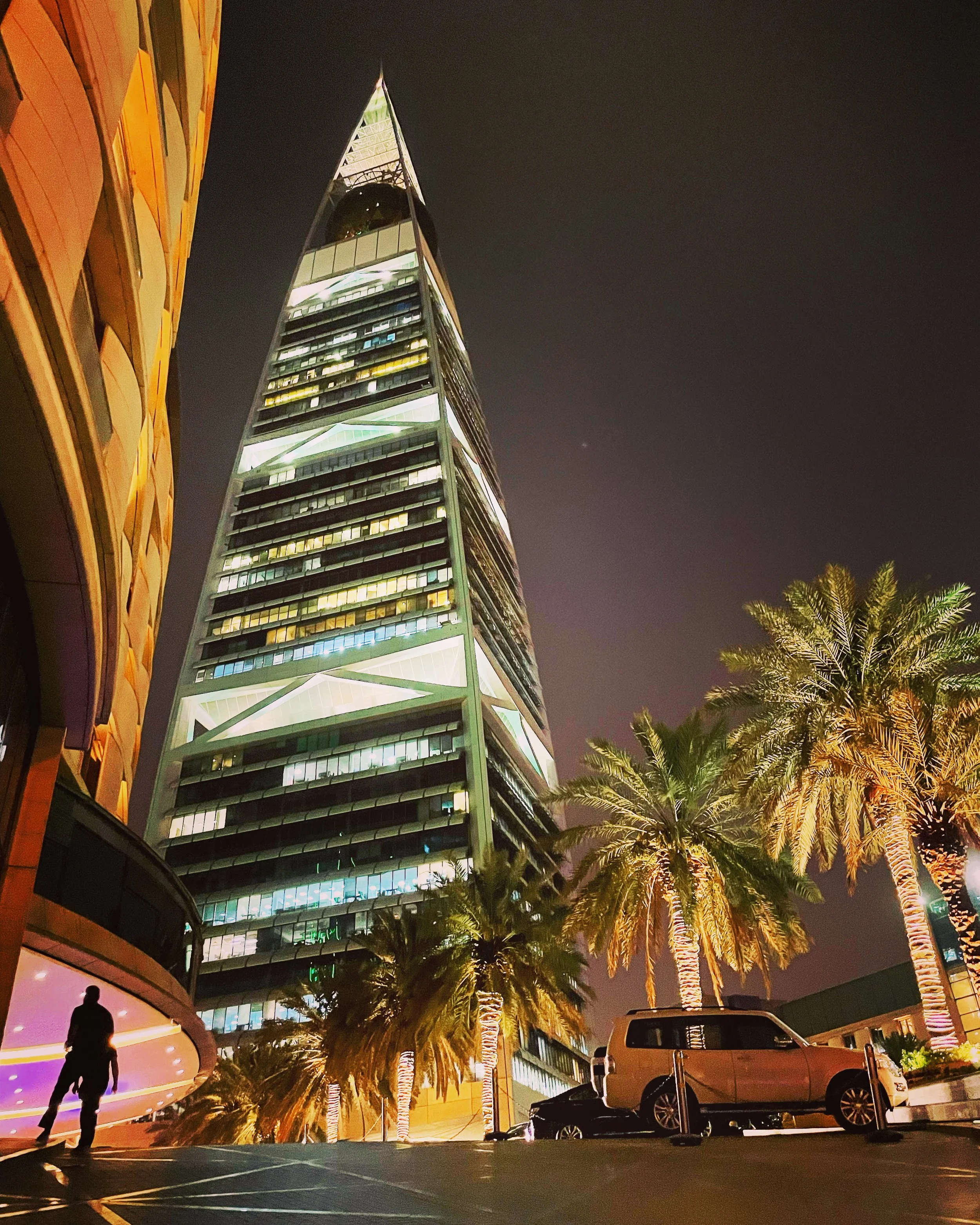
Al Faisaliah Tower, Riyadh
When I first published this post, it was meant to be a classical “48 hours in the city” type of article. However, successive business trips to the Saudi capital have allowed me to explore more of the city, to the point that I have kept adding more recommendations about what to do and what to see when visiting Riyadh. So, it may be quite challenging now to do it all in 48 hours.
Nevertheless, I still think the places and experiences that I list on this post are still mostly doable in a relatively short visit, so, in keeping with the theme of this site, I decided to keep the title while continuing to enrich the content.
Table of contents:
Top views in Riyadh
Riyadh Season
Boulevard City
Boulevard World
Royal Saudi Air Force Museum
Where to stay in Riyadh
Where to eat in Riyadh: two suggestions
Day trips around Riyadh: the Edge of the World
Saudi Arabia has emerged as one of the world’s up and coming tourist destinations and this is not random. There is a very deliberate intent, under the “Vision 2030” strategy to make of tourism one of the forces capable of driving economic diversification away from oil.
The Saudi government is, in fact, investing heavily to make of the kingdom one of the top countries by number of visitors in the world: new airlines, airports, resorts and cities are in the menu. In fact, a whole new business district gleaming with new skyscrapers, hotels and office buildings appeared to have emerged out of nowhere in the short time since my earlier visit.
So, it is entirely possible that some Saudi cities may look quite different in a few years time, see for example, the massive restoration work that is going into restoring Jeddah’s historical district, but let’s focus on the Riyadh of 2026.
What interesting things can a visitor see and do in Riyadh already today? Let’s have a look…
Top thing to do in Riyadh
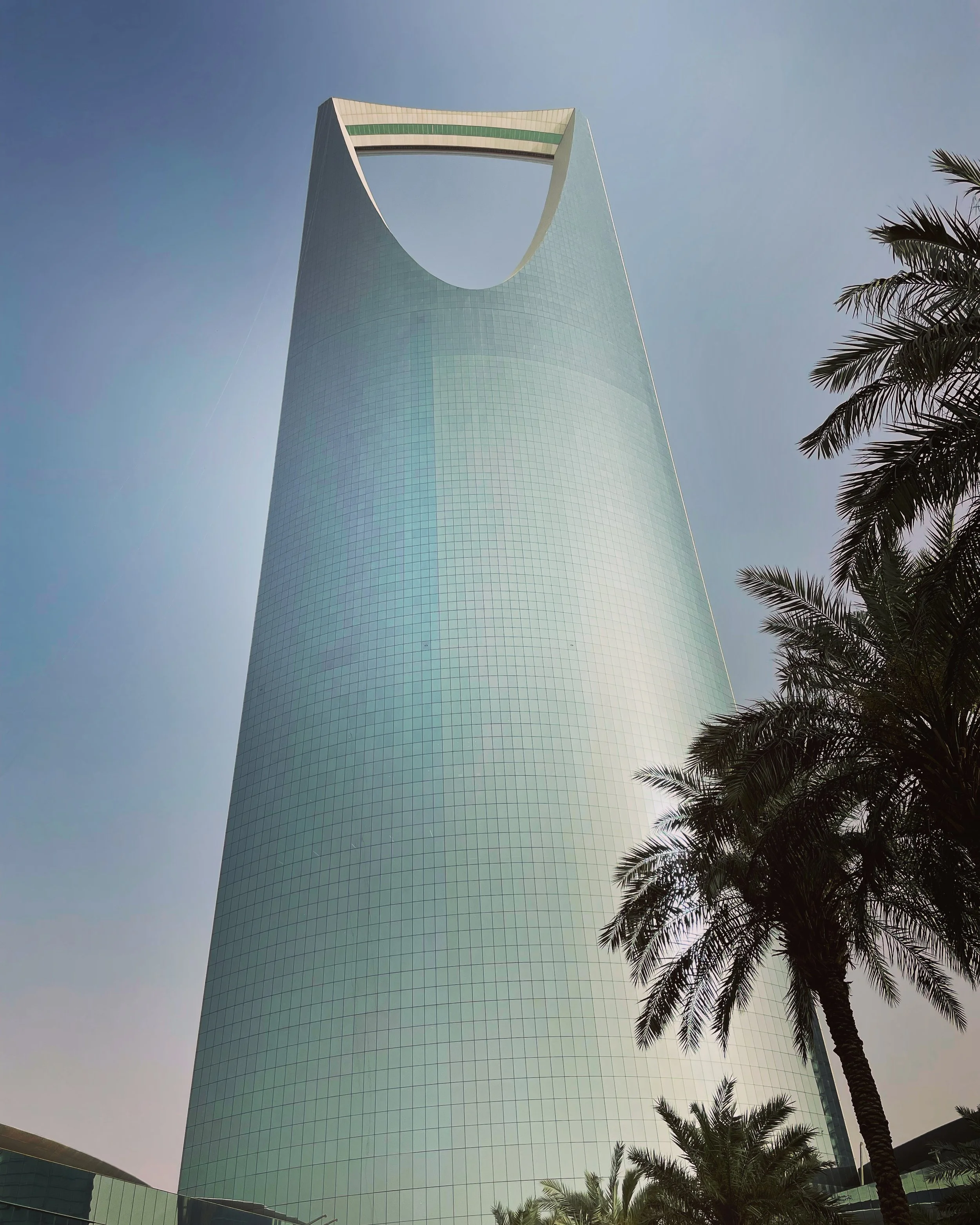

The bridge at the top of Riyadh’s Kingdom Center
If there’s an iconic building in Riyadh, this is the Kingdom Center, a 302m skyscraper with a very prominent “eye” at the top.
The very top level of the building, which acts as a bridge between the two sides of the opening, can actually be visited. And this is actually something I would recommend doing first if you find yourself with some spare time in Riyadh.
From the top of the Kingdom Center you have the best views of the city, giving you an idea of the extension covered by the urban sprawl. It is even possible to discern exactly where the city ends and the desert starts, without transition.
From here you can also get an excellent view of Riyadh’s central strip, which the Saudi authorities expect to develop, over time, as a sort of Dubai or Manhattan-like skyscraper district.
As of 2025, only a few of the planned high rises are currently standing. One of them is the Al Faisaliah Tower, which is another iconic skyscraper, with a roughly triangular shape and a giant 24-meter diameter ball at its top (you can see it in the picture opening this entry).

One thing that surprised me is that there was almost no one around when I visited, neither in the viewpoint, nor in the luxury mall at the base of the building. I counted about a dozen employees on my way to the top, but only a couple of other visitors in the whole time I spent there.
Nevertheless, the views were magnificent!
Riyadh Season & Boulevard City

One of the symbols of the process of liberalization that Saudi Arabia is undergoing is the Riyadh Season.
This is a festival that runs from October to March, with many cultural and entertainment activities scheduled throughout the city. This is quite a radical development is you think that cinema, music and other forms of entertainment were severely curtailed until only a few years ago!
The Riyadh Season has several venues but one of the epicenters is Boulevard City and the adjacent Boulevard World (BLVD World), a massive entertainment complex on the western side of Riyadh. Think Disneyworld meets Time Square, but in the desert!
At the time of my first visit I was only able to pay an evening visit to Boulevard City, so I will focus first on this bit. The area is being developed so fast that it is likely that by the time you read this post, new amusement areas have already sprung up in the vicinity (there is certainly no shortage of land for this!).
UPDATE (as of March 2026): indeed, by the time of my next visits, Boulevard World was already completed and in full swing. So keep reading because I will describe it next as well!

You can tell Boulevard World is really new and no effort has been spared in order to create a sort of immersive experience with plenty of sensorial stimuli, be it light, music or water effects.
In some ways, it is not too different from the typical set up of a World Expo (and, yes, after Osaka, the next World Expo will actually be held in Riyadh!)
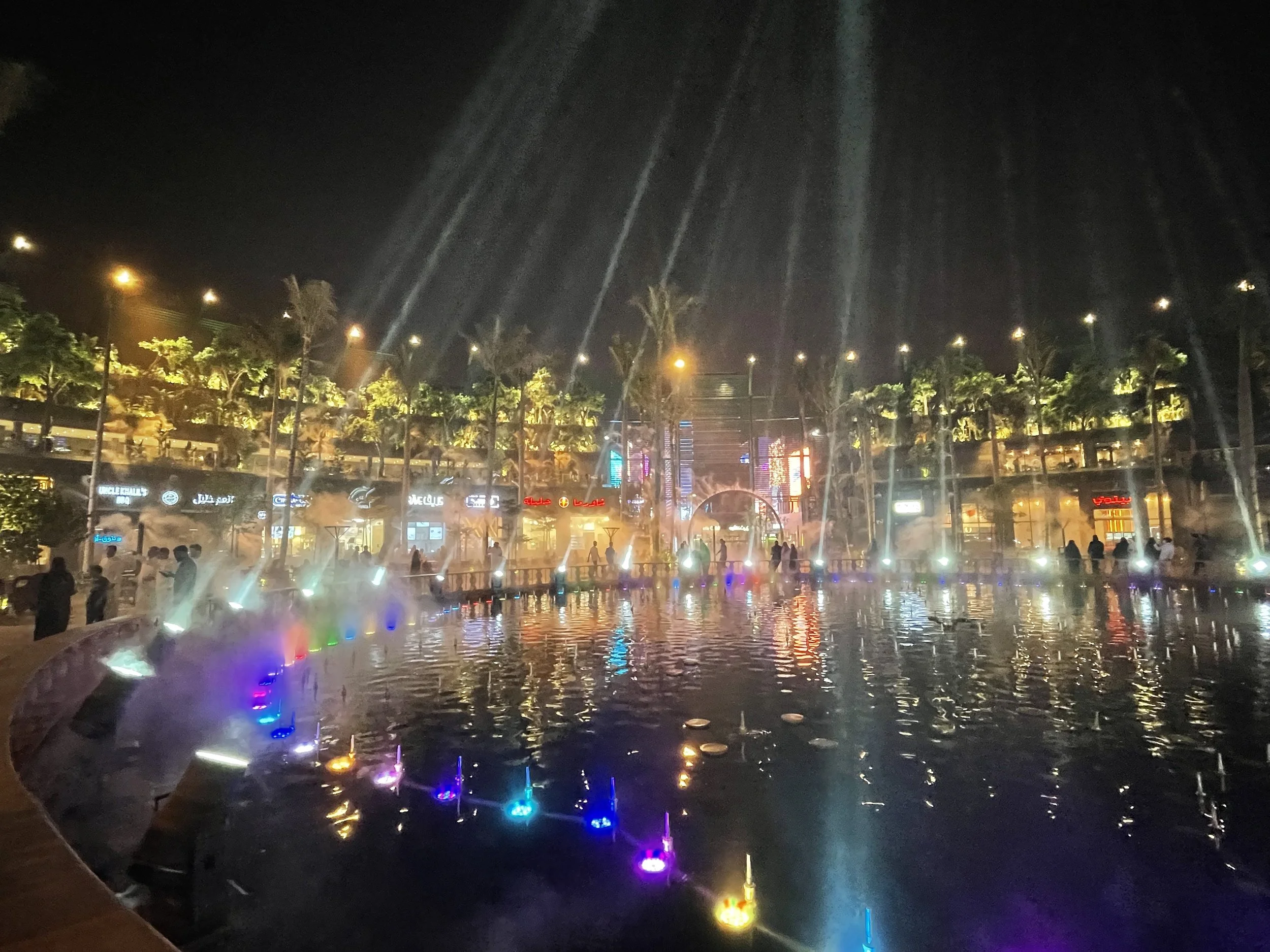

By the way, to give you an idea of the scale of the place, Boulevard World also hosts a massive man-made lagoon, which is quite a thing considering the Riyadh’s desert environment! (always wondered where do they get the water from to run such a huge city in this very high and dry location).
There are also plenty of places to eat throughout Riyadh’s Boulevard City, although the two suggestions I present further below are actually in other parts of the city.
Visiting Boulevard World in Riyadh
Boulevard World is the theme park adjacent to the Boulevard City (and both together are part of the collection of amusement venues and festivals that are known as “Riyadh Season”).
I had been to Boulevard City before, a true example of the social transformation that has been going on in Saudi, so I was curious to see what Boulevard World next door was about, particularly considering that Boulevard City is already a pretty vast entertainment complex. The visit didn’t disappoint and, as you may imagine, it has been built on a massive scale.
What is Riyadh’s Boulevard World, then?
If you have been to any of the Disney parks or to a place like Port Aventura, near Barcelona, the concept will sound immediately familiar: it is a massive entertainment venue which is organized in different thematic sections each aiming to reproduce a country or region of the world. Visitors can follow an itinerary that takes them on an (almost) literal world tour and can enjoy activities, foods and shopping related to each of these areas.
There is an entrance fee of either 29 or 58 rials depending on whether it’s weekday or weekend, that is $8 or $16 (€6.7 / €13.4) respectively at March 2026 exchange rates.
So, pretty reasonable compared to Disney, I think!
To get the ticket you will need to download an app called Webook. It is a bit annoying to have to download an app you may never use again just for one purpose, but, apparently there is no other way! The purchase process, however, is pretty straightforward once you have downloaded the app.
The whole place is structured around a vast artificial lake, with the different countries and regions of this “World” easily recognizable by the iconic landmarks you come across.
There are sections dedicated to: Saudi (with Jeddah’s famous coral houses), China, Turkey, Central Asia, the GCC countries, Egypt, Africa, Greece, Ancient Rome, Italy, Mexico, Spain, India, the US, France, Thailand, Japan…and quite a few other places I can’t even remember!

And there are also some items that are not country-specific but pretty cool, as well, like real size dinosaurs and a giant sphere covered in LED lights that keeps depicting different very realistic images all the time, a bit like the famous sphere in Las Vegas…because there is a touch of Vegas, as well, in this whole Boulevard concept.
It is a pretty huge territory and, even if we practically didn’t stop to eat, drink or play, it took us a good two hours to walk the whole itinerary at a relatively fast pace.
So, definitely a place to visit in Riyadh if you have some spare time in the evening, but, beware! If you are planning to see both, Boulevard City and Boulevard World, better do each of them on separate days, because otherwise it can be exhausting!
The Saqer Al-Jazirah Saudi Royal Air Force Museum

I did cover this museum in this post for the Allplane aviation site, however, I thought any post about things to do and to see in Riyadh should include a mention to this excellent museum.
If you are even minimally interested in aviation, you will like it! Even if, truth, be said, it is far from easy to reach. The only way to get there is by taxi/Uber and the entrances are not clearly signalled, so actually my Uber left me at the far end of the perimeter, not at the main entrance.
Likewise, getting back to my hotel was a small odissey, since I Uber drivers kept cancelling rides at the last moment and took me something like one hour or waiting time, plus a not very pleasant walk on the side of the mortorway to a nearby McDonald’s to be able to get a ride back! So make sure you have enough battery and a charger with you and some way to access the internet on your phone if you don’t wish to get stranded!
On the positive side, I must say that the museum staff were super friendly and helpful and helped me with my internet connection and offered me tea and sweets during my wait.

The museum collections are pretty impressive and are split between an indoor and an outdoor part. Pretty much every model of aircraft operated by the Royal Saudi Air Force is in display here and there are also some civilian aircraft that were once operated by flag carrier Saudia, including a rather remarkable Lockheed L-1011 Tristar.

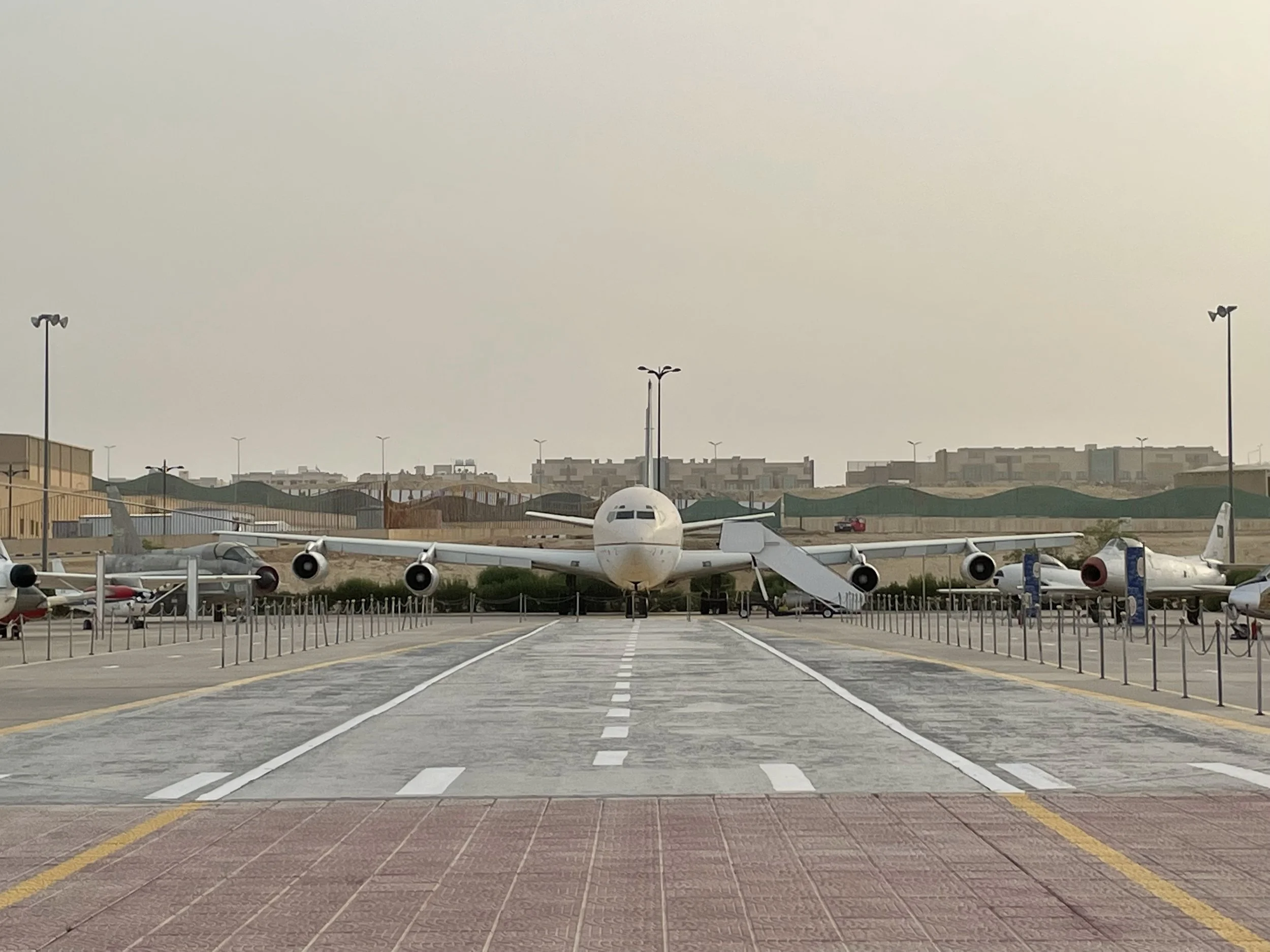
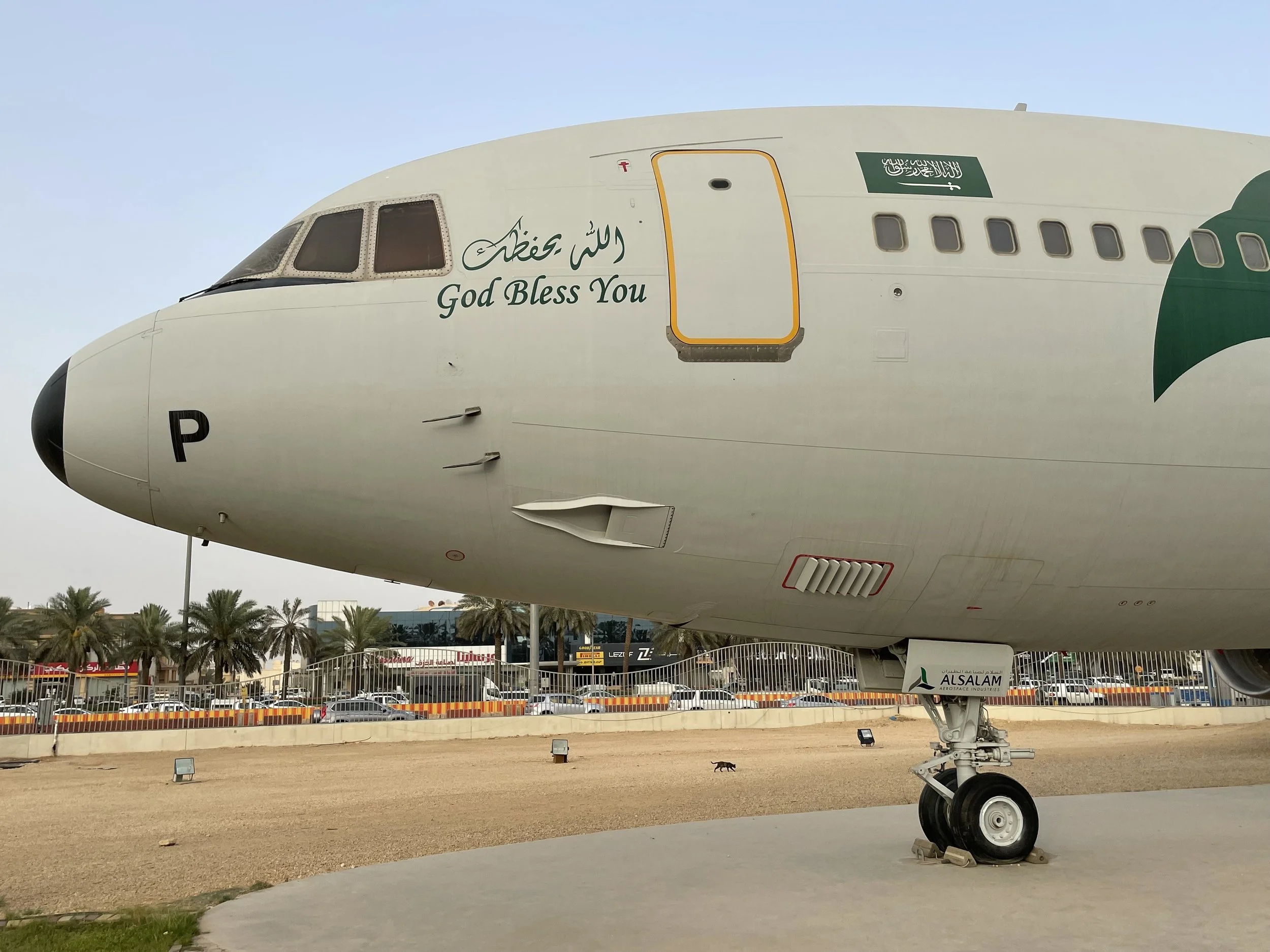

Where to stay in Riyadh
Since I have been at two different hotels in Riyadh, on different occasions, I will outline both here, starting by the one I liked the most.
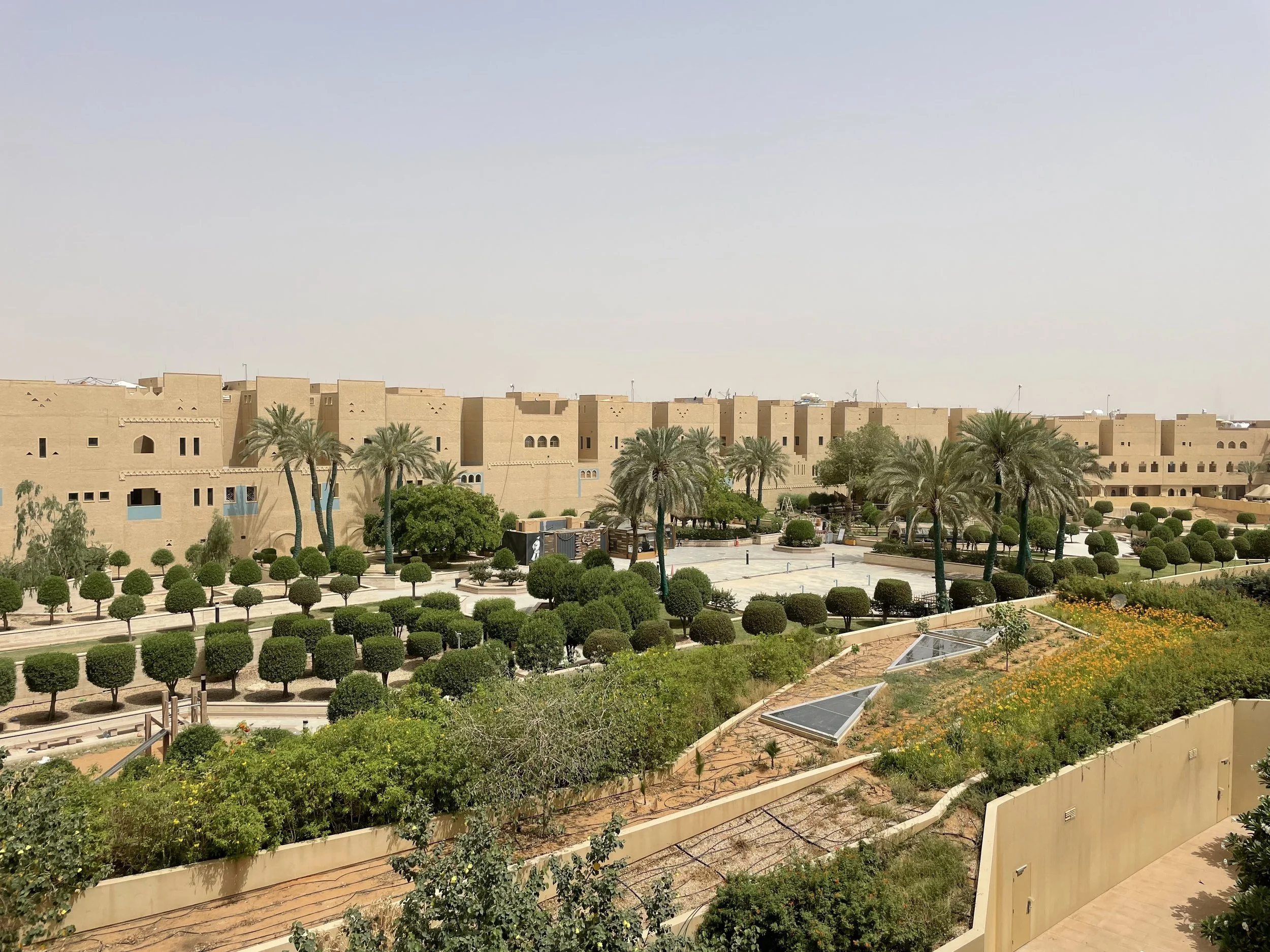
Radisson Blu Diplomatic Quarters
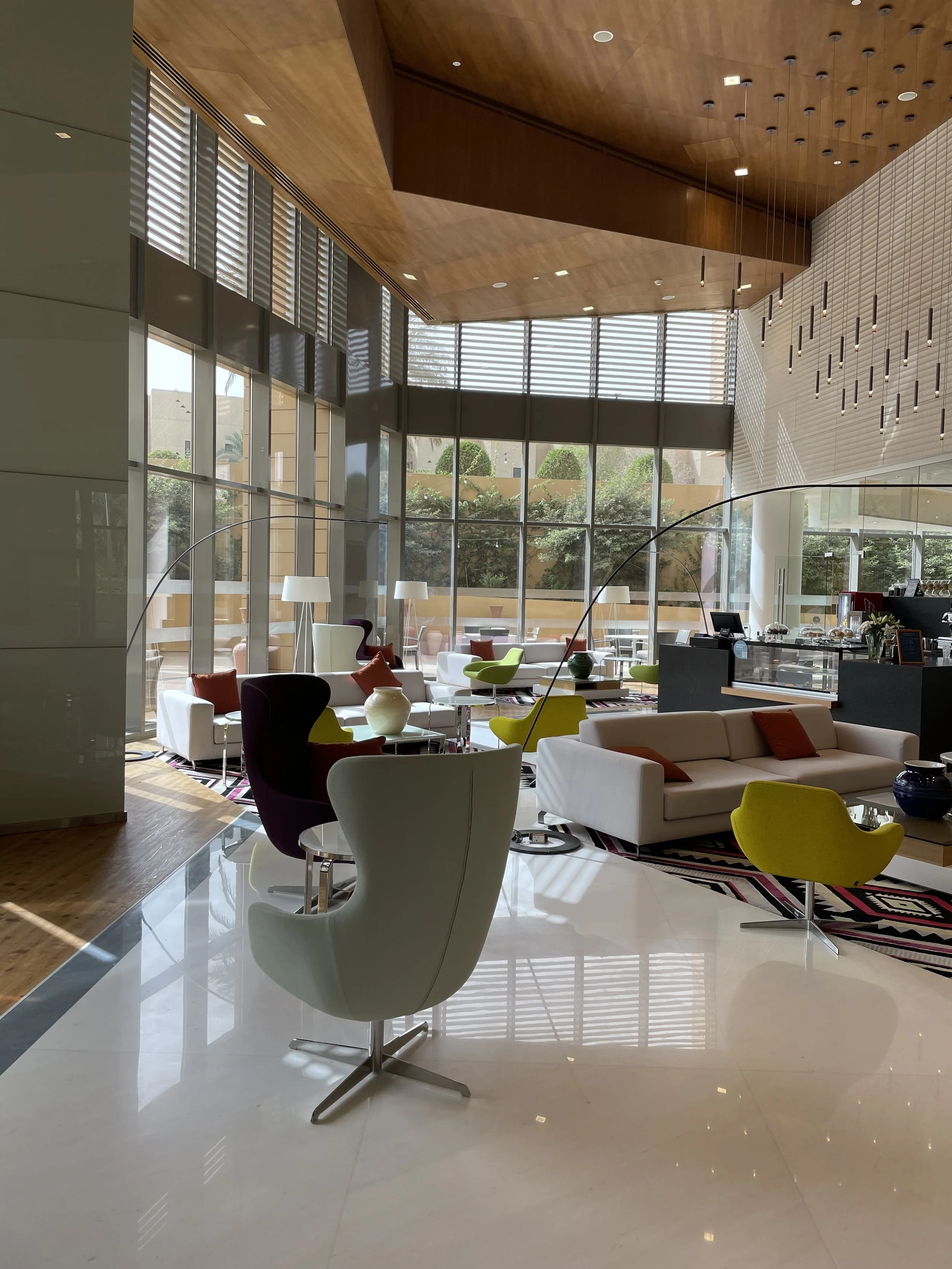
This is a very nice hotel, located in the diplomatic area of Riyadh, to the west of the city. In fact, the whole area has some sort of special security status, as there are checkpoints to get in an out.
The whole facility is super new and it shows in its design. It is not super central, but you need a car to move anywhere in Riyadh, so I guess this is a rather secondary consideration here.
Also worth of note is the breakfast, which was really tasty and had an interesting mix of international and Arabic specialities.
I was also surprised to find out the room had a small kitchen!


A couple more pics of the room, which was impeccably clean and contemporary in style.

Al Waha Hotel Riyad
This is a more centrally located hotel, belonging to a local chain.
The room was quite spacious, but, to be honest, there were some service glitches and, overall, despite being technicall a four-star, it was not nearly at the same level as the other hotel I previously commented on.
The registration took very long, I understand there is some paperwork to be filled, but it was not done very efficiently to say the least.
Then there were issues with some of the lights in the room, namely the one in the cupboards, which wouldn’t switch off due to some faulty sensor, so I had an ongoing fight throughout the night, since it activated at random several times, waking me up.
Last and not least, my room was not done upon coming back from my day appointments and this, I was told, was due to not having indicated my preferences for room cleaning, since apparently it is a requirement so that female staff can know when they can enter a room. This is apparently by regulation, but I would have appreciated some warning before hand.
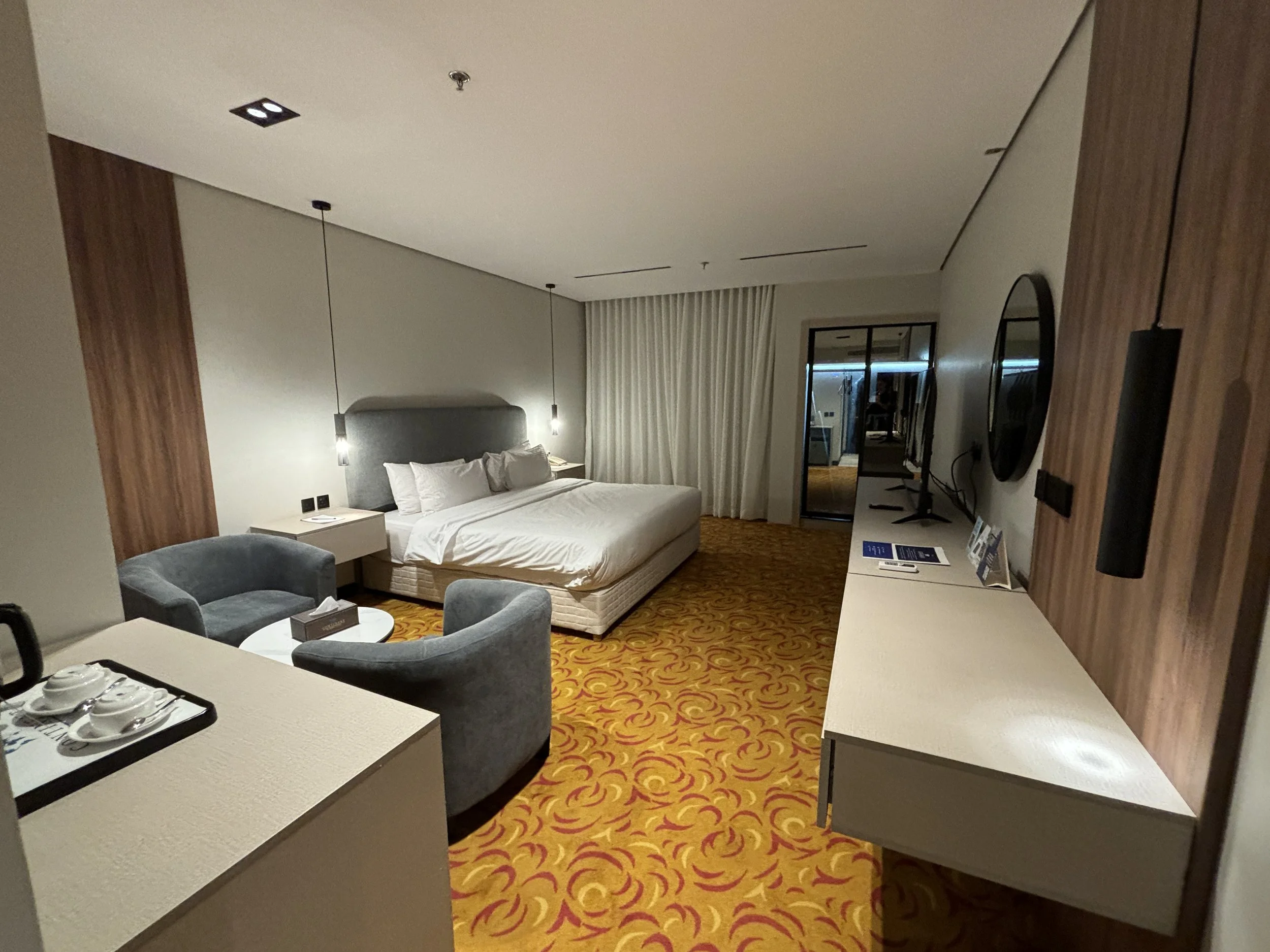
Having said that, when I complained about the above points, the staff were apologetic and they made sure the issues were fixed on the second day of the stay.
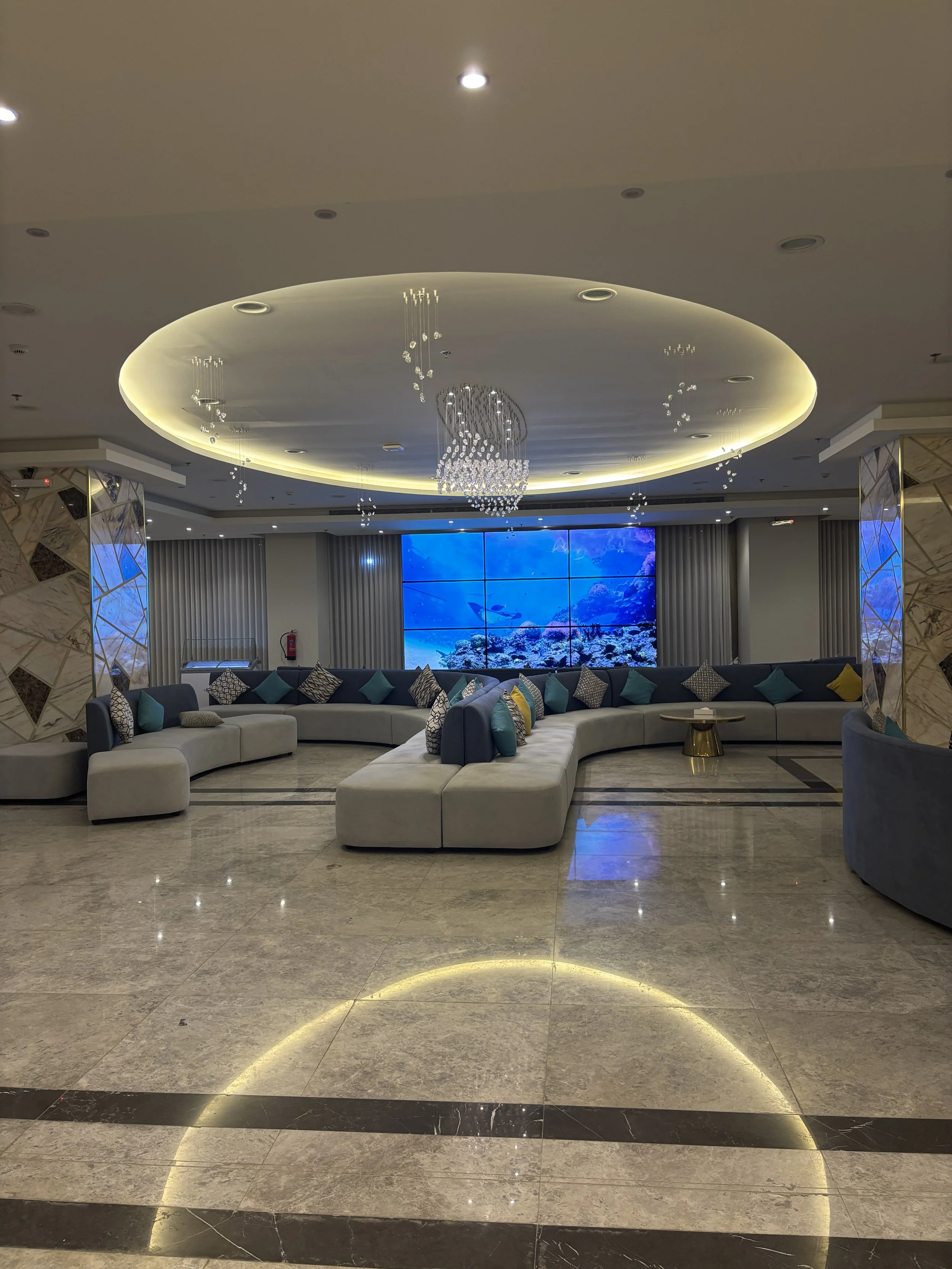
Best Western Premier Riyadh
King Ibn Saud Abdulaziz Saudi, As Sulimaniyah
Riyadh, 12621
This hotel appears to be quite new or recently renovated. It is a great value option to stay in Riyadh, offering good quality-price. Staff were also very friendly throughout.
Location-wise it is not super central, but not too far from downtown either. In Riyadh you always need to take a car or taxi ride anyway!
Breakfast was ok, although I would say that is the weakest part of its value proposition.
Other positive features: fast wifi and a comfortable lobby stocked at all times with Arabic coffee and dates.
The room was really large. In fact it was more like a two-piece apartment. Perhaps the most remarkable thing is that the bathroom was split in two separate pieces, with the shower alone being almost like a room in itself!
You can check how the rooms at the Best Western Premier Riyadh look like in the pics below:
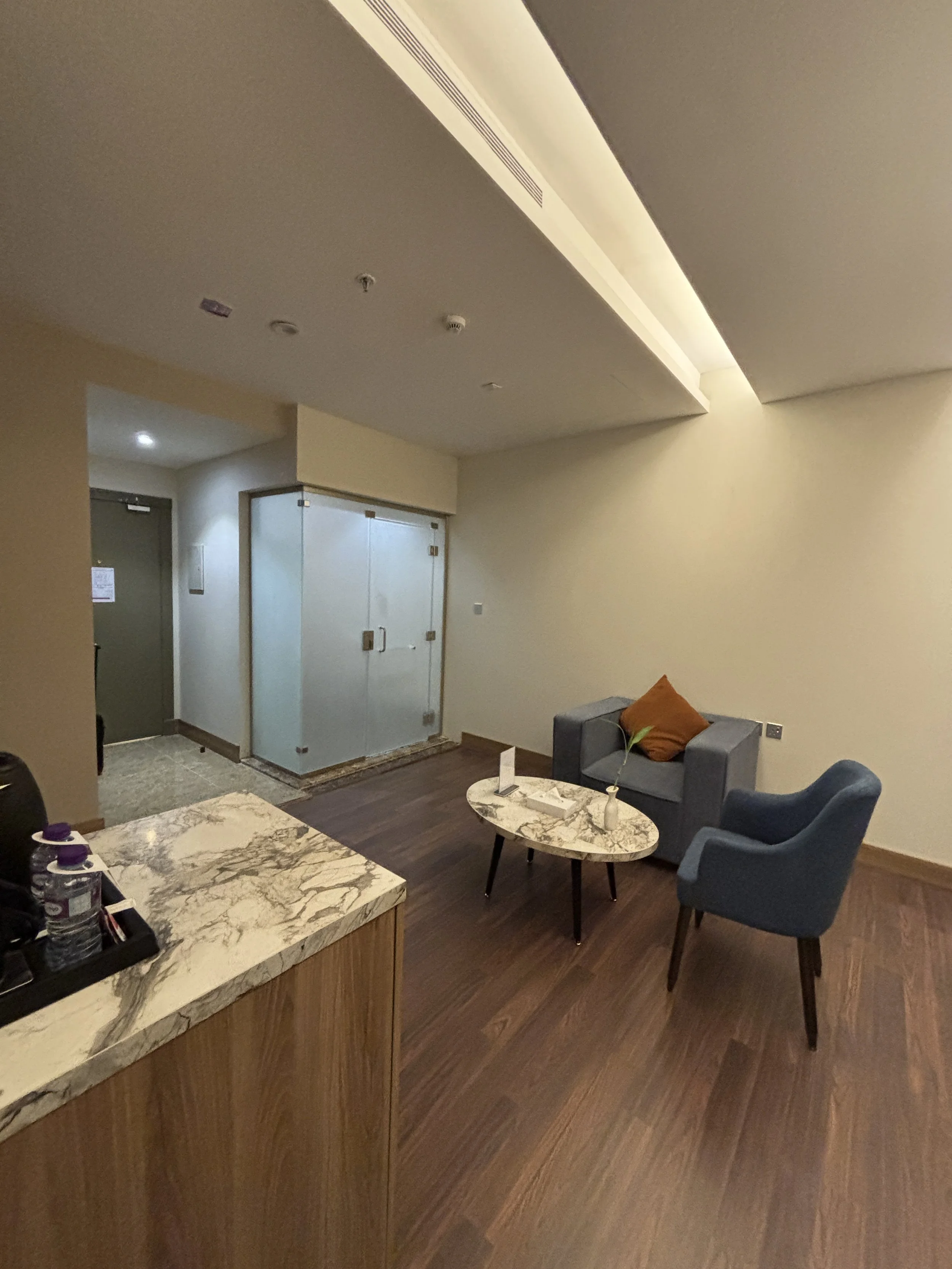
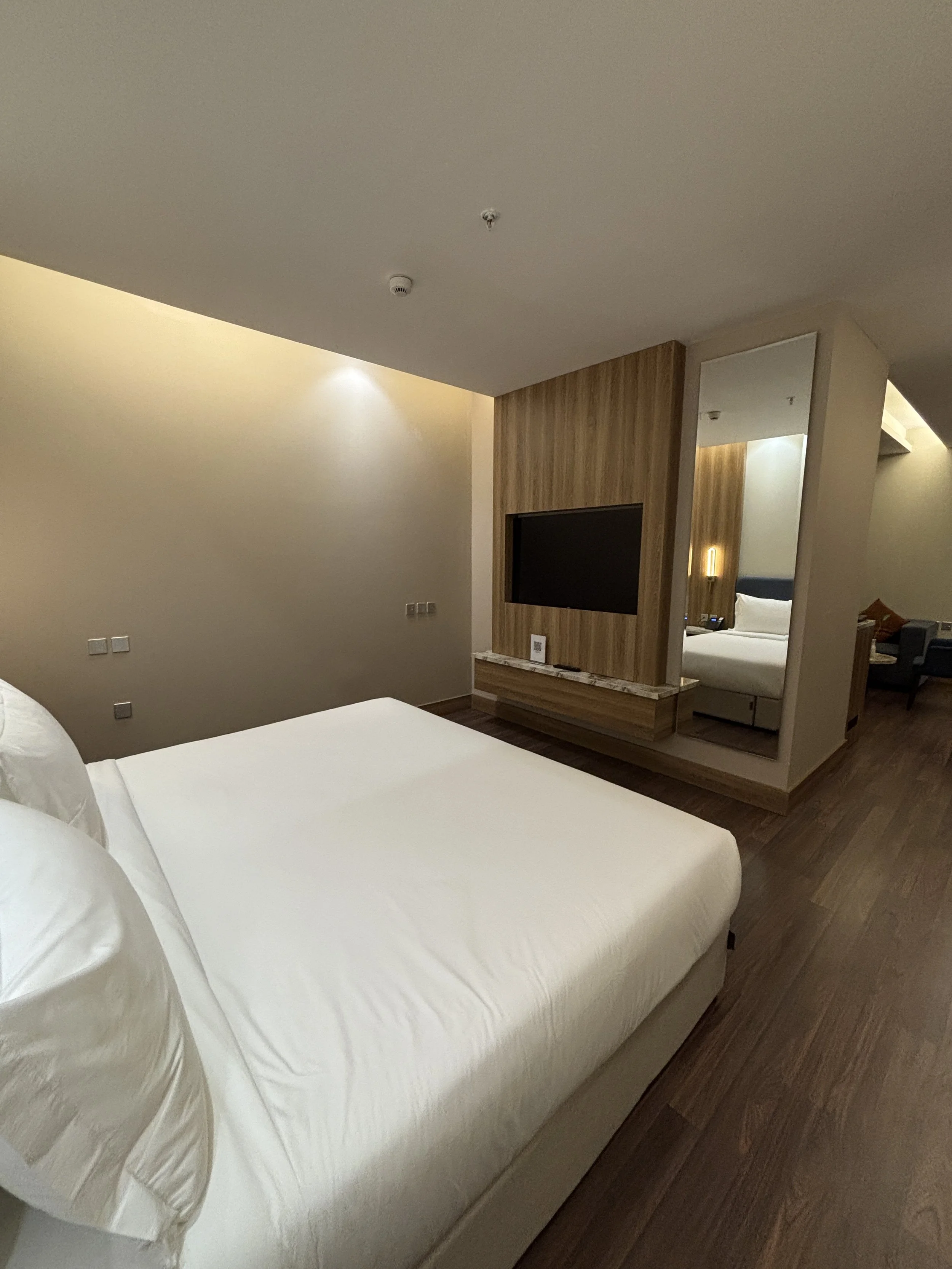
Where to eat in Riyadh
When it comes to getting the proper Saudi eating experience in Riyadh, the choice is clear.
Najd Village
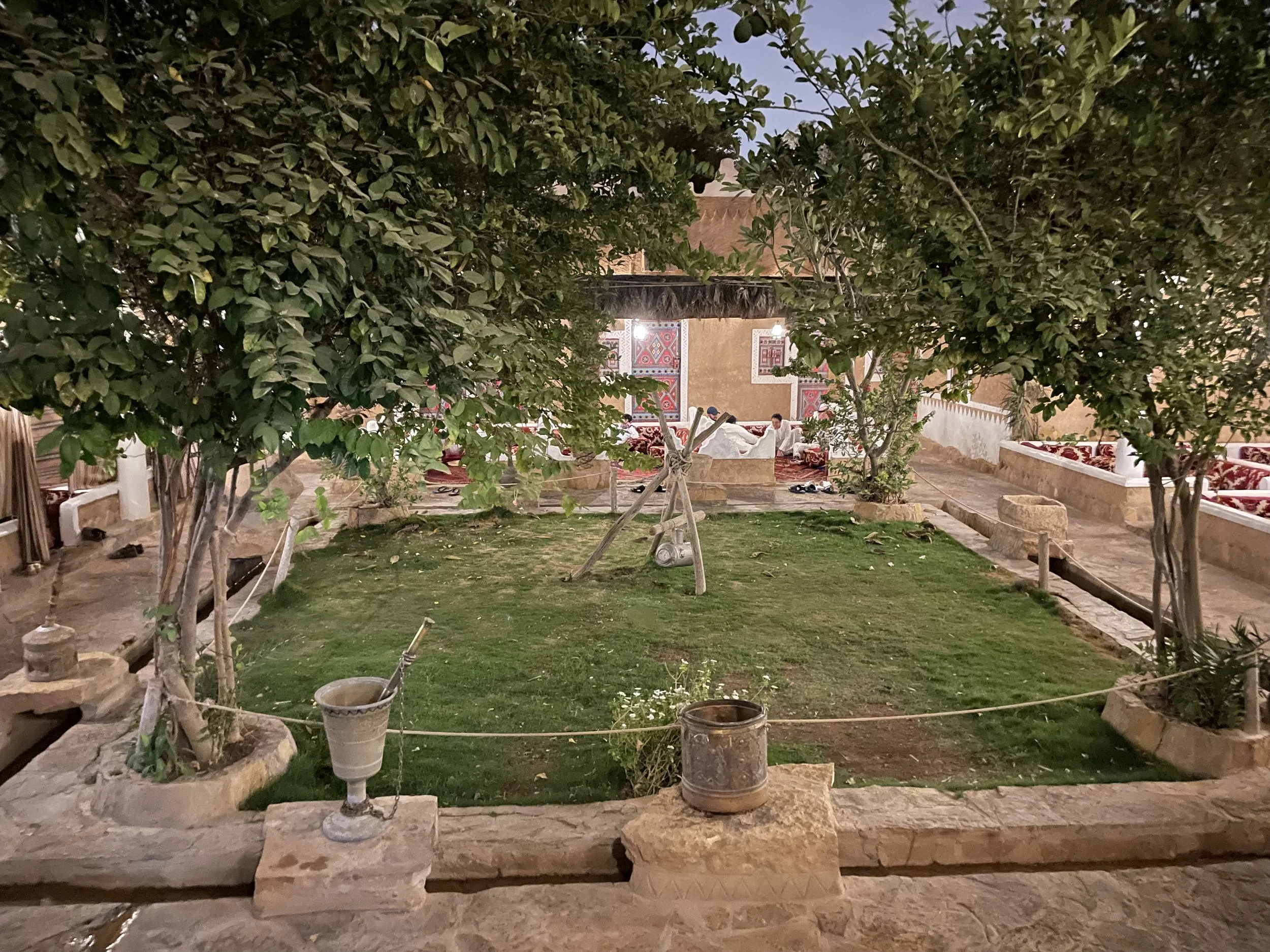
This is a bit like an oasis in the middle of central Riyadh. There are no traditional tables, but rather an array of eating areas arranged around a central courtyard with a small garden.
Najd Village restaurant aims to replicate the atmosphere of the desert caravanserais, where desert travelers used to rest and eat. You actually seat on the ground, or rather on carpets, and usually you would share the

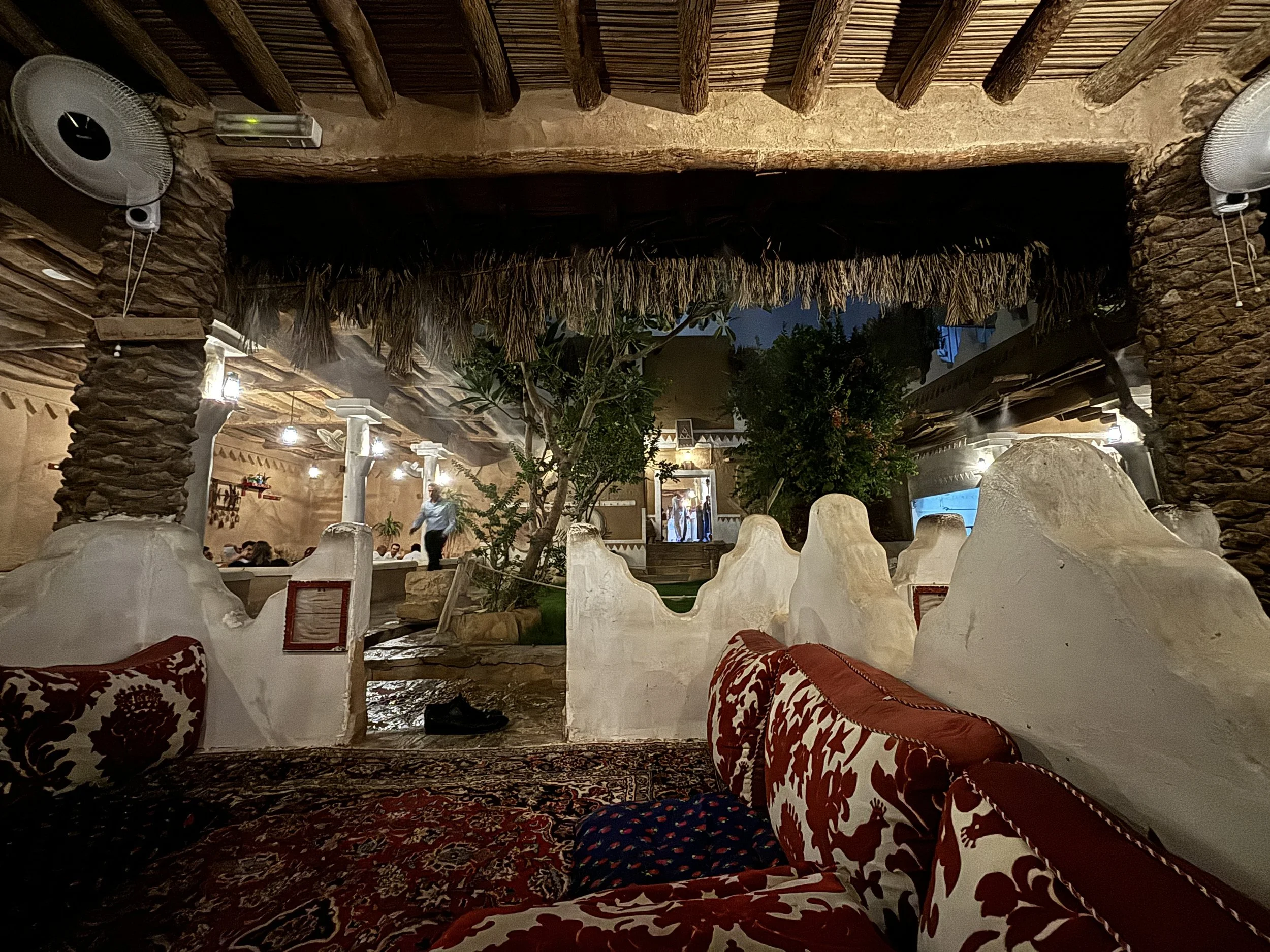
Now, beware the portions, because they are really, really huge!
We were three in our group and we each ordered one item from the menu and we could hardly finish it! But it was really good! I’ve been twice to this restaurant and the standards have been pretty consistent.
As per the food, there is a good selection of Arabic cuisine specialities, lots of nicely cooked meat and rice with a diversity of breads to go with, which really adds to the experience!
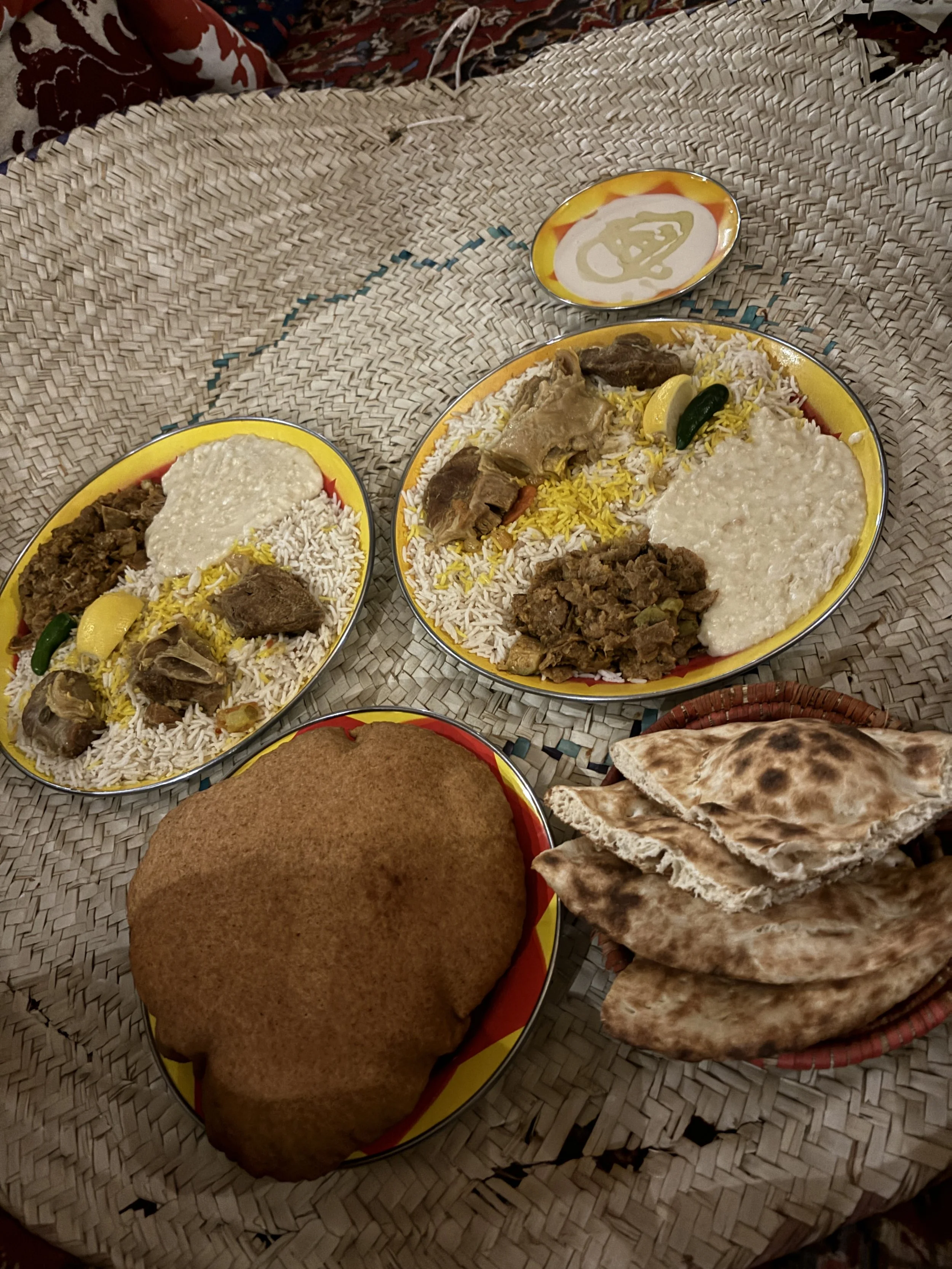

Restaurant Awani - أواني Tahlia
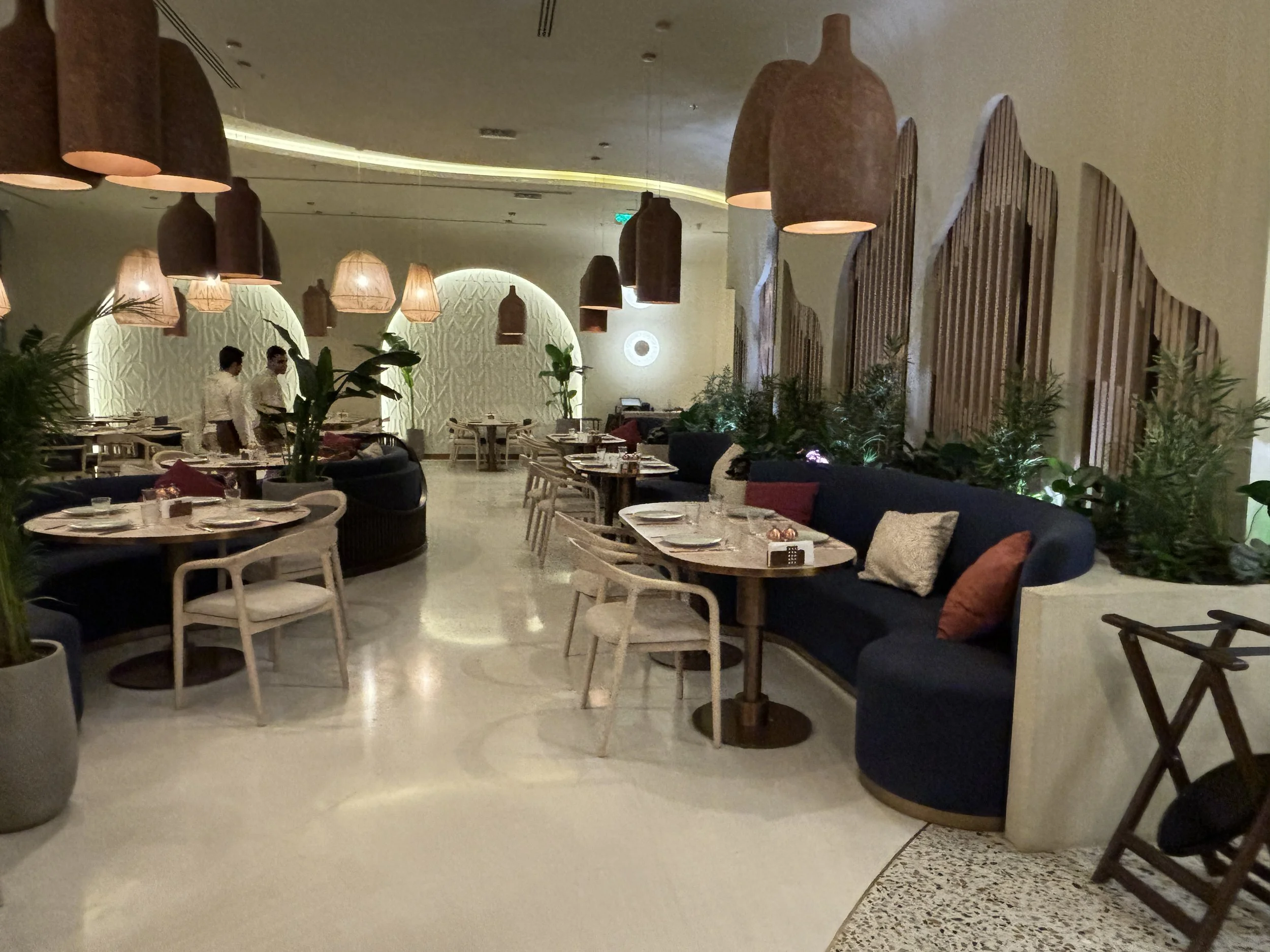
This more of a Lebanese place offering specialities from the broader Middle East. It is rather central, modern and functional, and the dishes were actually pretty tasty, so I thought it worth including it here, even if it is not really a local Saudi cuisine restaurant. You can get an idea of what it is like with the pictures below.


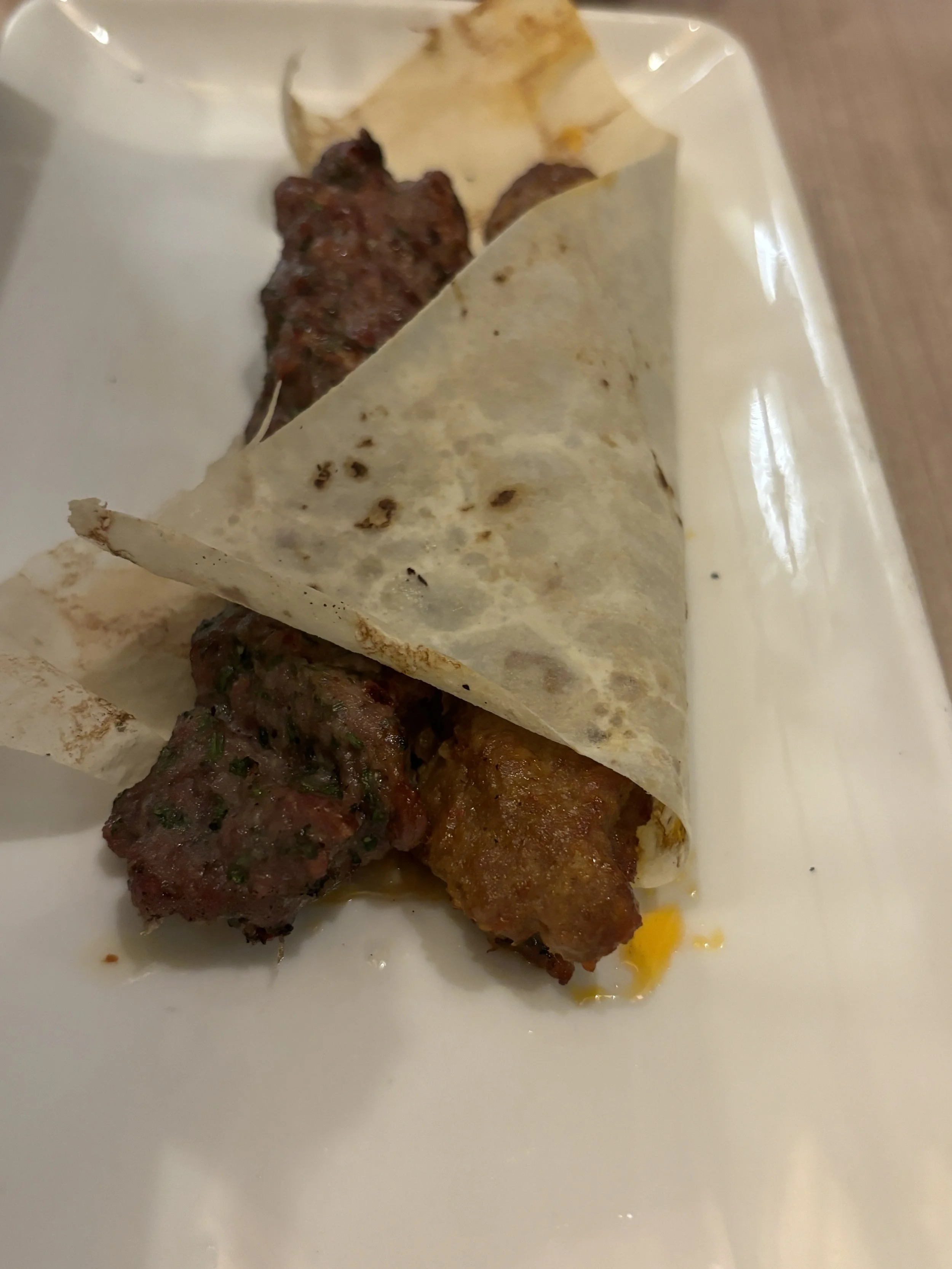
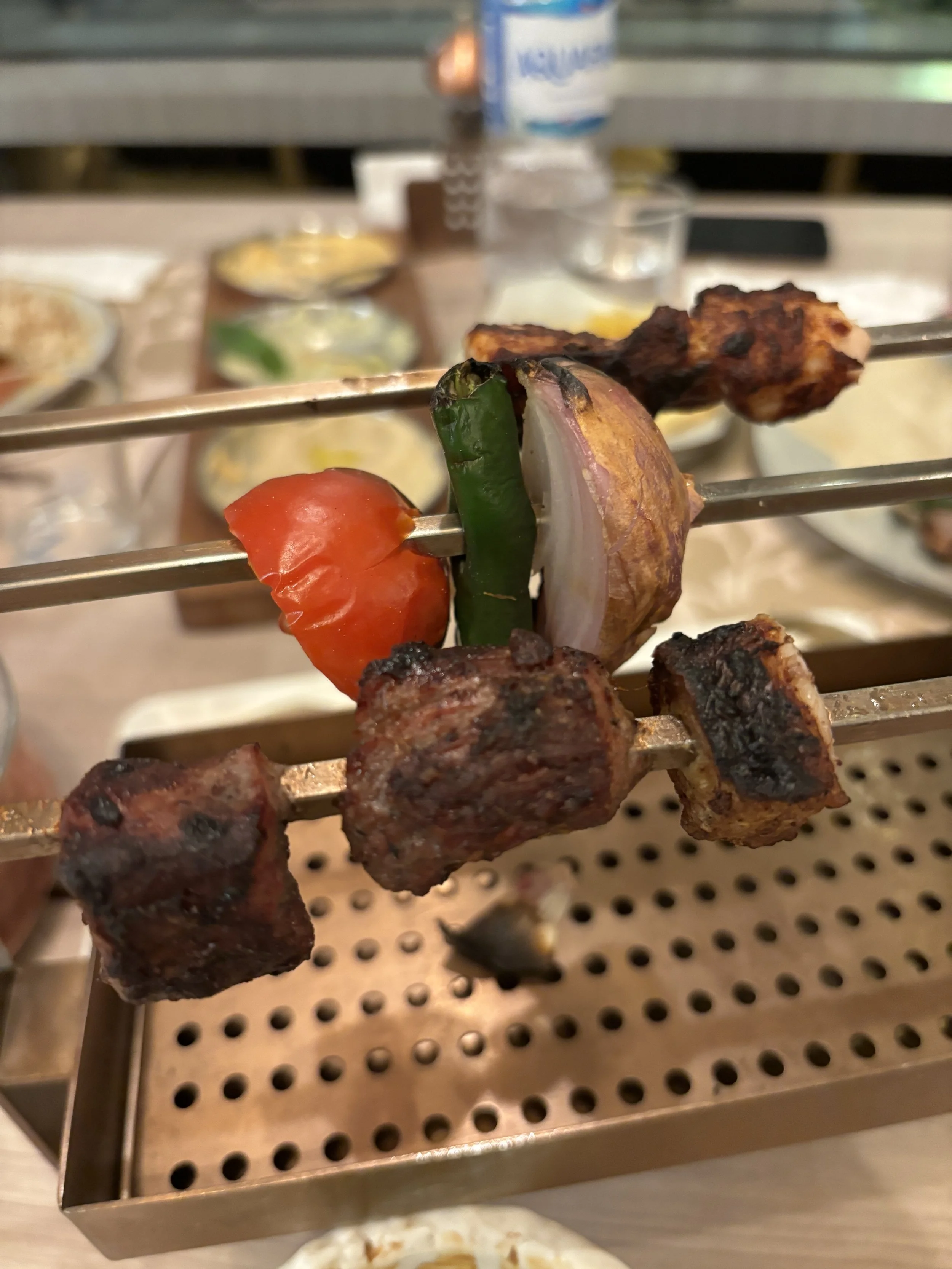
Day trip from Riyadh: a tour of the Edge of the World

If looking for something to do just outside Riyadh, but without having to venture very far out, the Edge of the World tour is your thing. It can even be done in half a day, since the main sights are less than an hour by car from western Riyadh.
Very important, though: you need to get a guide with a proper 4x4 car. This is not an activity a non-local can really do on its own. There is, however, no shortage of companies offering day tours of the Edge of the World from Riyadh.
In fact two “Edges of the World” are marketed as day excursions from Riyadh by these tour operators.
We chose the one called “Second Edge of the World” by a company called Riyadh Tours, but my understanding is that, whether “first” or “second” Edge of the World, it is pretty much the same experience, with the difference being the access route. One of the routes is only open on certain days, while the other is always open.
Only the “Second Edge of the World” was available when our group was there, but don’t be fooled by the name, it was well worth it!
In fact, I think the actual experience is pretty similar and it involves venturing out into the desert towards a ridge of hills west of Riyadh, contemplate the otherworldly landscape, have lunch on the spot and head back to the city.
Definitely one of the top things to do in Riyadh if you have a spare half-day!
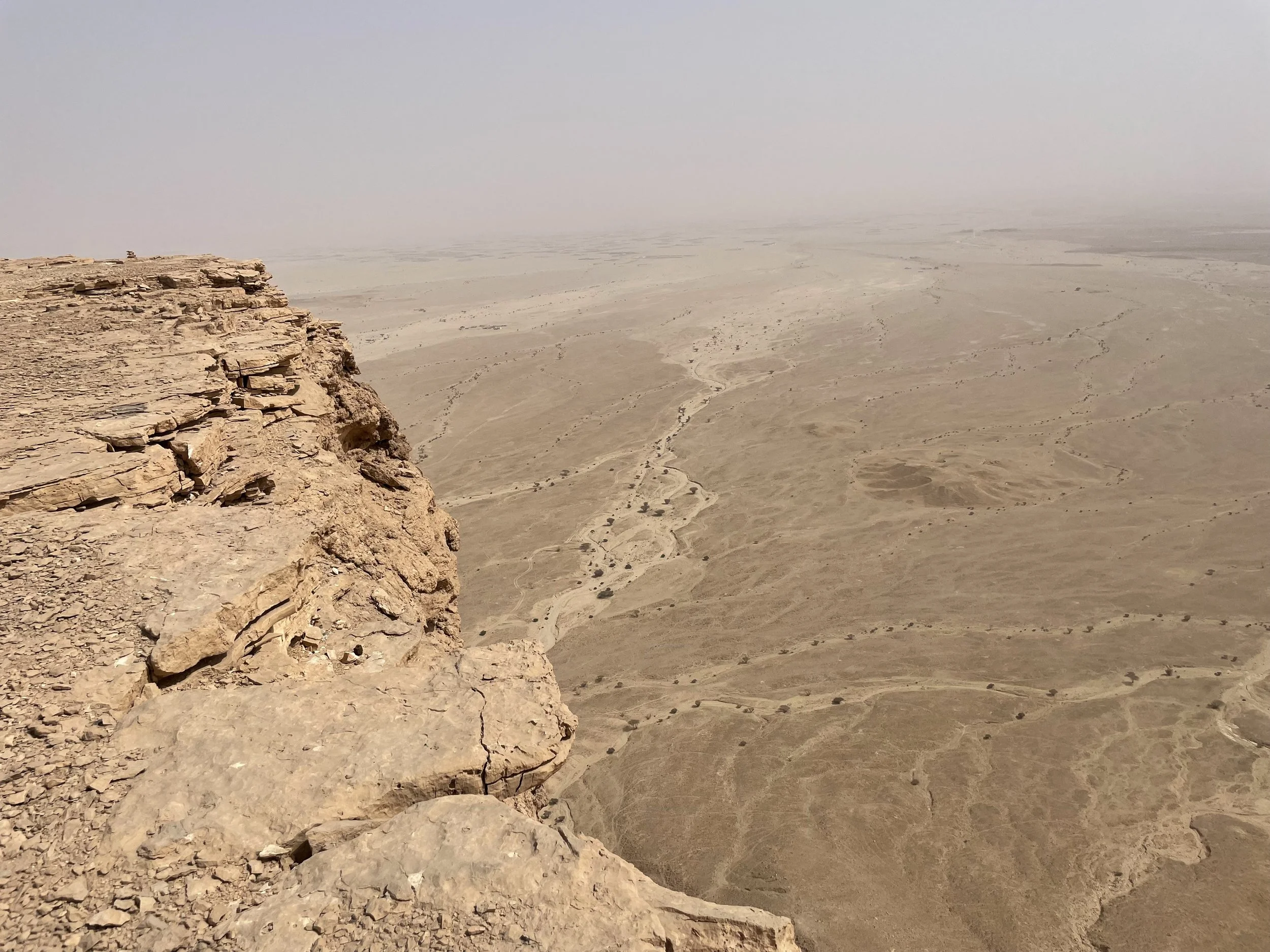
This was quite an interesting experience for me, since I always imagined the Saudi desert as a sort of flat space with sand dunes, but the reality is a lot more diverse. There are, actually, quite a few plateaus and hills in the desert and not all of it is sandy, a big part of it is actually a hard crusty surface!


So, in these tours (I think they more or less follow the same programme), the guide comes pick you up to the hotel in his vehicle and he takes you through a number of panoramic viewpoints in the desert.
The Edge of the World derives its name from the fact that there is a vertical cliffs that falls directly over the vast plain of the Saudi desert. It is pretty spectacular and provides great opportunities for Instagram-like pictures.

Most of the tours include also a lunch on the spot. The guide carries everything that is needed for this in the back of the car. At the time of the visit the temperature was pretty warm, in the high twenties-low thirties celsius, but still pretty bearable. So our guide just spread out some carpets and cooked some simple, but tasty meal on the spot. It was a great convivial moment with the group, an amazing experience.


As an added bonus, on our way to the Edge of the World we passed by some bedouin settlements that had camels and we stopped for a quick look at these amazing animals. As you can see in the picture below, they were quite friendly!

By the way, is planning a trip to Saudi Arabia, you may also like my post about Jeddah, its UNESCO World Heritage historical town and the Red Sea Corniche!
And if you considering traveling with Saudia, the national airline of the Kingdom of Saudi Arabia, check out my Saudia flight review!
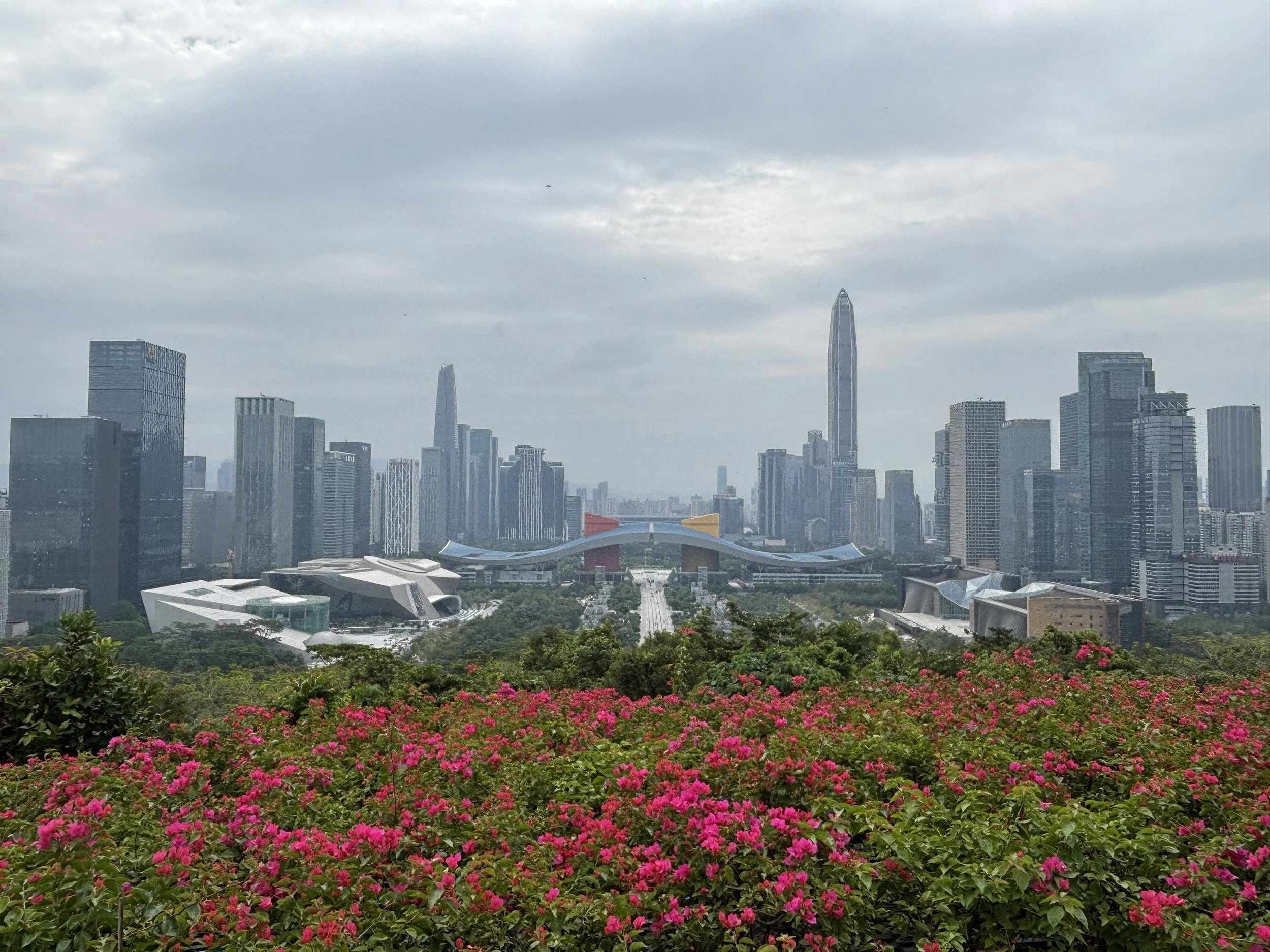
What to see and what to do in Shenzhen (day trip from Hong Kong)
If there is a city that has come to epitomize the Chinese economic miracle, that is Shenzhen. What was just a collection of fishermen’s villages on the border with, then British, Hong Kong, has grown, in the course of three decades, into one of the China’s largest metropolises and the beating heart of many of its export-oriented industries.
To be honest, Shenzhen is not your typical tourist destination, in the classical sense of the “tourist” at least. There is, of course, not much to see that isn’t less than 30 years old, but this is precisely the point of a visit to Shenzhen!
It is certainly a place that sees a significant flux of visitors, if only because it’s a major economic hub, but also a place where you can get a quick glimpse of the “new” China without having to go “full in”.
This is because mainland China is just a simple metro ride from next-door Hong Kong, a convenient base for the foreign visitor, since it is way more integrated into the, let’s say, “international travel infrastructure” which many travellers outside China are used to, from the availability of payment methods such as Visa and Mastercard to the availability of ride hailing apps like Uber to the use of the English language.
This type of quick day-trips to Shenzhen have also been made way easier by the decision taken by the Chinese authorities to grant visa-free access to the country to the citizens of a large number of countries, including most of European Union members and the United Kingdom (alas, not the United States at the time of writing these lines).
So, read on for our recommendations about what to see and what to do in Shenzhen if one a day trip from Hong Kong.
Traveling to Shenzhen by metro
There are several ways to cross into Shenzhen from Hong Kong, but perhaps the cheapest and most straightforward is simply to take the metro to the border crossing and connect with the Shenzhen metro there. There are, in fact, several places where it is possible to cross into Shenzhen from Hong Kong and two places where the metro systems of the two cities connect: the Lo Wu (罗湖 Luohu) and Futian (福田 / Lok Ma Chau) border crossings.
I chose to use the later, since not only it has a direct connection to Hong Kong’s downtown (Admiralty) through the East Rail Line, but it also offers a rather direct access to Shenzhen’s central business district. If you are looking to just get a taste of what modern Shenzhen is like, I would go for this one.
The metro ride from Admiralty is about one hour long. If you wish to secure a seat, it is possible to pay a bit extra to get into the first class carriage. To do so, you just need to tap your card into a reader located directly on the carriage’s door. I did opt for the First Class option on the way there and used a normal carriage on the way back. It is a bit nicer, but the difference is not huge, but neither is the price difference. The main point is that you get a much better chance to get a seat.
The border between the Special Administrative Region of Hong Kong, which is part of China but has a special autonomous regime, and mainland China is marked by the Shenzhen River (深圳河). The Hong Kong metro leaves you on its side of the river and you then cross on foot to the Chinese side through a cross-border bridge.
On the north bank of the river you will have to go through Chinese immigration and customs. There is a huge hall with multiple lanes and the process is pretty fast. At the time of my visit, citizens of visa-free countries just had to fill in a short form and present it to the border check point together with the passport.
And, voilà, you are in China proper!
Preparing for the excursion to mainland China
Crossing into mainland China is quite an interesting experience because the moment you cross the border, quite a few things you that, as a Westerner, you take for granted in Hong Kong, are simply no longer available.
So, it is important to prepare beforehand to avoid surprises or hassle once you cross the border and make the most of your time on the mainland!
Here are some practical things you must take into account if traveling to China:
e-Sim: you will need your phone and (Chinese) apps all the time, so make sure you get an e-Sim that includes China mainland coverage to avoid roaming charges and be functional at all times.
VPN: as you know, many Western platforms, including popular ones such as Google and Facebook, are not available in China!
Payments: Visa, Mastercard and Amex? mostly don’t work, also, many processes are optimized for digital payments, so best is to download Chinese apps such as Alipay (the one I used) or Weibo. I would say Alipay is possibly easier to use if you are a foreigner in China. It also allows it to link to your Western card, so this saves a lot of hassle.
Maps: Google Maps works (see the point about VPN though!) but I think possibly not as well as in other places (I did come across some less than optimal directions, although could find my way generally) and, possibly not as well as the Chinese native apps.
Ride app: forget about Uber, the local equivalent is called Didi
Language translation app: also essential since, unlike in Hong Kong, most mainland Chinese don’t speak English, so translation apps are used all the time.
What to visit in downtown Shenzhen?
Obviously Shenzhen is an entirely new city so don’t expect much in terms of history. It is also an active industrial hub, so most of the city’s territory is made of non-descript industrial or residential developments. There is, however, plenty around the Central Business District (conveniently within easy reach of the Futian border crossing) to keep you busy for the day!
For example, I arrived mid-morning from Hong Kong and I left early evening around sunset with the sensation of having just but scratched the surface.
Here is what I managed to visit:
Lianhuashan Park (must visit, for the sights)
Shenzhen Industry Museum
Shenzhen Museum
COCO Park Mall (yes, a mall is a must in any first visit to China!)
Walk to Lianhuashan Park for the views


If you are on a short day trip, like it was my case, I would start by heading to Lianhuashan Park by metro first and make my way down to Futian from there. Why? Because Lianhuashan Park offers some truly scenic views of Shenzen’s central business district. It is also a nice walk from there to the iconic Shenzhen Civic Center (市民中心) depicted in the middle of the picture above, which hosts the two museums I visited.
Lianhuashan Park is just 3-4 metro stops from the Futian border crossing and it is direct on Shenzhen’s metro red line (Line 4), you can get off the train at the station “Children’s Palace” which is close to one of the park’s entrances.
The park covers a small forested hill and is criss-crossed by several foot paths. It is perfectly well kept and you may even stumble upon one of these robot dogs (perfect embodiment of the sort of advanced electronics that Shenzhen is famous for!)
The highlight of any visit to Lianhuashan Park is getting the views of the Central Business District, but there are also a couple of other landmarks.
One of them is the statue of Deng Xiaoping, the Chinese Communist Party leader that engineered the country’s economic transformation and the rise of Shenzhen as a Special Economic Zone (SEZ). The other is a tree planted by China’s current leader, Xi Jinping, which, to all appearances, is growing strong.
Walking to the Central Business District
While Shenzhen is not really a pedestrianized city, the Central Business District is quite walkable, particularly the main axis that runs from Lianhuashan Park down to the Civic Center building and continues towards the Ping An International Financial Center (PAFC), the skyscraper (to the right side of the image below), which dominates Shenzhen’s skyline. At 600 meters of height, as of March 2026, the PAFC is the second tallest bulding in China and fifth in the world!
Although it has an observation deck offering what I imagine are amazing views of the city, Ping An International Financial Center, however, was not where I headed next. Instead I opted to visit a couple of museums which are housed within the Civic Center building, which, I hoped, would help me better understand the history of Shenzhen and its fast development over the last few decades.
Shenzhen Industry Museum
This is quite an interesting, if a bit unusual, small museum. It is more of a commercial exhibition space than a “museum” in the proper sense of the word. Here you can see showcased quite a few products and companies that are based in Shenzhen, with a very strong focus on electronics and technology.
Entrance is free and there were not many people around when I visited (in fact, I didn’t see that many people around the Civic Center area, which is remarkable, considering is in the center of major megalopolis!)

The Shenzhen Industry Museum can be seen in about 30 minutes. To be honest, it is not super visitor-friendly, in the sense that the displays are not particularly engaging and it is difficult, at least for a foreigner, what each exhibit is about other than the overarching theme that these are all cutting-edge technologies and products made locally in Shenzhen. However, I think the museum’s theme is pretty much on point, since industrial and technological development is very much “the story” of Shenzhen, and the museum is pretty accessible, so it is worth dropping by.
As someone with an interest in the aerospace industry, the exhibits about this field drew most of my attention, in particular this chronological display (below) showing all aircraft types (civilian and military) developed in China since the 1950s.
Visiting the Shenzhen Museum
This is the other museum I visited in Shenzhen. If the Shenzhen Industry Museum was on the western wing of the Civic Center, the Shenzhen Museum is on the eastern one.
This is, however, a much larger and content-dense museum which tells the history of Shenzhen and the surrounding Pearl River Delta region, from the pre-historic times all the way to the present.
Entrance is free, as well.
The museum’s scope is quite large. In fact, since I had limited time and it was clear I would not have time to see see all of of it, decided to focus on the history section. I was not to be disappointed by this choice!
The materials are actually presented in a rather engaging way and signage and explanations are also available in English. Room after room, you get to learn quite a lot about the origins of modern Shenzhen and Pearl River Delta, even if, like me, you were not previously familiar with the history of this part of the world.
The Museum has no shortage of dioramas and other visual elements to support its story-telling. Although it covers thousands of years, since the early inhabitants of the region all the way through Imperial China, the Colonial Era, etc, what I found most interesting is the last few decades, when it explains the rise of Shenzhen, including some very realistic depictions of what it took to create the present-day metropolis.
So, definitely, make sure you include Shenzhen Museum in your to-do list if visiting the city.
By the way, I also got positive reviews of the Shenzhen Science & Technology Museum, which is, actually, not far from the Civic Center and the Shenzhen Museum. This is a new museum, opened in 2025, designed by the Zaha Hadid architecture studio. Unfortunately, I did not have time to include it in my itinerary, but I thought it was a good idea to mention it, something for the next visit!
A quick glimpse of modern China in Shenzhen
But, besides visiting museums, the main goal of this one day excursion to Shenzhen was to get a taste of modern, capitalistic China, and to do this, nothing better than heading towards one of the city’s malls.
COCO Mall is one of the most centrally located malls in Shenzhen, right in the middle of the Central Business District and within 10 minutes walk of the Civic Center.
This is also a good spot to get a meal after all the walking through the park and the museums, since there are quite a few restaurants here offering different flavours of Chinese and international cuisines at very competitive rates.
The mall itself, is like any other commercial centre of this sort that you can find anywhere else in the world, from LA to Dubai. And perhaps that was the most interesting finding, that, even in an economy and society that appear, from the outside, so different from the West (note my previous comments about access to internet platforms, etc.), there was an absolute sense of familiarity in the environment of the COCO Mall.
So, if you have followed more or less this itinerary and if not planning to overnight in Shenzhen, it is possible that, by this point is starting to be time to head back to the border.
From COCO Mall you can take the metro, Futian Border Crossing is just a couple of stops away, or, as in my case, I ordered a Didi ride, in order to see more of the city on the surface.
The taxi rides, by the way, are pretty cheap and, from what I saw, the cars tend to be modern, electric models. This is also part of the modern China experience!
Three days in Kyoto and Nara: top things to do & to see
There’s not doubt that Japan is in fashion. Whether is the currency depreciation, better and more convenient air links or the pull of the Expo 2025 Osaka, the fact is that more people than ever are visiting the land of the rising sun. I became also, recently, one of these first time visitors to Japan, and I shared on this site my impressions of Osaka, its 2025 Expo and its best pavilions.
But if you visit Japan, it is also very likely that you will pass through Kyoto, as well, since this is the country’s historical capital and it has one of the highest concentrations of heritage sites in the country. What’s more, you may also combine your visit with that of nearby Nara, another place of historical significance which has become also popular because of the numerous small (and cute) deer that freely roam its streets.
In fact, there are so many sites to see in and around Kyoto that it can easily take you a whole week going through the most relevant ones. We didn’t have that much time, unfortunately, so, in tune with the usual theme of this site, I will try to compress here what we managed to see here in around three days.
I am aware I may have missed quite a few spots that are equally deserving of a mention, but I guess quite a few visitors find themselves in the same position, of having to make choices and prioritize.
So, I hope the following lines can somehow to be of help to readers with limited time choose what to do and what to see in Kyoto.
Visiting Fushimi-inaru and its thousands of Torii Gates
This is an iconic place and one of the must-visit spots in Japan. I guess this has become even more the case in the current Instagram era, since the colourful Torii Gates that line up to path to Mount Inari make for the quintessential Japan-themed photo opportunity.
How to get to Mount Inari?
Mount Inari is one of the several hills at the southeastern edge of Kyoto. You can get there from central Kyoto on a suburban train of the JR Nara Line. It takes around half an hour to get from Kyoto’s central station to Fushimi-inari station at the foot of the hill.
The moment you get off the station you realize you have arrived at a major tourist hotspot, since it is full of souvenir shops, fast food joints and the like.
The area of interest extends all the way up to the top of the hill (some 250m high). There is a designated path. The Torii Gates are actually inside a public park, so entrance is free and open 24 hours.
There are several Shinto shrines around Mount Inari and, in fact, this area is known to have been a center of religious practice since at least the 8th C. Its most distinctive element, however, and the one that gets most attention from visitors is the Torii gate-lined winding path going uphill for some 4km or so. There are some 10,000 Torii Gates lining up the path, each of these colourful traditional Japanese structures having been erected as an offering.
If you visit Fushimi-inaru during the day in good weather you are likely to come across some crowds, so you will need to have some patience to get a good shot at the gates!
By the way, one thing I found quite fascinating is that many visitors rent Japanese traditional attire to wear during the visit. There are many establishments between the train station and the entrance to the park which specialize in this trade. This is, actually a practice that is common at quite a few historical places in Asia, I had seen it, for example at Seoul’s Gyenongbokgung Palace. It’s surprising the first time you see it, but the outcome is actually quite cool!
The climb up Mount Inari takes a couple of hours if done at a leisurely pace, stopping to take pictures and the like. From the top you have pretty good views of the Kyoto metropolitan area.
Some random advice about traveling around Kyoto (and Japan)
Kyoto has a good metro network, which is complemented by suburban trains, which are also integrated in the same system, centered around Kyoto’s Central Station.
It is also remarkable that, while we are used to the image of super modern Shinkasen trains, many of the suburban trains are actually quite old vintage, although very well maintained.
The Suica card works here as well (I guess most foreign visitors arrive via Tokyo and have bought their cards there). It is important to have always some cash at hand to refill it, since many stations work only (or primarily) with cash and you may have issues exiting at the barrier gates if you don’t have the right amount to top up your card!

Using Japan’s luggage forwarding system
This is one of the great services that, as far as I know, are only available (or at least generally used) in Japan. If traveling around the country, you can forward your bags to your next destination at very competitive rates and with a very high degree of confidence they will arrive on time. It is often possible to get same day delivery.
This worked great for us, since we were moving from Kyoto to Nara (more on this excursion further down the article) and then onwards to Osaka. For something like $20 we could get rid of the problem of moving around with luggage and could enjoy the day much better. There are a few companies offering this service, I would advice checking with your hotel or ryokan to select one.
In our case, the hotel staff coordinated everything. We just told them where we wanted to send the luggage to, paid and then left the luggage to the care of the hotel, where they would be picked up. When we arrived in Osaka some 8 hours later, there they were, waiting for us at our next hotel!
One more practical note: if you are short of time or on the move, one of the best options to get a substantious and healthy meal is to get one of the bento boxes sold at all supermarkets and convenience stores at stations. For reference, here above you can see the one that we got for the short train ride between Kyoto and Nara.
Visiting the Kinkaku-ji Temple
This is also a must-visit in Kyoto. The Kinkaku-ji temple or “Golden Pavilion” is a beautiful temple covered in gold leaf and located in the middle of a small pond surrounded by carefully manicured gardens.
The actual structure that you see now is a reconstruction, since the original one burned down in 1950, but you wouldn’t be able to tell, since it has been rebuilt to the latest detail.
Unlike Fushimi-inaru, there is an entrance fee to visit the Kinkaju-ji grounds. The temple itself is not accessed, but you can walk along the pond and see it from some distance. The garden grounds offer the postcard-perfect quintessentially Japanese views.
Kinkaku-ji is located at the northern edge of the city, so if coming from the centre the best way to get there is possibly to get a taxi, which, generally speaking, is not very expensive in Kyoto. Metro stations are not super close, but there are some bus lines that work like clockwork and if you have internet access to see find the stops and schedules on Google, it can also be a convenient option (we did that actually on the way back).
Eating at Kyoto’s Nishiki Market
Because of its central location, Nishiki Market could be a good option for a pit-stop and some lunch while traveling between the different points of interest in and around town (many of Kyoto’s tourist hotspots are actually on the edges of the city).
Here you will find dozens of food stalls offering a countless number of very interesting options and covering pretty much the whole spectrum of Japanese culinary specialities. So, take your time to walk around an nibble here and there as you go!
Kiyomizu-dera Temple and Higashiyama
This is yet another temple area on the eastern side of Kyoto, but very close (within walking distance) to downtown on the eastern side of the Kamo River.
I say “area” because, while, the Kiyomizu-dera temple is the centerpiece, Higashiyama is a whole historical district that contains several shrines and other spots of interest, such as the Ninenzaka and Sannenzaka commercial streets, which are lined with wooden houses built in traditional Japanese style.
Some of the landmarks in this area, such as, for example, the Yasaka Pagoda, have become somehow iconic of the city and have come to represent the “image” of Kyoto and, more generally, of Japan, as well.
The temple itself is at the top of a small hill offering views of downtown Kyoto. There are several paths to access Kiyomizu-dera, one of the most scenic ones starts at the Otani Hombyo Temple, which is, itself, not without interest. This narrow path then climbs uphill leaving a large cemetery on its side.
The temple compound at the top and its grounds contain several colourful buildings, including this pagoda you see in the photo below. It also offers views of the city below.
When coming downhill from the temple you will find some of the most charming areas of Kyoto. The narrow streets of the Higashiyama district (depicted above) are nowadays packed with tourists, but nevertheless, you wouldn’t want to miss it if in Kyoto.
Also remarkable is the siluete of the Yasaka Pagoda (below), another iconic Kyoto landmark.
Continuing with our Higashiyama walk and turning slightly north we get to the Yasaka Shrine, another temple, which is located within the grounds of Maruyama Park.
To be honest, perhaps the main point in getting there is actually to enjoy the walk itself, particularly in nice weather, since it runs through some nicely preserved areas of the city. The park itself is also a beauty spot and it hosts quite a few interesting wild birds too!
Maruyama Park
Kyoto at night
The Kyoto experience wouldn’t be complete without an evening walk in the area in the vicinity of the Gion district. This area is buzzing with activity in the evening, with quite a few restaurants and shops on both banks of the Kamo river, as well as adjacent and smaller Takase River (which looks more like a canal, tbh).
Visting the Arashiyama Bamboo Forest
This is another area on the edge of town, but on the far west side this time.
What’s to see around the Arashiyama Bamboo Forest?
Well, you guess…! A handful of temples and the bamboo forest that lends its name to this section of the post.
To be honest, the bamboo forest was quite underwhelming. You just walk on a nondescript path along the bamboos but I would not say it is aesthetically that exceptional, certainly not to merit, on its own, the long metro ride from downtown (in this cute, little train, btw).
The broader area around it, however, had some beautiful sites. Even if we were not able to visit the Tenryu-ji UNESCO World Heritage temple, we could walk around the surrounding gardens, which area also quite beautiful.
I also found quite interesting the sight of the Togetsukyo Bridge, which spans the Katsura, a relatively shallow but very wide fast flowing mountain river.
You can see the pictures from this area below. Nice enough, but if your are short of time, this would be possibly the one that I would cut out, since it is a bit further to get to and, in my opinion, a bit less interesting than the other spots mentioned earlier in this post.
Places to eat in Kyoto
Tomisen Restaurant
Shimogyo Ward, Minamicho, 576-4 2
This place was recommended by the staff at our hotel and it did not disappoint. It is a really small, local place and it serves, primarily sushi. The atmosphere is quite casual, the food was fresh and service good (even if they did speak much English).
Where to stay in Kyoto
I am going to suggest two options here, since we spent the night of our arrival into Kyoto in a more, let’s say, modern western-style (albeit of a Japanese chain and with some loal characteristics), while for the rest of the days we opted for a more traditional ryokan.
Mitsui Garden Hotel Kyoto Shijo
〒600-8472 Kyoto, Shimogyo Ward, Myodenjicho, 707-1
Pretty central and providing great value for money.
While it belongs to a major hotel chain (there are other Mitsui Garden hotels in Kyoto, so check the name well when looking for directions!), it does not feel “corporate” at all!
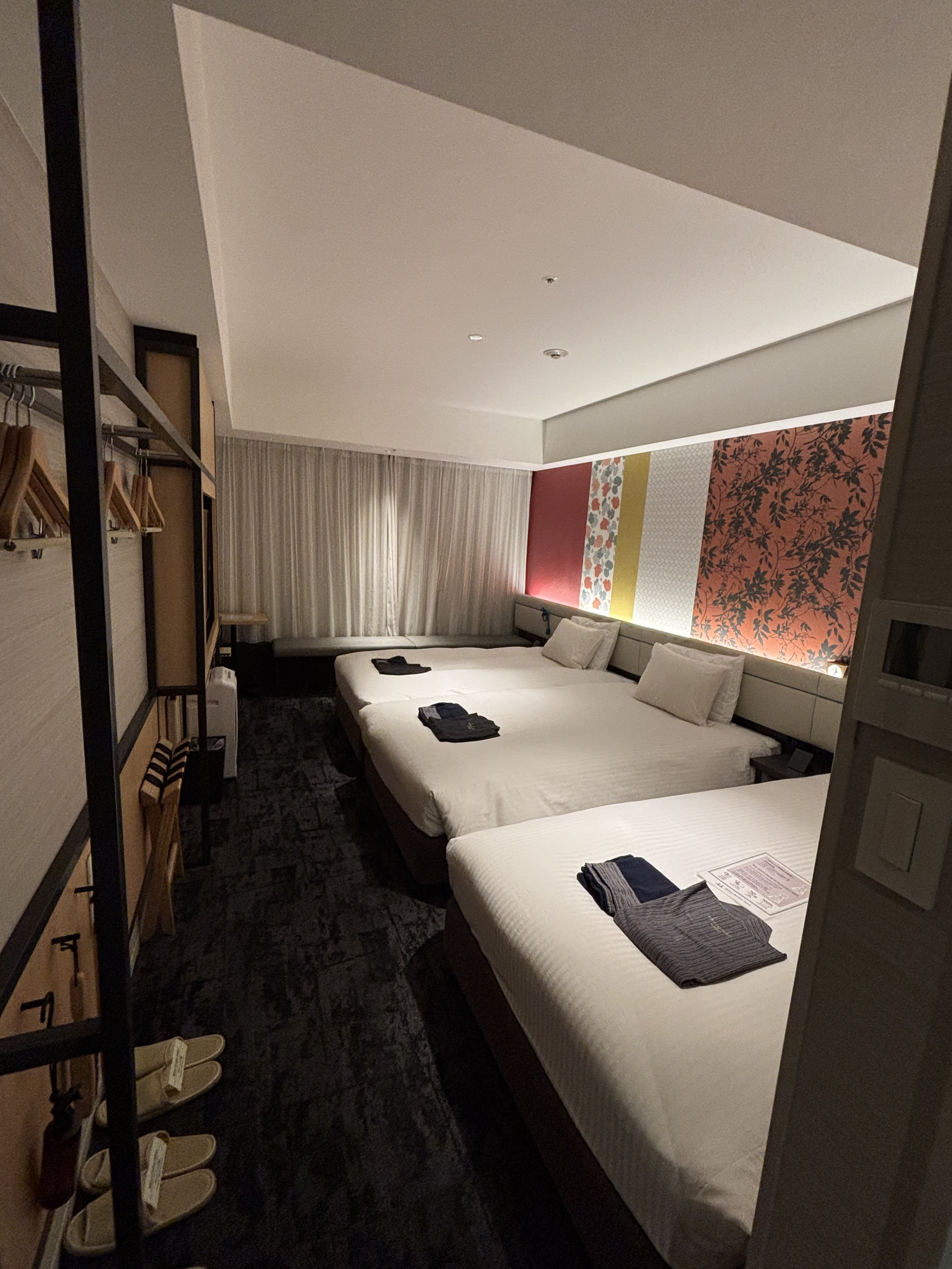
We spent only a night here, so I didn’t get to try all the facilities, for example, it does have its own onsen, which is open during the night and early morning hours. The breakfast was pretty varied, with quite a few Japanese specialities.
I also liked the little details, a classic of Japanese hotels, such as the slippers and the kimonos!
Ryokan Ryokufuso
〒600-8323 Kyoto, Shimogyo Ward, Kanayacho, 490
The trip to Japan wouldn’t be complete without staying at a proper ryokan, so I opted for this one, which had great recommendations, and it did not disappoint: Japanese aesthetics and design and service excellence at its best!
This ryokan is also quite centrally located and it has its own onsen (although it is not spring water) with views of the city, since it is in the upper section of the building.
Our room at Ryokan Ryokufuso was quite large and, of course, laid out in traditional style. As you can see in the pictures below, it consisted of a large living room (which doubles as bedroom) and an ante-chamber with a little sink and table to prepare tea, plus the shower room and toilet in two separate pieces.
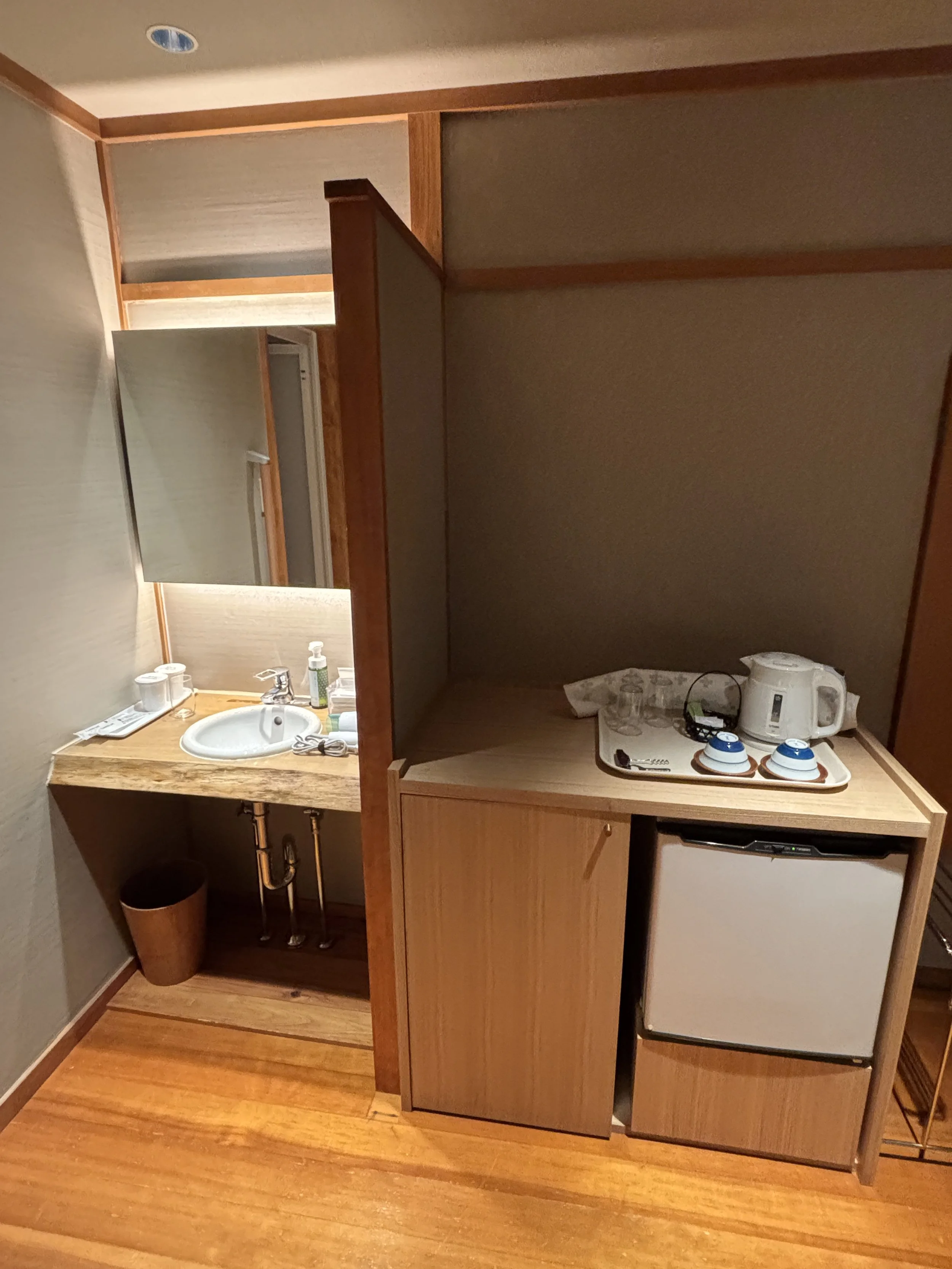

I must say, as well, that the staff at the ryokan were also very helpful throughout (some of them spoke decent English) with indications and, for example, helping arrange our luggage forwarding.
Ryokan Ryokufuso is, overall, great value for money and an excellent choice if you are looking for some traditional Japanese-style in Kyoto with good comfort and a central location.
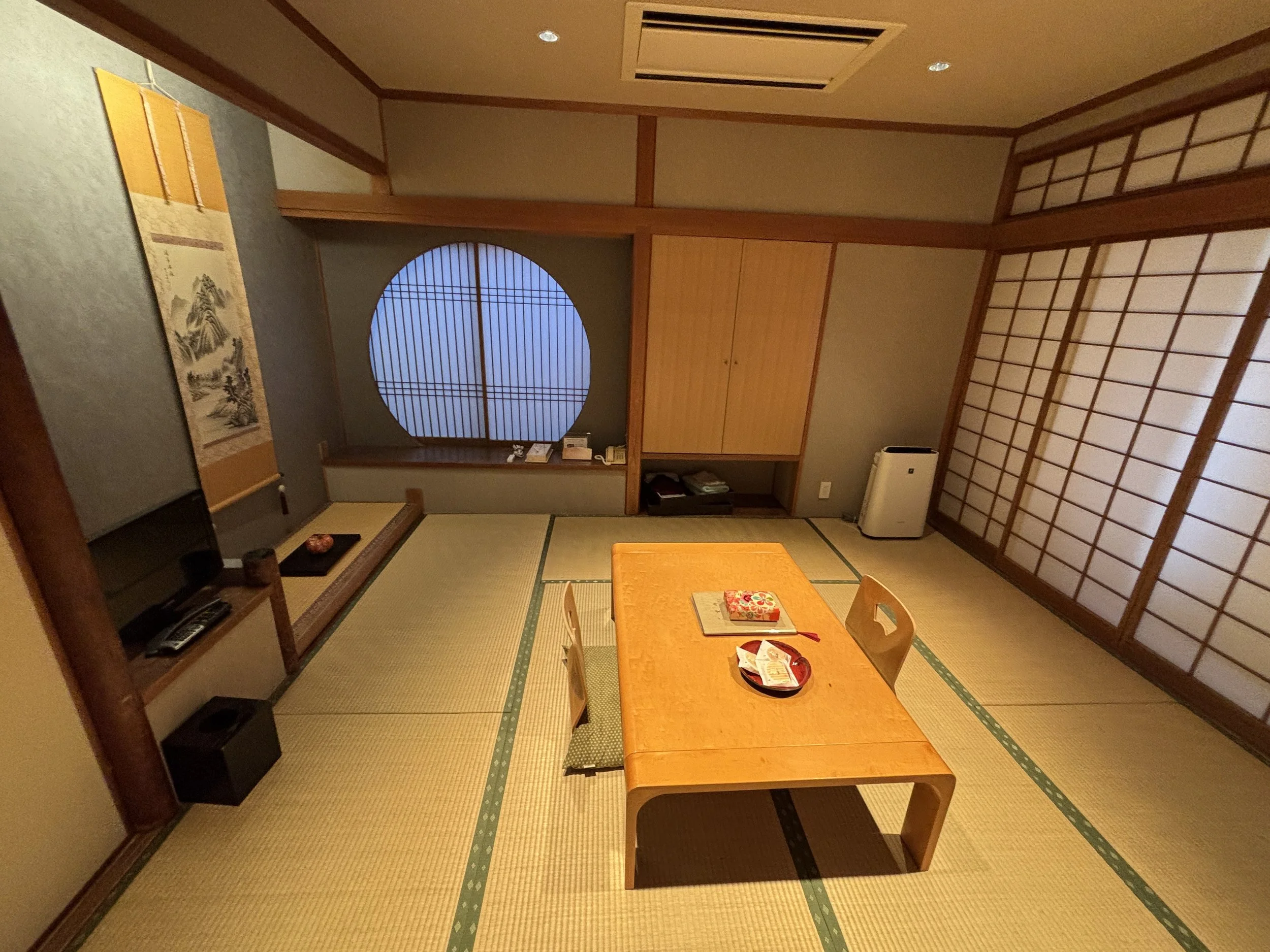
Day excursion from Kyoto to Nara
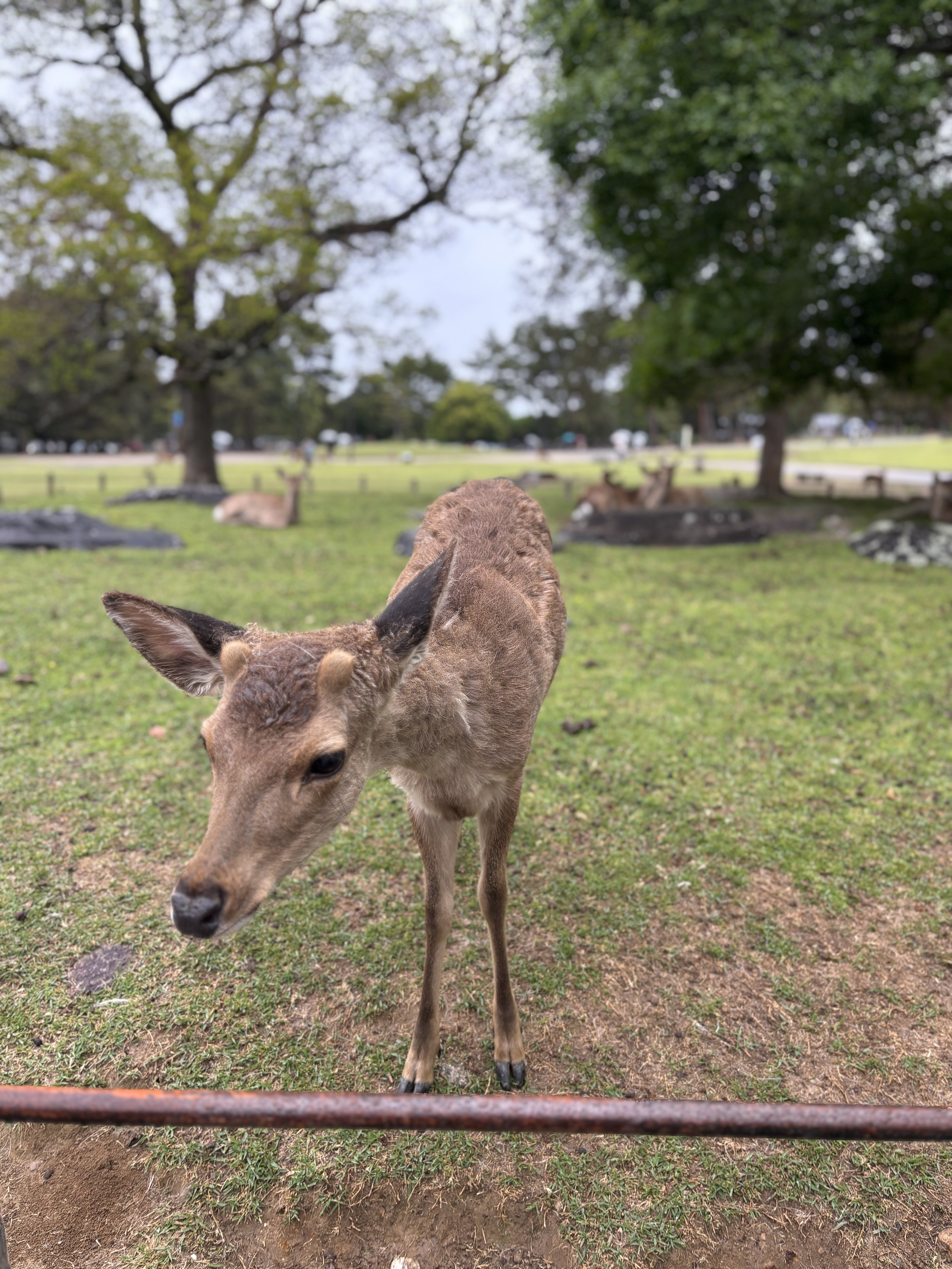
Although it is, technically, a different city, the historical city of Nara is often included in Kyoto itineraries, since it is relatively close (about an hour by suburban train). It can be visited as a day trip from Kyoto or, as we did, as part of an itinerary that ended in Osaka, which is also about the same distance from Nara as Kyoto is. So, either way, don’t forget to visit Nara!
And, while the city has quite a few historical monuments (Nara was, actually, the capital of Japan for a period in the 8th Century, before it was moved to Kyoto), the thing that really stands out in Nara and the one you are most likely to remember is this little fellow depicted on the right, or to be more exact, the whole lot of them.
Because there are thousands of these little sika deer roaming freely the streets of Nara. They are, apparently, considered to be sacred messengers of the gods and designated as national treasures.
They are all over the place and are used to people feeding them, In fact, you can buy food for them at some street stalls and they have learned to bow to visitors to get it.
What else to see in Nara?
Deer aside, the other major highlight in Nara is the Todai-ji Temple, which houses the world’s largest bronze Buddha statue. The temple, which has been rebuilt several times throughout the centuries, is really big!
There are also other temples and shrines in its vicinity, although if you have limited time, I would say just focus on the main “tourist” alley, which runs from Kintetsu-Nara train station, across Nara Park and past the National Museum towards the Todai-ji Temple grounds and back.
It’s a nice walk, with open spaces all around and you will also see plenty of deer along the way. All of these spots are also within walkable distance of each other.
Top things to see in Al-Ain, the other side of Abu Dhabi
In a previous post I shared my ideas about the top things to do in Abu Dhabi if you find yourself in the capital of the UAE for a couple of days.
Now, in addition to being a city, Abu Dhabi is also an emirate. In fact, it is, by far, the largest of the seven emirates that make the UAE. A big chunk of its territory, however, is desert and is totally uninhabited. And, as we saw in the aforementioned post, you don’t need to venture far from the coast to come across a sea of dunes.
There is, however, an exception, and this is the oasis town of Al Ain, some 150km to the west of Abu Dhabi city towards the East, and an interesting weekend trip if you have seen already much of the capital.
Like other parts of the UAE, and despite being quite far inland, Al Ain has experienced huge demographic and economic growth in the last few decades. From a population of a few thousand half a century ago, to a sprawling city of more than 600,000 today.
Al Ain, however, has quite a few interesting spots which, despite all its dull and somehow chaotic modern urbanism, make it worth a visit.
First, it is located right on the border with the Sultanate of Oman and, in fact, there is a border fence that cuts right through some of its urban areas. This makes it also quite interesting for those of us interested in borders. But there’s more to it! Al Ain is also home to several interesting historical sites including a lush irrigated palm grove which has obtained UNESCO World heritage Site status.
In the following passages I am trying to lay out some of the top things to do in Al Ain.
Visiting the Oasis of Al Ain
There are actually several oasis in and around Al Ain which have been given protected status by UNESCO. This is in great part because of the unique way in which people in this area have been moulding the landscape over thousands of years through the “Falaj” system. This is, essentially, an intricate network of canalizations and irrigation systems, which, using water from natural underground sources, have made it possible for islands of greenery to emerge in the middle of the desert.
The largest and most visited of these oasis, covering 1,200 hectares (nearly 3,000 acres or about twice the size of New York’s Central Park) , is located, actually, right in the middle of Al Ain.
The oasis is essentially a large urban park with paths running through the palm groves, which contain nearly 150,000 trees of up to 100 different varieties.
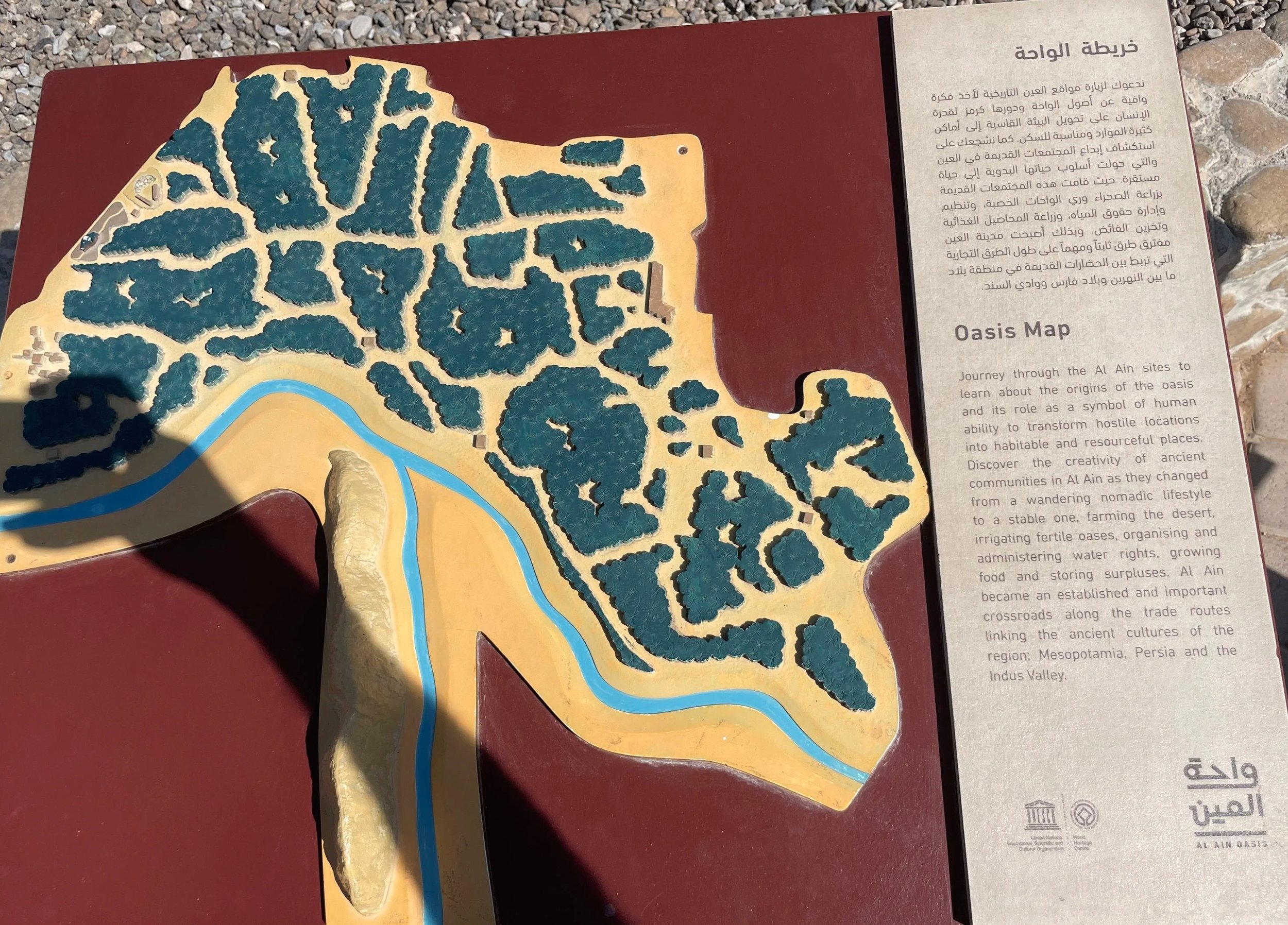
It is fenced and there are different access points, each with some adjacent service buildings and shops.
The palm groves provide some shadow and there is water running around, so, it is possible to wander around on foot, even if we are technically in the middle of the desert (Note: I visited in winter, not sure how is it like in the summer). I would say it takes around one hour or so to complete a tour of the grounds.
The Al Ain camel market
This is another must-visit spot in Al Ain, at least if you don’t care about the odour that thousands of camels can produce when gathered at one spot!
Al Ain is home to a huge camel market, which is exactly that. This is not some form of atrezzo for tourists. It is a real marketplace, where camels from all over the region are brought in to be traded.
The place is on a large open space in the outskirts of the city, next to a commercial-industrial area with an IKEA and several other big box retailers. Entrance is free and there is some parking space next to the main entrance.
All guides recommend visit early in the morning, between 6-9am, when the trading activity is at its peak. We visited mid-morning, however, and while it is true that it was rather quiet, it was still possible to see quite a lot.
The animals are in large pens, which are arranged along the streets. You can get really close to them and, in fact, some of the local traders, most of them in traditional robes, may offer you to take pictures close to the camels (in exchange for a tip).
This is quite an interesting sight, which is miles away, in all senses, of the sanitized modern urban environment you find in the coastal cities of the UAE!
Qasr Al Muwaiji (Al Ain Al Muwaiji Fort)
This fort, built in traditional mudbrick style, is the ancestral home of the Zayed dinasty, the rulers of Abu Dhabi. The late Sheikh Khalifa bin Zayed Al Nahyan, previous ruler of Abu Dhabi was actually born there.
Although it looks like it could be rather ancient, the fort dates back to the early 20th Century. Nowadays is an art and culture center.
It is possible to visit its premises, climb the towers and the walls for the views, and also to visit the exhibitions contained within its walls and around the main courtyard. At the time of our visit there was, actually, quite an interesting photo exhibit (I ignore if it is permanent or temporary) depicting the history of Abu Dhabi and the lands of what would later become the UAE.
The whole monumental ensemble is, actually, perfectly restored, giving the place a rather suggestive ambiance, sort of how many would imagine the setting of the “1001 Nights” while having, at the same time, some very obvious touches of the modernity that currently characterizes the UAE.
I must say that Qasr Al Muwaiji really surpassed my initial expectations and I would recommend adding it to your Al Ain program. Btw, we visited in the late afternoon, just a couple of hours before they close at dusk, which I think it is perhaps the best time, not just temperature-wise, but also because of the light.
Where to stay in Al Ain
Radisson Blu Hotel & Resort Al Ain
You can’t generally go wrong with Radisson Blu and their Al Ain establishment was no exception. This hotel occupies a rather large bloc in a quite central location, close to the Al Ain Oasis (although “central” and “close” are relative concepts in Al Ain, since the city is so spread out you would need a car anyway).
The hotel is modern and has all the facilities you would expect, including an outdoor pool, a nice restaurant and parking.
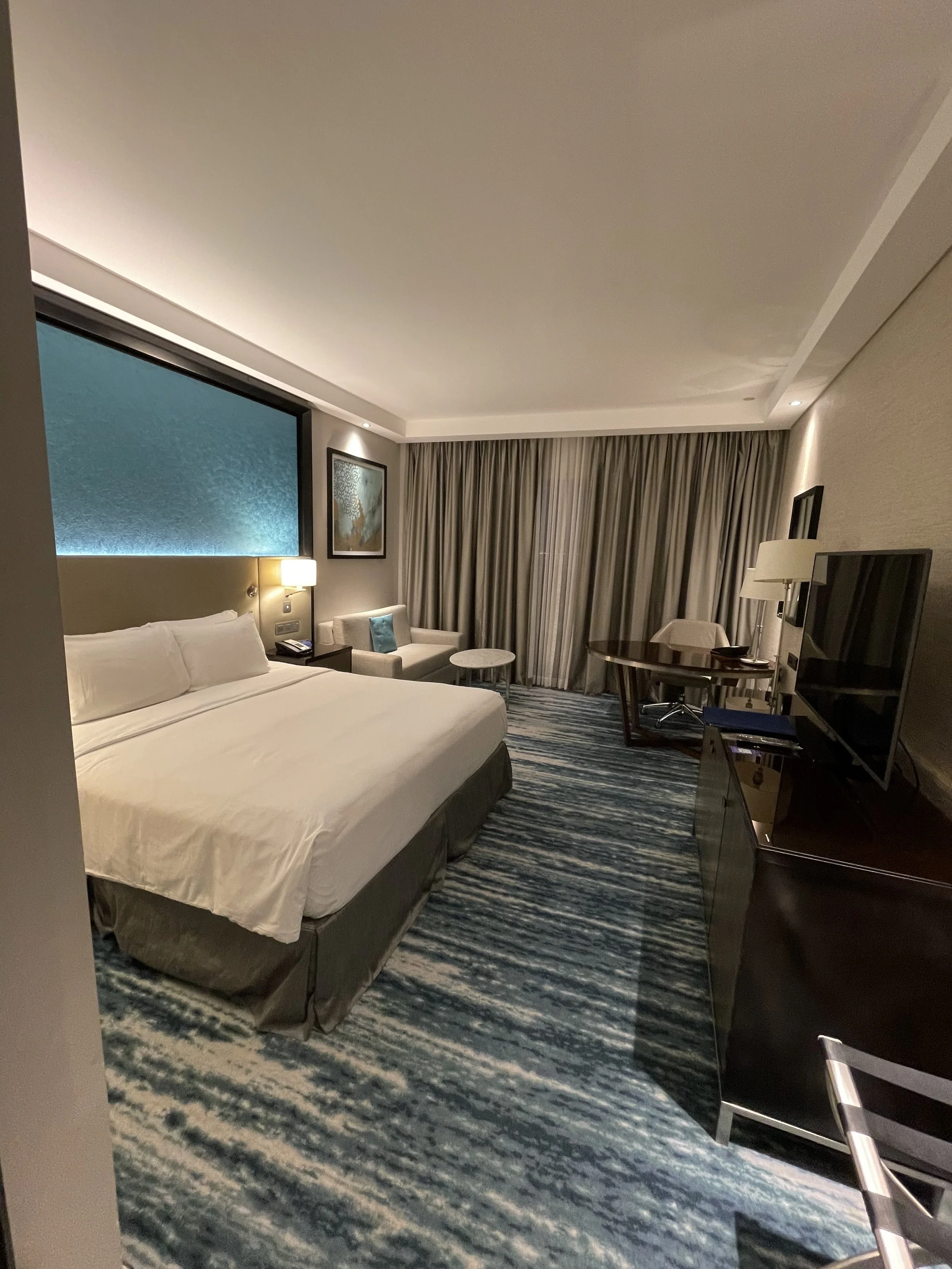
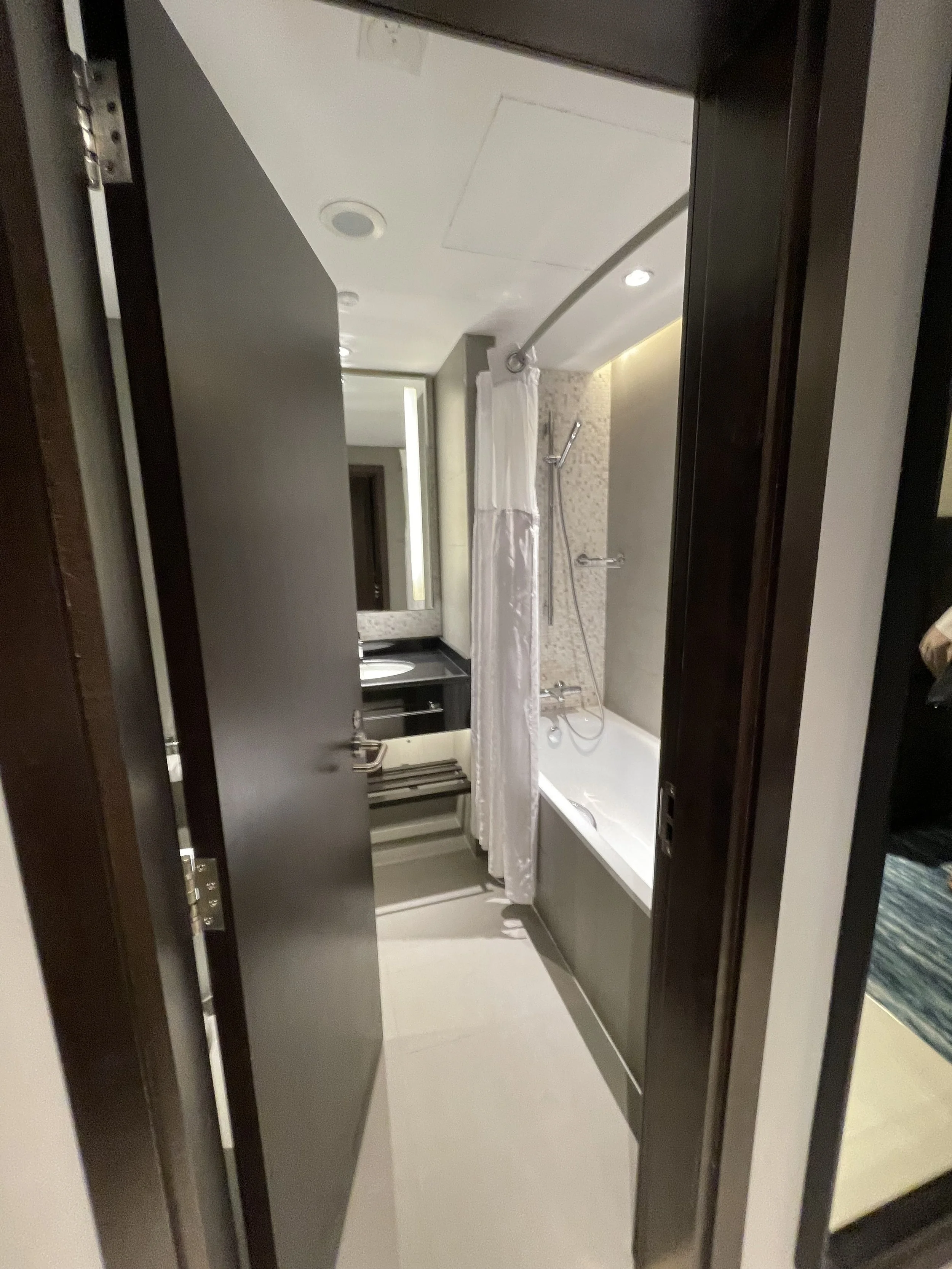
Best of Abu Dhabi: top things to do and to see
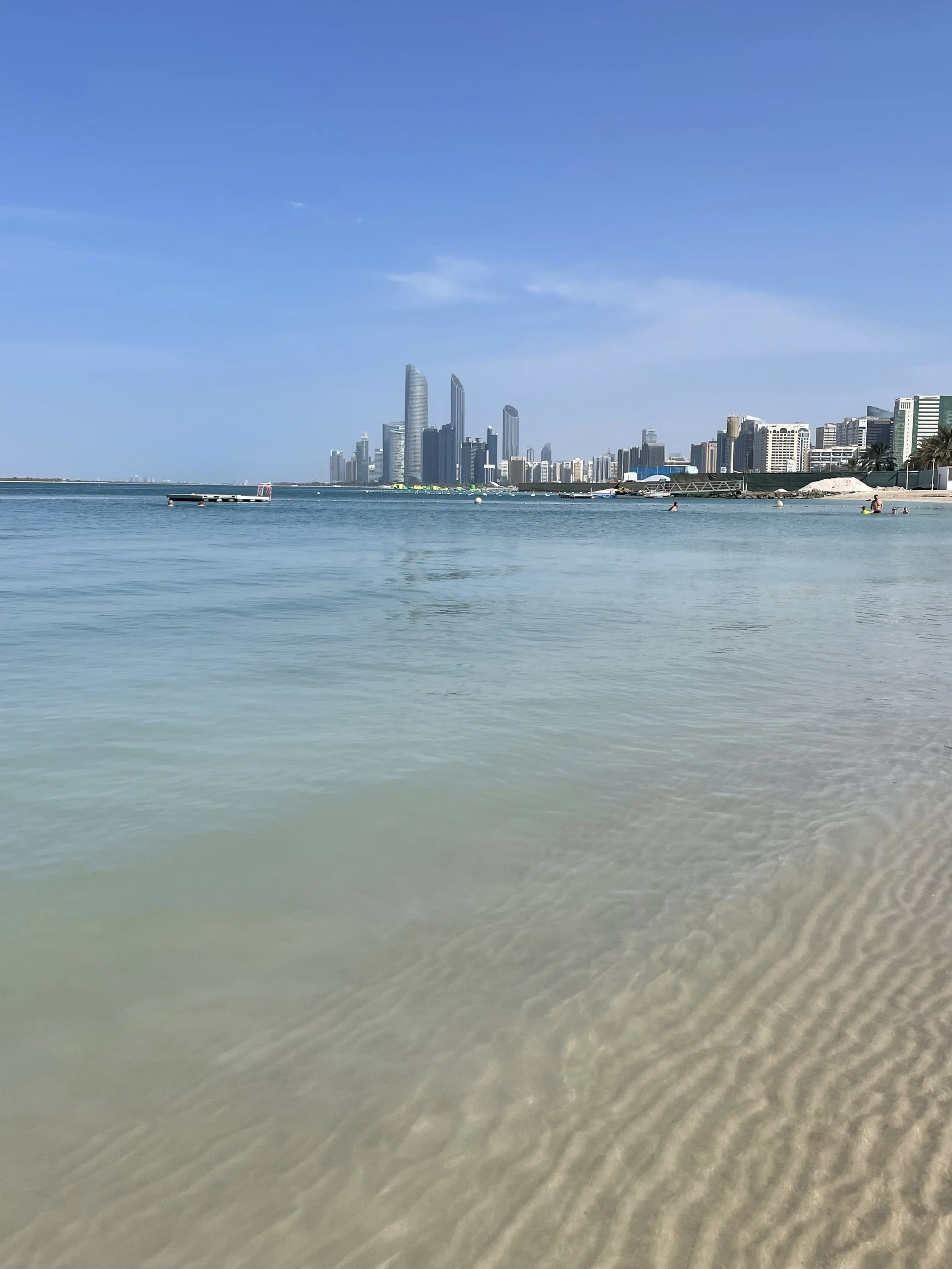
Abu Dhabi may not feature as prominently in the public imagination as its glitzzy neighbour a hundred kilometers up the coast, Dubai, but the capital of the Emirates is a prime tourist destination in its own right. This is, of course, on top of being also a major business and airline hub, which means, of course, that it also gets a constant stream of short term visitors that may find this piece of interest, as well.
In this article I have tried to sum up some of my impressions gathered during multiple trips to Abu Dhabi in the course of the last two to three years. Bear in mind, however, that, just as pretty much everywhere in the Gulf region, Abu Dhabi is a work in progress.
As I write these lines, not long after returning from one of these trips to the Emirate, large swathes of Saadiyat and Yas islands are covered in construction cranes. A whole new cultural and museum district is going up, alongside with many other new residentail and commercial developments. So, this post will possibly require frequent updates just to keep up with the times"!
The Abu Dhabi Corniche
This is Abu Dhabi’s downtown, captured in the images that precede this post. The Corniche is, as the name implies, the seaside promenade “par excellence” of Abu Dhabi. Although there is, generally speaking, little in terms of outdoors walking. The place is essentially a line of upmarket contemporary hotels facing the sea, with a motorway separating them from their respective beach clubs.
But perhaps I am being a bit too harsh in this description, because, yes, there is a fair amount of “showing-off” and superficiality embedded in the whole concept, but the place is not without its charms. If you are aiming for a bit of relax this if a great spot, here you have all services at the palm of your hand: food, drink, fast internet, umbrellas and sun beds and a clean sandy beach.
Everything works smoothly as silk and, if you are staying at one of the hotels, you don’t even need to worry about the traffic since you can pretty much walk from your room to the sunbed in your beach attire.
But there is, of course, a lot more to see and to do in Abu Dhabi if you are looking for a more active stay…
The Louvre Abu Dhabi
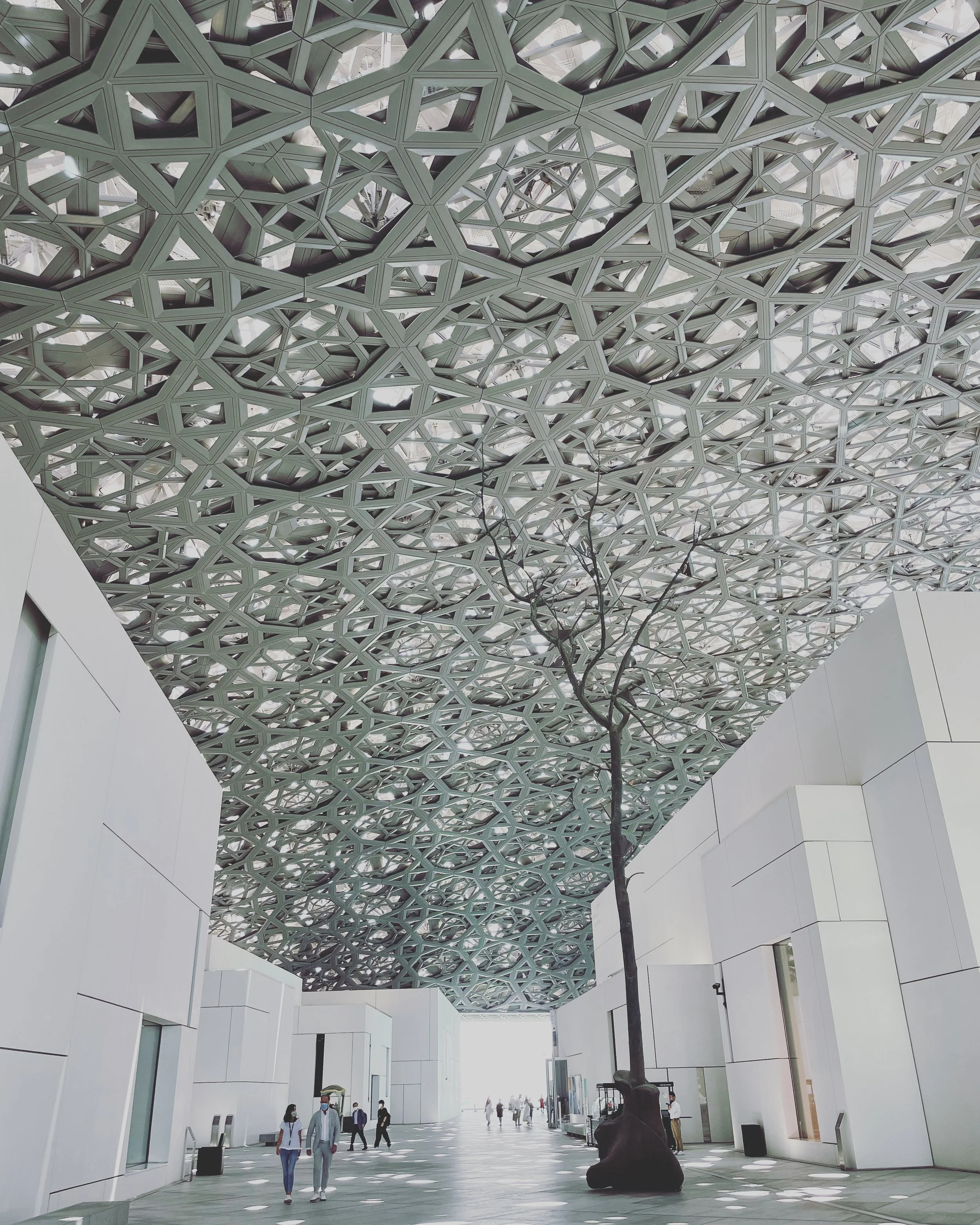
The first port of call for any visitor to Abu Dhabi, I would say, is the Louvre. That still applies if you have only a few hours between stopovers.
When I first heard that the famous French museum had opened a franchise in Abu Dhabi, my first reaction was one of skepticism. But I have no problem admitting I was wrong! The Louvre Abu Dhabi is a real jewel of modern museology and I will try to explain why in just a few lines.
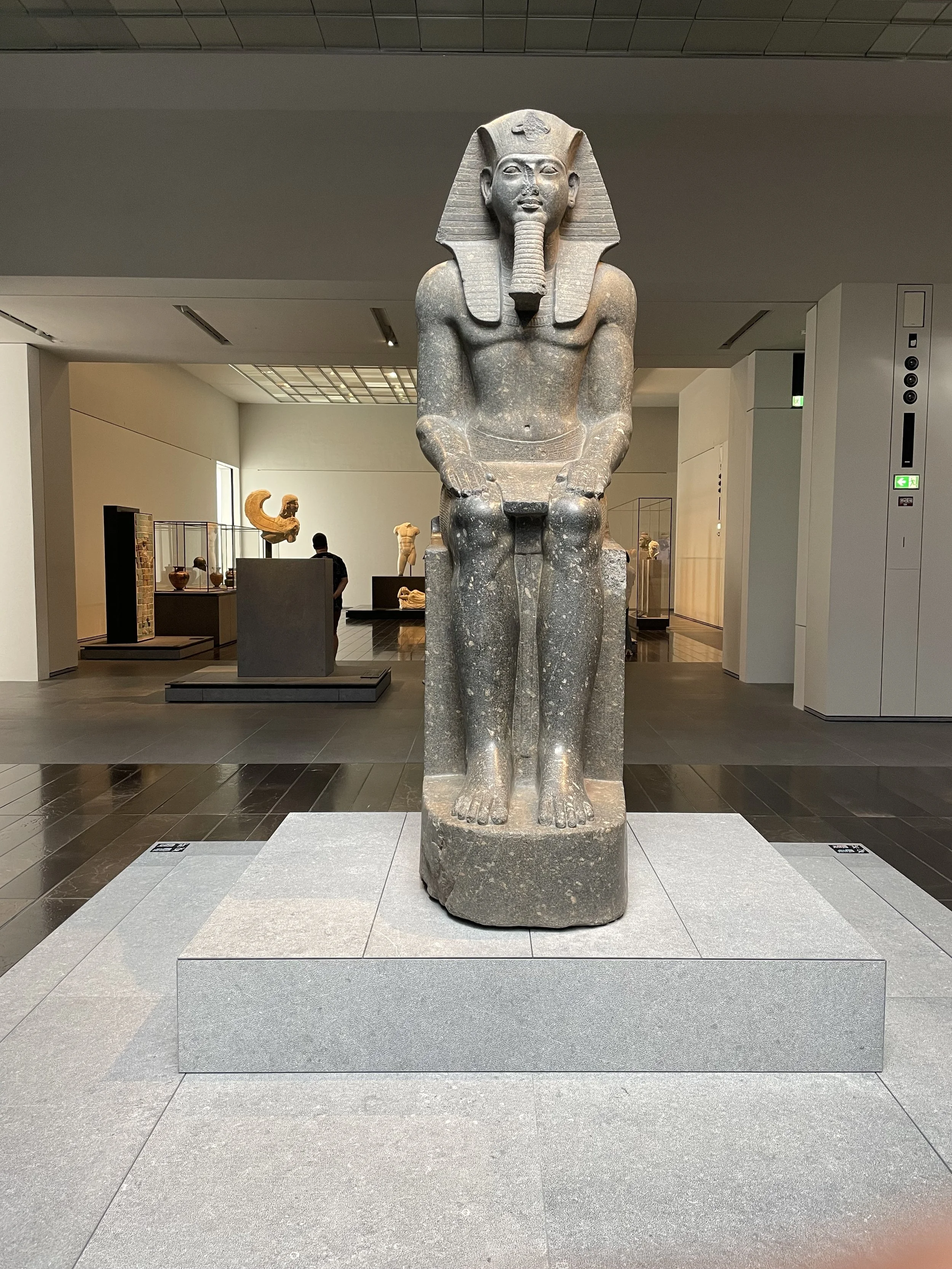
Unlike other contemporary museums, here both the container and the content are truly interesting.
The museum takes on a rather difficult challenge: to present a cohesive narrative of the history of mankind through several major themes or topics. So, it must do so in a chronologically and thematically coherent way. What’s more, since this is a city that aims to be a truly global node, it tries to do so by taking an approach that people from many cultures and faiths can relate to. Not an easy task, but I must say it succeeds pretty well!
The collections and exhibits are also very remarkable. Of course, the number of artifacts in each of its sections is limited, maybe one, two or a handful at most. But that’s alright, because you don’t get tired of seeing multiple variations of the same thing. This is, again, not for specialists that want to dig deep into a specific topics (those that want to do that should go to the original Louvre, the British Museum or whichever if the flagship museum of their speciality) but to get a holistic view of the history of mankind and the different civilizations on our planet.
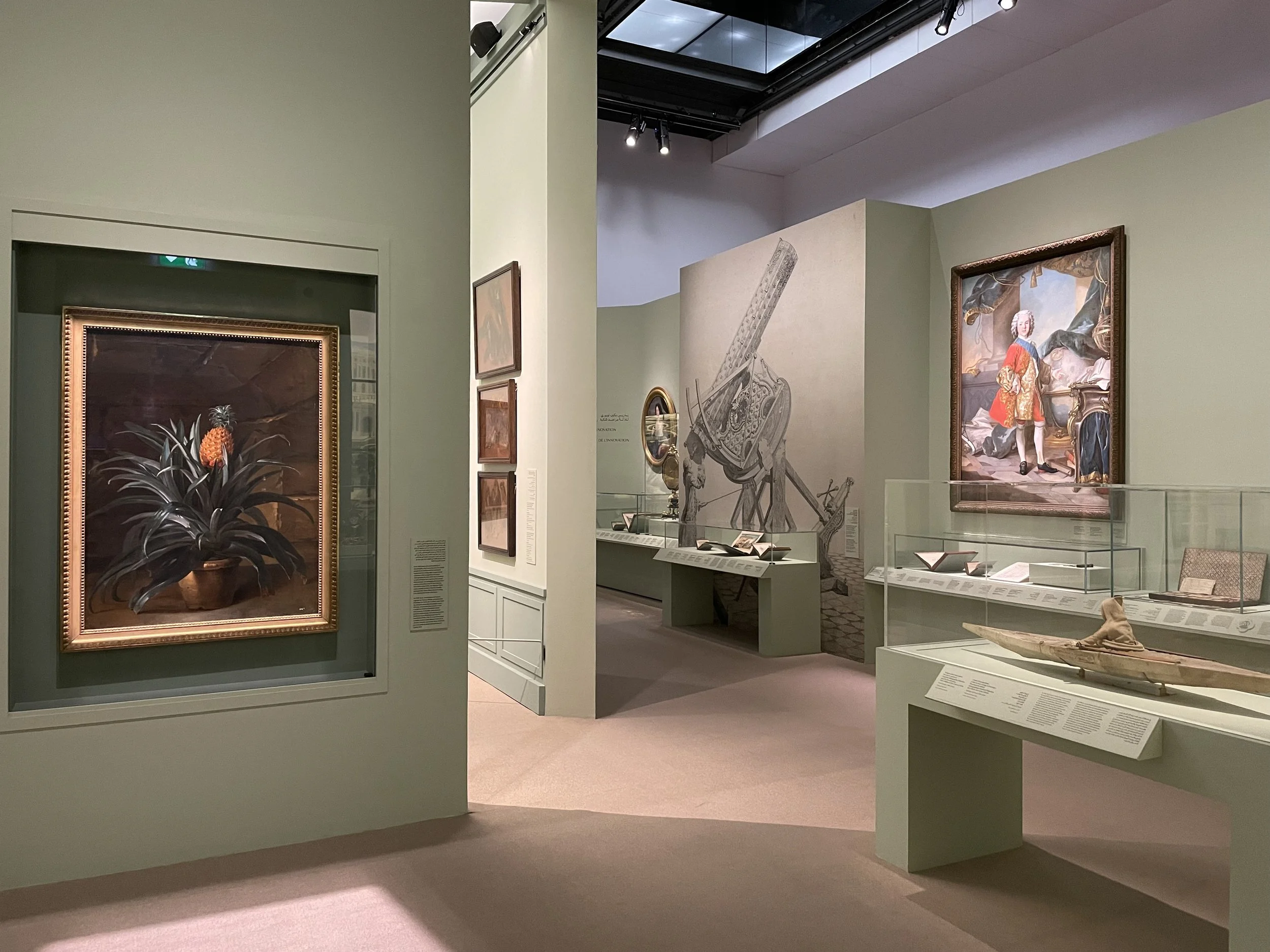
Another aspect of the Louvre Abu Dhabi that I find worth of praise is the overall aesthetics. The building itself is remarkable and beautiful (as you can see in the outdoor pictures illustrating this article), but the way the collections are arranged and the visit itinerary is designed are also very well done and quite pleasing to the eye.
It is modern but not in a confusing way and the proportions seem to be also well thought out so that you get a rather intense experience but not too tiring. You also end the visit with the feeling that you have been able to see a good number of interesting things, without the anxiety of having missed lots of stuff.
I have been twice at the Louvre Abu Dhabi and I wouldn’ mind visiting again. So, definitely put this on your list! It is also worth noting that Louvre Abu Dhabi is but the first of several large museums that are going up in this part of the city, which has been designated as a sort of “cultural district”, between the recreational areas of Sadiyat Island (more on this shortly) and Downtown.
Yas Island corniche
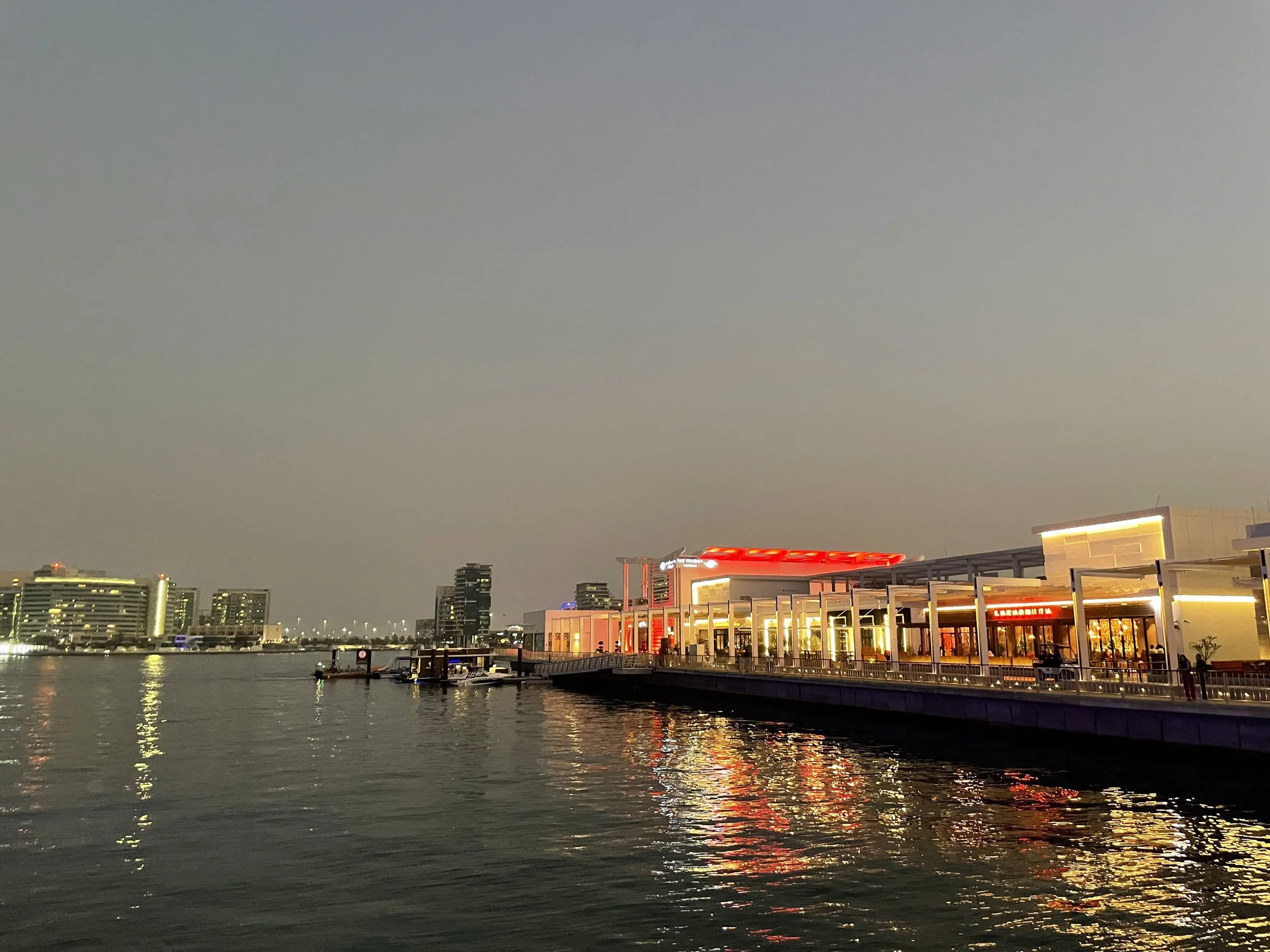
Abu Dhabi is, in fact, a collection of islands and peninsulas opening into the Gulf, so, in addition to the aforementioned Downtown Corniche, there are several other seaside districts of interest. One of them is Sadiyat Island, where the Louvre and several hotels and beach clubs are located. Another one is Yas Island, which is closer to the airport.
Formula One fans may be familiar with the name, because the Abu Dhabi Grand Prix takes place in Yas, but this is also an area that hosts several hotels and it also has its own “corniche” and seaside promenade, with plenty of bars and restaurants and quite a few remarkable street art elements!
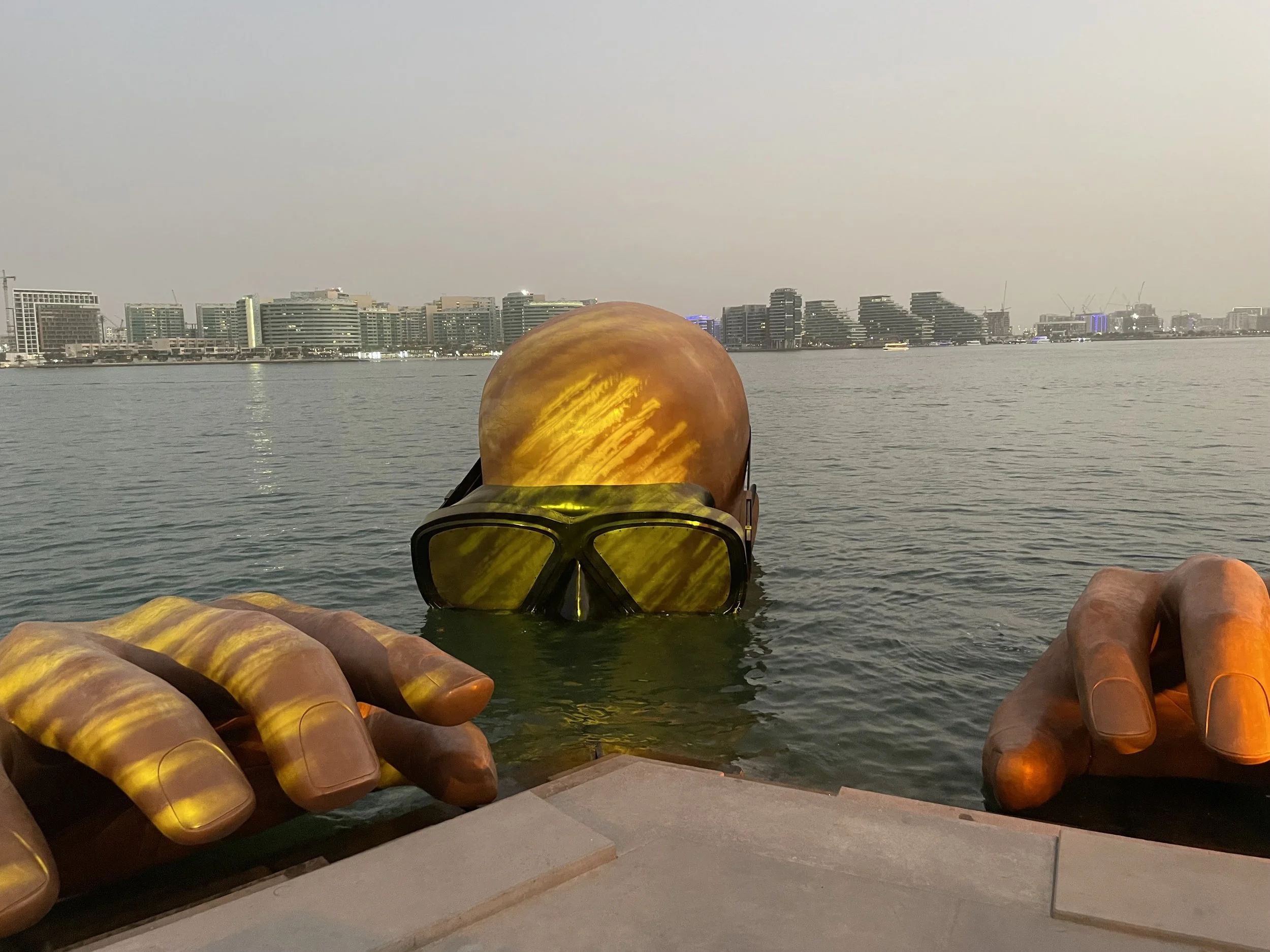
Staying in Yas Island?
Yas is a few kilometers away from downtown, but, remember that Abu Dhabi is a city where you move by car (or Uber) everywhere, so, as long as you are willing to move around, this location can be as good as any other.
In fact, I had a great stay at the Radisson Blu Yas Island and was preparing to share some of my impressions, but I just learned that the hotel, as well as several other adjacent properties on Yas Island have closed down in order to be redeveloped. A consortium of International Hotels Group (IHG) and a local developer called Aldar have bought the former Radisson Blu in Yas Island and five other hotels (Crowne Plaza, Rotana, Centro, Park Inn and Staybridge Suites), which have now closed down, in order to turn merge them and turn them into a 1,389-room luxury resort under the IHG Vignette Collection brand.
So, in a short period of time, the whole Yas Island accommodation landscape will be totally transformed!
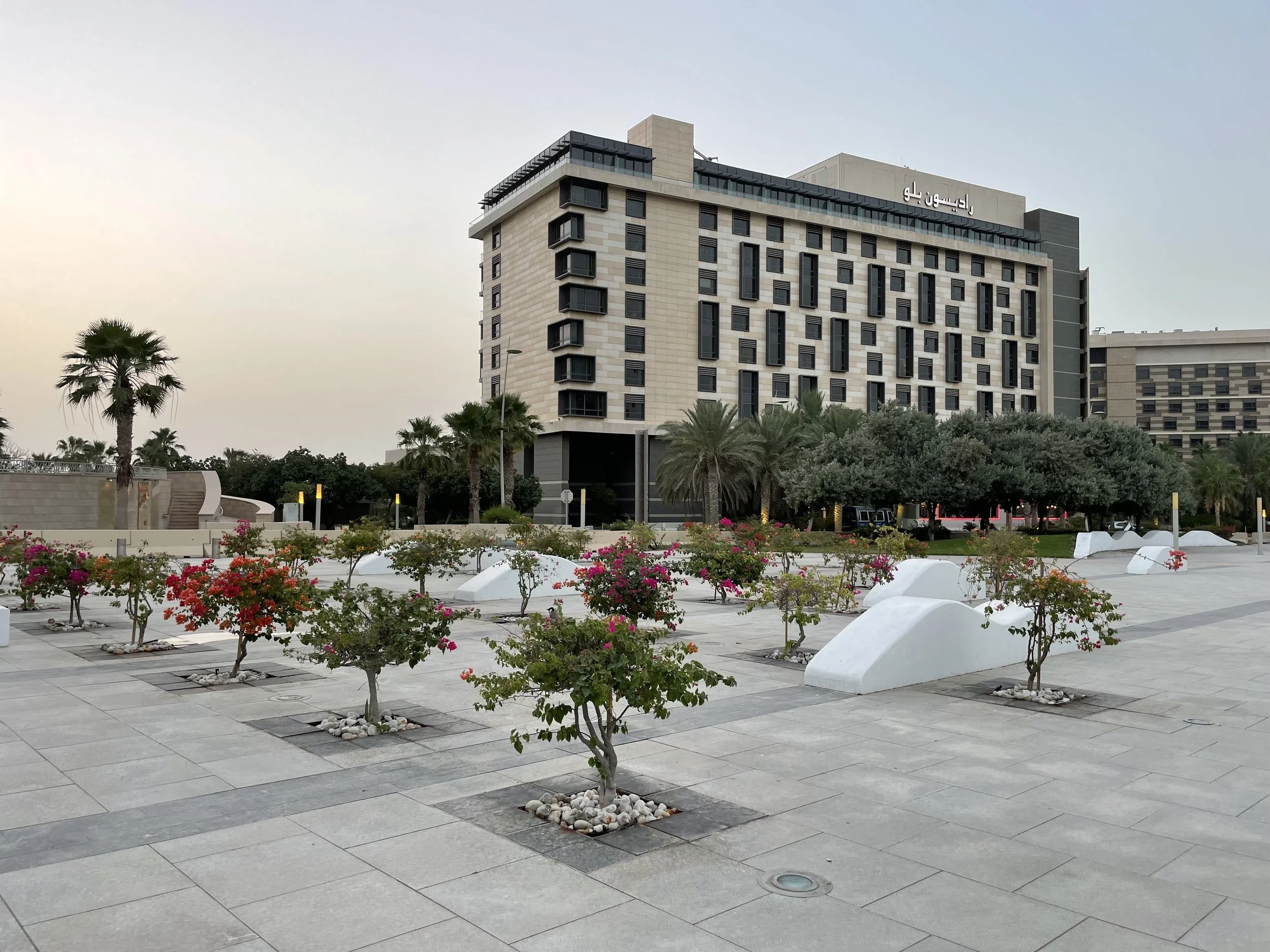
In any case, I am posting here some pictures of how the Radisson Blu Yas Island looked like so that you can get a feel of the place and the type of environment you have in Yas Island.
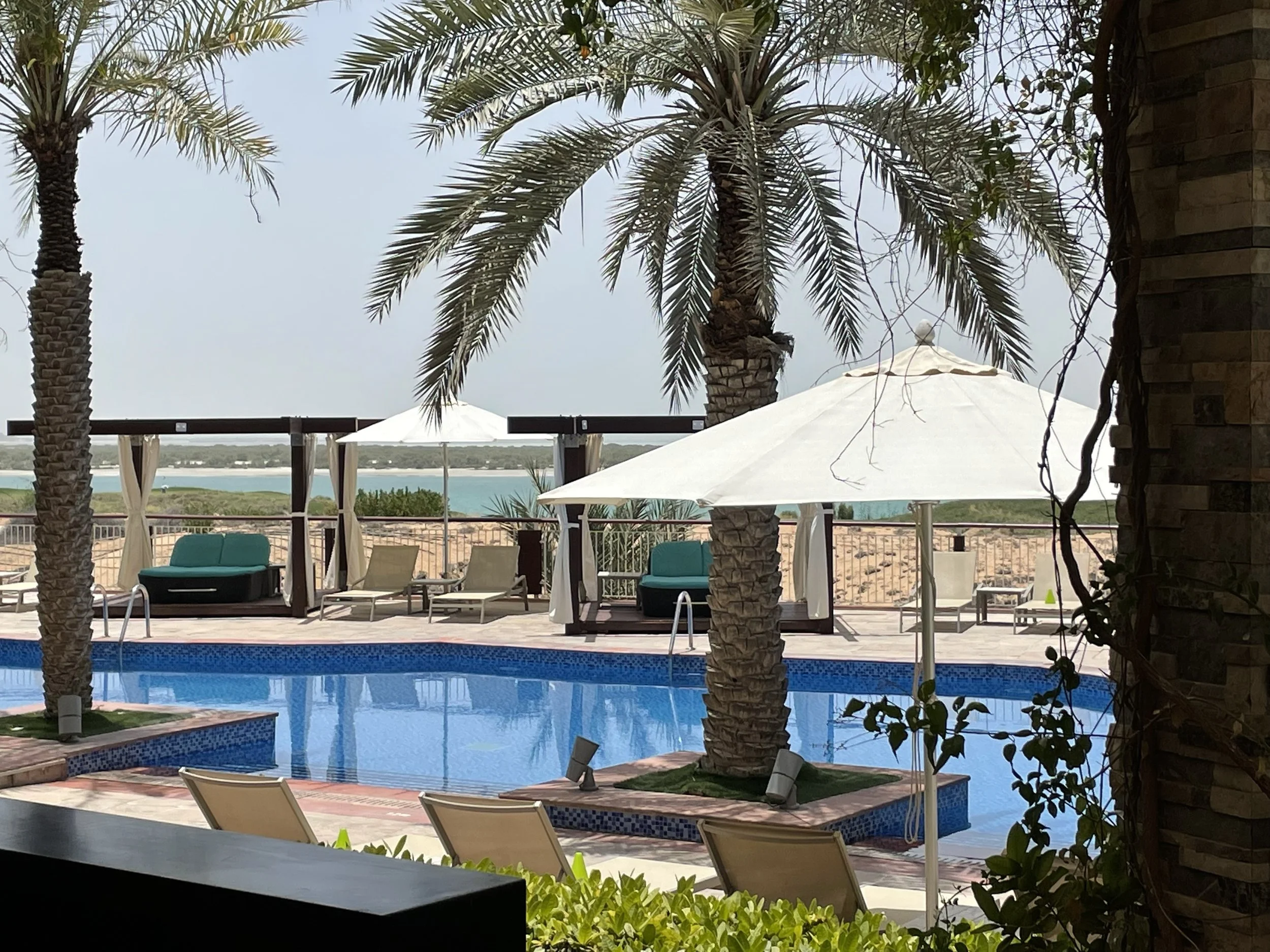
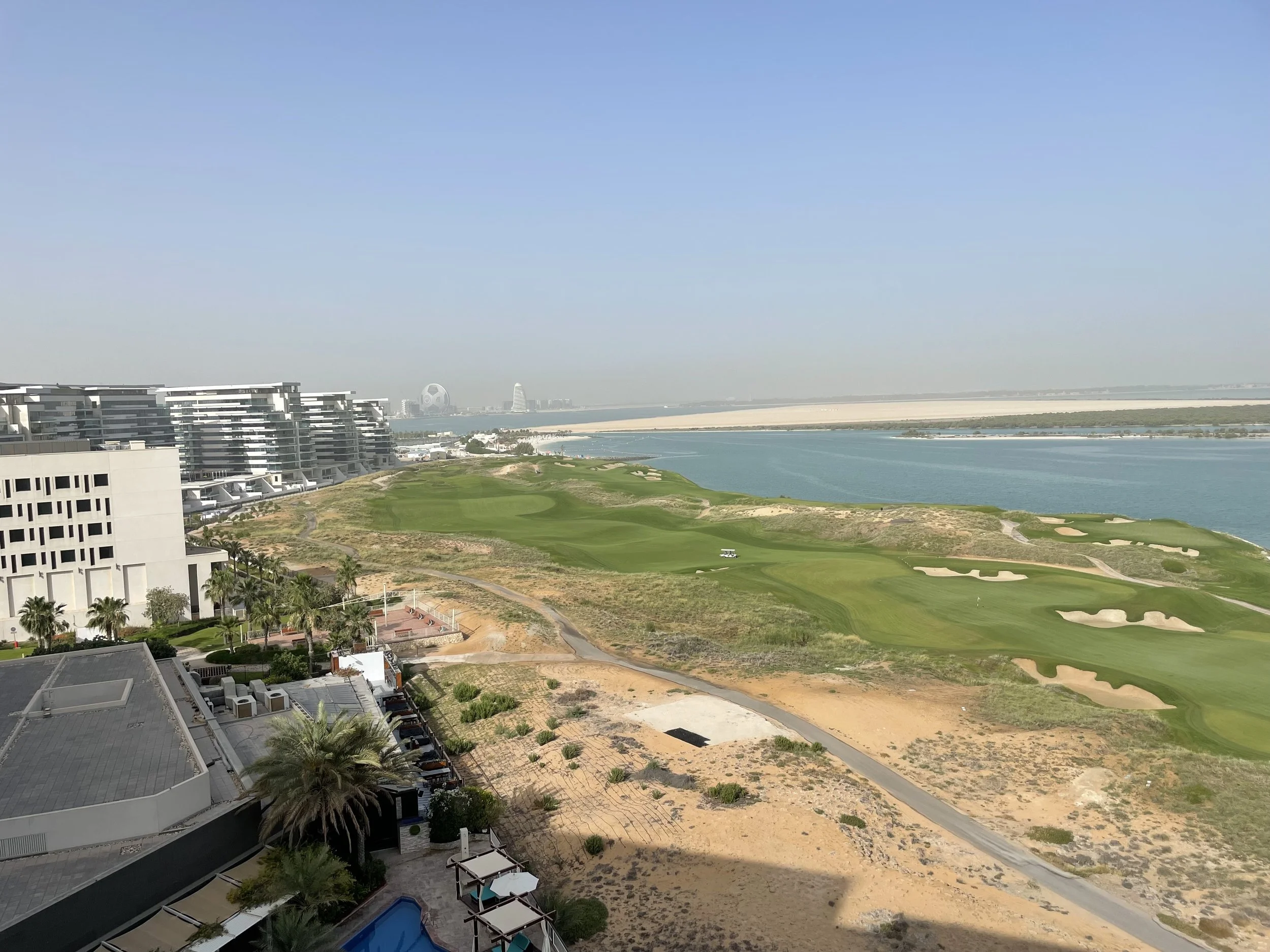
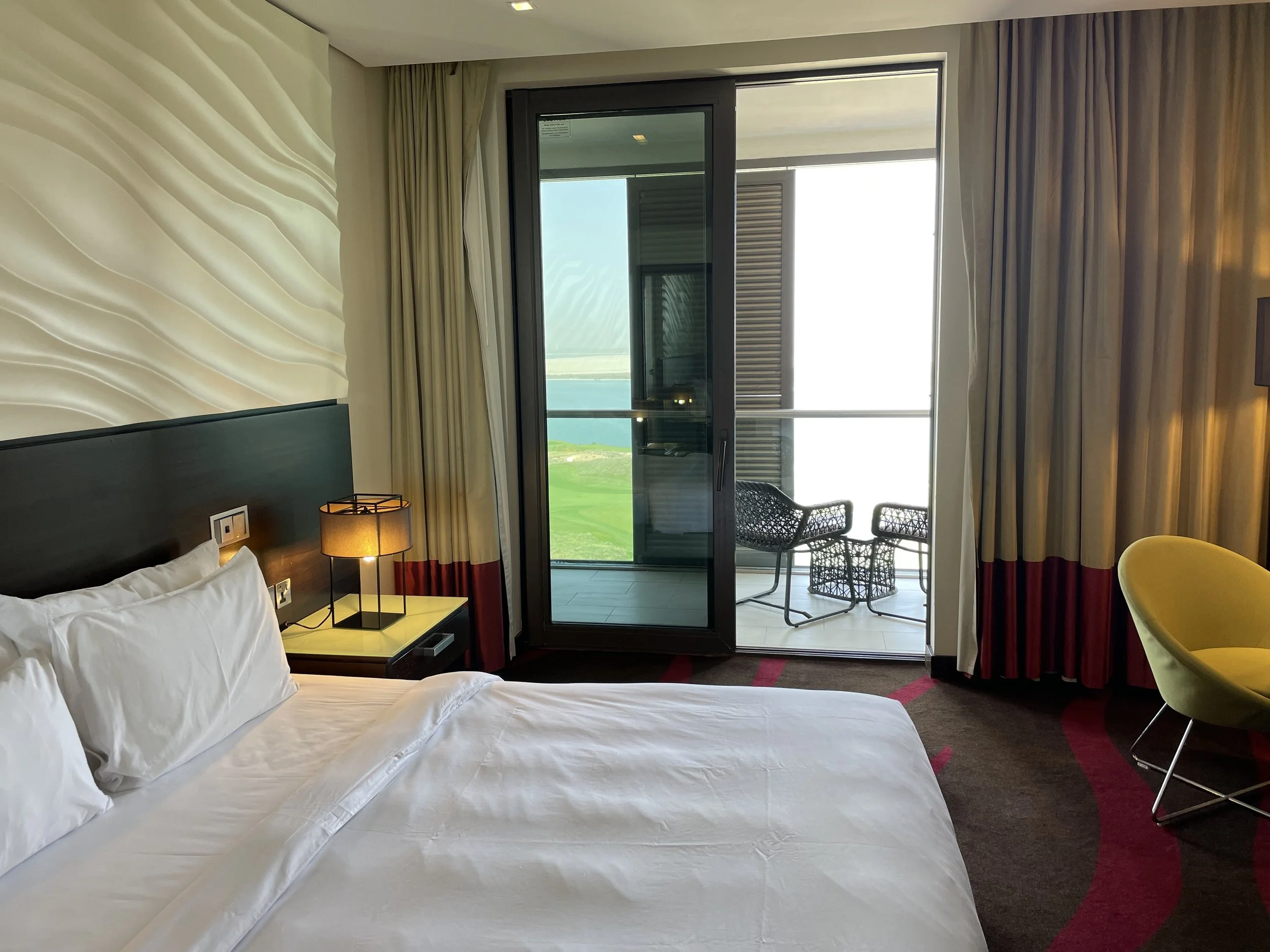
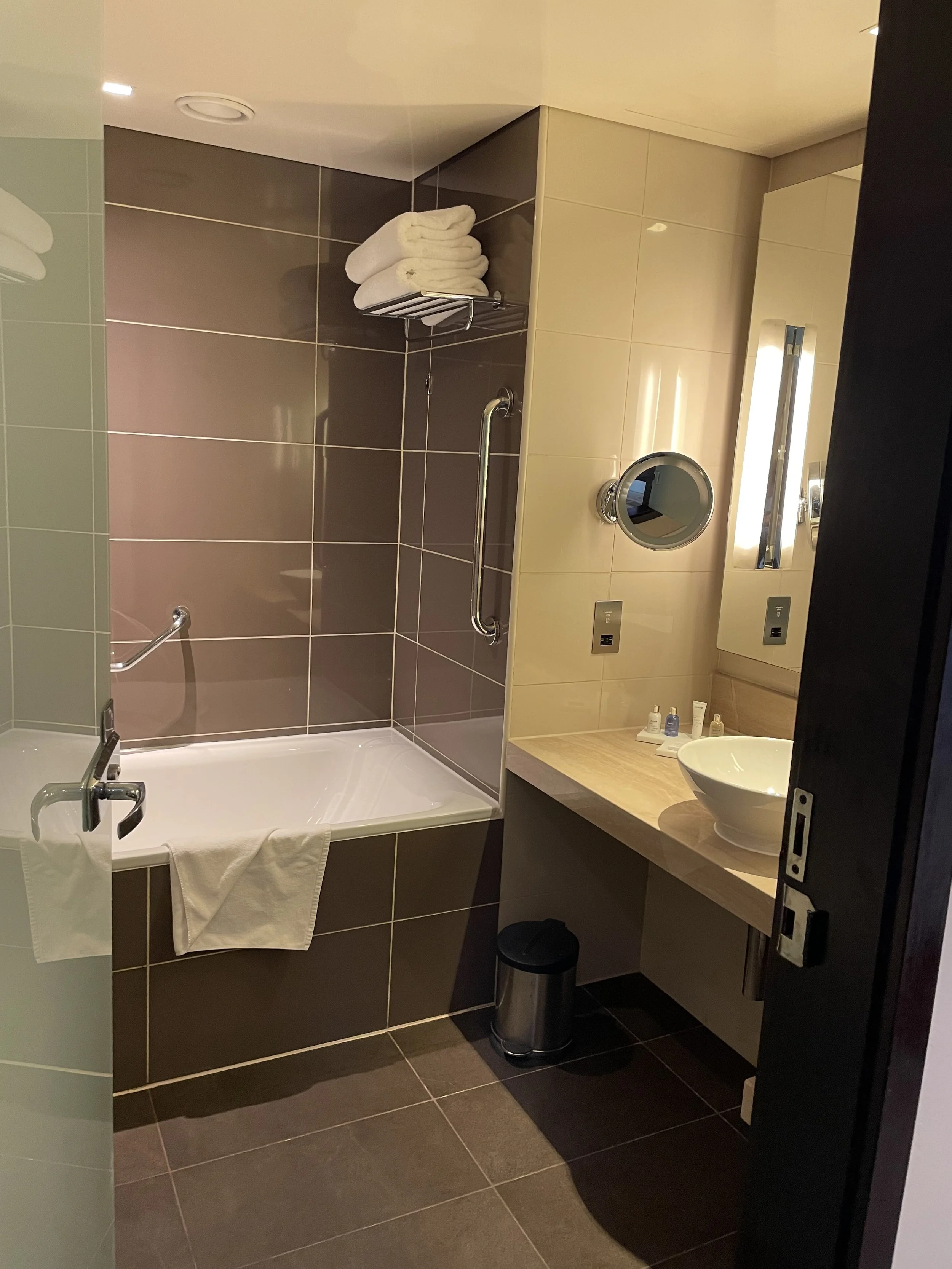
Taking the Abu Dhabi Desert Tour
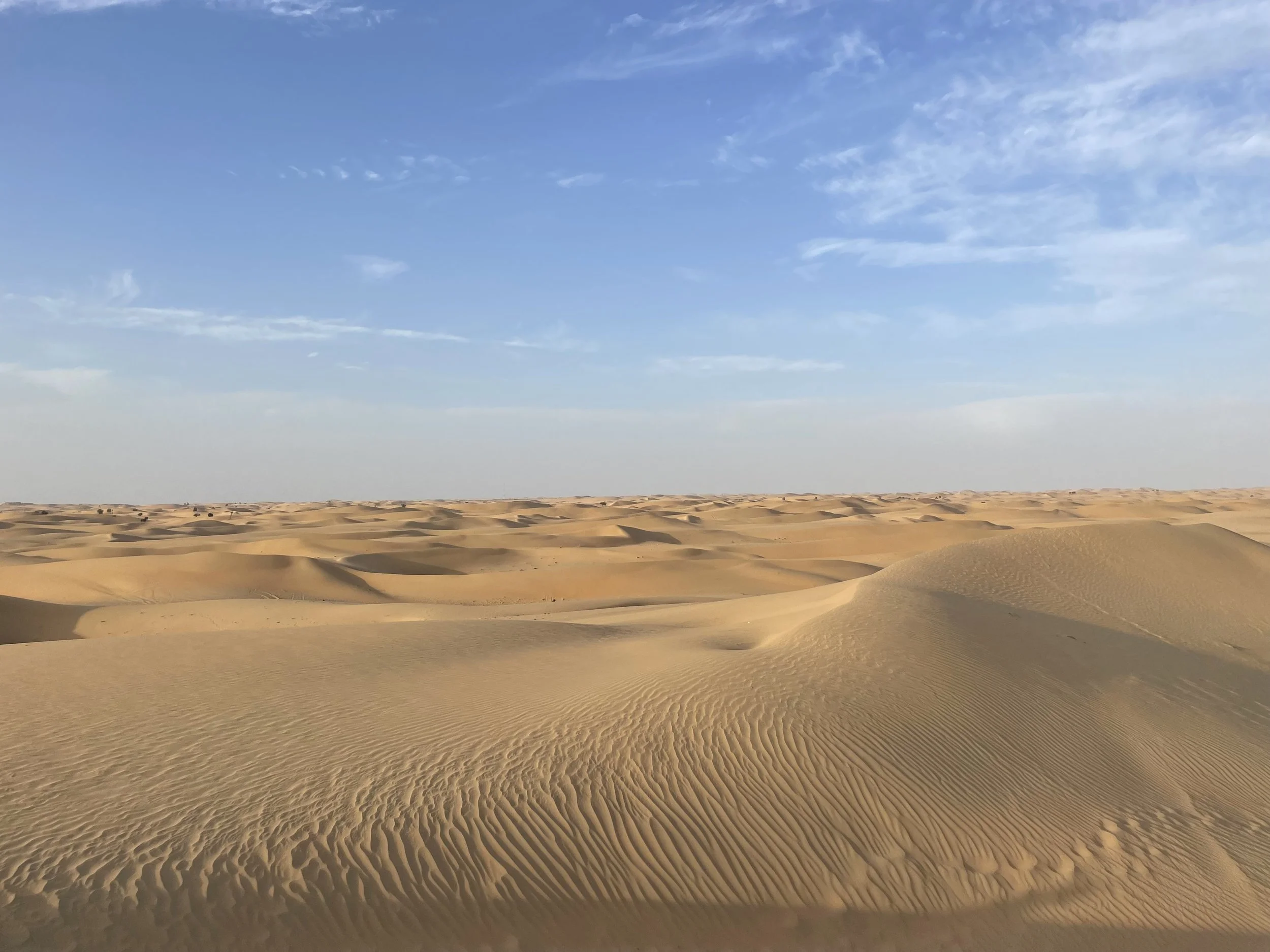
This is another activity I would recommend doing in Abu Dhabi. Yes, it is touristy (very touristy, in fact!). But it is a fun and rather unique thing to do.
There are several touroperators and agencies that offer this type of tour. You can book them on Viator, Getyourguide or through any Abu Dhabi hotel. They all do basically the same thing at very similar prices and at the same times (evenings), so I won’t be recommending one in particular. In fact, groups from several operators usually end up converging together on the same places.
So, how is it like?
Basically, they pick you up at your hotel in a 4x4 which you may share with other tourists. You then assemble in a sort of convoy with other such cars and you drive something like 30 minutes out of town to the open desert.
There are different activities included in the experience: first the drivers get into the sand dunes and drive at high speed on top of them, which is something that requires quite some skill not to get stuck (and in fact, it is not rare for one or two of the cars to get bogged down). During this itinerary you stop a couple of times so that you can get to walk on the dunes. They also offer dune sliding with a sort of sleigh. It is quite fun altogether and, to be honest, the views of the desert are breathtaking.
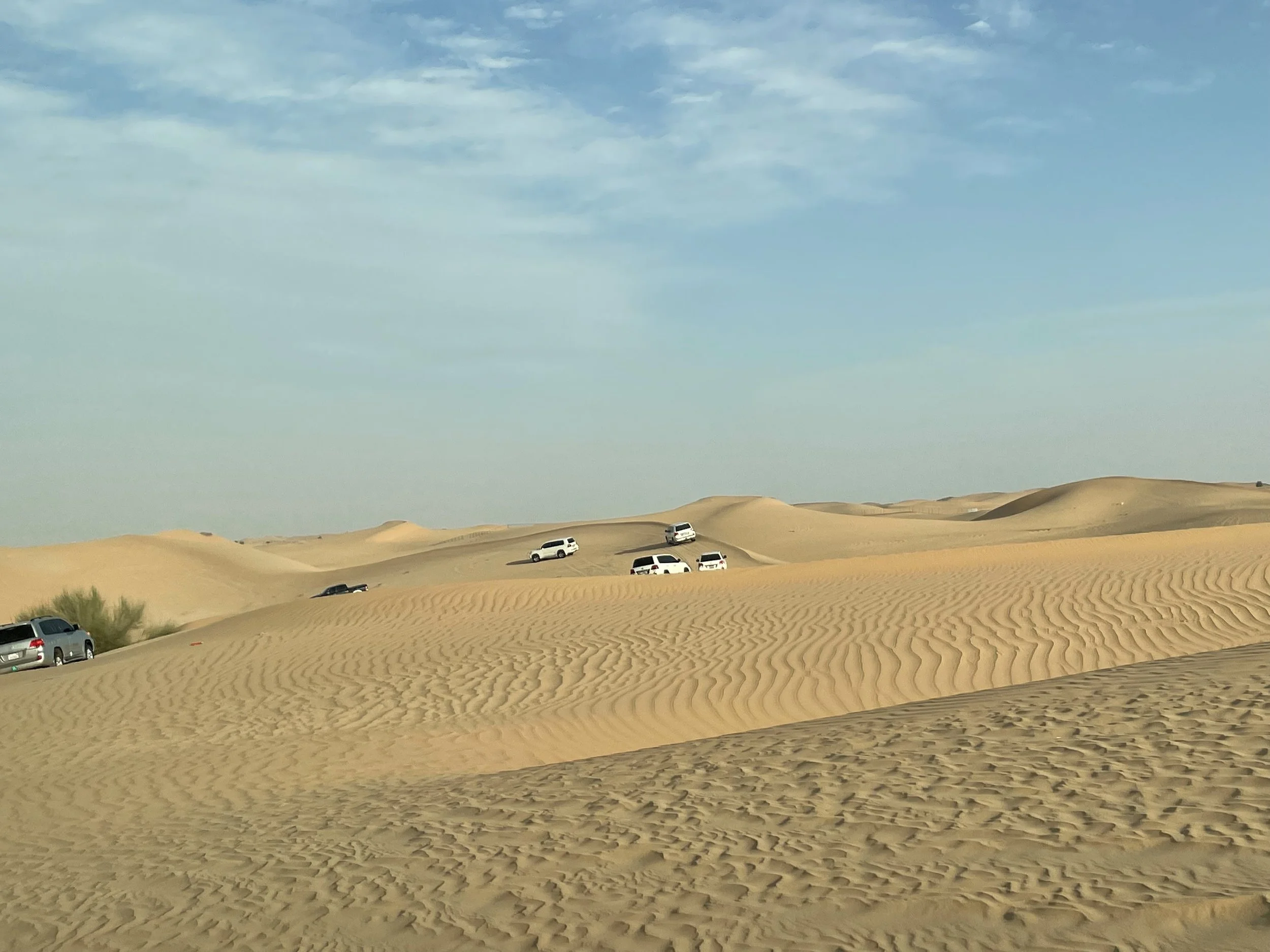
Most tours are in the evening, when it is less hot, and after the dune driving and sightseeing you are taken to a sort of base camp in the middle of the desert where you can also do some camel riding.
The place is mostly outdoors, with a big central courtyard and some facilities around that kind of imitate a traditional caravanserai, or desert trading post. The facilities house mainly services (kitchen, toilets, shops) and are actually quite modern, but they are done in a way that maintain the charm of the experience.
Then it’s dinner time and there is a buffet with several Arabic speciailities and several spectacles, such as belly dancing and traditional music. The food is quite good and abundant, to be honest. And while it is obviously a very “packaged” experience, it is, again, quite fun overall. After dinner you are then driven back to your hotel, arriving before midnight.
Overall I think you get good value from the experience.
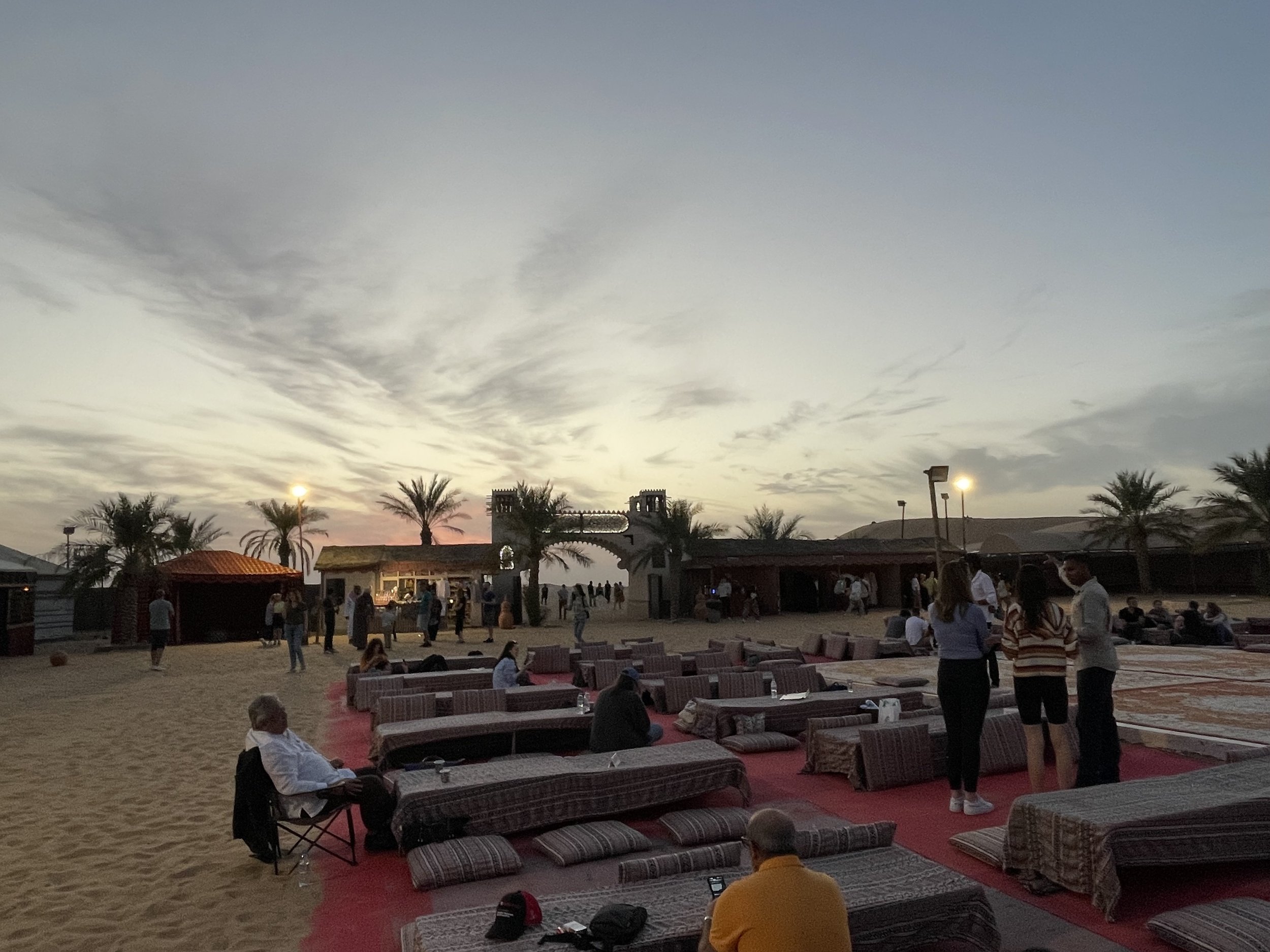
Saadiyat Island Beach
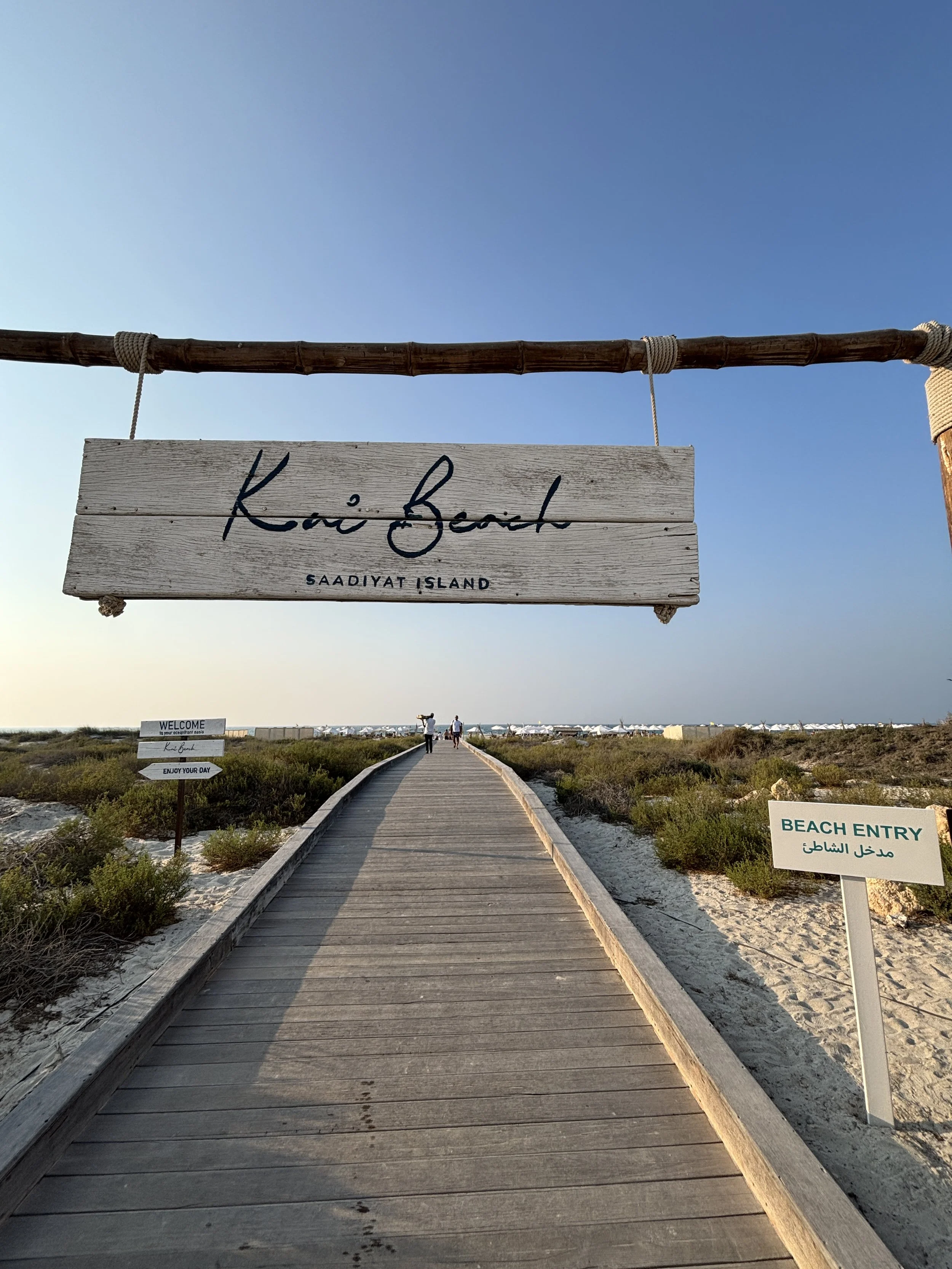
Saadiyat Island has also a beach side. Besides the several ultra-luxury resorts that line the seaside part of the island is Kai Beach Club, which is open to day visitors.
This is a concept that may be a bit shocking to visitors coming from parts of Europe or the US where beaches are usually public and open access, but in Abu Dhabi (and in the UAE more generally) “going to the beach” is a serious business which means paying a no small sum of money (in some places even the equivalent of $100) to spend several areas in a secluded recreational environment. Beach clubs have provide towels and sunbeds and have other services such as bar restaurant, shop, toilets, etc.
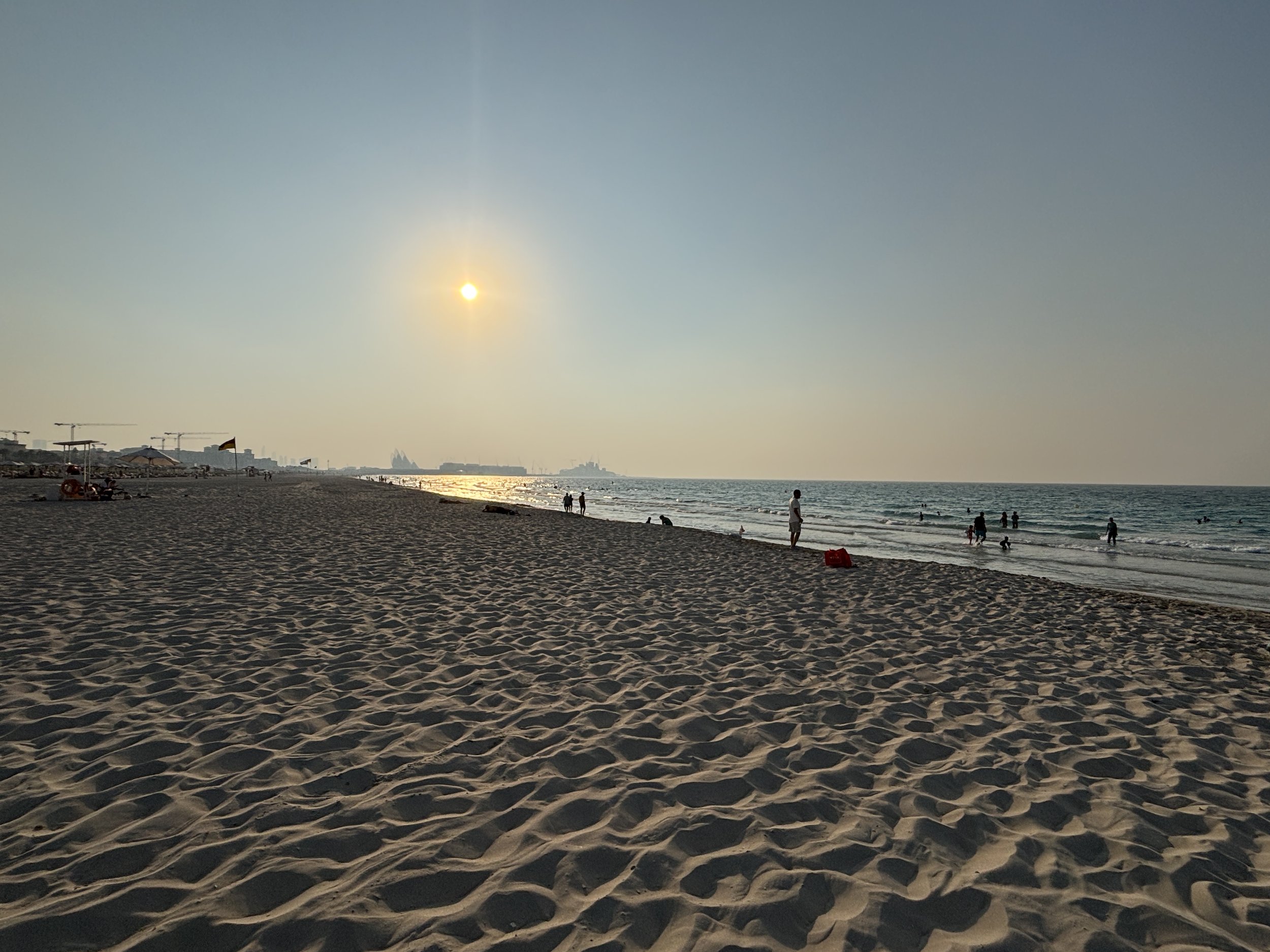
The beach itself is pretty nice, long and open. In this particular beach club there is also a stretch of land between the seashore and the club’s facilities, so this helps give it a more “natural” feel.
Btw, if thinking about going to the beach in Saadiyat Island, it is better to book the beach club in advance, since they can fill up quickly and have limited capacity!
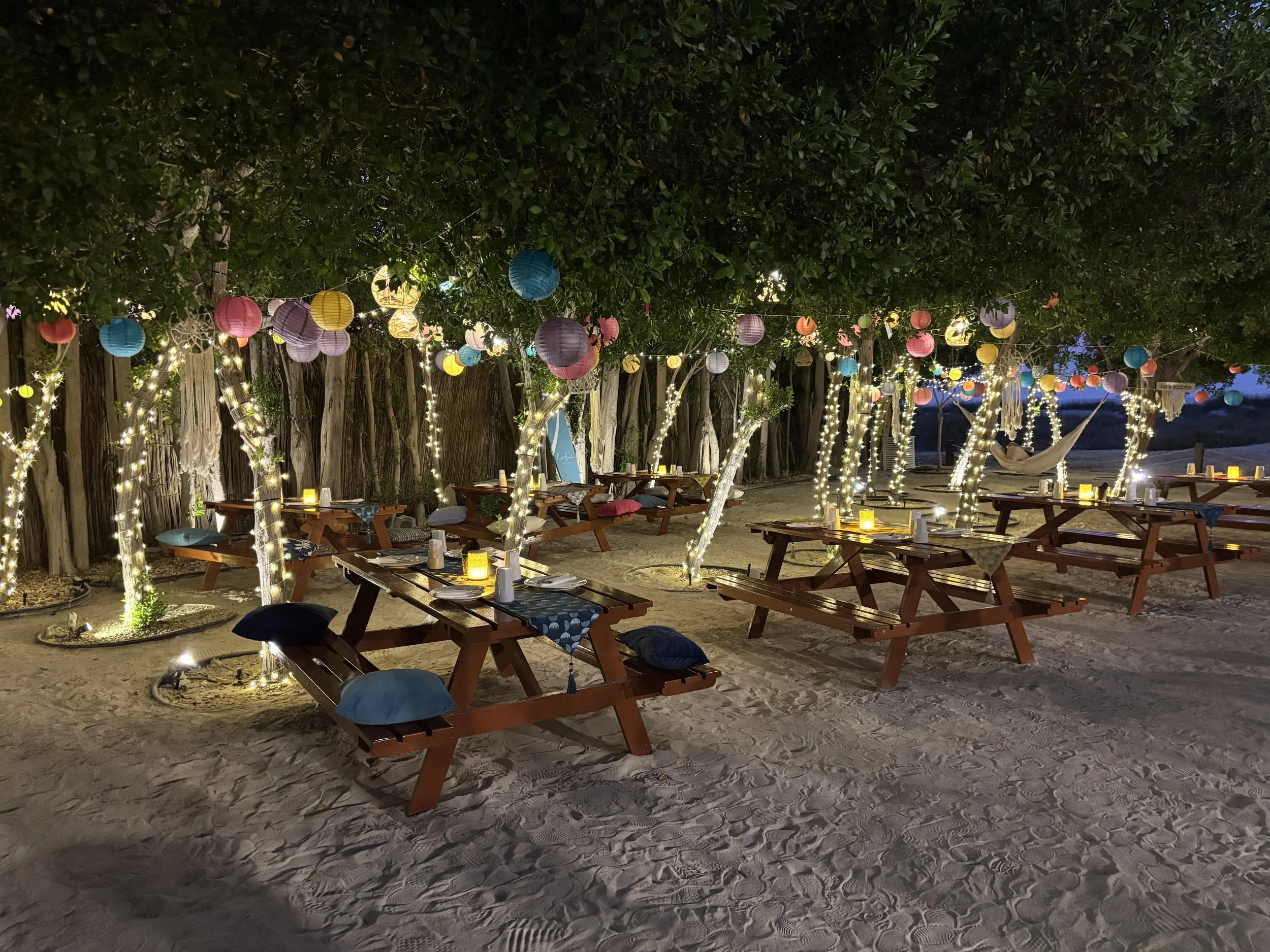
Sheikh Zayed Grand Mosque
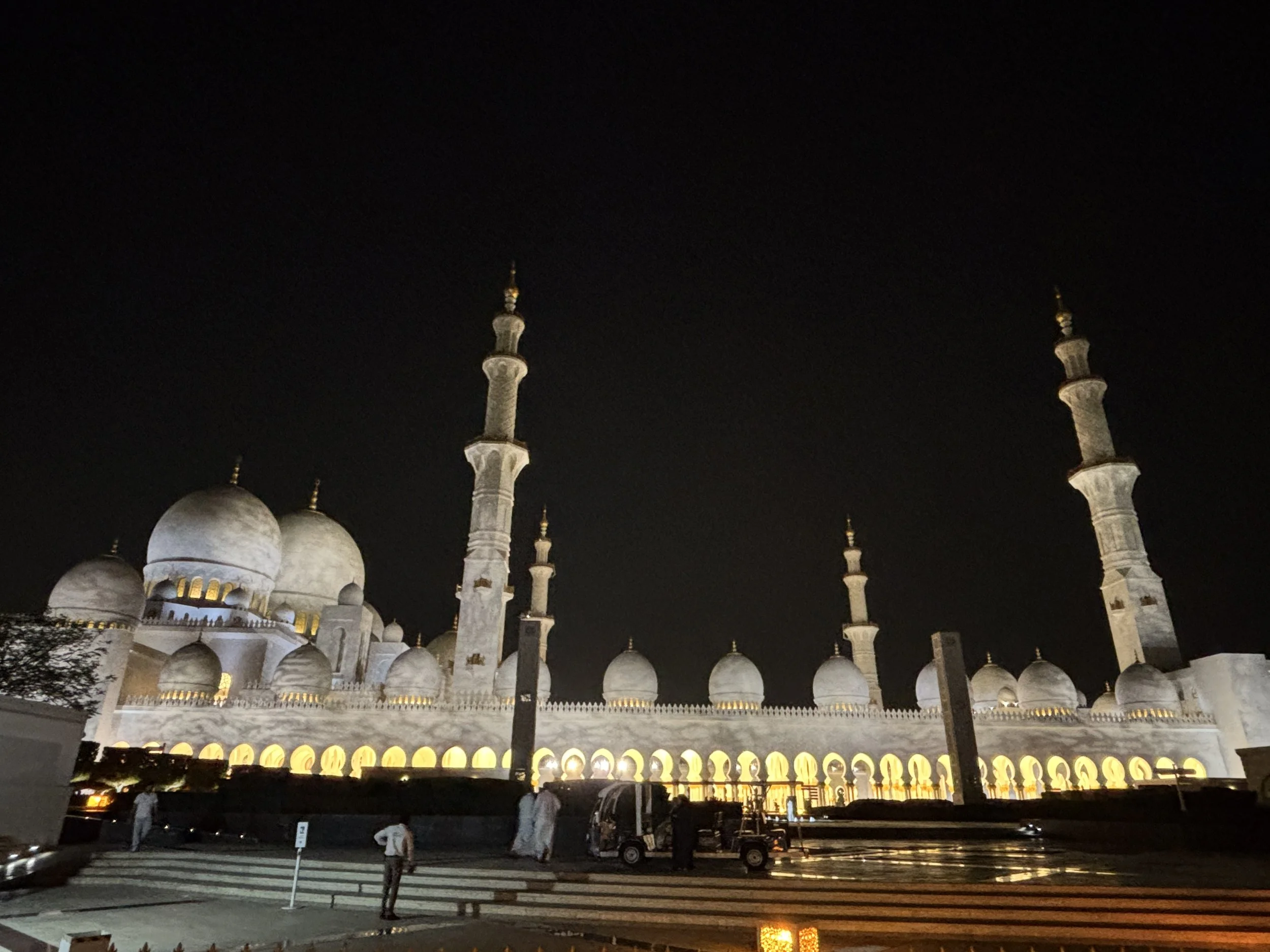
The Sheikh Zayed Grand Mosque is the largest in Abu Dhabi and another big landmark which is worth visiting. It is located at the southwestern edge of dowtown and it is really huge. It has also a whole visitors’ center and commercial area adjacent to it.
We arrived quite late in the evening due to some delays in the travel schedule, so could not get inside, but the view from outside is also quite something!
Some great value options to stay in Downtown Abu Dhabi
Abu Dhabi is not short of accommodation, and even if you don’t have a big budget, it is possible to find very solid options. Next I present two four-star hotels in Abu Dhabi that I have had the chance to visit recently, as well as another more budget-ish but also modern and offering good standards and value.
Marriott Courtyard Abu Dhabi
Hamdan Bin Mohammed Street - 5th St, Abu Dhabi
This is a modern hotel located in downtown Abu Dhabi, pretty close to the Corniche, although not right on the seaside. It occupies a rather interesting, boxy building with a brownish outter structure and its adjacent to a large mall.
It also has a rooftop bar and restaurant with a swimming pool that has the ability to change colour every few minutes (see below). The food was pretty good and substantious and the view, not bad at all!
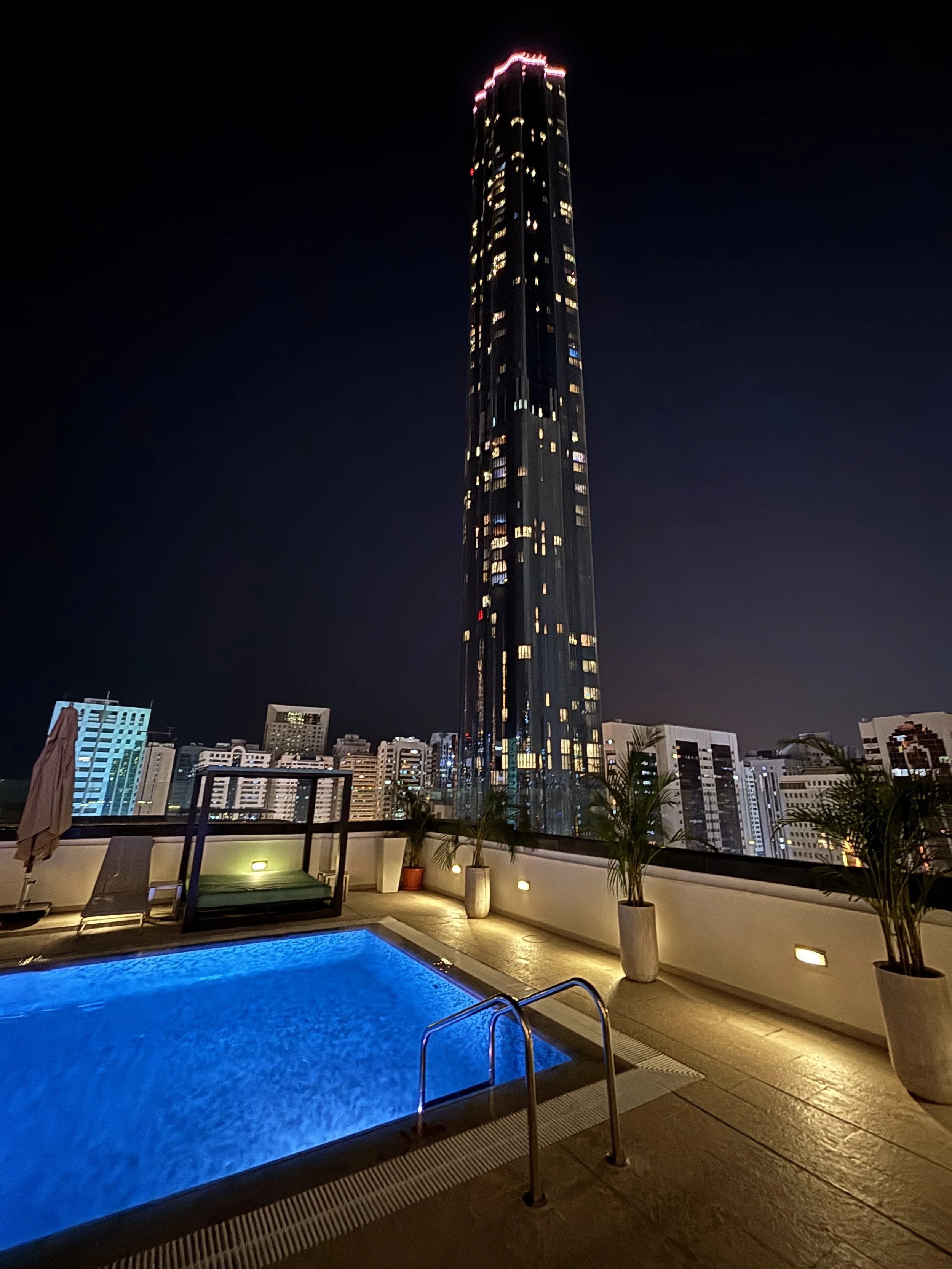
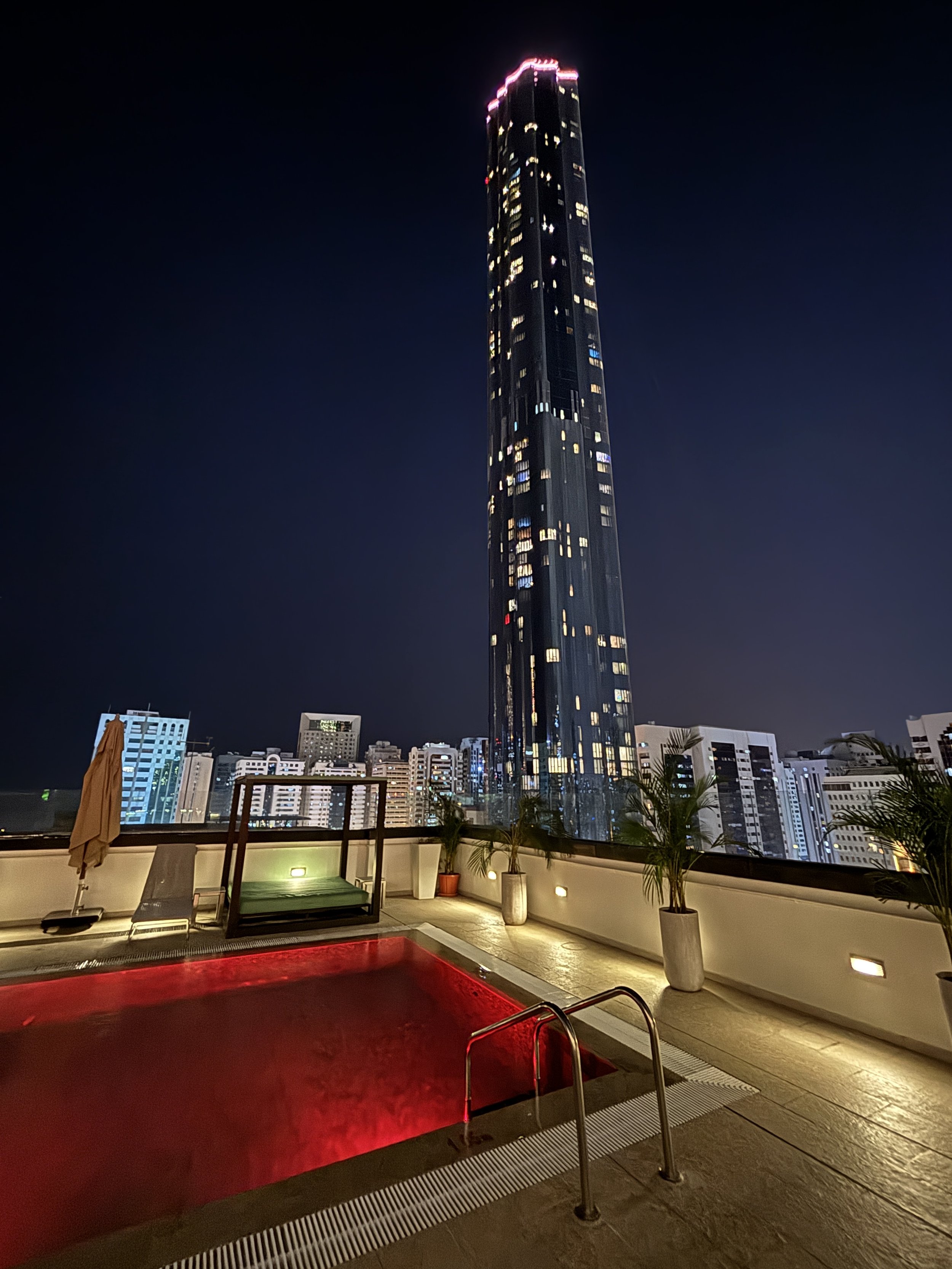
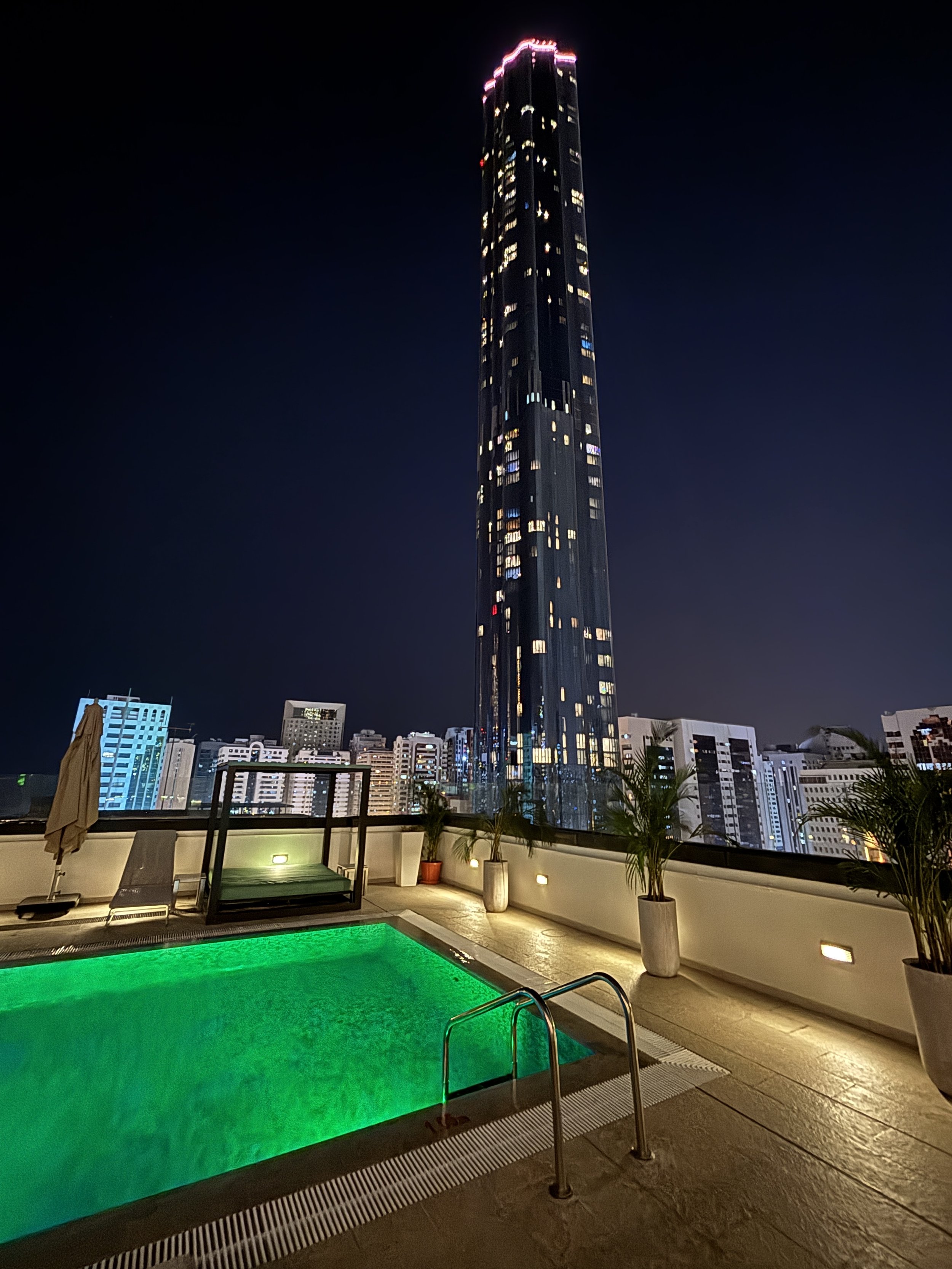
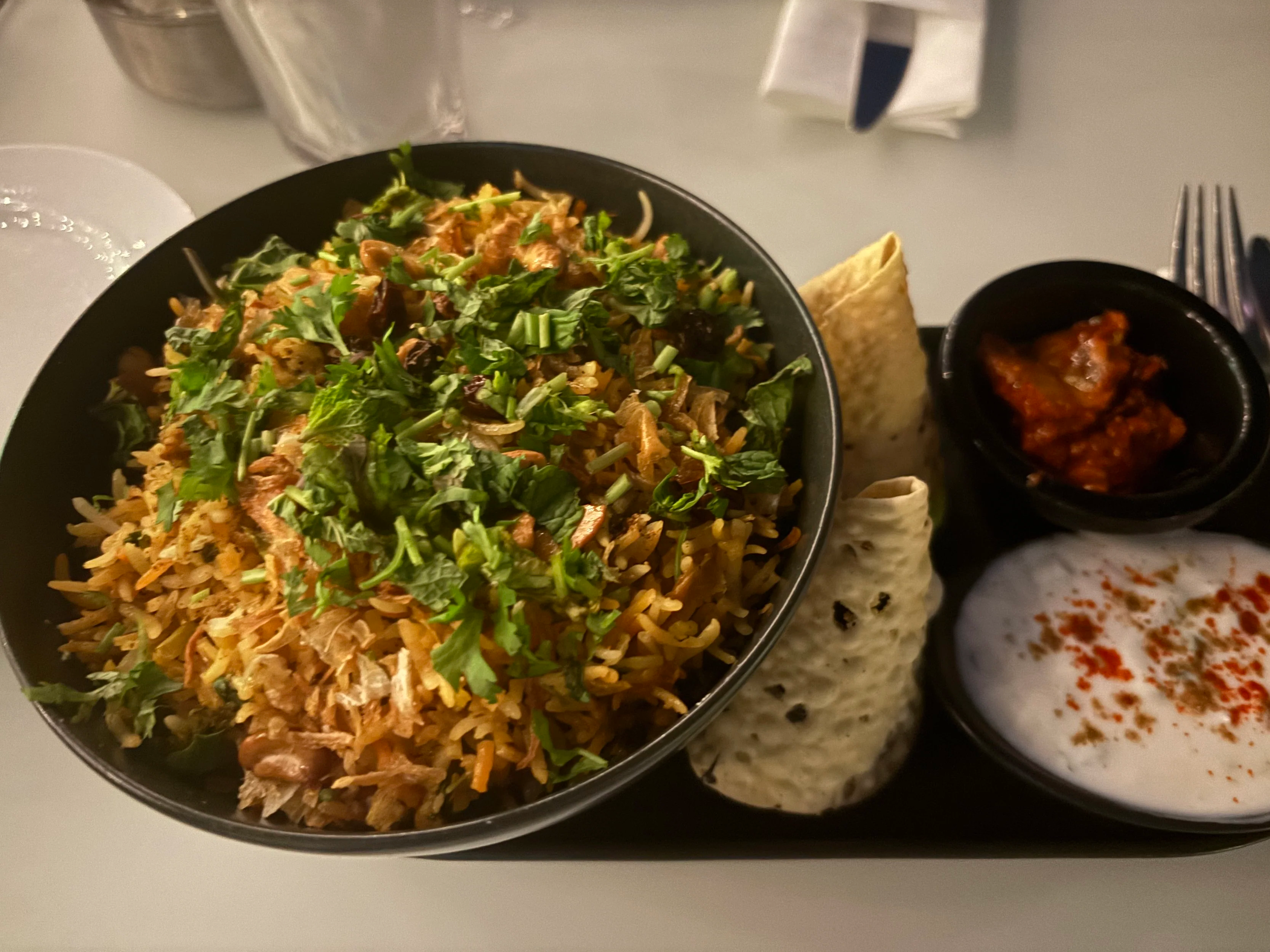
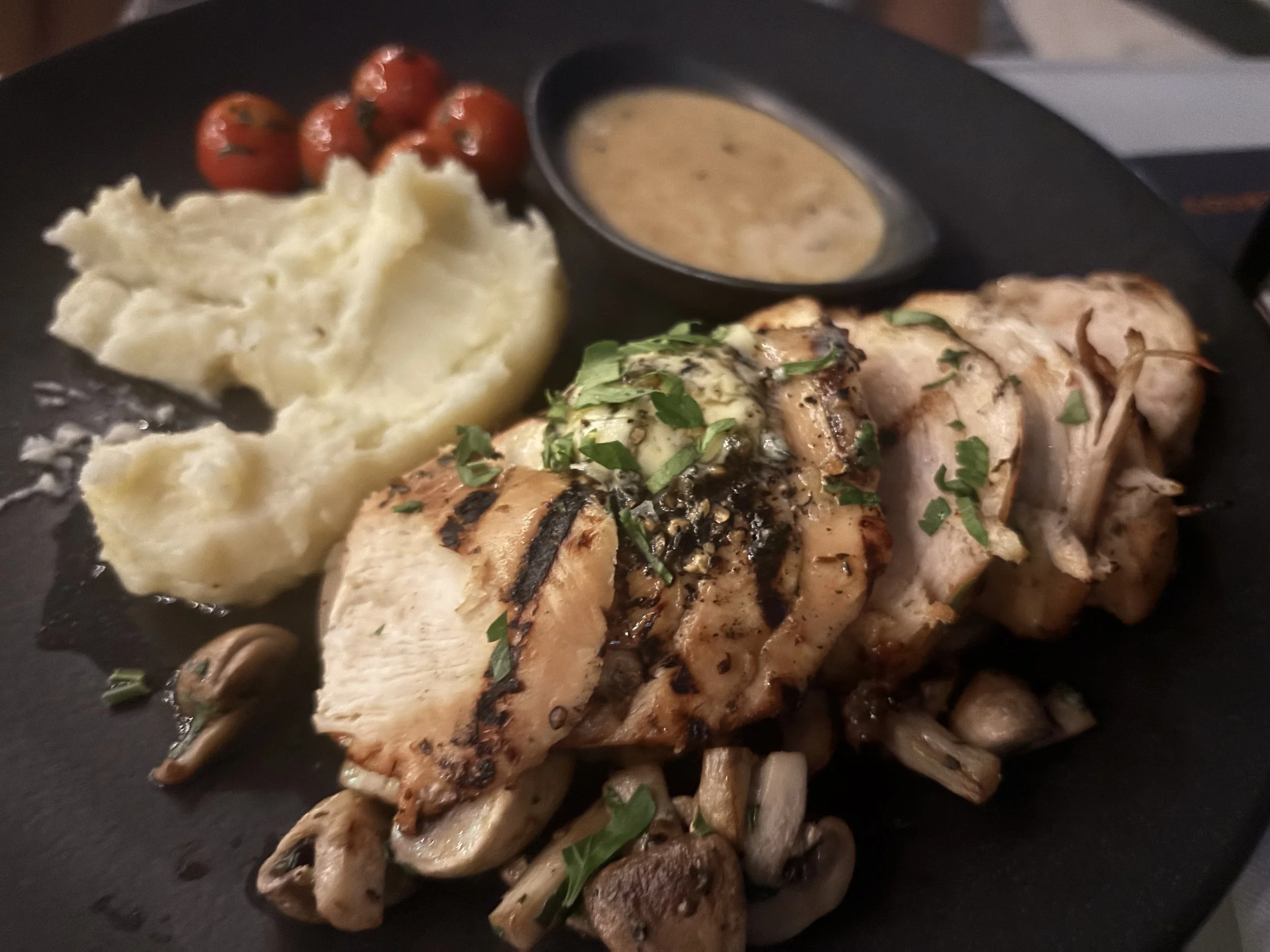
The rooms are solid standard 4-star modern-corporate hotel stuff. All good, very functional, not much to add on this front that you can not see here in these pics.
The frontdesk staff were super friendly, btw. There is also valet parking.
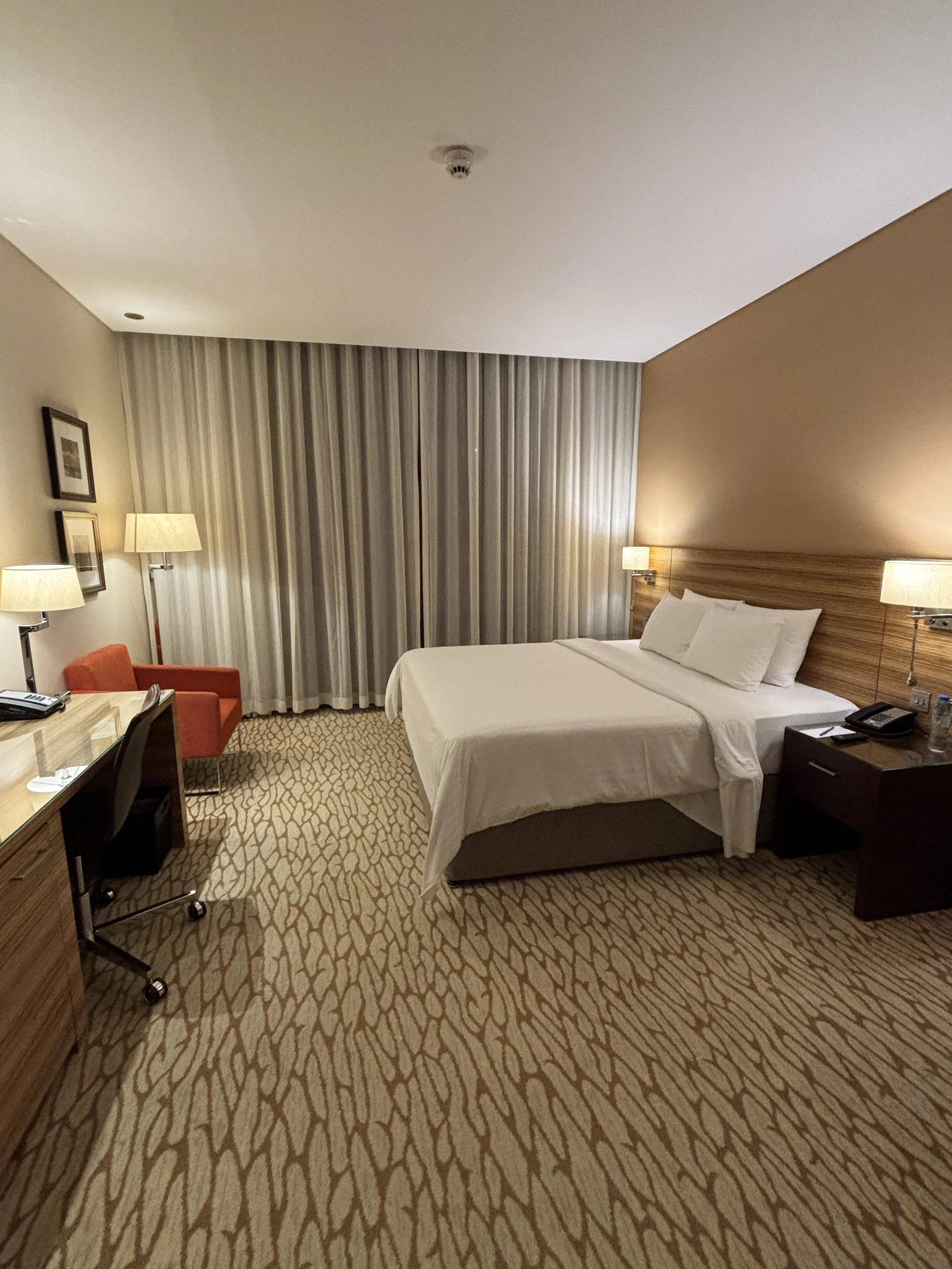
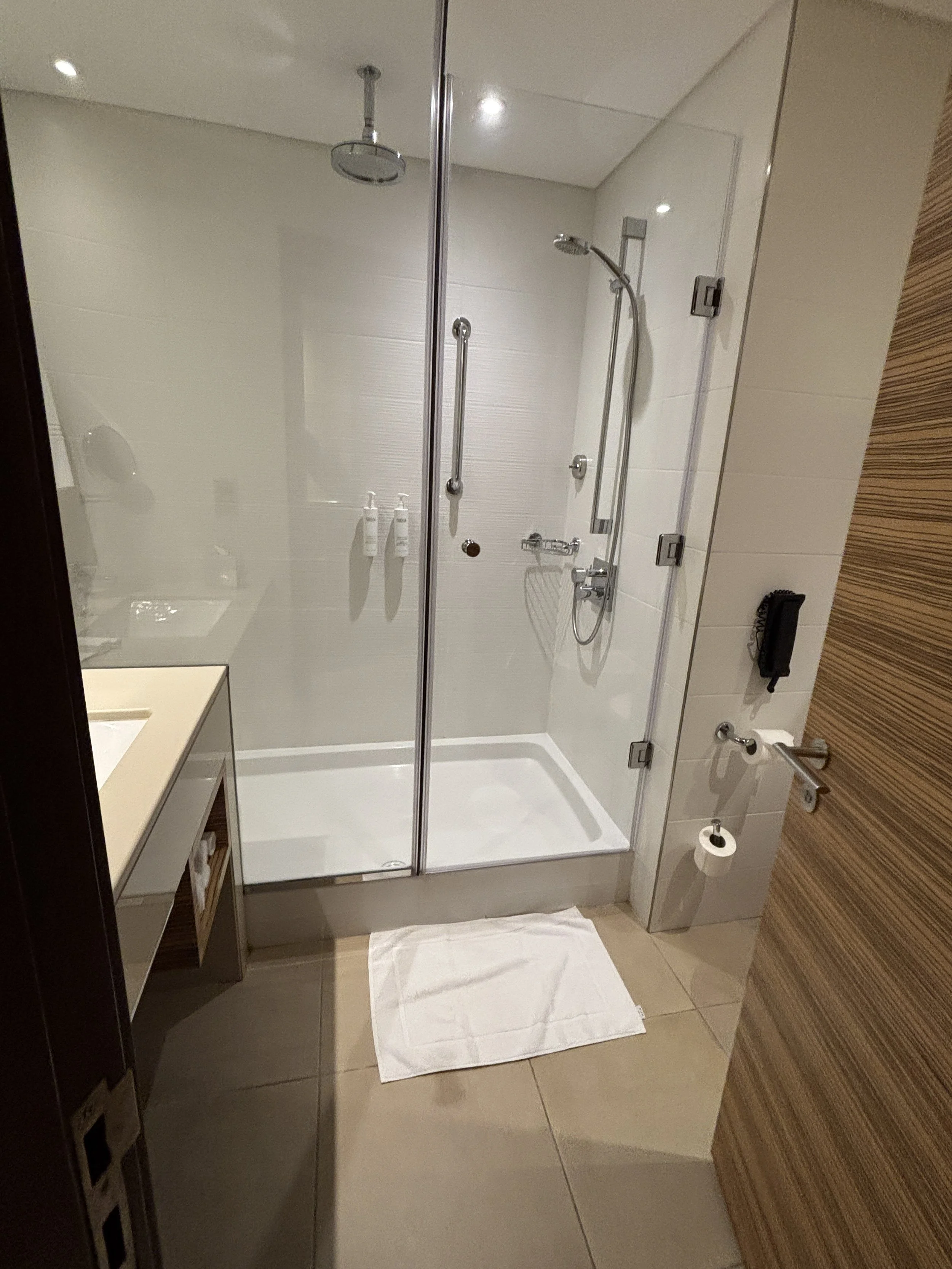
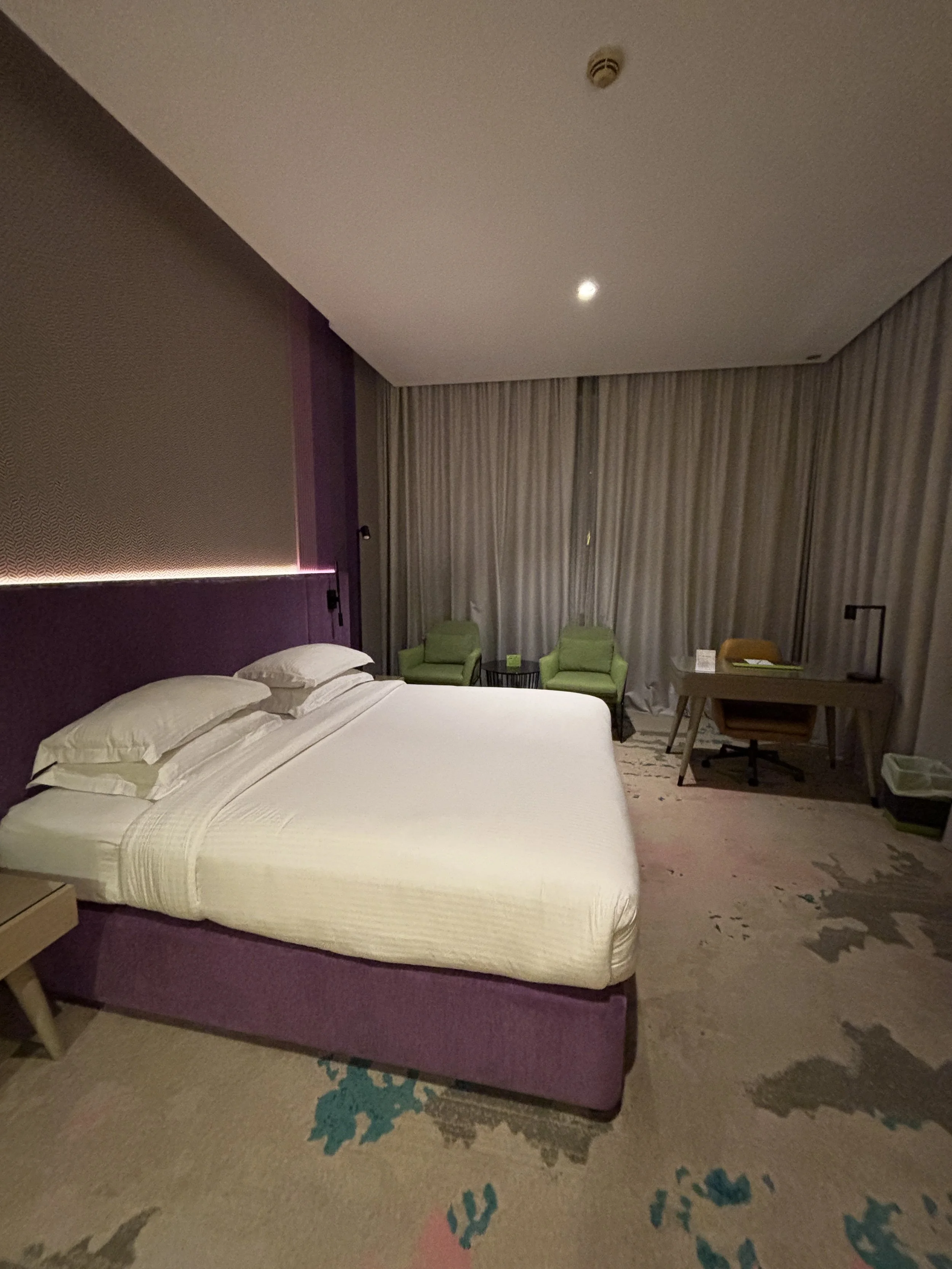
La Quinta by Wyndham Abu Dhabi Al Wahda
601 Sheikh Rashid Bin Saeed St - Al Nahyan - Zone 1, Abu Dhabi
This is other hotel is also in downtown, although a bit further from the sea, and it is similar to the Marriott Courtyard in many respects.
The hotel is in a rather tall tower (not sure it can be called skyscraper, though), which means that most rooms get views of the city.
Here the interesting thing was that we were upgraded to an apartment-type room, which means, essentially that you get also a living room, in addition to the bedroom.
Other than that is, again, we are talking about a regular 4-star modern hotel.
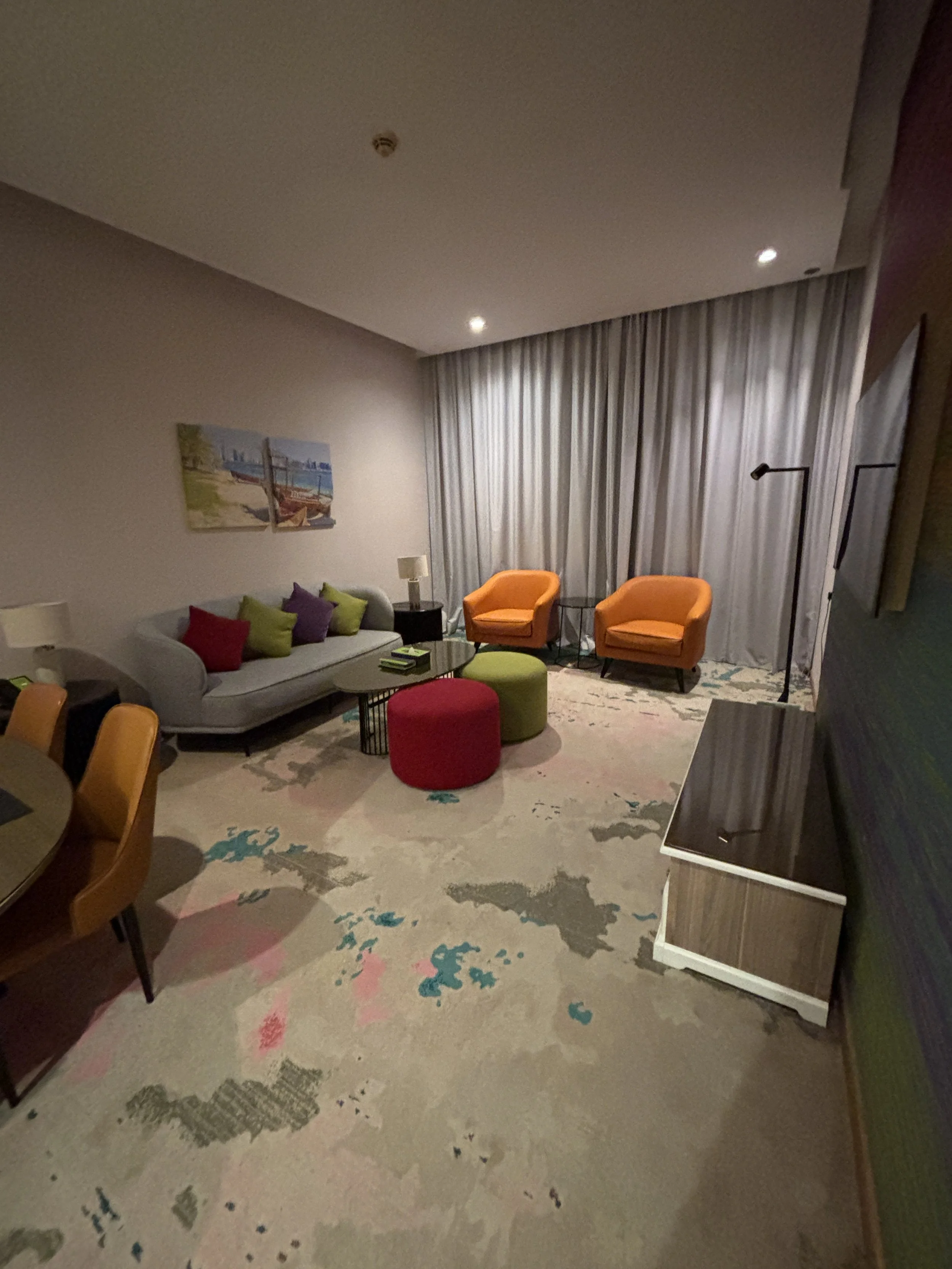
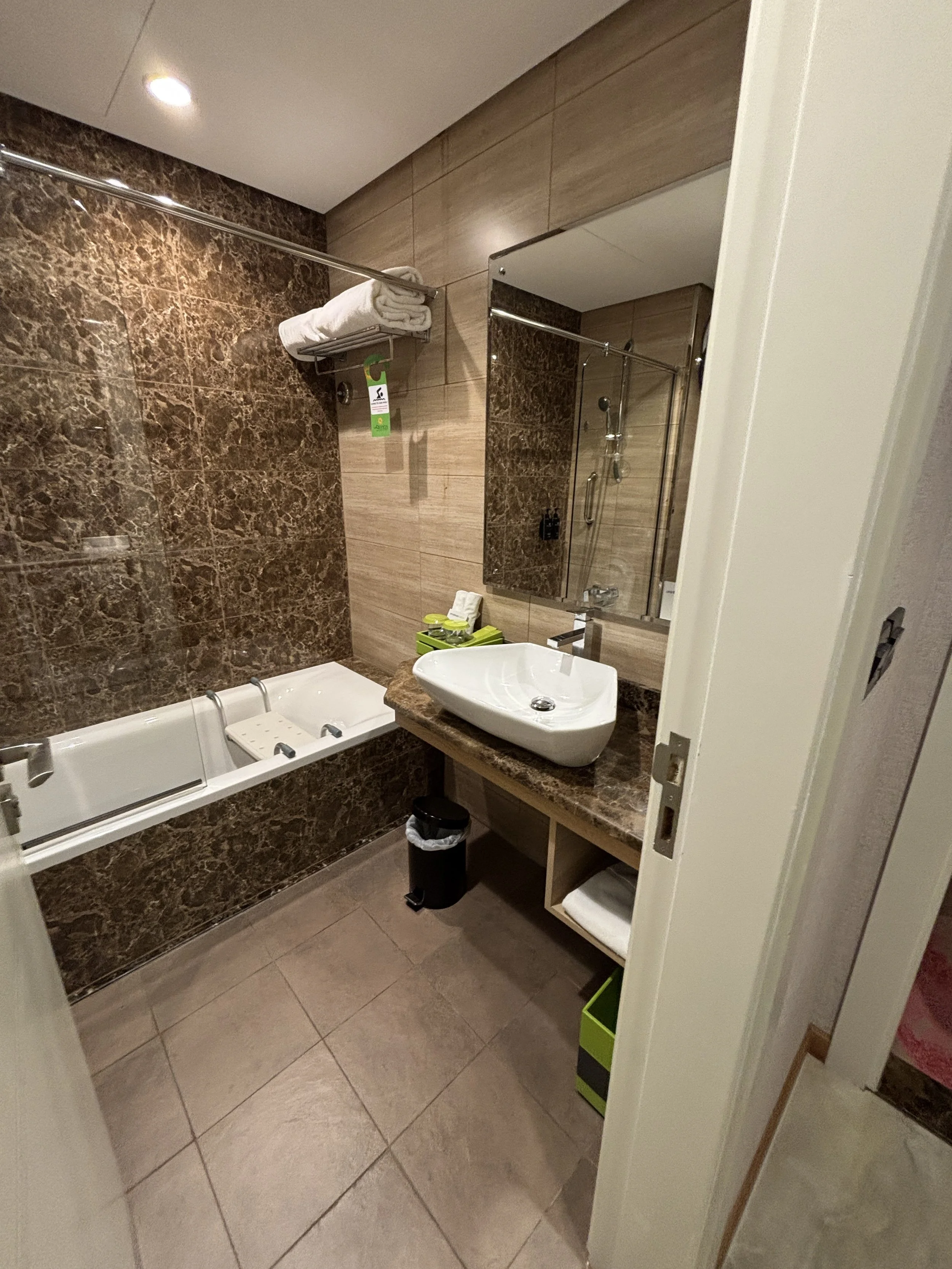
Premier Inn Abu Dhabi Capital Centre
National Exhibition Centre - Al Muntada St, Capital Centre
Abu Dhabi National Exhibition Centre
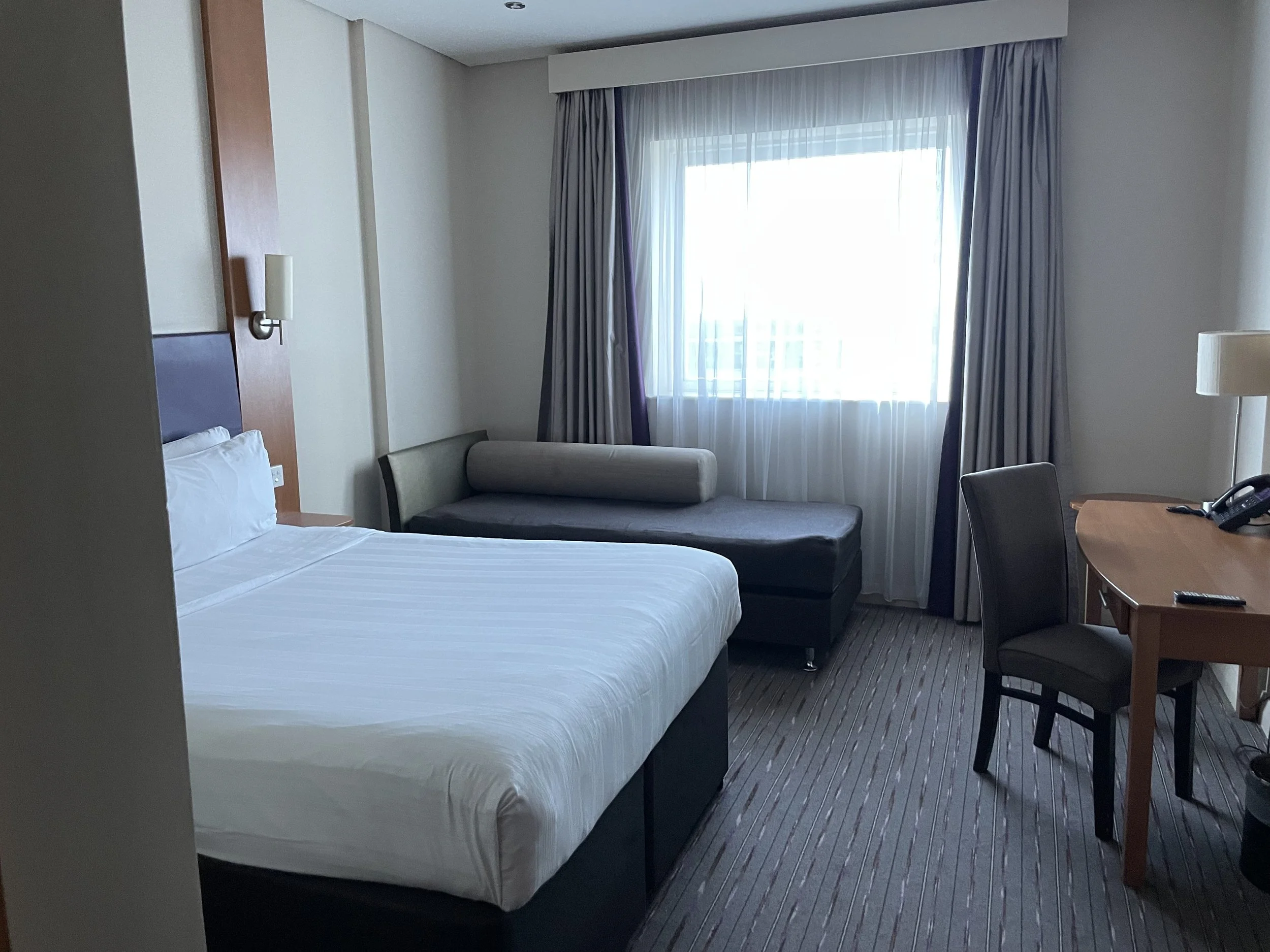
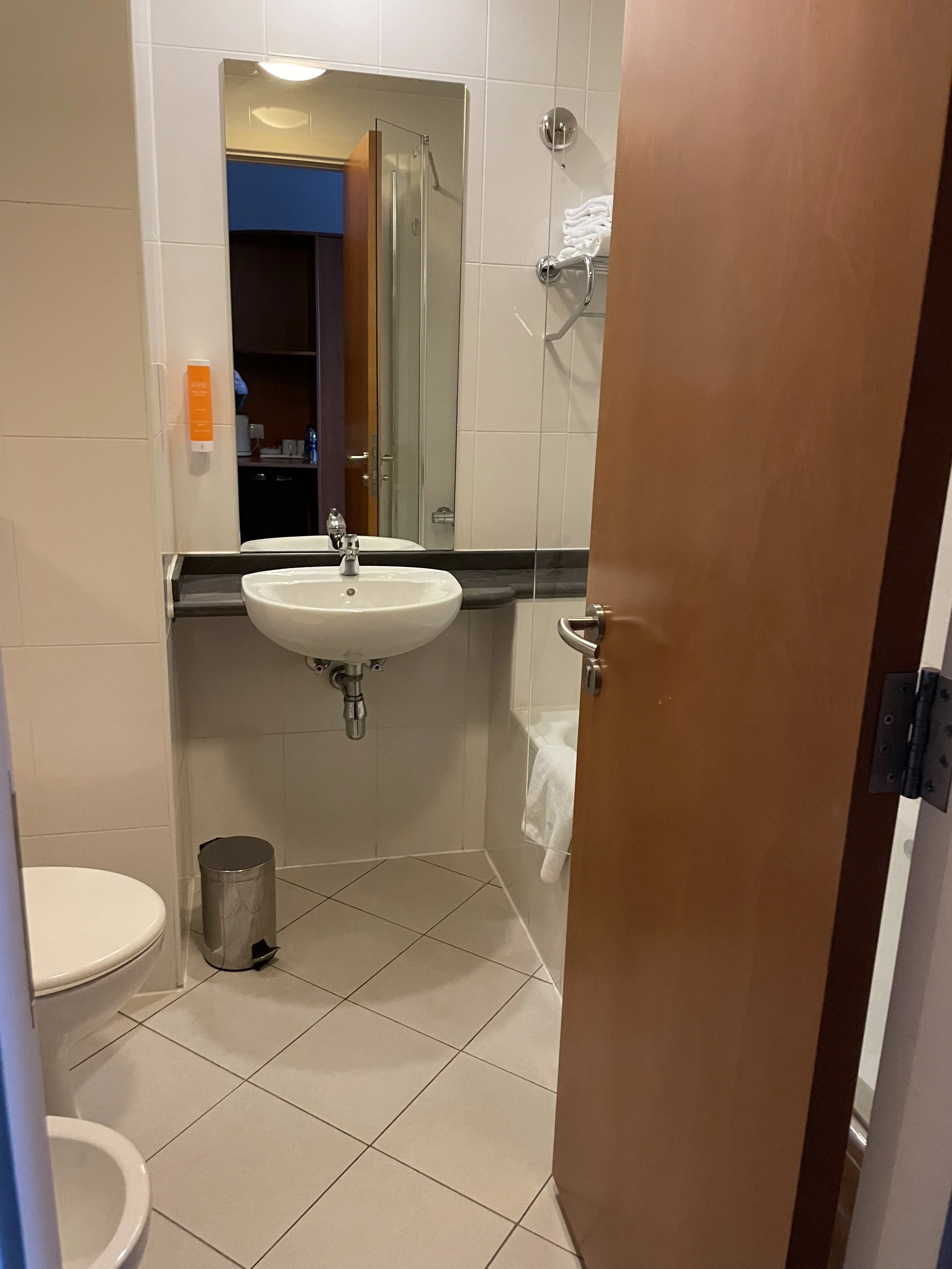
This is a more basic hotel than the other two, but could also be a suitable option if on a short visit to Abu Dhabi.
Premier Inn knows how to deliver great value by offering reasonable prices while still keeping good care of the essentials, such as cleanliness, modern functional decor and good location.
The hotel has also a swimming pool and a gym, btw.
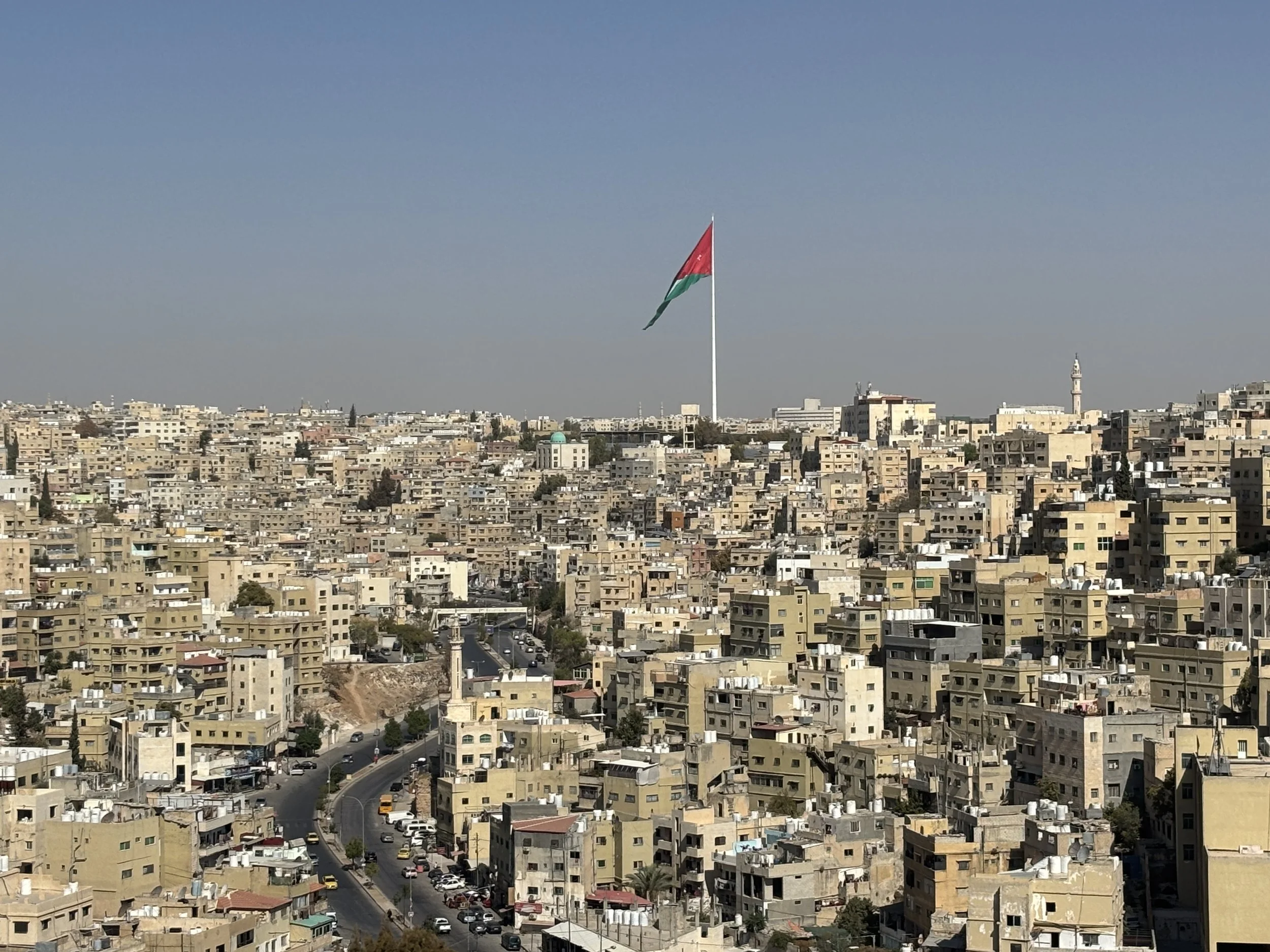
24 Hours in Amman: best things to see and to do
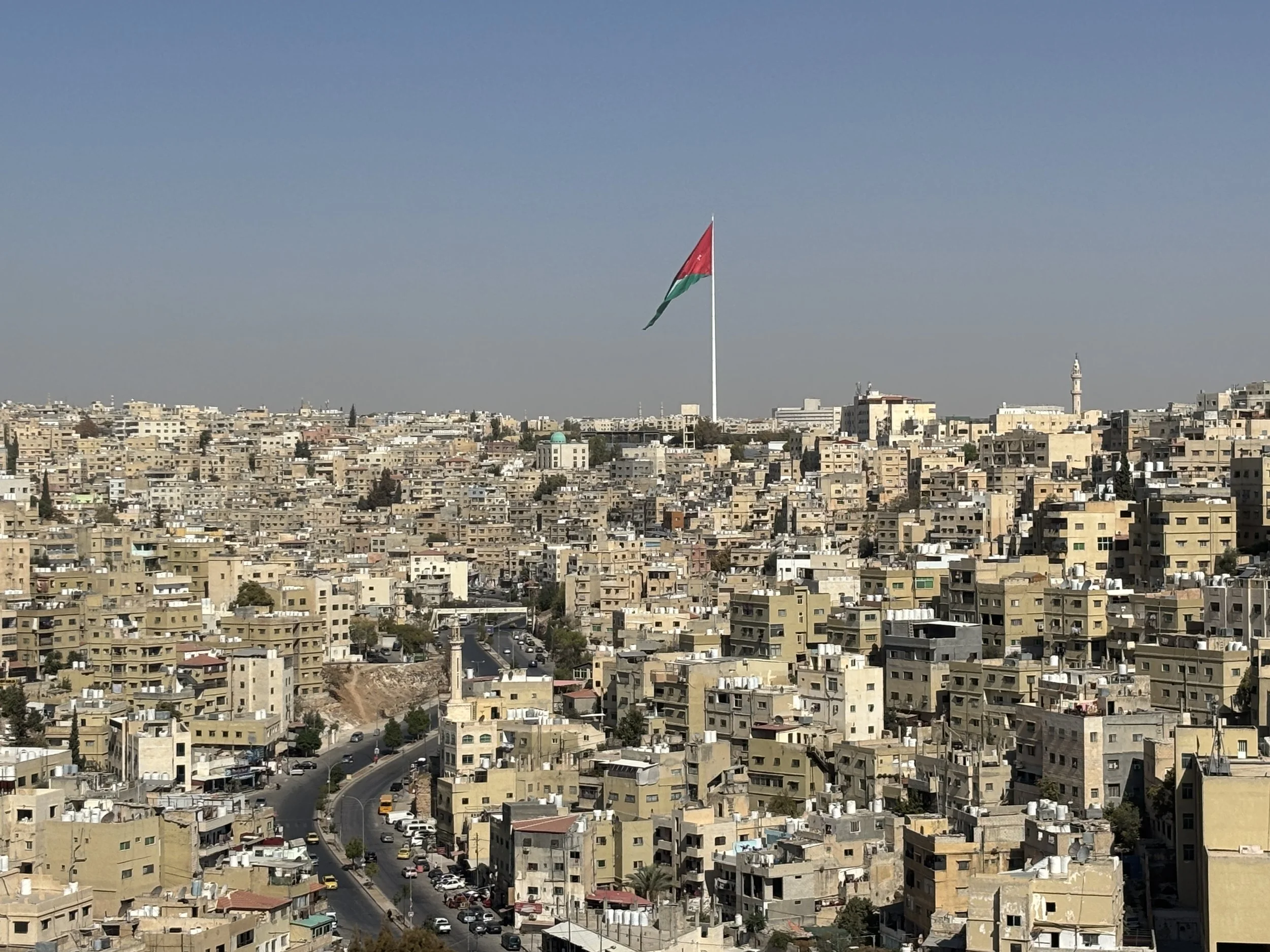
Amman, the capital city of Jordan, often gets overlooked as a tourist destination.
To be fair, Jordan’s most renowned tourist attractions are elsewhere: Petra, the Dead Sea, the Gulf of Aqaba…The country’s location, in an area of near-constant geopolitical turmoil, doesn’t help and you can also add to that the fact that, Jordan, as a country, lacks the budgets and resources which other countries in the Middle East are investing to become major tourism and business entrepôts.
However, and while it does not have huge landmarks, Amman is not lacking its unique charm and, most of all, authenticity (yes, I know this word is cliché, but if you have visited other cities in the Middle East and then you go to Amman, you will understand what I mean). There’s, in fact, more than enough to keep you going for a full intense day of sightseeing or two, if you take things at a more leisurely pace.
In my case, it was a short 24 hour stopover with an overnight. My hotel was rather central, so this allowed me to visit the key areas of the center on foot during the day (Note: it was November, so the heat was very bearable, I guess it’s different in summer).
Perhaps after Ryanair announced a significant ramp up of its flights between Amman and Europe, the city is going to become a lot more popular with tourists.
Let’s see what I think are the top things to do and to see in Amman if you there on a short visit!
Arriving in Jordan: some practical informations
Although I found Jordan quite an easy country to move through, it’s important to prepare a bit before going.
Visa: citizens of many countries (including the EU and US) can get a visa on arrival. It costs something like US$50 and you can get it at the airport. There is a counter at the airport where they will take payment (credit cards accepted).
There is also a Jordanian government web portal where you can prefill the form, but in my case it turned out not to work properly.
Currency: although cards are accepted in many places, I found it convenient, particularly since I arrived in the middle of the night, to get some cash at the airport. This proved to be handy latter during the day.
Moving around:
Queen Alia International Airport (a beautiful and very modern airport, btw) is a bit far from the center, some 40km or so. There are some buses, but the taxis are not too expensive, so I opted for this option. Both Uber and its Middle Eastern equivalent, Careem, work in Jordan. I think it was a very good decision to use them to optimize travel times.
There is no metro in Amman and public transportation seems a bit difficult to understand if you are not local. In fact, if you stay in the city center and provided you have no problem withe going a bit uphill at timse, you can just walk around, which is what I did.
What I would recommend, though, is getting an e-sim, to be able to orient yourself around and get an Uber or Careem if you need to.
Making sense of Amman: a very hilly city
One thing that you will notice immediately when you are on site is how hilly Amman is (like so many iconic cities it is built on 7 hills!),
In fact, the most buzzing part of the historical center is basically on a narrow stretch of flat space found between several of these hills. And some of the landmarks, like the citadel and Rainbow Street are located on top of them.
For reference, most of what I describe in this post is located within the red square above.
This was the area I moved around in during my visit.
This are is all within walkable distance (although bits of it are quite steep, tbh!)
Top sight: Amman Citadel
If you have time just for one thing in Amman, go to the Citadel! This is the most ancient part of the city, and that’s no small statement. In fact, Amman is one of the oldest continuously inhabited urban settlements in the World!
So, pretty much all Ancient civilizations that the Near East has seen have, at some point or another, left their imprint on the area where the Citadel is now located.
Curious fact: throughout most of Classic Antiquity, from the Hellenistic period (around 3rd C BC to the early Middle Ages, Amman was known as “Philadelphia”!
Most of what you see today on the Citadel is actually from the Roman and Umayyad periods.
But even if you are not that interested in the Ancient history, the Citadel will give you some of the best views of the modern city of Amman (including the massive flag which has become something of a landmark)!
The Citadel occupies the whole top of an “L-shaped” hill with majestic views on all sides.
Besides the different layers of Ancient ruins, it also contains a small archaeological museum (more on this soon.
The Citadel perimeter is enclosed by a fence, and there it is necessary to pay a small entry fee to get in.
There are also some services, including a café and a shop.
There are buses that go up to the Citadel, although it is also perfectly possible to walk (it’s a bit steep, though!)
I would advise allocating a couple of hours to visit the Citadel, since there are quite a few points of interest, including the, rather impressive, remains of the temple of Hercules and a palace complex dating back to the early Islamic period.
To walk through the ruins I used a new app which I had been offered to try, GPSmyCity, which works essentially like an audioguide on your phone, with several landmarks explained (it works in quite a few cities around the world, btw, not just in Jordan).
There is also a small archaeological museum. Quite old school and, to be honest, sometimes a bit cluttered, trying to explain the whole history of mankind in such a small space! .Given the richness of the archaeological heritage in Jordan, it had quite a few remarkable pieces, though!
From the Citadel it is possible to spot the next big landmark on our Amman sightseeing list: the Roman theatre!
Amman’s Roman Theater
As you may have seen in the picture above, the Roman theatre is just downhill from the Citadel, actually built on the sides of the opposite hill.
It is possible to walk down a few alleyways and get to the theatre in a few minutes. The biggest challenge is crossing the major avenue that cuts through the middle of Amman, since the traffic is nonstop (I finally just followed a group of locals that just forced their way through the traffic, strength in numbers!)
Now, I have been to quite a few Roman theatres (see my post about the Lycian coast), but this one is rather exceptional in two ways:
1) it’s rather good state of conservation/restoration
2) It is sooooo steep, it’s almost vertical! (seriously, look at the pictures below!)
There is a big square in front of the theatre and you can get a good view already from here, but I recommend paying the ticket to get in (it costs the equivalent of a couple of dollars/euros). The view from the top is great (if you don’t maind heights!) and you get the symmetrical view of the Citadel from the opposite hill).
With your entrance ticket you can visit also a small antropological museum located on the wings of the theatre’s base building. Tbh, as a museum is a bit mmmh…don’t expect much, but there are some real life figures representing the different peoples that lived in what it is today Jordan. Spent 10 minutes maximum there.
A walk through Central Amman
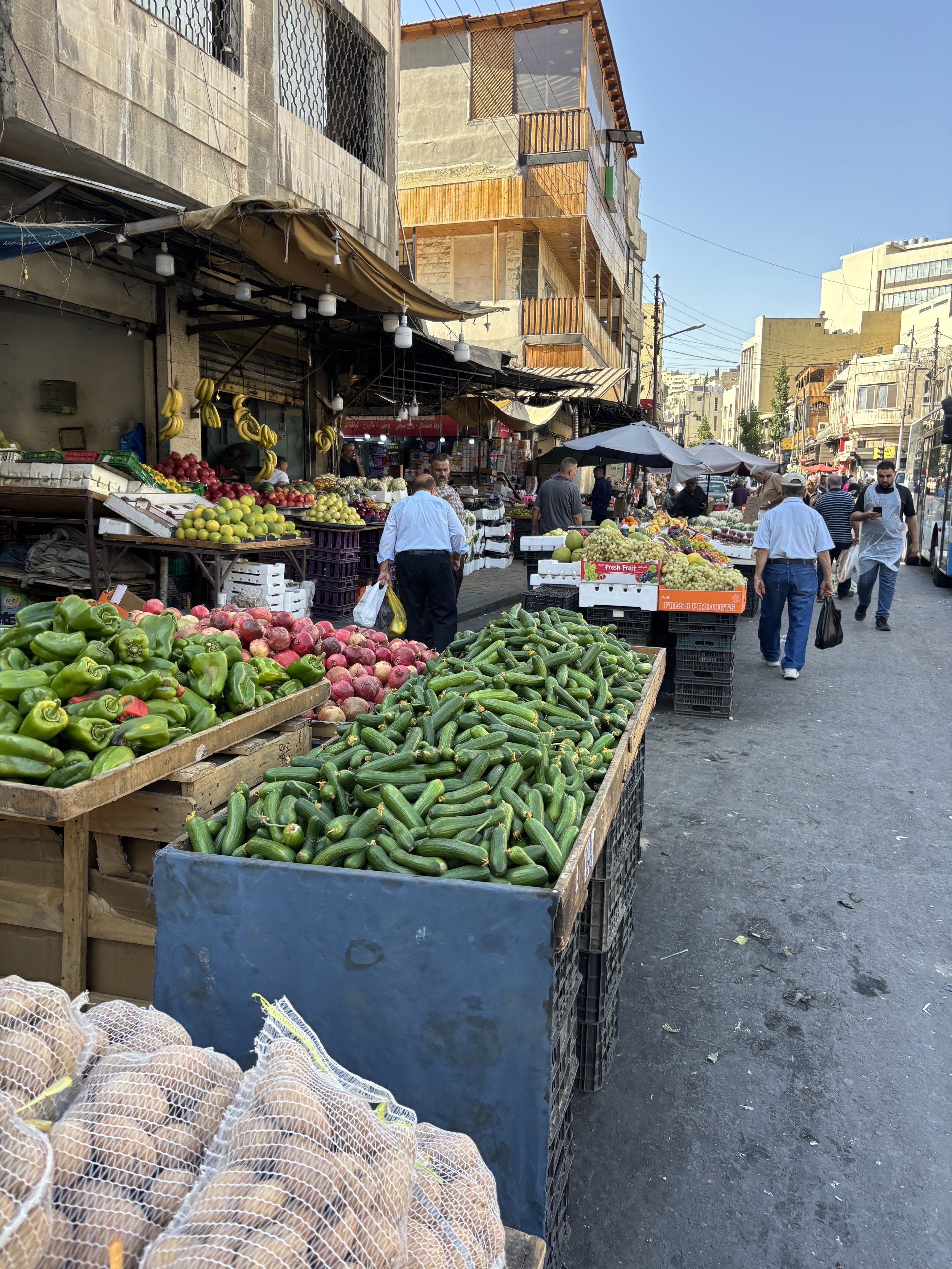
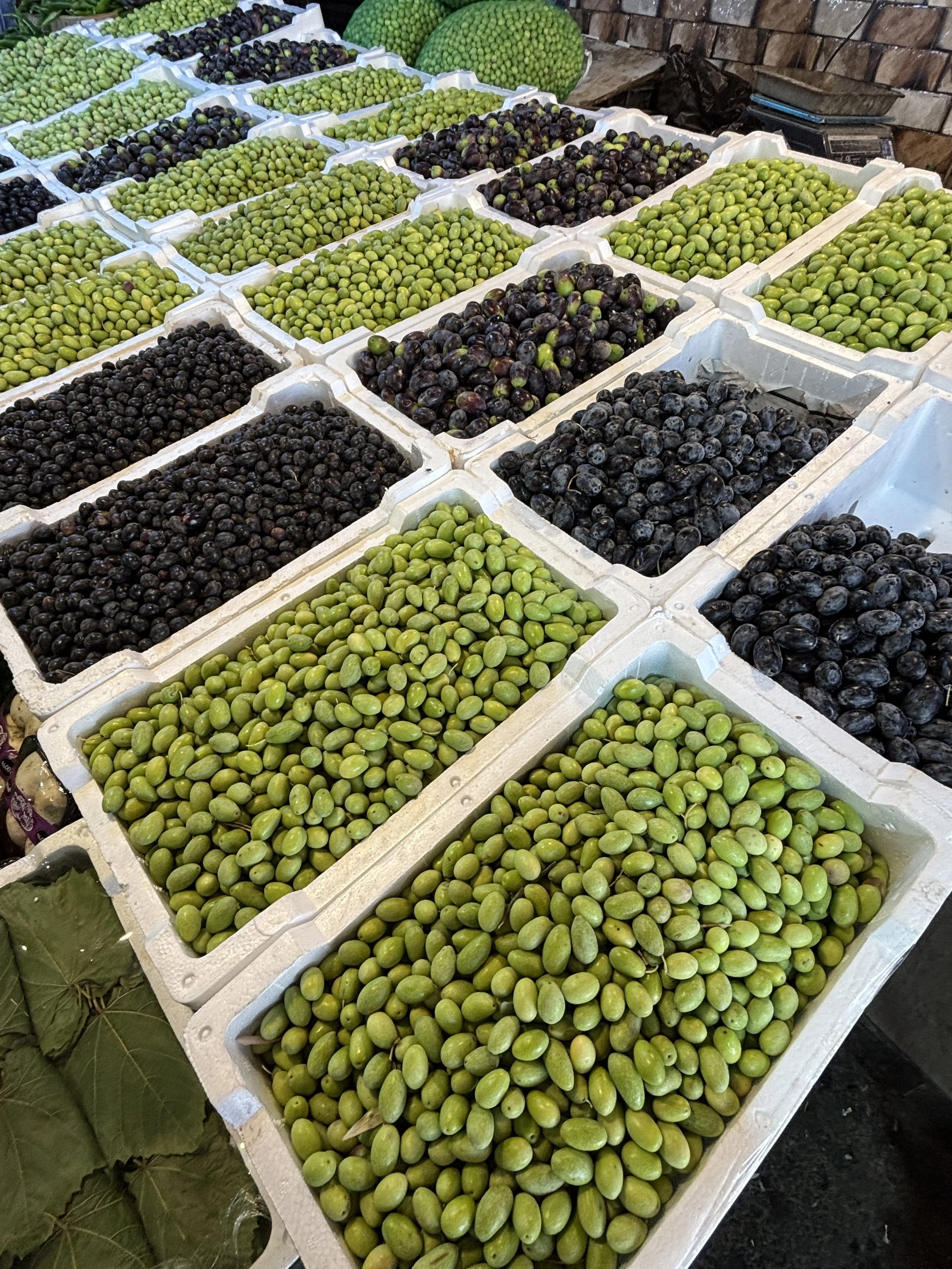
After visiting the Citadel and the Roman Theatre I walked a bit through the area around Al-Hashemi Street and its surroundings. This is the valley that lies between three of the city’s hills and it appears to be the historical downtown.
Don’t expect major landmarks here. In fact, I would say it is not even particularly beautiful, BUT it is quite an interesting area that is buzzing with commercial activity.
It is neither old souk experience (in the 1001-nights sense) nor the sanitized modern shopping experience you find in some Gulf countries, it does not even resemble the very touristified Istanbul, but it does have a character of its own.
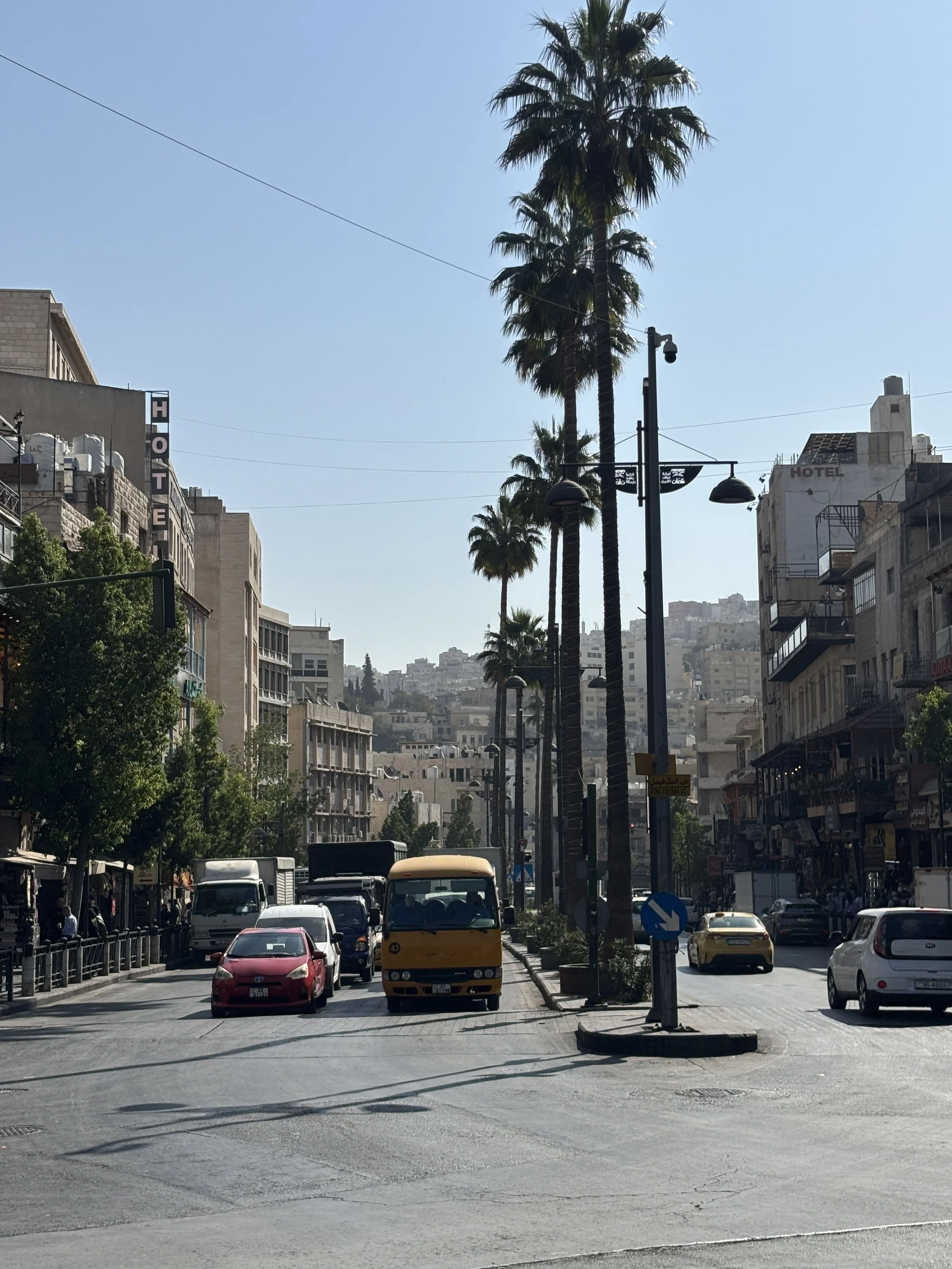
Jordan is not just a Kingdom, but the monarchy is at the very center of its sense of nationhood. You can see signs of that all over the place.
Here below you can get an idea of how streets look like when you leave the main commercial avenues behind and start climbing uphill through the side streets.
Lunch at Hashem
King Faisal Street, Amman
I went to Hashem for lunch after I saw it popping up repeatedly when researching where to eat in Amman. It didn’t disappoint!
Not only the food was great, but the place has character, staff is efficient and it delivers great value for money.
It is located in a sort of indoors courtyard off one of the main commercial streets and its specialty is Middle Eastern “street food”, that is, several types of hummus (and its derivatives), falafel and the like.
Portions are really big! I ordered hummus, mutabal and falafel and I ended up really full. They also serve the typical flat bread, which is served straight on the table, which is covered with a disposable transparent plastic.
What’s more, I came in expecting I would have to wait a bit, since the place was packed and buzzing, but the staff somehow managed to find me a spot straightaway. The ordering experience is also quite a thing, since you mark on a piece of paper which dishes you wish and in which quantities. The service was also really fast and, upon finishing you pay at a small booth at the exit. Very efficient throughout! As a bonus I also managed to taste the local equivalent of Coca-Cola/Pepsi, called “Matrix”.
The food itself was also great and you can see why this is a place that seems to be a “must-go” for anyone visiting Amman, as the gallery of celebrities on the walls of the restaurant shows.
I would certainly come back!
A walk through Rainbow Street
After such a substantious meal, it was time to get moving again and nothing better to exercise a bit that climbing all the way up to Rainbow Street, another of the areas of note in Amman.
Rainbow Street is at the crest of another hill, just immediately south of downtown, and it is a sort of posh-bohemian area with some cafés and artsy spots. Don’t expect a specific major landmark or some super impressive views here, but it is good for a pleasant stroll along some quiet streets and some coffee.
In this regard, a nice place to stop by is the garden of the Turquoise Mountain Showroom, which showcases artisan handiwork from Afghanistan, Myanmar, Saudi Arabia and other countries.
It also has a nice café with a terrace which offers a space of calm to sit down after all the up and down walking.
Great value hotel in Amman: Shams Alweibdeh Hotel Apartments
Al-Baouneyah St., Amman
I booked this hotel at the very last minute since it offered a good combination of reasonable price, good reviews and proximity (walking distance) to the city centre. It turned out to be a good choice for my overnight stay.
This is a 3-star, so not luxurious, but it delivered in everything it promises. The room was actually quite big, it was more of an apartment, since it has its own kitchen and living room. And everything was pretty clean. The bathroom had toiletries, as well.
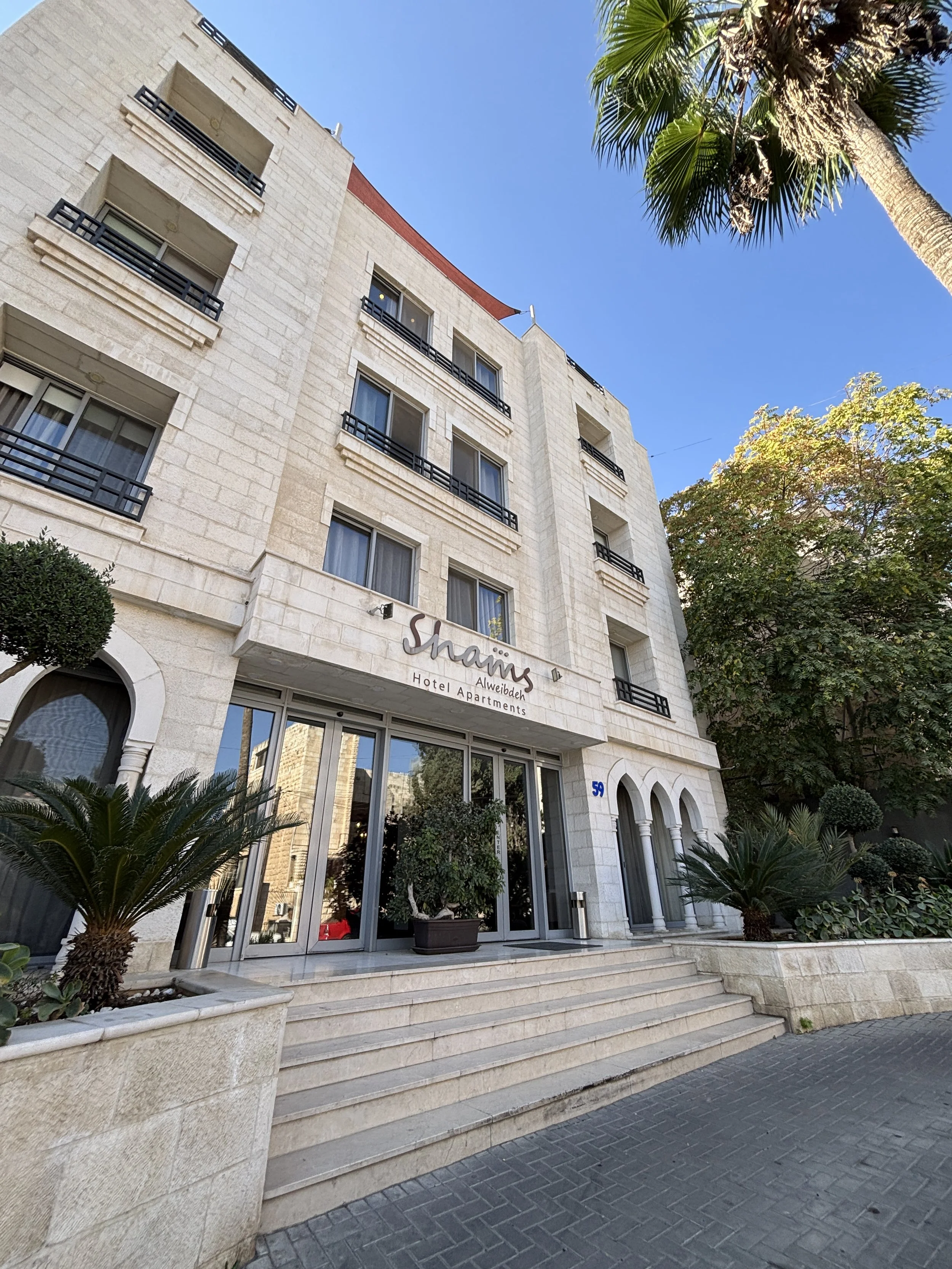
I didn’t try the breakfast, so, I can’t comment on that. Staff at reception also help me arrange my airport transfer at approximately the same rate than Uber charges.
The hotel is located in a rather calm residential area on top on, you guess it!, another hill. From here to the downtown sights I previously mentioned is about 15 minutes downhill walk, with some sights of both the urban maze that is Amman and the modern business district, along the way.
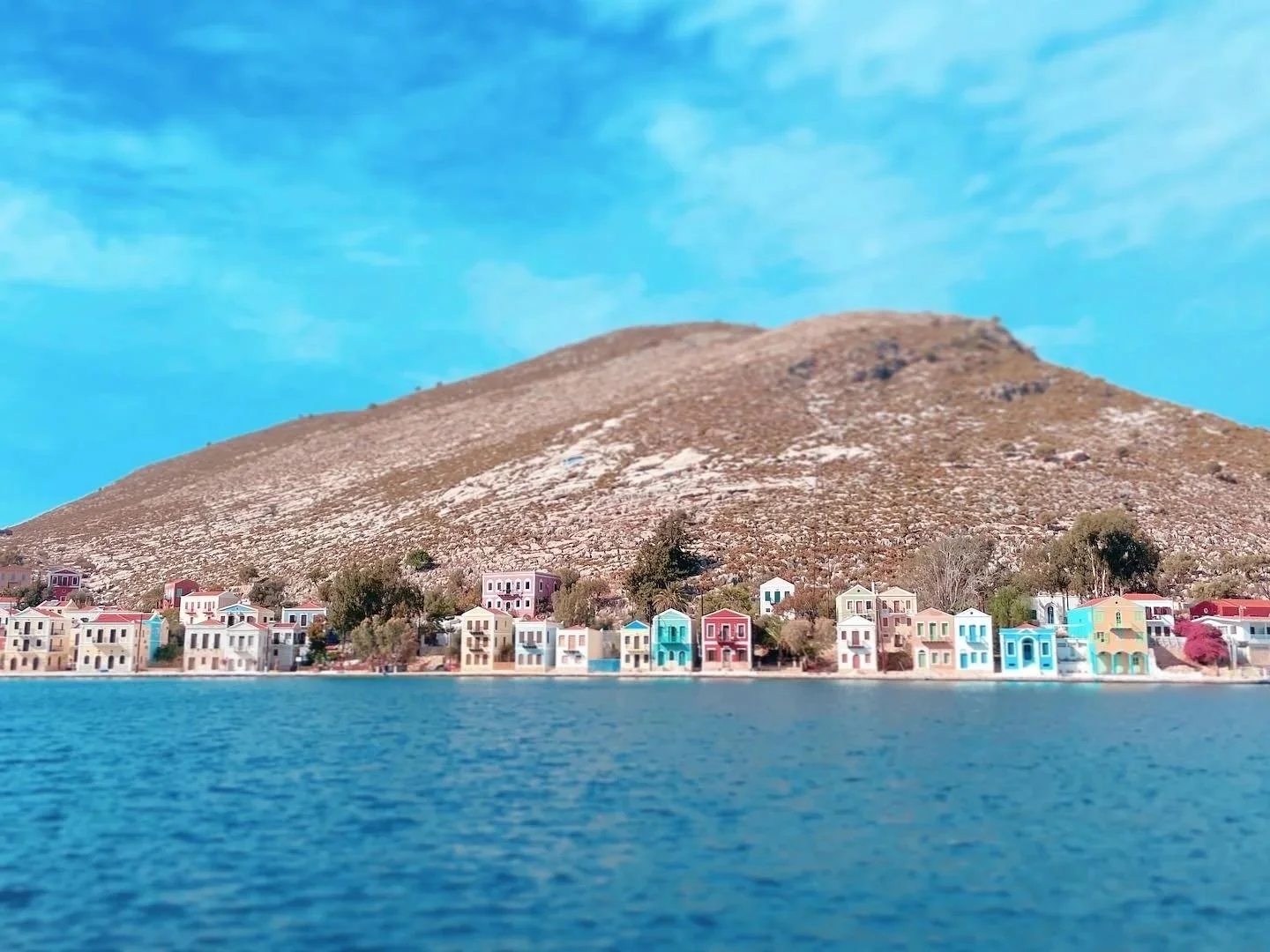
Kaş to Kastellorizo: where Turkey's Lycian Way meets the most distant Greek island


This post covers one of the areas with, possibly, more top historical heritage per square kilometre of the Mediterranean and this is on top of a stunningly beautiful landscapes.
This is, of course, not our first foray to the Turkish Aegean coast, you can also check our post about what to see in Bodrum and its surroundings. This one covers another section of the beautiful and rugged coastline of southwestern Turkey, particularly the area around Kaş and Kalkan and the neighbouring Ancient cities of Myra and Patara, what is today known as the “Lycian Way”.

What’s more, for those like me, who are interested in borders and those places that act as fault lines (or meeting points, depending on how you see it) between countries, continents and cultures, this region contains a particularly interesting spot: a very tiny Greek island which is really far away from the mainland, but almost adjacent to the nearby Turkish coast.
Keep on reading to find out how is it like to visit this tiny Greek (and European Union) outpost from the neighbouring Turkish town of Kaş.
Getting to the Lycian Way
Let’s start with a short paragraph about logistics. It’s going to be short: rent a car.
The area of Kaş is located roughly halfway between Antalya and Dalaman airports (Bodrum is also a reasonably close gateway and gets more flights than Dalaman). There is no train connection and I don’t think buses are a practical option to move along the area. I know “walking the Lycian Way” is a thing, but since this is not a hardcore trekking site, I will leave this one out too.
This leaves renting a car as the most convenient option and, actually, the roads are generally ok (between Antalya and Kaş about half of the distance is actually covered by a two-lane motorway). I also found parking in those coastal towns surprisingly easy (particularly when compared with its equivalents in Western Europe), but this may be due to the fact that my trip was in the autumn, and, therefore, a bit off season.
The Ancient city of Myra - the city of Santa Claus!
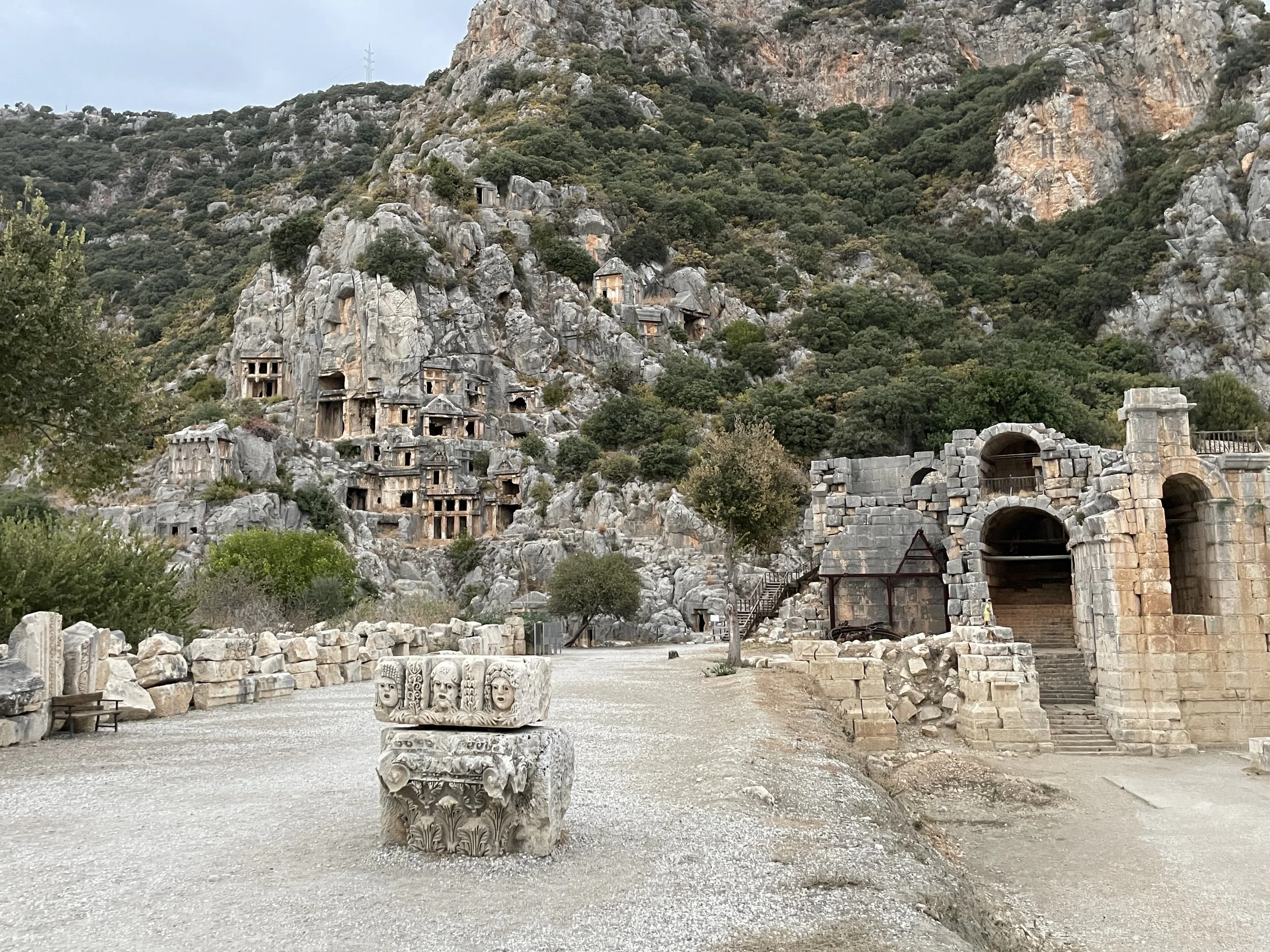
One the way between Antalya and Kaş perhaps the most fascinating place you can visit is the Ancient Lycian city of Myra.
The Ancient city of Myra (“Myra Antik Kenti” in Turkish) is a truly interesting spot for several reasons:
It was one of the epicenters of the Lycian civilization, which used to be kind of part of the Greek world, but not quite. Lycia had, in fact, its own cultural and political system for quite a few centuries, until the Romans took over the whole region and made it part of their Empire. Lycian cities were organized in a league that had some proto-democratic elements in the way it worked. It was actually mentioned by Montesquieu and said to have inspired the US Founding Fathers, as well.
Myra was the home city of Saint Nicholas (aka Santa Claus). Although he was born in Patara (another Lycian city that we also cover, further down this post, Saint Nicholas was the bishop of Myra for some time in the 4th C. There is a church of Saint Nicholas in the Ancient city, which is visited by numerous pilgrims (Saint Nicholas is said to have been buried there at first, but in the Middle Ages his relics were taken to Bari, in southern Italy).
The archaeological ensemble of Myra is absolutely stunning. Its most famous landmark are the rock-carved tumbs that fill the surrounding cliffs. These have porticos and facades, creating the impression of a proper city carved in the face of the rock. Next to it are the vestiges of what was, in its time, a rather important city, complete with a very well preserved theatre and many of the buildings that we typically associated with the major cities of Antiquity.

So, make sure you include a visit to the Ancient city of Myra in your itinerary!
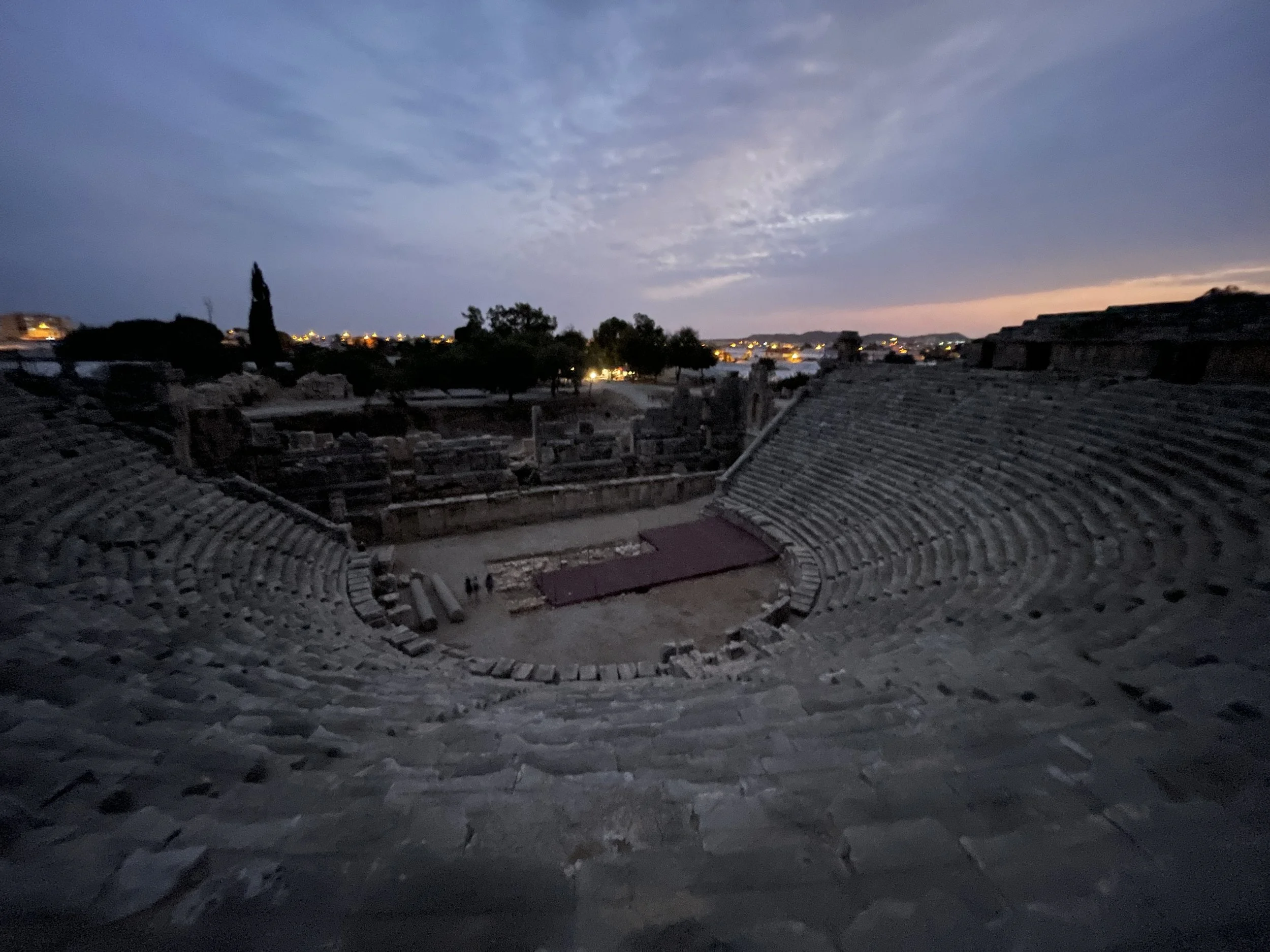

Kalkan, perfect base for exploring the coast around Kaş: where to stay and eat

Our hotel recommendation in Kalkan:
Payava Hotel
Kalkan, Cumhuriyet Cd. No:80, 07960 Kalkan (Kaş)
This little hotel in Kalkan, a town some 27km west of downtown Kaş, was a real find. We booked it at the very last minute and it totally surpassed expectations.
The facility is on the outskirts of Kalkan, but if you have a car this is not an issue. It is actually quite easy to get there and to park (the hotel has its own private parking space).
The facilities are pretty modern (the bathroom in particular was pretty large) and, while not exactly next to the sea, it does have views of the sea, as well as a swimming pool with terrace.


I would also like to highlight the service, which was excellent. The hotel staff were actually very friendly throughout. At the end, we decided extend our stay for one more day than originally planned!

While we did not have lunch or dinner at the hotel, since we spent most of the day on excursions or exploring downtown Kalkan (see the section about where to eat in Kalkan further below), we did try the hotel’s breakfast and it was absolutely great.
The breakfast buffet at Hotel Payava offered a broad mix of European and Turkish foods (including an amazing assortment of local cheeses) as well as plenty of fresh fruit and produce.
Great place to eat in Kalcan

Ata Mezze Grill
Kalkan, Şehitler Cd. no:21, 07960 Kalcan (Kaş)
This is not the fanciest or the most expensive restaurant in Kalkan, but it is the one I would go back to without hesitation!
It is actually a kebab and mezze place located a bit in the outskirts but within walking distance of downtown.
The vibe of the place was nice, the food super tasty and the prices, very reasonable. We also got excellent service.
Here are some pics of the assortment of Turkish kebabs, bread and sides that we got (note also the paper tablecloth with the map of the Lycian coast, I really like restaurants that do this!)
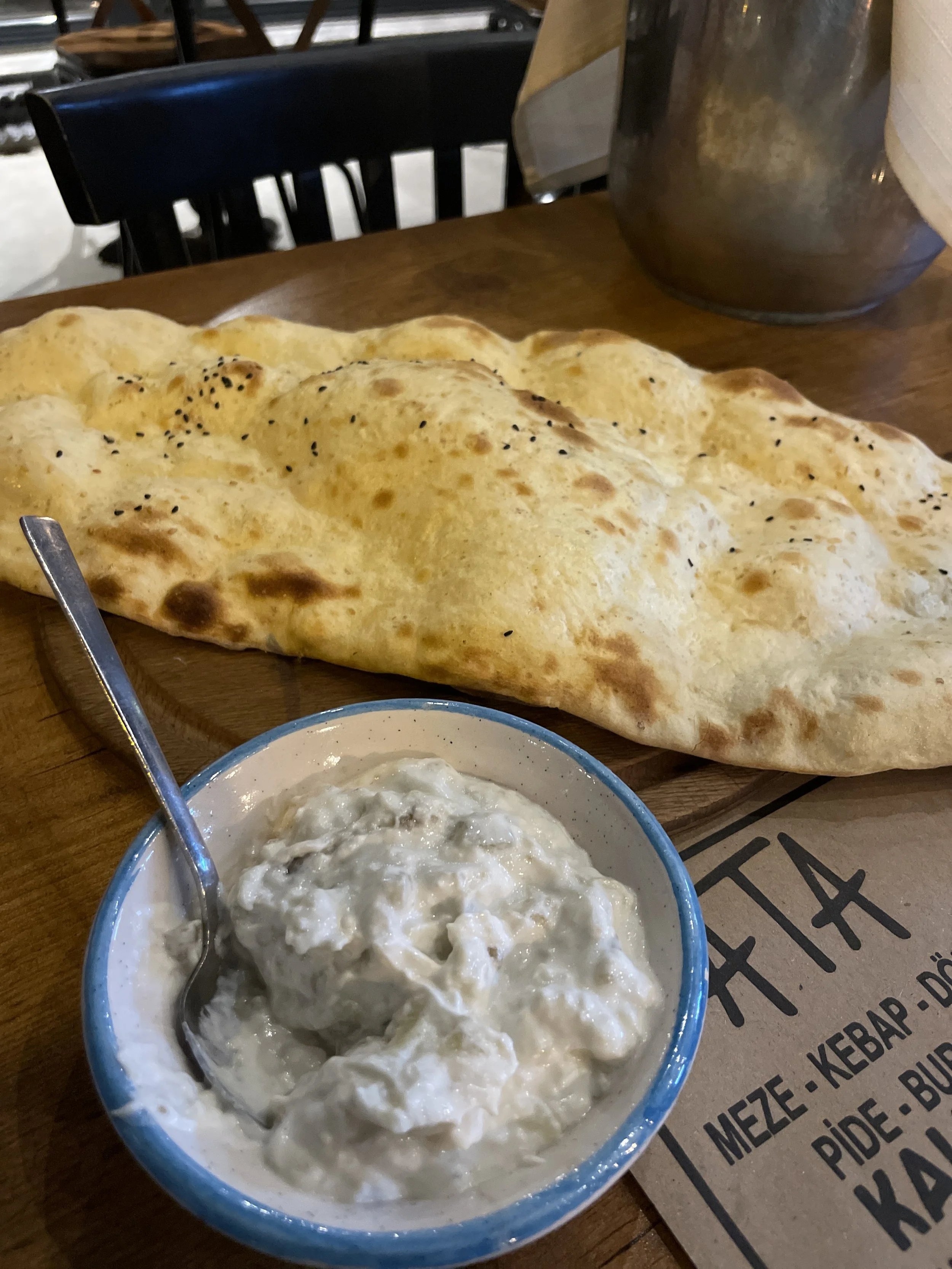


The kebabs are all prepared in proper charcoal and served in generous portions, so top marks for this. But even better was this traditional Turkish dessert called “Katmer” (see below), which is simply amazing!
Katmer combines Kaymak (Turkish-style clotted cream) with a thick and sweet pistaccio paste encased in a sort of mille-feuille. It is served warm and waiter breaks the outer crusty shell when serving it. Delicious!

A day trip to Kastelorizo from Kaş

As mentioned in the opening section of this post, one of the attractions of the Kaş area, at least for those like me that are interested in borders and geopolitical boundaries, is the possibility of visiting the Greek island that is most distant from its mainland and which is also one of the EU’s tiniest and most peripheral outposts as well: the island of Kastellorizo (Megisti in Greek).
Kastellorizo is a tiny island, roughly 9km at its longest point and 2km at its widest, with some 500 permanent inhabitants. It is distant about 1 mile from the Turkish coast but some 100 miles or so from the closest Greek island, Rhodes. Kastellorizo also has a number of adjacent islets and rocks that are also under Greek sovereignty.
Considering the usually tense relations between Greece and Turkey, it will possibly not come as a surprise to you that this island has been a flashpoint in the long going disputes between the two countries. Recently, for example, Greece and Turkey quarrelled about the limits of their respective Exclusive Economic Zones (EEZ) in this part of the Mediterranean.
In an attempt to diffuse these tensions and to promote the good understanding between the two countries, a number of people in this region came up with the idea to organize an international sports event linking Kastellorizo and Kas in a friendly manner.
The result was the Kastellorizo-Kaş international swim, which takes place every year in June.
Participants swim across the narrow strait that separates Kastellorizo from Kas. It is technically a competition, but takes place in an atmosphere of friendliness and cooperation, since the main goal is to foster good cross-border relations.
I really don’t know when and how the border formalities are conducted for this swim, though, since Kastellorizo, as part of Greece is EU territory and is within the Schengen zone, so people making the crossing in that direction must have the proper paperwork to enter the EU. Likewise, the Turkish Republic enforces passport controls on its borders and this applies to the short hop from Kastellorizo too.
How to get from Kaş to Kastellorizo?

The easiest and shortest way is to take the ferry (operated by Meis Express) from the small port of Kaş, from where several ferries depart every day (the island has also ferry service to Rhodes, although it takes several hours on account of the much longer distance. There is also a small airport in Kastellorizo with flights to Rhodes, as well).
It is possible to buy tickets at the port terminal in Kaş , although it is best to book them online in advance.

The island, which can be seen from the shore, is just a 20 minute ride away. The ferry ride can, in itself be quite a pleasant experience if the weather is nice. There is an open terrace (as well as an indoors cabin) which is perfect to enjoy the sights of the coastline and the blue waters all around. We did even get to see some flying fish following us and jumping out of the water all around the boat!
Halfway to Kastellorizo, the boat crosses the international divide the Greek flag is raised (the boat is Turkish). On the return trip, the inverse operation is performed, with the flag being lowered down.

The existence of the border is very present throughout. In fact the first thing you notice when you sail into Kastellorizo’s beautiful small sheltered harbour are the huge flags of Greece (painted on one of the island’s hills) and of the European Union (waving at the entrance of the port), which welcome you to the island.
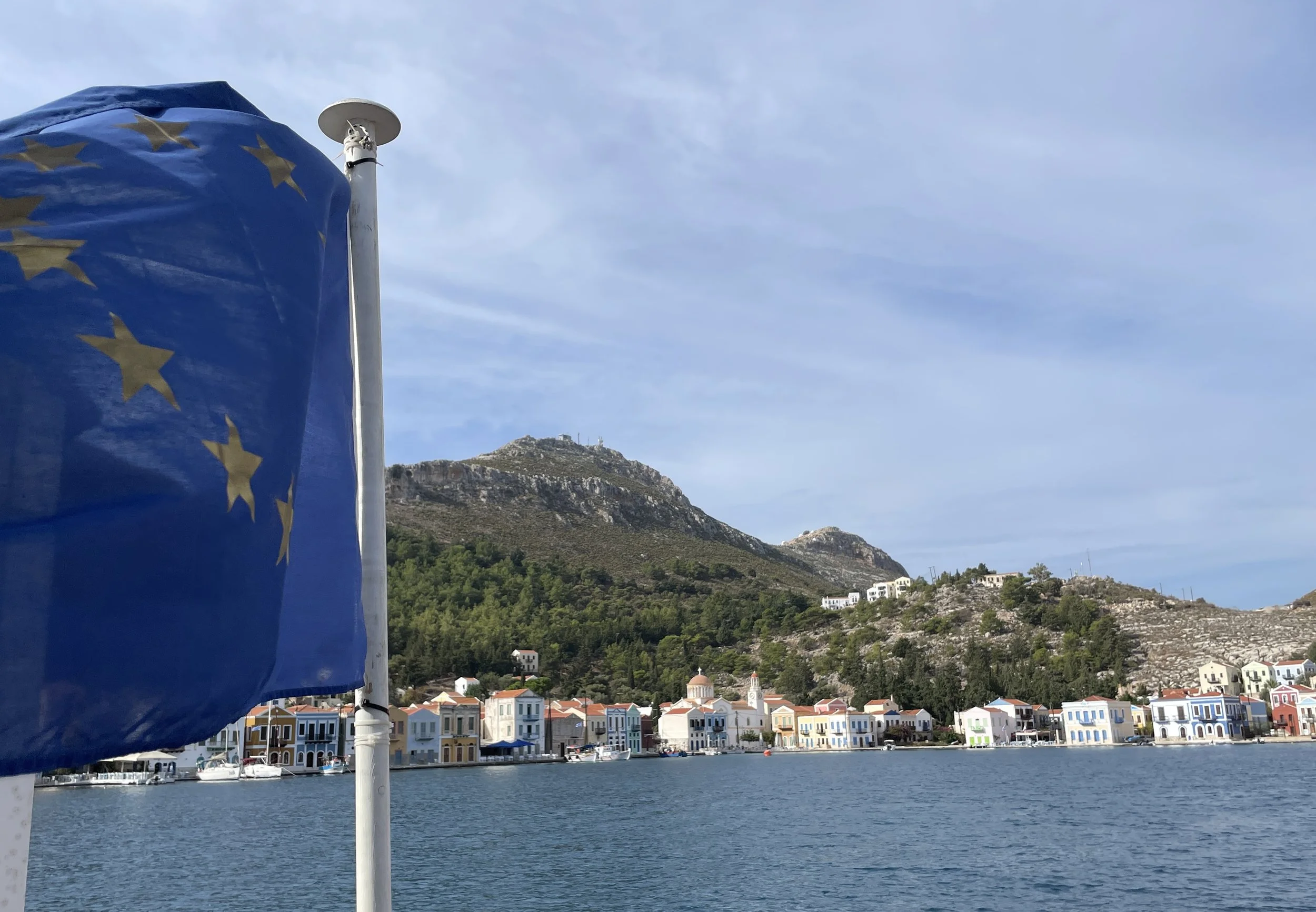
Besides the border control upon arrival, the liminal nature of this place is also accentuated by some other small details that you don’t need to be a border geek to notice. For example, you switch from Turkish to Greek time (-1h), from Turkish Lira to Euro and, if you have a EU sim card, you get to benefit from the roaming-charge-free mobile connectivity.
Exploring Kastellorizo
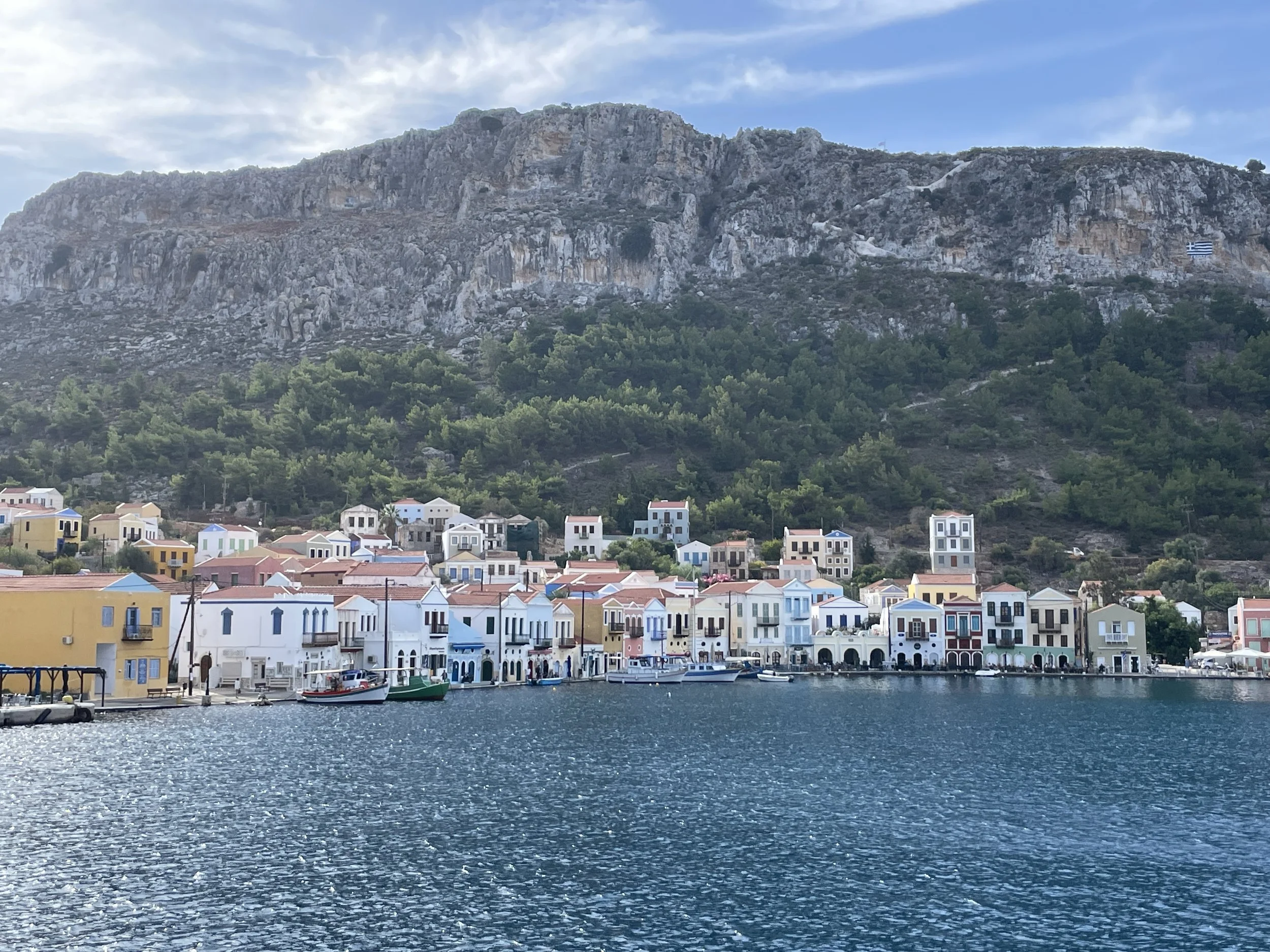
The island of Kastellorizo is absolutely beautiful and it would be well worth a visit even if you are not interested in all this border stuff. Most of the island’s population cluster around a tiny, almost perfectly quadrangular harbour bay, which is lined with cute traditional houses painted in an array of bright, vivid colours.

So, what to do in Kastelorizo once you set foot on the island?
Unless you have decided to overnight on the island, your time is likely going to be constrained by the ferrys’ schedule. It really depends on the time of the season and of the week.
When we visited the last ferry departed back for Turkish territory at around 5pm. So, this gave us around 6 hours on the island, which, I think, is enough to explore its main town and its surroundings and get a decent meal at one of the many restaurants lining the harbour.

So, what most people do is just go for a relaxed stroll along the harbour and the handful of streets around the historical center. These are really nice and encapsulate a certain idea of the Mediterranean as many people imagine it.
The seaside promenade is a bit touristicized, though (which I guess is inevitable in this setting!) and the different restaurants compete very proactively for the daily haul of tourists arriving in the ferrry.
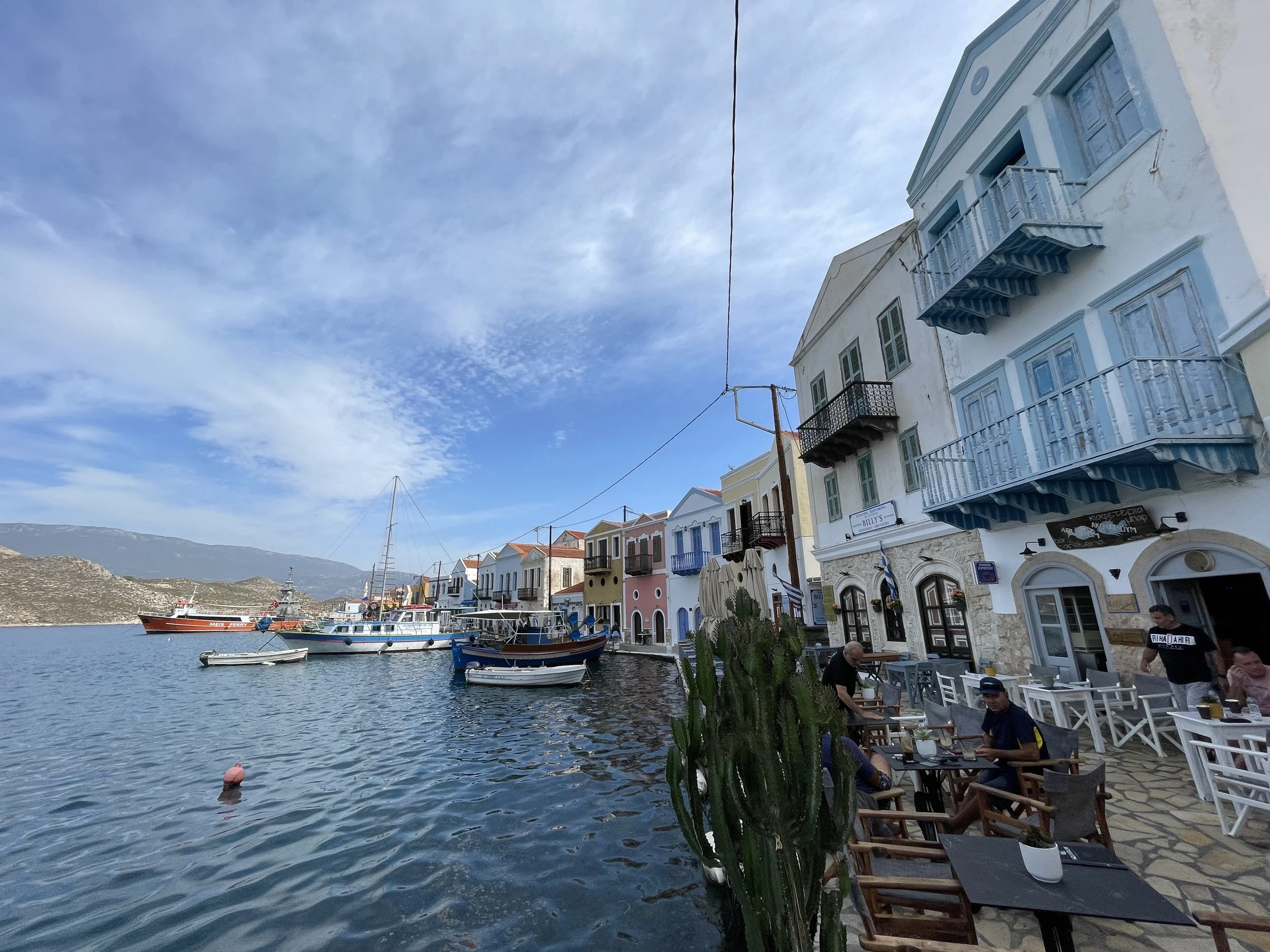
Yes, it can feel a bit touristy and prices are not particularly cheap, but I would still include a seaside lunch in the Kastellorizo experience, if only because there is not “that much” to do once you have taken your nice postcard-like pictures!

You may also see the sea turtles that roam around the harbour. They are obviously used to human presence, since many of the tourists feed them scraps of food and even some restaurant owners do the same in order to attract them to their section of the harbour for the entertainment of their guests.

The other thing I would recommend doing, if you don’t mind the steep walk, is climbing up to Kastellorizo’s castle.
While the fortress is now in ruins, it commands quite a great viewpoint, dominating the harbour below. It is not a surprise that this place has a long history and it is suspected to have been fortified already in Antiquity.
The heyday of this fortress, however, was during the Middle Ages, when it was occupied by the Knights of Saint John and even, for a few decades in the second half of the 15th C., by a Catalan warlord, Bernat I of Vilamarí. I had read somewhere that it was still possible to see the four stripes of the House of Barcelona carved on one of the stones, but I could not find them (in fact, the castle is in such a state of ruin that it is only possible to access what is left of one of the towers). The island got even a Catalan name during that period “Castellroig”.
In 1512 Kastellorizo was taken by the Ottomas and in successive centuries it changed hands several times between Venetians, Greeks, Turks, Italians, and even British and Germans during WW2. In 1947, together with the other Dodecanese islands, Kastellorizo was confirmed as part of Greece.
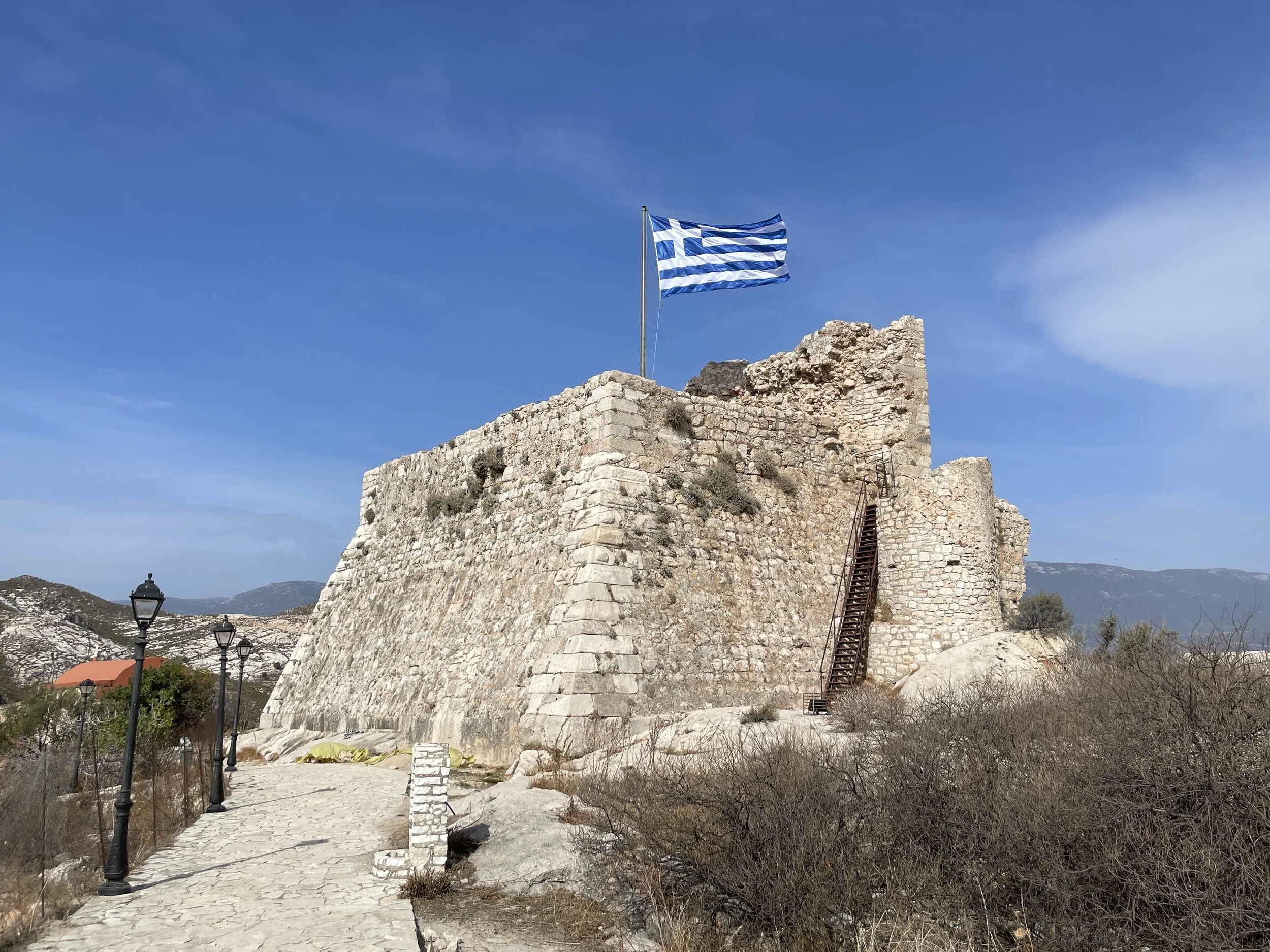
From the castle you can also enjoy great views of the Lycian coast and the several little islands and islets that dot this area. But there is more…

If you climb down the castle hill by taking a little trail on its sea-facing side you will come across a couple of rock-carved monumental Lycian tombs, quite similar to the ones found in the Ancient city of Myra. This seems to have been a cultural practice common all over this region.
Btw, you can also continue along the seaside path to get additional views of the entrance of Kastellorizo’s harbour as you walk back to the ferry terminal.
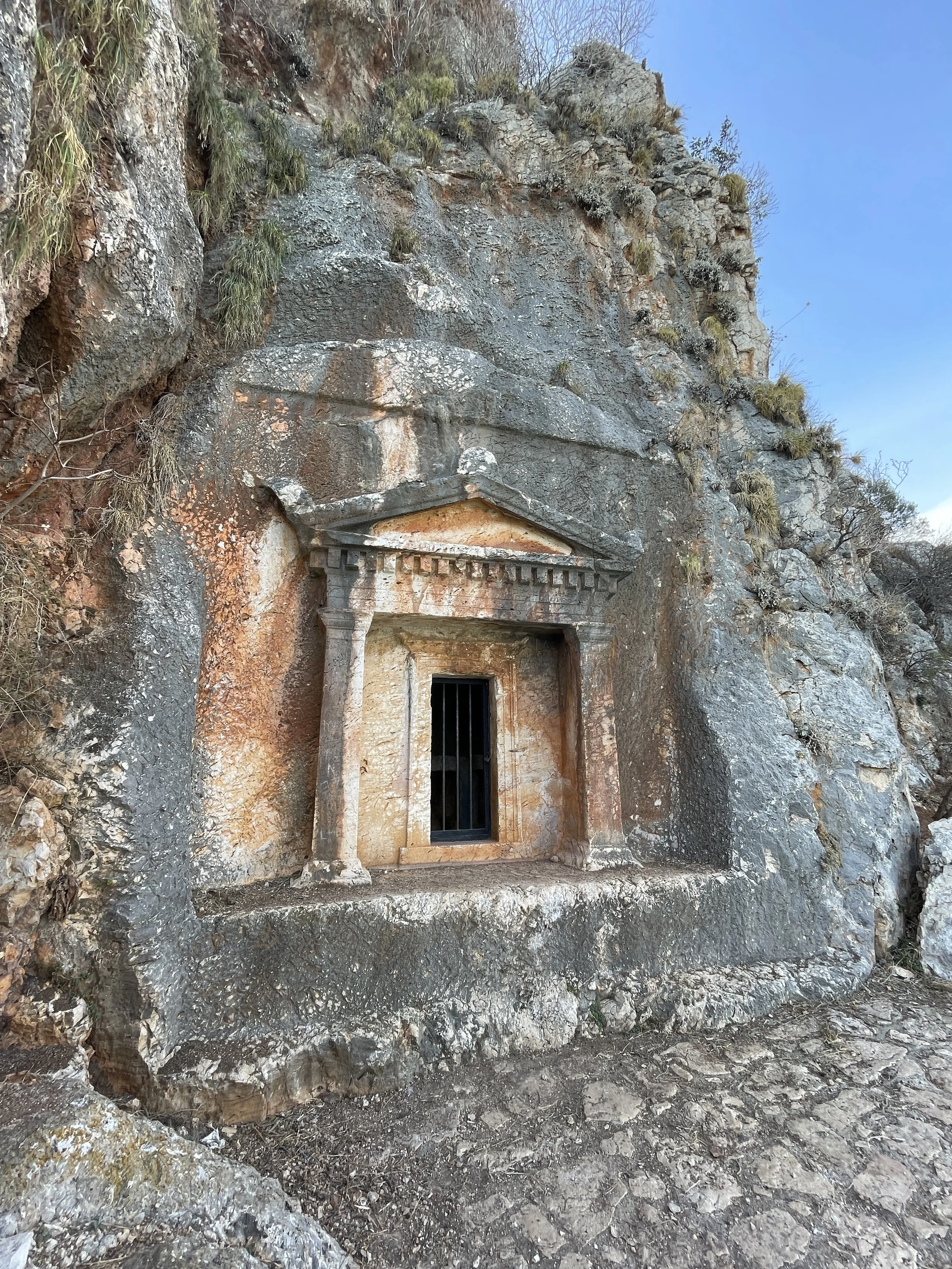
Once back on Turkish soil, you can also spend some time exploring Kaş downtown.
While it is mostly a modern town, Kaş is actually, quite a lively place, with plenty of shops, cafés and commercial activity going around.
Visiting the Ancient city of Patara (the birthplace of Santa Claus!)
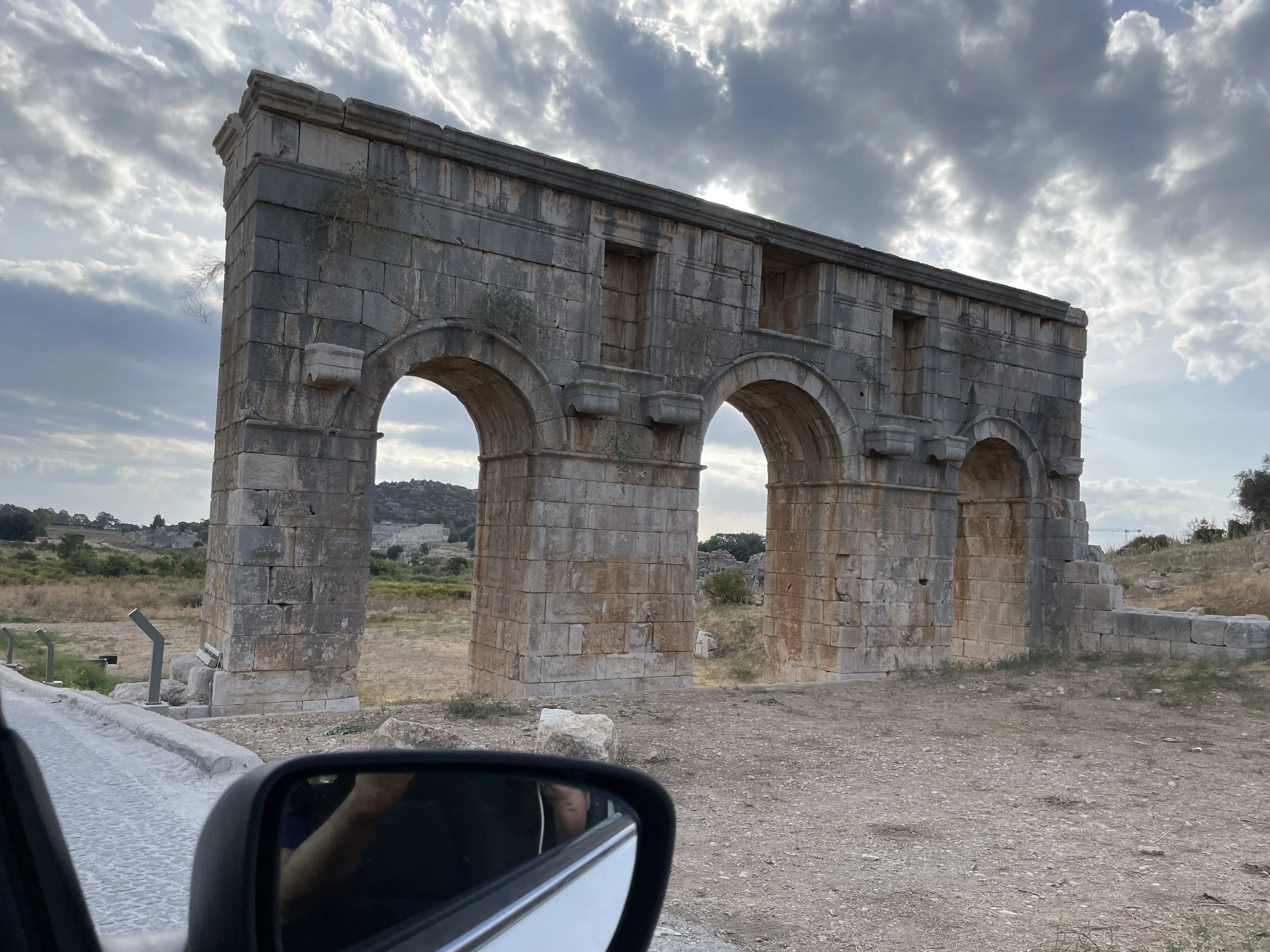
And, last but not least, if staying in the Kaş area, the Ancient Lycian city of Patara is another must-see, since it is located just a few miles west of Kalkan.
We have already commented on Myra, the city where Saint Nicholas (Santa Claus) served as a bishop, but, in fact, Patara was his birthplace.
Patara was quite a sizeable city at its peak, and even if only a small part of its perimeter has been excavated you can get an idea of its importance.
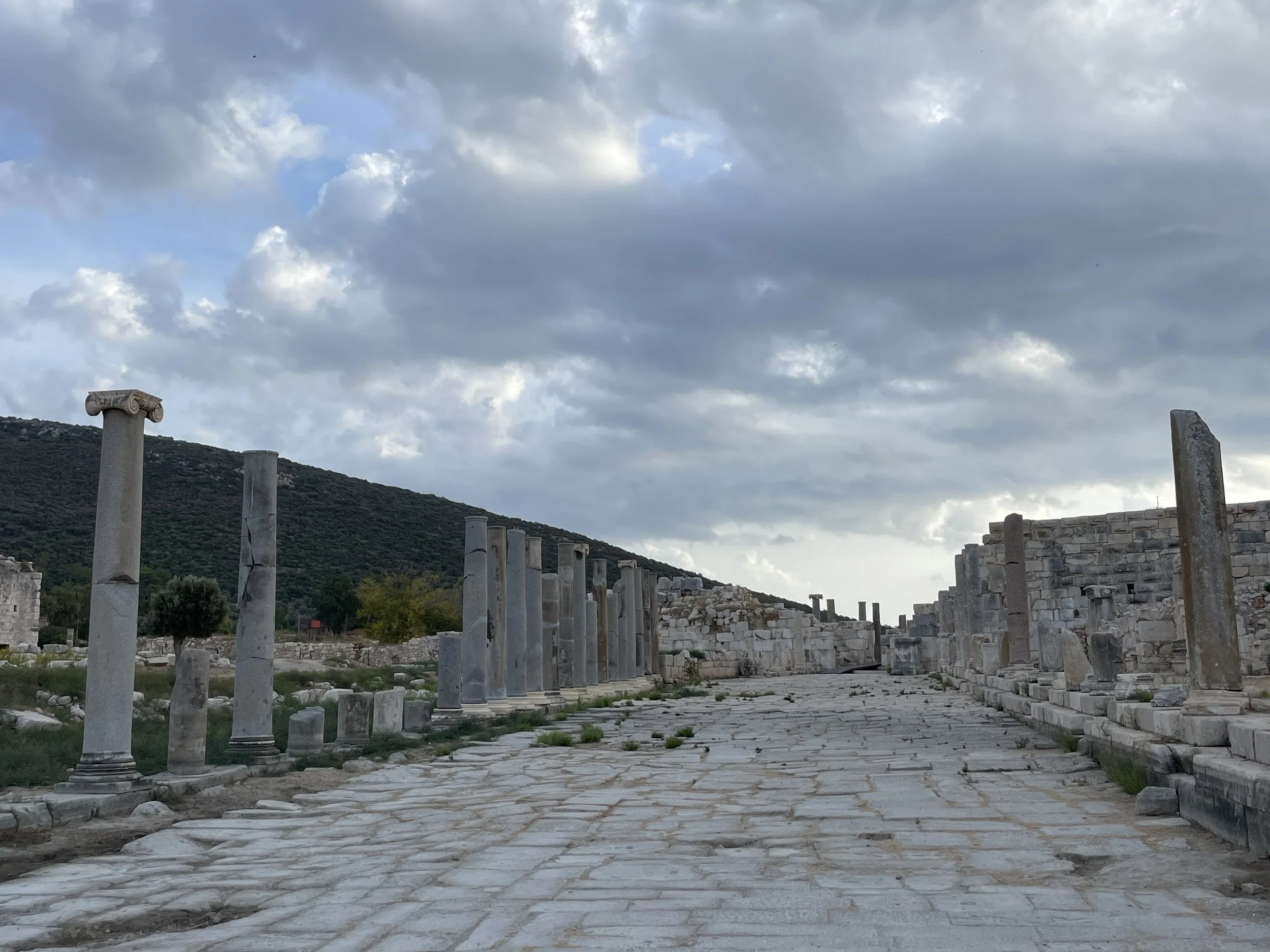
There are quite a few magnificent Ancient monuments in Patara, such as this impressive and well-preserved theater. What’s more, the ruins of the Ancient city are located right next to a long sandy beach, so it is perfectly possible to combine a visit to the archaeological site with a swim in the Mediterranean (and I would actually recommend doing so!).
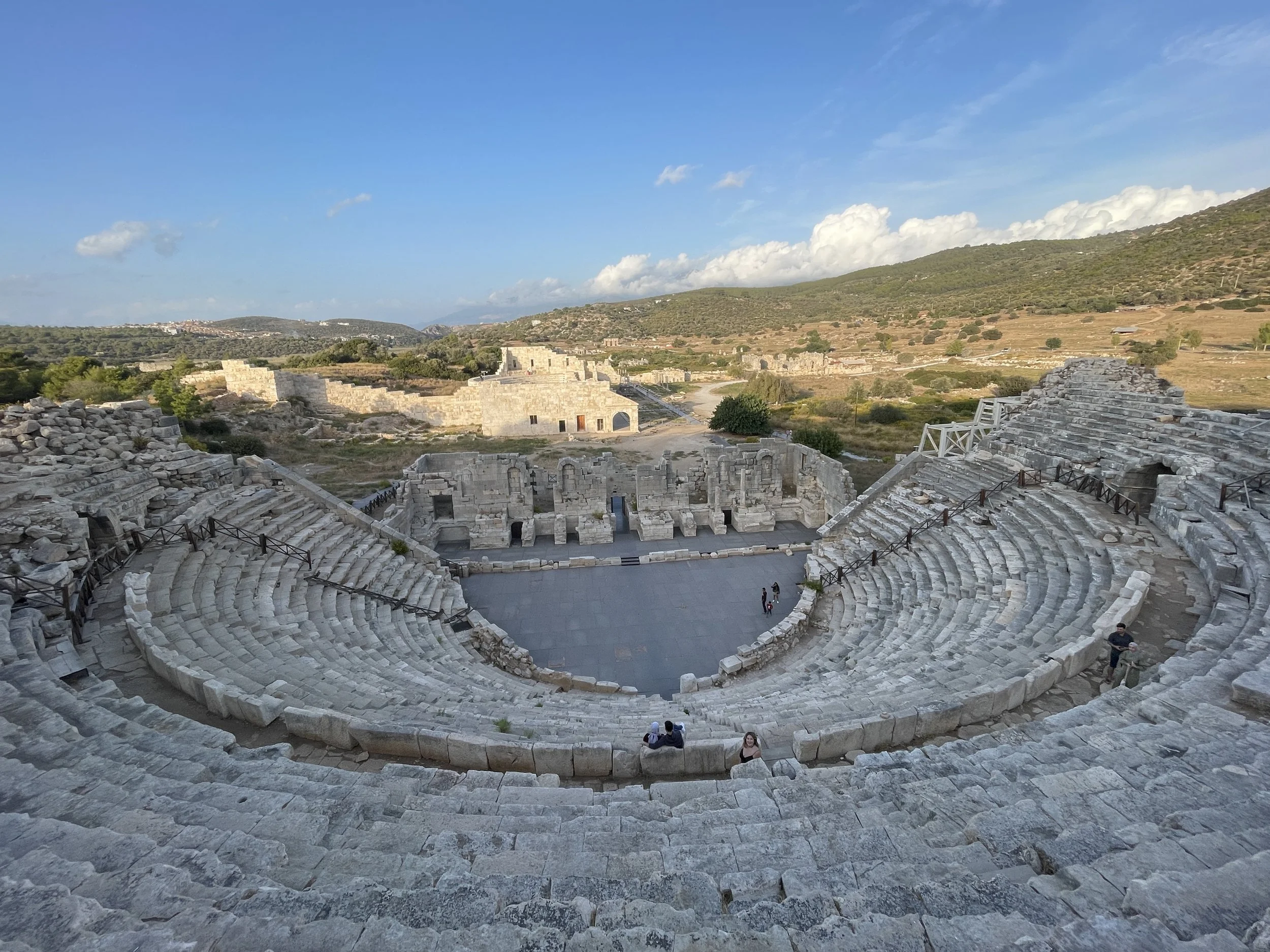
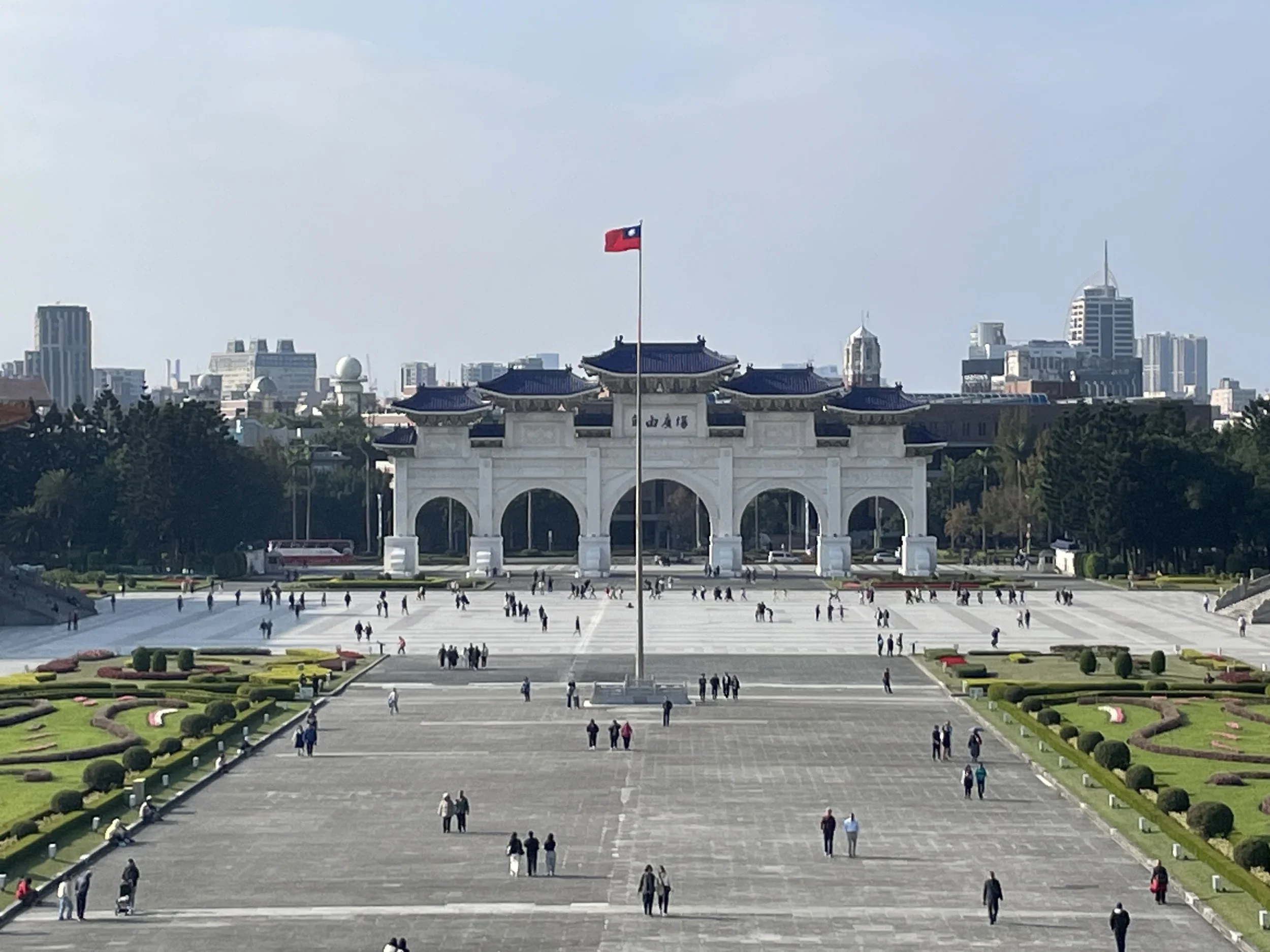
One day in Taipei: best things to do and to see

First impressions of Taipei
Taiwan is often in the news due to it being one of the world’s top geopolitical hotspots.
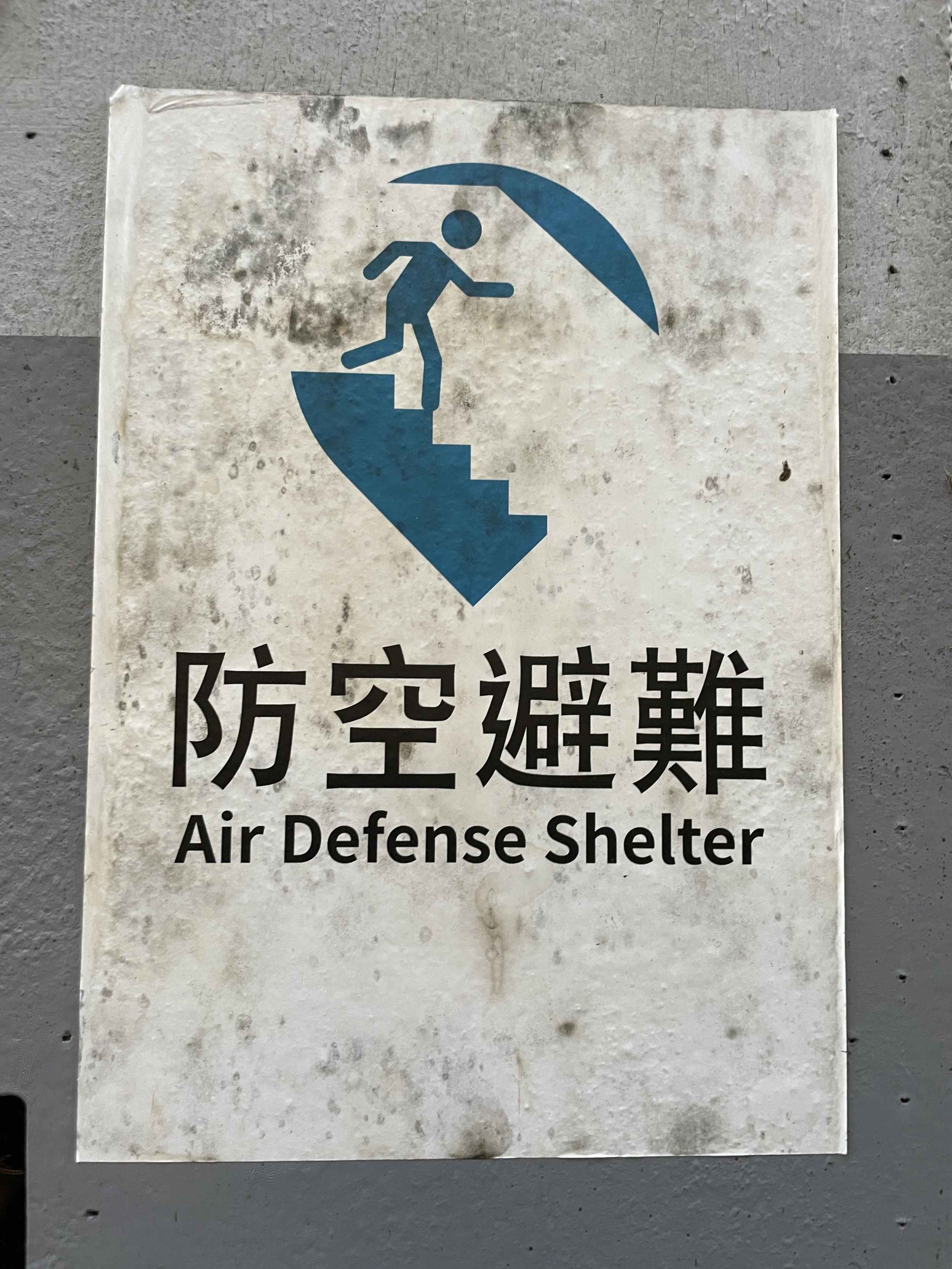
These can be seen on the streets of Taipei
Now, the long-running strategic Great Game between the People’s Republic of China, the Republic of China (which is the official name of Taiwan) and the US are beyond the scope of this post and, to be honest, there is no shortage of material out there to read about the origins of the conflict, its economic and military implications (from microchips to aircraft carriers) and possible future scenarios.
So, I leave it to you to make your own opinion on this matter!
As it happens in Seoul with its northern neighbour, when you are in Taipei, the existential dispute with mainland China is, of course, always lurking in the background.
In this particular case, my visit to Taipei coincided with a national election. This is an event that always brings the matter of the island’s prospective independence to the fore, with the subsequent reactions from Beijing. Although I must admit I know next to nothing about Taiwanese politics, it was rather interesting to come across a few public meetings on the streets of Taipei.

There was also a fair amount of political propaganda all over the place and, proof of the global implications of the Taiwan-China issue, is the fact that, when I checked the press at the Starlux Airlines lounge at Taipei airport, pretty much all major international newspapers had the Taiwanese elections on their frontpages.
Politics aside, Taipei is a modern, buzzing and rather orderly and clean city. It has quite a large, modern downtown with several hubs of commercial and business activity. Some parts of its central district even reminded me of New York City a little bit!
As we shall see next, it also has a rather efficient public transportation system which lets you move around easily and not too expensively!
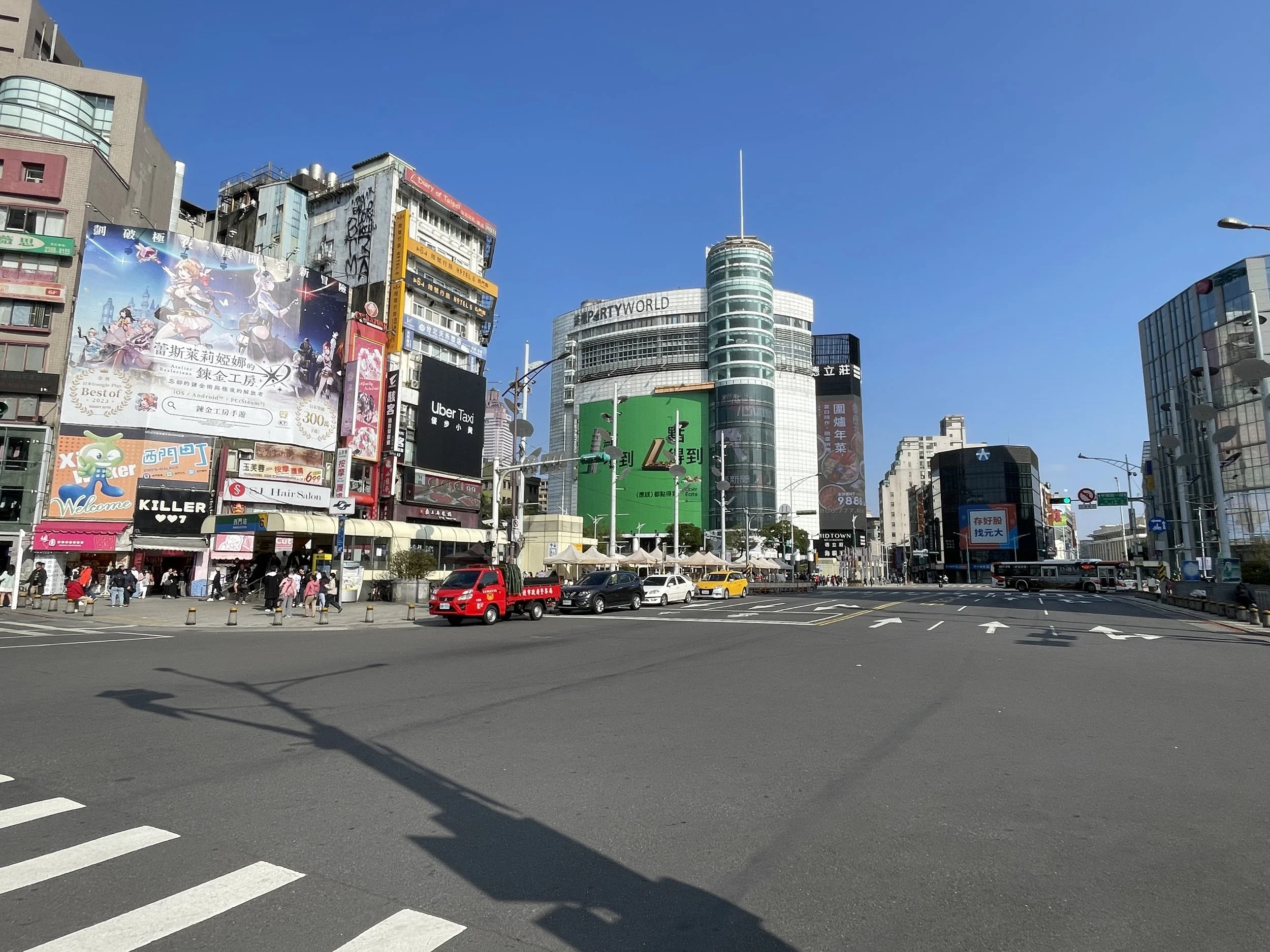
Navigating the Taipei Metro

The underground system in Taipei is really a thing of wonder: it is extensive, efficient, reasonably priced and full of all sort of Hello Kitty-themed motifs!
I also liked the way the information is depicted, with each station having maps that show the exact location of the platforms, corridors, exits, etc. with respect to the main landmarks and streets above ground.
It is also spotlessly clean and the platforms are delineated with specific areas to wait for the next train, so that people can queue in an orderly manner, something that they do religiously!
By the way, there is even an automated umbrella-rental service at some metro stations and convenience stores! Very convenient if a tropical storm suddenly pops over the city!

Taiwanese pop culture: Hello Kitty and its friends

Another amazing thing about Taiwan and, certainly, one that will catch the eye of many foreign visitors is the ubiquity of Hello Kitty and other similar cartoon-themed characters, LITERALLY EVERYWHERE.
I am not exaggeration if I say that Taiwan looks a almost like a HelloKitty-cracy. From before landing at Taipei (the airline’s videos already had them!) and at every step as you move through the airport, then the city, you come across all sort of cartoonish creatures on billboards, screens and the like.
This is, by no means, unique of Taiwan, Koreans like this style a lot too, but in Taiwan it is on a completely different level!

What to see in Taipei: Chiang Kai-shek Memorial Hall
So, what are the top things to do and to see in Taipei if you are in town just for a day or two?
I would say the Chiang Kai-shek Memorial Hall comes possibly very near the top.
Chiang Kai-shek is, of course, the “founder” of modern Taiwan, or, more accurately “the Republic of China”, since, in this view, when he moved over to the island from mainland China after the Communists took control of the mainland, he was actually maintaining the pre-1949 Chinese state. This monument is, thus, devoted to preserve the memory of Chiang Kai-shek, who died in 1975.
To be honest, regardless of what your views on this conflict are, the place is really majestic, with the memorial standing at one end of a large square surrounded by perfectly manicured gardens.
There is not much to see inside the memorial itself other than a massive statue of a seated Chiang Kai-shek, but there is always a guard of honour, which gets changed regularly several times a day and the change of guard is really a sight to behold!

Best view in Taipei: get to the top of Taipei 101

The other top thing to do in Taipei is, of course, get to the top of what was until recently the World’s tallest building, Taipei 101.
Taipei 101 is 508 meters high and has 101 above-ground floors (hence its name!).
Even if it is no longer a record holder (it was surpassed in 2010 by Dubai’s Burj Khalifa), Taipei 101 is a thing of beauty and, of course, has the best views of Taipei.
What’s more, it can be visited in the evening and after dark (perhaps even better than during the day, since you can admire the colourful lighting), so it is a great activity to close the sightseeing day.
There is an observatory at the top of Taipei 101, which you can buy tickets for.
This is a popular attraction, so expect some queues!
Taipei 101 is also on top of a massive mall at the eastern edge of downtown Taipei, at the core of one of the city’s several business districts. It is also right next to one of the stations (Taipei 101 / World Trade Center) of the red line of the metro.
In fact, Taipei 101 lies just on to of a massive mall with plenty of shops and large food court with all sorts of food styles and budget options, so it is also a good place to have lunch or dinner after your visit to the top.
The place is fitted with some really fancy infography and when you are the lift going up there is an electronic display that shows you how fast you are climbing.
The view from the top is really cool as well, since Taipei is a really big, buzzing city that glitters at night.
Recommended place to eat in Taipei

滇蜀饌
No. 9號, Taoyuan St, Zhongzheng District, Taipei
This is a really, really simple Yunnan-Sichuan food place located on a side street very close to Ximen metro station.
This is, however, that type of place where locals queue to get a spot at. And the reason for this is none other than the hot beef noodles soup you can see here depicted. Worth checking it out!
Where to get the best dessert in Taipei

This place is located in one of the most lively areas of Taipei, the Yonkang Street area in the Da’an district. It is a neighbourhood with plenty of commercial activity and pedestrianized steets.
Smoothie House
No. 15號, Yongkang St, Da’an District, Taipei
Its highlight is this massive mango shaved ice dish, which they call “mango snowflake ice”.
By the way, ot seems, someone from CNN has checked (it wasn’t me who issued that previous recommendation, even if I am a CNN contributor, but I endorse this opinion!)
What else can I say?
It is one of those rare cases in which the real thing is even bigger than it looks in the picture. This dessert is really, really huge and it has ice cream plus iced mango cubes topped with cream and syrup.
It is also one of the very few (if not the only) time that I have been unable to finish an ice-cream dessert, not because I didn’t like it, but simply because there was soooo much of it!

Dadaocheng Wharf Plaza & Ningxia Night Market
And we finish our tour of Taipei with a visit to the Ningxia Night Market and the adjacent Dadaocheng Wharf Plaza, which overlooks the Tamsui river.
As the name implies, the market is open in the evenings and it stretches over several streets on the westernmost part of downtown Taipei. This is an area with lots of commercial activity with plenty of shops and food stalls where it is possible to buy the most incredible types of foods, vegetables, spices and the like.
It is not, however, supercrowded, so you can walk through leisurely and there is an order to it.
Adjacent is the Dadaocheng Wharf Plaza, which is, essentially, a riverside promenade. It also has some food stalls and bars and it seems to be a popular place with the youth of Taipei. It has also some rather interesting cool paintings. Here you can also walk on some piers that protrude into the river and have a look at Sanchong, which is the district of Taipei right on the opposite bank.

Where to stay in Taipei
Beauty Hotels - Roumei Boutique Taipei
No. 9, Lane 64, Section 2, Jianguo North Road, Zhongshan District, Taipei


This was quite a random find, since I booked at the very last minute and most of the international chain hotels were either fully booked or very pricey.
So, I took it because of good reviews and decent price and I think it was a good choice. Not so much because of the facilities, although the room and bathroom were pretty large!, but because of its very central location, just meters away from one of the metro lines that take you straight to and from the airport and also within walking distance of one of the city’s downtown business districts.
Flying to and from Taiwan
This was a rather short but intense visit to Taipei and it was made possible in great part because Starlux Airlines, a young Taiwanese premium airline invited me to check out its new A321neo aircraft.
You can find here my Starlux Airlines Business Class and Economy Class reviews.

Great value places to eat and sleep in Osaka
Dotonbori riverside, Osaka
Since my recent posts about the Expo 2025 in Osaka, and my reviews about the best pavilions to visit, have proven to be wildly popular and garnered quite a lot of interest from readers all over the world, I thought it would be useful to supplement them with some practical tips about where to stay and where to eat while in Osaka.
Now, my stay in Osaka was rather short and for most of its duration I was actually within the grounds of the Expo, so don’t expect a long post here.
However, my guess is that, if you travel to Osaka for the Expo 2025, you may as well spend one or two days in town and wander around a bit downtown.
So here are a couple of proposals that I hope can bring something of value. For the record, I checked a few other places to eat, but I am highlighting only the one I liked the most.
Great value accommodation in Osaka within easy reach of the Expo
Best Western Plus Hotel Fino Osaka Kitahama
1 Chome-7-17 Imabashi, Chuo Ward, Osaka, 541-0042
Ok, this is not the most glamourous of hotels. It is not even a traditional Japanese ryokan.
But this branch of the global Best Western chain offers a modern, functional option to stay in central Osaka for a price of around $100 per night.
The rooms are small, as is the norm in Japan, but clean and neat, as is also the norm in Japan! But perhaps the best attribute of this hotel is its extremely central location and its great public transportation links.
There is a metro station literally just around the corner that takes you either to the area close to Namba central station direct in around 15min or to the Osaka 2025 Expo in about 25min (with either with just one change of line or, if you walk 10min to the closest Green Line station, direct to Yumeshima Station, which serves the Expo).
A couple of notes: breakfast is not great and you don’t miss much if you skip it and go grab something at one of the eating places or convenience stores nearby.
There is another “Best Western Fino” hotel in Central Osaka, so make sure you get the right one!
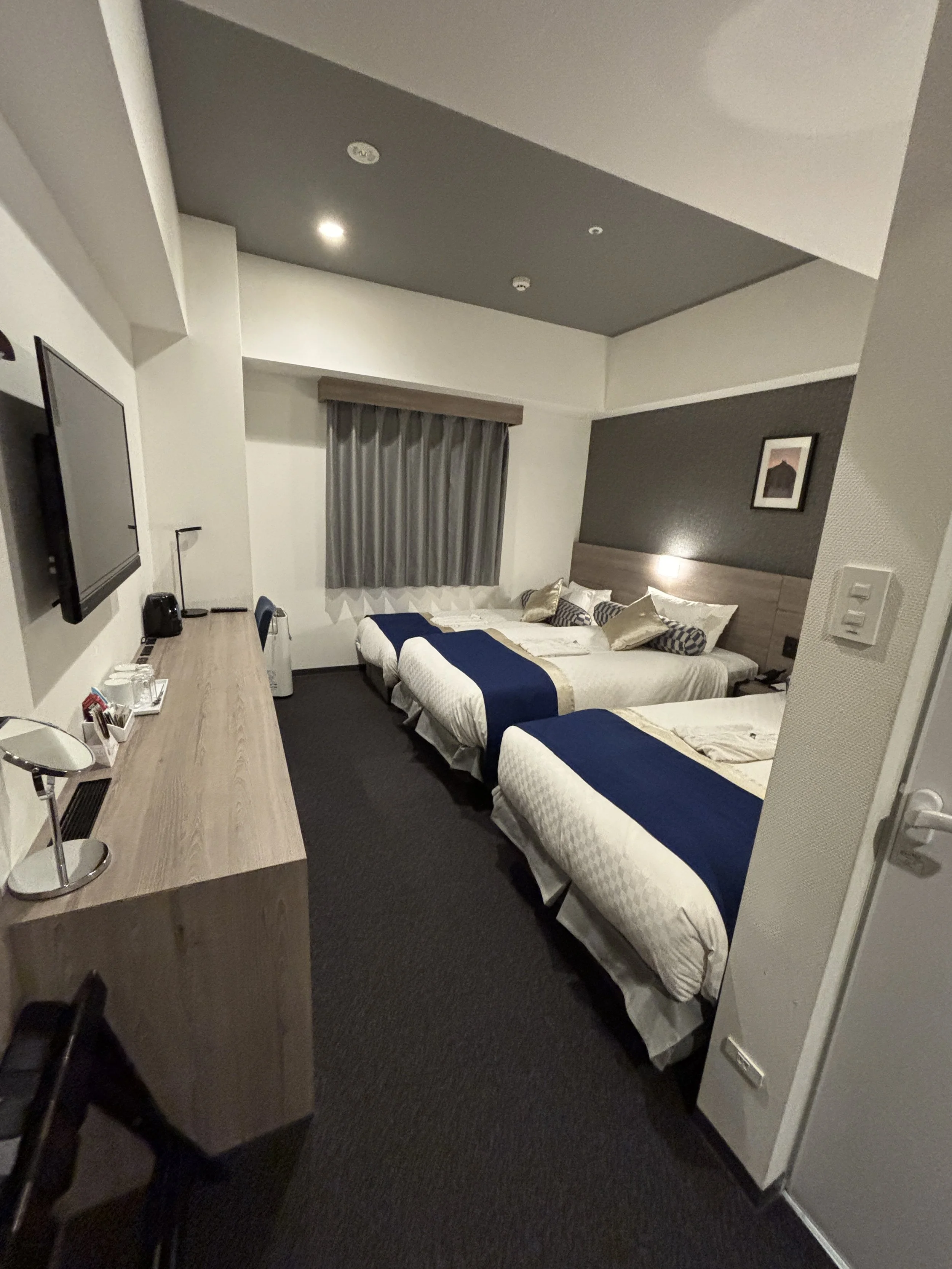
Great place to eat Japanese food in Central Osaka
Osaka-la-nuit
Haneda Ichiba, Super Fast Fresh Fish Sushi, Umeda

This restaurant is located at the 9th floor of the Hanshin Umeda Department Store, which is right next to Osaka’s Umeda station, one of the largest in the city.
The restaurant is located in a sort of food court area, with several restaurants (although each has its own dedicated, enclosed space) and has great views of the surrounding business district.
We got there quite late in the evening, actually, and without a previous booking (something that often proved to be quite an issue in Japan), but they welcomed us very nicely. Also unusual in Japan, the manager was fluent in English (he lived in the US for quite a few years) and very kind throughout. He even advised us on the different types of sake and offered us a bootle on the house!

This is a sushi place which manages to combine coziness with an elegant, yet unpretentious setup, and offers also a rather good selection of entrants at rather reasonable prices. We decided to go on tasting mode and get a broad selection of what was in the menu, which you can see here.

And then, there is the sushi, of course, of which we got a couple of nice platters, all freshly prepared and served in generous portions.

A walk through Kuromon market and the Dotonbori area

Another place in Osaka where you can sample quite a few different culinary options is Kuromon Market, which is located near Namba station and the Dotombori riverside (another of the city’s highlights).
I don’t have a specific recommendation for this area, just walk around and check the different seafood stalls, many of which will prepare you som dish on the spot. You are likely to find something that looks tasty if you are into this sort of casual eating.
Also, I would like to add that we visited the area quite early in the morning, just as the shops were opening and the streets were rather quiet and deserted. So, we managed to get a rather postcard-like view of the area, with not too many people in the frame.
By all means, add a visit to this area to your Osaka schedule!
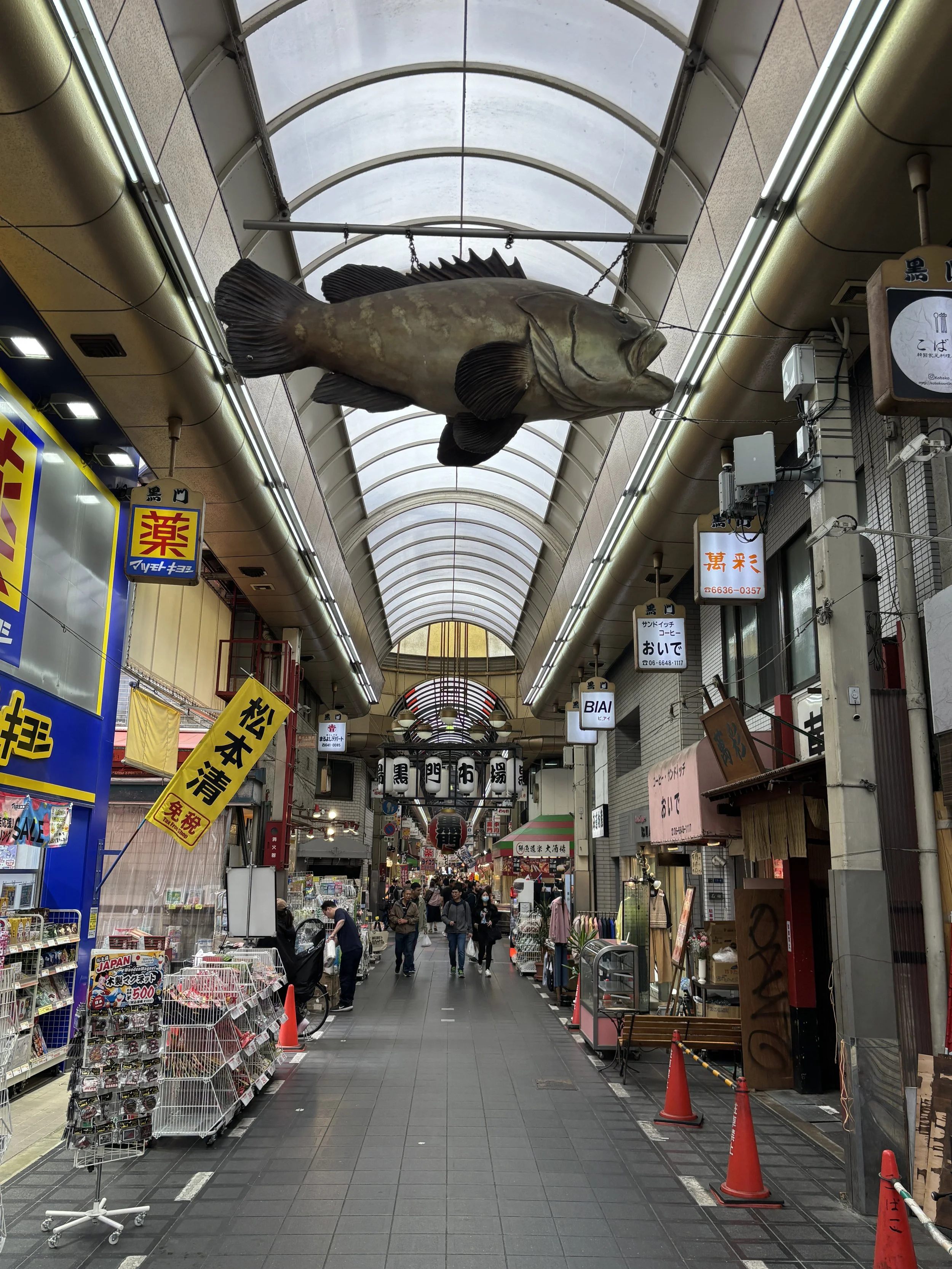
Kuromon Market