
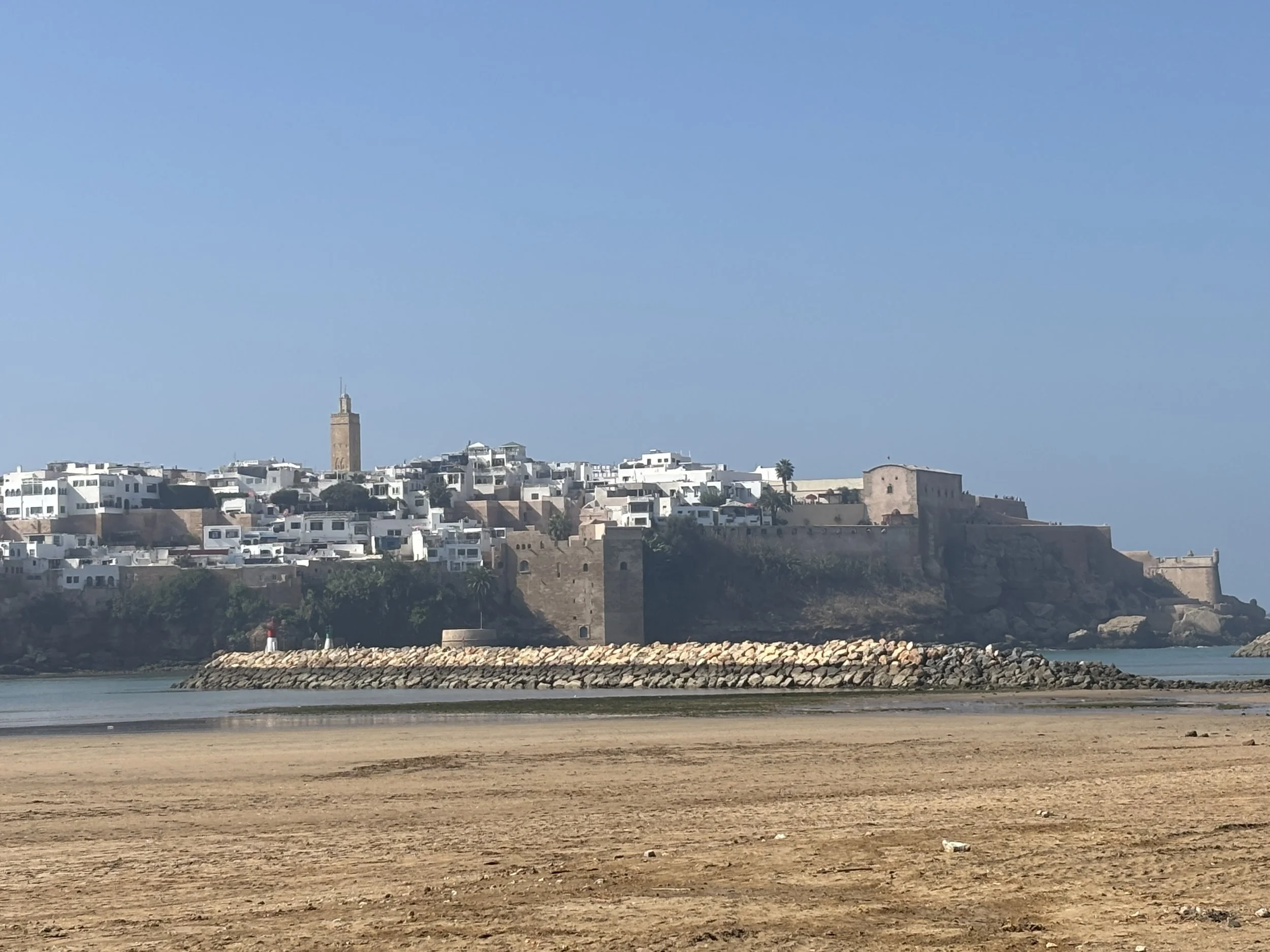
Morocco’s capital city, Rabat, doesn’t feature in the typical Moroccan tourist itinerary in the same way that places such as Marrakech, Fes or Essaouira do. I find this fact hard to understand, the city boasts a collection of first-rate attractions and plenty of modern infrastructure. It is also a great place to see the contrast between old and new Morocco, with cutting-edge architectural landmarks rising next to traditional medinas and even ancient ruins.
So even if Rabat is just your gateway to the rest of the country, don’t treat it as a quick stopover. You could easily spend a couple of full days exploring the city and the neighbouring historic town of Salé.
That’s what I’ve set out to do in this post: distill the main things you can (and should!) see in Rabat on a short trip of a couple of days.
Covered in this post
An overview of Rabat
Getting to Rabat
Walking in the Rabat Medina
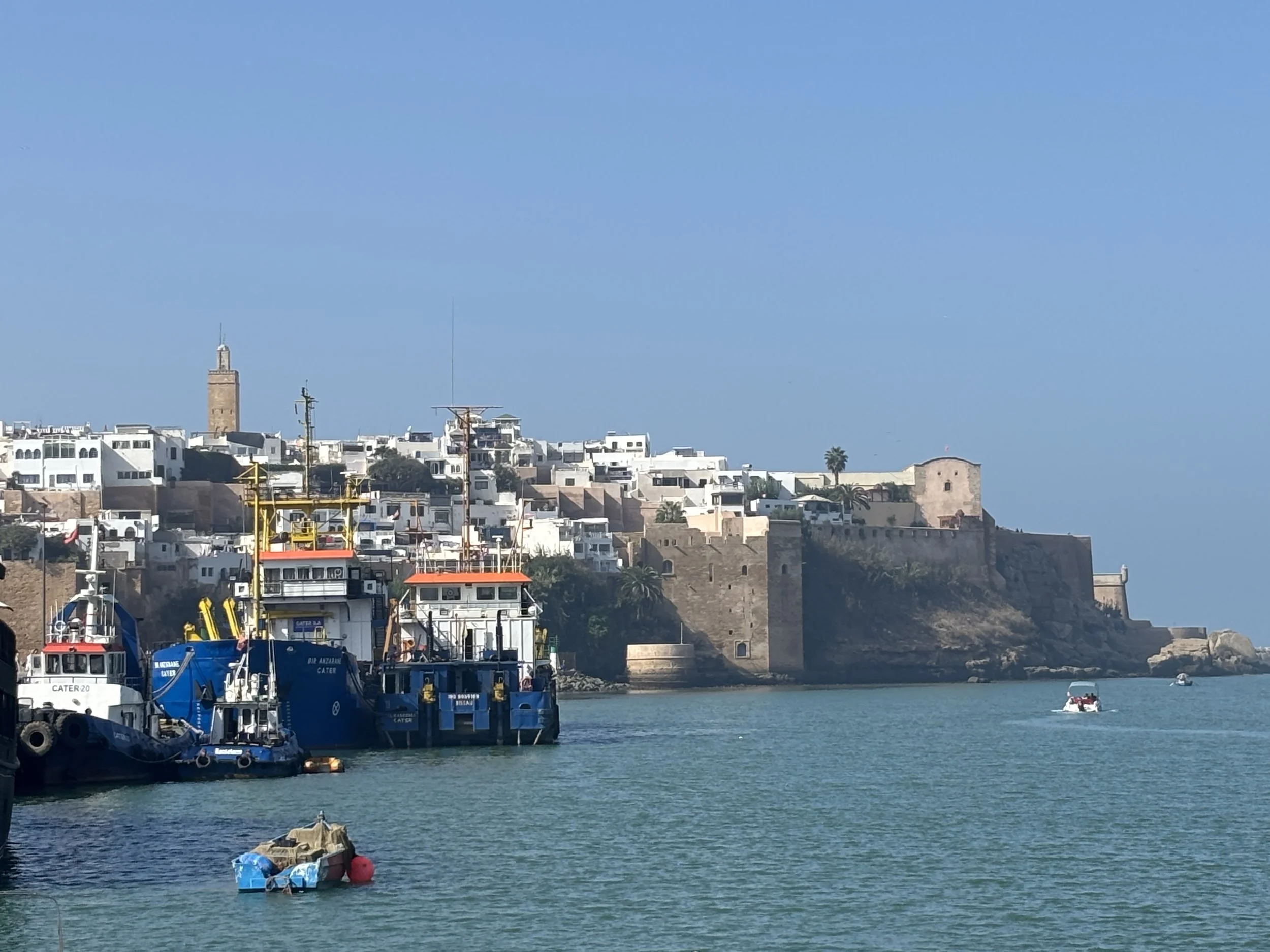
The Kasbah des Oudayas
The Hassan Tower and Mohamed V Mausoleum
Crossing the river to Salé
Chellah archaeological site
Recommended places to eat Moroccan food in Rabat
Places of stay in Rabat
This post may contain affiliate links. If you buy something through them, I earn a small commission, at no extra cost to you. It's one of the ways I keep Places of Charm going. Thank you for your support!
An overview of Rabat
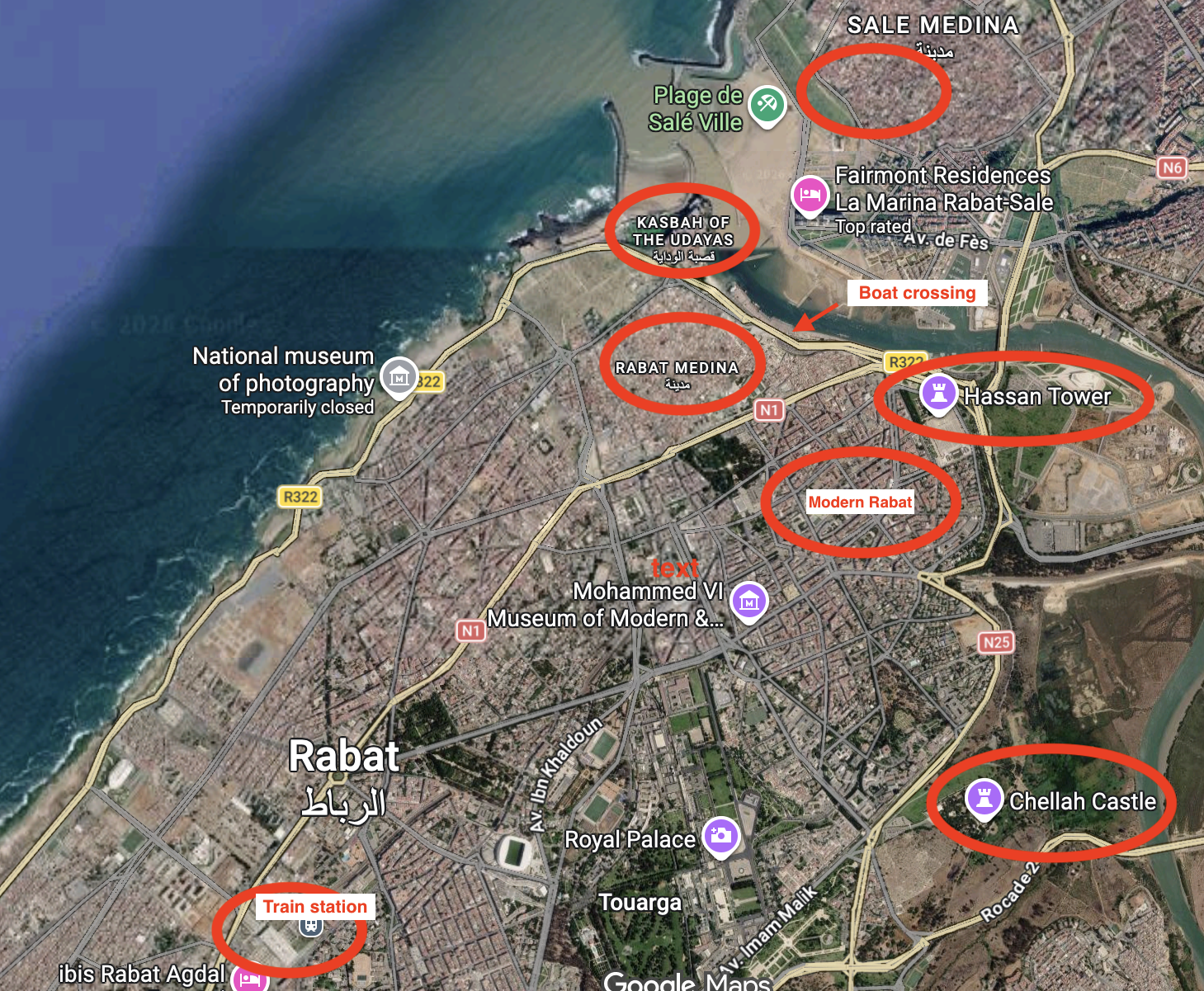
There are actually two cities in the Rabat area, separated by the river Bouregreg: Rabat proper on the south bank and Salé, which is a historical city in its own right, on the north bank. As we shall soon see, crossing from one of the other by rowing boat is one of the experiences I recommend.
When it comes to Rabat, where most of the landmarks are located, the city has two very clearly defined areas: the Medina (together with the Kasbah des Oudayas) and the modern part of the city.
The former is the historical part, it is enclosed by walls to large degree and made of labyrinthine narrow alleys. The latter is the capital’s modern downtown, with broad, straight avenues, official buildings, hotels and a tram network. Originally a French creation, the modern side of Rabat has continued to grow after Moroccan independence in 1956.
This duality between old and new, traditional and modern is at the basis of the city’s recognition by UNESCO in 2012, as a World Heritage Site under the title: “Rabat, Modern Capital and Historic City: a Shared Heritage”.
To these, we can add a third area of interest: the heritage site of Chellah, which in the Roman and early medieval eras was the main urban settlement in the area, sits in the outskirts of the modern town and is one of the must-see attractions in Rabat.
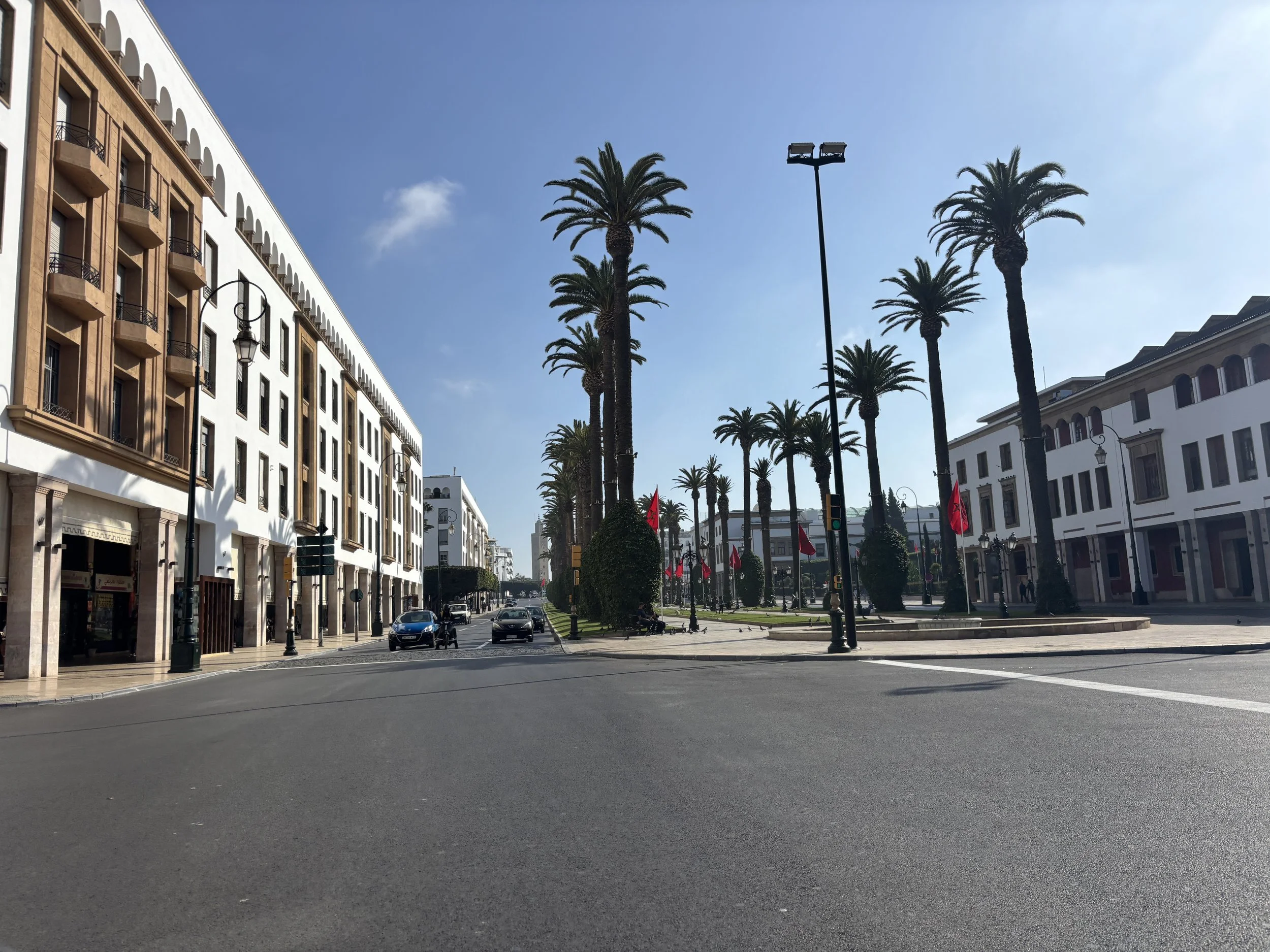
This couple of pictures gives you an idea of how the modern part of Rabat looks like.
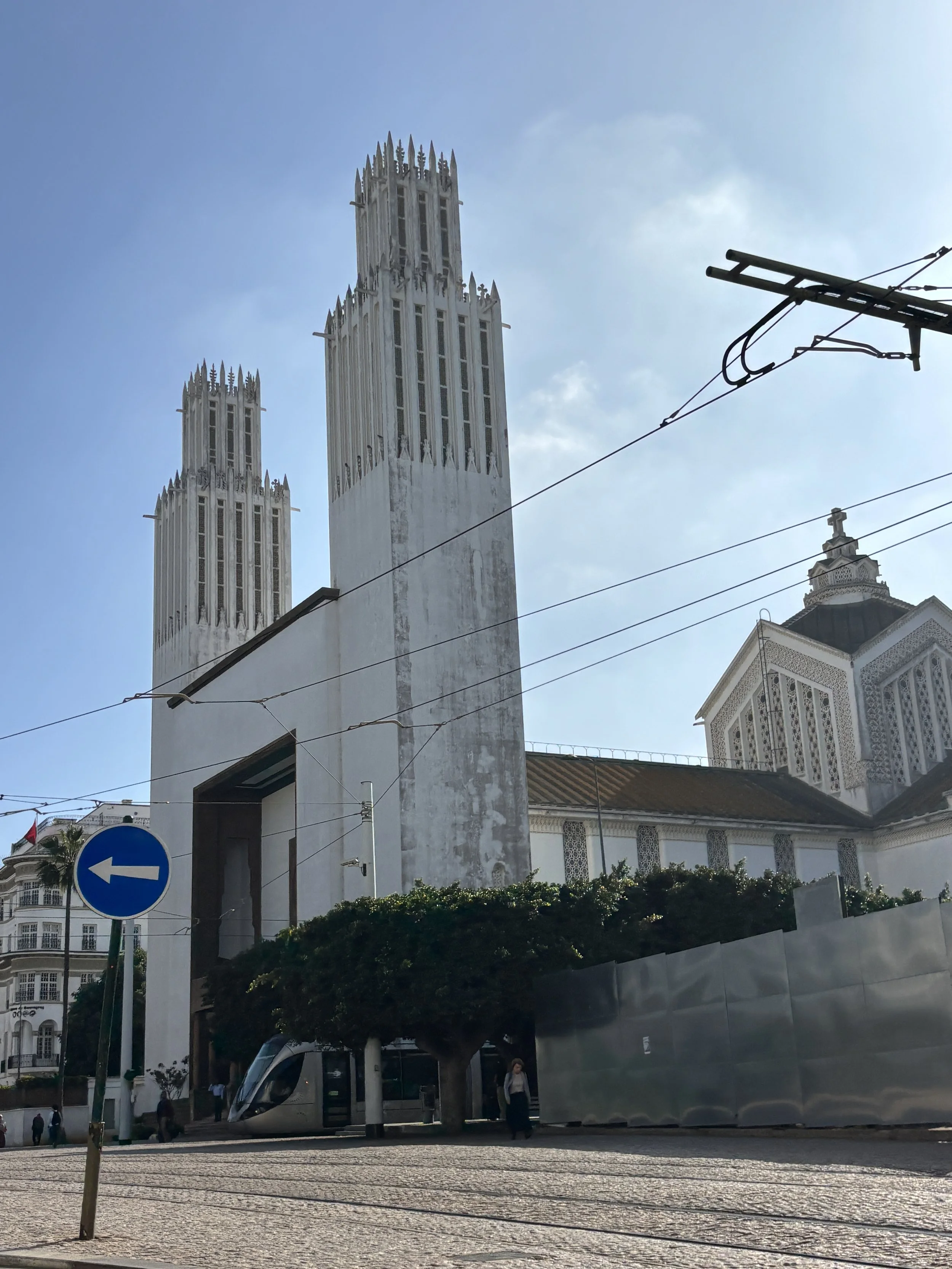
To be clear, only saw one tiny bit of downtown, the one tucked between the Medina, the river and Chellah, although this area in question includes quite a few official buildings and other landmarks, such as Rabat’s catholic cathedral.
Getting to Rabat & moving around
Traveling to Rabat by train
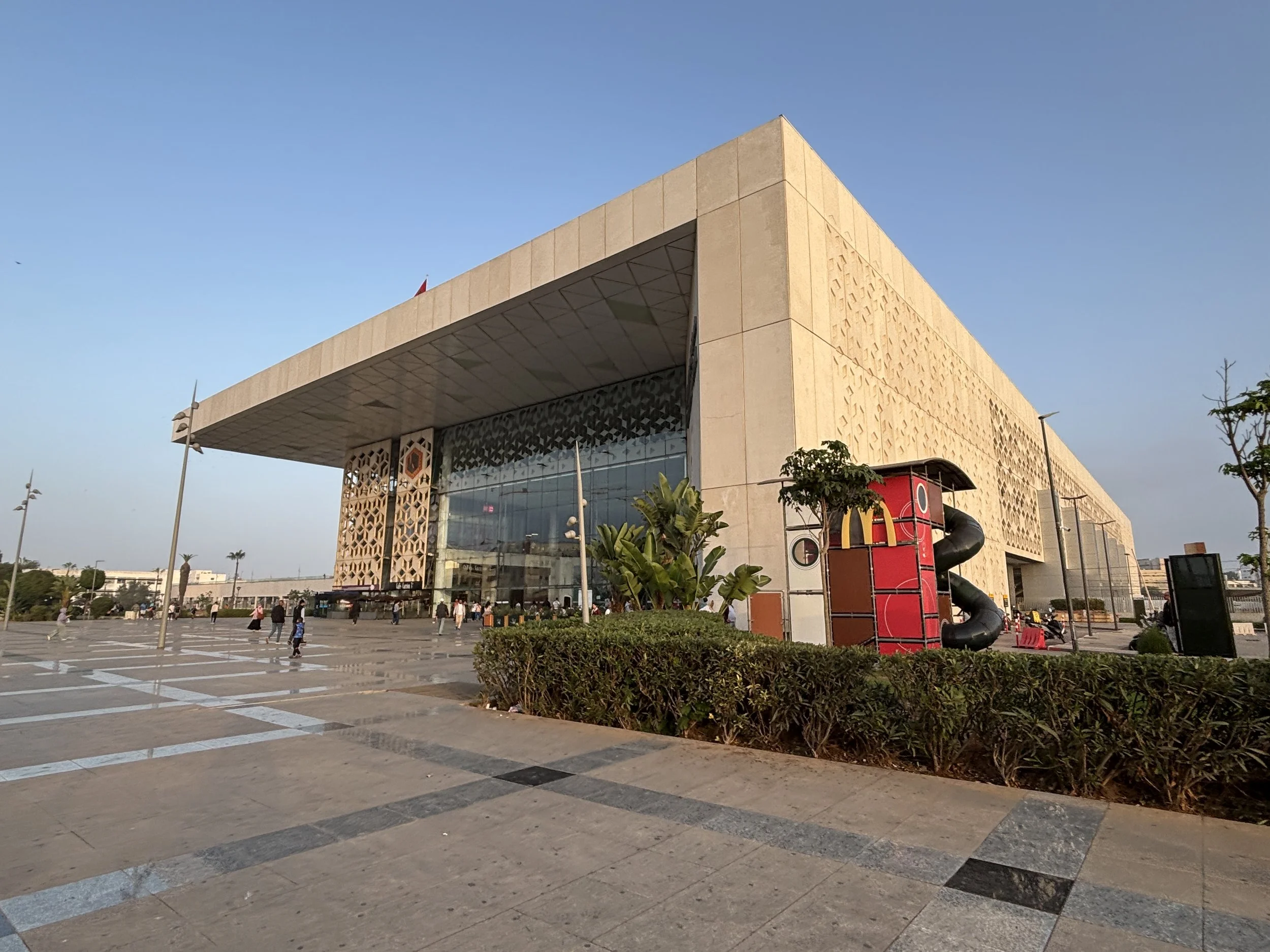
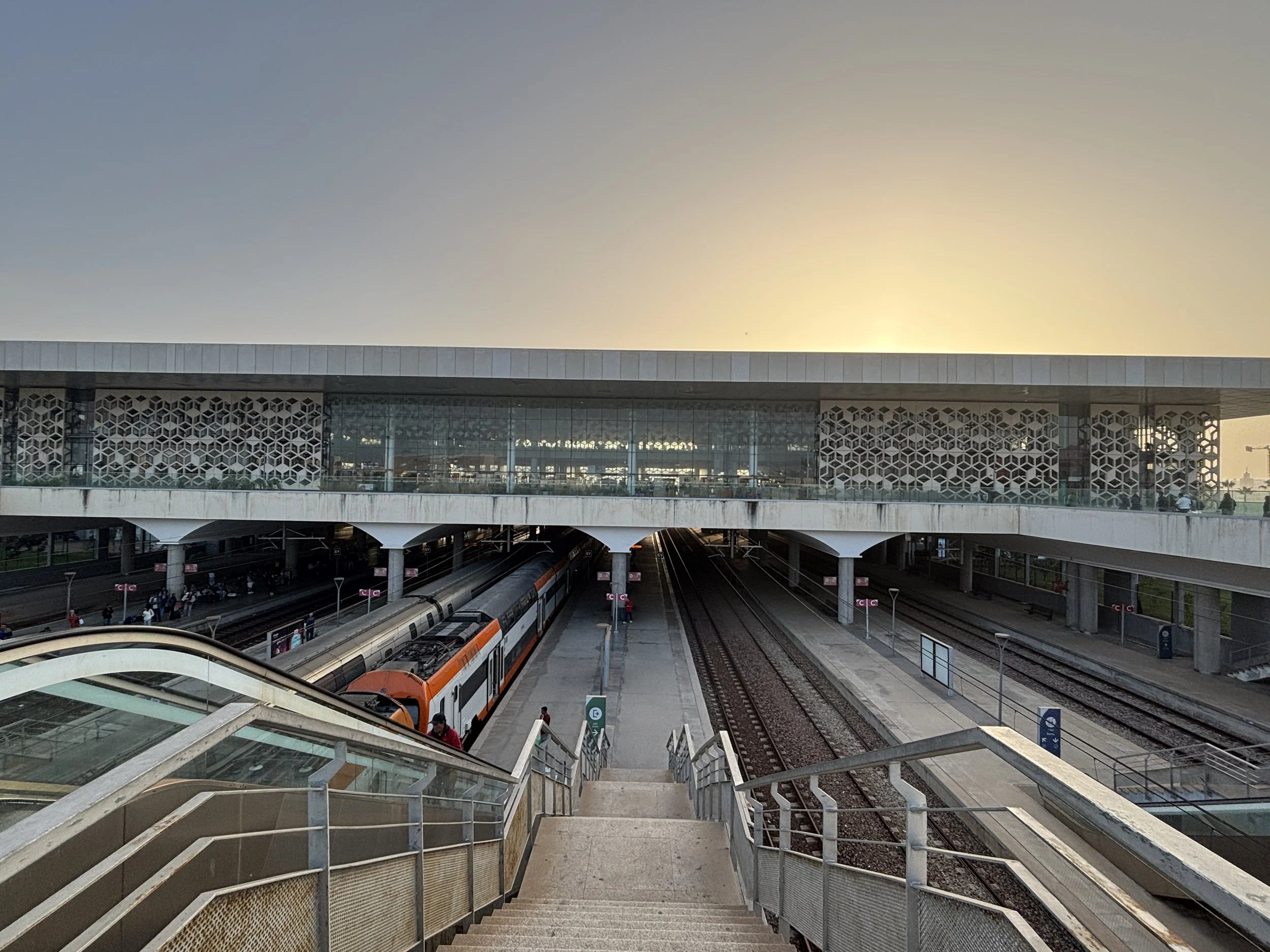
Rabat is connected by train to all other major Moroccan cities. This is actually how I got to the city: by taking the Al Boqar high-speed train from Casablanca. At the time of writing this post, Morocco’s high-speed train development is in full swing, with one trunk line connecting Tangiers to Casablanca via Rabat (not all the line is “high-speed” in the strict sense of the word, but it is pretty fast) and an extension planned for Marrakech in the near future.
You can tell this is a flagship project for Morocco because the stations are all state-of-the-art. Service is pretty efficient and frequent, and it can be easily booked online (for the 50min ride between Casablanca and Rabat it costs as little as €5, and it can be upgraded to First, which gives lounge access, for a few extra bucks). The trains are double-decker, with assigned seats and a restaurant car. Pretty similar set up to, for example, French high-speed trains.
The experience at Rabat-Salé Airport
Since Morocco has an open skies treaty with the EU, Rabat, like other Moroccan airports, has attracted a fair number of nonstop air links from Europe, many of them operated by the major low-cost carriers. So, Rabat airport is emerging as an alternative gateway to the country next to the more traditional entry points such as Casablanca and Marrakech.
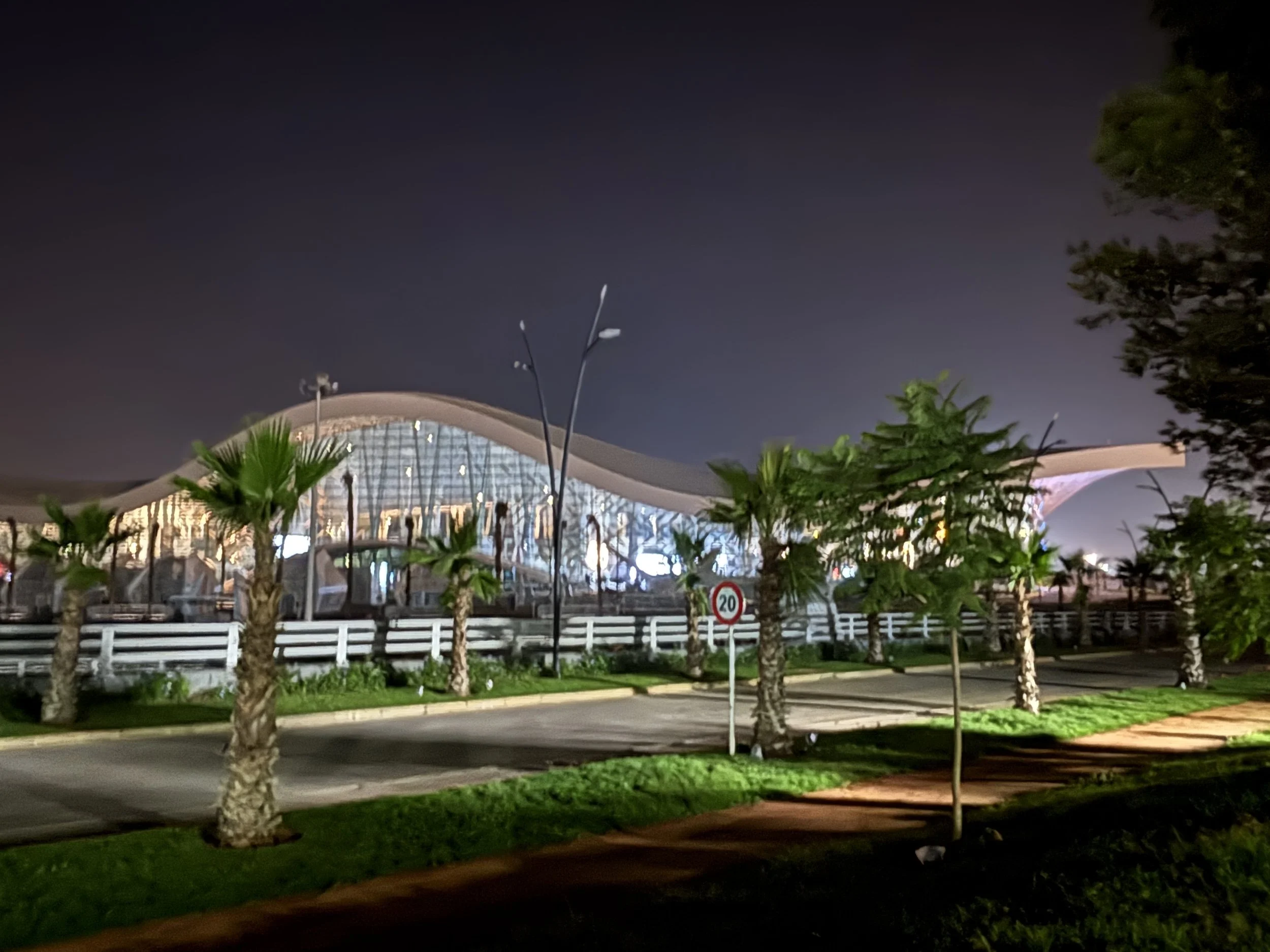
Now, my take on the airport facilities in Rabat is a lot more nuanced. The airport has a shiny, new terminal, but, at the time of my travel (November 2026) it was not yet open, despite being fully lit at night (as you can see in the picture).
So, the airport currently has the two older terminals in operation: T1 and T2.
I can’t comment on T1 because I didn’t use it, but I can say straightaway, that T2, which is used almost exclusively by Ryanair, provided one of the worst airport experiences ever (and I take a fair number of flights every year!). T2 is no more than an overcrowded shed with extremely basic services. When a flight is about to board (let alone if there is more than one flight at more or less the same time), it is complete chaos because there is basically no space to form a normal queue. The shops and bars are literally a couple of corner stalls with extremely limited offerings and which take no cards. Also, don’t expect to find any outlet to charge your phone or electronic device.
Total shambles and I really hope they close it down as soon as the brand new terminal becomes operative!
Moving around Rabat
By Tram: Rabat has a modern tram network, although it spans only the modern areas of the city (there is no practical physical way you can get a tram in the street maze of the Medina!). It is actually a convenient way to get across the river to Salé. Tickets cost around 7 Dirhams (€0.7, $0.75) and can be purchased at the stops (there are both machines and ticket counters).
By Uber: this is actually the most convenient and possibly best value options to move around. A ride within the city usually costs around 25 Dirhams (€2.2, $2.5) and availability is almost immediate pretty much everywhere.
Walking around the Rabat Medina
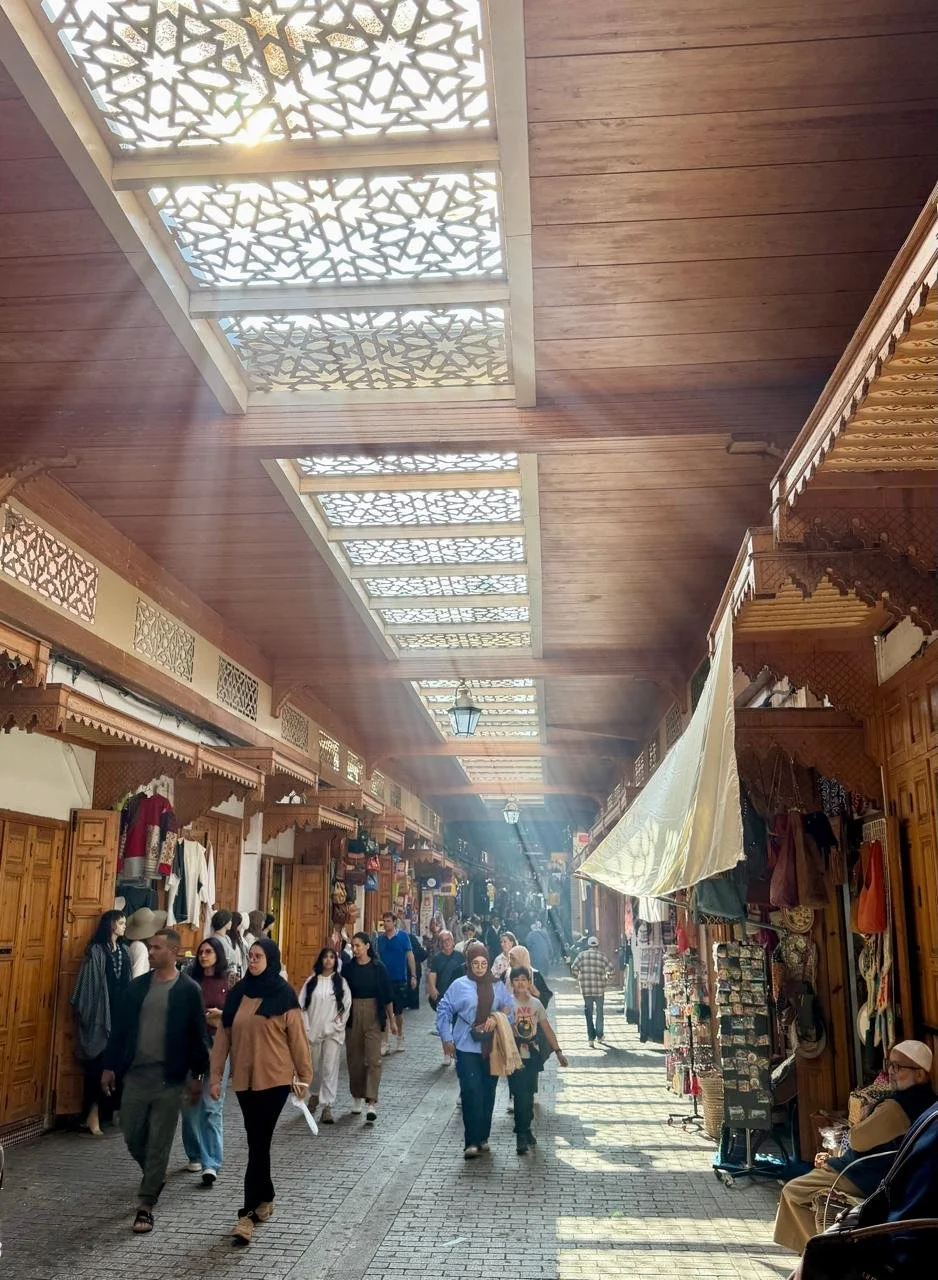
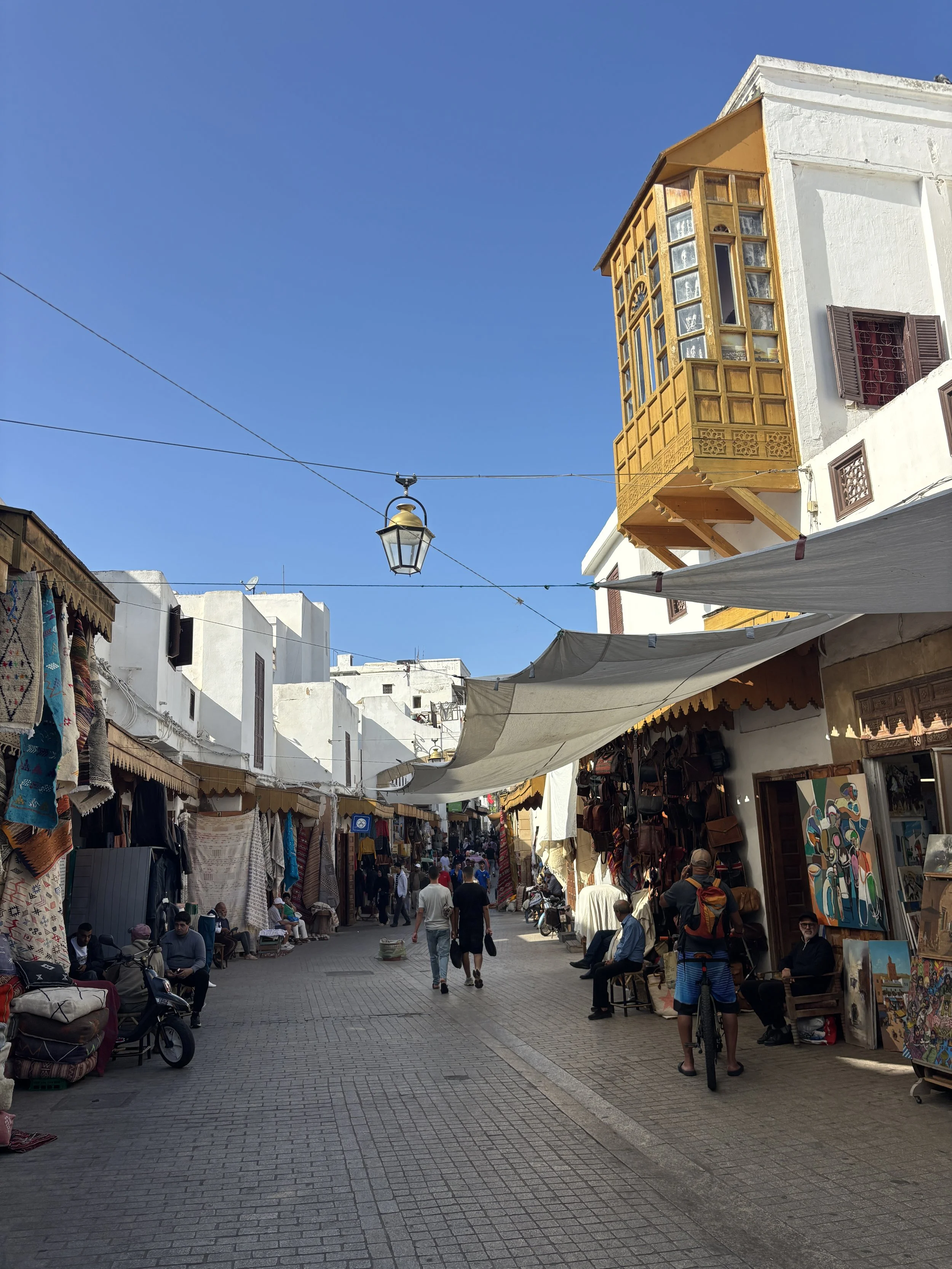
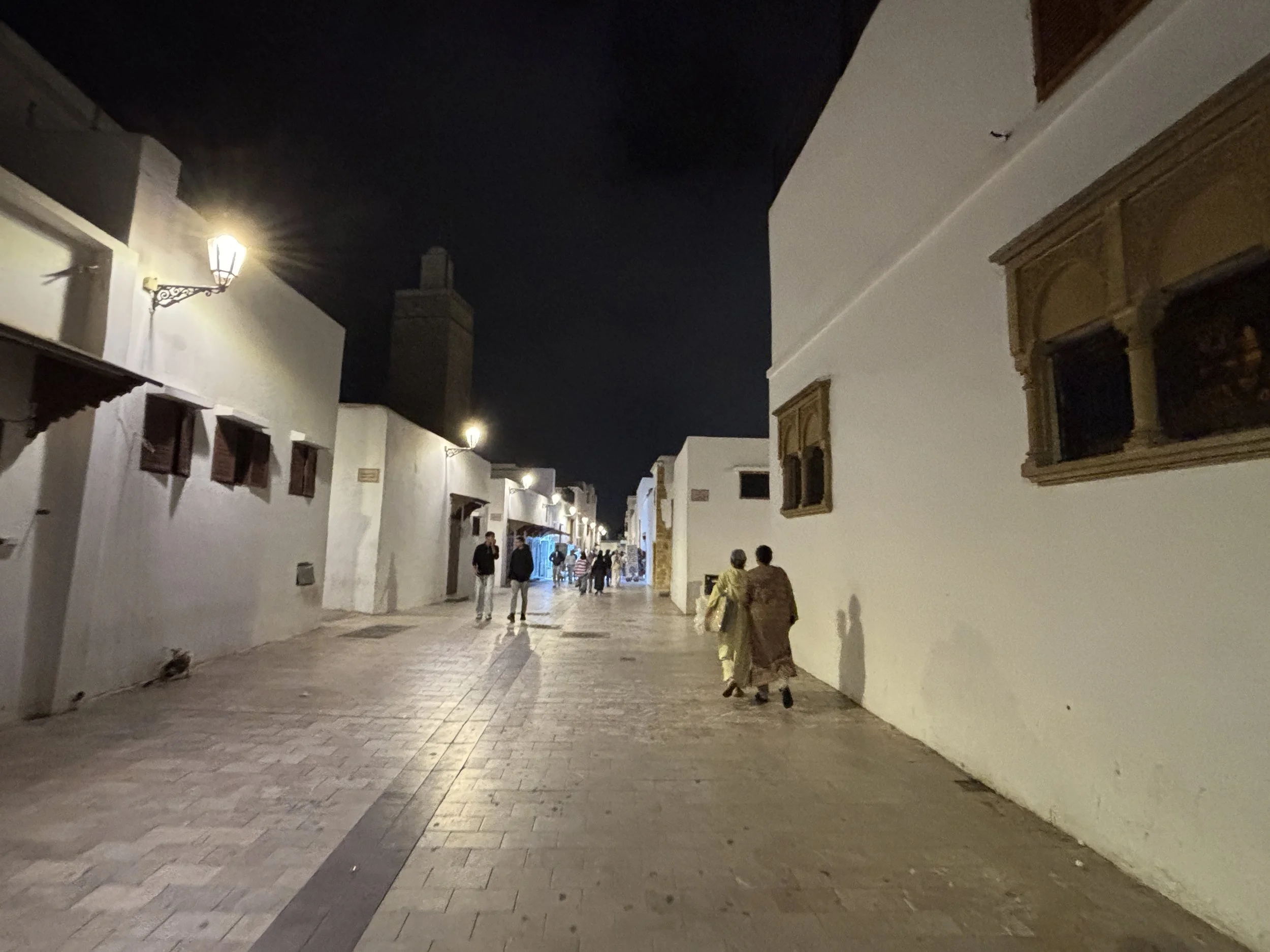
As in Marrakech and other Moroccan cities, the medina is the historic heart of Rabat.
Interestingly, although the area around Rabat and its “twin city” of Salé, across the river, has been inhabited for millennia, Rabat’s medina didn’t really flourish until relatively late in historical terms. It developed with the arrival of the “Moriscos” (descendants of Muslims who had, in principle, converted to Christianity), who were expelled from the Iberian territories of the Spanish monarchy in the 17th C.
Most of the commercial activity takes place on the eastern side of the medina, closer to the river, although you’ll find restaurants and riads (traditional Moroccan guesthouses) throughout.
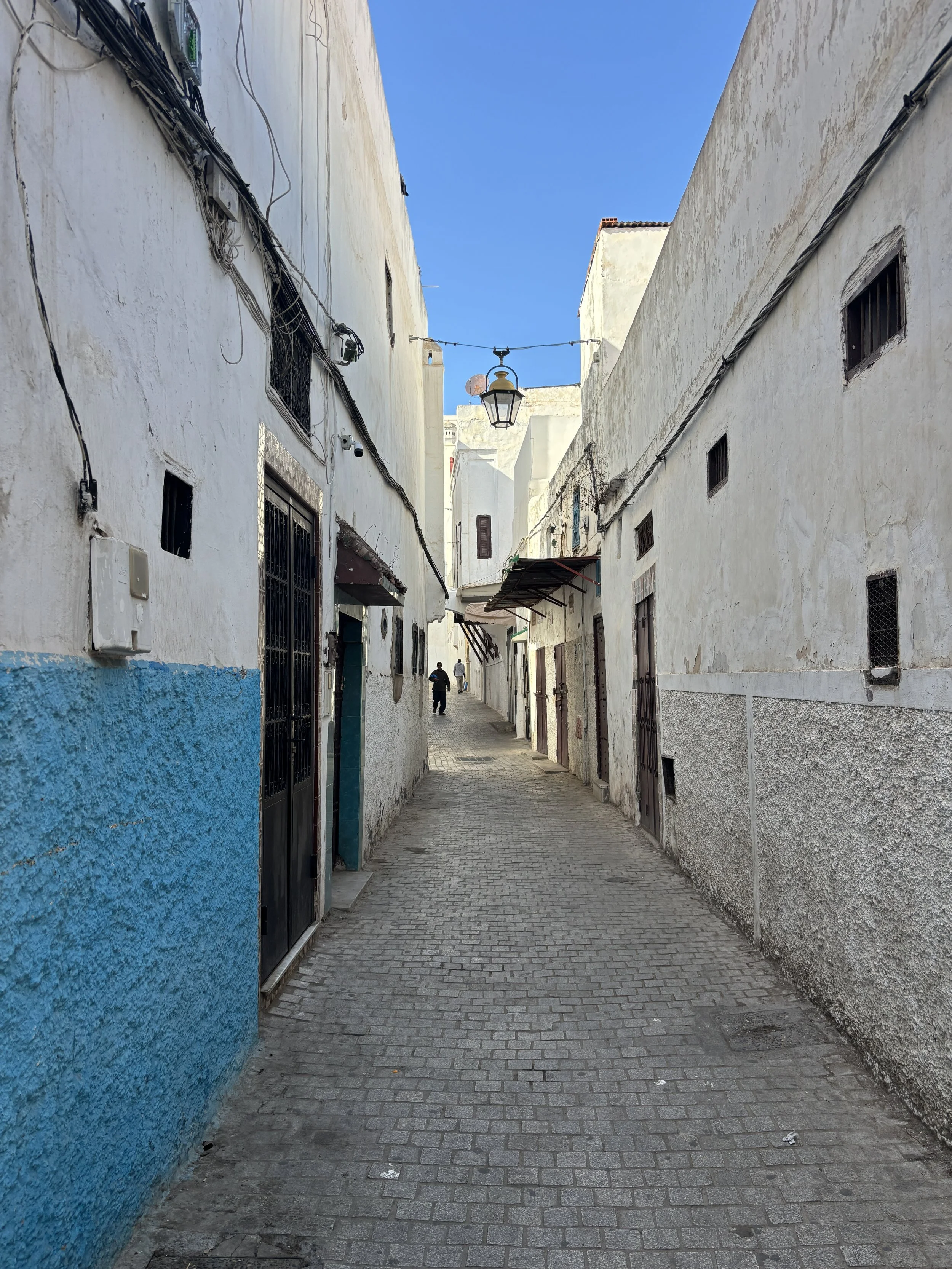
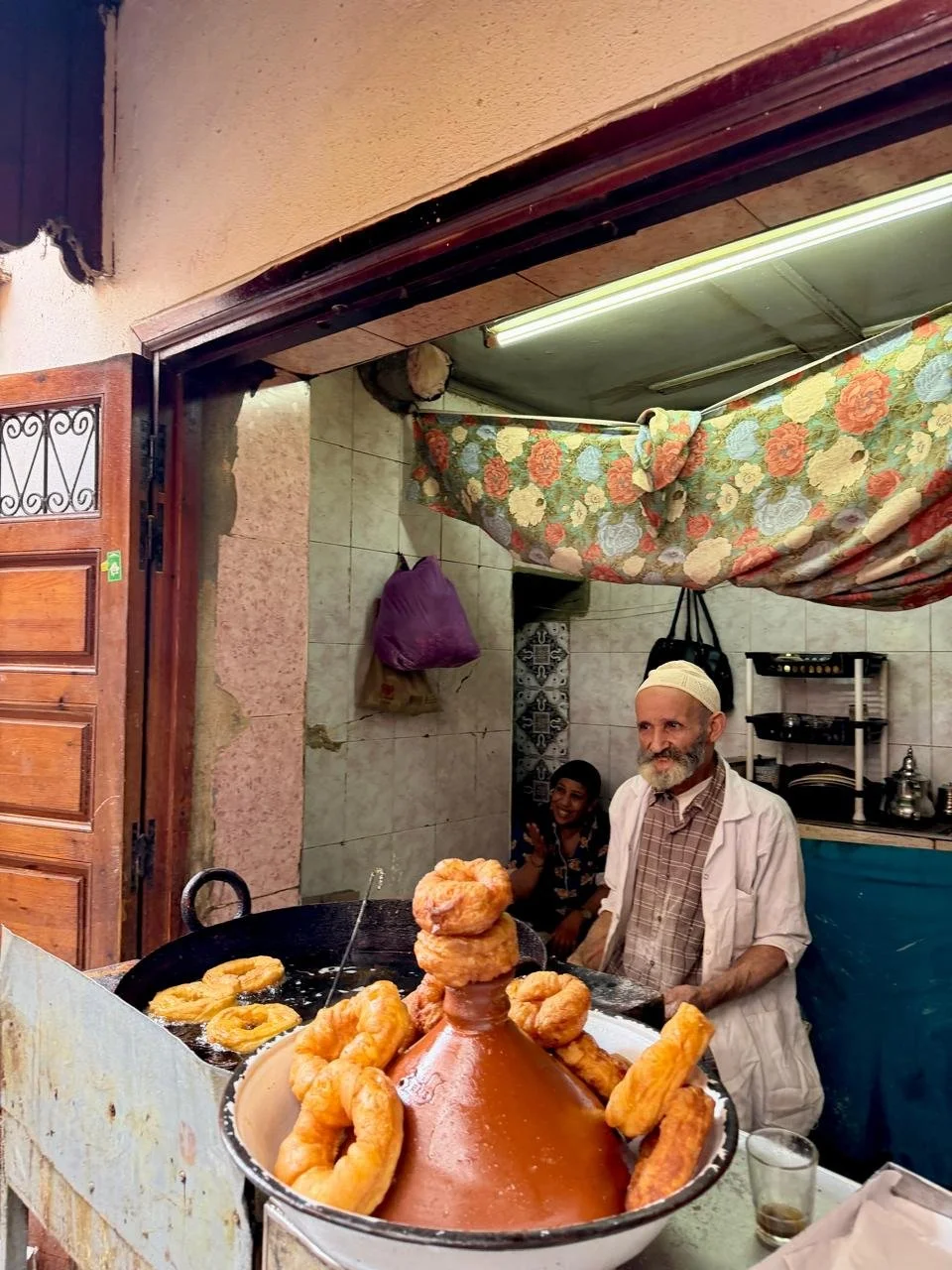
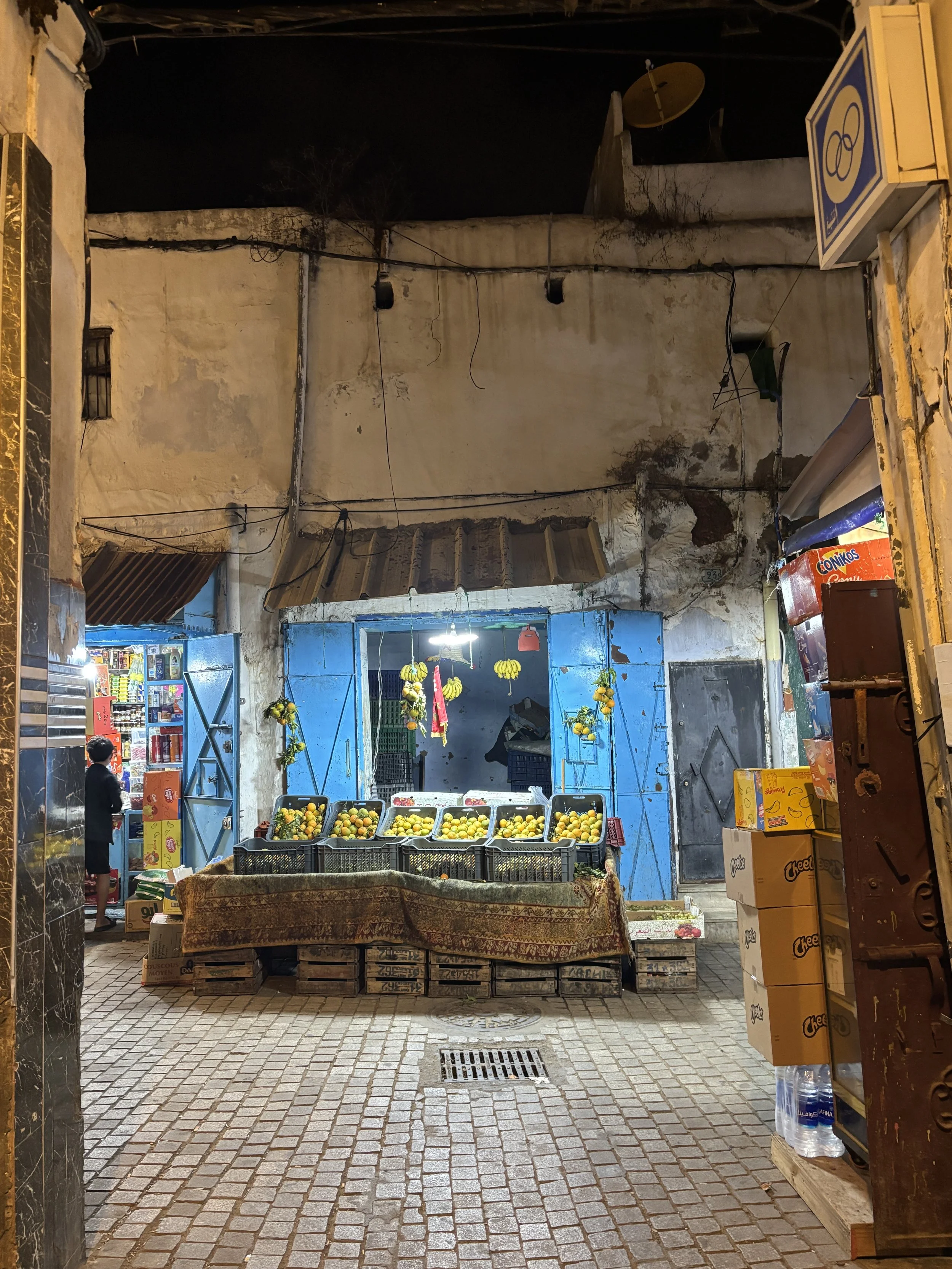
The Medina is smaller and less crowded than the one in Marrakech, but it has its fair share of picturesque corners. Some parts of it can feel a bit sketchy at night, when the streets get quiet, so keep always map handy!
The Kasbah des Oudayas
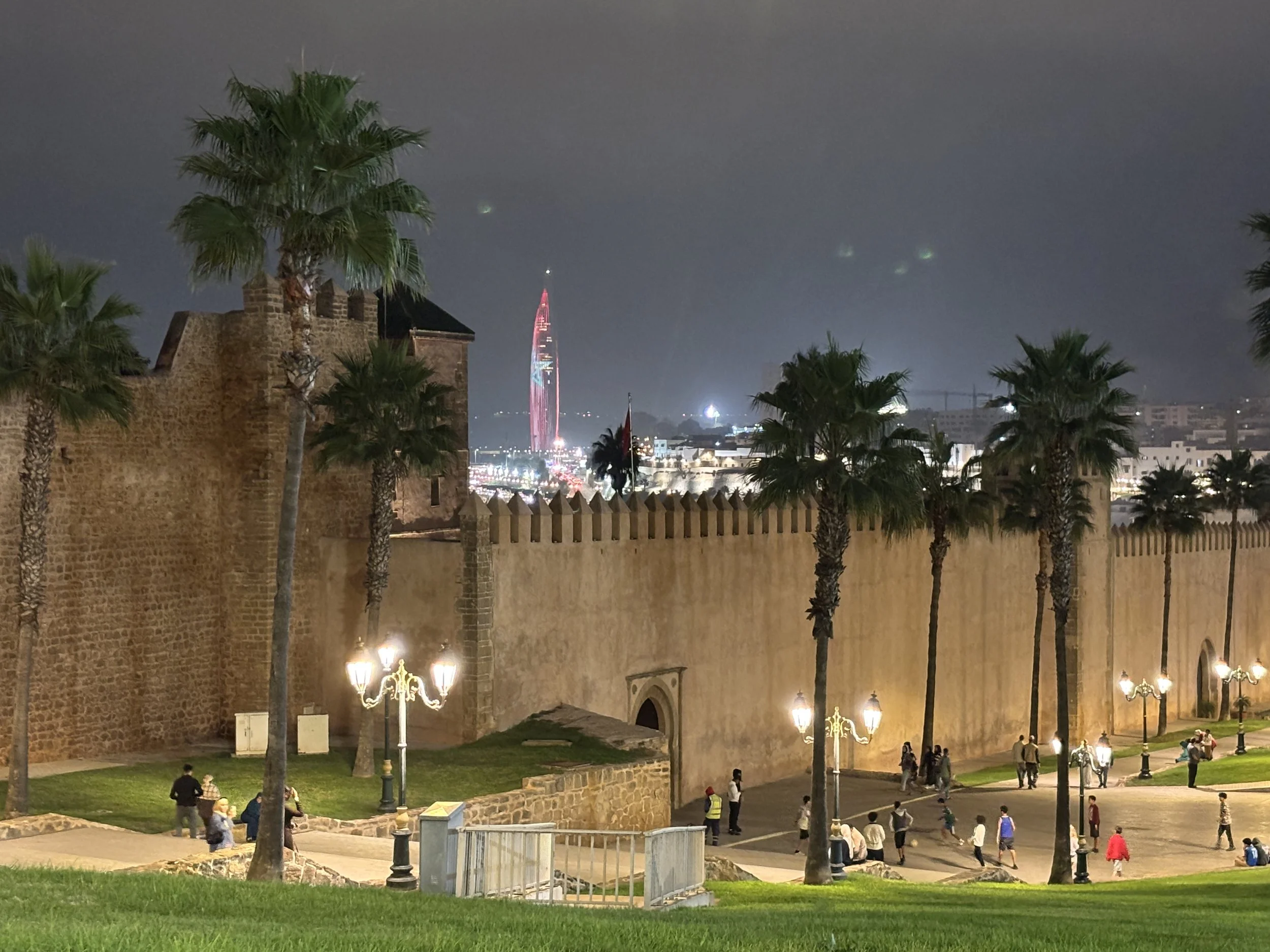
Also part of “old Rabat”, although distinct from the adjacent Medina, the Kasbah des Oudayas is the kernel of what later became Morocco’s capital city. It also gave it its name, since the kasbah grew around a fortified monastery, a “ribat”, which controlled the river mouth from its hilltop location.
The Kasbah has its own walled enceinte inside of which there is yet another maze of whitewashed narrow alleys. It’s main street, though, is now quite touristicized, with souvenir shops and the like.
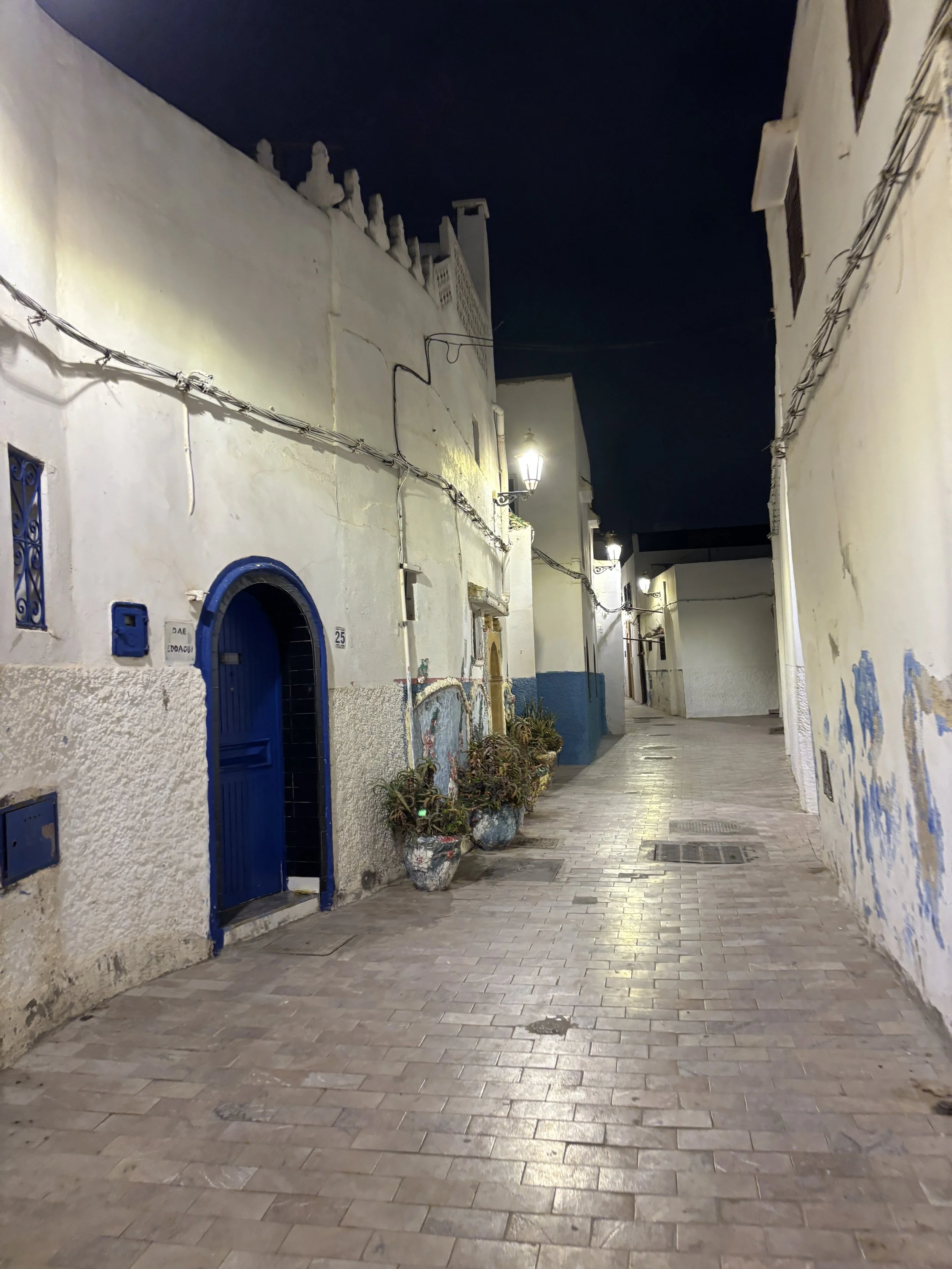
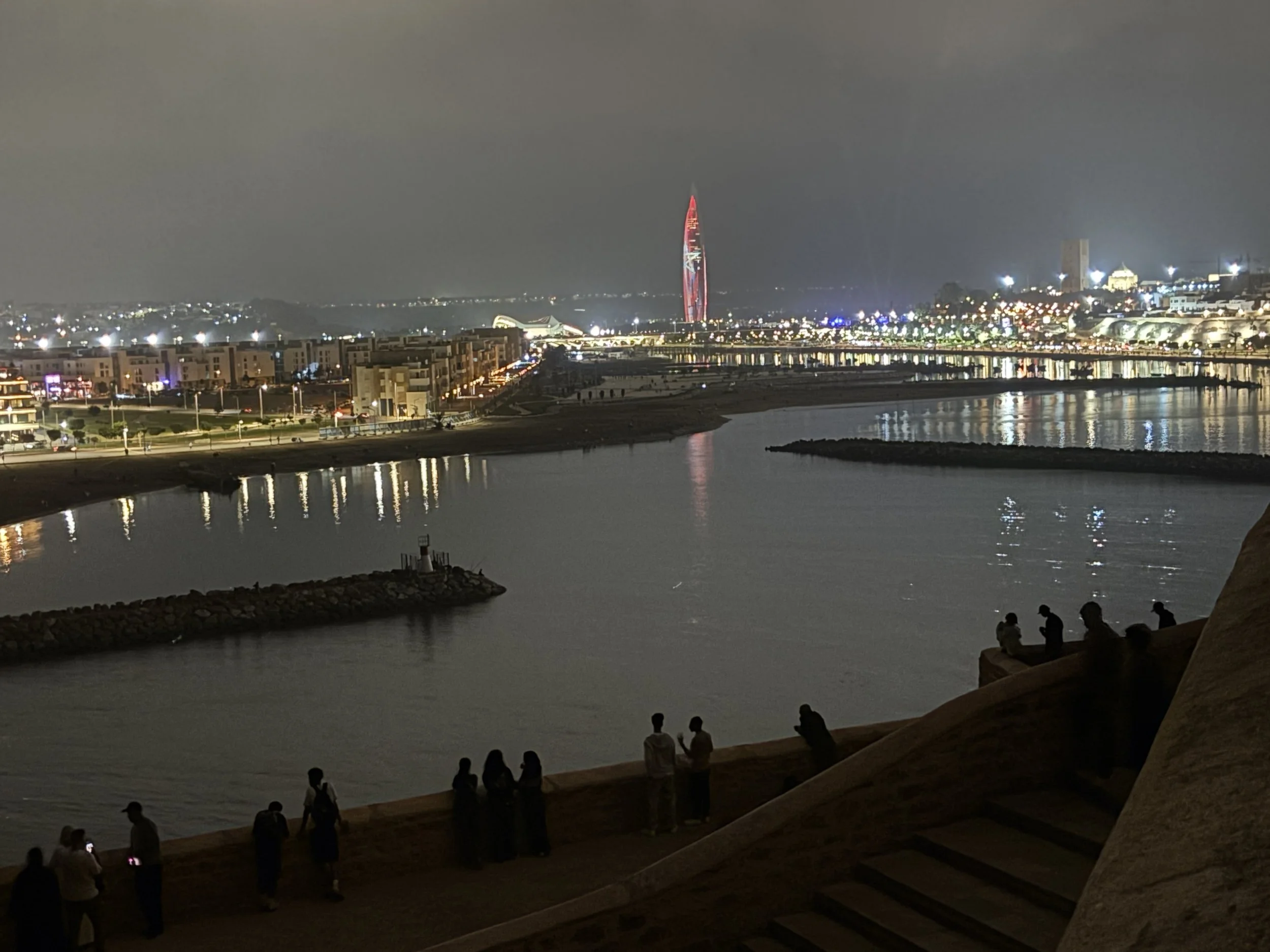
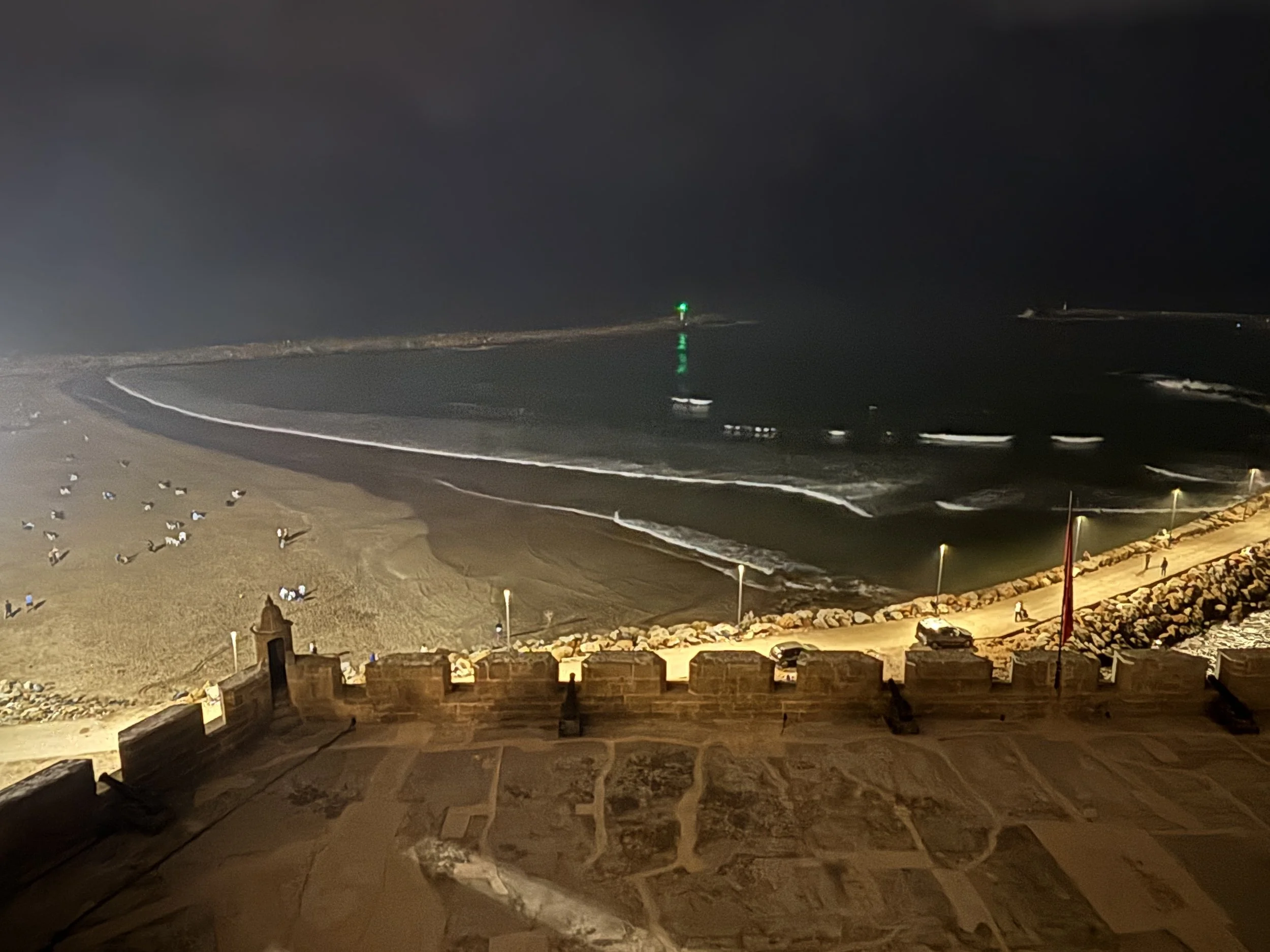
One of the highlights of the Kasbah is the views it offers from its riverside rampart. From here you can see the ocean waves breaking into the city’s beach, Salé across the river, and the new Mohammed VI Tower, Rabat’s latest landmark.
Hassan Tower and Mohamed V Mausoleum
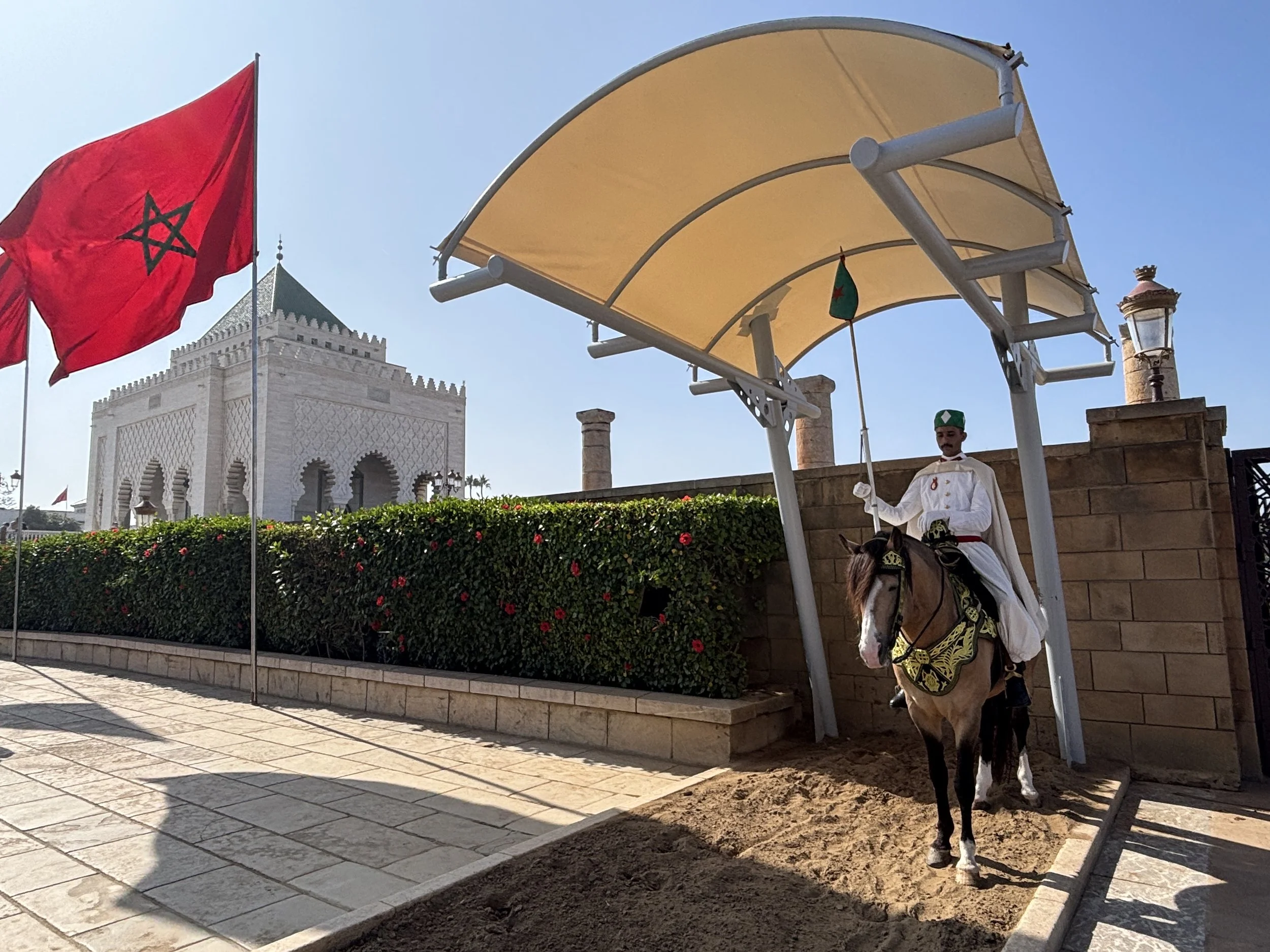
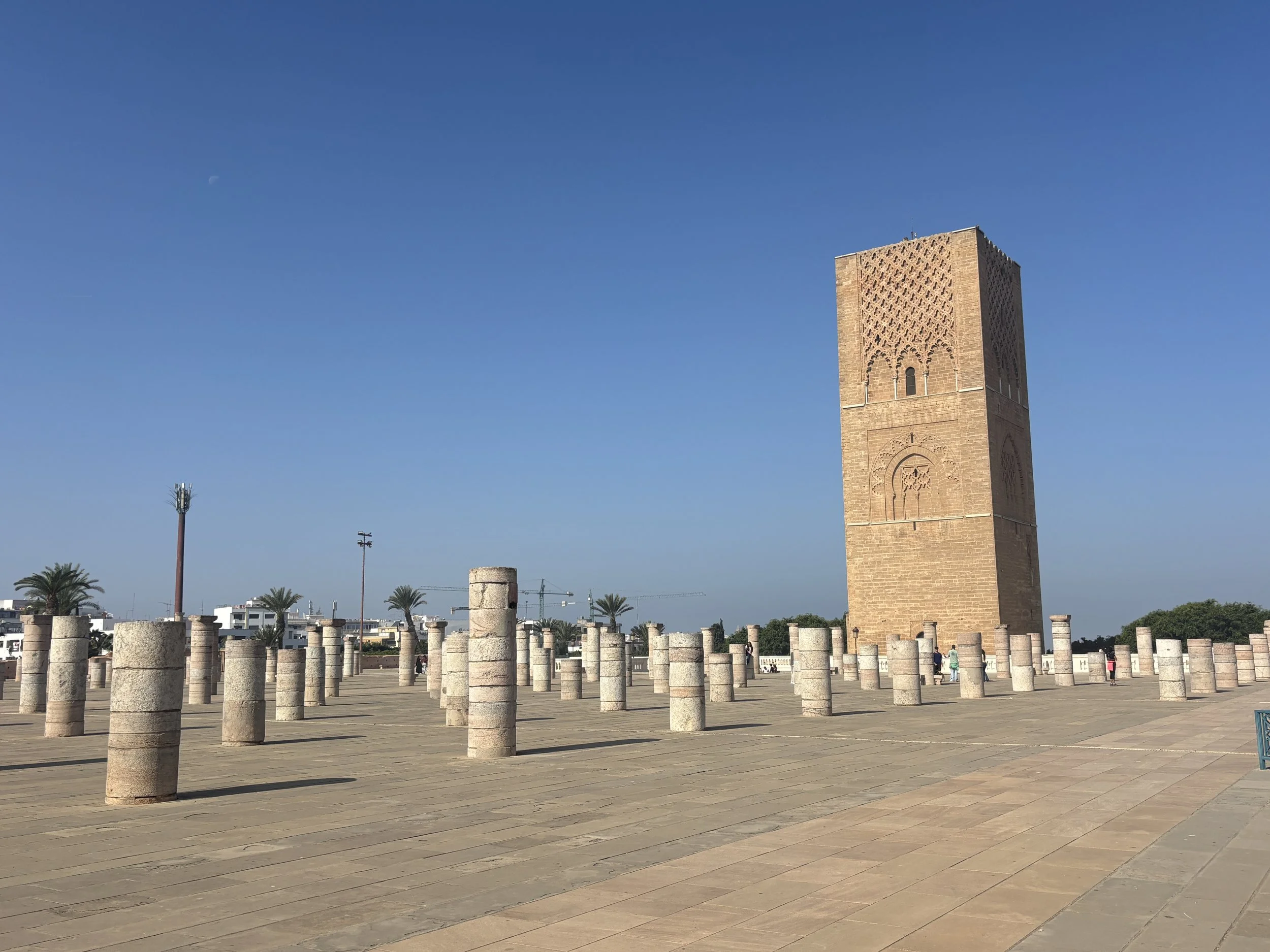
The Hassan Tower and Mohamed V Mausoleum is one of the two major historical sites you can’t miss in Rabat (the other is Chellah, which I explain further down this post).
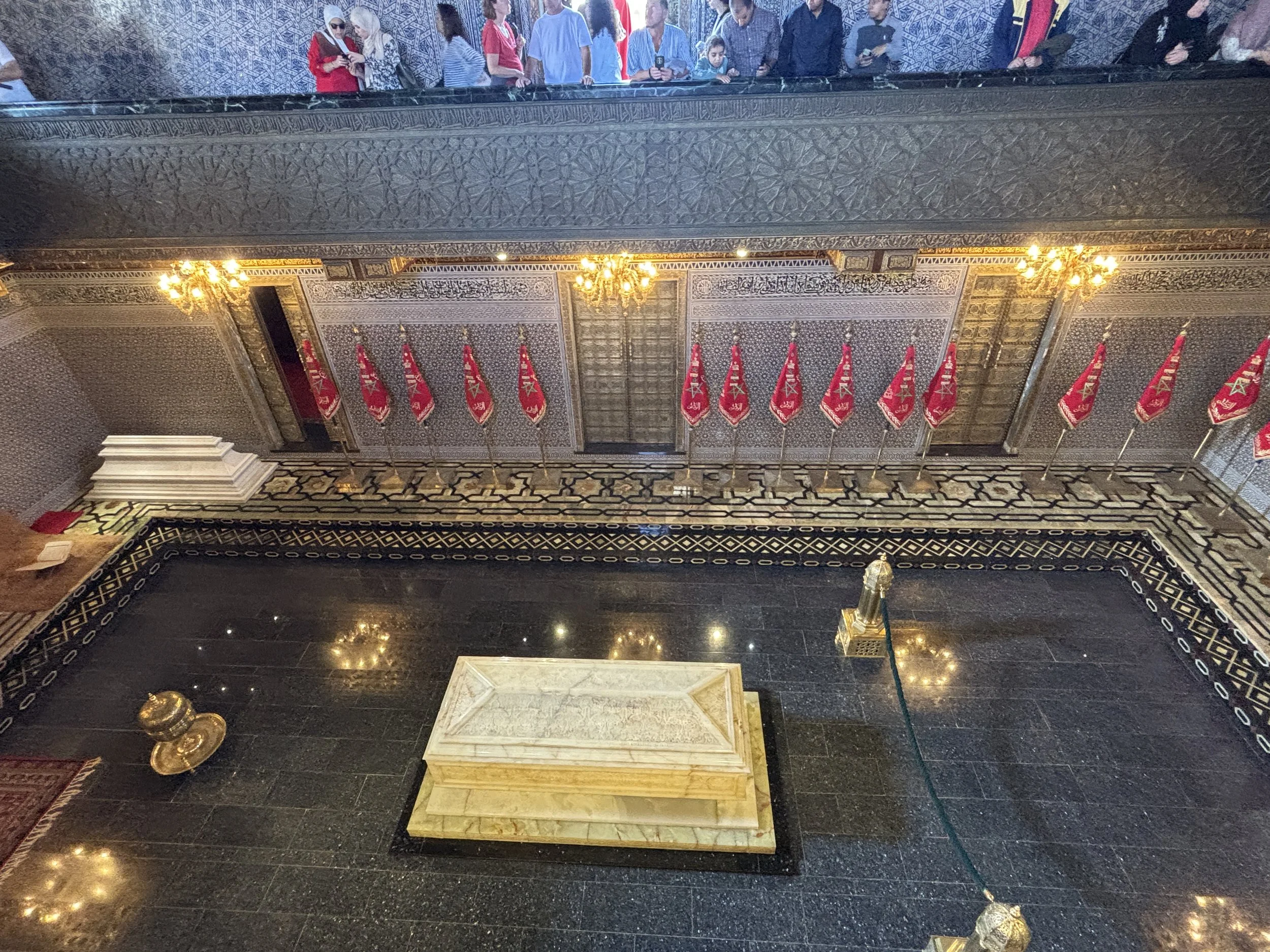
In line with what seems to be a recurrent theme in Rabat, this site combines old and modern elements: the tower and the adjacent ruins date back to the late 12th C. while the mausoleum was completed in 1971 to serve as the resting place of king Mohammed V, who died in 1961 (his sons, King Hassan II and Prince Moulay Abdallah, were later buried there too).
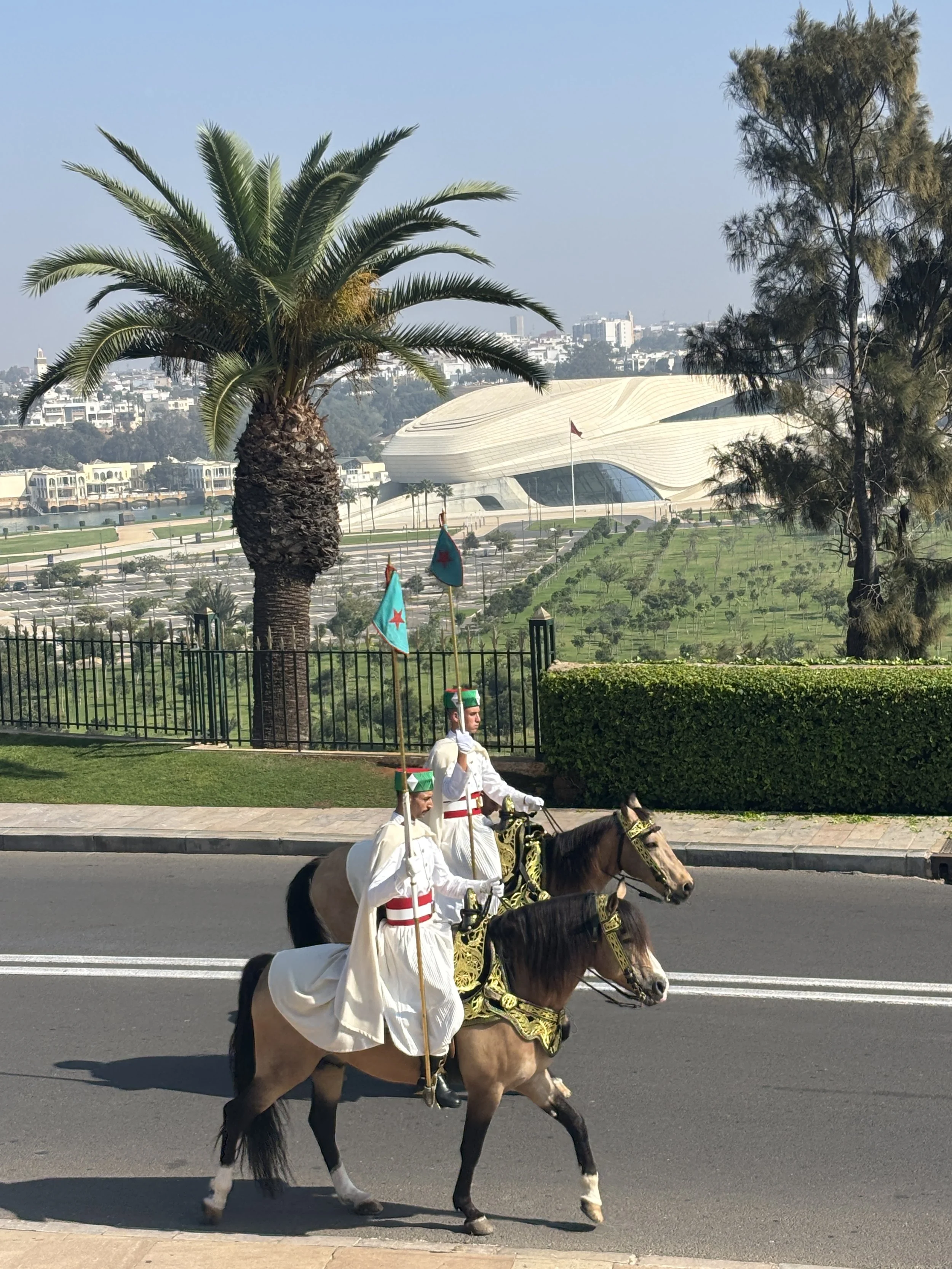
Between the two structures there is an esplanade full with truncated columns, which are the vestiges of what was once meant to be one of the largest mosques in the world.
The red sandstone tower, despite rising to a respectable 44 metres, is also unfinished. When construction started in 1195, it was meant to be the mosque’s minaret and to be also one of the tallest of its type in the world. However, the death only four years later of the Almohad ruler who commissioned it, meant it was never completed. Centuries later, in 1755, the same earthquake that devastated Lisbon also badly damaged the site, hence its current state.
The mausoleum is just opposite the tower across the column field. It is a relatively small structure in Arabesque style.
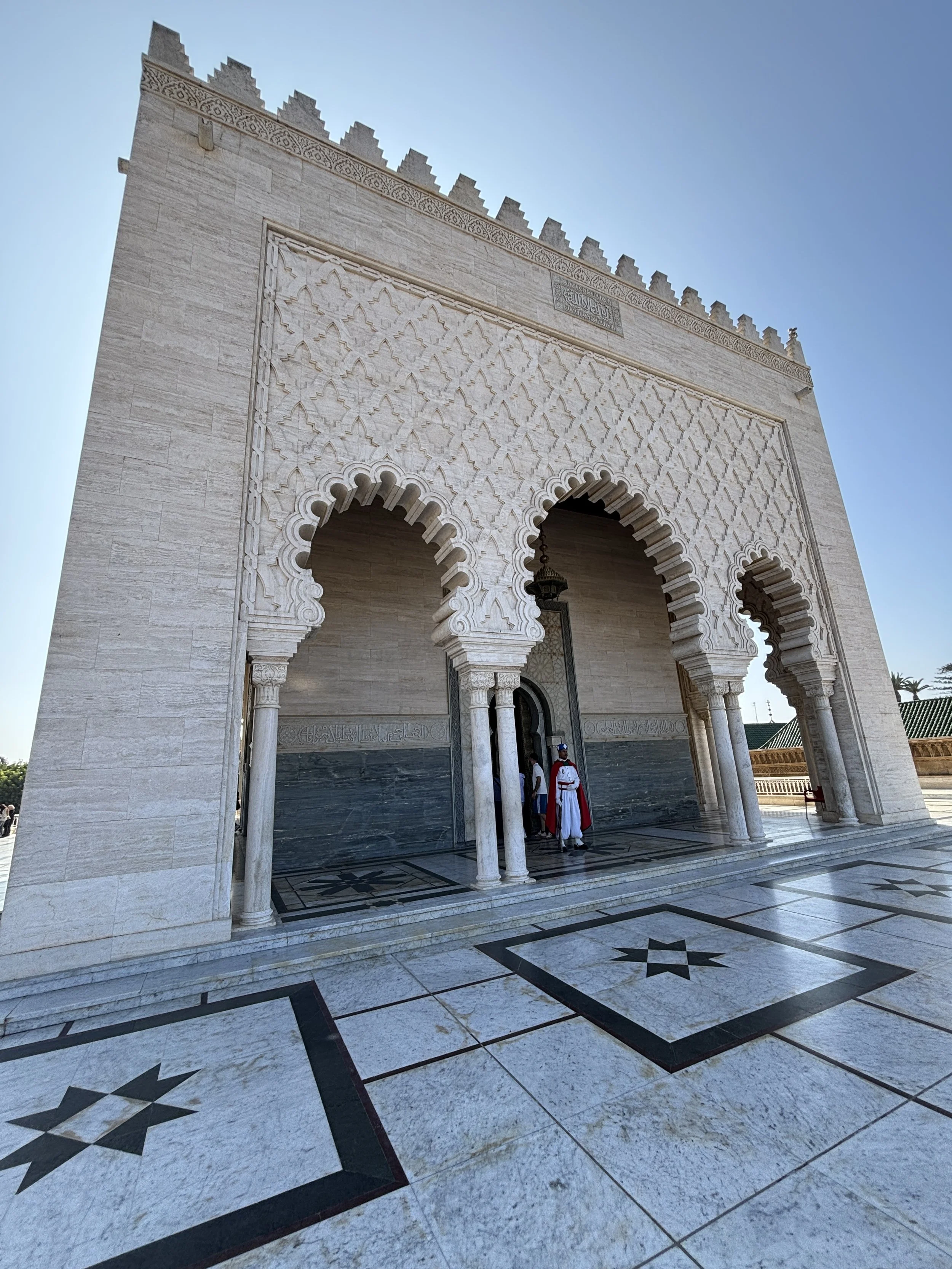
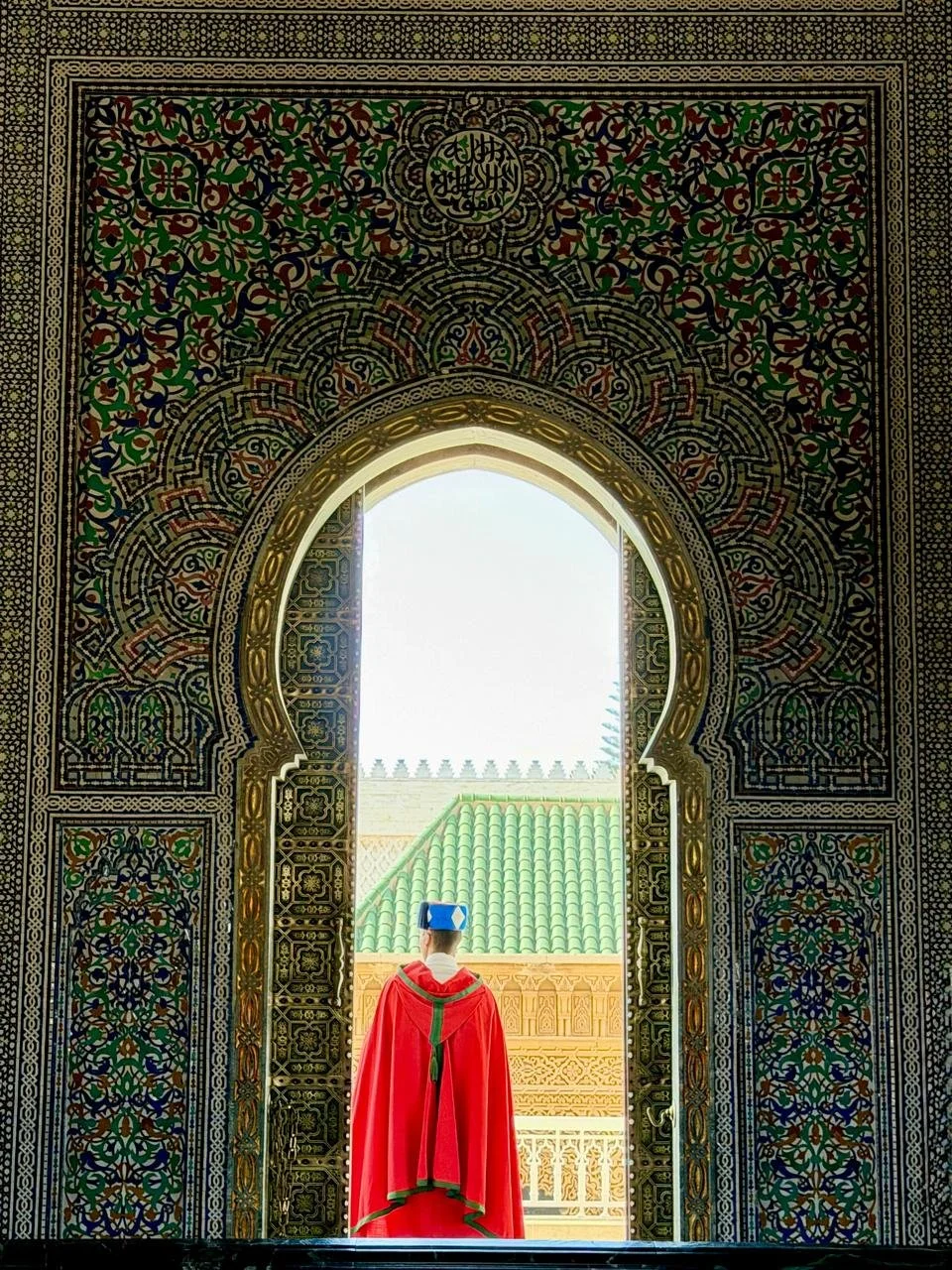
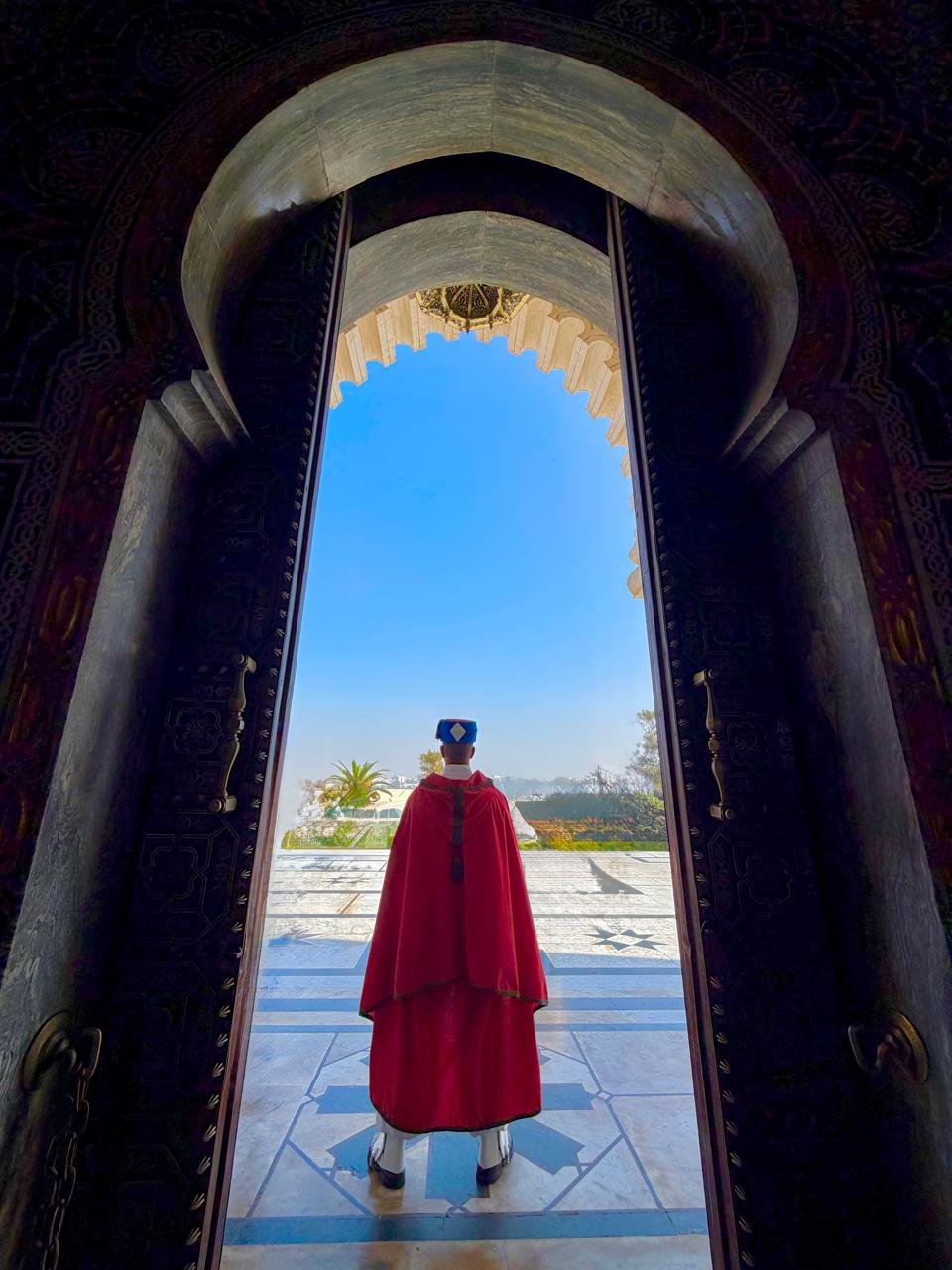
The mausoleum is open to visitors on all sides, allowing access to a gallery which lets you look onto a central hall one floor down, which is were the royal tombs are. A guard of honour keeps watch at all times inside and outside of it.
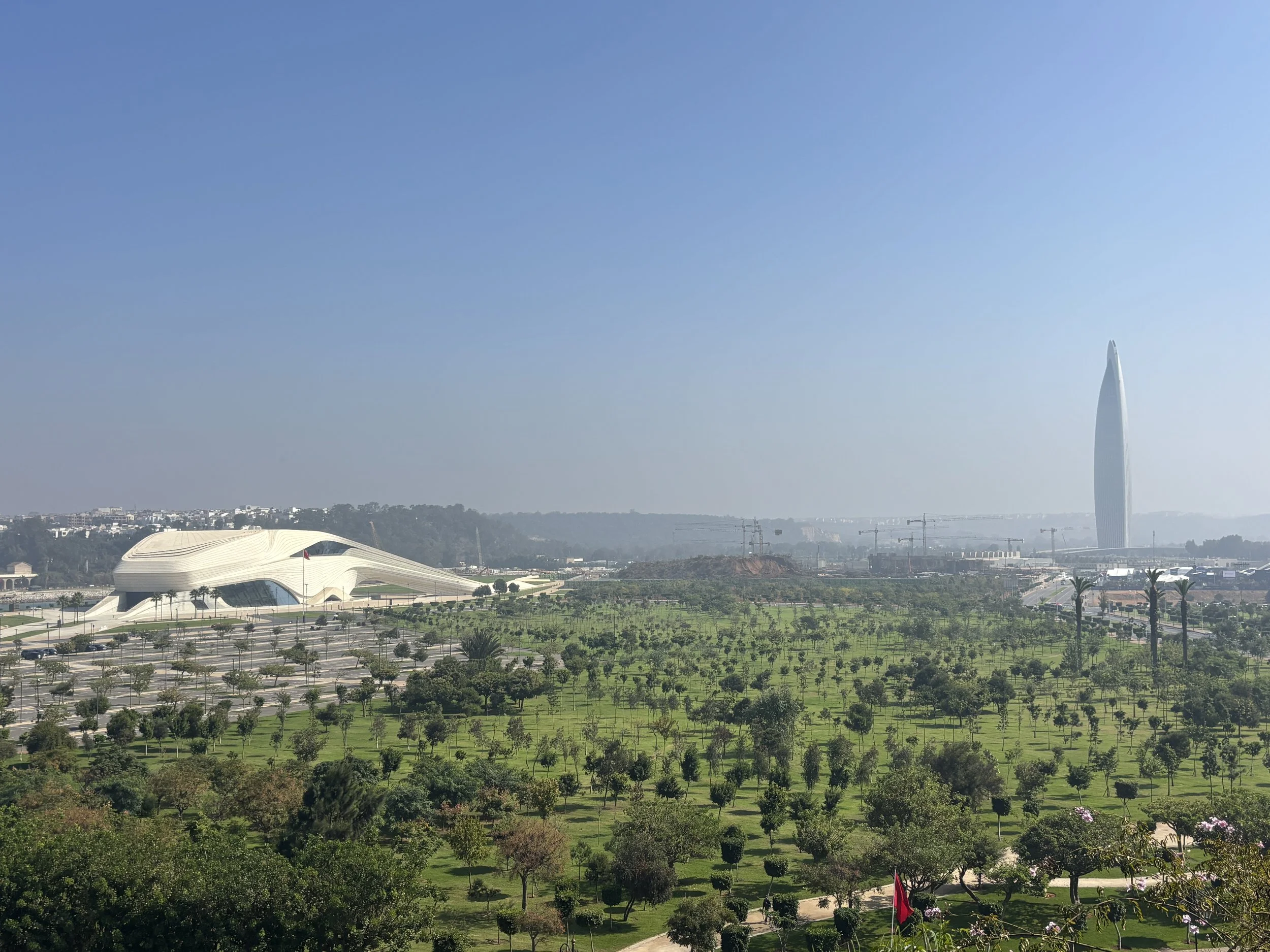
A viewpoint from where to see modern Rabat
The visit to the Hassan Tower and the Mohammed V Mausoleum has the added bonus of offering you some of the best views of the latest architectural wonders of Rabat.
One of these two is the Royal Theatre of Rabat, a Zaha Hadid design (reminiscent in its lines to the Heydar Aliyev Center in Baku, which is also Hadid’s work) which was inaugurated in 2024.
The other landmark is the 250-meter-high Mohammed VI Tower, which was completed in April of 2026, and has become a new symbol of the Moroccan capital, dominating its skyline from many different angles.
In addition to offices and luxury apartments, the Mohammed VI Tower hosts also the Rabat-Salé Waldorf Astoria Hotel, the first establishment in Africa of this renowned luxury hotel chain.
The historical city of Salé
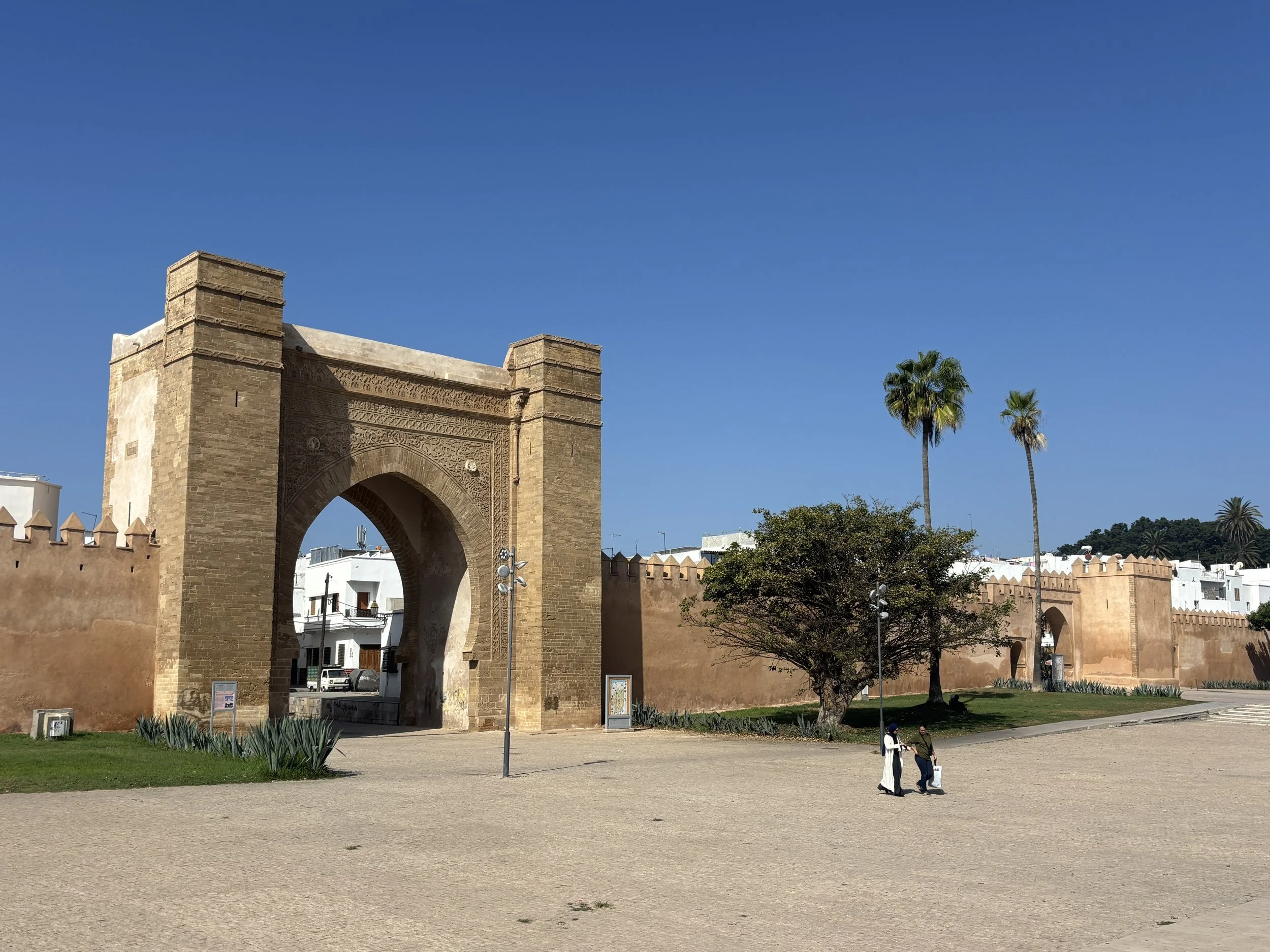
While you may think today of Salé as a sort of northern suburb of Rabat, it is not just a city on its own right, but for a large part of history it had actually preeminence.
Founded in the 11th C., Salé became a trading port, and not only…in the early modern era the city became (in)famous as the base of corsairs and pirates which regularly attacked the European shores to capture and enslave people.
Although throughout much of history it sustained a fierce rivalry with Rabat, just across the river, with the establishment of the latter as Morocco’s capital, the importance and dynamism of Salé progressively faded away.
So what’s there to see in Salé? At risk of missing out on some sights, I’d say Salé is essentially a half-day maximum excursion from Rabat.
A practical way to see it is to enter the Salé Medina through its eastern gate (pictured above), which has a major tram stop just in front (it takes just two stops and less than 10min from the Hassan Tower on the other side of the river), then walk through its streets to the Marinid Madrassa, then go down to the riverfront to take a rowing boat back to Rabat.
This itinerary can be done on foot, although I would advise taking an Uber to get to the river front, not just to save time, but also because the route includes quite a long stretch through and area without much interest and not particularly well amenized.
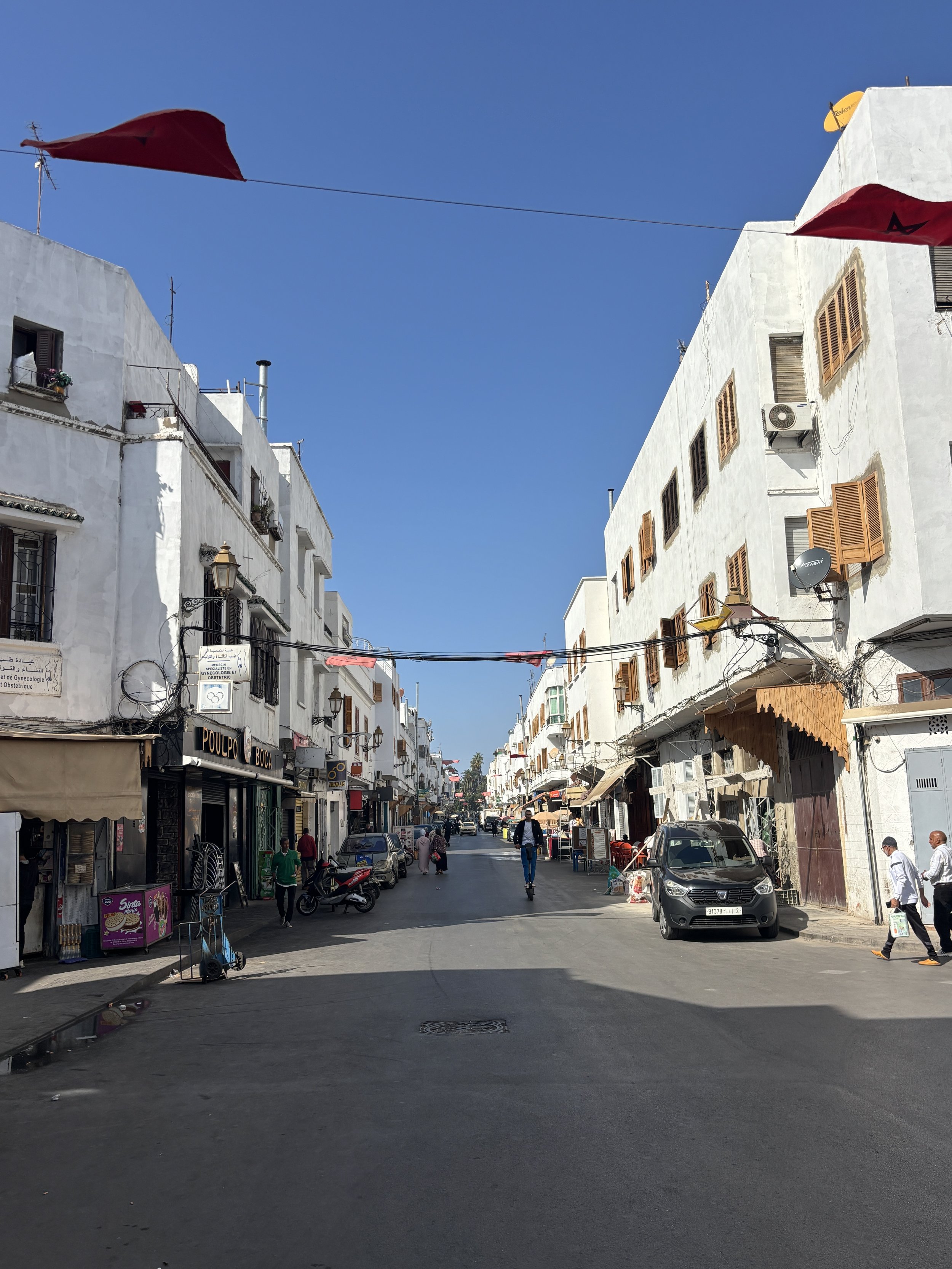
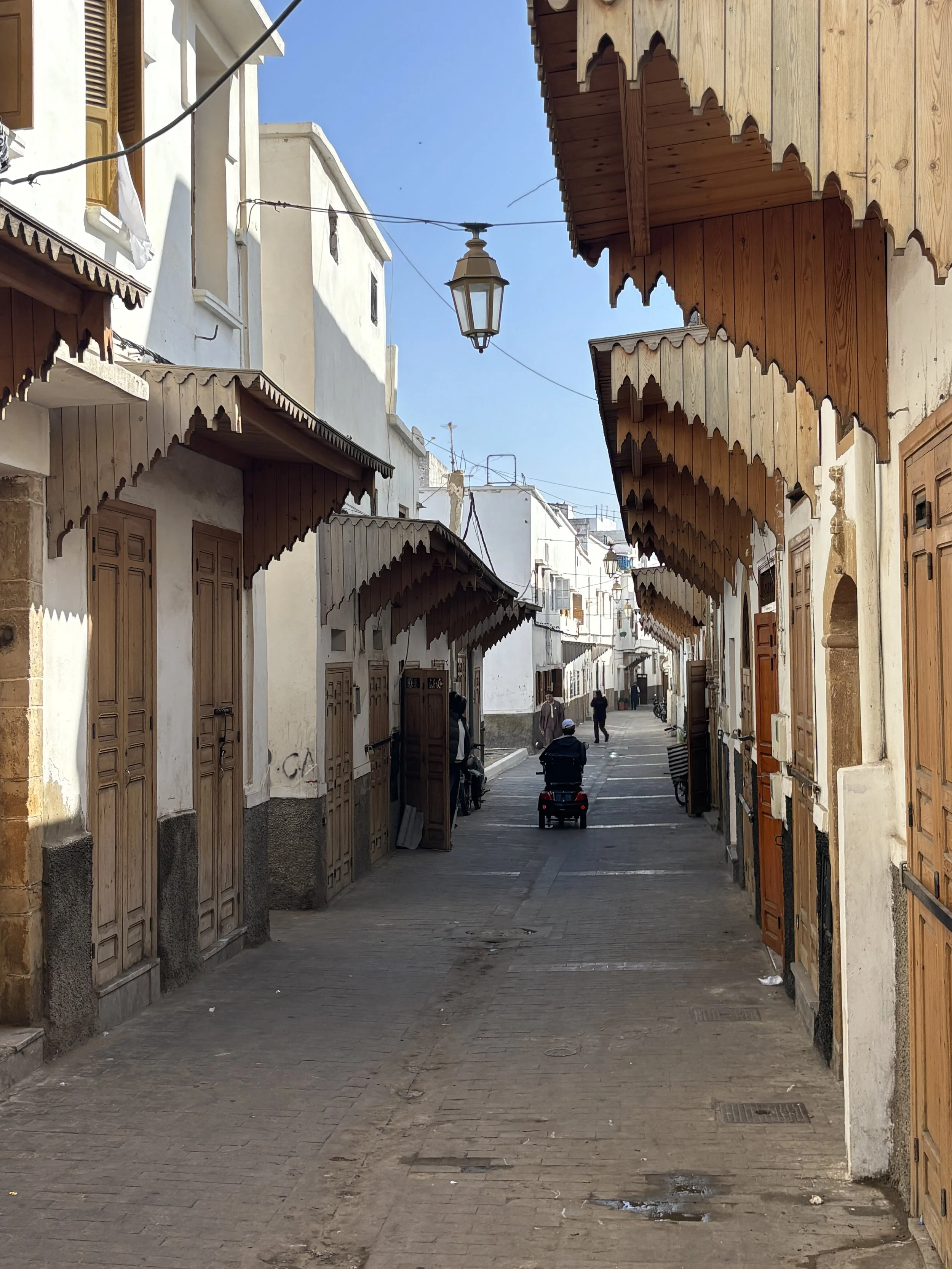
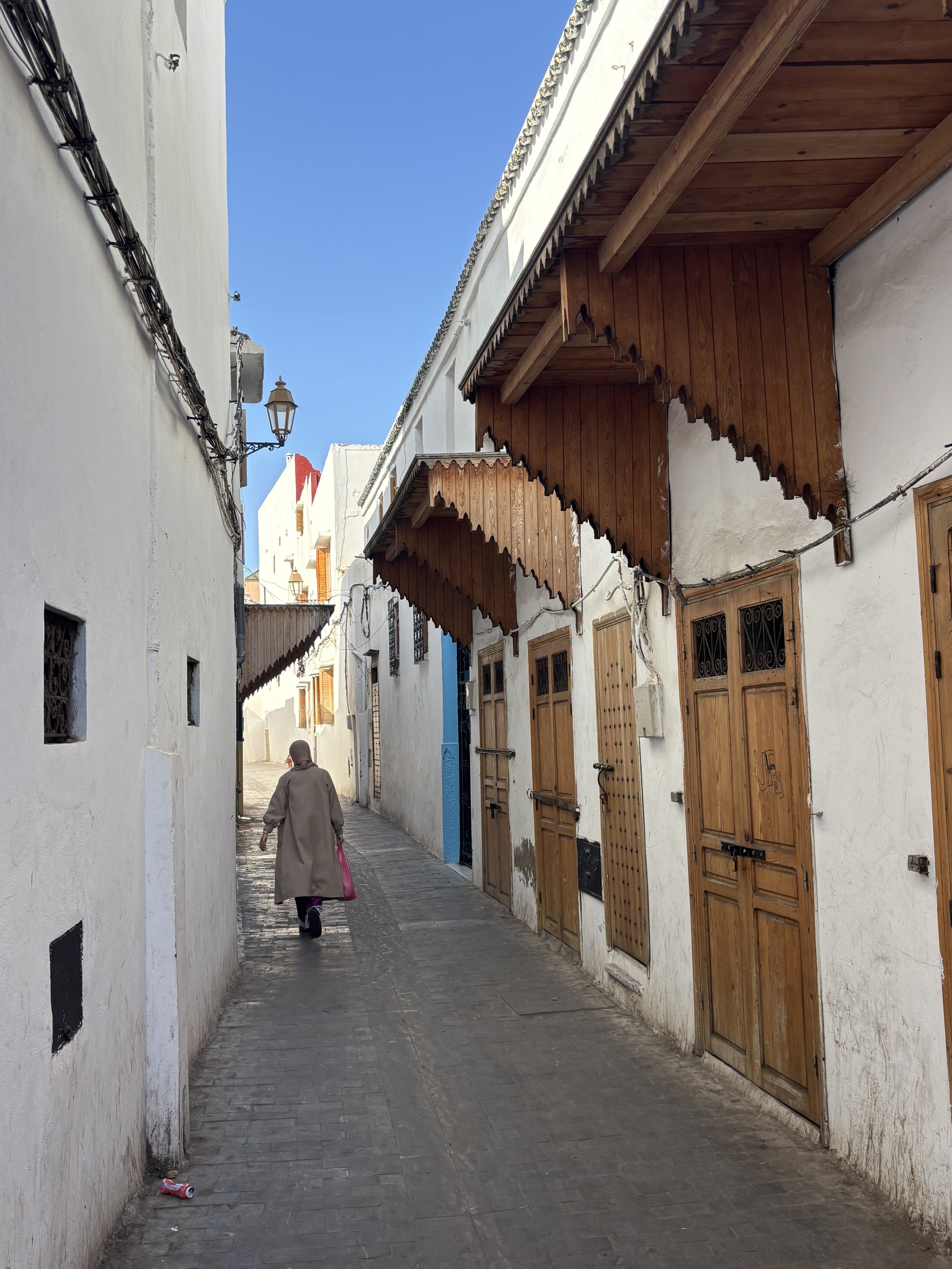
Salé has its own walled Medina, which has some picturesque corners, such as the old Jewish quarter, but it is much less tourist-oriented than the one in Rabat. The main streets are, actually, more like regular commercial streets, with traffic going throughout.
As you get closer to the heart of the Medina, though, the streets become narrower and the urban grid more intricate. In any case, you will encounter way fewer tourists here than in Rabat.
Top thing to see in Salé: the Medersa Marinide
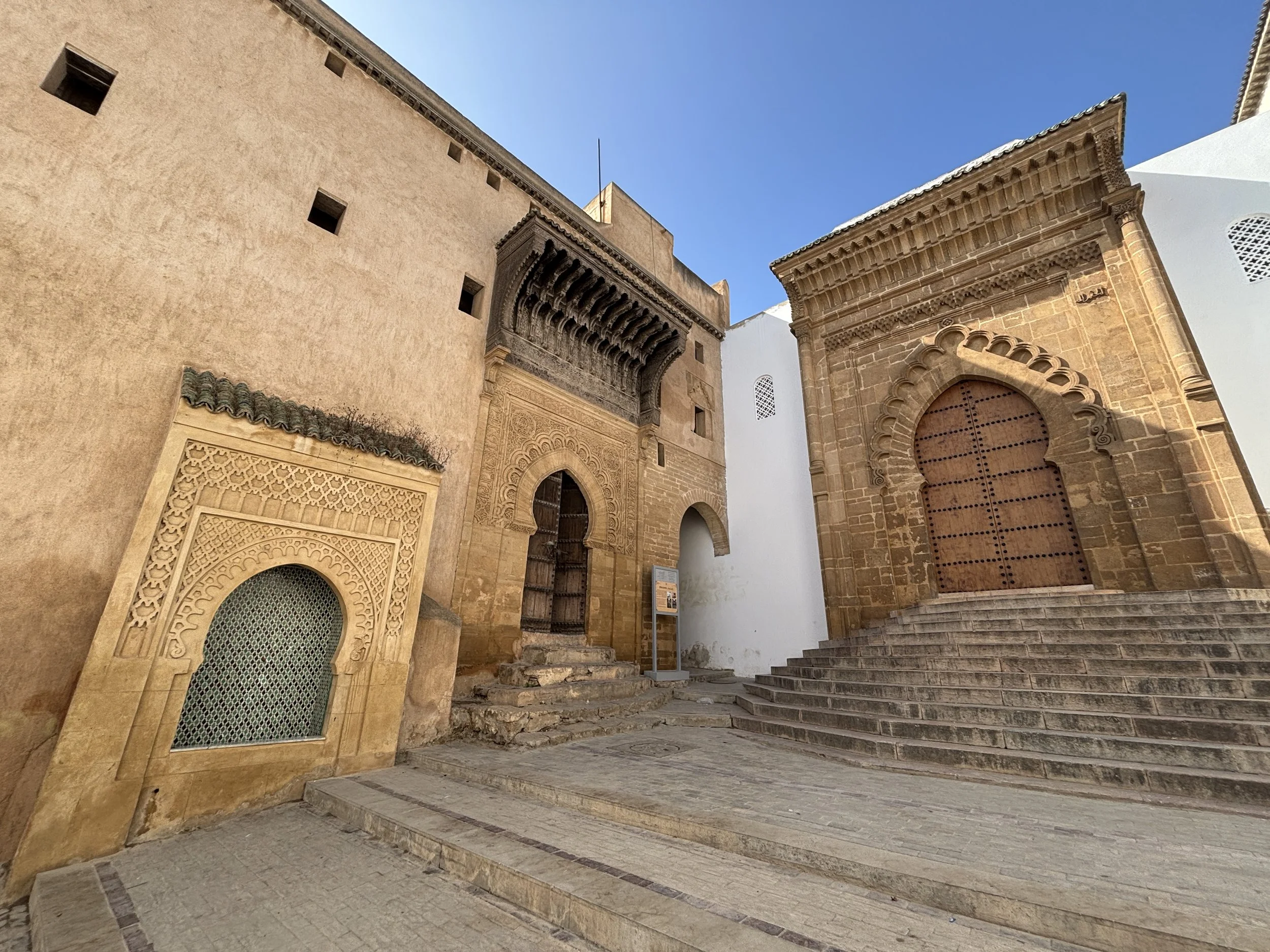
While the main thing to do in Salé is to walk a little bit around the Medina, there is one spot in particular that I recommend visiting, the Marinid Madrasa (also referred to as Medersa Merinide).
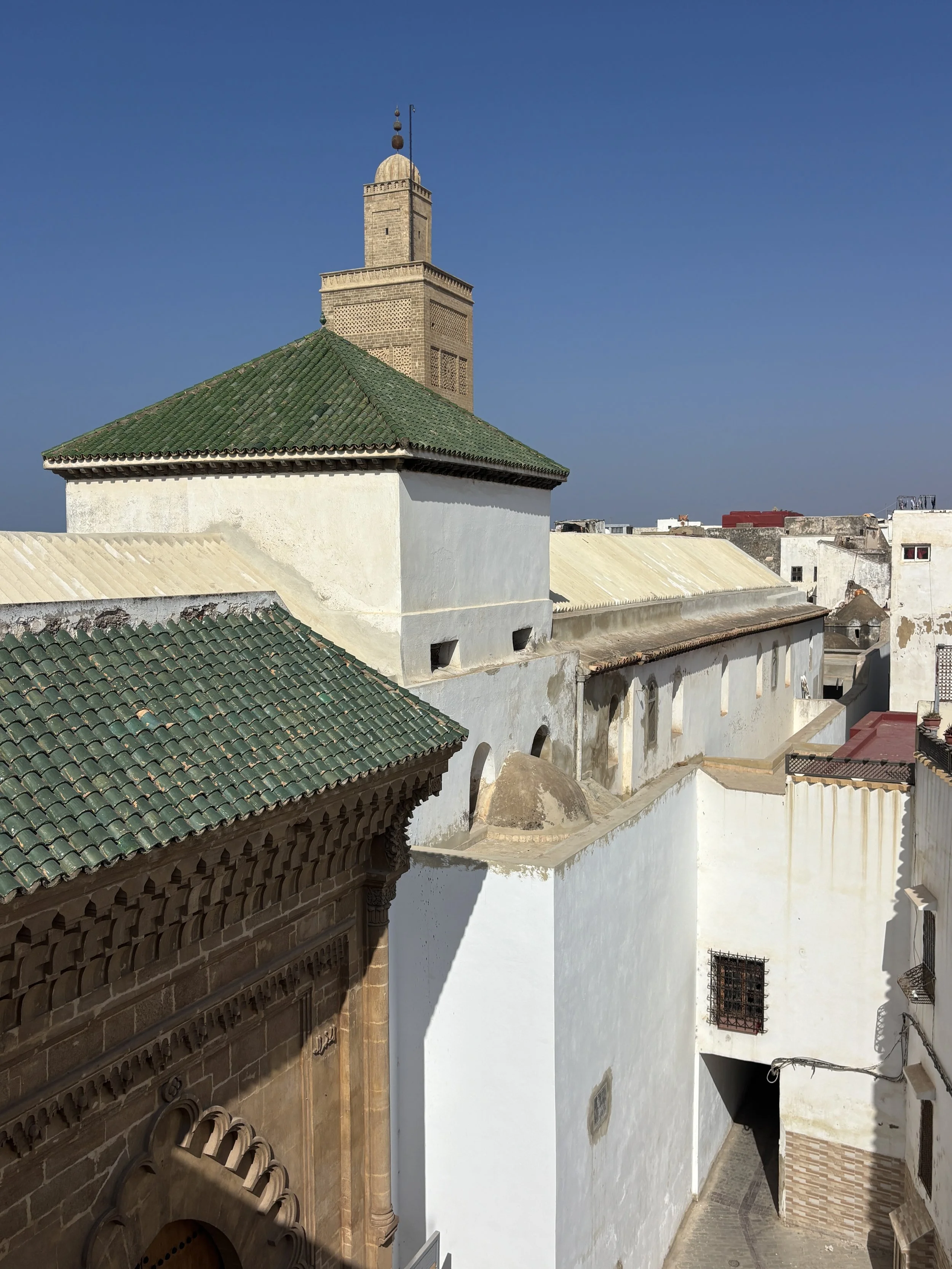
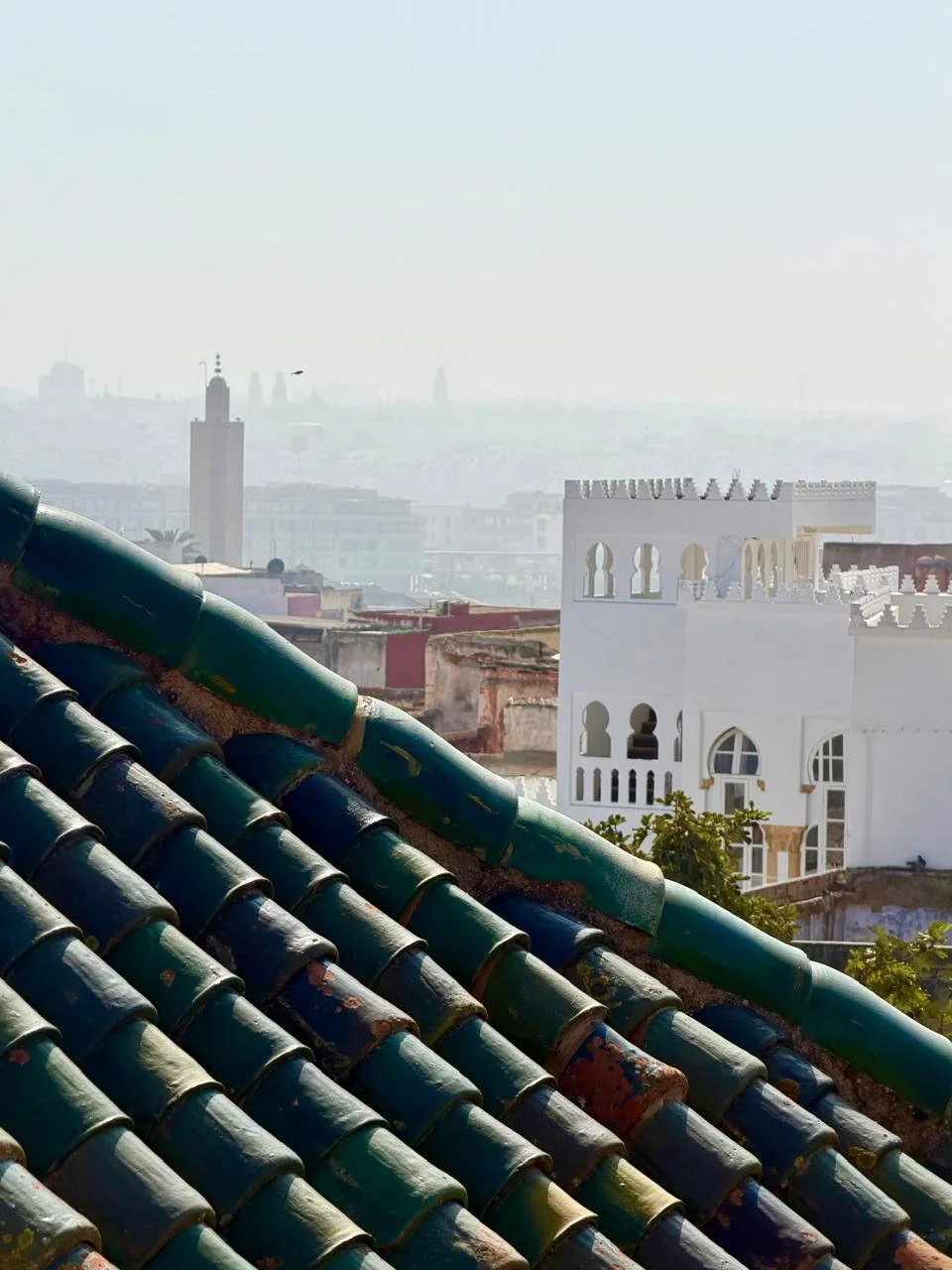
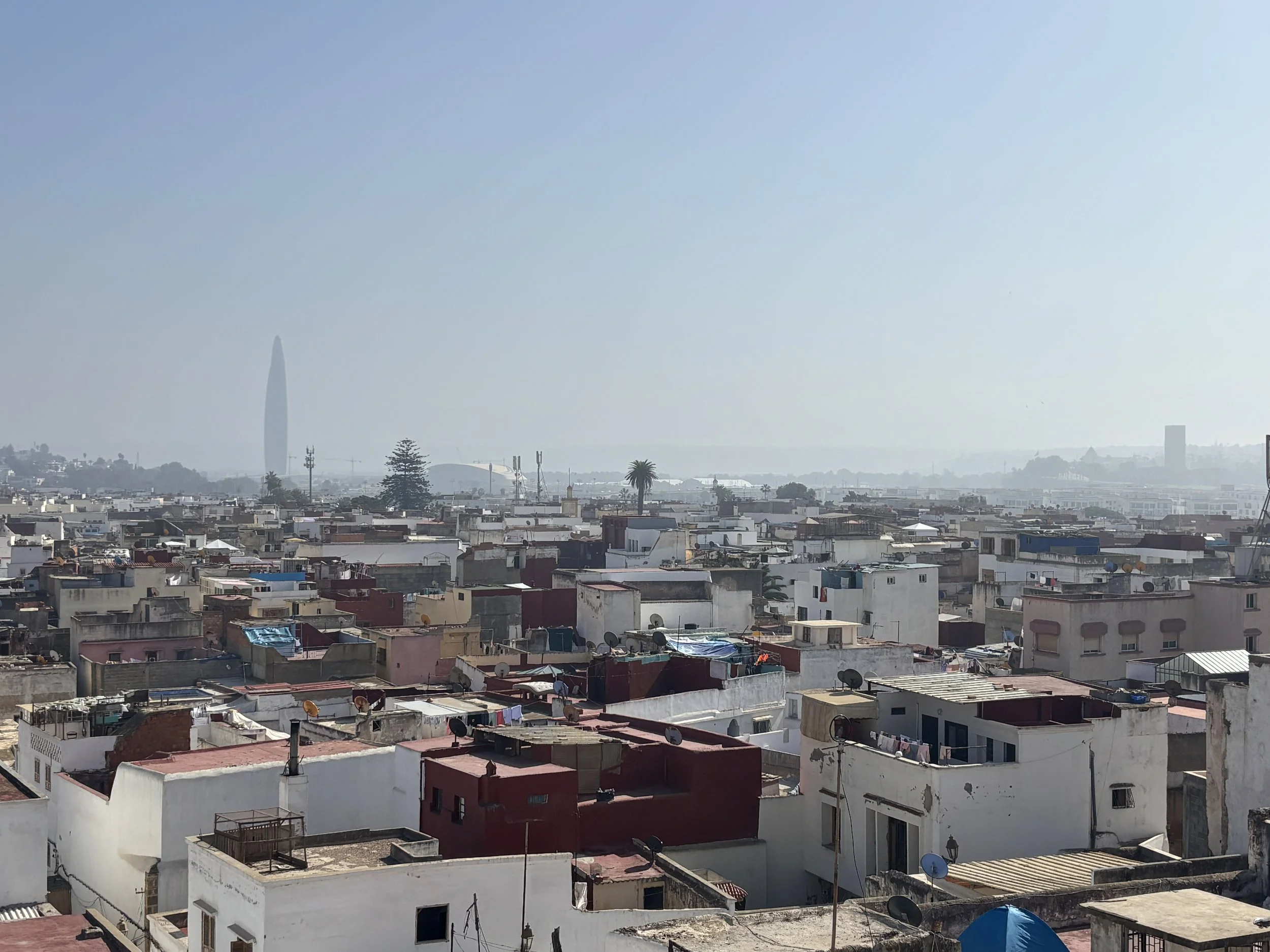
This Islamic school was established in the 14th C. by the Marinid distany, hence its name. It is not a huge building, but has a really nice central courtyard and a roof that offers what are possibly the best views of Salé.
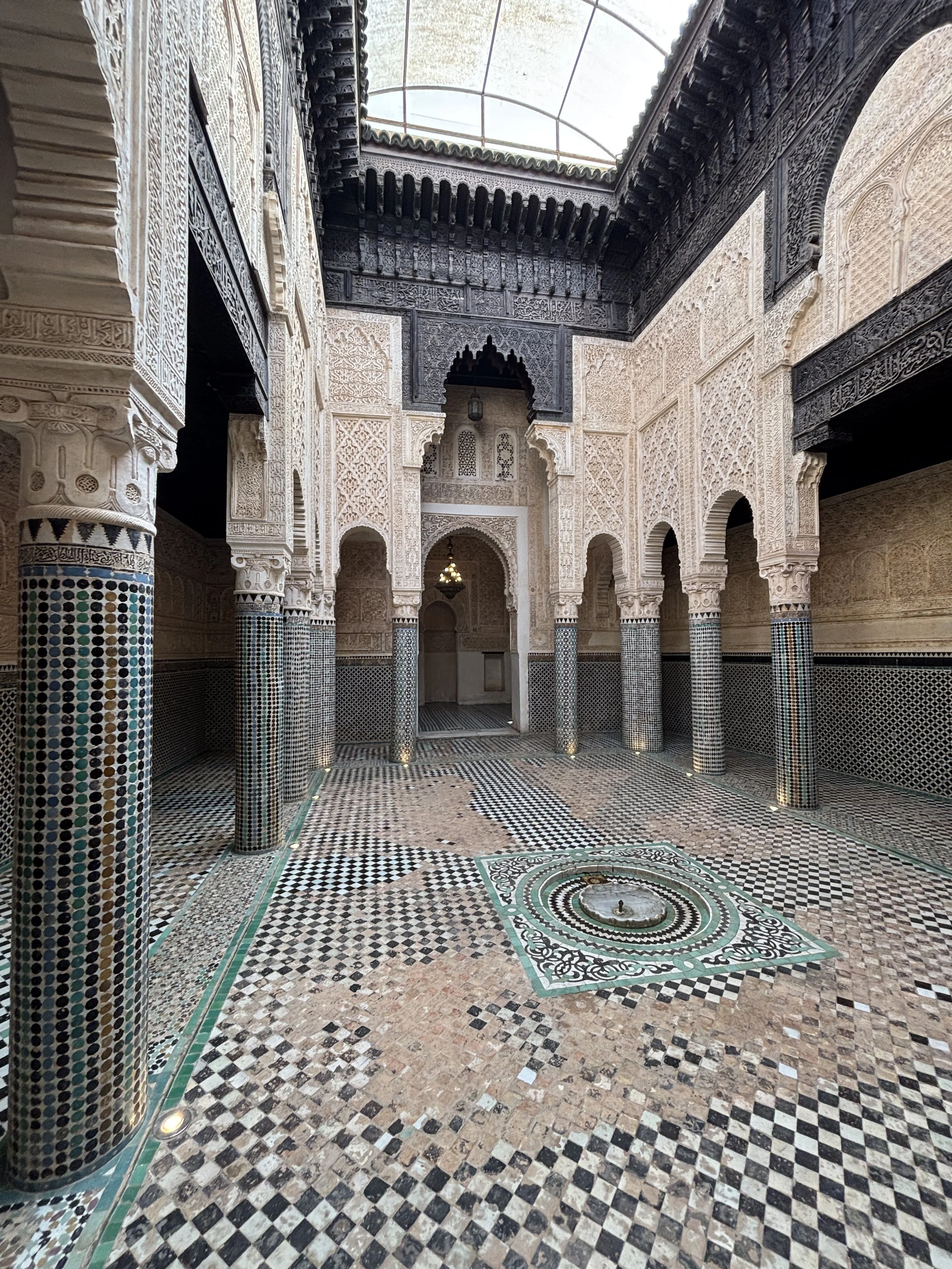
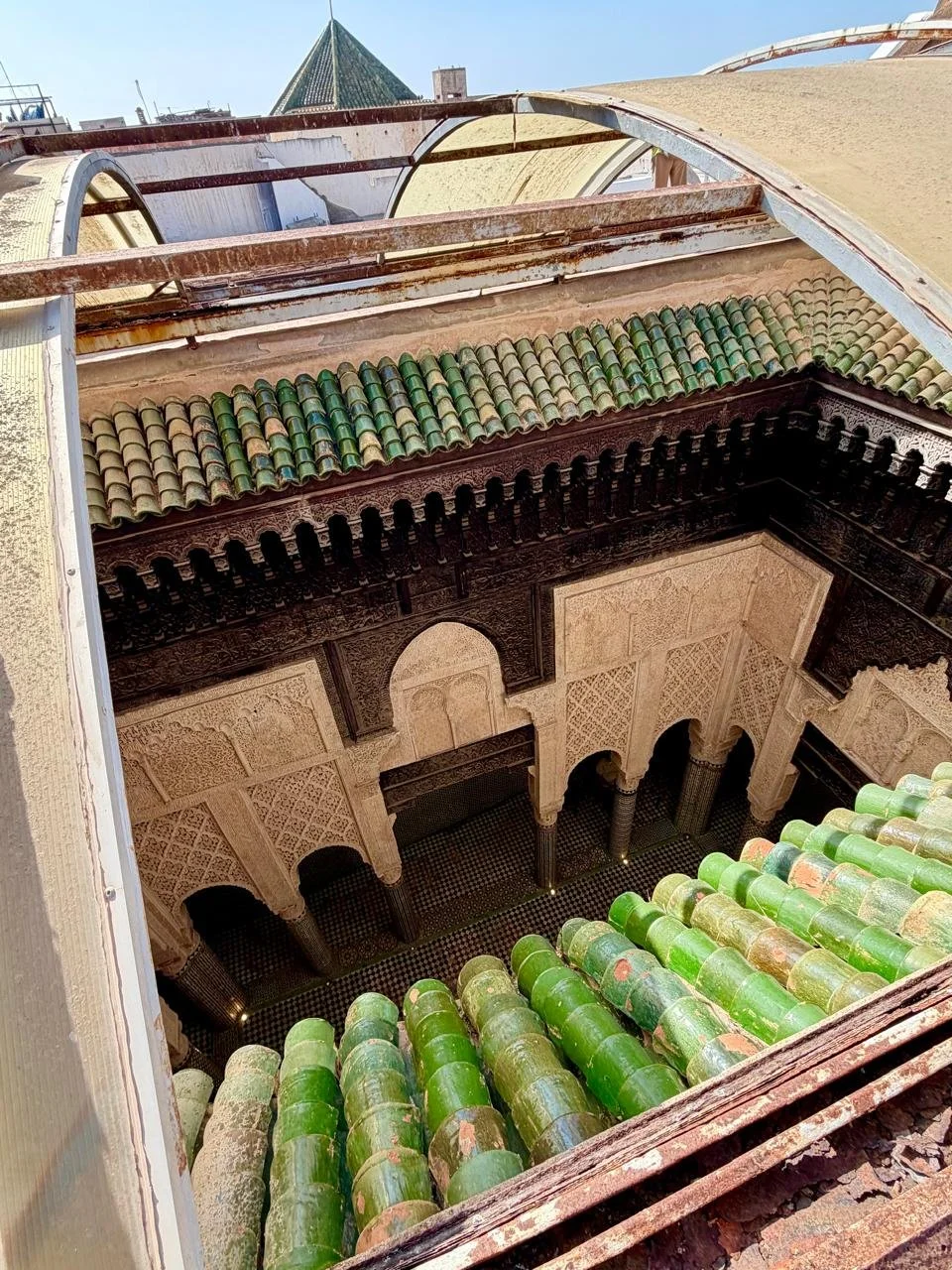
Along the way, through a narrow staircase, you can also see the former students’ rooms. From the roof you can also get a glimpse of the central courtyard from above. When walking around the rooftop, though, you must be careful, since there are some beams, strewn around and there seems to be few protective elements along the edges of the gallery.
Btw, the Medersa Merinide has an entry fee of around €7.5/$8
Crossing the river from Salé to Rabat
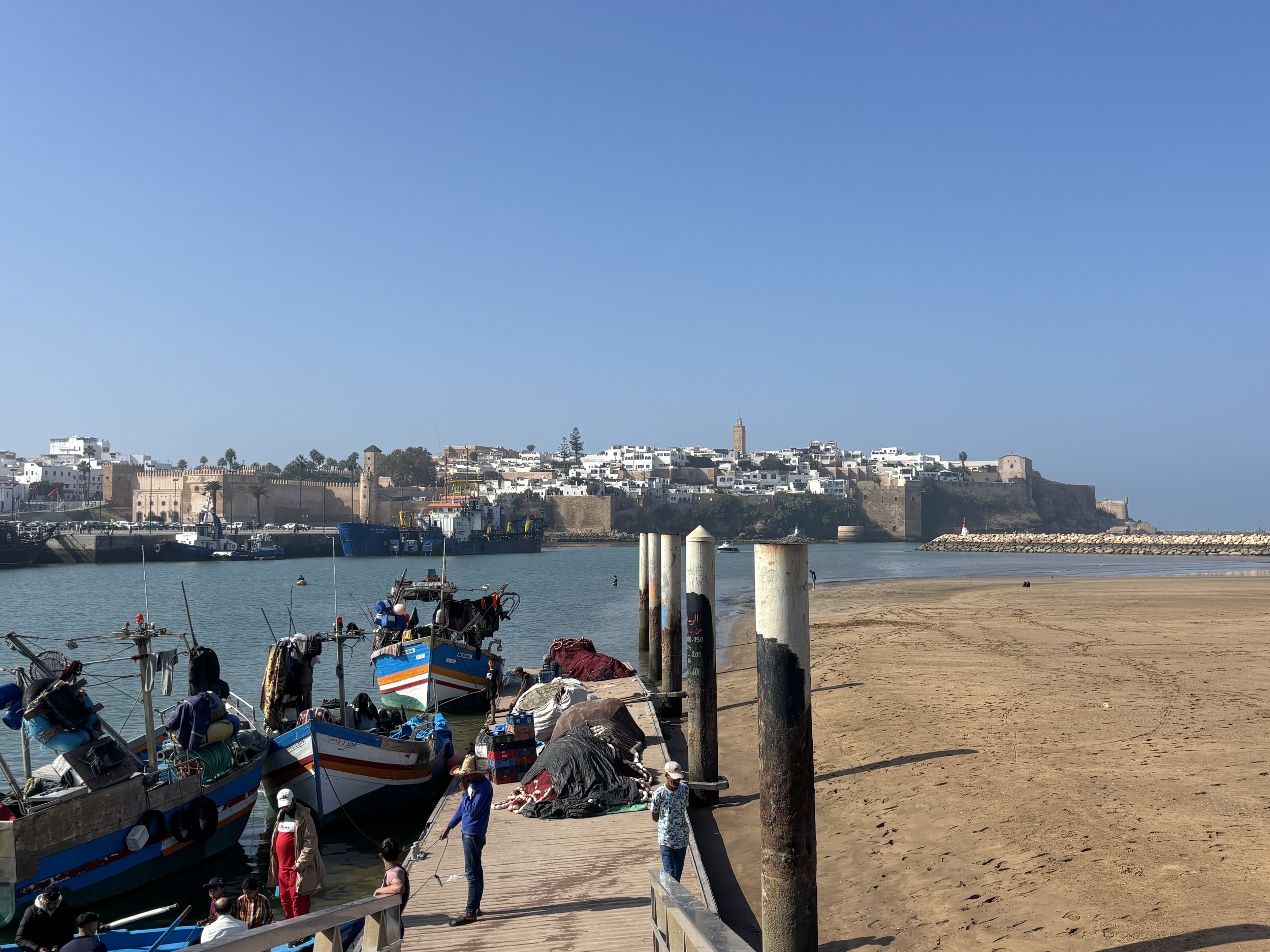
But perhaps the best reason to go to Salé is the chance of enjoying a truly genuine experience: crossing the Bou Regreg river on a rowing boat.
It looks like the Salé riverfront has significant potential, unfortunately most of it is currently a bit difficult to reach on foot. There is a marina and a couple of jetties from where you can take the rowing boats, but the surrounding area is not particularly appealing. As mentioned earlier, you may want to consider taking an Uber to and from the river side.
To be fair, this may change in the near future, as there seems to be an effort to develop at least part of this riverside area with newly built commercial and residential real estate, including a Fairmont Resort, as well as some promenades, although there is still quite some way to go.
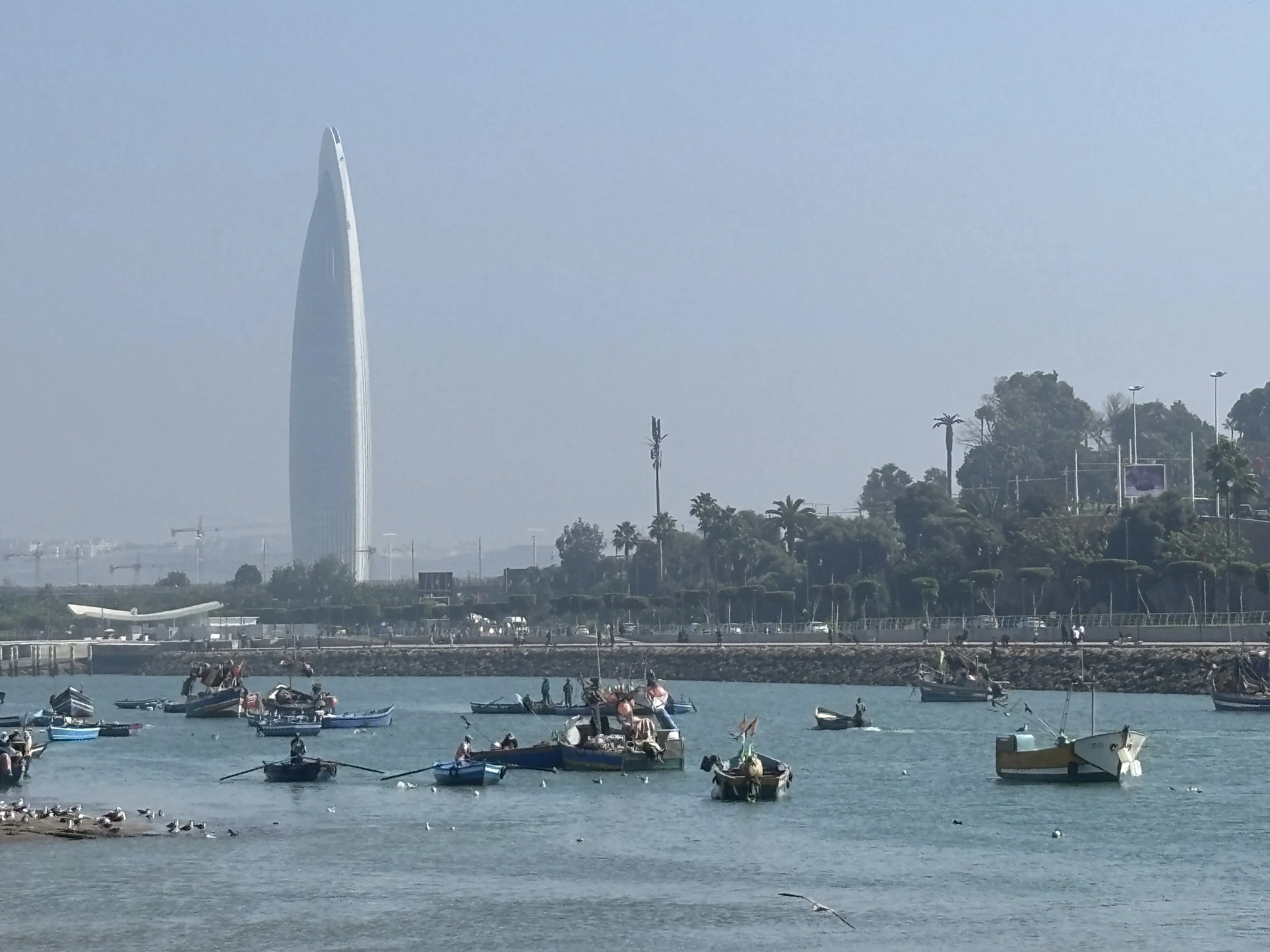
So, how to cross the Bou Regreg river? Just head to one of the jetties on the Salé side (or alternatively on the Rabat corniche just below the Kasbah) and jump onto one of the many rowing boats that cross the river continuously.
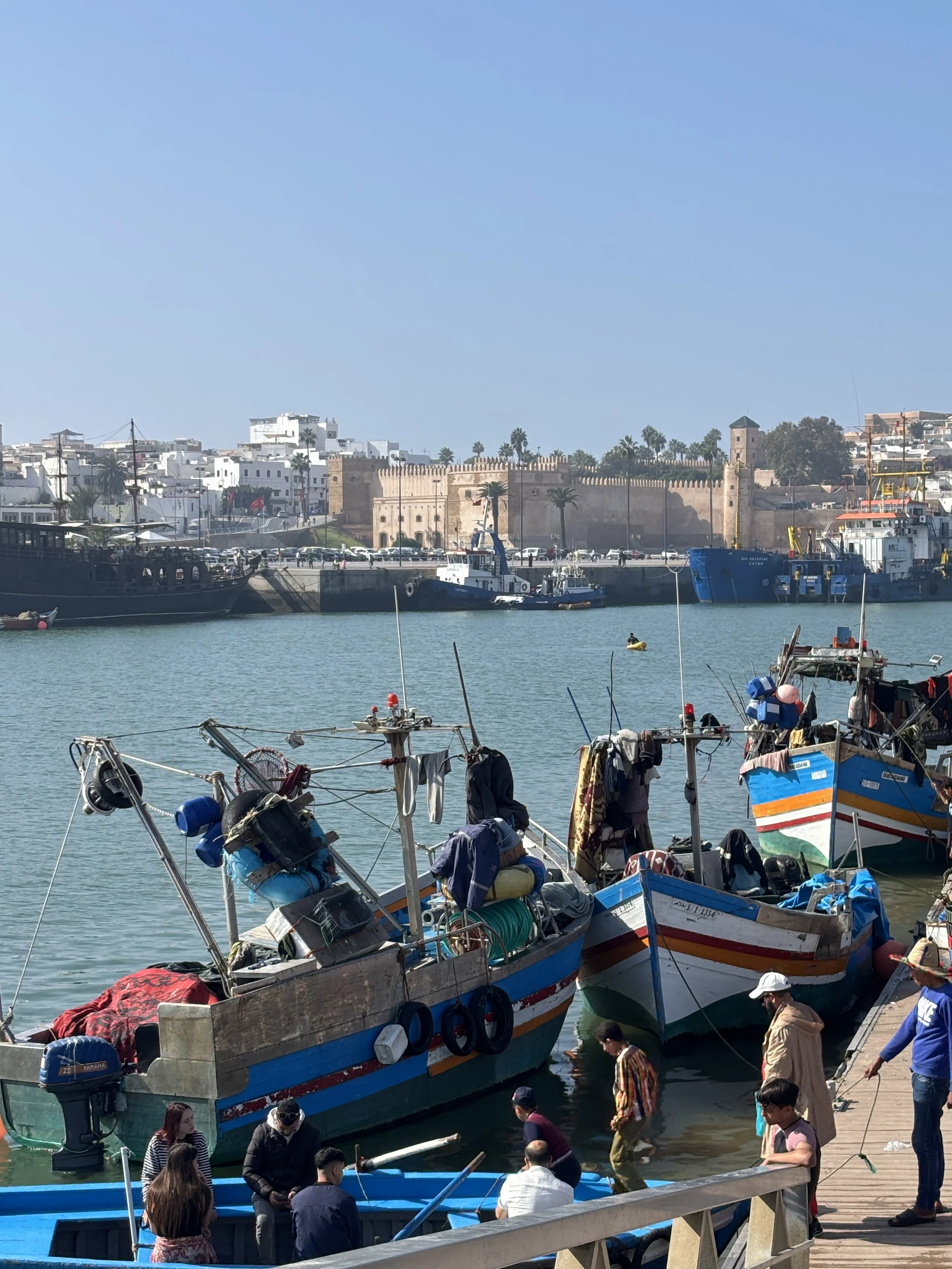
Each boat carries about a dozen people and it is led by a local skipper. The fee is 2.5 Dirhams per person per crossing (€0.2/$0.25), cash only, which you pay upon disembarking.
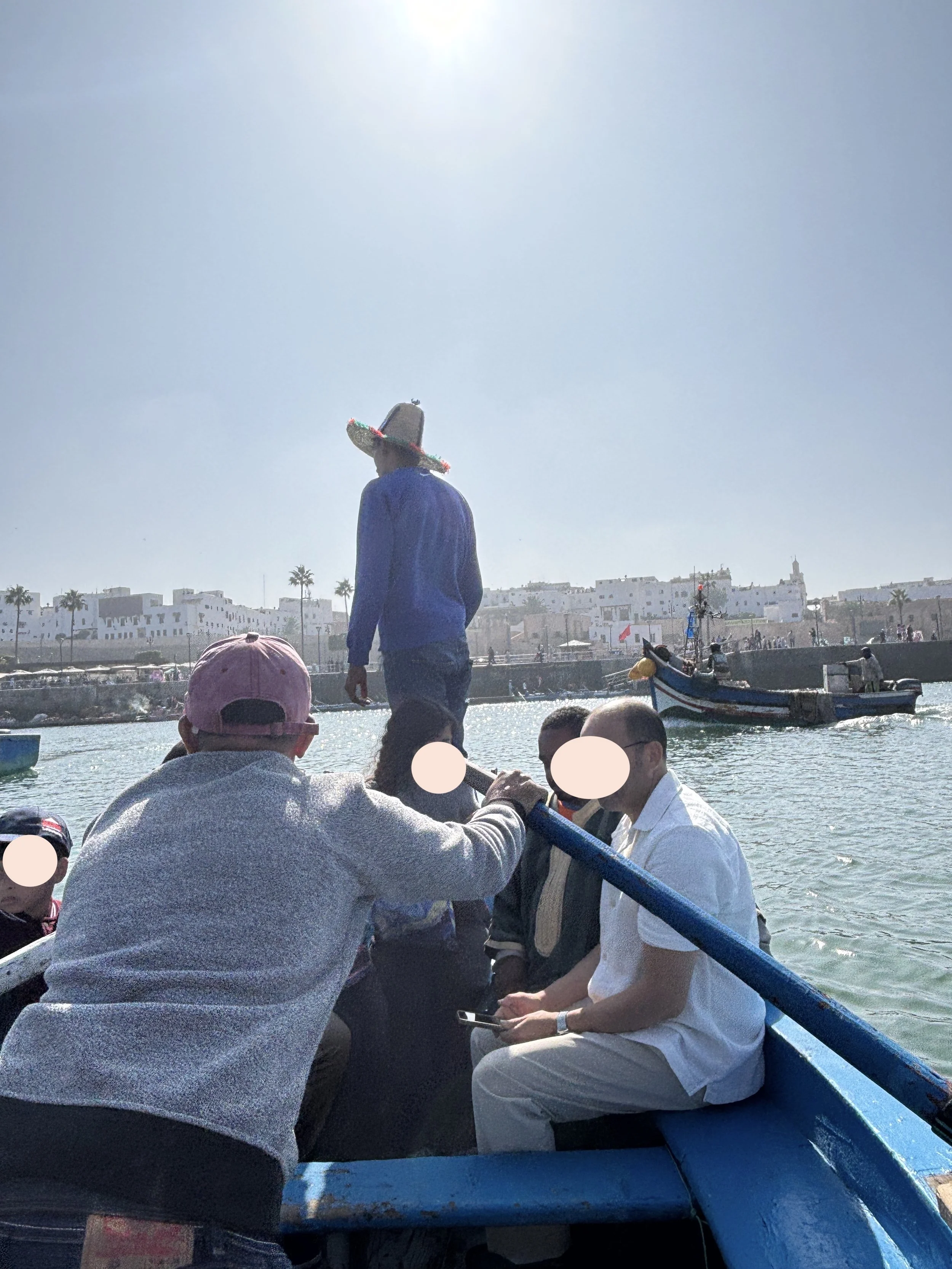
The crossing takes less than 5 minutes but the experience is really worth it, not just because it is fun, but also because it offers some of the best and most iconic perspectives of the city of Rabat.
Visiting the archaeological site of Chellah
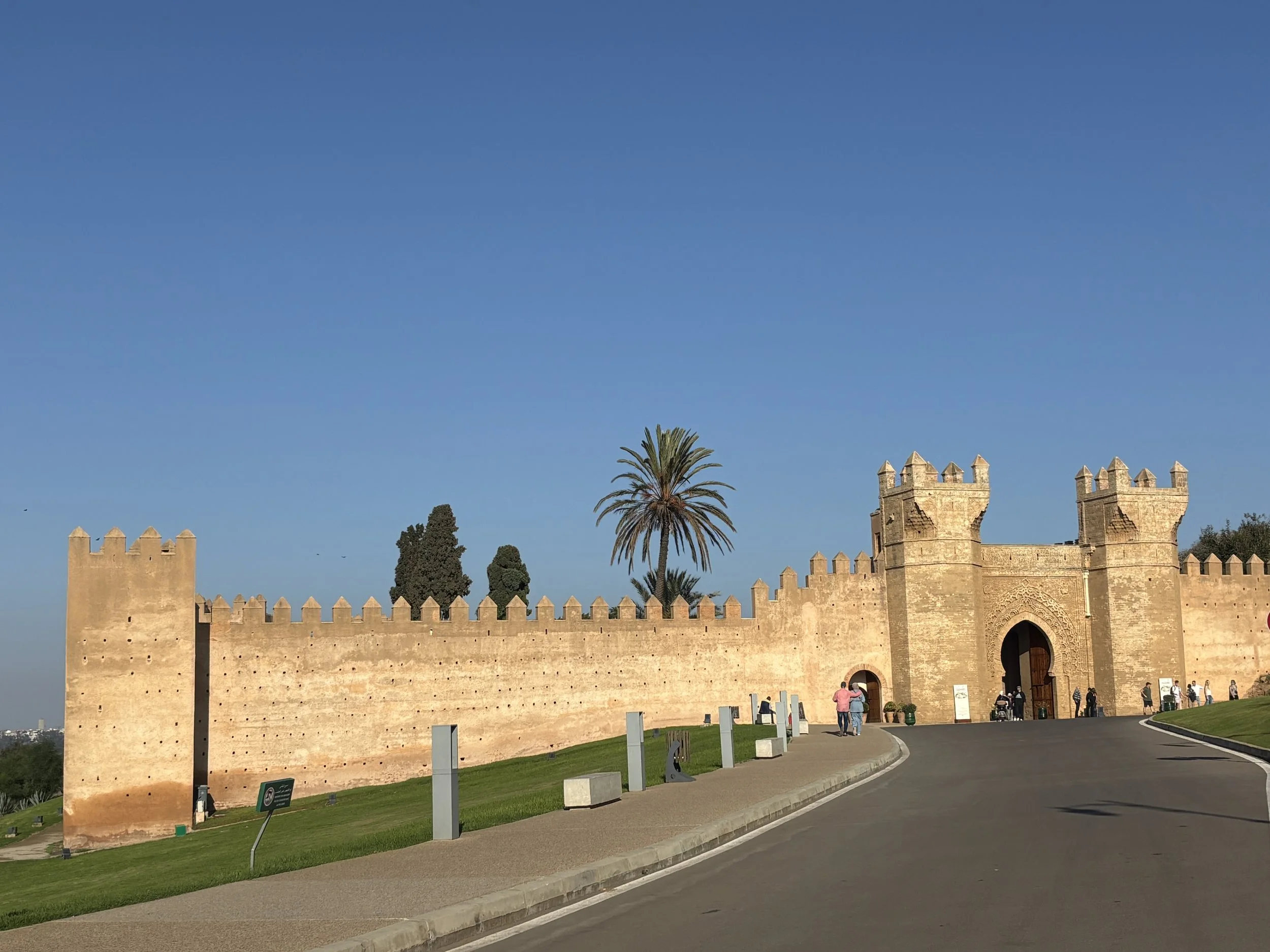
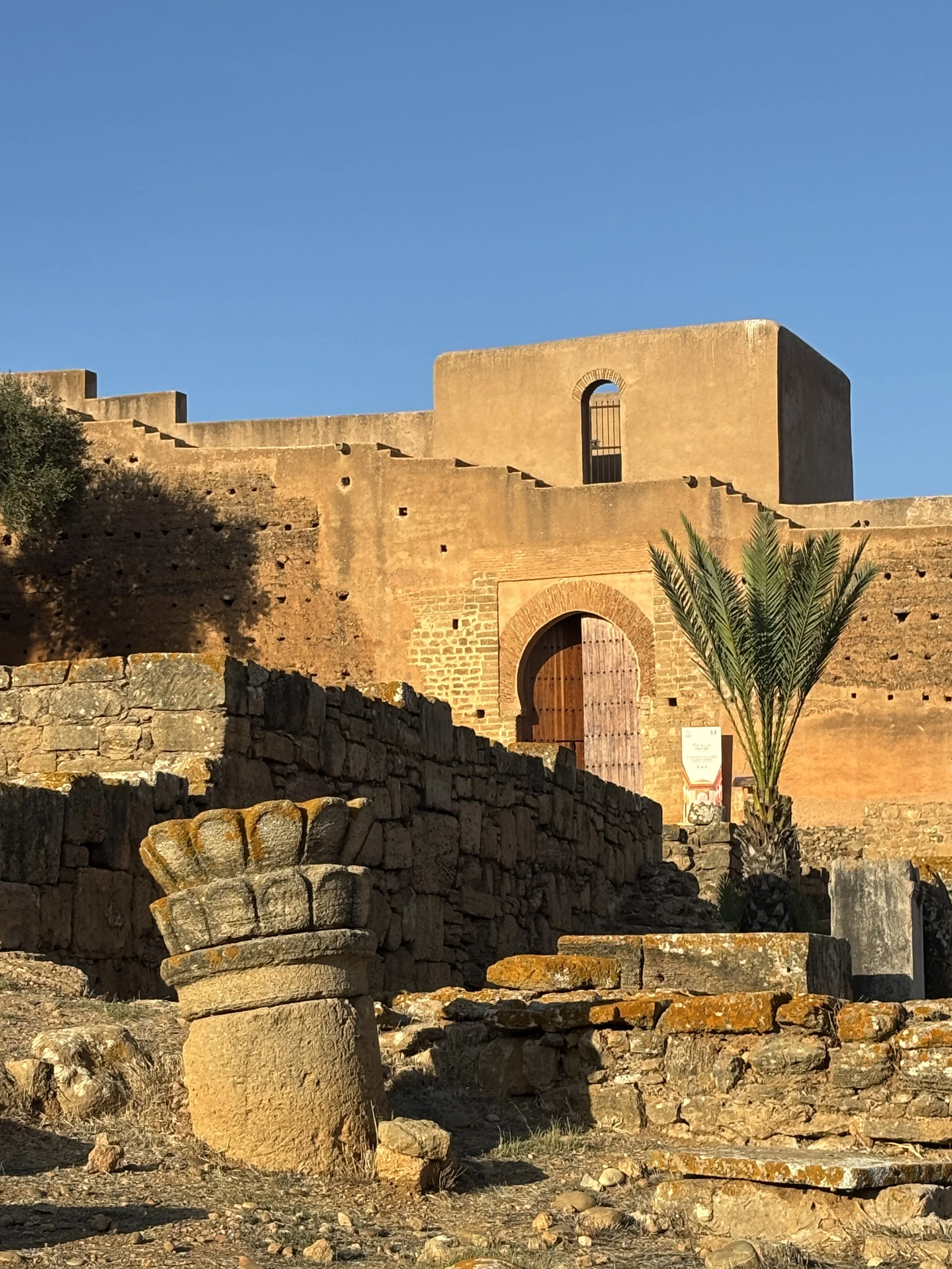
Chellah is yet another must-see in Rabat. This is a place that leaves a lasting impression because of its rare blend of aesthetic and historical qualities. It is a multi-layered archaeological site with elements ranging from the pre-Roman and Roman times, when it was a thriving city, to the Middle Ages in which it became an Islamic religious centre and royal burial site, all contained within a set of imposing walls and a lush garden setting overlooking the Bou Regreg river.
The archaeological site of Chellah lies just outside the old city walls, and an Uber will get you there from downtown in about five minutes.
The entrance fee is 70 Dirhams or 120 Dirhams. with audioguide included (which I recommend to best understand the site), that is around €7 and €12 respectively (and a similar figure in $).
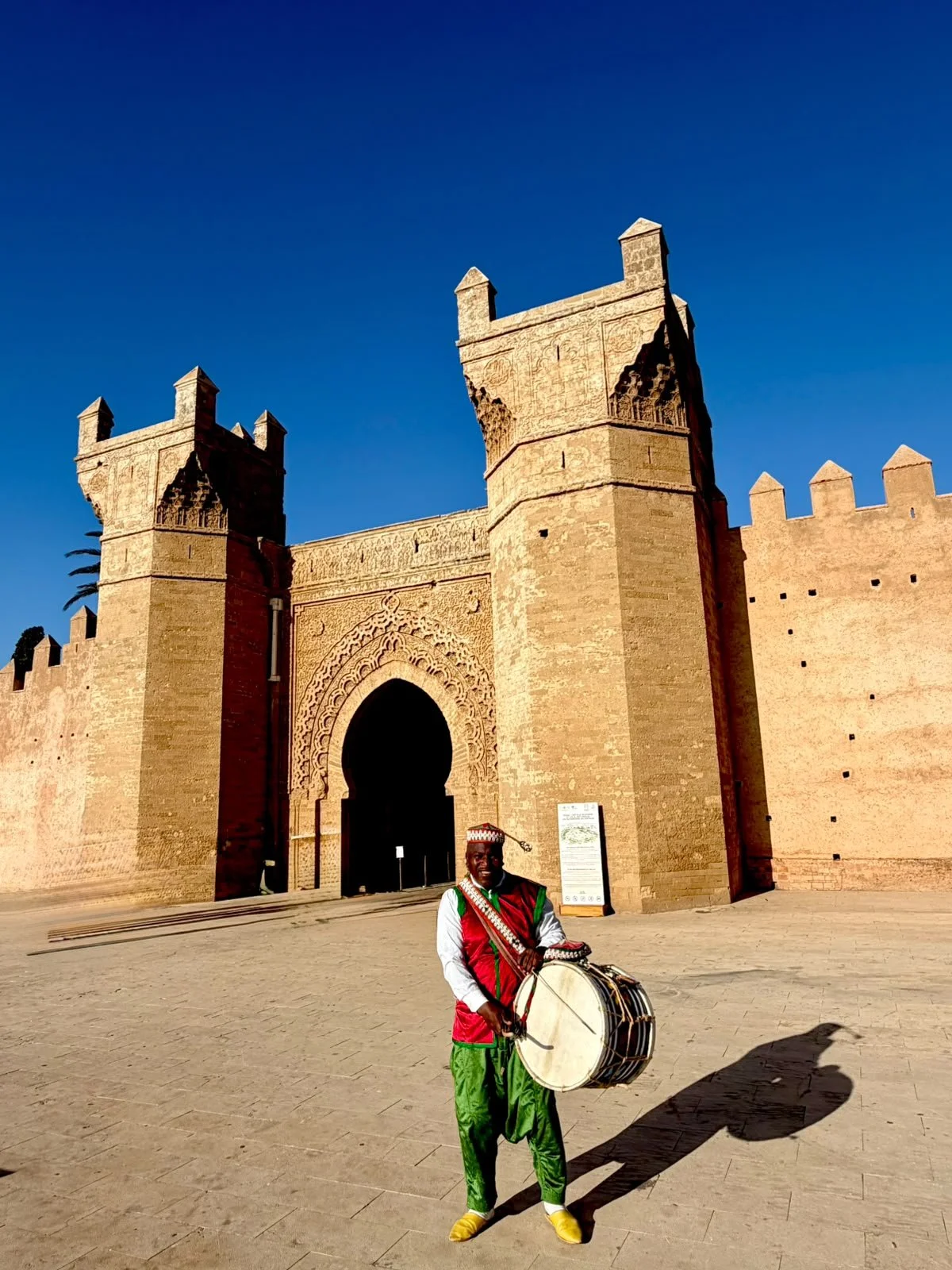
Don’t think, however, that you come to Chellah simply to see old stones. There are so many interesting unique details that they are hard to convey in full, in great part because they all work well together.
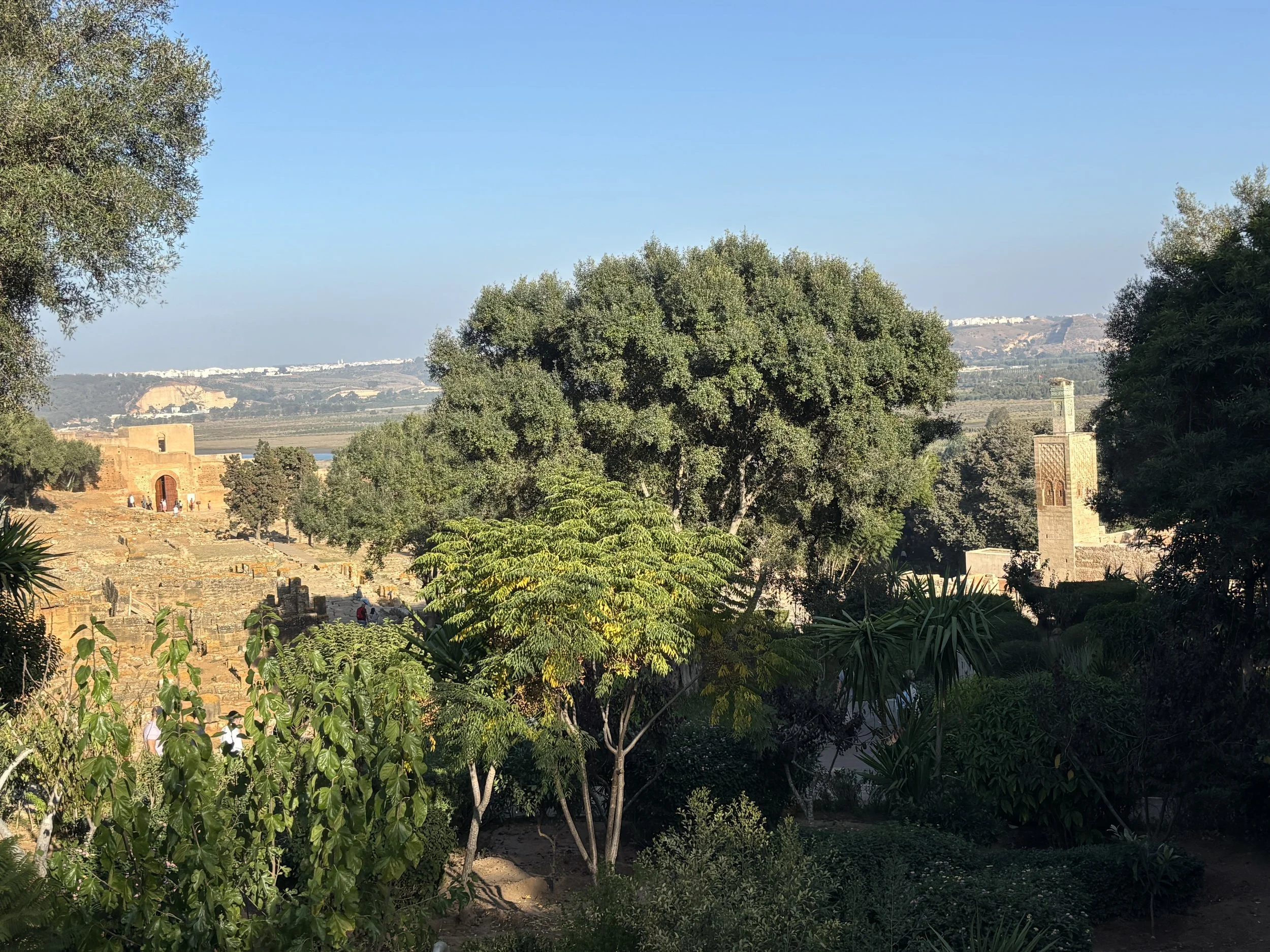
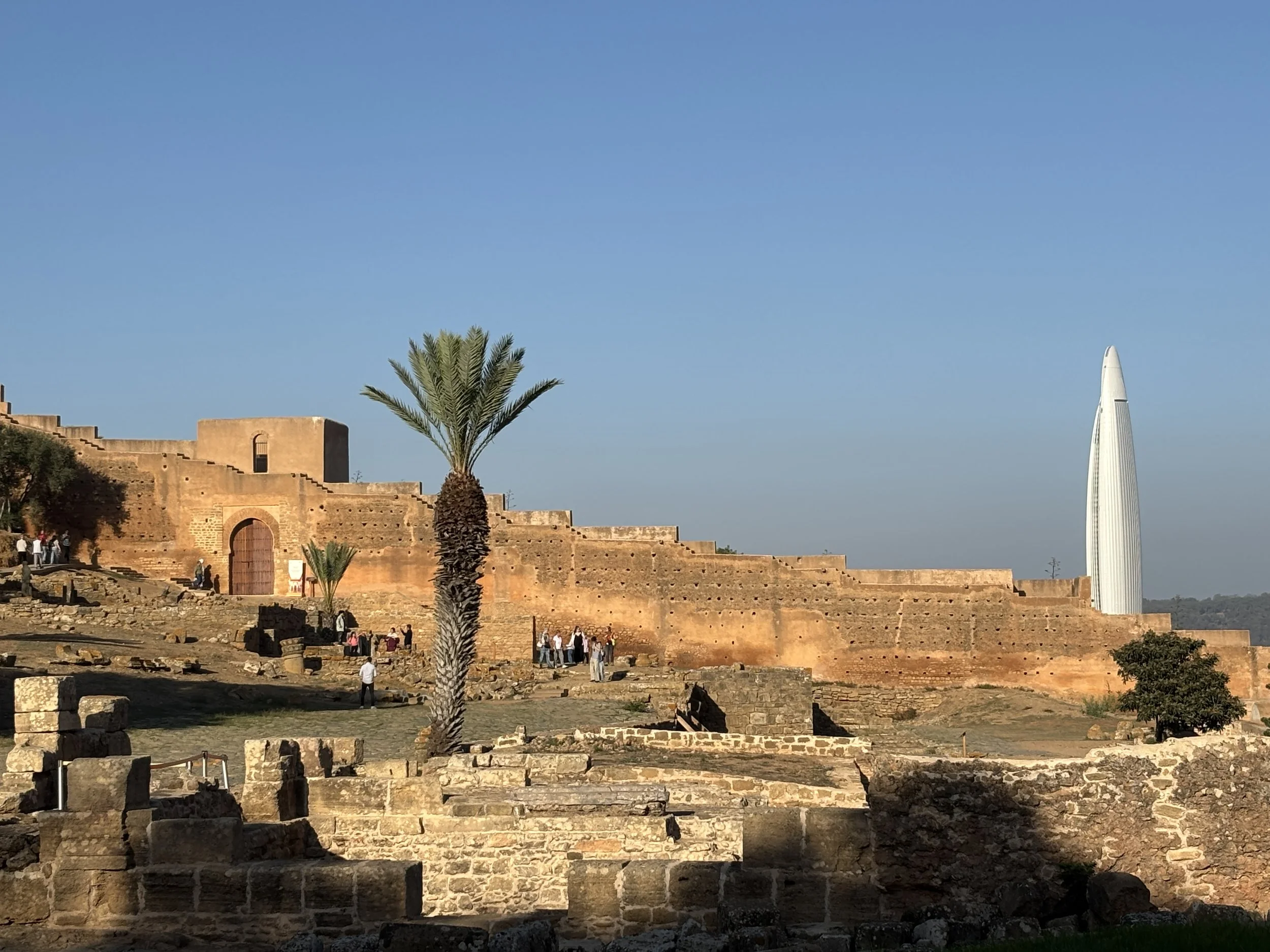
The Mohammed V Tower makes also an appearance here. In my opinion, the contrast between the Ancient battered ruins and the sharp lines of the modern skyscraper make a truly awesome sight!
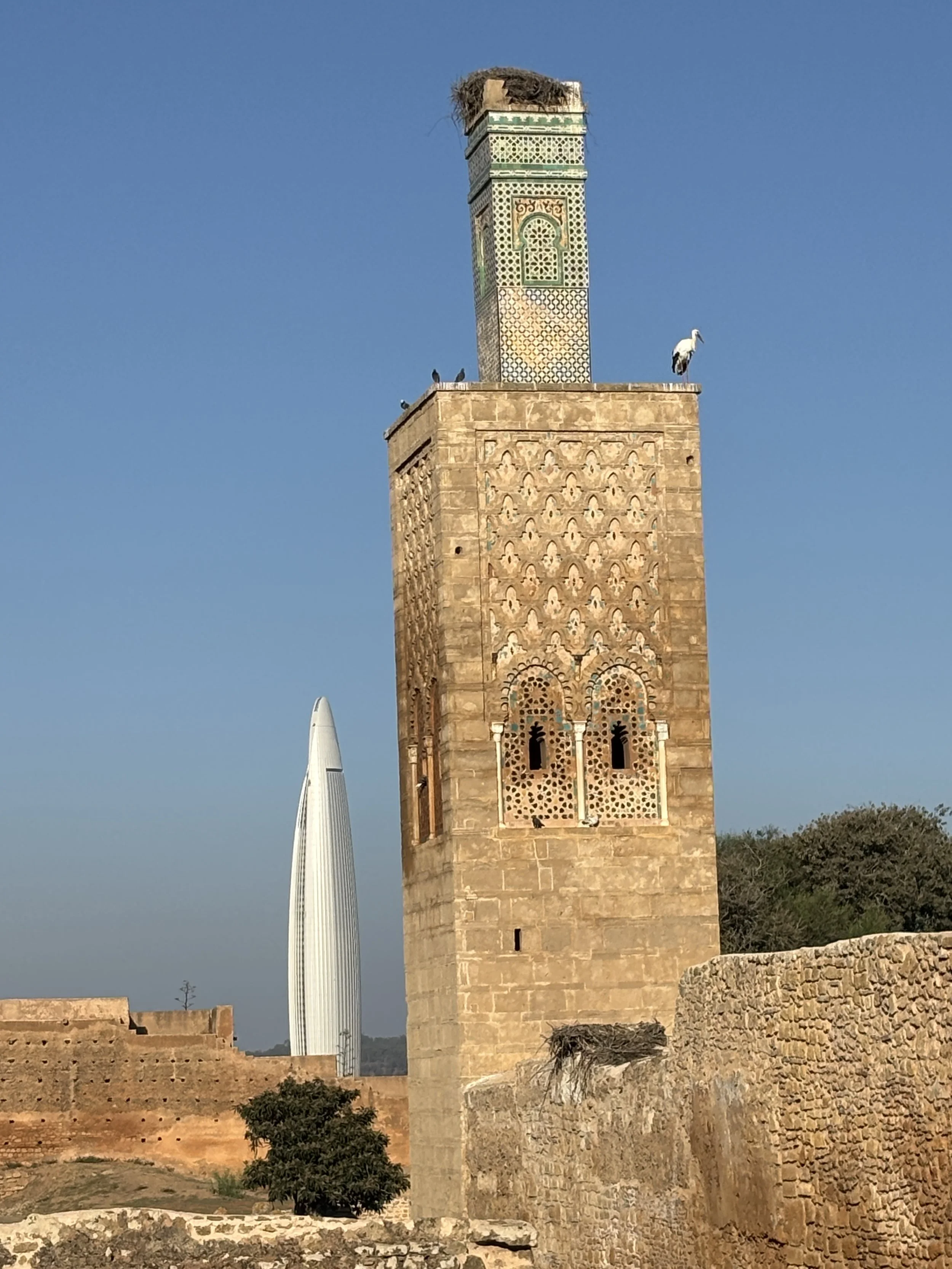
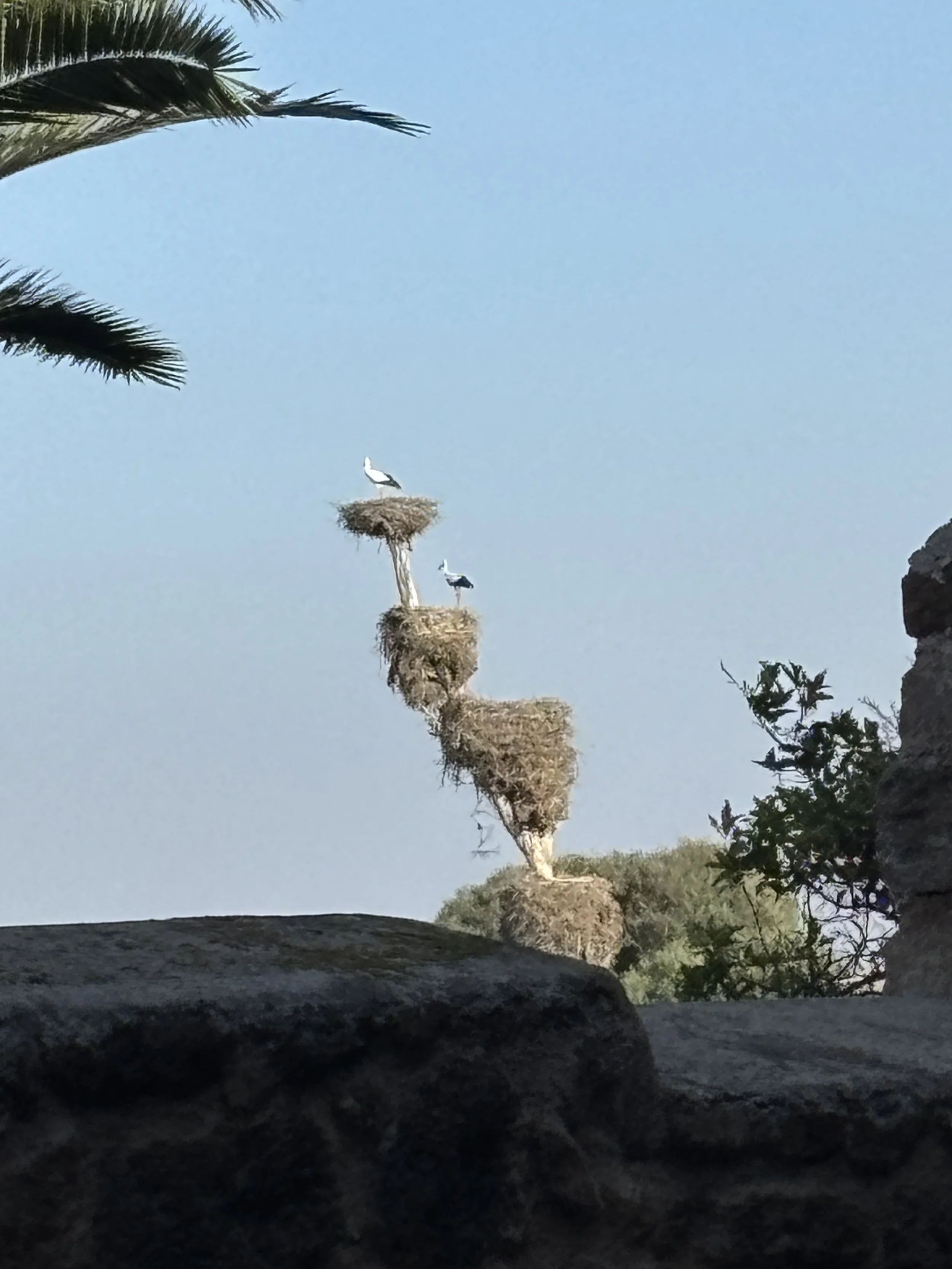
And nothing exemplifies Chellah’s perfect blend with its surrounding natural environment than the colony of storks that call it home. There are around 70 of these majestic birds spending part of the year here (they migrate northwards in the summer) and you can find them all around.
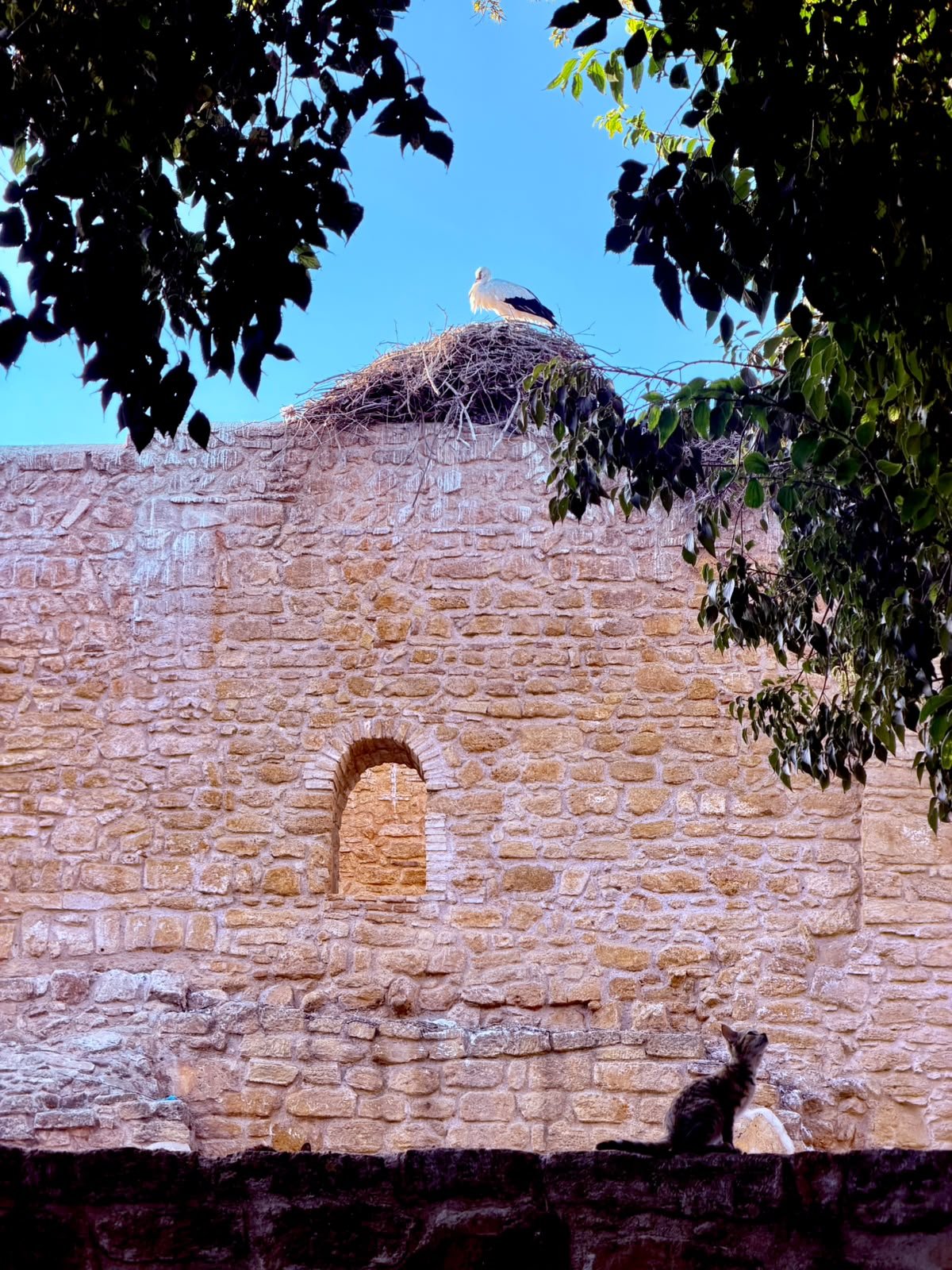
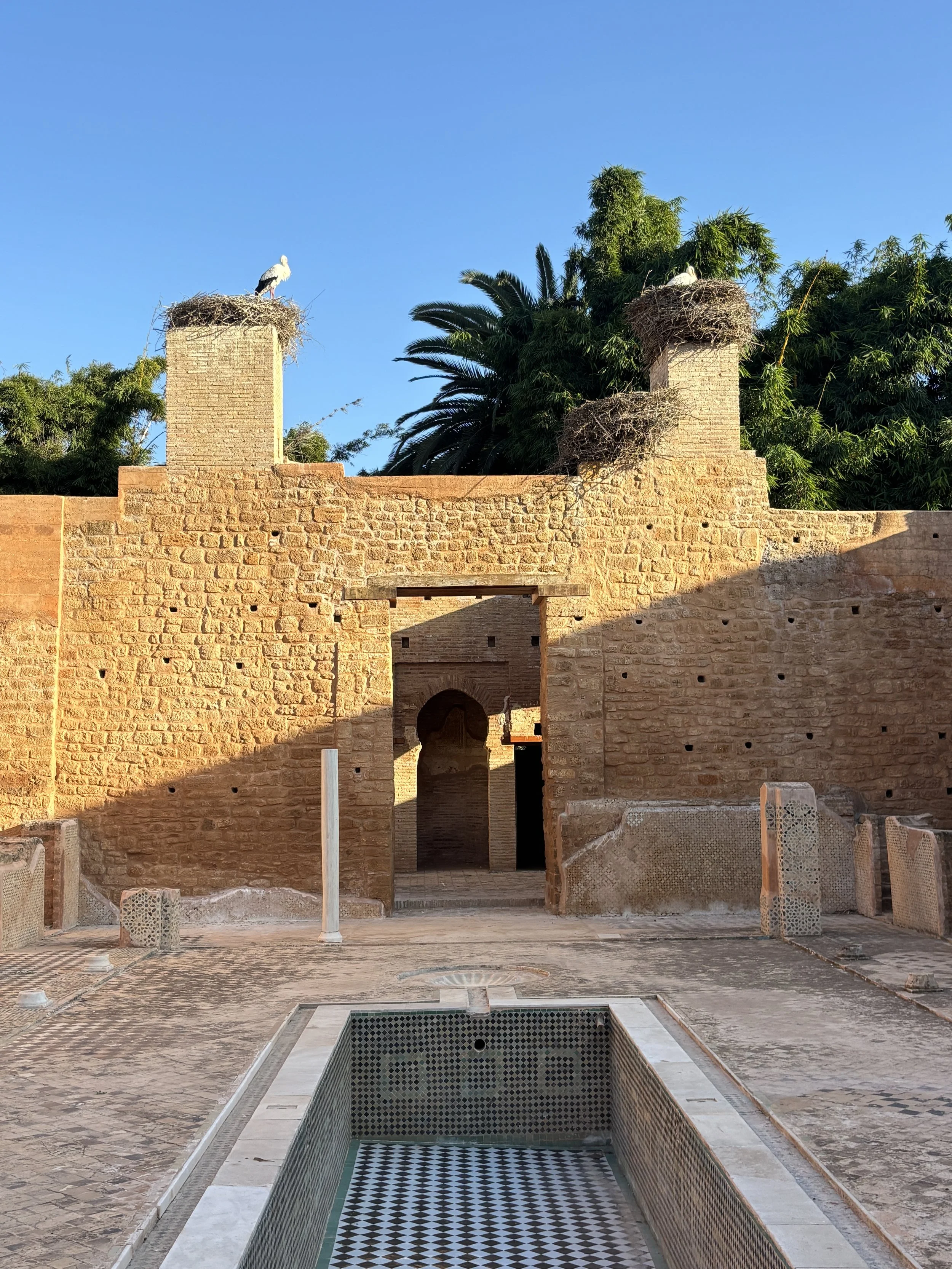
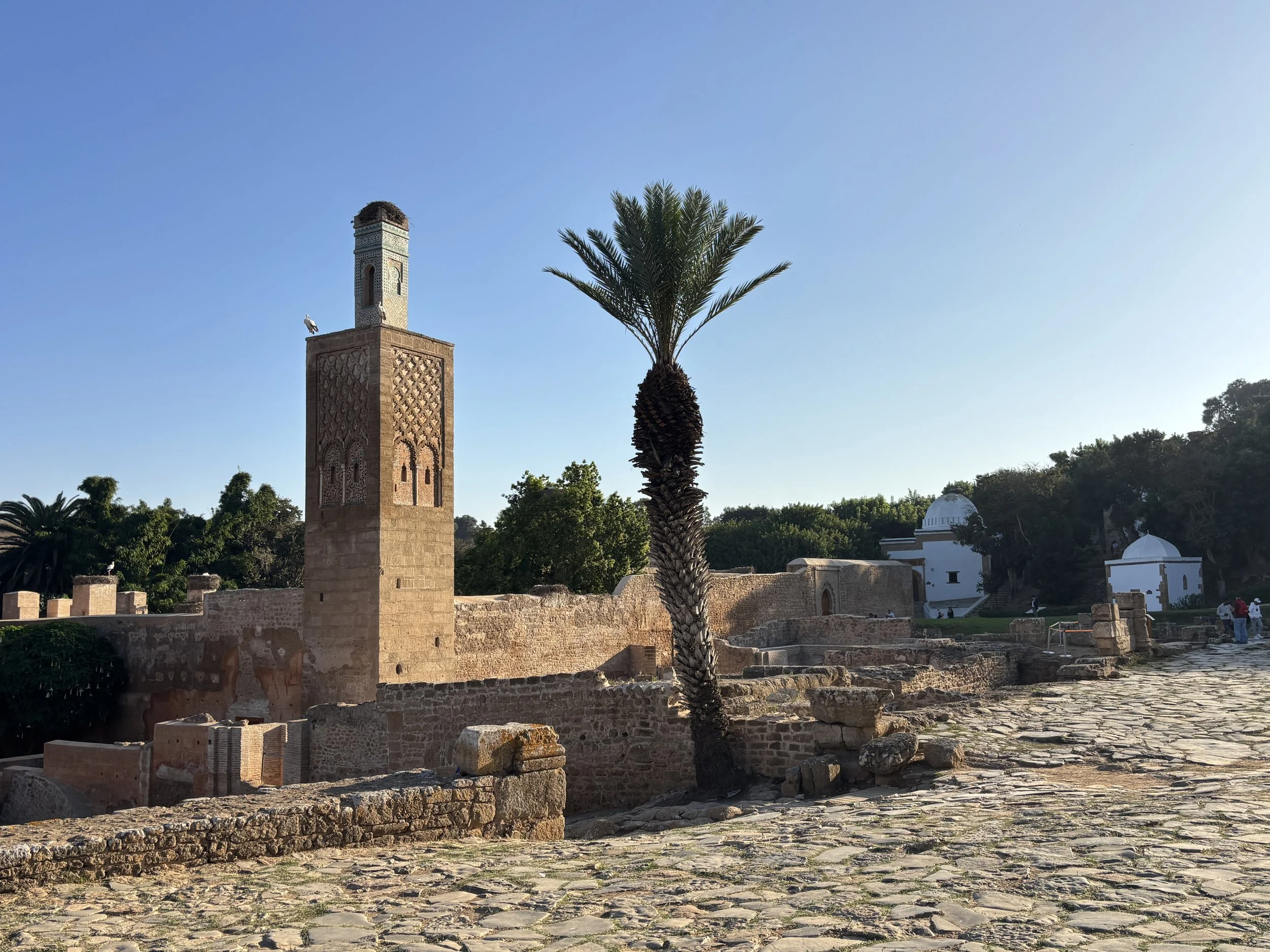
There have been archaeological excavations at Chellah since the 1920s, and they are still ongoing with a renewed effort ongoing since 2023 aiming to establish the full extent of the Ancient Roman city beyond the perimeter of the Marinid walls.
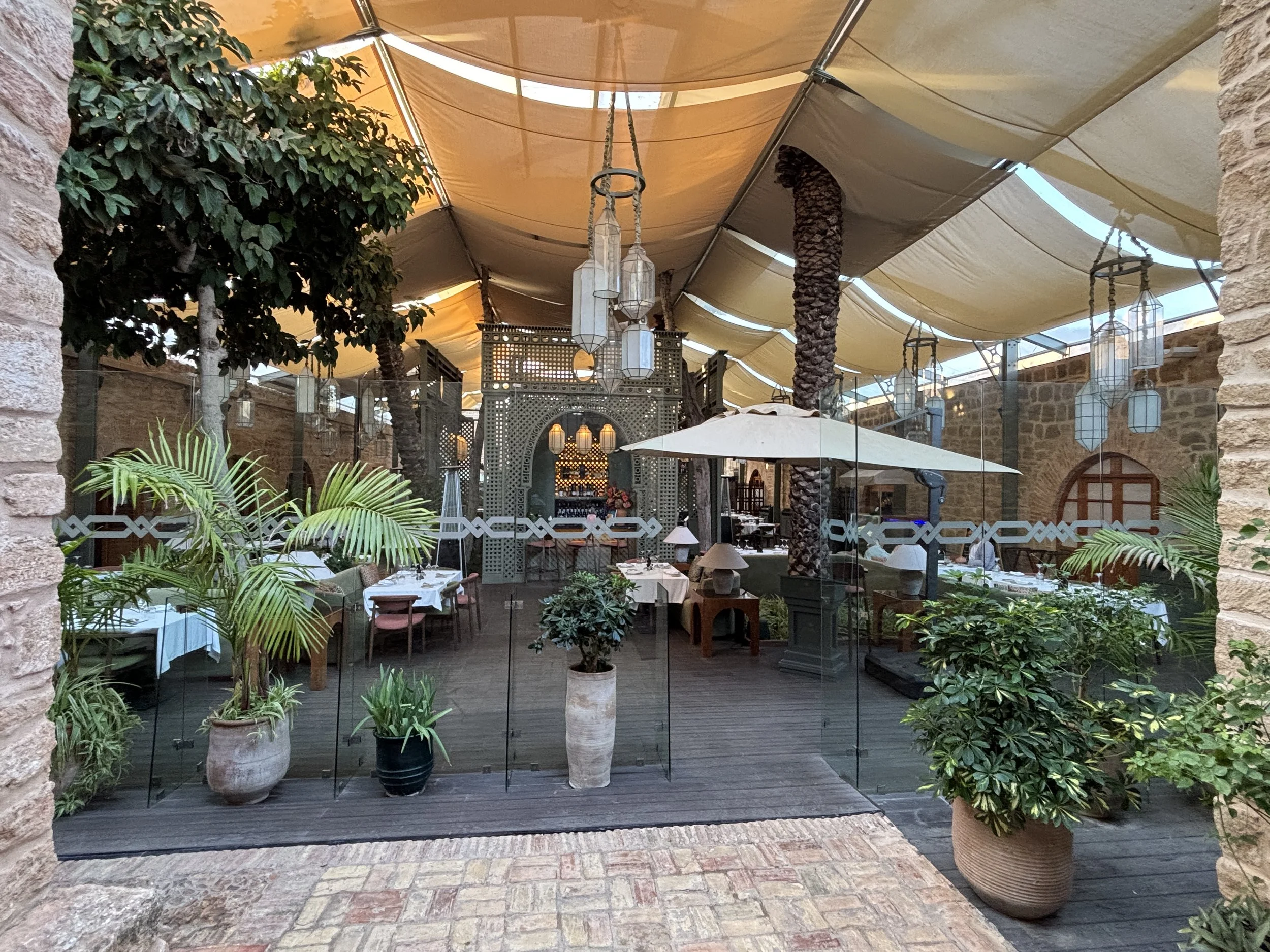
By the way, there’s also a pleasant restaurant and café at the Chellah, Le Patio, which serves Mediterranean cuisine. I didn’t have time to try it myself, but it looked like the perfect spot to linger a bit after the visit.
Recommended places to eat Moroccan food in Rabat
This is a section which may not do justice to the Rabat vibrant culinary scene. While planning this trip I came across quite a few places I would have loved to visit, but, unfortunately, some of them were either fully booked or closed to the public due to other commitments.
In any case, since this post is about 48 hours in Rabat, there are only so many places you can eat at. The ones I present here were all nice in their own way and I think all offer some great value options to try Moroccan specialities.
Restaurant Dar Al Arsa
Dar El aarssa, 12 Av. Hassan II, Rabat
This is a busy place located at a busy spot, on the edge of the Medina and right next to the central market. It is also mostly outdoors, next to a major thoroughfare, which adds to the sense of buzz.
And while this is not a super fancy restaurant in terms of poshness, I think it offers a nice introduction to some Moroccan specialities. The portions are big and the prices very reasonable.
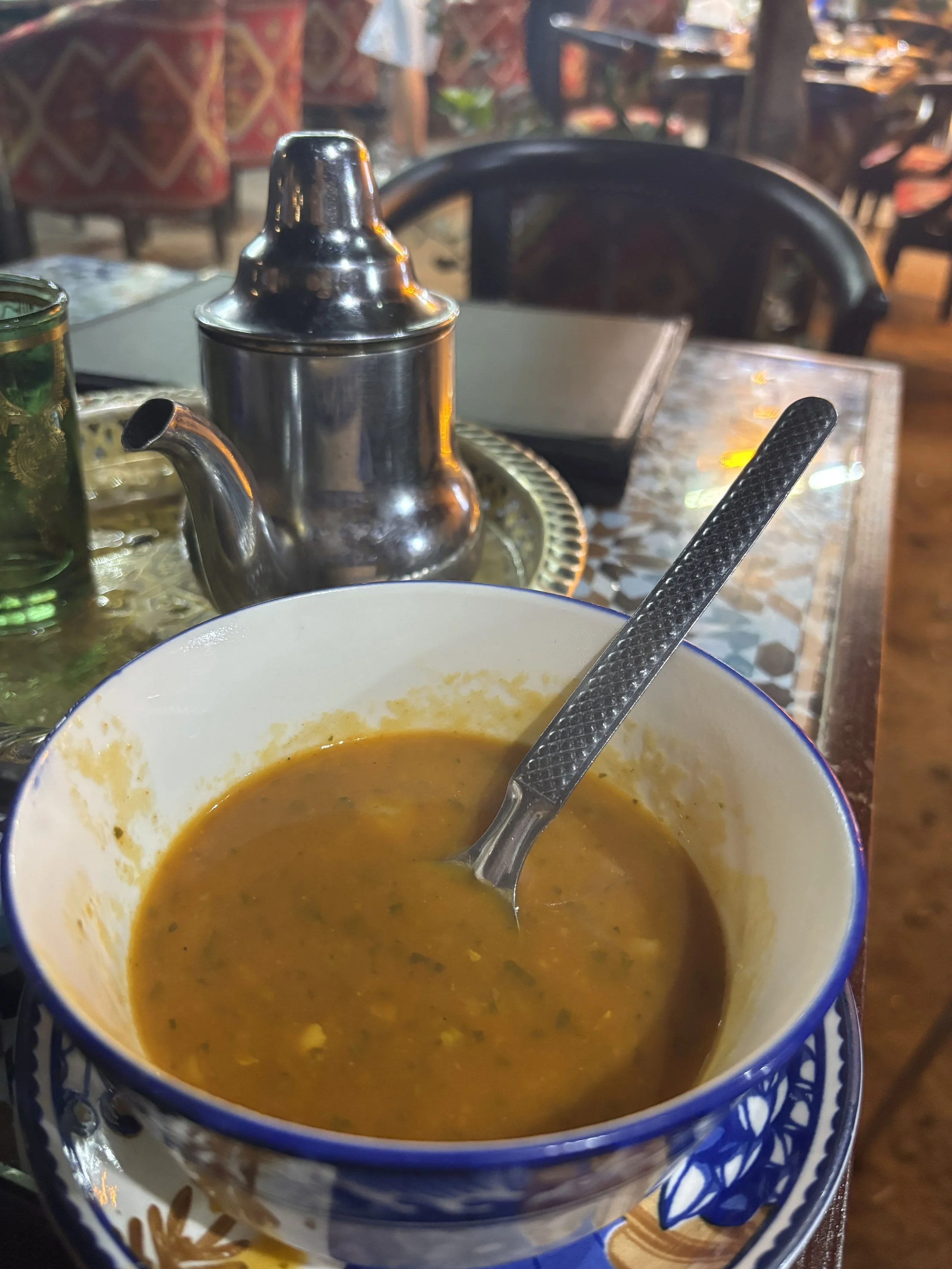
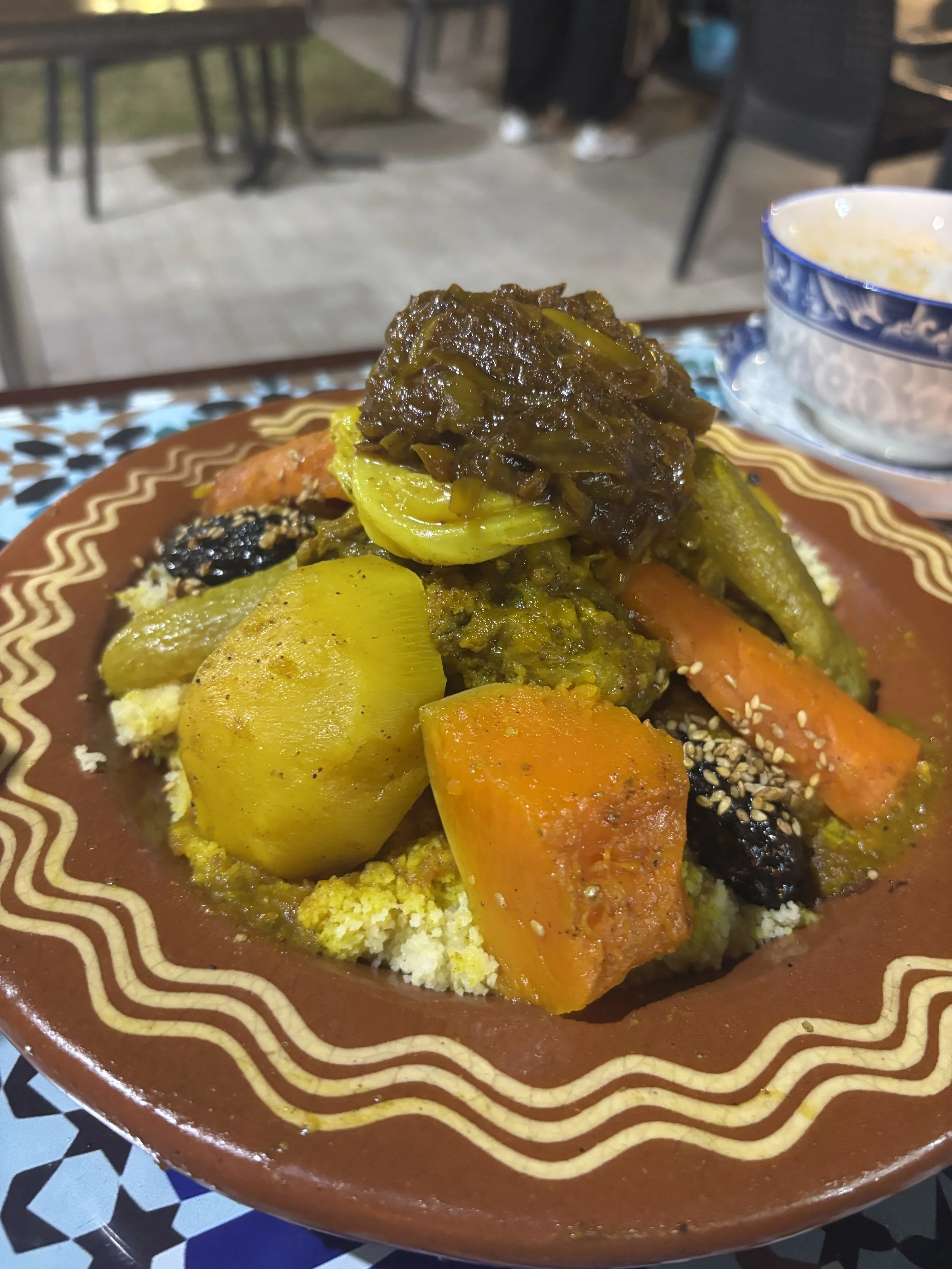
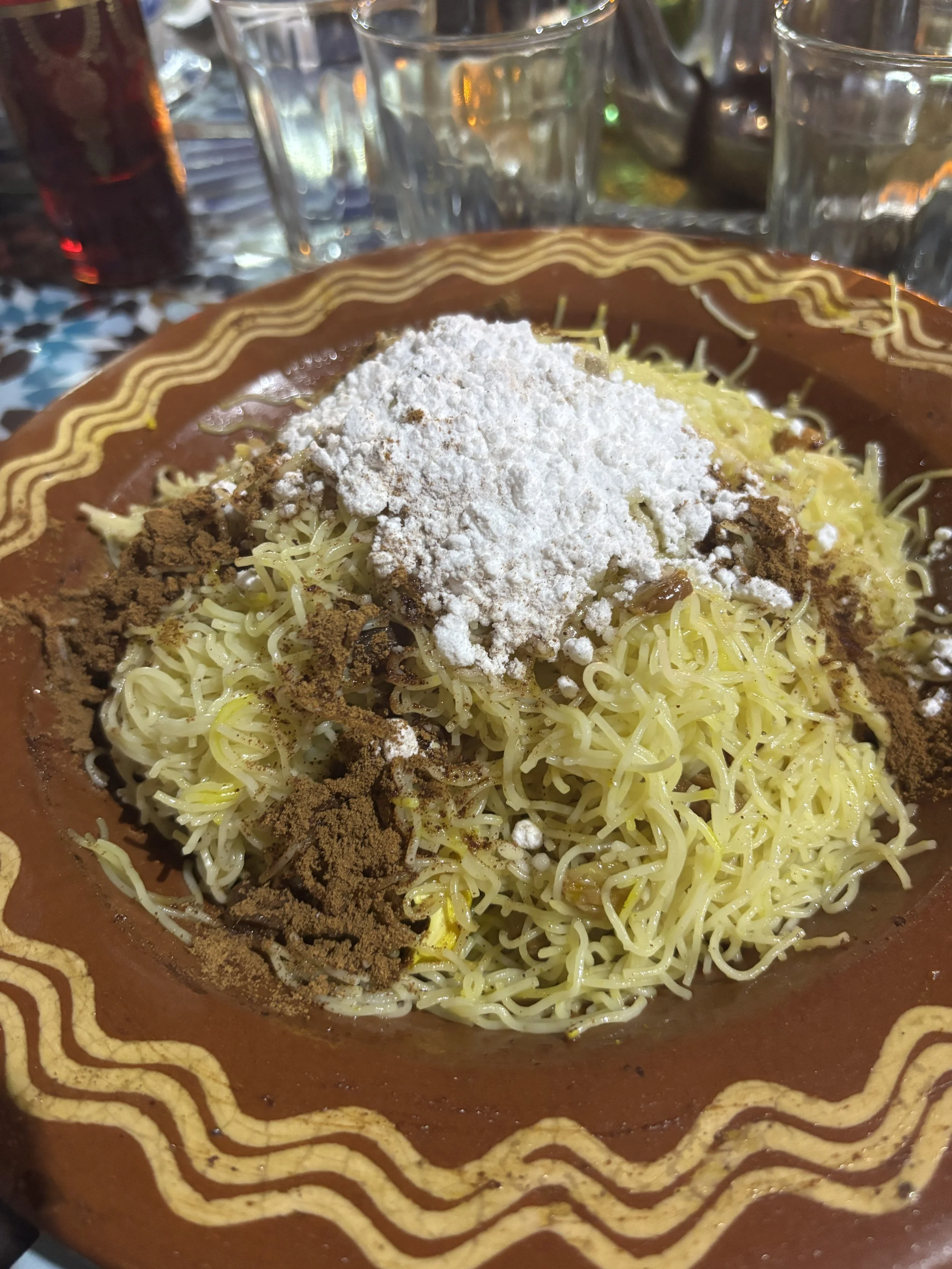
All orders are served accompanied by a complimentary lentils soup. We tried a Moroccan classic, the couscous, which you can see here above and a dish which is much harder to find outside Morocco: seffa (pictured below), which is the couscous’ sweet relative.
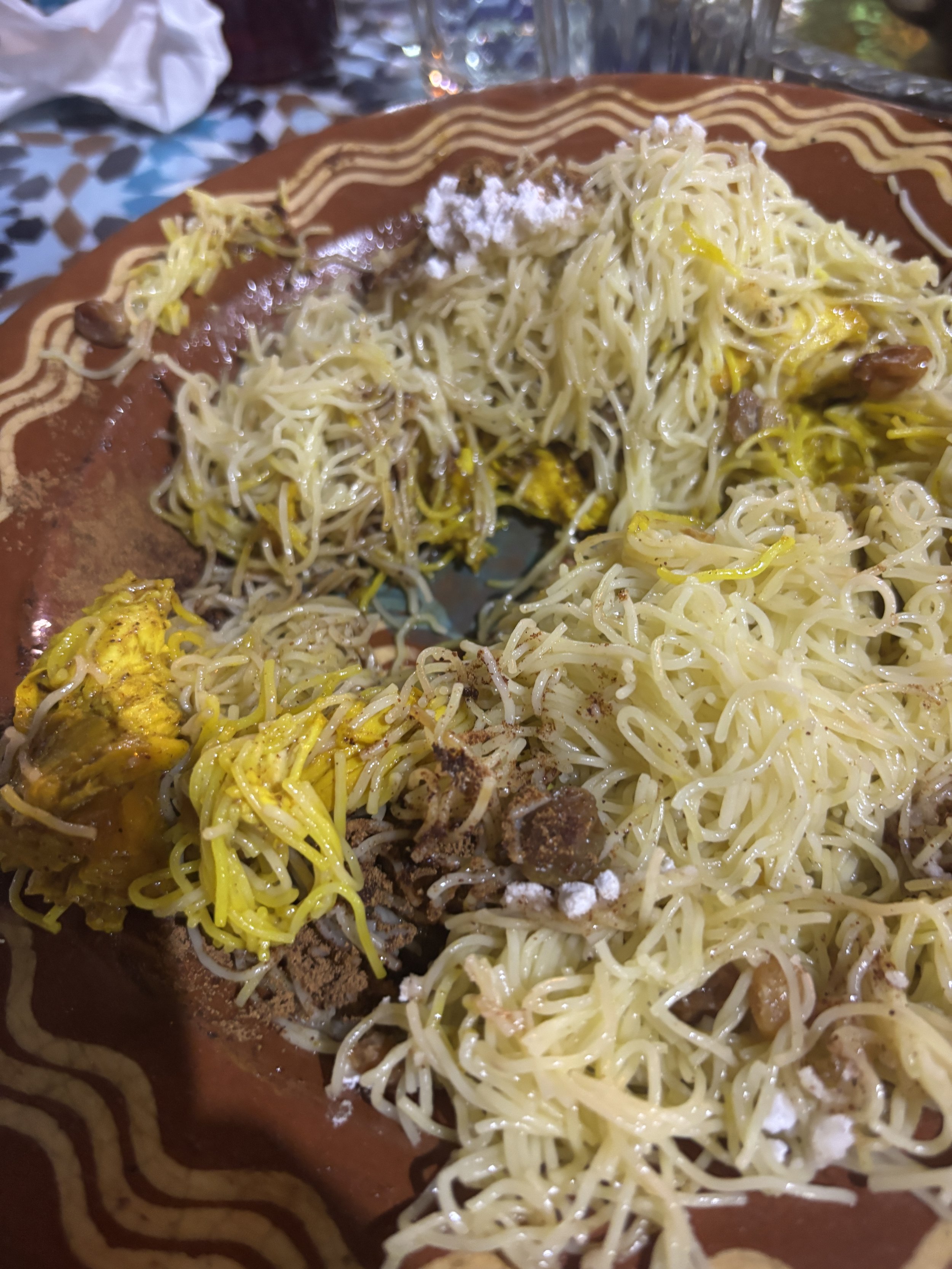
Seffa is made of these fine noodles, combined (in this case) with meat, cinnamon, almonds and sugar. Despite its sweet aftertaste, it is not a dessert! It is a really unique and interesting flavour!
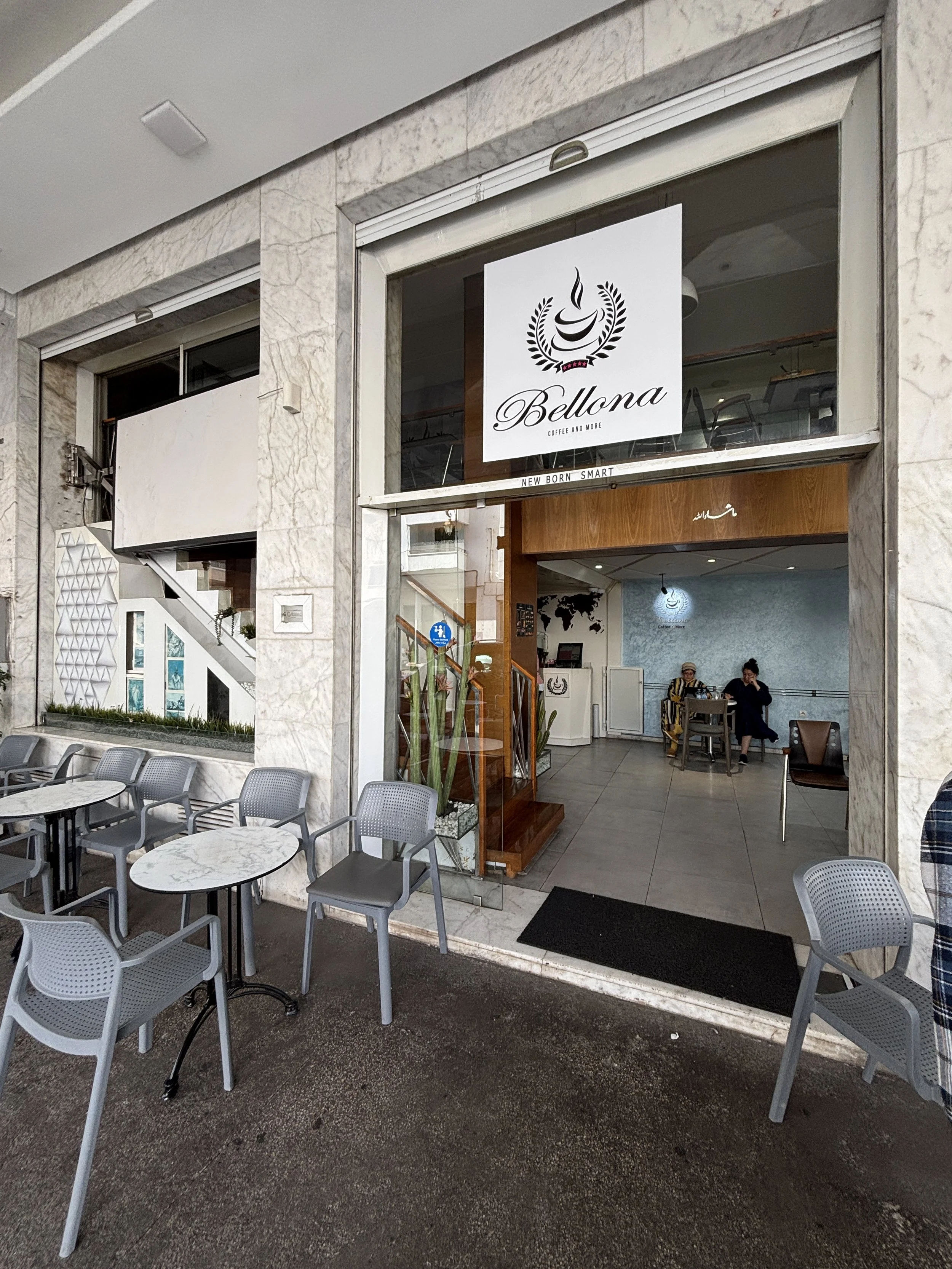
Café Bellona: Coffee And More
Av. Moulay Ismail, Rabat
Looking for a place to have breakfast? Check out the Café Bellona, which is located some 10 minute walk from the Hassan Tower.
It looks pretty unassuming form the outside, but it does have some great value options with both continental and Moroccan flavours. We also had the chance to engage in conversation with its polyglot owner, who helped us choose from the menu.
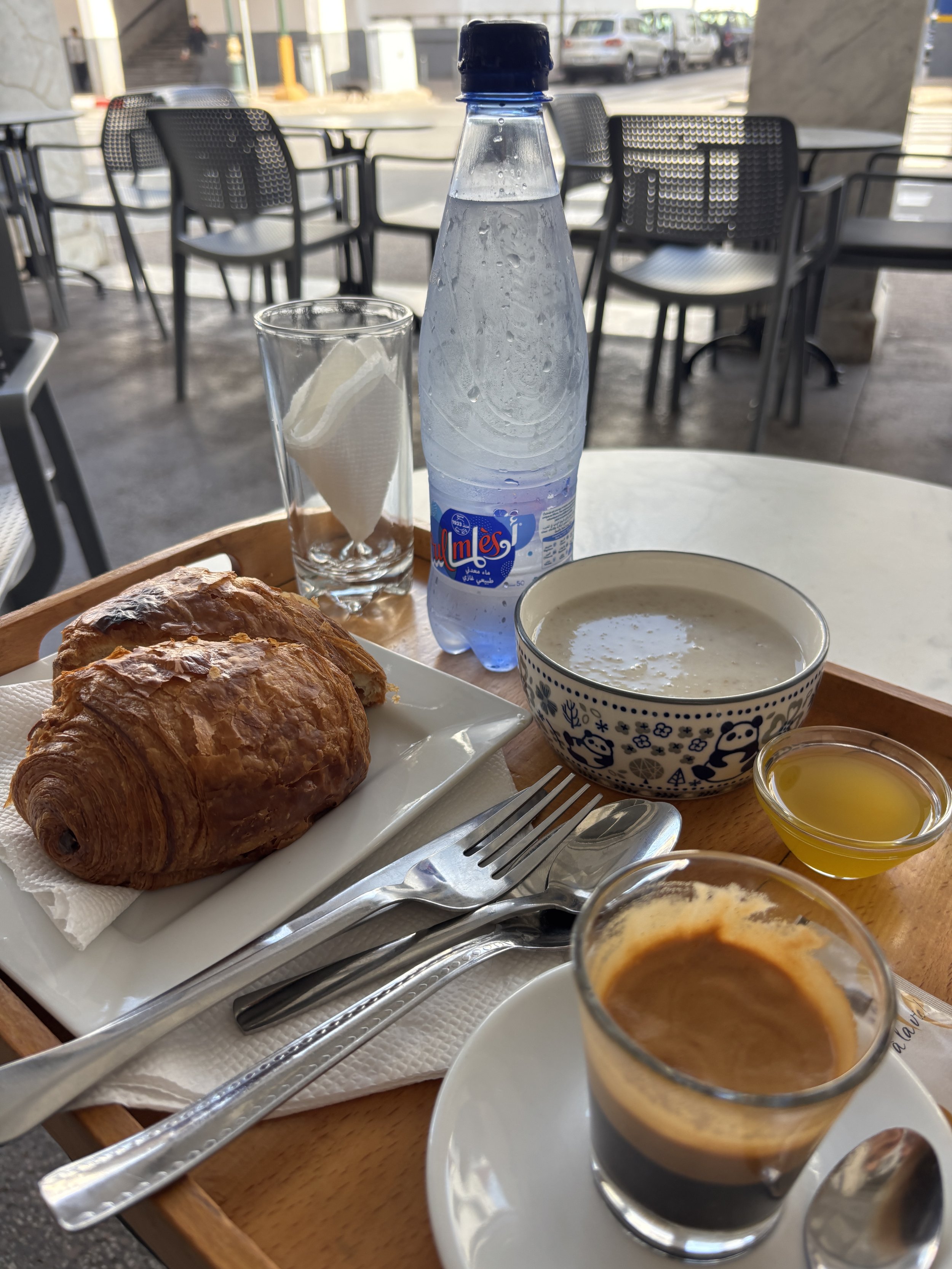
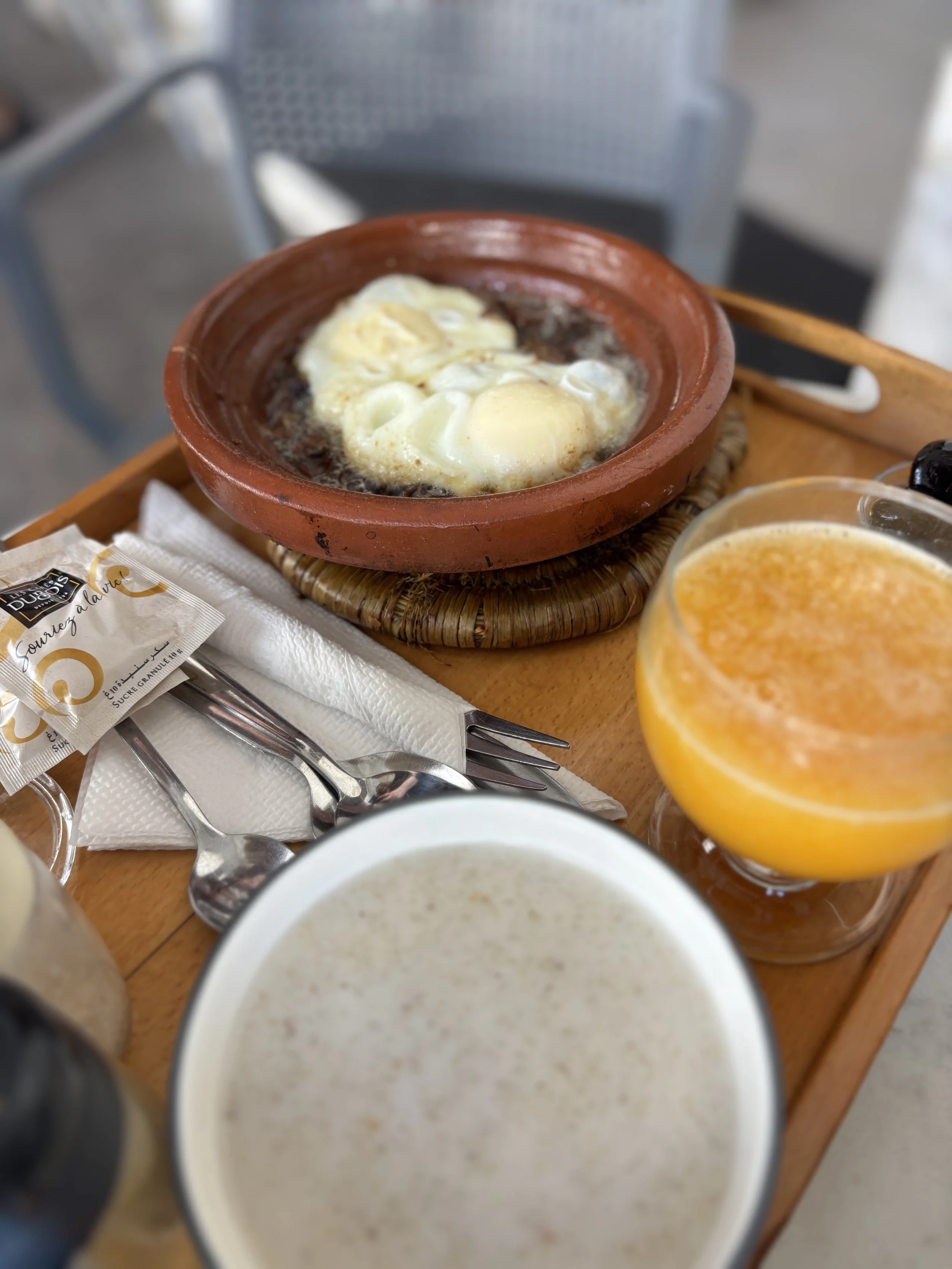
You can see the basic option above, which includes a pastry, as well as some porridge, (very nice) coffee, still water and fresh orange juice (or sparkling water if you prefer). The full continental option has also either omelette or fried eggs, a selection of breads and cheeses, olives and the drinks.
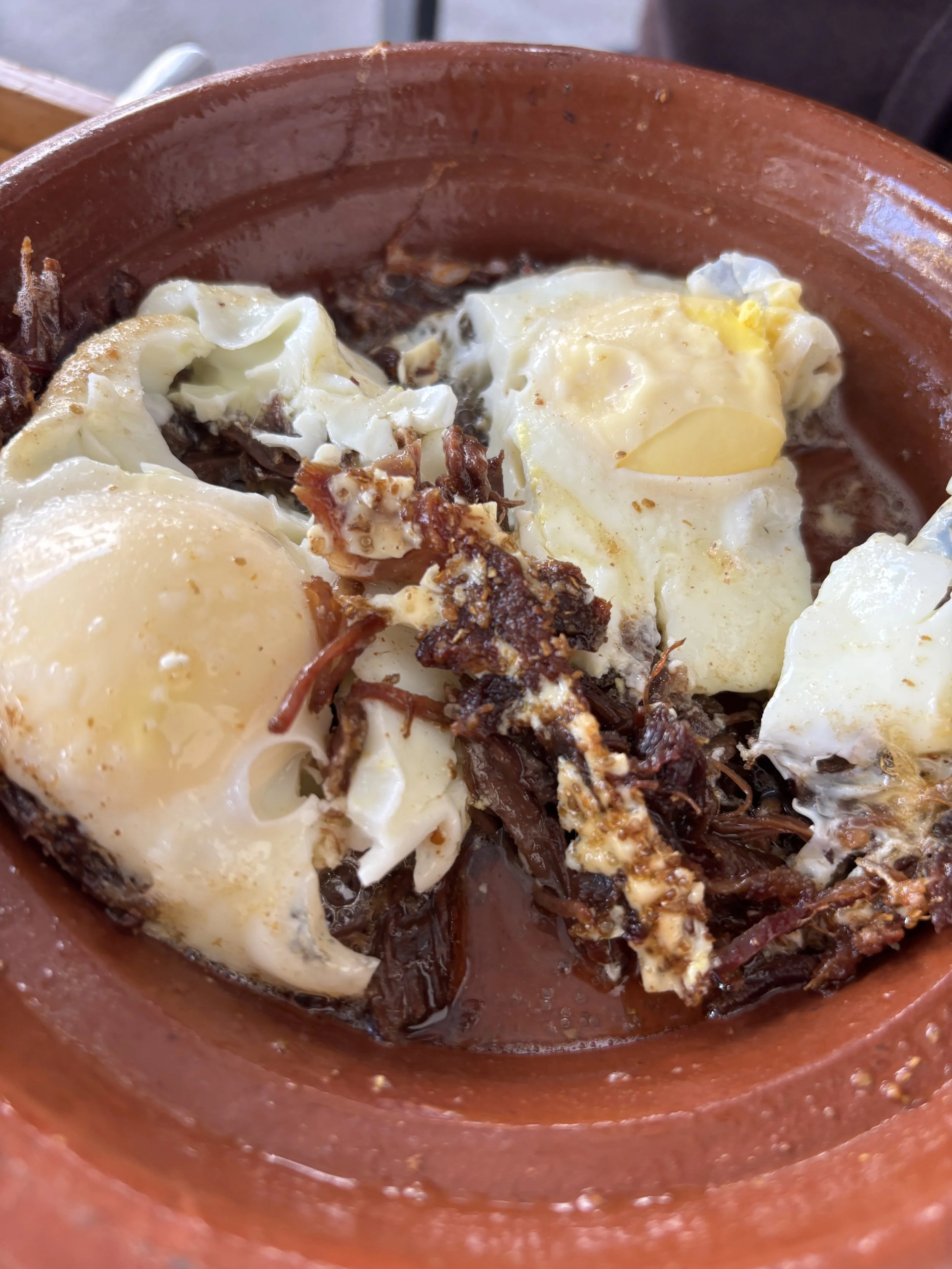
There is also a Moroccan option, which includes olives and tajine khili, which is a dish you can see in the picture below combining cooked cured meat with eggs on top, truly tasty and full of protein!
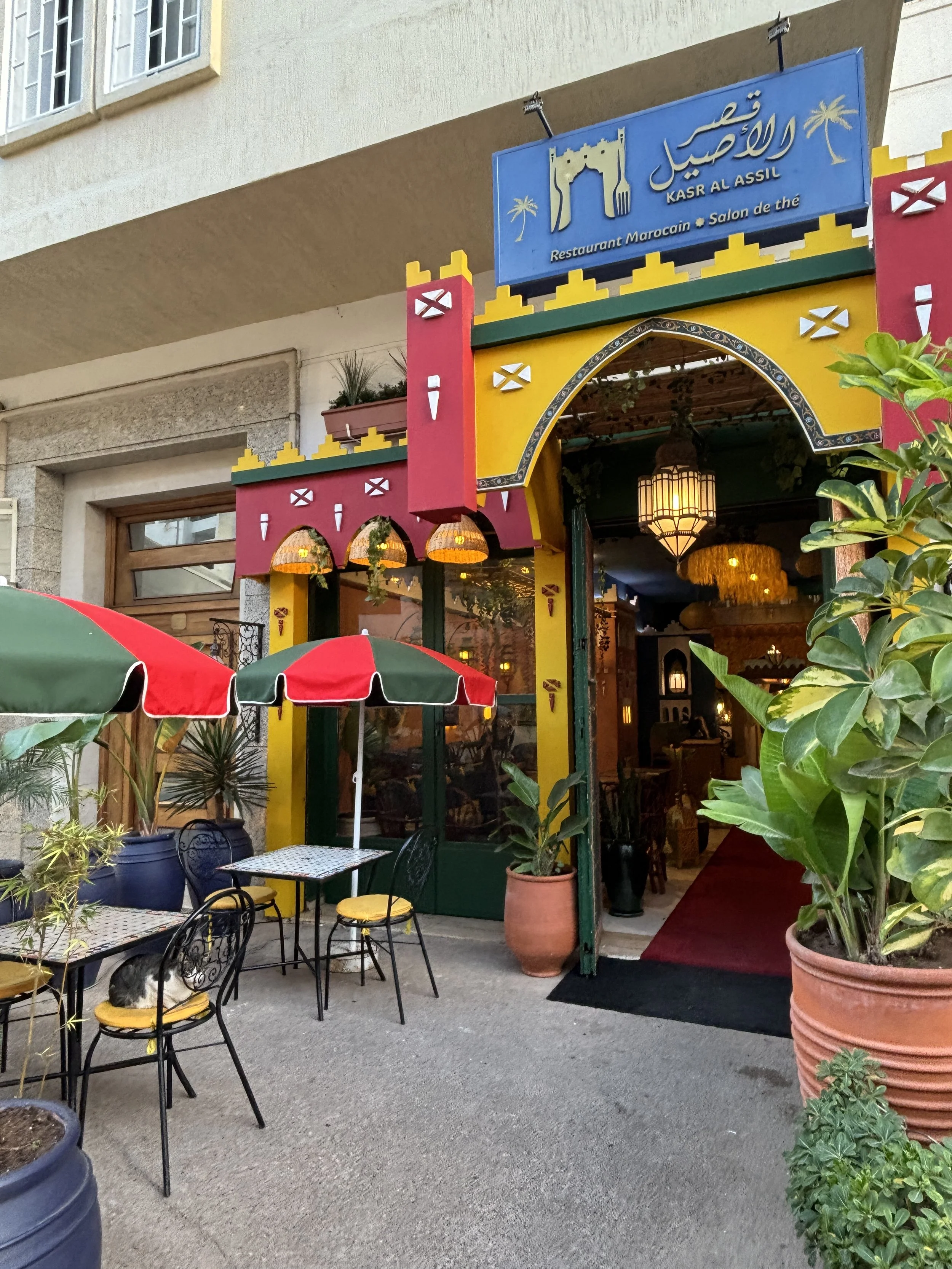
Restaurant Kasr Al Assil
39, Rue Youssef Ibn Tachfine, Av. Moulay Hassan, Rabat 10020
This is another great option if you wish to try traditional Moroccan specialities at a reasonable price. It is also open pretty much throughout the day, so it may be the place to go if you feel hungry after all the sightseeing and need to eat something between hours. We visited at around 5pm and it was quiet, but not empty! Service was a bit slow and messy, but the food was really tasty and the portions, generous.
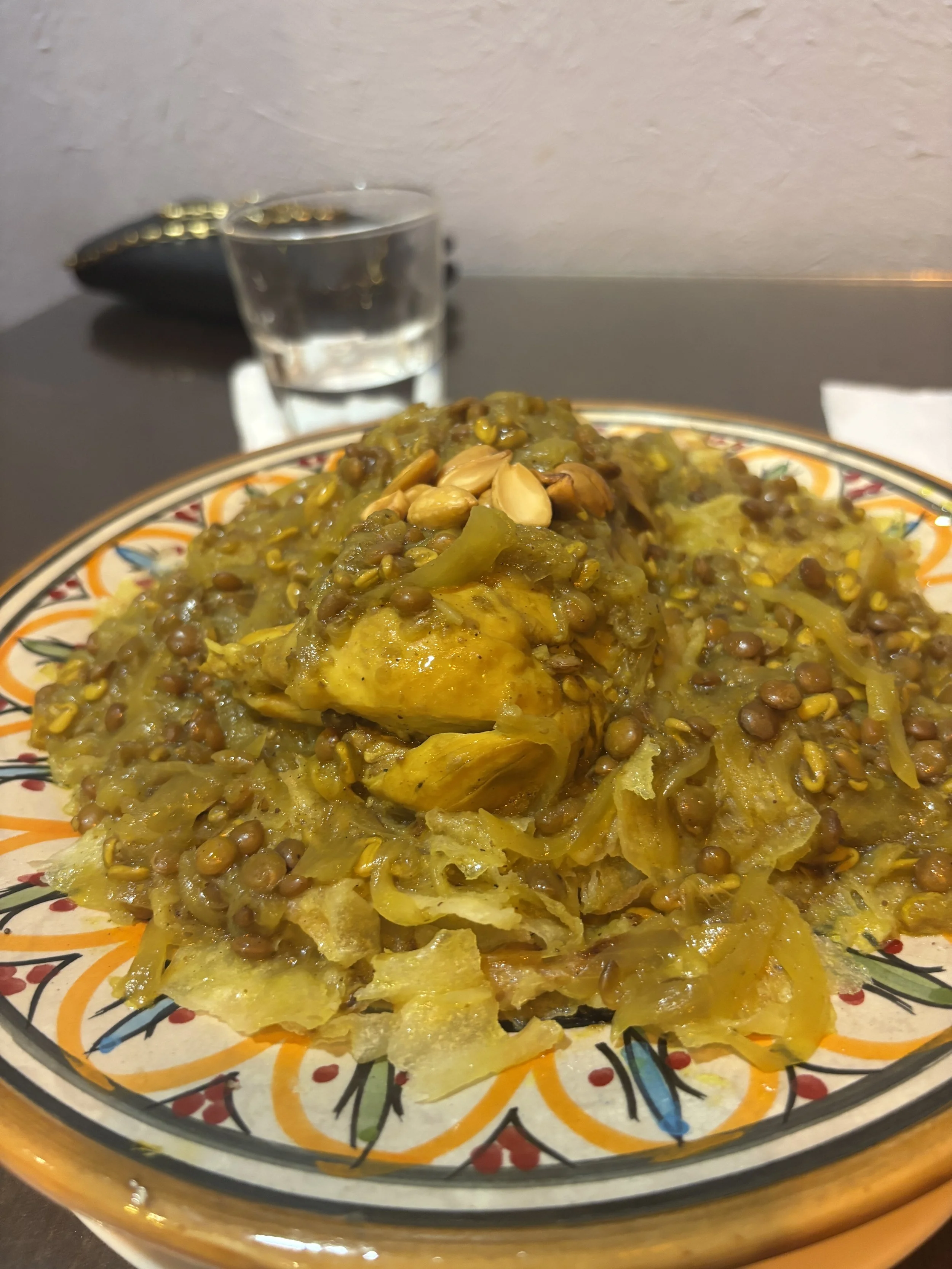
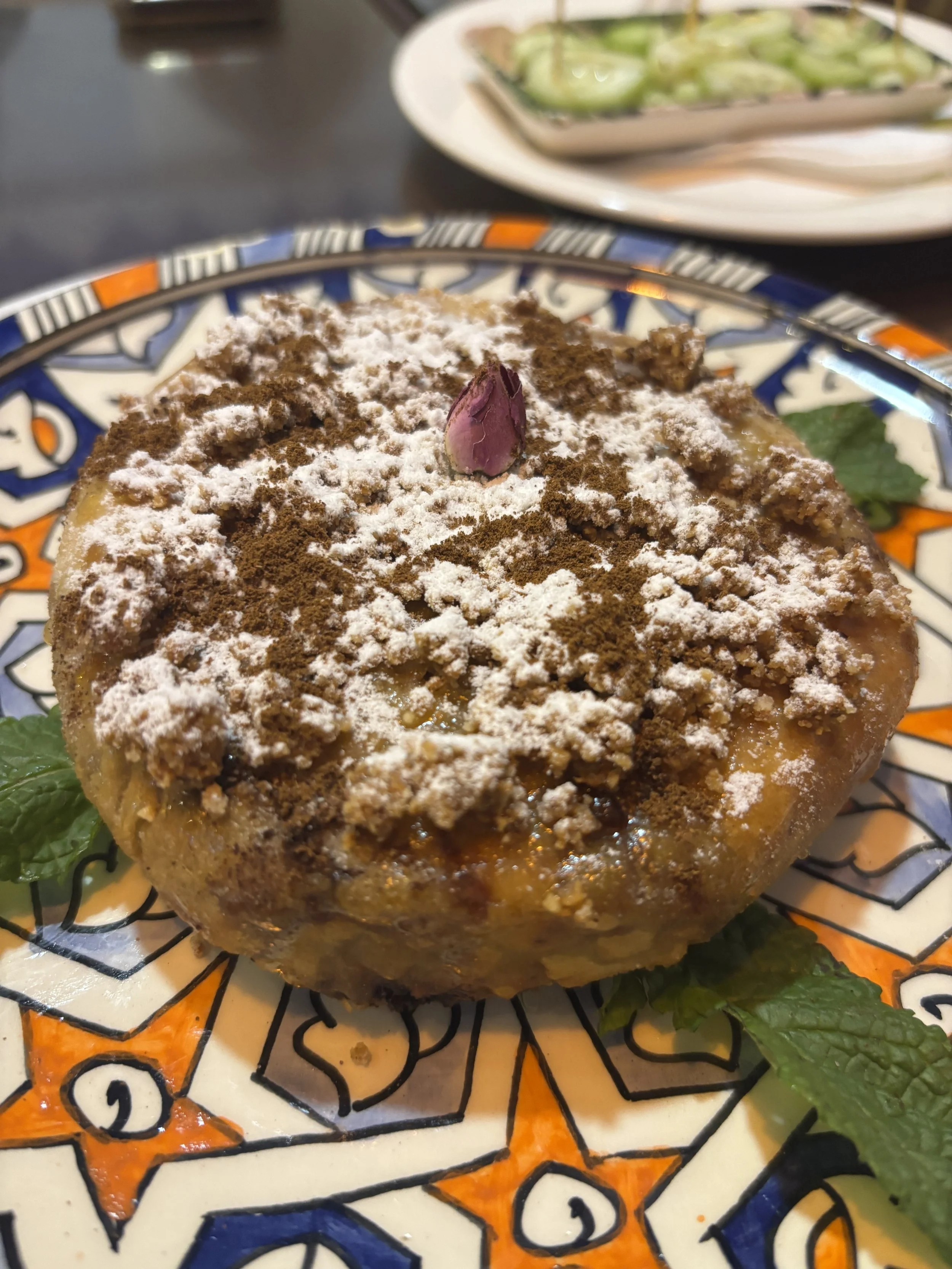
This time it was the turn of trying yet two more Moroccan specialities: rfissa (above) and pastilla (below).
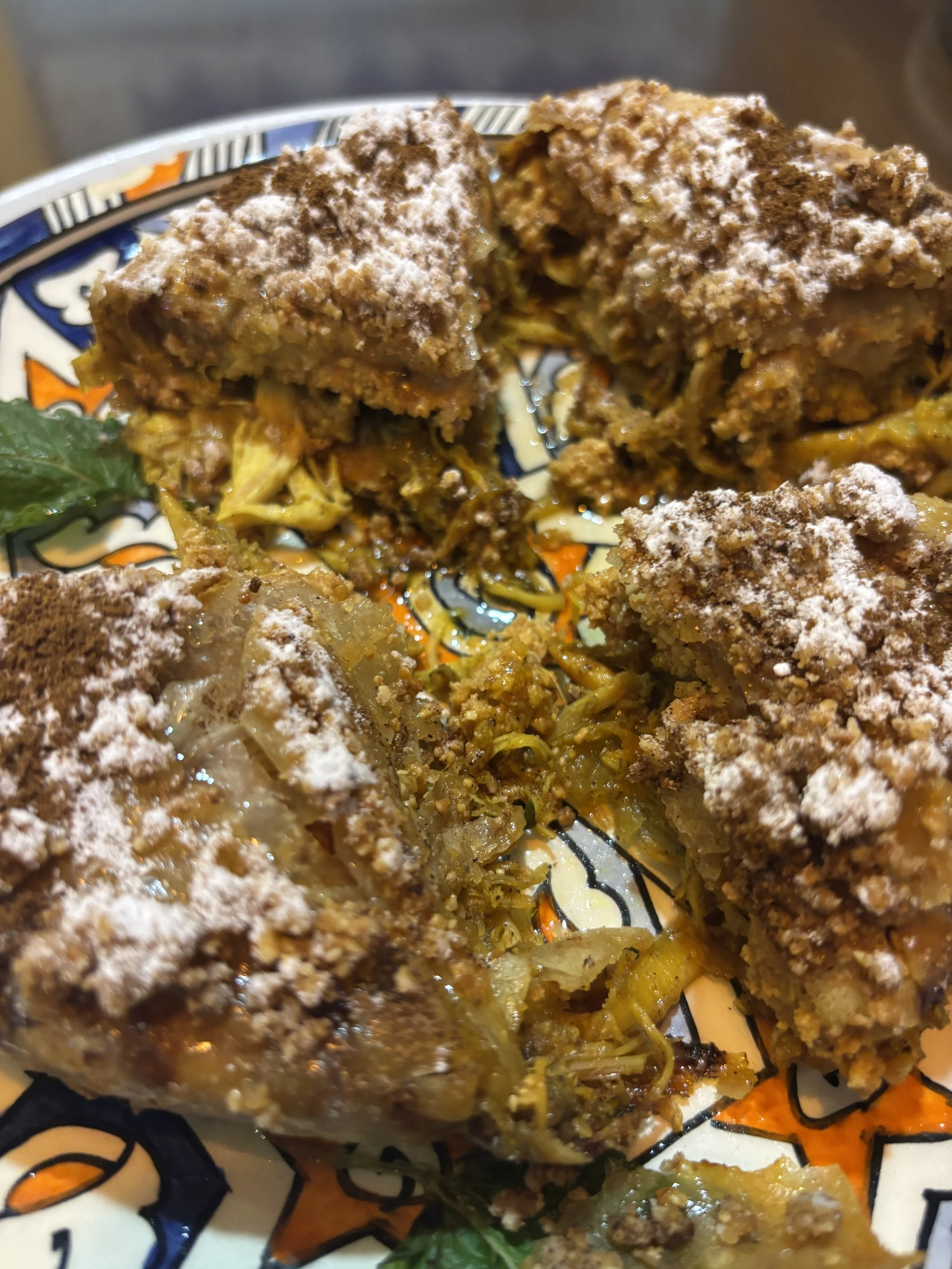
Both turned out to be great finds! Like some of the other Moroccan dishes we tried in this trip, they were both an explosion of contrasting flavours. Rifssa combines chicken with a dough base plus vegetables, lentils and almonds. Pastilla, in turn, is a sort of sweet-sour cake blending minced chicken meat with almond paste and covered in a sugar and cinnamon icing. It is really dense and filling combination!
Places to stay in Rabat
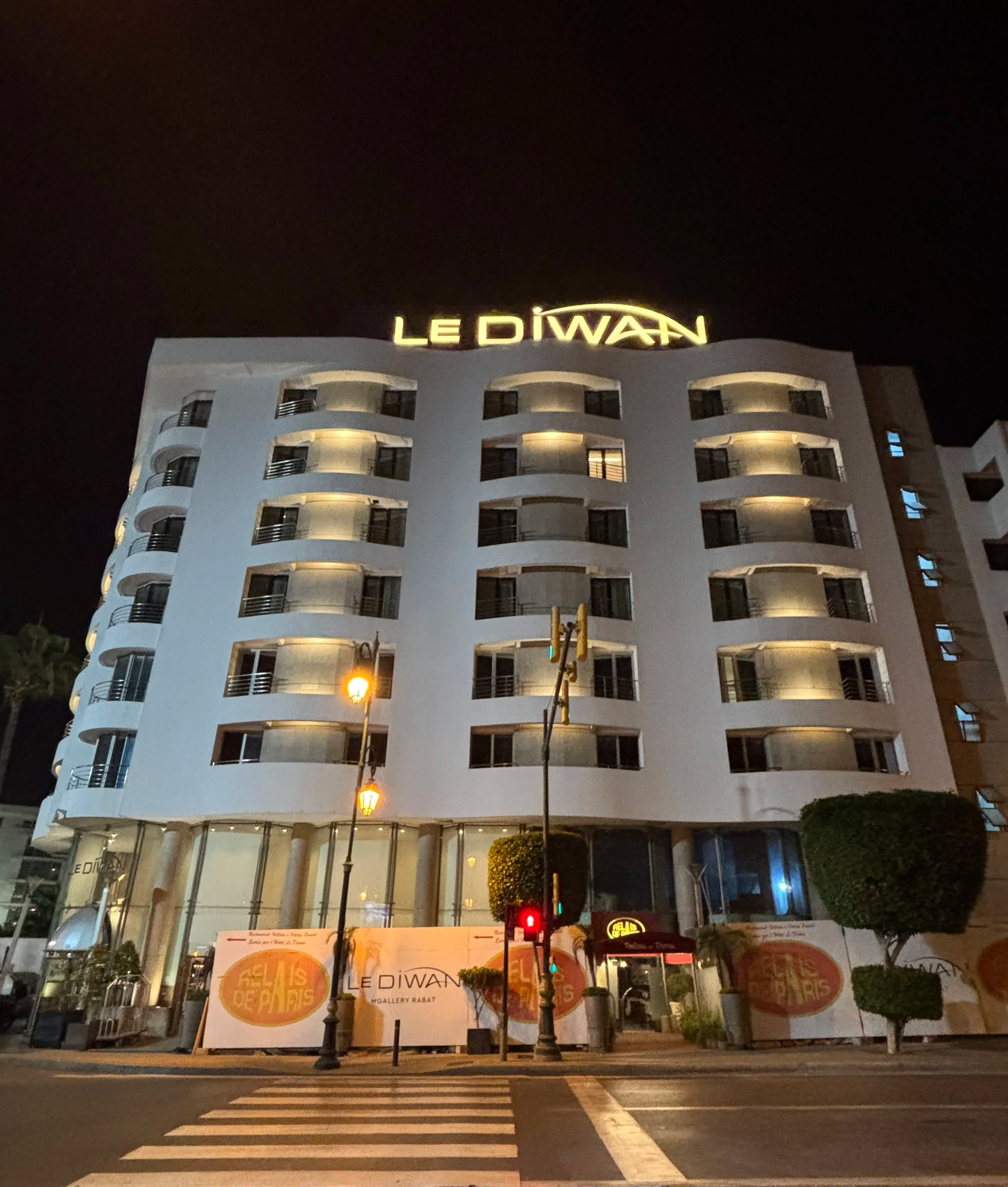
Le Diwan Hotel Rabat - MGallery Collection
Place De L'Unité Africaine Hassan District, Rabat 10005
This is a nice, modern hotel located in the heart of the modern town. It’s location is quite convenient roughly equidistant between the Medina, the Hasan Tower and Chellah.
The one little shortcoming I can point out is that the reception area is small at appeared to be a bit understaffed, so every time several guests showed up at the same time, there could be quite a wait.
It has also a small bar by the lobby, which is small but cozy.
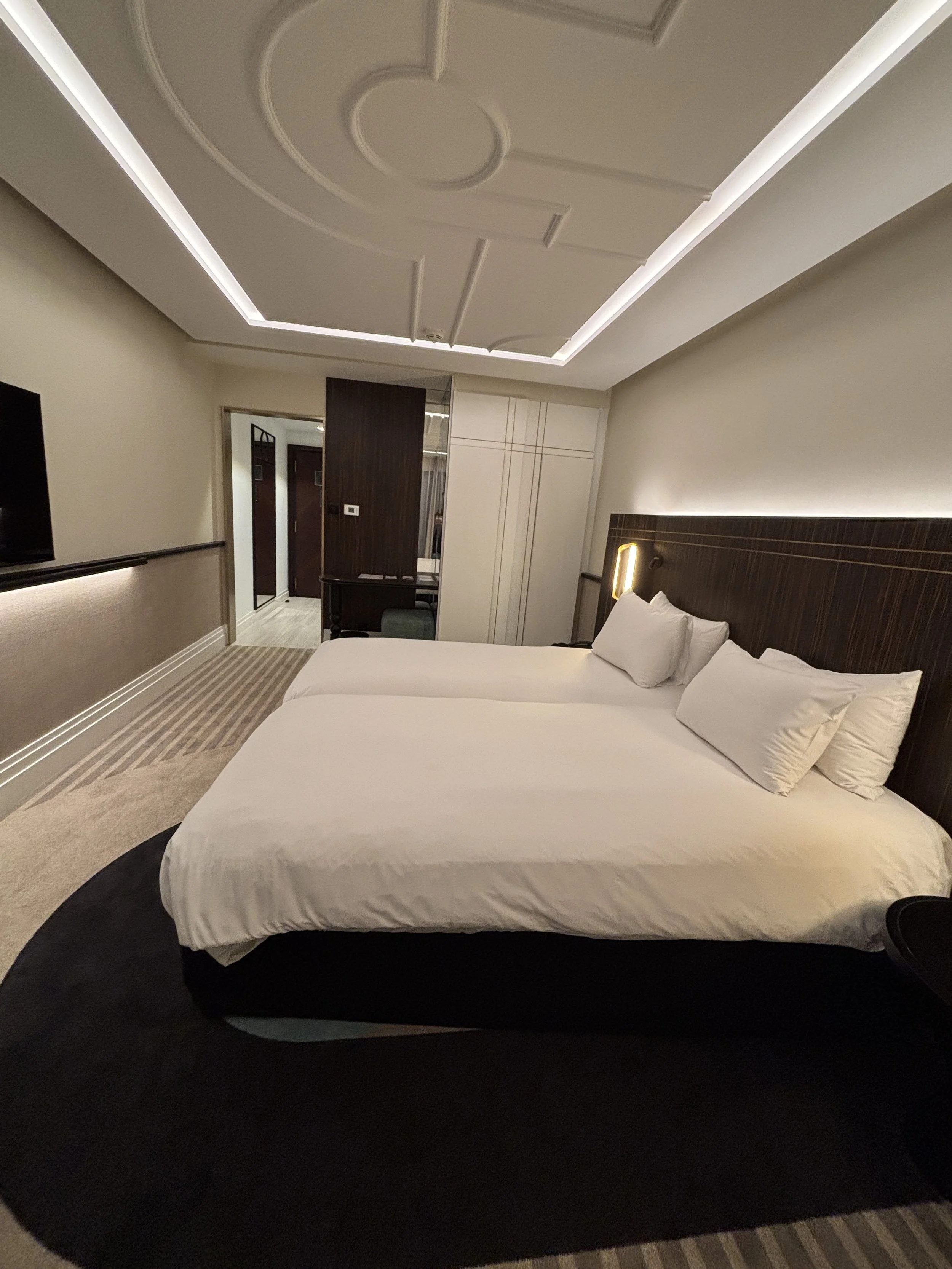
When it comes to the rooms, they are pretty spacious and decorated in a stylish manner.
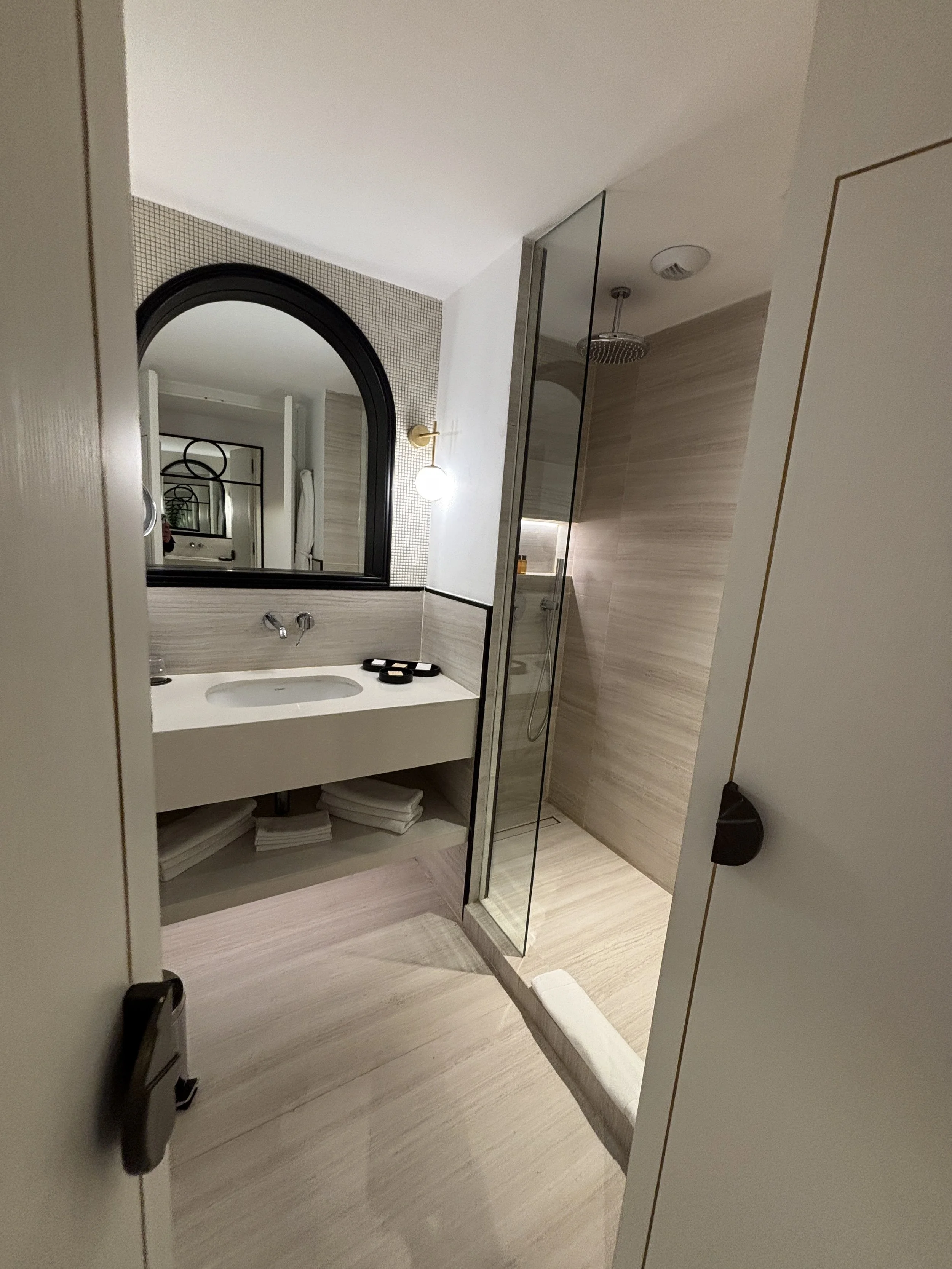
The bathroom is modern elegantly furnished, and provided with amenities and toiletries. However, it is fitted with swing doors which don’t close completely and can’t be locked. It gives it more of a spa-style appearance, but something to take into acount if you wish absolute privacy.
Overall a good value option if you wish to get a modern and reasonably priced hotel not too far from the main sights.
Last but not least, if you are planning a trip to Morocco, you may also find of interest our story about Marrakech.
