
Top things to see and do in Franconia (I): a tour of Bamberg
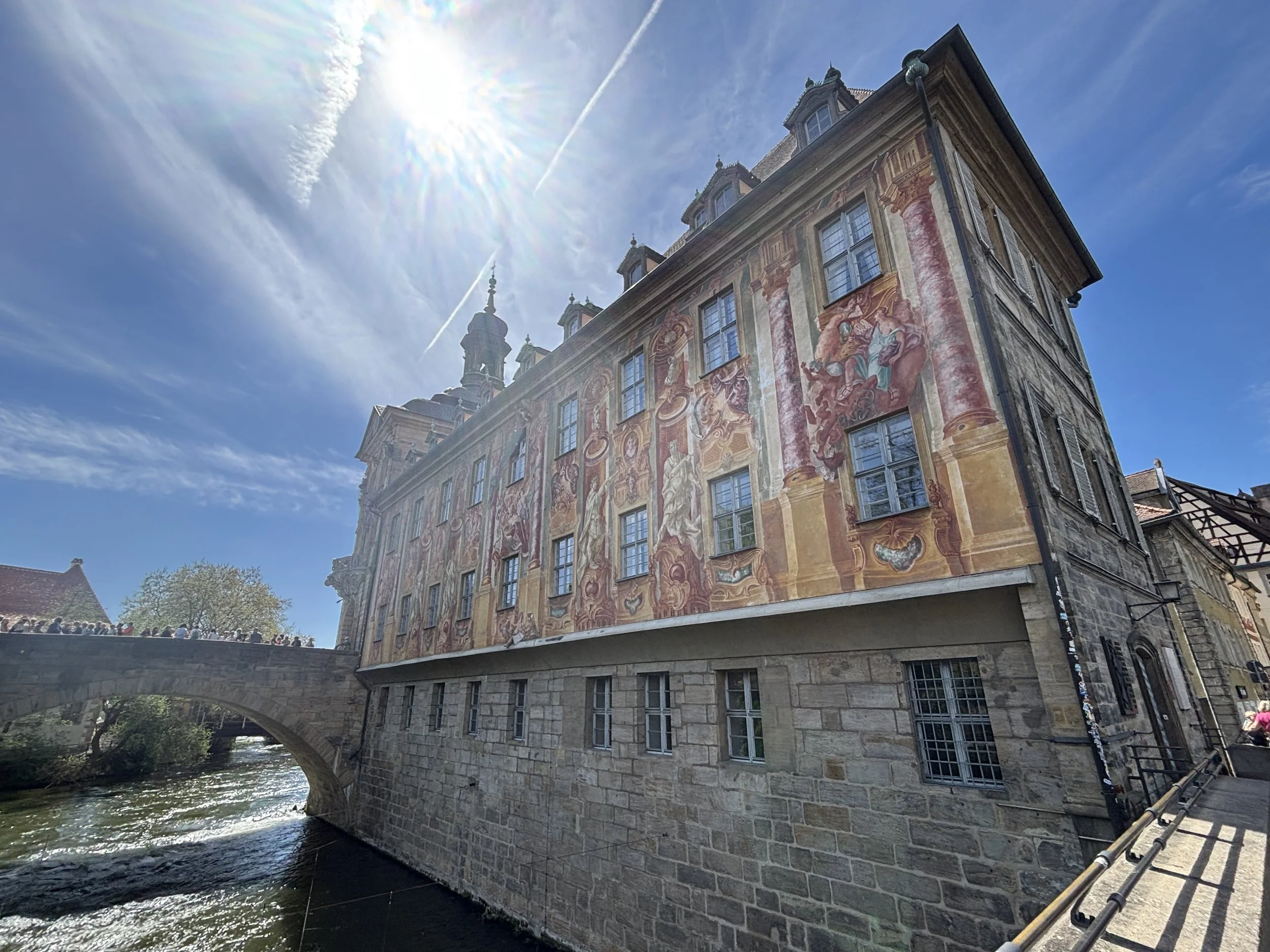
If you are looking for a Germany of charming fairy tale towns, almost intact medieval heritage, artisan beer and bratwürst, look no further than Franconia.
A Russian doll of cultural identities, local pride rules strong in Franconia (“Franken” in German), which is a historical region of northern Bavaria, itself, a former Kingdom and one of the parts of Germany that has most fiercely preserved its own character and distinct identity.
Culturally, it is equally varied: part of it is wine country, while other areas lean firmly towards beer; and while Bavaria is predominantly Catholic, Franconia contains Protestant enclaves, such as the city of Fürth.
This is perhaps due to the fact that, like much of the German lands, historically, Franconia was a complex patchwork of sovereignties, with different rulers sometimes having overlapping claims to parts of the land. Among them, Nuremberg held a pre-eminent role, since it is the place where the Imperial Diet (of the so-called “Holy Roman Empire”). Franconia only became part of Bavaria in the early 19th century, when the whole area became one of Napoleon’s client states.
In fact, Franconia is large enough that it can be divided in three large areas: Upper Franconia (Oberfranken), Middle Franconia (Mittelfranken) and Lower Franconia (Unterfranken), although this series of posts will cover only a relatively small central section of it, starting in Bamberg in the north and ending in Nuremberg at the southern end of my itinerary.
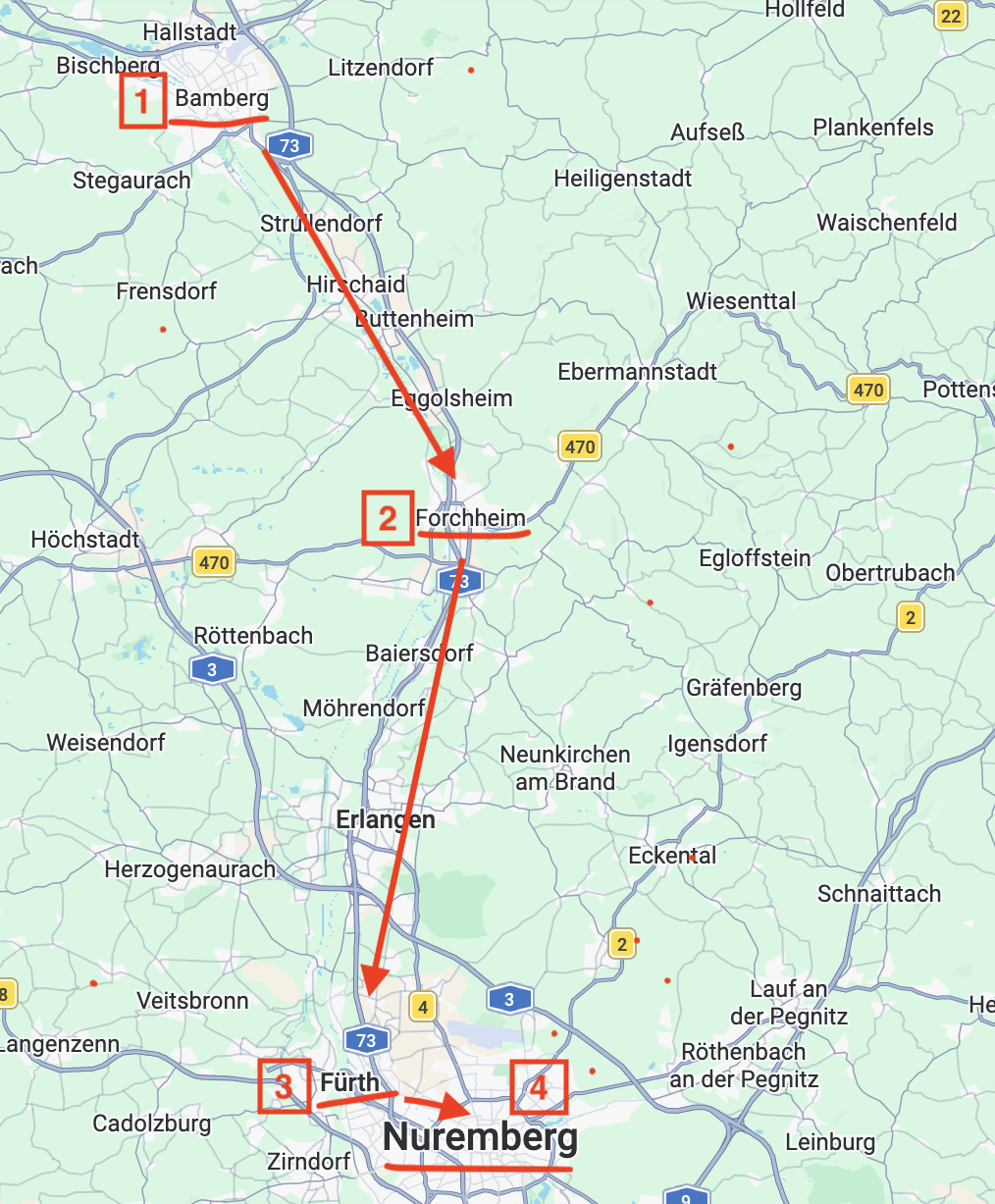
What’s more, unlike in other itineraries that I have featured on this site, this time my entire journey was done by train, since all four Franconian cities that I had the chance to visit (Bamberg, Forchheim, Fürth and Nuremberg) sit neatly in a straight line. This was, I think, a pretty efficient (and sustainable!) way to explore this region.
So, this post is the first of a series of four installments in which I will share my impressions of this region and some tips about what to do and what to see when visiting Franconia.
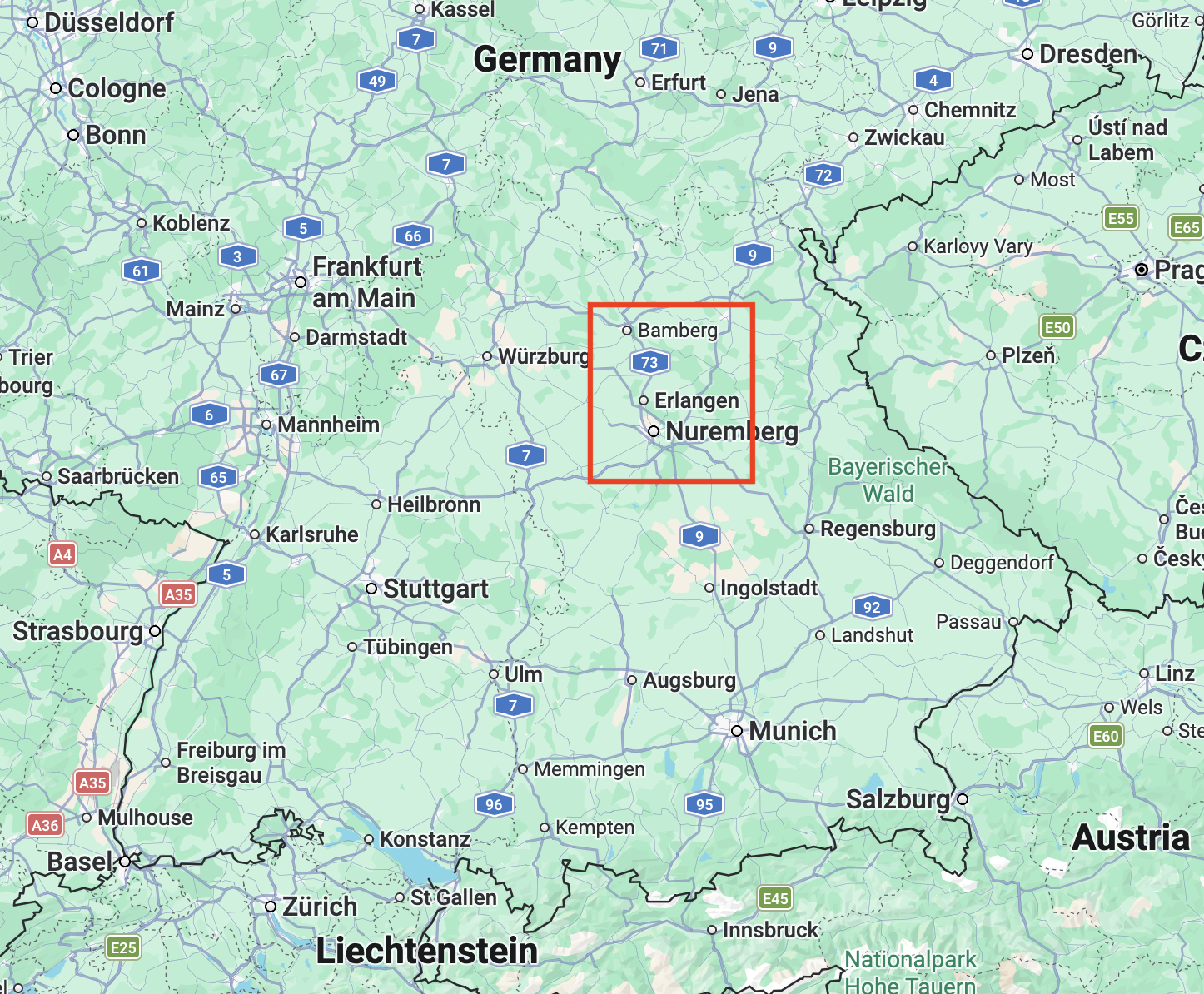
My itinerary started in Berlin, from where I traveled by train to Bamberg and then moved continued moving south always by train, all the way to Nuremberg, the largest city of the lot, by far.
This post may contain affiliate links. If you book or buy something through them, I earn a small commission, at no extra cost to you. It's one of the ways I keep Places of Charm going. Thank you for your support.
I would like to thank also Franken Tourismus for facilitating this journey through Franconia and the visit to Bamberg with excellent local guide Sabine. All opinions are my own.
Half a day in Bamberg: what to do and what to see
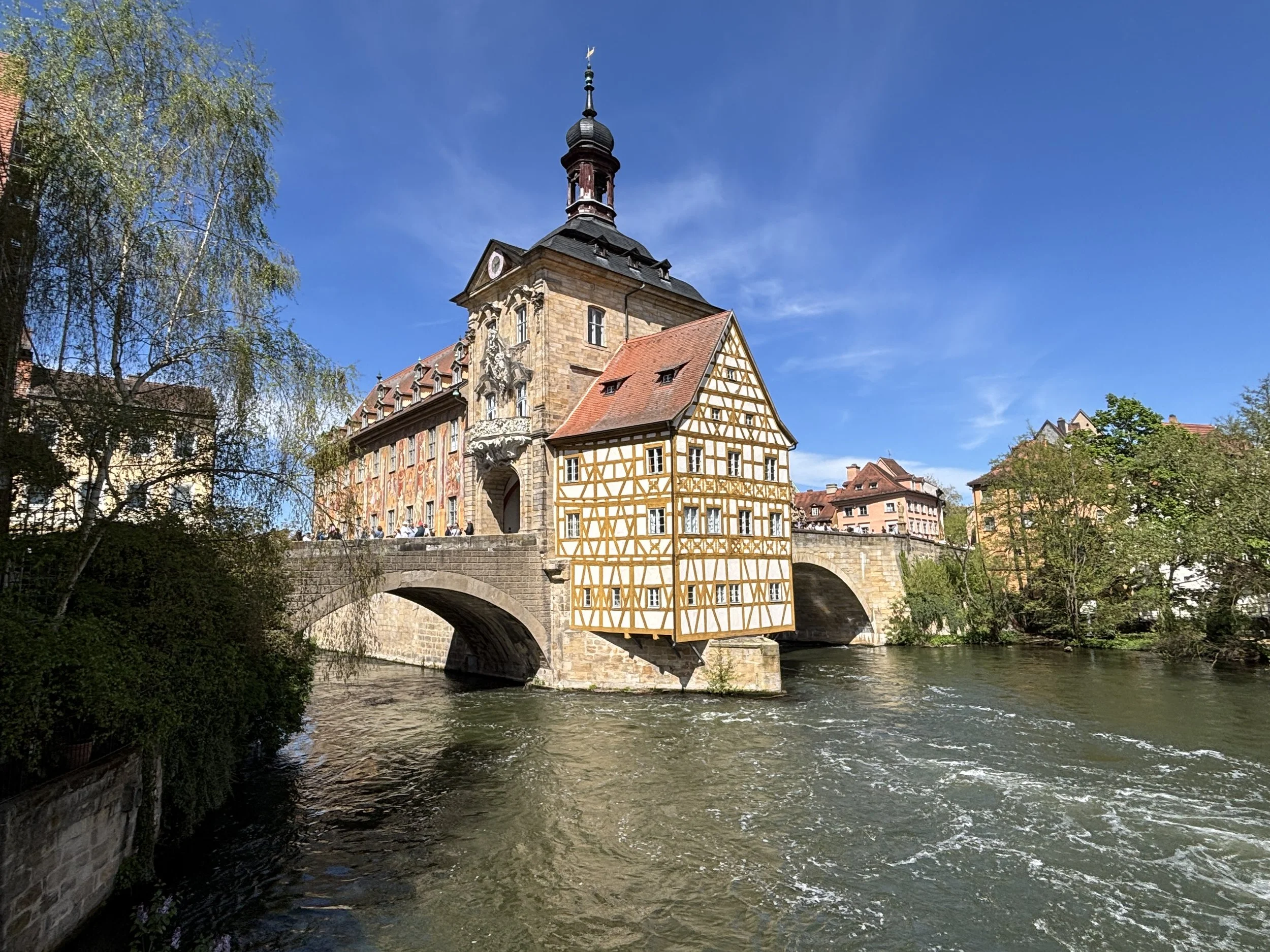
Bamberg is one of the jewels, not just of Franconia, but of Bavaria as well. Besides being a town of historical significance (it used to be the capital of a small principality ruled by a bishop), Bamberg was practically untouched by WW2, so most of what you see here is what a German pre-industrial city used to look like. Since 1993, Bamberg has been a UNESCO World Heritage Site.
What’s more, it’s geographical setting greatly enhances its historical attractiveness. First, there is the fact that, like Rome and several other cities of note, the city of Bamberg was built on seven hills. Then, there is the presence of the river Regnitz, a tributary of the Main, and therefore, the Rhein, which is navigable and accessible by river cruises (such as those operated by Viking Cruises, an old friend of this site!) and other operators. The river divides its waters between several canals when it passes through Bamberg’s old town, adding significantly to the aesthetics of the place.
I arrived at Bamberg’s main train station mid-morning and, after leaving my luggage at the station’s storage area (make sure you have €2 and €1 coins with you!) I headed on foot towards the old town, which is a mere 15-20 walk away.
I was to meet my guide for the day, Sabine, at Schlenkerla, Bamberg’s most iconic brewery (more on this place further down this article), for a quick but relatively intense walking tour of the city.
Bamberg’s “Little Venice”
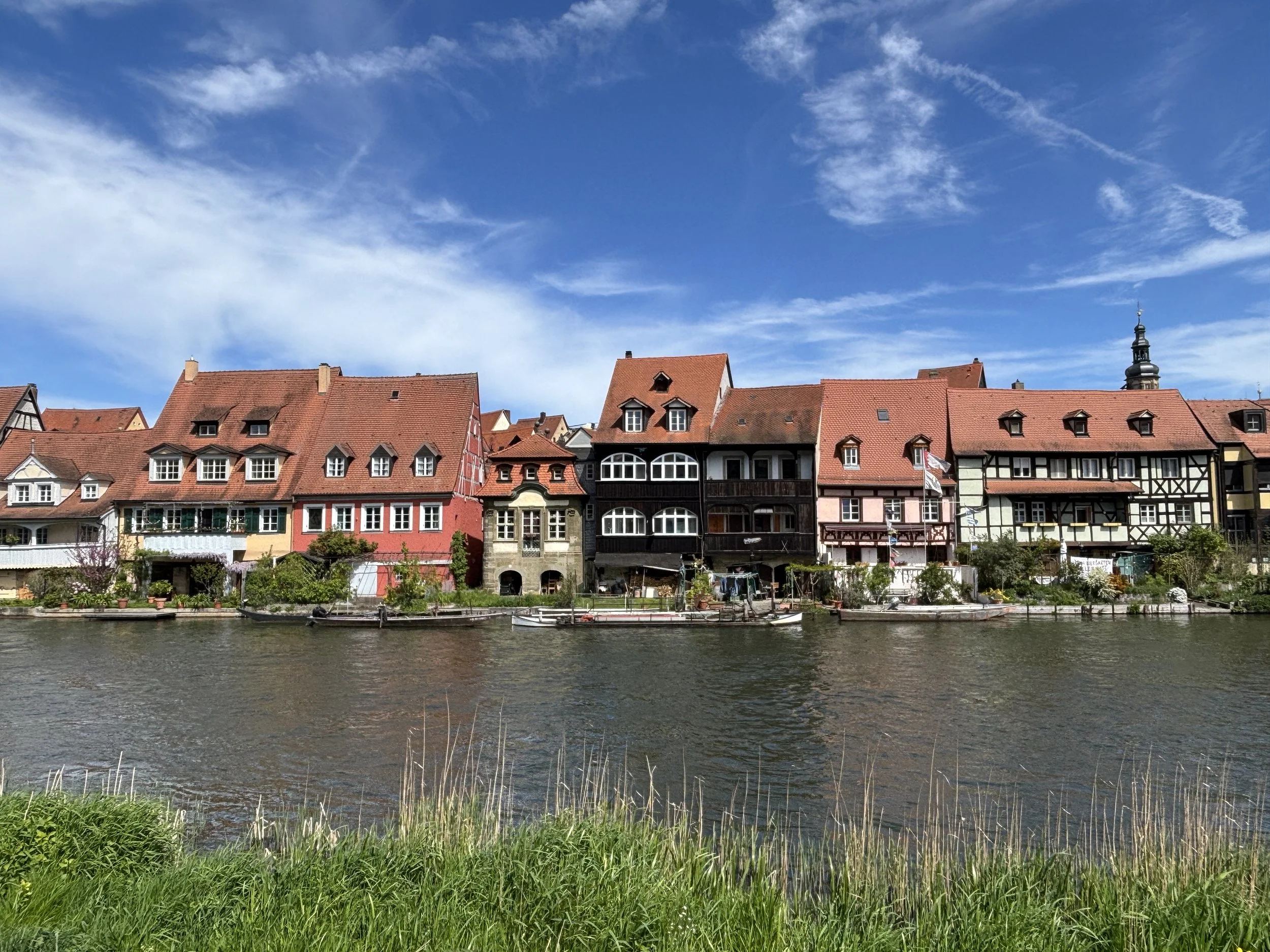
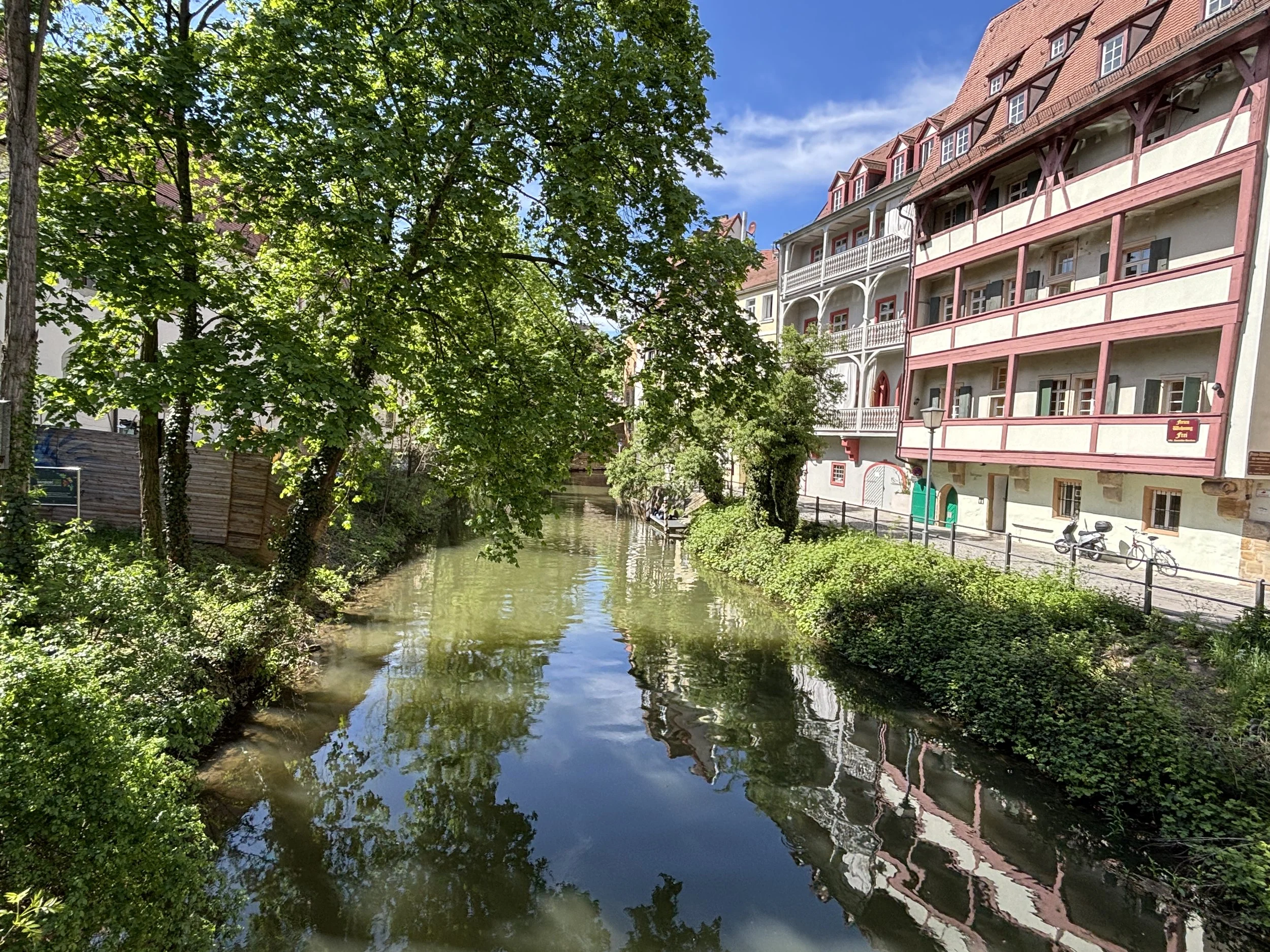
When approaching Bamberg’s old town from the train station, you will first have to cross the Reignetz and its several canals. You will then be in an area popularly known as “Little Venice”, obviously because of its connection to water.
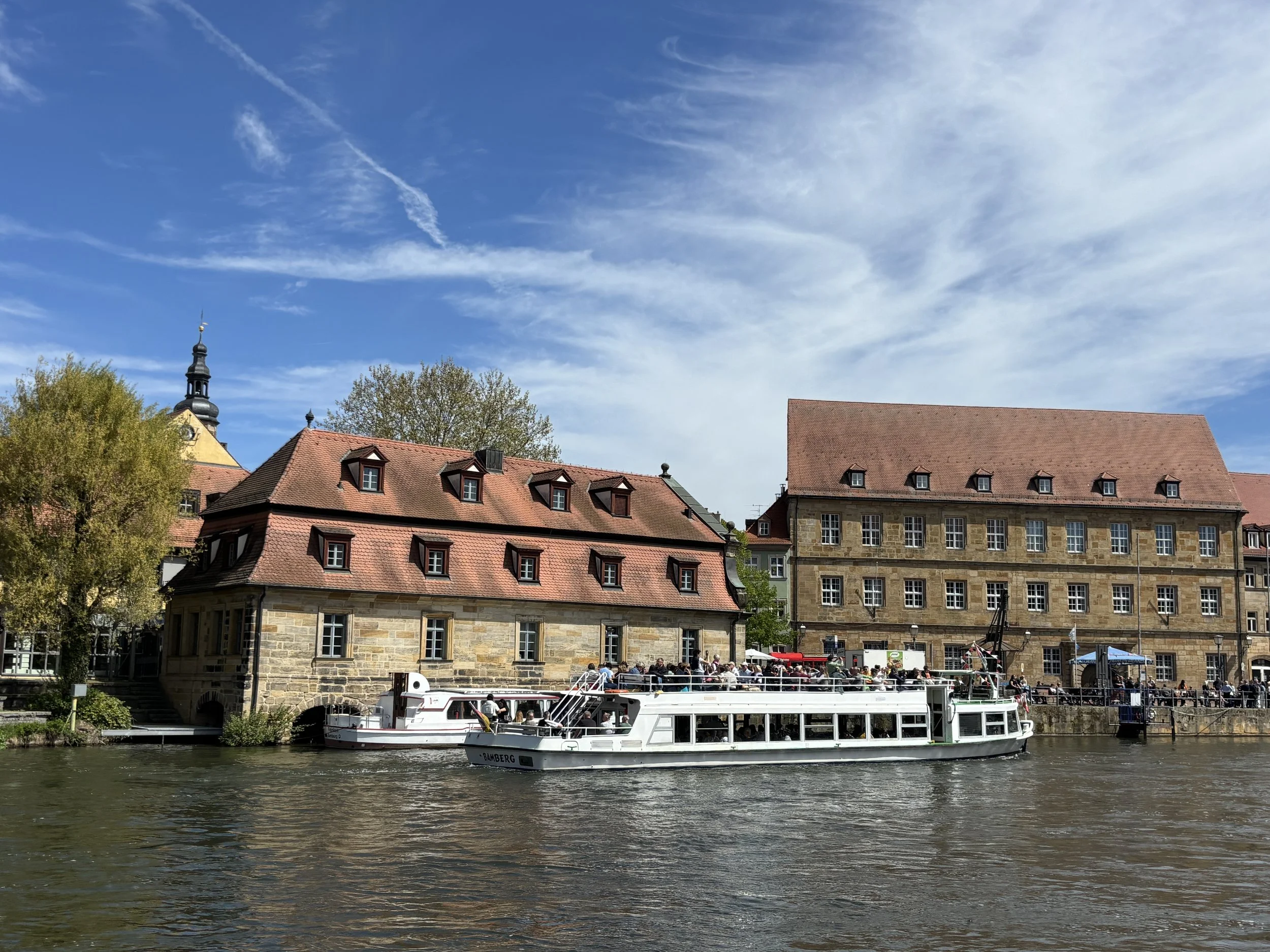
There is even a gondola service that would give you a ride through the canals for a fee! Or, if you prefer something more conventional, you will also find here several boats that a carry tourists around. We didn’t do that, and went for a stroll along the banks of the Reignetz instead.
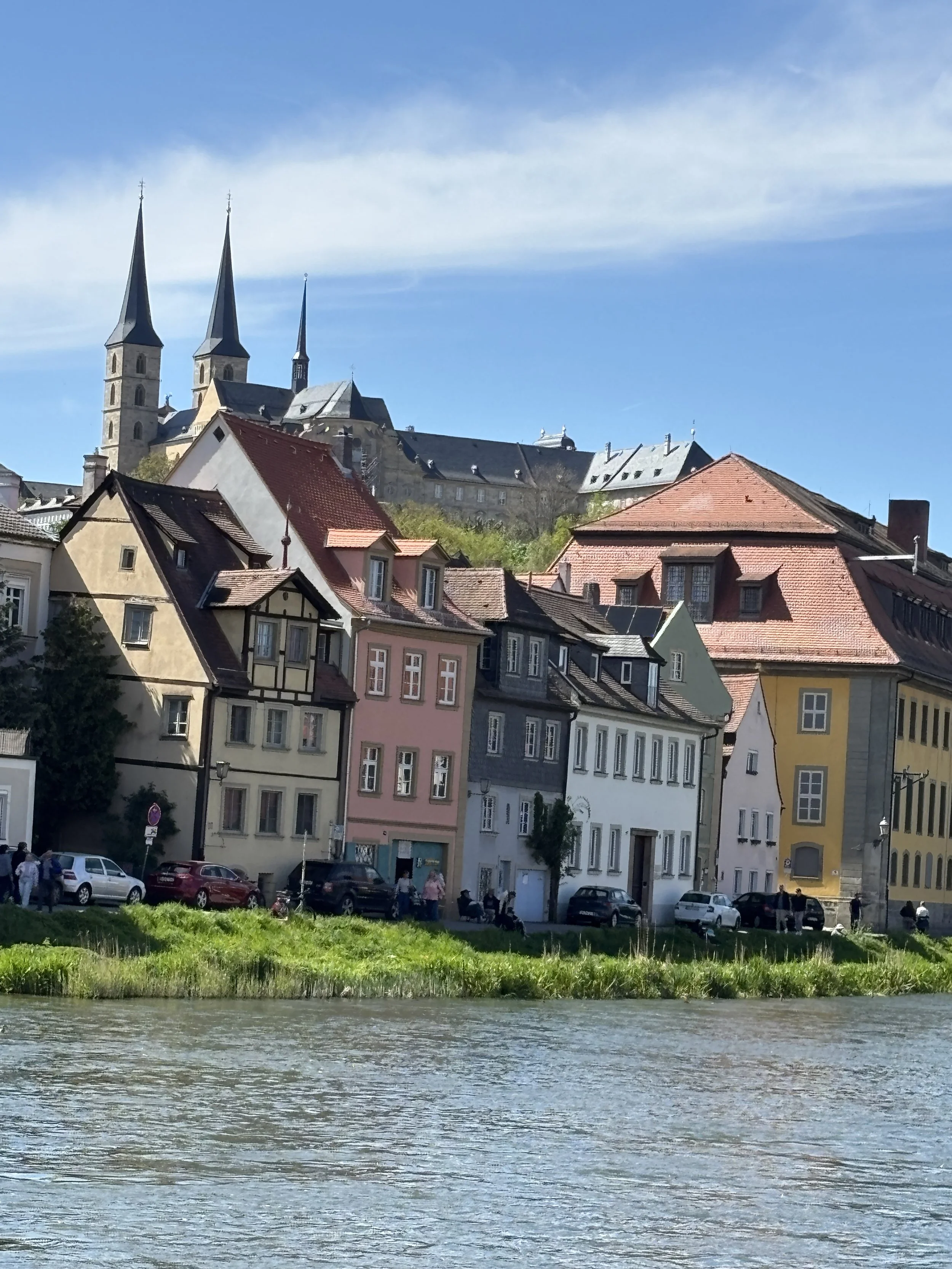
When the weather is nice, as was the case during my visit, Bamberg’s river side is an amazingly beautiful place. However, crowds can form at some spots, and for good reason!
One such spots is the small island that holds what is one of Bamberg’s most distinctive buildings, the old town hall (“Altes Rathaus”), which is the beautifully ornated historical building the picture of which opens this article.
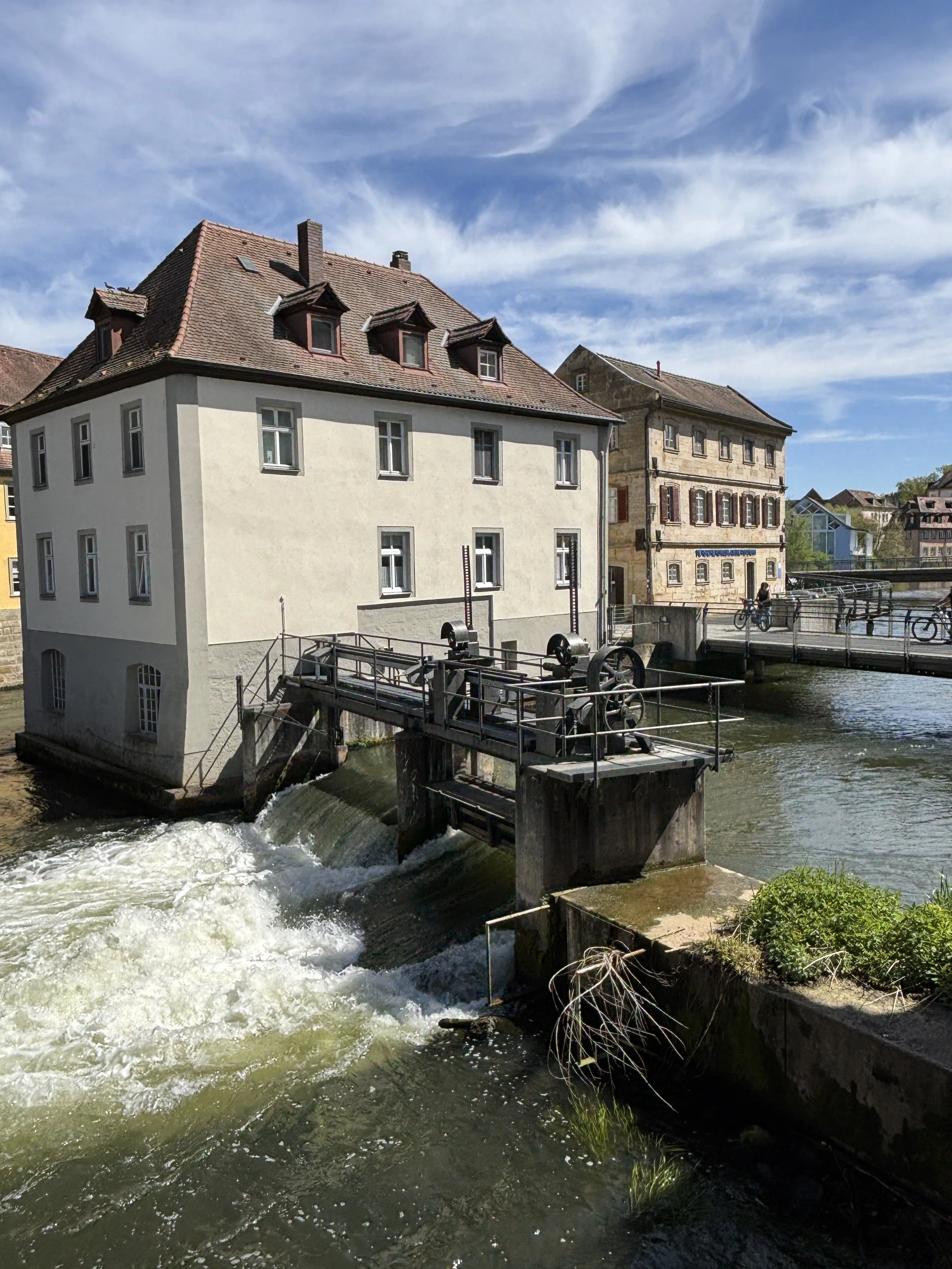
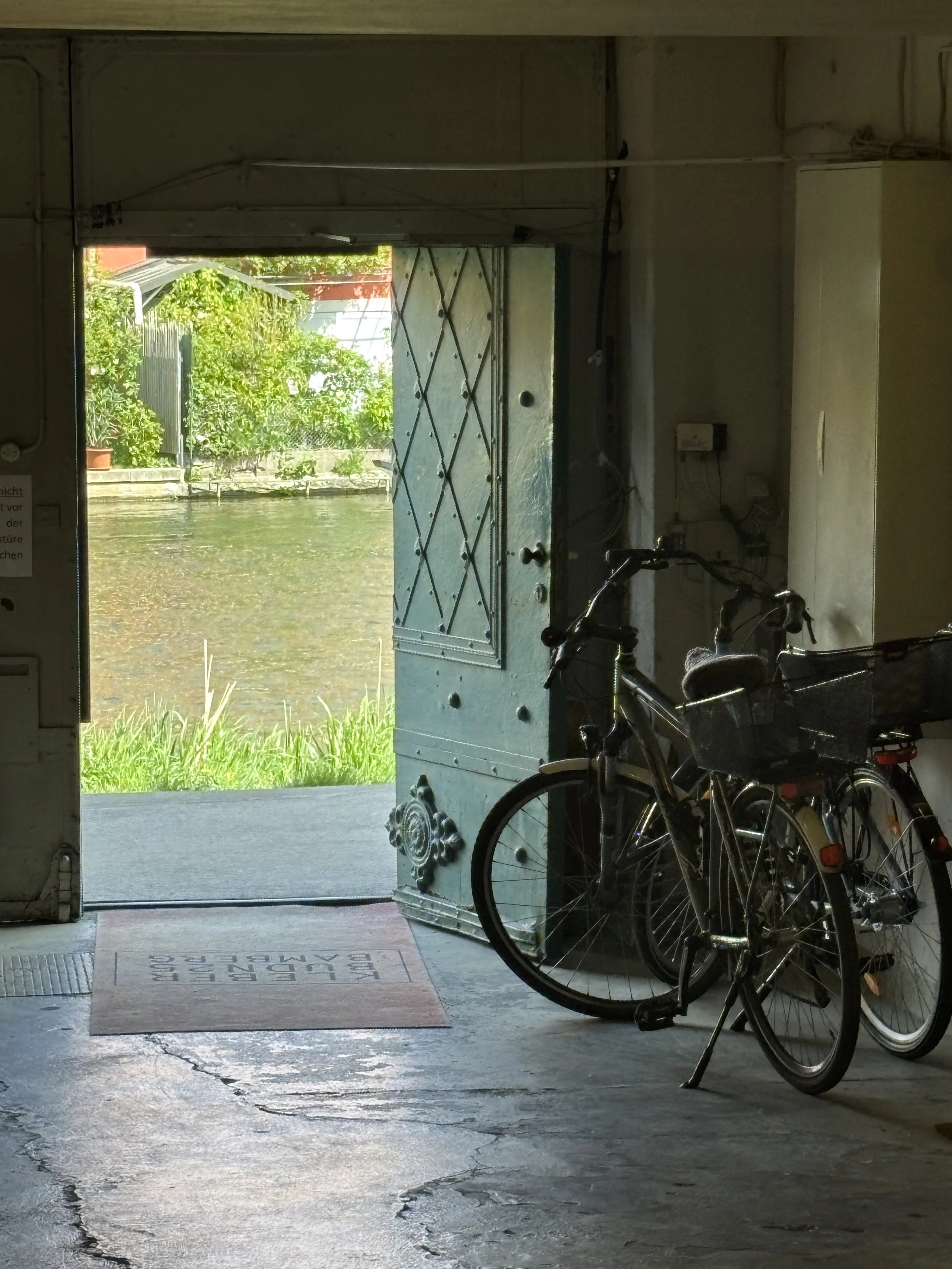
The whole area along the river banks, though, is pretty harmonious and makes for a pleasant walk.
A walk through Bamberg’s old town
Our itinerary then took us uphill, for it is at the top of one of Bamberg’s seven hills that we find what was the nucleus of Bamberg’s political and ecclesiastic power for around eight centuries.
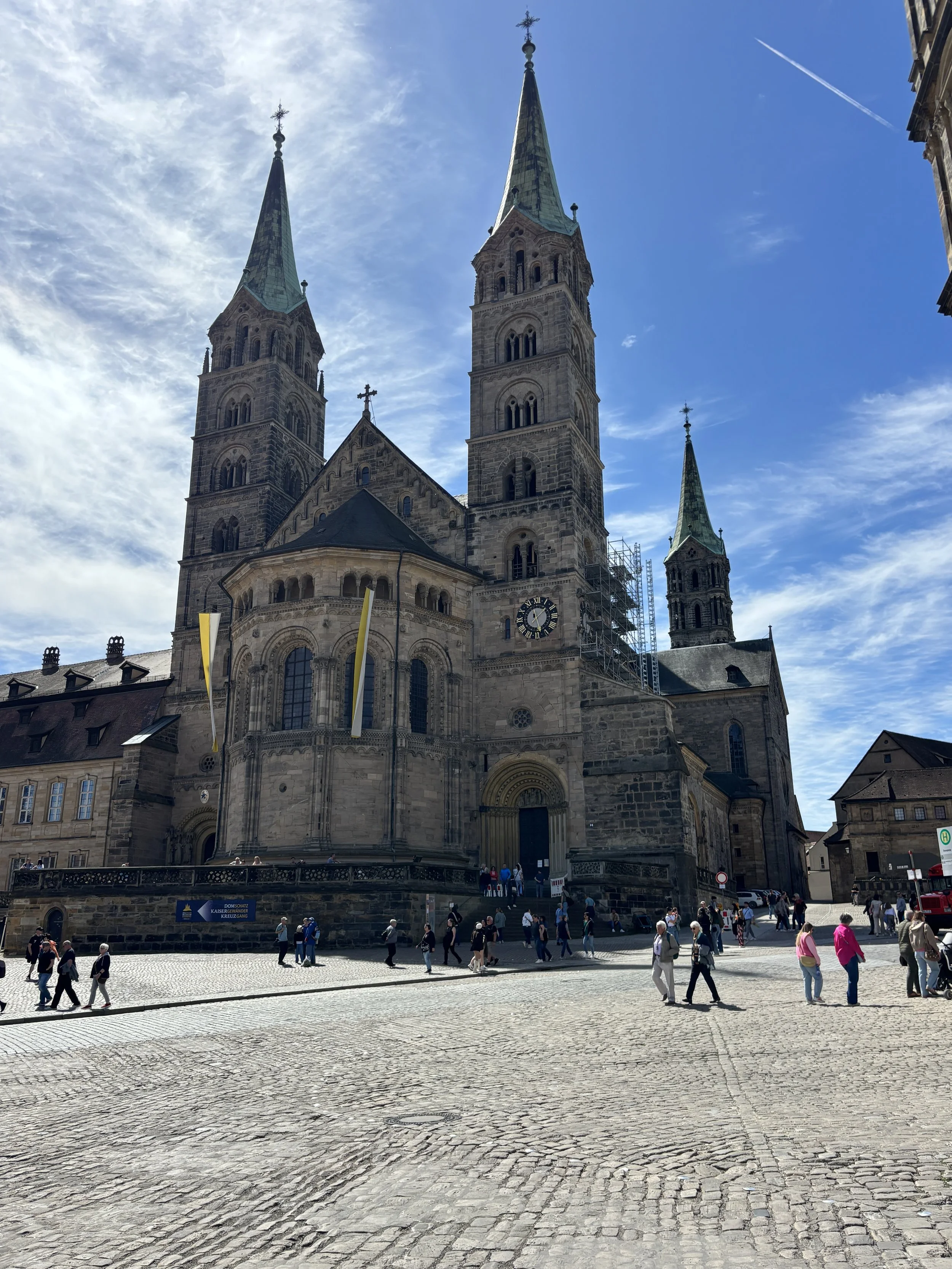
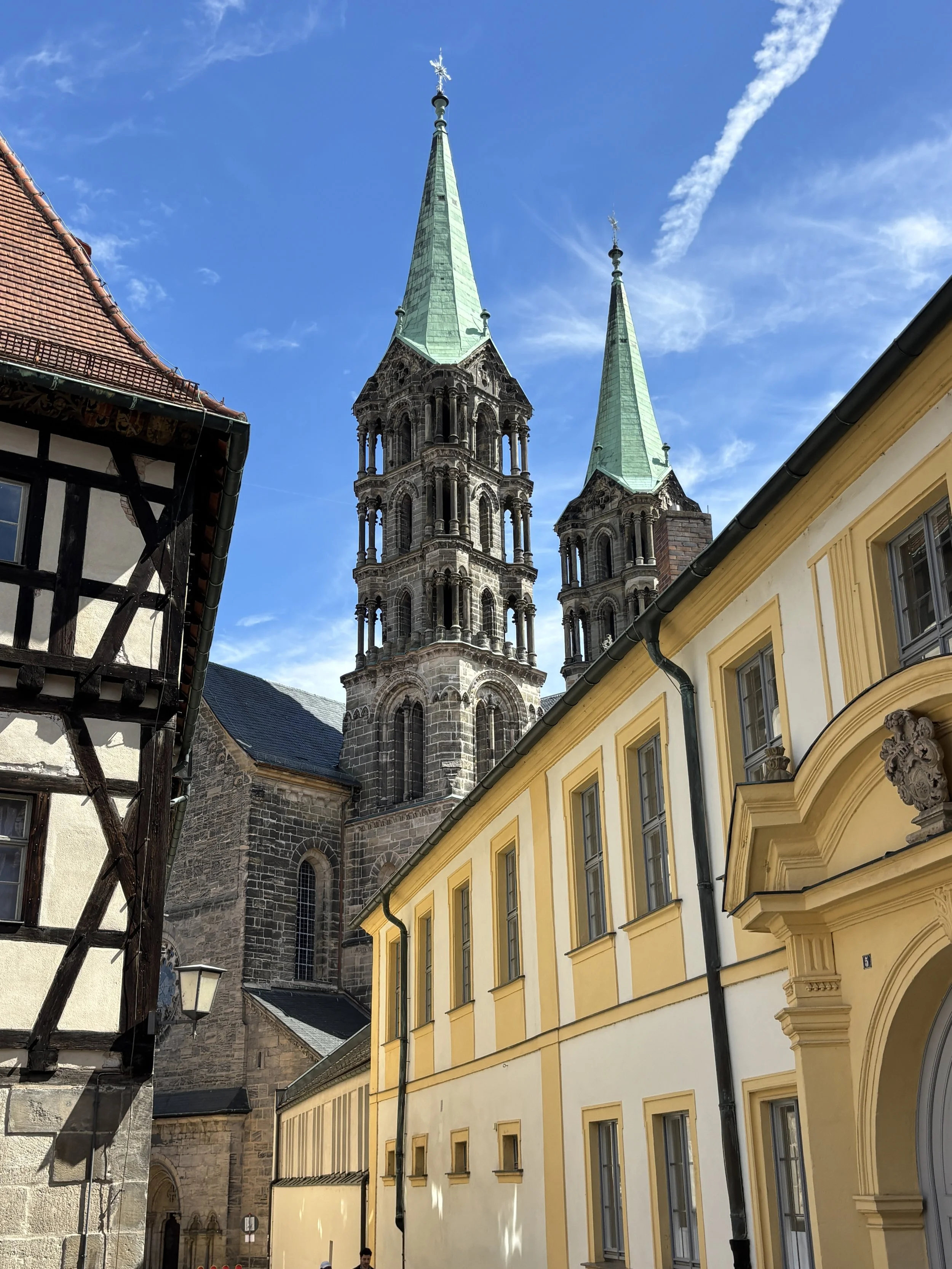
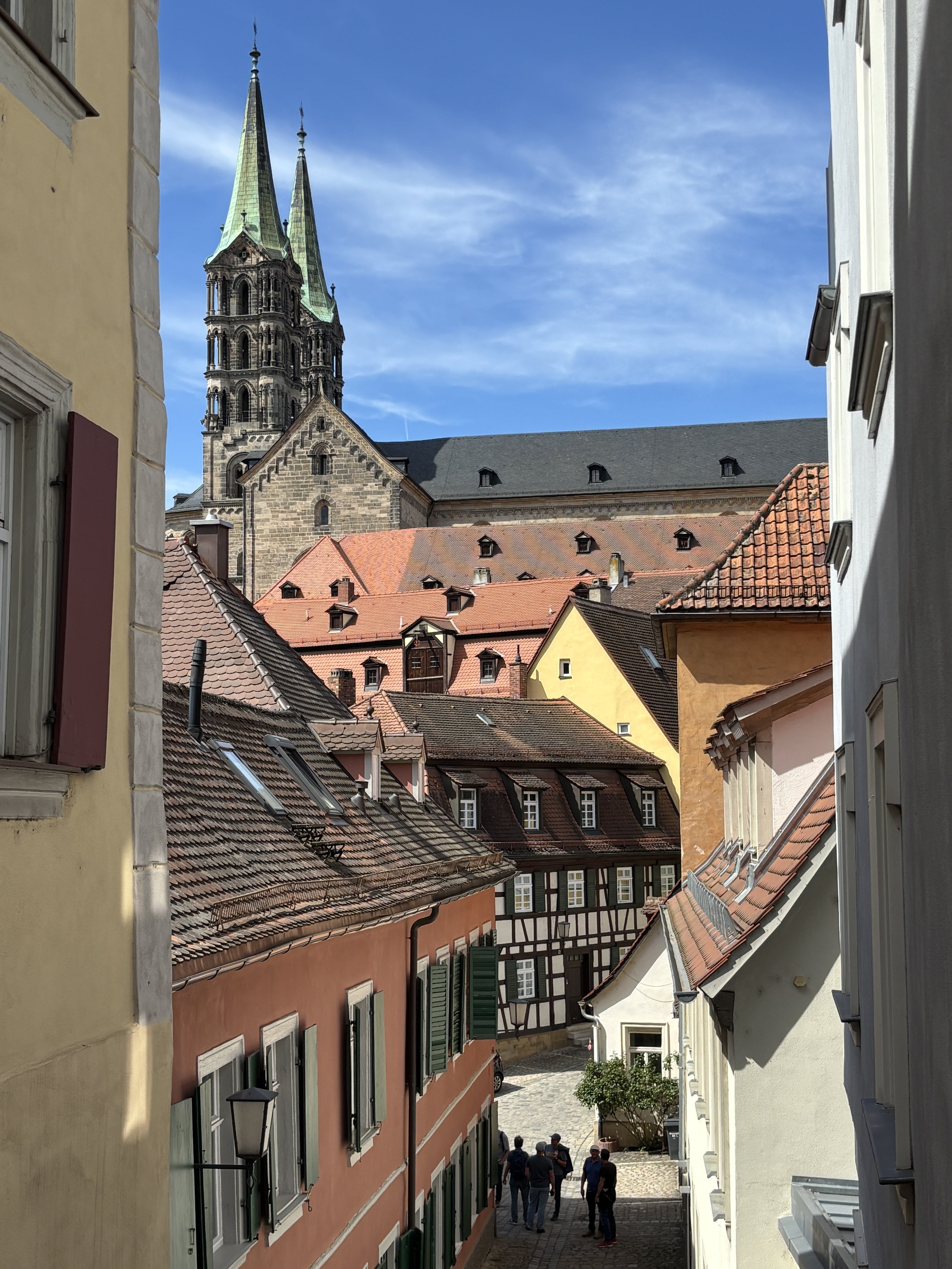
Bamberg’s Cathedral (“Bamberger Dom”) is the most imposing building of the lot and, from its hilltop position dominates the rest of the town. It has Romanesque and Gothic elements and no less than four towers.
Besides its religious and political importance, Bamberg Cathedral has two interesting curiosities: it has the tomb of Pope Clement II, which is the only papal tomb north of the Alps.
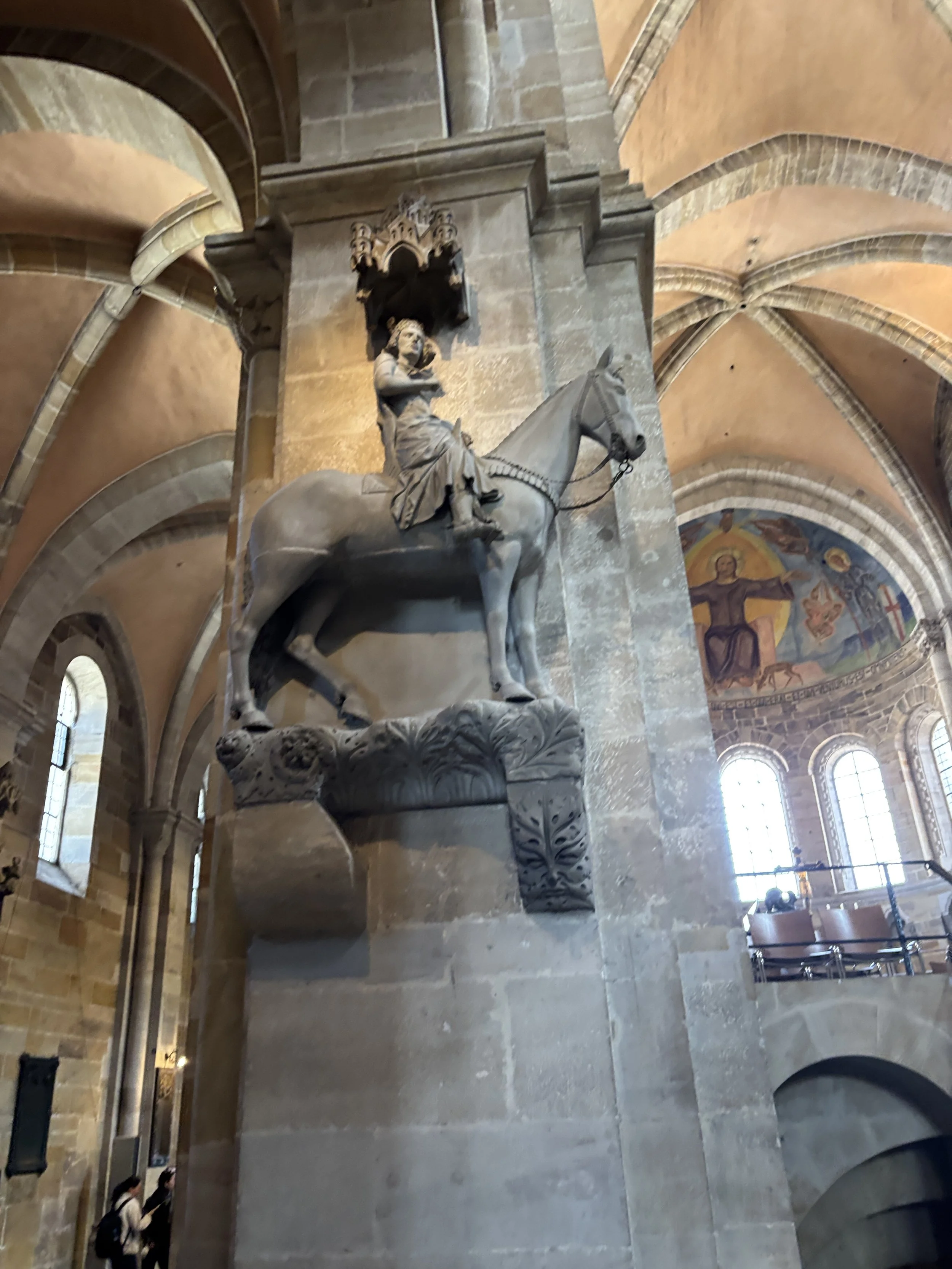
And it also has the Bamberg Rider, “Bamberger Reiter” in German (picture above right), which is a 13th C. statue which, to this day, no one knows who does it represent.
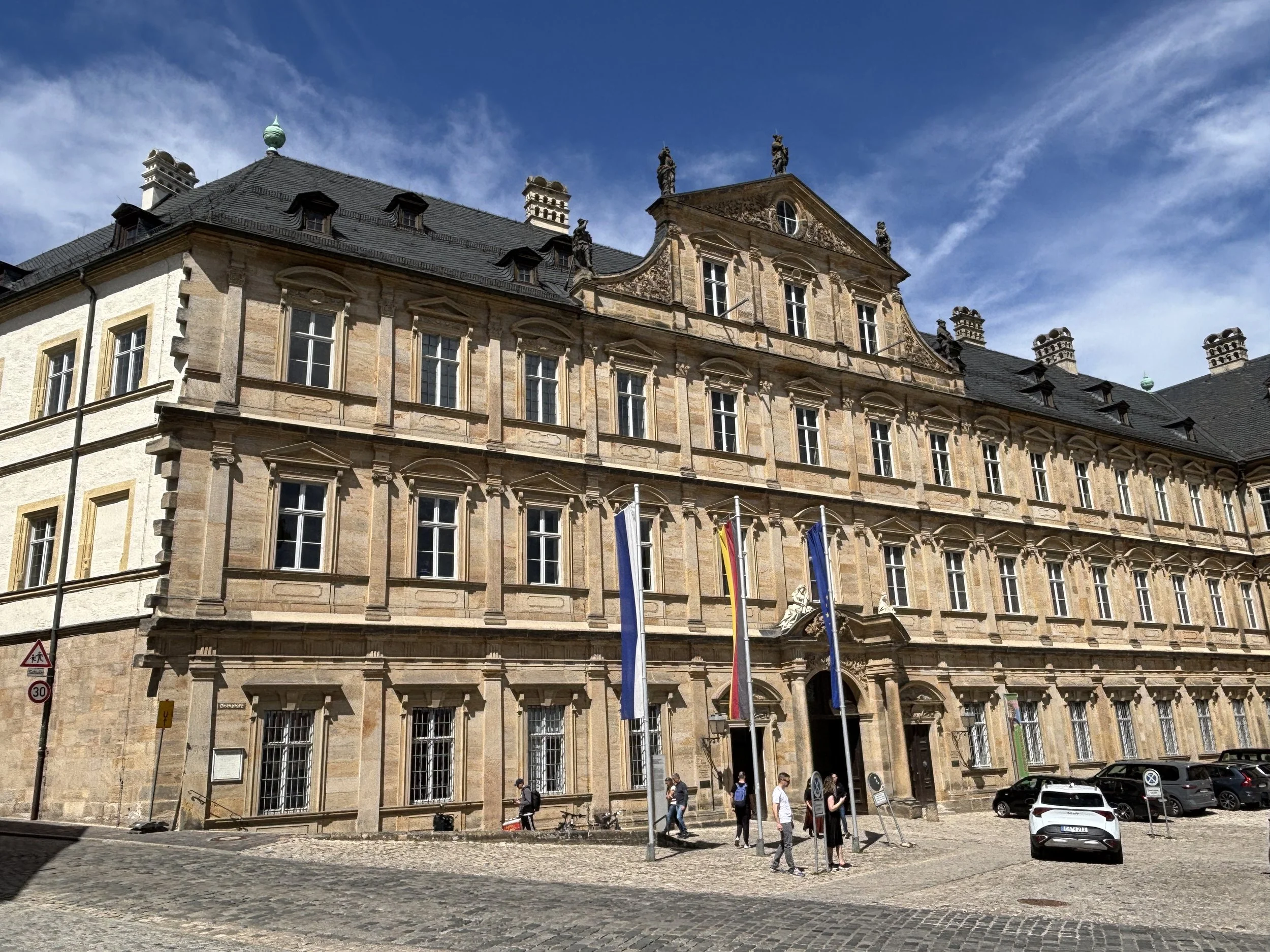
It is here, adjacent to each other and structured around a large open and somehow inclined square, that we find two other very prominent structures.
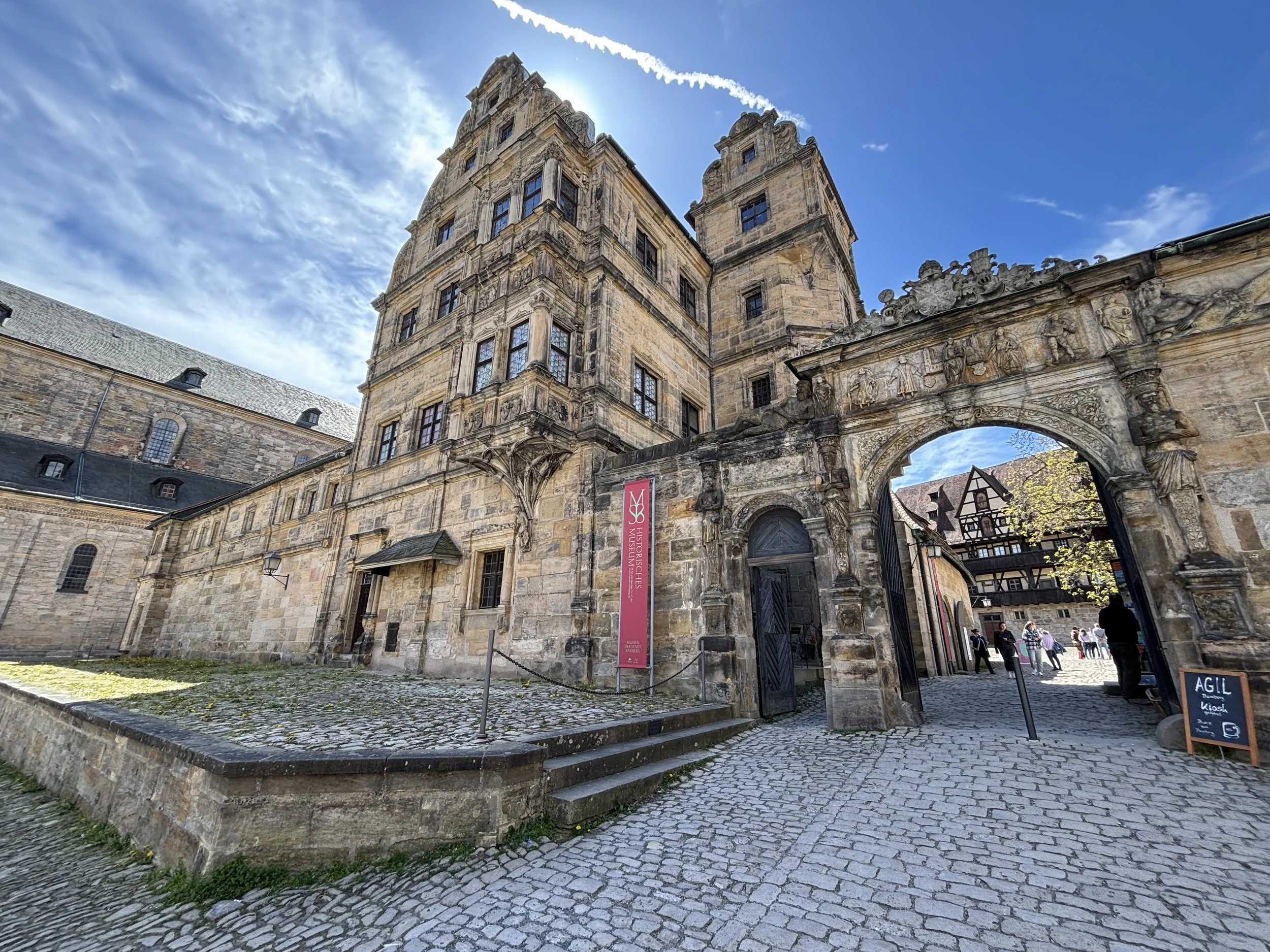
One of them is the Old Court, which is one of the oldest structures in the city and once upon a time an Epicospal residence, the other is the Neues Residenz (below), which was the main palace of the princely bishops of Bamberg.
Below you can see the Old Court, which is a collection of very old timbered buildings organized around a central courtyard.
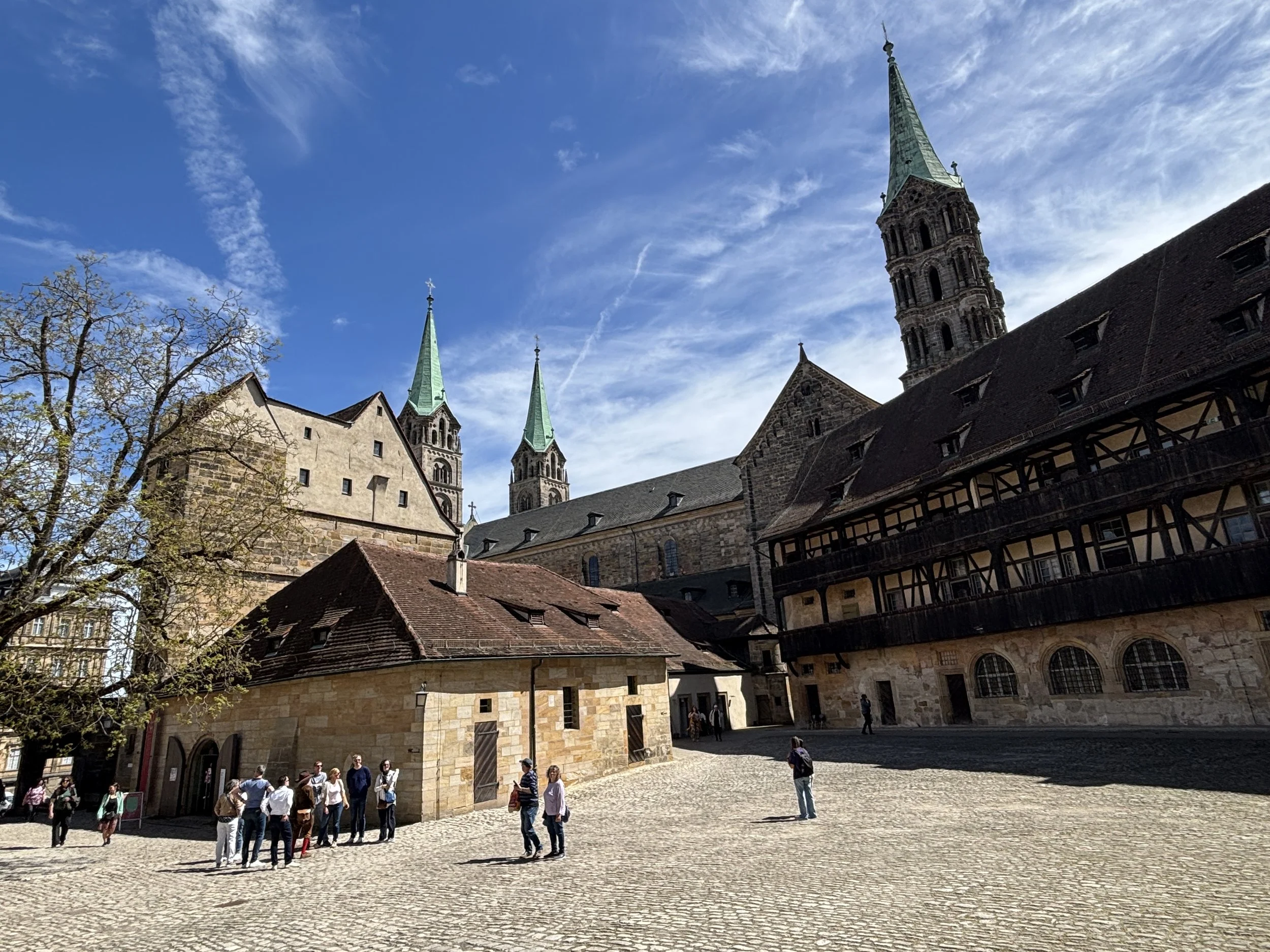
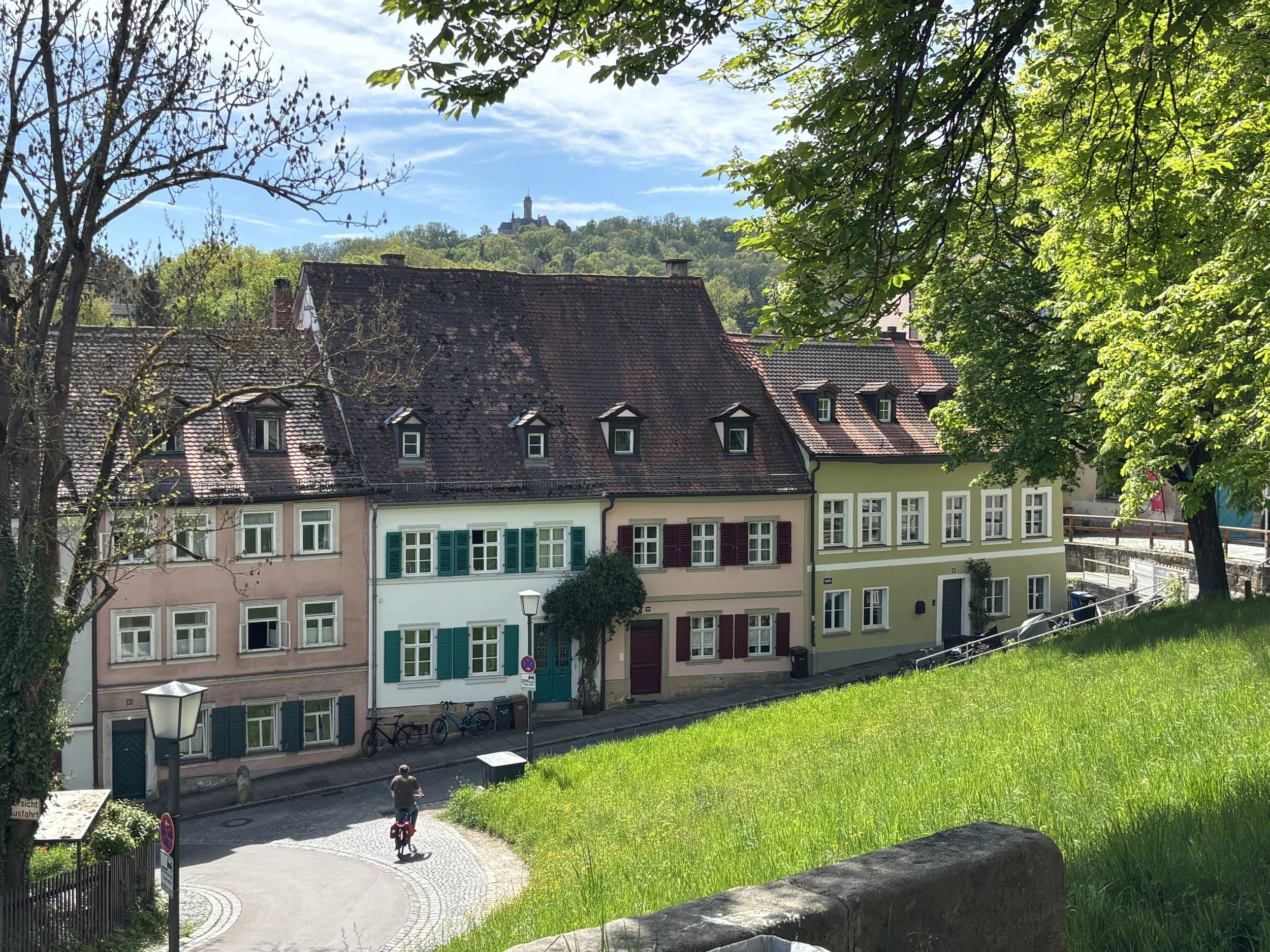
The old town of Bamberg is surrounded by greenery and, while there is a constant flow of tourists, it has quite a few quite and really calm spots.
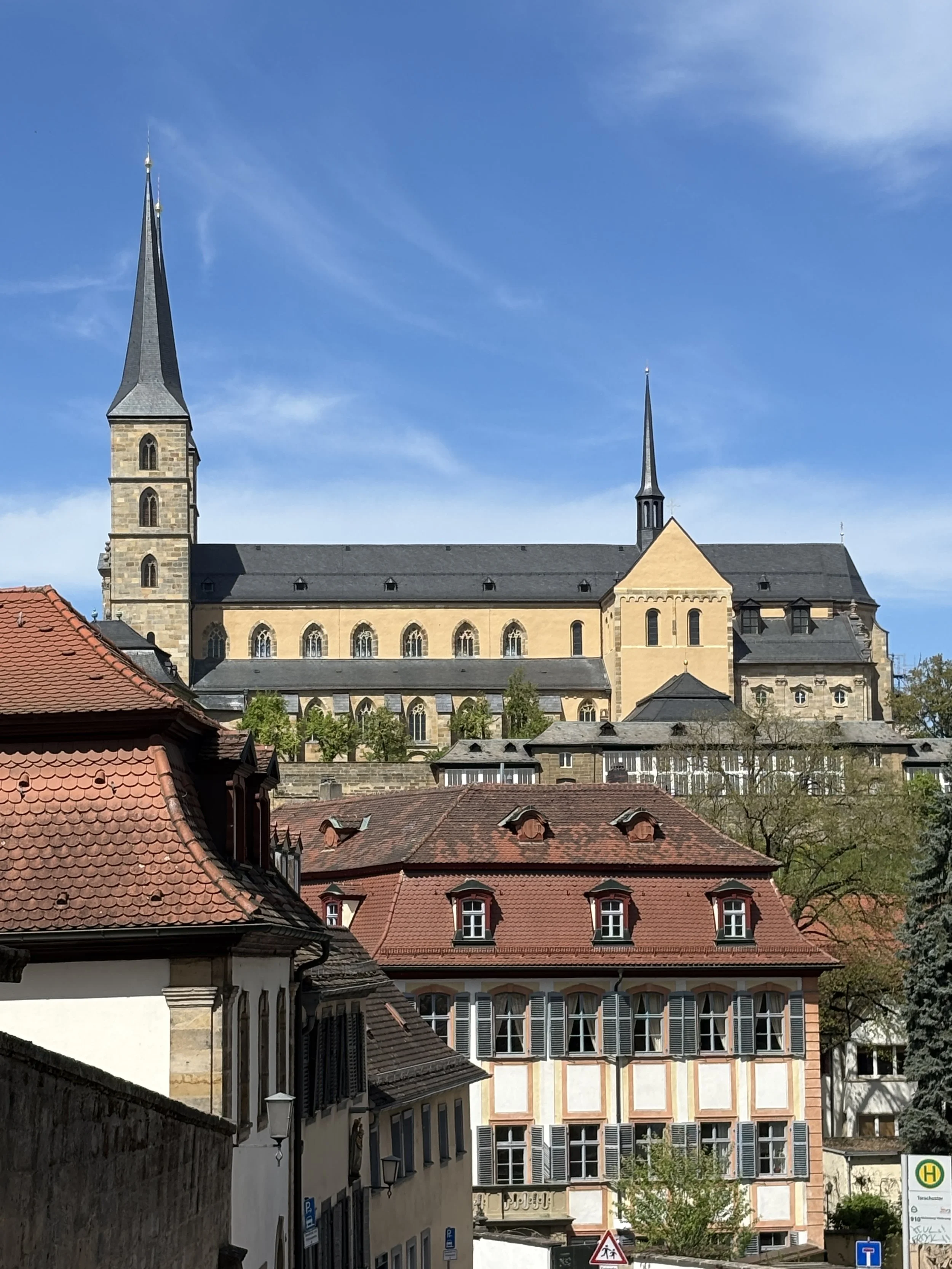
Another building of note is the Monastery of St Michael, which sits on top of another of Bamberg’s hills (the” Michelsberg”). It was built in the 11th C. as a Benedictine monastery and was secularized in the early 19th C.
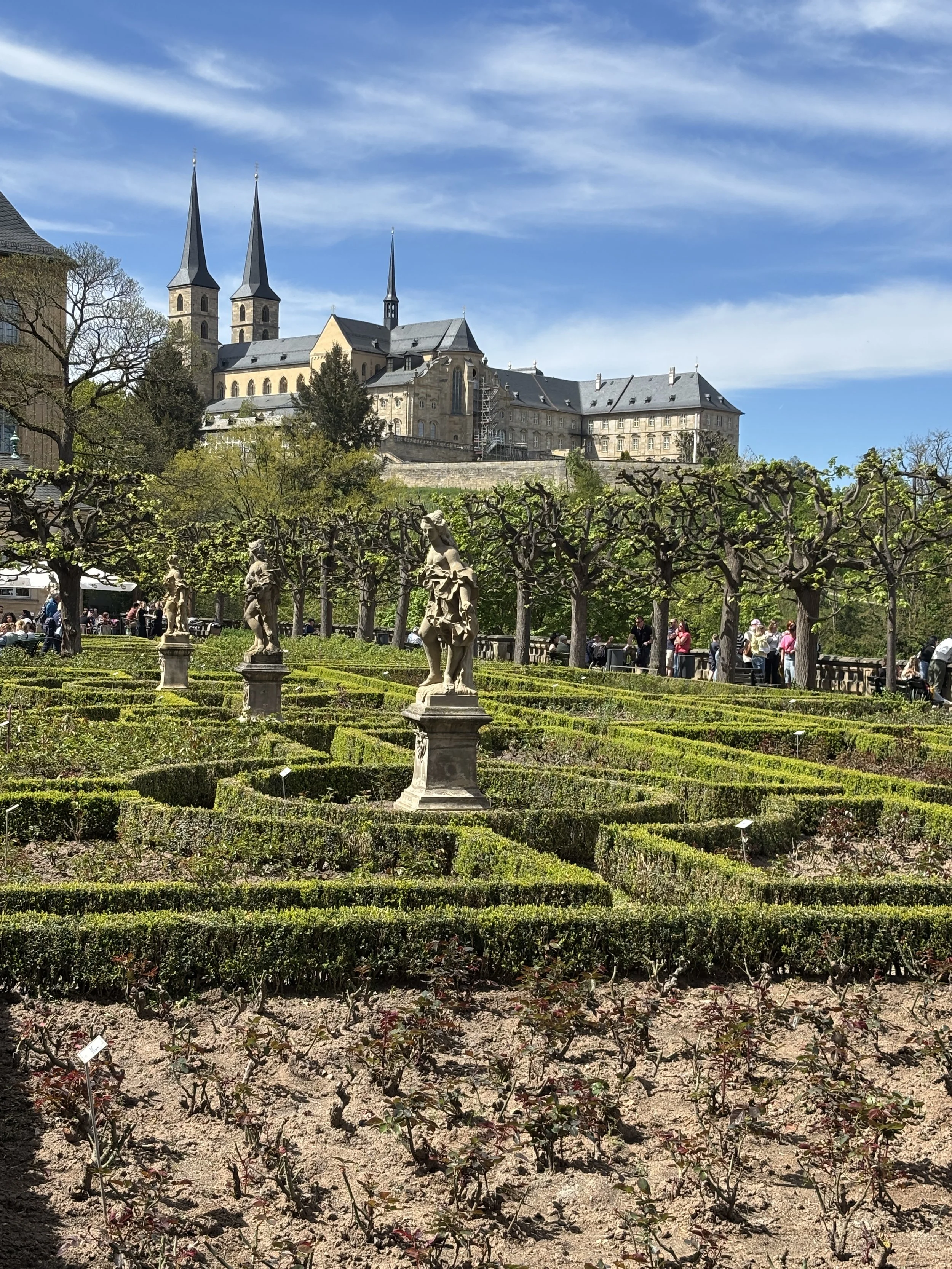
It is one of the most iconic elements in Bamberg’s skyline, particularly when seen from the Rose Garden. The latter, which is an annex of the Neues Residenz, is a perfectly manicured classical garden which opens onto a terrace providing what is likely the best panoramic view of the city.
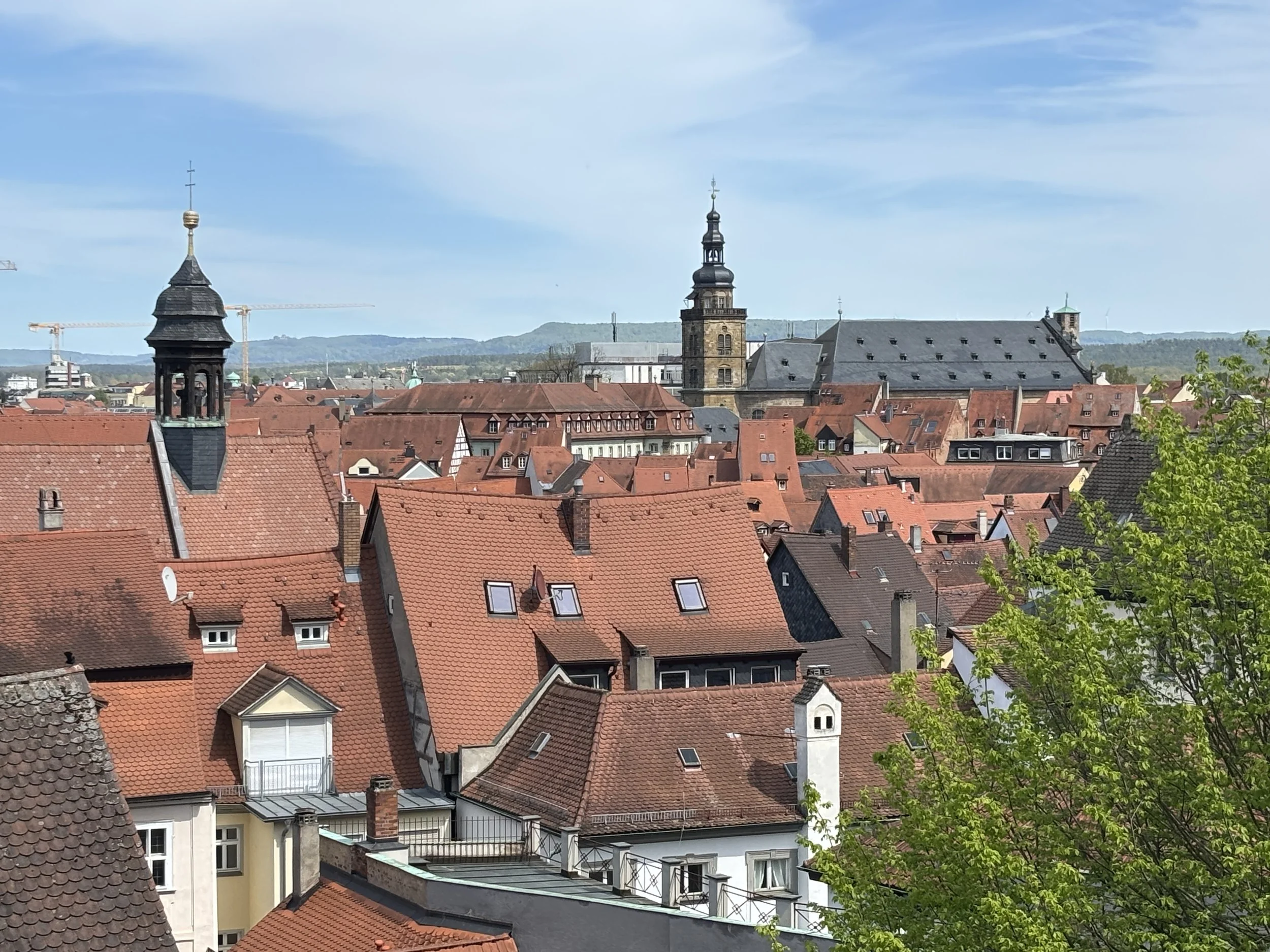
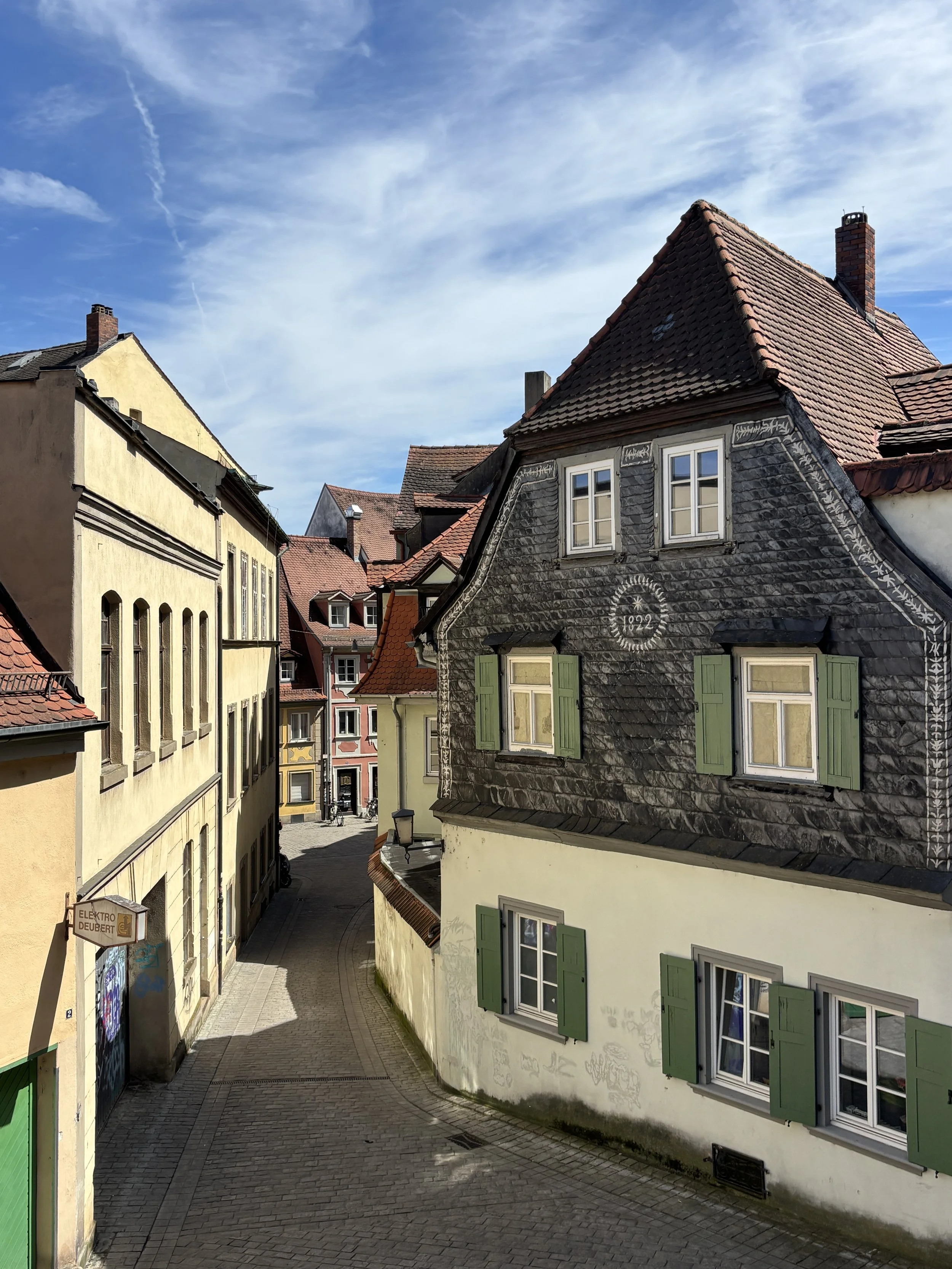
The walk through old Bamberg took us through several picturesque locations, with the unequal terrain offering several interesting perspectives.
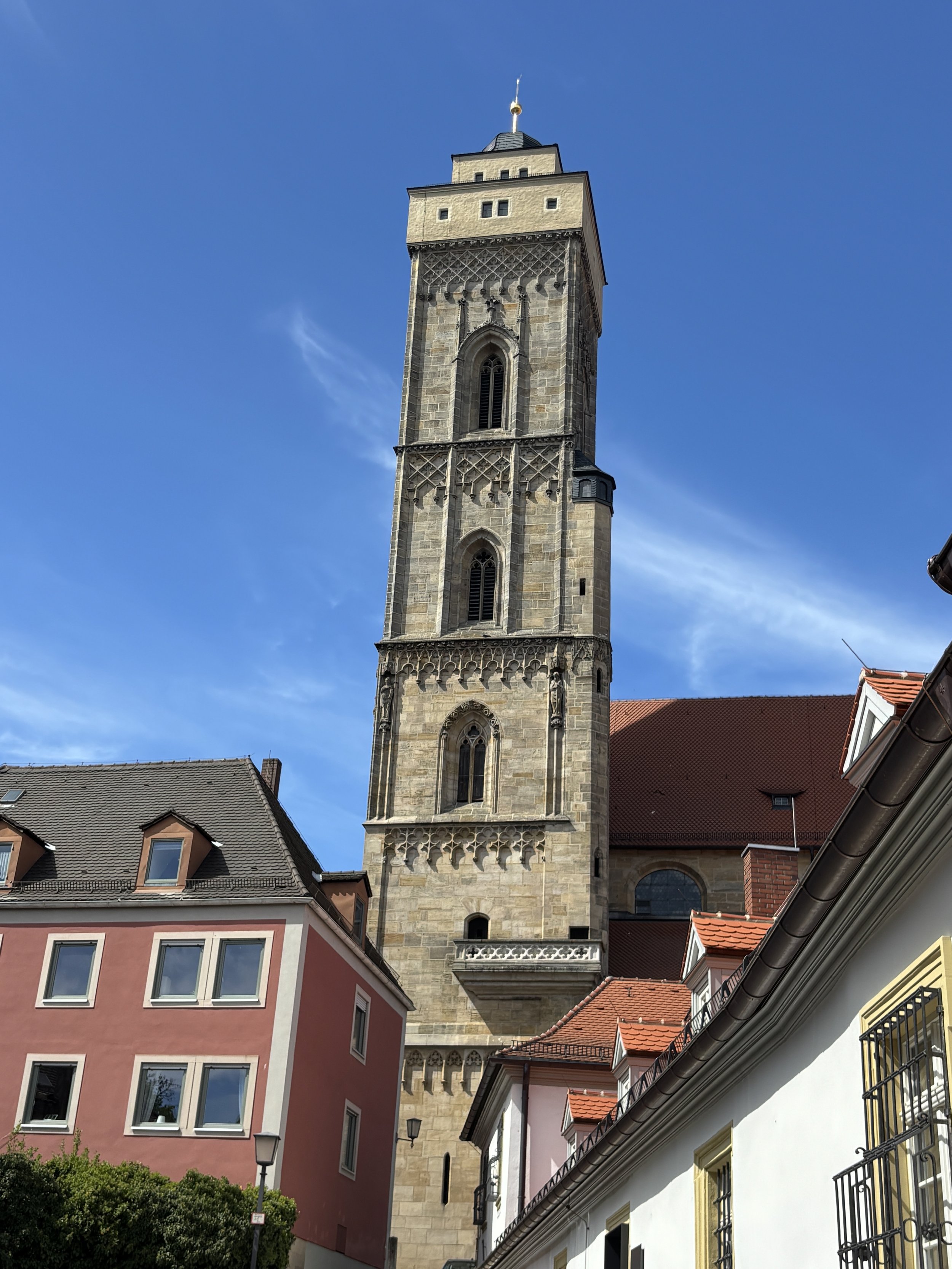
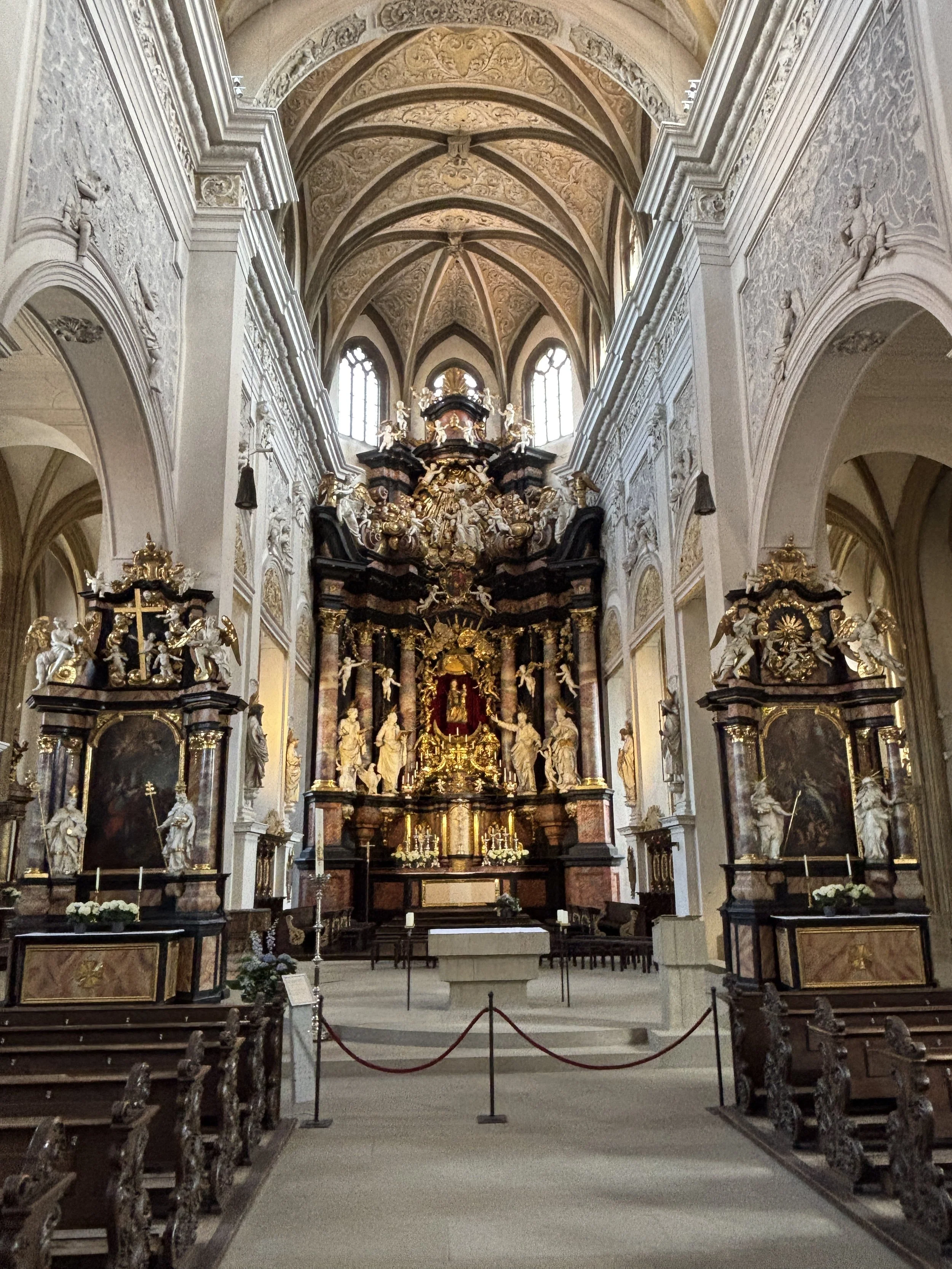
There are several other large churches of historical interest in Bamberg, such as Saint Jakob (a branch of the “Way of Saint James”, the famous pilgrimage route, passes apparently through Bamberg), Saint Stephan and the Parish Church of Our Lady (“Pfarrkirche Unsere Liebe Frau”). We only visited the latter of these, which is presided by a rather magnificent Baroque altar.
Where to eat in Bamberg
Schlenkerla Rauchbierbrauerei
Dominikanerstraße 6
96049 Bamberg
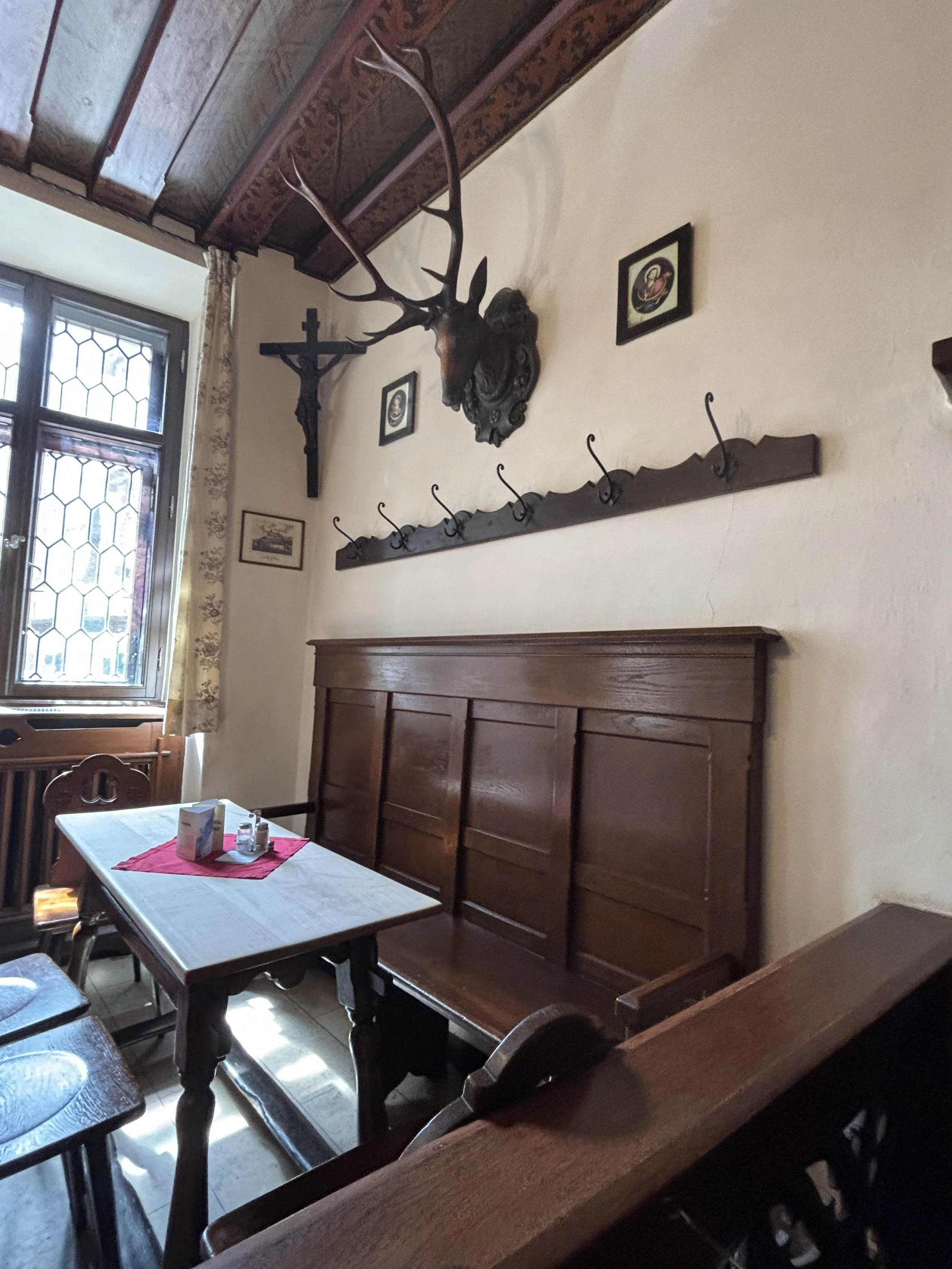
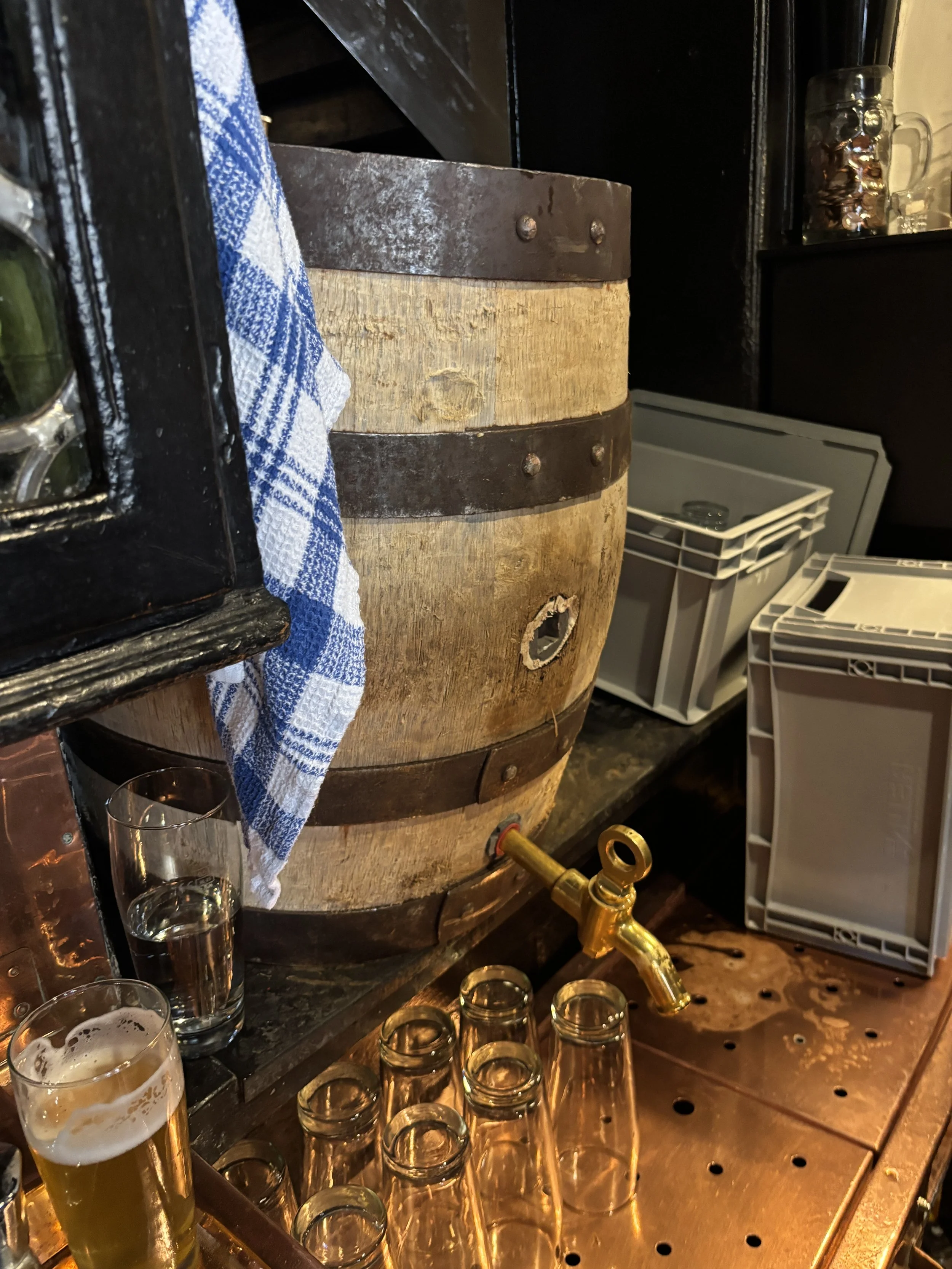
Bamberg is known for its smoked beer (Rauchbier) and no better place to taste it than its oldest and most renowned brewery, Schlenkerla.
This beer house was reportedly established in 1405 and it still produces smoked beer in the traditional way (using malt that has been dried over burning beechwood instead of hot air, a process which infuses the grain with a distinctive smokiness before fermentation). It is served in two versions: dark and light, with the latter being seasonal and available only in spring and summer.
So, if you wish to get the full Bamberg experience, make sure you stop by Schlenkerla to try it, even if you are not a regular beer drinker, as it is my case.
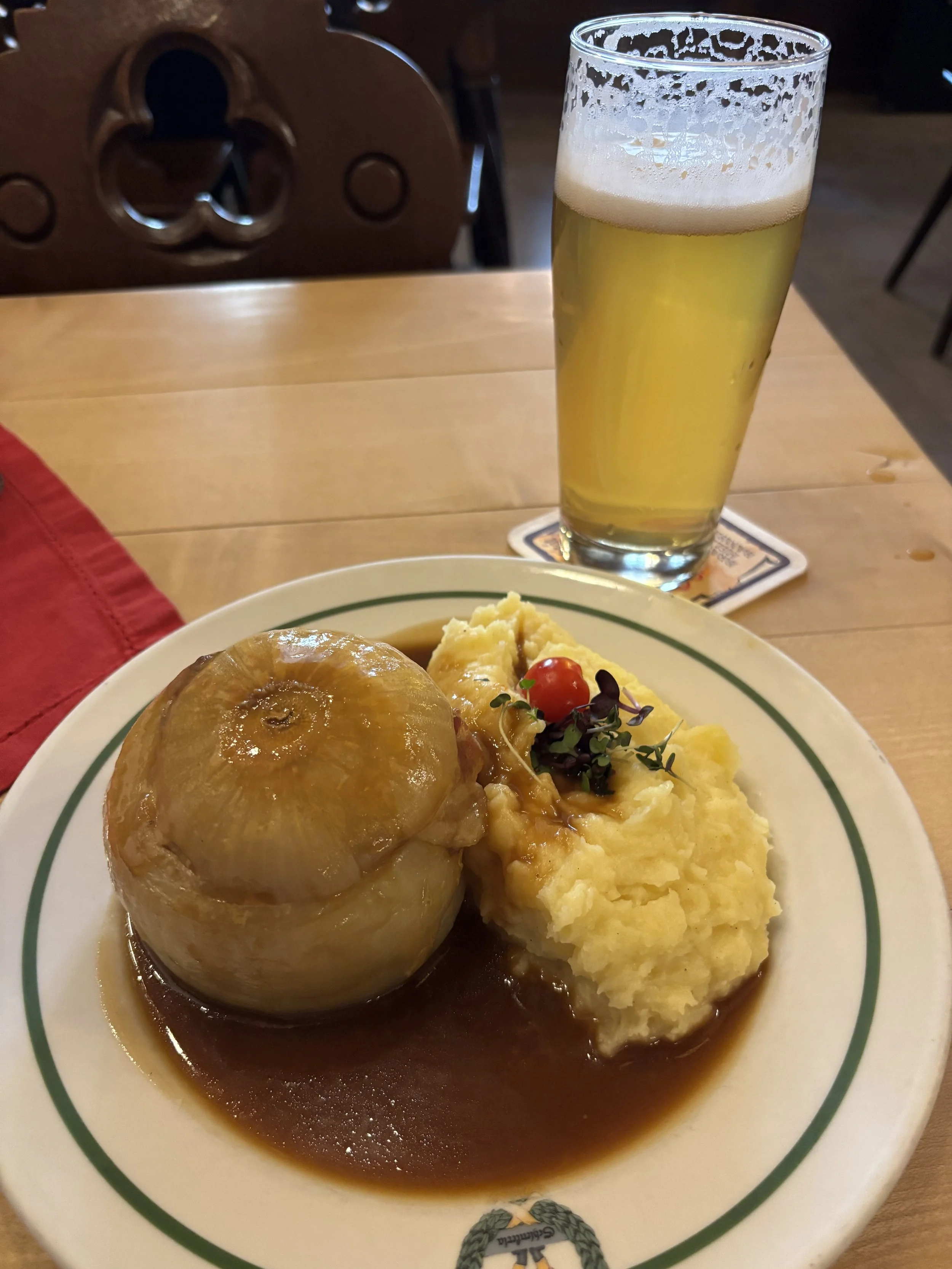
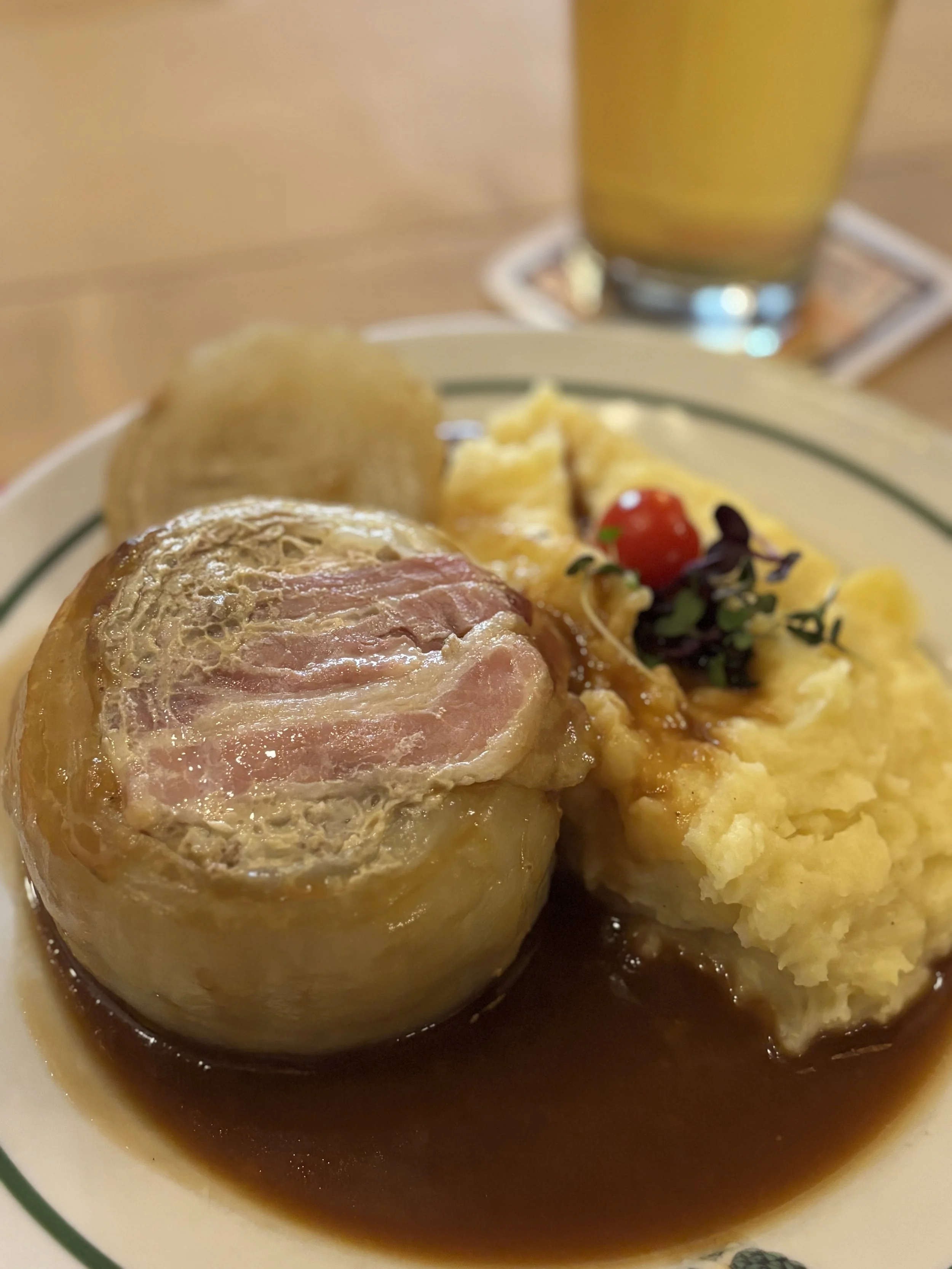
What’s more, since it is also a restaurant, you can have your beer together with another of the local specialities: stuffed onions (“Bamberger Zwiebel”). These are filled with pork meat and served with a side of mashed potato and gravy. It’s quite a filling dish!
By the way, the beer you see here is Schlenkerla’s Pale Lager, which is a special edition beer that the restaurant offers exclusively on “Beer Day”, April 23, and while supplies last. No smoked malt us used in its brewing process, however, it’s brewed in the same copper kettles and with the same yeast as the traditional “Rauchbier” in order to give it a slight smoky flavour.
Grüner Markt and other Bamberg specialities
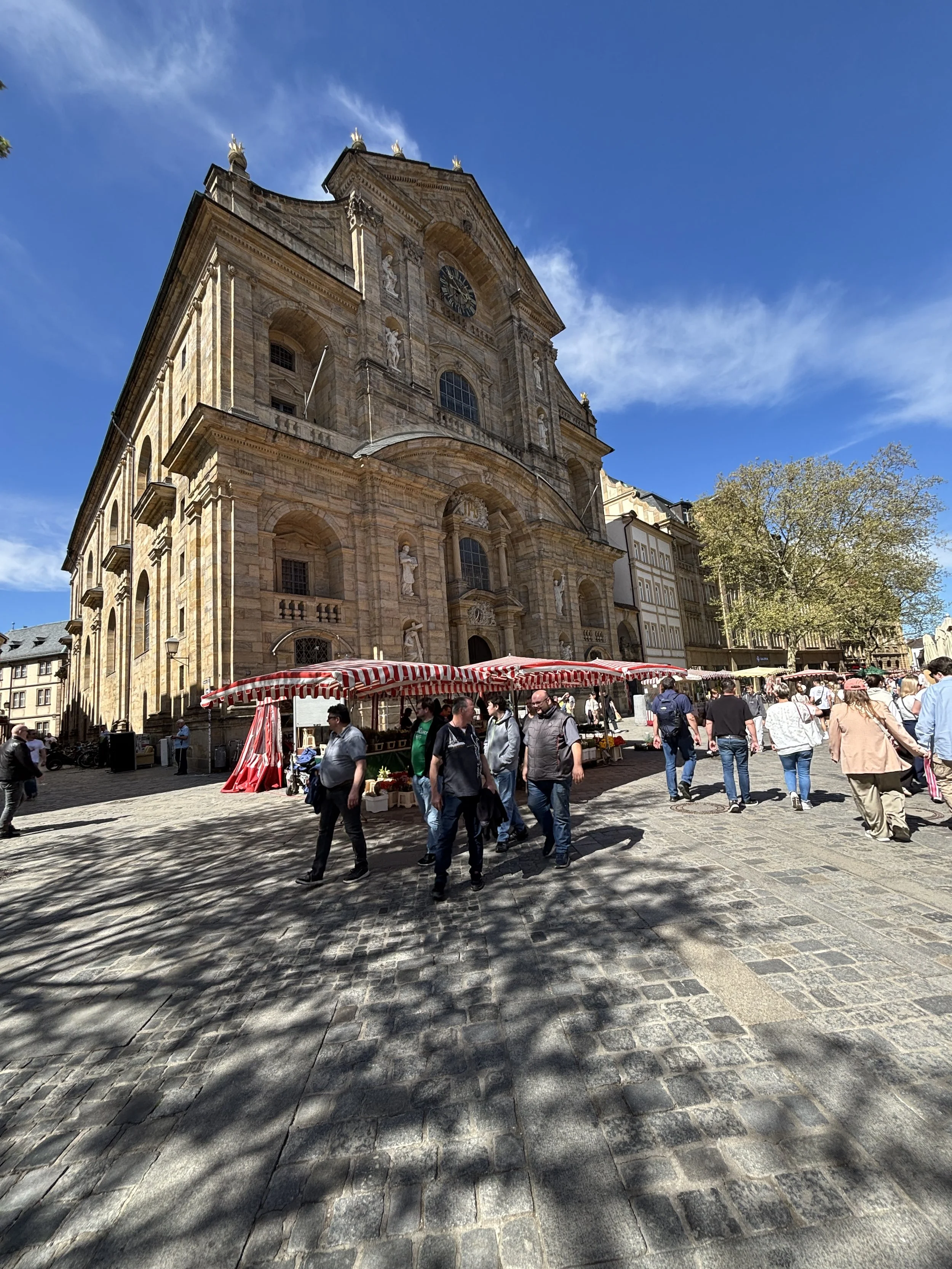
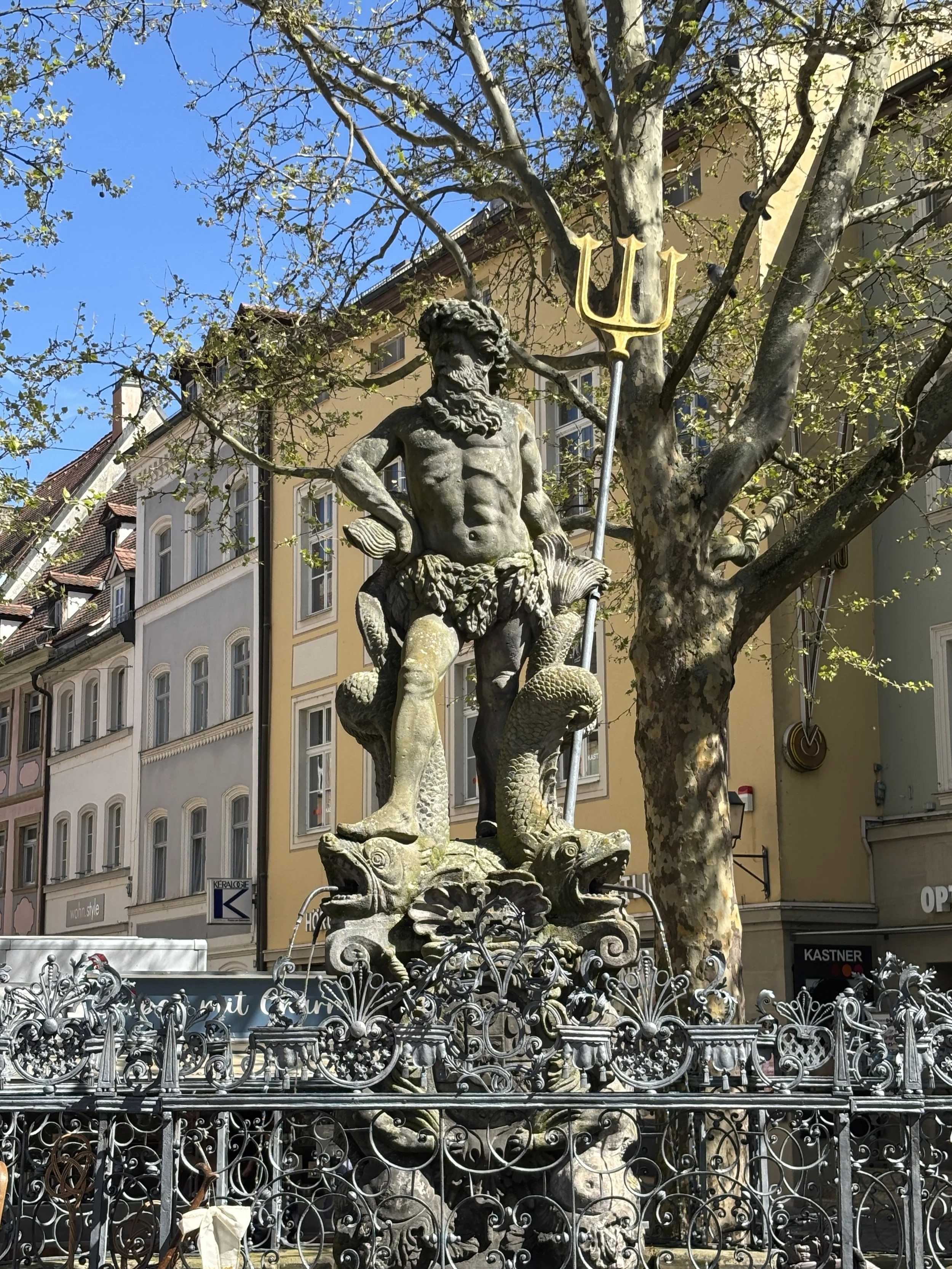
Bamberg’s downtown stretches onto the eastern bank of the Reignetz. And while this is still, technically, part of the old town, the streets here have a more modern feel, with Grüner Markt (“Vegetables Market”) and Maximilien Platz acting as buzzing commercial hubs of the city.
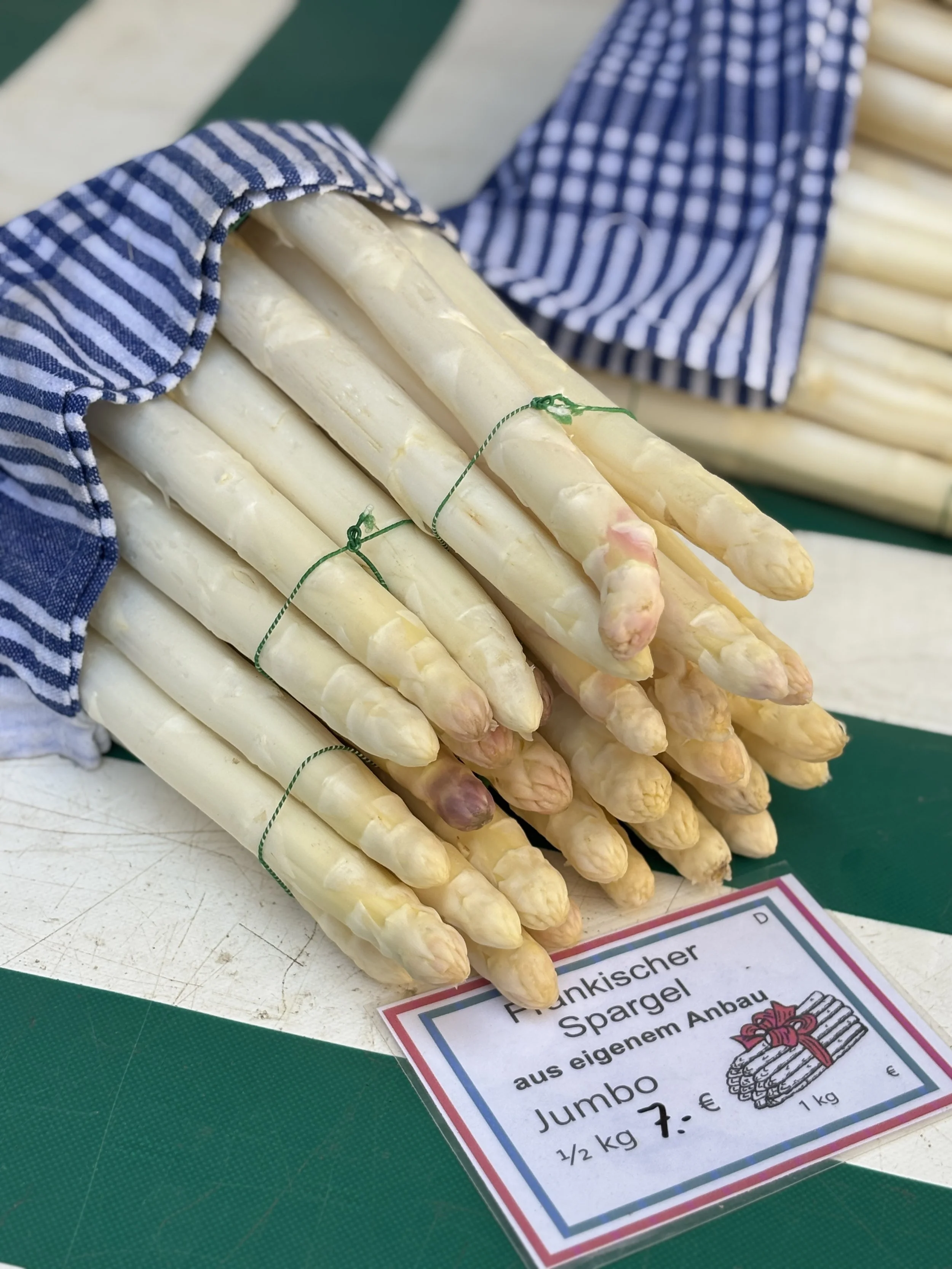
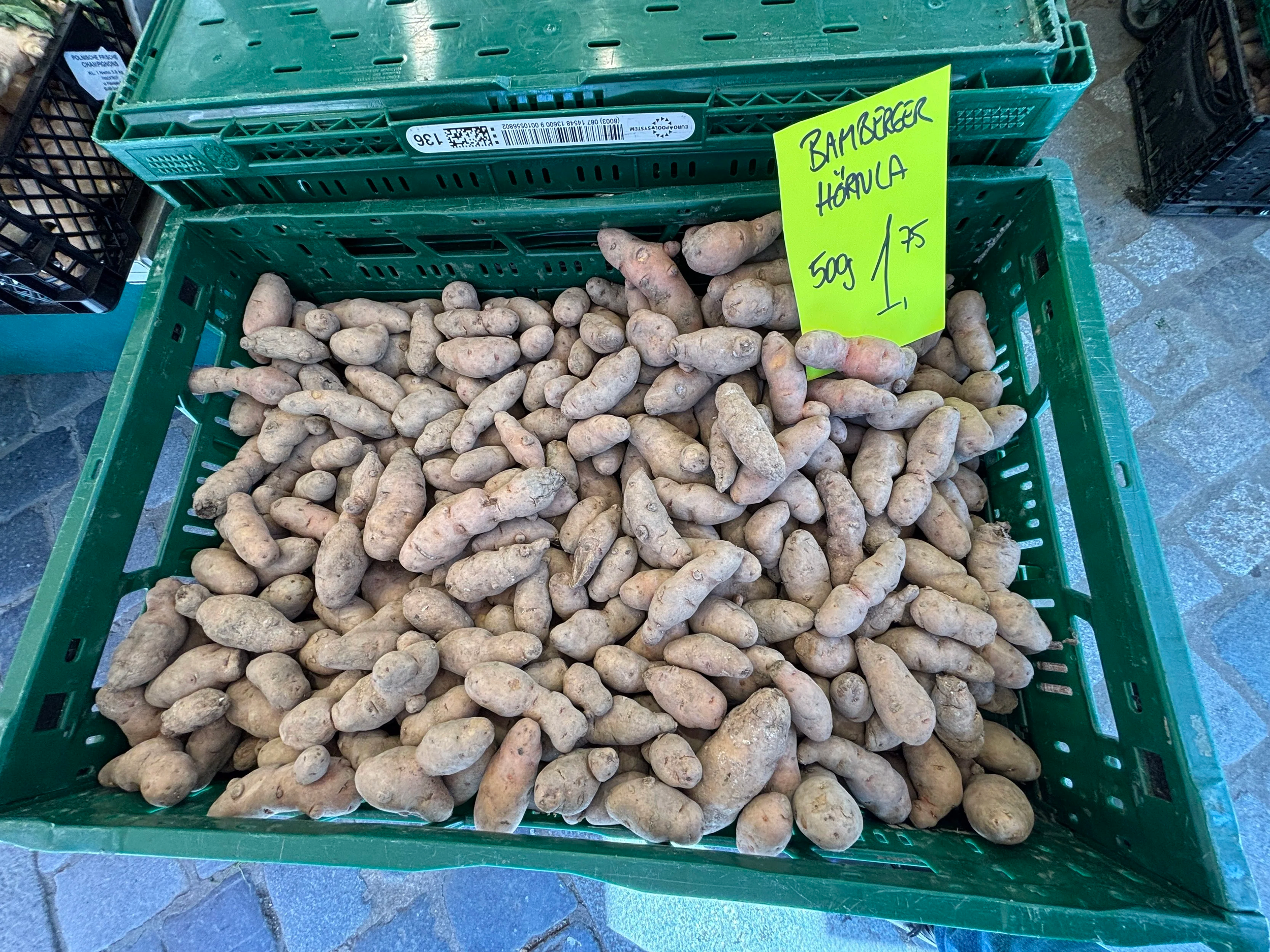
Grüner Markt, in particular, holds a street market for produce where it is possible to find some other local specialities, like the white aspargus and a special type of small crescent-shaped potatoes called “Bamberger Hörnla”.
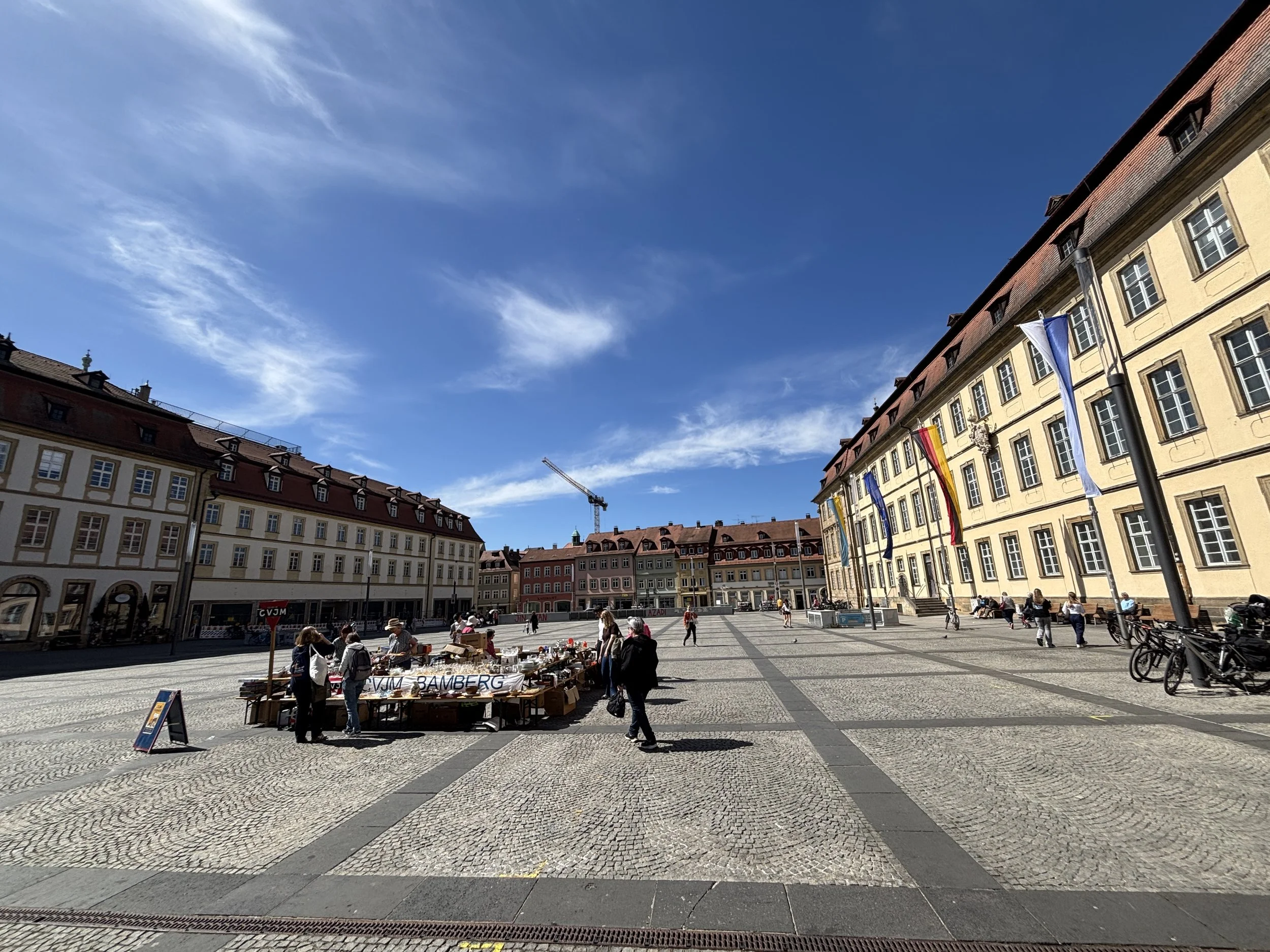
Maximilien Platz (below), in turn, is the center of the city’s modern administration.
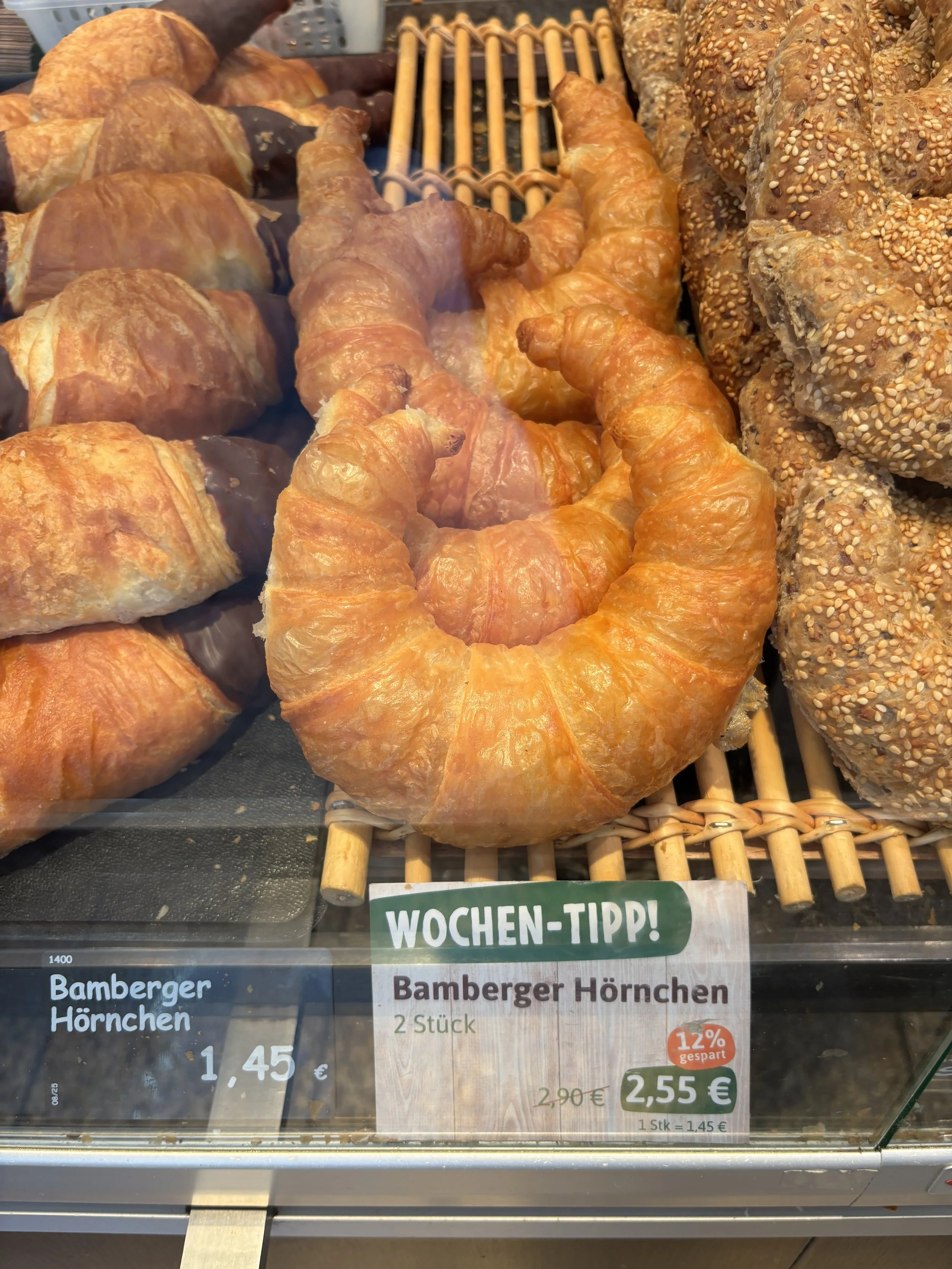
Yet another local speciality in Bamberg, this one in the bakery section, are the “Bamberg Hörnchen”, a type of croissants which are more curved than the regular ones and thinner at the center.
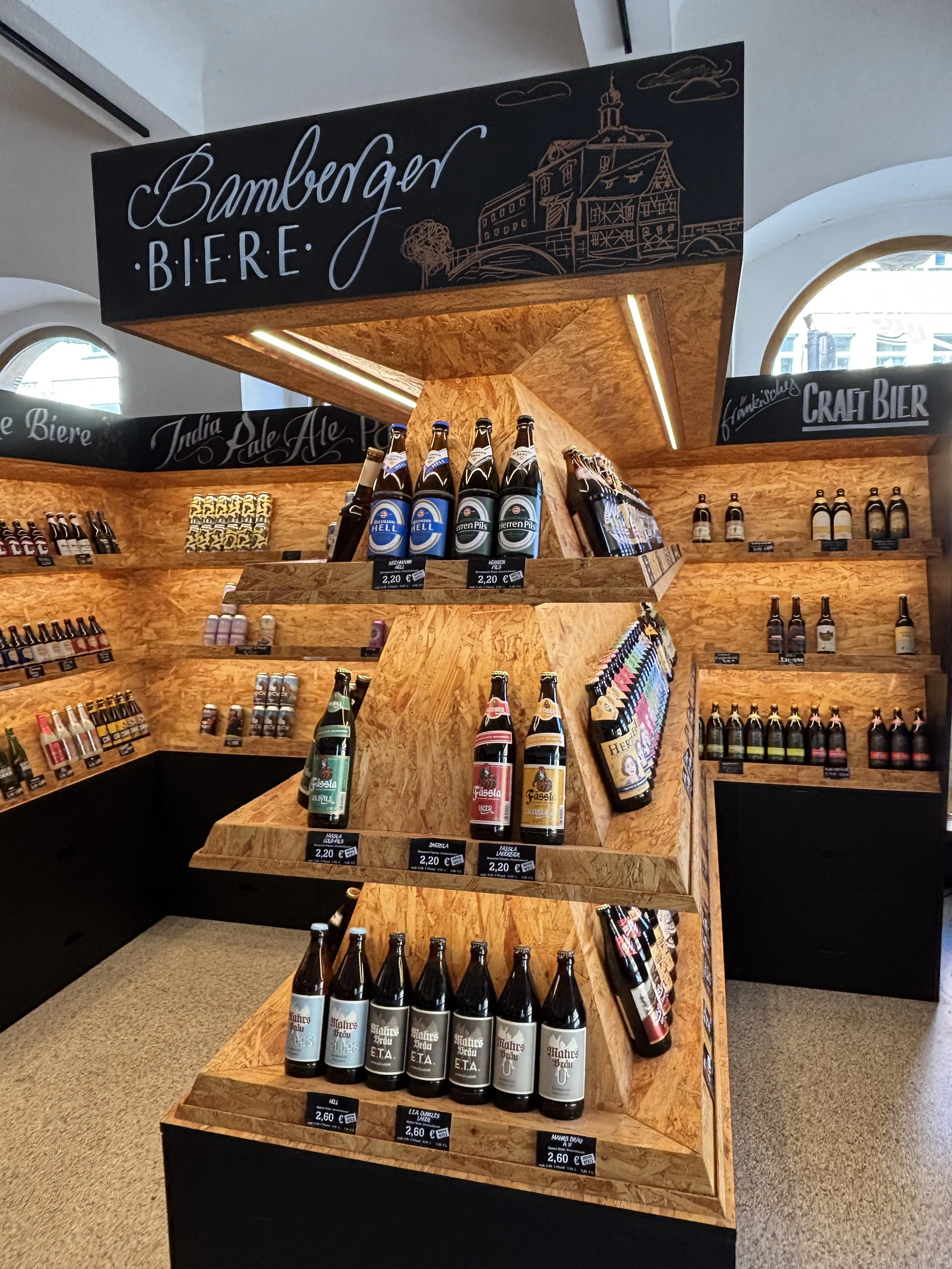
By the way, if you are into beer, before heading back to the station, you can stop at “Die Bierothek”, a shop where you can find specialty beer from Bamberg (including the famous smoked one) and the rest of Franconia (if you like beer, stay tuned for the next installment of this series, Forchheim, since it will feature plenty of it!).
If you enjoyed this post, check out the next stage of my Franconian trip: Forchheim and its underground beer cellars!
