
What to do and what to see in Bergamo and Lake Iseo
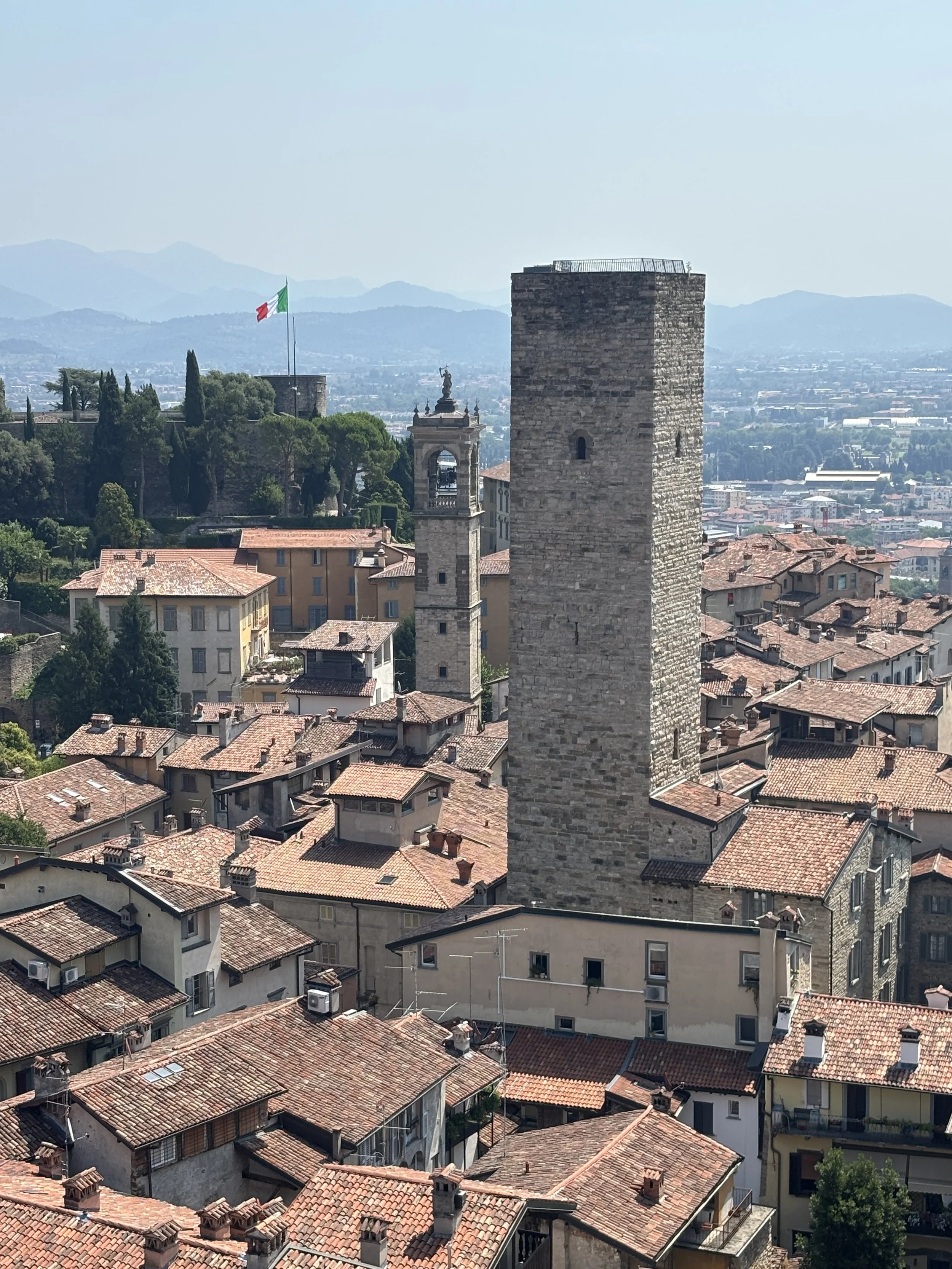
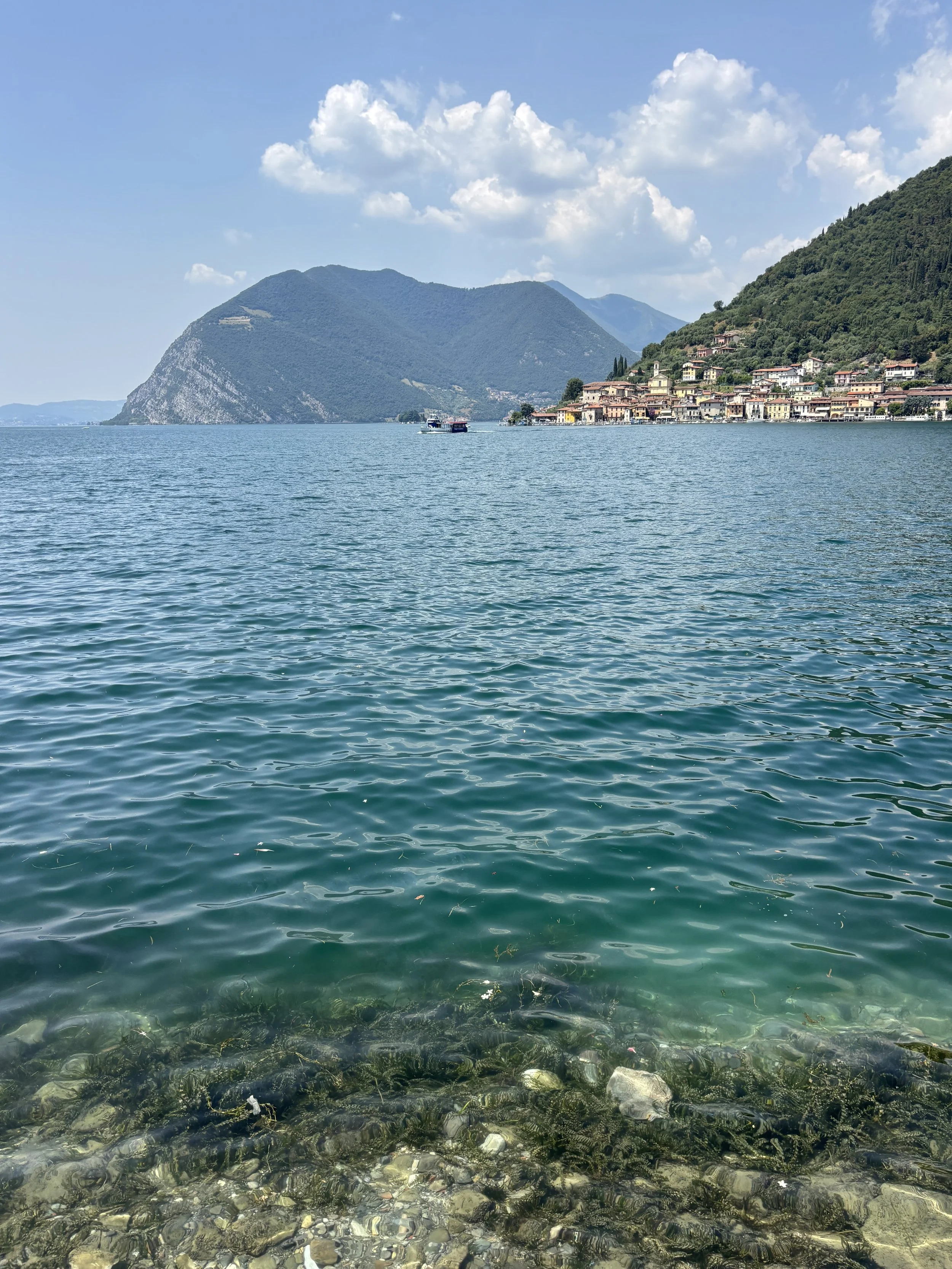
Bergamo, at the foot of the Italian Alps, is well known all over Europe because of its airport, Bergamo-Orio al Serio (BGY), which is one of Ryanair’s main bases and is used also by several other low cost airlines.
For many which have transited this airport, Bergamo may be just an alternative gateway to get to Milan, which is located roughly one hour drive to the southwest, yet, in this post I will try to explain how Bergamo is, in fact, a beautiful and fascinating destination one its very own!
What’s more, besides its many charms, Bergamo is also an ideal base to explore other great spots in throughout the nearby Alps, most notably among them Lake Iseo (“Lago d’Iseo” in Italian). Keep reading to learn more about what to do and what to see in Bergamo, Lake Iseo and the surrounding countryside.
Covered in this post:
Bergamo’s Città Alta and Città Bassa, a tale of two cities
What to see in Bergamo’s Città Bassa
Nice places to have coffee in Bergamo’s Città Bassa
What to see in Bergamo’s historical center, the Città Alta
La Rocca (fortress) and museum of the ‘800
A recommended itinerary through Bergamo’s Città Alta
Tasting Bergamo’s Casoncelli
A great, small art museum in Bergamo: Accademia Carrara
Where to stay in Bergamo
A great day excursion near Bergamo: Lake Iseo
What to see around Lake Iseo
Visiting Monteisola on Lake Iseo
Wandering around Peschiera Maraglio
Other spots to bathe in Lake Iseo
More interesting places around Lake Iseo: Lovere
Bonus tip: visiting Clusone, in the Val Seriana
Getting from the airport to the city
We have already mentioned Bergamo-Orio al Serio airport and this is, I guess, the way most visitors arrive in Bergamo. The airport is, in fact, quite close to the city center, so close that you can actually make out the countours of Bergamo’s old town from the boarding gates.
What’s the easiest way to get to downtown Bergamo from Orio al Serio airport, then?
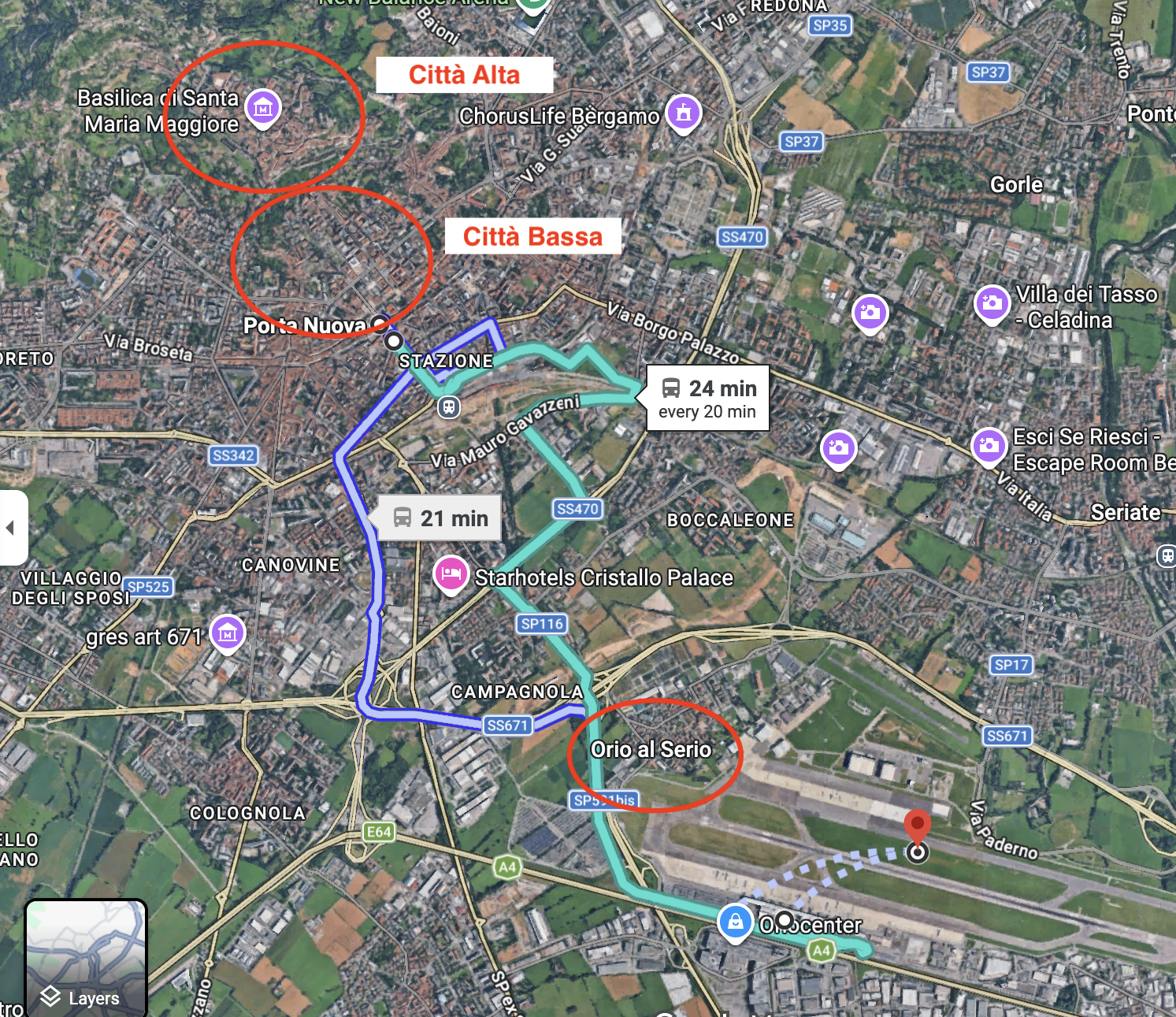
The cheapest, and possibly fastest, way to get to the city center is to take the Bus number 1, which takes you from Orio al Serio Airport to the foot of Bergamo’s Città Bassa.
The bus passes roughly every 15-20 minutes and tickets cost €3 each way. They can be acquired at ticket machines which are found at the bus stop just outside the terminal.
A word of caution, though: this is a regular urban bus and sometimes it can get really, really crowded, making the trip, even if short at around 20-25 minutes, far from comfortable, particularly if you are traveling heavy and carrying bags.
By the way, Bus Number 1 also stops at the city’s main train station, where it is possible to connect with trains that go to other points in the Lombardy region and beyond.
This post may contain affiliate links. If you book or buy something through them, I earn a small commission, at no extra cost to you. It's one of the ways I keep Places of Charm going. Thank you for your support.
Bergamo’s Città Alta and Città Bassa, a tale of two cities
As mentioned in the previous section, Bergamo is divided in two major parts: the lower city (Città Bassa) and the upper city (Città Alta).
The upper part is the historical hilltop walled town, with its foundations dating back at least to Roman times. This is where most of the monuments and sightseeing spots are.
The lower town is essentially the modern part of the city, on the plains.
This part of the city has already been partly urbanized in some way or another since the middle ages, when a large trade fair started to be held at an ad-hoc spot near today’s Porta Nuova area. This is where most hotels and other services are located. It has also some nice walkable streets.
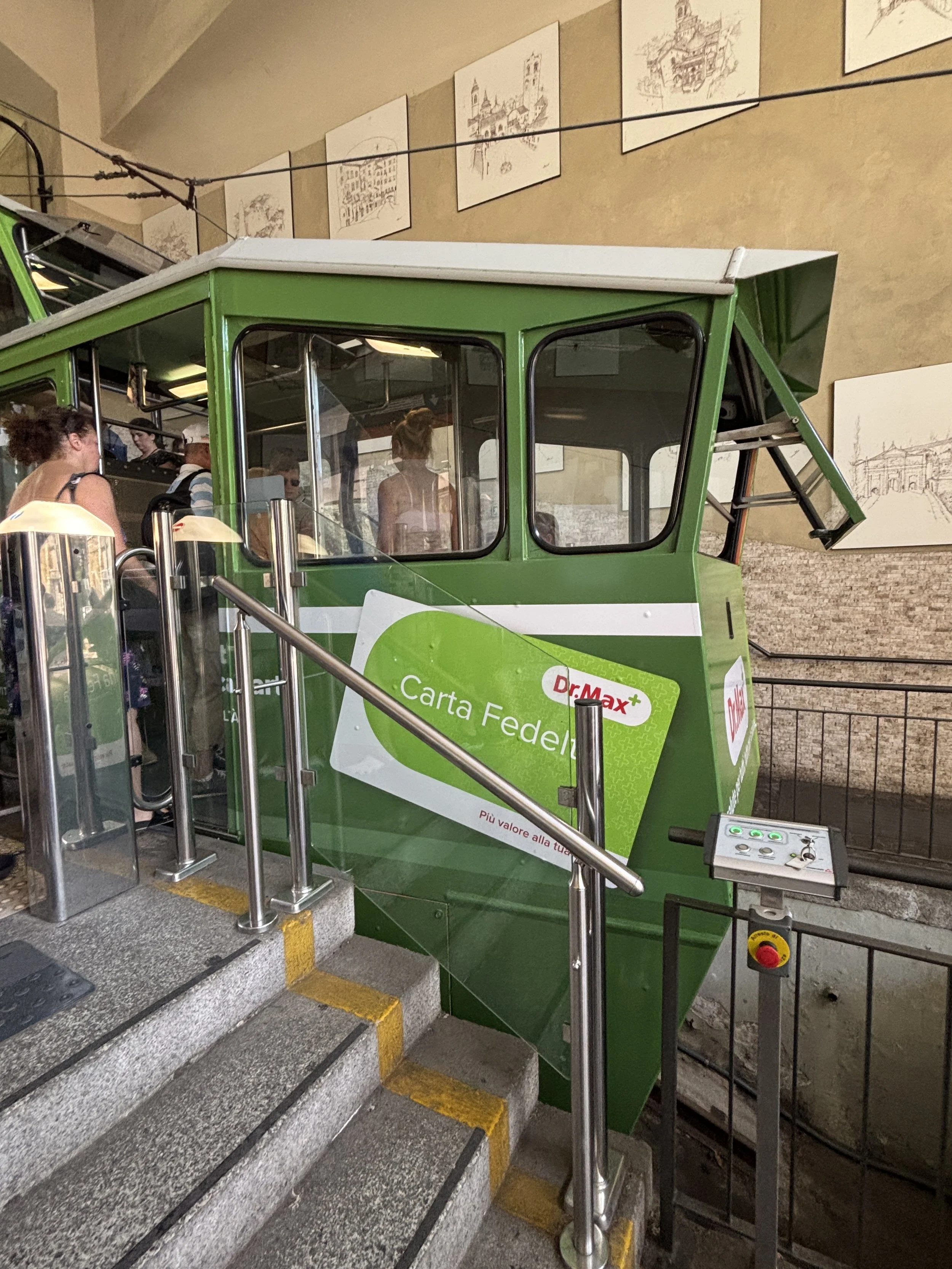
The two parts of the city are connected by a funicular, which is a tourist attraction on its very own. One way trip costs €1.7 (I think it is also included in some travel cards).
Nevertheless, you can also get to and from the Città Alta on foot through the old Venetian bastion gate of Porta di San Agostino, just that it will take you a bit longer from the Porta Nuova area (maybe a 15-20 min extra walk), and it will be a bit uphill.
I would leave this itinerary for the return journey from the Città Alta, not least because this way you can also pass by another of Bergamo’s top attractions, the Accademia Carrara art museum, which I also cover in this post.
Walking through Bergamo’s Città Bassa
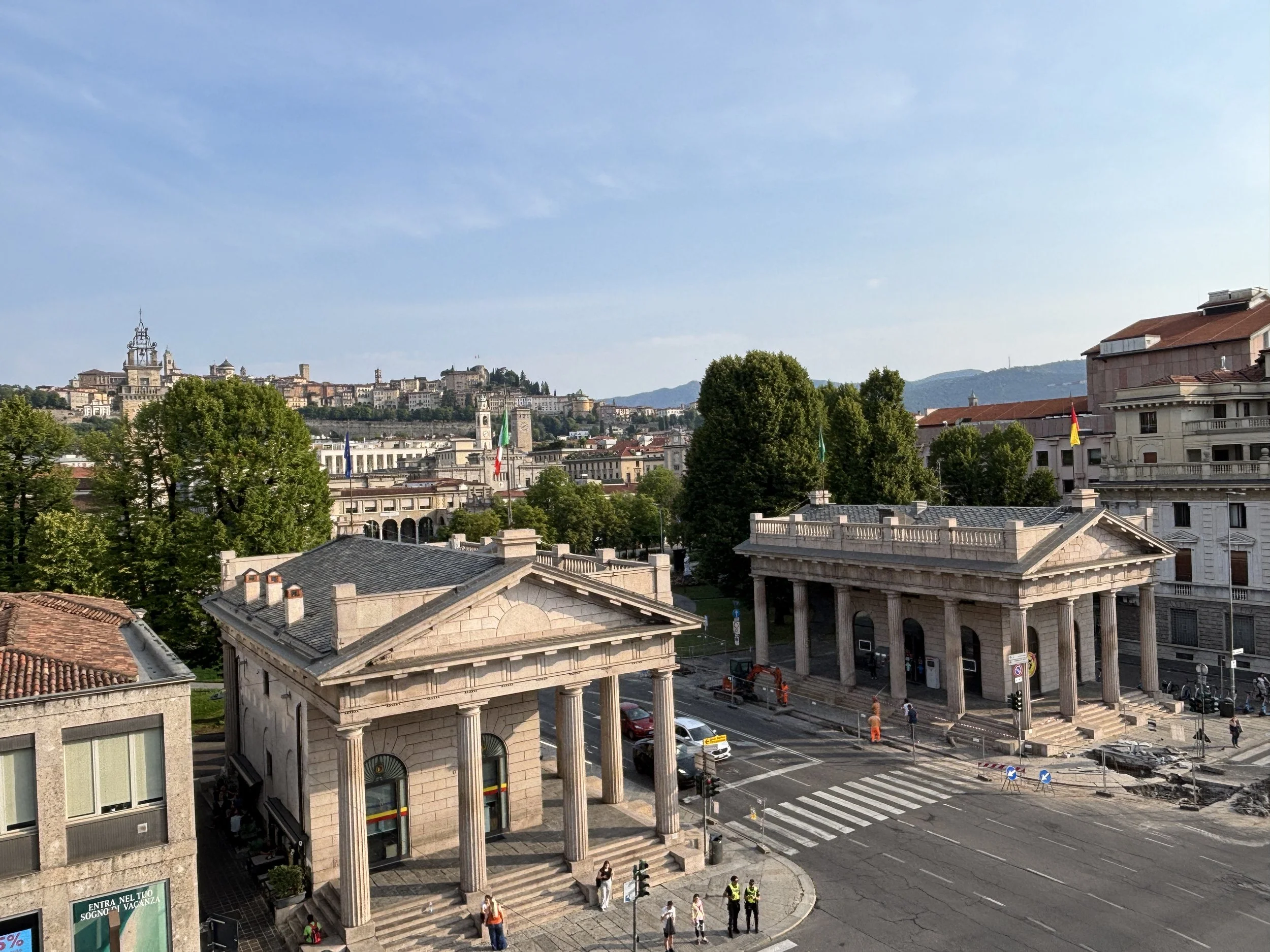
A view of Bergamo’s Porta Nuova
But before we get to the Città Alta, a few words about the Città Bassa, because it has also some interesting elements.
If you start your itinerary at the Porta Nuova, which marks the limit of what used to be the second ring of walls of the city (Bergamo has three rings of walls, the latest of which, built by the Venetians in the 16th C. has UNESCO World Heritage Site status) and if you head from there to the funicular you will pass through Bergamo’s modern downtown.
If you have been to other Italian cities before, you will recognize many of the elements that make this part of town, such as the porticoed buildings dating back to the time of Risorgimento and the unification of Italy, in the 19th C. as well, as some reconizable examples of architecture from the Fascist period, housing the post office and other administrative functions.
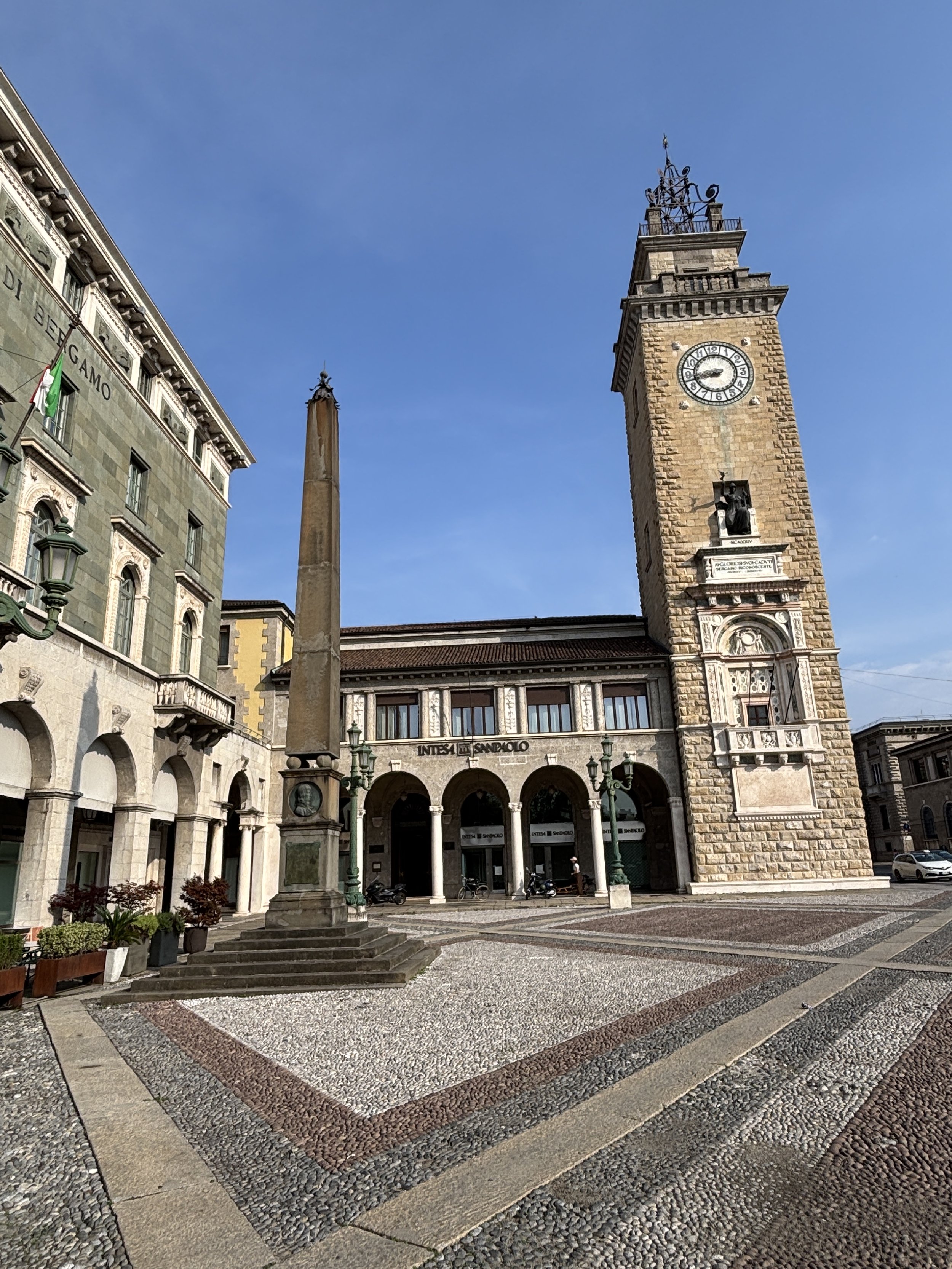
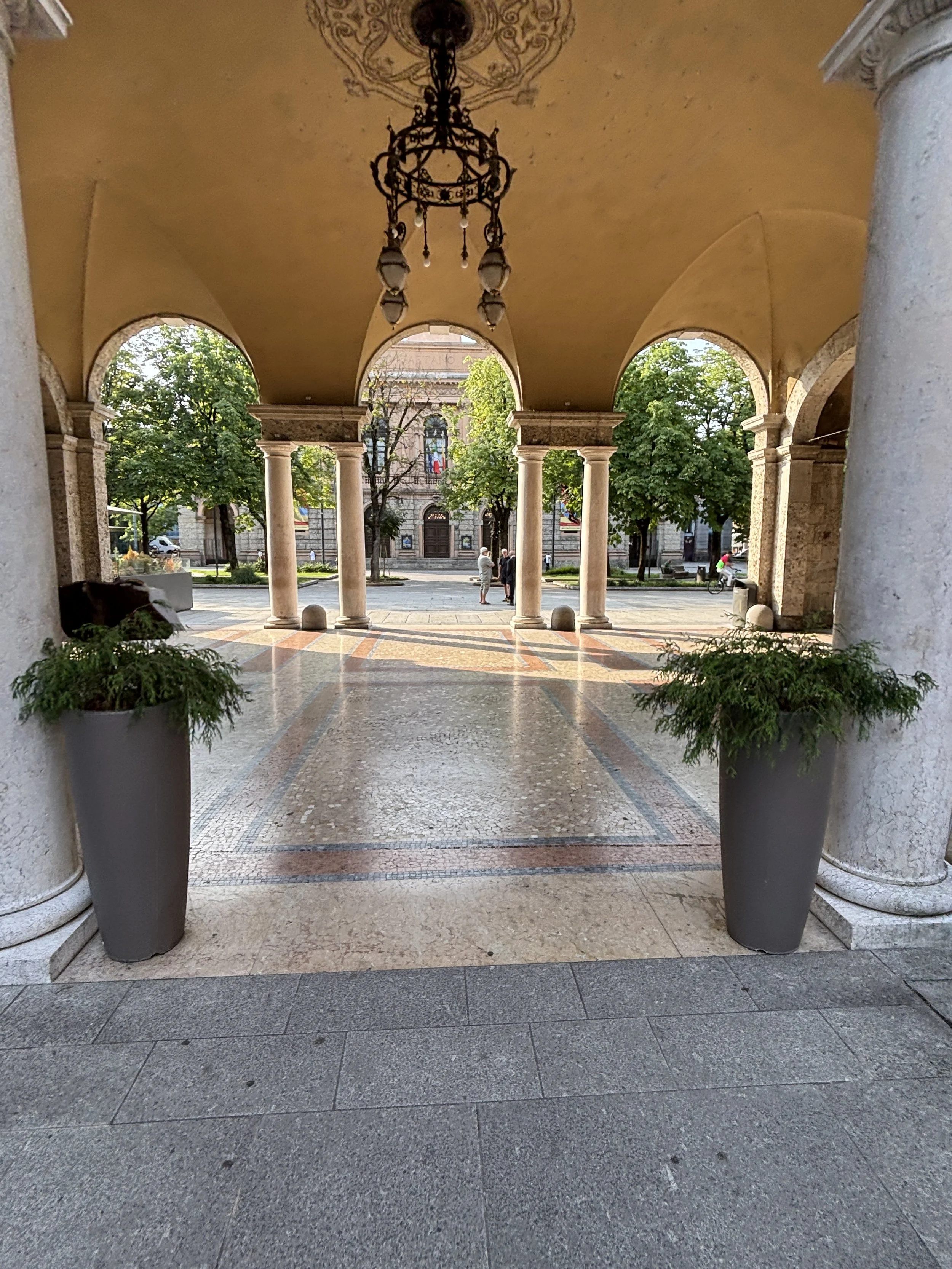
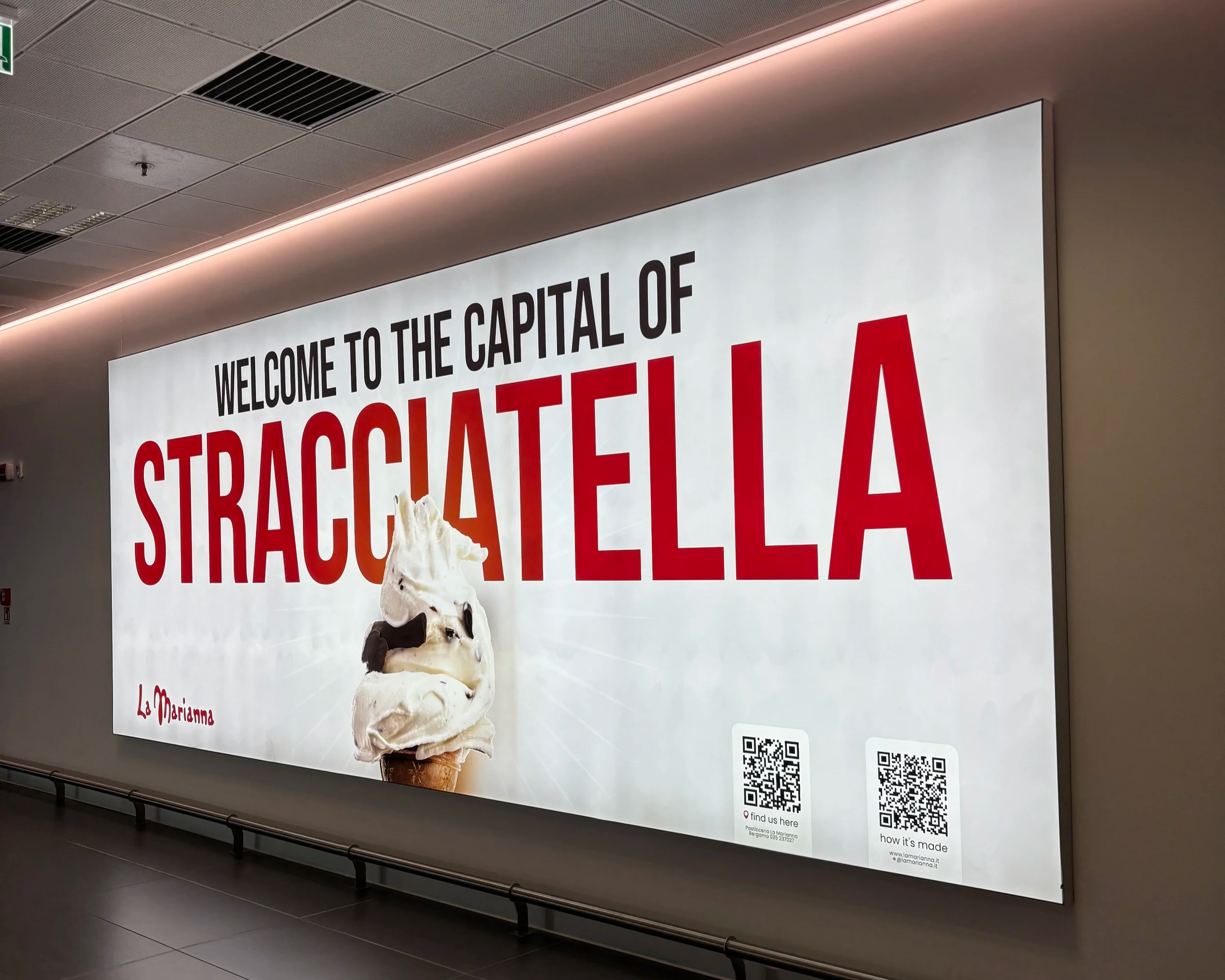
By the way, here is a curiosity I was not aware of before this trip: Bergamo takes pride in being the world capital of Straciatella, the famous cream and chocolate ice-cream flavour. So now you know!
Nice places to have coffee in Bergamo’s Città Bassa
Bergamo’s Città Bassa has some great spots to rest and relax in front of a cup of coffee and some tasty local pastries away from the tourist crowds that roam the Città Alta. Here are my recommendations:
1- Elidor Patisserie
Via Torquato Tasso, 49, 24121 Bergamo
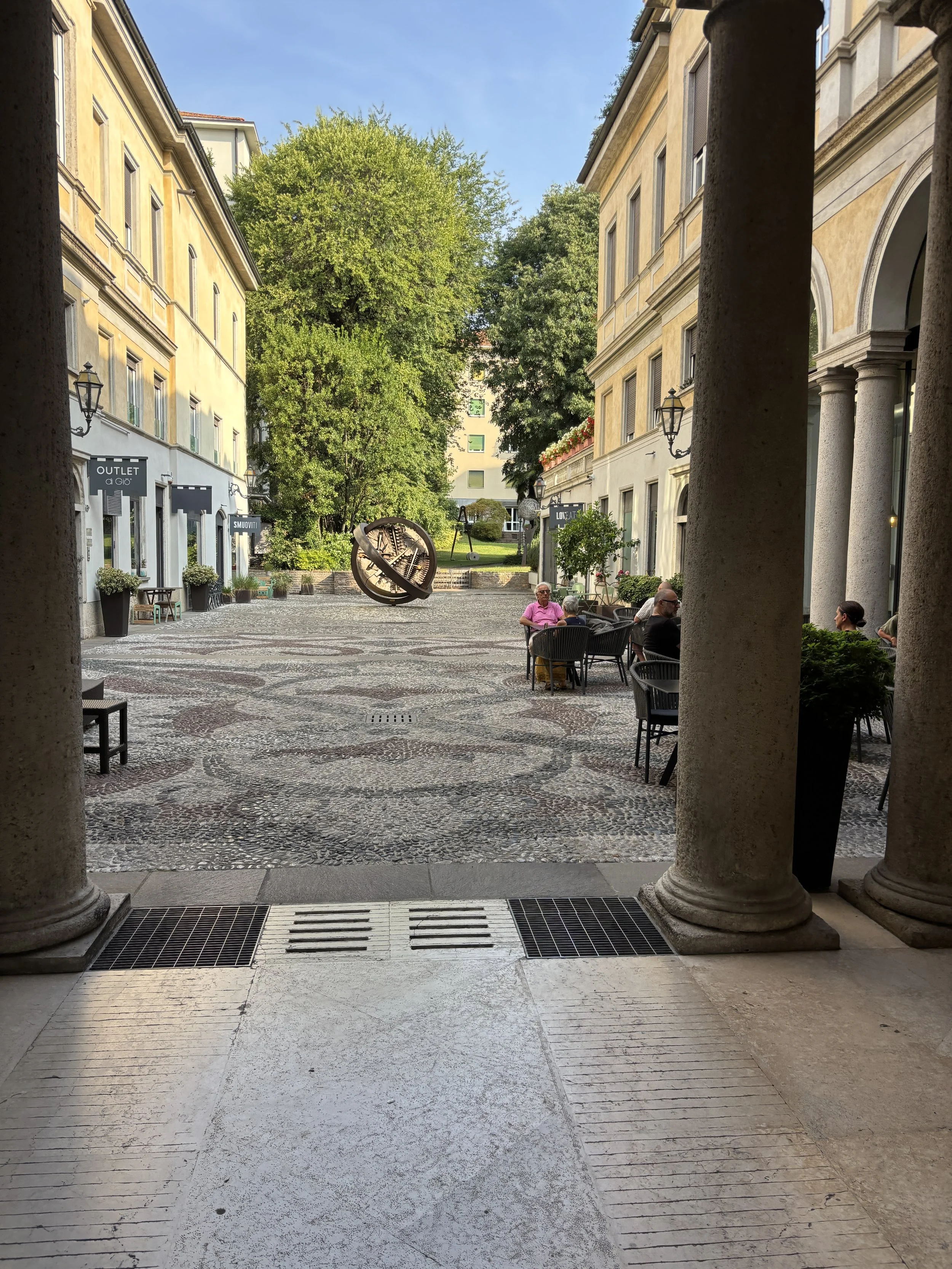
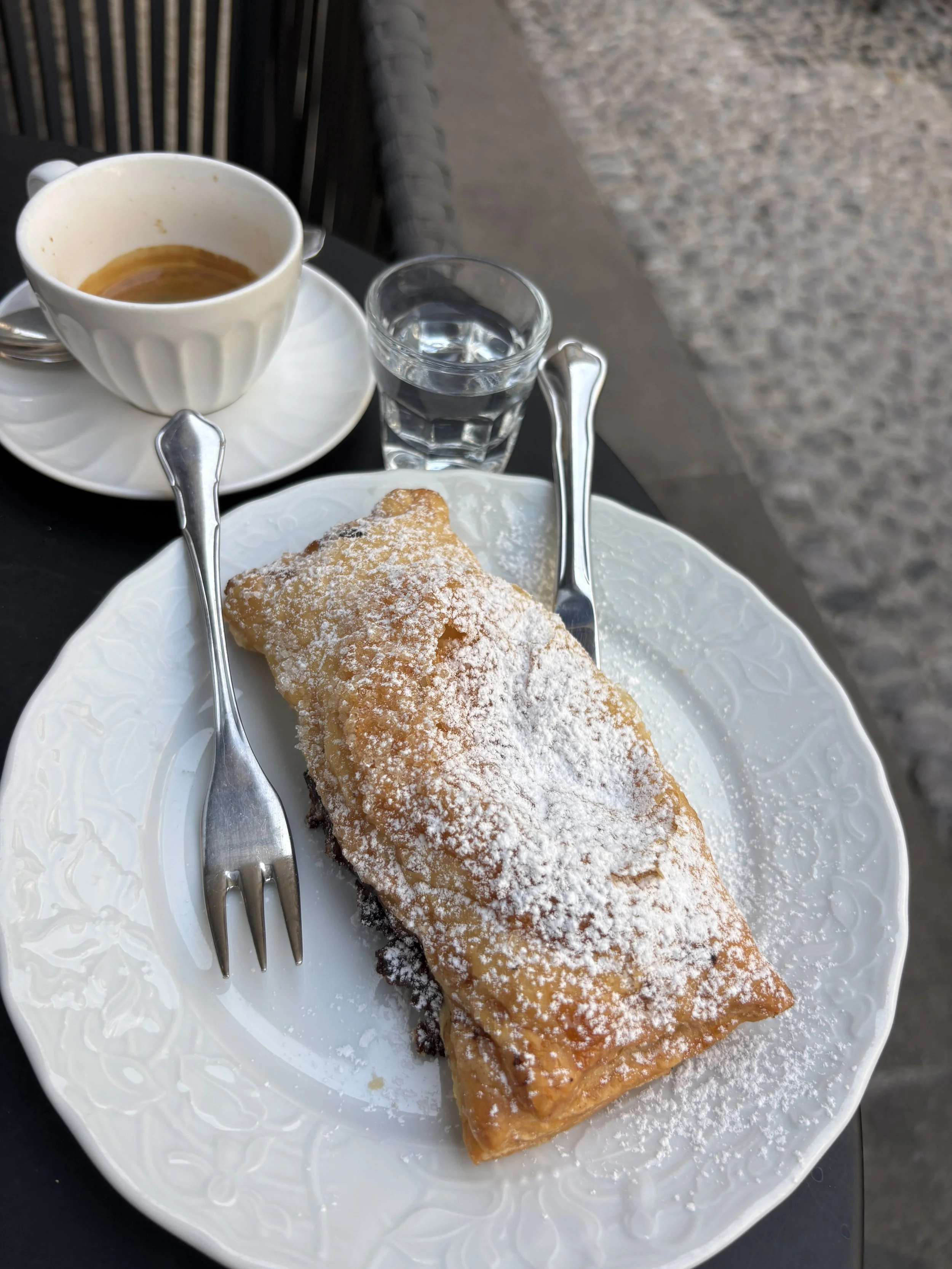
This is a really nice and elegant coffee and, as the name implies, pastry place in the heart of Bergamo’s Città Bassa. It is located in an quiet interior courtyard, which gives it a touch of sophistication. If your accommodation in the Città Bassa, this a nice spot to start your day gathering energies before heading uphill to the historical center.
2- La Caffetteria Di Porta Nuova
Via G. Tiraboschi, 55, 24127 Bergamo
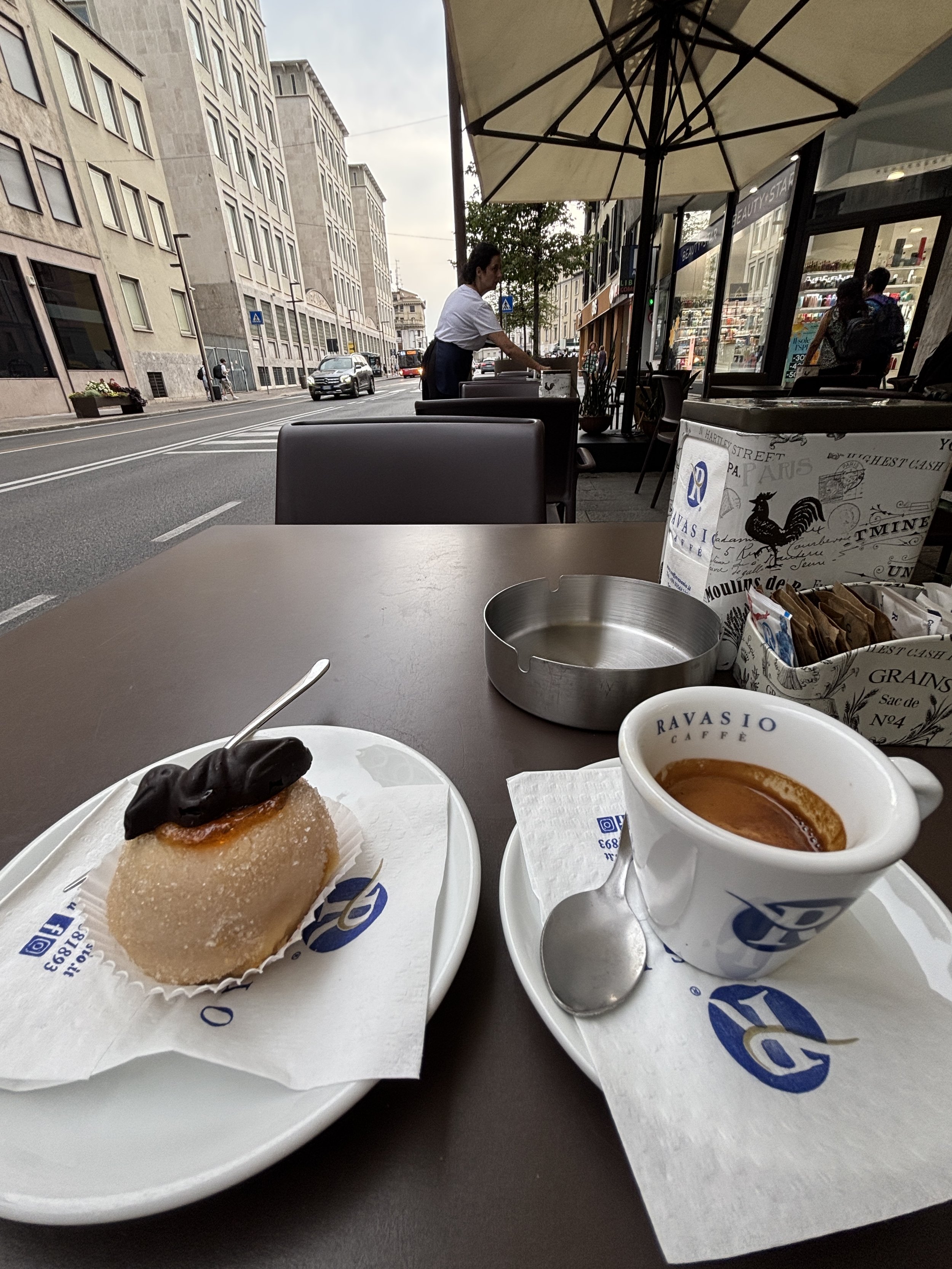
This is a more simple place, but one not devoid of character. It’s, actually, a pretty small place: there is no place to sit inside, there are just a handful of tables right on the pavement. It is quite central, though, very convenient if waiting for the bus to the airport, for example.
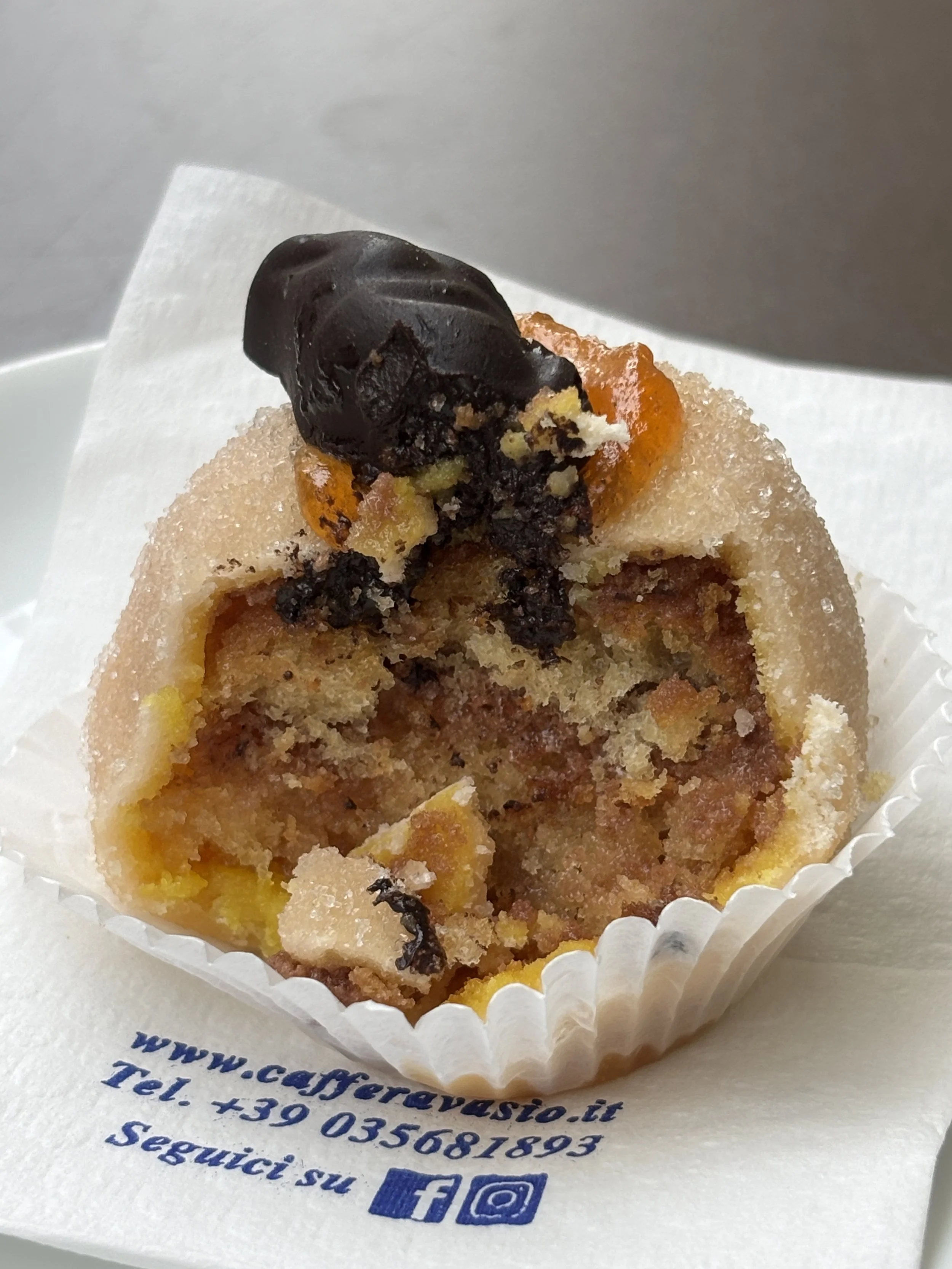
Here you can also taste one of Bergamo’s specialities, called “Polenta e Osei”, an spherical sweet cake filled with a dense marzipan paste and crowned by a bird-shaped (hence the name “osei”) chocolate.
What to see in Bergamo’s historical center, the Città Alta
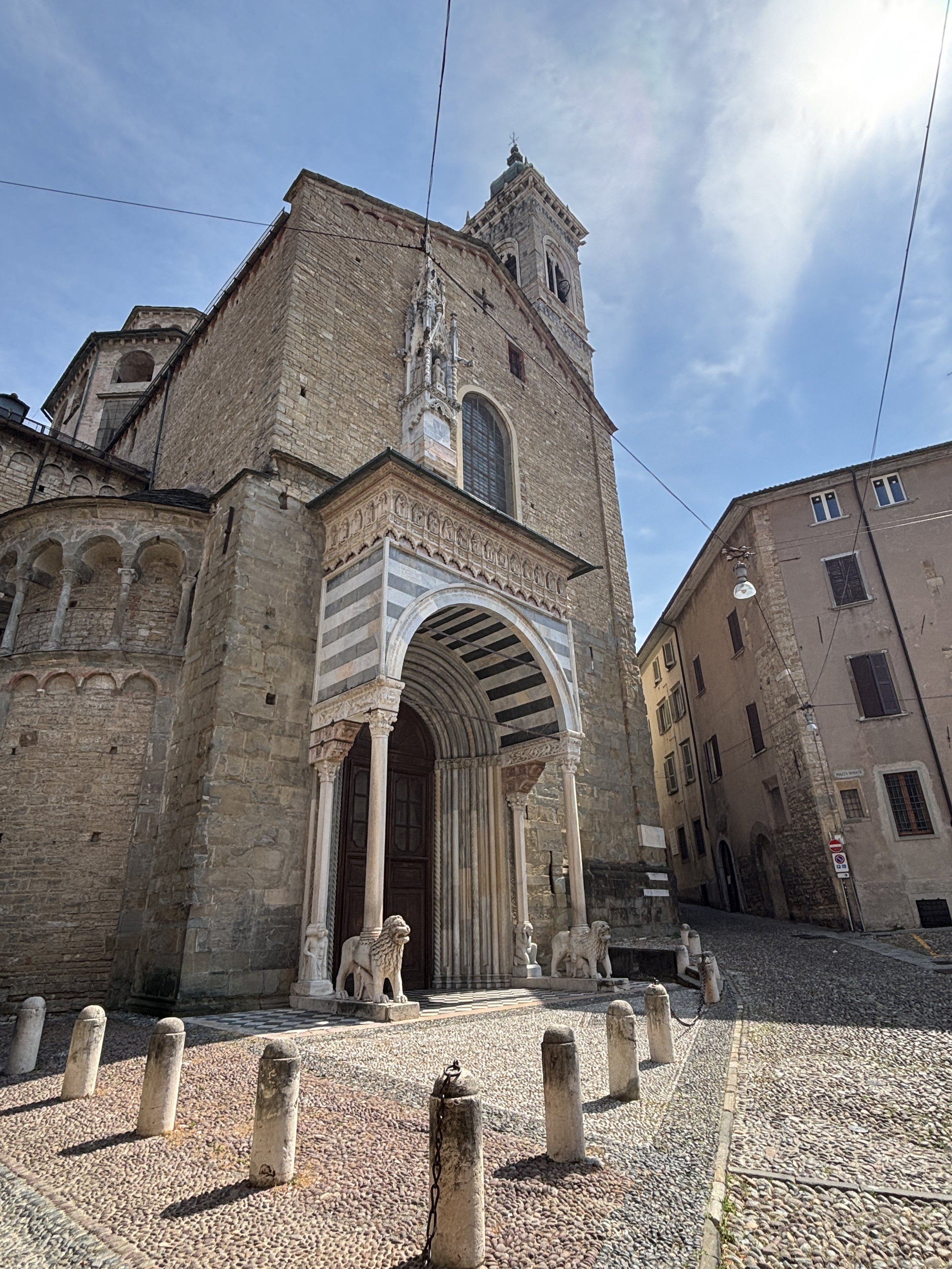
So, let’s say you have taken the funicular, which has taken you straight to the heart of the old (upper) town of Bergamo.
We’ll discuss shortly some of the main sights to see in the Città Alta, but, first of all, a couple of paragraphs about the history of Bergamo and the main events that shaped its past.
I referred earlier to Roman Bergamo, but I should also add that, while the Romans left their imprint on the city, there was already a Celtic pre-Roman settlement at the spot where the Città Alta stands today.
Although some vestiges from the Roman era are visible in the old town, the Bergamo most visitors come to see today is that of the late Middle Ages, when the city fell under the rule of Venice. The Most Serene Republic of Venice annexed Bergamo in 1428 during a period in which it vied with other Italian states to expand its continental possessions, the so-called “Terra Ferma”.
Bergamo remained under Venetian rule for more than three centuries, until the arrival of Napoleon and the start of the period of political change and agitation that culminated in the Risorgimento and the unification of Italy (check the section of the “Museo del ‘800 for more on this historical period).
So, now, without further ado, what sights are not too miss in Bergamo’s Città Alta?
The main square (“Piazza Vecchia”)
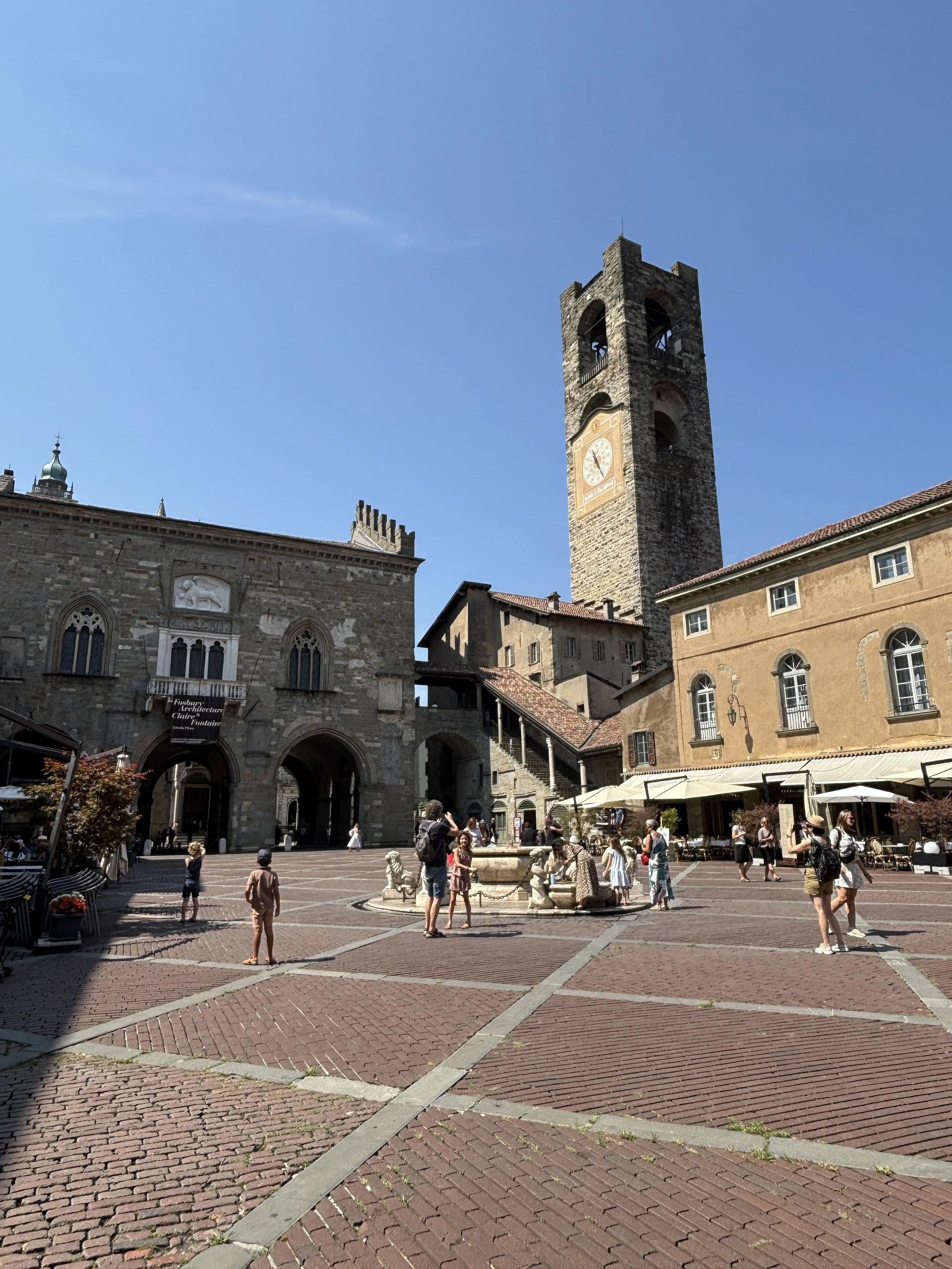
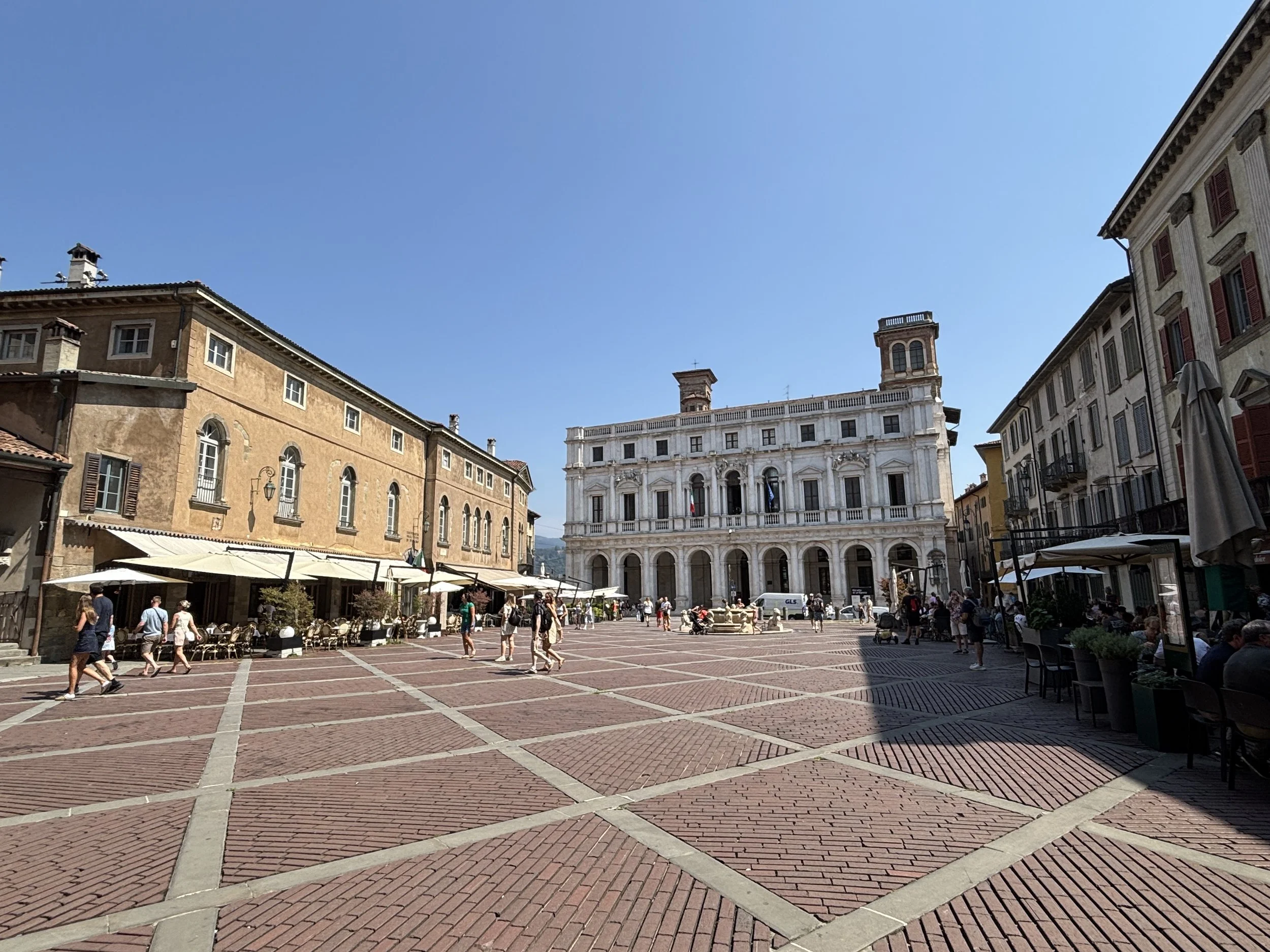
Apparently Le Corbusieur considered to be the greatest example of urban space in Europe (although knowing the aesthetic tastes of the Franco-Swiss architect, I am not quite sure this counts as praise!). This has been the political, civic and religious center of Bergamo for many centuries. Besides the large monumental marble fountain at its center there are quite a few monumental buildings of note here, concentrated in a relatively small space.
The Palazzo Nuovo, from the 17th C. and currently a public library dominates one side of the square
On the exact opposite side (technically a separate square, the Piazza del Duomo, although physically connected to the Piazza Vecchia through the portico of the 12th Palazzo della Raggione) there is a collection of rather impressive religious buildings:
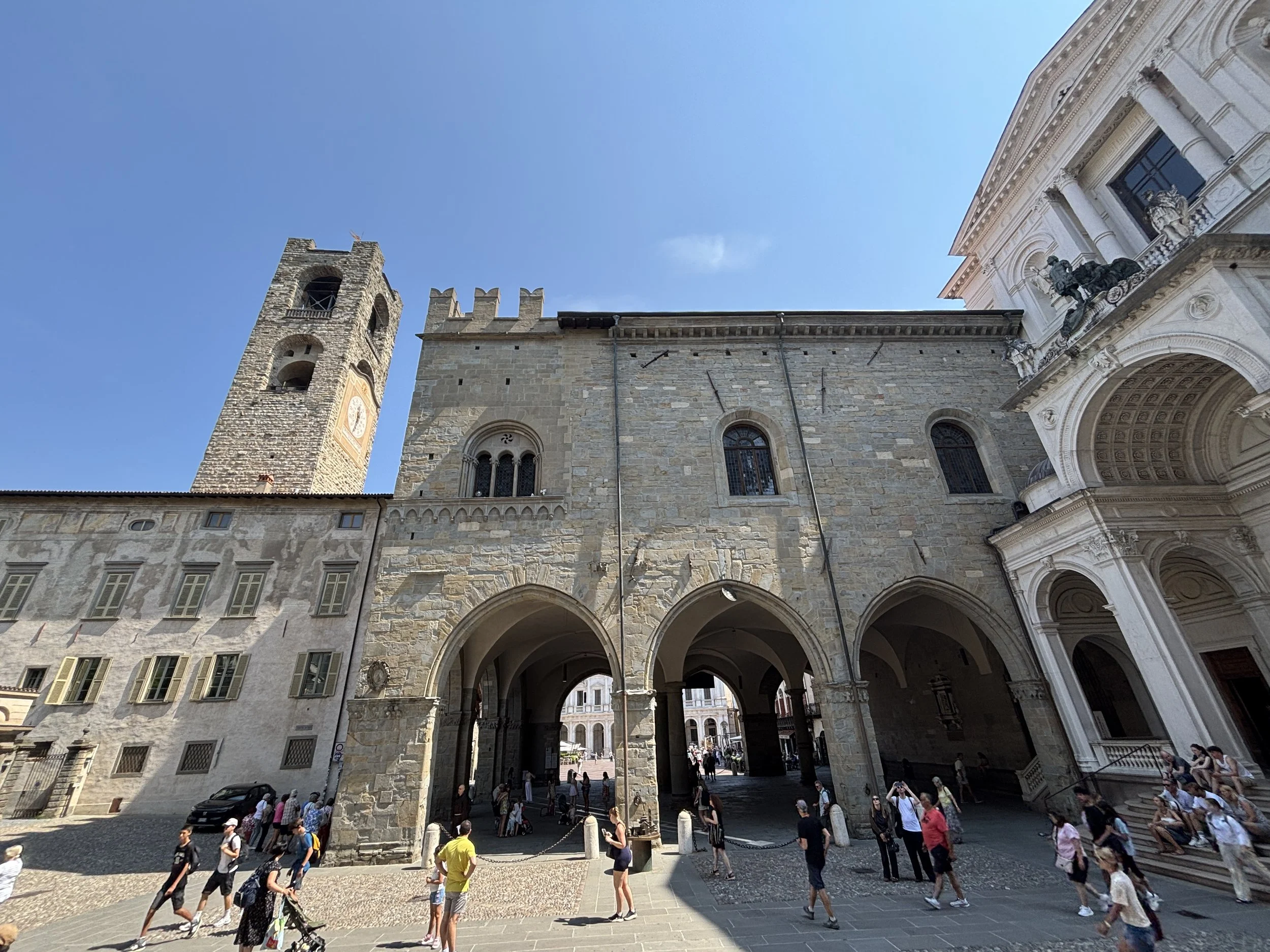
The Duomo, which is actually Bergamos cathedral, even if most visitors focus on the most eye-catching Basilica and Colleoni Chapel next door.
The Basilica di Santa Maria Maggiore, originally from the 12th C. although its constructions lasted several centuries. Look here for the pink marble Venetian lions at the entrance
The Colleoni Chapel, adjacent to the Basilica is perhaps the most eye-catching building of the ensemble. It was built in the late 15th C. as a mausoleum for a condottiero (essentially a Renaissance period warlord) called Bartolomeo Colleoni, hence its name. Sadly, not photos are allowed inside, so you will need to Google it to look how it looks like.
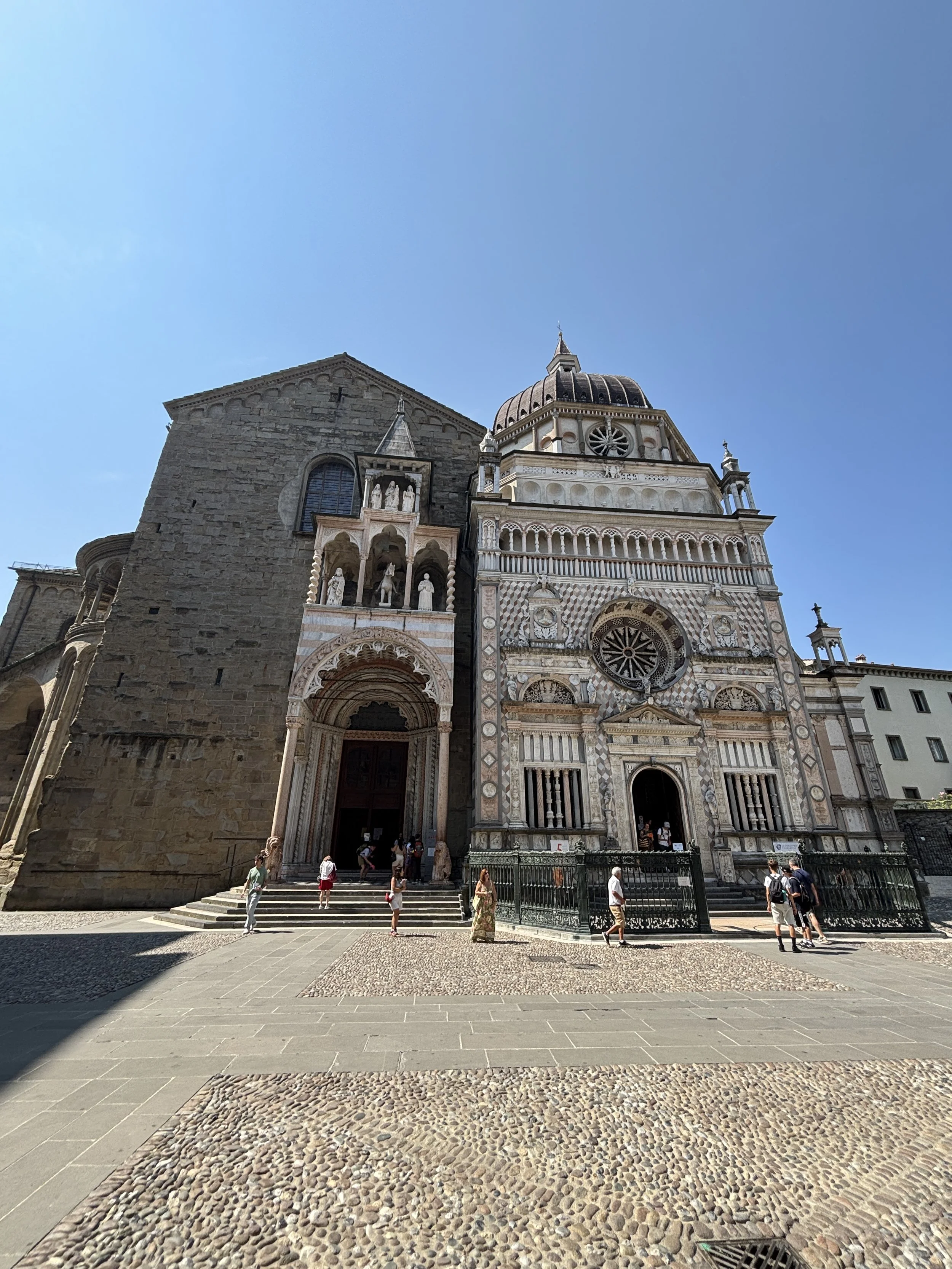
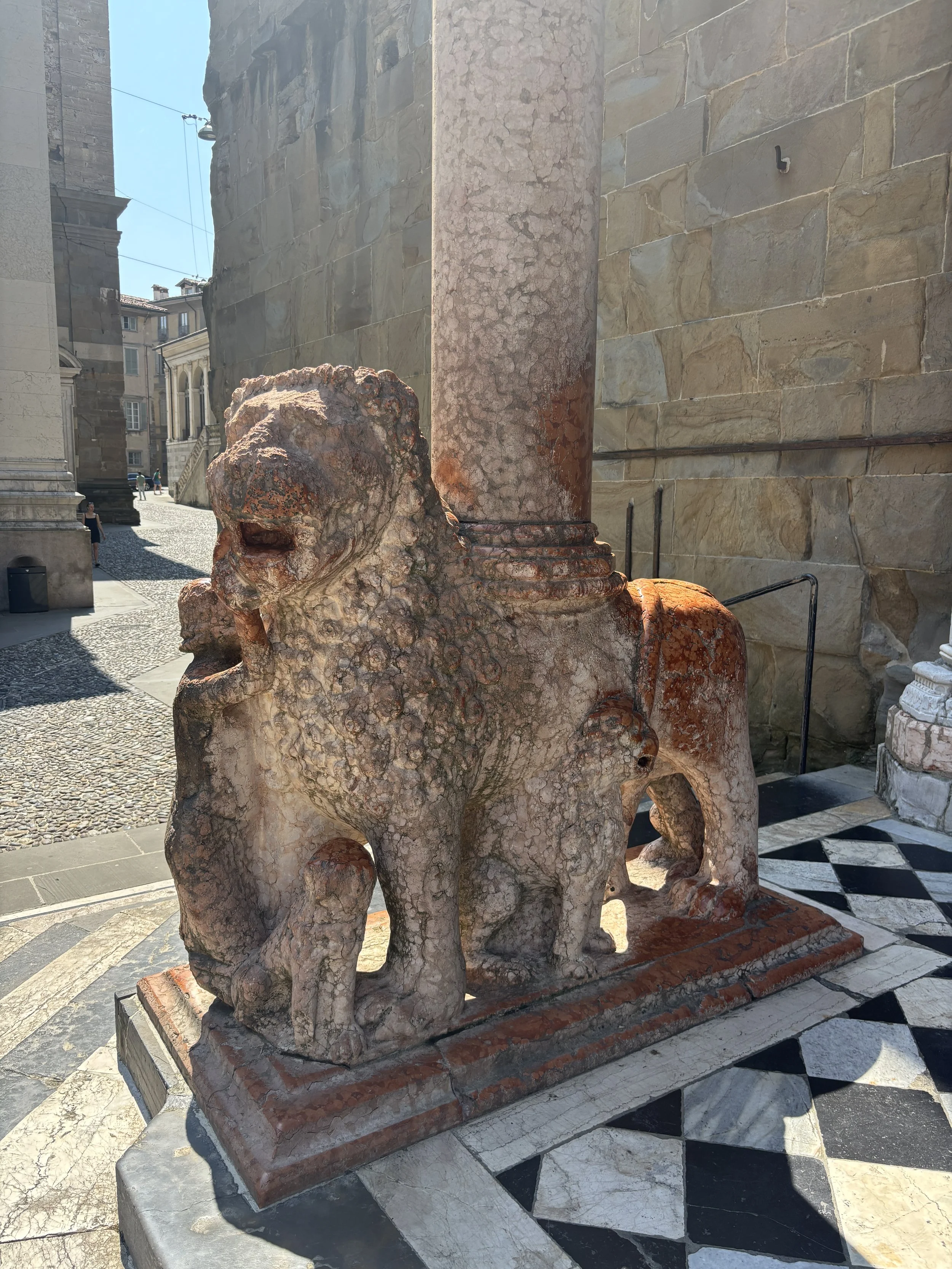
The Battistero, a small octogonal structure on one side of the square. This was actually not the original emplacement, which was inside the Basilica.
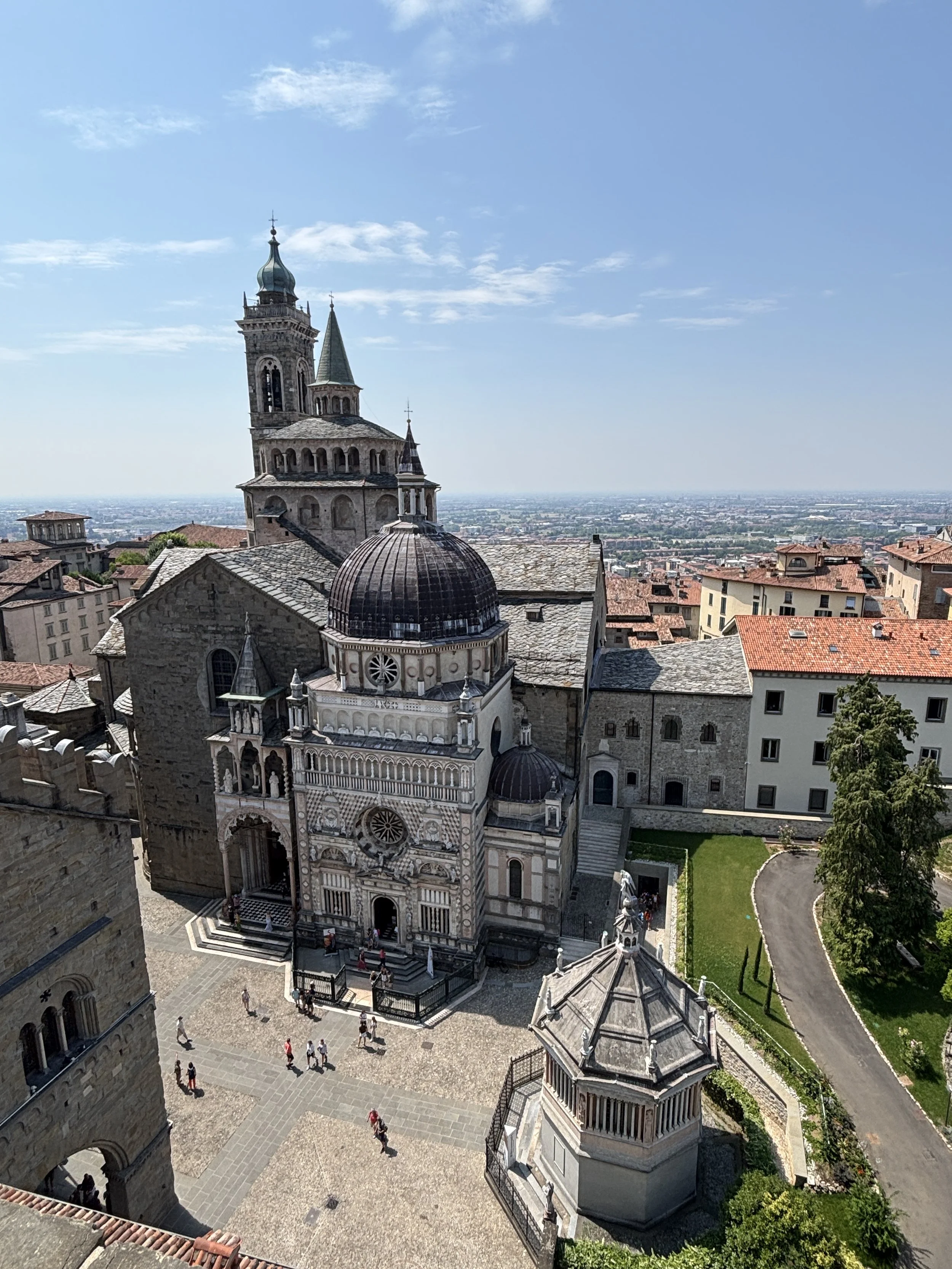
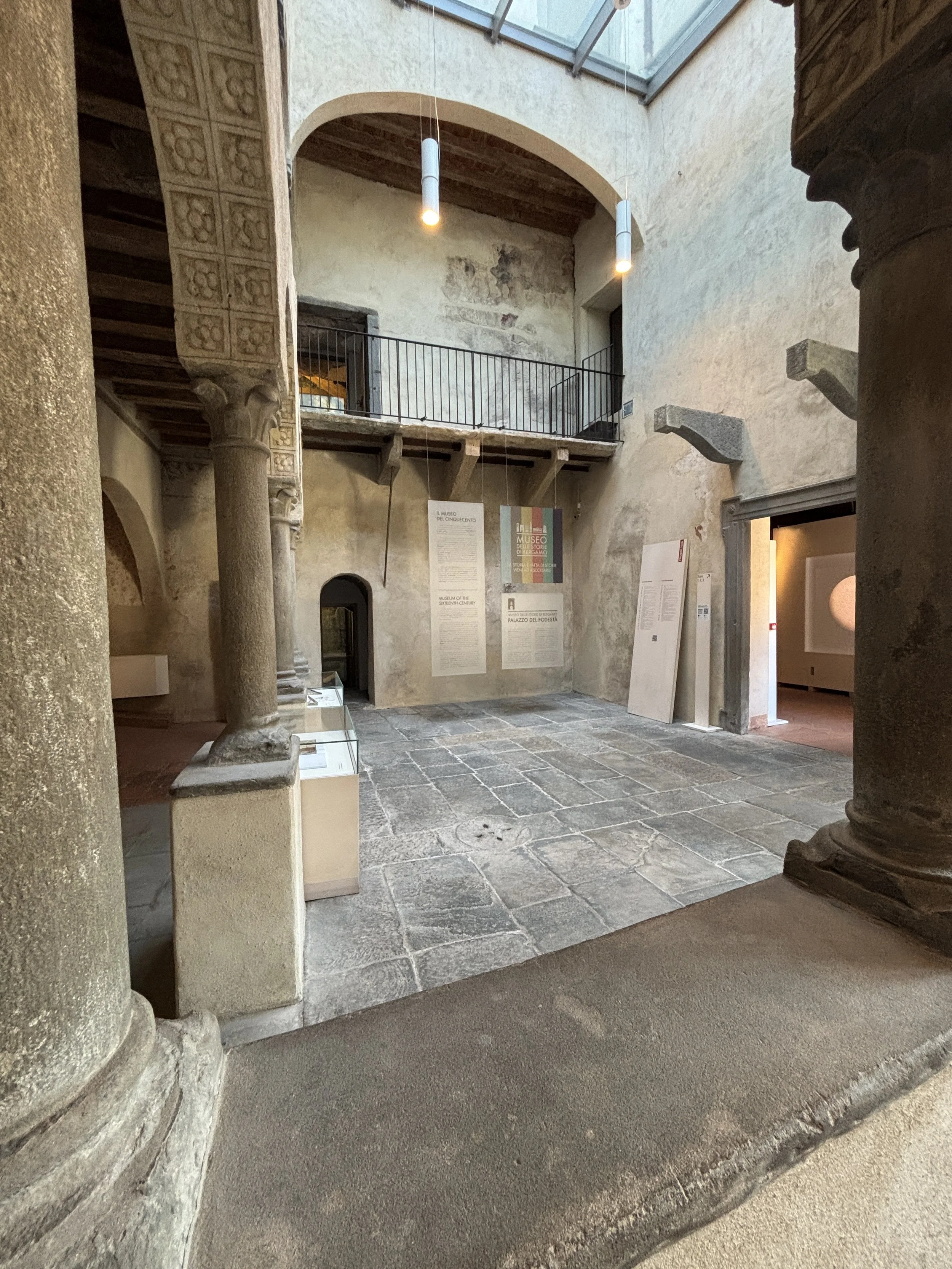
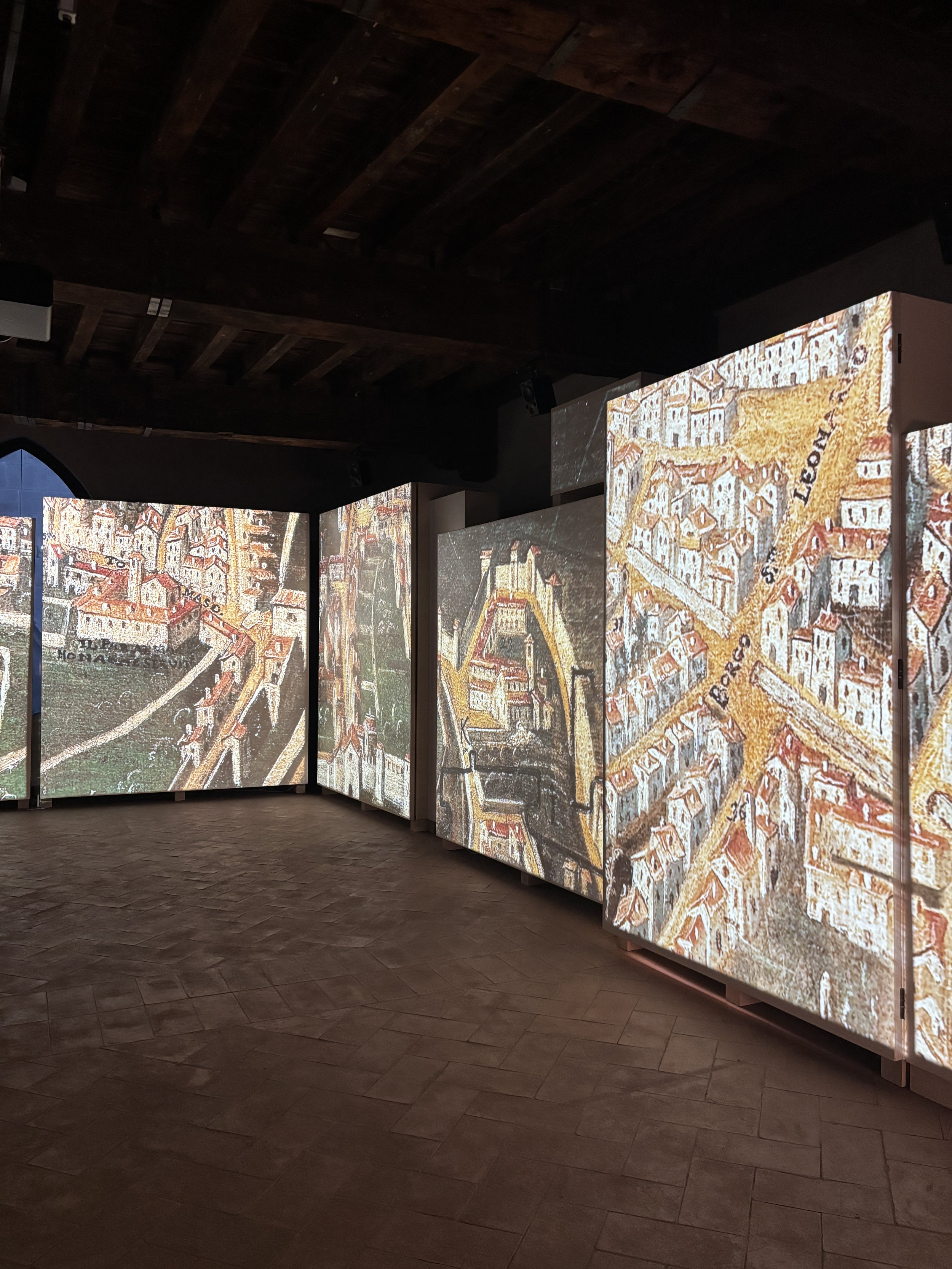
The main tower (“Torre Civica”), the Palazzo de la Raggione and Museum of the ‘500, is another building of note on one side of the square. This was originally the property of one family, which built a defensive tower, as it was the norm in many Italian cities at the time where different factions vied for power (often violently).
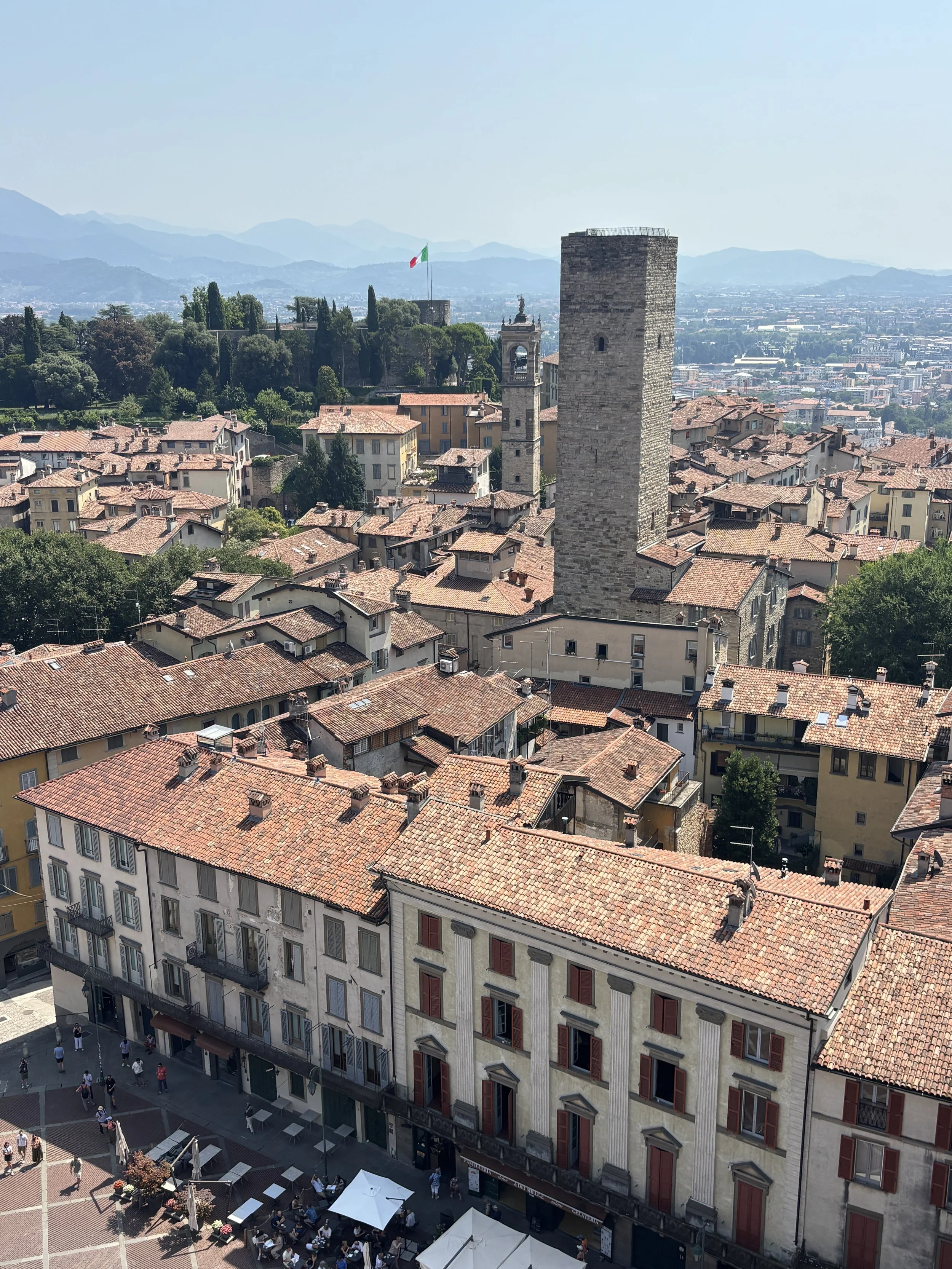
From the mid 15th C it became a city building, hosting the Venetian governor and, with its bell tower, also a sort of broadcasting station of the time. Nowadays it hosts the museum of the ‘500s, which is dedicated to the history of Bergamo during the Renaissance period. The museum is not huge, it includes the view of some Roman foundations and some interesting details about the history of Bergamo, but the highlight is the tower, which you can climb for amazing views over the whole of the Città Alta and the surrounding countryside. Ticket is around €10, but the views are worth it, in my opinion.
La Rocca (fortress) and museum of the ‘800
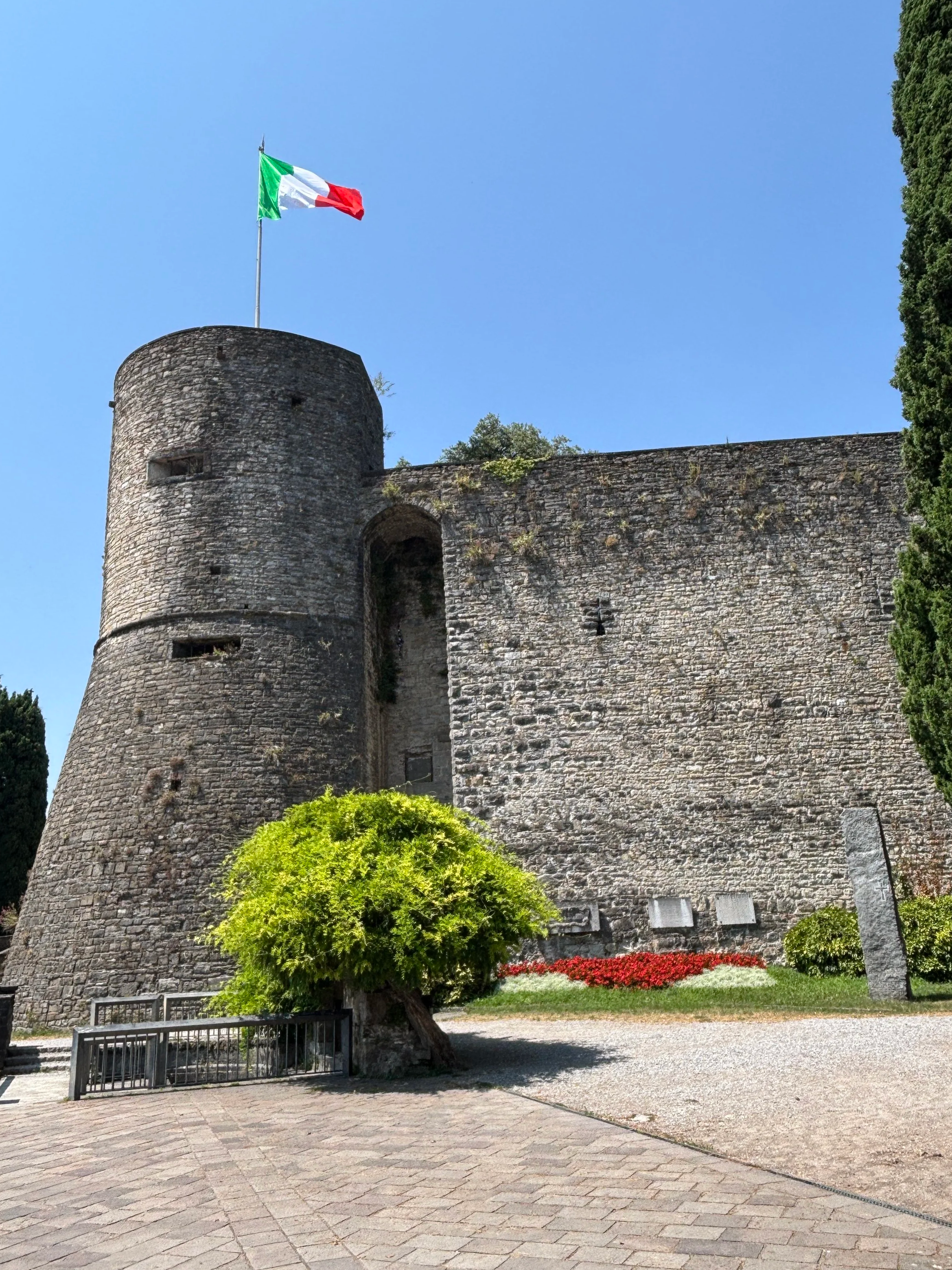
This is another point of interest in Bergamo’s Città Alta which I recommend visiting.
“La Rocca” is, essentially, the city’s fortress, which is located at the edge of the Città Alta overlooking the plains of Lombardy and the nearby Alps.
Access to the gardens is free. This part of the fortress is, essentially, an Italian war memorial dedicated to those that fought in WW1 and WW2. There are several pieces of artillery and armour from that period, as well as commemorative monuments for pretty much every single branch of the Italian military.
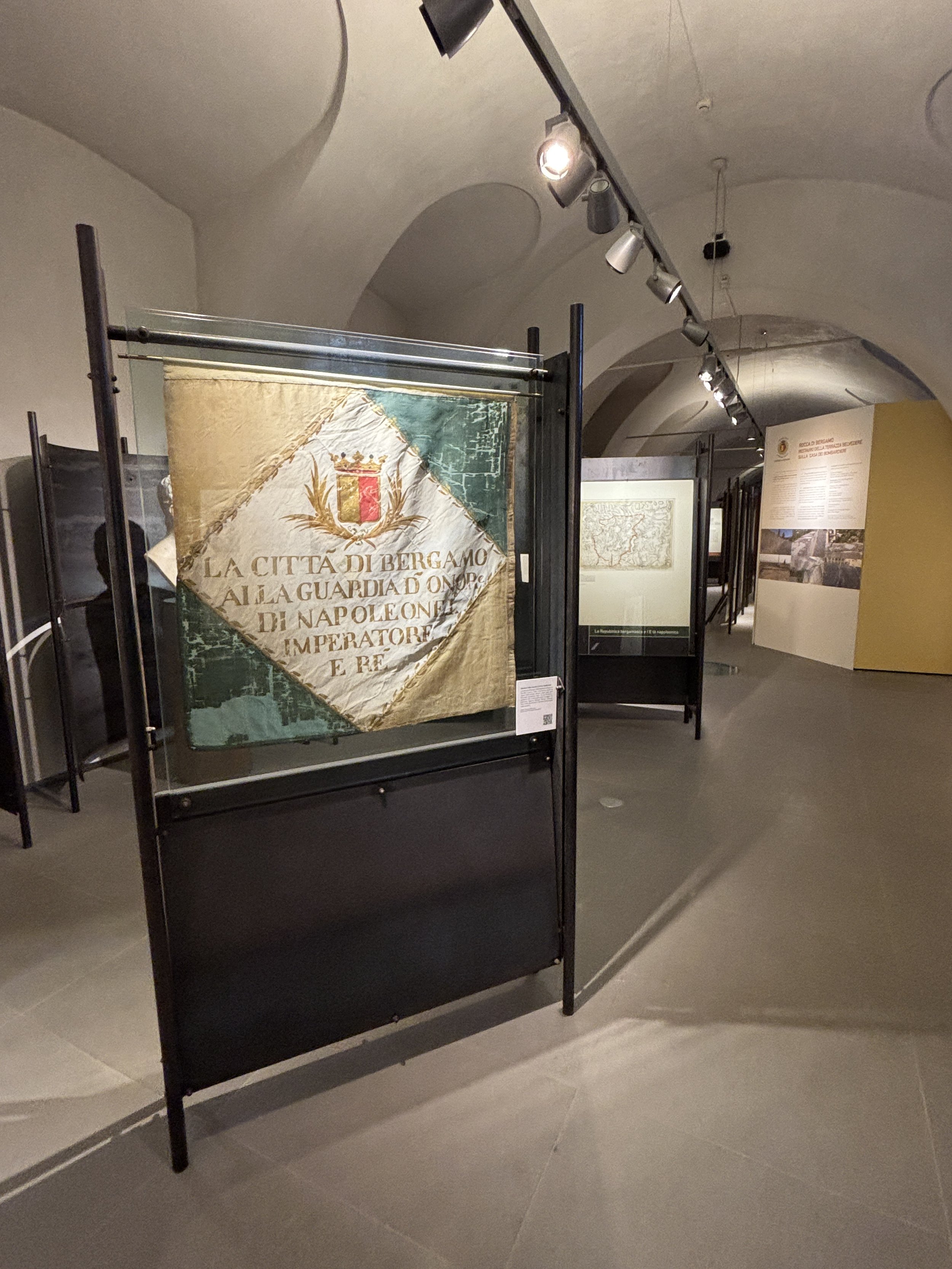
Inside the castle there is a small but pretty interesting museum, the Museum of the ‘800, which is focused on the history of Bergamo during the period that goes between the Napoleonic Wars and the Italian unification.
This is a well organized museum which focuses on the role that Bergamo and the surrounding region played in those momentous events and it provides quite a lot of information as well about the social and economic context of the time.
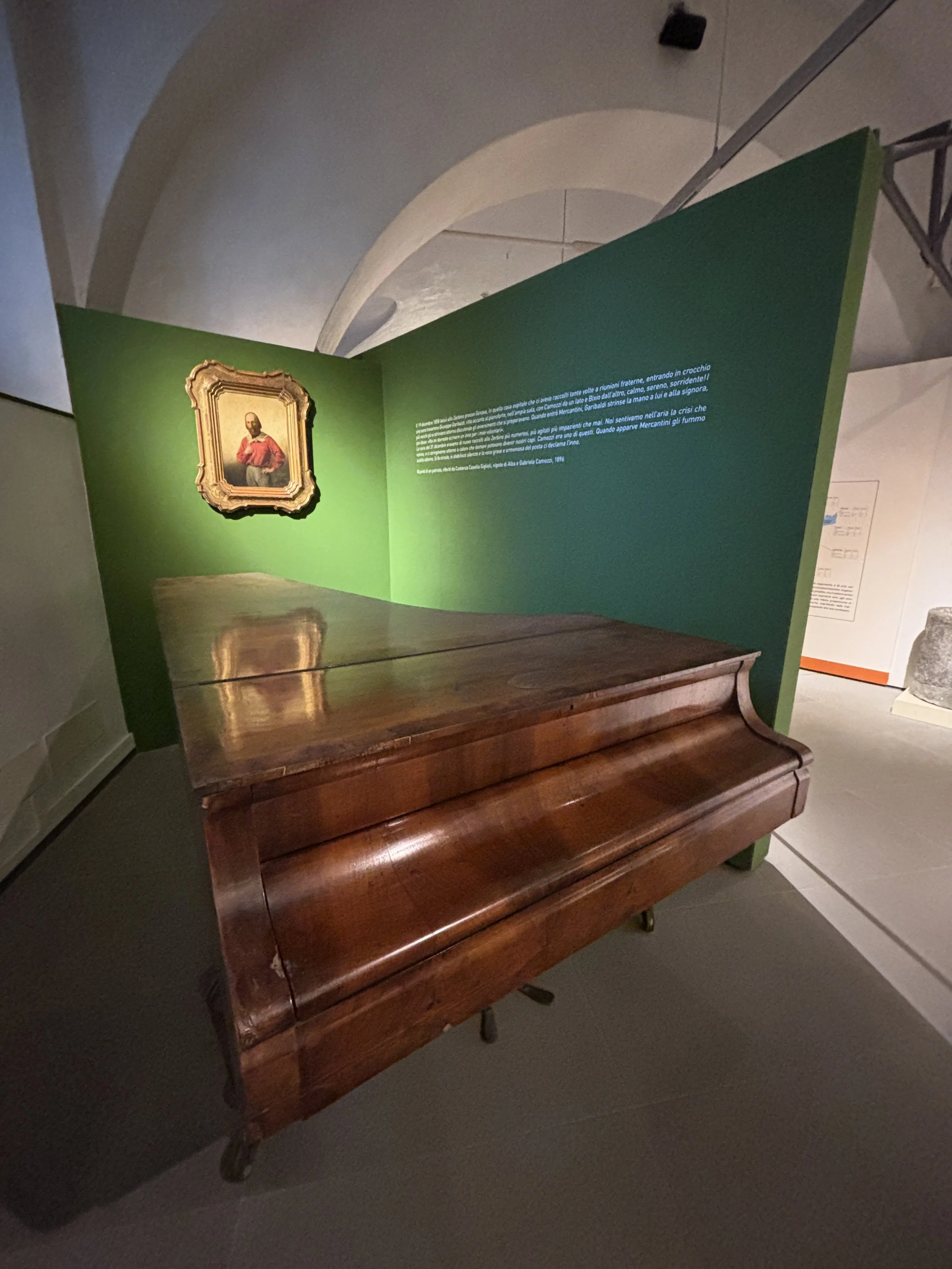
The museum has also a rather impressive collection of period items, including uniforms, documents and the like, it even displays a piano that was once played by Giuseppe Garibaldi no less! It costs €5 but if you are interested in this period of Italian history is well spent money.
A recommended itinerary through Bergamo’s Città Alta
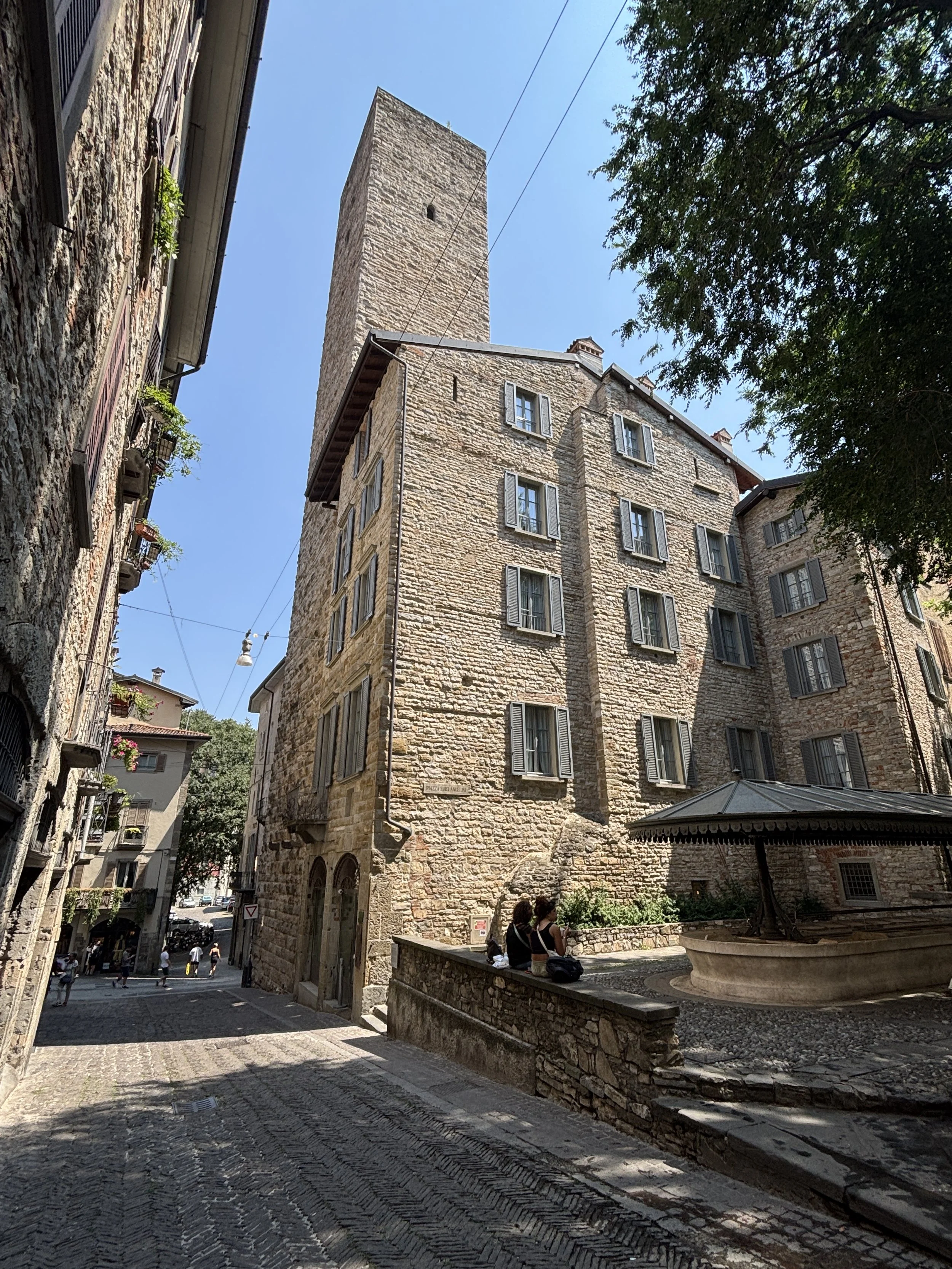
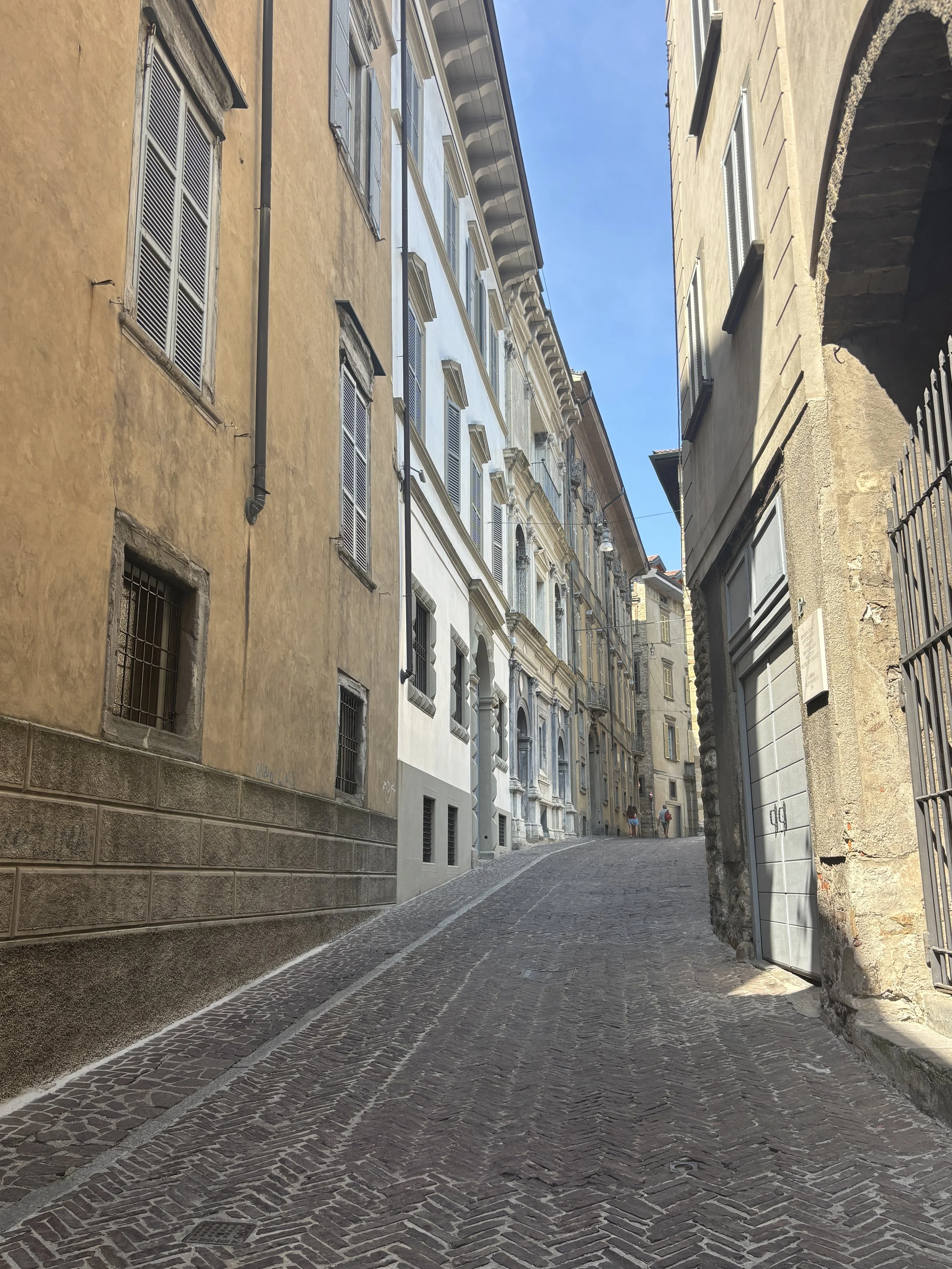
Besides this handful of must-see landmarks, Bergamo, like so many historical cities in Italy, is a great place to spend a morning just strolling leisurely around.
Most of the main streets are, of course, pretty touristicized. (not even sure this word exists, but you get the idea!). However, I would say (based on personal vibes here) that it is not overcrowded and banalized to the same extent (at least not yet) than other more classical destinations, such as Rome or Florence. There are, of course, many souvenir shops, restaurants and ice-cream parlors that are clearly catering to tourists, but their offerings have kept at least an appearance of authenticity (whatever this means nowadays) and some local connection, for example, in the sort of products they offer.
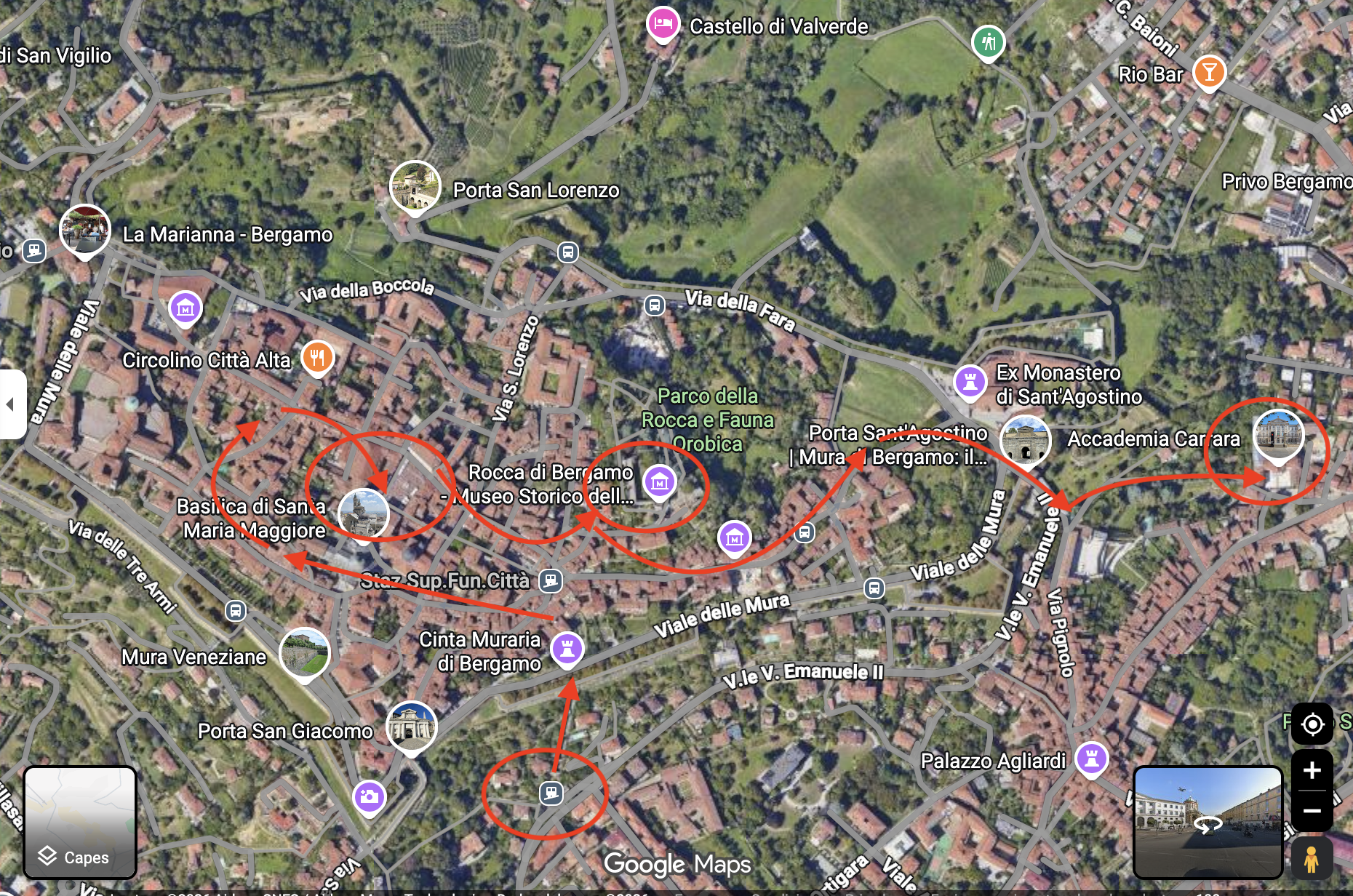
In the map below I share the itinerary that I roughly followed during may wandering through Bergamo’s Città Alta.
Tasting Bergamo’s Casoncelli
I know I may get in trouble about this one, since food in Italy is a sacred topic, particularly whenever local specialities are concerned. However, here is a casual eating concept that I came across while walking around Bergamo’s Città Alta which I quite liked.
To be clear, we are talking fast food here, not high cuisine, but I quite liked the modern and imaginative way in which one of the signature dishes of Bergamasca cuisine is being offered to visitors.
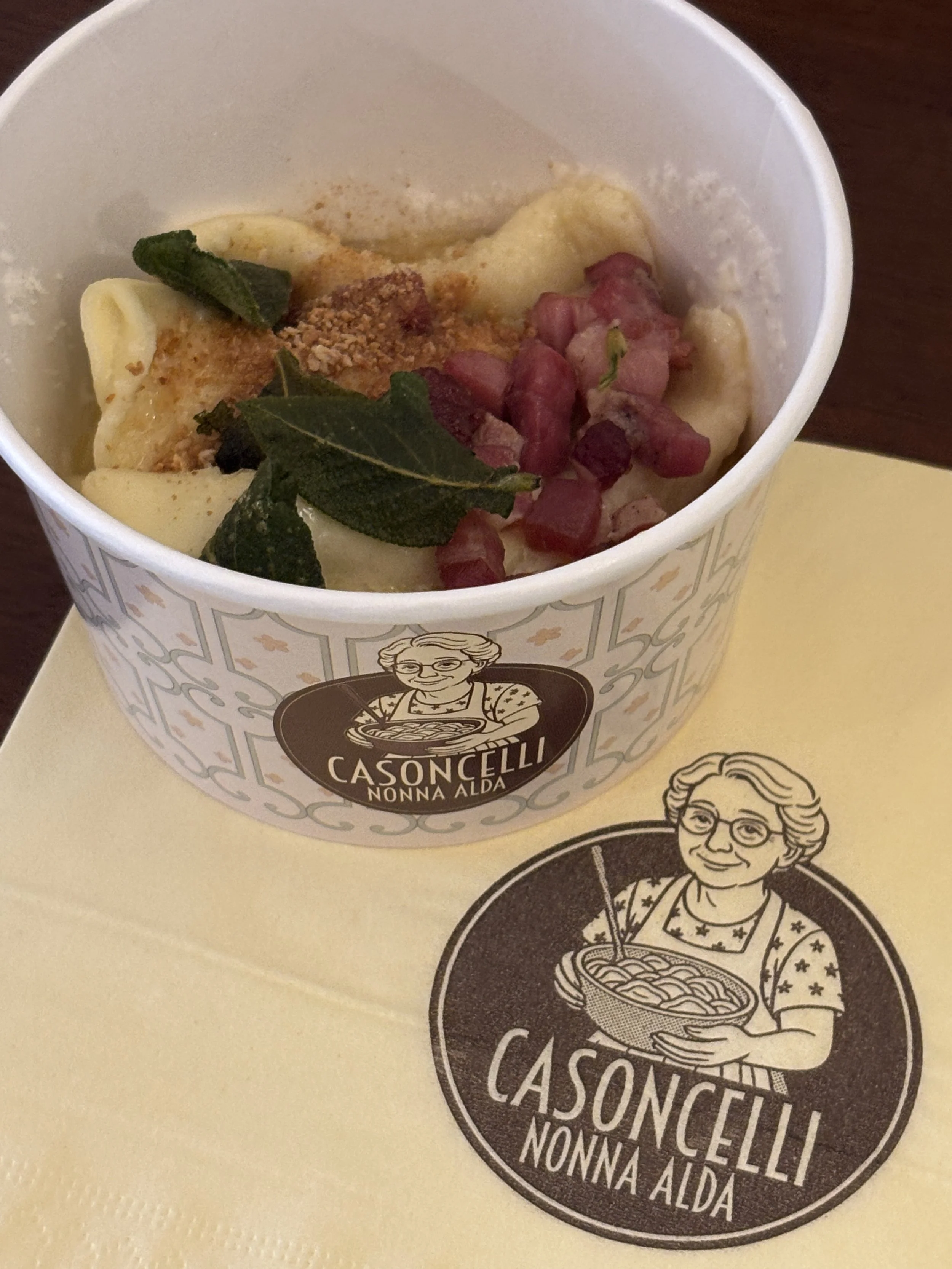
The Casoncelli are a sort of dumplings which are served with a side of vegetables and bacon (a vegetarian version also exists, btw). So, pretty simple and easy to eat while on the go, which is the reason I had a bite here.
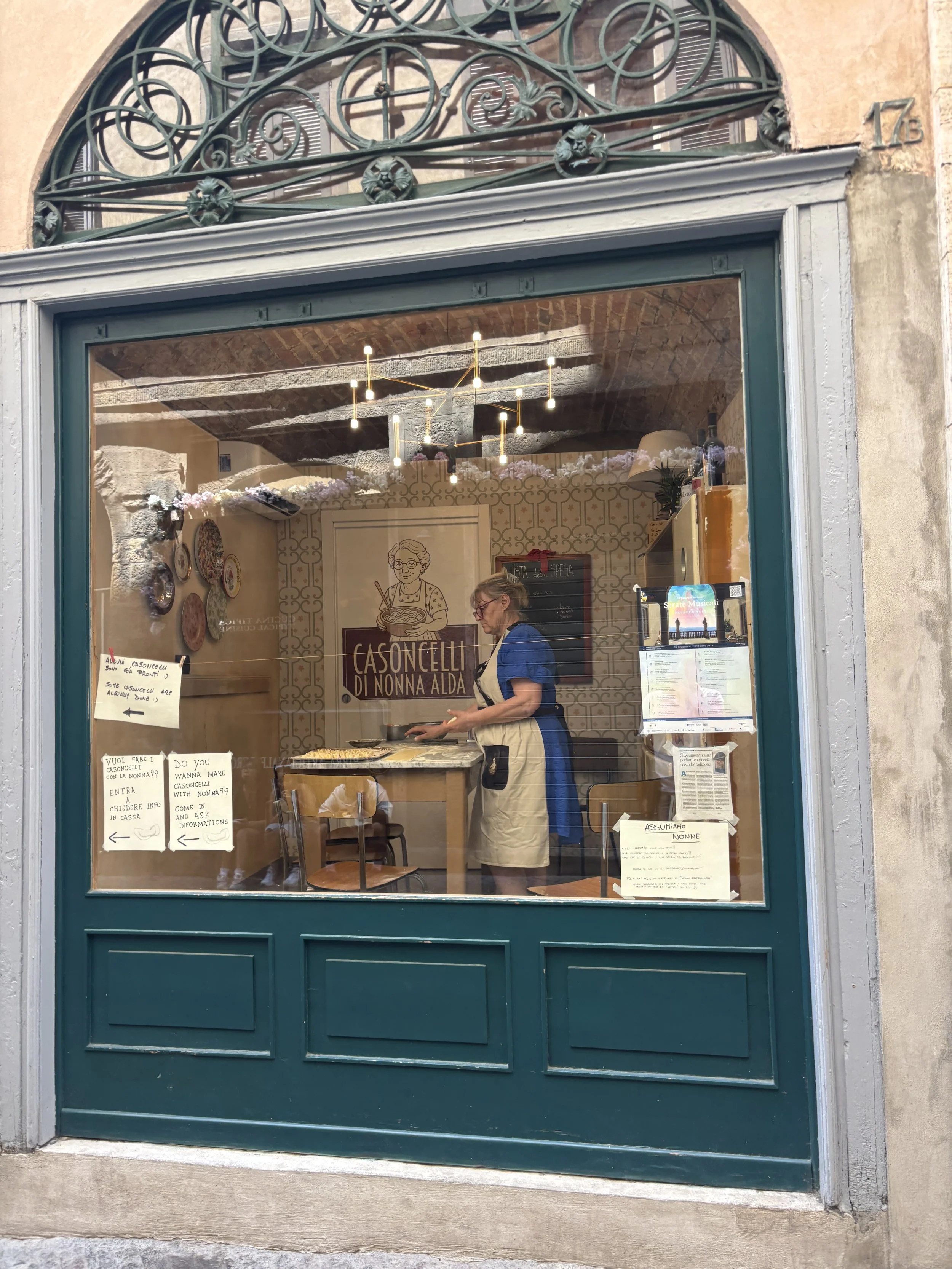
At “Casoncelli Nonna Alda” they play with the “local” and “home-made” concepts. This is a small food outlet on one of the main streets in the Città Alta, very close to the funicular station and the Rocca.
It offers just one thing, “casoncelli” (in classical and vegetarian formats) in three sizes, for €5, €9 and €14 respectively, which removes any anxieties about choices and prices.
The decor also panders to this “authentic food of the nonna” theme, with a lady preparing the casoncelli in sight from the street in an adjacent room. I don’t know if this is “nonna Alda”, most likely not, but “si non è vero, e ben trobato!”
A great, small art museum in Bergamo: Accademia Carrara
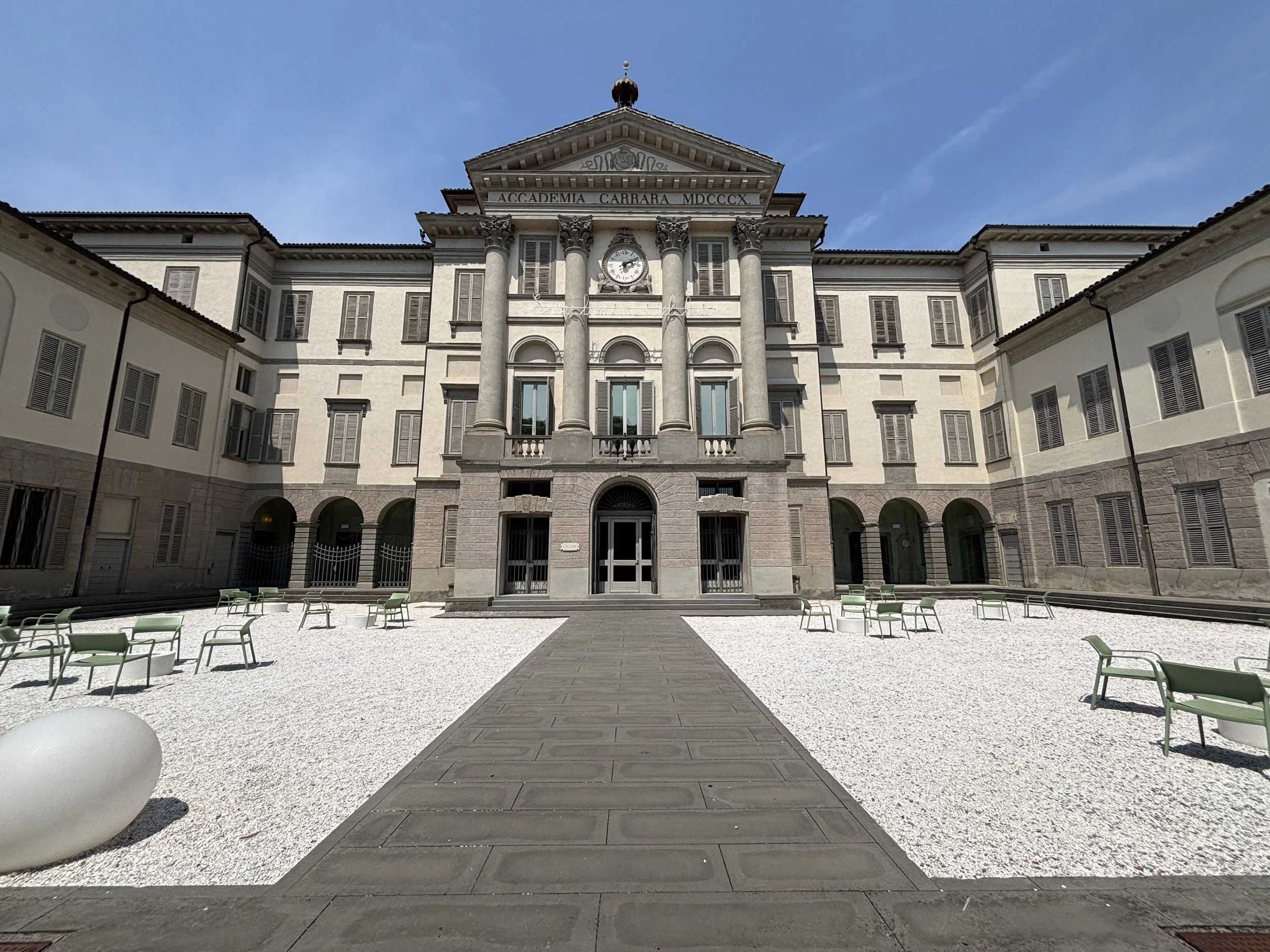
Bergamo has a top-level art museum in Accademia Carrara, and, actually, a pretty well historied one, since its roots lie in a private collection which was opened to the public in the late 18th C.
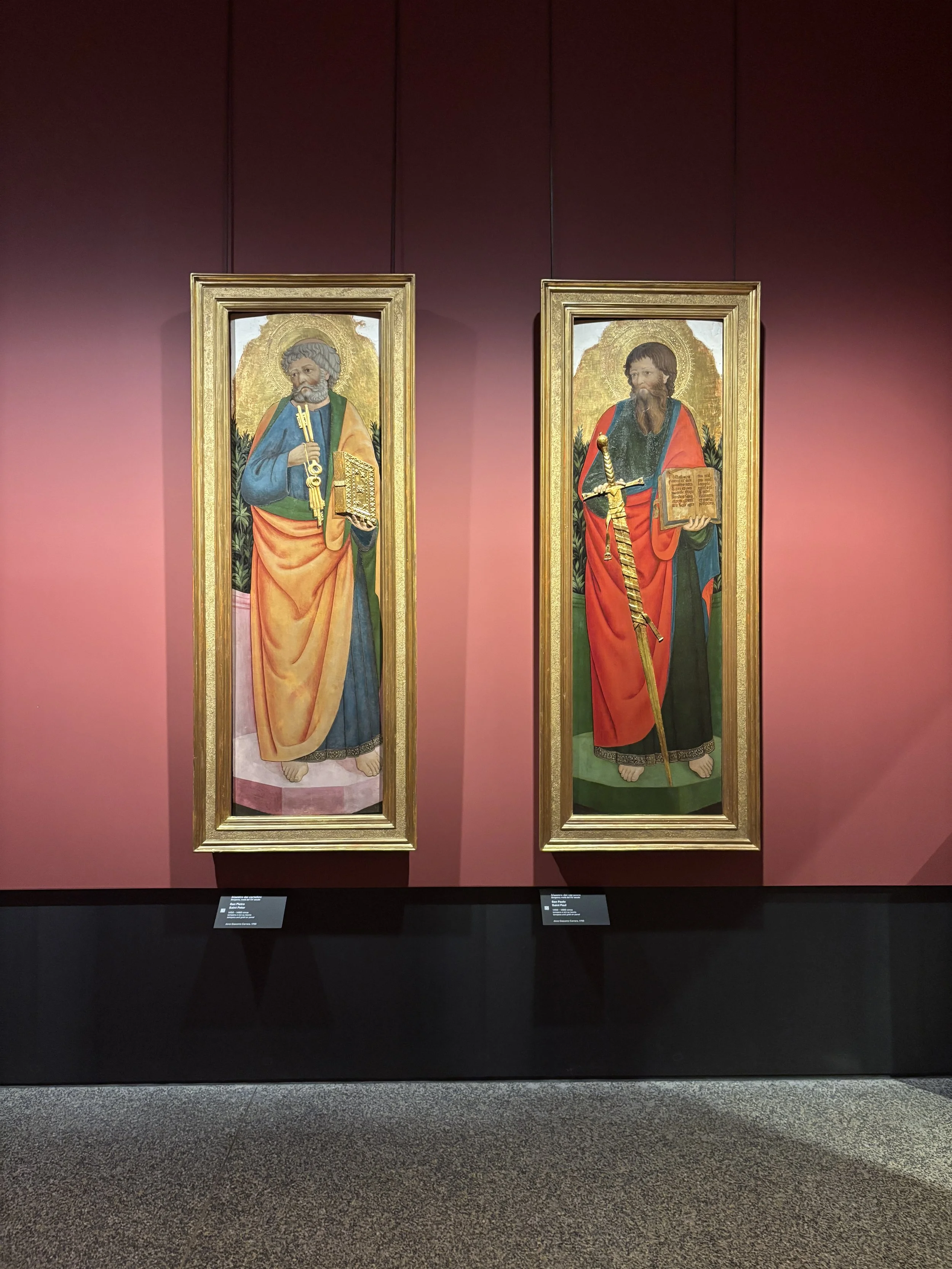
Its collections span Italian art from the Renaissance through the 19th century, and include some famous names such as Titian, Mantegna and Botticelli. There are also remarkable pieces from later periods, all presented in a nicely set-up display.
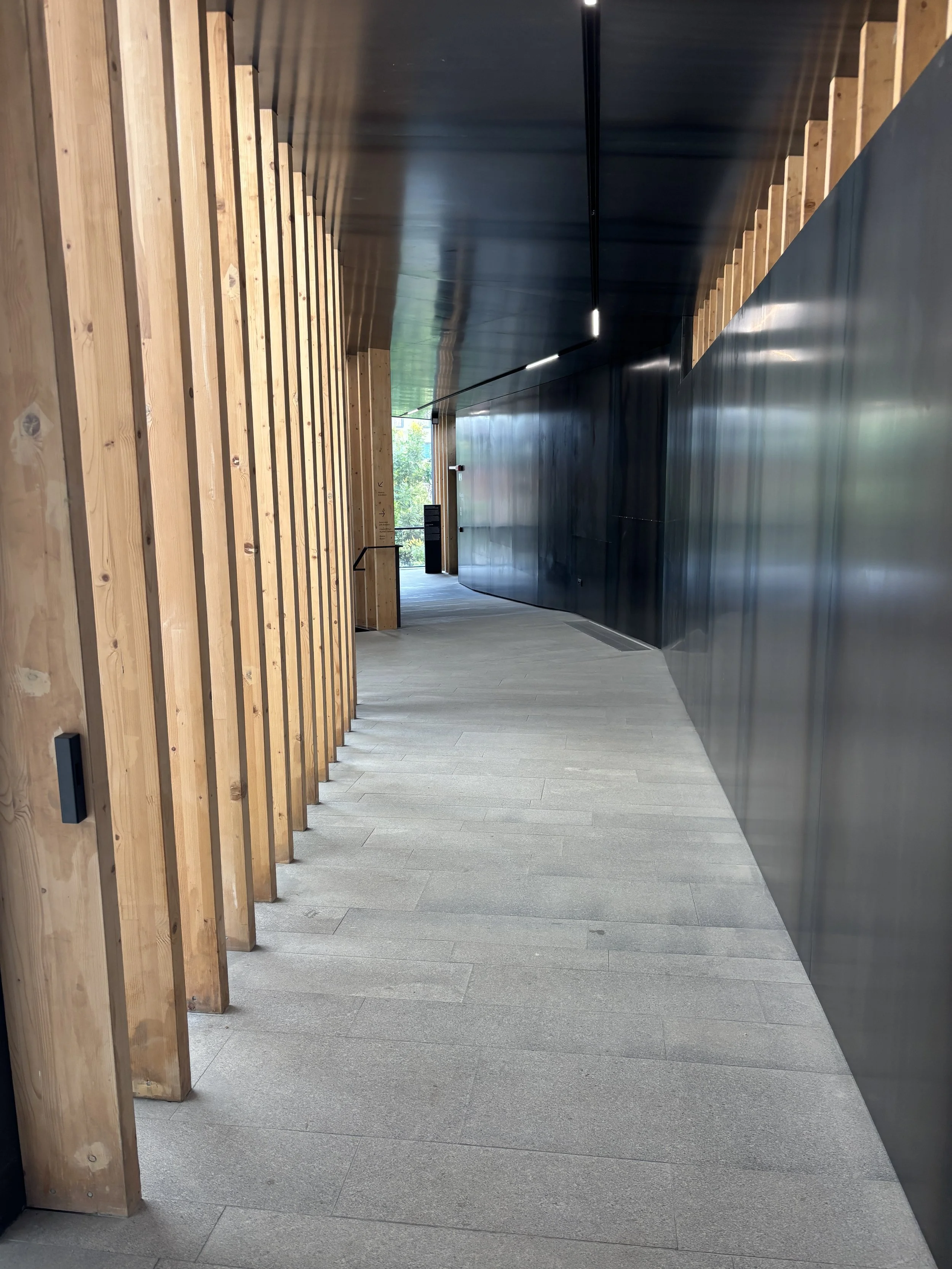
The building itself is also rather interesting, with a sober and majestic neoclassical exterior. The museum, however, went through a general revamp in 2023, which shows in the modern interiors.
Entry is €10, which is worth it if you are into these periods of art.
Museum of the Alpini
Bergamo has also a museum dedicated to the Alpini, the iconic Italian mountain troops, famous for the black feather they append to their hats. I include it here because this is a place I would really have liked to visit. Unfortunately this was not to be the case, because the Museo Alpino, which is free and run by a private foundation, opens only three days per week.
If you find yourself in Bergamo on a Monday, Thursday os Saturday and wish to check it out, here is the website.
Where to stay in Bergamo
Porta Nuova Bergamo Apartments
Largo Porta Nuova, 3, 24122 Bergamo
These apartments are located in one of the most central spots in the Città Bassa and they are also very conveniently located next to the bus stop to get to and from the airport.
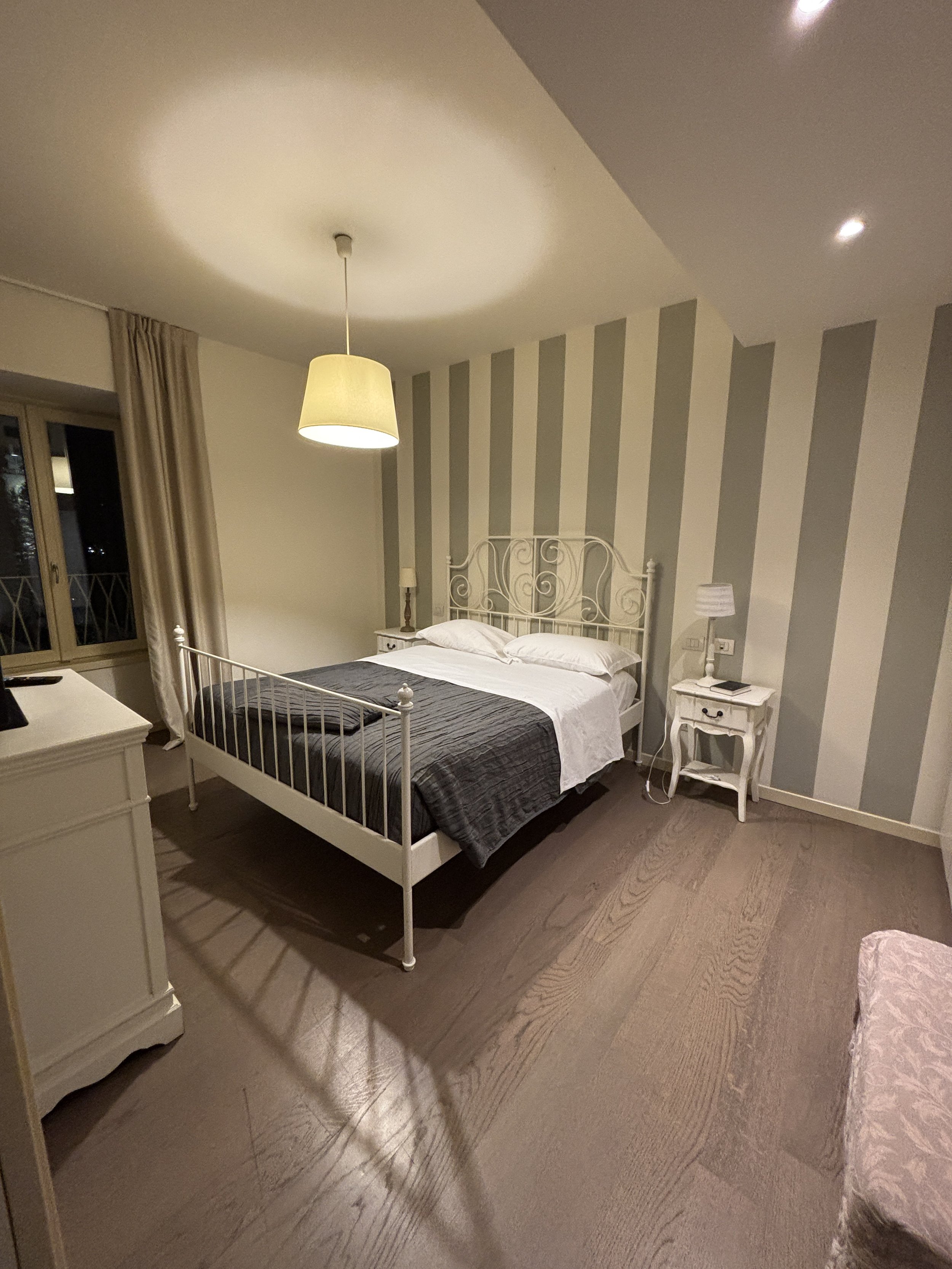
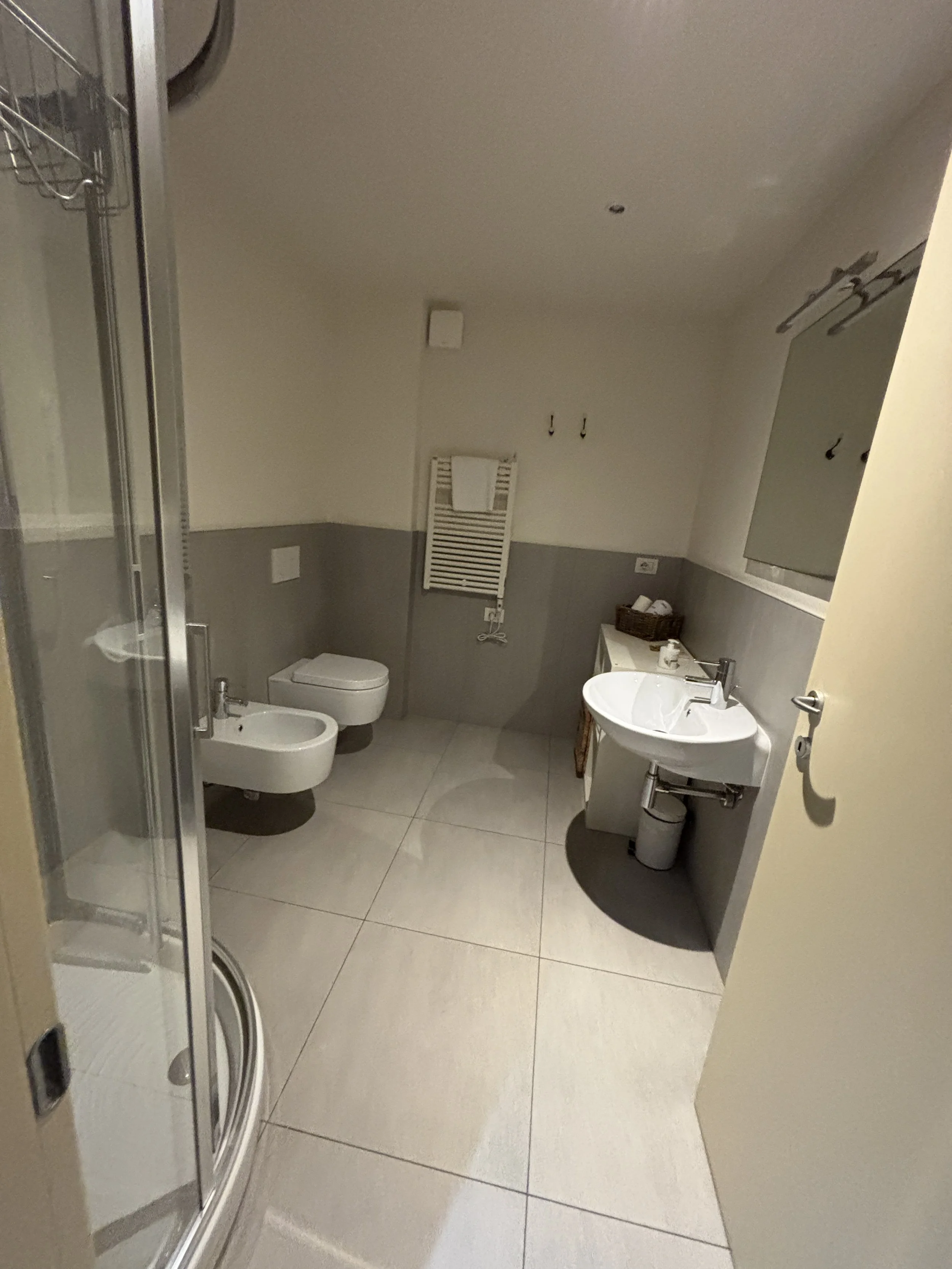
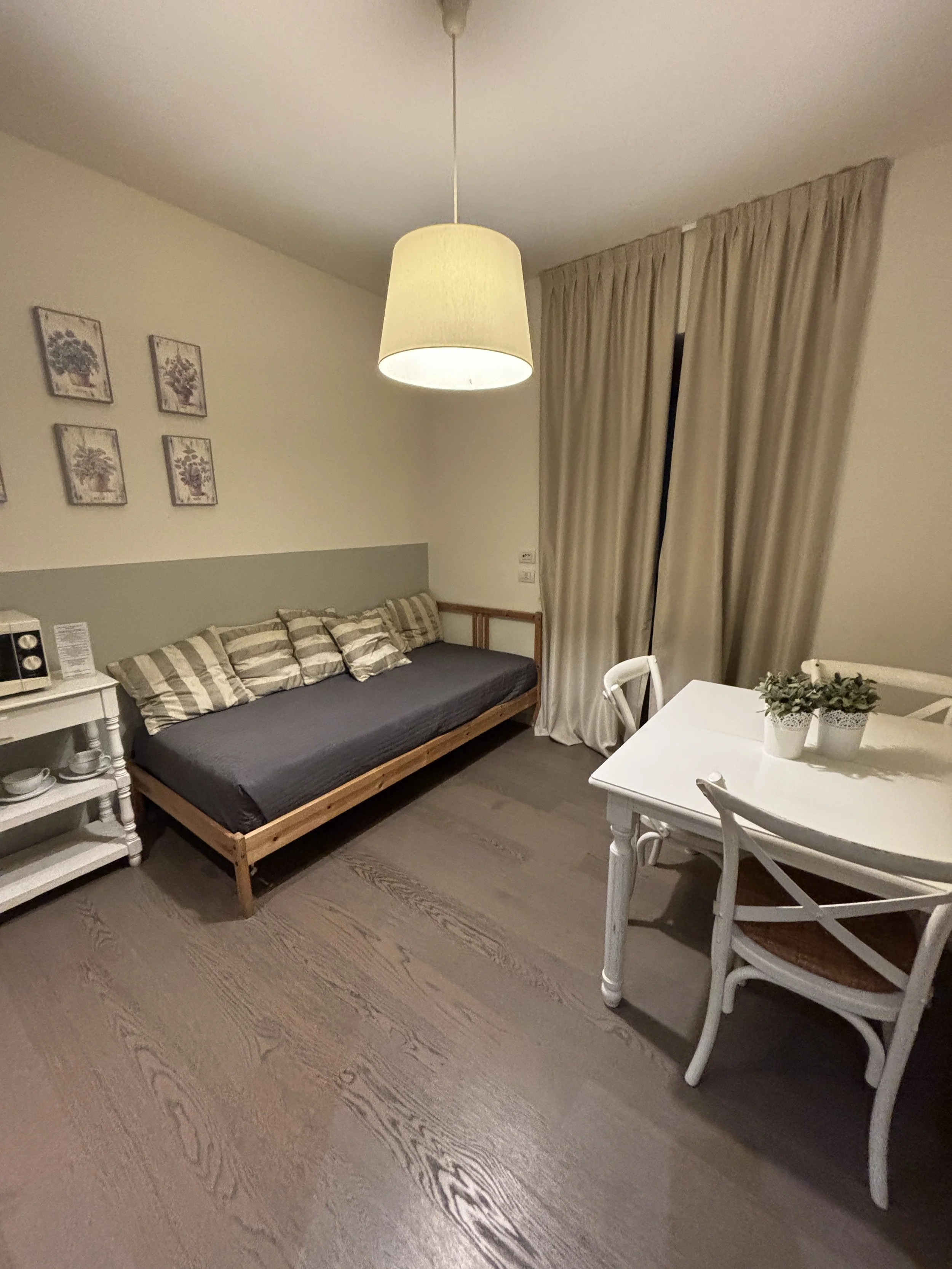
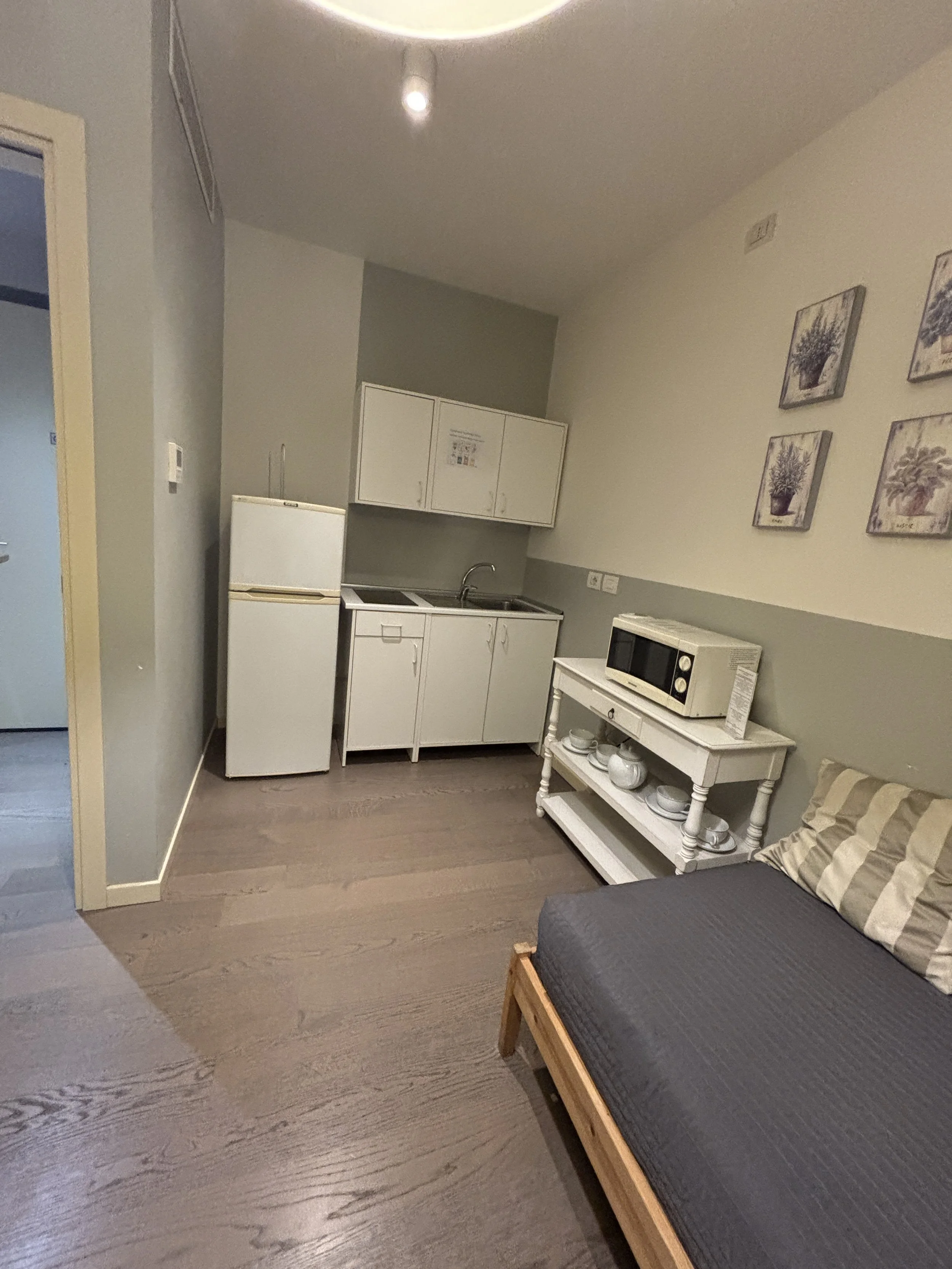
The interior of the apartment was modern, yet, with a touch of personality in the decor which avoided the typical “corporate” look of many hotels. It is also worth noting that it had views of the Porta Nuova and the Città Alta and plenty of space and natural light.
By the way, make sure you have some cash to pay the tourist tax, which was something like €5 per person per night. It is, apparently not included in the Booking.com reservation and must be paid by leaving some cash on the table before leaving (checkin and checkout are totally automated via an access code which gives you access to a postbox in which you find a physical key).
You can book the apartments here.
A great day excursion near Bergamo: Lake Iseo
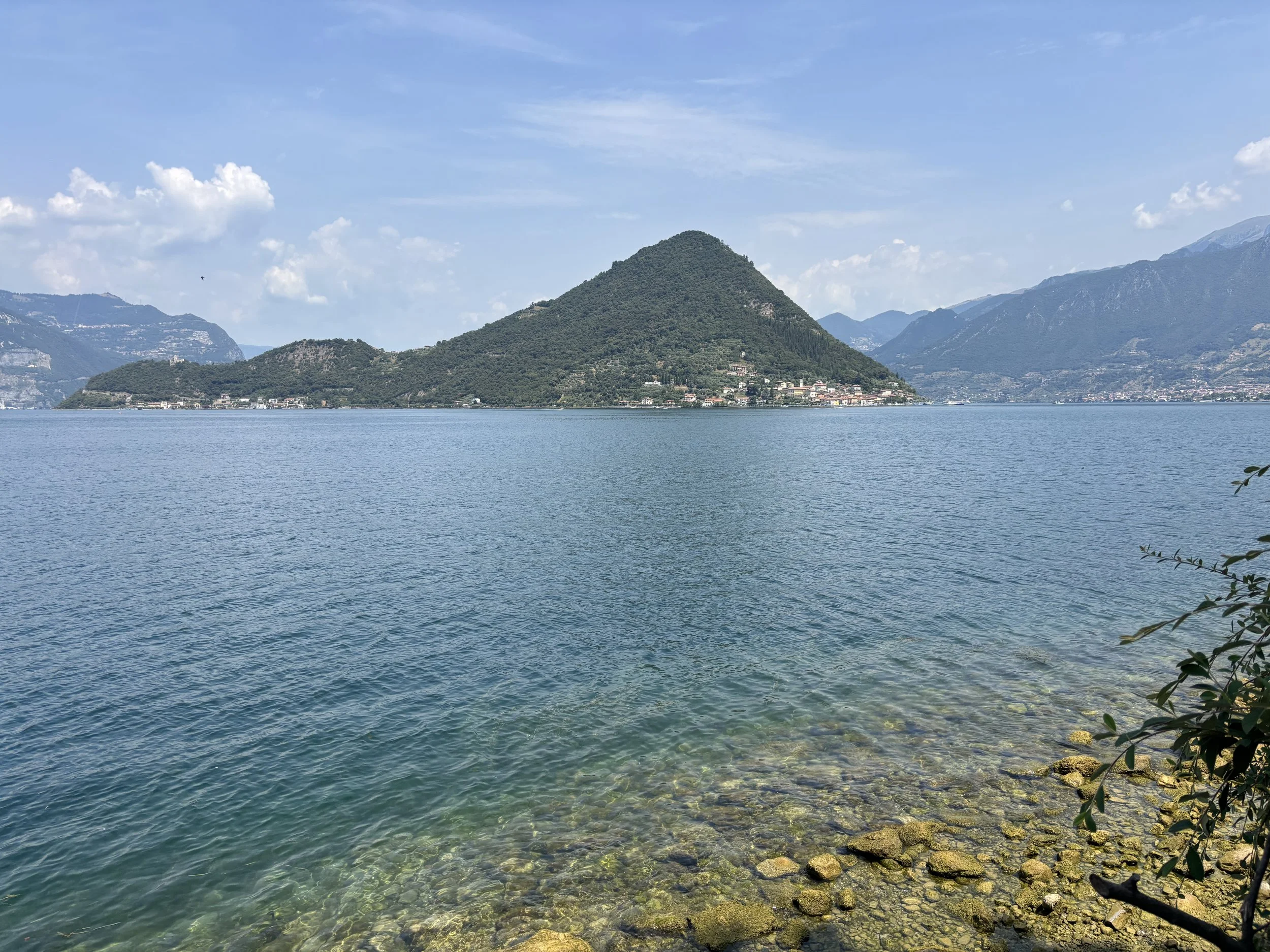
Lake Iseo (Lago d’Iseo) is one of the great lakes of northern Italy. Even if a bit smaller and perhaps lesser known than lakes Como, Maggiore and Garda, it is also very beautiful and of a respectable size.
Lake Iseo contains also the largest lake island in Europe, Monteisola, which is I cover in this post and happens to be an amazing place to spend some time if the weather is nice.
What to see around Lake Iseo
First of all, it is important to bear in mind that, while Lake Iseo is smaller than other lakes in northern Italy, it still is some 25km long by 5km of width, so it is a significant body of water.
If you are planning to visit as a day trip, it is, thus, advisable to be strategic about which spots to visit along the lake’s shores.
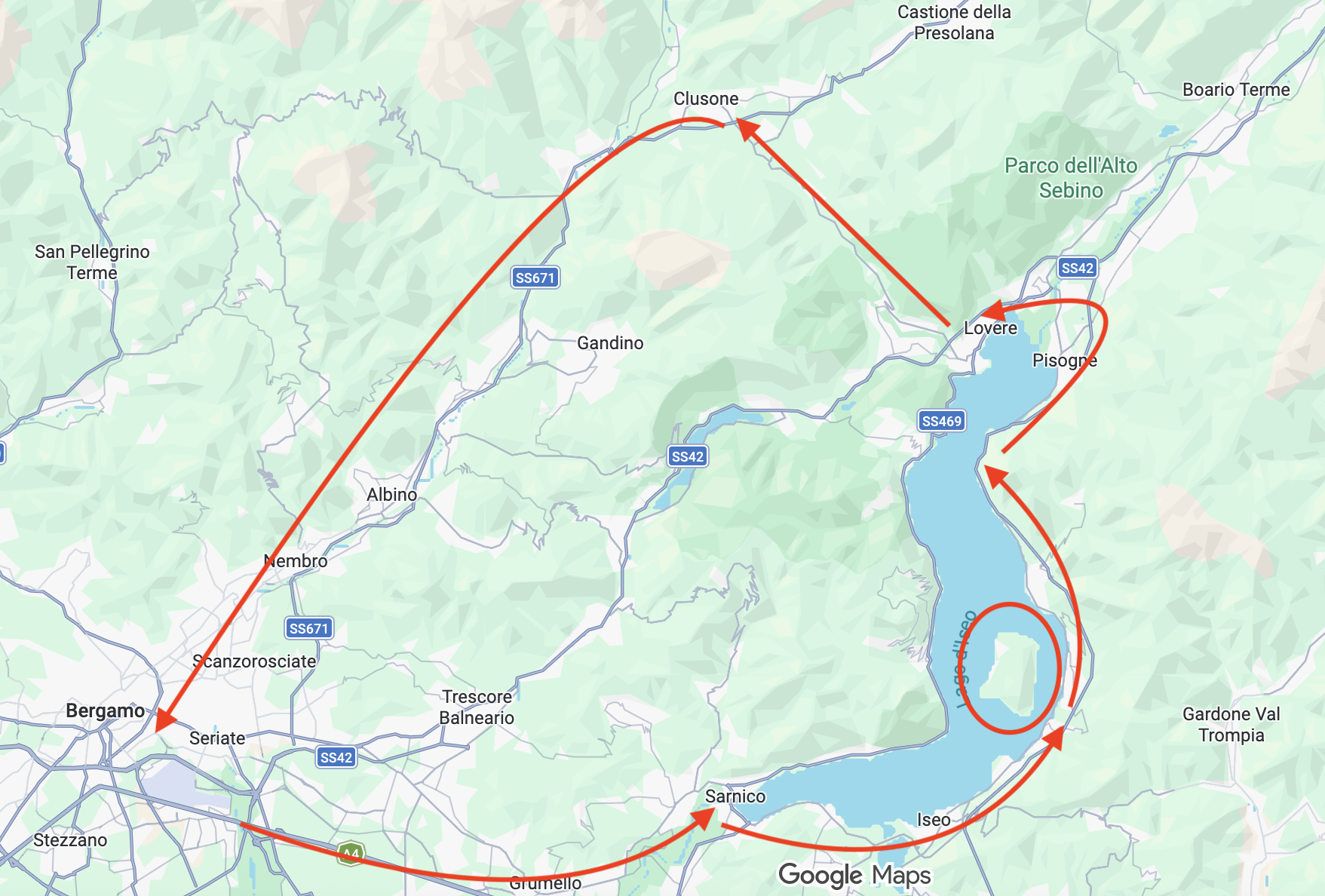
In this regard, my choice is clear: go to Sulzano to hop across the water from there to Monteisola, the large island in middle (actually a bit closer to the eastern shore) of the lake.
From there I drove along the eastern shore of the lake up to its head, to then turn slightly west to Lovere and then take the slightly longest but more panoramic way back to Bergamo across the mountains
Visiting Monteisola on Lake Iseo
Why if I had to pick up one spot ot. visit in Lake Iseo it would be Monteisola?
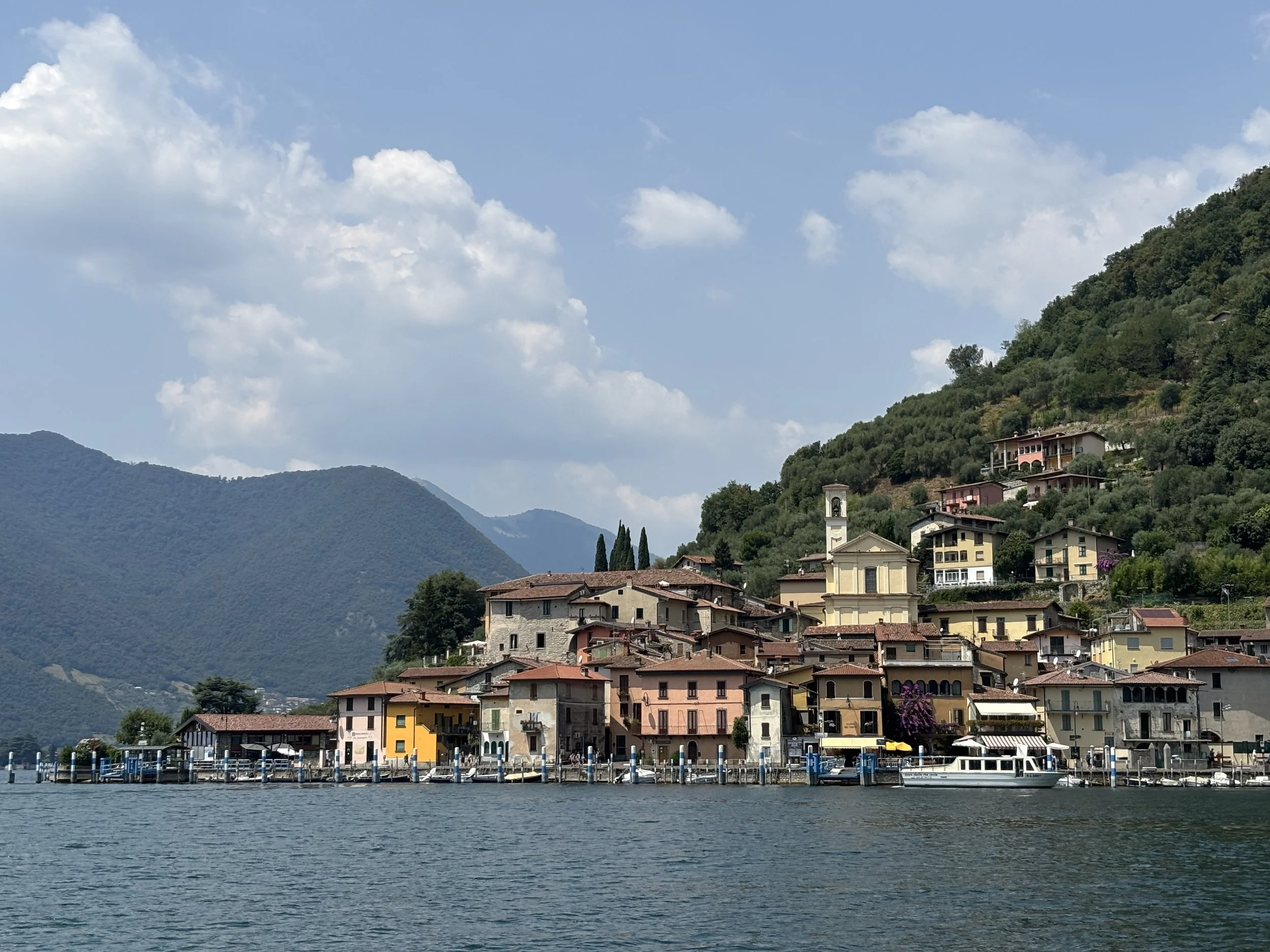
First of all because it is a beautiful spot. The island is close enough to the eastern shore that from Sulzano you can make out the contours of the picturesque little lakeside village of Peschiera Maraglio. The place does not disappoint once you come in to land at its quay. This would fit perfectly the sort of setting many have in mind when they imagine the so-called “Italian dolcevita”, just without the crowds you get in places like Portofino or Cinque Terre.
Now, a word of caution: I did visit on a sunny day in the middle of July. While I am sure it is still beautiful, the whole experience may be a bit different if you visit, let’s say, on a grey day in winter!
What’s more, visiting Monteisola gives you the opportunity to have the ferry experience. There are boats connecting Sulzano to the island every 15 minutes or so. The ticket costs about €5 return. It is a really short ride, no more than 5-10 minutes, but enough to get you a new perspective of the lake.
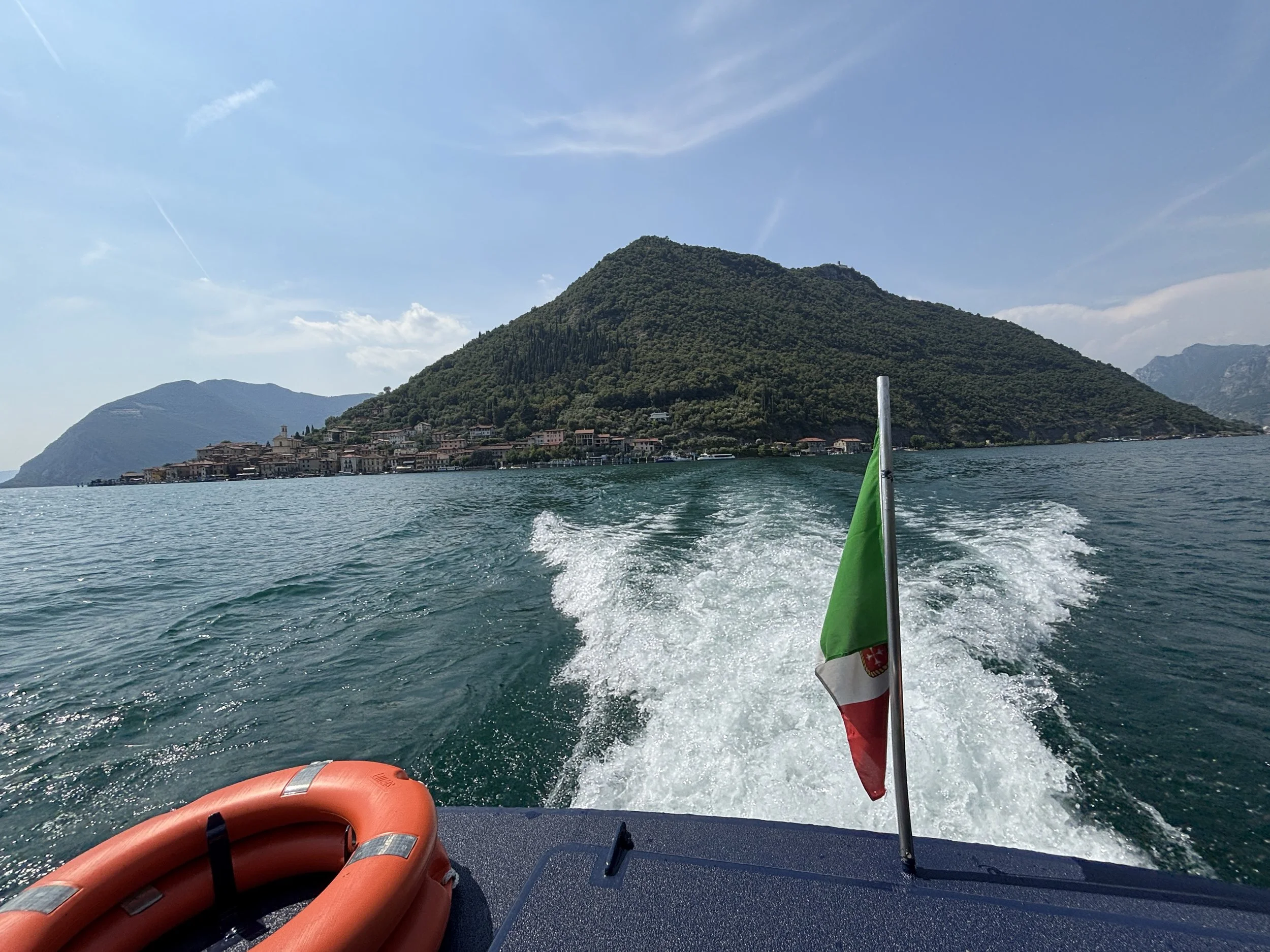
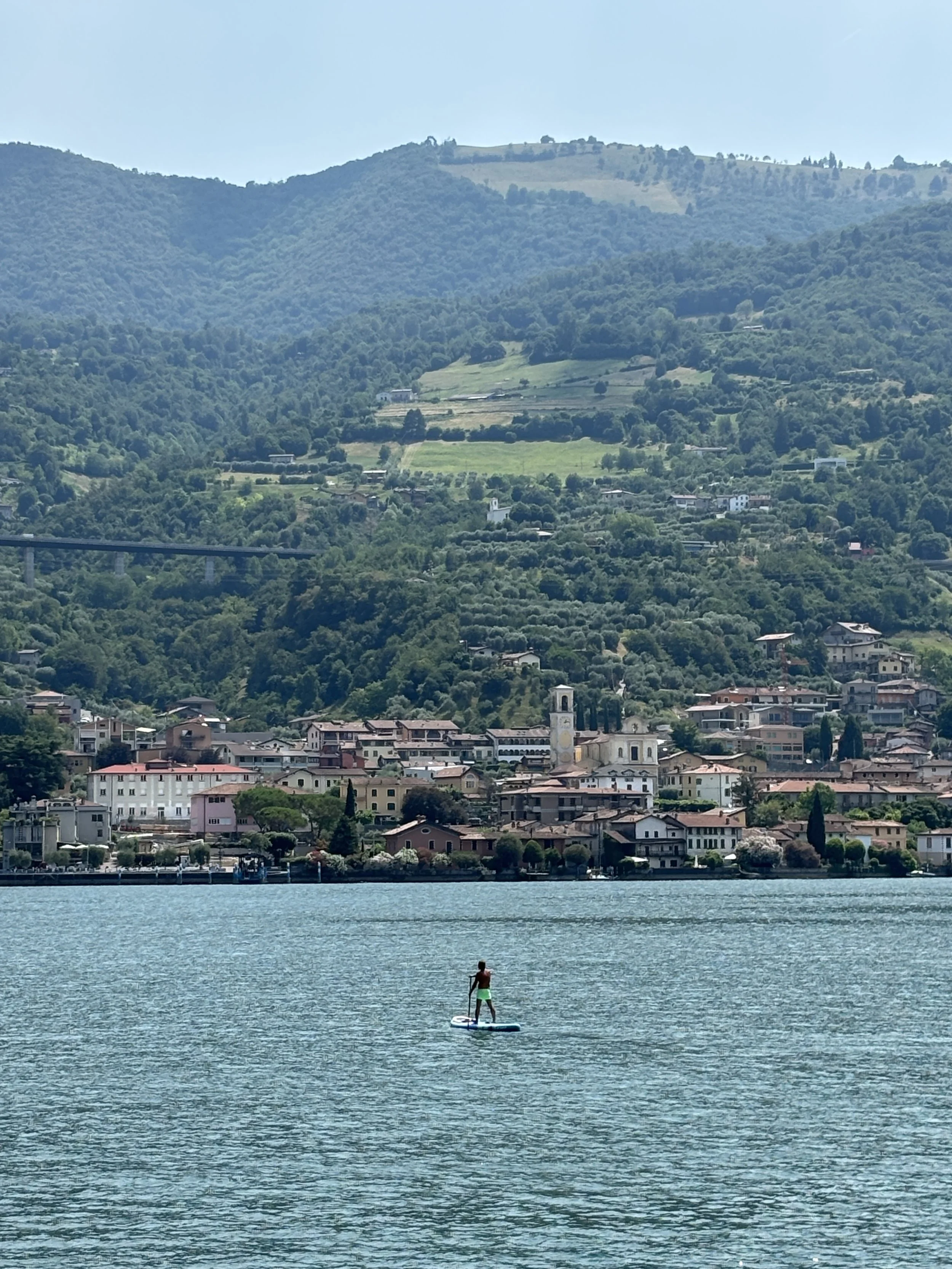
As mentioned earlier, Monteisola is the largest lake island in Europe. It has a perimeter of around 9 km and its center is a peak of some 600m of height with a monastery at the top.
Bear in mind that no cars are allowed on Monteisola and the ferry carries only people. You can rent bikes on arrival, though.
What’s more, you don’t need to visit the whole island to get a nice experience. I would say, if you are short of time, you can simply stay around Peschiera, which has also quite a few nice bathing spots around, if the weather permits.
My initial plan was, actually, to take a small winding path that takes you all the way up to the monastery, from where it is possible to get the best views of all Lake Iseo. However, it was so hot on the day of my visit that I soon abandoned this plan and switched to the beach instead.
There are a handful of public lakeside recreational areas on the south side of the island, just 5 minutes walk west of Peschiera Maraglio following the lakeside boulevard.
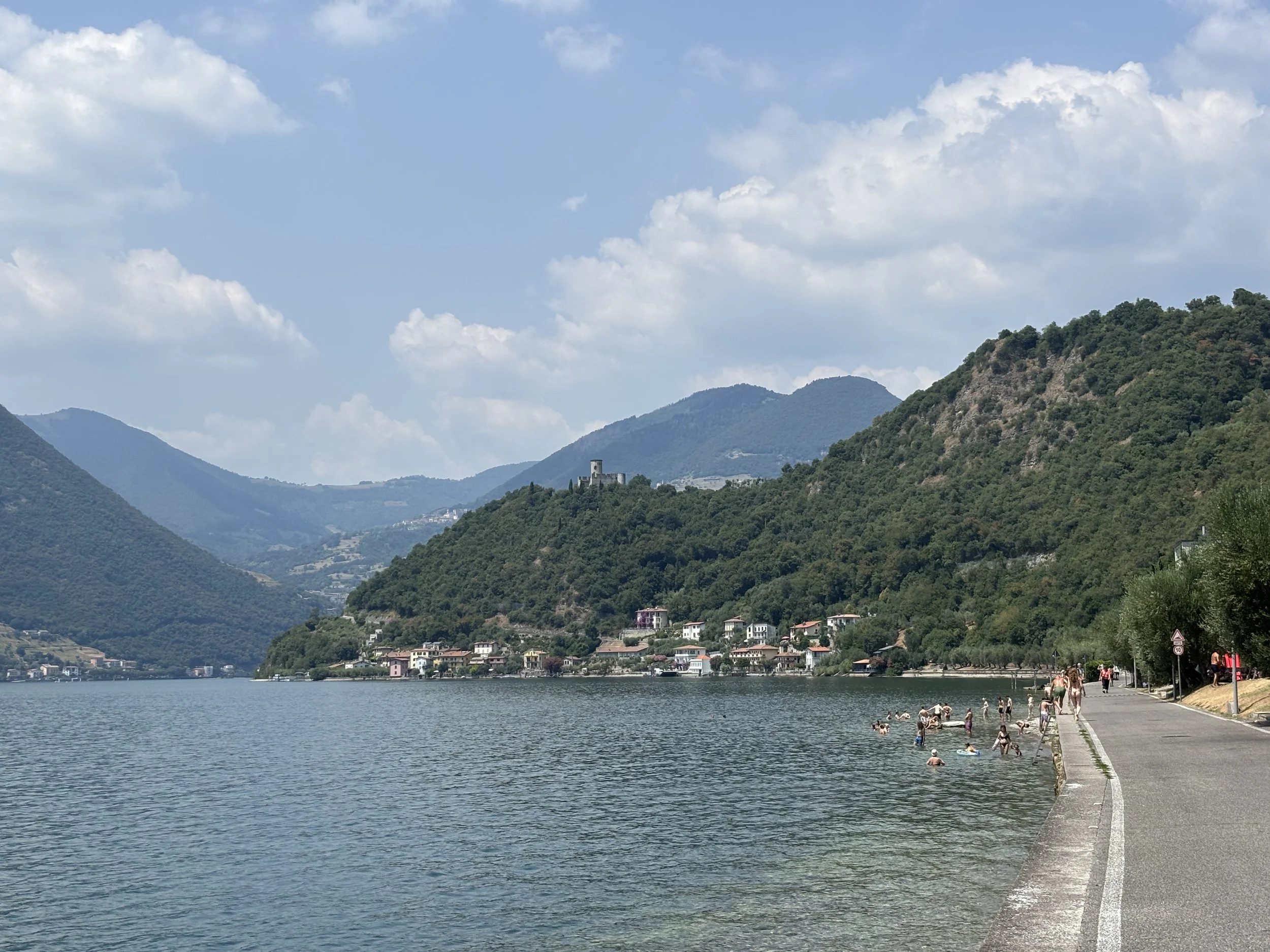
By the way, don’t expect large sandy beaches on Monteisola, the bathing spots on Lake Iseo tend to be more like relatively small openings between the rocks, with some pebbled open space where you can leave your stuff while you go for a plunge.
I mention it because, while I personally like this kind of beach, I am aware it is not for everyone!
I was surprised to find the water on Lake Iseo to be quite warm, but it was an exceptionally hot day in the middle of a heat wave when I visited, so it was possibly not representative of the usual experience.
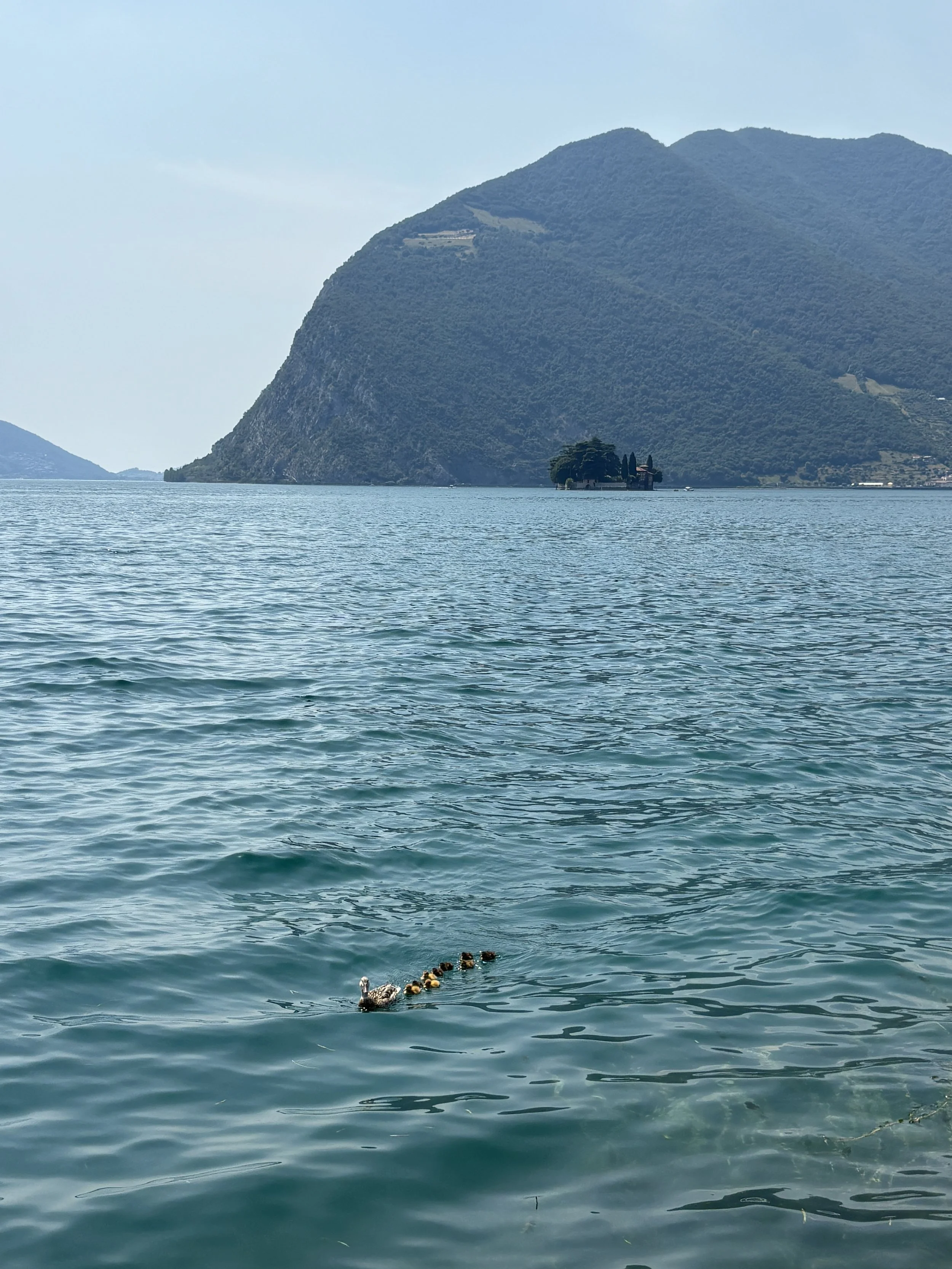
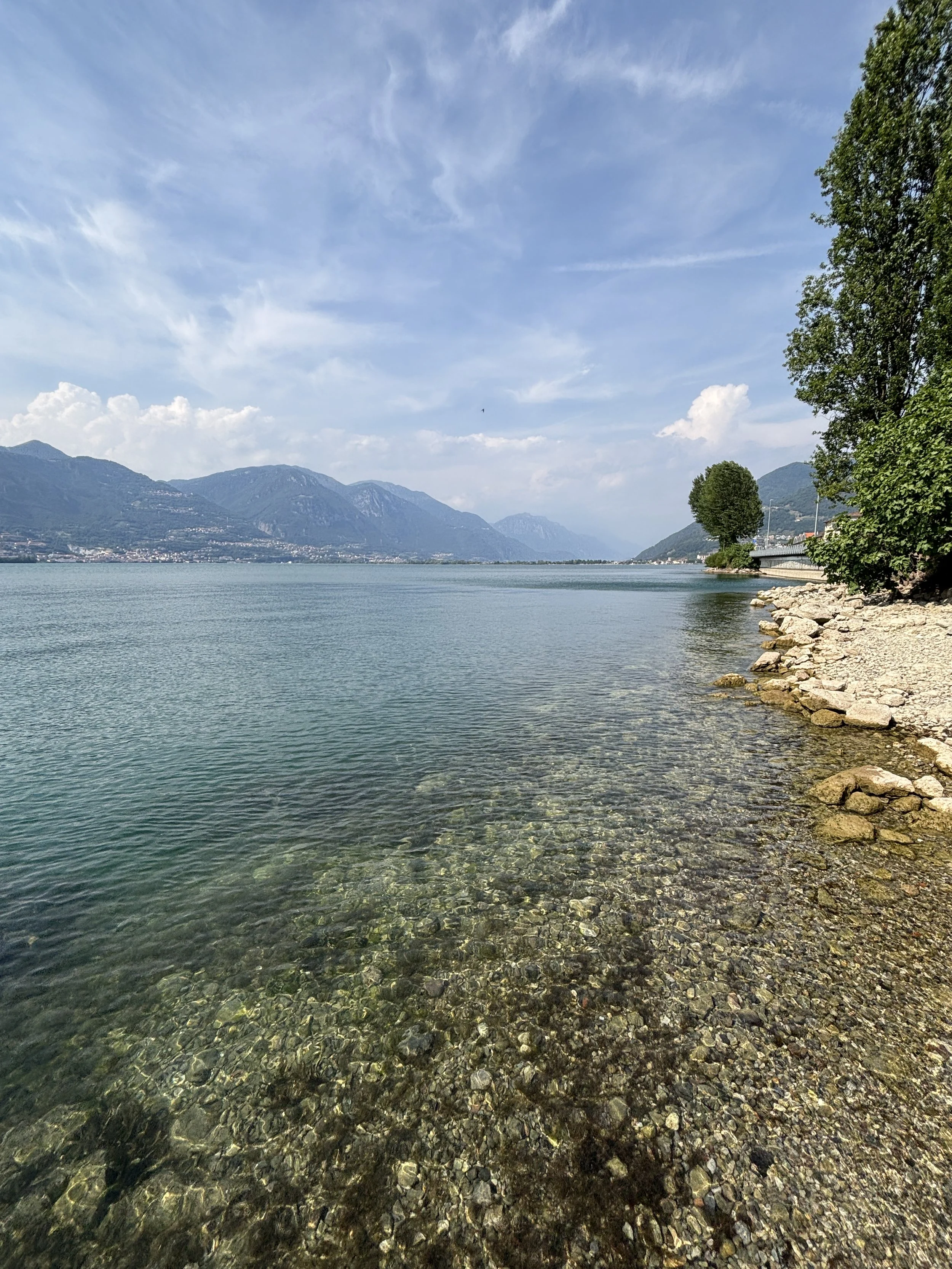
What I can say for sure is that water was pretty clean, transparent actually, and there were plenty of fish and even ducks (and ducklings!) swimming around.
For reference, these images are from the small beach some 300m to the west of Peschiera Maraglio, on the southern tip of the island. From this spot you can also see the Isola di San Paolo, a small islet which is the private property of the Beretta family, of gun-making fame.
The Christo 2016 installation on Lake Iseo
At this point is worth mentioning a rather unique art event that took place in this part of Lake Iseo in 2016, when the famous Bulgarian artist Christo build its “Floating Piers” installation, which consisted in the construction of several ephemeral piers covered in yellow fabric which, with a length of 3km total, connected Sulzano to Monteisola and the Isola di San Paolo.
Nothing is left of those piers, although it is possible to find some decorative elements along the lake’s shores that recall that one-off episode. You can more information and some images of how it looked like here.
Wandering around Peschiera Maraglio
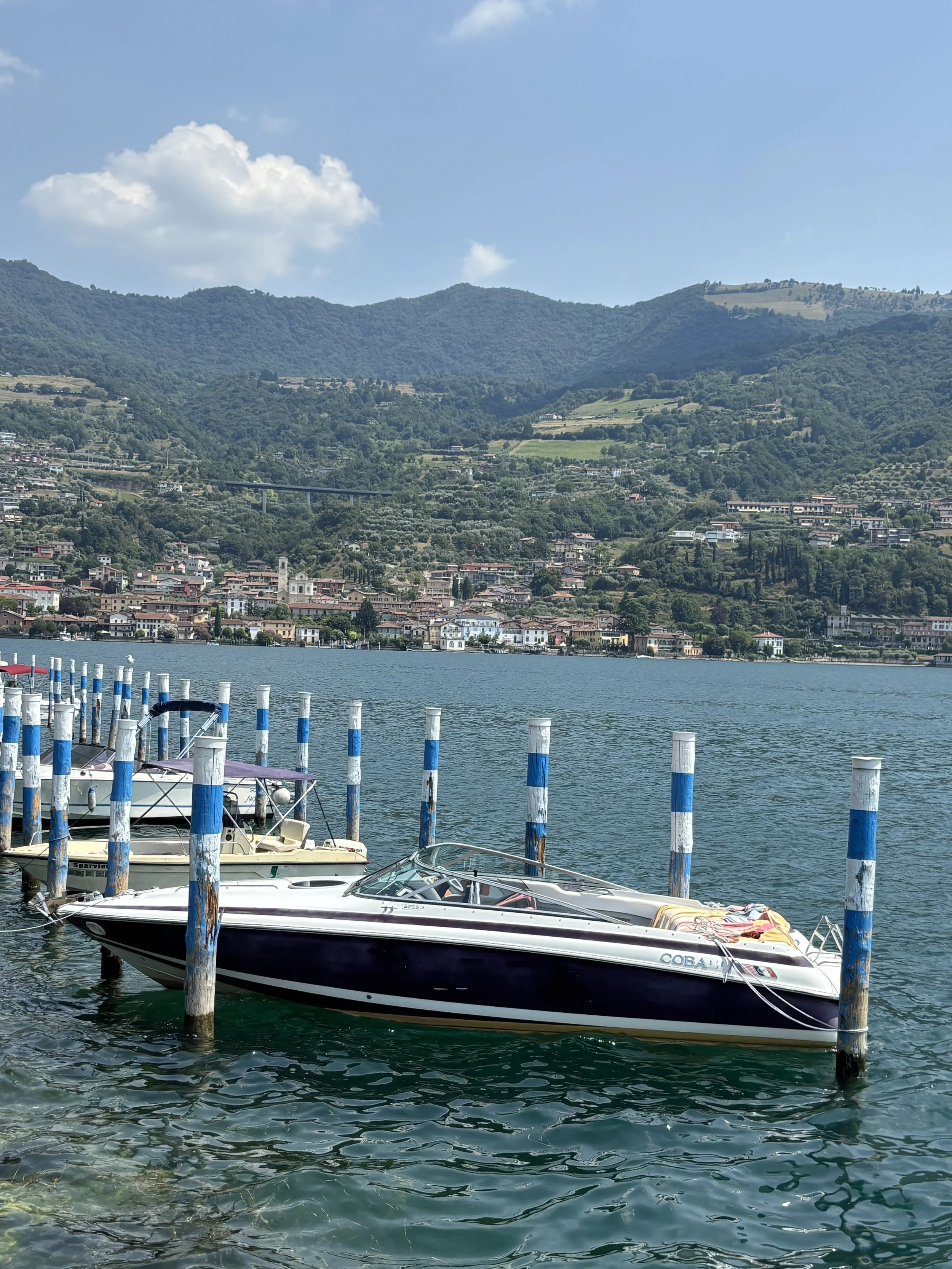
Besides the nature and the views, Peschiera Maraglio has a small urban nucleous that revolves around the quay.
It is here were most shops, bars and restaurants are, although there are also a handful of back streets climbing the lower parts of the hill and leading up to the village’s small church.
While this is obviously a tourist spot, it has preserved a modicum of authenticity.
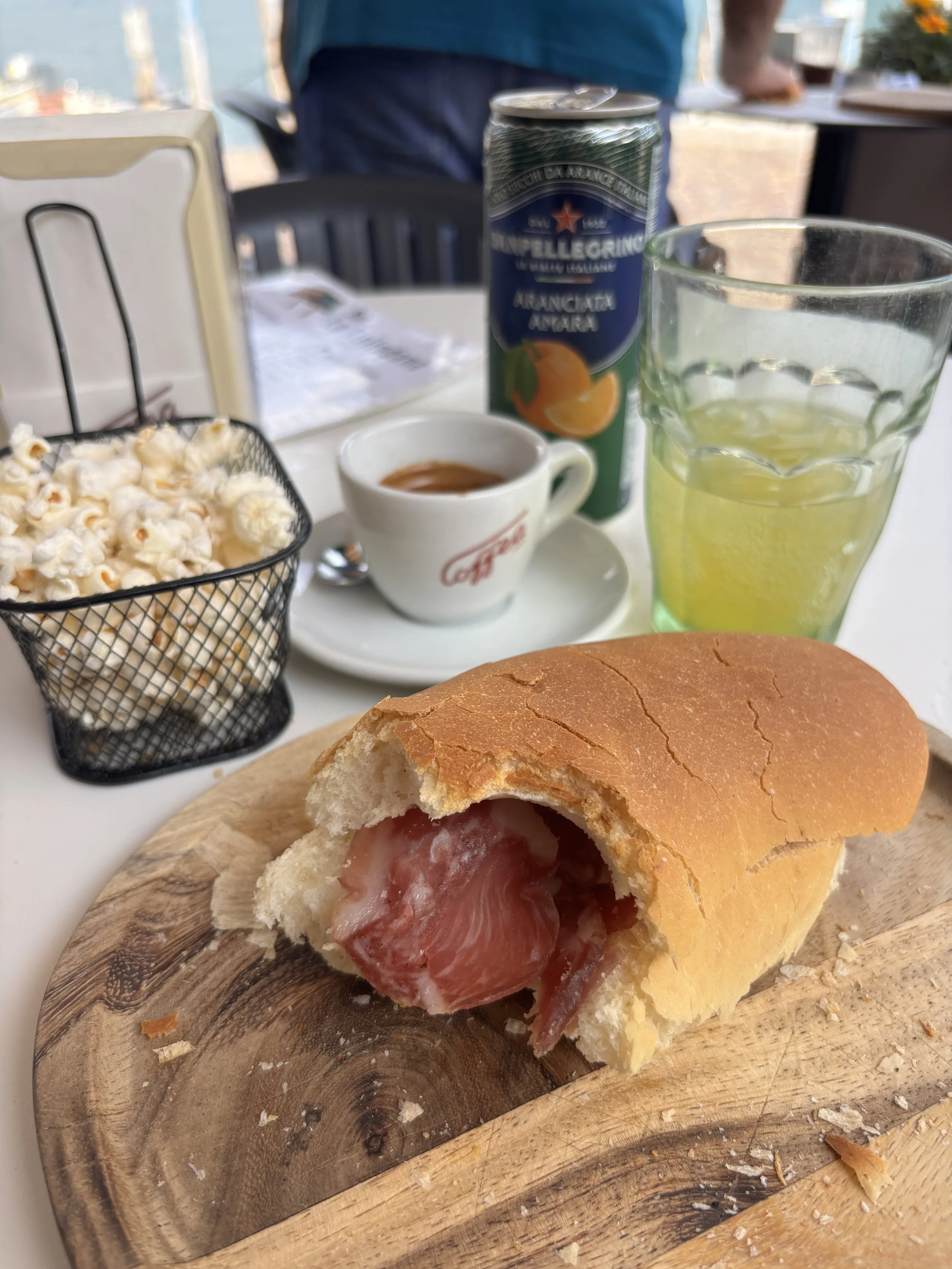
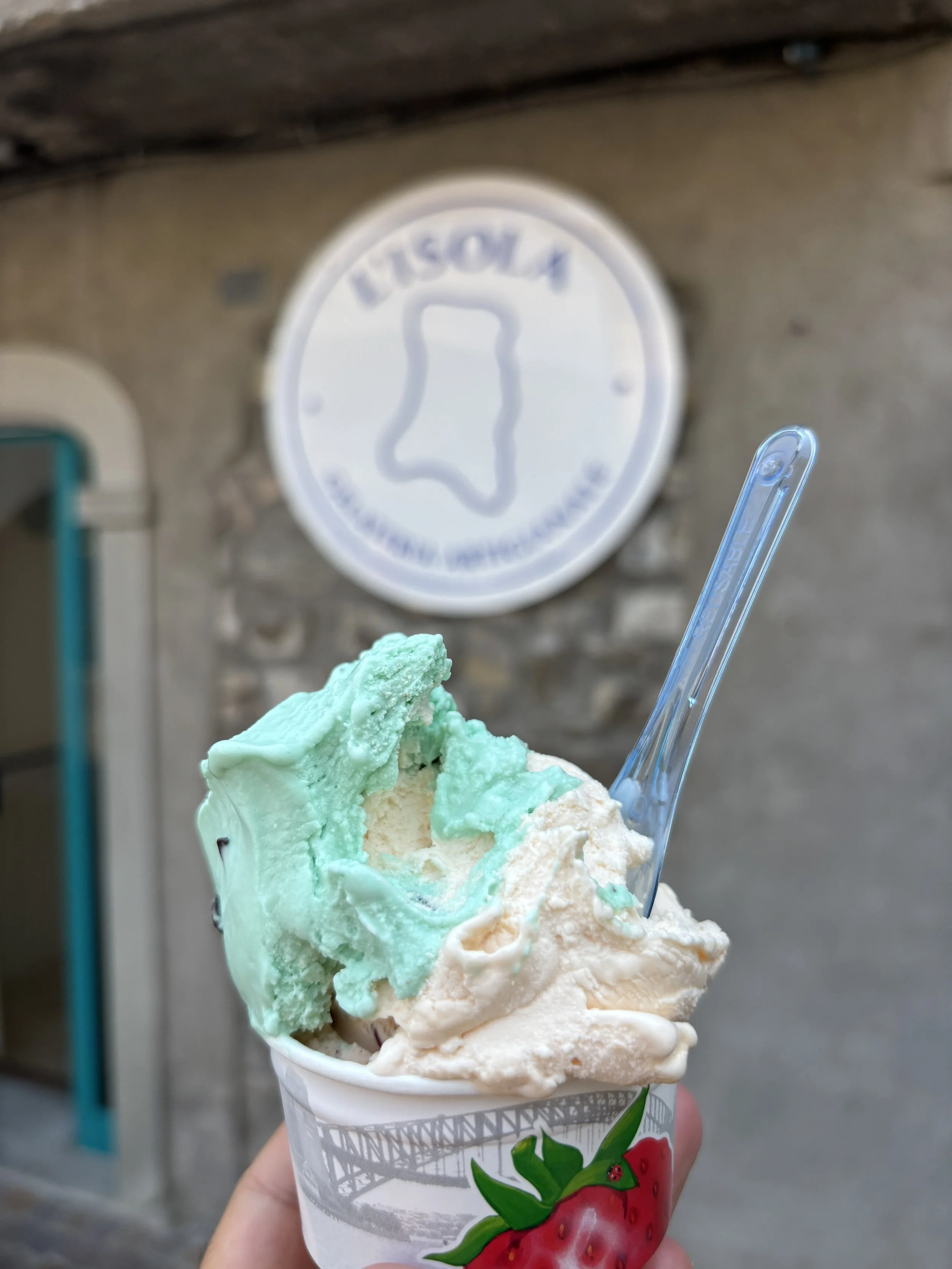
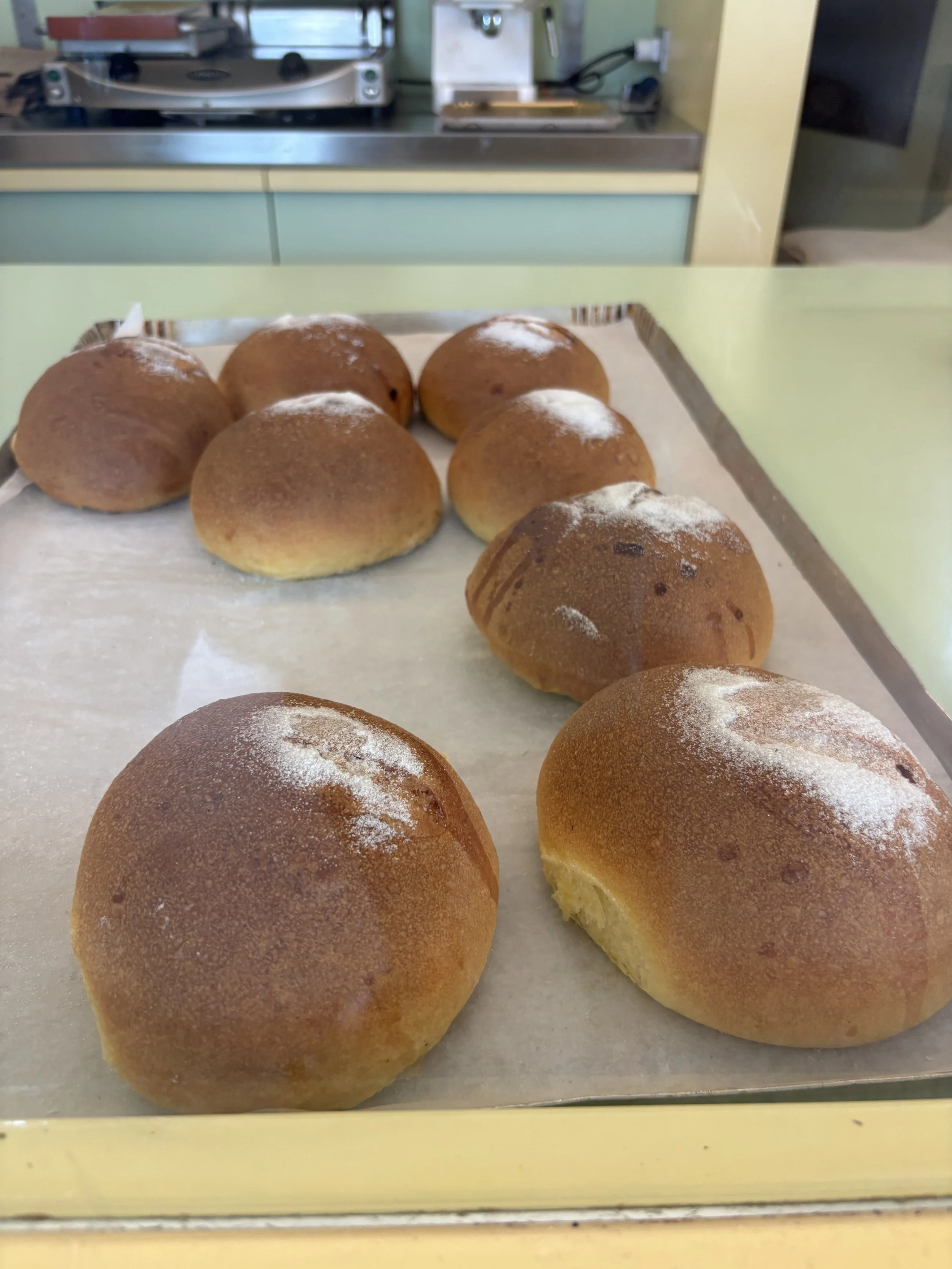
You can try, for example, a local speciality, the Salame di Monteisola, which is a type of salami that is smoked in a cellar through an artisan process. And you can also complement it with a nice artisan ice-cream and some pastries from the local bakery.
So, here are my recommendations of casual places to eat in Peschiera Maraglio (I didn’t go to any “formal” or upmarket restaurant although there a few of these places too, if this is your preference). The options I mention here are all found within 20 meters of each other and can be combined for an on-the-go type of meal:
La Tindirlana, for a bite of Salame di Monteisola
L’Isola, for a scoop of tasty gelato
Forneria Ziliani, for some local tasty buns
Other spots to bathe in Lake Iseo
There is no shortage of bathing places on Lake Iseo. The only issue is finding places that are easily accessible from the road and with parking space at hand.
Signage on Italian roads is not great, so be extra attentive, because there are long stretches of road on the eastern side of Lake Iseo which are fully tunnelled, which means that if you take the wrong exit you may end up tens of kilometres from the intended destination.
There are several bathing spots on the mainland around Sulzano, for example, particularly on the south side of the town, and also near Marone and Pisogne, a bit further up the lake from Sulzano.
I personally went for another swim in the vicinity of Toline, which is a hamlet just to the south of Pisogne. There you will find a small beach area just south of the urban centre with some parking space nearby. As in Monteisola, the beach here is made of pebbles, so better carry some type of sandals that make it easier to get to water!
More interesting places around Lake Iseo: Lovere
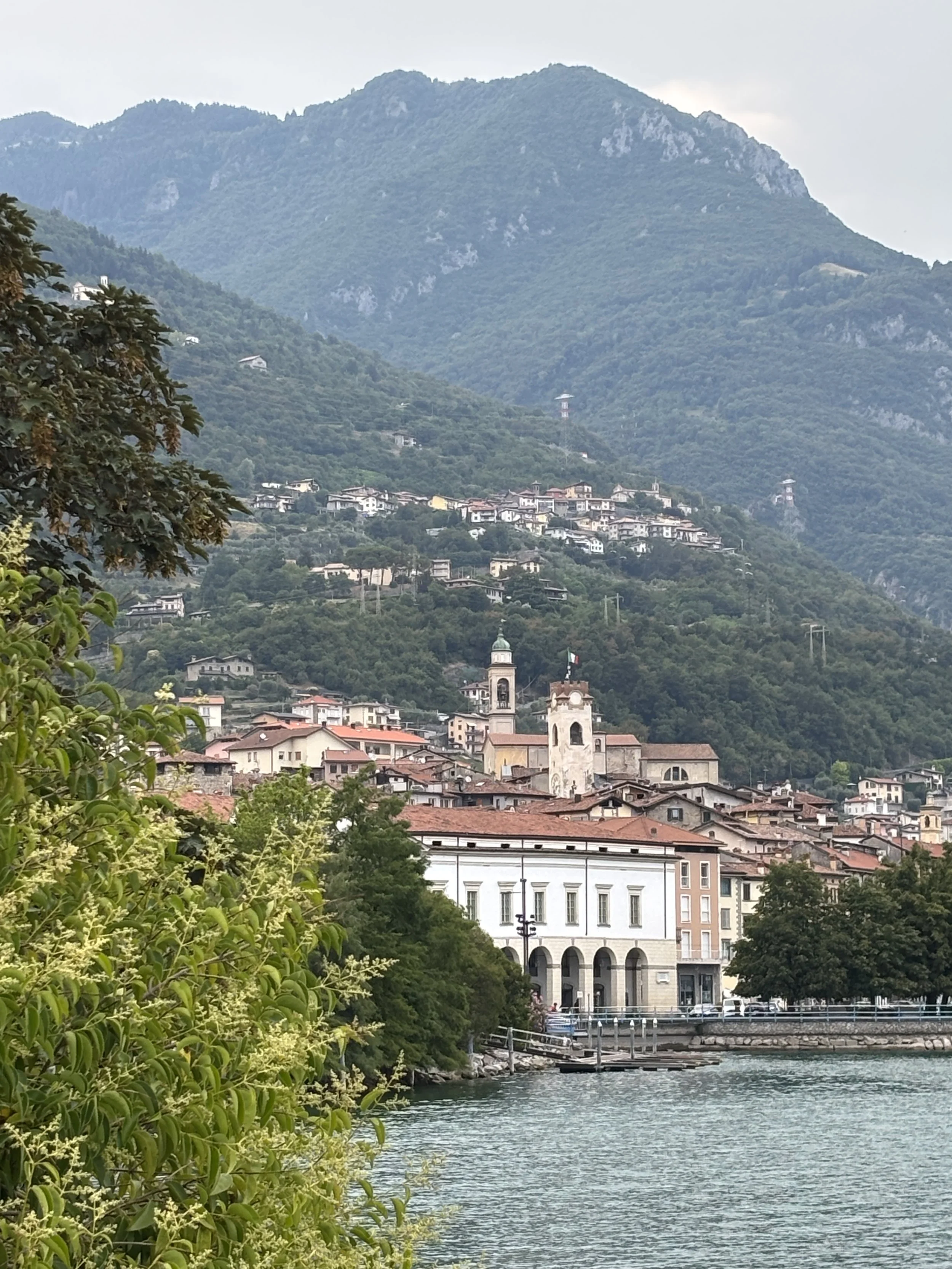
The lakeside town of Lovere is on the northwestern side of Lake Iseo.
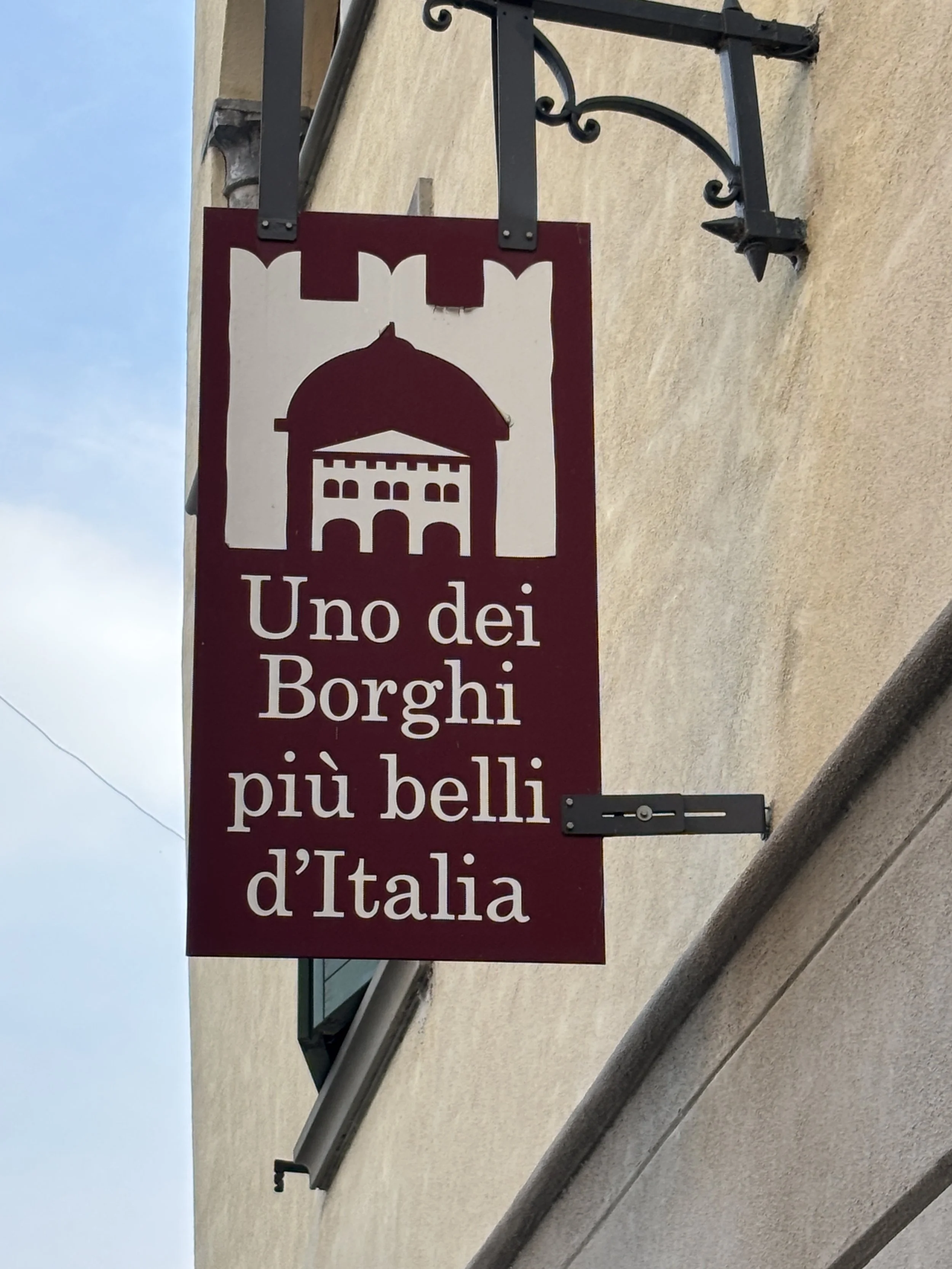
Lovere is included in the network of the most beautiful villages of Italy (“I borghi piu belli d’Italia”), which I found to be perhaps a bit of an overstatement. This is not because Lovere is lacking in charms, but because in a country like Italy, in which competition on the beauty front is fierce, this label raises perhaps some irrational expectations.
The best views of Lovere are actually from outside the village proper.
The marina area just to the south of downtown, offers a view of the village, silhouetted against the background of the lake and the nearby mountains.
Even if parts of the town are now relatively modernly built, Lovere is actually pretty old and it still keeps some urban elements that date back to the Middle Ages.
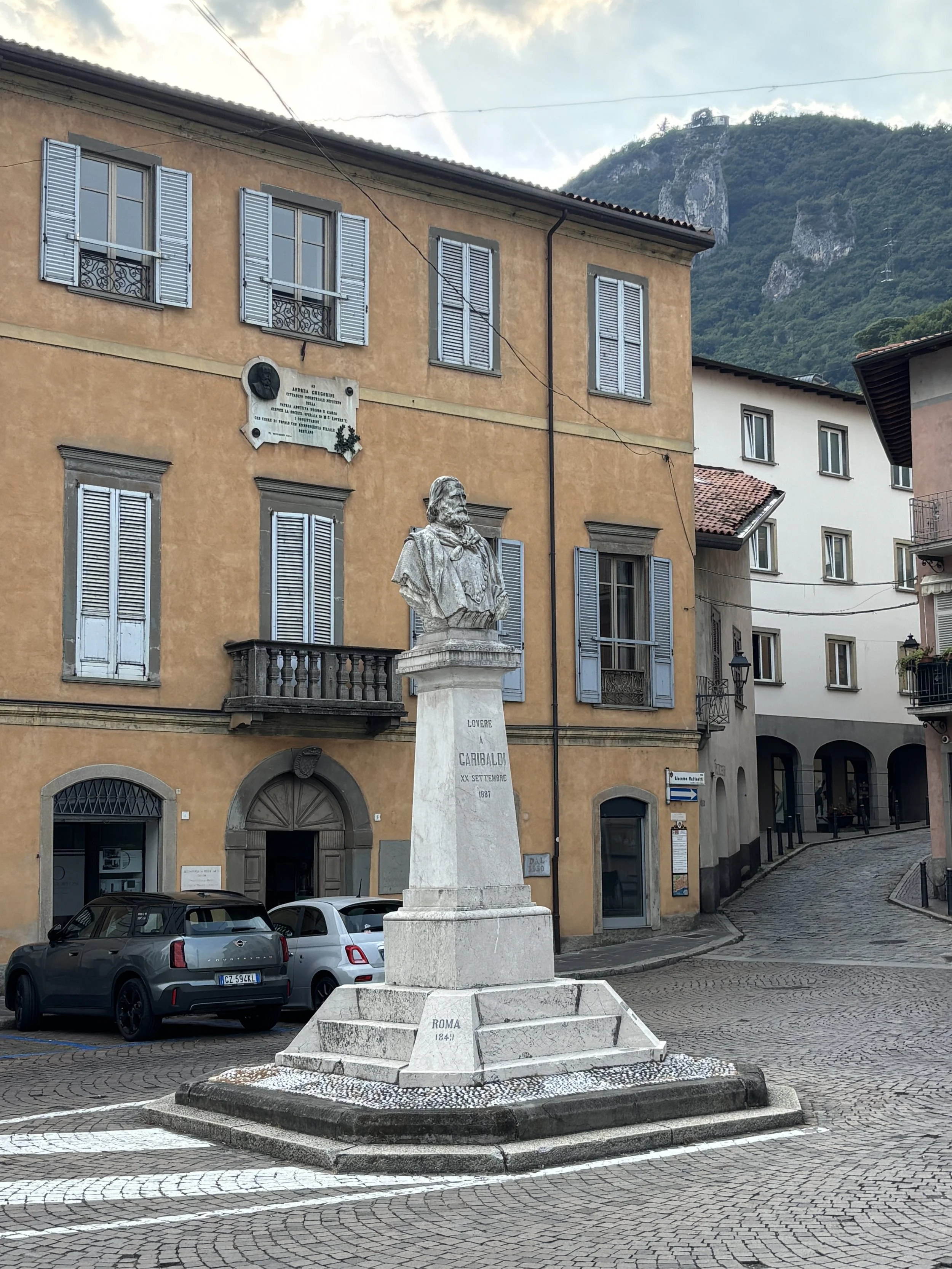
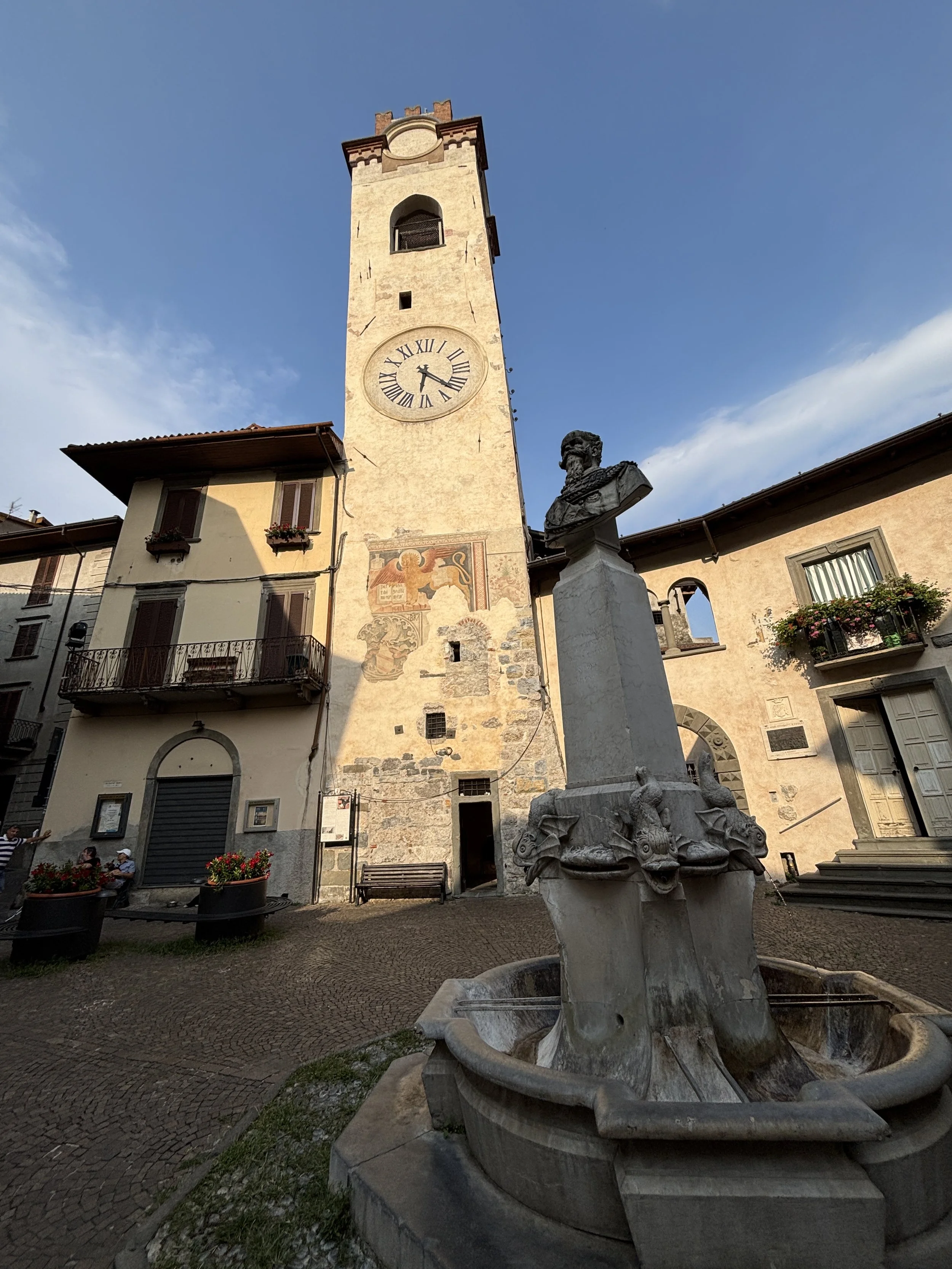
If you were to visit just one place in Lovere, go to Piazza Vittorio Emanuele I (depicted below), which is really picturesque and has a bust of the said king at its center.
By the way, just like Bergamo, Lovere has its own art and history museum set up in the late 18th C. by a local aristocrat, Count Luigi de Tadini. It hosts art and archaeology collections as well as a section about the Italian Risorgimento. I didn’t have time to visit it, but I thought it worth mentioning!
A place to have coffee in Lovere
Minuscoli Lovere
Via Tadini, 28, 24065 Lovere
This is a rather modern place, so, don’t expect the classical, old-style Italian café which may have been around at the time of the Risorgimento.
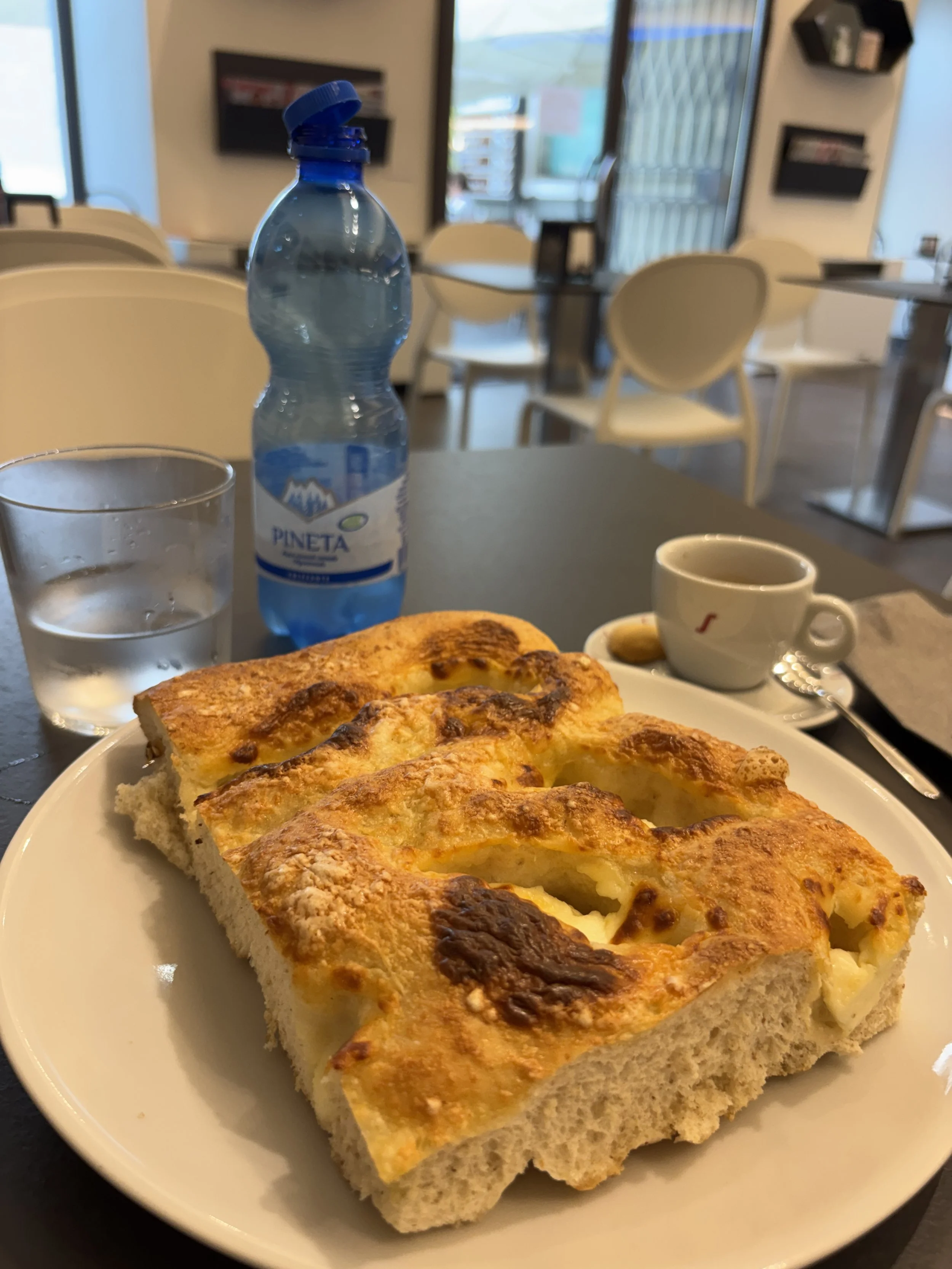
However, I quite liked it, because it had nice, clean, spacious and air conditioned premises, it offered a great choice of pastries.
It is located on the main lakeside road, on a small square just by the quais, so not in the very center of the historical town, but convenient if you have left the car in one of the parking lots by the lake.
I think that what this place lacks in history and authenticity more than makes it up in the choices available and nice and efficient service.
Bonus tip: visiting Clusone, in the Val Seriana
If driving back to Bergamo from Lake Iseo, you may consider, instead of returning via Sarnico and the main motorway, to take a bit of a detour through the mountains of the Val Seriana.
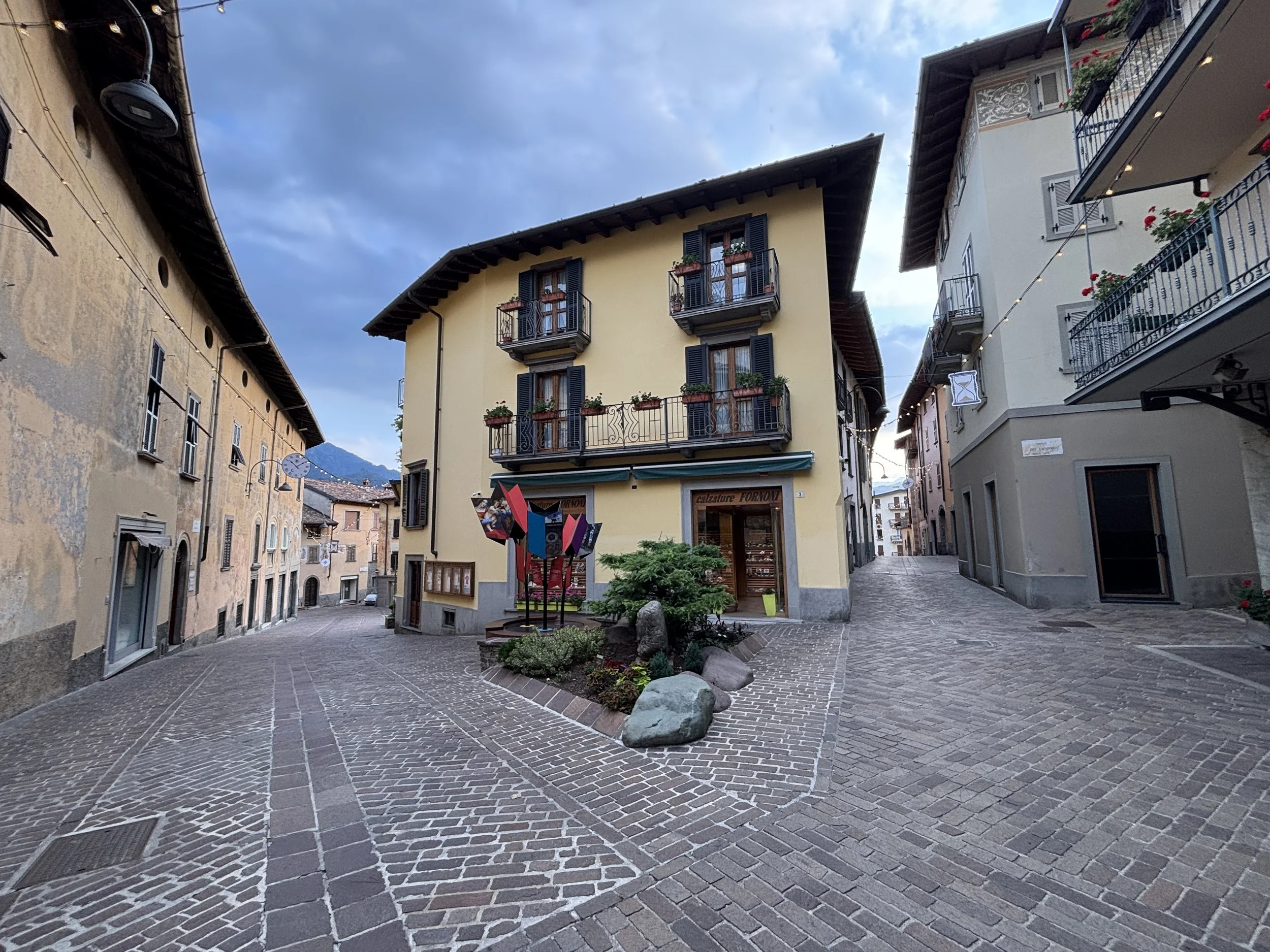
This route allows you to see this part of the Alpine foothills and the town of Clusone, which, like Lovere, is also included in the network of Italy’s most beautiful villages.
Clusone has also a medieval center with a few rather unique things to see
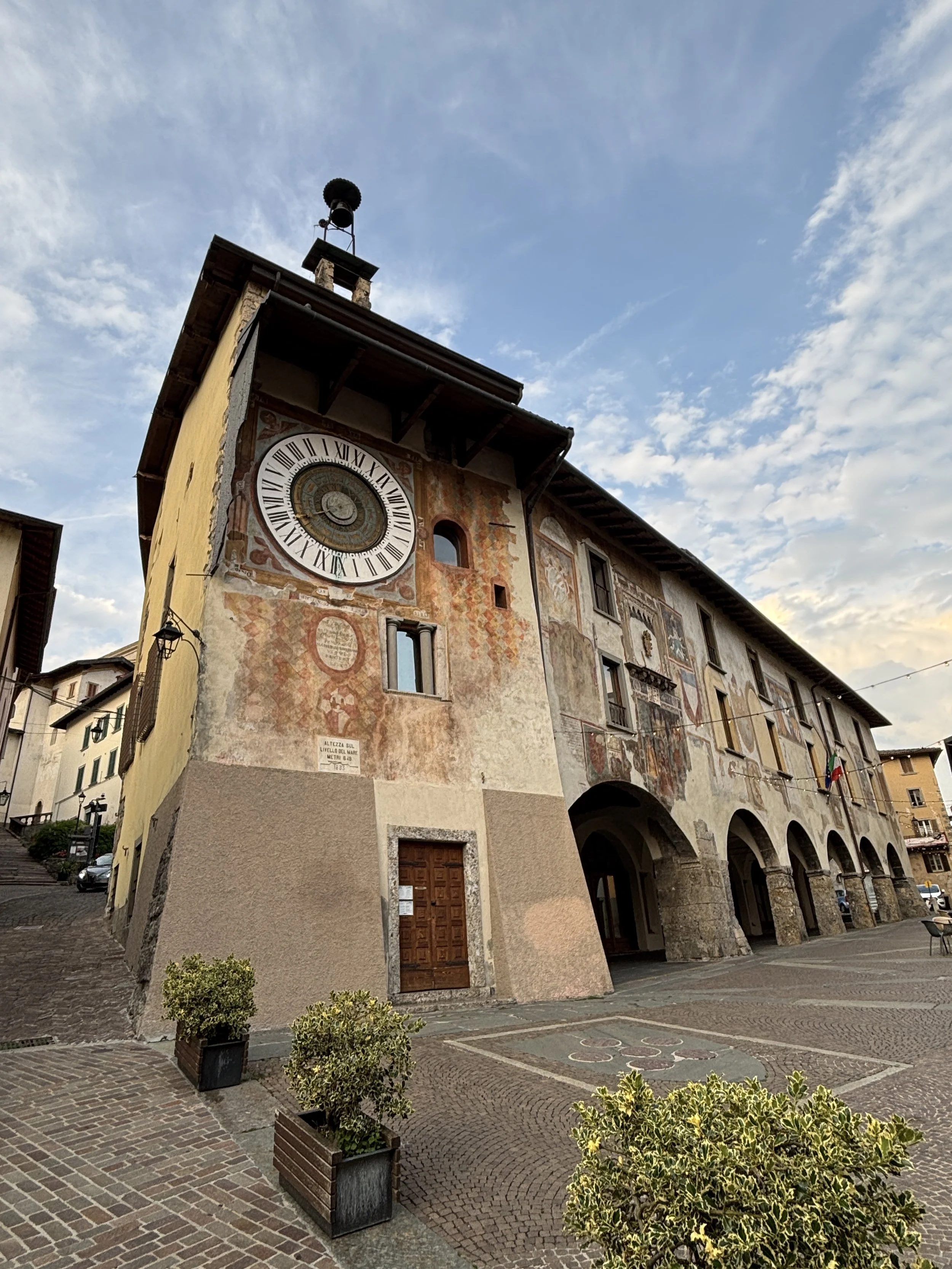
An astronomical clock (Fanzago clock) on the Palazzo Comunale, this is quite a unique piece of craftmanship. Designed by a local mathematician called Pietro Fanzago. Since 1583, Clusone’s astronomical clock has marked hour, day, month, the moon phase, and zodiac signs simultaneously.
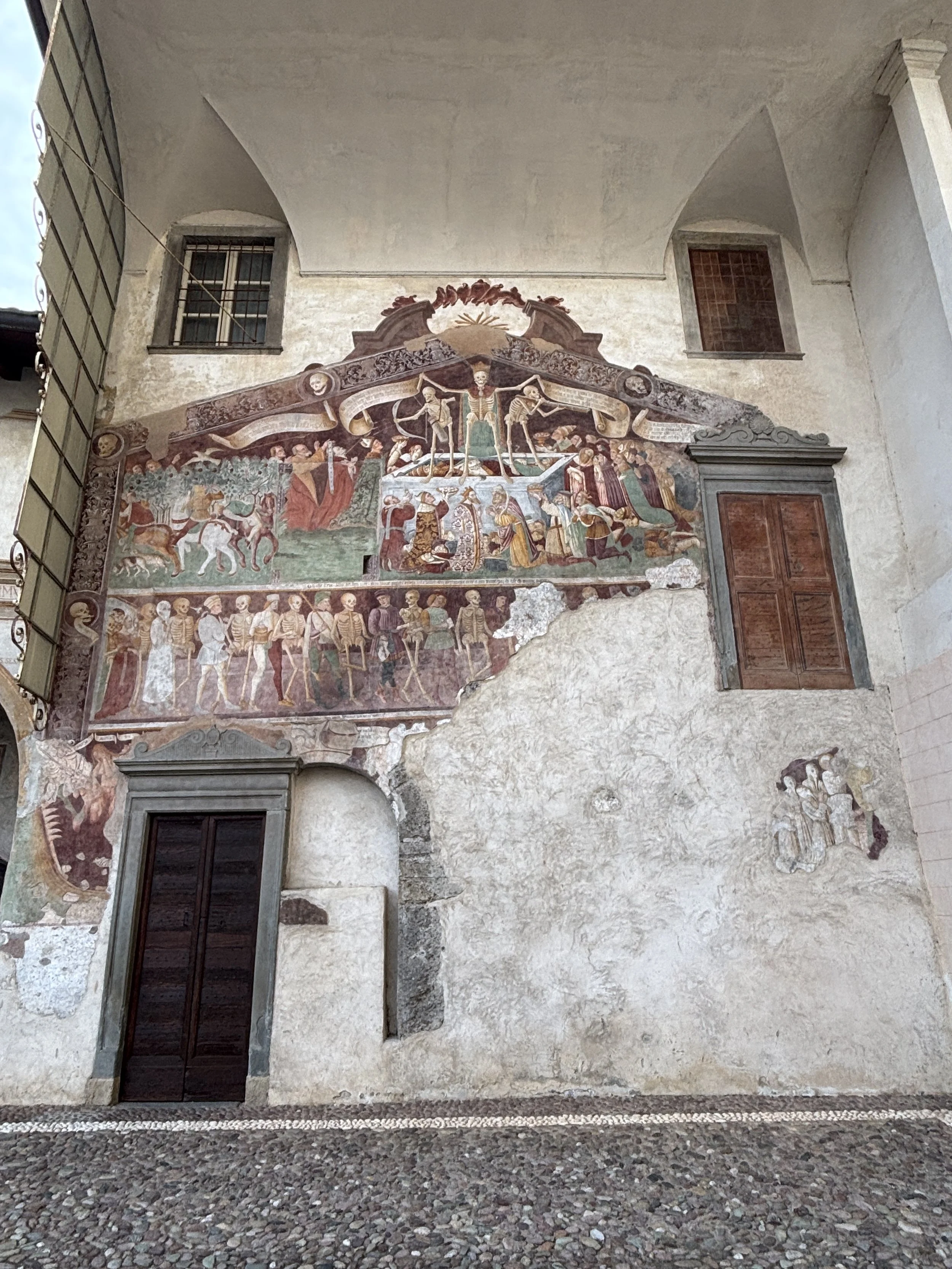
The "Danza Macabra" fresco, painted in 1485 on the Oratorio dei Disciplini di San Bernardino, which is essentially a “memnto mori”, a reminder of mortality and Death as a great equalizer. It is located next to the Basilica di Santa Maria Assunta e San Giovanni Battista, which is a rather impressive 17th C. church built at the highest point in downtown Clusone.
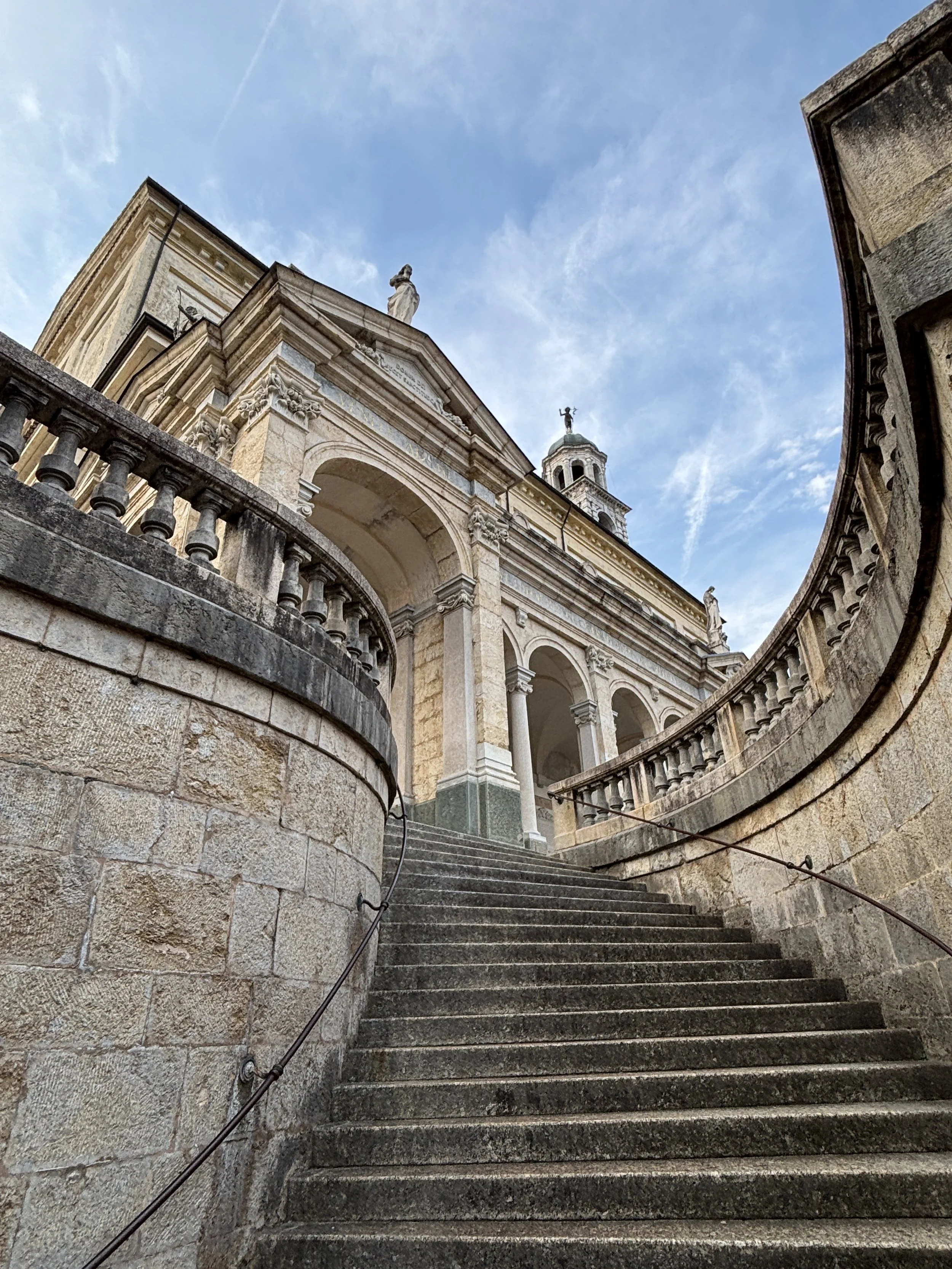
The Chiesa di Santa Anna, built in late 15th C. and featuring some restored 16th C. frescoes on its facade.
The Monte Polenta (suspected location of a lost castle). This hill just outside Clusone takes its name from the fact that its shape reminds of the traditional presentation of polenta, the northern Italian dish. There may have been some sort of fortification here in the early middle ages, but, apparently, archaeological research has been inconclusive. What is sure is that from its top you will get some of the best views of Clusone and the surrounding countryside.
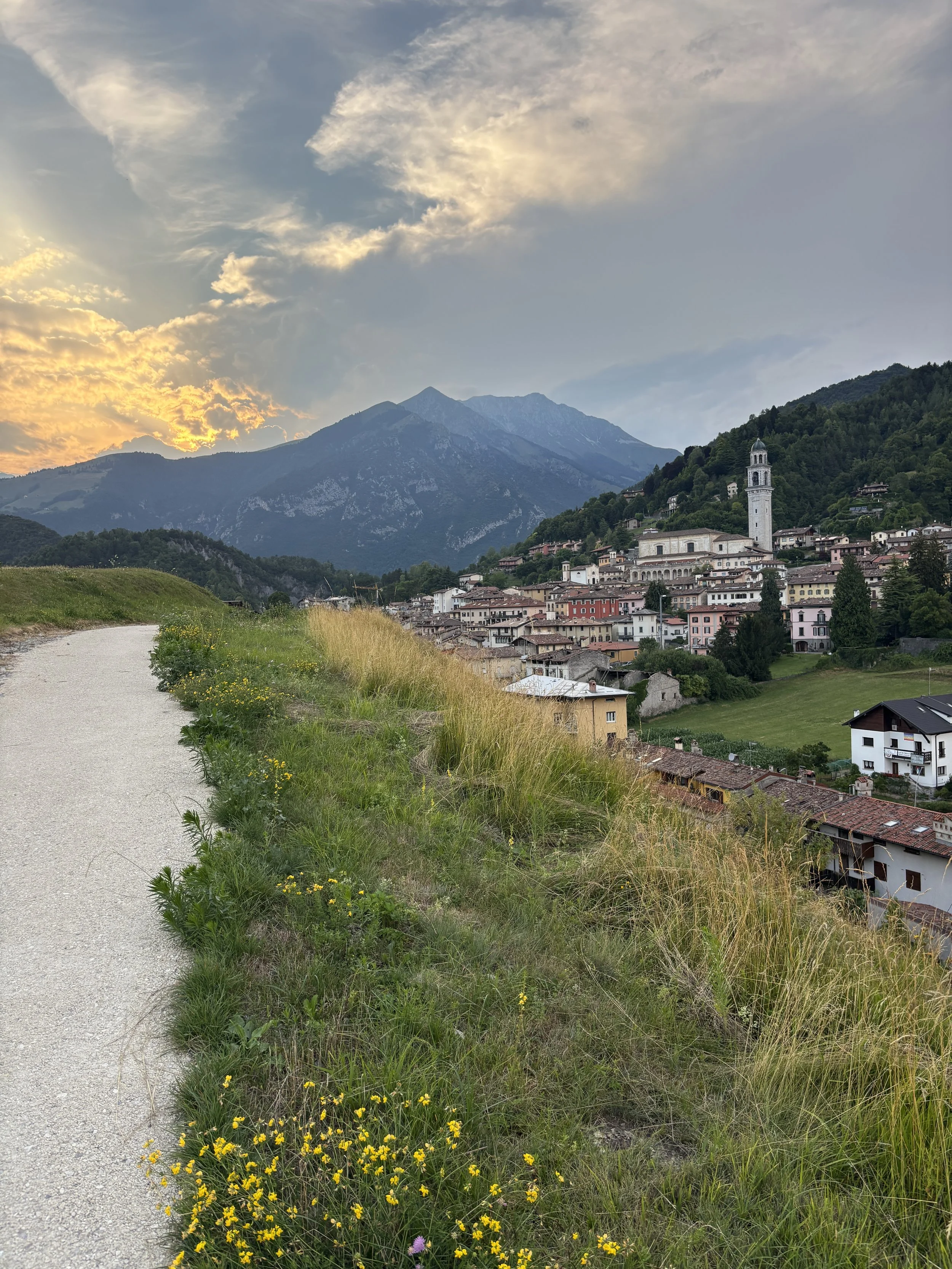
There are also a fair number of cafés, restaurants and shops in Clusone, unfortunately, I am not able to recommend any, because mine was a rather quick visit, a literal pit stop, in the evening.
From Clusone it is around 37 km by car down the Val Seriana to Bergamo.
If you are travelling around Italy, you may find the following posts of interest too!
