What to do and what to see around Lake Balaton, the sea of Hungary
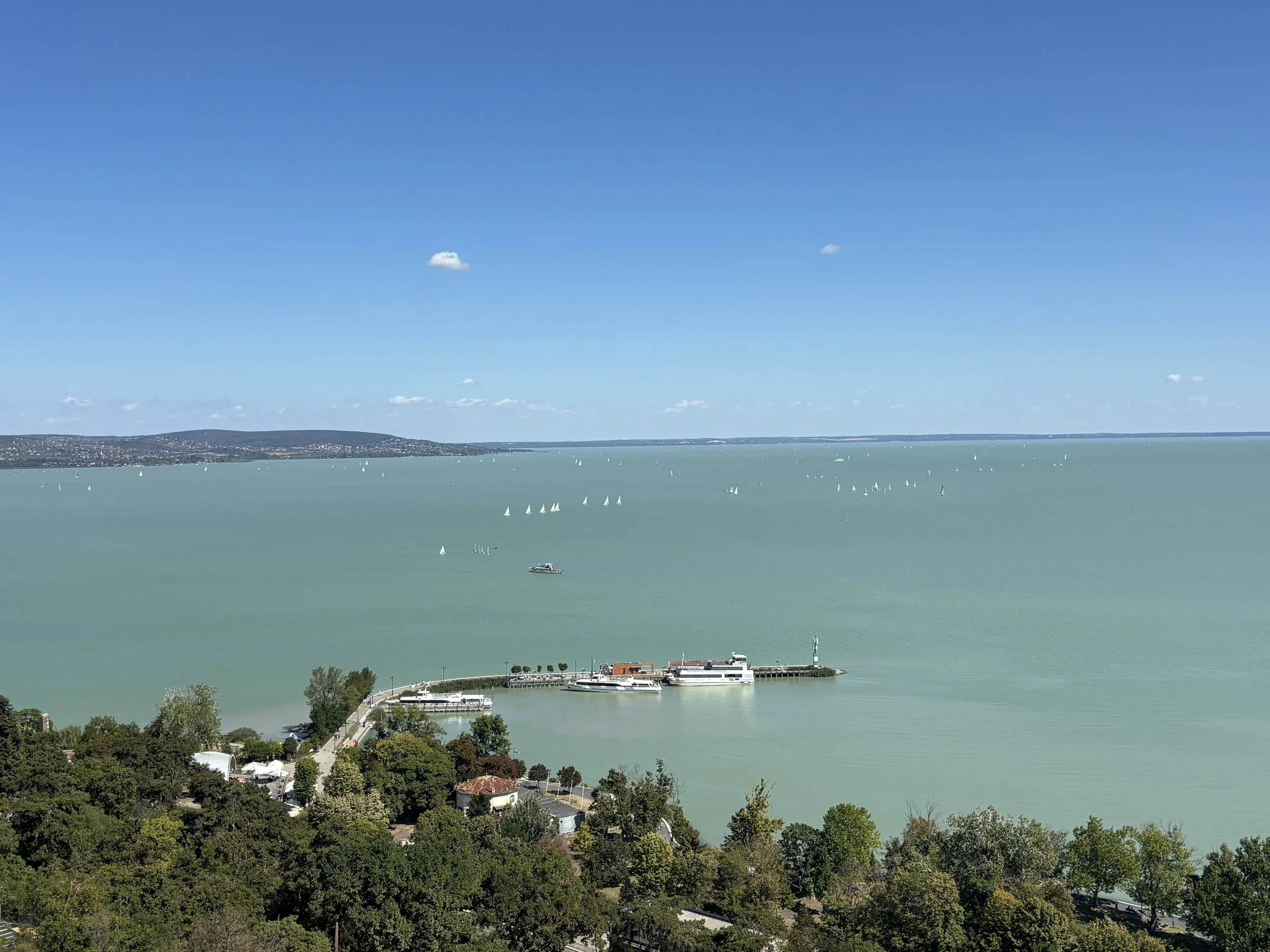
Lake Balaton is not only Central Europe’s largest lake, but it can also be called “the sea of Hungary”, since it is by far the largest body of water in this landlocked country.
Balaton has also been, for many generations, a major holiday destination not just for Hungarians but also for people from all over Central Europe. During the Cold War, citizens of East Germany came in droves to Balaton on holiday and it was actually through Hungary that the first cracks in the Iron Curtain started to appear.
The lake is actually a pretty nice day trip from Budapest. In addition to its scenic and recreational qualities, Lake Balaton has also quite a few interesting sightseeing spots along its shores and the distances involved are such that it is possible to see most of them in a single day. Having said that, if you have the chance I would definitely recommend doing it in two days in order to avoid fatigue and do it all at a more leisurely pace.
So, what are the top things to do and to see around Lake Balaton? Let’s have a look!
Covered in this post:
How to get to Lake Balaton
Driving in Hungary
The Tihany Peninsula
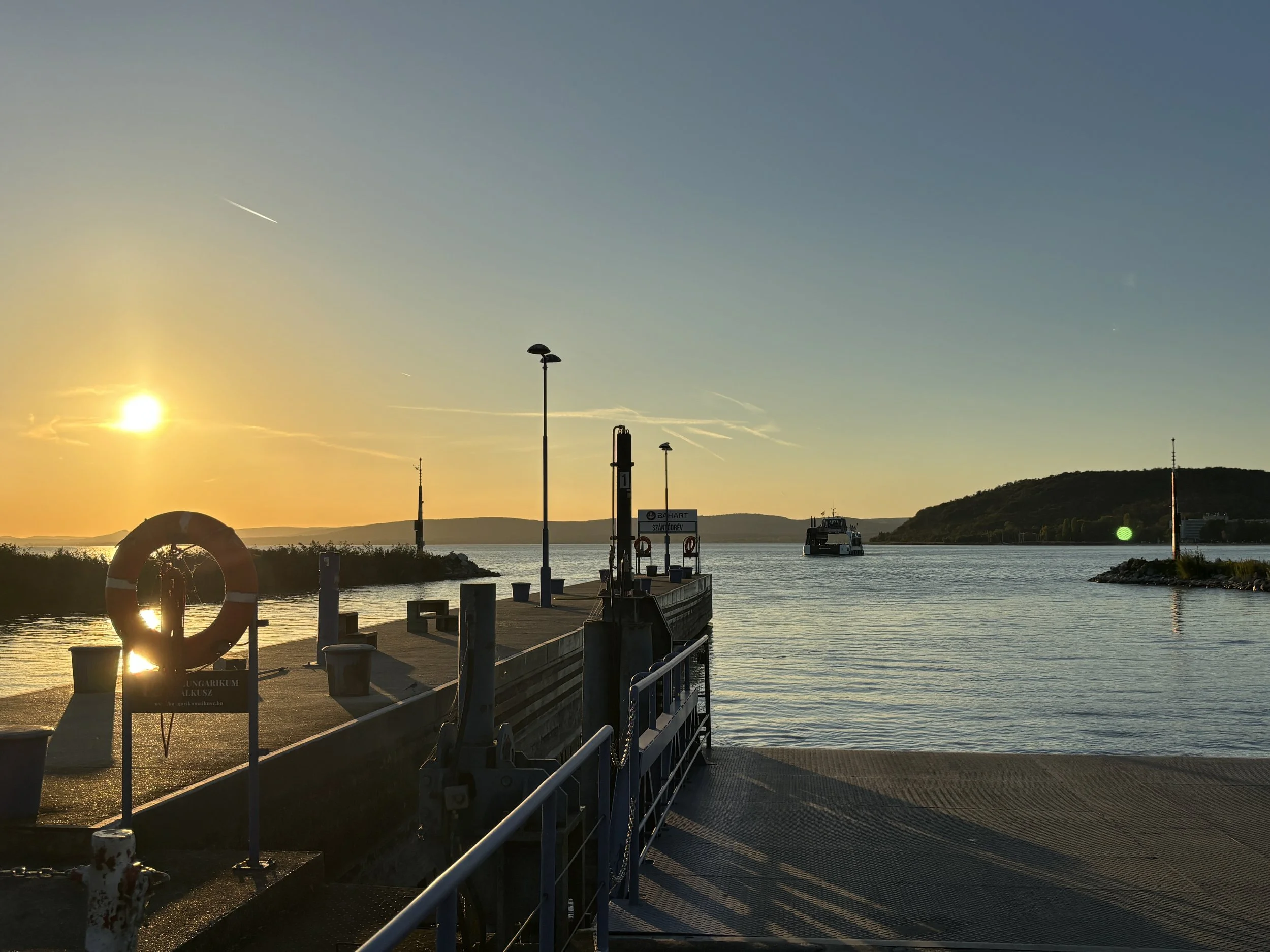
Taking the ferry from the south shore (Szántód)
Badacsony and its wineyards
Szigliget Castle
Héviz and its thermal lake
This post may contain affiliate links. If you book or buy something through them, I earn a small commission, at no extra cost to you. It's one of the ways I keep Places of Charm going. Thank you for your support.
How to get to Lake Balaton
Getting from Lake Balaton. To be clear, this post will mostly be useful if you are travelling by car, but there are trains running along both shores of the lake, so this is an option that may be worth checking if you feel inclined to travel that way and there are even boats that will give you the views from the water side.
From Budapest, which is the itinerary I followed, it is about one and a half hours drive to Tihany, which was my first stop along this route. Almost the entire itinerary is based on the north shore of the Lake. This is not to say that there aren’t interesting sights on the south shore. The whole itinerary totalled 450km, which is quite a stretch, but doable in a day if you don’t mind the driving.
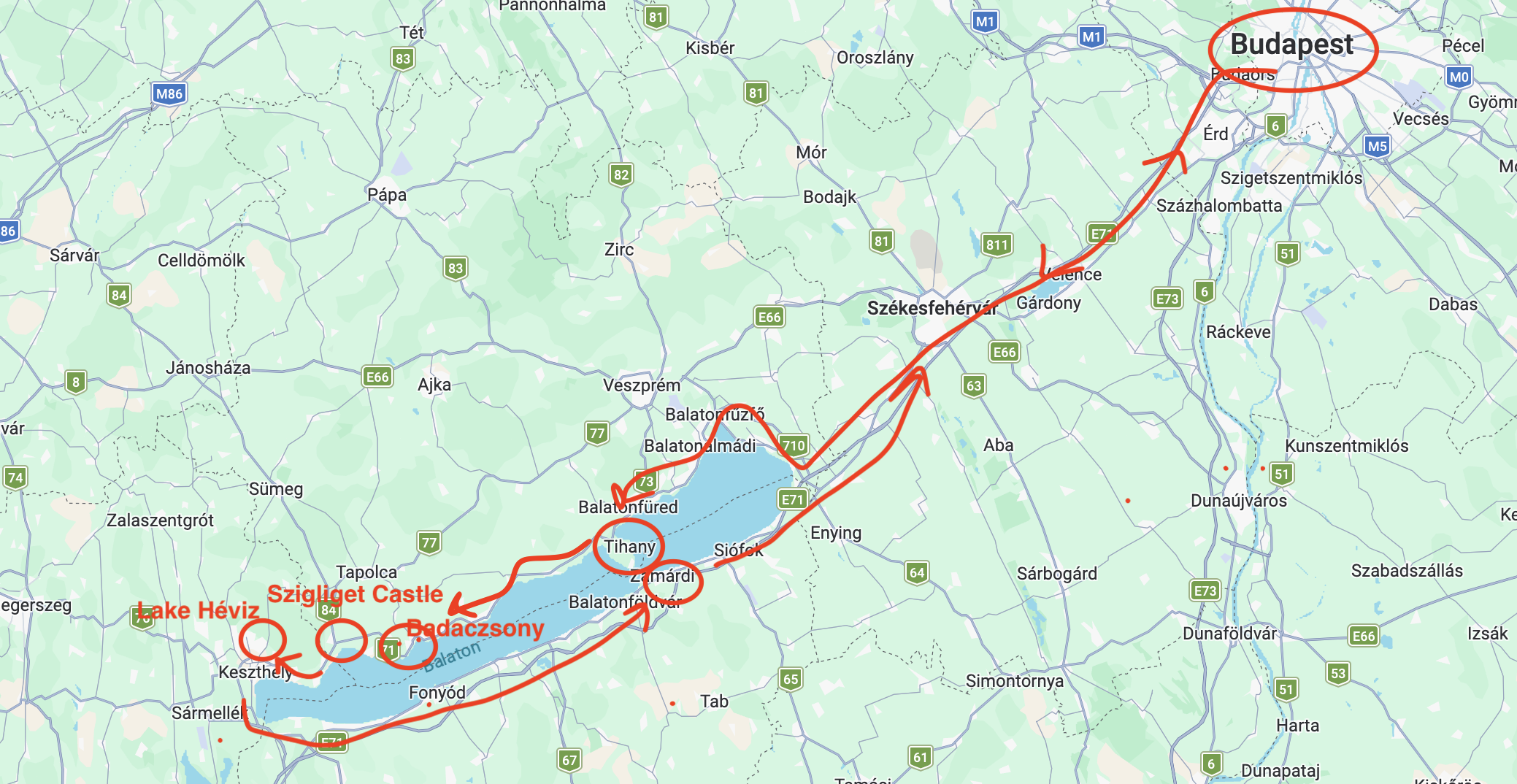
From what I have read, there are plenty of beaches and holiday infrastructure on the south side, but I got the impression that most of the sites of interest from a purely sightseeing point of view are on the north shore (if I am wrong, happy to take suggestions for my next trip to the area!).
Roads were of very good quality throughout, including motorway M7/E71, which is the main road axis linking Budapest to the Lake. Directions are well indicated all the way from Budapest.
Just before reaching the eastern end of the lake, I left the motorway to take Road 710 northwards and then most of the itinerary followed Road 71, which runs all along the north side of the lake. On the return trip I chose to join again M7/E71 and drive it all the way to Budapest, aside from a short stopover at Szántód to check the cross-lake ferry terminal.
Important!
Hungarian motorways are not free. You need to get a “vignette” or road pass, otherwise you will be restricted to local roads.
Roads requiring vignette are usually indicated with an “M”. The process to purchase the vignette is 100% digital (and pretty straightforward from the user point of view). You just need to go to the Hungarian vignette website, enter your car’s registration number and select the dates you need the vignette for (for short term travel you can purchase either a one day or ten day pass, although there are also monthly and yearly options). The whole purchase process takes less than two minutes.
Everything is automated and your car is electronically checked at certain points along the motorway.
The Tihany Peninsula
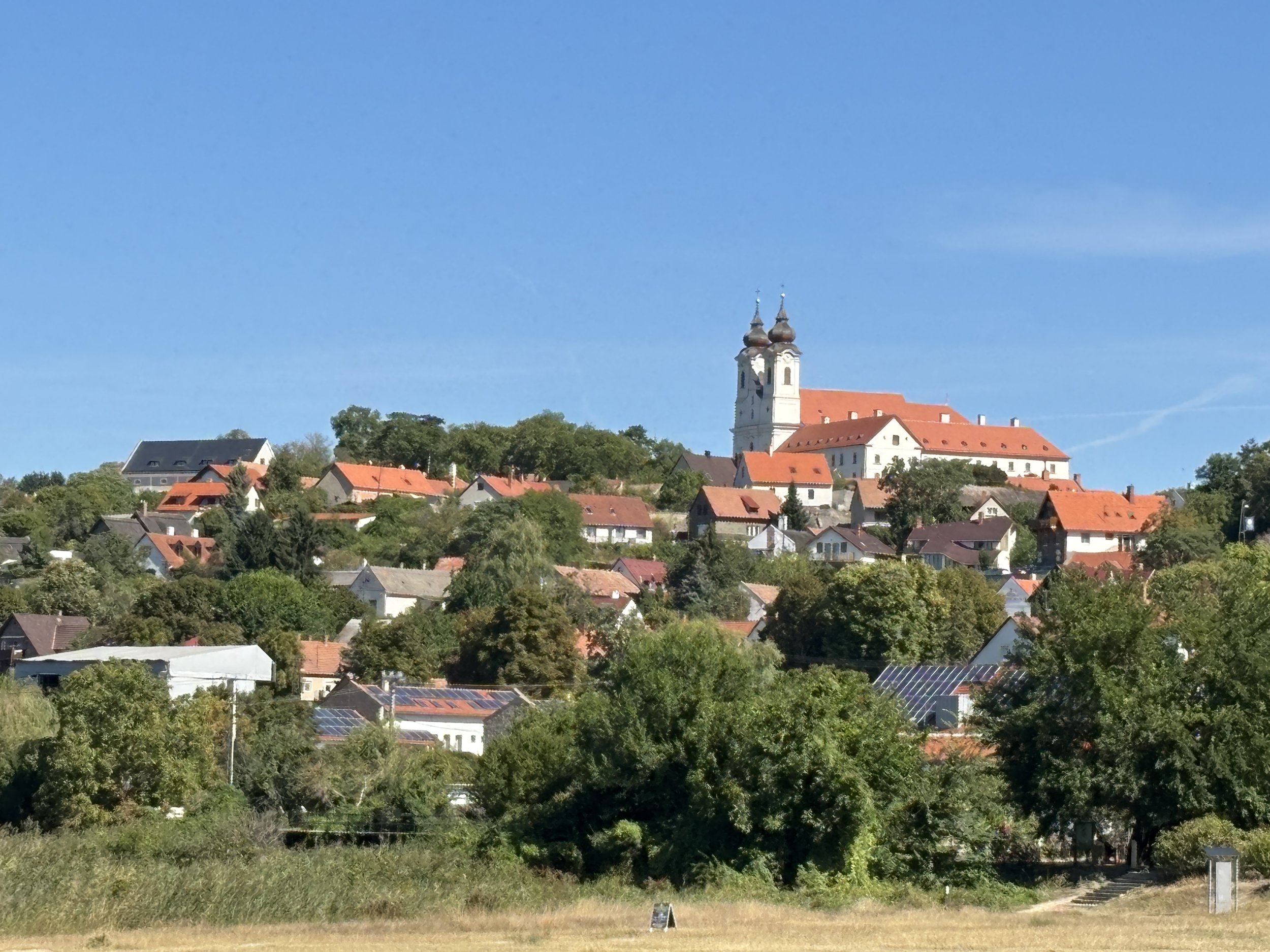
The first stop coming from Budapest and, perhaps, the most scenic place on the shores of Lake Balaton is the peninsula of Tihany.
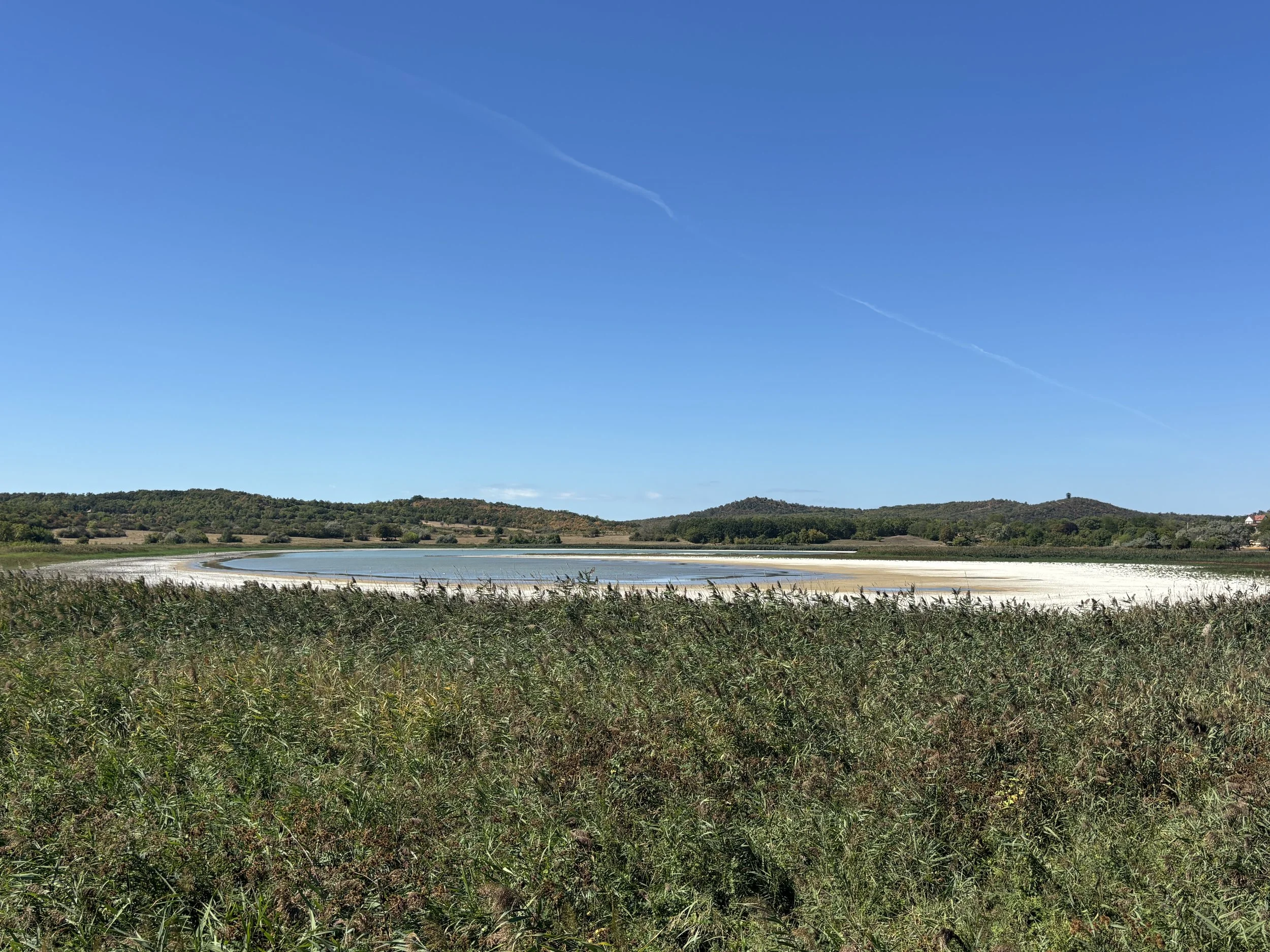
This little peninsula protrudes into the lake, almost cutting it in two parts (it is little more than 1 Km from its southern tip to the south shore).
Unlike most of the surrounding countryside, it has also some elevation (the little hills that dot the area around Lake Balaton are mostly ancient volcanos!), which gives you a great point of view over the lake. In fact, the peninsula contains two other smaller lakes (not connected to Balaton), which are, in fact, old volcanic craters.
Besides the village of Tihany, which we’ll soon see, Tihany is a place of natural interest, as well, since there some marshes around the lakes and several tracks to trekk in the nature around it.
There is even a pagoda-shape observation tower, known as “Őrtorony-kilátó”, although you have walk a bit to get there. It was tempting, but I skipped in order to allocate time also to other points of interest further west on the lake shore.
Parking in Tihany
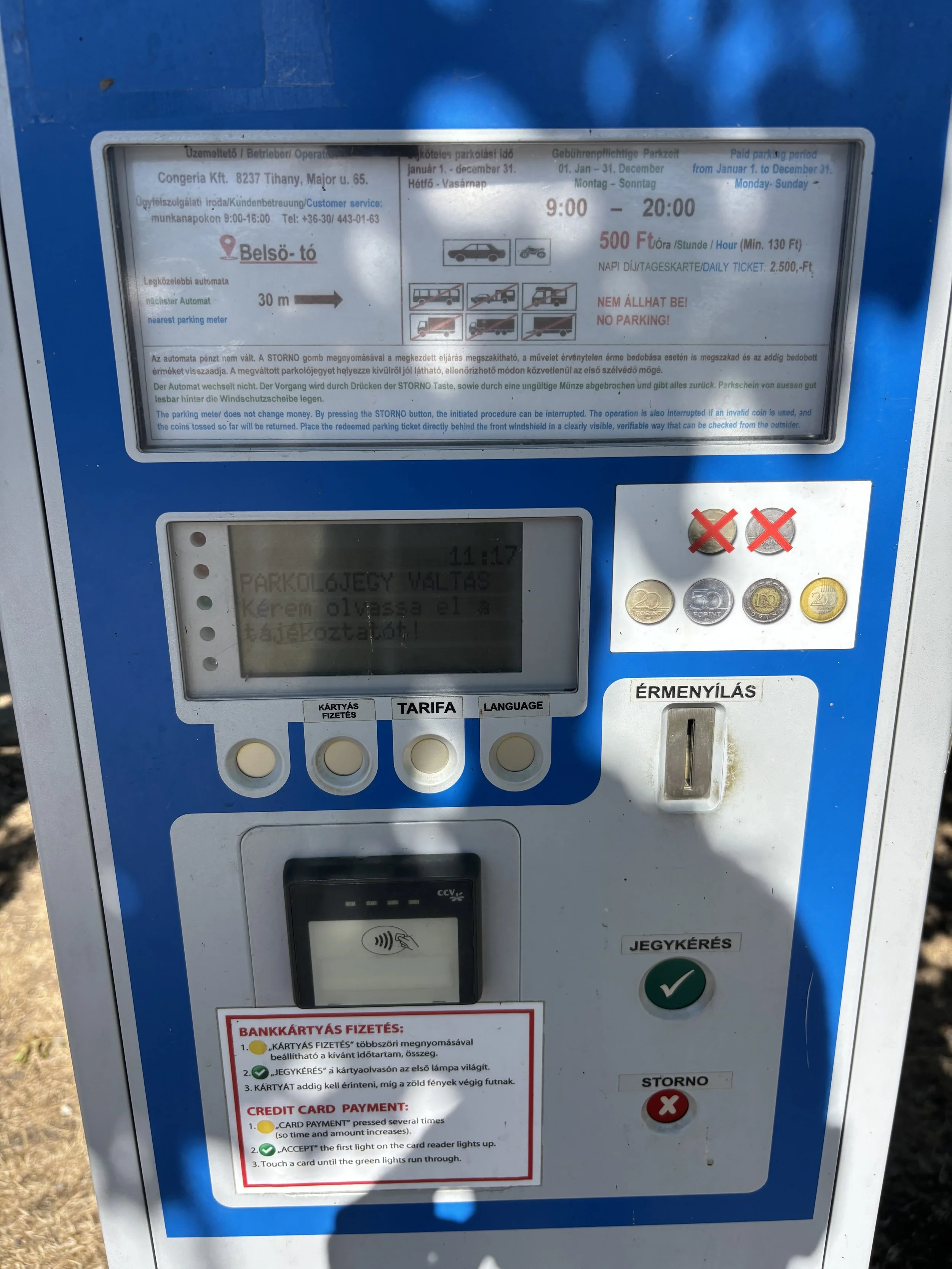
Parking around Tihany is metered. As you can see here, at 500 Forints per hour (€1.3), it is not particularly expensive, but parking spots are a bit limited in the village itself (to be fair, the “urban” part of Tihany is really, really small).
So, if you are visiting during the summer or weekends, the most likely is that you will end up in the outskirts of the village, near the volcanic lake, where space is more plentiful (it is a 10-15min walk from there, although it is a bit uphill).
The payment machines take both cash and cards, but found the interface not to be particularly user friendly, quite clunky and slow, difficult to read (not a language issue, since it is multi-lingual) and, at least, at one spot, not working at all.
Tihany’s Benedictine Abbey
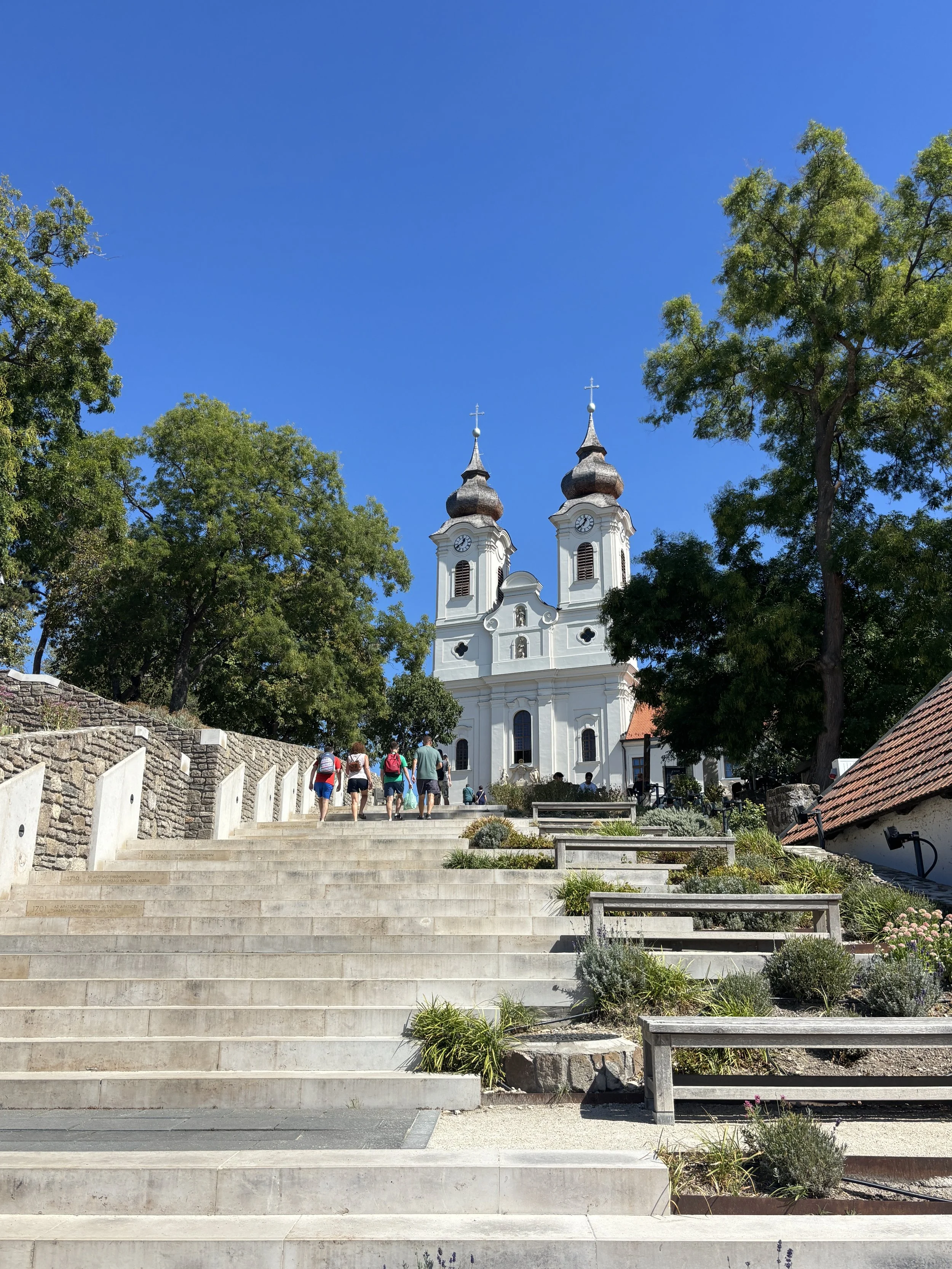
The main landmark in Tihany is, without a hint of doubt, the Benedictine Abbey, which overlooks both the village and the lake from its elevated hilltop position.
Although the current building is in the Central European Baroque style, with two bell towers ending in onion-shaped spires, Tihany’s abbey traces its roots back to the 11th C., just decades after the christianization of the Magyars and at a time when the religious question was not yet fully settled in Hungary. So, the foundation of this abbey was, at the time, an important development that helped consolidate the Christian faith in this part of Europe.
To access the abbey there is a flight of stairs that wouldn’t be out of place in, let’s say, Rome.
To visit the Abbey and its crypt you would need a ticket, which can be bought at the visitor’s center right next to the church entrance. The standard fee is 3,400 Forint (€9.2/$10.5).
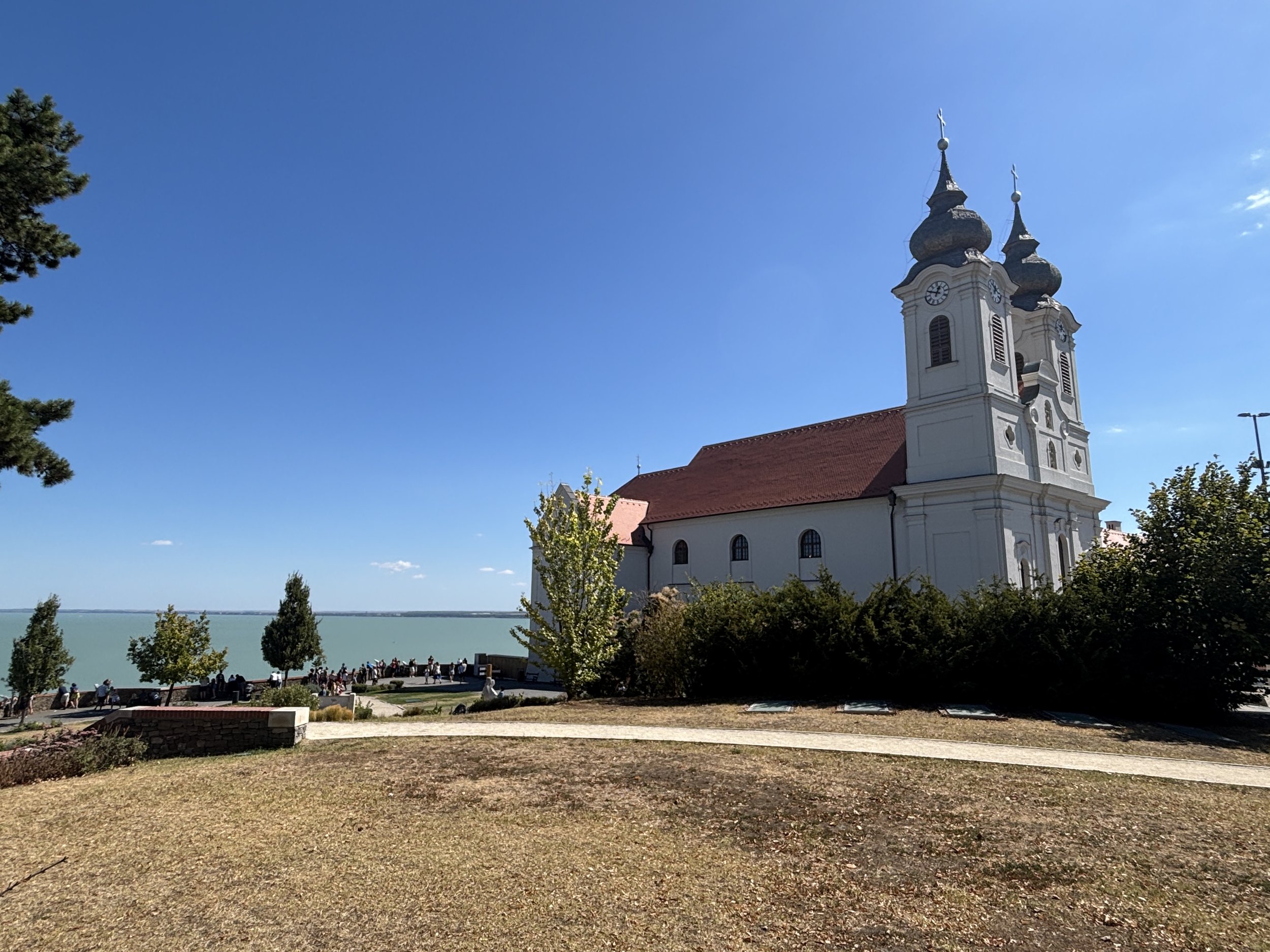
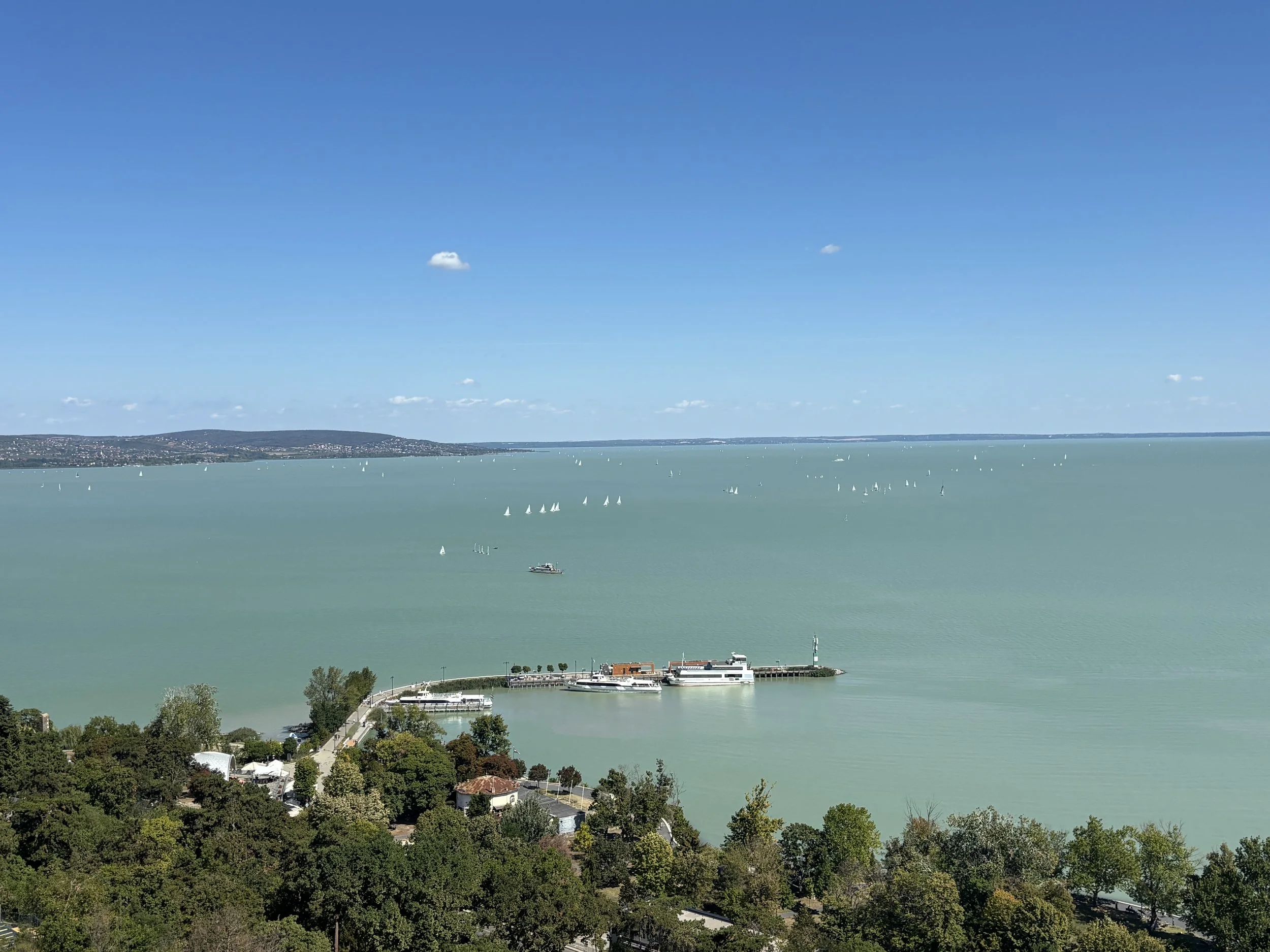
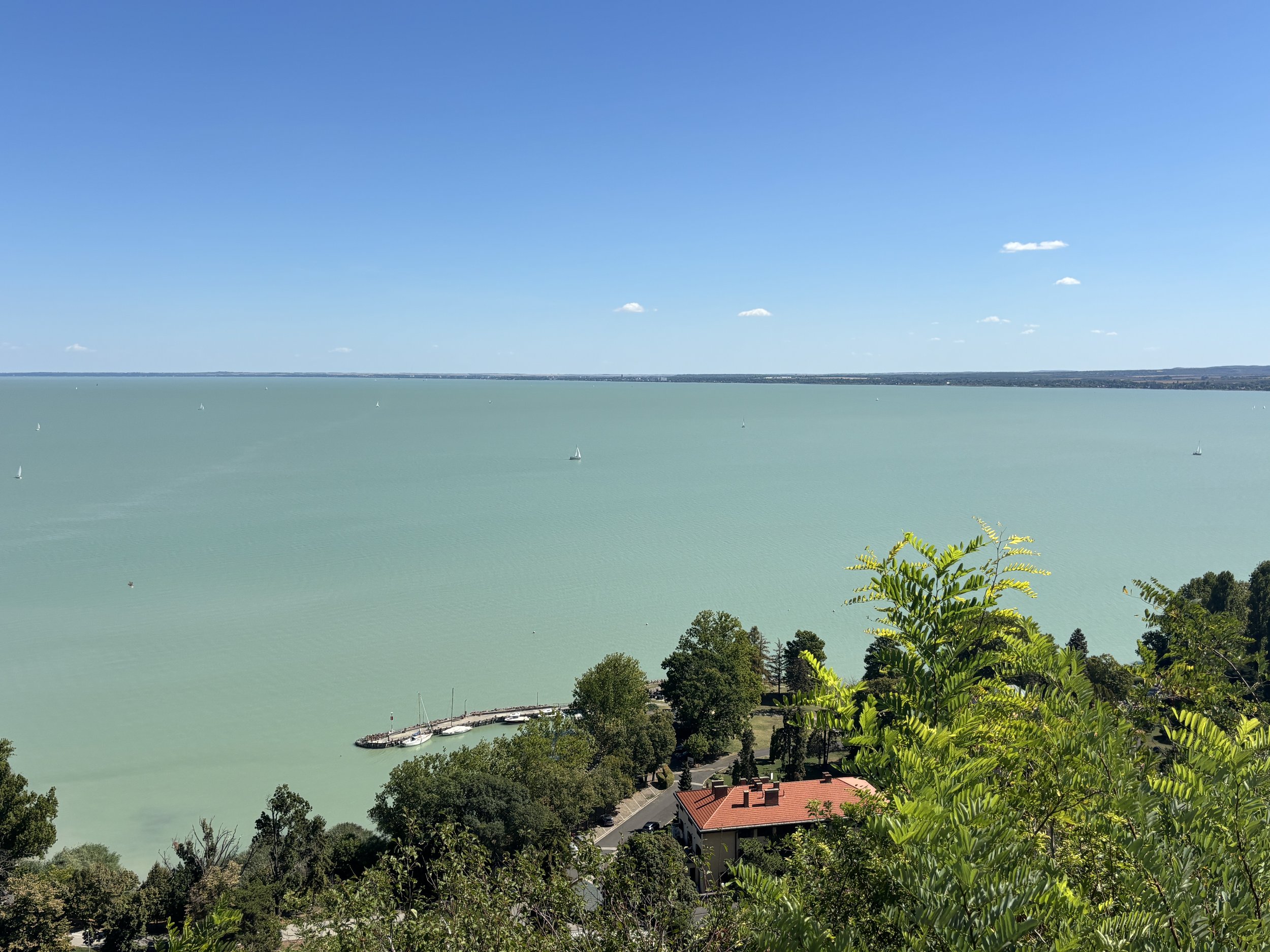
Once at the top, you get to a little park with magnificent views of the eastern part of Lake Balaton, which in sunny days takes a beautiful turquoise colour. From here you can get a grasp of what they mean when they call Balaton “the sea of Hungary”!
Thatched Roof Houses & Lavender Fields in Tihany
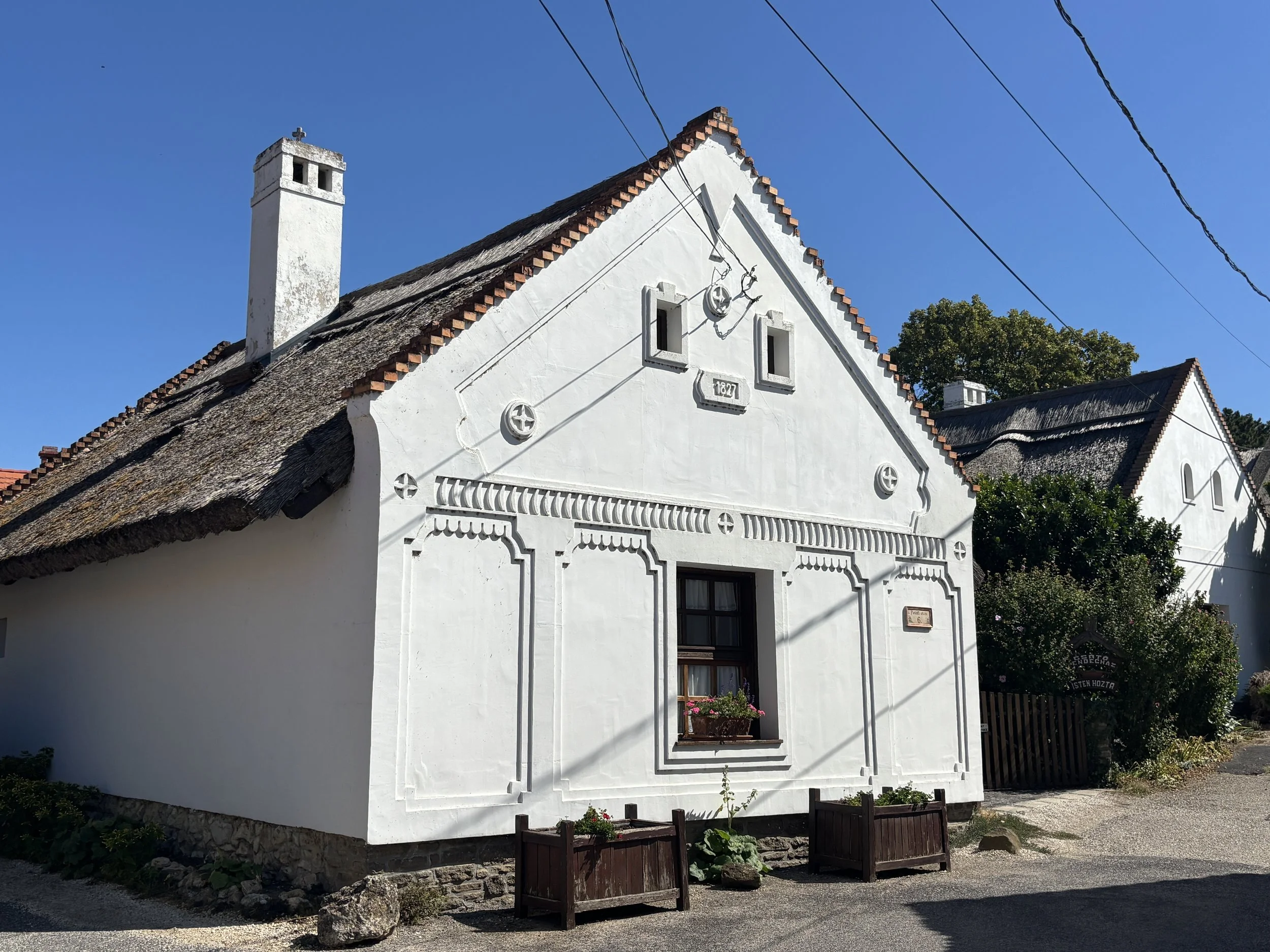
All around the Abbey is the village of Tihany, which, to be honest, has become a bit of a tourist trap. The main road into the village is completely devoted to catering to visitors with the usual souvenir shops and the like. The same can be said of the main pedestrian lane on the crest of Tihany hill, leading into the abbey.
There are, however, some residential homes that have kept the traditional thatched roofs of the area.
The other major thing in Tihany is lavender, which has been grown in the peninsula since the 1920s, when a Hungarian entrepreneur brought seeds from southern France.
There are lavender fields all over the peninsula and several local businesses make all sort of products with this harvest. You can find lavender products at all souvenir shops and there is even a “Lavender House” (The Levendula Ház), which is a sort of visitor’s center focused on the topic of lavender.
By the way, the blooming season is usually from late June to mid-July.
Avoid this restaurant in Tihany!
I would have liked to provide a restaurant recommendation for Tihany and, in fact, I will recommend where NOT to stop for a meal: avoid the Csárdás Vendéglő restaurant by all means!
It is located on the main street, close to the stairs that lead to the Abbey and it has a large terrace with shadow, which is kind of inviting at first, but there were two major issues:
First is that they are super slow, even with the terrace practically empty, it took ages to get the order.
Secondly, and this is the worst part, is that they do not take cards, none at all! They do not warn you about this anywhere, which would be the minimum they could do and the surprise comes when you have to pay. This may have been understandable perhaps in 1990, but in 2026 it is inexcusable. The result is that if you don’t carry enough forint in your pocket, you will have to run 500m to one of two ATMs in the village, which charge extortionate rates for local currency withdrawals.
I was not surprised to find out on Tripadvisor that this happen quite often, which makes it even more inexcusable.
Beaches around Tihany
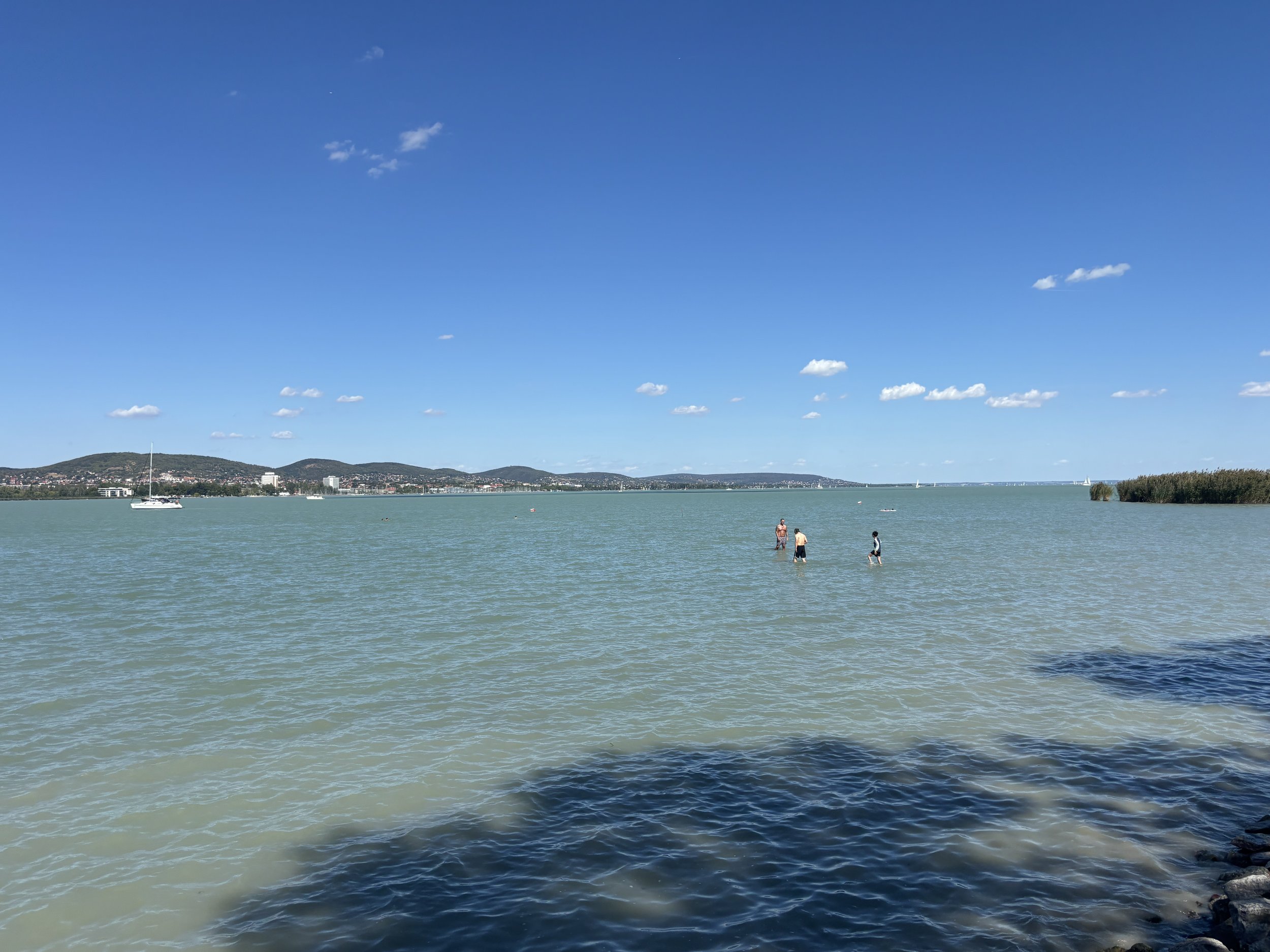
After visiting the Abbey and the village, I recommend driving down to the lake shore. Right underneath the cliff on which the abbey stands is a long shore promenade with several beaches and recreational areas. This is a good spot to get close to the water.
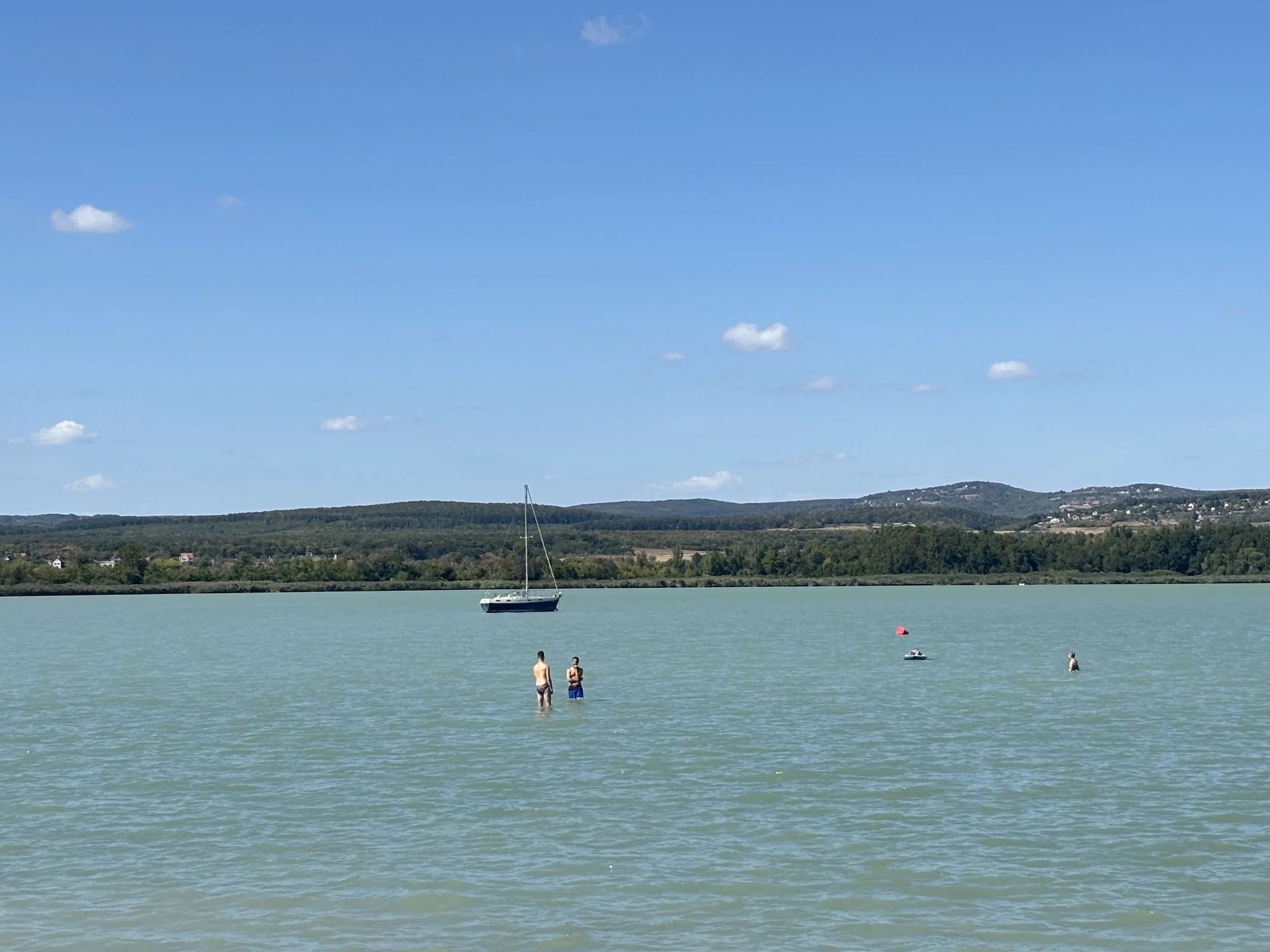
I was surprised to learn how shallow Lake Balaton is in this area: you can see people walking hundreds of meters into the lake with water barely reaching their knees!
The water has also an interesting colour, with the turquoise green that you can see from a distance turning into more brownish hues, due, I guess, to the many sediments it carries. Also, surprisingly (or pehaps not so much, given its shallowness), the water was not cold at all.
Badacsony: vineyards and viewpoints
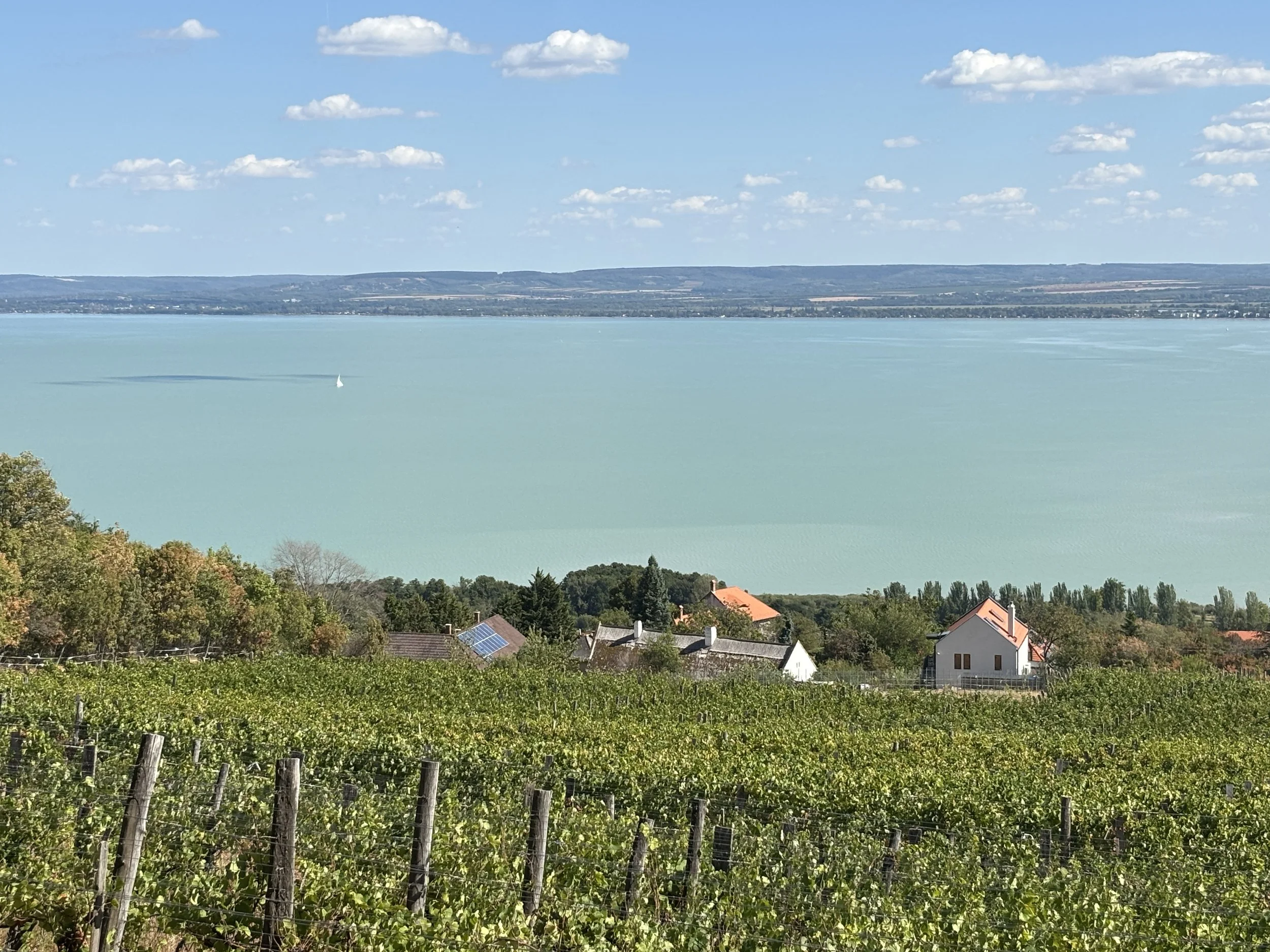
A few kilometers west from Tihany is another great spot to admire the beauty of Lake Balaton.
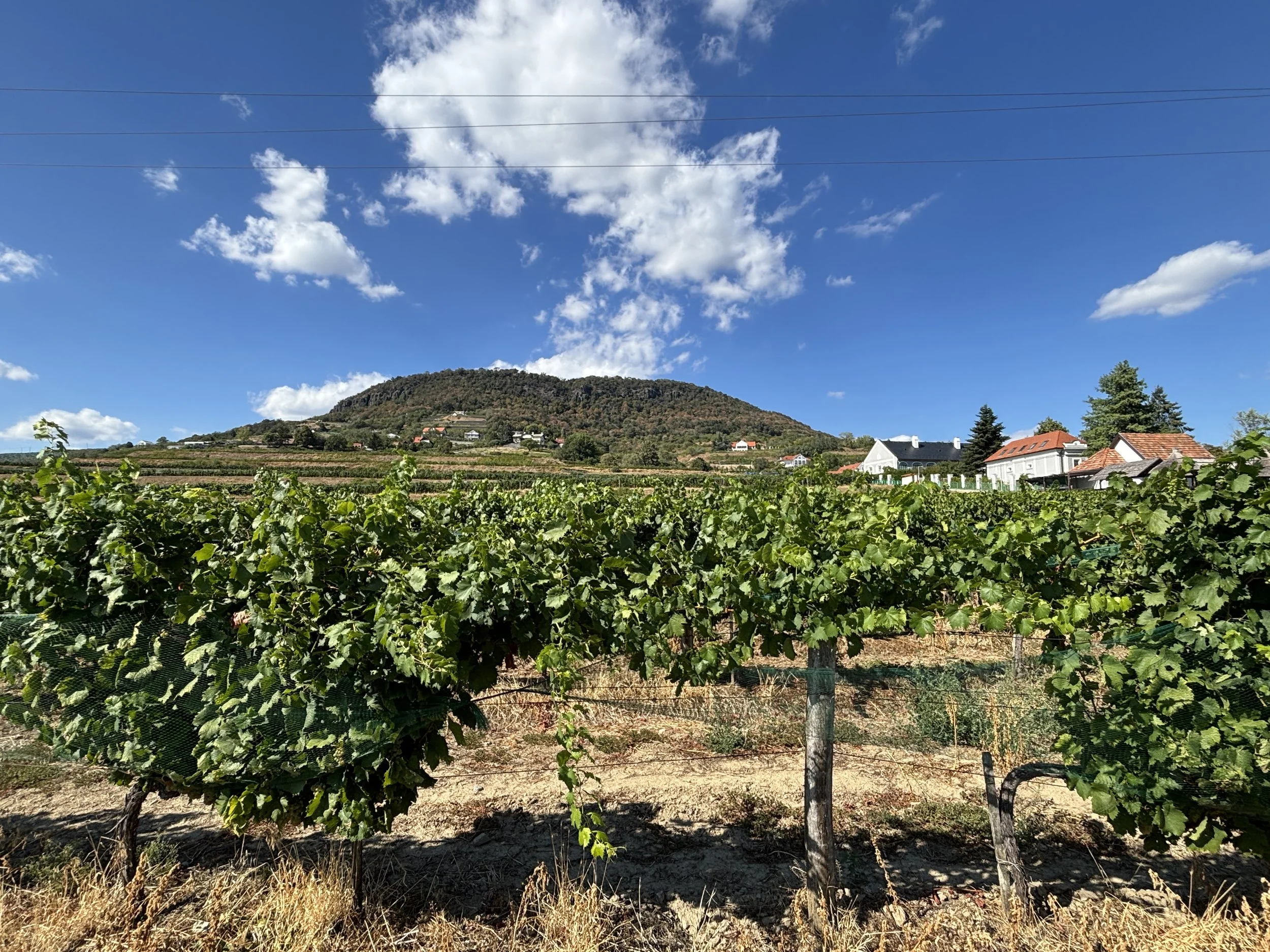
The village of Badacsony is at the foot of yet another hill of volcanic origin. In fact, there are several of these hills along this part of the lake standing more of less in isolation from each other, rather than forming ridges.
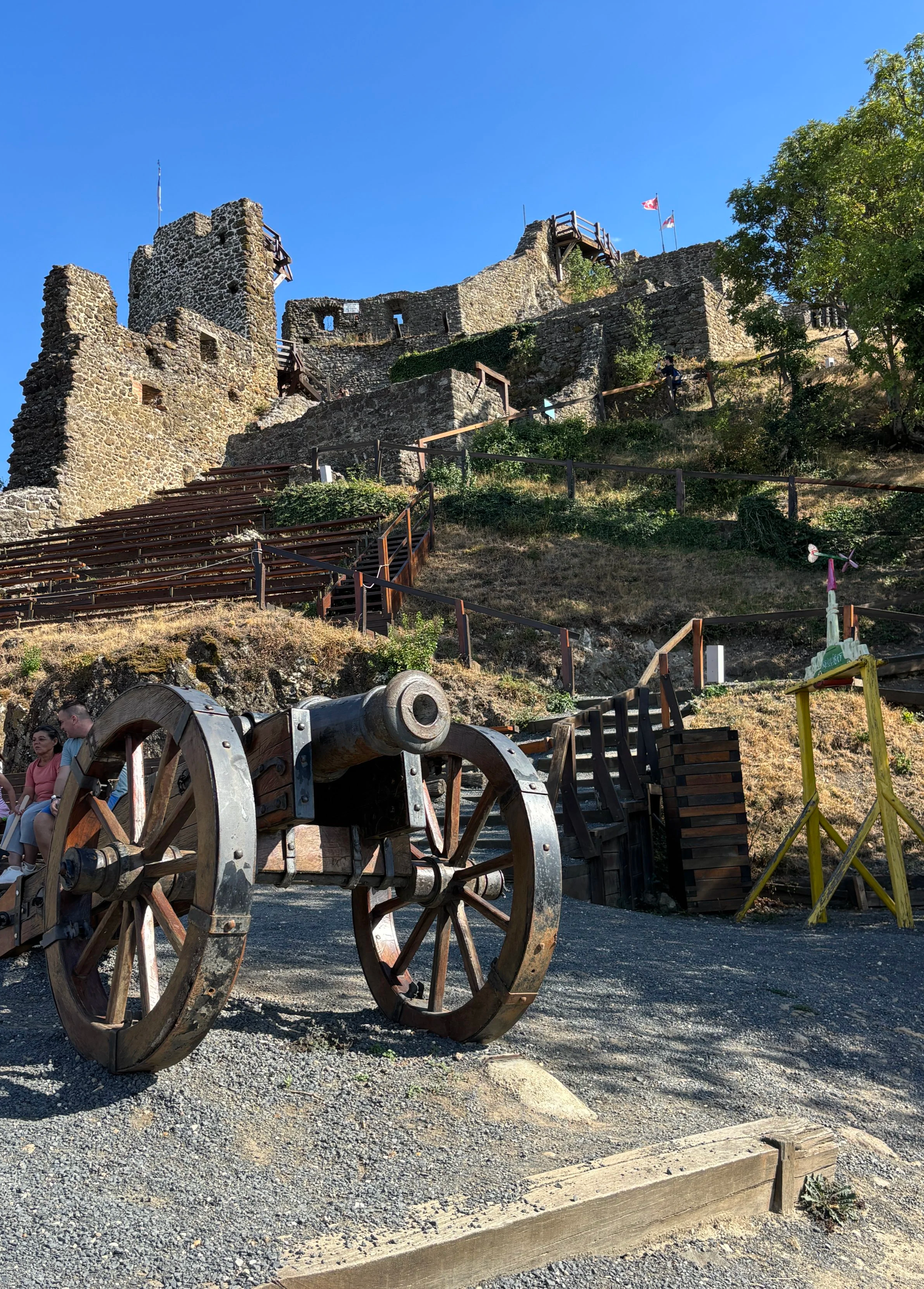
Quite a few visitors comes here to trek to an observation point, yet another tower called “Kisfaludy-kilátó”, which is somewhere mid-mountain. To get into the trekking paths you can drive uphill through a narrow road which takes you to the start of the forest line, past the vineyards. Space to park here is limited (it costs 600 Forint, €1.6, per hour), but it is worth stopping by for the views.
You don’t need to get all the way to the tower or other higher viewpoints to get nice views of the lake and vineyards. You can just walk some 100m up from the parking and you have already some great viewpoints.
But what gives this part of Balaton its most scenic quality is its vineyards. This is wine country and what you find here is a landscape that is a bit reminiscent of the vineyards of Lake Leman, in Switzerland, with the vines sloping down gently towards the water edge.
Szigliget Castle
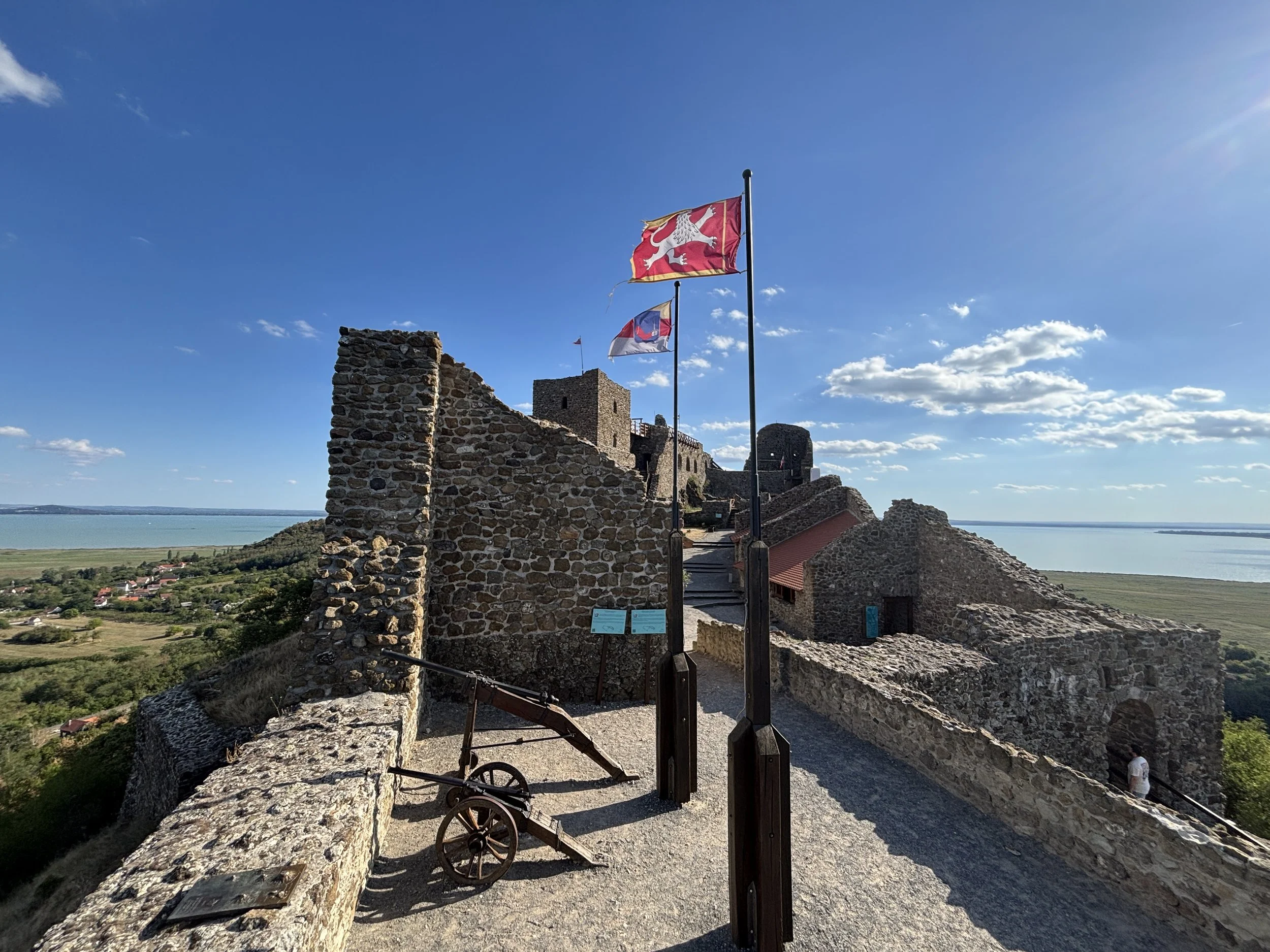
A couple of kilometers further west from Badacsony is another must-see: Szigliget castle.
This fortress is located on top of another isolated hill in what it used to be an island.
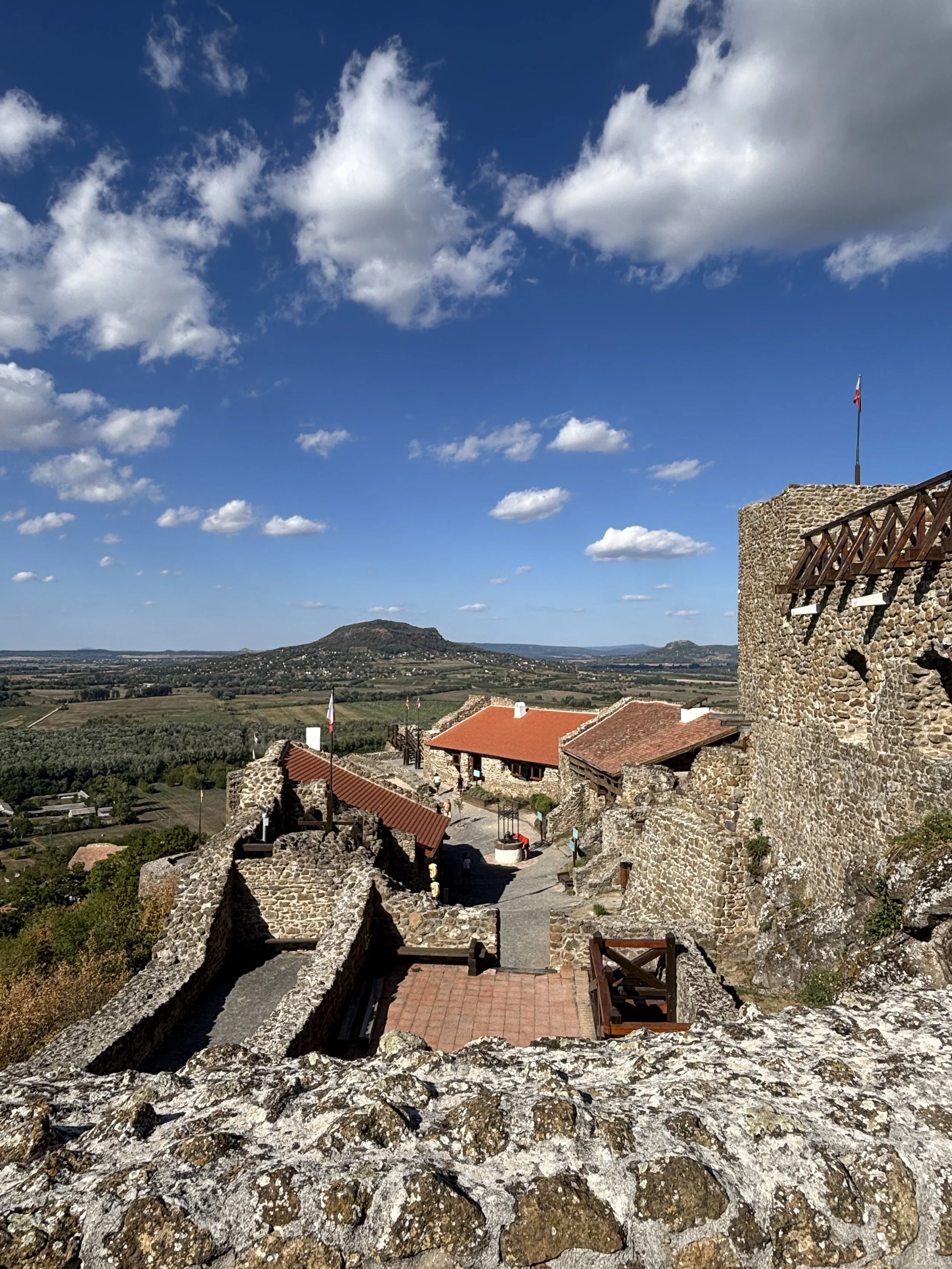
The castle is quite steep in its shape, because its structure was built following the shape of the hill with a significant incline from its base all the way to its upper parts.
Next to the entrance there are several service buildings as well as plenty of space for parking, which is free.
To get to the castle you need to walk some 200m uphill, but this leaves you just at the entrance (btw, standard adult tickets are 2,000 Forint, or €5.5/$6, half this amount for children).
There are then different paths to explore the castle, but if you wish to enjoy it best, you will have to climb a bit.
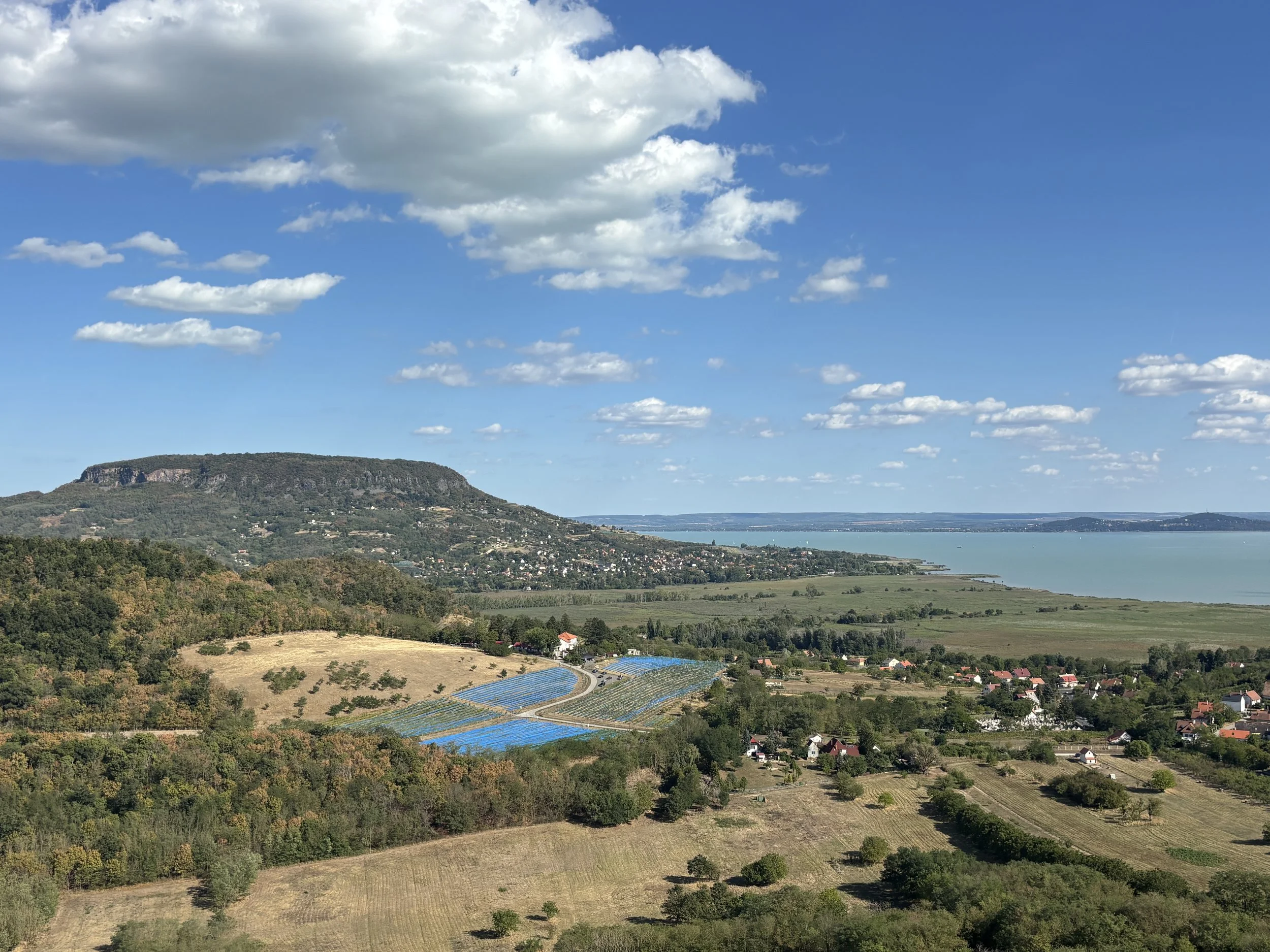
The views from the upper reaches of the castle are pretty amazing, though, and they cover 360º around.
Historical context of Szigliget Castle
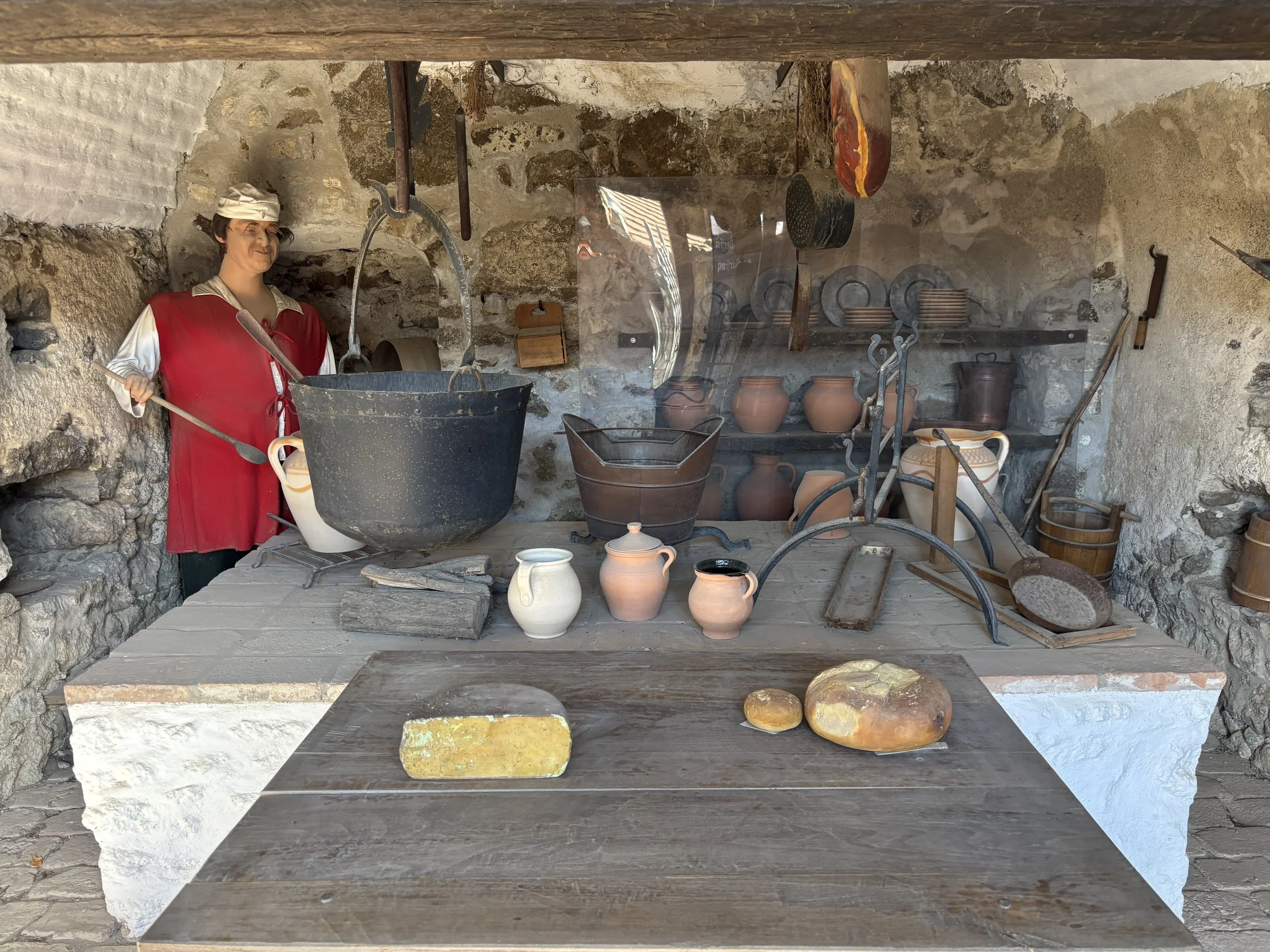
The castle is also a museum, with lots of information presented throughout its multiple chambers, explaining its historical context.
Szigliget Castle was one of many castles built in the area after the Mongol invasion of 1241 (a traumatic event which had also a big impact in other parts of Central Europe, such as the city of Wroclaw, as we commented in a recent post!) and from the 16th C. onwards it was a major stronghold in the fight between the Hungarians and the Turks.
Between the mid-15th and late 17th centuries, this was the front line between Hungary and the Ottoman Empire and the area lived in a state of almost permanent warfare. A line of fortresses, of which Szigliget was an important node, run from the southwest to the northeast along the northern shore of Lake Balaton and towards what is now Slovakia.
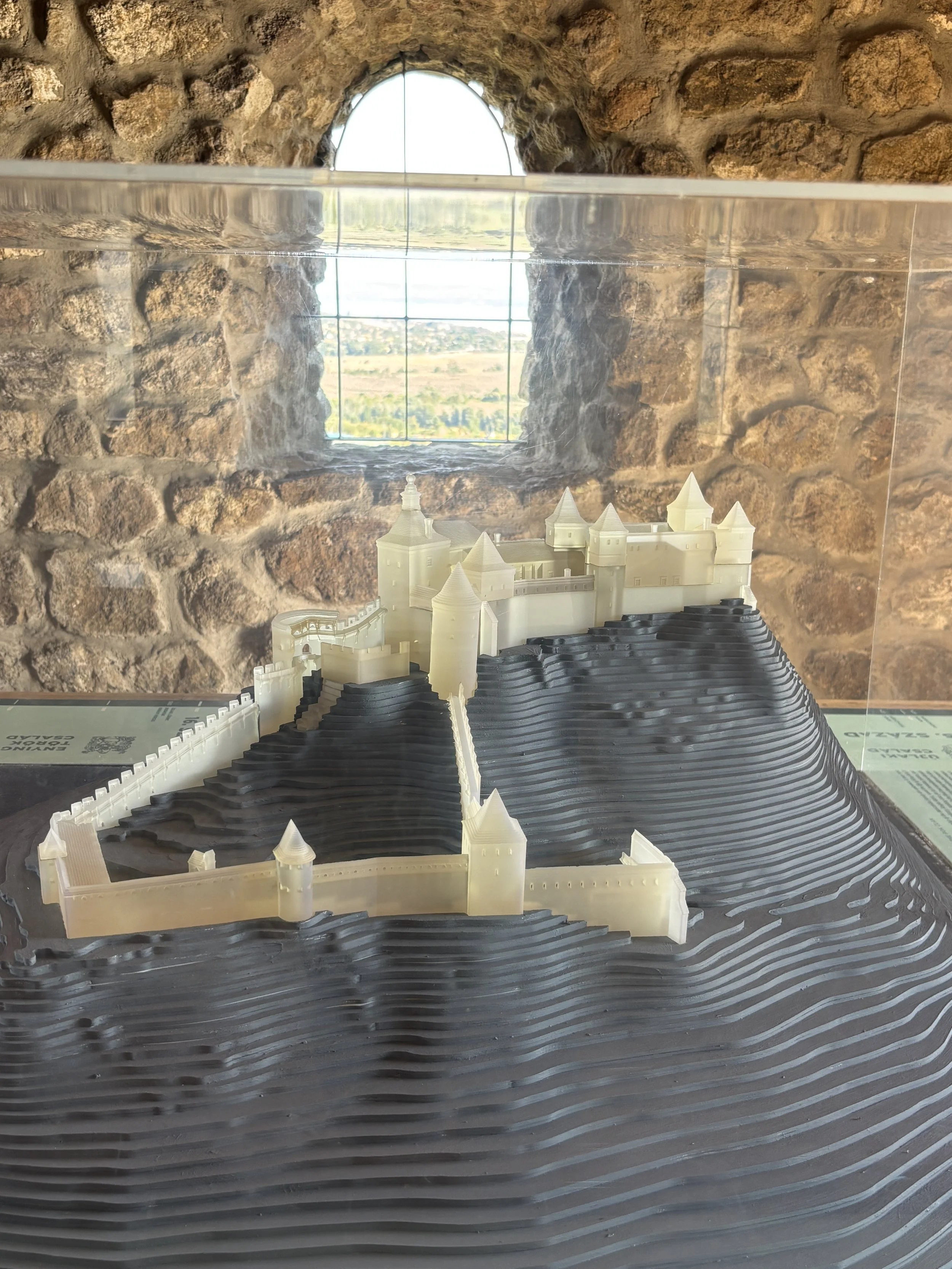
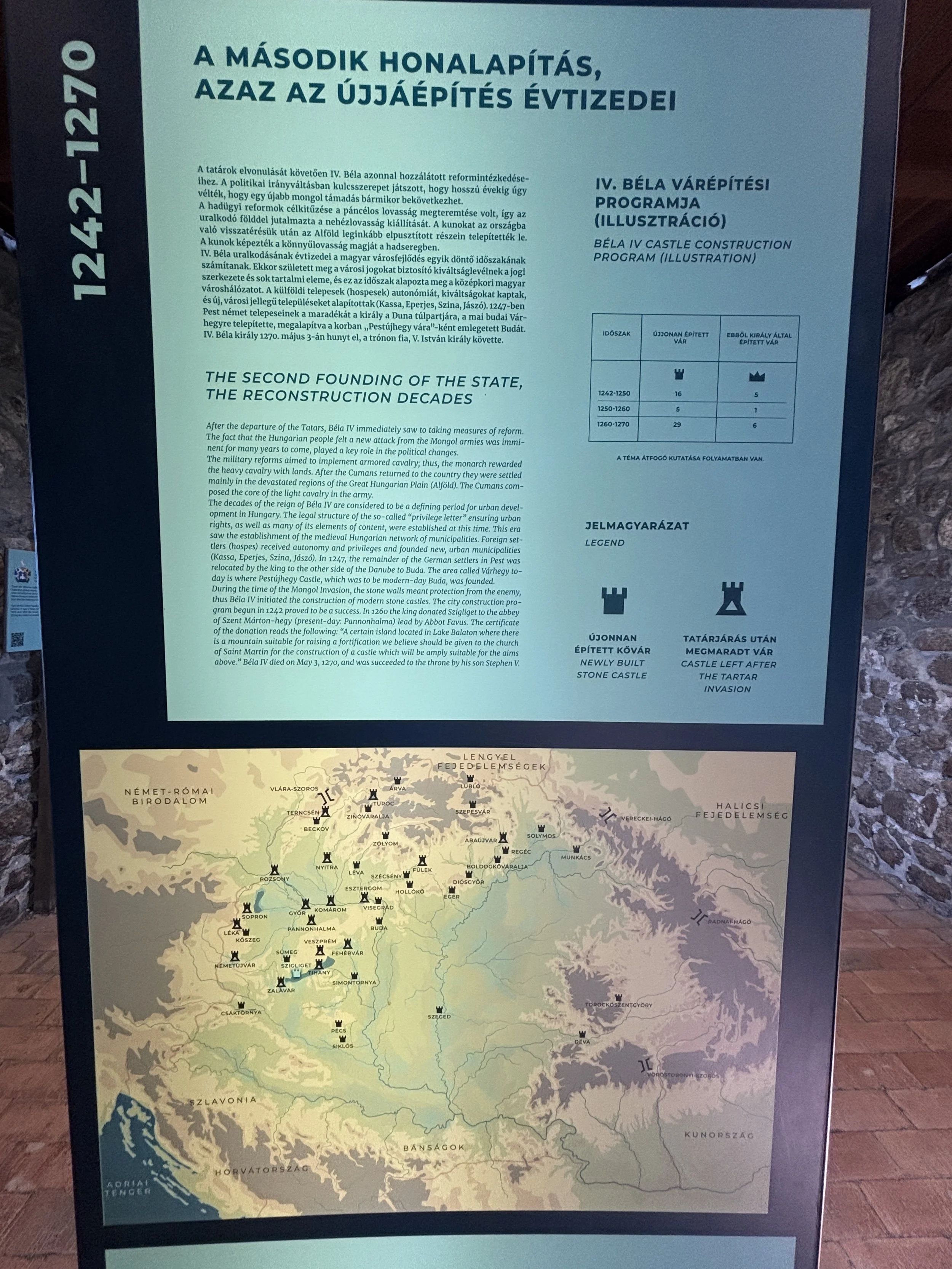
The exhibitions at the castle explain this period in great detail, covering both the military side and the more mundane aspects of everyday life. There are also several dioramas and maps that help you picture what the castle would have looked like in its heyday.
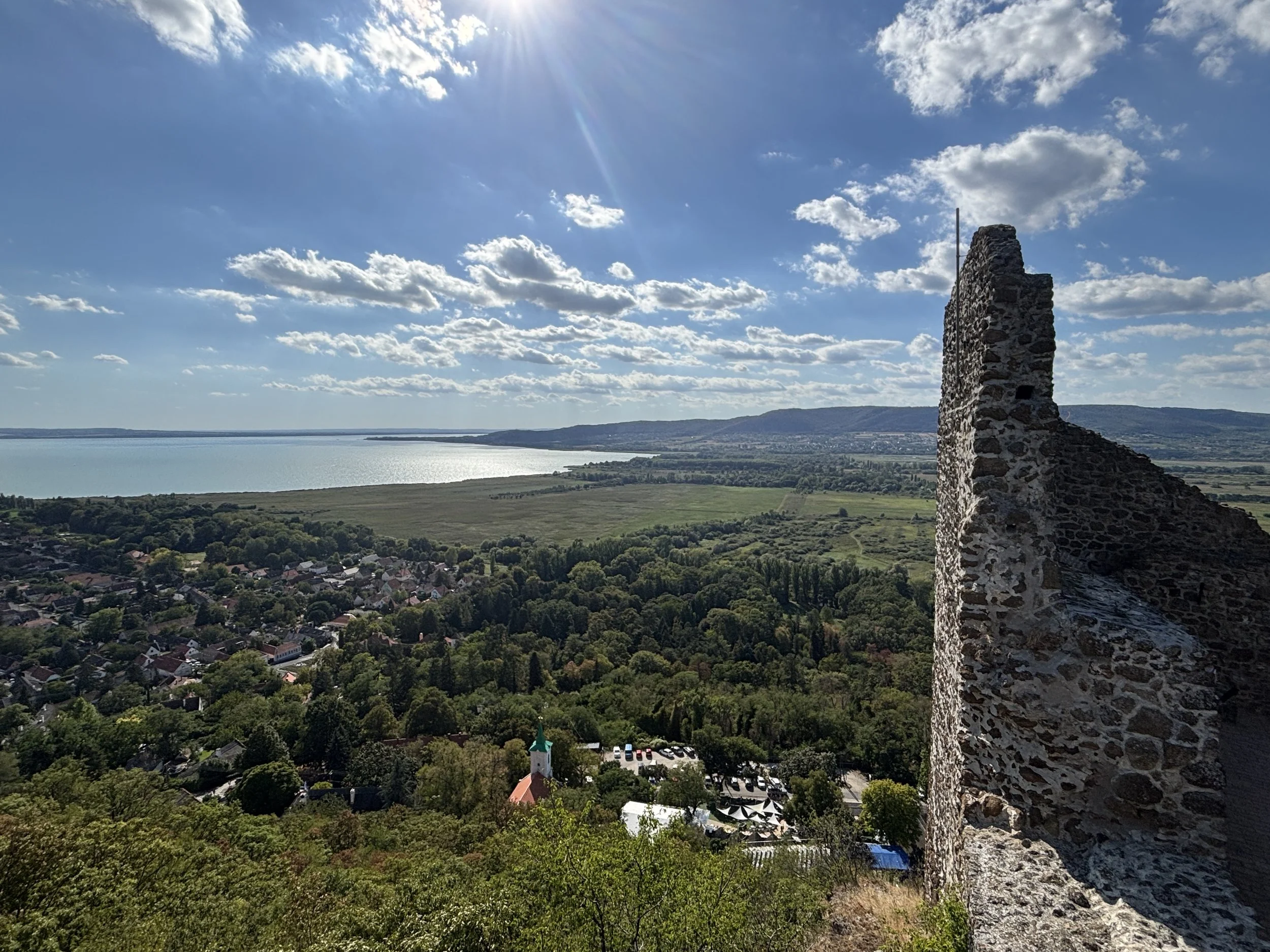
Lake Héviz
This being Hungary, this post would not be complete without some reference to baths and thermal water. And it you are in the Balaton area, the place for this is Lake Héviz, at the western edge of Lake Balaton.
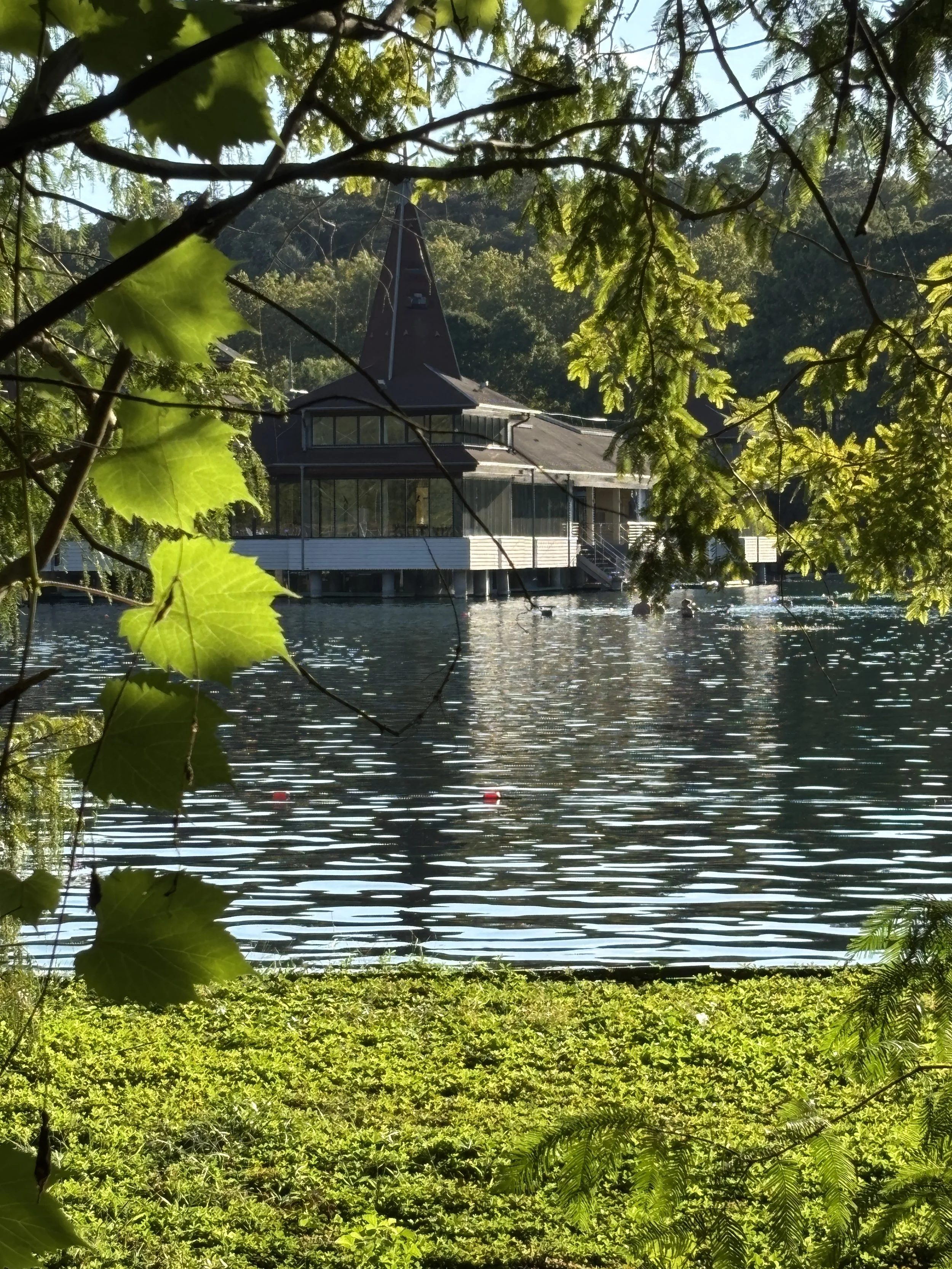
Lake Héviz is the largest swimmable natural thermal lake in the world, covering 4.4 hectares. It is fed by a natural spring which comes out of an underground cave, with its mineral-rich water staying warm throughout the year (23–26°C in winter and 33–36°C in summer).
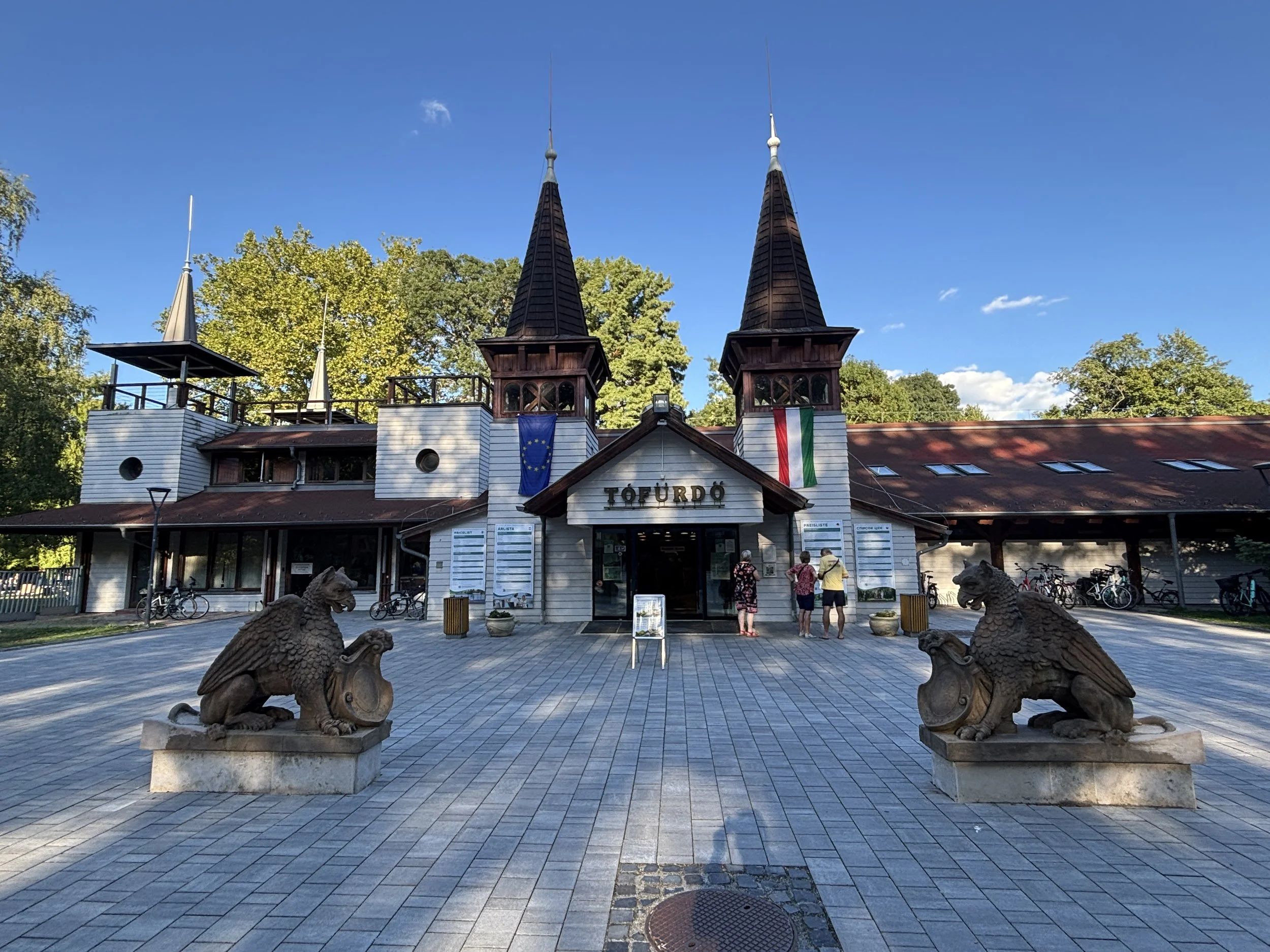
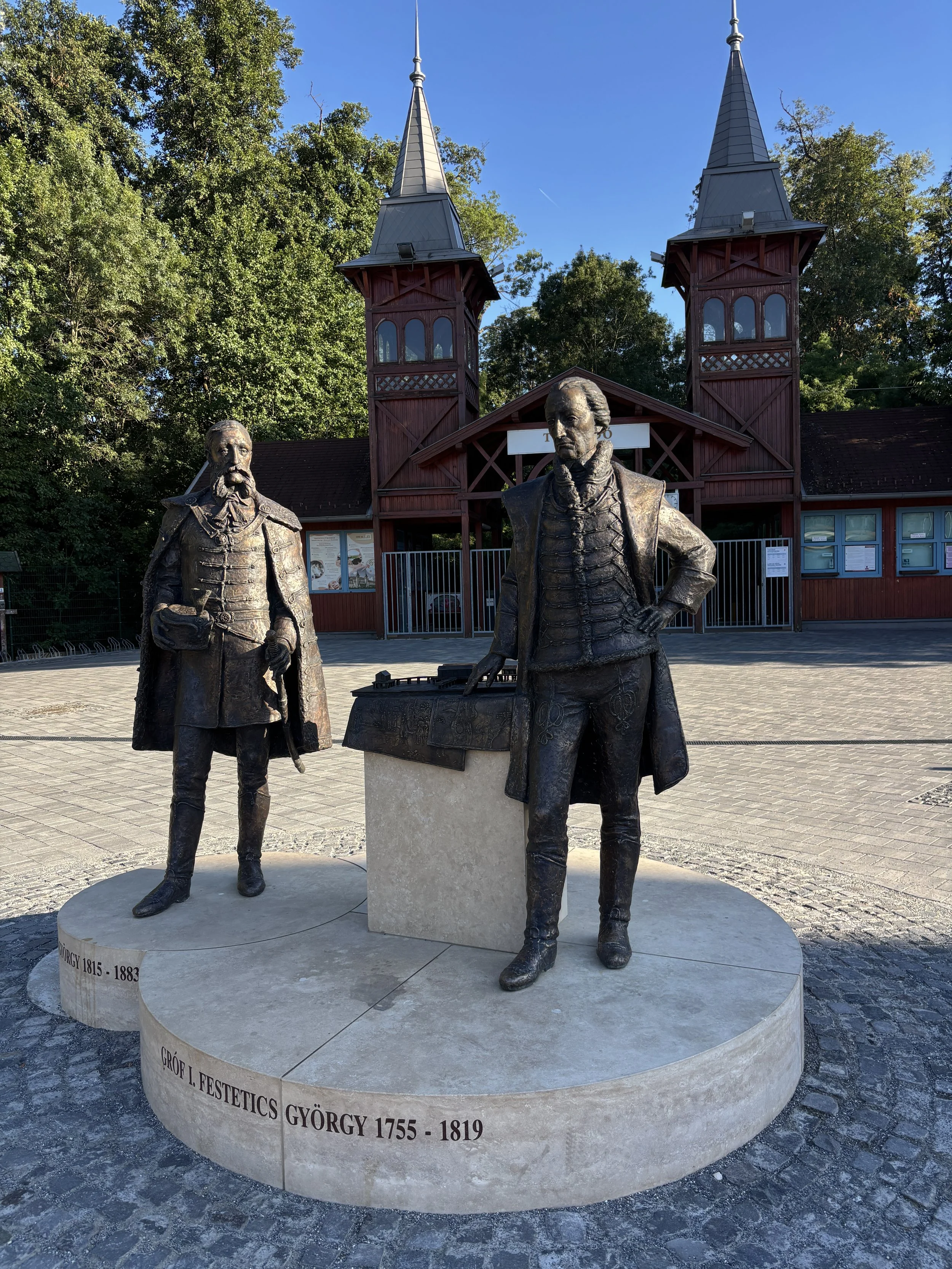
In 1795 a bath house was built next to the lake and, since then, Lake Héviz has grown into a major spa destination and a medical center, with a rheumatology hospital and also several hotels adjacent to it.
At the time of writing these lines, in September 2026, the main spa building, with its above-water structure in the center of the lake, is closed while it awaits a major renovation. It is still possible to bathe in the lake, although there is an entrance fee (standard rate for 3-hour admission is 4500 Forint or €12/$14 approximately).
Apparently, the whole spa area is going to be renovated, but the time-frame for this and the final design are not yet clear.
In any case, if passing by Lake Hévitz on your Balaton trip, a bathing stop could be a nice experience!
By the way, a practical tip: there is a large parking lot opposite the baths on the other side of the main road.
Balaton’s southern shore
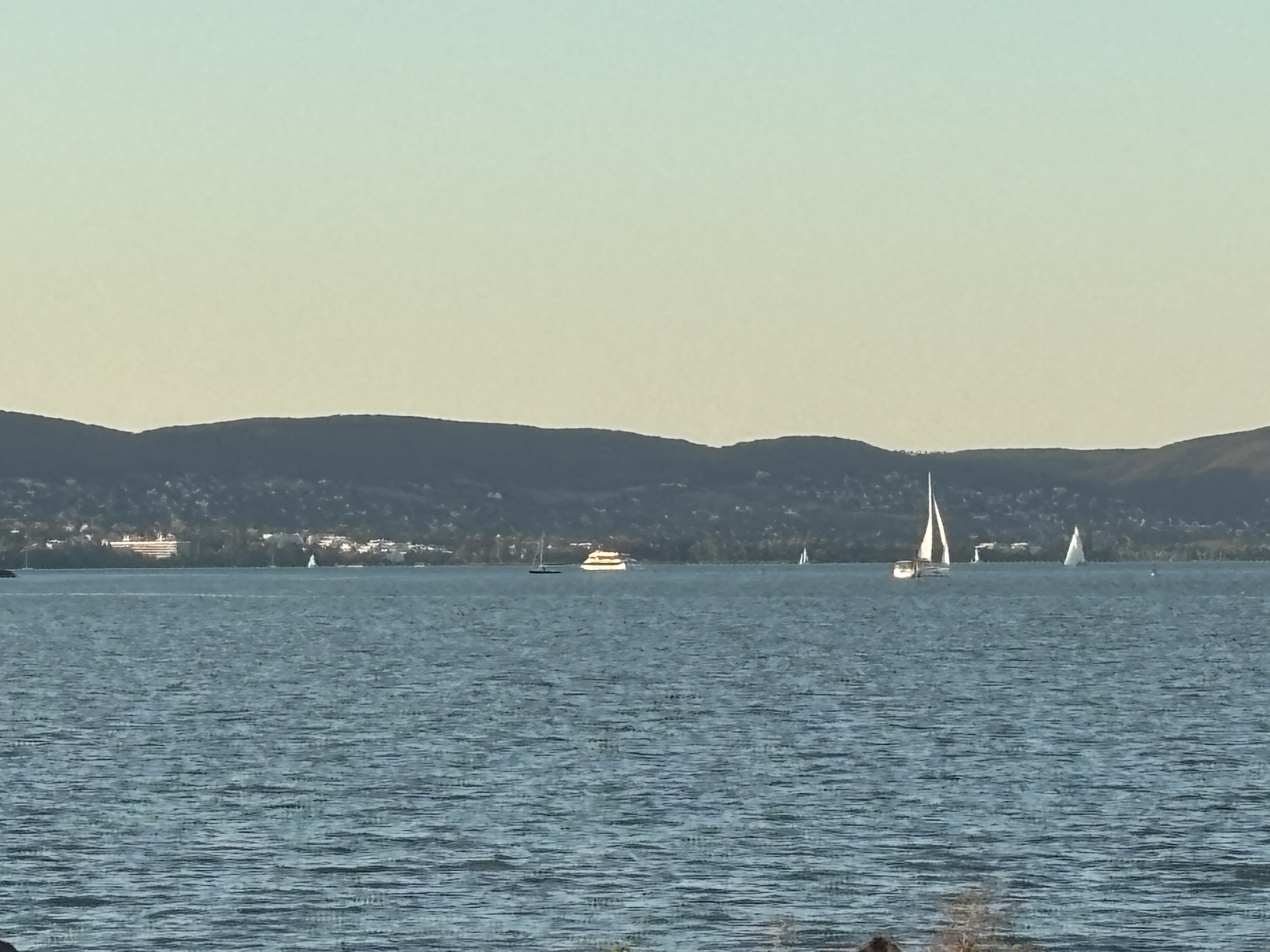
My drive along the southern side of Lake Balaton was done at lightning speed, since it was getting late. Nevertheless, I didn’t pass the opportunity of looking across the lake to the Tihany Peninsula, which have seen earlier.
If you don’t wish to drive all around the lake, there is a car-carrying ferry service which runs between Tihany and Szántód, right at the point in which the lake is at its narrowest.
Here are the views from the south side. I must say, I was expecting the Tihany Abbey to be more clearly visible from the other shore! In any case, it was interesting to see the lake from the other shore before returning to Budapest!