Ice, water and power in the Sognefjord
Traveling by car along the shores of Norway’s longest and deepest fjord. Top things to see and do.

Wild, untamed nature can at times be overwhelming and overpowering.
This is exactly what you may experience if you travel to the Sognefjord, Norway’s longest fjord.
For over 200km, from the sea near Bergen all the way to the ice sheet of the Jostedalbreen glacier, the largest in continental Europe, the Sognefjord is like a nonstop beauty pageant, with a succession of dramatic mountain landscapes framing the calm, clean, cold waters of the fjords.
But this area has also its fair share of man-made attractions, both ancient and contemporary…
Sogndal
Located on a peninsula on the north shore of the fjord, this is the county's capital and was to be our base during this trip.
Getting to the Sogndal
We flew into Bergen airport and took a rental car there to drive all the way to Sogndal, all along the road that follows the South side of the fjord.
This is a rather nice 3h drive throughout the Norwegian countryside (it passes through the area where the famous Voss luxury mineral water is sourced).
The shortest route involves a ferry crossing at Laerdal (the alternative would involve a rather long detour through mountain roads)
There is also a small airport at Sogndal, with direct flights to Oslo operated by Norwegian regional airline Wideroe.
A striking feature of the road between Bergen and Laerdal is the amount of tunnels and the length of these. Some of them are tens of miles long and they have conveniently fitted with some colourful vaults that help drivers keep focused on the road. I would not exxagerate if I said that considerable stretches of this route are primarily underground.


It is faster and more convenient to cross the Sognefjord by ferry than drive around it
Sogndal is a rather small town of some 7,000 inhabitants, that in this part of the World can feel like a metropolis. Although pleasant, there is little of interest in the town itself other than it being a services hub for the whole region.
But, very close to Sogndal, the town of Kaupanger has a truly unique gem: a 12th C. stave church.
Stave churches are medieval wooden churches that were once built all over Scandinavia. Although back in their time, they were built in the thousands, today only about 28 of them remain in Norway and a handful more in other locations in Scandinavia and Northern Europe.

Kaupanger stave church, near Sogndal


Where to stay in Sogndal and the Sognefjord

The view of the fjord from the Hofslund Hotel
Hofslund Hotel
Fjørevegen 37, 6856 Sogndal
http://www.en.hofslund-hotel.no
An independent family-run hotel that has been in business since 1912.
It is located right on the shore of the fjord, and it even has its very own pier from where it is possible to plunge into its very cold waters (yes, I tried it myself!).
Traditional style, nice and cozy.

A traditional Norwegian breakfast
Visiting the Nigardsbreen Glacier
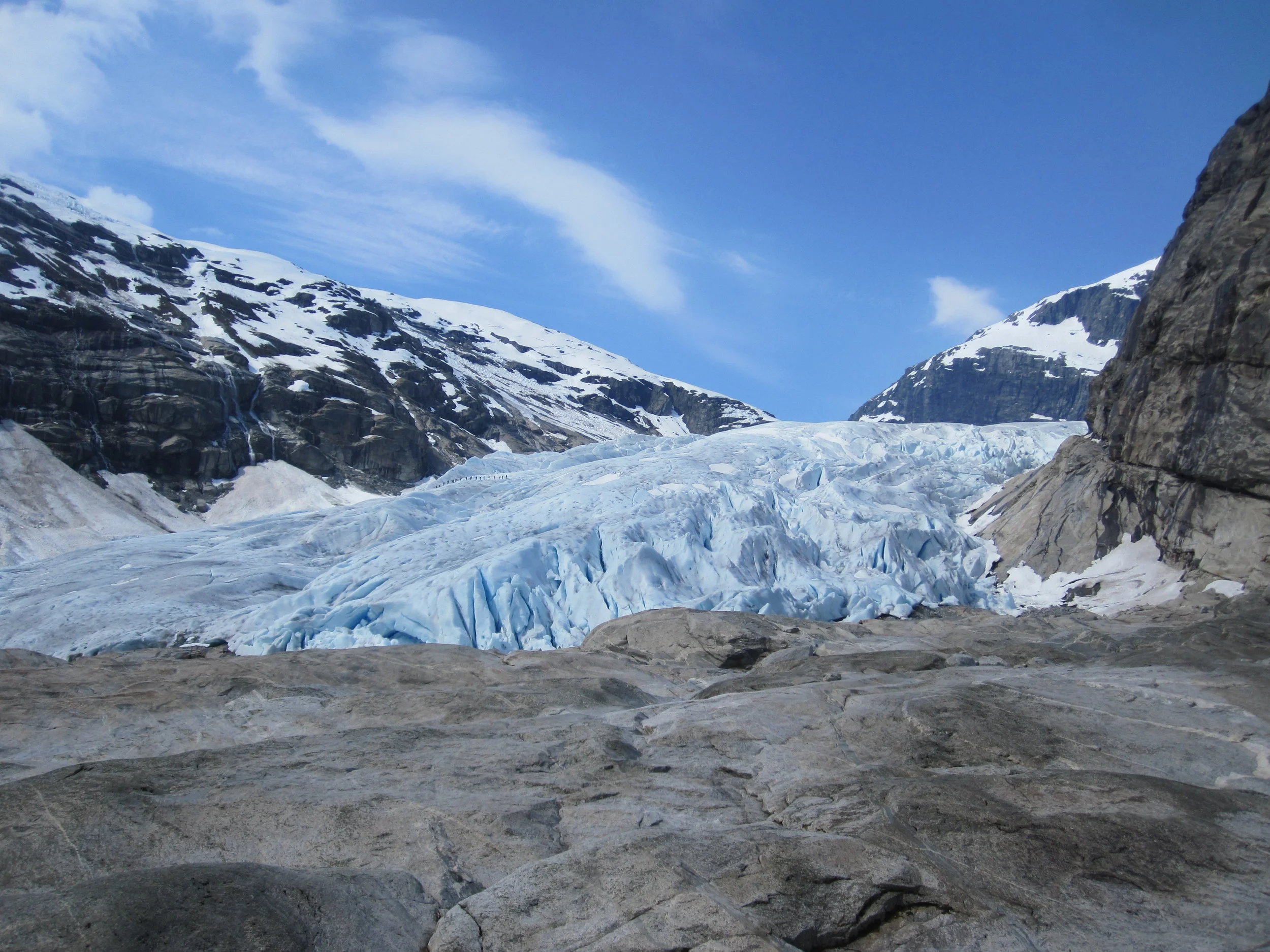
An absolute must from Sogndal is a visit to the Nigardsbreen glacier, that it is, in fact, one of the arms of the much larger Jostedalsbreen Glacier.
This amazing wonder of nature is located some 20km up the valley from Sogndal. The foot of the glacier is easily accessible.
There is a visitor’s center a couple of miles from the ice sheet and we could actually get a bit closer than that with the car through a road in good condition.
At the time when we visited there was barely anyone else around (we saw barely half a dozen other people in the immensity of the valley).
Even if you do not get on top of the ice (we did not have special equipment, so stayed just on its edge), the scenery is breathtaking. The solitude of the place adds a lot to the experience (although I don’t know whether this is the case in high season, probably not), just ice, water and rock around.
For more info on how to visit the Nigardsbreen, I recommend checking out this website.


At the time of our visit, you could access the glacier by trekking along the path on the right side of the photograph. It is not a flat and super easy trail, but neither did it require any special training or equipment to get through.

Getting closer to the ice…

And here’s the Nigardsbreen! (you can see the two people at its foot for size reference. In other times, at the right times of the year, local people used the surface of the ice as a sort of highway, to move between the different valleys. Not sure what has been the evolution of the ice since then, or even since the time of my visit, since glaciers seem to be receding pretty much everywhere these days…

This is what the glacier looks like from up close

Jostedal Hydropower Station
As if the wonders above ground were not enough in this part of Norway, there is also a real marvel of engineering underground.
Although an oil-exporting nation, Norway gets most of its domestic energy needs from hydropower. The Jostedal hydro power plant (Jostedal Kraftverk), located on the same valley that leads to the Nigardsbreen glacier and owned by the national electricity company Statkraft, is one of the many that dot the country’s geography, making use of its abundance of water and steep mountains.
I am not sure whether the Jostedal hydropower plant is normally open to the general public, we were able to visit it upon request, as part of the broader work trip that took us to Sogndal, but, as we could see, there are occasional educational tours.


The Jostedal hydro power station has some technical features that make it quite impressive. Rather than being based on a river dam, the turbines are driven by the high pressure water of Lake Styggevatnet.
An underground tunnel channels this water from an elevation of over 1,200m. The pressure is so high when the water reaches the turbines that we were told the concentrated water jet is able to cut through steel.
After having driven the turbines, the water exits the water through another tunnel that takes it to the fjord.
For those interested in learning more about Norwegian hydro power, there is the Norwegian Museum of Hydropower, located in a former hydropower plant in Tyssedal, just South-East of Bergen. I have not visited it myself, but I heard good things about it.
Visiting Aurlandsfjord - Flåm
And now we move already to the South side of the Sognefjord. The two branches of the Sognefjord known as the Aurlandsfjord and the Nærøyfjord have UNESCO World Heritage Status and are some of the most visited spots in the region.
In this area, the tiny hamlet of Flåm stands out.
Flåm is located at the head of the Aurlandsfjord, one of the Southern branches of the Sognefjord. Two factors contribute to it being one of the most touristy spots on the Sognefjord: it is a docking spot for cruise ships and it is a stop on the Bergen to Oslo railway line.
Otherwise, and although certainly beautiful, I did not find the Aurlandsfjord to be particularly more attractive than other corners of the Sognefjord region.
Besides a walk through the village, I would recommend (if you have a car), to drive to the Stegastein (Bjørgavegen 83, 5745 Aurland) viewpoint, on the fjord’s Eastern flank.
Here’s a modernly designed viewing platform that protrudes from the side of the mountain.

Flåm is regularly visited by large cruise ships

The entrenchment of water into the mountain landscape produces images like this in this part of Norway

Some earlier forms of ship-borne visitors

Aurlandsfjord from a vantage point
Lærdal - Visiting the Norwegian Wild Salmon Center
If salmon is one of Norway’s top exports, the Sognefjord is (or at least, used to be!) a particularly rich breeding ground for the species.
Also on its Southern shore, the town of Laerdal is home to the Norwegian Wild Salmon Center.
Norsk Villakssenter
Øyraplassen 14, 6887 Lærdal
http://www.norsk-villakssenter.no/en
This is a modern museum and interpretation center about the life cycle of salmon and its fisheries. The center has even some aquariums, fed by the running water of the village’s stream, where you can see live salmon in their habitat.
Besides that, the village of Laerdal has a small, but very neat center, with streets lined with colourful houses that make for a rather pleasant stroll.

There are quite a few more things to do and to see in Sognefjord, from tasting the famous Undredal brown cheese to a broad range of outdoors activities, but this was actually a rather short trip.
Wouldn’t like to close this story without a couple more pics of the top attraction of the Sognefjord, though, the amazing Norwegian landscape!


Faded Genoa and its hidden gems
It is undeniable the city of Genoa has seen better times, yet, some pleasant surprises await…

The famous “lanterna”, an old lighthouse, which has traditionally signalled the entrance to the port of Genoa. It has become part of the popular imaginary in such a way that, in Italy people say “I am under the lanterna” (“sotto la lanterna”) as a synonim of “I am in Genoa”
Once the capital of a mighty maritime empire, it is undeniable the city of Genoa has seen better times.
Unlike Venice, Genoa has managed to preserve its role as a maritime-industrial city, yet it lacks the iconic status of its historical arch-rival. Not only that, but its many charms are often overlooked by tourists that see it just as a gateway to Portofino and the Italian Riviera or, simply, as a port of embarkation for the many cruise ships that have it as a port base.
To be fair, having passed briefly through the city once in the past, this is an opinion I shared to some degree…until I recently had the chance to spend a full day in Genoa exploring it throughout.
In this post I am going to try to illustrate why I think Genoa is quite an underrated city and why you should consider adding it to your Italian bucket list…
In fact, this chronicle is quite limited in its scope: what to do, what to see and what to eat in the historial center of Genoa in one day. This is because Genoa was the last stop of a Mediterranean cruise we did on MSC Meraviglia, we boarded in Palermo and sailed in a clockwise direction with stops in Cagliari, Mallorca, Valencia and Marseilles.
There are quite a few more things to do in Genoa, such as the whole maritime promenade (with its Aquarium and museum) as well as the modern part of the city that are not covered here, but may be worth considering if you are planning to spend a longer time in the city.
The Port and Historical Genoa
As one of Italy’s historical four “Maritime Republics”, Genoa’s life has for centuries revolved around its port and the old city occupies a hill just above the port basin. In fact, the whole territory in and around Genoa is quite hilly and flat space is at a premium!

This is a photo from a previous visit to Genoa, when the weather was a bit better!
A practical way to see the city is to take the Piazza De Ferrari as a starting point of your itinerary.
This square, that serves a nexus between the old and new parts of the city, is not only is well communicated by metro (yes, there is a metro in Genoa, although it has only two rather short lines), but from its elevated position at the hilltop it is easy to reach any other point of the historical center on foot.

The walls of Old Genoa
Leaving aside the port, I would say Genoa does not have one single major attraction that outshines all the others. What makes it quite interesting and unique is the ensemble of its historical center: a maze of narrow streets and alleys, peppered with remains of its glorious past, such as the avenue of the palaces (that we will review later in this post). So get a good pair of boots, have a nice breakfast and prepare to walk…
One possible itinerary to optimize your time while getting a good general view of the city is to go down Via San Lorenzo, from the cathedral towards the port, then, turn right towards Porta dei Vacca. You may want to go all the way to the Palazzo Reale (that hosts a museum), before turning back again towards the old town and Via Garibaldi to visit its magnificent palaces.

Like in any other European city of note, the cathedral is one of the focal points of the old town.
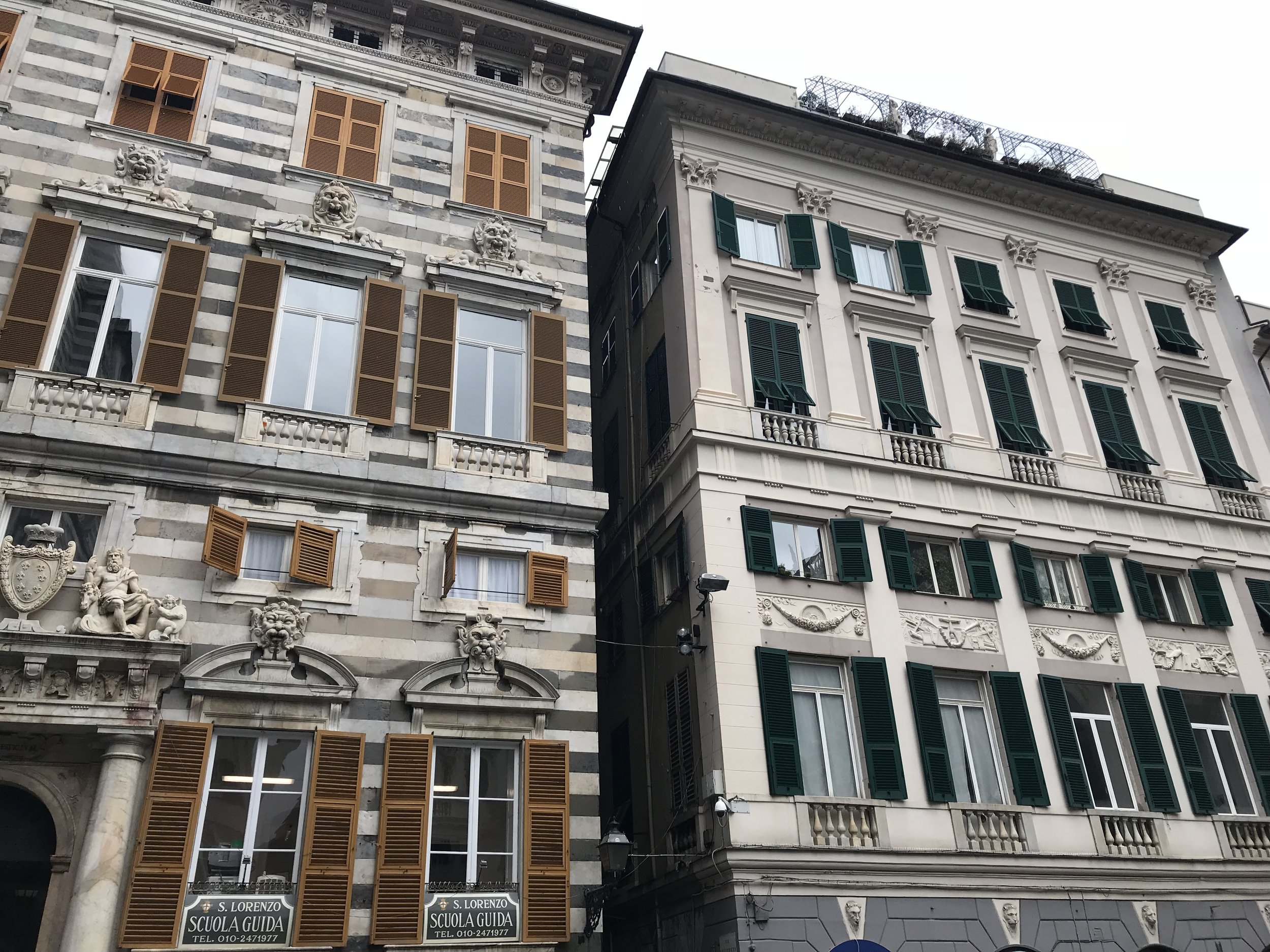
The architecture on Via San Lorenzo
Although there are quite a few attractions around the port, such as the Aquarium, it is a pity that Genoa’s seafront is not (yet) very pedestrian-friendly. Unlike in other Mediterranean cities that have implemented urban reforms to modernize and open up their maritime façade, here there is still quite a lot of industrial activity going on and there are motorways between the quays and the city. Plus most of the buildings, shops and restaurants facing the port are in a rather decadent state.
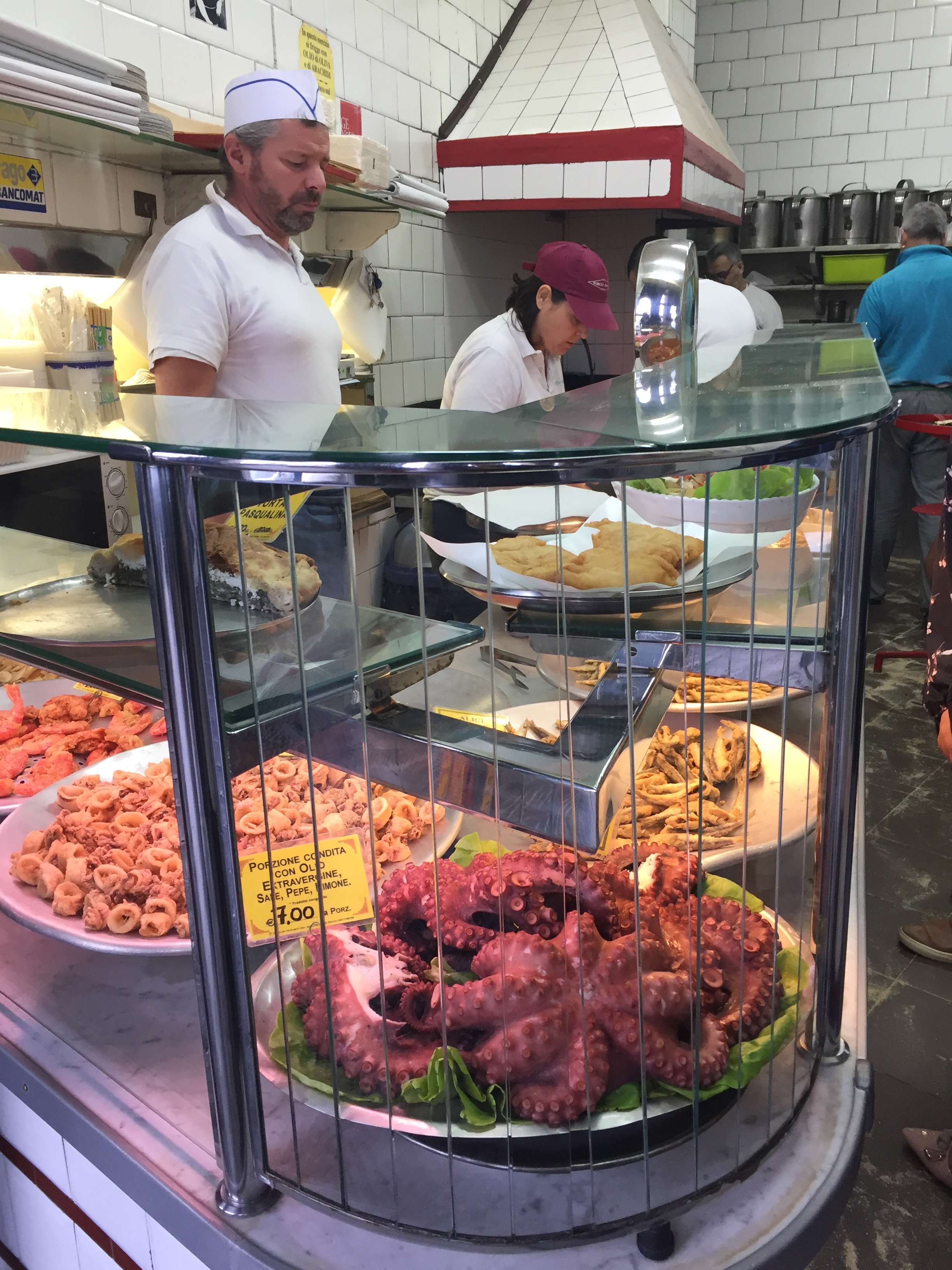
All along the port it is possible to eat at these small, popular restaurants specializing in seafood. Fast-food Genoese style. We would go back to food later, but in a rather different way…

A typical street in Genoa’s historical center, you can spend the whole day walking around these
Genoa played its role in the Italian Risorgimento and the unification of Italy, in mid-19th Century. Walking around the city you may stumble upon some plates that recall that era.

Mameli, the composer of Italy’s national anthem, lived in Genoa, close to the cathedral.
Another plate, near the port, remembers another key episode of the wars of Italian unification: Garibaldi’s expedition of the Mille, that assembled in Genoa before sailing to take Sicily.

Places to eat in Genoa
Antica Sa Pesta
Via dei Giustiniani, 16/R, 16123 Genoa
The place to go to taste local Genoese and Ligurian cuisine, particularly the local speciality “farinata”. Thankful to the local that suggested it to us!
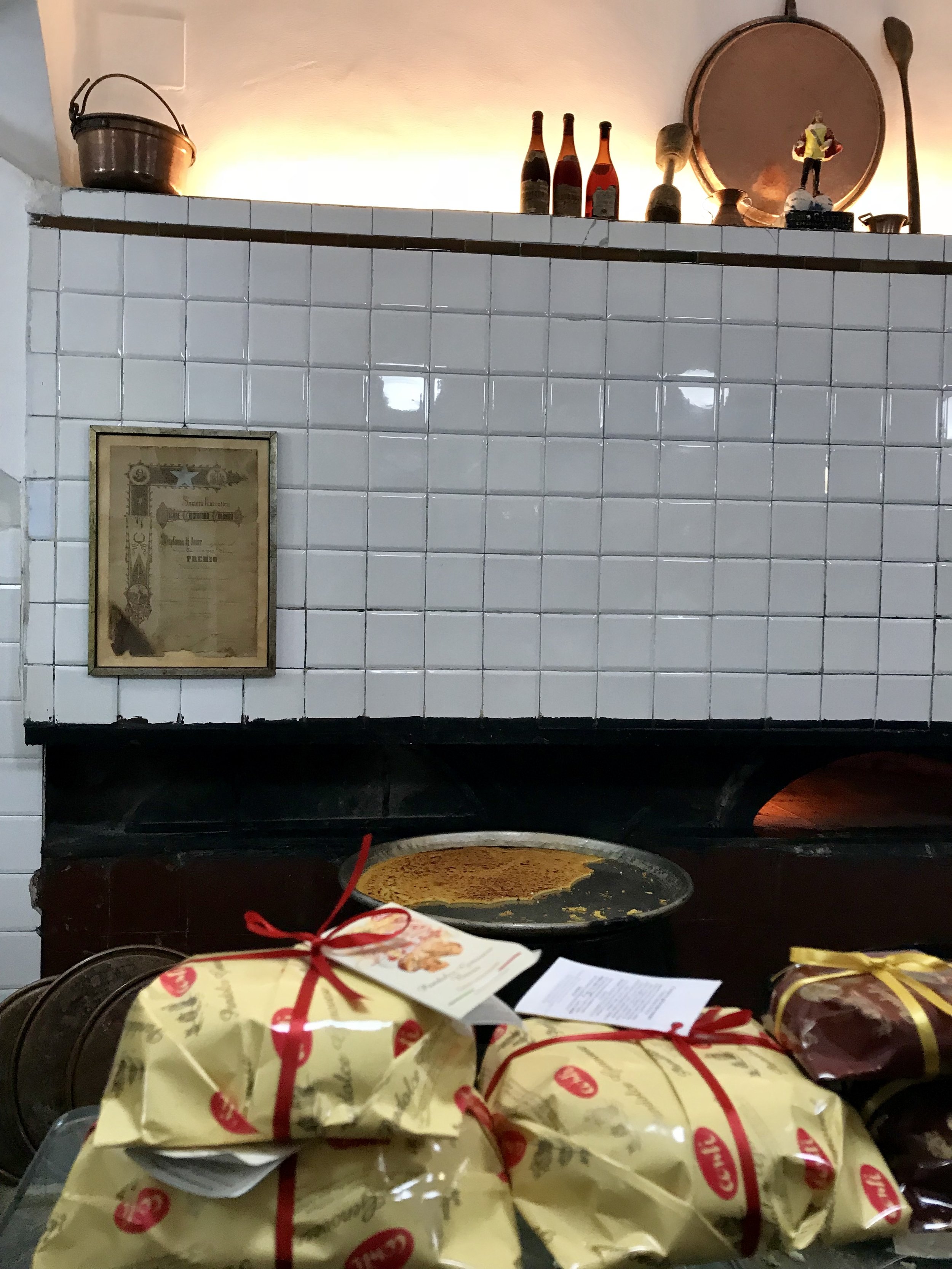

“Farinata” is the perhaps the most typical dish of Genoa. It is a sort of pancake made of unleavened chickpea flour, that is baked in the oven.
The one prepared at the restaurant Antica Sa Pesta was excellent and really great value. It’s their speciality.


Classical “farinata” on the left, nothing but baked chickpea flour. On the right, “farinata” stuffed with cheese. Both tasting great.

We also tasted this delicious seafood pasta


The restaurant Antica Sà Pesta is a rather small, modest-looking affair, but the atmosphere oozes authenticity. Would repeat without a doubt next time I am in Genoa.
It is definitely not flashy, a palce without pretensions and a proper hidden gem. My advice would be to avoid the touristy restaurants that abound on Genoa’s main thoroughfares…!
And now we are ready to continue our walking tour through the streets of Genoa’s old town after a well deserved pit-stop…
The Palaces of Genoa
As an old, rich, trading republic, Genoa has its fair number of palaces, built by the local oligarchy as a display and reflection of status and success.
Luckily for the tourist with limited time, three of the most impressive palaces are currently in public hands, and are located literally next to each other on the same street, Via Garibaldi.
They are the Palazzo Rosso (Red Palace), the Palazzo Bianco (White Palace) and Palazzo Tursi.
In addition to their interiors, which have an historical interest in themselves, the Palazzo Rosso and Palazzo Bianco host also notable art collections.
The ensemble of these palaces is known as the palaces of the “strade nuove” (“new streets”) or “palazzi dei rolli”, most of which were built in the 16th and 17th century at a time of urban expansion in Genoa (hence the “new streets” name).
42 of 163 palaces (yes, Genoa is really a city of palaces!) have been granted World Heritage status by UNESCO, among them, the three commented here.
It is possible to buy a combined ticket for the three (recommended)

Palazzo Rosso
This is perhaps the most interesting of the three palaces we visited in Genoa (IMHO).
It belonged for centuries to one of the most prominent Genoese families, the Brignole-Sale, who happened to be also avid art collectors, hence the origin of the collection currently on display at the Palazzo Rosso.
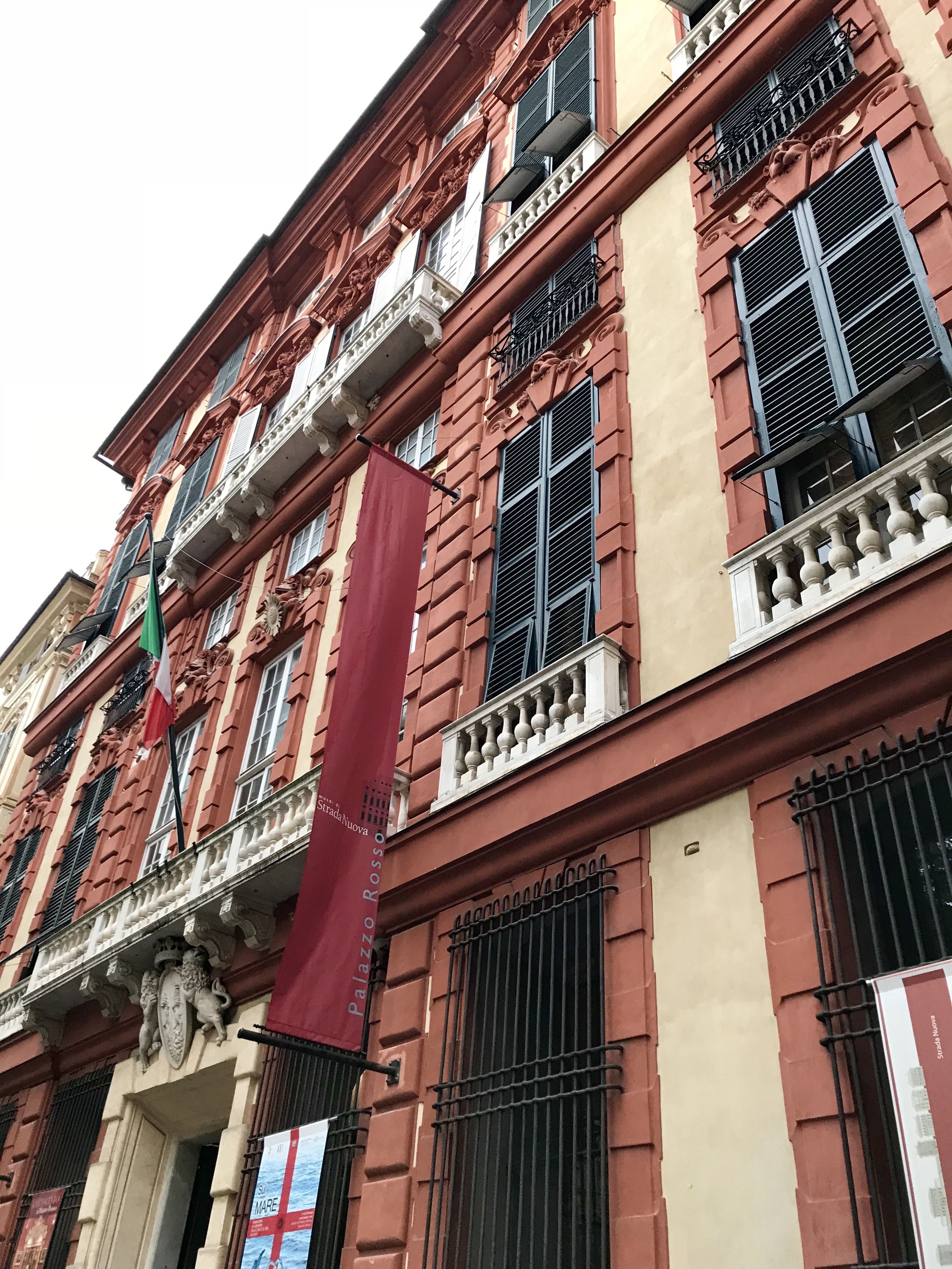

The Palazzo Rosso has several floors, where it is possible not only to admire its valuable art collection, but also to see some of the apartments where the palace owners lived at different periods in time.


The view from the upper floors of the Palazzo Rosso
Although I liked the Palazzo Rosso the most, and despite the risk of serious artistic overload, I did not want to close this section with a couple more pictures of the art that seems to be everywhere in Genoa


A visit to Genoa’s main produce market
Mercato Orientale
Via XX Settembre, 75r, 16121 Genoa
If you like the exuberance of a fresh food market, don’t leave Genoa without stopping at the Mercato Orientale.
Located in what used to be the cloister of a former church, this market is a wonderful festival of colours and smells, as fresh produce from all over Italy piles up at the stalls.
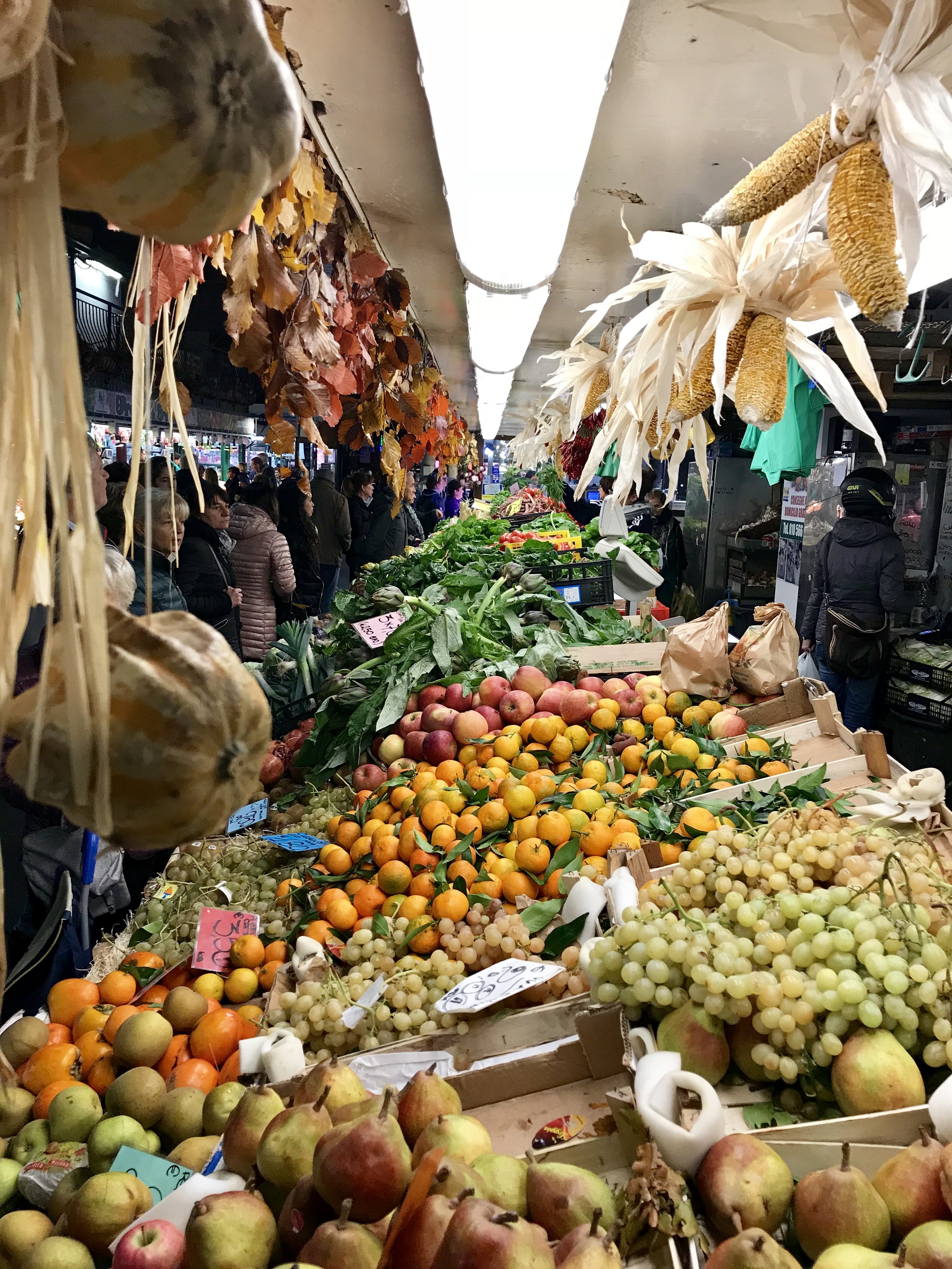


Authentic places to eat in Genoa
Da Leccarsi i Baffi
Piazza Cavour, 91r, 16128 Genova, 16123 Genoa
A place to continue with the exploration of Ligurian cuisine, particularly of seafood.
At this modern and cozy restaurant you will be able to taste, for example, sardines prepared according to the local Genoese recipe.

There is also a diversity of seafood dishes, like this pasta (below), which was truly delicious.
Service was great as well, and, with most of the people eating there being locals, it definitely does not feel like the many tourist traps that line the streets a bit further up the center.
Recommended!

A night walk in Genoa
And to wrap up this intense day in Genoa, a couple of pics to illustrate the night walk to the hotel.

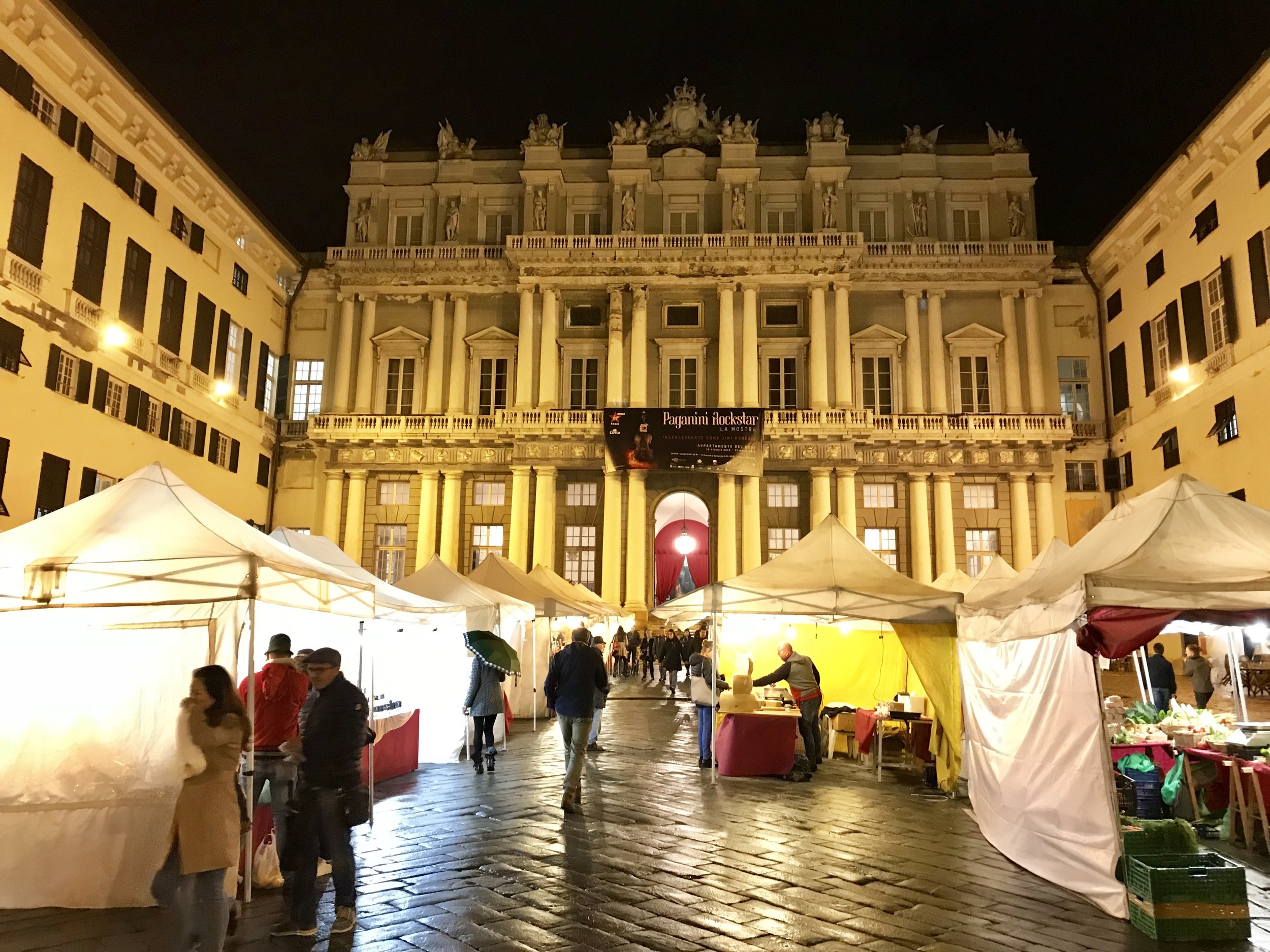
A street market in the courtyard of the Palazzo Ducale
Where to stay in Genoa
Holiday Inn Genoa City
Via Milano, 47, 16126 Genova
It is business-style four star hotel. A bit impersonal, I know, but it turn out to be very modern and have huge rooms (almost like a little apartment, not sure all the rooms are the same, though).
It is not in the very center, although the distance is walkable. There is also a metro station within 5 minutes walk (convenient since it was raining!) and the trains take you to De Ferrari station in the very center in less than 10 minutes.
It is a very convenient option if your are embarking or disembarking from a cruise ship, as it is located right next to the maritime terminal (the hotel was, in fact, booked by the cruise company that arranged the rest of our trip)