Three days in Kyoto and Nara: top things to do & to see
There’s not doubt that Japan is in fashion. Whether is the currency depreciation, better and more convenient air links or the pull of the Expo 2025 Osaka, the fact is that more people than ever are visiting the land of the rising sun. I became also, recently, one of these first time visitors to Japan, and I shared on this site my impressions of Osaka, its 2025 Expo and its best pavilions.
But if you visit Japan, it is also very likely that you will pass through Kyoto, as well, since this is the country’s historical capital and it has one of the highest concentrations of heritage sites in the country. What’s more, you may also combine your visit with that of nearby Nara, another place of historical significance which has become also popular because of the numerous small (and cute) deer that freely roam its streets.
In fact, there are so many sites to see in and around Kyoto that it can easily take you a whole week going through the most relevant ones. We didn’t have that much time, unfortunately, so, in tune with the usual theme of this site, I will try to compress here what we managed to see here in around three days.
I am aware I may have missed quite a few spots that are equally deserving of a mention, but I guess quite a few visitors find themselves in the same position, of having to make choices and prioritize.
So, I hope the following lines can somehow to be of help to readers with limited time choose what to do and what to see in Kyoto.
Visiting Fushimi-inaru and its thousands of Torii Gates
This is an iconic place and one of the must-visit spots in Japan. I guess this has become even more the case in the current Instagram era, since the colourful Torii Gates that line up to path to Mount Inari make for the quintessential Japan-themed photo opportunity.
How to get to Mount Inari?
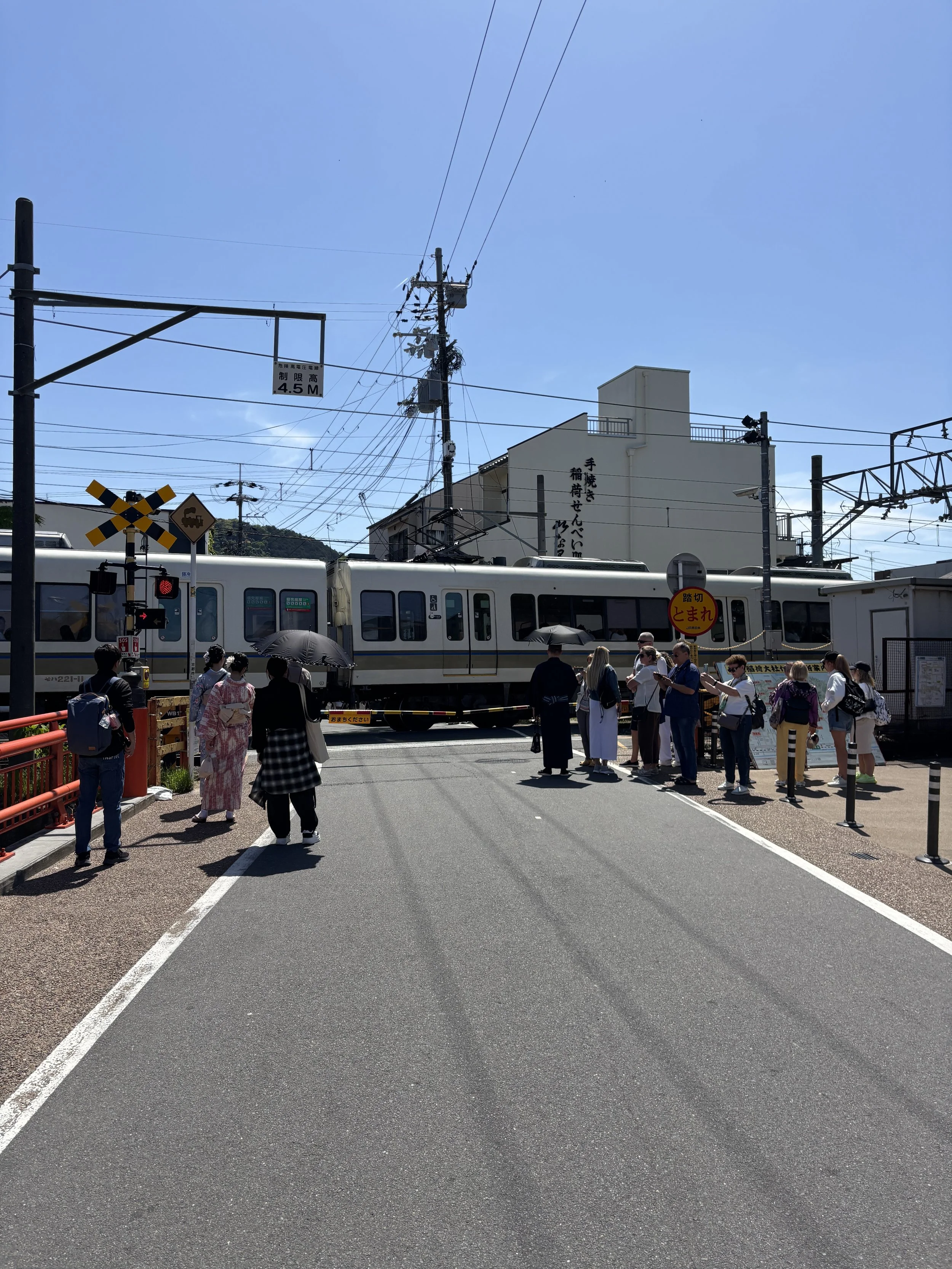
Mount Inari is one of the several hills at the southeastern edge of Kyoto. You can get there from central Kyoto on a suburban train of the JR Nara Line. It takes around half an hour to get from Kyoto’s central station to Fushimi-inari station at the foot of the hill.
The moment you get off the station you realize you have arrived at a major tourist hotspot, since it is full of souvenir shops, fast food joints and the like.
The area of interest extends all the way up to the top of the hill (some 250m high). There is a designated path. The Torii Gates are actually inside a public park, so entrance is free and open 24 hours.
There are several Shinto shrines around Mount Inari and, in fact, this area is known to have been a center of religious practice since at least the 8th C. Its most distinctive element, however, and the one that gets most attention from visitors is the Torii gate-lined winding path going uphill for some 4km or so. There are some 10,000 Torii Gates lining up the path, each of these colourful traditional Japanese structures having been erected as an offering.
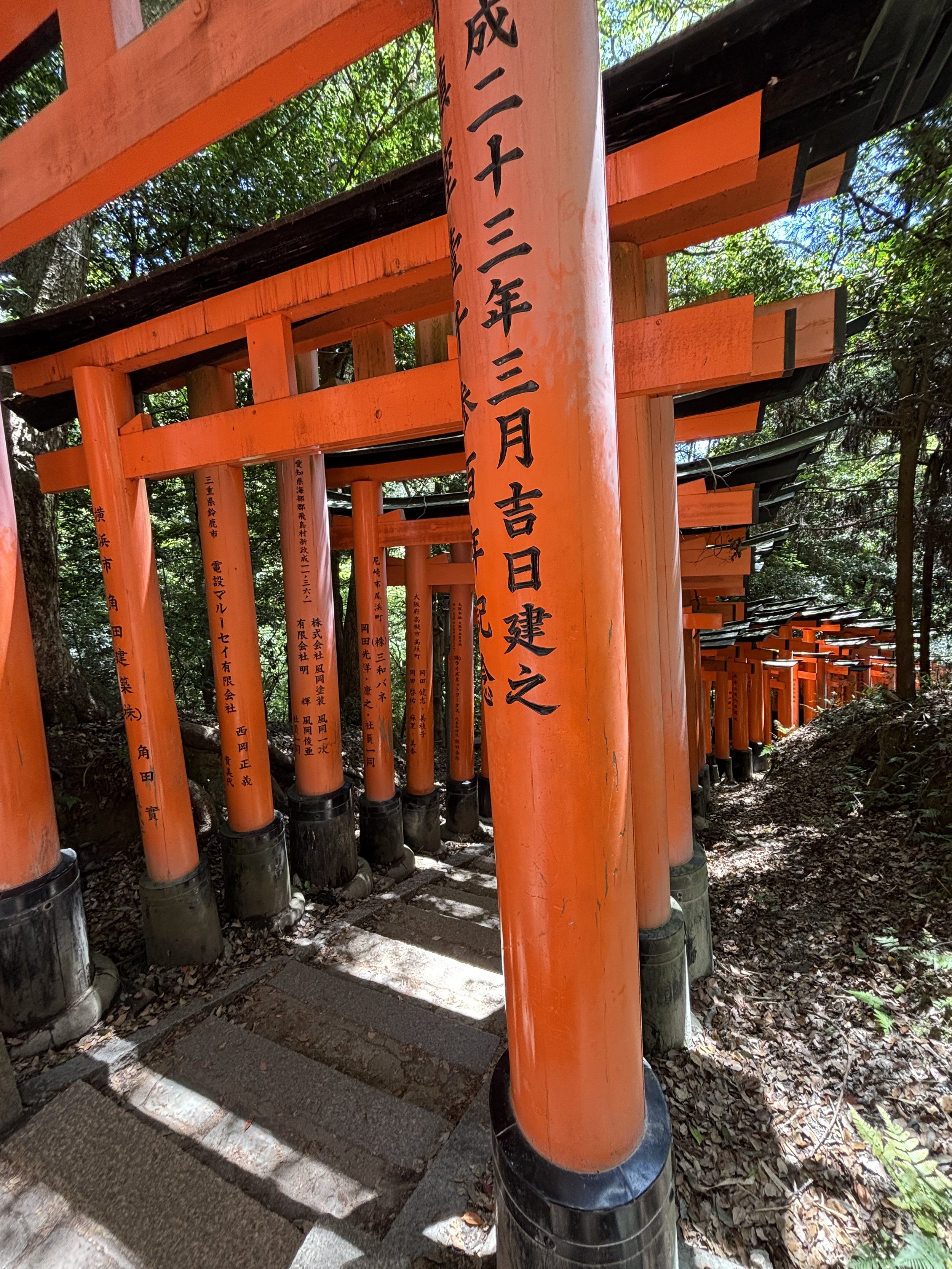
If you visit Fushimi-inaru during the day in good weather you are likely to come across some crowds, so you will need to have some patience to get a good shot at the gates!
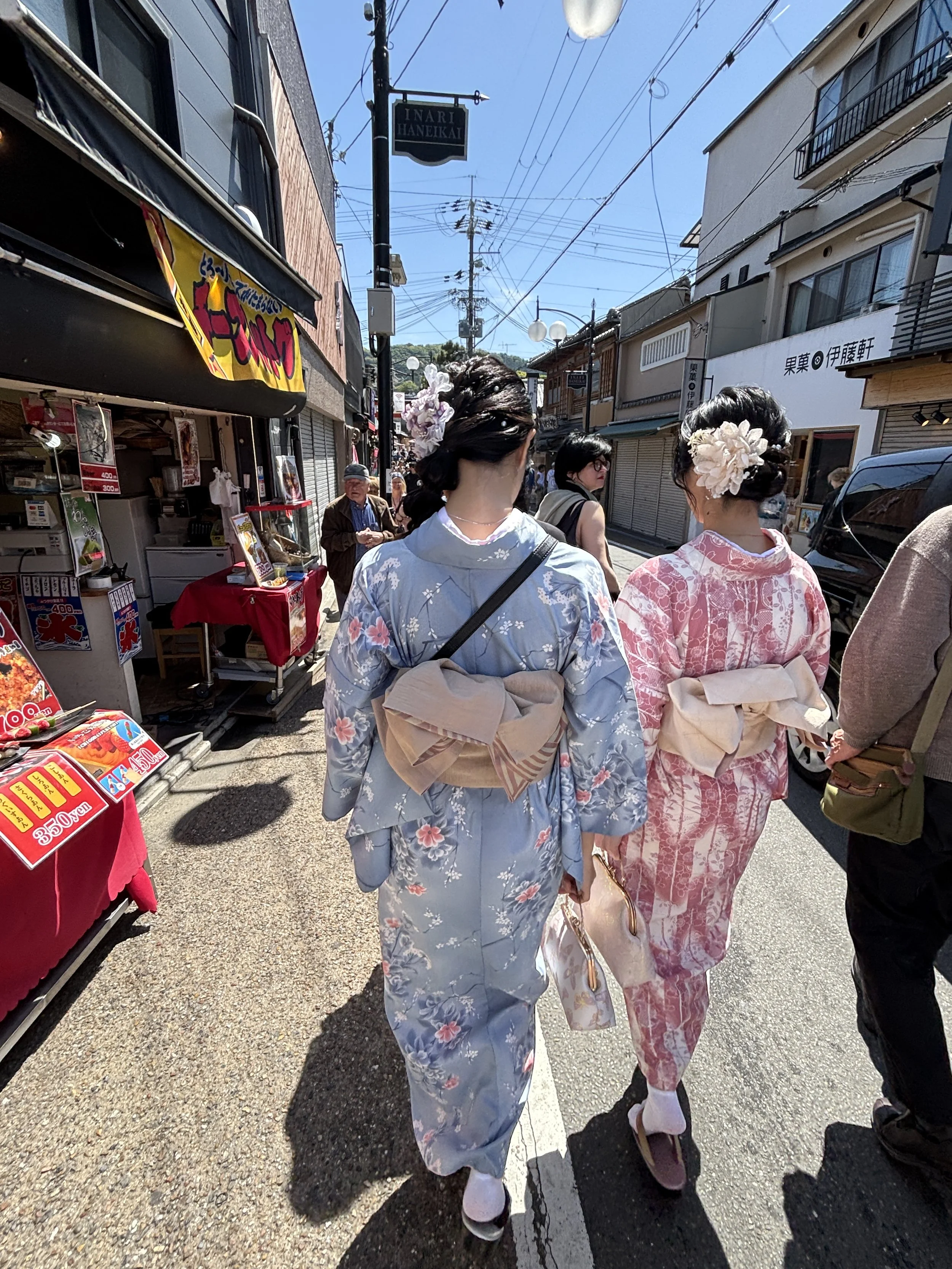
By the way, one thing I found quite fascinating is that many visitors rent Japanese traditional attire to wear during the visit. There are many establishments between the train station and the entrance to the park which specialize in this trade. This is, actually a practice that is common at quite a few historical places in Asia, I had seen it, for example at Seoul’s Gyenongbokgung Palace. It’s surprising the first time you see it, but the outcome is actually quite cool!
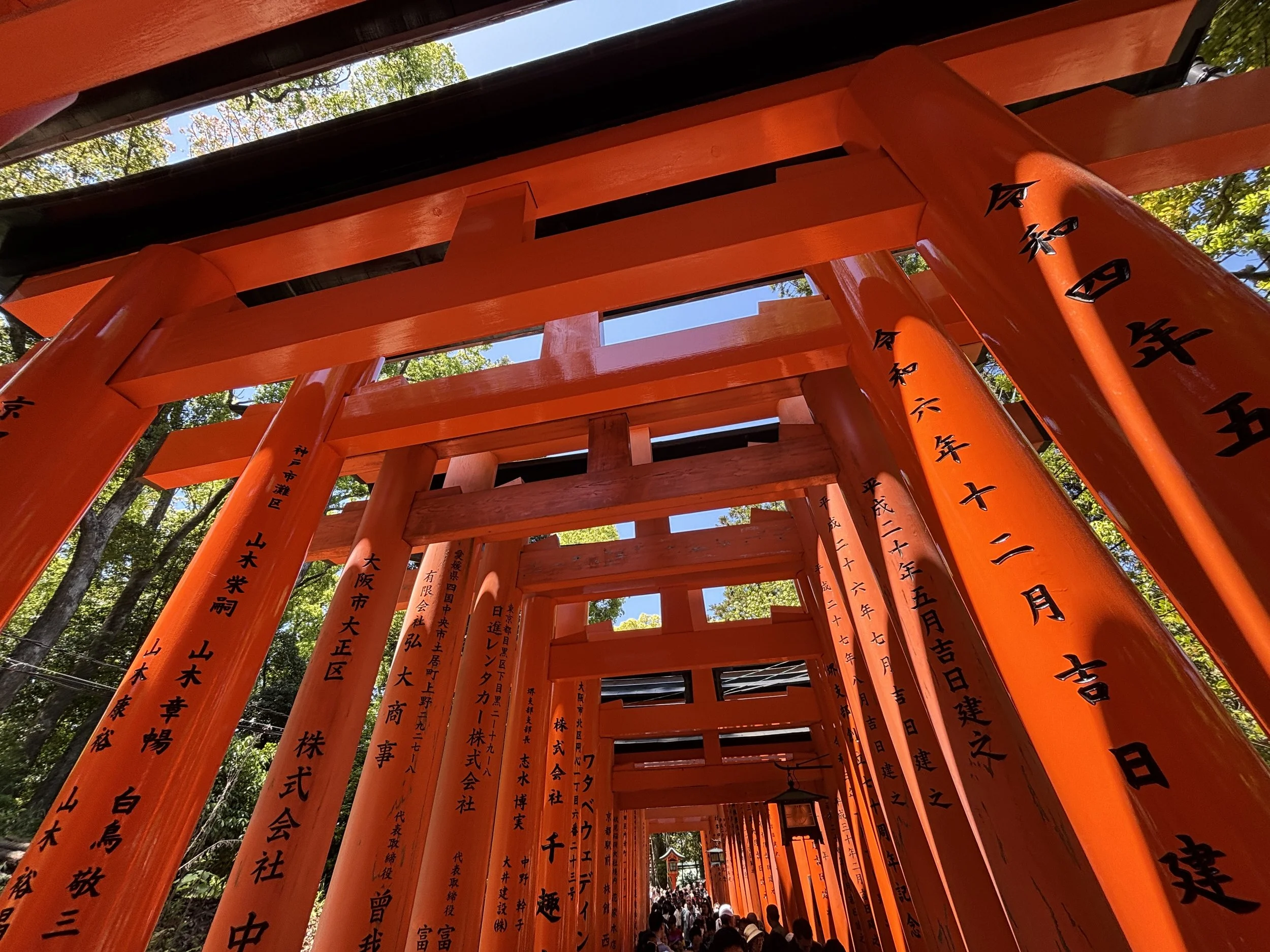
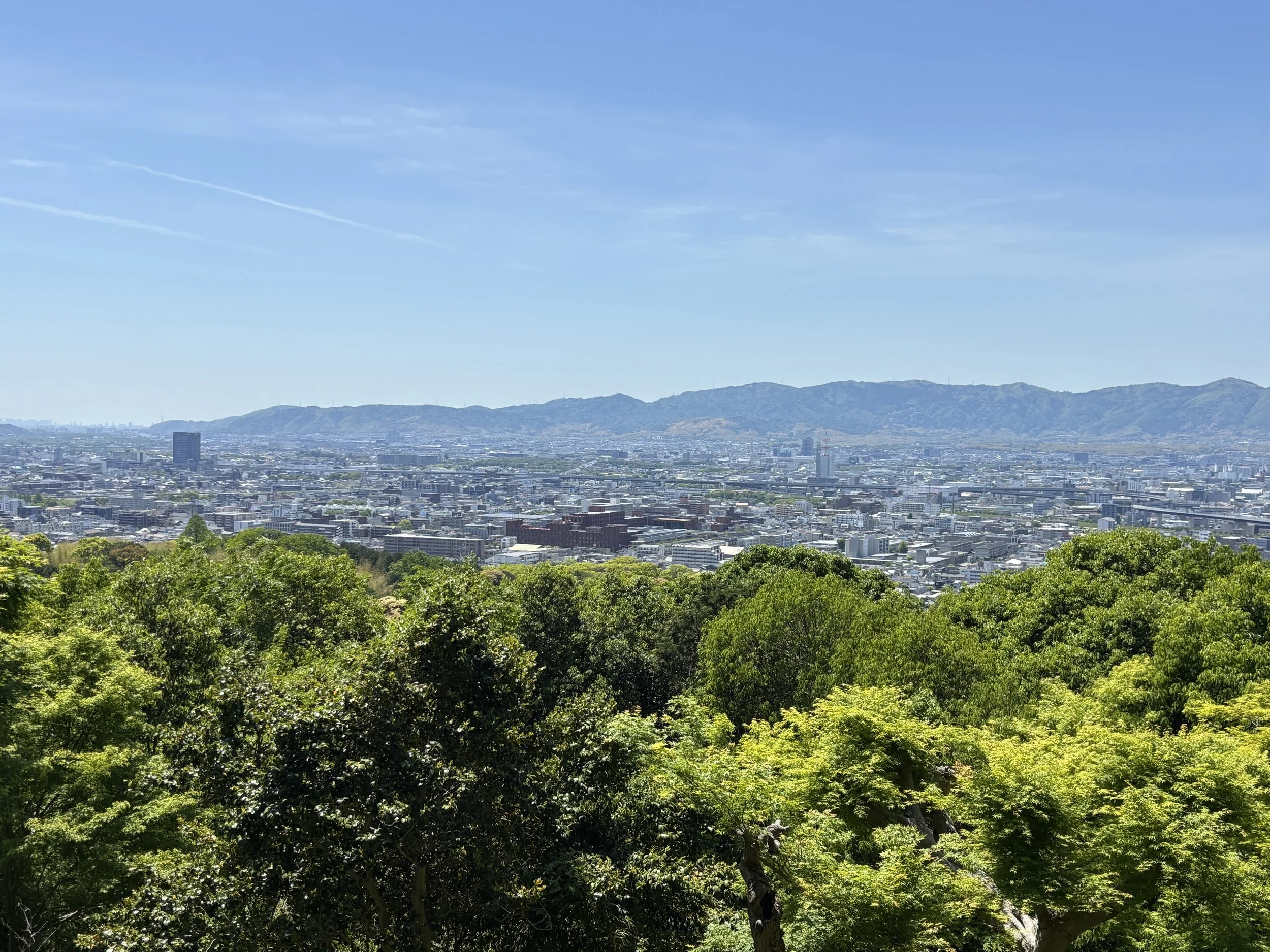
The climb up Mount Inari takes a couple of hours if done at a leisurely pace, stopping to take pictures and the like. From the top you have pretty good views of the Kyoto metropolitan area.
Some random advice about traveling around Kyoto (and Japan)
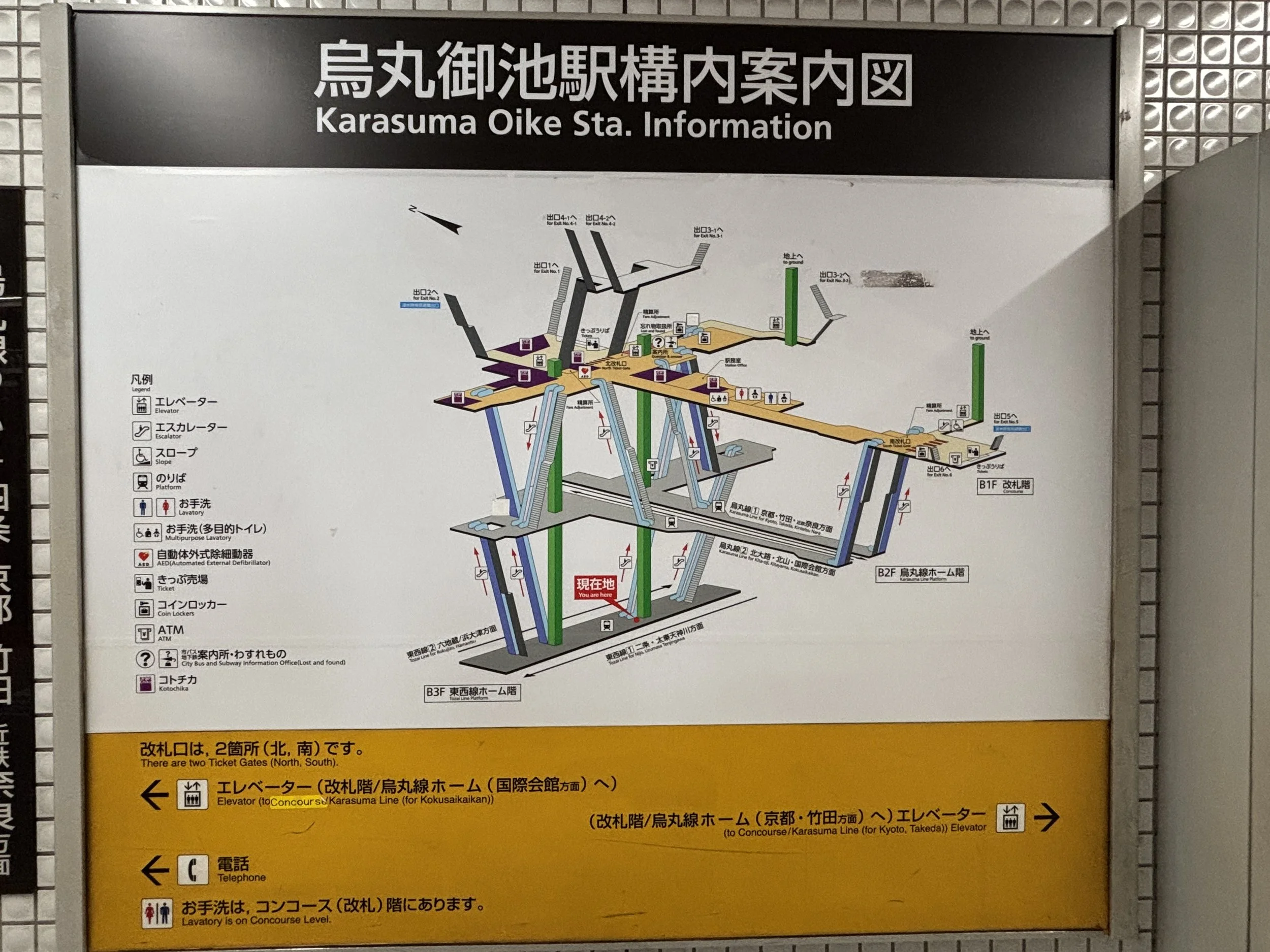
Kyoto has a good metro network, which is complemented by suburban trains, which are also integrated in the same system, centered around Kyoto’s Central Station.
It is also remarkable that, while we are used to the image of super modern Shinkasen trains, many of the suburban trains are actually quite old vintage, although very well maintained.
The Suica card works here as well (I guess most foreign visitors arrive via Tokyo and have bought their cards there). It is important to have always some cash at hand to refill it, since many stations work only (or primarily) with cash and you may have issues exiting at the barrier gates if you don’t have the right amount to top up your card!

Using Japan’s luggage forwarding system
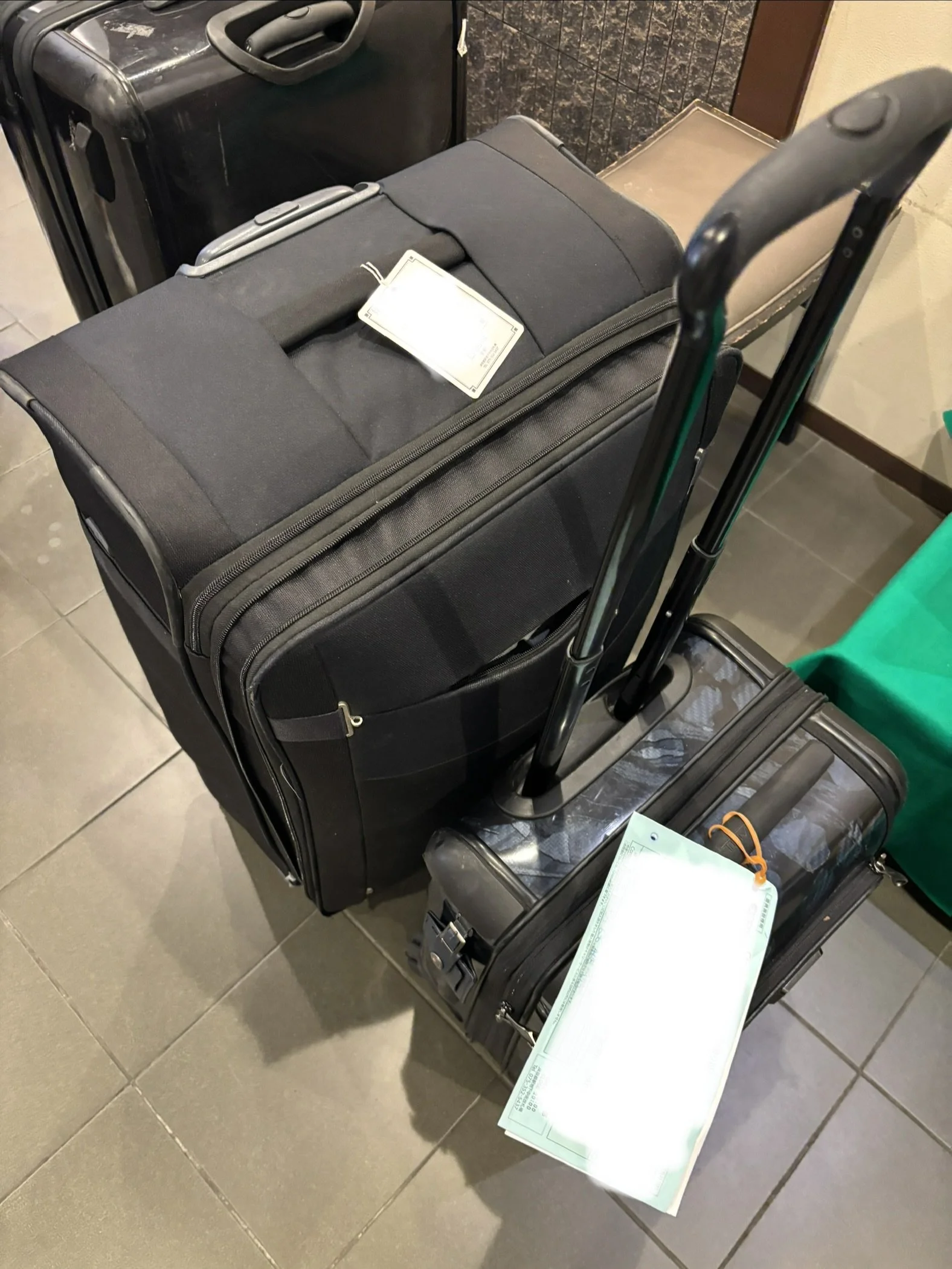
This is one of the great services that, as far as I know, are only available (or at least generally used) in Japan. If traveling around the country, you can forward your bags to your next destination at very competitive rates and with a very high degree of confidence they will arrive on time. It is often possible to get same day delivery.
This worked great for us, since we were moving from Kyoto to Nara (more on this excursion further down the article) and then onwards to Osaka. For something like $20 we could get rid of the problem of moving around with luggage and could enjoy the day much better. There are a few companies offering this service, I would advice checking with your hotel or ryokan to select one.
In our case, the hotel staff coordinated everything. We just told them where we wanted to send the luggage to, paid and then left the luggage to the care of the hotel, where they would be picked up. When we arrived in Osaka some 8 hours later, there they were, waiting for us at our next hotel!
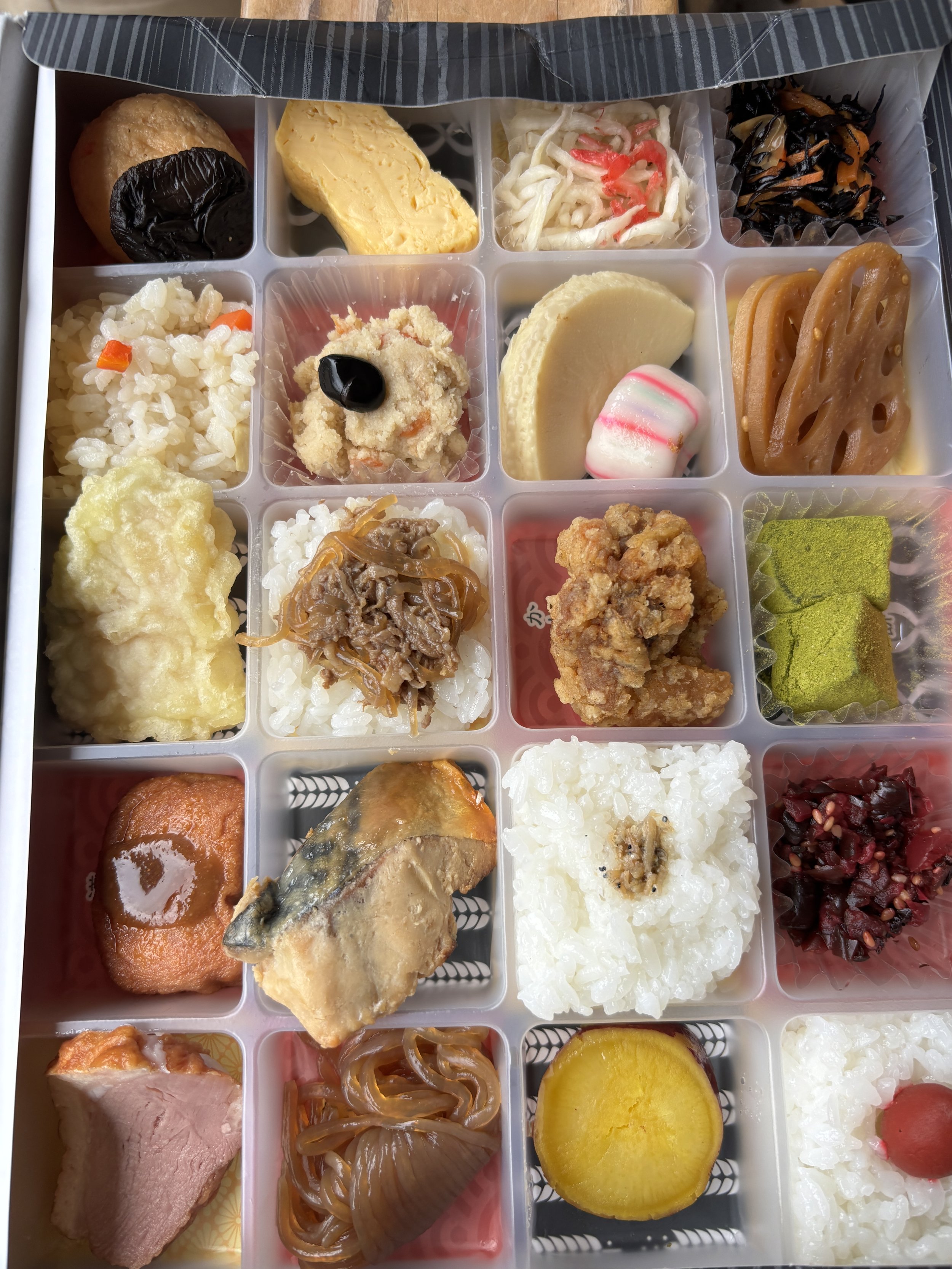
One more practical note: if you are short of time or on the move, one of the best options to get a substantious and healthy meal is to get one of the bento boxes sold at all supermarkets and convenience stores at stations. For reference, here above you can see the one that we got for the short train ride between Kyoto and Nara.
Visiting the Kinkaku-ji Temple
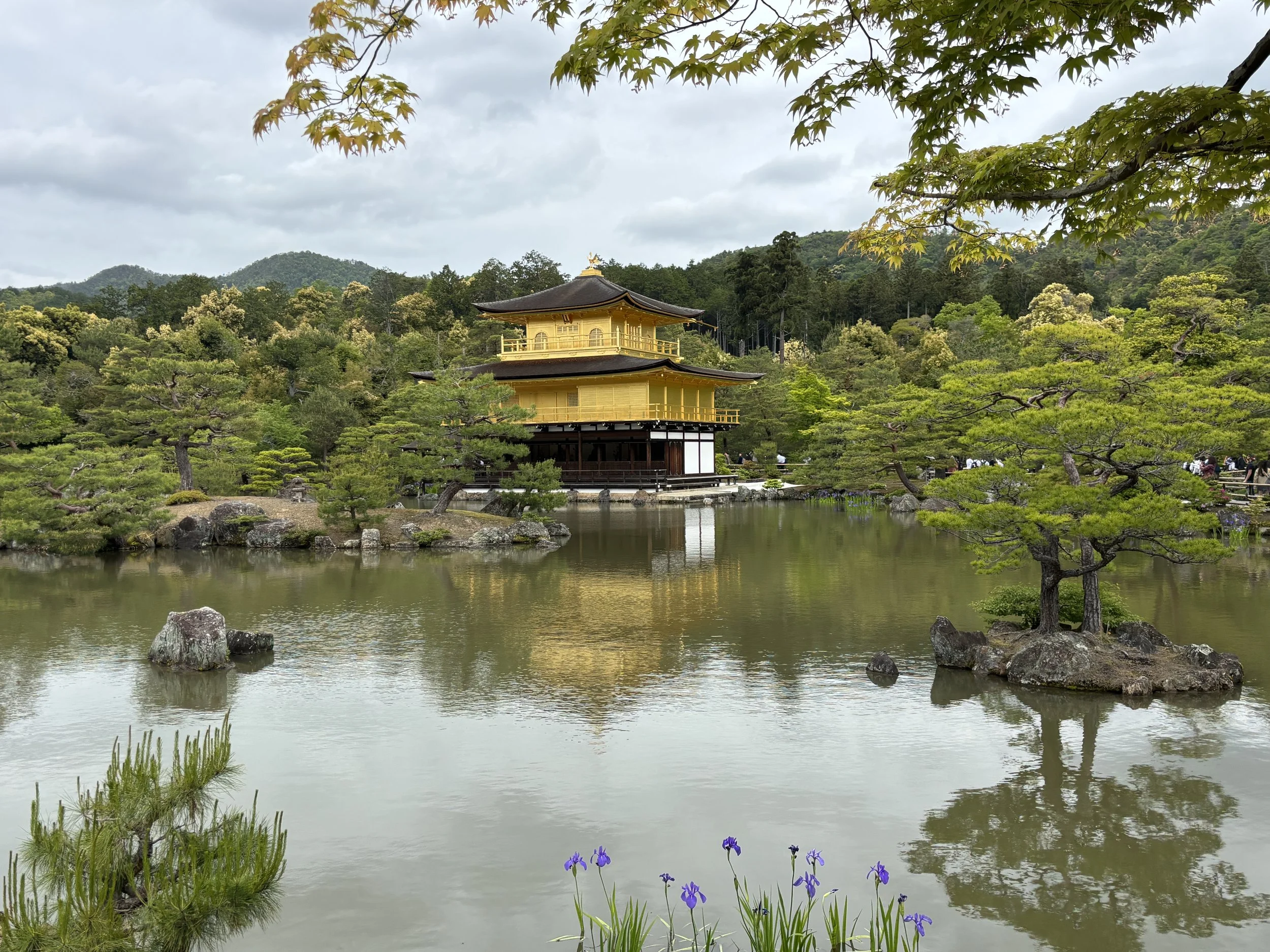
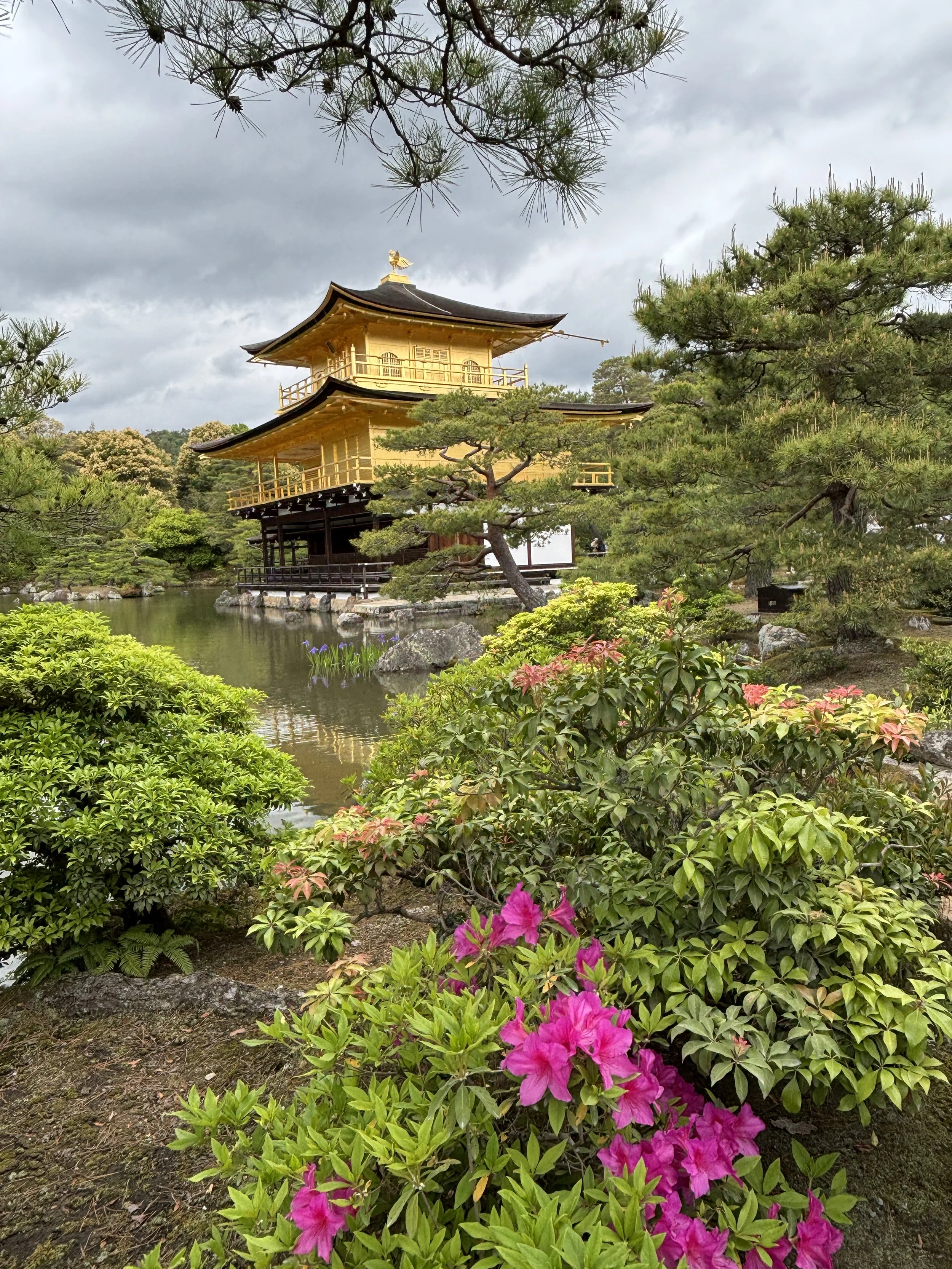
This is also a must-visit in Kyoto. The Kinkaku-ji temple or “Golden Pavilion” is a beautiful temple covered in gold leaf and located in the middle of a small pond surrounded by carefully manicured gardens.
The actual structure that you see now is a reconstruction, since the original one burned down in 1950, but you wouldn’t be able to tell, since it has been rebuilt to the latest detail.
Unlike Fushimi-inaru, there is an entrance fee to visit the Kinkaju-ji grounds. The temple itself is not accessed, but you can walk along the pond and see it from some distance. The garden grounds offer the postcard-perfect quintessentially Japanese views.
Kinkaku-ji is located at the northern edge of the city, so if coming from the centre the best way to get there is possibly to get a taxi, which, generally speaking, is not very expensive in Kyoto. Metro stations are not super close, but there are some bus lines that work like clockwork and if you have internet access to see find the stops and schedules on Google, it can also be a convenient option (we did that actually on the way back).
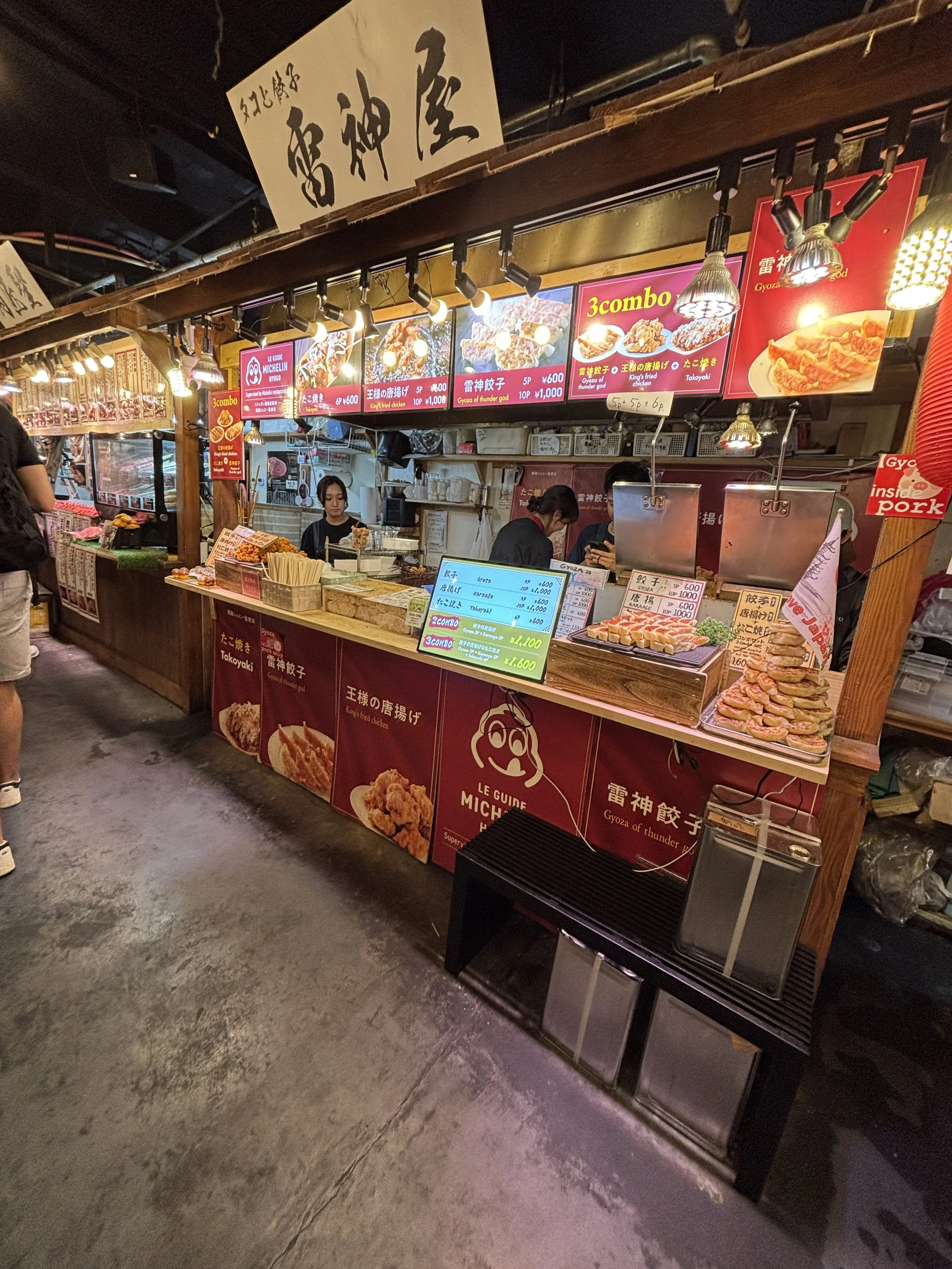
Eating at Kyoto’s Nishiki Market
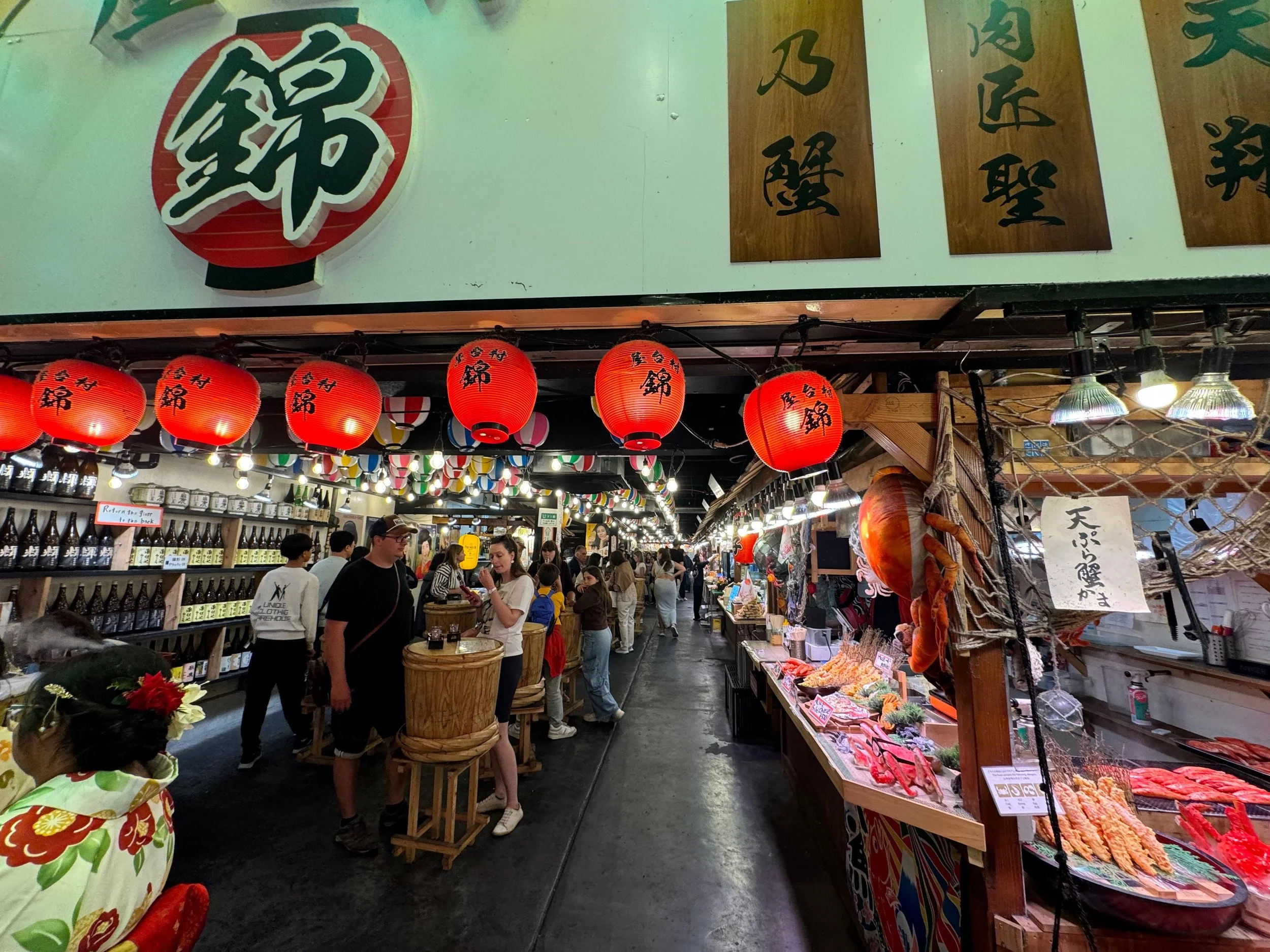
Because of its central location, Nishiki Market could be a good option for a pit-stop and some lunch while traveling between the different points of interest in and around town (many of Kyoto’s tourist hotspots are actually on the edges of the city).
Here you will find dozens of food stalls offering a countless number of very interesting options and covering pretty much the whole spectrum of Japanese culinary specialities. So, take your time to walk around an nibble here and there as you go!
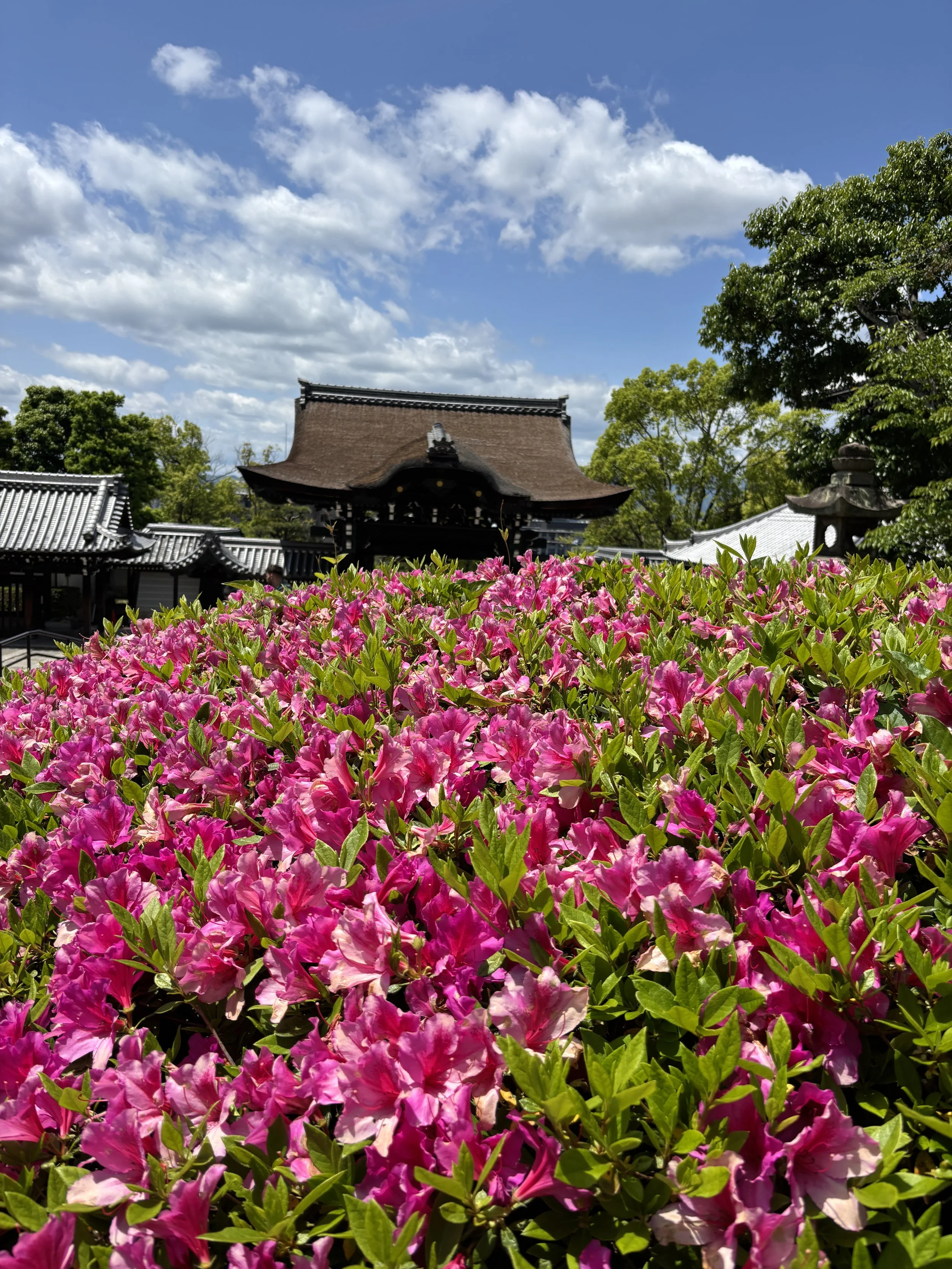
Kiyomizu-dera Temple and Higashiyama
This is yet another temple area on the eastern side of Kyoto, but very close (within walking distance) to downtown on the eastern side of the Kamo River.
I say “area” because, while, the Kiyomizu-dera temple is the centerpiece, Higashiyama is a whole historical district that contains several shrines and other spots of interest, such as the Ninenzaka and Sannenzaka commercial streets, which are lined with wooden houses built in traditional Japanese style.
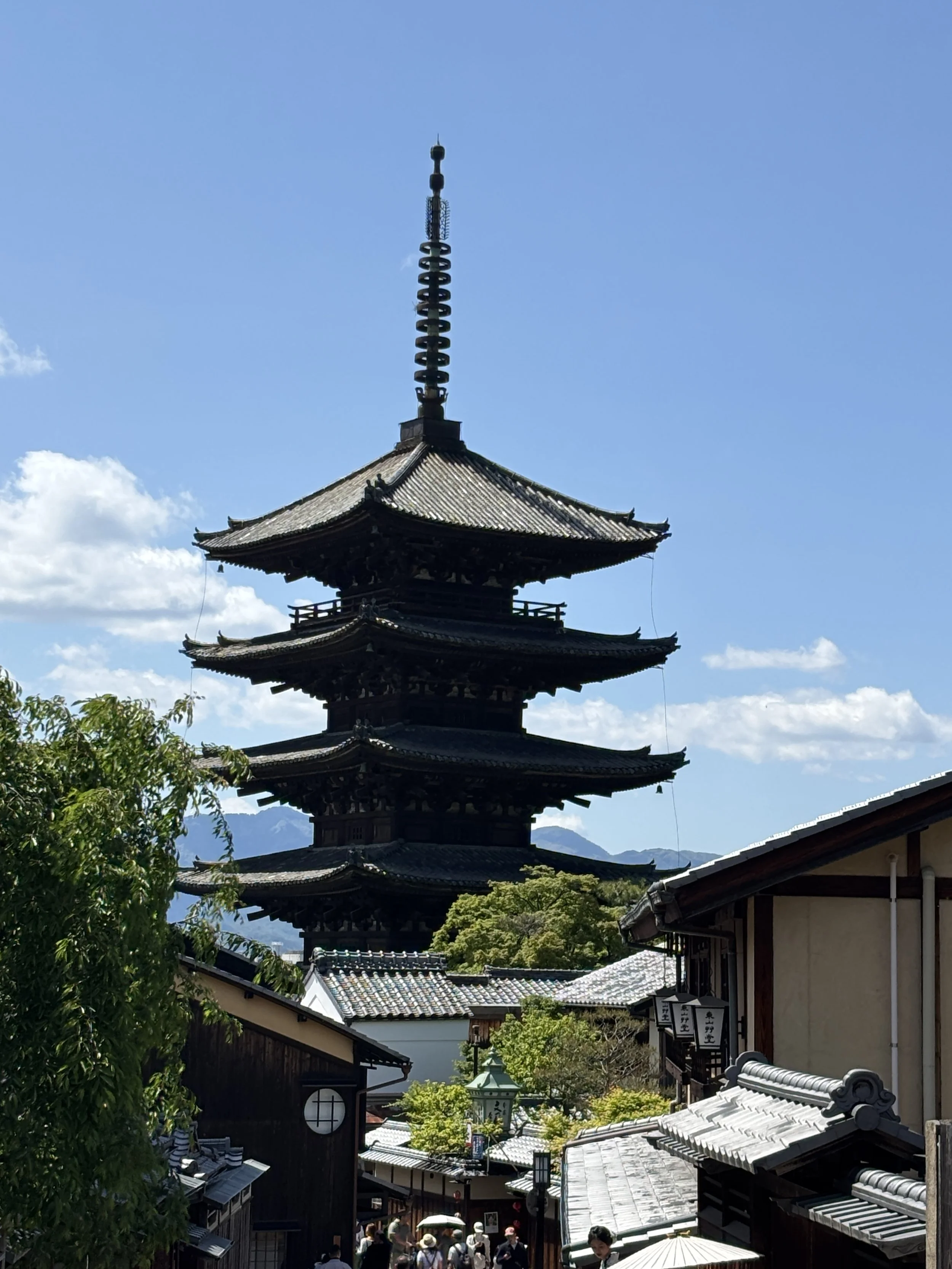
Some of the landmarks in this area, such as, for example, the Yasaka Pagoda, have become somehow iconic of the city and have come to represent the “image” of Kyoto and, more generally, of Japan, as well.
The temple itself is at the top of a small hill offering views of downtown Kyoto. There are several paths to access Kiyomizu-dera, one of the most scenic ones starts at the Otani Hombyo Temple, which is, itself, not without interest. This narrow path then climbs uphill leaving a large cemetery on its side.
The temple compound at the top and its grounds contain several colourful buildings, including this pagoda you see in the photo below. It also offers views of the city below.
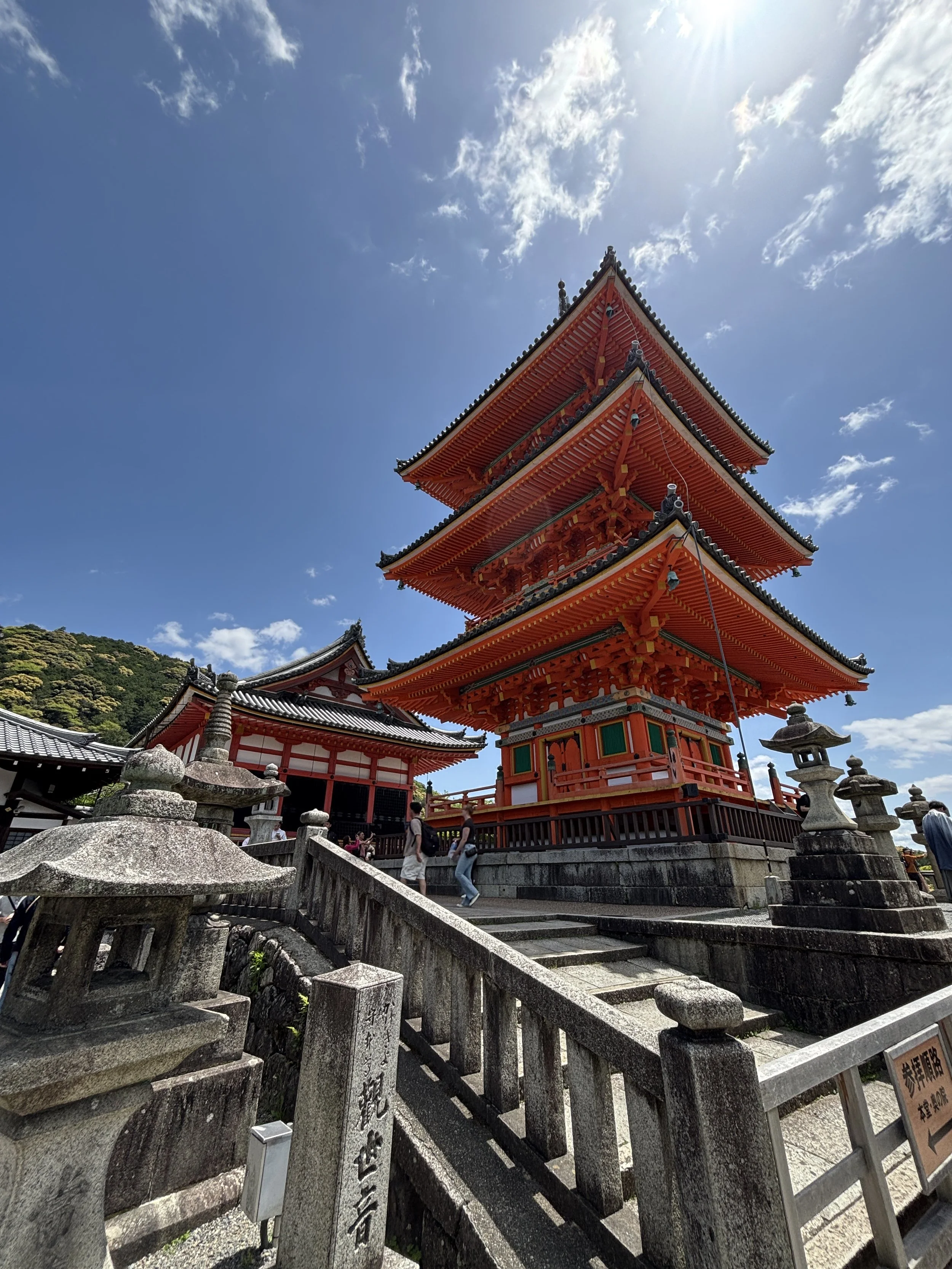
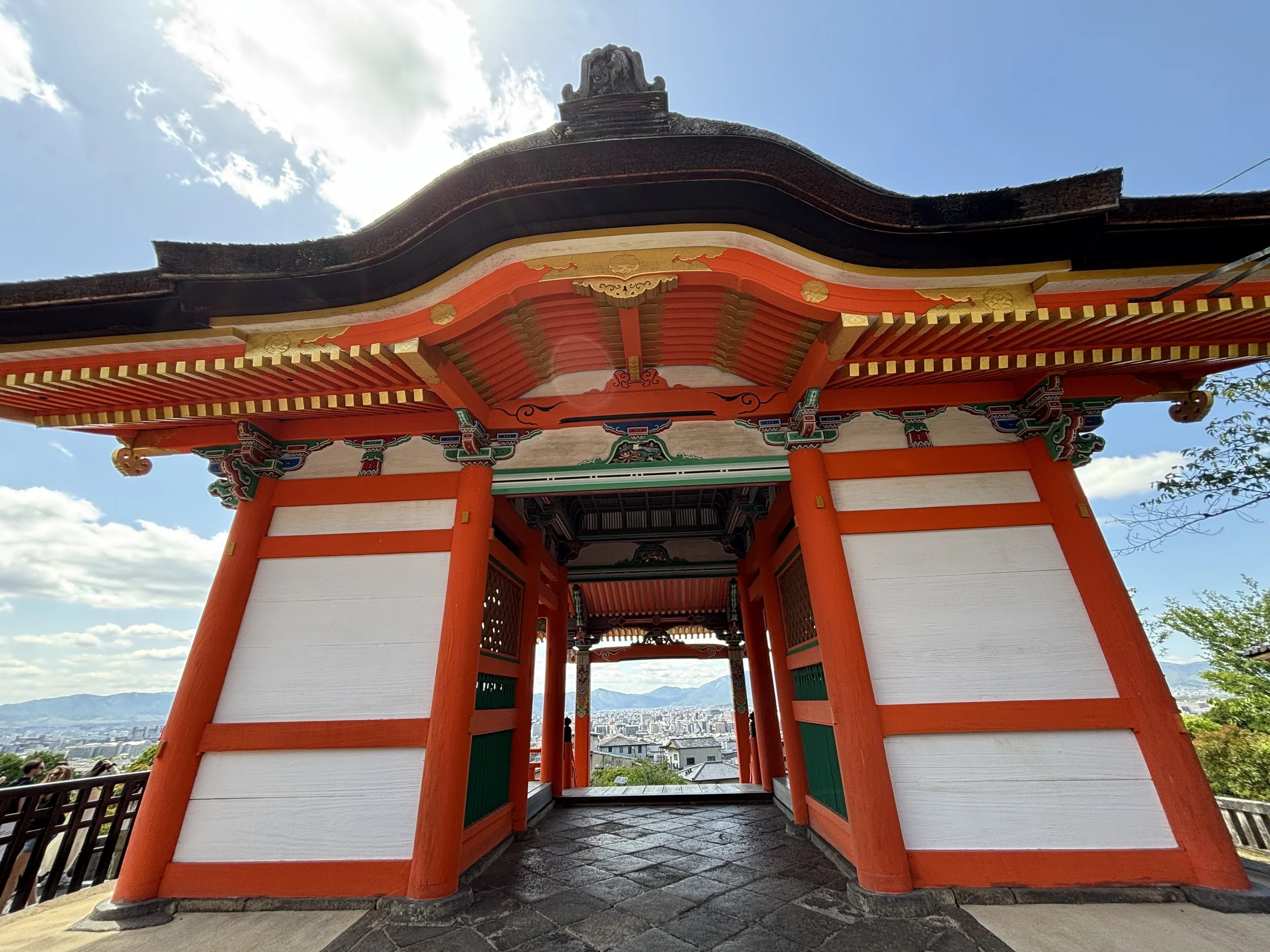
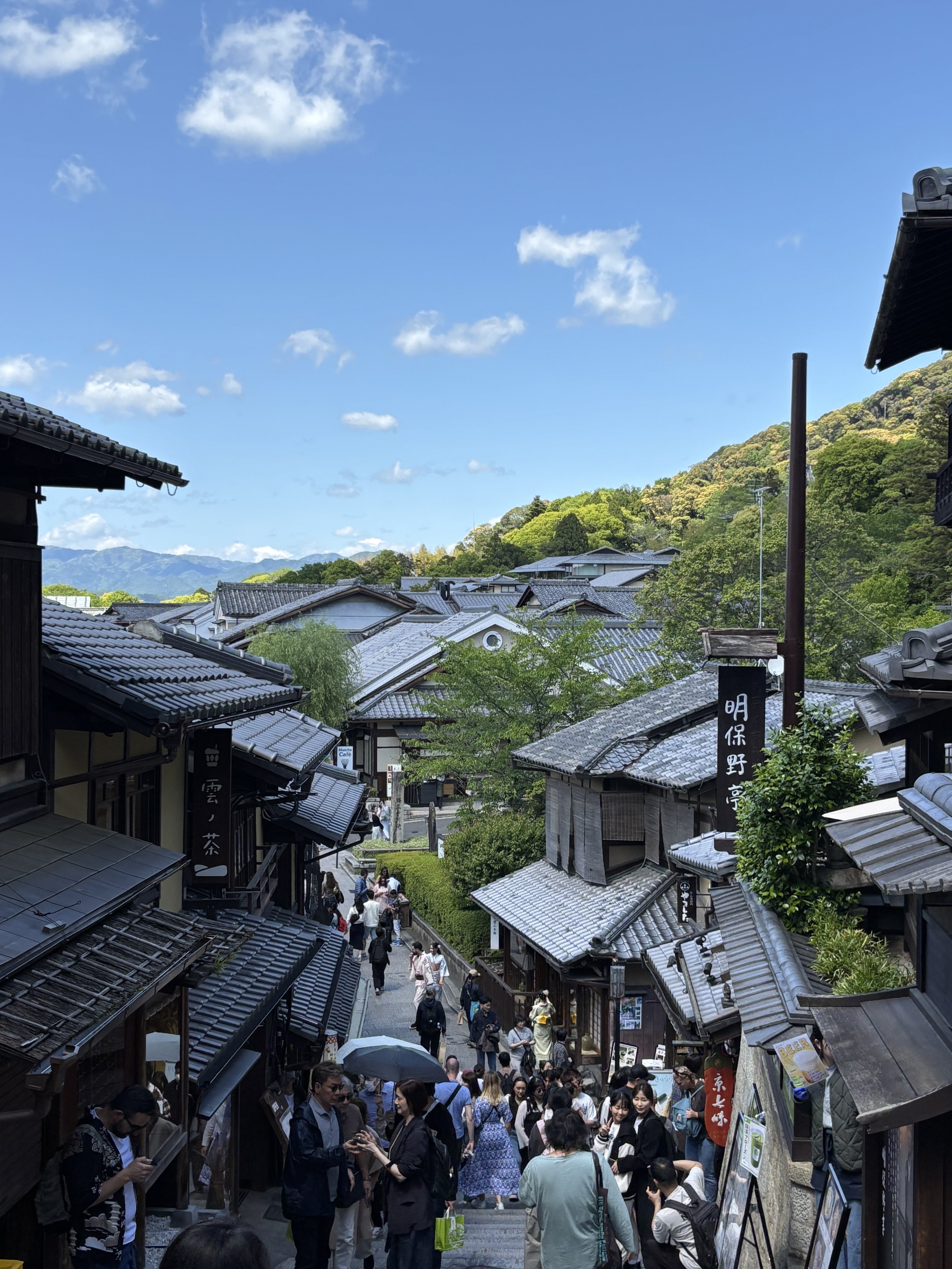
When coming downhill from the temple you will find some of the most charming areas of Kyoto. The narrow streets of the Higashiyama district (depicted above) are nowadays packed with tourists, but nevertheless, you wouldn’t want to miss it if in Kyoto.
Also remarkable is the siluete of the Yasaka Pagoda (below), another iconic Kyoto landmark.
Continuing with our Higashiyama walk and turning slightly north we get to the Yasaka Shrine, another temple, which is located within the grounds of Maruyama Park.
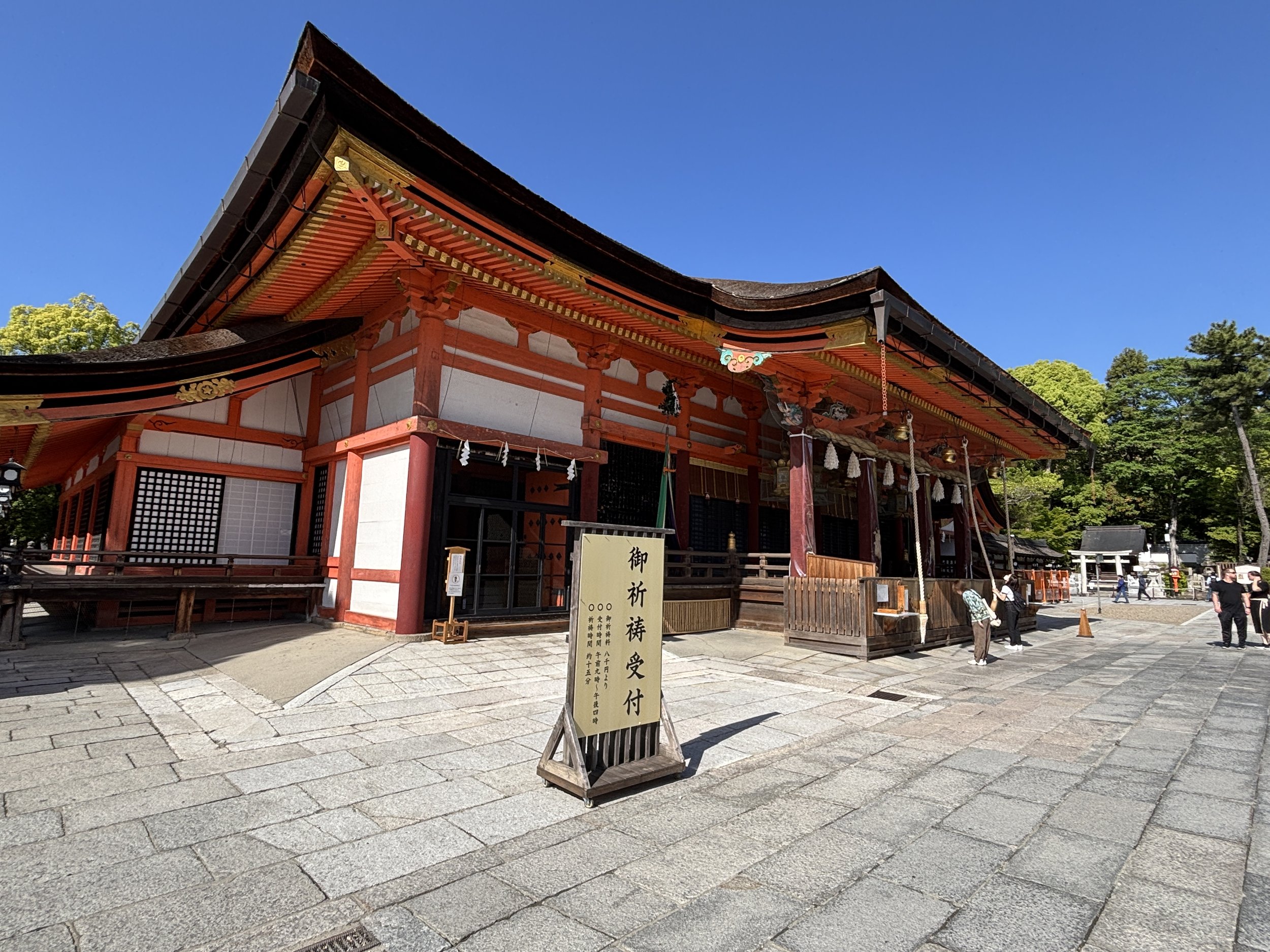
To be honest, perhaps the main point in getting there is actually to enjoy the walk itself, particularly in nice weather, since it runs through some nicely preserved areas of the city. The park itself is also a beauty spot and it hosts quite a few interesting wild birds too!
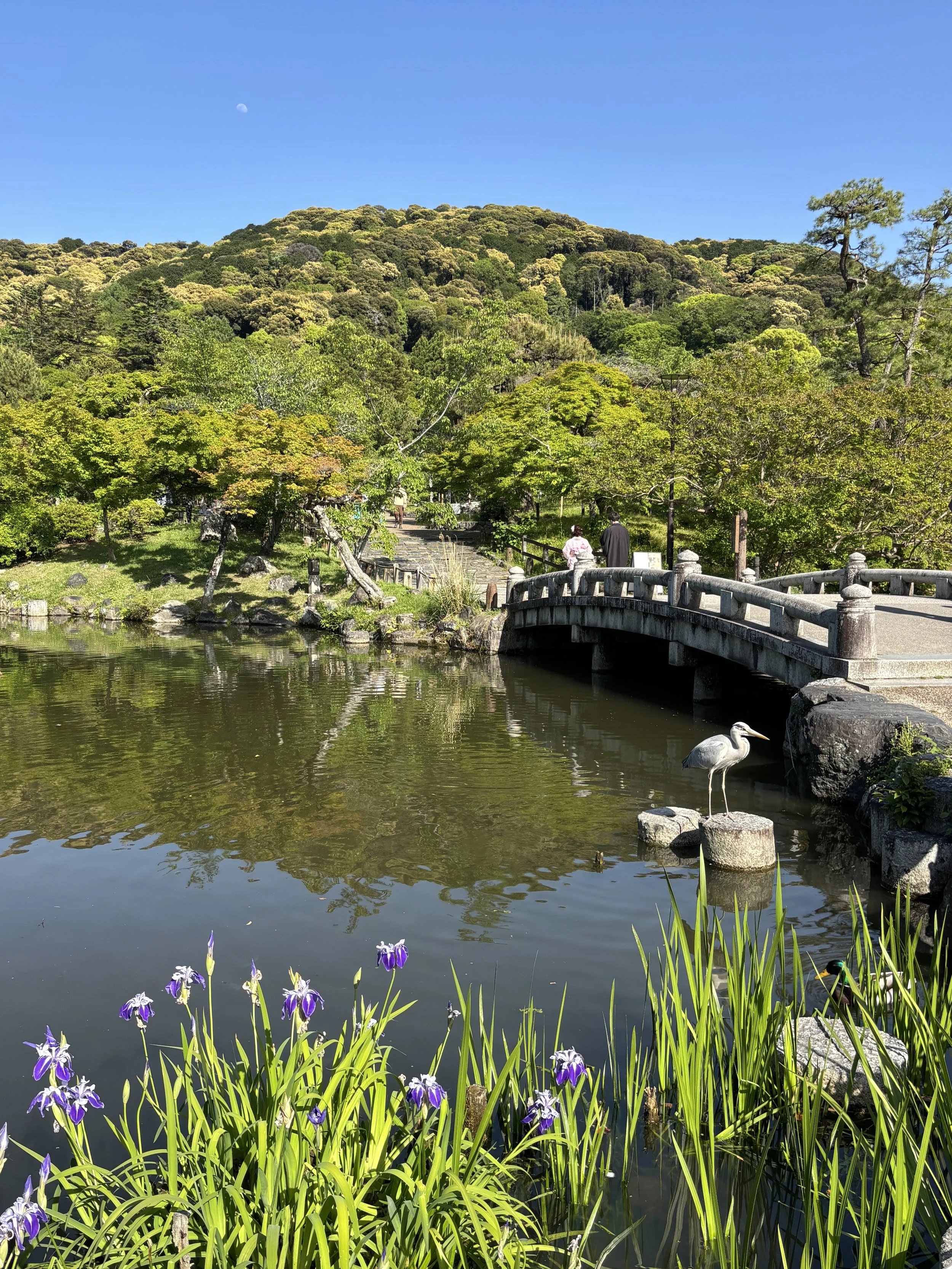
Maruyama Park
Kyoto at night
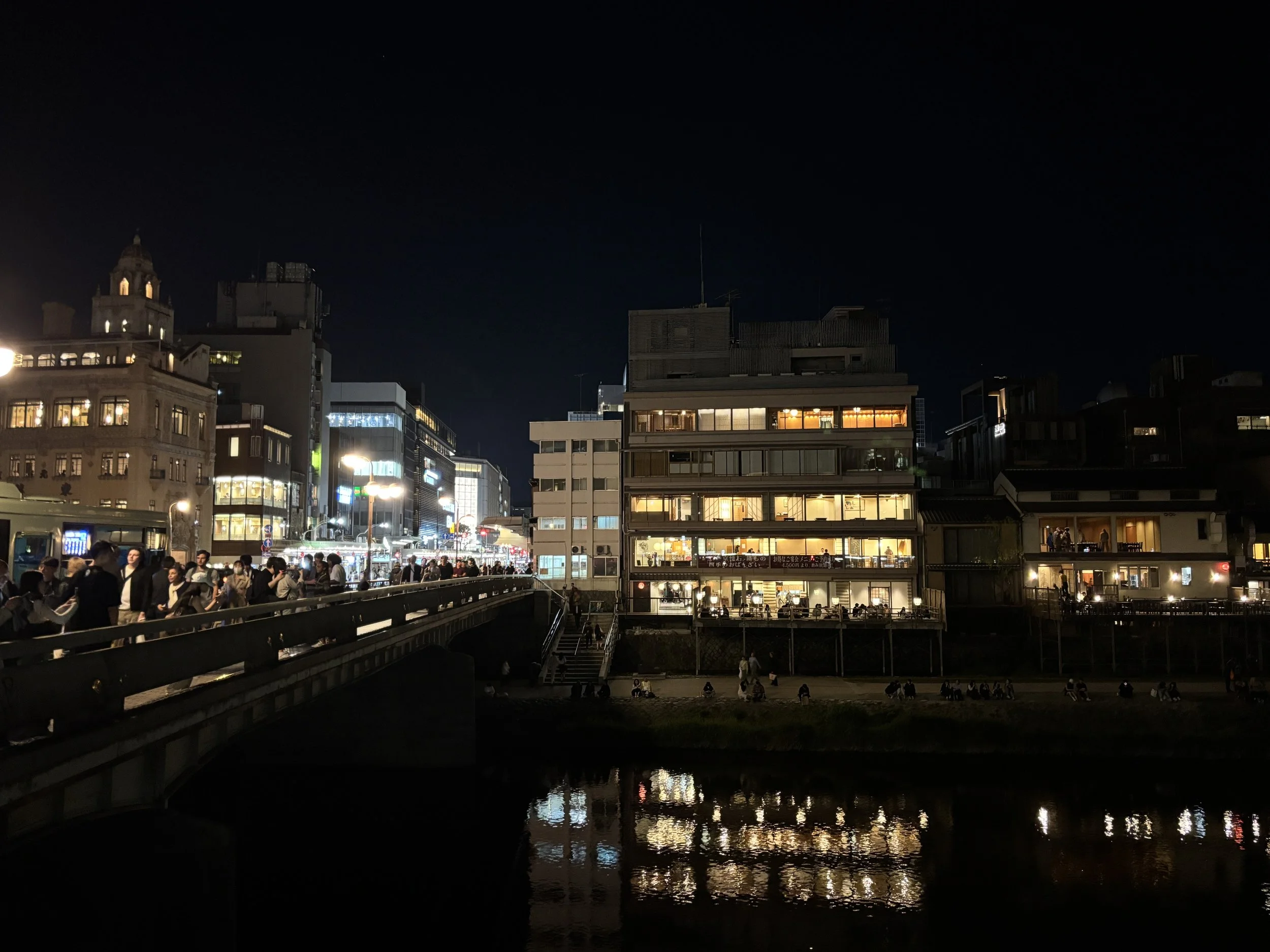
The Kyoto experience wouldn’t be complete without an evening walk in the area in the vicinity of the Gion district. This area is buzzing with activity in the evening, with quite a few restaurants and shops on both banks of the Kamo river, as well as adjacent and smaller Takase River (which looks more like a canal, tbh).
Visting the Arashiyama Bamboo Forest
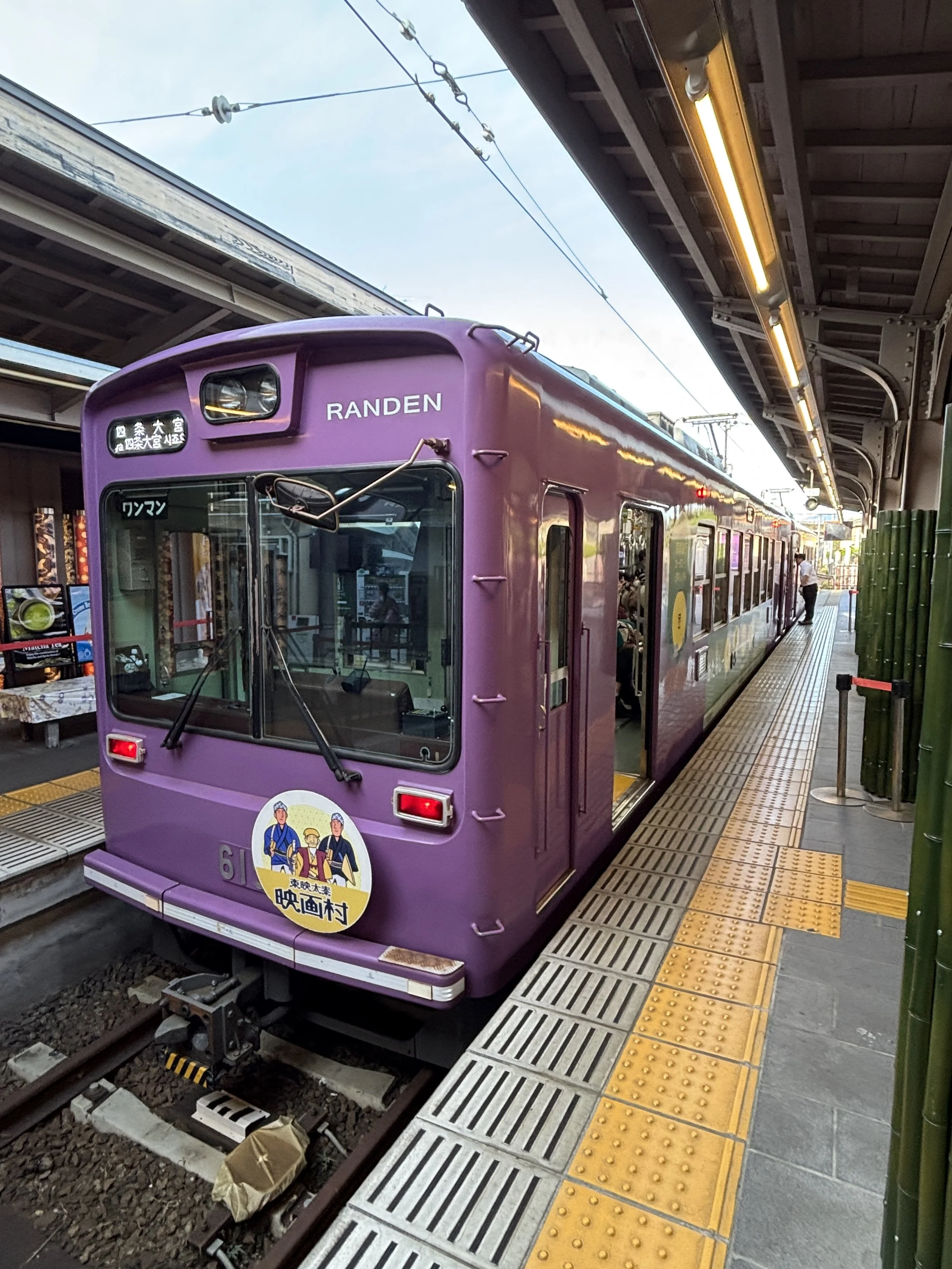
This is another area on the edge of town, but on the far west side this time.
What’s to see around the Arashiyama Bamboo Forest?
Well, you guess…! A handful of temples and the bamboo forest that lends its name to this section of the post.
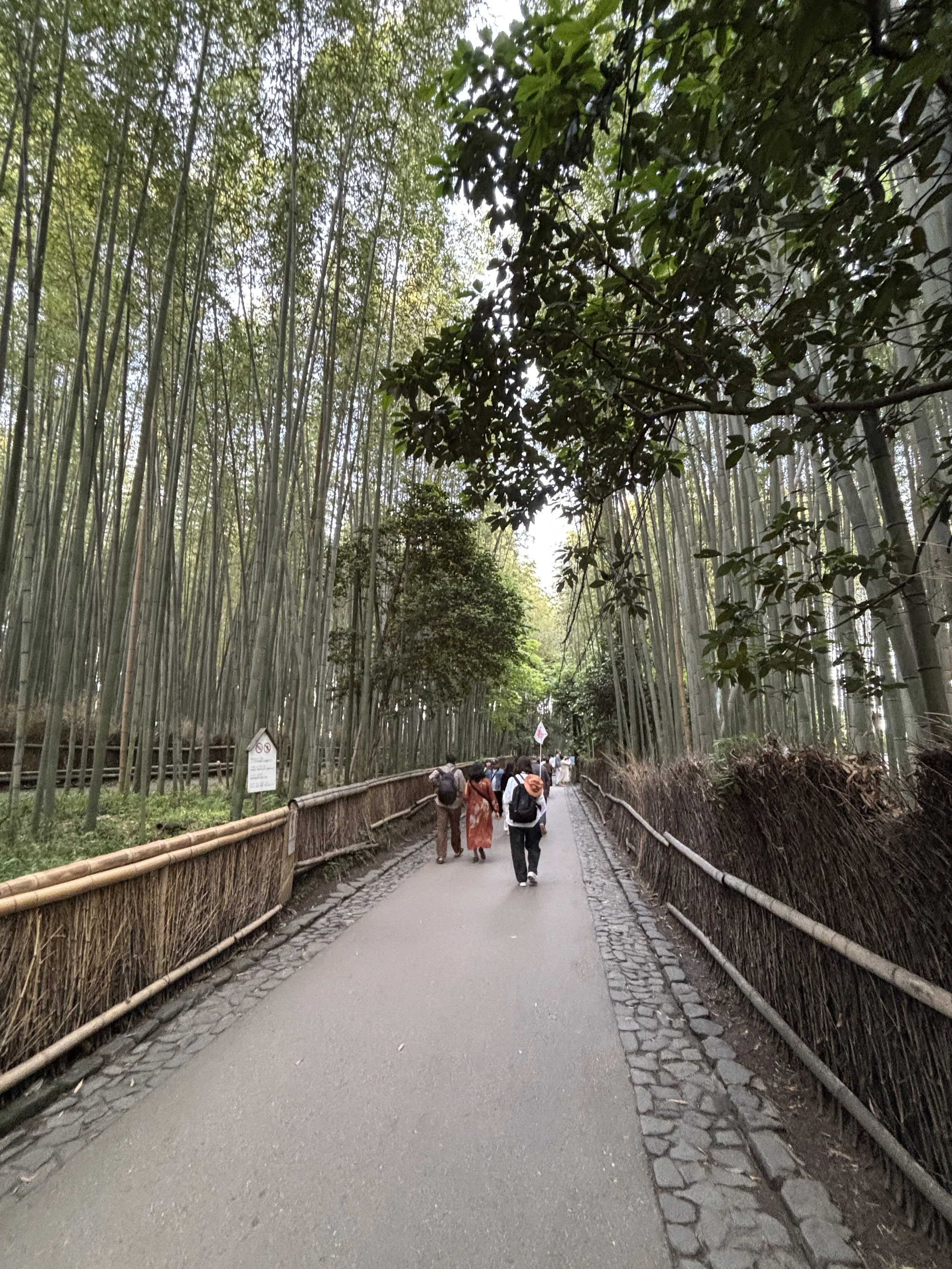
To be honest, the bamboo forest was quite underwhelming. You just walk on a nondescript path along the bamboos but I would not say it is aesthetically that exceptional, certainly not to merit, on its own, the long metro ride from downtown (in this cute, little train, btw).
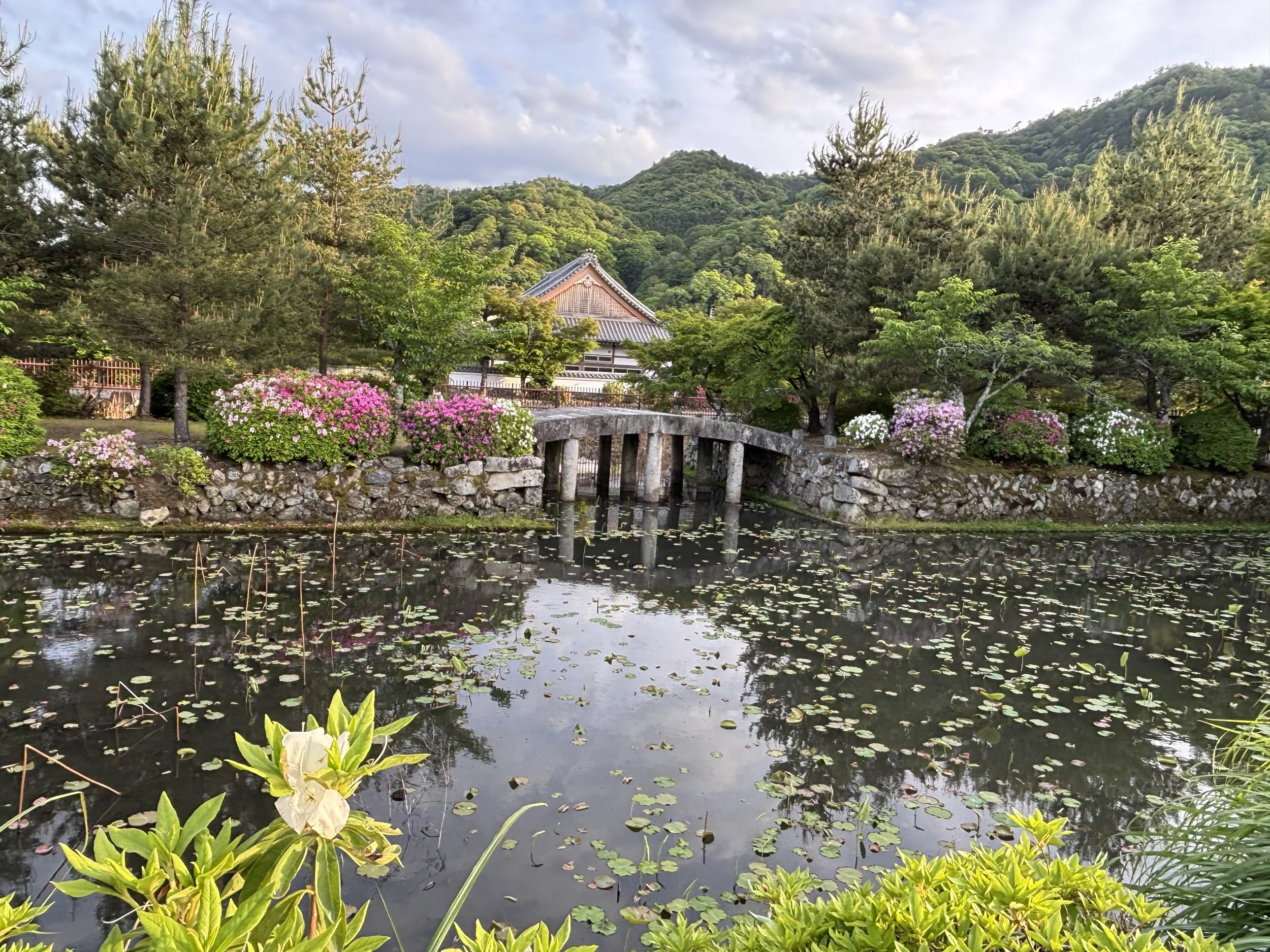
The broader area around it, however, had some beautiful sites. Even if we were not able to visit the Tenryu-ji UNESCO World Heritage temple, we could walk around the surrounding gardens, which area also quite beautiful.
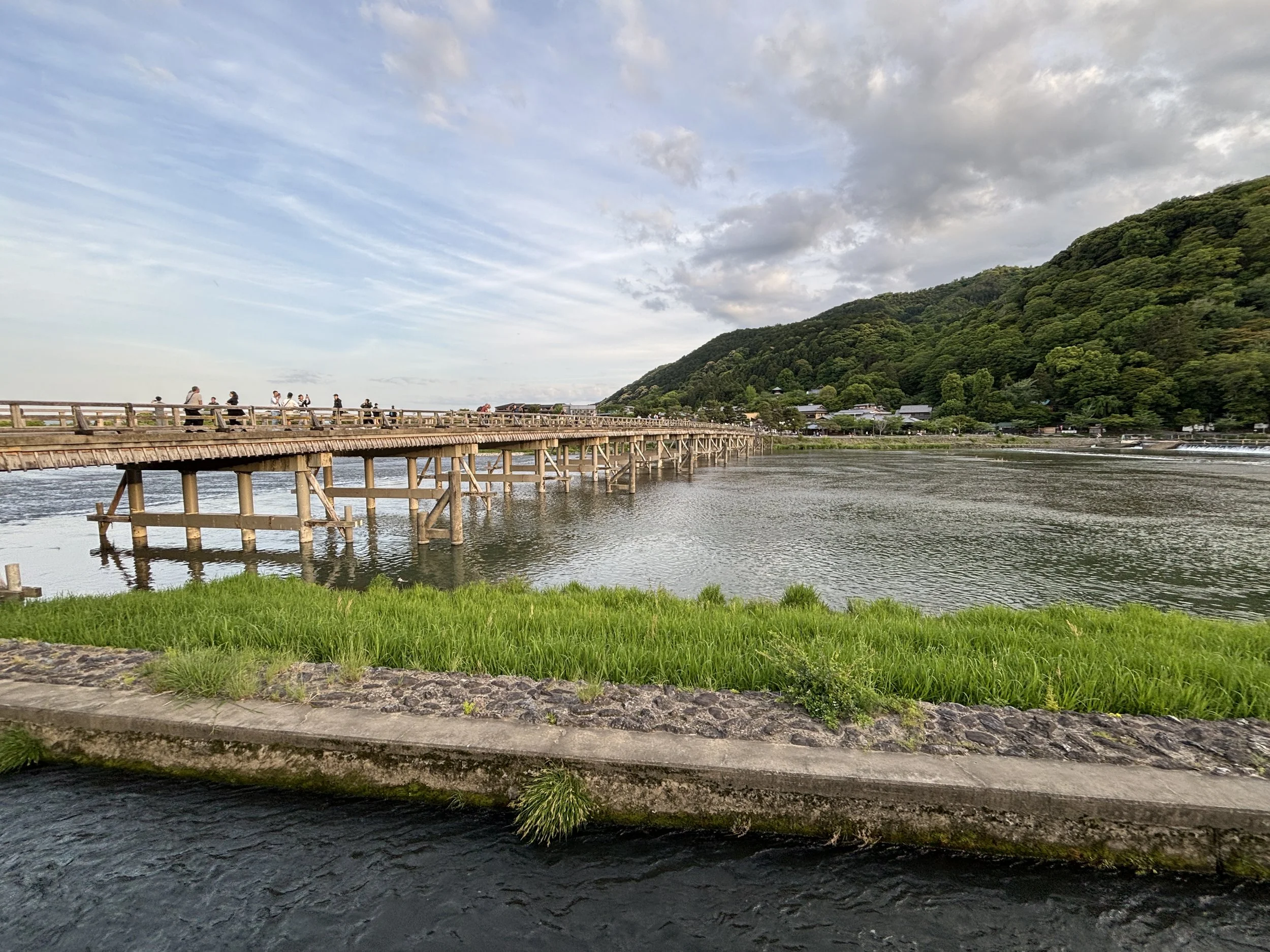
I also found quite interesting the sight of the Togetsukyo Bridge, which spans the Katsura, a relatively shallow but very wide fast flowing mountain river.
You can see the pictures from this area below. Nice enough, but if your are short of time, this would be possibly the one that I would cut out, since it is a bit further to get to and, in my opinion, a bit less interesting than the other spots mentioned earlier in this post.
Places to eat in Kyoto
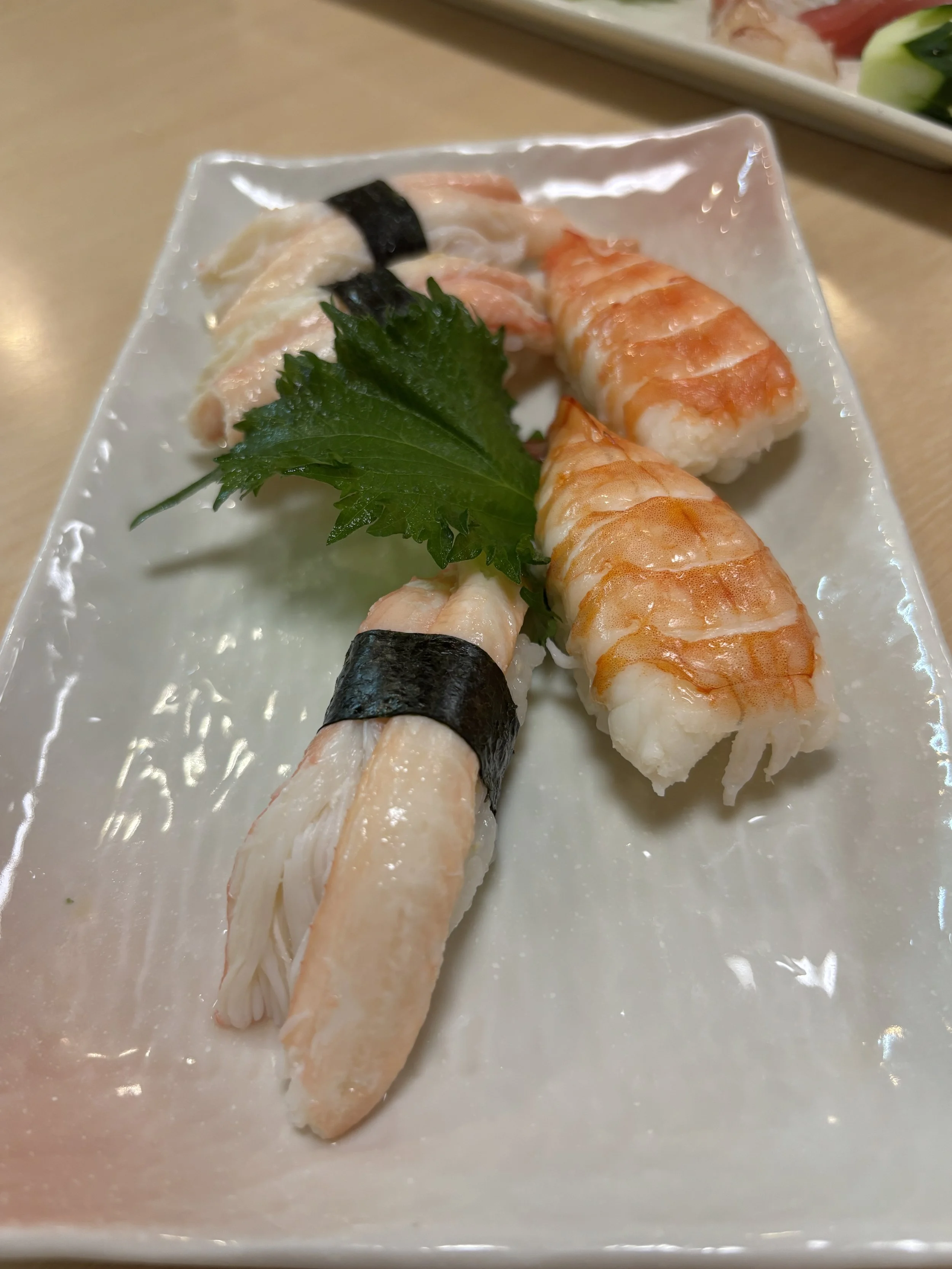
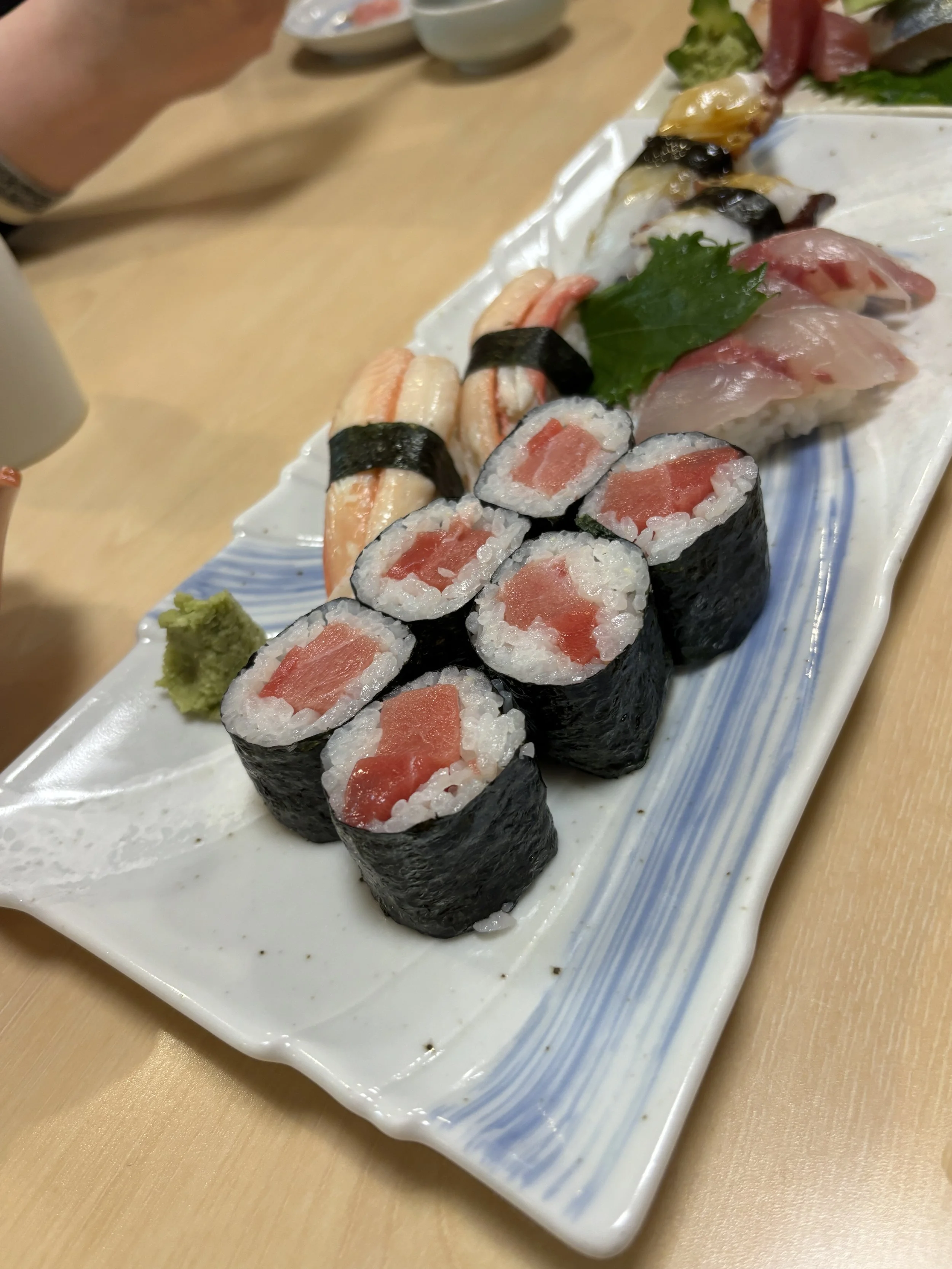
Tomisen Restaurant
Shimogyo Ward, Minamicho, 576-4 2
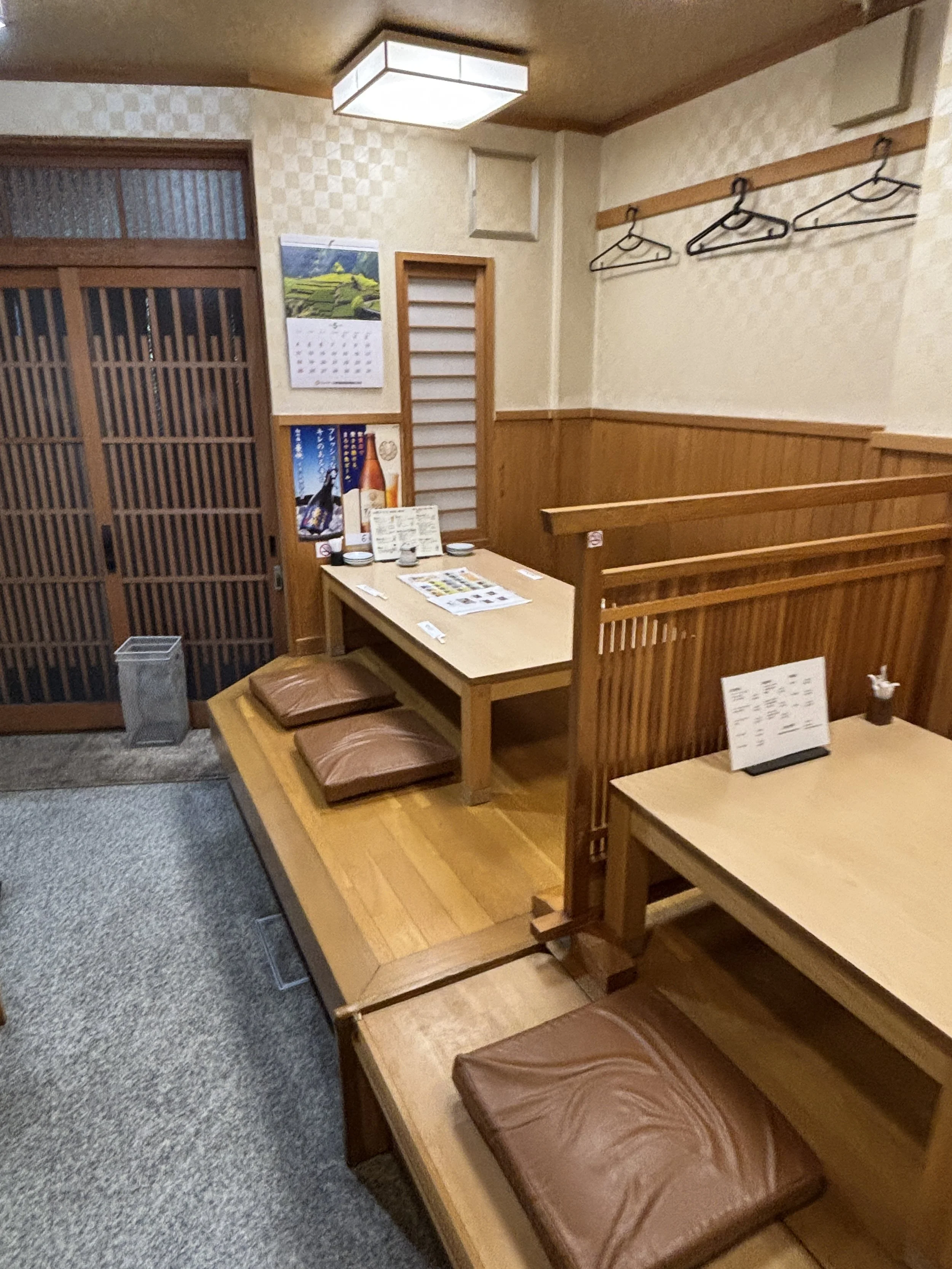
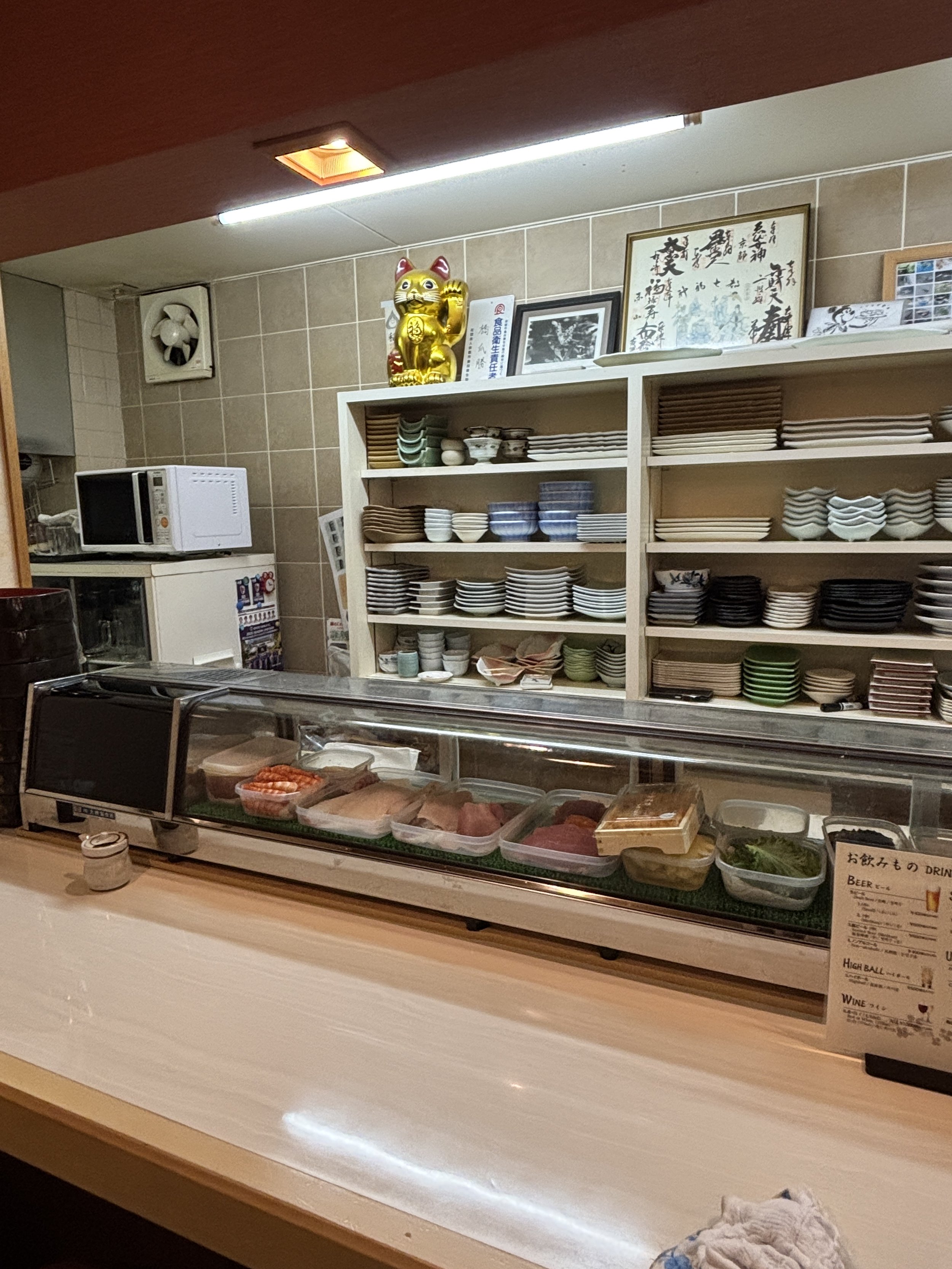
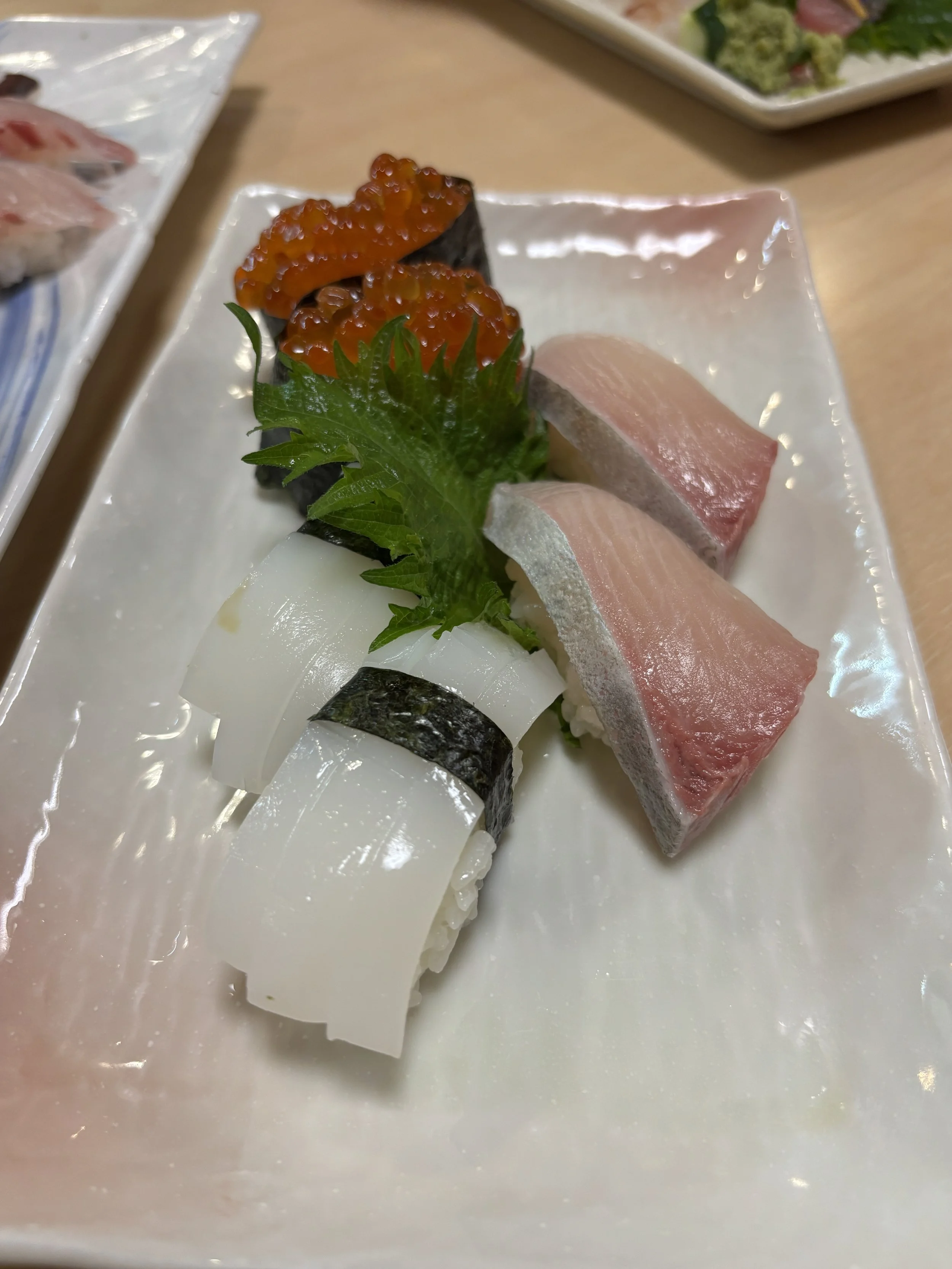
This place was recommended by the staff at our hotel and it did not disappoint. It is a really small, local place and it serves, primarily sushi. The atmosphere is quite casual, the food was fresh and service good (even if they did speak much English).
Where to stay in Kyoto
I am going to suggest two options here, since we spent the night of our arrival into Kyoto in a more, let’s say, modern western-style (albeit of a Japanese chain and with some loal characteristics), while for the rest of the days we opted for a more traditional ryokan.
Mitsui Garden Hotel Kyoto Shijo
〒600-8472 Kyoto, Shimogyo Ward, Myodenjicho, 707-1
Pretty central and providing great value for money.
While it belongs to a major hotel chain (there are other Mitsui Garden hotels in Kyoto, so check the name well when looking for directions!), it does not feel “corporate” at all!
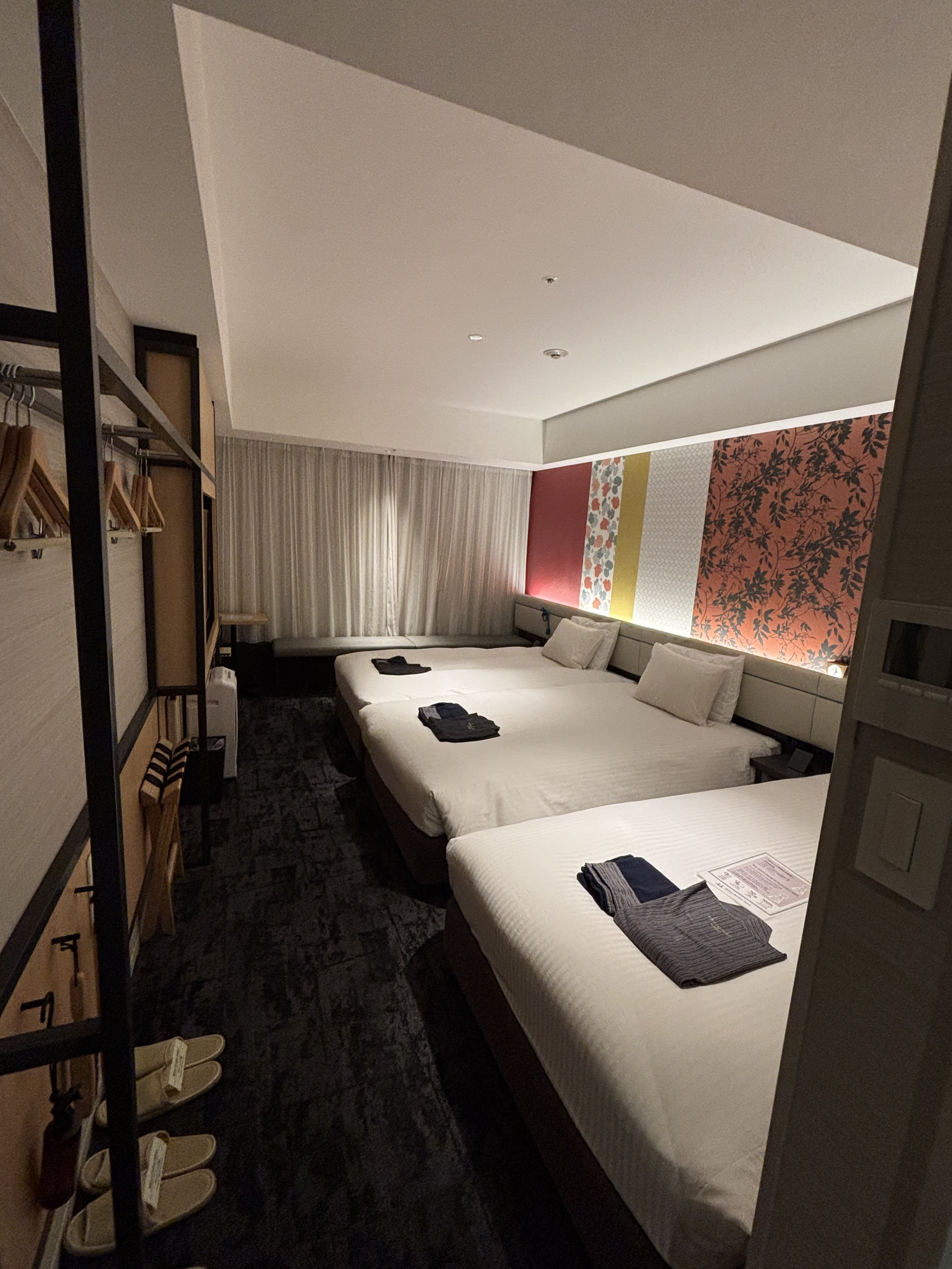
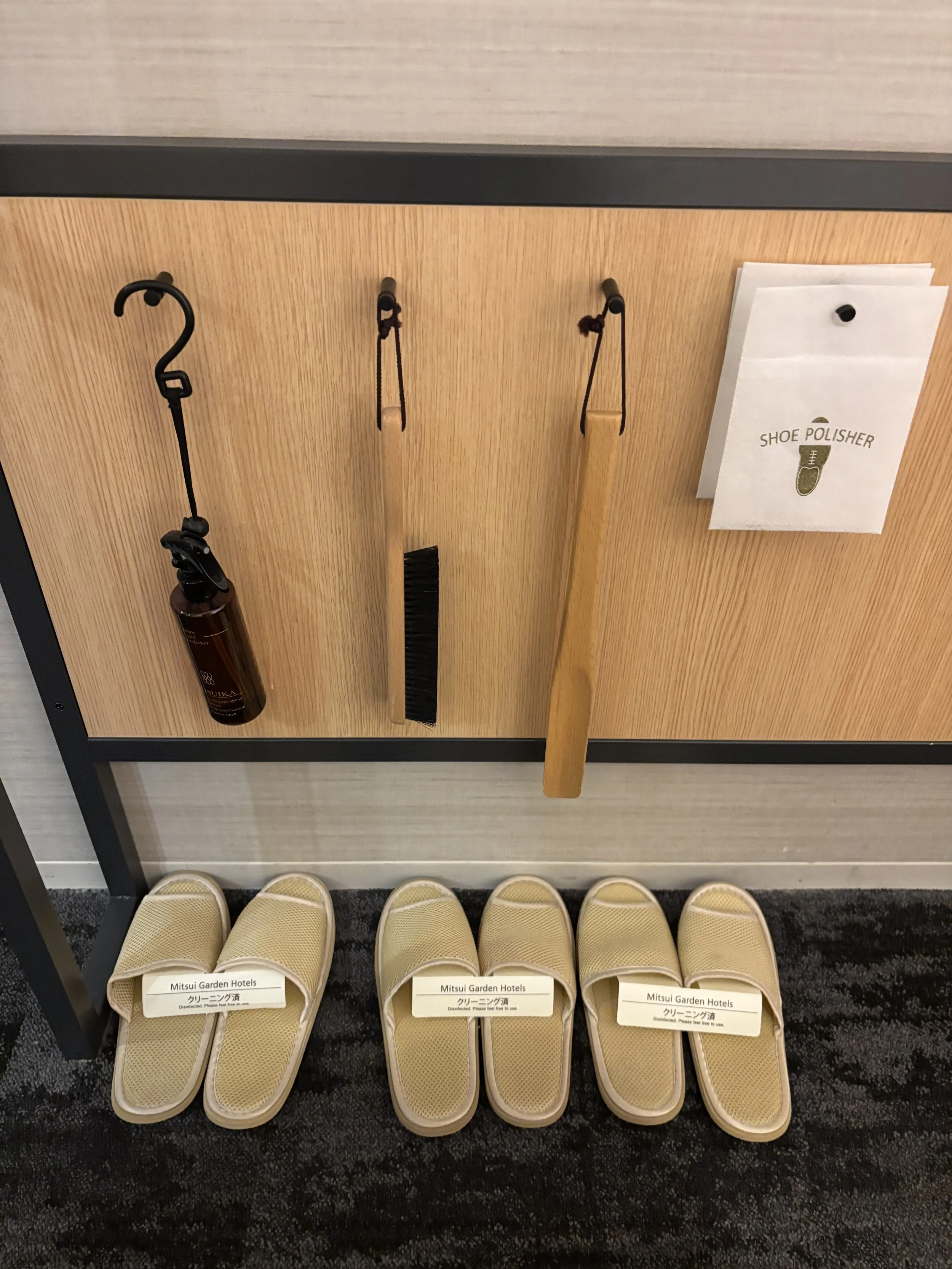
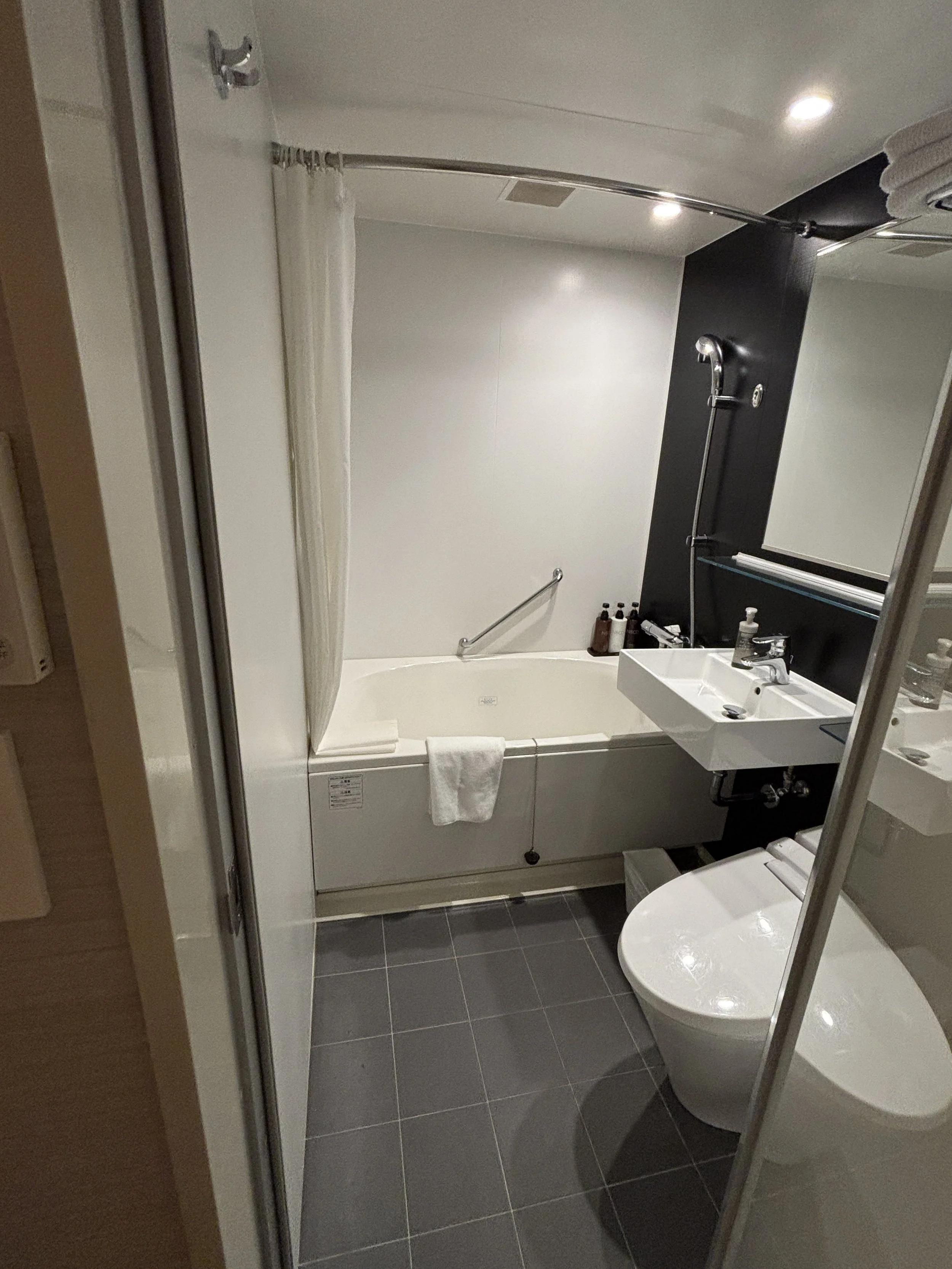
We spent only a night here, so I didn’t get to try all the facilities, for example, it does have its own onsen, which is open during the night and early morning hours. The breakfast was pretty varied, with quite a few Japanese specialities.
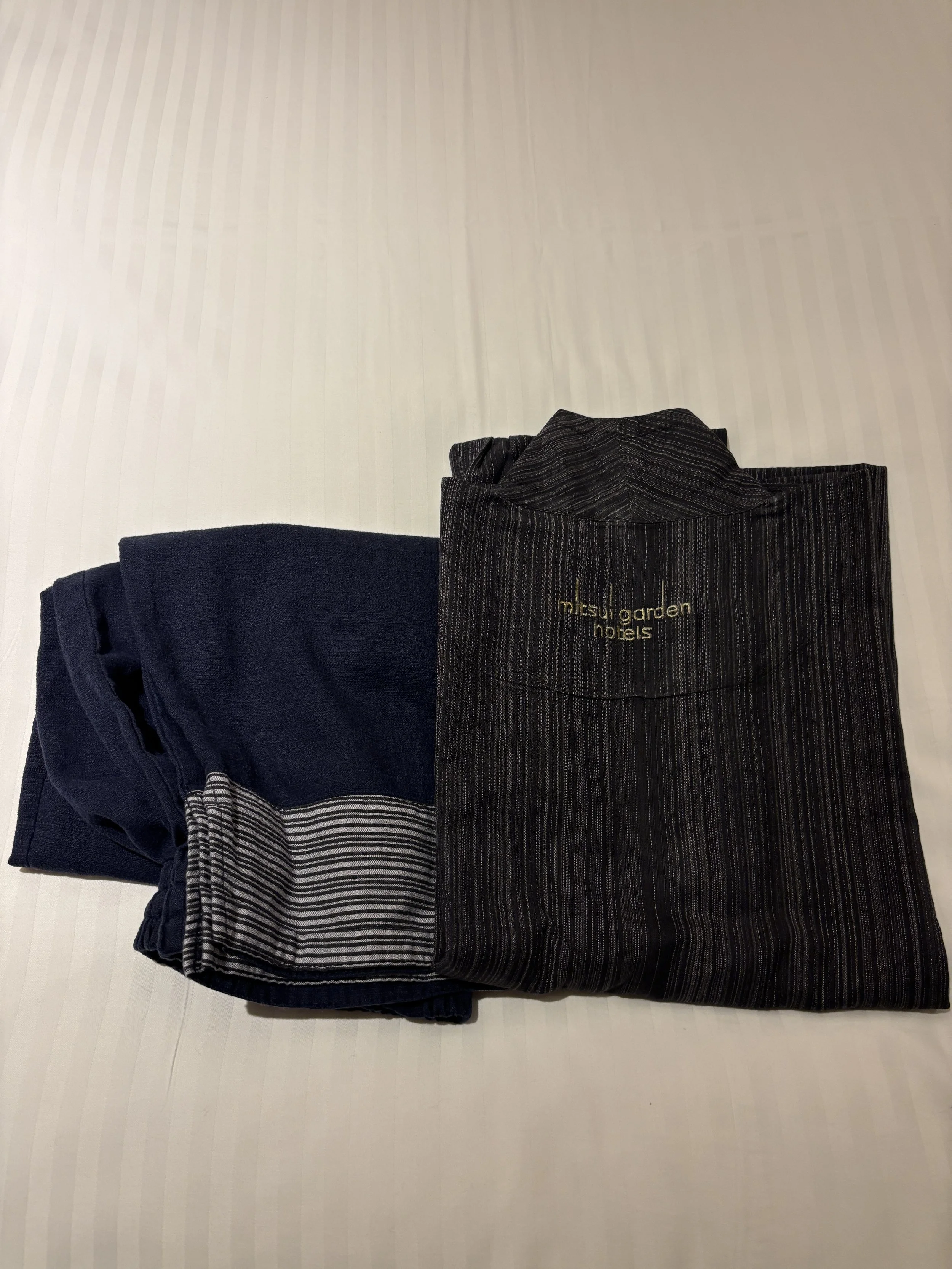
I also liked the little details, a classic of Japanese hotels, such as the slippers and the kimonos!
Ryokan Ryokufuso
〒600-8323 Kyoto, Shimogyo Ward, Kanayacho, 490
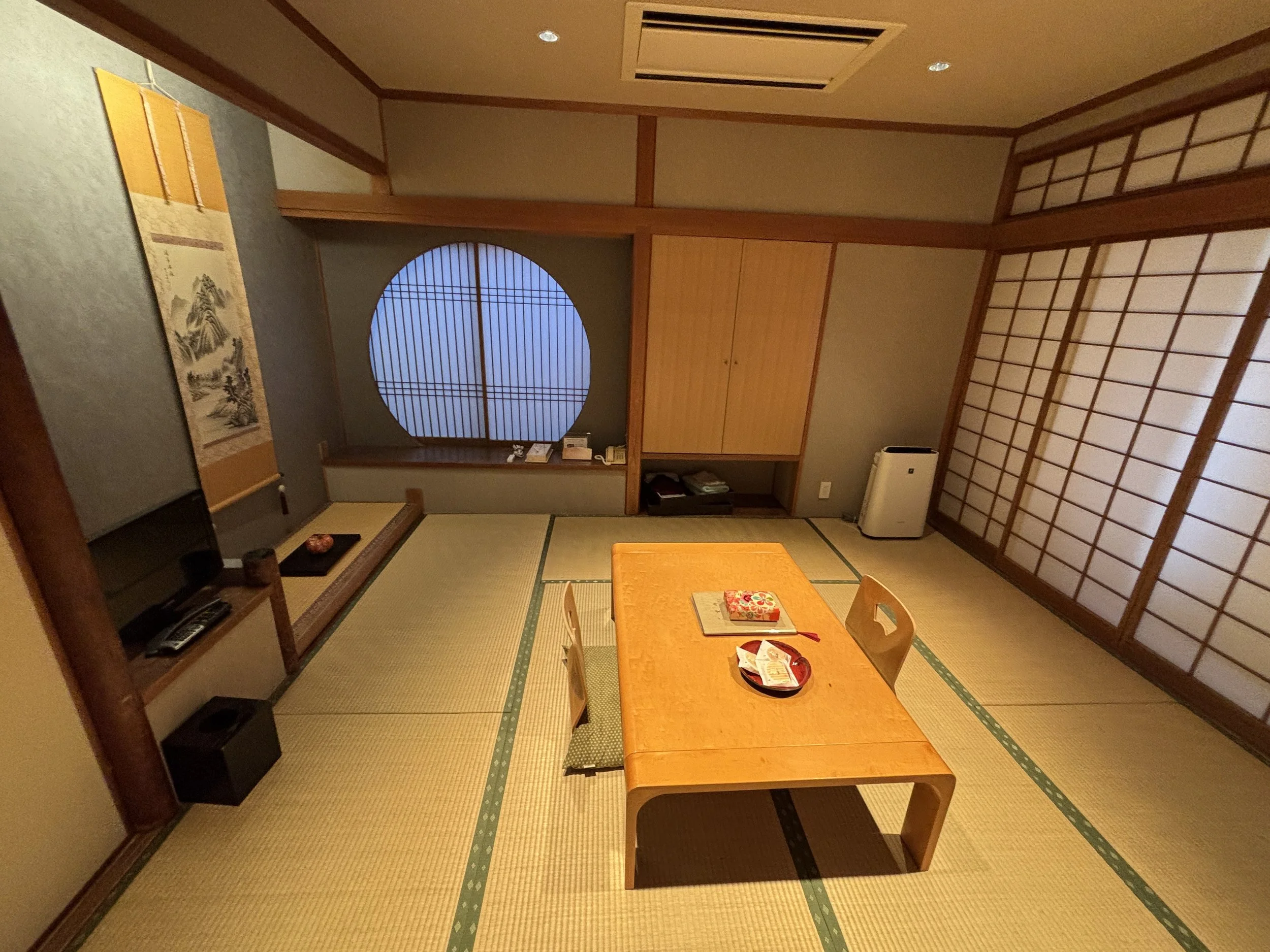
The trip to Japan wouldn’t be complete without staying at a proper ryokan, so I opted for this one, which had great recommendations, and it did not disappoint: Japanese aesthetics and design and service excellence at its best!
This ryokan is also quite centrally located and it has its own onsen (although it is not spring water) with views of the city, since it is in the upper section of the building.
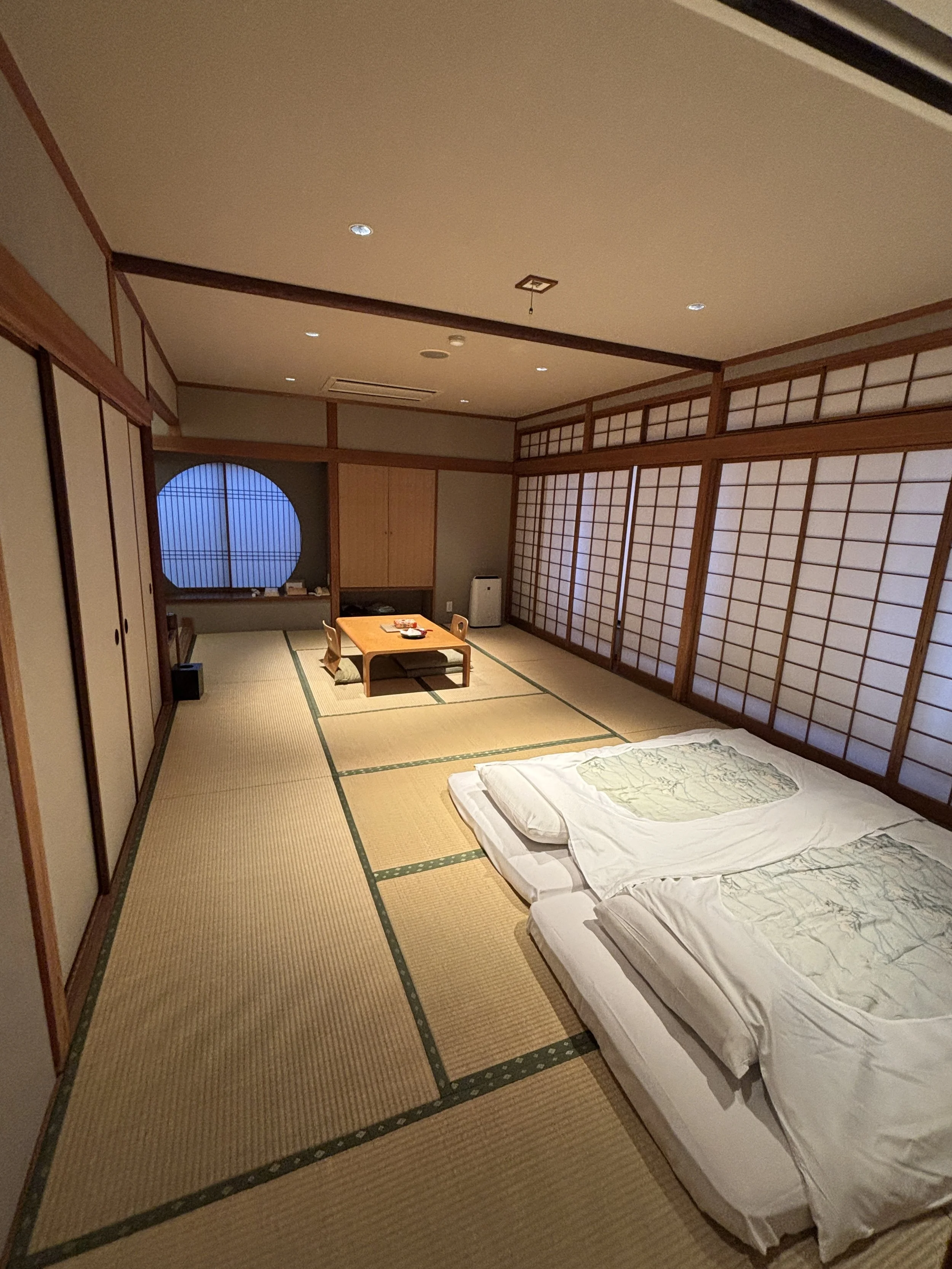
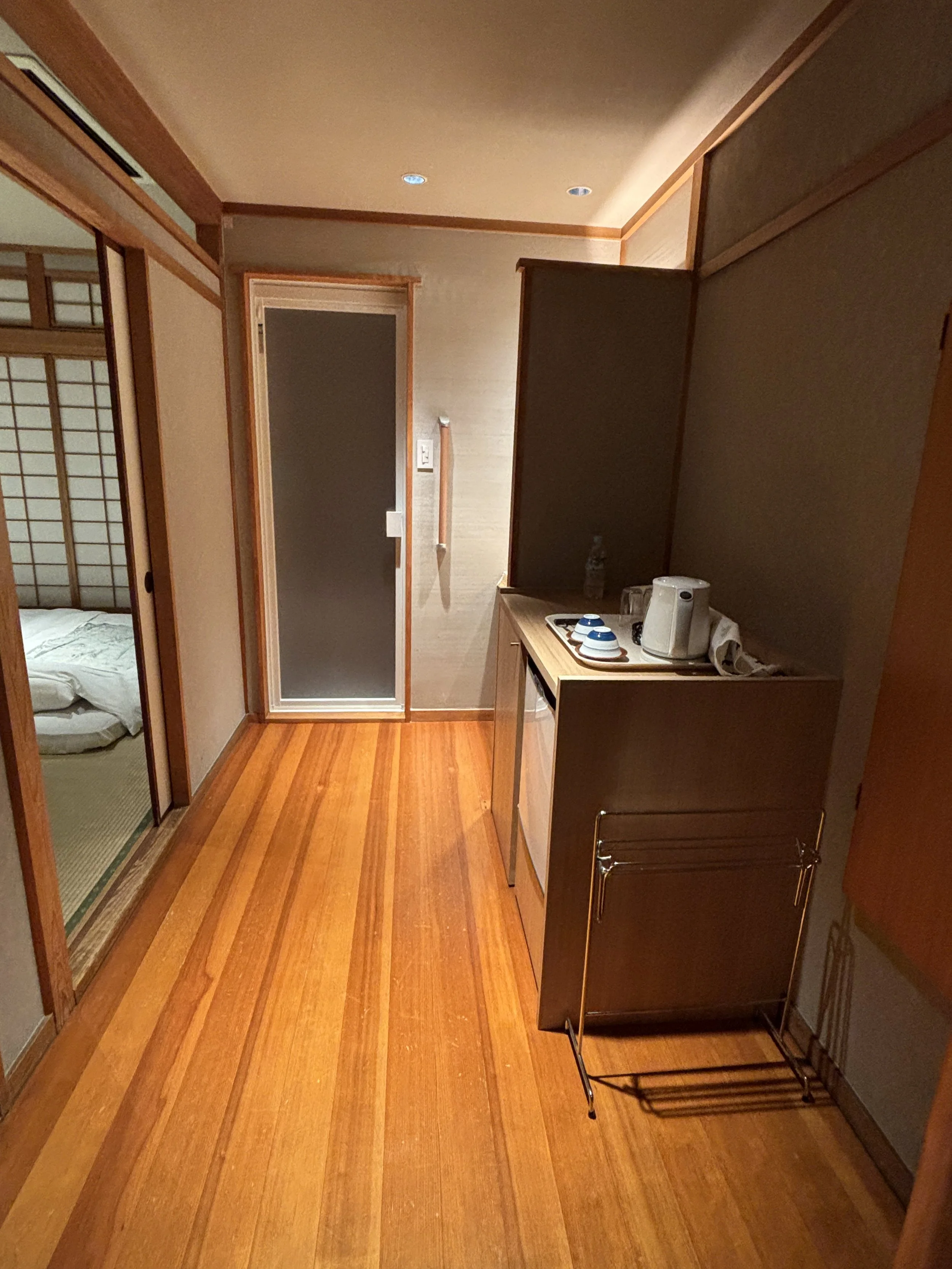
Our room at Ryokan Ryokufuso was quite large and, of course, laid out in traditional style. As you can see in the pictures below, it consisted of a large living room (which doubles as bedroom) and an ante-chamber with a little sink and table to prepare tea, plus the shower room and toilet in two separate pieces.
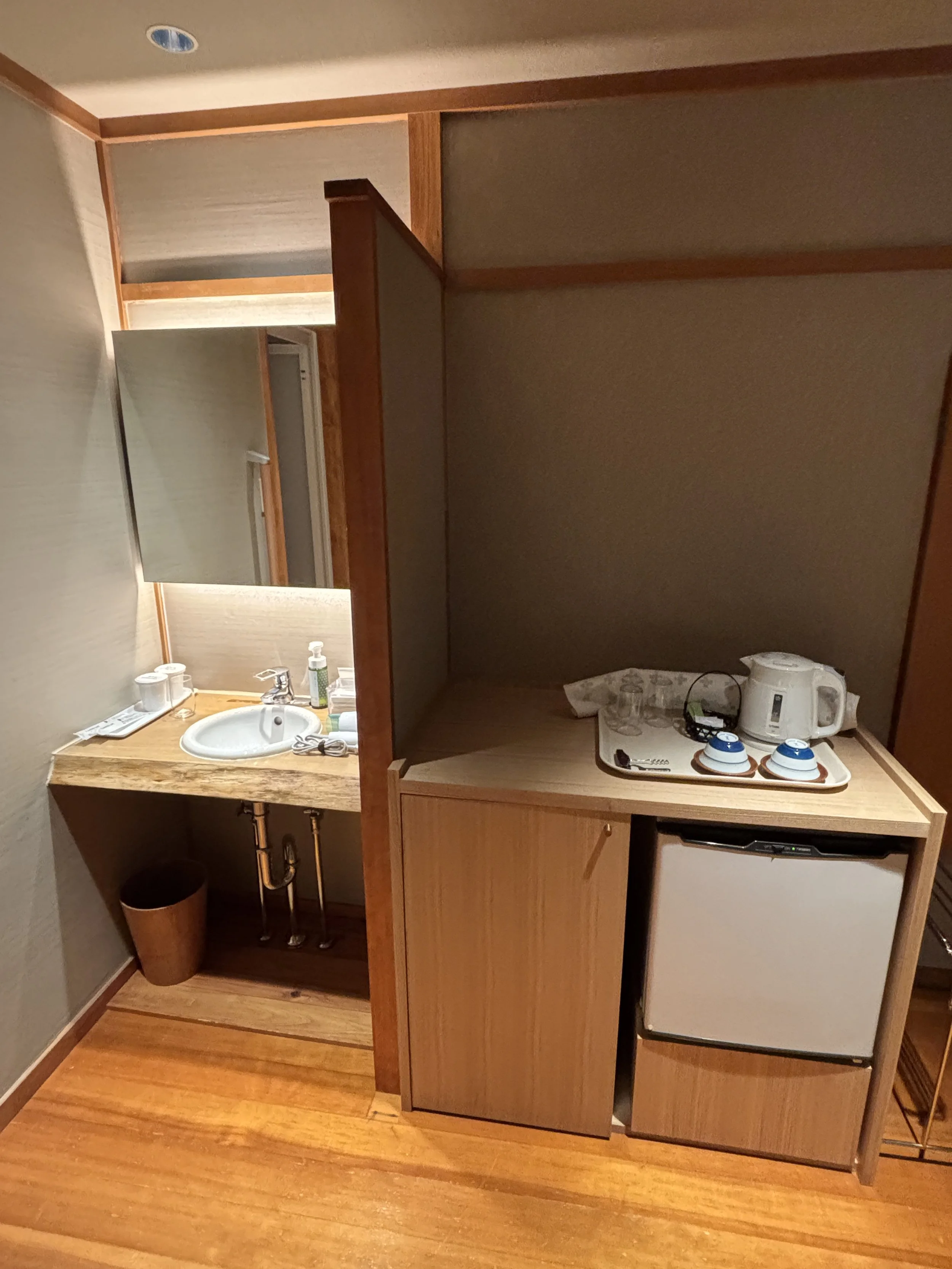

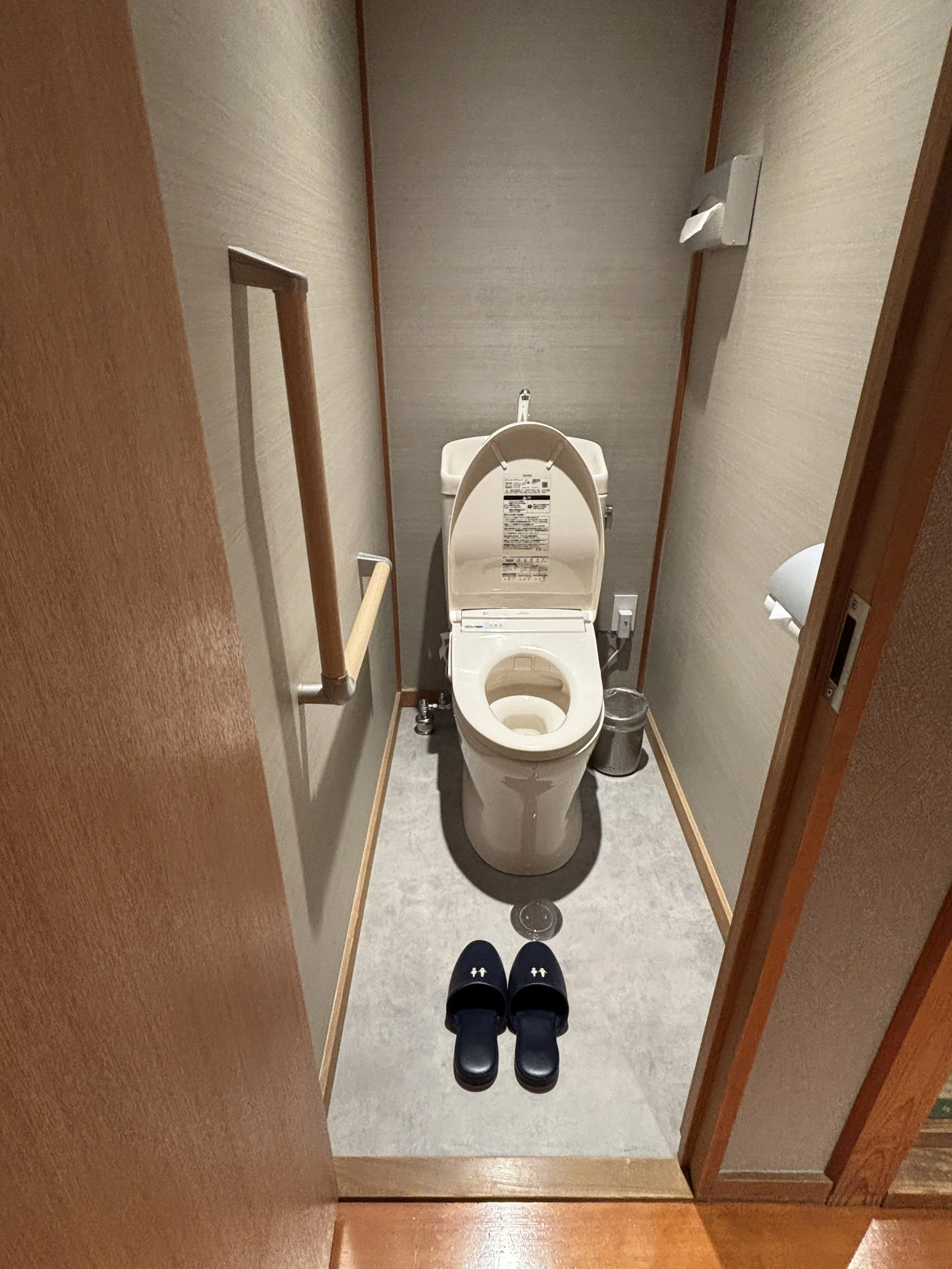
I must say, as well, that the staff at the ryokan were also very helpful throughout (some of them spoke decent English) with indications and, for example, helping arrange our luggage forwarding.
Ryokan Ryokufuso is, overall, great value for money and an excellent choice if you are looking for some traditional Japanese-style in Kyoto with good comfort and a central location.
Day excursion from Kyoto to Nara
Although it is, technically, a different city, the historical city of Nara is often included in Kyoto itineraries, since it is relatively close (about an hour by suburban train). It can be visited as a day trip from Kyoto or, as we did, as part of an itinerary that ended in Osaka, which is also about the same distance from Nara as Kyoto is. So, either way, don’t forget to visit Nara!
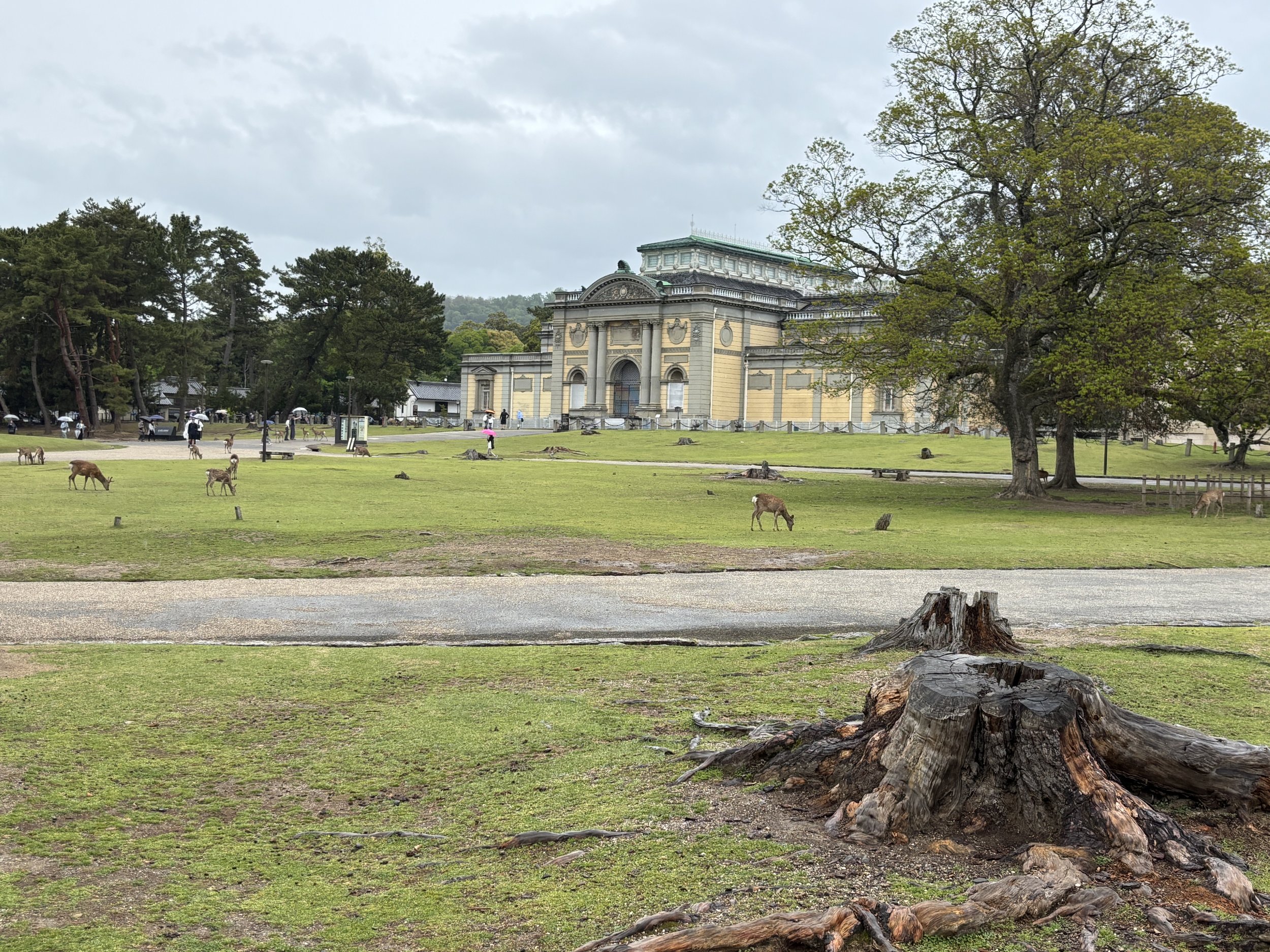
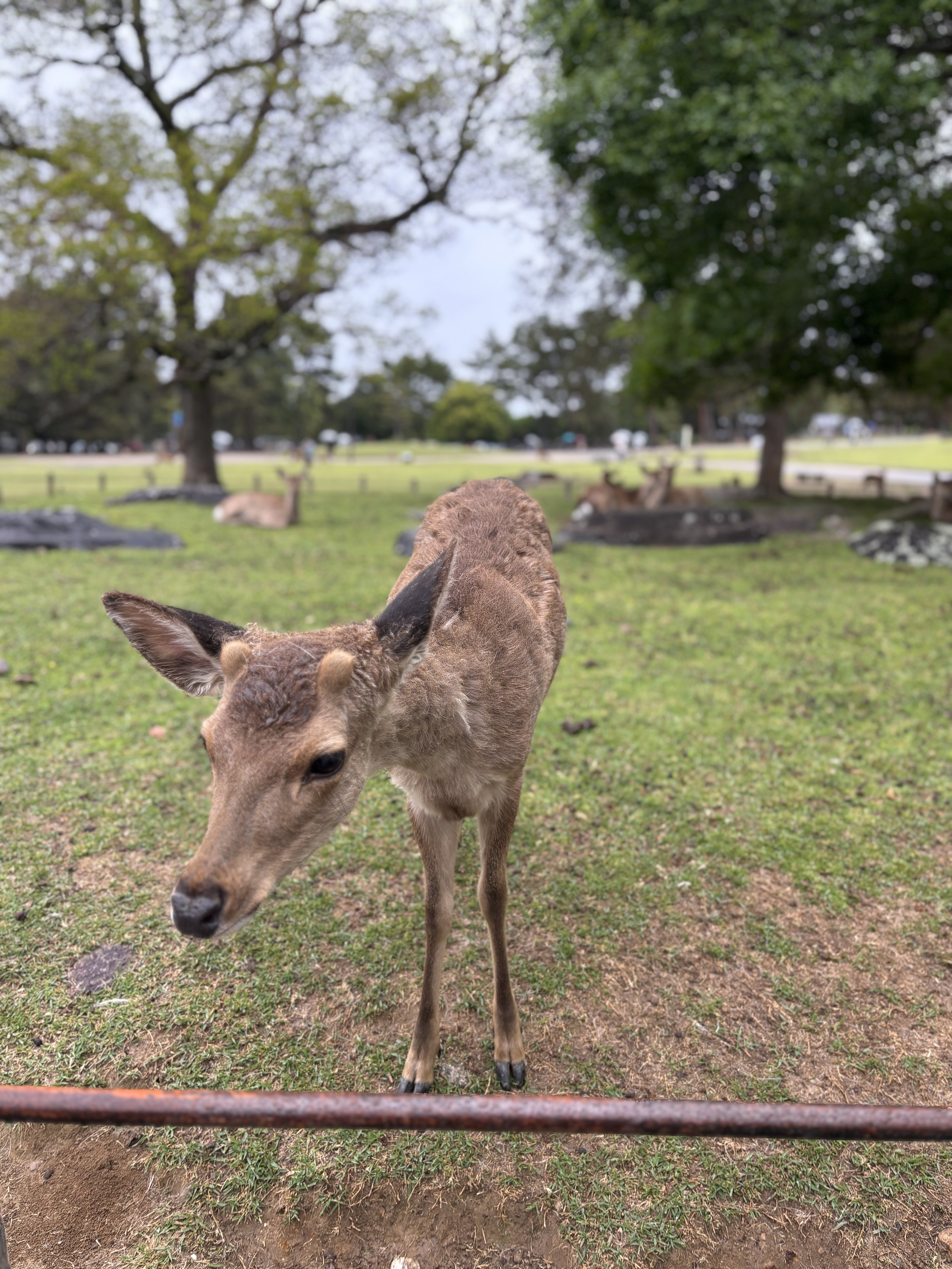
And, while the city has quite a few historical monuments (Nara was, actually, the capital of Japan for a period in the 8th Century, before it was moved to Kyoto), the thing that really stands out in Nara and the one you are most likely to remember is this little fellow depicted on the right, or to be more exact, the whole lot of them.
Because there are thousands of these little sika deer roaming freely the streets of Nara. They are, apparently, considered to be sacred messengers of the gods and designated as national treasures.
They are all over the place and are used to people feeding them, In fact, you can buy food for them at some street stalls and they have learned to bow to visitors to get it.
What else to see in Nara?
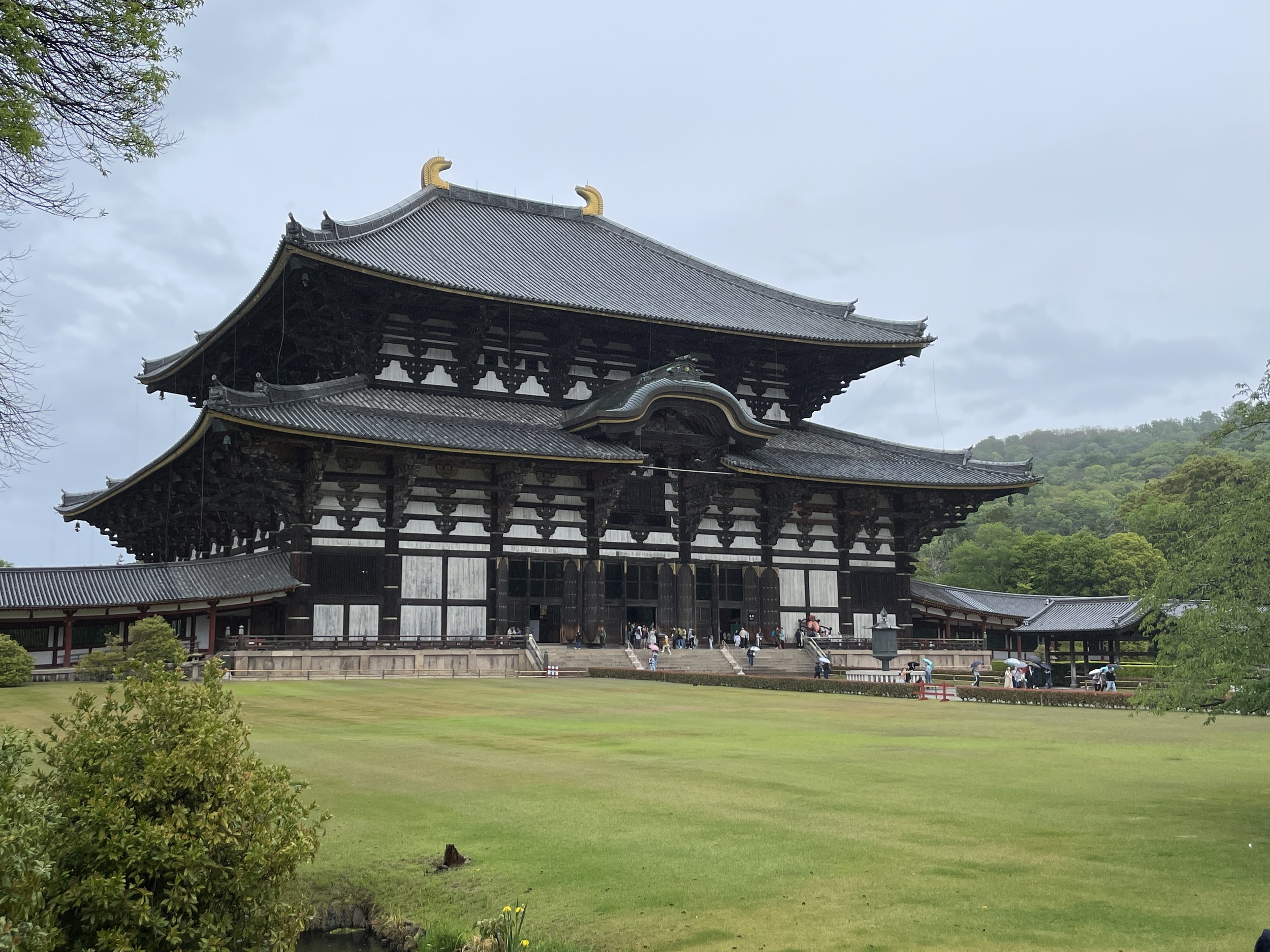
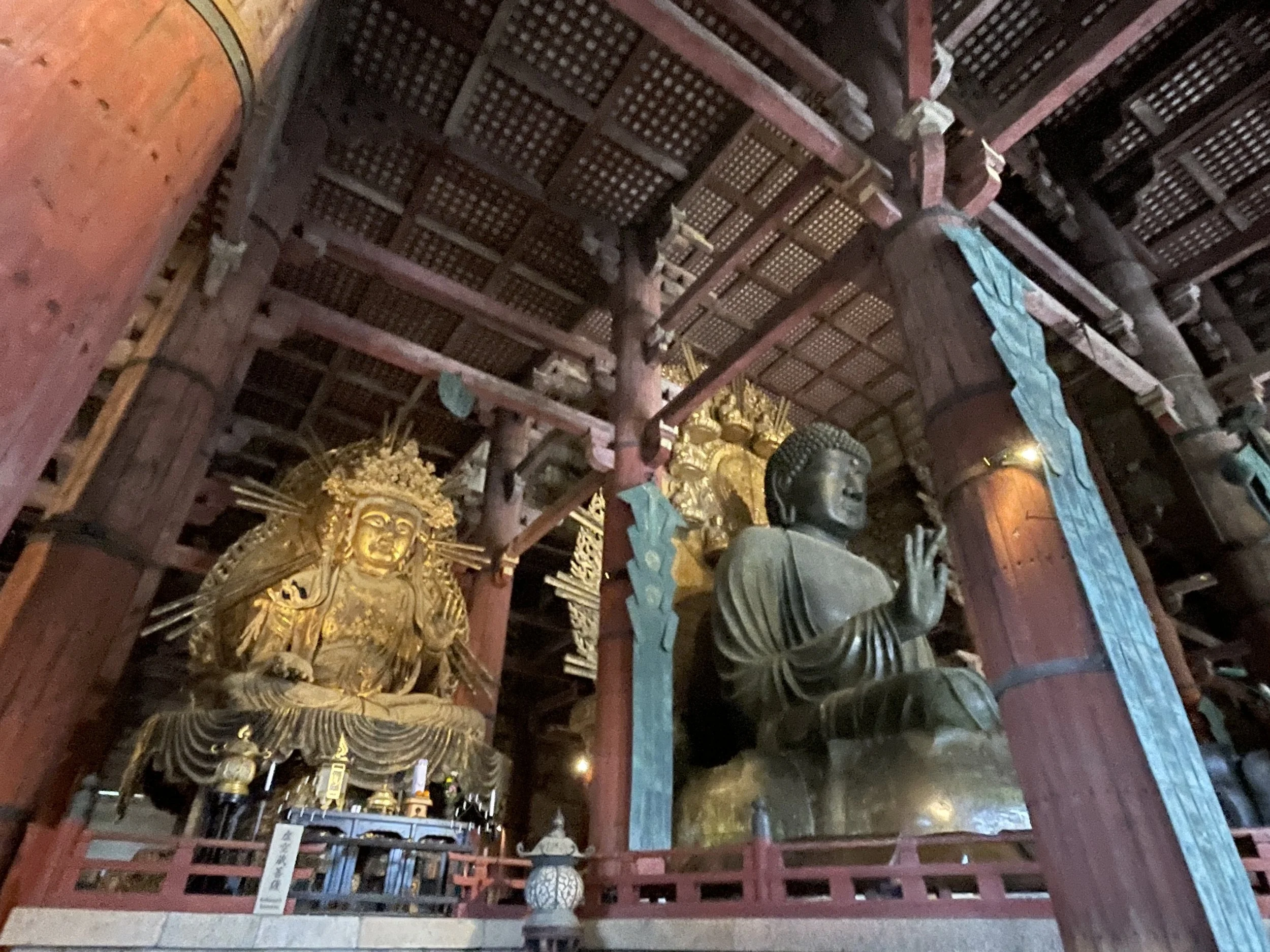
Deer aside, the other major highlight in Nara is the Todai-ji Temple, which houses the world’s largest bronze Buddha statue. The temple, which has been rebuilt several times throughout the centuries, is really big!
There are also other temples and shrines in its vicinity, although if you have limited time, I would say just focus on the main “tourist” alley, which runs from Kintetsu-Nara train station, across Nara Park and past the National Museum towards the Todai-ji Temple grounds and back.
It’s a nice walk, with open spaces all around and you will also see plenty of deer along the way. All of these spots are also within walkable distance of each other.