
Karpacz and Śnieżka: hiking along the Polish–Czech Border
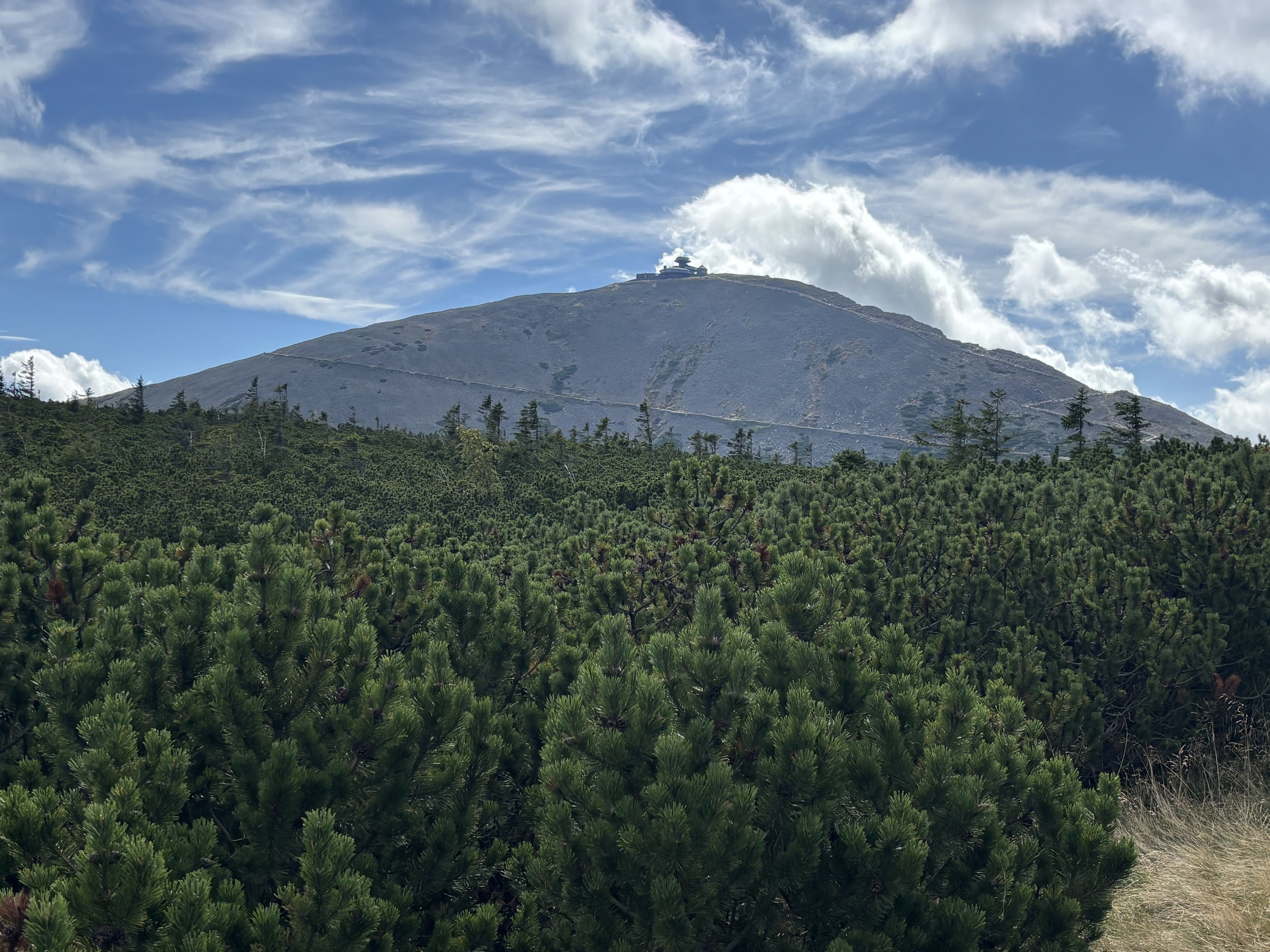
In this site we have covered some of Poland’s most beautiful cities, such as Gdansk and Wroclaw. There are, indeed, some very good reasons for the amount of attention these get from the travel content community. And yet, I was longing to see a bit more of the country outside of the fairytale-like medieval urban centers and Cold War architectural legacy that you often find in those urban centers.
An invitation to the 35th Economic Forum, an economic, cultural and political event which takes place every year in Karpacz offered such opportunity.
The Forum is often described as the “Central and Eastern European Davos”, in a reference to the renowned World Economic Forum, which takes place every year in that Swiss resort. The comparison is not misplaced, since Karpacz is also held at a resort town at the foot of the Karkonosze mountains (the highest part of the Sudetes range).
Besides the opportunity to enjoy the sights and the fresh air, Karpacz is also a place of interest for those interested in the topic of international borders, since the town is also the gateway to Śnieżka (Sněžka in Czech), the highest peak in the Sudetes, which separate Poland from the Czech Republic.
So, let’s have a look at what are the top things to do and to see in Karpacz and around!
This post may contain affiliate links. If you book or buy something through them, I earn a small commission, at no extra cost to you. It's one of the ways I keep Places of Charm going. Thank you for your support. My visit to Karpacz was courtesy of the Economic Forum and the Warsaw Enterprise Institute.
Getting to Karpacz
Karpacz is located a couple of hours drive from Wroclaw, which is the closest major city and airport. There is not train service, so the only other public transportation option is the bus.
Prague is also relatively close as the crow flies, but there are the Karkonosze mountain ridge is right in between, so I’d say that, it is best to take the bus from Wroclaw or rent a car. A small part of the way from Wroclaw is motorway, but for the most part the route runs through smaller countryside roads.
Home of the “Eastern Davos”
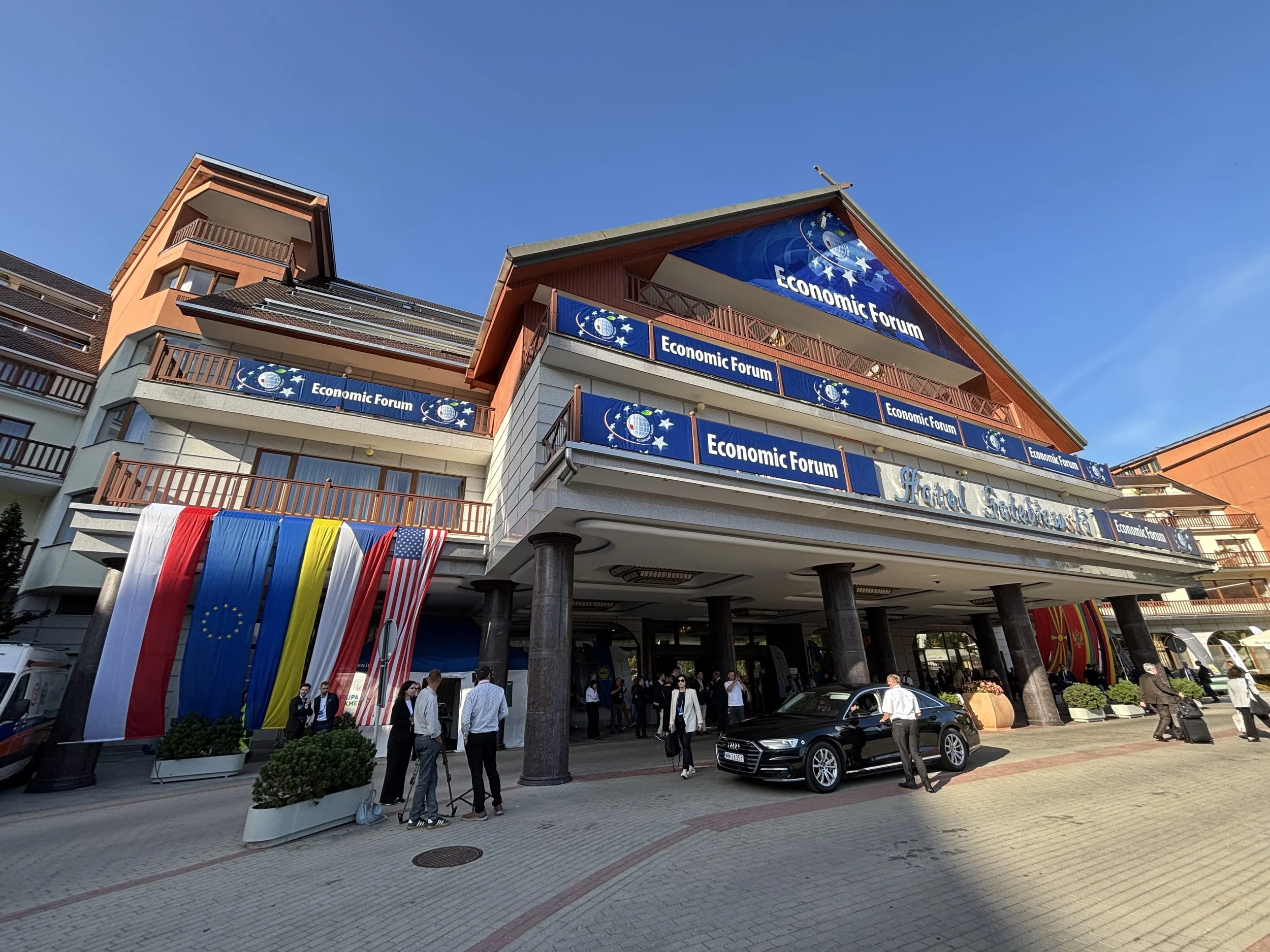
Although it is not the main object of this post, it is inevitable to write about Karpacz without mentioning the Economic Forum and the venue where it takes place: the Hotel Gołębiewski Karpacz.
This 880-room hotel is easily the largest piece of infrastructure in Karpacz. Since I was at Hotel Gołębiewski only for the Forum meetings, I can’t comment on how is it like to stay there as a guest, although you can check how it is like here (I actually stayed at Lake Hill, a much more modern establishment a few kilometres out of town, which I review further down this post), but it is certainly a landmark and a point of reference in what otherwise is a rather spread-out town.
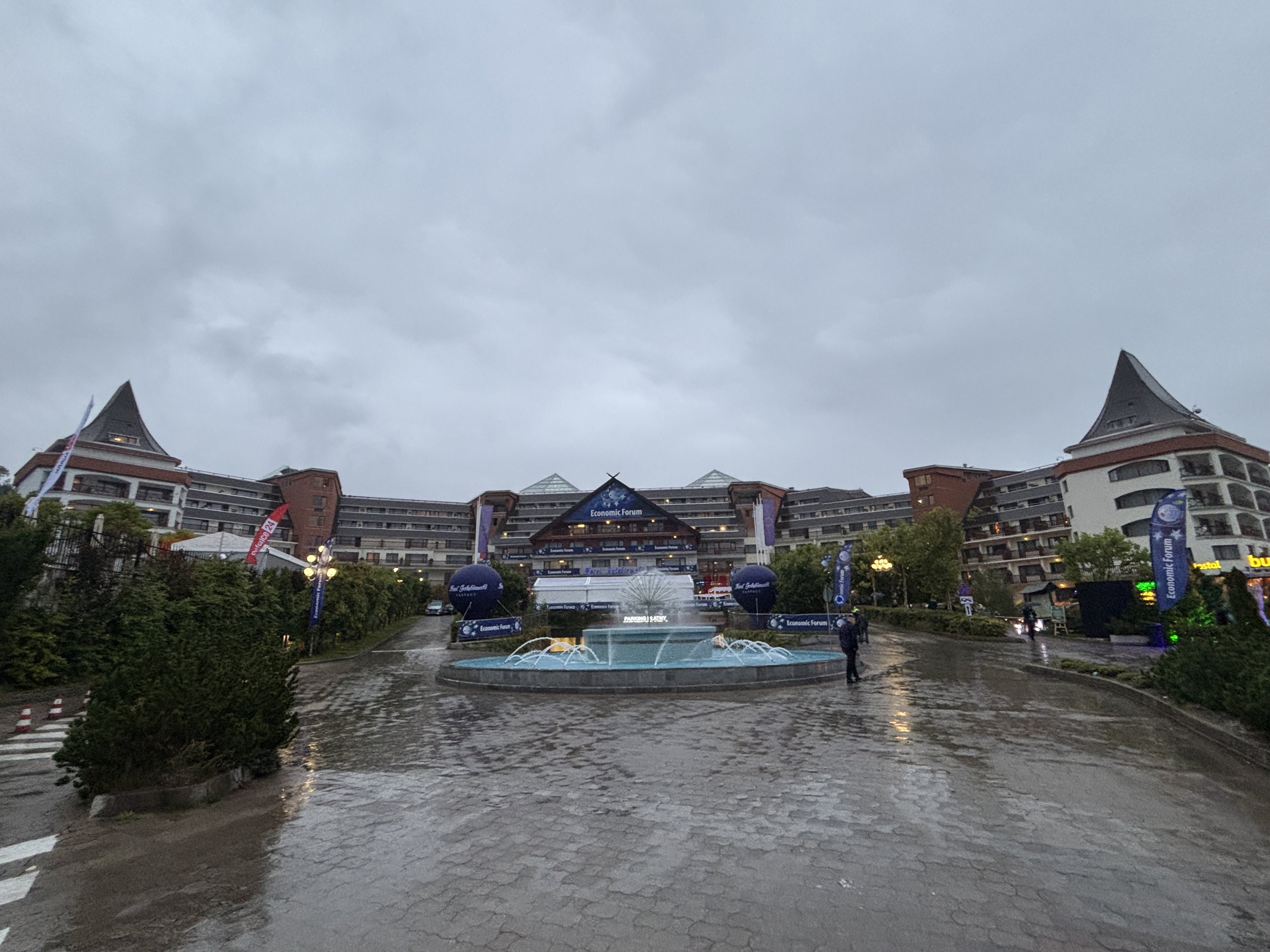
The fact that the town is literally on the slope of the mountain, with little flat ground around also contributes to this lack of a compact urban center, although there is a main street where most shops and businesses are. The two main attractions I describe in this post are both located near the Hotel Gołębiewski, though, in the upper part of town: the lift to Śnieżka, at the Karpacz ski arena and the Wang stave Church
Climbing to Śnieżka, highest peak in the Sudetes (& in the Czech Republic)
This excursion, which for me is the highlight of the Karpacz outdoor experience and it acutally takes you to the highest point in another country, the Czech Republic.
This is because the Śnieżka/Sněžka peak is shared by Poland and the Czech Republic. In fact, when you hike to the summit, you are following the border line all along.
By the way, for the rest of this post I will use the Polish name for the mountain (“Śnieżka”) since I describe here how to get to the peak from the Polish side.
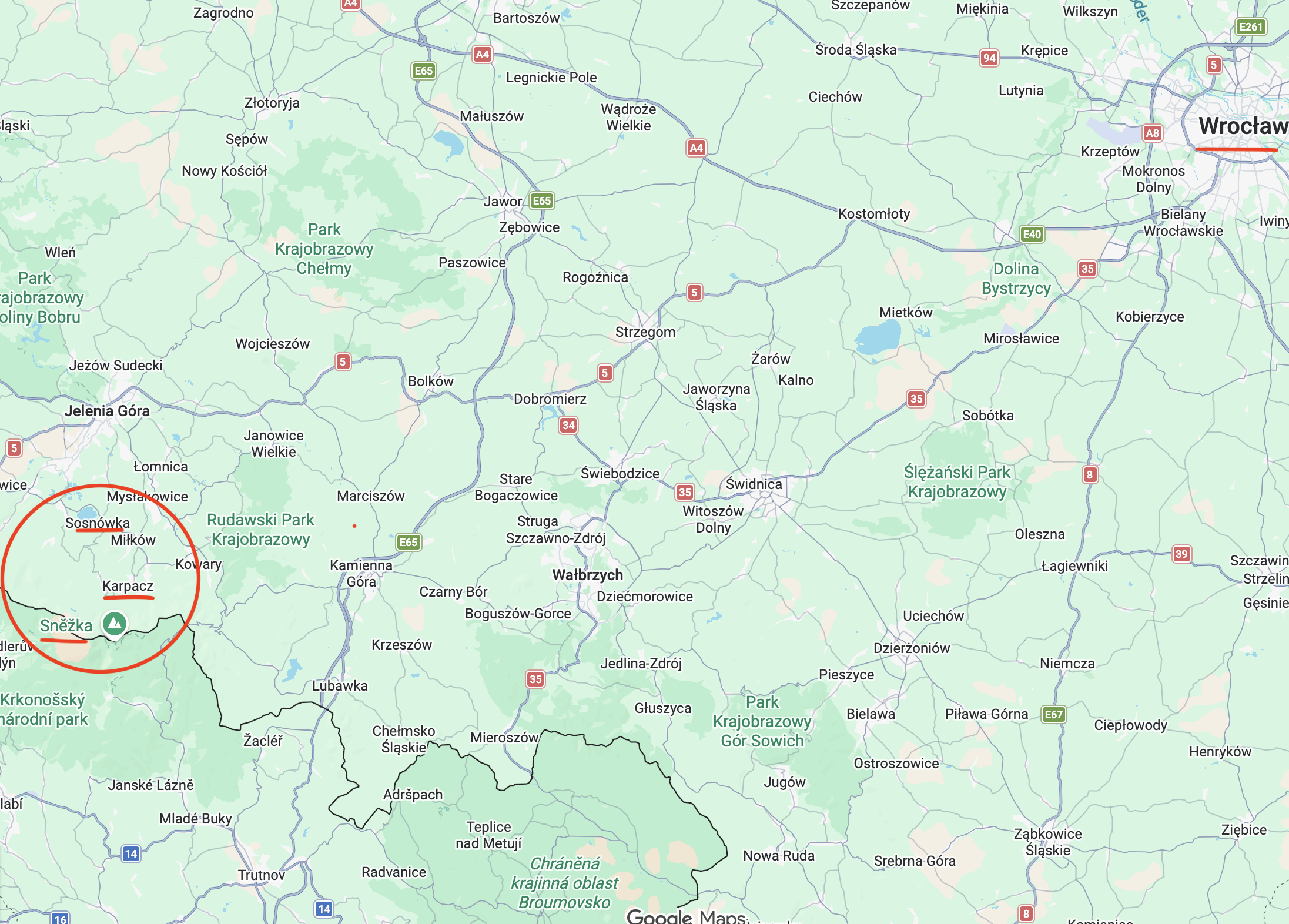
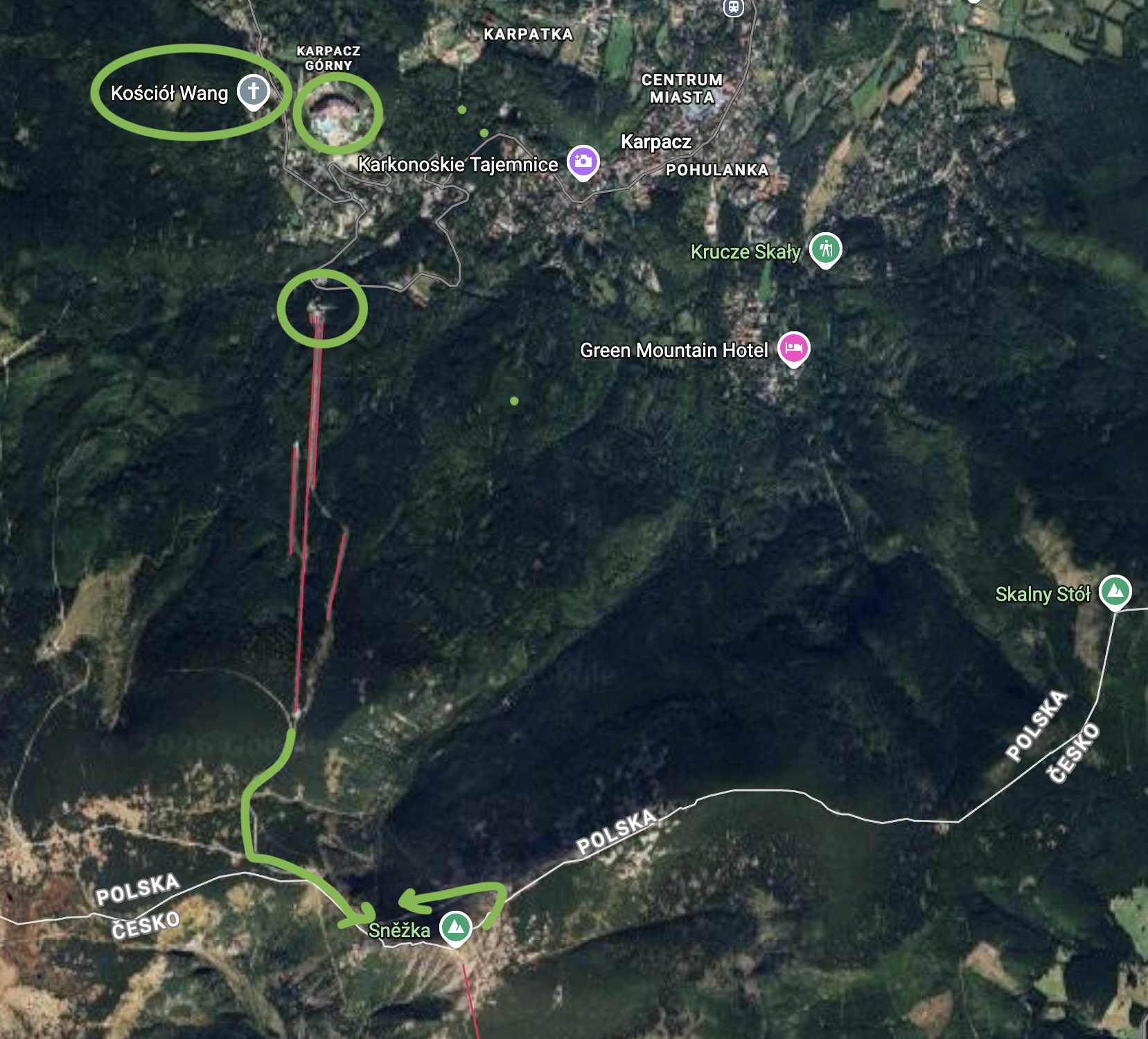
In the map below I have tried to highlight the main points of interest mentioned on this post. See, for example, the lift from Karpacz to the Kopa station (in red) and the green arrows indicating the rough itinerary of the walk along the Polish-Czech border up to Śnieżka and back to Kopa. Also marked with green circles are two other landmarks I reference: the Hotel Gołębiewski and the Wang Church.
So, how to get to Śnieżka? Unless you want to spend several hours trekking, the fastest and most convenient way is to take the lift!
The base station of the lift is located at the Karpacz Ski Arena (yes, Karpacz has some ski slopes!) which is located some 10-15 minute walk uphill from Hotel Gołębiewski. You can also take a Bolt ride (the European equivalent of Uber), since they are plentiful in Karpacz and not too expensive.
A return ticket costs around 100 Zloty (€22 / $25), so not cheap, but definitely worth it!
There is quite a bit off forest in the area the the lift goes through. This is the Karkonosze National Park, which looks inviting enough if you are into trekking, but you need to get a ticket first!
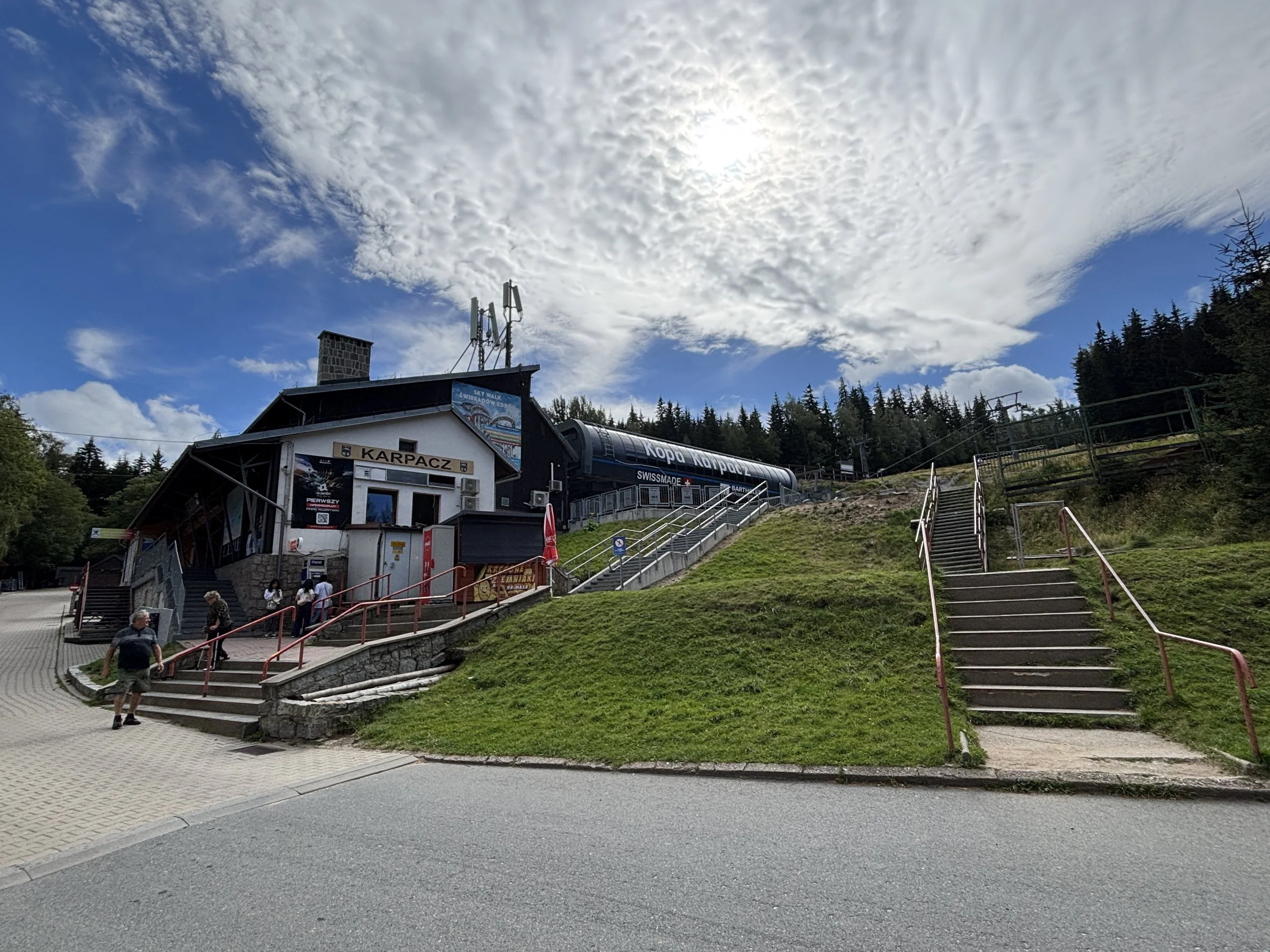
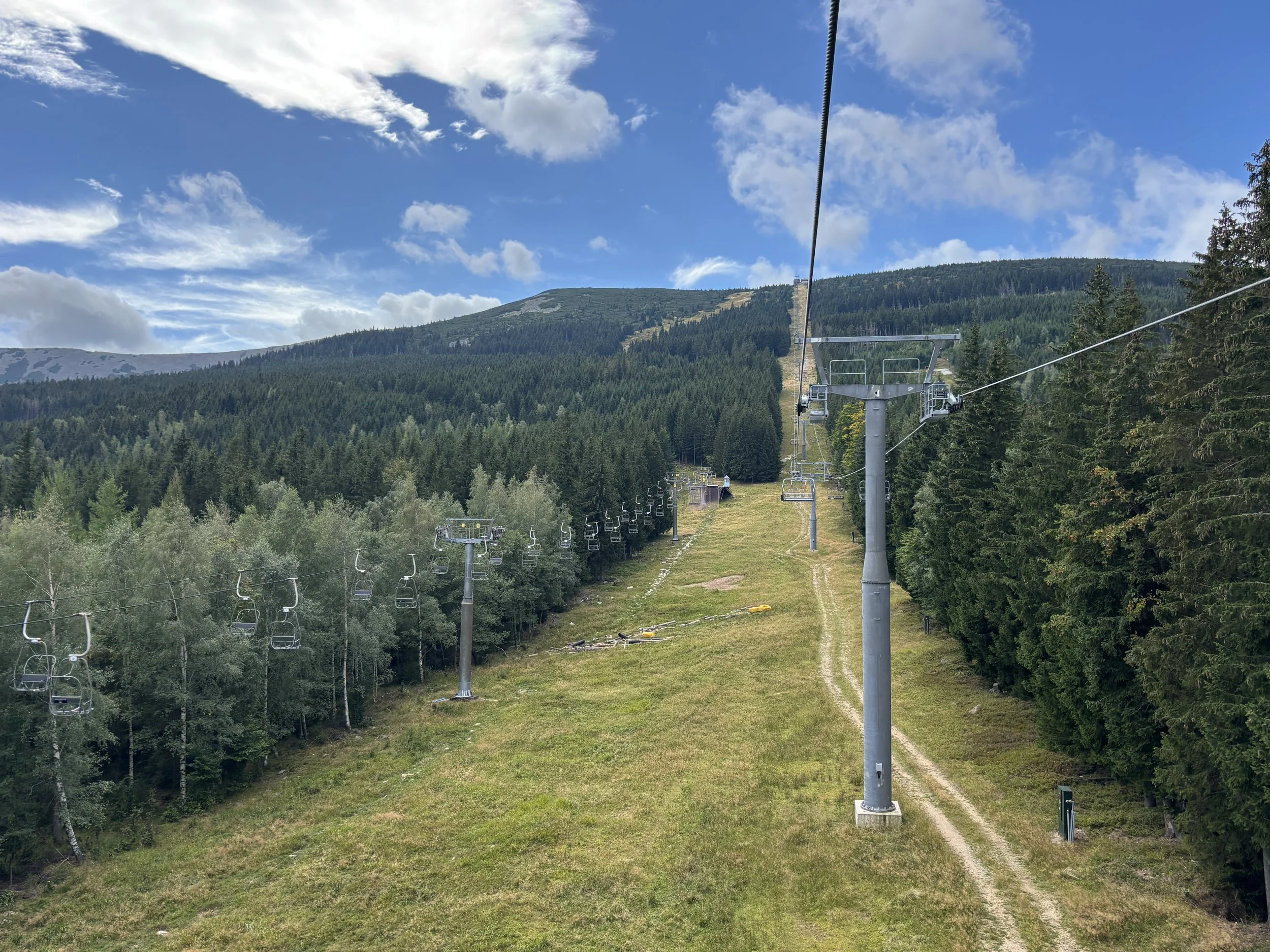
Taking the lift to Śnieżka
It is important to note that the lift doesn’t take you all the way to the summit of Śnieżka, but to Kopa, which is on a ridge from where you would need to walk a couple of additional kilometers.
The first one of these is on flat ground along the ridge and on a paved trail. The second part is the ascent to the peak of Śnieżka and it is way more uphill.
There are actually two branches of that trail, one that goes through the most direct and rocky trail and one that goes around the back of the mountain and it is a bit longer but more gentle.
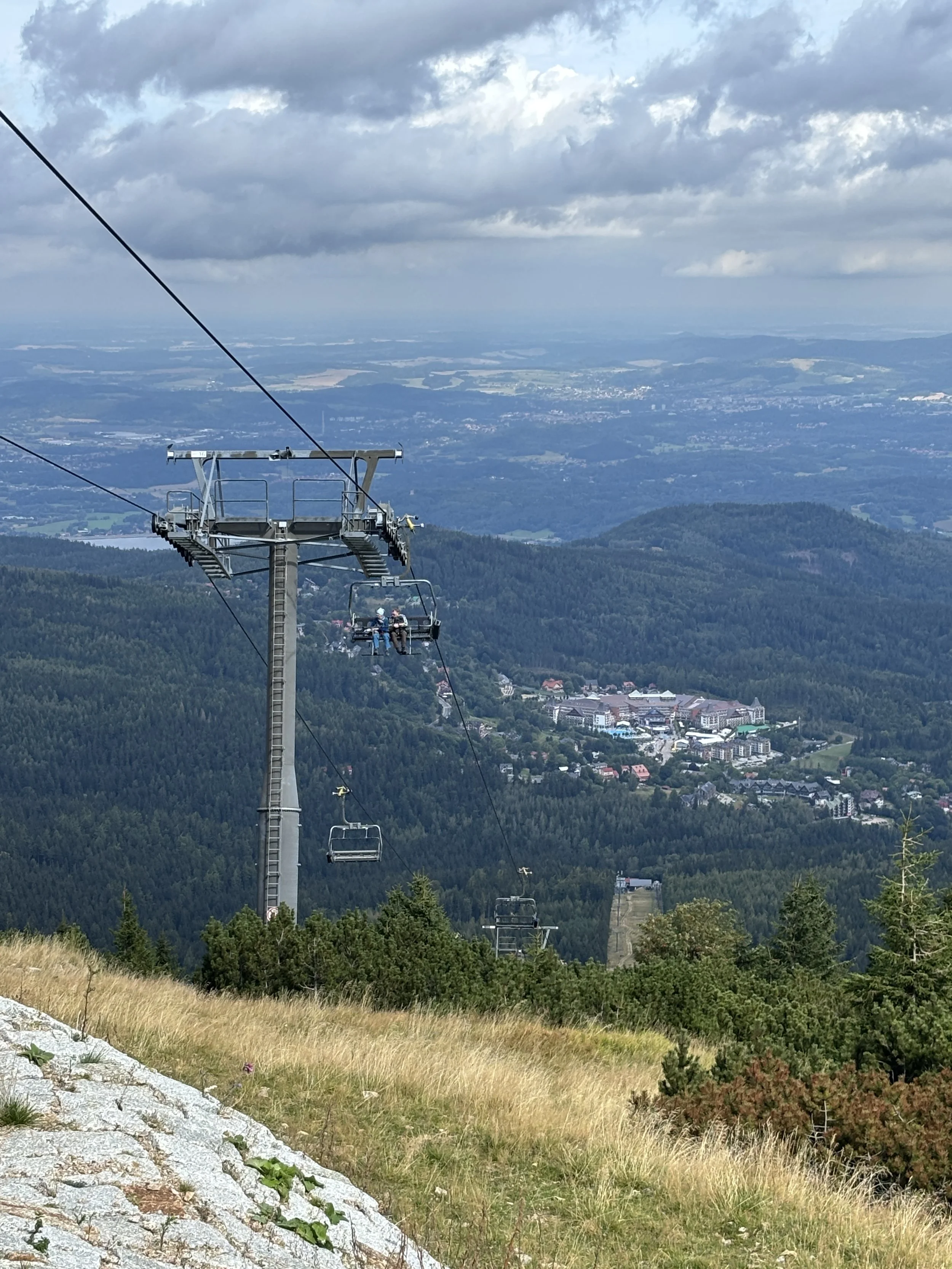
By the way, the lift up is also an experience in itself, since it offers great views of Karpacz (note how prominent Hotel Gołębiewski is in the surroundings!) as well as of the Silesian plains beyond.
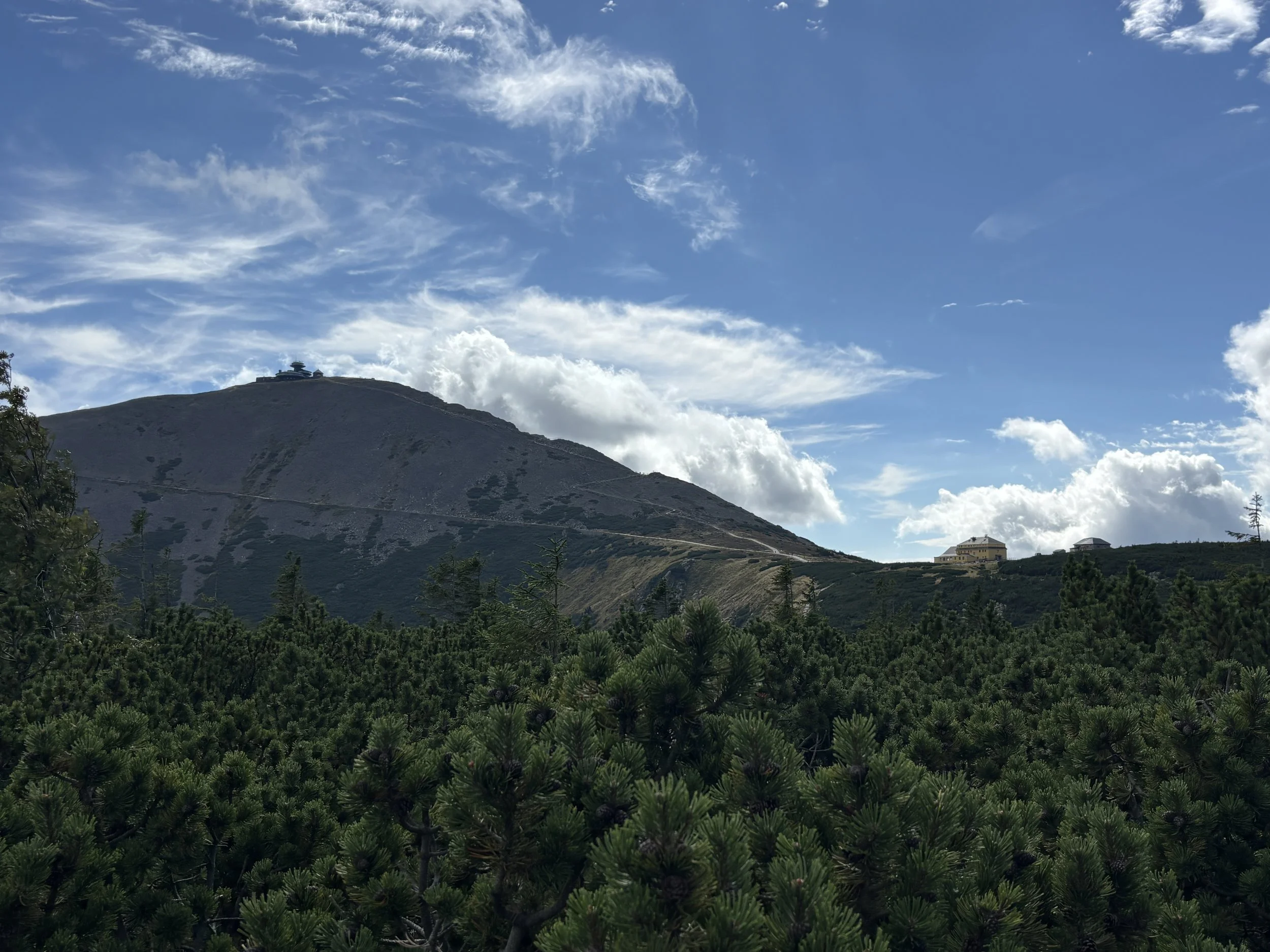
As mentioned earlier, the lift leaves you at Kopa, which is a spot at the top of a ridge and from there you still need to make your way to Śnieżka on foot. The path follows a short of plateau which is right at the edge of the tree line. In fact, it is quite an interesting landscape because you can see that conditions here are such that fir trees don’t grow very tall, possibly because of the wind, so it really looks like a bonsai forest from some angles. I later read that all along the ridge there are some very ecologically valuable peat bogs.
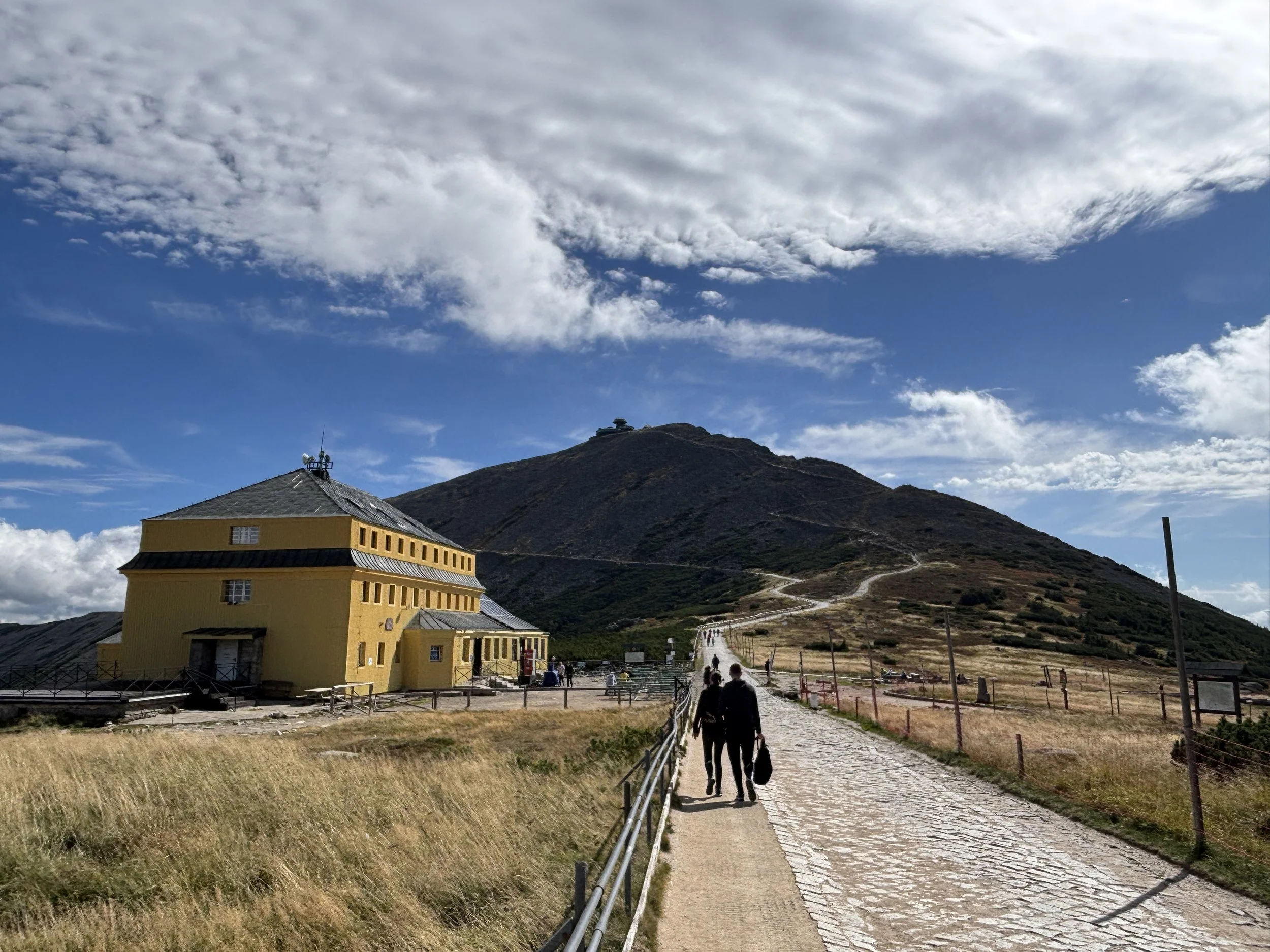
The next point of reference is Dom Śląski (Silesian House), which is the yellow building with a slate roof that you can see in the picture below. It is located roughly half way between the Kopa lift station and the peak.
This building which serves now as a mountain refuge and restaurant has quite an interesting story. There had been a mountain refuge at this spot for centuries, but in the mid-19th C. a proper building was erected in the Silesian style. That refuge was reconstructed twice until getting to the current building, of 1921. Quite remarkably, in 1924 it hosted an experimental wind turbine to produce electricity! But that early attempt at having an aero generator was short-live since the windmill collapsed a year later under the weight of the snow. Nice try, though!
This is also where things get interesting for border chasers, since the international divide runs just a couple of meters to the right of the path. Dom Śląski is entirely on the Polish side, however, I read that until the 1970s there was another “twin” refuge just opposite on the Czech side, which ended up in disrepair and was later demolished.
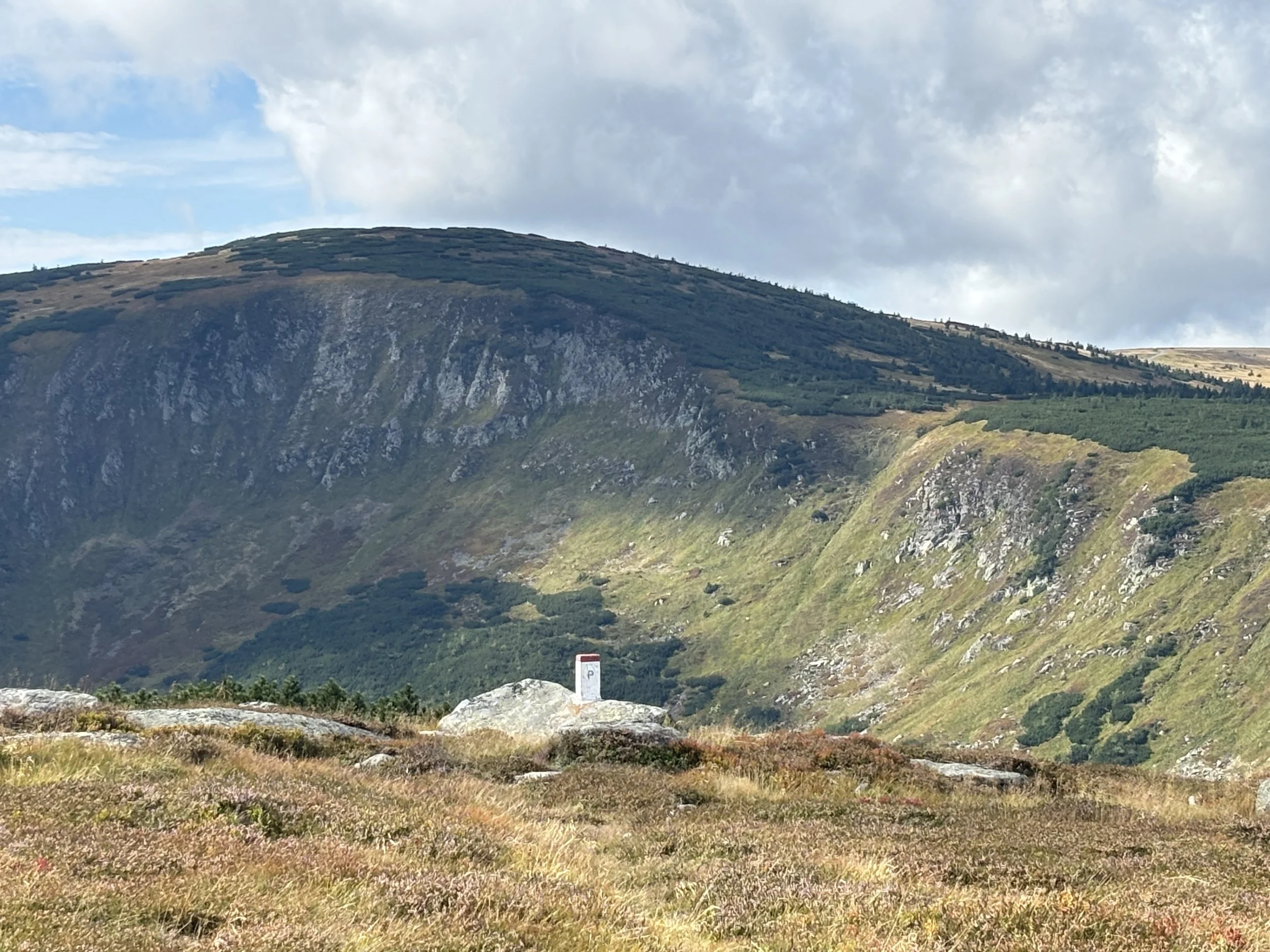
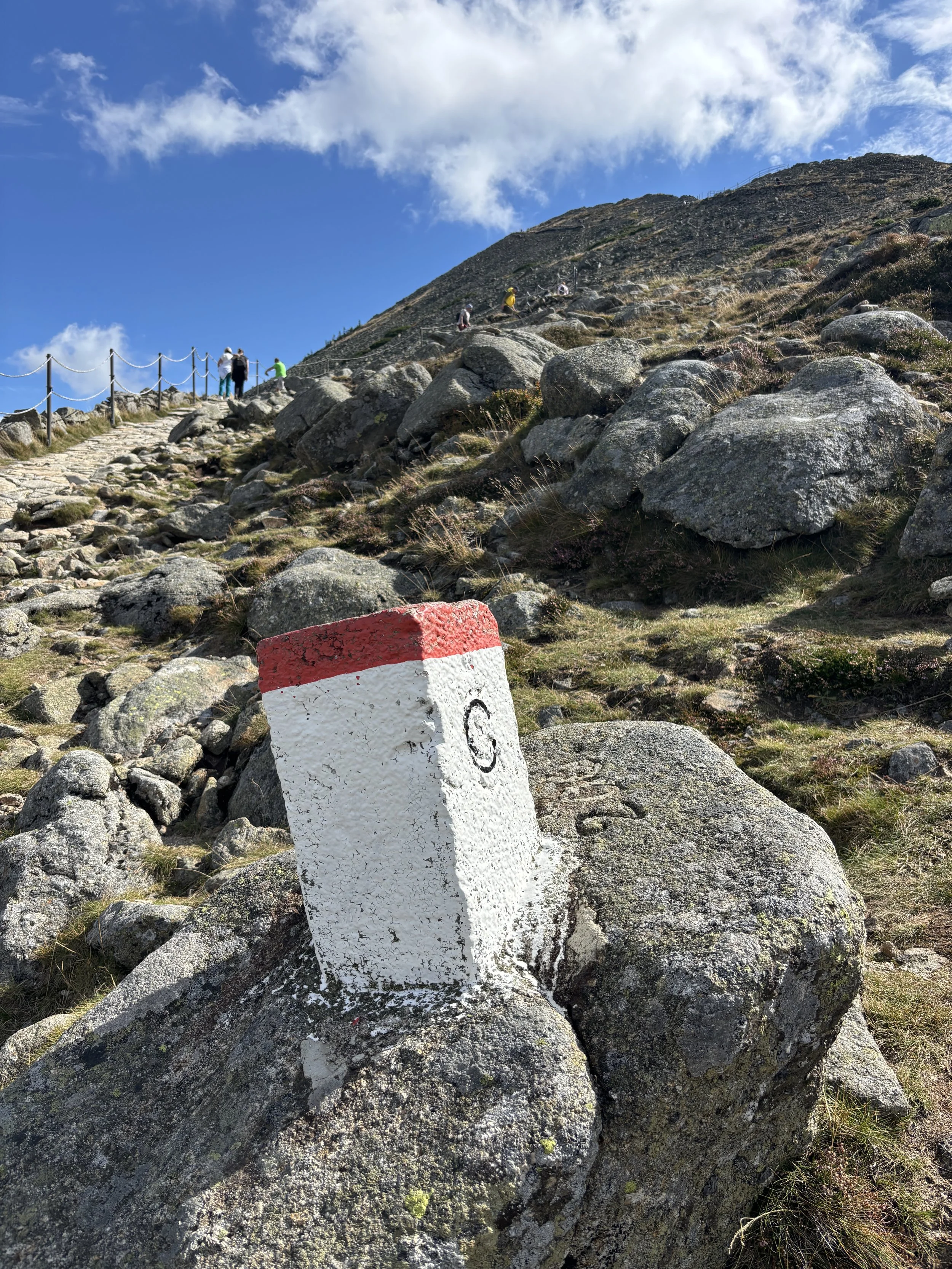
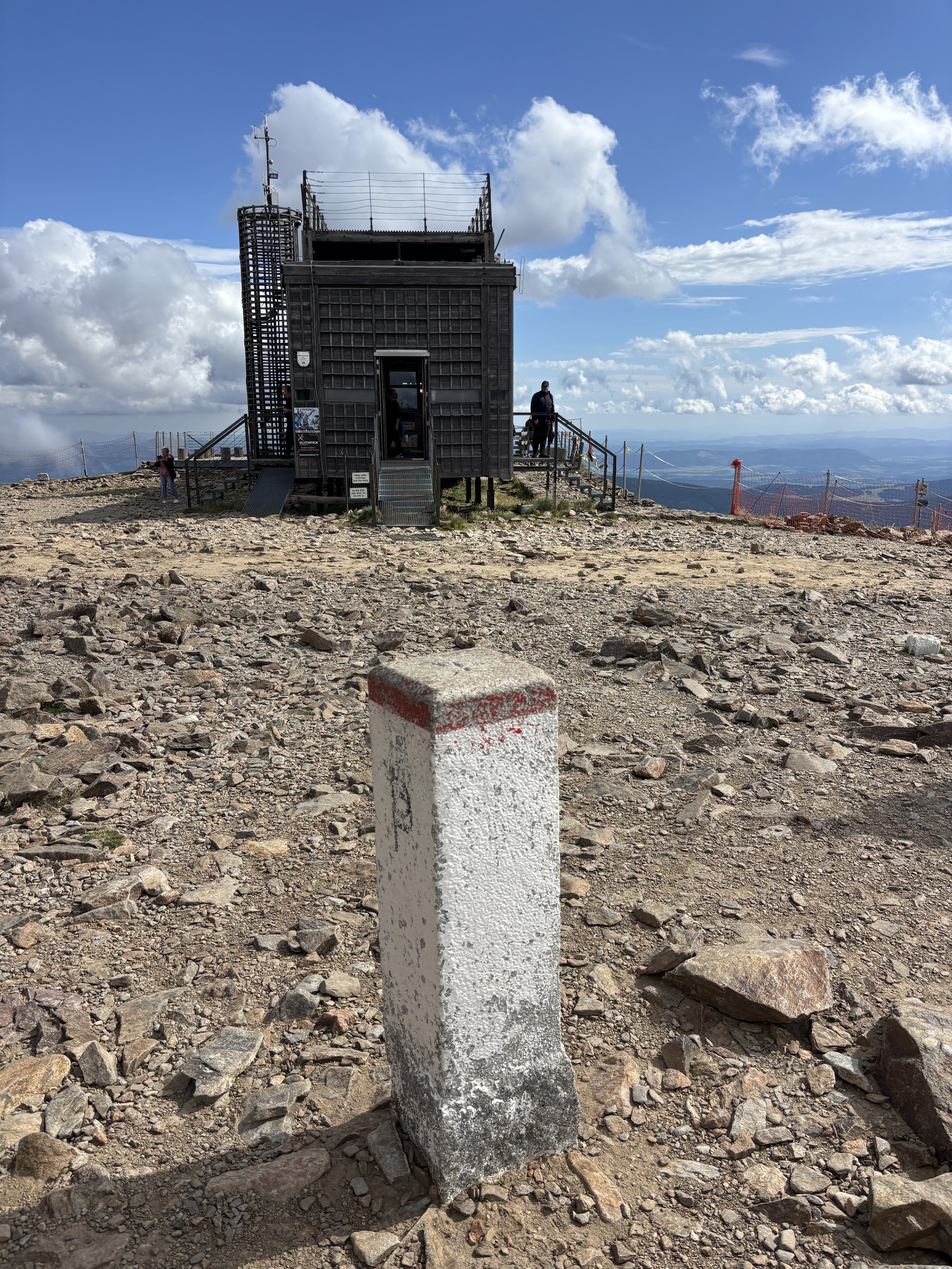
This area is quite a treat for border-chasers, since you can easily trace the many border markets that dot the ridge in a truly stunning natural setting. You can see one of the markers below: they are white with a red top and they are marked with the letters P (“Polska”) or C (Česká Republika) depending on which side you are.
Worth noting that this has not always been like this. For quite a long time this was a border between Germany and the Habsburg Empire, but during the 20th C. sovereignty shifted several times, with the creation of Czechoslovakia first, then annexation of the whole Sudetes area and later of the rest of Bohemia as well, by Germany, and after WW2 the return of Czechoslovakia, the transfer of Lower Silesia to Poland and later the independence of the Czech republic.
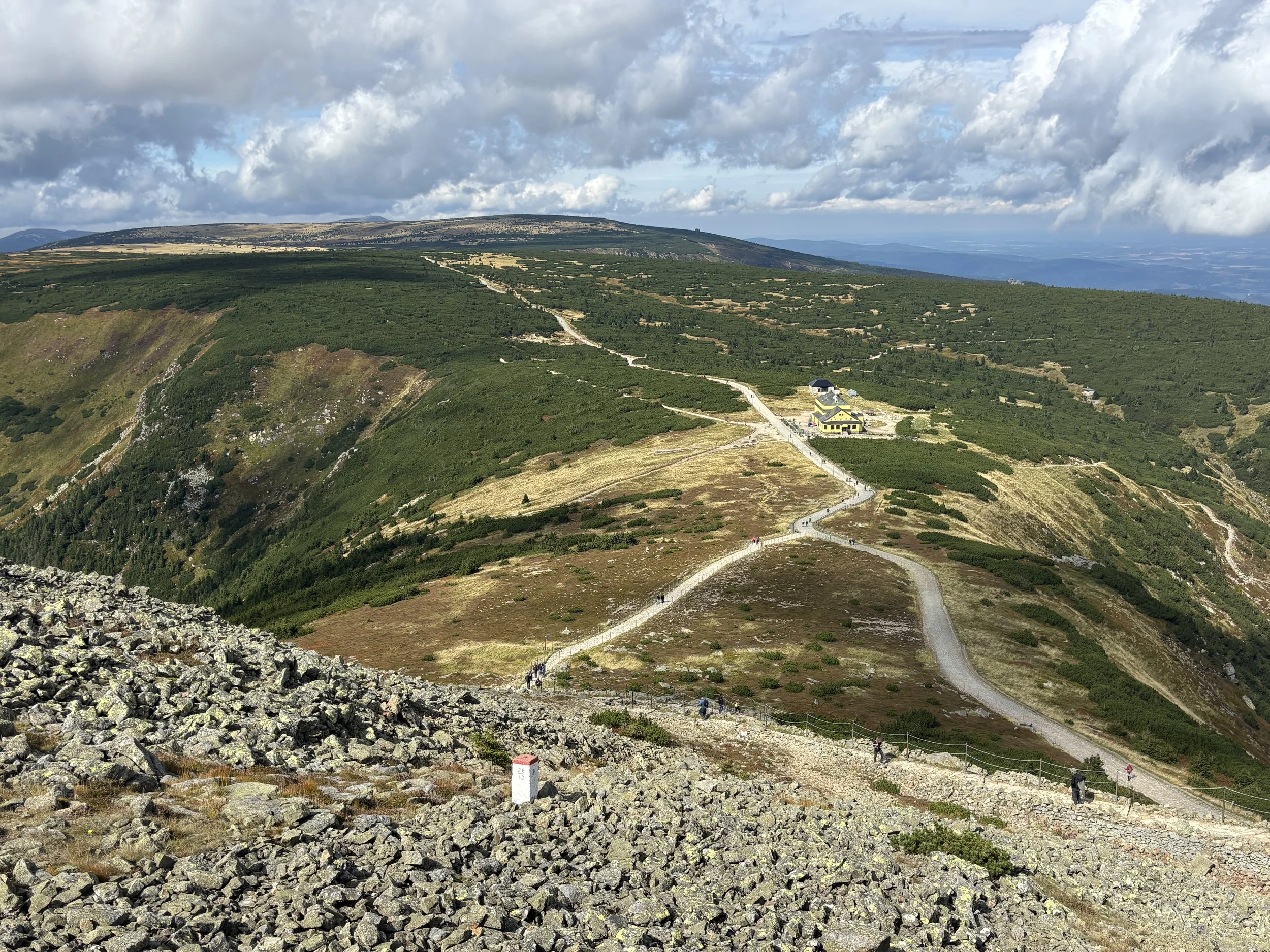
I would recommend wearing appropriate shoes for a hike. While there is a paved and regular path on the flat section along the ridge, the ground gets more irregular and rocky as you start to climb.
When I climbed, weather conditions were pretty good and I was wearing regular street shoes (because I didn’t have any other pair of shoes with me on this trip!) and could complete the route without much problem. Having said that, it would have been better to wear something more sportish to be on the safe side.
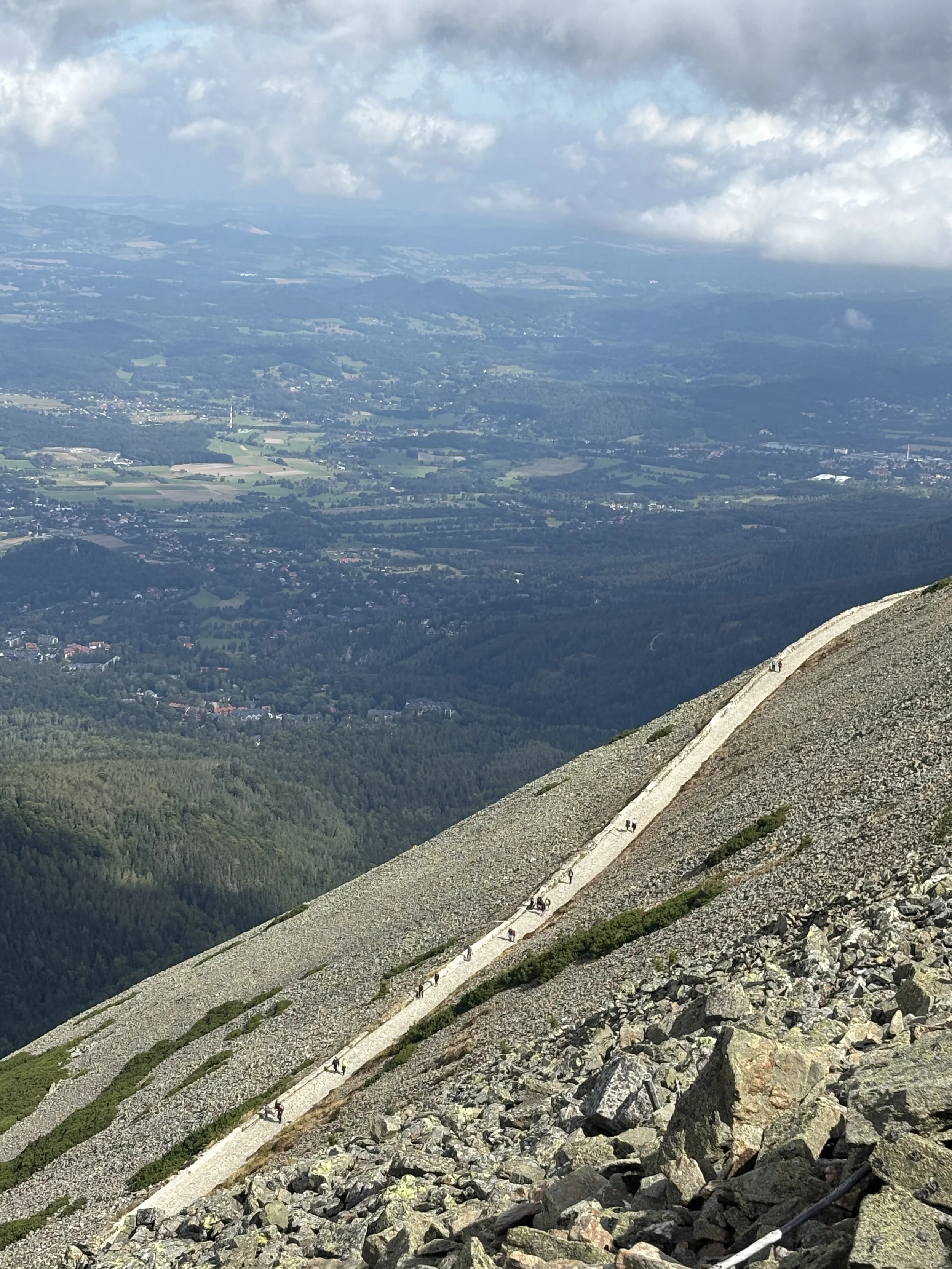
In terms of difficulty, I would say that, with good weather conditions and provided you are reasonably fit, it is not particularly challenging. I saw elderly people, children and even a lady carrying a small dog on her back. However, it is quite a steep walk and shouldn’t be taken lightly, particularly if weather conditions are not optimal (there is actually a plate along the trail that remembers two Czech mountain guides which died attempting to rescue a couple on icy conditions in the early 1970s).
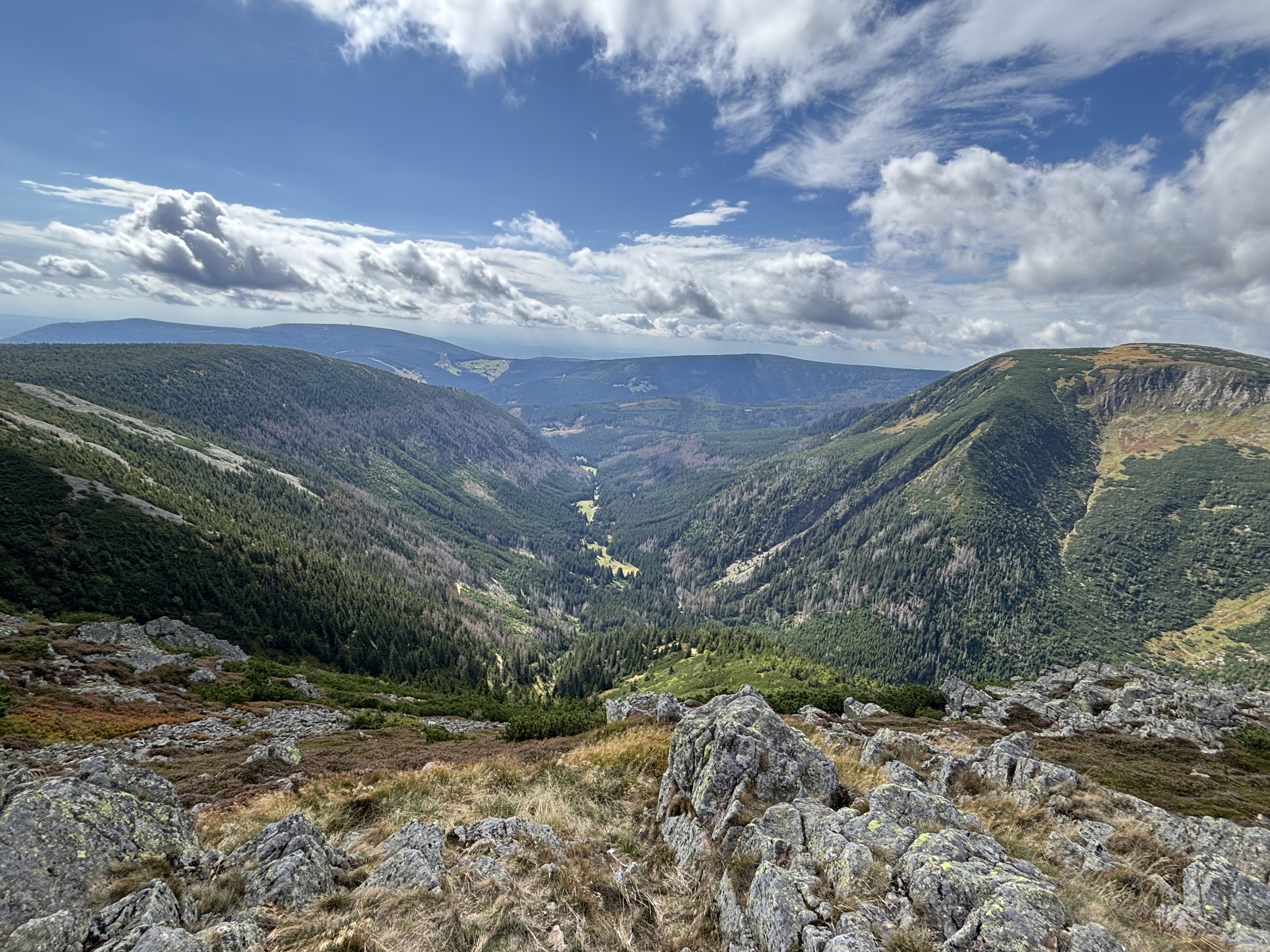
The view onto the two countries (Czech Republic above, Poland, below right) is really magnificent and there are several viewing platforms along the way, which is great. You are never far from a border marker here and, at times is difficult to tell in which country you are, since the border doesn’t follow an exactly straight line (although the trail is mostly on Polish soil).
Getting to the summit of Śnieżka
So, after around 45 minutes of climbing up the mountain path, I got to the peak of Śnieżka. And what do you find here?
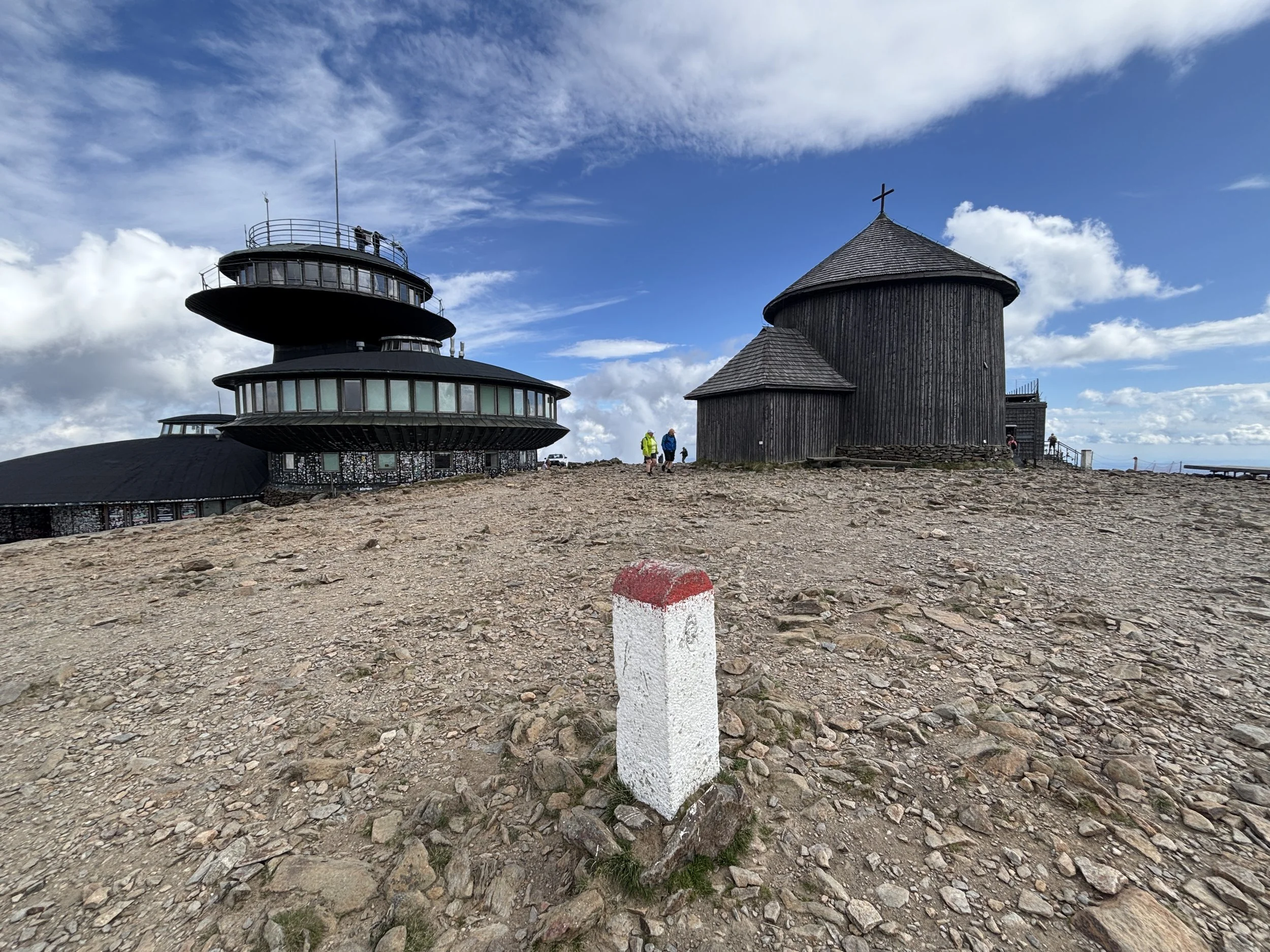
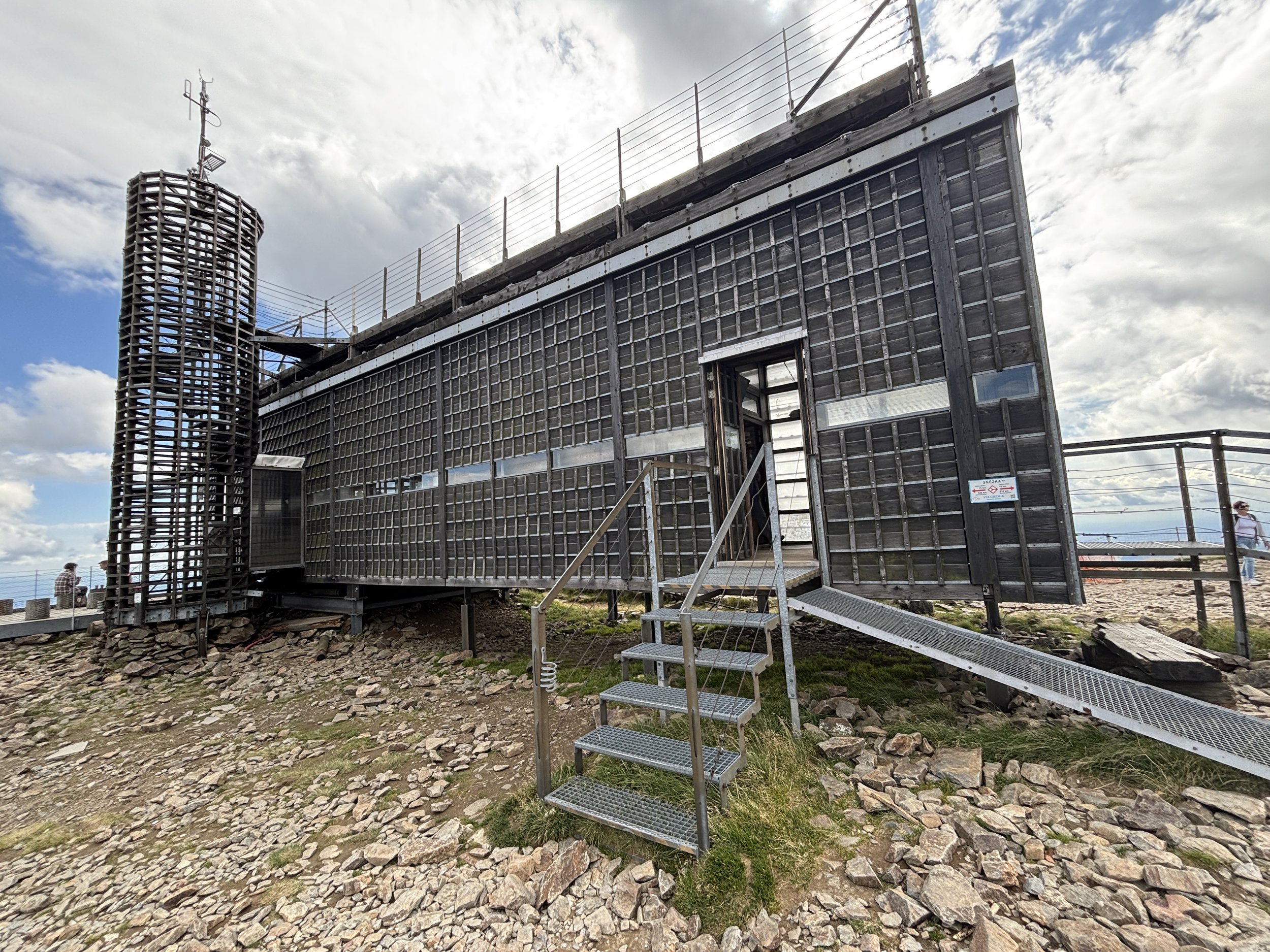
There are basically three man-made structures, two of them are on the Polish side: St Lawrence's Chapel and a UFO-shaped metereological station. On the Czech side there is a modern metal building which serves as a post office and shop.
The church is actually the oldest building of all by far, since its foundations date back to the 17th C.!
As per the meteorological station, there had been one in Śnieżka since the end of the 19th C., but the current one was built in the late 1960s. At the time of my visit it appeared to be closed and in a bad state of conservation, though.
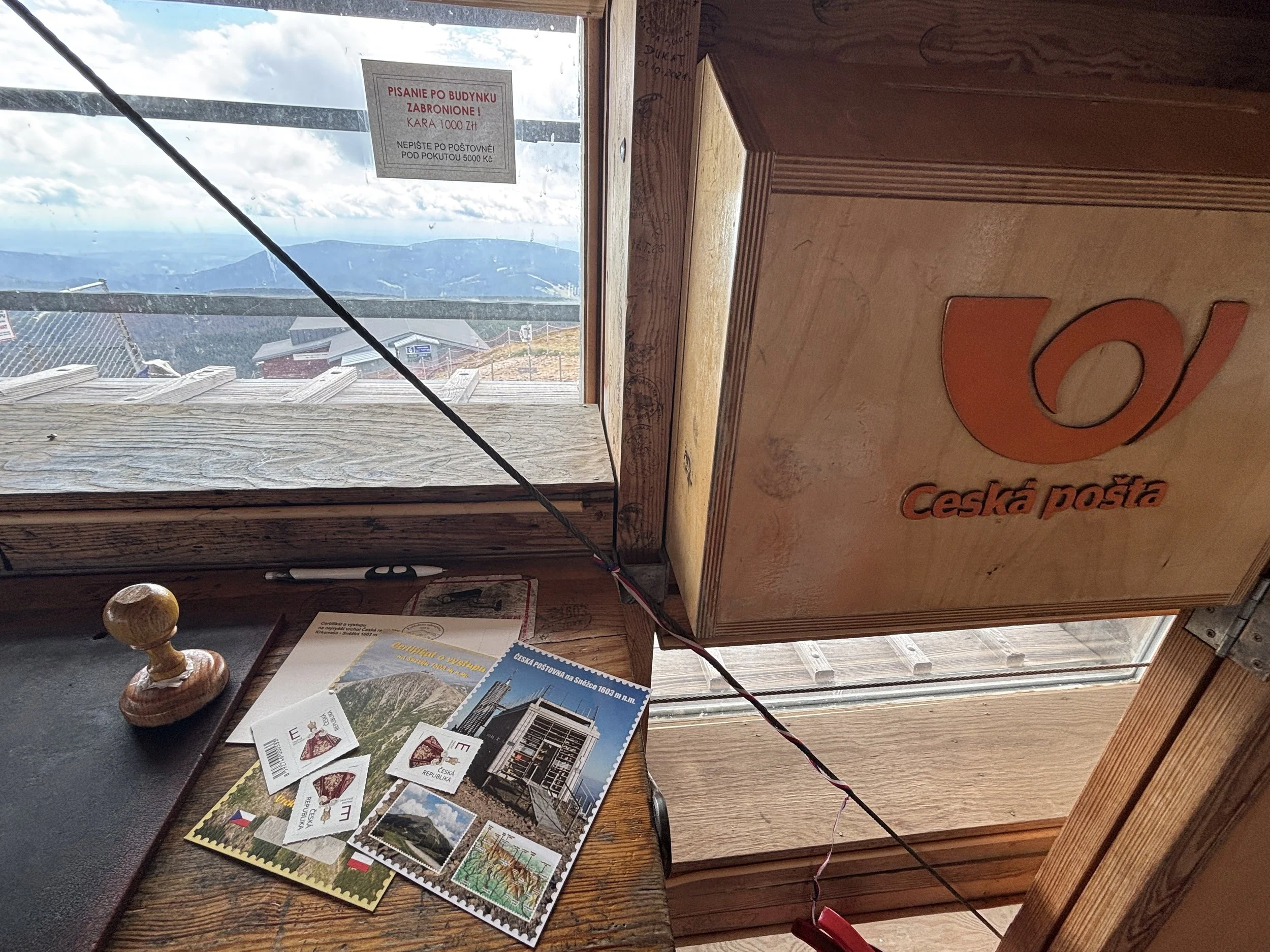
The other structure of interest at the summit of Śnieżka is the Czech post office, which is located a couple of meters inside Czech territory.
There has been a post office at highest point of Śnieżka since the 19th C. Back then it was the Habsburg post, though. The old wooden post office was dismanteled in the early 2000s and moved to another location in the Czech Republic. In its place they installed a container-like elongated pre-fabricated building (I guess it’s a type of structure that is efficient to build and maintain this high up).
So, one of the cool things you can do at the summit of Śnieżka is send a postcard through the Czech post office! They even let you use the ink marker yourself, even if today the stamps are one-use adhesives so this is not really needed. The establishment also sells snacks, drinks and souvenirs, so it is more like a corner shop than a proper post office.
By the way, from the top of Śnieżka (or perhaps I should Sněžka in this case) you can also descend onto the Czech side with another lift. Beware that if, for whatever reason, weather conditions for example, the lift was interrupted, the drive around the mountains back to Poland can be quite lengthy. I didn’t check the cost of the Czech lift or its times.
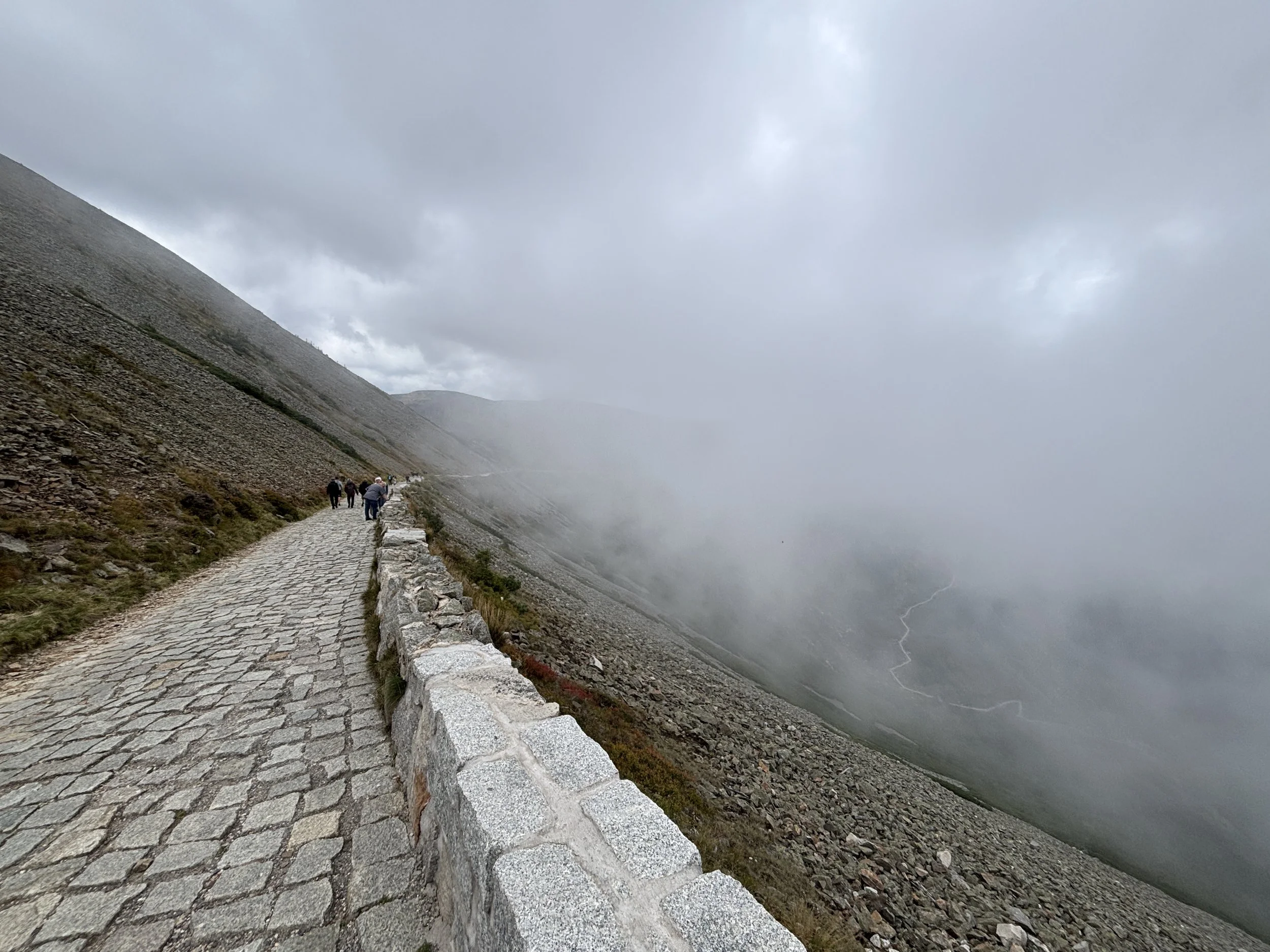
Talking about the weather, here is proof of how fast changing it can be here. The picture below was taken less than one hour after the sunny ones posted above. As you can see, there is a longer, paved trail to go up and down the summit. The views are not as good as on the other, more direct one, but this one is more gentle on the legs!
What else to see in Karpacz:
Wang Temple, a Norwegian stave church
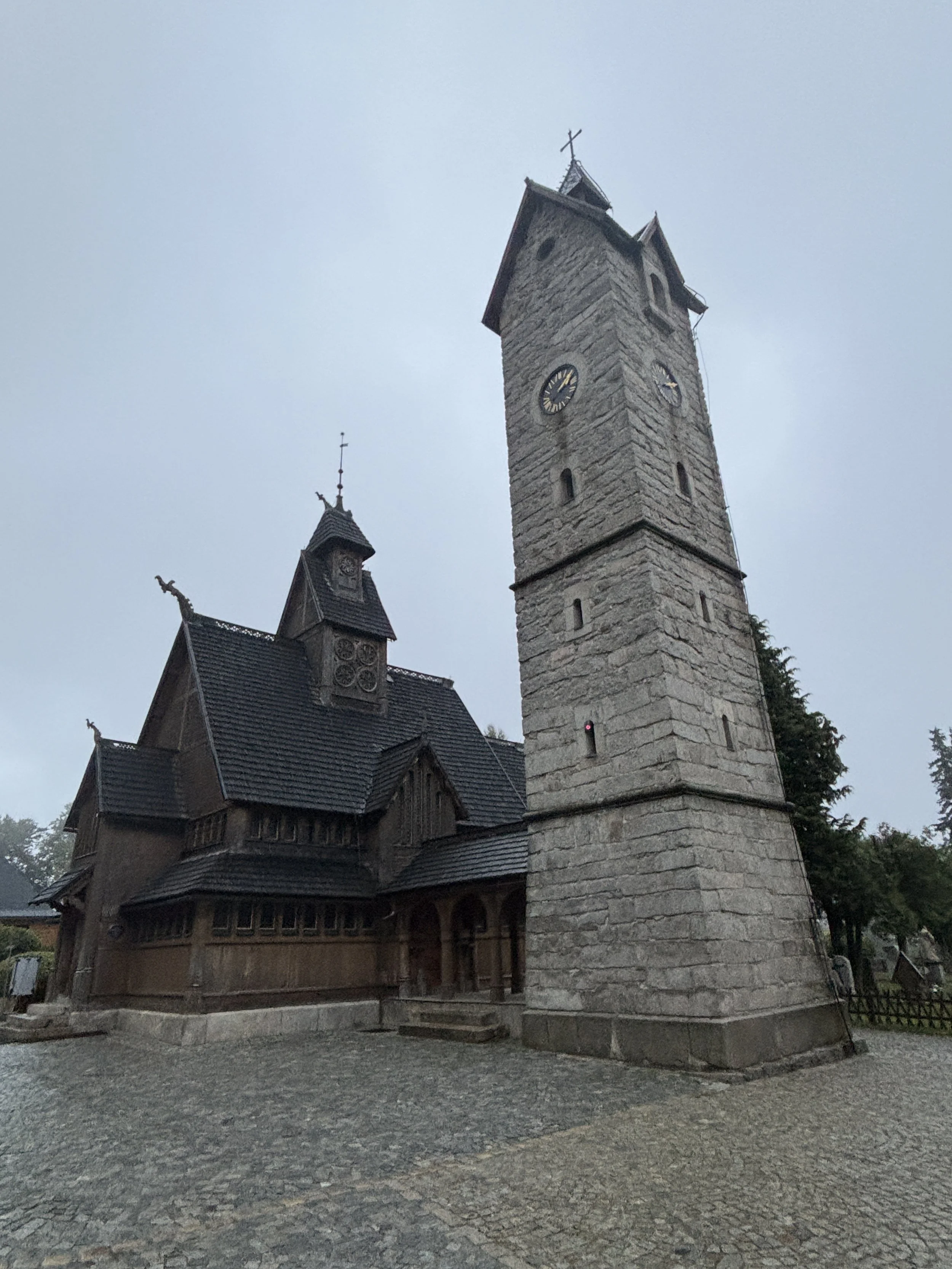
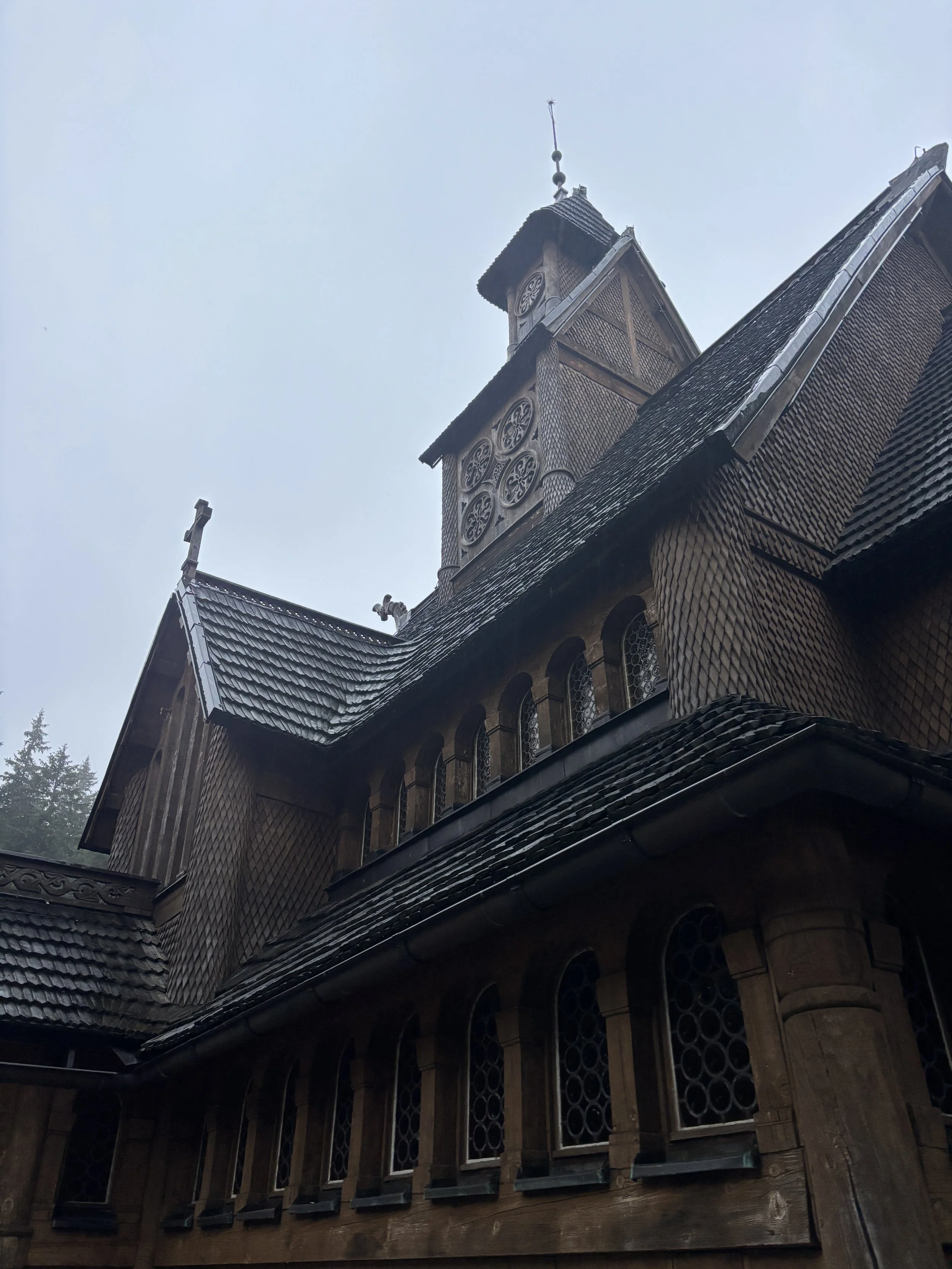
The other major landmark in Karpacz is the Wang Temple, a real Norwegian medieval stave church.
Sounds like a bit out of place, isn’t it?
In fact, it was built in Vang, Norway, sometime around the late 12th or early 13th C. but by the mid-19th C. it had become too small for the local needs and in 1841 it was decided to sell it.
To whom? Apparently, a Norwegian artist, Johan Christian Dahl, lived in Germany at the time and had an interest in stave churches, and he convinced King Frederick William IV of Prussia to buy it and have it shipped to Berlin. However, a local Silesian aristocrat at the Berlin court managed to get the king to gift it to the local Lutheran community.
So the church was dismantled piece by piece, shipped to Silesia and reassembled at its current location between 1842 and 1844. Apparently some elements had to be modified to better fit into the current emplacement. For example, the bell tower, made in stone, was a “local” addition.
At the time of my visit, the Wang Church was closed, so I could not see the interior. The church is within walking distance (if a bit uphill) from, again, Hotel Gołębiewski!
By the way, coincidentally, this is not the first Norwegian stave church to feature on this site! You can also check how this architectural style looks like in its traditional setting in this piece about what to see and what to do around the Sognefjord, which is very close to Vang, actually, the place of origin of the Karpacz stave church!
A nice hotel near Karpacz
Lake Hill Resort & Spa
Tyrolska 2 G, 58-564 Sosnówka
You can book it here.
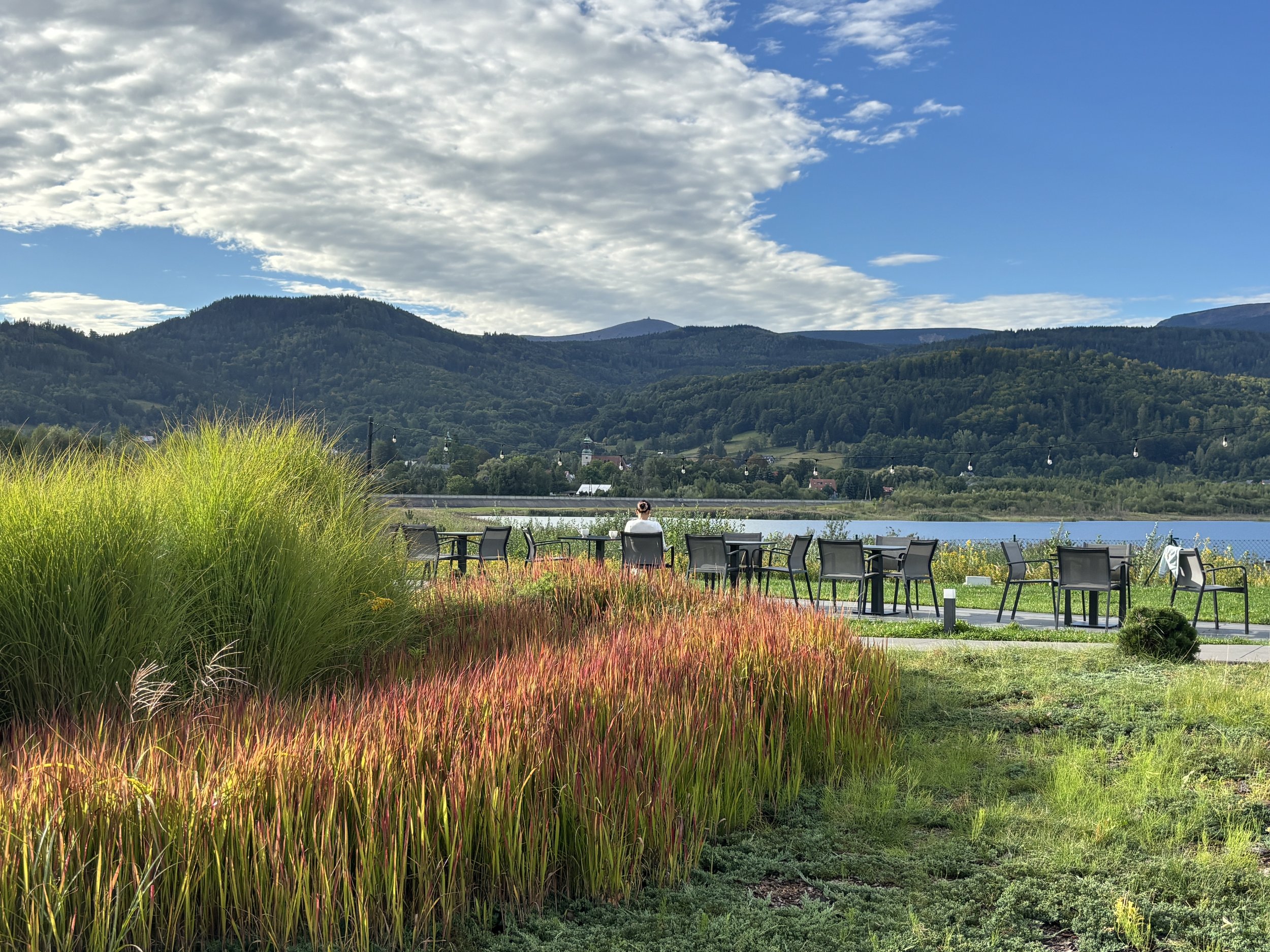
This is a nice and very modern hotel and apartment complex which lies, as the name implies, next to a lake.
It is located just a few kilometers west of downtown Karpacz, in the village of Sosnówka. It takes some 20 minutes by car to drive from here to Hotel Gołębiewski and the places I described earlier.
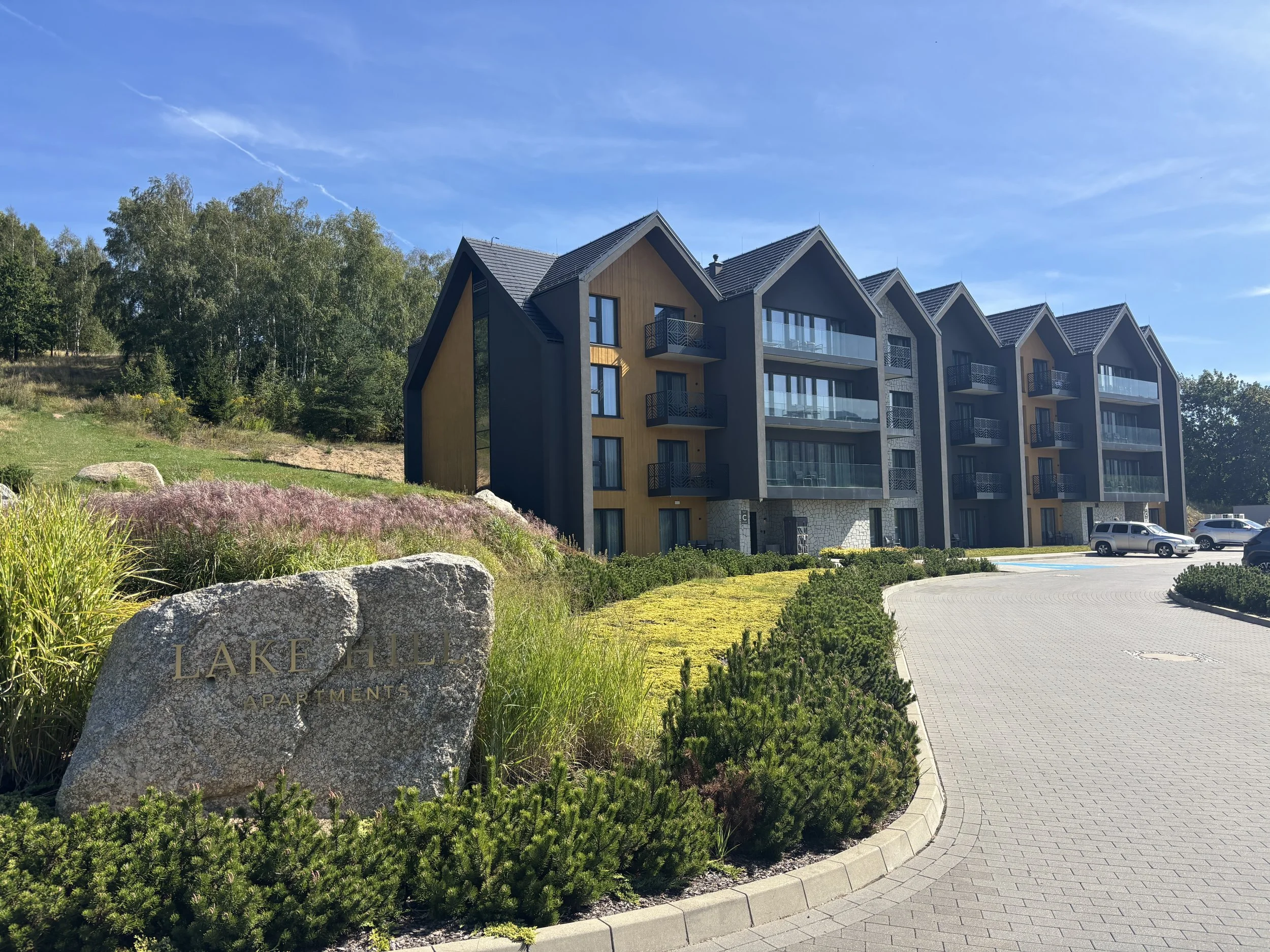
The resort has quite an interesting structure, since it is seems to be quite decentralized, with the rooms and apartments distributed among several buildings on both sides of a local road.
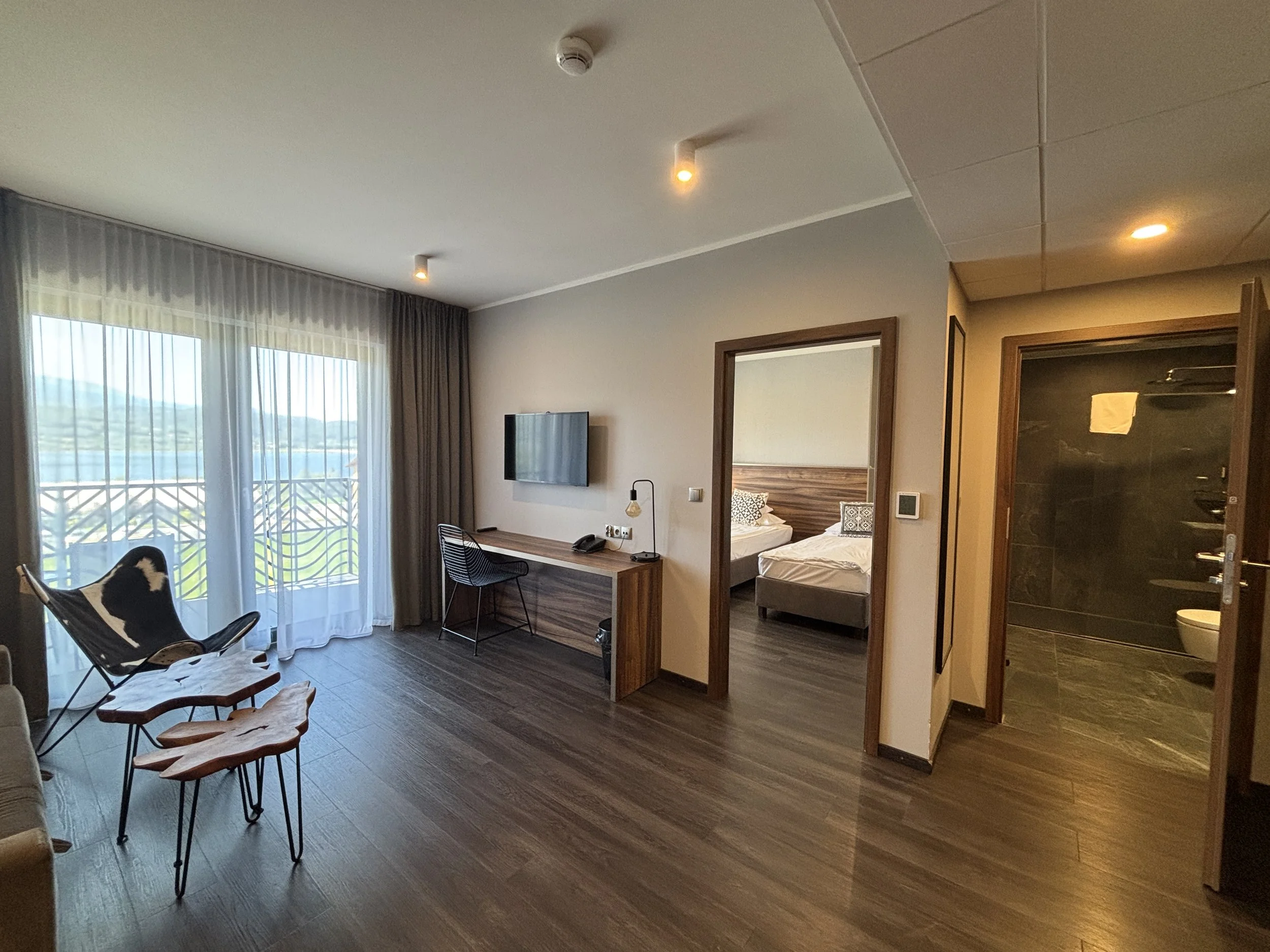
My apartment was in one of the buildings on the north side of the road. As you can see below, it was pretty spacious, with views of the lake (even if a bit far) and very modern throughout.
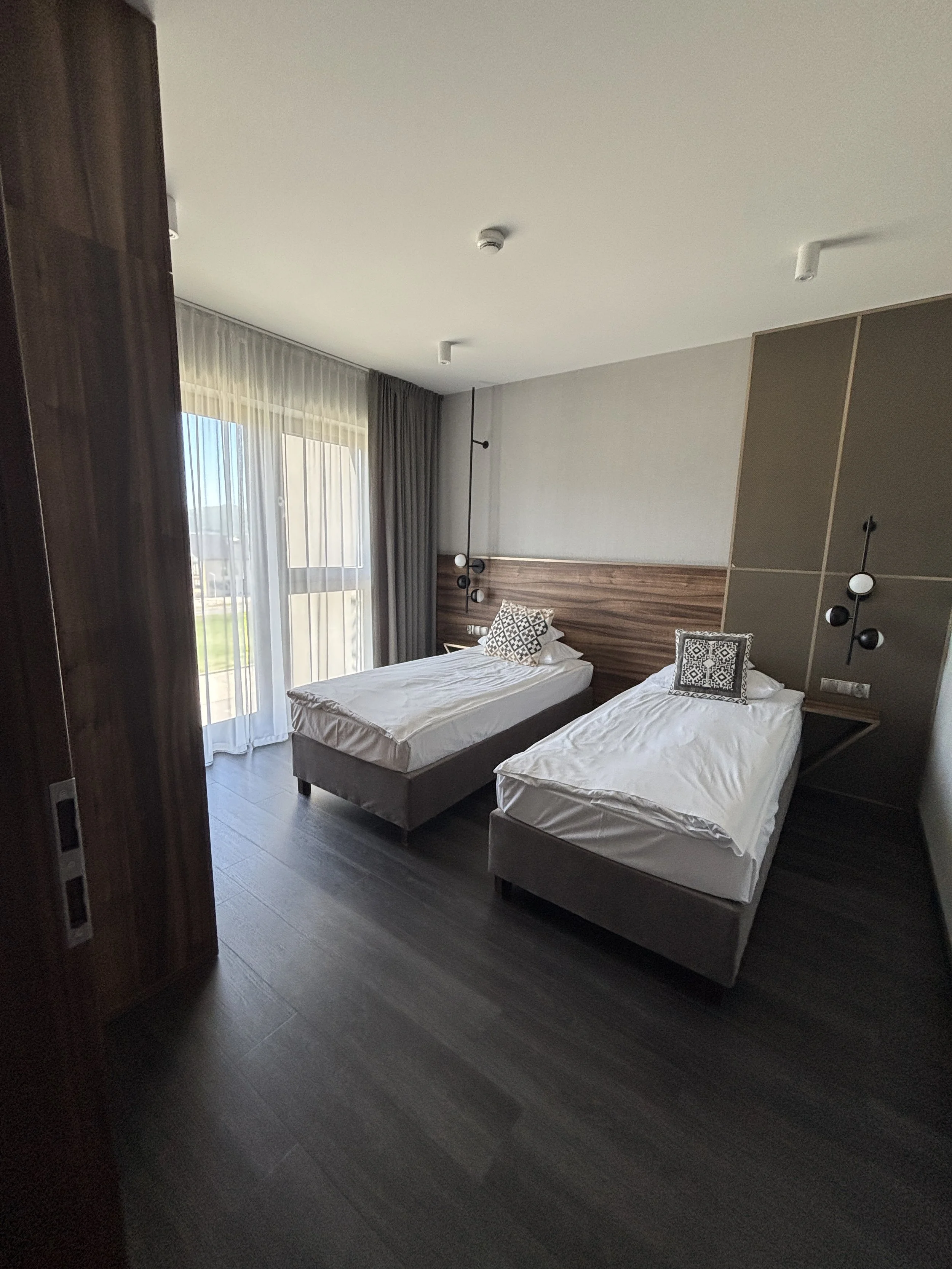
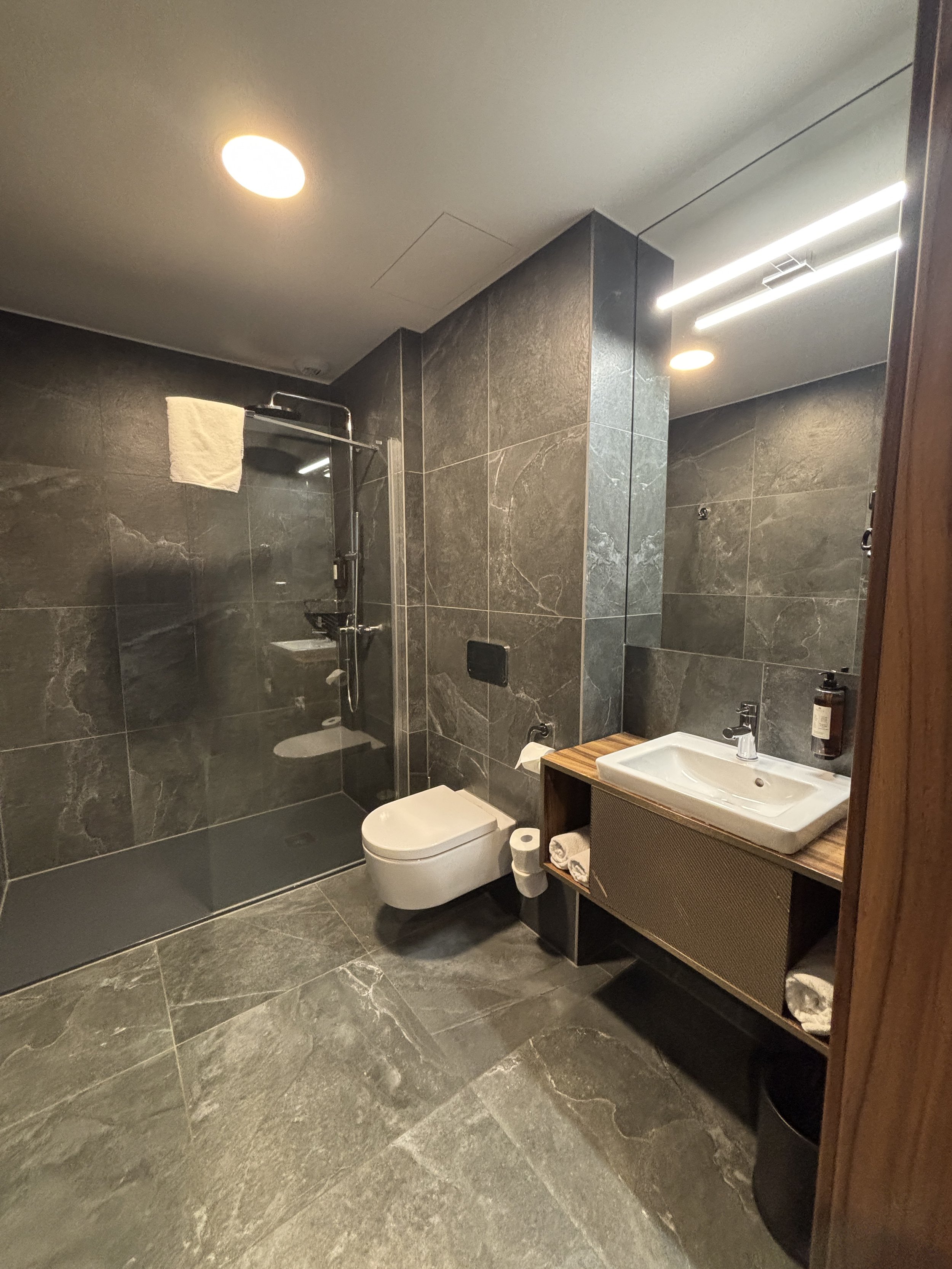
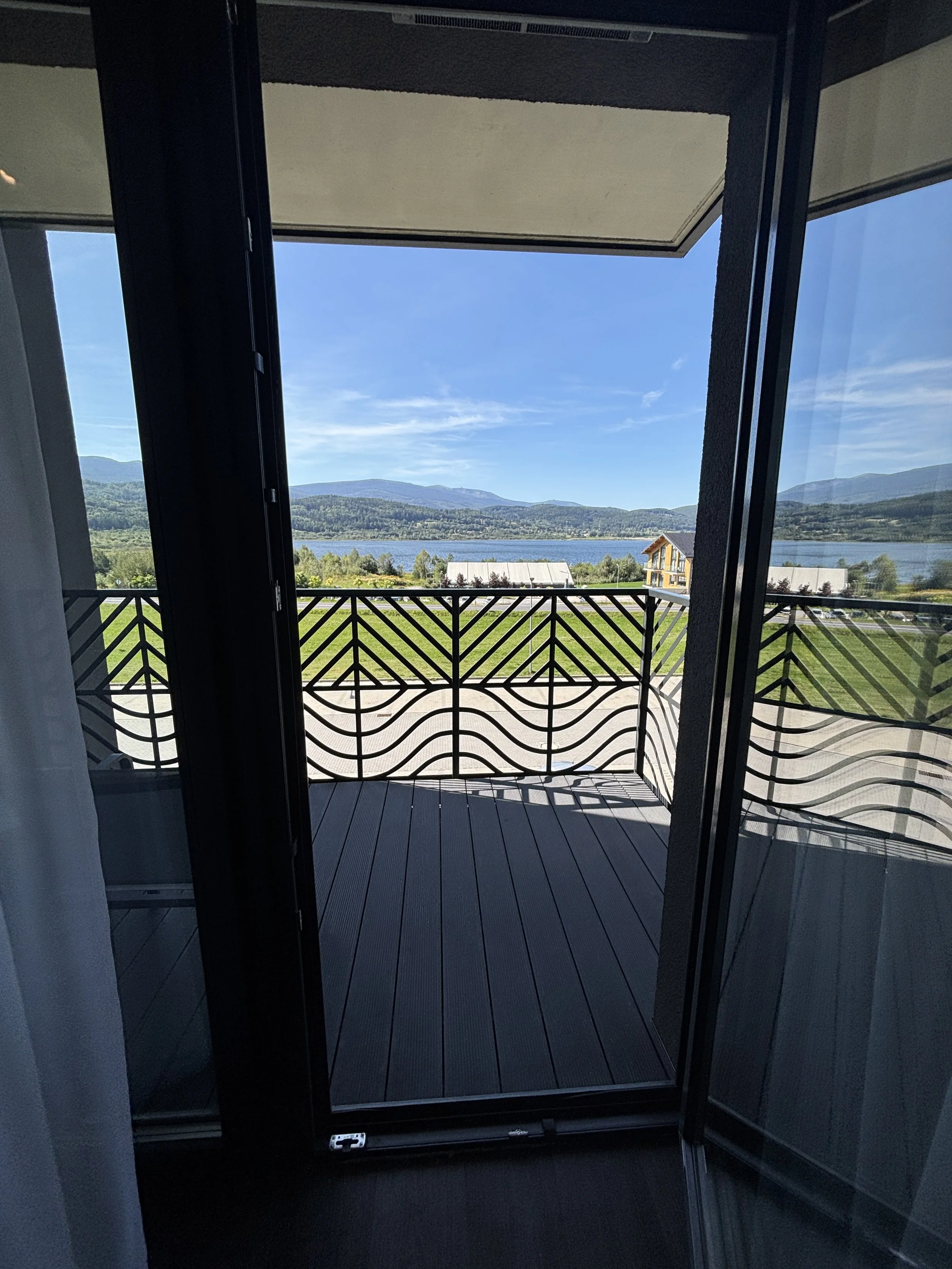
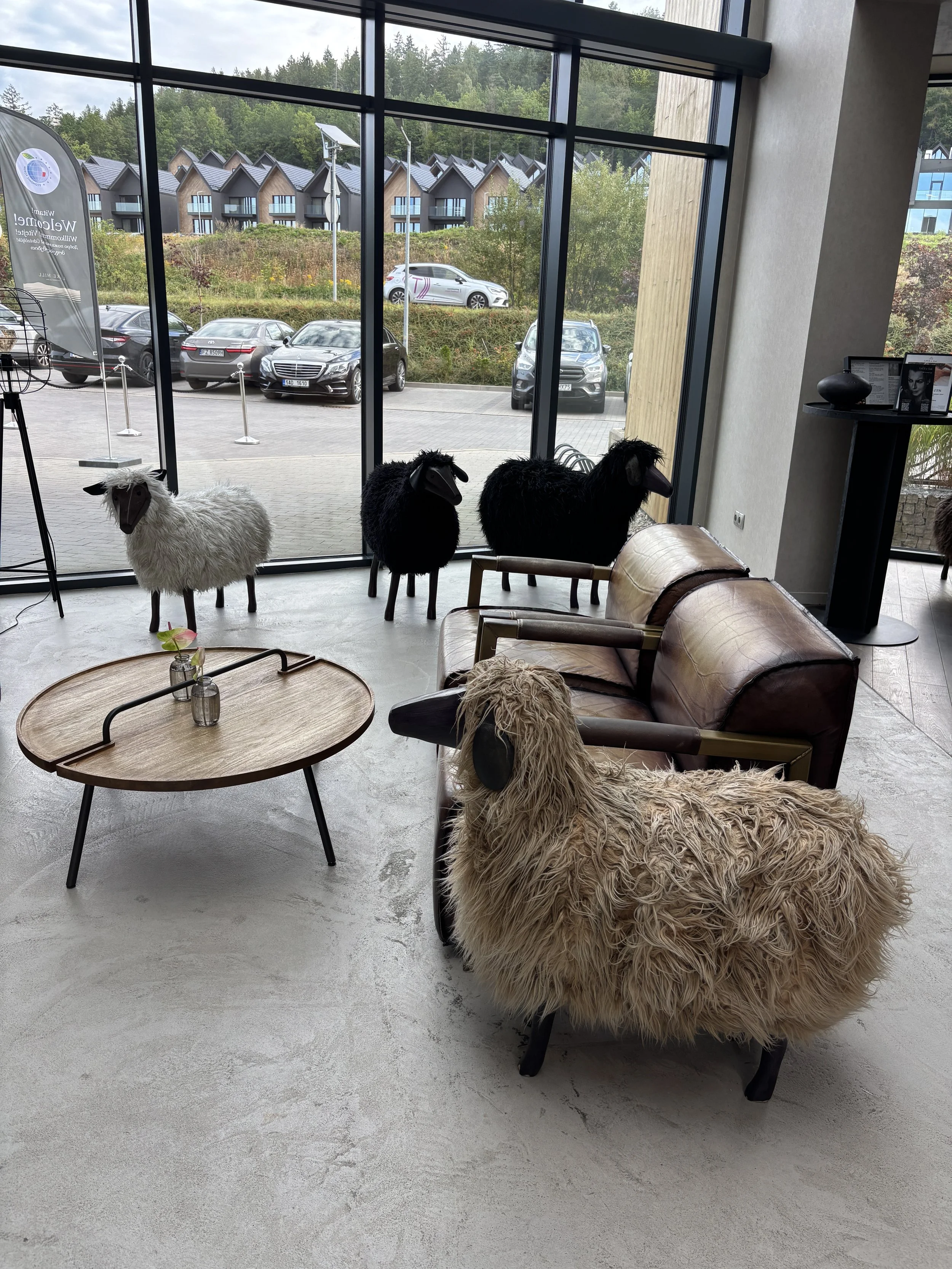
The reception and most of the hotel’s common services, such as the restaurant (where breakfast is served), are on one of the buildings lake-side, so you need to walk around 5 minutes and across the road to get there.
The whole complex is built along very modern lines, as I noticed and expressed in my post about Wroclaw, there seems to be a boom in new hotel development and construction in Poland. And, to be honest, the results are pretty good for the traveler, since there is availability of very nice, modern hotels at reasonable prices.
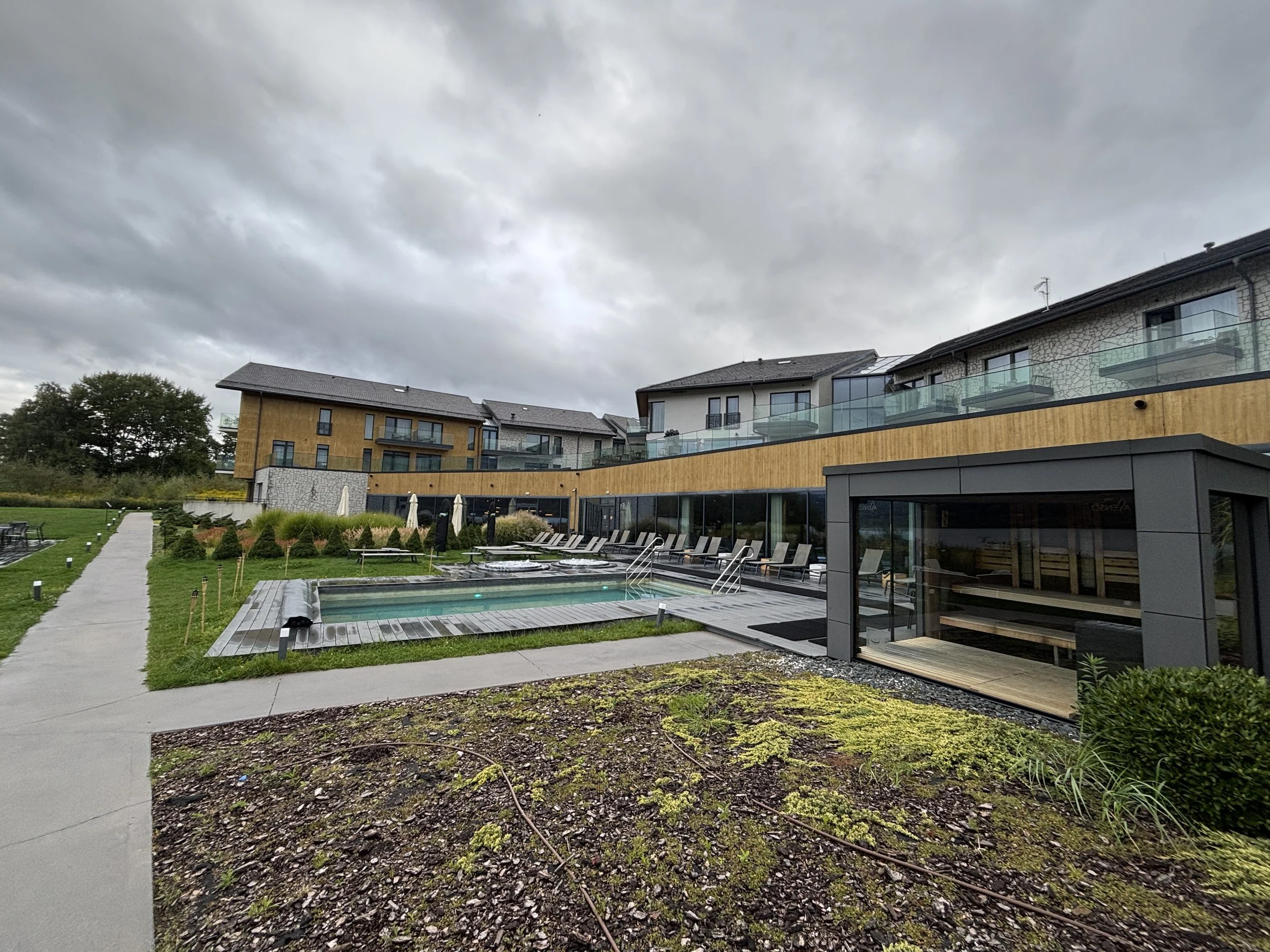
In this particular case, I didn’t have enough time to try all of the hotel services, such as the spa, but you can get an idea in the pictures here of the sort of relaxed atmosphere you can find here!
If you are planning a trip to Poland, you may find the following posts of interest:
