Karpacz and Śnieżka: hiking along the Polish–Czech Border
In this site we have covered some of Poland’s most beautiful cities, such as Gdansk and Wroclaw. There are, indeed, some very good reasons for the amount of attention these get from the travel content community. And yet, I was longing to see a bit more of the country outside of the fairytale-like medieval urban centers and Cold War architectural legacy that you often find in those urban centers.
An invitation to the 35th Economic Forum, an economic, cultural and political event which takes place every year in Karpacz offered such opportunity.
The Forum is often described as the “Central and Eastern European Davos”, in a reference to the renowned World Economic Forum, which takes place every year in that Swiss resort. The comparison is not misplaced, since Karpacz is also held at a resort town at the foot of the Karkonosze mountains (the highest part of the Sudetes range).
Besides the opportunity to enjoy the sights and the fresh air, Karpacz is also a place of interest for those interested in the topic of international borders, since the town is also the gateway to Śnieżka (Sněžka in Czech), the highest peak in the Sudetes, which separate Poland from the Czech Republic.
So, let’s have a look at what are the top things to do and to see in Karpacz and around!
This post may contain affiliate links. If you book or buy something through them, I earn a small commission, at no extra cost to you. It's one of the ways I keep Places of Charm going. Thank you for your support. My visit to Karpacz was courtesy of the Economic Forum and the Warsaw Enterprise Institute.
Getting to Karpacz
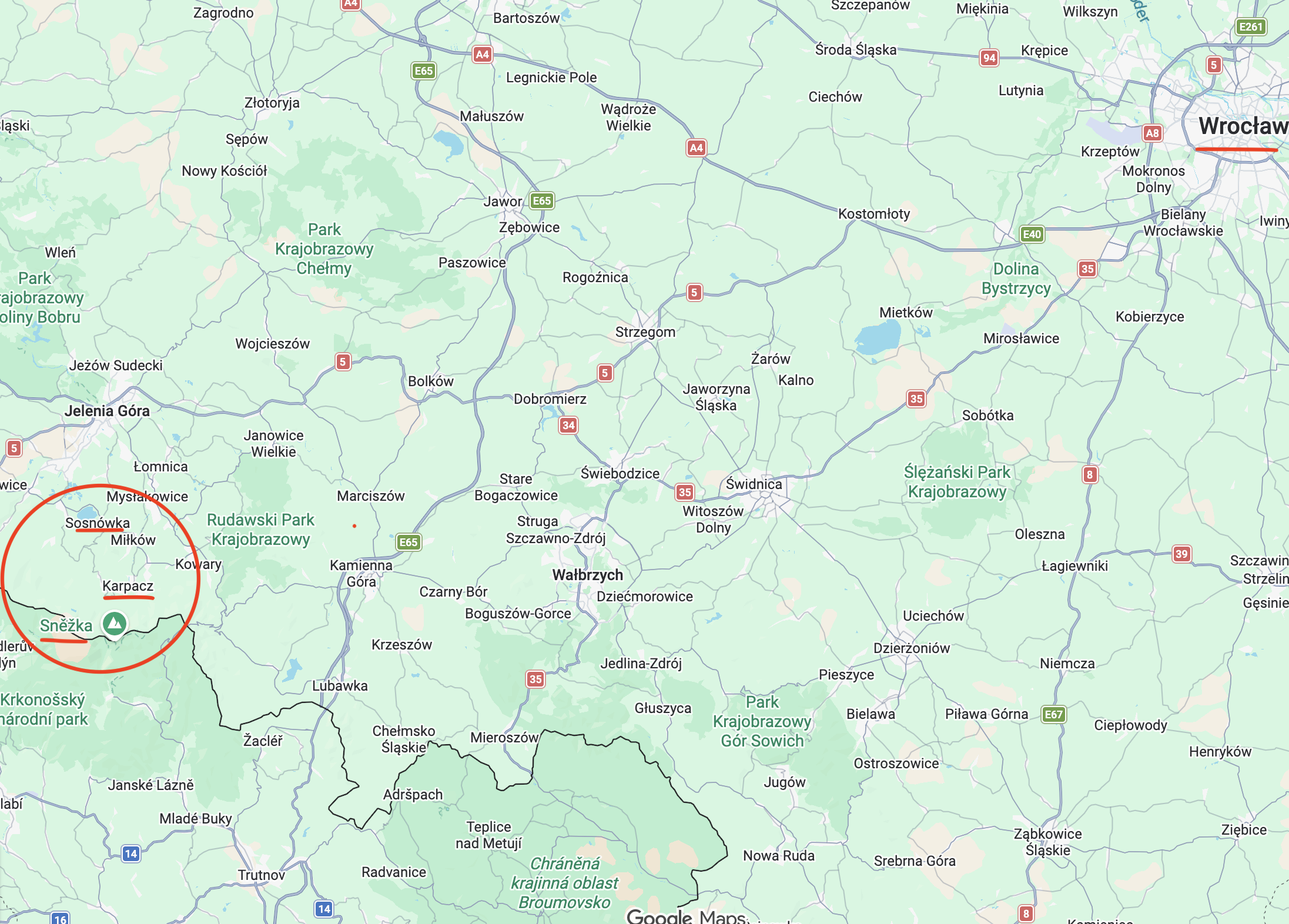
Karpacz is located a couple of hours drive from Wroclaw, which is the closest major city and airport. There is not train service, so the only other public transportation option is the bus.
Prague is also relatively close as the crow flies, but there are the Karkonosze mountain ridge is right in between, so I’d say that, it is best to take the bus from Wroclaw or rent a car. A small part of the way from Wroclaw is motorway, but for the most part the route runs through smaller countryside roads.
Home of the “Eastern Davos”
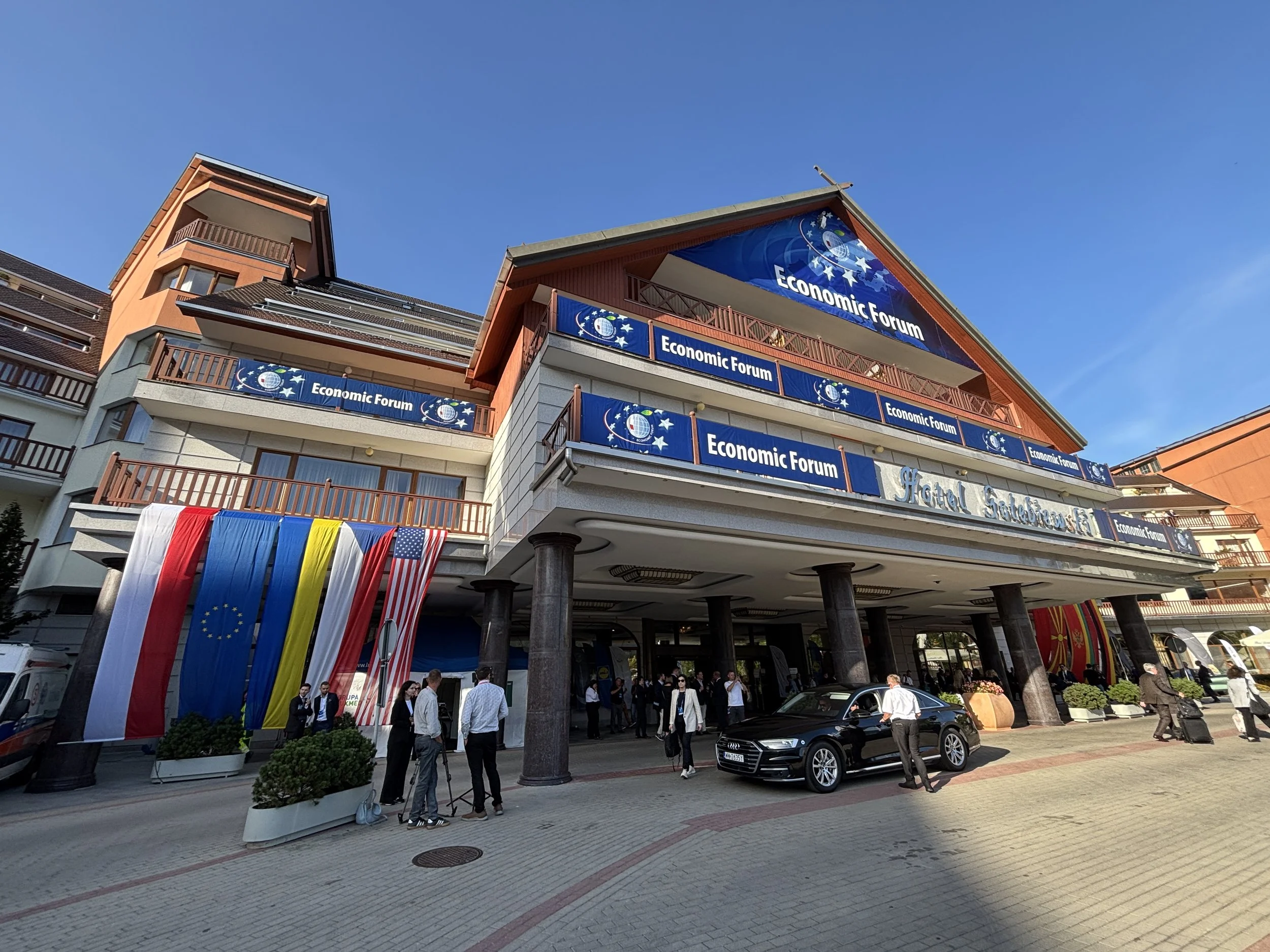
Although it is not the main object of this post, it is inevitable to write about Karpacz without mentioning the Economic Forum and the venue where it takes place: the Hotel Gołębiewski Karpacz.
This 880-room hotel is easily the largest piece of infrastructure in Karpacz. Since I was at Hotel Gołębiewski only for the Forum meetings, I can’t comment on how is it like to stay there as a guest, although you can check how it is like here (I actually stayed at Lake Hill, a much more modern establishment a few kilometres out of town, which I review further down this post), but it is certainly a landmark and a point of reference in what otherwise is a rather spread-out town.
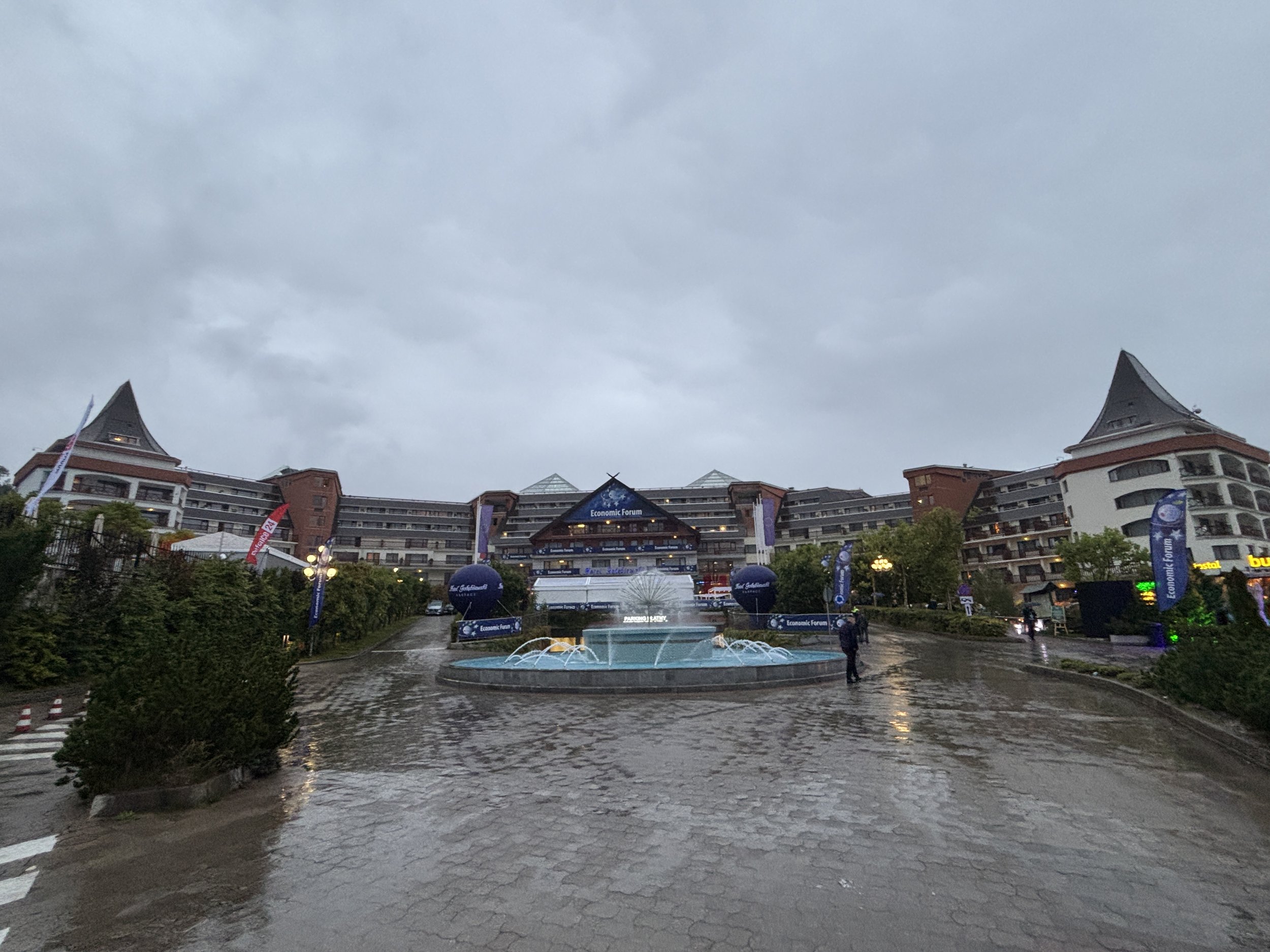
The fact that the town is literally on the slope of the mountain, with little flat ground around also contributes to this lack of a compact urban center, although there is a main street where most shops and businesses are. The two main attractions I describe in this post are both located near the Hotel Gołębiewski, though, in the upper part of town: the lift to Śnieżka, at the Karpacz ski arena and the Wang stave Church
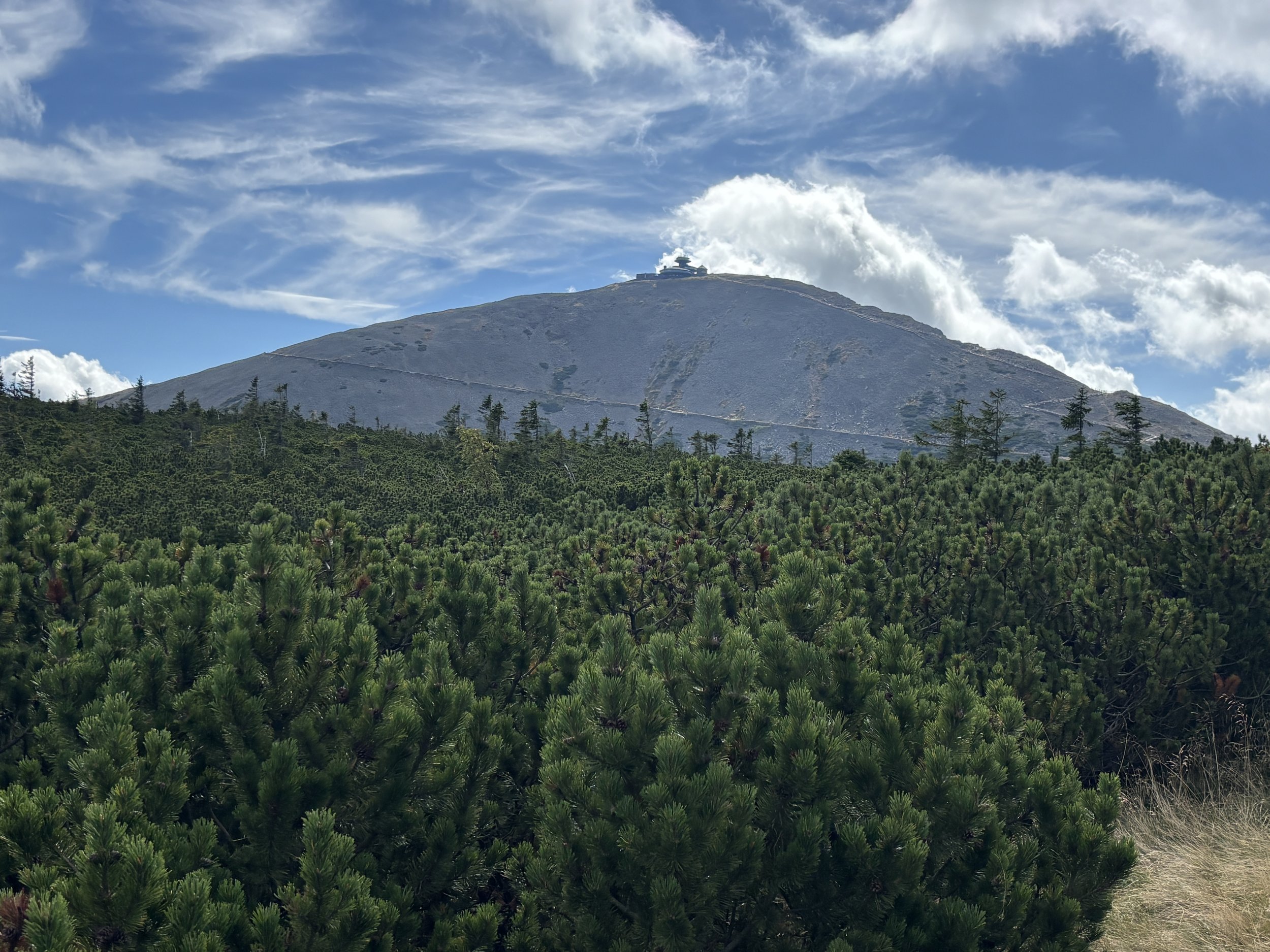
Climbing to Śnieżka, highest peak in the Sudetes (& in the Czech Republic)
This excursion, which for me is the highlight of the Karpacz outdoor experience and it acutally takes you to the highest point in another country, the Czech Republic.
This is because the Śnieżka/Sněžka peak is shared by Poland and the Czech Republic. In fact, when you hike to the summit, you are following the border line all along.
By the way, for the rest of this post I will use the Polish name for the mountain (“Śnieżka”) since I describe here how to get to the peak from the Polish side.
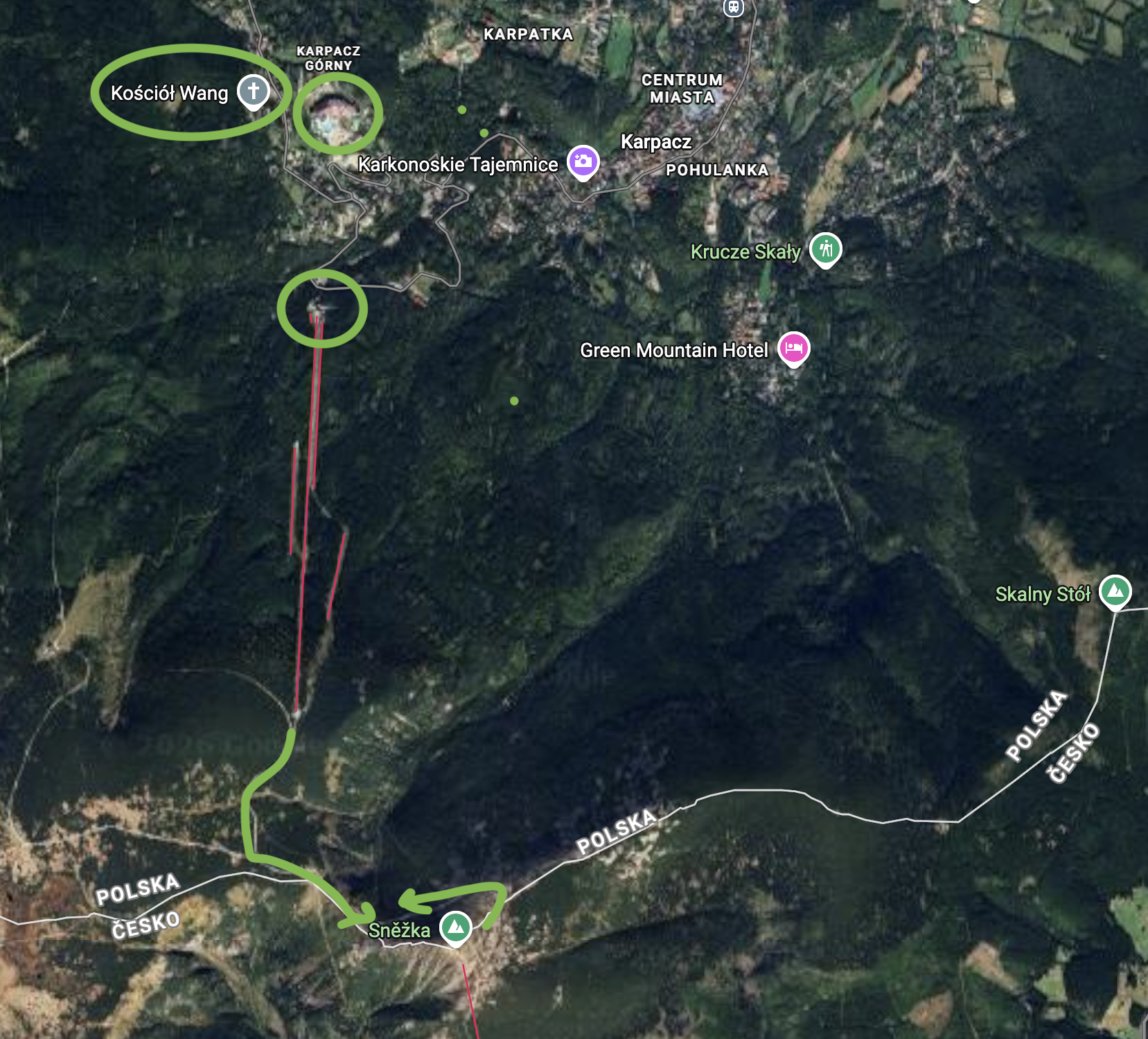
In the map below I have tried to highlight the main points of interest mentioned on this post. See, for example, the lift from Karpacz to the Kopa station (in red) and the green arrows indicating the rough itinerary of the walk along the Polish-Czech border up to Śnieżka and back to Kopa. Also marked with green circles are two other landmarks I reference: the Hotel Gołębiewski and the Wang Church.
So, how to get to Śnieżka? Unless you want to spend several hours trekking, the fastest and most convenient way is to take the lift!
The base station of the lift is located at the Karpacz Ski Arena (yes, Karpacz has some ski slopes!) which is located some 10-15 minute walk uphill from Hotel Gołębiewski. You can also take a Bolt ride (the European equivalent of Uber), since they are plentiful in Karpacz and not too expensive.
A return ticket costs around 100 Zloty (€22 / $25), so not cheap, but definitely worth it!
There is quite a bit off forest in the area the the lift goes through. This is the Karkonosze National Park, which looks inviting enough if you are into trekking, but you need to get a ticket first!
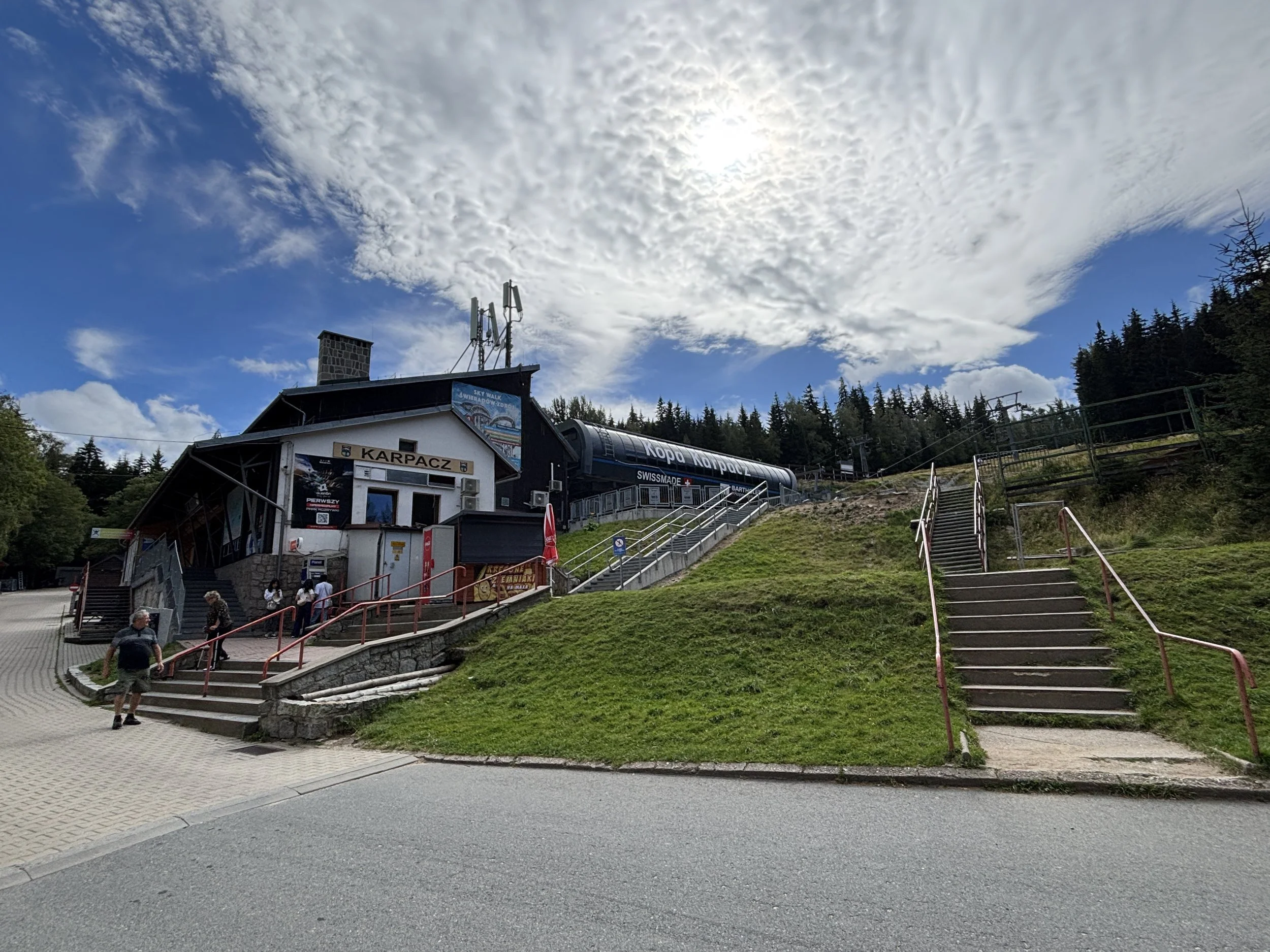
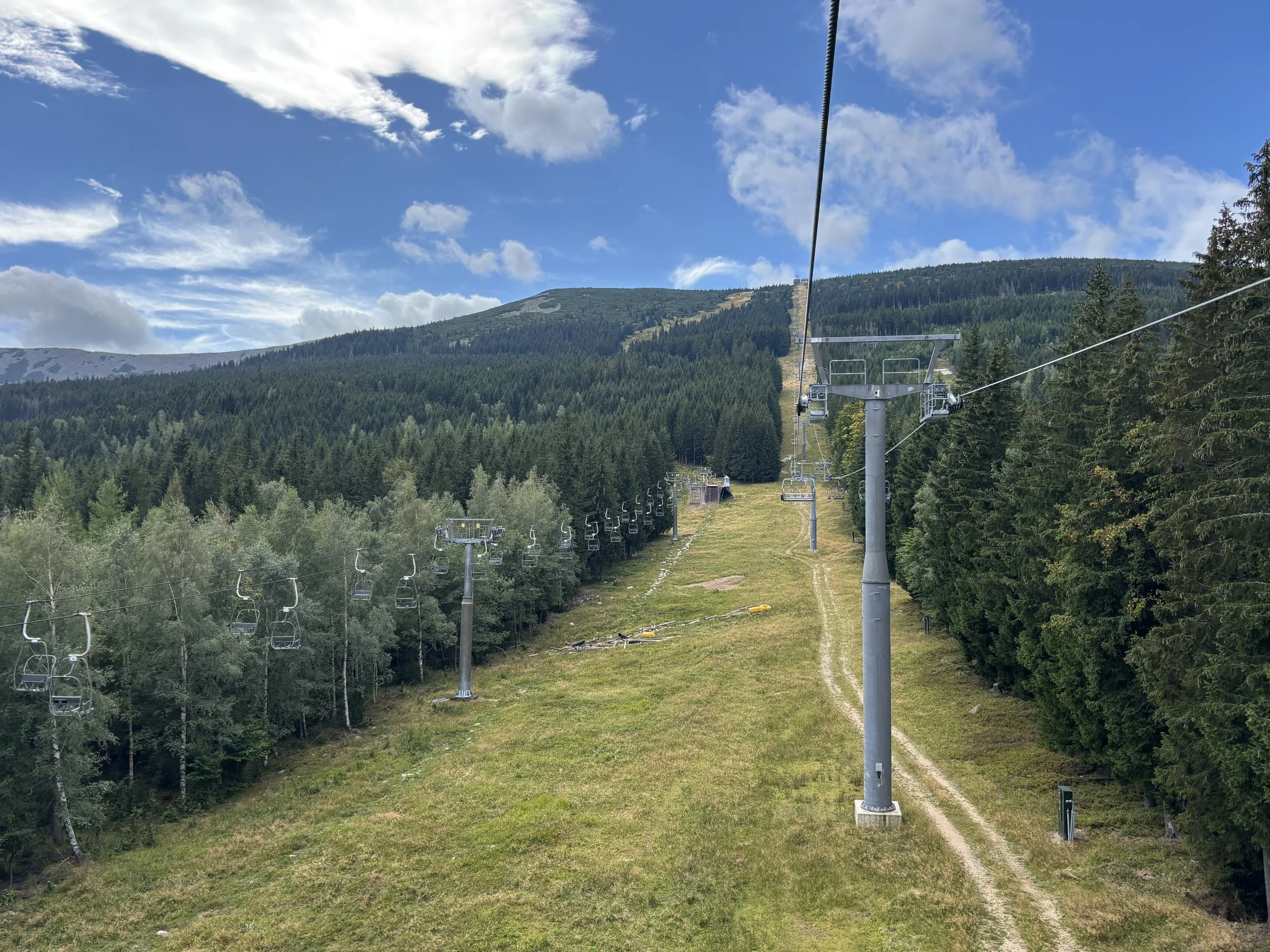
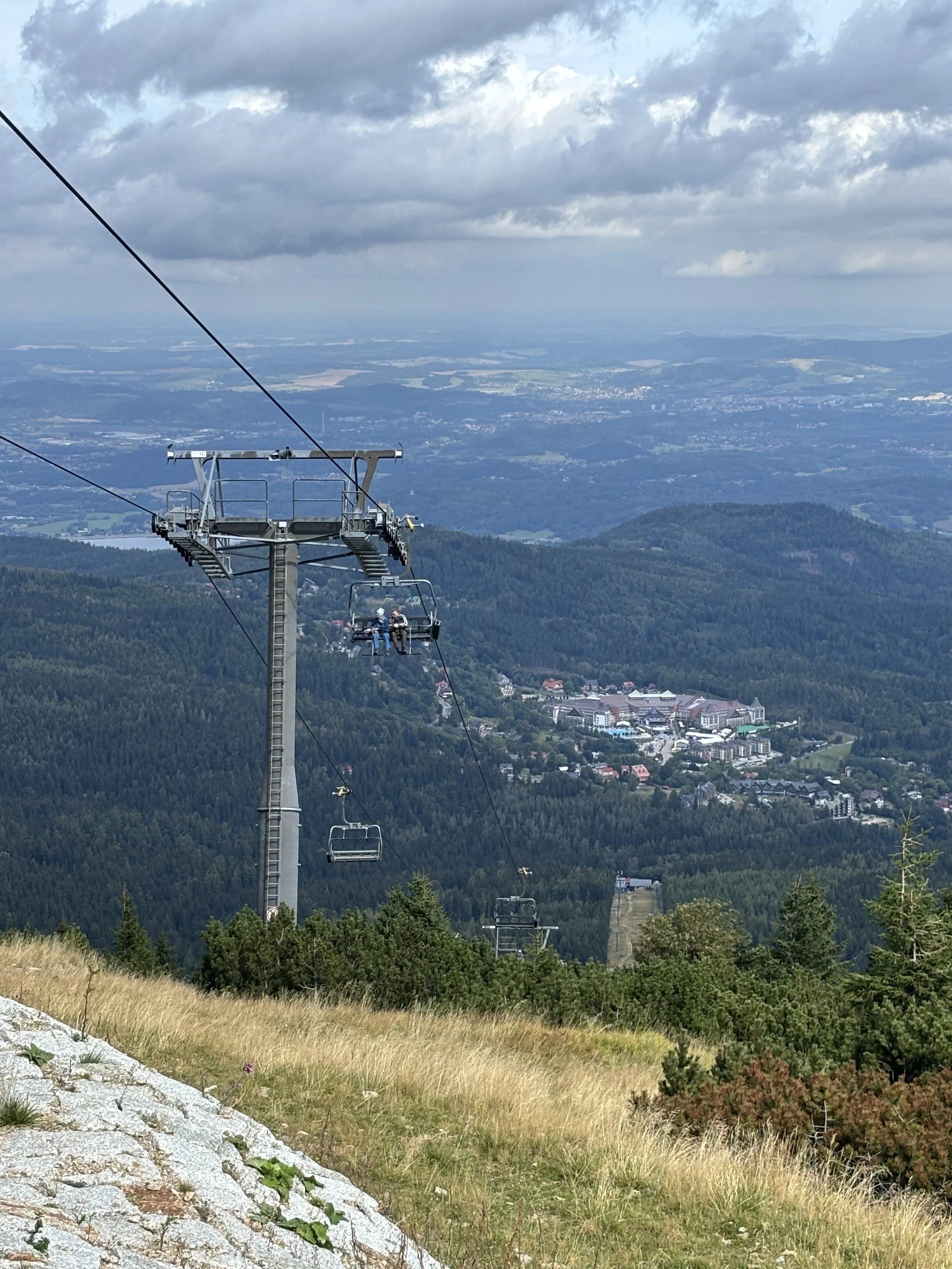
Taking the lift to Śnieżka
It is important to note that the lift doesn’t take you all the way to the summit of Śnieżka, but to Kopa, which is on a ridge from where you would need to walk a couple of additional kilometers.
The first one of these is on flat ground along the ridge and on a paved trail. The second part is the ascent to the peak of Śnieżka and it is way more uphill.
There are actually two branches of that trail, one that goes through the most direct and rocky trail and one that goes around the back of the mountain and it is a bit longer but more gentle.
By the way, the lift up is also an experience in itself, since it offers great views of Karpacz (note how prominent Hotel Gołębiewski is in the surroundings!) as well as of the Silesian plains beyond.
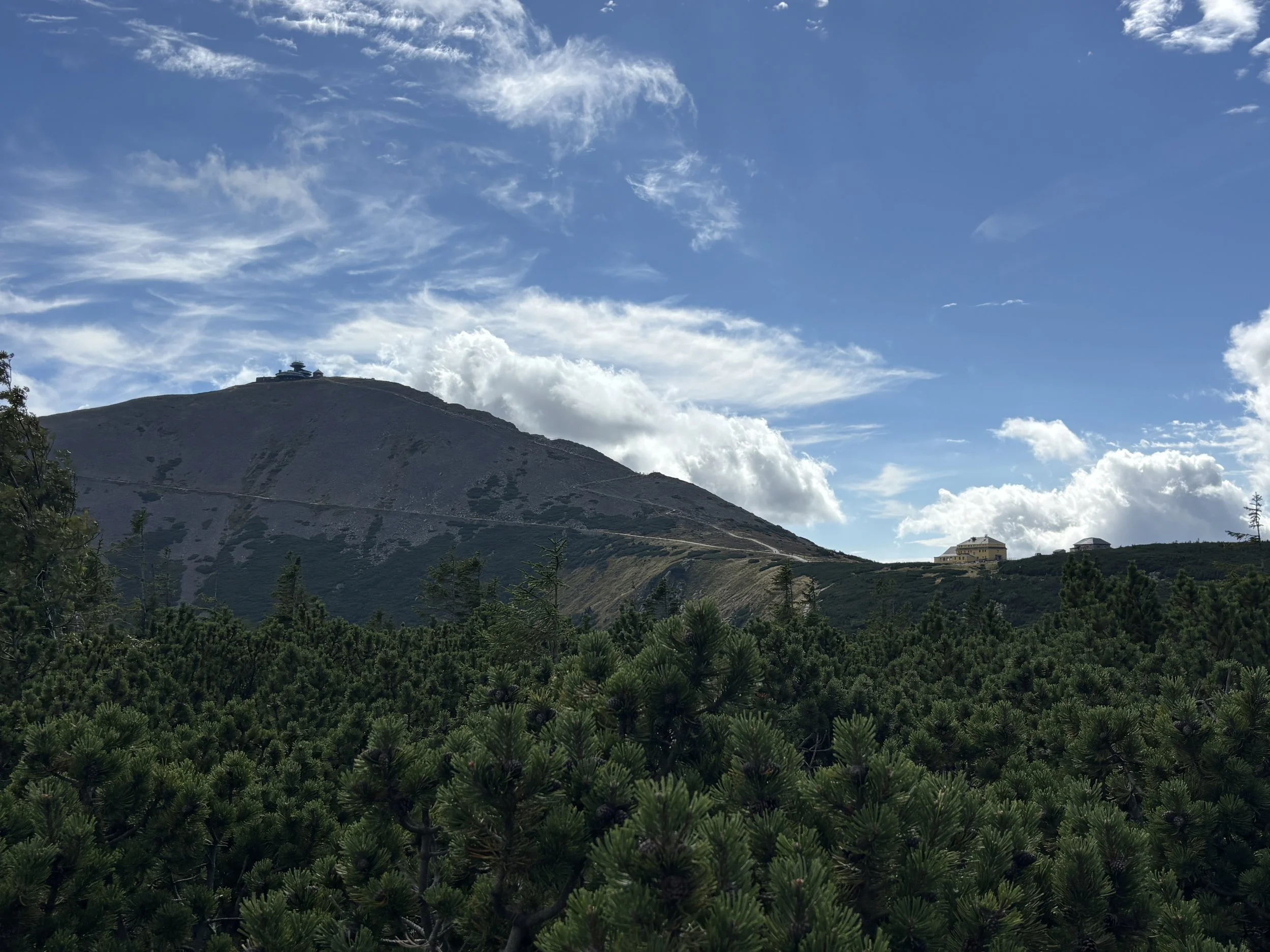
As mentioned earlier, the lift leaves you at Kopa, which is a spot at the top of a ridge and from there you still need to make your way to Śnieżka on foot. The path follows a short of plateau which is right at the edge of the tree line. In fact, it is quite an interesting landscape because you can see that conditions here are such that fir trees don’t grow very tall, possibly because of the wind, so it really looks like a bonsai forest from some angles. I later read that all along the ridge there are some very ecologically valuable peat bogs.
The next point of reference is Dom Śląski (Silesian House), which is the yellow building with a slate roof that you can see in the picture below. It is located roughly half way between the Kopa lift station and the peak.
This building which serves now as a mountain refuge and restaurant has quite an interesting story. There had been a mountain refuge at this spot for centuries, but in the mid-19th C. a proper building was erected in the Silesian style. That refuge was reconstructed twice until getting to the current building, of 1921. Quite remarkably, in 1924 it hosted an experimental wind turbine to produce electricity! But that early attempt at having an aero generator was short-live since the windmill collapsed a year later under the weight of the snow. Nice try, though!
This is also where things get interesting for border chasers, since the international divide runs just a couple of meters to the right of the path. Dom Śląski is entirely on the Polish side, however, I read that until the 1970s there was another “twin” refuge just opposite on the Czech side, which ended up in disrepair and was later demolished.
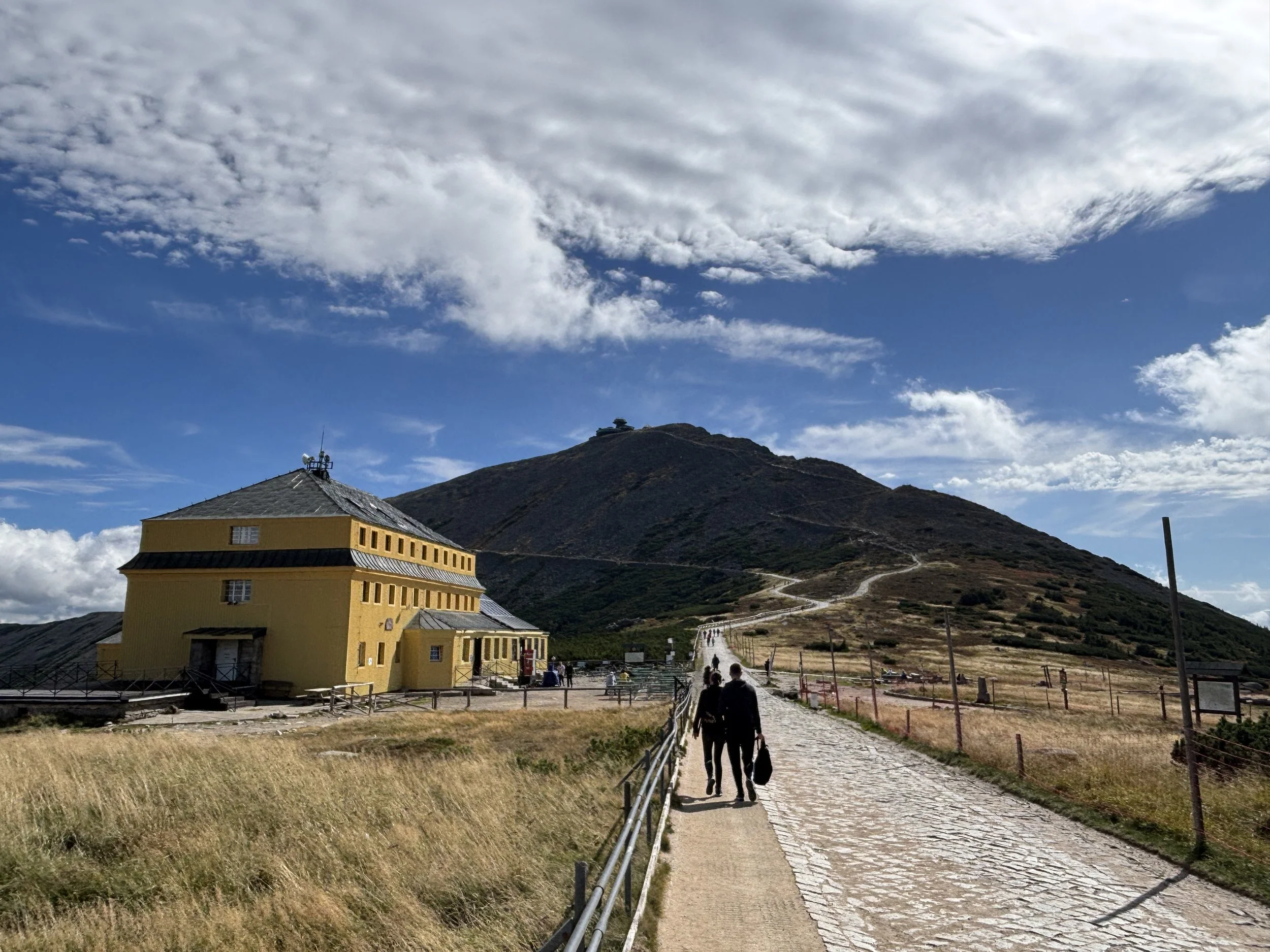
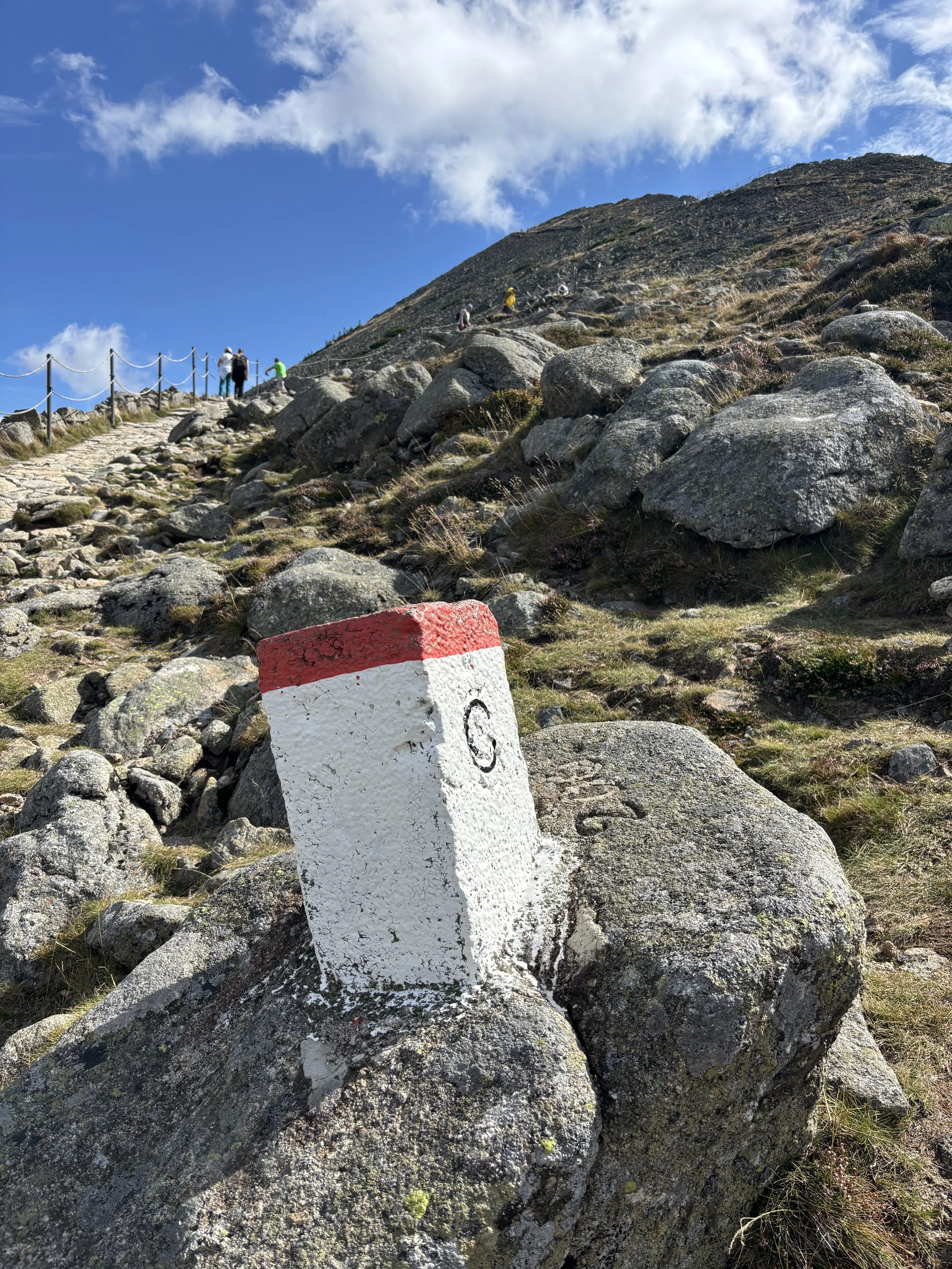
This area is quite a treat for border-chasers, since you can easily trace the many border markets that dot the ridge in a truly stunning natural setting. You can see one of the markers below: they are white with a red top and they are marked with the letters P (“Polska”) or C (Česká Republika) depending on which side you are.
Worth noting that this has not always been like this. For quite a long time this was a border between Germany and the Habsburg Empire, but during the 20th C. sovereignty shifted several times, with the creation of Czechoslovakia first, then annexation of the whole Sudetes area and later of the rest of Bohemia as well, by Germany, and after WW2 the return of Czechoslovakia, the transfer of Lower Silesia to Poland and later the independence of the Czech republic.
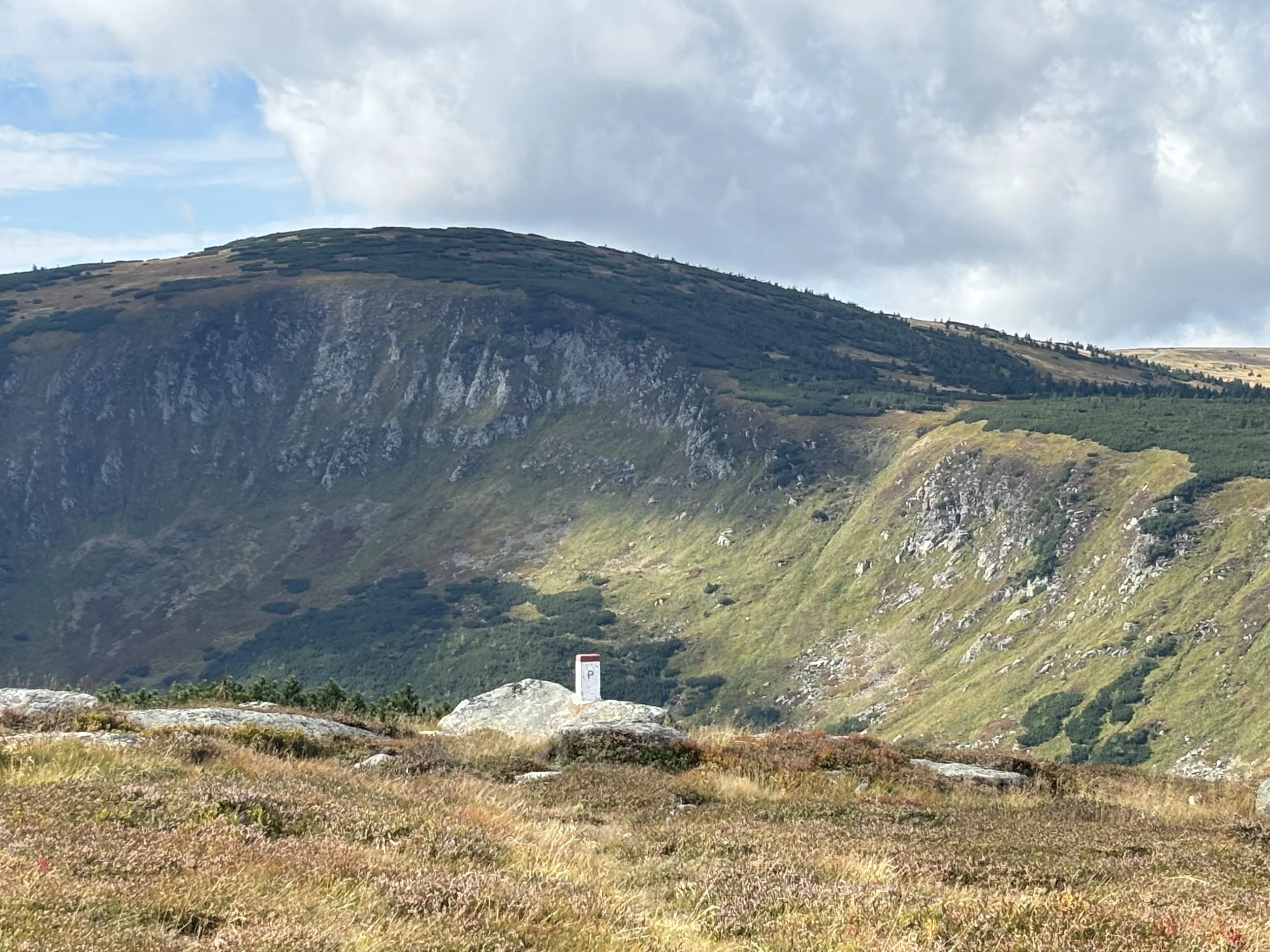
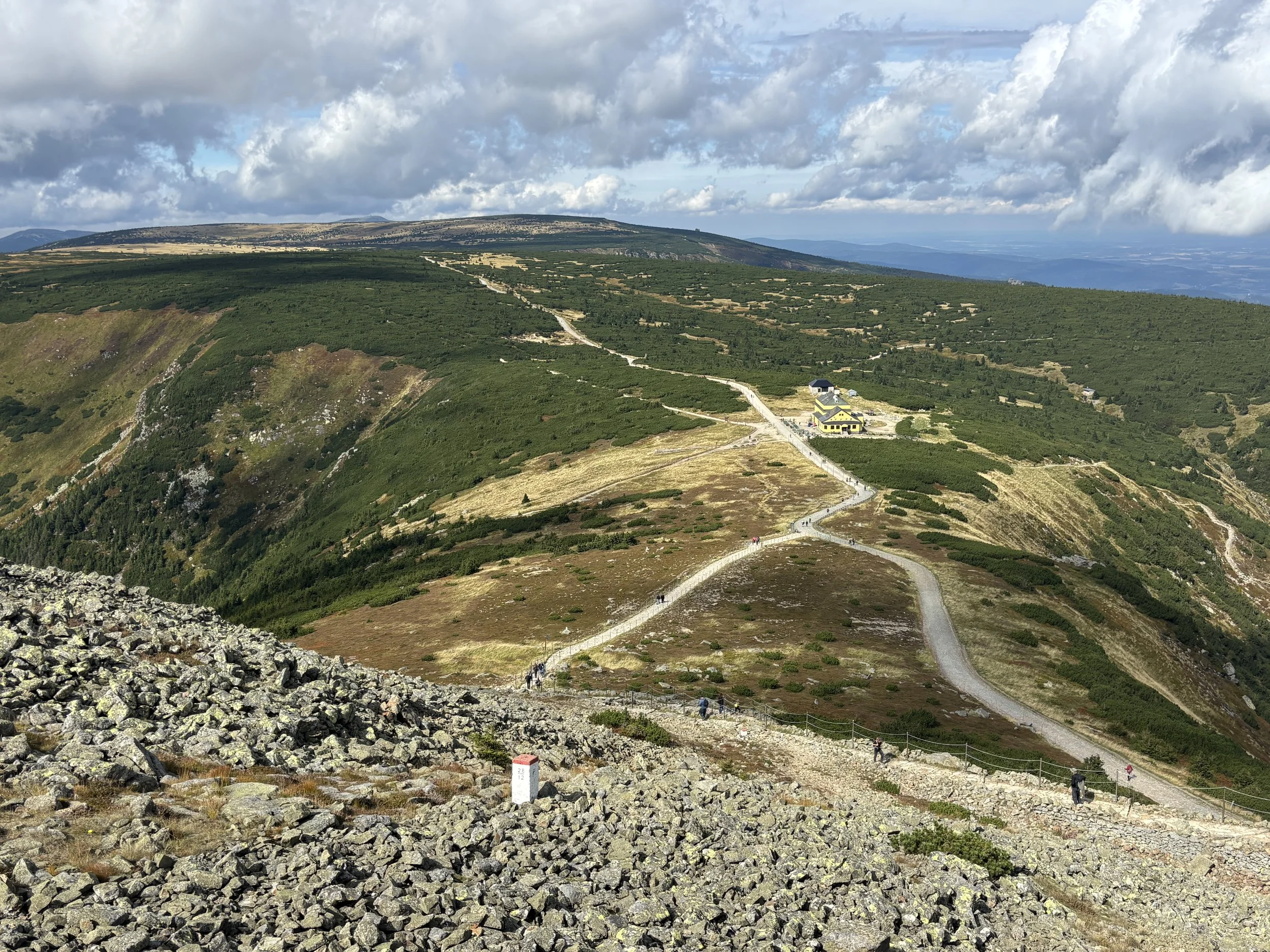
I would recommend wearing appropriate shoes for a hike. While there is a paved and regular path on the flat section along the ridge, the ground gets more irregular and rocky as you start to climb.
When I climbed, weather conditions were pretty good and I was wearing regular street shoes (because I didn’t have any other pair of shoes with me on this trip!) and could complete the route without much problem. Having said that, it would have been better to wear something more sportish to be on the safe side.
In terms of difficulty, I would say that, with good weather conditions and provided you are reasonably fit, it is not particularly challenging. I saw elderly people, children and even a lady carrying a small dog on her back. However, it is quite a steep walk and shouldn’t be taken lightly, particularly if weather conditions are not optimal (there is actually a plate along the trail that remembers two Czech mountain guides which died attempting to rescue a couple on icy conditions in the early 1970s).
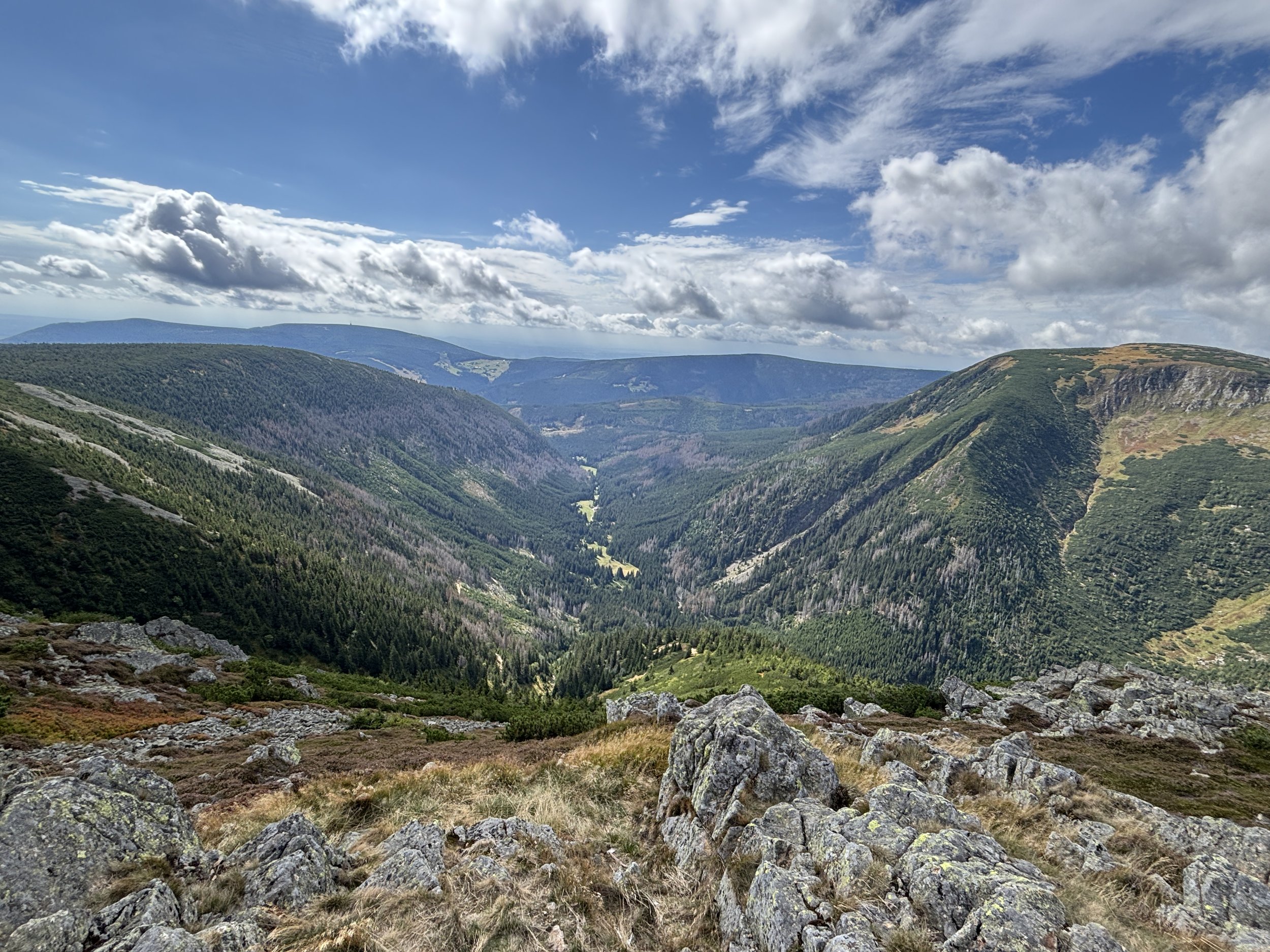
The view onto the two countries (Czech Republic above, Poland, below right) is really magnificent and there are several viewing platforms along the way, which is great. You are never far from a border marker here and, at times is difficult to tell in which country you are, since the border doesn’t follow an exactly straight line (although the trail is mostly on Polish soil).
Getting to the summit of Śnieżka
So, after around 45 minutes of climbing up the mountain path, I got to the peak of Śnieżka. And what do you find here?
There are basically three man-made structures, two of them are on the Polish side: St Lawrence's Chapel and a UFO-shaped metereological station. On the Czech side there is a modern metal building which serves as a post office and shop.
The church is actually the oldest building of all by far, since its foundations date back to the 17th C.!
As per the meteorological station, there had been one in Śnieżka since the end of the 19th C., but the current one was built in the late 1960s. At the time of my visit it appeared to be closed and in a bad state of conservation, though.
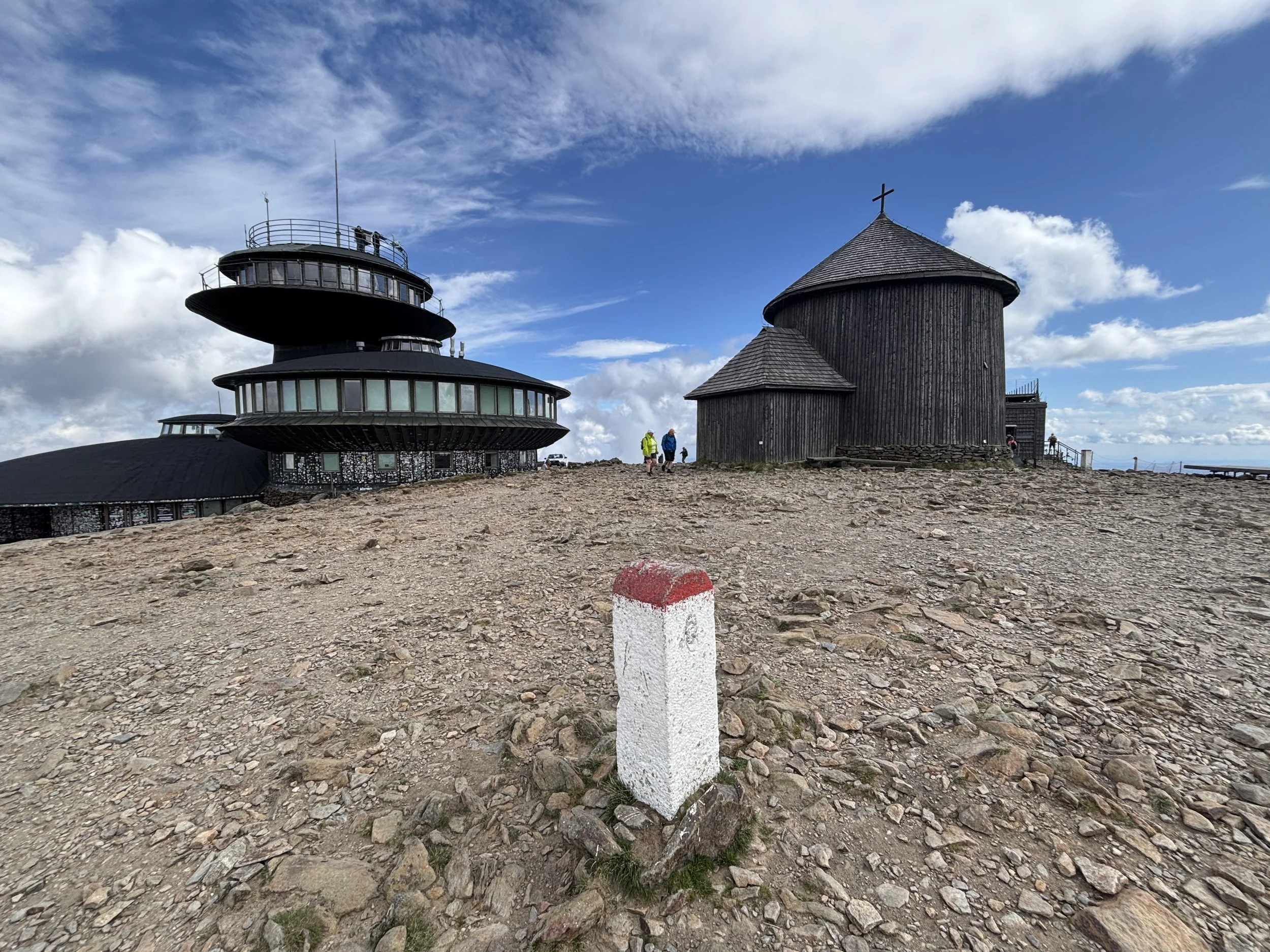
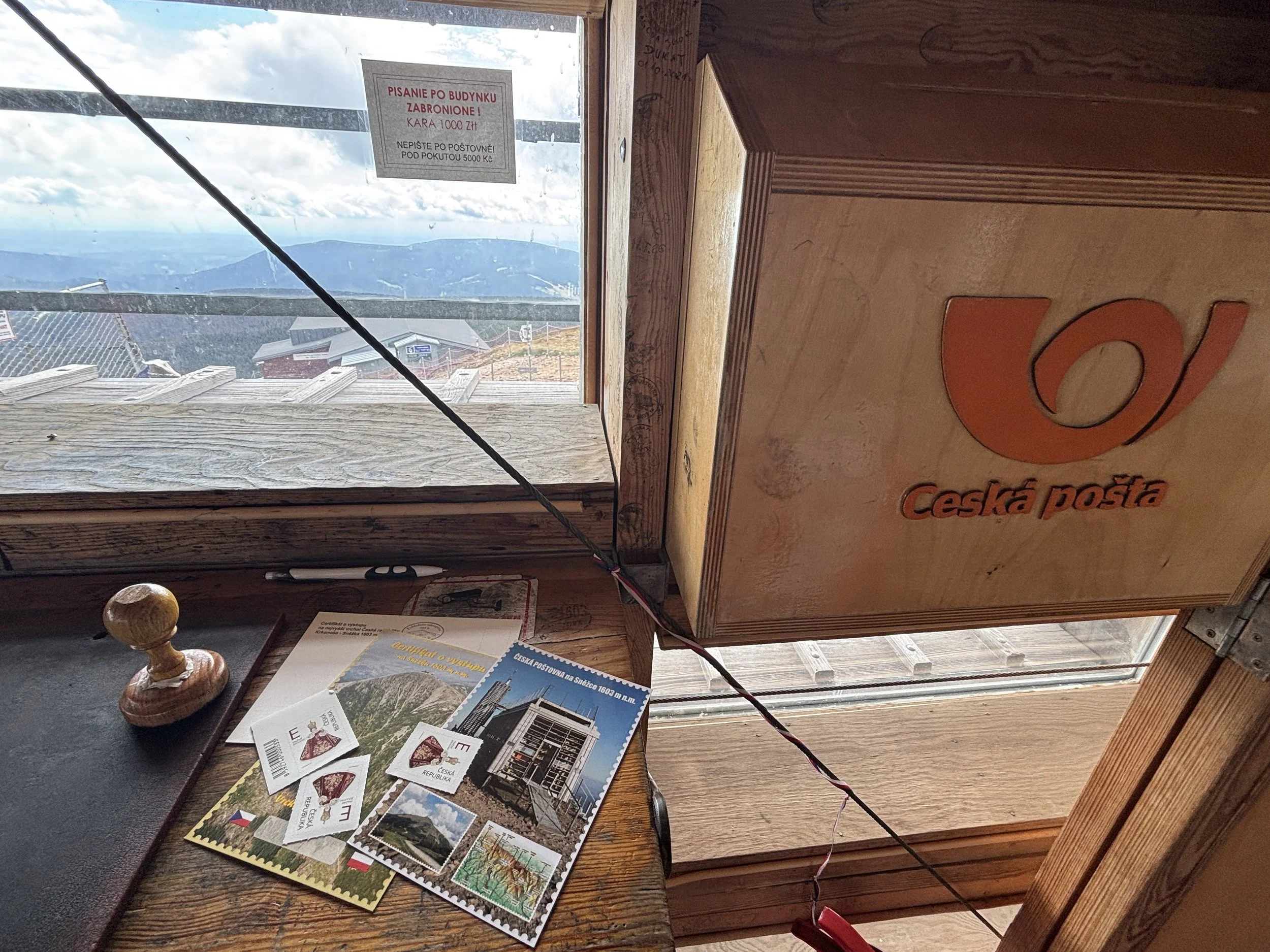
The other structure of interest at the summit of Śnieżka is the Czech post office, which is located a couple of meters inside Czech territory.
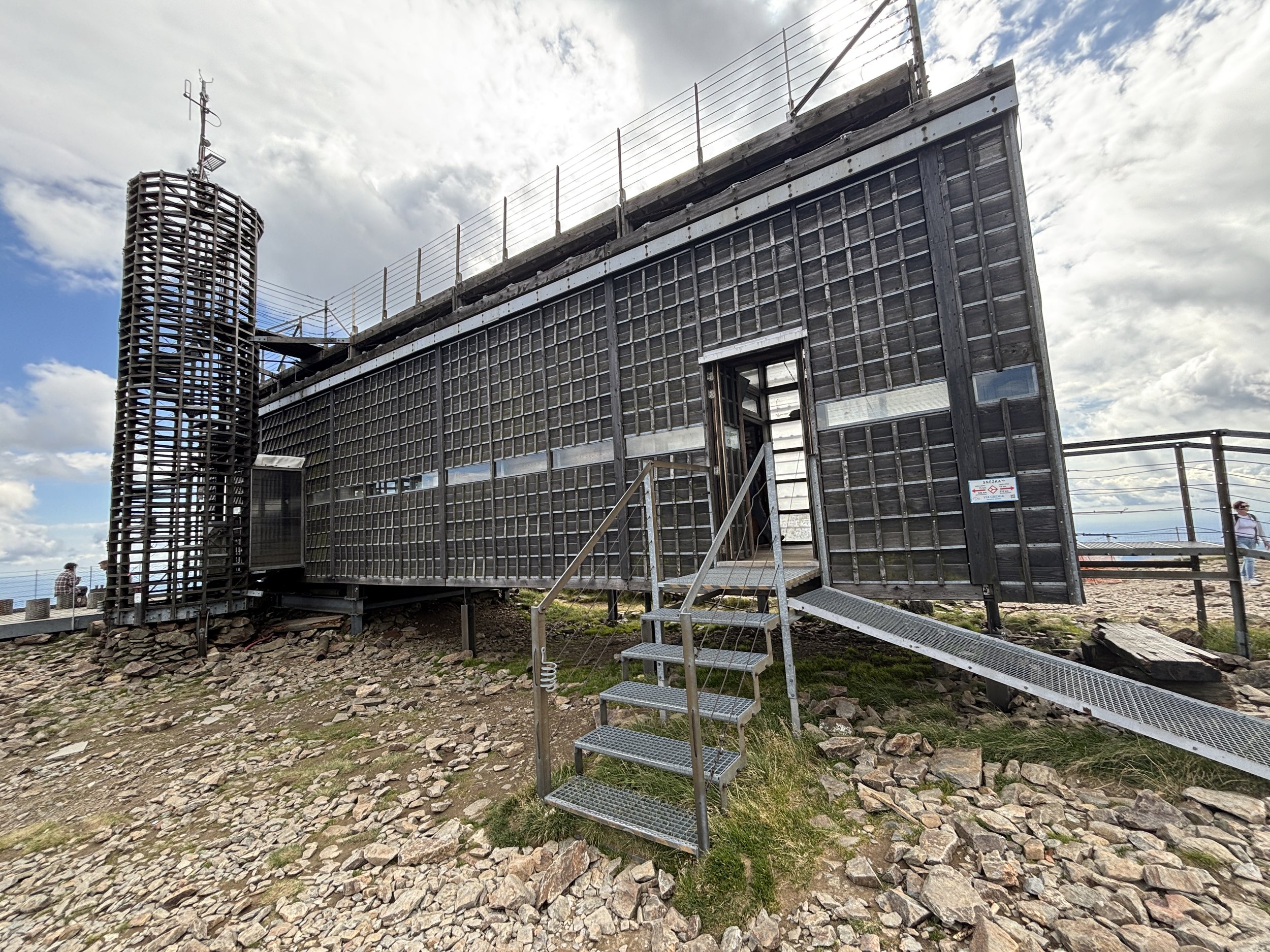
There has been a post office at highest point of Śnieżka since the 19th C. Back then it was the Habsburg post, though. The old wooden post office was dismanteled in the early 2000s and moved to another location in the Czech Republic. In its place they installed a container-like elongated pre-fabricated building (I guess it’s a type of structure that is efficient to build and maintain this high up).
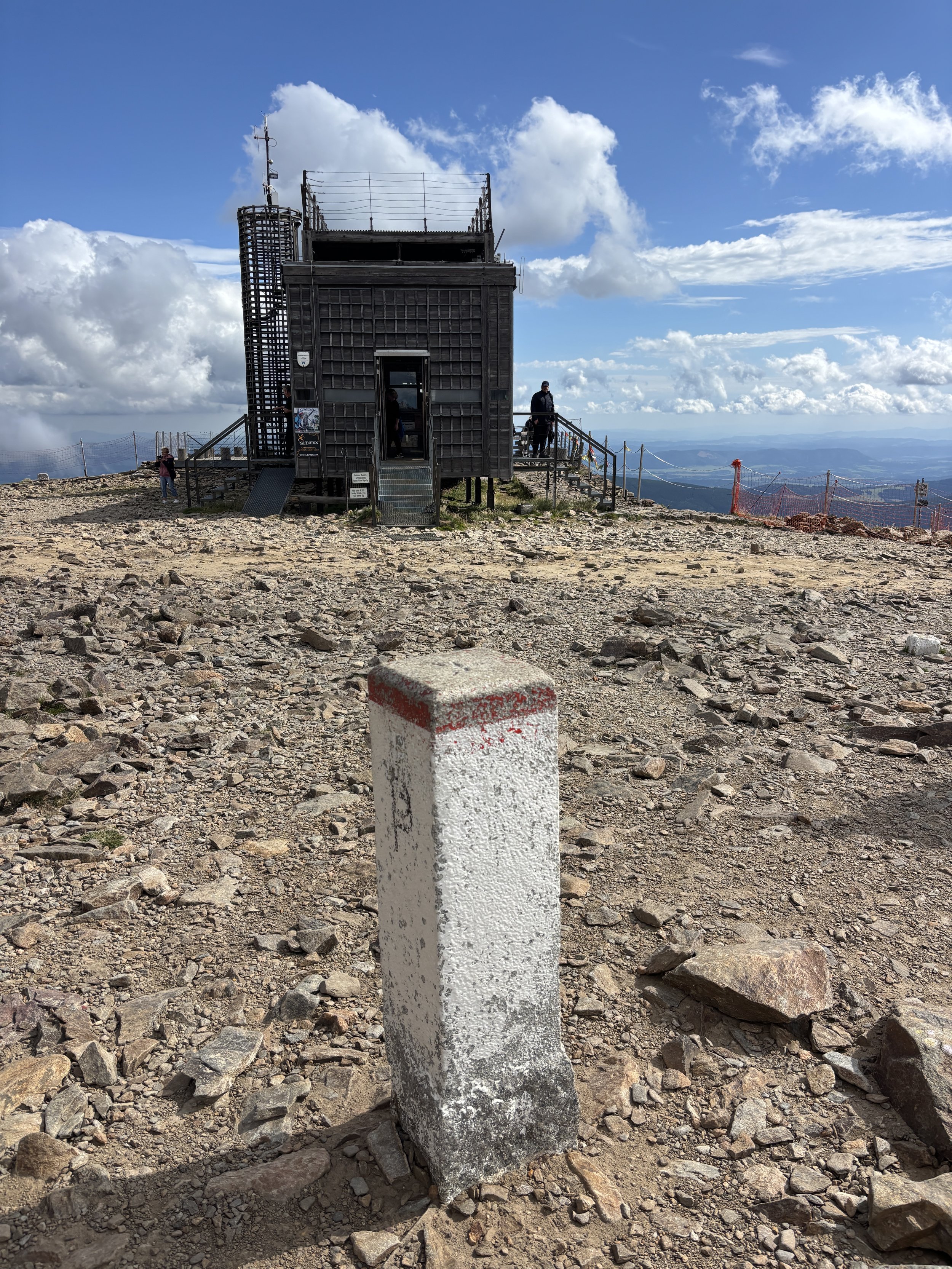
So, one of the cool things you can do at the summit of Śnieżka is send a postcard through the Czech post office! They even let you use the ink marker yourself, even if today the stamps are one-use adhesives so this is not really needed. The establishment also sells snacks, drinks and souvenirs, so it is more like a corner shop than a proper post office.
By the way, from the top of Śnieżka (or perhaps I should Sněžka in this case) you can also descend onto the Czech side with another lift. Beware that if, for whatever reason, weather conditions for example, the lift was interrupted, the drive around the mountains back to Poland can be quite lengthy. I didn’t check the cost of the Czech lift or its times.
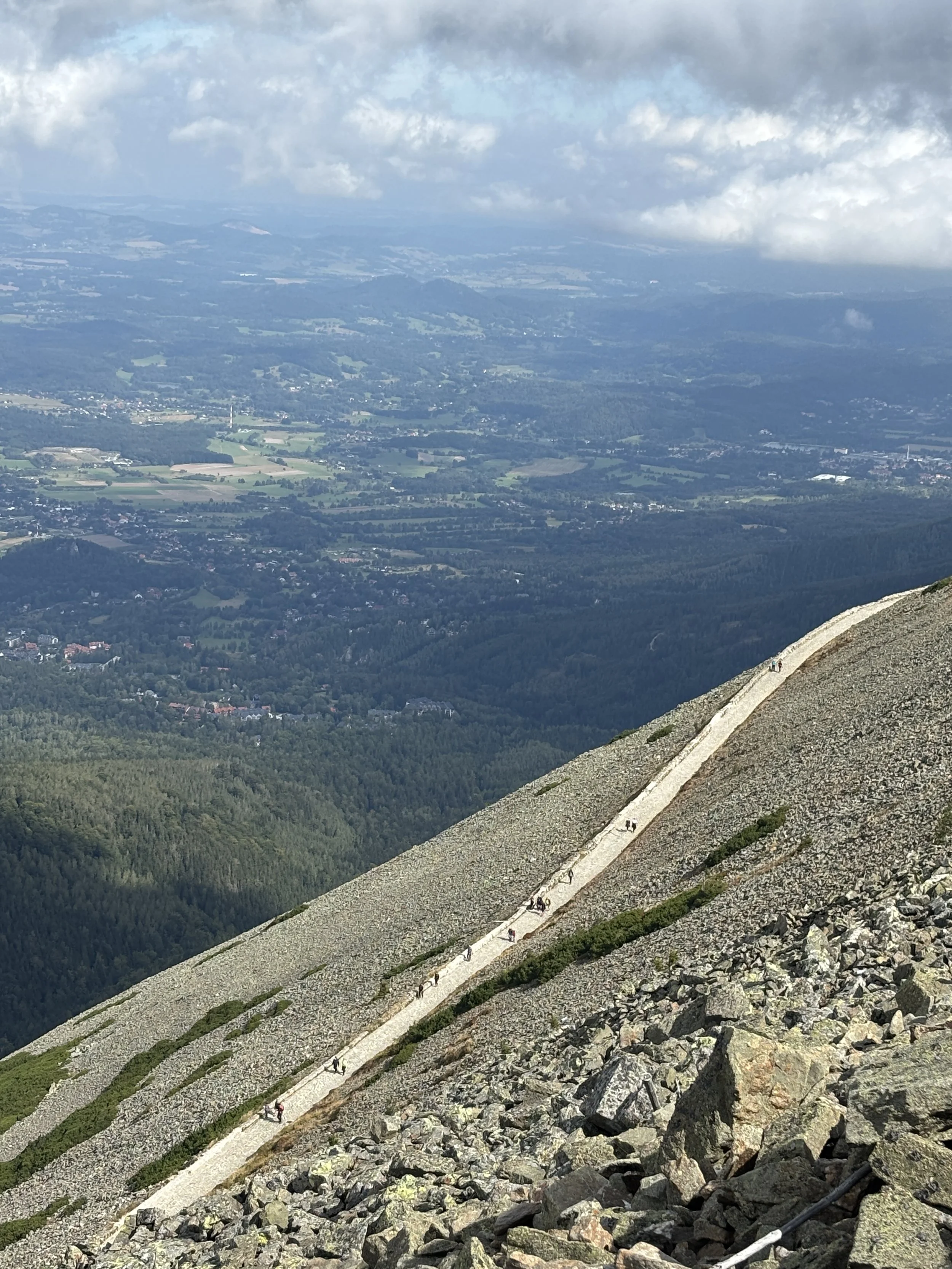
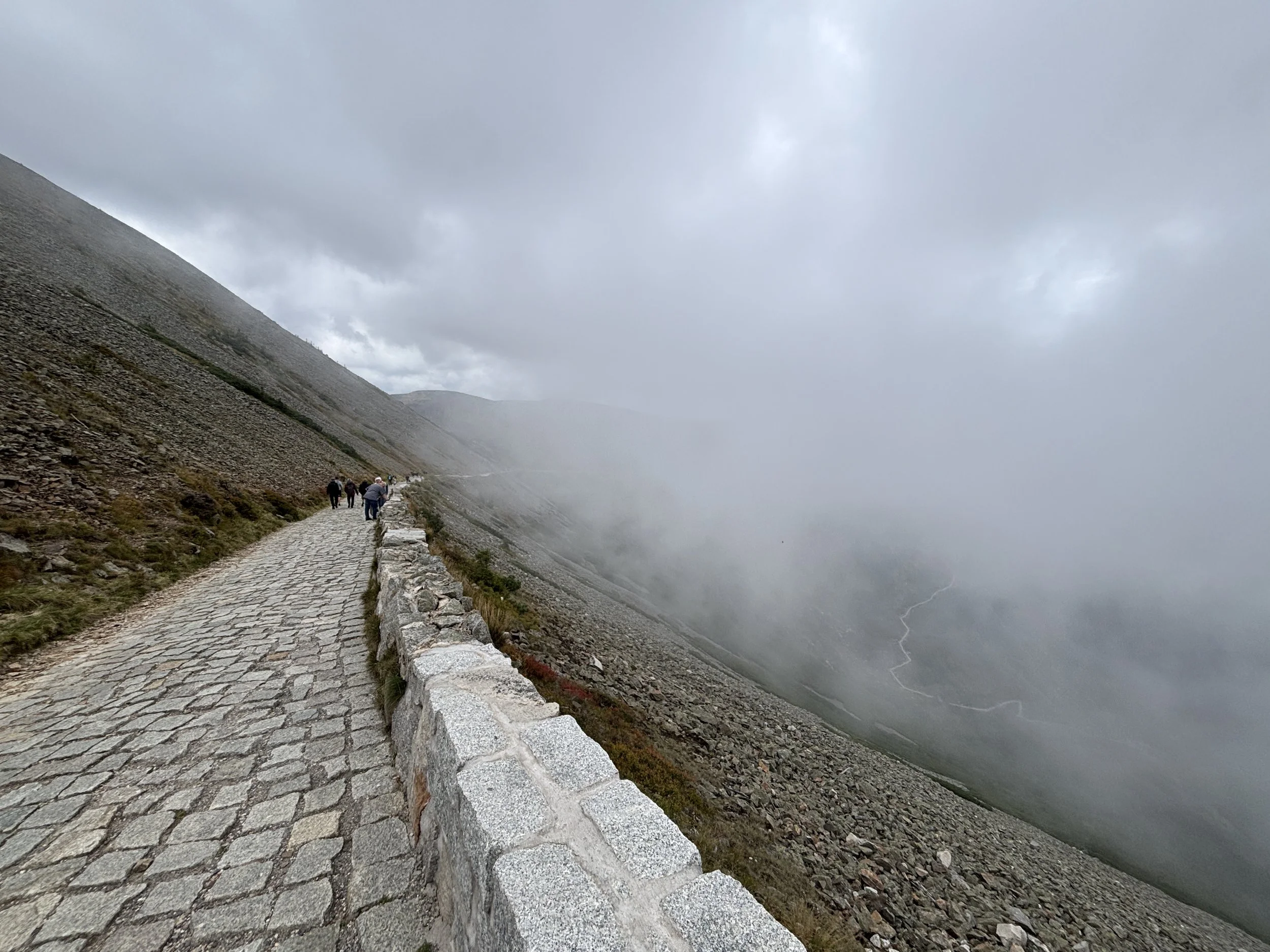
Talking about the weather, here is proof of how fast changing it can be here. The picture below was taken less than one hour after the sunny ones posted above. As you can see, there is a longer, paved trail to go up and down the summit. The views are not as good as on the other, more direct one, but this one is more gentle on the legs!
What else to see in Karpacz:
Wang Temple, a real Norwegian stave church in Poland!
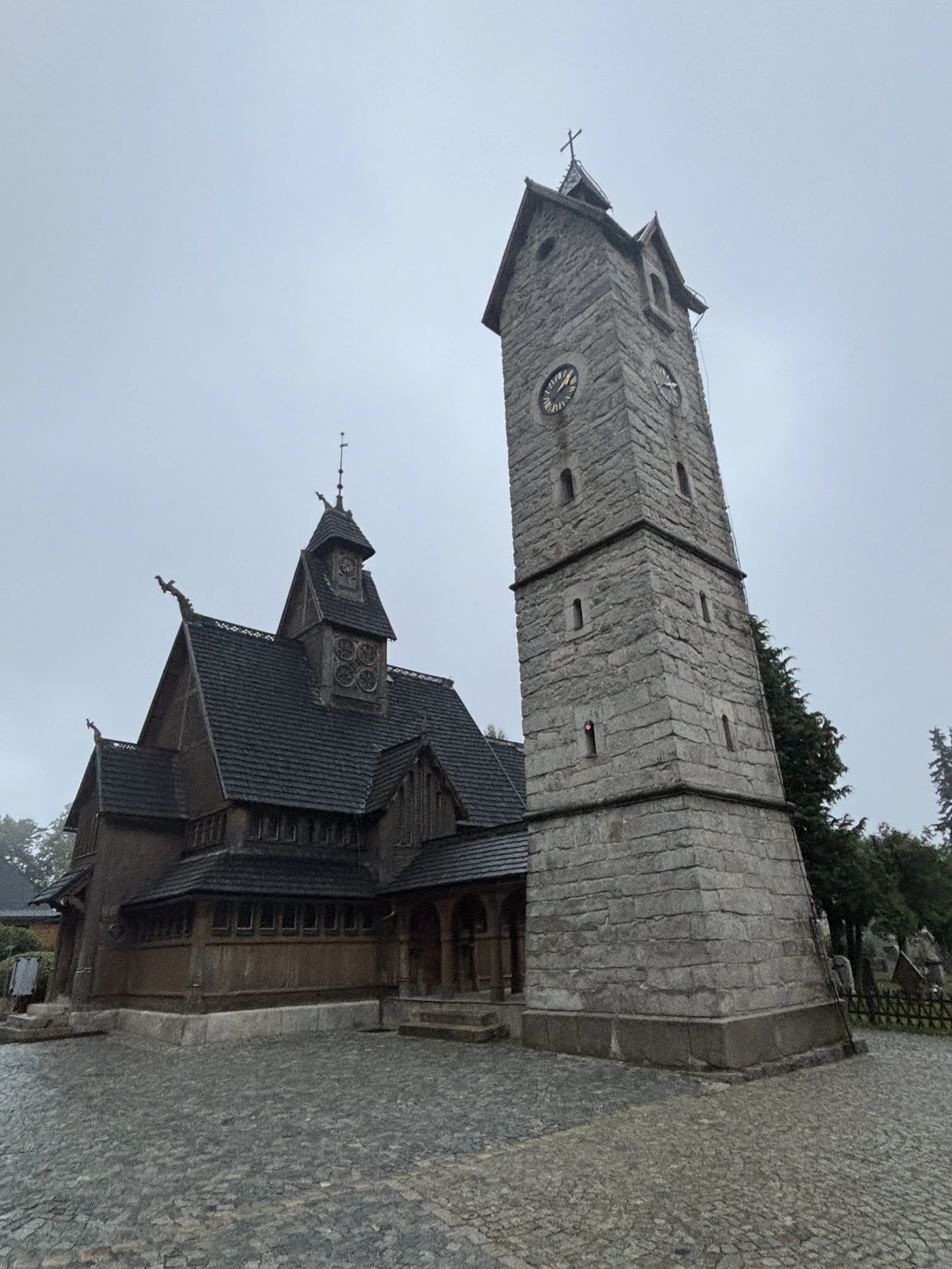
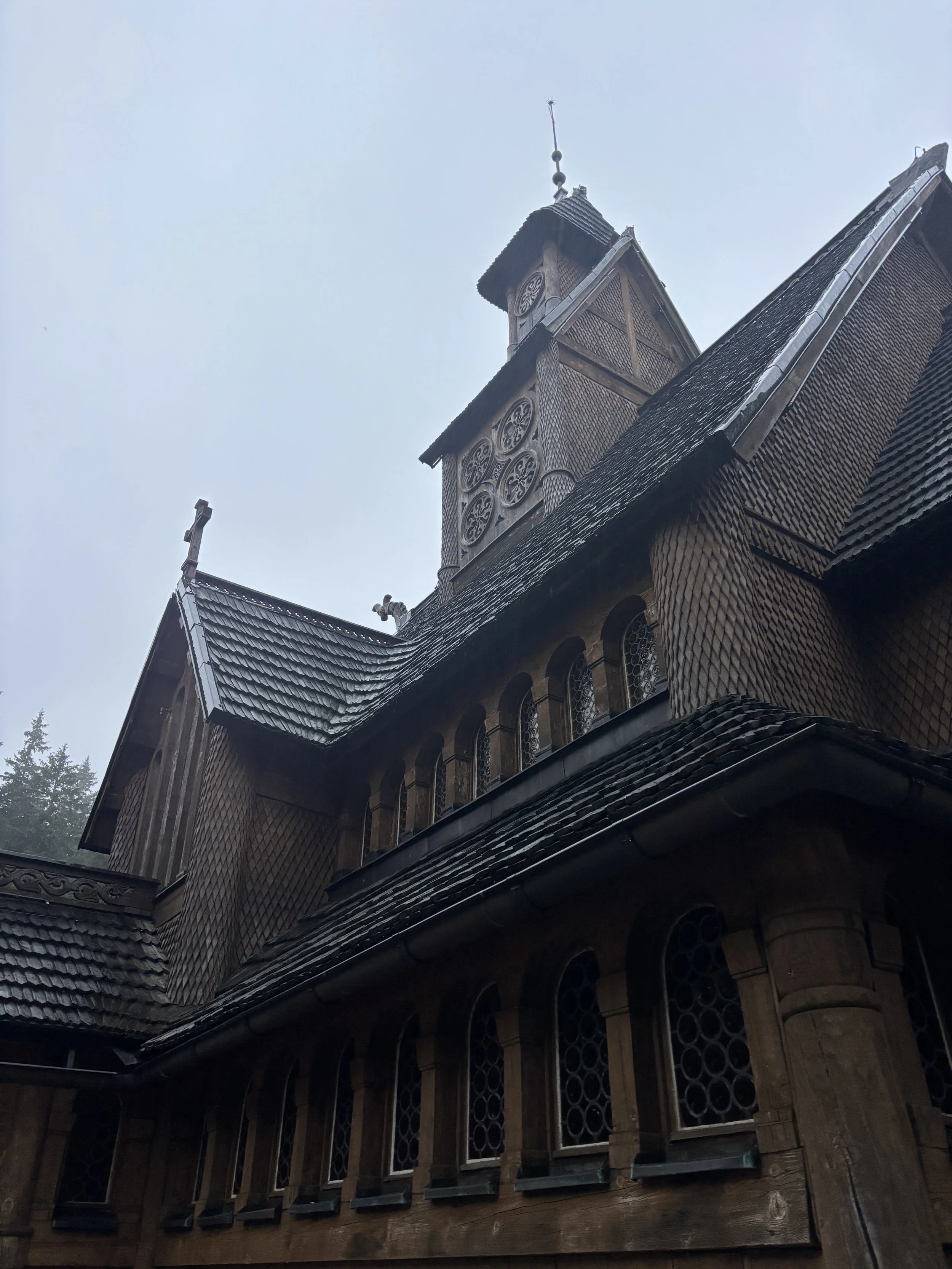
The other major landmark in Karpacz is the Wang Temple, a real Norwegian medieval stave church.
Sounds like a bit out of place, isn’t it?
In fact, it was built in Vang, Norway, sometime around the late 12th or early 13th C. but by the mid-19th C. it had become too small for the local needs and in 1841 it was decided to sell it.
To whom? Apparently, a Norwegian artist, Johan Christian Dahl, lived in Germany at the time and had an interest in stave churches, and he convinced King Frederick William IV of Prussia to buy it and have it shipped to Berlin. However, a local Silesian aristocrat at the Berlin court managed to get the king to gift it to the local Lutheran community.
So the church was dismantled piece by piece, shipped to Silesia and reassembled at its current location between 1842 and 1844. Apparently some elements had to be modified to better fit into the current emplacement. For example, the bell tower, made in stone, was a “local” addition.
At the time of my visit, the Wang Church was closed, so I could not see the interior. The church is within walking distance (if a bit uphill) from, again, Hotel Gołębiewski!
By the way, coincidentally, this is not the first Norwegian stave church to feature on this site! You can also check how this architectural style looks like in its traditional setting in this piece about what to see and what to do around the Sognefjord, which is very close to Vang, actually, the place of origin of the Karpacz stave church!
A nice hotel near Karpacz
Lake Hill Resort & Spa
Tyrolska 2 G, 58-564 Sosnówka
You can book it here.
This is a nice and very modern hotel and apartment complex which lies, as the name implies, next to a lake.
It is located just a few kilometers west of downtown Karpacz, in the village of Sosnówka. It takes some 20 minutes by car to drive from here to Hotel Gołębiewski and the places I described earlier.
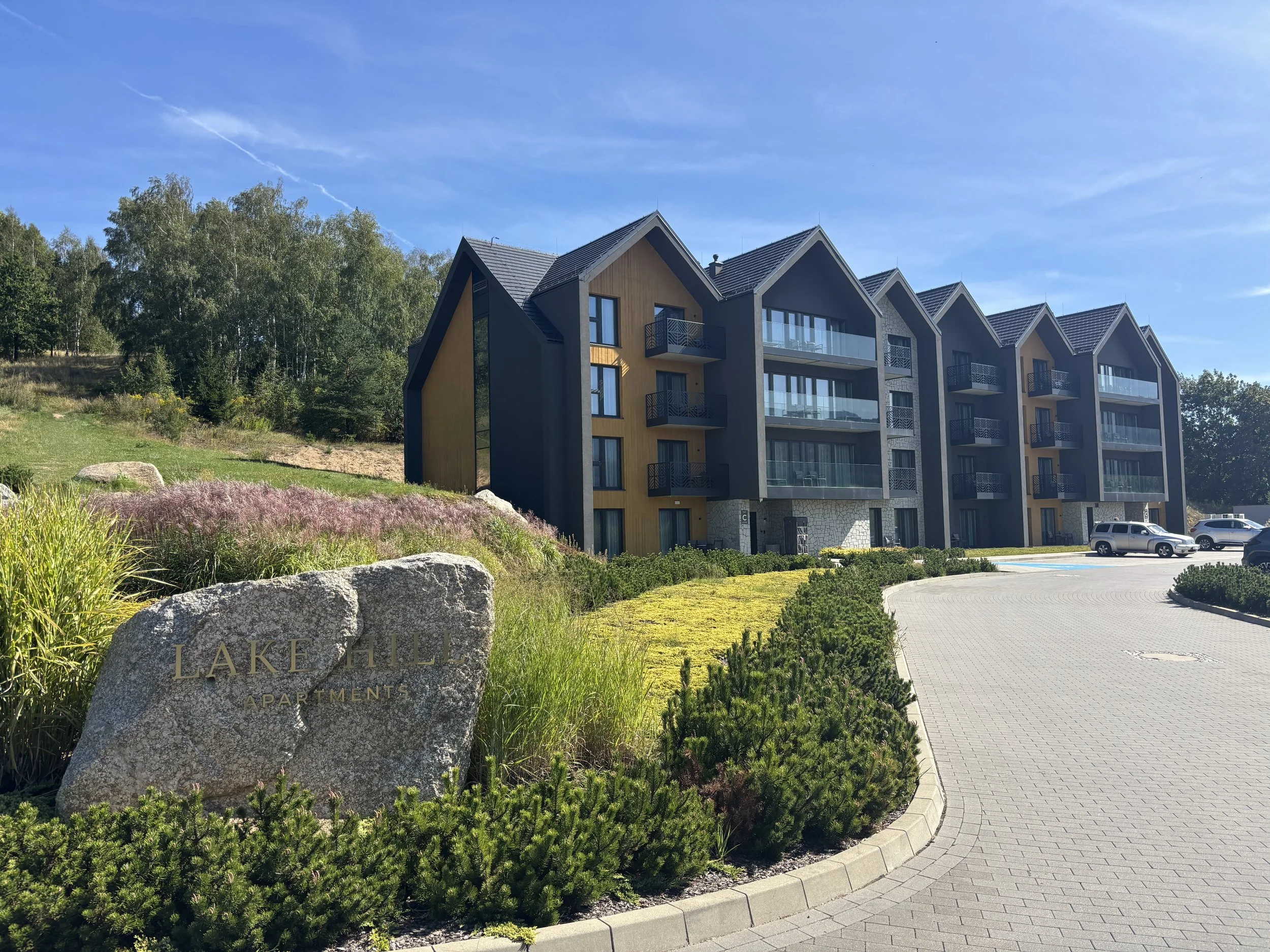
The resort has quite an interesting structure, since it is seems to be quite decentralized, with the rooms and apartments distributed among several buildings on both sides of a local road.
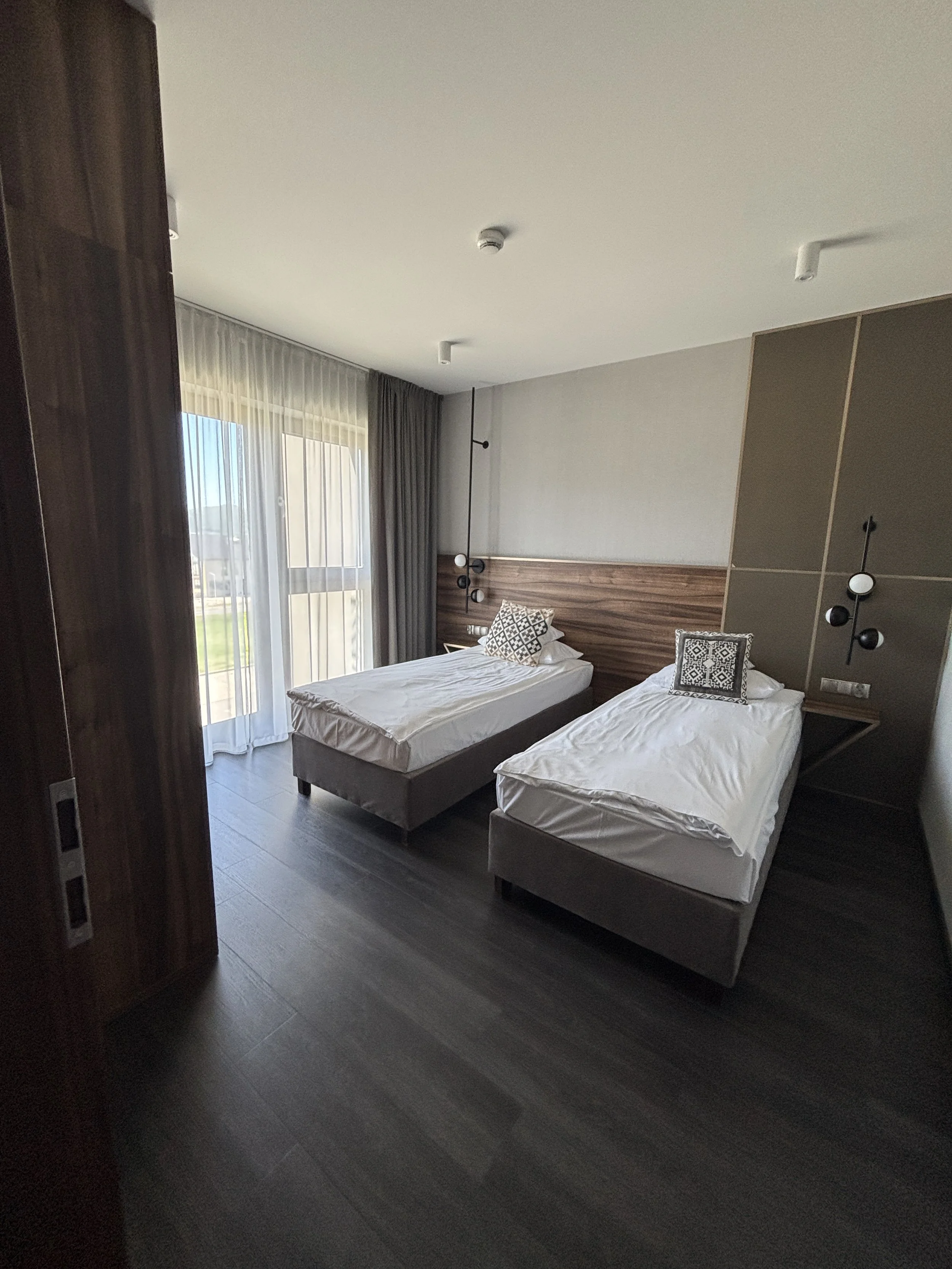
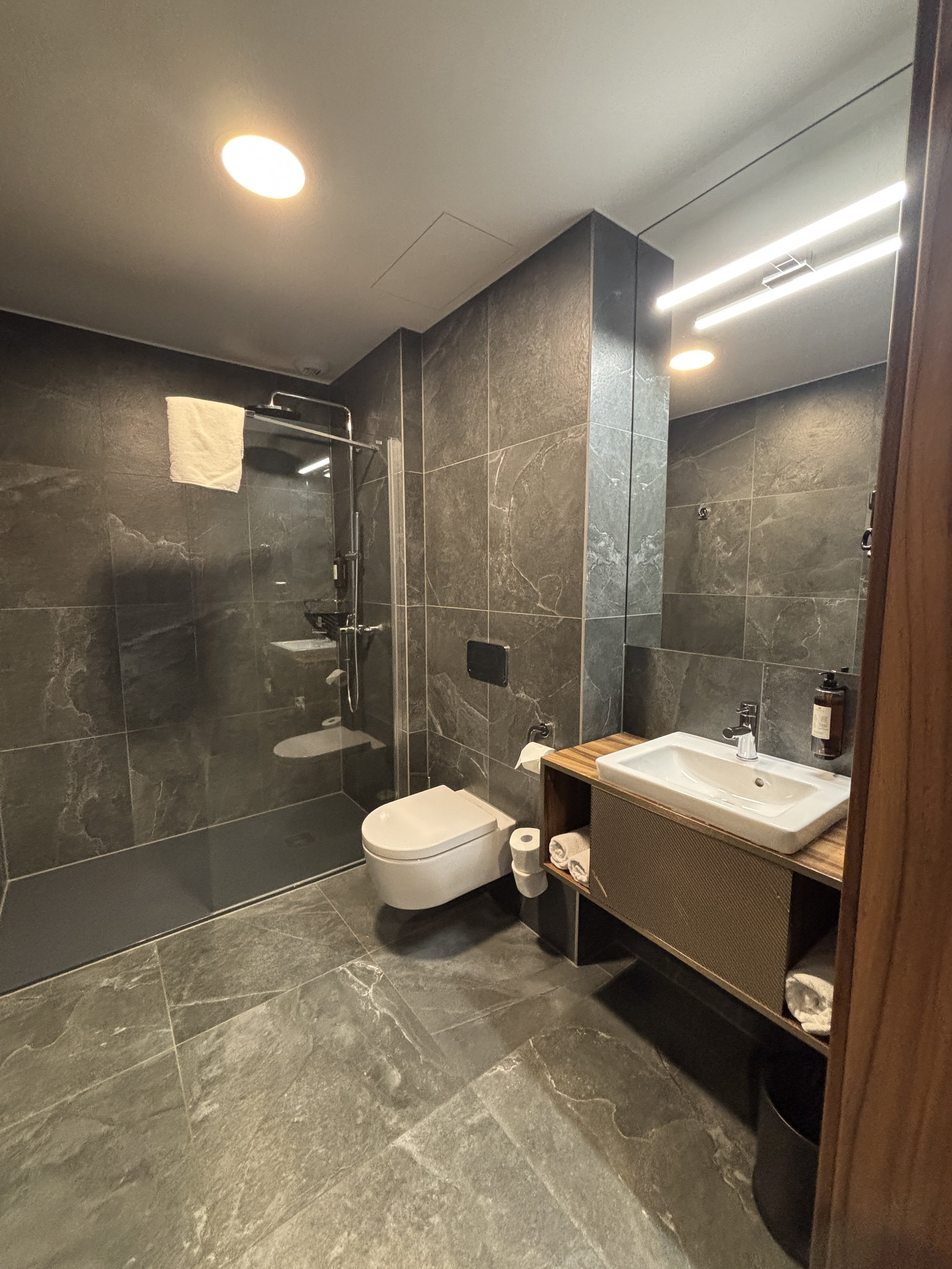
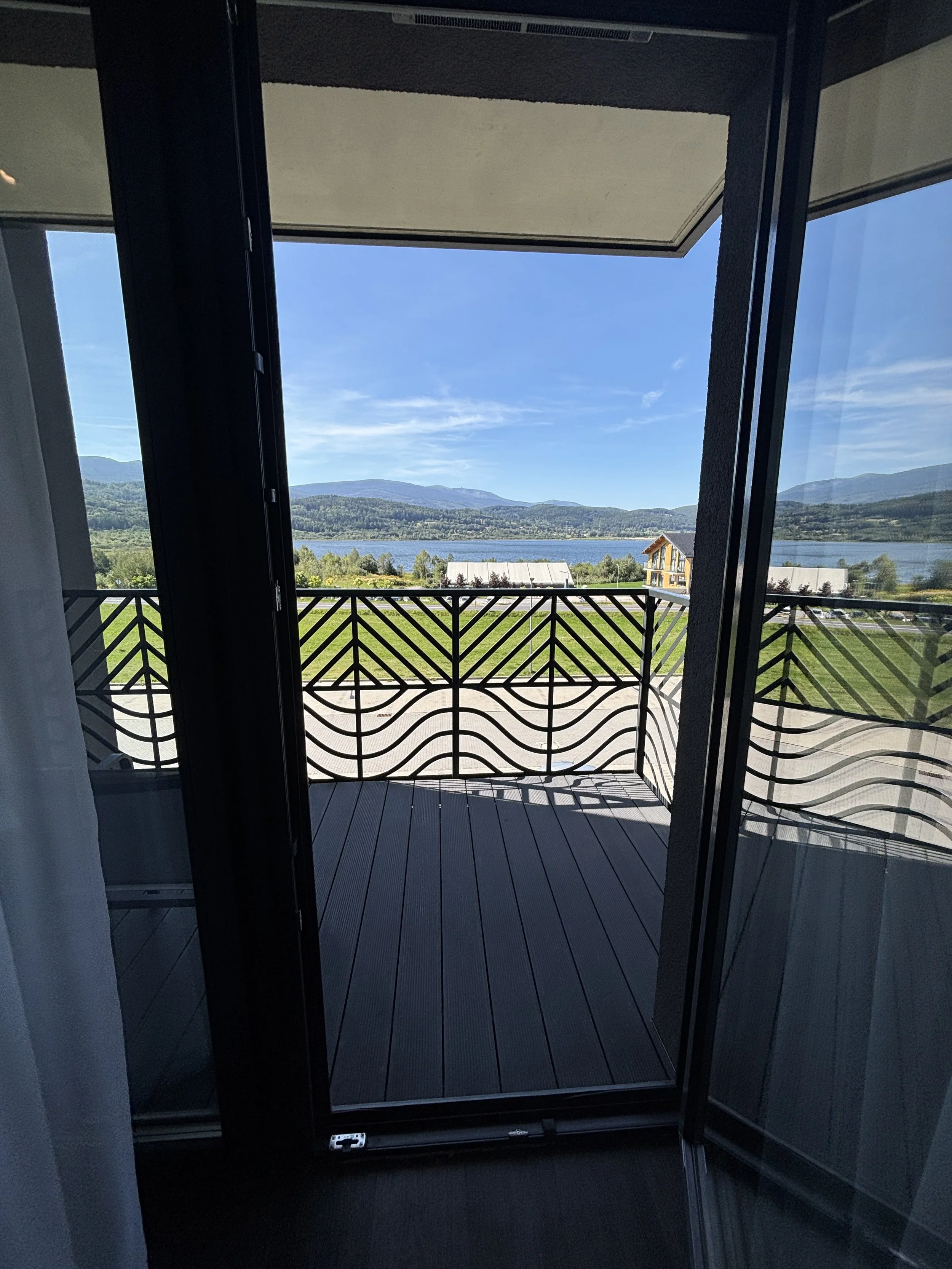
My apartment was in one of the buildings on the north side of the road. As you can see below, it was pretty spacious, with views of the lake (even if a bit far) and very modern throughout.
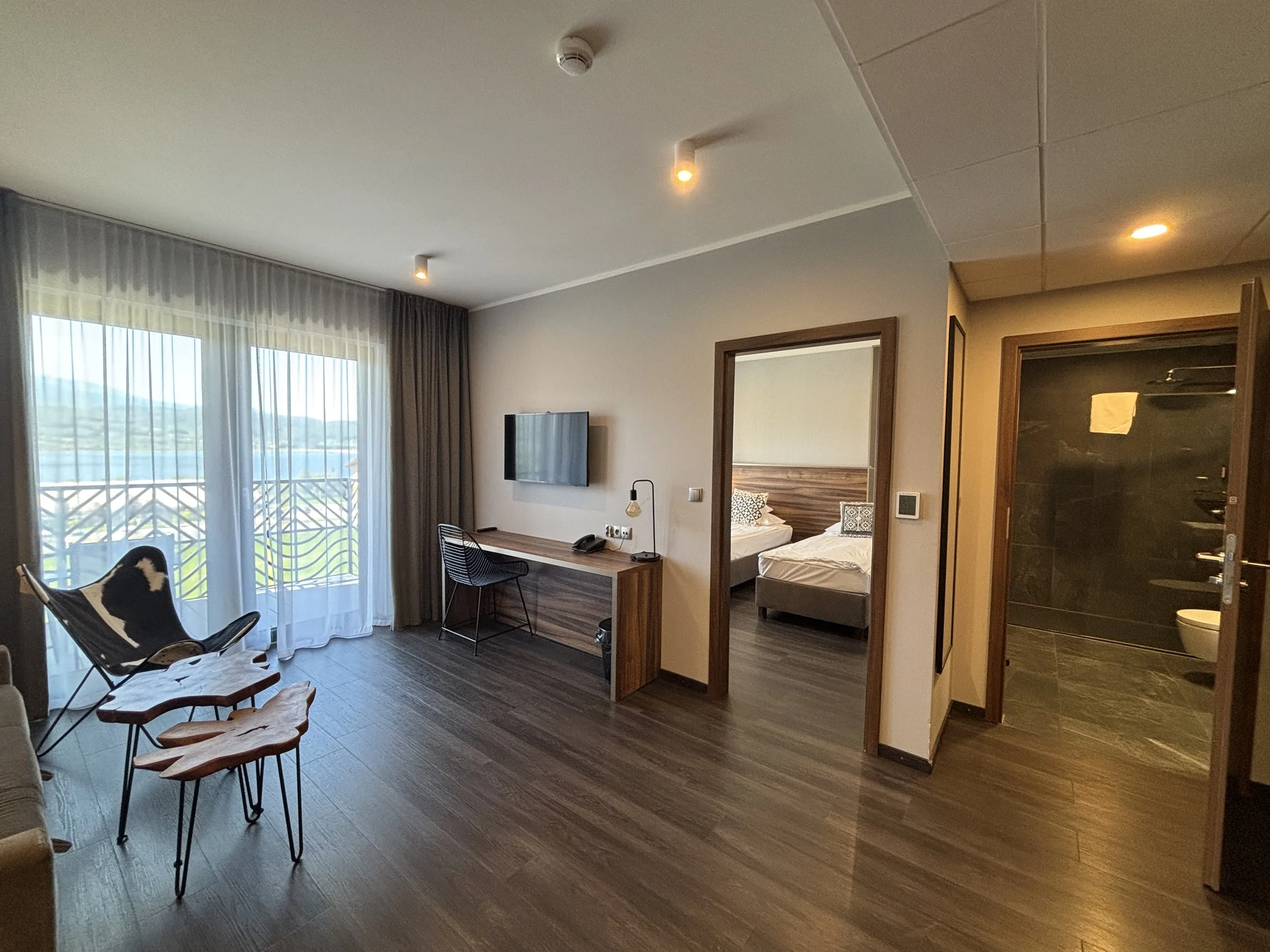
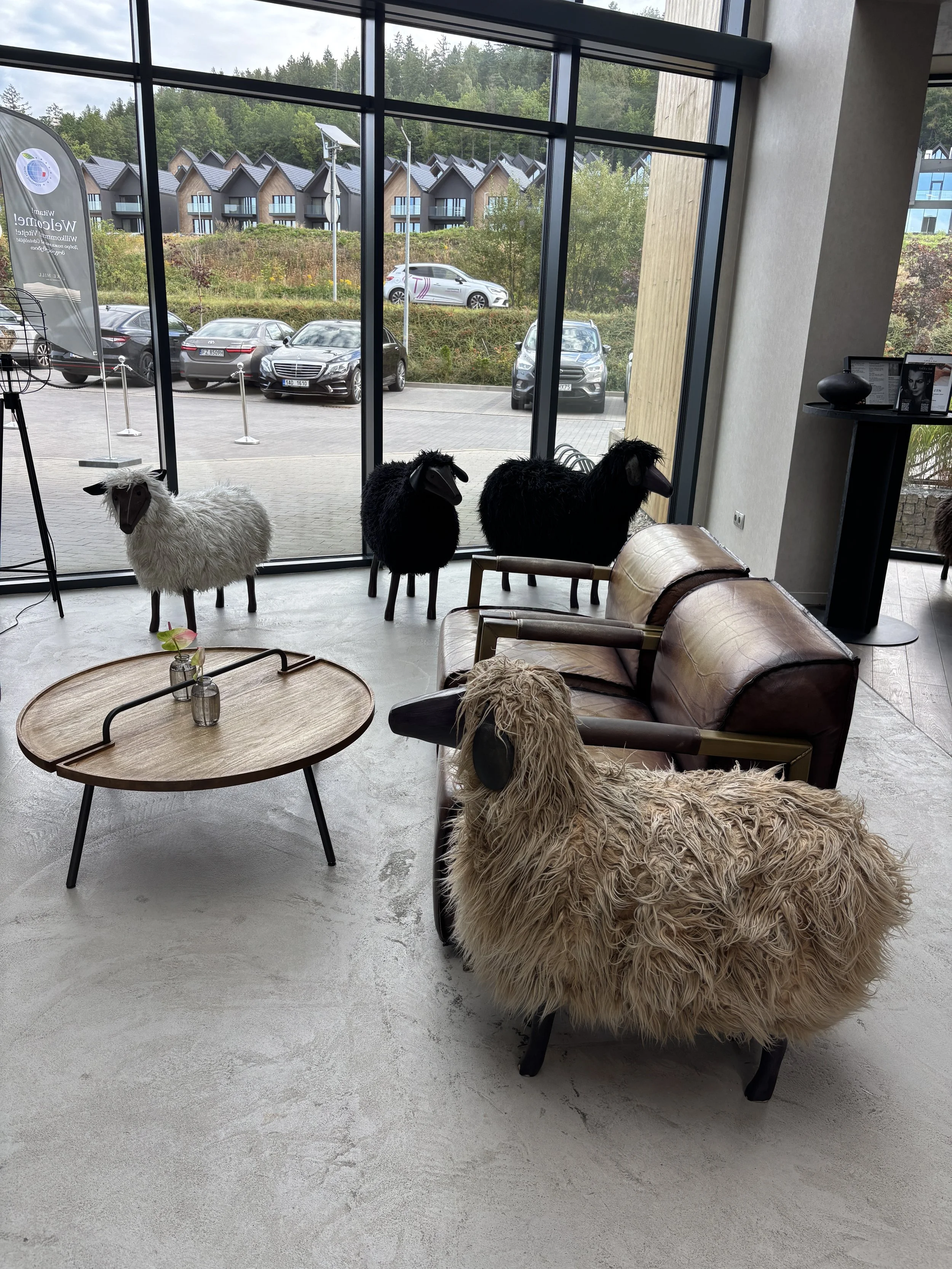
The reception and most of the hotel’s common services, such as the restaurant (where breakfast is served), are on one of the buildings lake-side, so you need to walk around 5 minutes and across the road to get there.
The whole complex is built along very modern lines, as I noticed and expressed in my post about Wroclaw, there seems to be a boom in new hotel development and construction in Poland. And, to be honest, the results are pretty good for the traveler, since there is availability of very nice, modern hotels at reasonable prices.
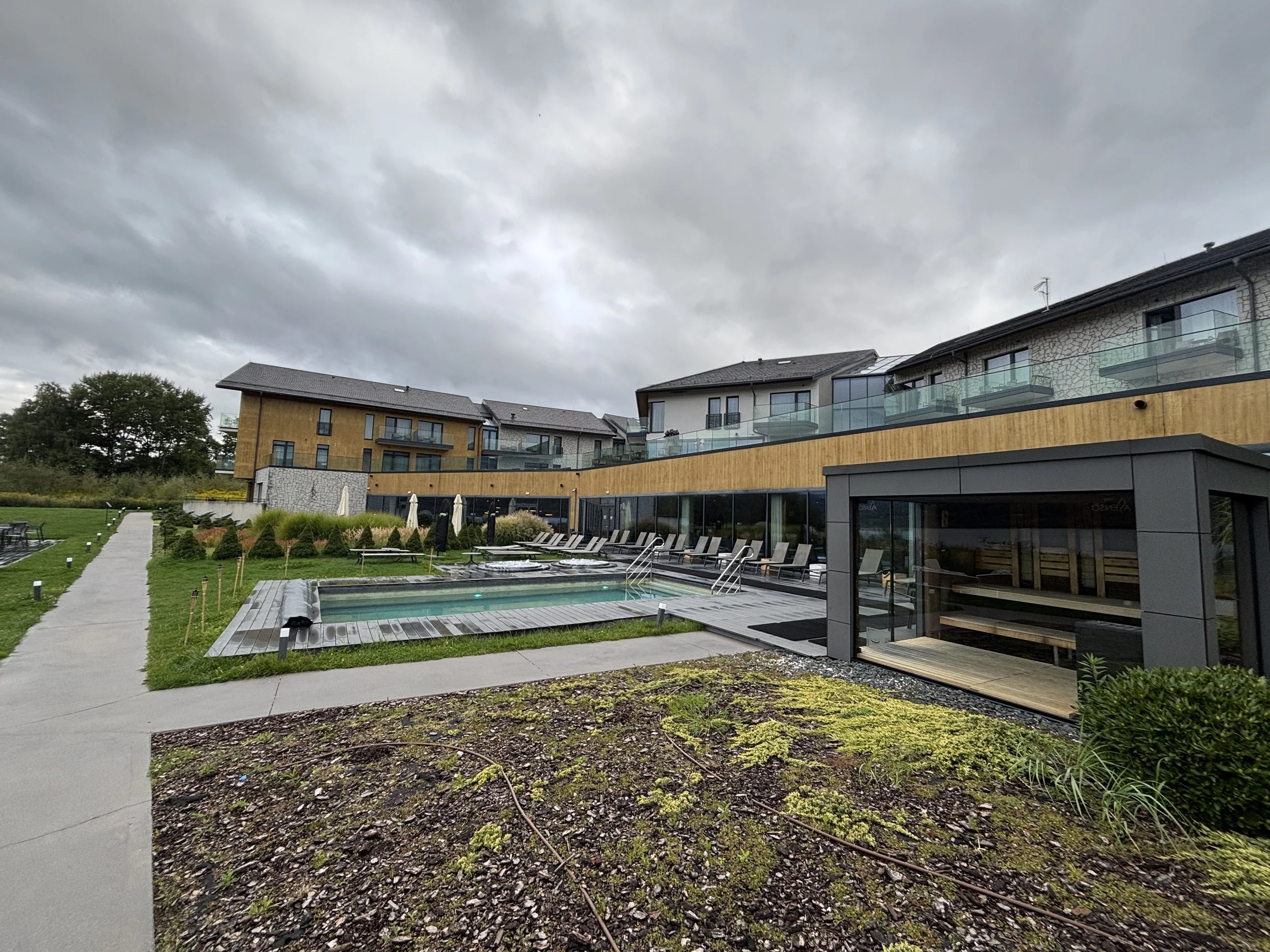
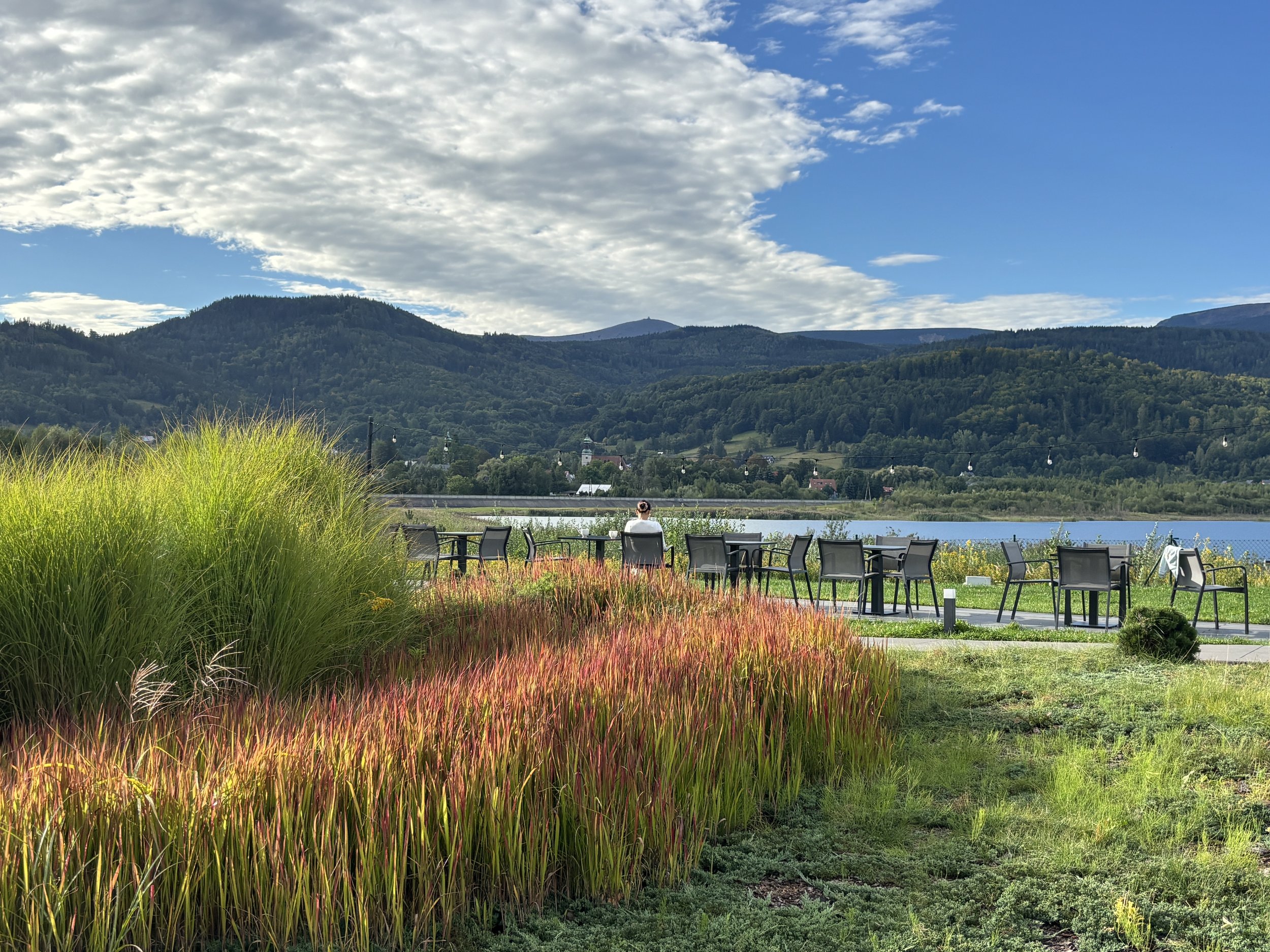
In this particular case, I didn’t have enough time to try all of the hotel services, such as the spa, but you can get an idea in the pictures here of the sort of relaxed atmosphere you can find here!
If you are planning a trip to Poland, you may find the following posts of interest:

48 hours in Wroclaw: what to do and what to see
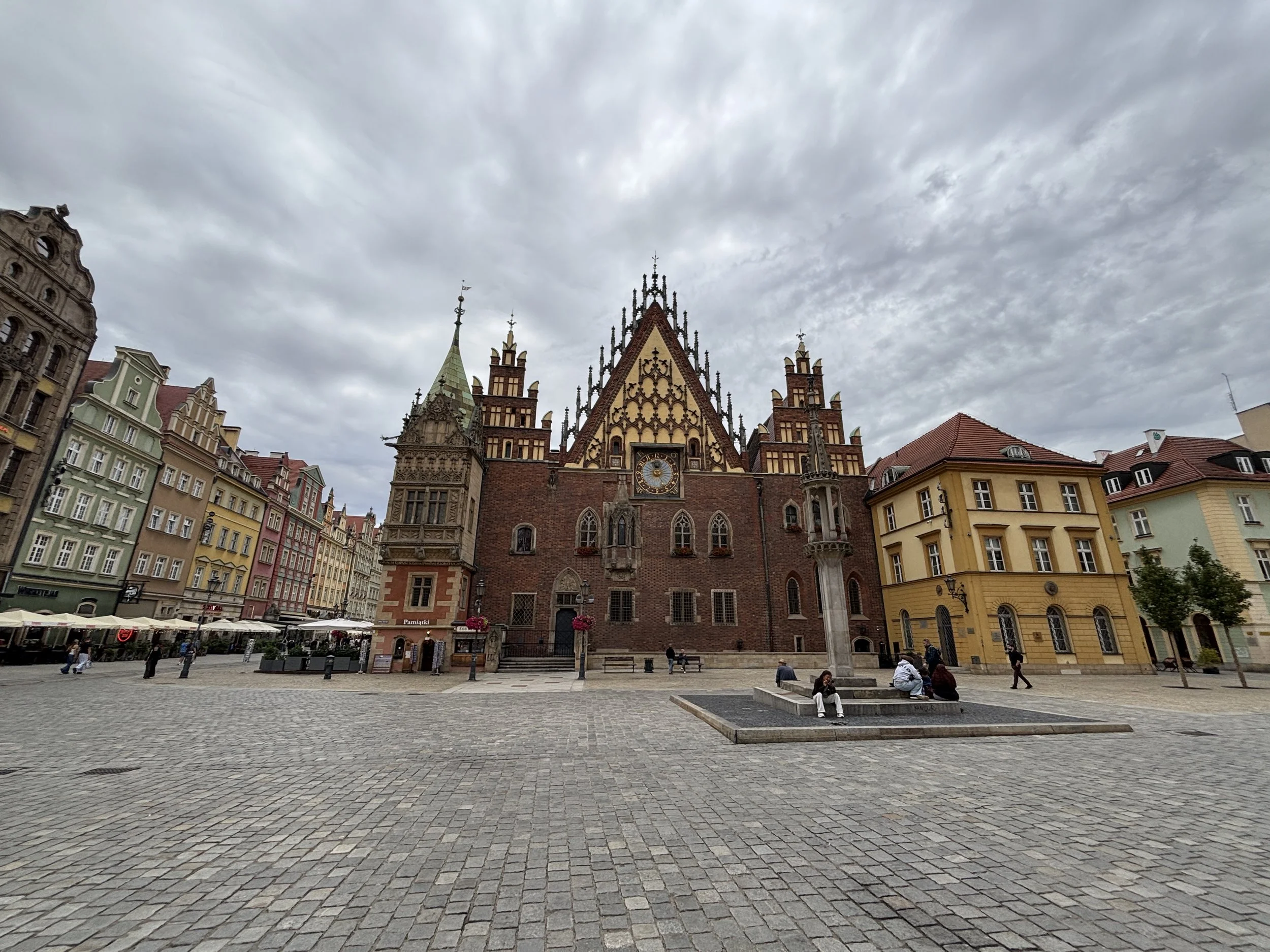
What you will find in this article:
Historical introduction to Wroclaw
What to see in Wroclaw’s historical center
Rynek
Plac Solny
St. Elizabeth’s Basilica
Jatki Street
University of Wroclaw
St. Matthias Church and Ossolineum
What to see around Plac Wolności
Ostrow Tumski
Wroclaw’s dwarf statues
Hala Targowa (Market Hall)
Racławice Panorama
Hydropolis
Centennial Park
Wroclaw at night: Neon Gallery
How to move around Wroclaw
Three great restaurants in Wroclaw
Three recommended hotels in Wroclaw
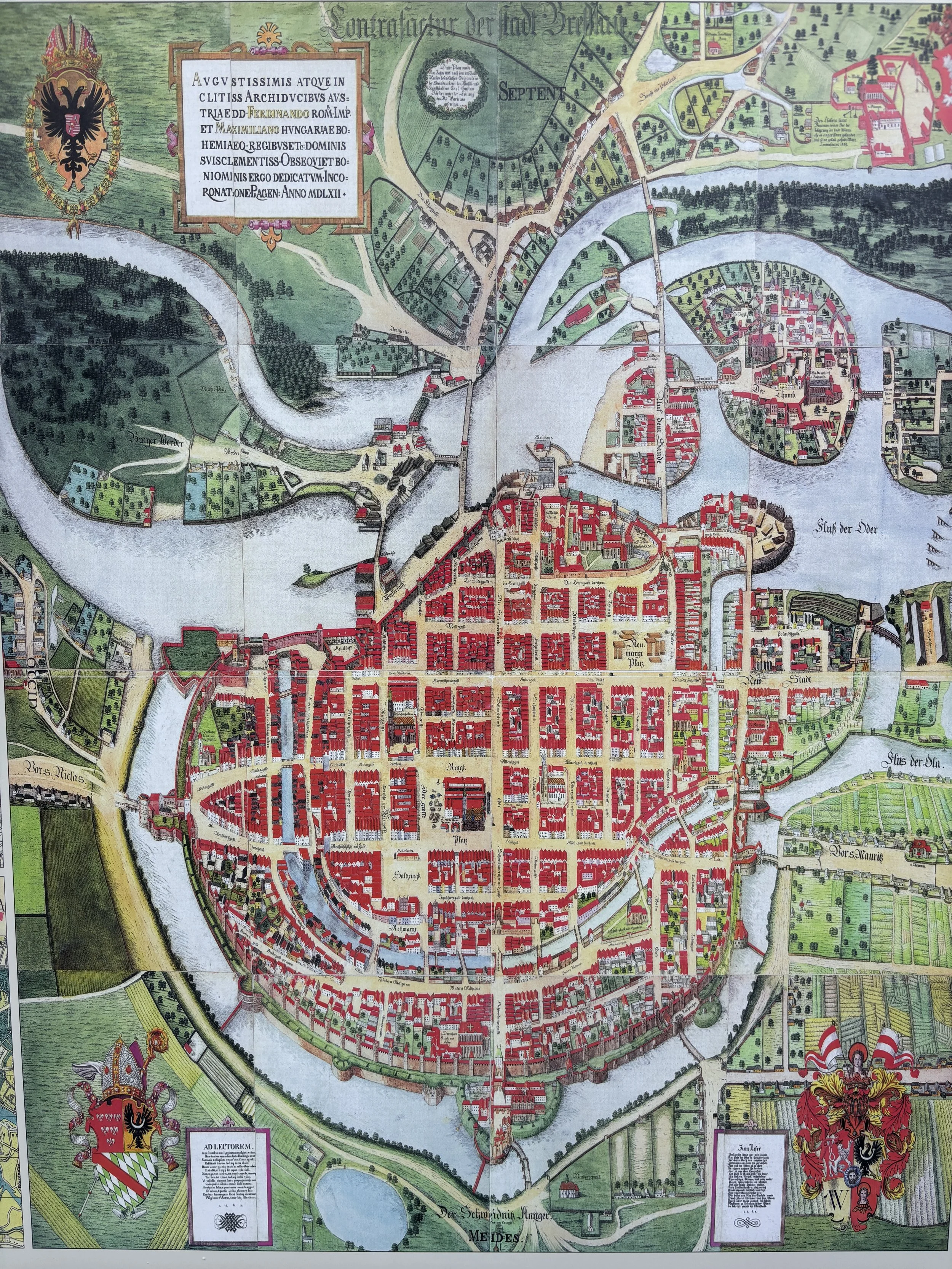
A bit of history before visiting Wroclaw
Saying Wrocław has had a complicated history is an understatement.
Today, Wroclaw is Poland's third-largest city as well as the capital of Lower Silesia, part of a historical region that has changed hands many times over the centuries.
Originally a Polish settlement, in the Middle Ages, the city later passed to Bohemian (Czech) hands , then was part of the Habsburg Empire, until Prussia (the kernel of what later became Germany) took it over in 1741. For a large part of its history, Wroclaw was actually a majority German-speaking city and was known as Breslau.
By the way, about this particularly point and for the sake of clarity and consistency, I'll use the city's Polish name throughout this piece, even when referring to events or sites that are linked to the city’s German period.
Wroclaw eventually became again a Polish city after the end of the Second World War, as the Allies assigned it to Poland in compensation for the transfer of other territories in the east of Poland to the Soviet Union. So, in 1945, the city’s German population was either expelled or left, to be replaced by Poles, which in great part been themselves also displaced from the former eastern territories.
But since most of what visitor’s come to see in Wroclaw’s historical center today dates back from a few centuries earlier, it may be best to start with a brief summary of the origins of the city.
Wrocław grew up on the banks of the Odra (Oder) river, at a very strategic crossroad which linked an Ancient route linking the Baltic to the Mediterranean to what came to be known as “Via Regia”, which was another major axis of communication going linking west to east, the Germanic and Slavic parts of Europe.
The first settlement in what is now Wroclaw started on Ostrów Tumski, an island at the time (not anymore) located next to a river crossing. From there it spilt over to the south bank of the Odra, where most of the historical center of Wroclaw is now. Later, in the early modern times, the city was given a fortified enceinte, complete with bastions and a moat (this is now a boulevard which runs all along the historical center as a garden ring).
It would be a mistake to leave it at that, though, because some of the most interesting periods in Wroclaw’s history have been in the last couple of centuries. With the advent of the industrial era, Wrocław and the wider Silesia region, became one of the major manufacturing centers of the German-speaking world and left also a notable cultural and architectural legacy.
Perhaps the most traumatic chapter in the city's history, at least since the Mongol invasion of 1241, was the Second World War. In August 1944, with the Red Army advancing, Hitler declared the city a fortress. “Festung Breslau” was to be defended to the last man. And it very nearly was: even if it ended up completely encircled by Soviet troops, the German garrison held out until May 6, 1945, several days after the fall of Berlin.
Fortunately, while the destruction was extensive, part of city’s heritage miraculously survived the war (much of what didn’t was later reconstructed after the war, as it happened also in Gdansk, for example).
After the four decades of communist rule that followed, Wrocław has found new energy and emerged as one of the growth hubs of a booming Poland. This post focuses on the city's top sights, but on this trip I also met with several companies and people from the local business community, and the optimism was palpable. That youthful, energetic mood is just as easy to feel walking through the streets. So, let's look at the best things to see in Wrocław!
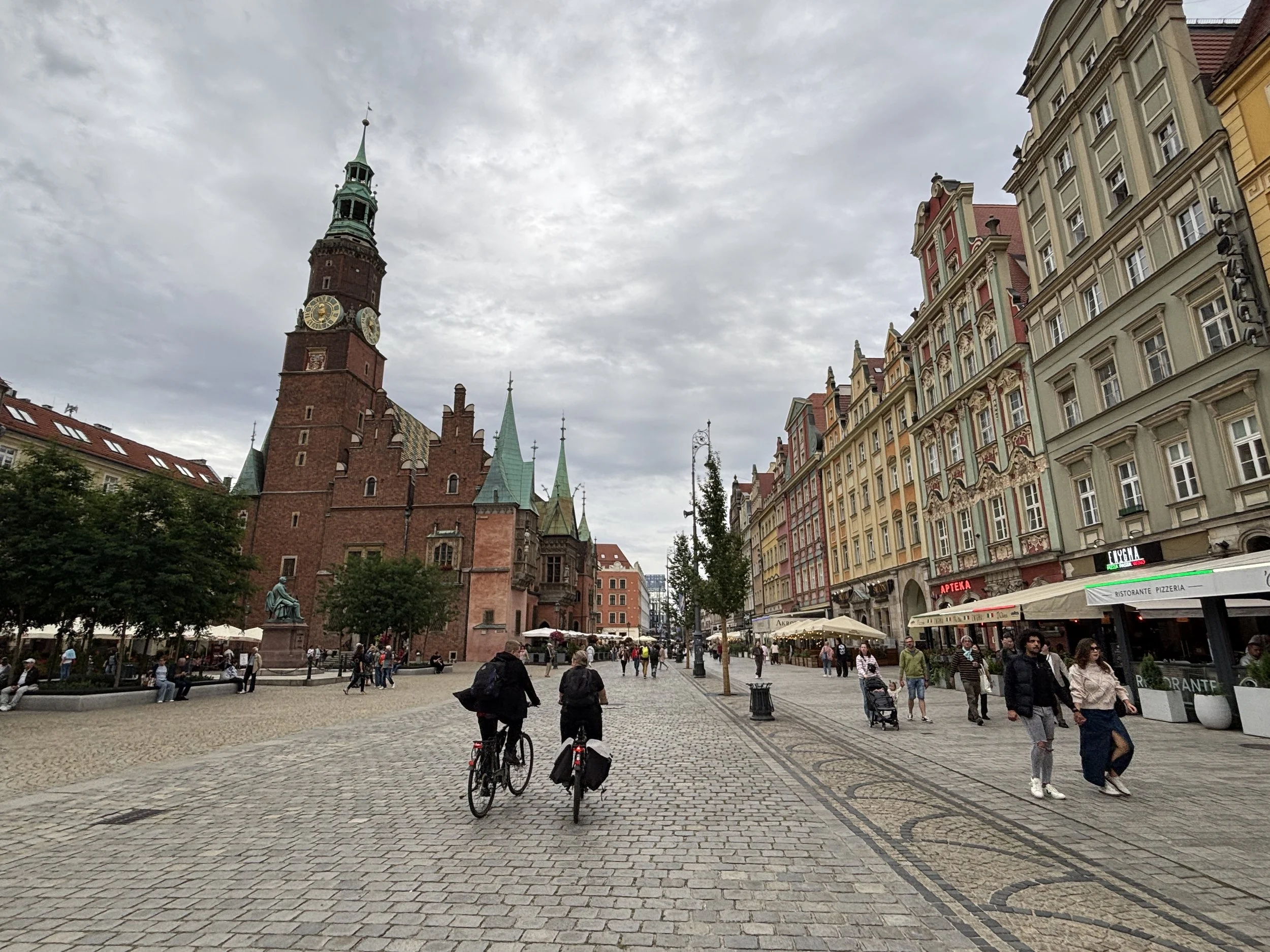
This post may contain affiliate links. If you book or buy something through them, I earn a small commission, at no extra cost to you. It's one of the ways I keep Places of Charm going. Thank you for your support.
This post was written after a visit to Poland supported by the Warsaw Enterprise Institute with the collaboration of the city of Wroclaw. Many thanks also to Wojtek for guiding me through parts of the city!
What to see in the historical center of Wroclaw
Rynek
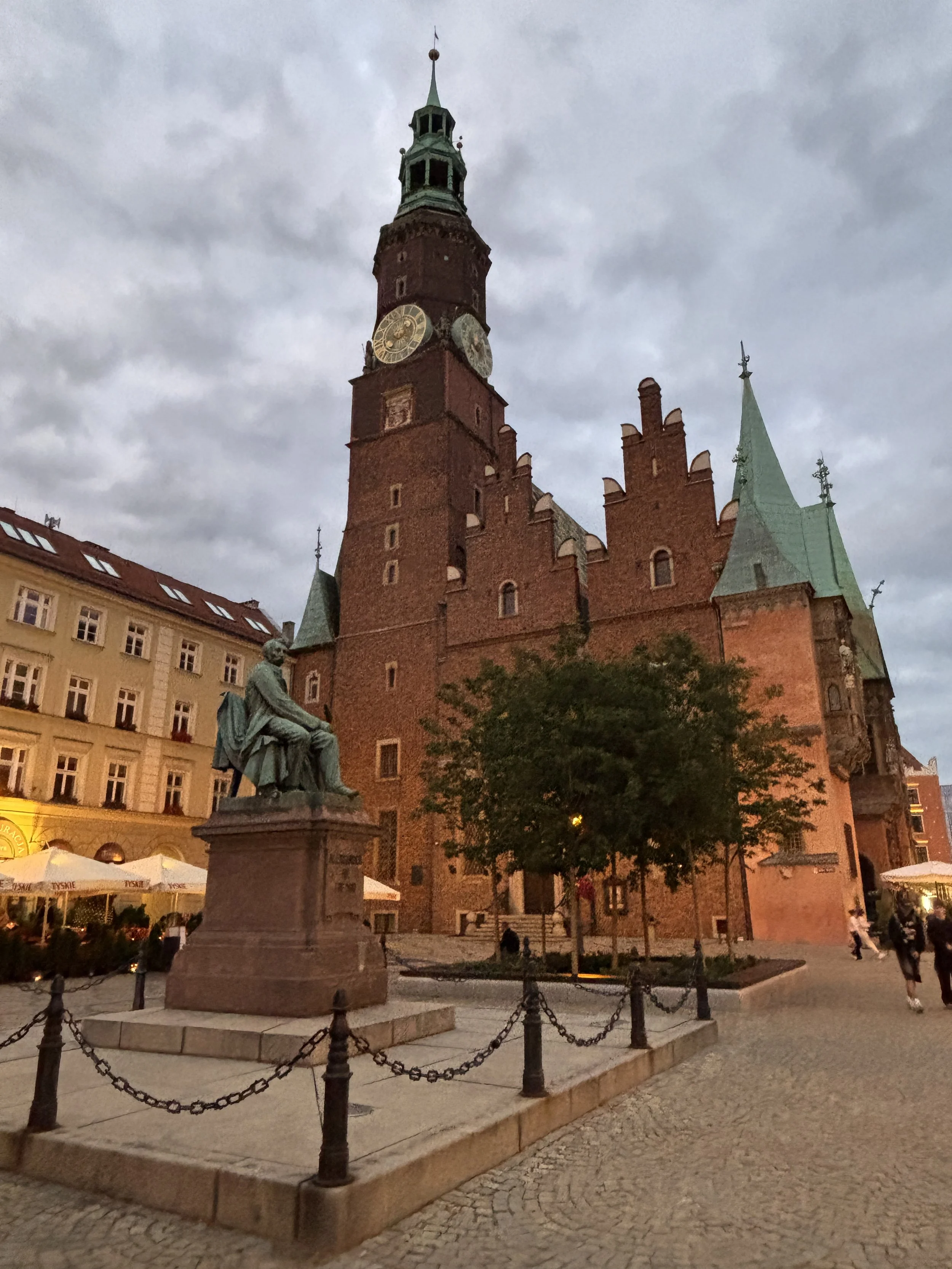
Dating back to 13th C., Rynek is the neuralgic center of Wroclaw’s historical town and the one place that many visitors head to first. Rynek is a large square, so large in fact, that it has a whole set of buildings at its center, the old and new town halls.
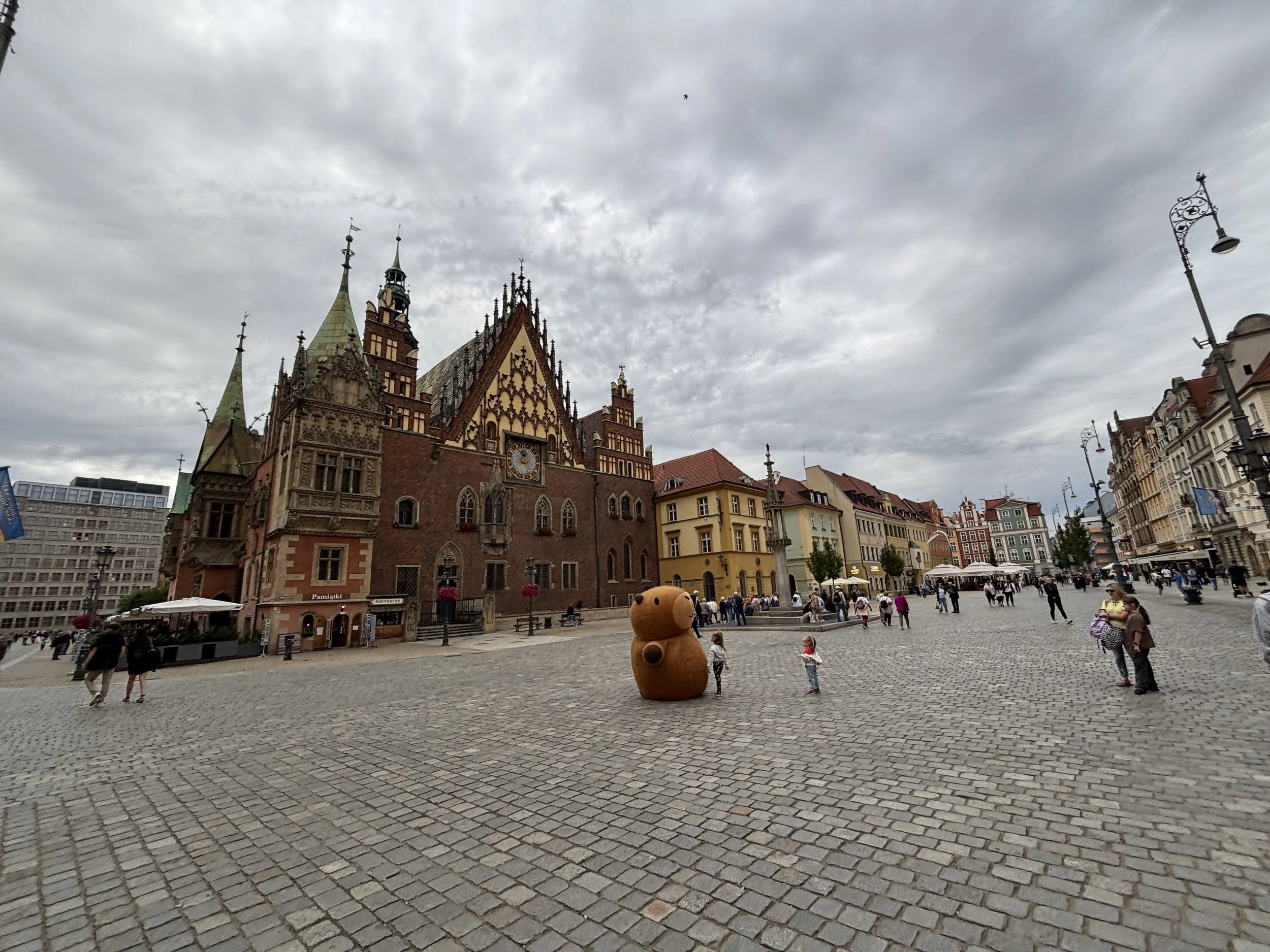
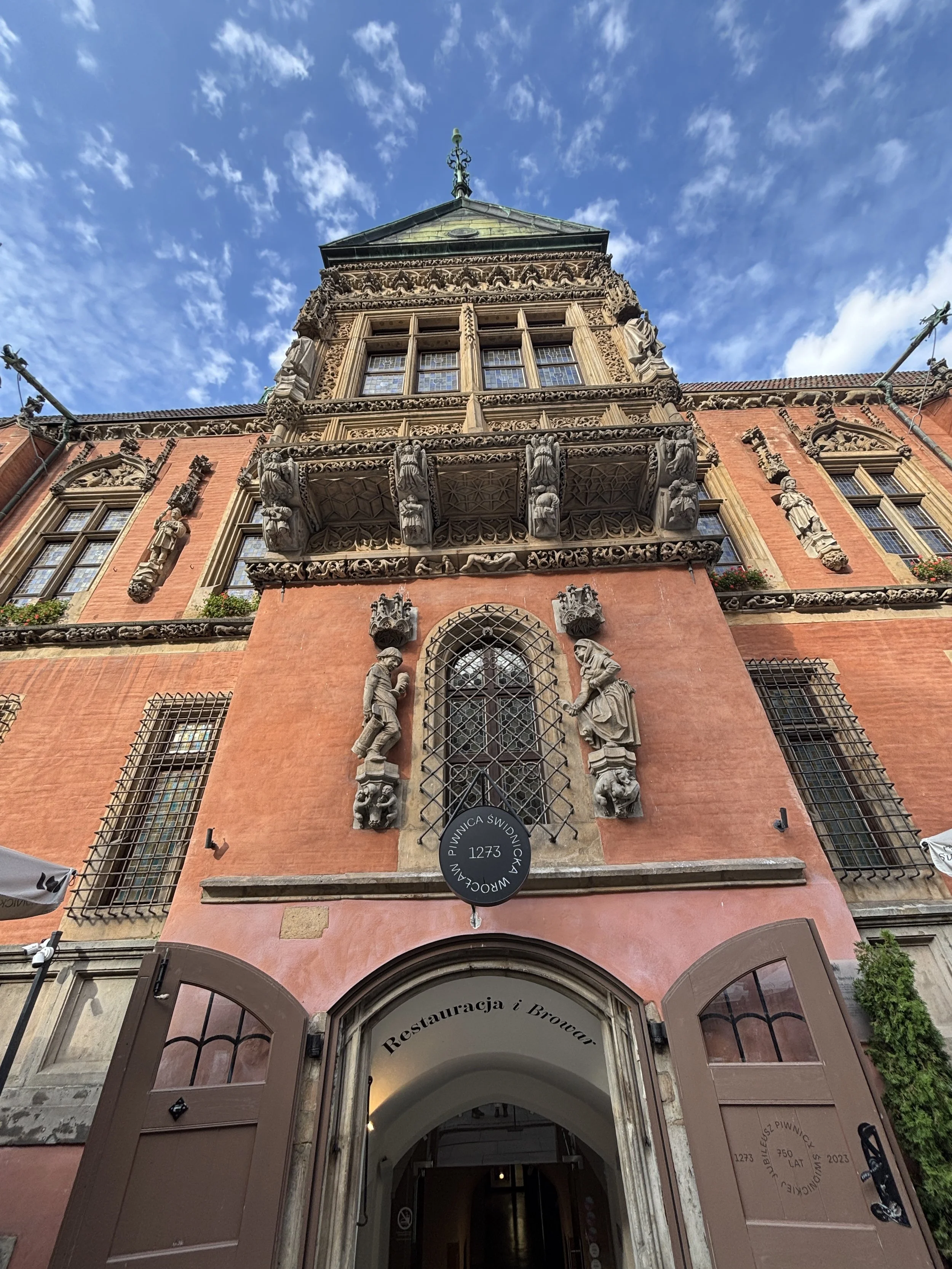
You maybe forgiven for mistaking Wroclaw’s Old Town Hall for a church. However, not only it’s not a religious building, but it also has one of Europe’s oldest artisan breweries (“Piwnica Świdnicka”, dating back to the 1273 AD) in its basement!
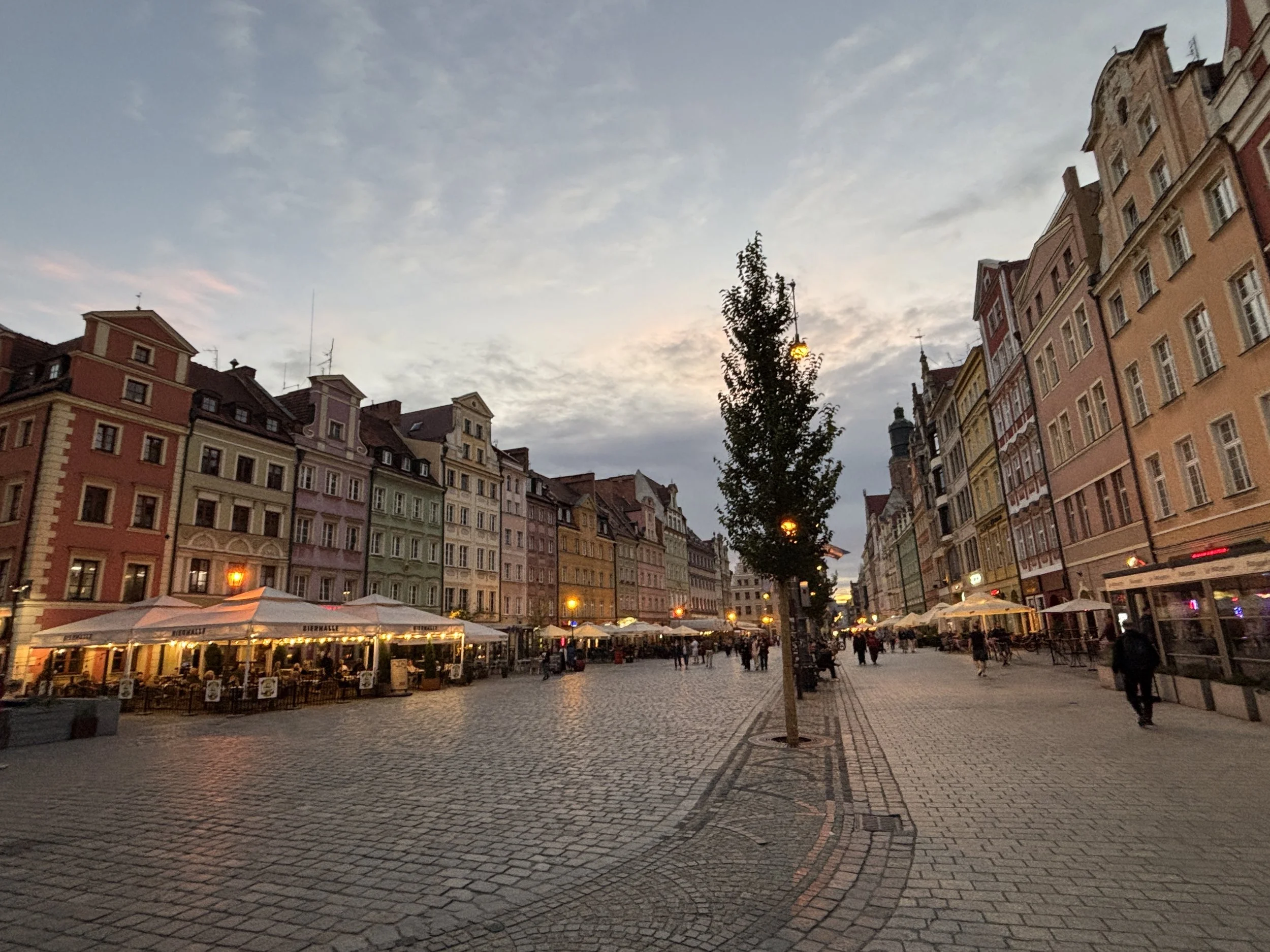
When at Rynek, take your time to walk all around the square, since all four sides are lined with colourful houses built in the traditional Central European style (as previously mentioned, many of them were reconstructed or restored after the war, but still…!)
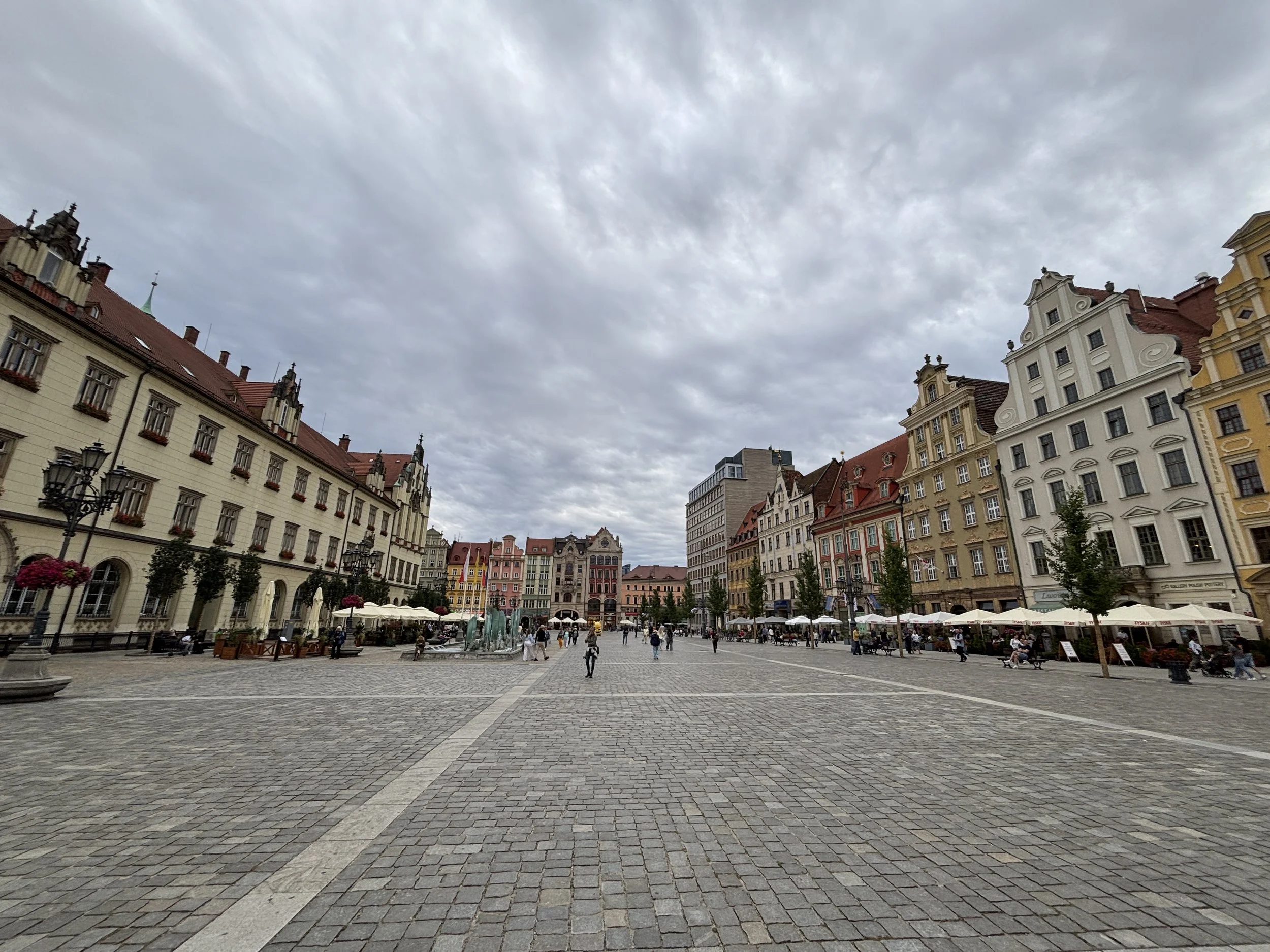
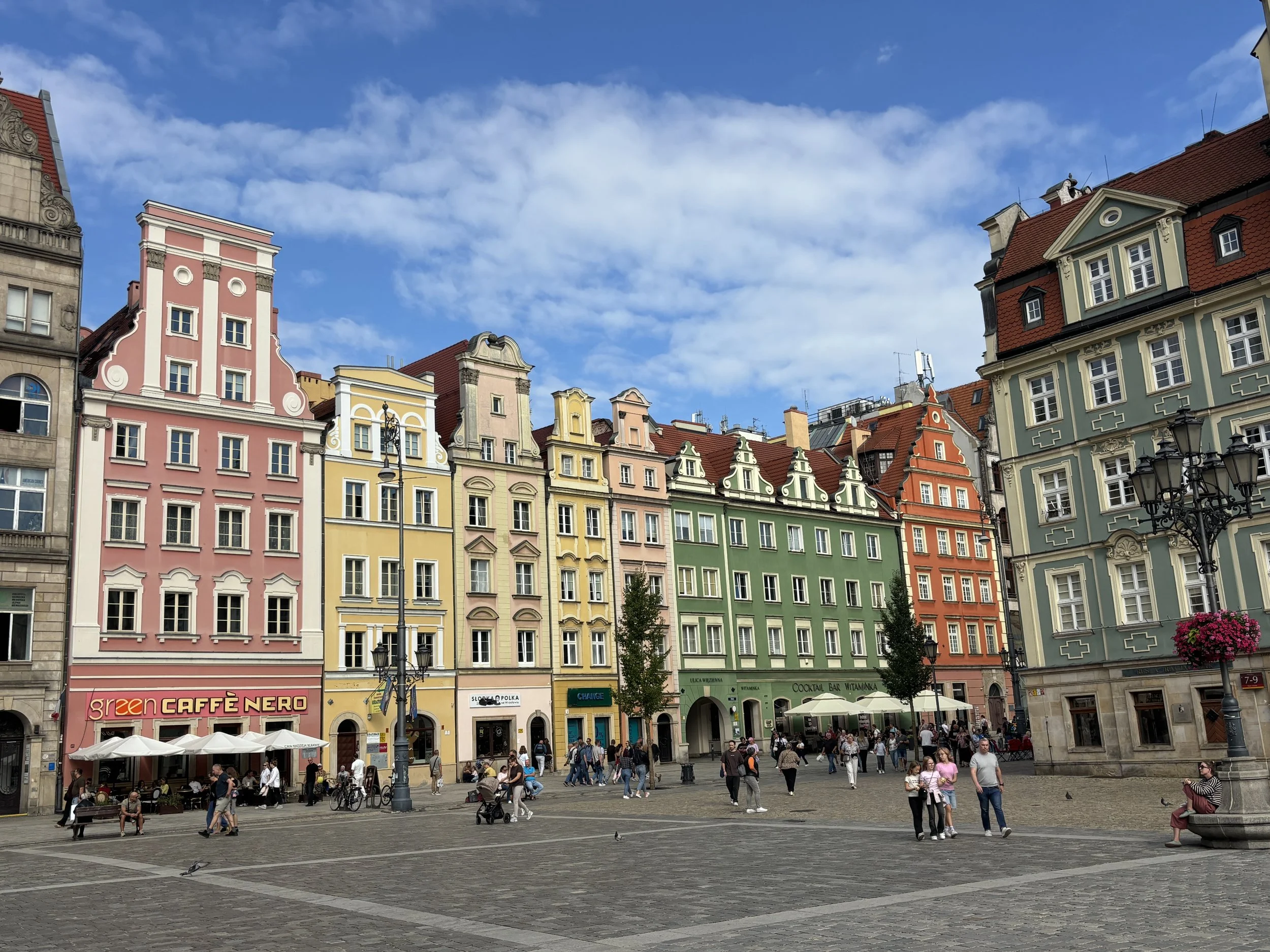
Rynek is buzzing with activity at all times, since, besides being a beautiful and harmonious architectural this is a very commercial area, with plenty of shops, bars and restaurants. In Winter, one of Europe’s largest Christmas Markets takes over the four sides of the square.
Btw, it is hard to imagine nowadays, but until 1997, Rynek was opened to tram and road traffic and cars parked all over the place.
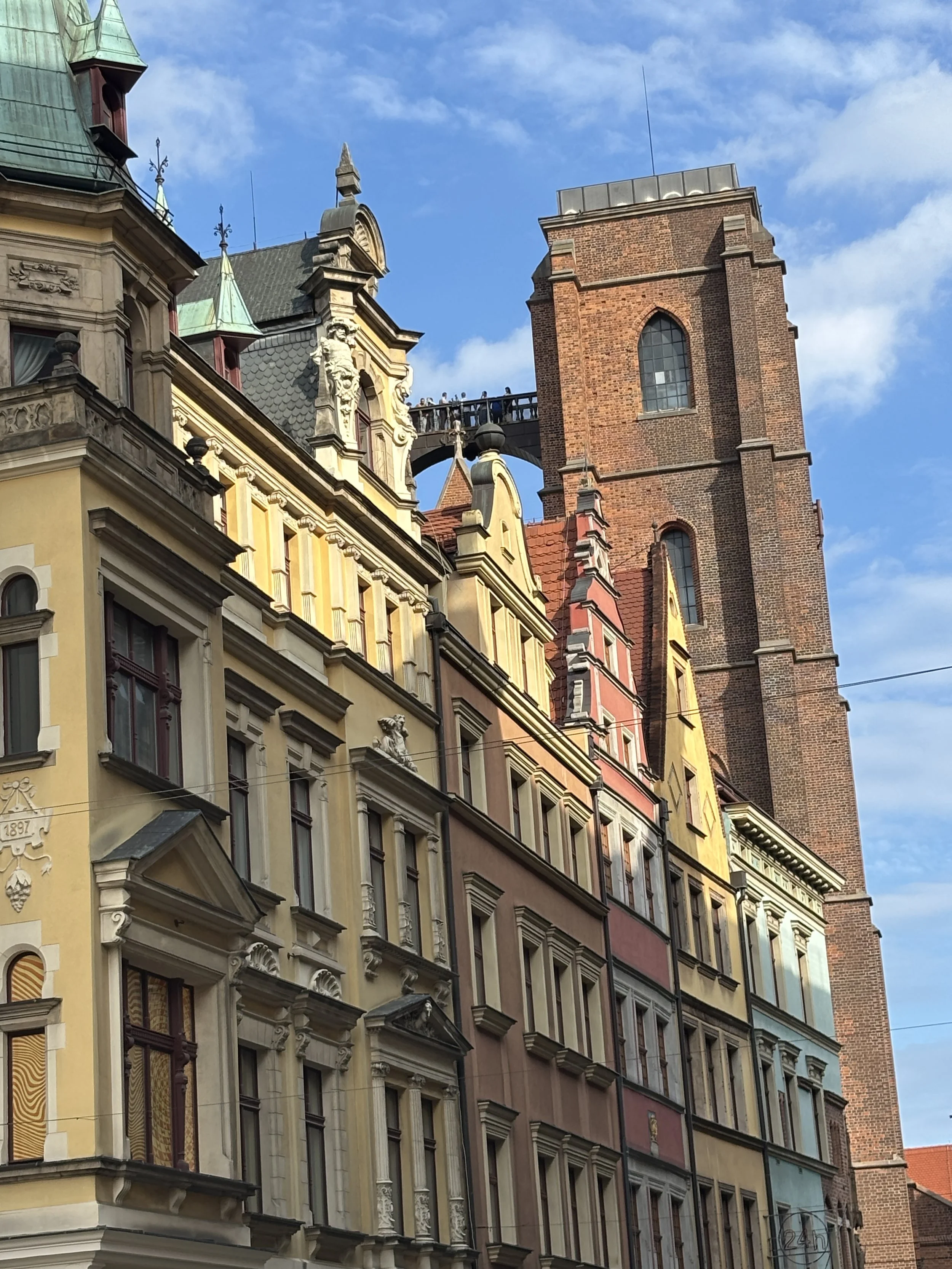
From Rynek you can also see the church of Mary Magdalene, which has, in its Bridge of Penitents (picture below right) one of the best viewpoints of the old town (I didn’t climb to it, though!)
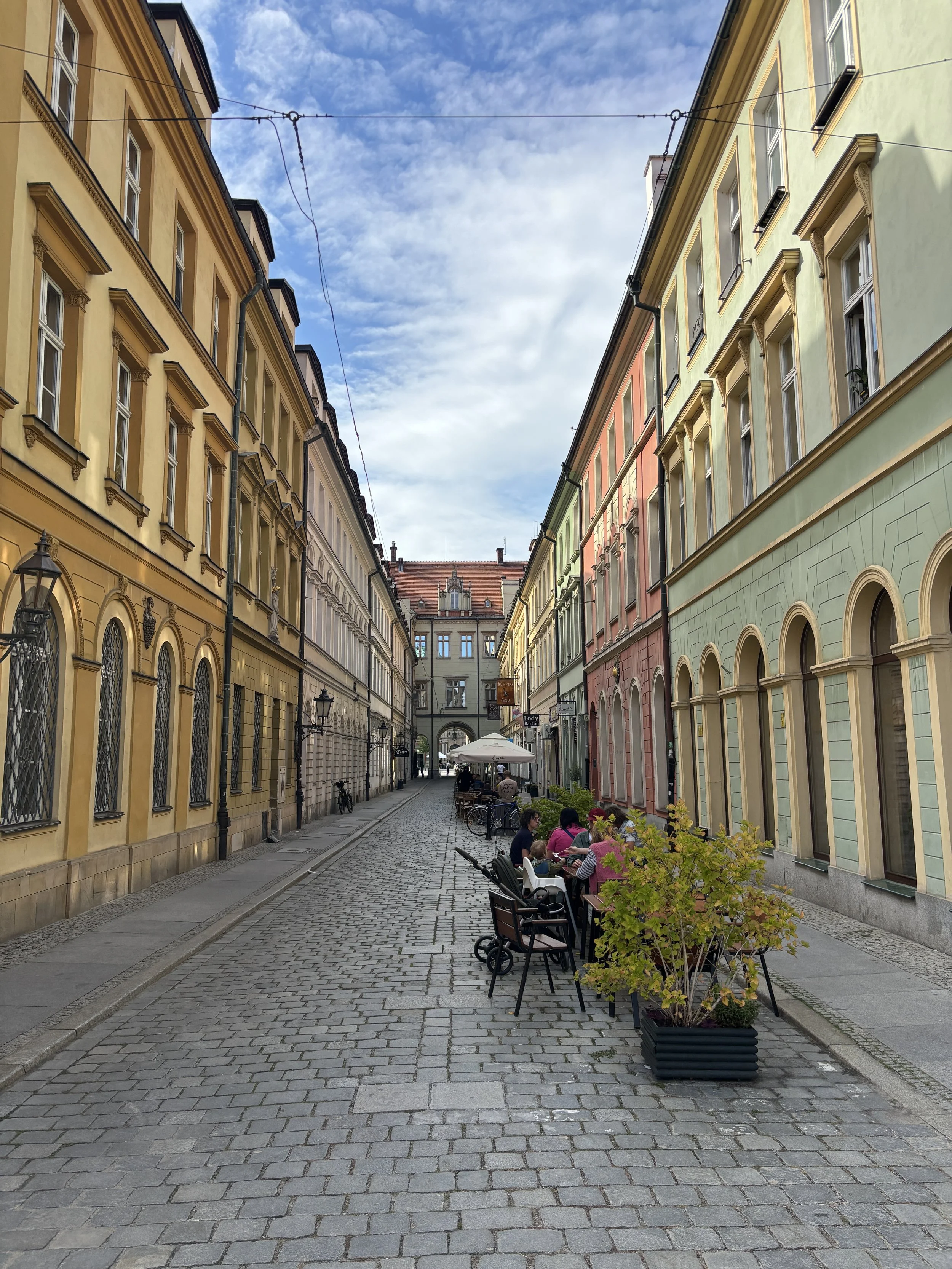
What else to see around Rynek:
Plac Solny (Salt Square)
This is another beautiful square with located just some meters away from Rynek. It’s name derives from the fact that for a long time this was a place where merchants came to sell salt from the mines of southern Poland.
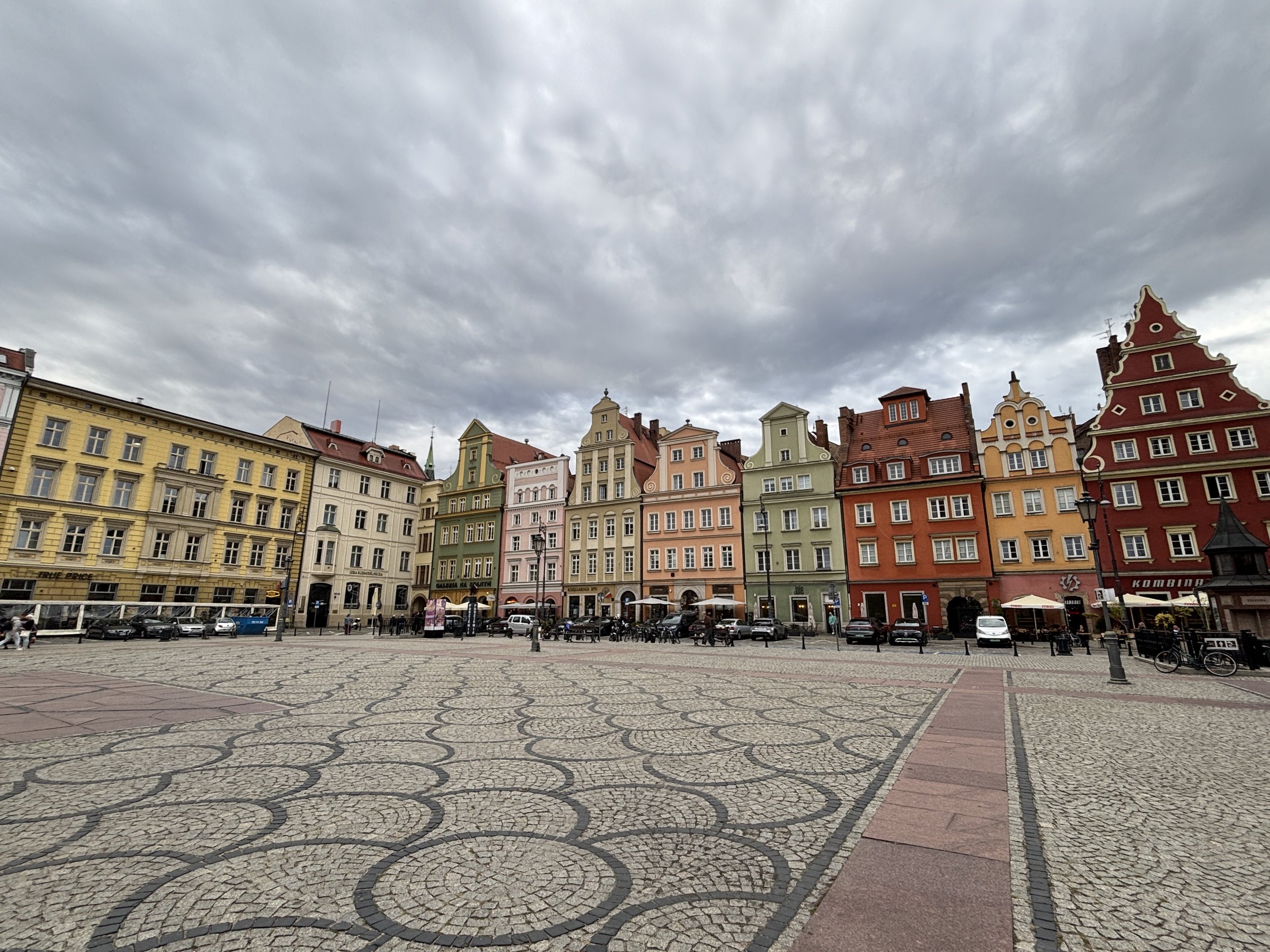
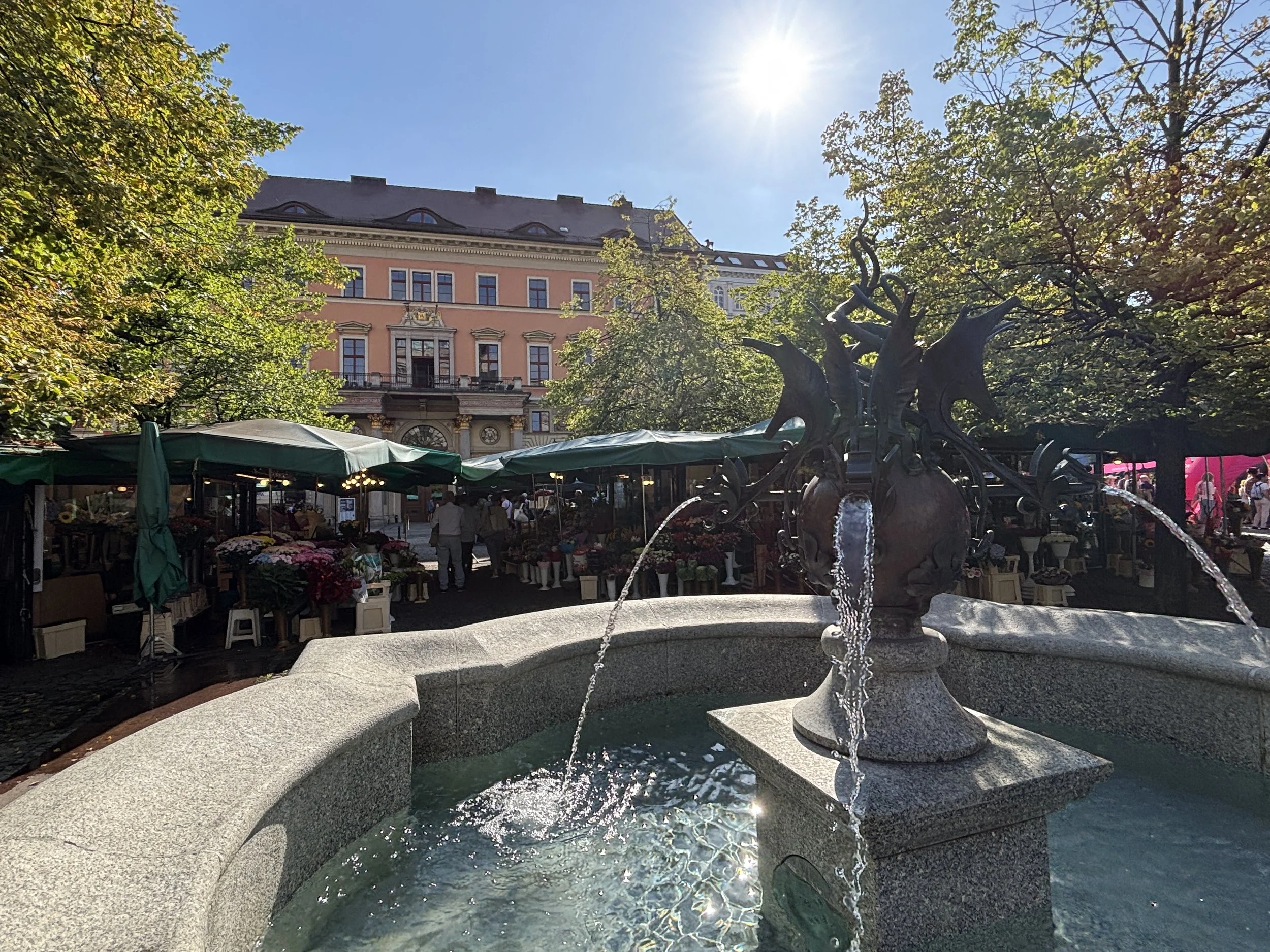
Besides its beautiful mosaic-like pavement and historical buildings, Plac Solny has hosts also a flower market that is open 24 hours!
Saint Elizabeth’s Basilica
This is one of Wroclaw’s main churches and, as its belfry towers over Rynek, it is easy to think this is actually the city’s cathedral (which is actually located on Ostrow Tumski).
Saint Elizabeth’s Basilica tower is open to visitors and provides another magnificent view point over Wroclaw’s old town, but I will have to leave that part to your imagination, because unfortunately I didn’t have Zlotys in my pocket when I showed up right before its closing time at 6pm (It costs around €10 but they only take cash, no cards accepted!).
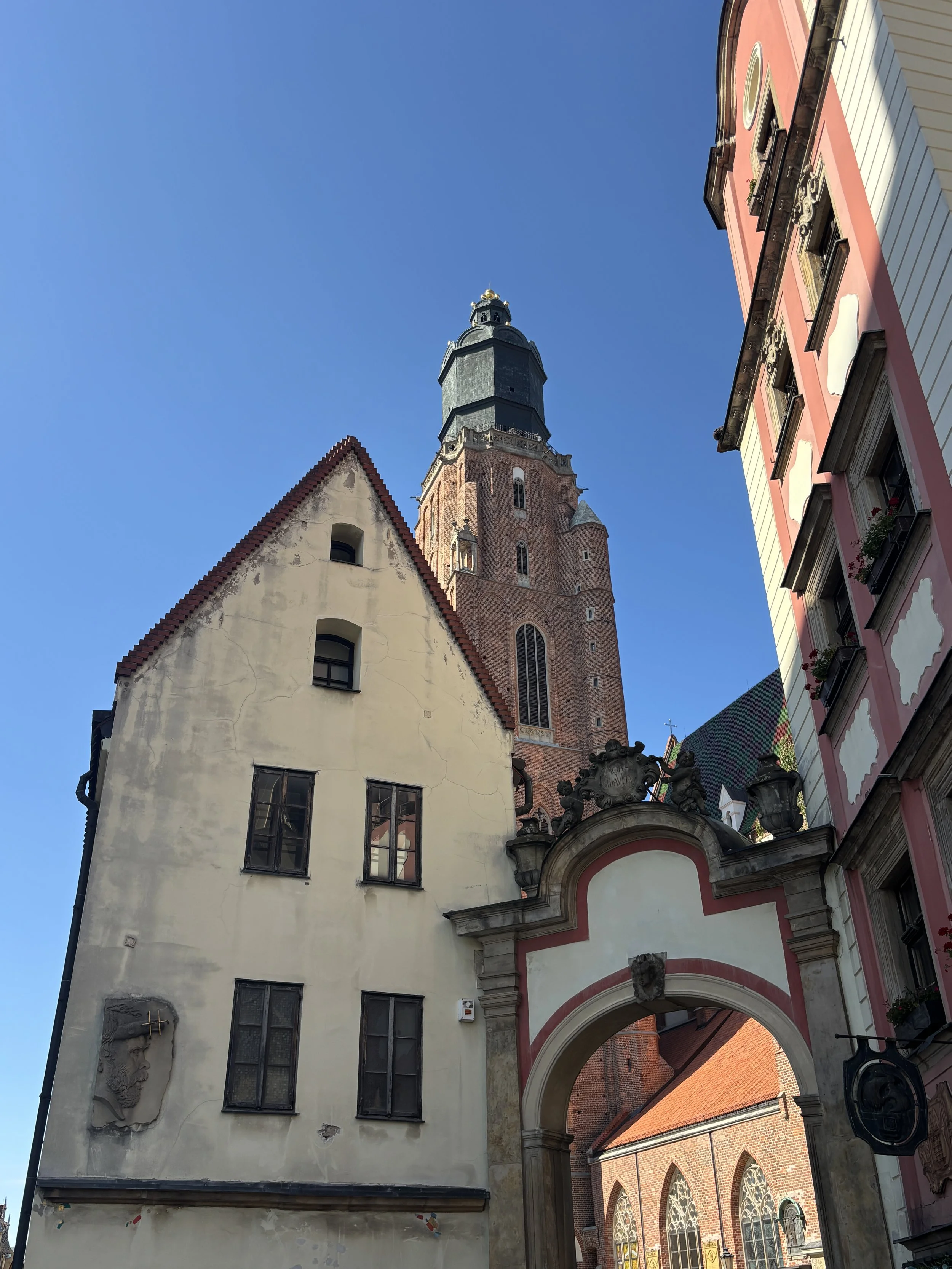
Even if you don’t climb up its tower, Saint Elizabeth’s Basilica has a very interesting story and plenty of interesting details to check.
In fact, the story of this church mimics in some way that of the city itself when it comes to the different changes it has gone through. It was originally a Catholic church, then it became Lutheran after the Reformation, and after WW2 it became Catholic again.
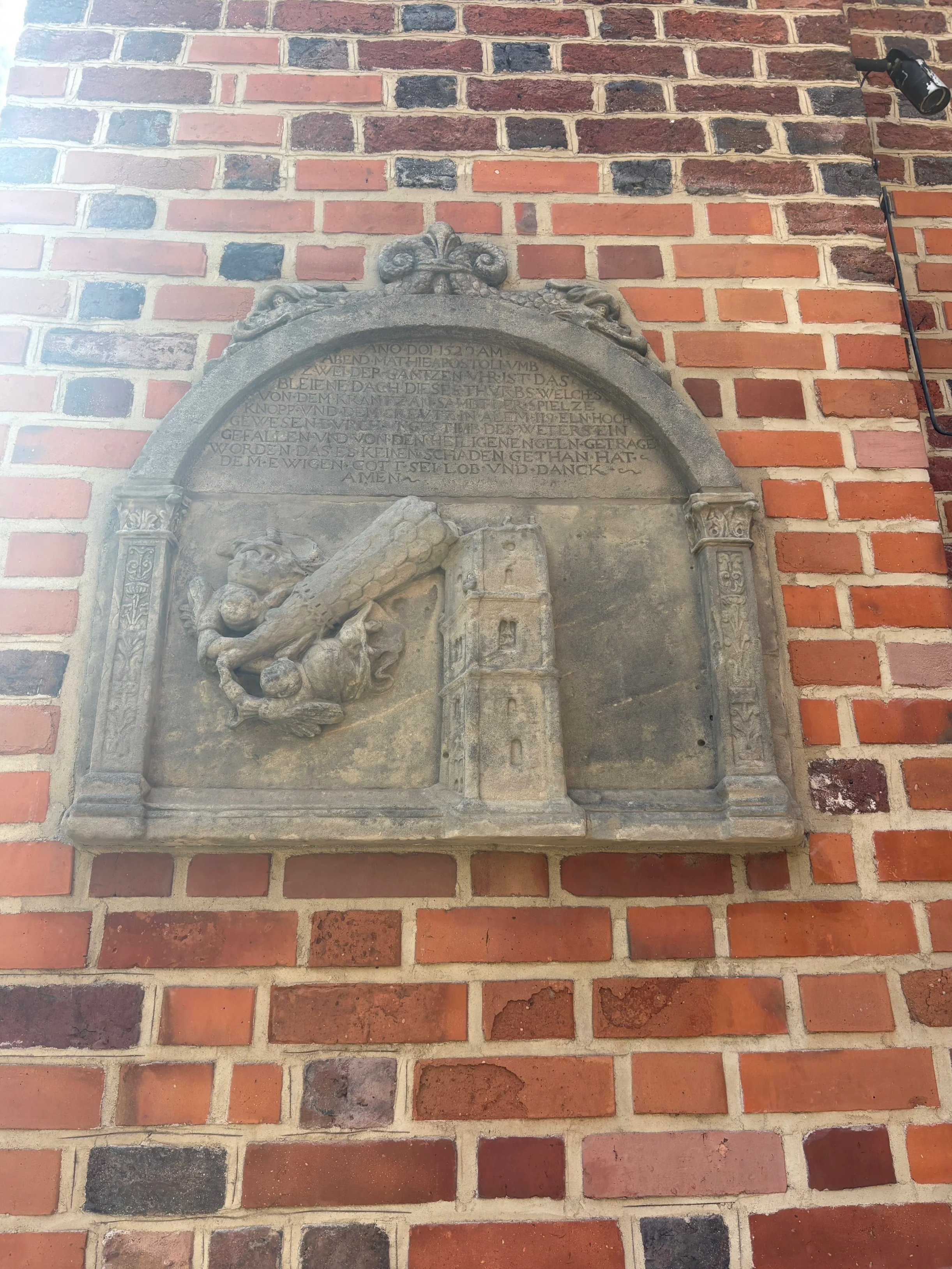
The original spire collapsed in 1529, just four years after it had switch its allegiance to the Reformation. Catholics used that event to suggest it may have been a Divine signal. In response, Protestants alleged that the spire had been carried by angels and, when the spire was rebuilt in the mid-1530s, they put a bass-relief depicting the alleged scene.
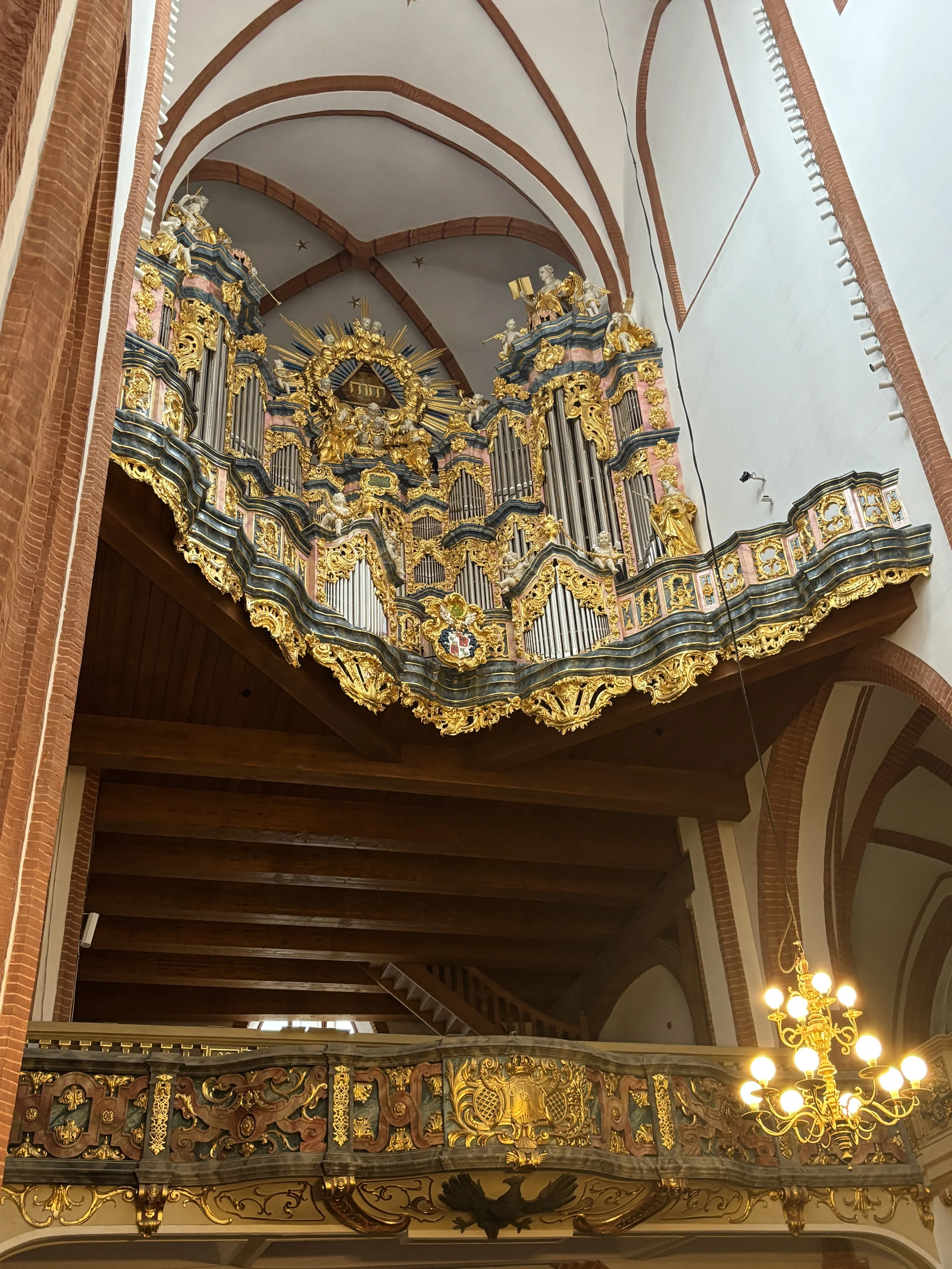
The church was thoroughly destroyed in the 20th C., not in the war, but in a fire that broke out in 1976. That fire also destroyed an artistic treasure, a magnificent 18th C. organ, known as the “Engler organ”. This was rebuilt according to the original specifications, between 2011 and 2022, and today it can be seen at one end of the nave.
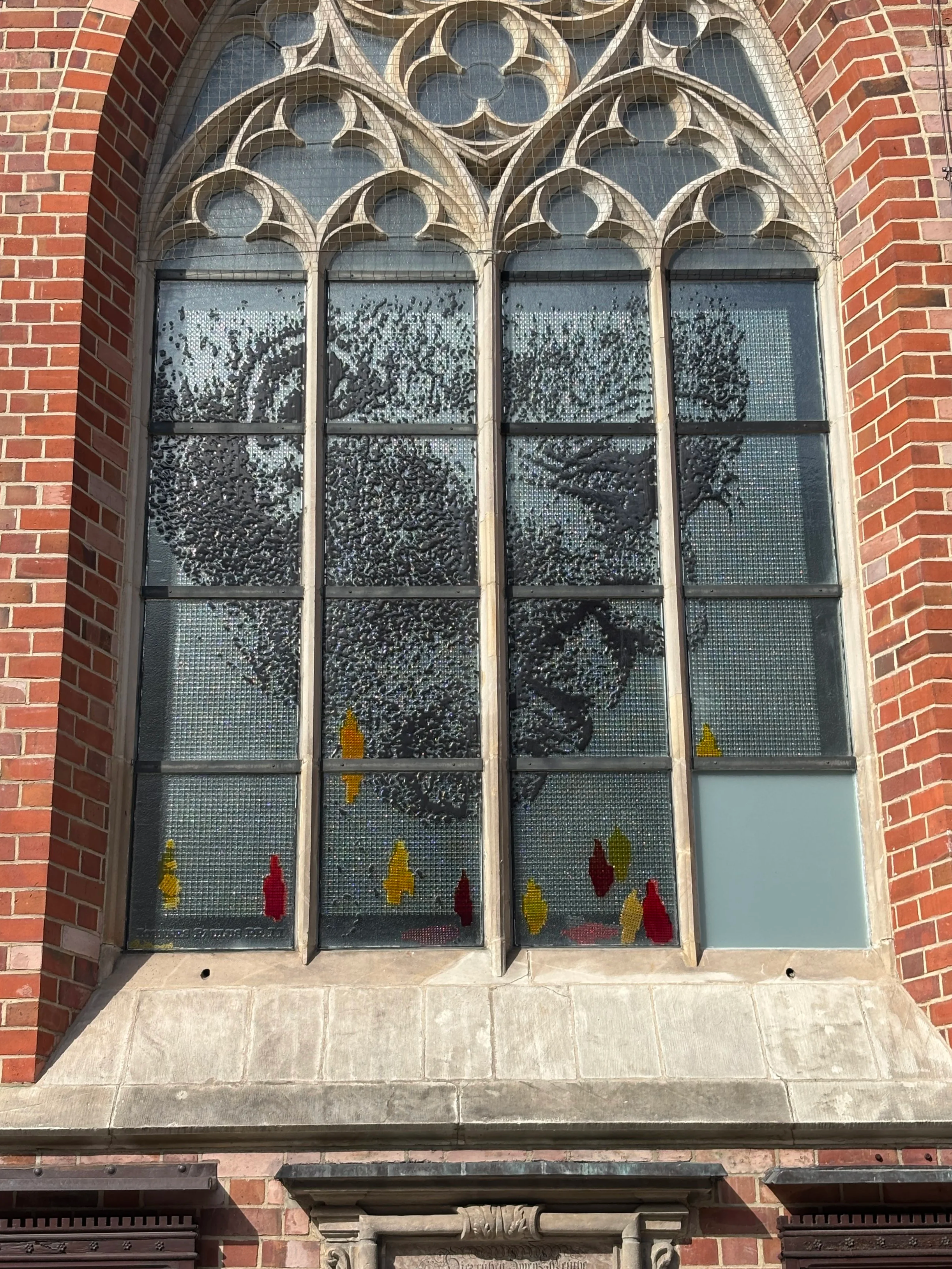
Wroclaw had traditionally had a stained glass industry and while this is today a rather niche activity, there is still a school in the city for those that wish to train in this art. Saint Elizabeth’s Basilica has got its fair share of stained glass, including this one shown here, which depicts the late Pope John Paul II, who visited the church during his pontificate.
Jatki Street
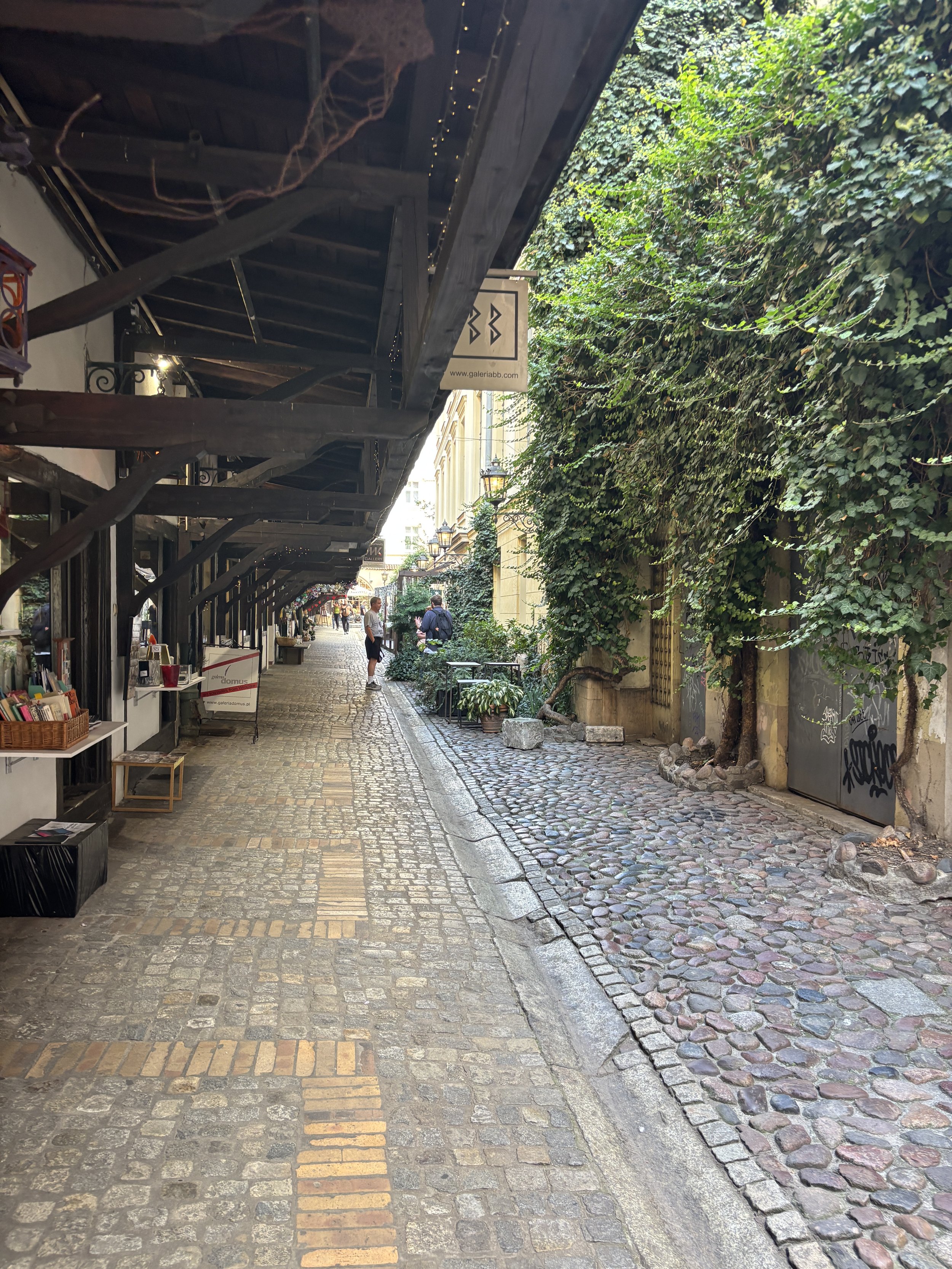
This is a narrow street just north of Rynek, where butchers used to have their stalls and sell their produce. Today you will find artisan shops instead, at this spot.
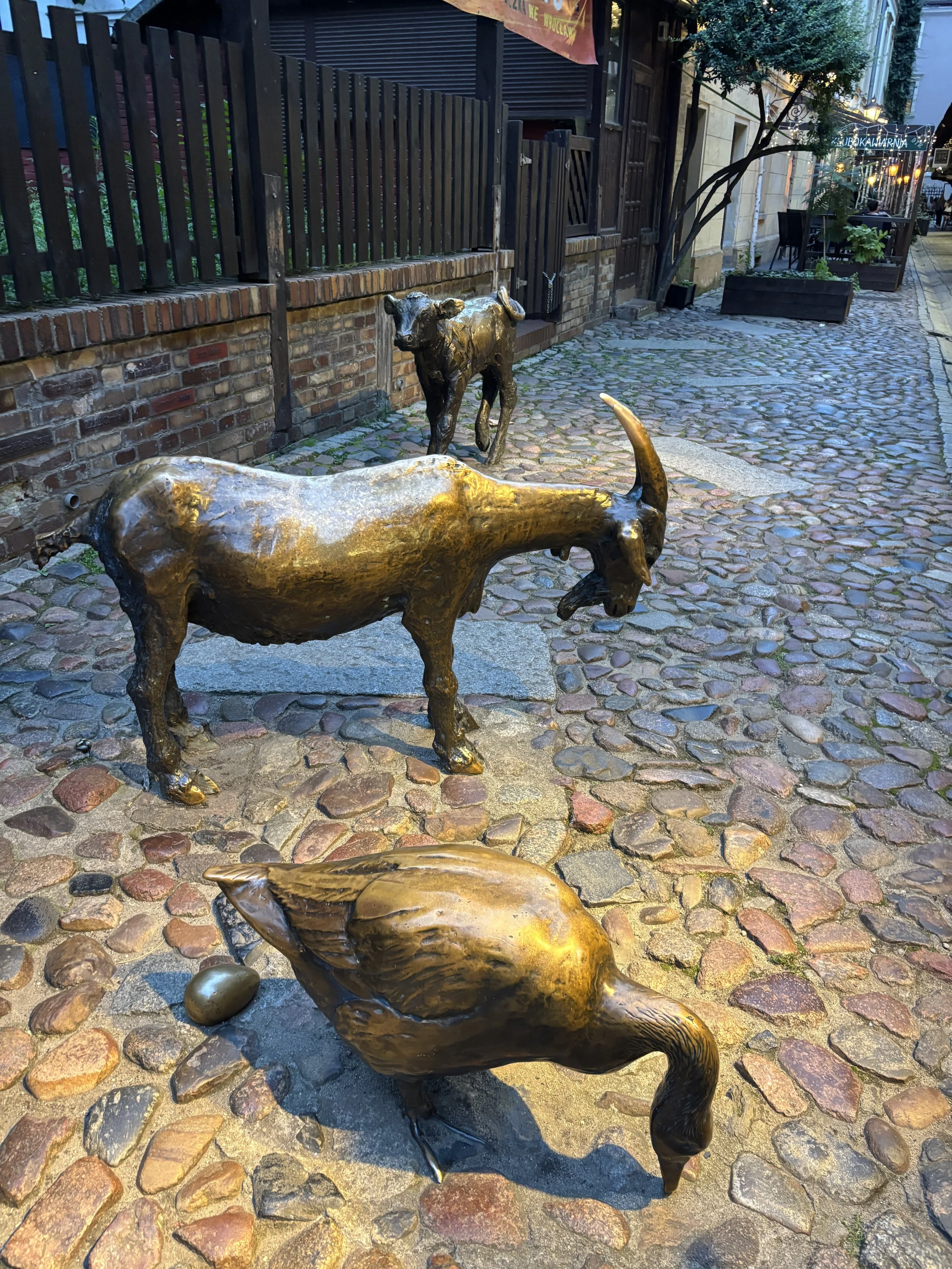
However, a set of sculptures which depict the different animals man the meat of which man eats, act as a reminder of the street’s past role. And from what I could see, they are also a magnet for tourists, particularly children, who like to take pictures with them.
University of Wrocław
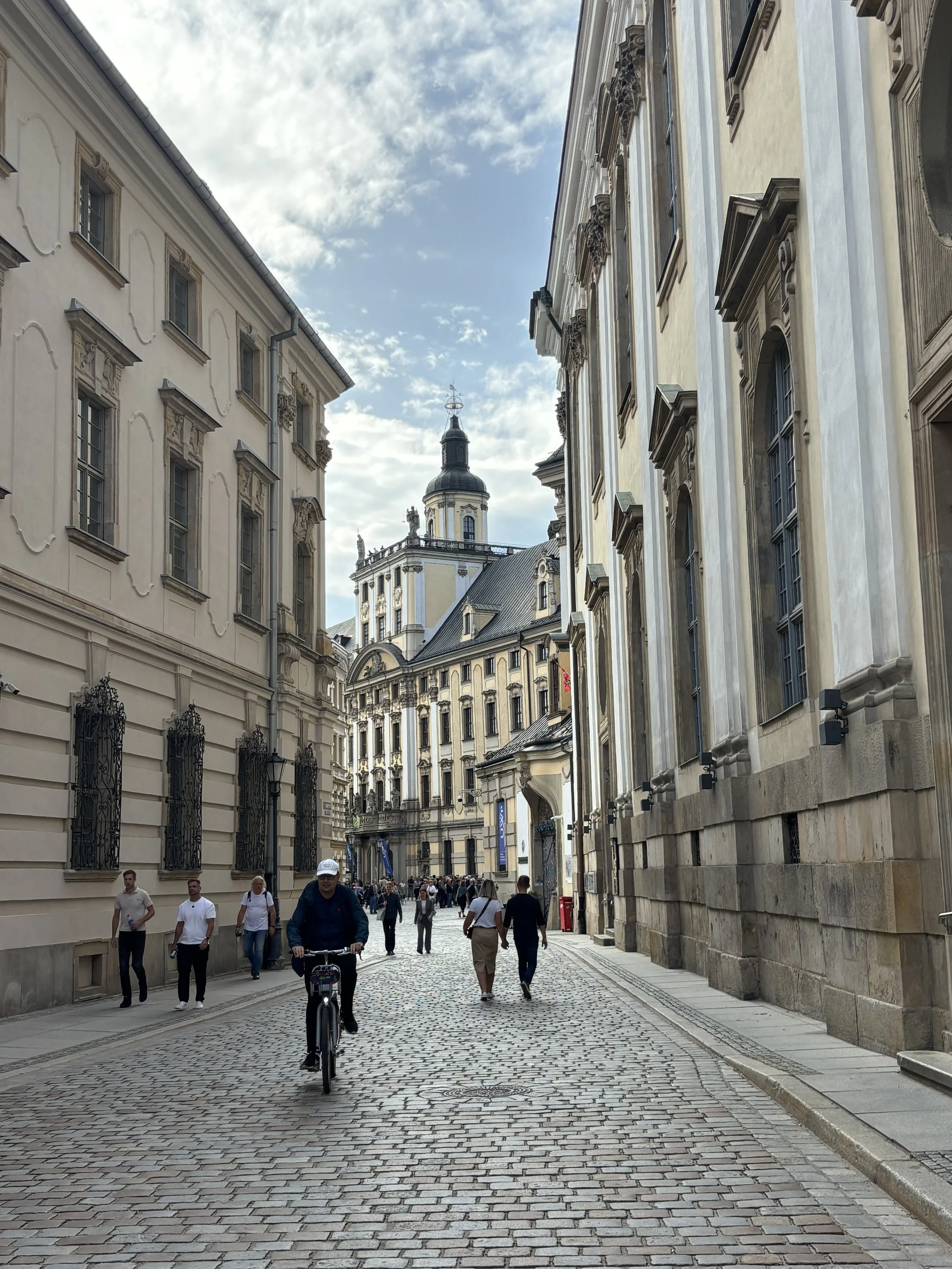
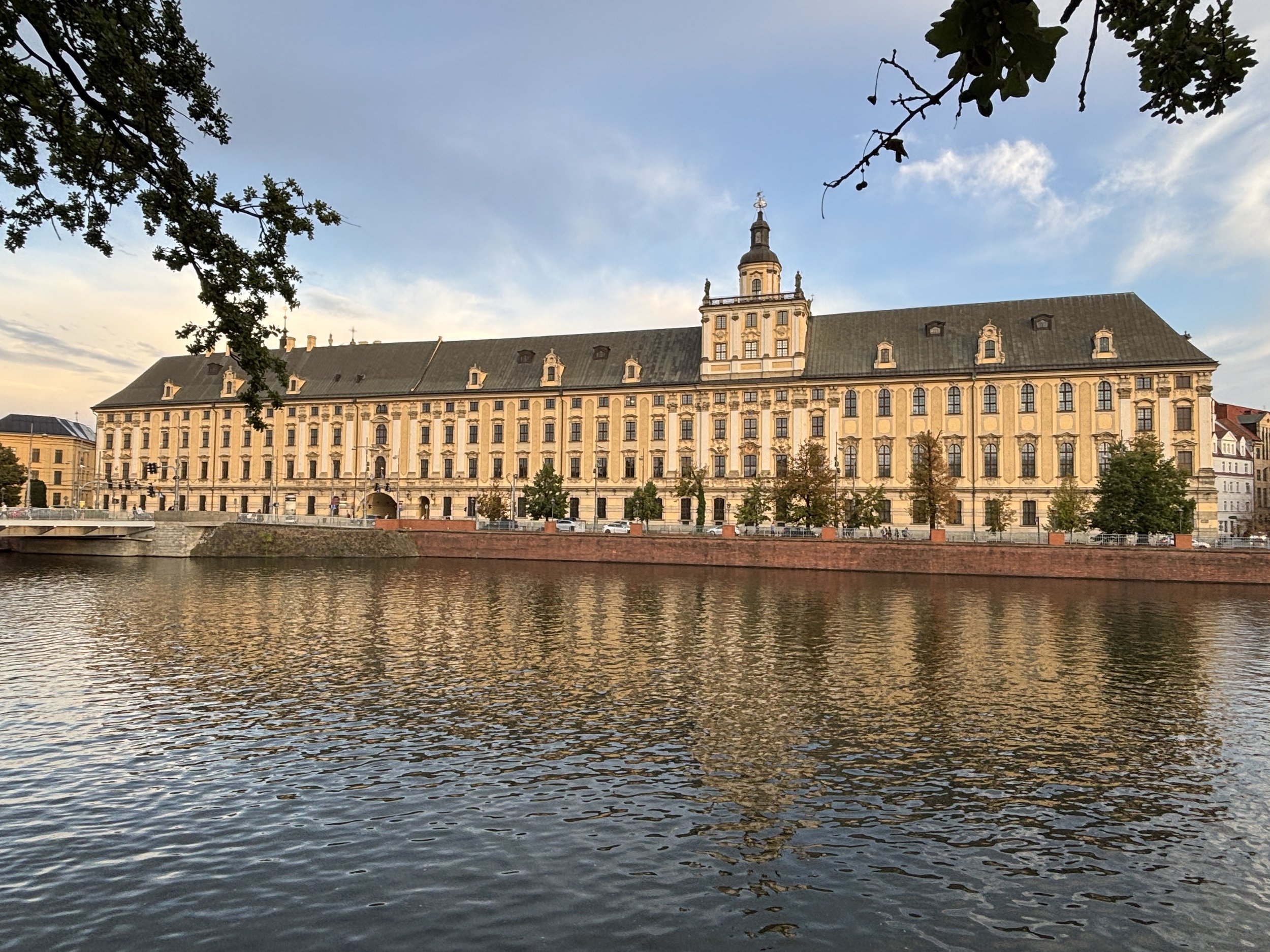
The University of Wroclaw is one of the city’s most majestic buildings and a recommended stop in any itinerary through the city. Besides its grand facades, both facing the inner town and the river, it has also a couple of interesting sites indoors within its grounds.
One of them is the heavily ornate Aula Leopoldina. I didn’t have time to see it for myself, but you can check here how it looks like. Btw, you can also book entry tickets with audioguide included online.
The other is the Oratorium Marianum, which is used as a concert hall, you can see it here.
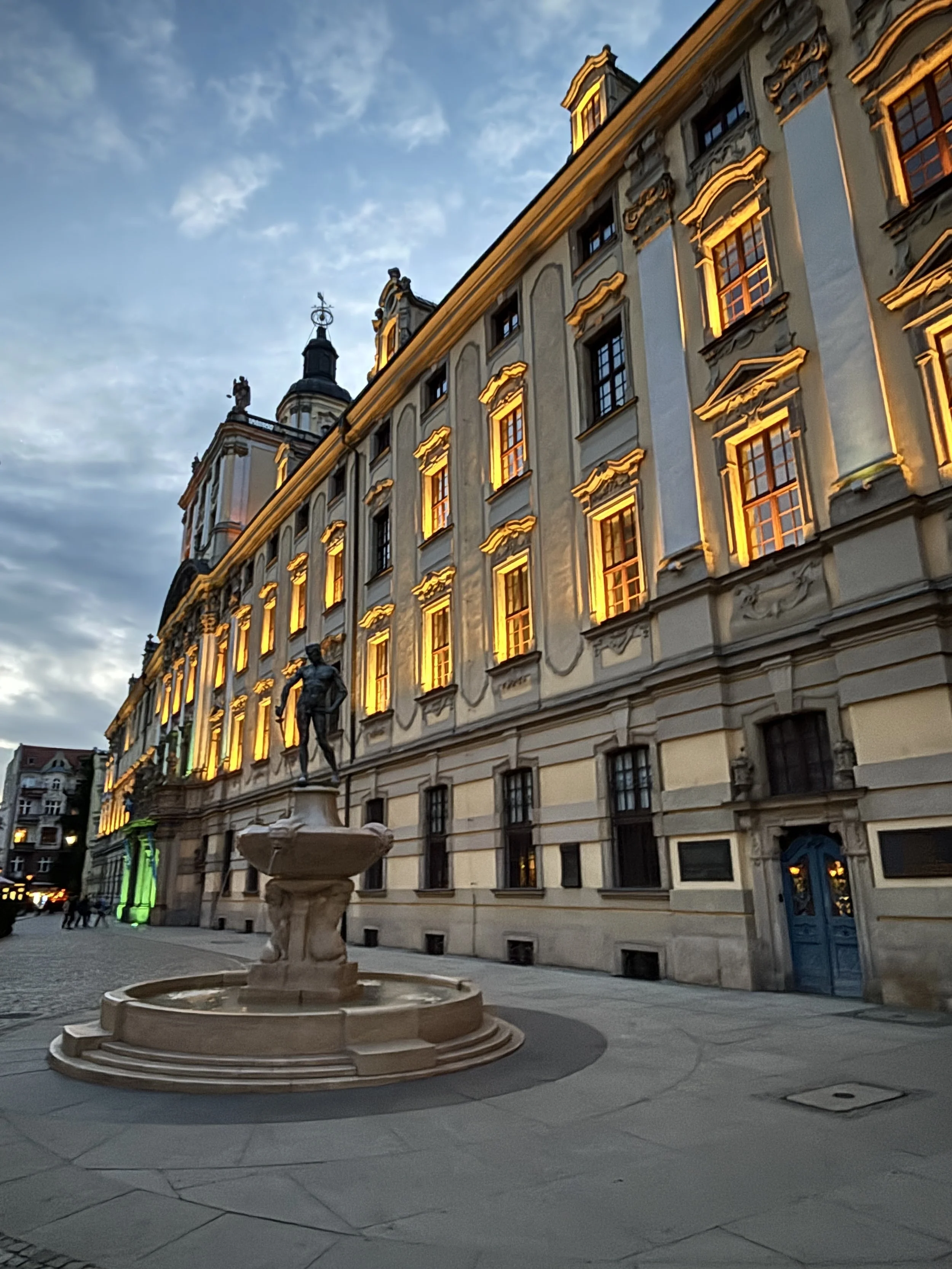
In front of the university building stands the 1904 statue of a naked fencer. A, possibly apocryphal story says that the man in the statue is none other than the artist who made it, Hugo Lederer. According to this story, the monument alludes to an episode from the time when he was a student at the university and gambled away all his clothes after a night of heavy drinking.
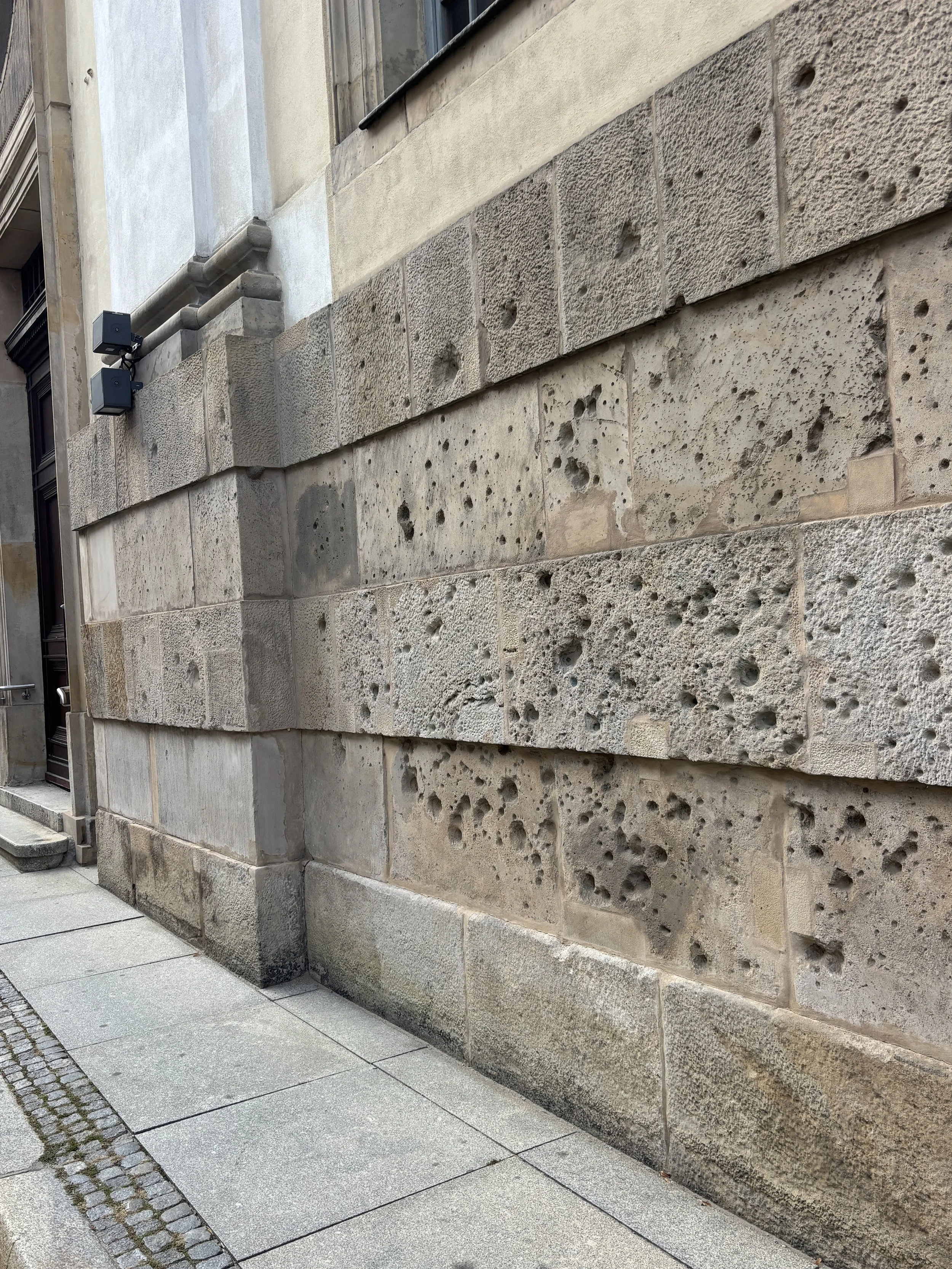
Near the university you can also find some of the bullet marks from the WW2 battles.
St. Matthias Church and Ossolineum
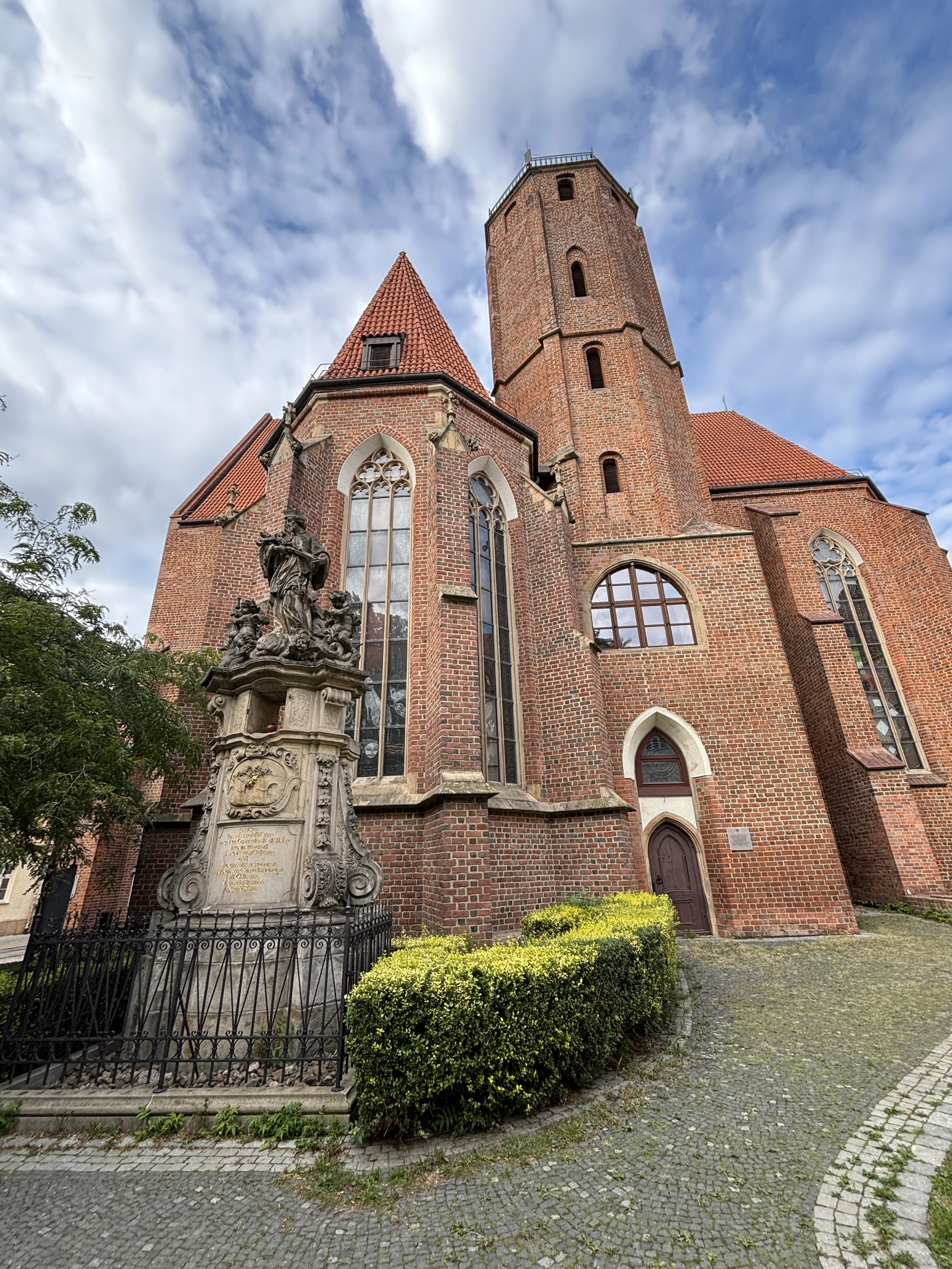
If you walk between Wroclaw University and Ostrow Tumski there are a couple of other sites worth stopping at. One of them is the red-brick church of Saint Mathias, which has some very old foundations, even if the current building was heavily restored after the war. It has some remarkable stained glass windows that you can admire from inside.
The other one is the Ossolineum, which hosts the Ossolinsky Institute, an institution set up in 1817 by a Polish aristocrat, Józef Maksymilian Ossoliński, with the aim of preserving Polish culture at a time when Poland had lost its statehood. Part of the library and archives were transferred from Lwow (Lviv) at the end of WW2. A new museum is planned to open to the public at the Ossolineum, in the meantime you can relax a bit in the gardens.
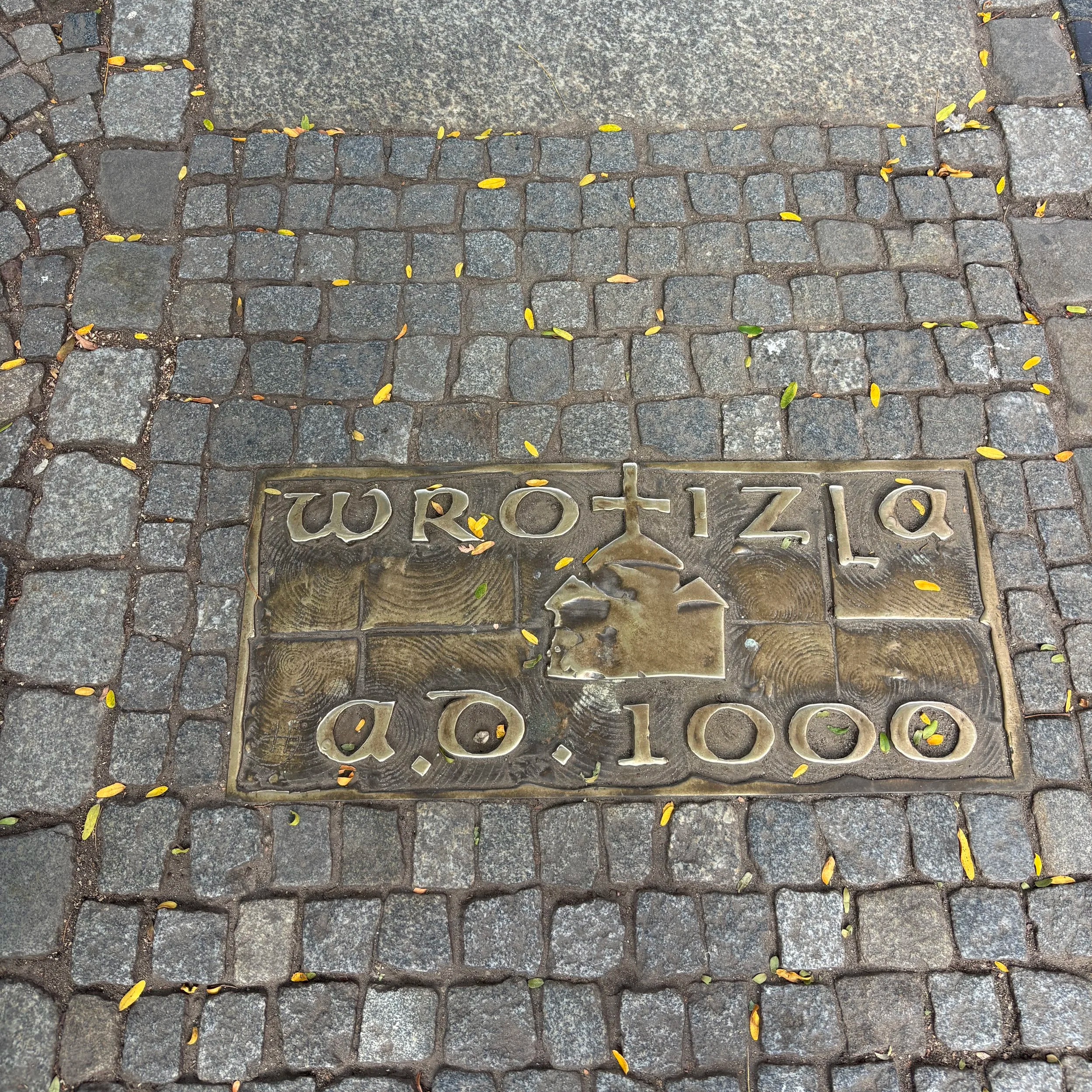
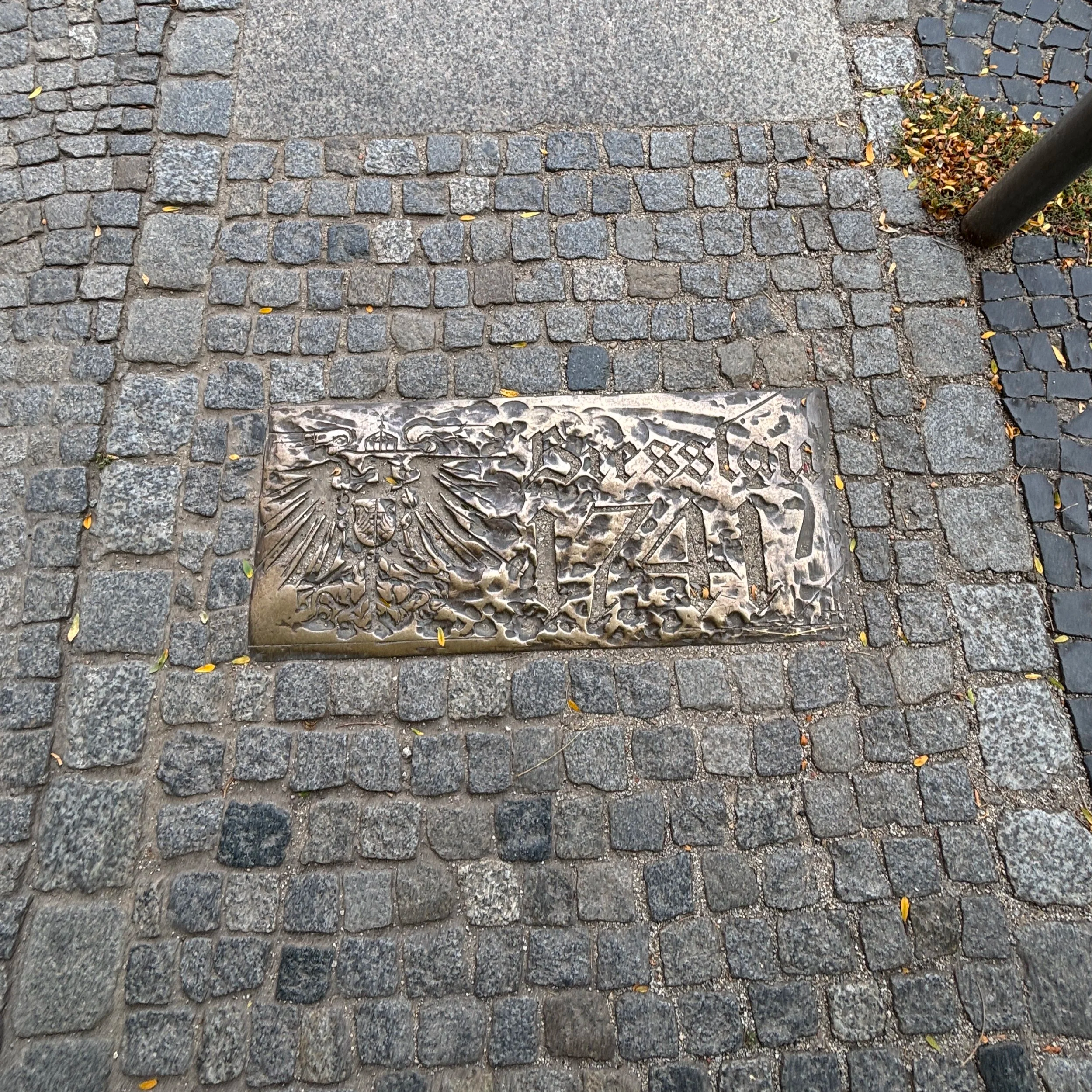
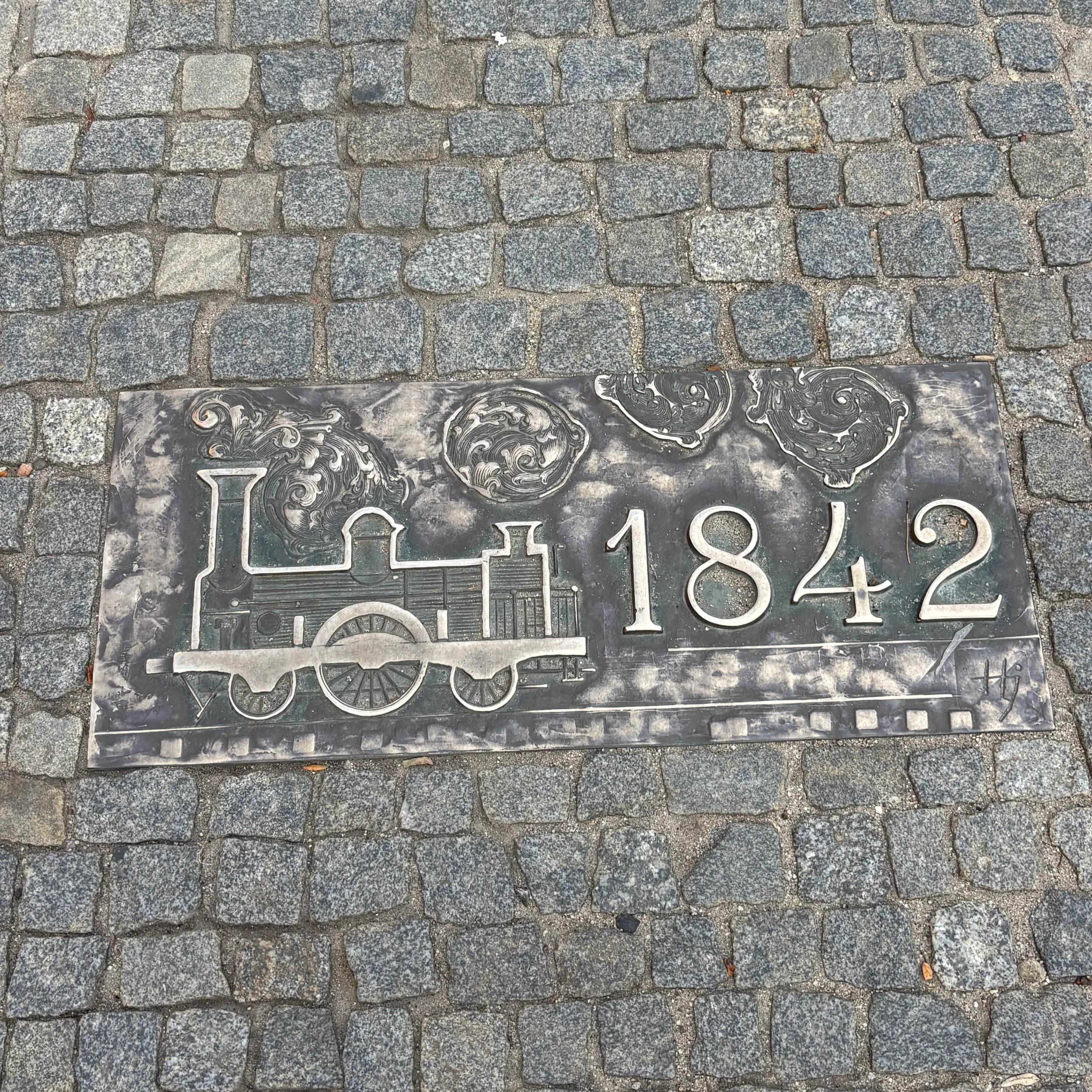
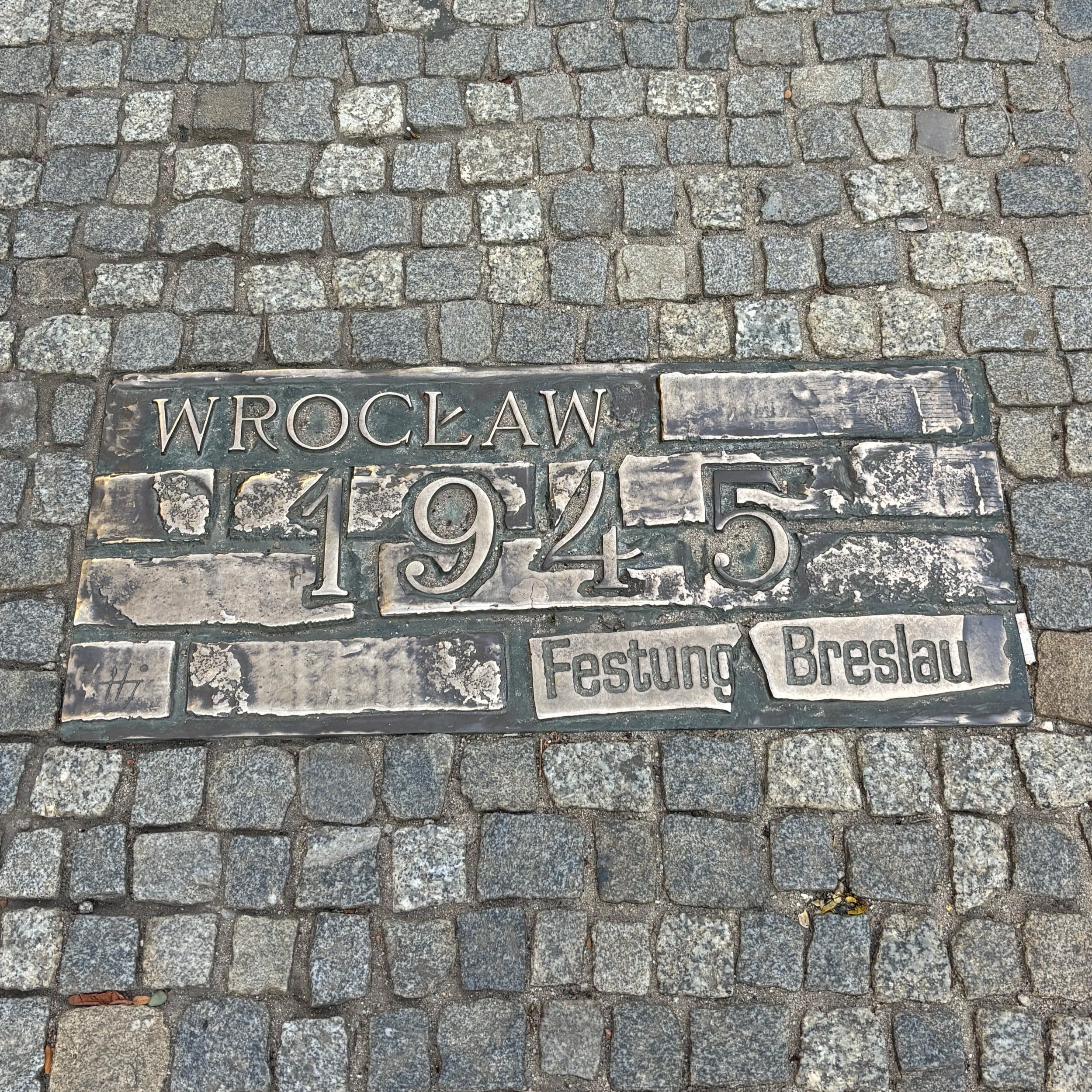
Continuing towards Ostrow Tumski I would suggest walking on Plac Nantiera. On this street you can retrace, literally step by step, the history of Wroclaw by checking the different metal plaques laid down on the ground in chronological order.
These evoke the most important events in the history of the city, since its the foundation more than 1,000 years ago, to its designation as the 2016 European capital of Culture.
So far we have explored the sites that lie to the north of Rynek, but if you head south, there are also some interesting things to see.
Wroclaw’s Royal Palace
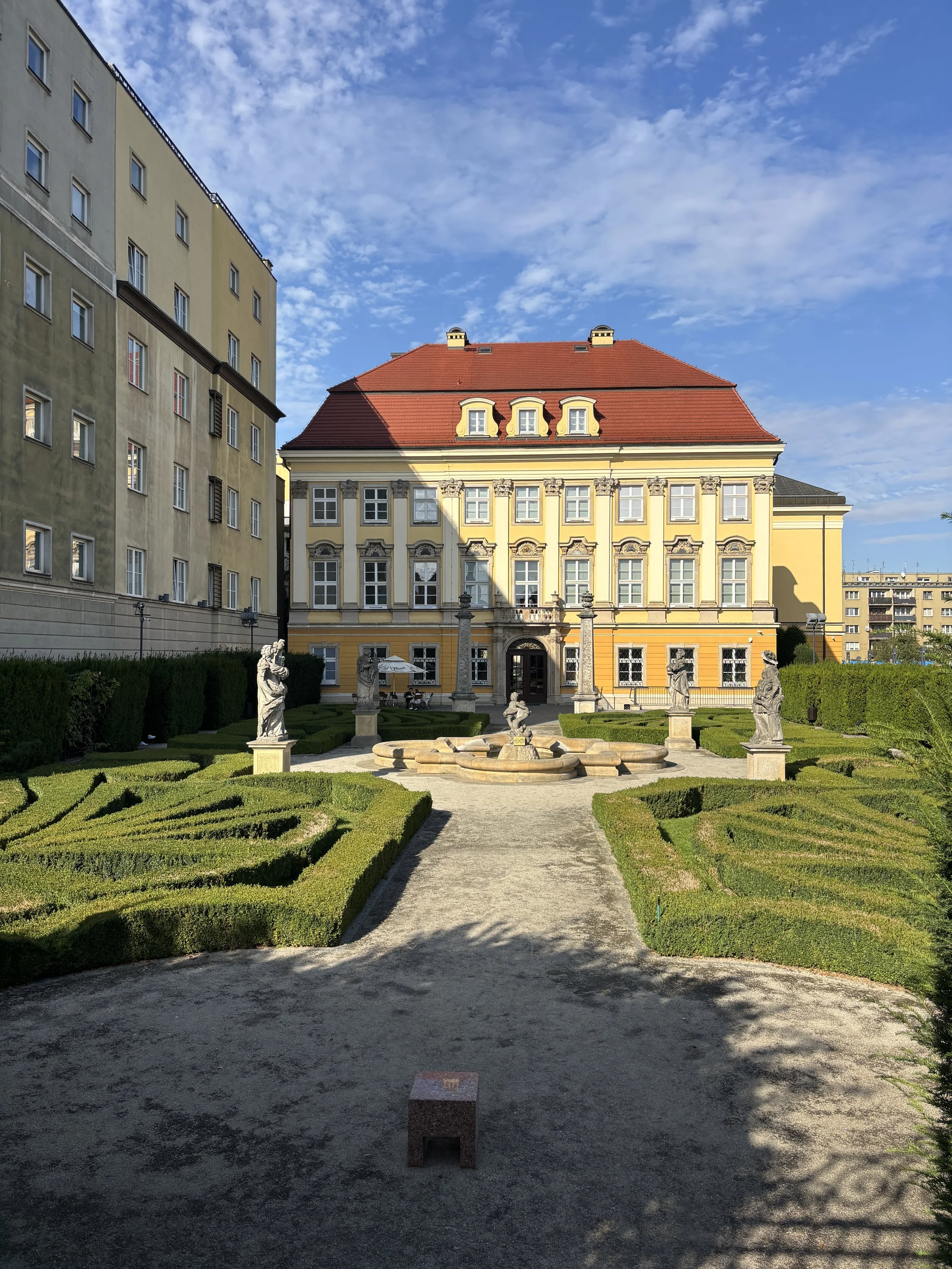
When Prussia took over Silesia, the city became, together with Berlin and Königsberg (present day Kaliningrad) one of the three cities which regularly hosted the king. Therefore, it was endowed with a Royal Palace. The palace was badly damaged during the war, and while one of its former wings is missing, what remains of it has been restored to its former glory and today it houses the Wrocław City Museum.
National Forum of Music of Wroclaw and Plac Wolności
Just south of the Royal Palace is Plac Wolności, a large open space which once upon a time was a parade ground for the Prussian army. Since 2015 it hosts the National Forum of Music, a large contemporary concert hall.
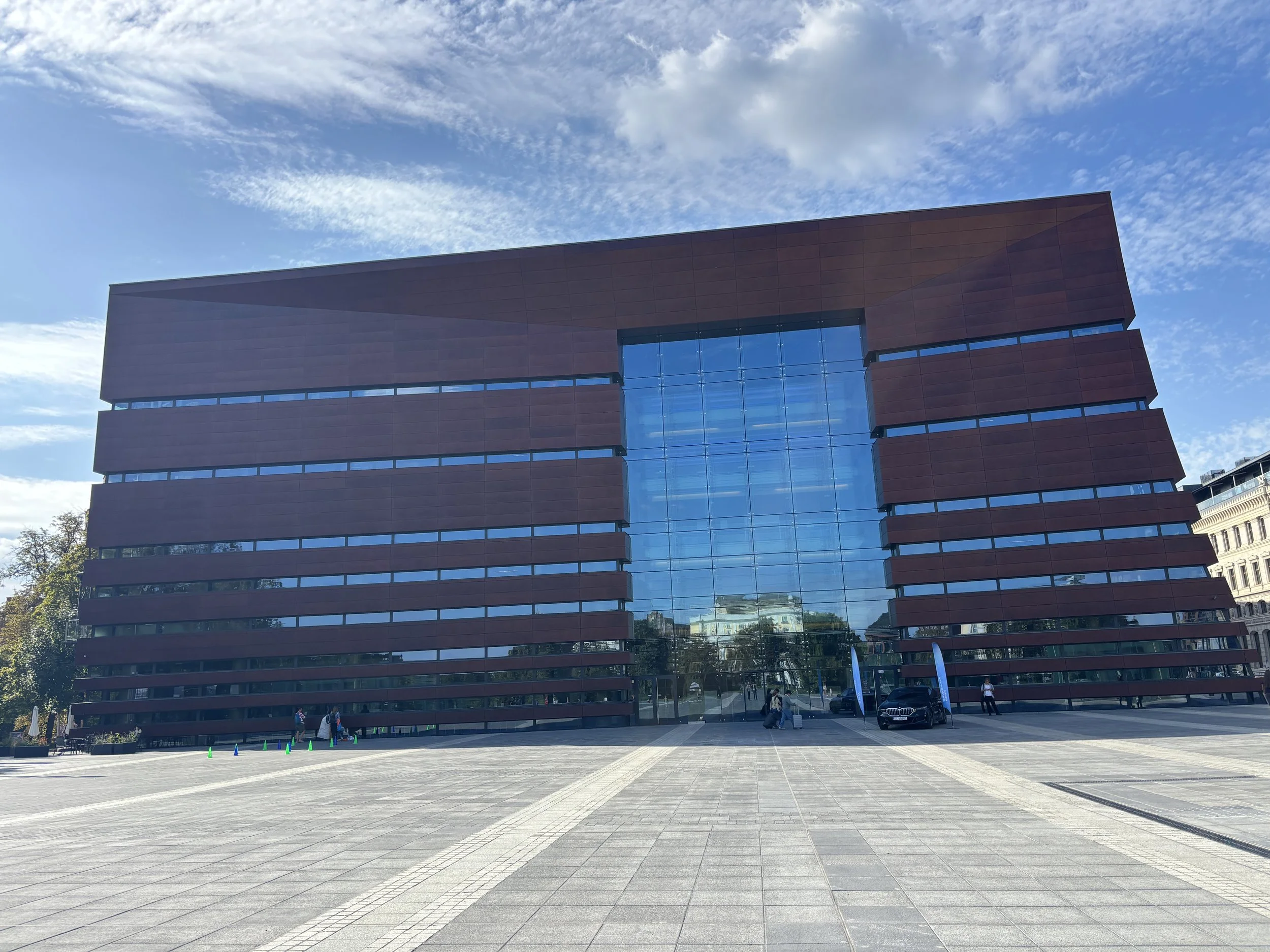
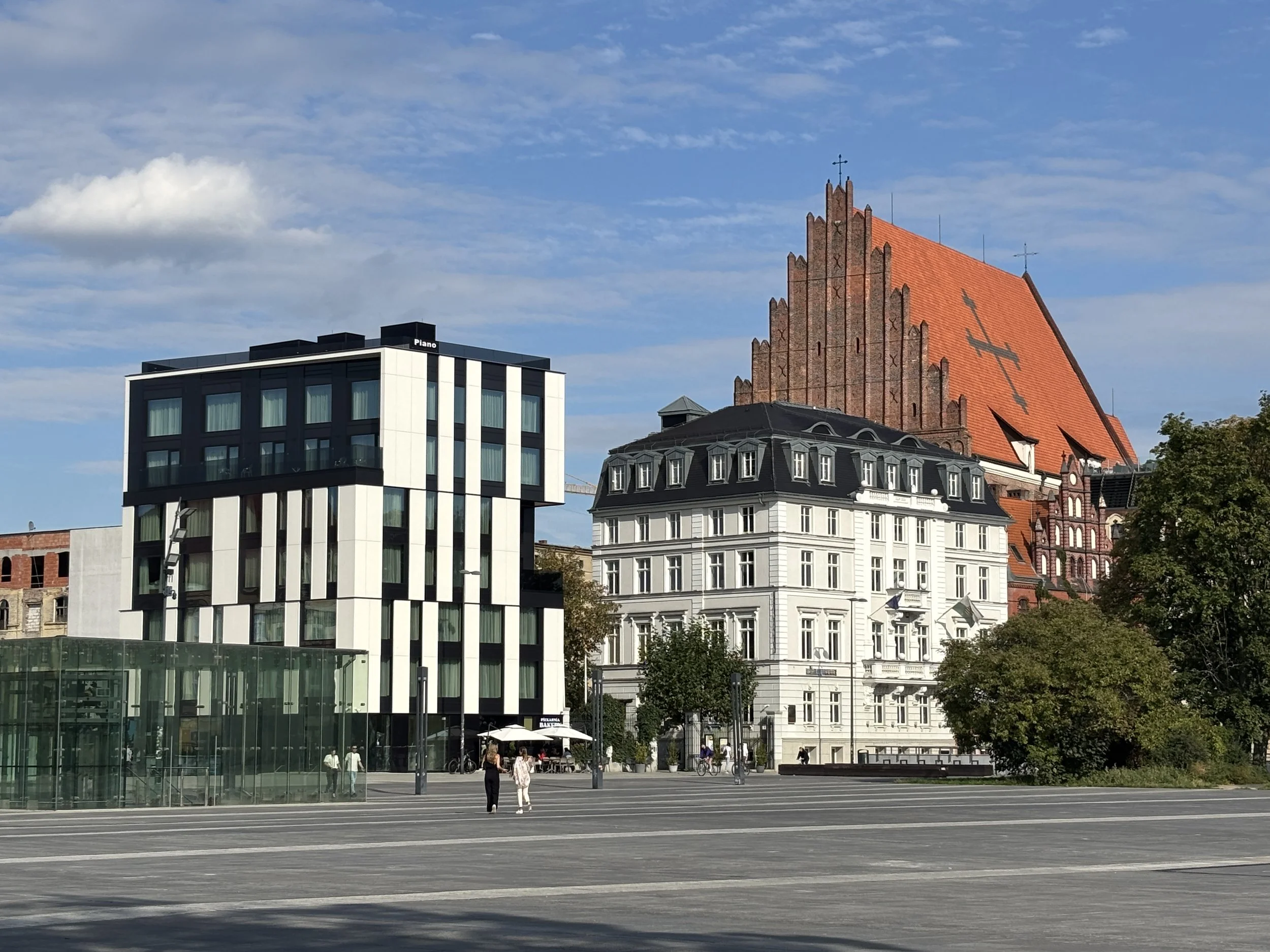
Plac Wolności is also a good place to check the architectural evolution of Wroclaw, since it provides an open, unimpeded view of the area around. From here you can also enter the garden boulevard that follows the path of the former city walls.
Wroclaw’s Opera
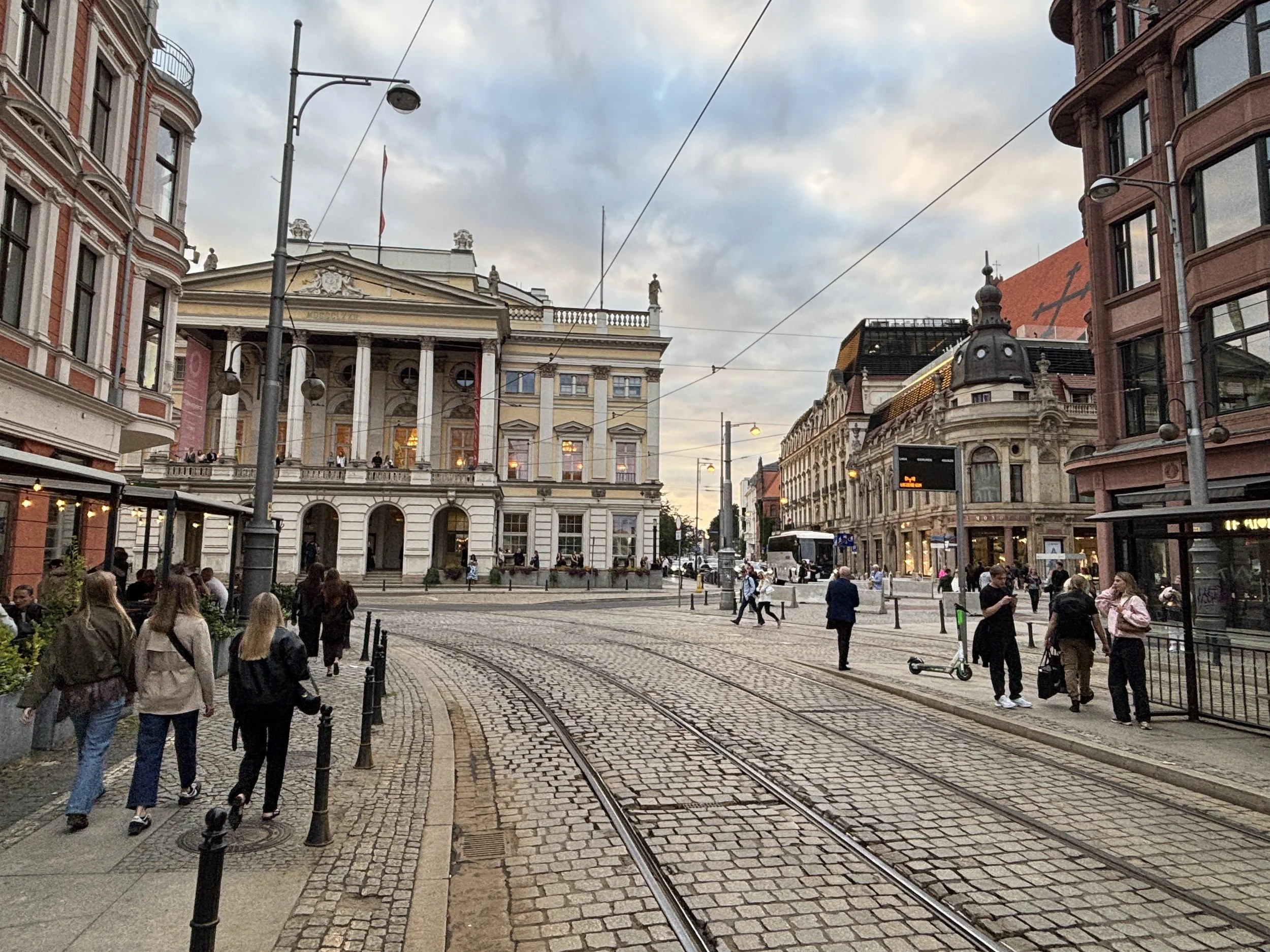
Not far from Plac Wolności stands one of the jewels of the city’s 19th architecture that survived WW2, the Opera building, which still fulfills its original purpose.
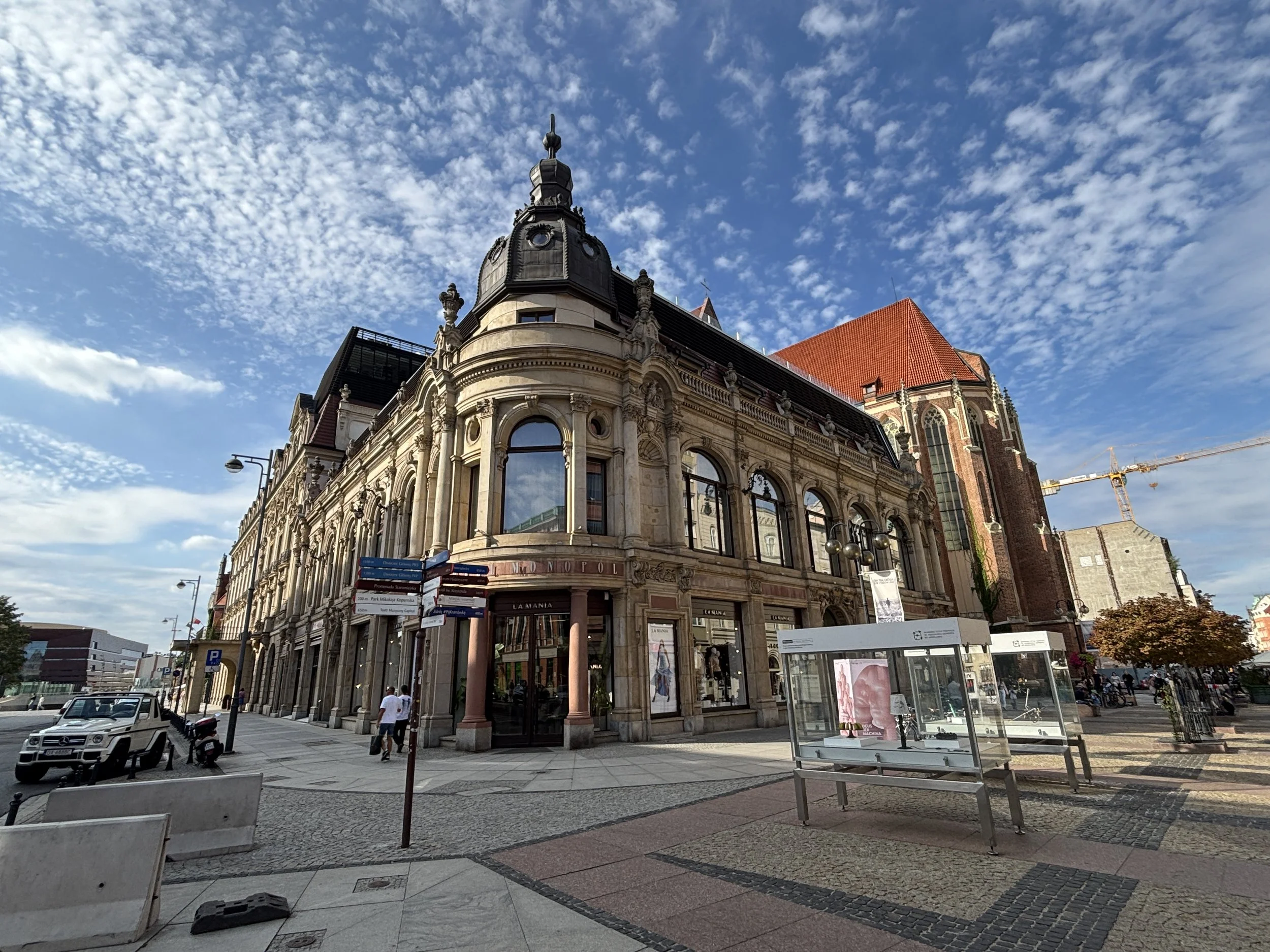
And right next to the opera, another remarkable establishment: the Hotel Monopol, which has hosted a large number of historically prominent visitors to the city, ranging from Adolph Hitler to Pablo Picasso, to name just two very different characters on totally opposite ends of the ideological spectrum. Today, the Monopol remains Wroclaw’s grand classic hotel.
Ostrow Tumski (Cathedral Island)
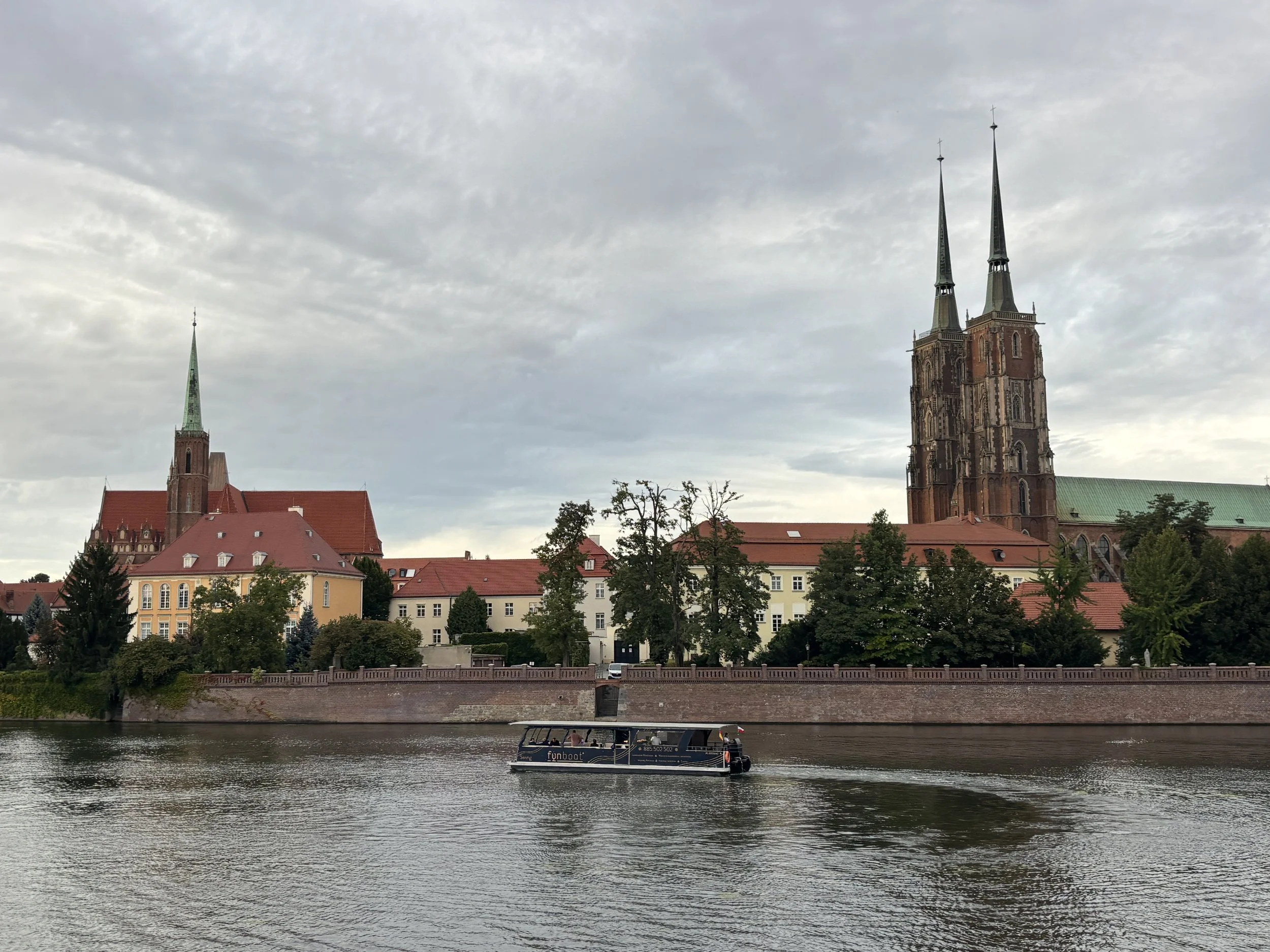
As mentioned earlier, Ostrow Tumski is the original kernel from which the city of Wroclaw sprung up. Today is no longer an island, but it remains almost like a religious enclave, since it hosts the city’s cathedral and most of its surrounding buildings belong to the Catholic church.
Wyspa Piasek (“Sand Island”)
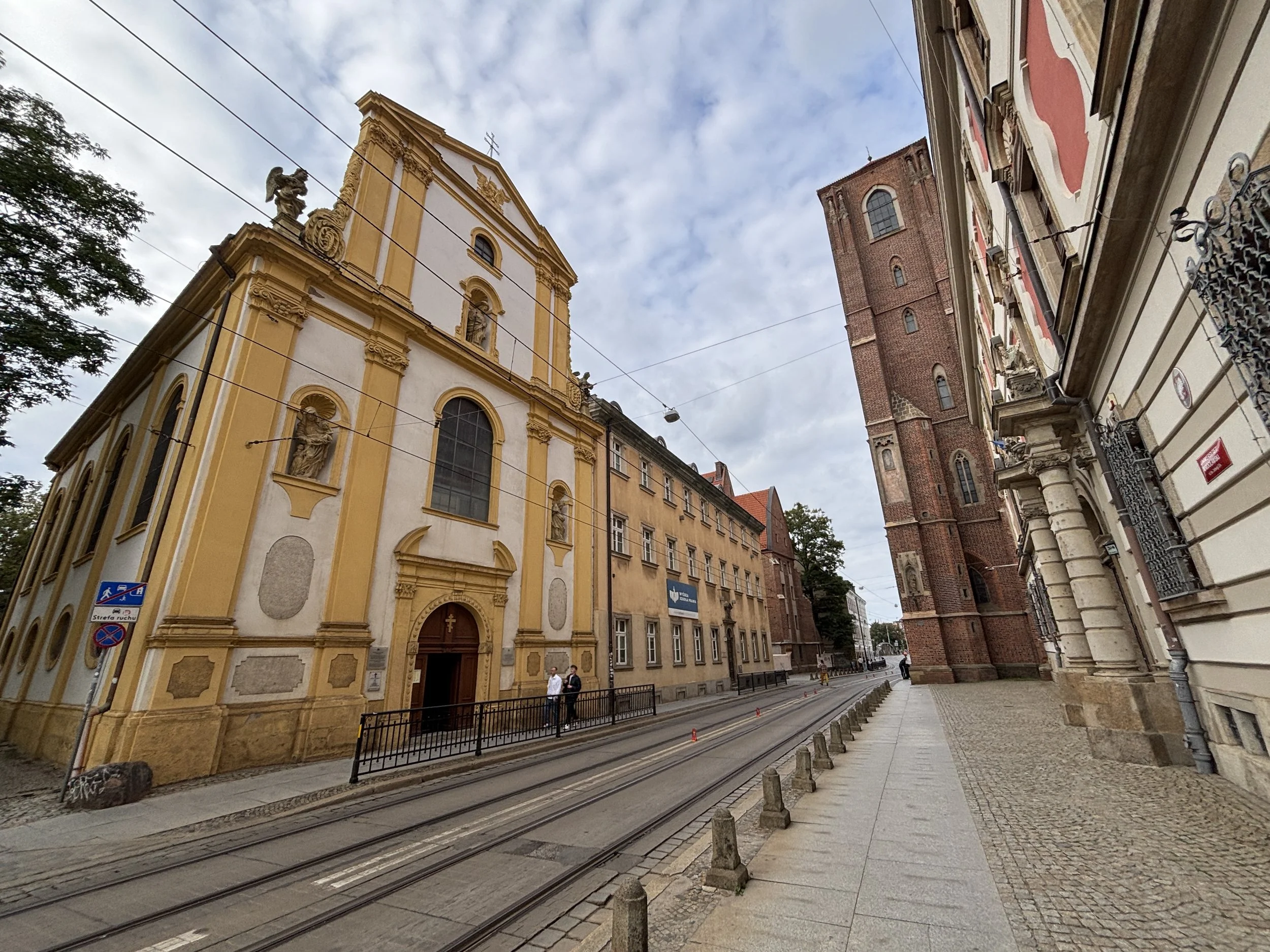
But before getting to Ostrow Tumski, if you are coming from the historical center, you are likely to pass through another river island, “Sand Island”, which hosts two old monasteries, one male and the other female (one of them still active, the other is now part of the university).
Apparently, the monks controlled the only crossing point over the Odra river, which went over this island, so they collected significant revenue from tolls.
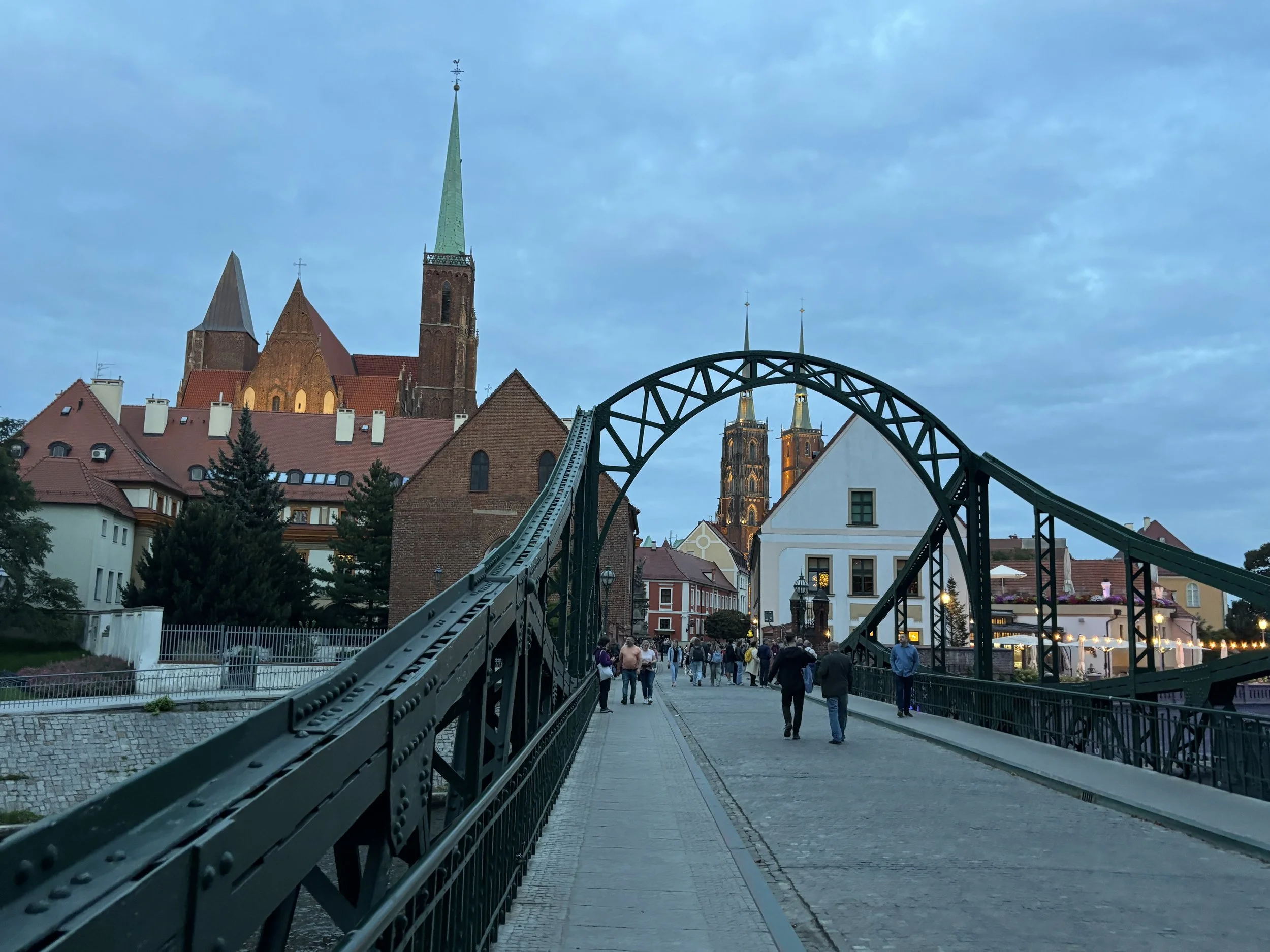
The most scenic way to get to Ostrow Tumski is through Most Tumski, a steel bridge which offers great perspectives of this rather timeless and evocative part of the city.
Ostrow Tumski translates into English as “Cathedral Island” and, of course, the cathedral of St. John the Baptists dominates the skyline with its two towers. But the whole island is peppered with religious buildings and it has also several other churches around which add to the monumental ensemble.
Btw, if you like viewpoints, here is another one you can climb up!
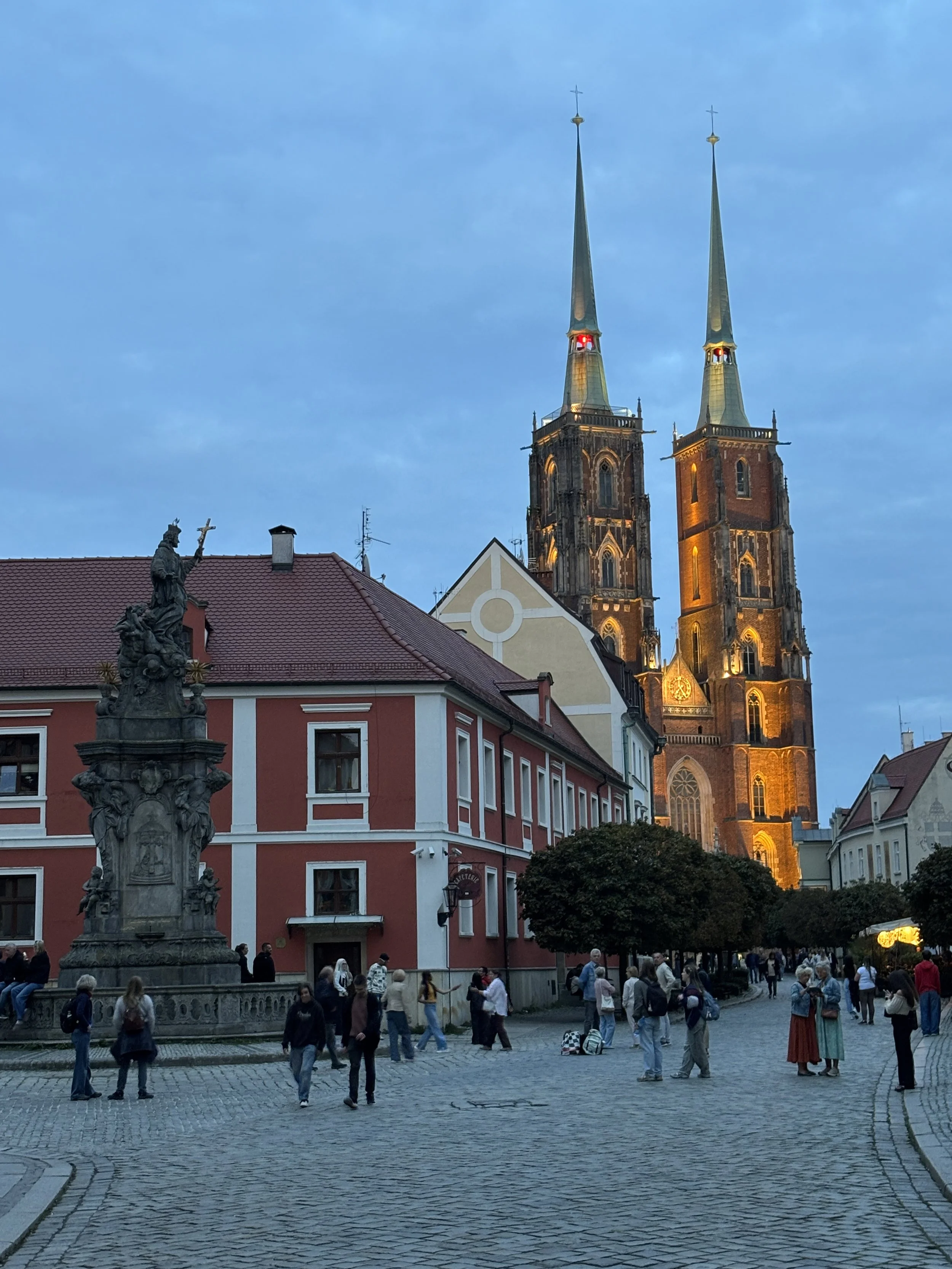
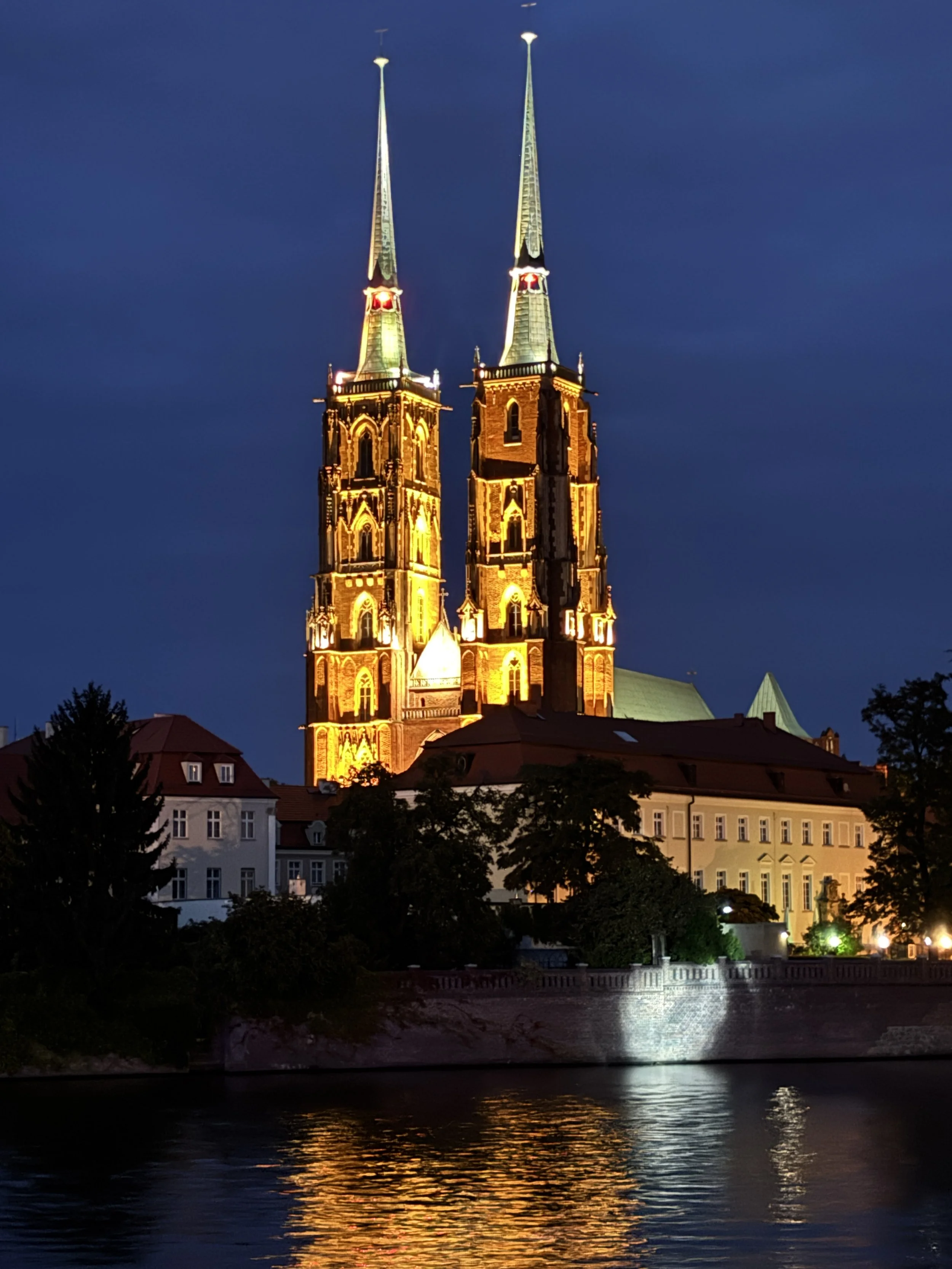
You can also get great panoramic views of Ostrow Tumski from the south bank of the river. Here you will have a riverside promenade with stalls facing the river. Besides being a place for temporary festivals and markets, it is also a nice place to get the views at sunset.
The lamp lighting tradition
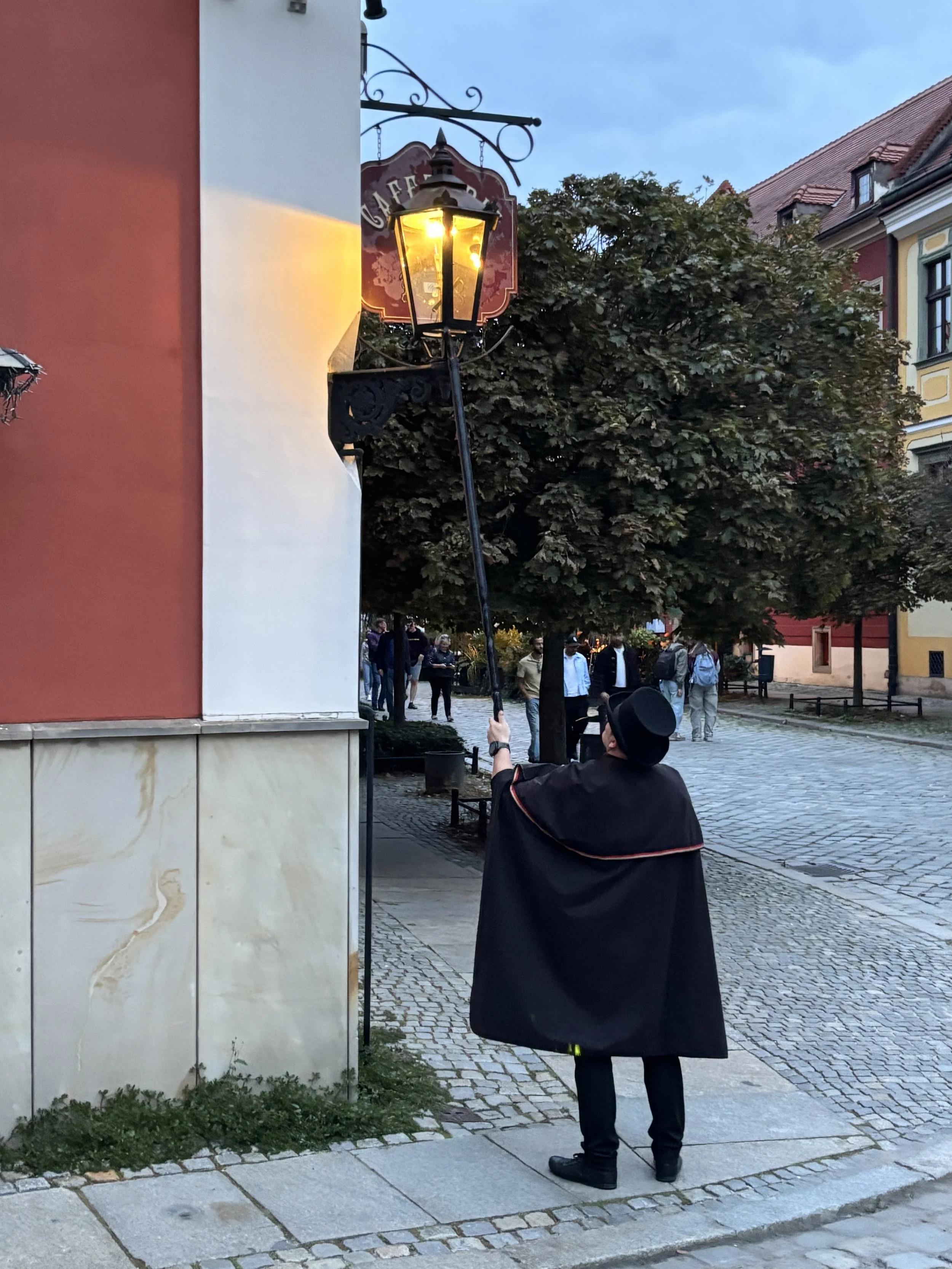
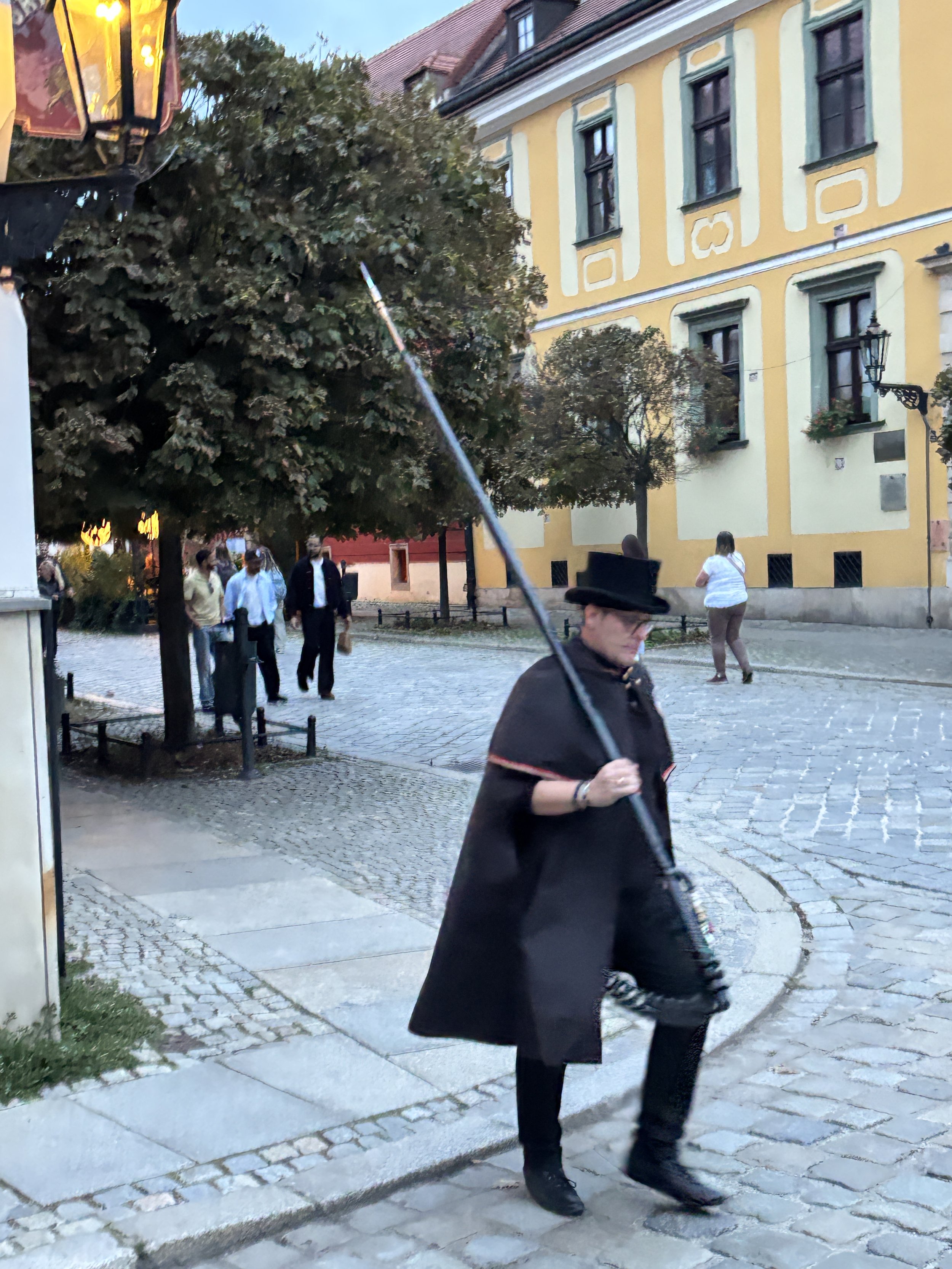
Talking about visiting Ostrow Tumski at sunset, here is yet another reason to do so: every day when the sun sets, an old tradition comes into play, with the nearly 100 gas lamps from the 19th C. still left in Wroclaw, being lit by hand.
There is no set time for this, check the sunset times and head to Ostrow Tumski around that time. You will possibly spot the guy doing this job quite easily, because, besides his period costume, he is usually followed by a crowd of tourists taking pics (yes, I was one of them too!)
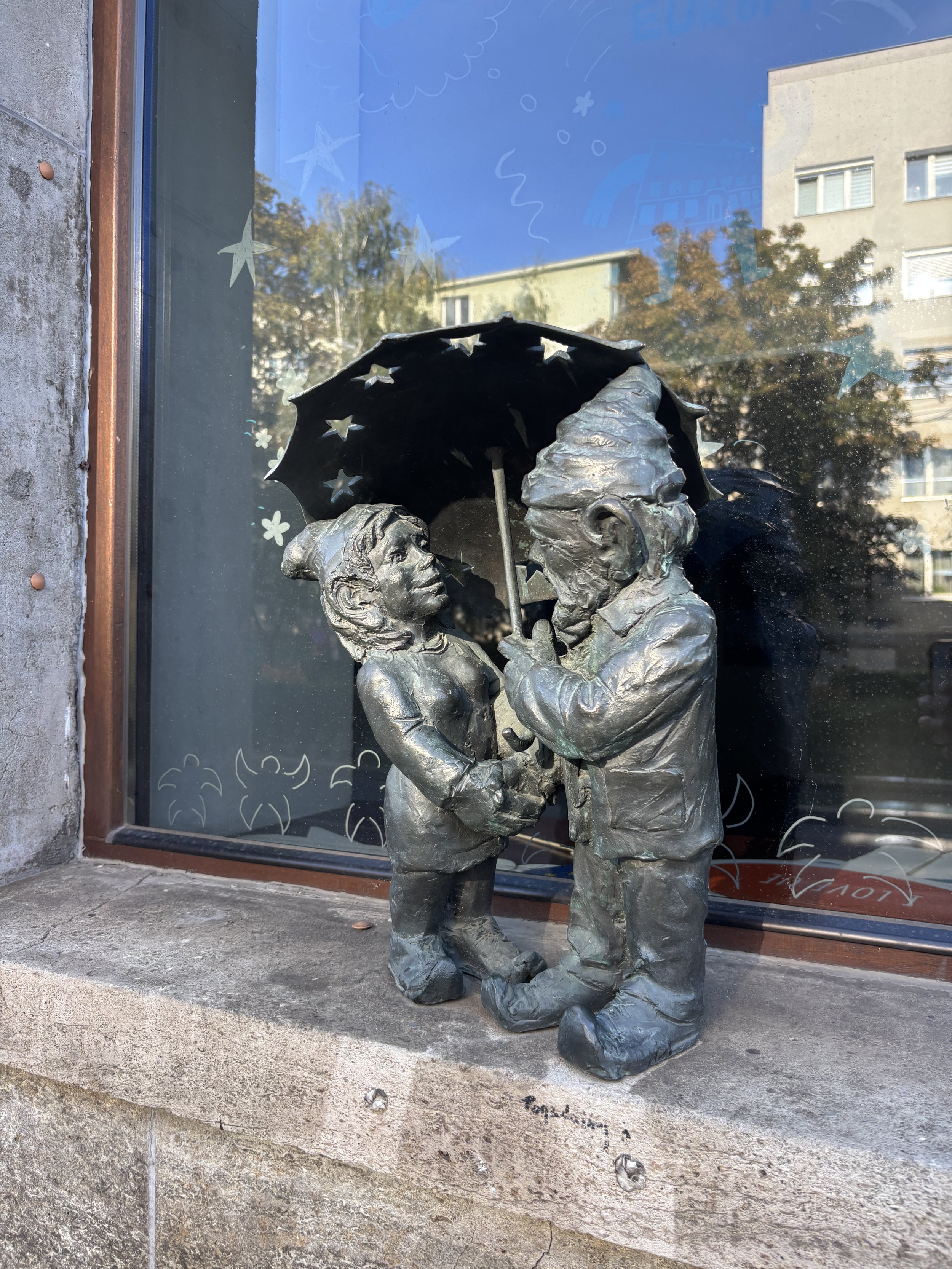
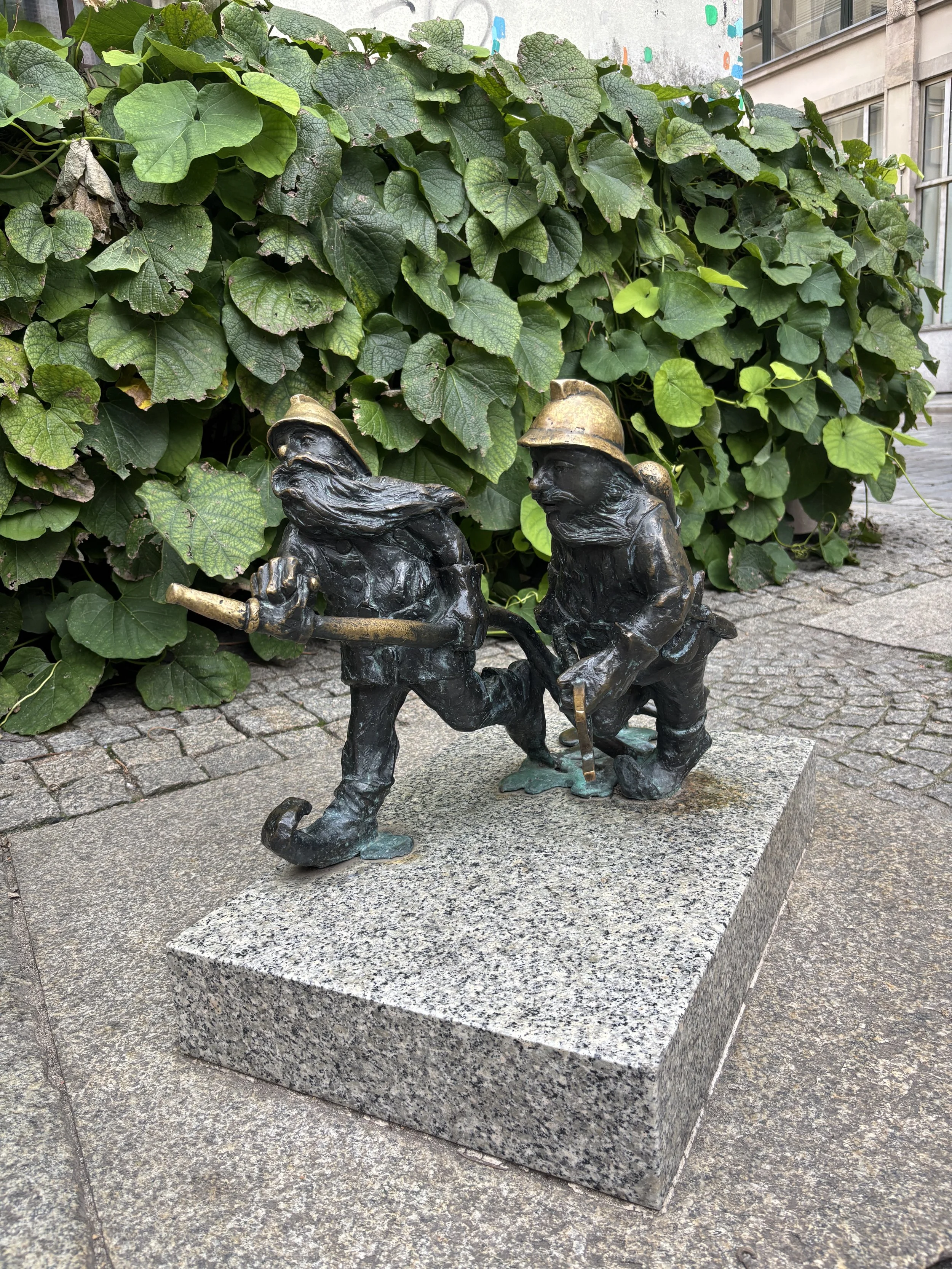
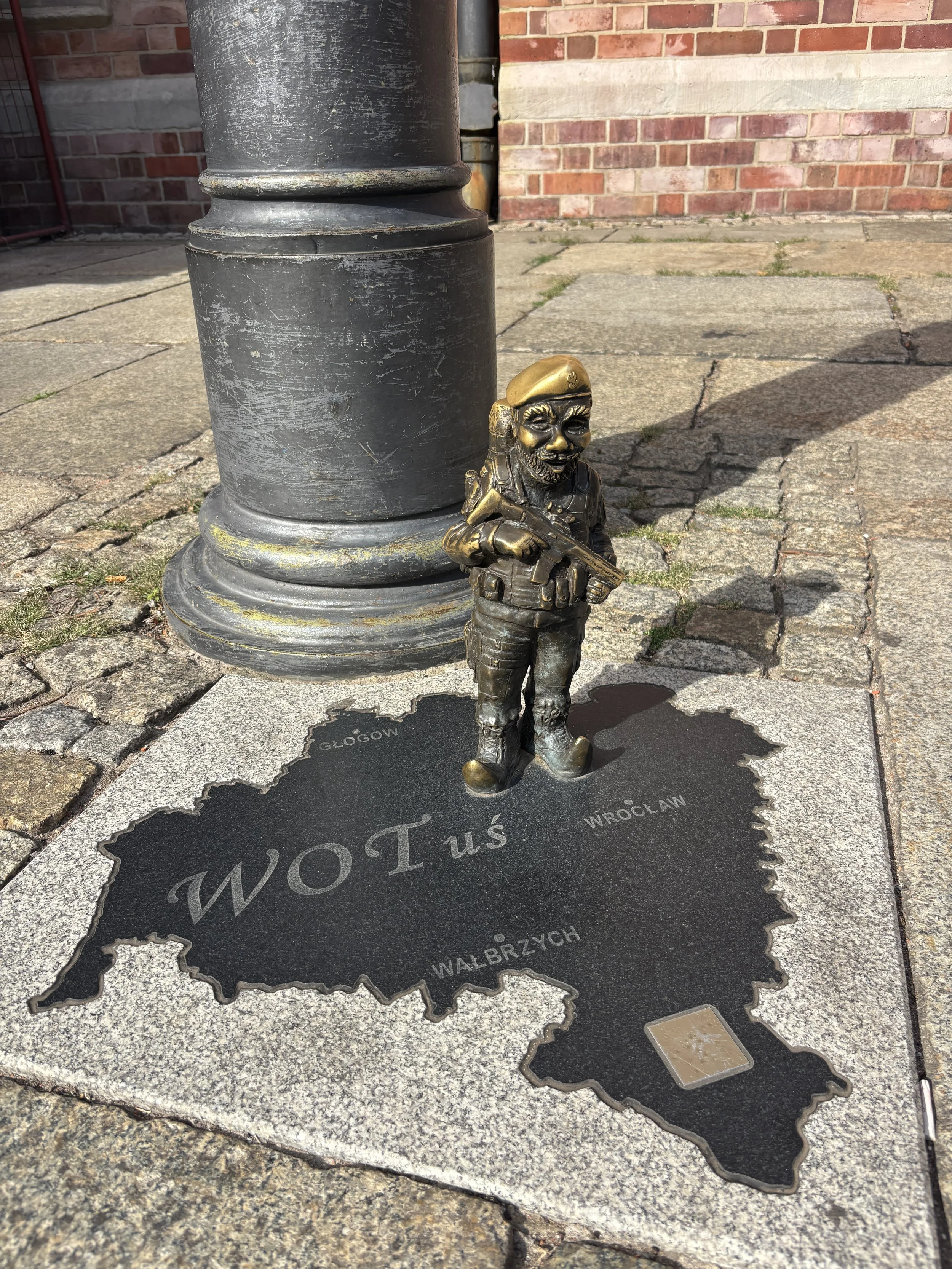
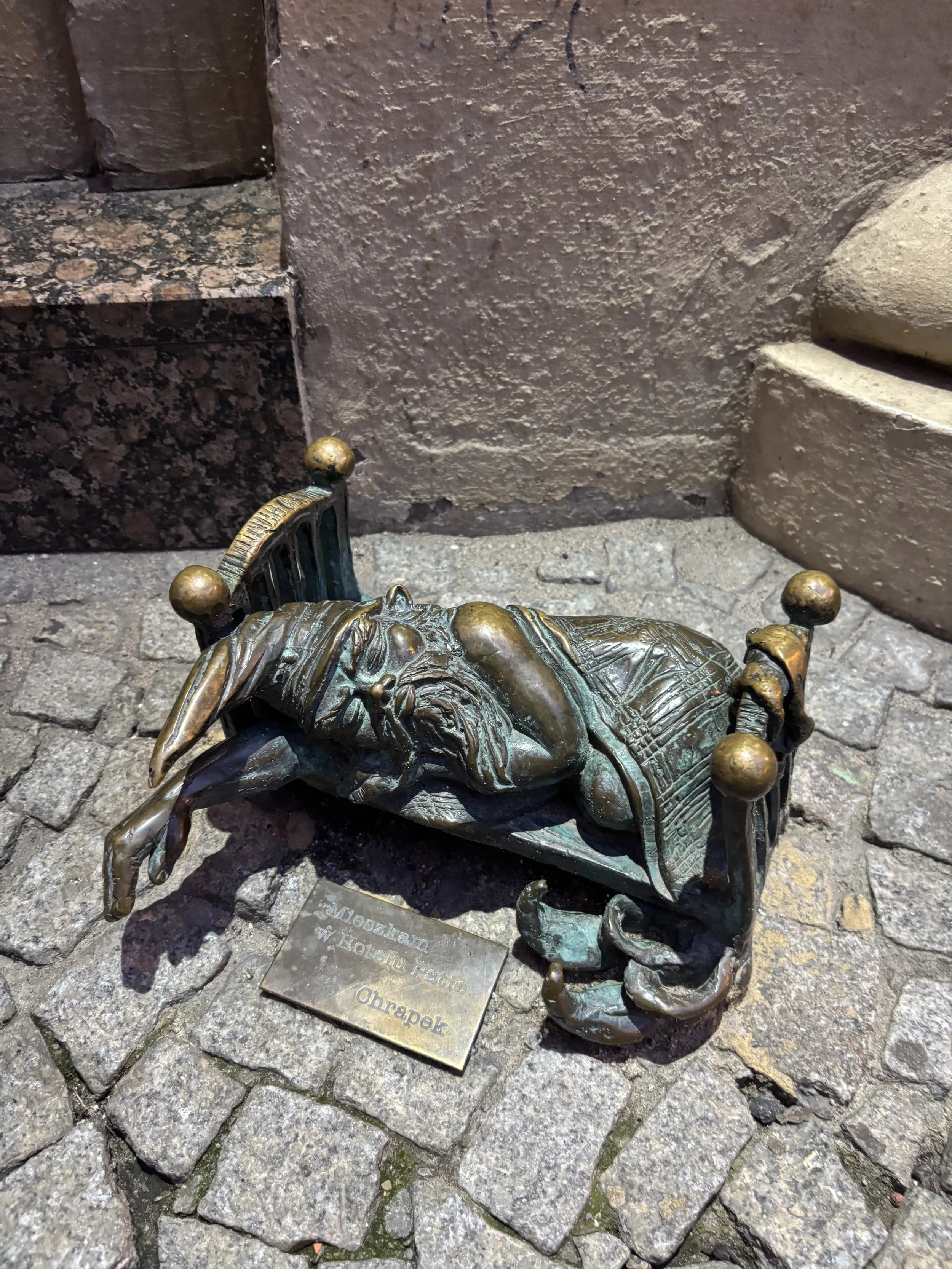
Will you be able to find all of Wroclaw’s dwarves?
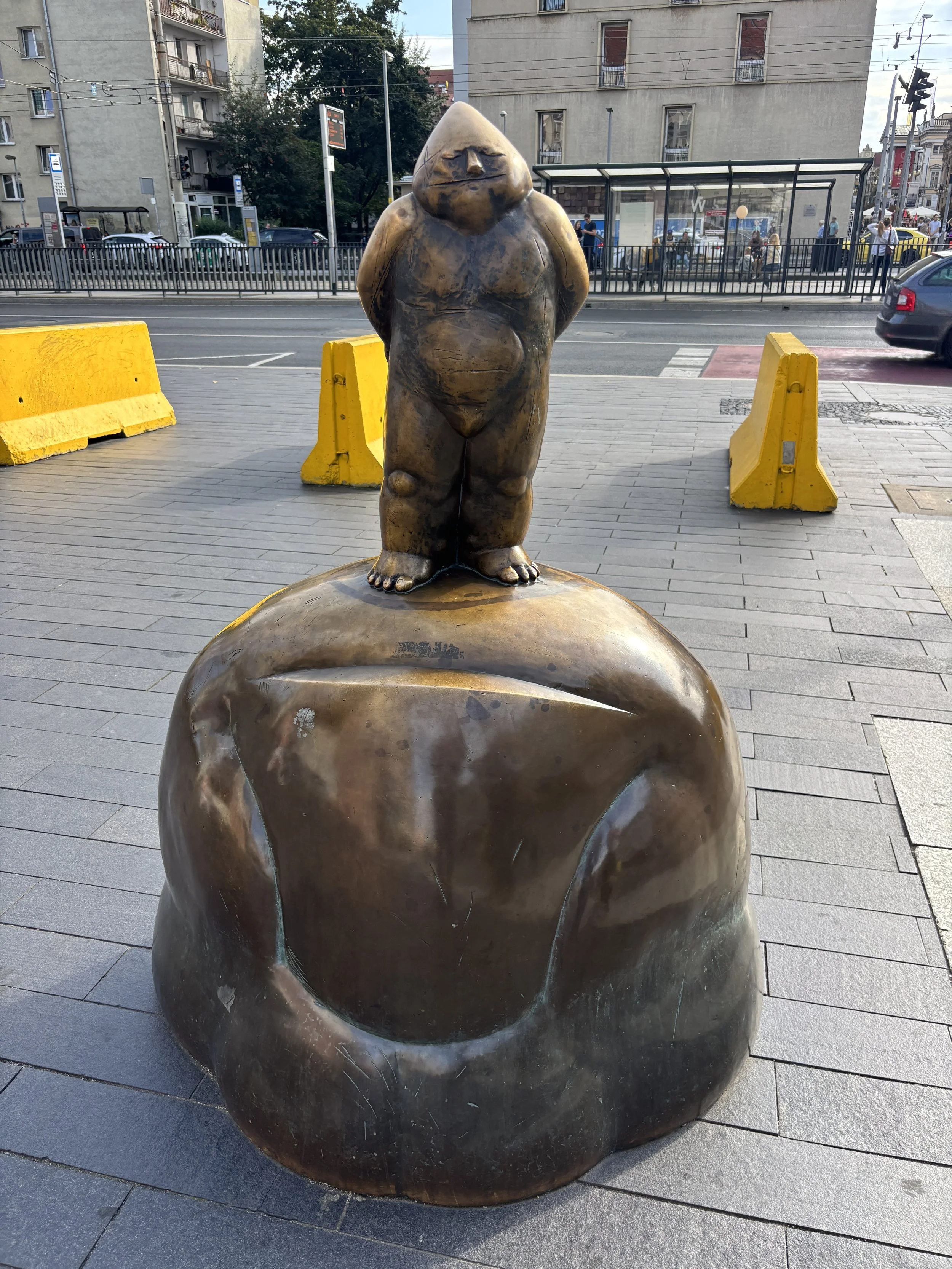
Here is a thing that is quite unique of Wroclaw: the dwarves.
There are around 1,000 of them, possibly more because no one really knows, all over the city of Wroclaw. What’s more, these little bronze statutes tend to come from all walks of life, as each evokes the place or activity it is linked to. There are firemen dwarves, soldier dwarves, traveler dwarves, and so on.
It all started as an anti-communist protest in 1980s Wroclaw, as activists in the “Orange Movement” which criticized the Communist dictatorship started to paint small dwarves on some walls as the authorities tried to patch over anti-regime graffiti. The movement then evolved with protestors conducting ephemeral protests wearing dwarf hats to ridiculize the government repression. A large gathering in 1988 ended up with mass arrests, but that was the point!
So, to remember those events, the the first bronze dwarf, called Papa Krasnal (Papa Dwarf), was installed on one of the city’s main boulevards. Five other smaller ones followed shortly after. But, once they became entrenched in the city’s identity there was no stop and little dwarves started appearing pretty much everywhere, the result of both public and private initiaitive.
Today you can get a map at Wroclaw’s tourist office, which helps you track and “collect” the dwarves you come across while walking around the city! (and there are, of course, other initiatives to help you find all the dwarves, like these app-based dwarf tours). With more than 1,000 around, it can be quite a fun and absorbing challenge!
Hala Targowa - Wroclaw’s Historical Market Hall
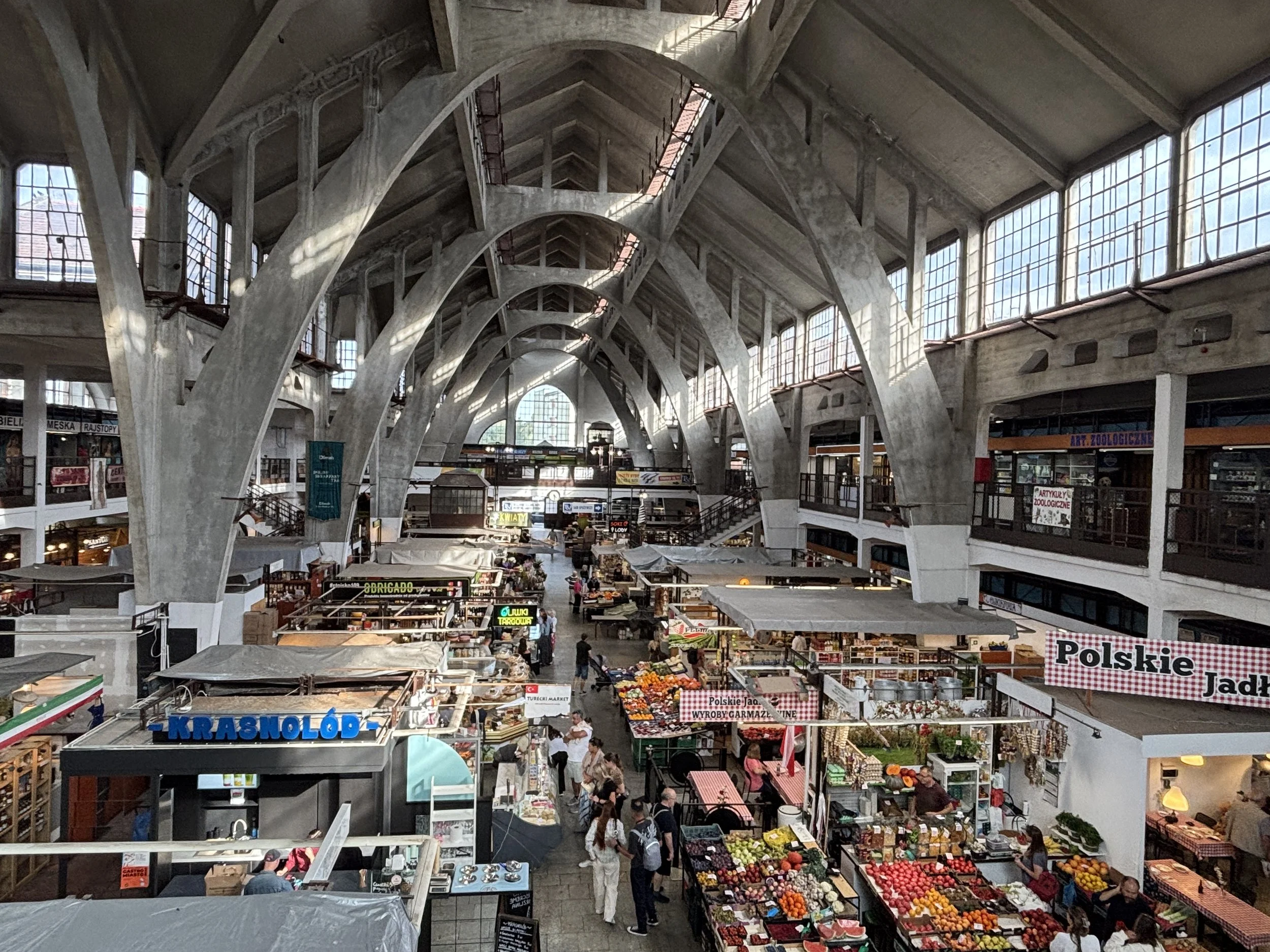
This is another interesting architectural site. It was built in the first decade of the 20th C. with an approach that is quite unique for buildings of this site.
Regular readers of this site may have seen markets with iron structures like the Mercado Central in Montevideo, but this one is made of concrete and using parabollic arches which are somehow reminiscent of the work of Catalan architect Antoni Gaudí. The structure turned out to be resistant enough to survive the war!
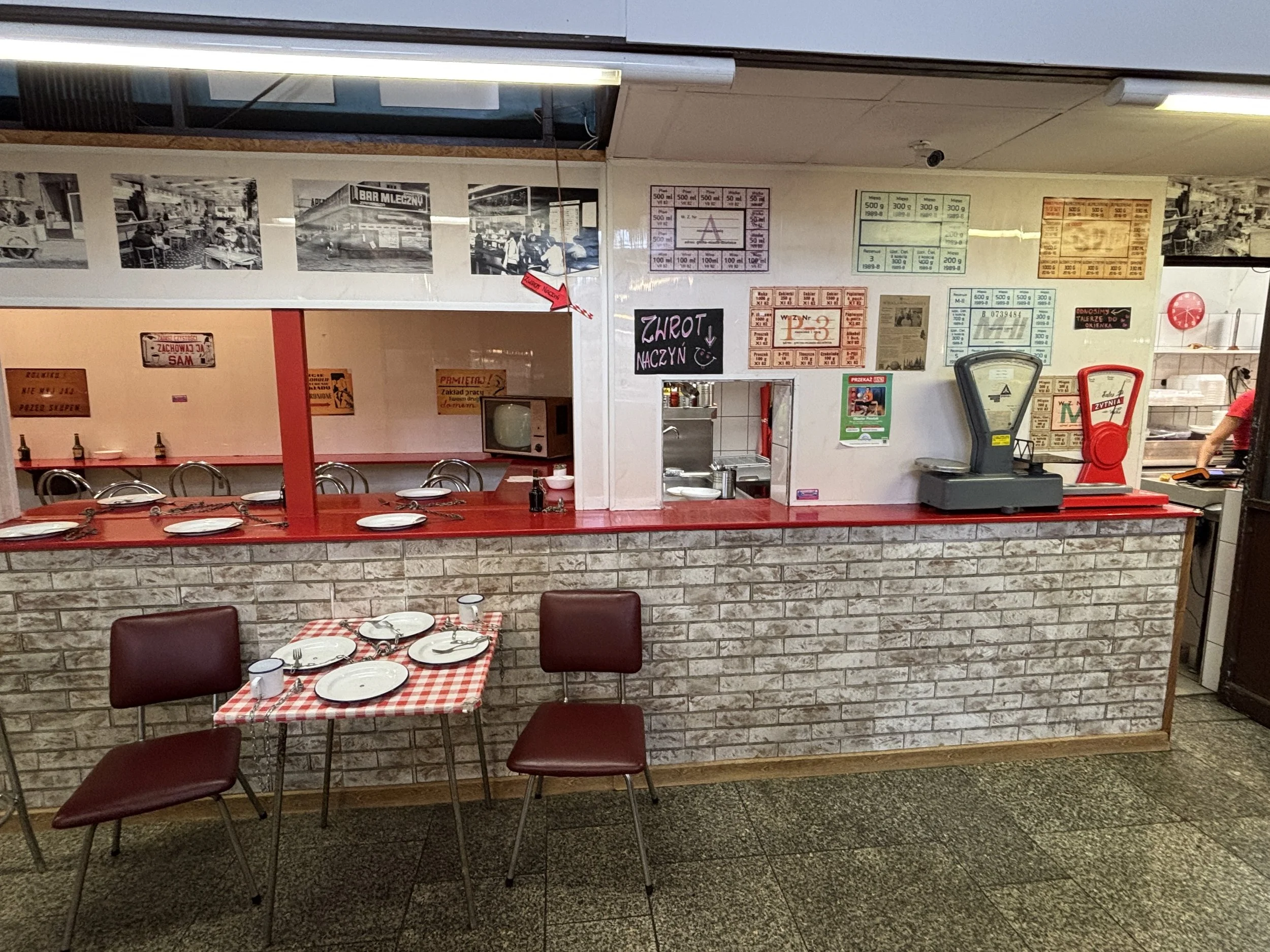
There is currently a project to turn part of the market into a more upmarket gastronomic area, but, in the meantime you can get a taste of Cold War Poland by having some piroegi at “Teddy Bear” (don’t forget to bring your ration card!).
What to see outside Wroclaw’s historical center
So far we have focused our attention on a relatively small area around the historical center of Wroclaw, however, I would advise dedicating at least half a day to the district right to the east of it.
Here you will find the more modern extension of the city, as well as some gardened areas and some of the city’s most interesting museums, such as the Racławice Panorama, Hydropolis and Centennial Hall.
You can use the tram to get to the latte (more on trams and moving around Wroclaw below) but if you have the time and the inclination, they are also within reach on foot, particularly the Panorama, which is the closest to the historical center.
If you head in that direction, a good spot to replenish energies is “Pan Gruzin” a Georgian bakery located on Wita Stwosza.
Visiting the Racławice Panorama
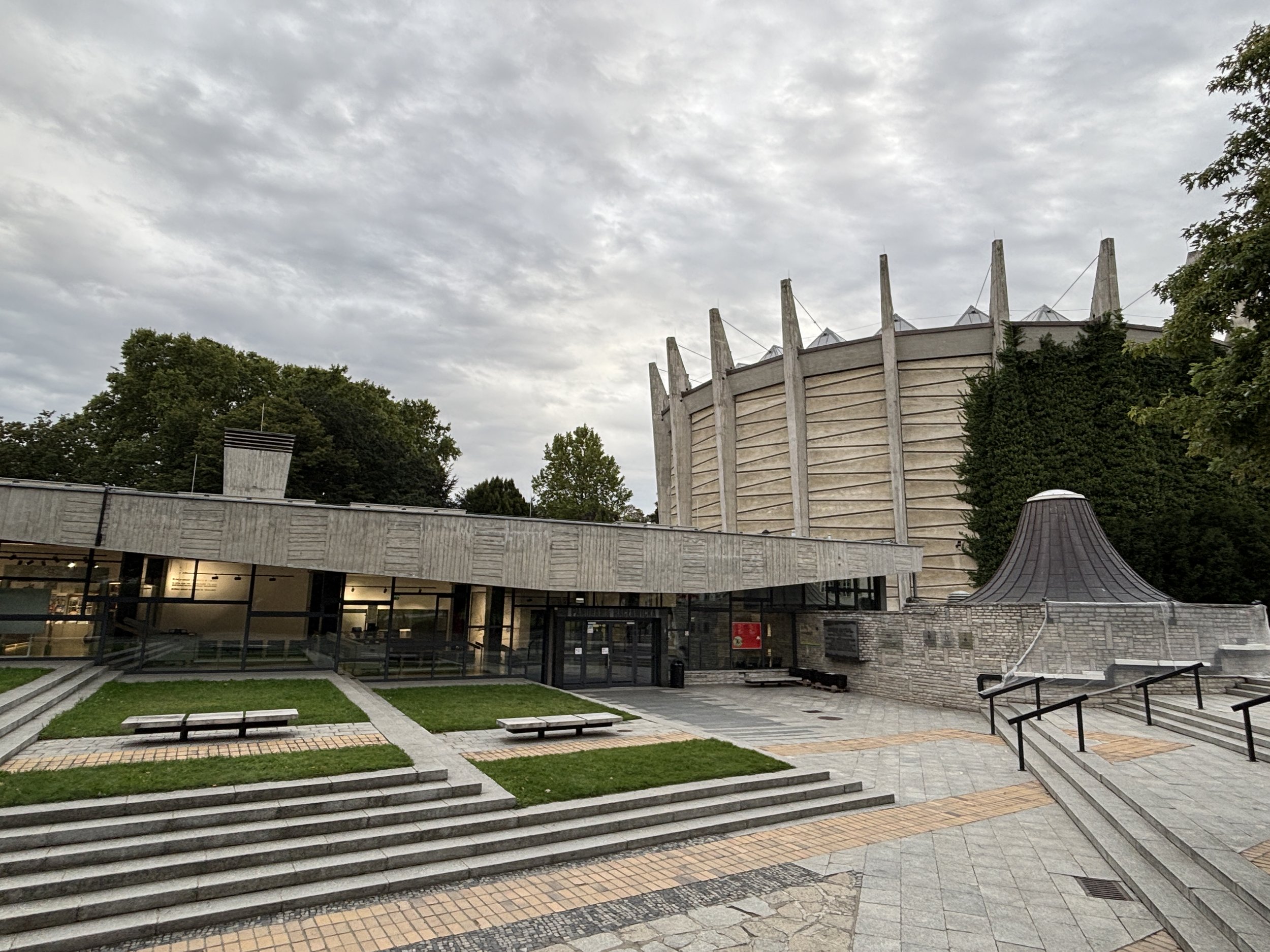
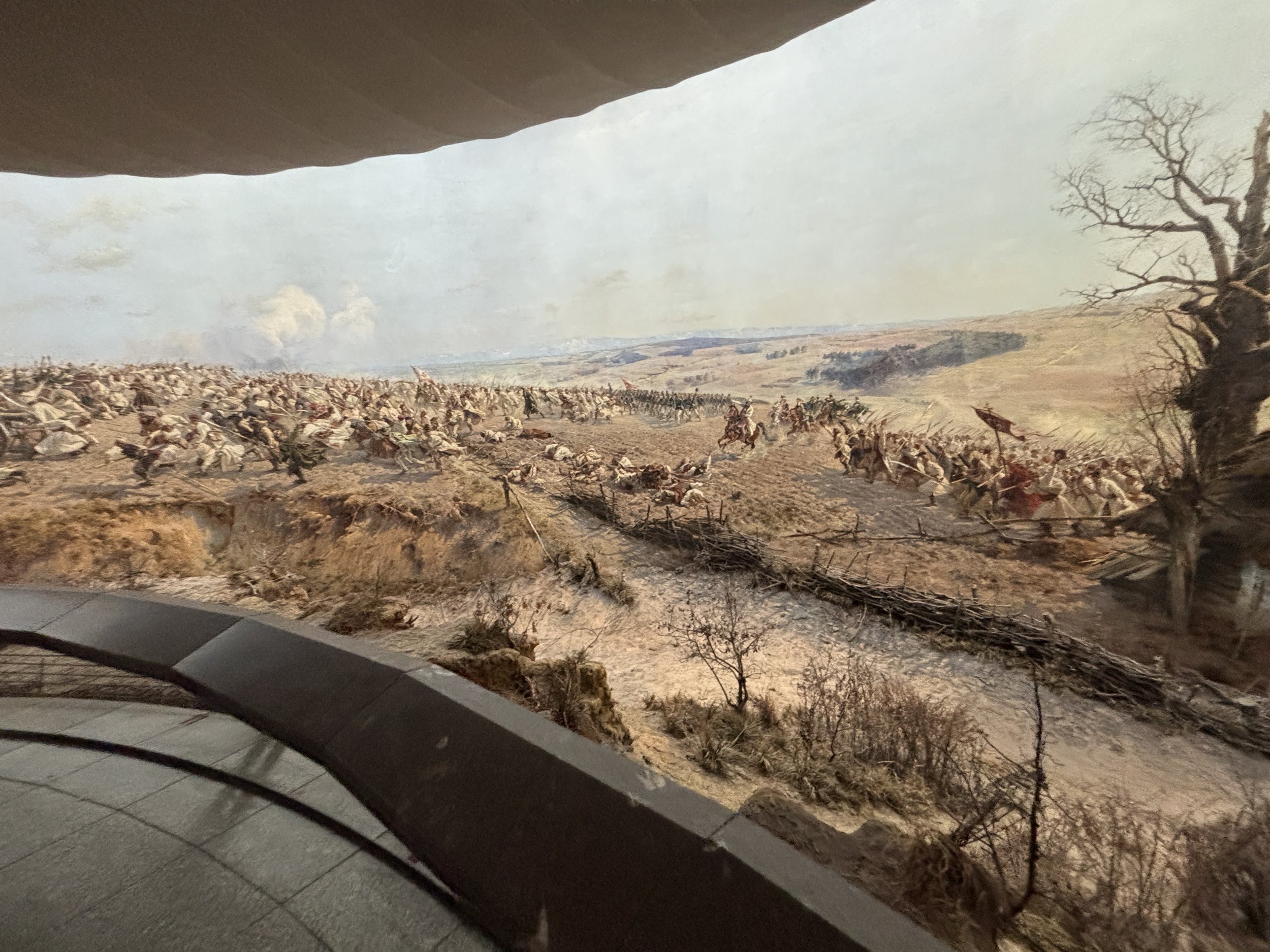
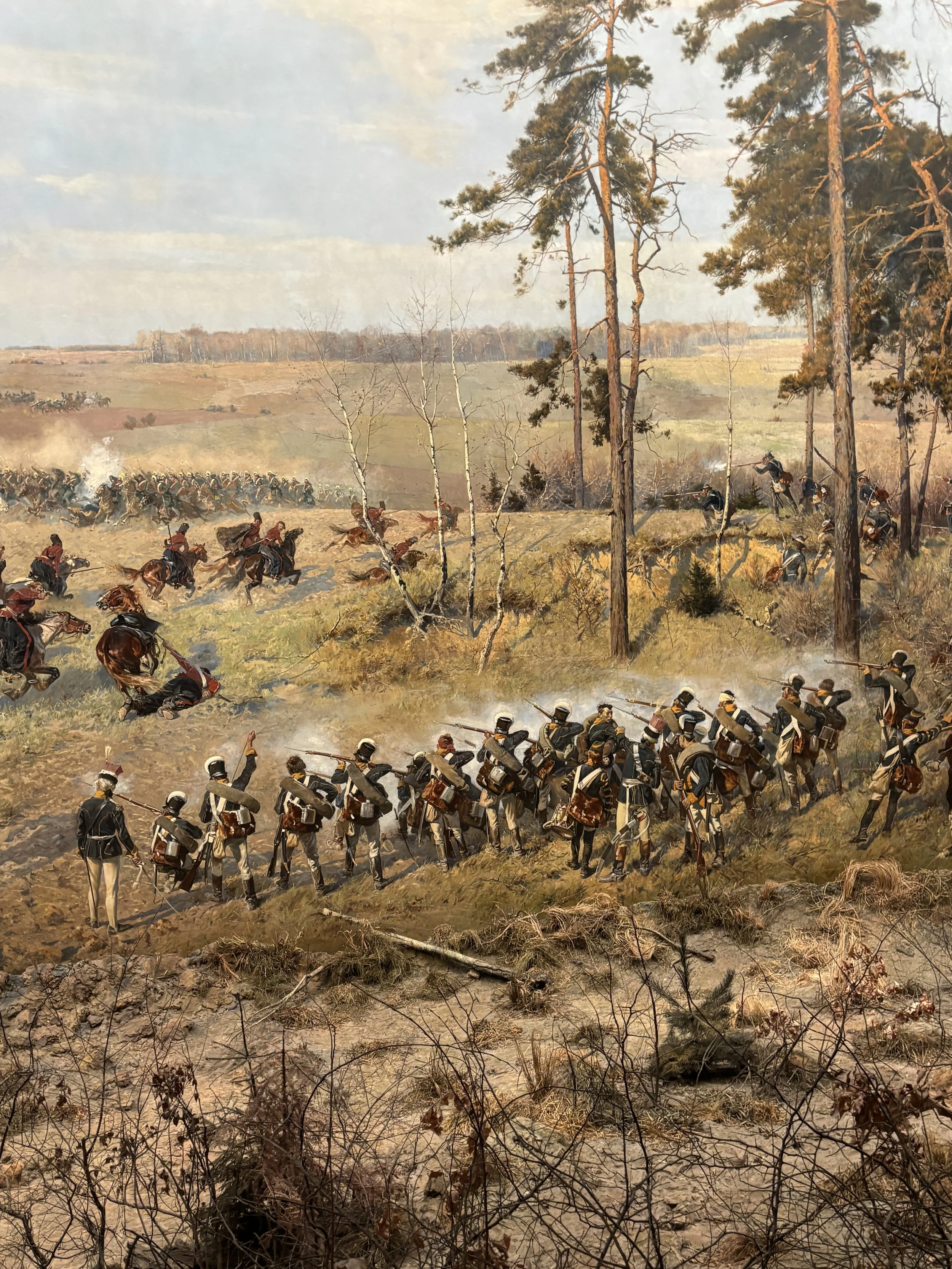
You can’t miss this one if you are a fan of historical paintings. The Racławice Panorama is an epic large scale 360º immersive painting which takes you to the Spring of 1794, when Polish troops and peasants won a victory over the Russian army in an attempt to restore Polish independence.
The Racławice Panorama was first exhibited in 1894, to mark the centennial of the battle, and it was exhibited in Lwow (then part of the Austrian Empire and currently, Lviv, Ukraine) until 1946, when it was sent to Wroclaw by the Soviet authorities together with other elements of Polish cultural heritage. Since at that time Poland was under Soviet domination, the painting was not fully restored until the 1980s, when a special building was built for it.
The painting is truly impressive and it does a great job in getting you in the midst of the events. Access is done by groups every half hour and the ticket (which costs 50 PLN, around €10/$11) includes an audioguide with a very thorough explanation of the battle and what is depicted in each scene of the painting. Totally recommended!
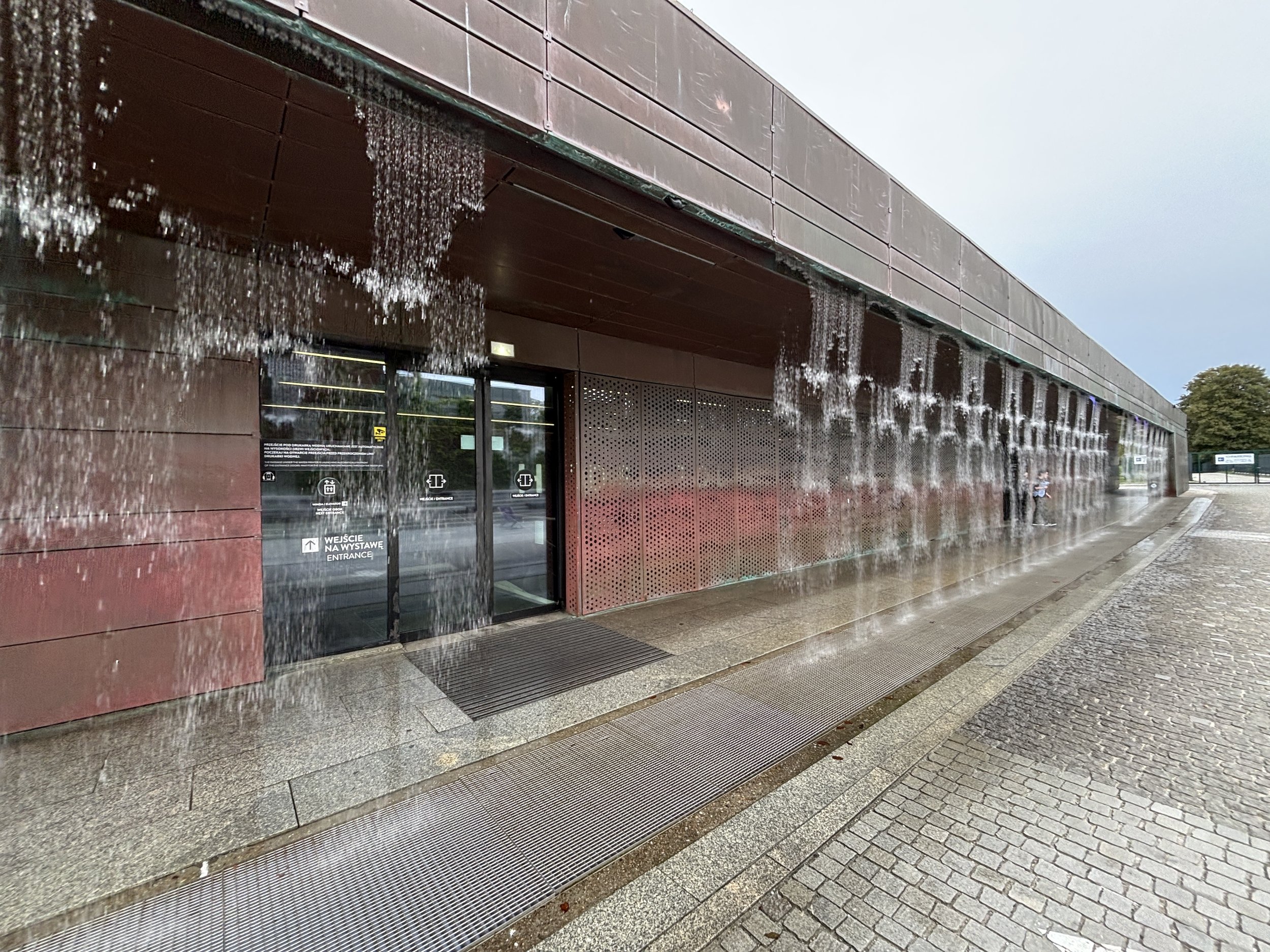
Hydropolis, a water museum
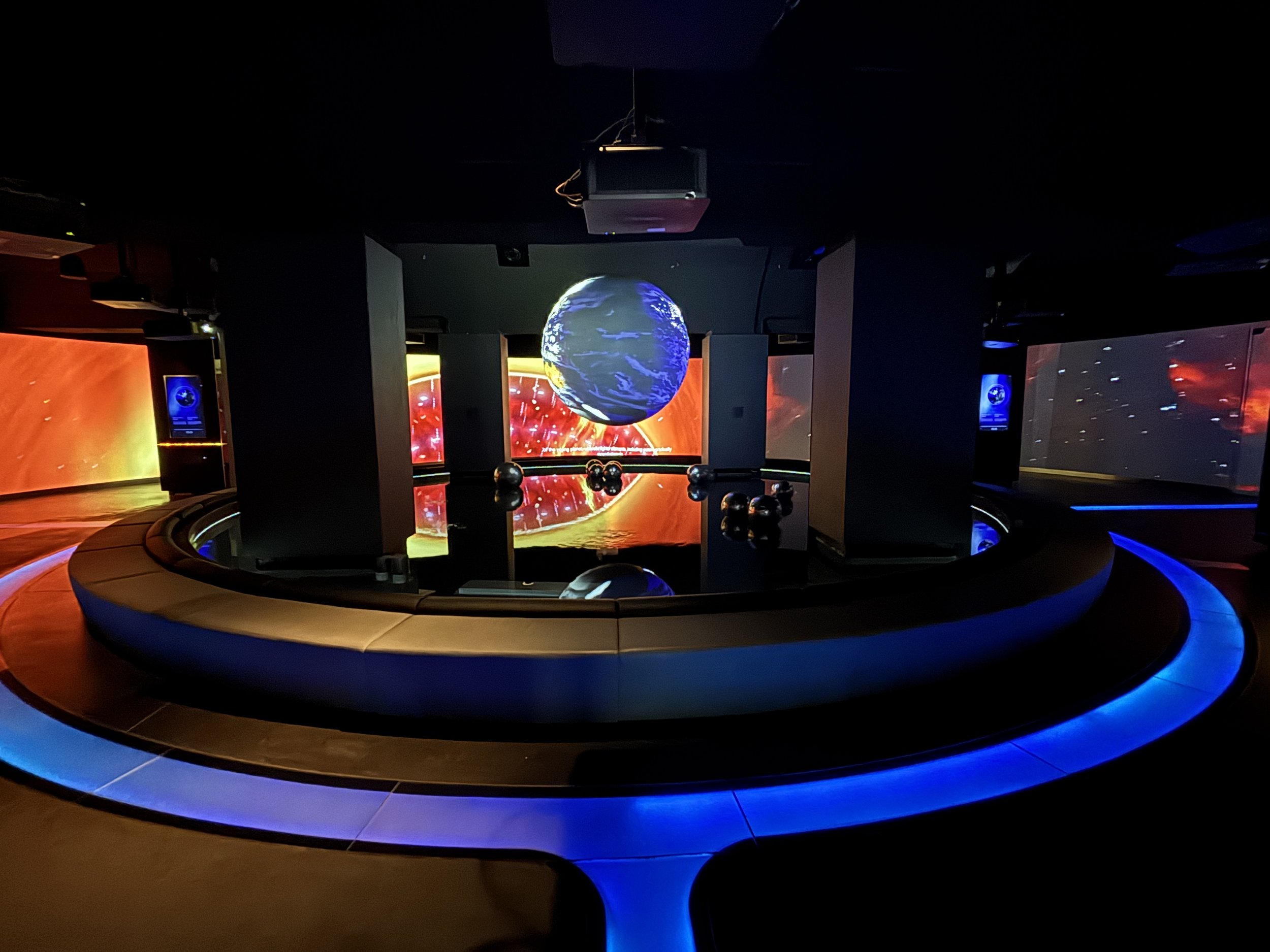
This is a modern museum dedicated to the topic of water in a broad sense: rivers, lakes, oceans and so on.
It is located in the city’s former water treatment facility, with the exhibits occupying an underground Neo-Gothic reservoir which used to store the city's drinking water from the late 19th C. 1890s (it is in pieces of infrastructure like this, together with the aforementioned Market Hall and the soon to be explained Centennial Park, that you can see what a forward-looking place this city was at the time!)
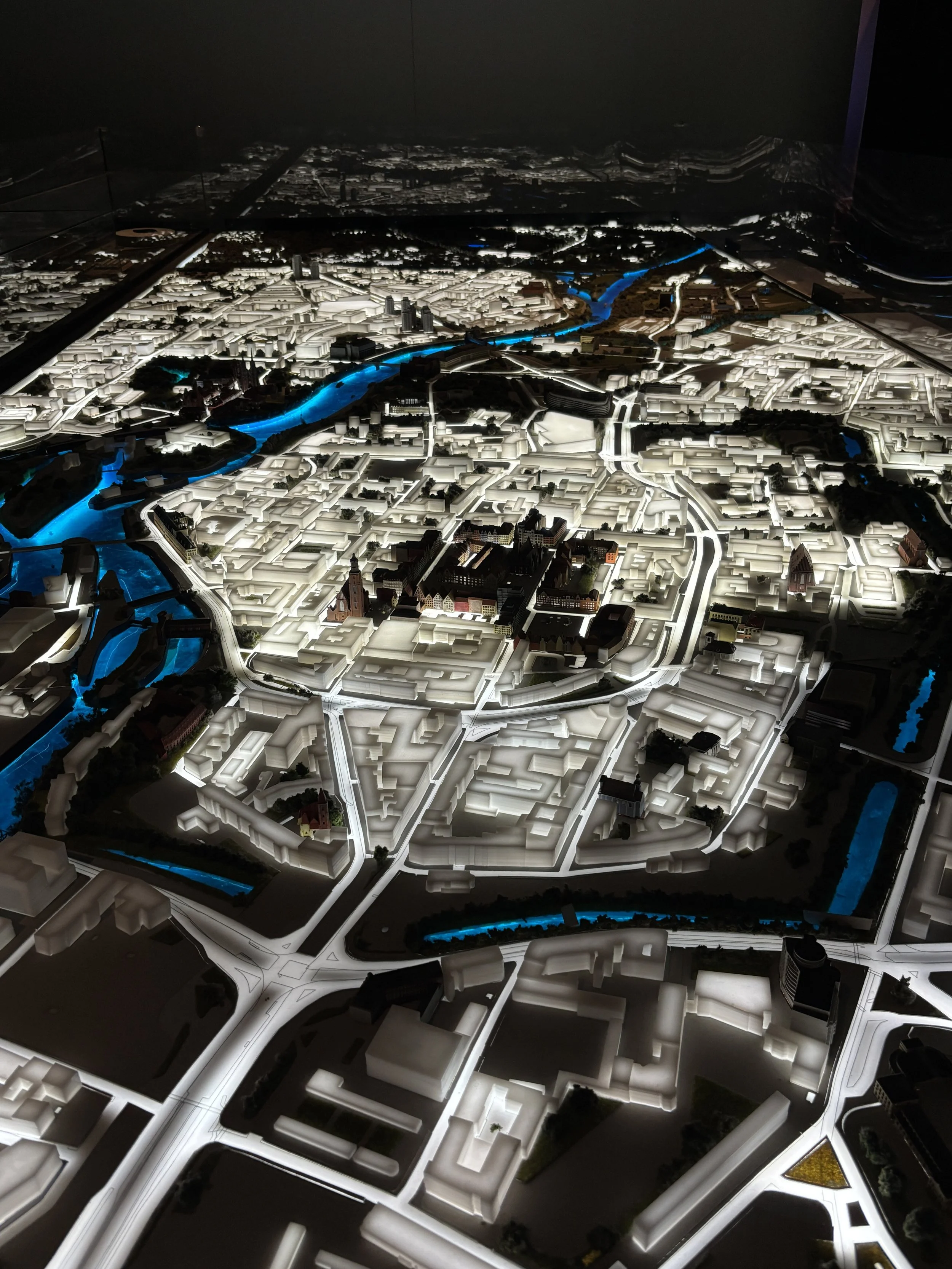
One of the highlights of the exhibition is an interactive map showing the extent of the floods that Wroclaw suffered in 1997, with large portions of the city going under water. That event led to an upgrade of the city’s flood management and protection systems which withstood well another potential flooding event in 2024.
Hydropolis is not a huge museum, you can see it well in about one hour. To be honest, while I found it reasonably interesting , I got the feeling that it tries to cover too much ground (from the ocean depths all the way to Wroclaw’s water system) to do so effectively. If you have to prioritize, I would rather go to the Panorama and Centennial Hall first.
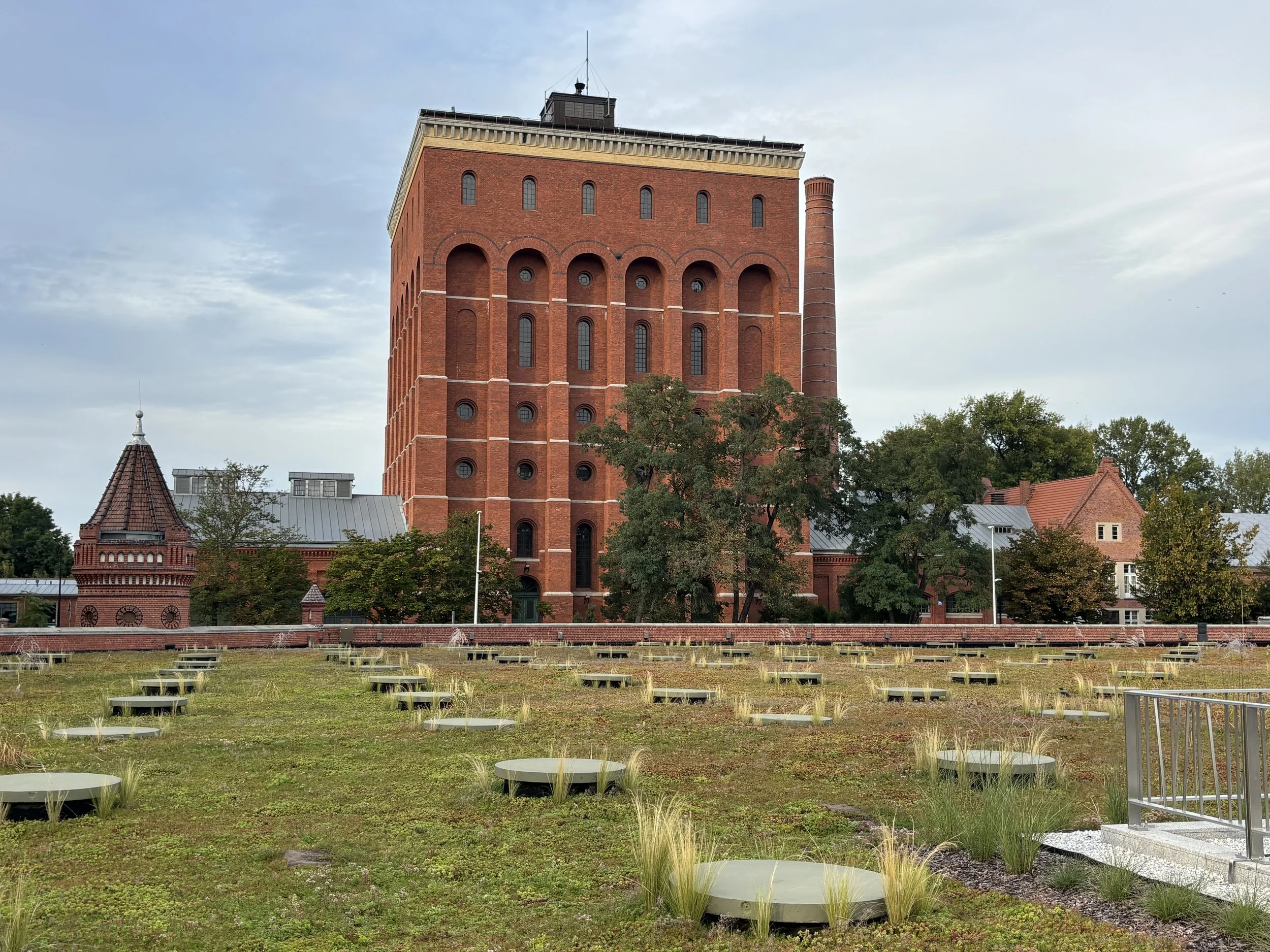
Tickets cost around 50 PLN (€10/$11). Most of the exhibition is inside, but you can also get to a garden roof from where you can see the old brick tower which used to act as a filtration tank for the city’s water supply.
By the way, the water tower has its own dwarf, which you are encouraged to located with the help of a telescope placed in the garden for this purpose!
Centennial Park - Wroclaw’s UNESCO World Heritage Site
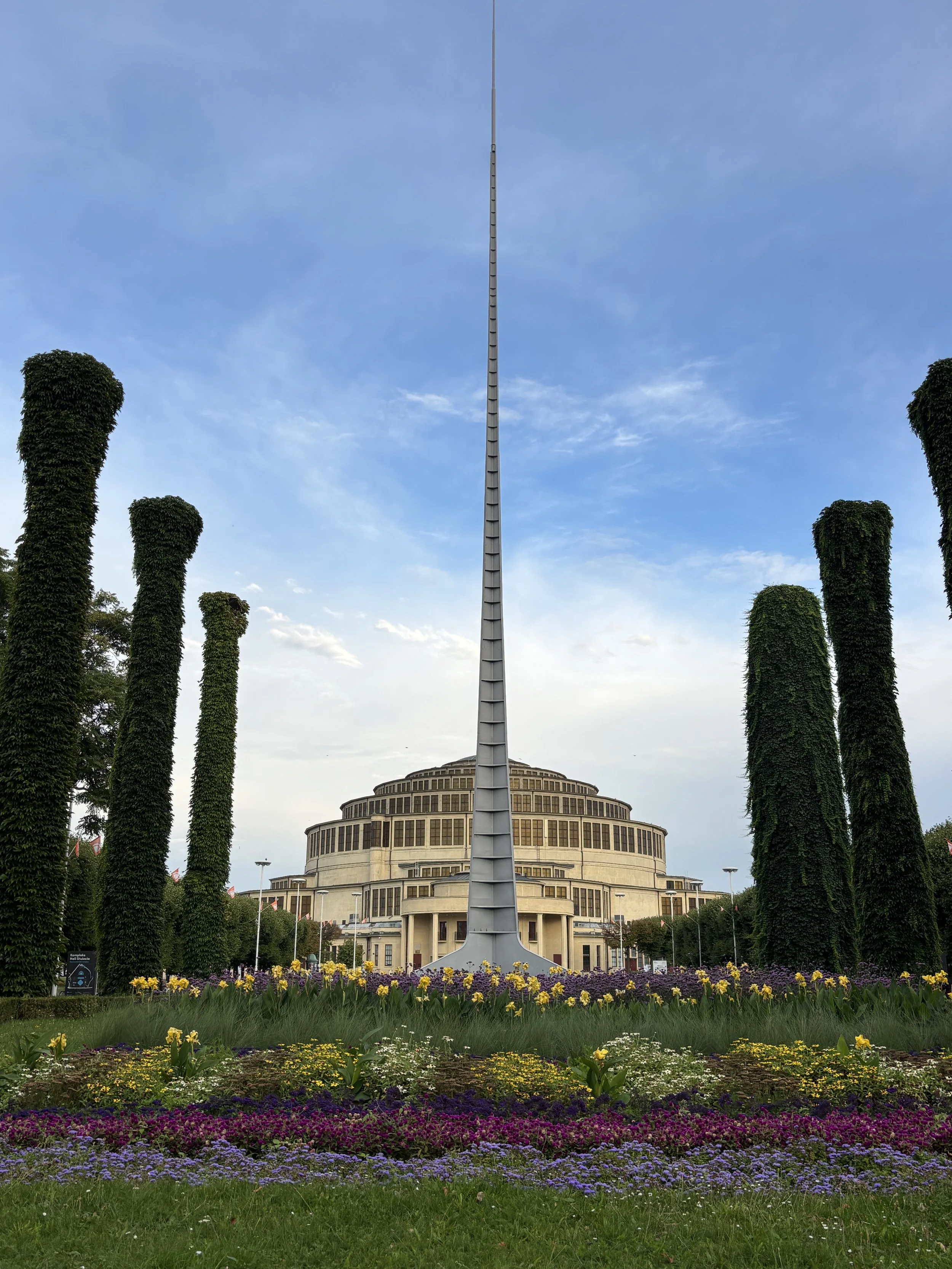
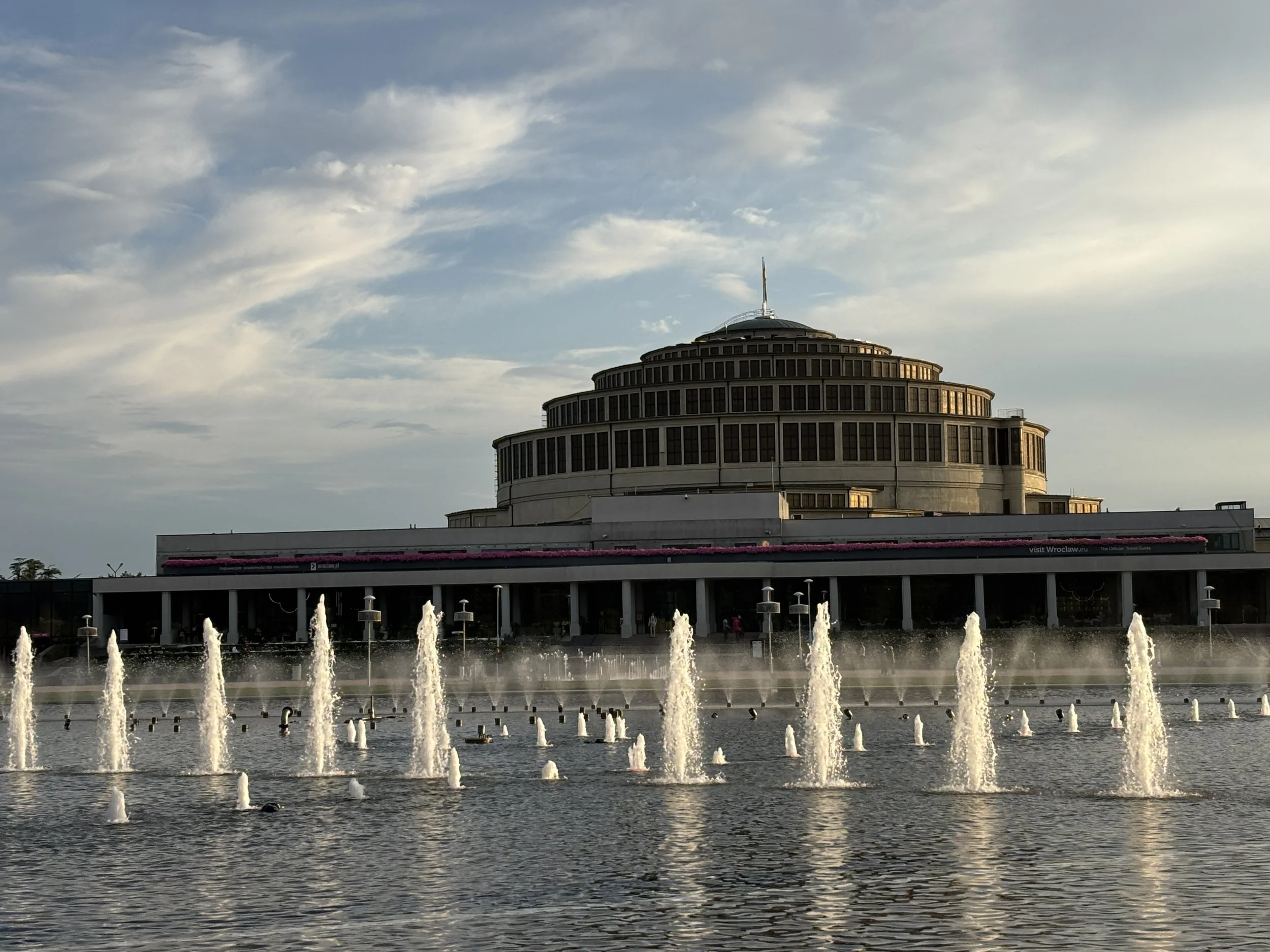
Centennial Park is the only site of Wroclaw which has UNESCO World Heritage status and, interestingly, it is not from the Medieval or early Modern era, but was built in 1913 instead!
Centennial Hall was designed by German architect Max Berg, to mark the centenary of the 1813 Prussian rising against Napoleon. Its reinforced-concrete dome is reminiscent of the Pantheon, in Rome, although, at 65 metres across, it is way larger!
It is possible to visit the interior, although I was too late for that (last admission is at 5pm). I think the most visually interesting elements are on the outside, though.
It is actually quite amazing to think this type of futuristic, yet very elegant, architecture was a thing more than 100 years ago. And even more amazing to think it survived the destruction of WW2!
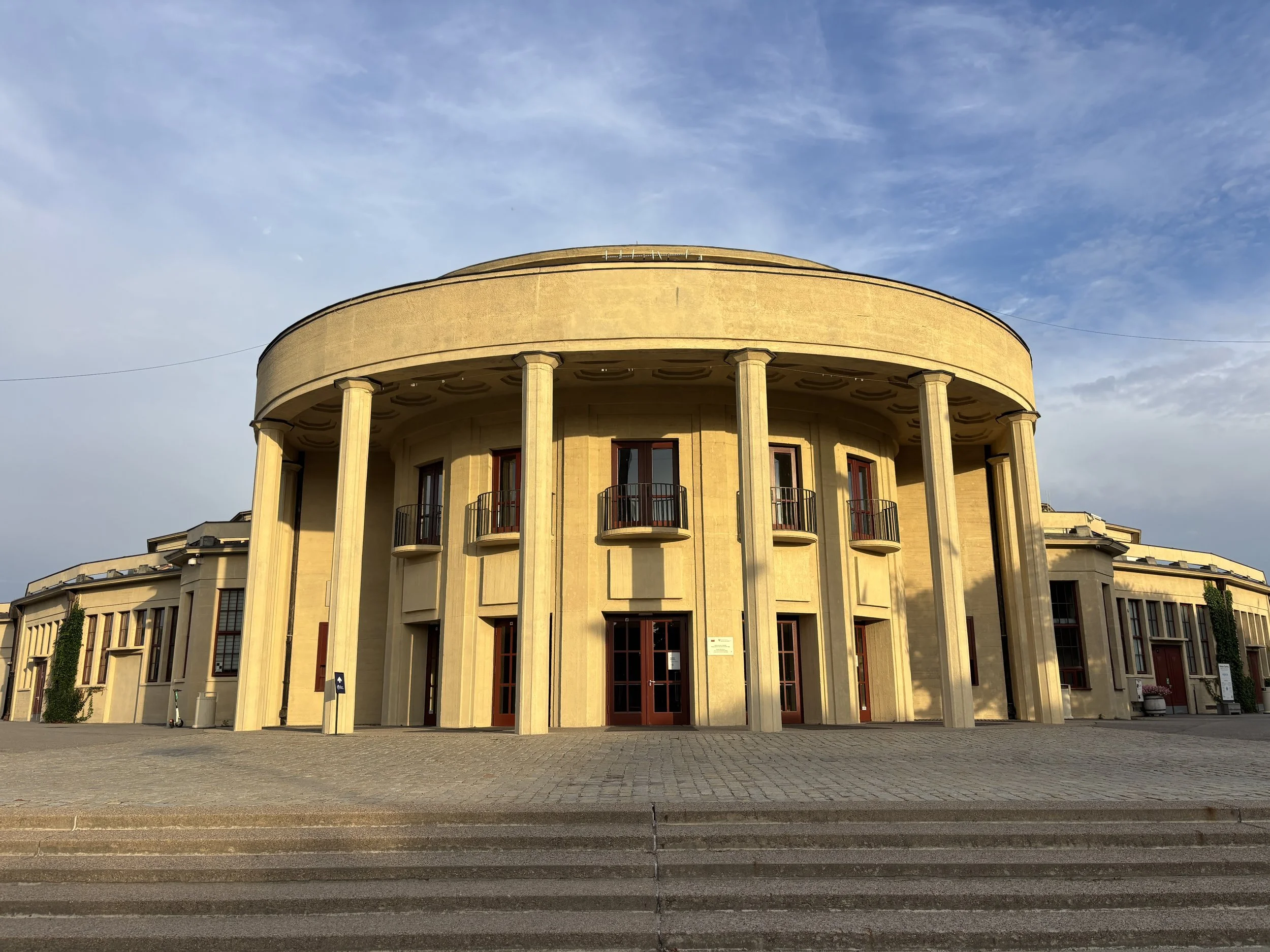
The circular hall and the spire are the most striking elements of Centennial Hall, but they are part of a much larger complex, which includes the lake and fountains, as well as the adjacent Japanese Garden.
While I didn’t have time to visit the Japanese garden, I heard good things about it and can be a nice addition to your itinerary if you go all the way to Centennial Hall. The garden, which is the third largest of its type in Europe, was set up also in 1913 and restored by Japanese specialists in 1995.
The fountain shows run hourly during the summer (May to October) and on some festive days and weekends there are special evening shows which attract large crowds. I didn’t have the chance to see any of these, but my advise is to check the schedules, because it can be a nice addition to your visit.
Wroclaw-la-nuit: Neon Gallery
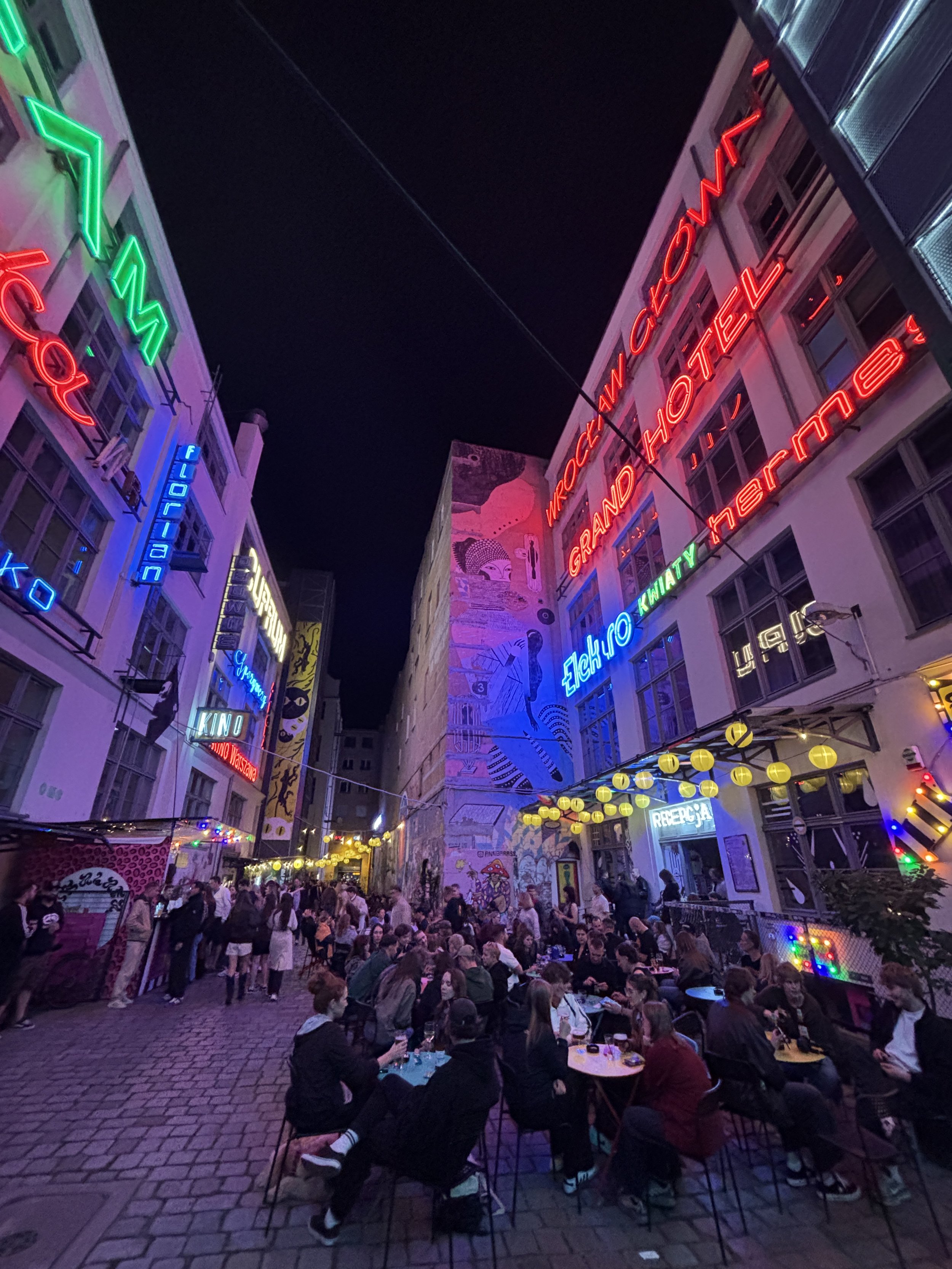
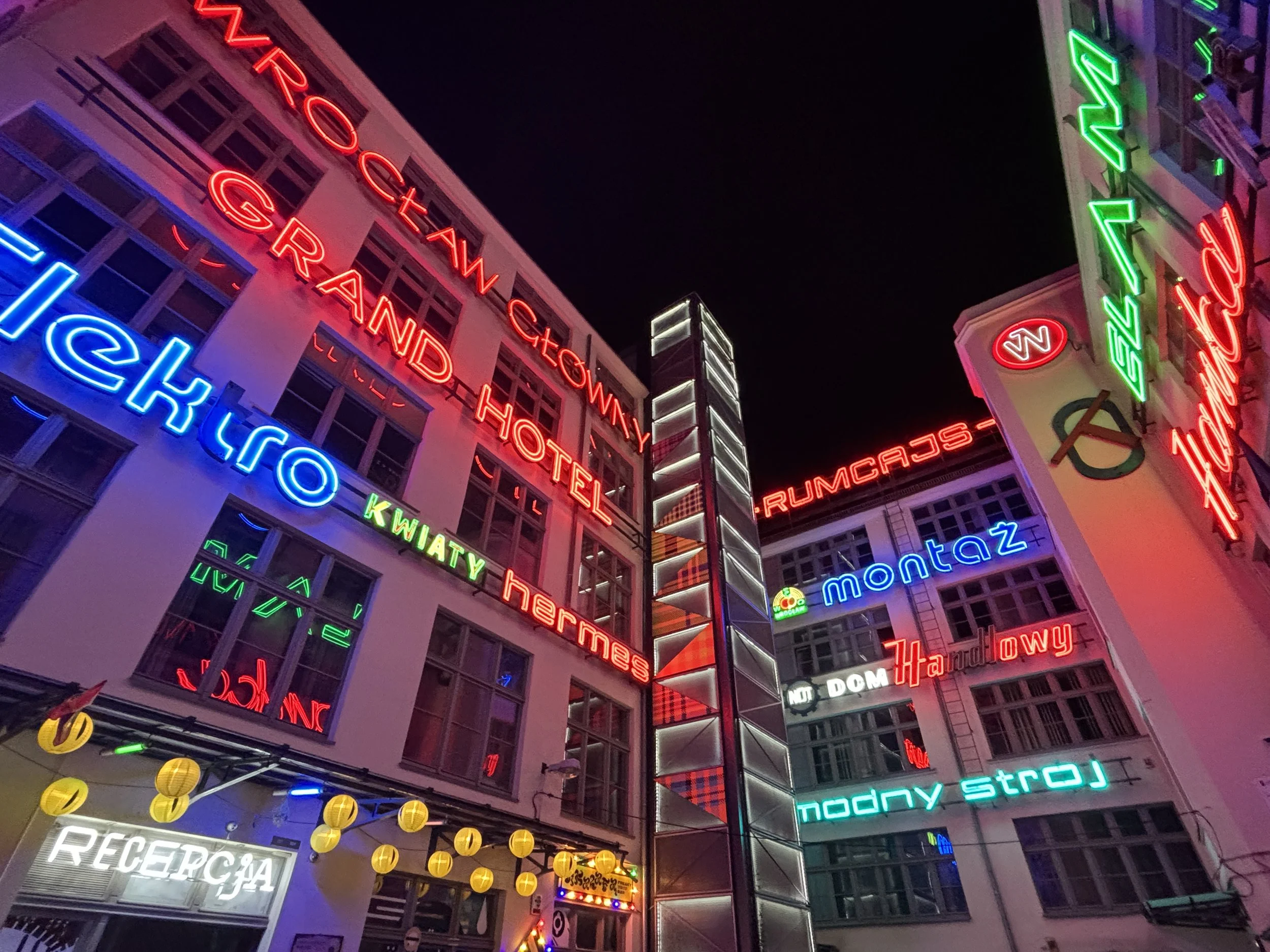
Even if you are planning to skip Wroclaw’s nightlife (as it was my case!) it is worth having a peek at the Neon Gallery, since this is quite a unique and scenic spot and it is literally next to Rynek.
Well, in fact, it is located into what has been named the “Four faiths district”, an area of the historical center which is called this way because it hosts temples of as many religious denominations (Catholic, Lutheran, Orthodox and Jewish) and has become a sort of bohemian side of Wroclaw.
This is, indeed, the vibe of Neon Gallery, which is a large courtyard lined with bars and nightclubs. There are, actually, a couple more courtyards next door which serve the same function, but Neon Gallery is the most visually striking.
It had already a lively atmosphere at a relatively early hour. Of course, the warm weather helped (not sure whether is it the same in the middle of the Polish winter!).
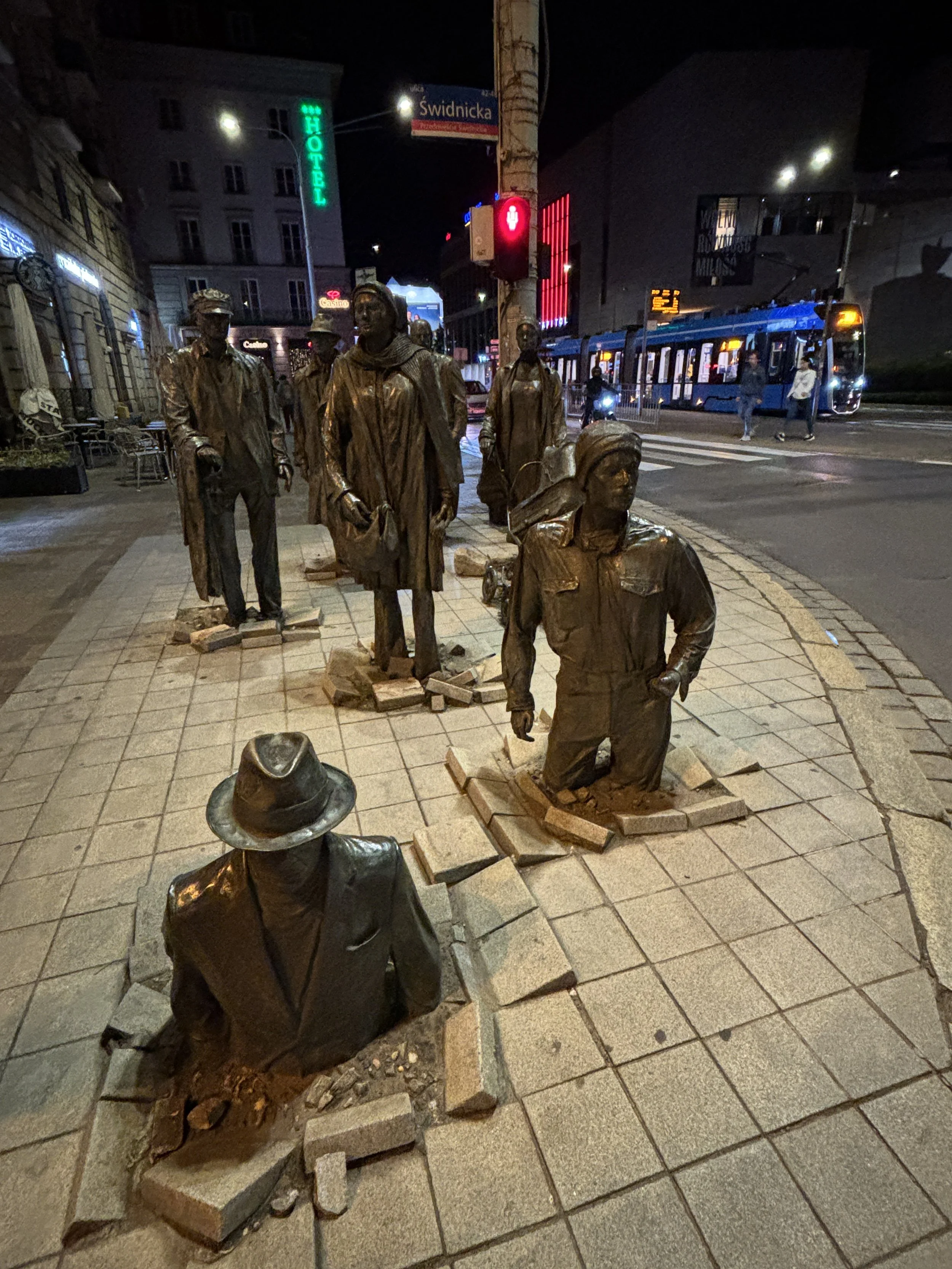
As you can see below, the dwarves are not the only bronze statues you can come across when walking around Wroclaw!
How to move around Wroclaw
Wroclaw is not a huge city and most of the historical center and many of the sites mentioned in this post can be reached on foot from Rynek. However, you may still need some means of transportation to get to some of the more relatively peripheral places, such as Centennial Park or Hydropolis.
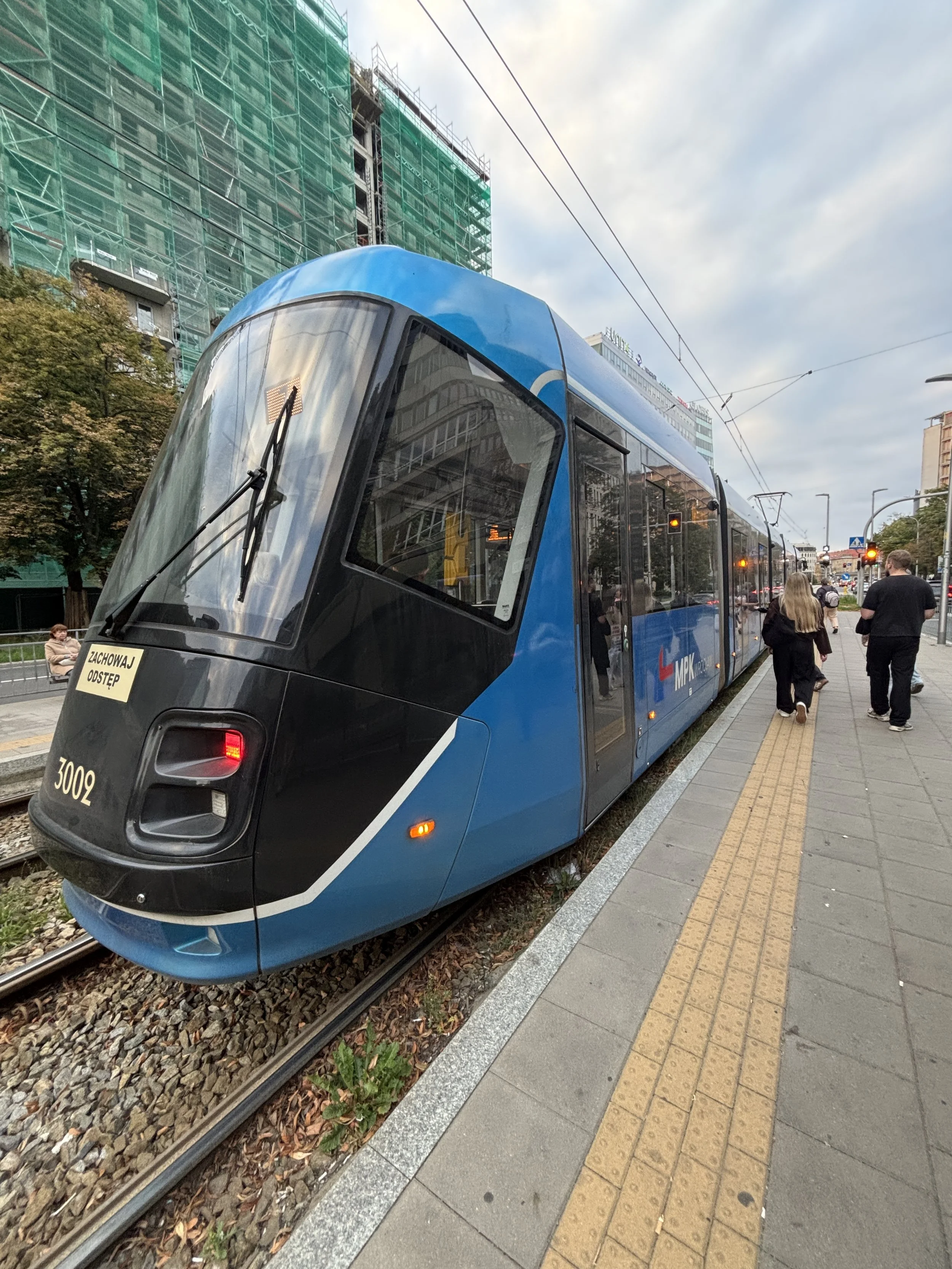
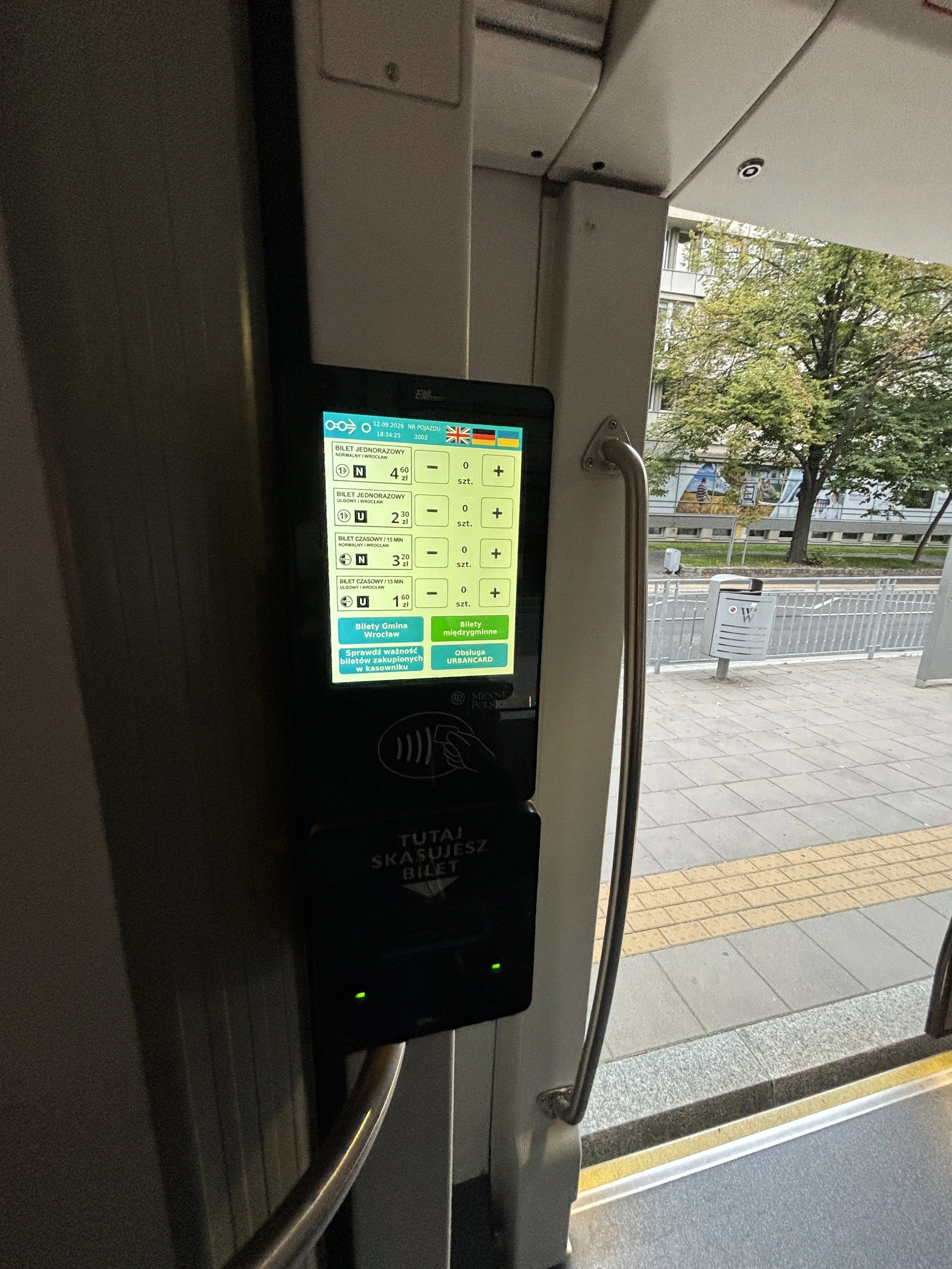
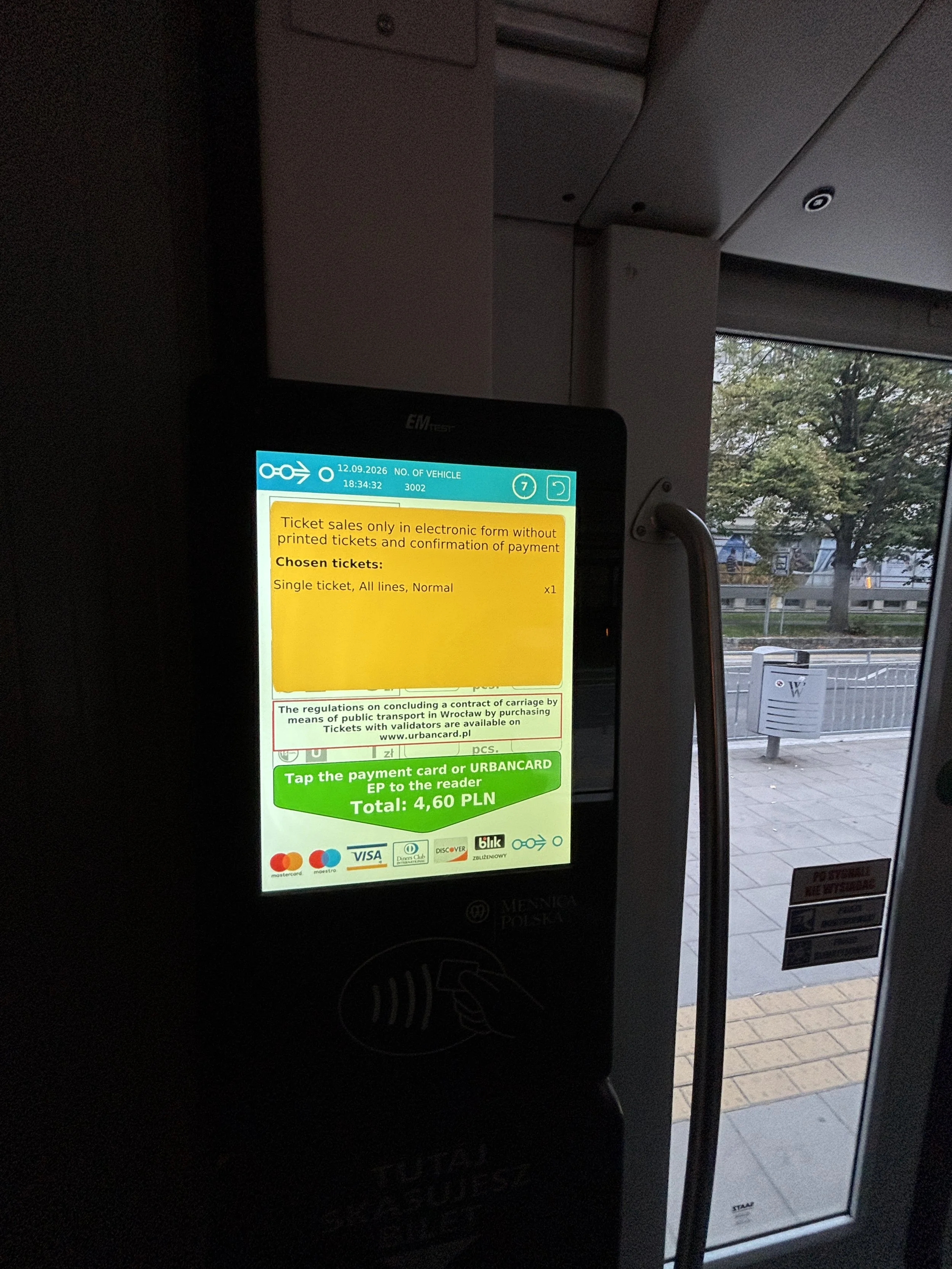
Trams provide a convenient and cheap way to move around the city. They pass frequently along the city’s main axis and you can pay straight away with your credit card at digital terminals inside the tram.
These have modern, touchscreens with a multilingual interface, so the whole process is pretty simple. A single ticket costs 4.5 PLN, which is around €1 (or $1).
I also used Bolt (the European alternative to Uber) a couple of times and it worked also well and was relatively cheap (a 10-15min urban journey costing me the equivalent of €5/$5).
Last but not least, if traveling to and from the airport, you can take Bus 106, which stops by the Renova building at the edge of the old town and runs every 30min or so. Ticketing works exactly the same as on the trams.
Three great places to eat in Wroclaw
1 - Restaurant Przystań & Marina
Księcia Witolda 2, 50-202 Wrocław
This is a modern and quite upmarket restaurant which serves Polish cuisine with European influences. It has got a Michelin guide mention and has also been listed by Forbes among the Top 50 restaurants in Poland.
The day I was visited our group got to try a degustation menu (see below), which provided quite a broad sampling of its offering. The presentation and the taste was impeccable throughout!
See the photo gallery below:
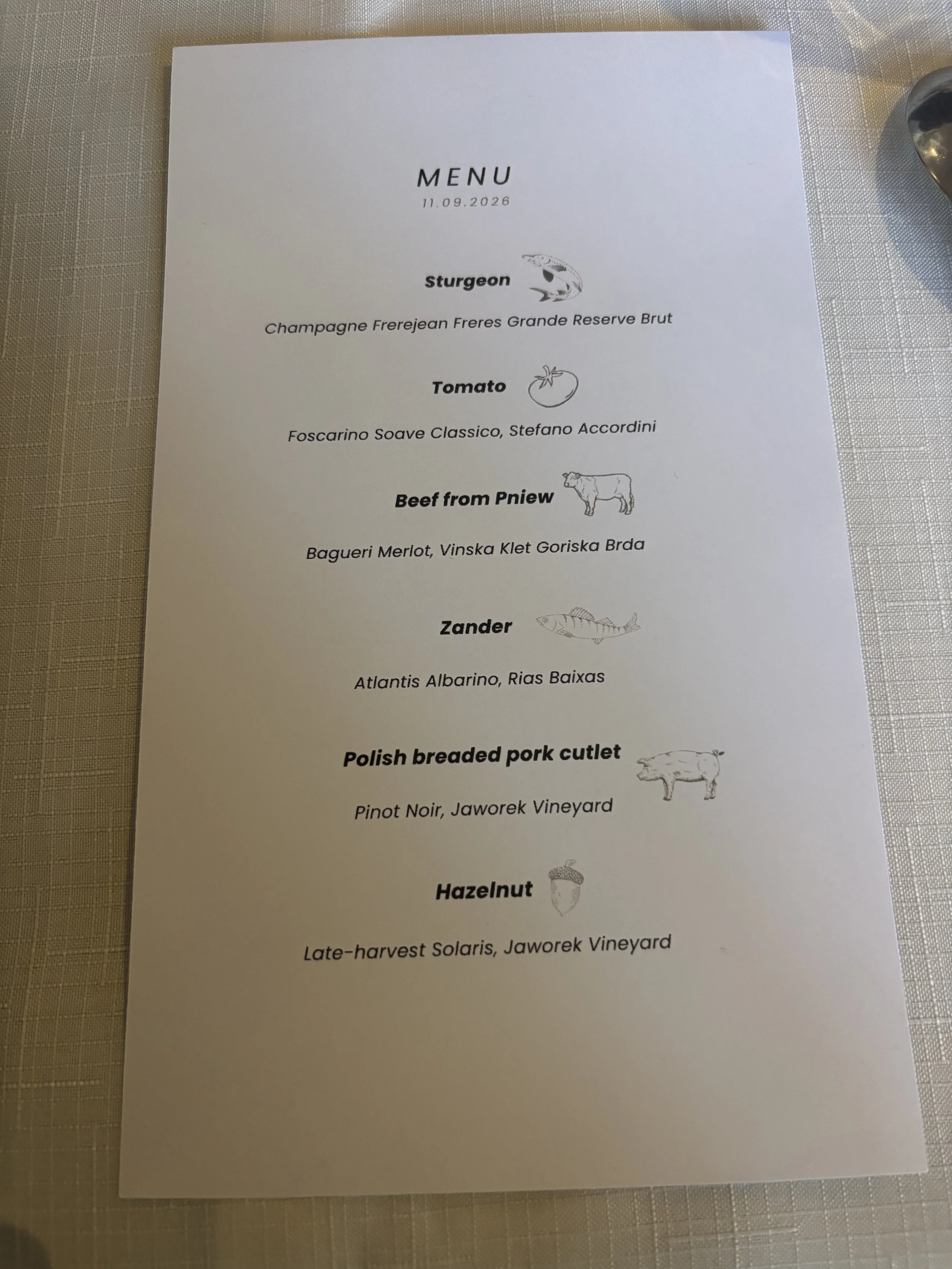
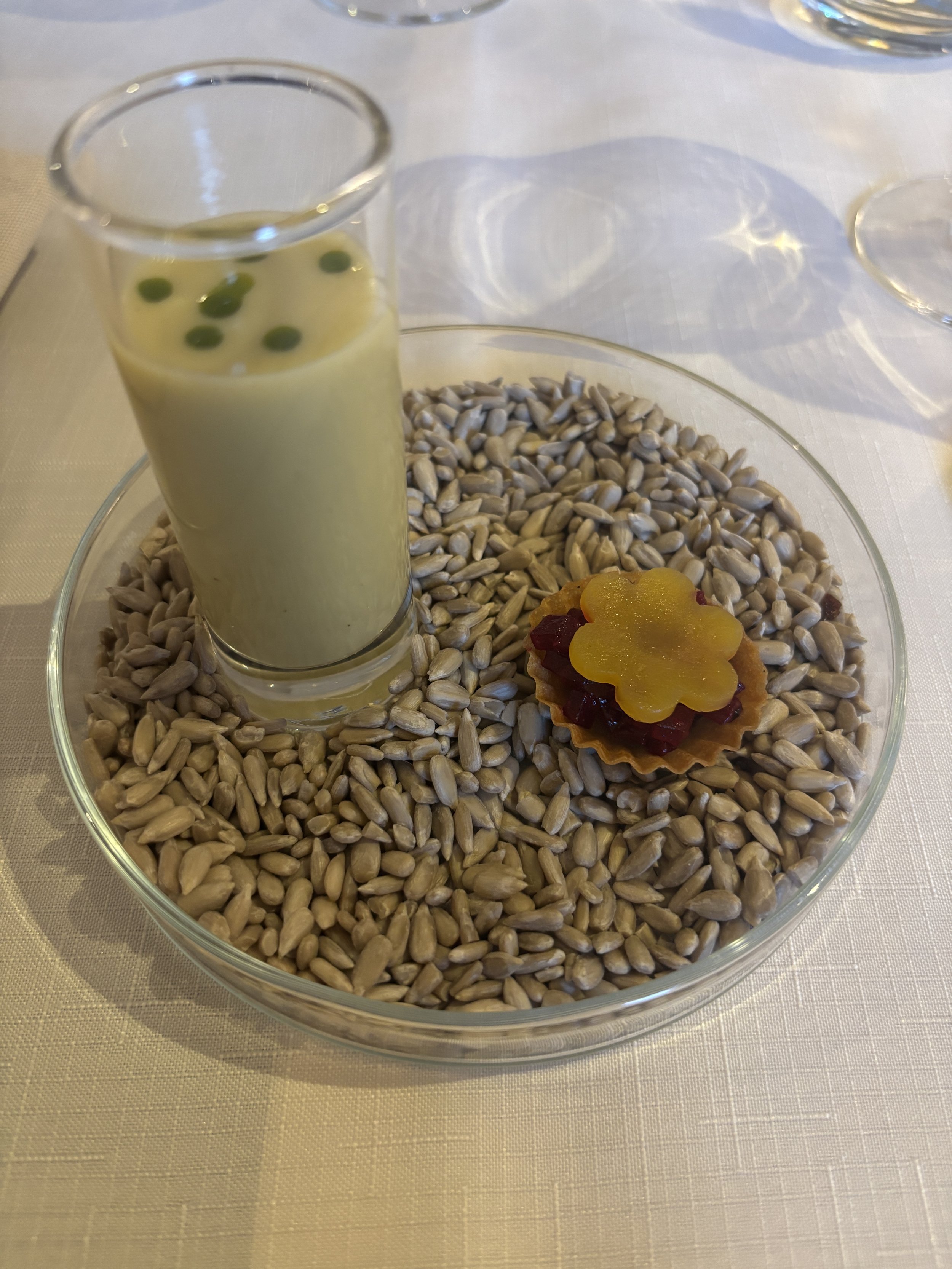
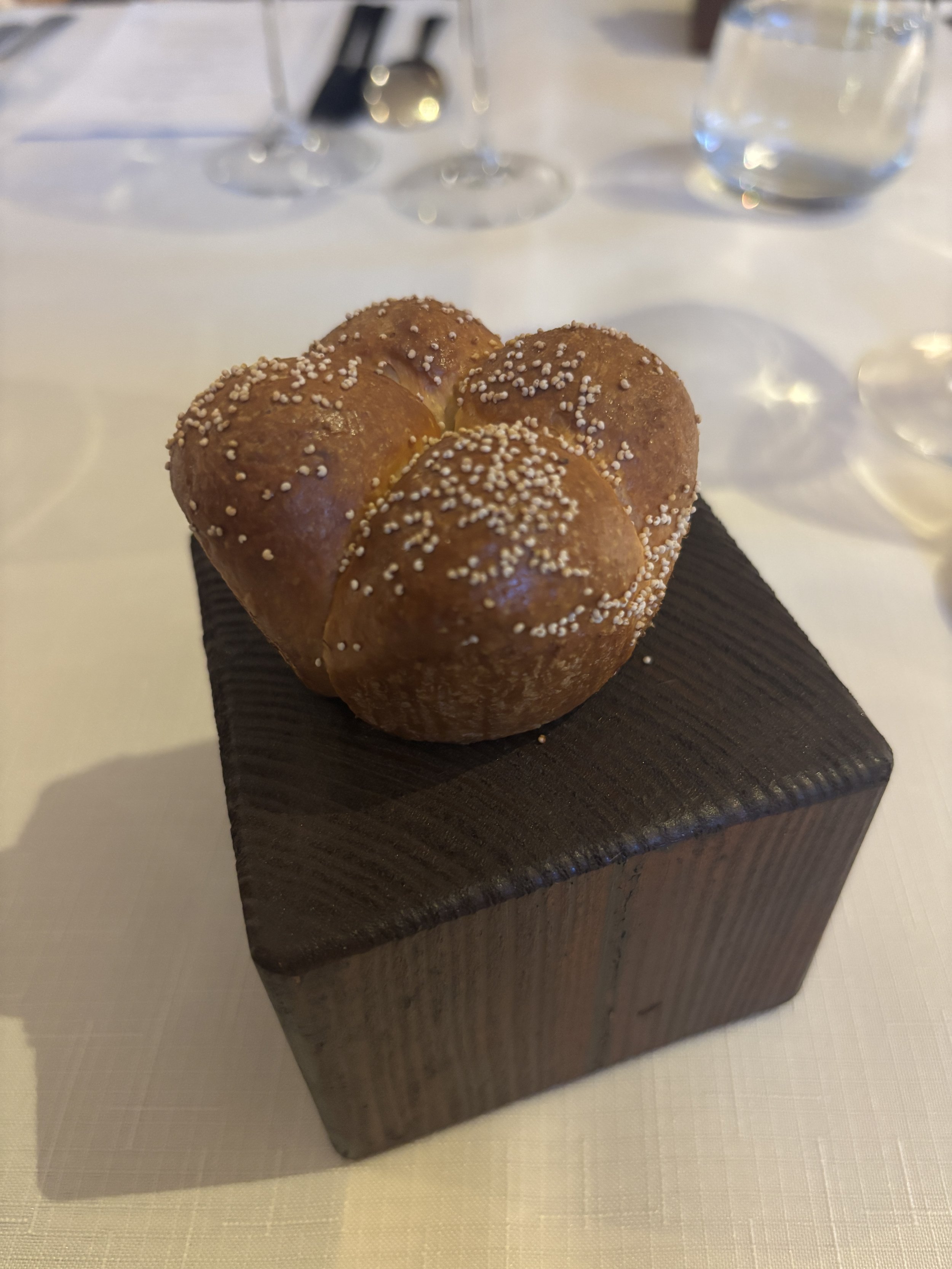
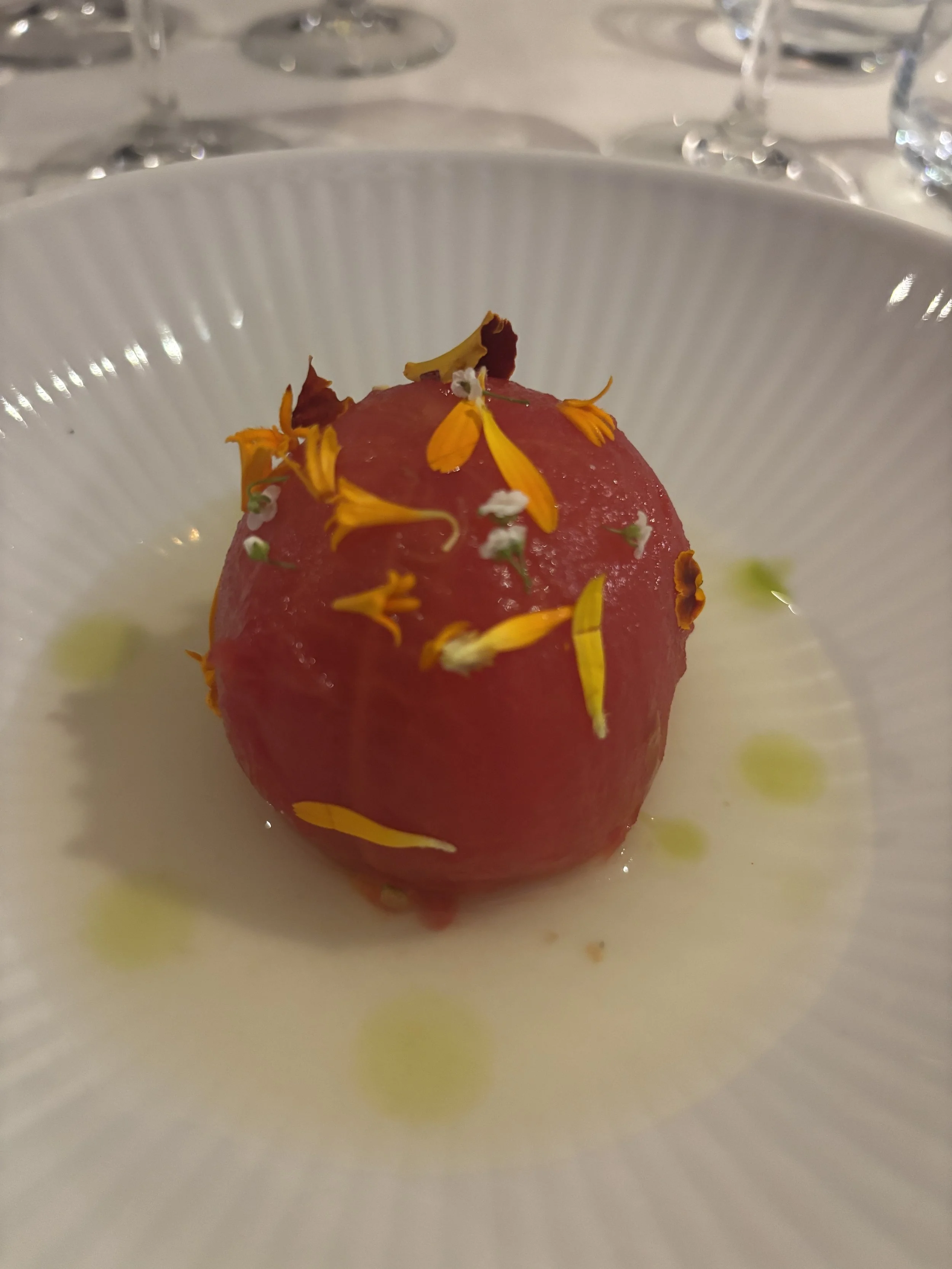
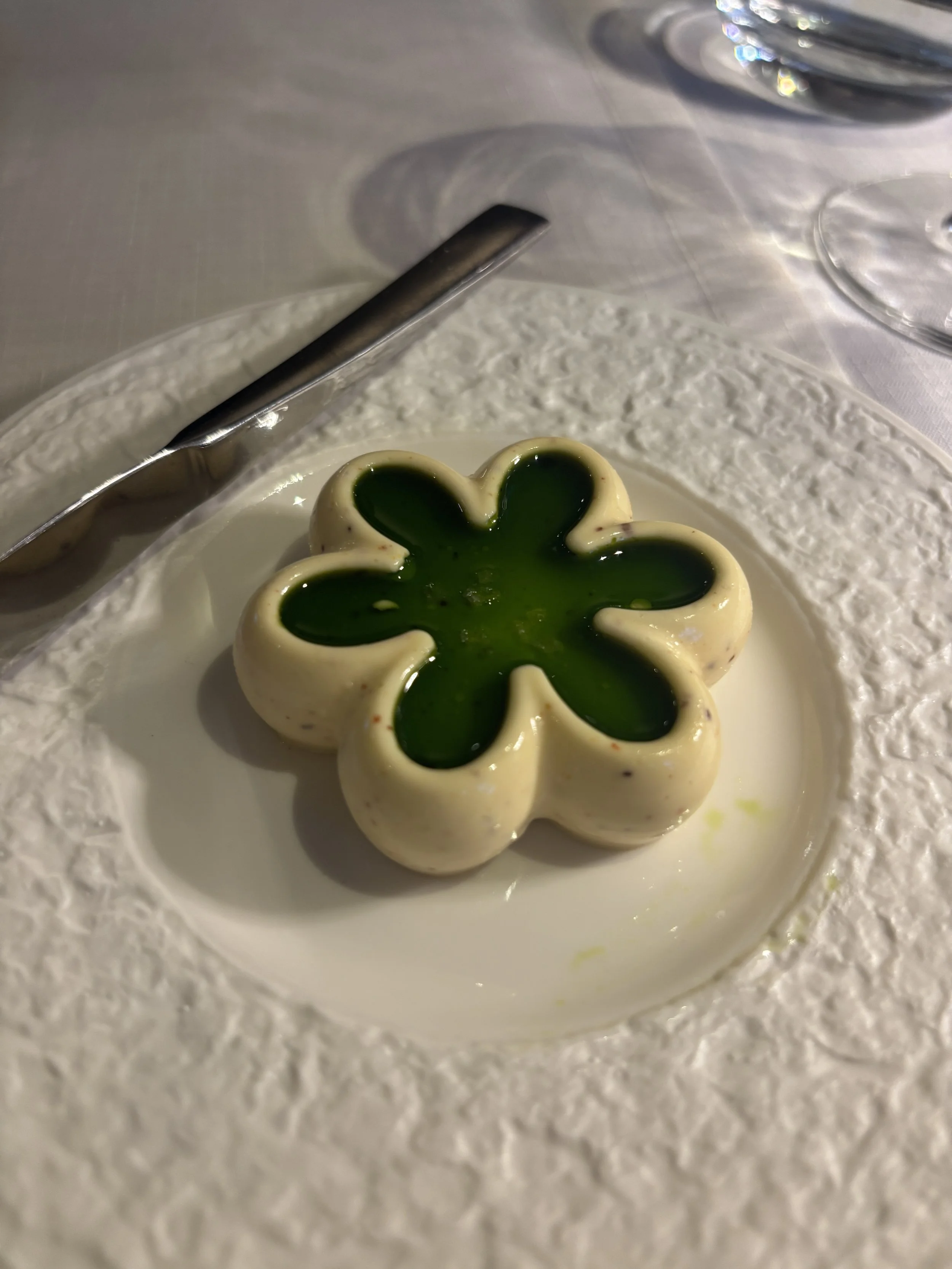
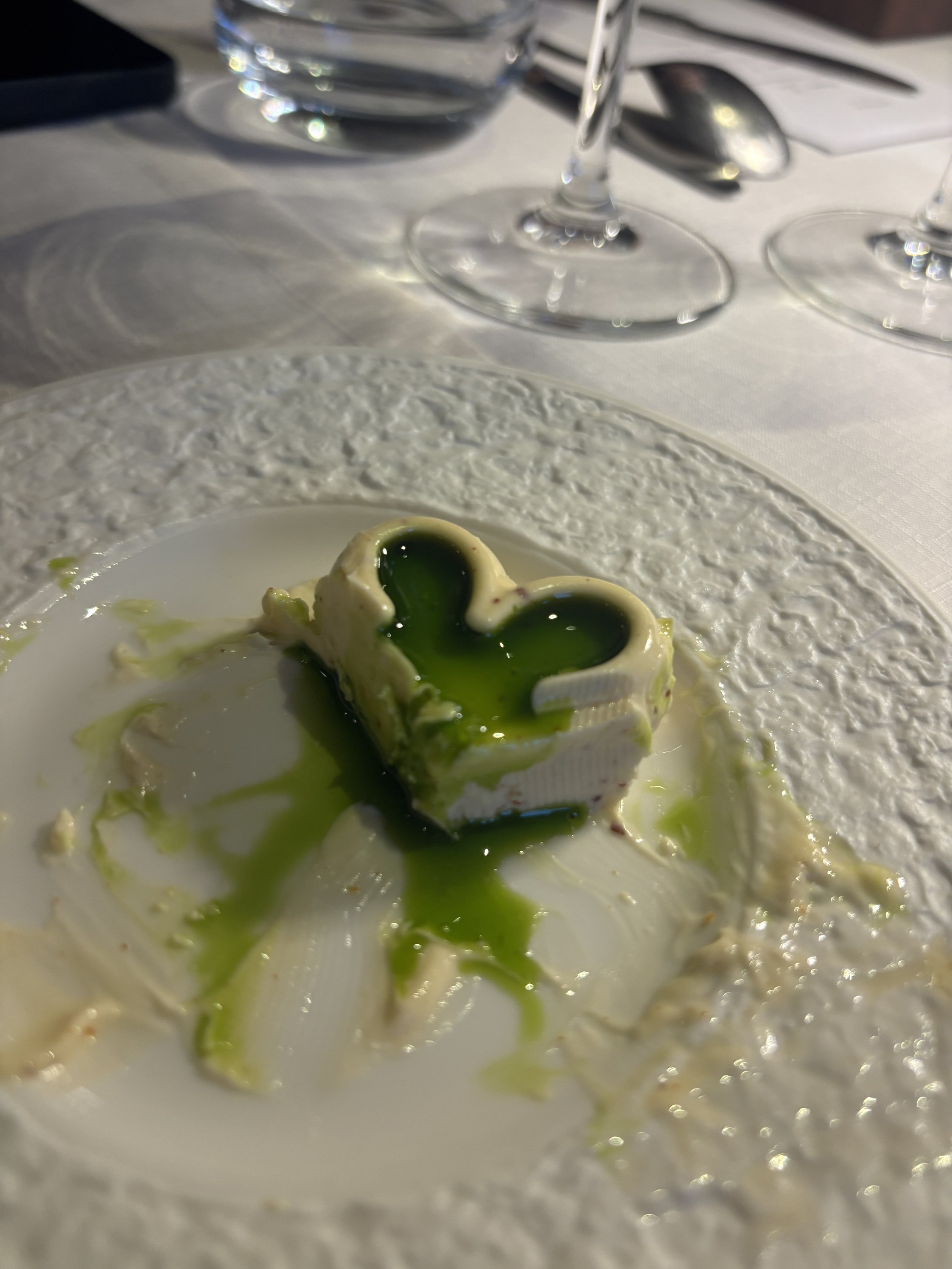
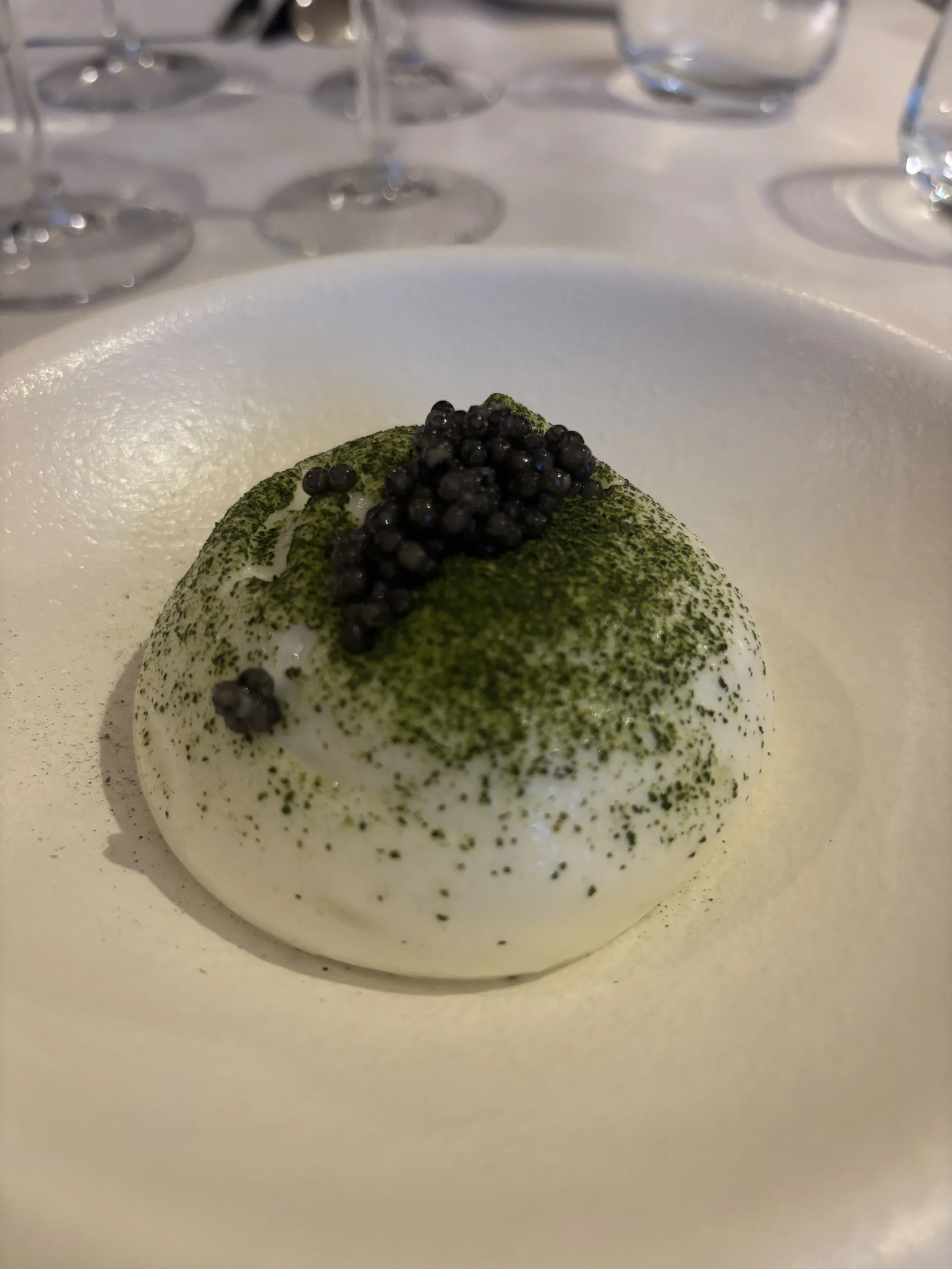
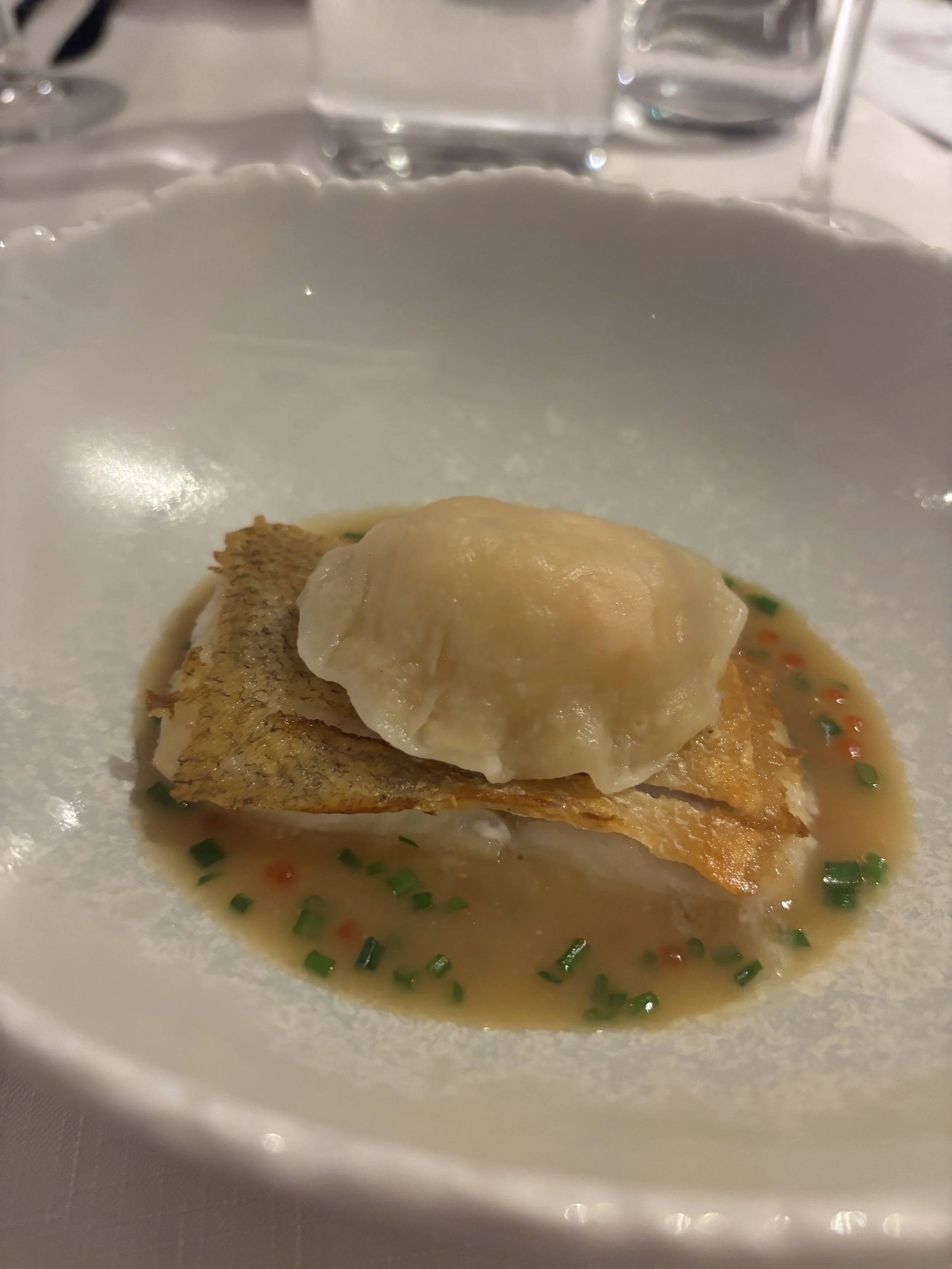
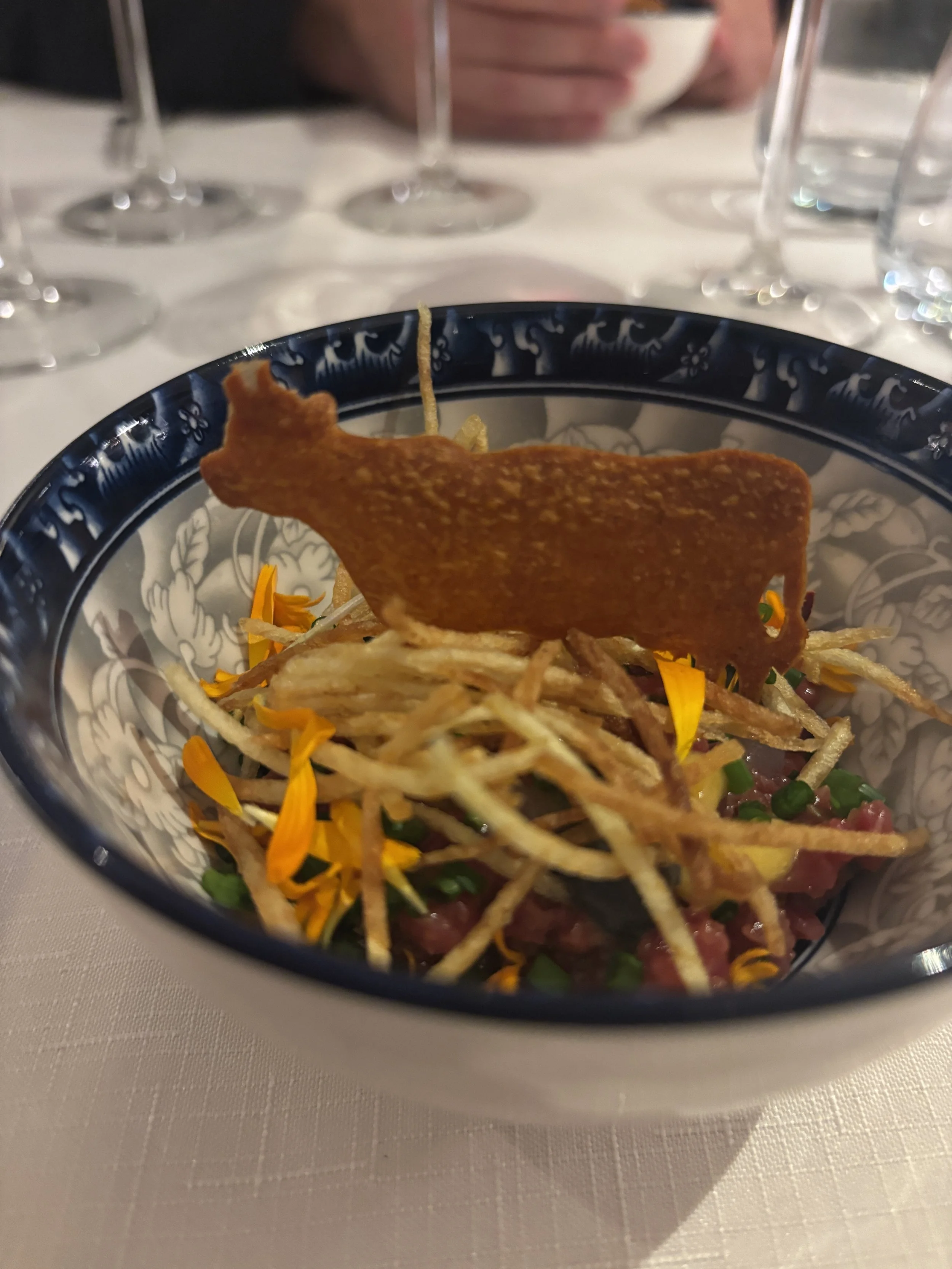
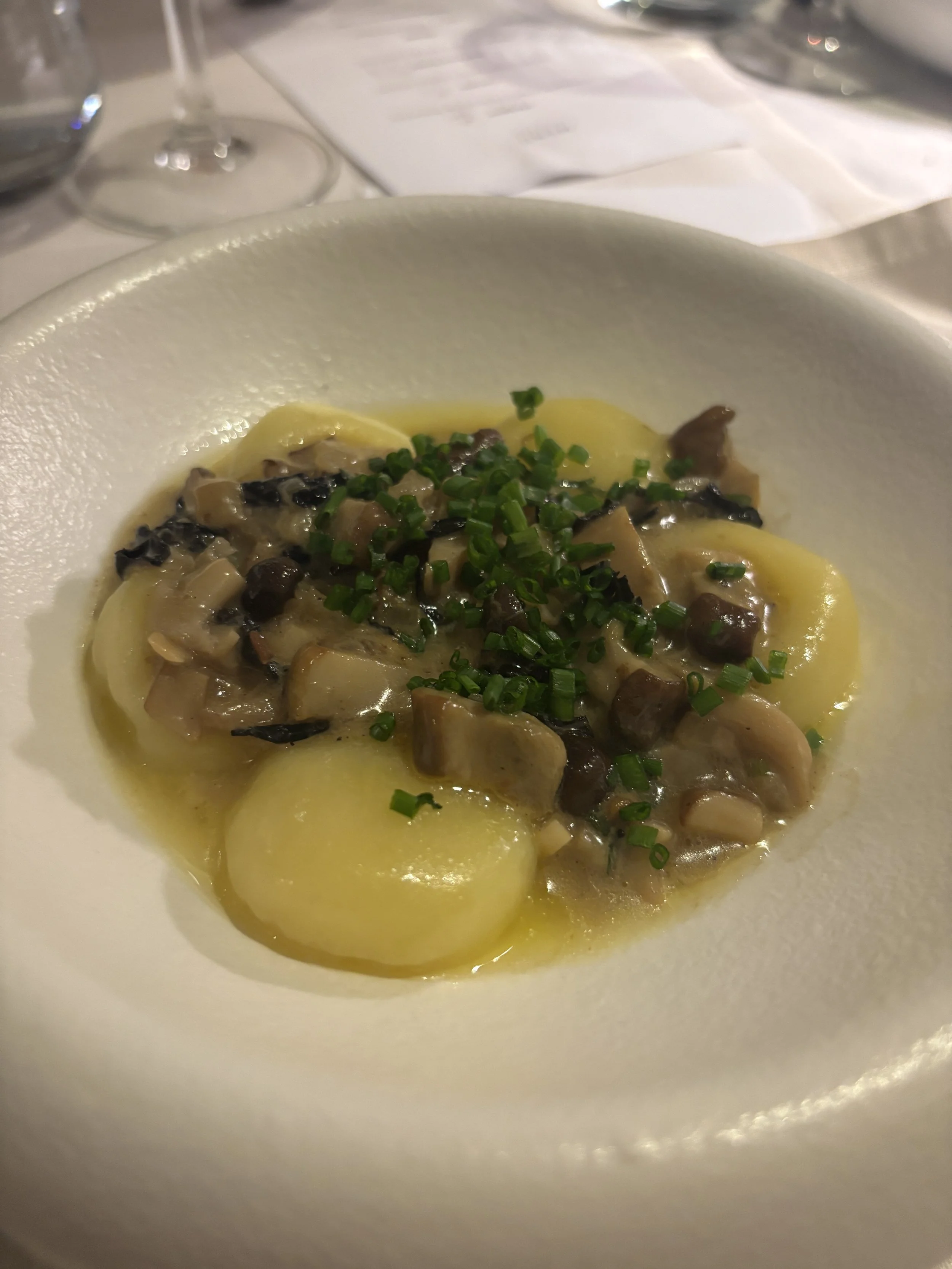
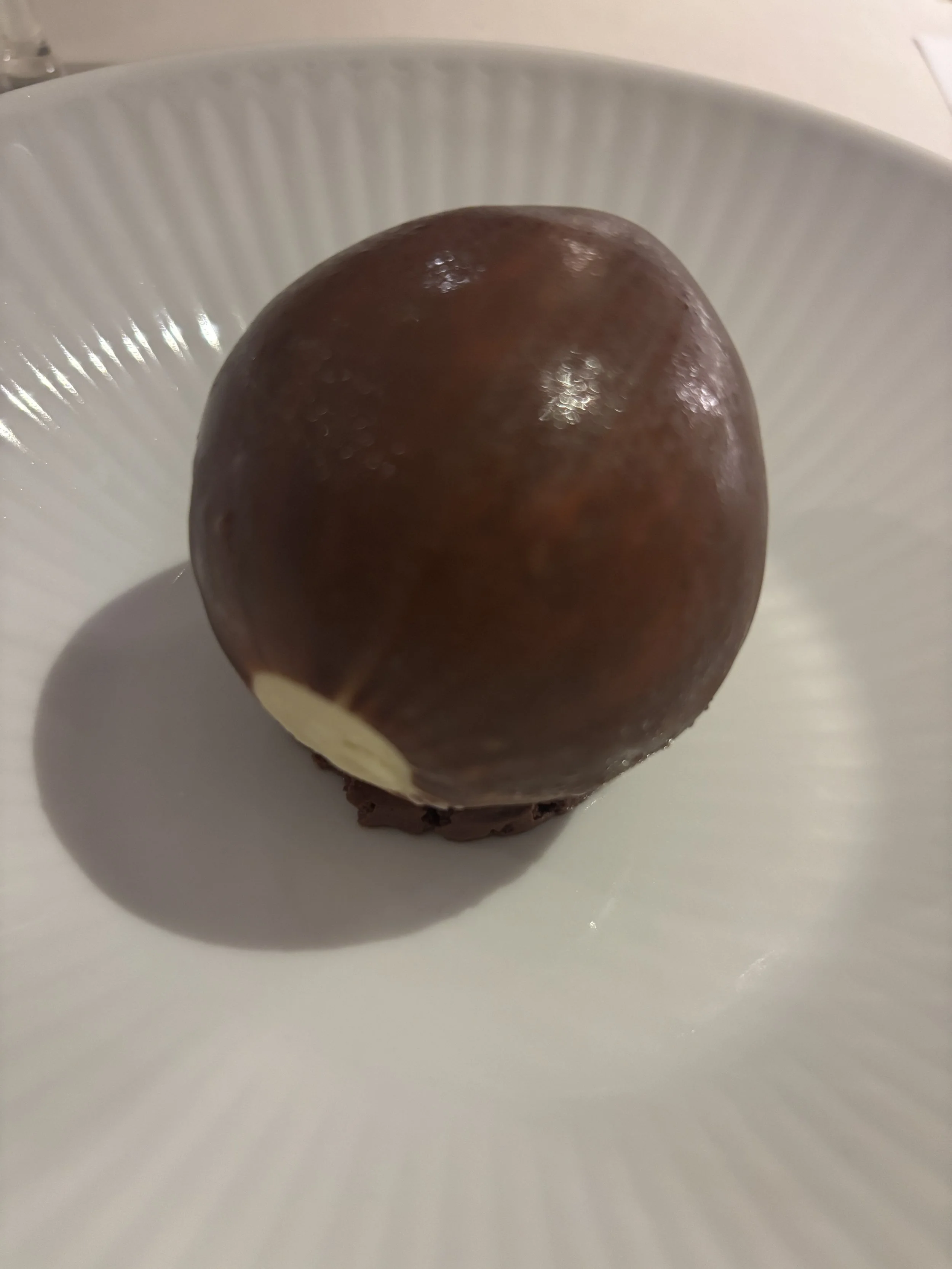
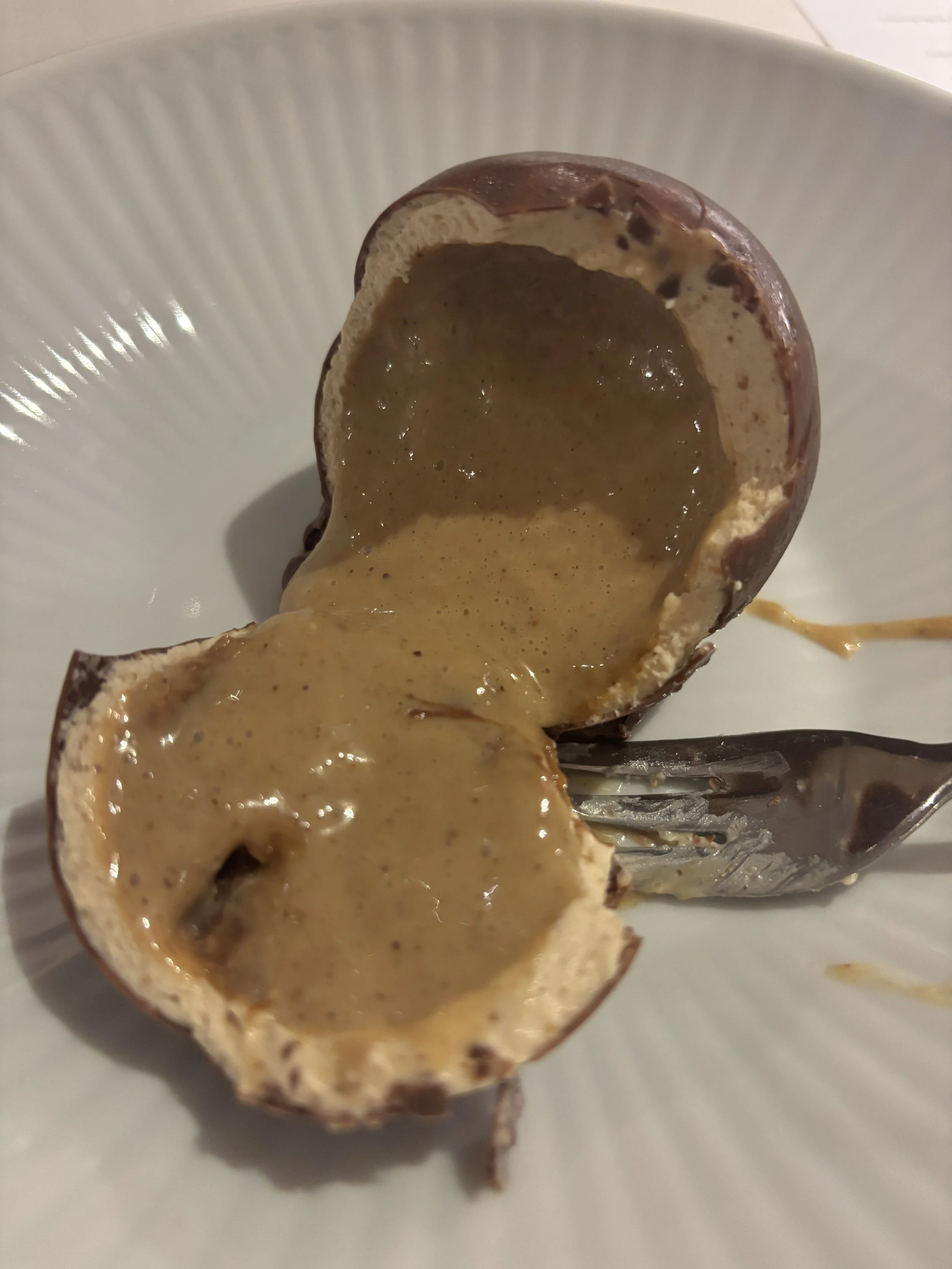
An added bonus if dining at Przystań & Marina is the view of the university building just across the river (the restaurant has a terrace actually).
The name of the restaurant “Przystań & Marina” means actually “harbour & marina” in a hint at its location near the water on one of the islands in the middle of the river Odra.
2- Vertigo Jazz Club & Restaurant
Oławska 13, 50-123 Wrocław
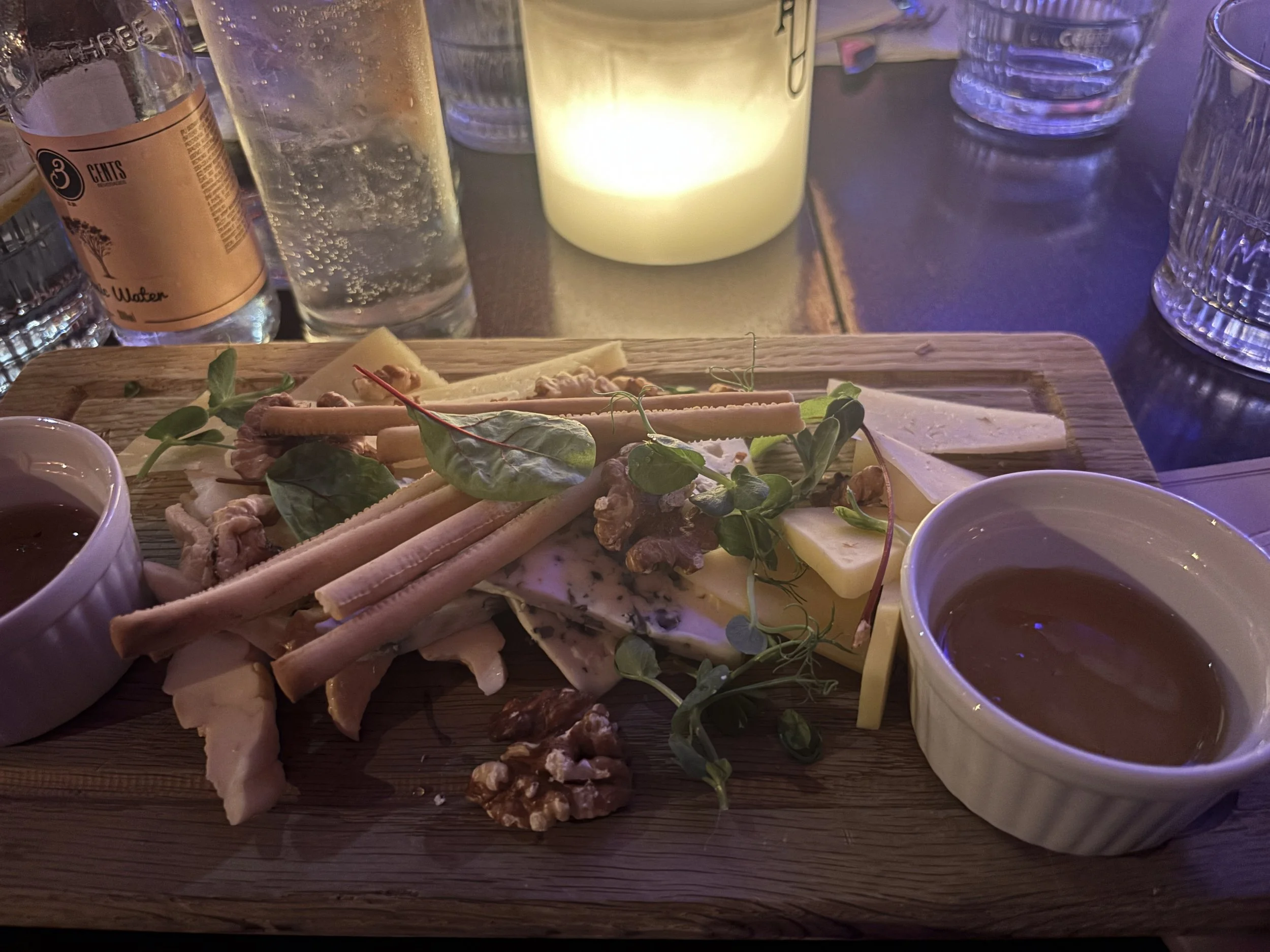
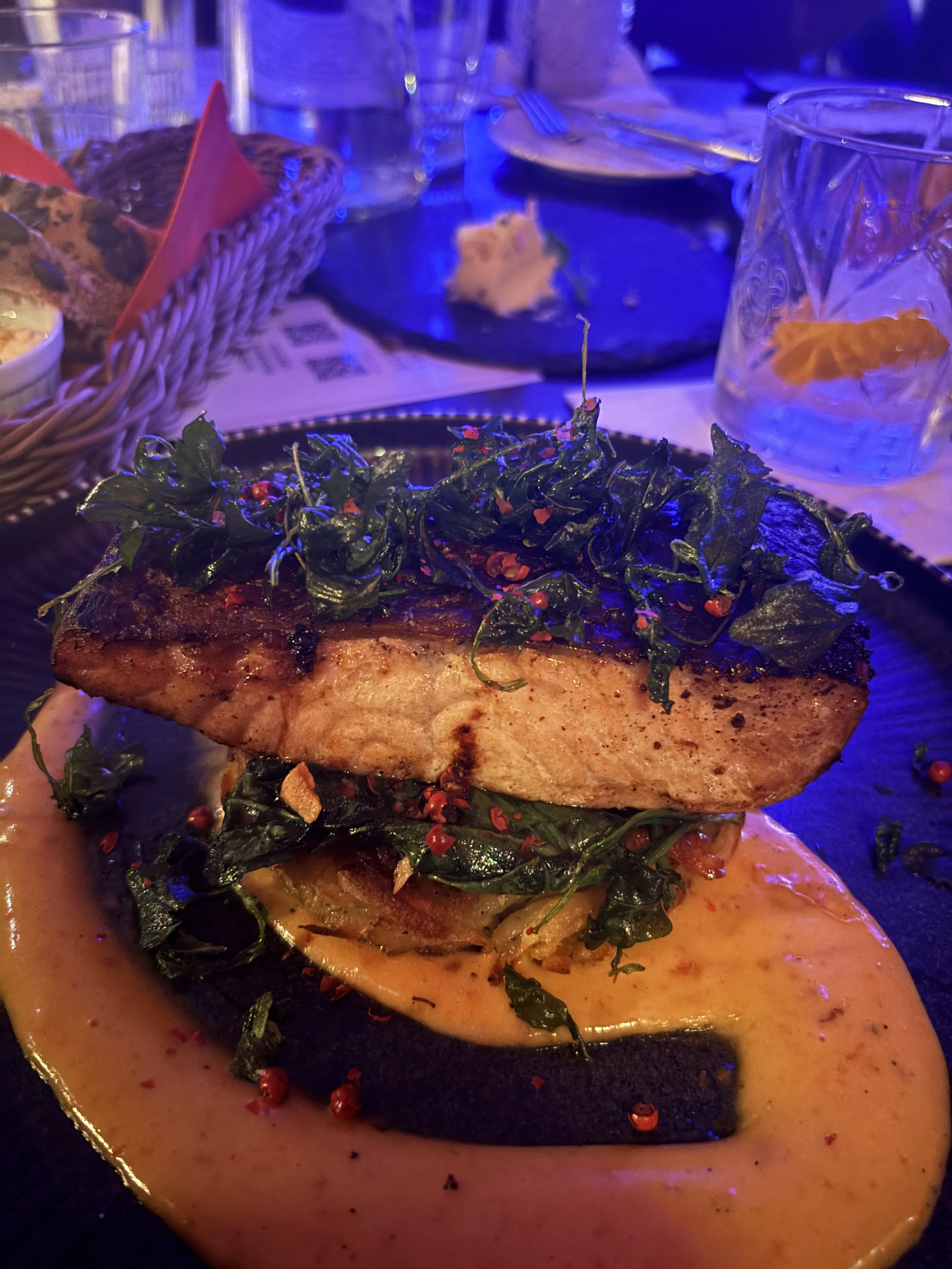
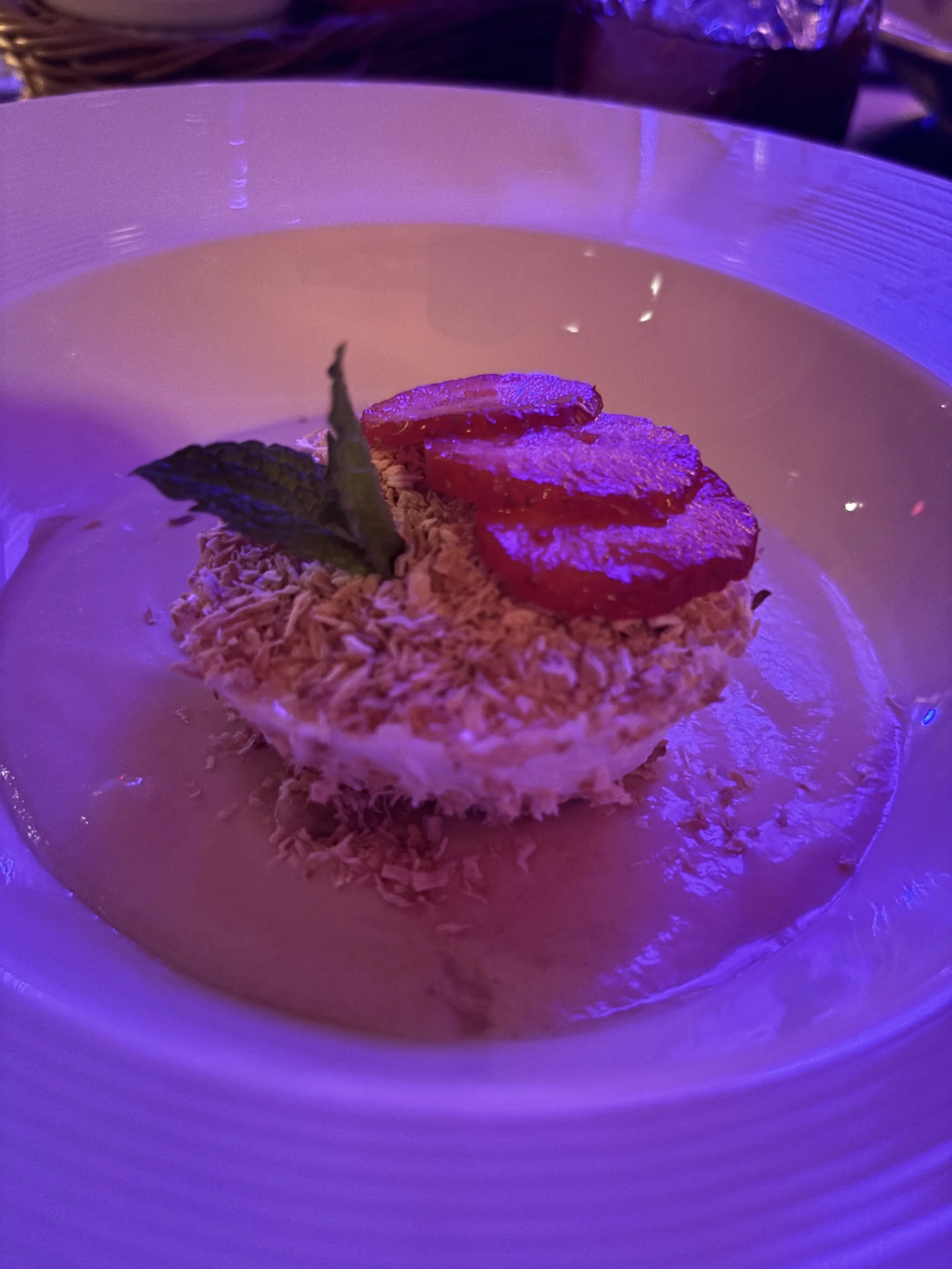
This is an iconic place in Wroclaw which acts, simultaneously as a restaurant and jazz bar. It is located in a basement right in the city center and is, apparently, the only jazz bar in town. It has shows pretty much every night and it serves pretty tasty food in a nice, relaxed atmosphere.
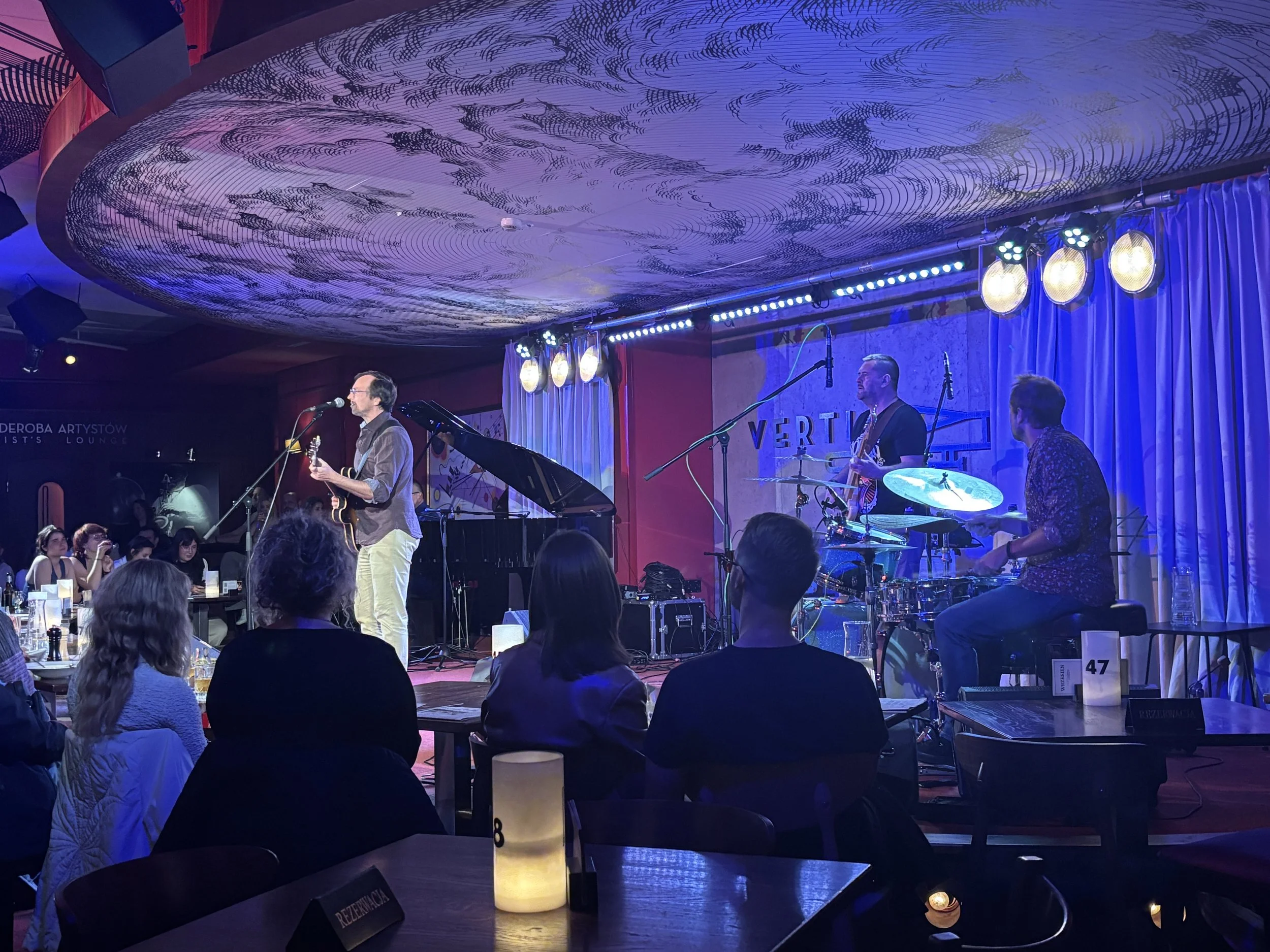
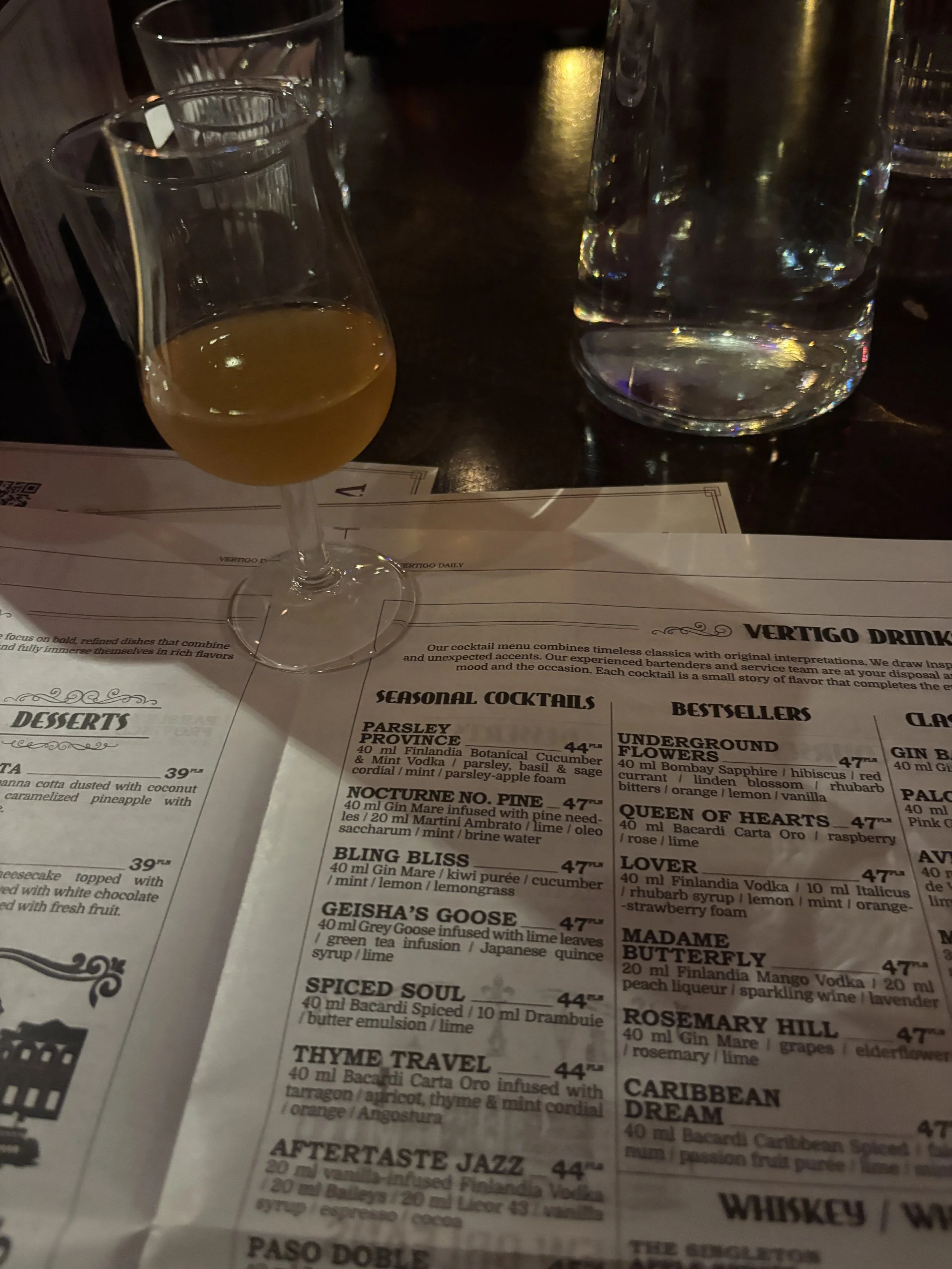
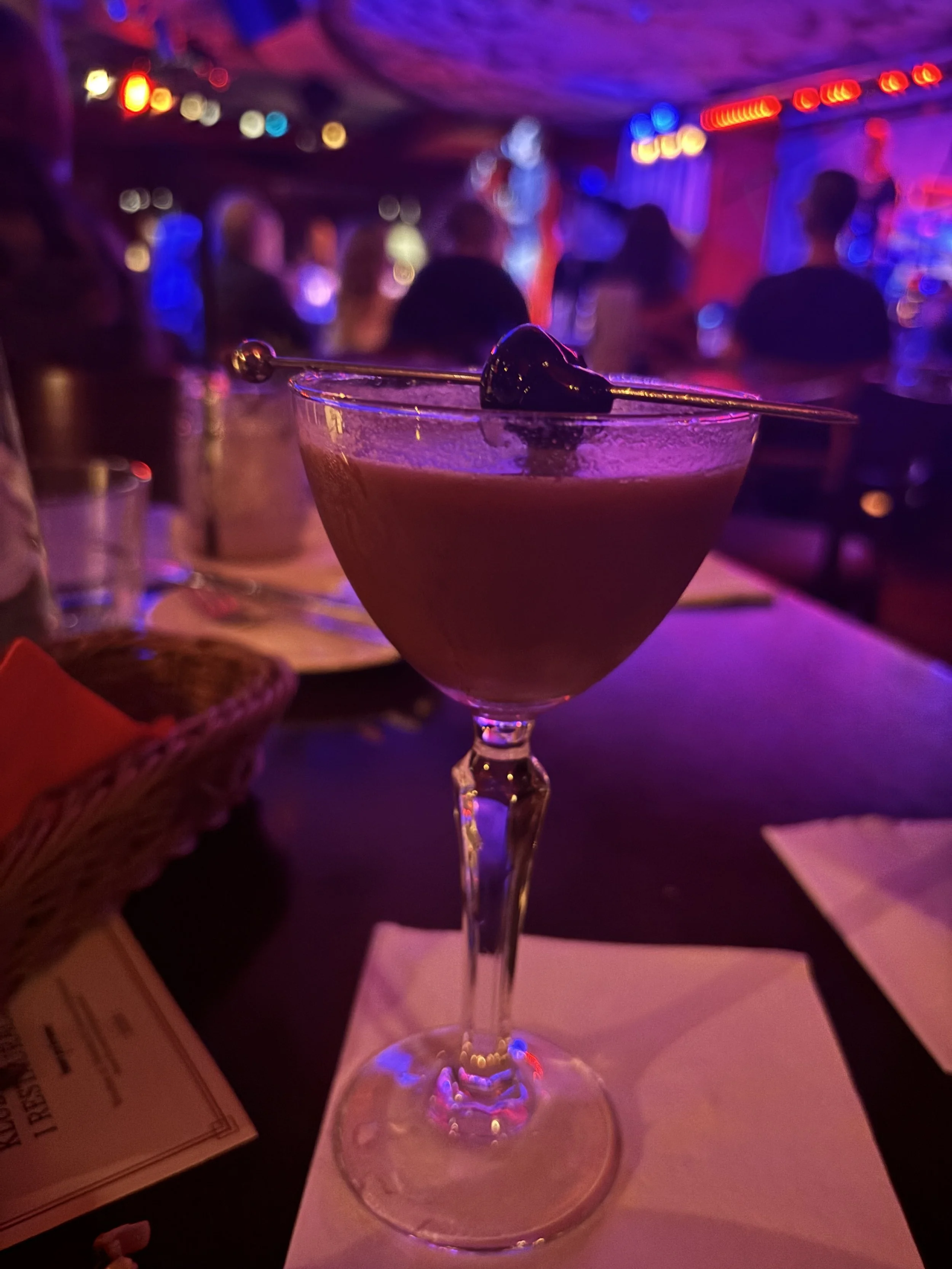
As can be expected from an place with such an artsy reputation, there are plenty of cool small details, such as, for example, the design of the menu, which looks like an old school newspaper. Or the the presentation of both the cocktails and the food.
A nice place for an evening out in Wroclaw!
3- Concordia Taste
wyspa Słodowa 7, 50-266 Wrocław, Poland
This is a very modern place (opened in 2022) located on one of the small islands on the Odra river (very close to Sand Island and Ostrow Tumski).
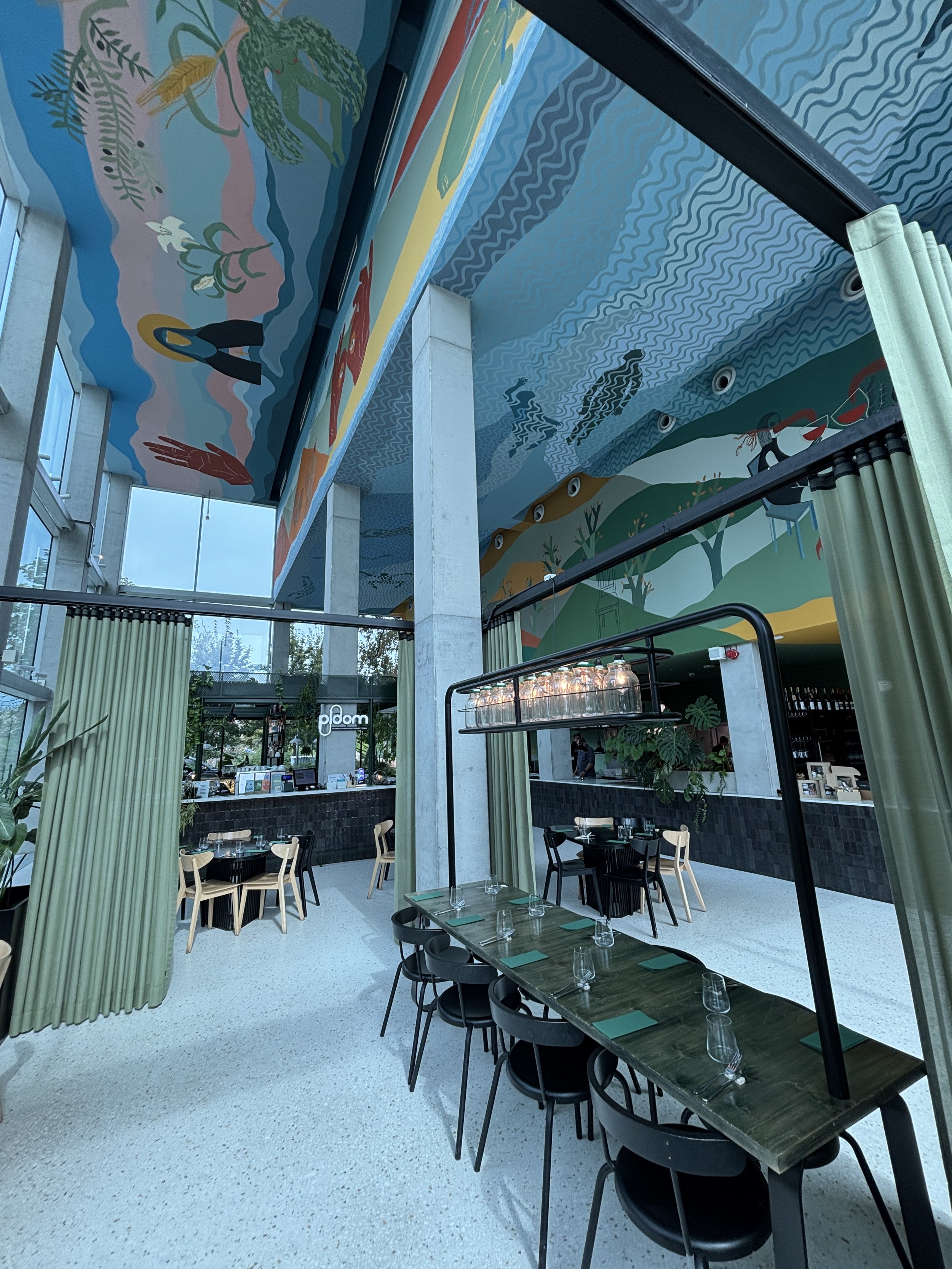
Its interior is decorated by a very large mural painting running across the whole restaurant. It is the work of Polish artist by Alicja Biała, who intended to celebrate closeness with nature and with other people you spend time with.
The restaurant is located within a building that serves as a creative arts space and business center and it has nice views of the river and Wroclaw University.
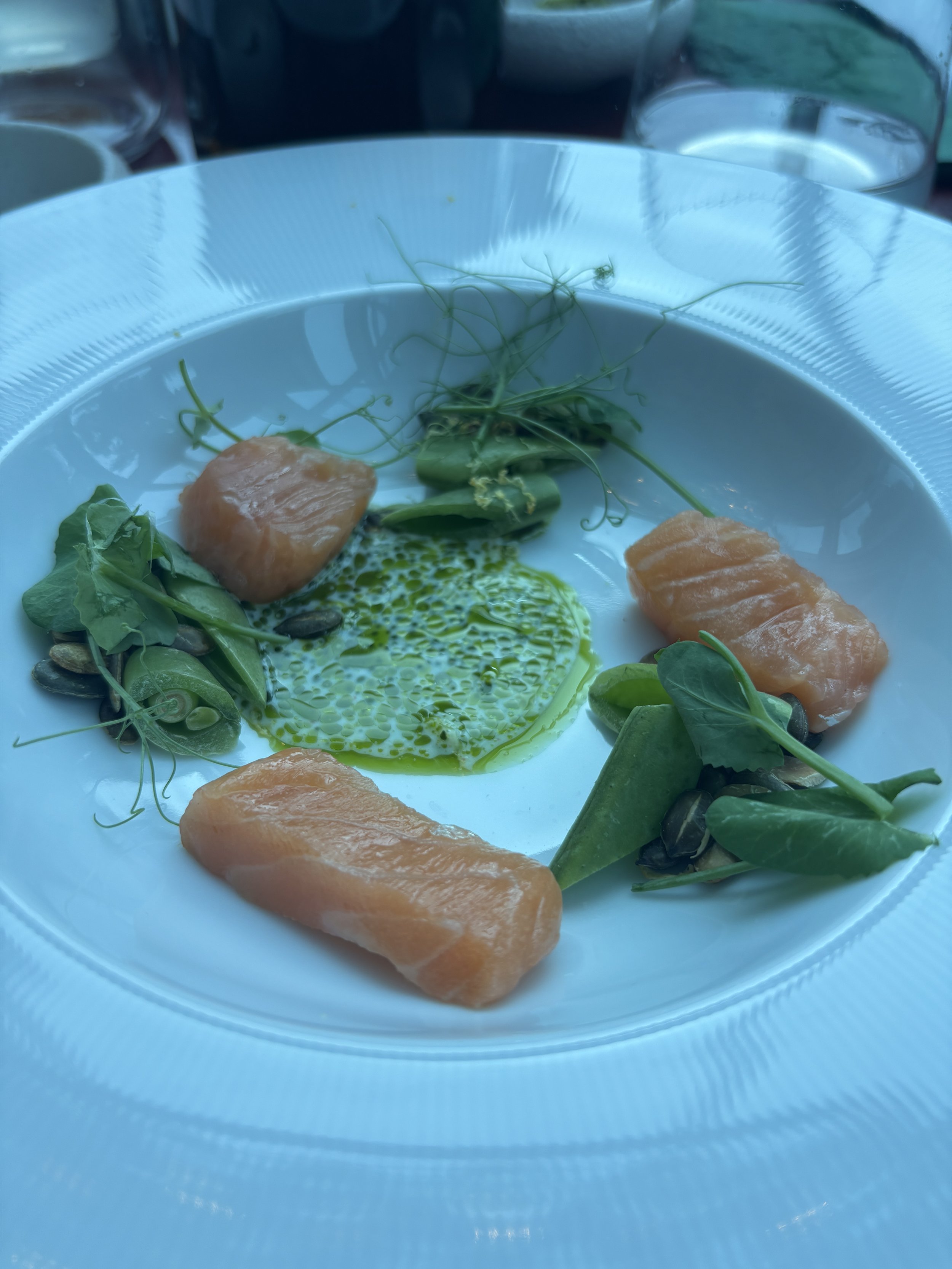
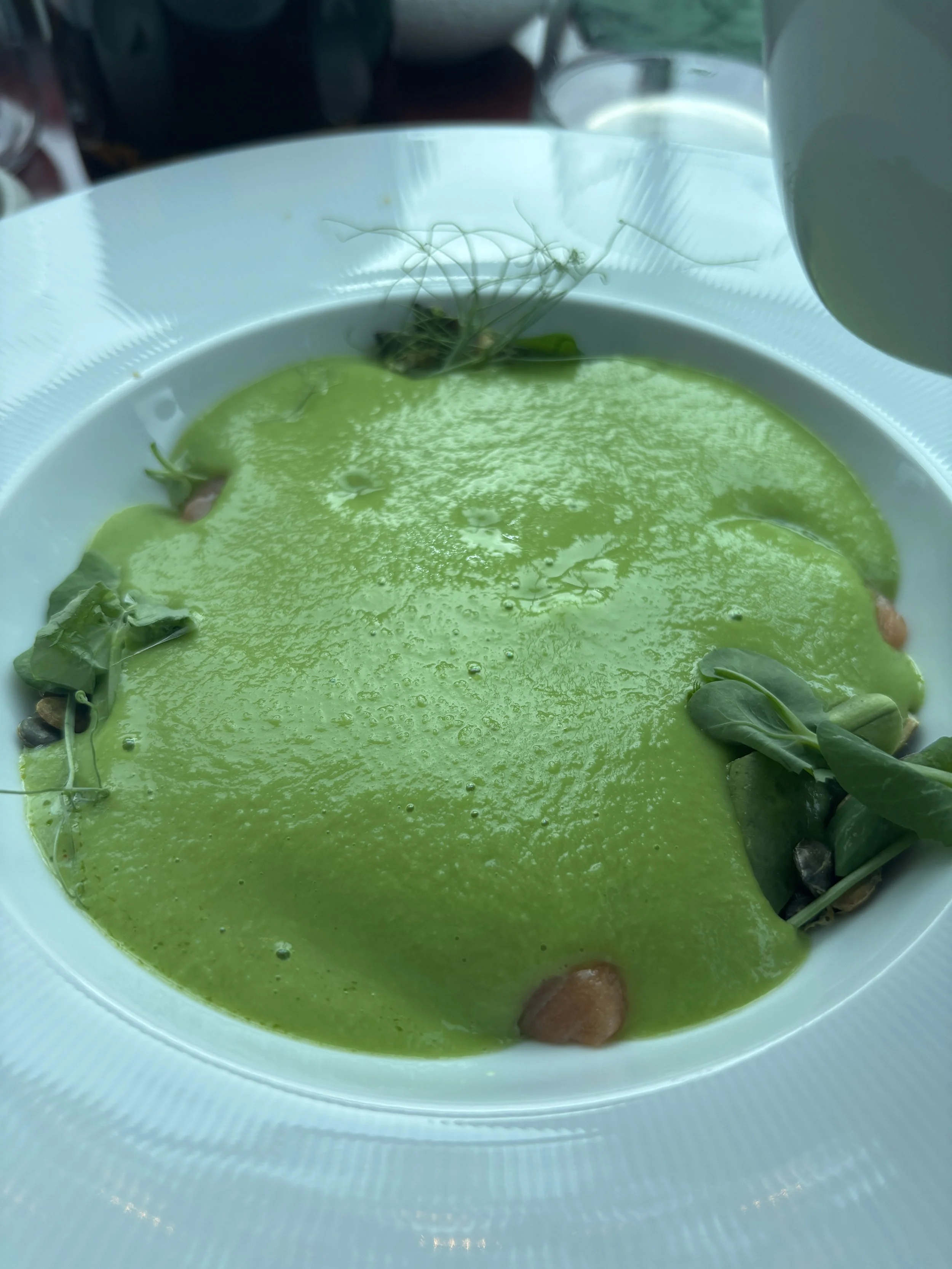
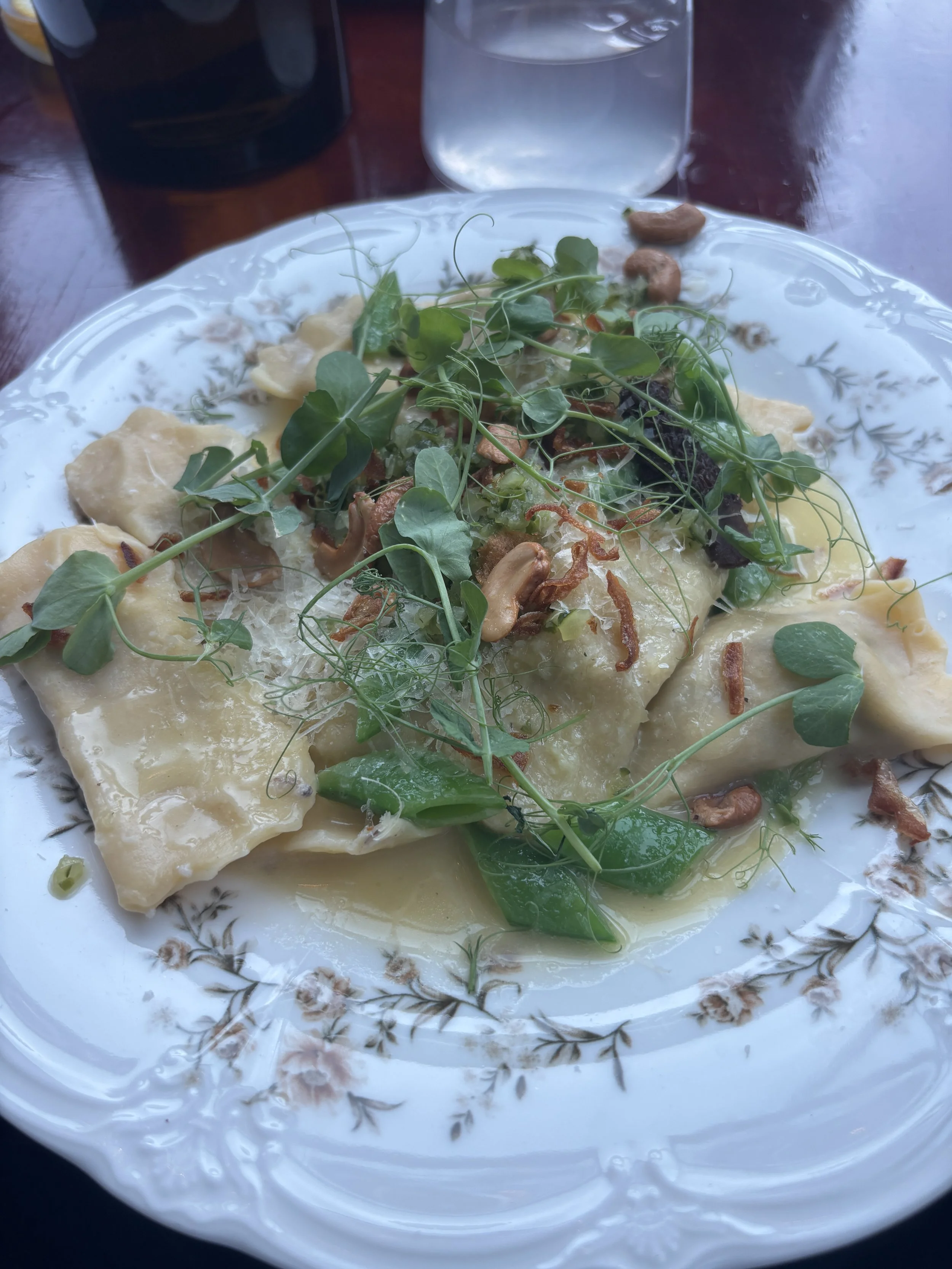
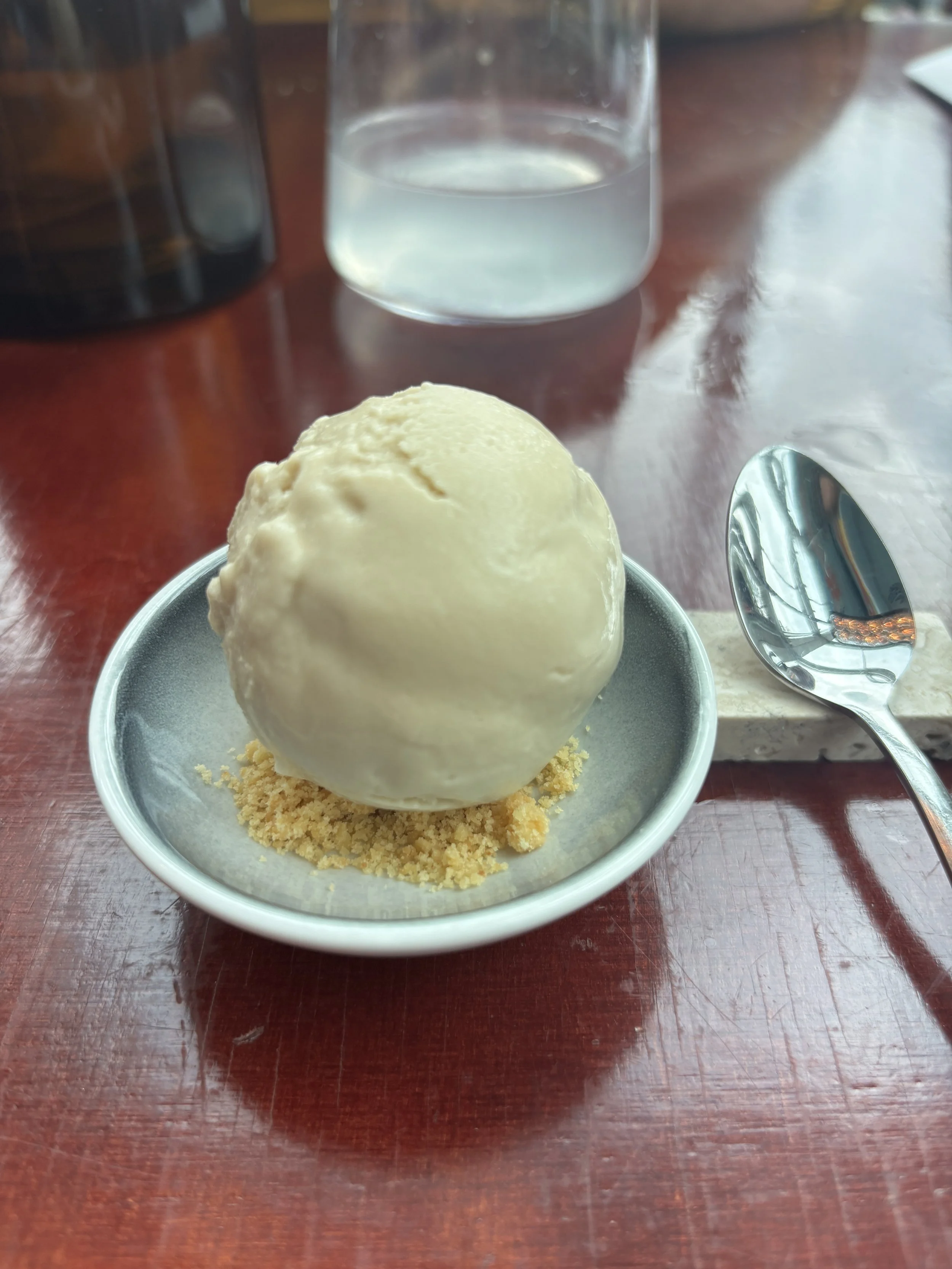
The menu is based on Polish cuisine and local ingredients, but with a somehow modern reinterpretation (as you can see, for example, with the pierogi depicted below).
It was super tasty, but light at the same time (despite its four courses), ideal for a business lunch!
Three great hotels to stay in Wroclaw
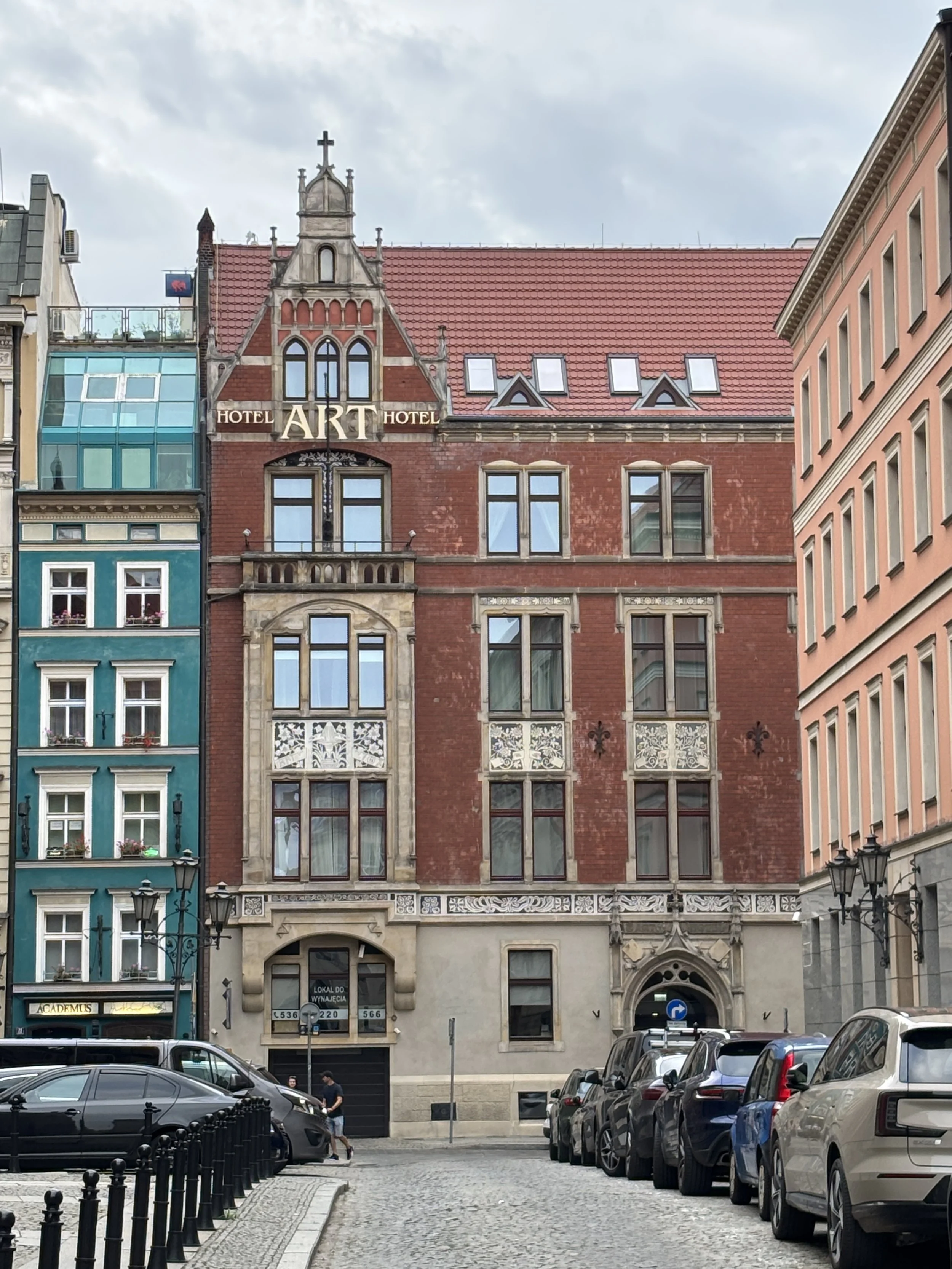
1 - Art Hotel Wroclaw
Kiełbaśnicza 20, 50-110 Wrocław
You can book this hotel here.
This hotel is a really excellent option is if you are looking for a place to stay right in the heart of the Wroclaw’s old town.
This is an independent hotel which occupies a historical building right by barely 2 minutes walk away from Rynek and literally around the corner from St.Elizabeth Basilica and Jatki Street, both sites that I have described earlier.
Part of the hotel is on a building that dates back to the 14th C. and in the 17th and 18th C. housed a printer’s shop.
It became a hotel in the 1990s and has since kept a connection to the city’s art scene. This is why its interior, both the common spaces and the rooms, are all decorated with works of art.
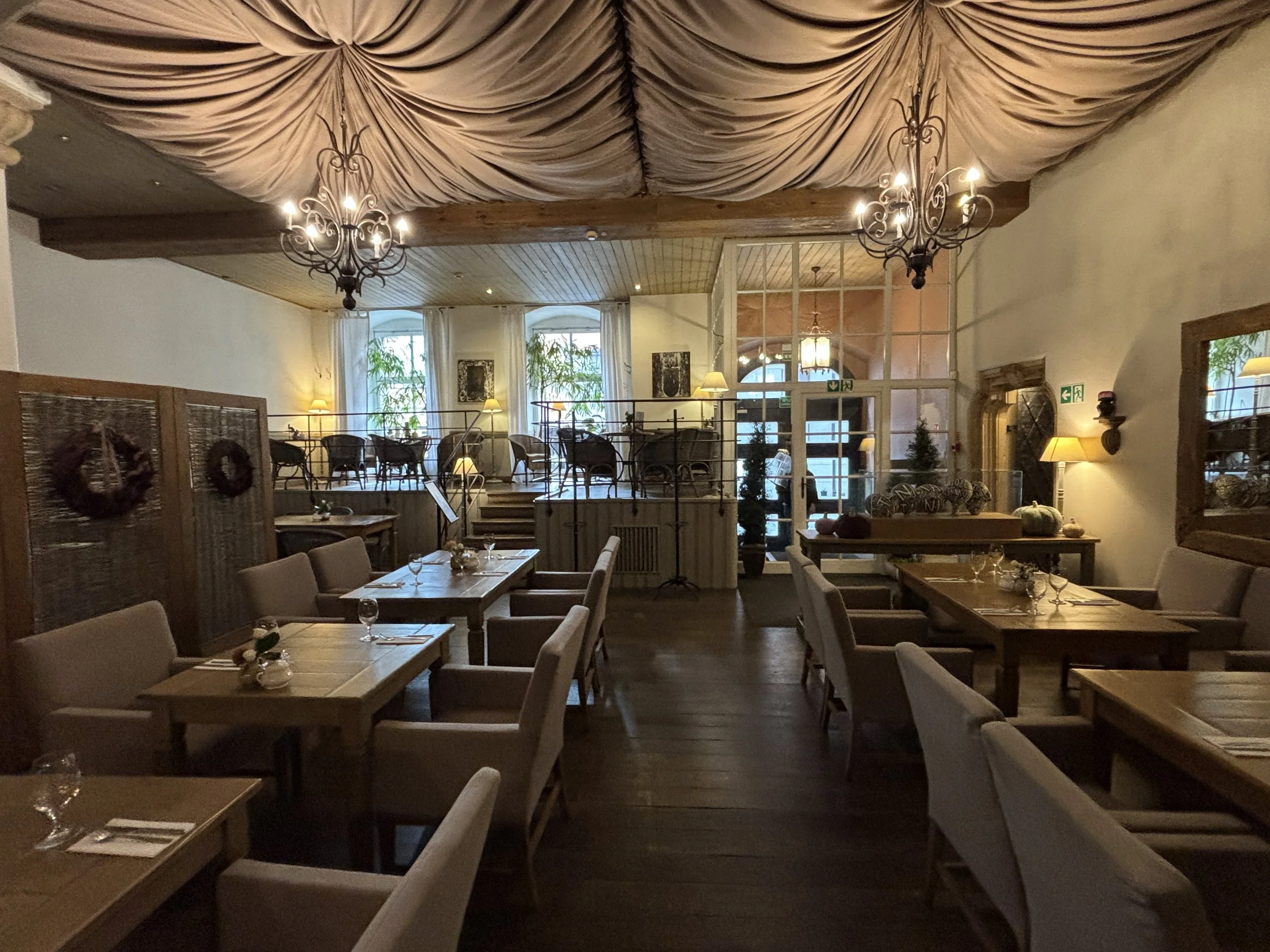
The hotel also has a restaurant and a small spa area.
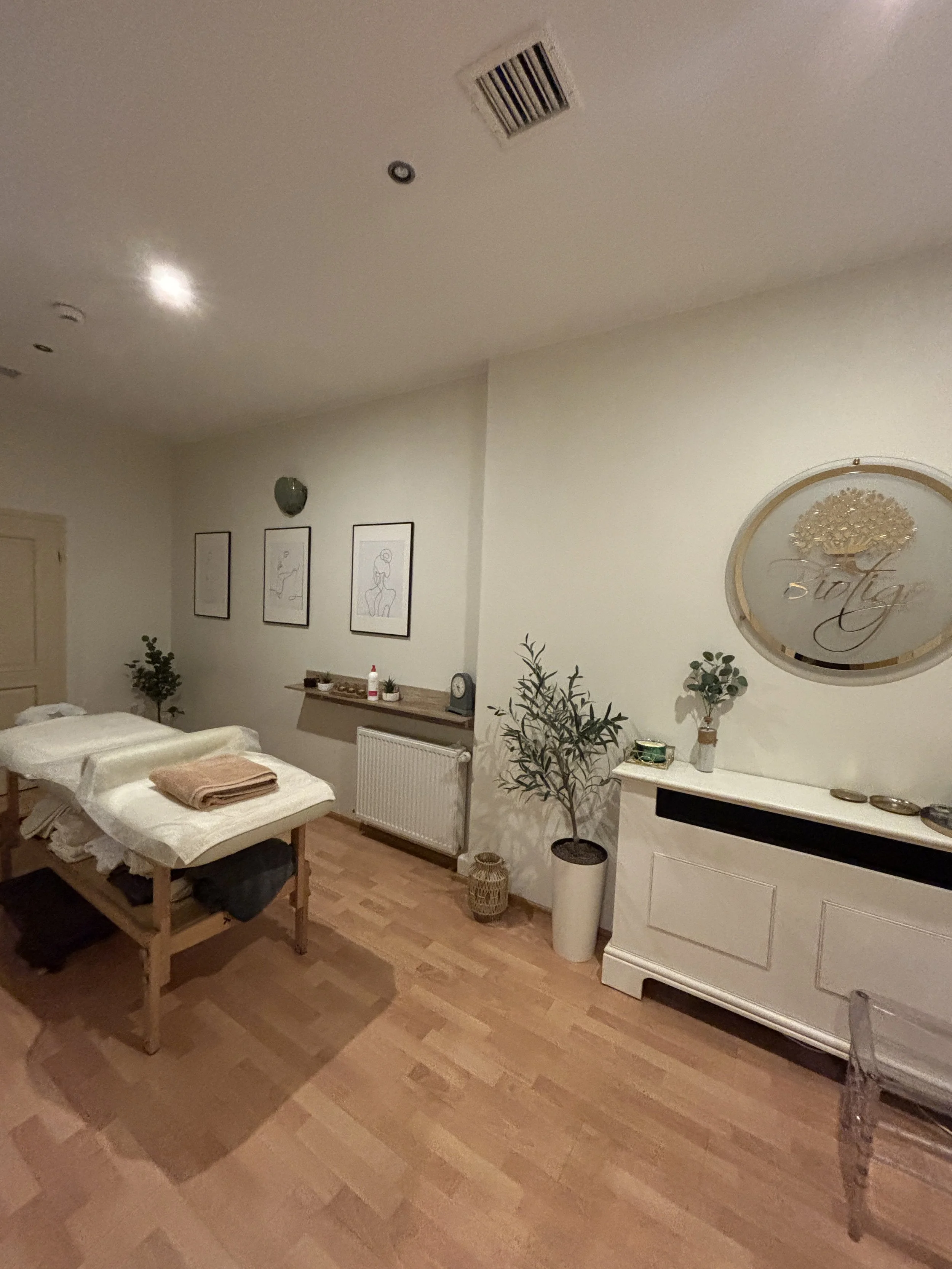
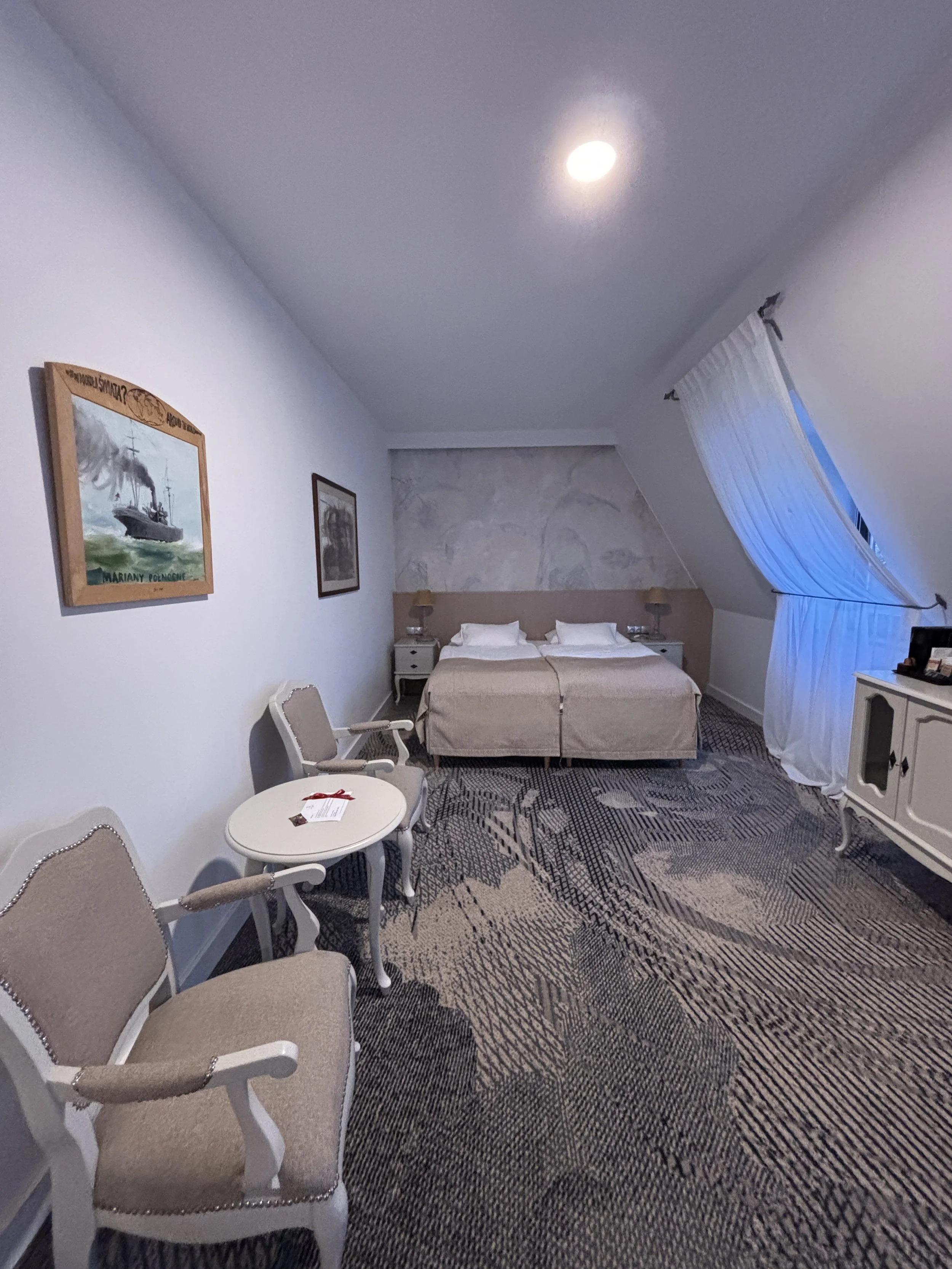
Interestingly, my room was a mansard-style apartment, which, I guess is part of what gives the place its unique character.
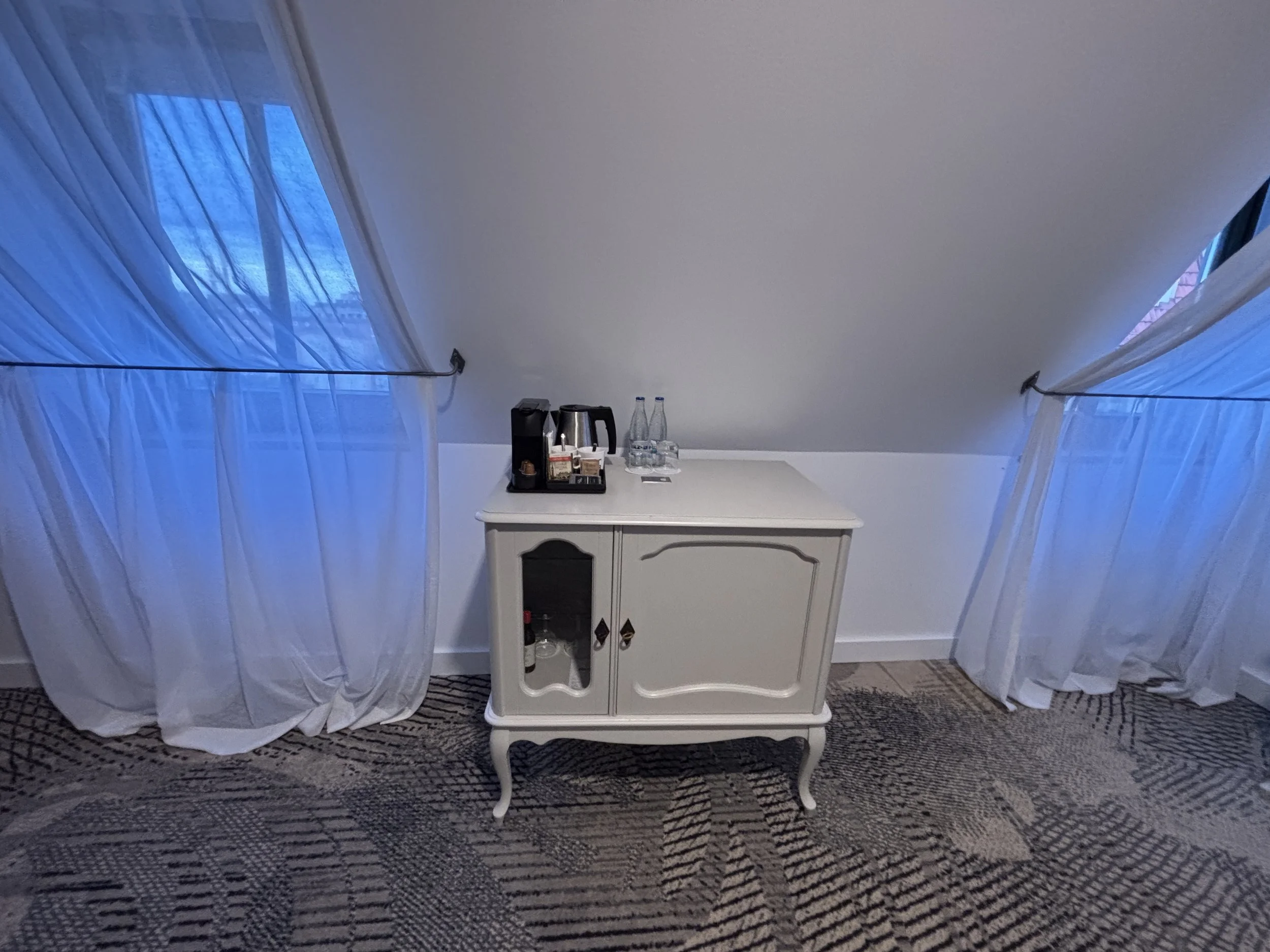
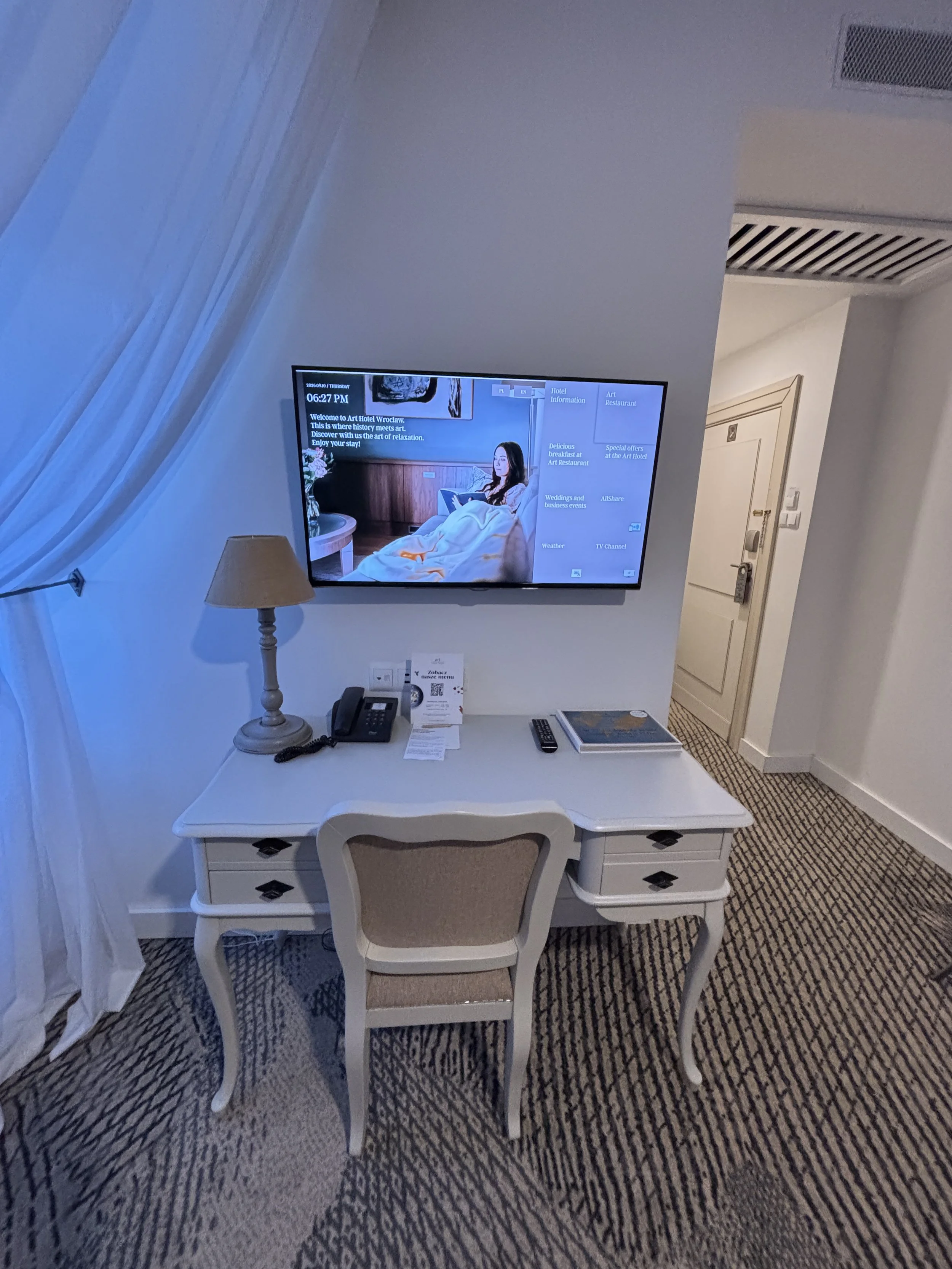
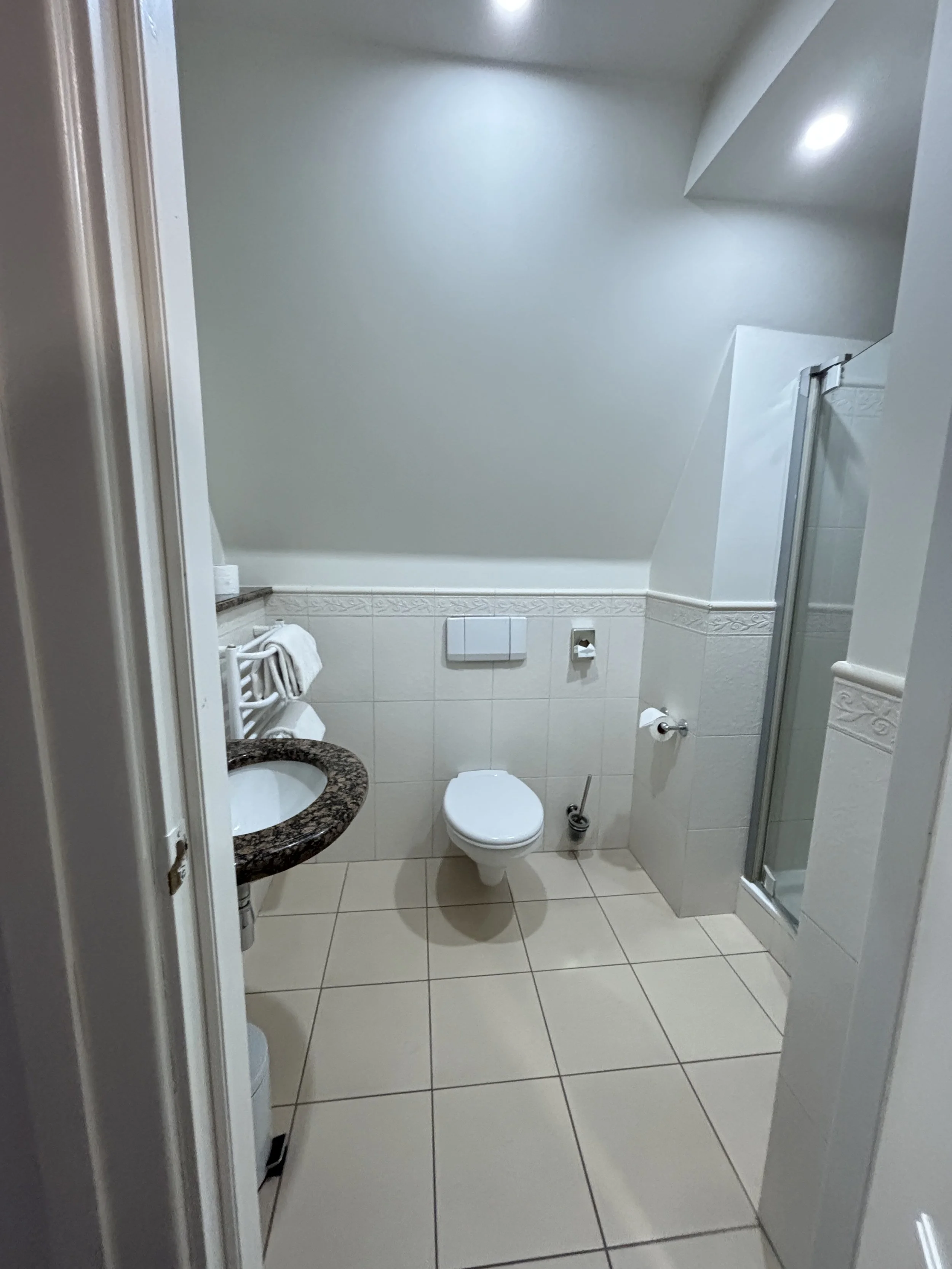
The breakfast was pretty good, btw, and served in this very charming room!
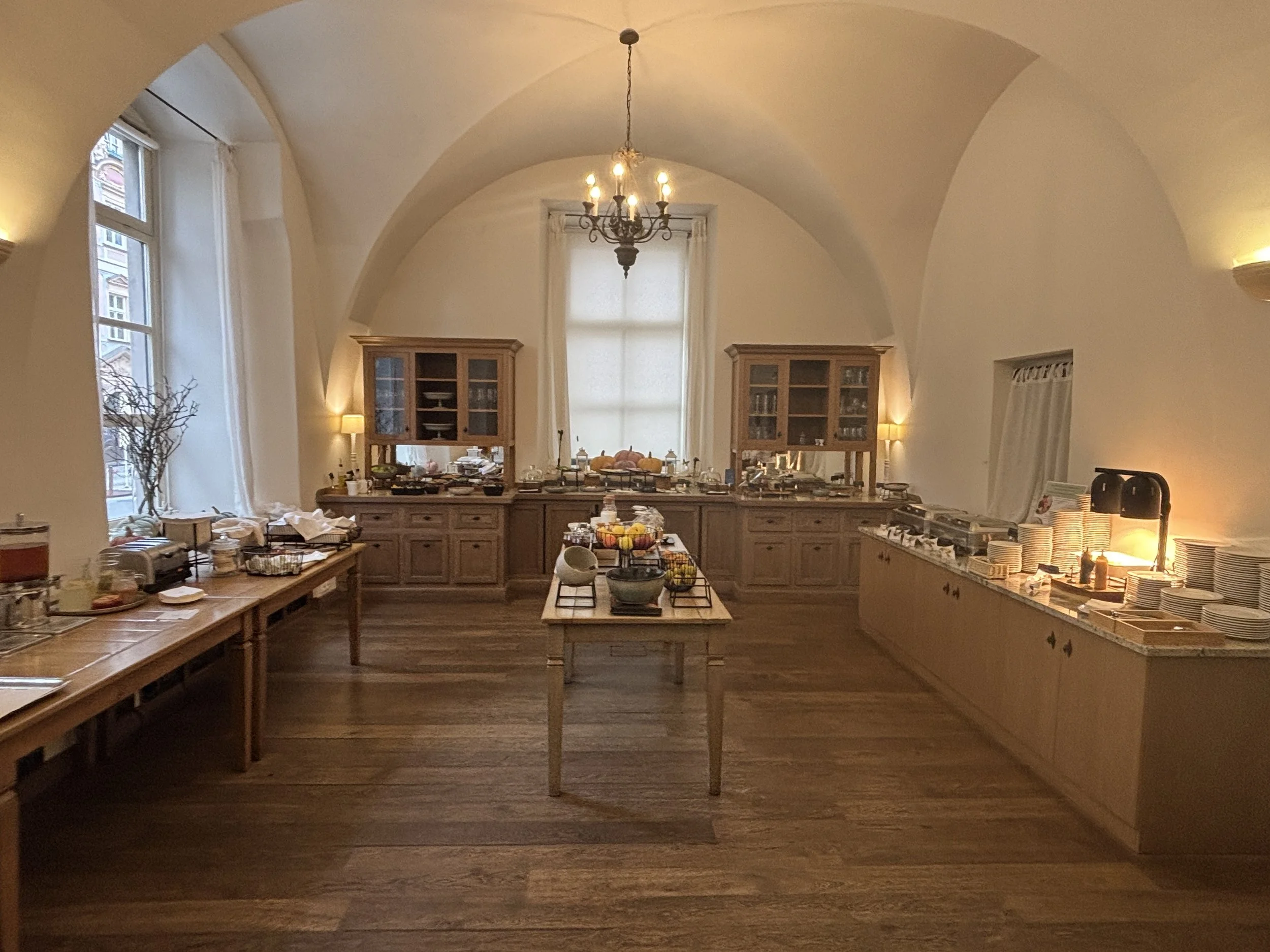
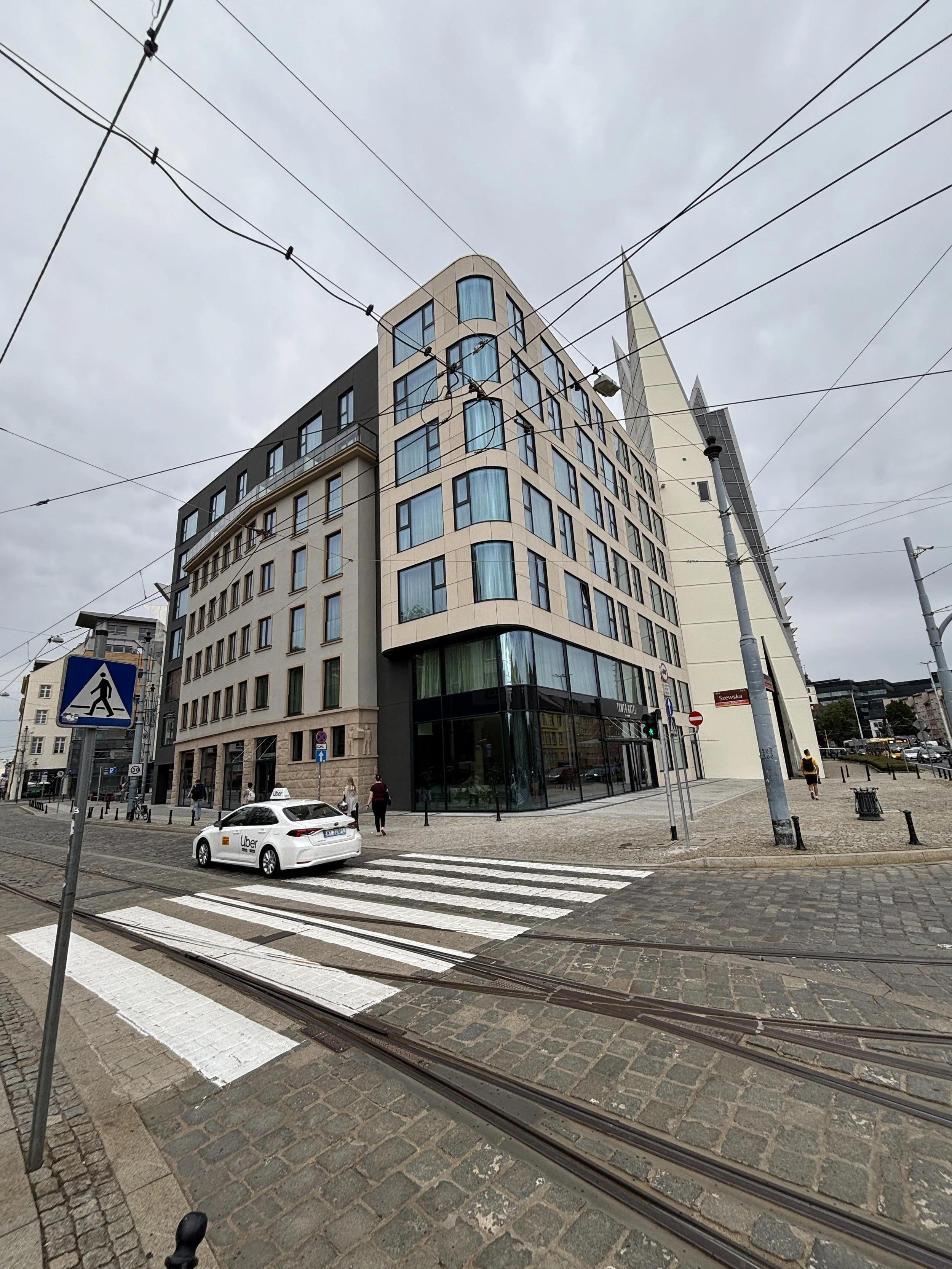
2 - Tower Hotel Wroclaw
Szewska 3, 50-438 Wrocław
You can book it here.
This is a super modern hotel (I read that it had opened barely a few weeks before my arrival).
It is located also very central on the main boulevard ring, right at the edge of the old town.
I was even wondering whether the name derives from the emplacement of one of the city walls’ towers, which is not a far fetched possibility considering the site. In this regard, the faux-historical decor plays its part and mixes well with the remaining totally contemporary motifs.
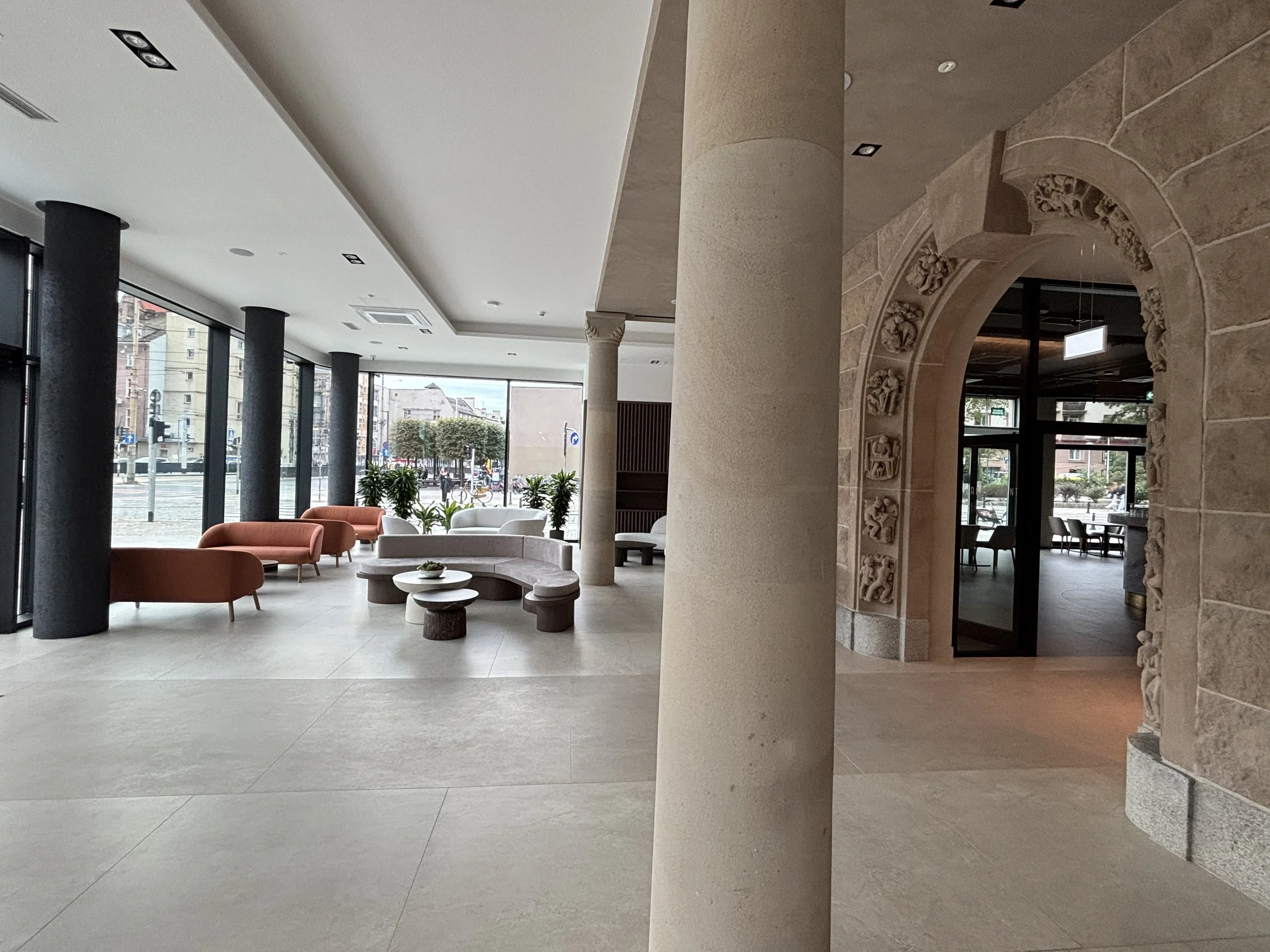
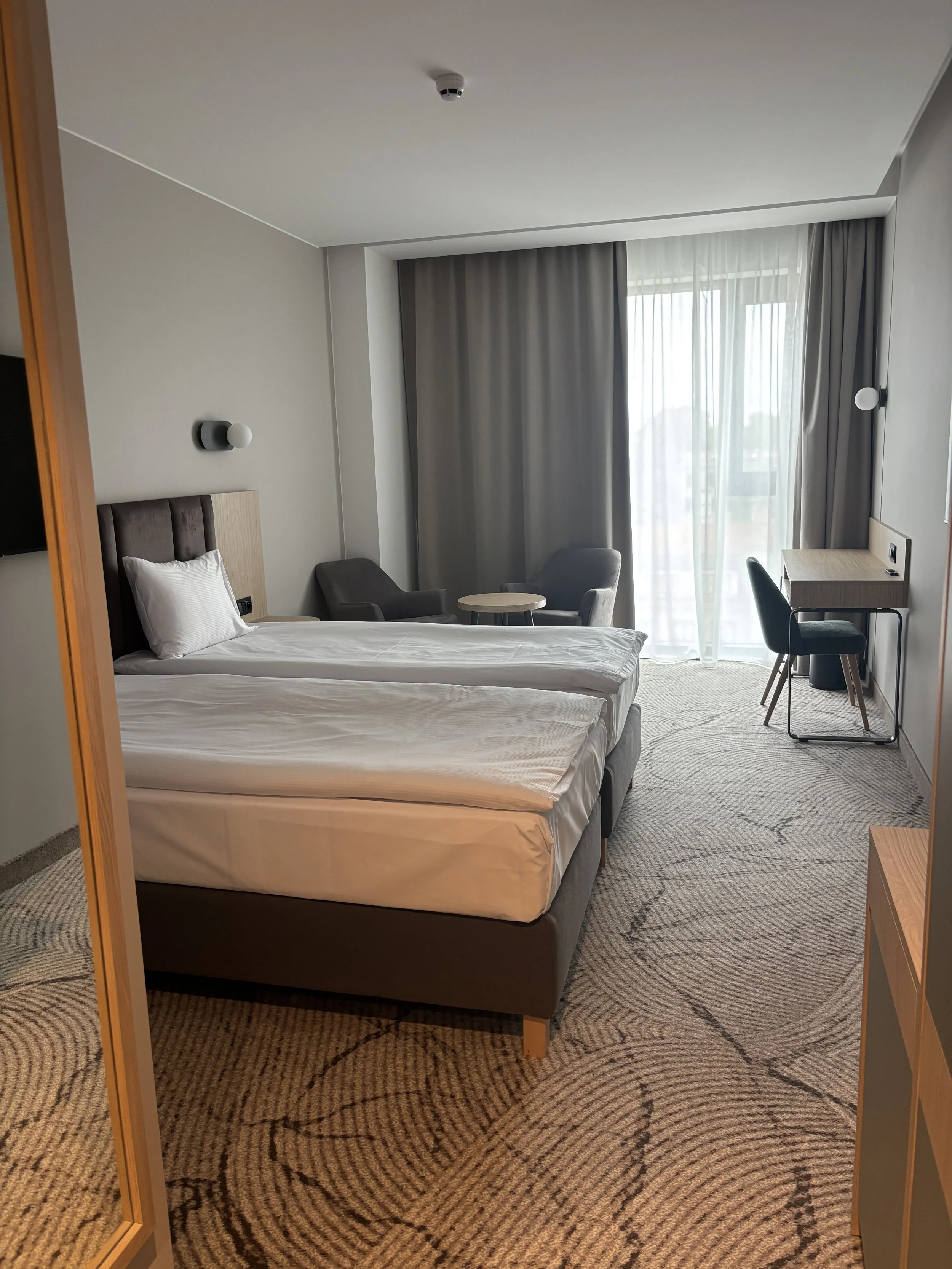
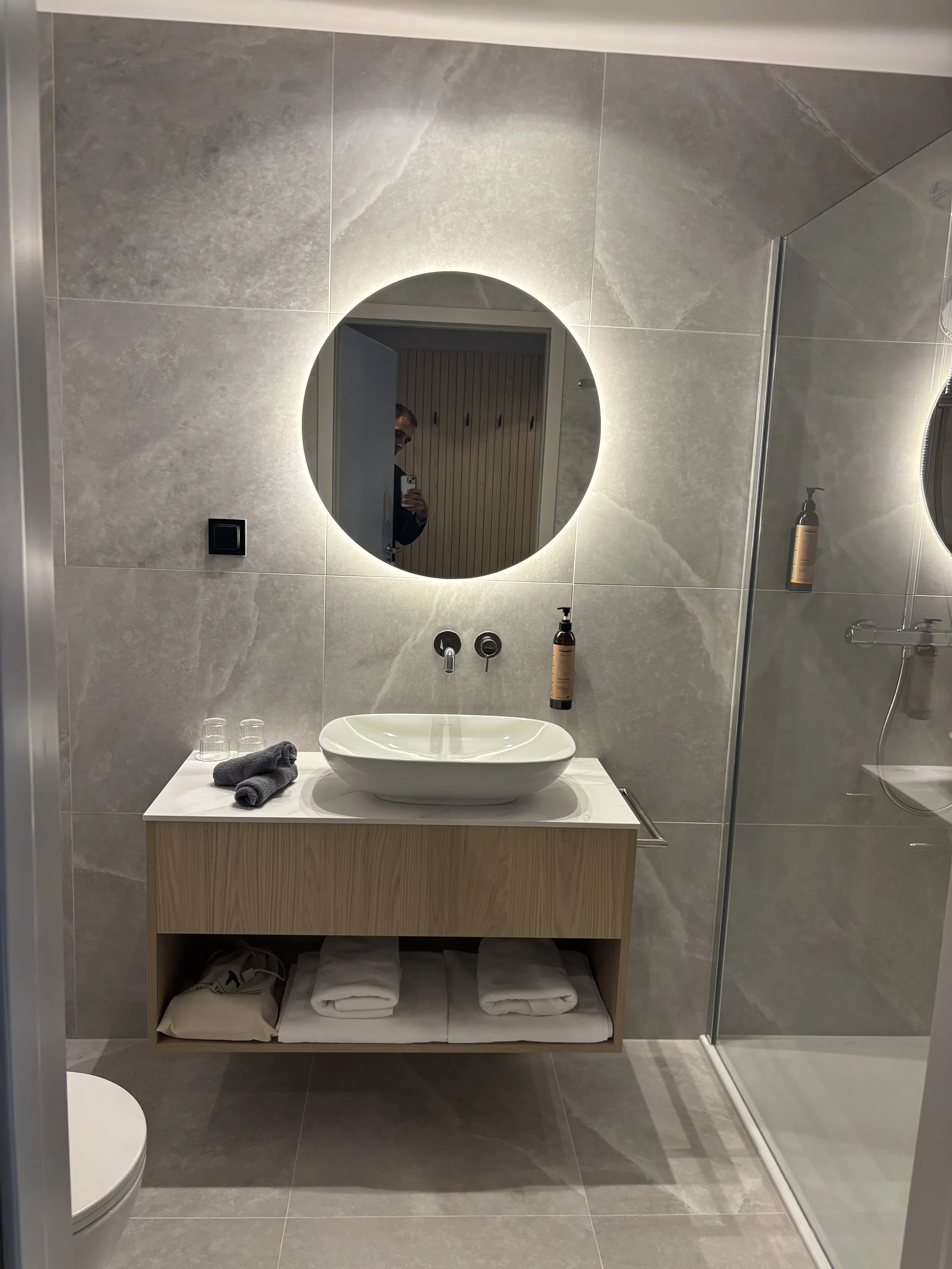
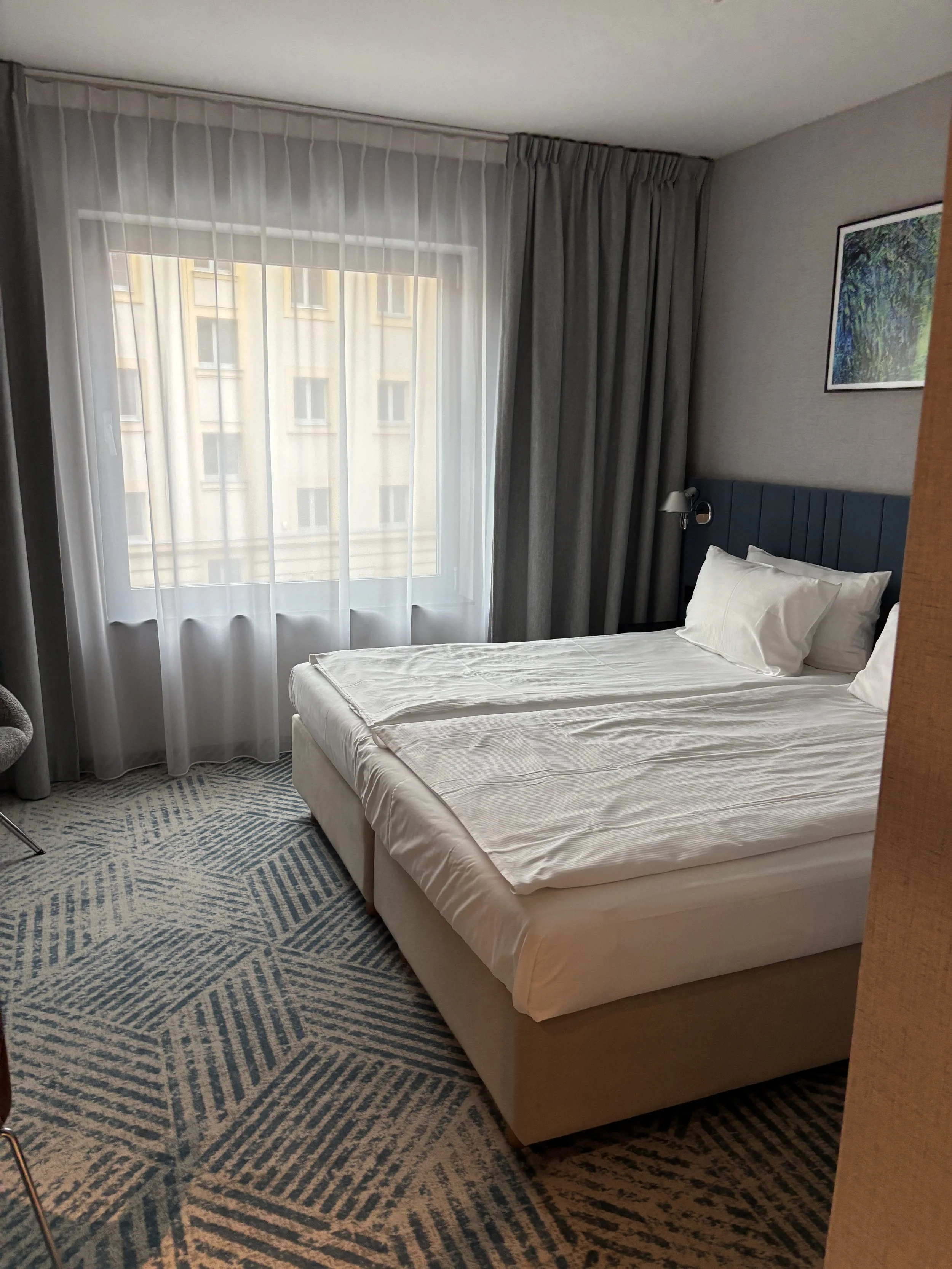
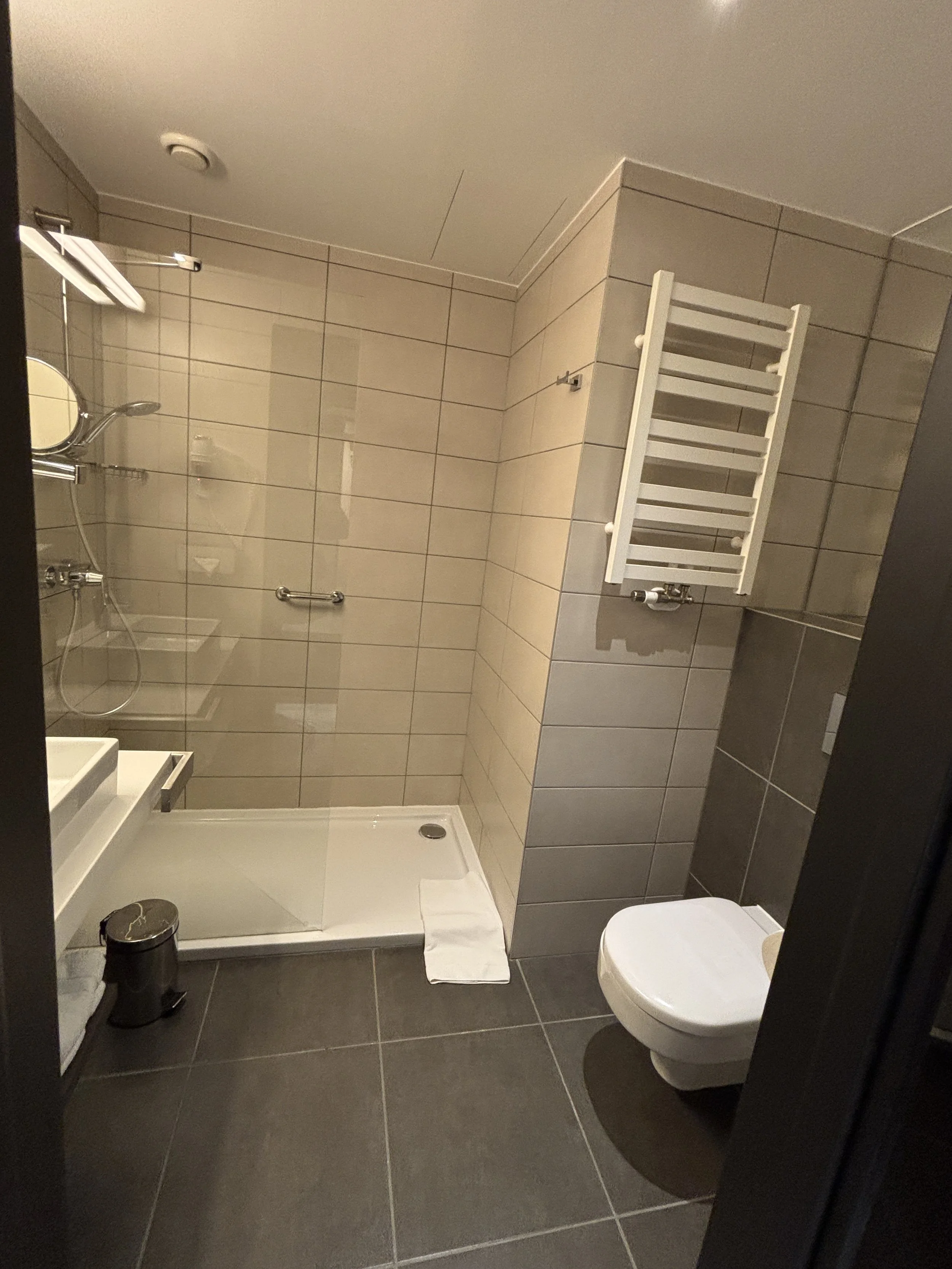
As you can see, and as expected, the style is that of a four-star modern hotel. In the pictures below you can see how the standard double room looks like (this one I was assigned had two small beds instead of a large one, not ideal, but I guess for just one night is ok.
3 - Q Hotel Plus Wroclaw
Zaolziańska 2, 53-334 Wrocław
You can book it here.
This is another super new hotel (there seems to be a hotel boom in Poland right now!).
It is located a bit further from the historical center, although still a comfortable 10 min walk away (or 5 minutes ride from the tram stop located just opposite). It is also very close to Wroclaw’s central station, so if, as it was my case, you have to catch an early train, it’s perfectly located. I liked the fact that there are water fountains on each floor and you get a refillable bottle in the room (in addition to coffee and tea).
As in the previous hotel, the decor and style is contemporary throughout.
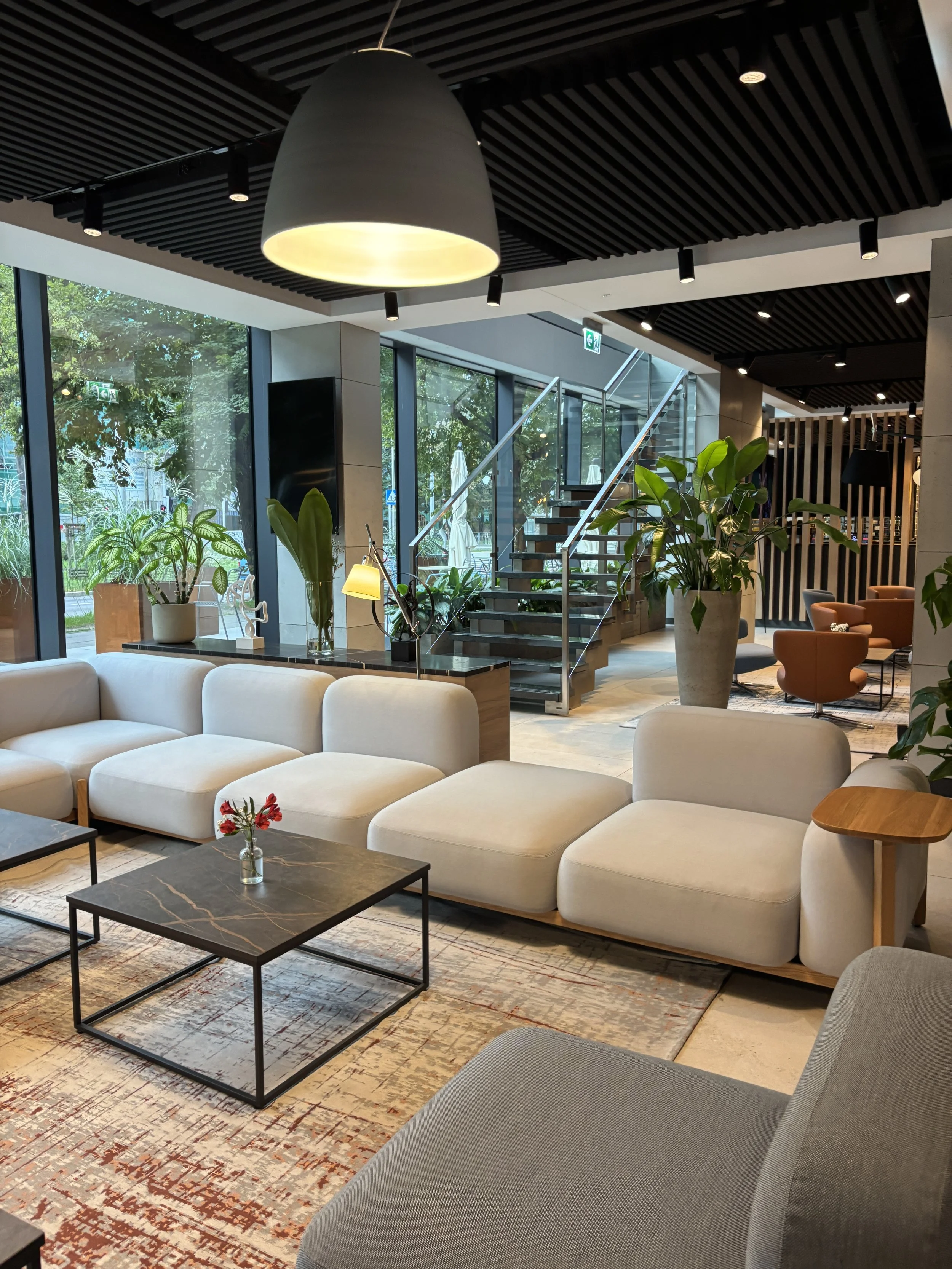
I didn’t really have enough time (just one night) to check all of the hotel’s services, but I really liked the lobby area, which is also adjacent to the hotel’s restaurant.
It had a really cozy atmosphere and received plenty of light from the street
If you are planning a trip to Poland, you may also find of interest our story about what to do and what to see when on a short trip to Gdansk.

Weekend in Gdansk: what to do and what to see
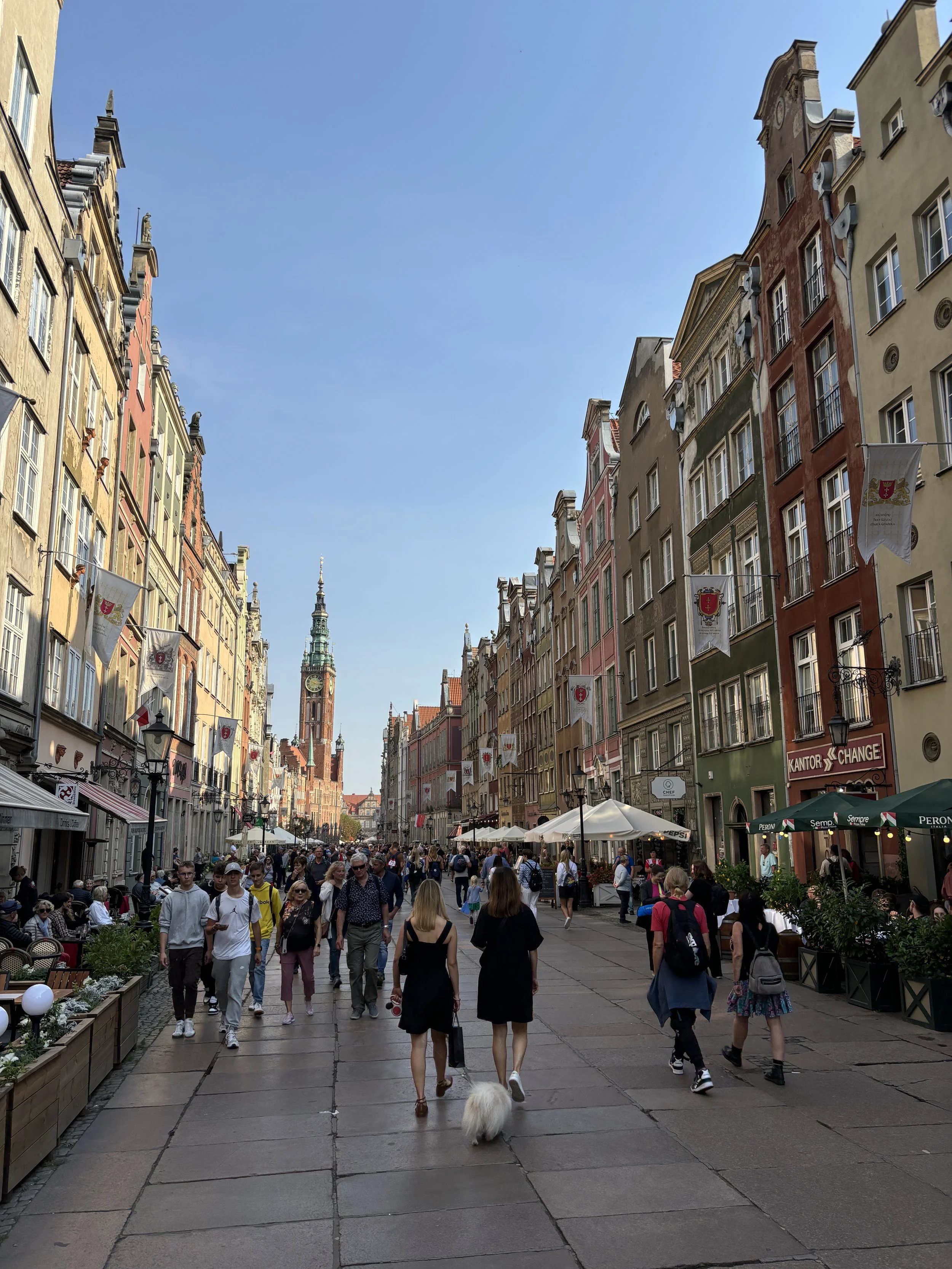
Gdansk has found itself, rather unwillingly, at the front line of some of the most pivotal events of the 20th century: the start of WW2 and the beginning of the end of Communist dictatorships in Eastern Europe.
In this post we’ll describe some of the places most closely connected to those historical episodes, but, besides that, the old town of Gdansk is also a place of beauty on its very own.
I am aware the Baltic coast near Gdansk has also some places of interest, such as port of Gdynia and the resort town of Sopot, but, since I only had two full days in the city, I decided to focus on the city of Gdansk proper.
In fact, I think 48 hours is an ideal time stretch to visit both the old parts of Gdansk, with its Hanseatic architecture, and the more modern parts near the sea, which are more closely connected with its, let’s say, more troubled contemporary history.
Visiting the Old Town of Gdansk
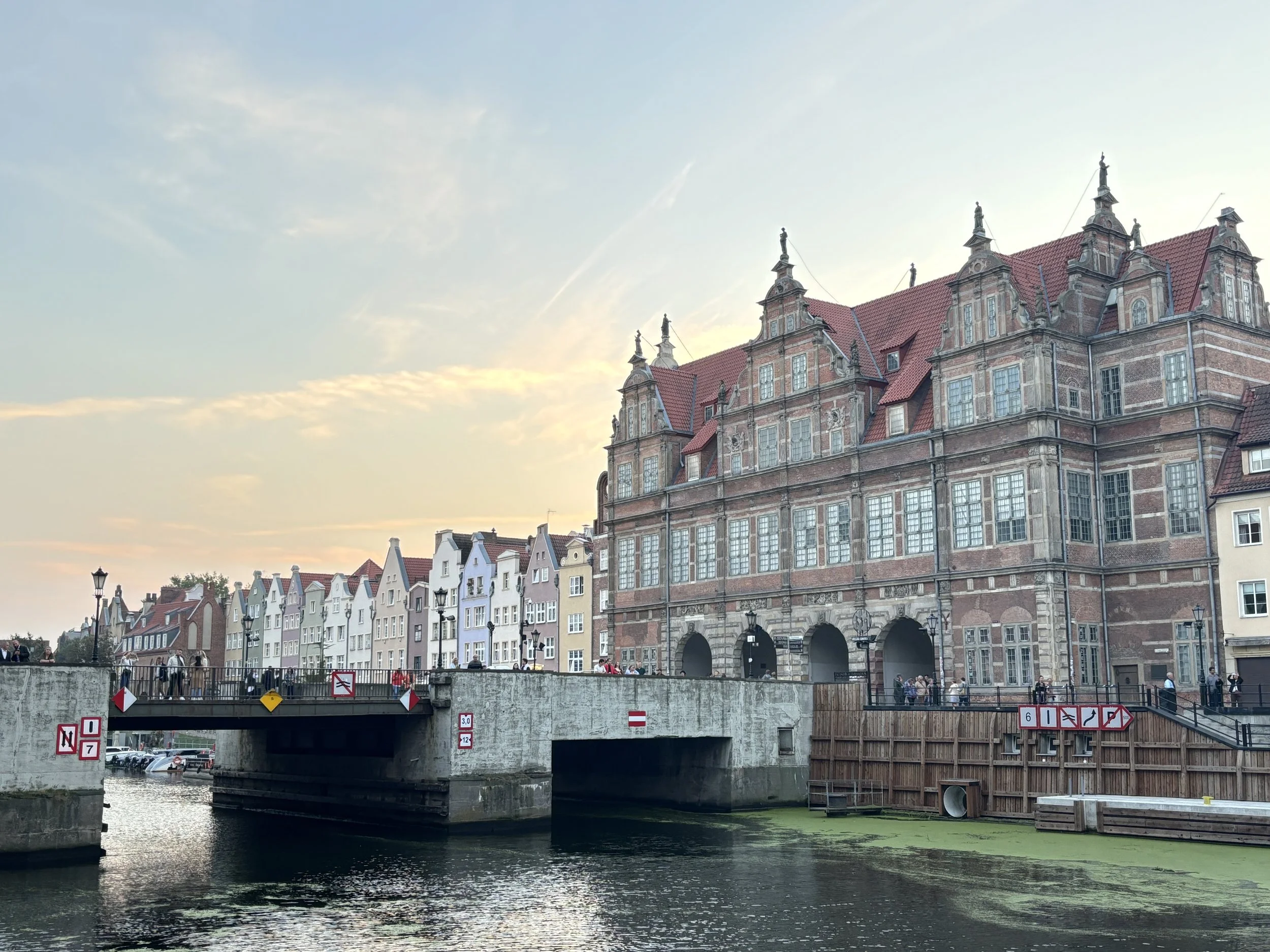
The history of Gdansk is a compendium of the constant and not always peaceful border changes that have afflicted parts of Central and Eastern Europe throughout the last few centuries.
Gdansk emerged as a major trading entrepot already in the 14th C. The city, which occupies a strategic spot at the mouth of the river Vistula, was a member of the Hanseatic league, which grouped some of the most important trading ports of the Baltic and northern Europe.
Being located pretty much on the fault line between the Germanic and Slavic worlds, Gdansk has been under several different sovereignties in succession and has, for a significant part of its history, also been known by its German name of Danzig.
What to see in the old town of Gdansk?
There are a few buildings of historical interest, of course, I would highlight St. Mary's Church, the bell tower of which has the highest view point in Gdansk’s old town, and the Brama Wyżynna, which is one of the city’s gates old gates, built in the 16th C, and the first monumental sites that greet you if you approach the old town from the west.
But I would say Gdansk is not about any one monument in particular, but about the ensemble. You can spend the whole day wandering around admiring the many colourful facades that lines the streets and the myriad of decorative elements.

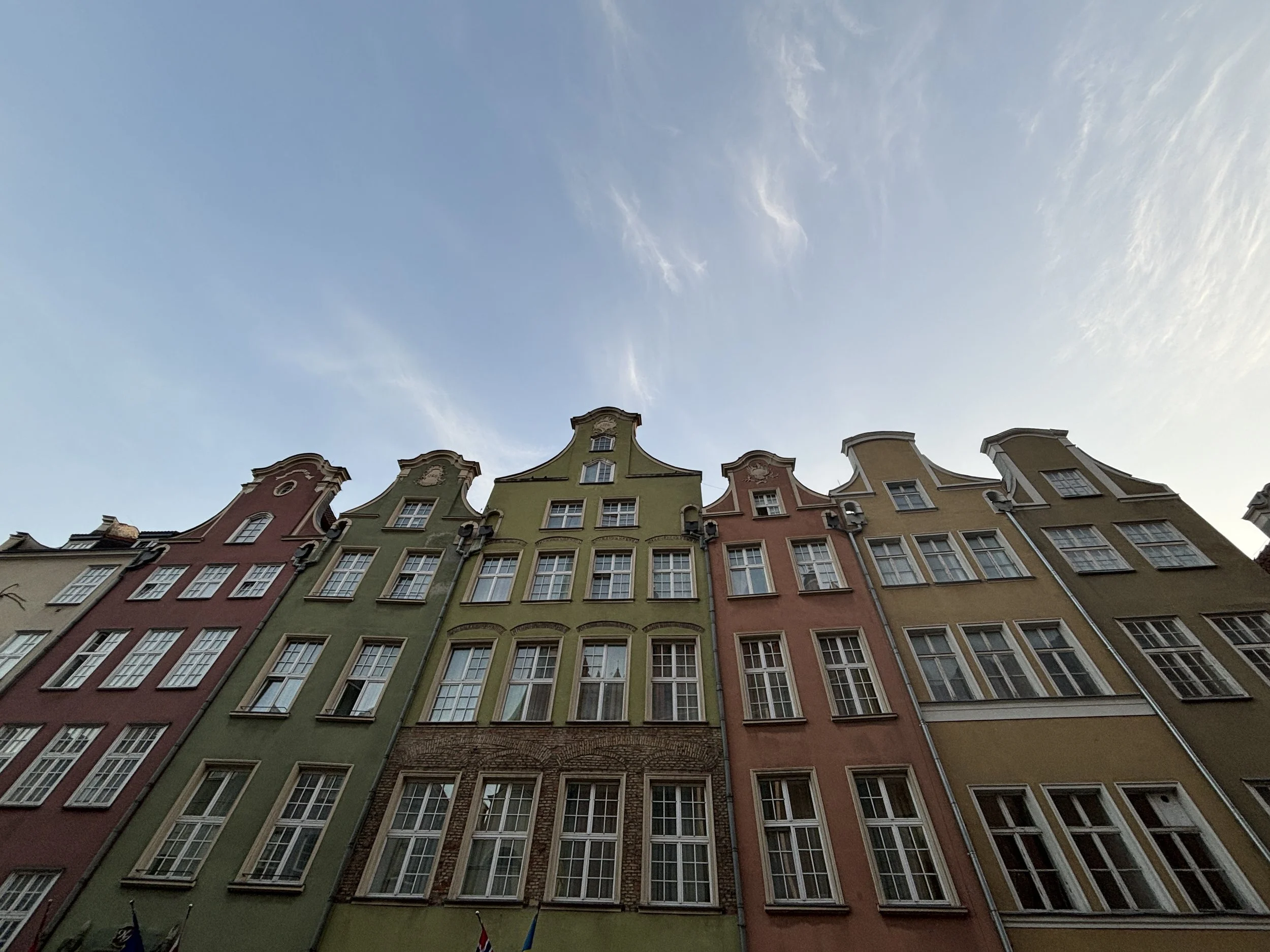
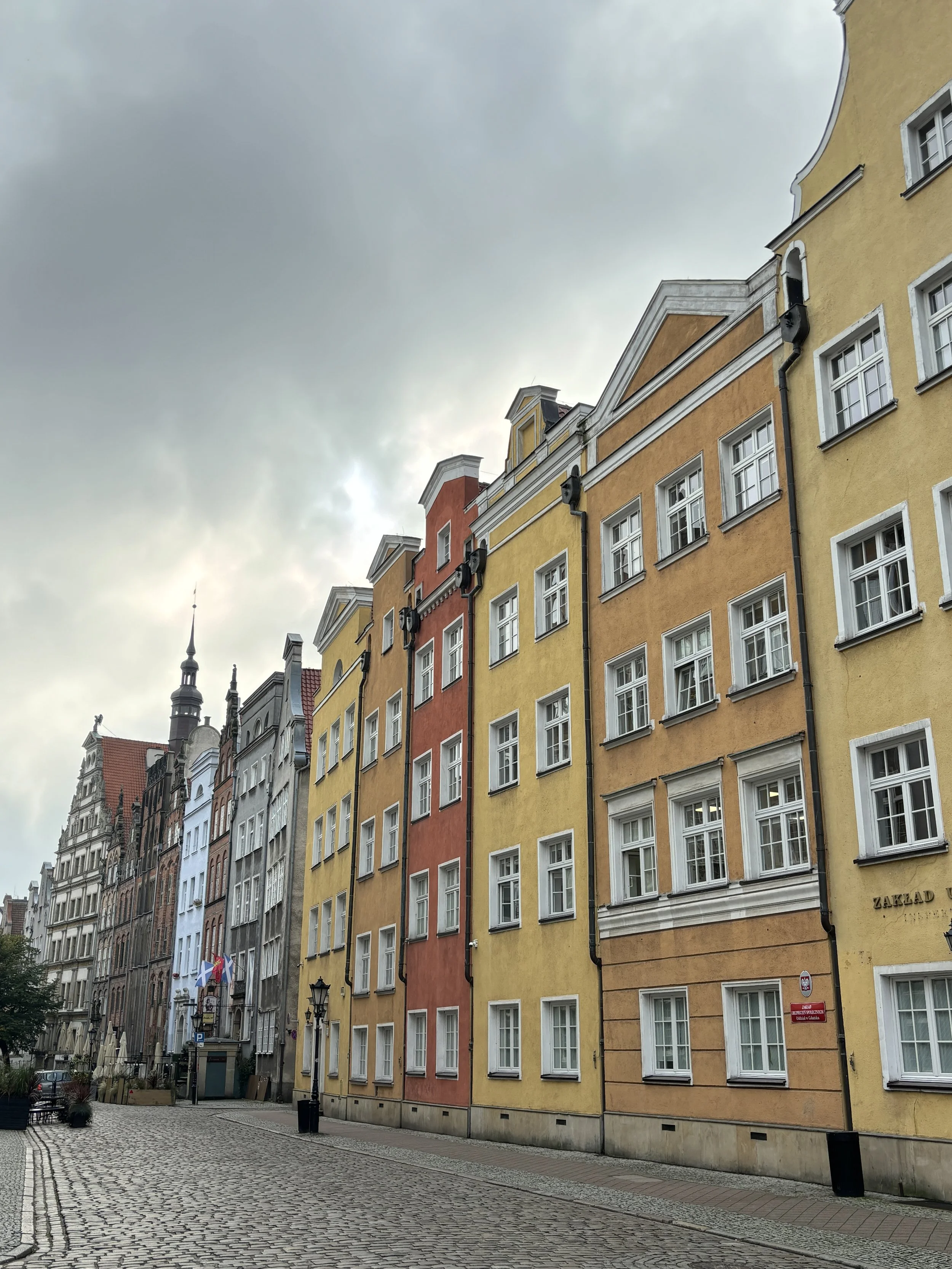
There are two major pedestrian axes that concentrate most of the activity (and tourists as well). One of them is the Długa, the main central street (pictured in the photo that introduces this article), which runs West to East and widens at the Długi Targ forming a square. The other, or others since there are two of them, are the banks of the river Vistula, which runs south to north and is pedestrianised.
By all means, visit them, but also, do not hesitate to get “lost” in the other areas of the old town, particularly north of the Długa. You never know what you will come across after turning the next corner! And yet…
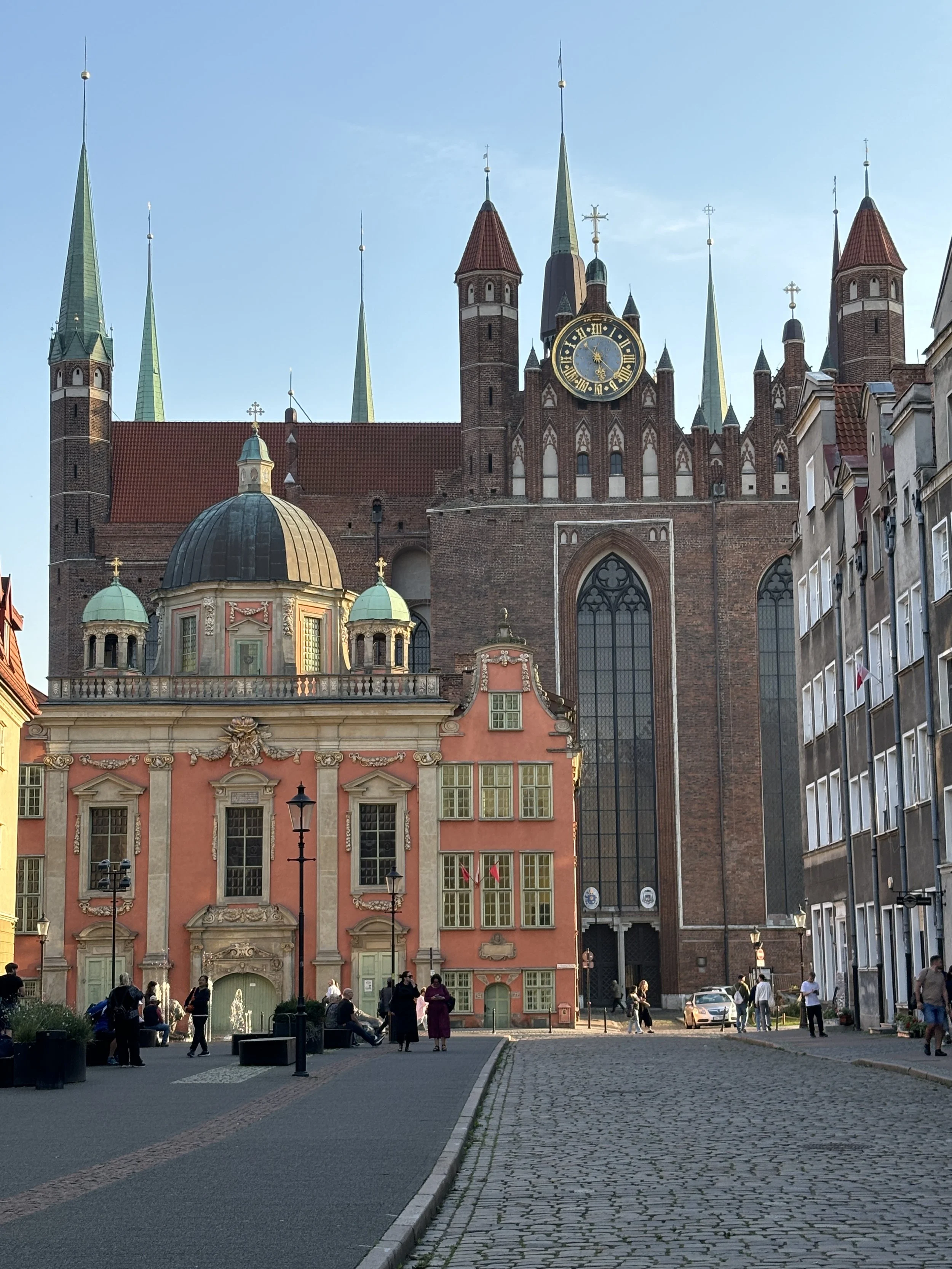
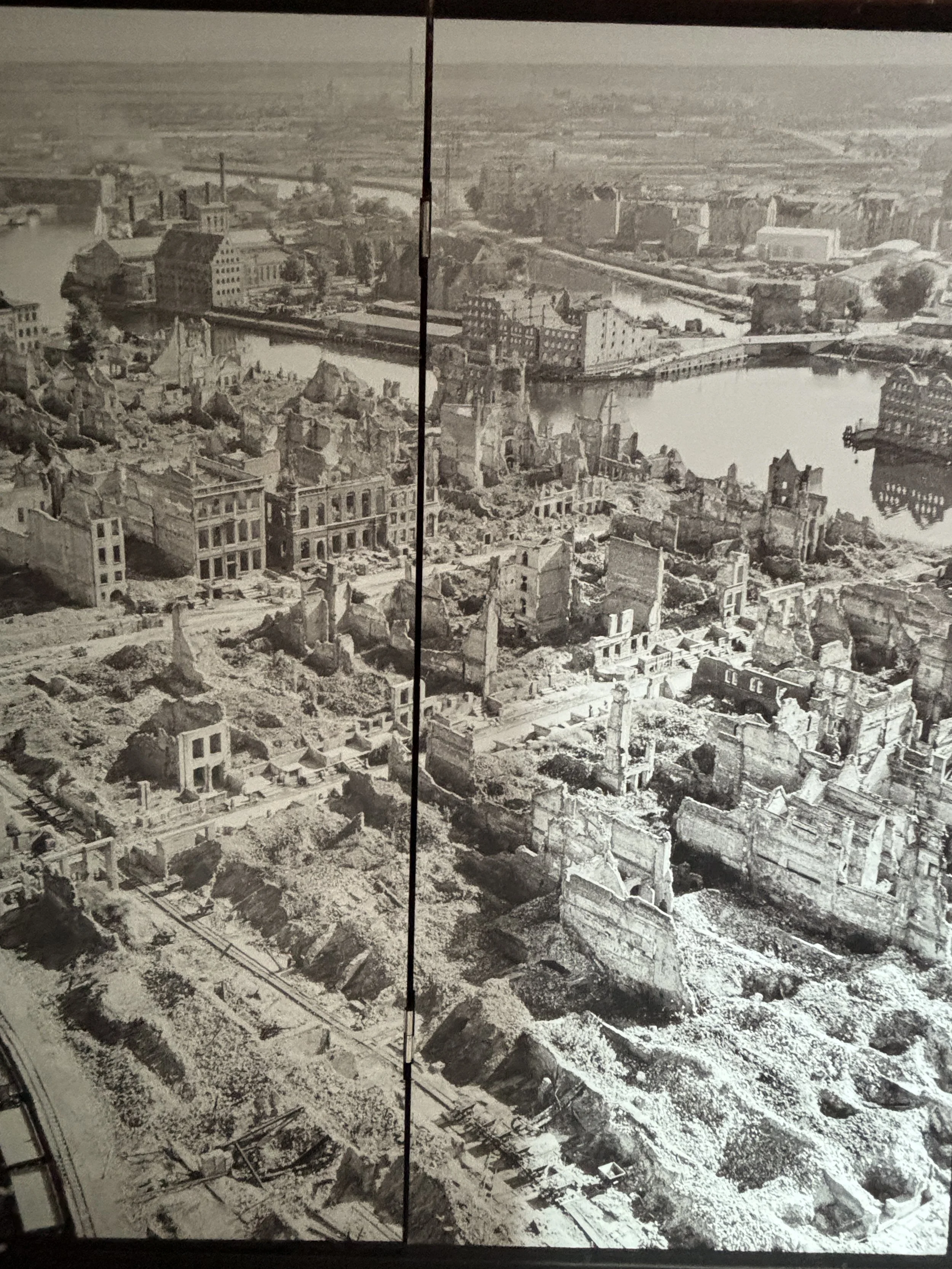
….most of what you see is not really the “original” Gdansk/Danzig, but a very nicely done modern reconstruction.
For reference, I post here a picture, which was exhibited at the Museum of Gdansk, which hows how Gdansk looked like in 1945.
The result is truly astonishing and I think the decision to rebuild the city as it was before the war, instead of filling it with some drab concrete buildings, as it has sadly happened in so many other places in Europe, is something to be celebrated.
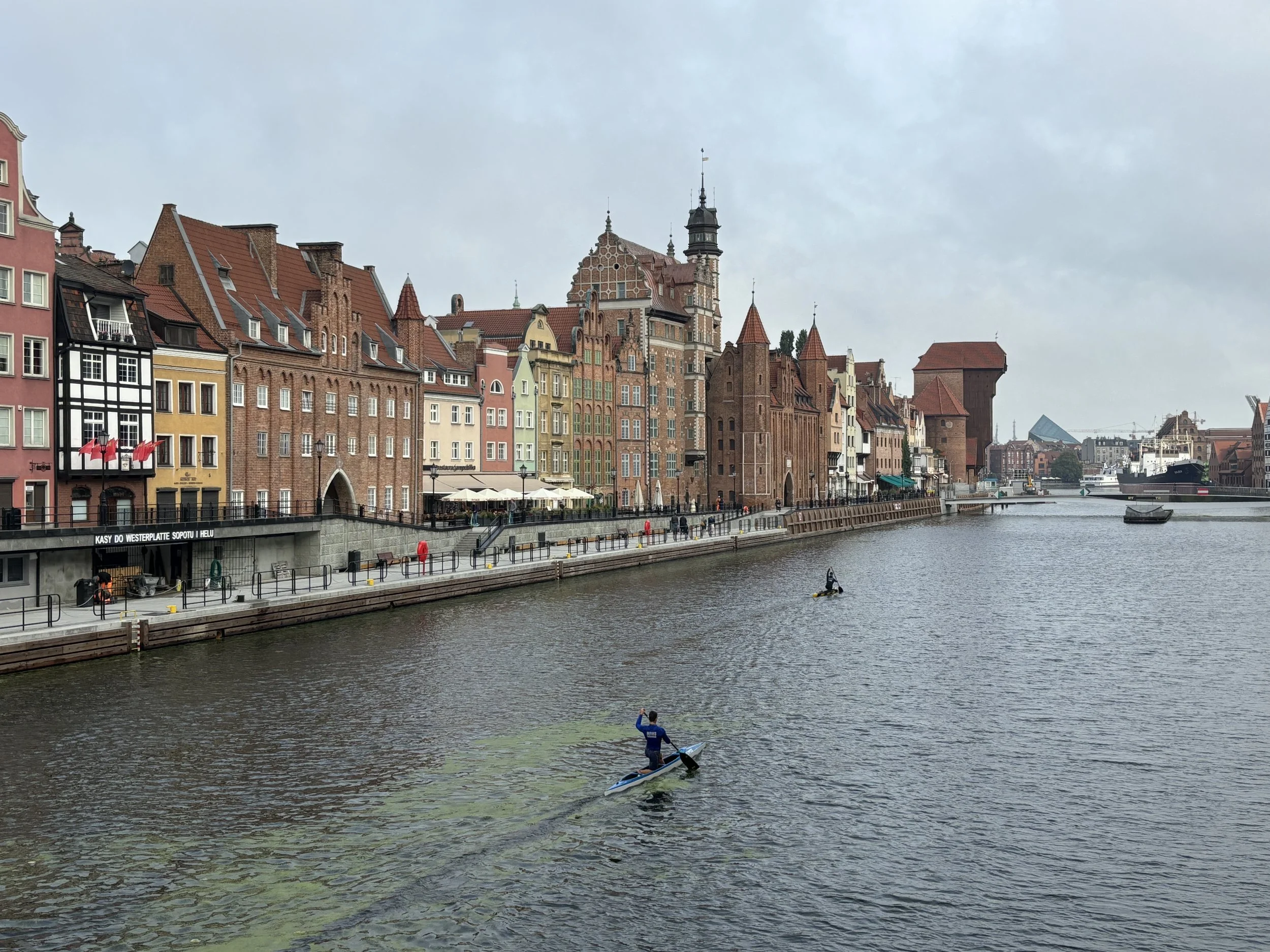
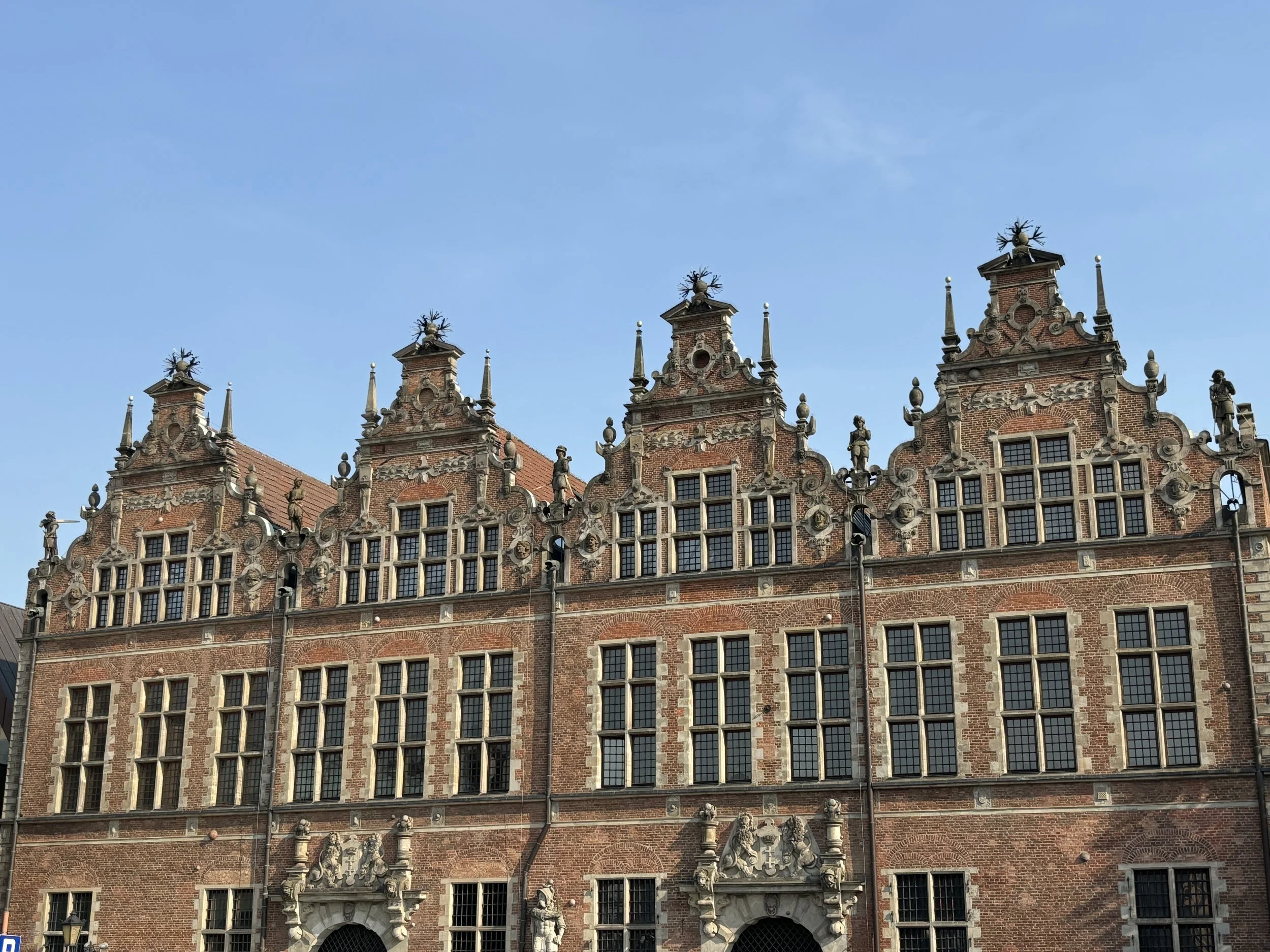
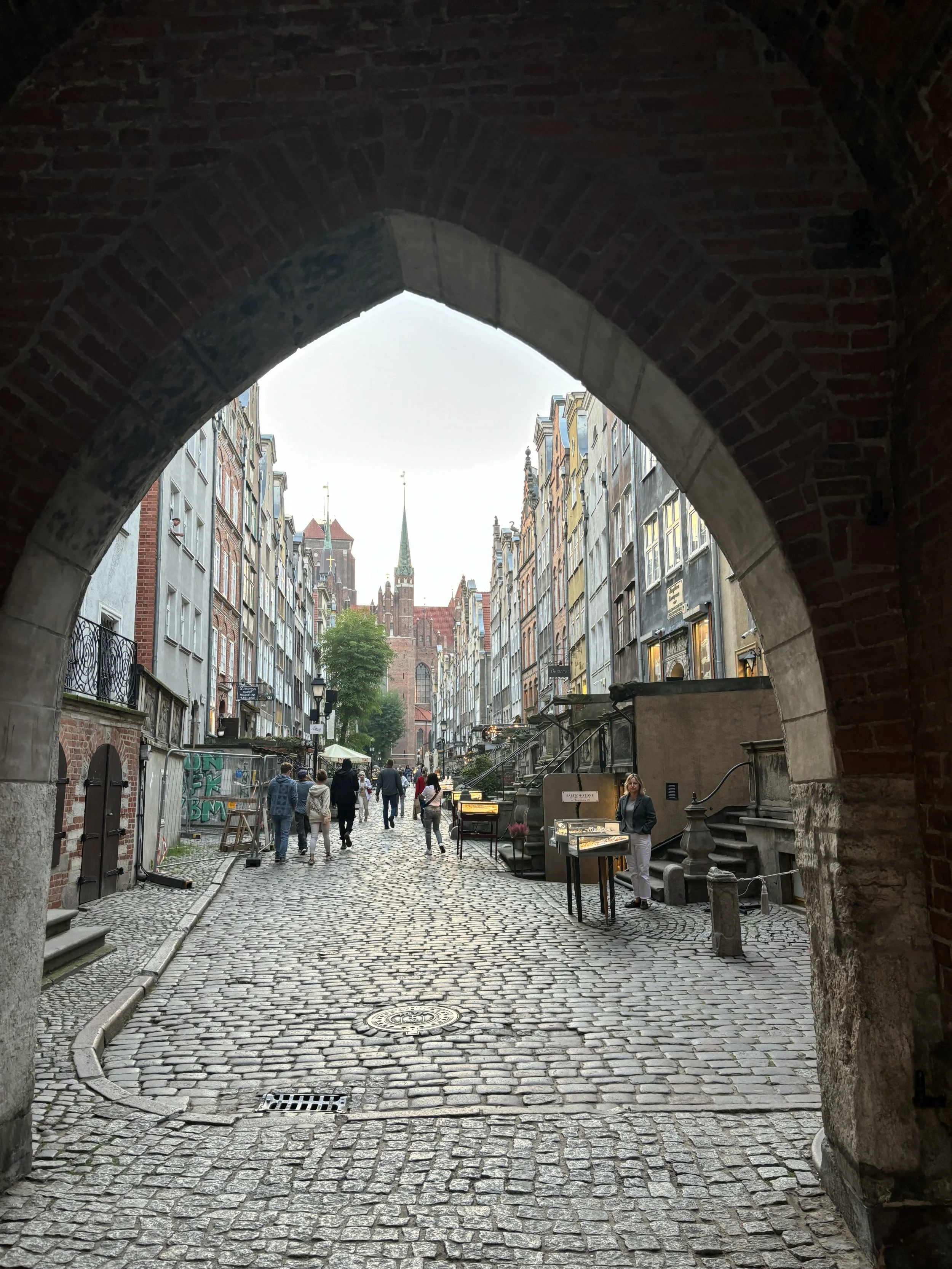
This post about Gdansk could well be just a photo gallery, but I think if I just give you a little taster here. The rest you will have to go see in person!
Where to stay in Gdansk
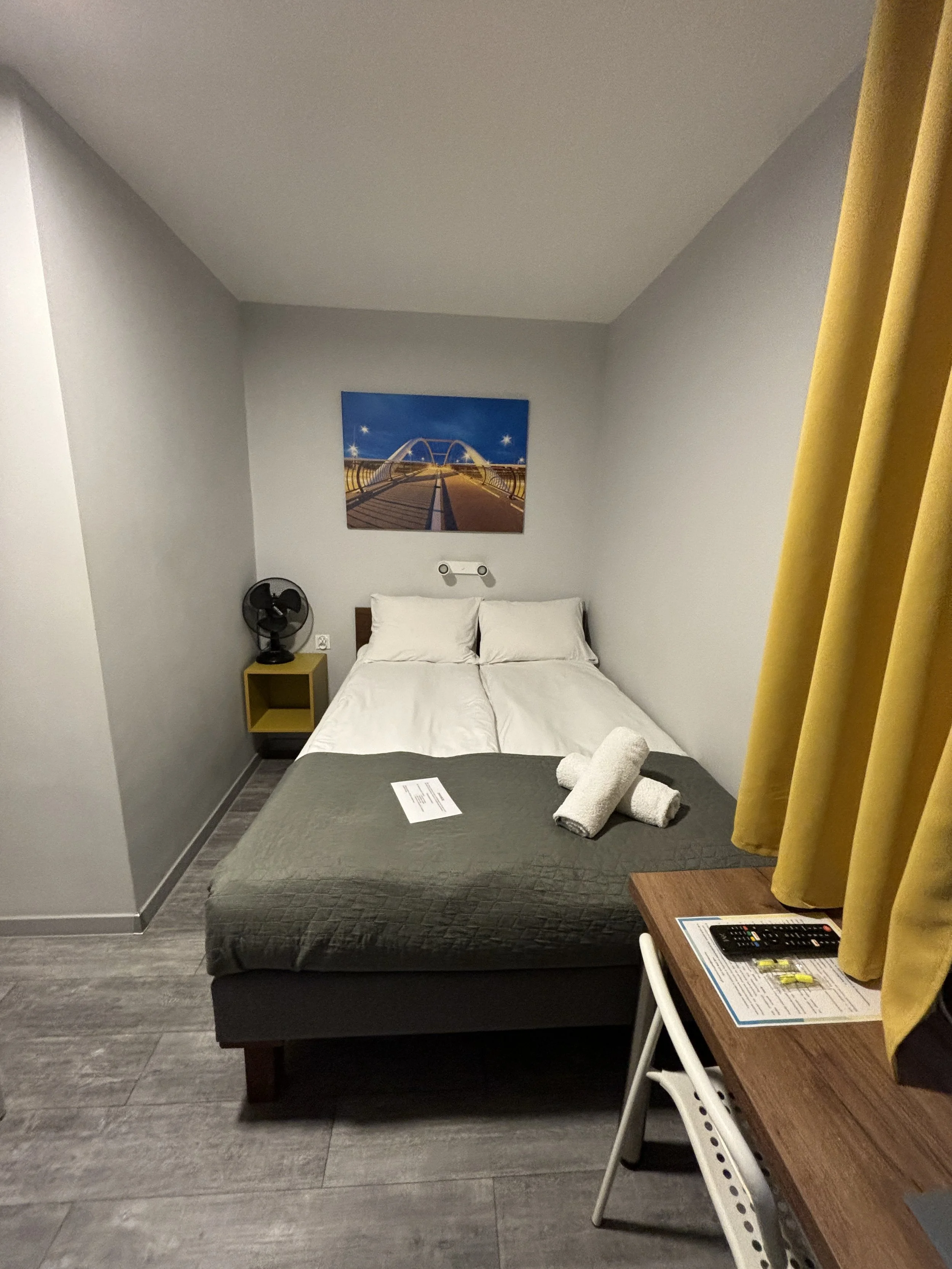
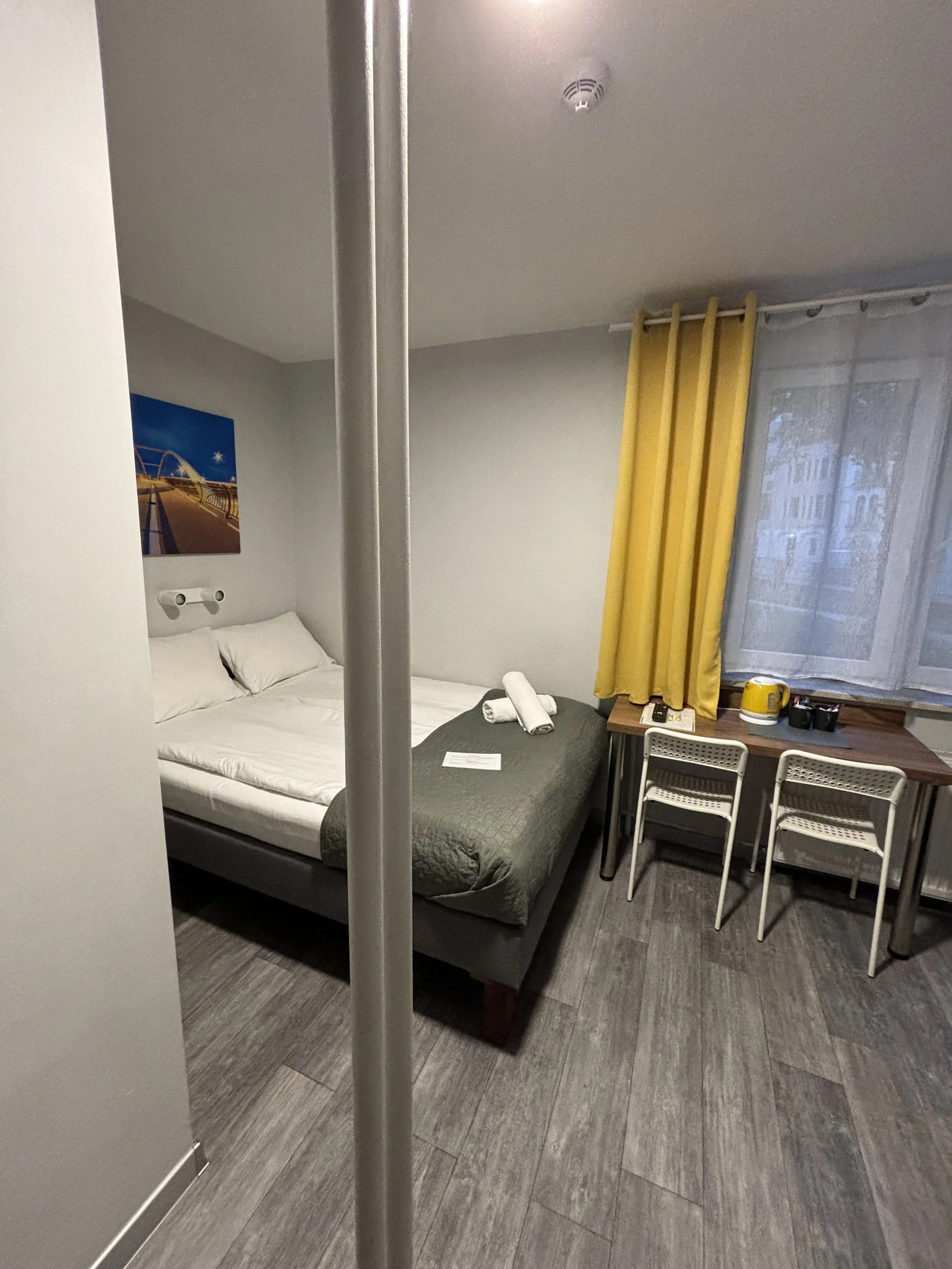
Zefiro Ogrody Apartments
Długie Ogrody 4, 80-765 Gdańsk
One of the things that caught my attention is that hotels in Gdansk, at least in the late summer/early Autumn period when I visited, where not cheap, so I opted for a serviced apartment instead.
This turned out to be a great choice, since the place was really. central (not in the core of old town but immediately next to it, less than 5 minutes walk away) and also well connected to several bus lines which served me well for my visit to Westerplatte (more of this soon).
The apartment is located in a post-war residential block, but it is totally refurbished inside and you can access with a code. It was small, but pretty good for one person short stay.

Visiting Westerplatte, the place where WW2 started
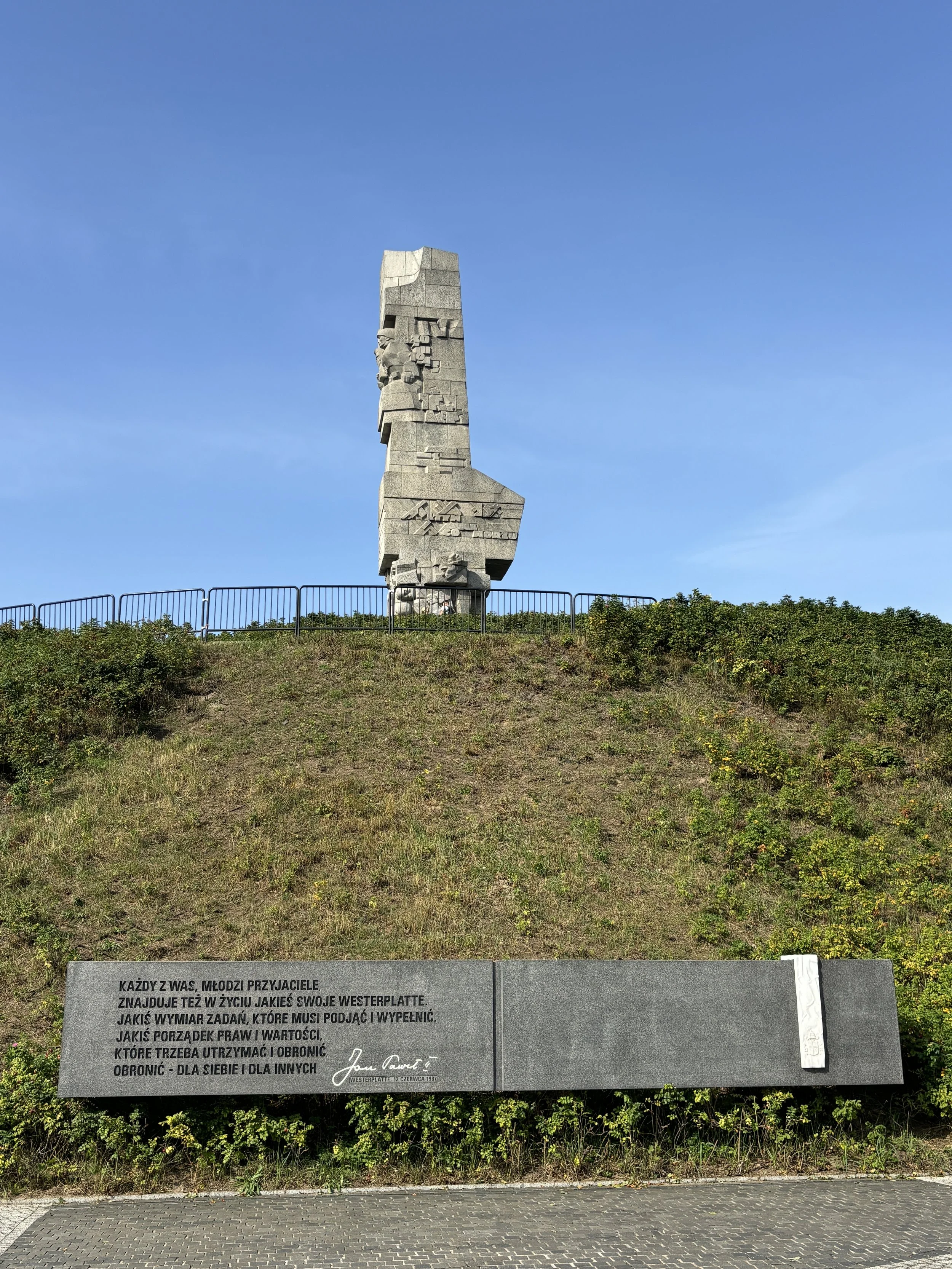
A visit to Westerplatte is a must for anyone minimally interested in WW2.
It is generally accepted that the first shots of WW2 were fired in the early hours of September 1, 1939, by the German battleship Schleswig-Holstein against the Polish garrison in Westerplatte.
The city of Gdansk had a special status at the time, under the jurisdiction of the League of Nations, although Poland was responsible for some aspects of its governance and kept a military presence at the Westerplatte peninsula.
This fortified outpost, at the mouth of the Vistula river, acted as a seaport and logistics center for the Polish army. So, its bombardment was a prelude of the Nazi invasion of Poland and the German takeover of the city.
How to get to the Westerplatte historical site
The bus ride from the center in a normal urban bus takes about half an hour. There are at least two bus lines (106 and 606) that take you there from the city center, frequencies are usually every 20 minutes or so. I recommend downloading the Jakdojade mobile app to purchase the tickets while on the go.
What can you see at Westerplatte today?
After the war, and with Gdansk now fully in Polish hands, Westerplatte took, of course, a special symbolic significance as a memorial place and war monument.
Visitors can arrive at the southern end of the complex, where there is some small infrastructure (although nothing compared to the massive visitor centers and souvenir shops you find at some other European or American historical sites!).
Rather than a compact fortress, Westerplatte spreads over a territory that is roughly a couple of km long a 500m wide, with the Vistula on one side and the Baltic sea on the other.
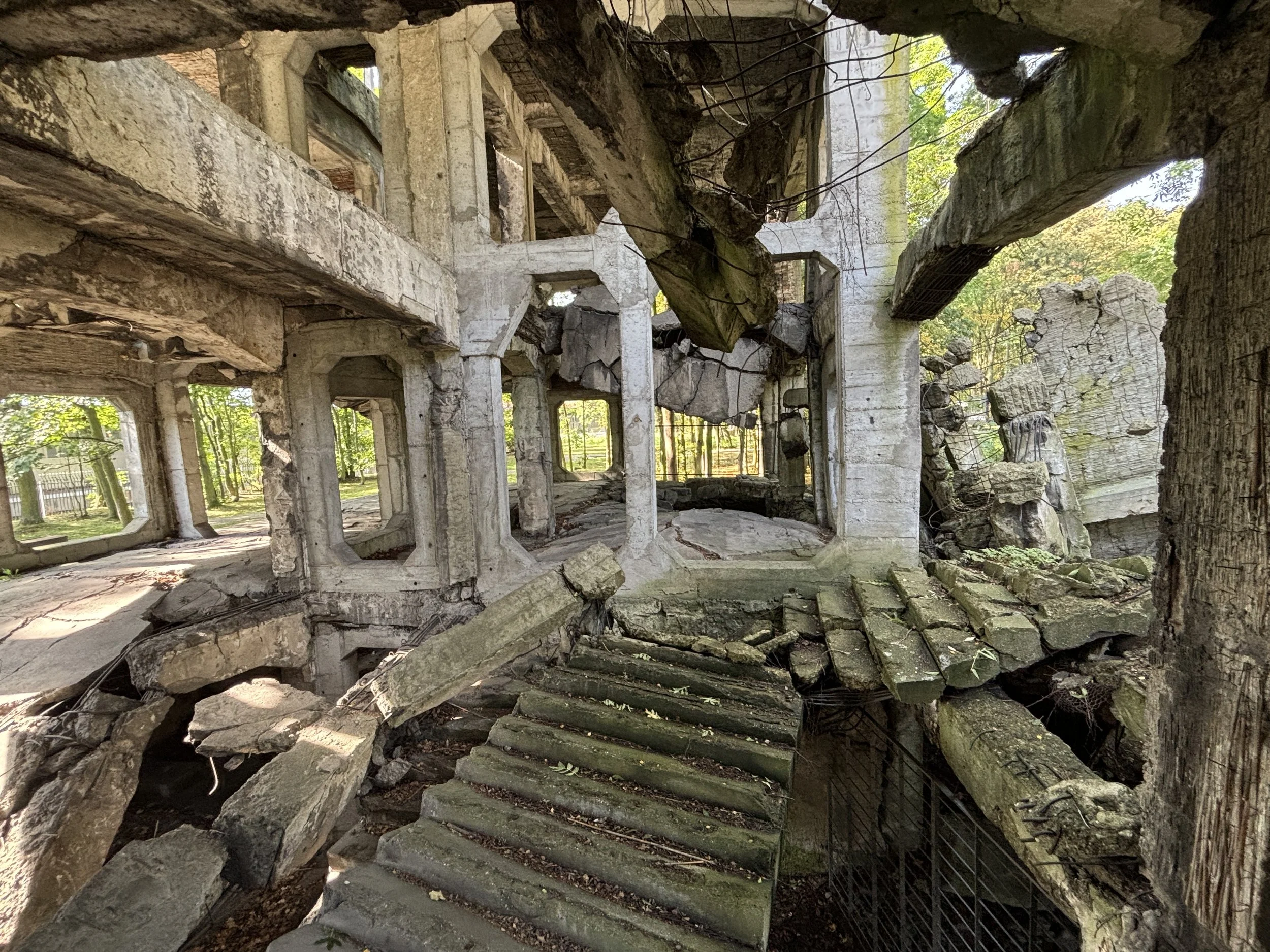
So, the visit is essentially an outdoors walk that takes you past the different casemates and barracks that were part of the complex and that were almost entirely destroyed on the first day of the war, as well as a war memorial that is the resting place of the Polish soldiers that died defending Westerplatte.
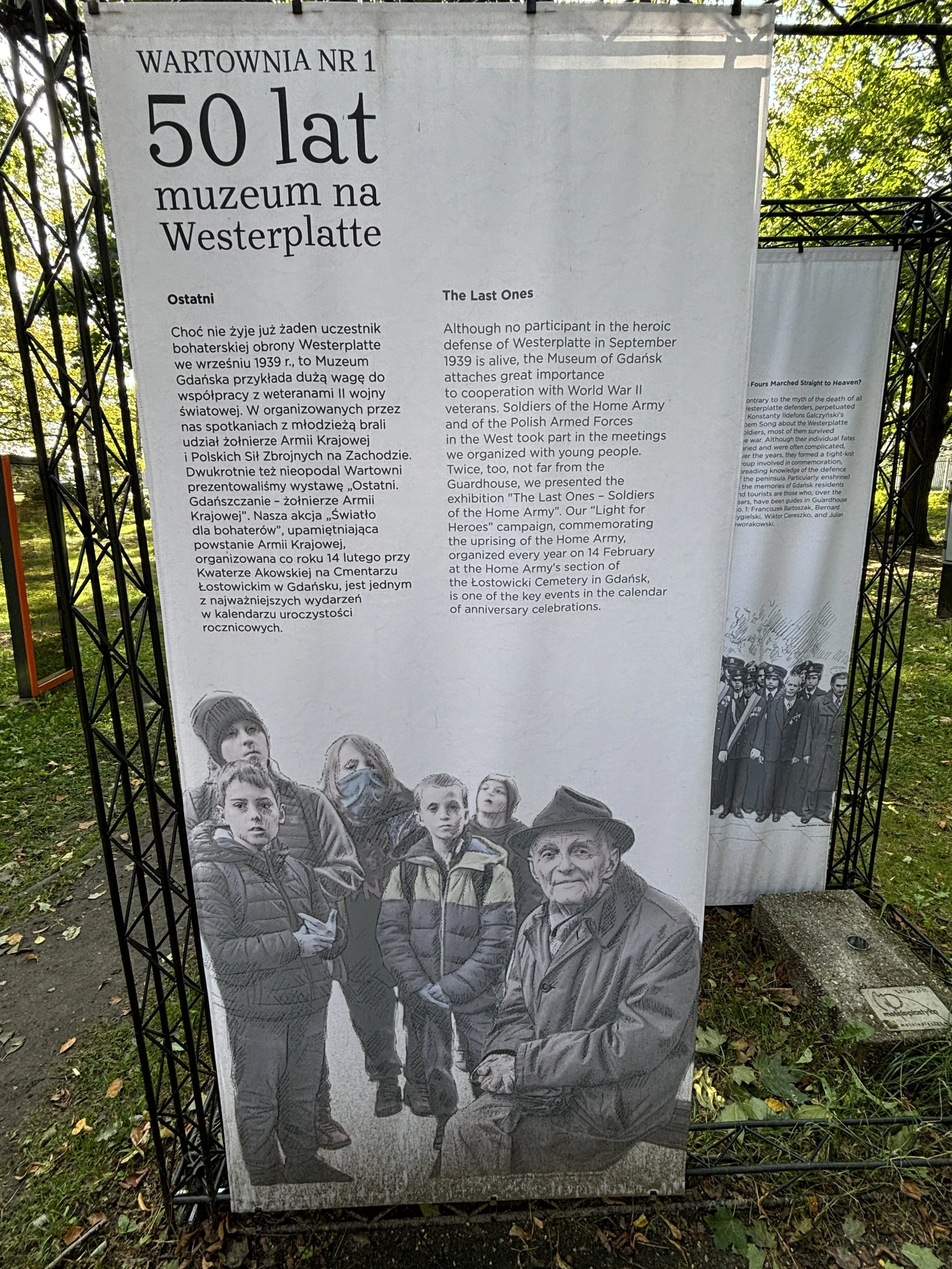
The information panels are also in English and provide a very detailed explanation of what each building is, what was the role it played in the battle and the fate of those that found themselves defending the outpost during that very unequal fight.
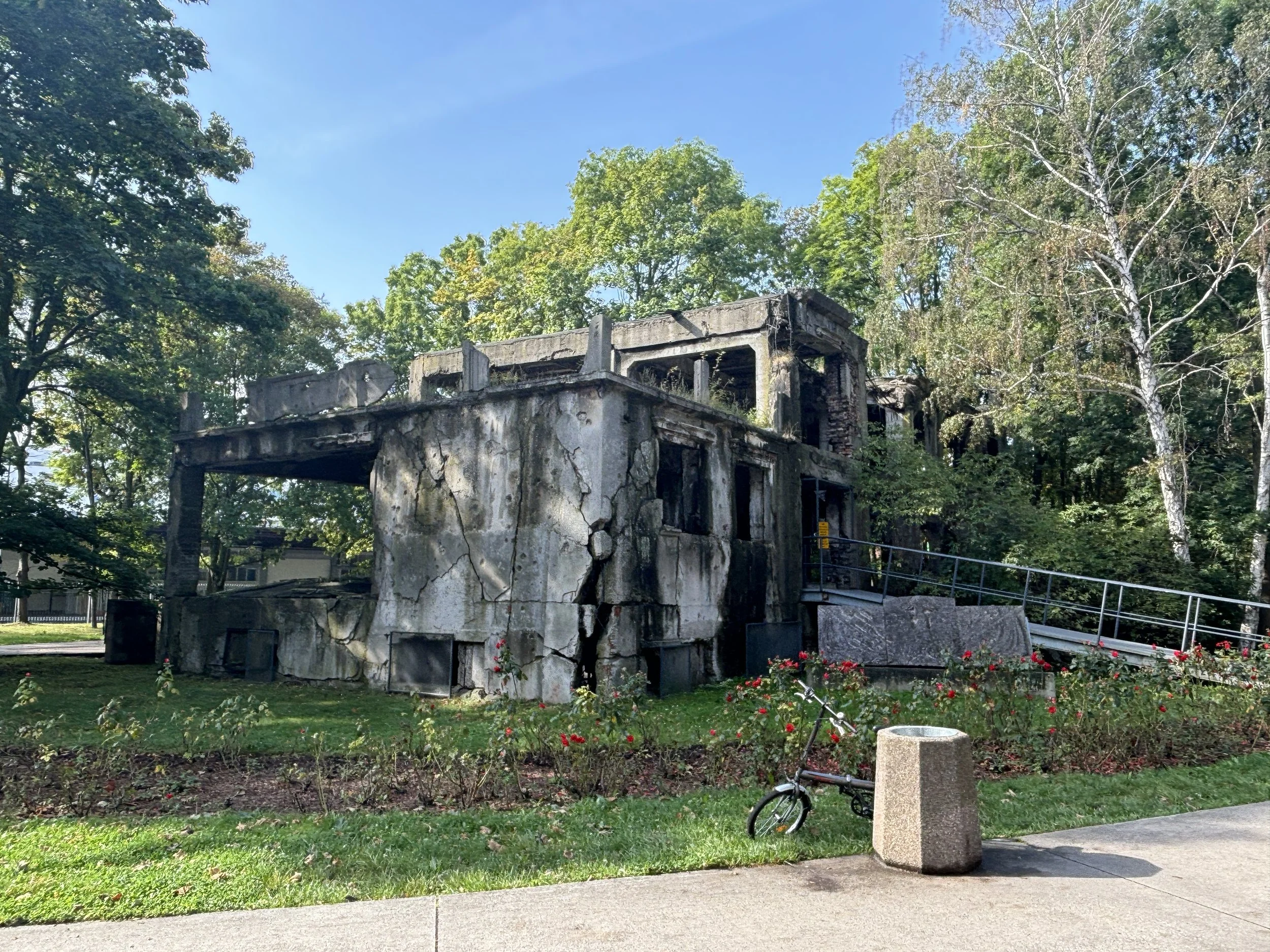
It is also possible to get inside some of the destroyed barracks following a clearly designated path.
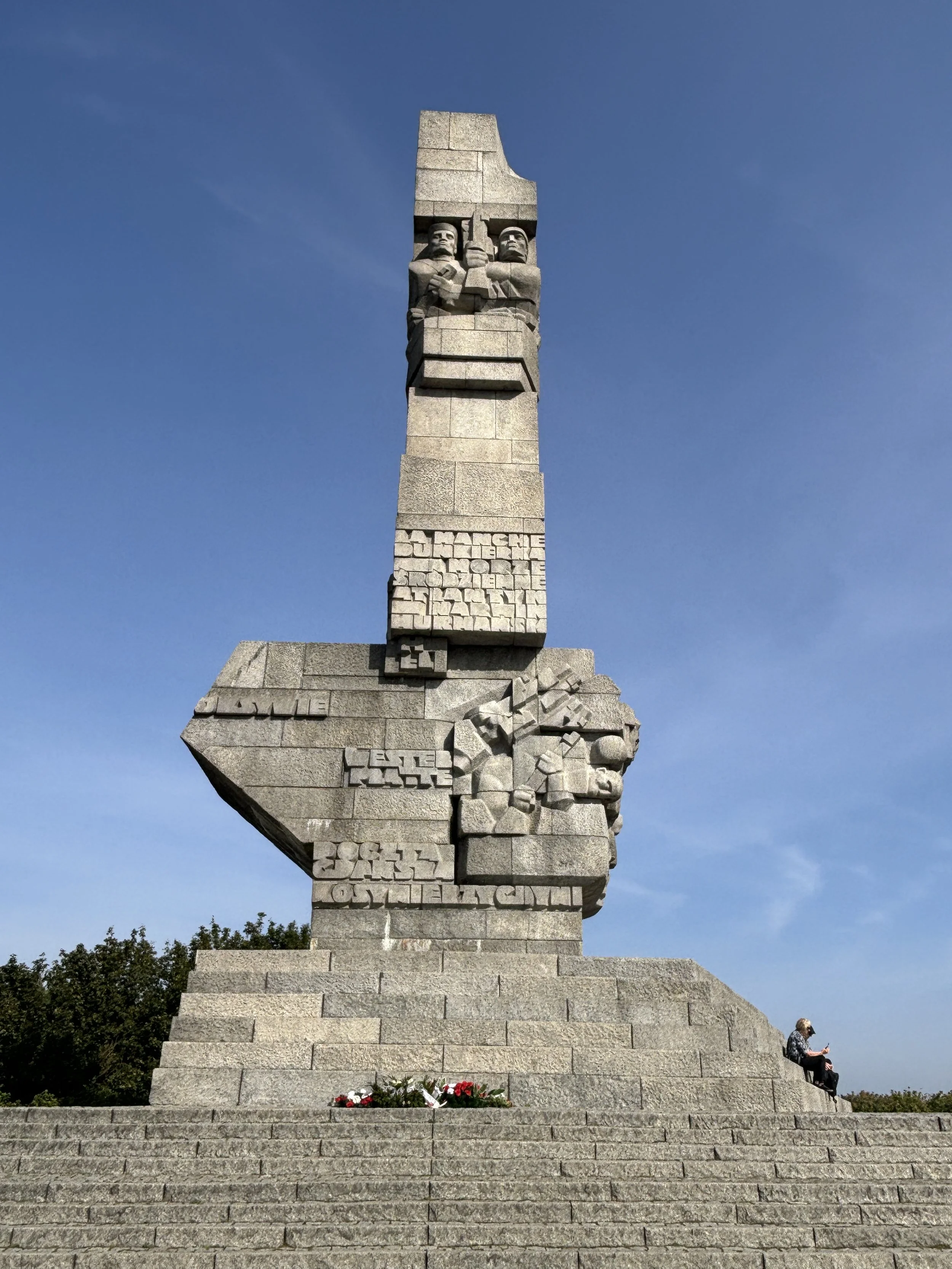
This memorial path through the Westerplatte ends at the tip of the peninsula, where there is a monument to its defenders. The obelisk-like concrete monument, which clearly reflects the style of the era in which it was built, is in at the top of a small hill, so it has also views of the adjacent port of Gdansk.
At the back of this monument is the northern, Baltic-facing part of the peninsula is more forested. Some excavations were still going on there at the time of my visit.
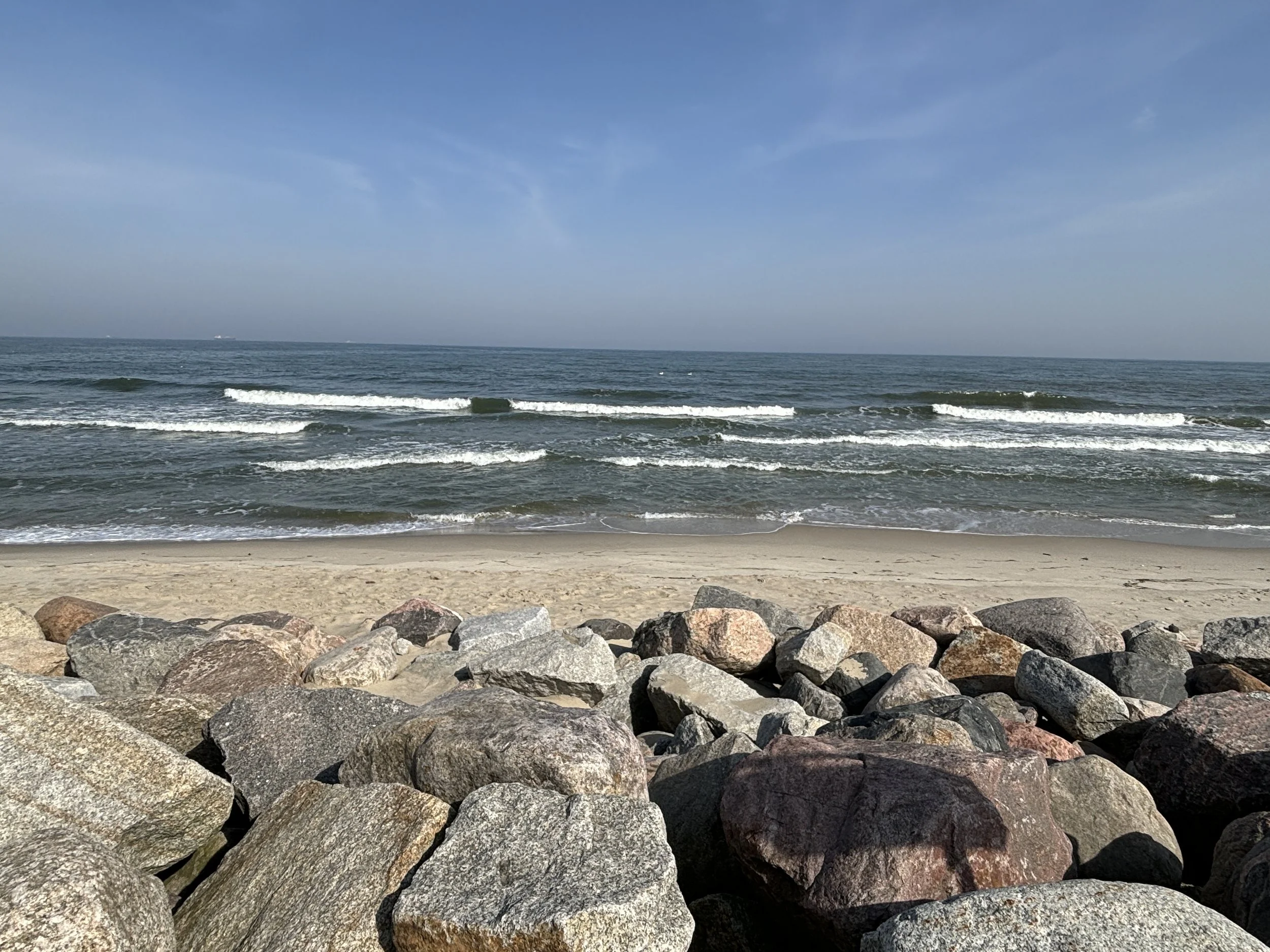
A visit to the Westerplatte is also an opportunity to get to see the Baltic sea, since, despite its tradition as a trading port, the city’s downtown is a couple of miles from the sea, and most of its sea-facing area is filled with docks, shipyards and other industrial areas.
The Westerplatte peninsula has a rather long, sandy beach, although quite exposed to the elements.
Where to eat in Gdansk

Our recommendation
Piekarnia Gruzinska Ketili Puri
Szeroka 125, 80-835 Gdańsk
Now, I am aware this is not Polish cuisine. It is Georgian. It is not even a restaurant, it is actually a bakery. And it is not even a singular establishment, since it is a chain.
BUT, I stopped here for a little rest and to replenish energies during my walk through Gdansk and it provided great, tasty food and great value, plus a place to sit outdoors on a nice street and with very efficient service.
So, I can’t but recommend it if you are looking to maximize your sightseeing time and do just a relatively quick pit stop while you, following my recommendations, wander around the old town.
Visiting the Solidarnosc Center
If Gdansk is the place where the first chapter of WW2 was written, the city had also a stellar role in the beginning of the end of Communism in Europe.
In the early 1980s, the vast shipyards of Gdansk were the cradle of the Solidarnosc (“Solidarity”) movement, which became the bedrock of opposition against the Soviet-controlled regime of General Jaruzelski. A man in particular, Lech Walesa emerged as the leader of this wave of protest that ended up with the Polish Communist government declaring martial law. It would take a few more years for the regime to collapse, as it did in the rest of the Eastern Bloc, but the seeds of revolution were planted at the Gdansk shipyards.
Walesa would be awarded the Nobel Peace Prize in 1983 for its activism and it went on to become President of Poland and later Member of the European Parliament (MEP) after the Communist era was over.

The story of what happened at Gdansk shipyards in those years is told at the very place where the events took place. The European Solidarity Centre is a massive, modern museum located at the edge of the city’s shipyards.
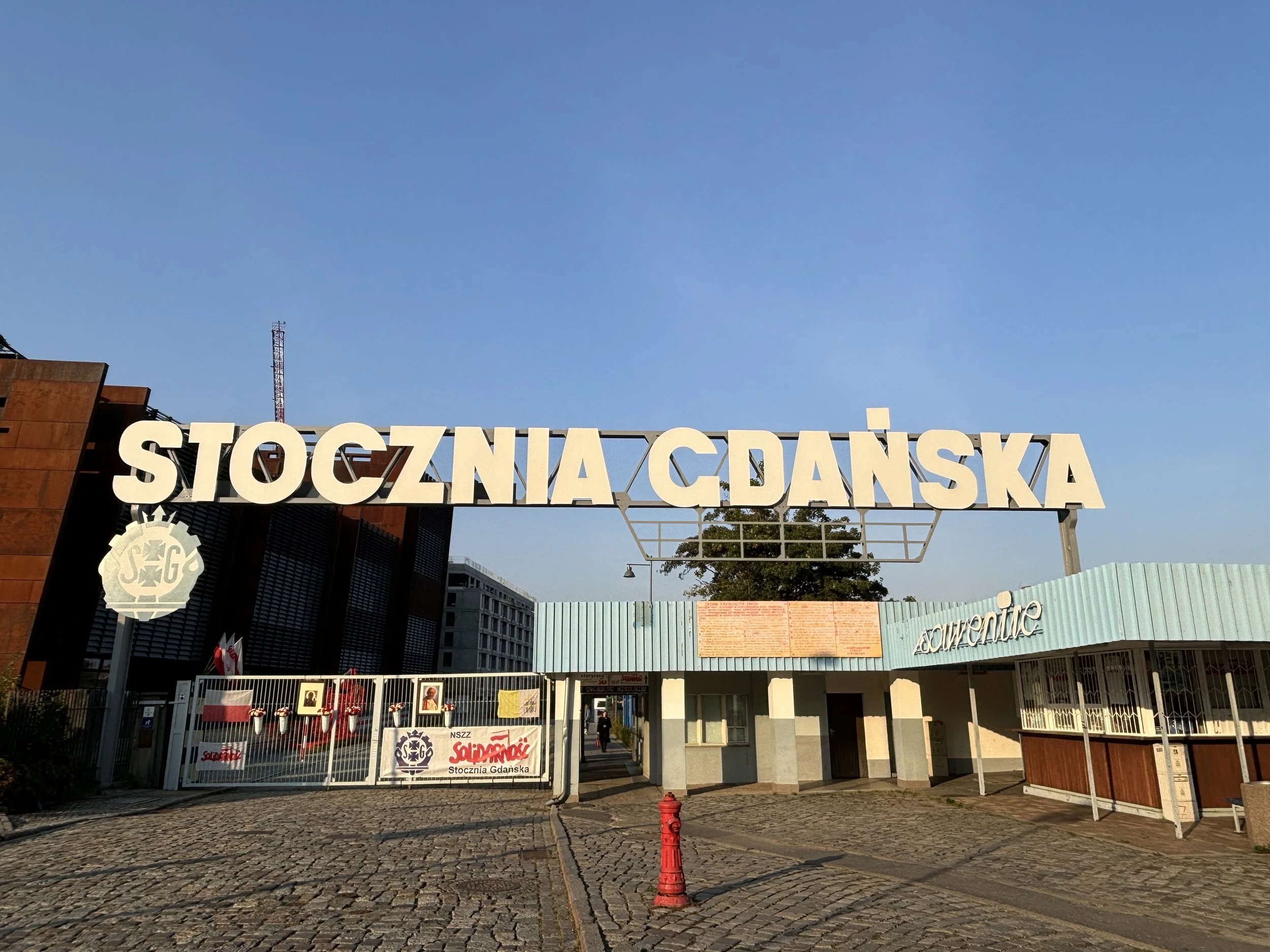
How to get to the European Solidarity Centre?
Just walk from the old town. It is possible to get there by bus, but the museum is located at the southern edge of the city’s shipyards, barely a mile from the old town. It is perfectly walkable, the path is not unpleasant and you get to see also a bit of modern Gdansk.
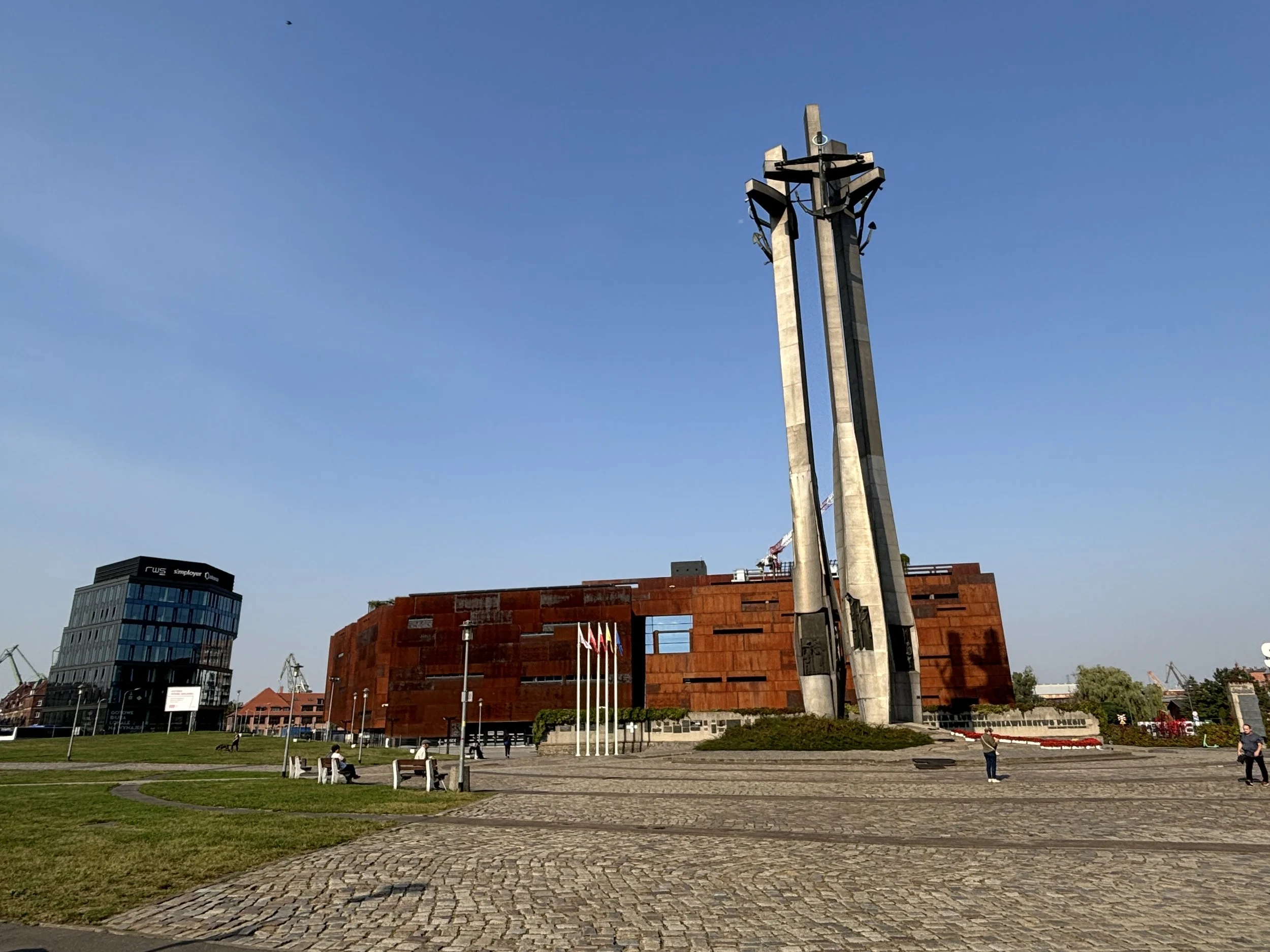
The European Solidarity Centre (and its immediate surroundings) have been built in contemporary style (it was opened in 2014) and on a grand scale.
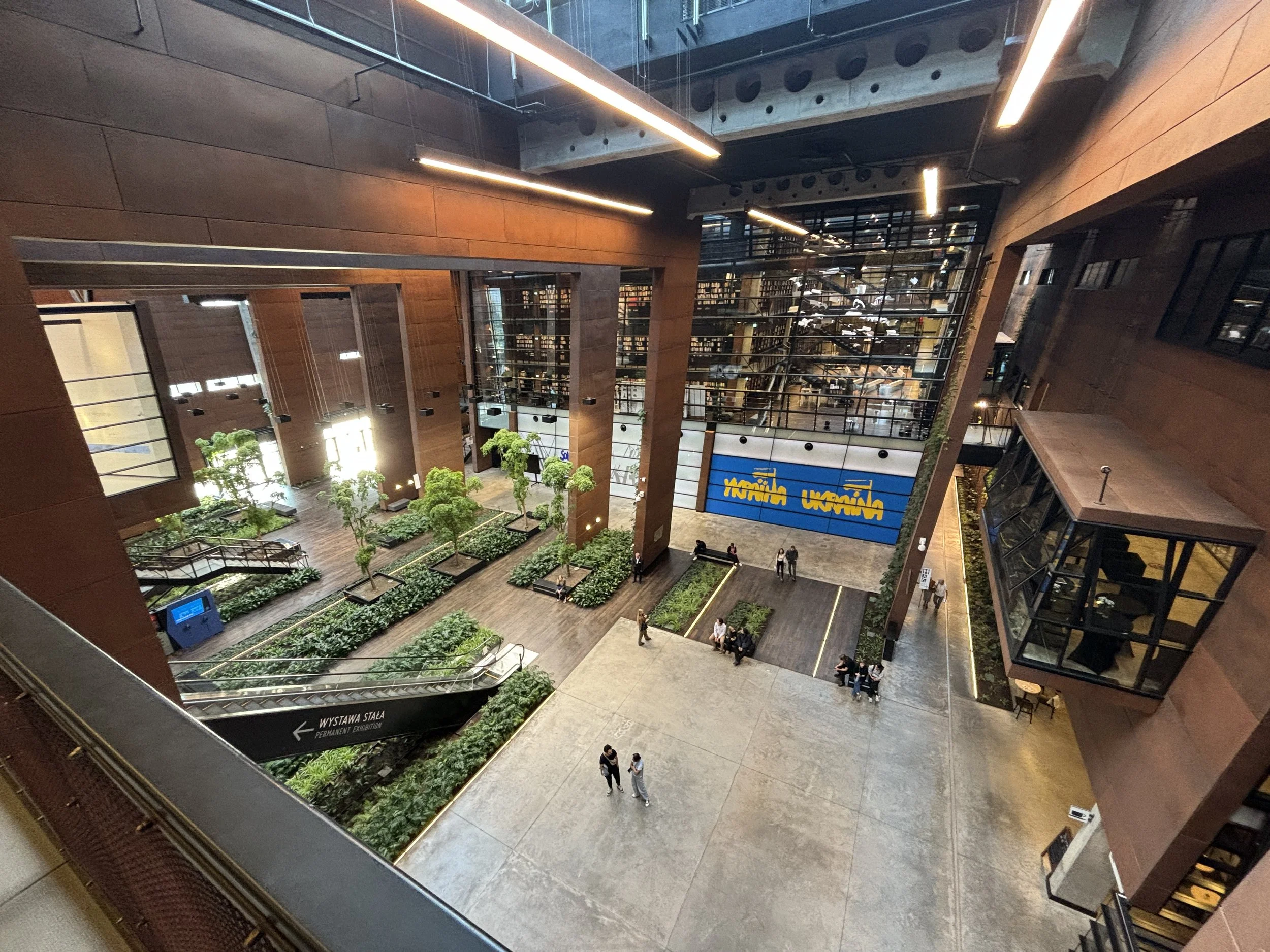

The exhibits are really well structured and contained lots of information about the events in the late 1970s and early 1980s that ultimately led to the downfall of the dictatorial regime that had ruled Poland since the end of WW2.
The museum has plenty of immersive displays that give you a feel of how life was in those times. It also has a few, lets’ say, interactive areas where you can, for example, leave messages expressing your thoughts about this period of history and so on…
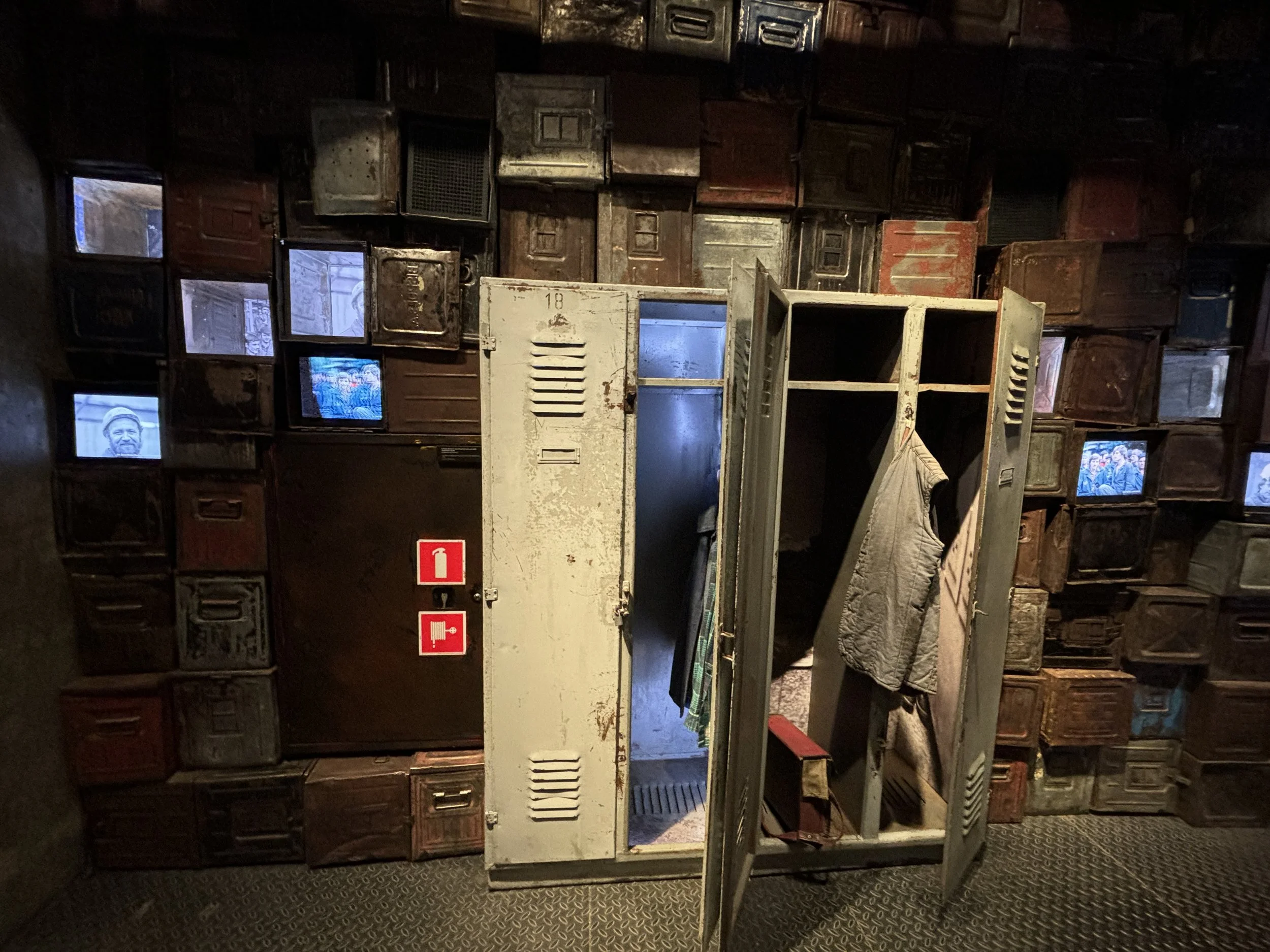
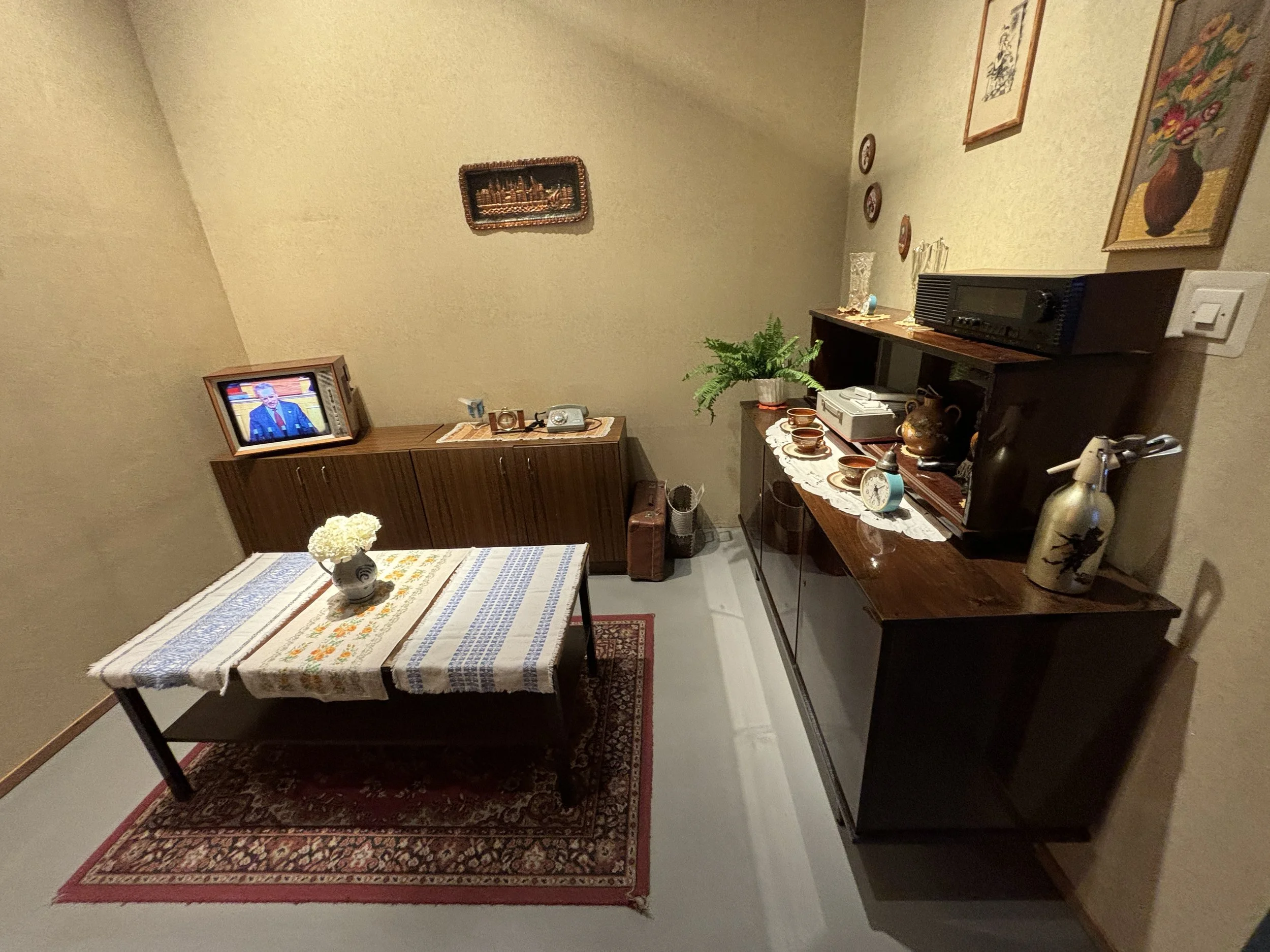
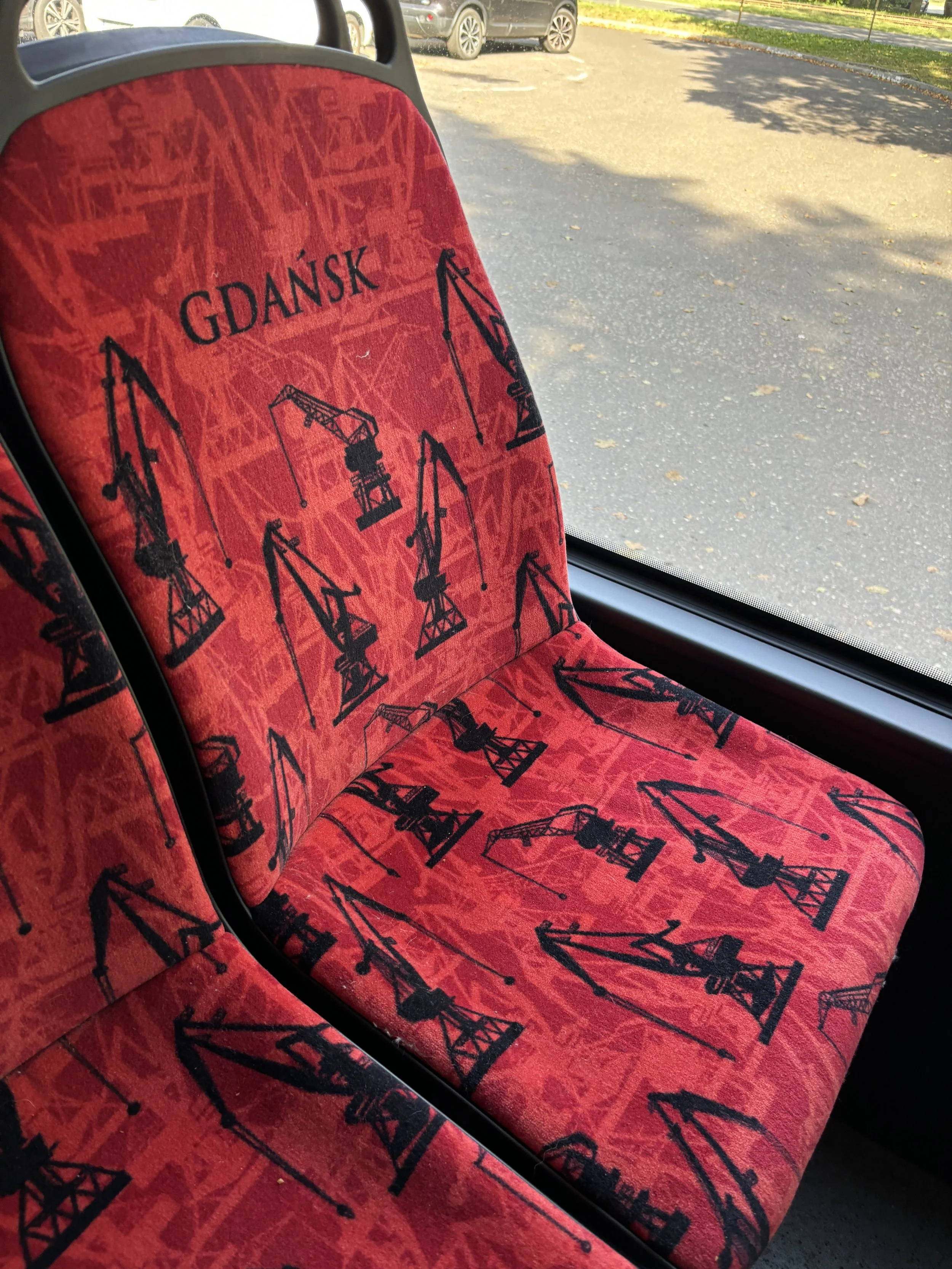
The shipyards are, of course, an important part of the identity of modern Gdansk.
Its symbology has been developed into a sort of visual brand of the city, which can even be found on the seats of urban buses!
But nowhere will you fid more examples of this as in the souvenir shop of the European Solidarity Centre, where you can find all sorts of memorabilia relating to Gdansk's shipyards, Lech Walesa and the revolution he unleased.
Unlike in other European cities that have deindustrialized, cranes are still an element in Gdansk urban landscape, as you can see from the rooftop viewing platform at the European Solidarity Centre.
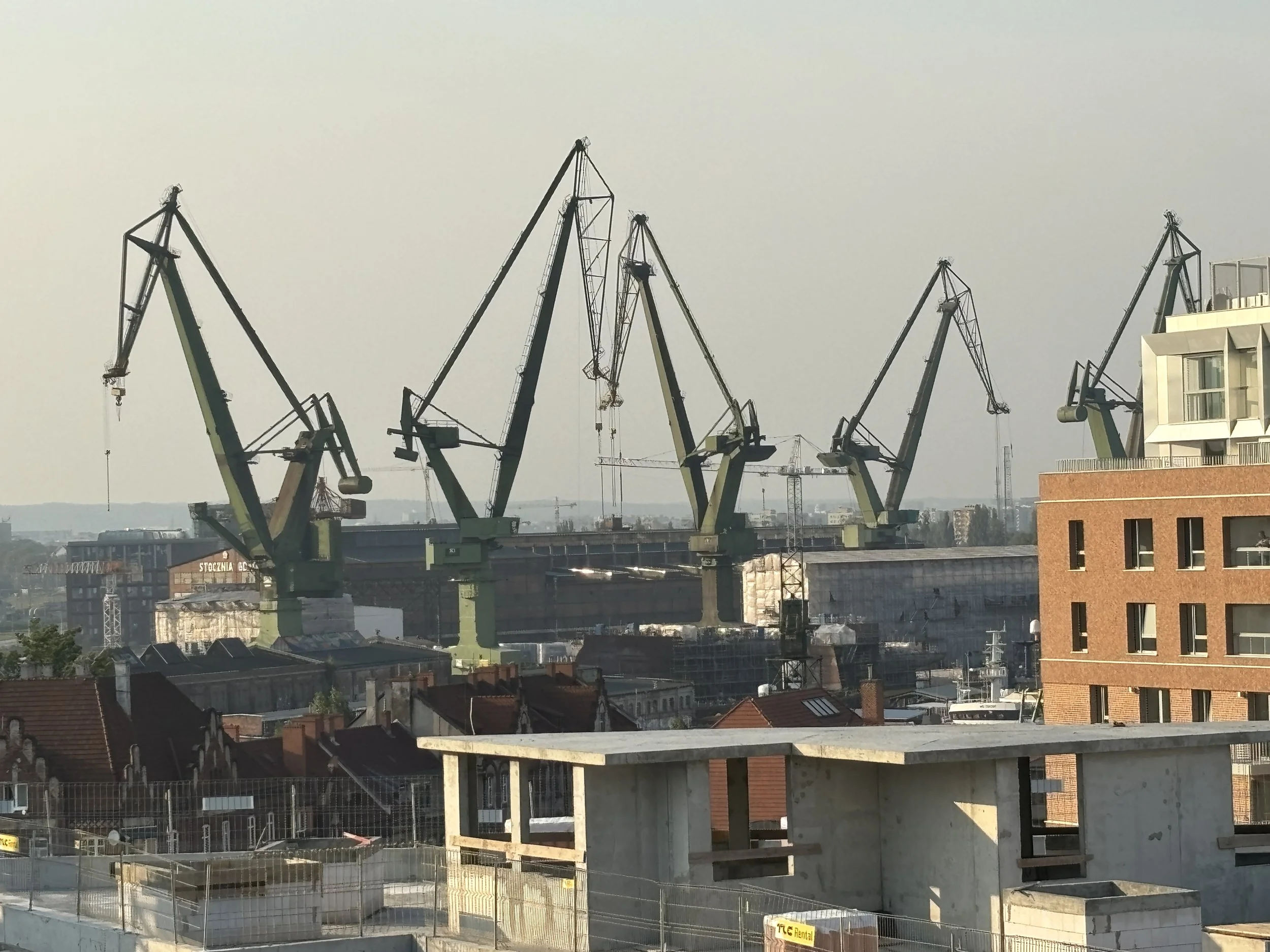
Bonus recommendation: night walk in the old town
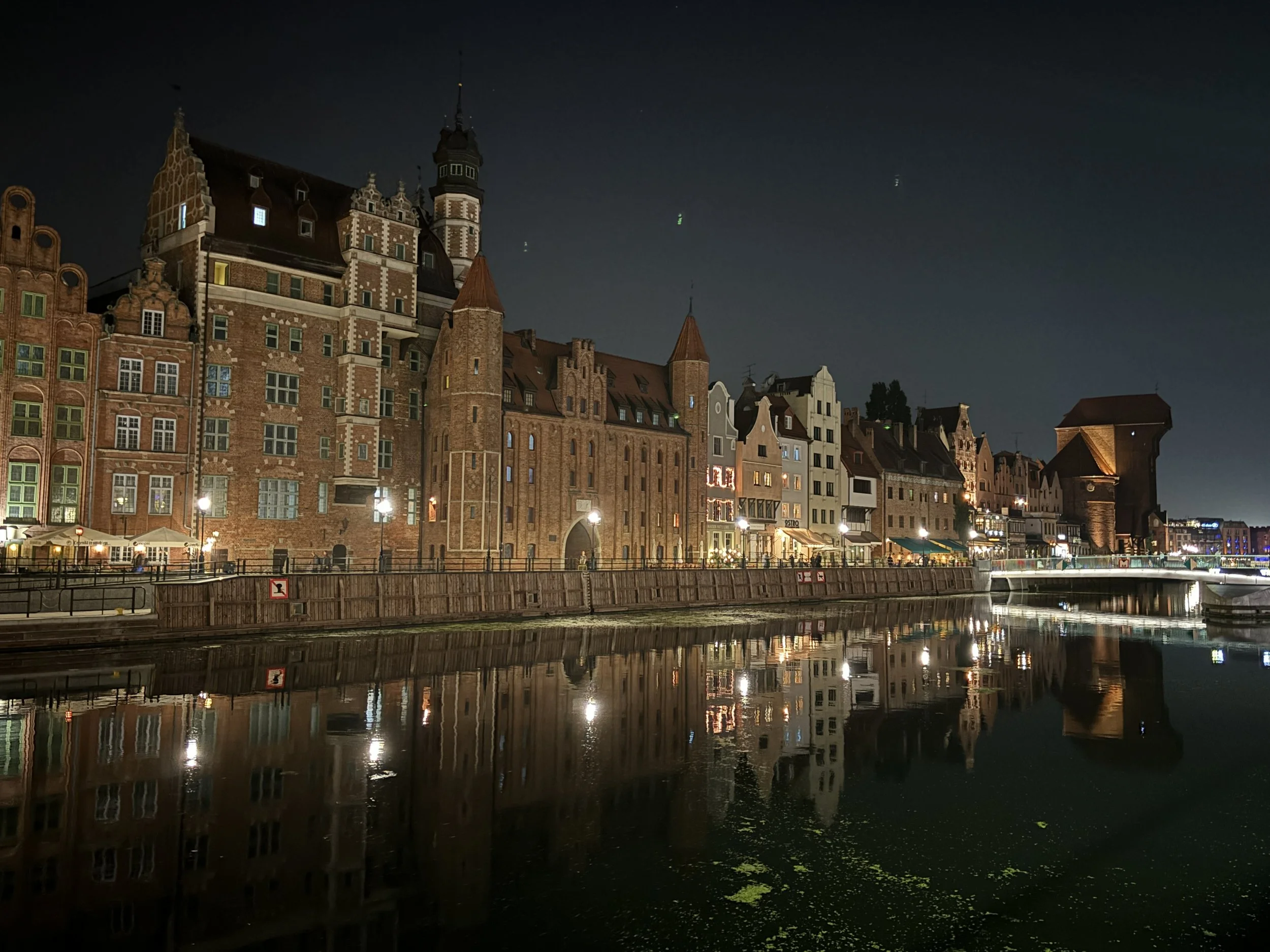
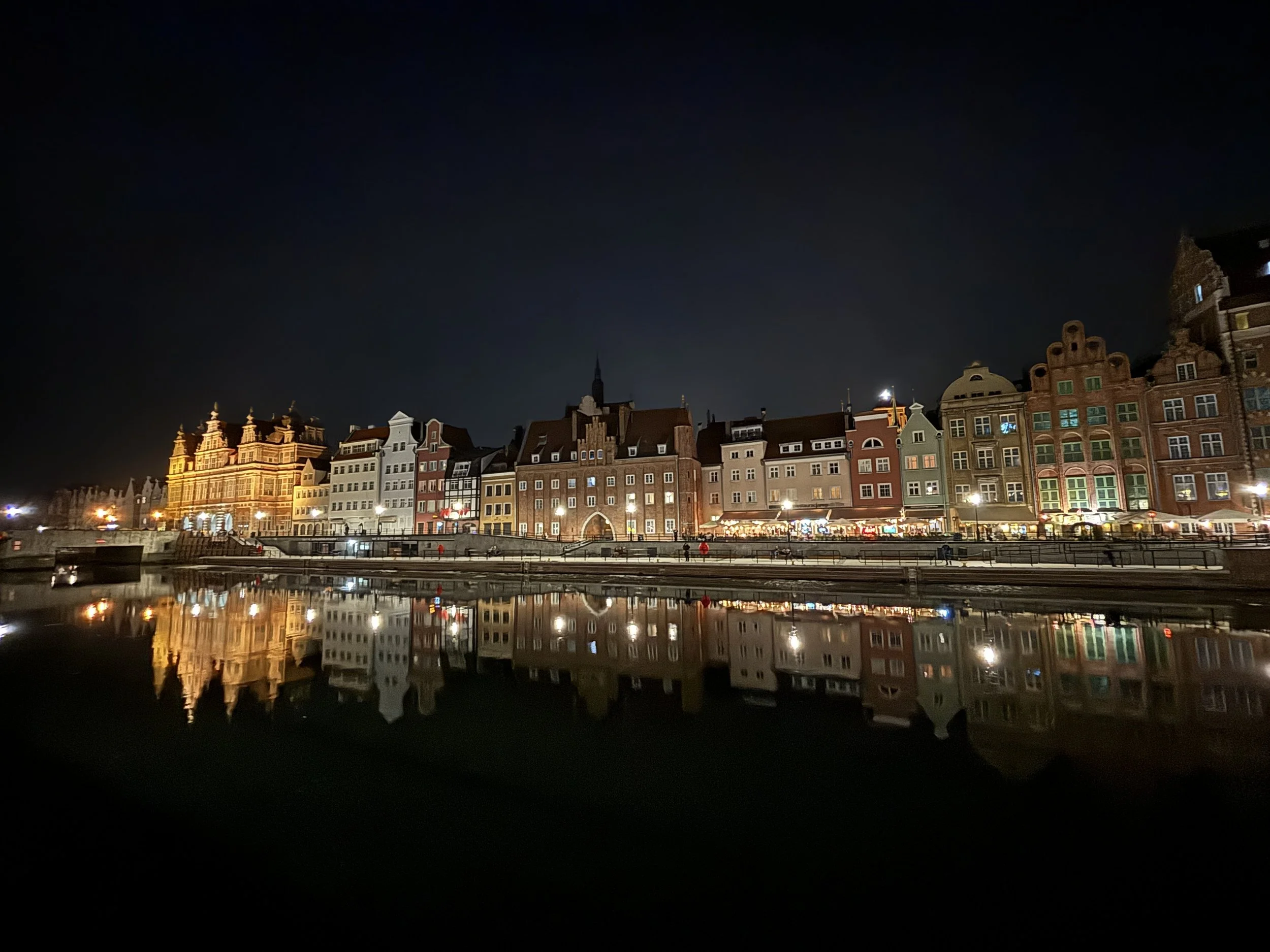
I couldn’t end this article without mentioning the beauty of old Gdansk by night. So, if you have the chance, go for a walk in the evening. I don’t know how is it like with cold or rainy weather, but I had the good fortune of visiting during a weekend of great sunny weather at the end of summer and the city was truly bustling with activity.
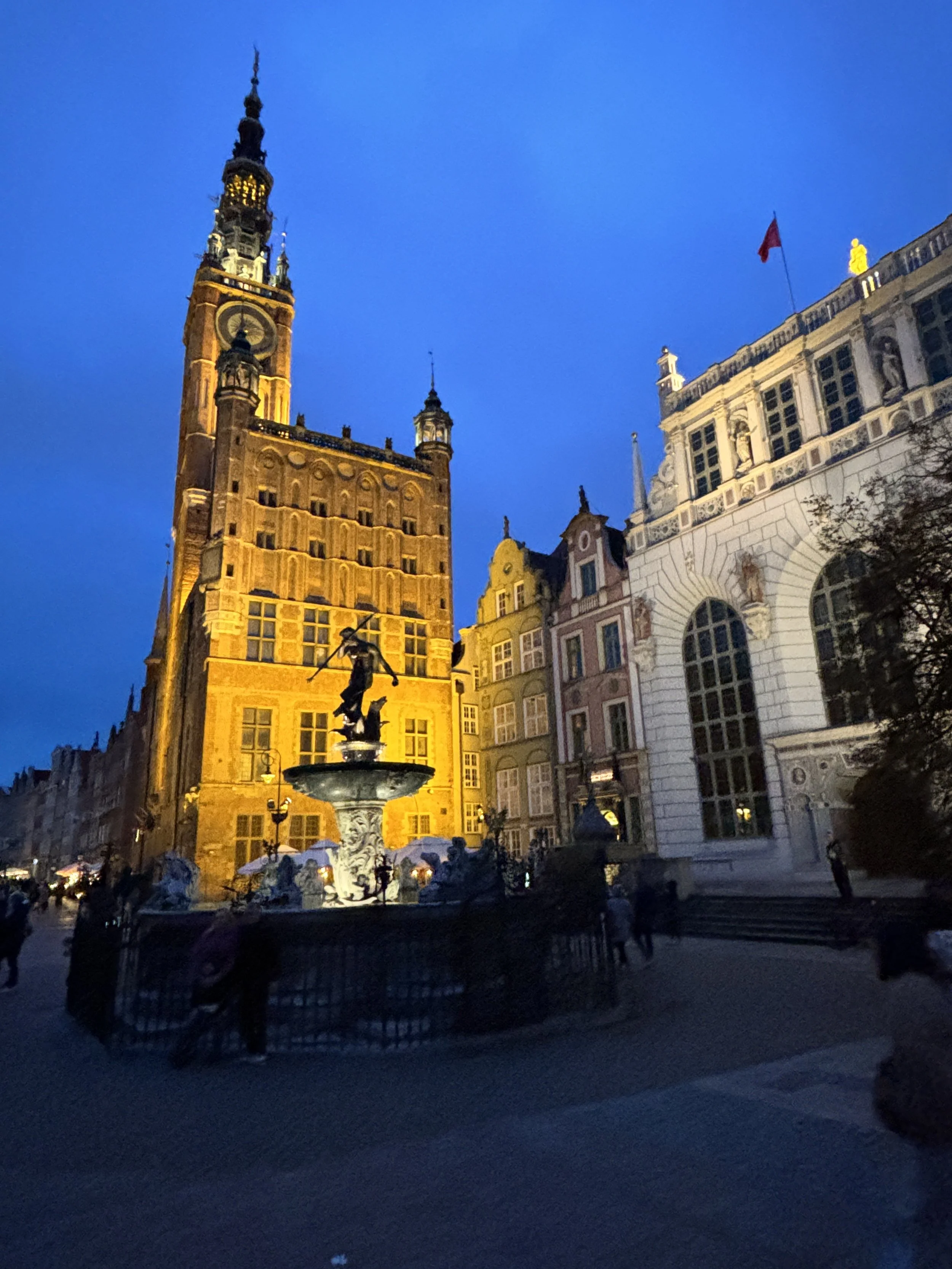
In particular, I recommend a walk after sunset along the banks of the river Vistula, when the lights are on. There you will be able to see a whole new face of the city of Gdansk, when it dons its evening attire!